A reply saying “cute!” feels encouraging, but it doesn’t tell you whether anyone wants your product. The person may like your dog, your photo or your joke and still have no reason to buy.
That leaves you guessing what to post next. Another product photo? A discount? More posts can eat up your evening without making the offer easier to understand.
The useful question is whether suitable buyers recognize a reason to choose it. This guide shows you how to make that reason clear, support it with evidence, and test the message without first buying ads or building a large following.
Find the Buying Situation Your Offer Serves
Start with the task that makes someone look for help. “Likes dogs” describes an interest, but “starting dog-training classes and figuring out how to carry treats” gives you a buying situation.
Throughout this article, imagine you run a shop selling the Class-Ready Treat Pouch. It clips to a belt and has a removable washable liner. The product, demonstrations and sample copy are illustrative.
Before writing its pitch, search X for phrases such as:
- “first dog training class”
- “carrying dog treats”
- “cleaning treat pouch”
These are starting points for research, not verified signs of demand. Read the surrounding conversation. Someone sharing a class photo is doing something different from someone asking which pouch to buy.
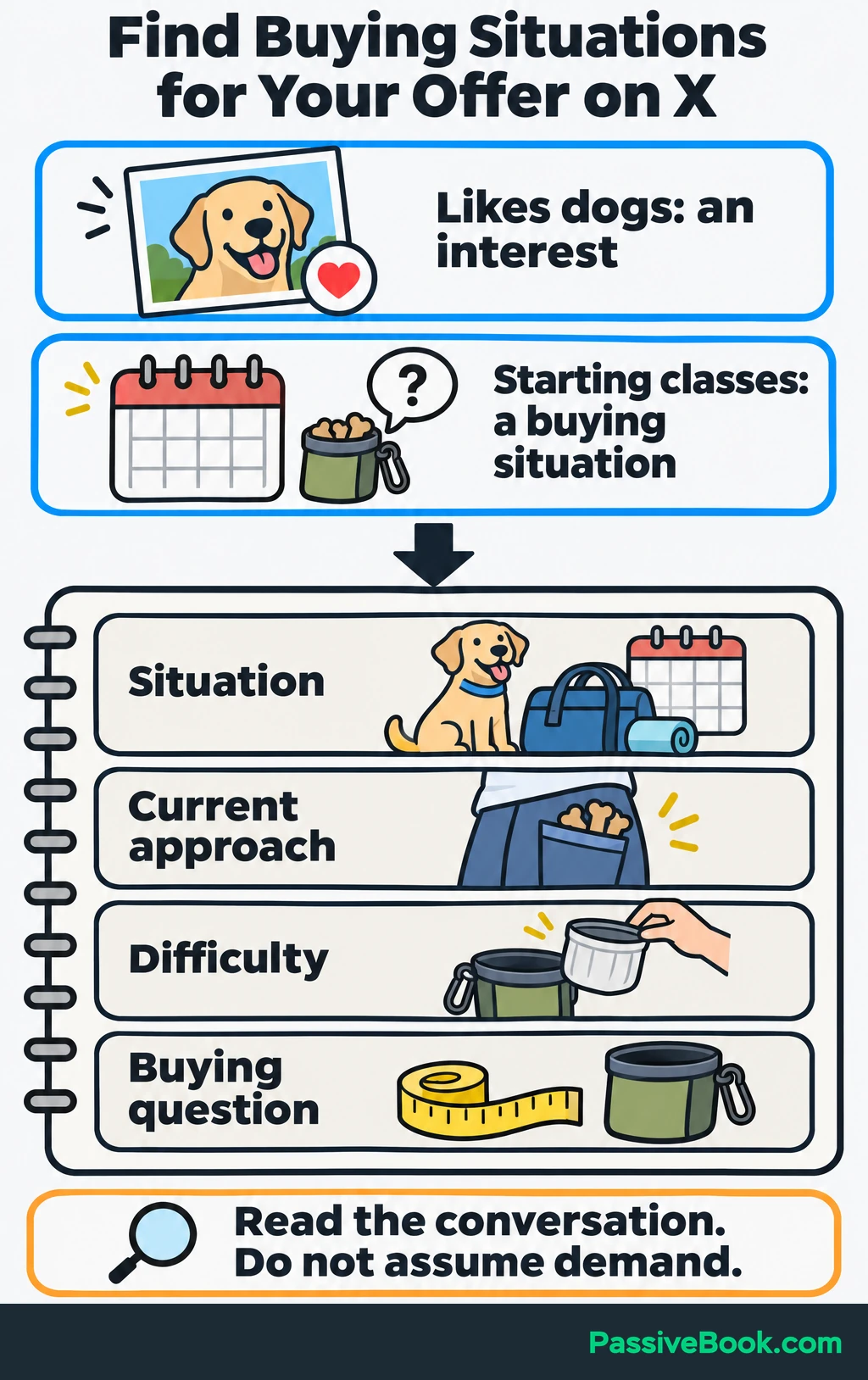
Keep a short note for each useful conversation:
- Situation: What is the person preparing for or trying to do?
- Current Approach: What do they use now?
- Difficulty: What still bothers them?
- Buying Question: What would they need to know before choosing something else?
When someone invites suggestions, ask what they currently use and what they would change. “What bothers you about carrying treats during class?” leaves room for an honest answer. “Wouldn’t a removable liner be better?” mostly tests their willingness to agree with you.
Around 2022, I spent six months chasing Instagram and Twitter/X followers in another niche while my bank account stayed around $47. This was separate from Passive Book. I was measuring whether people followed me, and that told me very little about whether they wanted an offer.
For this pouch, look for people who need treats within reach during class and want a pouch they can clean easily. Someone looking for a training plan needs a different product. Make that distinction before polishing the copy.
Give Buyers a Specific Reason to Choose Your Offer
Compare the Offer With Their Current Approach
Ask what buyers would do if your offer didn’t exist. They might carry treats in a pocket, use a food bag or keep their existing pouch.
Those alternatives give your comparison a purpose. April Dunford’s positioning guide starts with what customers would otherwise use because meaningful differences depend on that comparison.
For the Class-Ready pouch, connect each feature to something a buyer can do:
| Product Feature | Practical Value | What to Show |
|---|---|---|
| Belt clip | Attach the pouch to a belt during class | A close view of the attachment |
| Accessible opening | Reach inside for a treat | A clear demonstration of reaching into the pouch |
| Removable washable liner | Wash the treat-contact surface separately | Removing the liner and showing its care instructions |
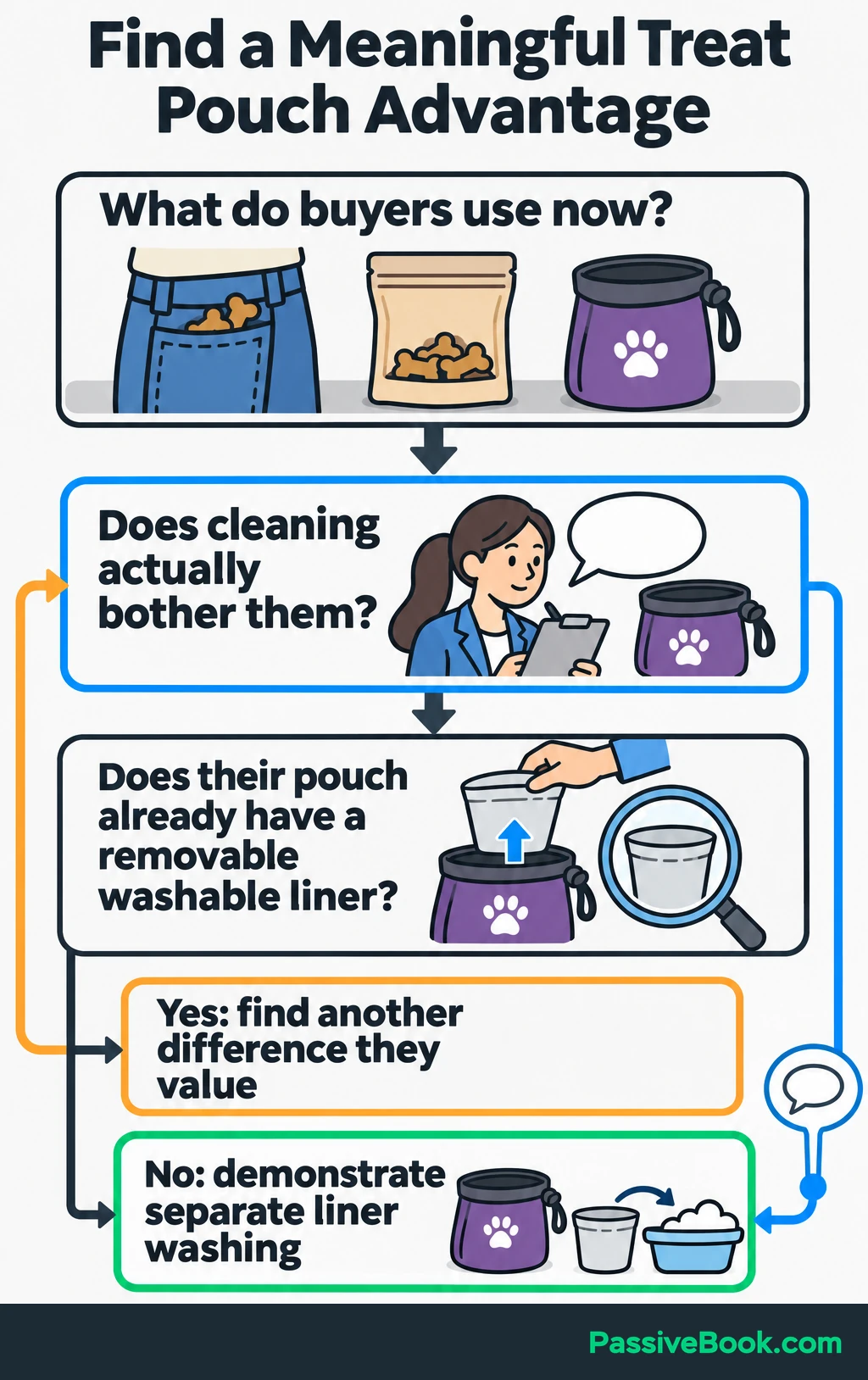
Then choose the advantage that addresses a difficulty suitable buyers actually report.
If cleaning keeps coming up, I would lead with the removable liner. I would skip a long opening about colors and compartments unless those details affect the purchase.
A removable liner could matter to someone who struggles to clean a pouch with a fixed lining. If their pouch already has a removable washable liner, I’d look for another difference they care about before making the pitch.
Turn the Difference Into a Clear Promise
Use a familiar product category, name the useful outcome, and explain what makes it possible.
“Treat pouch” gives buyers an immediate starting point. “The ultimate canine success system” gives them homework.
Once you have researched the buyer and alternatives, use this sentence to summarize your decisions:
For [buyer in a specific situation], [offer/category] helps [useful outcome] through [concrete approach].
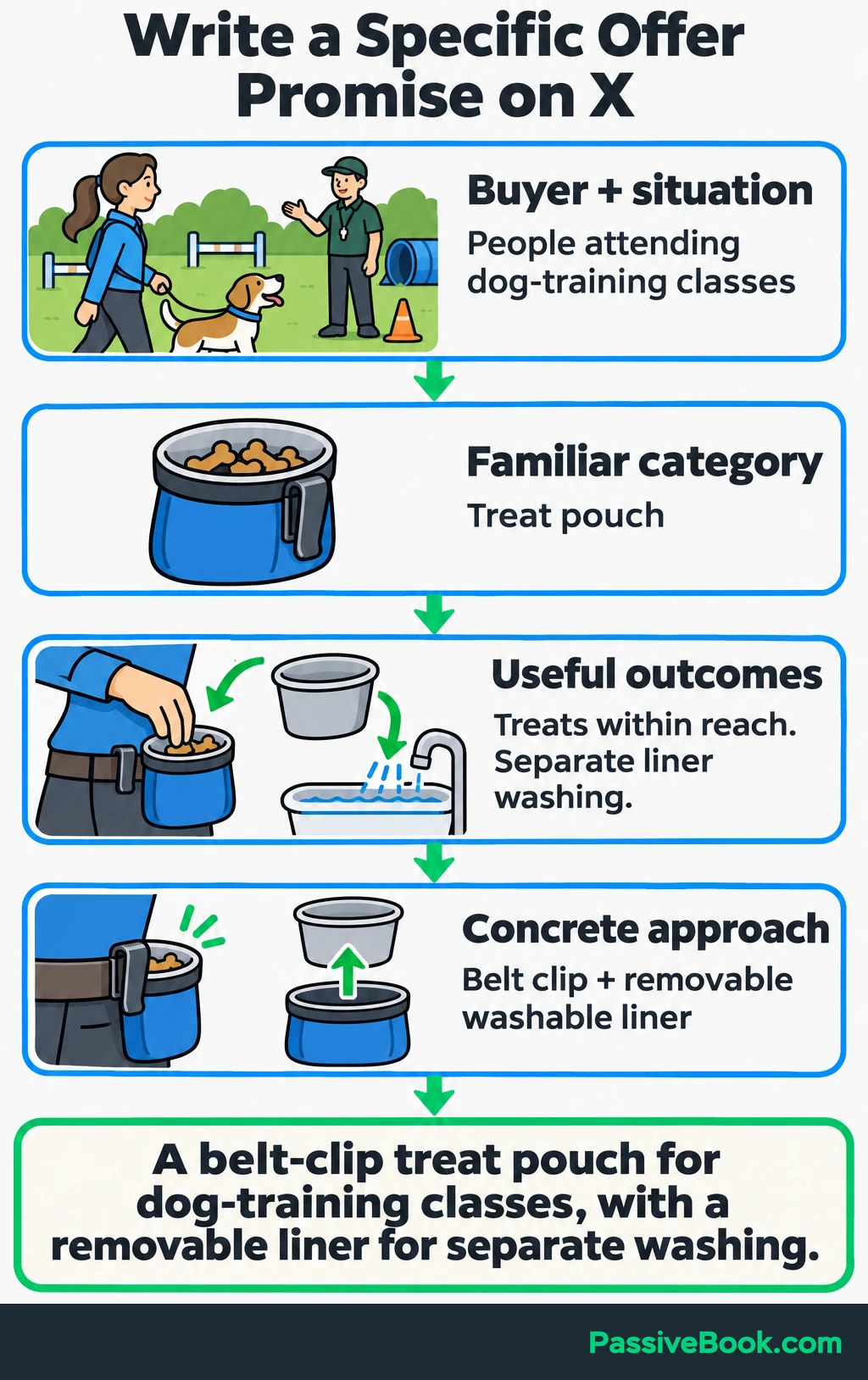
This is a writing aid for expressing what you learned. Filling the blanks doesn’t do the research for you.
For the pouch:
For people attending dog-training classes, the Class-Ready Treat Pouch keeps treats within reach with a belt clip and lets you remove the liner for washing.
You can shorten that for public copy:
A belt-clip treat pouch for dog-training classes, with a removable liner for separate washing.
Compare it with:
The ultimate accessory for every dog lover.
The specific version tells people what it is, when they might use it, and which feature deserves a closer look.
For a trainer, try “A one-to-one session for first-time puppy owners to practice leash handling, with feedback as you try it.” For a creator selling a download, try “A puppy-care checklist with spaces to record meals, toilet breaks and questions for your vet.” Show a lesson excerpt or sample page so buyers can inspect what they would get.
While revising one of my digital-product pages, I caught myself using the opening paragraph to list file formats. I had described the package before explaining the job it helped someone do. Moving that job into the opening gave me a better check for the rest of the page: did each detail help someone decide?
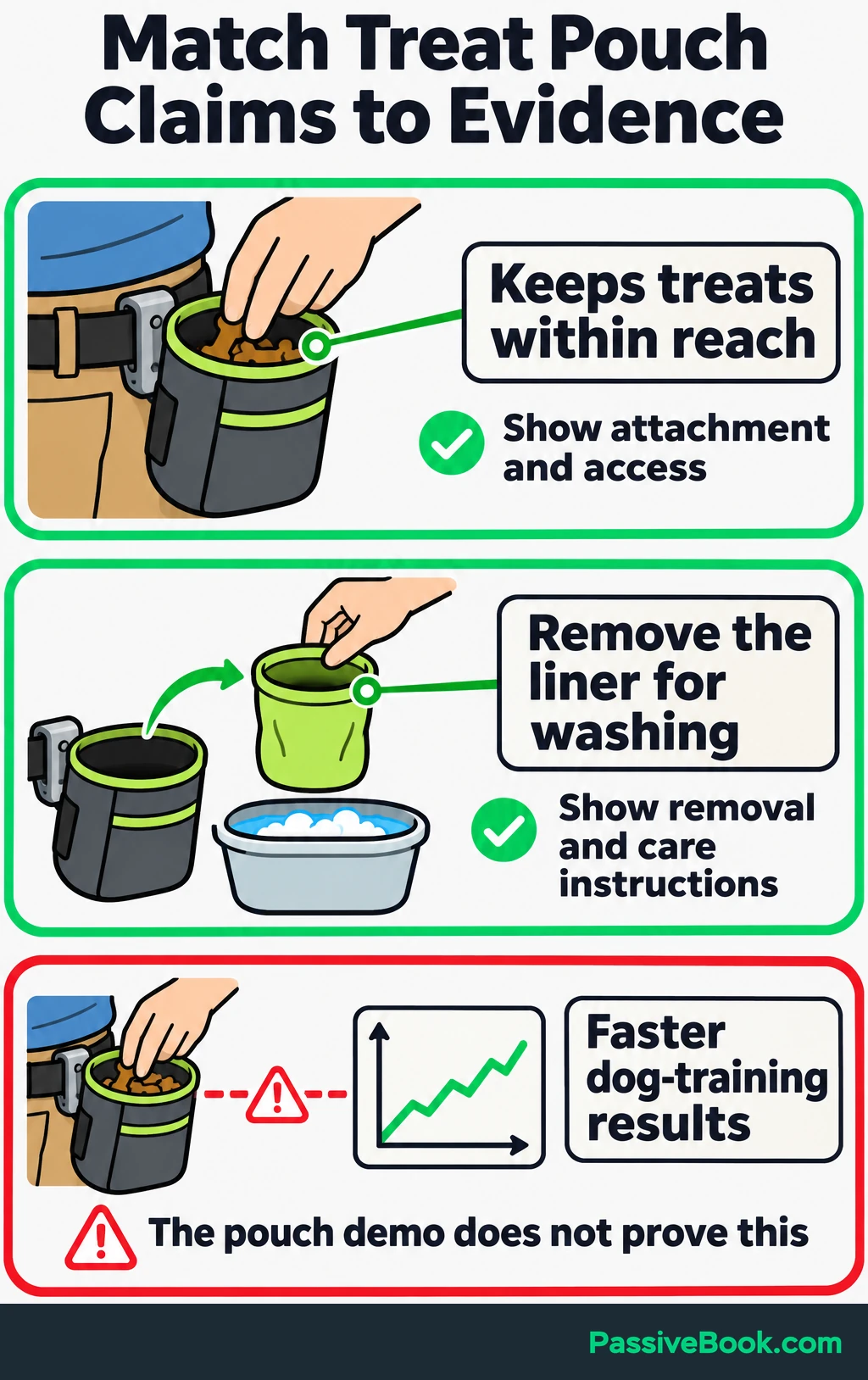
Apply the same check here. Carrying treats and removing a liner are within the product’s control. Faster training results are a much bigger promise, and the pouch demonstration cannot support it.
Make the Promise Believable
Choose evidence that lets buyers inspect the claim.
For a physical product, start with clear photos and a short demonstration. You don’t need a dramatic soundtrack to prove that a liner comes out.
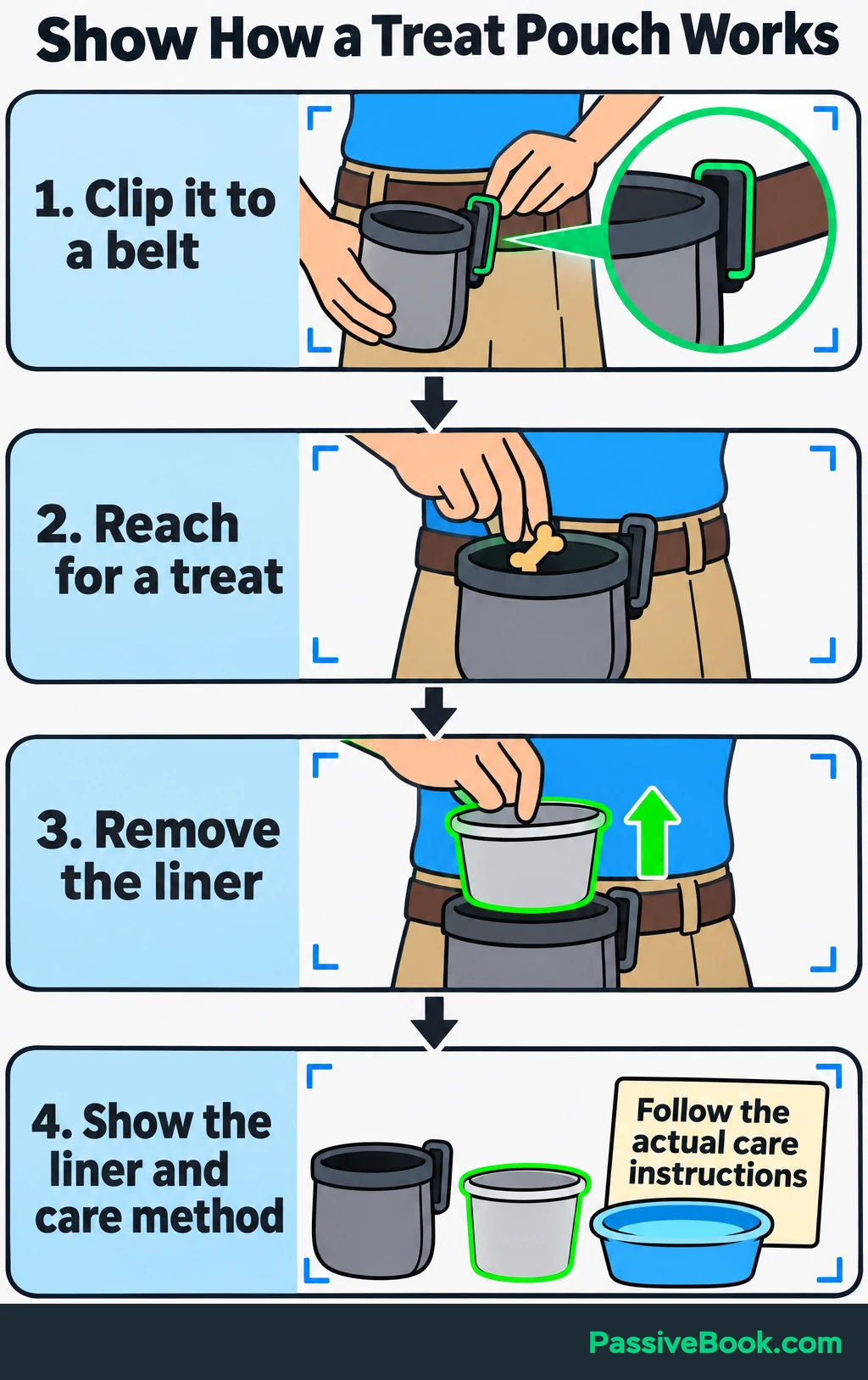
Show the Class-Ready pouch in a simple sequence:
- Clip it to a belt so viewers can see how it attaches.
- Reach inside for a treat.
- Remove the liner.
- Show the liner separately and explain how to wash it.
Keep the action visible. If your hand covers the attachment throughout the video, you haven’t answered the attachment question.
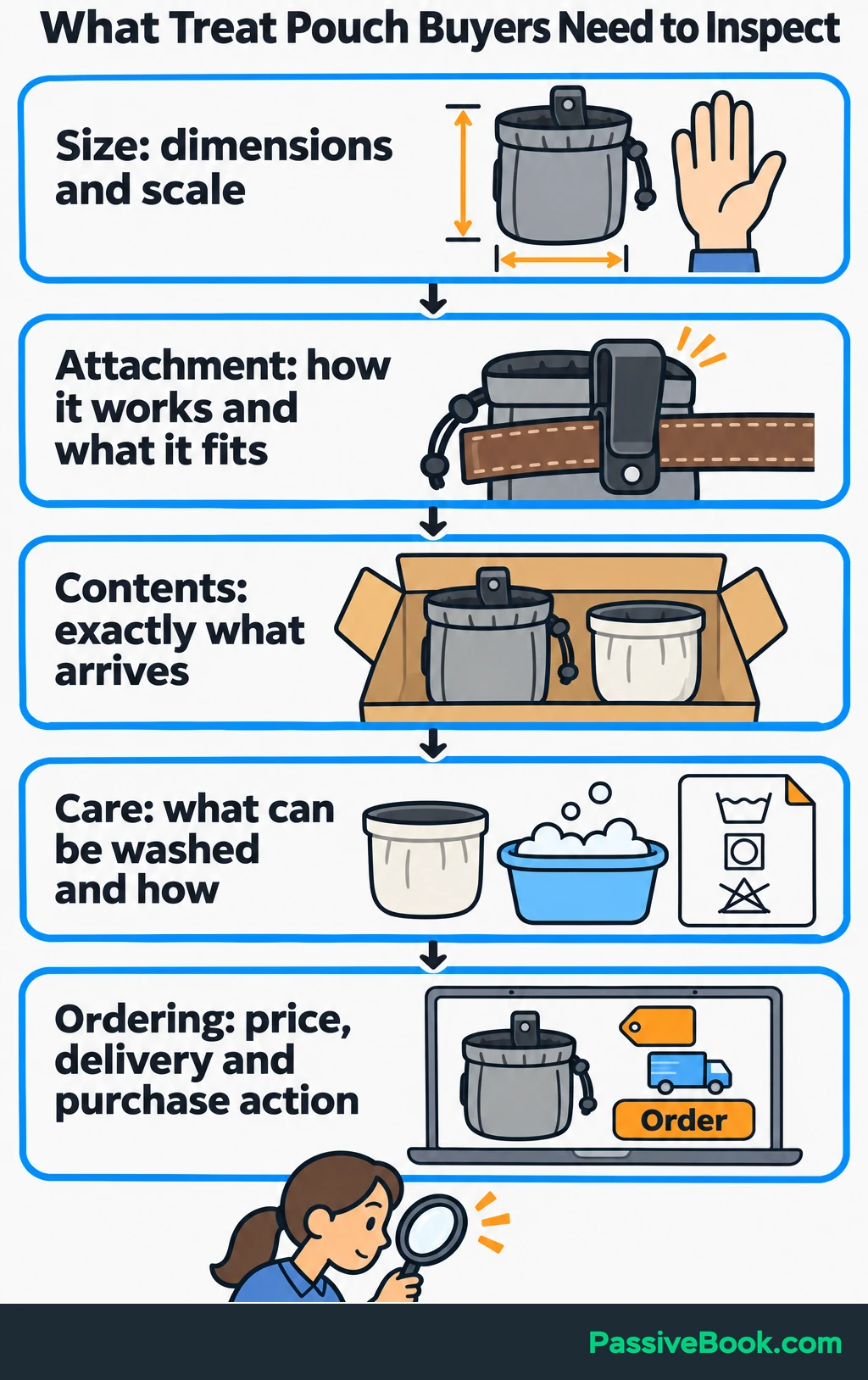
Put purchase details beside the demonstration or on the linked product page:
- Size: Actual dimensions and a clear sense of scale.
- Attachment: How the clip works and what it fits.
- Contents: Exactly what arrives with the order.
- Care: Which parts can be washed and how.
- Ordering: Current price, delivery information and purchase action.
Without customer feedback, inspectable product evidence is a sensible starting point. It shows how the pouch operates, but it doesn’t establish better training outcomes.
When you have genuine customer feedback, get permission to use it and keep the context. A comment about convenient cleaning supports that experience. It doesn’t become proof of durability or universal customer satisfaction.
Write an Offer Post With One Clear Next Step
Build the post around four connected parts: the situation, the useful outcome, the supporting detail, and the next action.
Here is a structure you can adapt:
[Facing this situation]? [Offer] helps you [outcome] with [specific approach]. [Relevant demonstration or preview]. [One next step].
For the running example, this is a complete post to publish with the demonstration attached:
Starting dog-training classes? Keep treats within reach with the Class-Ready Treat Pouch. Clip it to your belt and remove the liner for washing. Watch the attached demo to see both features in use.
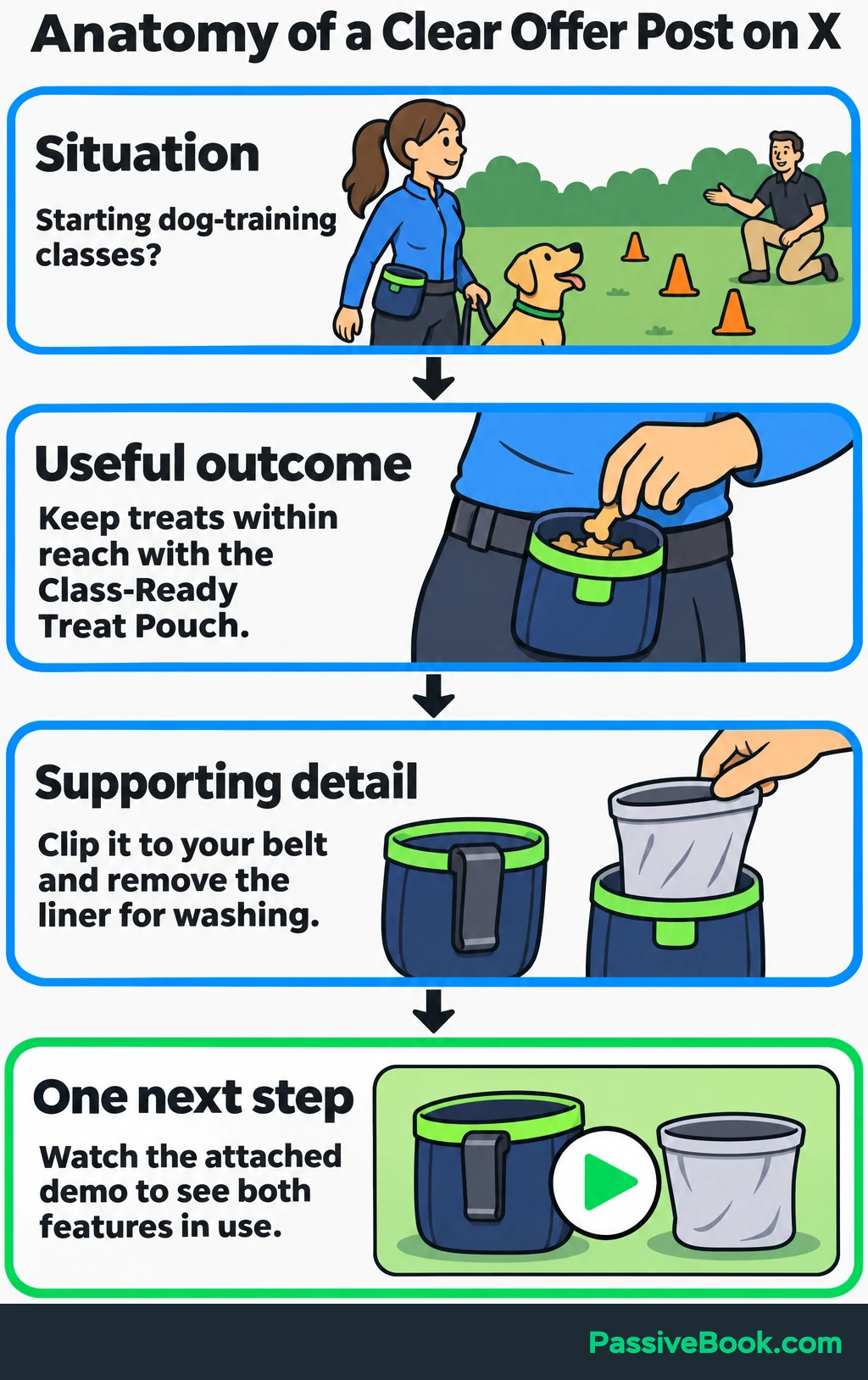
The next step is to inspect the demonstration. The post doesn’t also ask for a follow, a repost, a comment and a purchase.
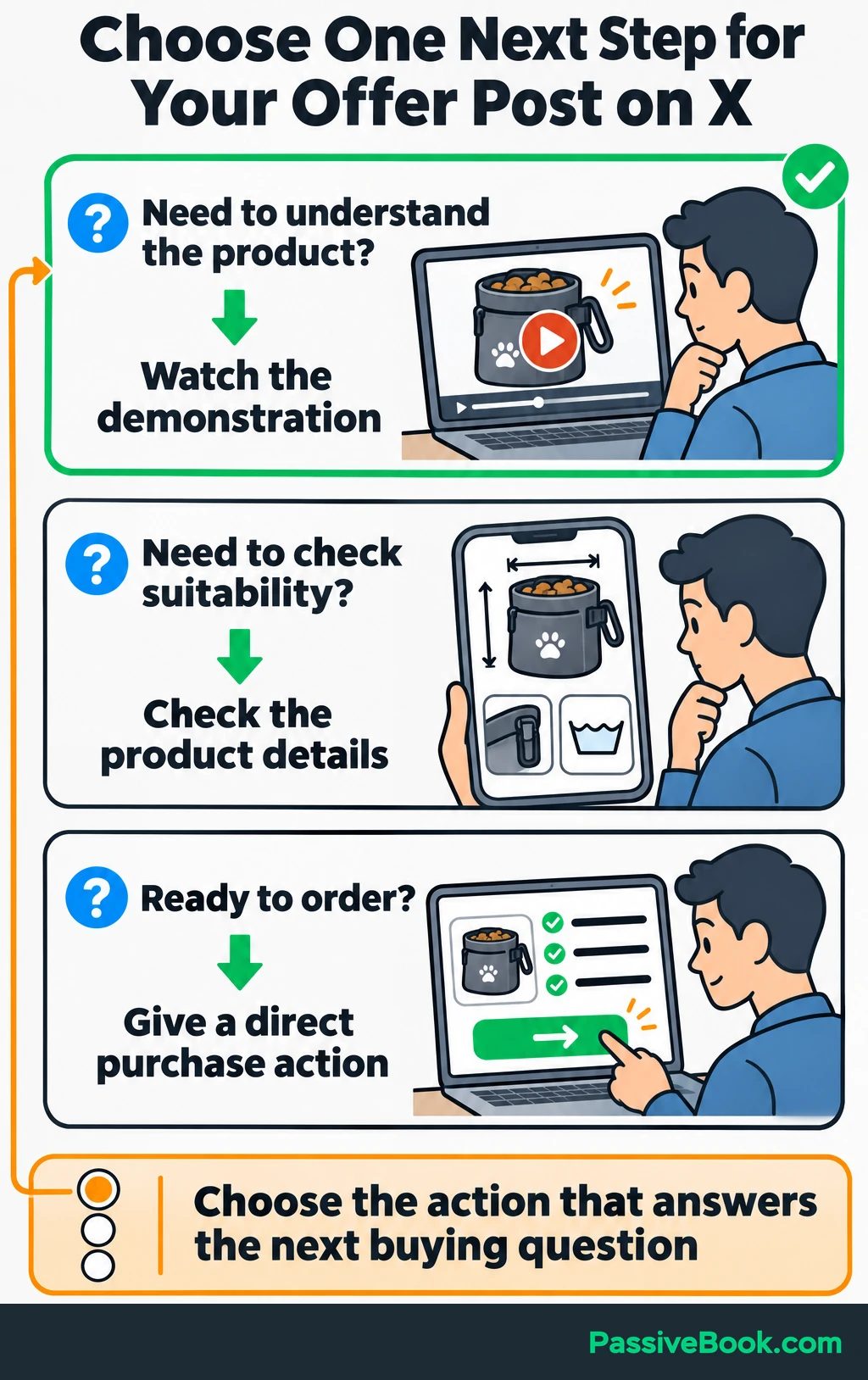
Match that action to what buyers need to decide:
- They Need to Understand the Product: Invite them to watch the demonstration.
- They Need to Check Suitability: Send them to the product page for dimensions, attachment details and care information.
- They Have Enough Information to Order: Give them a direct purchase action.
For a page-visit version, replace the final sentence with “See the demo and check the dimensions,” then add the working product-page link. Open that link on your phone before publishing and make sure those details are easy to find.
The strongest supporting detail usually answers the main objection. If people ask how the pouch stays attached, show the clip. If cleaning is the concern, show liner removal. Don’t bury the answer under a general list of benefits.
If you can describe the product but keep getting stuck on the pitch, AI Social Copy Studio can turn those details into a draft. It uses the evidence you have rather than asking you to make a bigger promise.

Free AI Social Copy Studio




Use a short thread when the explanation needs more room. Make the opening understandable on its own, use the following posts to show the product, and keep the same offer and next step. I would try a clear single post and demonstration before turning a pouch into a twelve-part documentary.
Make Your Profile Reinforce the Same Offer
Your profile should confirm what someone just learned from your post.
Write a bio that says what you sell and when it helps. For example:
Treat pouches for dog-training classes. Belt clip and removable washable liner. Watch the Class-Ready pouch demo in my pinned post.
Pin the offer post so visitors can find the promise and demonstration without searching through unrelated updates.
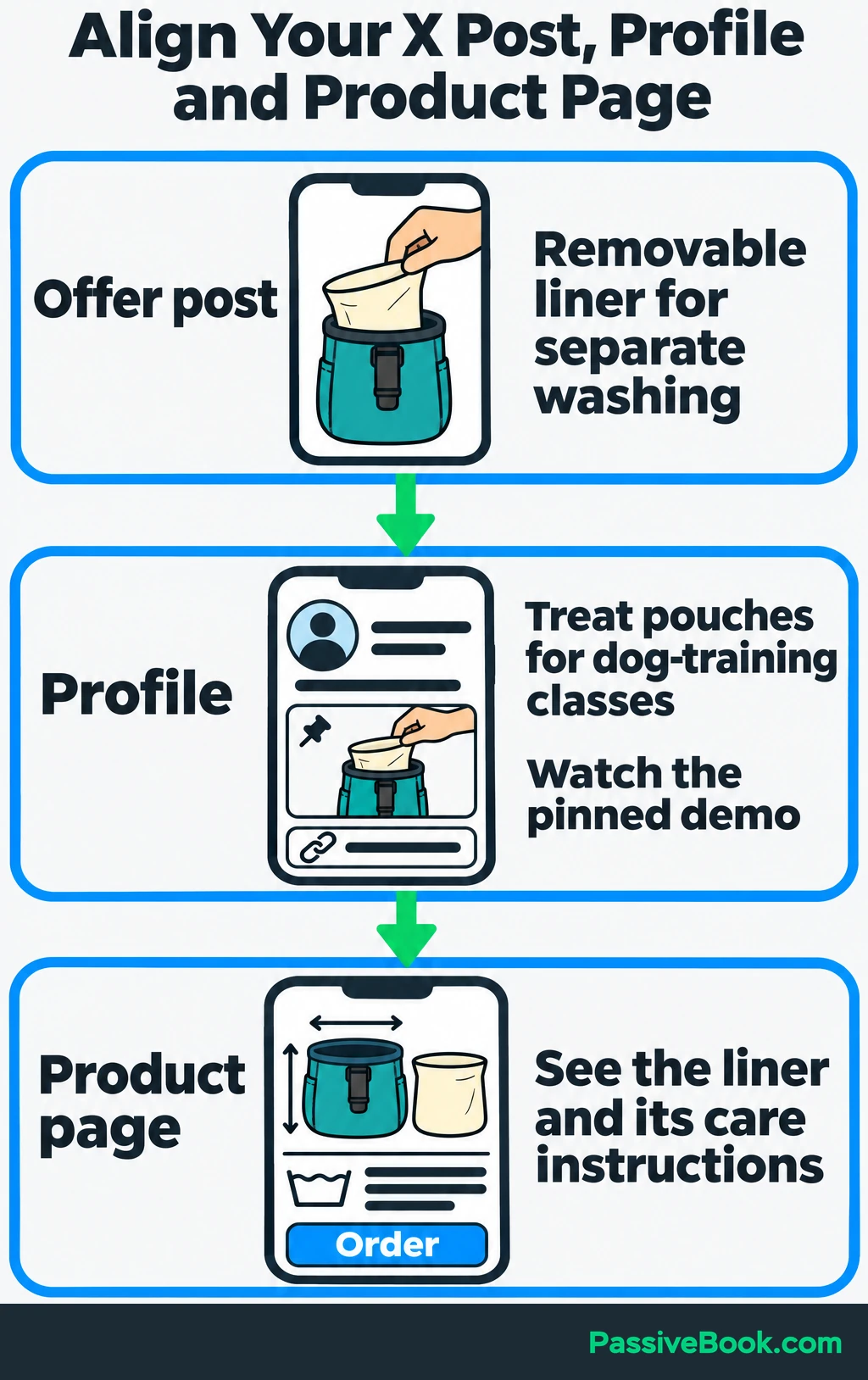
Then link your profile to the relevant product page. If you already have a website, use it. A separate landing-page subscription is unnecessary for this test.
The page should continue the same message:
Keep treats within reach during dog-training classes, then remove the liner for washing.
Follow that with the photos, demonstration, dimensions, included parts, actual price, care instructions, delivery information and purchase button.
Check the journey from post to profile to page. A post about easy liner cleaning should lead to a page where buyers can see the liner and understand its care. Each step should help them answer the next purchase question.
Attract Qualified Attention Through Useful Posts and Replies
Useful content helps someone make a decision even if they don’t buy from you.
Start with the questions you collected during research. Show how to assess attachment, access and cleaning, and use your product to illustrate those checks.
For example:
Choosing a treat pouch for class? Check how it attaches, whether you can reach inside comfortably, and how you clean the surface that holds food. Ask to see those details before ordering.
Attach clear footage of those checks using the Class-Ready pouch. The advice stands on its own, and the demonstration gives interested people a reason to investigate.
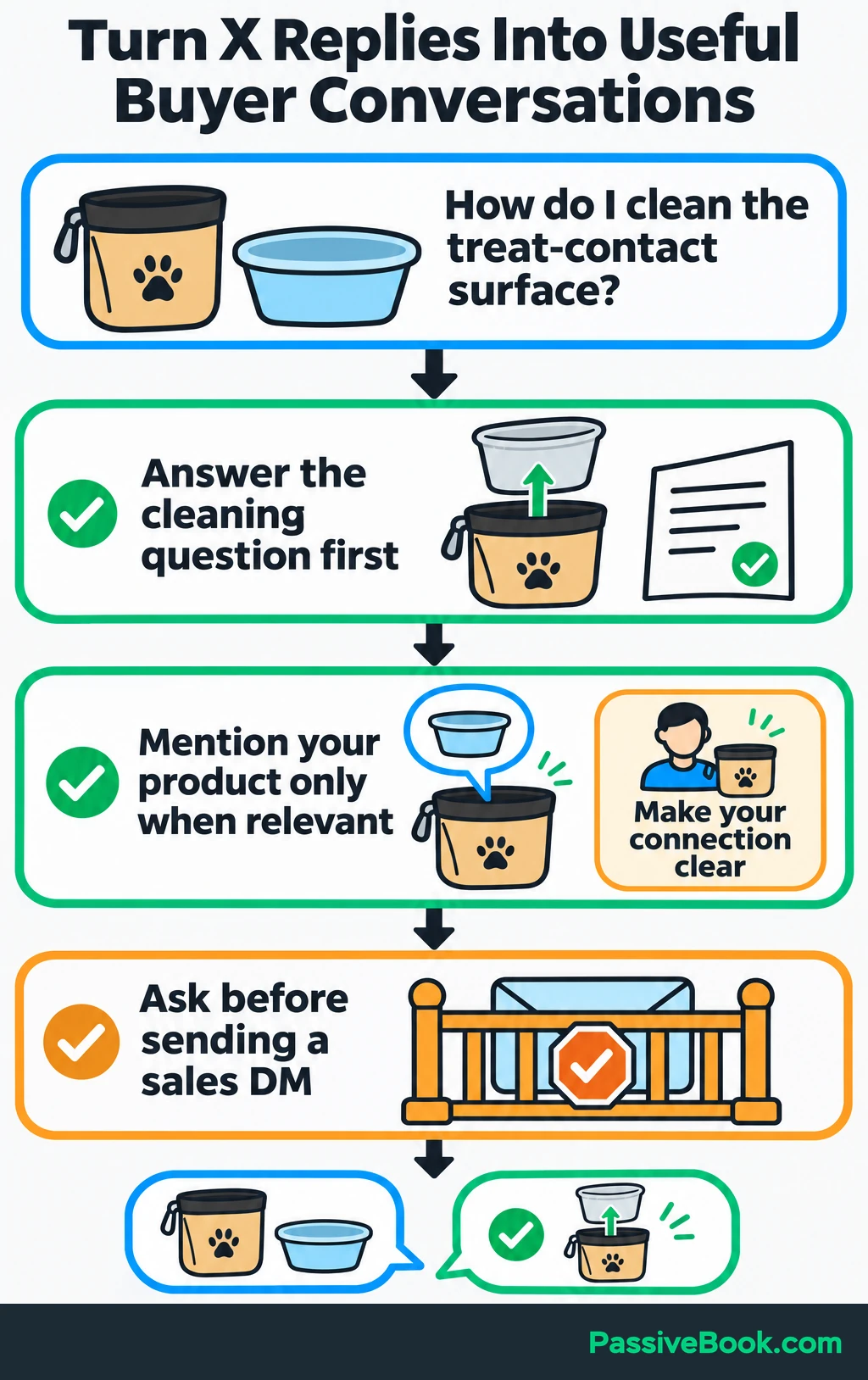
Return to relevant conversations and answer the question being asked. If someone asks about cleaning, explain the care method. Introduce your product only when it helps answer that question, and make your connection to it clear.
Ask before moving the exchange into a sales DM. A public question about equipment isn’t permission for a private pitch.
There is also a platform rule behind keeping replies relevant: X’s authenticity policy prohibits bulk unsolicited replies and messages, repeated identical or nearly identical posts, and promotional replies unrelated to the original conversation.
I would begin with a manageable routine: two short research-and-reply sessions and one useful demonstration each week. Adjust that around the conversations you find. You need time to notice questions, not just fill publishing slots.
With a small following, your first useful signals may be modest: someone recognizes the problem, asks about dimensions or requests ordering details. Those exchanges help you test understanding and interest. They don’t establish consistent demand yet, but you can begin collecting them without paid reach.
Refine the Positioning Using Qualified Responses
Check understanding before judging persuasion.
Show the message to a few prospective buyers and ask:
- “What do you think this product is?”
- “When would you use it?”
- “What, if anything, would make you choose it over what you use now?”
Keep the questions open. If people think you sell dog-training lessons, the message needs clarification before it needs more exposure.
Next, choose one primary outcome. For an early test of this pouch, I would track qualified inquiries: questions from people considering it for carrying treats who ask about fit, cleaning or ordering.
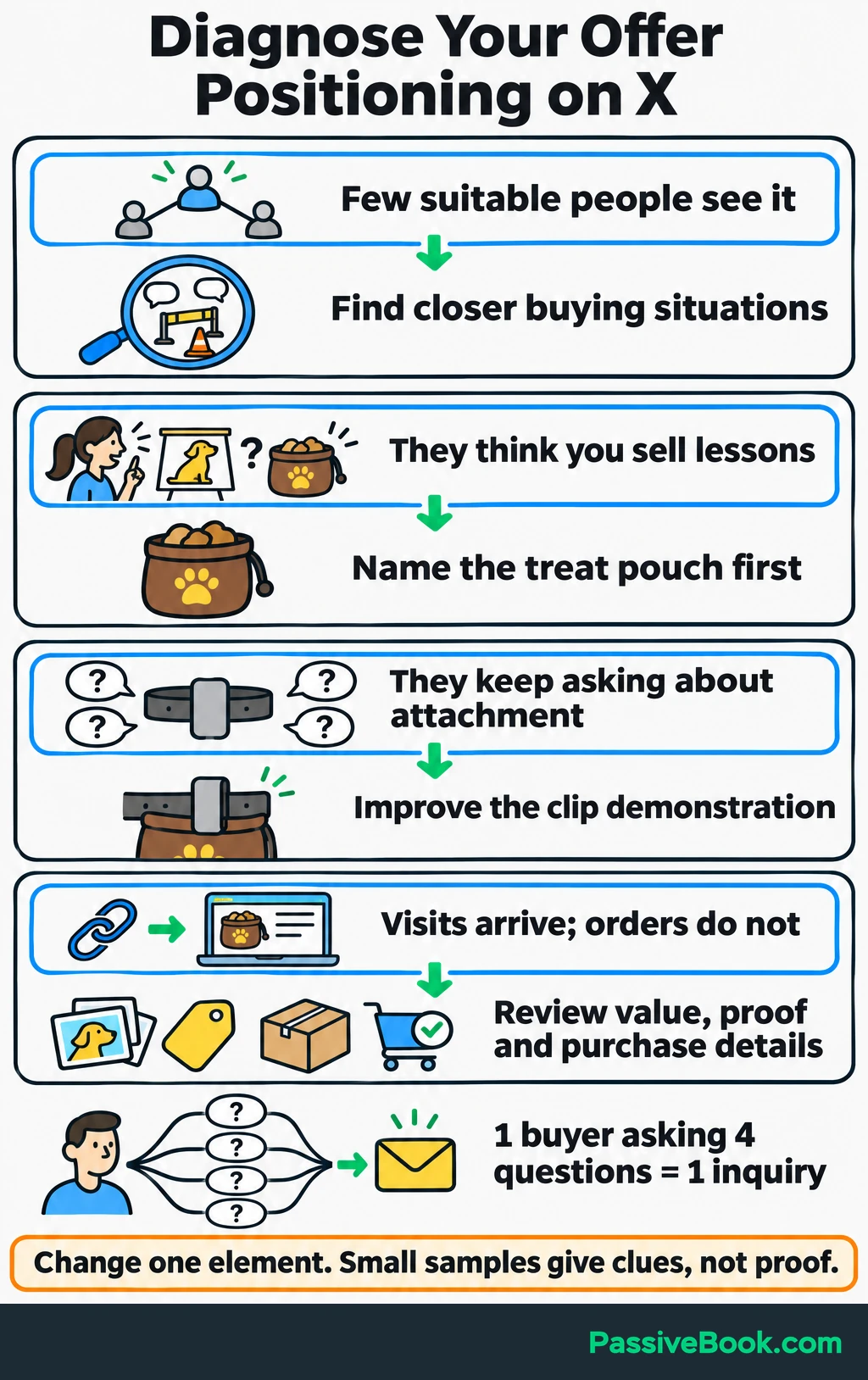
Count people rather than every message they send. One interested buyer asking four questions is one inquiry. Record purchases separately so you can see whether interest later becomes an order.
If you already use Google Analytics to track website visits, add campaign tags to each post’s product-page link. These labels let you distinguish visits from different posts; Google’s campaign URL guidance explains how to use them.
Keep one row per message version with its main selling point, post link, qualified inquiries, purchases and recurring objections. Add tagged page visits if available. Count responses over the same number of days after each post.
Then diagnose the gap before changing the copy:
| What You Observe | What to Check Next |
|---|---|
| Few relevant people encounter the offer | Find conversations closer to the buying situation |
| People think you sell training lessons | Name the treat pouch and its purpose in the opening sentence |
| Suitable buyers repeatedly ask how the clip works | Add a clearer attachment demonstration |
| Tagged visits arrive but orders don’t | Review value, proof, price, delivery details and checkout |
Change one meaningful element at a time. For instance, test leading with liner cleaning while keeping the offer page and next step steady.
Small counts and uneven organic exposure give you clues, not proof that a wording change caused more sales. If one post gets an order and another doesn’t, read the surrounding evidence before declaring a winner.
Treat substantive public objections as useful questions. Answer with a clarification, demonstration or correction. If the same concern keeps appearing among suitable buyers, improve the offer page or product itself.
An isolated hostile reply deserves less weight than a recurring purchase question. You can learn from criticism without letting the loudest stranger write your business plan.
What Next?
Find three relevant X conversations and write down what people use now, what bothers them and what they need to know before buying. Use those notes to draft one offer post and choose the evidence it needs.
Use the social buttons to share this guide when a conversation turns from getting more attention to attracting buyers who understand the offer.
What part of your offer do suitable buyers still need explained? Tell me in the comments, and bring any other questions there too.
Share this post with your friends & followers:

