A business you respect has an audience that could use your offer. You could suggest a joint promotion on X, but “let’s collaborate” leaves both of you guessing about the work, the benefit, and who handles what.
That uncertainty can turn a small campaign into a week of messages, missed posts, and clicks nobody can trace. Before committing your time, you need a proposal both businesses can assess and a way to judge the result. This guide takes a dog-hiking promotion from that first proposal to coordinated posts and a shared report, with templates you can adapt for a product launch or event.
Step 1: Choose the Offer and Primary Goal
Choose what you want people to do after reading the posts. Make one action the campaign’s main goal:
- Subscribe to an email list.
- Register for an event.
- Request information.
- Buy a product.
Then choose an offer that gives people a reason to take that action. A joint promotion needs somewhere useful to send attention. Two accounts posting about each other is a rather expensive way to exchange compliments, even when no money changes hands.
Around 2022, I spent six months chasing Instagram and Twitter/X followers in another niche. I had no proper path from those accounts to an offer, and the bank account stayed around $47. That wasn’t a joint-promotion experiment, but it explains why I now choose the business outcome before writing social posts.
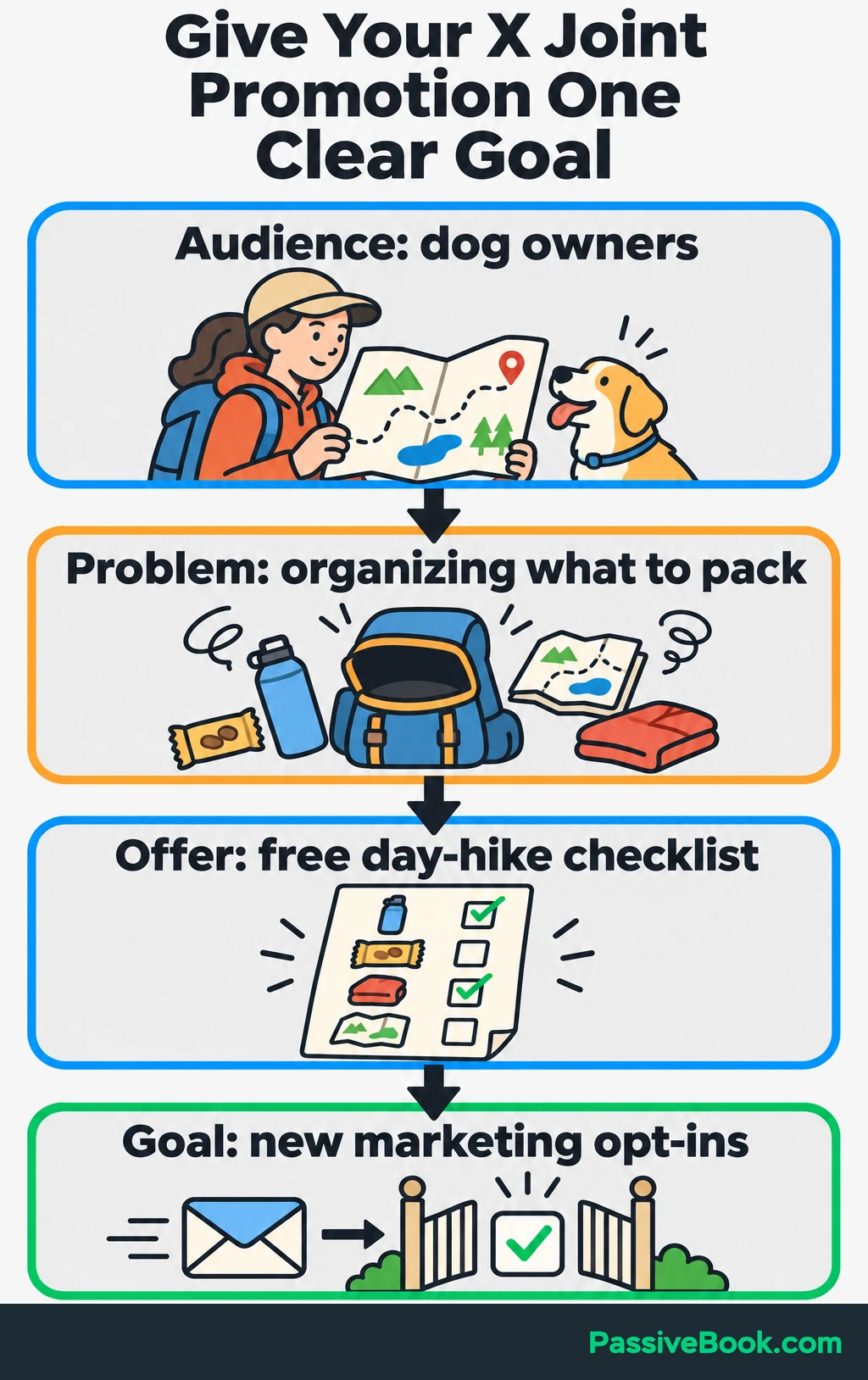
Use this brief:
Help [audience] solve [problem] with [offer], measured by [primary action].
For our running example, imagine you sell printable dog-friendly hiking planners. You partner with an outdoor dog-gear shop on a free day-hike packing checklist.
Your brief becomes:
Help dog owners organize what to pack for a day hike with a free checklist, measured by new email subscribers who actively opt in.
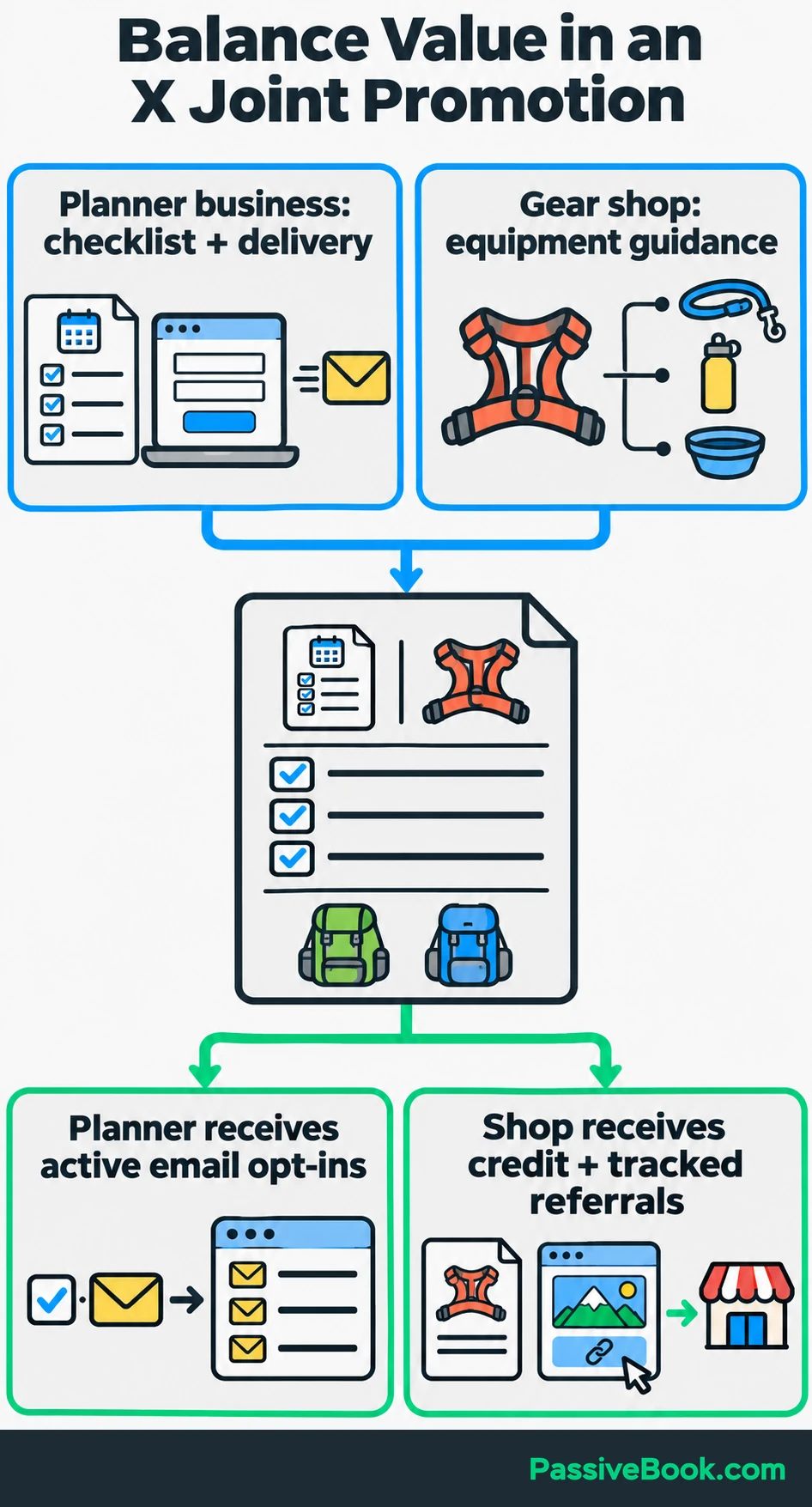
You handle the checklist and email delivery. The shop contributes equipment guidance and receives contributor credit plus a tracked link to its gear-fitting advice.
Set a target, cash limit, time allowance, campaign end, and review date. For a small test, that could mean a seven-day campaign with an announcement and follow-up from each account.
All campaign details and figures in this example are illustrations, not reported results or benchmarks.
Step 2: Find a Partner With a Relevant Audience
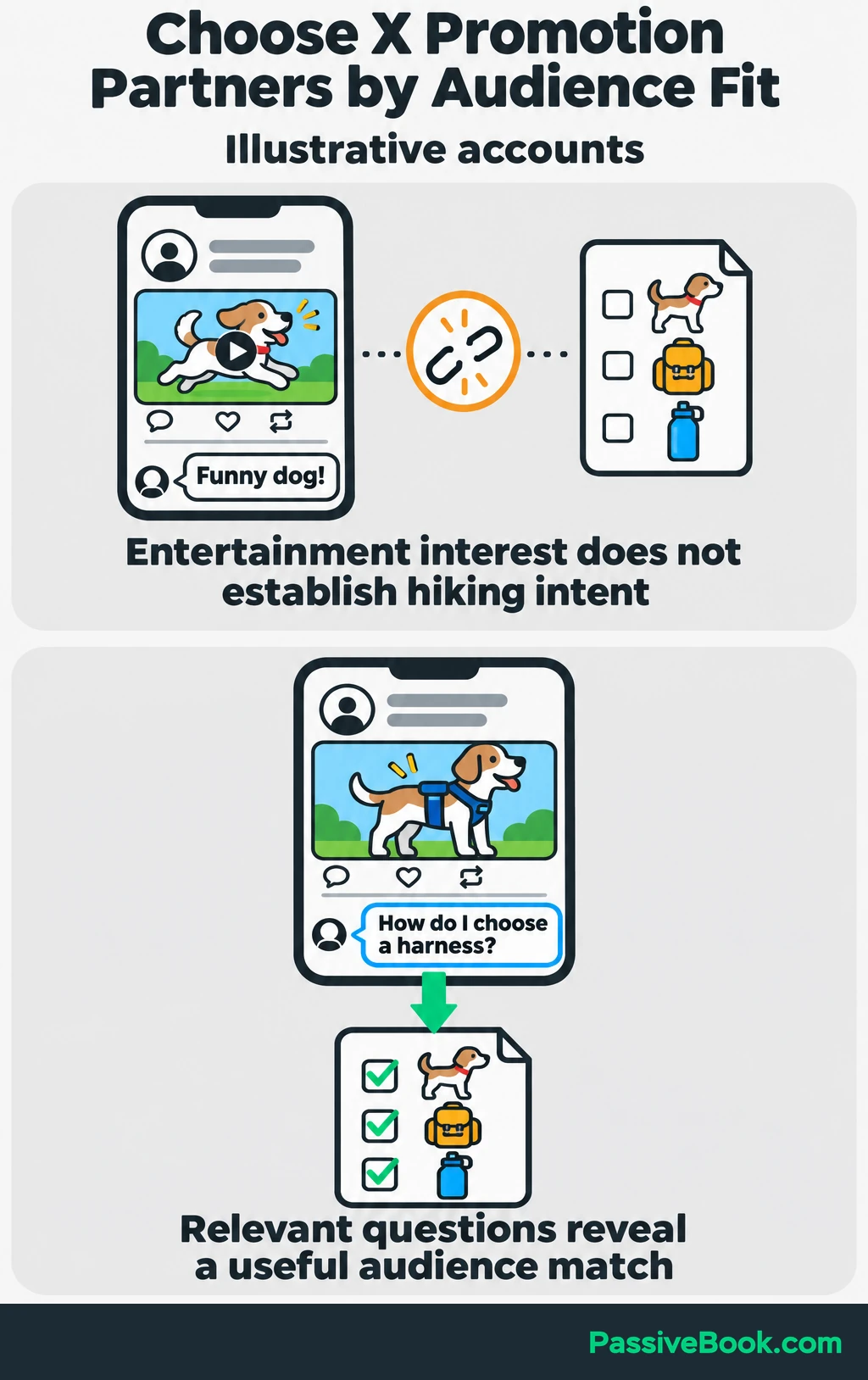
Look for people already helping with the problem your offer addresses. Search X using the words customers use in questions, then read the conversations around useful answers.
For the checklist, searches about packing for dog hikes or choosing walking equipment can reveal better prospects than a broad search for popular dog accounts.
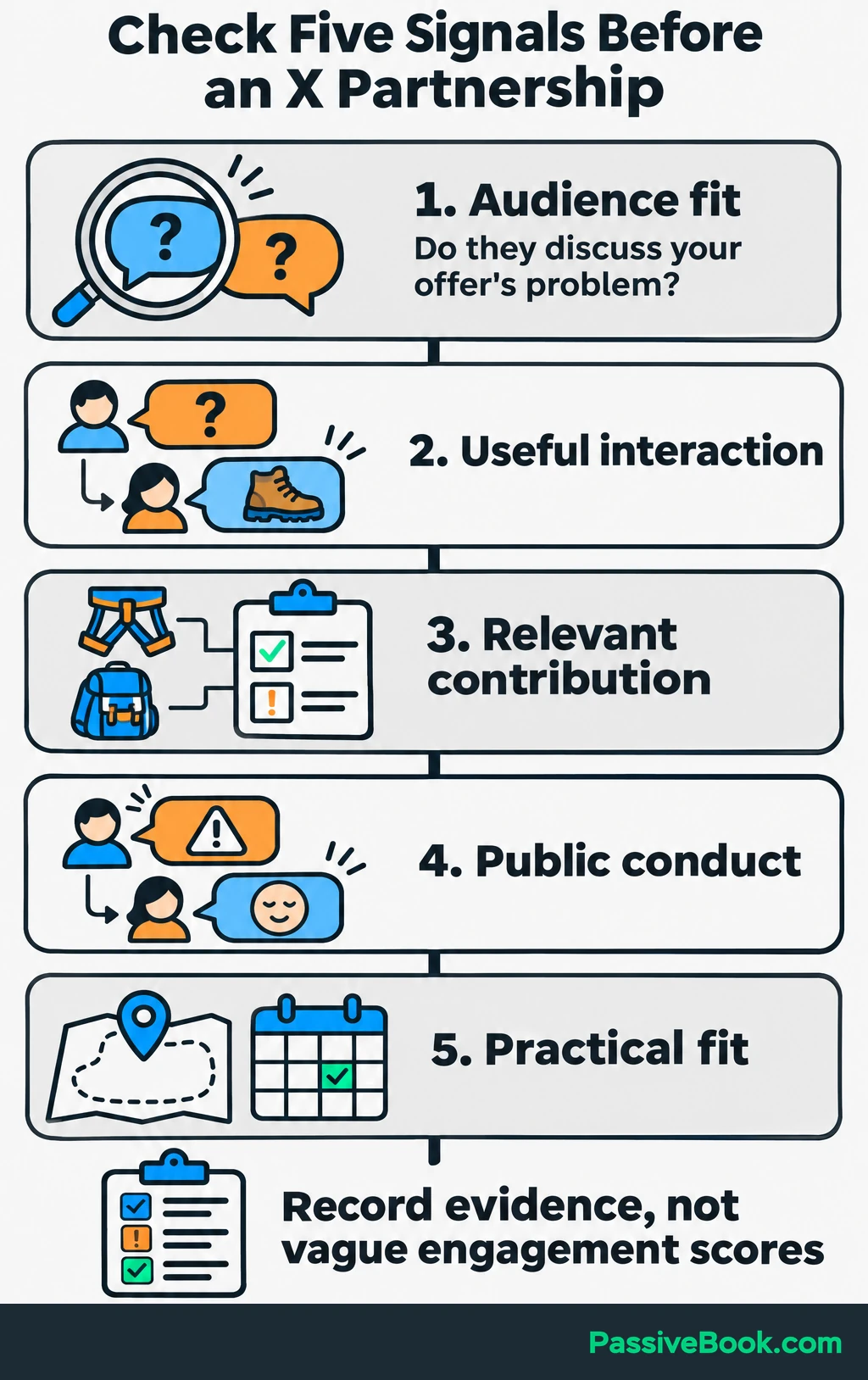
Start with existing contacts, businesses your customers mention, and contributors whose replies show practical knowledge. Then check:
- Audience Fit: Do their followers discuss the problem your offer solves?
- Useful Interaction: Are replies specific questions and conversations, or mostly generic praise?
- Relevant Contribution: What could they add that makes the offer better?
- Public Conduct: How do they handle complaints, mistakes, and disagreement?
- Practical Fit: Do their location, delivery area, and availability match the campaign?
Keep a short comparison sheet. Record actual observations beside each prospect, such as “answers harness-fitting questions in replies,” rather than writing “good engagement.”
I would choose a modest account with useful conversations over a huge animal-entertainment account. A funny dog video and an interest in hiking equipment are different reasons to follow someone.
If your audience is smaller, offer more of the production work. Drafting the resource, building the page, and handling delivery can make the proposal worthwhile without pretending your follower counts are equal.
Before contacting anyone, ask yourself whether you would comfortably put your name beside their products and conduct. Distribution is useful. Borrowed problems are less appealing.
Step 3: Choose a Promotion Format
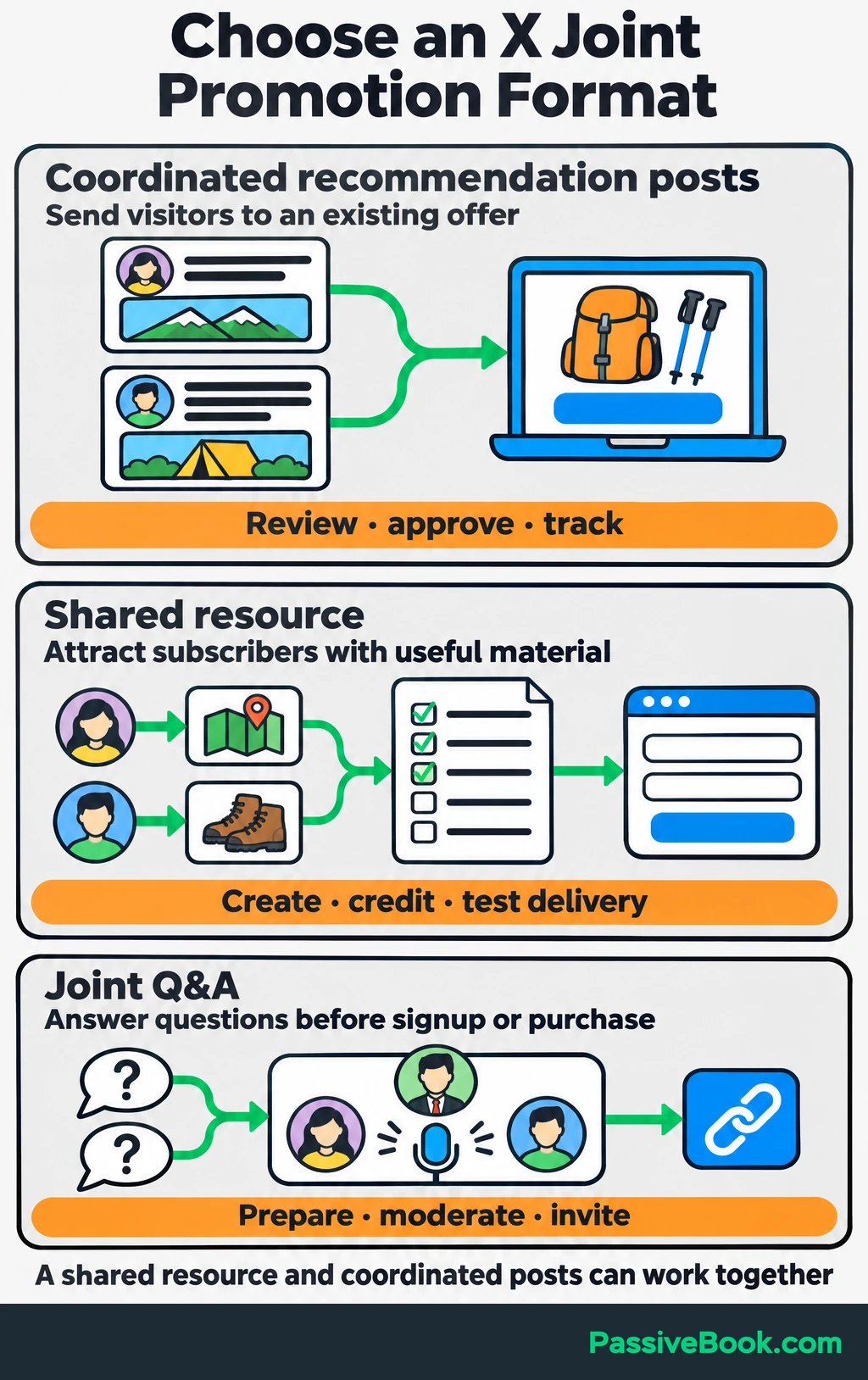
Match the format to your goal and the work both partners can deliver.
| Format | Suitable Goal | Partner Contributions | Destination | Preparation Required |
|---|---|---|---|---|
| Coordinated recommendation posts | Send visitors to an existing offer or launch | Each account explains why the offer fits its audience | Product, registration, or resource page | Review the offer, approve separate posts, and create tracking links |
| Shared resource | Attract subscribers through something useful | Each partner adds knowledge, examples, or production work | Download request or signup page | Create the resource, agree on credit, and test delivery |
| Joint Q&A | Answer questions before registration or purchase | Both contribute answers; one manages the discussion | Event page, resource, or product page | Prepare questions, assign moderation, and agree on the invitation |
These formats can work together. The shared resource is what you offer, and coordinated posts distribute it. A Q&A is an optional addition.
X Spaces provides live audio with co-hosting. To host, you need the iOS or Android app and an account without protected posts. Check that before promising a live session. X’s Space hosting guidance
For the hiking checklist, I would start with the resource and four original posts across the two accounts. The planner business contributes trip-preparation prompts, and the shop contributes equipment guidance.
I would skip the live session unless questions about the resource justify one. A calendar slot is not a reason to create an event.
Step 4: Pitch the Partner and Agree on Responsibilities
Send a Concrete Proposal
Use the partner’s stated business contact channel. Explain why your audiences connect, what you want to create, what work you will handle, and what they receive.
Here is a complete message you can adapt:
Hi [name],
Your posts about fitting walking gear address questions my customers ask when preparing for dog hikes.
Would you help create a free dog day-hike packing checklist? I sell printable hiking planners and can handle the first draft, download page, and email delivery. You would contribute and approve the equipment guidance.
We would each publish an announcement and one useful follow-up on X. The checklist would credit your shop and include a tracked link to your fitting advice. My business would manage download requests and optional email subscriptions.
Could I send a one-page brief and rough checklist for you to review?
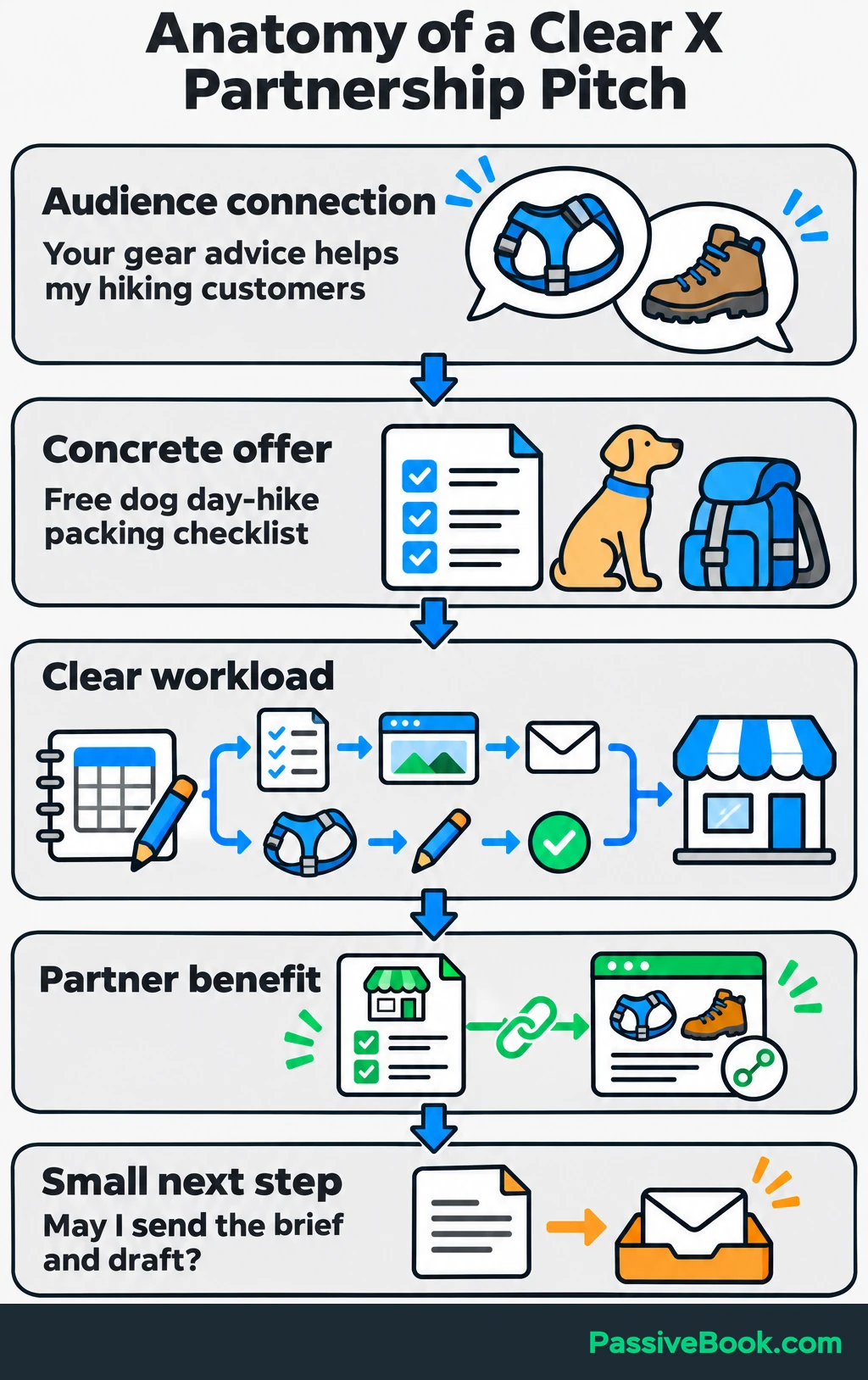
Have that draft ready. A partner can assess a rough page much more easily than an enthusiastic paragraph about “mutual growth.”
If you have a partner in mind but the proposal still sounds vague, AI Partnership Writer can write a first draft from your offer and what you can contribute. It makes the proposed work and benefit clear before you ask someone to commit.

Free AI Partnership Writer




Follow up once if needed, adding something useful such as the draft preview or a clearer workload estimate. Then move on. Repeatedly requesting attention does not improve the offer.
Record the Campaign Agreement
Put the agreement in one shared document. A short campaign needs clear decisions, even if it does not need a long document.
Include:
- Offer and Outcome: What you are promoting, the main target, and what each partner receives.
- Deliverables and Owners: Who creates the resource, reviews it, maintains the page, publishes posts, answers questions, and handles delivery.
- Dates: Approval deadline, publishing windows, time zone, campaign end, and review date.
- Assets and Permissions: Who owns the finished resource and what either partner may reuse afterward.
- Subscriber Handling: Which business collects addresses, what people agree to receive, and whether any data will be shared.
- Money: Approved expenses, compensation, and responsibility for payment.
- Changes and Failures: Who can pause the campaign and what happens if a post, approval, or delivery fails.
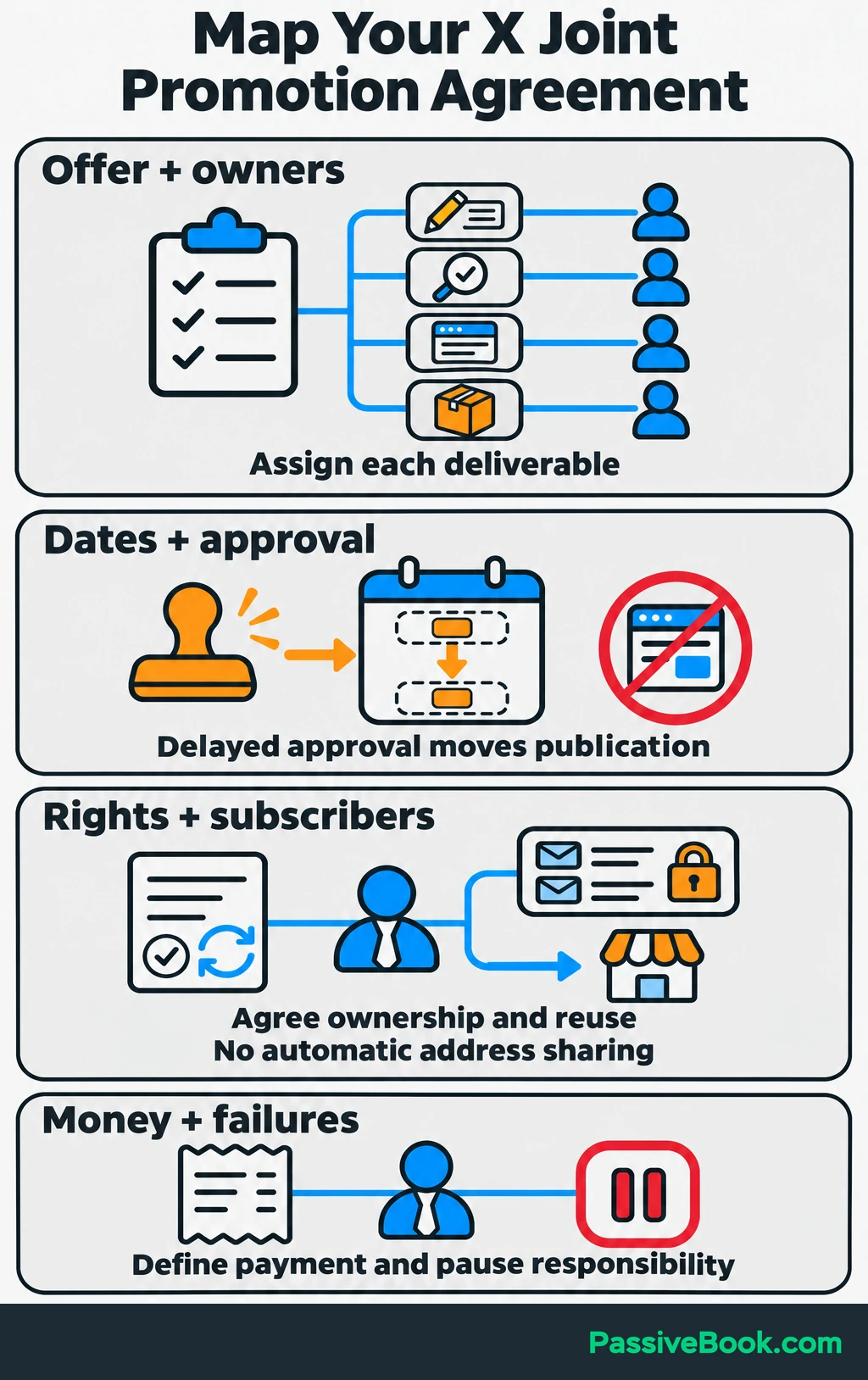
For this example, record that your business manages the email list. The shop receives credit and referral traffic, without automatically receiving subscribers’ addresses.
If money changes hands through commissions or revenue sharing, define eligible purchases, attribution, refunds, fees, and payment dates. “We’ll split the sales” leaves almost every useful question unanswered.
Agree that delayed approvals move the publishing date. Silence should not become permission to publish an unapproved endorsement.
Step 5: Prepare the Destination and Tracking
Build a Clear Path to the Offer
The destination should repeat the post’s promise, show what people receive, identify the contributors, and present one main action.
Use your existing page builder and email system. On WordPress, I’d use GenerateBlocks for pages, Fluent Forms for requests, and FluentCRM for opted-in subscribers.
For the checklist, the page could open with:
Get Your Dog Day-Hike Packing Checklist
Organize what to bring before you leave. This printable checklist combines trip-preparation prompts from [planner business] with equipment guidance from [shop].
Enter your email address and [planner business] will send the checklist.
[Email field]
[Send My Checklist]
Show a preview so visitors can judge the resource before requesting it.
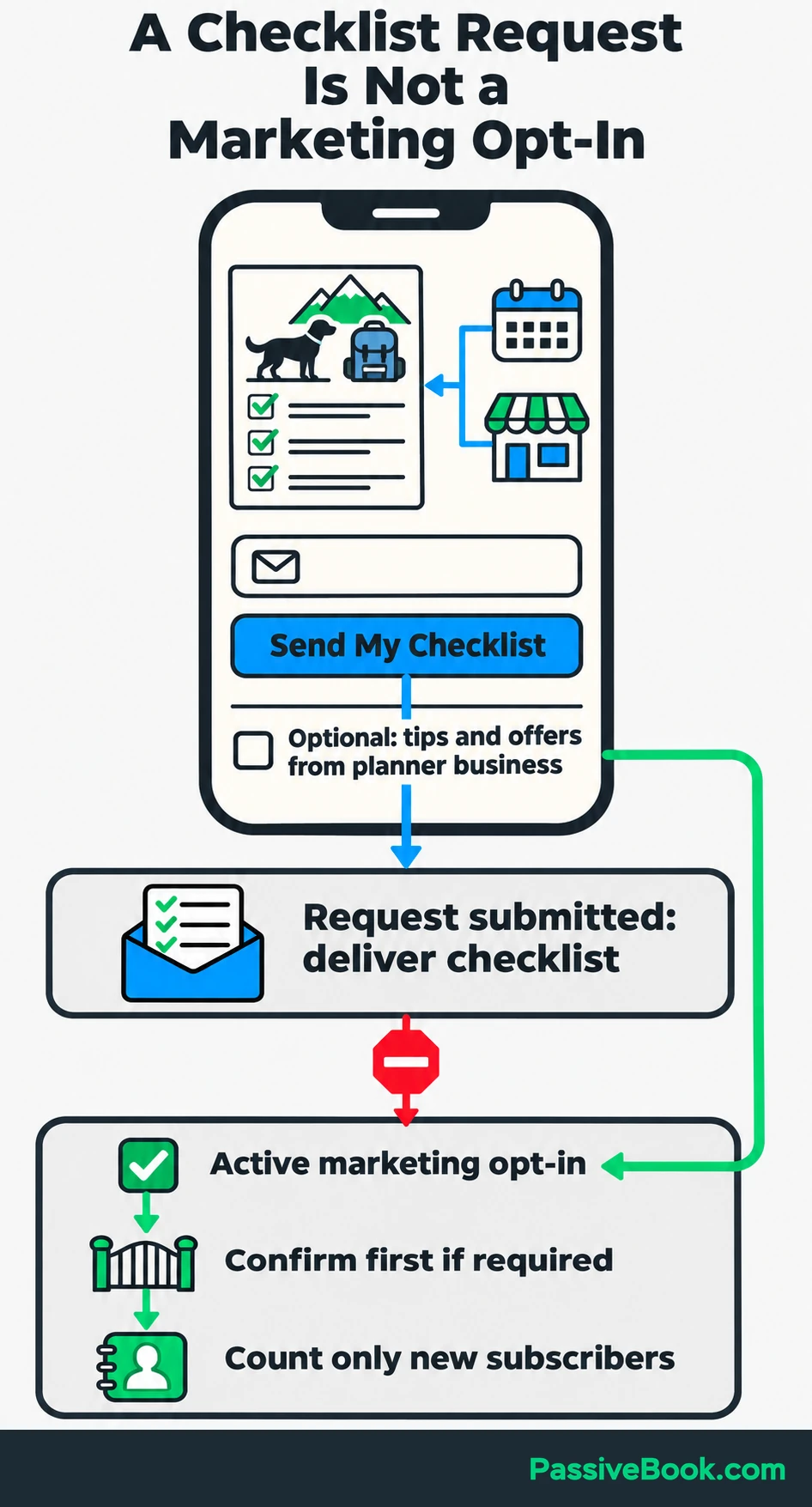
Keep ongoing marketing clear and separate. An optional, unchecked box might say:
Send me dog-hike planning tips and product offers by email from [planner business]. I can unsubscribe at any time.
If the UK’s email-marketing rules (PECR) apply and you rely on consent, get an active opt-in naming the sender. Keep it separate from the download request. Ask for separate permission if you also offer the shop’s marketing emails. ICO’s email-marketing consent guidance
Count only people who were not already subscribed and actively opt in to marketing. If email confirmation is required, count them after confirmation.
I once tested a digital-product download with my usual address and assumed it worked. A fresh address exposed a welcome message meant for existing subscribers, so now I test as a newcomer.
Open the page on a phone, submit a fresh address, and check the delivered file, confirmation, and subscription status.
Give Each Partner and Post a Distinct Tracking Link
Add campaign tags, called UTM parameters, to each post’s destination link. These let analytics distinguish the campaign and the post that sent a visit. Google’s campaign URL guidance
Use the same source, medium, and campaign name throughout:
?utm_source=x&utm_medium=social&utm_campaign=dog_hike_checklist&utm_content=shop_launchAppend this to a landing-page URL without an existing query string. Change utm_content for each post:
planner_launchshop_launchplanner_followupshop_followup
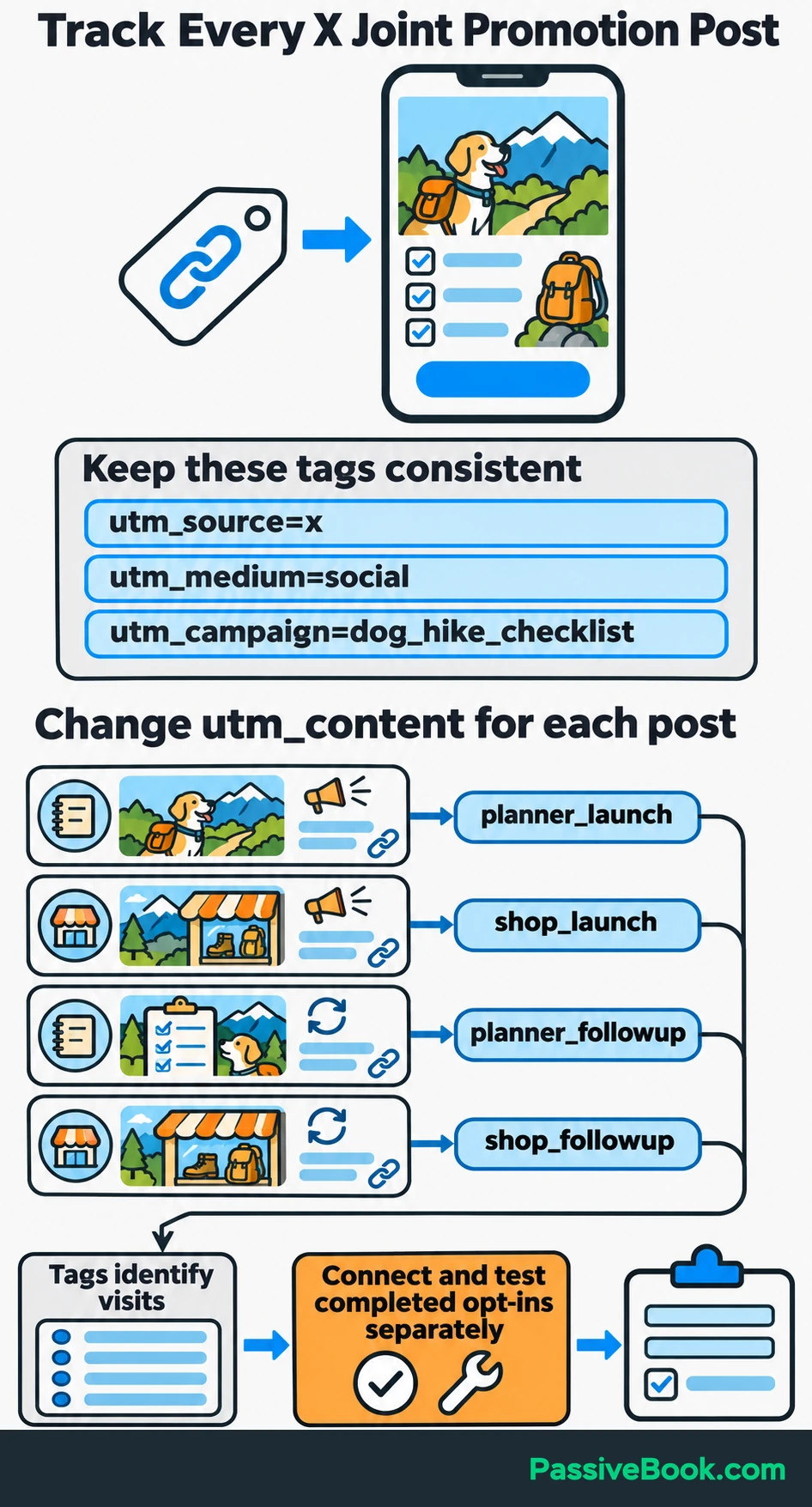
Tags identify visits; they do not automatically count subscriptions. Configure your form or analytics to connect completed marketing opt-ins with the campaign and post, then verify this with a test signup.
Track the checklist’s link to the shop separately. That measures the benefit you promised the shop rather than mixing it with visits to your own page.
Agree on how credit works. For example, credit the most recent tagged campaign visit when a new subscription follows within seven days. Include only campaign-period visits and allow seven more days for the final visits to convert.
Attribution assigns credit to tracked visits. It can miss untagged links and cross-device journeys, and it cannot prove whether someone would have subscribed without the collaboration.
Step 6: Write and Coordinate the X Posts
Give Each Account a Distinct Angle
Write each post around a problem the account’s readers recognize. Explain the benefit, name the partner’s contribution, and give one next action.
Use this structure:
Situation → useful outcome → partner contribution → action and tracked link.
Your account can focus on organizing the day out. The shop can focus on preparing equipment. Both lead to the same checklist.

The sample posts below use “Ad” to make this exchange of promotional work clear. Replace the bracketed handles and links before publishing.
For the planner business:
Ad: Planning a day hike with your dog? We made a free packing checklist with @[shop] to help organize what to bring. Get your copy: [tracked link]
For the shop:
Ad: Get your dog’s hiking gear organized before you leave. We contributed equipment guidance to @[planner]’s free day-hike packing checklist. Get it here: [tracked link]
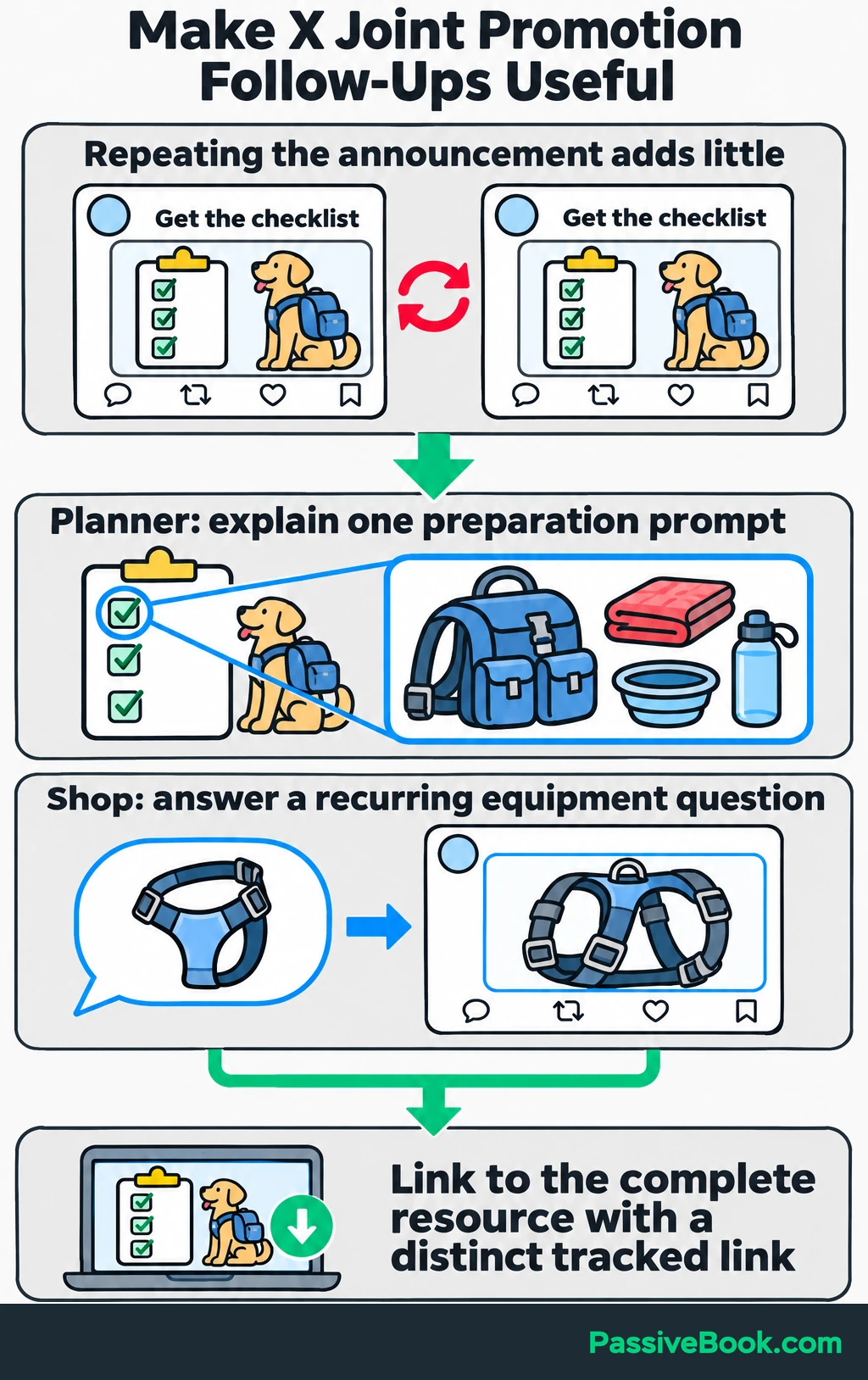
Give the follow-ups a useful reason to exist. Show a checklist preview or explain one preparation prompt, then link to the complete resource. Do not publish the announcement again with three words rearranged.
Keep essential information in the post text, and add descriptive alternative text to images.
For a product launch, change the final action to buying and explain one concrete use for the product. For an event, include the subject, date, time zone, and registration link.
Approve the Publishing Plan
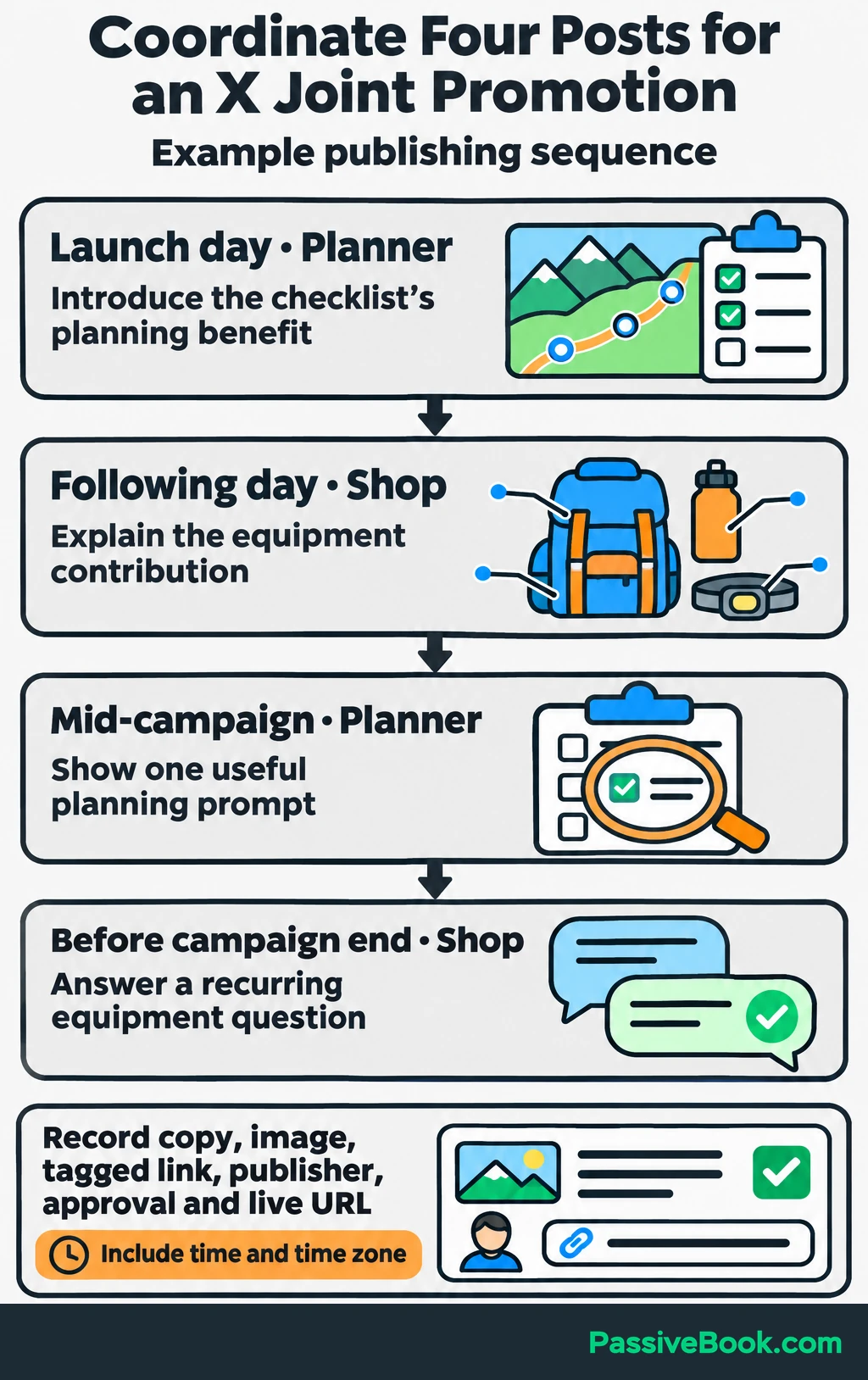
Create one publishing sheet with a row for every post. Include the account, date, time and time zone, purpose, approved copy, image, tagged link, publisher, approval status, and live-post URL.
A simple sequence could look like this:
| Timing | Account | Purpose |
|---|---|---|
| Launch day | Planner business | Introduce the checklist and its planning benefit |
| Following day | Shop | Explain the equipment contribution |
| Mid-campaign | Planner business | Show a useful planning prompt |
| Before campaign end | Shop | Answer a recurring equipment question and link to the checklist |
Choose times when the named publishers can also check delivery and questions. Use your existing scheduler or calendar reminders.
Keep the agreement about original promotional posts. Do not require like-for-like or repost exchanges, duplicate posts, or bulk unsolicited mentions and messages. X prohibits coordinated engagement exchanges and spam. X’s authenticity policy
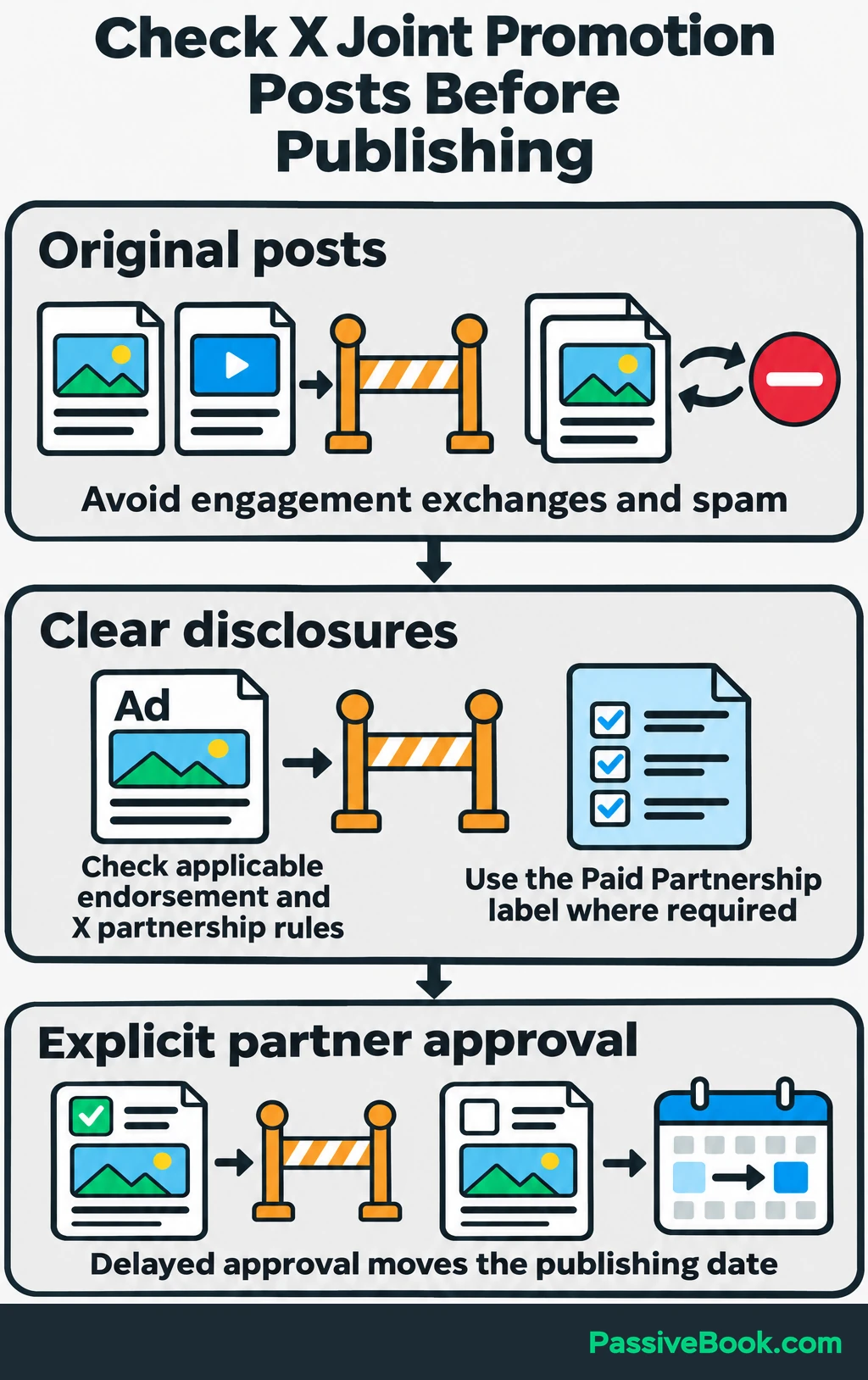
Check whether your arrangement falls under X’s paid partnership rules before publishing. Payments, gifts, services exchanged as compensation, and commissions can qualify. For covered posts published without paid advertising, enable the Paid Partnership disclosure and confirm that the product category is eligible. X’s paid partnership policy
Where US endorsement rules apply, disclose material connections clearly in the endorsement itself. A partner tag or “collab” alone is insufficient, and a platform label may need accompanying wording. “Ad” or a plain explanation of the actual payment, gift, or commission can make the connection clear. FTC disclosure guidance
Step 7: Publish and Manage the Promotion
Before the first post goes live, recheck the resource, delivery, partner handles, approved copy, disclosures, and tracking links.
Have each account’s named publisher publish its posts and add the live URLs to the sheet. Each partner should manage access to its own account.
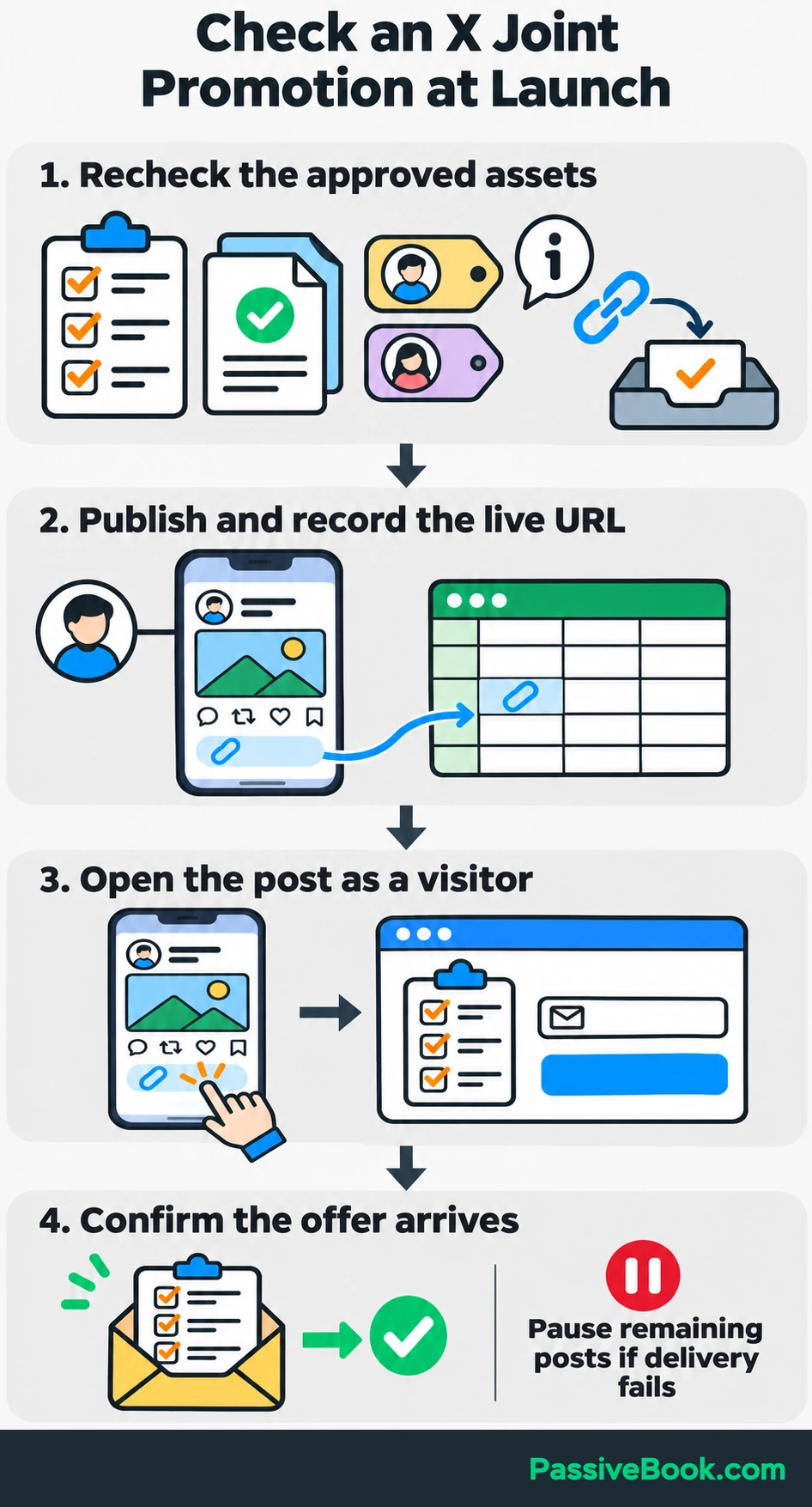
Then open both posts as a visitor would. Follow the links and confirm that the page delivers the promise.
During the campaign:
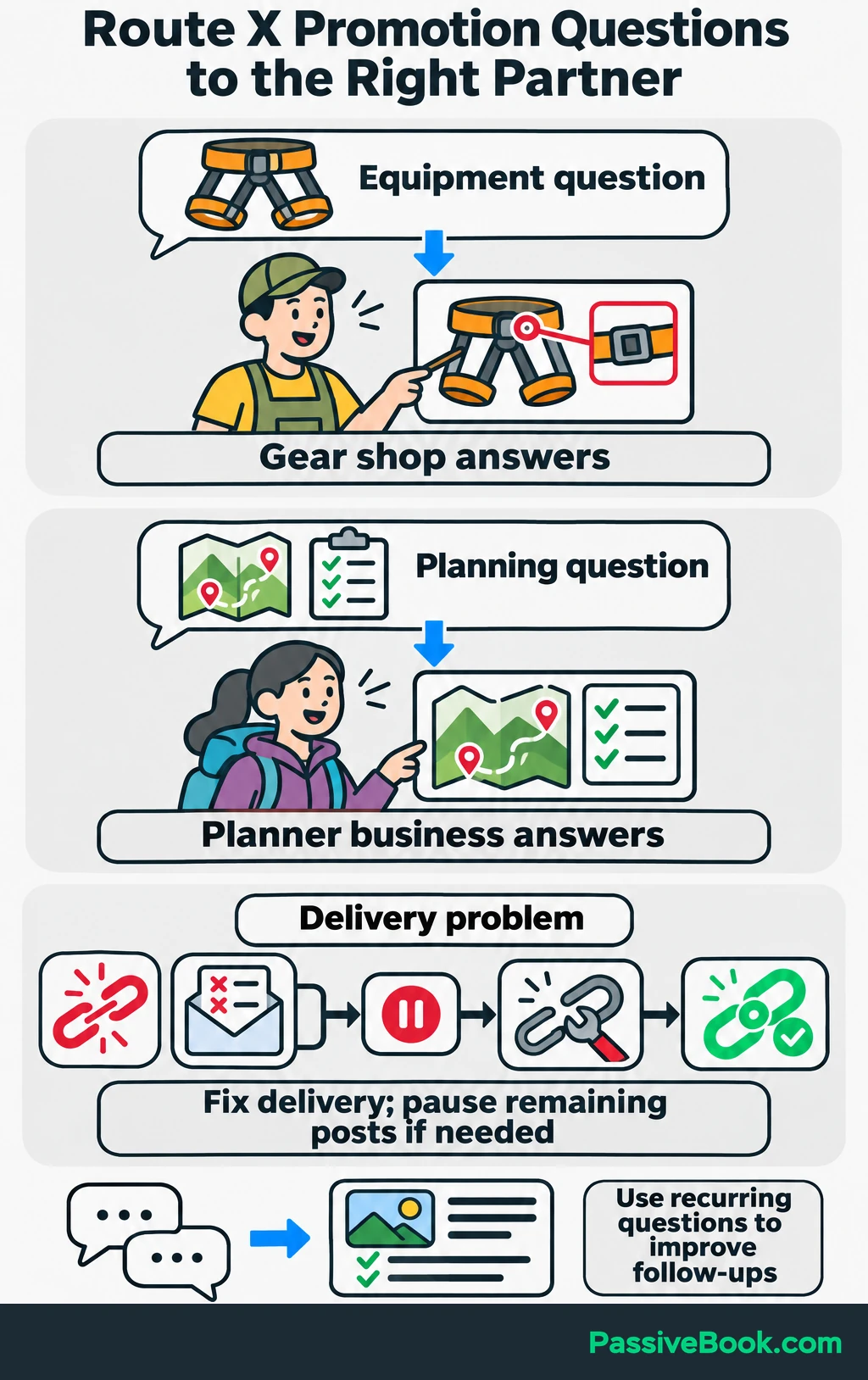
- Check Questions: Use agreed check-in windows rather than watching X all day.
- Bring In the Right Contributor: Ask the shop to answer equipment questions and handle planning questions yourself.
- Improve Follow-Ups: Use recurring questions to choose what the next post explains.
- Fix Delivery Problems: Correct broken links promptly and pause remaining posts if people cannot receive the offer.
If you add a Space, name the host and moderator, test audio, and prepare a short agenda. Share a post containing the offer link during the discussion so listeners have somewhere to go.
When plans change, update the shared sheet and confirm the revised dates with your partner. A schedule only helps when both people are following the same version.
Step 8: Measure Results and Decide Whether to Repeat
Review after the agreed conversion window closes. Start with the main outcome, then compare it with the target, cash spent, hours worked, and the benefit promised to each partner.
For a subscriber campaign, record each post’s URL, tracked visits, attributed new subscribers, and conversion rate. Keep campaign costs and labor alongside the report.
Here is an illustrative result:
| Account and Post | Tracked Visits | New Opted-In Subscribers | Signup Rate |
|---|---|---|---|
| Planner announcement | 60 | 9 | 15% |
| Shop announcement | 80 | 12 | 15% |
| Planner follow-up | 25 | 4 | 16% |
| Shop follow-up | 35 | 5 | 14.3% |
| Campaign total | 200 | 30 | 15% |
These subscribers are attributed to the listed campaign visits under the agreed rule, and each new subscriber is counted once.
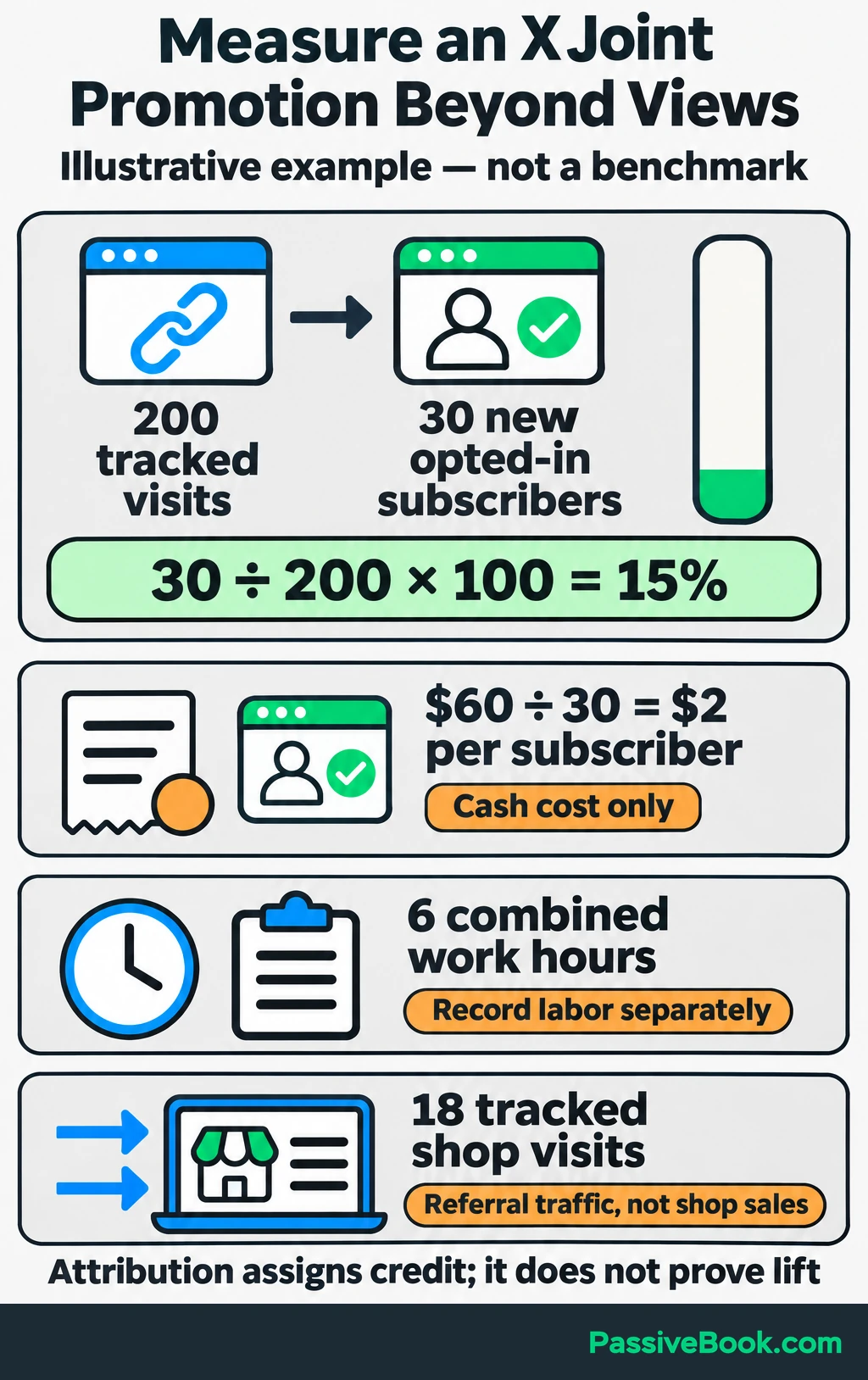
To calculate the signup rate, divide the new subscribers from those tracked visits by the number of tracked visits, then multiply by 100:
30 ÷ 200 × 100 = 15%
To calculate cash cost per subscriber, divide direct campaign spending by those new subscribers:
$60 ÷ 30 = $2 per subscriber
Record labor separately. In this example, six combined hours of work still matter even though they are not included in the $2 figure. If there are zero conversions, report zero and the amount spent; do not divide by zero.
Suppose the checklist also sends 18 tracked visits to the shop’s fitting-advice page. Report those separately. They show referral traffic, not shop sales.
Use X views as an exposure measure. They are not unique people reached because repeat views can count. X’s view-count explanation
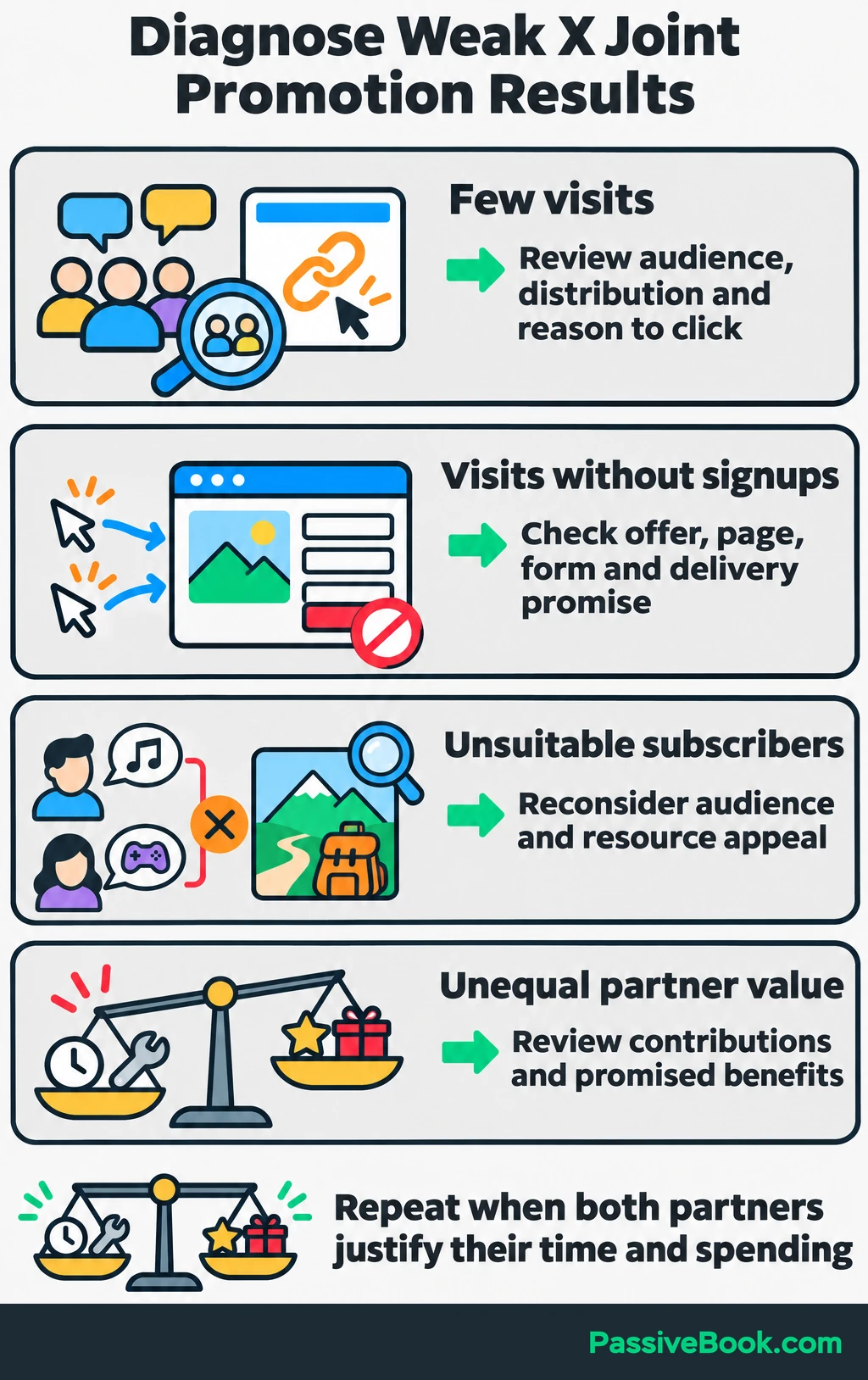
Let the weak point guide your next change:
- Few Visits: Review the audience match, distribution, and whether the post gives a clear reason to click.
- Visits Without Signups: Check the offer, page, form, and delivery promise.
- Unsuitable Subscribers: Reconsider the partner’s audience and what the resource attracts.
- Unequal Value: Review the contribution and benefit agreed with each partner.
For a purchase campaign, start with attributable revenue after discounts and refunds. Then subtract fulfillment costs, payment fees, partner payouts, and campaign expenses to calculate campaign profit.
I would repeat when both partners receive enough value to justify their time and spending. Otherwise, revise the weakest part or stop. Save the brief, agreement, posts, links, and report so the next test starts with useful work already done.
What Next?
Write your one-sentence offer brief and shortlist three accounts whose audiences already ask about that problem. That gives you something concrete to assess before sending a proposal.
Use the social buttons to share this guide when you want a potential partner to see how a small campaign could work.
Which part would you want settled before agreeing to a joint promotion: audience fit, workload, or measuring results? Share your answer in the comments, and bring any other questions there too.
Share this post with your friends & followers:

