You find an account whose customers could use what you sell. They answer sensible questions, their business looks relevant, and you can see a reason to work together. Then comes the awkward part: what do you actually say?
A vague “let’s collaborate” leaves the other person to invent the project, and a long sales pitch asks for trust you haven’t earned. To move that conversation forward, this guide shows what makes a partnership offer worth considering and how to tell whether the resulting collaboration benefits both businesses.
Choose a Partnership Goal
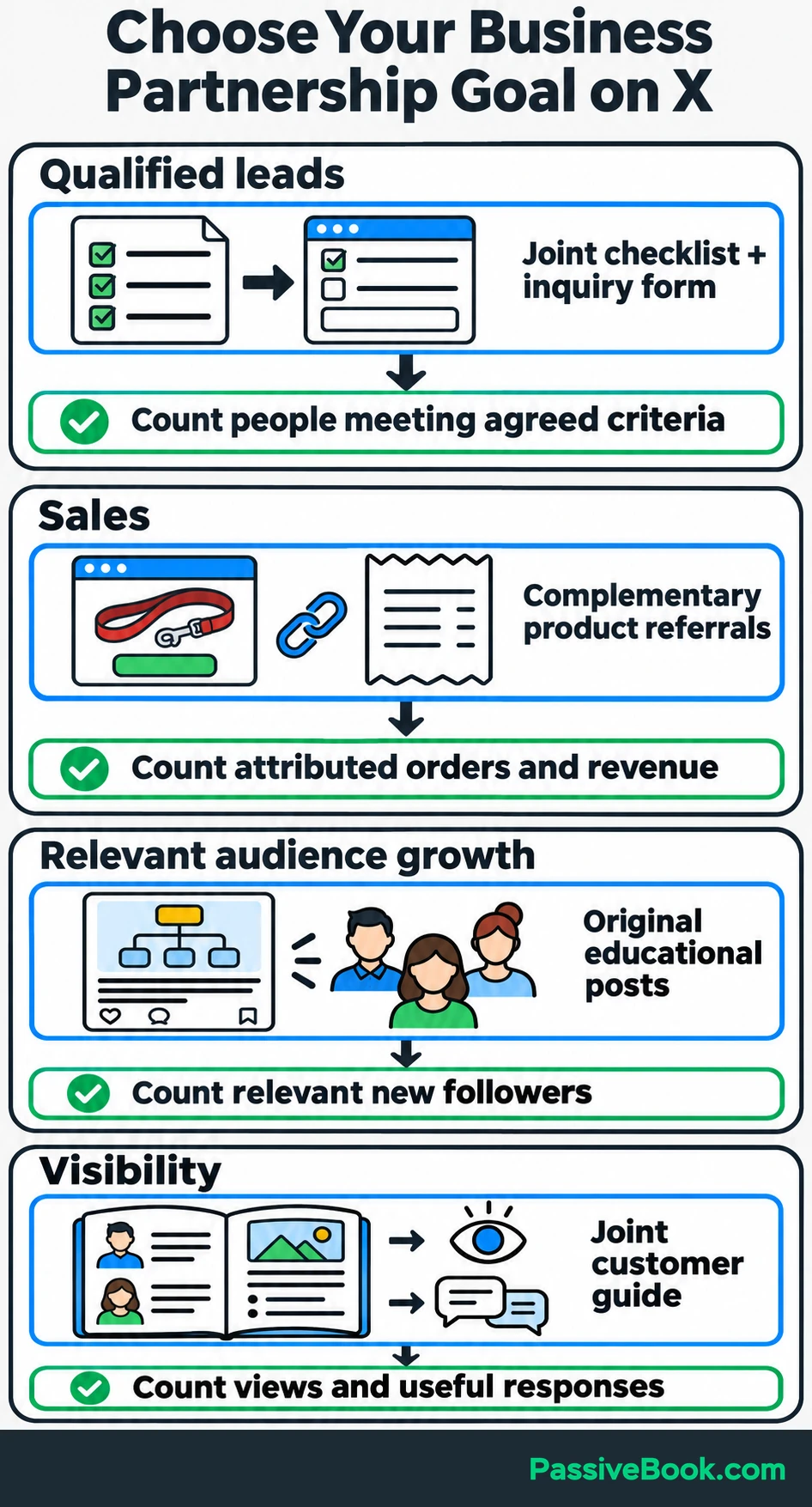
Choose one main business outcome before deciding what to make together. Otherwise, you can finish a busy collaboration without knowing whether it helped.
The project should give you a reasonable path to that outcome:
| Main Goal | A Suitable First Project | What to Count |
|---|---|---|
| Qualified leads | A joint checklist with a relevant inquiry form | People who meet your agreed lead criteria |
| Sales | Referrals to a complementary product or service | Attributed orders and revenue |
| Relevant audience growth | Original educational posts drawing on both businesses’ expertise | New followers who appear to match your intended customers |
| Visibility | A jointly published guide answering a shared customer question | Post views and useful customer responses |
I spent six months chasing Instagram and Twitter/X followers in a separate niche around 2022. The follower count gave me something to check, but meaningful monetization never followed. I treated attention as progress without giving that attention somewhere useful to go.
That experience is why I would choose the business outcome first. “More exposure” is too easy to claim and too hard to spend.
For the running example, imagine you sell reflective dog leashes and want more inquiries from people choosing walking equipment. You approach an independent dog walker about creating an everyday walking checklist.
You handle layout and hosting, and the walker contributes practical preparation advice. Readers get a useful resource, your shop can receive equipment questions, and the walker can receive local service inquiries. The businesses, messages, and figures throughout this example are illustrative.
Set a limit before you start. You might allow four hours of your own work and $60 in cash costs, with a review after 30 days. Give the walker room to set their own limits too.
A small account can offer production work, expertise, or useful introductions. Follower count matters more when audience distribution is the main thing you promise.
Find Suitable Partners on X
Search Around Shared Customer Needs
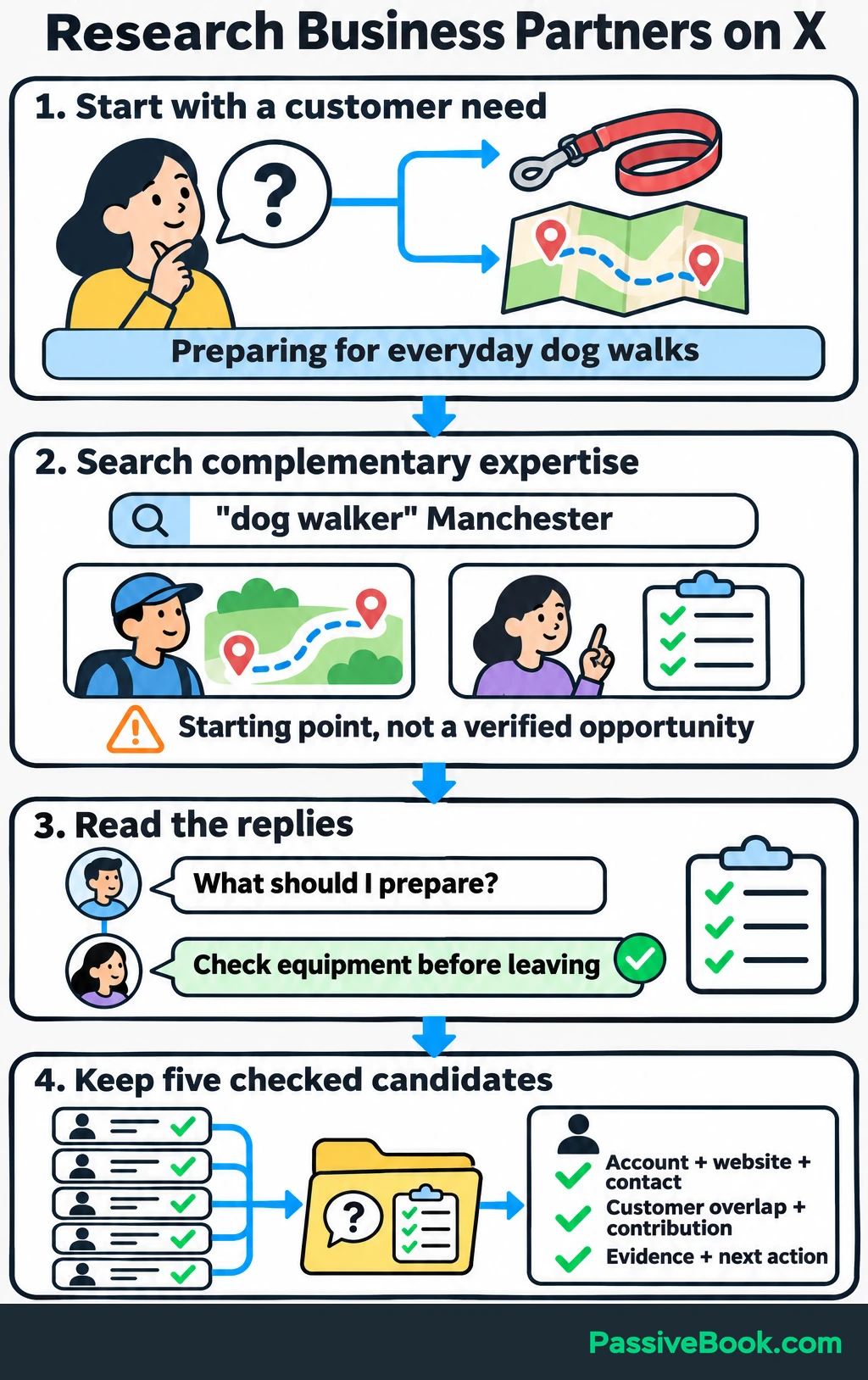
Start with questions customers ask before or after buying from you. Then look for businesses answering the parts you don’t cover.
For the leash shop, that means searching for people discussing walking routines, equipment preparation, and local dog-walking services. Try searches such as:
"dog walker" Manchesterto find a potentially relevant local service."walking gear"to find equipment discussions."dog walking checklist"to find existing resources and their creators."dog walker" "collaboration"to look for an explicit invitation.
These are starting points, not verified opportunities. Change the wording to match how your customers speak.
Read replies as well as original posts. Someone who patiently answers a practical question may be more interesting than an account publishing polished tips without joining conversations.
When a search looks promising, narrow it by exact phrase, account, or recent date range. On the web, X’s Advanced search lets you combine those filters while logged in.
Keep a simple shortlist in a spreadsheet or Notion. Record the account, business website, contact person, evidence of customer overlap, possible contribution, and next action.
Make the evidence concrete: “Answers new owners’ questions about preparing for walks” is useful. “Seems good” leaves you doing the research again next week.
I would start with five carefully checked candidates. A list of 200 strangers creates a second job before you have a partnership.
Check Fit and Credibility
A shared interest in dogs is only the beginning. You need compatible customers, useful contributions, and a workable project.
Check these points before making contact:
| Check | Evidence to Look For |
|---|---|
| Shared customers | Conversations with people who need walking equipment and routine advice |
| Complementary offers | Walking services that fit alongside your products |
| Service coverage | A service area that includes customers you could realistically refer |
| Communication | Clear answers, respectful disagreement, and sensible handling of complaints |
| Ability to deliver | Relevant published work and a realistic commitment to the proposed task |
| Value for both sides | A clear route to equipment inquiries for you and suitable local inquiries for the walker |
Write the fit in one sentence:
“We help new dog owners choose walking equipment, and this walker helps the same customers establish walking routines.”
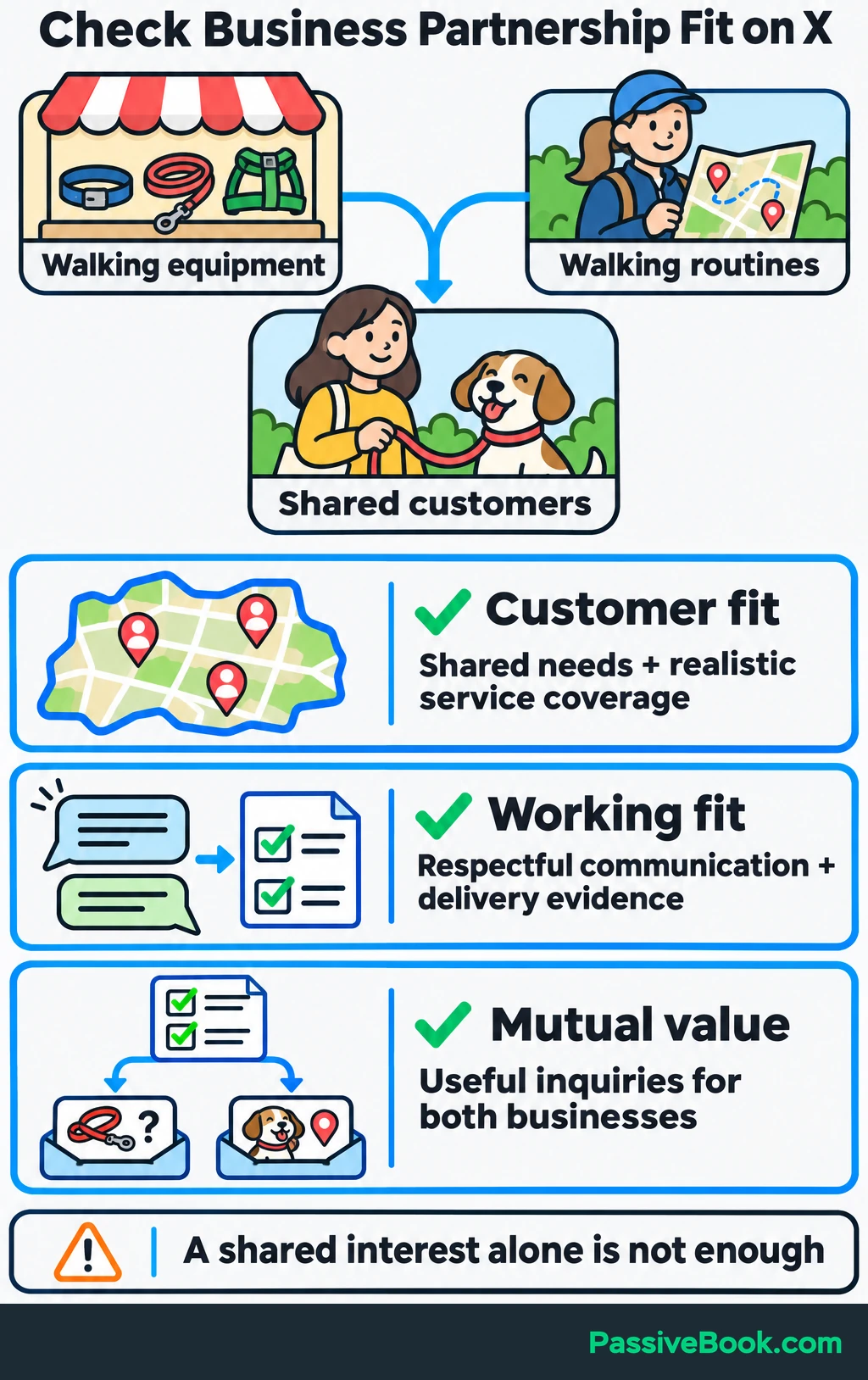
Then explain what each business would gain. If one side is doing the work while the other receives all the useful inquiries, change the proposal.
For unexpected offers, verify the sender through contact details you find independently on the business’s website. The FTC recommends this check for suspicious ambassador offers, rather than trusting the contact details supplied in the message. FTC guidance on fake ambassador offers
Decline requests for passwords, login codes, or unexplained upfront payments. A collaboration does not require handing over your account.
Start a Credible Conversation
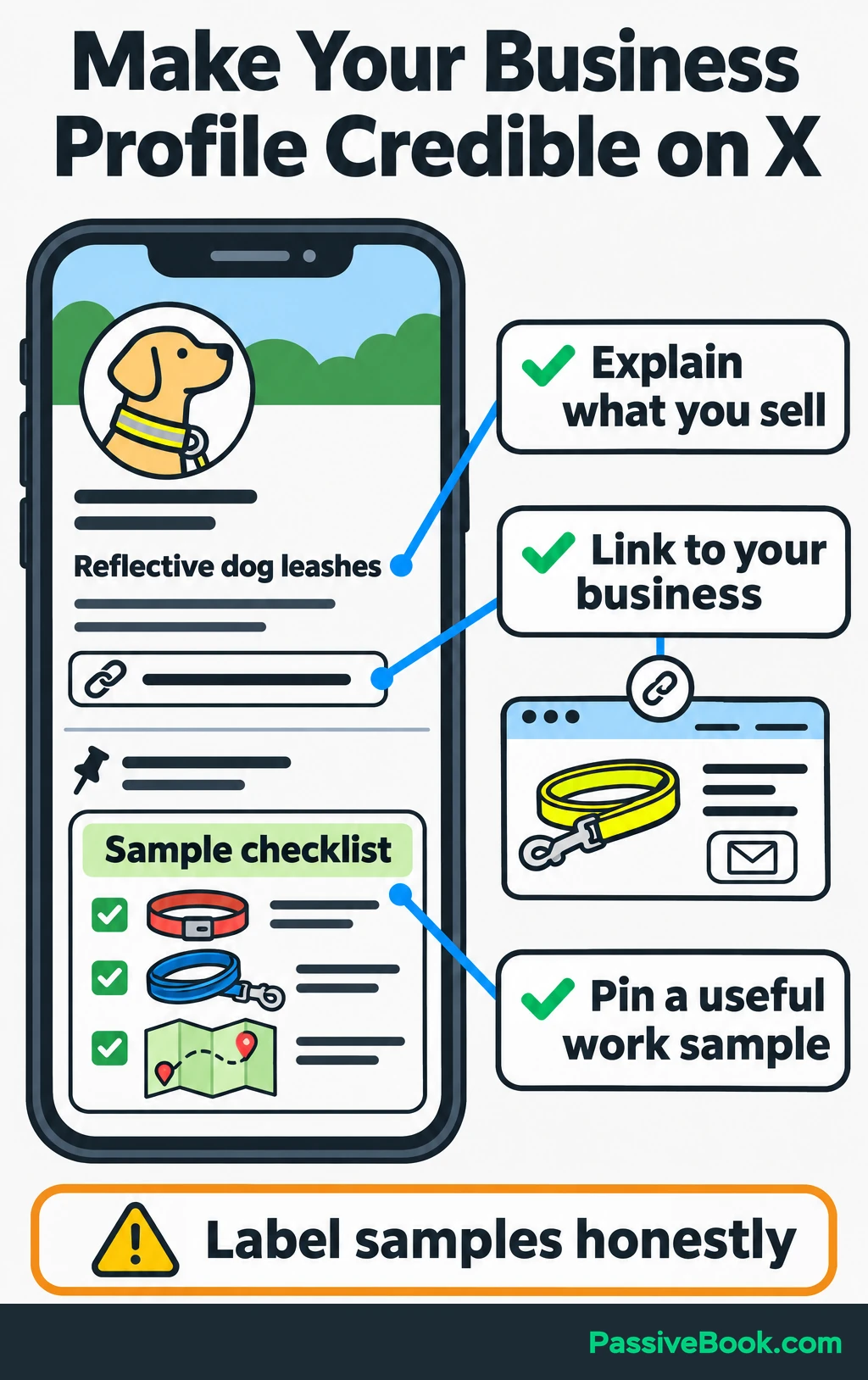
Before contacting anyone, make your own account easy to assess. Explain what you sell, link to your business, and pin a useful example of your work.
You don’t need a history of partnerships. A clear sample checklist can show that you know how to make something useful. Present it as a sample rather than implying another business has approved it.
If a relevant conversation is already happening, contribute to it:
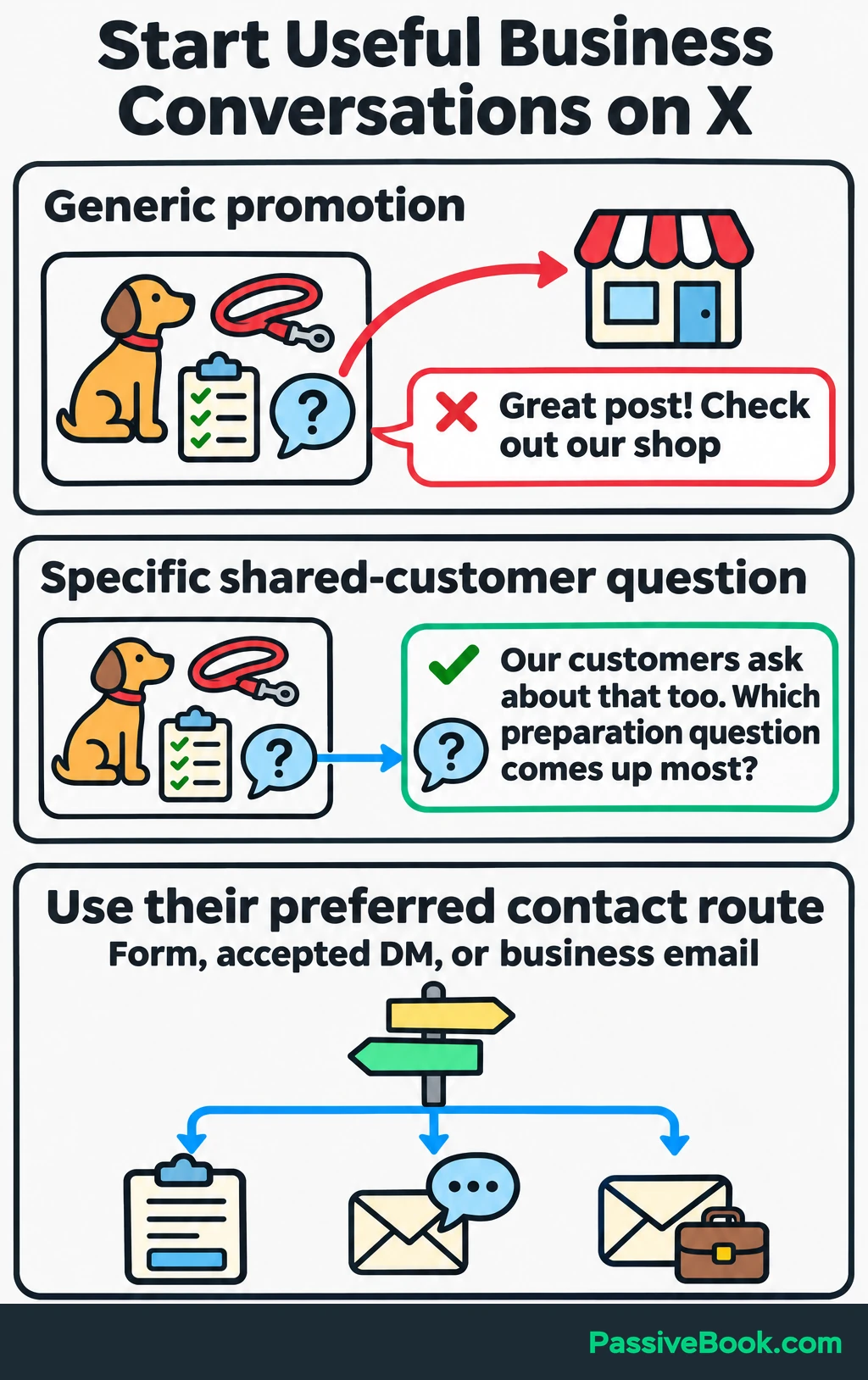
“You mentioned checking equipment before leaving home. Our customers ask about that too. Which preparation question comes up most with new owners?”
That question gives the walker something specific to answer. “Great post! Check out our shop” mostly gives them something to ignore.
You can also approach directly when someone invites proposals or you have a clear idea. There is no need to perform three weeks of ceremonial liking before sending a sensible message.
Use their preferred contact route. If they publish a partnership form, use it. If they accept direct messages, send one. When messaging is unavailable, try their published business email or inquiry form.
Keep each approach relevant. Skip identical DMs, unrelated promotional replies, and deals to exchange likes or reposts. X’s authenticity policy prohibits these forms of spam and coordinated engagement manipulation. Agreeing to produce useful original content together serves a different purpose from agreeing to inflate each other’s metrics. X’s authenticity policy
Pitch a Small Collaboration
Your first proposal should be easy to understand and small enough to finish.
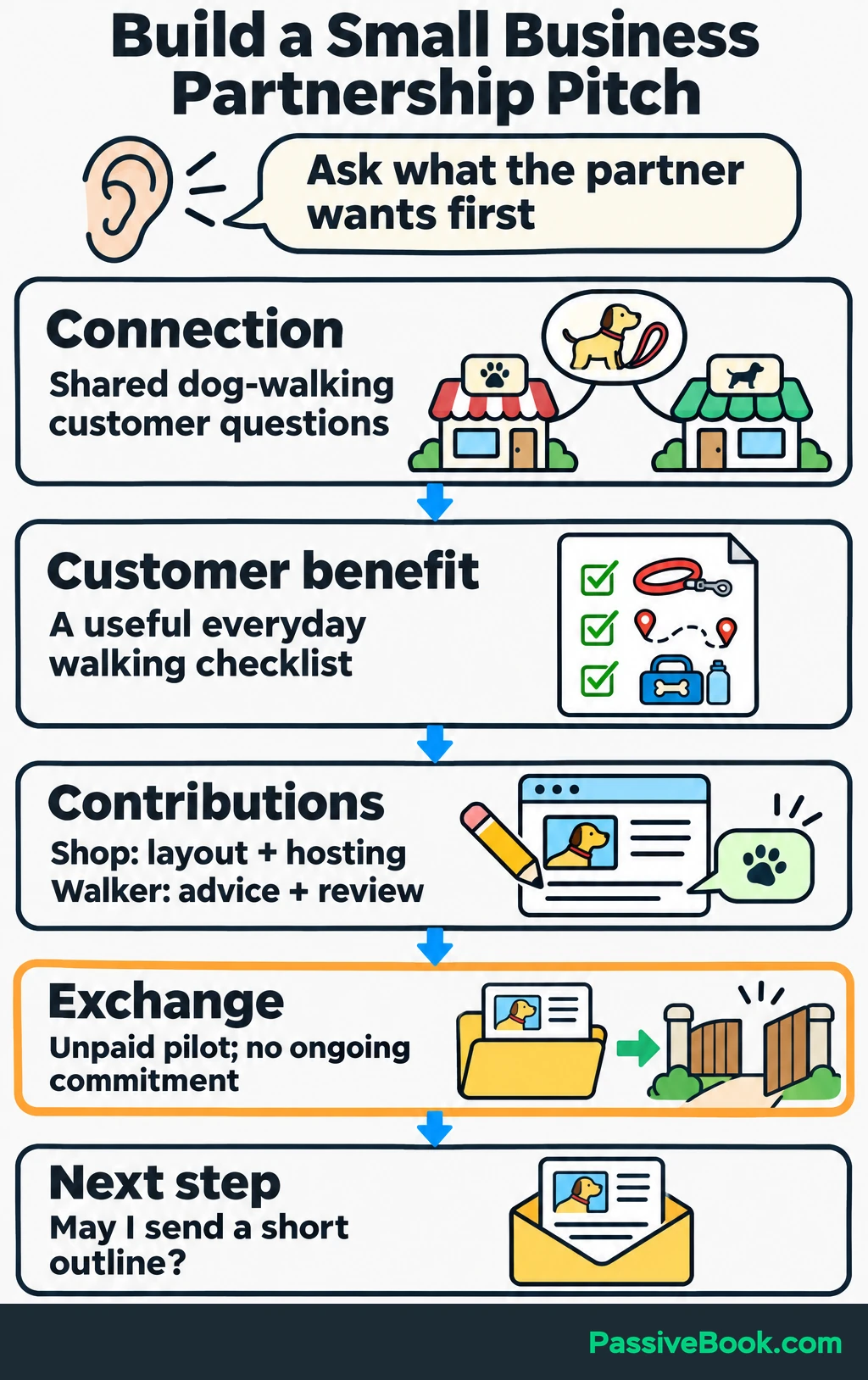
Before fixing the scope, ask what the other business wants. For the walker, that might mean better local inquiries or fewer repeated preparation questions. Their priority should shape the offer.
A useful pitch explains:
- Connection: Why you approached this particular business.
- Customer Benefit: What the finished project will help people do.
- Contributions: What each person would make or handle.
- Exchange: Whether the work is unpaid, paid, or commission-based.
- Next Step: One small decision the recipient can make.
Here is a complete message you can adapt:
Hi Alex,
Your posts about preparing for walks cover questions our leash customers ask too. Would you be interested in making a one-page everyday dog-walking checklist together?
I’d draft the structure, handle the layout, and host a page crediting and linking to both businesses. You’d add practical preparation advice and review the finished checklist.
We’d each publish one original educational X post introducing it. Readers could ask us equipment questions or contact you about walks in your service area.
I’m proposing an unpaid pilot, with no ongoing commitment. We could review inquiries after 30 days and decide whether another project makes sense.
Would you like me to send a short outline?
The recipient can judge the work, the exchange, and the likely benefit without scheduling a call.
The example works because it makes the project easy to assess. This AI Skill uses your business and your prospective partner’s work to draft a message for your own offer.

Free AI Partnership Writer




Invite changes. If the walker wants a weekly content series, I would suggest finishing the checklist first. Recurring work is easier to promise than to fit around everything else.
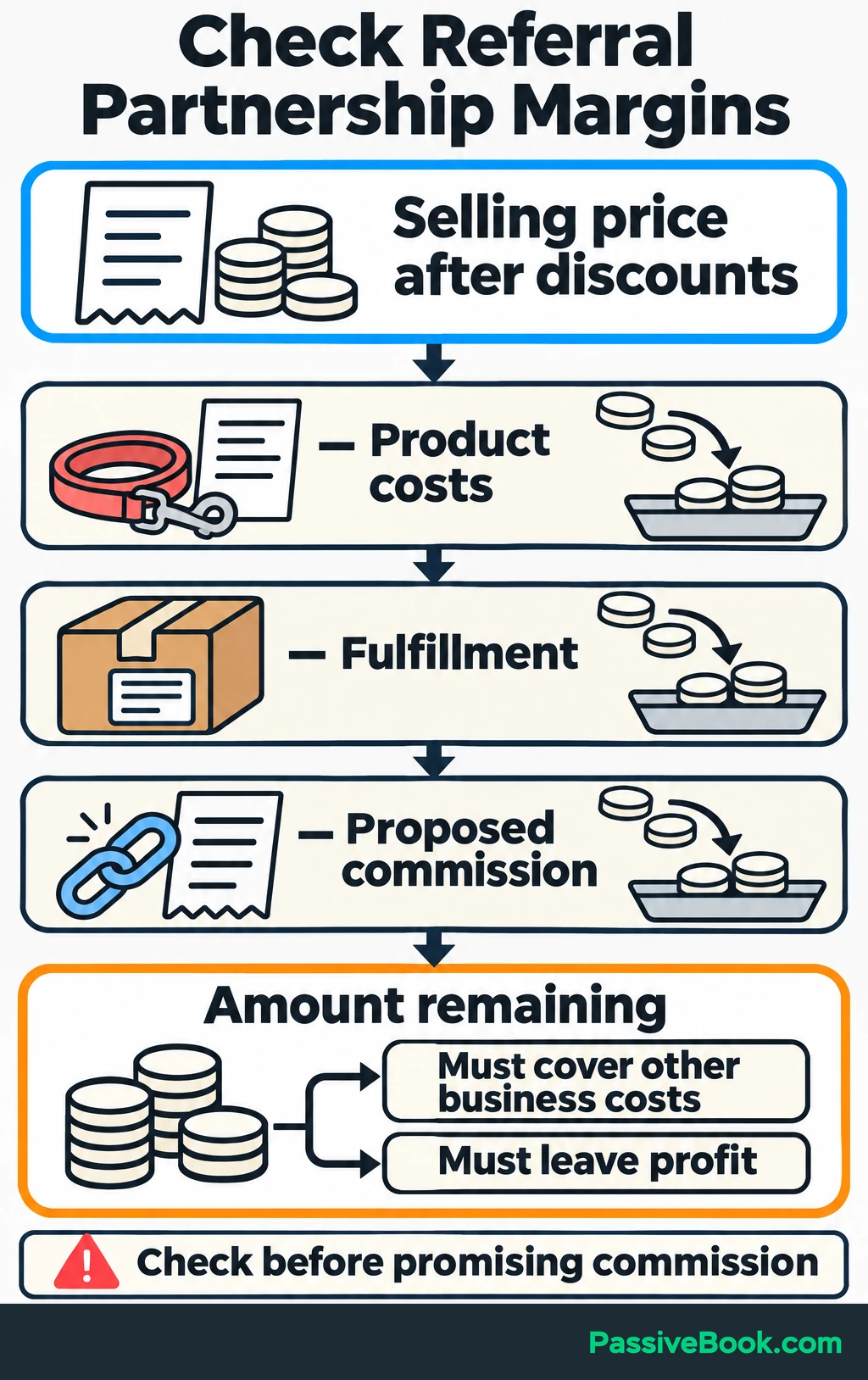
For a paid arrangement, state the fee and scope. For referrals, check your margins before offering commission: start with the selling price after discounts, then subtract product costs, fulfillment, and the proposed commission. Leave enough to cover other business costs and profit.
If there is no reply, send one brief follow-up after a reasonable gap:
“Would a checklist outline help you assess the idea? I can send that first. If it isn’t a fit, no problem.”
Close the outreach after that. A decline ends it immediately.
Agree on the Terms Before Production
Once someone says yes, put the agreement in writing. A friendly conversation can hide two very different ideas of what “we’ll promote it” means.
For the checklist pilot, settle these points before either person starts:
- Deliverables: One checklist, one landing page, and one original X post from each business.
- Owners and Deadlines: Who drafts, reviews, designs, publishes, and approves each item, with dates.
- Customer Next Steps: Where equipment questions and walking inquiries go, and who answers complaints.
- Review: When reporting begins and ends, and when you will discuss the results.
- Rights and Credit: Who owns each contribution, how both businesses are credited, and where each may reuse the finished material.
- Changes and Cancellation: How corrections, delays, withdrawal, and any requested exclusivity will work.
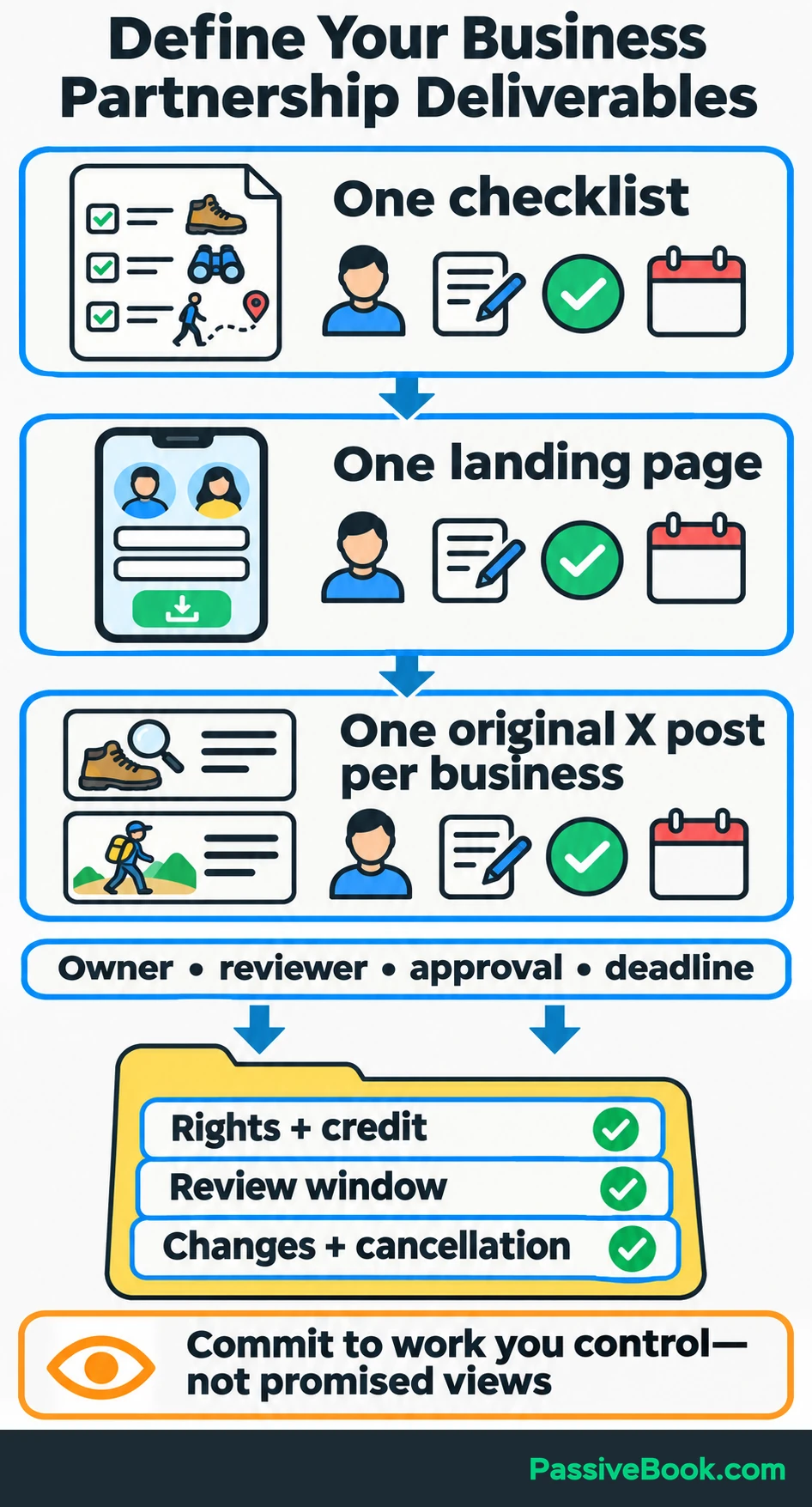
Replace “we’ll both share it” with a commitment each person can actually deliver. Include the publishing account and deadline, but don’t promise a number of views you cannot control.
Paid or referral arrangements need more detail. Define the payment amount, eligible transactions, attribution period, refund treatment, reporting access, and payout timing.
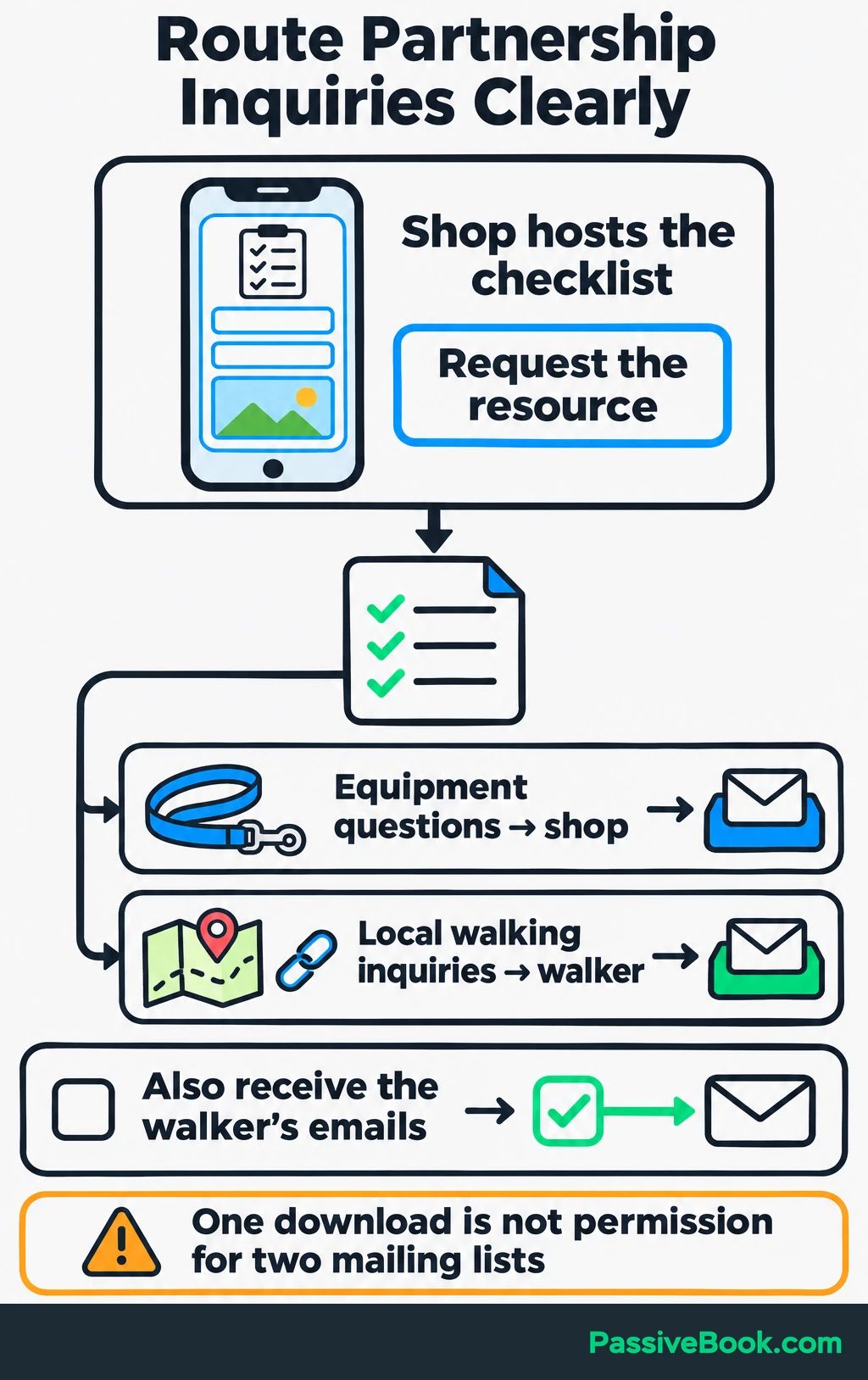
Also decide who hosts the page and receives form submissions. For the example, your shop could deliver the checklist and handle equipment questions, while a separate contact link sends walking inquiries directly to the walker.
Make email expectations clear at signup. Let people choose separately whether to receive the walker’s emails rather than treating one download as permission for two businesses to contact them.
Deliver the Collaboration
Prepare the Customer Journey and Tracking
Build around one main reader action. For this pilot, that action is requesting the checklist.
The page should explain what readers receive, name both contributors, and make their roles clear. Once readers get the resource, offer a sensible next step: ask an equipment question or contact the walker about local availability.
Define a qualified lead before launch. A checklist request alone shows interest in the resource. For your shop, a qualified lead might be someone who requests it and asks for help choosing walking equipment. For the walker, it might be a service inquiry within their coverage area.
Give each promotional placement its own tracking link. Campaign tags, often called UTM parameters, add labels to a URL so analytics can identify where recorded traffic came from. Google Analytics’ campaign-link guidance
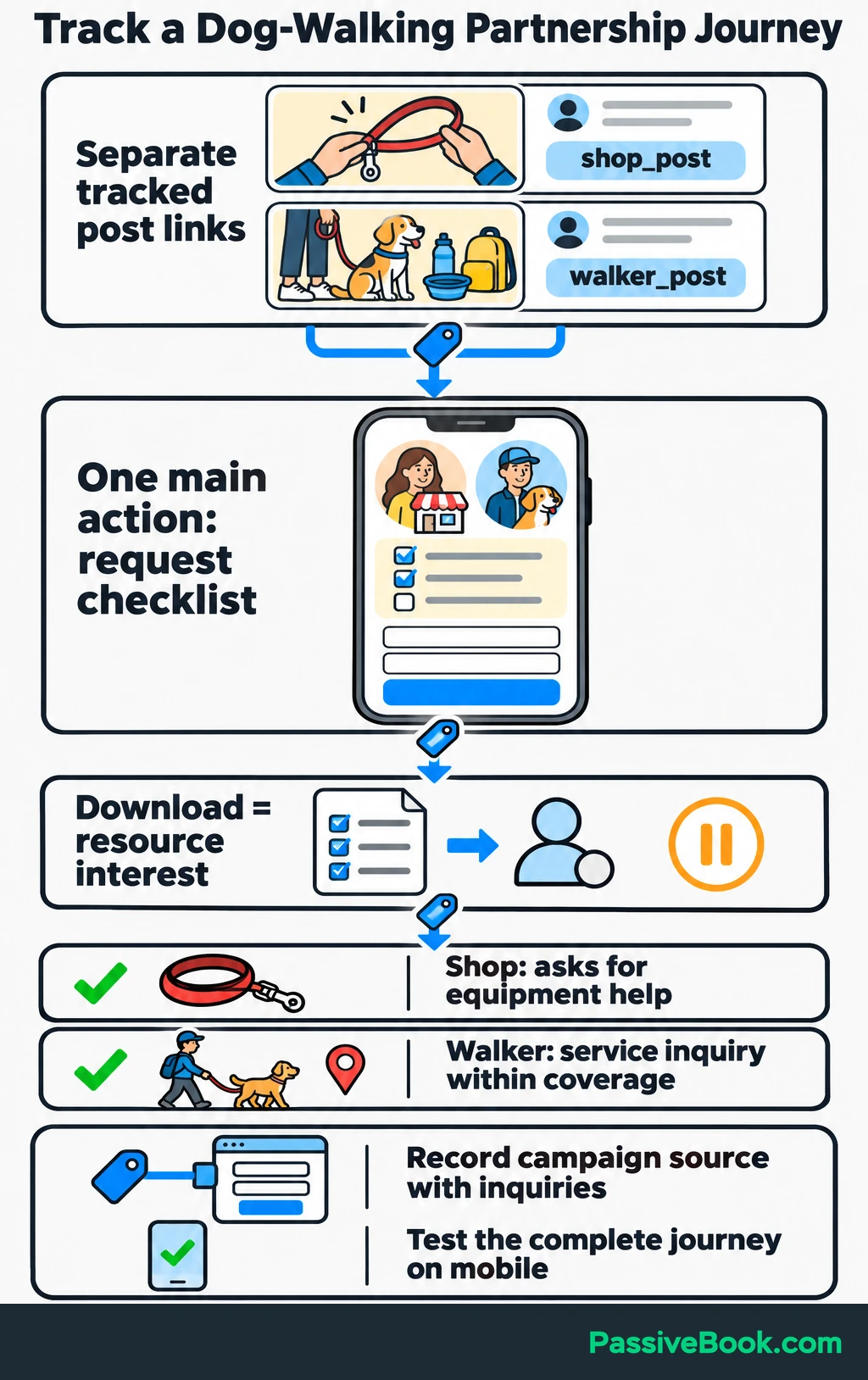
For the walker’s X post, a tagged link would look like this:
https://example.com/walking-checklist?utm_source=x&utm_medium=organic_social&utm_campaign=dog_walk_pilot&utm_content=walker_postReplace https://example.com/walking-checklist with your checklist page’s address. For your shop’s post, change walker_post to shop_post and keep the other values the same.
Record the campaign source with inquiries where your form setup supports it. A traffic report alone won’t tell you which visitors became qualified leads.
I would use the website and form tool you already have. On WordPress, a basic page and Fluent Forms are enough for this kind of pilot. There is little reason to buy a separate partnership platform before completing one project.
Test the whole journey on a phone: post link, page, form, checklist delivery, and customer contact route. Put the reporting window, cash costs, working time, and agreed outcomes in a shared sheet.
Publish and Follow Through
Get both businesses’ approval before publishing. Check names, links, practical advice, and any product claims.
Each partner should contribute an original post that helps readers before inviting them to the checklist. The walker might explain what to prepare before leaving home, while your shop covers checking equipment for wear. Avoid unsupported claims about what a reflective leash can prevent.
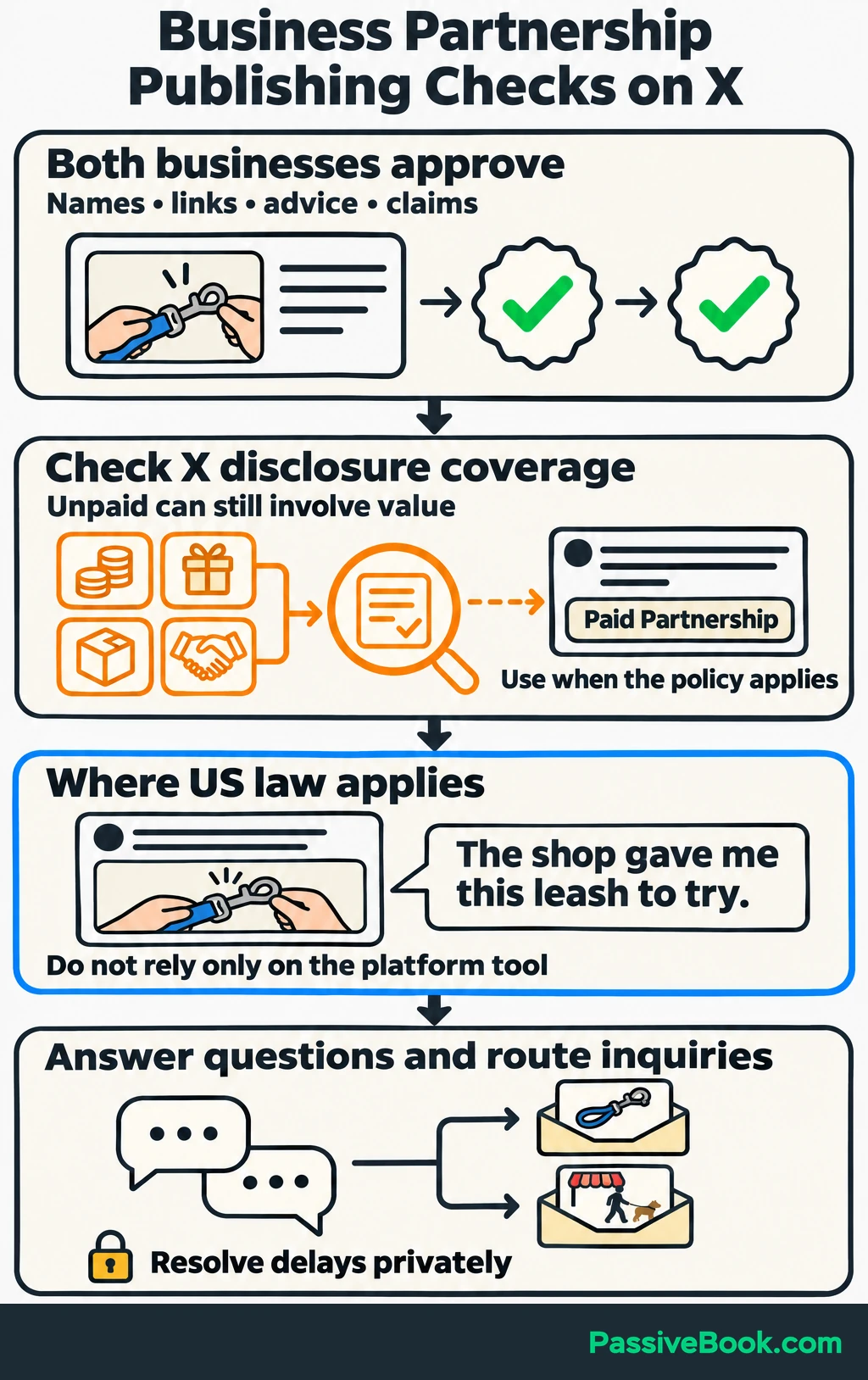
Handle commercial disclosures before the posts go live. X requires the Paid Partnership disclosure for posts covered by its policy, including promotions compensated through money, gifts, in-kind contributions, or commissions. An unpaid exchange can still involve something of value, so check whether the arrangement falls within those rules. X’s Paid Partnerships Policy
Where US law applies, also make the relationship clear beside the endorsement. For example, a walker receiving a free leash could write, “The shop gave me this leash to try.” The FTC advises against relying only on a platform’s disclosure tool. FTC disclosure guidance
After publishing, answer relevant questions and send inquiries to the responsible business. Keep your partner informed about completed work, delays, and useful customer feedback.
If a commitment slips, raise it privately through your agreed channel. Say what is missing and suggest a workable correction. Public irritation rarely improves a late draft.
Measure Results Before Expanding the Partnership
Compare Outcomes With the Effort
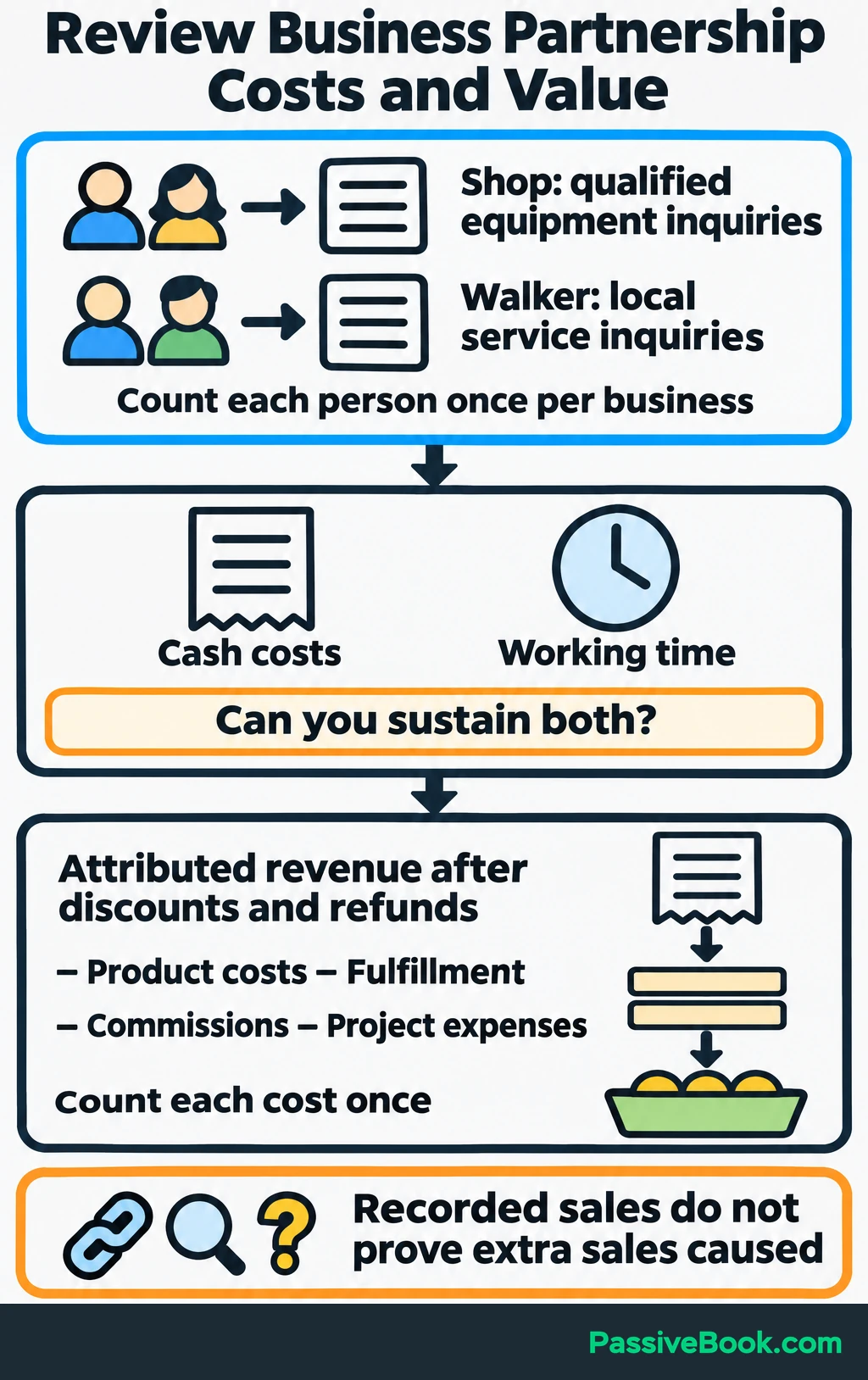
For this pilot, report your shop’s qualified equipment inquiries and the walker’s local service inquiries separately, counting each person once for each business. Your shop receiving inquiries does not establish that the walker received value.
For other goals, use the counts in the opening table.
For a lead conversion rate, count distinct tracked landing-page visitors during the agreed window. Then count how many of those same people became qualified leads within that window.
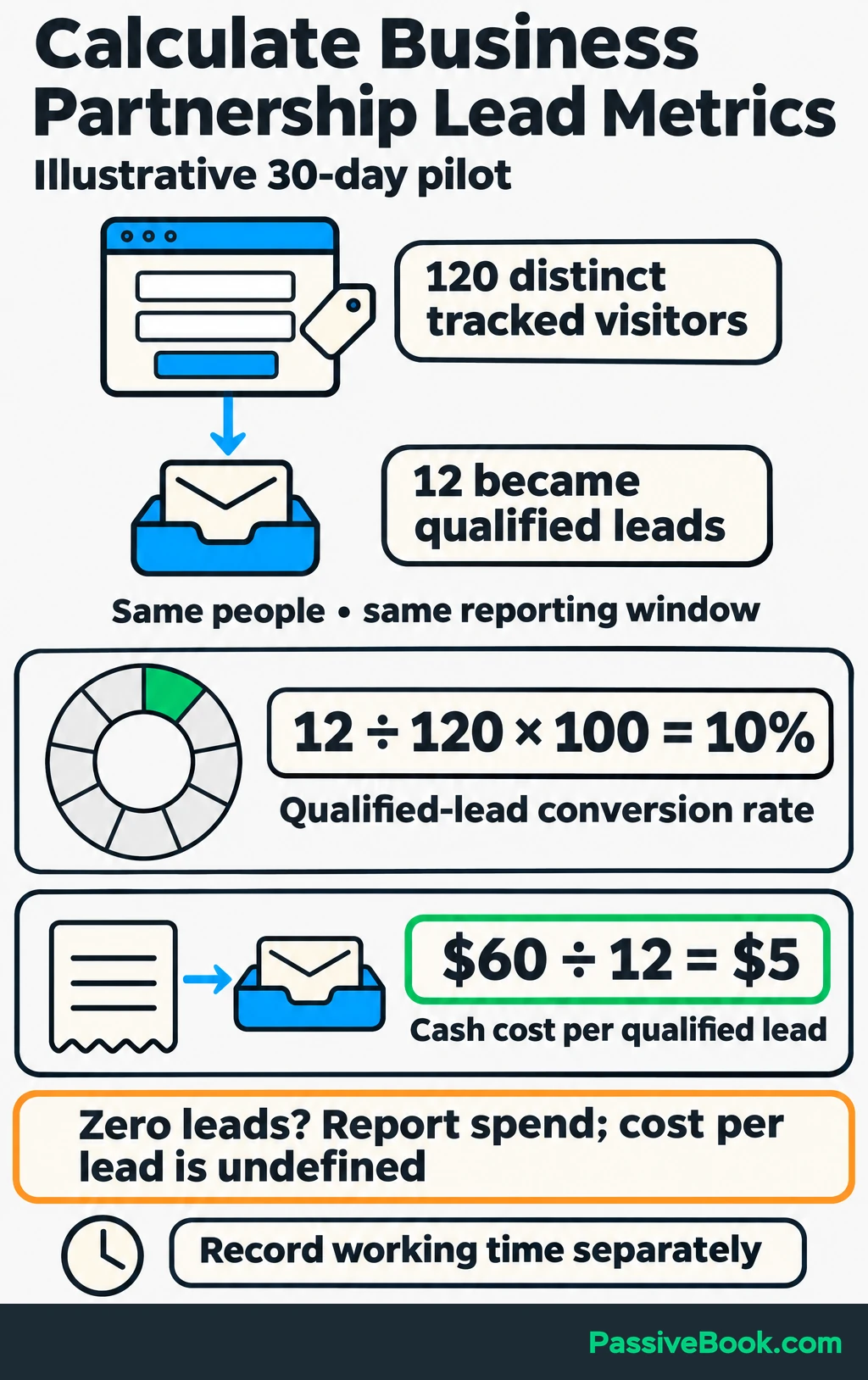
Suppose the illustrative 30-day pilot records 120 tracked visitors, and 12 of them become qualified leads:
Qualified-lead conversion rate = 12 ÷ 120 × 100 = 10%If the project costs your shop $60 in cash:
Cash cost per qualified lead = $60 ÷ 12 = $5Record working time separately. A $5 lead looks less attractive if producing it consumed evenings you cannot keep giving up.
Then track what those leads become. You need to know whether enough turn into profitable customers to justify another project. If there are no qualified leads, report zero leads and the total spend; a cost per lead cannot yet be calculated.
For a sales project, start with attributable revenue after discounts and refunds. Subtract product costs, fulfillment, commissions, and project expenses, counting each cost once.
Tracking has a practical limit: links and codes show recorded responses, but they do not prove how many extra sales the partnership caused. Some buyers may already have intended to purchase. Use the numbers to judge whether another bounded test is worthwhile.
Turn Useful Pilots Into Repeat Partnerships
Review the result together before proposing more work.
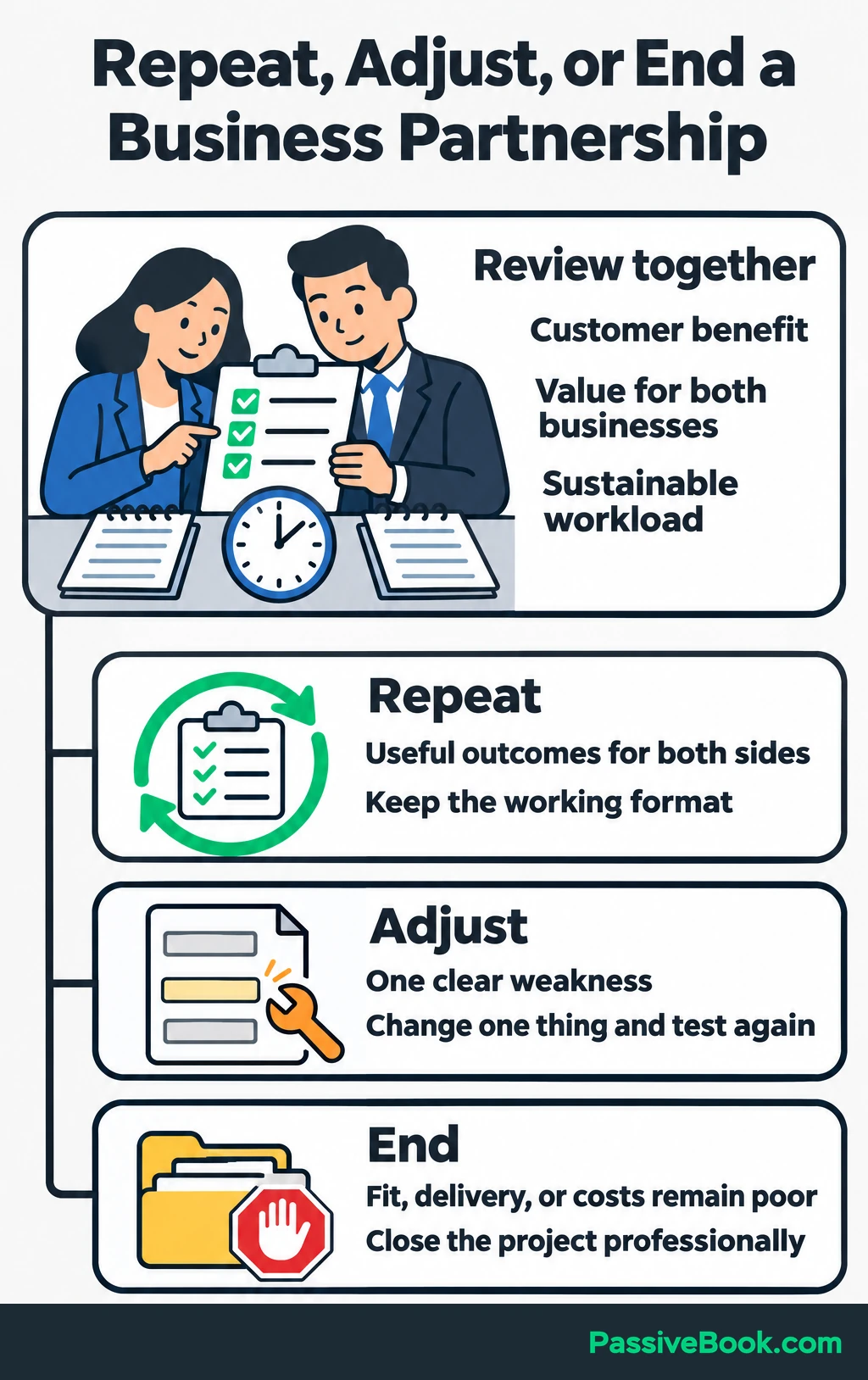
Ask whether customers benefited, whether both businesses received value, and whether the workload was sustainable. Then choose one of three actions:
- Repeat: Keep the format when it produced useful outcomes for both sides.
- Adjust: Change one clear weakness, such as a confusing signup page or poorly matched offer.
- End: Close the project when customer fit, delivery, or costs remain poor.
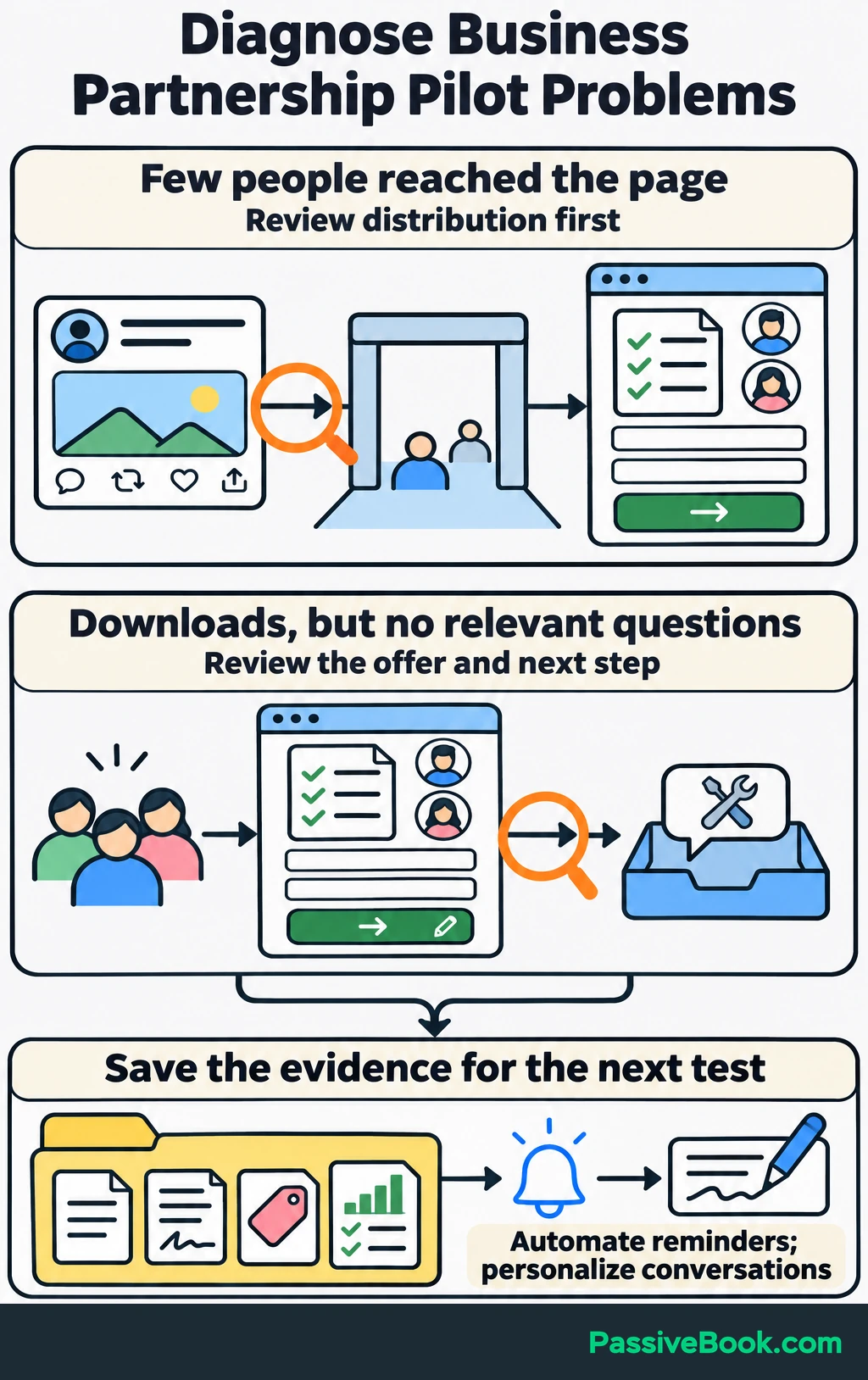
If few people reached the page, review distribution before redesigning the checklist. If visitors downloaded it but never asked relevant questions, examine the offer and next step. Those are different problems.
Keep good relationships active through useful updates, resources, and introductions. A customer question that suggests a better second project gives you a reason to reconnect.
After delivering useful work, you can also ask whether the partner knows another complementary business worth approaching.
Save the brief, agreement, campaign labels, and results sheet. Use reminders for deadlines and reviews, but keep the conversations personal. I would automate the reminder to follow up, then write the message myself.
What Next?
Write one sentence naming the customer need, the partner contribution, and the result you want. Then find three X accounts whose recent conversations show a possible fit, and choose one to assess properly.
Use the social buttons to share this guide when you want to replace vague collaboration talk with a project both sides can judge.
What could you contribute to a partnership without needing a larger following? Share your answer in the comments, and bring any questions about choosing or approaching a partner too.
Share this post with your friends & followers:

