You have a small audience that asks useful questions, shares your posts, and comes back for more. But when a brand sponsors another creator, you assume their follower count puts them in a different league.
That assumption can keep you waiting to pitch while “collaboration” messages offer free products and plenty of work, but no money. To help you find paid work worth taking, this guide walks through choosing suitable brands, pitching an X campaign, setting a price, and agreeing on what gets delivered and when you get paid.
Can You Get Brand Deals With 1,000 Followers?
Yes. You can approach brands with 1,000 followers when you have a relevant audience, useful content, and a specific paid offer. X’s Paid Partnerships Policy lists no follower minimum, though individual brands and campaigns can set their own requirements.
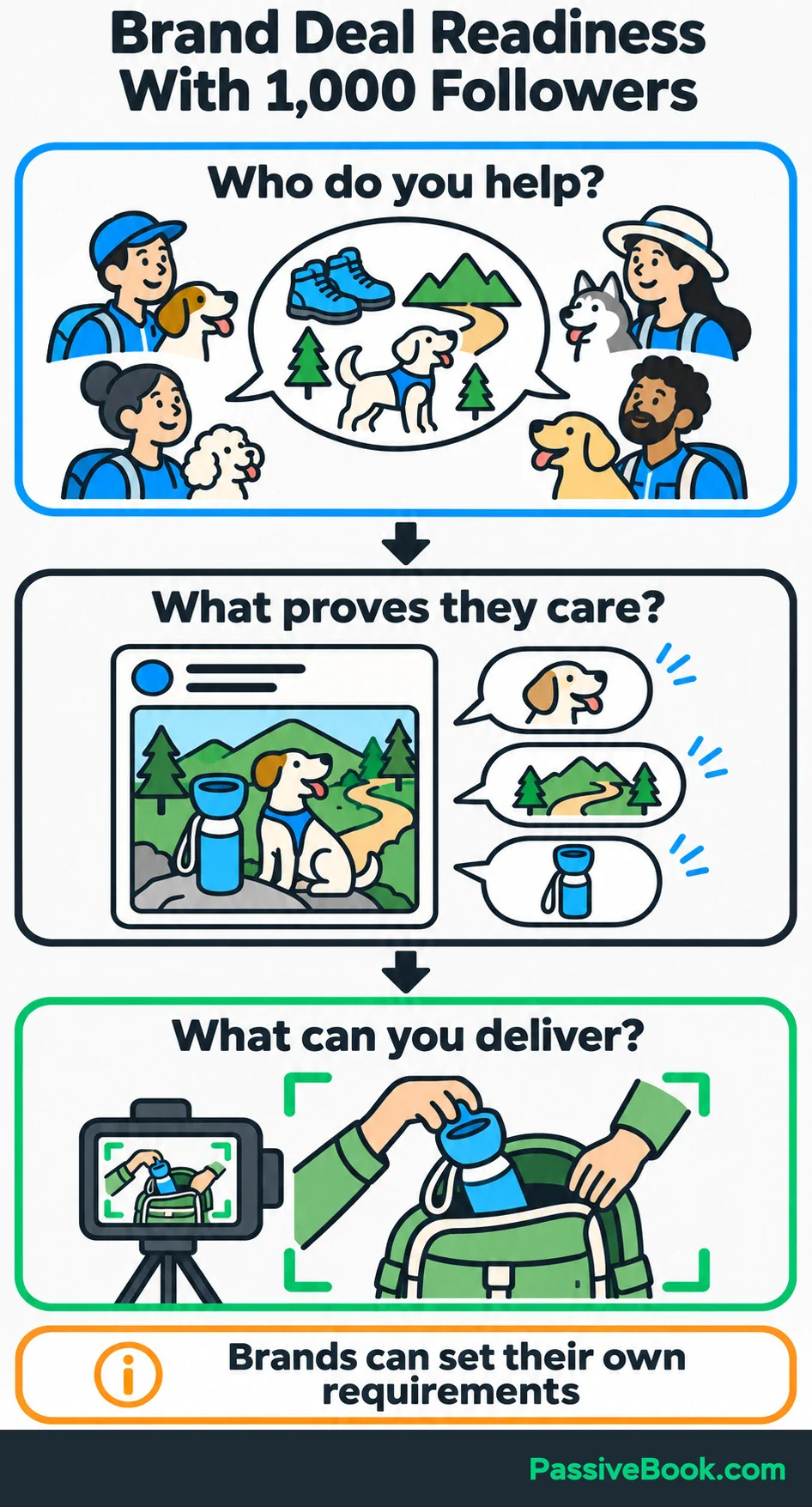
I would start pitching when you can answer three questions:
- Who does your content help?
- What shows those people care about the subject?
- What useful sponsored content can you produce well?
Around 2022, I spent six months chasing Instagram and Twitter followers in another niche while my bank balance stayed around $47. That experience taught me to question what audience growth was building toward. A larger number wasn’t a monetization plan.
Before you pitch, decide what kind of work you want:
| Arrangement | What you receive | What the brand gets |
|---|---|---|
| Cash sponsorship | An agreed fee | Content published to your audience |
| Gifting | A product or service | Any content obligations you accept |
| Affiliate partnership | Commission on qualifying results | Referrals through your link or code |
| Content production | A production fee | Assets for the brand’s own channels, with agreed usage rights |
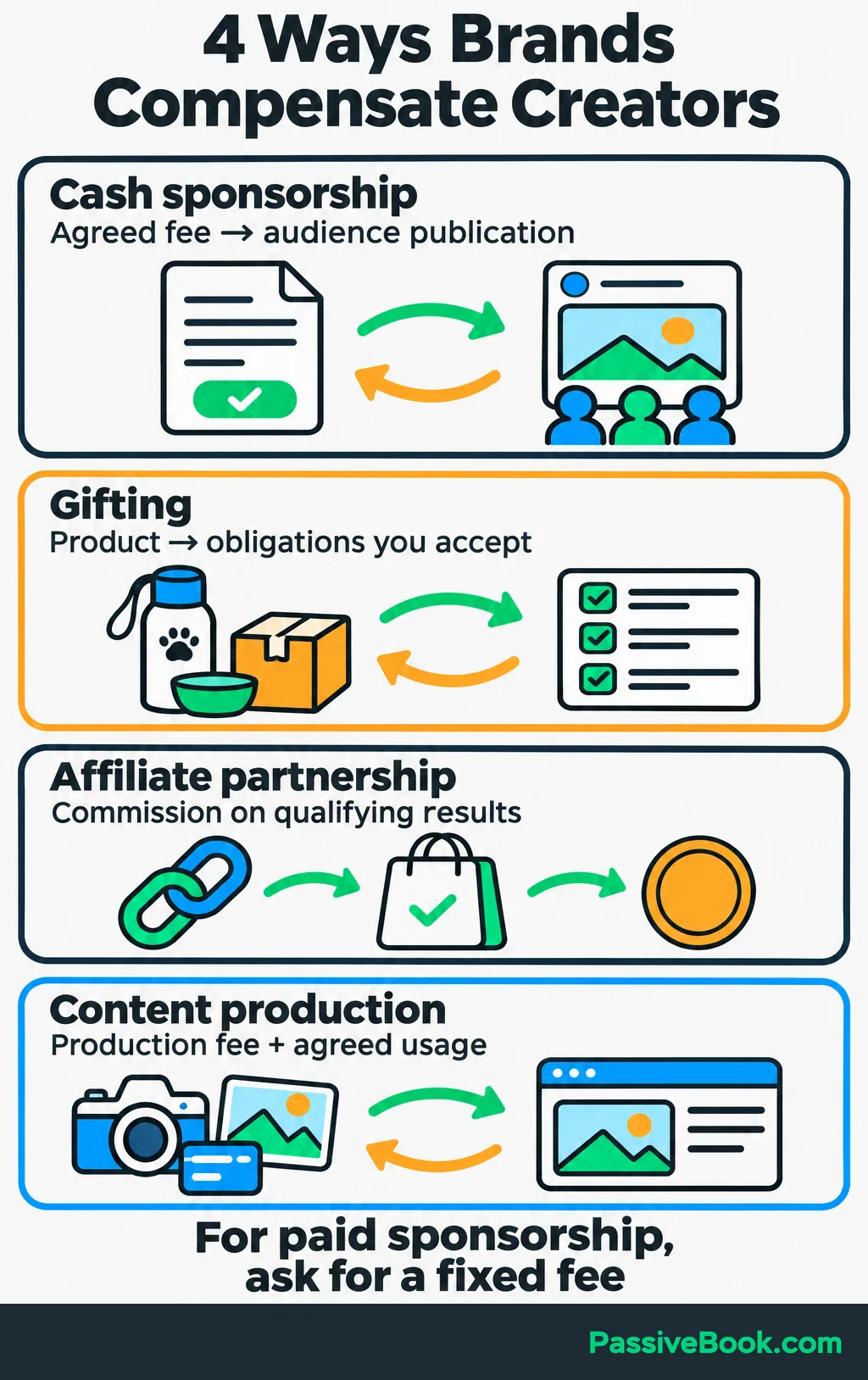
These can overlap, but ask for a fixed fee if paid sponsorship is your goal. A water bottle does not pay your electricity bill.
Direct brand deals are also separate from payouts through X’s Original Content Rewards program. You negotiate sponsorships with the brand or its representative.
Throughout this guide, imagine you run Trail Dog Notes, sharing practical day-hiking tips for dog owners. You want to pitch a portable dog water-bottle brand. The business, campaign, copy, and pricing figures are illustrations.
Build Proof That Your Audience Is Worth Sponsoring
Make Your Profile and Content Show a Clear Specialty
A brand should be able to visit your profile and understand whom you help, what you cover, and how to contact you.
Write your bio around an audience and a benefit. Add a business email or contact link, and pin a post that shows your work.
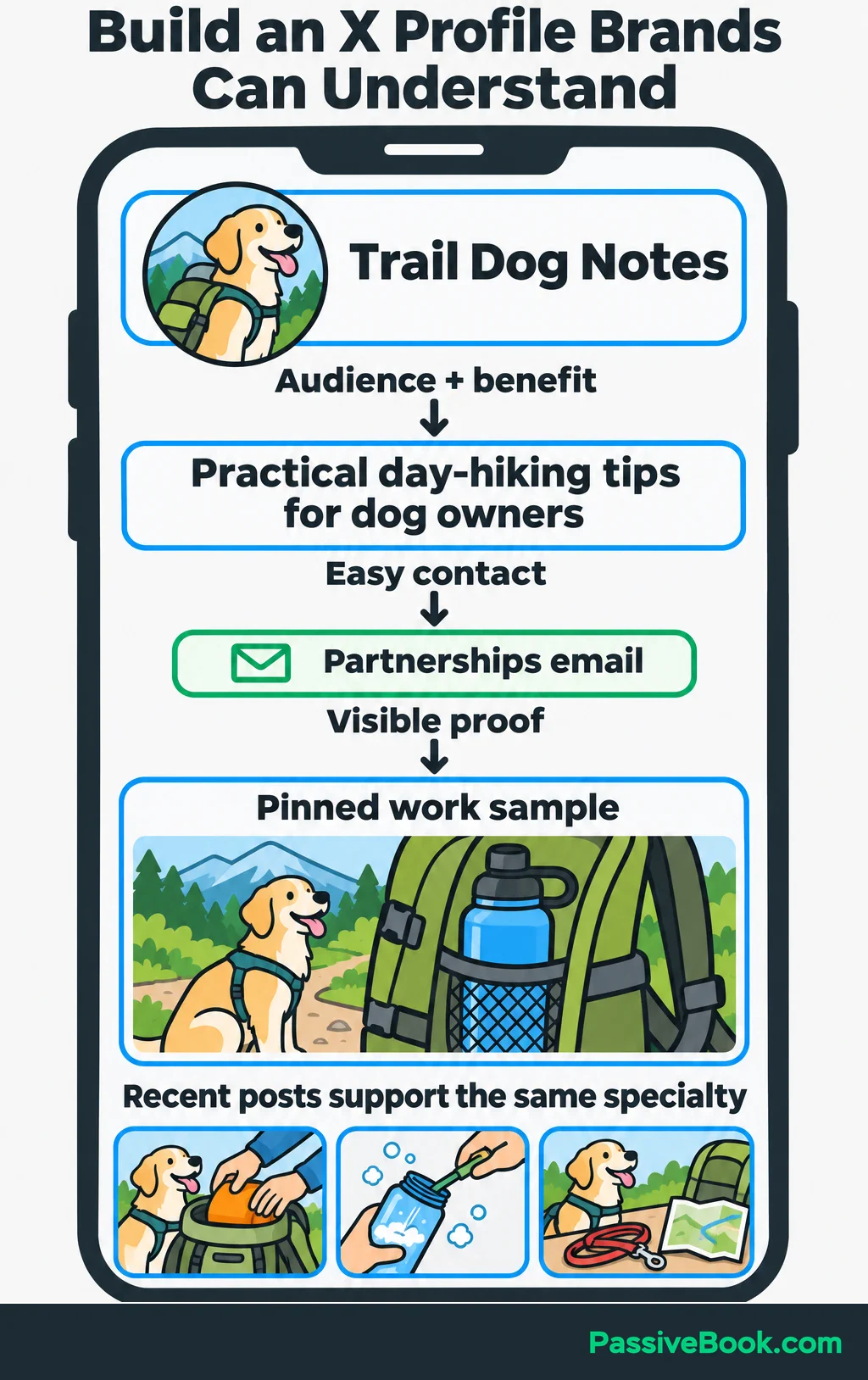
For Trail Dog Notes, the positioning could be:
Practical gear and preparation tips for day hikes with dogs. Packing demonstrations, trail routines, and honest gear notes. Partnerships: [email].
Then make your recent posts support that promise. A clear bio cannot rescue a feed with no clear subject.
Build a small body of original work:
- Show how you pack or use something.
- Compare features that affect a real decision.
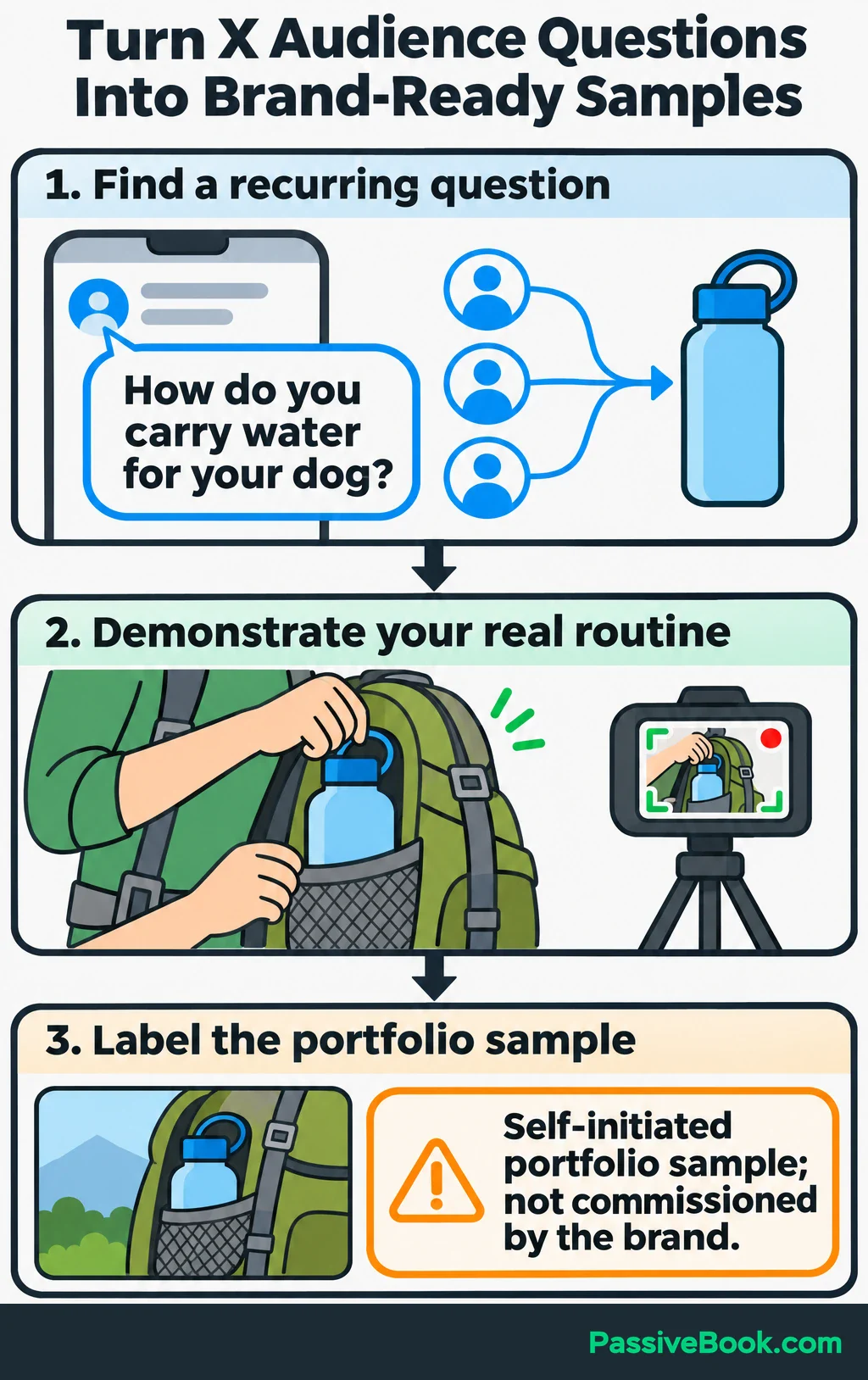
- Answer a question your audience keeps asking.
- Explain a mistake and what you changed.
When I started reviewing tools I used, notes about what I needed and where I got stuck were more useful than product descriptions. I’d carry those details into a sponsorship sample.
On X, use replies to find those details. Give a useful answer, ask a relevant follow-up, and turn recurring questions into posts. Skip the daily quota of “Great insight!” replies. Nobody needs a sponsor for that.
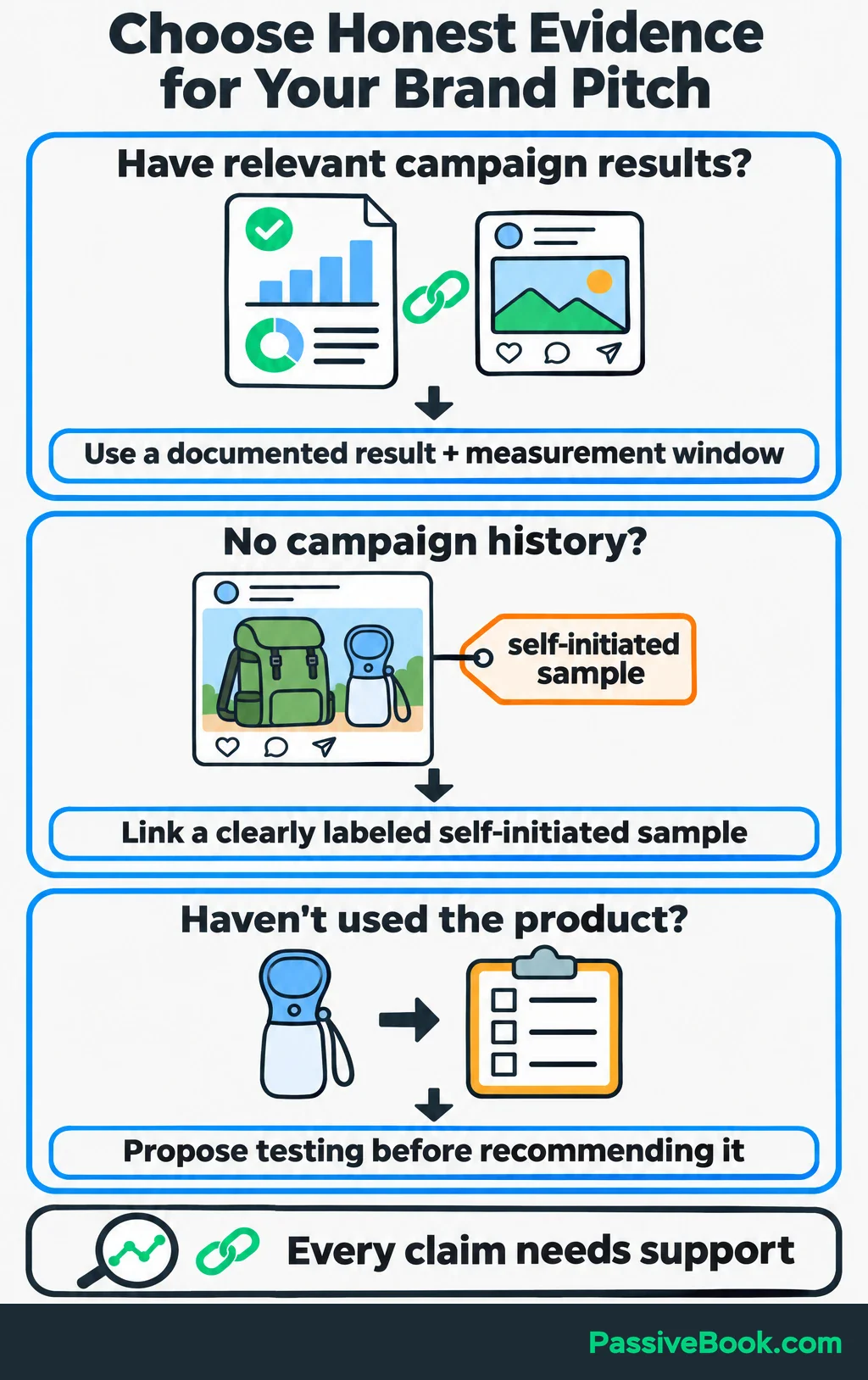
If you have no campaign history, create a sample using a product you already own. Label it “Self-initiated portfolio sample; not commissioned by the brand.” Show your ability without building an entire custom campaign for a prospect for free.
Put Relevant Evidence in a Short Media Kit
A media kit is a short document that helps a brand assess your audience and work. Use Canva to lay out a one- or two-page PDF, or put the same information on your website.
Include:
- Positioning: Whom you help and what you cover.
- Audience: Current follower count and any audience details supported by data.
- Samples: Two or three relevant posts, with links.
- Performance: Recent results from comparable content.
- Offers: Formats you can produce and how to contact you.
To show typical performance, record views seven days after each of ten recent, relevant original posts in comparable formats. Sort the counts from lowest to highest and average the fifth and sixth values to get the median. Include it alongside selected examples.
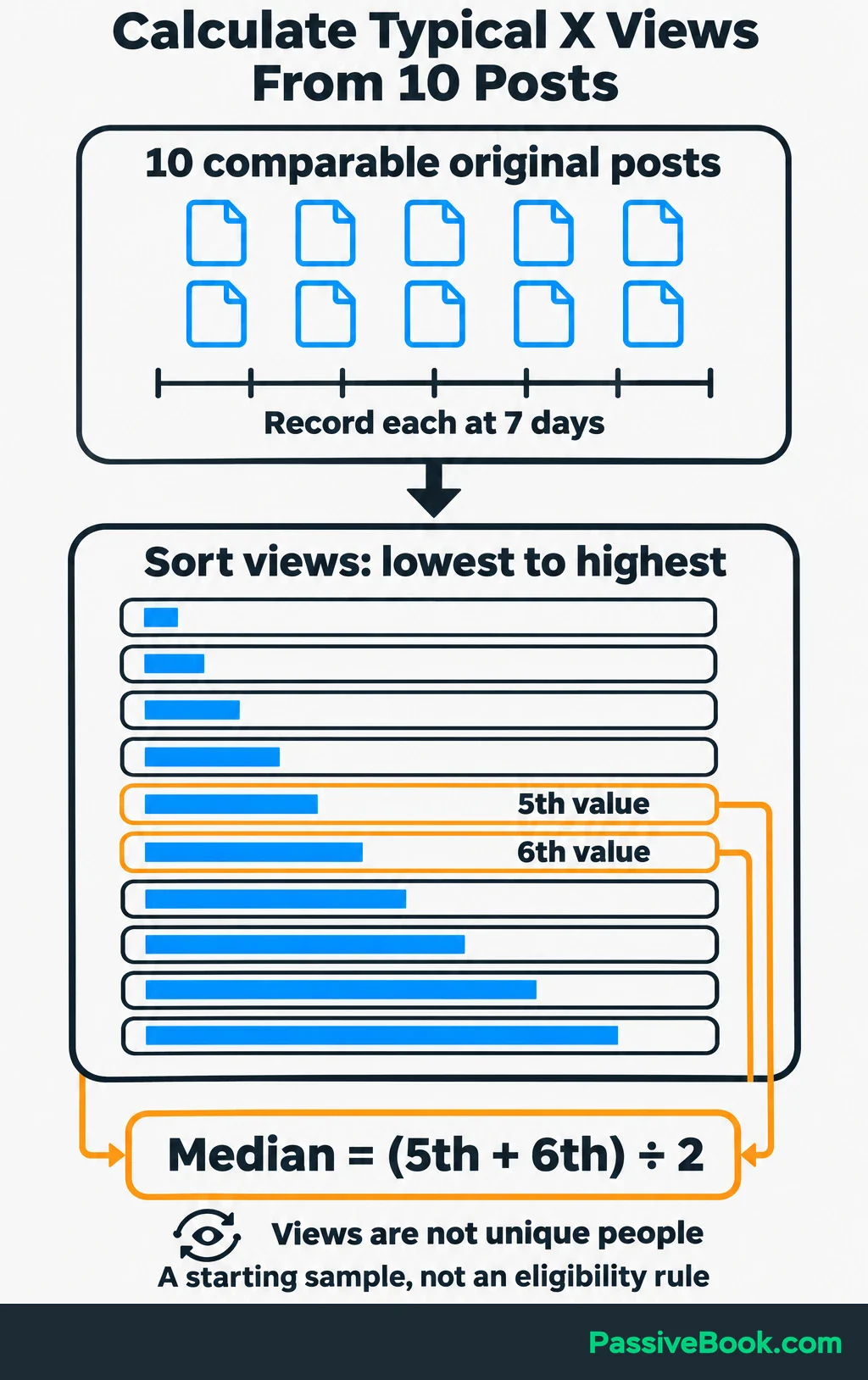
Ten posts is a starting sample, not an eligibility requirement.
Your evidence sheet might contain entries like these. The figures below are illustrative.
| Post link | Format | Measurement window | Views | Relevant interactions | Recorded link clicks |
|---|---|---|---|---|---|
| [Packing-post URL] | Original photo post | First seven days | 840 | Five replies asking about carrying water | 12 |
| [Bottle-comparison URL] | Three-post thread; opening post shown | First seven days | 620 | Three replies comparing capacity and cleaning | Not measured |
Label views accurately. They are not unique people reached: repeat viewing and your own views can count under X’s view-count definitions.
You do not need a borrowed “good engagement rate” to make this useful. Show what happened, over what period, and why it matters to the proposed campaign.
Find Brands That Fit the Audience You Already Reach
Build a Shortlist With a Campaign Idea for Each Brand
Start with audience questions, then find products that belong in the answer.
Look at products you use, brands mentioned in replies, and sponsors working with creators who cover related subjects. Search X for product terms, brand names, “#ad,” and “sponsored.”
Another creator’s paid post identifies a prospect. It does not tell you whether that brand still has budget.
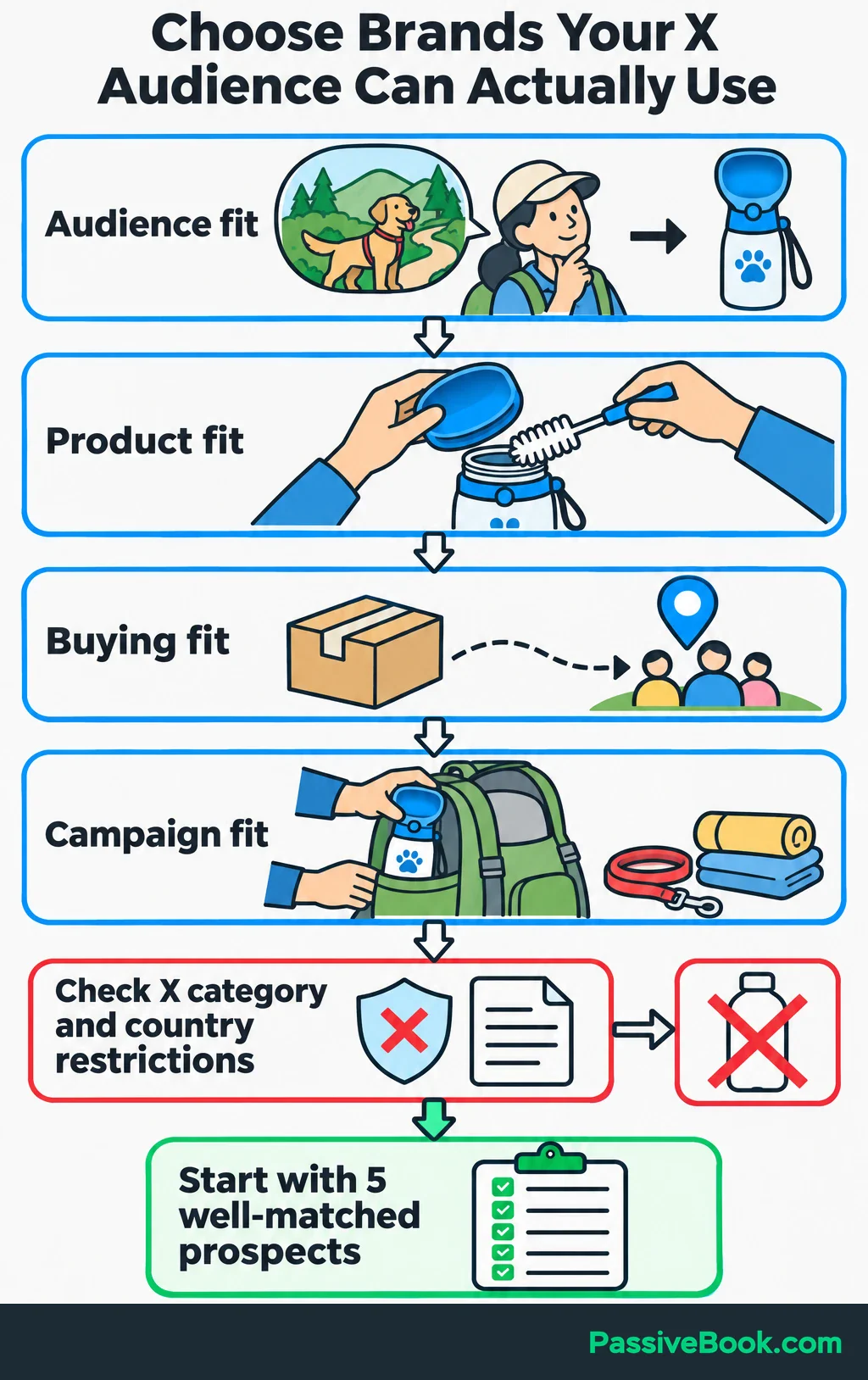
Before adding a prospect, check:
- Audience fit: Does the product solve a problem your audience discusses?
- Product fit: Would you be comfortable testing and honestly recommending it?
- Buying fit: Can the brand serve the locations your audience lives in?
- Campaign idea: Can you show something useful rather than paste in a sales message?
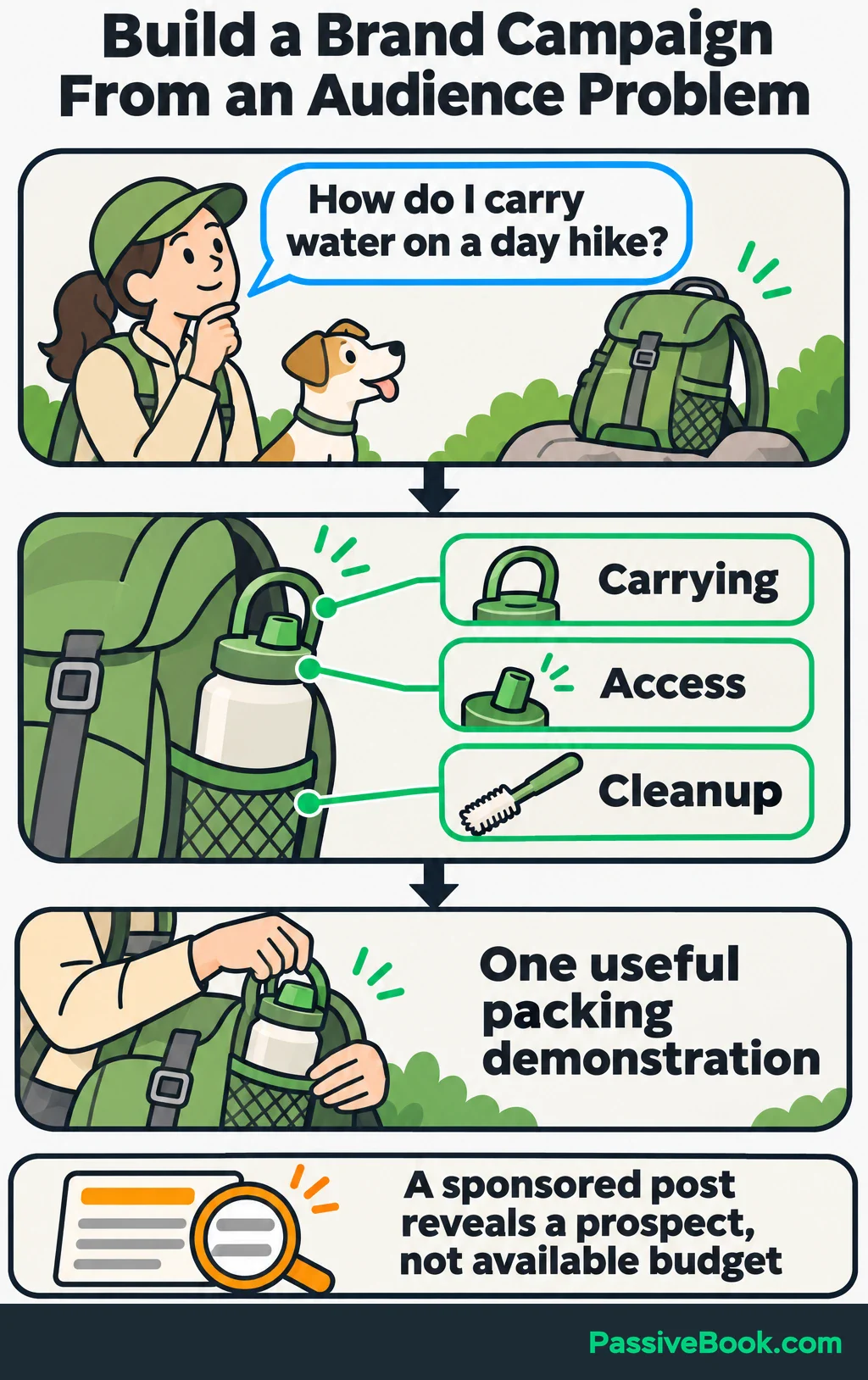
For Trail Dog Notes, a portable bottle belongs in a day-hike packing demonstration. The useful angle is how it fits into the routine, including carrying, access, and cleanup.
Check X’s prohibited partnership categories and country restrictions before approaching a brand. Do not assume every product that can be sold can also be promoted through a paid partnership on X.
Keep a simple tracker with the brand, audience fit, campaign idea, contact, outreach date, response, next action, and outcome. I would begin with five well-matched prospects and improve the offer before expanding the list.
Reach the Right Person or Apply to a Suitable Brief
Look for a partnerships, influencer-marketing, social-media, or PR contact on the brand’s official website. An identified agency may handle the work.
If you cannot find the contact, use a short X message to ask for an introduction:
Hi [Brand], who handles paid creator partnerships? I have an X campaign idea featuring your dog water bottle in a day-hike packing demonstration. Thanks!
Keep the full pitch for the person who can assess it.
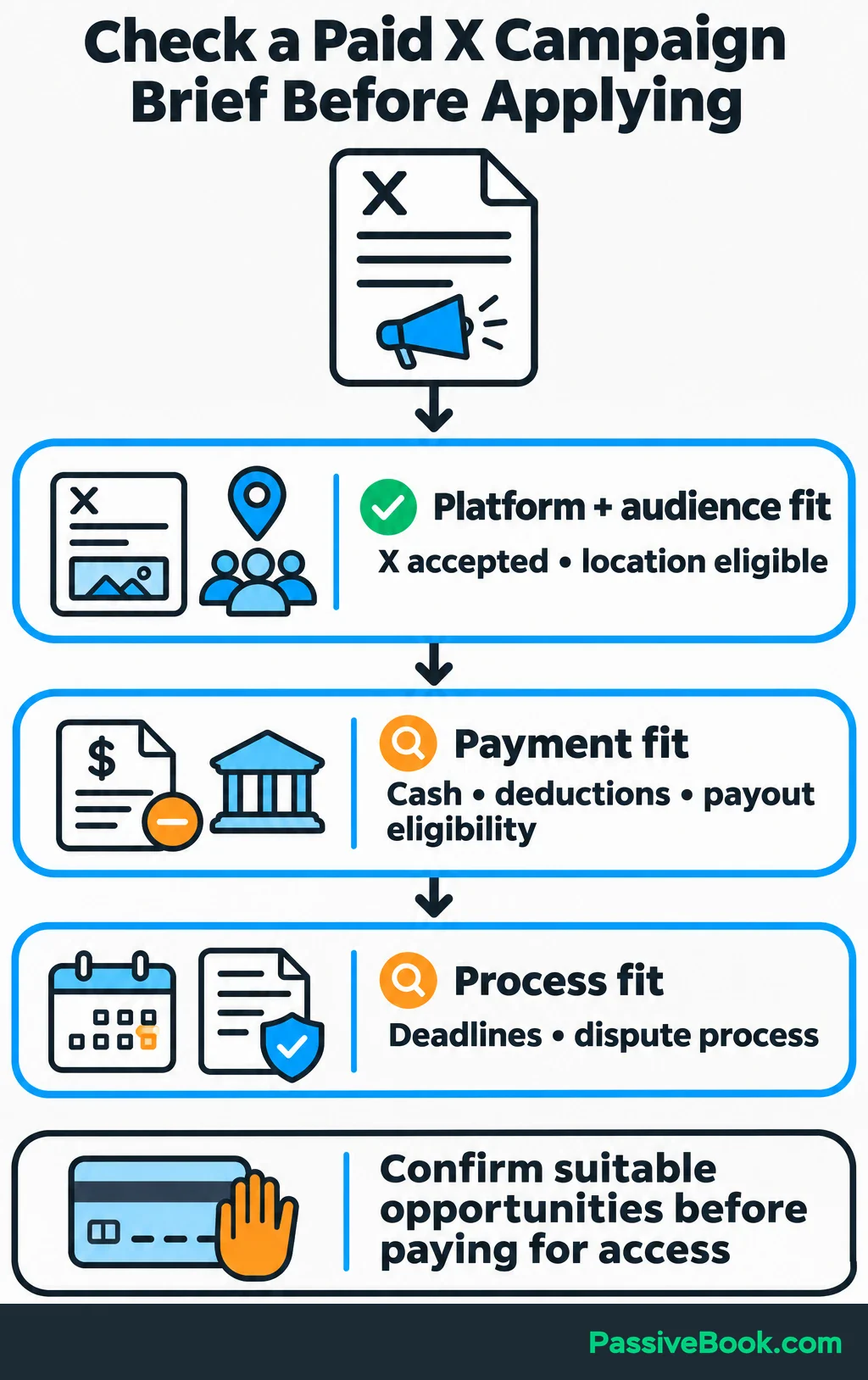
Marketplaces offer another route, but choose briefs that explicitly accept X content and match your location and audience. Before applying, check the cash payment, platform deductions, payout eligibility, deadlines, and dispute process.
I would skip a paid marketplace subscription until I could see suitable opportunities. Paying for access to irrelevant briefs is an expensive way to stay busy.
Price a Clearly Defined Sponsorship
Match the Package to the Campaign Goal
Ask what the brand wants people to understand or do. A product introduction, a detailed explanation, and a live conversation call for different work. Ask the brand for a campaign-specific product link so it can count visits from your content.
| Format | Suitable objective | Included work to define | Reporting |
|---|---|---|---|
| Single post | Demonstrate one useful feature or use case | Testing, original image or video, copy, link, revisions | Views, relevant responses, tracked visits |
| Thread | Explain a process or compare several features | Number of posts, images, links, revisions | Results for each post and recorded visits |
| Space | Discuss a subject live and answer questions | Preparation, duration, guests, moderation, sponsor mentions | Available listener figures, questions, linked-post results |
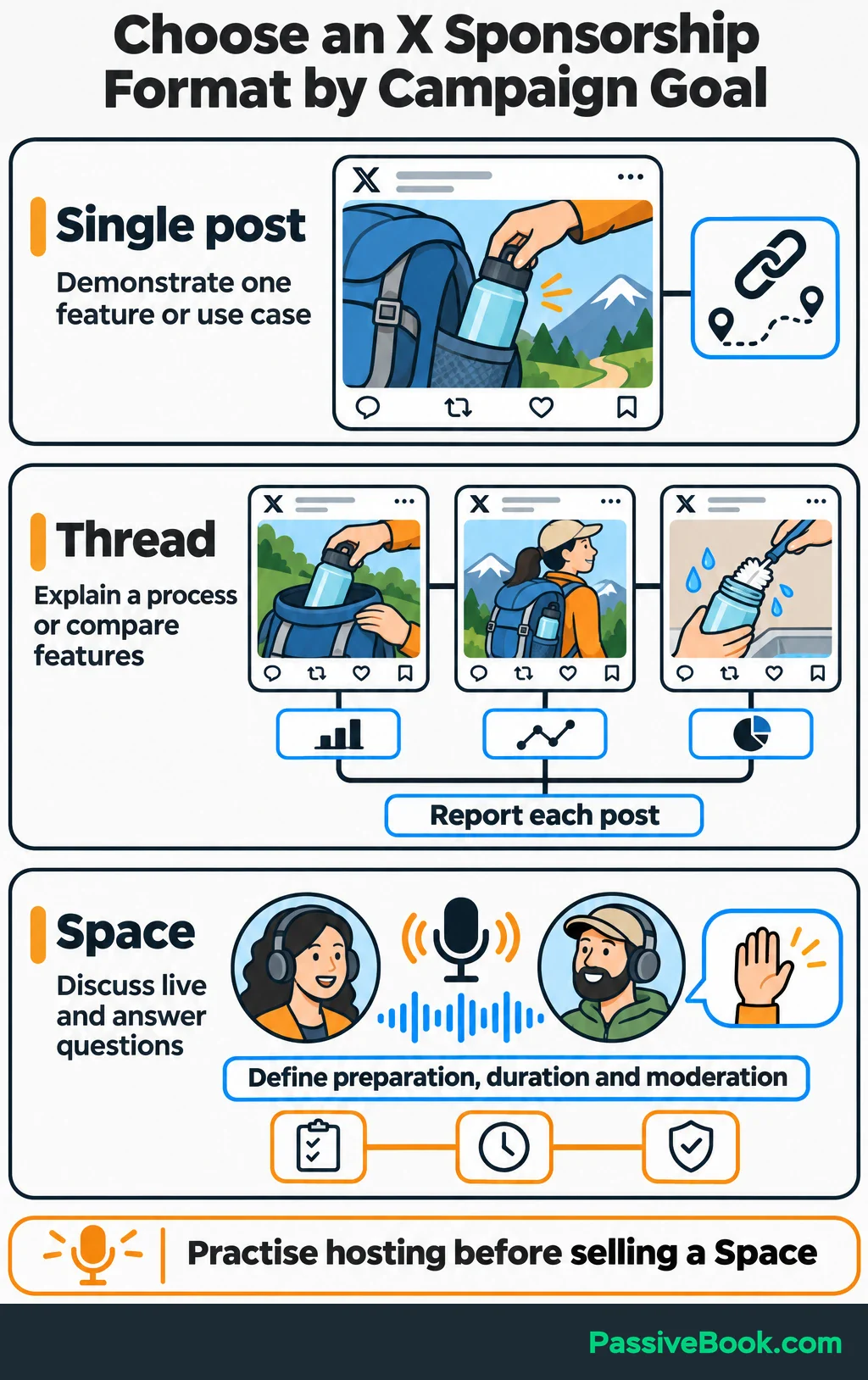
A Space is X’s live audio format. I would host relevant conversations before selling one. Learning to moderate while a sponsor watches is an unnecessarily public training plan.
For a first paid test, keep the scope small. Trail Dog Notes could offer:
- One original photo post demonstrating the bottle in a day-hike packing routine.
- One round of revisions.
- One tracked product link.
- Publication on an agreed date, with the post remaining live for 90 days.
- A report seven days after publication.
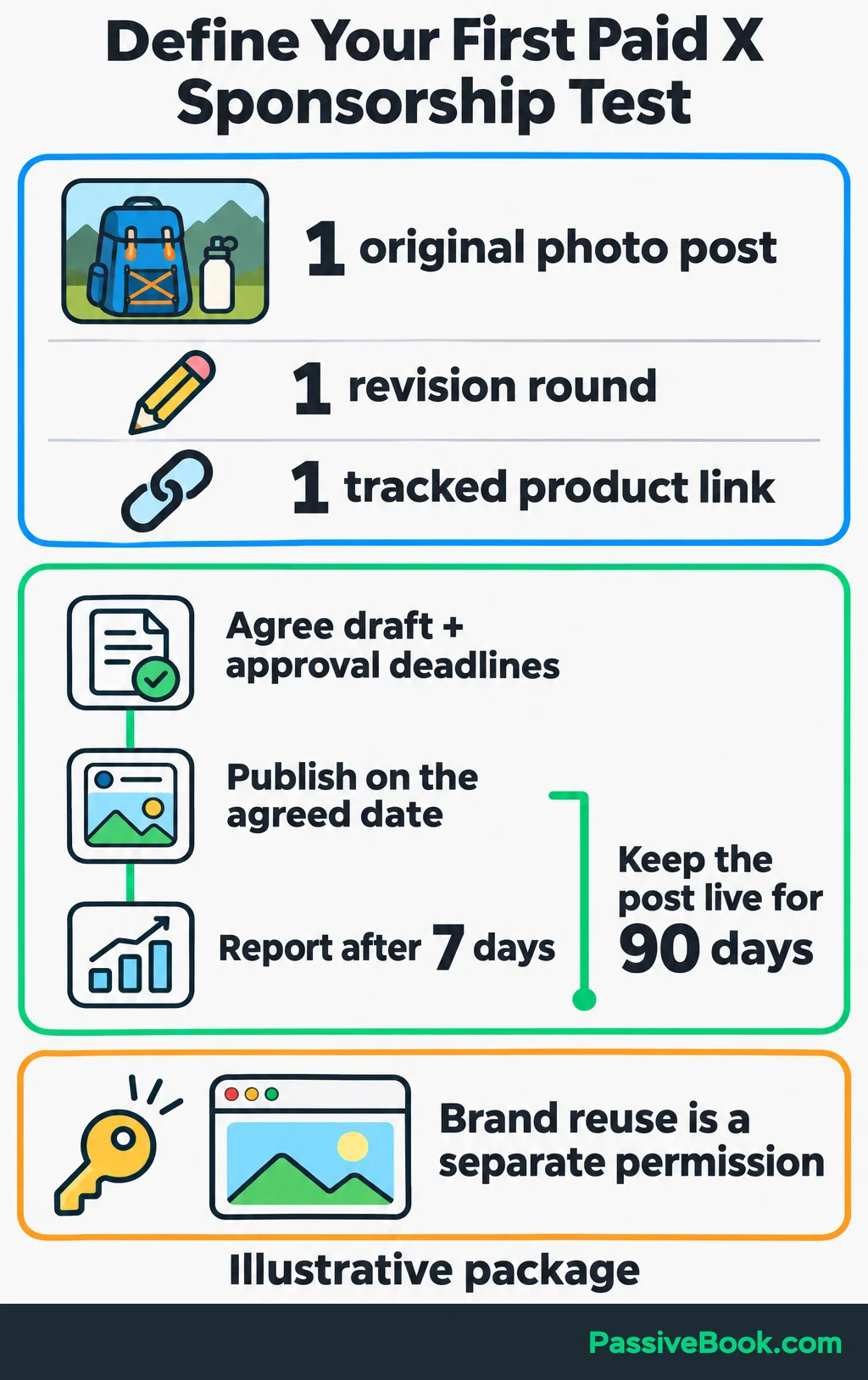
Set draft and approval deadlines too. Agree on what happens if feedback or product delivery arrives late.
Publishing to your audience and letting a brand reuse your work are separate permissions. Define both before quoting.
Calculate a Quote You Can Explain
Start with the work required. Count testing, planning, photography, writing, communication, revisions, and reporting. Multiply those hours by an hourly target that makes the job worthwhile, then add expenses and a share of overhead.
After that, add a publishing fee for access to your audience. Support it with audience fit and comparable post performance.
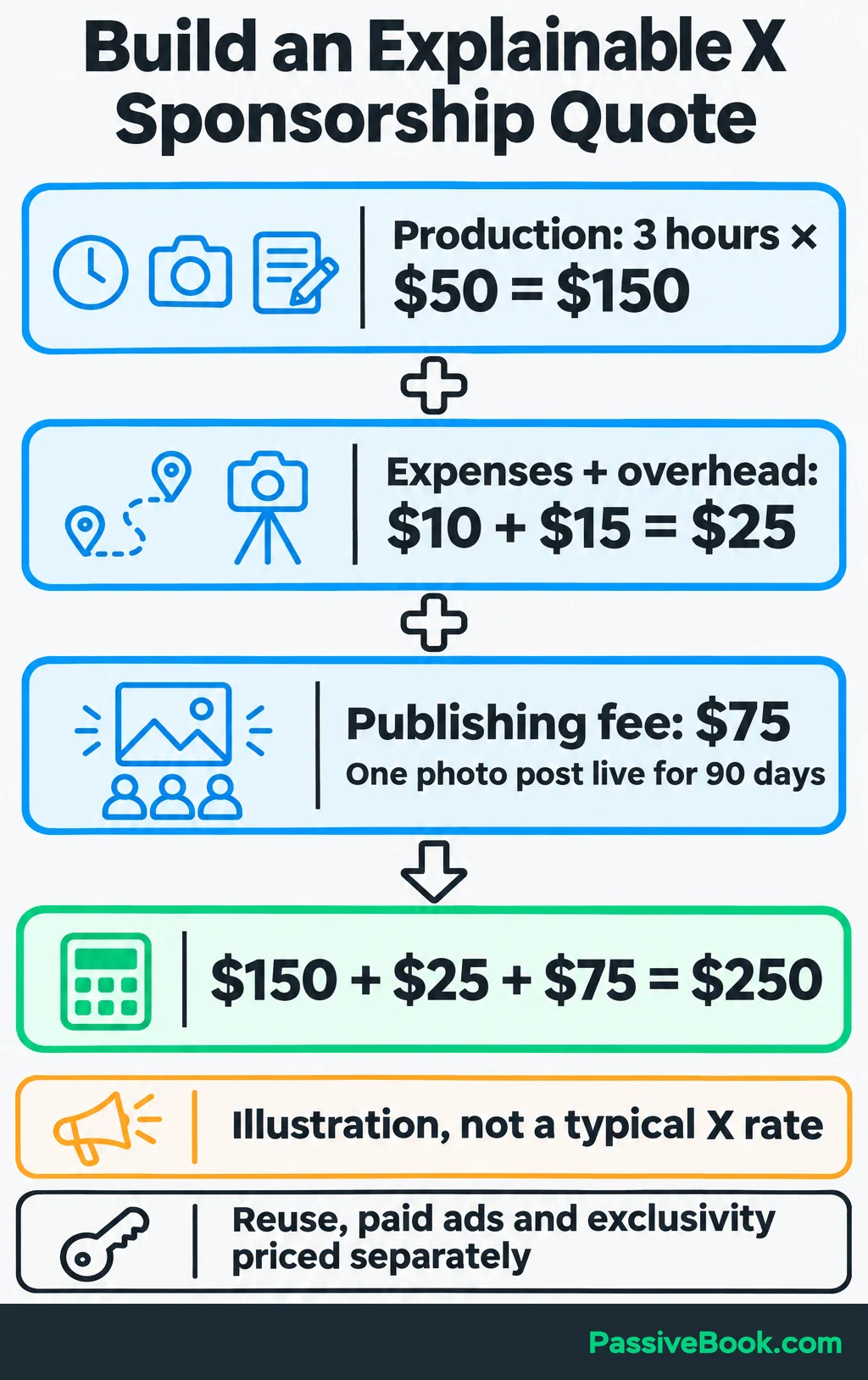
Here is an illustrative calculation, not a typical X rate or a promise that a brand will accept it:
| Quote component | Calculation | Amount |
|---|---|---|
| Production time | Three hours at a chosen $50 hourly target | $150 |
| Expenses and overhead | Travel to the trail ($10) plus a share of equipment costs ($15) | $25 |
| Publishing fee | One photo post kept live for 90 days | $75 |
| Total | $150 + $25 + $75 | $250 |
Present the boundaries with the price:
$250 for one original photo post on X, one revision round, a tracked product link, a 90-day live period, and a seven-day report. Brand reuse, paid advertising rights, and exclusivity are quoted separately. Taxes and payment fees will be addressed in the agreement.
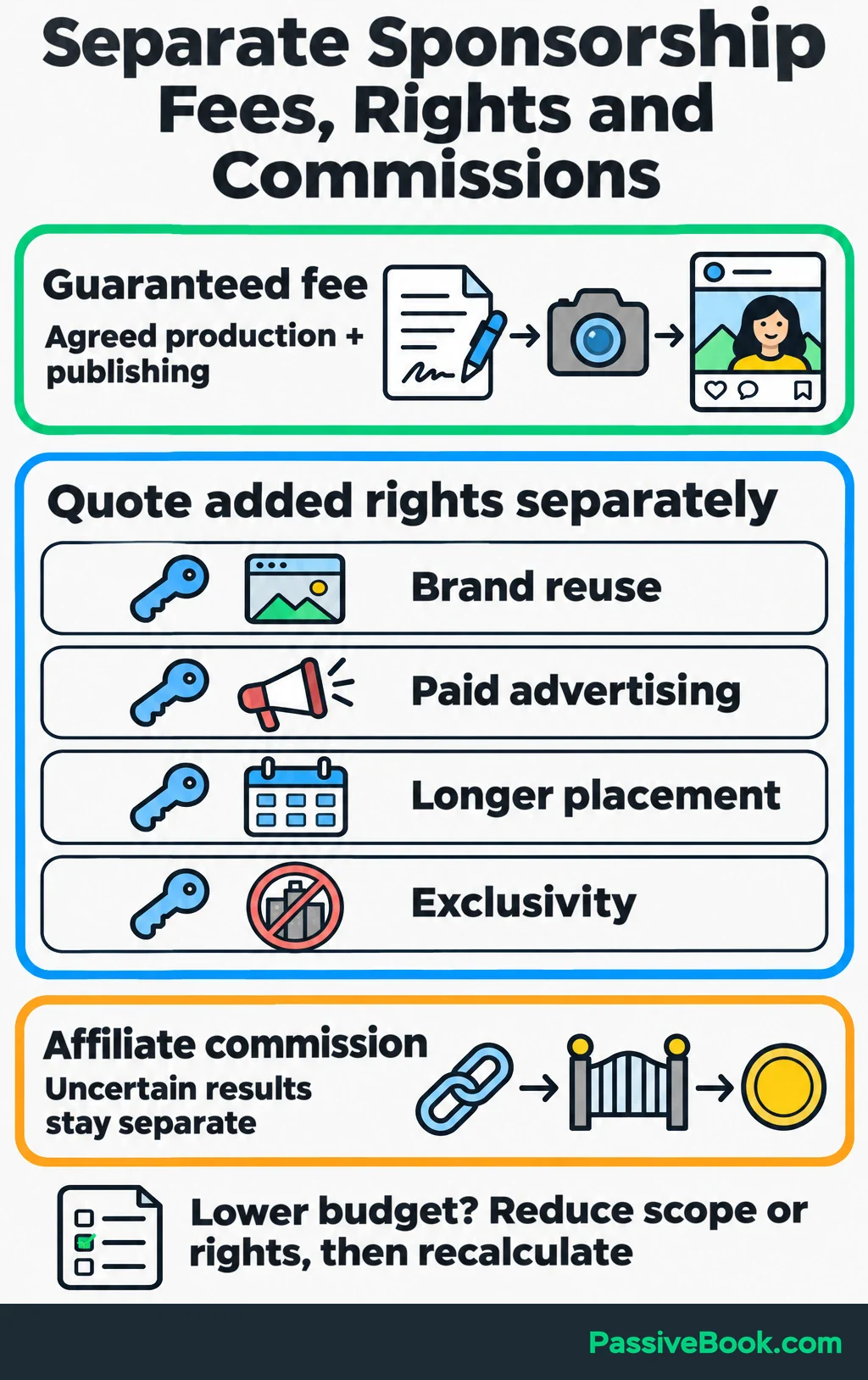
Charge separately for rights that add value or restrict future work. That includes use on the brand’s channels, use in paid ads, longer placements, and promises not to work with competitors.
If the budget is lower, reduce the work or rights and recalculate. Keep uncertain affiliate commissions separate from your guaranteed fee. “You could earn more” does not cover the hours you have already committed.
A lower offer needs another calculation, not an automatic discount. Use the calculator to compare the original package with a smaller version and see what each leaves you after costs and payment fees.
Free Client Quote Calculator




Send a Pitch With a Specific Paid Offer
Connect Audience Fit, Proof, and One Campaign Idea
A useful pitch answers the brand’s likely questions: Why this audience? Why this idea? What would I buy, and what would it cost?
Keep it short enough to assess without opening an attachment. Link your media kit and strongest relevant sample.
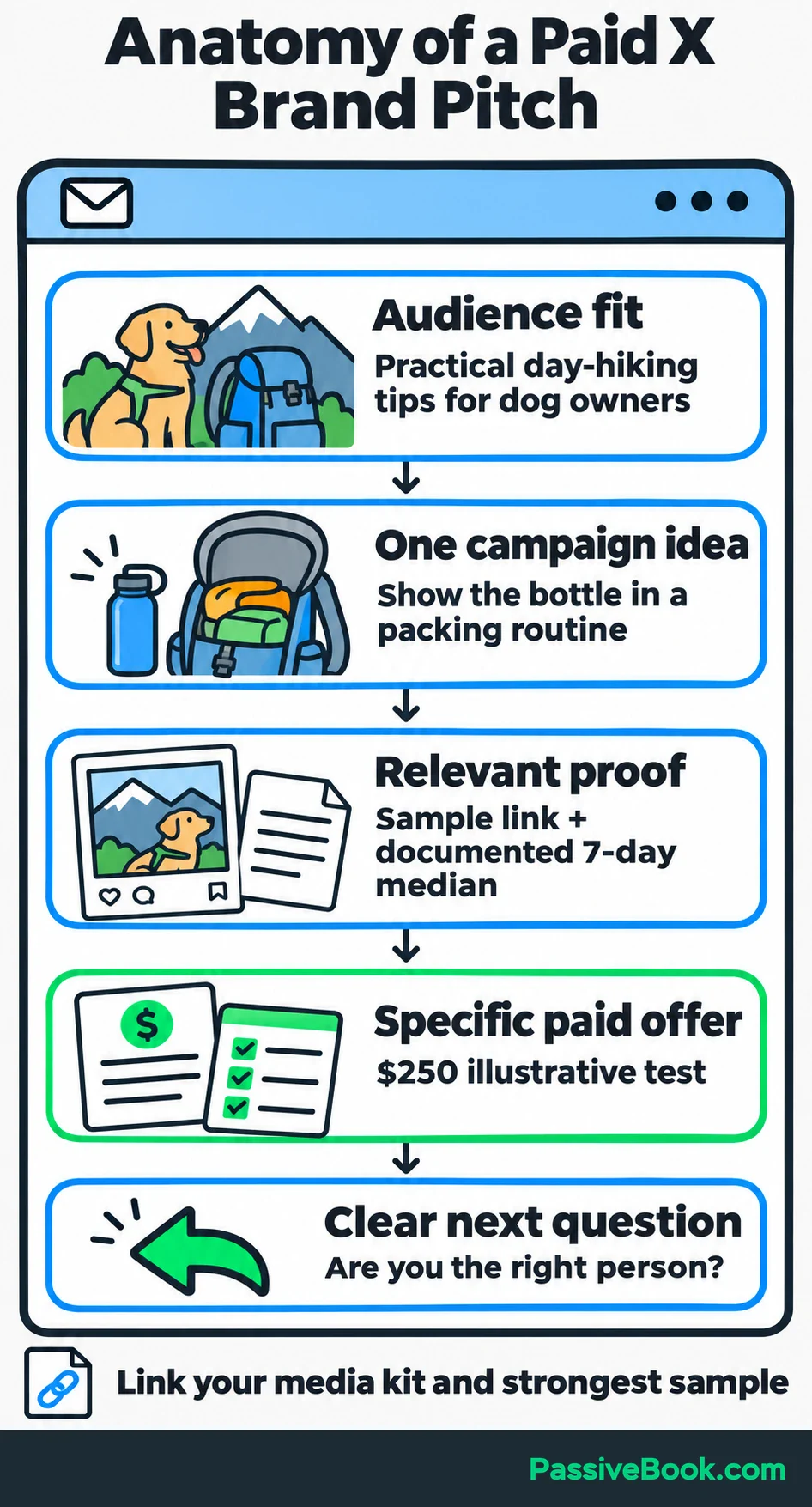
Here is a complete pitch you can adapt. Replace the bracketed details with evidence you can support.
Subject: Paid X partnership idea for [Brand]’s dog water bottle
Hi [Name],
I run Trail Dog Notes on X, sharing practical day-hiking tips for dog owners.
[Specific audience question or observation] prompted an idea for a packing demonstration featuring your
. I would show how the bottle fits into preparing for a day hike, with a link to your product page.
Here is a self-initiated packing sample, not a commissioned partnership: [sample link]. Across [number] comparable original posts, my median seven-day view count was [documented figure].
I’d like to propose a paid test: one original photo post, one revision round, a tracked product link, a 90-day live period, and a seven-day report. My fee is $250, with reuse, paid advertising rights, and exclusivity quoted separately.
My media kit is here: [link].
Are you the right person to discuss this, and would this fit an upcoming campaign?
Thanks,
[Your name]
[X profile]
[Business email]
I would send one strong idea rather than a menu of ten. It gives the recipient something concrete to accept, question, or pass along.
If the example still leaves you staring at a blank email, use the AI Partnership Writer to draft your own pitch and follow-up. You can start with a relevant sample, even without a previous sponsor.

Free AI Partnership Writer
If you already have relevant campaign results, replace the portfolio sentence with a documented result and its measurement window. If you have not used the product, propose testing it; do not write as though you already recommend it.
Follow up and Handle Common Responses
Follow up after about a week unless the brand gives you another timeline. Restate the idea and add one useful sample.
Hi [Name], following up on the day-hike packing idea below. Here’s a relevant example of my work: [link]. Are you considering paid creator partnerships for an upcoming campaign?
Send one final follow-up later, then close the loop. Put the next action in your tracker so you do not spend every evening rereading sent emails.
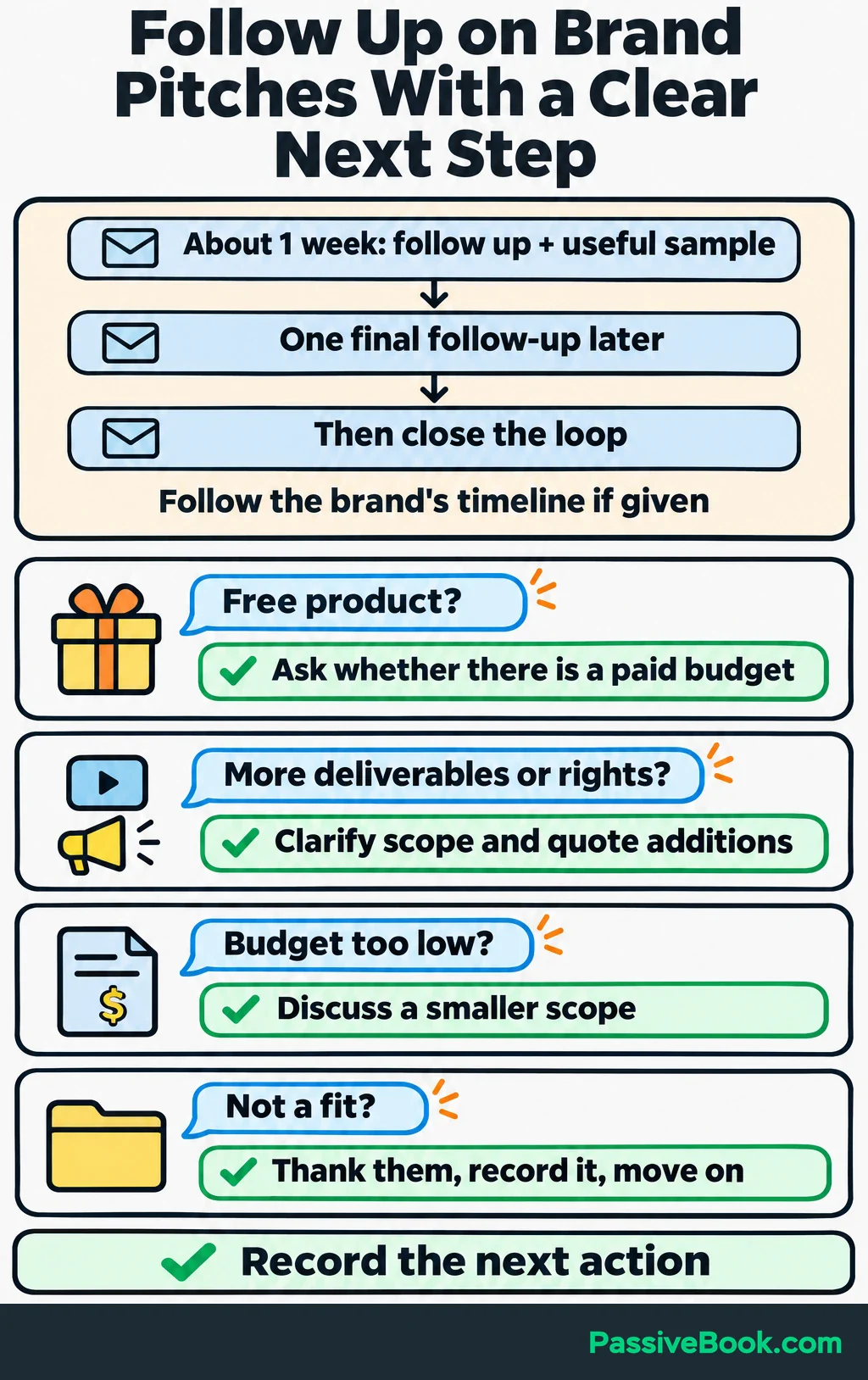
For common replies, keep your answer direct:
- “We can send a free product.” “Thanks for considering me. I’m currently booking paid X partnerships. Is there a creator budget for this campaign?”
- “Can you include a thread and advertising rights?” “I can quote those additions. Which posts would you want to promote, where, and for how long?”
- “The fee is beyond our budget.” “What budget is available? I can review whether a smaller scope would work.”
- “Not a fit.” Thank them, record any reason they offer, and move on.
Review where outreach stalls. No replies may mean weak targeting or an unclear pitch. Conversations that stop at pricing may call for better proof, different prospects, or a smaller offer. Look for repeated patterns before rewriting everything after one rejection.
Agree on Terms Before Creating Campaign Content
Put Deliverables and Rights in Writing
A friendly conversation is a good start, but it leaves too much room for different expectations.
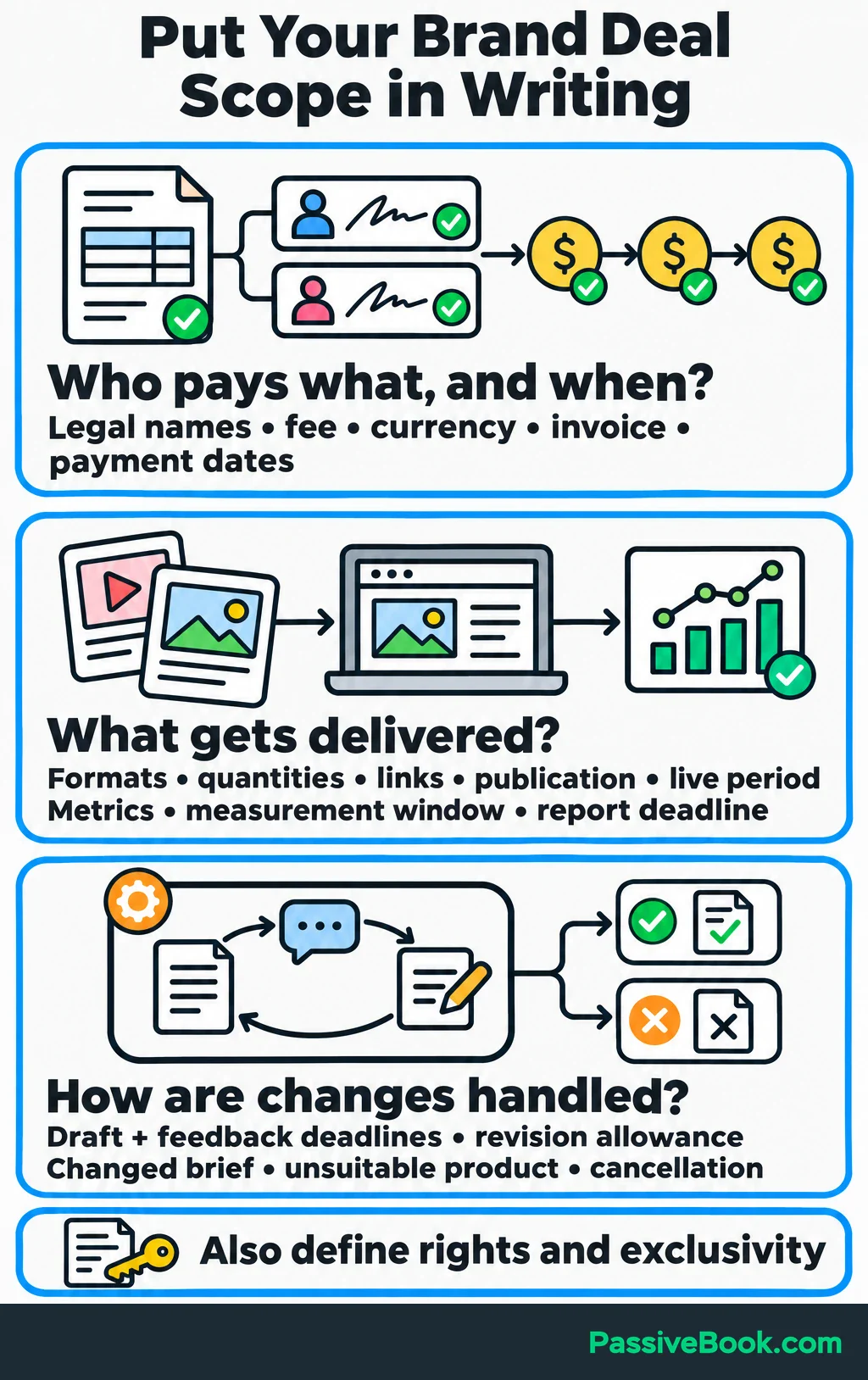
Put the following in a written agreement:
- Parties and payment: Legal names, fee, currency, invoice details, and payment dates.
- Deliverables: Formats, quantities, links, publication dates, and required live period.
- Approvals: Draft deadlines, feedback deadlines, and revision allowance.
- Rights: Ownership and any permission to reuse or edit the content.
- Restrictions: Competitors or product categories covered by exclusivity, and its duration.
- Changes and cancellation: What happens if the brief changes, the product is unsuitable, or the campaign stops.
- Reporting: Metrics, measurement window, and report deadline.
The ISBA/IMTB contracting guidance is a useful industry reference for scope, usage, exclusivity, and payment expectations.
For reuse, specify channels, duration, territory, permitted edits, and whether paid advertising is included. “You may share my post on [Brand]’s Instagram account for 30 days” is easier to assess than “all rights.”
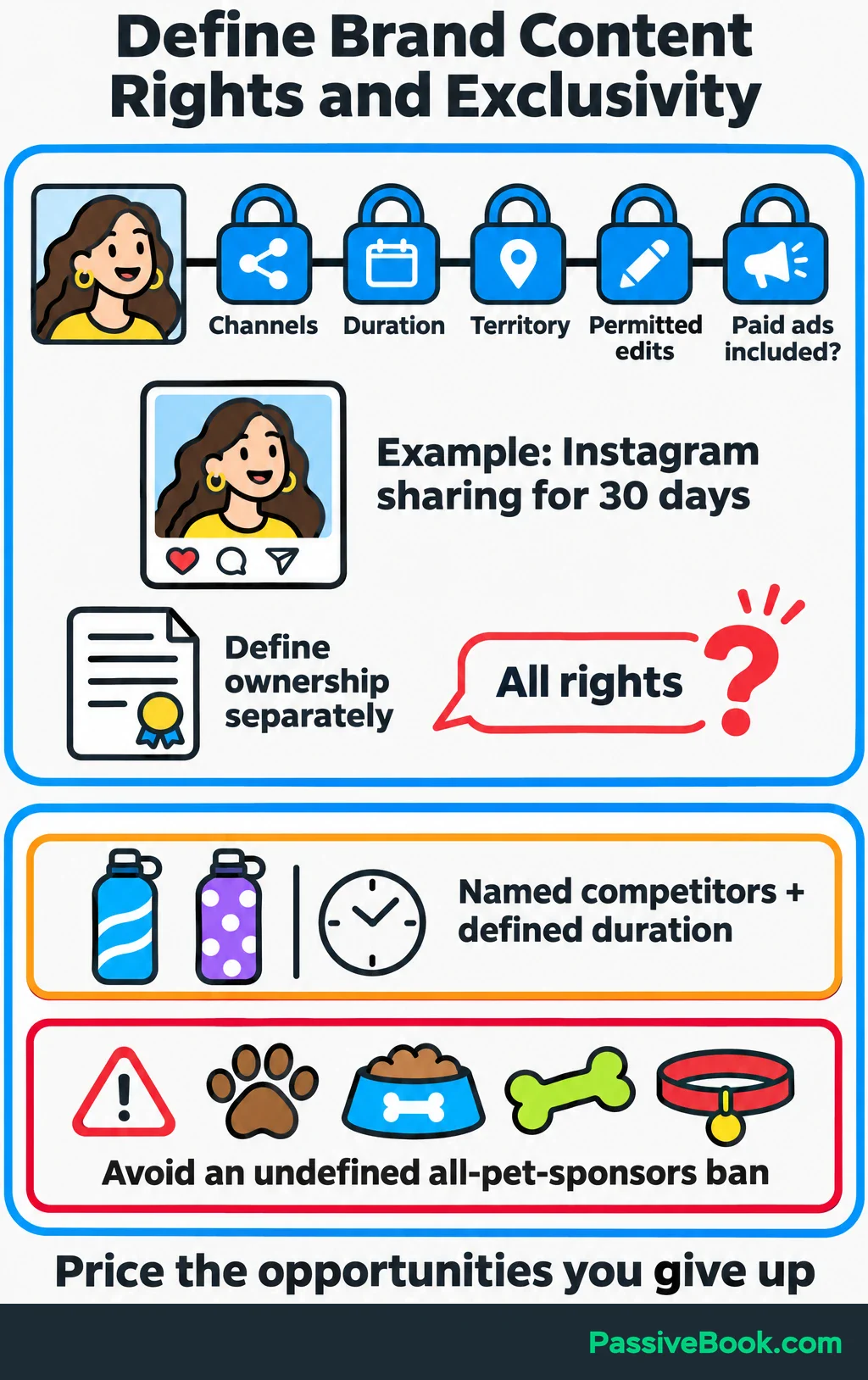
Keep exclusivity narrow. A restriction on named competing water-bottle brands is different from a ban on all pet-related sponsors. Price the opportunities you would be giving up.
I would push back on unlimited revisions. A defined round gives both sides a reason to provide complete feedback. Get qualified advice when a significant commitment or unclear rights clause could affect your business.
Verify the Partner and Payment Arrangements
Confirm an unfamiliar representative through contact details you find independently on the brand’s official website. A familiar logo in an email proves very little.
The FTC’s influencer scam guidance flags impersonation, requests for money, and checks followed by instructions to send some of the funds elsewhere.
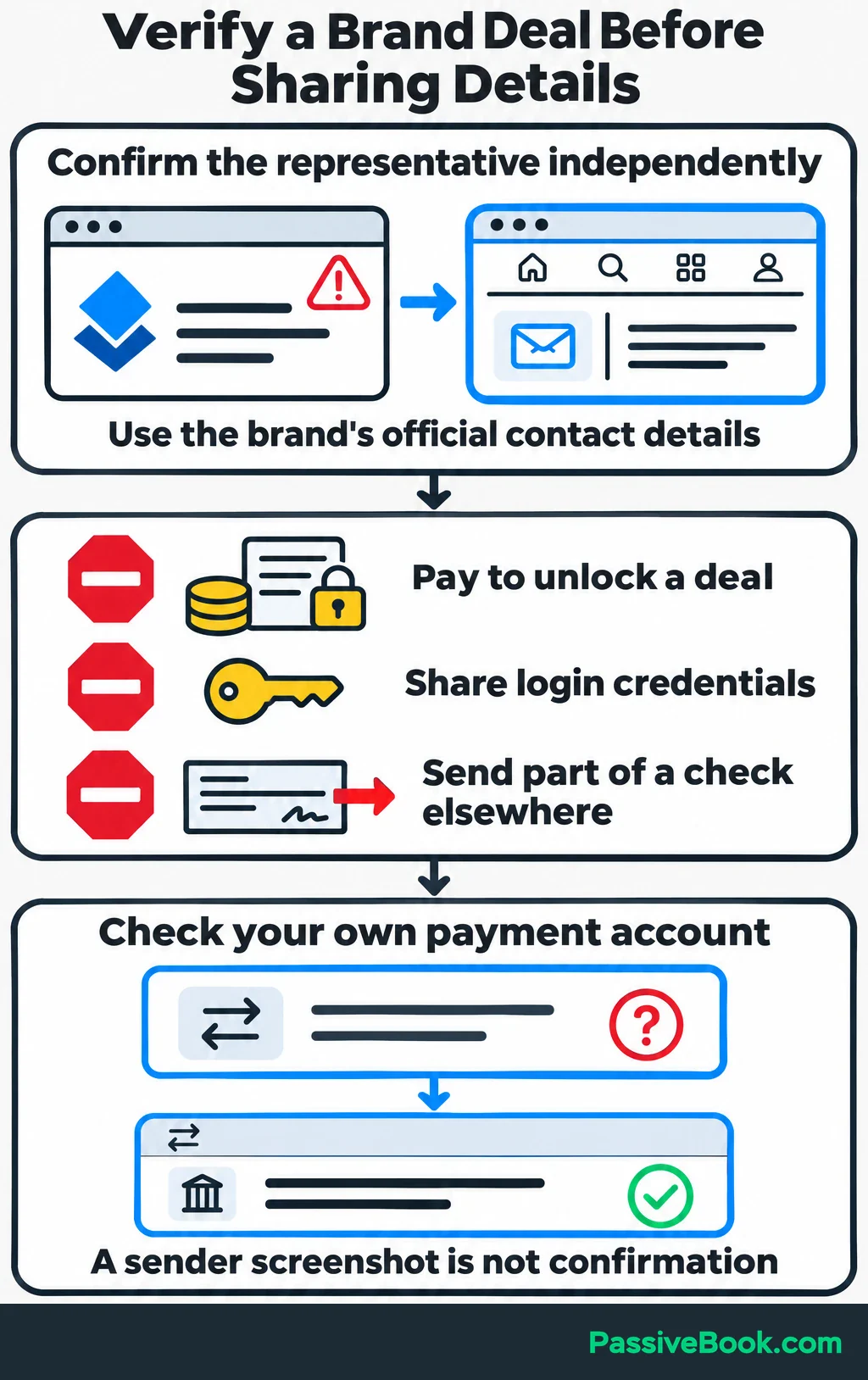
Reject requests to pay to unlock a deal or share your login credentials. Provide sensitive vendor information only through a verified process.
Before starting, agree on the payment method, currency, transaction fees, invoice recipient, and any onboarding requirements. Discovering a mandatory vendor portal after your invoice is overdue is avoidable admin.
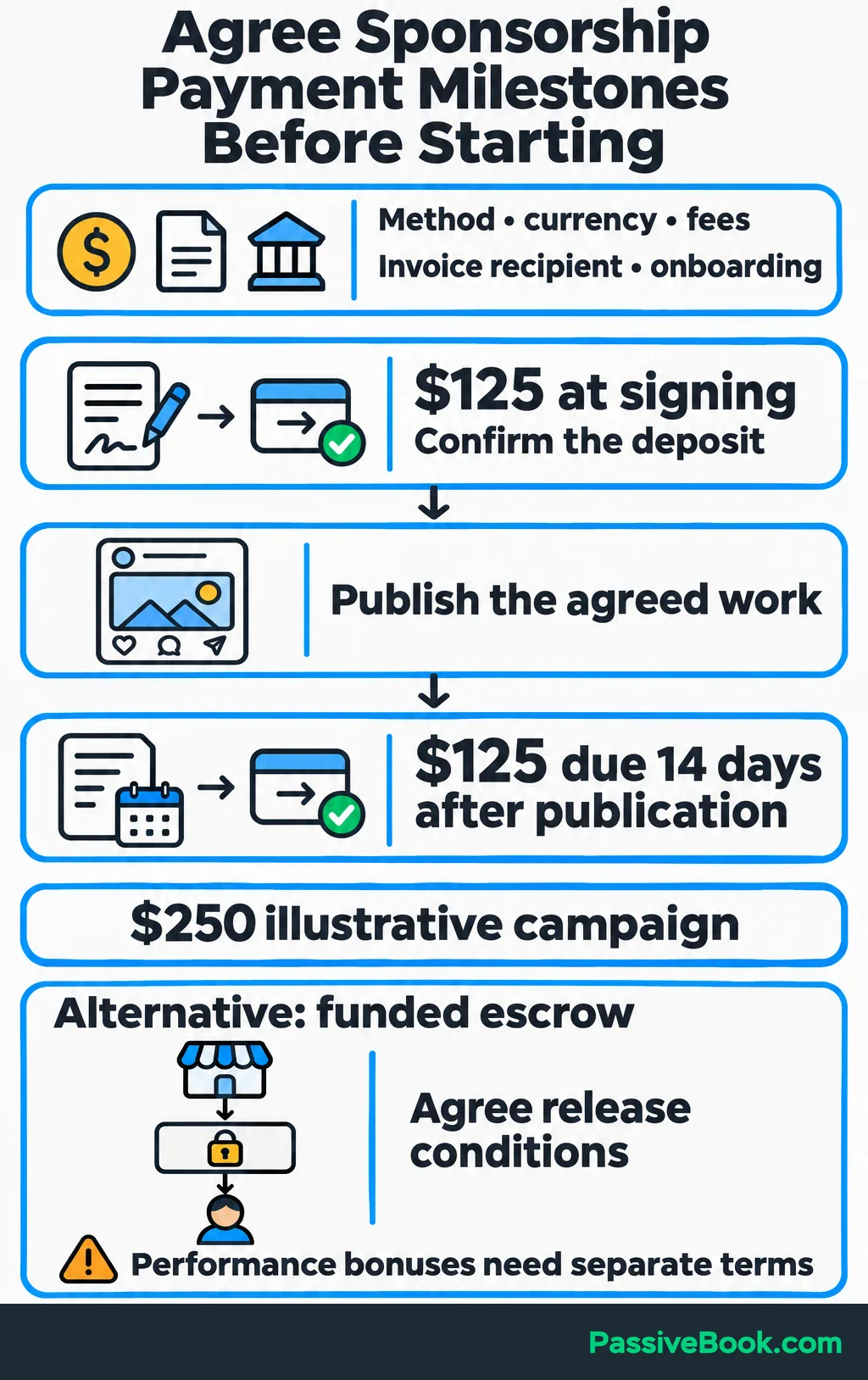
I would propose a deposit or funded escrow for a new relationship. With escrow, a third party holds the brand’s payment and releases it under conditions you both agree to. For the illustrative $250 campaign, one arrangement is $125 at signing and $125 due 14 days after publication.
Confirm the deposit in your own payment account. A screenshot from the sender is not confirmation.
Tie the fixed fee to the agreed work. If you add a performance bonus, define its tracking, qualifying results, and payment date separately.
Deliver the Agreed Campaign
Work from the approved brief, collect feedback within the revision allowance, and check the final product link before publishing. Test any tracking link too; a broken link can make otherwise useful work difficult to assess.
For sponsored organic posts, enable X’s required Paid Partnership disclosure in the post’s Content Disclosure settings. This requirement also covers qualifying gifted and affiliate promotions under X’s policy.
Add a clear disclosure such as “Ad” beside the endorsement itself. Do not bury it in a profile, a pile of hashtags, or text readers must expand.
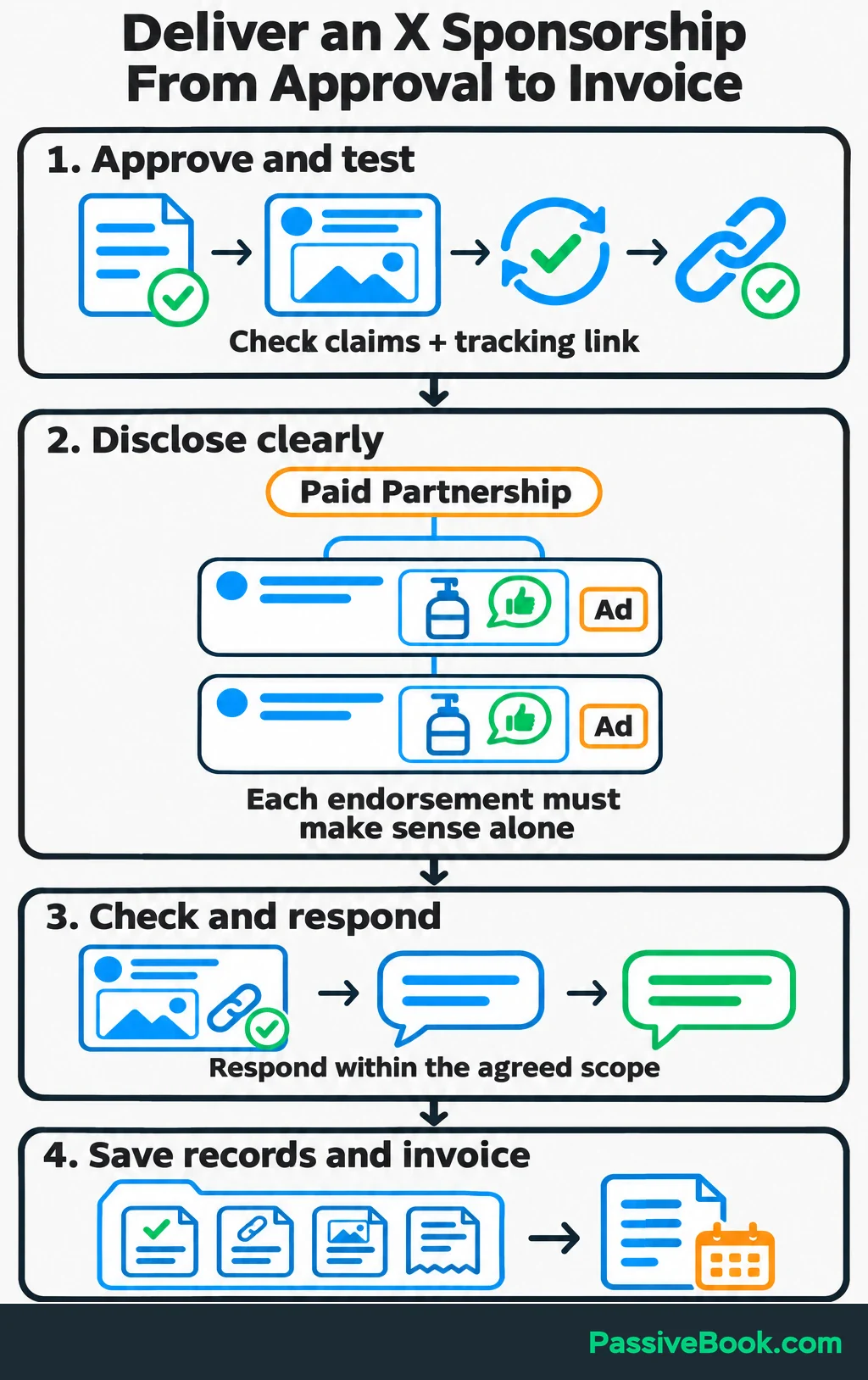
The FTC’s disclosure guidance advises using clear disclosures alongside platform tools. For a thread, disclose each post that contains an endorsement so it makes sense when seen alone. Put disclosures inside sponsored videos, and repeat them aloud during sponsored live audio so late arrivals hear them.
Follow applicable local rules. U.S. requirements can apply when an overseas post is reasonably expected to affect U.S. consumers.
Only describe product experiences you have had and claims you can support. If testing changes your opinion, discuss that with the brand before publication rather than pretending the product passed.
After publishing:
- Check the live content, disclosure, and link.
- Answer relevant questions within the agreed scope.
- Save approvals, live URLs, screenshots, and payment records.
- Send the agreed invoice and follow up against its due date.
Delivery includes the paperwork. Otherwise, you have finished the promotion and left the payment process half-built.
Turn the First Campaign Into Repeat Work
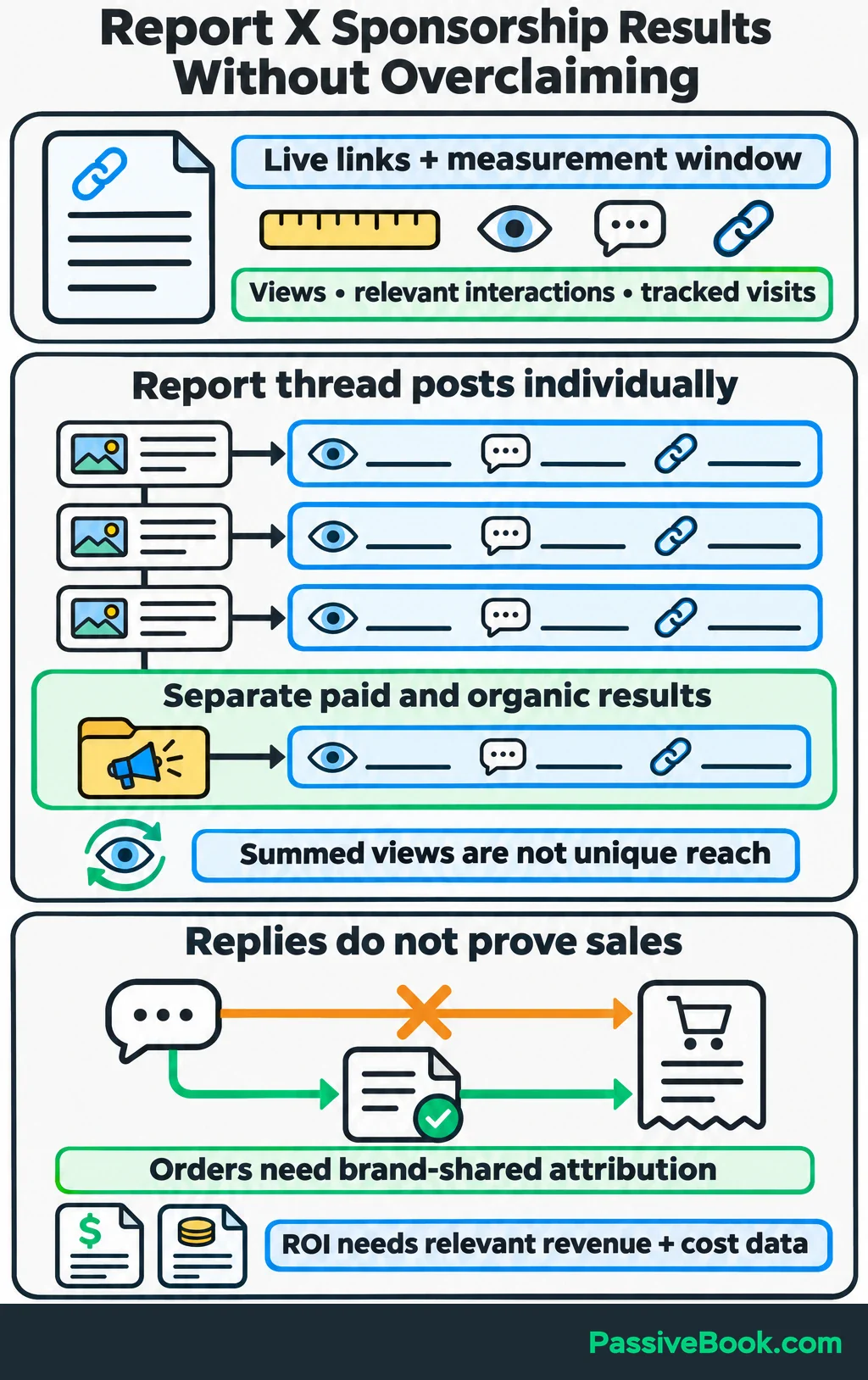
Send a concise report at the agreed measurement point. Make it easy for the brand to see what you delivered and what happened.
Include the live links, measurement window, views, relevant interactions, tracked visits, and useful audience questions. Include orders the brand traced to the campaign only when it shares that data with you.
Report thread performance by post. Adding every post’s views together does not show how many different people saw the thread. Keep paid promotion separate from organic results, and compare like-for-like content with your baseline.
Then recommend one next campaign based on what you observed.
For Trail Dog Notes, questions about carrying or cleaning the bottle could support a follow-up demonstration. The proposal should follow those questions rather than repeat the same paid post with a different photo.
Do not turn replies into imaginary sales. Without the brand’s relevant revenue and cost data, you cannot calculate the campaign’s return on investment.
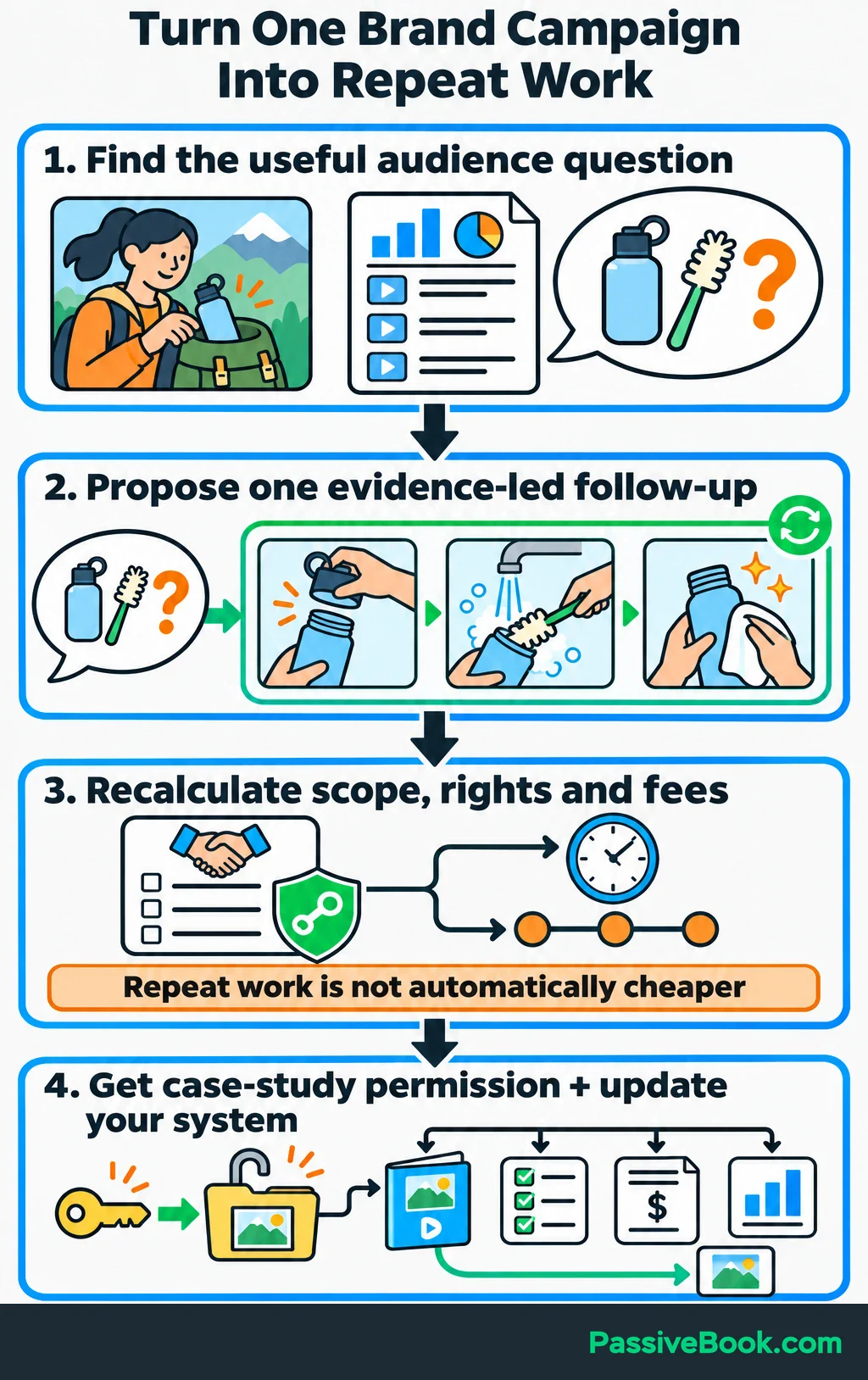
If there is a good fit, offer a recurring package with explicit deliverables, dates, rights, reporting, fees, and payment milestones. Recalculate the workload before offering a discount. Three campaigns are not automatically cheaper to produce because they share an invoice.
Ask permission to use the results and brand feedback in a case study, then update your media kit and tracker.
Save the parts you can reuse: your brief, agreement checklist, invoice, and reporting template. A small sponsorship business becomes easier to run when every deal does not require inventing the paperwork again.
What Next?
Choose one brand whose product answers a question your audience already asks, and draft a paid offer with a deliverable, a price, and one relevant sample.
Use the social buttons to share this guide when a creator conversation gets stuck on follower counts. A clear offer gives that conversation somewhere more useful to go.
Which part of your first paid offer feels hardest to settle: the proof, the price, or the pitch? Tell me in the comments, and bring any other questions too.
Share this post with your friends & followers:

