You find an account that answers the same questions your customers ask. There might be a useful collaboration here, but their profile gives you no obvious opening. “Want to partner?” feels vague, and writing a full proposal before they reply feels like homework nobody assigned.
The risk is spending your limited time on people who serve the wrong audience or want something you cannot offer. The searches and message examples below help you judge who is worth contacting and turn their public work into an opening for a useful collaboration.
Define a Collaboration Worth Proposing
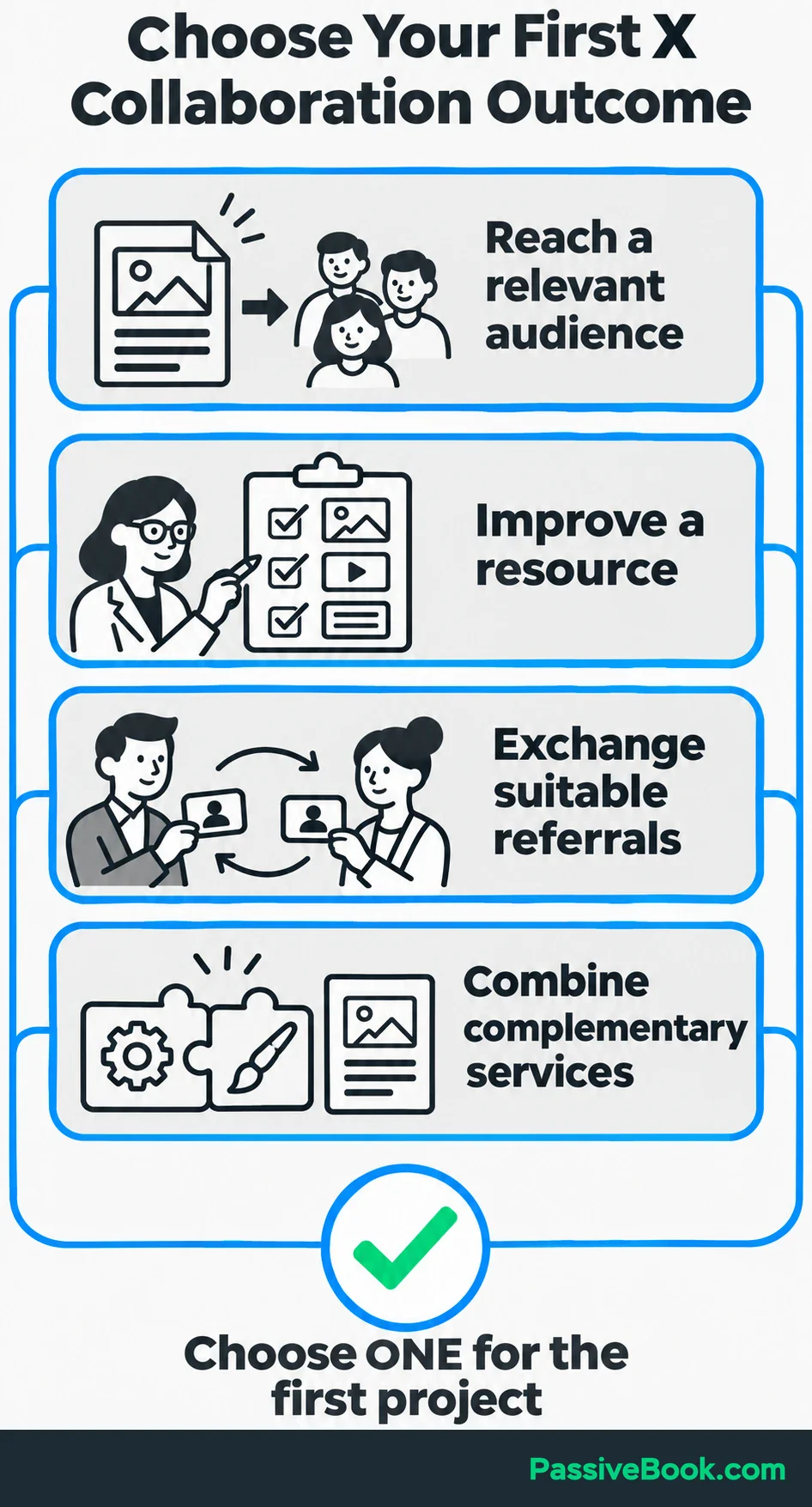
Choose what you need before searching for people. A partner could help you reach a relevant audience, improve a resource with specialist knowledge, exchange suitable referrals, or offer a service that complements yours.
I would choose one outcome for the first project. Otherwise, “partnership” becomes a polite word for several unfinished ideas.
Around 2022, I spent six months chasing Instagram and Twitter/X followers in another niche while my bank account stayed around $47. I kept checking which posts attracted attention, but I had no clear answer to what that attention should lead to. That experience is why I start with a useful business outcome.
Write your offer in three parts:
I can contribute [asset or skill]. I need [complementary contribution]. Together, we could create [specific deliverable].
You do not need a large following to contribute useful work. Design, editing, production, or access to a relevant resource can make an offer worthwhile.
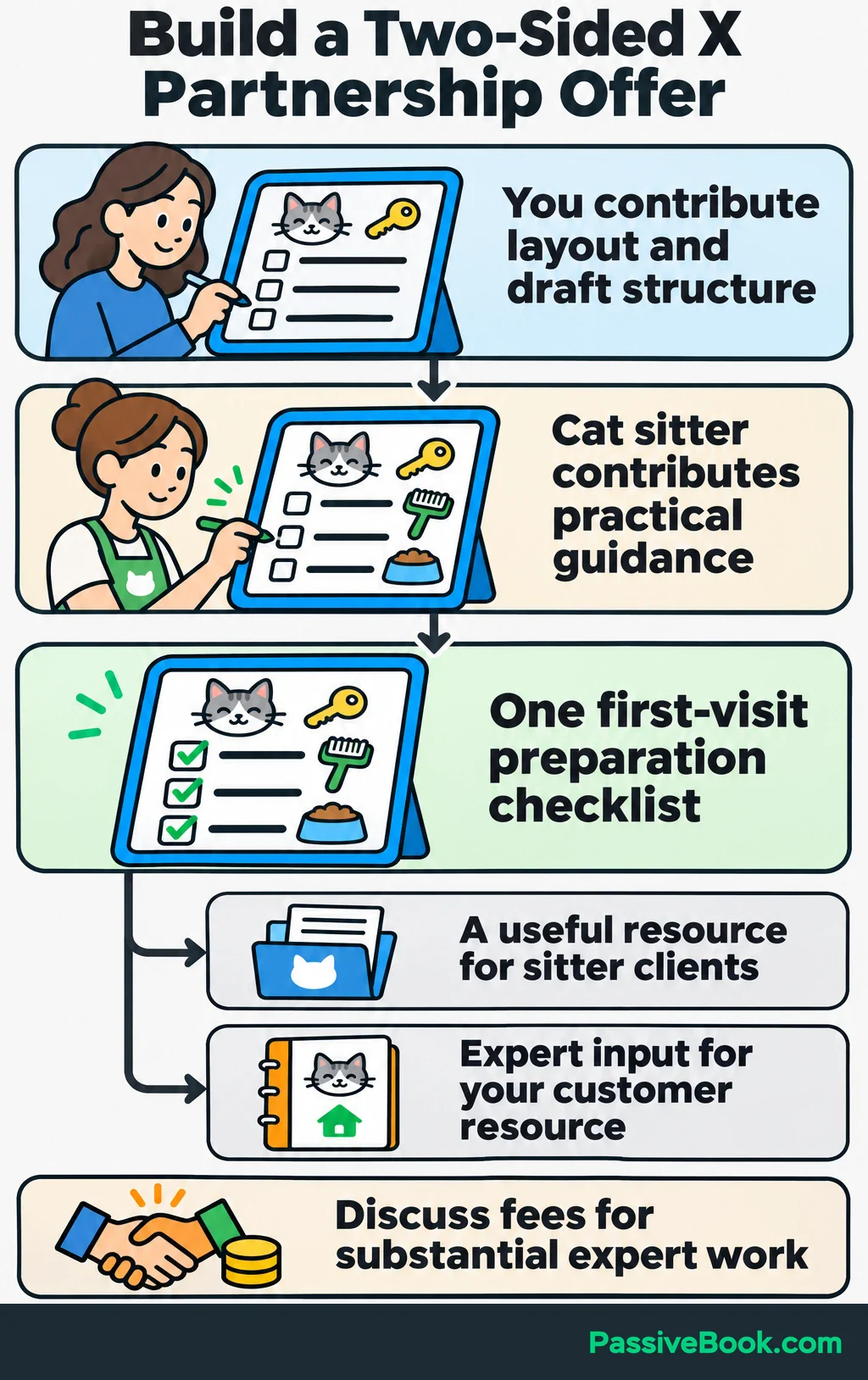
Throughout this guide, imagine you sell printable cat-sitter handover packs. You want an independent cat sitter to help create a first-visit preparation checklist. The business, prospect, messages, and project are illustrative.
Your offer could be:
I can handle the checklist’s layout and draft structure. I need a cat sitter’s practical guidance. Together, we could make a resource for your clients and my customers.
The sitter gets a useful client resource, and your business gets informed input. Discuss payment for substantial expert work. “Exposure” does not become more valuable because you put it in a friendly message.
Find Potential Partners Through X Search
Search for Relevant Expertise and Audience Needs
Start with the person’s work and the problems their audience discusses. Searching only for “collaboration” misses people who might welcome a good offer but have never posted an invitation.
For the checklist project, try these searches separately:
| Search | What to look for |
|---|---|
cat sitter | People describing their services and answering owners’ questions |
"cat sitting" | Discussions about visits, preparation, and client expectations |
"pet sitter instructions" | Problems your handover pack could help organize |
"cat" "collaboration" | Explicit invitations that might suit the project |
"cat care" "guest contributor" | Requests for relevant contributions |
If you get few useful results, remove the opportunity phrase. If results are too broad, add a problem such as “first visit” or “owner instructions.”
To discover accounts, choose People in the search results. To inspect recent discussions, choose Latest. Both filters are available in the mobile app.
When someone recommends a particular person, search their name or known handle and compare the account with their business website. For a local project, add the city and confirm their actual service area.
Open useful posts and read the replies. Someone giving a clear, thoughtful answer may be a better prospect than the account that started the discussion. Check credited contributors and past collaborators too, then follow each promising person back to their own work.
I would skip paid prospecting tools at this stage. You need a few people you can explain a useful offer to, and a longer list will not fix an unclear proposal.
Narrow Searches by Account and Date
Use Advanced Search in a signed-in web browser when you need to combine a phrase, an account, and a date range. On a phone, open the web form in your browser.
For the checklist project:
- Enter
cat sittingin the exact-phrase field. - Choose dates covering the last full calendar month and inspect relevant discussions.
- When an account looks promising, repeat the search with that handle in the field for posts from an account.
- Widen the date range to review older explanations and examples of their work.
The account fields also let you distinguish posts written by someone from replies sent to them and posts mentioning them. That helps you inspect their own advice separately from what others say.
Use recent dates to find active conversations, but do not reject useful expertise because it was shared earlier. If you find an invitation to collaborate, confirm it is still open.
Keep a simple prospect sheet. Record the handle, relevant post, mutual benefit, trust evidence, contact route, contact date, response, and next action. A spreadsheet or Notion page is enough.
I would qualify three prospects before collecting more names. That is a manageable starting point, not a target you must fill with weak matches.
Choose Partners With Clear Fit and Credible Work
Before contacting someone, check whether you can explain why this particular person suits this particular project.
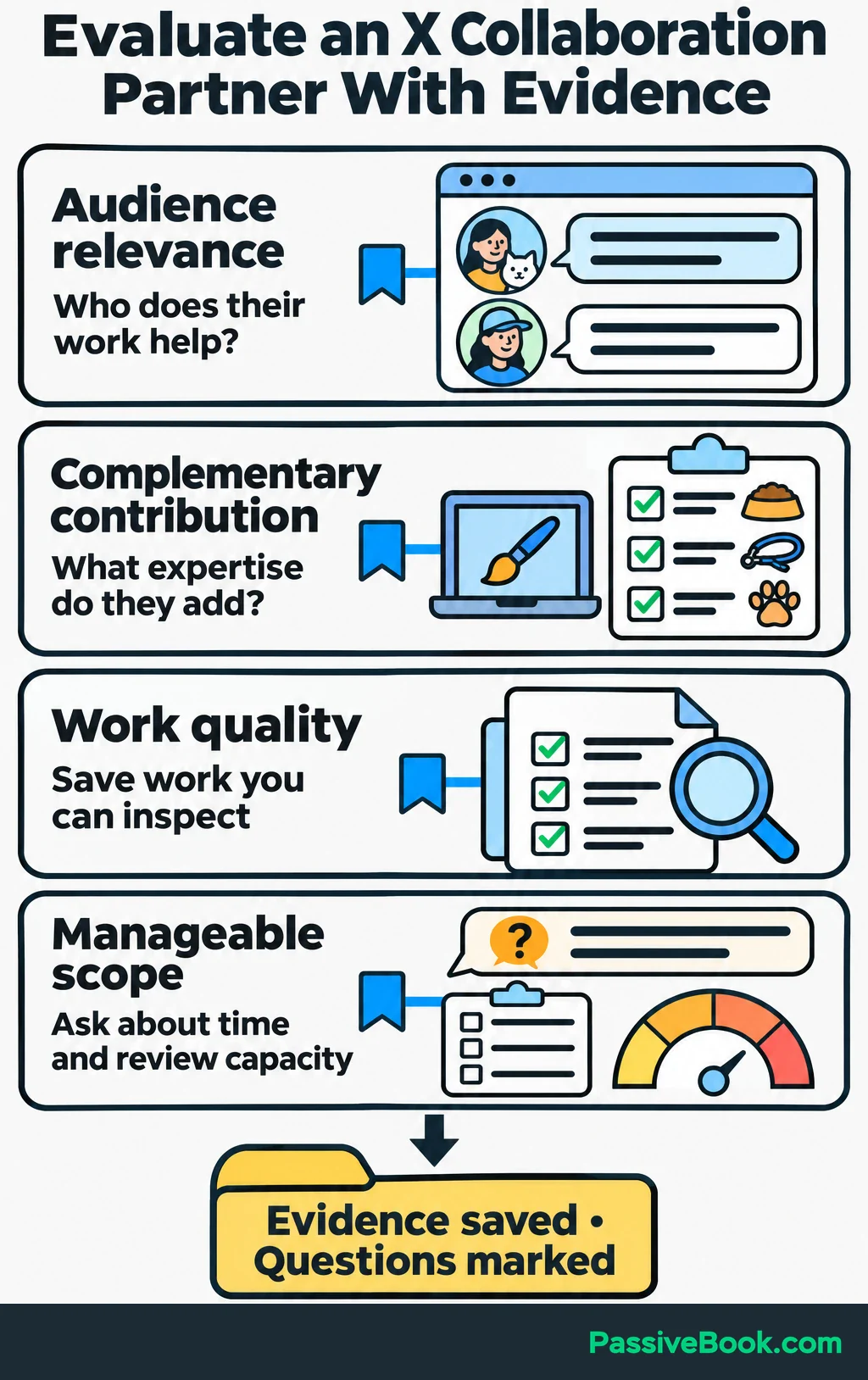
Save a post or resource that supports each judgment about their work. Mark anything you cannot verify as a question for the conversation. “Seems knowledgeable” is easy to write and hard to defend later.
| Check | Evidence to look for in the checklist project |
|---|---|
| Audience relevance | Posts or services aimed at cat owners preparing for sitter visits |
| Complementary contribution | Practical sitting experience that adds something beyond your design skills |
| Work quality | A post explaining what owners should leave ready for a sitter, or a client checklist you can inspect |
| Manageable scope | Not yet known: ask whether they can supply practical guidance and review one checklist. |
If distribution is your main goal, look at who participates in their conversations. Relevant questions from potential customers matter more to that decision than a large total following. Ask where they would share the finished resource before assuming it will reach their clients.
Cross-check identity through a business website you locate independently. Compare names, contact details, service history, and links. If a qualification matters to the work, verify it with the issuing organization.
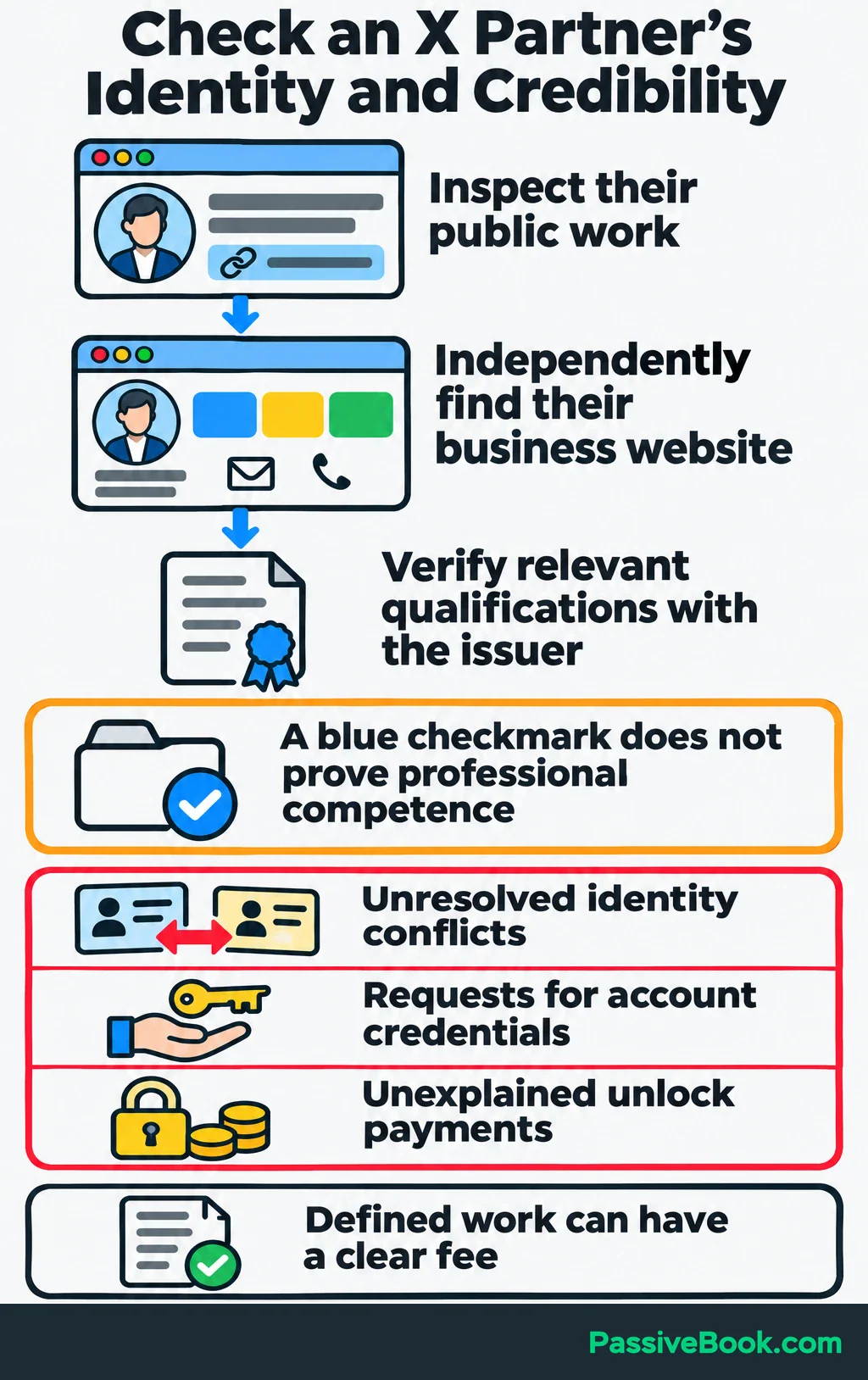
A blue checkmark means an account has an active Premium subscription and meets X’s eligibility requirements. It does not establish ID verification or professional competence. X explains the distinction here.
Public work can show relevance and quality. It cannot tell you whether someone has time, meets deadlines, or handles feedback well. Those questions need a conversation and a small project.
Set aside prospects with unresolved identity conflicts, requests for your account credentials, or unexplained payment demands. A clear fee for defined work is different from paying to “unlock” a supposed opportunity.
Approach Them With a Specific, Low-pressure Offer
Before reaching out, make your own profile easy to assess. Explain what you create, whom it helps, and where someone can inspect it.
For the handover-pack business, link to an existing printable or a clear preview. The sitter should be able to judge your layout work without first requesting a portfolio.
Choose the Right Contact Route
Reply publicly when you have something useful to add to the discussion. A relevant question is fine, but avoid inserting a pitch into an unrelated thread.
For a specific proposal, send a private message on X or use the business contact method the person publishes. You do not need to spend weeks liking posts before making a relevant offer.
Messaging access depends on the recipient’s settings. A Message button can appear even when the inbox is closed, and requests remain separate from ordinary conversations until accepted. X’s Chat guidance explains these restrictions.
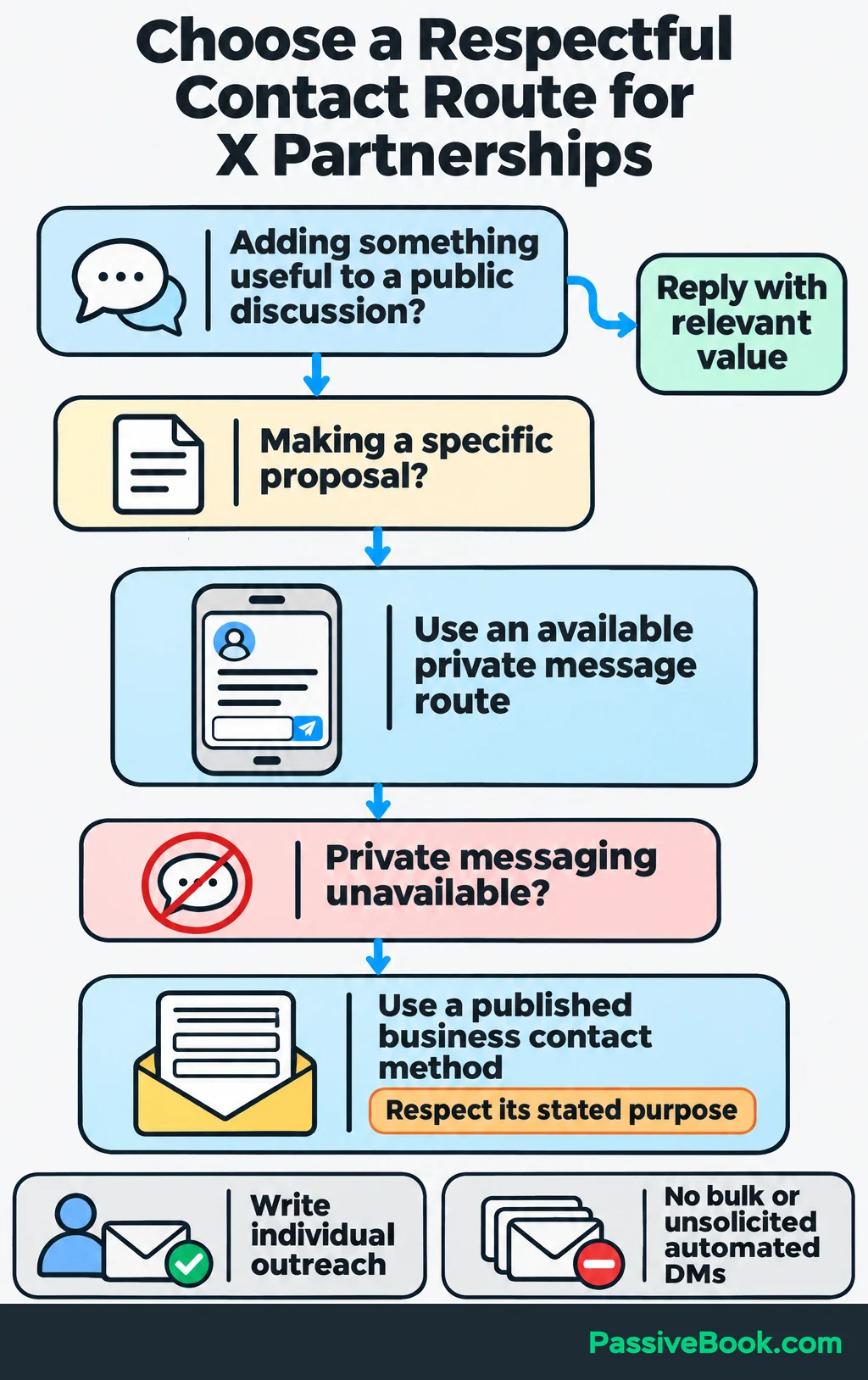
If private messaging is unavailable, look for a published business email or inquiry form. Respect any stated limits on what it is for.
Keep outreach individual. X prohibits bulk or aggressive unsolicited messaging, and its automation rules prohibit unsolicited automated DMs. Authenticity policy, automation rules.
I would automate a reminder to review a conversation. I would write the message myself because choosing the person and making a relevant offer are the work here.
Write a First Message That Is Easy to Answer
Give the recipient enough information to decide whether the idea deserves another exchange.
A useful first message has four parts:
- Reason: The specific work or invitation that prompted your message.
- Proposal: One clear collaboration.
- Contribution and benefit: What you will handle and why it could help them.
- Question: A small next step they can accept or decline.
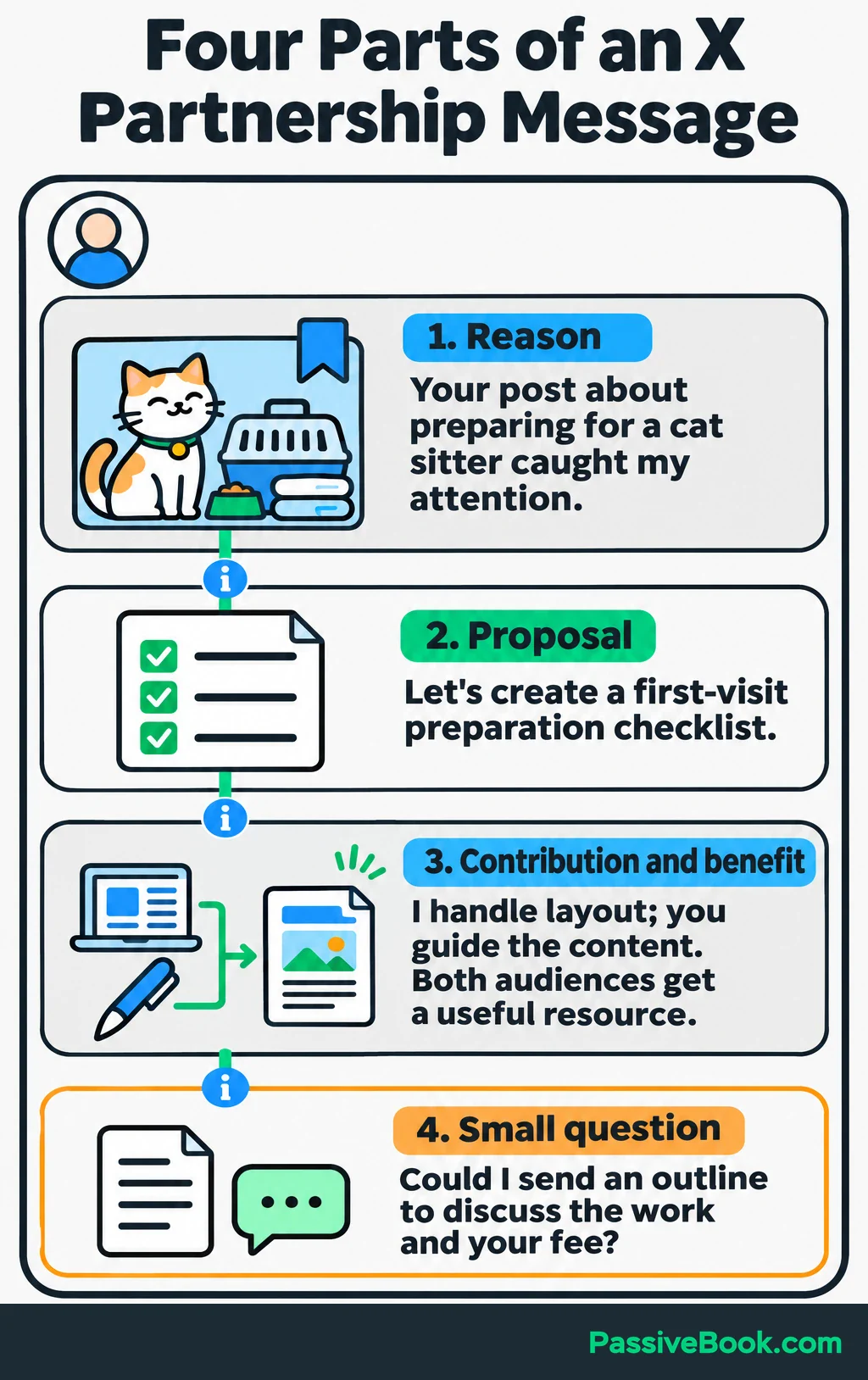
Here is a complete sample for the running example. Replace the reference to the post with something you have actually reviewed.
Hi Maya,
Your post about what owners should leave ready for a cat sitter caught my attention. I sell printable handover packs and would like to create a one-page first-visit preparation checklist.
I could handle the layout and draft structure, with you supplying and reviewing the practical guidance. You would have a finished resource for your clients, and I would offer it to my customers.
Could I send a short project outline so we can discuss the work and your fee?
The message explains why you chose the person and what you would contribute. It also asks for interest before requesting a meeting.
When responding to an explicit invitation, shorten the opening:
Saw your request for cat-care collaborators. I create printable handover packs and could handle the layout for a first-visit preparation checklist. Is the project still open?
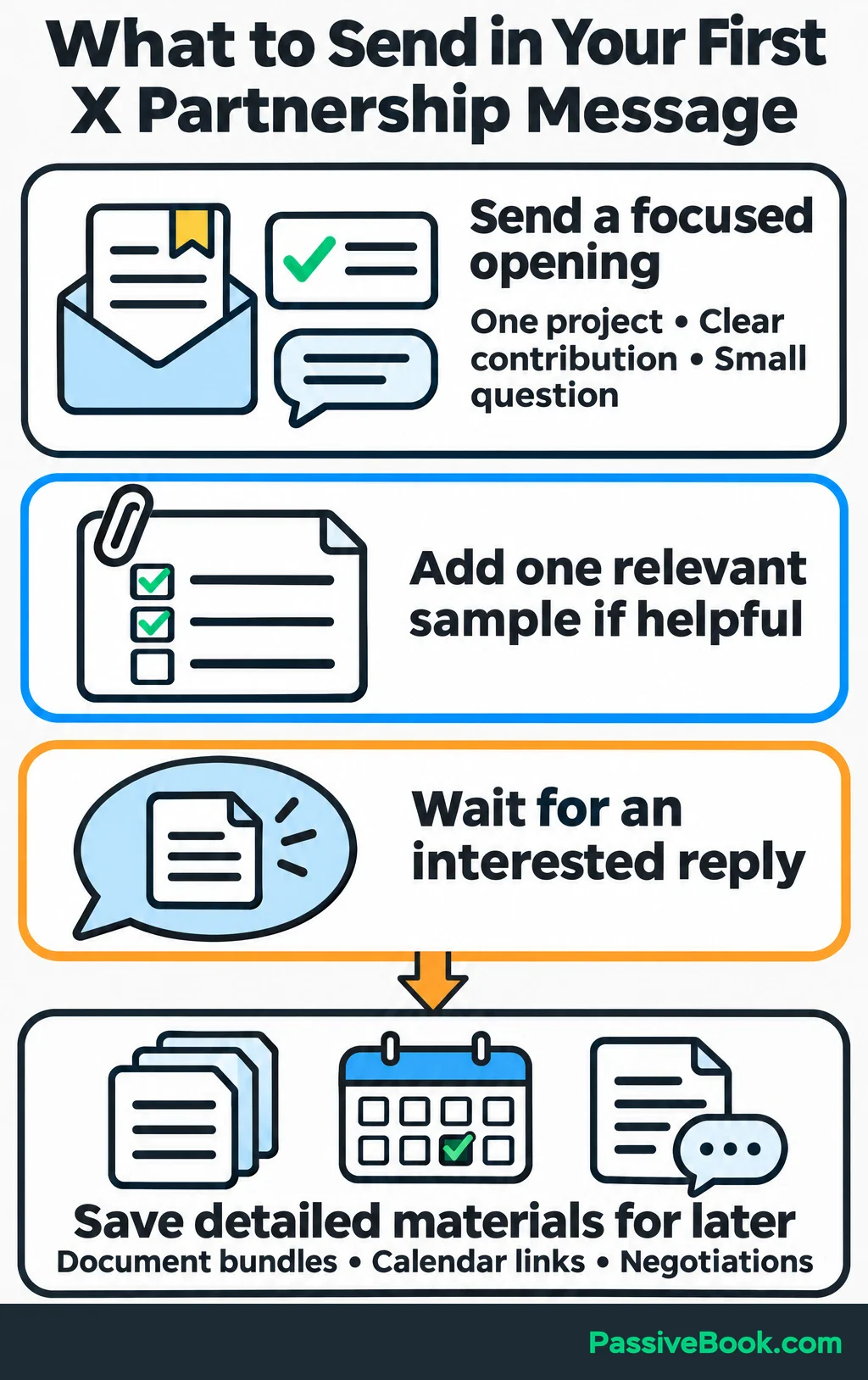
Include one relevant sample if it helps them assess your work. Save the document bundle, calendar link, and detailed negotiations for an interested reply.
Never claim to follow someone’s work closely after reading one post. A truthful, specific reference gives them more useful information than borrowed enthusiasm.
If you know whom you want to contact but keep rewriting the opening, use the AI Partnership Writer below. It builds a draft around their actual work and what you can contribute.
Free AI Partnership Writer




Follow up and Recognize Genuine Interest
Record what happened after each contact. An unanswered message, a friendly acknowledgment, and an agreed next step are different stages.
Use the response to decide what to do next:
| Response | Next action |
|---|---|
| No reply | Consider one brief follow-up after about a week |
| “Sounds interesting” | Ask one concrete question about the project |
| Questions about the work, timing, or fees | Clarify contributions and available time |
| Agreement to review a project outline | Send the short document you promised |
| A decline | Thank them and close the conversation |
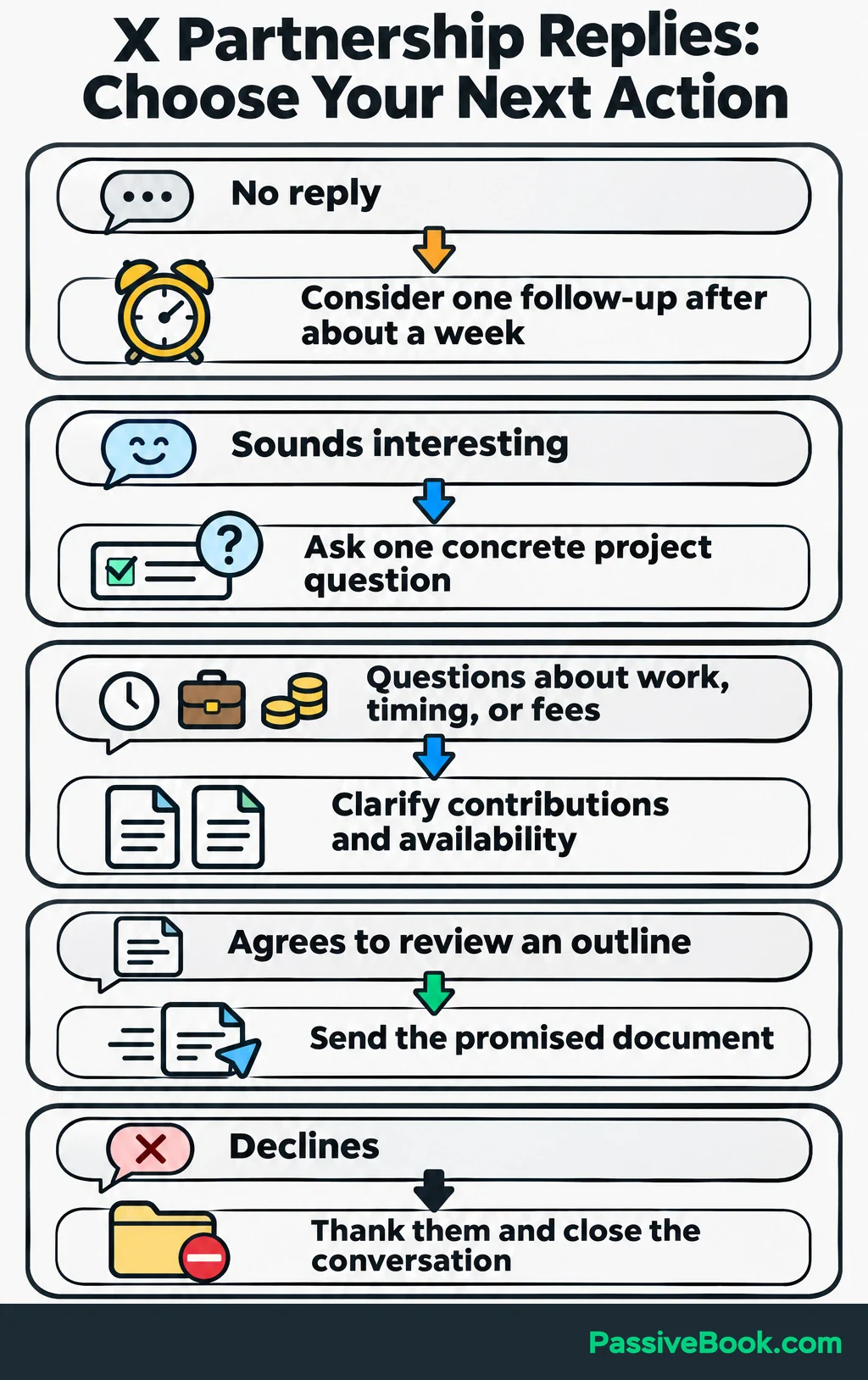
If Maya gives a vague positive reply, you could ask:
Which preparation problem comes up most often before a first visit? I’d like to keep the checklist focused on something your clients need.
Where the contact route permits, send one short follow-up after roughly a week. Allow longer if they have stated a timeline.
Hi Maya, following up on the first-visit checklist idea. I can handle the layout and draft structure. Would a short project outline be useful?
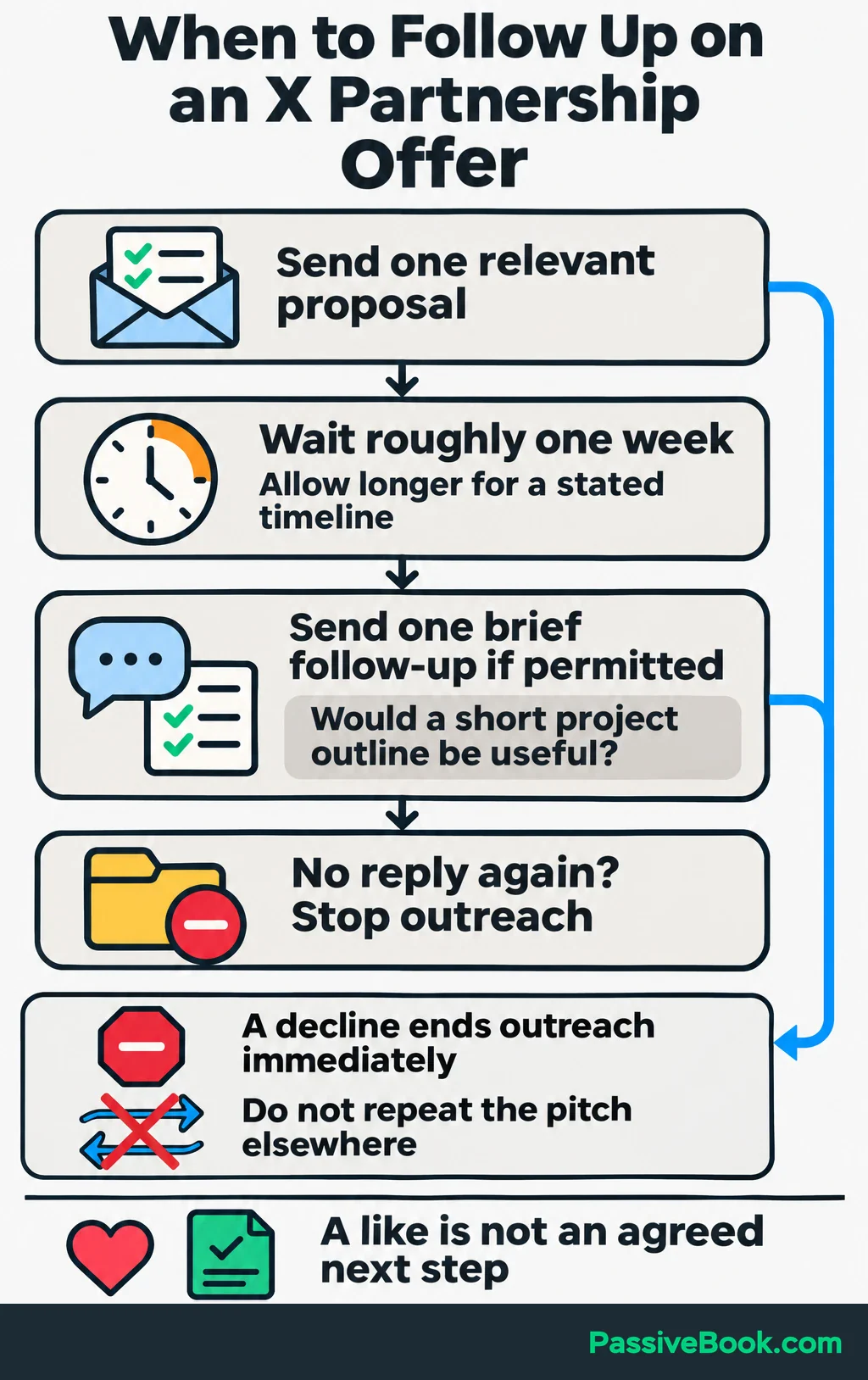
Stop after a decline or an unanswered follow-up. Do not repeat the pitch through other platforms.
Look for questions, constraints, contributions, and agreed actions. A like is friendly, but it does not put a project on anyone’s calendar.
Agree on a Small First Collaboration
Use the first project to learn whether working together is useful and manageable.
Put the agreement in writing before production starts. For a simple pilot, I would keep the scope short and cover these points:
- Deliverable: What you will finish and what sits outside the project.
- Responsibilities: Who drafts, contributes expertise, designs, and reviews.
- Timing and approval: Deadlines, feedback rounds, and who approves publication.
- Payment and expenses: Fees, payment dates, approved costs, and any revenue split.
- Credit and rights: Attribution, ownership, editing permission, and where each person may reuse the work.
- Distribution and stopping: Where the resource will appear and what happens if either person withdraws.
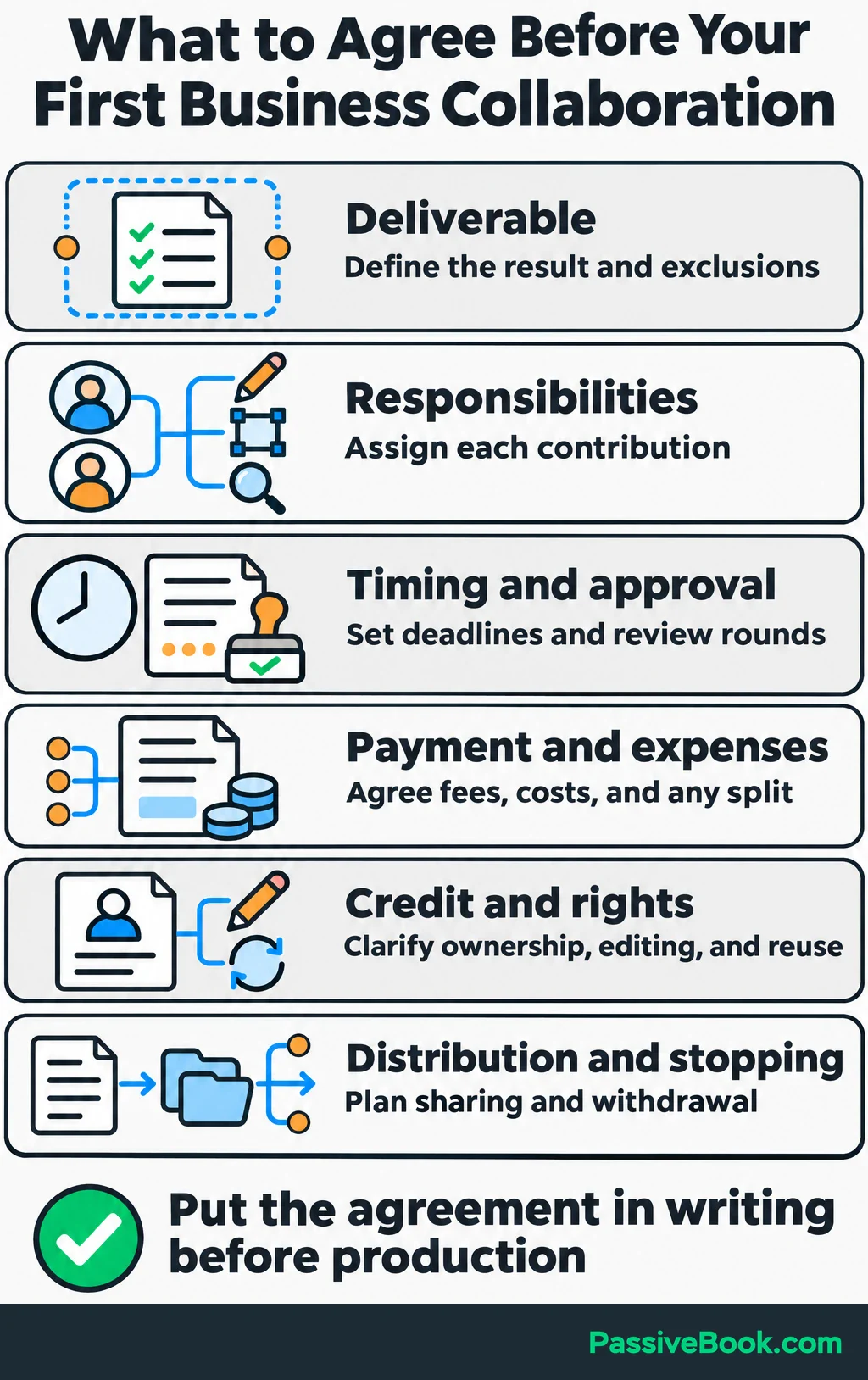
For the running example, keep the pilot to one first-visit checklist. You handle layout and draft structure, and the sitter supplies and reviews the practical guidance. Both approve the finished resource before sharing it.
Agree whether it can be given away, included with a paid handover pack, or edited later. Those details matter more than an impressive project name.
If either person publishes a promotional endorsement, handle disclosures too. For endorsements reasonably expected to affect U.S. consumers, material connections such as payment, gifts, or commissions should be disclosed clearly alongside the endorsement. Check applicable local requirements as well. FTC disclosure guidance.
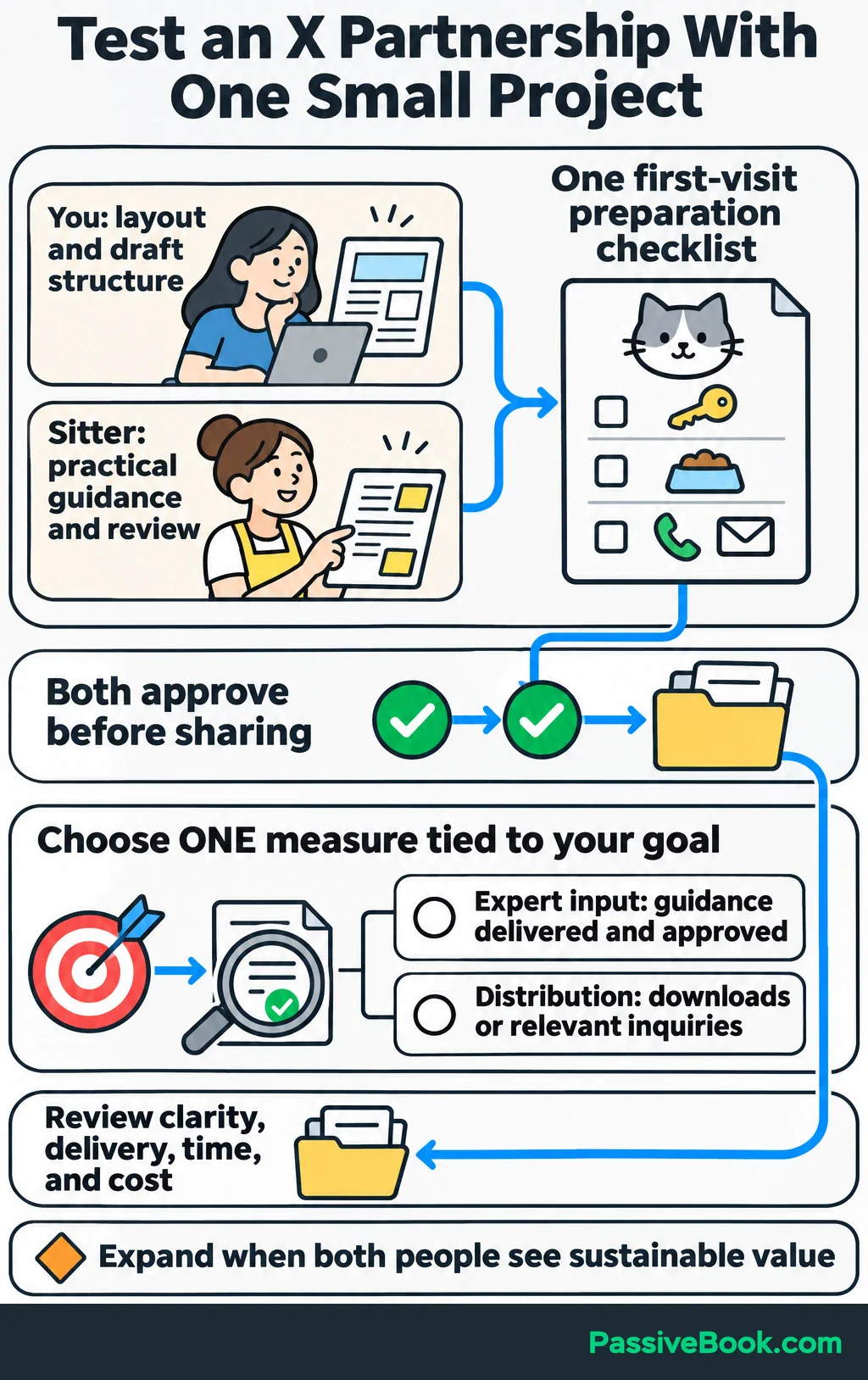
Choose one outcome measure tied to your original goal. If you wanted expert input, check whether the agreed guidance was delivered and approved. If you wanted distribution, track resource downloads or relevant inquiries over an agreed period.
Then review how the work felt. Were responsibilities clear? Did both people deliver? Was the result worth the time and cost?
Expand when both people see value and can sustain their contribution. If conversations stall, reduce the first request or make the benefit clearer. If replies reveal an audience mismatch, change whom you search for.
What Next?
Write your two-sided offer, then find three accounts whose work could support it. Save one relevant post for each before deciding whom to contact.
Use the social buttons to share this guide when a collaboration discussion needs a clearer offer and a smaller first project.
What useful contribution could you offer a partner without relying on your follower count? Share your answer, or any other questions, in the comments.
Share this post with your friends & followers:

