Your posts still get a few likes, but the people who used to reply have gone quiet. Then your follower count slips, and you wonder whether to post more, change topics, or squeeze in another promotion.
That uncertainty can turn a small publishing routine into hours of guessing. More activity gives you more work, but it may leave the original problem untouched. This guide gives you a manageable X routine for bringing familiar people back into the conversation, with checks that separate a growing follower count from an audience that keeps coming back.
Why Are You Losing Followers on X?
Before changing your content, compare what people followed you for with what you now publish.
Read your bio, pinned post, and recent posts together. Look for possible gaps:
- Topic Drift: Have unrelated subjects taken over the account?
- Repetition: Are you giving the same advice without adding anything useful?
- Promotion: Have offers crowded out the answers people came for?
- Unanswered Questions: Are followers asking for help and hearing nothing back?
- Publishing Bursts: Are you posting more than you can support with conversation?
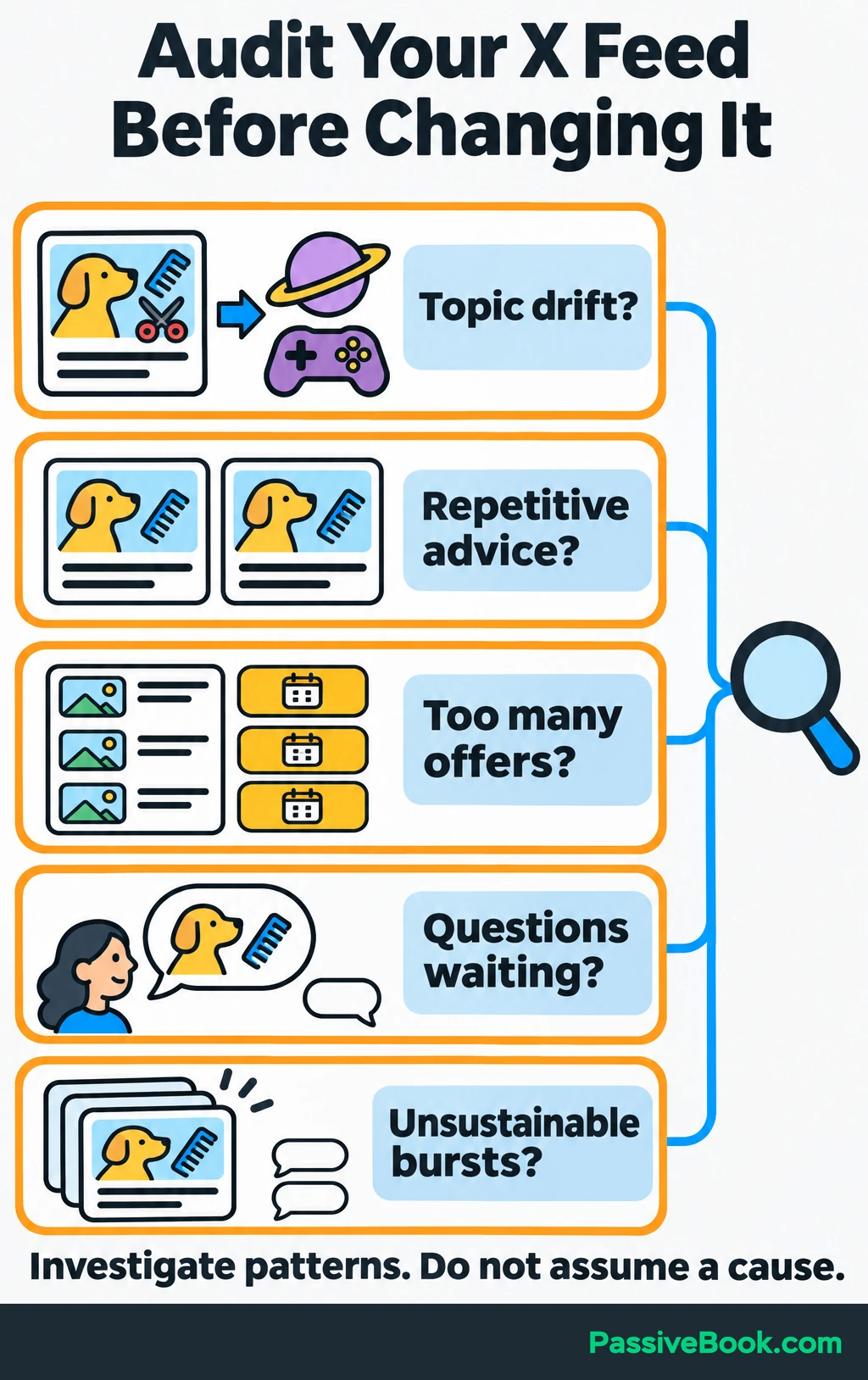
These are things to investigate. A quiet week does not tell you which one caused someone to leave.
Throughout this article, imagine you run a neighborhood dog-grooming salon. Your account helps owners prepare for appointments and explain their grooming preferences. The salon, sample conversations, and figures are illustrative.
For this account, the audit might reveal that appointment tips have gradually become a string of booking announcements. The business still needs appointments, but followers have less reason to read between visits.
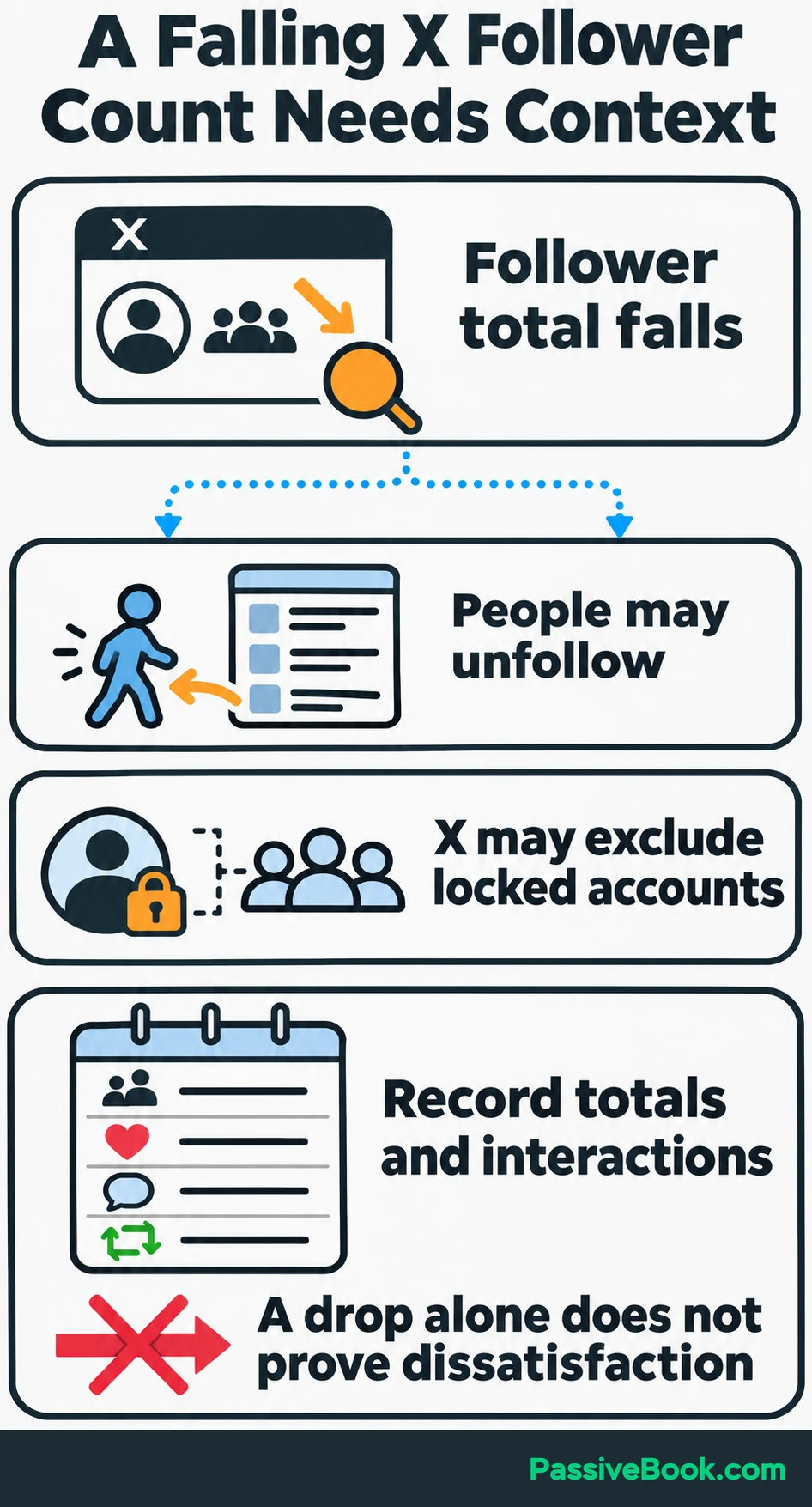
Read replies and customer questions before choosing a fix. Ask something narrow:
“What would you like us to explain before your next grooming appointment?”
Also, avoid treating every follower drop as a verdict on your content. X removes accounts locked pending an ownership challenge from follower counts, so a decline does not establish dissatisfaction. X explains this account-enforcement behavior here.
Record the date, follower total, and recent reply, like, and repost counts. That gives your next change a starting point.
Make Your Profile Promise Match Your Posts
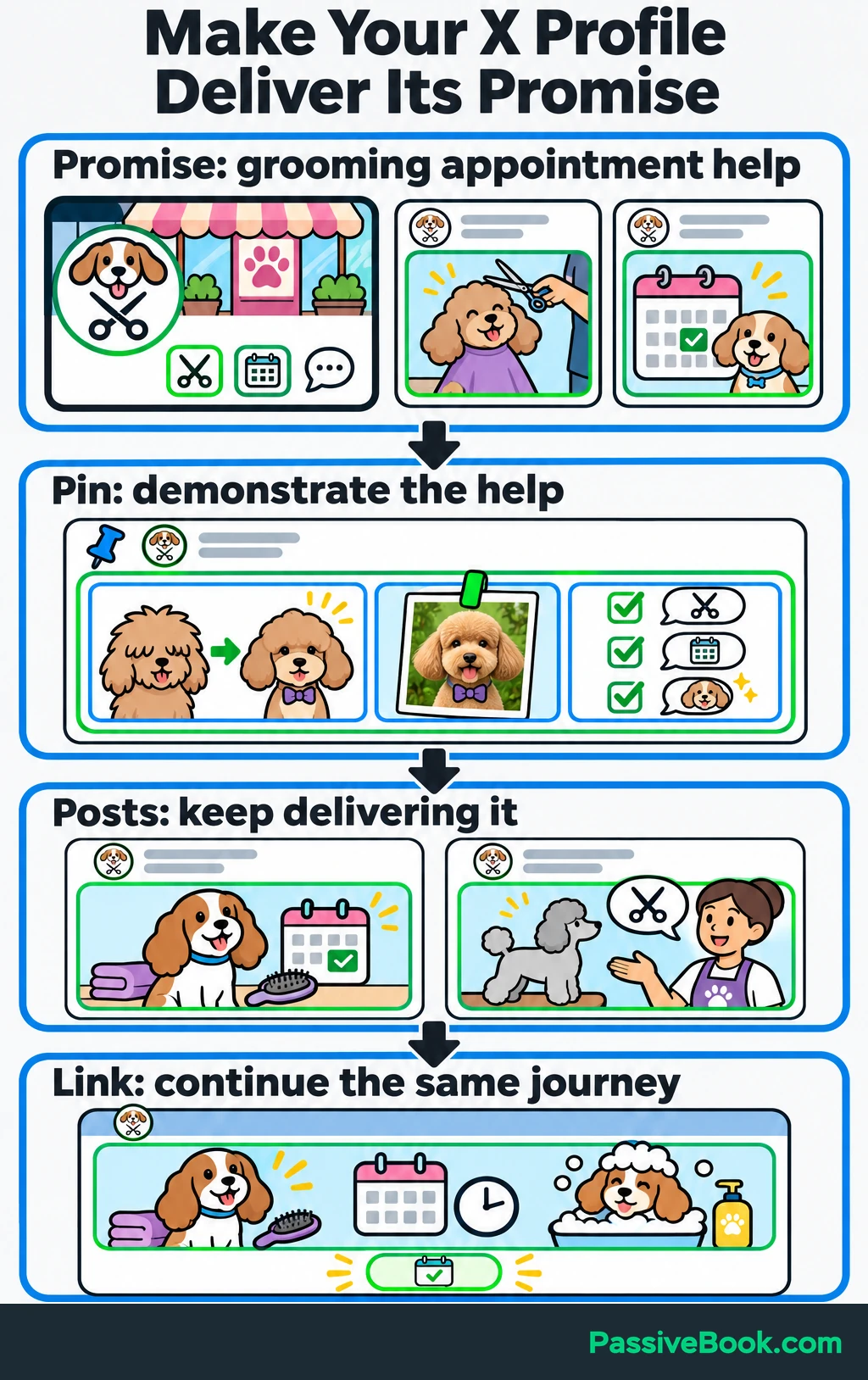
Your profile should explain what following you adds to someone’s feed.
Start with the subjects you can keep helping with. Then check whether your recent posts deliver them. For the salon, a clear bio could say:
“Grooming appointment tips, clear answers, and help explaining the look you want. Based in [neighborhood].”
Keep the account name and image recognizable. I would use the same business logo across the profile and website, then spend my attention on making the content useful.
For a real positioning example, Chewy’s X bio names food, medication, and expert care. Those are concrete services. It illustrates clear positioning, though the profile tells us nothing about measured follower retention.
Pin something that demonstrates your promise. The salon could explain how to prepare a short grooming brief: describe the desired look, save a reference photo, and write down questions for the appointment.
Put the optional booking invitation after the useful explanation. Your profile link should continue that journey by opening relevant appointment information, rather than making people hunt through an unrelated page.
Publish Content Followers Have a Reason to Return for
Give your account a few dependable subjects. Followers should recognize what you help with, while each new post adds something worth reading.
Build Recurring Series Around Real Questions
Keep a question bank in a document or spreadsheet. Add questions from replies, customer conversations, and posts that needed more explanation.
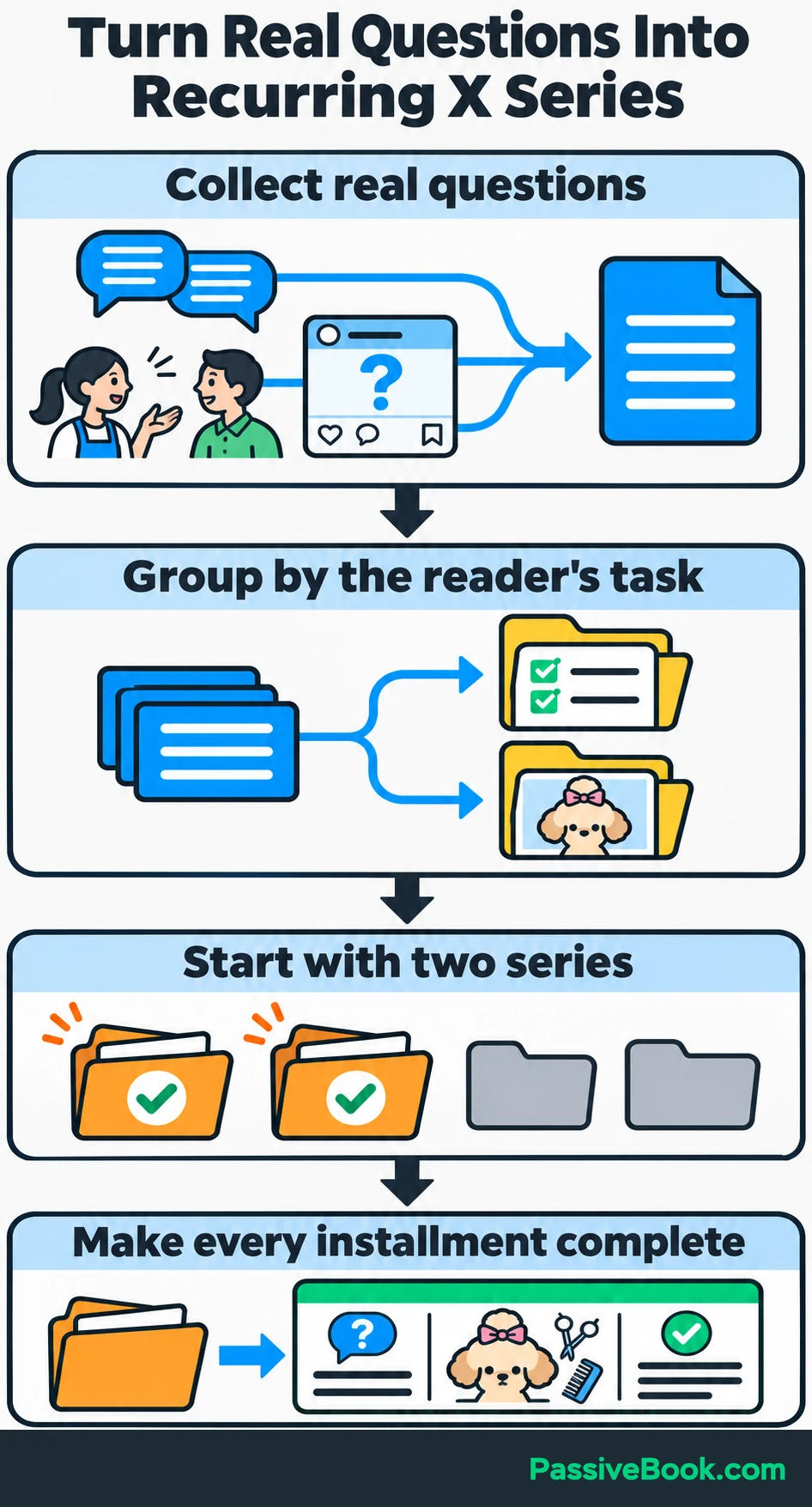
Group them by the task someone is trying to complete. For the salon, that might look like this:
| Recurring Need | Series | One Installment |
|---|---|---|
| Prepare for a visit | Before Your Grooming Appointment | What to ask the salon before drop-off |
| Explain the desired result | Describe the Look | How to explain which detail you like in a reference photo |
| Understand the process | Appointment Questions | How to confirm pickup arrangements |
Each installment should work by itself. Someone who misses the first three posts should still understand the fourth.
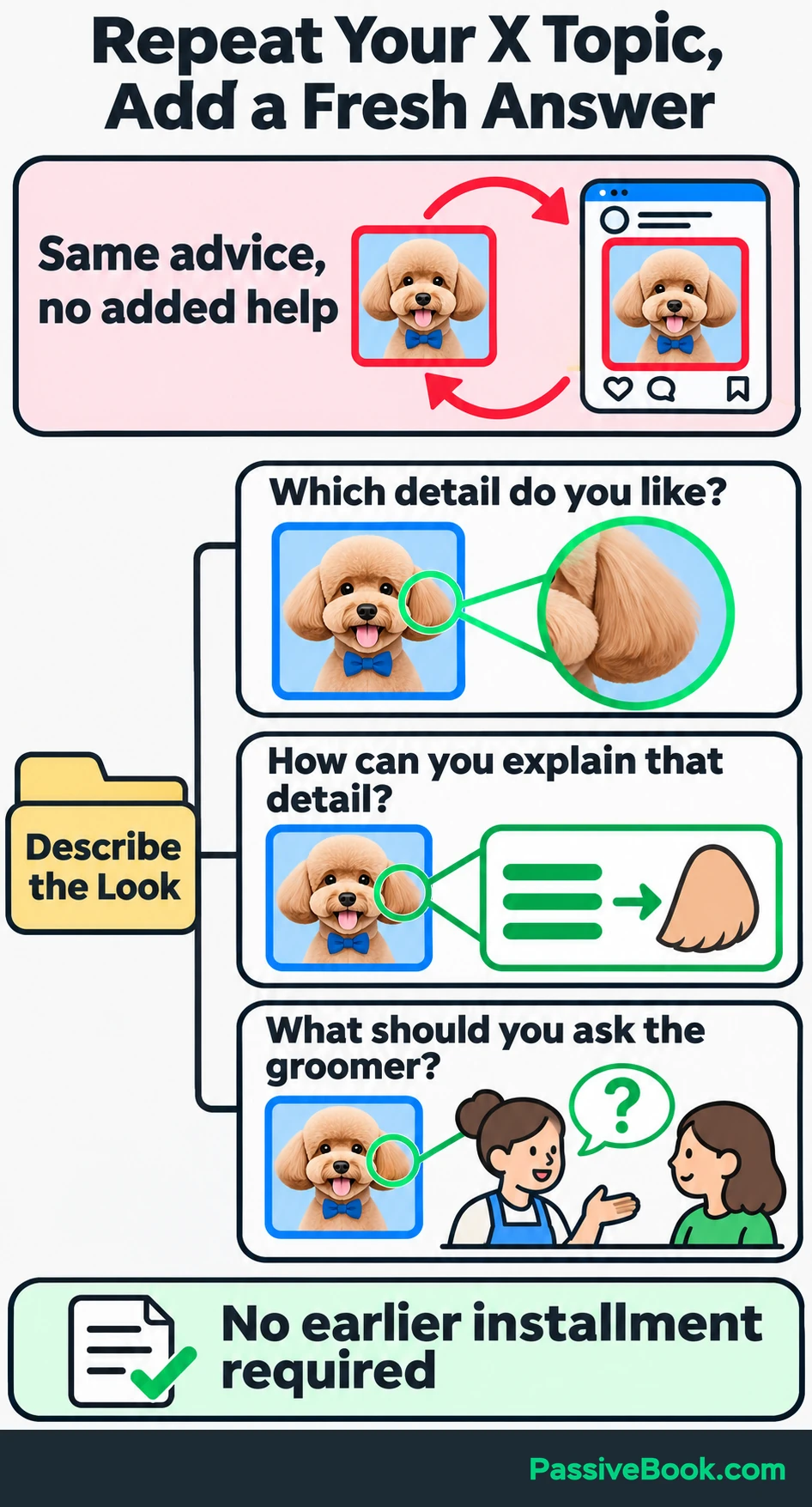
I would choose two series to start. That gives you enough variety without creating six weekly commitments you immediately regret.
Return to useful subjects when you have a new question, a clearer explanation, or a different example. Reposting identical advice because the calendar has an empty slot adds little.
Make Each Post Useful on Its Own
Choose one job for each post: answer a question, explain a process, demonstrate something, or invite a focused discussion.
Teach the process before showing an example. To prepare a grooming brief, describe the result you want, choose a reference photo, and note what you need to discuss. The photo starts a conversation; it does not settle what is suitable or possible.
One short post could cover just the photo:
“Bringing a haircut photo? Add one sentence explaining what you like about it—the face shape, ear length, or overall finish. That gives your groomer a clearer starting point.”
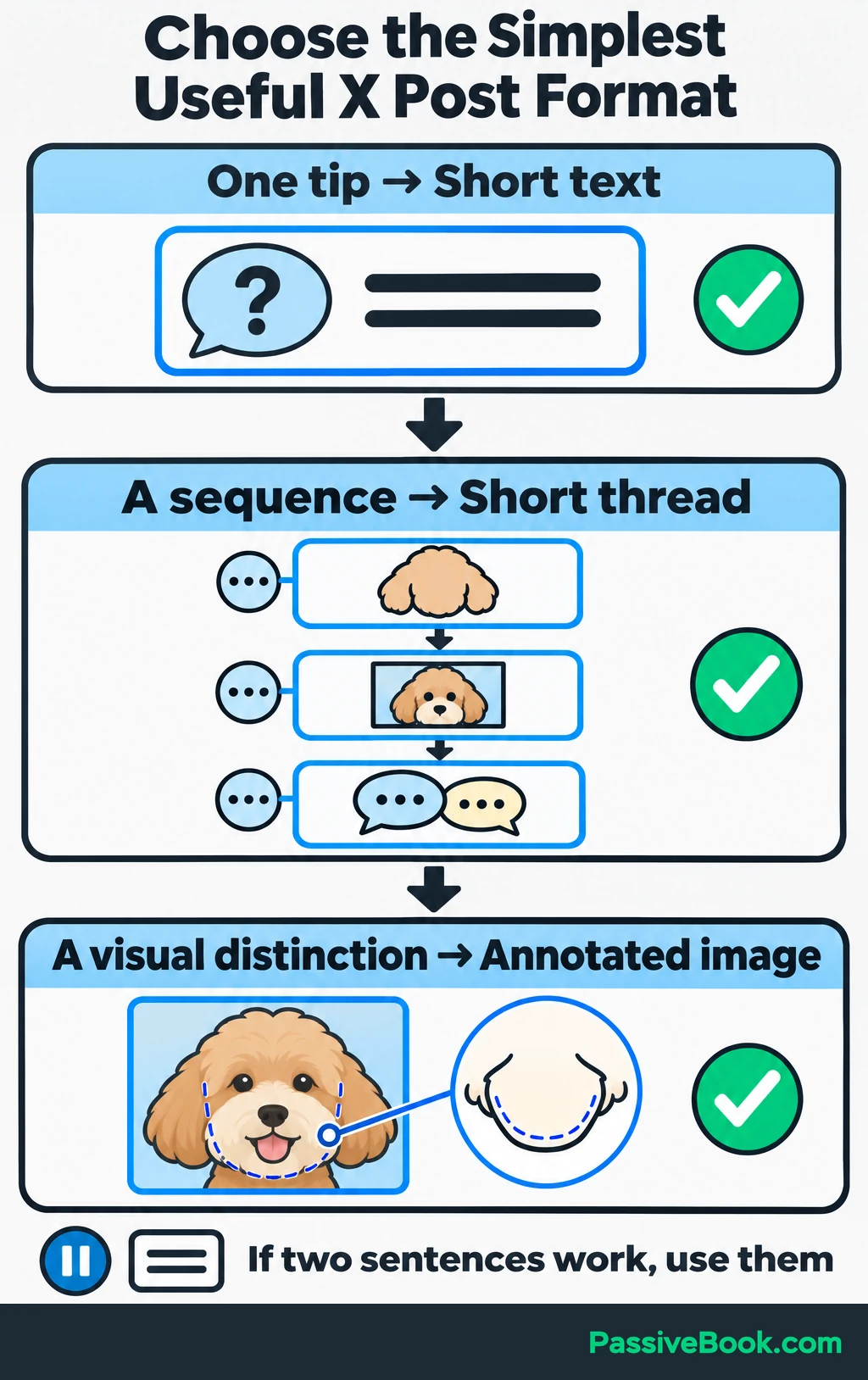
Use short text for one tip. A short thread can explain a sequence, and an annotated image can show a visual distinction. I would skip making a graphic when two clear sentences do the job.
When you use an image, include the essential instruction in the post text. Add an image description through the image’s ALT control so the visual information is also available in words.

Finish with a question only when the answer would be useful:
“Which part of describing a haircut do you find hardest?”
That gives you something specific to answer and possibly teach next.
If you have questions saved but keep putting off the writing, AI Social Copy Studio can turn them into three post drafts. You can also use it to draft replies when those conversations continue.

Free AI Social Copy Studio




Keep Promotion Connected to the Same Needs
Connect the offer to the problem you have just explained.
After a post about grooming briefs, the salon could describe what its appointment consultation covers, then invite readers to check appointment details. That is a natural next step because the reader is already thinking about the conversation.
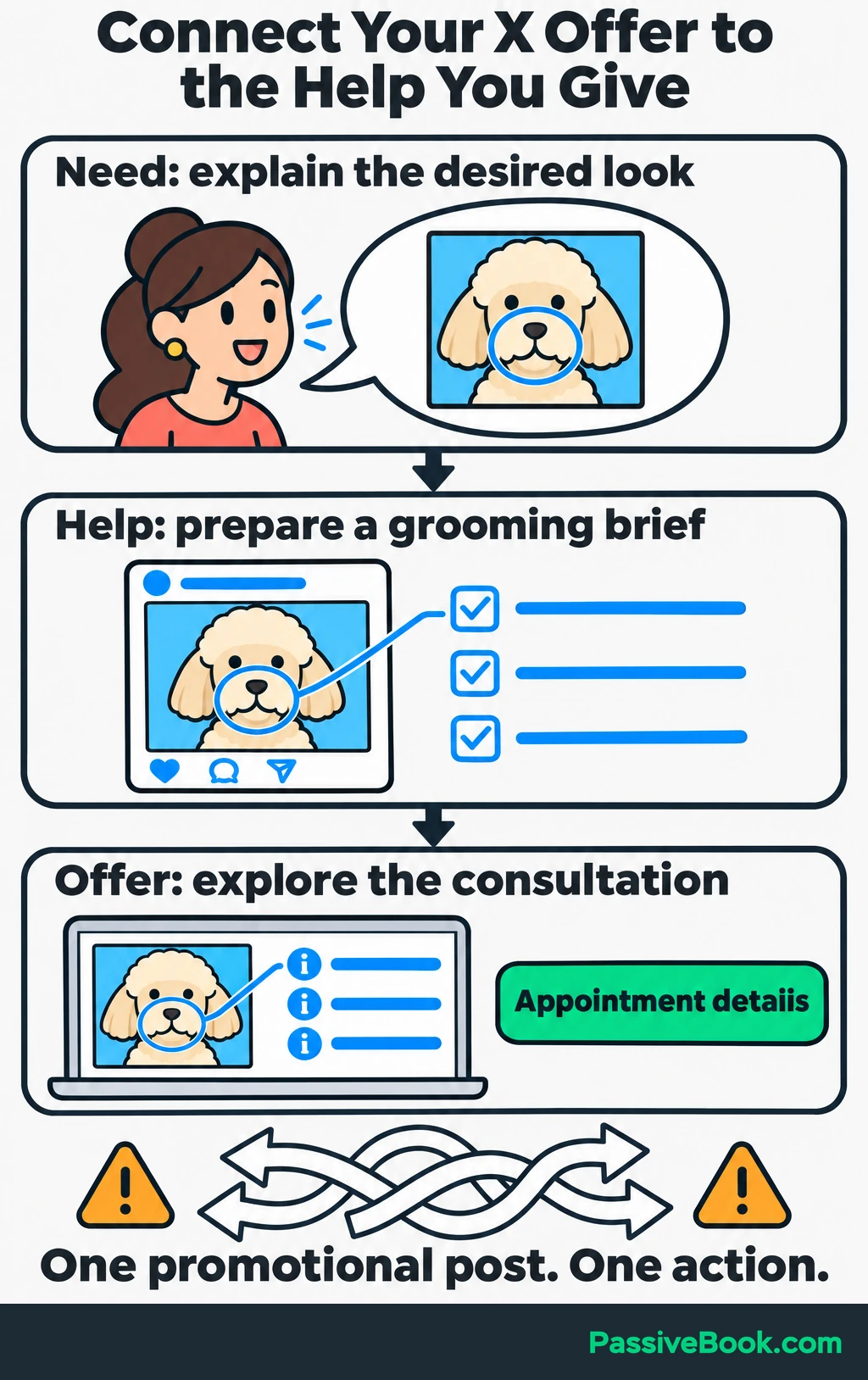
Give each promotional post one action. Asking people to book, repost, join a group, and download something turns a simple invitation into homework.
I would skip a universal promotional ratio. Review the feed instead: does it still deliver the help your bio promises? Are people asking useful service questions, or are you repeating the same booking announcement?
Keep answering questions between offers. Your account needs to remain worth following when someone has no immediate reason to buy.
Make Replies Worth Coming Back to
A useful post opens a conversation. What you do next determines whether that conversation goes anywhere.
Answer the Substance and Close the Loop
Check replies and mentions before looking for attention under larger accounts. Start with unanswered questions, unresolved issues, and people continuing an earlier discussion.
Answer the specific question first. Ask a follow-up only when it helps you respond.
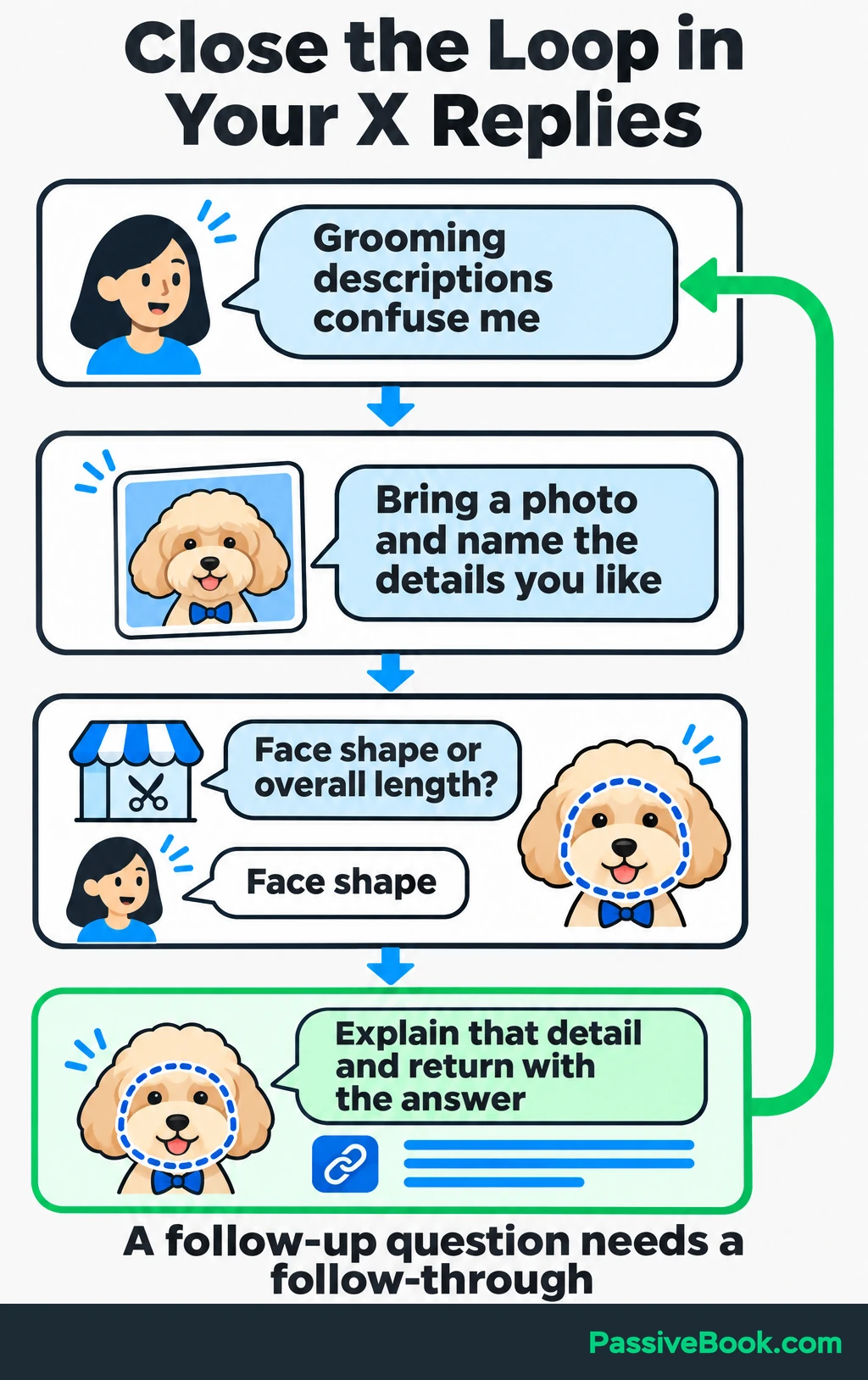
For example, someone says grooming descriptions confuse them. The salon might reply:
“Bring a reference photo and tell us which details you like. Is it the face shape or the overall length you find hardest to describe?”
If they answer “face shape,” return to that detail. A follow-up question creates an expectation that you will read the response.
When the same confusion appears repeatedly, write a public explanation and bring it back to the original conversation. That closes the loop and gives other followers something useful.
Twitter and Applied Marketing Science found stronger satisfaction and recommendation ratings among US airline, quick-service restaurant, and telecom customers who received service replies. The research predates X’s rebrand and did not measure follower retention. The original customer-care research explains the findings.
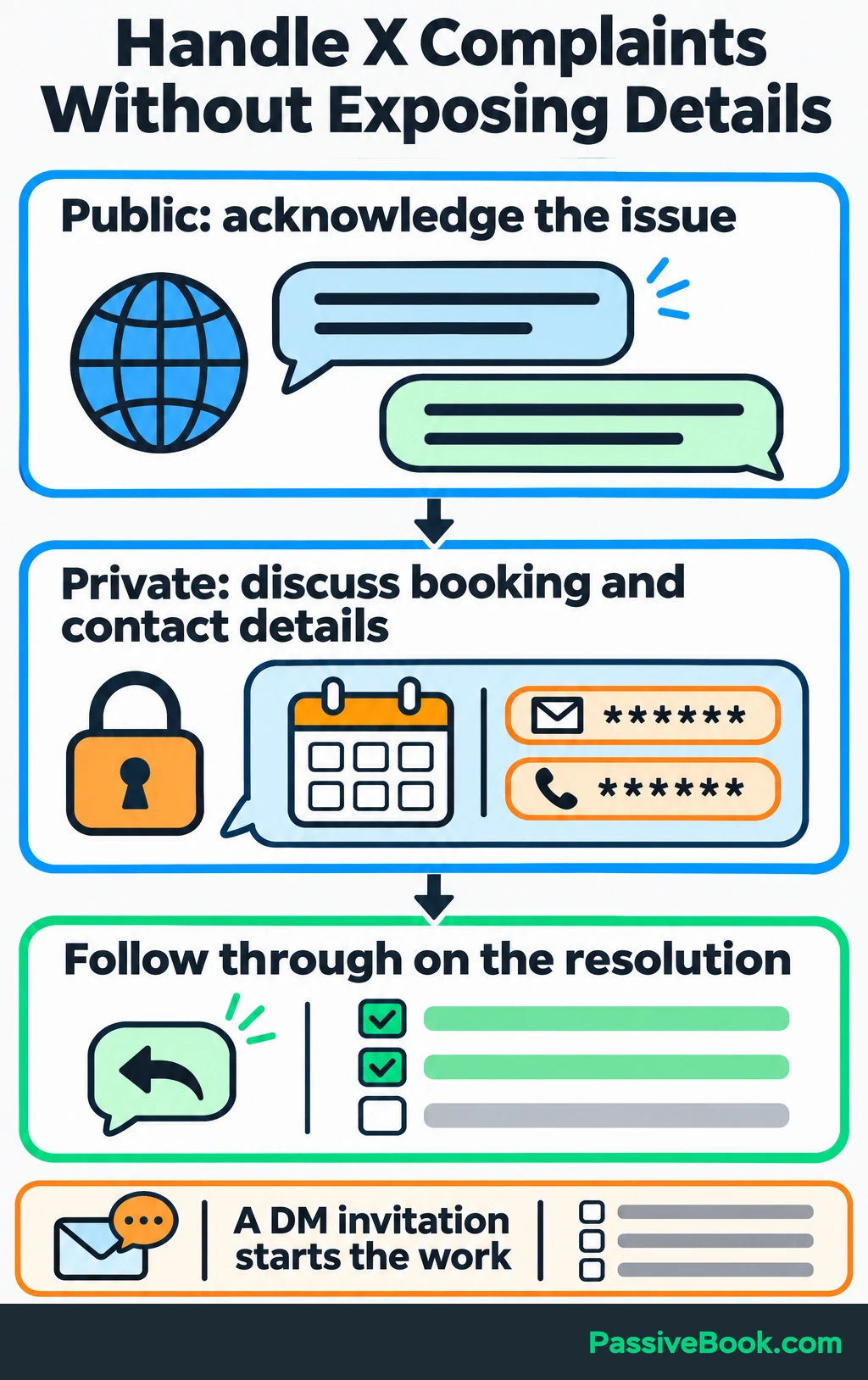
For complaints, acknowledge the issue publicly, move booking and contact details into a private conversation, and follow through. “Please DM us” should begin the resolution.
Recognize Regular Contributors
You do not need elaborate loyalty tactics to show that you remember a conversation.
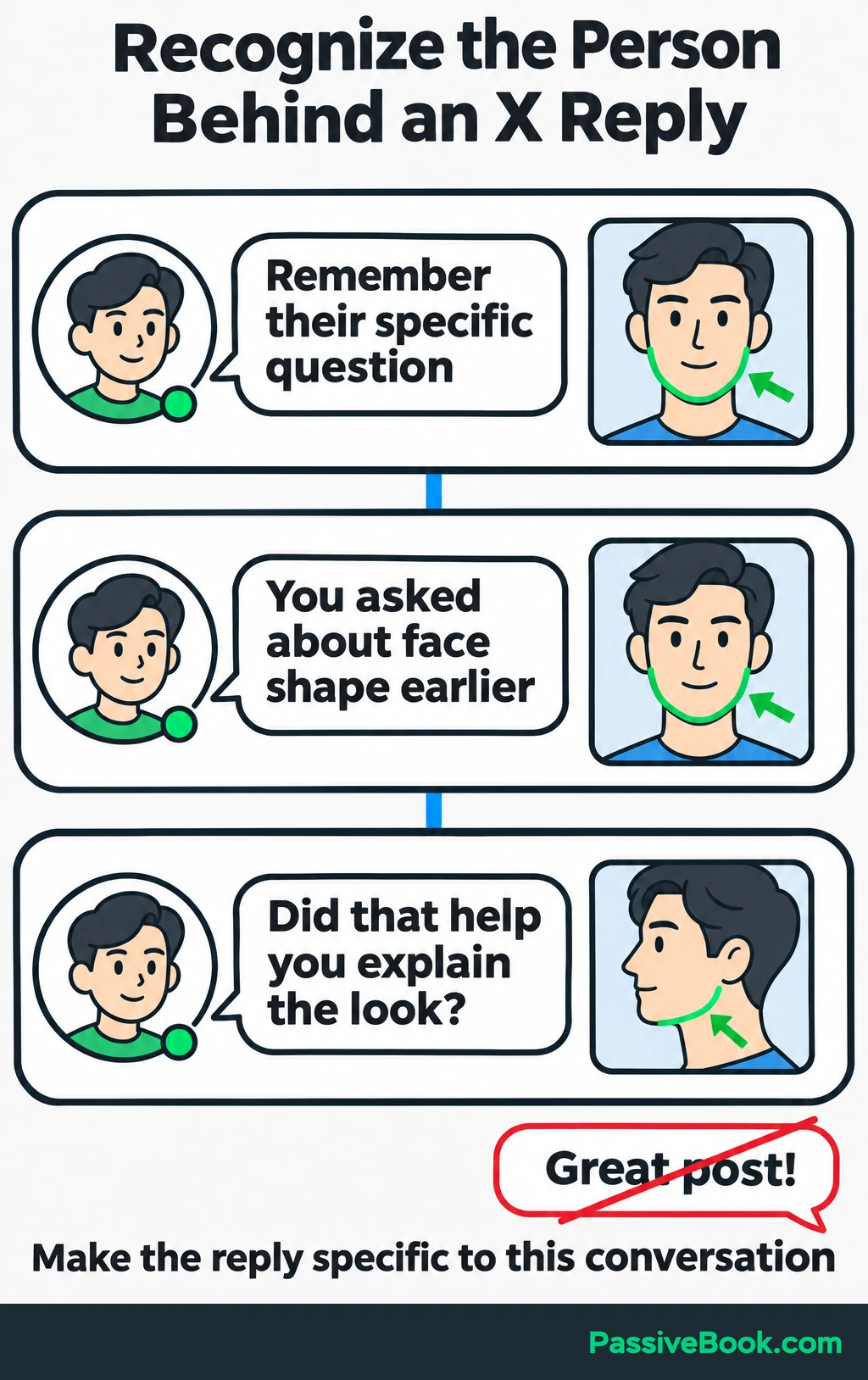
Refer to an earlier question when it is relevant. Thank someone for a useful detail, or invite an update on something they previously discussed. Be specific enough that the reply could only belong in that conversation.
Join followers’ posts when you have something useful to contribute. Shared interests are a better reason to reply than the hope of a follow-back.
AI can help organize questions or suggest a draft, but read the conversation yourself before sending anything. Check that the reply answers the person and does not promise something your business cannot provide.
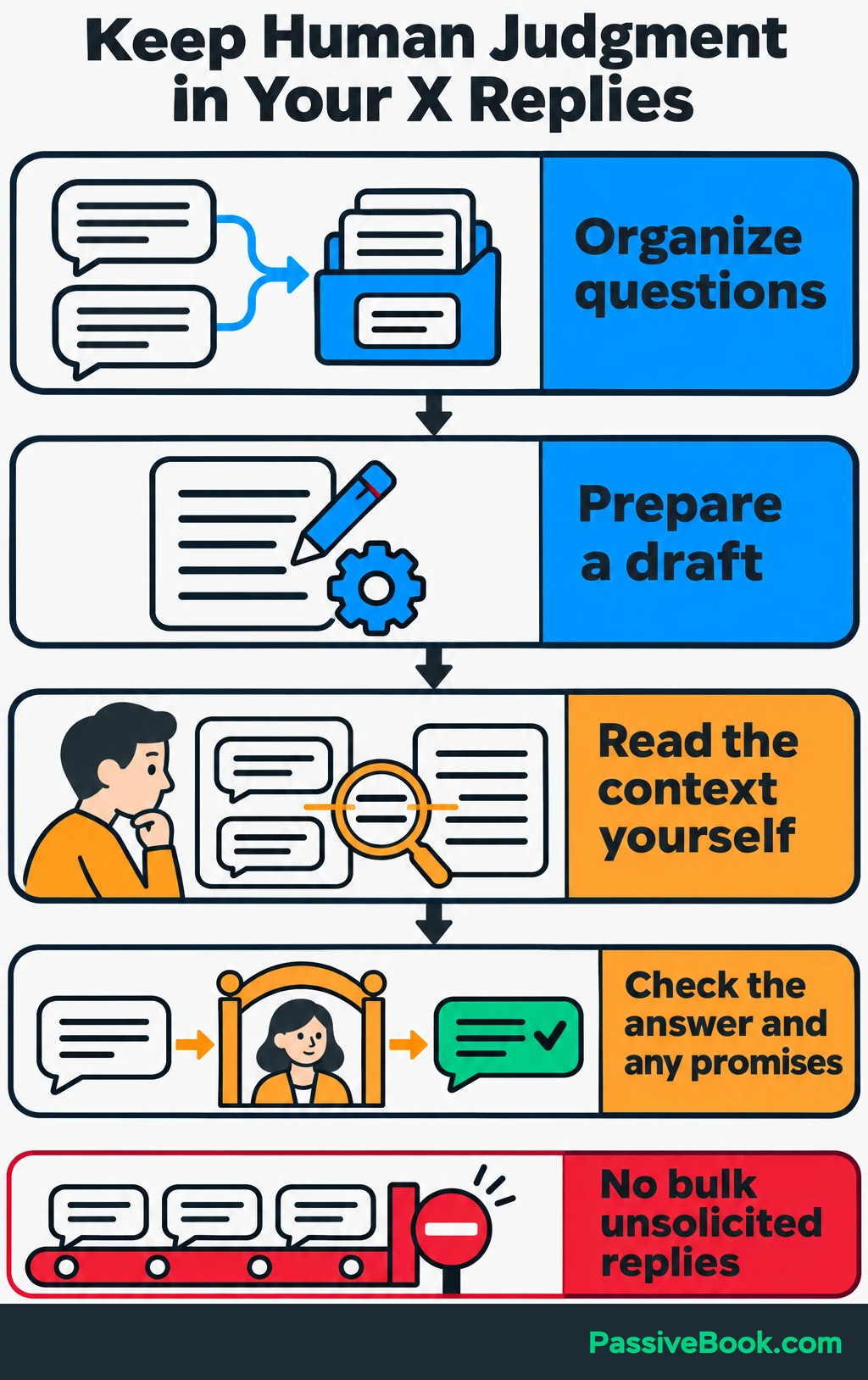
Avoid bulk unsolicited replies, mass DMs, purchased followers, and engagement exchanges designed to inflate metrics. X’s authenticity policy prohibits spam and artificial engagement.
I would automate collecting ideas and preparing drafts. Replies deserve a person who understands what happened.
Choose a Publishing Rhythm You Can Maintain
Set your posting volume around the useful material you can produce and the conversations you can support.
I learned this limit while building a membership site alongside my corporate job. I kept treating the next batch of content as something I could catch up on over a weekend. The demand kept returning, and the routine became unsustainable. That was a publishing lesson, not an X retention experiment.
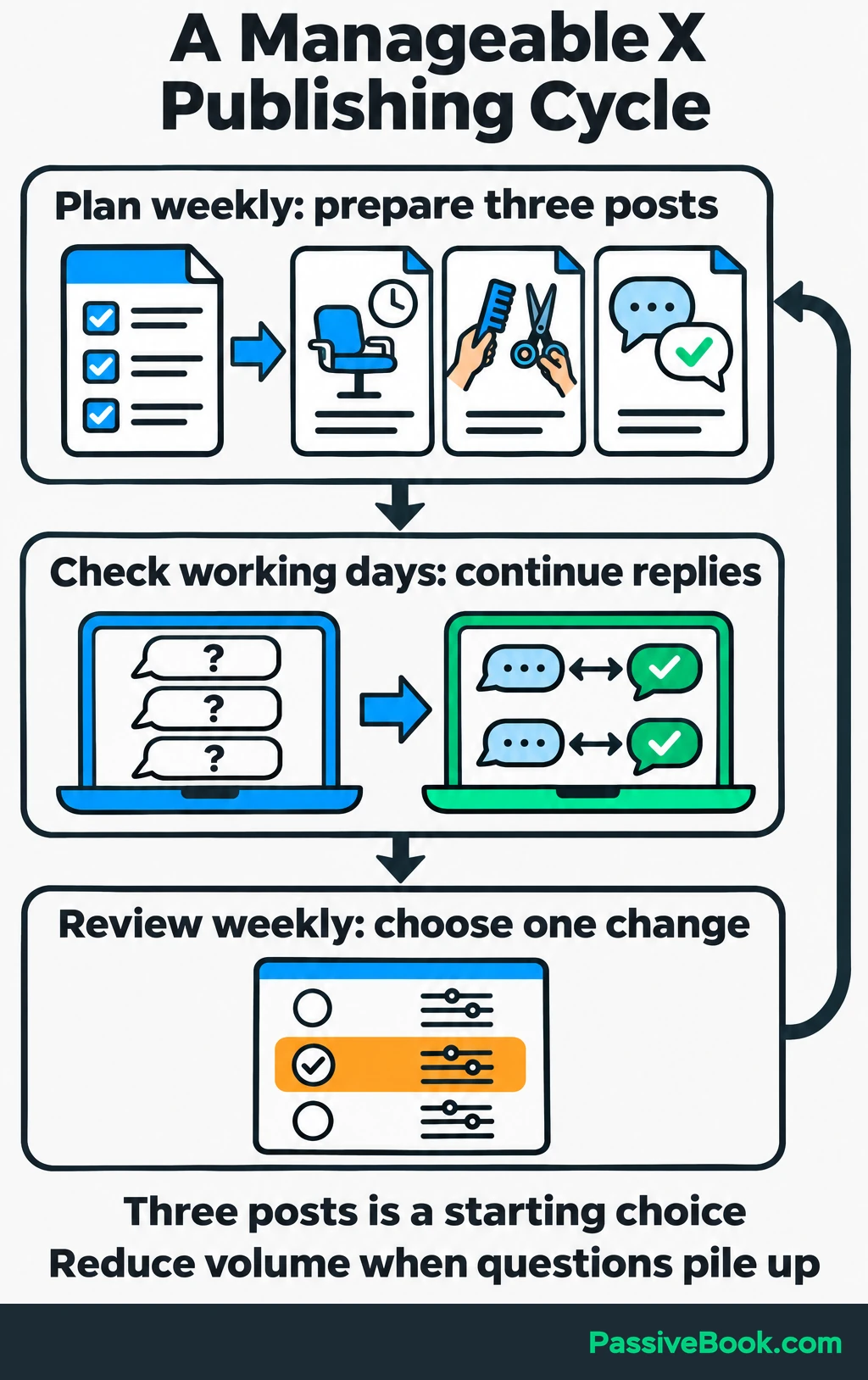
For X, I would begin with a small cycle and reserve reply time before increasing output.
Here is a manageable starting routine for the salon:
| Work Block | Task | Result |
|---|---|---|
| One weekly planning session | Choose questions and prepare three posts | An appointment tip, a demonstration, and a follow-up answer |
| Brief checks on working days | Read mentions and continue conversations | Fewer questions left waiting |
| One weekly review | Record signals and choose one adjustment | A clear decision for the next cycle |
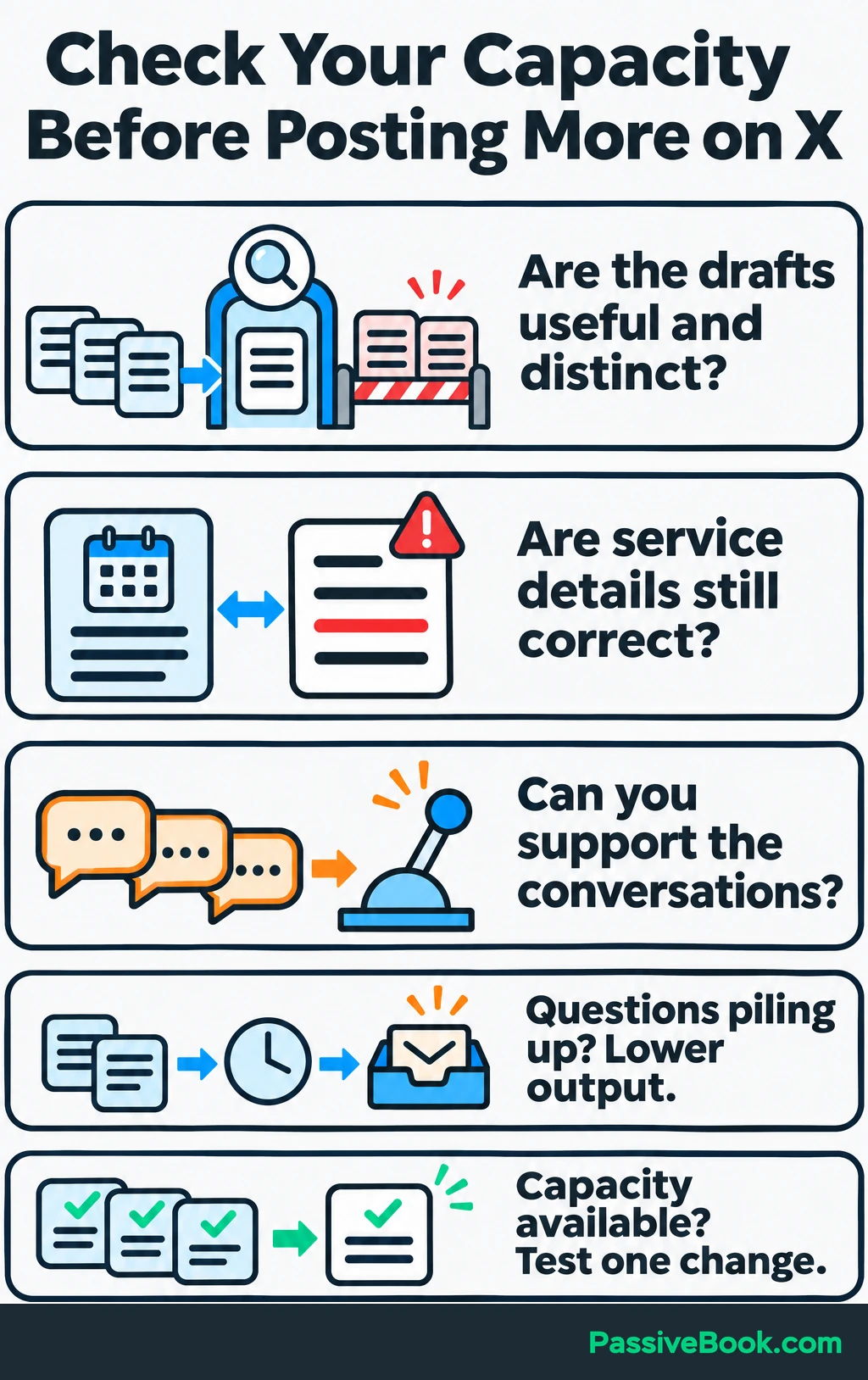
Three posts are a starting choice, not a magic number. Reduce the volume if questions pile up.
Batch drafts and schedule prepared posts, but review them for repetition and relevance before they publish. A scheduling tool cannot know that a service detail changed yesterday.
Test posting times against when your audience actually participates. Move one recurring post to another time and observe comparable installments. I would skip buying a management tool until the existing routine exposes a problem worth paying to solve.
Offer Optional Ways to Deepen the Conversation
Some questions need more room than a post and its replies. A group chat can support ongoing discussion, while a Space lets people ask questions through live audio.
Add either format when you see demand. Neither is a prerequisite for learning how to retain followers on X.
Use an Opt-in Chat Group for Ongoing Discussion
Give a group one clear purpose before inviting anyone. “Ask about preparing for your grooming appointment” is easier to use and manage than a general room for everything about dogs.
Explain what belongs there, when you will check it, and where appointment-specific questions should go. Invite interested followers rather than adding people without asking.
X Chat supports shareable group invitation links, approval of join requests, and controls to disable the link. Those controls let you manage participation without leaving invitations open indefinitely. X describes its group-chat features here.
X retired Communities in 2026, so older guides to creating one no longer apply. The retirement announcement was reported by TechCrunch.
Bring broadly useful answers back into public posts without exposing private details. Followers outside the group should still receive the help your account promises.
Try a Focused Space for Live Questions
Spaces are public audio conversations, so you can host without appearing on camera. Hosting requires the X iOS or Android app and an account without protected posts. X lists the Space-hosting requirements here.
Collect questions before committing to a session. For the salon, “How to Explain the Grooming Look You Want” gives the discussion a useful boundary.
I would prepare a brief explanation, leave time for questions, and end when those questions are answered. Filling an hour because you booked an hour is a poor use of everybody’s evening.
Publish a written recap afterward. It gives followers who could not attend the useful answers and creates material for future posts.
Continue only if the participation and reusable answers justify the preparation and moderation time.
Measure Whether the Routine Is Helping
Use your review to decide what deserves more attention. Keep follower retention, conversation, and business results separate so one promising number does not hide a problem elsewhere.
Separate Follower Retention From Engagement
Net follower change counts the difference between your follower totals at the start and end of a period. Suppose the salon starts a month with 1,000 followers and ends with 1,020:
1,020 − 1,000 = 20 net new followers
That increase could include 50 new followers and 30 losses; the totals alone cannot tell you.
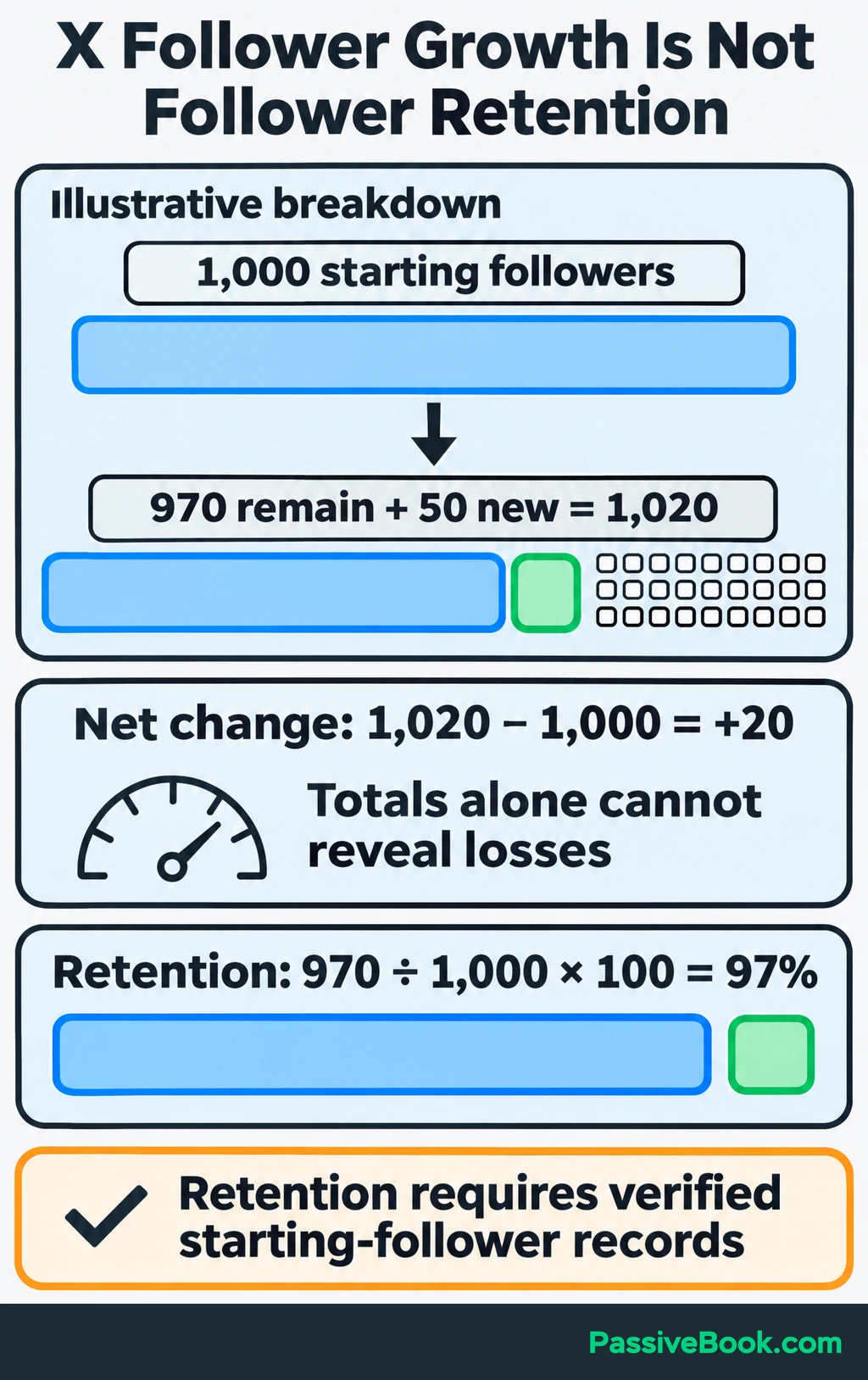
Retention counts how many of the starting followers remain. If reliable records show that 970 of those original 1,000 followers still follow at month’s end:
970 ÷ 1,000 × 100 = 97% retention
Exclude new followers. If you cannot identify the starting followers and check their status at the end, report net change instead.
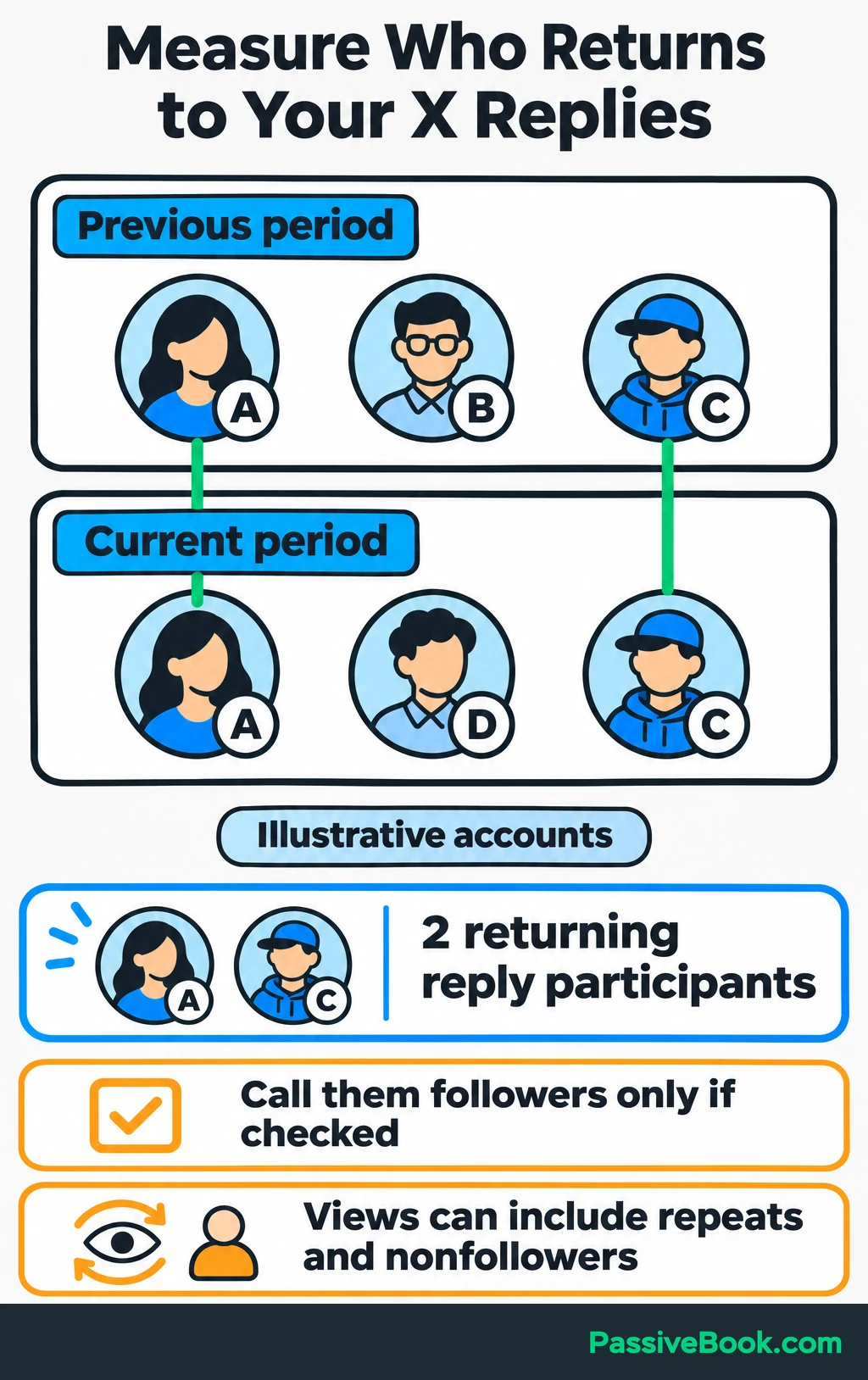
For a practical conversation measure, count accounts that replied in both the previous and current review periods. Call them returning reply participants; call them followers only if you checked their follow status.
Likes, reposts, and profile visits are supporting interest signals. Track profile visits or clicks if your available analytics show them, but keep each metric’s label consistent.
Views cannot tell you how many followers stayed. X counts views from nonfollowers, and repeated views may count more than once. X explains its view-count definitions here.
Use Each Review to Choose One Improvement
Start with a weekly review and compare equal periods. When comparing individual posts, record their results at the same age—for example, seven days after publication.
Keep a compact sheet with:
- Audience: Review dates, starting followers, and ending followers.
- Conversation: Returning reply participants and unanswered questions.
- Content: Topics, post counts, likes, and reposts.
- Business: Booking-page visits and relevant appointment inquiries.
- Decision: One change to make during the next period.
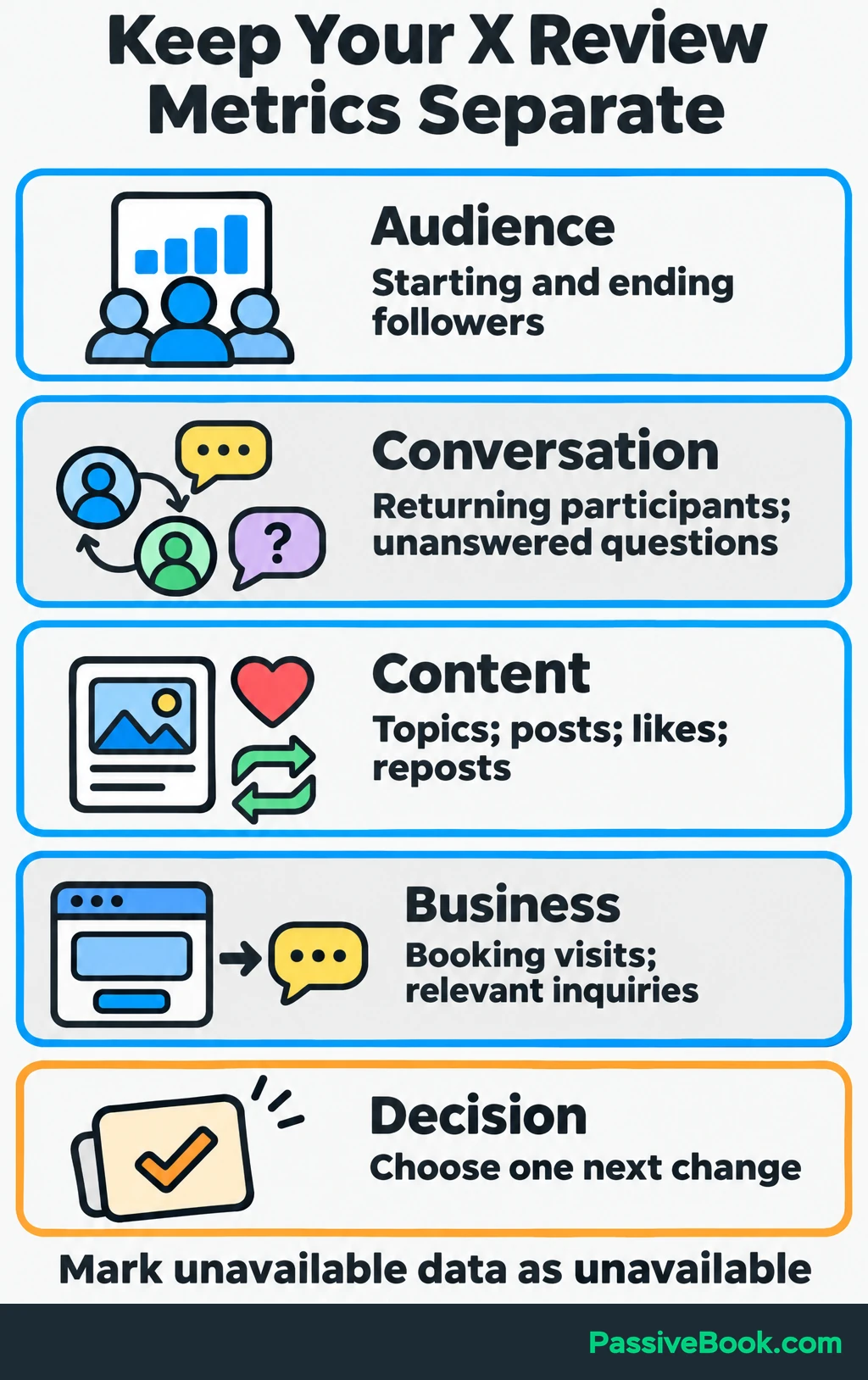
Add verified follower losses or retention figures only when you have the records behind them. Mark unavailable data as unavailable.
Choose a change that addresses something you observed:
| What You Notice | Next Change |
|---|---|
| Reference-photo posts bring people back with questions | Publish another installment answering those questions |
| Readers keep asking what an explanation means | Rewrite it with one concrete example |
| Similar booking announcements fill the feed | Reduce repetition and restore a useful answer |
| Questions remain unanswered between posts | Lower publishing volume and protect reply time |
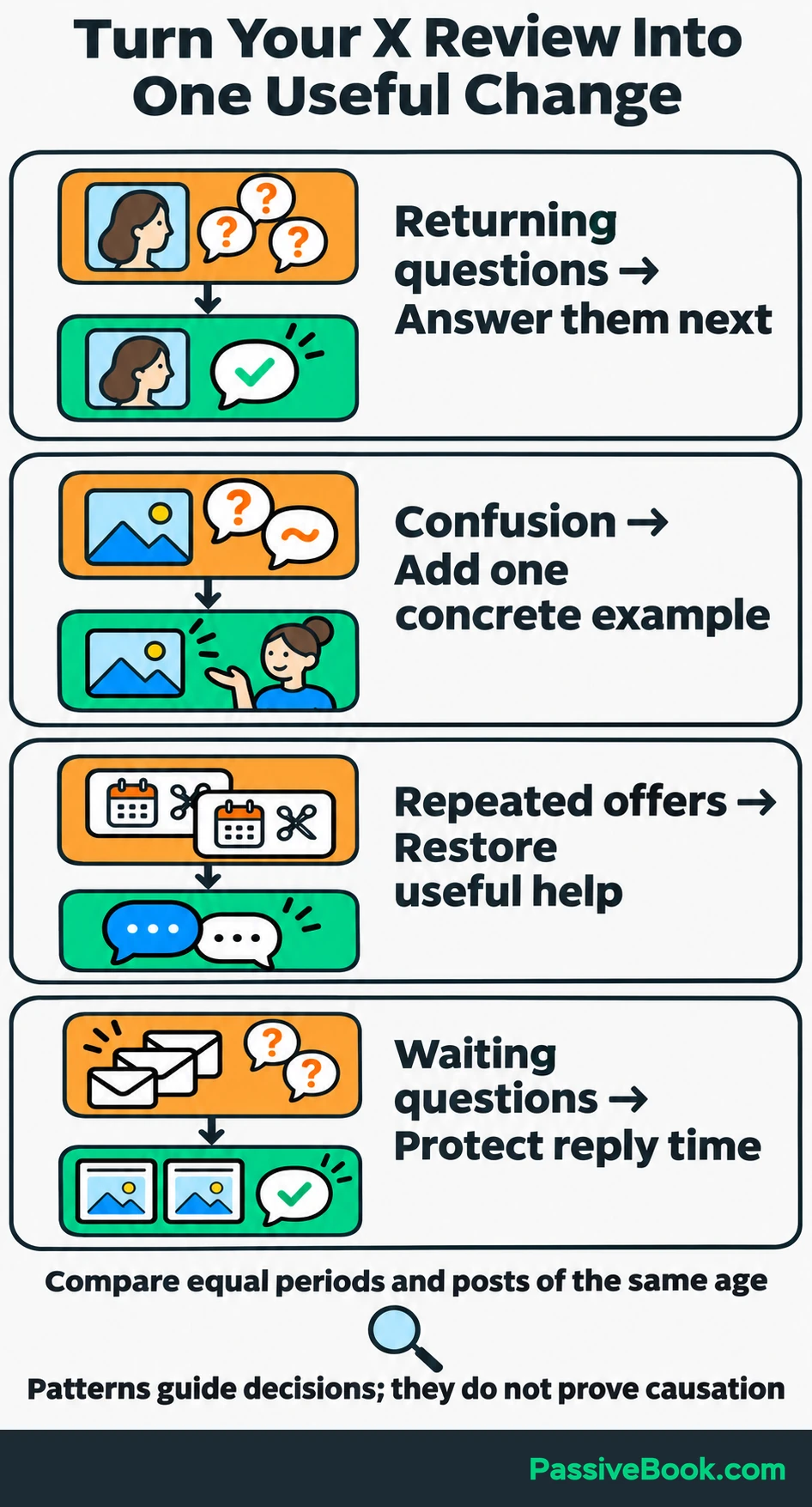
These comparisons guide decisions. They do not establish that one tactic caused followers to stay.
I spent six months chasing Instagram and Twitter/X followers in another niche while my bank balance stayed around $47. That is why I would track the salon’s appointment inquiries separately from engagement: repeat conversations show participation, while relevant inquiries help you judge whether that activity supports the business.
What Next?
Review your last ten posts and choose one unanswered question to address. Publish a useful answer, then leave time to continue the replies it brings.
Use the social buttons to share this guide when your next content-planning discussion needs a routine that fits around the rest of the business.
What would give your existing followers a stronger reason to return: clearer topics, better replies, or a pace you can sustain? Tell me in the comments, and bring any other questions too.
Share this post with your friends & followers:

