You spot a conversation you could help with, but hesitate before replying. Will your comment sound useful, or like the opening line of a pitch?
That hesitation can leave you scrolling for an evening without speaking to anyone. Yet you want more than a growing follower count: people who remember your work, return to a conversation, or suggest working together.
Making room for those connections shouldn’t require constant posting. This guide shows how to carry conversations on X toward lasting connections and business opportunities without letting the effort swallow your evening.
Make Your Profile a Useful Introduction
Before starting conversations, make sure your profile answers three questions: Who are you, what do you do, and where can someone learn more?
Use a recognizable photo or business image, a specific bio, and a link that matches your offer. I would choose clarity over a clever tagline. “Making memories magical” could describe a photographer, a holiday company, or a particularly ambitious fridge magnet.
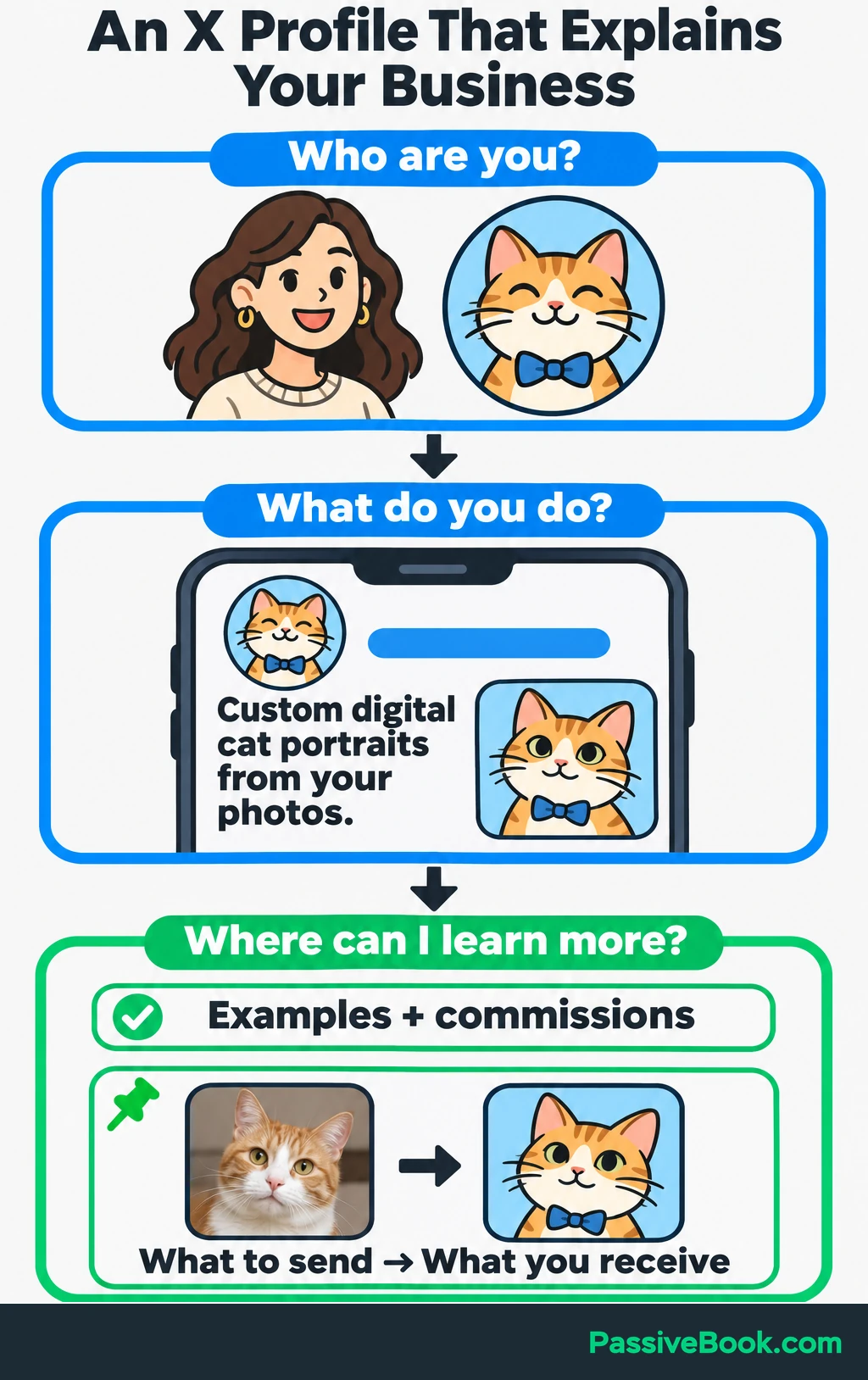
Throughout this guide, imagine you run a small online shop selling custom digital cat portraits. The messages and collaboration ideas below are examples, not reported results.
Your bio could say:
Custom digital cat portraits from your photos. See finished examples and how to commission yours below.
Pin a finished portrait with a short explanation of the process. Say what the customer sends, what you deliver, and where they can find the details.
Your posts should also give people something to discuss. Show how you chose a background, explain which reference photo made a marking easier to draw, or ask which crop makes an expression clearer.
Choose a pace you can sustain. I would rather publish one useful example and answer the replies than fill a calendar with posts I have no time to discuss.
Find Relevant People With Search and X Lists
Start with the questions and activities connected to your work. Searching only for people selling the same thing gives you a narrow view.
For the portrait shop, try searches such as:
- “photographing my cat” to find problems with reference photos.
- “looking for a cat portrait” to find questions about commissions.
- “personalized pet gift” to understand what buyers want.
Read the results and adjust the wording to match how people actually talk.
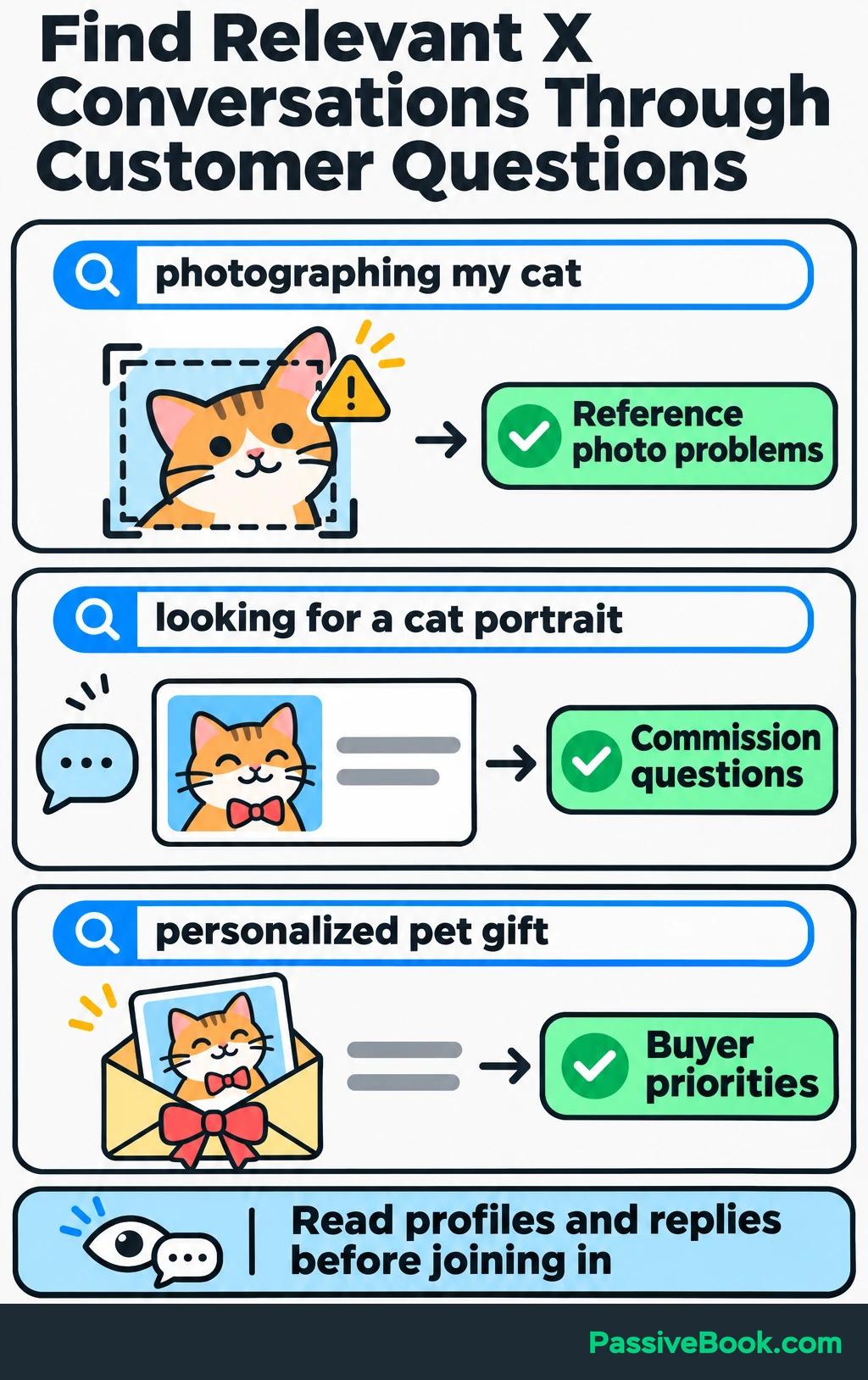
Look for several reasons to connect. Cat owners can help you understand customer needs, artists may exchange ideas, and pet photographers could become collaborators. Read profiles and recent replies before joining in. I would favor someone who answers thoughtful questions over a prominent account that mostly broadcasts.
Look through replies to relevant posts, too: another helpful commenter may be worth getting to know. Public Lists—groups of accounts someone has collected—can also help you find people.
Once you find suitable people, create your own List to read their posts together. For a personal contact shortlist, open Lists, create a new List, and turn on Private. Lists are public by default; a private List is visible only to you.
Keep the List small enough to read during your available time. Start with a handful of accounts and add people as you discover them. Remove accounts when their posts stop being relevant.
The List’s job is to help you find conversations worth joining. Collecting hundreds of names creates another feed to avoid.
Start Conversations With Replies That Add Something Useful
Read the post and existing replies before writing yours. Then contribute one specific thing: an answer, a practical detail, a relevant experience, or a question whose answer matters.
A useful reply usually acknowledges the situation and adds something the other person can use. A follow-up question is optional. Don’t staple one onto every comment just to keep the exchange alive.
Suppose a pet photographer posts about clients sending incomplete briefs. You could reply:
For portrait references, I ask for a full-face photo and a close-up of distinctive markings. Which details do clients most often miss?
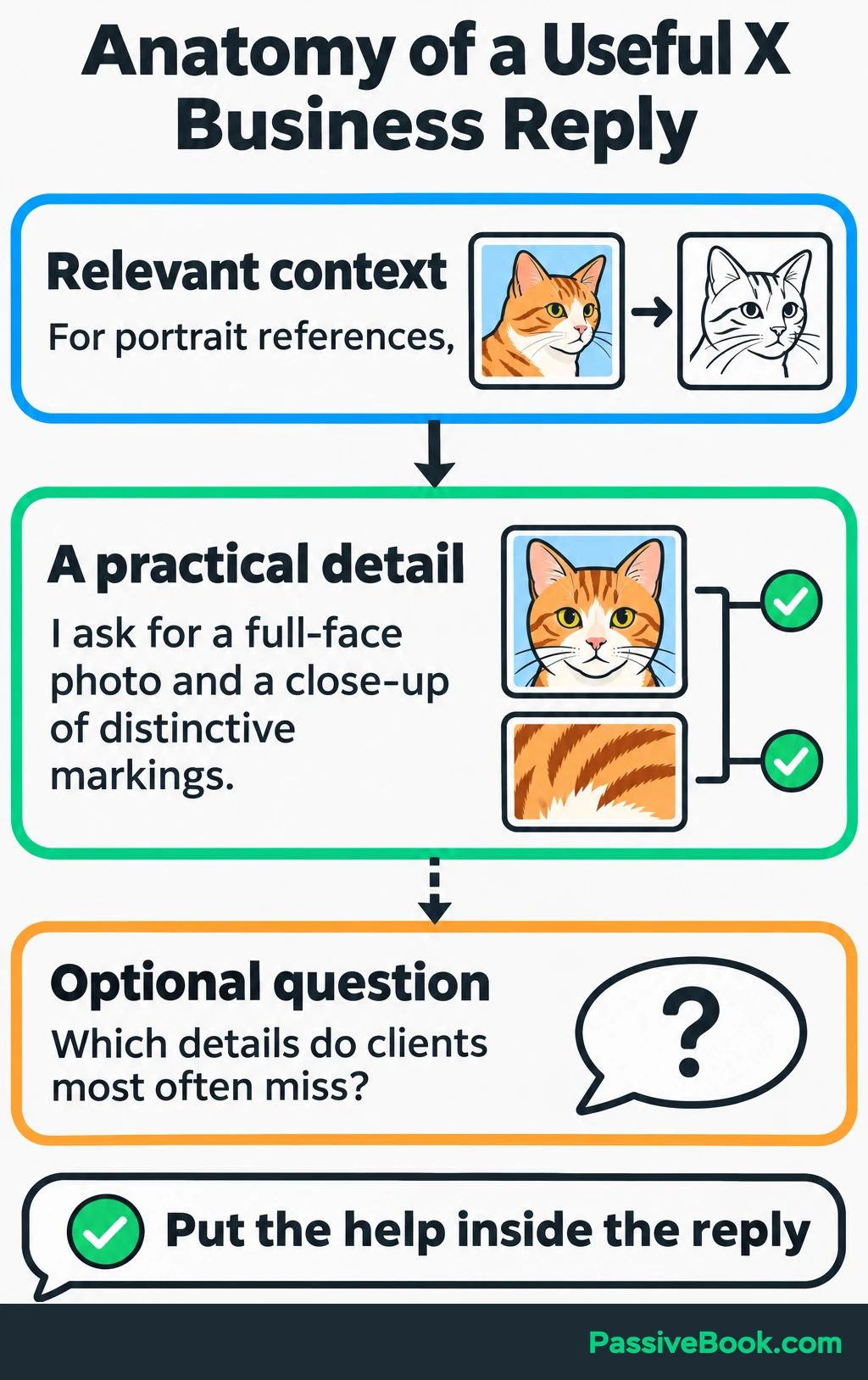
This explains your connection to the subject and gives the photographer something specific to answer. It also works without a shop link.
If you know what you could contribute but keep rewriting the reply, the AI Skill below can help put it into words. You can also use it for follow-ups and next-step messages when those become relevant.

Free AI Social Copy Studio




Put the help inside the reply whenever possible. If someone asks what photos to send an artist, explain the essentials there. Share a longer resource when it directly answers the question, and say what it contains.
When someone answers, respond to what they said. If the photographer mentions that clients crop out ears, discuss that problem rather than switching to your commission service.
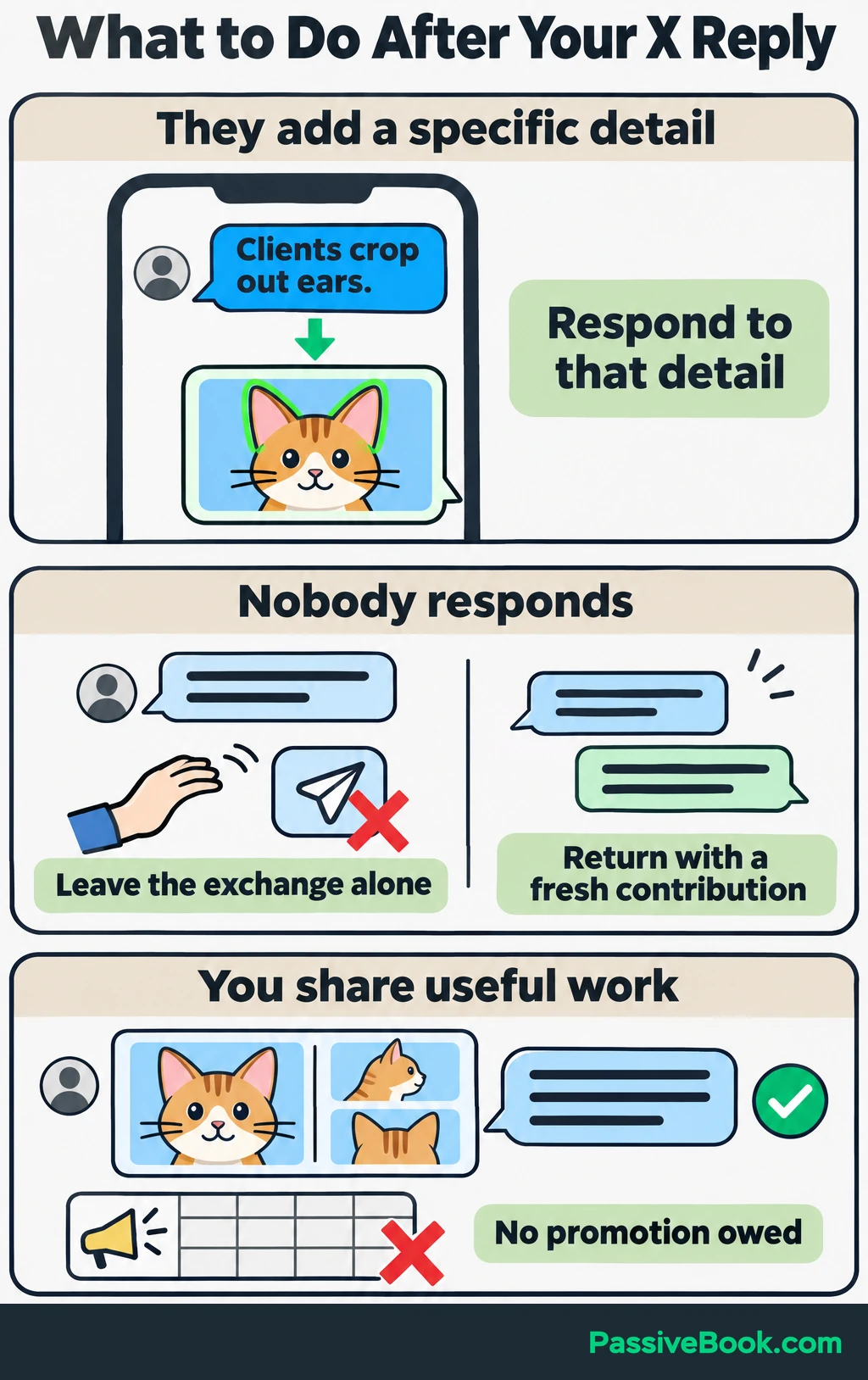
You can also share someone’s work with a clear reason:
This side-by-side example makes it easy to see why the camera angle matters when choosing a reference photo.
Do that because the work is useful. It doesn’t create a debt they must repay with promotion.
If nobody responds, leave the exchange alone. You can join a later discussion when you have a fresh contribution. Repeatedly nudging a stranger to acknowledge your helpfulness rather defeats the point.
Skip duplicated pitches, unrelated promotional replies, and groups arranged to trade engagement. X’s authenticity policy prohibits these forms of spam and engagement manipulation.
Join Relevant Hashtag Chats
A hashtag chat is an organized public discussion around a shared hashtag. A host introduces a topic and may post numbered questions for participants to answer.
Find candidates through people you already follow, then check the host’s recent announcements. Confirm the subject, next session, and time zone. An old directory entry doesn’t tell you whether a chat still runs. When the session starts, search for its hashtag to find the host’s questions and participants’ replies.
Choose relevance over attendance. A discussion about pet photography gives the portrait shop a clearer opening than a crowded event about general business growth.
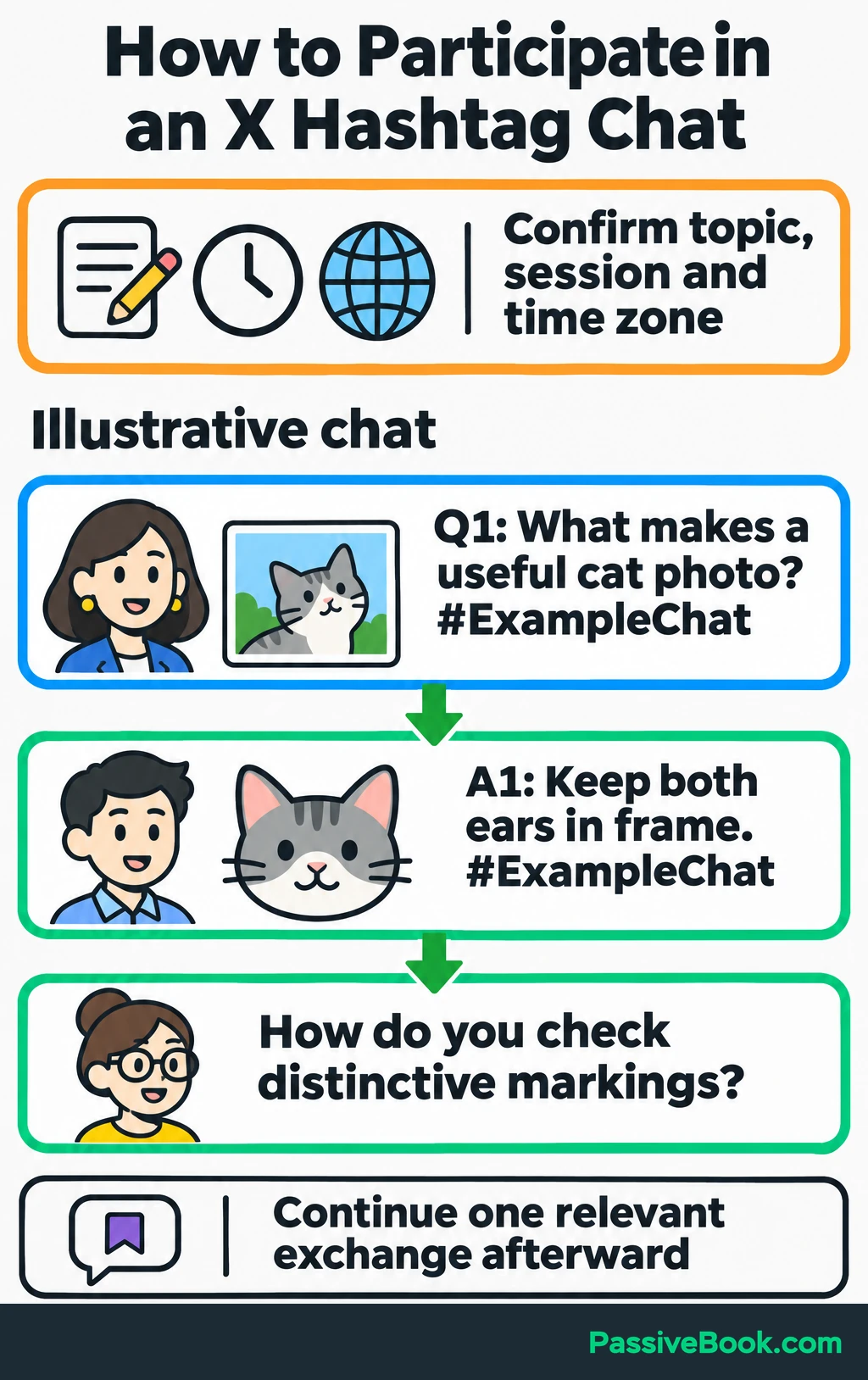
When you attend:
- Introduce yourself briefly and explain your connection to the topic.
- Answer prompts where you have something useful to contribute.
- Reply to other participants instead of directing every answer at the host.
Follow the host’s format. If questions use Q1 and Q2, answers may use A1 and A2, alongside the chat hashtag.
Afterward, continue a particular exchange. Refer to the participant’s point and add a relevant question or detail. Add suitable accounts to your List so you can find their future posts.
I wouldn’t rearrange my week for an unrelated chat. If you cannot find an active one worth attending, ordinary conversations are enough to get started.
Turn First Conversations Into Ongoing Connections
A first reply gives you a shared subject. An ongoing connection needs a reason to return to it.
That reason can be small: delivering something you promised, answering a question you couldn’t resolve earlier, or sharing a relevant update. You don’t need to manufacture an excuse to “touch base.”
Follow up With a Relevant Reason
Before following up, ask yourself what makes this message useful now.
For the portrait shop, the photographer’s comment about missing details could lead you to improve your photo checklist. Then you have a concrete reason to return:
I added a separate close-up prompt to the photo checklist we discussed, including a reminder to keep both ears in frame. Does that address the issue you described?
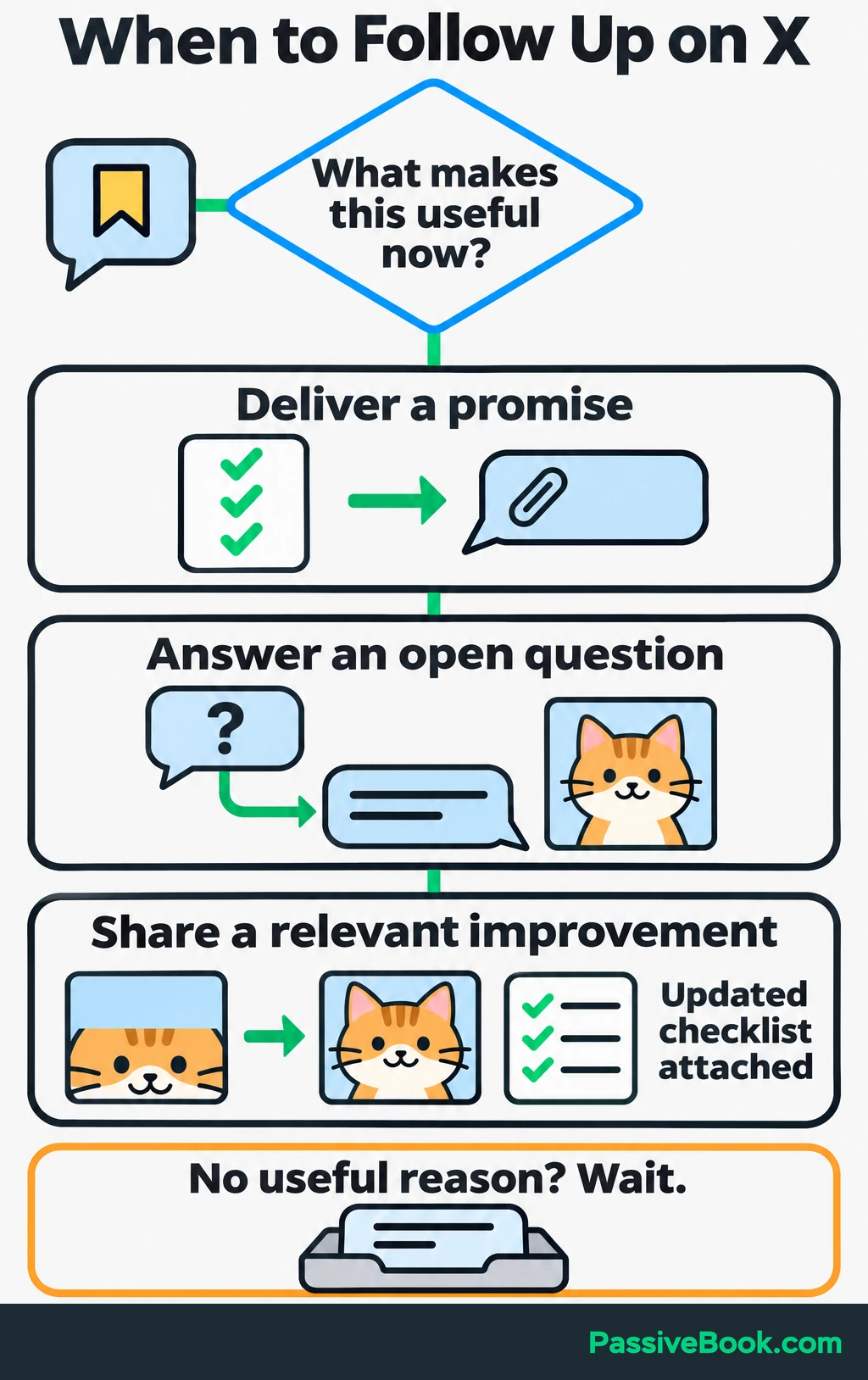
Include the revised checklist so the photographer can check the change without another round of messages.
Match your attention to reciprocal interest. Look for substantive replies, questions back, remembered details, or voluntary introductions. Likes alone tell you little about whether someone wants a longer conversation.
Some connections will remain professional friendships. That is a perfectly good outcome, even when there is no obvious transaction.
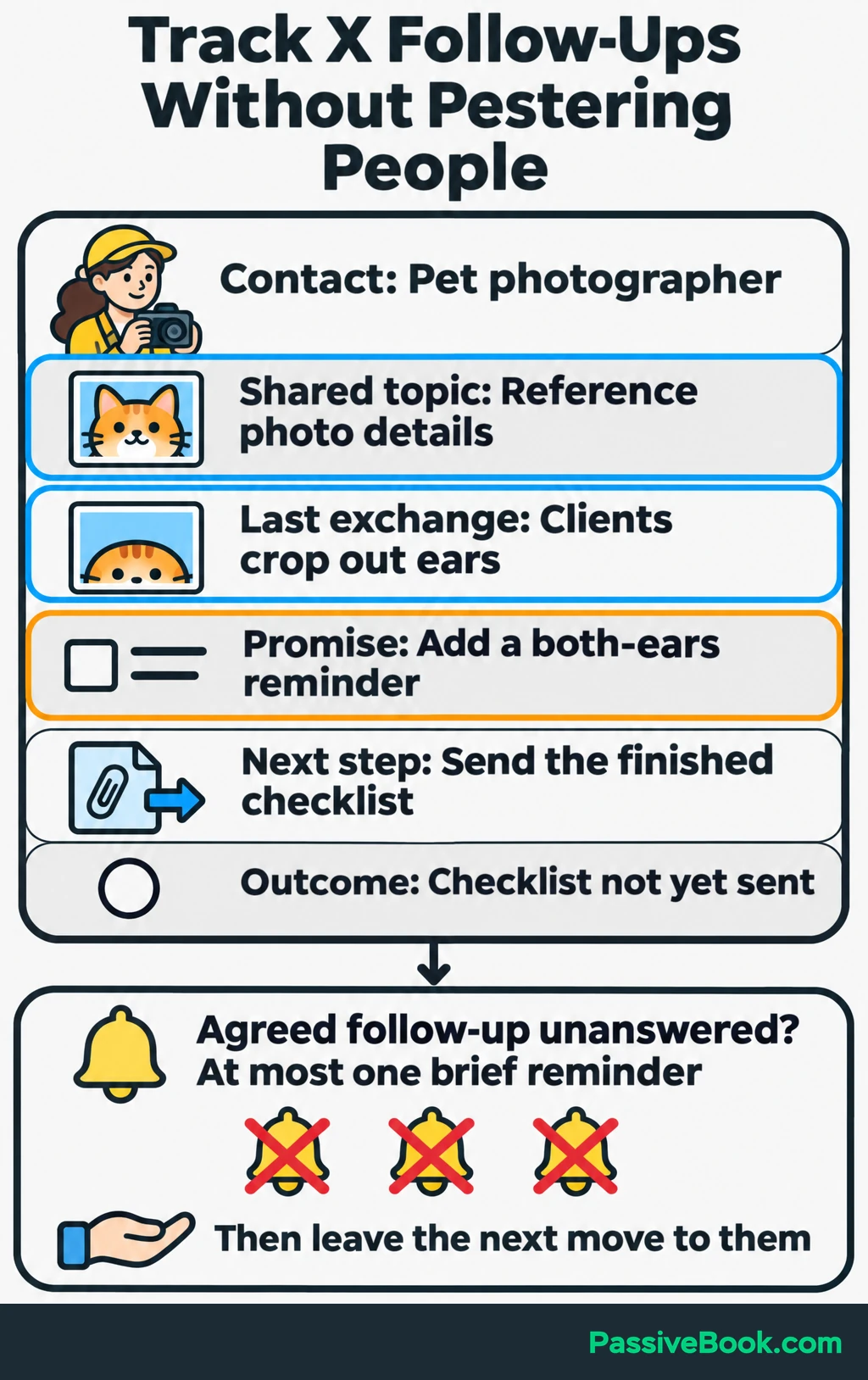
Keep brief notes so you remember commitments. A spreadsheet or Notion table is enough:
| Contact | Shared Topic | Last Meaningful Exchange | Promised Action | Next Follow-up | Outcome |
|---|---|---|---|---|---|
| Pet photographer | Missing details in reference photos | They said clients crop out ears | Add a reminder to keep both ears in frame | Send revised checklist when finished | Checklist not yet sent |
Use reminders for promises and agreed checkpoints. You don’t need a reminder to send everyone a message every Tuesday.
When an agreed follow-up goes unanswered, I would send at most one brief reminder, then leave the next move to them. Accept a decline immediately.
Move to DMs When Privacy or Detail Helps
Private messages make sense when someone requests a resource, invites contact, or wants to discuss details that would clutter the public exchange.
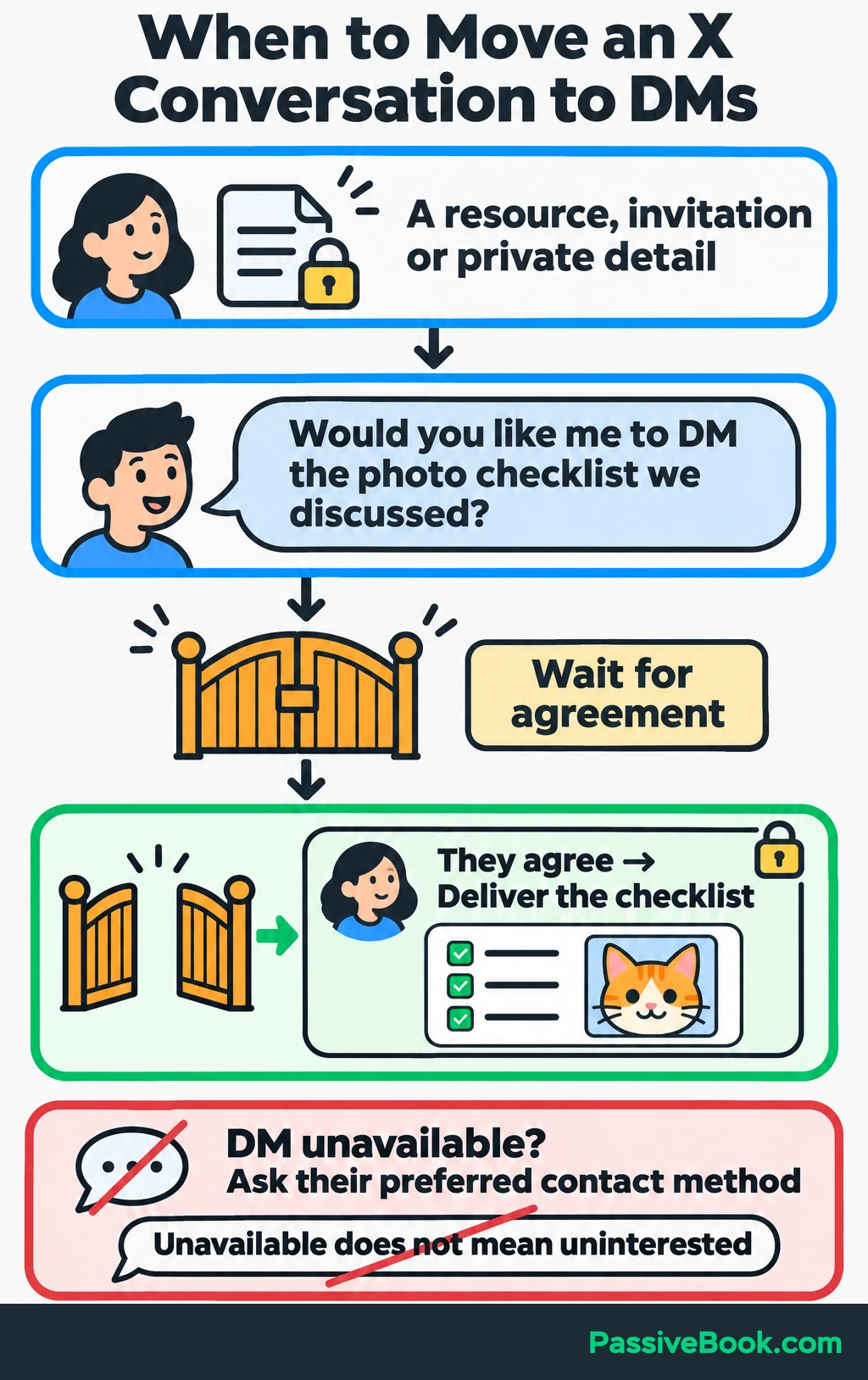
For a new private conversation, establish the reason first:
Would you like me to DM the photo checklist we discussed?
After they agree, deliver it and connect it to the conversation:
Here’s the photo checklist we discussed. I added the reminder about keeping both ears in frame. Thanks for pointing out that gap.
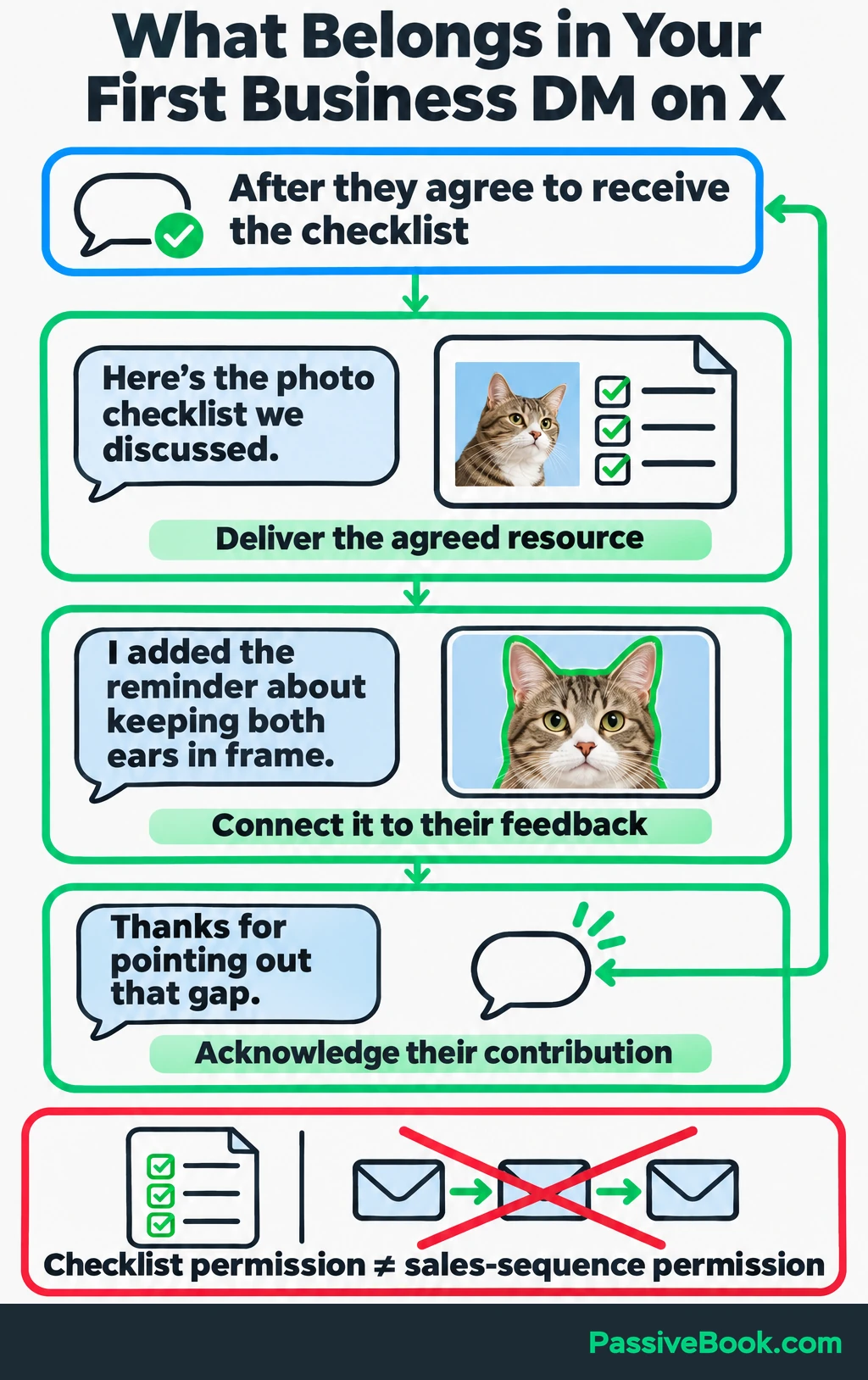
Keep the message focused on the agreed subject. Permission to receive a checklist isn’t permission to receive a sales sequence.
If messaging isn’t available, ask which contact method they prefer. Access depends on account relationships and recipient settings, so an unavailable message option tells you nothing useful about their interest.
Suggest a Business Next Step When There Is a Clear Fit
The right opening for an offer is an expressed need: a product question, a recommendation request, a problem you can solve, or a collaboration idea.
A like or follow doesn’t establish buying interest.
Clarify what matters before recommending something. For a portrait, that might mean asking whether the person wants a digital gift or a file to print, and whether they have a deadline. Keep the questions relevant to the decision.
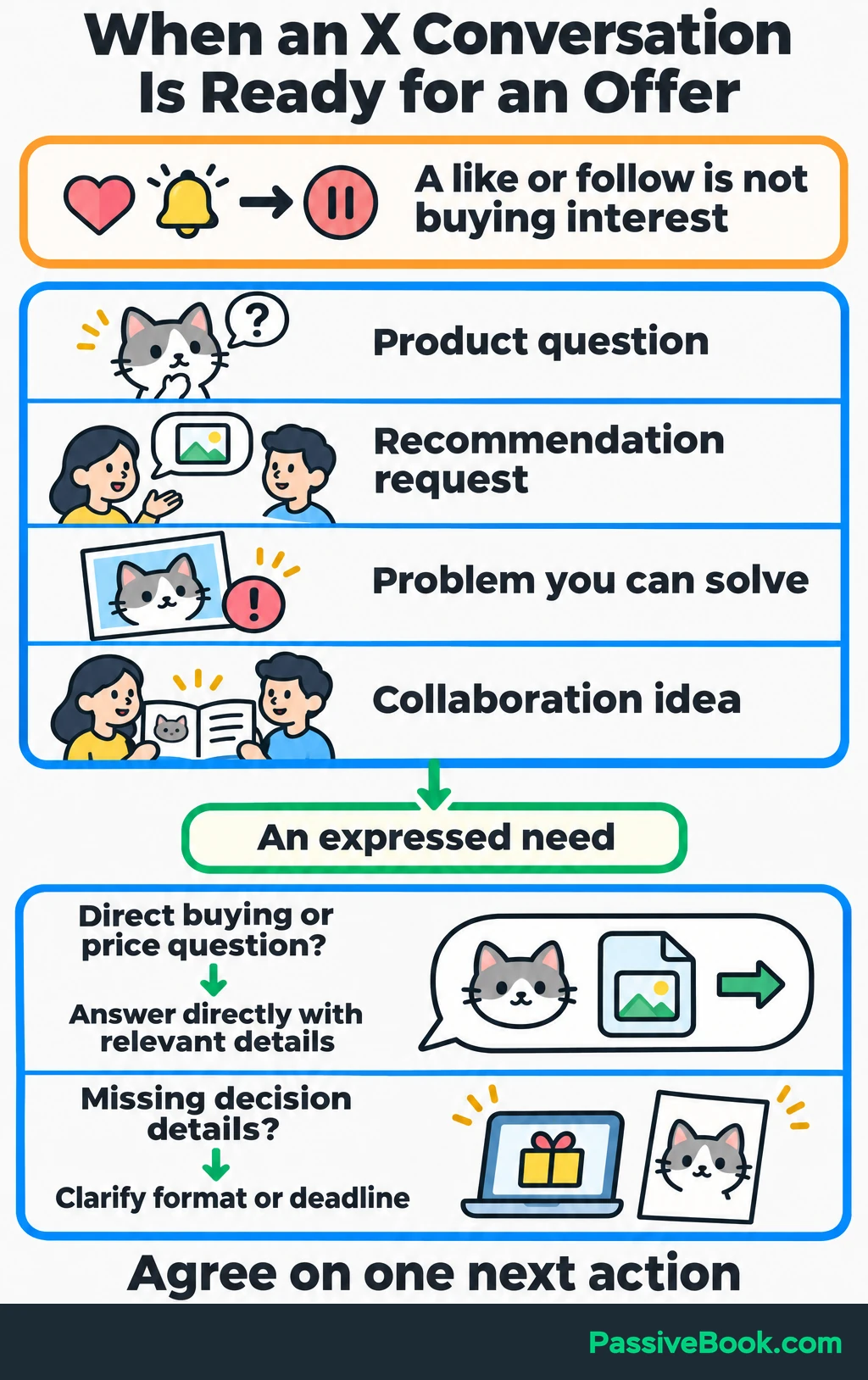
If someone asks whether you take commissions, answer plainly:
Yes, I take custom cat portrait commissions. Are you looking for a digital gift, or a portrait you can print?
If they ask for the price, give the price with the relevant deliverables and next action. Don’t make them complete three more rounds of friendly conversation to earn that information.
There is no required number of replies before business becomes acceptable. A direct buying question deserves a direct buying answer.
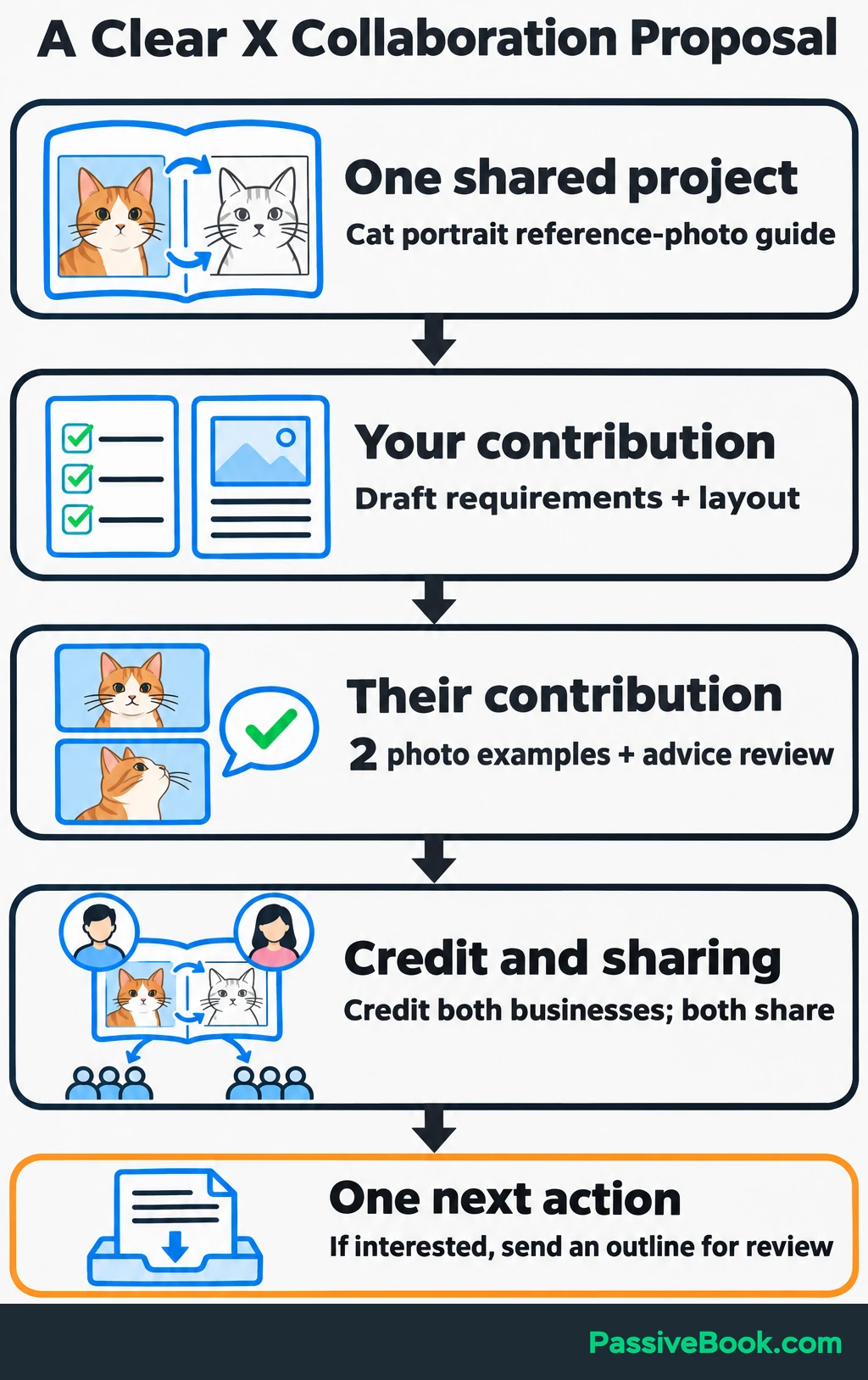
For a collaboration, propose one small activity and explain each person’s contribution. After discussing reference photos with the photographer, you could send:
Would you be interested in making a short guide to choosing cat portrait reference photos together? I can draft the portrait requirements and layout. You could contribute two photo examples and check the photography advice. We’d credit both businesses and each share the finished guide. If that sounds useful, I’ll send a one-page outline for you to review.
That gives them something concrete to consider. It is much easier to assess than “We should collaborate sometime.”
Agree on one next action, complete your part, and report back. Keep any later conversation tied to what both people want from the project.
Earlier help never becomes an obligation to buy. If an offer doesn’t fit, let the conversation continue without it.
Build a Routine Around Conversations That Matter
Set a time allowance before opening X. Otherwise, “building relationships” can become a respectable name for losing an evening.
Here is a simple 15-minute session to try:
| Time | Activity |
|---|---|
| Four minutes | Answer existing conversations and questions |
| Seven minutes | Read your List and contribute where you can help |
| Four minutes | Complete promised follow-ups and update brief notes |
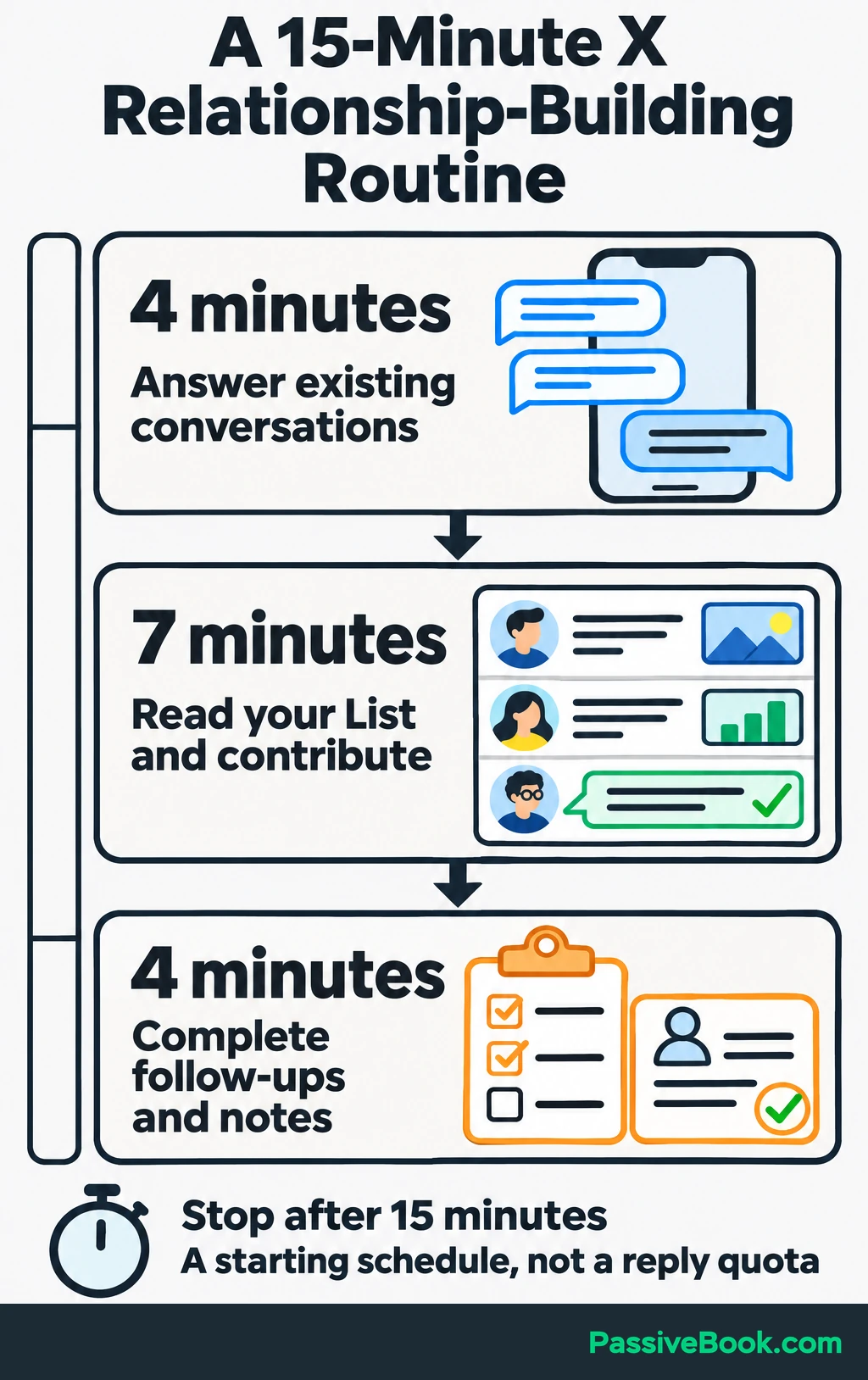
Treat this as a starting schedule, not a target for reply volume. Some days you will find nothing worth adding. Stop anyway.
A relevant chat can replace a routine session or some weekly browsing. It shouldn’t automatically become another commitment piled onto your day job.
I spent six months chasing Instagram and Twitter/X followers for a side niche without meaningful financial progress. That’s why I’d review returning conversations, introductions, collaboration discussions, inquiries, and sales each week. For inquiries, look for a need your offer could meet and a discussion of relevant details.
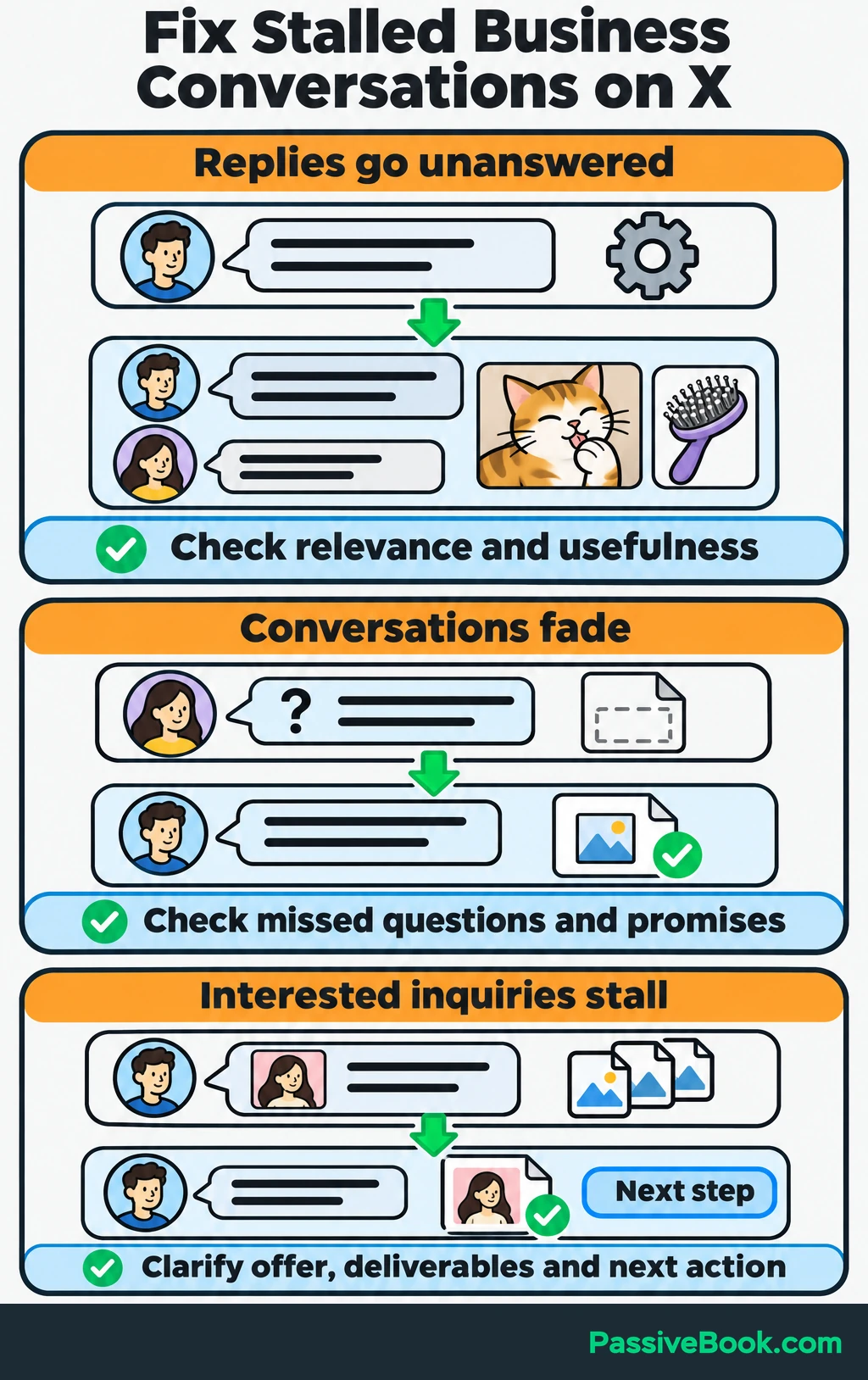
Then adjust where things stop:
- Replies go unanswered: Review whether the people and subjects are relevant, and whether your comment gives them anything useful.
- Conversations fade: Check whether you missed a question or failed to deliver something promised.
- Interested inquiries stall: Make the offer, deliverables, and next action clearer.
I would skip extra software until a repeated task justifies it.
Automate reminders for your commitments, but write messages around the actual exchange. X’s automation rules prohibit unsolicited automated replies and DMs. A system that remembers your promise is useful. A system that pesters strangers for you is still pestering strangers.
What Next?
Create a private List of five relevant accounts and find one conversation where you can contribute a useful detail. After replying, record any promise you make so you can follow through.
Use the social buttons to pass this guide along when your next discussion turns to making business connections without constant pitching.
Which part feels hardest for you: starting a conversation, following up, or suggesting a business next step? Share your answer and any other questions in the comments.
Share this post with your friends & followers:

