You’ve shared useful tips on X, but the questions you hoped to get still haven’t arrived. A few posts attract attention, then the next week feels like starting again.
That makes it hard to justify another evening writing. More posts might help people discover you, but discovery alone doesn’t tell them why they should trust your advice.
This guide shows how to make your knowledge visible through useful answers, examples of your work and conversations worth continuing, and how to judge whether that effort is helping your business.
Choose the Problem You Want to Be Known for Solving
Authority means people trust your judgment on a subject. A growing follower count can accompany that trust, but I would look for people returning with questions, recommending your work and asking about something you offer.
Start by writing one sentence:
I help [people] solve [problem] through [approach].
Choose a problem you understand well enough to demonstrate a useful answer. “I share tips about dogs” leaves too much open. What kind of tips, and why should anyone take yours?
Throughout this article, imagine you sell printable packing planners for weekend road trips with dogs. The posts, offers and routines below are illustrative.
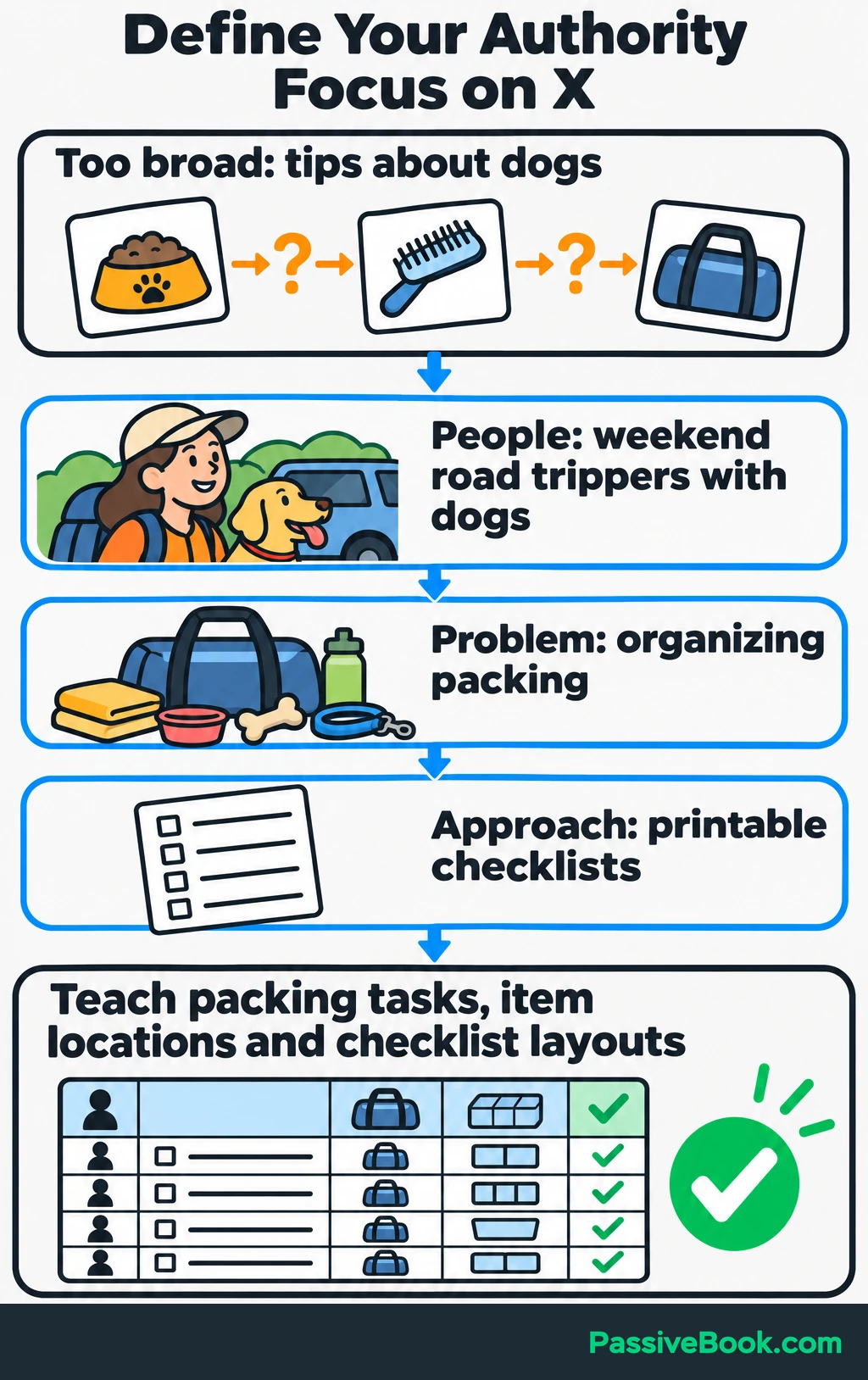
Your focus could be:
I help people organize packing for weekend road trips with dogs using simple printable checklists.
That gives you something concrete to teach: organizing items, assigning packing tasks and recording where things go. It doesn’t require you to present yourself as an expert in every part of dog care.
Before committing much time, search X for phrases such as “packing for a road trip with a dog.” Read the surrounding conversations and save:
- Questions people ask more than once.
- Answers that leave an obvious detail unexplained.
- Words people use to describe the problem.
- Relevant accounts that take part in useful discussions.
Keep these in a small question bank. Check that prospective customers and knowledgeable peers actually discuss the subject on X.
Refine your focus when their questions reveal a clearer need. An unrelated post getting attention is a poor reason to rebuild your business around it.
Make Your Profile Show What You Know
Your profile should help someone answer three questions: What do you cover? What can I inspect? Where can I go next?
Use a recognizable name and a clear image. A simple brand image is fine if you don’t want to use a face photo.
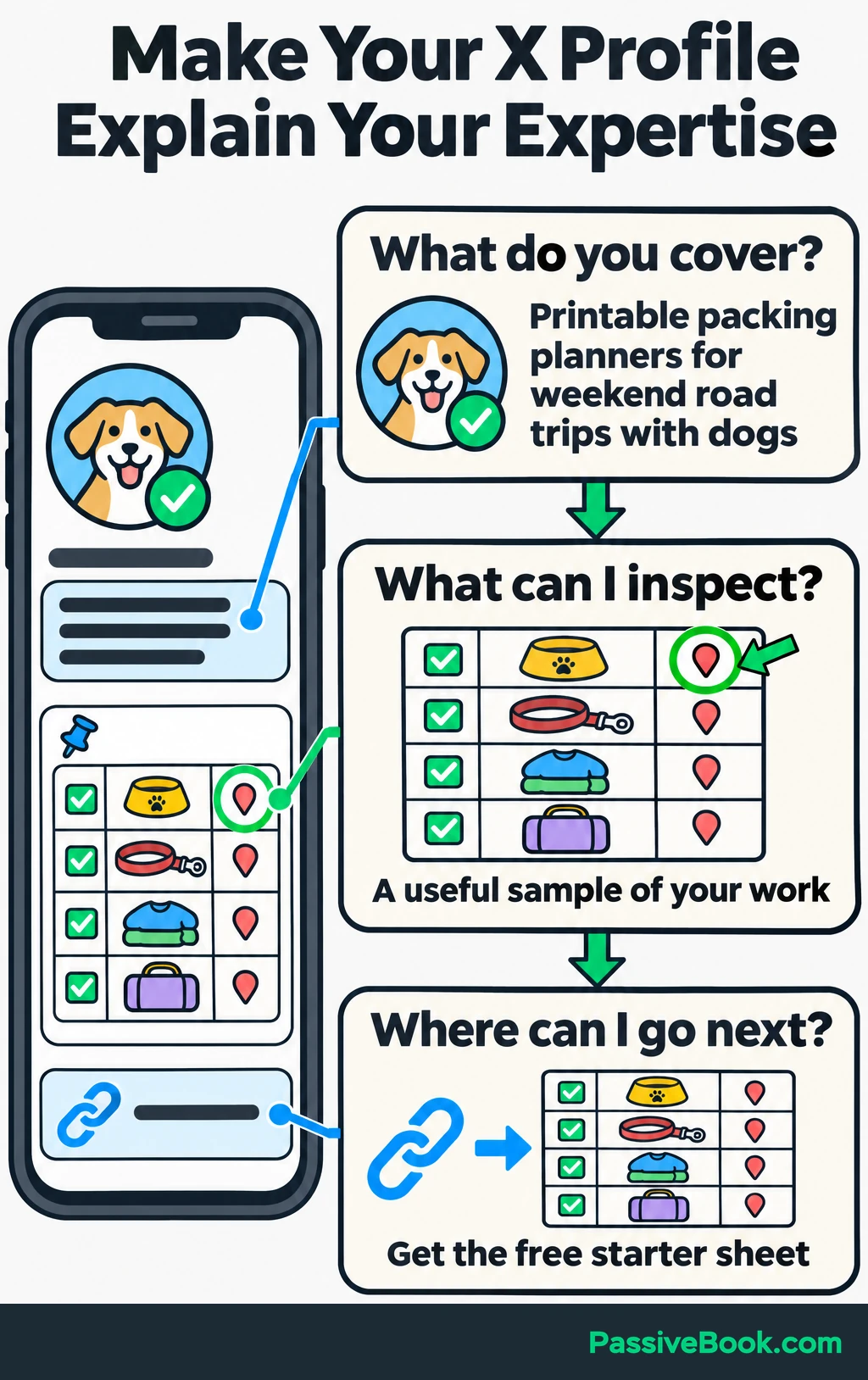
Write a bio that names your work and the material you share. For the planner business:
Printable packing planners for weekend road trips with dogs. Checklist layouts, packing examples and a free starter sheet.
Then gather something visitors can examine. That could be a completed worksheet, an annotated draft or genuine customer feedback shared with permission.
I would put a useful sample ahead of a grand claim about expertise. Readers can judge a worksheet. “Passionate industry thought leader” gives them rather less to work with.
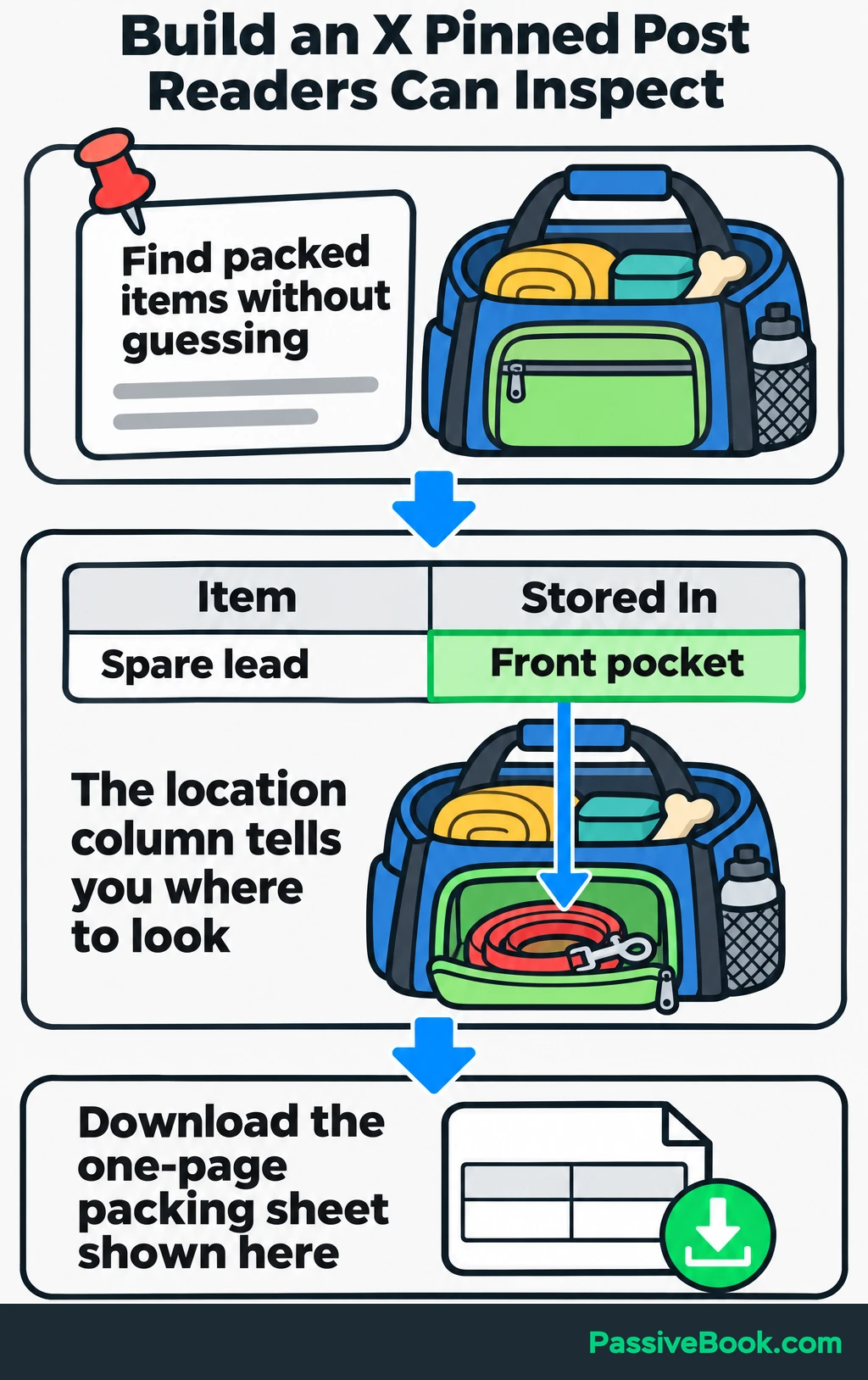
Pin a post that introduces your focus and shows your strongest relevant example. Explain one useful feature of the planner, include the sample page and point to the starter sheet.
Keep posts public if your goal is discovery. Protected posts are visible only to followers, and someone who doesn’t follow you cannot see your protected replies. X explains the visibility rules here.
A blue checkmark doesn’t establish subject expertise. It indicates an eligible account with an active subscription. I would spend my early effort making the work convincing. X’s explanation of checkmarks sets out what the badge means.
Publish Posts That Demonstrate Your Expertise
Build recurring themes from the questions you collected. For the packing planner, these might be:
- Deciding who packs each item.
- Finding packed items during a journey.
- Choosing a checklist layout that fits the trip.
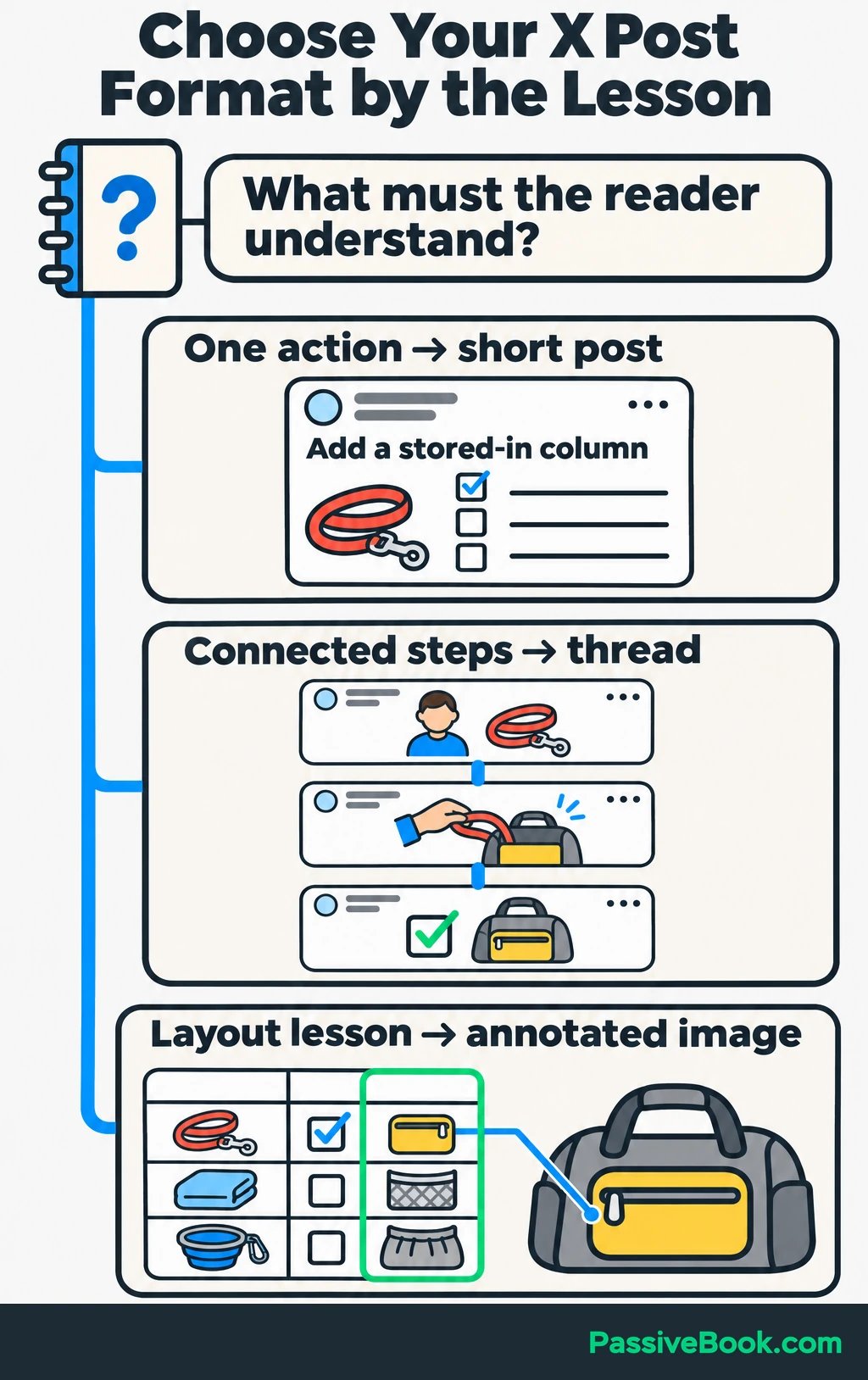
Choose the lesson before choosing the format. One action may need a short text post. Connected steps may need a thread. A layout is easier to explain with an annotated image.
If you’re working out how to build authority on X, start with useful text and visible examples of your work. Paid ads, video production and a large existing audience aren’t prerequisites for publishing either.
Answer One Practical Question Completely
Give each post a clear job. Describe the situation, recommend an action, explain why it helps and show a small example.
Here’s a complete sample post:
Packed the spare lead, but can’t remember where it went?
Add a “stored in” column to your dog-trip packing list.
“Spare lead — front pocket of travel bag.”
A tick says it’s packed. The location tells you where to look.
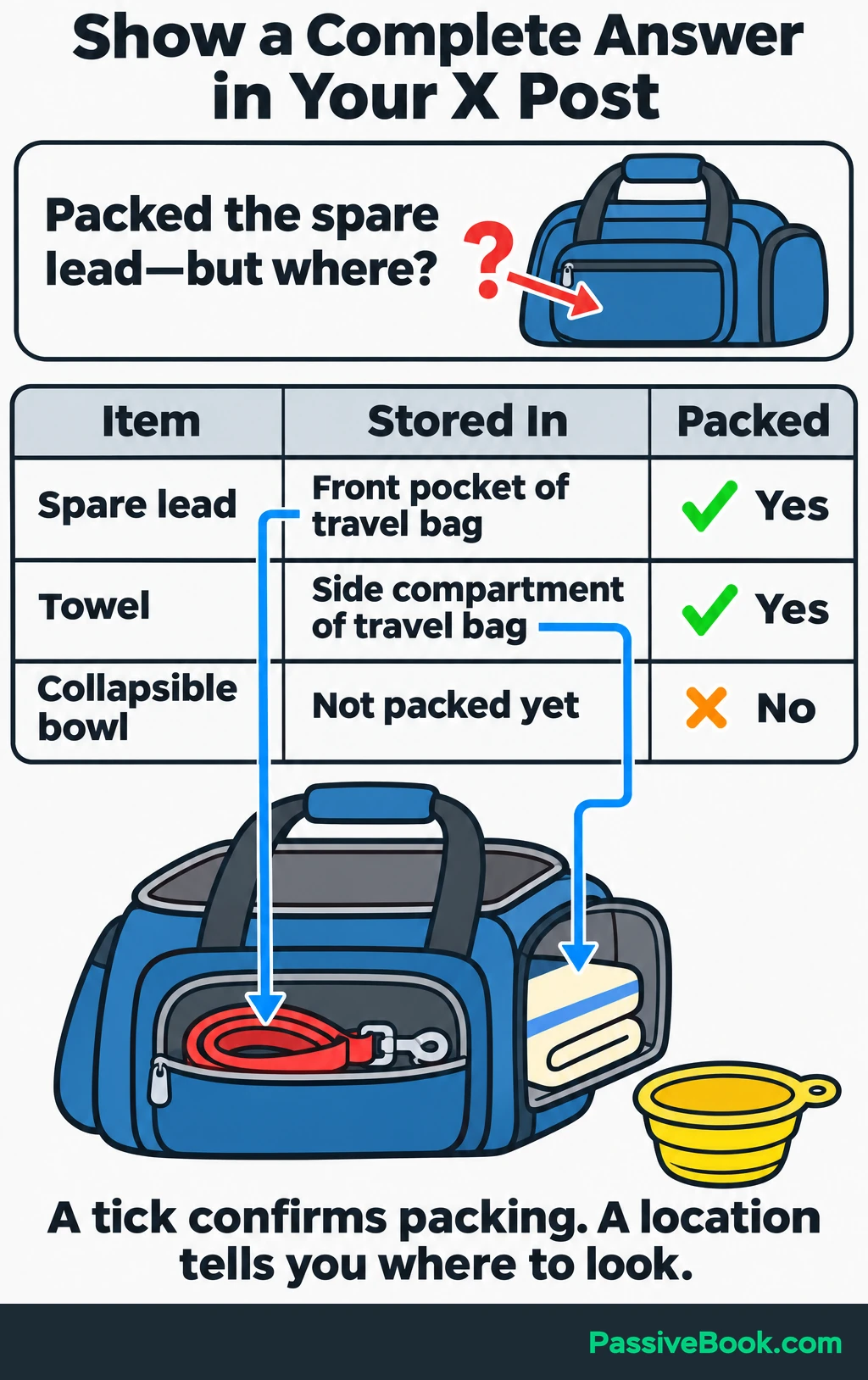
The reader can use that advice without visiting your website. That matters: the post itself should earn their interest.
You could attach this small worksheet excerpt:
| Item | Stored In | Packed |
|---|---|---|
| Spare lead | Front pocket of travel bag | Yes |
| Towel | Side compartment of travel bag | Yes |
| Collapsible bowl | Not packed yet | No |
The excerpt demonstrates the method without giving readers a whole workbook to decipher.
When someone asks, “What if two people are packing?”, answer that next. A follow-up question gives you a useful new post about assigning responsibility. Repeating the original post with a louder opening adds much less.
If you have a question to answer but keep getting stuck on the wording, AI Social Copy Studio can help. Give the AI Skill your advice and an example of your work to get three distinct drafts you can check before publishing.

Free AI Social Copy Studio




Show Your Work and What It Supports
Advice becomes easier to assess when readers can inspect the decisions behind it.
Share a draft, worksheet or comparison, then explain what you changed and why. For the packing planner, show a version with only Item and Packed columns beside one that adds Stored In.
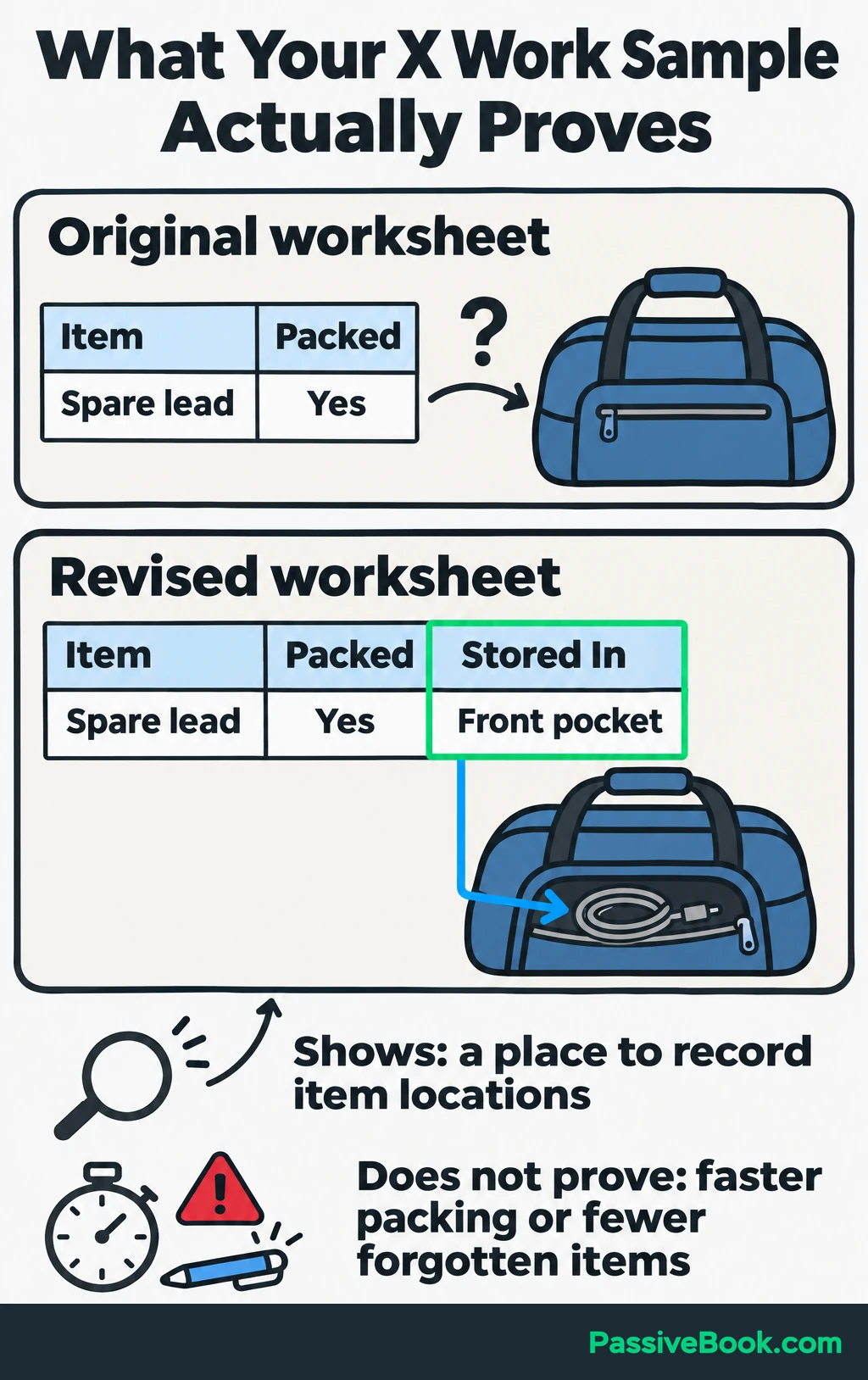
Explain what the added column does: a checkbox says the spare lead is packed, while the location tells readers where to find it. The comparison makes your design decision visible.
A finished planner demonstrates its structure. It doesn’t establish that customers pack faster or forget fewer things.
If you want to investigate whether the layout helps, test a narrow task. Give someone a completed sheet and ask them to locate a named item. Watch where they hesitate and record what confused them.
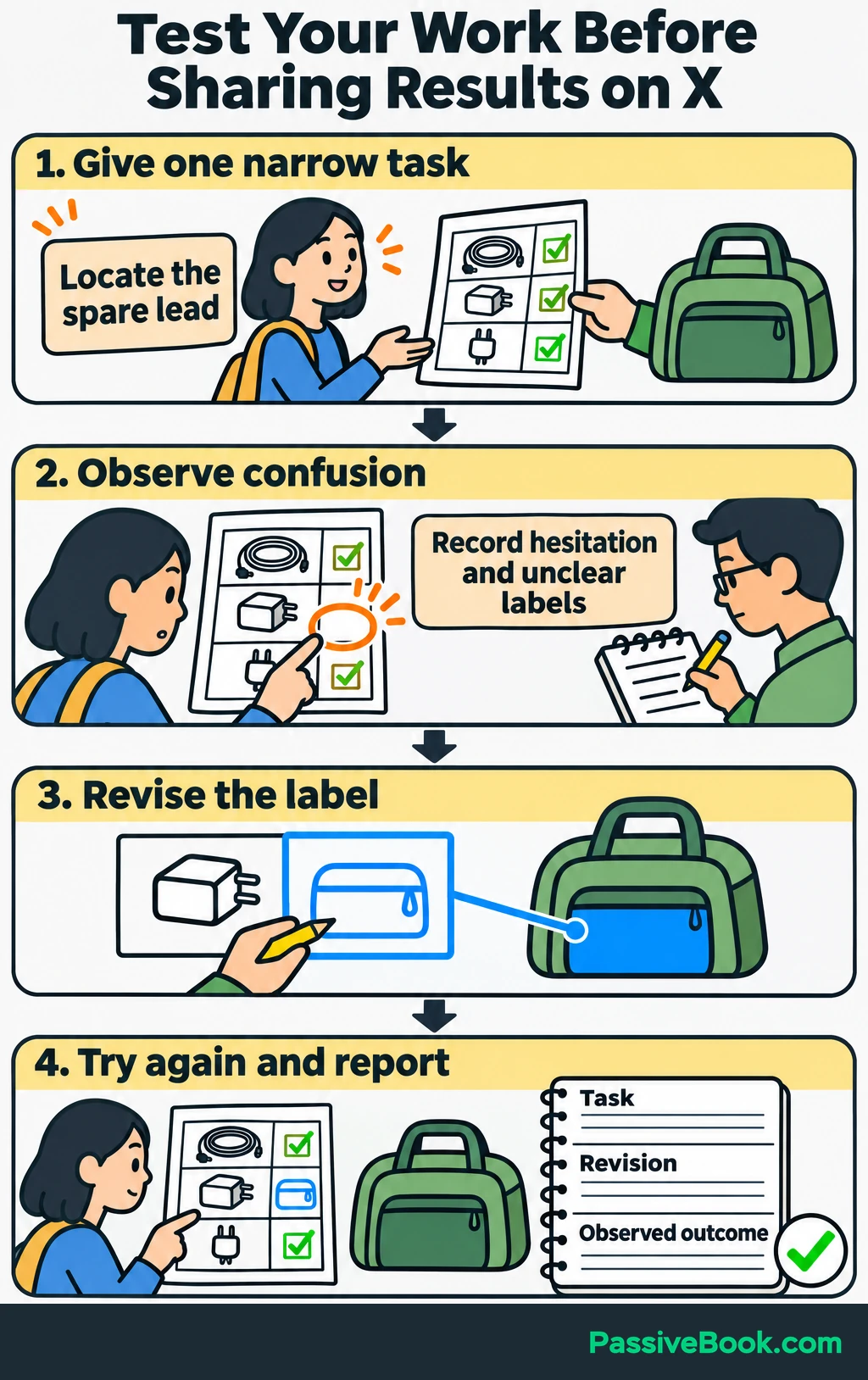
Then you have something specific to discuss: the task, the confusing label, the revision and what happened when you tried again. Keep any conclusion within what you observed.
For a fuller case study, explain the problem, your decision, what you did, the observed outcome and the lesson. Include the conditions that help readers interpret it.
Add image descriptions to instructional images. Describe the important labels and relationships so the lesson remains understandable without seeing the graphic.
Explain the Choices Behind Your Advice
A recommendation becomes more useful when readers understand when you would change it.
Before comparing options, name the decision criteria. With packing lists, I would consider:
- Who is doing the packing?
- How many bags or storage places are involved?
- Who needs to read or update the list?
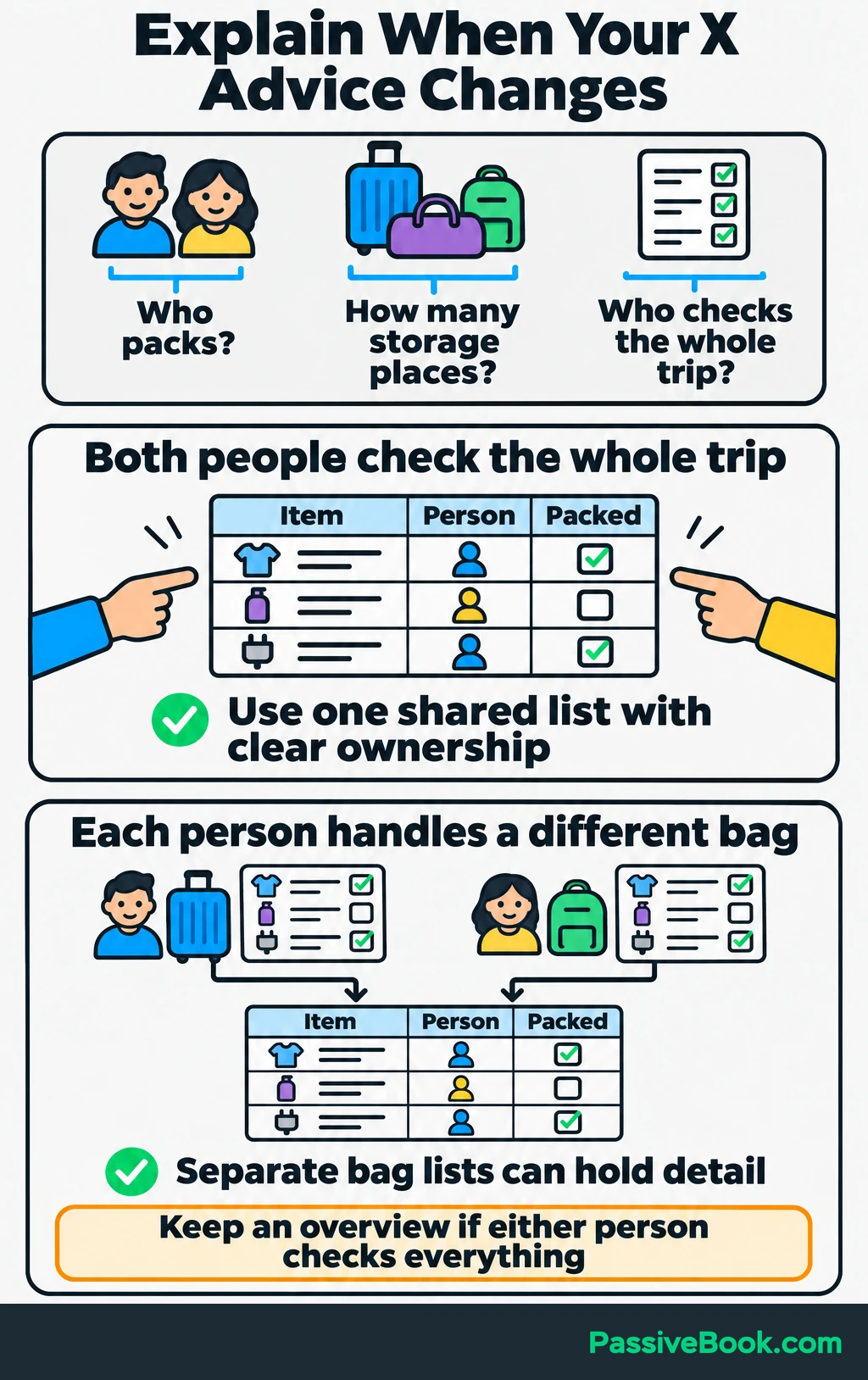
For two people packing together, I would start with one shared checklist and a person’s name beside each item. Everyone can see the responsibility and completion status in one place.
Separate lists can make sense when each person handles a different bag. But I would still keep a shared overview if either person needs to check the whole trip.
That gives you a useful opinion to publish:
I’d use one shared packing list when two people need to check the whole trip. Add a name beside each item. Separate bag lists can hold the detail, but the overview should make ownership clear.
Readers can now apply your reasoning to their circumstances.
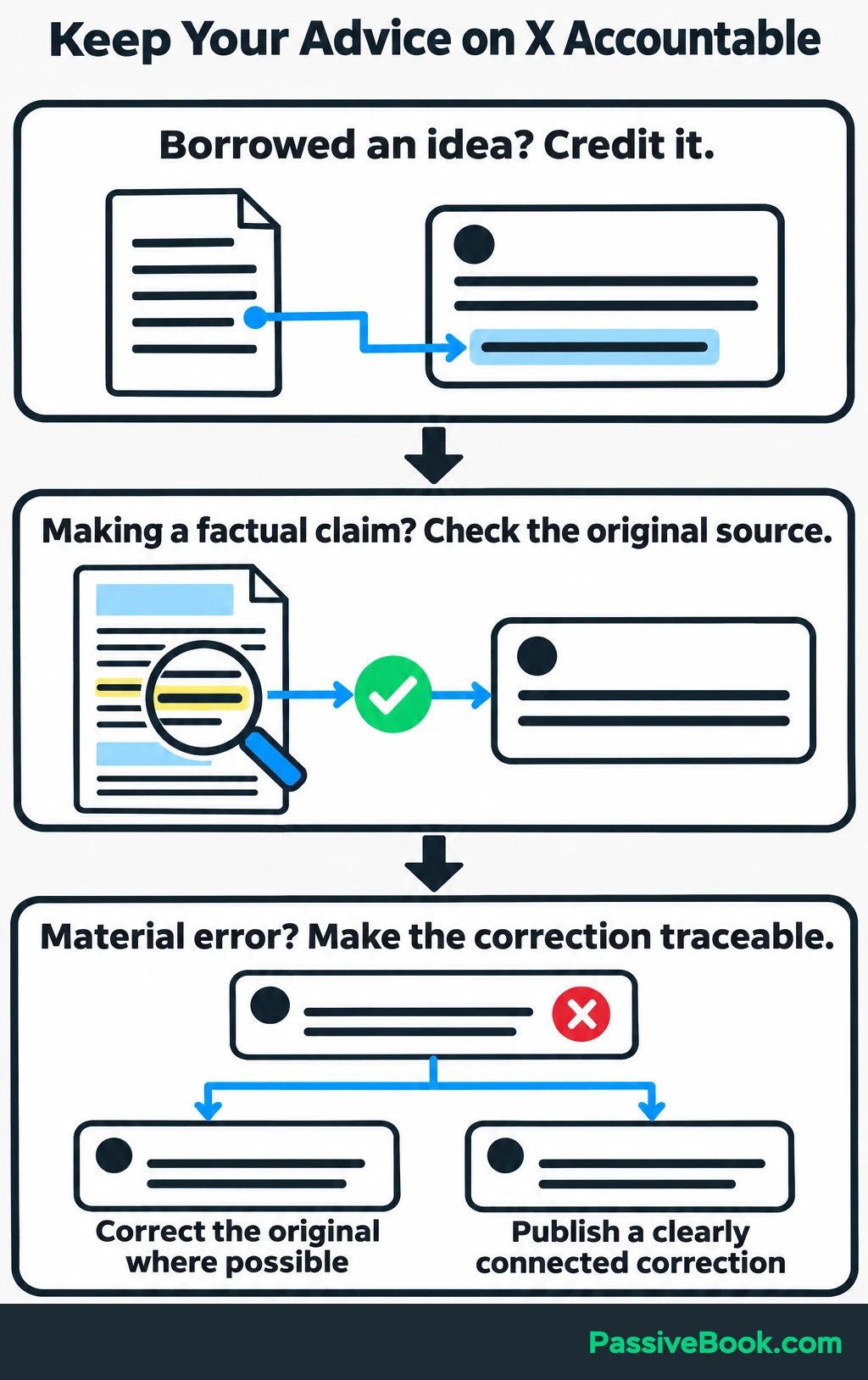
Credit ideas you borrow and check factual claims against original sources. If you make a material error, correct the original post where possible and publish a clearly connected correction. Being willing to revise your advice is part of having judgment.
Earn Recognition Through Useful Conversations
Publishing gives you something to say. Conversations help you discover whether it answers the questions people actually have.
Follow a manageable group of prospective customers, peers and people with related expertise. I would choose relevance over account size. A discussion about sharing packing duties is more useful to the planner business than a viral argument with no connection to its work.
Read the original post and existing replies before contributing. Add a direct answer, an example, a useful qualification or a question that moves the discussion forward.
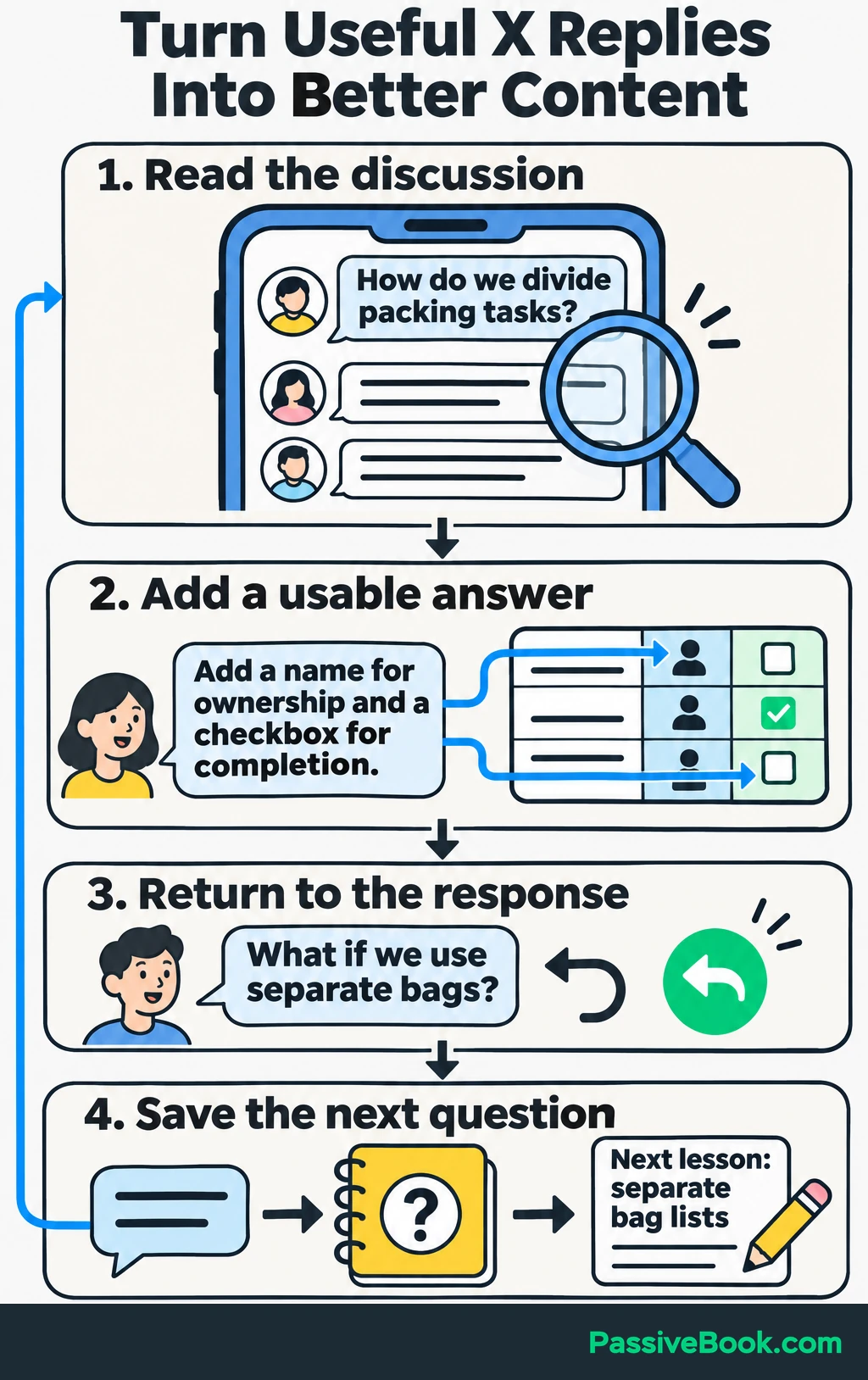
For someone asking how to divide packing tasks, you might reply:
Add a person’s name beside each item, with a separate packed checkbox. The name records who will handle it, and the checkbox records whether it’s done.
Return when they respond. If the conversation reveals another problem, save it in your question bank.
Offer a resource when it answers an expressed need. Move into private discussion when the other person asks or welcomes your invitation.
Skip buying likes or followers, agreeing to like or repost each other’s posts just to inflate the numbers, and sending bulk unsolicited messages. X’s authenticity policy prohibits these practices and promotional replies unrelated to the original post.
Give Interested Readers a Relevant Next Step
Once you have answered the immediate question, offer a way to continue with the same problem.
A post about locating packed items could lead to the one-page packing sheet shown in the example. The download page could also explain what the complete trip-planner pack adds.
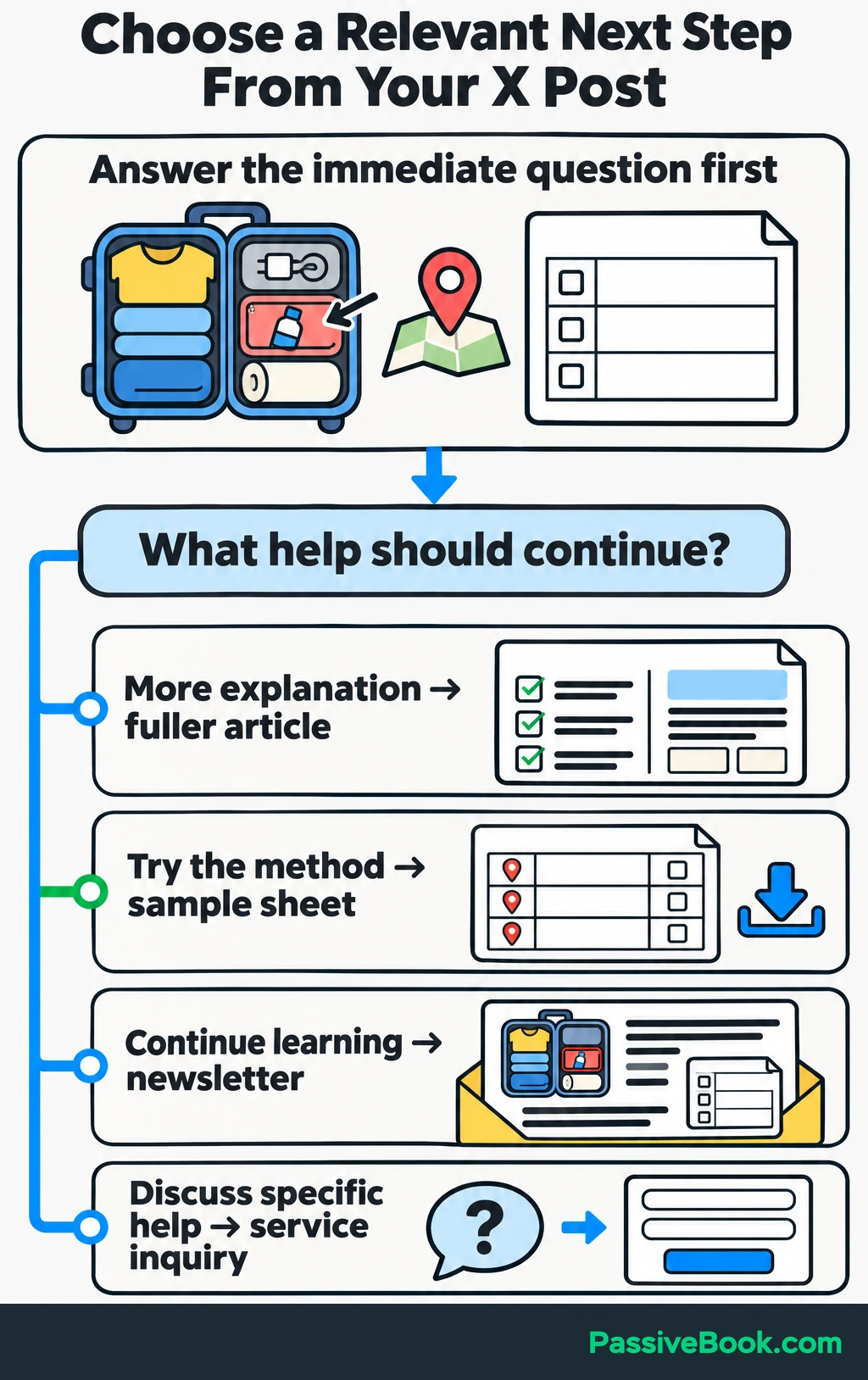
Keep the invitation specific:
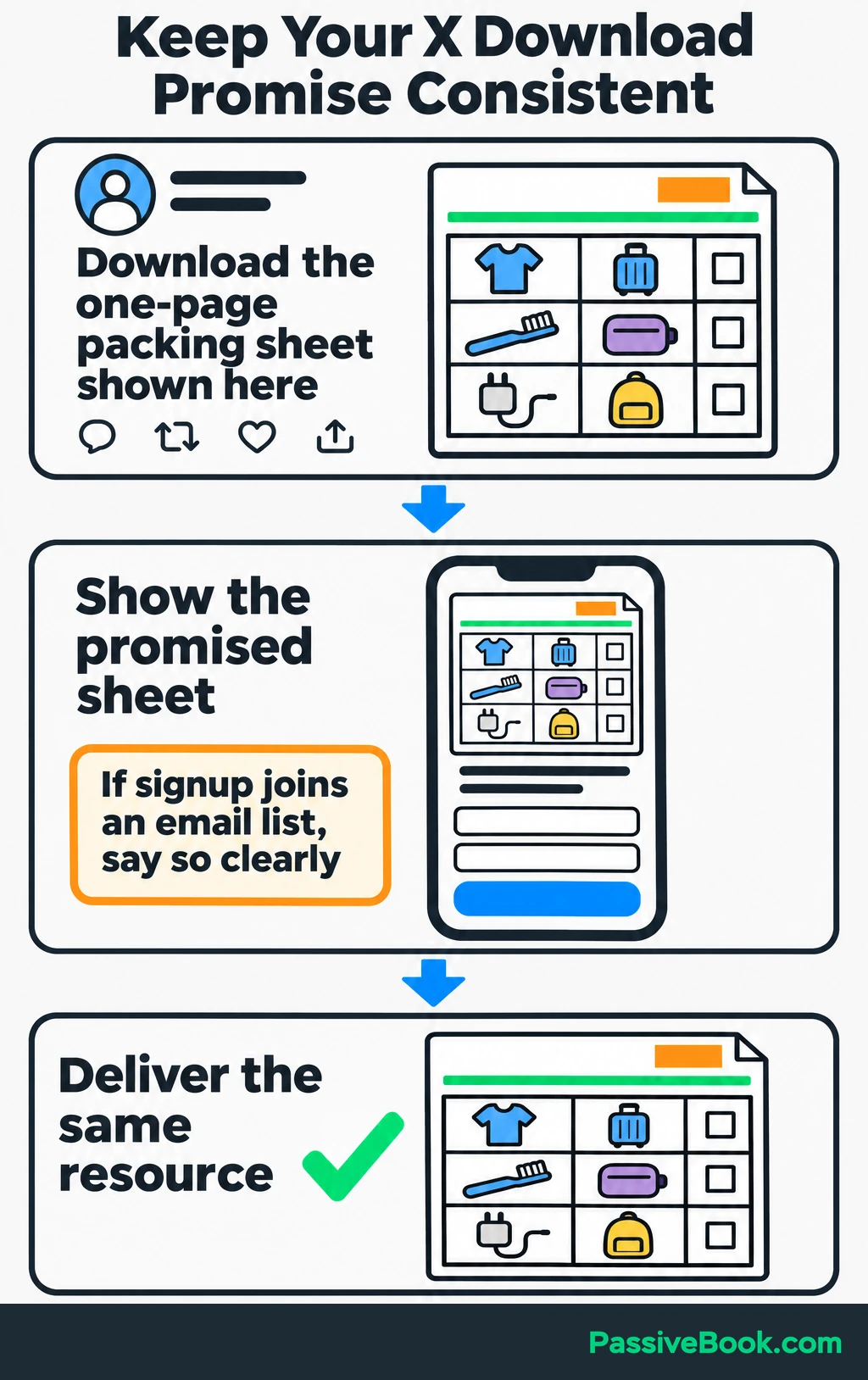
Download the one-page packing sheet shown here.
That tells readers what they will receive. Make sure the destination delivers it, and explain clearly if getting it also involves joining an email list.
Around 2022, I spent six months chasing Instagram and Twitter/X followers in another niche without meaningful financial progress. I kept looking for posts that might attract more followers, but I hadn’t given that attention a consistent next step.
That experience is why I would decide the business purpose early. It wasn’t proof of a successful X system. Passive Book’s active channels are blogging and Pinterest.
Your next step could be a fuller article, a sample, a newsletter or an inquiry about your service. Choose the one that naturally continues the help you just gave. A post shouldn’t need a sales pitch to be useful, but interested readers shouldn’t have to guess where to go.
Build a Publishing Routine You Can Maintain
Choose a workload that leaves time to check your work, answer replies and deliver what you promise.
I would start with one content queue in a spreadsheet or Notion. Give each draft these fields:
- Reader’s Question: The specific problem you’re answering.
- Main Lesson: The action or decision readers should understand.
- Support: The worksheet, source or observation behind the advice.
- Draft: The post itself.
- Next Step: A relevant destination, if the post needs one.
Batch around a problem rather than inventing a new subject for every slot.
For example, “Where did we pack that?” can produce a direct answer about recording locations, an annotated worksheet and a post explaining when separate bag lists help. Each teaches something distinct.
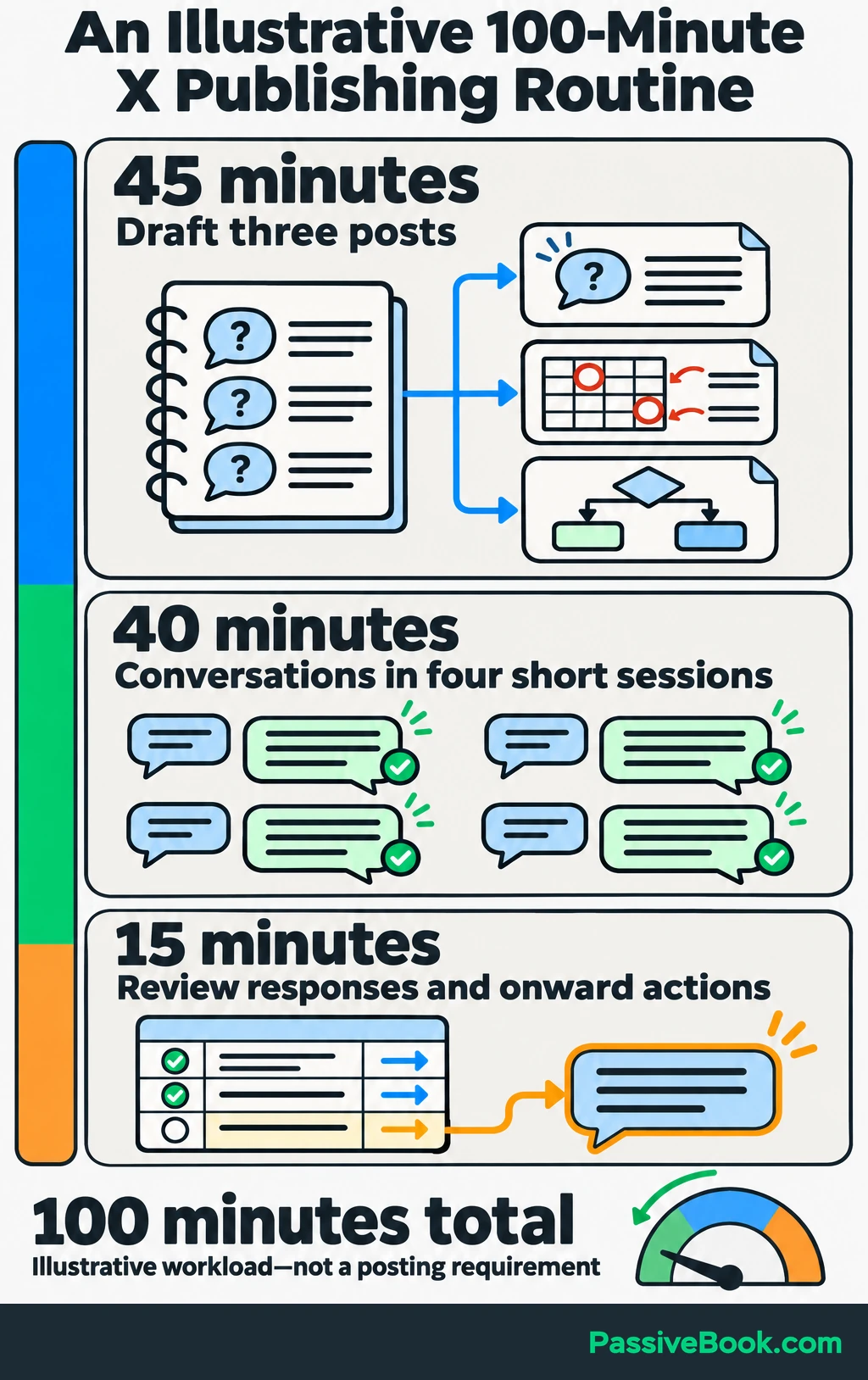
Here’s an illustrative weekly routine:
| Work | Time |
|---|---|
| Draft three posts from saved questions and existing work | 45 minutes |
| Read relevant conversations and answer replies in four short sessions | 40 minutes |
| Review responses, onward actions and the next useful topic | 15 minutes |
| Total | 100 minutes |
This is a possible workload, not a required posting frequency. Reduce it if the drafts are rushed or replies go unanswered.
Use AI to group questions, organize notes or tighten a draft. I would give it the actual lesson and supporting material first, then check whether the revision preserves both. A smoother sentence can still contain worse advice.
Schedule prepared posts when that helps you protect your time. Write replies with the actual conversation in view. There is little value in automating a response that shows you didn’t read the question.
Measure Trust and Improve the Weakest Part
Choose one business outcome alongside signs of trust. For the planner business, I would start with email signups for the packing sheet.
Keep one tracking row per post. Record its topic, link, questions asking for more detail or help applying the advice, returning participants and recommendations of your work. Add visits to the linked page, signups and relevant inquiries where you can track them. Mark unavailable data as unavailable, and note time spent and the next adjustment.
A relevant inquiry comes from someone who needs help with the problem you cover and asks about your resource, product, service or a possible collaboration.
Treat views as exposure. X can count repeat views and your own views, so the number doesn’t represent unique people or prove trust. X’s view-count explanation makes that distinction clear.
If you use Google Analytics, add consistent tracking tags to destination links. These tags identify where a visit came from and which post sent it. For example:
utm_source=x
utm_medium=social
utm_campaign=dog_trip_planner
utm_content=packing_locations
Keep the first three values consistent for the campaign and use a distinct utm_content value for each post. Google’s campaign-link guidance explains how those values appear in reporting. Tracking signups also requires your site or form to record them.
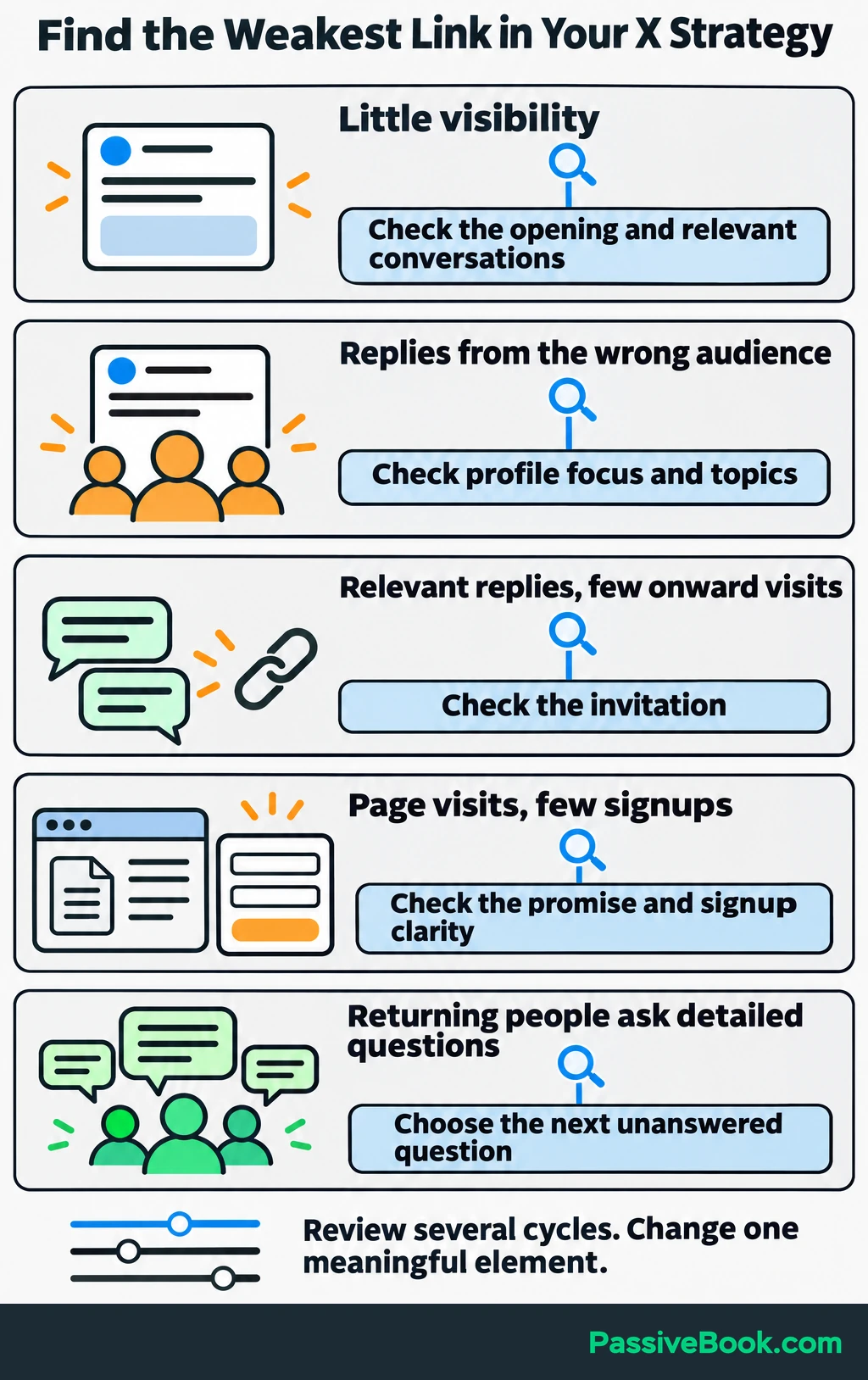
Use the evidence to choose what to inspect next:
| What You Observe | What I Would Check First |
|---|---|
| Posts get little visibility | Does the opening name a specific problem, and are you joining relevant conversations? |
| Replies mostly come from people outside your intended audience | Do your profile and topics clearly show whom the work helps? |
| Relevant people respond, but few continue to your resource | Does the invitation offer a useful continuation of that post? |
| People visit the download page but don’t sign up | Does the page show the promised sheet and make the signup clear? |
| The same people return with detailed questions | Which unanswered question deserves the next post or resource? |
Review after several publishing cycles and change one meaningful element. That makes the next result easier to interpret.
Keep going when relevant relationships and business interest justify the time. Adjust or reduce the commitment when they don’t. X has to earn its place in your week too.
What Next?
Write one sentence naming the problem you want to solve, then draft a post that answers one real question completely. Include a small piece of work readers can inspect.
Use the social buttons to share this guide when the conversation turns to making X useful for a business. It gives that discussion something more practical than another follower target.
What question would you like people to trust you to answer? Tell me in the comments, and bring any other questions about building that trust.
Share this post with your friends & followers:

