You have an hour to make a video, but choosing the topic takes half of it. Then comes recording, editing, and wondering whether anyone who watches will want what you sell.
A few popular posts would be encouraging, but they wouldn’t tell you what to publish next. That uncertainty makes TikTok hard to fit around work and an existing business. Here’s how to build a TikTok publishing routine around those limited hours and attract viewers who want to keep learning from you, without paid promotion or daily appearances on camera.
Give the Right Viewers a Reason to Follow
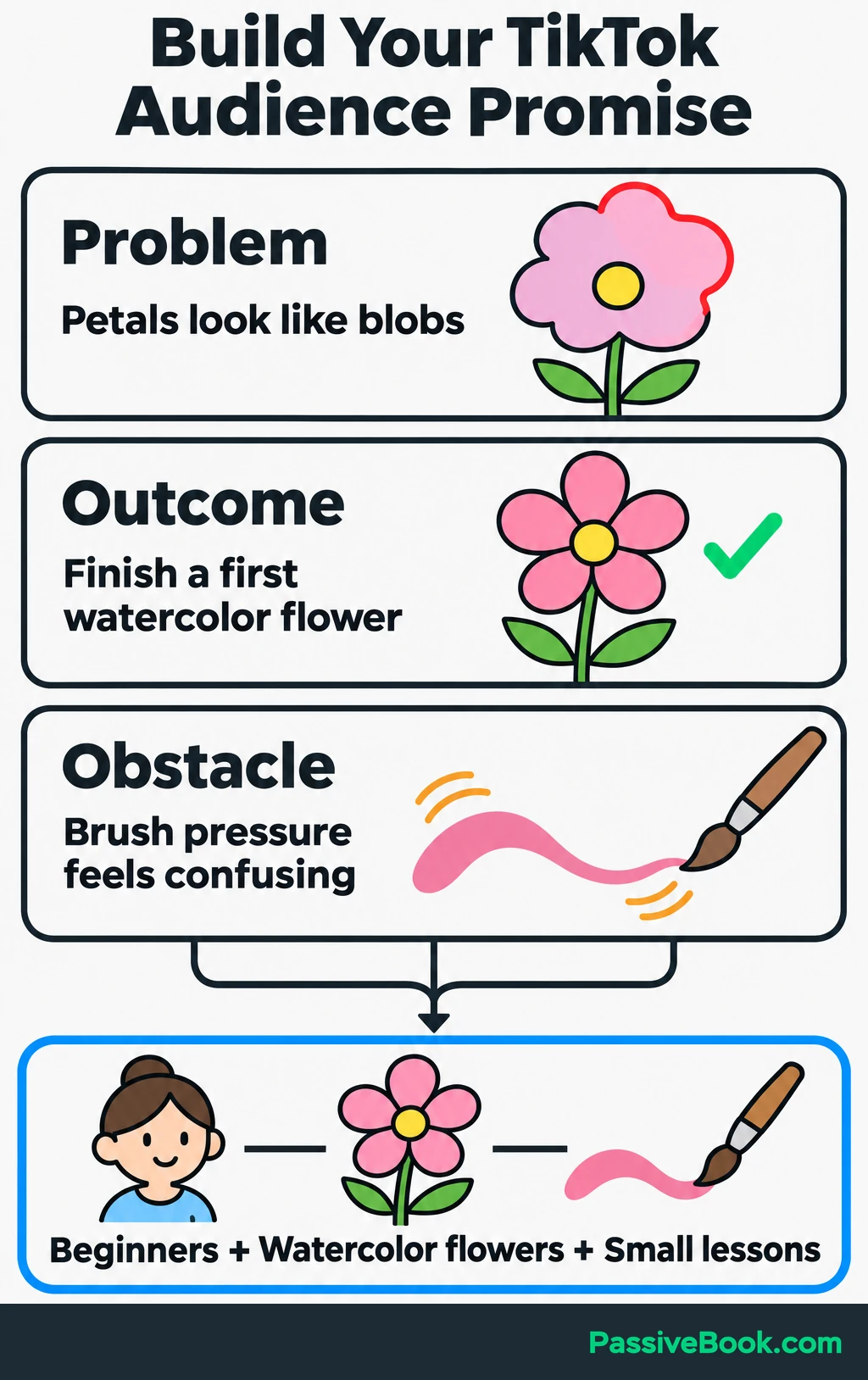
Start with a recurring problem you can help people solve. “People who like art” is too broad to guide your next video. “Beginners who want to paint flowers but struggle with basic brush strokes” gives you something useful to teach.
Write down three things:
- Problem: What keeps going wrong?
- Outcome: What does the viewer want to finish or achieve?
- Obstacle: What makes the task confusing, expensive, or difficult?
If you’re figuring out how to build an audience on TikTok, these answers matter more than choosing a clever username. They help you make videos for people who might want another lesson.
TikTok says its For You recommendations consider interactions such as watching, skipping, sharing, and commenting. For most users, interactions, including watch time, generally carry more weight than other factors. My practical takeaway is to spend more effort making the lesson useful than decorating the post. TikTok’s explanation of recommendations
Next, turn your answers into an account promise:
I help [people with a specific need] achieve [outcome] through [recognizable content].
Throughout this guide, imagine you sell a beginner watercolor-flower course. The videos and schedule below are illustrations, not results from an actual account.
Your promise could be:
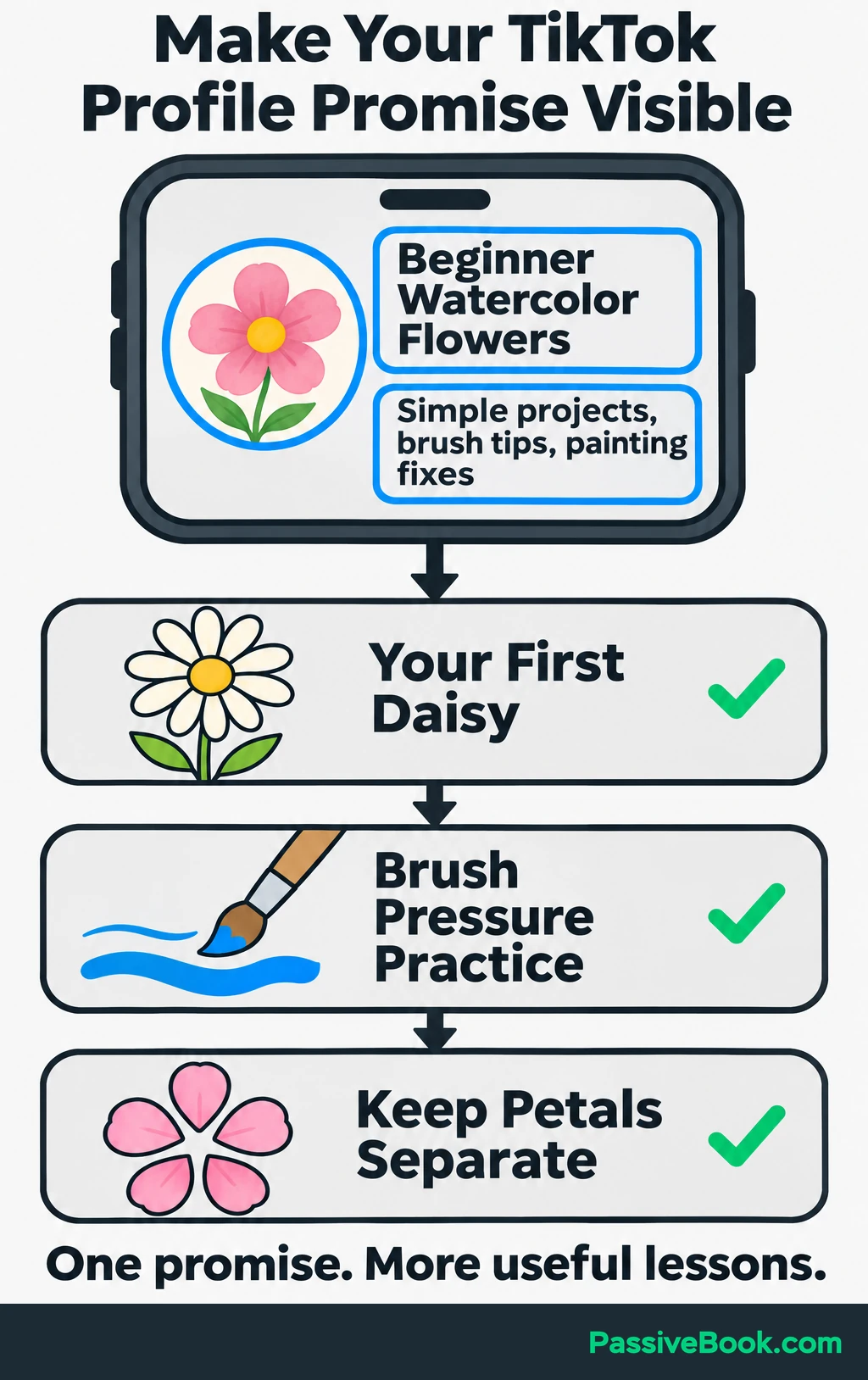
I help beginners finish their first watercolor flowers through small projects, brush lessons, and simple painting fixes.
Carry that promise into your profile. Choose a readable name, a recognizable image, and a short bio:
Beginner watercolor flowers | Simple projects, brush tips, and painting fixes
Keep the account and discovery posts public. Give videos descriptive covers such as “Your First Daisy” and “Brush Pressure Practice,” so someone visiting your profile can quickly choose another lesson.
I would skip broad promises about creativity and inspiration. Tell people what they can learn here.
Find Questions Your Future Audience Already Asks
Build your topic list from questions, rather than starting with whatever you feel like recording.
Look through customer emails, product reviews, relevant TikTok searches, and comments under related videos. Save the words people use and note what they still don’t understand after seeing an answer.
For the watercolor course, “beginner painting tips” is a starting point. More useful questions include:
- “Why do my petals look like blobs?”
- “How do I make thin and thick strokes with the same brush?”
- “Which supplies do I need for my first flower painting?”
If Creator Search Insights is available in your region, use it to explore searched topics. Its content-gap filter highlights topics with search interest and relatively little video coverage. Choose gaps that fit your account promise, rather than treating every suggested topic as an assignment. TikTok’s introduction to Creator Search Insights
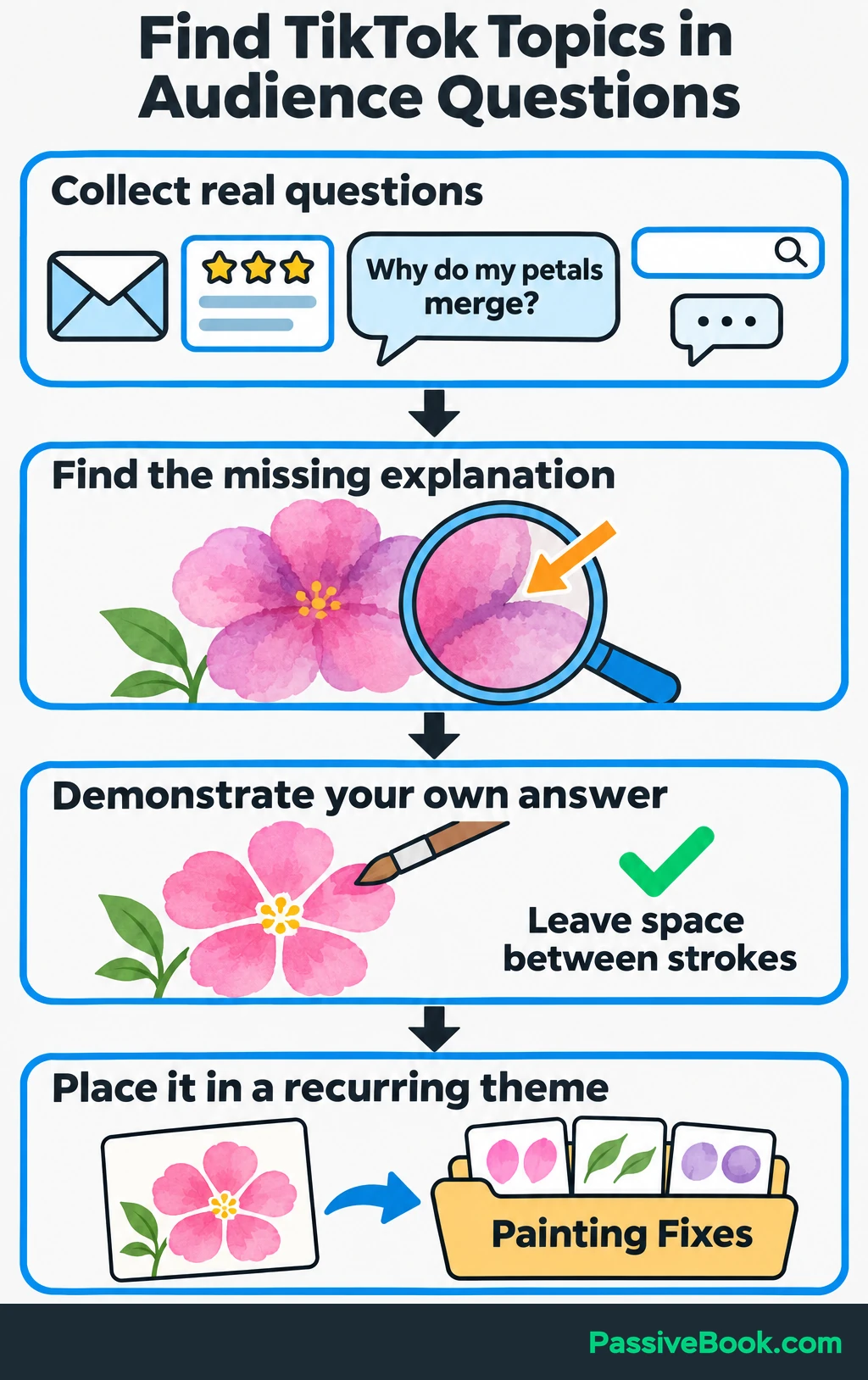
Study several posts from a relevant creator, including ordinary posts alongside their biggest successes. Look for the question being answered, the opening visual, the demonstration, and the comments asking for clarification.
Then make your own answer. Perhaps you can show the brush movement more clearly or explain a step the original video rushed through.
Group your ideas into a few recurring themes. For the watercolor account, I would start with small projects, technique lessons, and mistake fixes.
A simple planning table keeps each idea concrete:
| Viewer Question | Takeaway | Opening Visual | Demonstration | Series | Follow-Up Question |
|---|---|---|---|---|---|
| How do I paint a simple daisy? | Build a flower from a repeated petal stroke | Finished daisy beside a blank page | One petal close up, then the whole flower | Your First Watercolor Flowers | Which flower should come next? |
| Why are my strokes all the same width? | Change brush pressure deliberately | Thin and thick strokes side by side | The same brush using different pressure | Brush Basics | Which stroke feels hardest? |
| Why do my petals merge together? | Leave space between neighboring petals | Crowded and separated petals | Repeat the flower with clearer spacing | Painting Fixes | Where do your petals start to merge? |
You don’t need a hundred ideas before publishing. Start with enough clear questions to fill your first few recording sessions.
Make Videos People Want to Watch
Choose a Format That Shows the Answer
Choose the format that makes the task easiest to understand.
Hands-only footage suits physical demonstrations. Screen recordings suit digital tasks. Narrated footage works when viewers need to see a process, while direct-to-camera delivery can help with personal commentary.
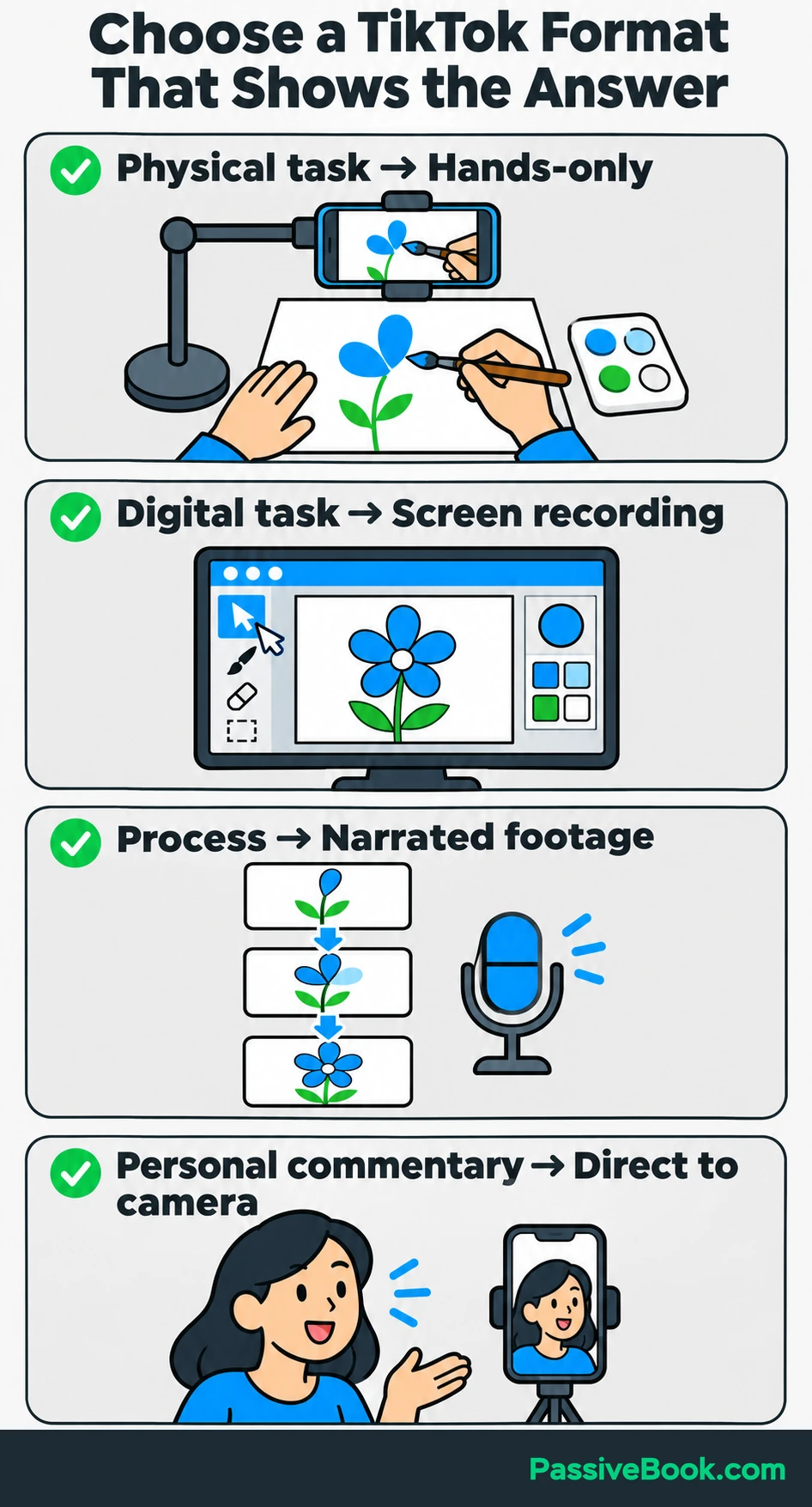
For the watercolor account, I would use overhead painting footage with a voice-over. Viewers need to see the brush and paper. Your face can take the afternoon off.
Start with your phone, steady vertical framing, good light, and understandable audio. Record a short test before filming a batch. Check whether your hand blocks the important action and whether the brush tip stays in focus.
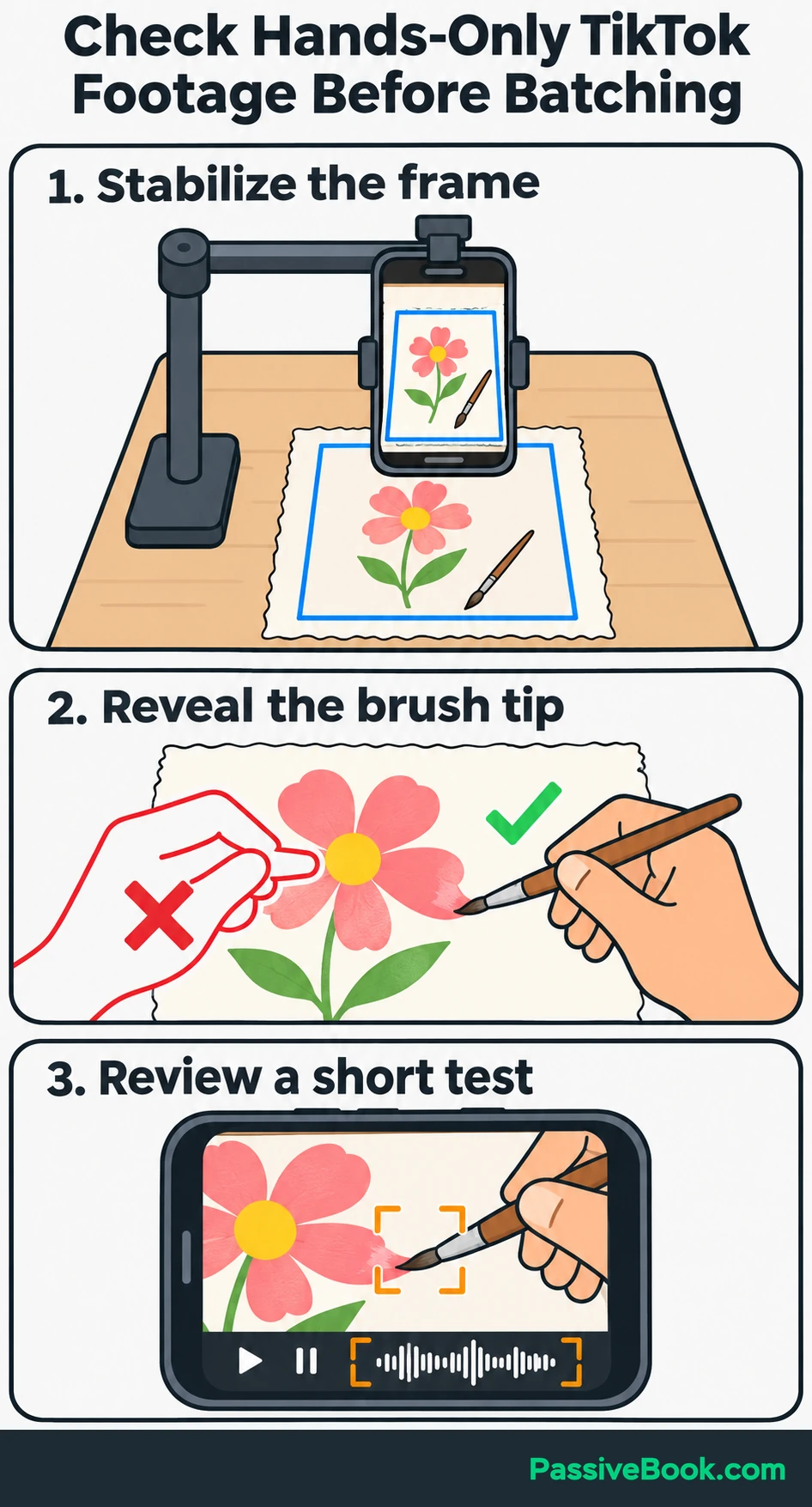
Upgrade equipment when you can name the problem it will solve. A better mount may help if the camera keeps slipping. An expensive camera won’t rescue an explanation nobody can follow.
Create a recognizable series, such as “Your First Watercolor Flowers,” but make every installment useful on its own. Someone discovering the daisy lesson should be able to try it without finding three earlier videos.
Open With a Specific Payoff
Decide what the viewer will get before writing the opening.
The first visual, spoken line, and on-screen title should all point toward that result. For the daisy lesson, show the finished painting and say:
“Paint this loose watercolor daisy with one round brush.”
An on-screen title such as “Beginner Watercolor Daisy” reinforces the subject without repeating the whole sentence.
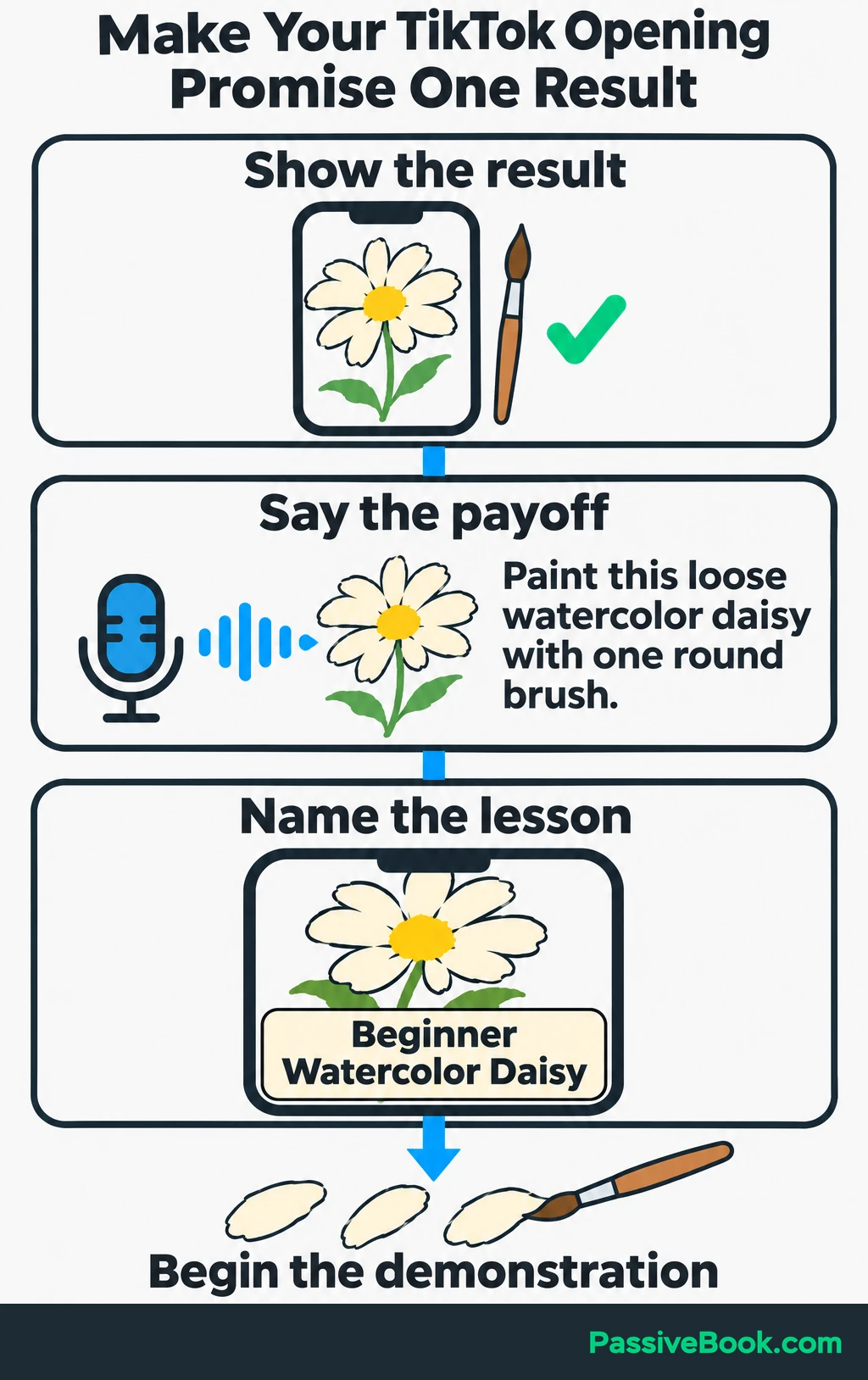
Then begin the demonstration. Skip the greeting, channel introduction, and explanation of why you decided to record.
For a mistake-fix video, a comparison may be stronger:
“If your petals keep merging, watch the space between these strokes.”
That opening tells viewers what to inspect. “You’re painting flowers wrong” creates drama but gives them much less help.
Deliver One Clear Lesson
Build each video around one question. Show the result or problem, demonstrate the necessary actions, and finish with a takeaway.
For the daisy video, the sequence could look like this:
| Part | What Viewers See | What You Say |
|---|---|---|
| Opening | The finished daisy | “Paint this loose watercolor daisy with one round brush.” |
| Key movement | One petal painted close up at normal speed | “Press down gently for the wide part, then lift the brush to taper the petal.” |
| Application | More petals forming the flower | “Repeat that stroke around the center, leaving a small gap between petals.” |
| Finish | The completed painting | “Those gaps keep the petals distinct. Try the same stroke for a second daisy.” |
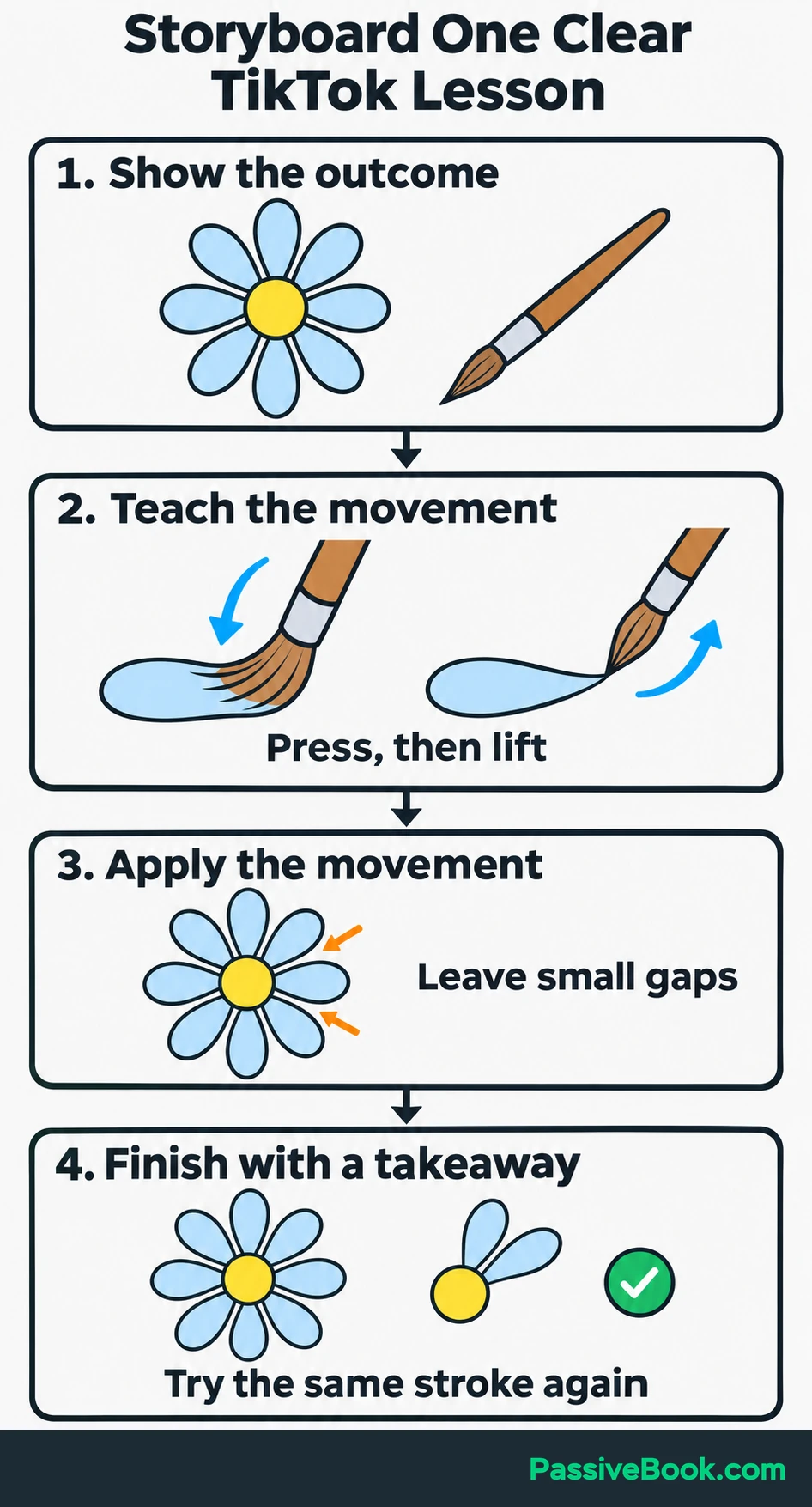
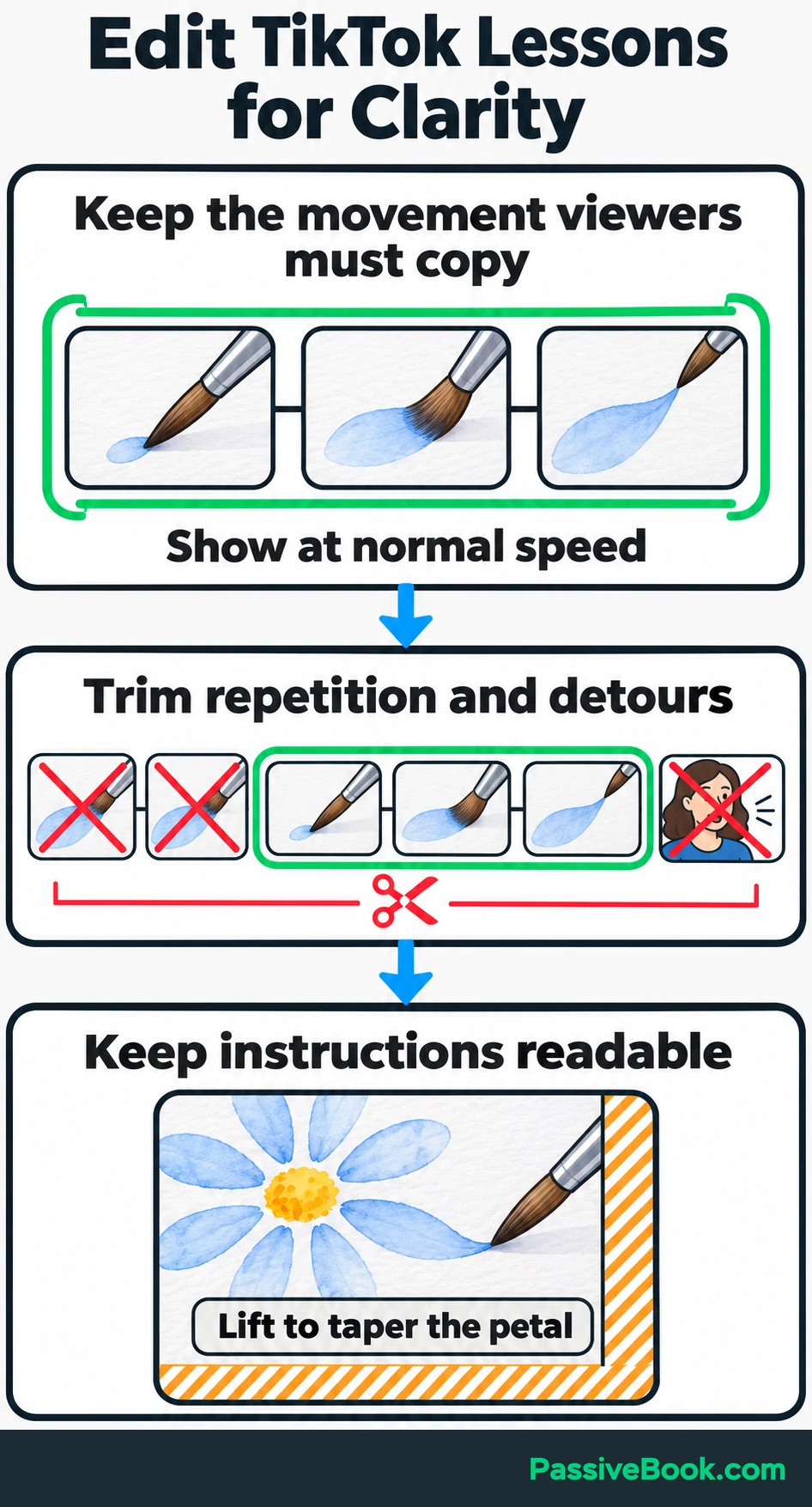
Keep the important movement slow enough to copy. You can shorten repetitive footage after viewers understand the action.
Remove pauses, repeated explanations, and detours into other topics. But don’t cut a necessary step just to hit an arbitrary length. A short lesson still has to teach something.
Add readable captions and correct transcription mistakes, especially tool names and instructions. Keep essential text away from the areas covered by TikTok’s buttons and caption display.
End with a reason to follow that matches the account promise:
“Follow for another beginner flower project.”
The lesson should already be complete. Following gives viewers more help, rather than unlocking the answer you withheld.
If you know the answer but keep getting stuck on the wording, AI Social Copy Studio can turn your notes into a recording-ready draft. It pairs what you say with what viewers need to see.

Free AI Social Copy Studio




Help Interested Viewers Discover Your Videos
Give every video a clear subject and describe it in the language your viewer would use.
For the daisy lesson, “beginner watercolor daisy tutorial” belongs naturally in the caption. Your spoken explanation and on-screen title should describe that same lesson.
TikTok says content information, including how well a video matches the entered query, generally carries more weight in search results for most users. So make sure the video actually answers the phrase you’re targeting. A caption about beginner daisies doesn’t make an unrelated painting montage a tutorial. TikTok’s search recommendation factors
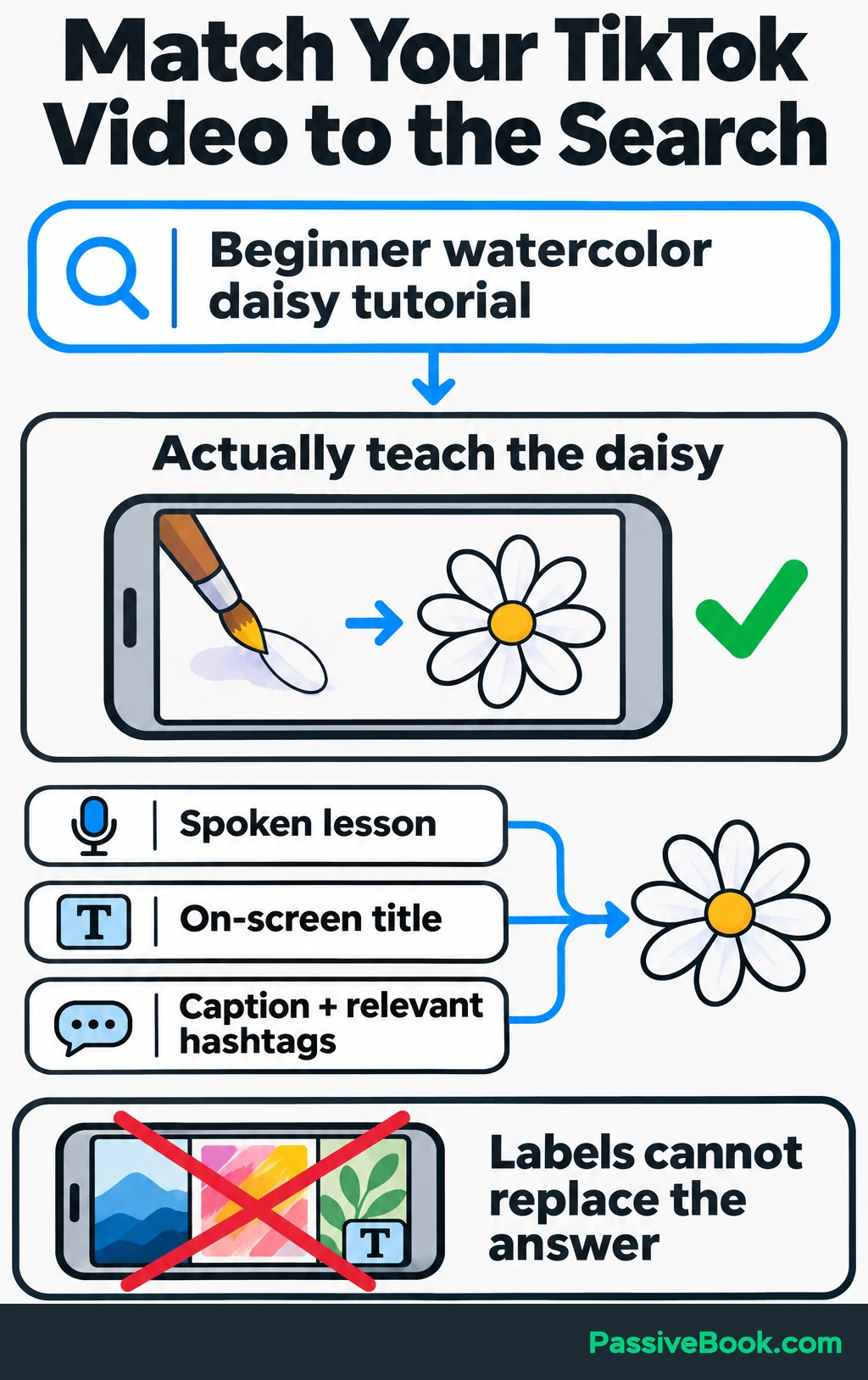
Add hashtags that describe the subject. I would choose relevant watercolor and beginner-painting tags over a pile of generic reach tags. TikTok says labels such as #FYP don’t necessarily improve your chances of appearing in someone’s For You feed. TikTok’s hashtag guidance
Use trends when they help you explain something. A comparison format might suit a brush-pressure lesson. A joke unrelated to painting gives you another production task without advancing the account’s promise.
You can also share a useful video through channels you already have. Introduce the reason to watch:
“This close-up shows the petal stroke that’s hard to explain in the written lesson.”
I would share that with people already interested in learning watercolor. Sending every post to everyone in your contacts is a generous way to distribute homework.
Build a Publishing Routine You Can Sustain
Choose a pace after measuring the whole job: research, recording, editing, publishing, replies, and review.
A video that takes ten minutes to film may still need an hour of work around it. Plan around the complete task.
I would test a small schedule before committing to daily posts. For the watercolor account, an illustrative three-post week could be:
| Post | Purpose | Example |
|---|---|---|
| Small project | Help viewers finish something | Paint a simple daisy |
| Technique lesson | Explain one movement | Change stroke width with brush pressure |
| Question response | Resolve a specific difficulty | Keep neighboring petals separate |
Try that pace for four weeks if it fits your available time. Treat those weeks as a publishing and learning trial, not a deadline for reaching a follower target.
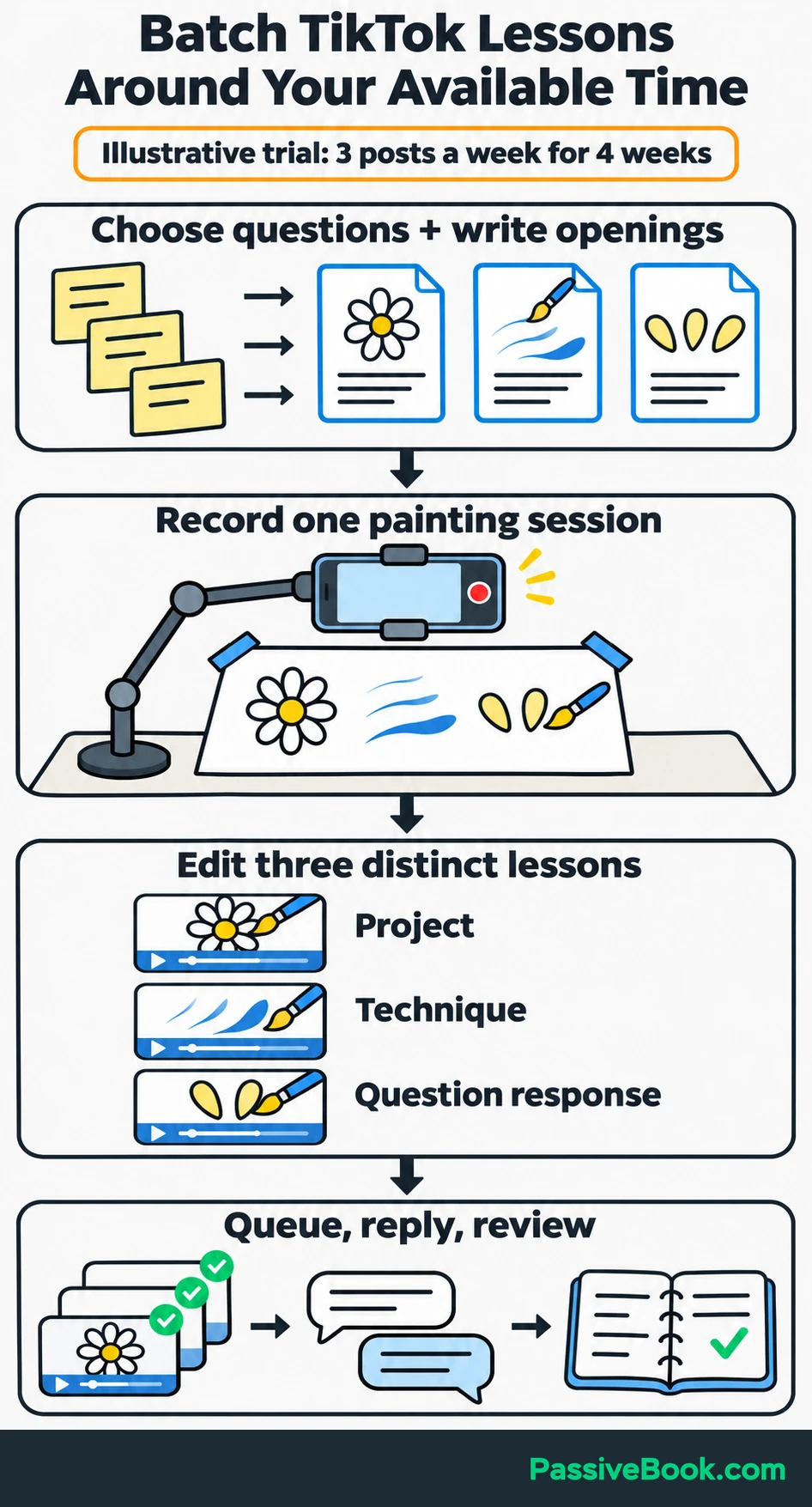
Batch related work. Choose questions together, write openings together, and record several demonstrations while the camera is set up.
In my own article workflow, I caught myself polishing introductions before deciding what I would write next. I moved topic selection ahead of drafting, and stopped reopening the same planning decisions every time I sat down. The useful part was removing repeated decisions, not trying to work faster at everything.
Apply that here. One painting session could provide footage for a whole-flower project, a brush-pressure close-up, and a spacing correction. Each edit should teach a different lesson.
A spreadsheet or Notion board is enough to track ideas, recordings, and finished posts. If you already use Claude or ChatGPT, ask it to group collected questions or suggest tighter openings. Review the output against what your footage actually shows.
Keep a small queue of finished videos so a busy evening doesn’t cancel the entire schedule. Once the routine works, test posting times using your audience’s activity.
Before publishing promotional content, check two things. Enable TikTok’s commercial-content disclosure when promoting a product or service, including your own business. TikTok’s disclosure requirements
If you add music, use tracks cleared for that commercial use. TikTok’s Commercial Music Library is the straightforward starting point; its general music licenses don’t cover commercial use of tracks outside that library. TikTok’s commercial music guidance
Turn Viewers Into Returning Participants
Give viewers a useful part in choosing what comes next.
Ask one question connected to the lesson:
“Which flower would you like to paint next?”
Or ask where they got stuck:
“Was controlling the brush or spacing the petals harder?”
Read the answers and use them. A question becomes a conversation when the next video responds to what people said.
Answer substantive comments, clarify unclear instructions, and turn recurring problems into standalone videos. Include enough context for someone who never saw the original comment.
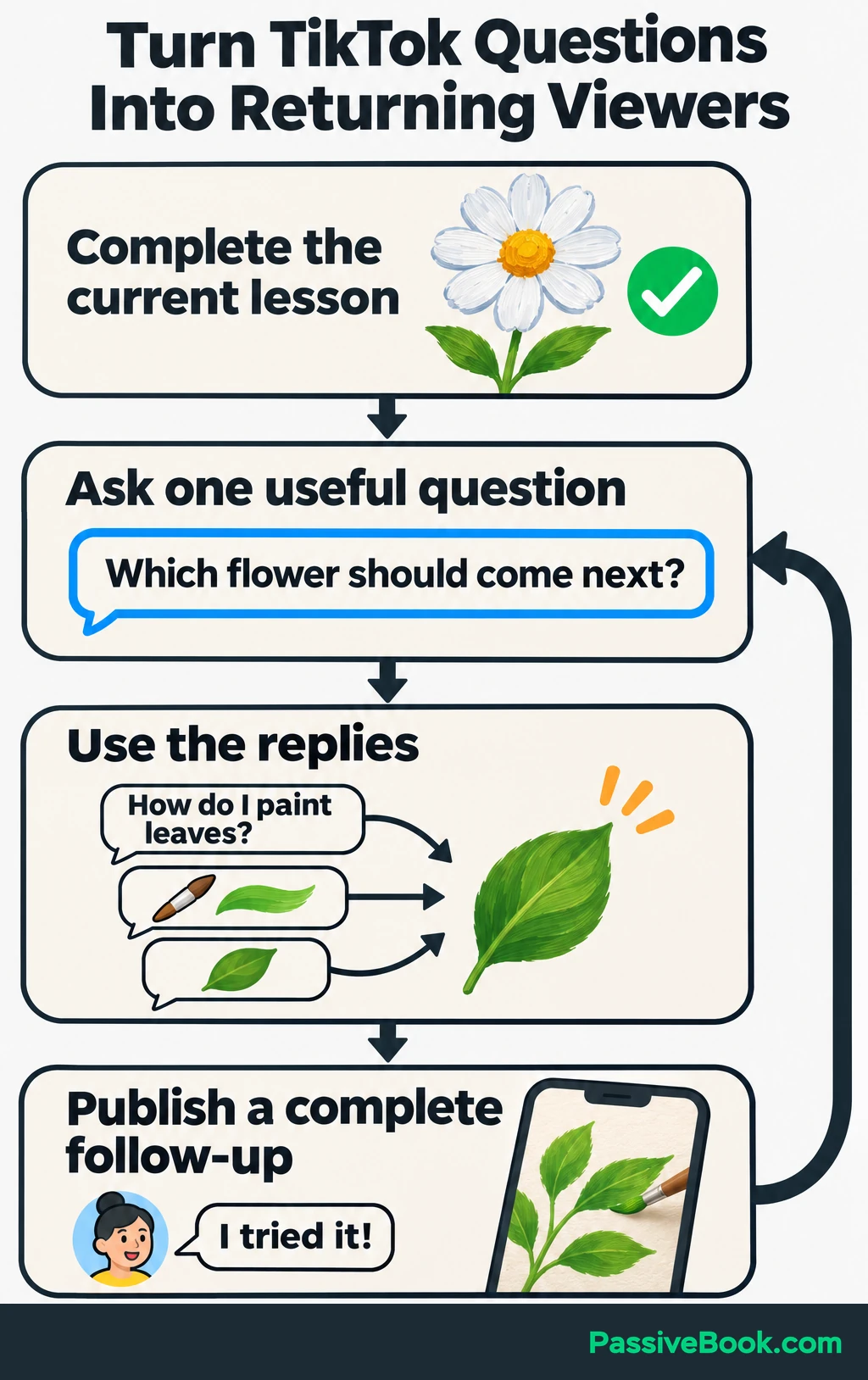
Complete the current lesson before previewing another one:
“Next, we’ll use the same brush to paint leaves.”
Continue promising series through new applications. If people keep asking about brush control, show that movement in a different flower before jumping into an unrelated subject.
Use consistent series names and descriptive covers to make related lessons easy to recognize. Watch for people returning with progress reports, follow-up questions, or requests that build on earlier videos.
You can also contribute useful answers on related accounts. Explain a technique when you have something to add, and propose collaborations around a shared question. Two creators demonstrating different ways to paint the same flower gives viewers a concrete reason to watch both.
I would skip bought followers and engagement exchanges. They don’t help you learn whether beginners want your lessons, and they certainly don’t practice their brush strokes.
Give Interested Viewers a Relevant Next Step
Choose one business destination that continues the help your videos provide.
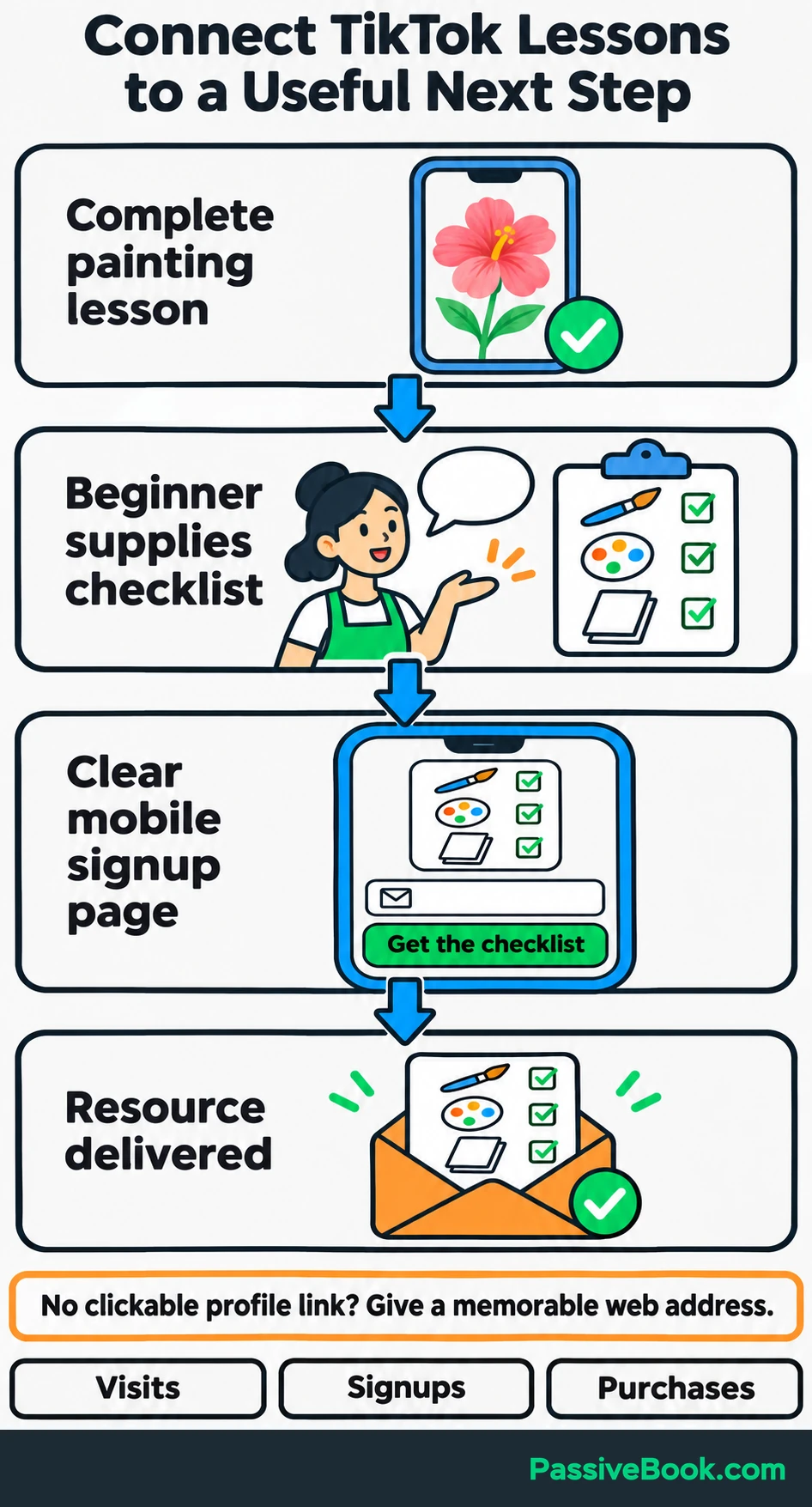
For the watercolor course, I would offer a beginner supplies checklist. It answers an early obstacle and creates a natural place to introduce the fuller course.
Prepare a focused mobile page that explains what the checklist includes, shows a preview, and offers a simple signup. Test the form and resource delivery on your phone before sending viewers there.
If your site uses WordPress, I would use an existing page for signup and an email automation plugin such as FluentCRM to send the checklist. There’s no need to buy a separate funnel platform for one checklist.
I learned the importance of this connection while running Instagram and Twitter/X in another niche. I spent six months chasing followers while the business went nowhere useful. I could point to audience activity, but I had no clear path from that attention to an offer. That experience is why I want the destination ready before making follower growth the main project.
For the TikTok example, the invitation could be:
“Get the beginner supplies checklist from my profile.”
Check that your profile can provide the promised route. Personal Accounts need at least 1,000 followers to add a website link. TikTok’s account guidance For the business route, check verification requirements and feature availability for your market and account. TikTok’s business verification guidance
Until a clickable link is available, give viewers a short, memorable website address they can type and make that instruction clear.
Keep the painting lesson useful without a signup. The checklist should extend the help.
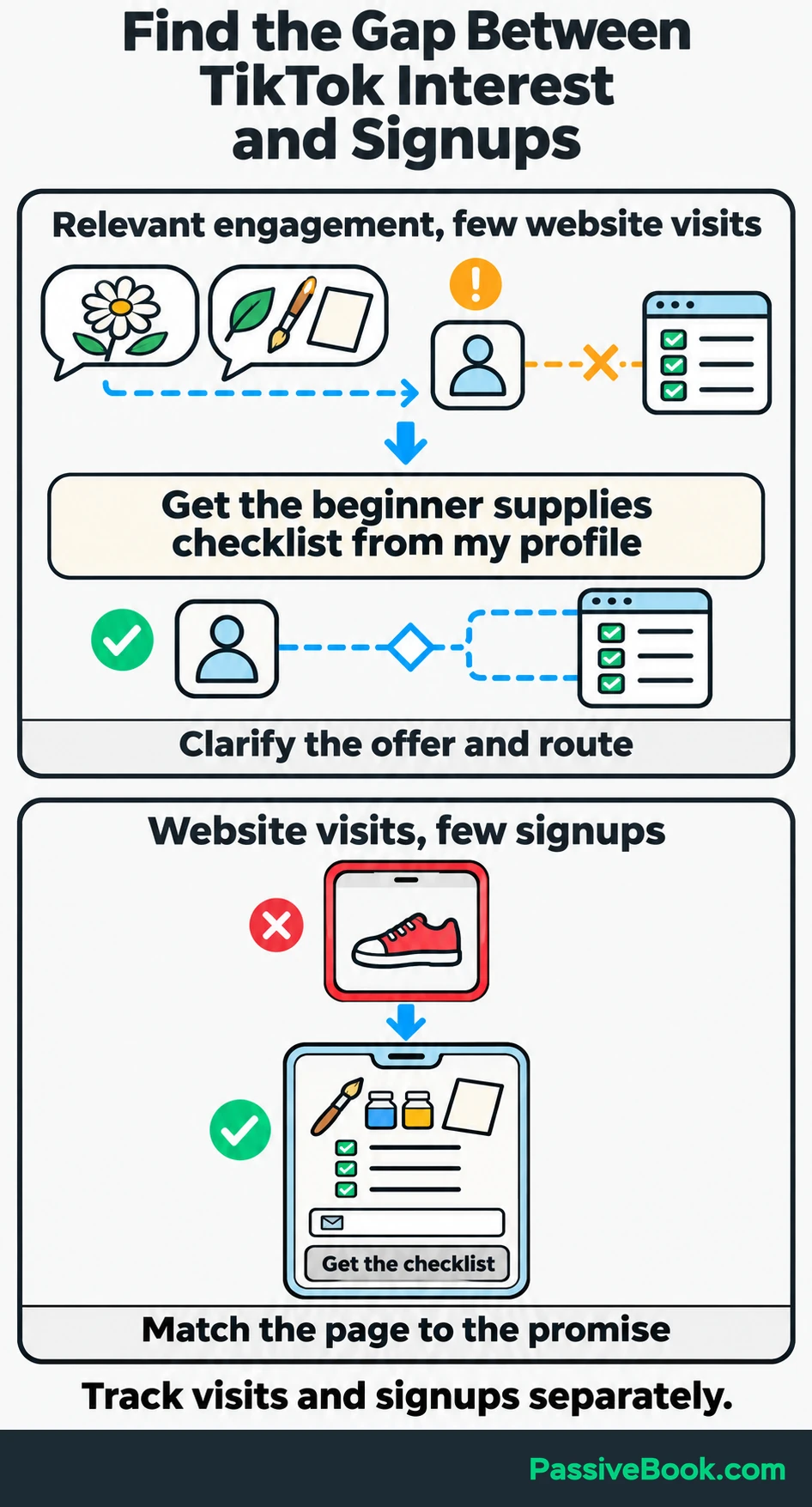
Add tracking tags to your destination link. These labels tell your website analytics where a visit came from; use TikTok as the source. Track those visits, checklist signups, and purchases separately. Google Analytics can help you see whether people arrive and complete the next step.
Followers tell you whether the audience is growing. Those business actions tell you whether that growth is helping the business.
Use Audience Response to Improve the Next Batch
Measure Attention and Audience Fit
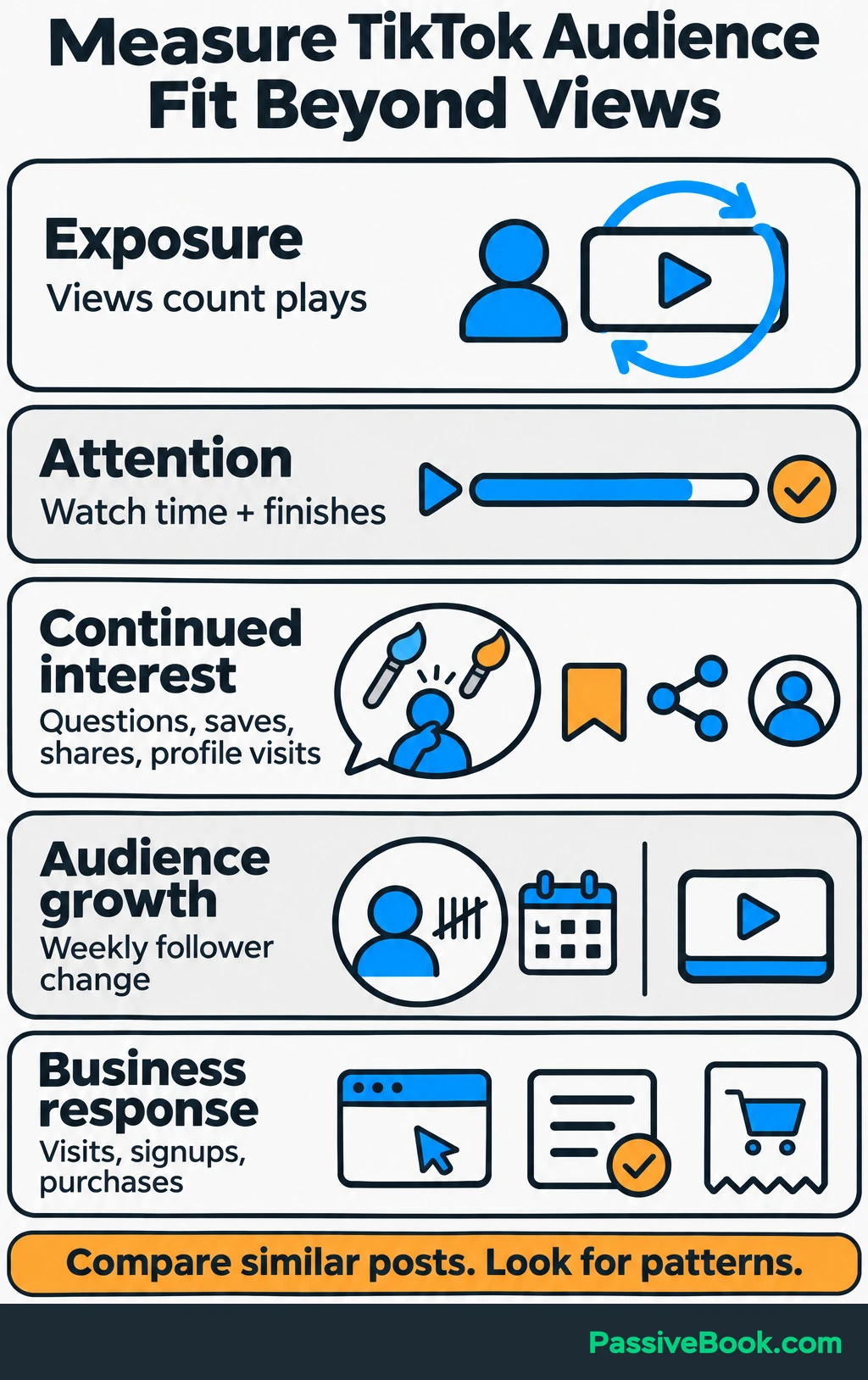
If you publish several times a week, review weekly. Compare videos of similar ages, lengths, and purposes.
Separate the signals you’re reviewing:
- Exposure: Views count plays, not unique people or suitable customers.
- Attention: Average watch time and how often viewers finish help you see whether people stay.
- Continued Interest: Look for relevant questions, saves, shares, and profile visits.
- Audience Growth: Record the account’s weekly follower change.
- Business Response: Track visits from TikTok, checklist signups, and purchases.
Record each post’s topic, format, opening, length, publication date, views, watch-time results, relevant comments, and one change to try. Mark unavailable data as unavailable.
Keep weekly follower growth separate; don’t credit the daisy video with every new follower. Note returning participants too. A beginner asking which brush to use next suggests more interest than a generic compliment, though commenters represent only the visible part of your audience.
Look for patterns across several posts before changing direction.
Change the Part That Is Limiting Growth
Use the review to choose a specific change for your next batch.
| What You Observe | What to Check | Next Change to Try |
|---|---|---|
| Viewers leave before the demonstration | Whether the opening delays the promised result | Show the finished flower immediately |
| Attention drops during the explanation | Whether the movement is hard to see or the sequence is confusing | Add a closer view and simplify the explanation |
| Videos hold attention but attract few relevant questions or follows | Whether the topic serves your intended viewer and suggests more useful lessons | Narrow the topic and clarify the series promise |
| Viewers ask for the next technique | Whether several comments point to the same need | Make the requested leaf lesson |
| Relevant engagement produces few website visits | Whether the invitation and destination are clear | Name the supplies checklist and explain where to get it |
| Website visits produce few signups | Whether the page delivers the offer described in the video | Match the page wording and preview to that offer |
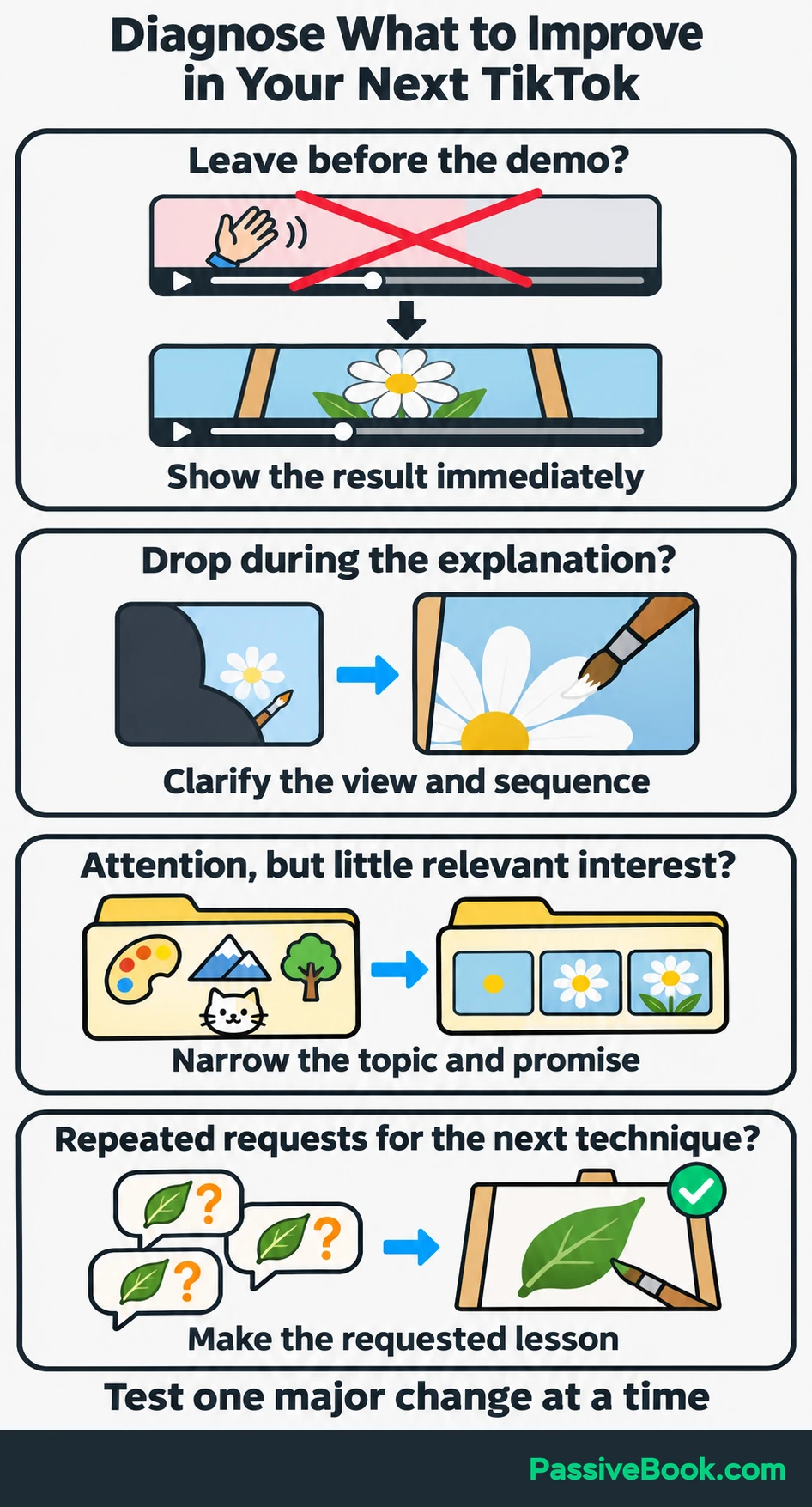
Change one major element at a time when you can. If you alter the topic, length, opening, and format together, it becomes harder to decide what to repeat.
When a topic shows promise, go deeper before going broader. Follow the daisy lesson with the leaf technique viewers requested, then demonstrate how to combine them in a small painting.
If reach stays unusually low, inspect account notices and post recommendation eligibility. Read TikTok’s stated reason and appeal an exclusion you believe is mistaken. Low views alone don’t establish a restriction. TikTok’s guidance on content decisions and appeals
Organic growth has no guaranteed follower count or deadline. Your early goal is to establish a workable routine and find subjects that repeatedly attract relevant interest. That gives the next batch a better starting point than another evening spent guessing.
What Next?
Write your account promise and choose three audience questions you can demonstrate this week. Record the clearest answer first, then use the response to improve the next video.
Use the social buttons to share this guide if a repeatable publishing routine would make TikTok easier to fit into a busy week.
Which part of your process most needs a system: choosing topics, making videos, or connecting attention to your business? Leave your answer in the comments, and bring any other questions too.
Share this post with your friends & followers:

