You have another episode ready, but no clear answer to a simpler question: how will the show pay for itself? Sponsors seem out of reach, and a paid membership sounds like another weekly deadline.
So you keep publishing and covering the costs yourself. After months of work, you may still have no evidence that listeners want anything you could sell. The plan below connects offers to your episode topics and includes a small-show income forecast, so you can judge what it would take to cover costs and pay for your time.
How Many Listeners Do You Need to Monetize a Podcast?
There is no universal listener minimum for selling your own product, offering a service, accepting support or negotiating a direct sponsorship. Affiliate programs pay commissions for qualifying purchases you refer. Both these programs and platform advertising have their own approval rules.
A small audience gives you people to ask and an offer to test. It does not prove those people will buy.
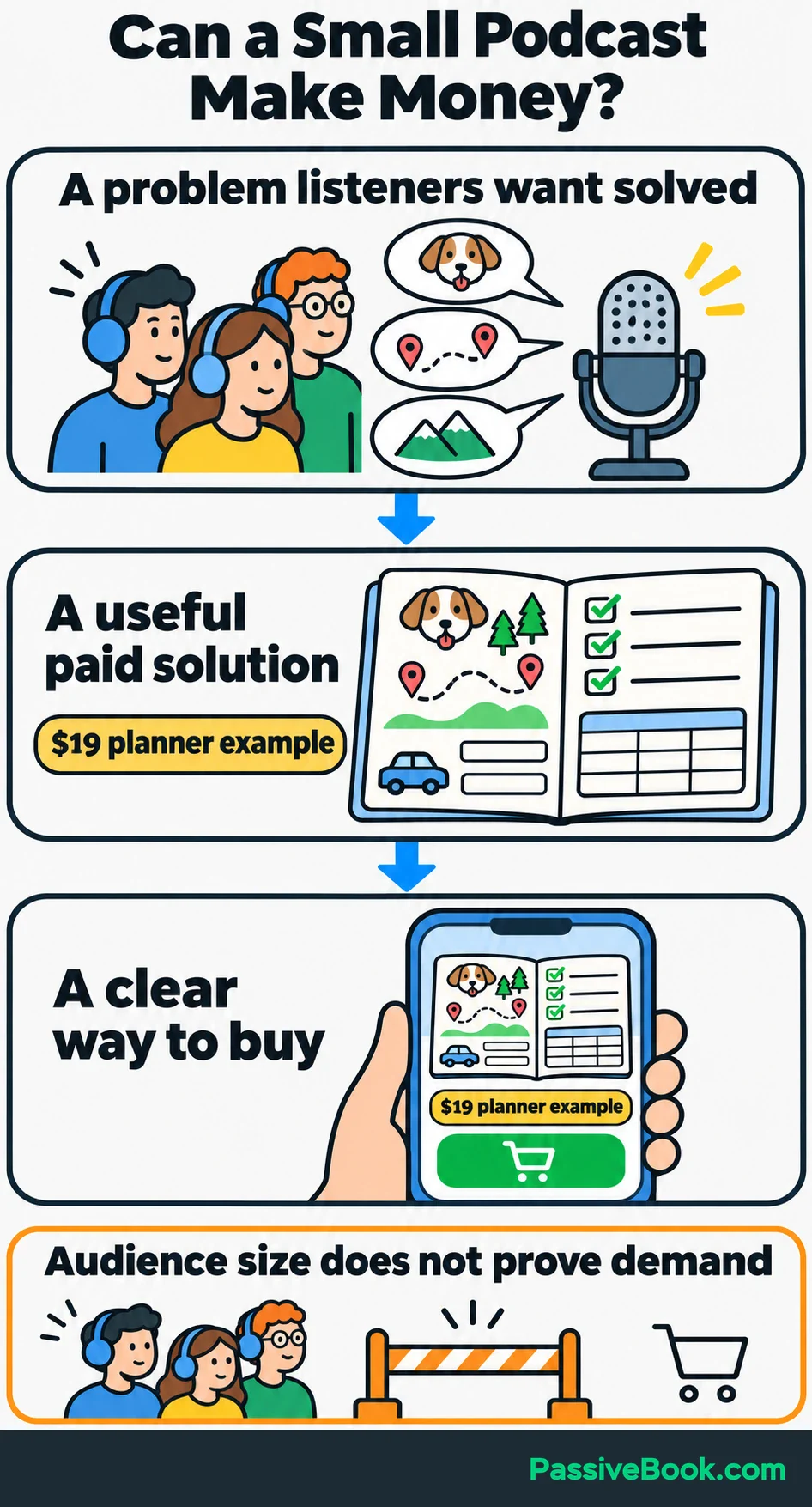
Build your podcast monetization strategy around three things:
- A problem listeners want to solve.
- A paid solution that fits that problem.
- A clear way to find and buy it.
Throughout this guide, imagine you run a podcast about dog-friendly day trips and sell a $19 printable trip planner. The business and its figures are illustrations.
My experience comes from digital products, affiliate marketing and other online businesses. For a podcast, I would apply the same starting rule: test whether people want the offer before spending heavily on production or building more products.
Choose Your First Revenue Stream
Decide what the money needs to do. Cover hosting and editing? Produce a monthly surplus? Bring customers into an existing business?
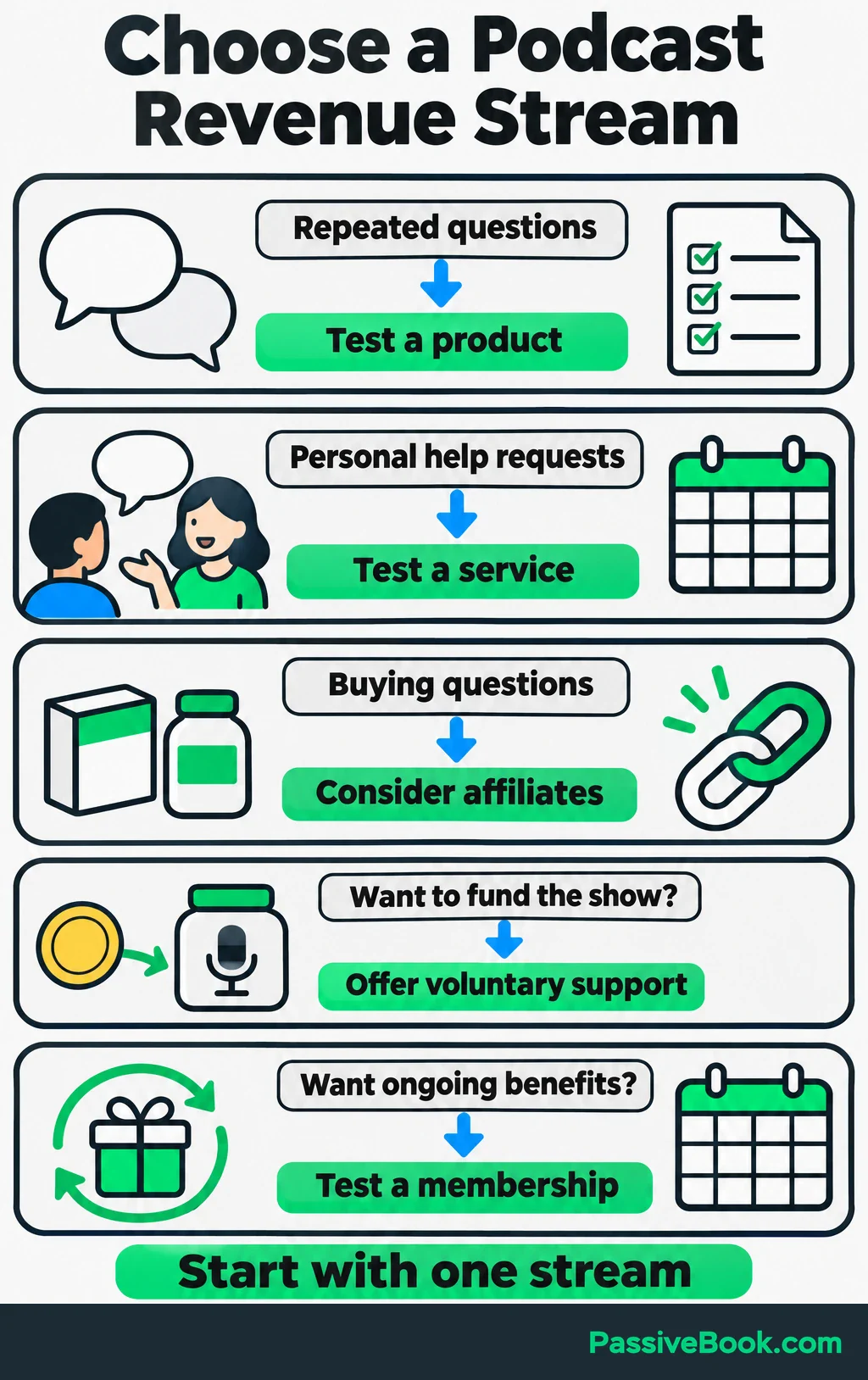
Then set a spending limit and a weekly time limit. A method that earns money but consumes every evening may fail your actual goal.
| Revenue Stream | Who Pays | Payment Trigger | Entry Requirements | Ongoing Workload | Main Costs |
|---|---|---|---|---|---|
| Products | Listeners | A purchase | A useful deliverable, checkout and delivery | Support, promotion and updates | Creation time, transaction fees and refunds |
| Services | Clients | A paid booking or project | Relevant expertise and appointment capacity | Delivering each engagement | Your time, booking tools and payment fees |
| Affiliates | Merchants or networks | An approved qualifying purchase | Program acceptance and permitted promotion | Maintaining recommendations and links | Research, product testing and reversals |
| Voluntary support | Listeners | A one-time or recurring contribution | A supported payment account | Thank-you messages and account administration | Payment and platform fees |
| Memberships | Paying members | A subscription payment | Requested benefits, delivery capacity and platform eligibility | Providing benefits and handling cancellations | Production time and platform fees |
| Direct sponsorships | Advertisers | Contracted campaign delivery | A relevant audience and an agreed package | Pitching, recording, reporting and renewals | Sales time, production and any intermediary cut |
| Platform advertising | Advertisers through a platform | Qualifying advertisement delivery | Program thresholds, eligible location and approval | Placement checks and revenue reviews | Platform share and hosting commitments |
Choose from listener behavior. Repeated practical questions can suggest a product. Requests for individual help can suggest a service. Buying questions suit affiliate recommendations, while requests for continuing benefits may justify a membership test.
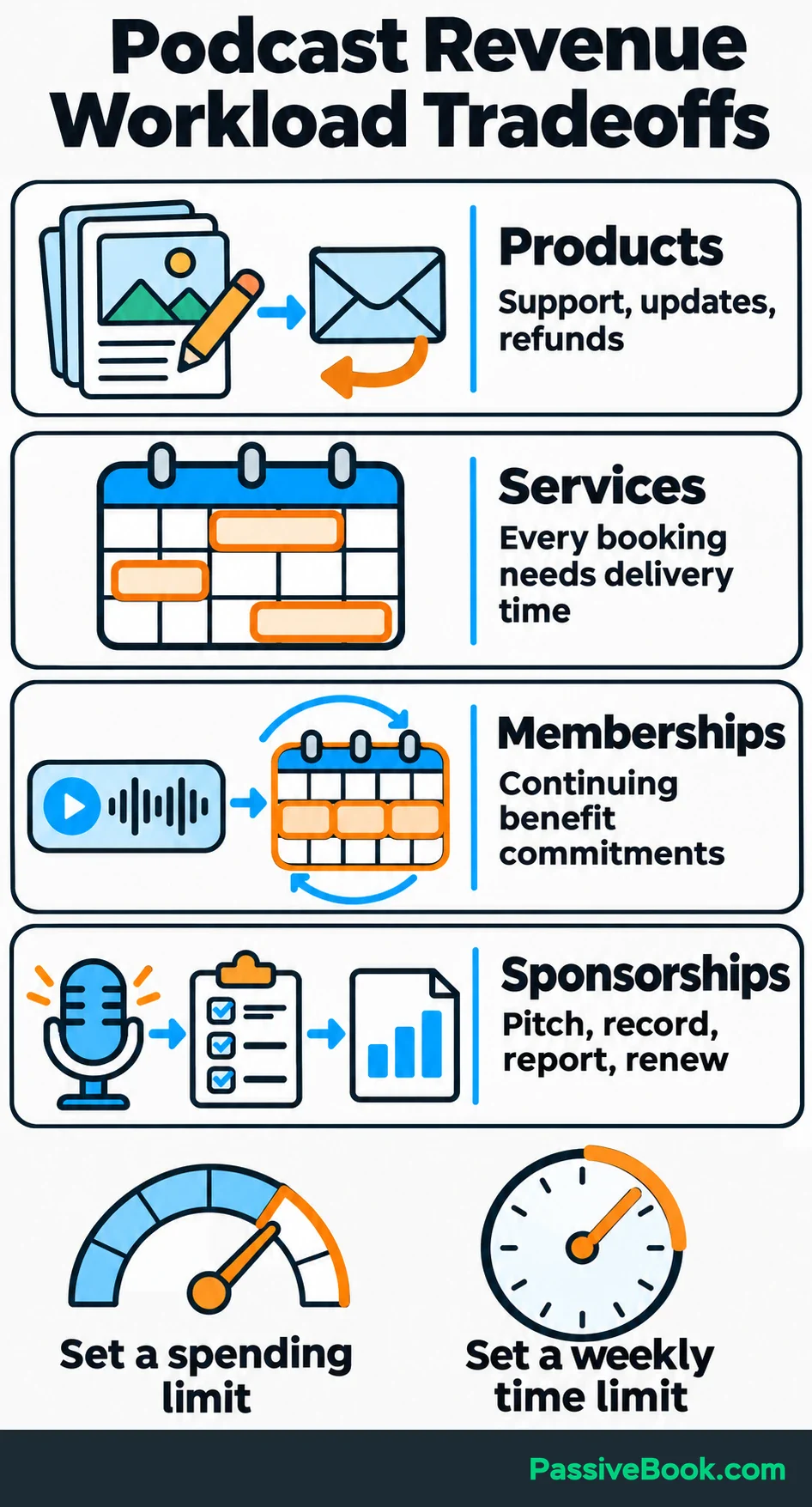
I would start with one stream. Sponsors pay to reach your audience, while customers pay for what you provide. Both can fit the same show, but each needs a reason to exist.
For paid, gifted or affiliate recommendations, explain the relationship in the audio and beside the relevant link. For promotions affecting US consumers, the FTC’s endorsement guidance calls for clear disclosure of connections that could affect how people judge your recommendation.
Sell a Focused Product or Service
Start by asking what listeners struggle with and what they already use. Then describe a specific deliverable at a specific price.
For the dog-trip show, repeated questions about packing and organizing outings could support a planner containing:
- A reusable packing checklist.
- An outing-planning worksheet.
- A trip expense log.
Offer a sample packing checklist so listeners can see the format. The complete planner costs $19 and helps them organize future trips.
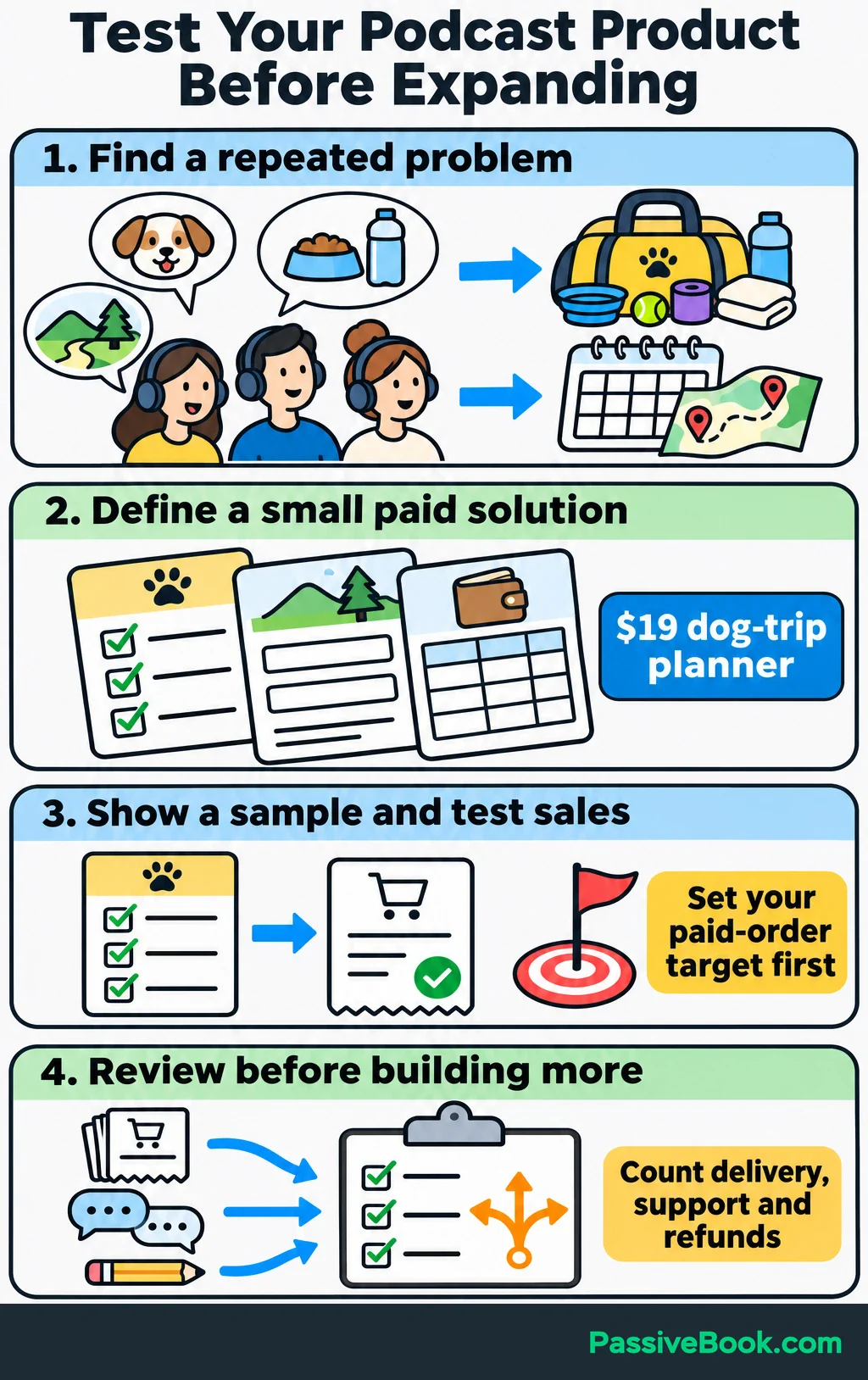
Before expanding it, decide how many paid orders would justify the work. If you take preorders, explain what buyers will receive, when it will arrive and what happens if you cancel.
I once rushed a course into production without validating demand. It attracted few sales, received a bad review and eventually came down. Finishing the course had felt like progress, but I had skipped the decision that mattered: whether people wanted that particular result.
For your show, test a small paid version first. Count support, updates, refunds and delivery work when judging the return.
If you already sell something relevant, connect the podcast to it before creating another offer. For services, define the scope, expertise needed, available appointments and delivery time. A full calendar is also a limit on revenue.
Earn Affiliate Commissions From Relevant Recommendations
Affiliate recommendations fit episodes where listeners are already deciding what to buy.
Teach them how to choose first. A dog-trip packing episode could compare travel bowls by packed size, cleaning needs and stability, then recommend an option that fits those needs.
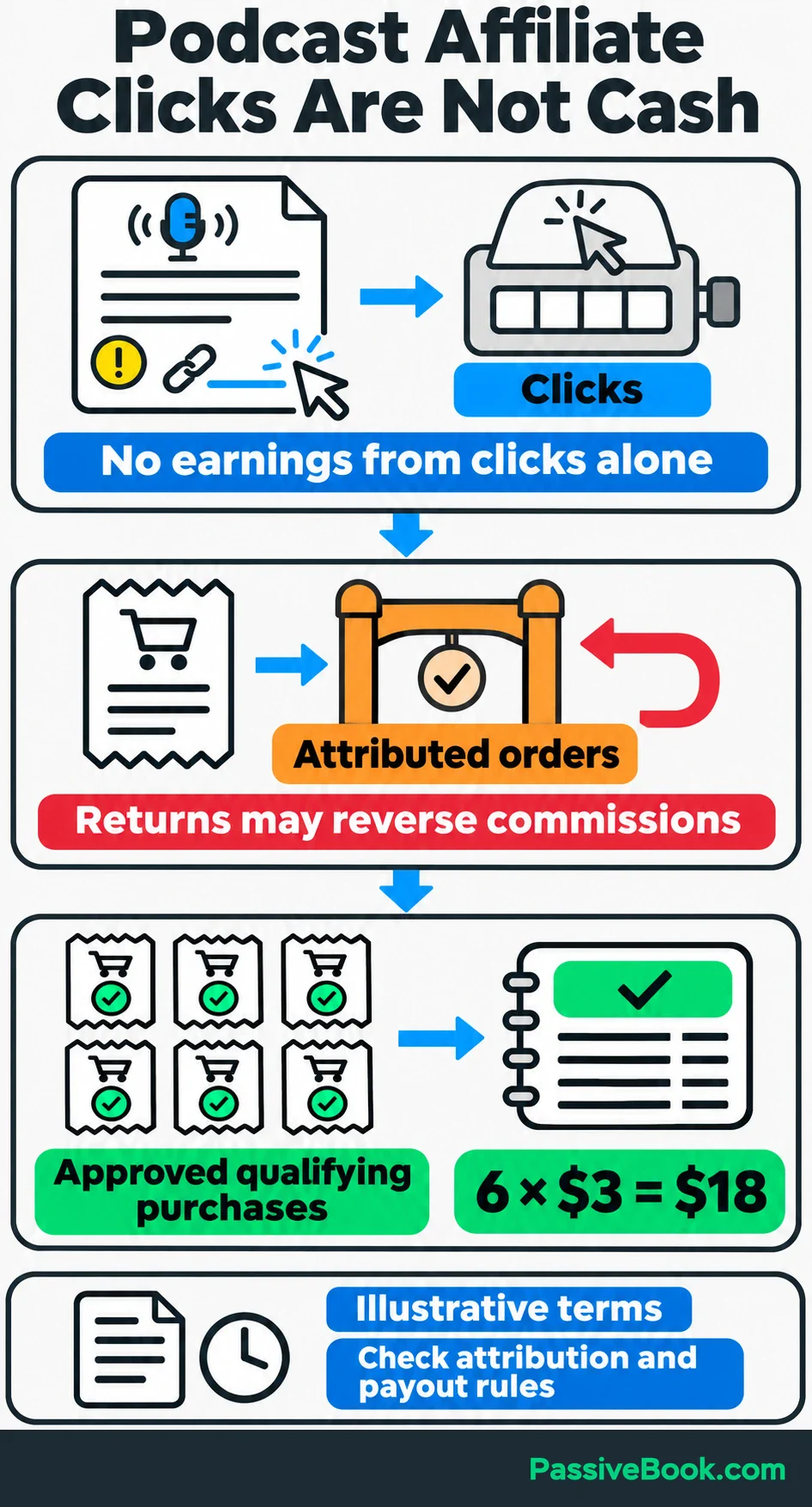
Before joining a program, check:
- Whether your show and promotional channels are permitted.
- Which purchases qualify and how commissions are calculated.
- How long purchases can be attributed after a click.
- Whether returns reverse commissions.
- When earnings become payable.
Give listeners a trackable link or a supported code in the show notes. Explain useful tradeoffs beside it, rather than dropping a shopping list beneath every episode.
Keep clicks, attributed orders and approved commissions separate. A click earns nothing by itself, and a reported order may later be reversed.
For illustration, six approved purchases earning $3 each produce $18 in commission. Those are assumed payment terms, so replace them with the program’s actual terms.
I would skip a higher-paying product when it is a worse fit. The next recommendation still needs listeners to believe you.
Offer Listener Support or a Manageable Membership
Voluntary support funds the show you already make. A membership promises continuing benefits. That difference determines how much work you are taking on.
If listeners mainly want to help cover production, offer support without inventing a premium content schedule.
For a membership, test one requested benefit and one tier. Extended interviews from existing recordings might fit the dog-trip show, but only if listeners want them and you have enough suitable material.
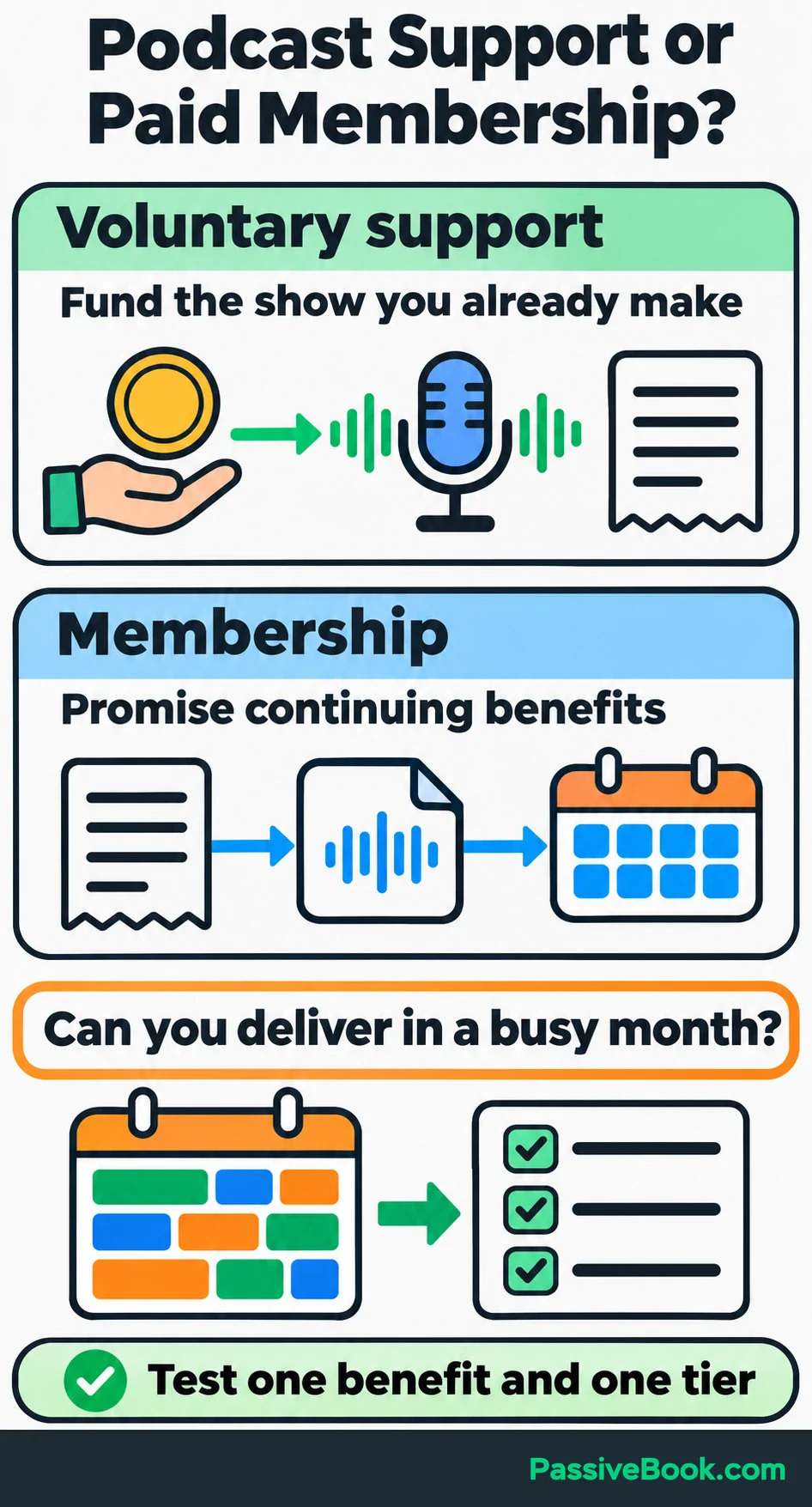
I abandoned a membership site because producing fresh premium content alongside my day job became unsustainable. That experience makes me cautious about recurring promises. Before launching, work out what members receive during a busy month.
Platform requirements also affect the choice:
- Apple Podcasts Subscriptions: Its launch checklist lists no numerical listener minimum, but requires program enrollment and subscription review. Creators receive 70% of the subscription price, minus applicable taxes, rising to 85% after each subscriber accumulates one paid year. Enrollment carries a country-specific annual fee; consult Apple’s availability and fee table.
- Spotify Memberships: For shows created from October 20, 2026, eligibility requires three published episodes, 100 Spotify consumption hours and 100 Spotify listeners or viewers in the preceding 30 days. Previous subscription users retain eligibility, and creator and listener markets must be supported. See Spotify’s membership requirements.
- Spotify membership costs: New memberships carry a 10% platform fee that includes payment processing, foreign exchange and payout fees, with applicable taxes also deducted. Migrated subscriptions have different terms in the fee schedule.
Choose around where listeners can access the benefits and what you can reliably deliver. Eligibility alone is not a reason to launch.
Sell a Defined Sponsorship Package
Find businesses that serve the same listener problem. For the dog-trip show, that might mean a travel-accessory brand or a dog-friendly accommodation business.
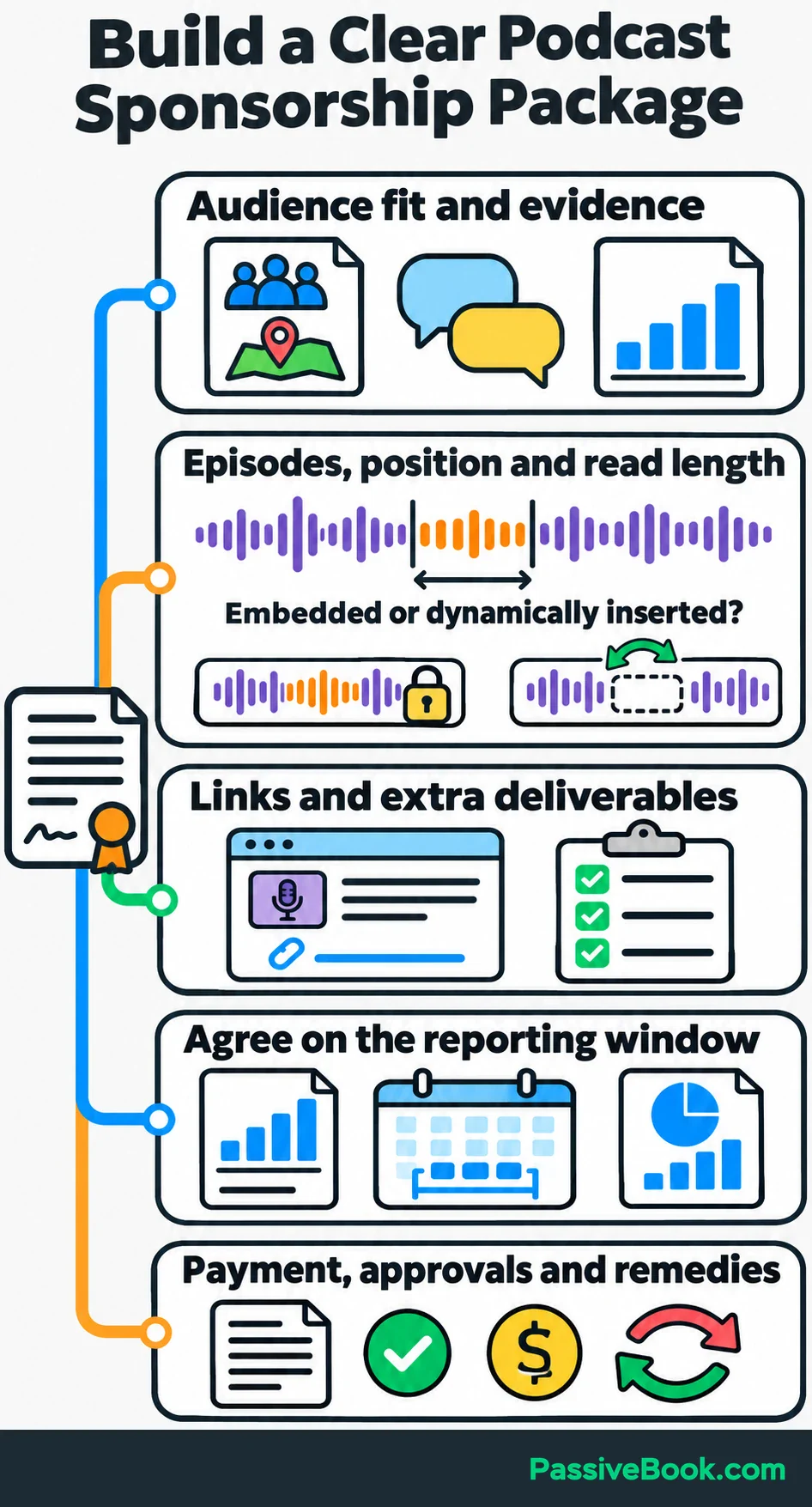
Prepare a one-page media sheet with the show’s focus, audience geography, relevant listener feedback and recent episode downloads. Use the same reporting window for every episode, such as downloads during its first 30 days.
Then define the package before pitching:
- Number of episodes and campaign dates.
- Advertisement position and read length.
- Show-note links or other deliverables.
- Reporting window and measurement.
- Whether the advertisement stays in the recording or is added when someone streams or downloads the episode, allowing later changes or removal (dynamic insertion).
A short pitch could connect a packing episode to the sponsor’s travel bowl and propose a defined campaign. “Would you like to sponsor my podcast?” leaves the buyer to design the deal.
You can charge a flat fee or use CPM, meaning payment per thousand agreed billable downloads or impressions. Include recording work, exclusivity and extra deliverables when setting the price.
For context, Libsyn lists advertiser rates of $24–$26 CPM for 60-second advertisements read by the host and kept in the episode. That is pricing context, and any intermediary commission reduces your payout.
Packages can also be negotiated. In Jordan Blair’s first-person account of monetizing Dreamful, an inbound $50 offer became a $300 package covering three advertisements and a giveaway. Her audience size at that deal is not stated, so the example shows negotiation rather than earnings at a particular listener count.
Agree on payment dates, approvals, cancellations and remedies for missed delivery. Afterward, report the agreed figures and attributable actions, then discuss renewal.
Add Platform Advertising When You Qualify
Platform advertising can reduce the work of finding advertisers, but available ad space does not guarantee paid placements.
Check eligibility, hosting requirements, revenue share and category controls before including it in your budget.
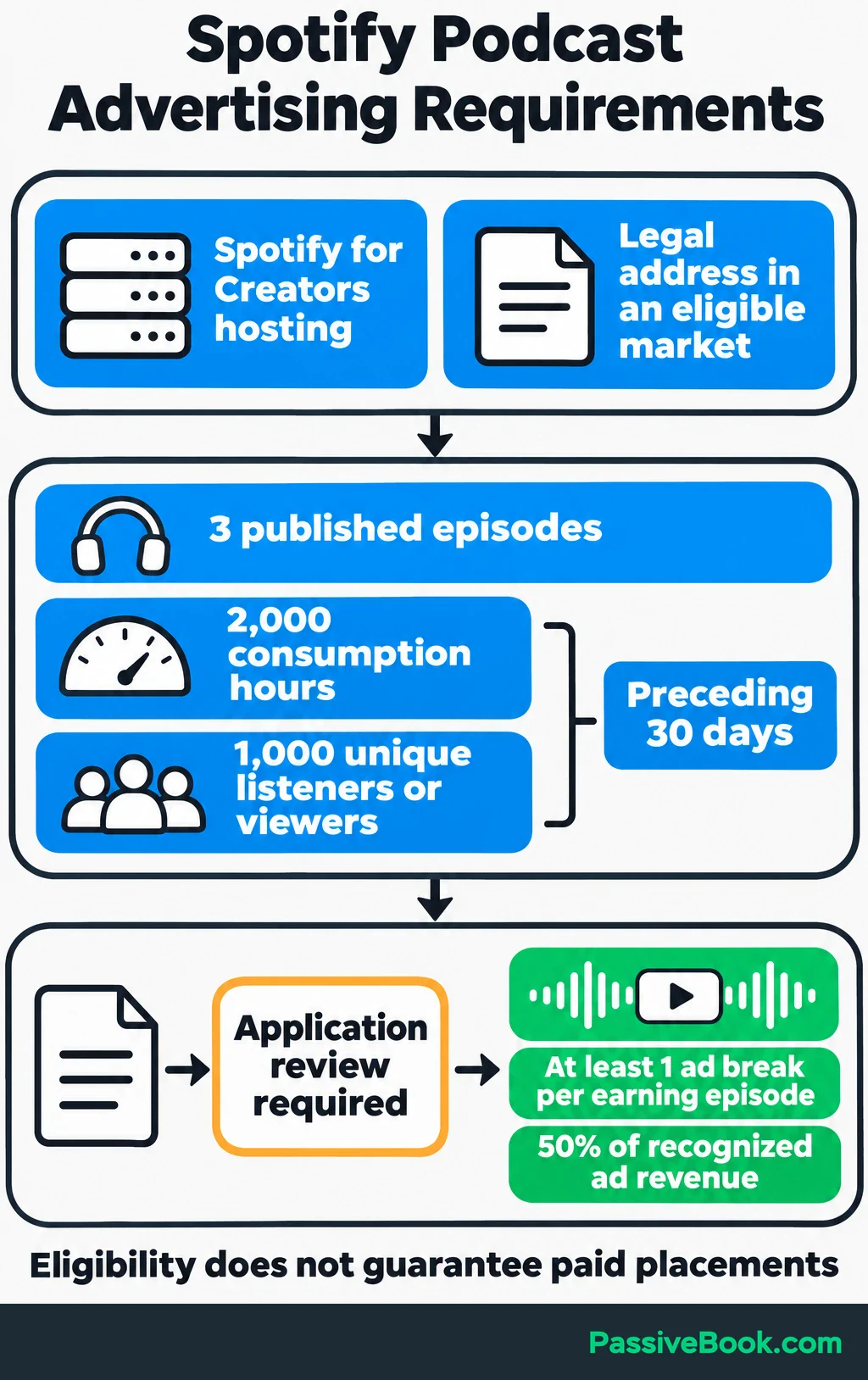
For the Spotify for Creators application route, the Spotify Partner Program requires:
- Hosting your show on Spotify for Creators.
- A legal address in an eligible market.
- At least three published episodes.
- At least 2,000 Spotify consumption hours in the preceding 30 days.
- At least 1,000 unique Spotify listeners or viewers in that same period (Spotify’s “audience count”).
Applications undergo review. Approved creators receive 50% of the revenue Spotify recognizes from program advertisements played in their episodes. An episode needs at least one ad break to earn advertising revenue. This program is separate from memberships.
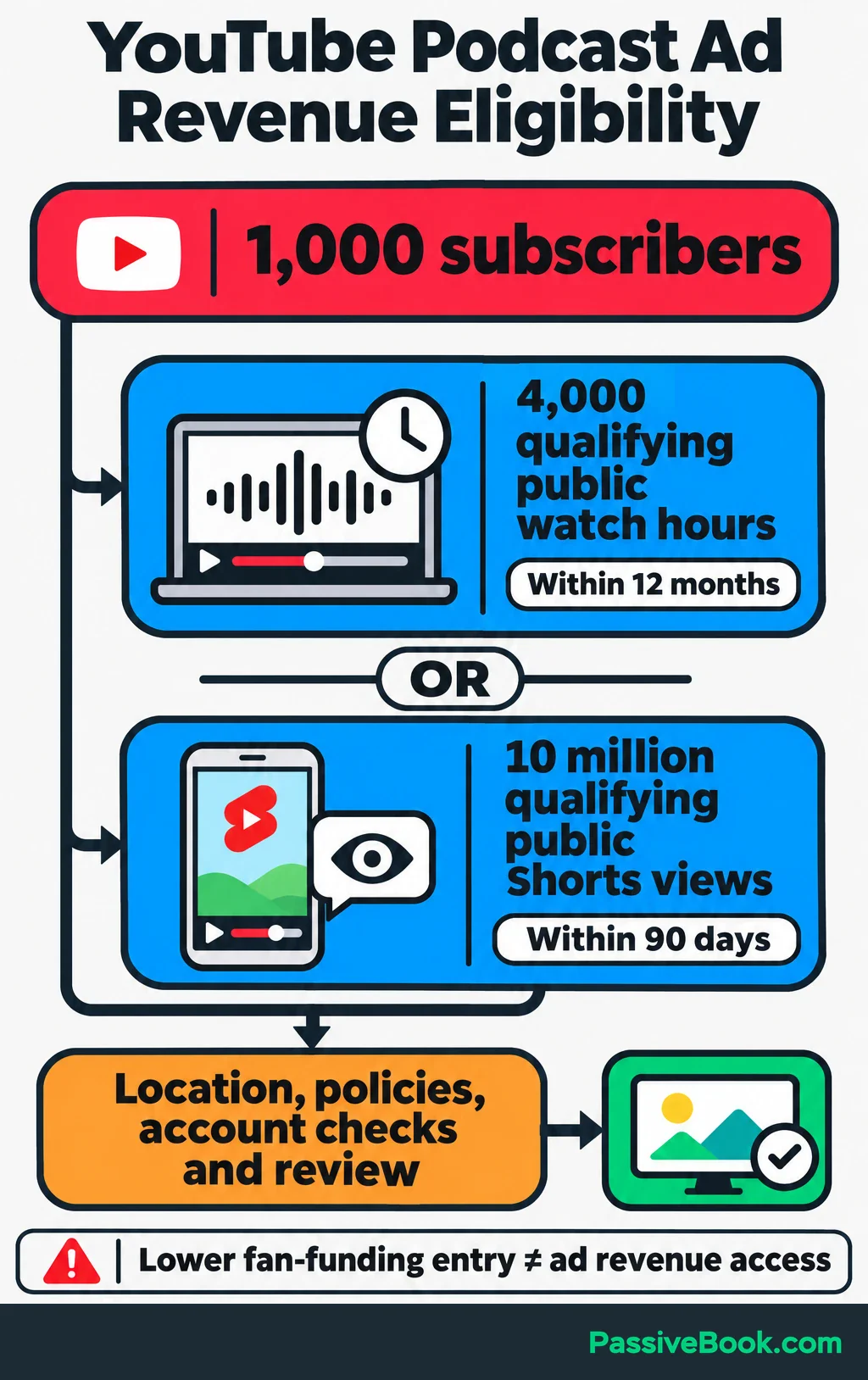
If you already publish on YouTube, advertising revenue sharing requires 1,000 subscribers plus either 4,000 qualifying public watch hours in 12 months or 10 million qualifying public Shorts views in 90 days. Location, policies, account requirements and review also apply. YouTube’s lower entry tier for some fan-funding features does not unlock advertising revenue sharing; see its eligibility overview.
I would not add a demanding video schedule solely to chase another monetization threshold. First check whether the likely revenue justifies the extra work.
Give Each Episode a Clear Path to Purchase
Teach the episode’s useful process, then connect it to one primary next action: buy, join, book, support or explore a relevant recommendation.
For the packing episode, explain how to organize supplies before mentioning the planner. The invitation follows naturally:
“Get the sample packing checklist and see the complete $19 dog-trip planner at the link in the show notes.”
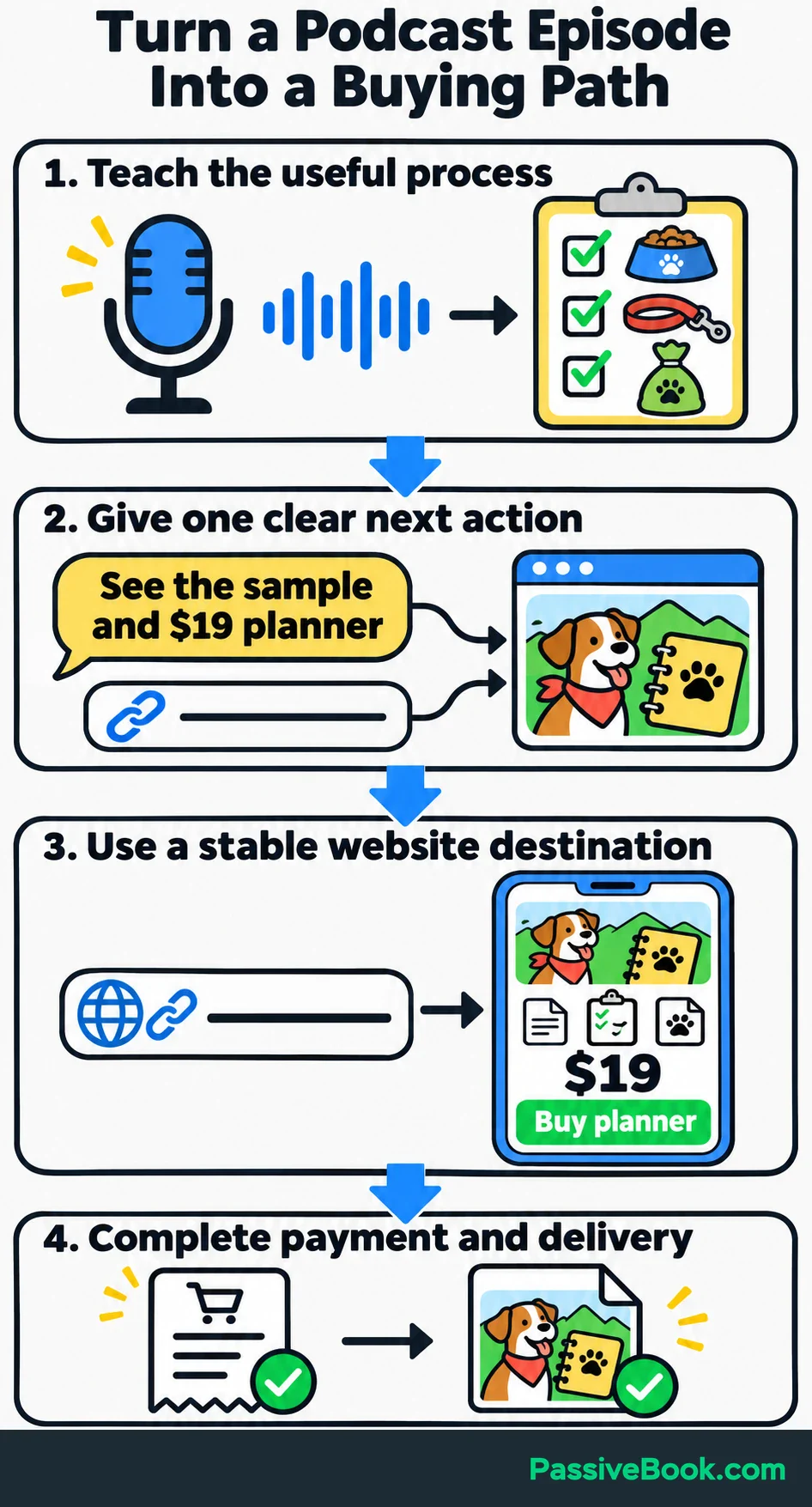
Give listeners a short spoken destination on your website as well as a matching show-note link. A stable address lets you change the checkout later without making old recordings useless.
The page should show the benefit, actual deliverables, price and purchase button. Include a preview so people can judge what they are buying. An optional email signup can offer useful follow-up for listeners who need more time.
You do not need to write the invitation, offer page and follow-up emails separately. The AI Skill below drafts them around the same listener problem and paid offer.
Free AI Podcast Studio




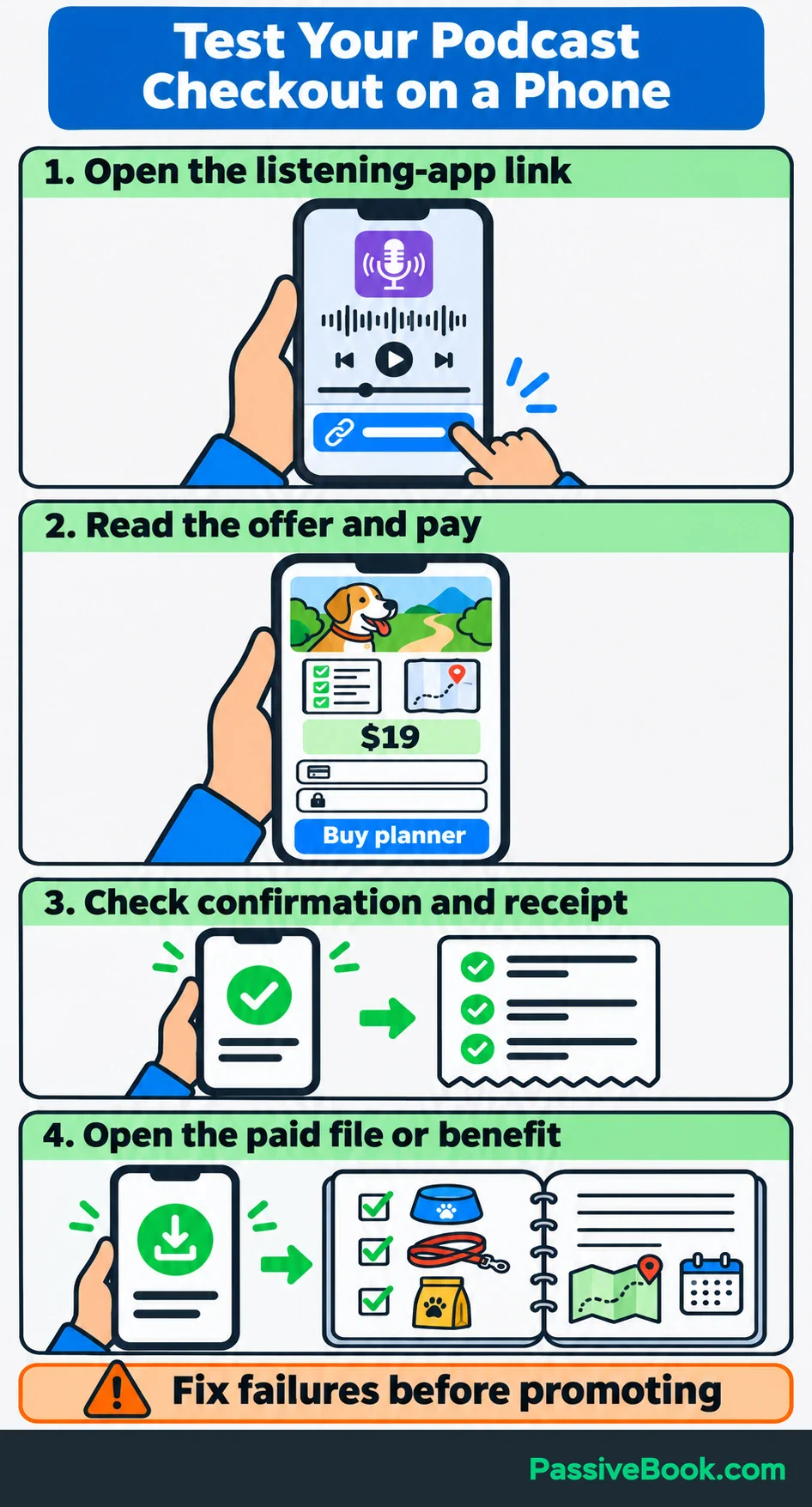
Before promoting it, test the whole journey on a phone:
- Open the link from a listening app.
- Read the offer and complete checkout.
- Check the confirmation and receipt.
- Download the file or access the paid benefit.
Use a distinct campaign link or supported code to connect episode mentions with visits and purchases.
Once the process works, automate receipts, delivery and welcome messages. Reuse relevant episodes and follow-up emails before adding more production. More content is an expensive repair for a broken checkout.
How Much Money Could Your Podcast Make?
Calculate Revenue From the Action That Earns It
Start with what triggers payment. Different streams need different inputs.
| Revenue Stream | Calculation Before Costs |
|---|---|
| Products | Purchases × selling price |
| Services | Paid bookings × fee |
| Affiliates | Approved purchases × applicable commission |
| Monthly memberships | Active paying members × monthly price |
| Flat-fee sponsorships | Fees earned for delivered campaigns |
| CPM advertising | Billable ad impressions ÷ 1,000 × CPM × creator share |
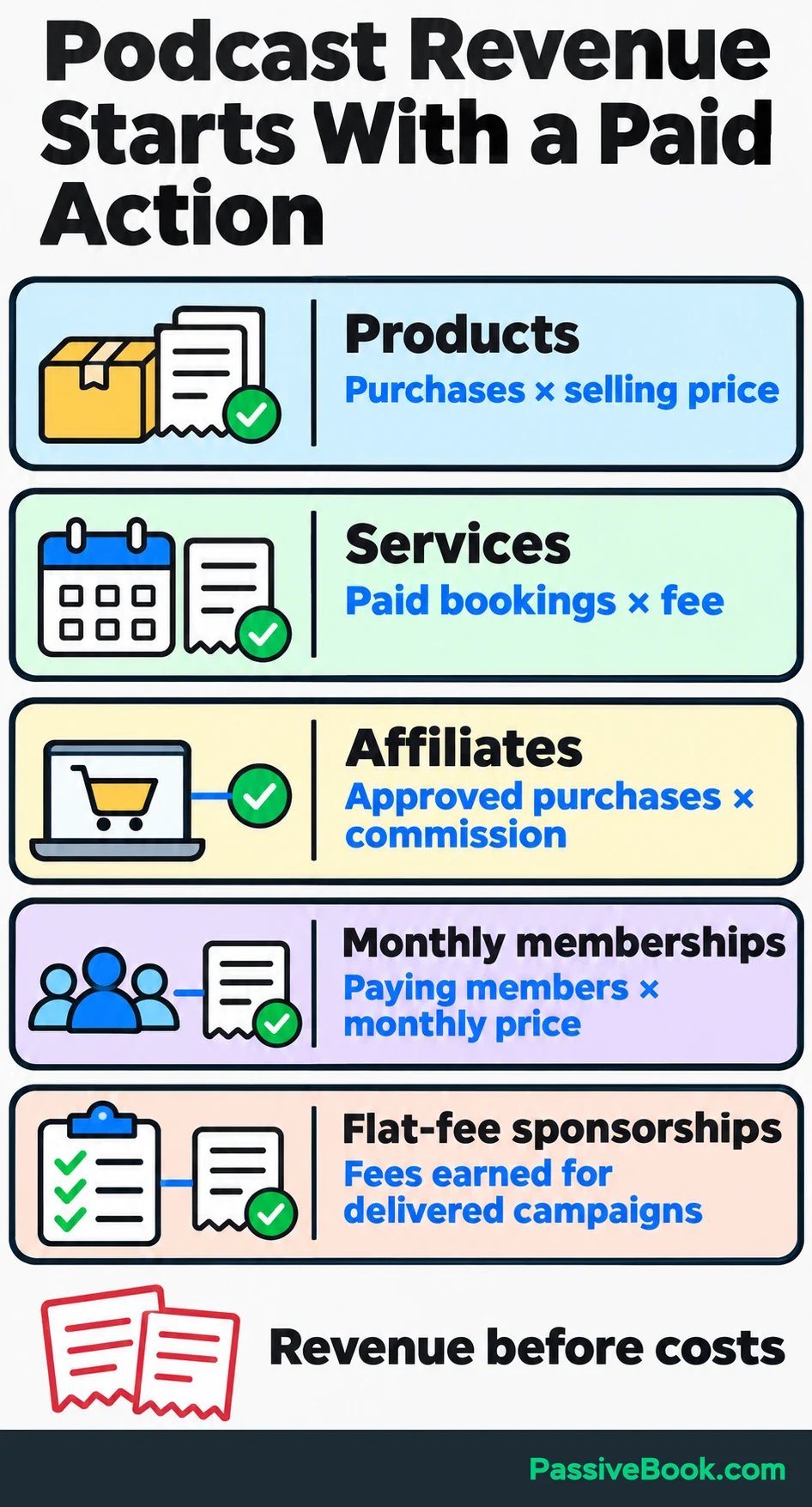
For advertising, apply the creator share only when the quoted CPM is before the platform’s cut. If the rate already describes your payout, taking another cut understates revenue.
For an advertising forecast, count the available billable ad impressions and multiply by the proportion you expect to sell. Skip that reduction if your starting count includes only paid placements.
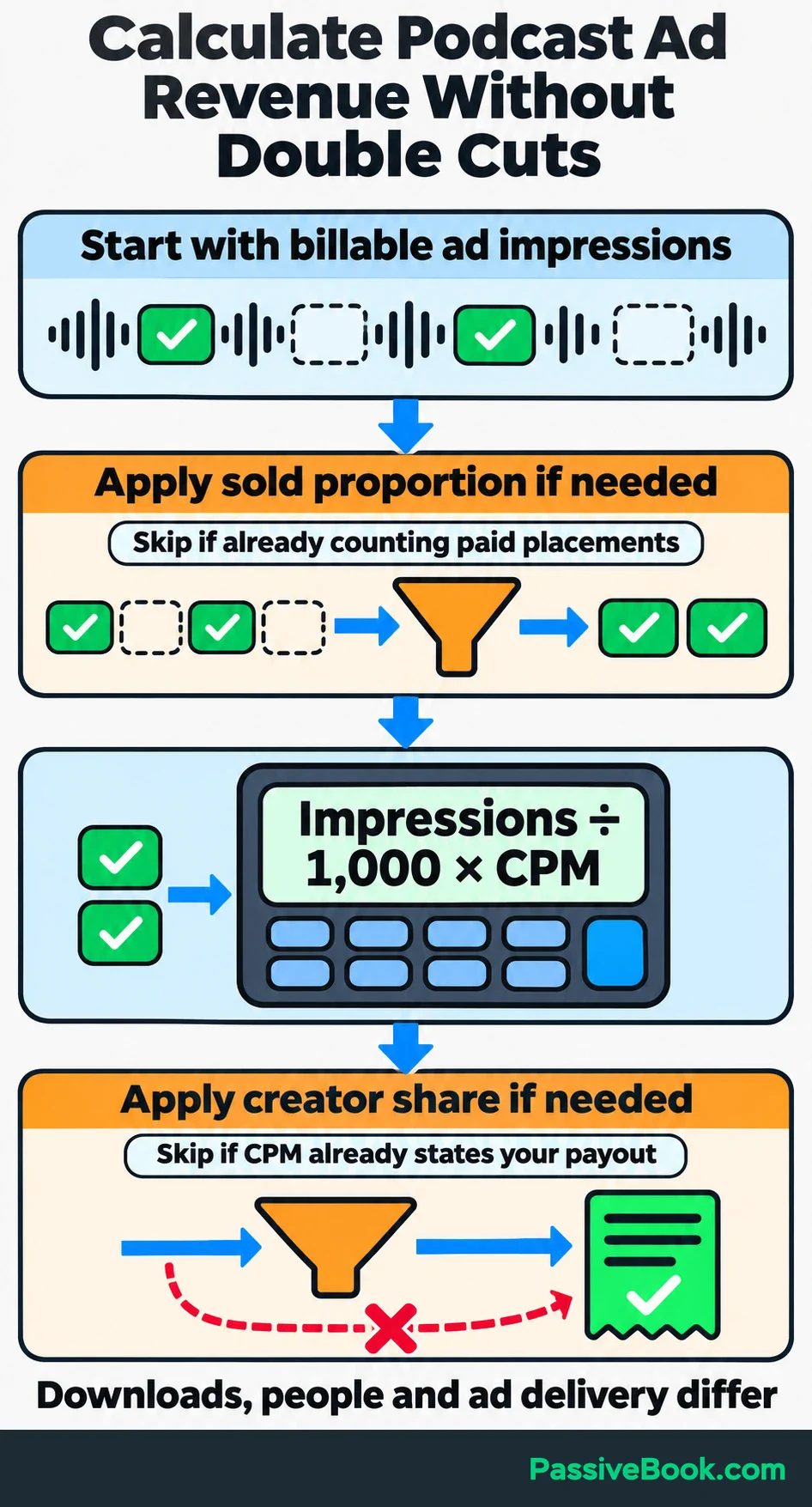
Keep downloads, unique listeners, platform views and advertisement delivery separate. Four episodes with 500 downloads each do not necessarily reach 2,000 different people. The IAB Tech Lab’s measurement guidance also distinguishes download measurement from filtered, validated advertisement delivery.
Subtract fees, refunds, delivery expenses and operating costs to estimate what remains.
Work Through a Small-show Forecast
Suppose each of your four campaign episodes receives 500 downloads within the agreed billing window. Each episode has one advertisement slot. You sell the slots in two episodes and leave the other two unsold.
For this illustration, the direct agreement bills those placements by downloads at $25 CPM, with no intermediary commission.
There are 2,000 possible billable downloads across the four slots. Selling half leaves 1,000 paid billable downloads:
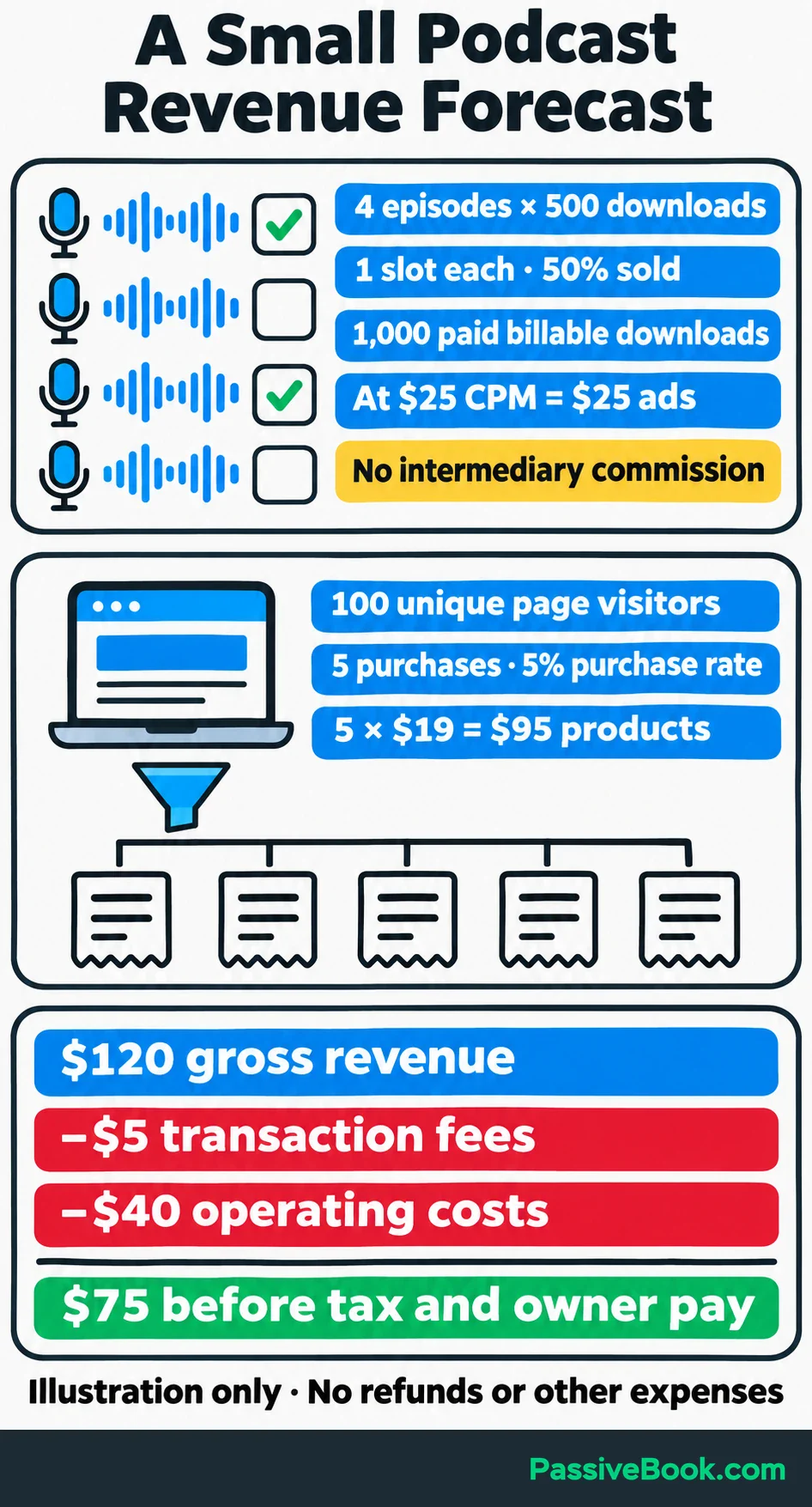
4 × 500 ÷ 1,000 × $25 × 50% sold = $25 advertising revenue
Separately, suppose 100 unique visitors reach the $19 planner page during the campaign and five of those visitors buy. That is a 5% purchase rate among page visitors:
5 purchases × $19 = $95 gross product revenue
Here is what remains under the stated cost assumptions:
| Item | Amount |
|---|---|
| Advertising revenue | $25 |
| Planner revenue | $95 |
| Combined gross revenue | $120 |
| Assumed product transaction fees | −$5 |
| Operating costs allocated to the campaign | −$40 |
| Remaining before income tax and owner pay | $75 |
This assumes no refunds or other expenses. Neither the purchase rate nor the proportion of advertising sold is an expected result.
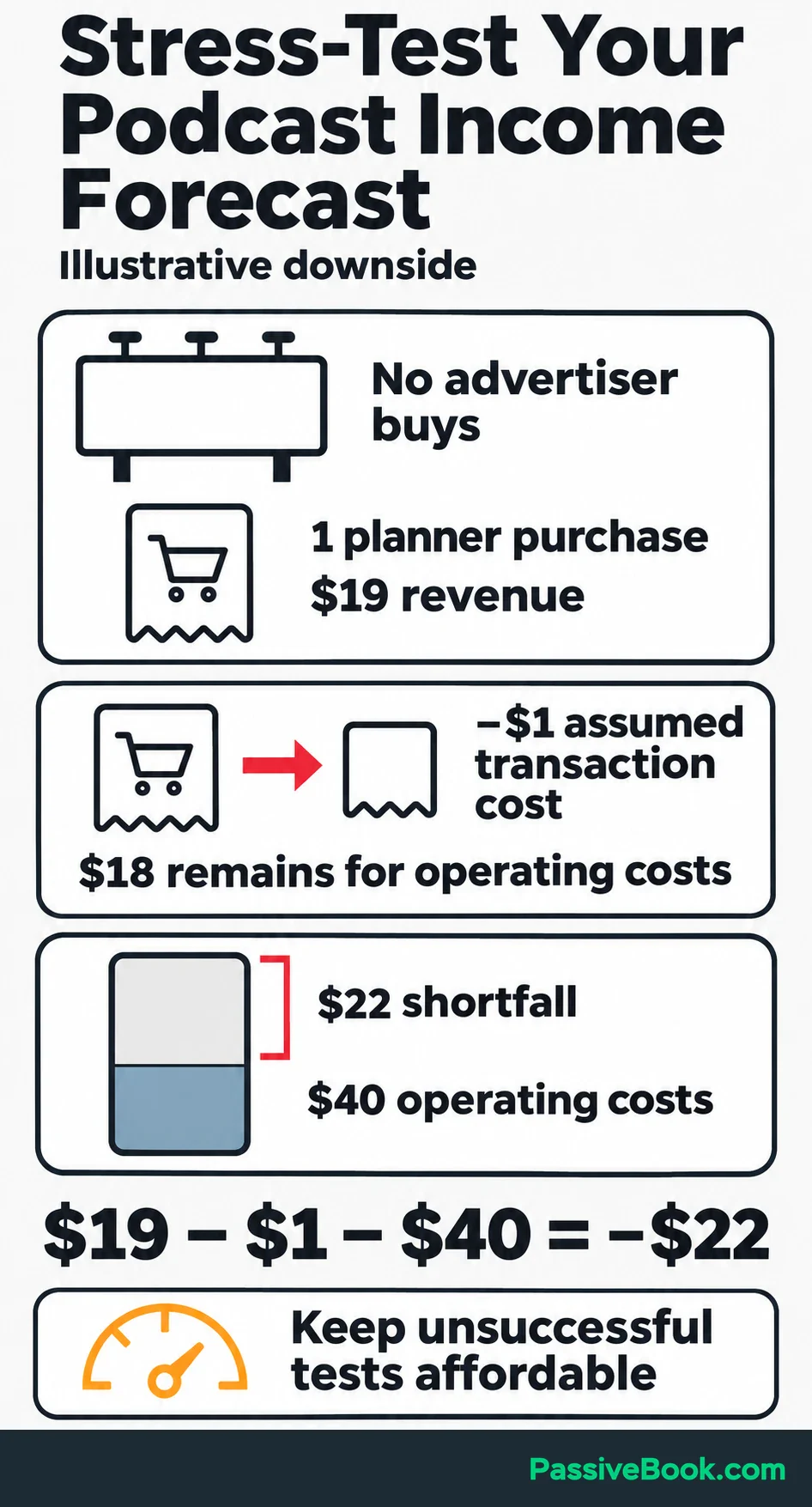
Now test the downside. No advertiser buys, and only one visitor purchases the planner:
$19 − $1 assumed transaction cost − $40 operating costs = −$22
That loss case belongs in the plan too. Keep spending low enough that an unsuccessful test teaches you something without creating a financial problem.
Find Your Break-even Point
First work out how much each sale contributes toward fixed costs. Subtract transaction fees, expected refunds and variable delivery costs from the selling price.
Suppose the $19 planner leaves $18 per sale after those costs. With $40 in fixed operating costs for the period:
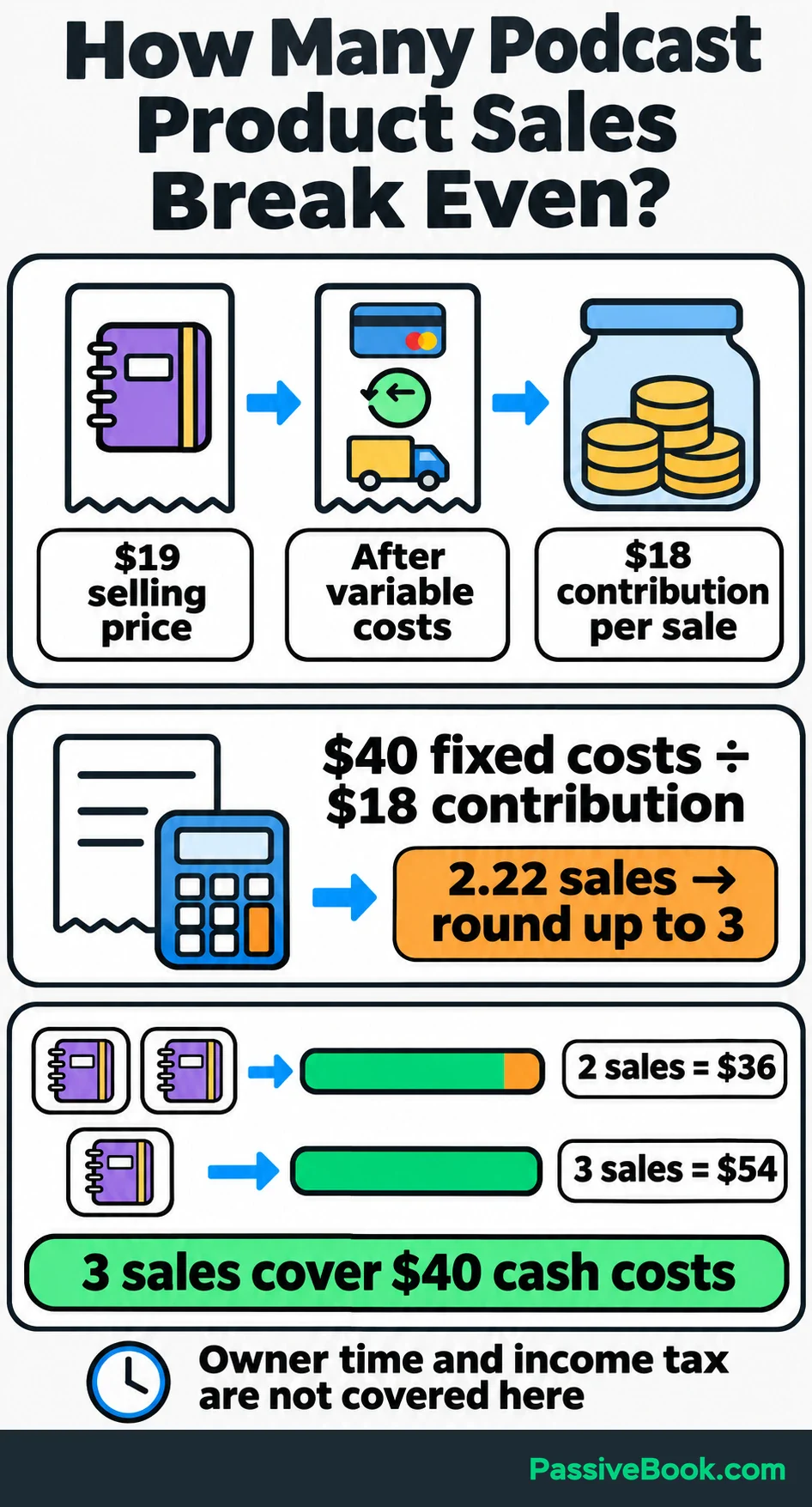
$40 ÷ $18 = 2.22 sales
Round up, so three sales cover those cash costs.
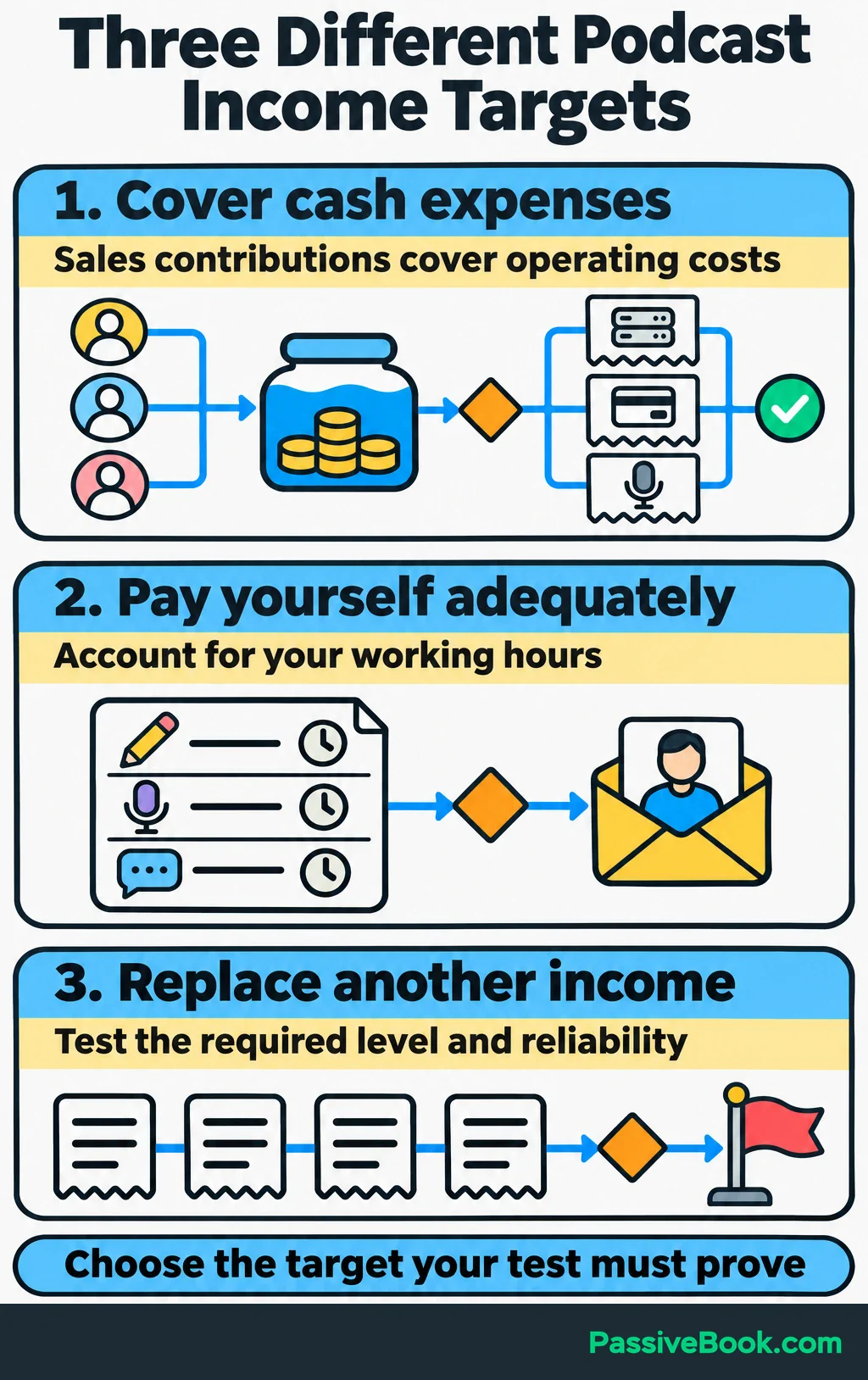
That does not pay you for creating the planner, recording episodes or answering support emails. Track working hours separately.
Covering expenses, paying yourself adequately and replacing another income are three different targets. Choose the target you are testing rather than calling every dollar left in the account “profit.”
Three sales might cover your bills without paying for your time. Use the calculator to work backward from your own pay target and check whether the workload fits.
Free Pricing Profit Calculator
How Long Does Podcast Monetization Take?
The first transaction, the first bank payout and repeat profit are separate milestones.
An existing product can be promoted as soon as the buying journey works. A new product needs validation and delivery time. A sponsorship also needs a buyer, negotiation, campaign dates and payment terms.
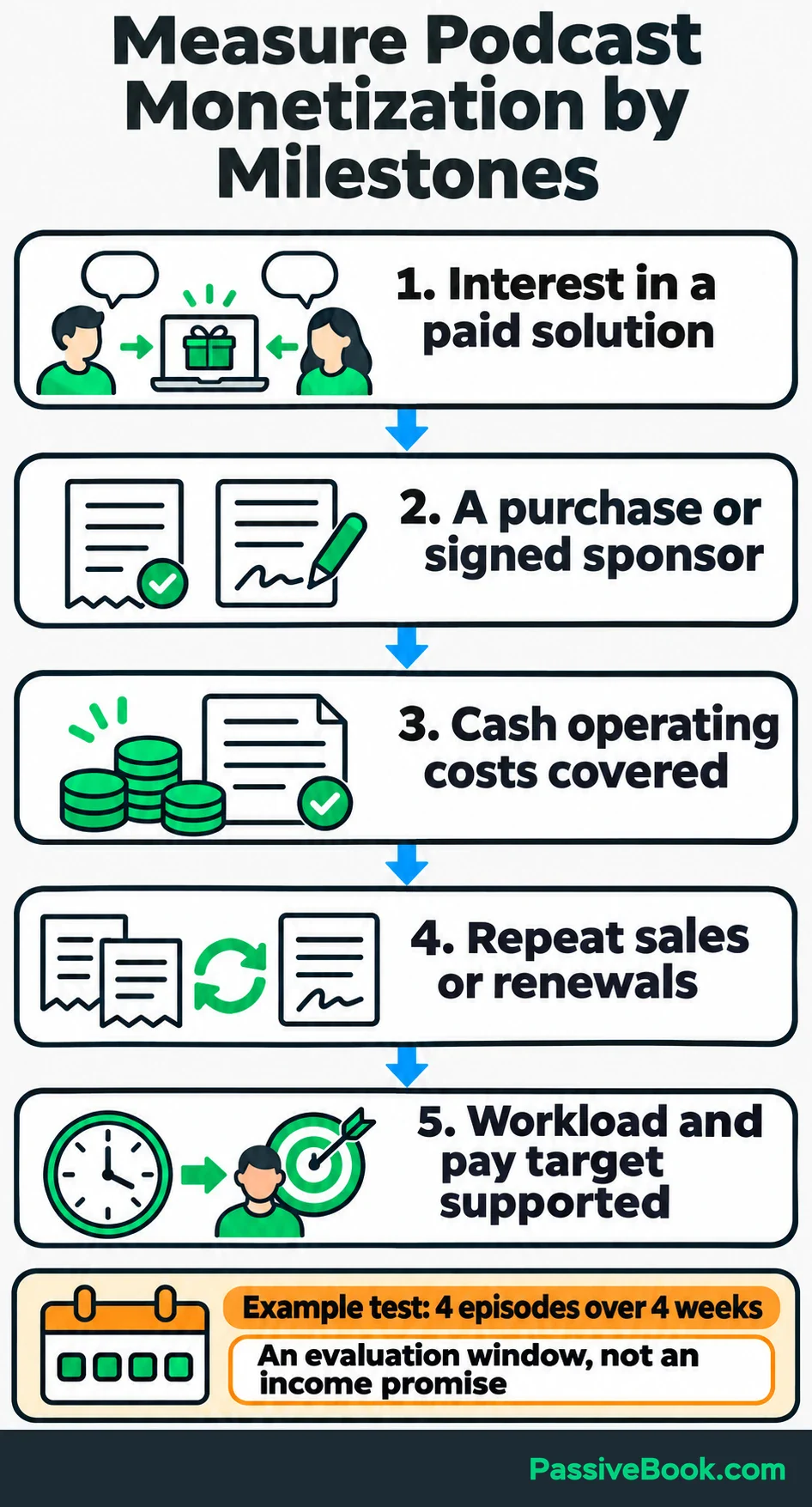
Use these milestones to judge progress:
- Listeners show interest in a specific paid solution.
- A customer buys or a sponsor signs.
- Revenue covers cash operating costs.
- Sales repeat or sponsors renew.
- The income supports the workload and your pay target.
Choose a test window around your release schedule and the buying cycle. For example, a weekly show with a ready-to-sell planner could test it across four relevant episodes over four weeks. That is an evaluation window, not a promise of income within a month.
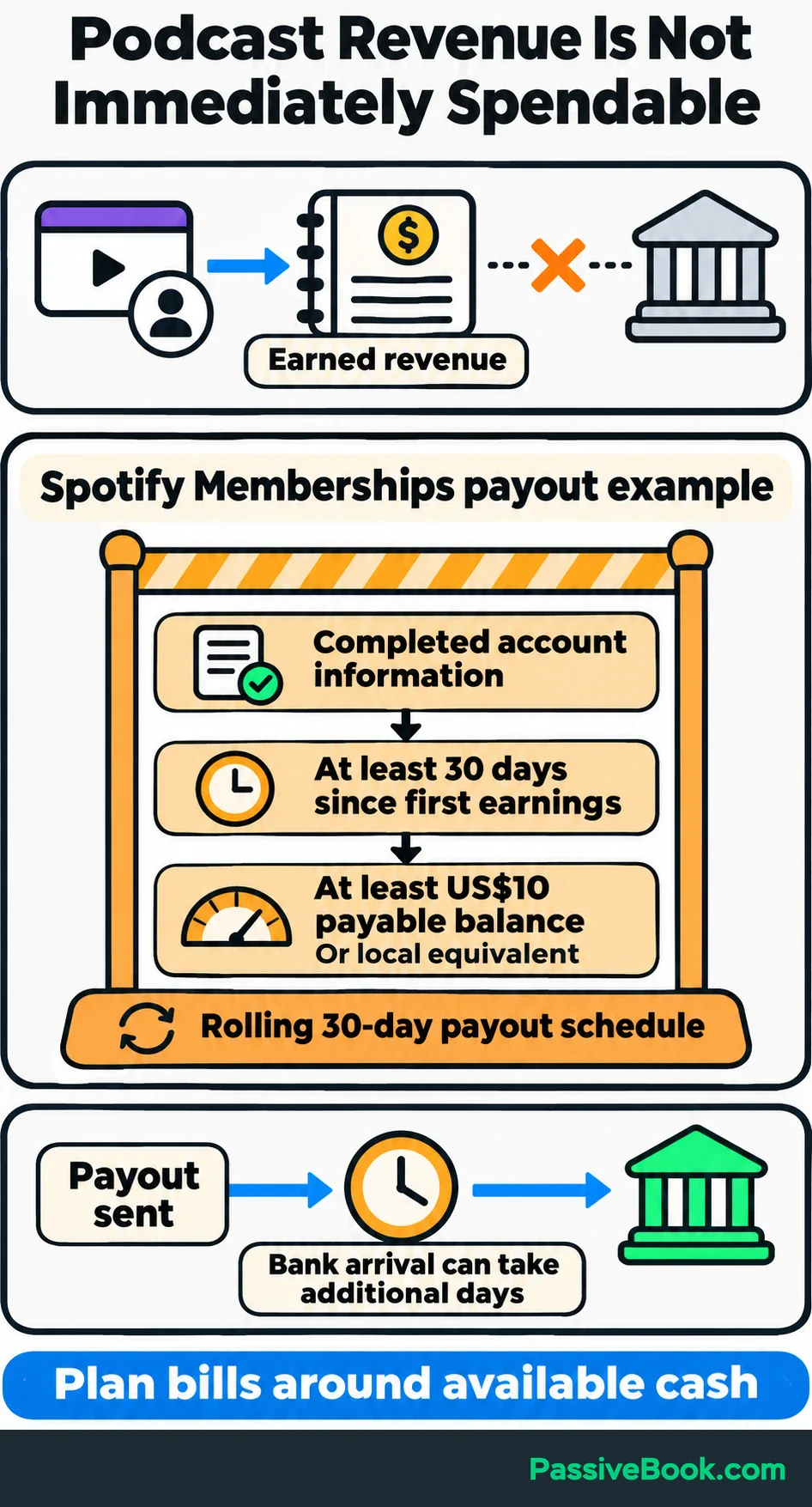
Decide beforehand what would justify continuing: paid orders, contribution after costs and hours required.
Also allow for payout delays. Spotify Memberships pays on a rolling 30-day schedule, subject to completed account information, at least 30 days since first earnings and a payable balance of at least US$10 or its local equivalent. Bank arrival can take additional days.
Money shown as earned may still be unavailable for your next bill.
Improve the Strategy Before Adding Another Stream
Keep a simple record of offer mentions, tracked visits, purchases, approved commissions, sponsorships, revenue, costs and hours worked.
Review each stream separately so a good sales total does not hide an expensive workload.
| What You Observe | What to Check Next |
|---|---|
| Offer mentions bring few visits | Does the offer solve the episode’s problem, and is the invitation clear? |
| People visit but do not buy | Can they understand the deliverables, see the value and complete checkout? |
| Sales increase but little money remains | Are pricing, fees, refunds or delivery costs consuming the return? |
| Members cancel | Are they receiving the promised benefit, and do they still want it? |
| Sponsor pitches receive little interest | Are the businesses relevant, and does the package explain what they receive? |
| Sponsors buy once but do not renew | Did you deliver the agreement, report clearly and discuss their results? |
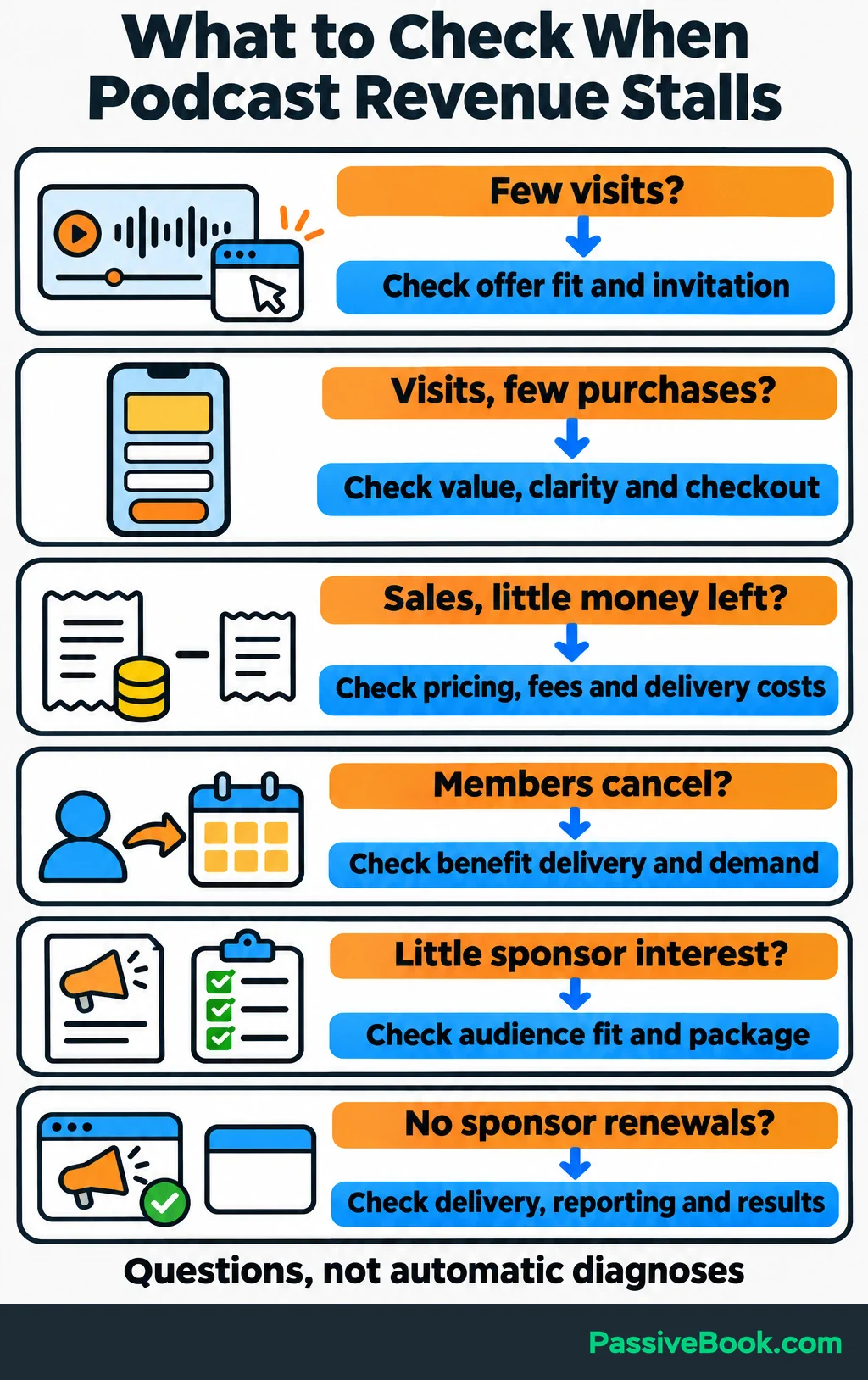
These observations point to questions, not automatic diagnoses. Test the checkout before deciding the price is wrong.
Change one meaningful part of an underperforming offer, then assess it over your chosen window. Changing the product, price and invitation together makes the result harder to interpret.
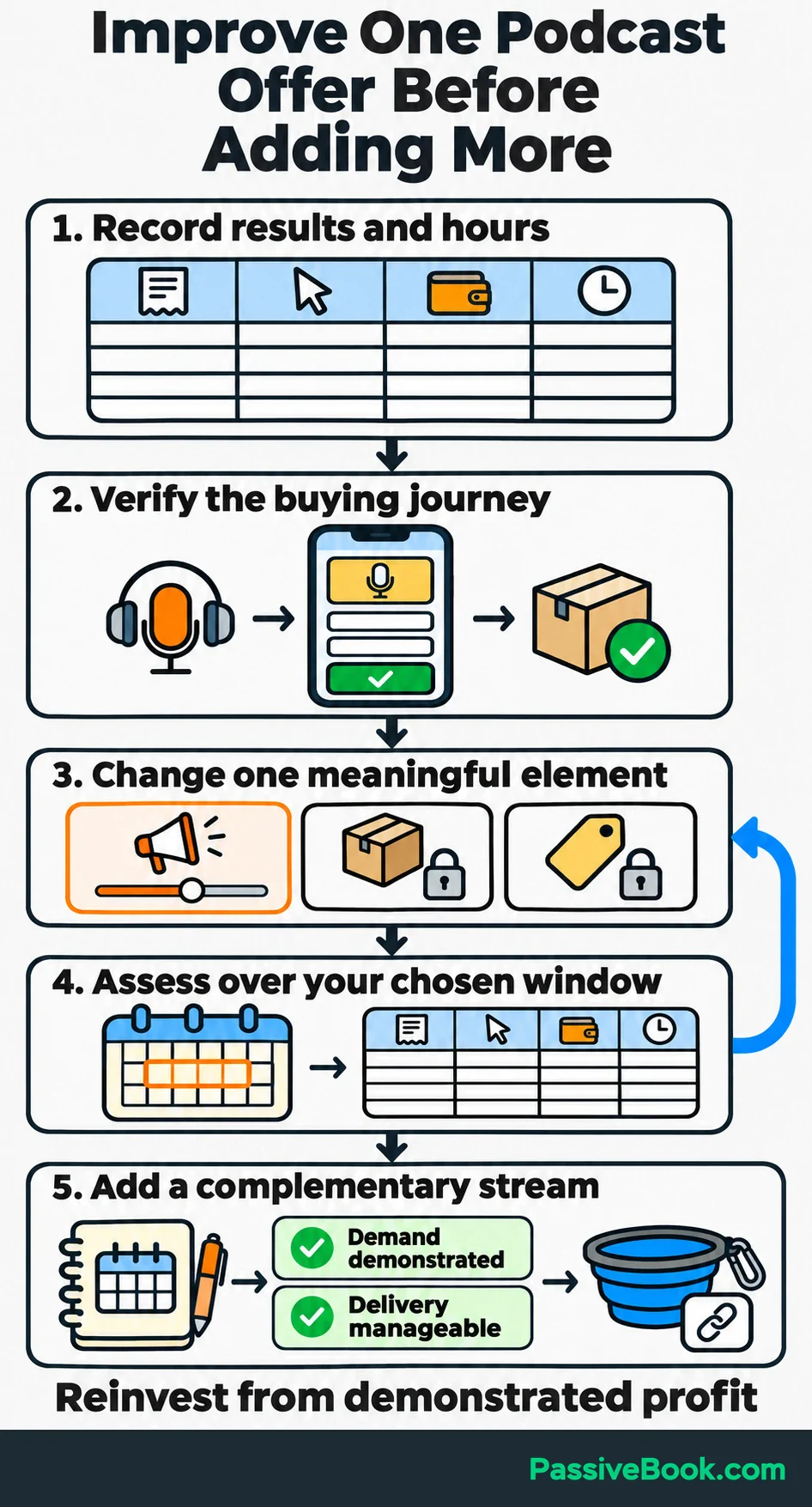
Add a complementary stream once the first shows demand and manageable delivery. The dog-trip show could add a travel-bowl affiliate recommendation alongside planner sales, then test a relevant sponsor package.
Keep customer records and permitted email relationships organized, and check how much income depends on one sponsor or platform. Reinvest from demonstrated profit. A second revenue stream should make the business stronger without becoming a second unpaid job.
What Next?
Choose one listener question from your recent episodes and write a paid offer that answers it. Name the deliverable, price, test window and result that would justify continuing.
Use the social buttons to share this guide if the revenue calculations would make a podcast planning discussion more useful.
Which revenue stream best fits what your listeners already ask for? Tell me in the comments, and bring any other questions about your plan.
Share this post with your friends & followers:

