You spend an evening recording and editing an episode, but the listening graph falls before you reach the useful part. The download count looks respectable. It doesn’t tell you whether anyone heard the answer you worked so hard to explain.
That leaves an awkward choice: shorten the next episode, buy a better microphone, or hope a more exciting topic fixes it. These nine improvements help you choose what to change in your recordings so listeners hear the answer and have a reason to come back.
1. Use Listening Data to Choose Your First Fix
Measure Staying and Returning Separately
To work out how to improve podcast listener retention, separate two questions:
- How much of each episode do people hear?
- Do they return for another episode?
Start with the retention curve, which shows how listening changes through an episode. Listen around repeated declines for a long greeting, confusing explanation, promotion, or sudden volume change.
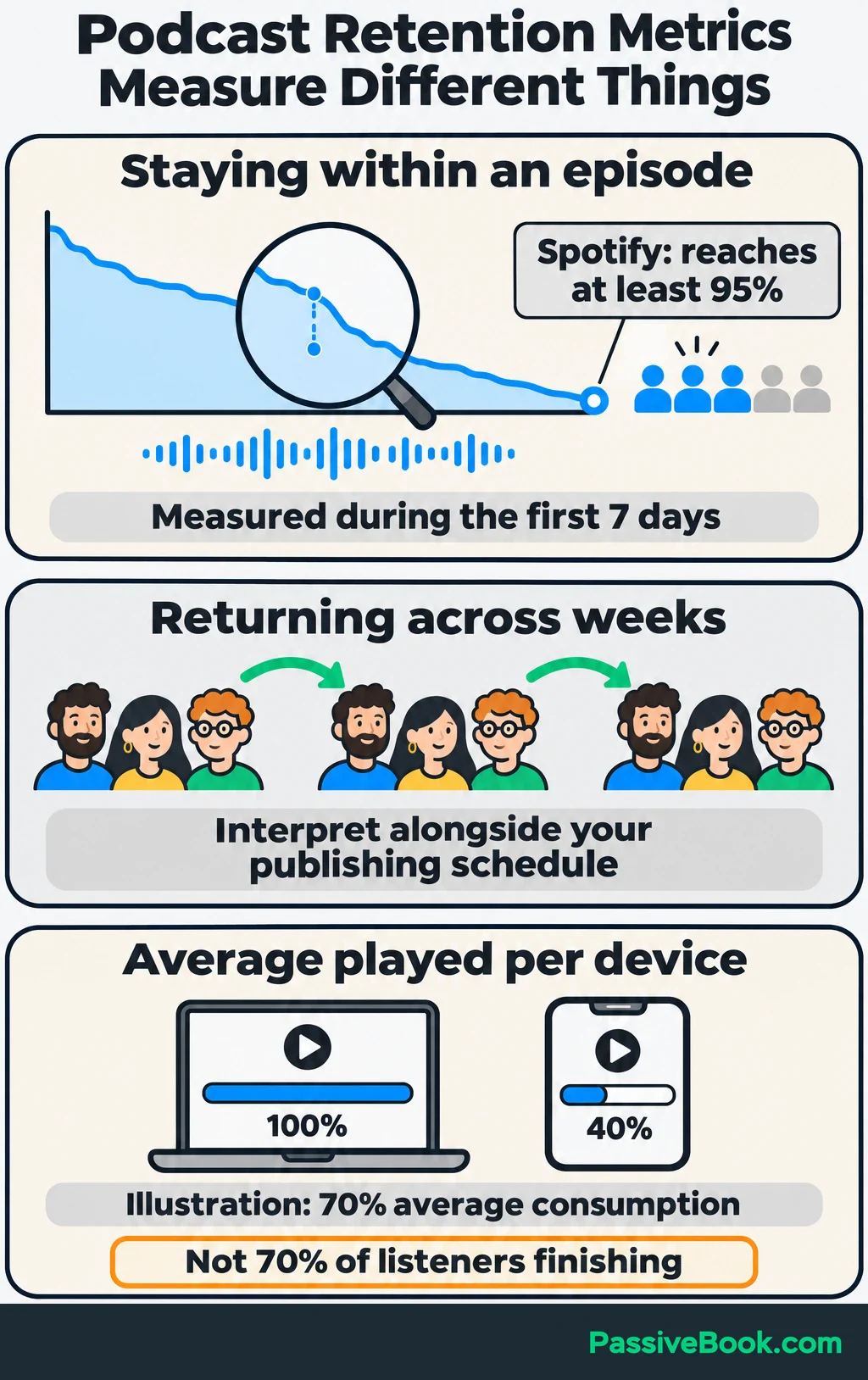
Check what your platform counts. Spotify’s completion rate is the share of an episode’s Spotify audience that reaches at least 95% during its first seven days. Week-over-week retention measures the audience returning each week; interpret it alongside your publishing schedule. Spotify defines both metrics here.
Apple’s average consumption is the average percentage played per device. A 70% average doesn’t mean 70% of listeners finished. Apple explains its episode metrics here.
Test One Recurring Problem
I would compare a few episodes with similar subjects, formats, and lengths on the same platform, at the same number of days after release.
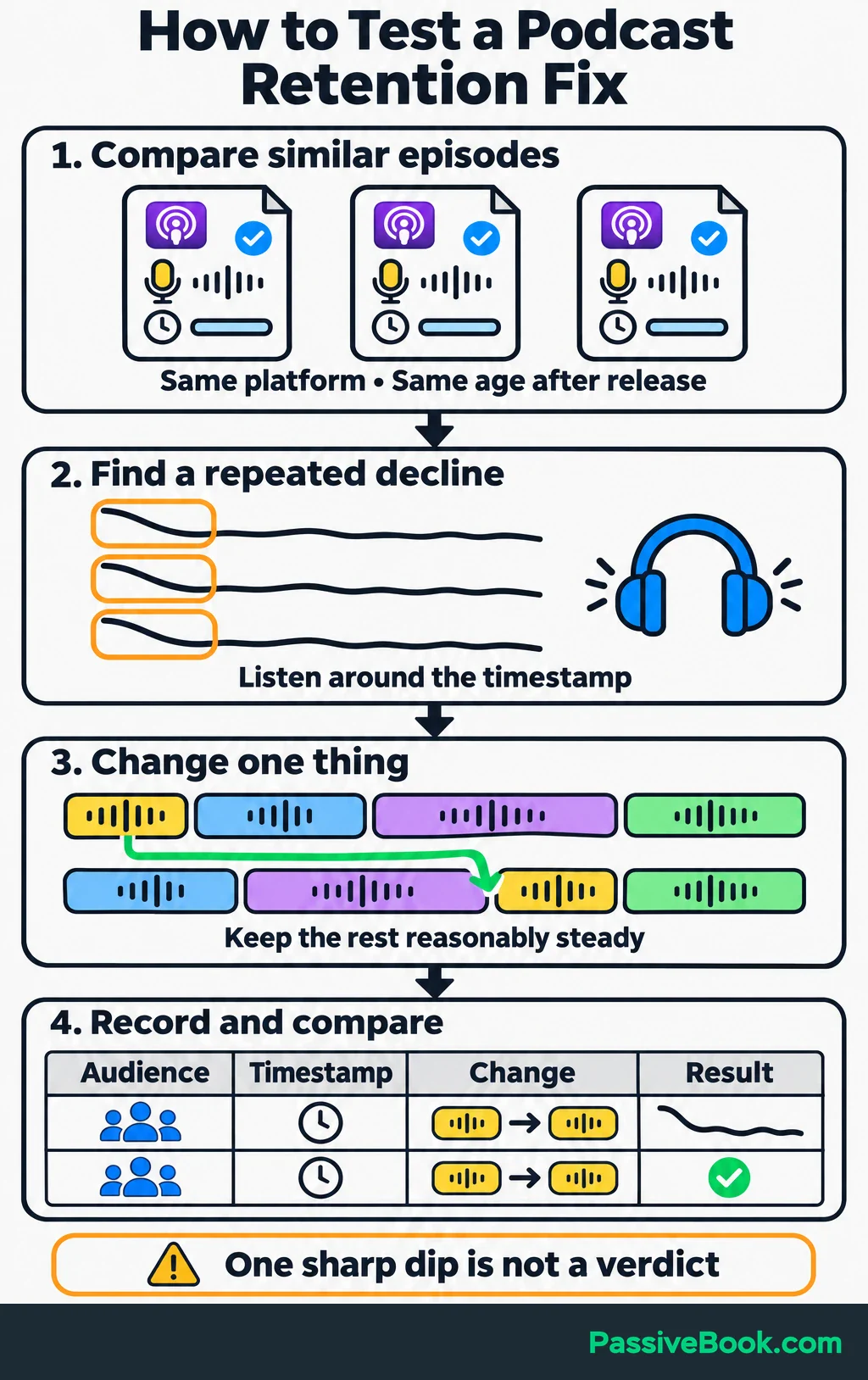
If several lose listeners during opening announcements, test moving those announcements in the next few comparable releases. Keep the rest of the format reasonably steady.
In a spreadsheet, record each episode’s audience count, problem timestamp, change tested, and result. A small audience can produce sharp percentage swings, so one ugly graph isn’t enough reason to rebuild the show. Spotify illustrates why.
2. Build Each Episode Around a Listener’s Question
Choose the question before choosing the talking points. Look through actual emails, comments, and conversations for problems you can answer clearly in one episode.
Then write a one-sentence promise:
“By the end, you’ll have a simple plan for your next watercolor practice session.”
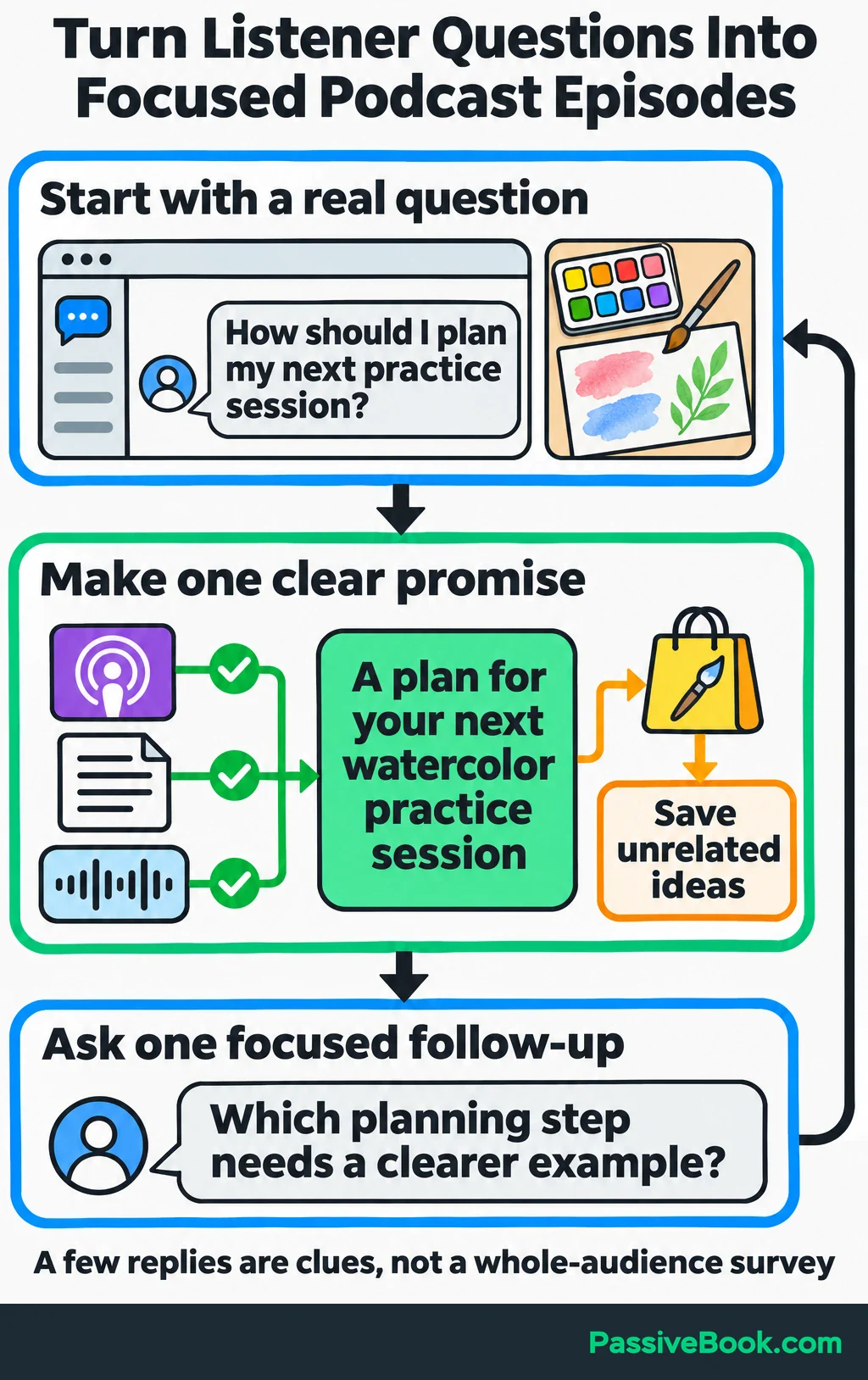
That promise gives you an editing rule. Keep material that helps deliver it and move unrelated ideas elsewhere.
Throughout this article, imagine you sell a downloadable watercolor practice workbook and use a podcast to teach related skills. The episode is “How to Plan Your Next Watercolor Practice Session.” The scripts and figures below are illustrations.
That title gives listeners a clearer reason to press play than “Watercolor Chat.” Your description should promise the same result, and the recording should deliver it. A supply-shopping update can wait for another episode.
After publishing, ask one focused question:
“Which step in planning your practice session needed a clearer example?”
Give listeners one place to answer, such as the episode comments. A few replies can reveal something worth explaining better, but they aren’t a survey of your whole audience.
3. Open With Useful Content
Begin with the problem, the payoff, and something the listener can use immediately. Keep the show’s name brief and move unrelated announcements out of the opening.
For the watercolor episode, replace extended music, greetings, and a business update with:
“Not sure what to paint next? Choose one skill to practice, such as brush control. Today, we’ll build a practice session around it.”
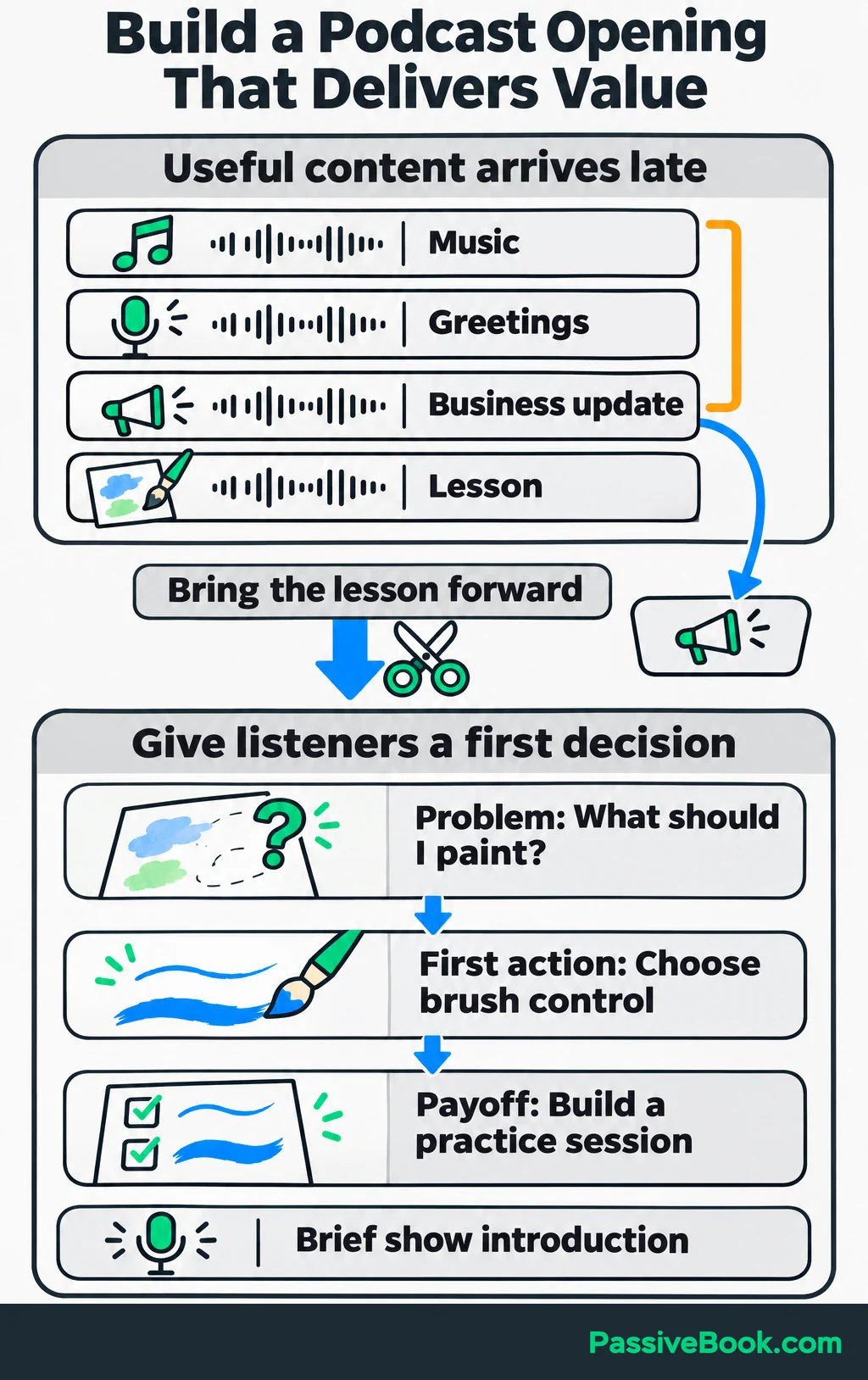
The listener already has a first decision to make. You can introduce the show and yourself without putting the lesson on hold.
I would write this opening after outlining the episode. Otherwise, it’s easy to promise a grand transformation and record a pleasant discussion that never quite gets there.
If your outline is ready but the opening still sounds like housekeeping, AI Podcast Studio can write a new one from your material. It also gives you a matching title and description so they promise the same thing.
Free AI Podcast Studio




For interviews, start with a question or short excerpt that connects directly to the promised answer. Introduce the guest with the background listeners need to understand that answer.
Spotify’s UnderUnderstood example compared an episode with an introduction of about a minute against a later-season episode with an introduction lasting a few seconds. The earlier episode lost around 10% of listeners near the start, while the later one showed a gentler decline. Because these were different episodes, the comparison doesn’t isolate the introduction’s effect. It gives you a sensible change to test, not a guaranteed result. See Spotify’s original comparison.
4. Give the Episode a Clear Path to the Answer
Outline the explanation in the order someone needs to use it. Establish the question, give the necessary context, work through the answer, and finish with an action.
Each segment should move the listener forward. If two segments do the same job, combine them.
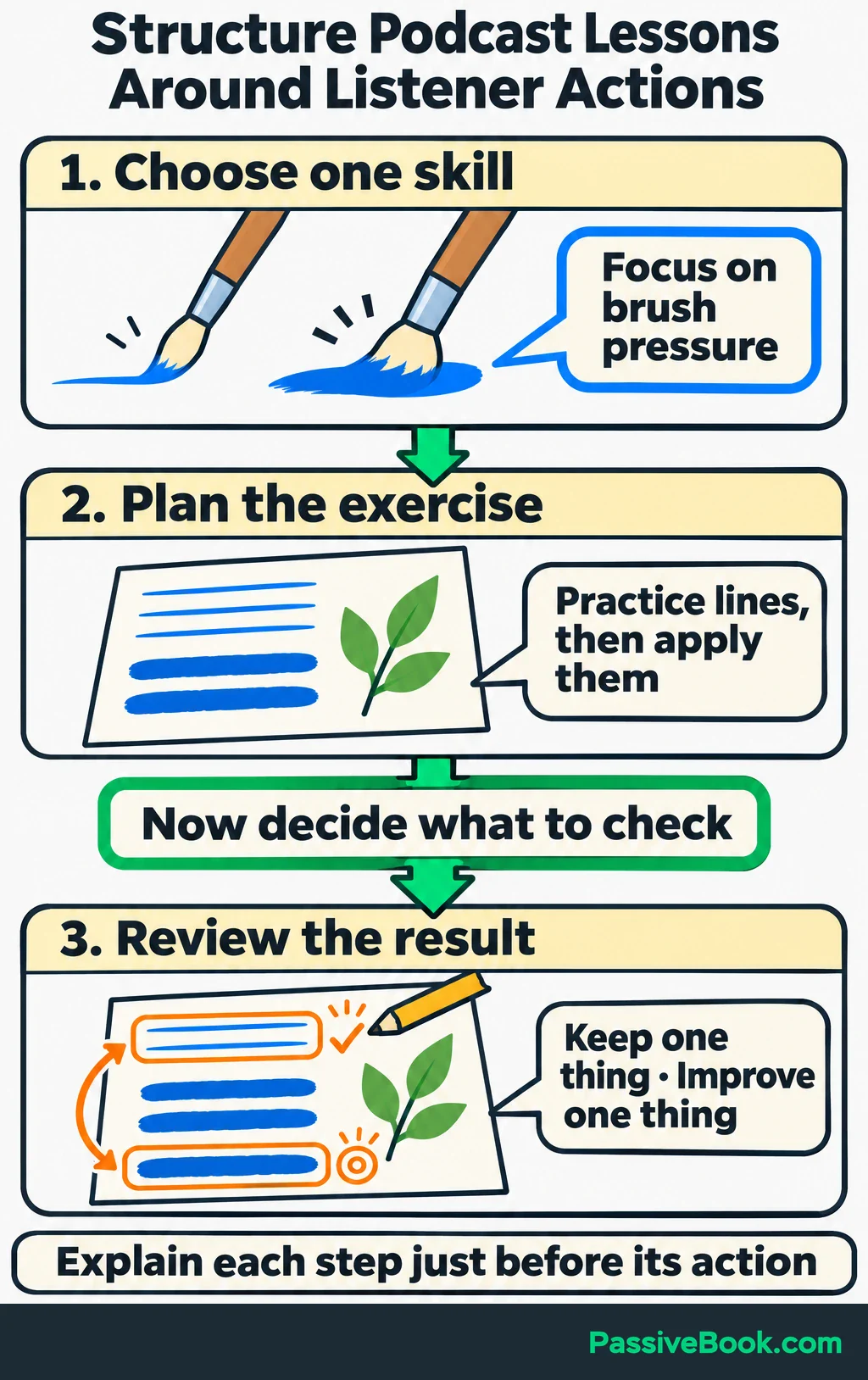
Here’s a practical structure for the watercolor episode:
| Segment | What You Explain | Short Spoken Transition |
|---|---|---|
| Choose one skill | Pick a specific focus, such as controlling brush pressure, rather than “get better at painting.” | “Now that you’ve picked brush control, let’s turn it into an exercise.” |
| Plan the exercise | Use a scrap sheet to practice rows of thin and thick lines, then apply them to a simple leaf. | “Your exercise is ready. Let’s decide what to check after you’ve practiced.” |
| Review the result | Compare the first and last rows, note what changed, and choose what to repeat. | “Write down one thing to keep and one thing to work on next time.” |
Put each explanation immediately before the action it supports. Listeners shouldn’t have to remember a pile of background information while waiting to discover why it matters.
Give useful answers throughout. Saving the entire payoff for the closing minutes makes the rest of the episode an unusually long waiting room.
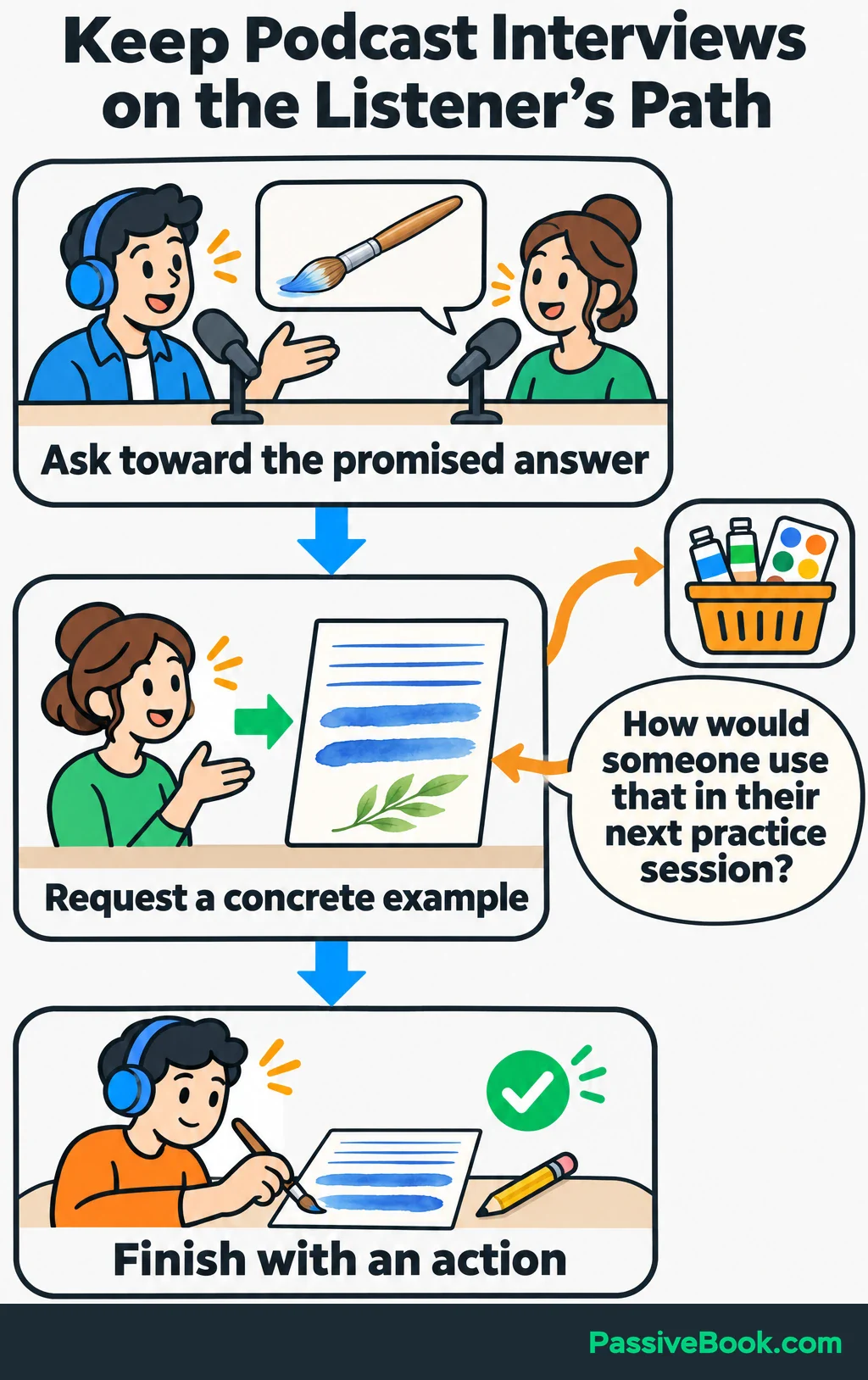
For interviews, organize questions around the same path. Ask for concrete examples and bring tangents back with a question such as, “How would someone use that when planning their next practice session?”
5. Edit for Progress Instead of a Target Length
There’s no useful reason to stretch a clear answer to fill half an hour. There’s also no prize for cutting the example that finally makes the answer understandable.
During your edit, ask:
- Does this passage add a new point?
- Does the example make a decision easier?
- Have I already explained this?
- Does the listener need this to answer the episode’s question?
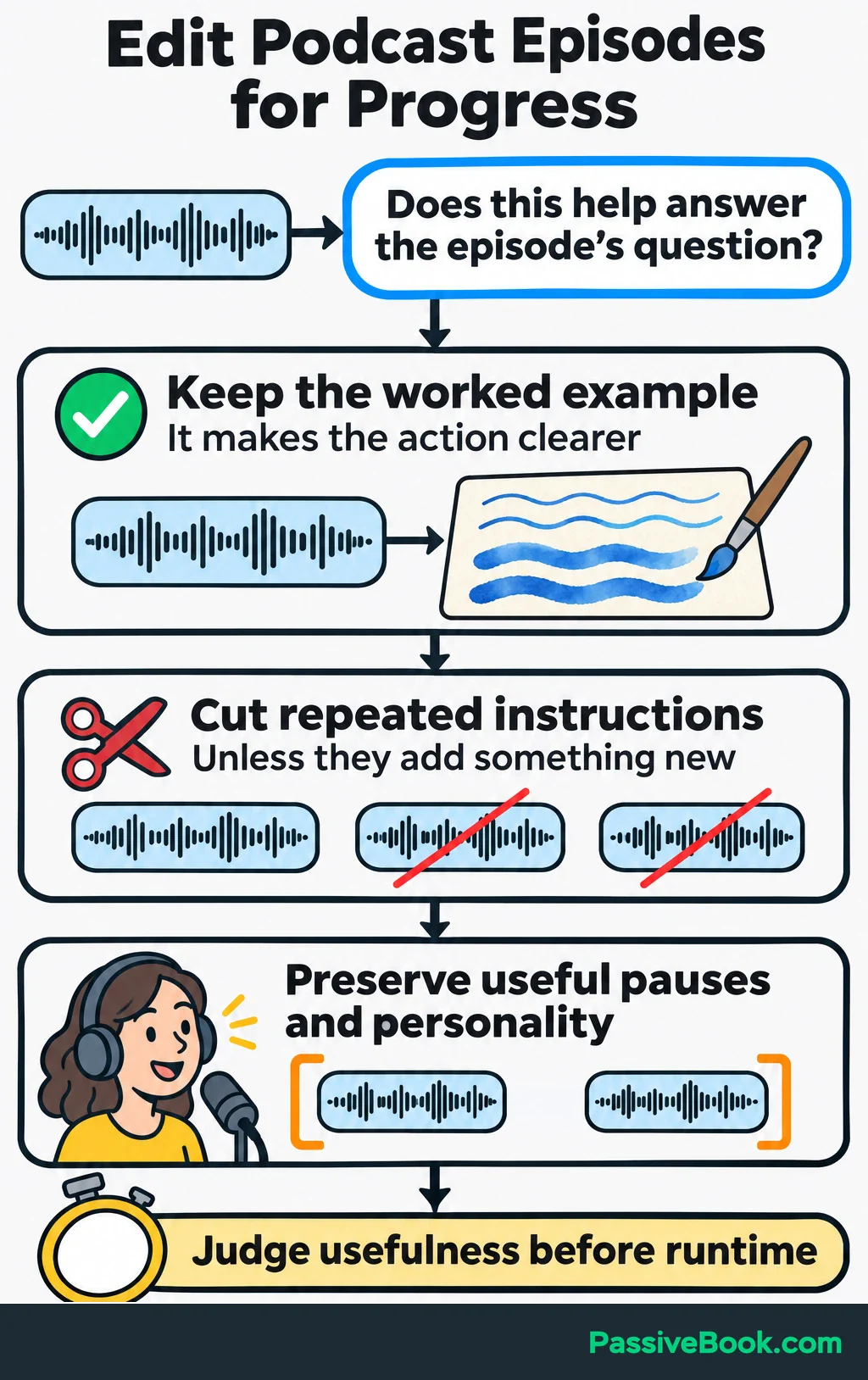
In the watercolor episode, keep the worked practice exercise and cut repeated reminders to “focus on one skill.” Once the listener understands that instruction, repeating it needs to add something.
Preserve helpful pauses, personality, and short stories. Editing every breath can make a conversation tiring in a different way. Read scripted sections aloud and replace sentences you keep stumbling over.
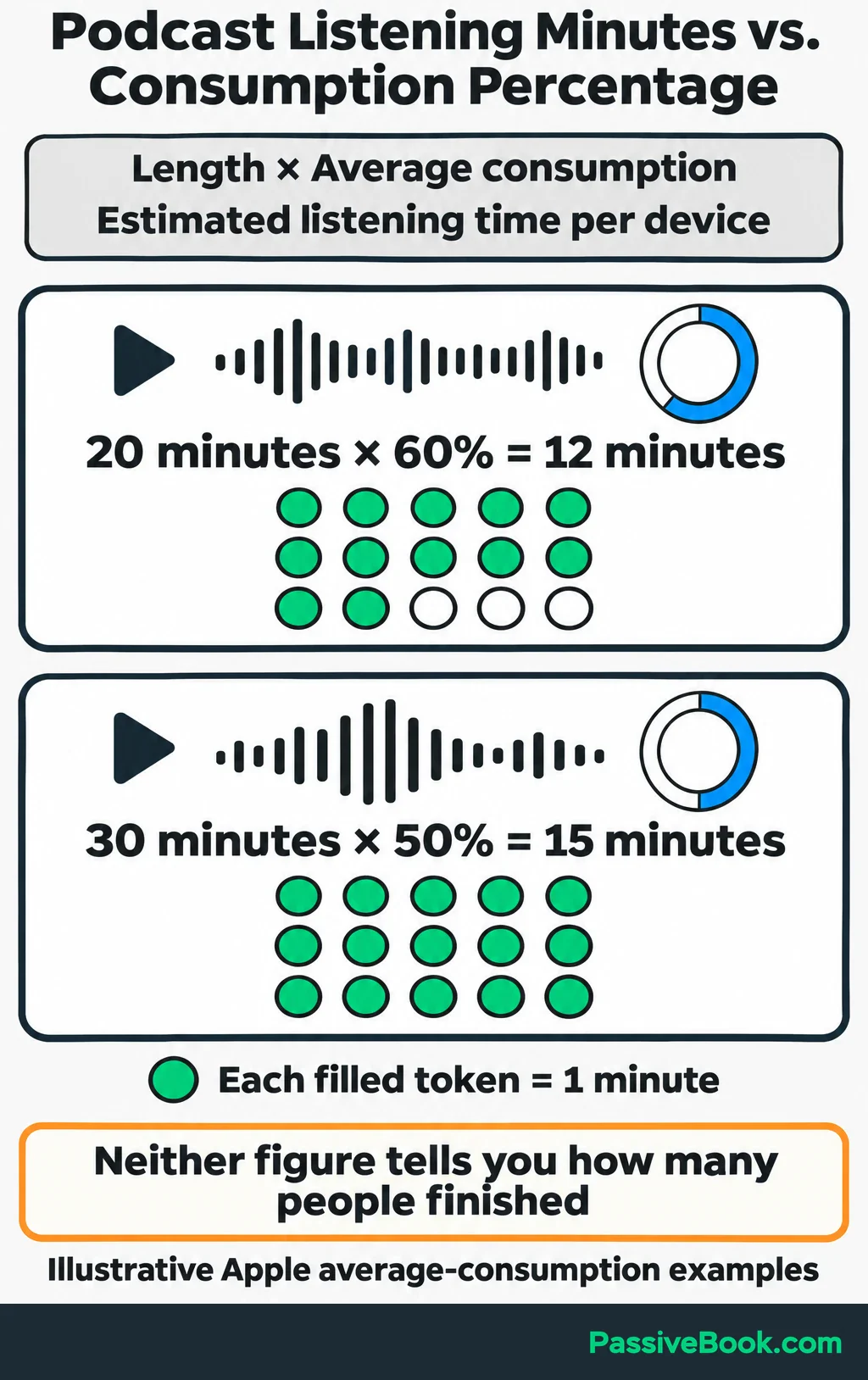
When comparing lengths in Apple Podcasts, look at listening time alongside percentages. To estimate average listening time per device, multiply the episode length by average consumption:
- A 20-minute episode at 60% average consumption represents 12 minutes.
- A 30-minute episode at 50% represents 15 minutes.
The shorter episode has the higher percentage, but the longer one records more listening time per device. Neither figure tells you how many people finished.
Judge the edit by whether listeners reach the useful material and stay with the explanation.
6. Make Every Voice Easy to Hear
Before recording the full episode, make a short test and listen through headphones. Check for background noise, room echo, harsh crackling, and voices that are much quieter than others.
Start with fixes that cost little:
- Record in a quiet room with curtains, cushions, or other soft furnishings.
- Keep a steady distance from the microphone.
- Move away from fans, open windows, and noisy appliances.
- Check a remote guest’s recording before beginning the conversation.
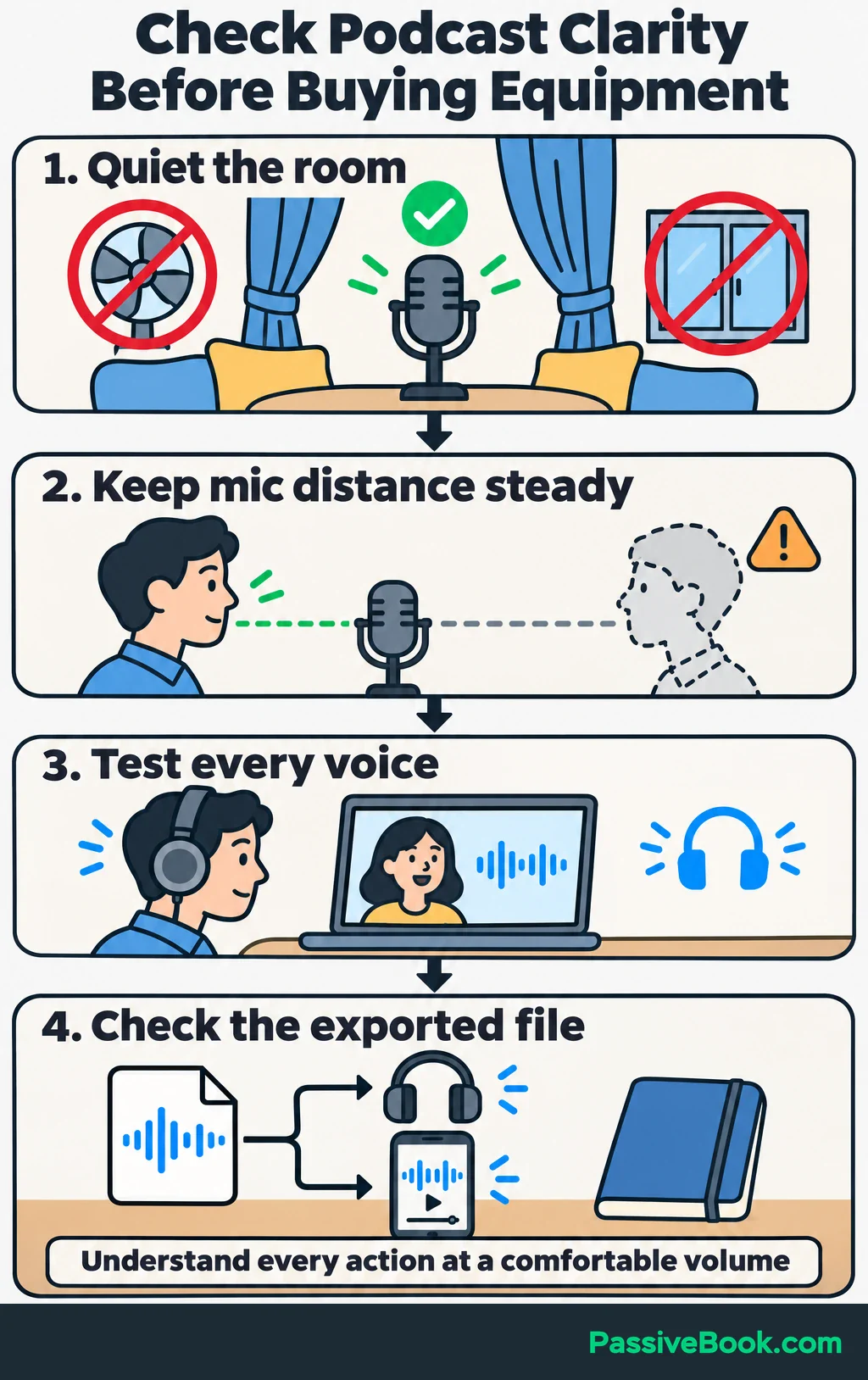
During editing, balance voices and keep music below speech. Pay particular attention where a guest, recorded promotion, or music track joins the host’s audio. Those joins can hide unpleasant volume changes.
For the watercolor episode, listen to the exercise instructions without looking at your notes. Can you understand each action at a comfortable volume? The explanation needs to work through sound alone.
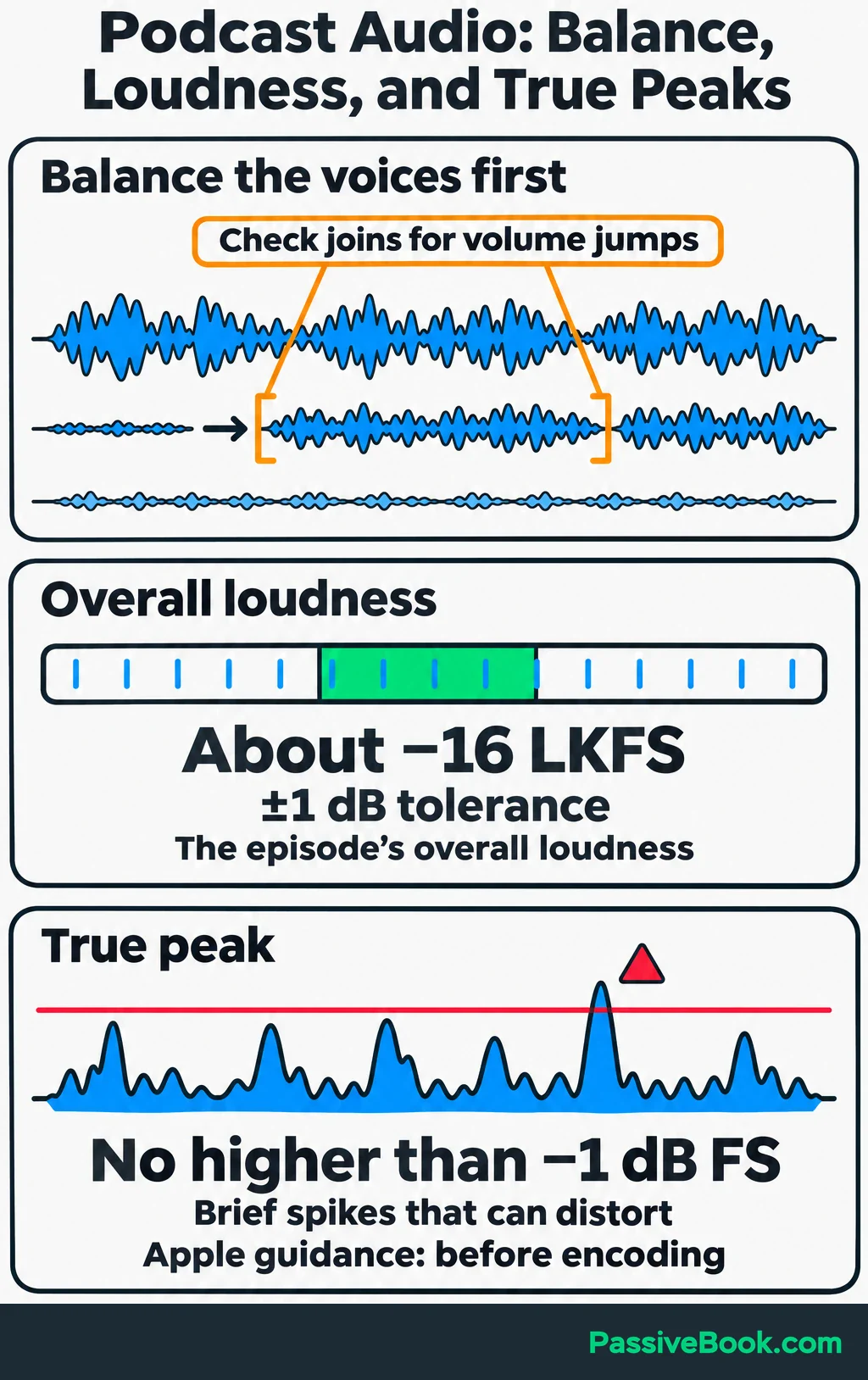
Use your editor’s loudness meter during final processing. Apple recommends overall loudness around −16 LKFS, with a ±1 dB tolerance, and true peaks no higher than −1 dB FS before encoding. LKFS describes the episode’s overall loudness; true peak measures brief spikes that could cause distortion. Apple provides the audio-level guidance here.
Finally, check the exported file on ordinary headphones and a phone speaker. I would buy equipment only after identifying a problem that room changes, microphone placement, or level adjustments cannot solve.
7. Place Calls to Action at Natural Breaks
Finish a useful point before making a substantial promotional request. An explanation is harder to follow when a sales pitch cuts through its middle.
Choose one main action for each promotional passage and explain why it helps.
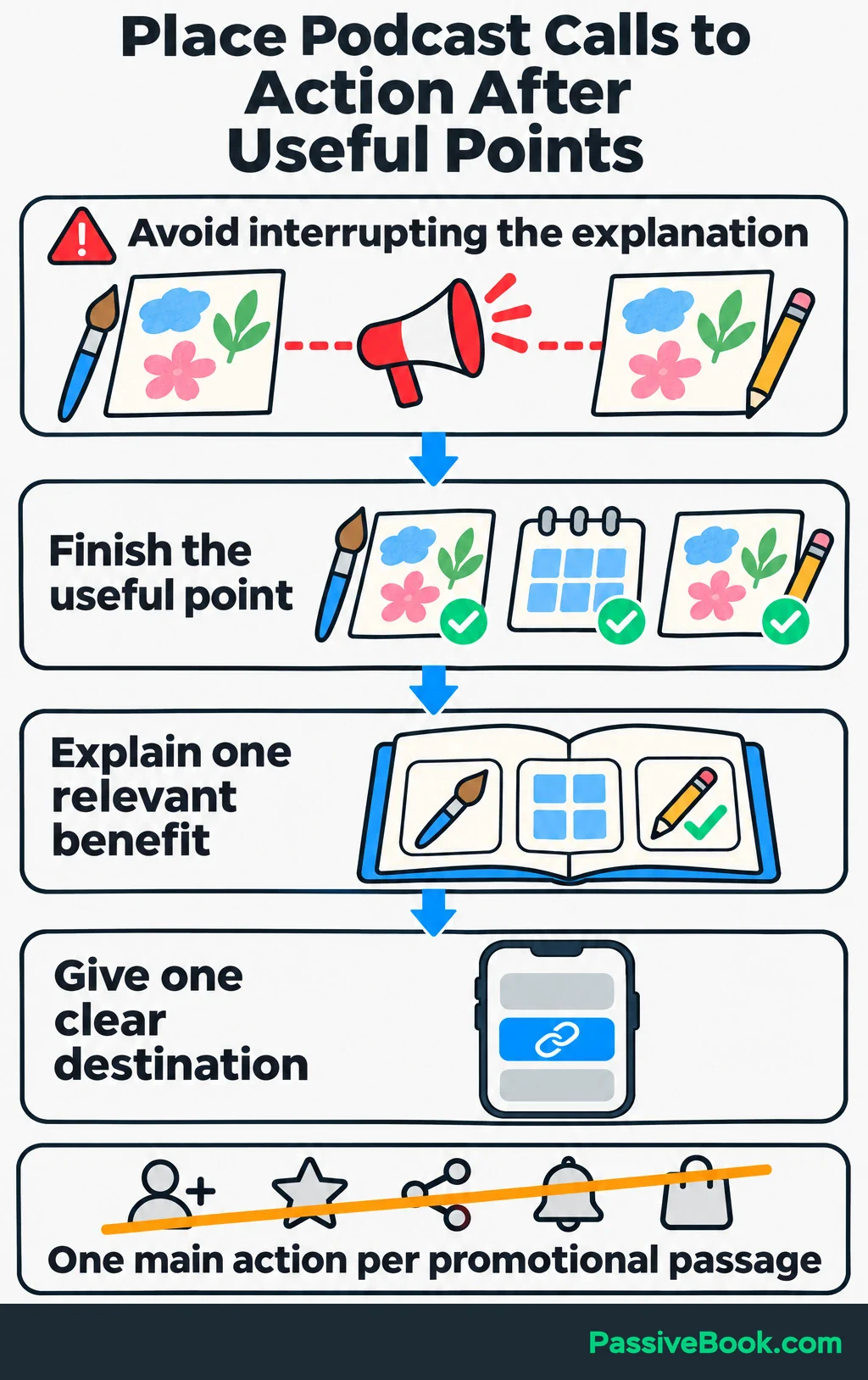
In the watercolor episode, introduce the workbook after explaining the practice plan:
“If you want a place to record your skill, exercise, and review notes, the practice workbook brings those prompts together. You’ll find it through the workbook link in the show notes.”
Give listeners a short, memorable address too, if you have one. Avoid adding requests to follow, review, share, subscribe, and buy in the same breath. That is a shopping list, not a clear next step.
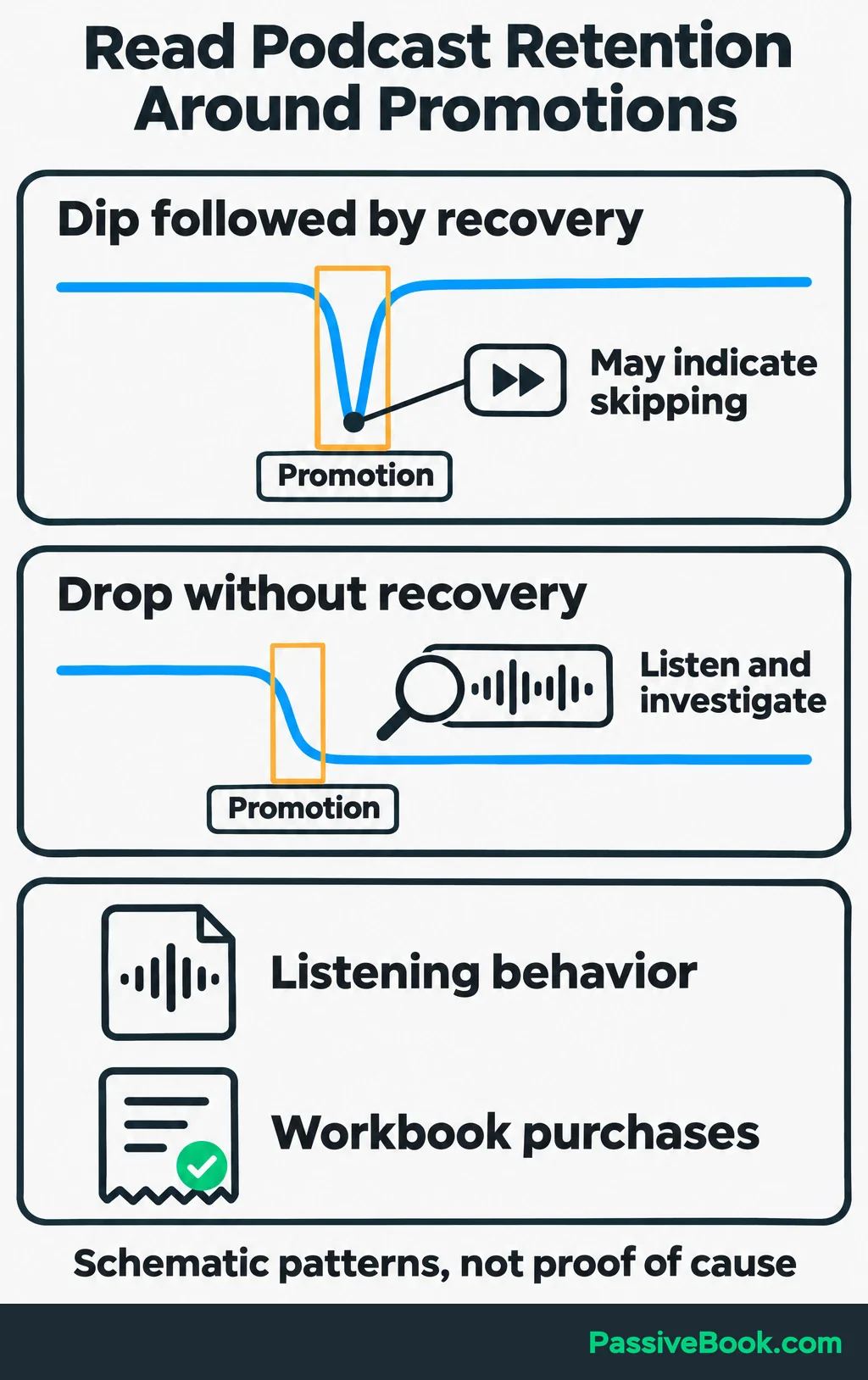
Inspect the retention curve around the promotion. A dip followed by recovery can indicate that people skipped the passage rather than abandoned the episode. Spotify explains this pattern in its advertising examples.
Track workbook purchases separately. You need to see both whether the request earns sales and what happens to listening around it.
8. Recommend One Relevant Next Episode
Resolve the current promise before recommending another listen. People should finish with the answer they came for.
Then choose one existing episode that answers the next likely question. Explain the connection rather than sending listeners into the archive without directions.
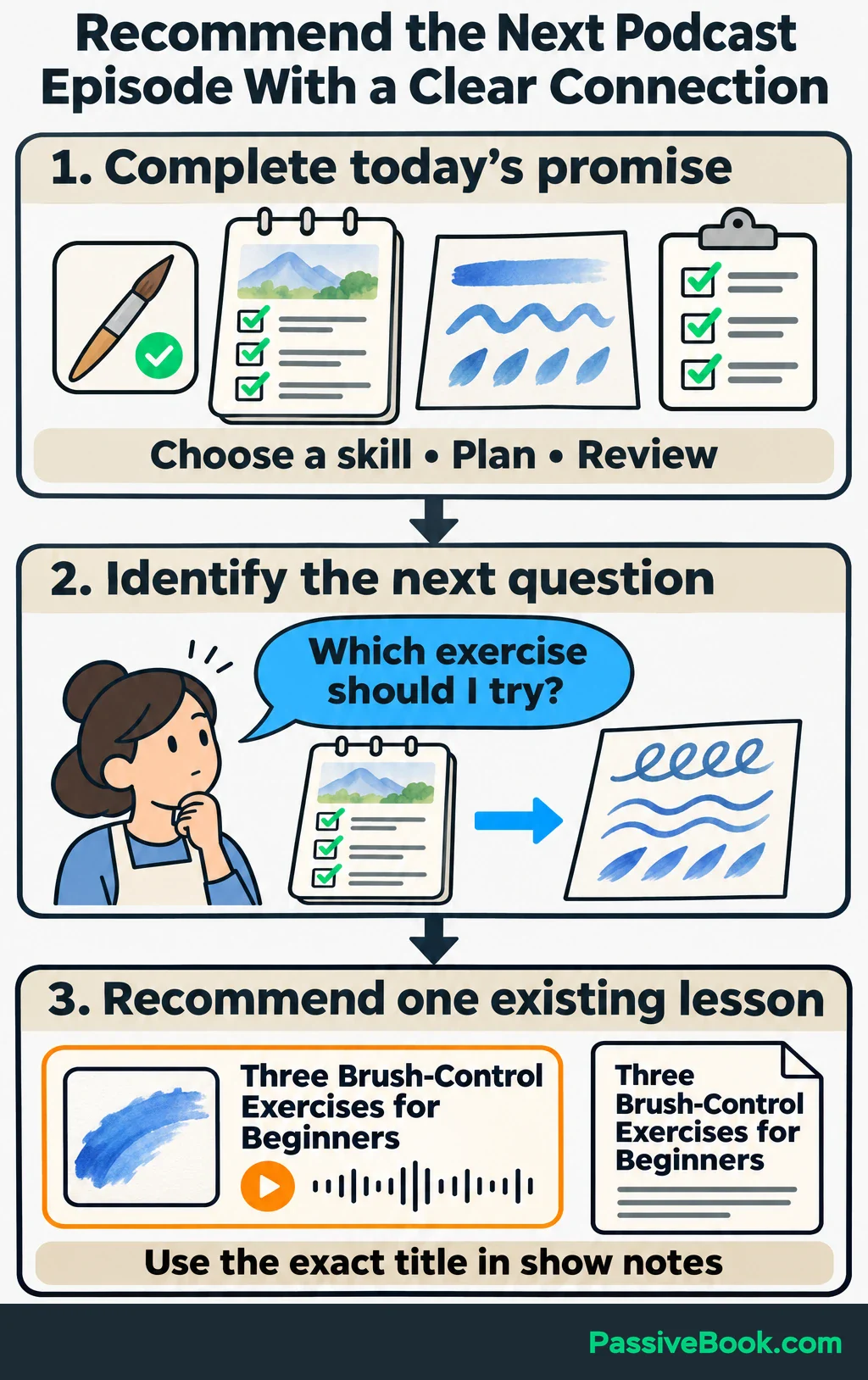
For the watercolor example, the closing could recap the plan and point toward a related lesson:
“Choose one skill, plan an exercise, and write down what you want to repeat. For an exercise to put into that plan, listen next to ‘Three Brush-Control Exercises for Beginners.’”
Use its exact title in the show notes so people can find it easily. A specific next lesson gives them a clearer reason to continue than “Check out our other episodes.”
9. Publish on a Schedule You Can Sustain
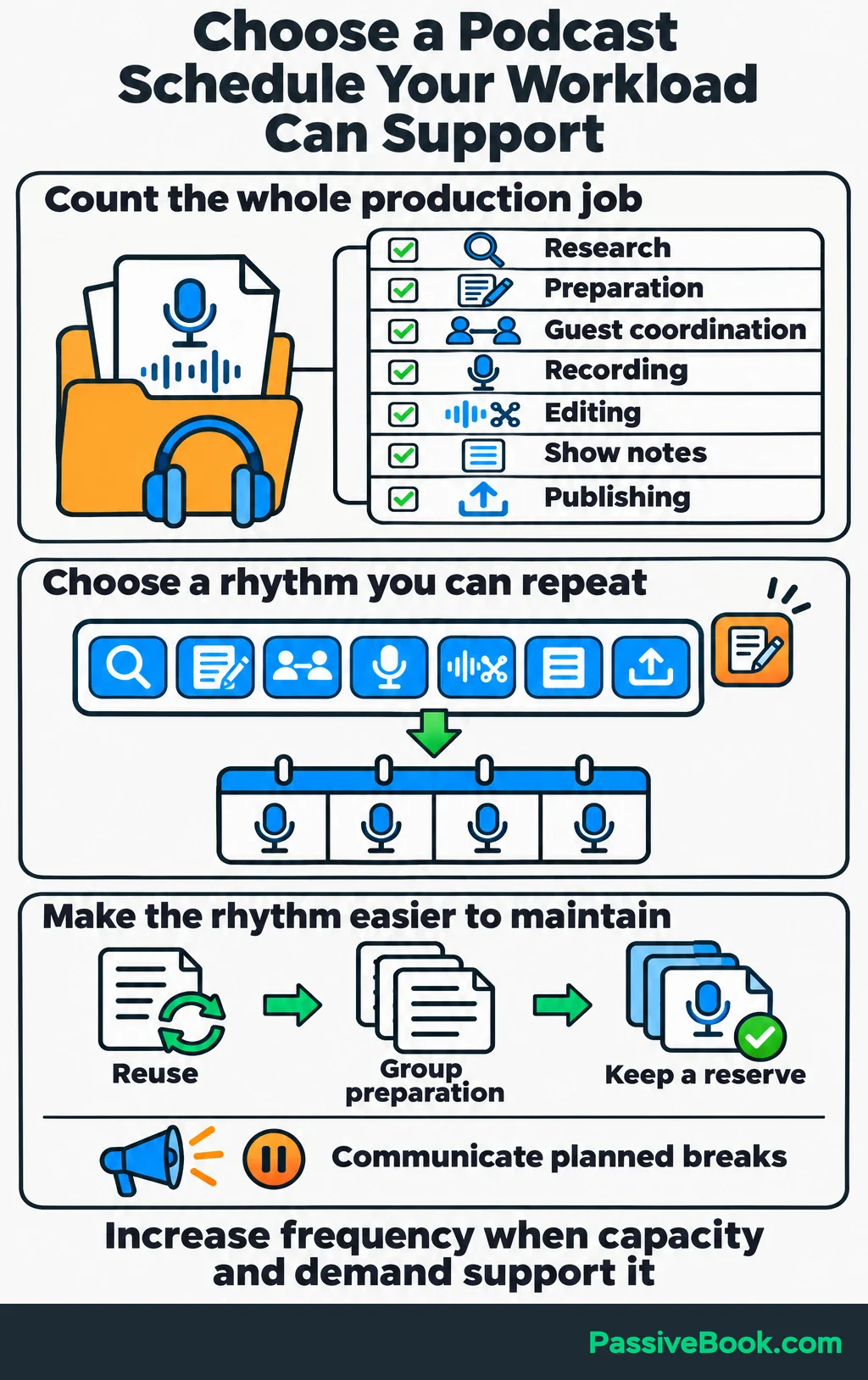
Estimate the whole production job before choosing your schedule. Include research, preparation, guest coordination, recording, editing, show notes, and publishing.
I would choose a slower rhythm I could maintain comfortably before committing to weekly episodes. Frequency is a promise that keeps coming due.
I learned the workload lesson with a membership site. After six months building it alongside corporate work, I couldn’t sustain the ongoing content demands and abandoned it. That’s why I would estimate the work for a month of episodes before committing to a schedule.
Make production easier to repeat:
- Reuse an outline and recording checklist.
- Group research and preparation for related episodes.
- Keep finished episodes in reserve when practical.
- Announce planned breaks and schedule changes clearly.
Keep the show’s subject and promise recognizable across releases, too. The watercolor listener should know what kind of help to expect next.
Review return listening across releases before increasing frequency. Publish more often when you have both the capacity and evidence of demand. Filling a calendar is easy; keeping every entry useful is the work.
What Next?
Open one recent episode’s retention graph and listen around its first noticeable decline. Choose one change to test in your next comparable recording, and write down what you’ll measure.
Use the social buttons to share this guide when your podcast conversations turn to keeping the listeners you already attract.
Which part of your episode would you change first after checking the graph? Share your answer in the comments, and bring any other questions there too.
Share this post with your friends & followers:

