Your latest episode gets downloaded, but the question you asked at the end gets no replies. Next week, you record again and wonder whether anyone will come back.
A download can’t answer that. Podcast download measurement relies on server logs, so it doesn’t establish that someone finished listening. IAB Tech Lab explains this measurement distinction.
That gap makes it hard to decide where your limited podcasting time should go. The episode examples below show how to earn replies and repeat listening through the show itself and a manageable promotion routine.
Find Out What Listeners Want From Your Show
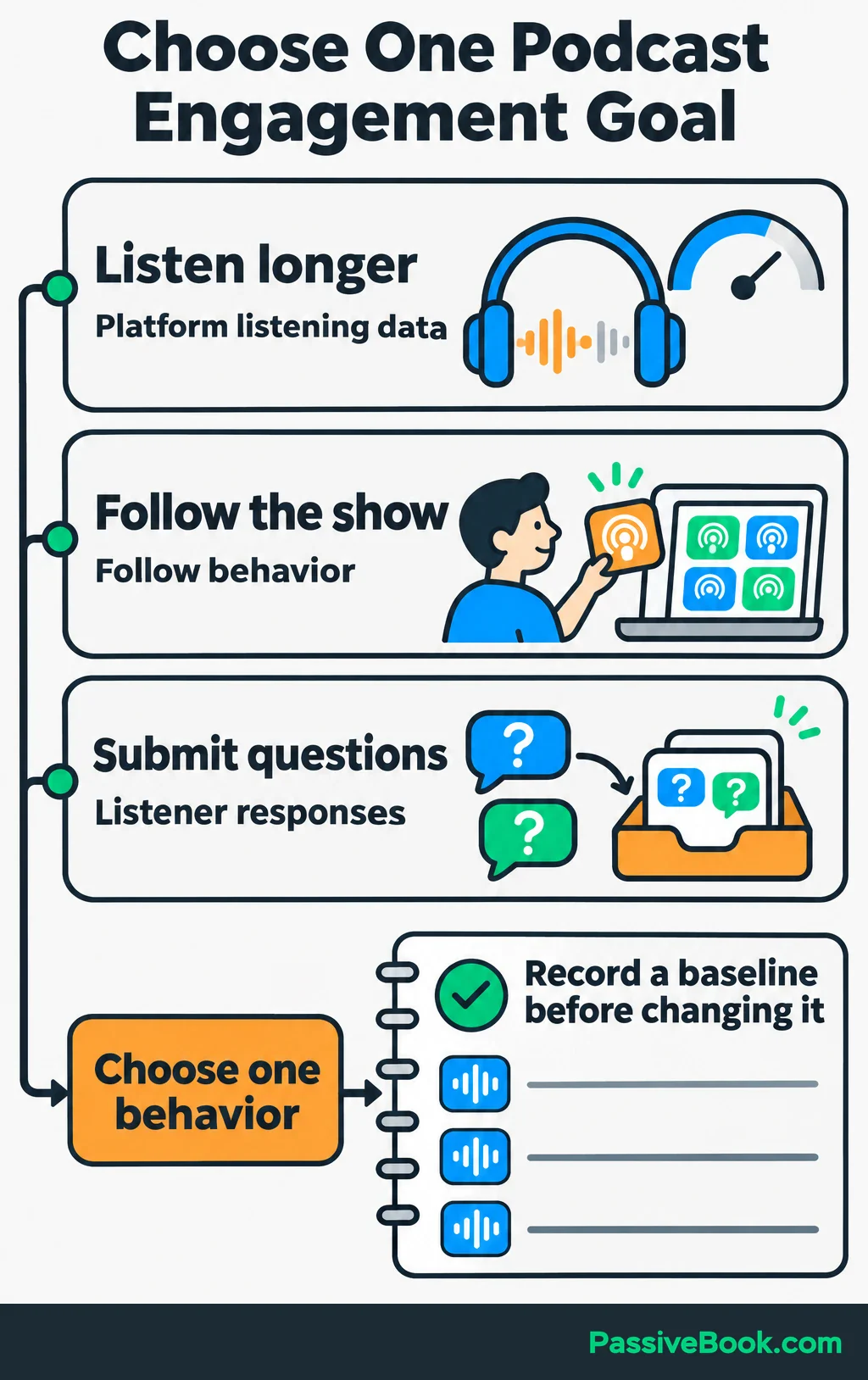
Start by choosing one behavior to improve. That might be listening longer, following the show, or submitting questions. Record the current result for a few recent, comparable episodes before changing anything.
Then talk to listeners about what they actually experienced. A short email exchange is enough to begin. Ask one question at a time:
- What brought you to the show?
- Which episode helped you do something, and what did you do afterward?
- Where did you lose interest in the last episode you heard?
- What would you miss if the show stopped?
In his interview on audience research, audio researcher Tom Webster recommends starting with conversations before surveys to understand why people choose your show.
Keep a simple list of recurring problems from replies, customer questions, and relevant community discussions. If you have little feedback, speak to people already trying to solve the problems your show covers. Ask about their experience rather than whether they like your podcast idea.
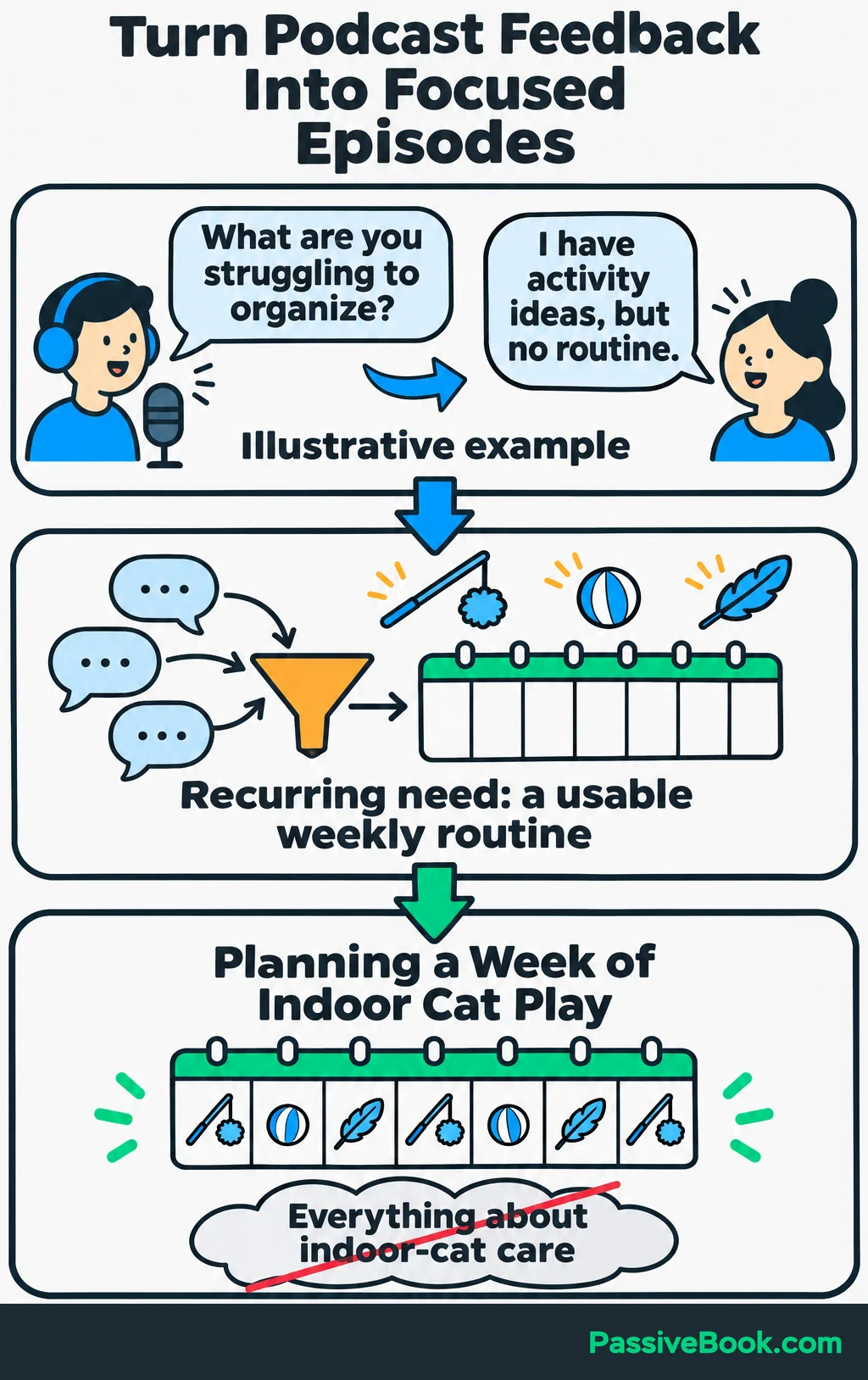
For the running example, imagine your shop sells printable indoor-cat activity planners and supports them with a free podcast. The episode we’ll follow is “Planning a Week of Indoor Cat Play.” Its copy and figures are illustrations.
Suppose people keep asking how to organize their activity ideas into a routine. That gives the episode a clear job: help listeners make a usable weekly plan. Covering everything about indoor-cat care would bury that answer.
Make Each Episode Worth Finishing
Deliver the Promised Value Early
Make the title, opening, and explanation answer the same question. Tell listeners what they’ll be able to do, then begin helping them do it.
For the example episode, suggested opening wording could be:
“Got plenty of cat-play ideas but no routine? Let’s organize them into a simple plan for the week, starting with the time you actually have.”
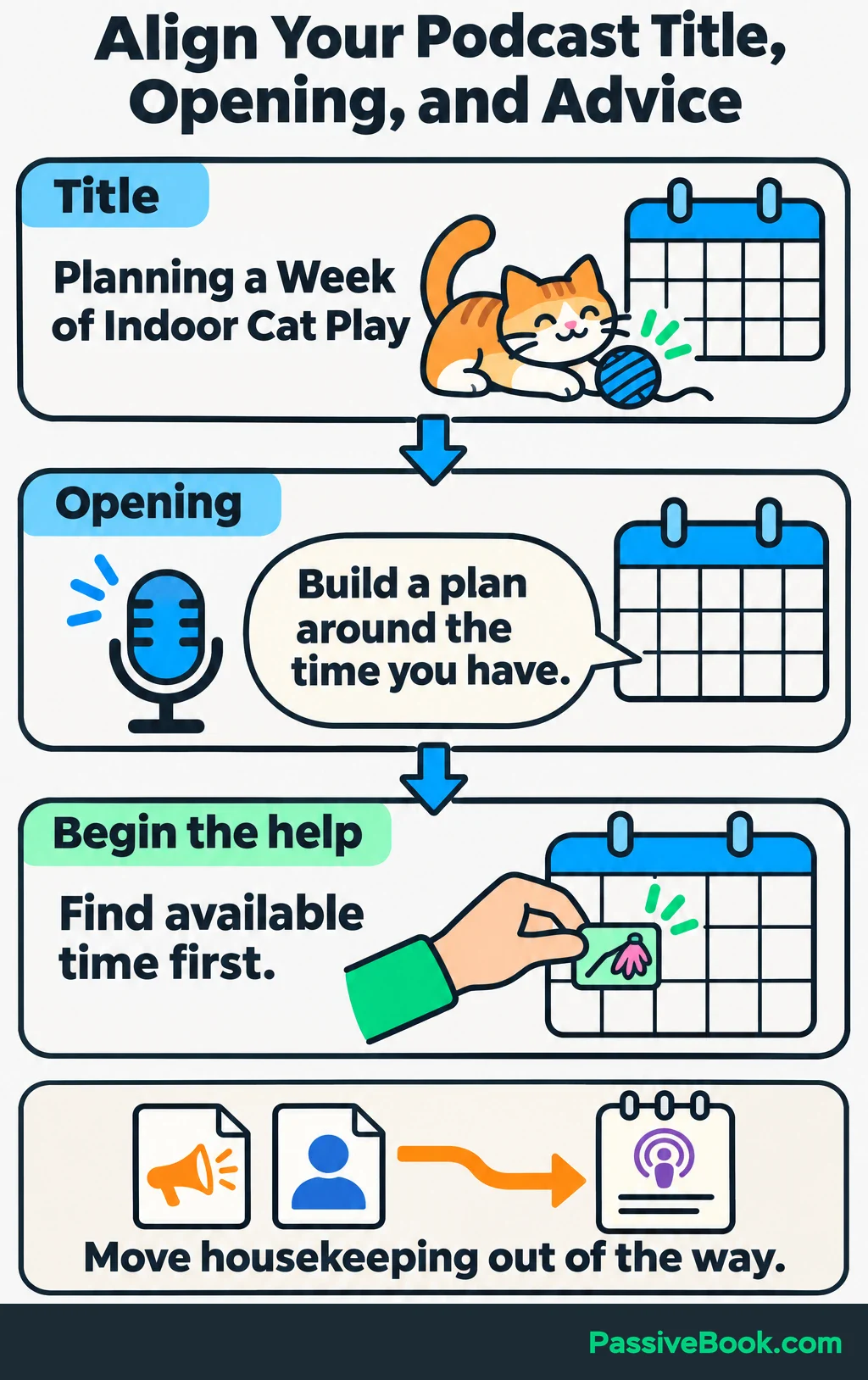
The next part should explain how to build that plan. Don’t follow a useful opening with several minutes of announcements.
I would move most housekeeping into the notes or the closing. Introduce a guest with the context listeners need to understand their advice, and save the full biography for the episode page.
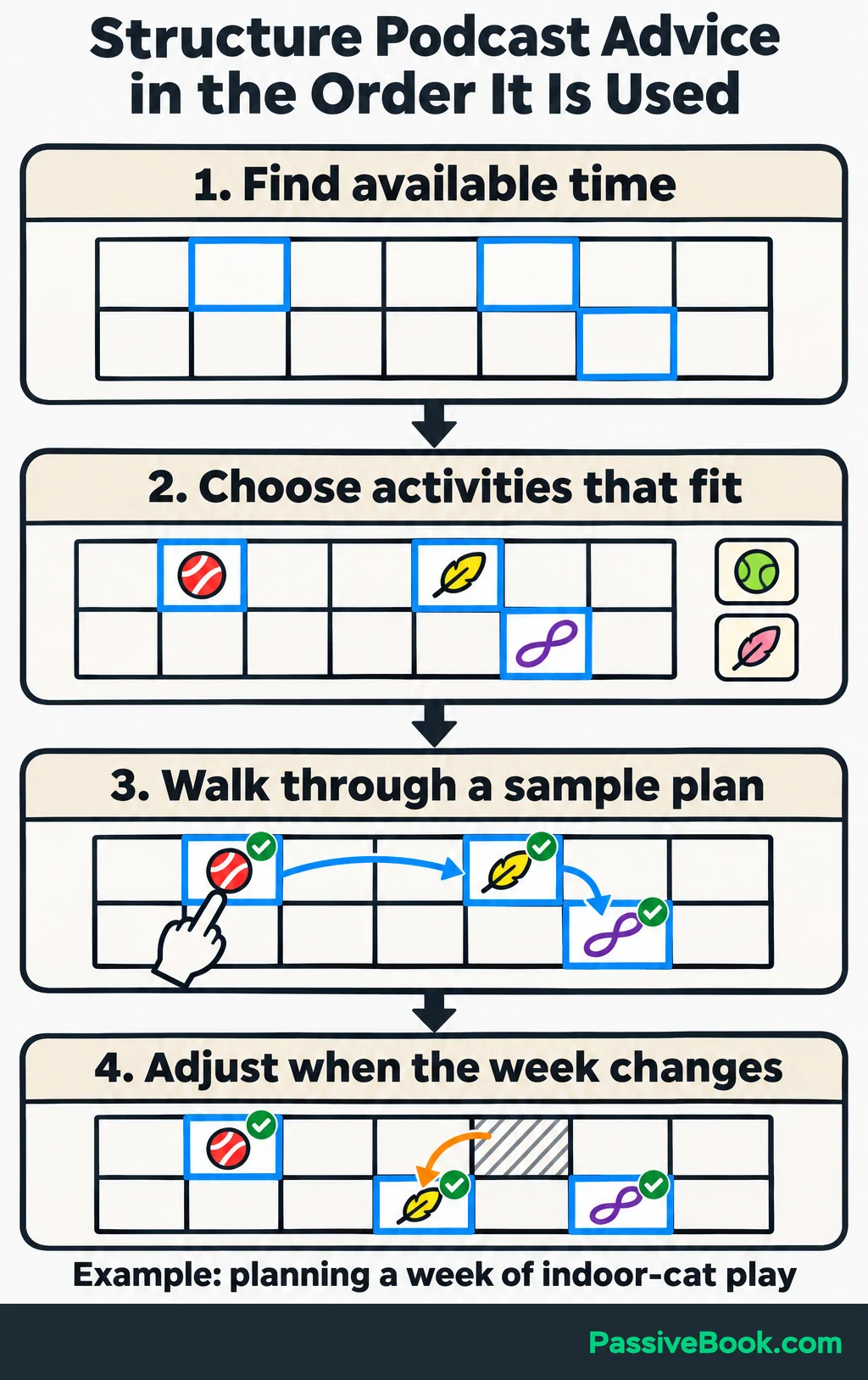
Arrange the explanation in the order someone will use it:
- Identify the time available during the week.
- Choose activities to put into those slots.
- Walk through a sample plan.
- Explain how to adjust it when the week changes.
That sequence gives each segment a reason to exist. Listeners can follow the decisions instead of collecting another pile of ideas.
Edit for Progress and Personality
During editing, ask what each segment helps the listener understand or do. Keep material that explains a decision, resolves a concern, or shows how to apply the advice.
On one of my digital-product sites, I once kept rewriting a lesson’s examples because customers were struggling to use it. Their questions eventually showed me that I had explained the options before explaining how to choose between them. I moved that decision earlier. More examples hadn’t been the missing piece.
I use that same check when reviewing an explanation: does the listener have the information needed for the next part?
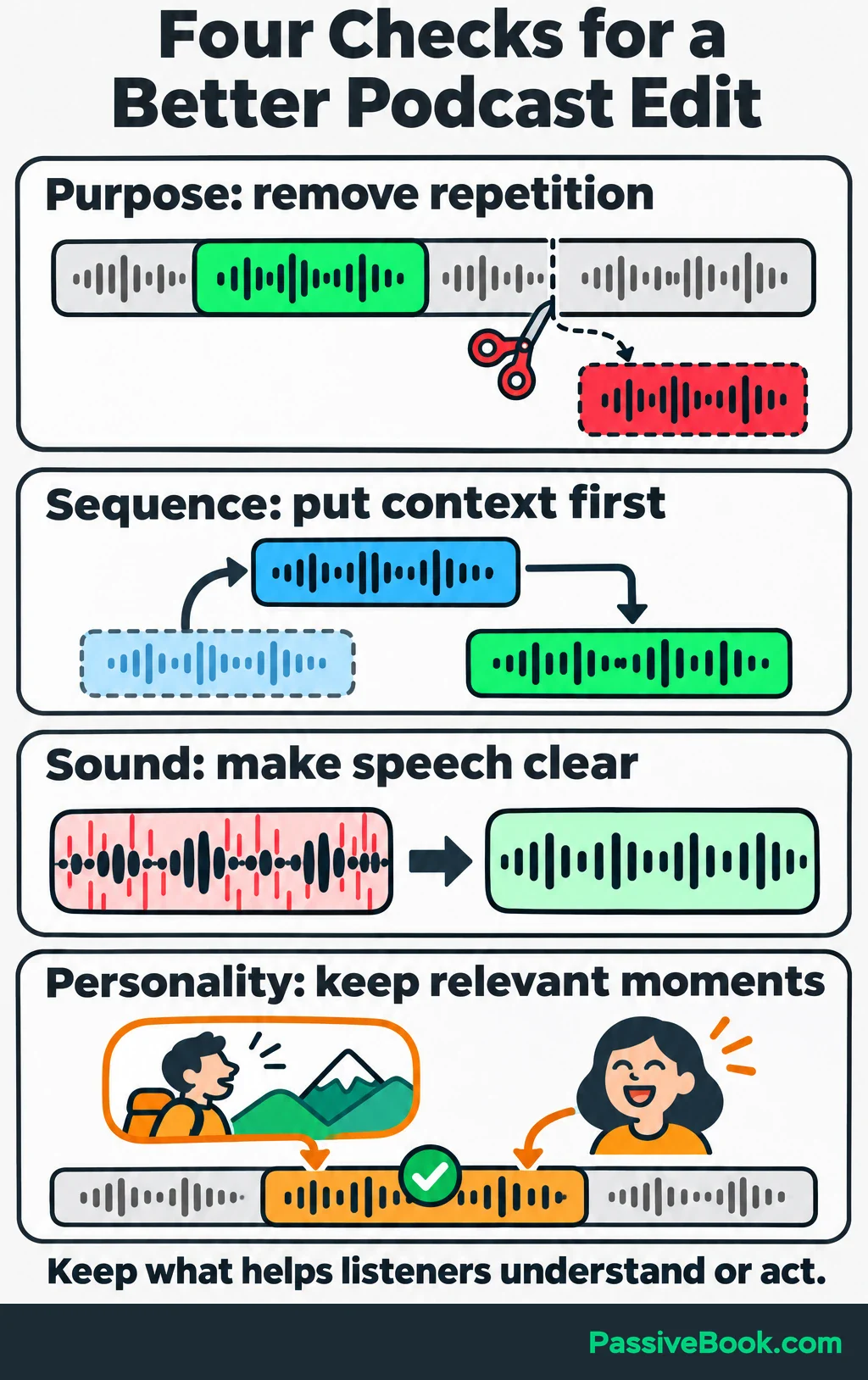
For an audio edit, check four things:
- Purpose: Remove repeated explanations and tangents that don’t serve the episode’s promise.
- Sequence: Move essential context before the advice that depends on it.
- Sound: Fix distracting noise and large volume changes so speech is easy to understand.
- Personality: Keep relevant stories, reactions, and humor that make the explanation enjoyable.
A clear transition can do more than another round of trimming:
“We’ve chosen the time slots. Now let’s decide what belongs in them.”
For interviews, prepare questions around the promised outcome. If an answer drifts, bring it back with a concrete follow-up: “How would someone use that when planning the coming week?”
Let the material determine the length. Finish when you’ve delivered the promised result, and close with a brief takeaway and the next action. A shorter episode still needs a point.
Give Listeners One Clear Next Action
Choose one primary call to action for each episode. Put it beside a useful moment, explain why it matters, and give listeners an easy way to act.
For the weekly play-plan episode, I would choose replies. The goal is to learn what prevents people from using the plan.
Suggested wording:
“What usually disrupts your cat’s play routine? Reply to this episode’s email with one obstacle. I’ll use the recurring problems to plan a follow-up episode.”
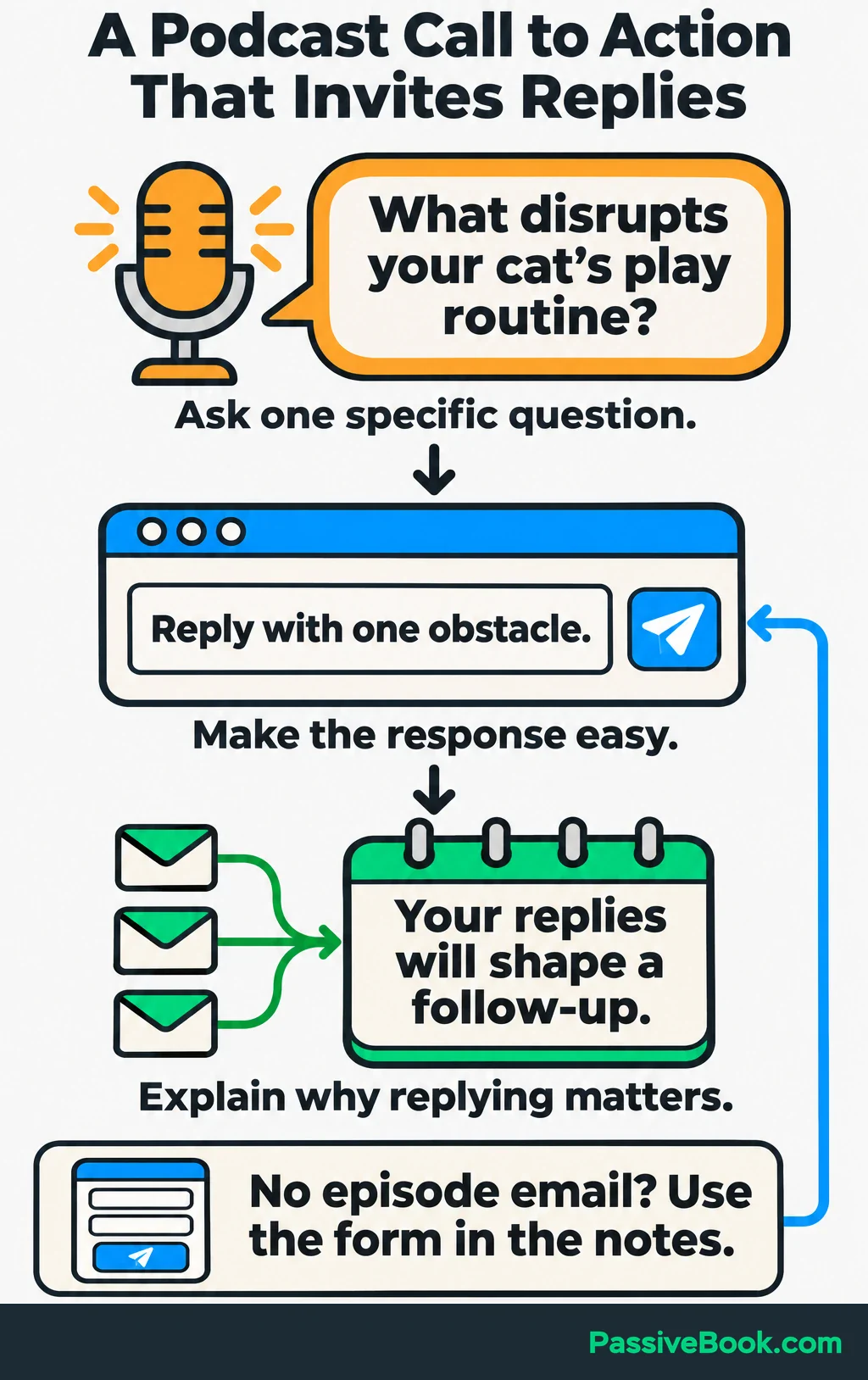
That asks for a sentence rather than a prepared story. Listeners who don’t receive your emails can use a short response form linked in the notes.
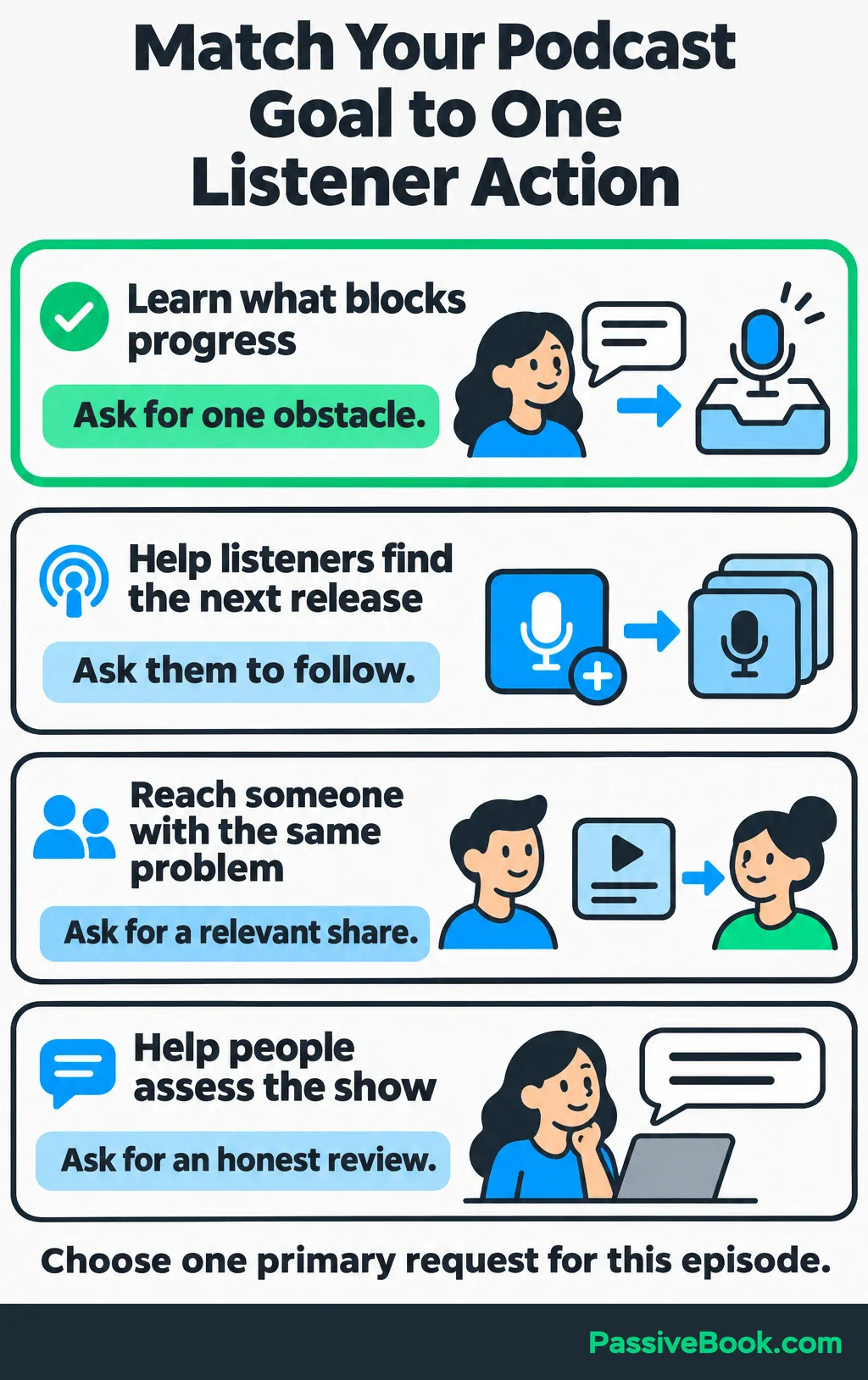
Other goals need different requests. Choose the one that fits the episode:
| Goal | Suggested wording |
|---|---|
| Encourage follows | “Follow the show in your listening app so the next planning episode is easier to find.” |
| Encourage sharing | “If a friend keeps asking how to organize indoor-cat play, send them this episode. The link is in the notes.” |
| Request a review | “If this episode helped, leave an honest review describing what you found useful. That gives people considering the show something concrete to go on.” |
On Apple Podcasts, following is free and differs from buying a subscription. Use the right word so your request doesn’t sound like a purchase. Apple explains follows and subscriptions here.
According to Apple’s ratings and reviews guidance, reviews can help prospective listeners assess a show, but they don’t influence its Charts or Search results. Ask for useful feedback rather than promising an algorithm boost.
These are wording options to adapt, not requests to squeeze into every closing. Five calls to action create five opportunities to postpone deciding.
If you’re struggling to word the invitation for your own episode, AI Podcast Studio can draft it from a few notes. You’ll also get a matching email, so listeners hear the same clear request in both places.

Free AI Podcast Studio




Turn Listener Responses Into an Ongoing Conversation
Start with one response route you can maintain. I would choose email before opening a separate community because it lets people respond privately and briefly.
Use an open question when you want to discover unexpected problems. Use a poll when you already know the options and need help choosing between them.
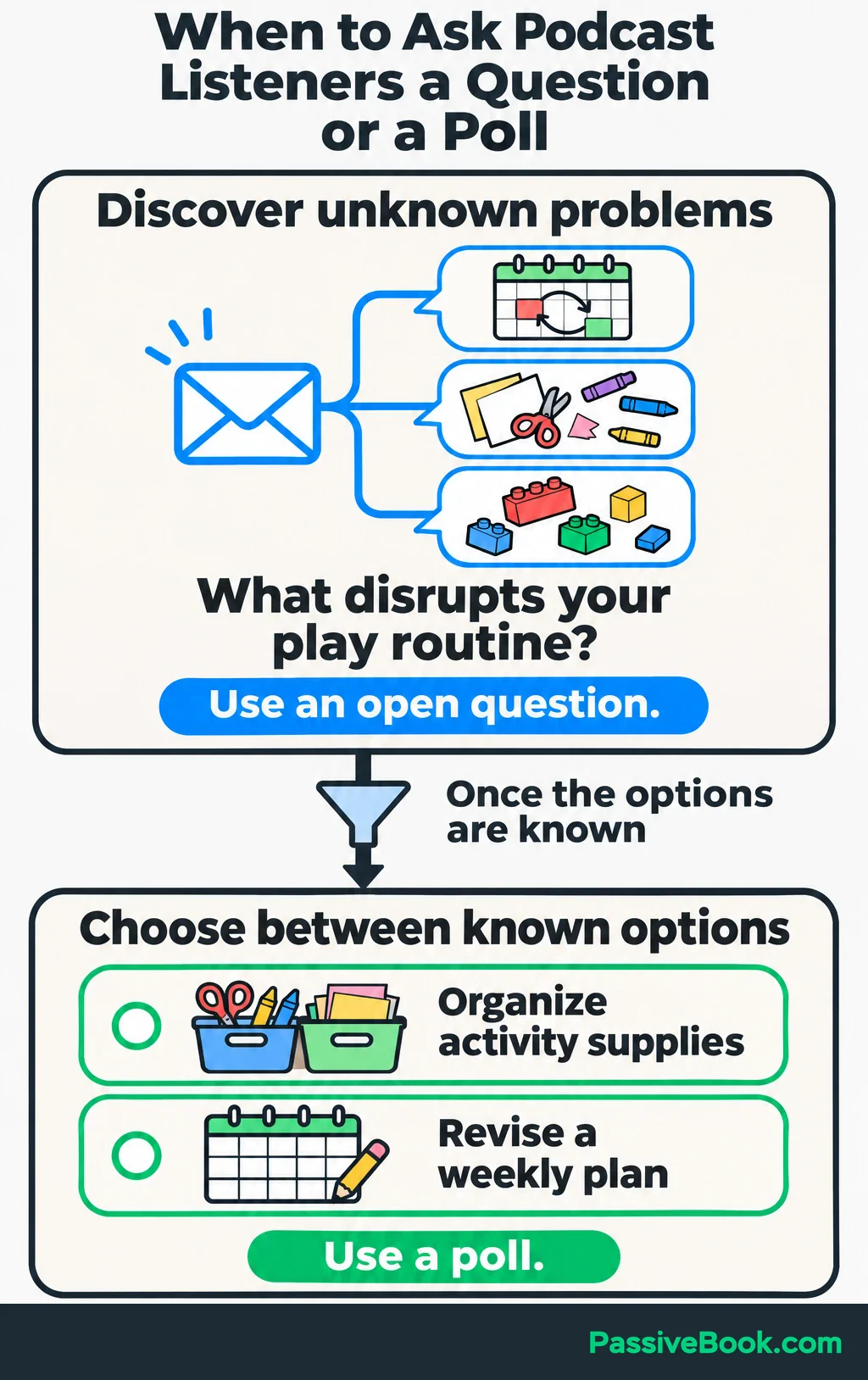
For example, an open question can reveal what disrupts a play routine. A later poll could ask whether listeners want the next episode to cover organizing activity supplies or revising a weekly plan.
Then show that contributing led somewhere:
- Acknowledge the reply and respond to the actual point.
- Group recurring concerns in your planning notes.
- Address a useful question in a later episode.
- Tell listeners how their feedback shaped that episode.
A follow-up might begin:
“Several replies mentioned that the plan falls apart when the week changes. Let’s work through how to revise it without starting again.”
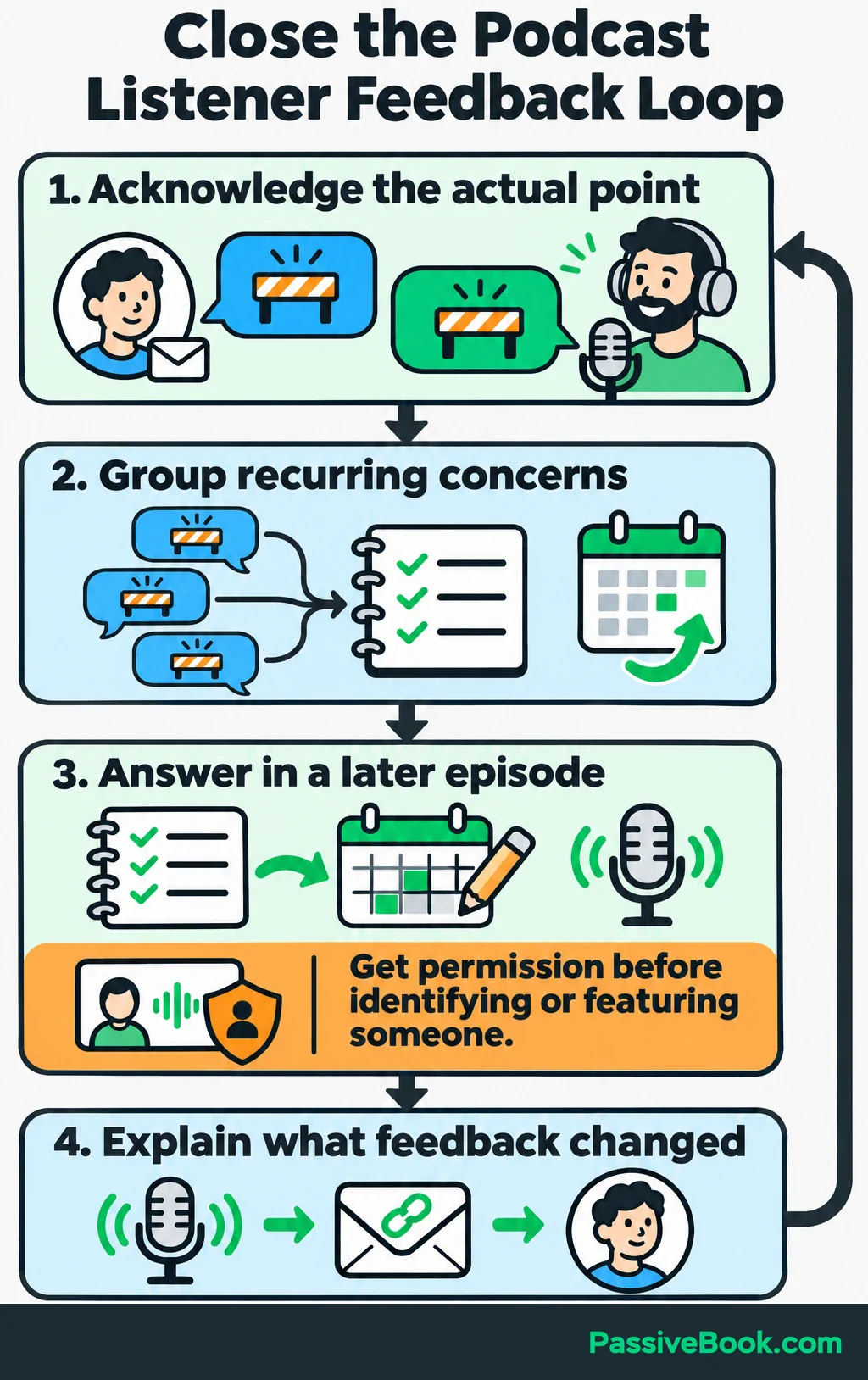
Get permission before identifying a listener or publishing their story or recording. You can discuss a recurring theme without attaching someone’s name to it.
I would wait to launch a separate community until listeners want to talk with each other and you have time to support that conversation. Give it a clear purpose, such as a weekly planning check-in.
I abandoned a membership project after six months of building it alongside corporate work because its continuing content demands were unsustainable. That experience makes me cautious about adding a space that needs feeding every week. A community deserves a place in the business because people use it, not because the launch checklist had an empty box.
Give Listeners a Reason to Return
An individual episode needs a useful promise, and the show needs a continuing one.
For the planner shop, that promise could be helping listeners organize indoor-cat activities into routines they can manage. Future episodes should keep serving that need from different angles.
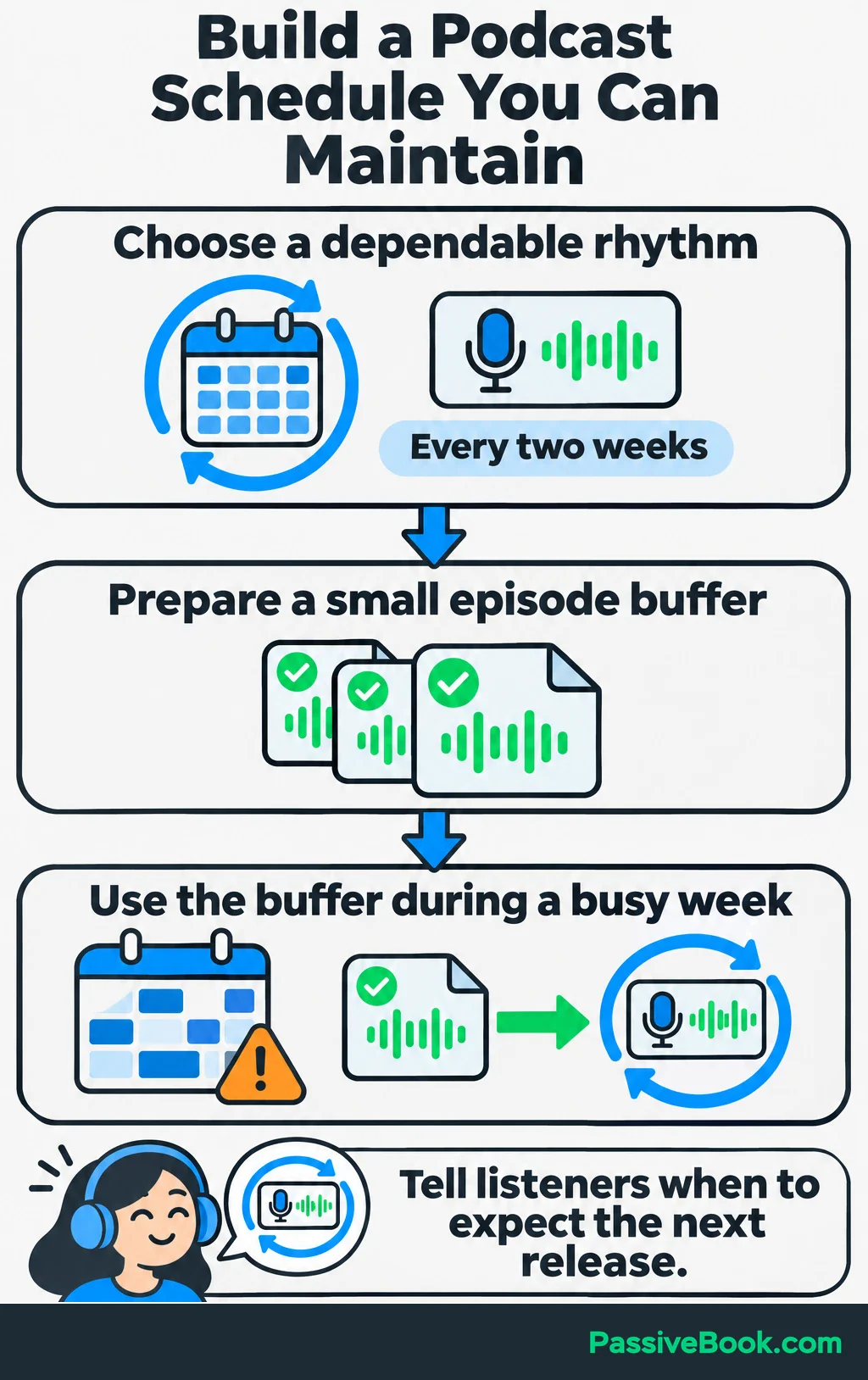
Choose a publishing rhythm you can maintain and tell listeners when to expect the next release. I would choose a dependable fortnightly episode over a weekly schedule that regularly slips. Record a small buffer when possible so one busy week doesn’t break the schedule.
Connect episodes through the next problem someone is likely to face. At the end of the weekly planning episode, you could say:
“Once you’ve made your plan, you’ll need a way to keep activity supplies organized. The episode on rotating cat toys without creating clutter picks up there, and it’s linked in the notes.”
If replies are this episode’s primary request, keep that closing brief. When continued listening becomes the goal, give the recommendation more attention.
A short series can make those connections easier, but each episode should still help someone who arrives halfway through. Explain the context they need without requiring homework.
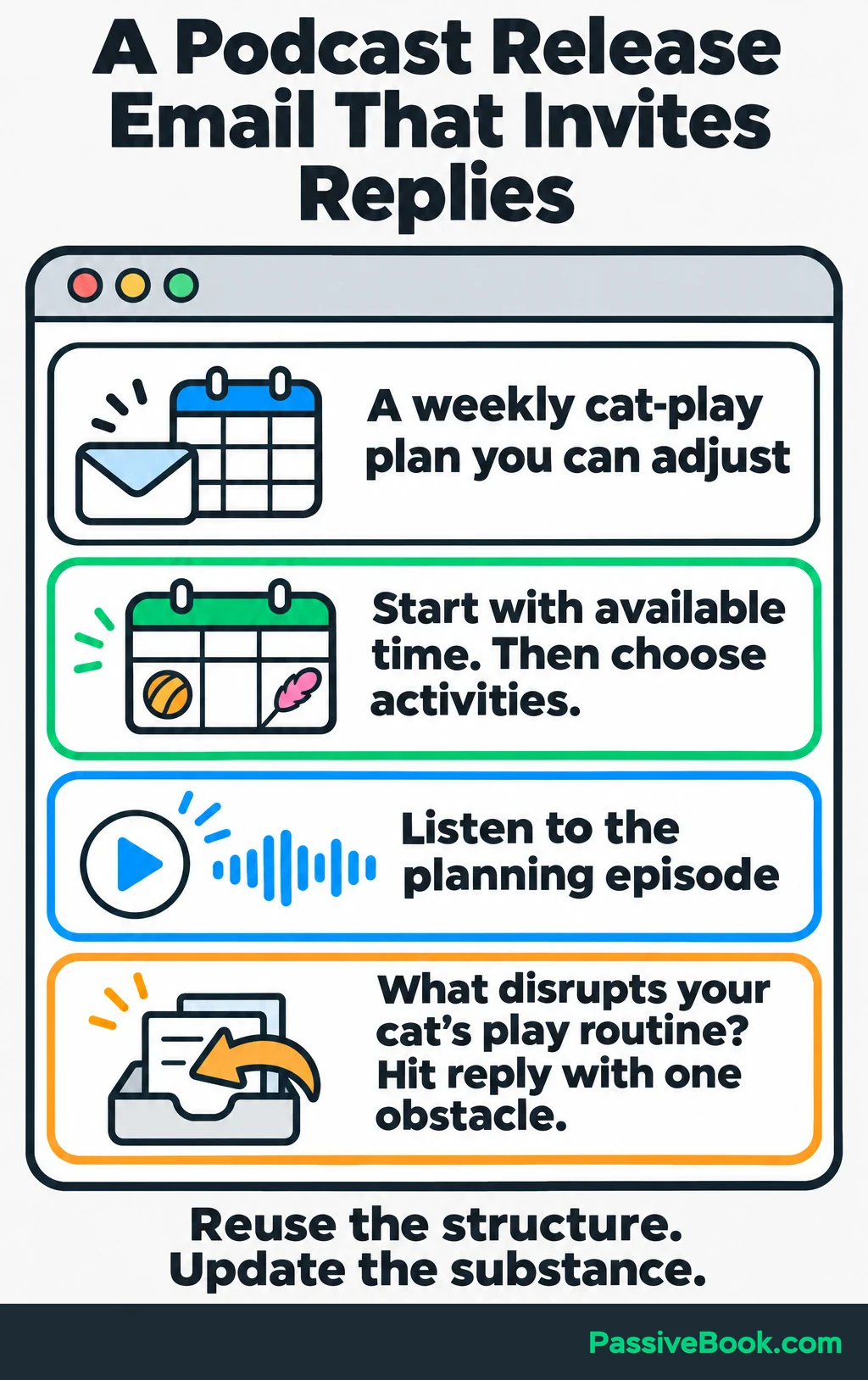
For existing email subscribers, reuse a release template with one takeaway, the listening link, and the episode’s chosen question. For example:
Subject: A weekly cat-play plan you can adjust
Hi,
Start your weekly plan with the time you have available, then choose activities to fit. It’s easier to revise a small plan than rescue an overfilled one.
This episode walks through putting that week together:
[Listen to “Planning a Week of Indoor Cat Play”]
What usually disrupts your cat’s play routine? Hit reply with one obstacle. I’m collecting questions for a follow-up.
Thanks for listening.
Replace the bracketed link with the direct episode link. Keep the useful structure and change the substance for each release.
Promote Episodes Where Interested Listeners Already Gather
Make Each Episode Easy to Discover and Use
Write titles around the question someone wants answered. “Cat Chat, Episode 12” gives a new listener little reason to choose it. “Planning a Week of Indoor Cat Play” tells them what they’ll get.
Apple lists episode titles among the factors used in Search, so clear wording also has a practical role in discovery.
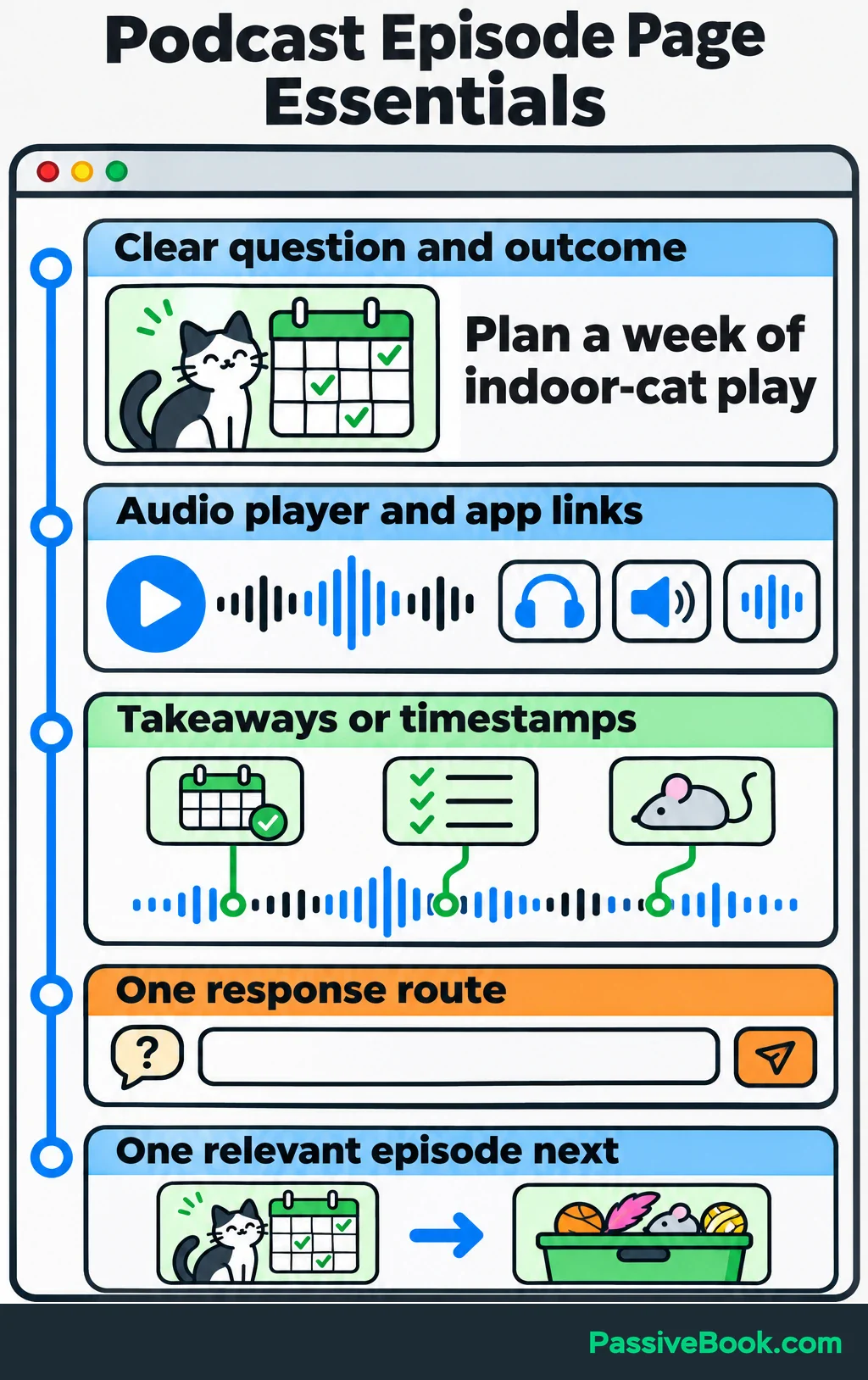
Create a reusable episode page containing:
- The main question and promised outcome.
- An audio player and links to listening apps.
- A few useful takeaways or timestamps.
- The chosen response route.
- One relevant episode to hear next.
If you already have a WordPress site, I would add this page there. Another website means another thing to maintain.
Offer a companion resource only when it makes the advice easier to use. A blank weekly activity planner fits this episode because listeners can fill it in as they work through the explanation. The episode should still make sense without downloading it.
Keep access to the resource distinct from consent to receive ongoing marketing emails, and explain what people are signing up for.
Reuse One Useful Moment on a Relevant Channel
Choose a promotion channel using listener conversations and existing referral traffic. Start where interested people already gather rather than opening accounts everywhere.
Extract one useful moment from the episode and adapt it to that channel. For the running example, a short written post might explain why planning starts with available time, then link to the full walkthrough.
Give the post a useful answer of its own. “New episode out now” asks people to care before telling them why.
In a relevant community, answer the question being discussed first. Add the episode when it provides helpful detail and the community permits promotion. Ask the host of a show covering a related subject to recommend a relevant episode. Supply a direct link, a clear benefit for their listeners, and a short excerpt they can use.
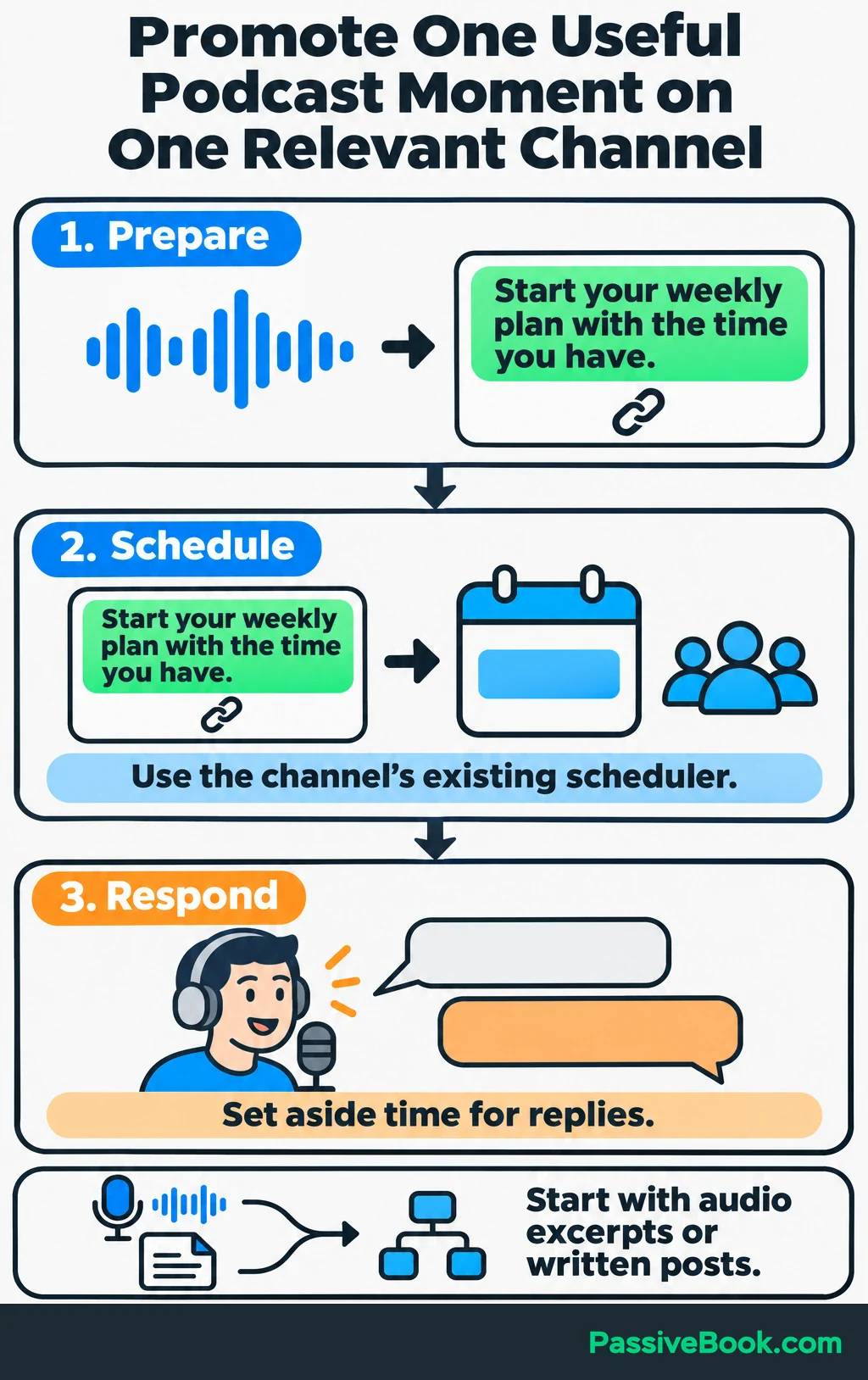
Batch the repeatable work:
- Prepare: Pull one excerpt and draft its accompanying post.
- Schedule: Queue the post with the channel’s existing scheduler.
- Respond: Set aside a short period to answer relevant replies personally.
Audio excerpts and written posts let you do this without being on camera. I would get that workflow working before adding video production.
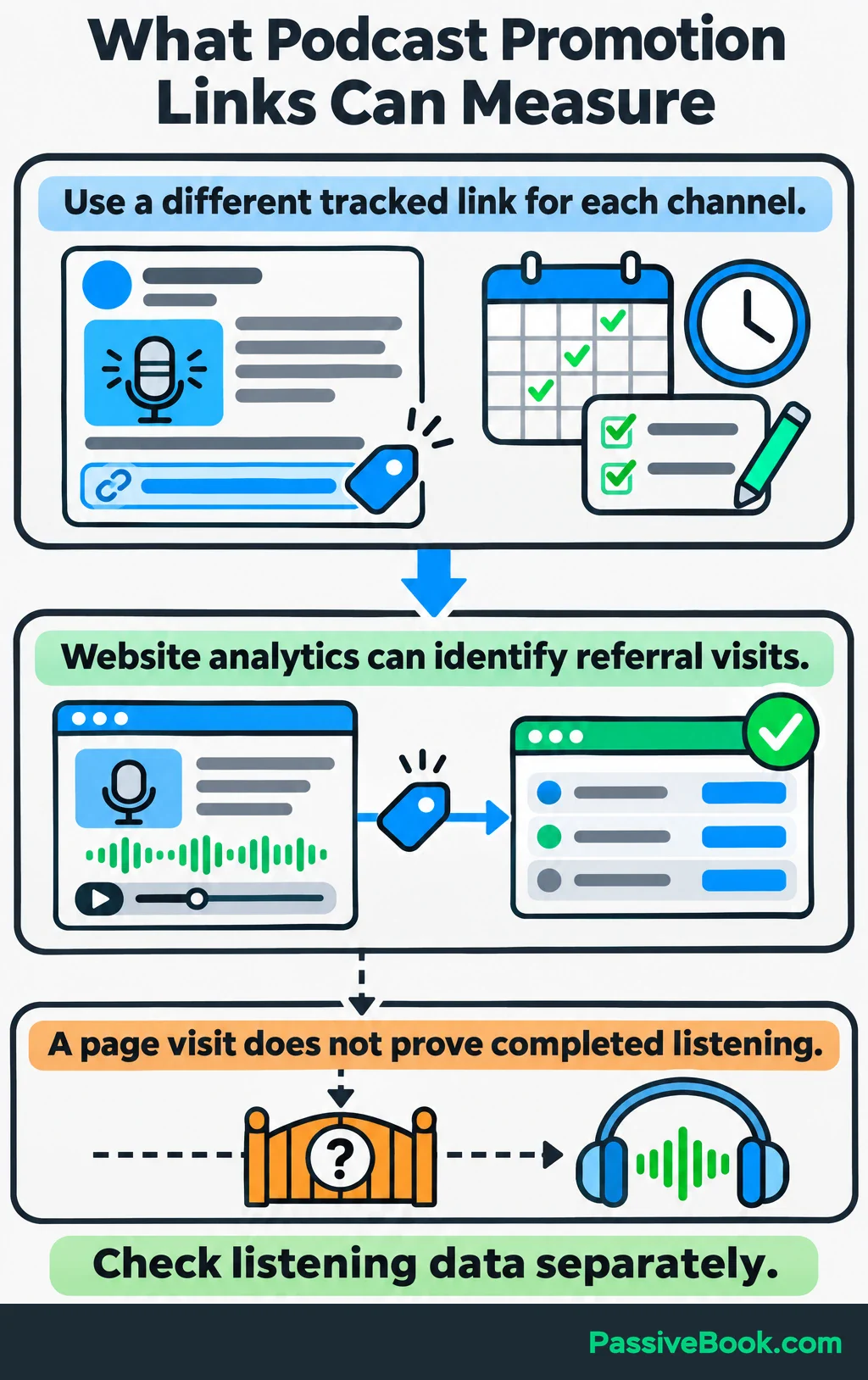
Use a different tracked link for each channel so your website analytics can show where episode-page visits came from. Those visits measure referral activity; they don’t establish that anyone completed the episode.
Measure Engagement and Choose Your Next Improvement
Use listening data alongside the goal you chose:
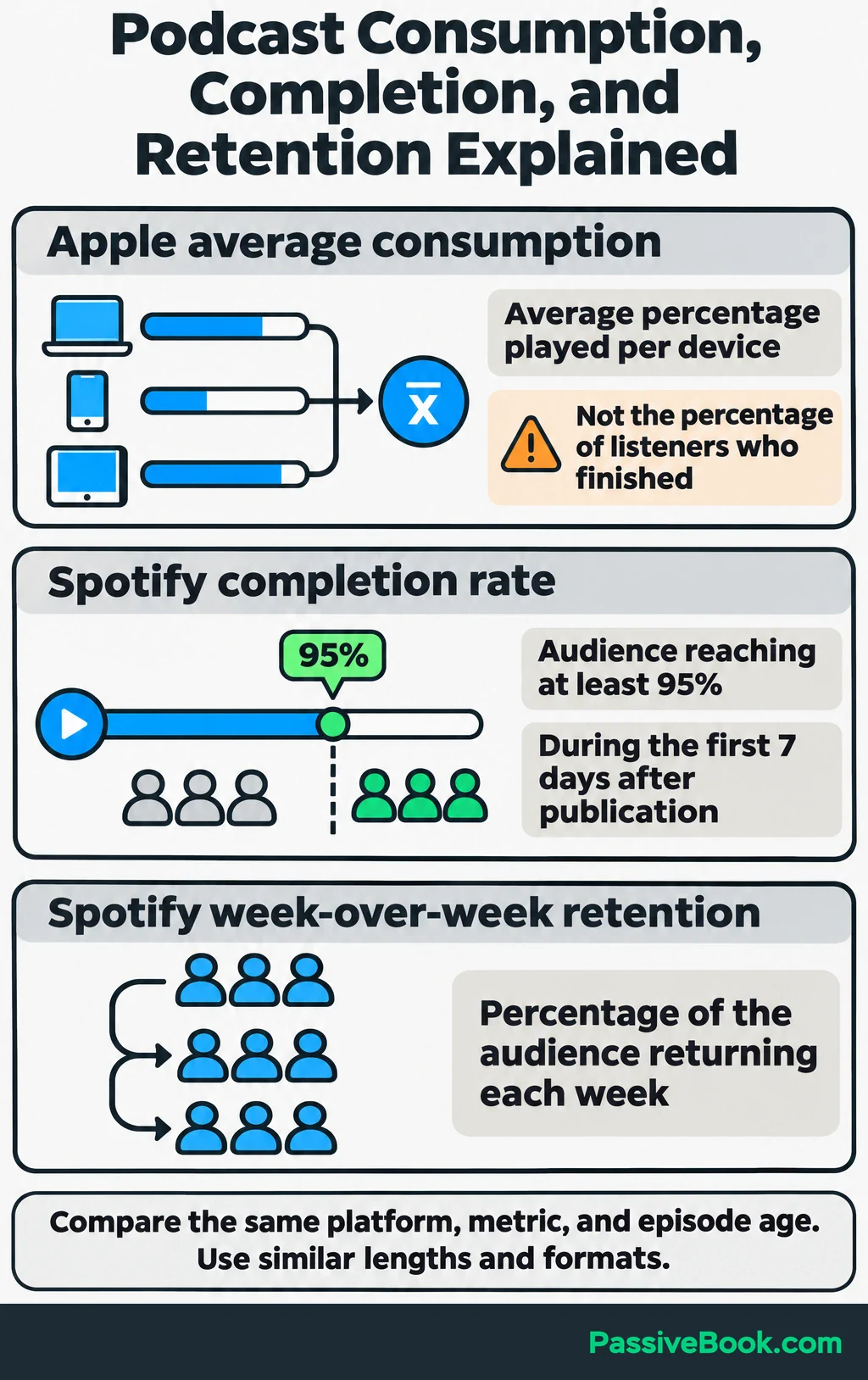
- Apple average consumption: The average percentage of an episode played per device. It isn’t the percentage of listeners who finished. Apple’s analytics definitions explain the measure.
- Spotify completion rate: The percentage of an episode’s Spotify audience who reached at least 95% of it during its first seven days after publication.
- Spotify week-over-week retention: The percentage of the audience returning each week. This helps you examine repeat listening separately from episode completion. Spotify’s analytics glossary defines both measures.
Compare episodes within the same platform, using the same metric and time after release. Choose similar lengths and formats. If your audience is too small for data to appear, keep collecting direct feedback.
For the reply goal, count email recipients who name an obstacle within seven days of the send, once each. Record delivered emails and keep form responses separate.
A compact tracking sheet could contain this illustrative entry:
| Field | Example Entry |
|---|---|
| Episode | “Planning a Week of Indoor Cat Play” |
| Change made | Asked about one obstacle instead of requesting general feedback |
| Baseline | Earlier email: 4 recipients named an obstacle within seven days; 100 emails delivered |
| Result | New email: 8 recipients named an obstacle within seven days; 100 emails delivered |
| Feedback | Several respondents mentioned changing weekly schedules |
| Promotion effort | One episode email and one scheduled post; 35 minutes total |
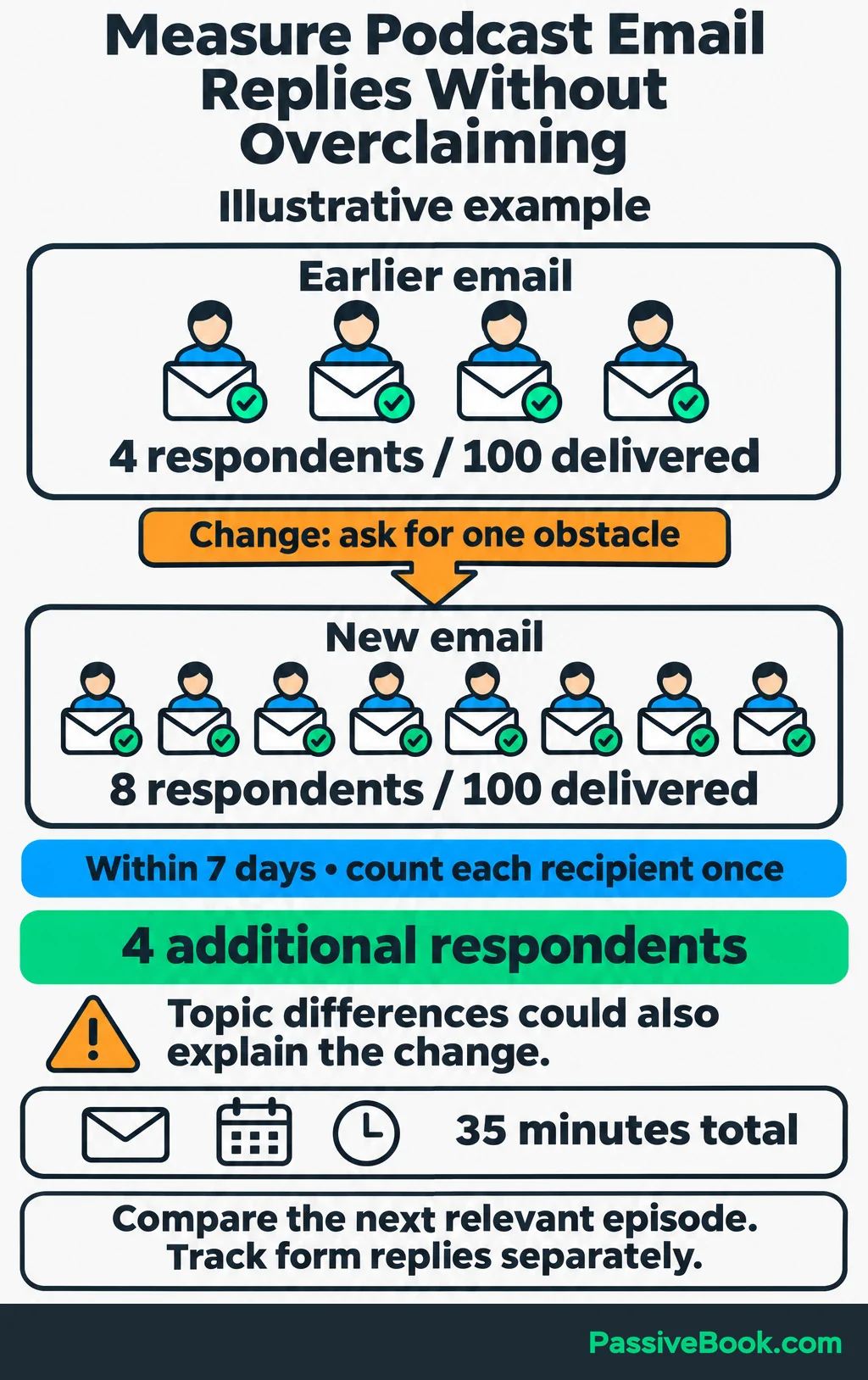
That’s four additional email respondents from the same number of delivered emails. Topic differences could also explain the change, so compare the next relevant episode.
Match your next change to the signal:
| Signal | What I Would Examine First |
|---|---|
| Listeners leave early | Whether the opening delays or misses the promised answer |
| Listening drops during one section | Repetition, confusing order, or an unexplained term |
| The prompt gets few responses | Whether the question is too broad or the response route is awkward |
| Return listening is weak | Whether another episode offers a clear continuation |
| Promotion brings visits but little listening | Whether the post’s promise matches the episode page and opening |
Change one substantial element at a time when practical. Track business outcomes separately, such as planner purchases through the episode page. Keep promotion tasks that justify their effort and remove the ones that repeatedly consume time without supporting your goal.
What Next?
Listen to the opening of your latest episode and mark where the promised help actually begins. Choose one improvement for the next recording and write down how you’ll judge it.
Use the social buttons to share this guide when planning your next podcast collaboration, so the discussion starts with a concrete engagement goal.
Which listener behavior would make the biggest difference to your show right now: longer listening, replies, or returning for another episode? Leave your answer in the comments, and bring any other questions too.
Share this post with your friends & followers:

