A customer asks whether your product is easy to clean. Your page says “washable,” but that doesn’t show how the cover comes off or what happens after a wash.
Customer photos and videos may contain the answer, but collecting random clips leaves you with another folder to manage. Finding something useful—and getting permission to reuse it—takes time.
That effort needs to produce more than another post. This guide shows how to use customer experiences to answer purchase questions across your website, social posts, and emails, and check whether the content helps people buy—without becoming the face of every post.
What Counts as User-Generated Content?
User-generated content, or UGC, is content customers or community members create about a product, service, or experience. It includes reviews, photos, videos, testimonials, and useful comments.
The source matters because a casual-looking video can come from very different arrangements:
- Spontaneous content: A customer shares their experience without being asked.
- Requested content: You invite a customer to explain or demonstrate something they have used.
- Incentivized content: Someone receives a gift, discount, or payment for contributing.
- Commissioned creator content: You hire someone to produce a photo or video (an asset), often in the informal style associated with UGC.
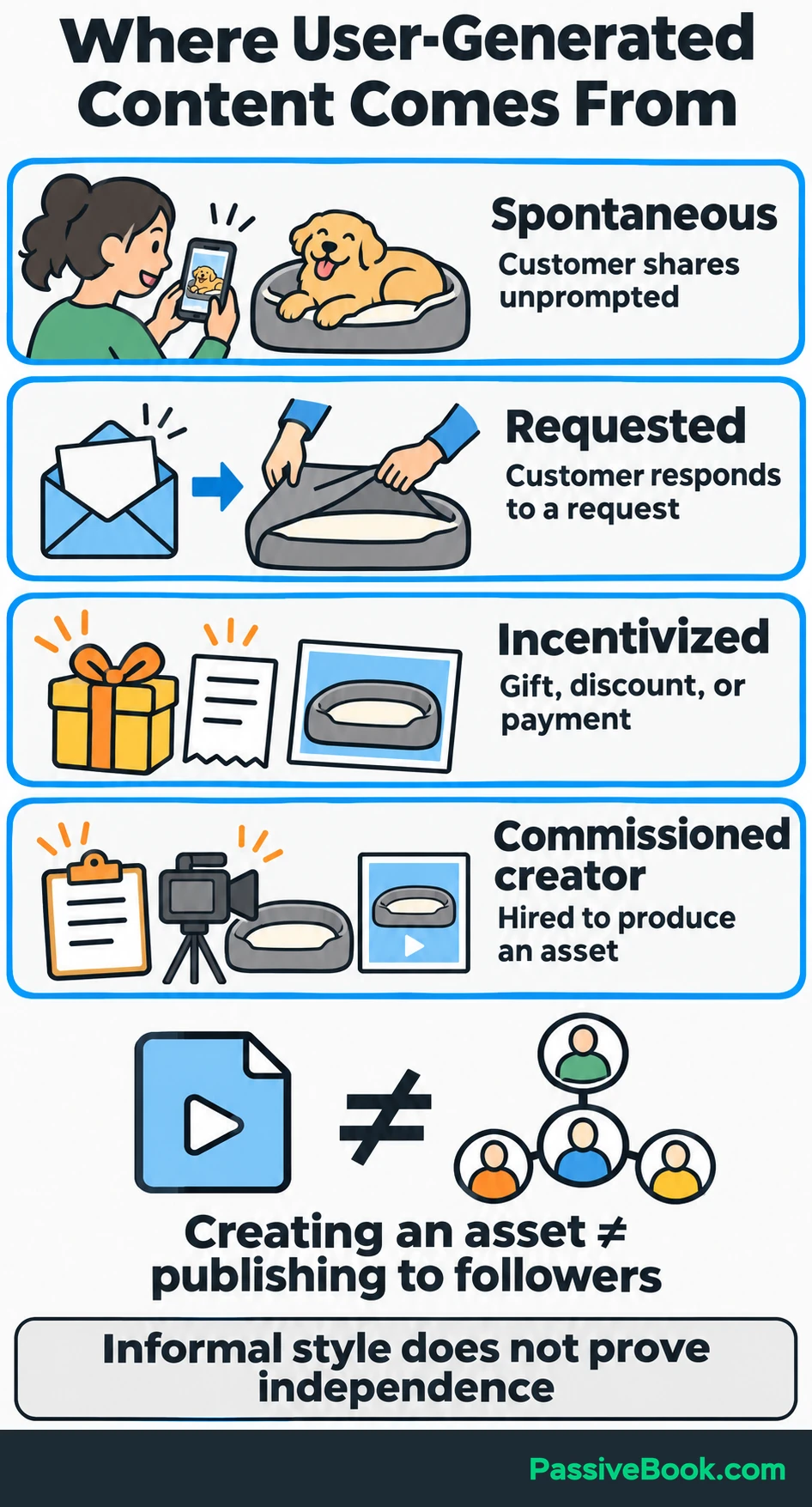
A paid creator can make a useful demonstration, but a phone camera doesn’t make it independent customer feedback.
Also separate the content from its distribution. Paying someone to film supplies an asset for your website or emails. Paying them to publish to their followers also buys access to an audience. You may need one, both, or neither.
Throughout this guide, imagine you run an online shop selling washable dog beds. Its customer submissions, quotes, costs, and results are illustrations.
1. Choose the Customer Question to Answer
Pick one main objective: introduce the product, encourage useful interaction, resolve a purchase concern, or generate purchases or inquiries. Then identify the question standing between the customer and that action.
For the dog-bed shop, “Tell us why you love it” is too loose. “How easy is the cover to remove and wash?” gives the contributor something concrete to show.
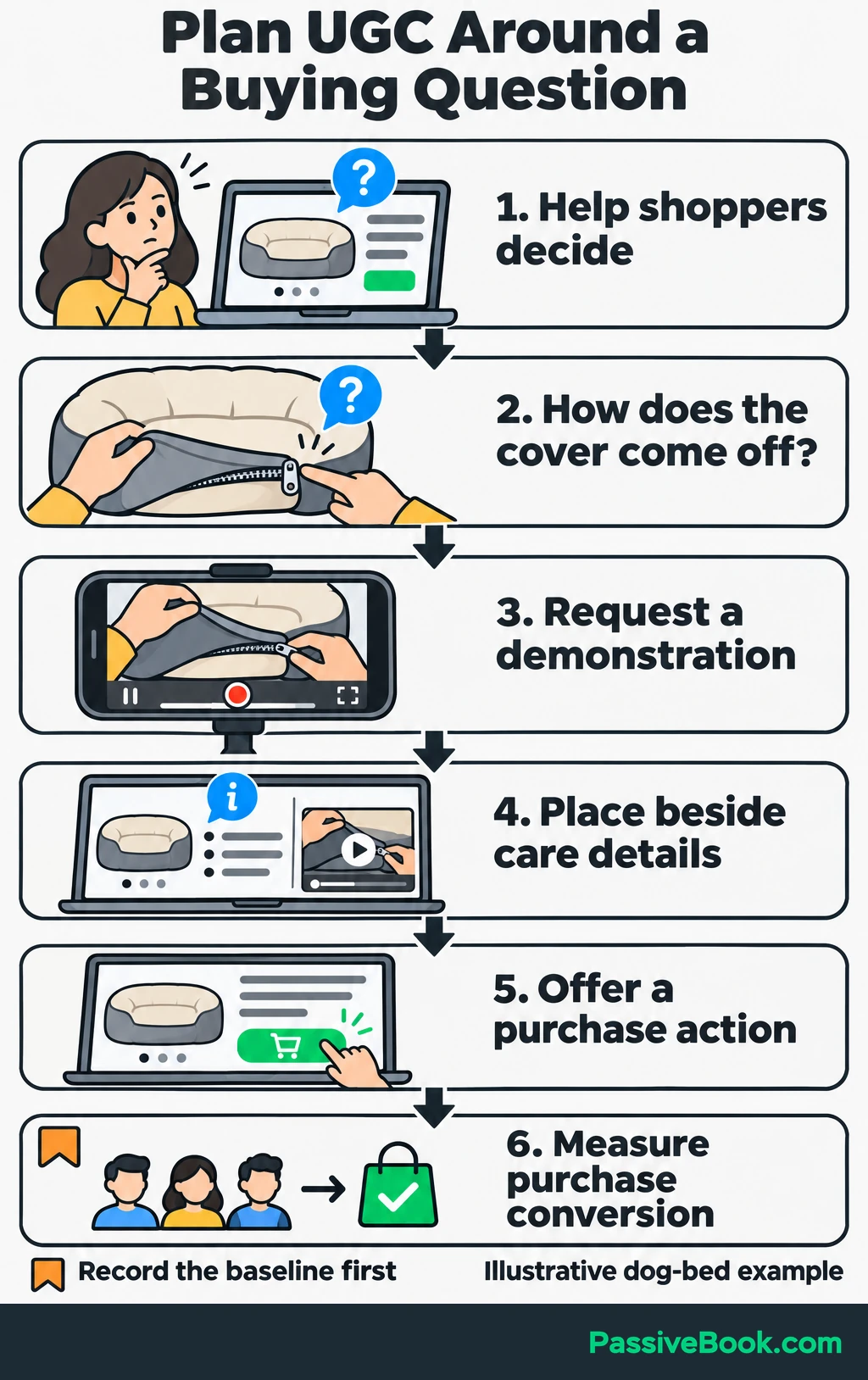
Match the format to the evidence you need:
- Photo: Shows appearance, size, fit, or a particular detail.
- Demonstration: Shows how something works or what a task involves.
- Detailed review: Describes an experience over time, including what worked and what didn’t.
I would start with a demonstration beside the product’s care information. That puts the answer where shoppers are already investigating cleaning.
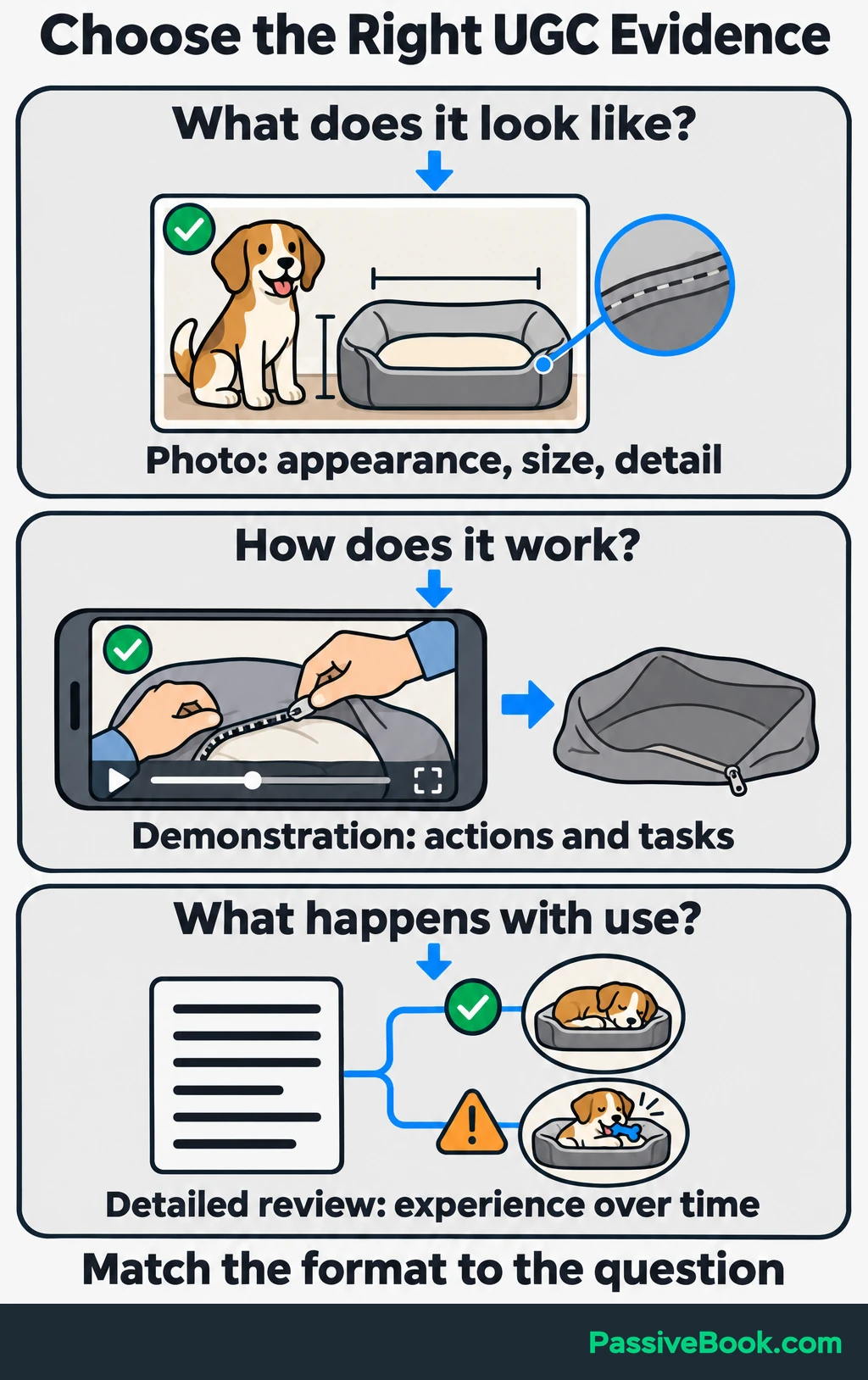
Write the plan in one row before requesting anything:
| Objective | Customer Question | Requested Content | Placement | Next Action | Primary Metric |
|---|---|---|---|---|---|
| Help shoppers decide whether to buy | How does the cover come off, wash, and go back on? | Customer video showing removal and refitting, with washing feedback | Beside care information on the product page | Purchase the featured bed | Purchase conversion rate among sessions visiting that page |
Record the page’s current results over a defined period. Keep the same measurement definition when you assess the new version.
You don’t need six channels to begin. You need one unanswered question and somewhere useful to put the answer.
2. Collect Relevant Customer Experiences
Find Content Customers Already Share
Look through tagged posts, brand mentions, and existing reviews. Search for details that address your chosen question rather than collecting every flattering mention.
For the dog-bed shop, a review explaining the first wash is more relevant than a beautiful photo of a sleeping dog. Keep the photo for another purpose.
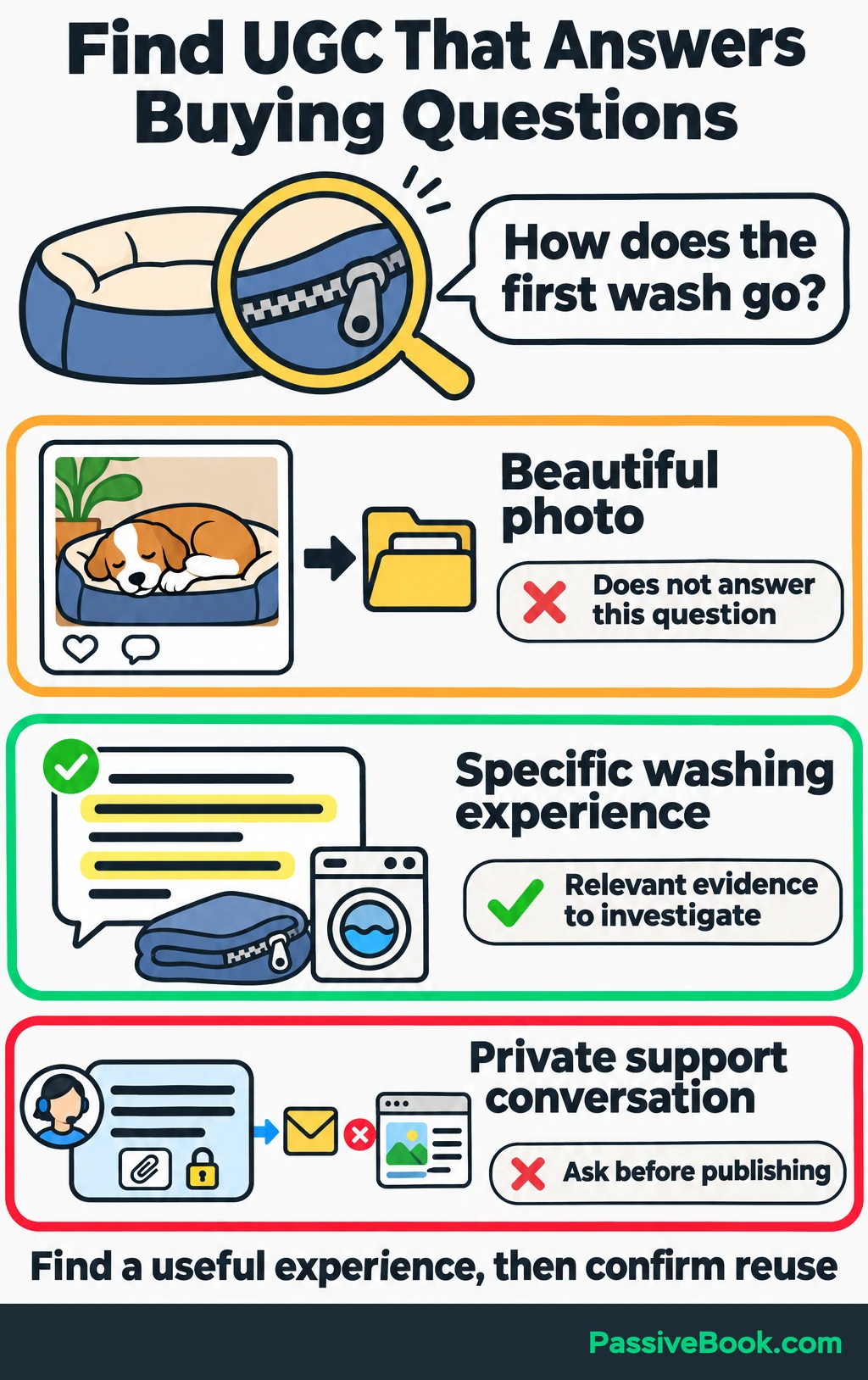
Support conversations can also reveal useful experiences. A customer might mention that they washed the cover after a muddy walk or found refitting awkward.
Treat private messages as leads for a conversation. Ask whether the customer would like to contribute and obtain permission before publishing their words or screenshots. A support inbox isn’t a public testimonial library.
Make the Request Specific and Easy
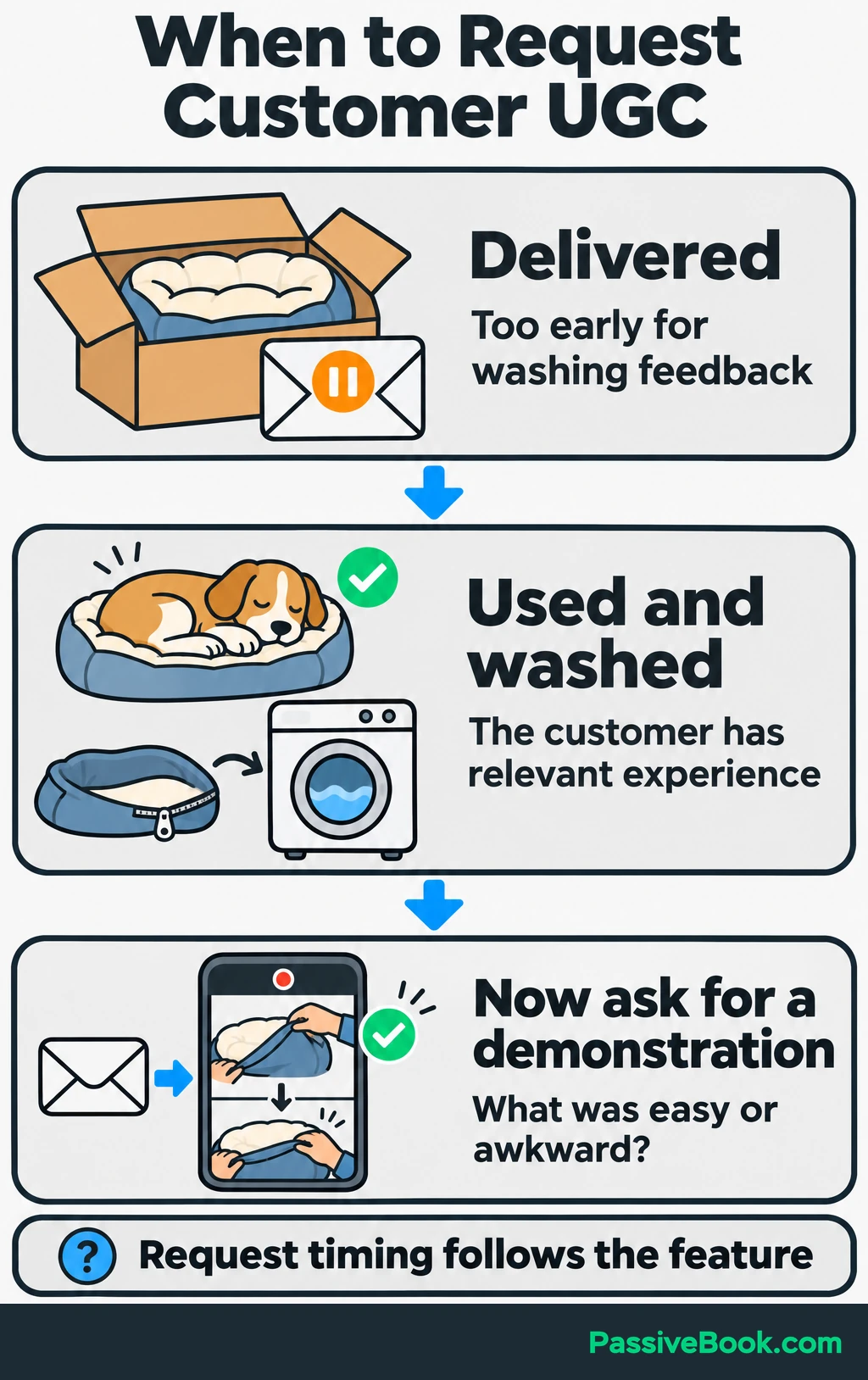
Ask after customers have had time to experience the feature. A delivery-day email cannot collect meaningful washing feedback.
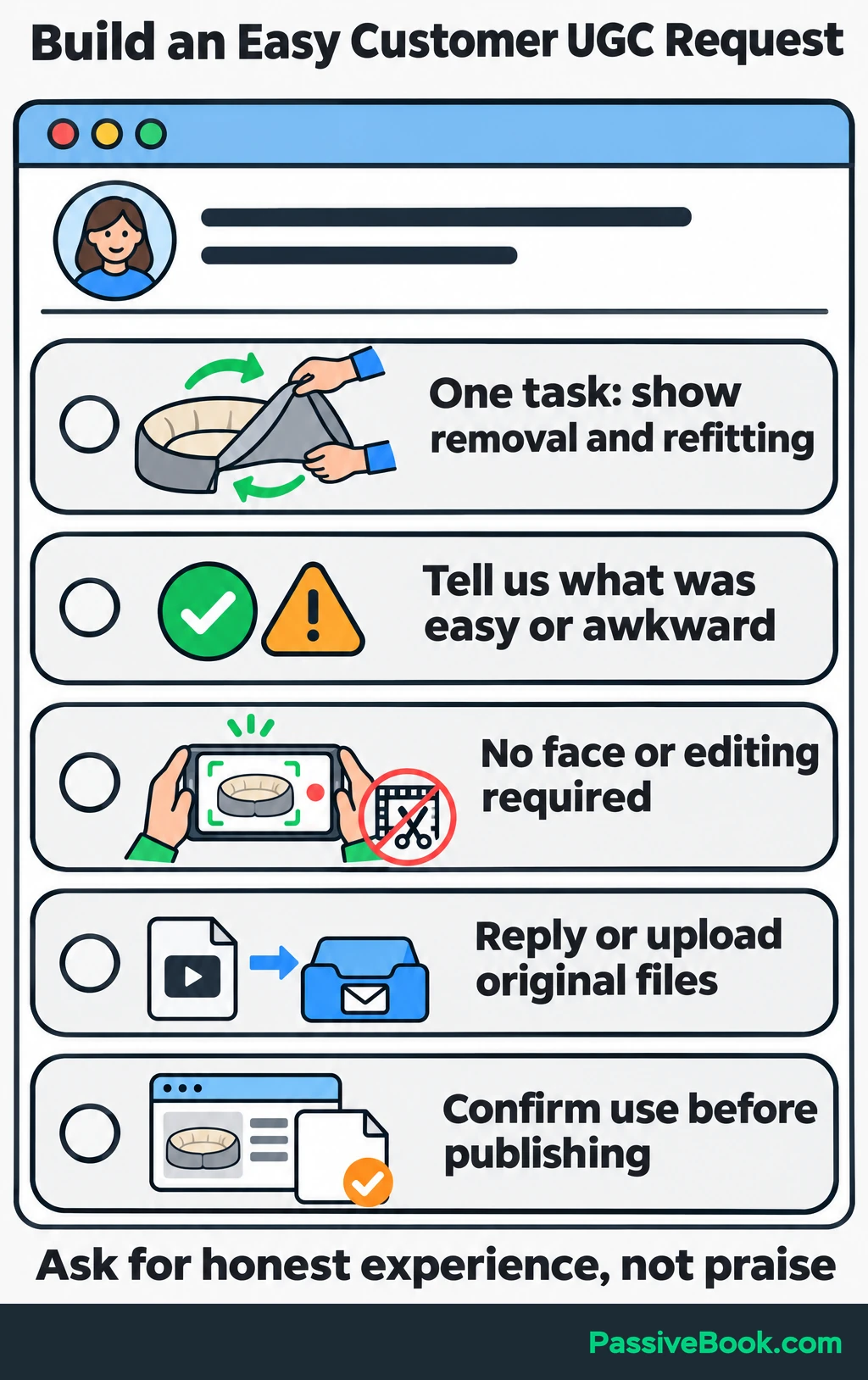
Give contributors one task, explain the intended use, and offer a simple reply or upload option. They shouldn’t need a public account, editing skills, or the desire to become an influencer.
Here’s an email you can adapt:
Subject: Have you washed your dog-bed cover yet?
Hi [First Name],
If you’ve washed your cover, would you show us how it went?
We’re collecting customer demonstrations to help shoppers understand removing, washing, and refitting the cover. A short phone video is welcome, or you can send photos with a few sentences about your experience.
Please follow the care instructions and tell us what was easy or awkward. You don’t need to appear on camera. Send the original files by replying to this email or uploading them here: [Upload Link].
We’d like to feature suitable submissions on our product page. We’ll confirm the exact use and ask for your permission before publishing.
Thanks,
[Your Name]
[Shop Name]
If there are no existing submissions, invite early customers or product testers to document genuine use. For a commissioned demonstration, agree on the deliverable, fee, and reuse rights before filming begins.
A service experience needs a different brief from a product demonstration. Use the AI Skill below to draft a request around your own customer question, with clear instructions for what to send.

Free AI Customer Proof Studio




I would skip incentives for the first request. They add cost and disclosure work before you know whether customers need encouragement.
If you request reviews, invite honest feedback across your customer base. Any incentive must not depend on praise, must be disclosed, and must comply with the destination’s rules. Some review platforms prohibit incentives altogether. The FTC’s review-solicitation guidance explains these distinctions.
3. Prepare Submissions for Reuse
Choose submissions that answer the planned question, clearly show the relevant product, and have understandable sound or text. Check any demonstration against the product’s actual instructions and safe use.
A charming clip showing the wrong washing method creates more work than it saves.
Before editing, confirm who owns the content. Being pictured in a photo—or possessing the file—doesn’t establish copyright ownership. A tag or credit also doesn’t replace permission from the rights holder. The U.S. Copyright Office’s photography guidance makes that ownership distinction clear.
Get written permission for the specific photo, video, or quote, including where and how long you may use it. Agree on edits, how to credit the creator, and whether paid advertising is allowed. For example:
May [Shop Name] use the washing video you sent on our product page and in unpaid Instagram posts for six months from first publication? We would trim it and add accurate captions without changing your meaning, and credit you using your chosen name. This request excludes paid advertising. Please confirm whether you created the video, whether you agree, and how you would like to be credited.
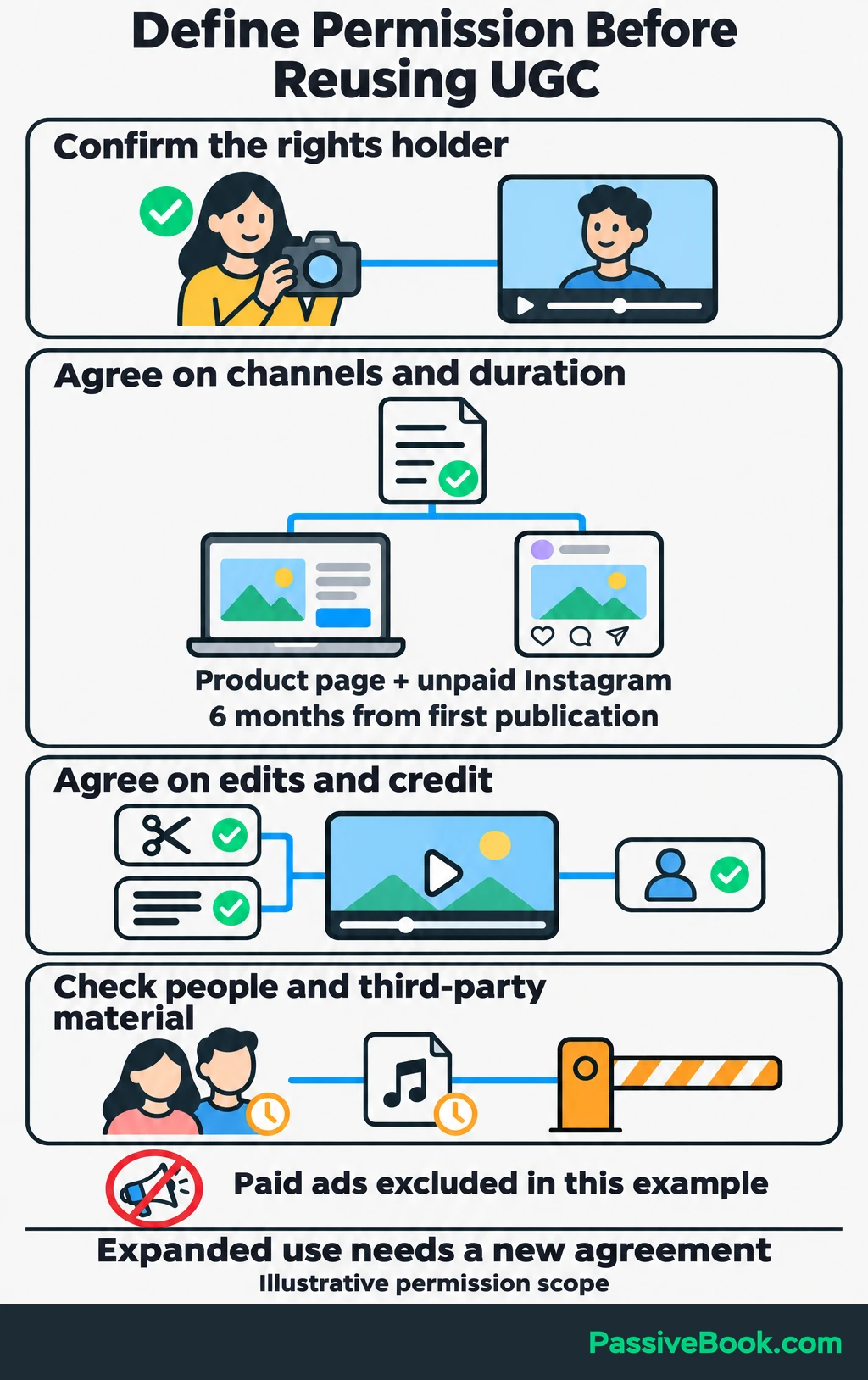
Confirm consent from recognizable people and permission for third-party material too. If someone else filmed the submission, resolve their rights before proceeding. Ask again before expanding the agreed uses.
On a digital-product site, I once pulled a useful buyer comment into a draft and then had to search old messages to find whether I had asked to publish it. I had thanked the buyer, but that wasn’t the same thing. Now I keep the permission record beside the asset before it enters a publishing draft.
A spreadsheet is enough for this. Give each original an asset ID and record:
- Content details: Contributor, customer question, and original file location.
- Permission details: Link to written permission, approved uses, expiry date, how to credit the creator, and required disclosure.
- Workflow details: Current status, edited file locations, and publication links.
For example, DB-001 could identify one customer’s washing video. Its product-page edit and social crop remain versions of that original.
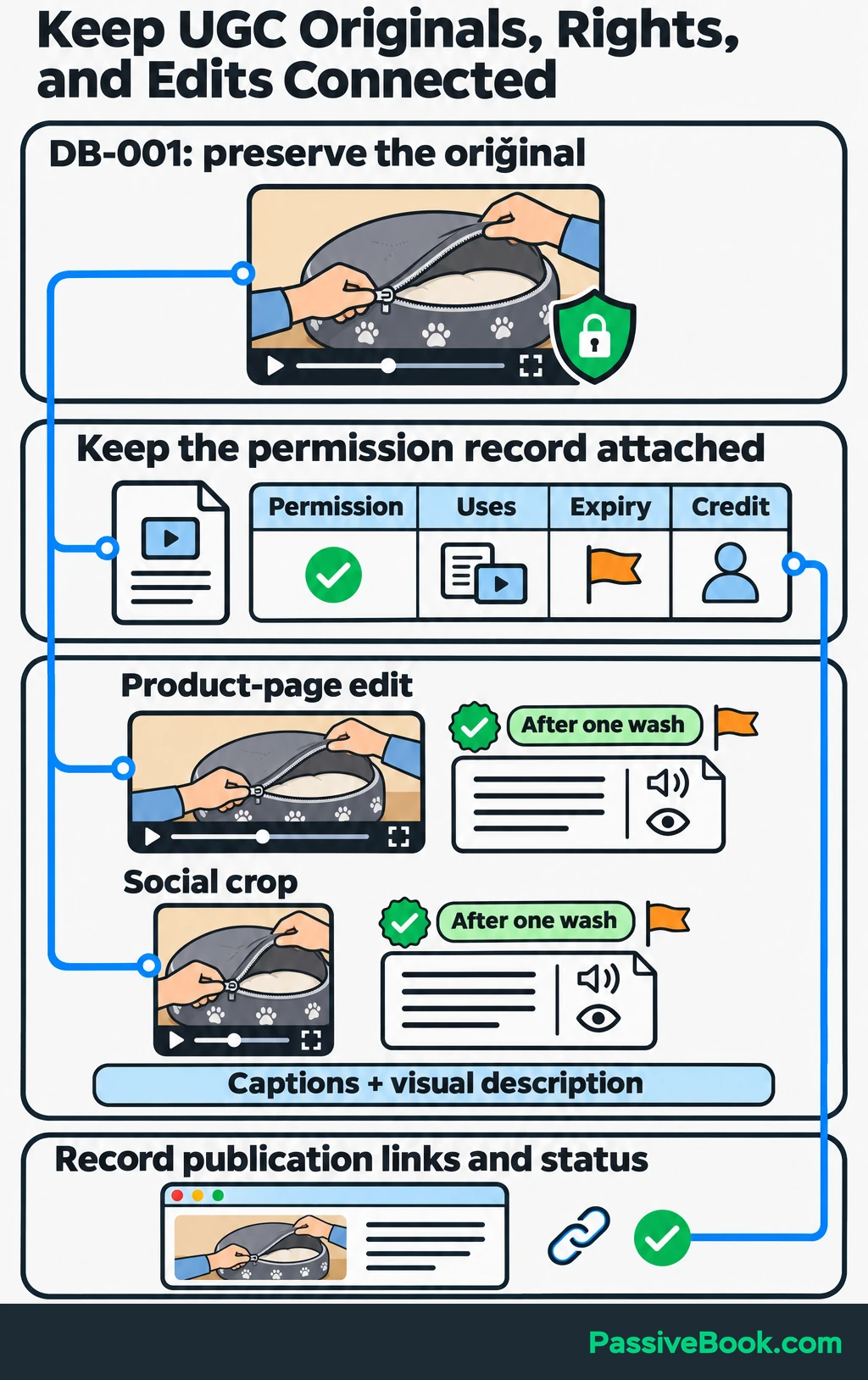
Next, remove repetition, crop distractions, and add useful context. Keep the original file separate. Preserve qualifications such as “after one wash” rather than turning them into a claim about long-term durability.
Add accurate captions and meaningful alternative text for informative images. Describe essential visual actions in the narration or an accompanying descriptive transcript. Someone who cannot see the zipper movement still needs to understand how the cover comes off.
For U.S. marketing, clearly disclose payments, gifts, and other material connections alongside the endorsement, and keep those disclosures when repurposing it. “Shop Name provided this bed free” explains the connection directly. Endorsements must reflect honest experience and cannot support claims you couldn’t otherwise substantiate. See the FTC’s endorsement guidance.
Never edit mixed feedback into praise or use AI to manufacture customer experiences. The FTC’s guidance on fake and false testimonials covers deceptive testimonials, including fabricated experiences.
4. Place UGC Where It Supports the Next Action
Publish first in the placement you chose. Once that version is useful, adapt the approved original for another relevant channel.
Each version should answer a question and give the reader somewhere sensible to go. Reuse should save production work, not scatter the same clip everywhere.
Product and Landing Pages
Place customer evidence beside the concern it addresses. For the dog-bed shop, put the washing demonstration next to care information rather than burying it in a general gallery.
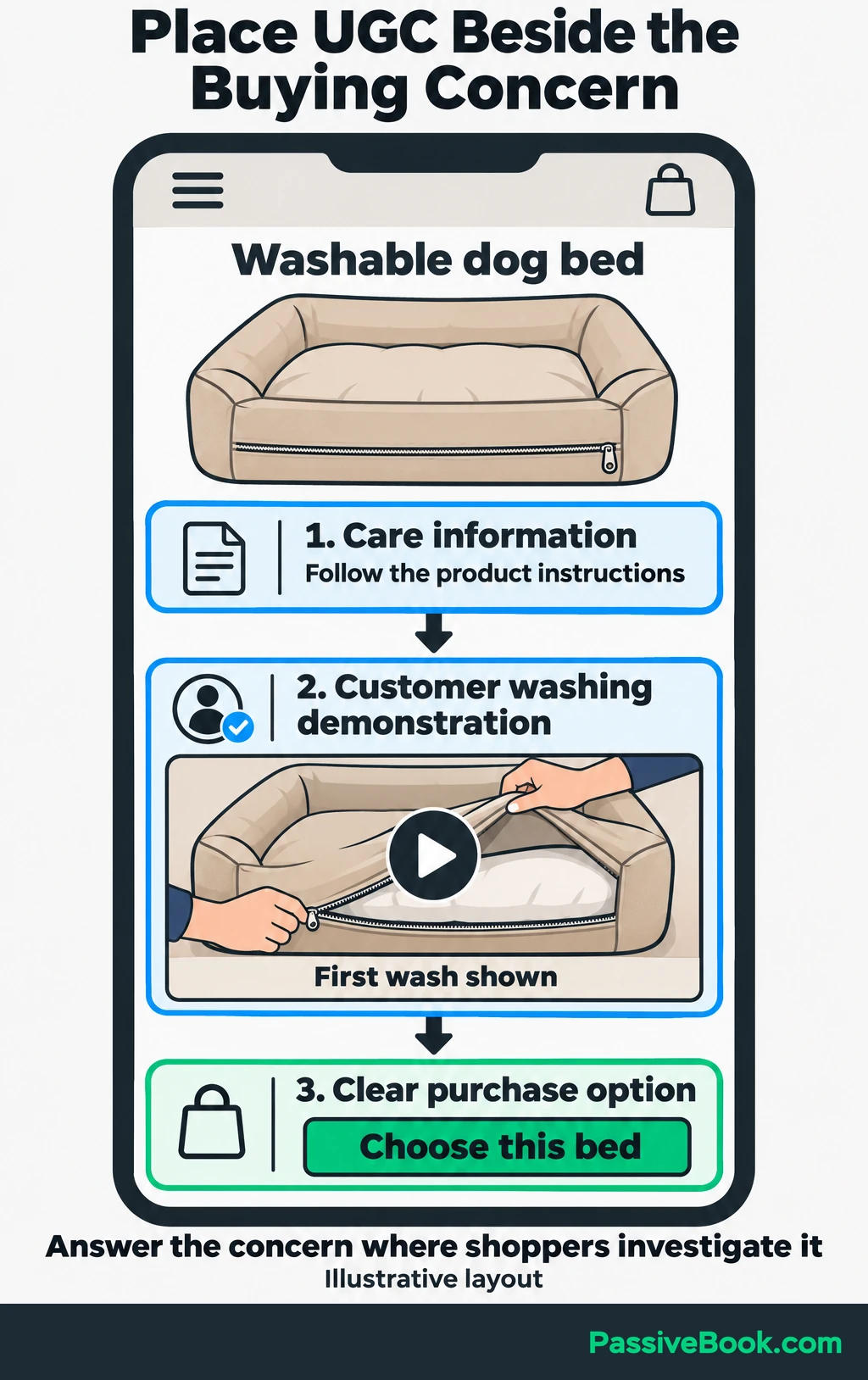
Identify the product version and the experience shown. Pair the video with a specific observation, such as:
“After the first wash, I had to straighten the corners before zipping the cover back on.”
That observation helps explain the task without promising effortless results. Keep the product’s actual care instructions nearby and provide a clear purchase option.
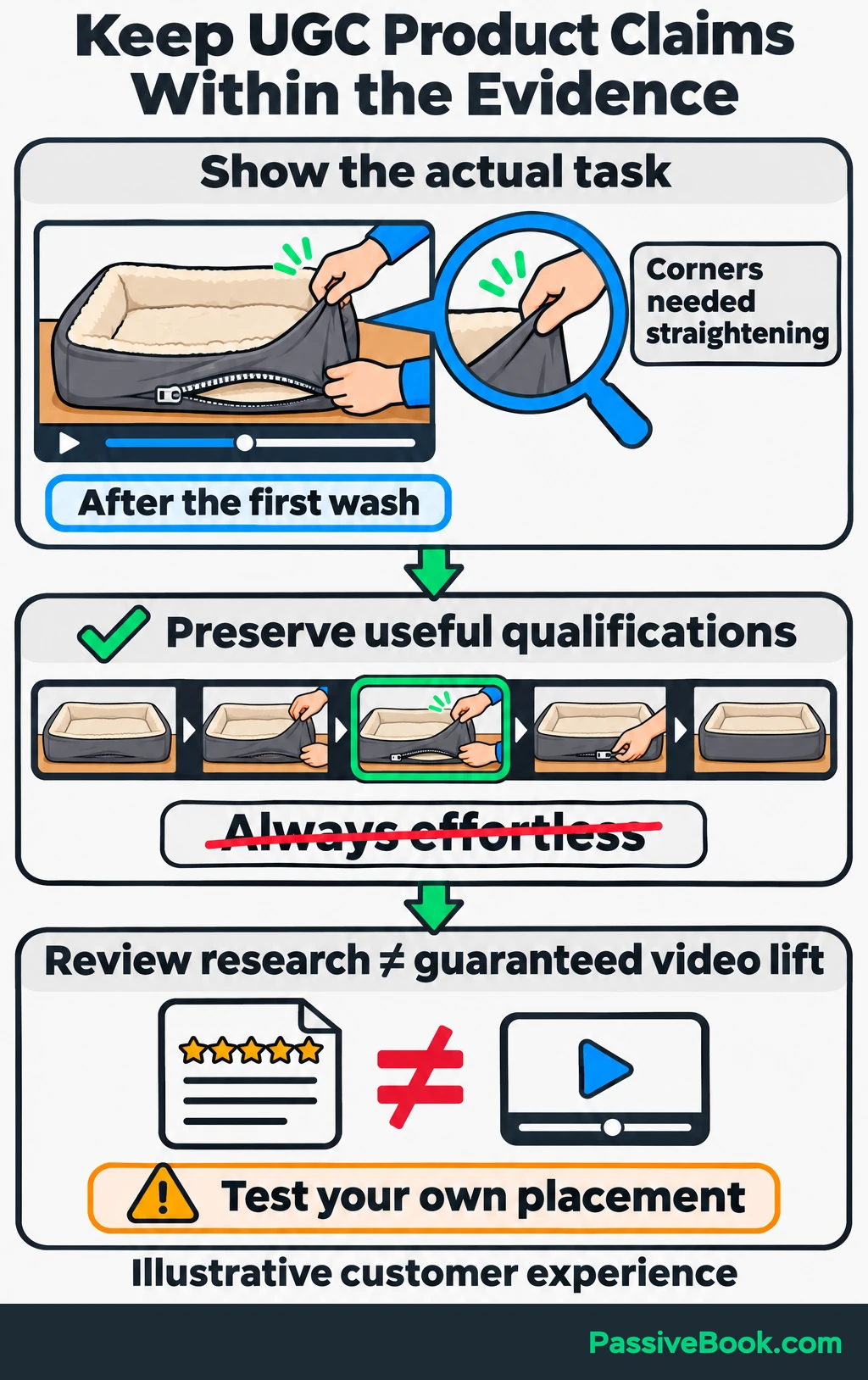
There is evidence that reviews can influence purchases. Northwestern’s Spiegel Research Center, working with PowerReviews, analyzed purchase behavior across three retailers and found that effects varied with factors including price, review content, volume, and source. Those findings concern reviews in the settings studied; they don’t predict a universal sales lift from customer videos. See the original research report.
My reason for testing this placement is simpler: the demonstration answers a question raised by the product itself. Your results will tell you whether it earns its space.
Social Media
Open with the question or the useful action. Show the cover coming off before adding a long brand introduction.
An approved original could become a short video or a photo sequence showing removal, the washing experience, and refitting. Keep enough context for each version to stand alone, including the relevant product, customer experience, credit, and disclosure.
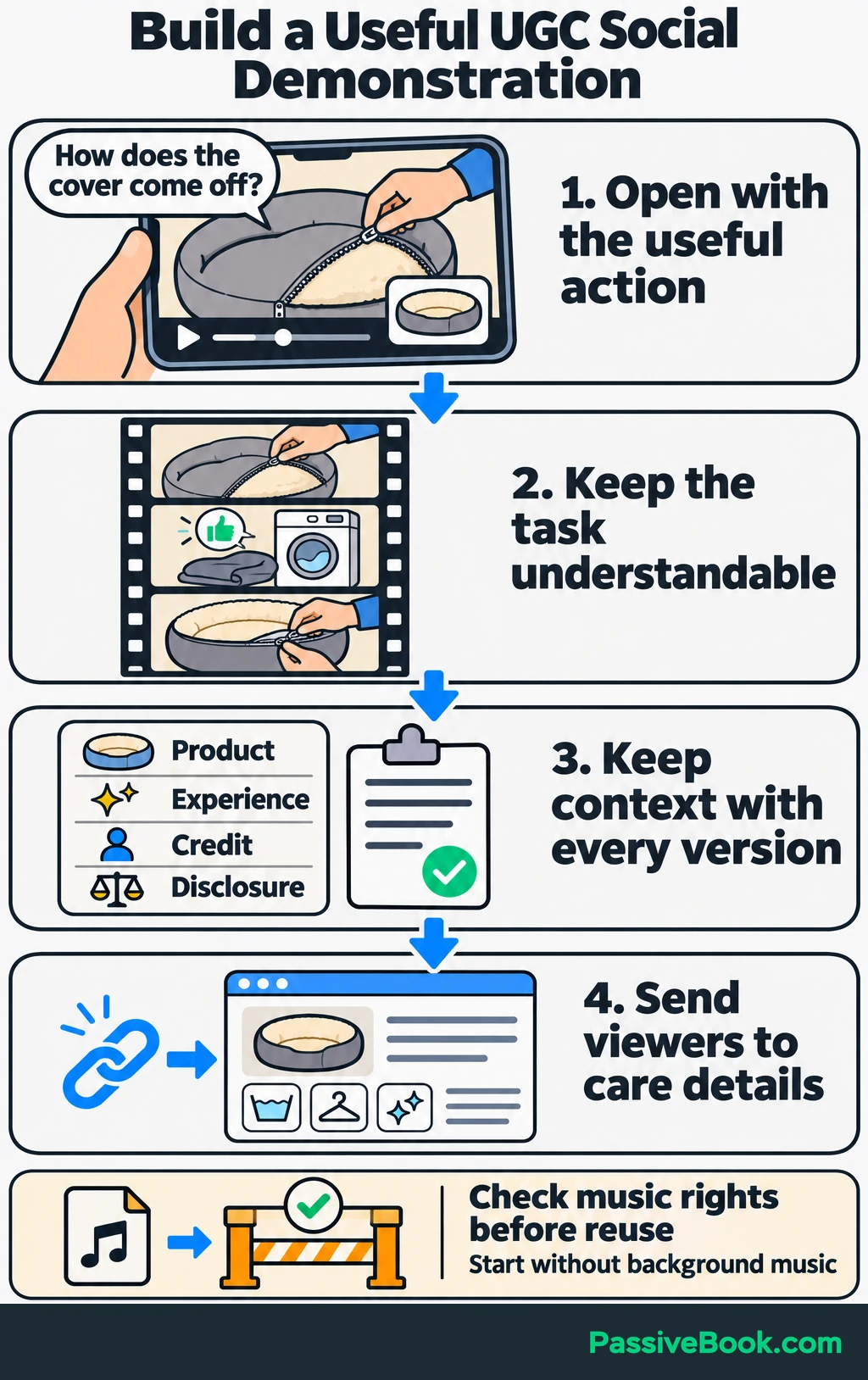
Then direct viewers to the care details. For discussion, ask something useful:
What would you want to know before washing this cover?
Those replies can shape the next request. “Love this!” is pleasant. “Does the large cover fit in a home washing machine?” gives you something to investigate.
Check music rights for every destination. TikTok, for example, says its licenses for music outside its Commercial Music Library don’t cover commercial use. A customer’s original soundtrack therefore needs a separate rights check before brand reuse. See TikTok’s commercial music guidance.
I would start without background music. The demonstration should carry the post.
Paid advertising can come later if it serves your goal and the agreement covers advertising use. Include media spending when you assess the campaign’s cost.
Match the customer experience to the reason for the email.
Before purchase, a washing demonstration can answer a concern. After purchase, it can help customers understand the task. Those messages may use the same asset, but they need different introductions and destinations.
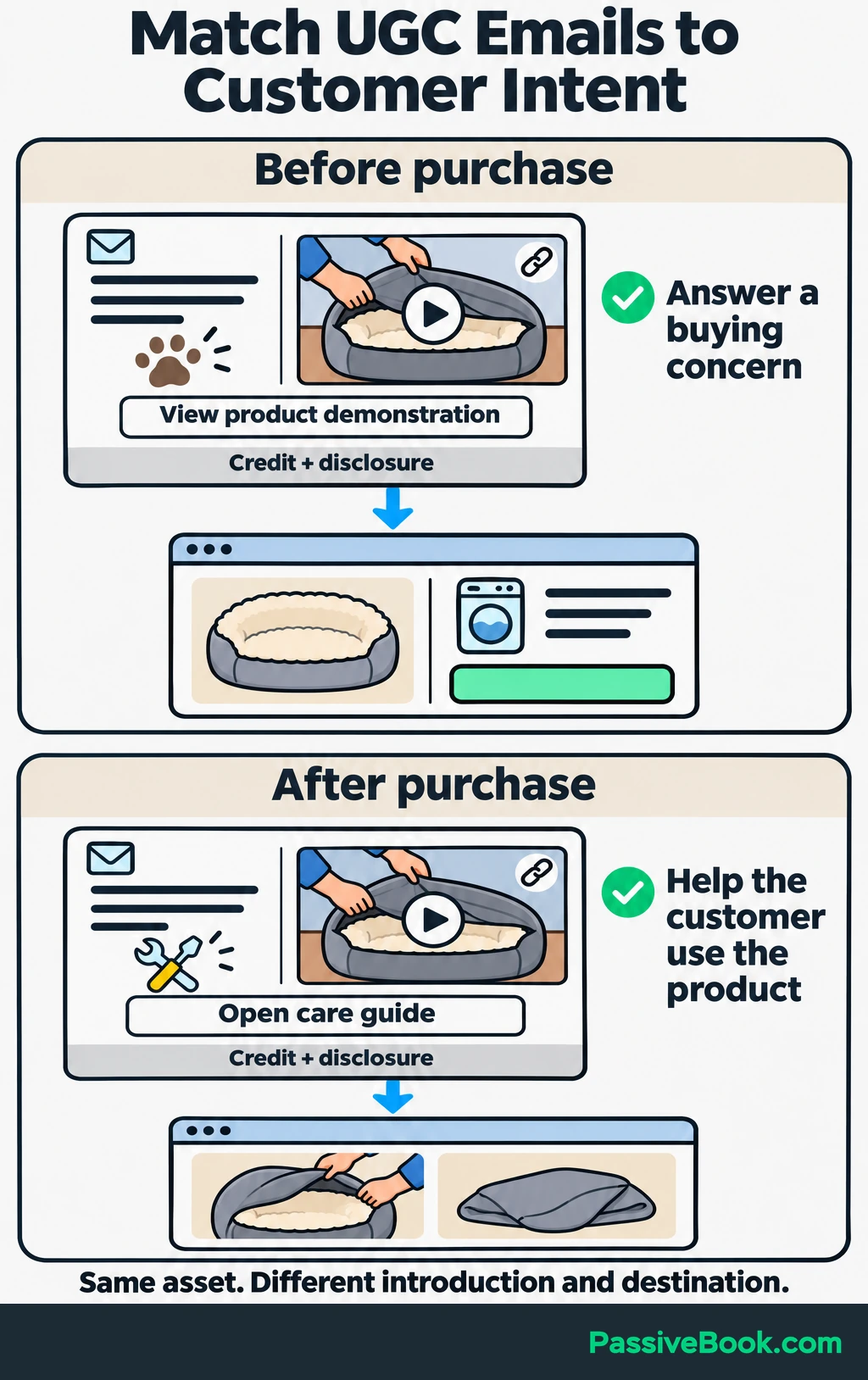
Use an approved still image or linked video thumbnail, a short observation, and one main link. For a sales email, that might lead to the demonstration on the product page. For a customer-care email, send readers to the care guide.
Keep the necessary context, credit, and disclosures in the email itself. They shouldn’t disappear because the format is smaller.
5. Measure Results Against the Original Goal
Judge the content by the job you gave it.
Around 2022, I spent six months chasing Instagram and Twitter/X followers in another niche without corresponding business progress. That wasn’t a UGC campaign, but it shaped what I track now. A growing audience still needs a route to something the business needs.
Use a small set of measures:
| Goal | Useful Measures | What to Check |
|---|---|---|
| Discovery | Reach and relevant website visits | Did the content bring potential customers to the intended page? |
| Engagement | Useful replies, saves, and shares | What did people ask, save, or pass along? |
| Purchase confidence | Answers to a short feedback question | Did the demonstration resolve the cleaning question? |
| Sales or inquiries | Purchasing sessions or completed inquiries | Did visitors take the planned business action? |
For the dog-bed demonstration, you could ask: “Did this answer your question about cleaning the cover?” Record unanswered questions too. They explain what the next submission needs to show.
Add tracking labels, called UTM tags, to links from social posts and emails so your analytics can identify the channel and the specific submission. For example, label the washing video’s Instagram link with utm_source=instagram and utm_content=DB-001. Record the placement, publication date, visits, and resulting actions. For content placed directly on your website, record the page version and its measurement period.
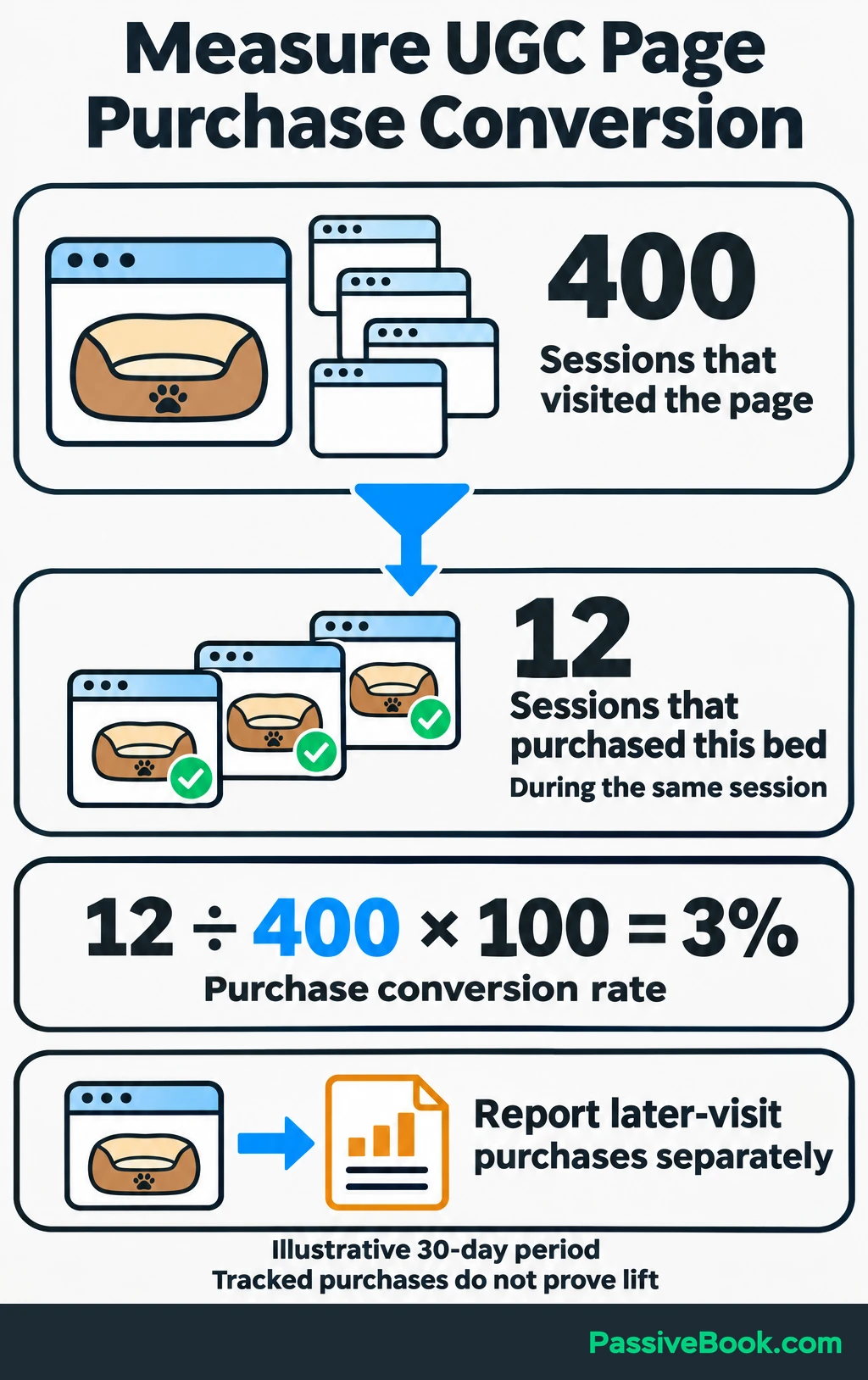
For the dog-bed page, count all sessions that visited it during the chosen period, then count how many of those sessions included a purchase of the featured bed. Divide purchasing sessions by all sessions that visited the page, and multiply by 100 to get a percentage.
Suppose 400 sessions visited the page during a 30-day period, and 12 of those sessions included a purchase of the featured bed:
12 ÷ 400 × 100 = 3% purchase conversion rate
This measures purchases completed within those sessions. Report purchases made on later visits separately, and state how long after the initial visit you count them.
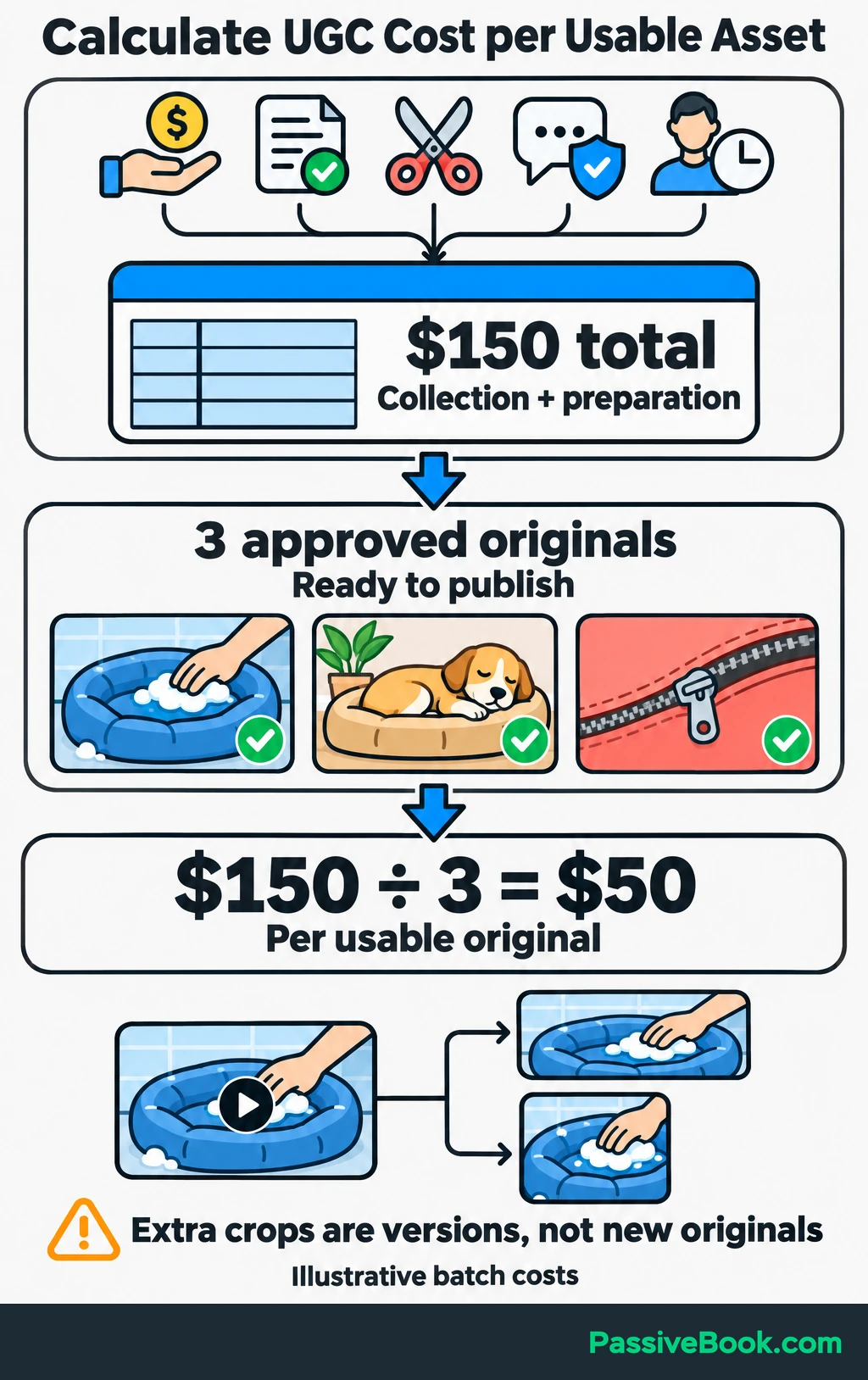
Also measure what it costs to produce something usable. Add collection and preparation costs, including incentives, creator fees, permission administration, editing, moderation, and staff time. Divide that total by the approved original assets ready to publish.
If an illustrative batch costs $150 and produces three approved originals, the cost is $50 per usable asset. Making several crops from one video doesn’t turn it into several original submissions. Record those versions separately.
Tracked purchases show a customer path. To find stronger evidence that the content improved results, compare the UGC version with the existing version while keeping the offer and placement steady. Randomly split comparable traffic when practical.
A before-and-after comparison can still guide decisions, but a promotion or seasonal change may explain the difference. Don’t award the video credit for everything that happened after upload.
6. Make Collection and Reuse Repeatable
Once the first submission has gone through the process, connect requests to the customer milestone that makes them useful.
For the dog-bed shop, that means asking about washing after customers have used and cleaned the cover. An immediate delivery request belongs to a different question.
Move each submission through a visible sequence:
- Received.
- Awaiting permission.
- Approved.
- Prepared.
- Published.
- Reviewed.
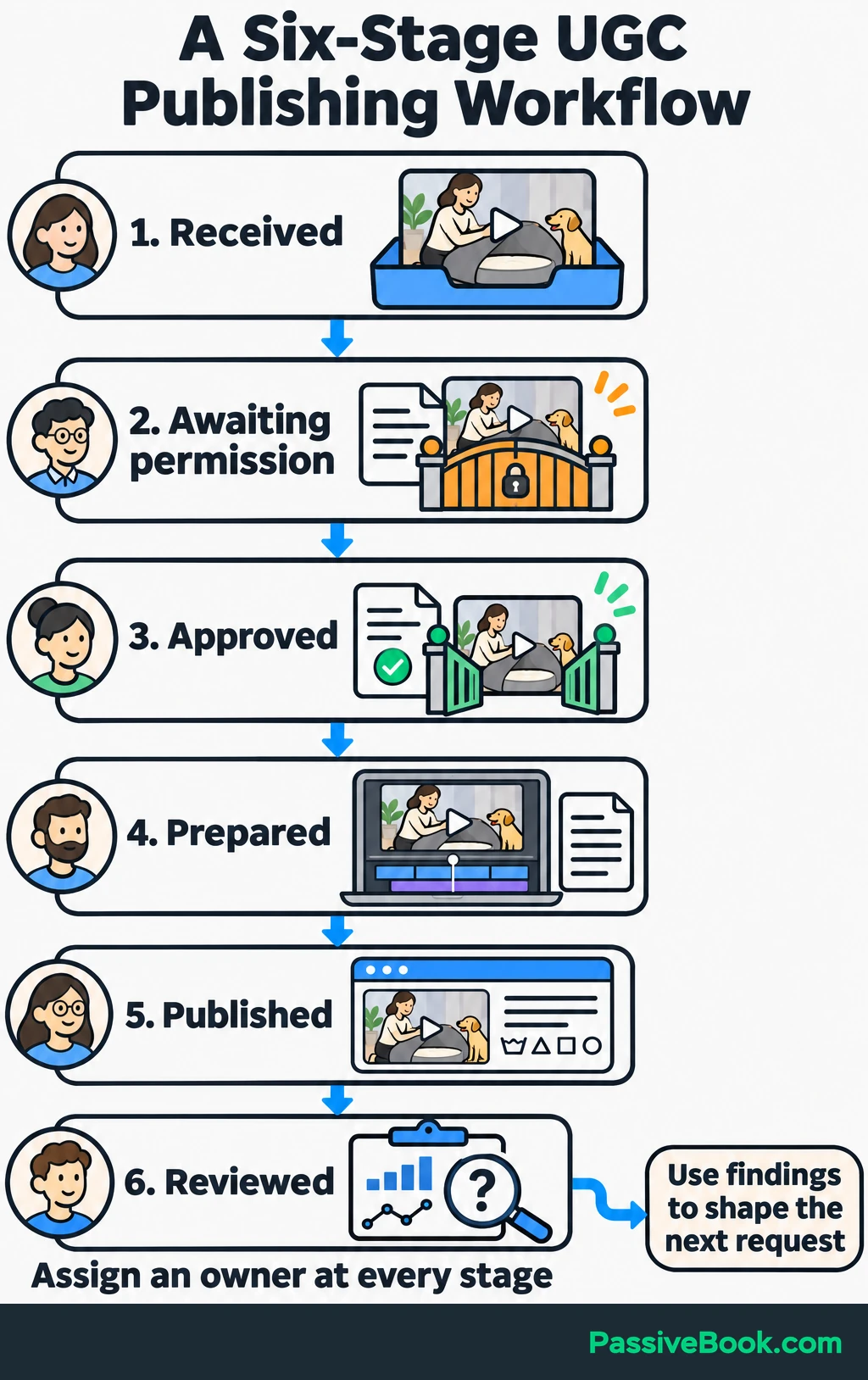
Assign responsibility for each stage, even if your name fills every box. Batch requests and editing, and organize approved assets by the questions they answer.
Start with a form, a shared folder, and a spreadsheet. I wouldn’t buy a dedicated UGC platform before that setup becomes a real constraint.
Then automate the routine work: sending requests, issuing a reminder, naming files, flagging permission expiry, and gathering reports. AI can help transcribe submissions, suggest tags, and draft captions. A person should still check the meaning, permission, disclosures, and final version.
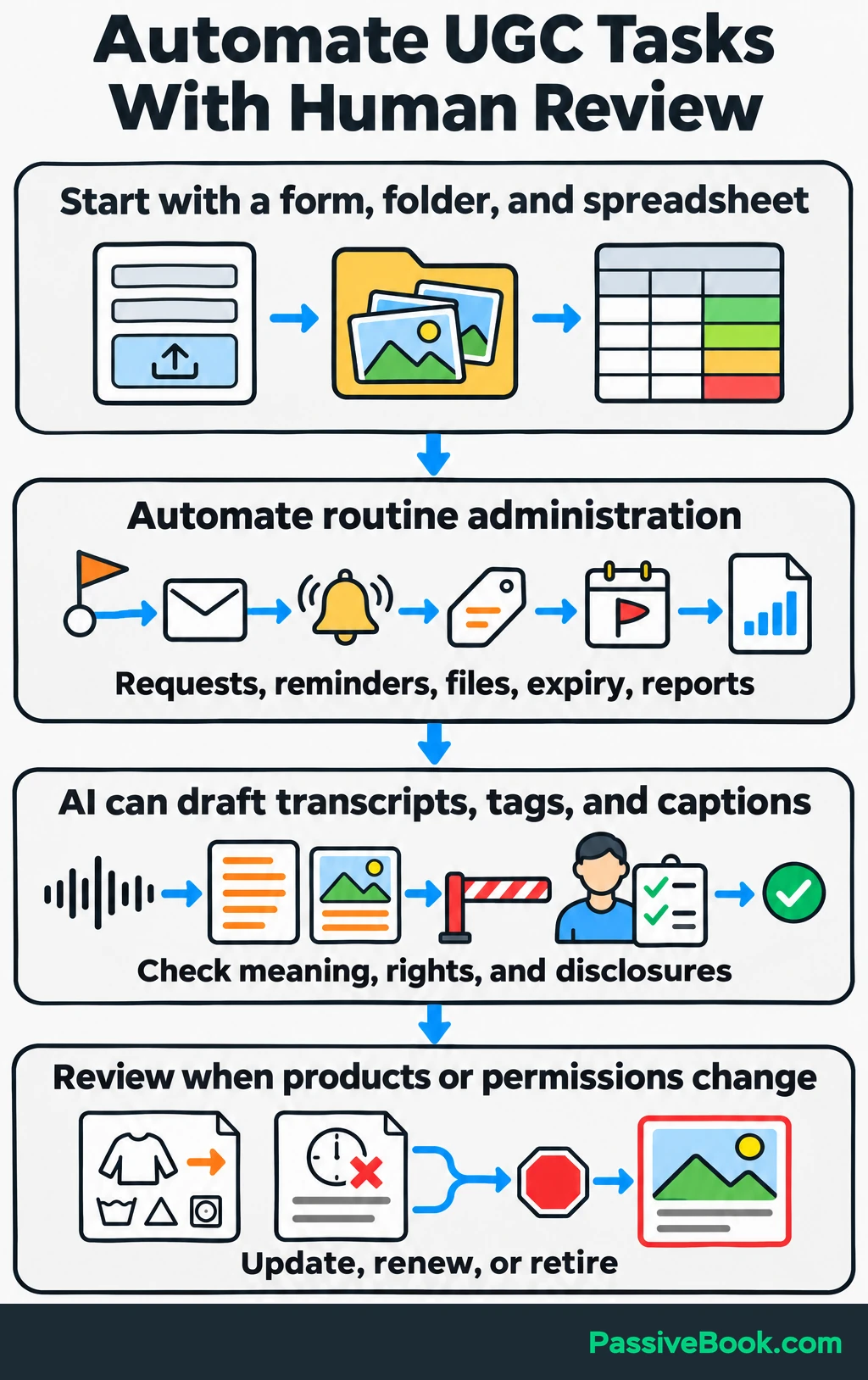
Thank contributors and use the results to guide the next request. If shoppers still ask how the cover comes off, request a closer removal shot. Another general testimonial won’t fill that gap.
Keep reusing accurate, approved content while permission remains valid. Review it when the product or care instructions change, and update or retire versions that no longer match.
The aim is a small library of useful answers that saves you from explaining the same thing from scratch.
What Next?
Choose one purchase question today and write a request for the customer experience that could answer it. Name the intended placement before you send it.
Use the social buttons to share this guide when a content plan needs more customer evidence and fewer production demands.
What question would you most like a customer to answer about your product or service? Share it in the comments, along with any questions about putting this process to work.
Share this post with your friends & followers:

