You can explain your subject well and still publish articles that sound like everyone else’s. The tips are accurate, but readers have little reason to remember who wrote them.
That is an expensive habit when content has to fit around orders, clients or a day job. Each interchangeable article uses time you could have spent making a stronger case. This guide shows how to turn your experience into a point of view readers can use and a manageable publishing plan that connects their questions to relevant business inquiries.
What Is a Thought Leadership Content Strategy?
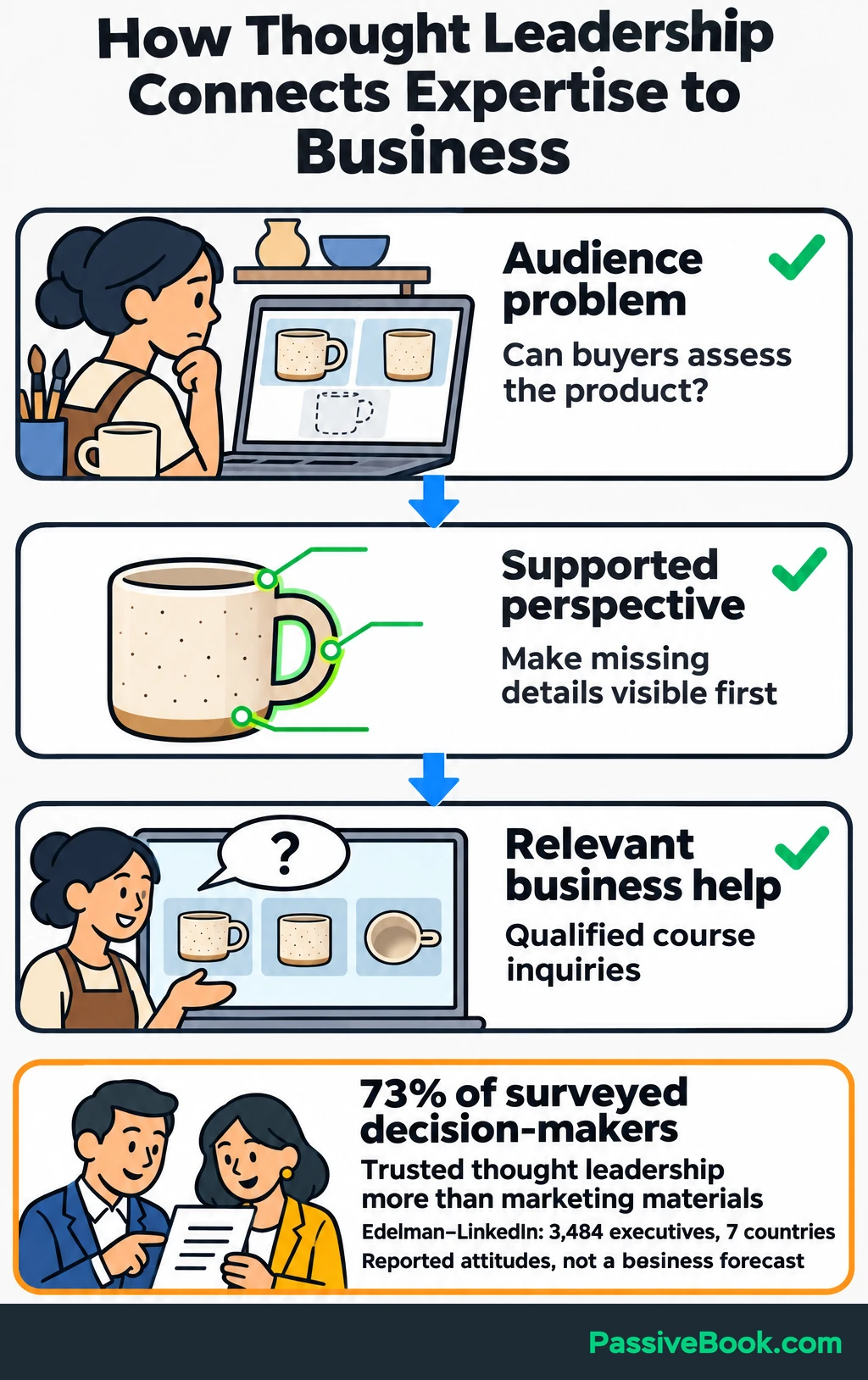
A thought leadership content strategy is a plan for becoming known for a useful perspective you can support. It connects three things: the problem your audience faces, your approach to solving it, and the help your business provides.
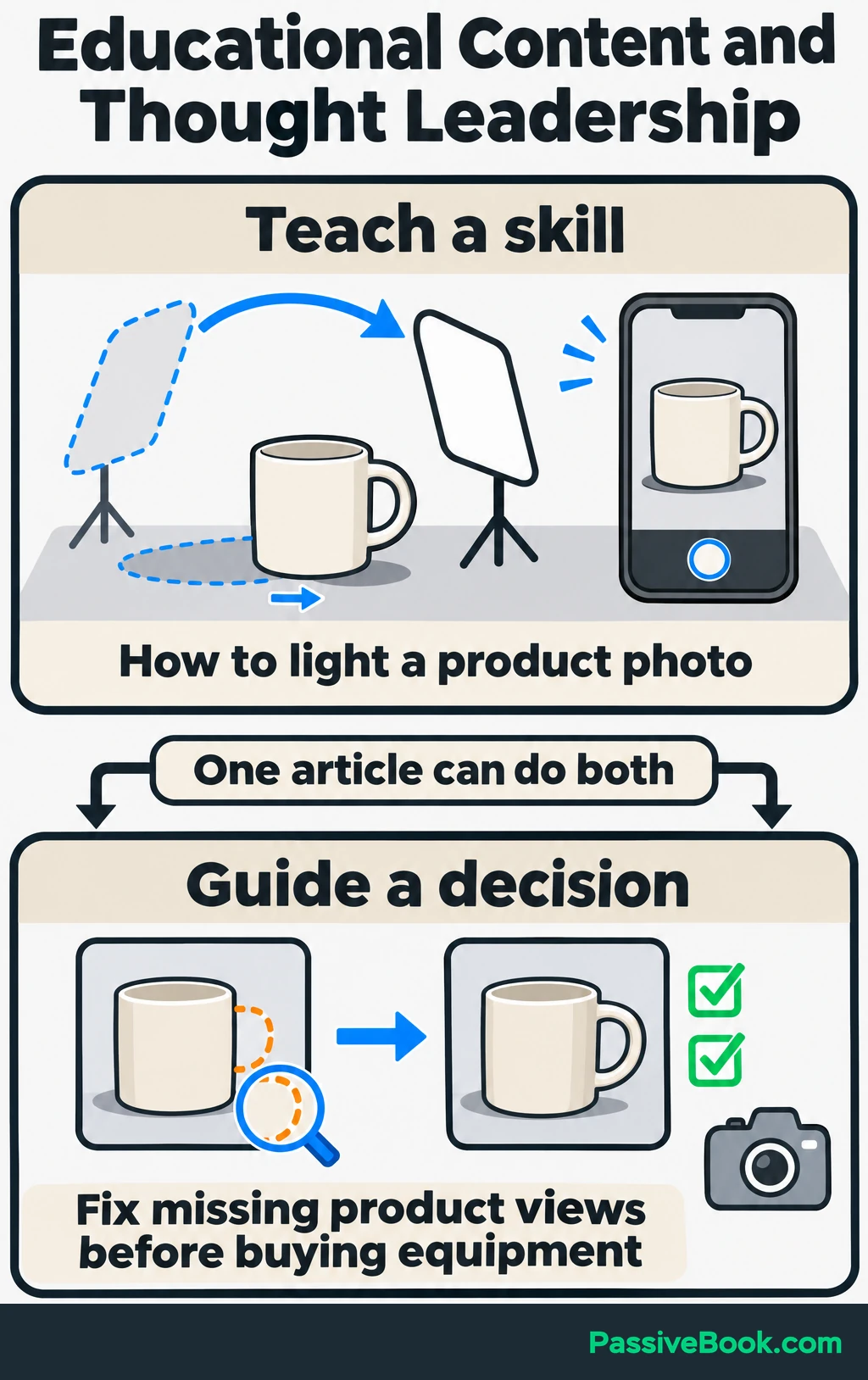
Educational content teaches someone how to do something. Thought leadership also helps them decide what deserves their attention and why. One article can do both.
For example, a lighting tutorial teaches a photography skill. An illustrated argument for fixing missing product views before buying more equipment helps readers choose their next investment.
There is evidence that buyers value this kind of expertise. In the Edelman–LinkedIn report, 73% of surveyed decision-makers said thought leadership was a more trustworthy basis for assessing an organization’s capabilities than marketing materials and product sheets. The study surveyed 3,484 business executives across seven countries. Those are reported attitudes among business buyers, not a forecast for your business.
You do not need a sweeping opinion about your entire industry. I would start with one decision you can help someone make better.
Throughout this guide, imagine you sell an online course teaching phone product photography to handmade ceramics sellers. Its positioning, demonstrations and publishing plan are illustrations, not documented business results.
Step 1: Choose the Audience Problem You Want to Be Known for Solving
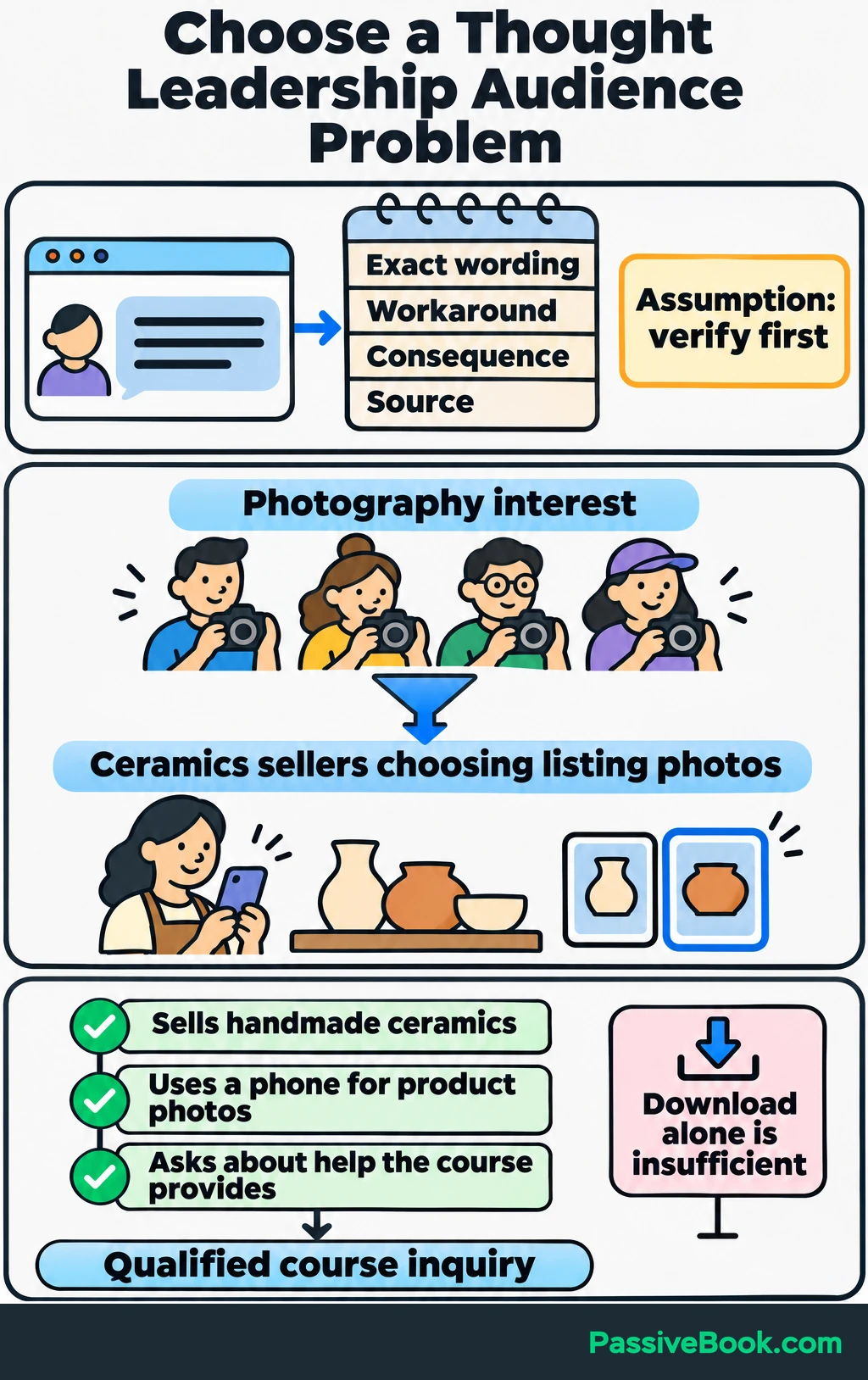
Start with the situation your audience faces. “People interested in photography” gives you almost no direction. “Ceramics sellers choosing photos for their product listings” gives you a task to investigate.
Find out what makes that task difficult before deciding what to publish.
Use customer conversations, support messages, reviews and relevant community discussions. Ask questions that reveal actual decisions:
- What were you trying to improve?
- What did you try?
- Where did you get stuck?
- What would help you decide what to do next?
Keep a simple research log with the person’s wording, their workaround, the consequence and where you found the information. Mark assumptions separately. A question you expect people to have is still an assumption until you find it.
For the course, investigate whether sellers struggle with lighting, equipment, image selection or something else. Do not decide that everyone needs a better camera because cameras are easier to write about.
Then choose a problem that your expertise and offer can address. Complete this sentence:
I want [audience] to associate me with [useful approach to a specific problem], so they are more likely to [relevant next action].
The course’s candidate focus could be:
I want handmade ceramics sellers to associate me with making products easier to assess through phone photos, so they ask whether my course can help them improve their listings.
Choose one primary business outcome. Here, I would use qualified course inquiries.
Define “qualified” before counting them: an inquiry from someone selling handmade ceramics, using a phone for product photos, and asking about help the course actually provides. A checklist download alone would not meet that definition.
Step 2: Develop a Point of View You Can Defend
Build an Evidence Bank From Your Work
Your strongest material may already sit in project folders, notes and failed attempts.
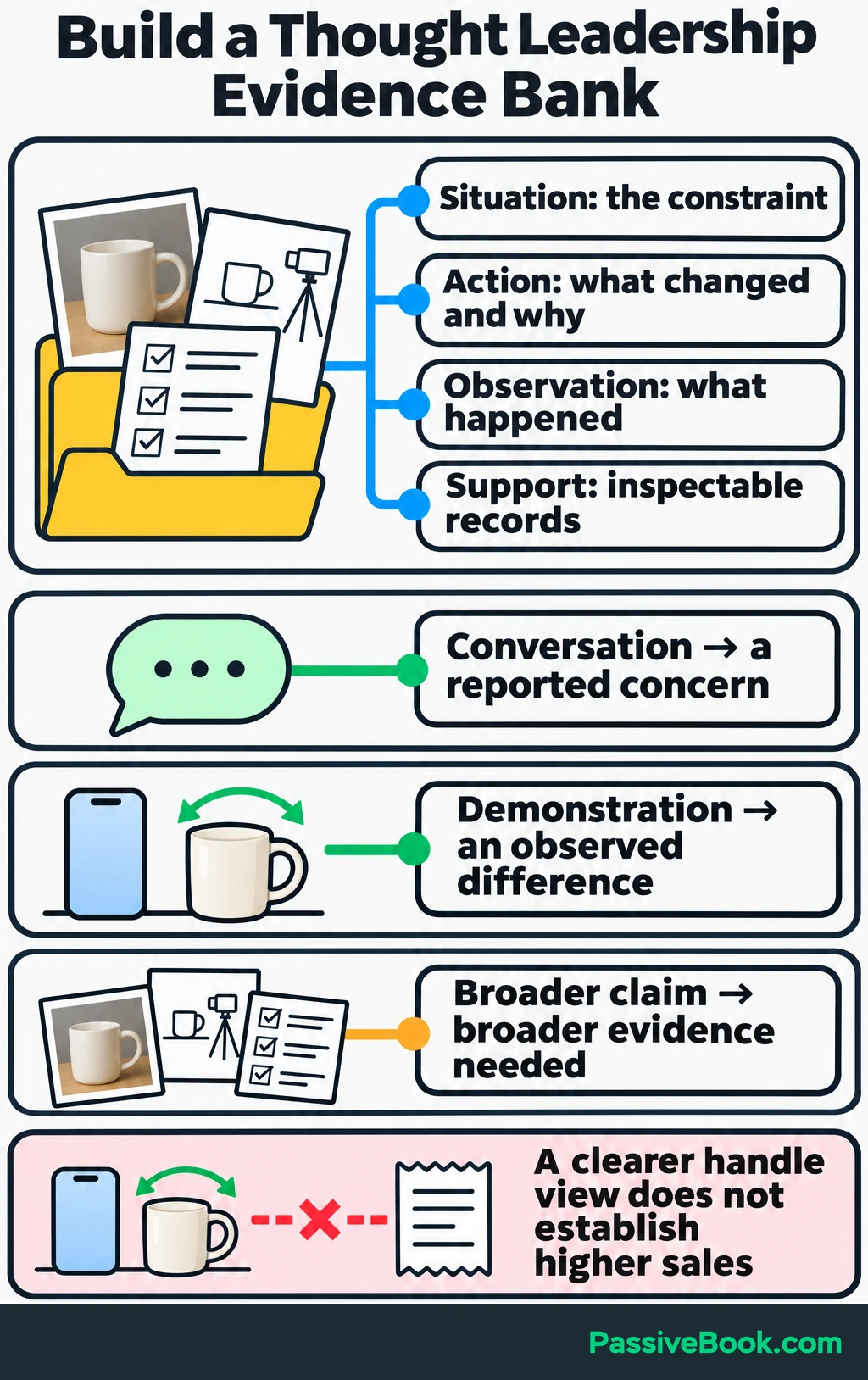
Collect methods you have used, decisions you can explain, mistakes you understand and questions you have answered. For each item, record:
- Situation: What problem or constraint existed?
- Action: What did you do, and why?
- Observation: What happened?
- Support: Which photos, records, screenshots or sources let someone inspect it?
In my affiliate work, I moved from chasing products to writing honest reviews of tools I actually used. That gave me something concrete to explain. I could discuss the work the tool helped with and the reasons I would choose it.
I would apply the same standard here: choose material you can examine closely enough to offer useful judgment.
For the photography course, plan a demonstration using the same ceramic mug. Change one condition at a time, such as the camera angle, and keep the original images and setup notes.
That comparison can show which view reveals the handle or shape more clearly. It cannot establish that the image increased sales.
Keep the type of support clear. A conversation reveals someone’s concern. A demonstration shows what happened under its conditions. A broader claim needs evidence broad enough to support it.
If evidence is missing, plan a demonstration, run an experiment or interview someone with relevant firsthand experience before writing the conclusion.
Find the Decision Existing Advice Leaves Unresolved
Review a small selection of the advice your audience already encounters.
Compare what each piece recommends, why it recommends it, and which conditions it assumes. Then return to your audience notes and ask what remains difficult to decide.
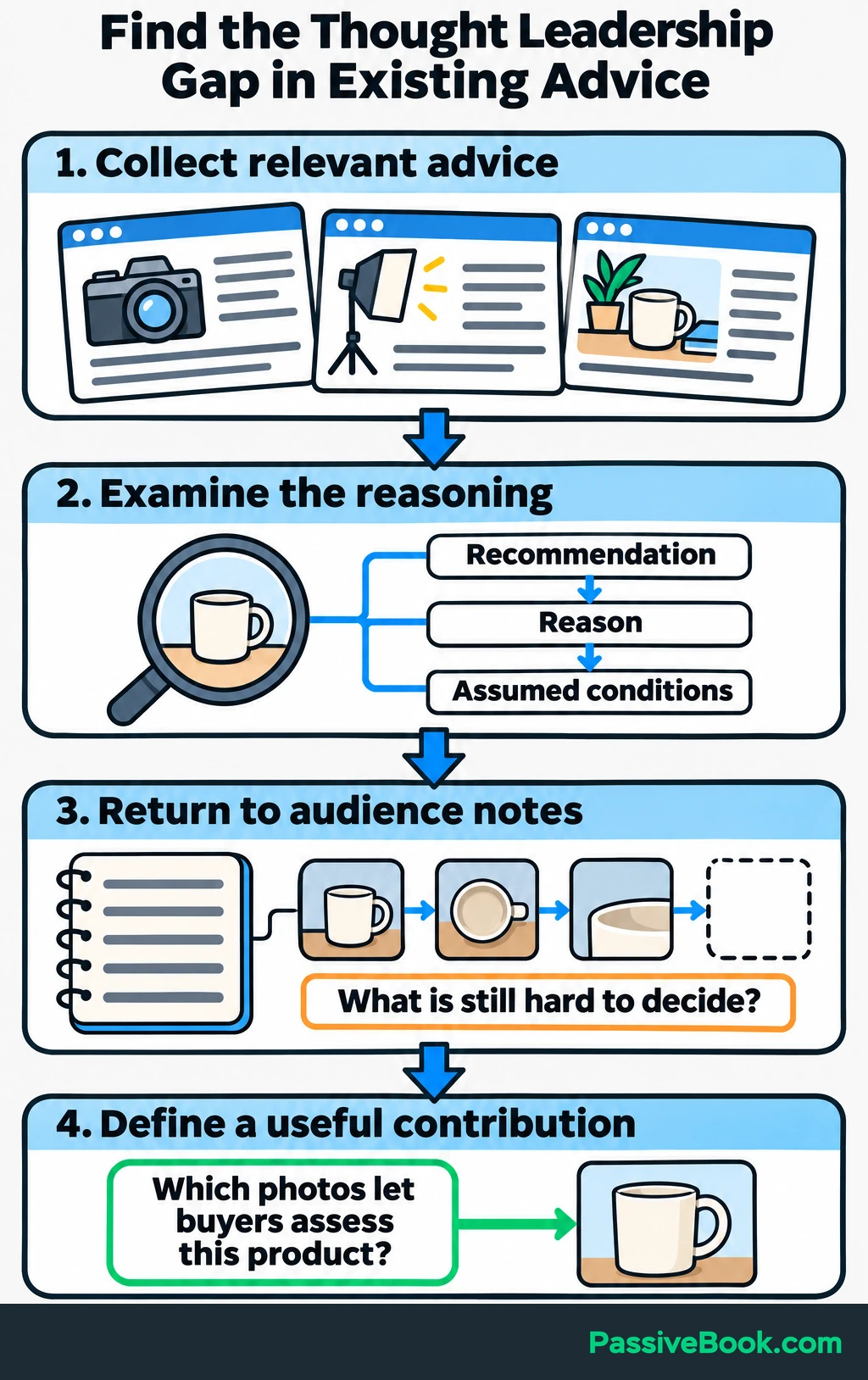
For the course, investigate whether equipment and styling advice leaves a more basic question unanswered:
Which photos do I need so someone can assess this particular product?
That could lead to a useful contribution: a method for matching each image to a buyer’s question.
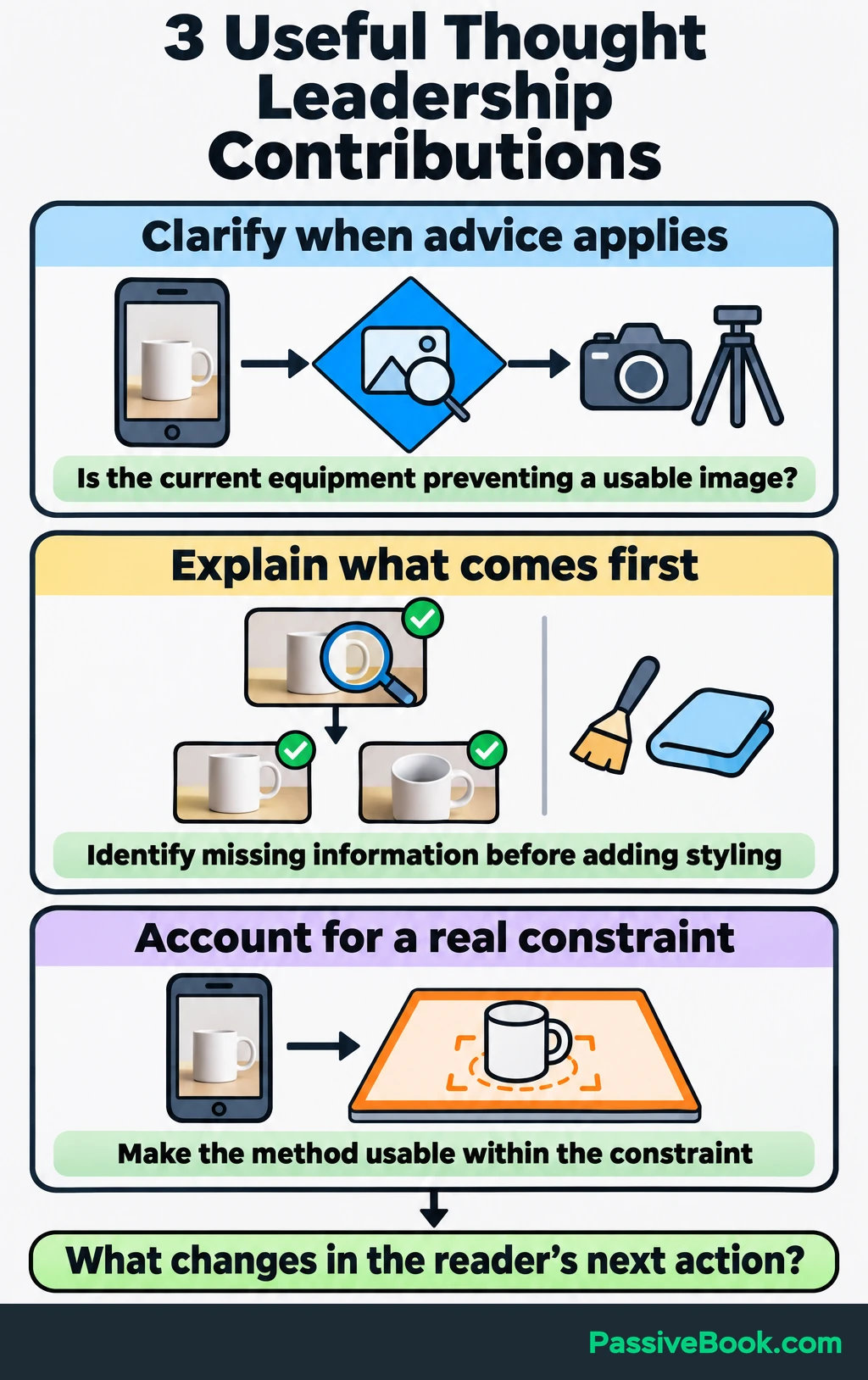
The contribution does not have to overturn accepted practice. It might explain when a common recommendation applies, introduce a useful order of operations, or account for a constraint other advice overlooks.
I would skip a provocative opinion that changes nothing about the reader’s next action. Disagreement is easy to manufacture. A better decision takes work.
Write and Test Your Central Belief
Use this structure to draft your position:
For [audience facing a specific situation], prioritize [approach] because [supported reason], especially when [relevant condition].
For the course, a candidate belief is:
For ceramics sellers choosing listing photos, make the product easy to assess before investing in elaborate styling or more equipment, especially when the current images leave its shape or details unclear.
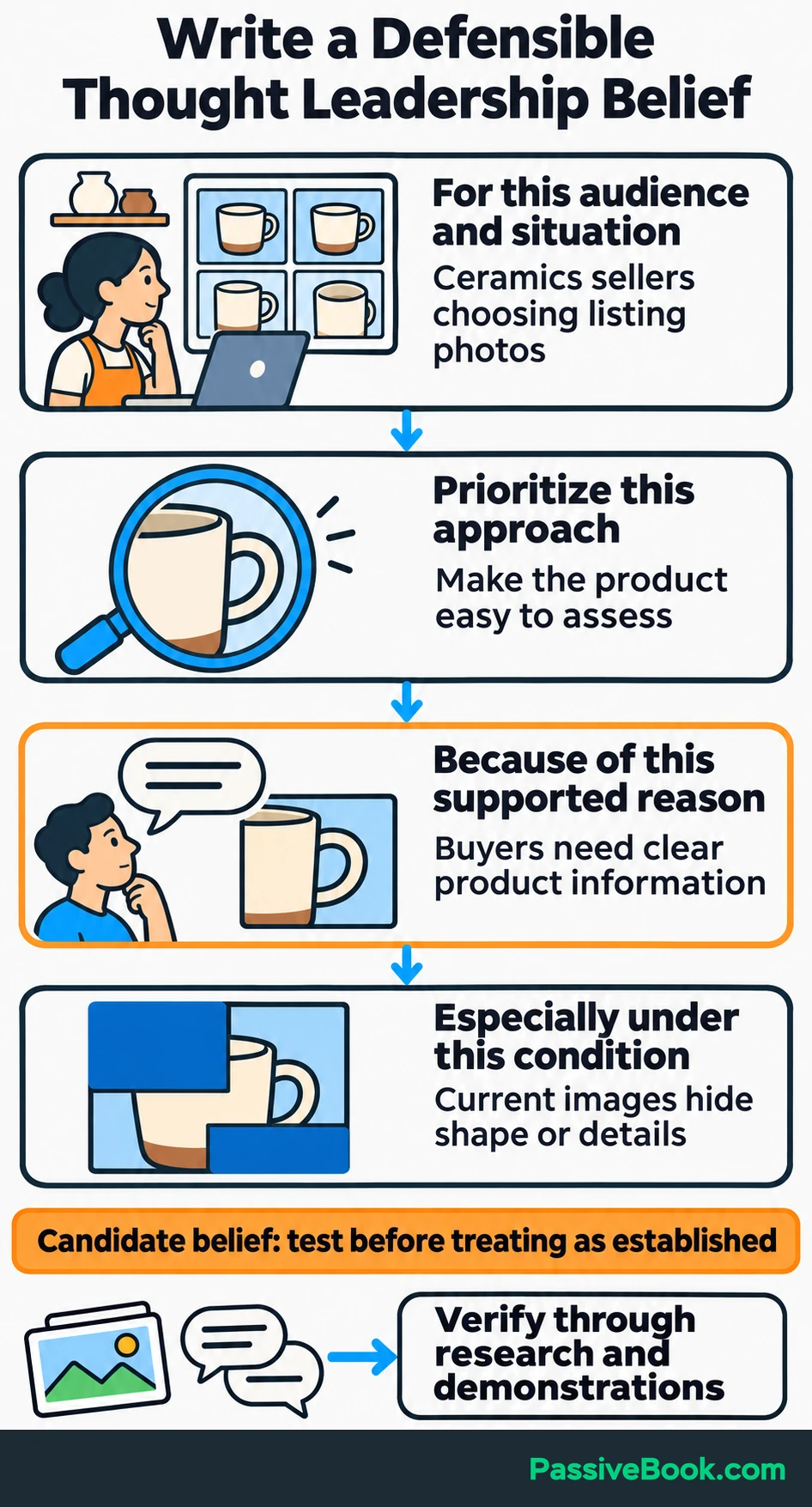
Treat that as a position to test against audience research and demonstrations.
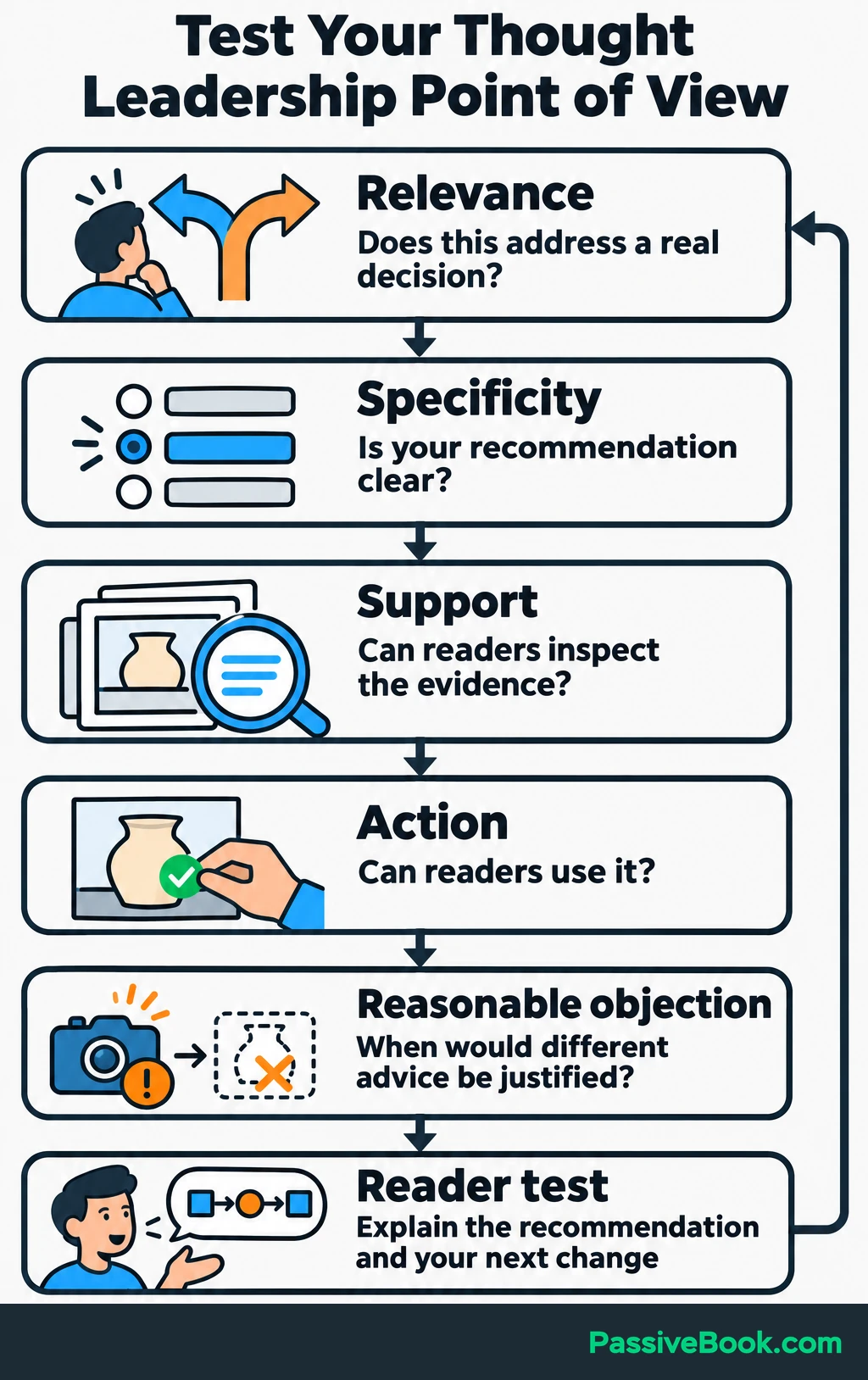
Check four things:
- Relevance: Does it address a decision your audience faces?
- Specificity: Can readers tell what you would choose?
- Support: Can they inspect your reasoning and evidence?
- Action: Can they do something useful with it?
Then consider the strongest reasonable objection. Existing equipment may genuinely prevent a seller from producing a usable image. Your position should allow for that rather than insisting equipment never matters.
If the belief still sounds generic, start with a decision you have actually made. This AI Skill turns that example into a short argument you can put in front of suitable readers.

Free AI Copywriting Studio




Show a short explanation and demonstration to a few suitable readers. Ask them to explain the recommendation in their own words and describe what they would change.
Their answers tell you more than “Looks good!” ever will.
Step 3: Turn Your Point of View Into Content Pillars
Content pillars are recurring subjects that give your point of view room to develop.
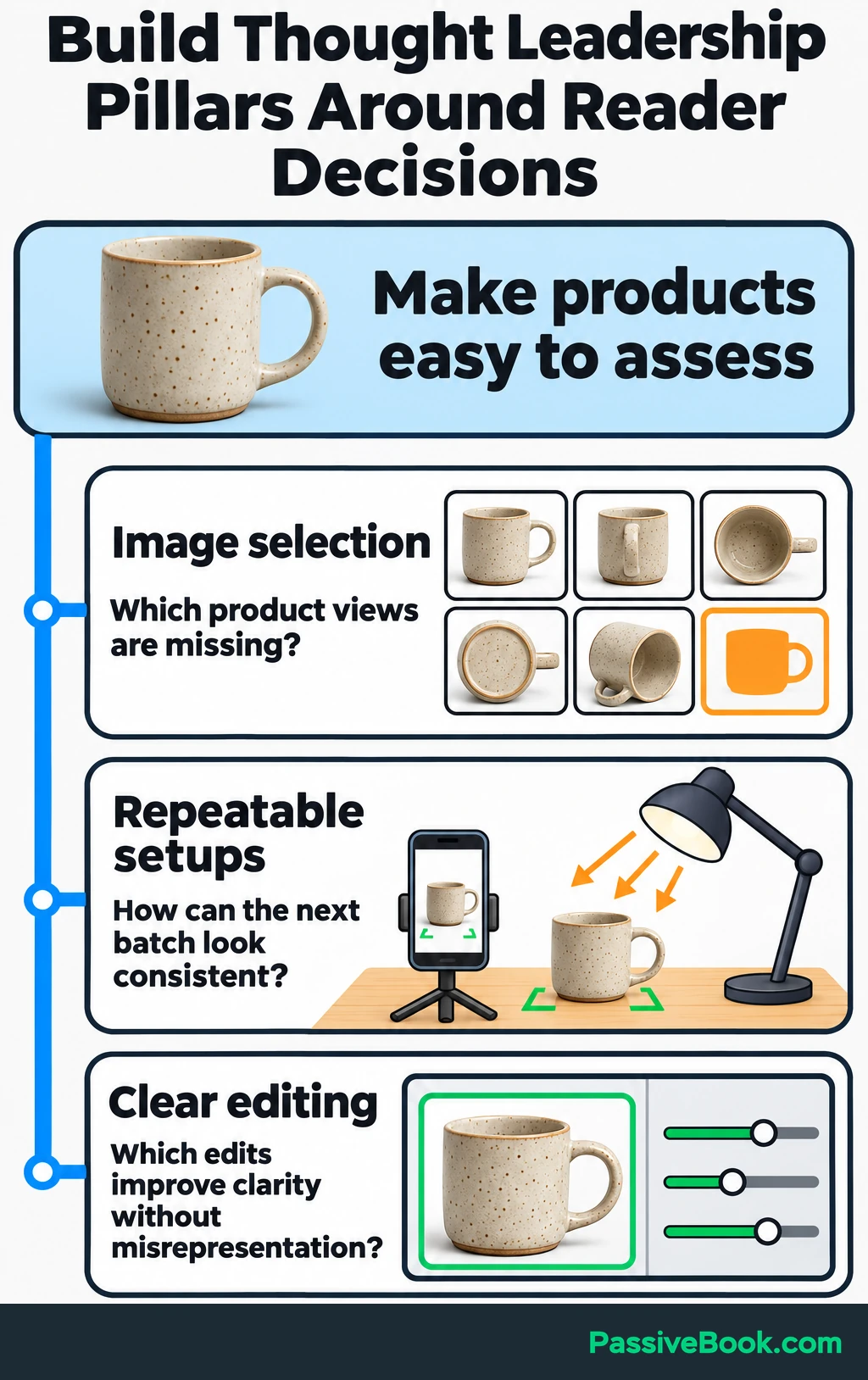
Choose a small set tied to decisions your audience needs to make. For the course, three pillars would be enough:
| Pillar | Reader’s decision | Possible content |
|---|---|---|
| Image selection | Which product views are missing? | An illustrated listing-photo audit |
| Repeatable setups | How can I photograph the next batch consistently? | A documented setup readers can reproduce |
| Clear editing | Which edits improve clarity without misrepresenting the item? | Annotated before-and-after examples |
Within each pillar, plan explanations, practical methods, comparisons and responses to objections.
To choose what to work on first, ask:
- How much does this question matter to your audience?
- What useful advice can you add?
- What evidence do you still need?
- How could the piece support your chosen business outcome?
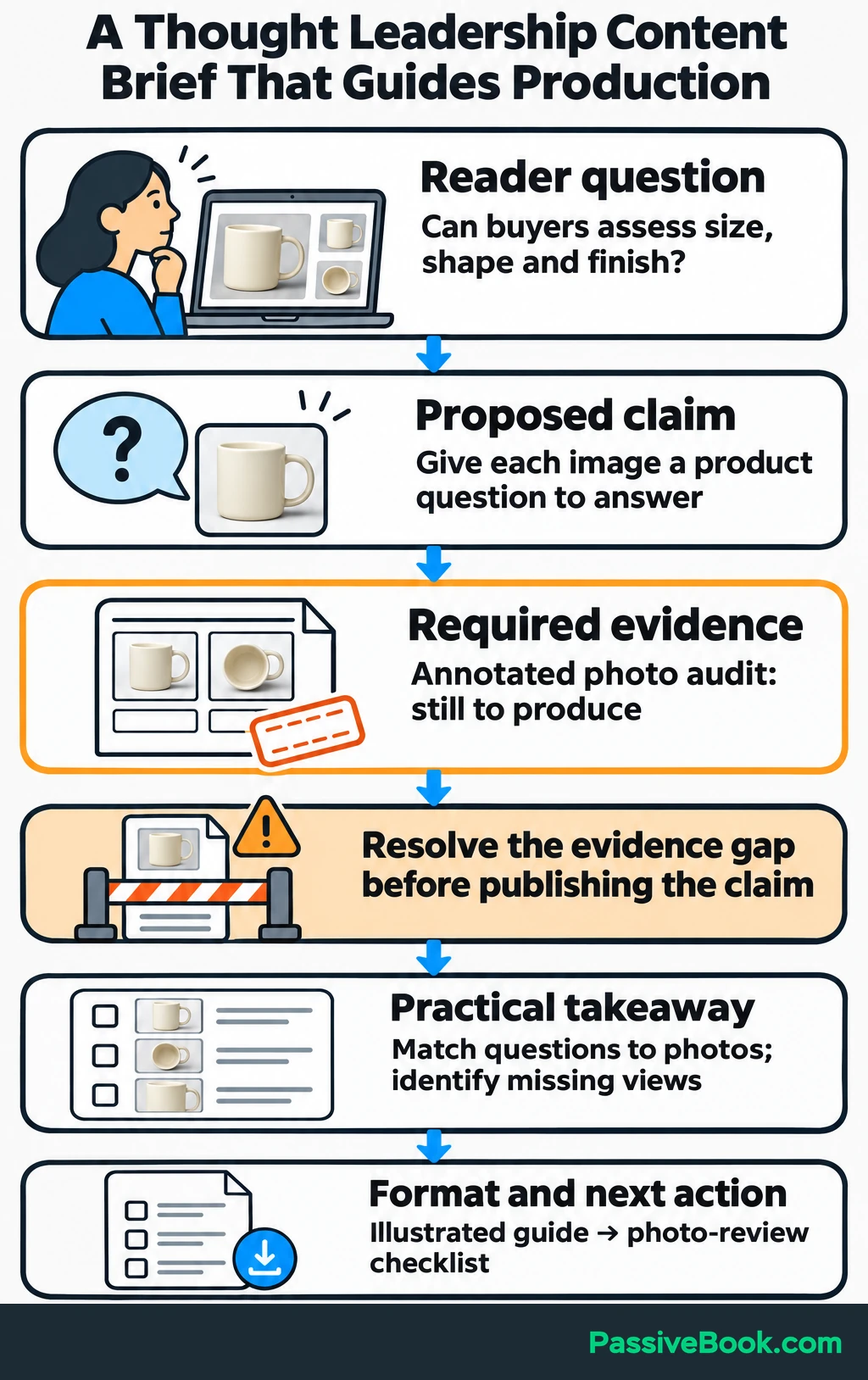
For the first guide, a brief could look like this:
- Audience Question: Can someone assess my mug’s size, shape and finish from these photos?
- Pillar: Image selection.
- Proposed Claim: Give each image a clear product question to answer.
- Supporting Evidence: An annotated photo audit, still to be produced.
- Practical Takeaway: Match questions to photos and identify missing views.
- Format: Illustrated website guide.
- Next Action: Use the photo-review checklist.
- Priority: High, because it demonstrates the course’s central approach.
Step 4: Choose Your Core Format and Channels
Choose the format that makes your reasoning easiest to inspect.
Visual comparisons need images. A repeatable process may work well as a written guide. A technique involving movement may need a demonstration.
For the course, I would start with illustrated website guides. Annotated photographs can show the reasoning without requiring an on-camera presentation.
Then choose two places:
- Publishing Home: Where the complete resource lives.
- Discovery Channel: Where suitable readers can find it.
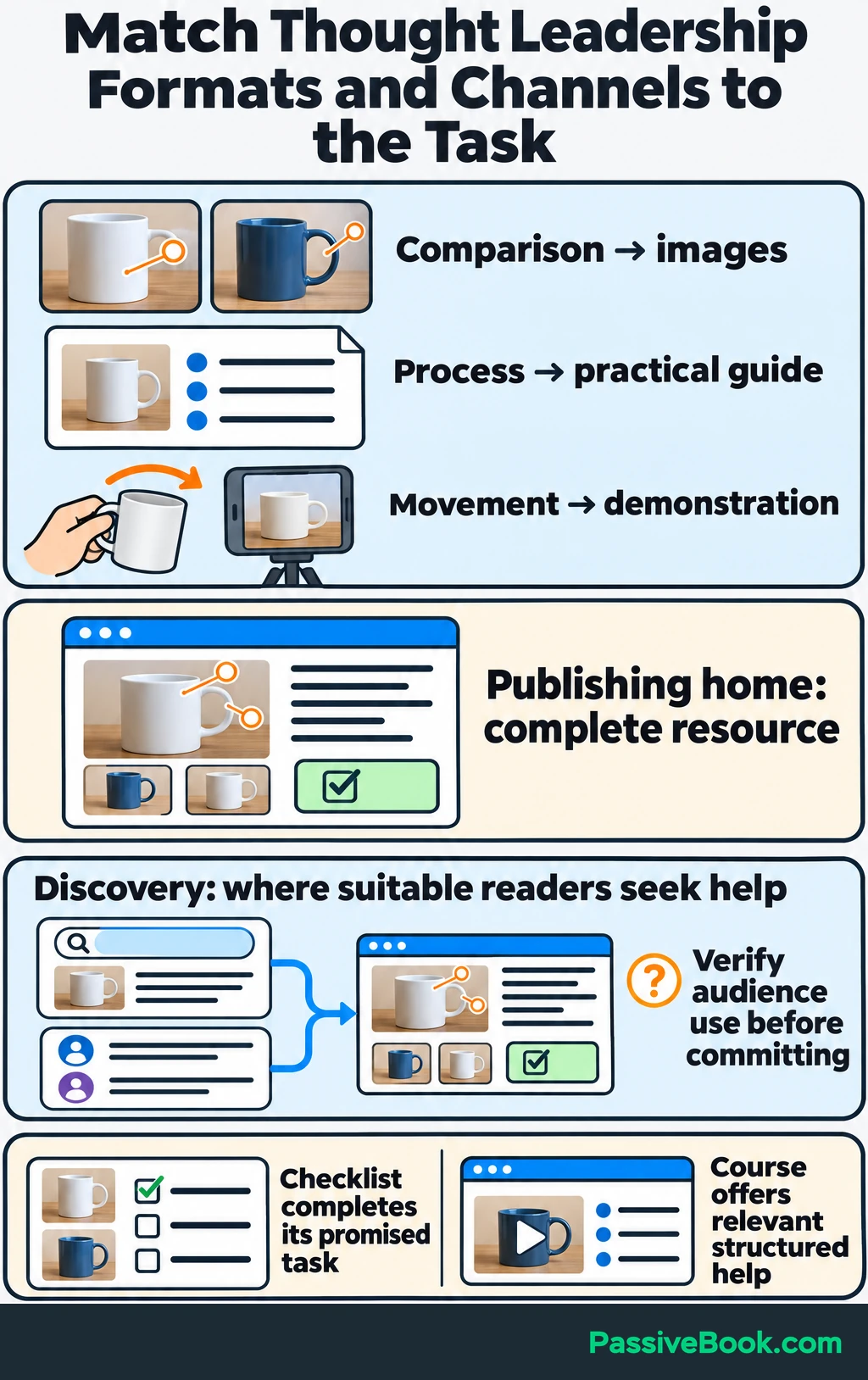
I prefer publishing substantial guides on a website I control. For discovery, use the audience research from Step 1. Look for places where people seek help with the problem, rather than places where they merely browse attractive ceramics.
Pinterest is a possible starting point for this visual subject. I would treat it as provisional until audience conversations or existing referral activity support that choice. If a specialist community is where the relevant questions appear, start there and follow its posting rules.
Give each resource a next action that fits what it teaches. The photo-audit guide can offer a checklist readers use on their own listings. The checklist can then explain when the course would provide useful structured help.
The free resource should complete its promised task. Readers should not have to buy the course to discover the missing step.
Step 5: Build a Sustainable Production Workflow
Set Your Cadence From the Full Workload
Count the whole publishing cycle before choosing a frequency.
That includes gathering evidence, drafting, producing visuals, reviewing, distributing, answering questions and checking results. Writing is only one part of the job.
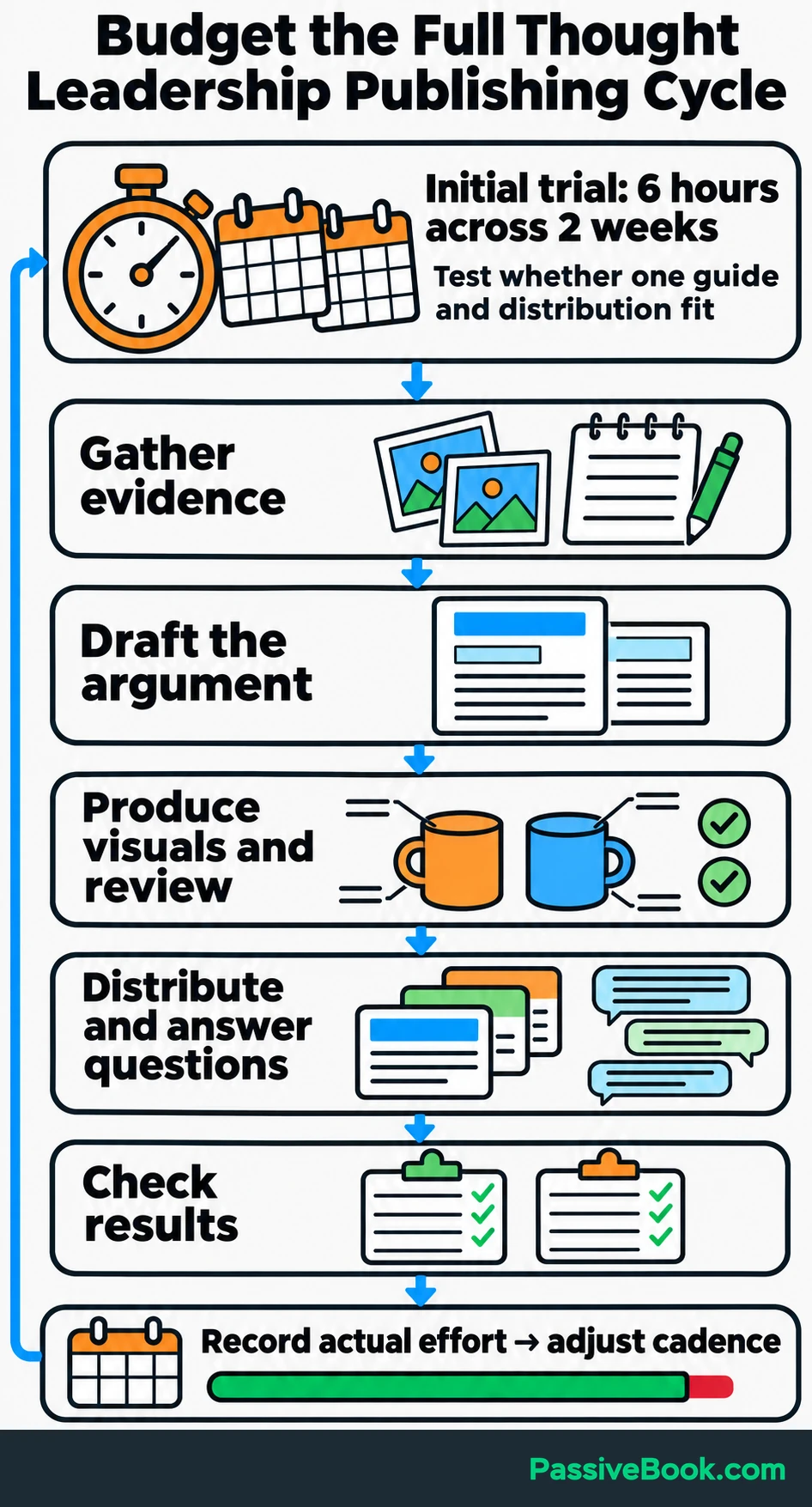
For an initial planning cycle, you might reserve six hours across two weeks. See whether one useful guide and its distribution fit that allowance, then adjust the schedule using the time you actually spend.
My abandoned membership site shapes my preference here. I spent six months building it alongside corporate work, but its ongoing content demands became unsustainable. I would rather commit to a manageable publishing cycle than build another obligation that needs feeding every week.
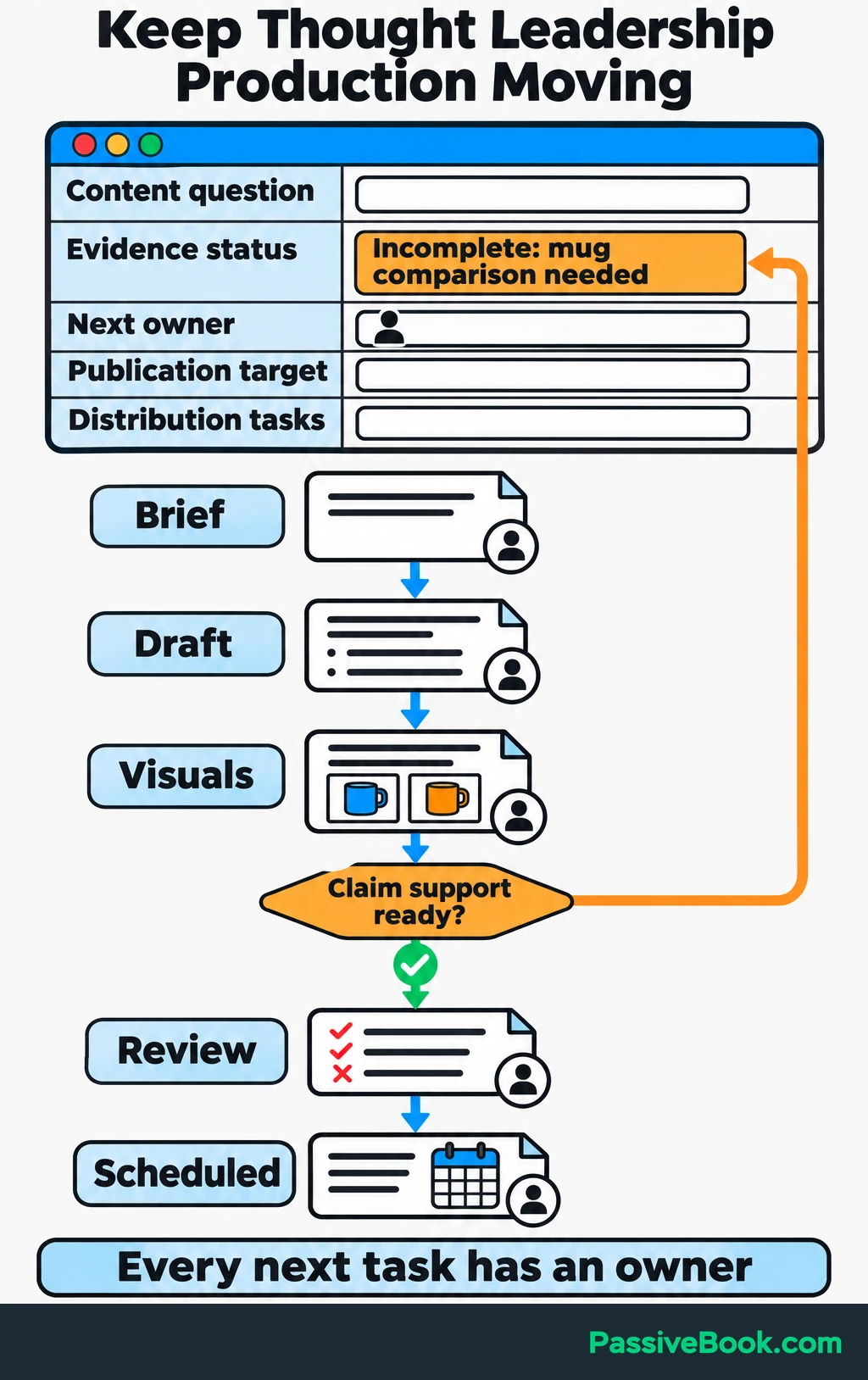
Keep one calendar or spreadsheet with:
- Content Question: What will this piece help someone decide?
- Evidence Status: Ready, incomplete or awaiting review.
- Production Stage: Brief, draft, visuals, review or scheduled.
- Owner: Who handles the next task, even if every entry is you?
- Publication Date: When the complete piece should be ready.
- Distribution Tasks: Which adaptations and placements it needs.
Capture useful material during ordinary work. A demonstration you already need to conduct is a better starting point than an unrelated topic chosen because Tuesday arrived.
Create Content Around an Argument Readers Can Apply
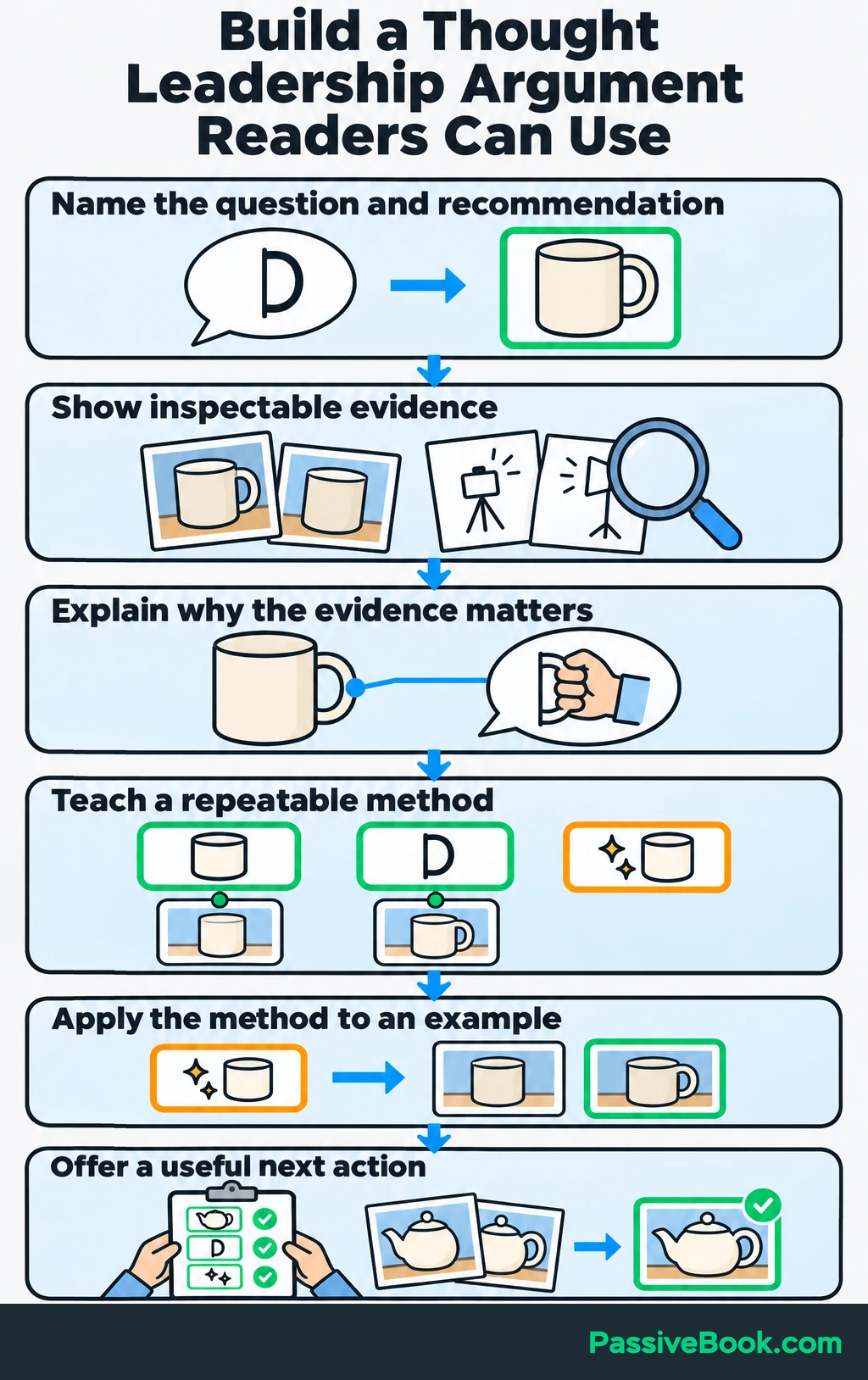
Use a repeatable sequence:
- Name the audience’s question.
- State your recommendation.
- Show the evidence.
- Explain why it supports the recommendation.
- Teach the method.
- Apply it to an example.
- Offer a useful next action.
For the photo-audit guide, teach readers to list the questions someone needs answered about the product. Then have them match each question to an existing image and mark anything left unanswered.
Only after explaining that process should you apply it to the mug.
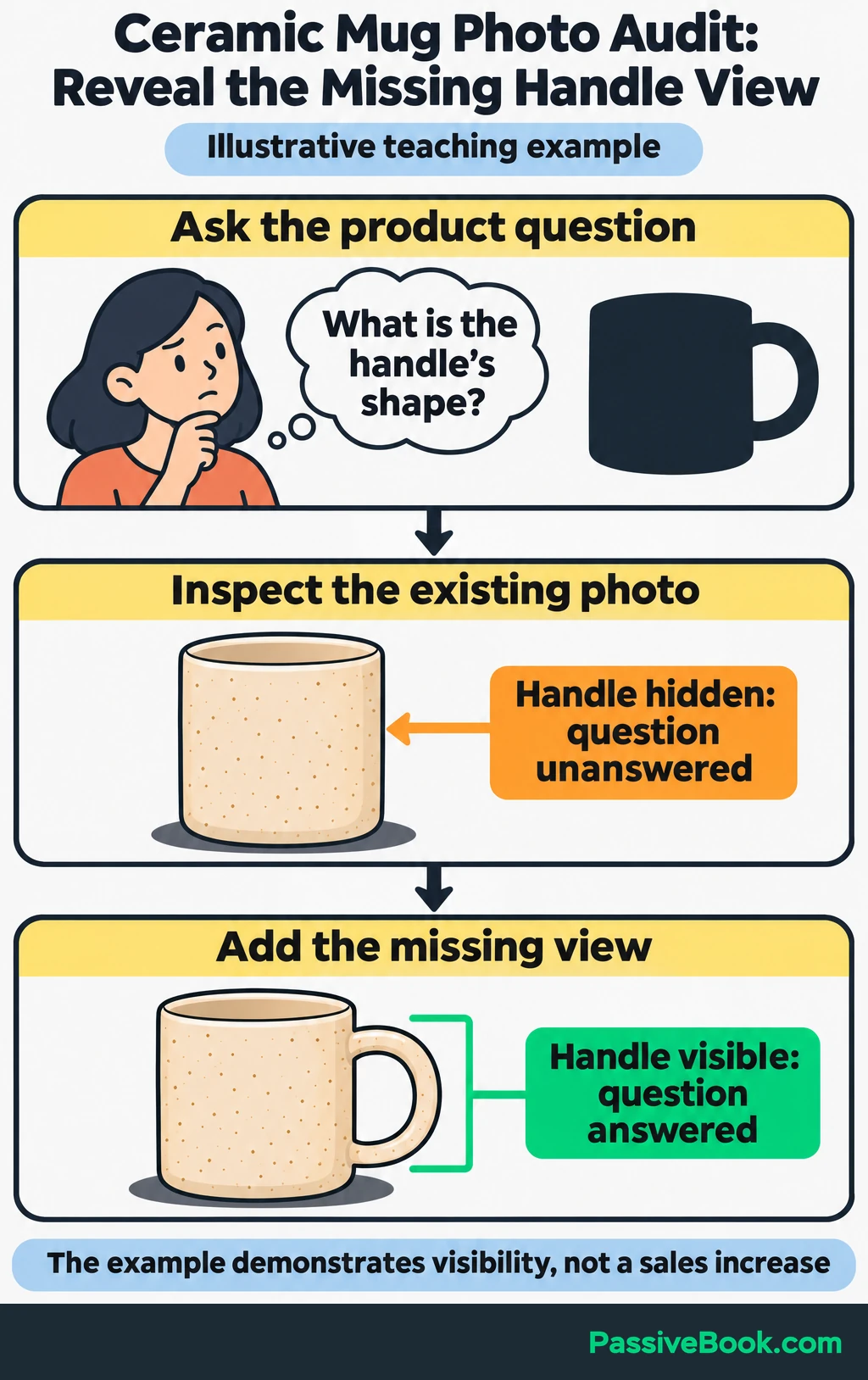
An illustrative passage could read:
A styled scene shows the mug in use, but the handle is hidden. Add a view that makes the handle visible before creating another styled scene.
Use the photos to show why the extra view helps. Label the hidden handle in the first image and the visible handle in the second.
Before publishing, review the draft:
- Contribution: Does it add a useful explanation, method or judgment?
- Support: Does the evidence justify the actual claim?
- Instructions: Could someone follow the process?
- Expertise: Can readers see how the recommendation was reached?
These checks also fit Google’s people-first content guidance, which asks creators to provide original value, clear sourcing and demonstrable knowledge. Use the guidance as a quality check; it does not guarantee rankings.
AI can help organize supplied notes, challenge an outline, surface objections and adapt approved material. Keep the argument and factual review with someone who knows the subject. Generated wording is not evidence.
Once this workflow works, automate repeated administration, such as moving approved briefs into the calendar. I would establish the process before automating it. Otherwise, you make confusion run faster.
Step 6: Distribute Each Idea and Develop the Conversation
Plan distribution while planning the original piece. That gives you time to produce useful adaptations instead of dropping the same link everywhere.
For the photo-audit guide, prepare an annotated comparison and a short explanation that stands on its own. Show the missing handle view, explain the question it answers, and link to the complete audit where relevant.
Each placement should provide something useful before asking for a click.
Make the original guide easy to find, too. Use a descriptive title such as “How to Check Whether Your Ceramic Mug Photos Show Enough Detail,” and link to it from related pages on your site. Use audience language gathered during research.
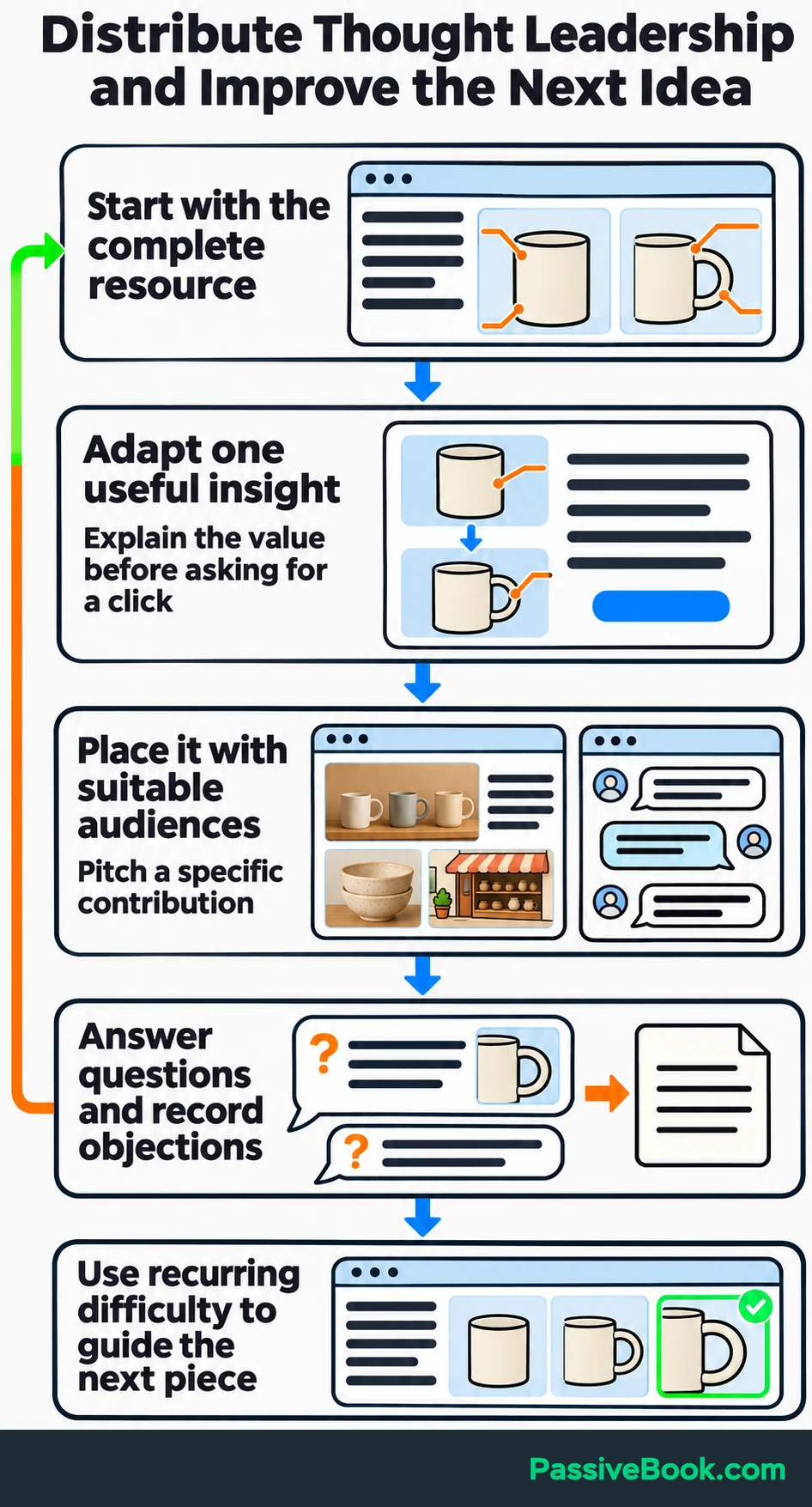
To reach people beyond your own audience, look for publishers or creators whose readers could use your method. A publication about selling handmade ceramics could be relevant if your research shows it reaches the people you want to help.
Pitch a specific contribution: an illustrated photo-audit method its readers can use. “I would love to share my expertise” leaves the editor doing your planning.
After publishing, invite readers to describe where the method becomes difficult. Answer substantive questions and record recurring objections.
If people repeatedly struggle to show a particular feature, that may justify an update or a follow-up demonstration. Let useful questions shape the next piece instead of treating every article as finished the moment it goes live.
Step 7: Measure Progress and Improve the Strategy
Track Trust Signals and Qualified Actions
Return to the primary outcome you chose in Step 1.
For an initial trial, I would review after three complete content cycles and allow a further week for replies. That is a planning choice, not a timetable for becoming an authority.
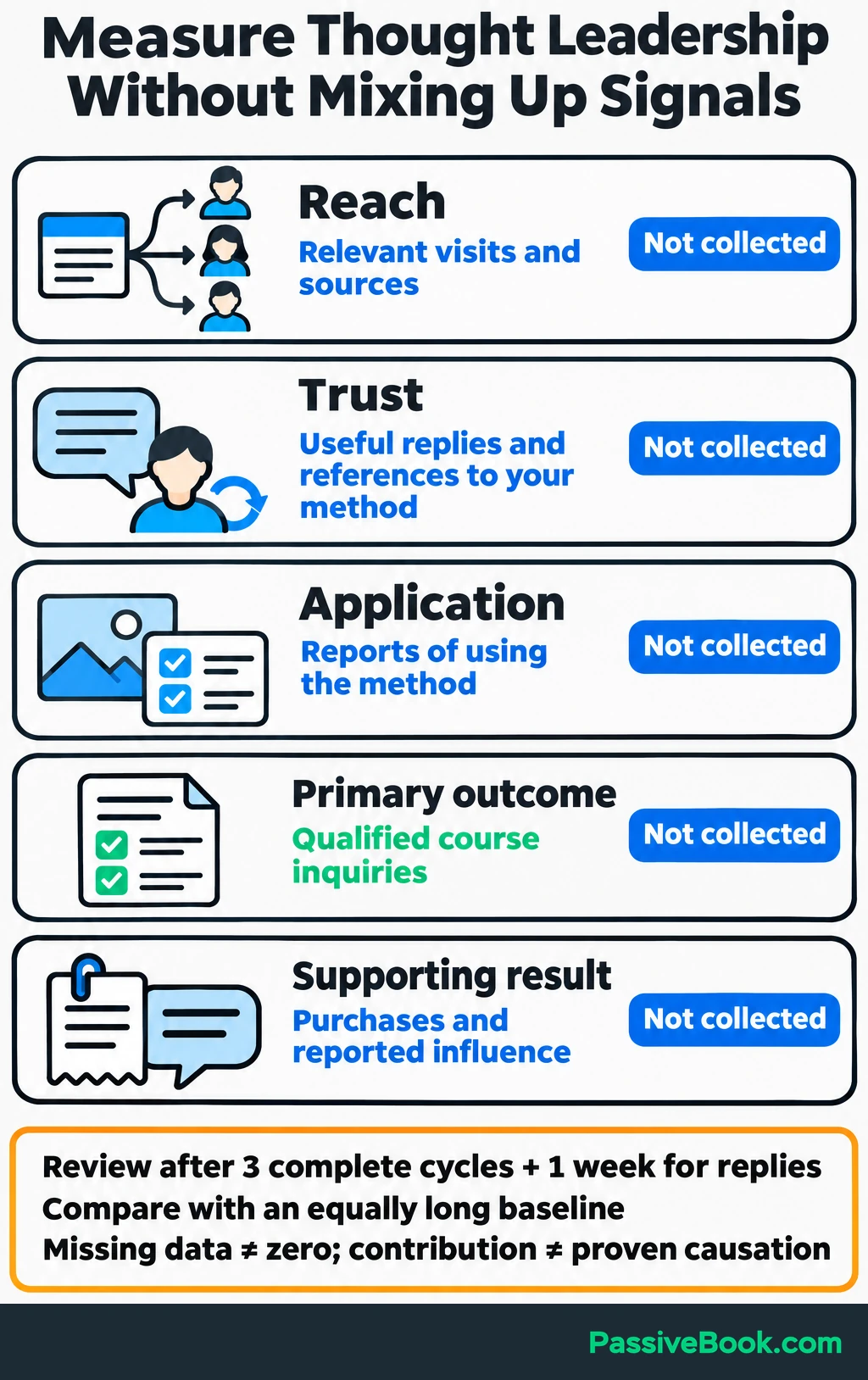
Before publishing, record qualified inquiries, relevant visits and useful audience responses over the preceding period of the same length. Record zero only if you checked and found none; mark unavailable data as “not collected.”
Track trust and business progress separately.
| What to track | Useful evidence |
|---|---|
| Recognition and trust | Substantive replies, repeat participation, relevant citations or readers referring to your method |
| Application | Someone describes using the audit and explains what they changed |
| Primary business outcome | Course inquiries that meet your audience-fit and intent criteria |
| Supporting business results | Purchases and customers who name the content as influential |
| Reach | Relevant visits and referral sources that help explain whether distribution is working |
Add tracking labels called campaign tags to the links you share outside your site. Google Analytics, a website traffic tool, can use those labels to identify the source, channel and campaign behind a visit.
Pair those records with a simple inquiry-form question: “What prompted you to get in touch?”
A tracked visit and a customer’s recollection can help you understand the content’s contribution. Neither proves that one article caused a purchase.
Keep your review compact:
| Content Piece | Meaningful Responses | Qualified Actions | Production Effort | Next Decision |
|---|---|---|---|---|
| Mug photo-audit guide | Record actual questions and reports of use | Count inquiries meeting the agreed definition | Record total hours, including distribution | Choose one change supported by the records |
Do not fill empty cells with hopeful interpretations. Sometimes the useful finding is that you have not yet reached enough suitable readers to judge the argument.
Change the Part That Limits Progress
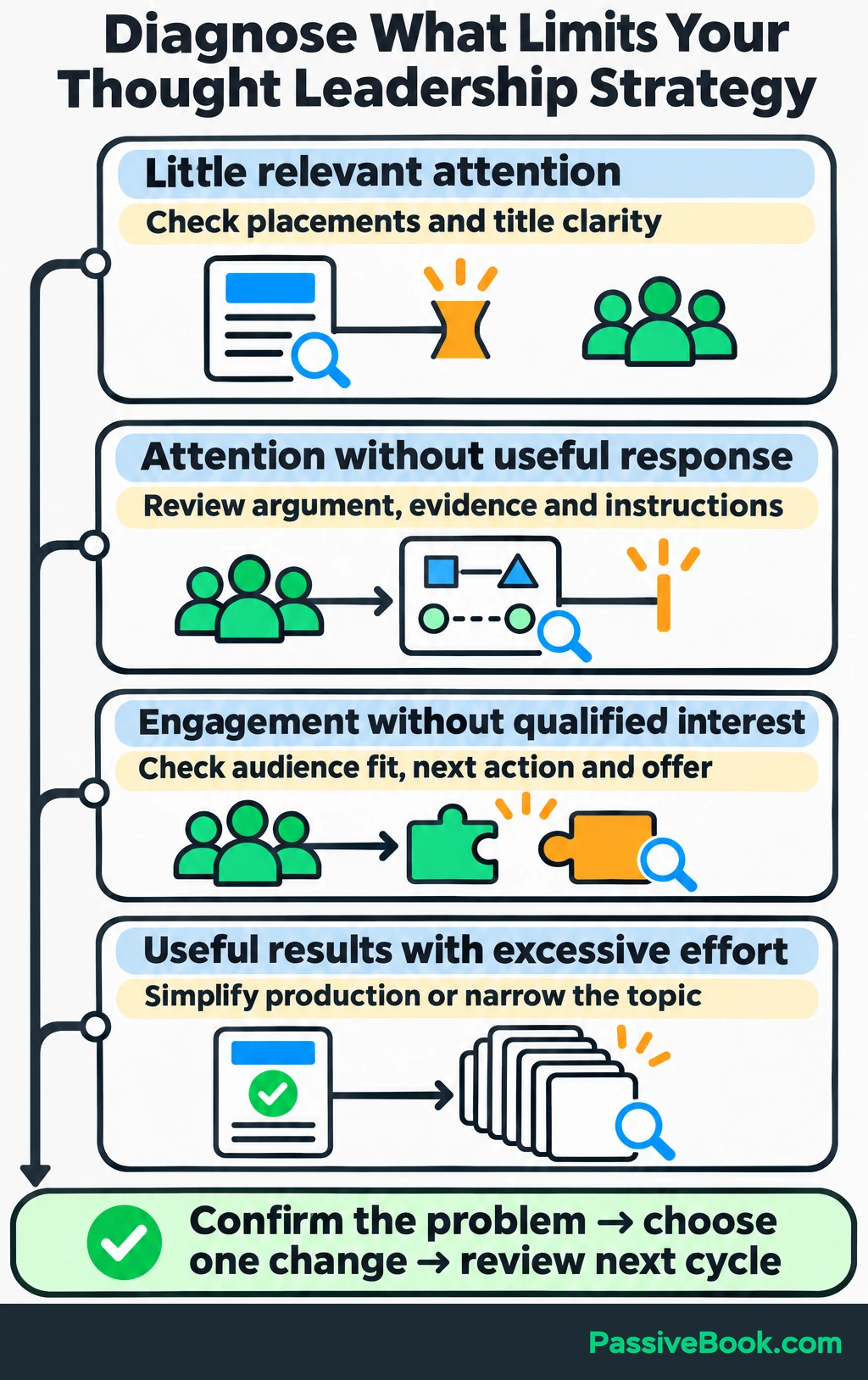
Use the records to decide where to investigate next:
- Little Relevant Attention: Check whether your placements reach suitable readers and whether the title makes the benefit clear.
- Attention Without Useful Response: Review the argument, evidence and instructions. Ask suitable readers where the explanation loses them.
- Useful Engagement Without Qualified Interest: Check audience fit, the next action and whether the offer addresses the need the content reveals.
- Useful Results With Excessive Effort: Simplify production or narrow the topic while preserving the evidence and practical value.
These are starting points for diagnosis. Confirm the problem before rebuilding the strategy.
Choose one change for the next cycle. You might answer a recurring objection, improve the checklist or concentrate distribution in the channel producing relevant conversations.
Keep topics that generate useful responses from the intended audience. Update explanations people struggle to apply, and reduce work that takes substantial time without contributing much.
Follower growth can be pleasant. It still needs a reason to appear in your business review.
Your One-page Thought Leadership Strategy Template
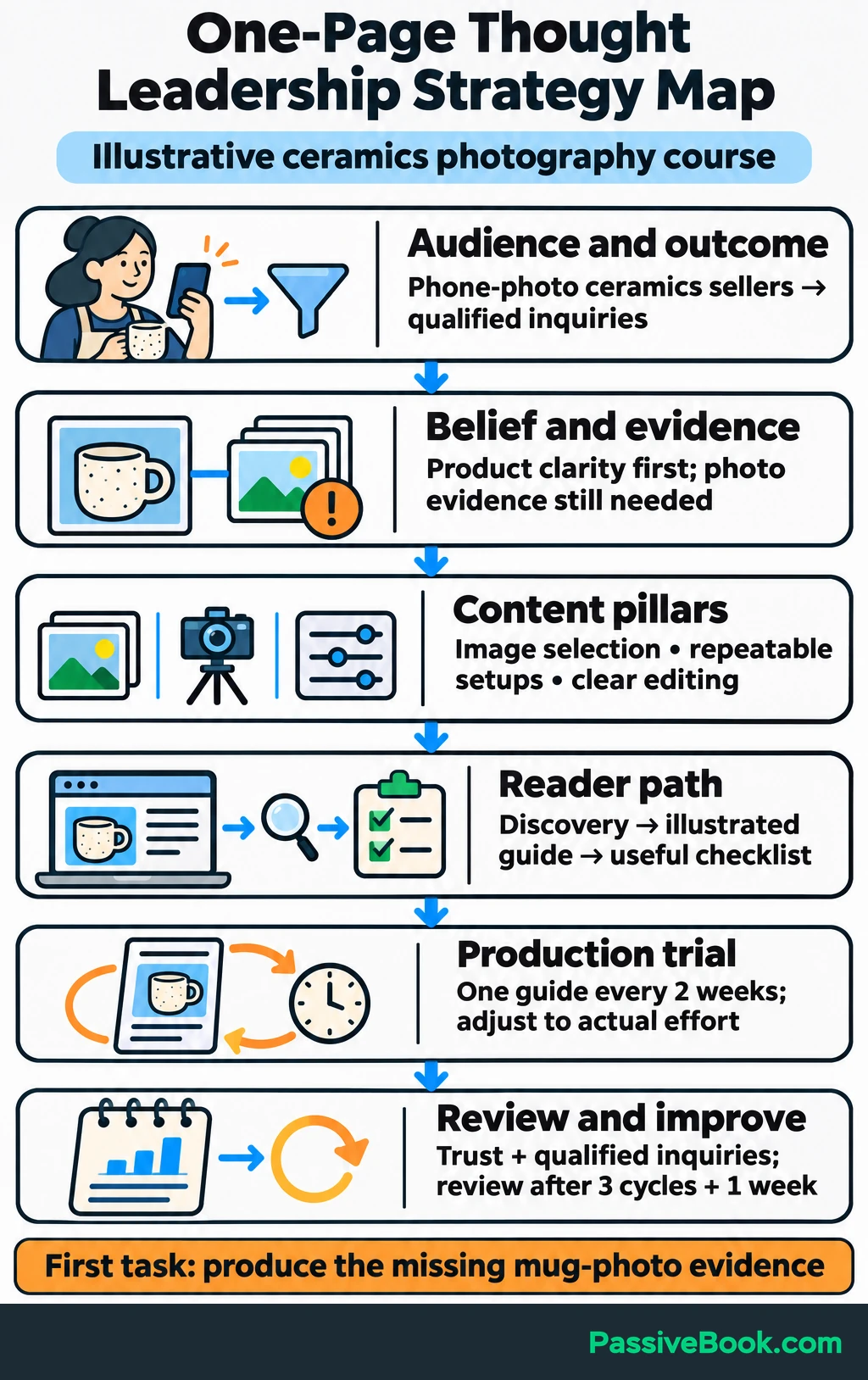
Copy the fields below into a document and replace the example with your choices. The completed version shows how the course’s strategy fits together.
| Field | Completed Course Example |
|---|---|
| Audience and difficult decision | Handmade ceramics sellers deciding whether their phone photos give buyers enough information about each product |
| Primary business outcome | Qualified photography-course inquiries |
| Qualification rule | The person sells handmade ceramics, uses a phone for product photos and asks about help the course provides |
| Central point of view | Make products easy to assess before investing in elaborate styling or more equipment |
| Supporting expertise and evidence | Planned photo audits and controlled demonstrations; gather original images and setup notes before making claims |
| Content pillars | Image selection, repeatable photography setups and editing for clear product representation |
| Core format | Illustrated practical guides with annotated photographs |
| Publishing home | The course website |
| Discovery channel | Pinterest as a provisional choice; verify audience use before committing the first distribution cycle |
| Next action | Apply a photo-review checklist, with a relevant invitation to explore the course |
| Production cadence | One guide every two weeks as an initial plan, adjusted after recording the full workload |
| Trust signals | Substantive questions, reports of applying the method and relevant references to the approach |
| Business signals | Qualified course inquiries, with purchases recorded separately |
| First content question | Can someone assess my mug’s size, shape and finish from these photos? |
| Missing evidence | The annotated mug-photo comparison and audience feedback on the proposed approach |
| Distribution tasks | Prepare an annotated comparison, write a standalone explanation and publish through the selected discovery channel |
| First assumption to test | Sellers value this approach enough to apply it or ask for further help |
| First publication | Reserve a date two weeks after starting, subject to evidence being ready |
| Review date | Schedule a review after three complete cycles, allowing another week for responses |
Before filling the calendar with more topics, resolve the first missing evidence item. Then put the publication and review dates on your actual calendar.
A strategy becomes useful when it changes what you work on next.
What Next?
Choose one recurring audience question and write a single sentence explaining your recommended approach. Put the evidence you already have beside it, and name the first gap you need to fill.
Use the social buttons to share this guide when you want a content discussion to produce a workable plan.
Which audience decision would you like your business to become known for helping people make? Tell me in the comments, and bring any other questions there too.
Share this post with your friends & followers:

