You find a product at a price that could leave room for profit, but the supplier wants payment before you’ve held it. The photos look good. The unanswered questions are less comforting.
Will the goods match the listing? Is shipping included? And who deals with the problem if half the order arrives damaged?
Those answers decide how much of your inventory budget you’re willing to risk. Here’s how to find suppliers worth contacting and judge whether their goods, prices and delivery justify a small first order.
Define What You Need to Buy
Write a short sourcing brief before you search. It should describe the product, where it must arrive, where you plan to sell it and how much you can initially buy.
Without that brief, you end up comparing products that only look alike.
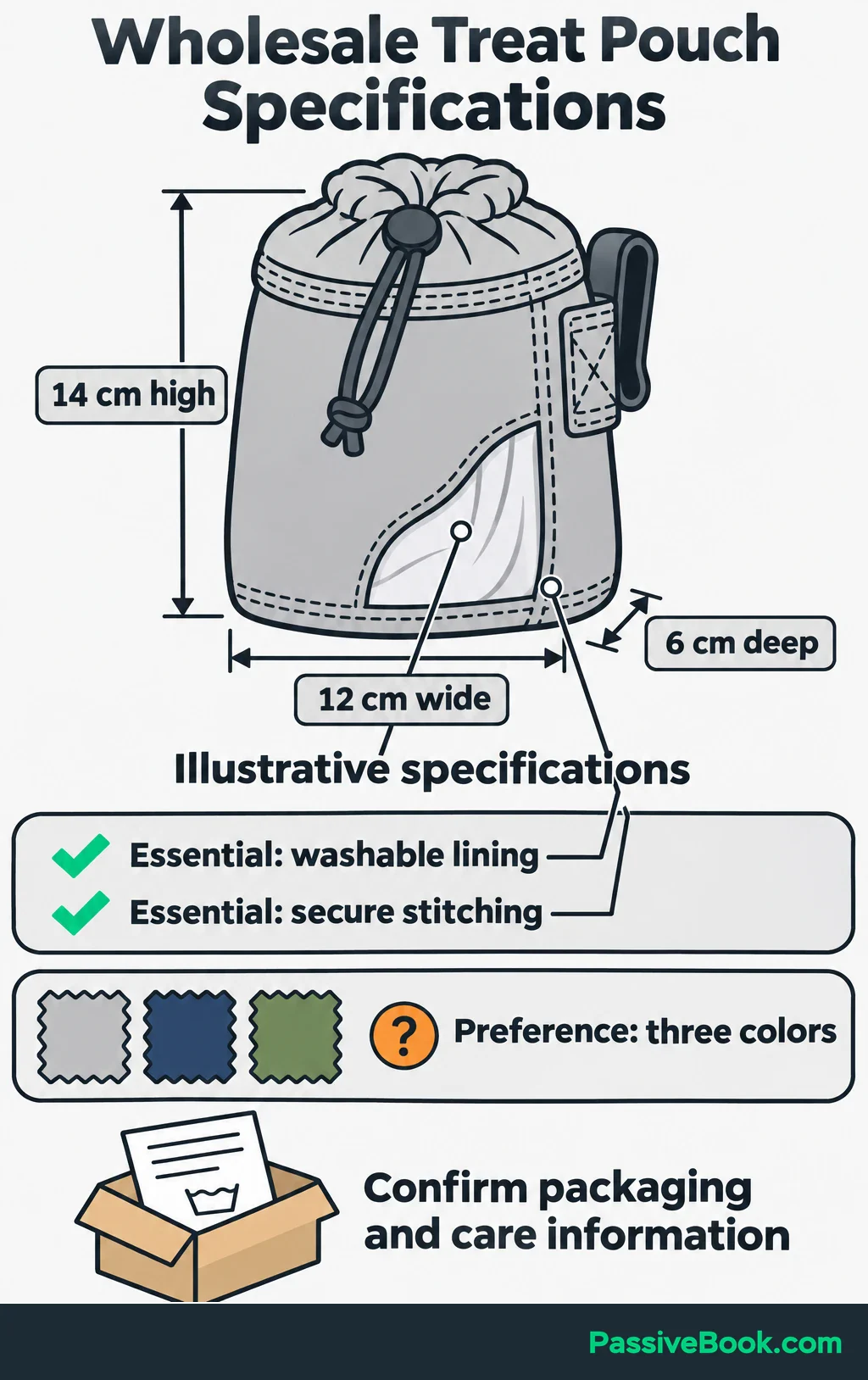
Throughout this guide, imagine you run an online dog-walking accessories shop and want to stock washable treat pouches. The specifications, quotes and figures below are illustrative.
Your brief might include:
| Requirement | Example Specification |
|---|---|
| Size | Approximately 14 cm high, 12 cm wide and 6 cm deep |
| Material | Polyester outer fabric and washable lining |
| Closure | Drawstring that closes fully |
| Attachment | Belt clip with securely stitched attachment points |
| Care | Written washing instructions |
| Packaging | Individually packed, with product and care information |
| First purchase | Preferably 24–48 units, delivered to your postcode |
| Sales channel | Your own online store |
Separate essentials from preferences. Secure stitching and a washable lining might be essential. Three color choices probably aren’t.
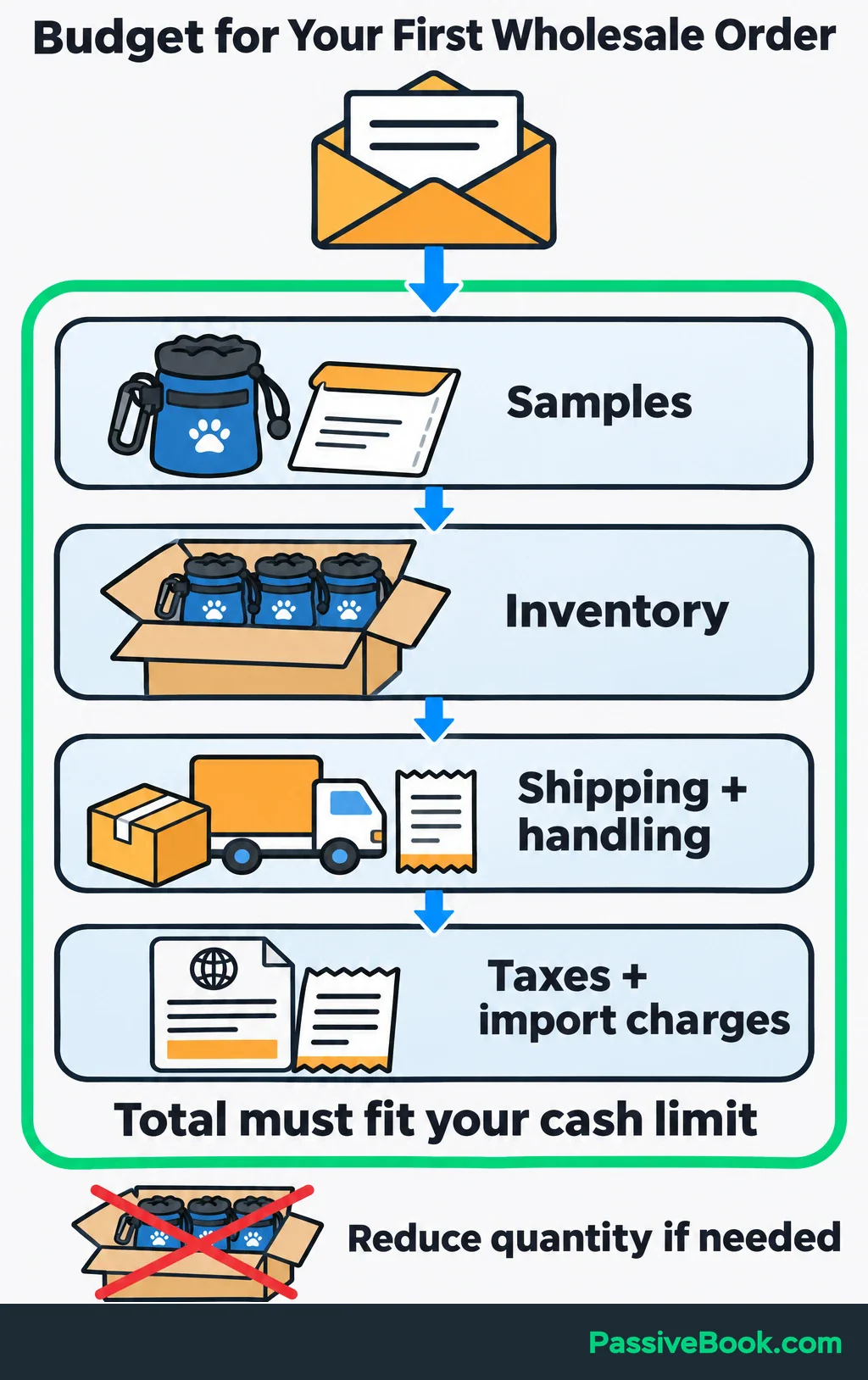
Then set your maximum cash commitment. Include samples, inventory, shipping, handling and any taxes or import charges you must pay.
I invested about $1,200 in my online jewellery store, skipped market research and lost most of that money through unsold inventory. That experience shapes my buying advice: leave yourself room to learn. Even perfectly delivered stock still needs customers.
Where to Find Wholesale Suppliers Online
Keep one shortlist in a spreadsheet. Record each supplier’s business name, website, product match, dispatch location, advertised minimum, contact details and unanswered questions.
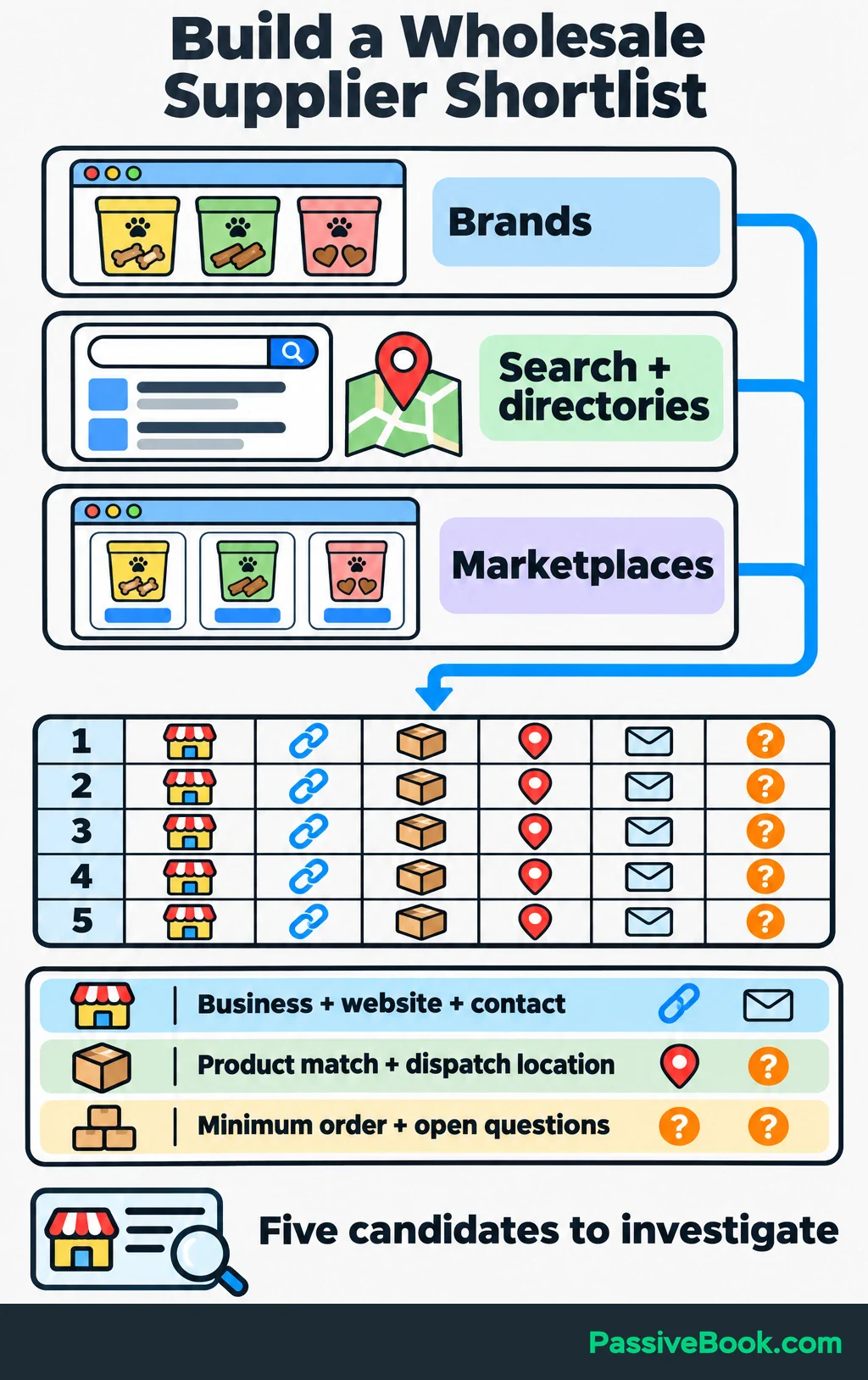
I would start with five promising candidates. You need enough choice to compare offers, and each extra candidate creates more checking work.
A directory listing, marketplace badge or trade-show appearance earns a supplier a closer look. It doesn’t establish that the company can handle your order.
Start With Manufacturers and Brands
First, understand who you’re contacting:
- Manufacturers make products.
- Distributors supply products from brands they represent.
- Wholesalers buy goods and resell them to other businesses.
A company can fill more than one role. Ask what it actually supplies and from where.
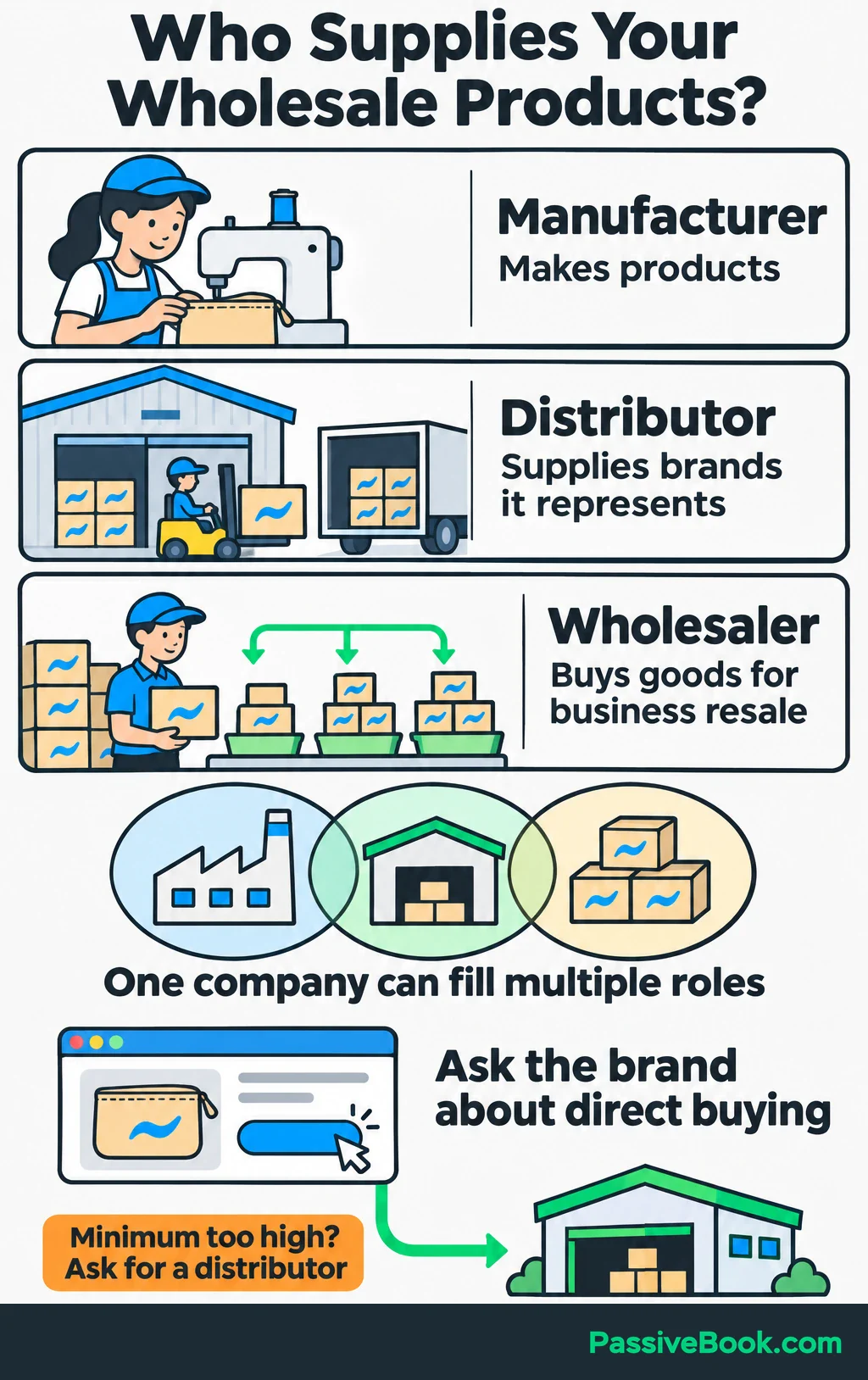
Visit the brand’s official website and look for a wholesale, dealer or distributor page. Ask whether it sells directly to online retailers, whether your sales channel is allowed and what the opening minimum is.
If that minimum is too high, request a distributor serving your area. For example, West Paw lists distributors by region, which shows how a brand’s own website can point you toward potential suppliers.
I wouldn’t insist on buying straight from a factory. A distributor offering smaller quantities and nearby stock may suit your first purchase better.
Search by Product and Location
Combine the exact product, supplier type and delivery region in your searches:
washable dog treat pouch wholesale [country]pet accessories distributor [city]dog treat pouch manufacturer [region]
Location helps you narrow the search, but confirm the dispatch address. A local sales office doesn’t tell you where the goods are stored.
Map listings can uncover nearby businesses. Follow them to the company’s website and investigate from there.
You can also browse pet-industry trade-show exhibitor directories without attending the event. Look through relevant product categories, collect company names and add suitable businesses to your shortlist.
Expand Your Search Through Wholesale Marketplaces
Faire connects retailers with wholesale brands, while Alibaba lets you search products and suppliers. Both can help you discover candidates beyond the businesses appearing in ordinary search results.
Use the same sourcing brief on either platform. Check the exact product, minimum order, dispatch location and delivery coverage before requesting a quote.
For the pouch shop, an attractive listing is still incomplete if it doesn’t specify the lining material or washing method. Put those questions beside the supplier’s name.
Keep marketplace candidates in the same spreadsheet as everyone else. That makes it easier to compare their actual offers.
Check That the Supplier Is Legitimate
Check three things separately: the business exists, its product sources make sense and it can meet your requirements.
A registered company can still sell unsuitable goods or handle complaints badly. Identity checks are the beginning of the decision.
Verify the Business Behind the Website
Request the legal business name, registration number where applicable, operating address, dispatch address and business contact details.
Then compare those details with records you find independently. Use the official register for the supplier’s jurisdiction and business type. For example, California’s business search provides entity names, numbers, status and addresses for the entity types it covers.
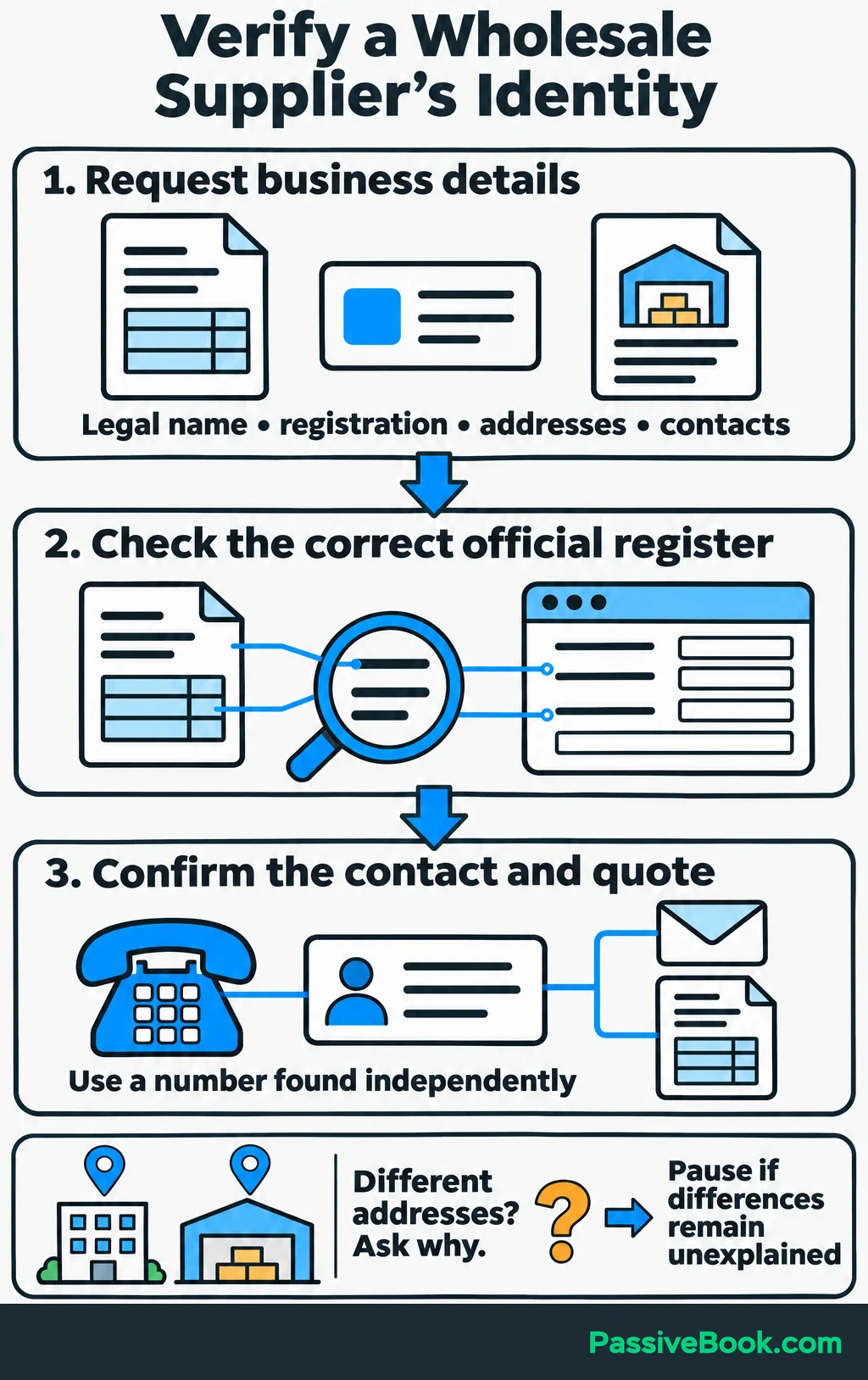
Choose the right register before treating a missing result as suspicious. Some business types appear in different records.
Contact the company through a number you locate independently and confirm that your contact person and quote belong to it. A copied registration certificate alone doesn’t establish who is answering your emails.
Ask about differences you find. A registered office and warehouse can have different addresses, but the supplier should explain that clearly. Unexplained identities or addresses are a reason to pause.
Verify Product Sourcing and Trading History
For branded goods, ask for itemized invoices or other records showing where the stock came from. Confirm any claim of authorized distribution directly with the brand, including the territory and sales channels covered.
For unbranded pouches, ask who makes them, where production takes place and whether the supplier keeps stock or orders it after receiving payment.
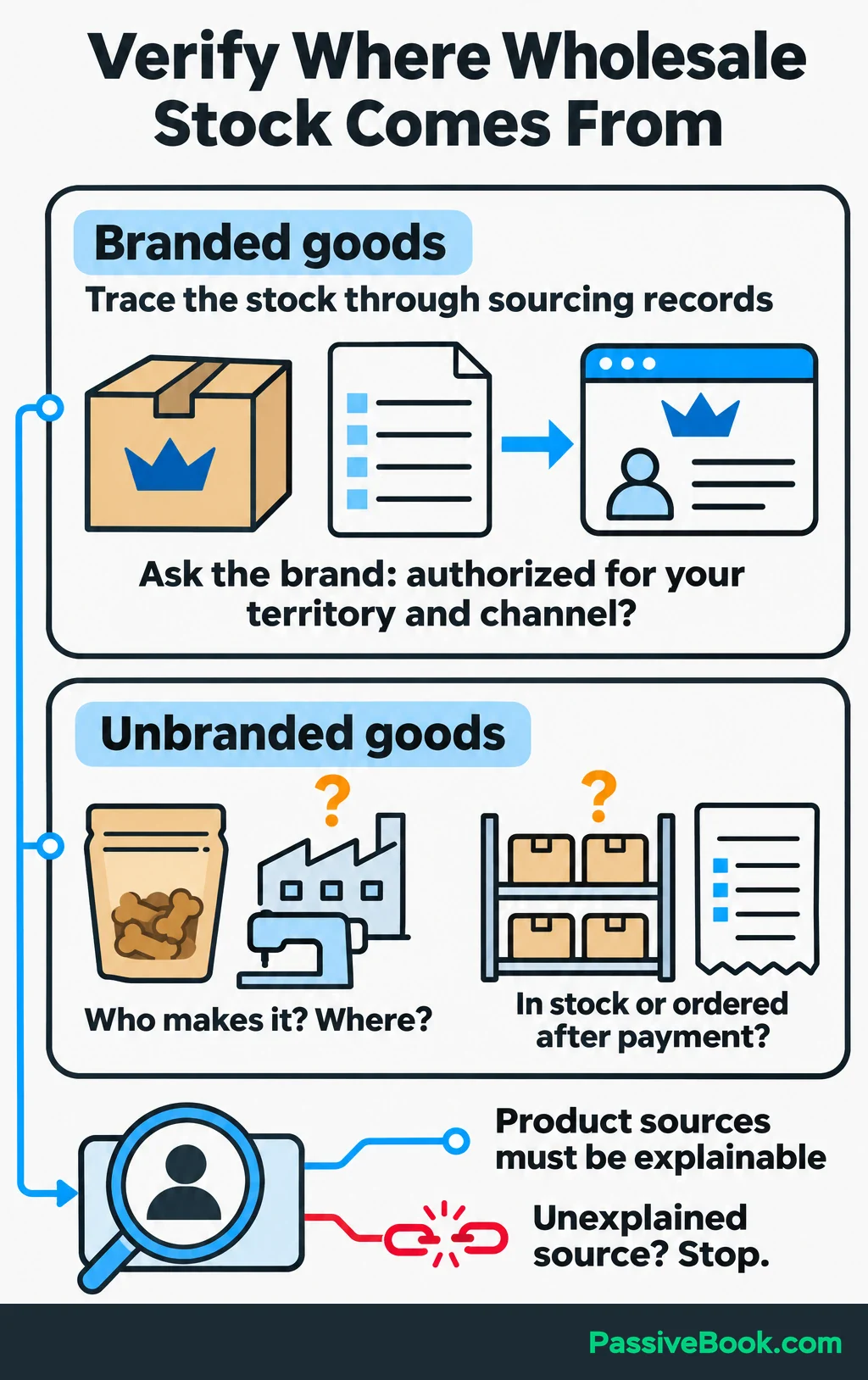
Next, search both the legal and trading names alongside words such as “complaint,” “refund” and “non-delivery.” Read specific accounts. Repeated reports of missing cartons and ignored claims deserve more attention than a star average.
Ask for recent retailer references, then independently locate those businesses before contacting them. Useful questions include:
- Did the goods match what you ordered?
- Were dispatch dates met?
- How were shortages or damaged items handled?
- Have repeat orders stayed consistent?
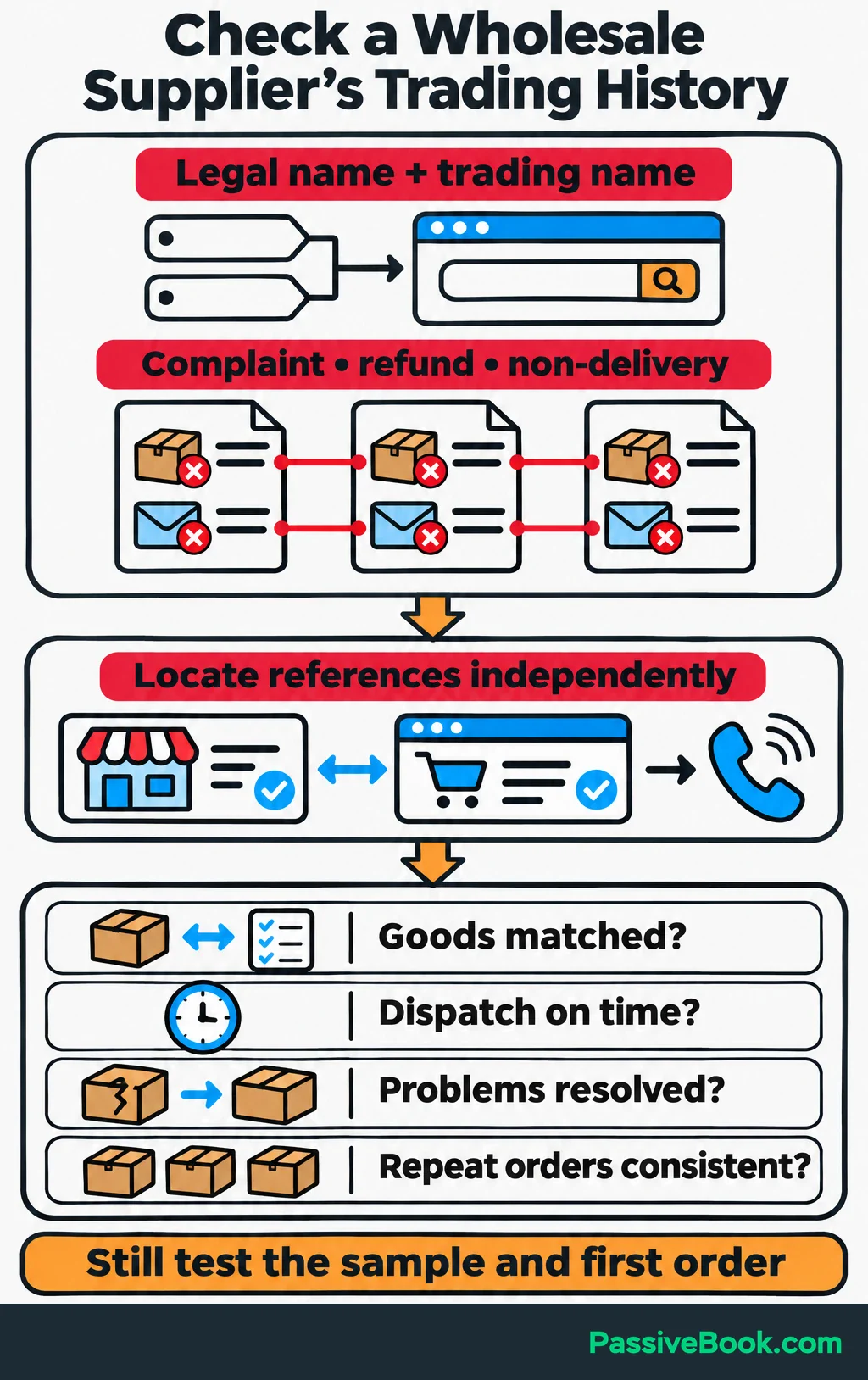
References help you assess trading history, but your own sample and test order must establish whether the offer works for you.
I would drop a candidate that still cannot explain its identity or product sources after straightforward questions.
Request a Complete Written Quote
Send the same brief to each shortlisted supplier. Otherwise, one may quote individually packed pouches while another quotes loose units with different materials.
Ask for the complete offer in writing so you can compare it and refer back to it.
Confirm Account Requirements and Minimum Orders
Keep the first inquiry short. For example:
I run an online dog-walking accessories shop and am sourcing washable treat pouches for delivery to [location]. I’ve attached the specifications and expect to start with [quantity]. Please send your account requirements, sample charges, wholesale prices, minimum orders and terms for sales through [channel].
Ask what the minimum order quantity, usually called the MOQ, applies to. It could mean units per product, per color, per carton or across the entire order.
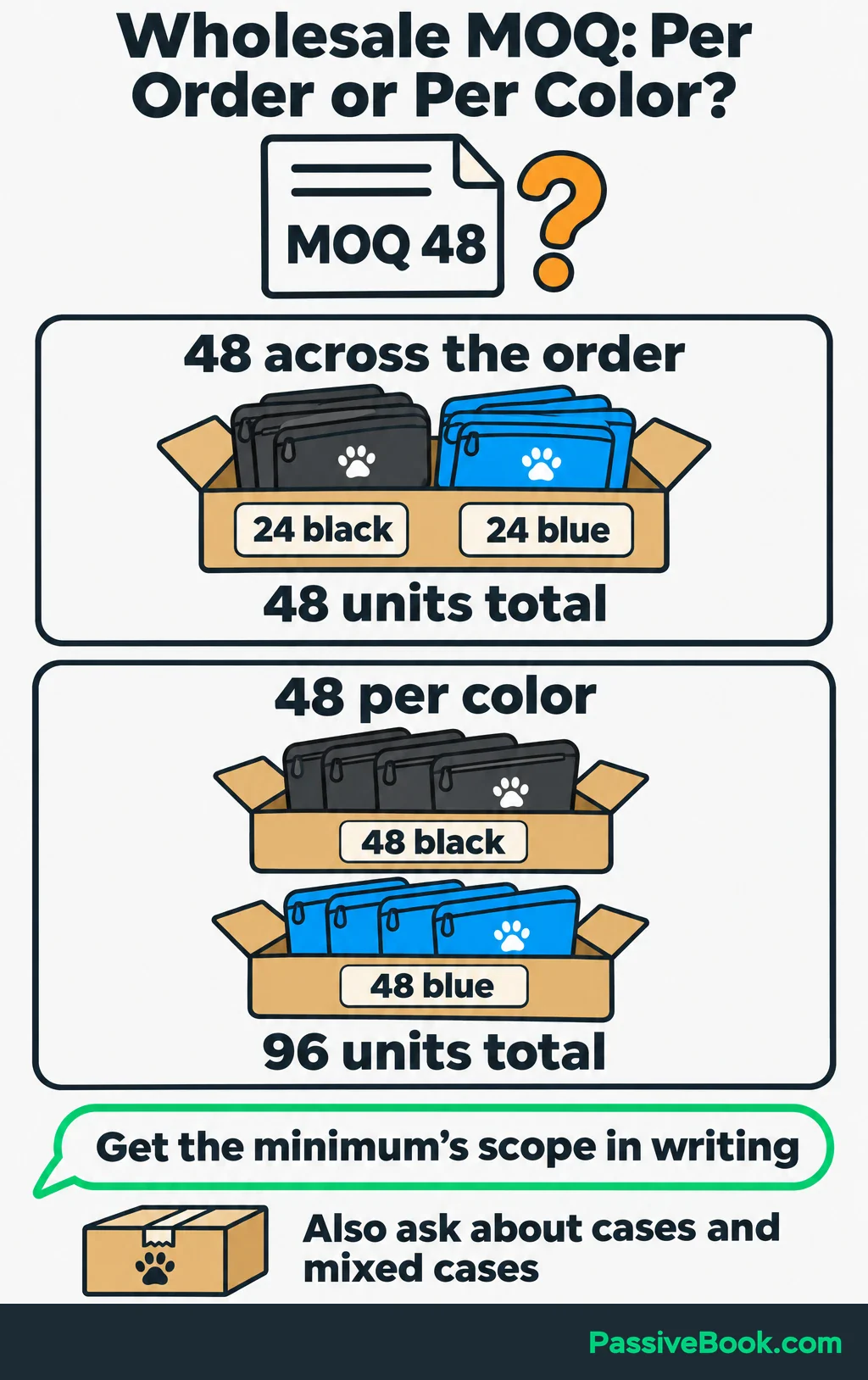
For the pouch shop, “MOQ 48” needs clarification. Can you buy 24 black and 24 blue, or must you buy 48 of each?
You don’t need to write every supplier email from scratch. This AI Skill drafts your inquiry and helps you follow up when a reply leaves important terms unclear.

Free AI Supplier Correspondence Studio




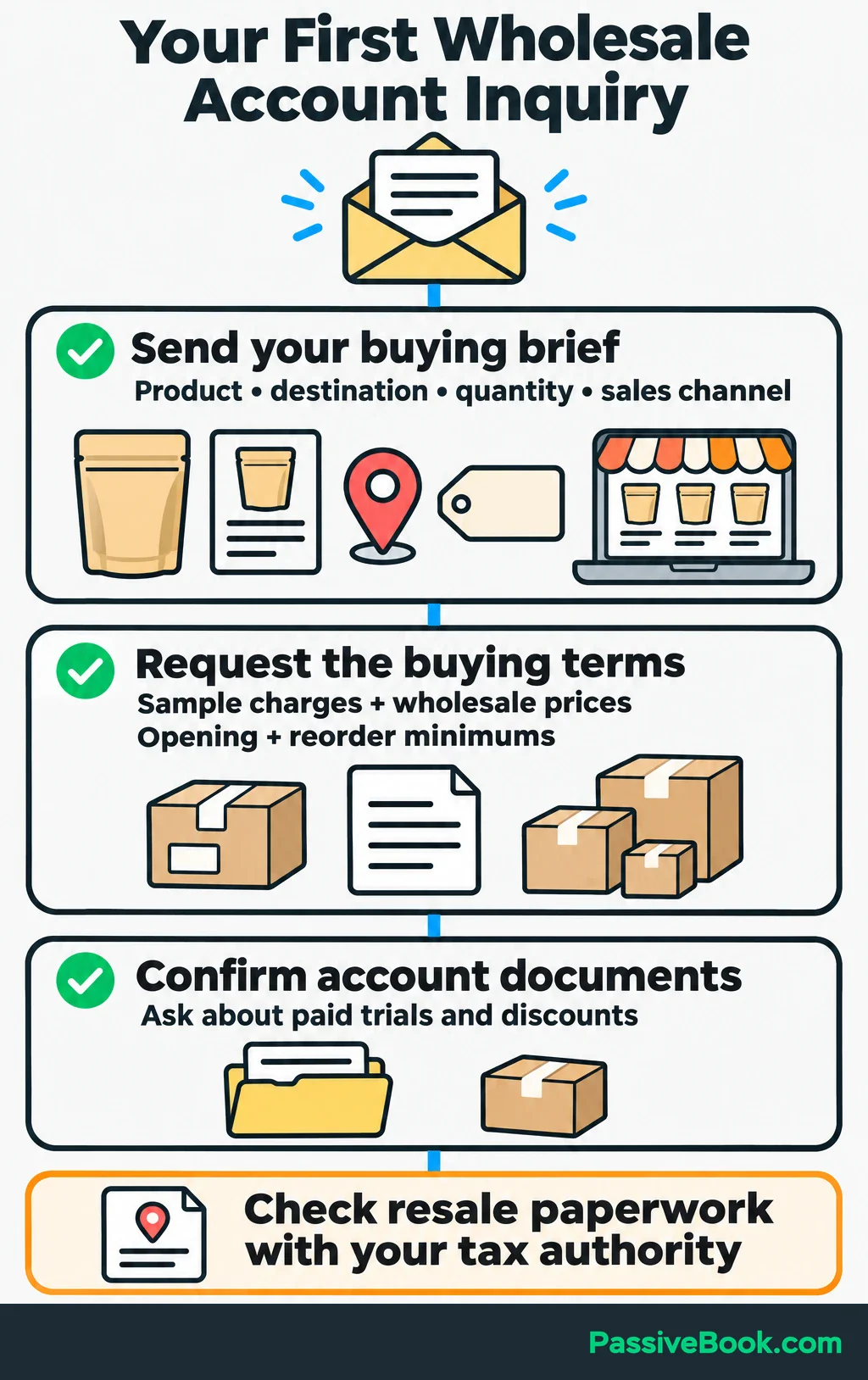
Also confirm:
- Opening and reorder minimums.
- Units per case and whether mixed cases are available.
- Quantity discounts.
- Smaller paid trial options.
- Business documents needed to open an account.
Resale paperwork depends on the jurisdiction. In California, for example, a resale certificate documents a qualifying purchase of goods for resale without sales tax. A copy of your seller’s permit does not replace that certificate. California’s tax authority explains the distinction.
Check your own tax authority’s requirements before assuming the supplier’s account form covers them.
Confirm Fulfillment and Problem-resolution Terms
Ask whether the goods are available now and what starts the dispatch clock: payment, sample approval or completion of production.
Get these details in writing:
- Delivery: Dispatch lead time, estimated transit time, carrier and shipping charge.
- Availability: Current stock, replenishment timing and whether substitutions or backorders need your approval.
- Payment: Currency, deposit, balance due date and payment fees.
- Problems: Claim deadlines, required evidence, return shipping responsibility and available remedies.
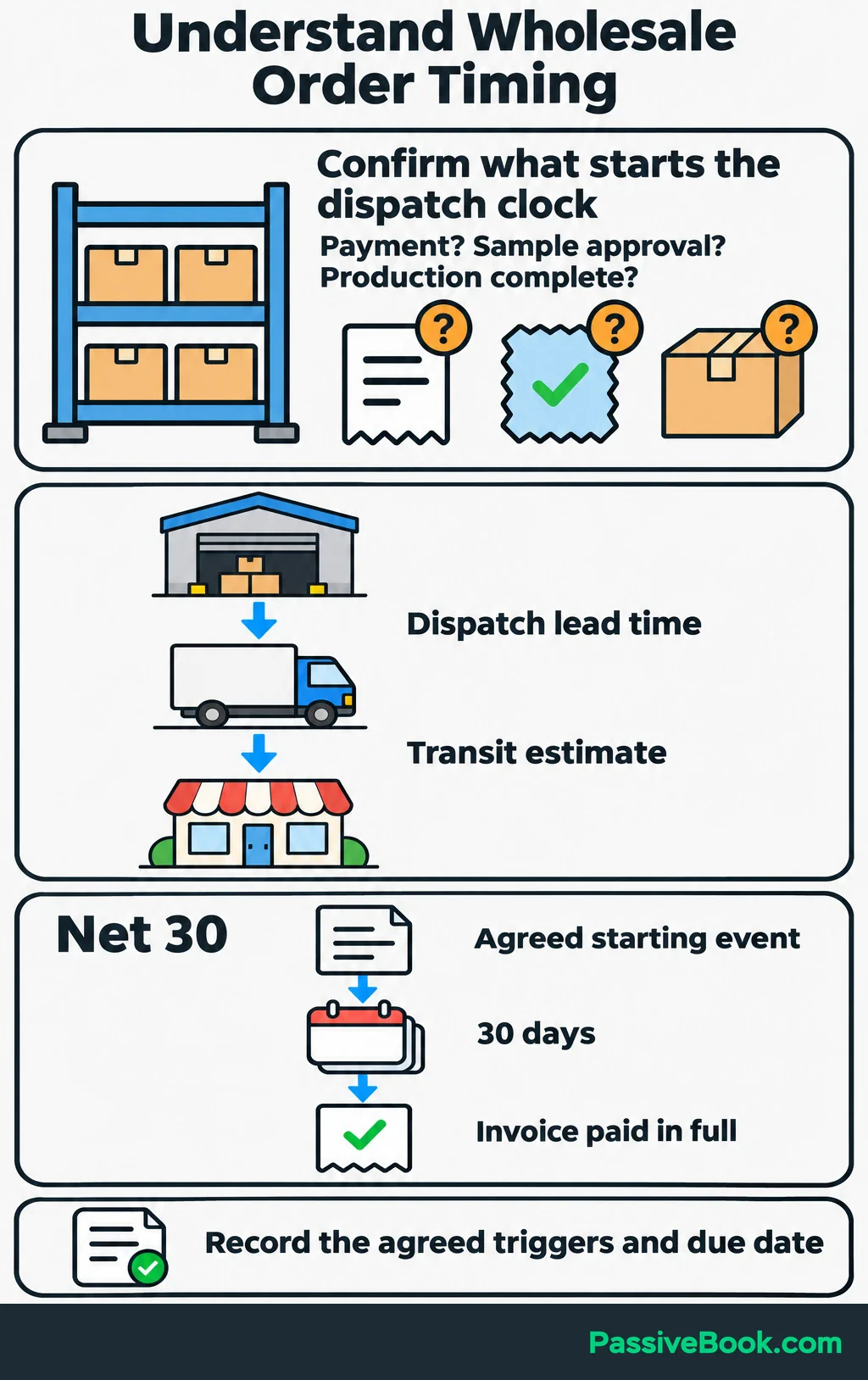
If the supplier offers net 30, you have 30 days to pay the invoice in full. Confirm what starts that period—such as the invoice date—and record the agreed due date.
For defects, ask whether you receive a refund, replacement or account credit. Credit toward another order is less useful if you have decided to stop buying.
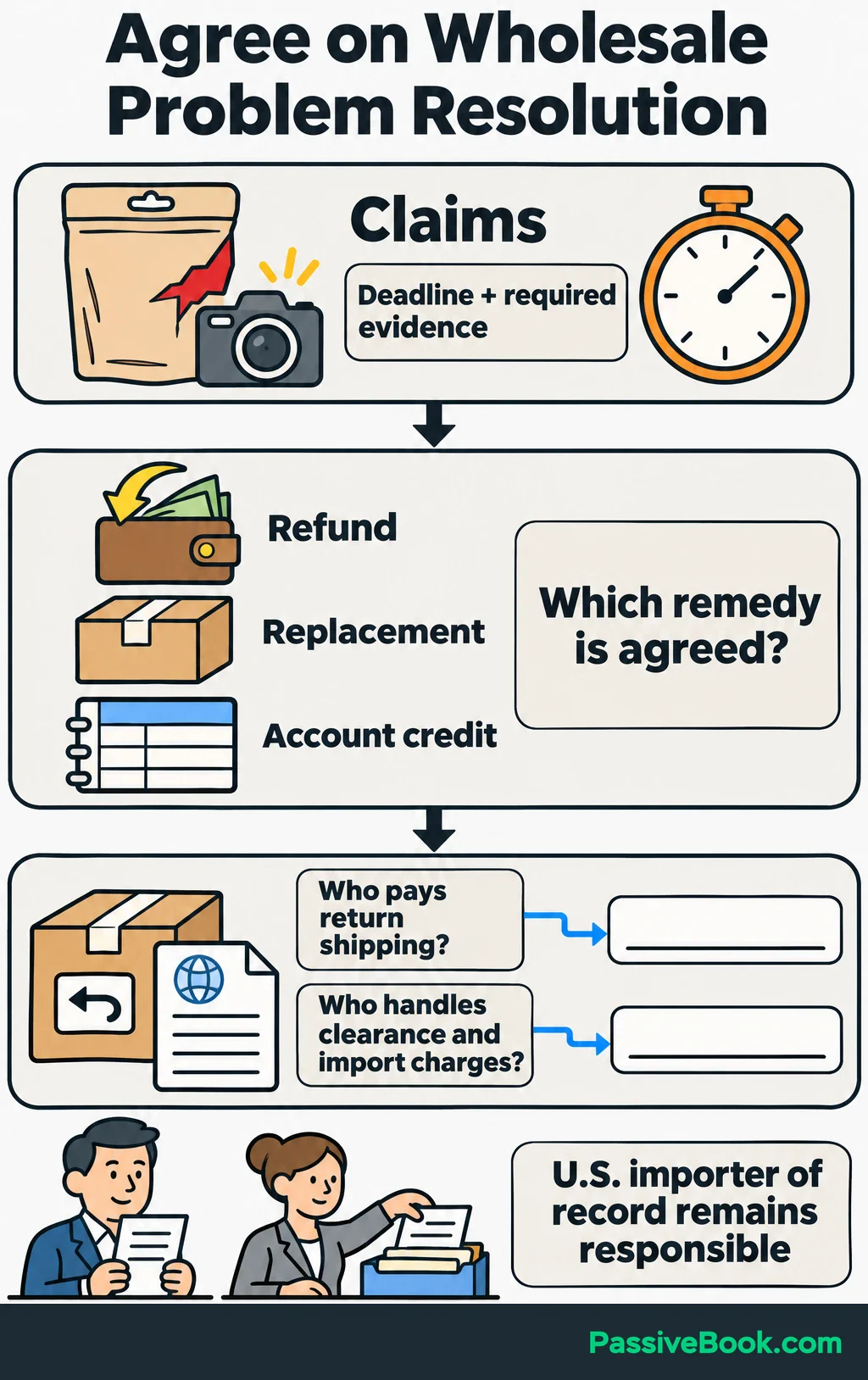
For imports, establish who arranges customs clearance and pays duties, taxes, brokerage and destination charges. The U.S. importer of record is the party accountable to customs for the import. If that’s you, hiring a customs broker to file the paperwork does not remove your responsibility for accurate documents and applicable charges. U.S. Customs and Border Protection explains those responsibilities.
I would favor nearby stock for an untested product when it keeps the total commitment manageable. Compare the full offer before choosing.
Compare the Full Cost of Each Offer
Start by counting everything it costs to get inventory ready to sell. This is your landed cost: product cost plus inbound freight, handling, applicable duties, nonrecoverable taxes and other acquisition charges.
Divide that total by the number of sellable units.
For an illustrative domestic order of 48 pouches:
| Cost | Amount in USD |
|---|---|
| 48 pouches at $4 each | $192 |
| Inbound freight | $36 |
| Handling | $12 |
| Total landed cost | $240 |
| Landed cost per sellable pouch | $5 |
This example assumes all 48 units are sellable and no additional acquisition charges apply.
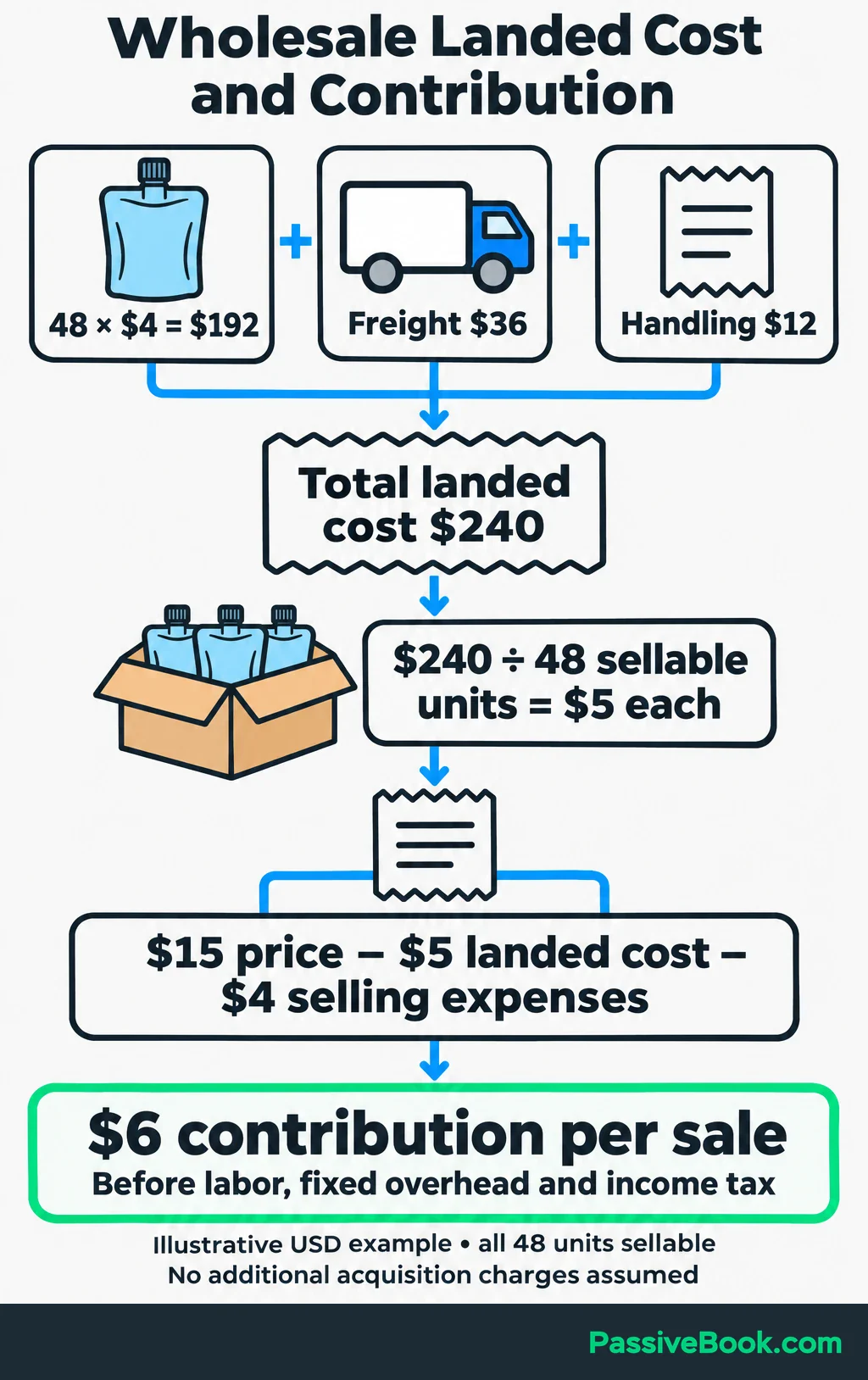
Next, work out what each sale leaves toward running the business. Subtract landed unit cost and variable selling expenses from your expected selling price.
Those selling expenses include payment or marketplace fees, packaging, customer delivery you pay for and an allowance for returns.
At a $15 selling price, a $5 landed pouch cost and an assumed $4 in variable selling expenses leave $6 per sale. That is contribution before labor, fixed overhead and income tax.
For the pouch shop, compare these two offers for the same specification:
| Offer | MOQ | Total Order Cash | Landed Unit Cost | Contribution per Sale | Quoted Delivery |
|---|---|---|---|---|---|
| A | 48 | $240 | $5 | $6 | 5–7 business days |
| B | 24 | $144 | $6 | $5 | 3–5 business days |
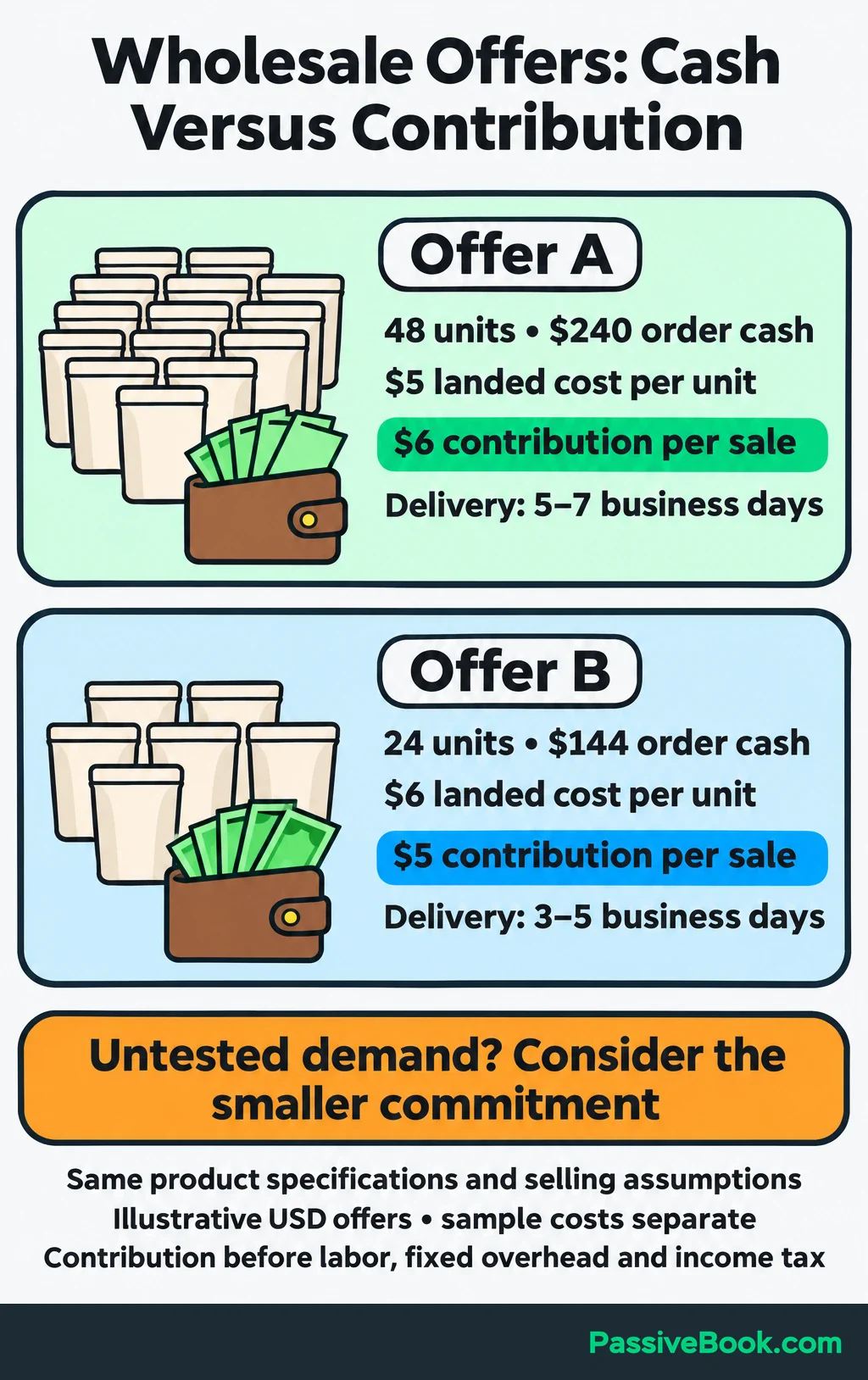
Offer B assumes 24 pouches at $4.50 each, plus $24 freight and $12 handling. Both offers use the same selling price and selling expenses, and neither has unresolved acquisition charges. Sample costs are separate and must also fit your cash limit.
Offer A leaves more per sale. Offer B ties up less money.
I would choose the smaller order while demand is untested, provided its contribution can support the business. A discount becomes expensive when it buys you stock you cannot move.
Before choosing an offer, work backward from the cash you can risk and what each sale needs to leave. This workbook gives you a price ceiling even before you have quotes, then checks the offers you receive.

Free Supplier Purchase Planner
Check Payment Protections Before Sending Money
Match the invoice issuer and payment recipient to the supplier you verified. If a marketplace, payment processor or related company collects the money, get a documented explanation of that relationship.
Choose a payment route with a dispute process that applies to your business purchase. Check eligible transactions, exclusions, evidence requirements and claim deadlines before relying on it.
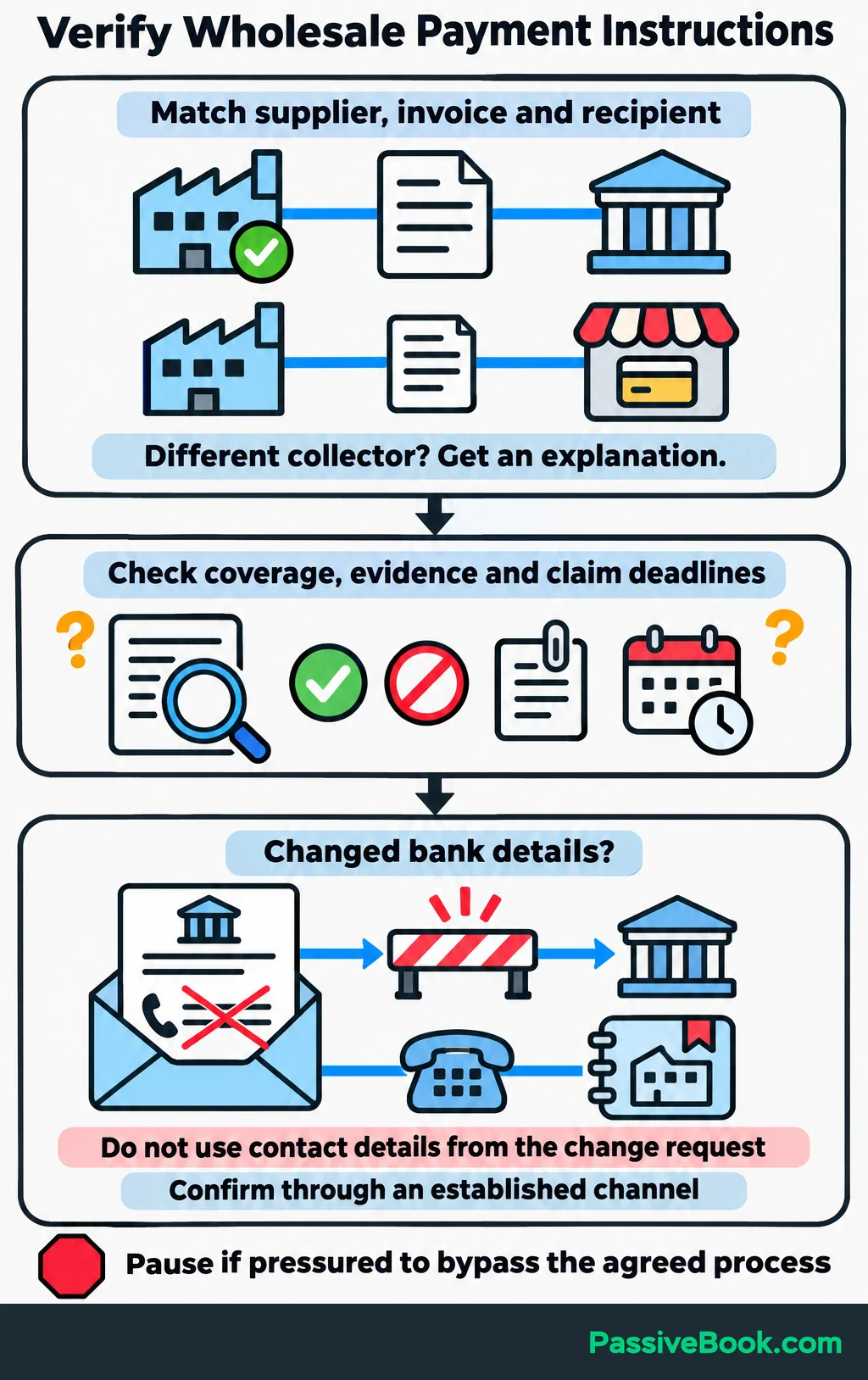
For a first order, I would favor a covered card or marketplace payment over an unprotected transfer. The terms of the specific transaction decide what protection exists.
For example, Alibaba Trade Assurance starts with an order agreement and payment through Alibaba’s designated process. Put the product specifications and delivery commitments into the covered order, and check the terms that apply to it.
Also verify any changed bank instructions through a previously established contact channel. The FBI recommends a secondary channel to confirm account changes. Calling a number supplied in the change request defeats the point.
Stop if the supplier pressures you to bypass the agreed payment process or refuses to explain who will receive the money.
Inspect a Representative Sample
Before paying for samples, identify the safety and labeling requirements that apply to the product and destination. Ask for the relevant documents and confirm that they cover the exact product offered.
For U.S. consumer products, also check recall status. The CPSC explains that recalled products cannot be sold unless the specified recall remedy has been applied.
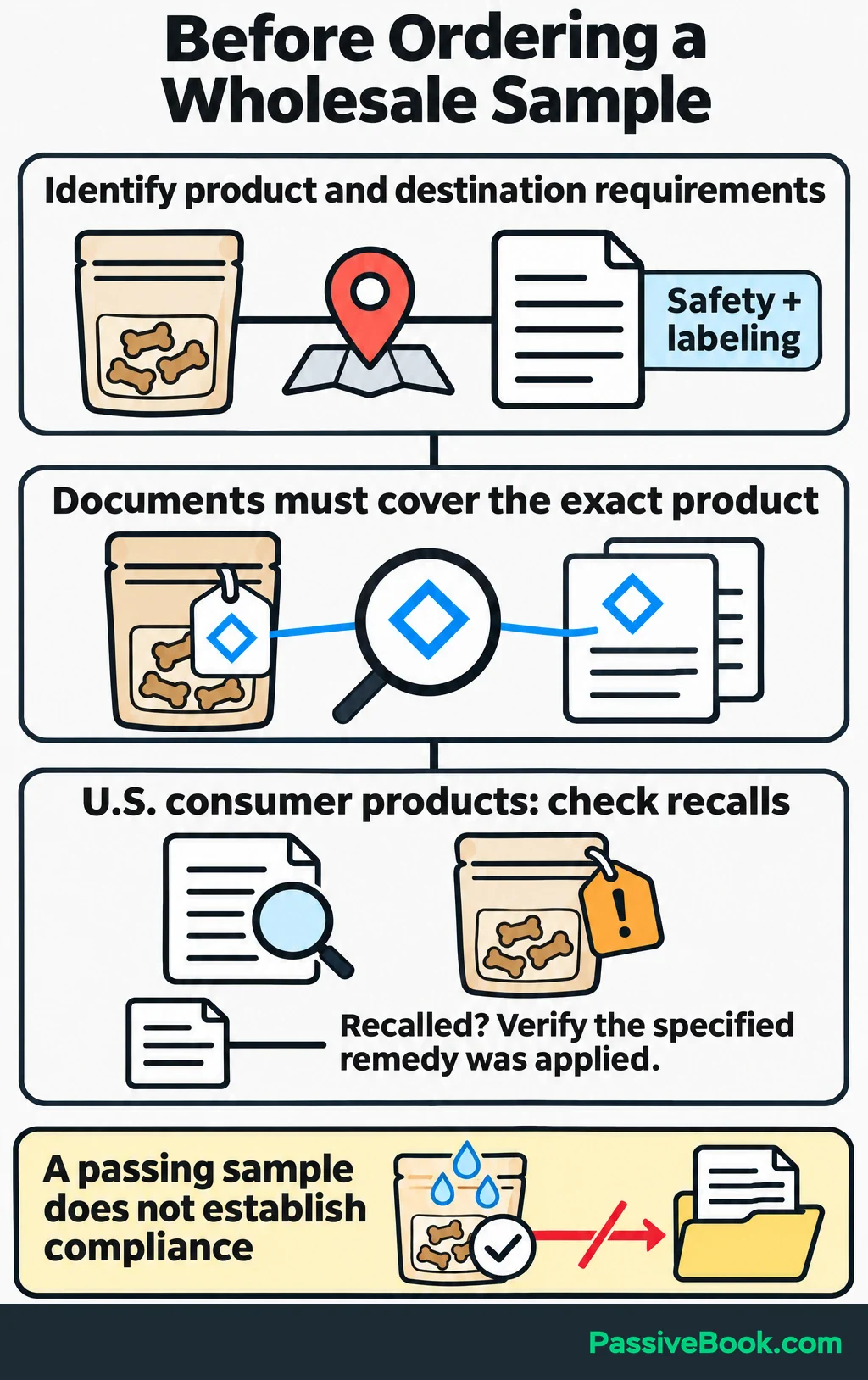
Once identity, costs and documentation are acceptable, order a sample of the exact material, size and packaging you plan to buy. Confirm the sample charge, shipping cost and whether any amount is credited toward inventory.
Make your inspection checklist before it arrives. For the treat pouch:
- Dimensions: Measure it against the agreed specification.
- Construction: Check seams, loose threads, lining and attachment points.
- Closure: Open and close it repeatedly and check whether it closes fully.
- Attachment: Check the clip and its stitching during ordinary use.
- Washing: Follow the care instructions and inspect for shrinkage, color transfer or lining damage.
- Packaging: Compare the supplied packaging and information with the agreement.
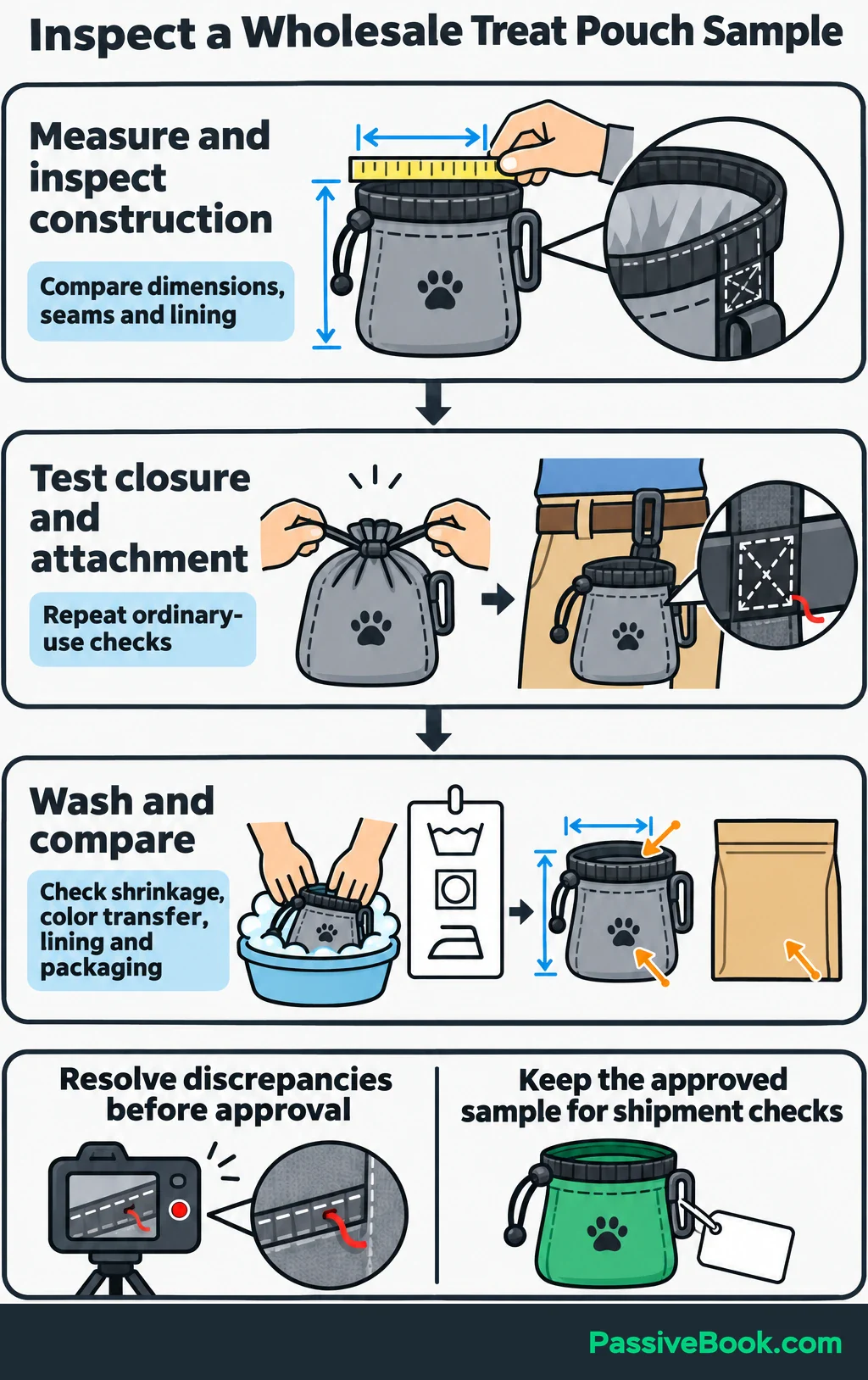
Photograph discrepancies and ask the supplier to resolve them before you approve an inventory order.
A sample that survives washing gives you evidence about that sample. It doesn’t establish regulatory compliance or prove every production unit will match.
Keep the approved sample, label it with the supplier and product details, and use it when inspecting the test shipment.
Place a Small Test Order Before Reordering
The test order checks what a sample cannot: whether the supplier delivers the agreed quantity, quality and service through an ordinary purchase.
Choose the smallest commercially workable order within your total cash limit. If the minimum is too large, keep searching.
Document the Order
Turn the accepted quote into a clear order record. Include:
- Seller: Verified legal name and agreed payment recipient.
- Goods: Product identifiers, materials, dimensions, colors and approved sample reference.
- Quantity: Units, case sizes and packaging.
- Charges: Product price, shipping, handling, taxes and other agreed costs.
- Timing: Payment schedule, dispatch commitment and delivery estimate.
- Resolution: Claim deadlines and remedies for shortages, defects, damage or incorrect goods.
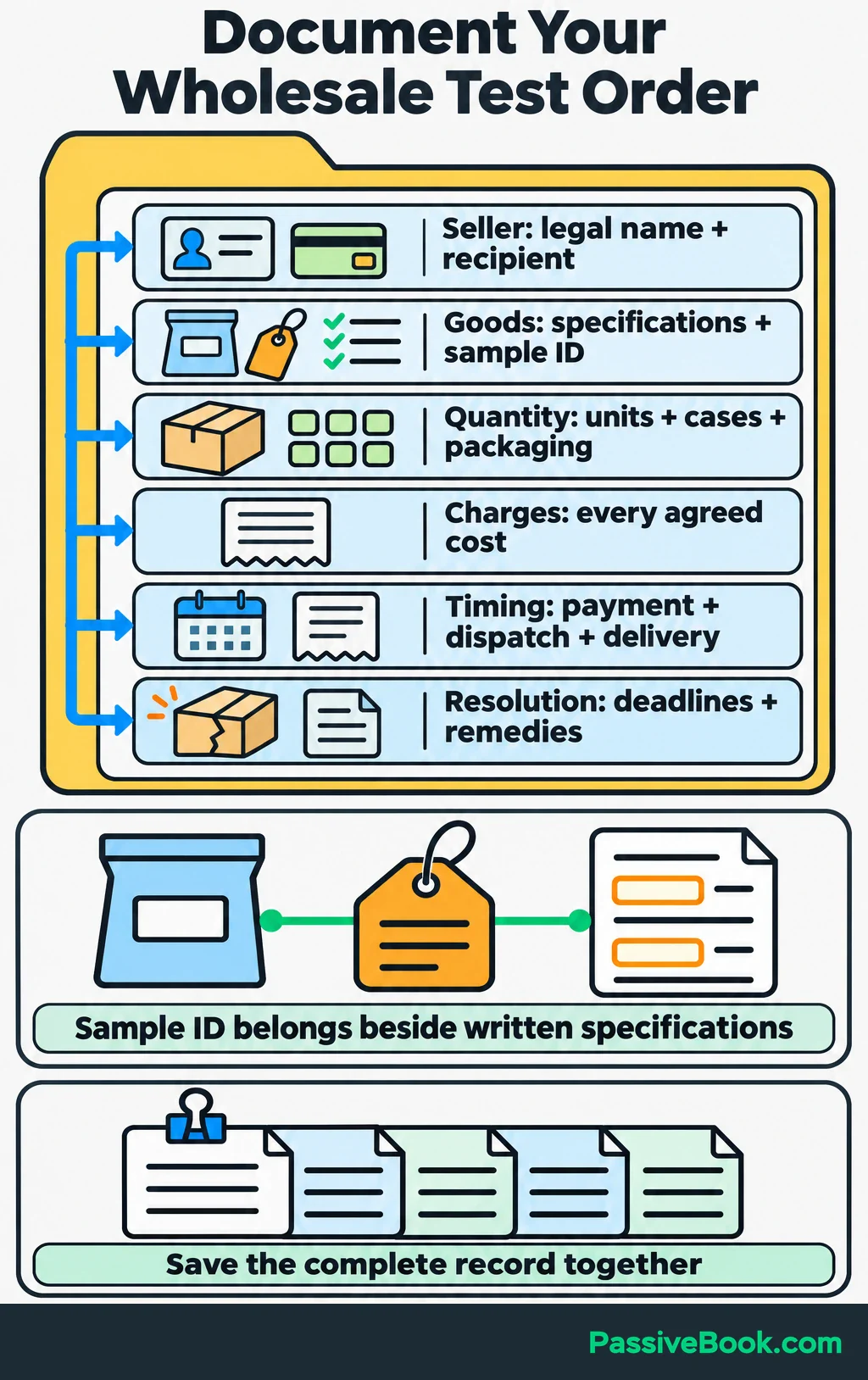
Save the quote, order confirmation, invoice, payment record and correspondence together.
For the pouches, “same as sample” is too vague on its own. Record the sample identifier alongside the written specifications so both sides know what was approved.
Judge the Shipment Against Your Requirements
Compare actual dispatch and delivery with the agreement. Count the goods and check consistency against your approved sample.
For a small pouch order, I would inspect every unit for obvious defects, incorrect colors and packaging damage. Record how many units are ready to sell.
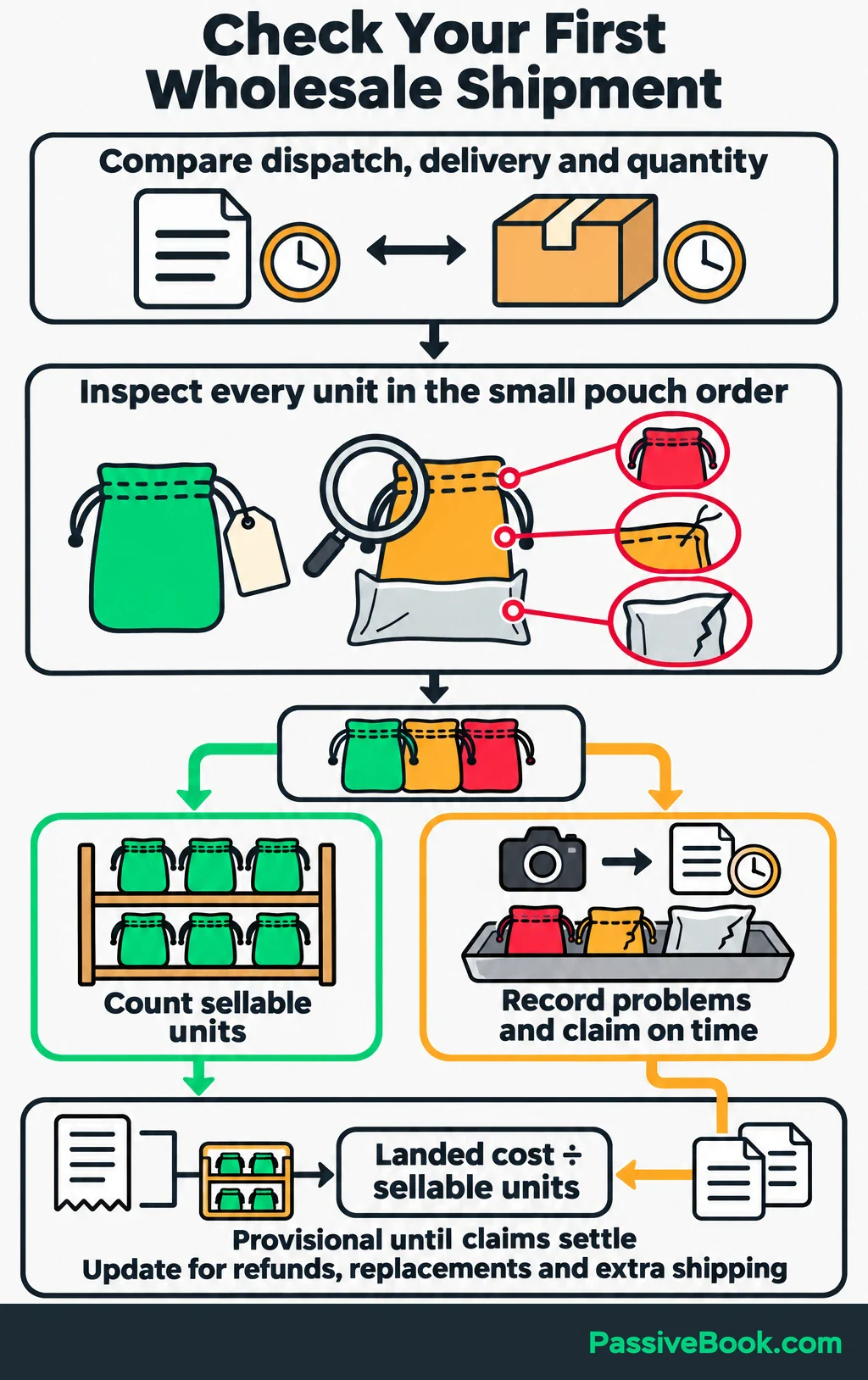
Then calculate the landed cost per sellable unit using those sellable units. If a claim remains unresolved, treat that figure as provisional and update it after any refunds, replacements or extra shipping charges.
Report problems within the agreed claim window, with quantities, photographs and a clear description. How the supplier handles a mistake is part of the test.
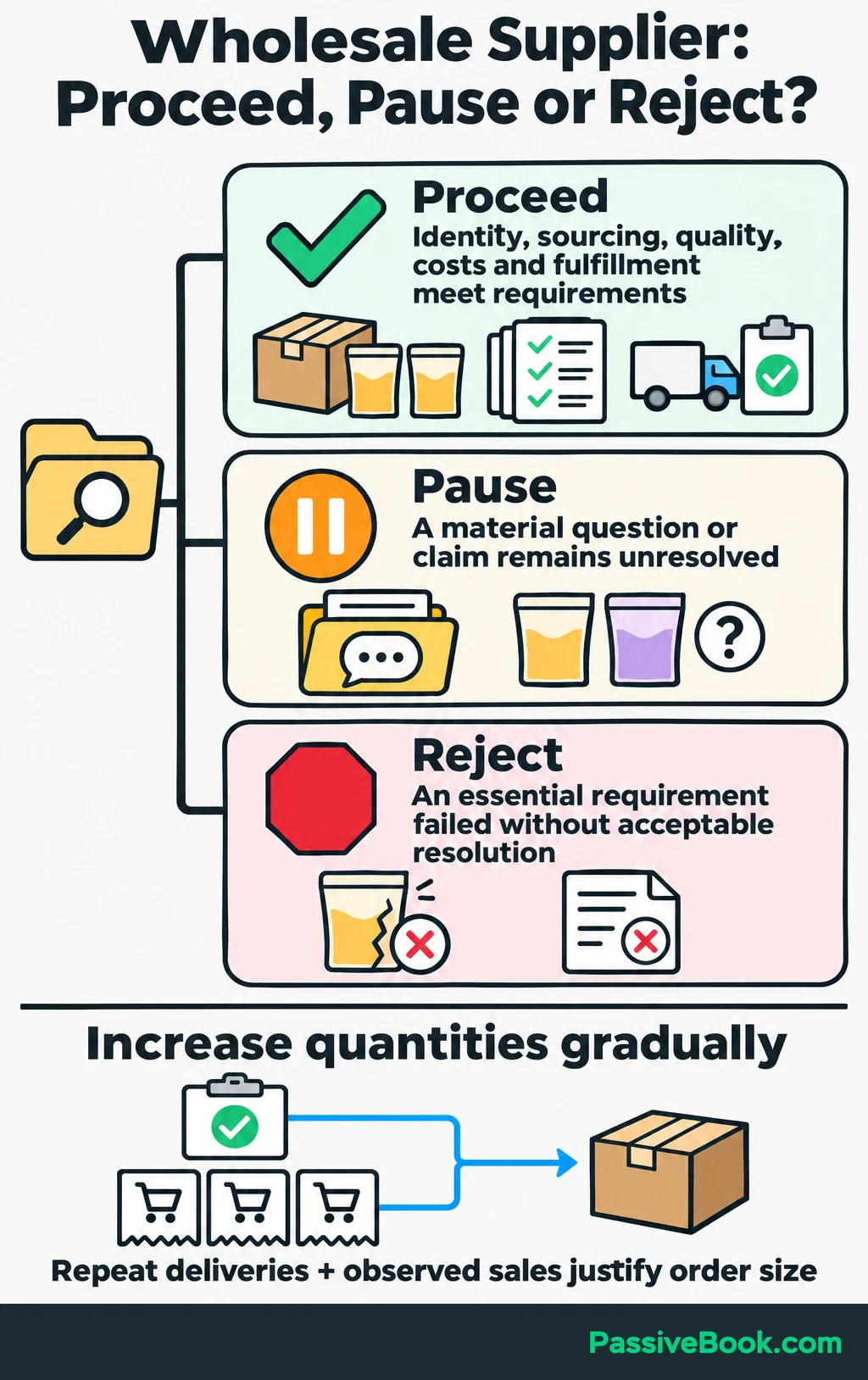
Use three decisions:
- Proceed: Identity, sourcing, quality, costs and fulfillment meet your requirements.
- Pause: A material question or claim remains unresolved.
- Reject: An essential requirement failed and the supplier cannot provide an acceptable resolution.
Increase quantities gradually as repeat deliveries and observed sales justify them. A successful first shipment earns another order; your sales tell you how large it should be.
What Next?
Write your sourcing brief and shortlist five suppliers you can investigate before sending money. A clear brief will make their replies easier to compare and expose missing details sooner.
Use the social buttons to share this guide when your next sourcing discussion needs a practical way to compare suppliers.
Which unanswered supplier question would stop you from placing a first order? Tell me in the comments, and bring any other sourcing questions too.
Share this post with your friends & followers:

