Your product looks ready to sell, but the price tag is still a guess. You haven’t weighed a packed order, worked out Etsy’s fees, or checked what happens between a sale and the money reaching your bank.
Those gaps can turn a promising side project into evenings of work with very little left over. This guide follows one handmade product from a finished sample to its first orders, with a worked fee calculation and listing examples to help you decide whether an Etsy shop deserves more of your time and money.
Check That You Can Sell on Etsy
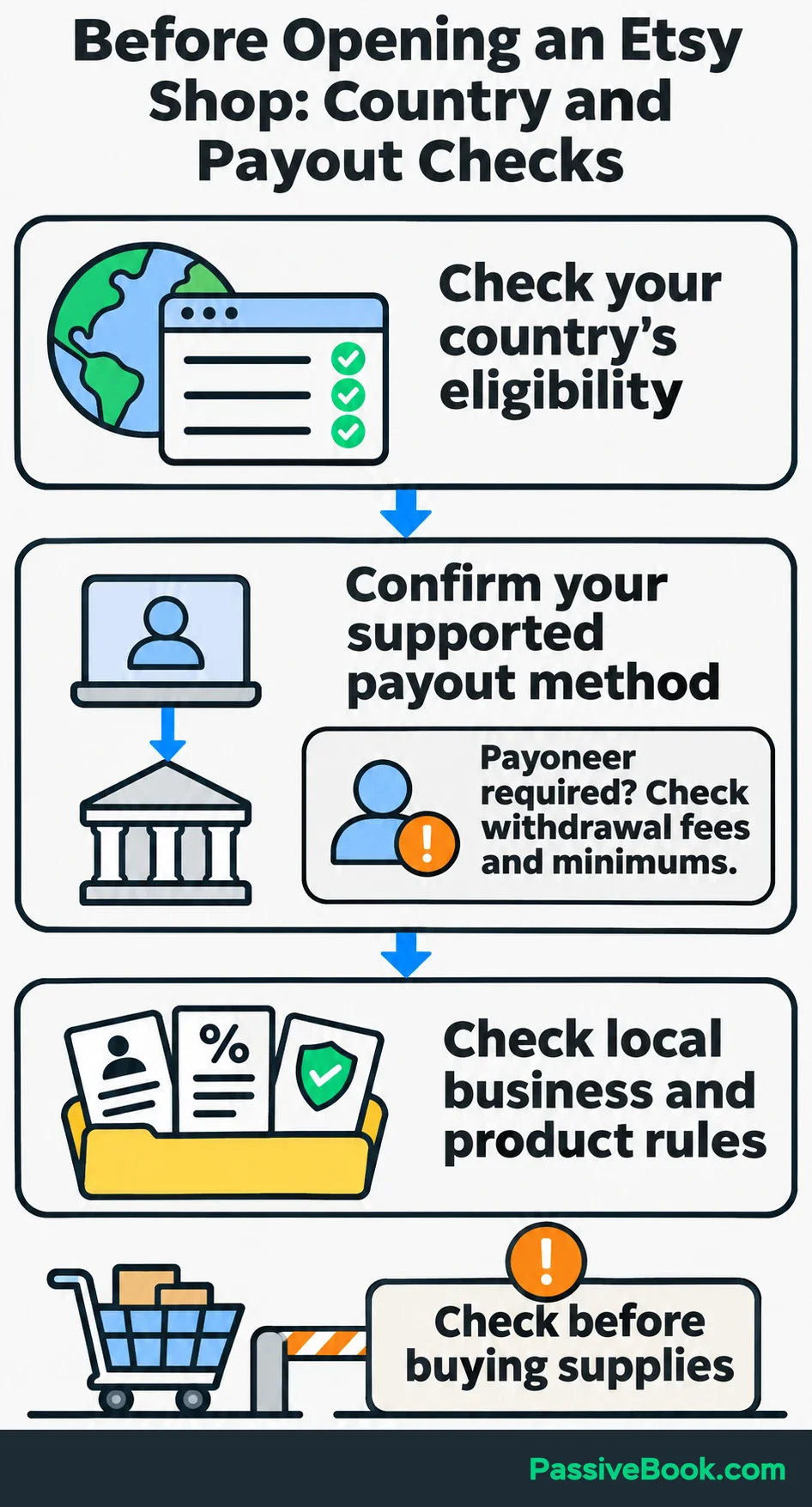
Check your country before buying supplies. New shops generally need Etsy Payments, the service that processes buyer payments and pays sellers. In some supported countries, you must receive payouts through Payoneer, which has separate withdrawal fees and minimums. Check the restrictions for your location on Etsy’s eligible countries page.
Next, check whether your product belongs on the platform. Etsy accepts qualifying items that you make, design, handpick, or source. That includes original digital designs, vintage goods at least 20 years old, and eligible craft supplies.
It doesn’t mean you can buy any finished product wholesale and call it handmade. Under Etsy’s Creativity Standards, your role in the product matters.
Throughout this guide, imagine you’re opening a shop selling handmade cotton book sleeves. The products, copy, and figures are illustrations, rather than my Etsy experience or expected earnings.
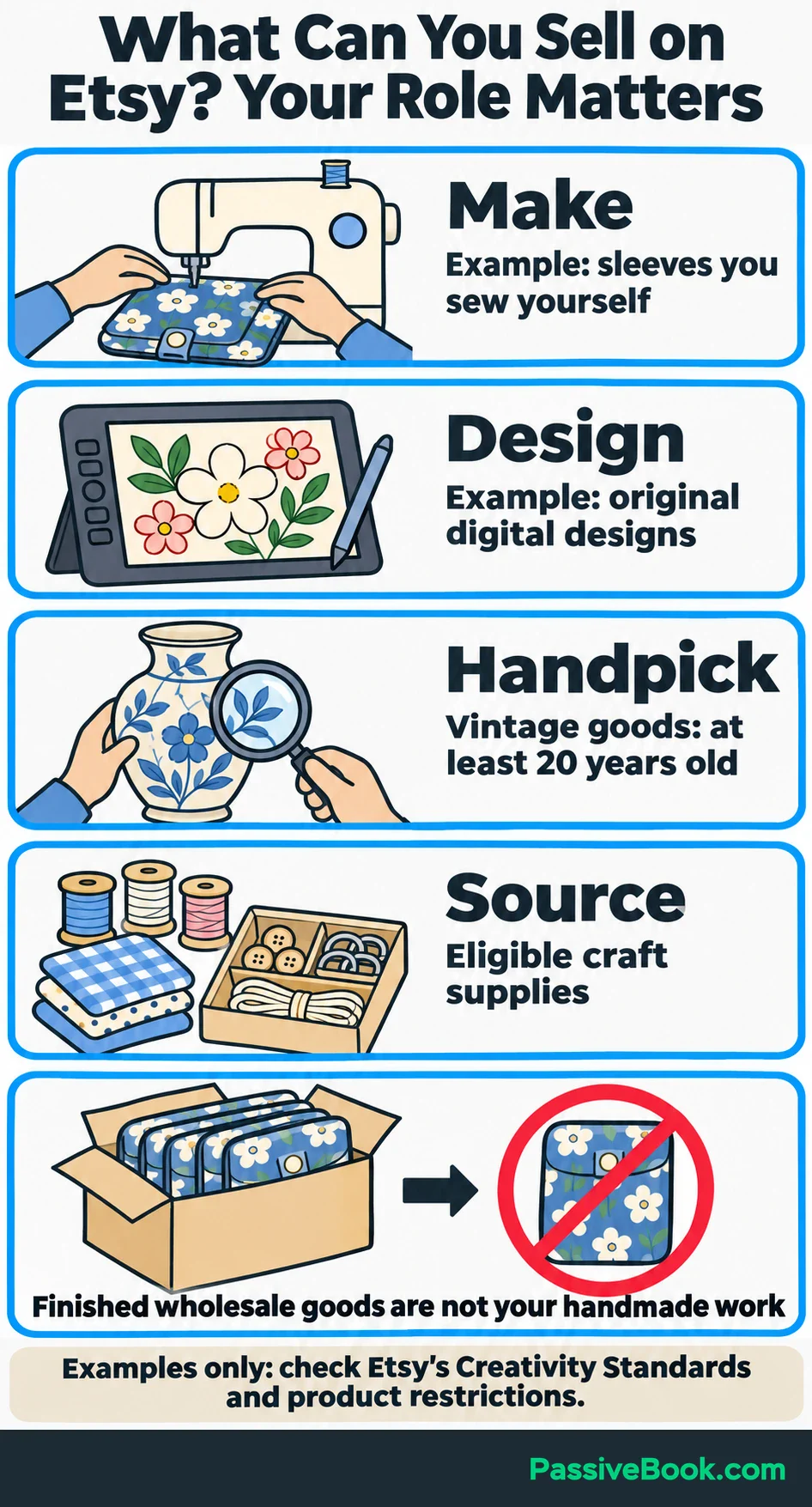
Sewing those sleeves yourself fits the seller-made category. Buying finished sleeves and reselling them as your own handmade work does not. Check restrictions on the product itself too, especially before selling anything involving food, health claims, or potentially hazardous materials.
You can apply as an individual or sole proprietor. Etsy doesn’t require you to form a company or have a business license, but local registration, tax, licensing, and product rules still apply. Its seller setup guidance makes that distinction clear.
Choose a Product Buyers Have a Reason to Purchase
Start with a buyer’s need and one useful reason to choose your product. “I enjoy making this” is a good reason to start experimenting. Buyers need their own reason to pay.
For the book sleeves, that reason could be protecting a paperback inside a crowded bag. A sensible first range would be padded cotton sleeves in two measured sizes, with clear guidance on which books fit.
Before making stock, search Etsy using phrases a buyer might try, such as “padded book sleeve” or “cotton book pouch.” These are starting points for research, not proven sales opportunities.
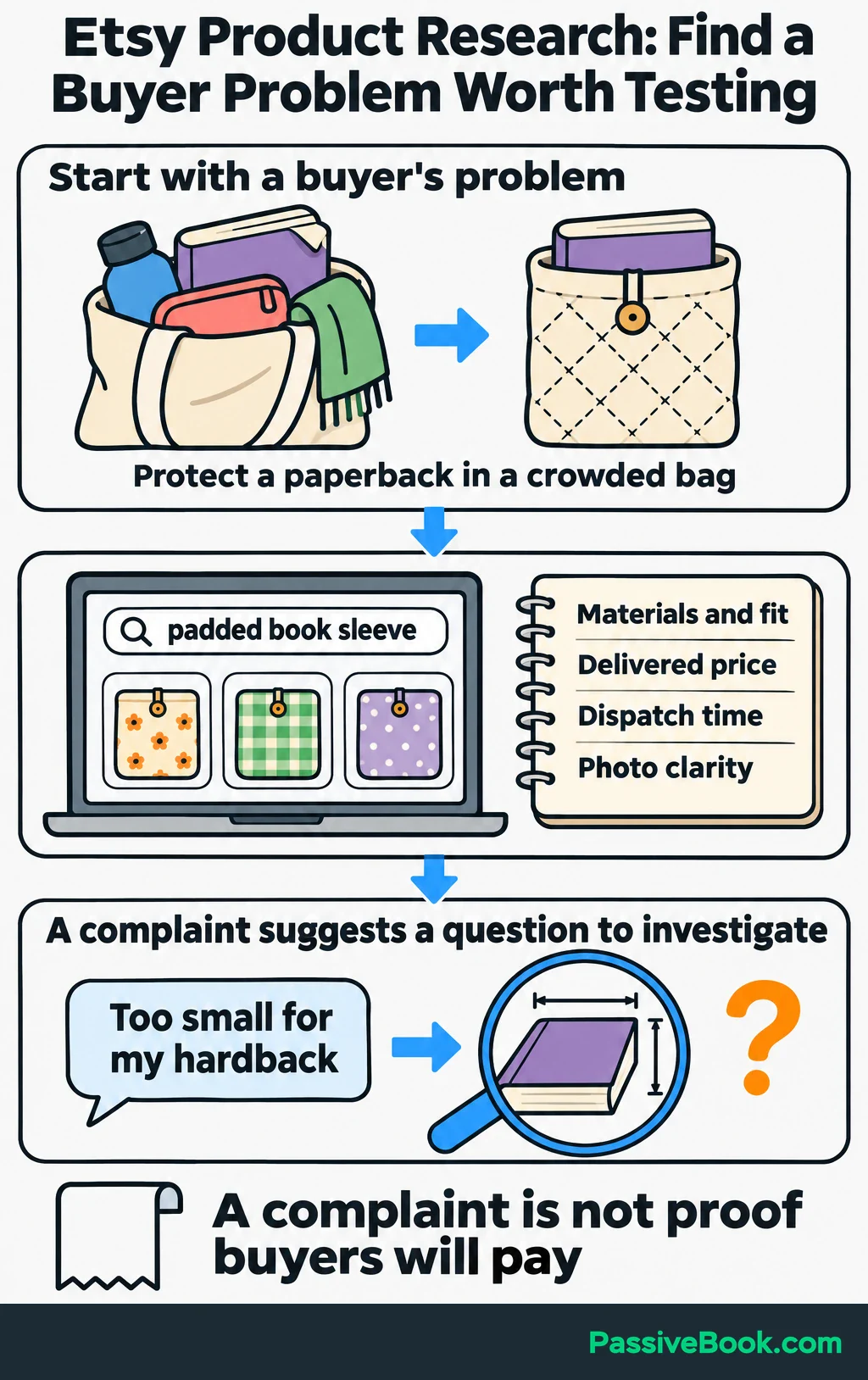
Compare similar products and record:
- What materials and sizes buyers receive.
- The total price with shipping.
- How soon the seller dispatches orders.
- What the photos explain well.
- Questions or complaints that appear repeatedly in reviews.
A review saying “too small for my hardback” suggests a fit problem worth investigating, but it doesn’t prove buyers will pay for your larger version.
I skipped that distinction with my online jewellery store. I invested roughly $1,200 without doing enough market research, accumulated unsold inventory, and lost most of the money. That was an ecommerce business, not an Etsy shop, but the lesson applies: buying stock is much easier than proving anyone wants it.
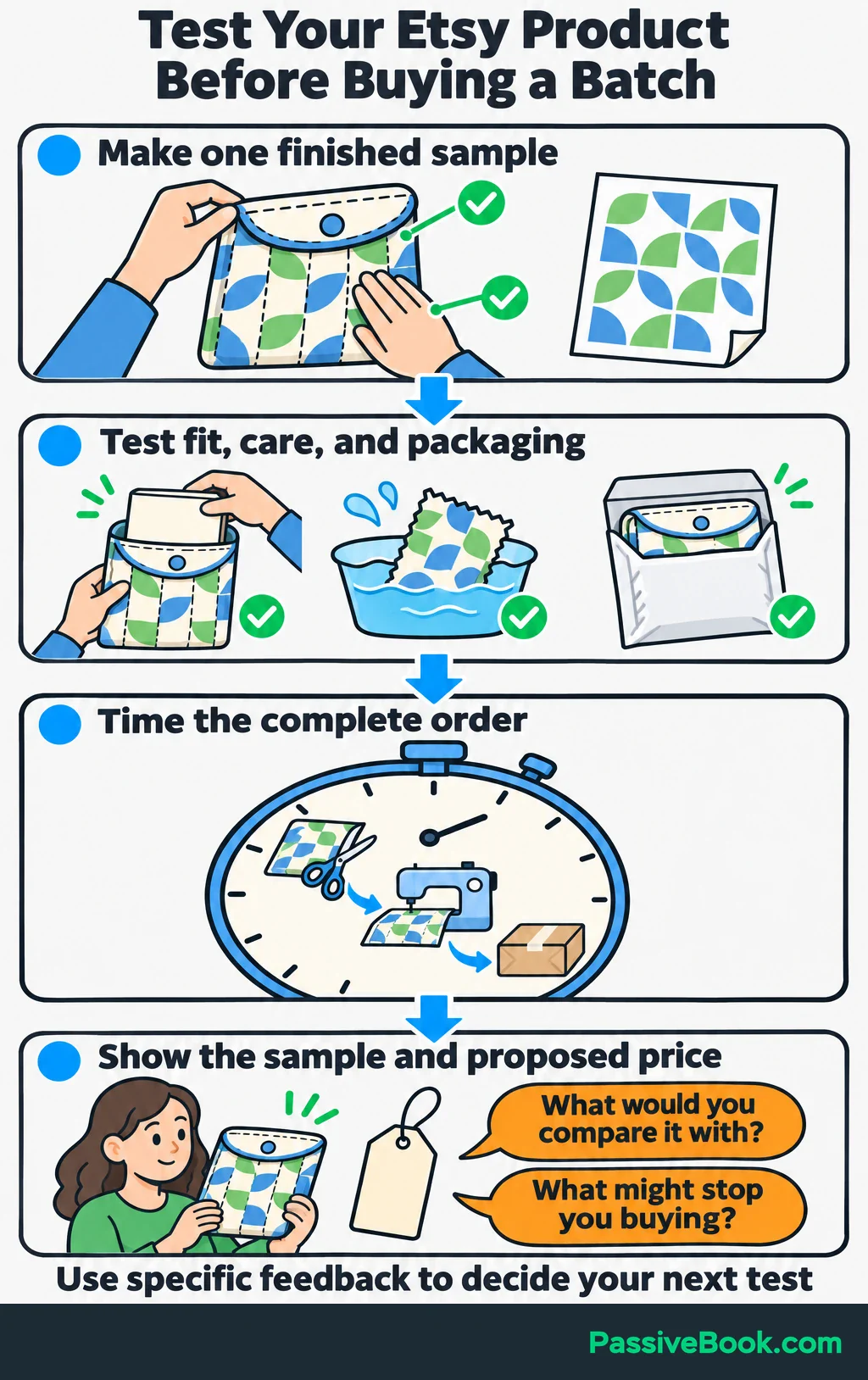
Make a sample before committing to a batch. Check the seams, padding, book fit, care instructions, and packaging. Time the work from cutting fabric to packing the finished order.
Then show the sample and proposed price to people who might actually use it. Ask what they would compare it with and what might stop them buying. “Looks lovely” is pleasant feedback, but it won’t help you set a price.
Keep the work original, and check commercial-use rights for any artwork or other assets you use. Popular characters, logos, and branded phrases can create problems even when similar listings already exist. Etsy can remove reported infringing material under its Intellectual Property Policy.
Set a Price That Leaves Money After Costs
Calculate Your Product and Fulfillment Costs
Count everything needed to produce and deliver one order:
- Materials, including fabric, padding, thread, and labels.
- Your production time at an hourly rate you choose.
- Packaging.
- Postage.
- A reasonable allowance for mistakes, damage, or remakes.
For labor, count cutting, sewing, and packing time. At $12 an hour, a 30-minute order uses $6 of labor.
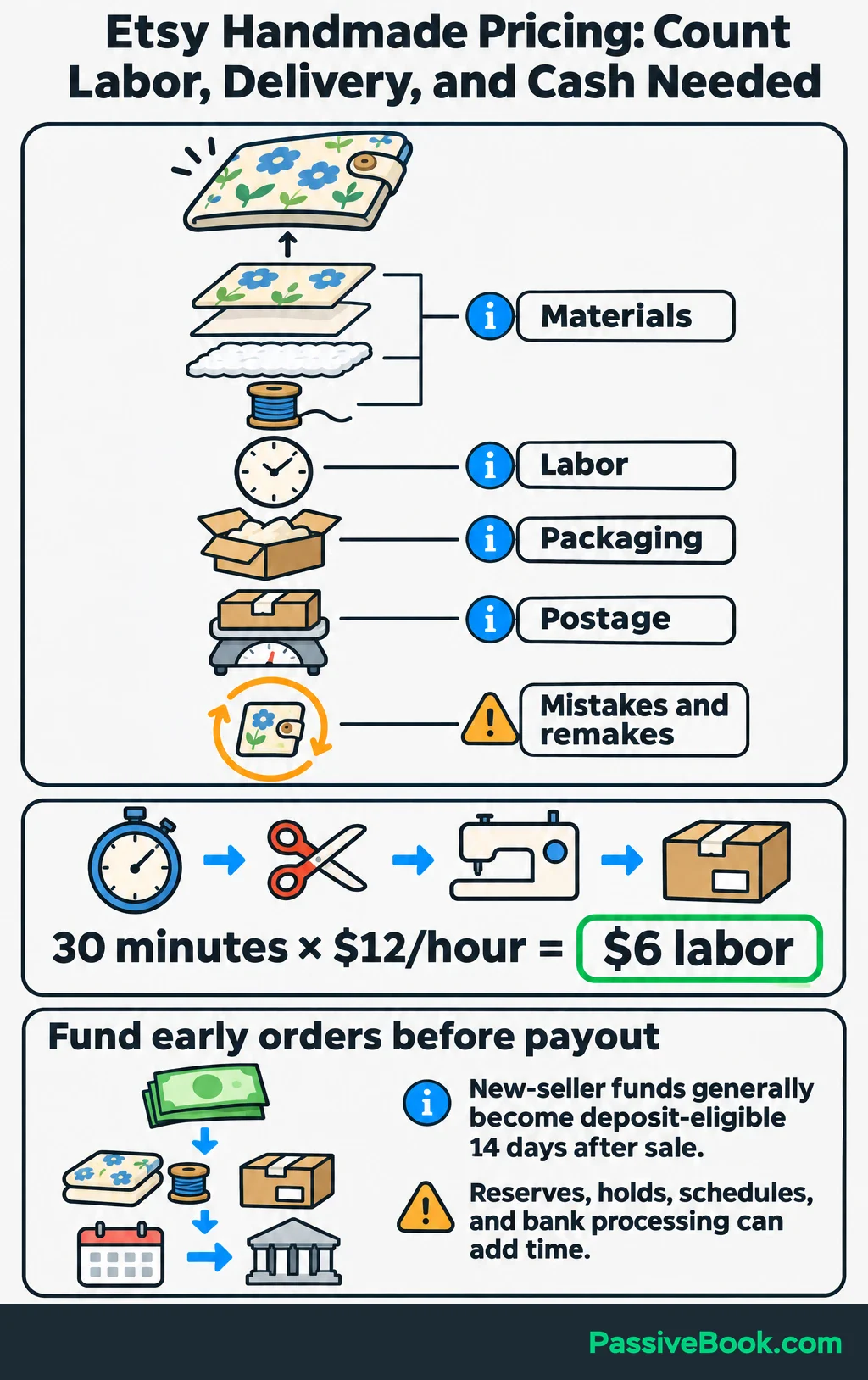
Weigh the packed order to check postage. Include that cost in your price calculation whether you charge shipping separately or offer “free shipping.”
Set a startup spending limit that covers samples, initial listing charges, any setup fee shown during onboarding, packaging, and cash to fulfill early orders.
New sellers’ funds generally become eligible for deposit 14 days after a sale. Reserves, holds, deposit schedules, and bank processing can add time; see Etsy’s payment account guidance. I would start with quantities you can fulfill before that payout arrives.
Add Etsy’s Selling Fees
Etsy has several separate charges, so a single percentage won’t capture every cost. Use this table as a pricing checklist and check the linked pages for current terms.
| Fee | What to Budget |
|---|---|
| Shop setup | A one-time, non-refundable charge, if shown during onboarding. |
| Listing and renewal | $0.20 USD per listing, renewal, or additional unit sold. Due without a sale; listings expire after four months. |
| Transaction | 6.5% of item price, charged shipping, and gift wrapping; excludes buyer sales tax for US sellers. |
| Payment processing | A country-specific percentage of the payment total, including shipping and applicable buyer sales tax, plus a flat fee. |
| Offsite Ads | An extra percentage on item price, shipping, and gift wrapping for attributed orders; tax treatment varies by location. Rates below. |
| Currency conversion | 2.5% of the amount converted when listing and payment account currencies differ. |
| Other applicable charges | Regulatory fees, taxes on seller fees, and deposit or Payoneer charges, depending on location. |
The Fees & Payments Policy covers the general charges. Use the separate payment processing rate table for your bank country.
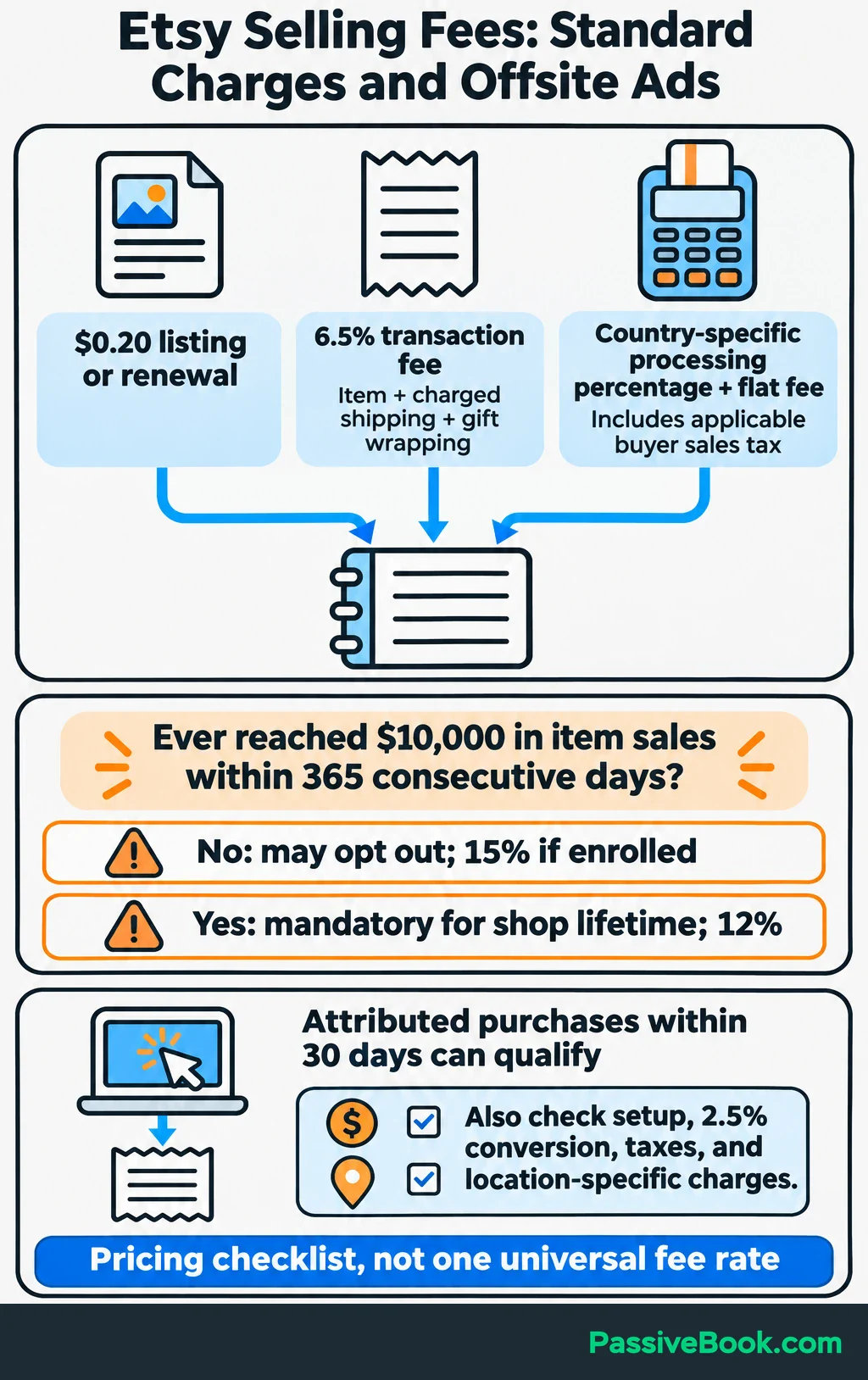
Check Offsite Ads before settling your price: shops are automatically enrolled. If your shop has never reached $10,000 USD in item sales during any consecutive 365-day period, you can opt out. Staying enrolled means a 15% fee on attributed orders. Reaching that threshold makes participation mandatory for the shop’s lifetime, with a 12% rate. Purchases within 30 days of an ad click can qualify under Etsy’s Offsite Ads rules.
I would opt out during a small test if that fee leaves too little after costs.
Check What Remains on an Order
Start with the money you collect for the item and shipping. Subtract production, delivery, and selling costs. Leave out buyer taxes that Etsy collects and remits because that money isn’t yours.
Here is one illustrative US order in USD. It assumes no buyer sales tax, advertising, currency conversion, or other applicable charges.
| Order Component | Amount |
|---|---|
| Book sleeve | $24.00 |
| Shipping collected | $5.00 |
| Total revenue | $29.00 |
| Materials and small remake allowance | −$5.00 |
| Packaging | −$1.00 |
| Labor | −$6.00 |
| Postage | −$5.00 |
| Listing charge allocated to the item | −$0.20 |
| Transaction fee: 6.5% of $29, rounded | −$1.89 |
| US processing: 3% of $29 plus $0.25 | −$1.12 |
| Remainder before overhead and income tax | $8.79 |
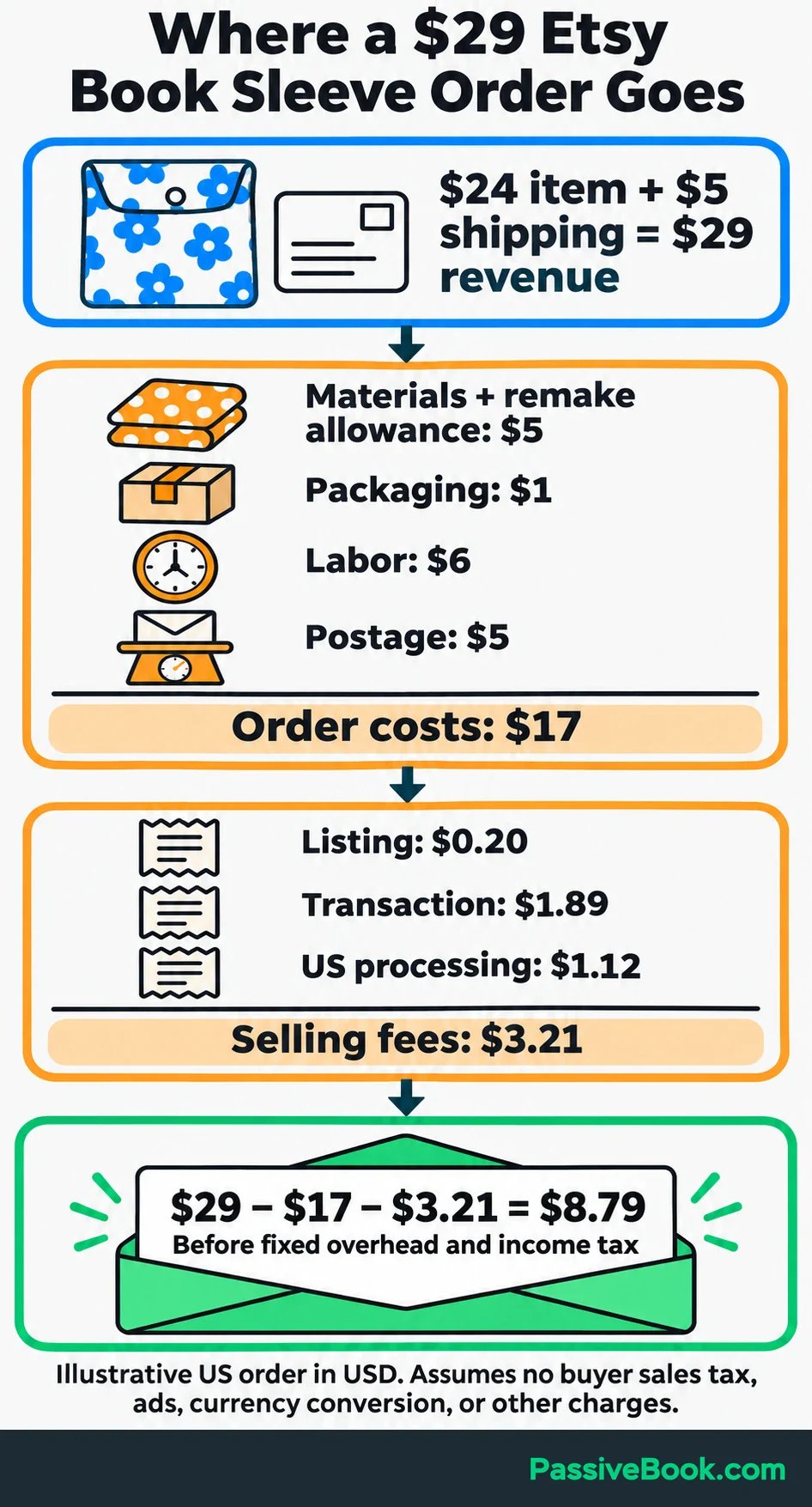
The selling fees total $3.21. After allowing for labor and the other order costs, $8.79 remains to cover fixed overhead and income tax.
An attributed Offsite Ads order at 15% would add $4.35 in fees, leaving $4.44.
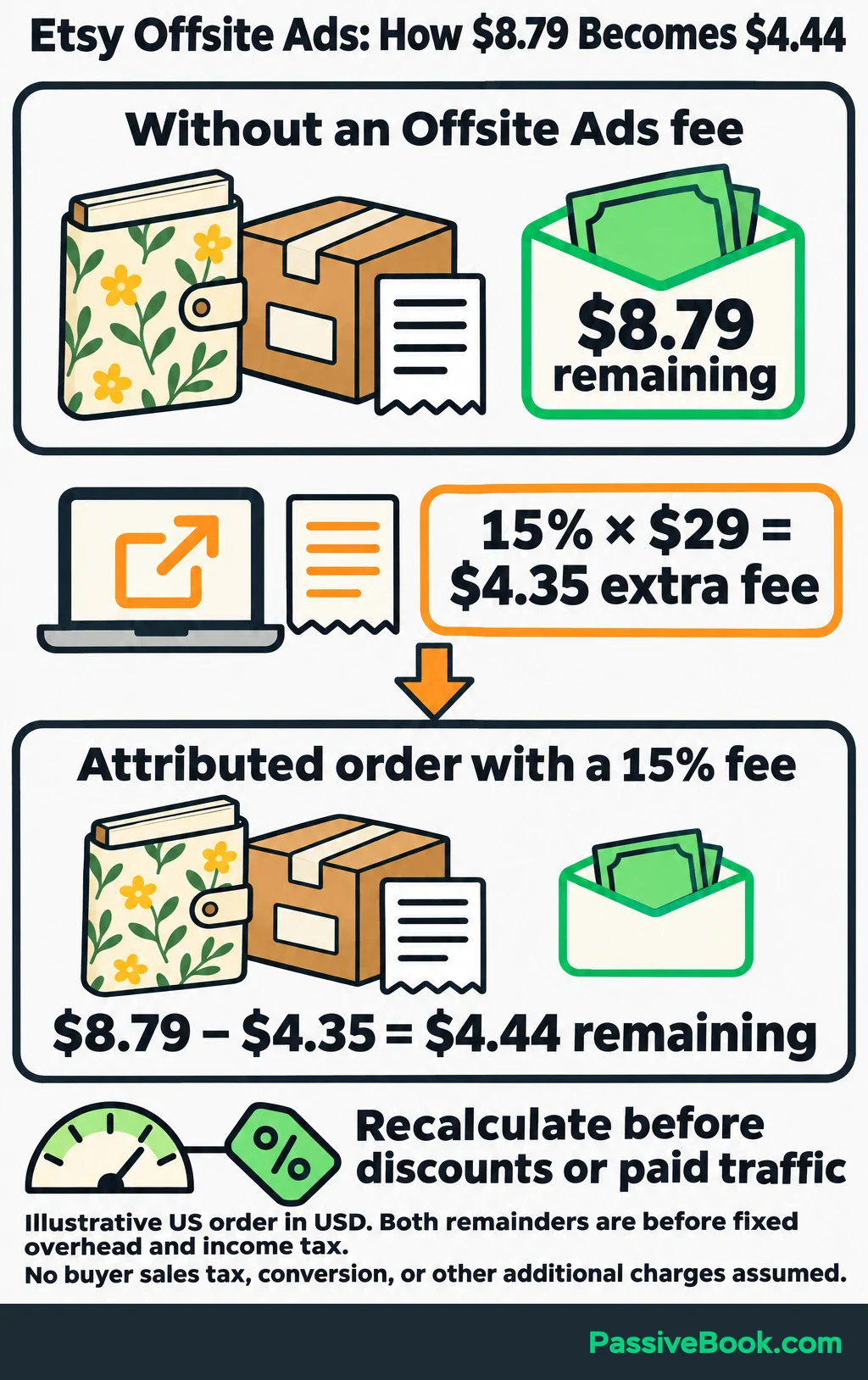
That difference should affect your decisions. Before offering a discount or paying for traffic, run the order again with those costs included.
The book sleeve figures won’t tell you what your own product needs to earn. Use the Pricing Profit Calculator to work backward from your costs and chosen hourly pay, then check whether the price feels worth testing.
Free Pricing Profit Calculator




If too little remains, raise the price, simplify production, or improve the offer. More orders won’t repair a price that makes each sale a problem.
Prepare a Listing That Helps Buyers Choose
Show the Product Clearly
Your photos should answer the questions buyers would ask if they could pick up the product.
Start with a clear main image that still makes sense as a small thumbnail. A phone camera, daylight, and a simple background are enough to begin testing.
For the book sleeve, include:
- The finished sleeve on its own.
- A book sliding inside.
- A close view of the padding, lining, and stitching.
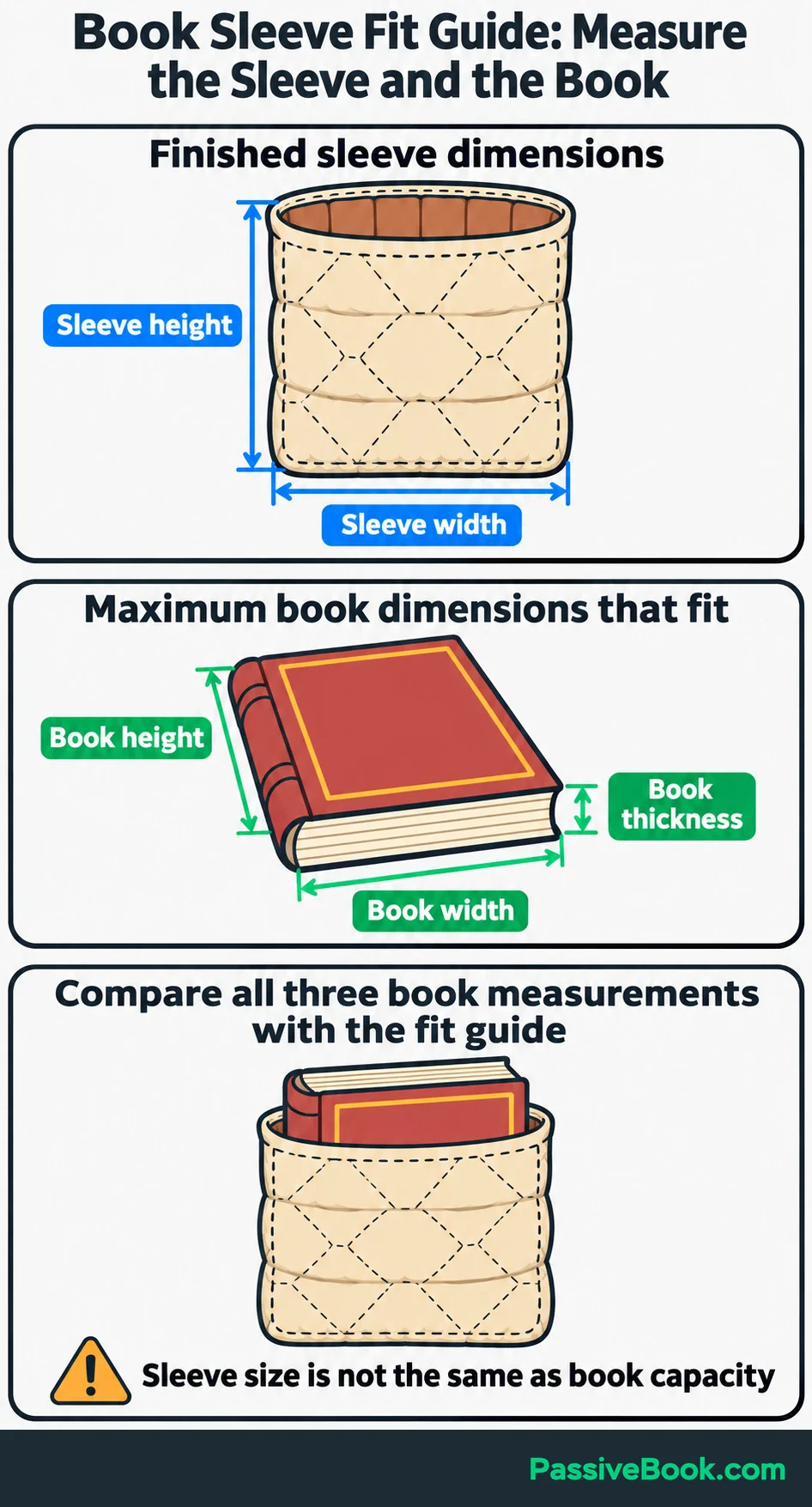
- A measurement image showing the sleeve’s dimensions.
- A fit guide stating the maximum book height, width, and thickness.
- The available fabric and size options.
Give buyers both the sleeve measurements and the book measurements it accommodates. Those are different numbers, and confusing them invites returns.
A short video can demonstrate fit more clearly than another decorative photo. Use it when movement answers a question.
Seller-made goods need original imagery of the finished product. If you offer personalization, the first image must show a finished customized example. A blank sleeve with “Your Name Here” pasted over it doesn’t meet that requirement.
Write Clear Titles, Descriptions, and Tags
Name the item first, then add the traits that help someone choose it. For example:
Blue Gingham Book Sleeve, Padded Cotton Cover
That tells a buyer more than a long chain of gift occasions and repeated keywords. Etsy’s title guidance recommends clear wording and considering fewer than 15 words.
Choose the most specific accurate category. Then fill in Etsy’s product-detail fields, called attributes, such as material, color, and pattern.
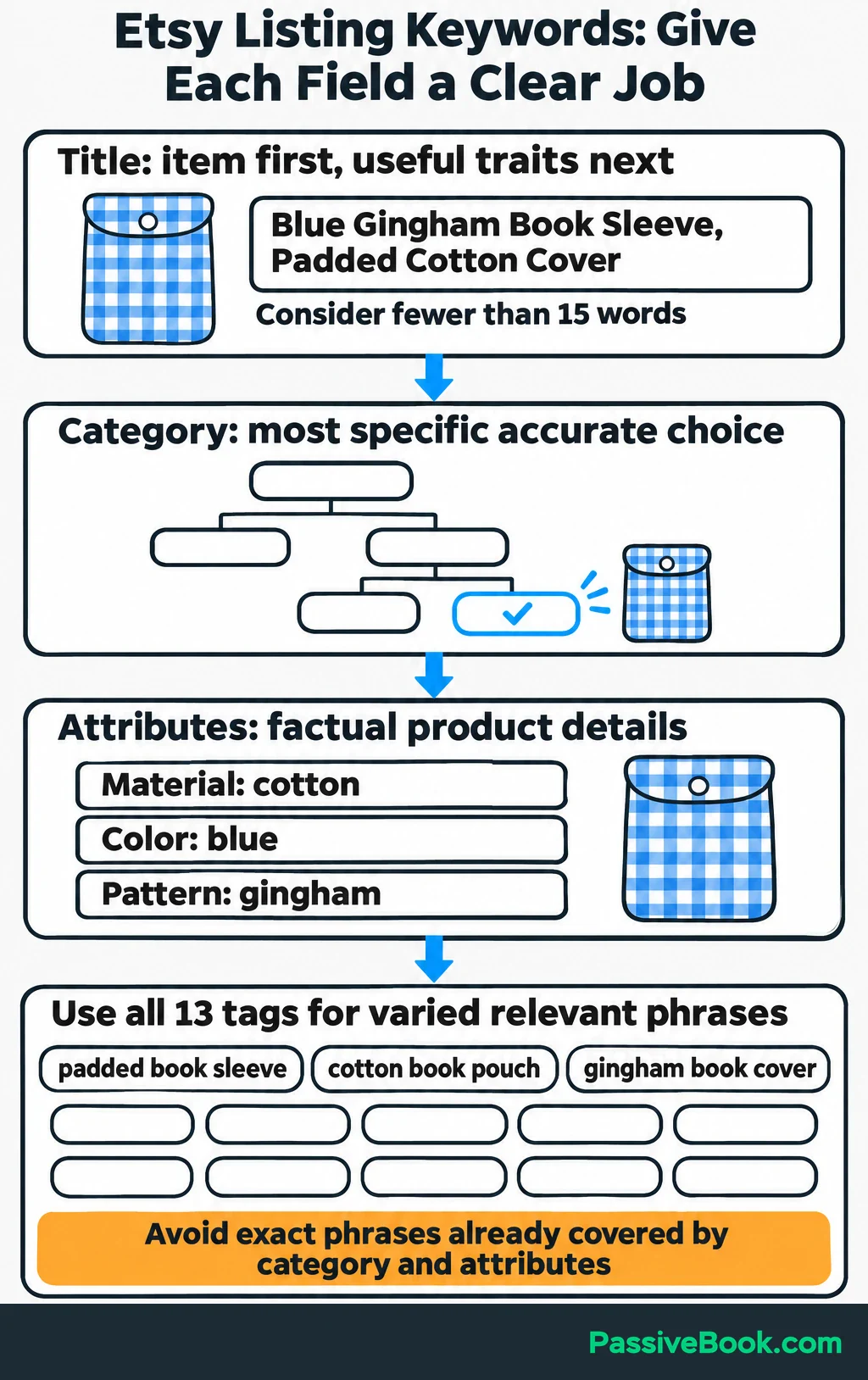
Use all 13 tags to add varied phrases shoppers might search for. For this example, try “padded book sleeve,” “cotton book pouch,” and “gingham book cover.” Avoid repeating exact phrases already covered by your category and attributes.
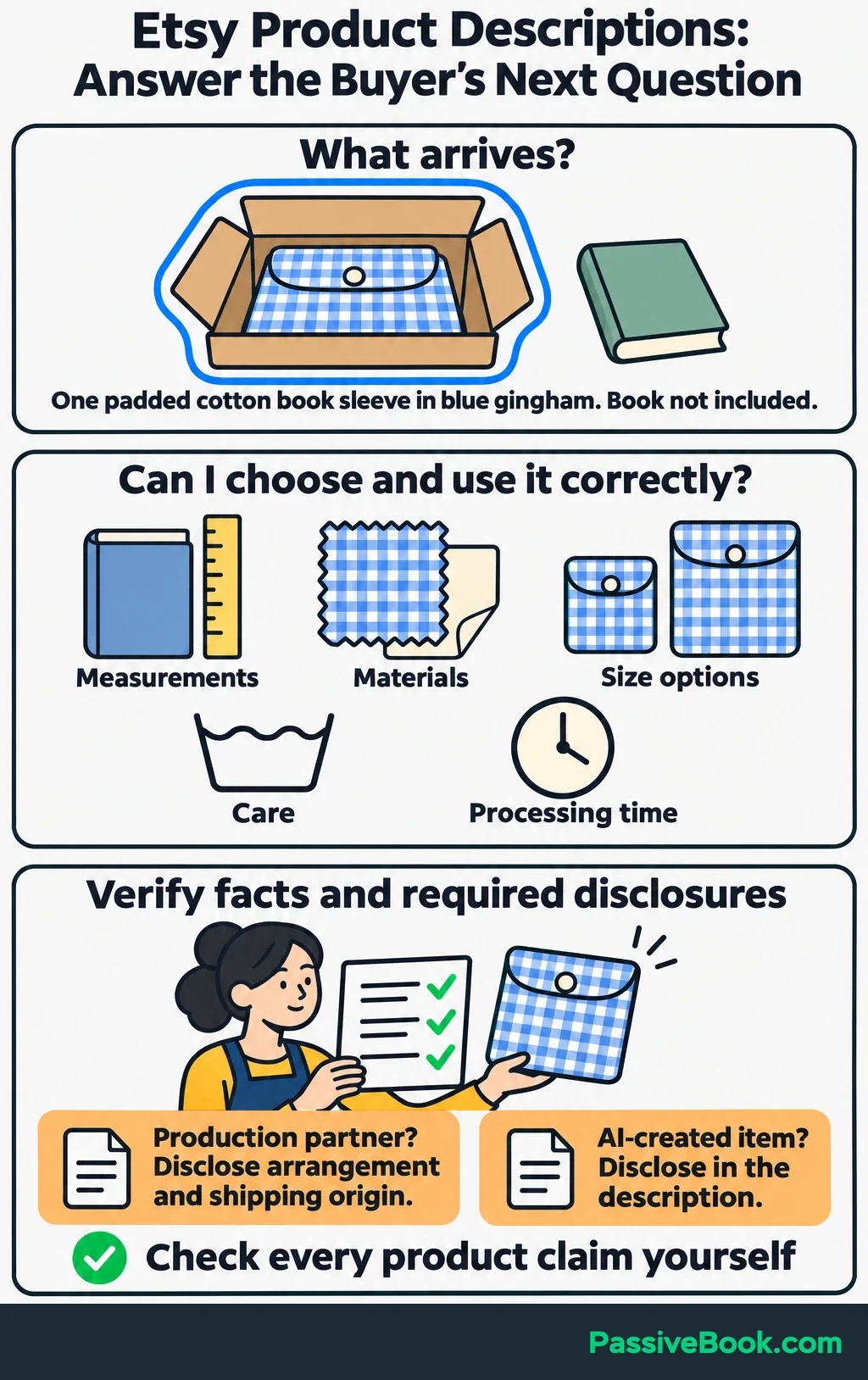
Start the description with what arrives:
One padded cotton book sleeve in blue gingham. Book not included.
Then explain measurements, materials, size options, care, and processing time. A fit sentence could read:
Measure your book’s height, width, and thickness, then compare all three with the fit guide before choosing a size.
Use the words buyers use naturally across these fields. Etsy’s keyword guidance treats titles, descriptions, categories, attributes, and tags as connected parts of the listing.
If a production partner helps make an eligible product, disclose that arrangement and the correct shipping origin. If the item itself was created using AI, disclose that in the description too.
AI can help turn your notes into a draft, but check every product detail yourself. A writing tool hasn’t tested your seams or washed your fabric.
If your product notes are ready but the listing still isn’t, the AI Ecommerce Copy Studio can turn those notes into a first draft. It separates missing details from the copy so you can see what still needs checking before you publish.
Free AI Ecommerce Copy Studio
Prepare the Delivery Details
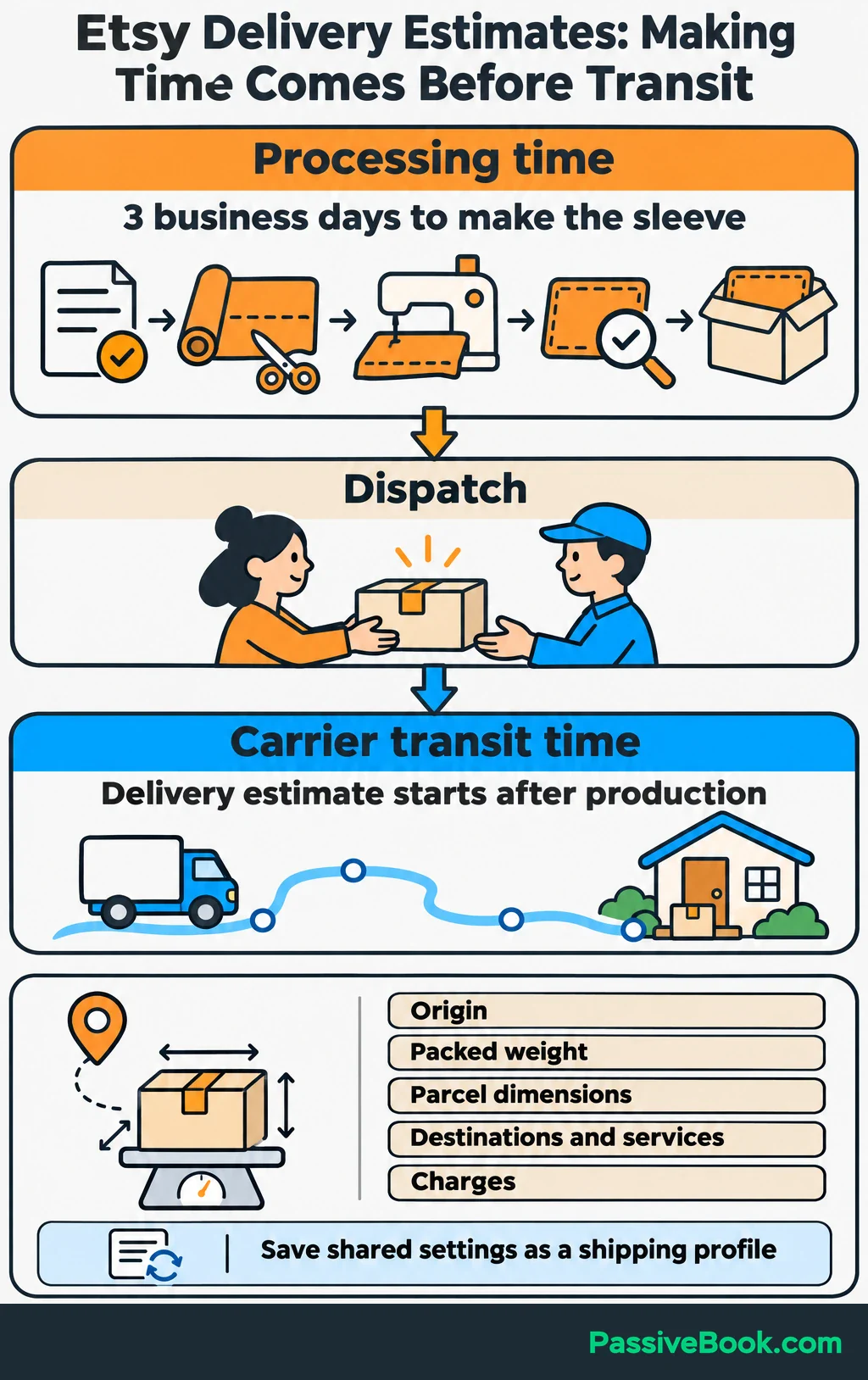
For physical goods, prepare the shipping origin, packed weight, parcel dimensions, destinations, carrier services, and charges.
Keep production time separate from travel time. If making the sleeve takes three business days, the carrier’s delivery estimate starts after that work is finished.
Choose a production schedule that fits your actual evenings and weekends. I would rather give an honest dispatch estimate than spend every evening apologizing for an optimistic one.
Save shared delivery settings as a shipping profile so you can reuse them across products. Start with destinations you can price and serve reliably, and check any product or customs requirements before adding others.
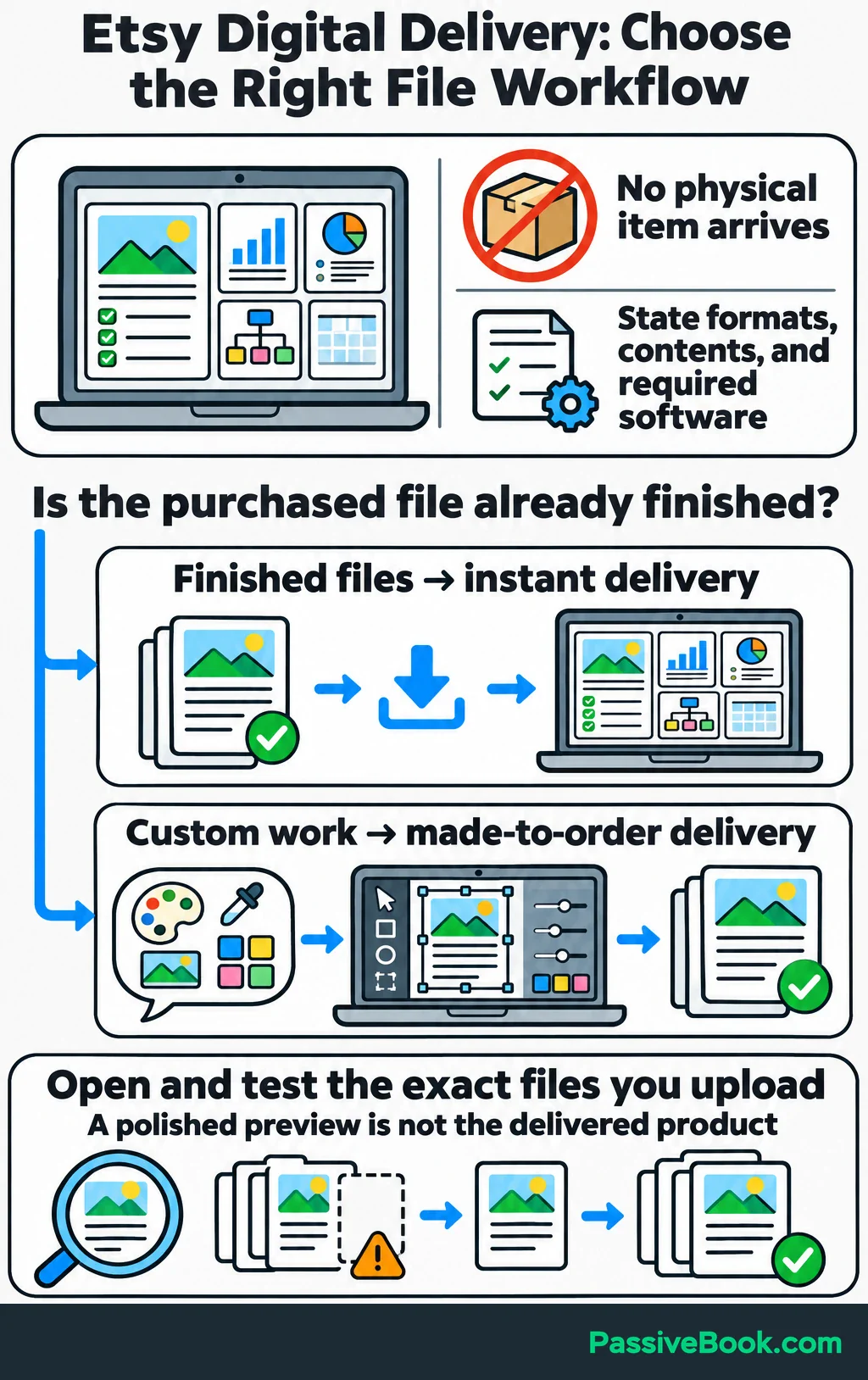
Digital products need a different setup. State the file formats, contents, required software, and that no physical item arrives. Choose instant delivery for finished files or made-to-order delivery for custom work.
Open and test the exact files you upload. A tidy preview doesn’t help when the purchased file is missing a page.
Open Your Shop and Publish Your First Listing
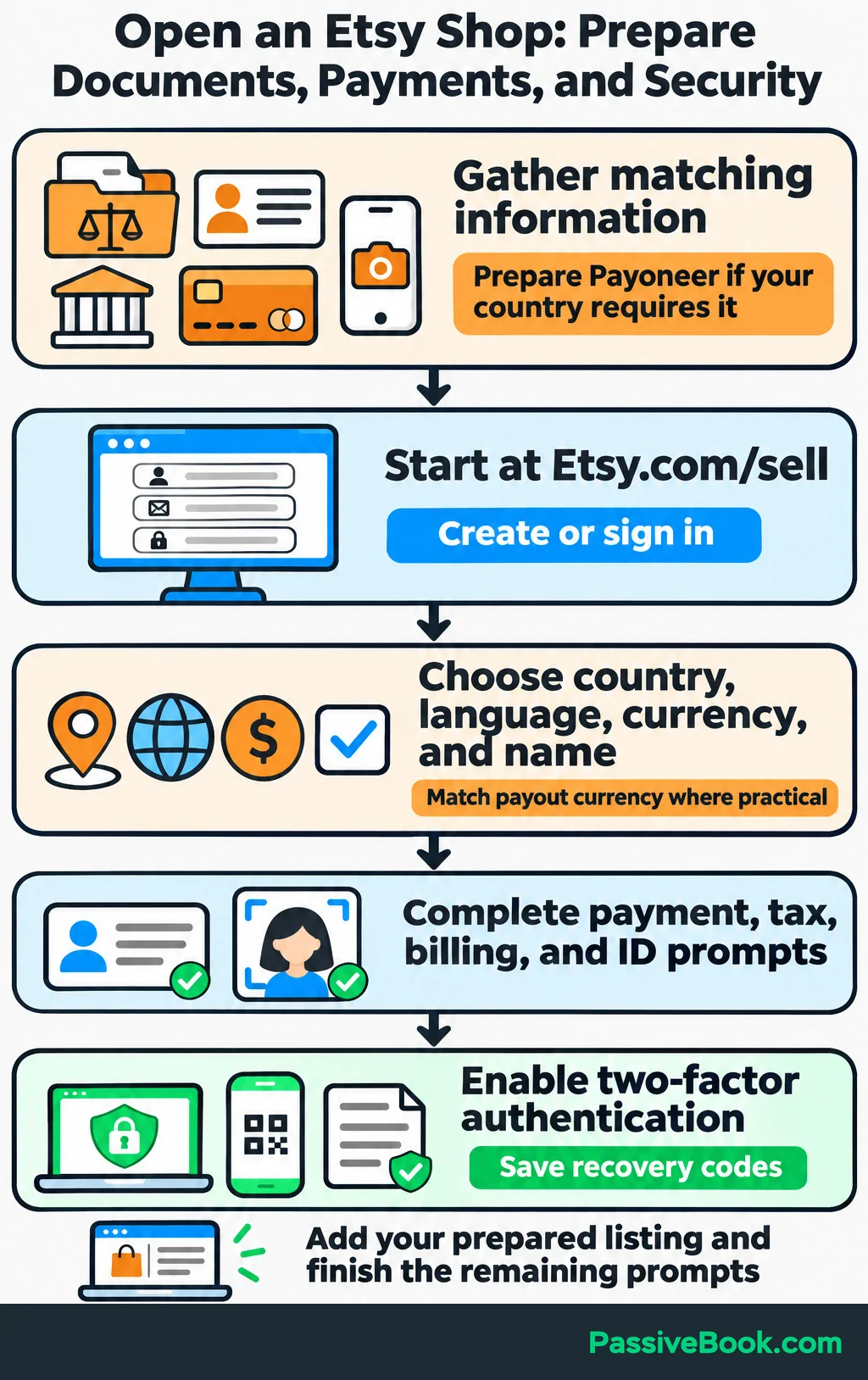
Gather your legal name, address, required tax details, supported payout information, billing card, and an unexpired government-issued ID. You’ll also need a device with a camera for identity verification.
Use details that match across your documents and payout account. If your country requires Payoneer, prepare that arrangement before starting.
Then work through the setup:
- Visit Etsy.com/sell in a desktop browser and create or sign into your account.
- Choose your actual shop country, preferred shop language, and listing currency.
- Pick an available shop name.
- Complete the payment, billing, identity, and tax prompts.
- Submit the required ID photo and selfie, enable two-factor authentication, and save your recovery codes.
- Add your prepared listing and complete the remaining onboarding prompts.
Choose a listing currency that matches your payment account currency where practical, so you avoid the conversion charge described earlier.
Add a simple shop icon and an About section explaining who makes the products and how. You can improve the branding later. A readable name and an honest introduction will do more useful work than a week spent adjusting a logo.
Enter the price, quantities, size variations, photos, description, and delivery details you prepared. For the sleeve, make the size labels easy to match with the fit guide.
Set your returns, exchanges, cancellation, and privacy terms. Apply the relevant return policy to each physical listing, and make sure your terms respect consumer rights in the places you sell. A “no returns” setting doesn’t override rights that apply by law; Etsy’s shop policy guidance explains the distinction.
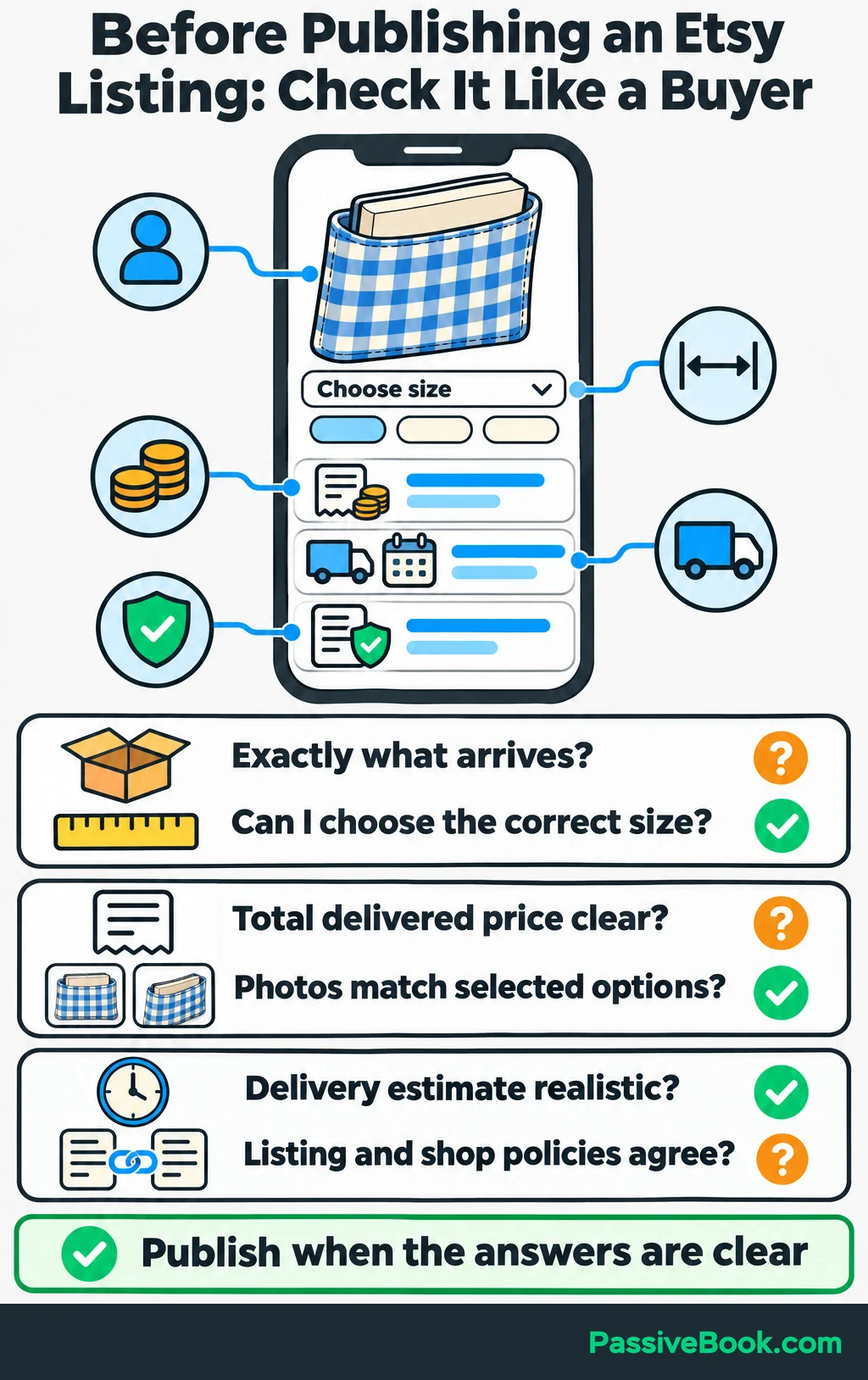
Before publishing, review the listing as a buyer:
- Can I tell exactly what I receive?
- Can I choose the correct size?
- Is the total delivered price clear?
- Do the photos match the selected options?
- Is the delivery estimate realistic?
- Do the listing and shop policies agree?
Publish once those answers are clear. You don’t need an arbitrary catalog size to begin learning from buyers.
Bring Interested Buyers to Your Listings
Start with the information already inside Etsy. Review its search visibility suggestions and correct missing or inaccurate details.
Match the listing to what you actually sell. A sleeve designed for paperbacks should attract people looking for that fit, rather than every shopper searching for a book gift.
Then choose one outside channel where you can demonstrate the product’s usefulness. For this shop, I would choose Pinterest because a visual sizing guide gives people a reason to visit the listing.
A useful Pin could show a book being measured with the caption:
How to measure your book for a sleeve
Link it to the matching listing, where the same fit guide is easy to find. You can make the image in Canva and use Pinterest’s native scheduler; I would skip a paid scheduling tool at this stage.
Relevant communities can also help, but follow their promotion rules. Answer a sizing or care question first, and share your product only where it is permitted and useful.
Use discounts for a clear purpose and check the order calculation before offering one. A coupon that removes the money left after costs has done an excellent job of creating work.
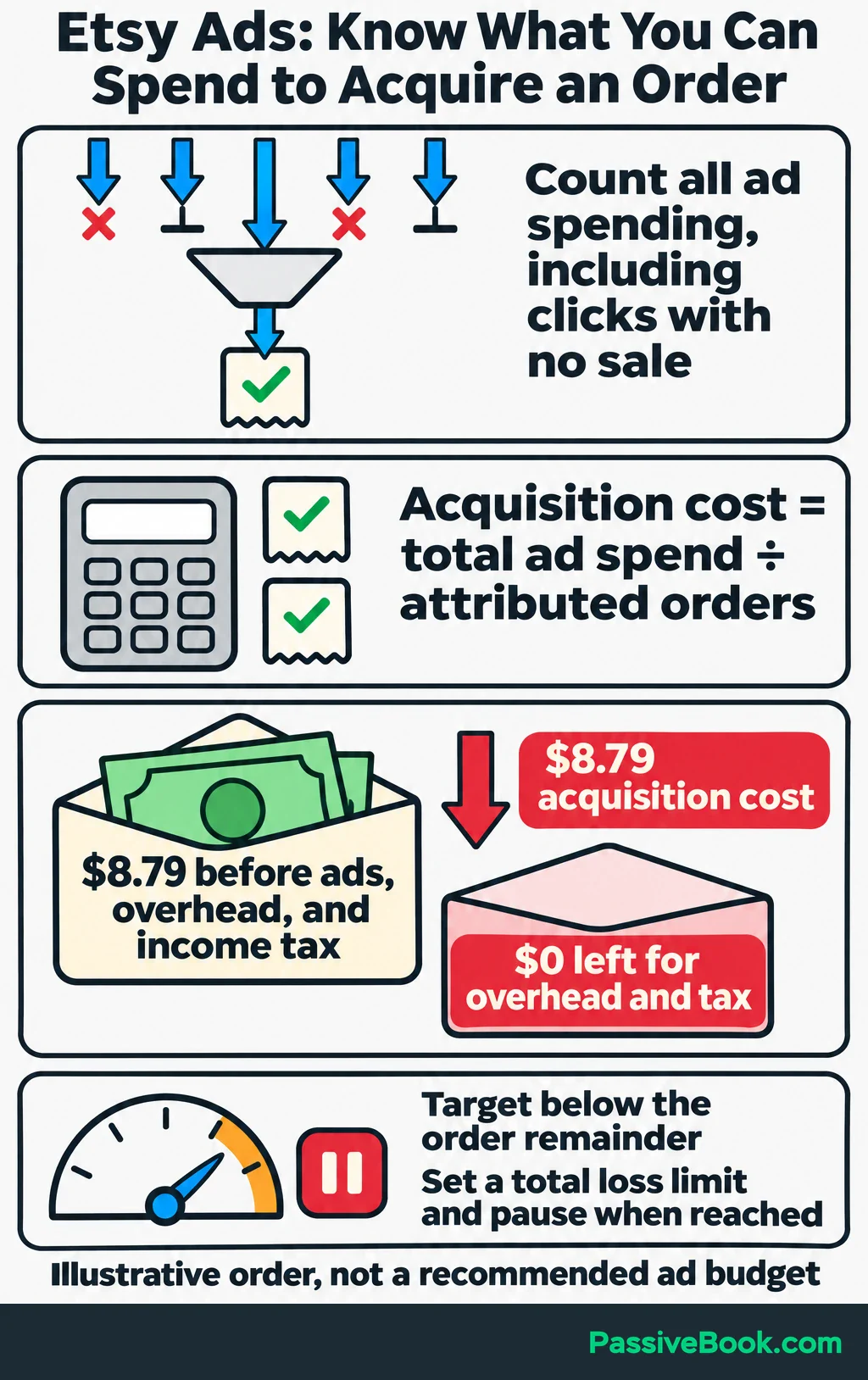
Etsy Ads are optional. New shops have a 15-day waiting period, and ads charge when someone clicks, whether or not they buy. Etsy outlines these conditions in its Ads guidance.
I would improve the photos, fit information, price, and delivery details before paying for clicks. If you test ads, choose the listings deliberately, set a daily budget, and decide on a total amount you are willing to lose. Monitor spending and pause the campaign when it reaches that limit.
Compare all ad spending with the amount left from attributed orders after their other costs. Include clicks that produced no sale.
For the example order, spending $8.79 to acquire the sale would consume the entire remainder before overhead and tax. Your target must sit below that amount to leave room for the business.
Fulfill Your First Orders Reliably
Confirm the paid order inside Etsy before starting work. A message announcing a purchase is not proof of payment.
Requests to scan a QR code or provide payment details to “confirm” a sale are warning signs. Report suspicious messages instead of following their instructions. Etsy describes these tactics in its phishing guidance.
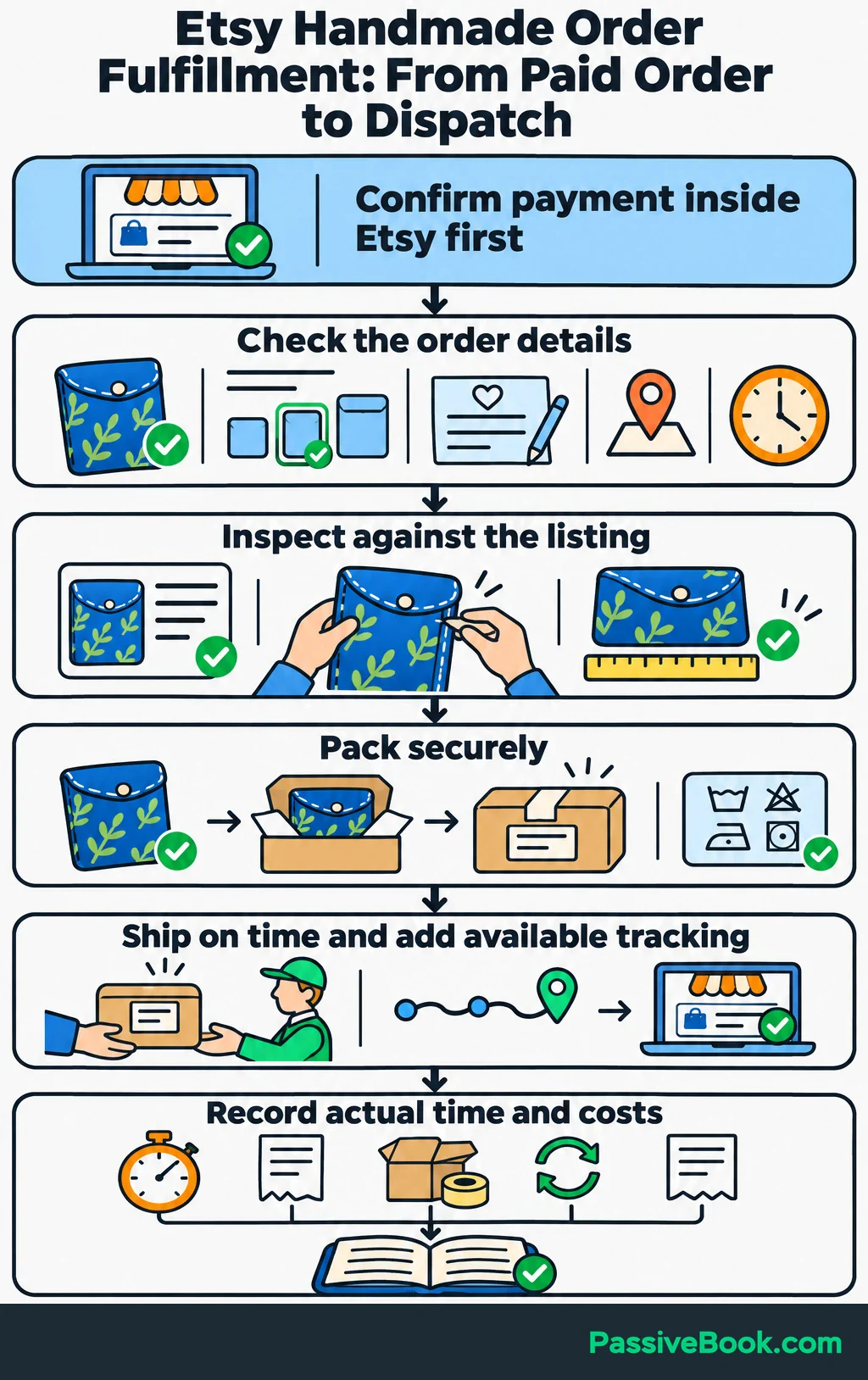
For each genuine order:
- Check the selected size, any personalization, address, and dispatch deadline.
- Inspect the finished item against the listing.
- Pack it securely and include any promised care information.
- Ship on time and add available tracking details.
- Record the actual time and cost.
For the book sleeve, inspect the seams and finished dimensions before packing. Keep the ordered size beside your work area so two similar sleeves don’t get swapped.
For digital orders, help buyers resolve download problems and deliver custom files through the order when complete.
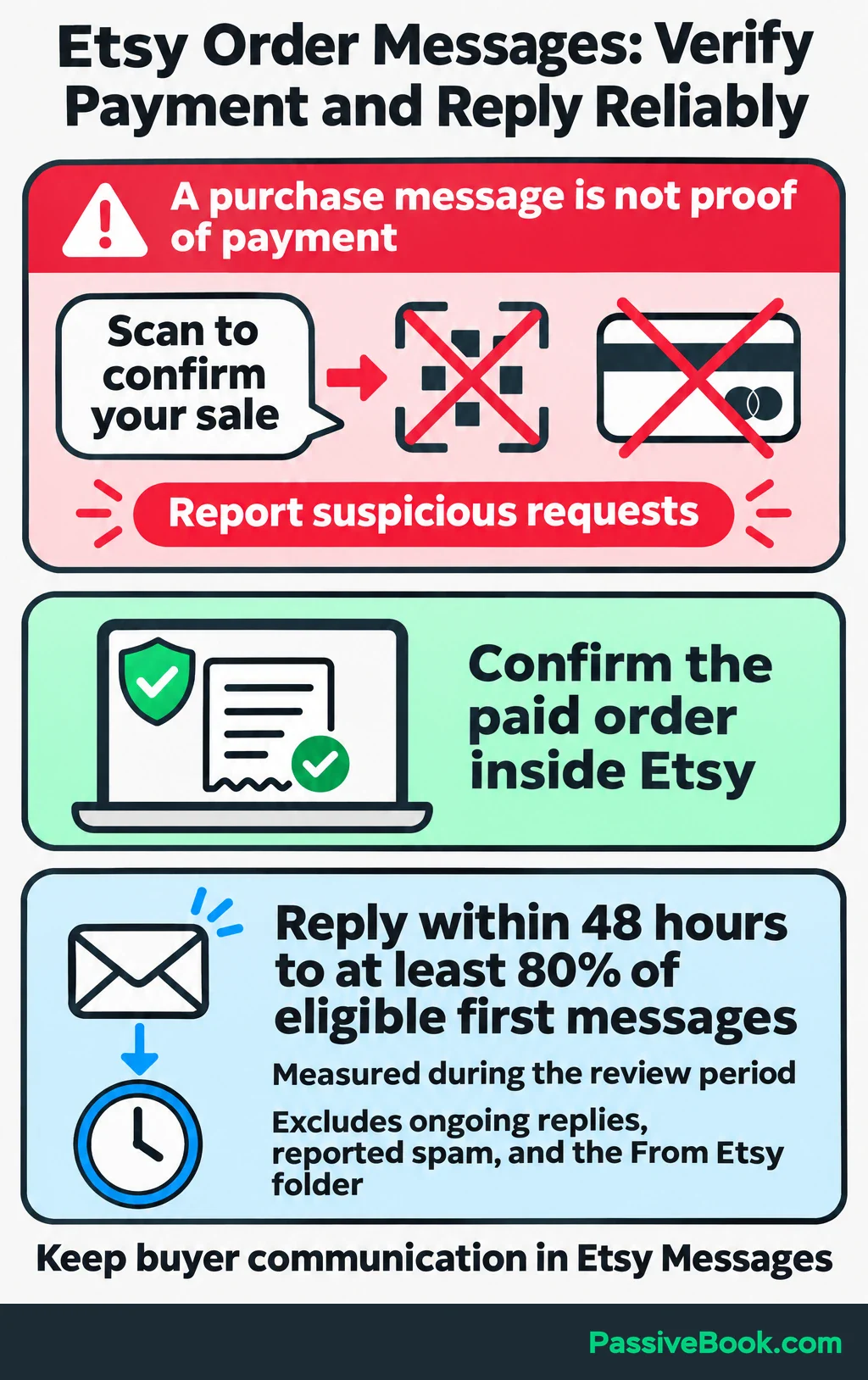
Keep buyer communication in Etsy Messages and respond promptly when something goes wrong. Etsy’s customer service standards require replies within 48 hours to at least 80% of eligible first messages in new threads during the review period. Ongoing replies, reported spam, and messages in the From Etsy folder don’t count toward that rate. I would answer straightforward questions sooner.
Use saved replies for repeated questions, but read the message before sending one. A polished answer about washing instructions is surprisingly unhelpful when someone asks where their parcel went.
Record support time, remakes, packaging, postage, and actual fees alongside production time. Those details tell you whether your original price still makes sense.
Improve Your Shop Before Expanding
Review Etsy Stats weekly rather than refreshing it between every task. Look at visits, traffic sources, search terms, orders, and conversion.
For conversion, count orders and visits from the same selected period. Divide orders by visits, then multiply by 100.
For example, four orders and 200 visits during one month gives a 2% conversion rate. Use visits rather than listing views because one visit can include several product views. Etsy explains the reports in its Stats guide.
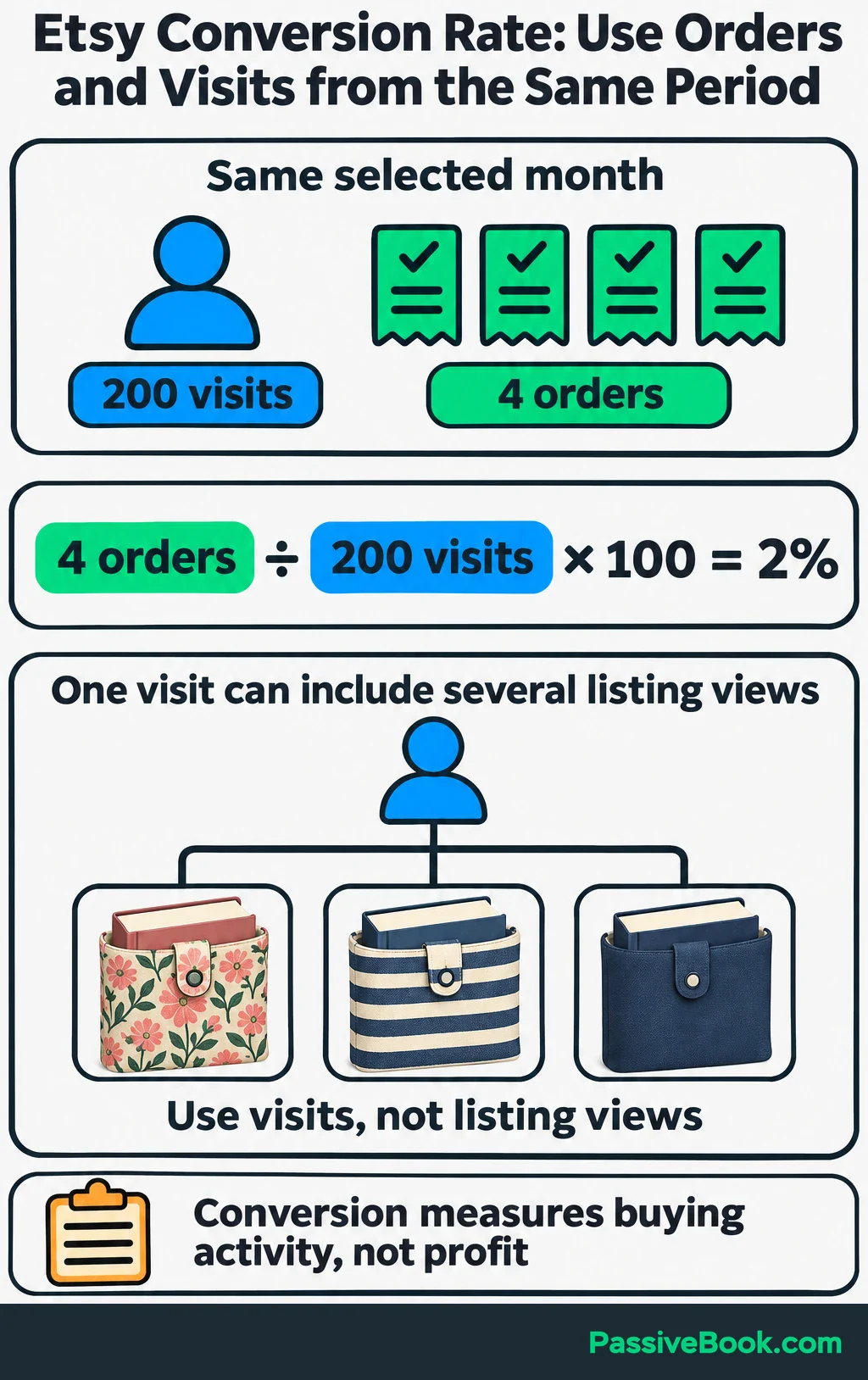
That rate tells you about buying activity, not profit. Reconcile the money and costs separately.
Let the problem decide what you change:
| What You Observe | What to Check First |
|---|---|
| Few visits from relevant shoppers | Search terms, category, attributes, tags, and whether your main photo clearly shows the item |
| Visits without orders | Fit information, photos, total delivered price, delivery estimate, and return terms |
| Orders with little money remaining | Actual labor, postage, fees, remakes, and discount costs |
| Repeated sizing questions | The fit guide, size labels, and where measurements appear |
| Difficulty dispatching on time | Listed quantities, production estimates, and your available working hours |
Avoid major spending decisions based on a handful of visits. One quiet week doesn’t tell you which part of the offer needs changing.
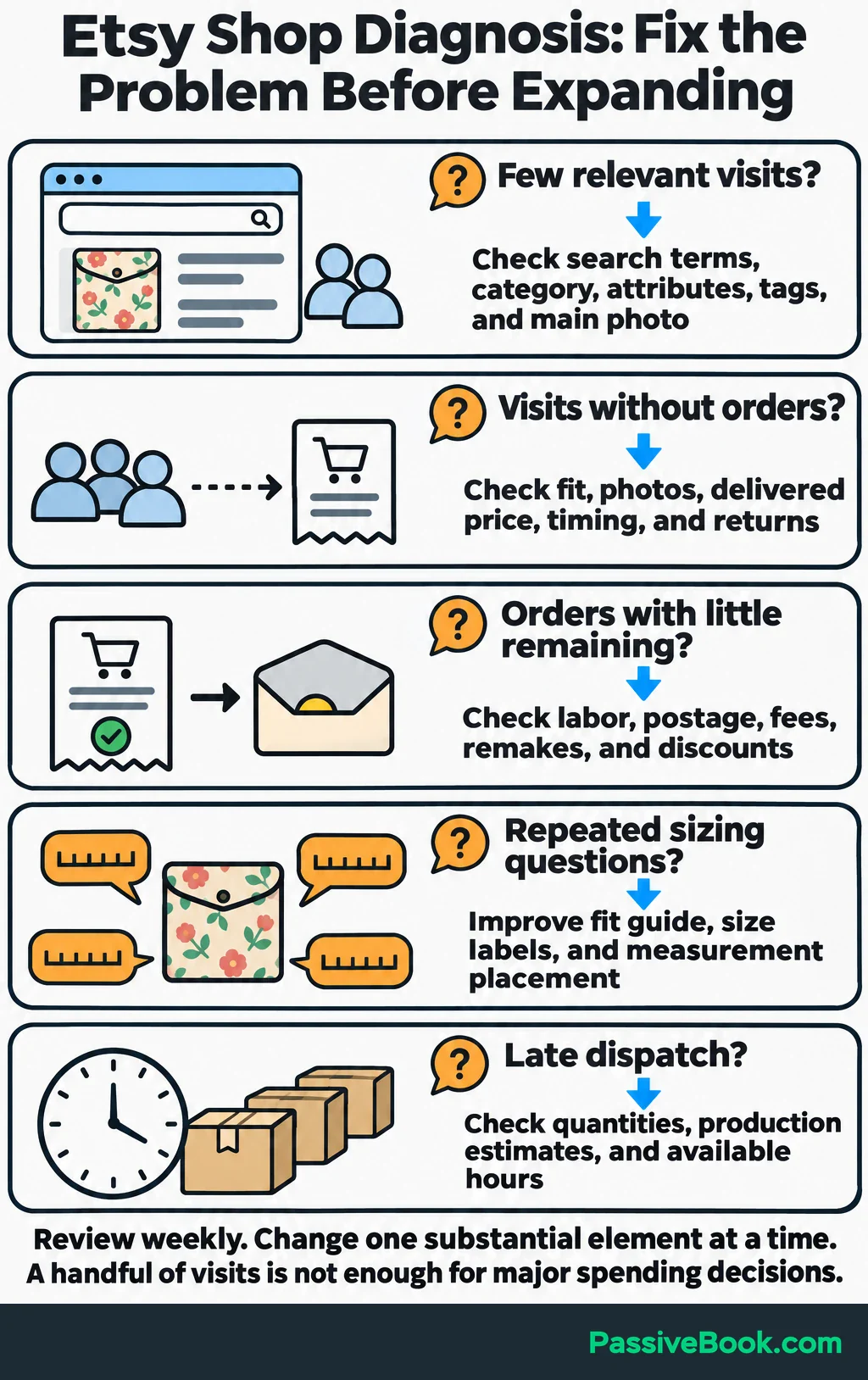
Change one substantial element at a time and note what you changed. For the book sleeve, improve a confusing fit guide before adding three more sizes. Otherwise, you may create more choices around the same unanswered question.
Expand when purchases, margins, available cash, and production capacity support it. Buying more fabric because you received favorites is still buying fabric.
As orders become repeatable, reuse your photography setup, shipping profiles, packing checklist, and saved replies. Those systems reduce repeated work, but handmade production still takes time. Build that time into both your price and your capacity.
What Next?
Choose one product and make a packed sample. Time the work, check the postage, and calculate what would remain after Etsy’s fees before buying a batch.
Use the social buttons to share this guide when you want the conversation about starting an Etsy shop to include the costs behind the sale.
Which part of your first product still needs testing before you would feel comfortable listing it? Tell me in the comments, and bring any other questions too.
Share this post with your friends & followers:

