Your supplier says the order has shipped, but the warehouse has no booking and your best-selling item is almost gone. Now you’re chasing updates while deciding whether you can still promise customers a delivery date.
The trouble grows when every order needs the same detective work. A low purchase price offers little comfort when you’re paying for urgent freight or replacing damaged goods. Here’s a repeatable way to manage those delivery and quality problems, protect your margins, and keep stock moving without making vendor oversight another full-time job.
Assign Ownership to Your Most Critical Vendors
Start with the vendors whose failure would interrupt sales or leave customers waiting. Consider how much damage a failure could cause and how long a replacement would take.
Spending alone is a poor guide. Your only manufacturer may deserve closer attention than a more expensive service you could replace next week.
Create one vendor register with:
- Legal business name and products or services supplied.
- One accountable person inside your business.
- Operational contact and a separate escalation contact.
- Contract location, payment terms, and renewal notice dates.
- Main failure risk and estimated replacement time.
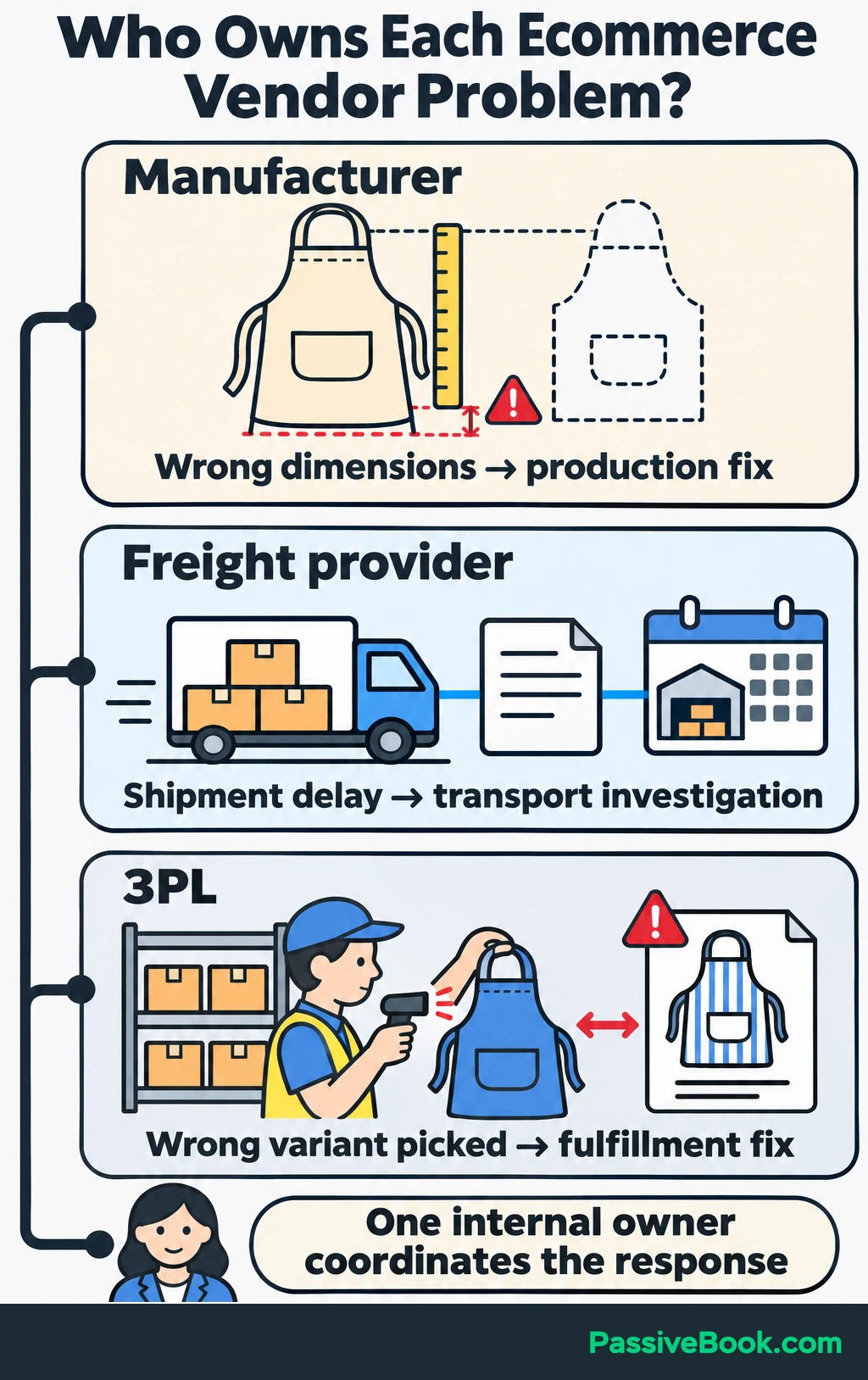
The owner coordinates the relationship and makes sure problems reach the right person. Also record who can approve purchases, accept deliveries, and authorize changes. You can hold several roles yourself, but each decision still needs a clear owner.
Throughout this article, imagine you sell washable cotton kitchen aprons. A manufacturer makes them, and a third-party logistics provider, or 3PL, stores and dispatches them. The business, terms, and figures below are illustrations.
The manufacturer handles agreed product quality and delivery obligations. The 3PL handles receiving, storage, picking, packing, and dispatch. If a freight provider sits between them, record its responsibilities too.
That distinction matters when something goes wrong. An apron made in the wrong size and a correctly made apron picked from the wrong shelf need different fixes.
Select Vendors Against Written Requirements
Define Your Nonnegotiable Requirements
Write down what a vendor must deliver before asking who can deliver it.
Start with your customer promise and work backward. “Machine washable” needs an agreed wash test. “Dispatches next business day” needs stock availability, warehouse capacity, and a clear order cutoff.
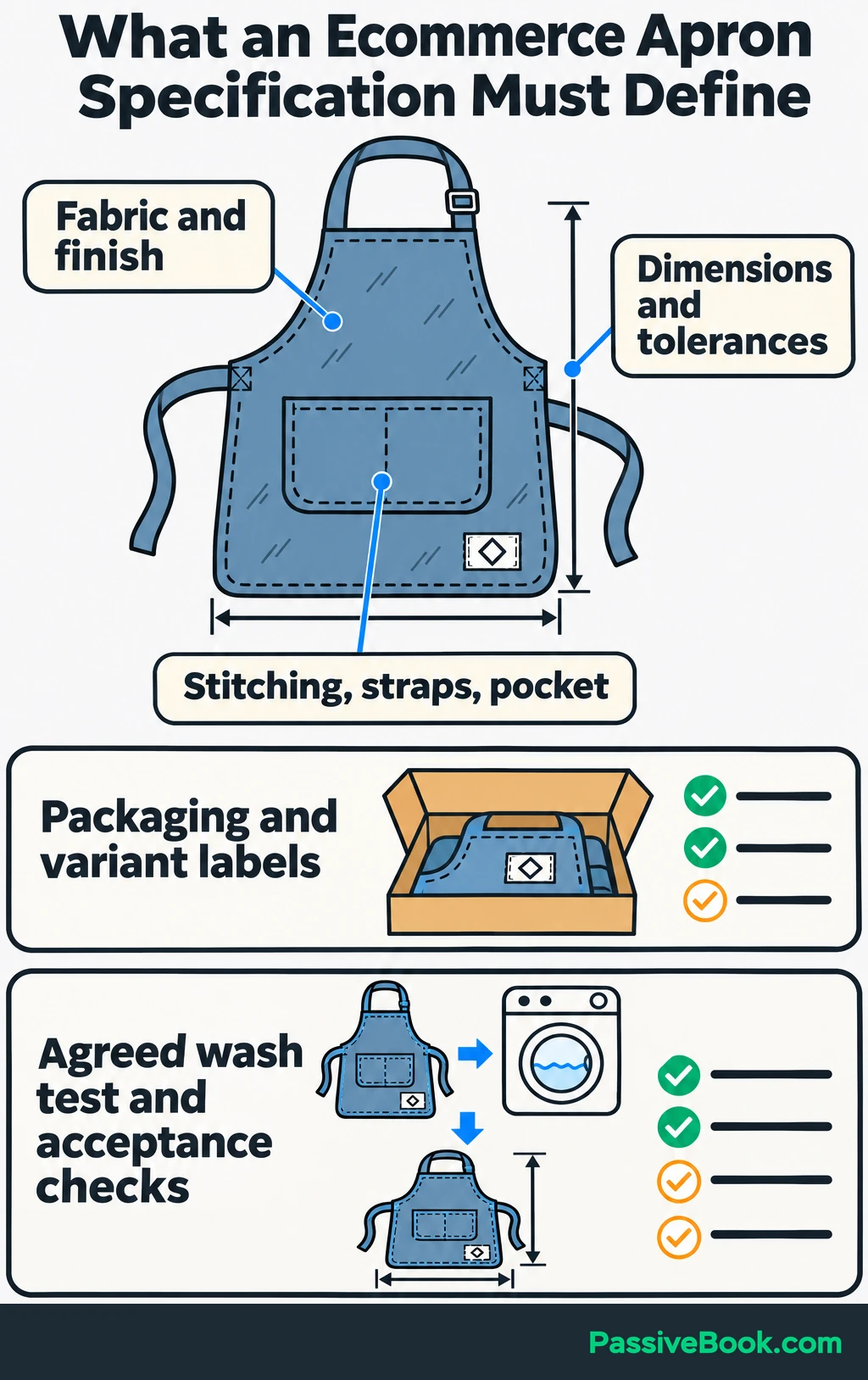
For the aprons, your specification might cover:
- Fabric composition, weight, color, and finish.
- Dimensions and allowed variation.
- Stitching, strap construction, and pocket placement.
- Packaging and variant labels.
- Acceptance checks after washing according to the agreed care instructions.
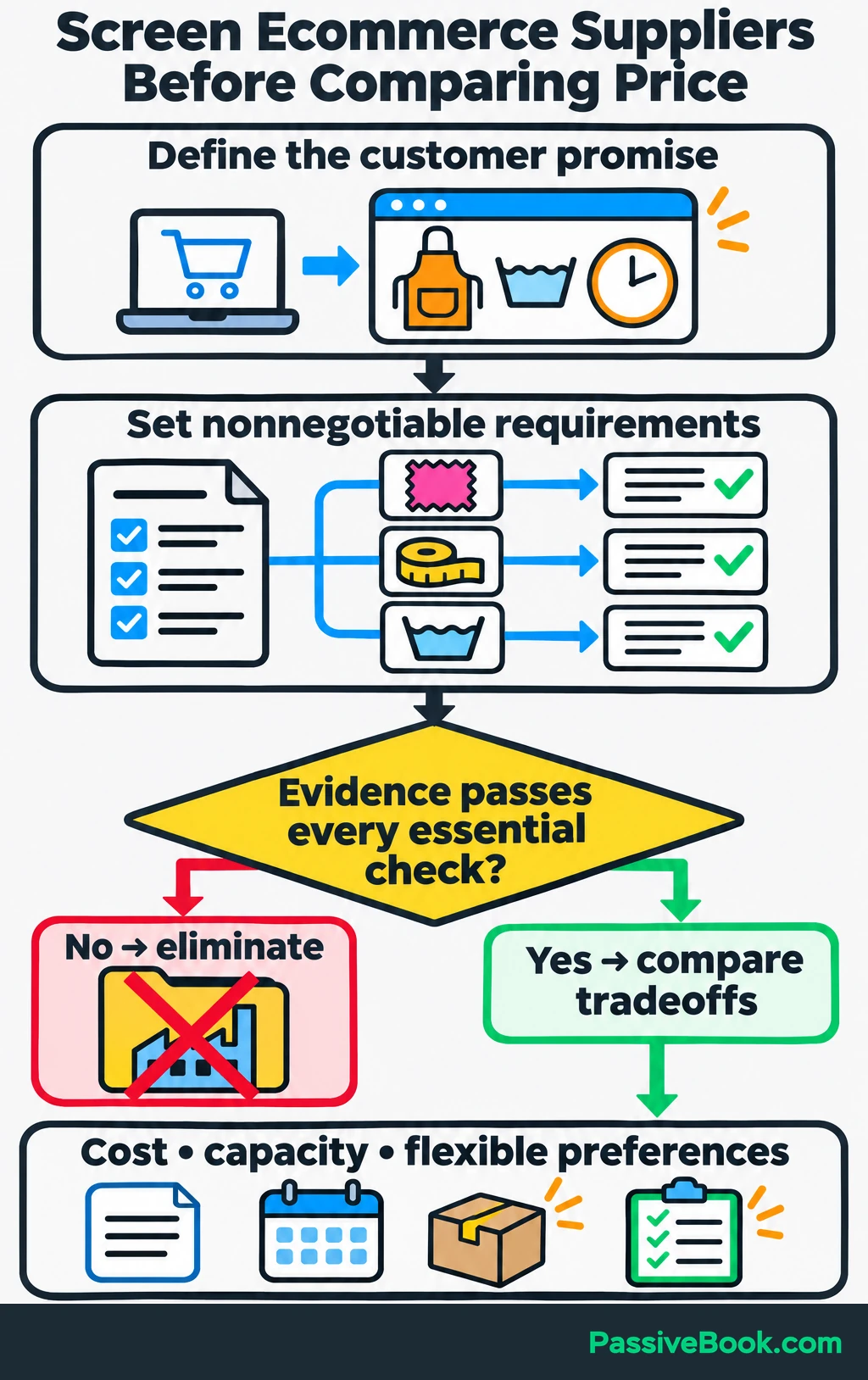
Separate requirements that disqualify a vendor from preferences you can negotiate. The correct fabric may be essential, while a particular carton size may be flexible.
Identify the safety, testing, and labeling requirements for your destination market before approving a supplier. For U.S. consumer products, certification requirements depend on the product and applicable rules; the CPSC’s retailer guidance distinguishes children’s products from covered non-children’s products. Don’t assume a supplier’s generic certificate covers your exact product.
Use a comparison sheet to keep the decision concrete:
| Criterion | Requirement or priority | Evidence to request | Result to record |
|---|---|---|---|
| Product quality | Meets approved specification | Sample measurements and wash-test results | Each passed check and any failed tolerance |
| Capacity | Can produce your quantity in the required period | Production plan and trial completion | Confirmed quantity, dates, and constraints |
| Delivery | Can meet the defined delivery window | References and trial delivery records | Promised date compared with actual receipt |
| Total cost | Fits your margin after inbound charges | Itemized quote | Estimated cost per sellable apron |
| Order and payment terms | Fits your available cash | Written minimum order, deposit, and balance terms | Cash required before stock becomes sellable |
A cheap quote cannot compensate for a failed nonnegotiable requirement. Eliminate that vendor before comparing the remaining tradeoffs.
Compare Total Cost and Cash Commitments
Send shortlisted vendors the same specifications, quantities, destination, and delivery responsibilities. Otherwise, you may be comparing a factory collection price with a warehouse delivery price.
Calculate landed cost by adding the costs of getting the goods to your agreed receiving point. Include product price, freight, insurance, duties, nonrecoverable taxes, and applicable inspection, clearance, and receiving charges. The International Trade Administration’s landed-cost guidance explains the main shipment-cost components.
Count each charge once, then divide by the number of units you expect to be sellable.
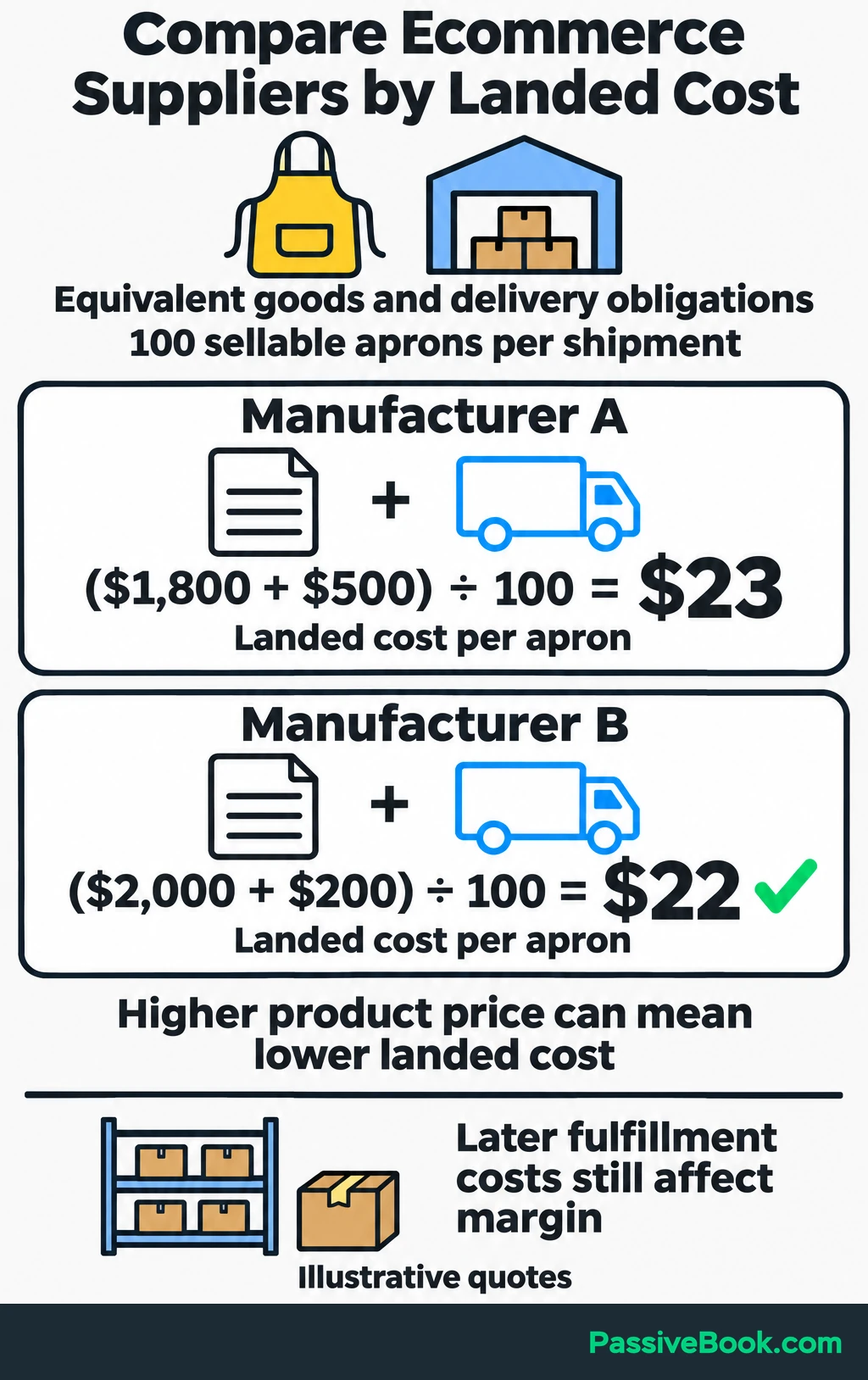
Suppose both quotes cover equivalent aprons and delivery obligations, and each shipment provides 100 sellable units:
| Quote | Product cost | All applicable inbound charges | Landed cost per apron |
|---|---|---|---|
| Manufacturer A | $1,800 | $500 | $23 |
| Manufacturer B | $2,000 | $200 | $22 |
Manufacturer B has the higher product price but the lower landed cost.
Keep later storage, pick-and-pack, customer shipping, returns, and minimum service charges visible separately. They still affect your margin even when they sit outside your landed-cost calculation.
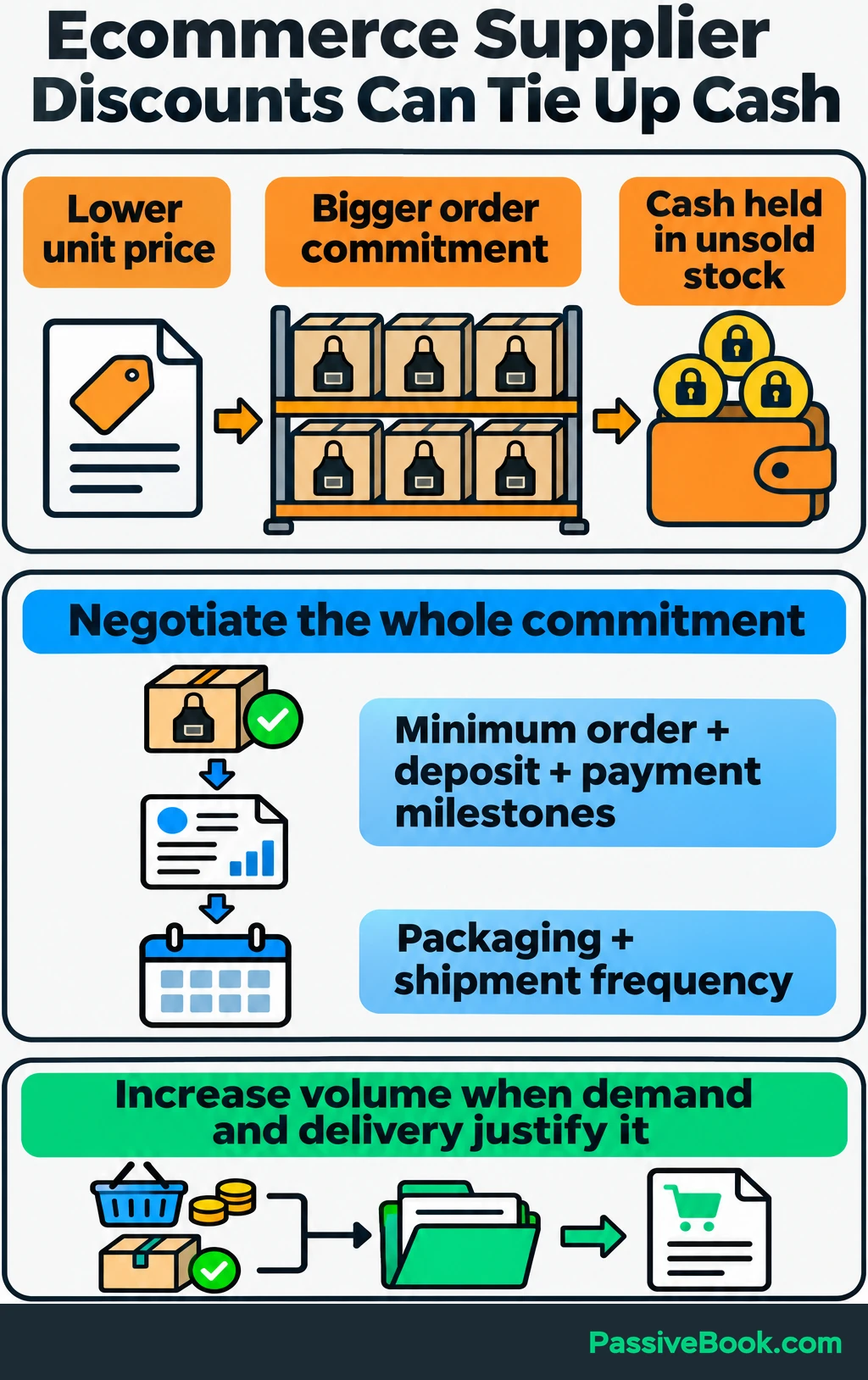
Then compare the cash commitment. Negotiate minimum orders, deposits, payment milestones, packaging, and shipment frequency together. A volume discount can leave you paying to store products you haven’t sold.
I invested about $1,200 in my online jewellery store and lost most of it because I hadn’t researched demand properly. Unsold inventory was the problem, and that was my buying decision. The lesson I carry into supplier negotiations is simple: a lower unit price doesn’t make an unproven purchase sensible.
I would choose a manageable first order over a bigger discount until demand and delivery performance justify more stock.
A bigger discount can still leave you short of cash. Use this workbook to compare the money due before stock is usable and the inventory you could have left under slower sales.

Free Supplier Purchase Planner




Verify Capability Before Committing Volume
Check that the business exists, confirm who you’re contracting with, and check trade references, as Business Victoria recommends. Ask about orders similar to yours: quantities, deadlines, quality problems, and how the supplier handled them. Use those checks to narrow the shortlist, then test the work itself.
Run a limited paid trial against your written requirements. Record:
- Whether the goods match the specification.
- Whether delivery meets the agreed obligation.
- How quickly the vendor reports problems.
- How shortages, defects, or disagreements are resolved.
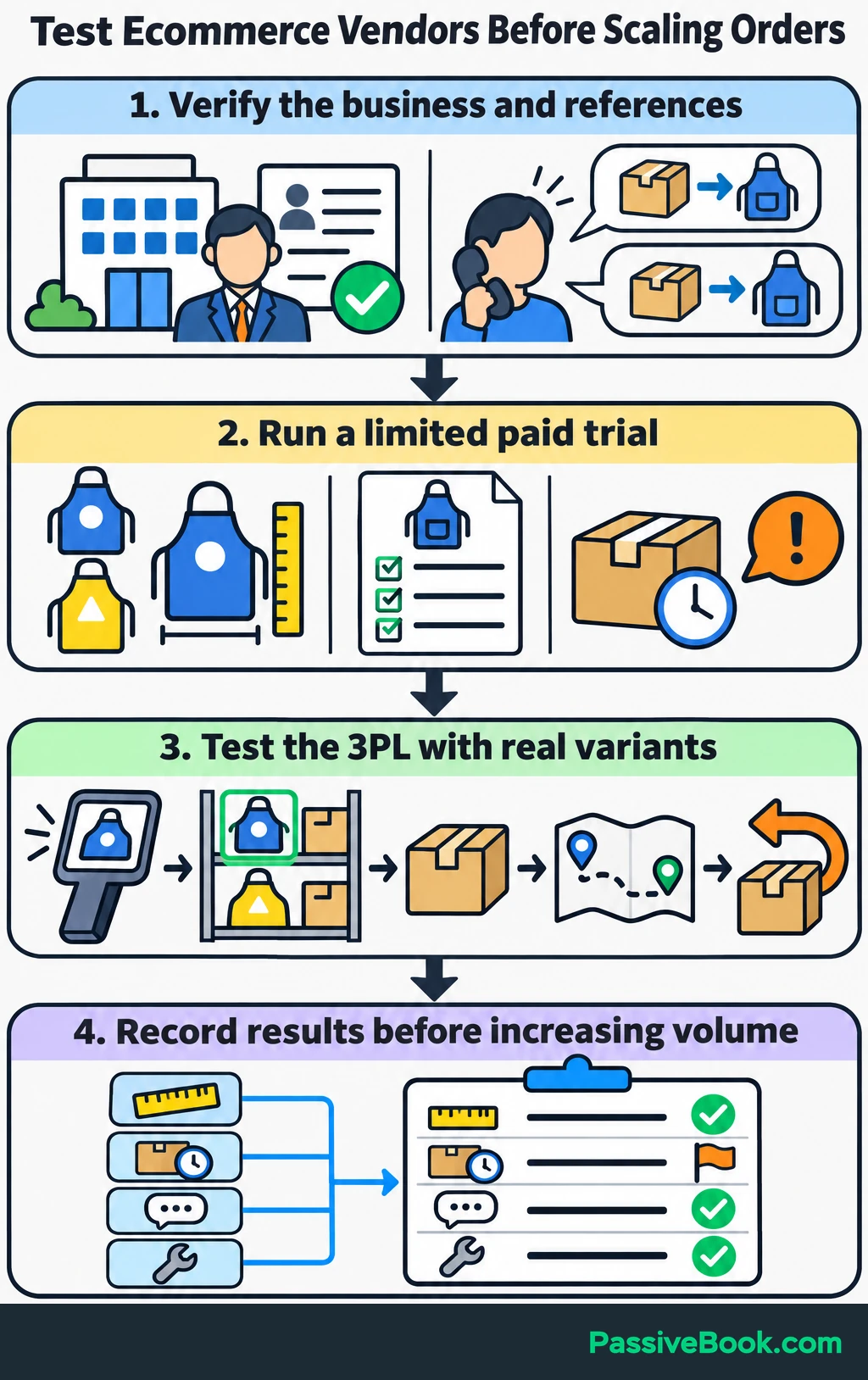
For the 3PL, use actual apron variants. Test receiving, identification, picking, packing, tracking updates, and a return. A warehouse tour won’t tell you whether two similar colors get mixed up during dispatch.
Add trial results and unresolved concerns to your comparison sheet. A successful sample earns the next stage of business; long-term reliability still needs monitoring.
Put Measurable Expectations in Writing
Define Service Levels and Acceptance Criteria
Attach the approved specification to the agreement and give it a version number. Reference that version on purchase orders so everyone knows which instructions apply.
Define what happens when goods arrive short, damaged, defective, or different from the approved product. Include how you report the problem, what evidence is needed, and who approves replacements, rework, credits, or rejection.
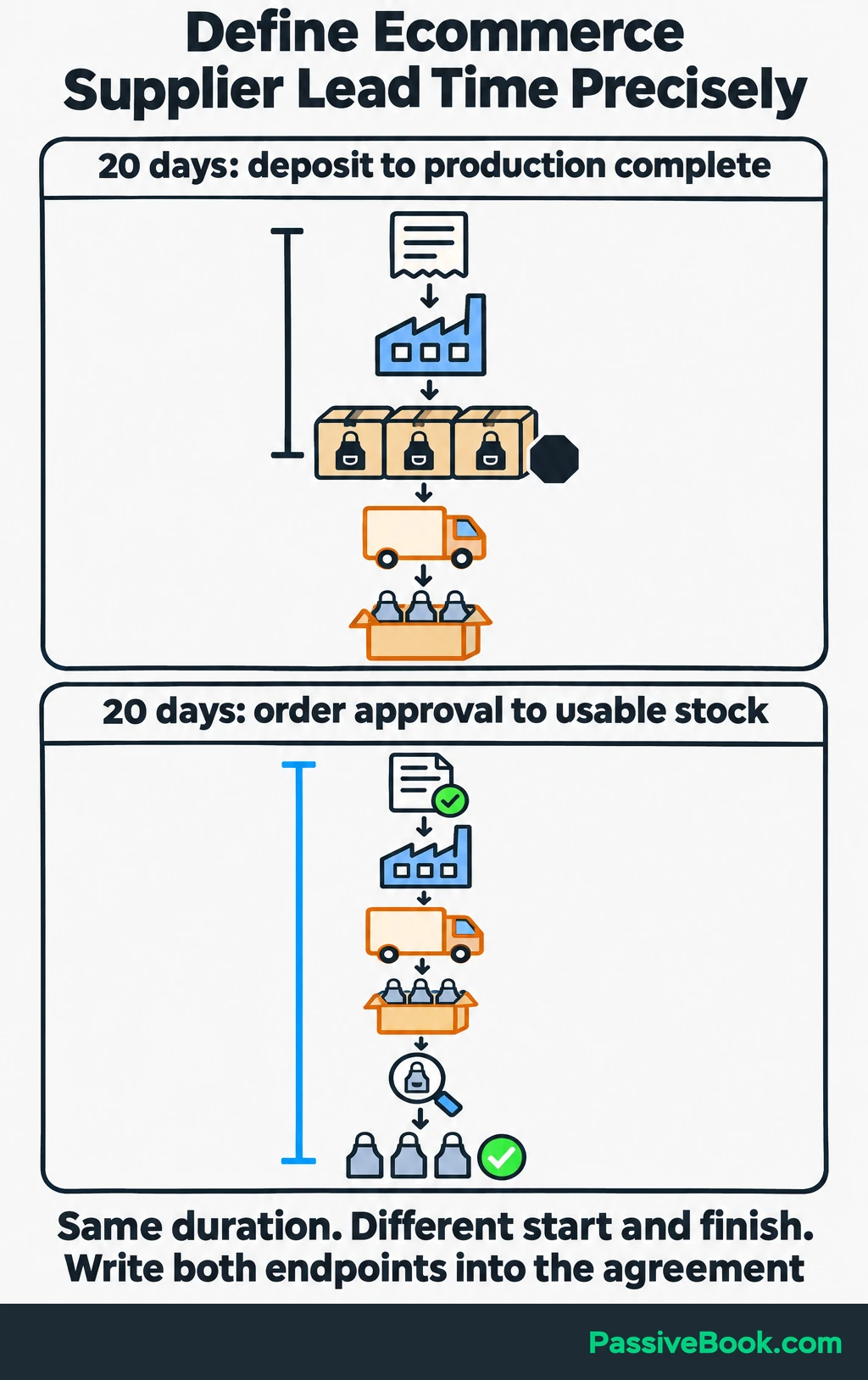
Lead time also needs a clear beginning and end. “Twenty days” could mean twenty days after deposit until production finishes, or twenty days after order approval until usable stock reaches the warehouse. Those are very different promises.
A service-level agreement, or SLA, turns expectations into measurable obligations. For the apron business, a compact version could look like this:
| Responsible vendor and obligation | Measurement rule and target | Evidence and review | Agreed response to a miss |
|---|---|---|---|
| Manufacturer: inbound delivery | Complete order received within the delivery window stated on the purchase order | Order acknowledgment and warehouse receipt; review each delivery | Confirm recovery plan and revised date within one business day |
| Manufacturer: product conformity | Goods meet specification APR-03 and the attached inspection rules | Inspection record, measurements, and photos; review each batch | Isolate affected goods and arrange the agreed replacement, rework, or credit |
| 3PL: on-time dispatch | At least 98% of eligible orders handed to the carrier by the agreed deadline | Carrier handover records; review monthly | Investigate misses and apply the agreed corrective action or service credit |
These targets and responses are starting points for negotiation. Set yours from customer commitments and demonstrated vendor capability.
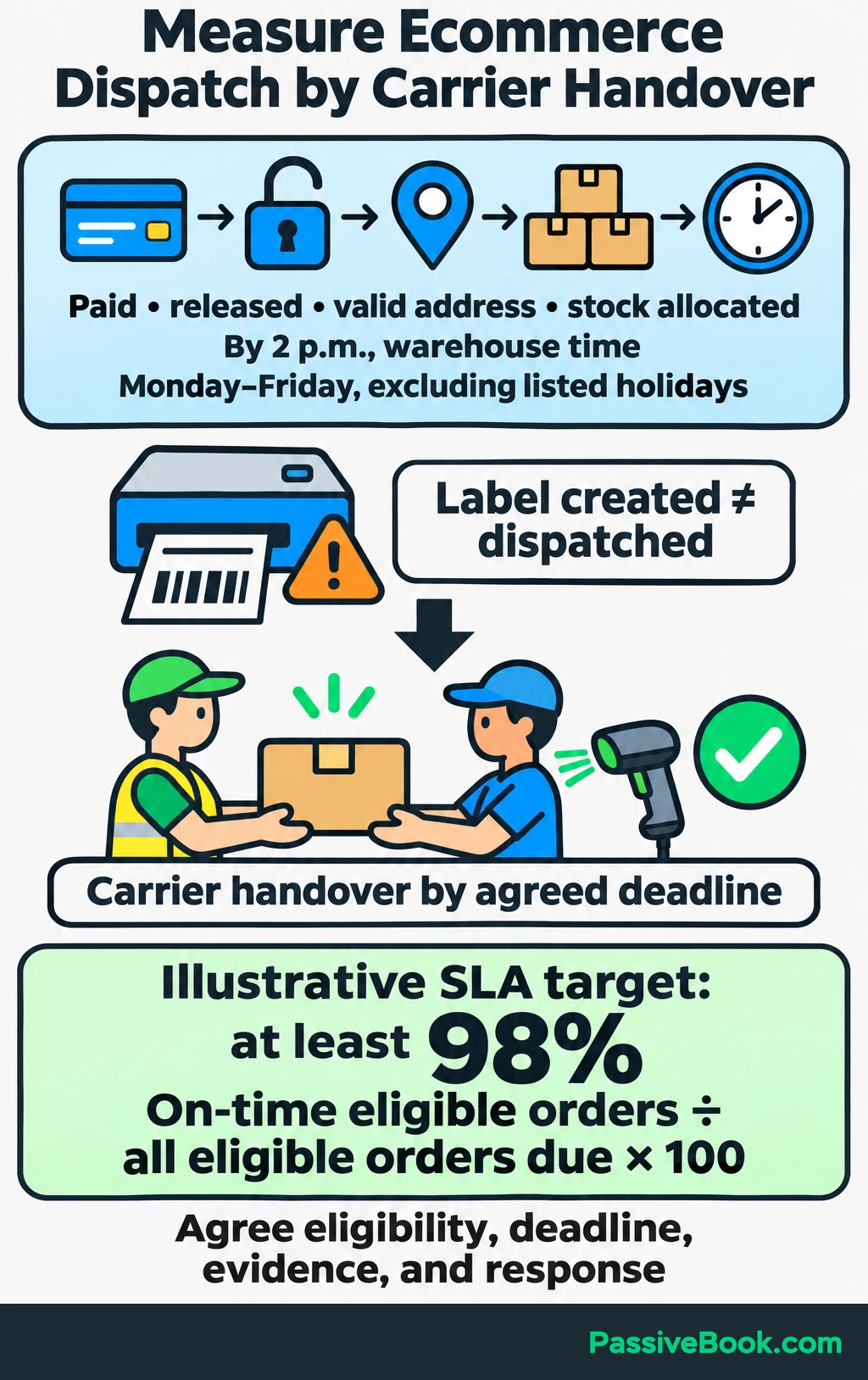
For dispatch, spell out eligibility. For example:
Eligible orders are paid, released without holds, correctly addressed, and allocated to available stock by 2 p.m. in the warehouse’s time zone, Monday through Friday, excluding listed holidays.
Then define the dispatch deadline and acceptable handover evidence. Creating a shipping label should not count as giving the parcel to the carrier.
You can use the AI Supplier Correspondence Studio to turn your own requirements into a draft service schedule and covering email. It helps spell out the handoffs and exceptions that are easy to leave implied.

Free AI Supplier Correspondence Studio
Agree Payment, Change, and Exit Terms
Your agreement should cover the commercial decisions that become awkward when left unanswered:
- Prices, extra fees, and notice before price changes.
- Deposits, balance payments, and the evidence required at each milestone.
- Warranty, replacement, refund, and credit obligations.
- Written approval for material, specification, price, or delivery changes.
- Correction periods, escalation, termination, and renewal deadlines.
- Transfer of inventory, open orders, returns, files, tooling, and records when the relationship ends.
For cross-border orders, state the chosen Incoterms rule, named place, and edition. Incoterms allocate delivery responsibilities and risk, but ownership, payment, and dispute terms need separate treatment. ICC Academy’s explanation makes that distinction clear.
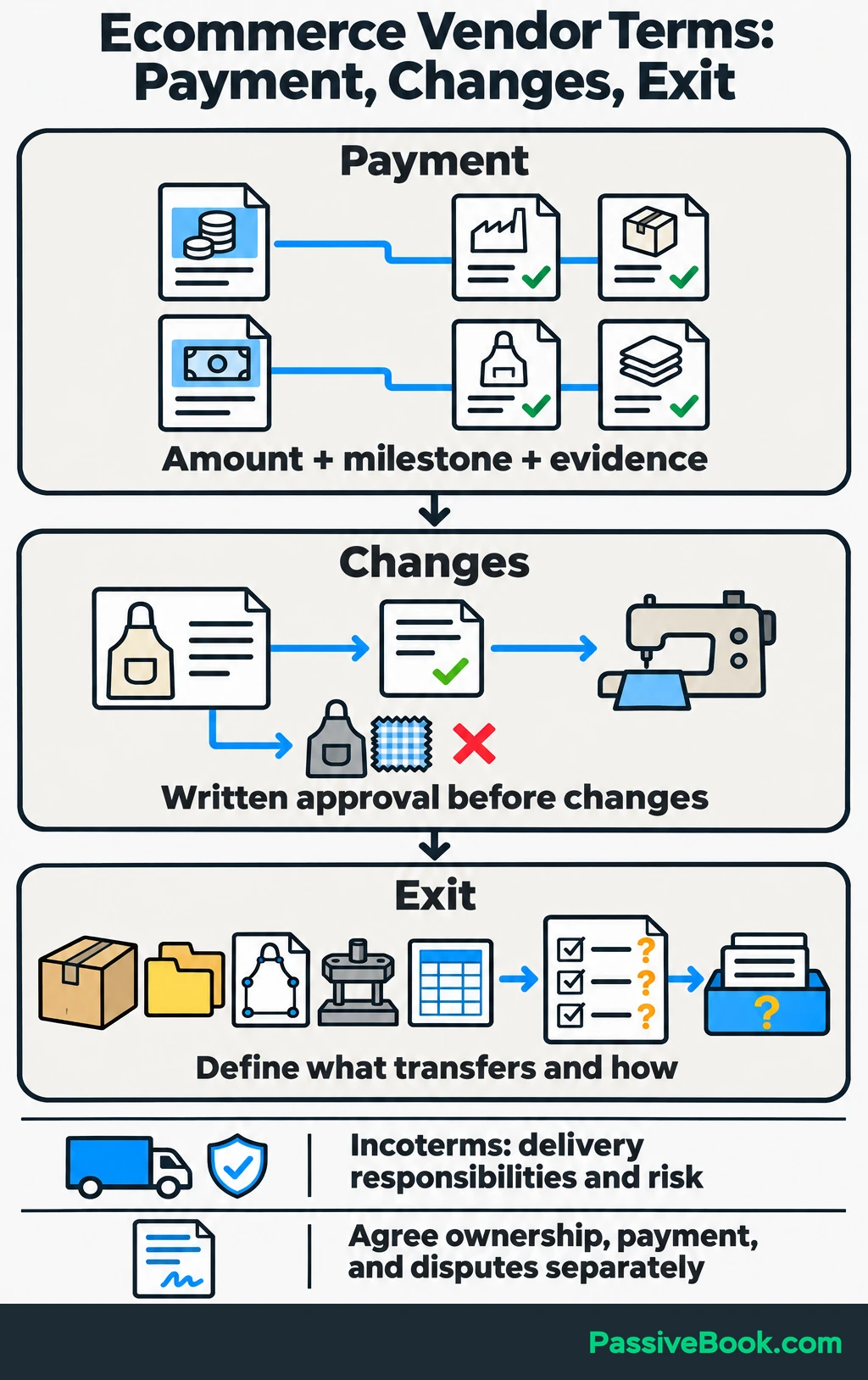
I learned to care about handover details during my print-on-demand experiment. I accepted a finished design without checking that the editable file was included. A small change meant reopening the job and waiting for another handoff. Since then, I check what I receive when the work ends, while everyone is still keen to start.
For aprons, that might mean access to approved patterns, artwork, and packaging files. For the 3PL, it means knowing how stock and operational records leave the warehouse.
Have proposed remedies reviewed under the law governing the agreement before relying on them.
Onboard Vendors Through a Controlled First Order
A trial checks whether a vendor can do the work. Your first operational order checks whether the whole chain works together.
Give each size and color a unique stock-keeping unit, or SKU. For example, APR-NAV-M could identify the medium navy apron. Map the manufacturer’s identifiers and the 3PL’s identifiers to the same product record.
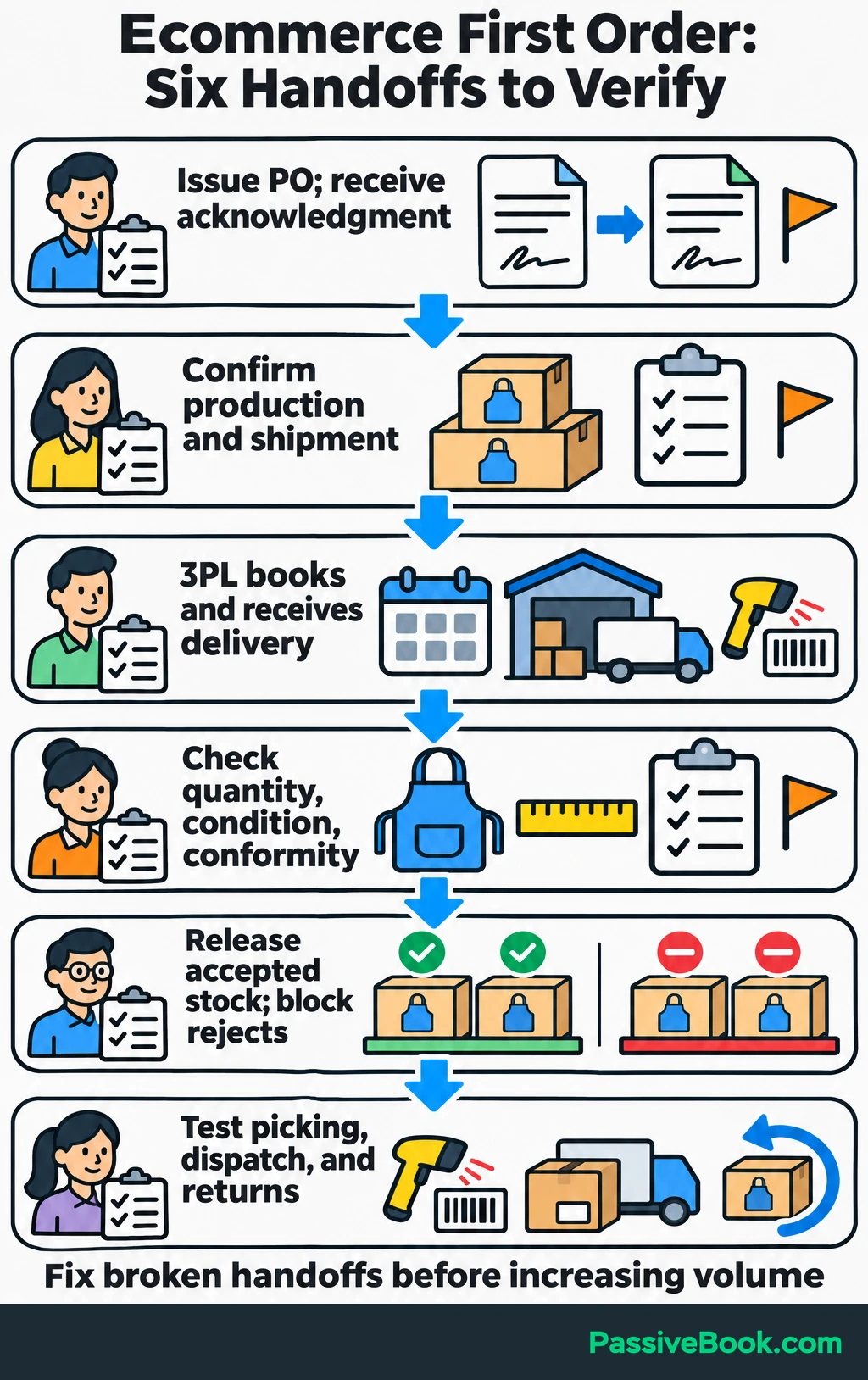
Before releasing the order, confirm specification versions, quantities, packaging, receiving addresses, and delivery-booking requirements.
Then follow the handoffs:
- You issue the purchase order and receive acknowledgment.
- The manufacturer confirms production and shipment details.
- The 3PL books and receives the delivery.
- The assigned person checks quantities, condition, and conformity.
- Accepted units become available inventory, while rejected units remain blocked.
- Customer orders move through picking, dispatch, and any returns.
Assign someone to resolve discrepancies at every stage. If the warehouse counts 96 aprons against an order for 100, that difference needs an owner and a record.
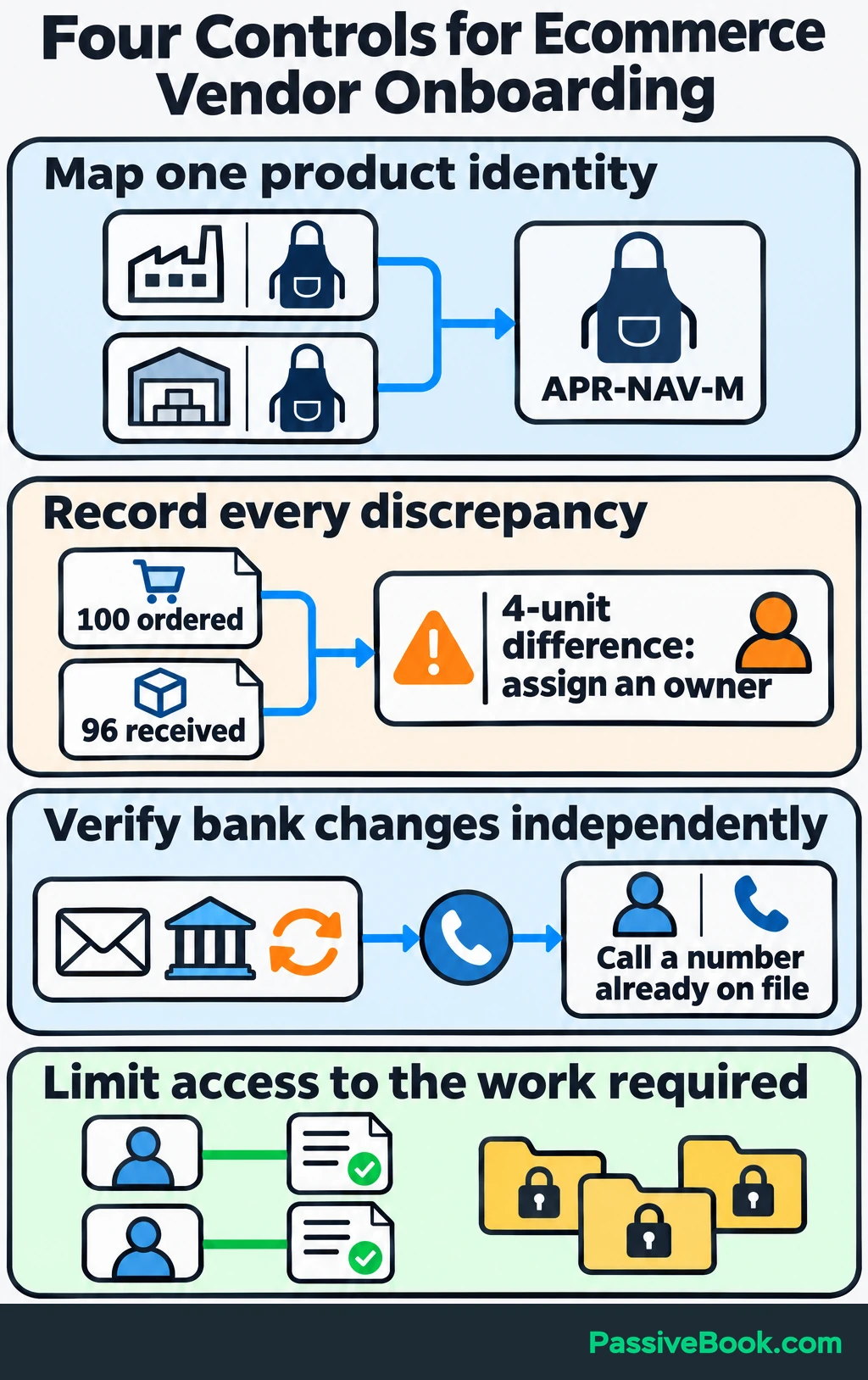
Establish the payment contact too. Before changing payment instructions, verify any bank-detail change by calling that contact on a number you already have. The FBI recommends secondary-channel verification for requests to change account information.
Give vendor staff individual accounts with only the access their work requires, and remove access when it ends. This follows the Canadian Centre for Cyber Security’s access-control guidance.
Keep the order, acknowledgment, receipt, inspection results, and decisions together. Fix broken handoffs before increasing volume.
Coordinate Replenishment Before Stock Runs Low
Measure replenishment lead time from placing the order to having usable stock. Include production, transport, customs clearance where relevant, receiving, and inspection.
Your manufacturer’s production time is only part of that wait.
Share expected demand and planned promotions with both the manufacturer and the 3PL. Mark forecasts as forecasts, and obtain separate confirmation for firm orders and capacity reservations.
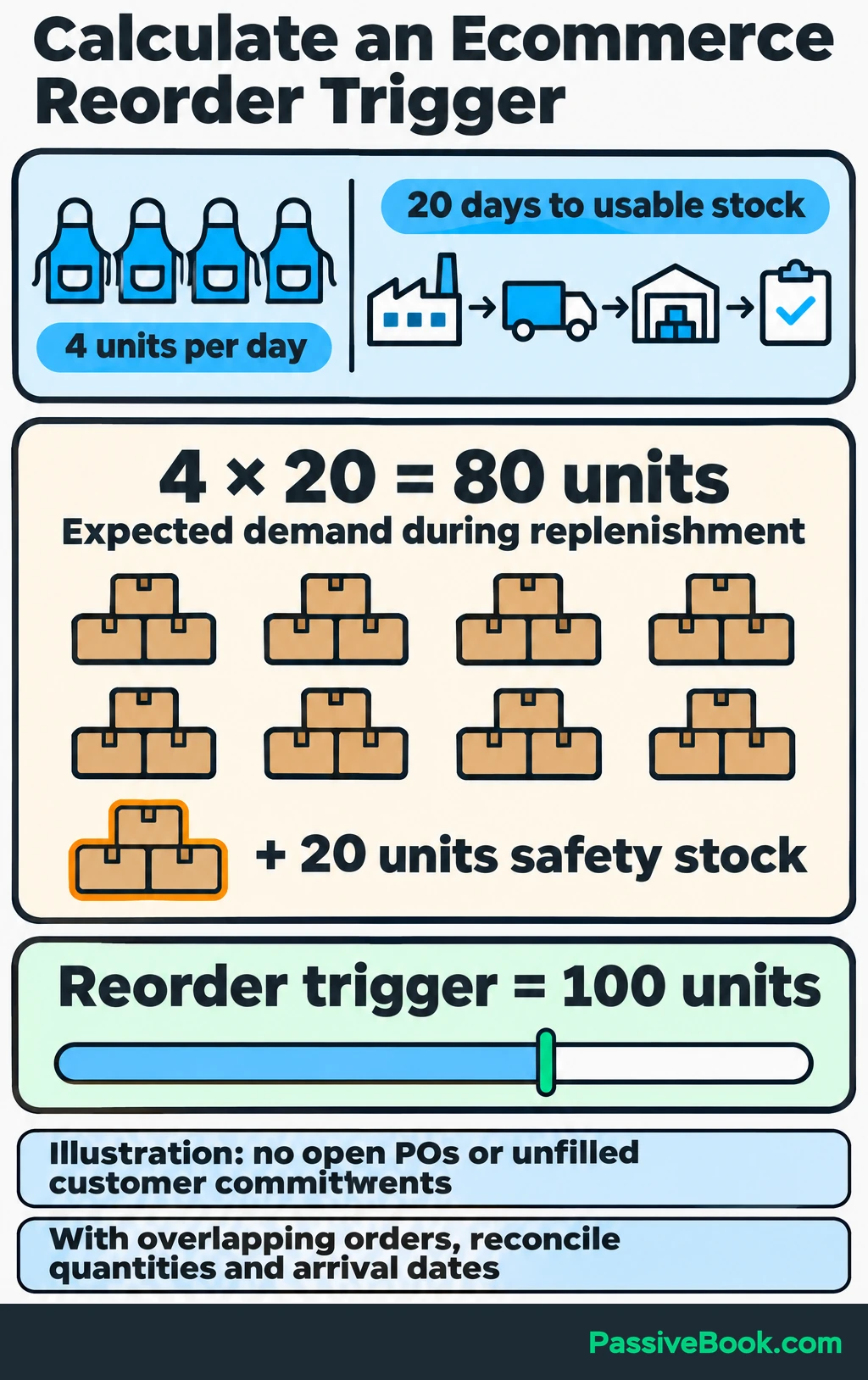
Set a reorder trigger that covers expected demand while replenishment is underway, plus safety stock for uncertainty. The Logistics Cluster’s inventory guidance explains this relationship between lead-time demand, safety stock, and reorder levels.
For one apron variant, suppose you expect four new sales per day and replenishment takes 20 days. That means you expect to sell 80 units while waiting. Adding an illustrative 20-unit safety allowance gives a reorder trigger of 100 units.
If you have no open purchase orders or unfilled customer commitments, that means ordering when usable stock reaches 100.
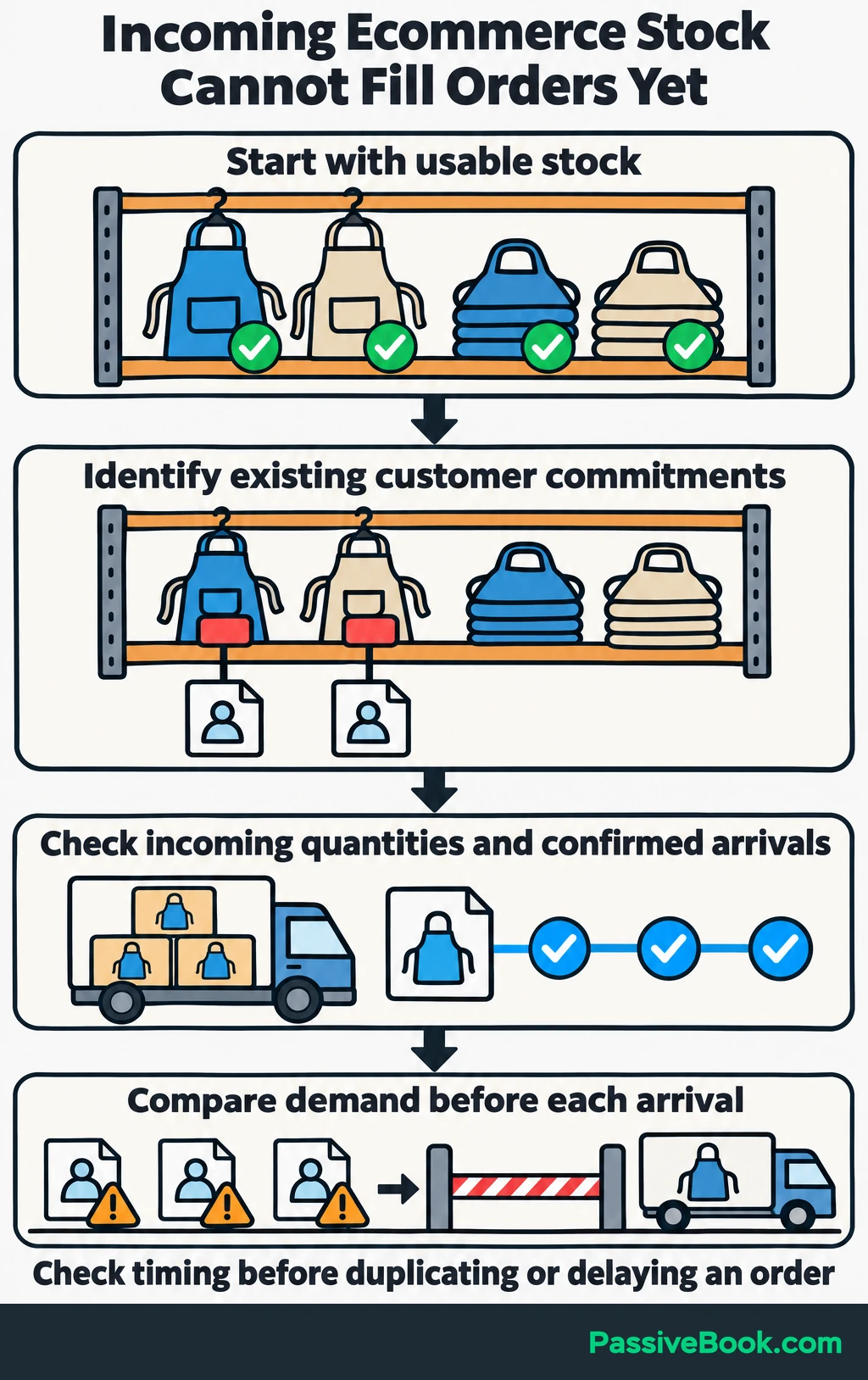
With overlapping orders, check more than the shelf count. Reconcile:
- Usable stock on hand.
- Stock already committed to customer orders.
- Outstanding purchase quantities and confirmed arrival dates.
- Expected demand before each arrival.
Incoming stock can prevent an unnecessary duplicate order, but it cannot serve customers before it arrives.
Keep confirmed dates, shipment milestones, receipts, and blockers in one tracker. Agree who reports delays, through which channel, and how soon after discovering them.
When supply changes, adjust purchasing, promotions, and customer-facing availability. Extra stock can buy time, but choose the buffer within your cash and storage limits.
Track Vendor KPIs That Lead to Action
Agree a few key performance indicators, or KPIs, and targets with each vendor. I would add a measure only when it changes a decision.
| KPI | What to measure |
|---|---|
| Manufacturer on-time, in-full delivery | Orders due in the period received complete within the agreed window, divided by all orders due in that period |
| Incoming defect rate | Defective units among those inspected in the period, divided by all units inspected in that period |
| Replenishment lead time | Time from placing the order until stock is accepted and available |
| 3PL on-time dispatch | Of eligible orders due for dispatch in the period, those handed to the carrier by deadline divided by all orders in that group |
| Order accuracy | Correctly fulfilled orders from the period, divided by all orders fulfilled in that period |
| Actual cost | Landed cost per sellable unit and fulfillment charges compared with agreed rates |
Multiply the delivery, defect, dispatch, and accuracy ratios by 100 to express them as percentages.
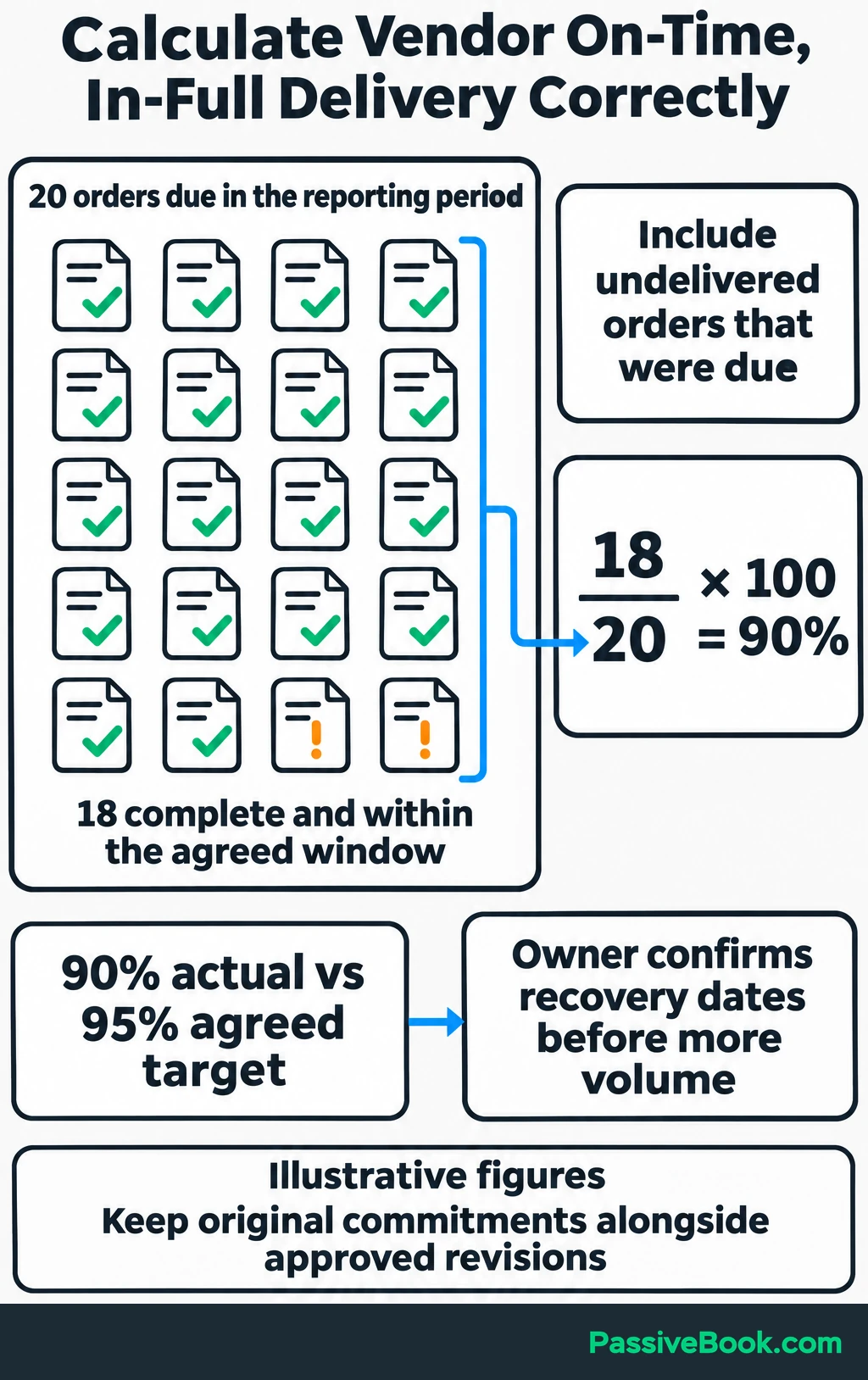
Count all supplier orders due in the reporting period, including undelivered orders. If 20 apron orders were due and 18 arrived complete within their agreed windows:
18 ÷ 20 × 100 = 90% on-time, in-full delivery.
Keep original commitments alongside approved revisions so rescheduling doesn’t erase the history.
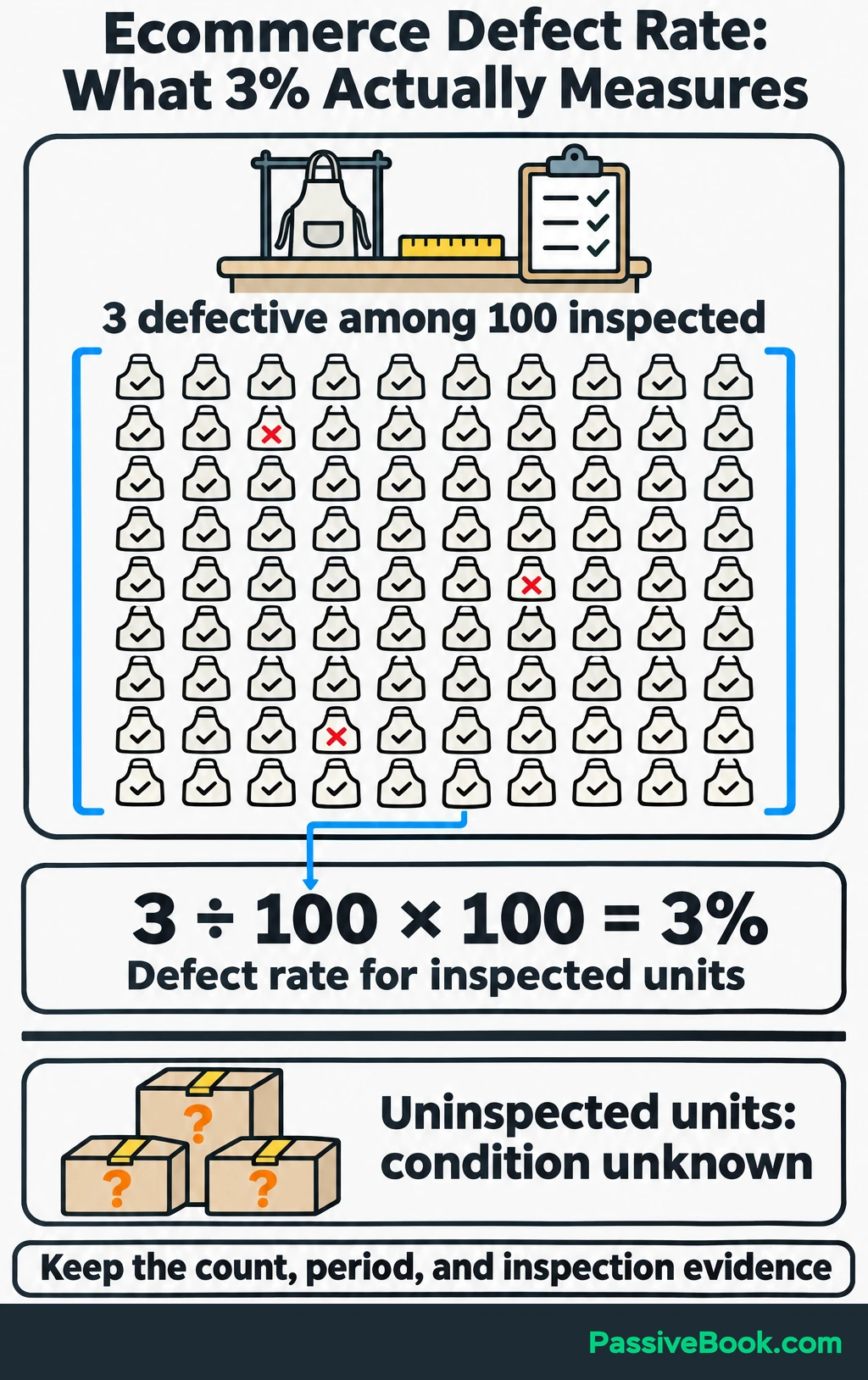
Three defective aprons among 100 inspected gives a 3% defect rate for those inspected units. It says nothing about units you haven’t inspected.
Keep counts, targets, reporting periods, and supporting records in a shared scorecard. Name an owner and action for each miss:
Manufacturer delivery: 90% against the agreed 95% target. Store owner to confirm recovery dates for any outstanding quantities and review the next production booking before approving more volume.
Check vendor reports against purchase orders, receipts, inspections, carrier handovers, invoices, and complaints.
Turn Performance Reviews Into Corrective Action
Check open orders often enough to intervene before customer promises fail. I would start with a weekly exception review and a monthly scorecard review for active, critical vendors, then adjust the rhythm to order volume and risk.
Urgent failures need immediate escalation. They should never wait for a meeting invitation.
Record each issue with its order or batch, evidence, customer impact, and immediate action to limit harm. Add the lasting fix, owner, deadline, and result of the follow-up check.
For repeated apron-variant errors, first establish where the mix-up happens. The manufacturer may have labeled cartons incorrectly, the warehouse may have stored variants together, or your own product mapping may be wrong.
Check your contribution too. Incomplete instructions, late changes, and delayed payments belong in the diagnosis.
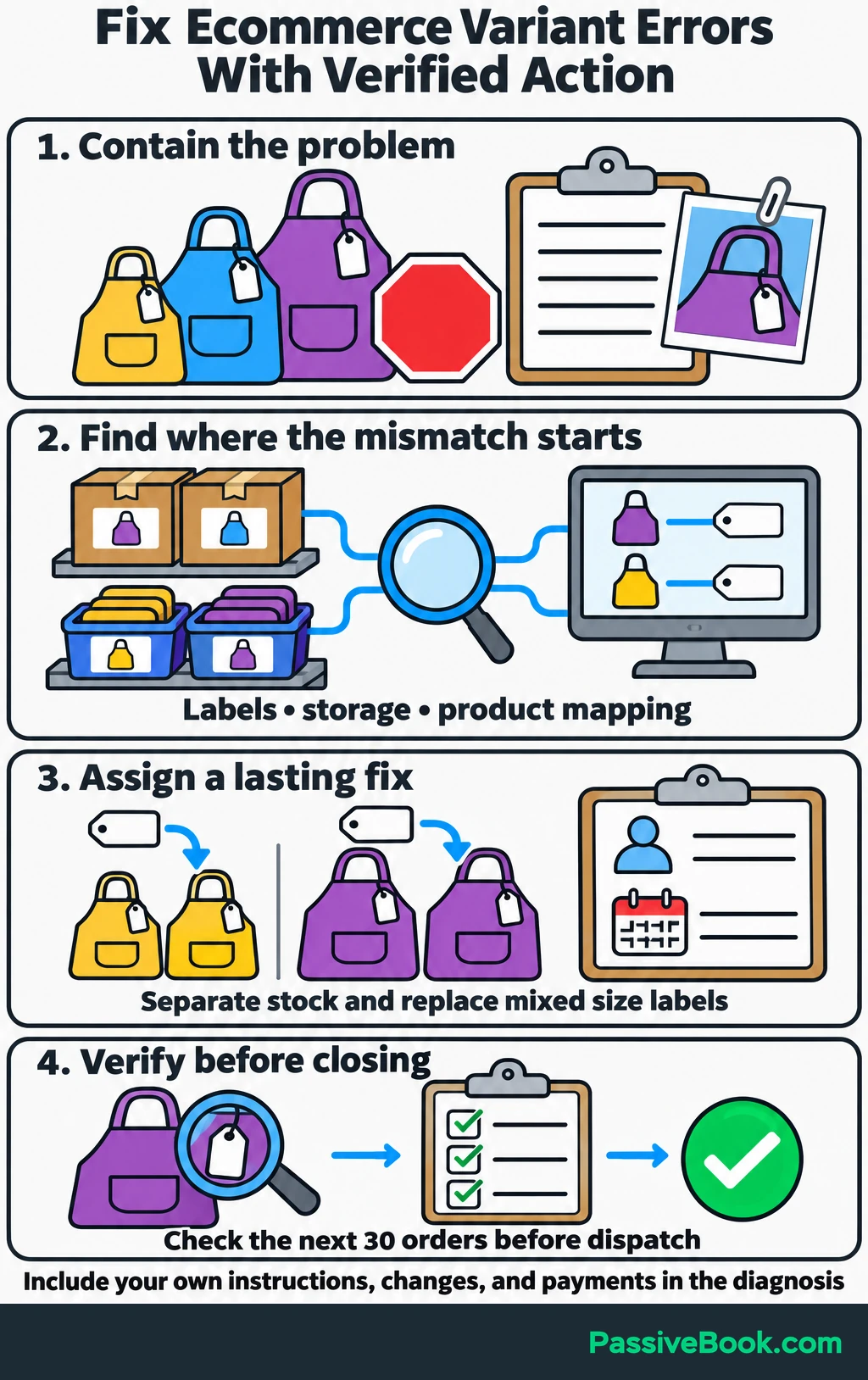
Then agree a correction you can verify:
Separate the affected stock and replace the mixed size labels. Physically check the items and labels in the next 30 orders before dispatch, and record the results before closing the issue.
“Please be more careful” is an expression of hope. It needs a better job description.
Use the same review to catch cost problems. For goods invoices, compare the purchase order, receiving record, and invoice before approving the relevant payment. Microsoft’s three-way-matching explanation describes this control. Handle deposits against their agreed contractual milestones.
Check 3PL charges against the rate card, and keep credits open until they are applied.
Look for recurring causes of extra spending: urgent freight, repeated relabeling, unnecessary packaging, avoidable handling, or rework. Fixing the cause may save more than negotiating a smaller unit price.
If problems remain unresolved, escalate from the operational contact to management, then use the agreed remedies or reduce purchasing. At renewal, assess reliability, total cost, capacity, and completed improvements.
Prepare a Workable Vendor Contingency
Start with one practical question: how long could you keep selling if this vendor stopped working tomorrow?
Assess manufacturing and fulfillment separately. A second apron manufacturer won’t dispatch stock trapped in an unavailable warehouse.
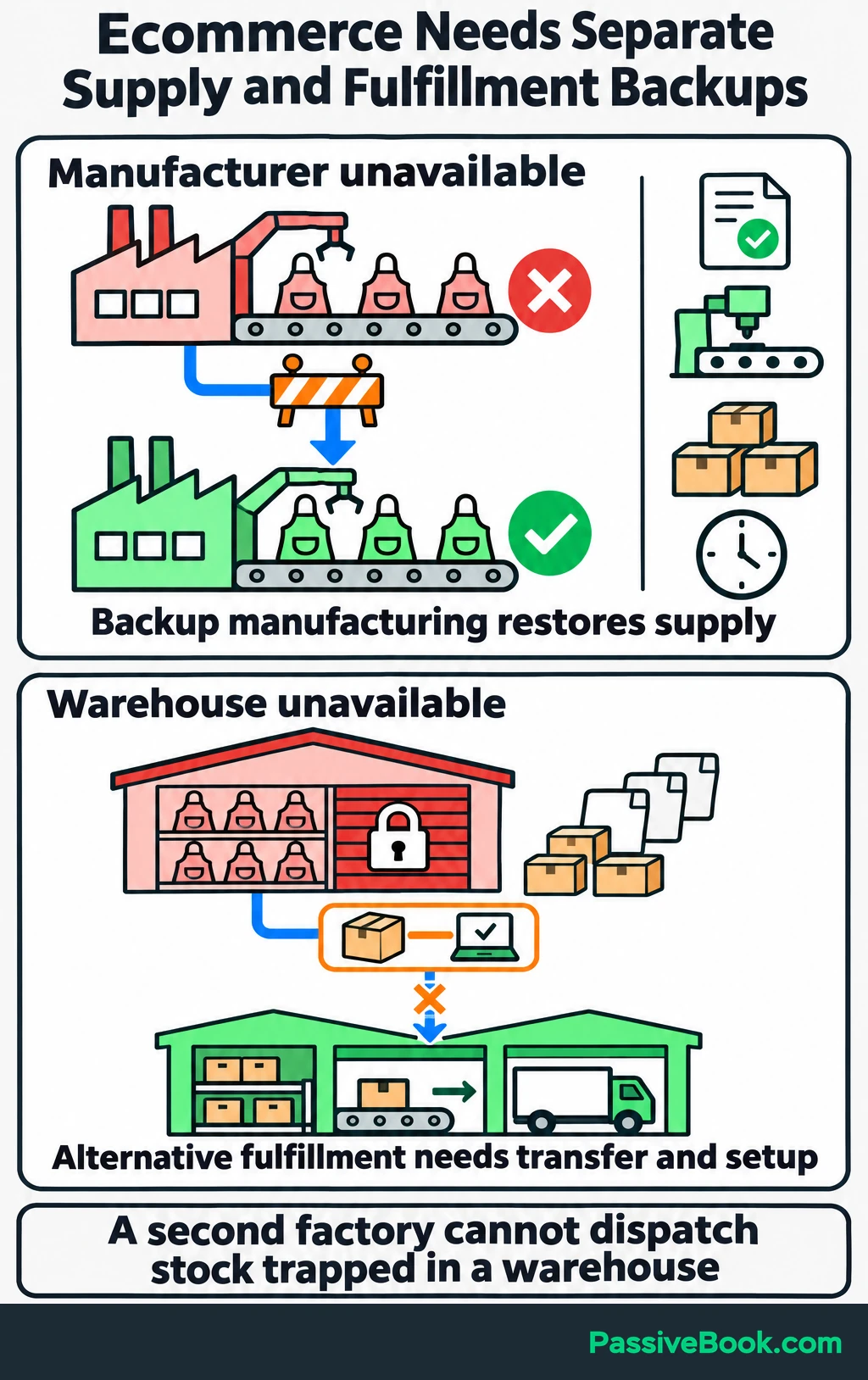
Qualify backups against the same specifications and trial process. Record their capacity, minimum order, activation lead time, integration needs, and switching cost. Check whether they share a factory, warehouse, or transport dependency with your main vendor.
Choose safeguards according to the interruption:
| Safeguard | What it provides | Commitment to consider |
|---|---|---|
| Additional usable stock | Time to recover from a supply delay | Cash, storage, and unsold-inventory exposure |
| Qualified backup manufacturer | Another source of conforming aprons | Qualification work, minimum order, and production wait |
| Split sourcing | Active purchasing with more than one manufacturer | Smaller discounts and more coordination |
| Prepared alternative fulfillment | Another way to receive and dispatch orders | Stock transfer, integration, setup, and testing |
A backup contact is useful only if you know what activating it involves.
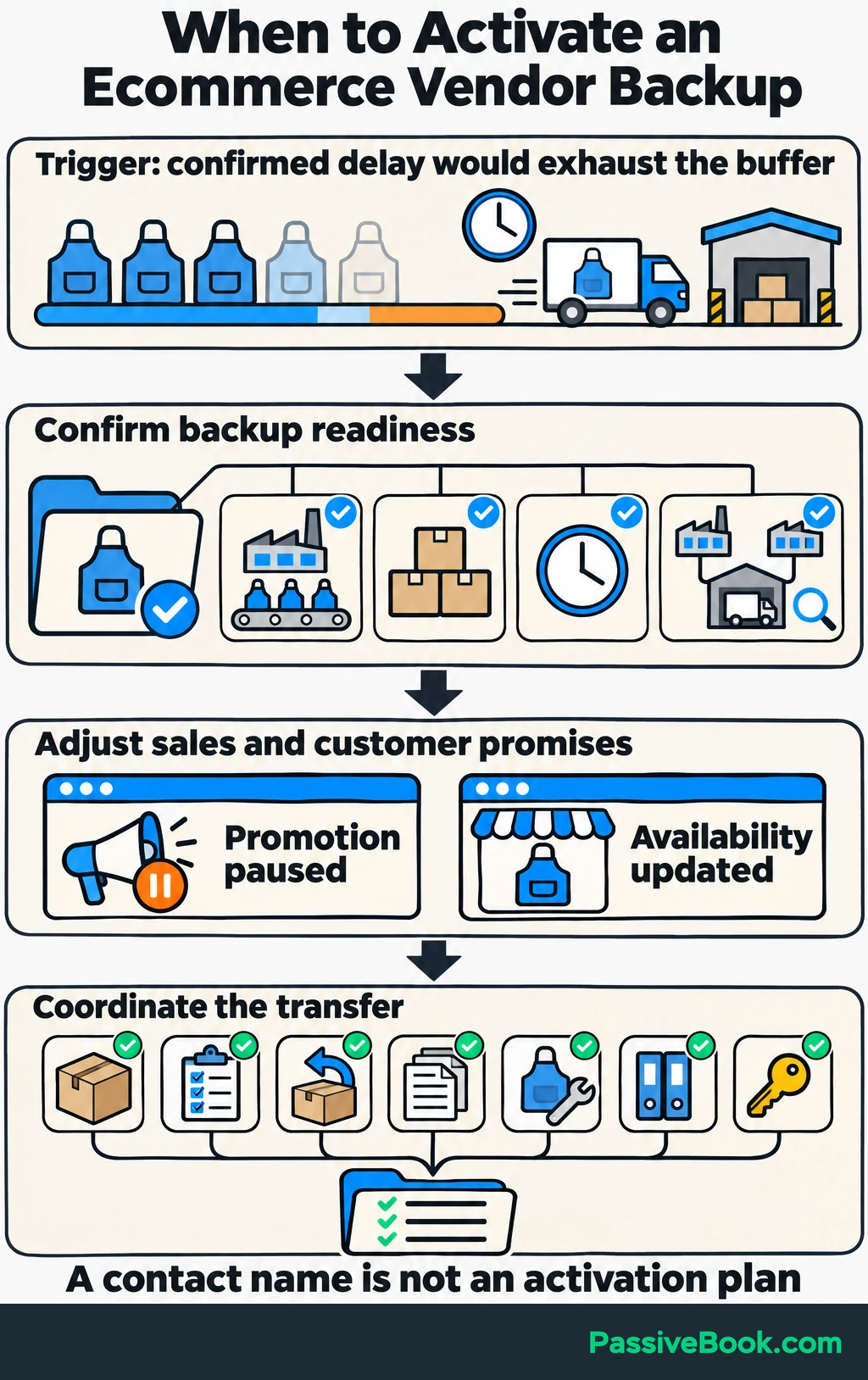
Define triggers before you need them. If a confirmed production delay would exhaust the apron buffer, for example, check backup capacity, pause the promotion, and revise availability.
Plan how open orders, inventory, returns, product files, tooling, records, and access will transfer. Keep immediate customer responses in the plan too, including revised delivery estimates or sales limits.
I would start with the single failure that would be hardest to recover from. One usable contingency beats a folder of supplier names nobody has tested.
Automate Routine Vendor Work With Proportionate Tools
Start with a maintained vendor register, shared documents, purchase-order tracker, scorecard, issue log, and accounting records. A spreadsheet can handle much of this while order volume is manageable.
Give each order and product one authoritative record. Multiple tools can use that record, but they should not each maintain a different answer.
Let recurring problems determine what you buy:
| Recurring problem | Required capability | Tool category | Upgrade trigger |
|---|---|---|---|
| Stock figures disagree | Track usable, committed, and incoming stock | Inventory management | Repeated reconciliation or overselling |
| Orders lack approval or acknowledgment | Track purchase orders, approvals, and changes | Purchasing | Missed approvals or unclear commitments |
| Invoice discrepancies take too long | Match charges, payments, and credits | Accounting | Payment reviews and unresolved credits consume growing time |
| Updates are copied between systems | Connect records and send rule-based alerts | Workflow automation | Repeated entry and missed updates |
| Decisions disappear in email | Keep specifications, procedures, and issue history together | Shared documents or knowledge base | People cannot find the current instruction |
Compare the full cost of an upgrade: subscription, setup, integration, training, and maintenance. An expensive platform still needs someone to keep its records accurate.
For connecting existing tools, I would choose Make when straightforward visual setup is the priority. It lets you connect apps and build workflows without writing code.
I use n8n across my businesses and would choose it for more involved conditional workflows or when self-hosting serves a clear purpose. Self-hosting also means taking responsibility for maintenance.
Once the records are reliable, automate reminders for missing acknowledgments, approaching deliveries, overdue corrective actions, and renewal deadlines. Update scorecards automatically where the source data supports the agreed definitions.
For the apron store, a useful first workflow is:
- Check open purchase orders each morning.
- Identify orders approaching receipt without confirmed shipment details.
- Create one task for the relationship owner with the order, missing information, and response deadline.
- Escalate if the task remains unresolved.
Route failed automations to a named person too. Keep approval rules for purchase commitments, bank changes, and disputed payments.
Before adopting a platform, test one realistic order through a partial receipt, damaged-unit credit, and late-delivery escalation. Check permissions, data export, and how much manual repair the workflow needs.
You can let AI summarize issue notes or draft follow-ups, but use recorded dates and counts to calculate performance. A neat summary cannot supply a missing receipt.
What Next?
Create a vendor record for the relationship that would be hardest to replace, and write down its owner, next commitment, and evidence needed to confirm completion.
Use the social buttons to share this guide when clearer supplier expectations would help your team spend less time chasing orders.
Which vendor problem currently takes the most time to resolve? Tell me in the comments, and leave any other questions there too.
Share this post with your friends & followers:

