Someone searches a retailer’s app for the kind of product you sell, and a competitor’s sponsored listing appears beside the results. You can see the appeal: the shopper is already looking, and the product is one click away.
But paying for that position raises questions. Do your products qualify? Where does the click lead? And does a sales report show money earned or just revenue credited to an ad? This guide explains how retail media works, where its ads appear and what to check before putting a budget behind it.
What Is Retail Media Advertising?
Retail media advertising is paid advertising on retailer websites and apps, inside physical stores, or across other media using retailer shopper data. It can reach people while they shop or introduce products before their next shopping visit. These environments form the main categories in IAB Europe’s retail media definitions.
A retail media network, or RMN, is a retailer’s or marketplace’s advertising business. It brings together ad placements, targeting and reporting. Brands pay to reach relevant shoppers, and the retailer earns advertising revenue.
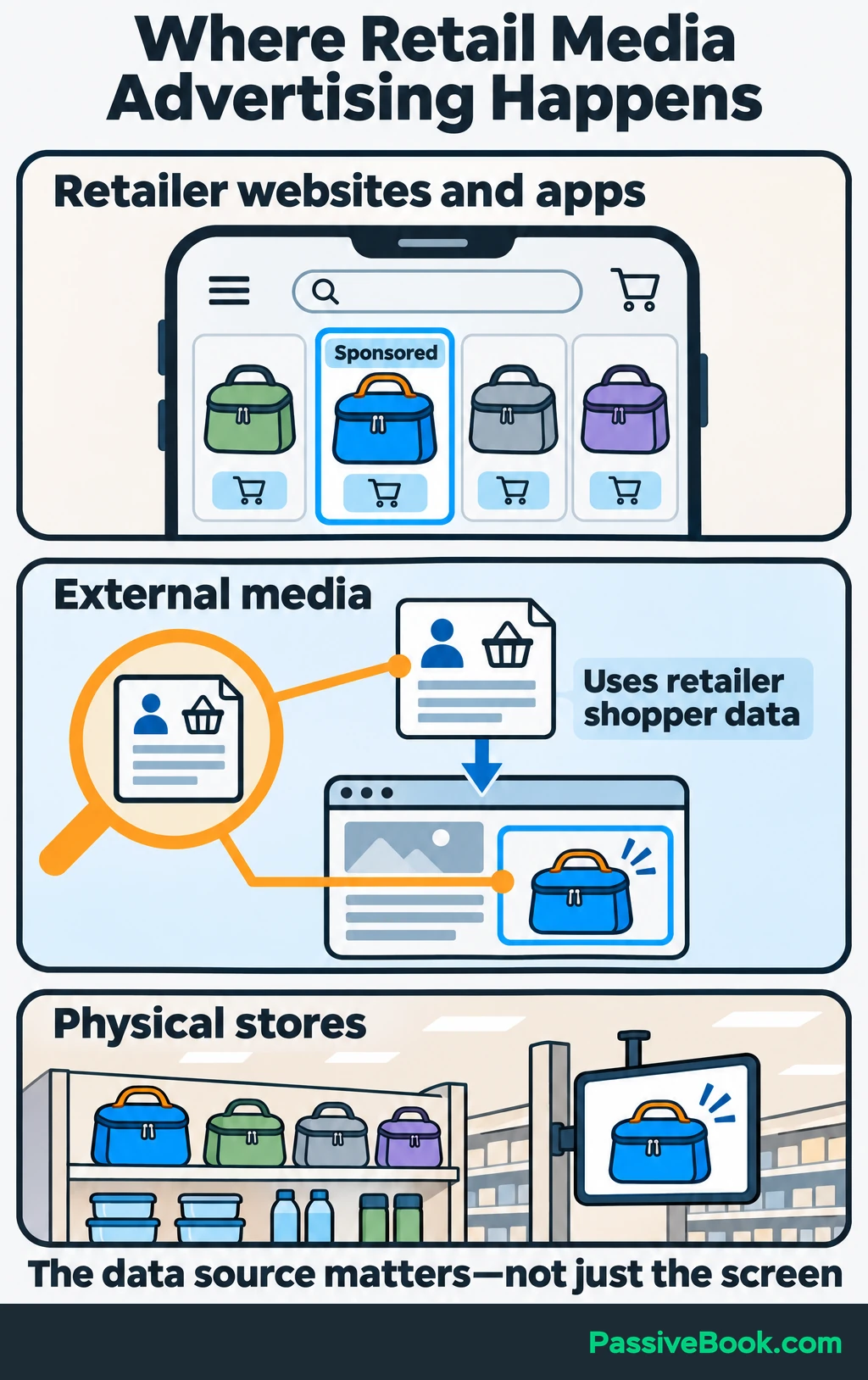
Imagine you sell insulated lunch bags through a retailer. A sponsored listing could show your bag when someone searches its app for “insulated lunch bag.” That shopper is comparing products your business can supply.
We’ll follow this imaginary lunch-bag business throughout the article. Its campaign and figures are illustrations.
Retail media can also extend beyond the store. Buying an ad directly through a social platform is ordinary social advertising. Using a retailer’s shopper audiences to reach people on that platform is offsite retail media.
How Does Retail Media Advertising Work?
The basic process is straightforward: choose what to promote, pay for an eligible placement and review what happened afterward. The details depend on the network and ad format.
The Advertiser Chooses What to Promote
Start with the result you want. Selling a particular product calls for different choices from introducing an unfamiliar brand.
You then select eligible products, targeting, placements and a budget. A sponsored product ad may use information from your existing listing, while a banner or video needs suitable images, text or footage.
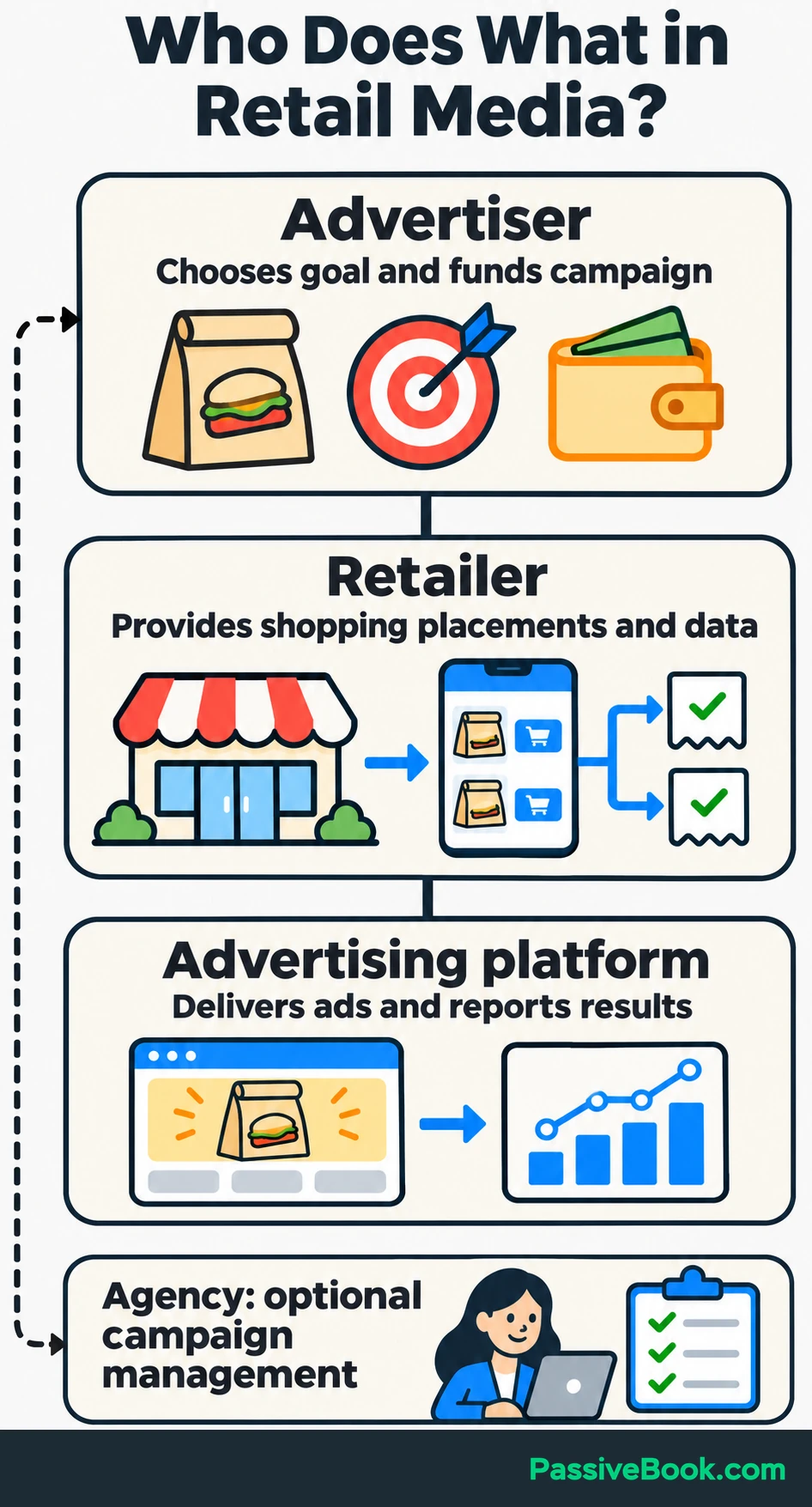
The roles usually break down like this:
- Advertiser: Funds the campaign and chooses its goal.
- Retailer: Supplies shopping placements and information about shopping activity.
- Advertising platform: Delivers the ads and reports results.
- Agency: Can manage the campaign if you hire one.
You’ll often hear about first-party shopper data. This means information collected directly through interactions with the retailer, such as searches, product views and purchases.
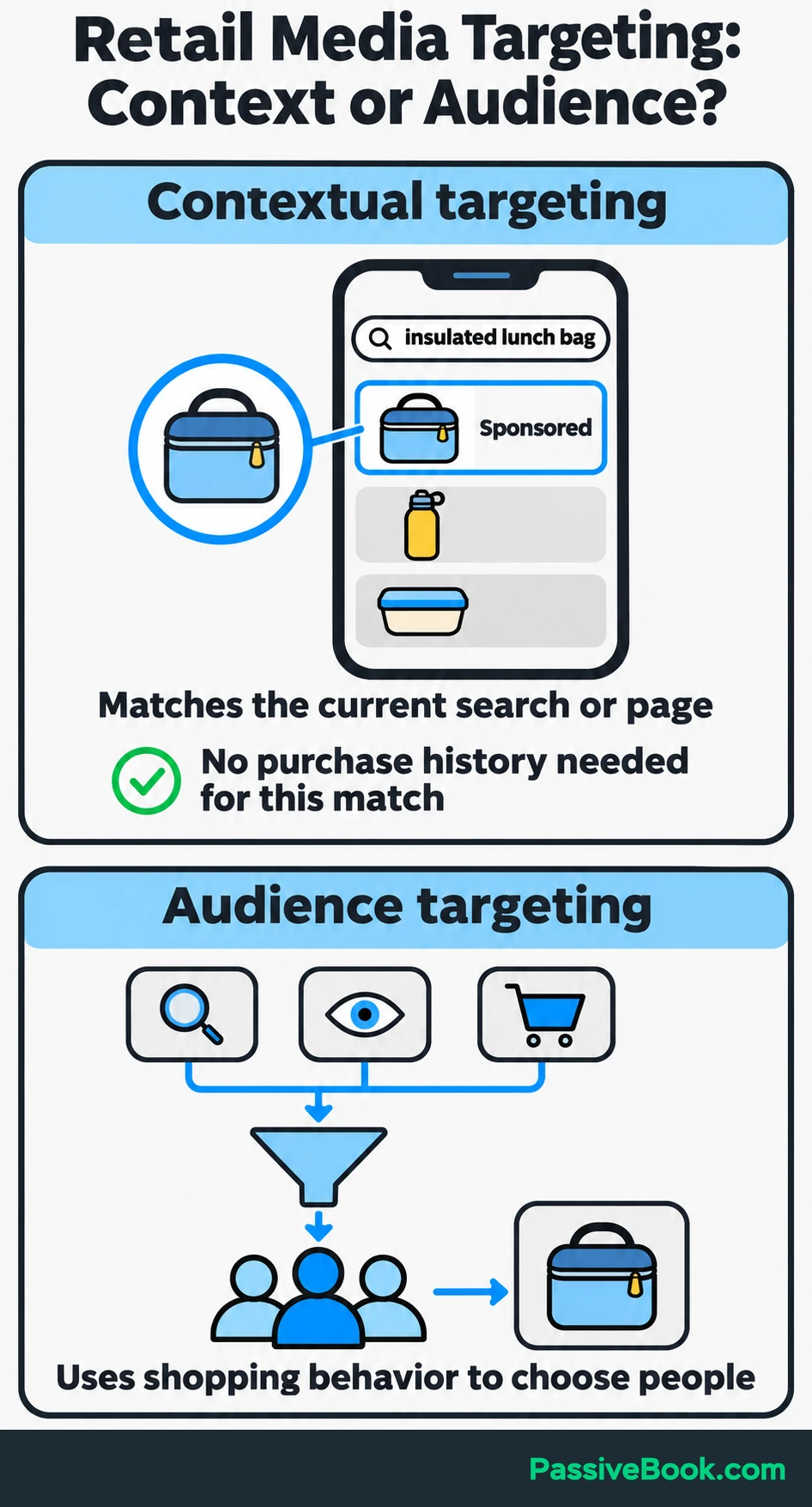
There are two useful targeting distinctions:
- Contextual targeting: Matches the ad to what someone is searching for or viewing now.
- Audience targeting: Uses shopping behavior to choose people to reach.
Your lunch bag could match a search for “insulated lunch bag” without needing the shopper’s purchase history. The current search already provides a useful clue.
The Platform Delivers the Ad
Many sponsored product placements use an auction. Your bid matters, but relevance can matter too. A bigger bid does not make an unrelated product a sensible search result.
Other placements use fixed or negotiated buying arrangements. Two common payment terms are:
- CPC, or cost per click: You pay when someone clicks.
- CPM, or cost per thousand impressions: You pay for every 1,000 recorded ad displays.
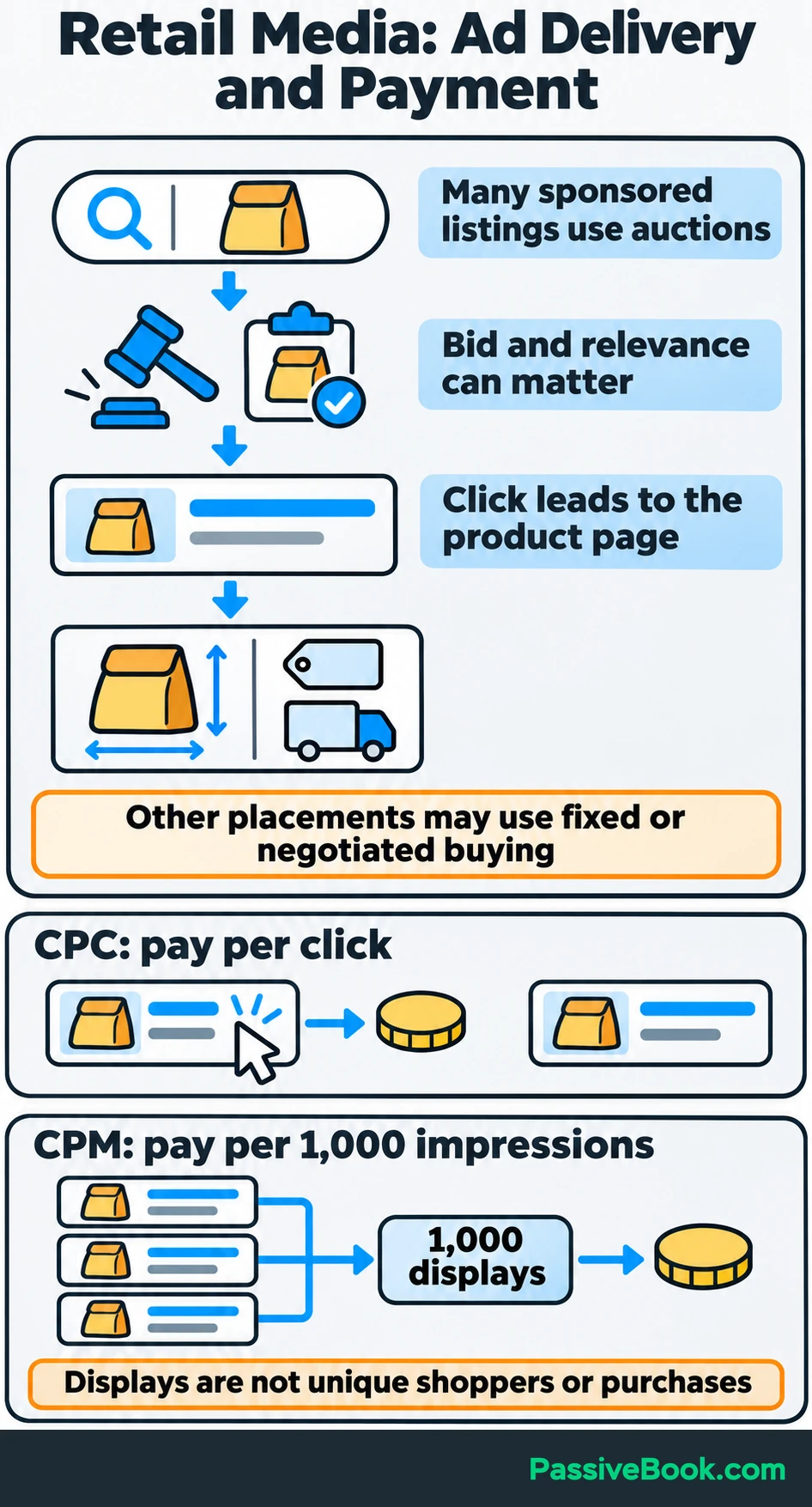
An impression counts a display of the ad, not a unique shopper or a purchase.
For the lunch-bag campaign, suppose you choose a sponsored listing charged per click. A shopper enters a relevant search, your ad appears and they click through to the retailer’s product page. There, they can check its size, insulation, price and delivery details before deciding whether to buy.
The ad gets the product considered. The offer still has to earn the order.
Sales Reporting Informs the Next Decision
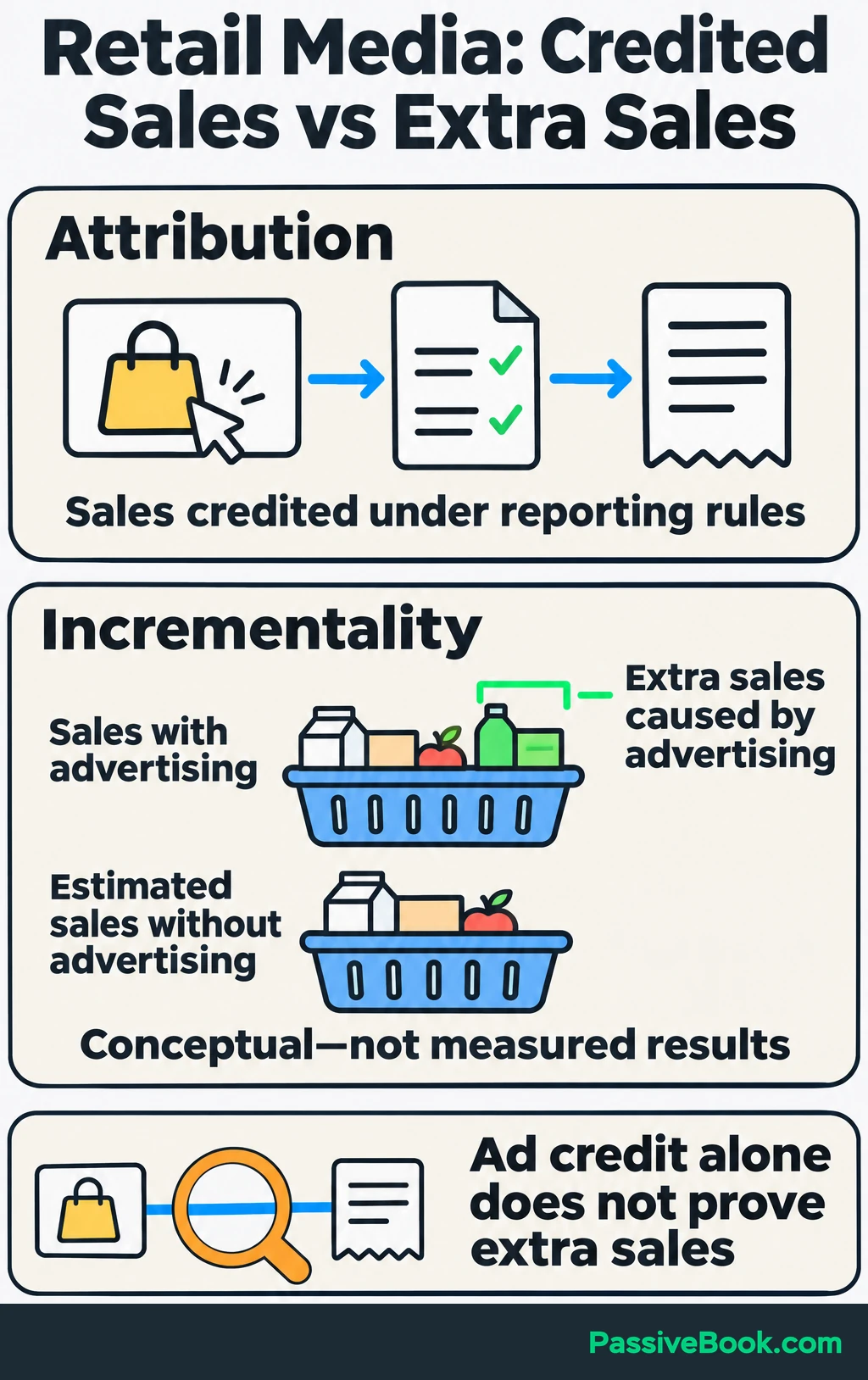
Retail media often offers closed-loop measurement, which connects recorded ad interactions with purchases. Sales credited to an ad under the network’s reporting rules are called attributed sales.
That connection is useful, but credited sales and additional sales are different things. A shopper might have bought your bag even without the ad. Incrementality measures the extra sales advertising caused beyond what would otherwise have happened. The IAB/MRC measurement guidelines cover both attribution and ways to measure that additional effect.
Review spending, clicks and attributed orders together. If a search term spends money without producing orders, investigate its relevance and the product page before raising the bid.
I would use the first campaign to answer a narrow question: can this product attract relevant shoppers at a cost its margin can support? A busy dashboard is not the answer.
Where Do Retail Media Ads Appear?
The three main settings are the retailer’s digital properties, external media and physical stores.
On Retailer Websites and Apps
Onsite retail media appears within the retailer’s own website or app. Common formats include:
- Sponsored products in search results and category pages.
- Brand banners that introduce a product range.
- Display and video ads on shopping pages.
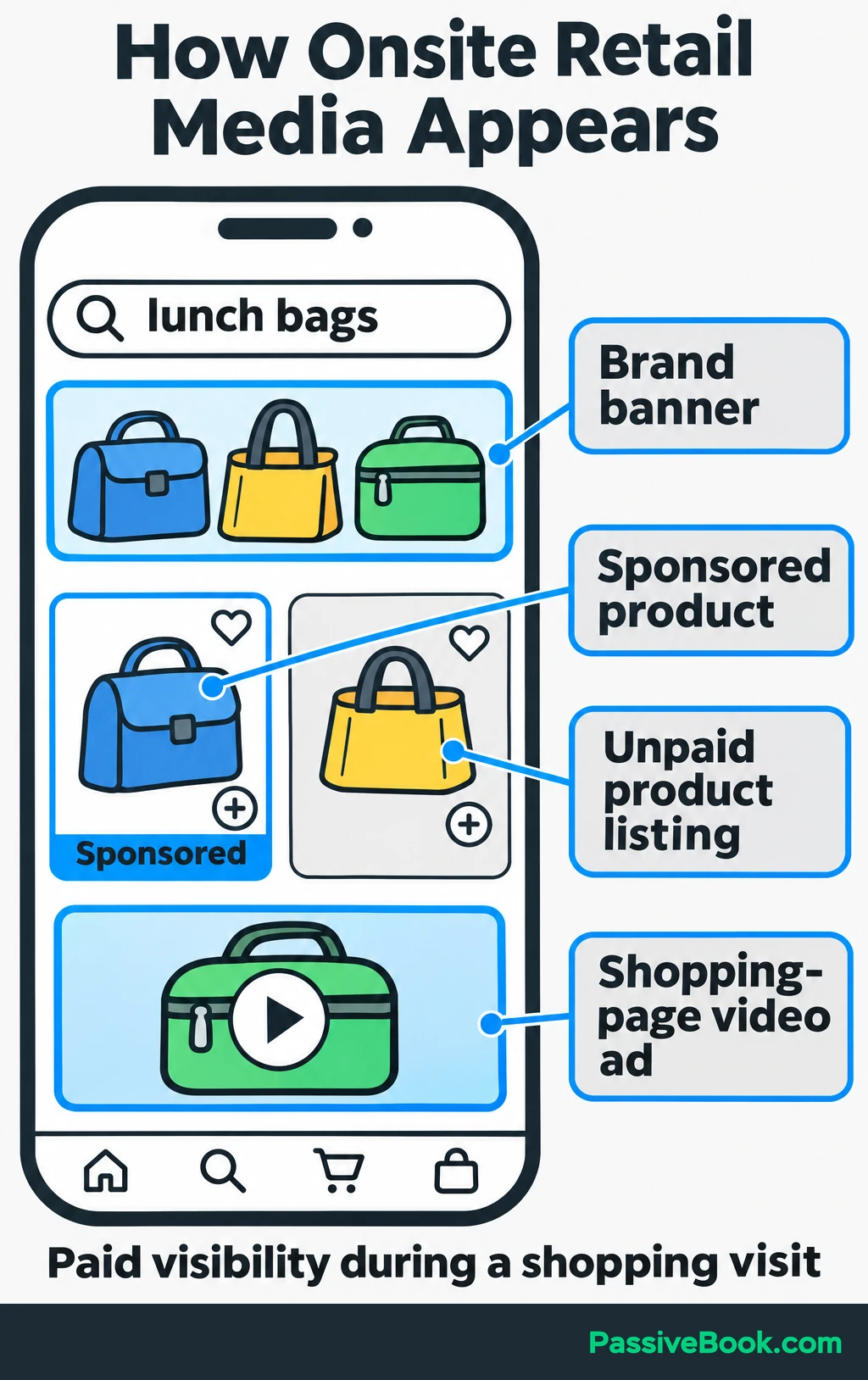
Your lunch bag might sit beside unpaid listings with a “Sponsored” label identifying the paid placement. You are buying visibility while shoppers compare options.
This is the easiest format to recognize because the ad appears inside an active shopping visit. It does not guarantee a purchase, but the distance between seeing the product and ordering it can be short.
Across External Websites, Apps and Streaming Services
Offsite retail media uses retailer shopper data to support ads outside the retailer’s website or app.
Your lunch-bag business might show a display ad to a relevant shopping audience while they read another website. The ad could introduce the bag before they begin their next shopping trip.
Formats can include display, social, online video and connected TV. Connected TV means television content delivered through an internet-connected device.
The retailer’s data connects these placements to retail media. The screen carrying the ad does not have to belong to the retailer.
Inside Physical Stores
In-store retail media can include paid digital screens and audio messages that reach shoppers during a store visit.
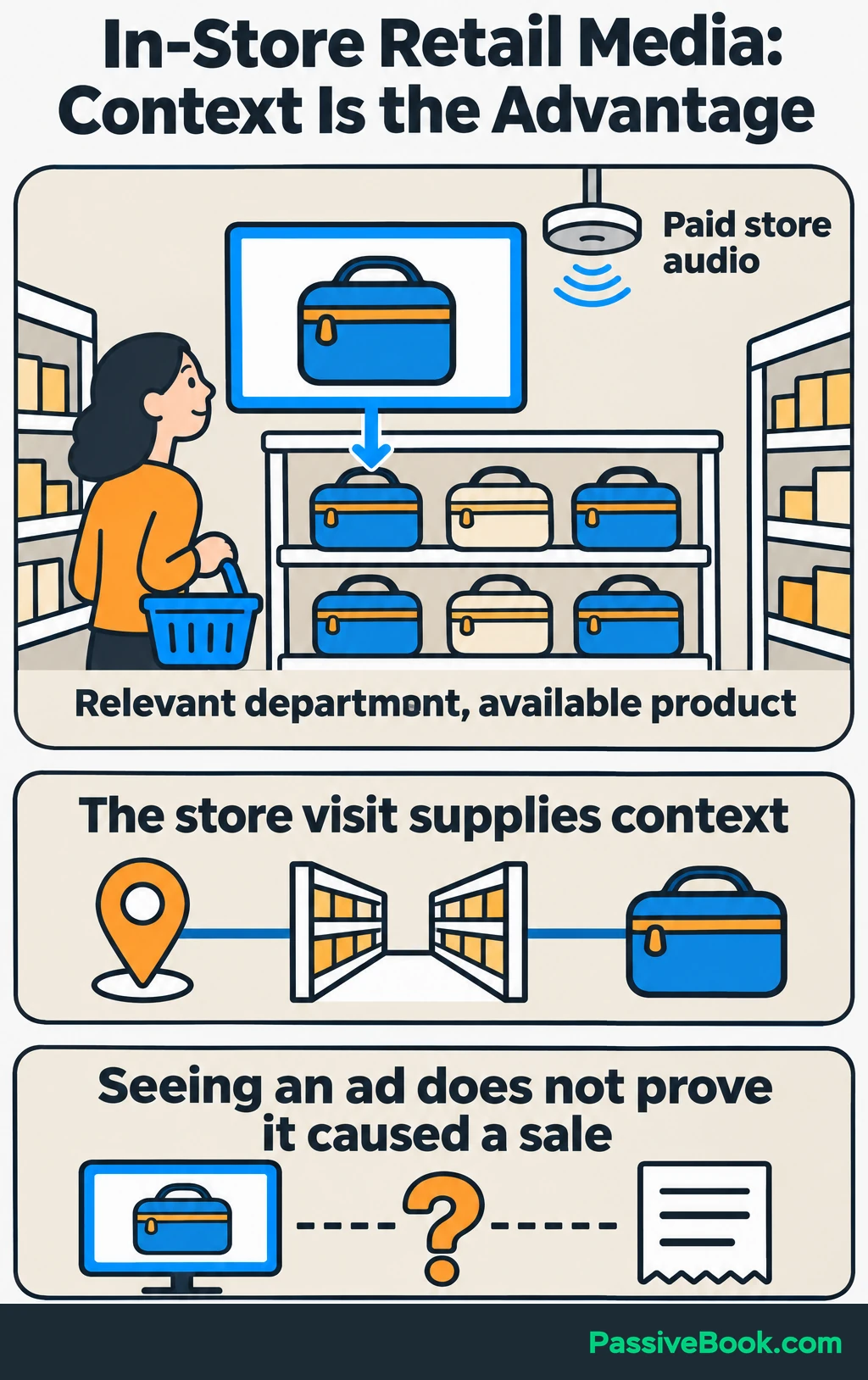
For your lunch bag, a screen near a relevant department could show the product while someone shops. It does not need to identify each person walking past.
The setting provides the context: the shopper is already in a place where they can buy. Still, showing an ad in a store and proving it caused a sale are separate tasks.
What Are Examples of Retail Media Providers?
Choose providers by where your customers shop and whether your products qualify. The largest network is not automatically the best starting point.
With self-service buying, you set up and manage the campaign yourself. With managed service, a team manages it for you.
| Provider | Shopping Environment | Representative Formats | Access Considerations |
|---|---|---|---|
| Amazon Ads | Amazon shopping results and product pages | CPC Sponsored Products | Self-service access includes professional sellers and vendors. Product-category and Featured Offer eligibility requirements apply. |
| Walmart Connect | Walmart’s website and app | Sponsored Products, Sponsored Brands and Sponsored Videos | Sponsored Products must be published, in stock and winning the Buy Box—the offer selected for purchase. |
| Roundel, Target’s media business | Target.com, the Target app and external media | Target Product Ads, display, social and connected TV | Target Product Ads uses self-service buying. Display, social and connected-TV formats have managed-service buying routes. |
| Instacart Ads | Instacart’s marketplace across participating retailers | Sponsored products, display and shoppable video | Brand advertisers can manage these formats through Ads Manager. Product availability determines what shoppers can buy. |
Amazon’s Featured Offer is the main offer presented for purchase on a product page. These offer requirements matter when several sellers list the same item.
Agencies and advertising technology companies may help you buy ads or run campaigns. Their role differs from the retailer or marketplace providing the shopping environment and audiences.
For the lunch-bag business, I would first investigate a network where the product is already available. That makes eligibility, stock and the purchase destination easier to assess.
How Do You Judge Retail Media Performance?
Choose measures that match the campaign’s goal:
- Awareness: Reach estimates how many different people were shown an ad; impressions count displays, including repeats.
- Traffic: Clicks show how often shoppers followed the ad.
- Sales: Attributed orders and revenue show purchases credited to it.
- Financial return: Compare that revenue with advertising costs and the margin available to cover them.
Return on ad spend, or ROAS, divides attributed sales revenue by media spend. It tells you how much credited revenue appeared for each dollar spent on ad delivery.
Suppose the lunch-bag campaign reports $600 in attributed revenue from $150 in media spend:
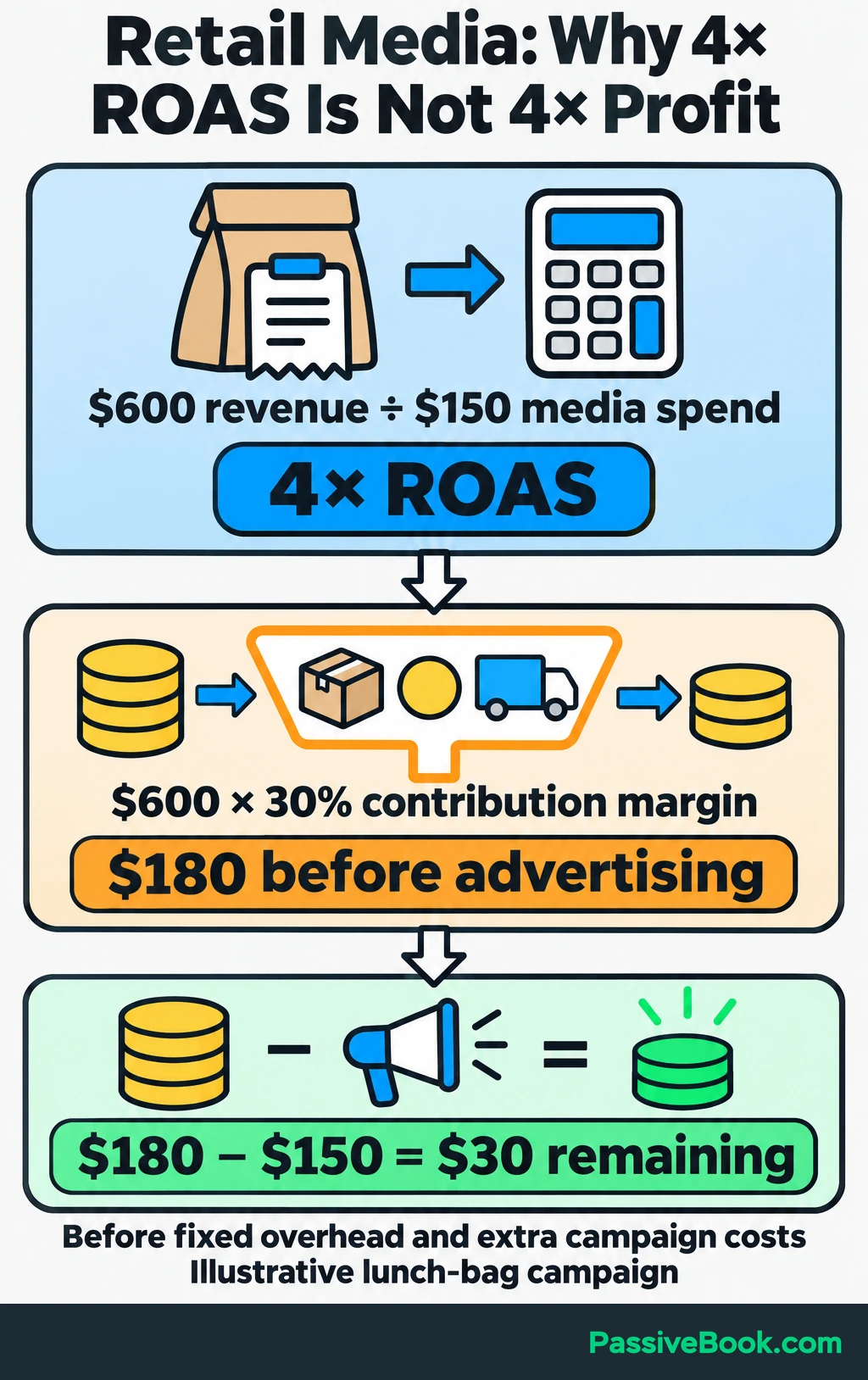
$600 ÷ $150 = 4× ROAS
That sounds healthy, but revenue has bills attached.
Assume those bag sales leave a 30% contribution margin before advertising. In plain words, 30% remains after product costs, selling fees, fulfillment and other variable costs:
- $600 × 30% = $180 remaining before advertising.
- $180 − $150 in media spend = $30 remaining.
That leaves $30 before fixed overhead and any extra campaign costs, such as creative production, management or platform charges. A 4× ROAS is not a 4× profit.
Before setting a test budget, check how much each order leaves for advertising after costs and the contribution you want to keep.
Free Marketing Profit Calculator




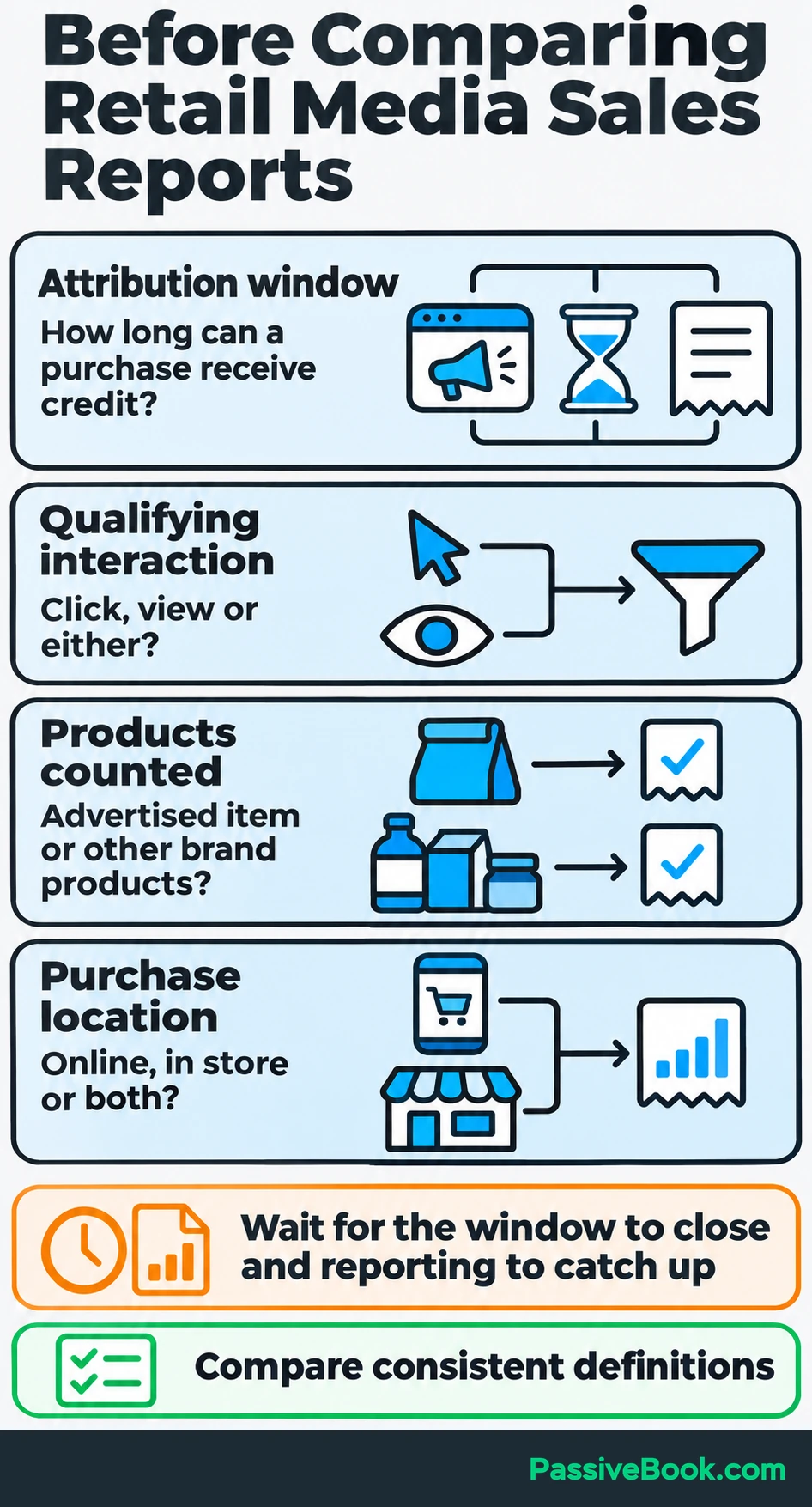
Before comparing reports, check how each network credits sales:
- Attribution window: How long after an ad interaction a purchase can receive credit.
- Qualifying interaction: Whether credit can follow a click, an ad view or either.
- Products counted: Whether revenue includes only the advertised item or other products from your brand.
- Purchase location: Whether the report includes online orders, store purchases or both.
These rules change what the headline number means. Before treating results as final, wait for the attribution window to close and allow for the network’s reporting delay. Compare campaigns using consistent definitions.
Is Retail Media Worth Exploring for Your Business?
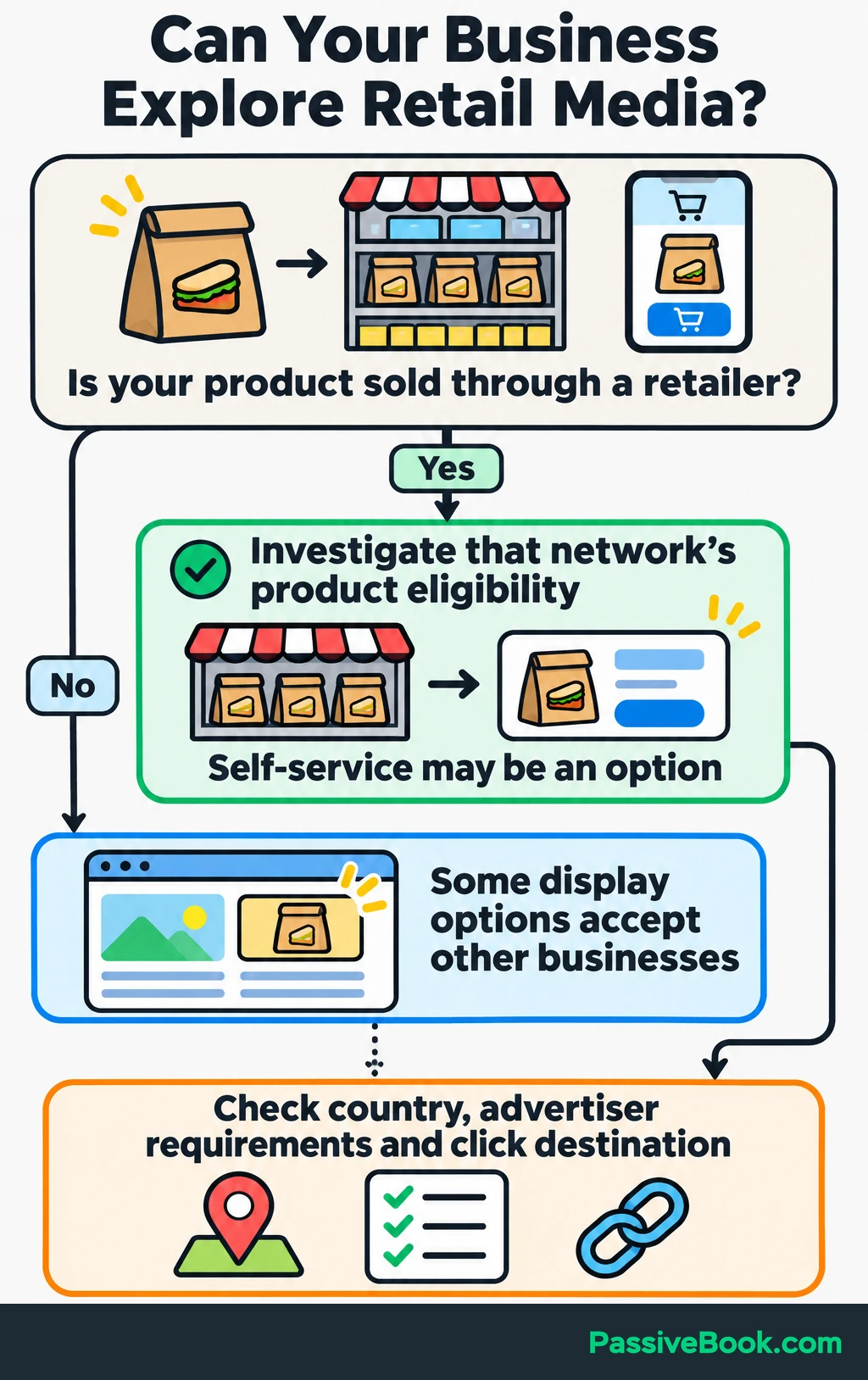
Yes, if relevant shoppers use the network, your campaign qualifies and your product margins leave room for advertising.
You do not need to build a retail media network. Smaller businesses can buy through existing networks, and self-service sponsored products offer a different route from hiring a team to run a managed campaign.
For the lunch-bag business, I would start with one eligible product at a retailer already stocking it. I would skip a broad campaign across several formats until there was a clear reason to expand.
Selling only through your own website does not rule out every option. For example, Amazon offers display advertising for businesses that do not sell in its store. Check the supported country, advertiser requirements and click destination before treating that as a suitable route for your business.
But fix the offer before buying more visits.
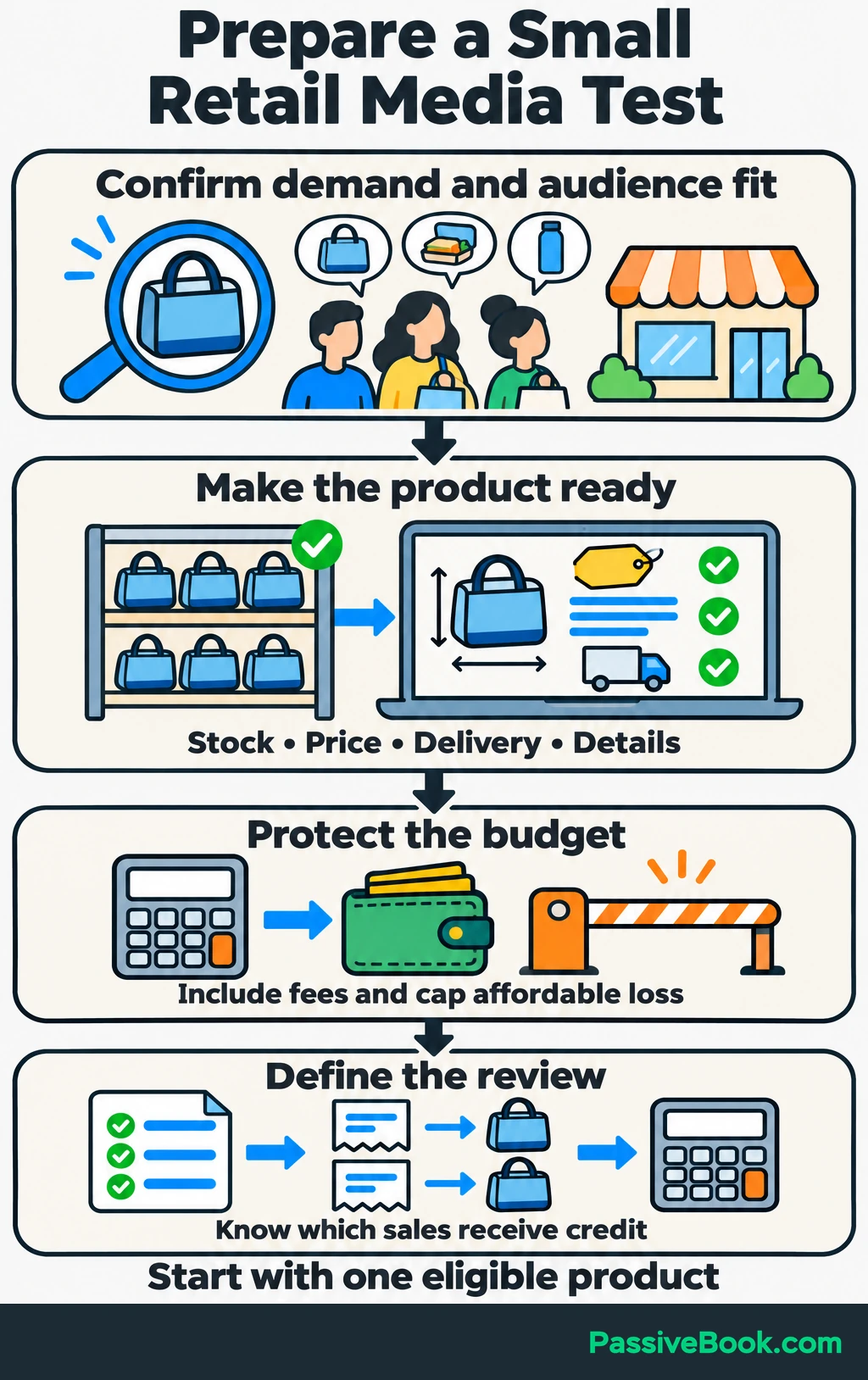
My jewellery store left me with unsold inventory because I had skipped proper market research. I had bought stock without checking whether people wanted it. That’s why I’d check demand before paying to send more shoppers to a product page.
Before researching a test, confirm:
- Audience fit: Relevant customers shop there.
- Eligibility: Your business and product meet the requirements.
- Purchase destination: You know where the click leads.
- Product readiness: Stock, pricing, delivery details and product information support a purchase.
- Costs: Media spend and additional charges fit your margin.
- Reporting: You understand which sales receive credit.
- Spending limit: You can afford the test if it produces no useful return.
Retail media is worth evaluating when those pieces line up. An unavailable product or an unclear listing needs attention before an advertising account does.
What Next?
Choose one retailer where your product is available and check whether it qualifies for sponsored product advertising. That single check will make the next decision more concrete.
Use the social buttons to share this guide when a conversation about retail media needs clearer definitions and a realistic look at the numbers.
What would you need to confirm before giving a retail media campaign a small test budget? Share your answer—or any other questions—in the comments.
Share this post with your friends & followers:

