You want to hand off the customer emails, but explaining every reply could take as long as writing it yourself. And giving a stranger access to your business raises a different set of worries.
A poor hire costs more than their invoice. You also spend time chasing updates, correcting work, and checking things you thought were finished. This guide takes you through finding, testing, and working with an assistant so you can control costs, protect business access, and get recurring work off your plate.
1. Choose the Work to Delegate
A virtual assistant, or VA, handles agreed business tasks remotely. The useful part of that description is “agreed.” Hiring someone to “help with everything” leaves both of you guessing.
Start by recording your recurring work. Look beyond this week so you catch monthly jobs such as updating reports or checking invoices.
For each task, note:
- How often it happens.
- How much time you currently spend on it.
- What information and tools it requires.
- Which decisions need your judgment.
- What happens if someone gets it wrong.
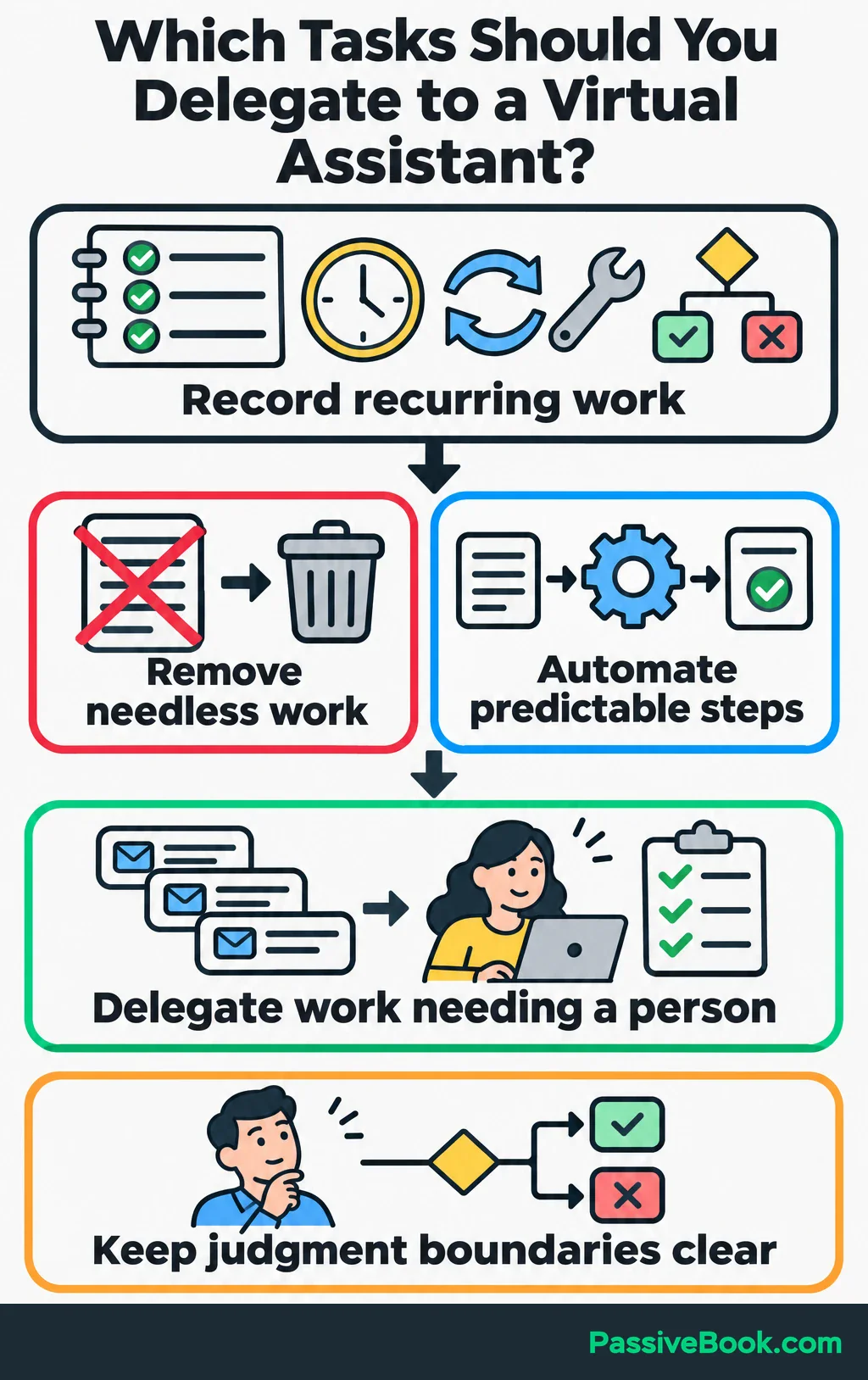
Then remove work that serves no purpose and automate predictable steps. Delegate what remains when it needs a person’s attention.
For our running example, imagine you sell printable tote-bag sewing patterns. Download enquiries keep interrupting product work. The tasks, messages, budgets, and results below are illustrations.
You could improve the download instructions first, then delegate the remaining enquiries. Keep refund decisions, payment disputes, and sewing-technique questions yourself. Those need different judgment.
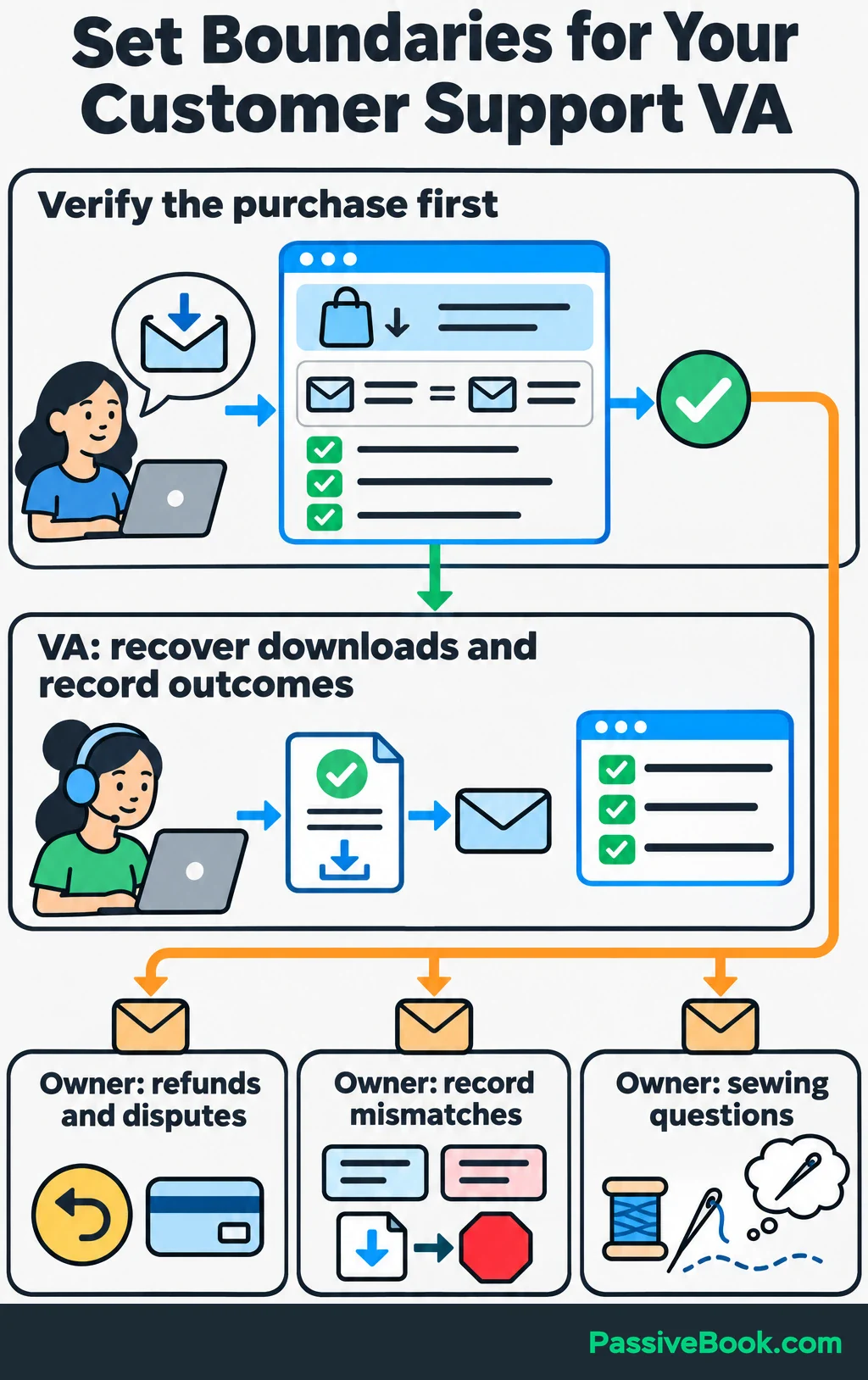
That gives you a focused first role: help verified customers recover their purchases, keep accurate records, and flag exceptions.
I would start with one related bundle like this. A small role with clear boundaries is easier to price, teach, and review than a miscellaneous collection of jobs you dislike.
Hire when you have useful work, funds to pay for it, and time for training. If the process still lives entirely in your head, document it before recruiting. If money or training time is tight, shrink the role.
2. Set a Realistic VA Budget
Estimate the hours your task bundle needs, then request quotes for that work. Include the skills required, expected availability, and any necessary time-zone overlap.
Published rates give you a starting point. Upwork displays median hourly rates of $10–$20 USD, drawn from certain historical contracts worldwide. That is a reference range, not a quote for your role.
A service package may include support you would otherwise handle yourself. For example, Time etc advertises dedicated U.S. assistants and matching support. Compare the included work, support, and commitments alongside the hourly cost.
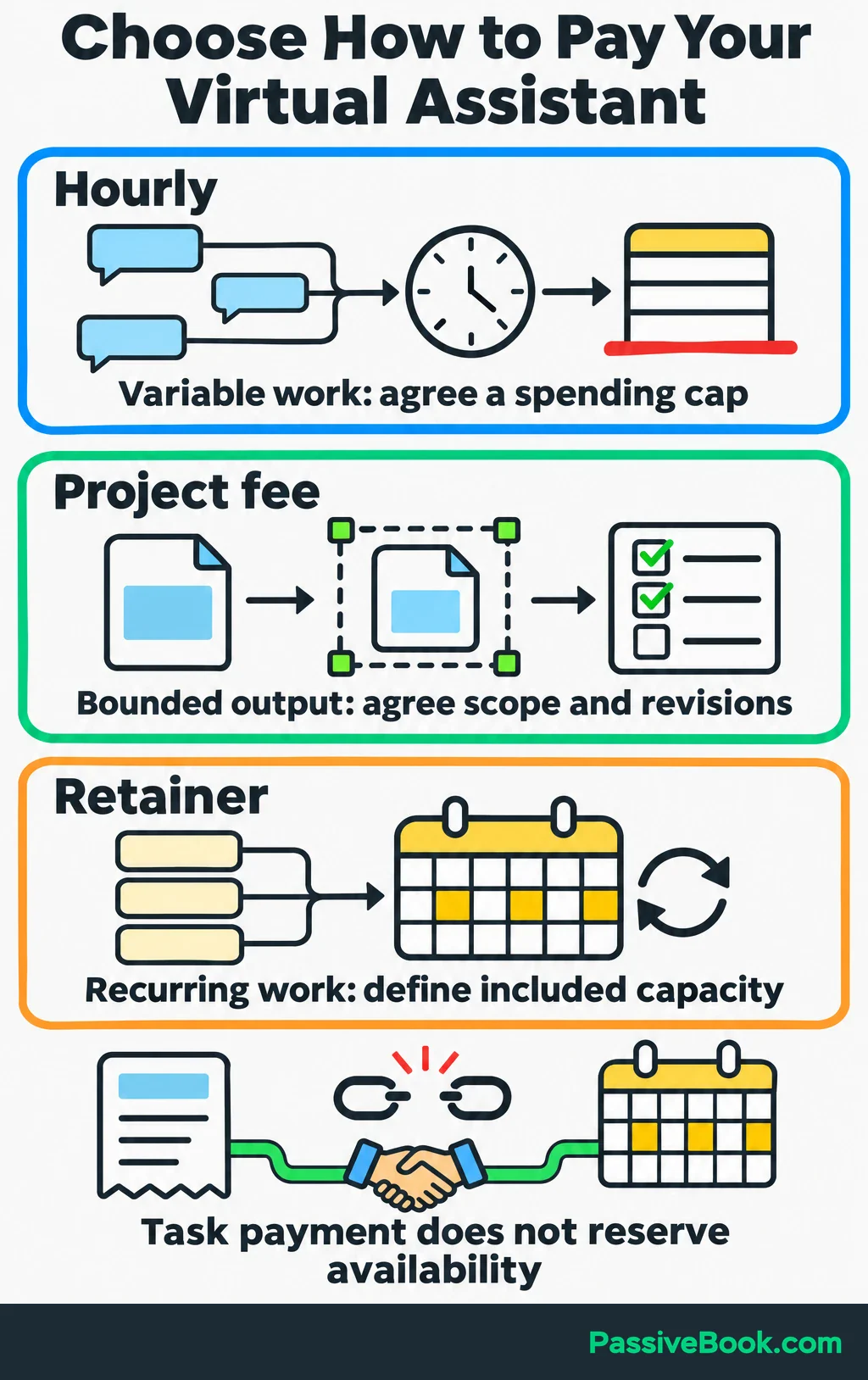
Choose a billing arrangement that fits the job:
| Arrangement | When I Would Use It | What to Agree First |
|---|---|---|
| Hourly | Enquiry volume varies | Spending cap, billable activities, and time records |
| Project fee | There is one bounded deliverable | Scope, acceptance standard, revisions, and deadline |
| Retainer | You need recurring work or reserved capacity | Included work, availability, extra charges, and unused capacity |
Paying for completed tasks does not automatically reserve someone’s availability. If you need a daily support window, agree to it explicitly.
Your budget should include compensation plus recruitment, platform fees, payment charges, currency conversion, additional software, and applicable employment costs. Add paid assessments and onboarding to the initial investment. Track your own management time separately.
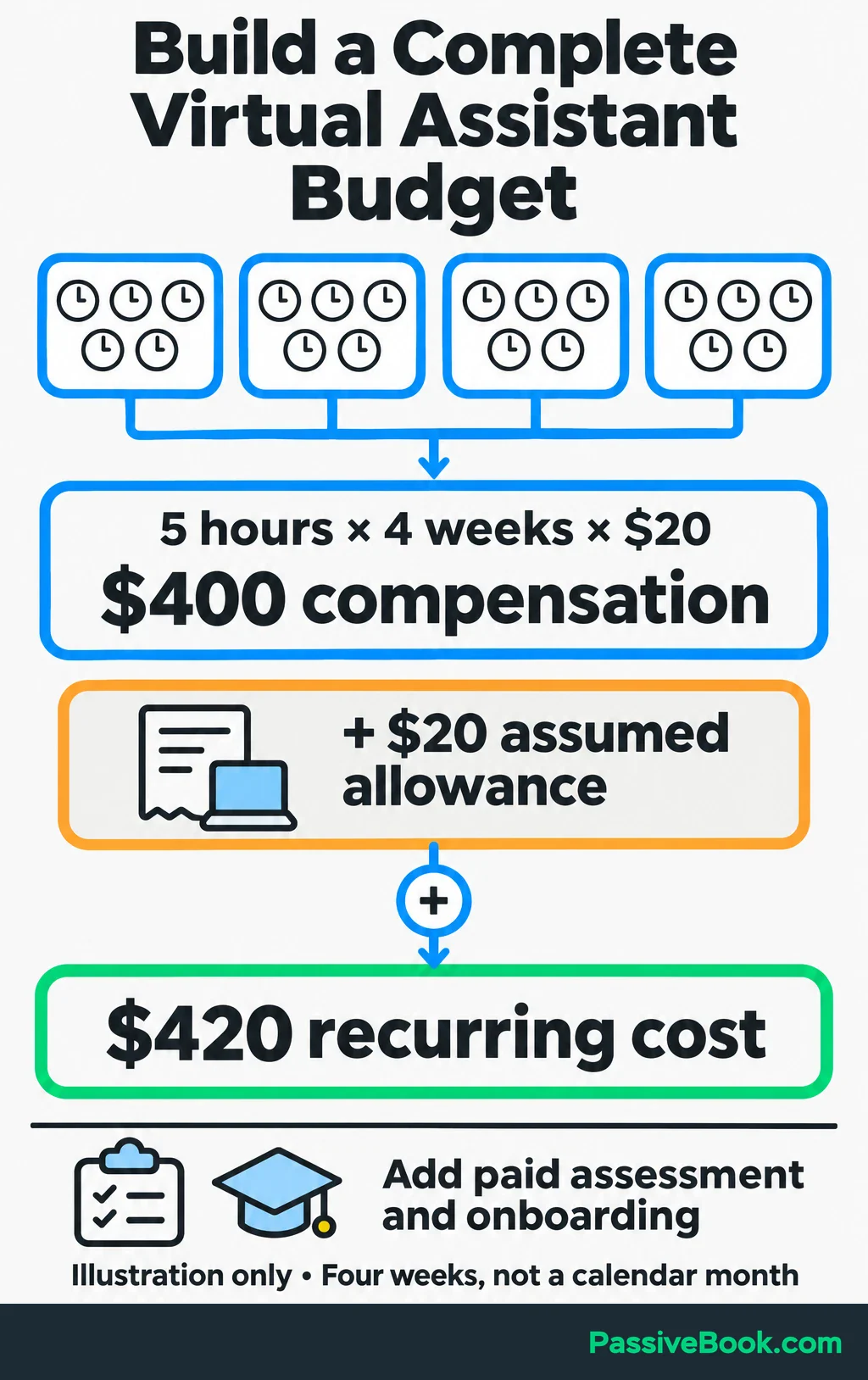
For the pattern shop, suppose you buy five VA hours each week at an assumed $20 per hour. Over four weeks:
| Recurring Cost | Calculation | Four-Week Total |
|---|---|---|
| VA compensation | 5 hours × 4 weeks × $20 | $400 |
| Additional fees or software | $20 allowance; no provider quote | $20 |
| Total | $400 + $20 | $420 |
Assessment and onboarding costs are additional. This is a four-week illustration; calendar-month bills will vary with the arrangement.
During my print-on-demand venture, designer costs ate into already thin margins. The work still needed doing, but paying someone else changed the economics. I carry that lesson into outsourcing decisions: price the whole arrangement before deciding it is affordable.
Set an hours or spending cap and require approval before exceeding it. Also agree whether meetings, training, and revisions count toward that cap.
3. Write a Job Brief Candidates Can Evaluate
A useful brief lets candidates decide whether they can do the work and whether the arrangement suits them.
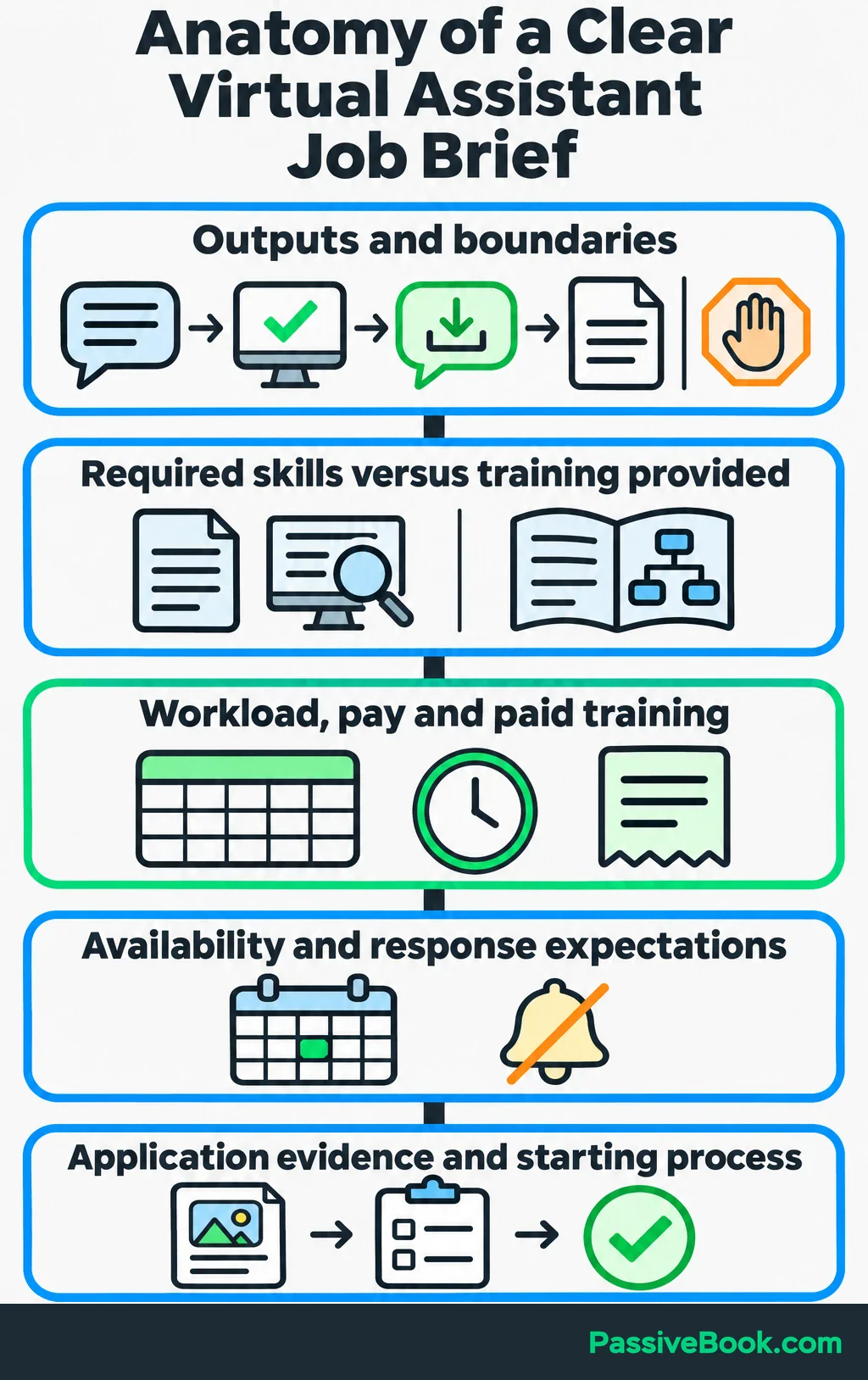
Describe the outputs, essential skills, workload, compensation, and boundaries. Separate skills needed immediately from procedures you can teach. Someone may need strong written communication from day one, but you can teach your download-recovery process.
Here is a complete sample you can adapt. Its schedule and pay are illustrative.
Customer Support VA — Printable Sewing Pattern Shop
I run an online shop selling printable tote-bag sewing patterns. I’m looking for help with routine customer download enquiries.
– Work: Check enquiries against purchase records using our verification procedure, prepare or send approved download-recovery guidance, record outcomes, and flag exceptions.
– Boundaries: Refunds, payment disputes, purchase-record mismatches, and sewing-technique questions come to me. Do not release files outside the approved process or change store settings.
– Required Skills: Clear written English, careful record checking, customer support experience, and willingness to raise questions before guessing.
– Training Provided: Product information, support policies, verification steps, response templates, and our task queue.
– Workload and Pay: Initially five paid hours weekly at $18–$22 USD per hour, depending on relevant evidence. Training and review meetings are paid. Extra hours need approval.
– Availability: One paid hour each weekday, 2–3 p.m. UTC. Check and work through the queue during that window. There is no monitoring requirement outside it.
– Success: Accurate guidance, work completed within the agreed window, clear case records, and exceptions assigned to me.
– Starting Process: A small paid assessment, followed by an initial four-week working period with a review.
– To Apply: Send a comparable work example with private details removed and explain your contribution. Include your rate, time zone, and availability. Then answer: “A customer requests a download using an email address that does not match the purchase record. What would you do?”
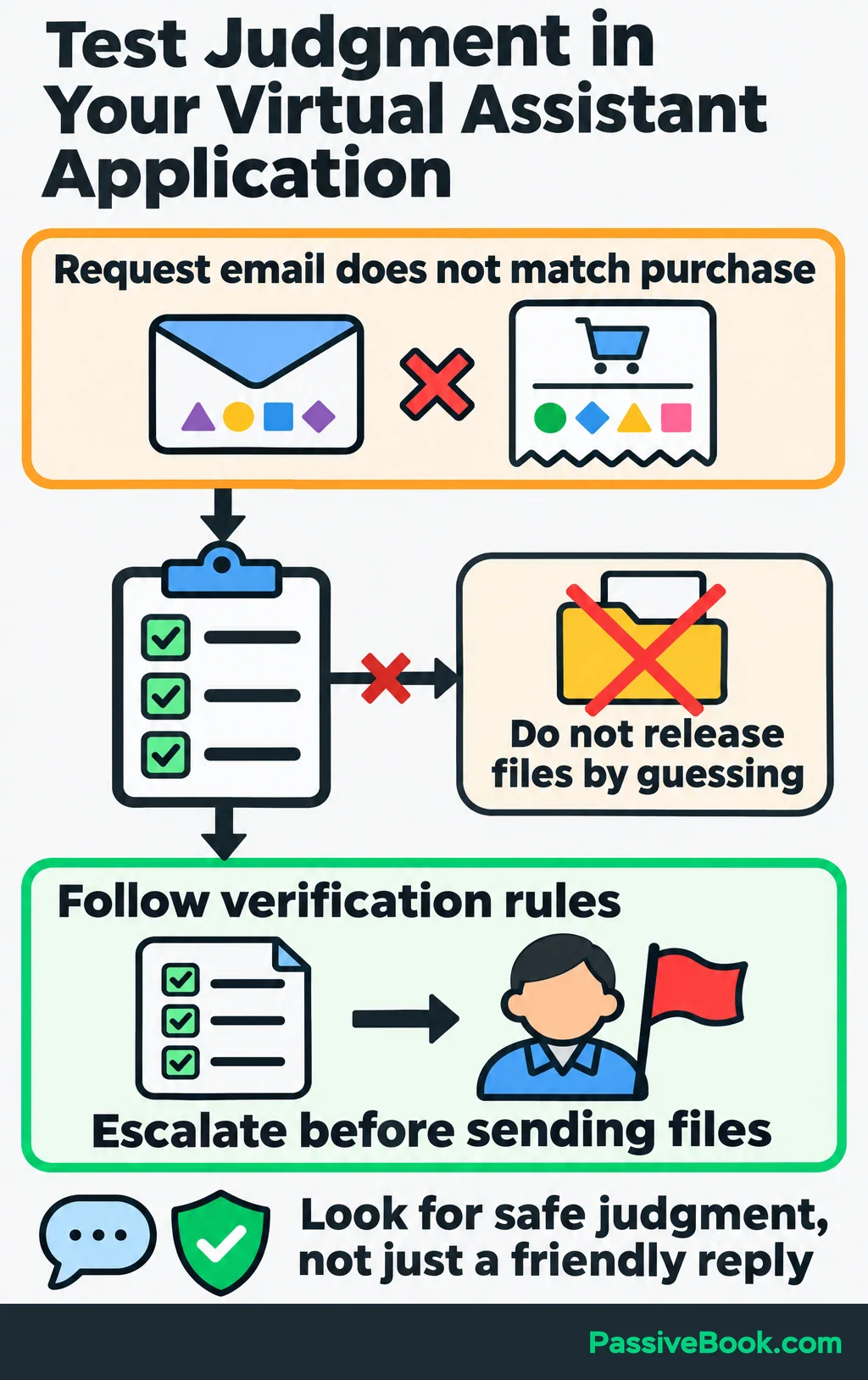
For that scenario, look for someone who follows the verification procedure and escalates before releasing files. A friendly reply is useful, but judgment matters too.
Keep the same brief when comparing candidates. Quietly changing the role between interviews makes their quotes and answers harder to assess.
4. Find Candidates Through the Right Hiring Channel
Choose a route based on the hiring and management work you can handle. A lower recruitment bill may leave more screening on your desk.
| Route | Suitable Needs | Who Screens Candidates | Who Manages Delivery | Fees | Absence or Replacement Support |
|---|---|---|---|---|---|
| Referrals and professional communities | Finding people with relevant introductions | You check evidence and suitability | You | No built-in fee for an informal introduction; paid recruiters charge separately | You arrange cover unless separately agreed |
| Marketplace such as Upwork | Comparing profiles, work history, and proposals | You assess candidates using available evidence | You explain the business and review work | Worker compensation plus applicable platform charges | Confirm any support; you still need a coverage plan |
| Job board such as OnlineJobs.ph | Recruiting directly when you can run the process | You shortlist, interview, and assess | You | Recruitment subscription or charges, separate from pay | You recruit cover unless another agreement provides it |
| VA service | Getting help with matching and possibly ongoing support | The service screens; you confirm fit | Depends on the package | Package or service fee; check extra charges | Obtain written terms for cover and replacement |
OnlineJobs.ph connects businesses with workers in the Philippines. Account for recruitment charges separately from the person’s compensation.
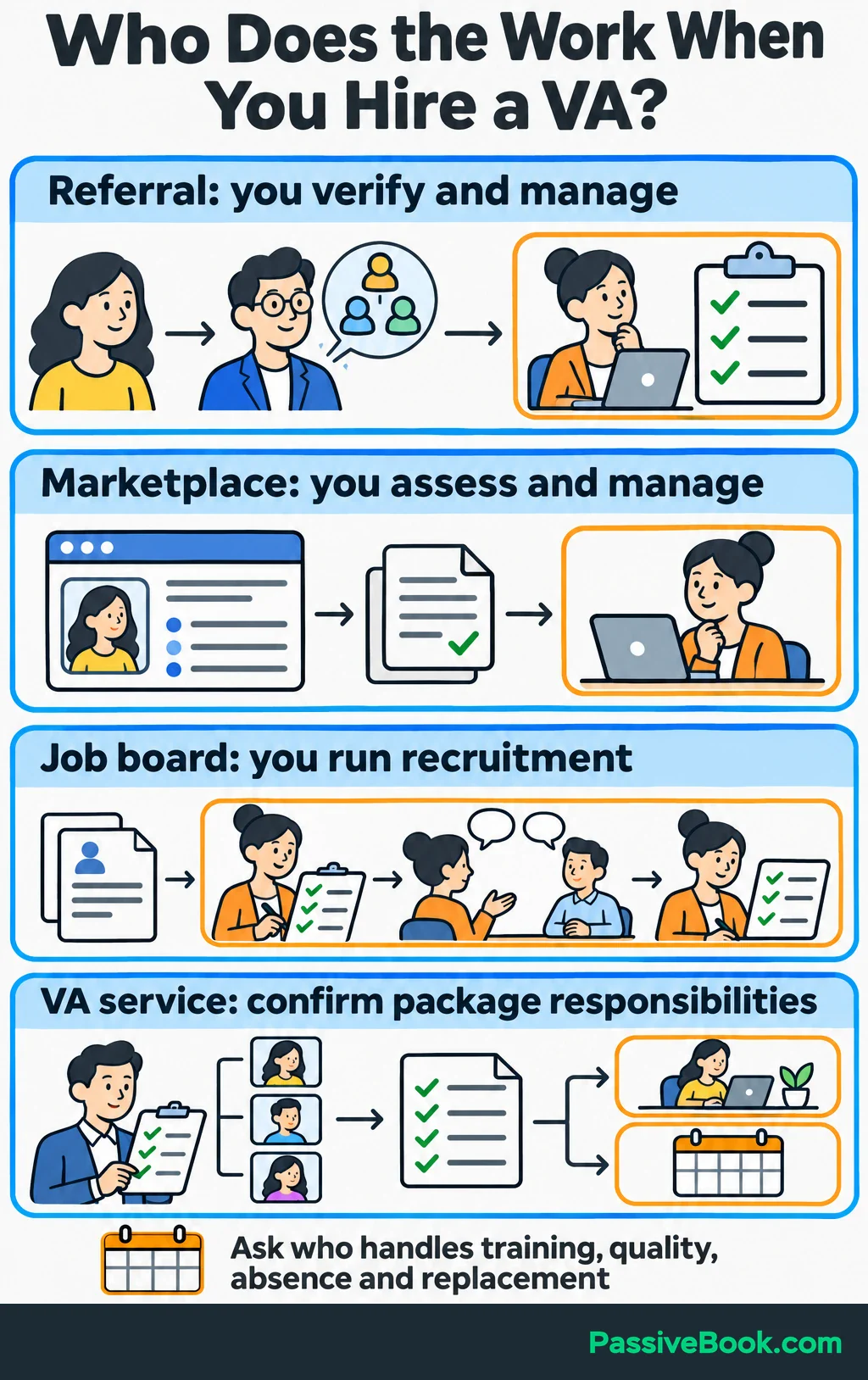
I would try a relevant referral first, then a marketplace if it produces no suitable candidates. A referral earns an introduction, but I would still use the same assessment.
Consider a VA service when you want help finding a match or handling continuity. Ask direct questions before buying:
- Who teaches the assistant your business procedures?
- Who checks quality and resolves delivery problems?
- What happens during illness or leave?
- How does replacement work, and what does it cost?
“Support included” needs an explanation you can use when something goes wrong.
5. Evaluate Candidates Against the Actual Job
Use a Consistent Interview and Scorecard
Decide what acceptable evidence looks like before reading applications. Otherwise, a confident interview can outweigh a weak work sample.
Ask finalists the same core questions and use the same scoring standards. This follows the structured-interview approach described by the U.S. Office of Personnel Management.
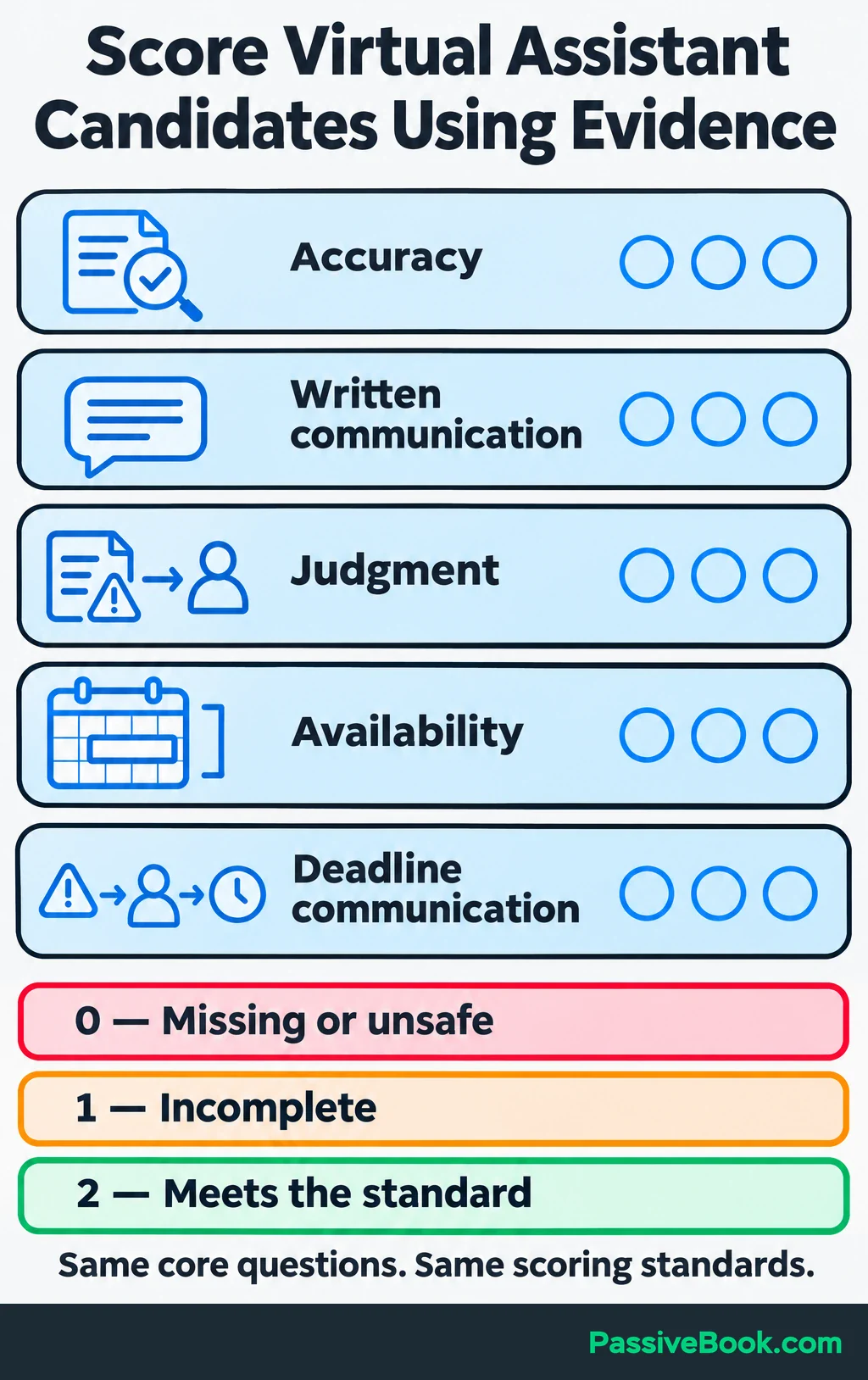
For the pattern shop, I would use this scorecard:
| Criterion | Evidence to Look For |
|---|---|
| Accuracy | Checks records and uses the correct support guidance |
| Written communication | Gives a clear, polite answer without unsupported promises |
| Judgment | Recognizes mismatches and sends consequential decisions to the owner |
| Availability | Can meet the paid support window within their current workload |
| Deadline communication | Explains how they warn you about blockers or likely delays |
A simple scale is enough: 0 means missing or unsafe, 1 means incomplete, and 2 means meets the standard. Set essential requirements separately so a high total cannot cancel out unsafe file handling.
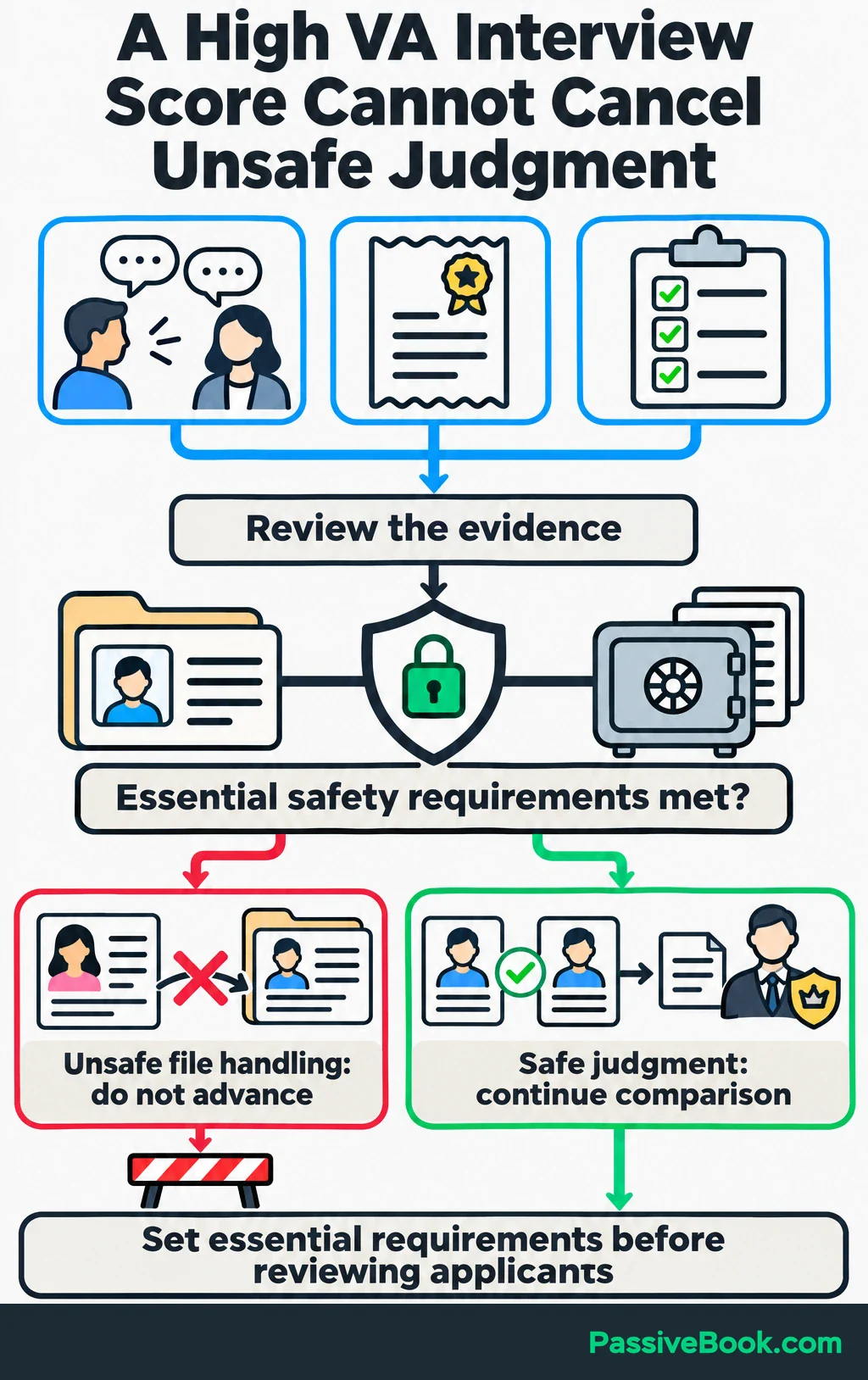
Useful interview questions include:
- “Tell me about a recurring task you owned. How did you know it was complete?”
- “What did you do when instructions were incomplete?”
- “Describe a mistake you corrected and how you prevented it from recurring.”
- “How would you handle two urgent tasks when both cannot be finished?”
- “When would you tell me a deadline was at risk?”
Discuss current capacity and arrangements for interruptions. With permission, contact a relevant reference about comparable responsibilities and reliability.
Compare rates alongside the supervision each candidate would need. The lowest quote can become expensive if every reply needs rewriting.
Run a Small Paid Assessment
Use a short task that resembles the actual job. Agree on the fee, scope, deadline, permitted resources, and scoring criteria before work starts.
Give candidates equivalent materials and fictitious customer records. There is no reason to expose live customer data during hiring.
For the pattern shop, provide five sample enquiries and the approved support procedure. Ask candidates to:
- Categorize all five enquiries.
- Draft replies to two routine download requests.
- Flag a refund request and a purchase-record mismatch.
- List any information they need before proceeding.
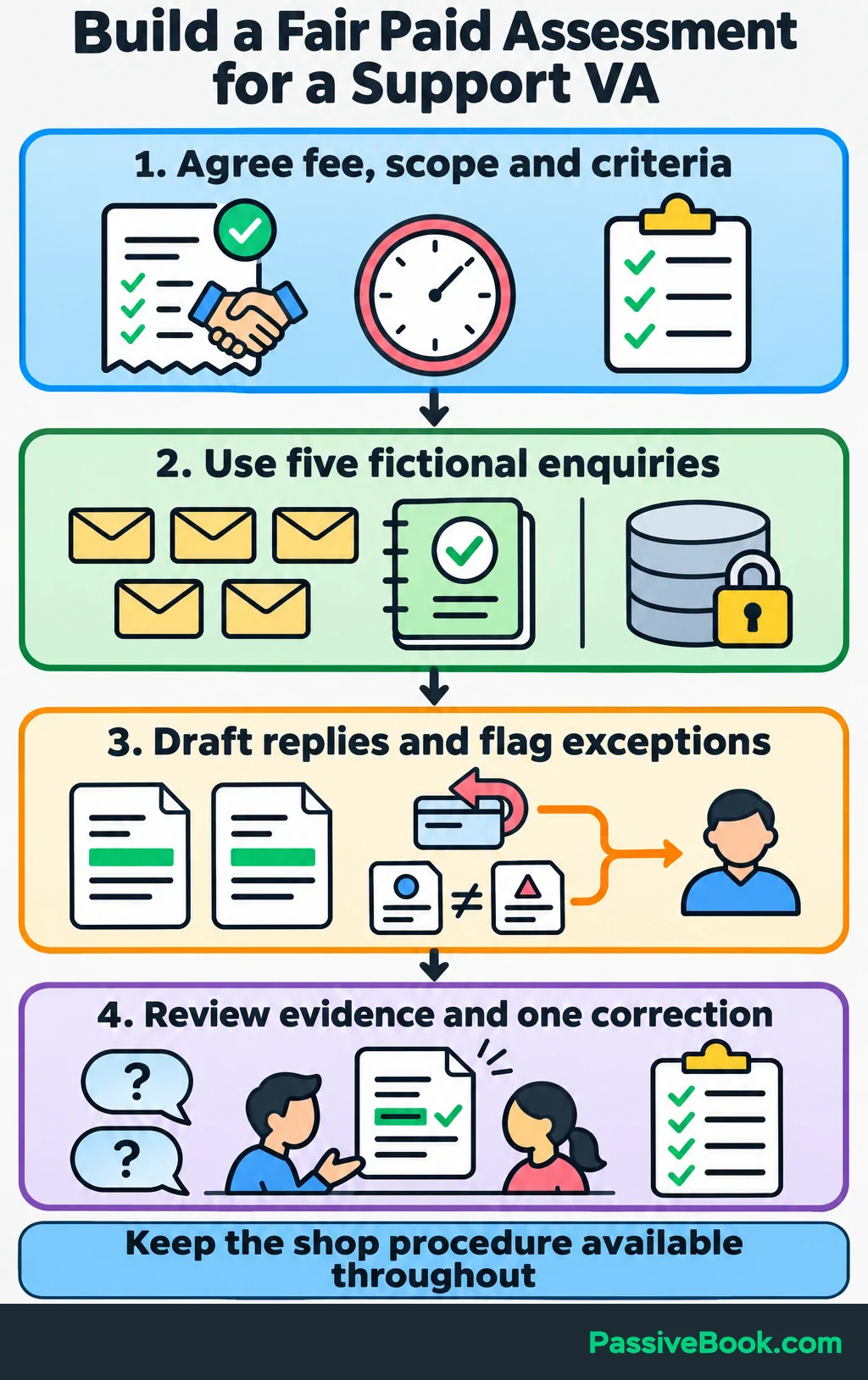
OPM’s work-sample guidance recommends these tests for skills needed on entry and warns they may be unsuitable for work you plan to teach. For the pattern shop, I would assess clear writing, accurate record checks, and judgment, with the shop’s procedure available throughout.
Score accuracy, clarity, useful questions, escalation decisions, and timeliness. Then discuss one correction and ask the candidate to explain the revised approach.
Building realistic test materials and an answer key is another job. You can use a prepared packet from Paid Hiring Assessments and keep your customer data out of the hiring process.

Free Paid Hiring Assessments




Choose someone who meets the essential standard within budget. If nobody does, revise the brief or reopen recruitment. An empty shortlist is cheaper than repeatedly fixing an unsuitable hire’s work.
6. Agree on Working Terms
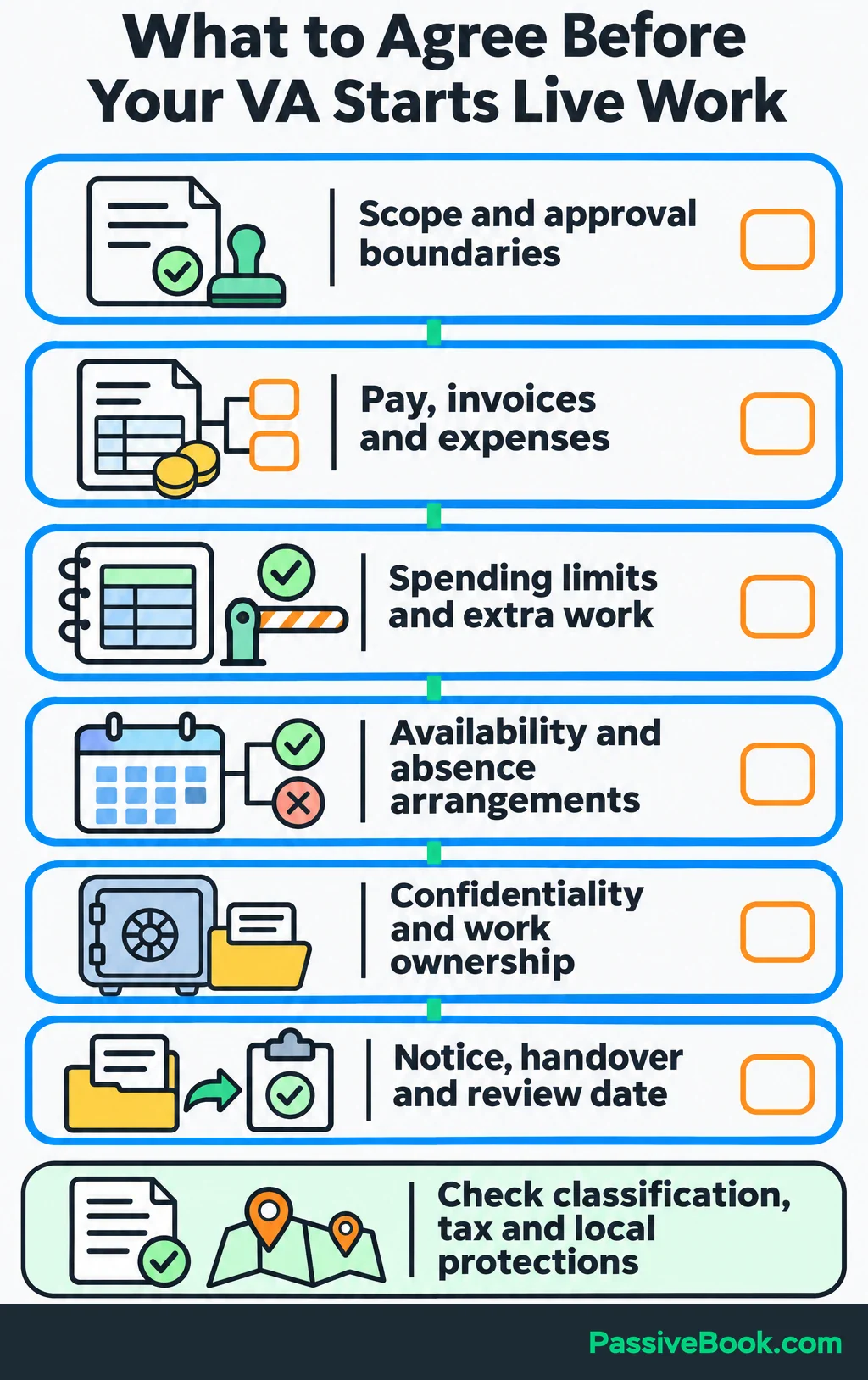
Put the arrangement in writing before live work begins. Include:
- Scope, deliverables, and approval boundaries.
- Compensation, currency, invoices, payment dates, and expenses.
- Hours or spending limits and how extra work is approved.
- Availability, response expectations, and absence arrangements.
- Confidentiality and ownership of completed work.
- Notice, handover duties, and an initial review date.
Explain how either person can raise concerns during the first working period. A review date gives you a point to assess the arrangement without leaving expectations vague.
Check worker classification, tax, and mandatory protections in the jurisdictions involved before finalizing terms. For U.S. federal employment taxes, the IRS considers behavioral control, financial control, and the relationship between the parties. Calling someone a contractor does not settle their status.
Get local professional advice where needed, especially for cross-border arrangements or roles with fixed hours and close supervision.
7. Onboard Through One Documented Workflow
Start with the product, customer, support policies, and role boundaries. Show where questions go and which decisions remain yours.
Then set up individual accounts with only the permissions needed. Each account should use multifactor authentication—an extra login check such as a code from an authenticator app. If shared credentials are unavoidable, use a password manager. These steps follow Australian government guidance on securing business accounts. Keep ownership and recovery under business control, and record who has access.
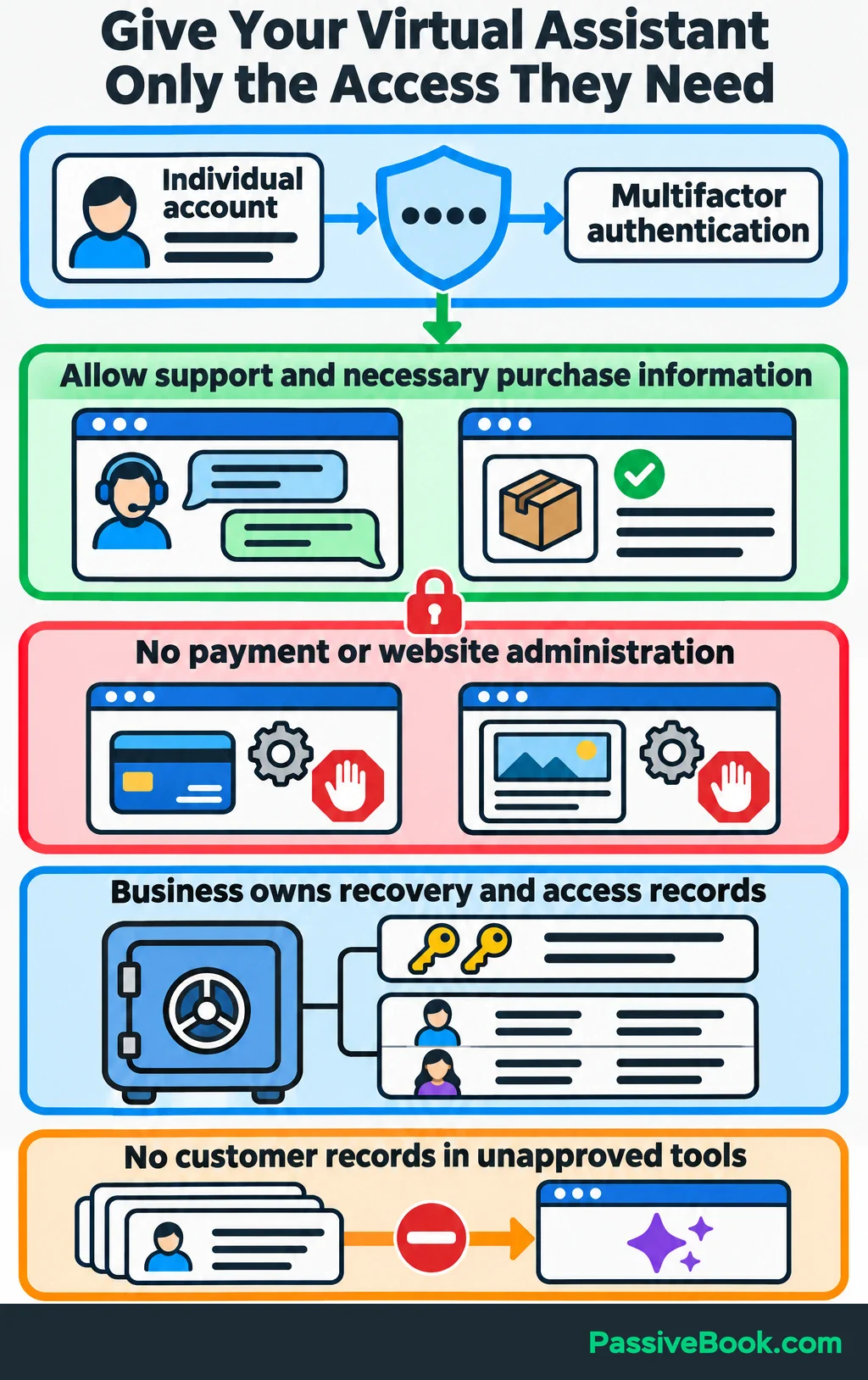
For the pattern shop, the assistant needs support messages and limited purchase information. They do not need payment administration or control over the website.
Also specify approved storage and AI tools. State what customer information may enter them and which outputs need review. I would start with a simple rule: no customer records in an unapproved tool, and every AI-assisted reply must be checked against the support procedure.
Create an SOP With a Clear Definition of Done
A standard operating procedure, or SOP, explains how to complete recurring work. It should answer the questions someone encounters while doing the task.
Use a shared document or Notion page for instructions and a shared queue for work. Add a short Loom screen recording when seeing the process helps. I would keep written decision rules beside the video so nobody has to scrub through a recording to find an exception.
A useful SOP contains:
- Trigger: What starts the work.
- Inputs: The records, messages, and tools needed.
- Steps: What to do and in what order.
- Decision Rules: When to continue, stop, or escalate.
- Definition of Done: What must be true before closing the task.
- Record and Owner: Where the outcome is logged and who maintains the procedure.
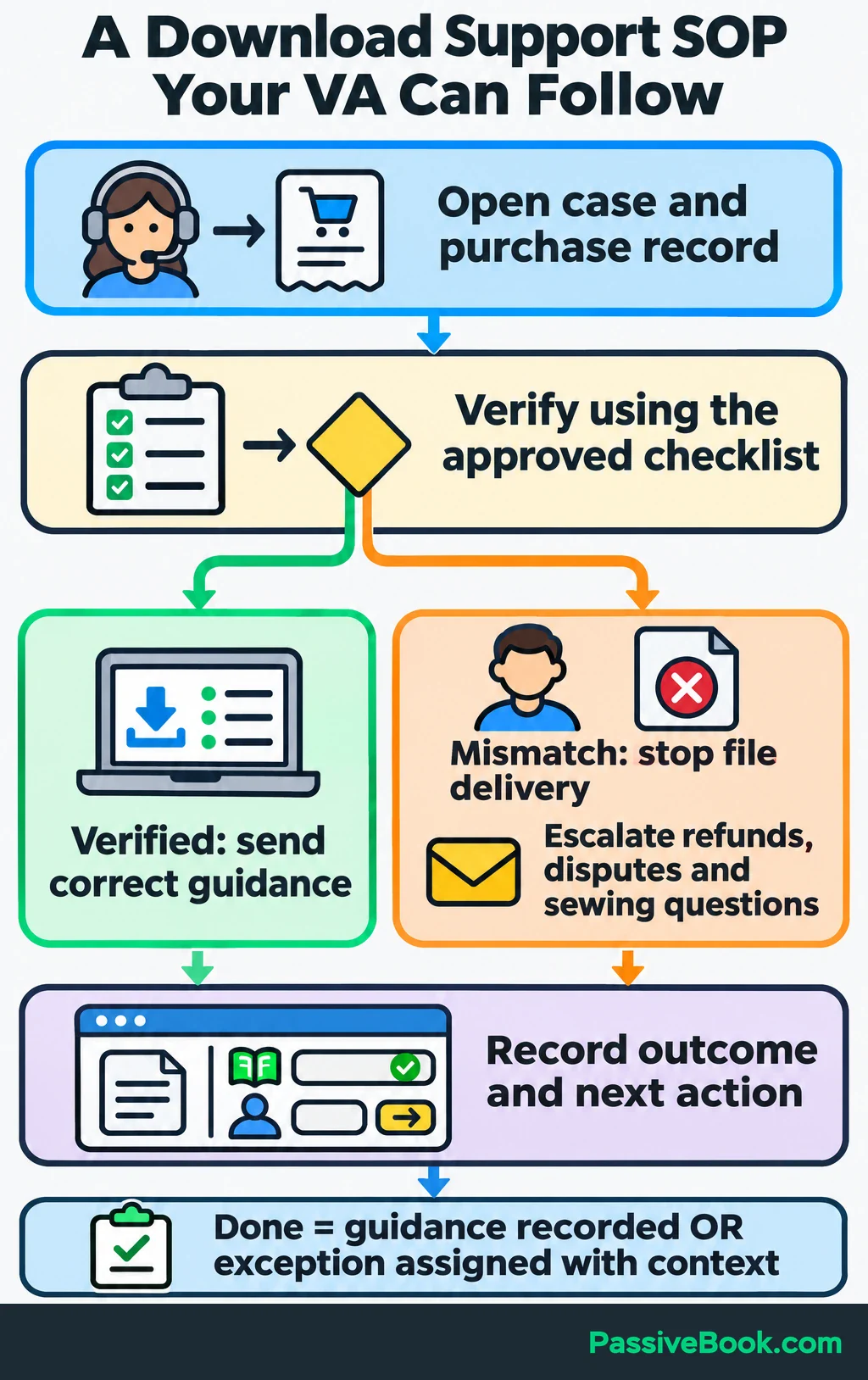
For a download enquiry, the workflow could read:
- Open the case and relevant purchase record.
- Follow the approved verification checklist.
- If verification succeeds, send the correct recovery instructions for that product.
- If records do not match, stop file delivery and assign the case to the owner.
- Send refund requests, disputes, and sewing questions to the owner.
- Record the guidance sent, case status, and any next action.
“Done” means accurate guidance has been sent and recorded, or an exception has been assigned with enough context for you to act. An unresolved refund request should not disappear under a completed status.
On one of my digital-product sites, I kept rewriting download replies because the saved instructions no longer matched the customer’s route to the file. Writing down the route made the missing step obvious. That is the level of detail I would fix before asking an assistant to follow it.
You do not need polished instructions to start. AI Operations Writer turns rough notes into a first handoff draft and surfaces the decisions you still need to clarify.

Free AI Operations Writer
Practise Before Handing Over Live Work
Demonstrate one case, then ask the assistant to explain the decision back. This reveals gaps that “Does that make sense?” tends to miss.
Review a small practice batch before moving to live work. Start live delivery with draft replies or supervised sending, then expand independence when results consistently meet the standard.
Have the assistant suggest checklist improvements after practising, and check those changes together. Keep one current SOP so neither of you follows an old copy.
8. Manage Work Through One Shared Queue
Give Every Assignment a Clear Finish Line
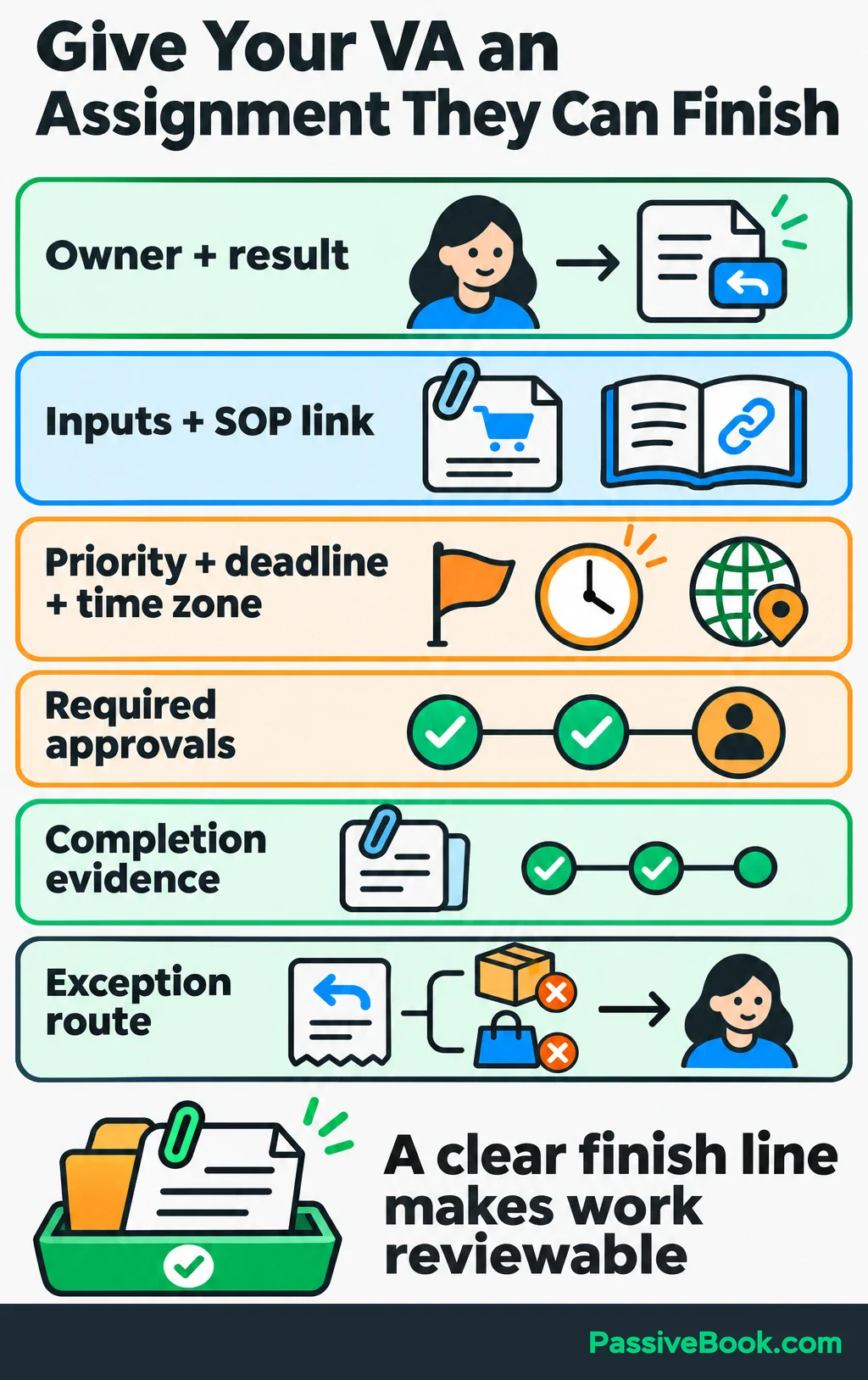
Every assignment needs:
- An owner and a clear result.
- The inputs and SOP link.
- A priority and deadline with a time zone.
- Any approval needed and what to attach or record when finished.
For example:
Prepare replies for the download enquiries received before 2 p.m. UTC by 3 p.m. UTC. Follow the download-support SOP and attach drafts to each case for review. Assign purchase mismatches and refund requests to me. Record the proposed case status and anything blocking completion.
That is specific enough to review without another meeting.
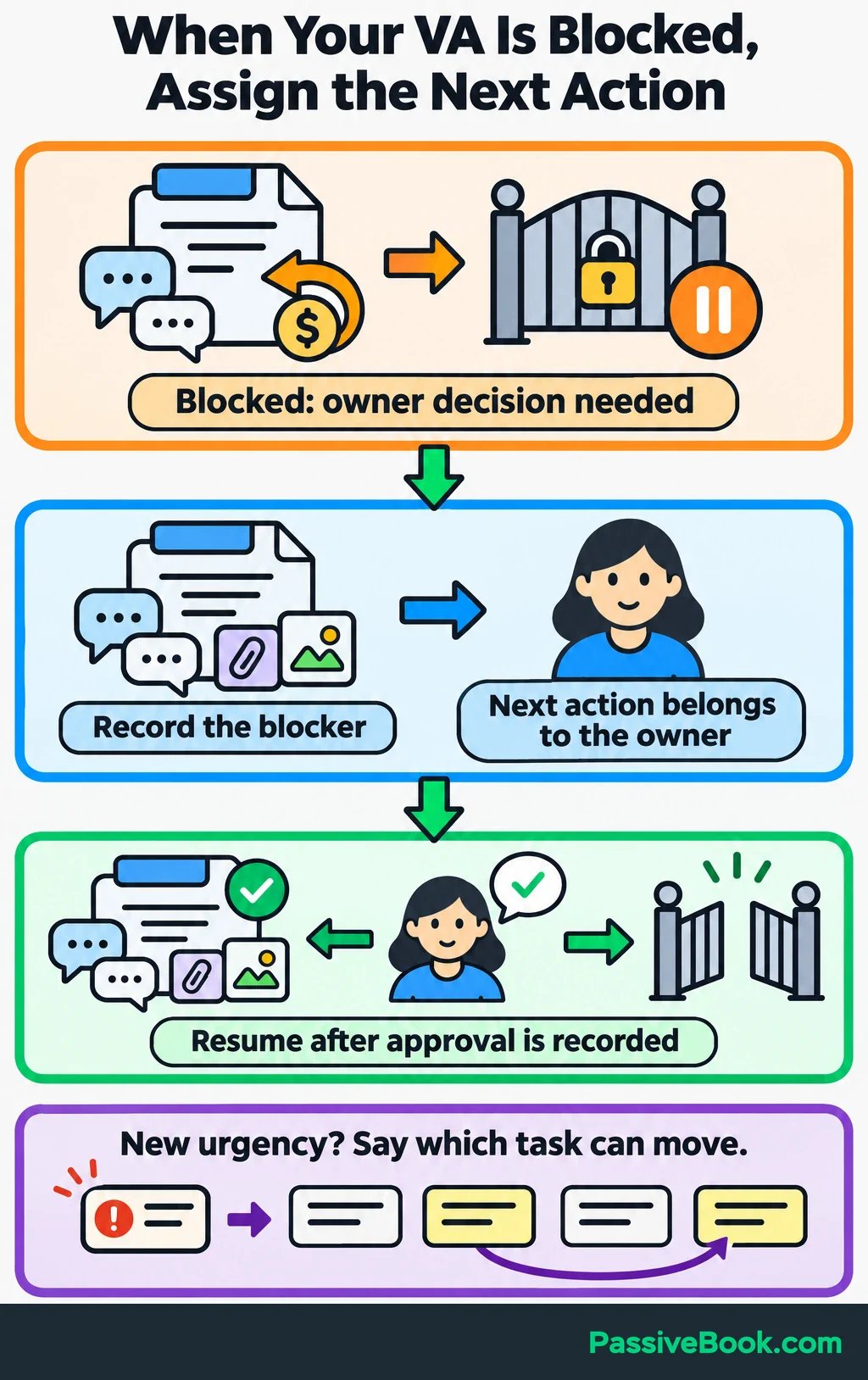
Schedule recurring work so you do not have to assign it daily. When something urgent arrives, say which existing task can move.
Record missing inputs and approvals as blockers. If the assistant is waiting for your refund decision, the next action belongs to you.
Establish a Practical Communication Rhythm
Choose one task queue, one routine communication channel, and one urgent escalation route. Record decisions beside the task or in the SOP so they remain easy to find.
A Notion board and business email may be enough to start. Use tools you already have before adding another subscription.
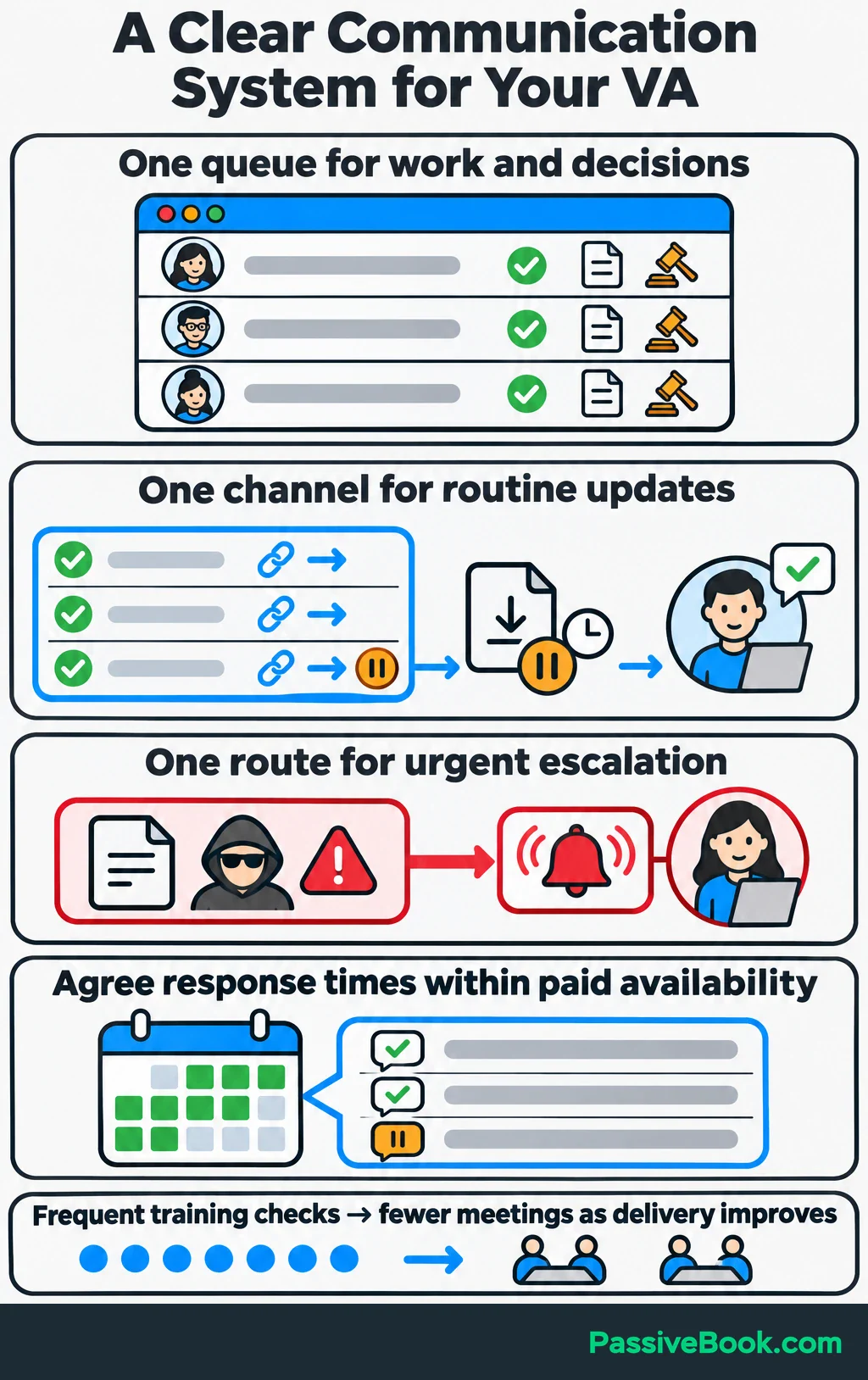
Agree on:
- When new assignments will be acknowledged.
- How quickly blockers must be raised during paid working windows.
- What counts as urgent.
- How either person reports an absence or delay.
For the pattern shop, a blocked download case can wait for the owner’s next review. Suspected unauthorized file access needs immediate escalation through the agreed route.
A short update can cover completed work with links, next priorities, blockers, and decisions needed. Keep it brief enough that writing it does not become another job.
Use frequent, short checks during training. Reduce meetings as delivery becomes dependable, and keep response expectations within the availability you are paying for.
9. Review Quality and Net Time Saved
Check Delivery Against Agreed Standards
For the pattern shop, review reply accuracy, verification decisions, and case records closely at first. Once delivery is dependable, I would sample routine download replies and keep reviewing every purchase mismatch and refund escalation.
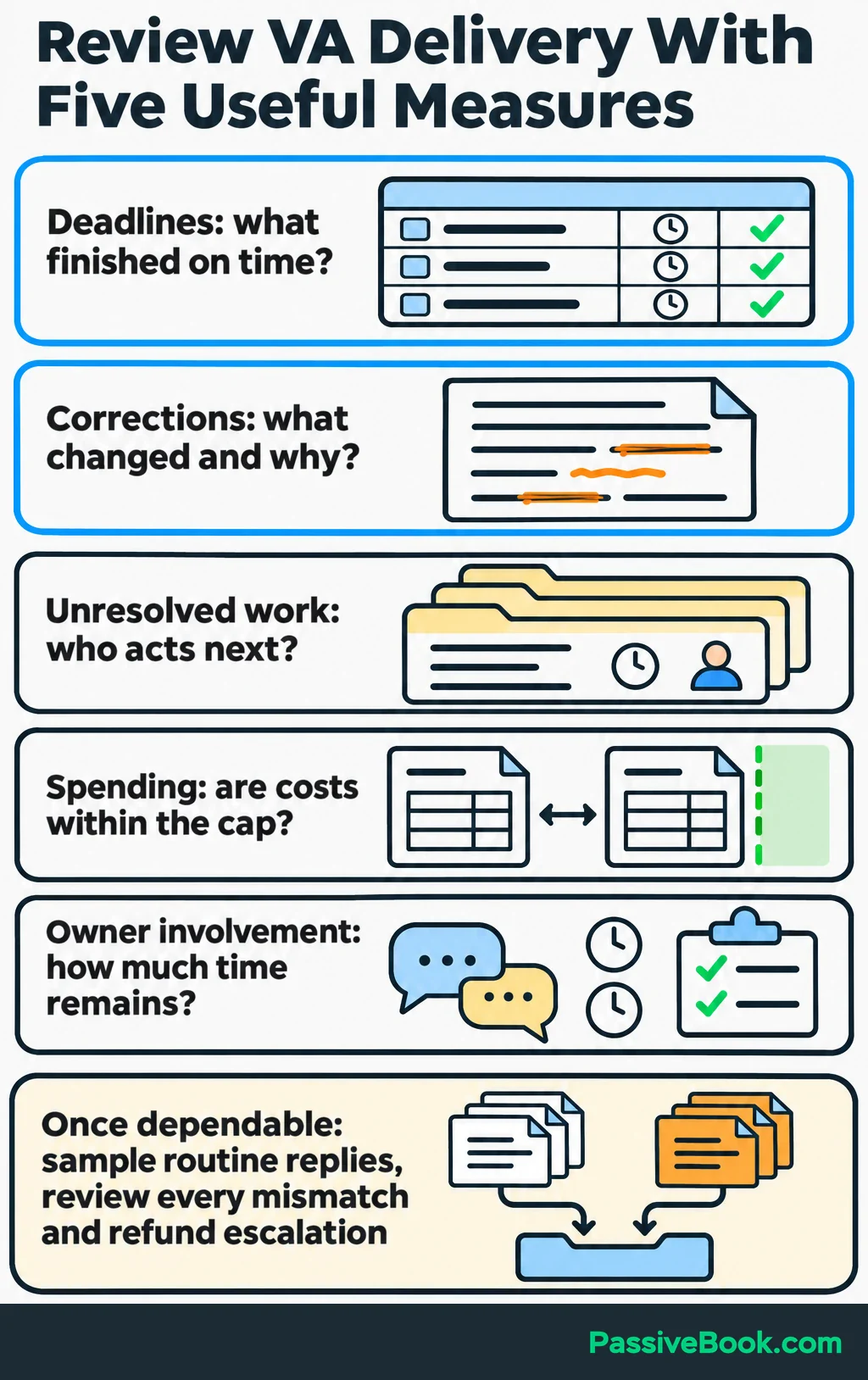
Track a few measures you can act on:
| Measure | What to Check |
|---|---|
| Deadline completion | Which tasks due in the review period finished by their agreed deadline |
| Corrections | Which reviewed replies needed changes and why |
| Unresolved work | Open cases, their age, and who owes the next action |
| Spending | Billed hours and costs against the agreed cap |
| Owner involvement | Time spent briefing, reviewing, correcting, and handling exceptions |
Give feedback using the actual result, expected standard, and required correction:
“This draft offers a refund, but refunds require my approval. Remove that promise, assign the case to me, and record that the customer is waiting for a decision.”
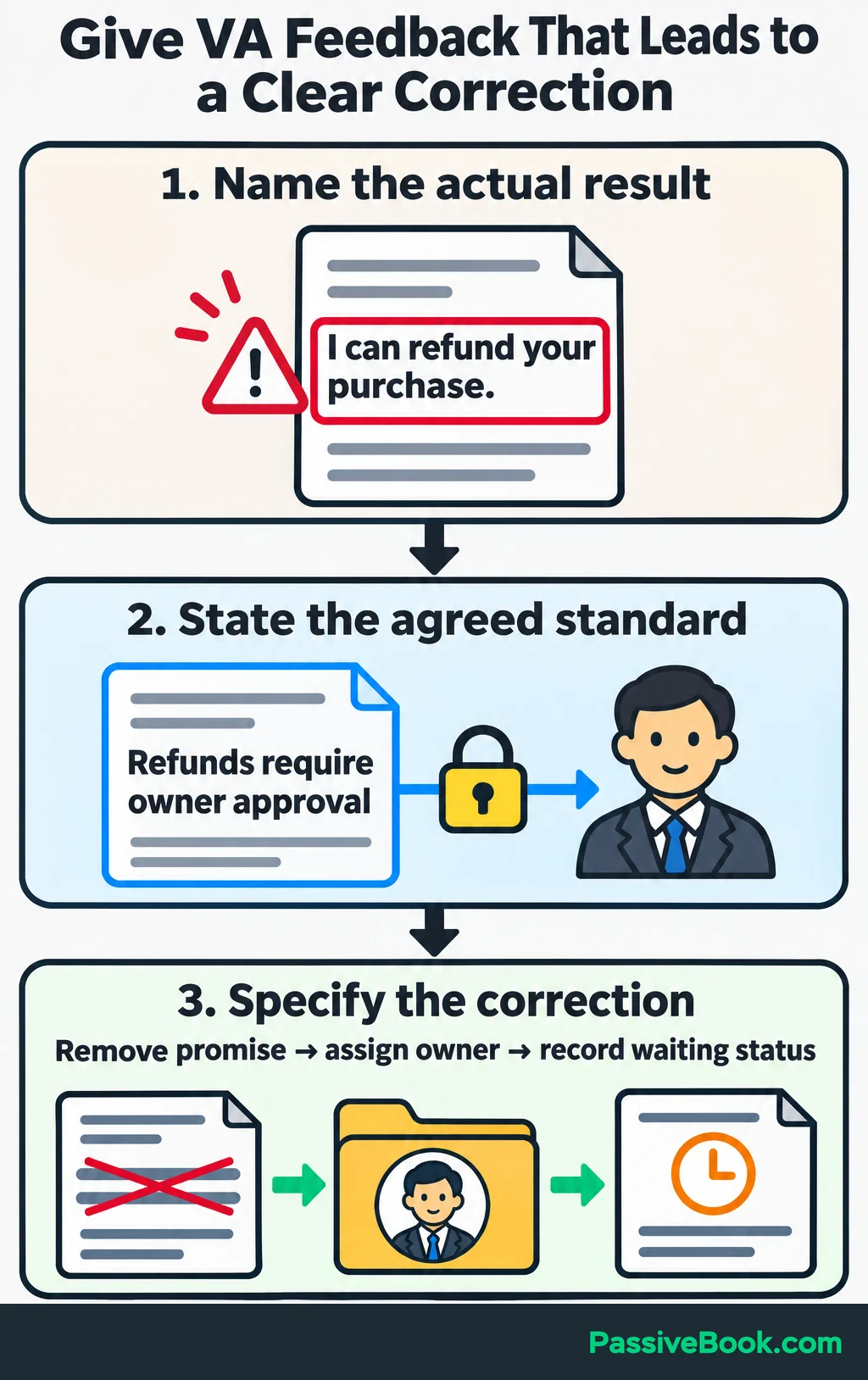
That is easier to apply than “Be more careful.”
For hourly work, reconcile invoices with task records and investigate unexpected increases. Agree on any time-tracking method before using it.
Calculate Whether Delegation Is Worthwhile
For comparable work over the same period, subtract the time you spend briefing, training, coordinating, reviewing, correcting, and handling exceptions from the hours the work previously took you.
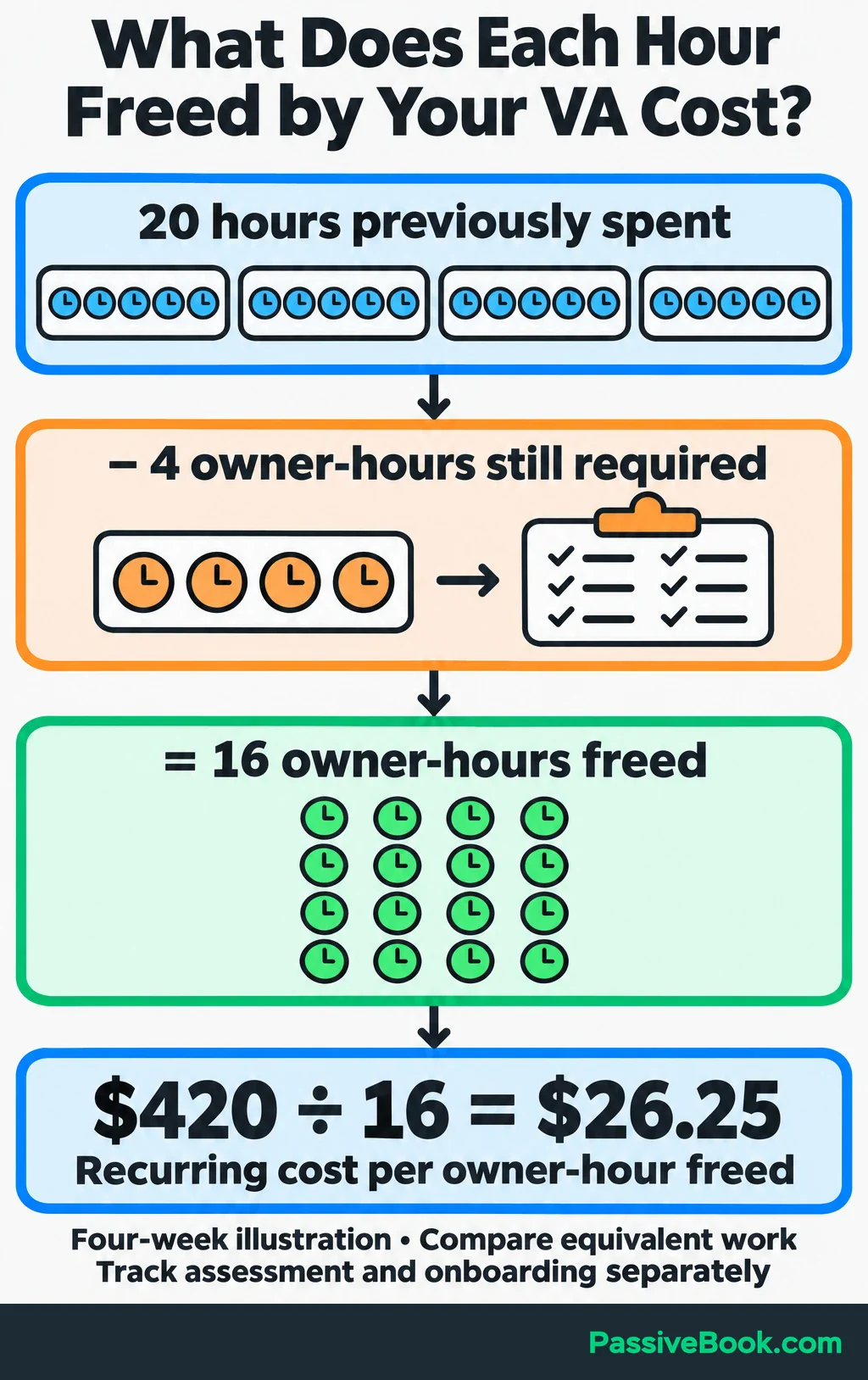
In the four-week pattern-shop illustration, suppose comparable enquiries used to take you five hours weekly. Ongoing delegation now takes one owner-hour weekly for all those activities.
| Item | Four-Week Amount |
|---|---|
| Previous owner time | 20 hours |
| Current owner involvement | 4 hours |
| Net owner time saved | 16 hours |
| Recurring delegation cost | $420 |
| Cost per owner-hour freed | $420 ÷ 16 = $26.25 |
Include assessment and onboarding in your total investment, but track them separately so you can distinguish startup costs from recurring costs.
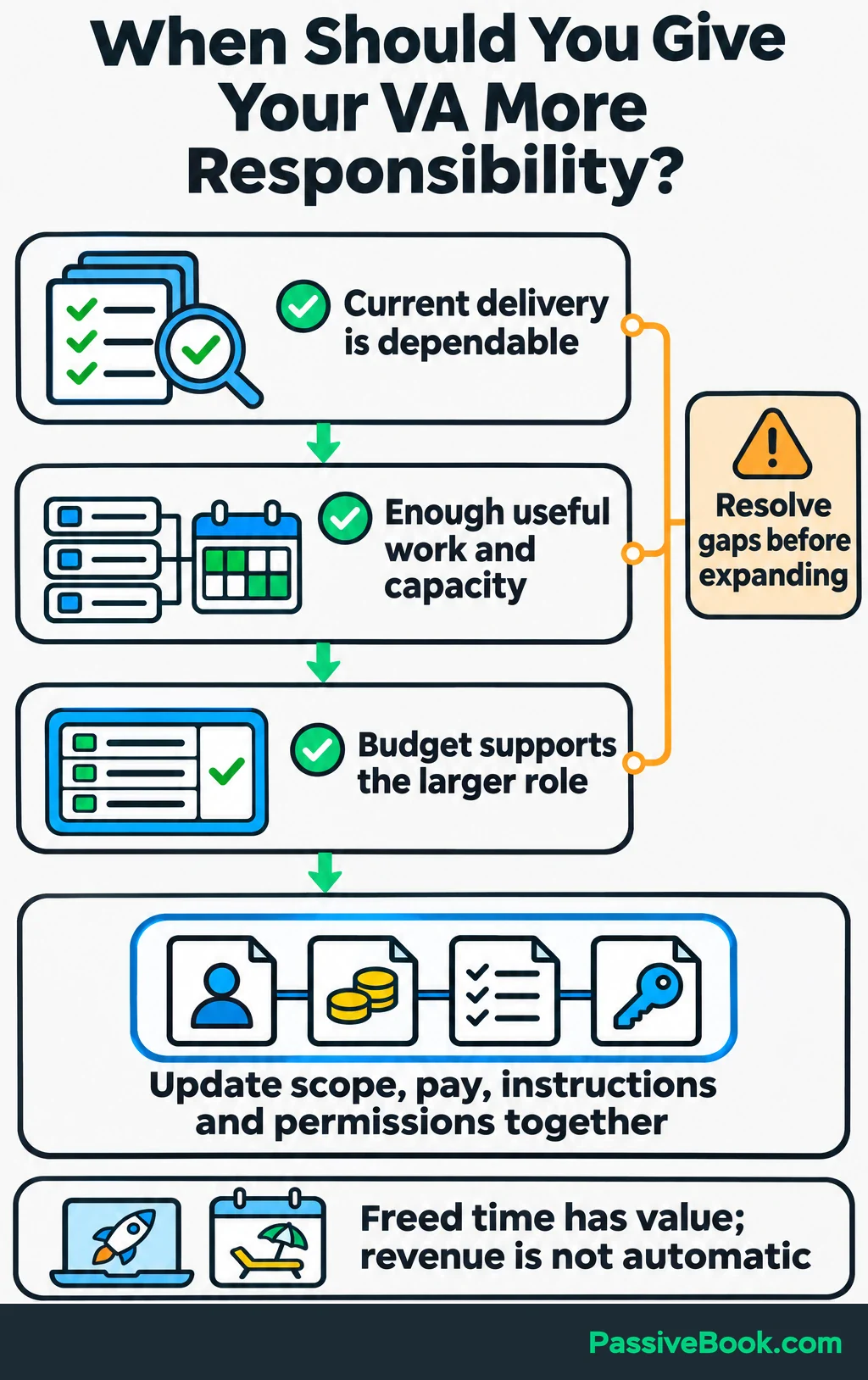
Then decide whether those freed hours are worth the cost. They might support product development, business growth, or an evening away from work. Time saved does not automatically become revenue.
Add responsibilities only when current delivery is dependable and there is enough work, capacity, and budget. Update scope, pay, instructions, and permissions together.
10. Correct Persistent Problems or Arrange a Handover
When something keeps going wrong, identify the cause before choosing the correction.
| Cause | Useful Response |
|---|---|
| Instructions leave a decision unclear | Add the missing rule and practise an example |
| A required skill needs development | Provide focused training and review the next batch |
| Work exceeds available capacity | Reduce priorities or agree on more paid capacity |
| An understood process is repeatedly ignored | Set a specific improvement requirement and review date |
Make it easy to report mistakes promptly. If the wrong file was released, pause affected work and contain the problem before discussing how it happened.
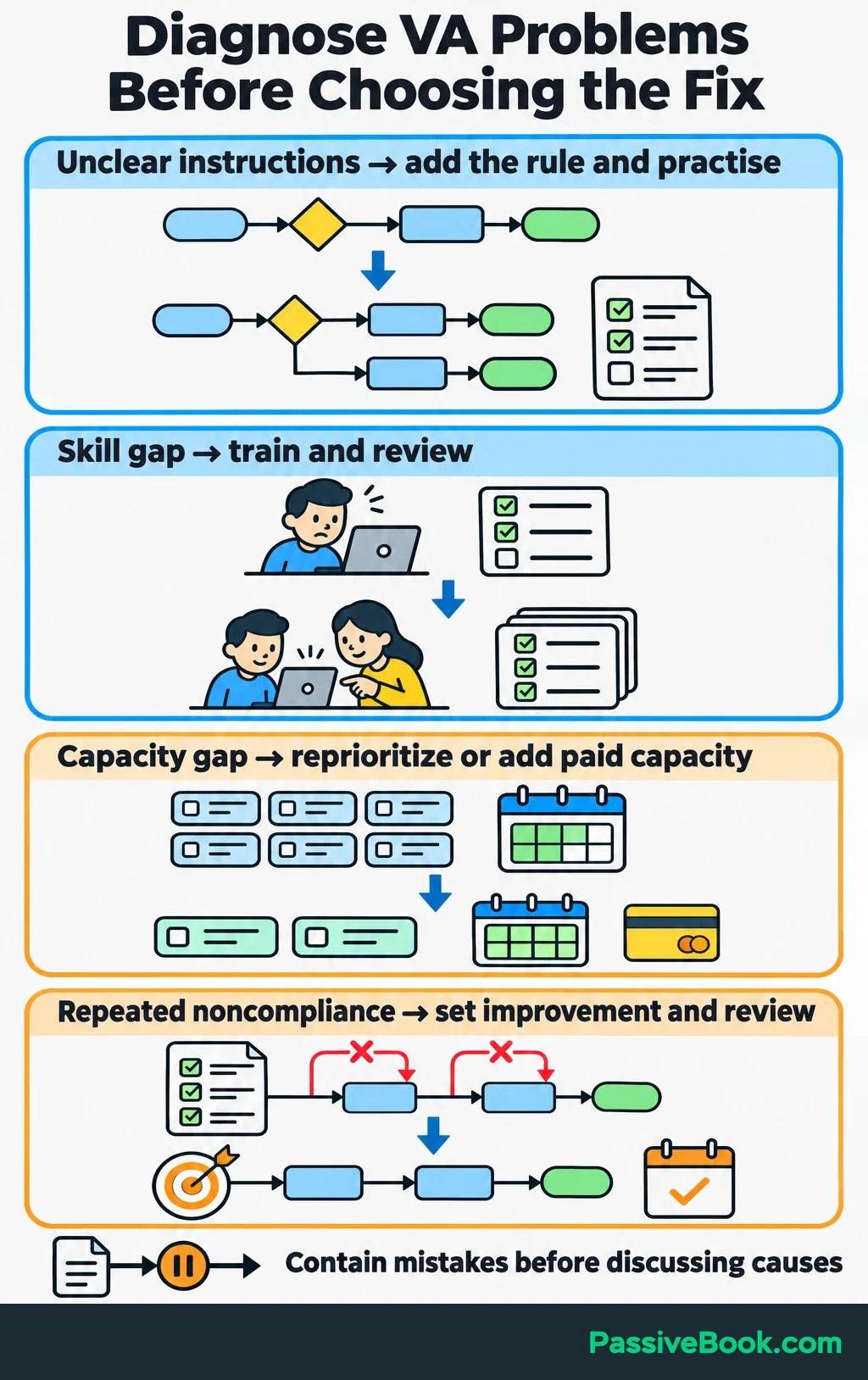
Agree on the improvement needed, support you will provide, and when you will review it. “Please improve” gives neither person a usable target.
Timely payment, specific recognition, and honest workload discussions also matter. Keep procedures and essential files in business-controlled systems so an absence does not leave you locked out of your own operation.
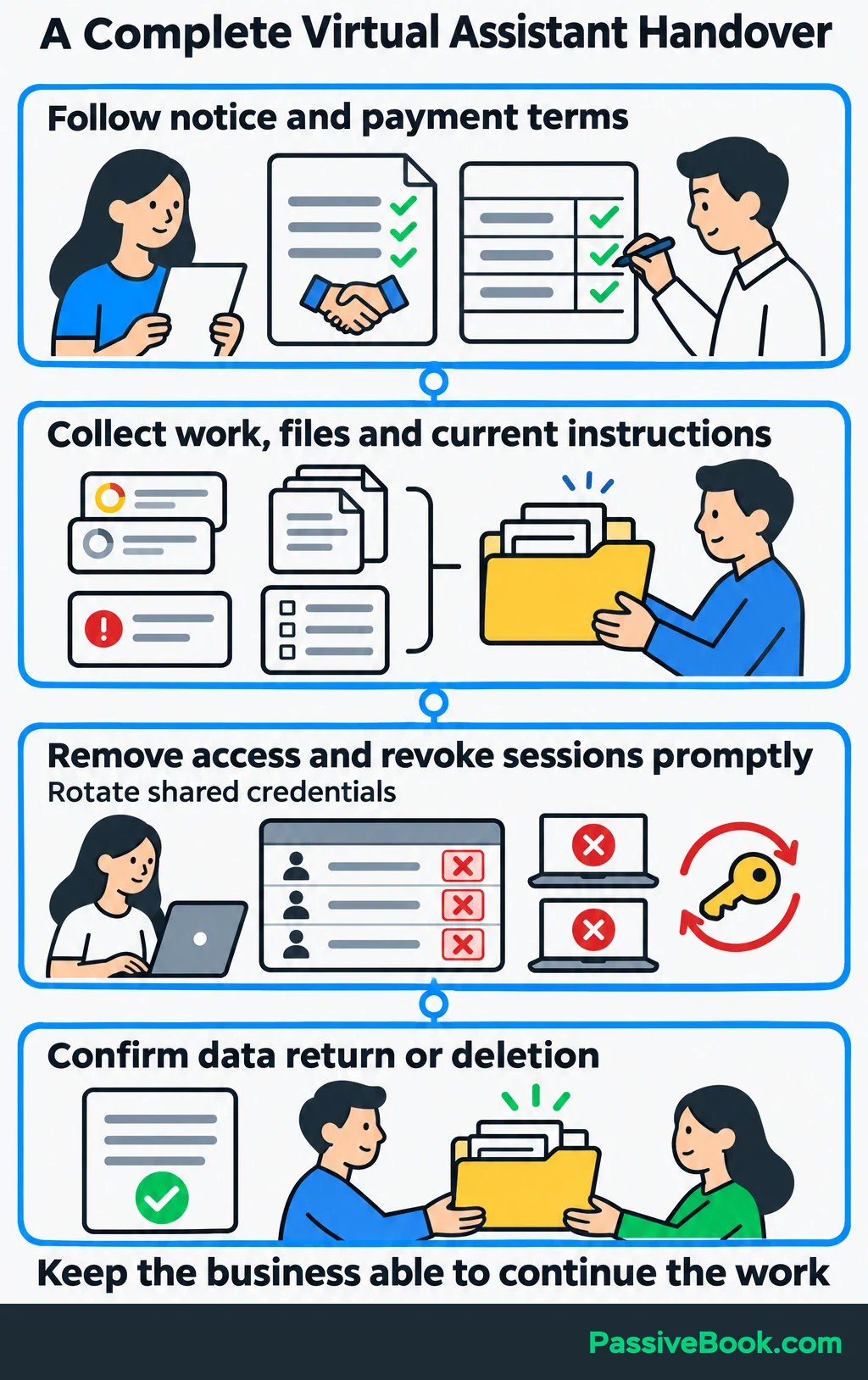
If the arrangement ends, follow the notice and payment terms. Collect unfinished tasks, files, outstanding decisions, and current instructions.
Remove access promptly, revoke active sessions, and rotate shared credentials. Confirm the agreed return or deletion of business data. The Australian government’s account-security guidance also recommends removing departing staff’s access and changing shared login details.
A good handover should leave you able to continue the work or teach the next person.
What Next?
Choose one recurring task and write down its trigger, acceptable result, and exceptions. Use that page to estimate a small paid role before posting a job.
If this guide makes your first hire feel more manageable, use the social buttons to share a clearer route from hiring to dependable help.
Which task would you hand over first, and what would you need to see before trusting someone to handle it? Share your answer in the comments, and bring any other hiring questions too.
Share this post with your friends & followers:

