A buyer asks what your business is worth, and you have a revenue figure, last year’s profit and no clear asking price. A calculator could help, but a headline number alone gives you little to explain to the buyer.
Paying for a polished report may leave you no better prepared if it uses the wrong earnings figure or compares your business with companies nothing like it. This comparison covers six tools, their costs and their methods, with a worked online-store example to help you assess the number before using it in a sale, funding discussion or business plan.
Understand the Valuation Behind the Software
Before comparing business valuation software, decide what you want to value and why. An estimate for your own planning needs less documentation than a valuation a lender must accept.
Next, get clear on the financial figure going into the calculation:
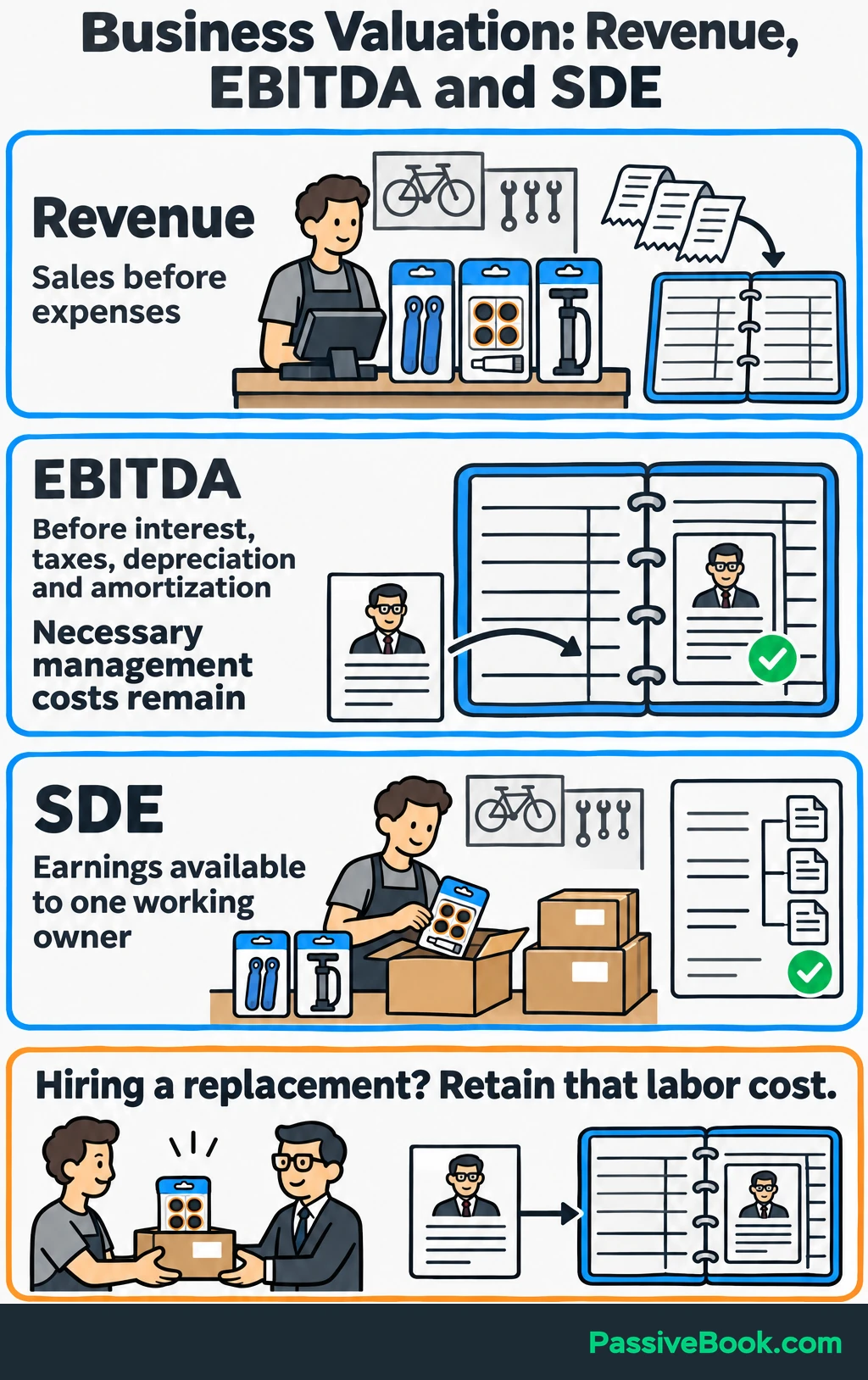
- Revenue: Sales before expenses. Strong revenue can sit beside weak profit.
- EBITDA: Earnings before interest, taxes, depreciation and amortization. Necessary management costs remain expenses.
- SDE: Seller’s discretionary earnings. This estimates the earnings available to one working owner by adjusting profit for that owner’s compensation and other supported items.
SDE can suit a business where the buyer will take over the owner’s work. If the buyer plans to hire a manager, the analysis must retain an appropriate cost for that work. Customer support does not become free because the founder stops answering emails.
The valuation method also matters. There are three main approaches:
| Approach | How It Works | What to Check |
|---|---|---|
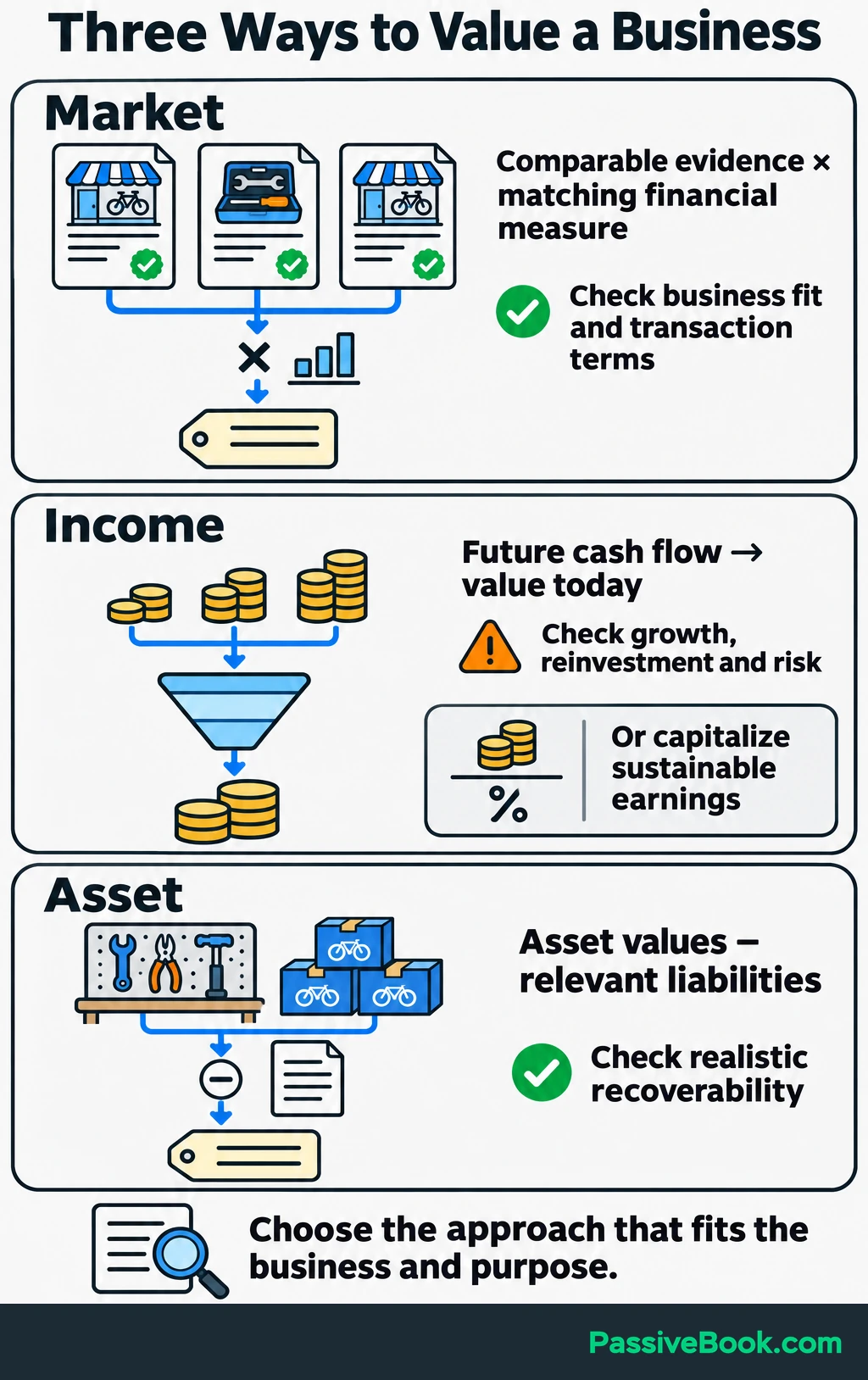
| Market | Applies evidence from comparable businesses, often through an earnings or revenue multiple | Whether the businesses, financial measures and transaction terms are comparable |
| Income | Values future cash flow in today’s money (discounted cash flow, or DCF), or divides sustainable earnings by a rate reflecting risk and expected growth | Whether earnings, growth, reinvestment and risk assumptions are supportable |
| Asset | Estimates asset values and deducts relevant liabilities | Whether assets drive the business’s value and what they could realistically recover |
BDC explains that the choice depends on the company’s profitability, outlook, assets and valuation purpose. Earnings methods often suit profitable operating businesses, while asset methods deserve more weight when assets dominate or returns are weak. BDC’s guide to business valuation
Throughout this article, imagine you run an online store selling bicycle repair kits. Its figures and multiples are illustrations, not market benchmarks.
For that store, I would first examine sustainable earnings and relevant small-business sales. A listed bicycle manufacturer might share an industry label, but its size, management and access to capital could make it a poor comparison.
Ask what each tool’s market evidence represents: completed sales, asking prices, public-company values or startup funding rounds. Then check business model, size, geography, transaction date and included assets.
Finally, match the multiple to its input. An annual SDE multiple belongs with annual SDE. A monthly-profit multiple belongs with monthly profit. “Three times earnings” is incomplete until you know which earnings and which period.
Best Business Valuation Software by Use Case
I would shortlist by the deliverable you need:
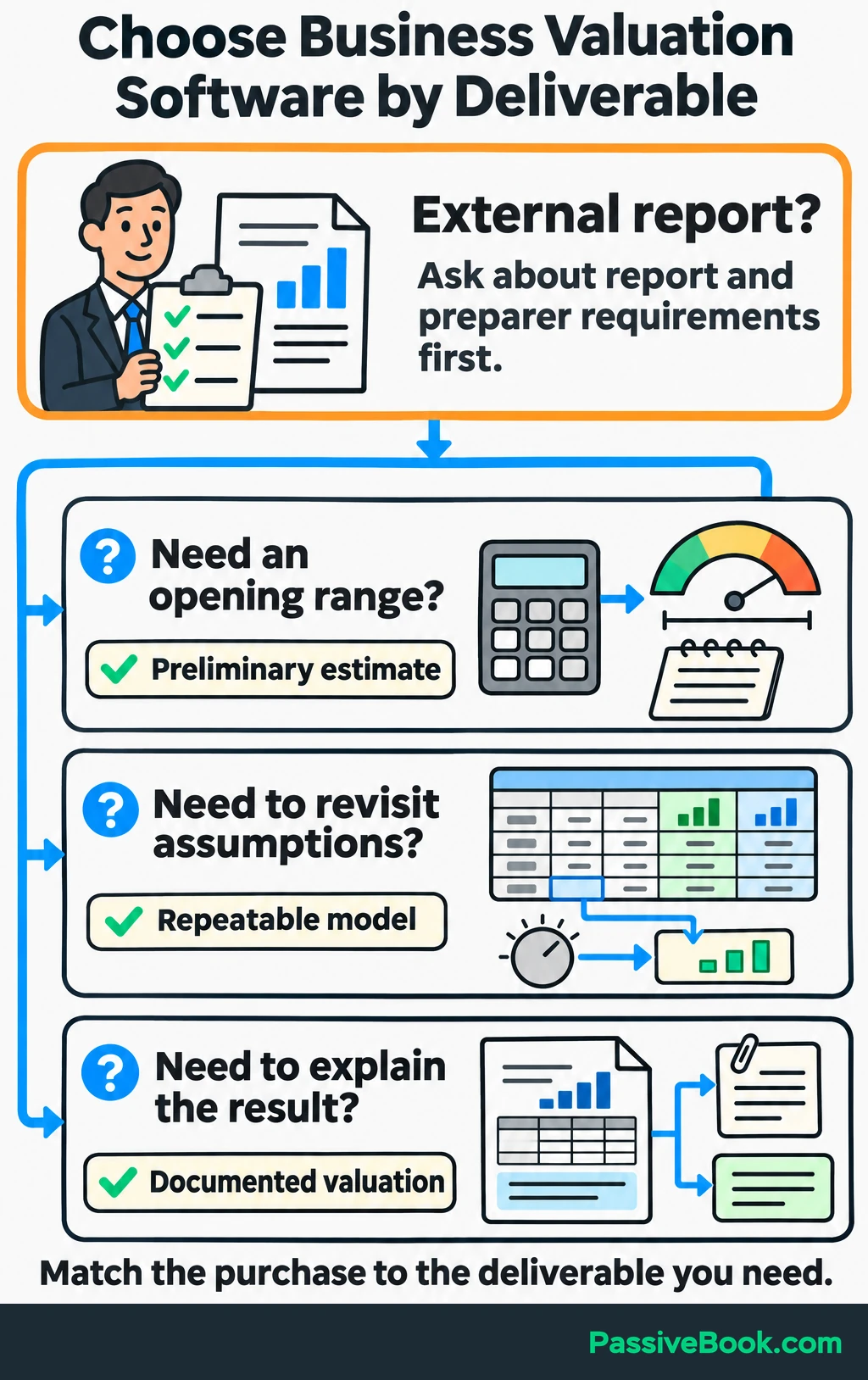
- Preliminary estimate: A useful starting range for planning or an early sale discussion.
- Repeatable model: Editable assumptions you can revisit as the business changes.
- Documented valuation: Calculations, evidence and explanations suitable for the intended recipient.
Before buying software for an external report, ask the recipient what report and preparer qualifications they require. That answer can eliminate unsuitable products immediately.
The table keeps prices and purchase commitments together. Dollar amounts are USD; Equidam uses regional pricing, so its checkout amount matters more than a single advertised figure. Check the linked pricing pages before buying.
| Product | Best Use | Methods and Market Data | Required Inputs and Verified Import Options | Report Output | Starting Cost and Commitment | Main Limitation |
|---|---|---|---|---|---|---|
| Empire Flippers | First estimate for a supported online business | Broker’s earnings-based estimate informed by its online-business market | Revenue, profit, age and operating details; enter figures through the questionnaire | Preliminary estimate | Free calculator | Limited control over methods and assumptions |
| ValuAdder | Desktop analysis without a subscription | Income, market and asset methods; built-in industry multiples and cost-of-capital data | Financial statements, adjustments and assumptions; Excel comparable-data import through Multiples Maker | Calculation summaries; editable narrative report through separate Report Builder | Software: $375. Report Builder: $185. Pro Package combining both: $504 upfront. Unlimited valuations; optional upgrades | You must select and justify assumptions; narrative reporting costs extra |
| BizEquity | Recurring planning through an advisor | Proprietary hybrid of DCF, market data, growth assumptions and SDE | Financial and operating information; QuickBooks integration and AI/OCR tax reader | Planning reports; white-label reports on Advisor Office | Quote required. Advisor starts at 10 cases per advisor; confirm allowance period and contract term | Software-generated planning valuation rather than a certified appraisal |
| ValuSource | Detailed Excel analysis and Word reports | Multiple valuation methods with database integration; data access depends on purchase | Financial statements, adjustments and assumptions; spreadsheet import and supported database integration | Editable Excel schedules and Word narrative reports | $1,465 annually, or $135 monthly with an annual commitment: $1,620 across 12 payments. Database subscriptions extra unless bundled | More setup and valuation knowledge than a simple calculator |
| Valutico | Repeated professional research and reporting | DCF, earnings and revenue multiples, book value, comparable companies and transactions | Historical financials and forecasts; confirm import formats and integrations in the demonstration | Reports combining methods, assumptions, charts and results | Quote required; confirm seats, datasets, modules and minimum term | Broad research coverage may still lack close matches for a small online store |
| Equidam | Startup fundraising | Five methods, including two DCF methods; paid funding-round benchmarks | Company information, financial history and forecasts; confirm any required import workflow | Essential: on-screen range. Advanced: PDF, XLSX and Markdown exports | Essential is free. Advanced uses regional, one-time pricing for selected access within a 12-month valuation cycle | Startup fundraising comparisons may be unsuitable for an established store’s sale |
These tools can serve different stages of the same decision. You might begin with a free broker estimate and later pay for a model that lets you explain the assumptions. Buying the largest platform first rarely makes that sequence cheaper.
Empire Flippers: Best Free Estimate for an Online Business
I would start here if you want a first estimate for an ecommerce, content, digital-product or other supported online business.
Prepare your revenue, earnings, business age and operating details before opening the calculator. For the bicycle repair kit store, choose ecommerce and use profit after necessary costs such as stock sold, fulfillment, payment fees and advertising.
Empire Flippers publishes an earnings-based formula using 12 months’ total net profit multiplied by a valuation multiple. Keep that annual basis in mind when comparing its estimate with a broker quoting a monthly-profit multiple.
If a monthly multiple is 30, its annual equivalent is 2.5 because a year contains 12 months. That conversion aligns the periods; it does not prove the two calculations use the same profit definition.
Treat the result as an opening estimate. I would move to a fuller tool when you need to change assumptions, compare methods or prepare a narrative explaining the value.
ValuAdder: Best Desktop Option Without a Subscription
ValuAdder is my shortlist choice when you want to work through the valuation yourself and avoid an ongoing software bill.
It runs on Mac or Windows and lets you store financial data locally. Its documented methods include capitalized earnings, discounted cash flow, market comparables and discretionary earnings. Built-in industry multiples and cost-of-capital data support those calculations. ValuAdder’s methods and features
The software performs the calculations, but you still need to defend the forecast and the discount rate—the rate used to account for risk and the wait for future cash.
For the repair kit store, I would inspect the available industry categories before relying on an included multiple. A broad retail category may need closer examination.
Multiples Maker can bring in comparable-transaction data from Excel, so you can use another source when the built-in evidence is a weak fit. Any separately licensed data adds to your cost.
Check the reporting distinction before purchasing. The core software includes method-specific calculation summaries. Report Builder adds an editable narrative report and requires Microsoft Word.
I would choose this option if you are comfortable preparing earnings adjustments and explaining your assumptions. A one-time license is good value only when you can use the model competently.
BizEquity: Best for Recurring Advisor-led Planning
BizEquity makes more sense for repeated client planning than for a single owner who wants one number.
Its guided cloud workflow connects valuation with operational risks, insurance, growth and exit readiness. The vendor describes a proprietary hybrid model combining DCF, comparable-market data, growth assumptions and SDE.
The practical attraction is recurring review. An advisor can revisit the business as earnings, customer concentration or owner involvement changes. QuickBooks integration and the tax-document reader may reduce data entry, though imported figures still need checking.
During a demonstration, ask to change three inputs:
- Owner compensation.
- Inventory or working-capital assumptions.
- An expense the business must keep paying.
Watch where each change appears in the calculation and report. That reveals more than a finished dashboard.
I would also ask which underlying assumptions you can edit and which remain controlled by the model. BizEquity describes its valuations as software generated rather than certified appraisals, so choose it for its planning role.
ValuSource: Best for Customizable Excel and Word Reports
Choose ValuSource when you need to inspect formulas, adapt schedules and write a detailed explanation of the result.
Its suite is built around Excel and Word, with visible formulas, editable worksheets, spreadsheet imports and customizable narrative reporting. The subscription includes the valuation software suite and Report Writer. ValuSource’s suite capabilities
That flexibility matters when an engagement needs more than standard fields. You may need to explain an earnings adjustment, show alternative assumptions or reconcile several methods.
The distinction I would check hardest is database integration versus database access. Software that connects to a transaction database does not necessarily include the license to use that database.
For the repair kit store, ask which purchased dataset supplies comparable small-business transactions and inspect the financial detail available. Then price the software and relevant data together.
I would choose this level of customization for ongoing valuation work. For one internal estimate, the learning effort and annual commitment are harder to justify. Confirm that the software works with your Microsoft Office environment before purchasing.
Valutico: Best for Integrated Professional Research
Valutico suits a team that repeatedly needs financial models, comparable-company research, transaction evidence and reports in one place.
Its platform includes DCF, EBITDA multiples, revenue multiples and book-value methods. It also offers forecasting, cost-of-capital tools and AI-assisted comparable selection. Valutico’s valuation platform
I would judge it through a demonstration using a business you supply. For the repair kit store, ask the presenter to find relevant transactions and show the underlying financial evidence.
A long list of companies is less useful than a few close comparisons with clear earnings definitions and transaction terms.
Then change a forecast assumption and follow it through the model and exported report. Ask which datasets and AI modules are included in the quote, along with seats, export rights and the contract term.
For confidential records, ask for evidence of how the vendor protects your data. Valutico reports SOC 2 Type II compliance, which involves an independent audit of its controls over a period of time. It says enterprise customers can obtain its SOC 2 reports under a nondisclosure agreement. Valutico’s security disclosures
I would pay for this scope when repeated research and team reporting save enough work to justify it.
Equidam: Best for Startup Fundraising Valuations
Equidam belongs on a fundraising shortlist.
Its five-method engine combines Scorecard, Checklist, Venture Capital and two DCF methods. These bring together startup characteristics, expected investor returns and future cash flow. Paid plans add benchmark context, including similar funding rounds.
Essential lets you explore an on-screen valuation range and multiple scenarios without paying. An account saves your work, but downloadable reports and benchmarks require a paid plan. Advanced adds adjustable parameters, sensitivity analysis and exports.
The purchase structure deserves attention: paid access sits within a 12-month valuation cycle, and standard paid purchases do not automatically renew. Regional pricing and selected access affect the final amount. Equidam’s purchase terms
For the repair kit store, I would use Equidam only if the decision is startup fundraising and the methods fit that purpose. A forecast-driven funding valuation does not automatically answer what a buyer would pay for the established store.
Prepare supportable forecasts before paying. An attractive growth assumption is still an assumption, even when five methods use it.
Check Your Shortlist With Your Own Financials
A useful comparison starts with the same records and the same valuation purpose. Otherwise, you may end up comparing differences in your inputs rather than differences between tools.
Prepare One Consistent Set of Inputs
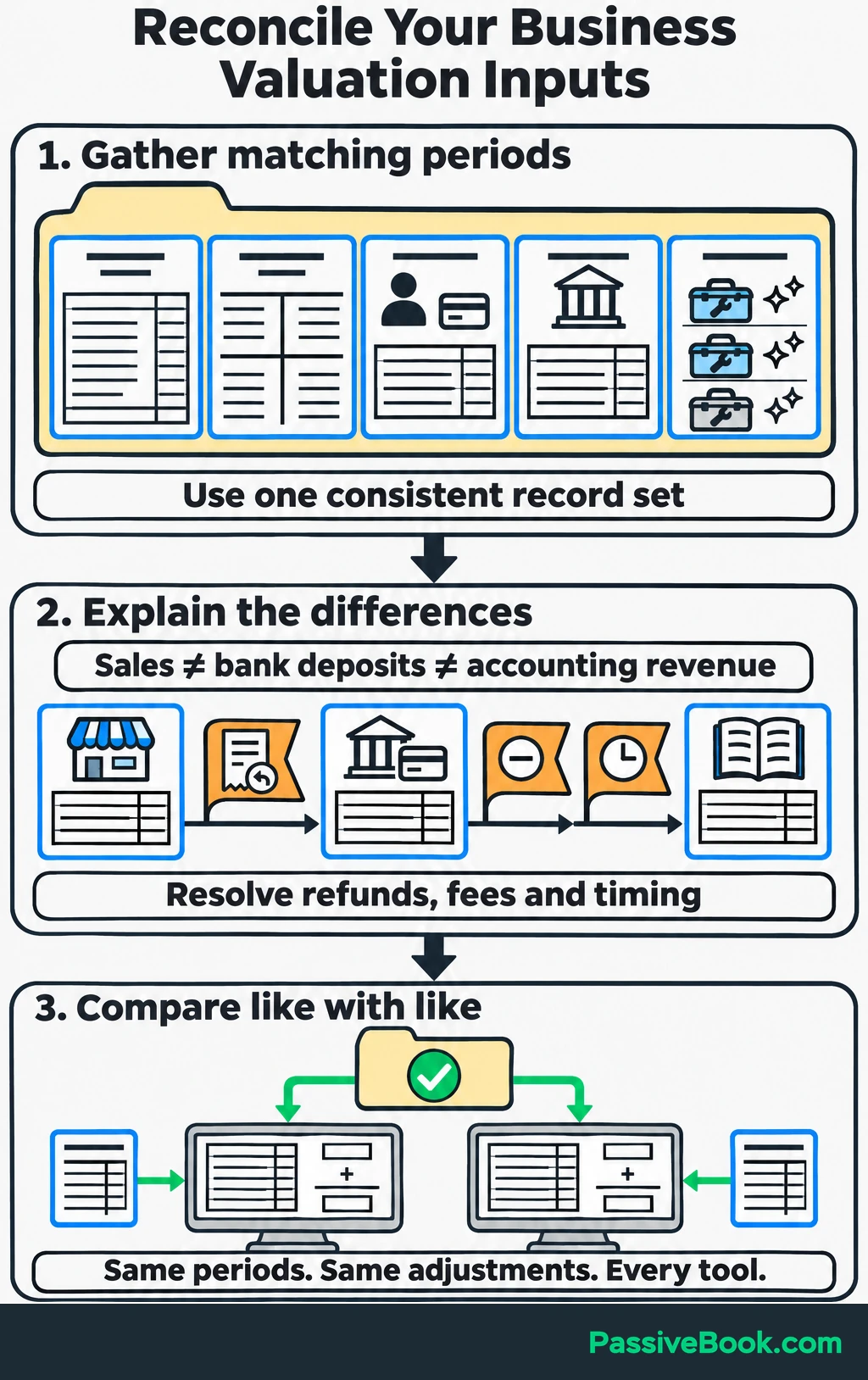
Gather the financial periods each shortlisted tool requires, plus current interim results. Your working folder should include:
- Financial statements: Income statements and balance sheets.
- Owner payments: Salary, benefits and any expenses you propose adjusting.
- Debt and cash: Current balances and supporting statements.
- Inventory: Quantities, recorded costs, age and condition.
- Operating records: Sales, refunds, payment fees, fulfillment and other recurring expenses.
Reconcile the records before uploading them. Store sales, bank deposits and accounting revenue can differ because of refunds, fees and timing. Resolve those differences rather than choosing whichever figure produces the nicest valuation.
I learned the inventory lesson through my abandoned online jewellery store. I started with roughly $1,200, skipped proper market research and ended up with unsold stock. I lost most of the investment. The money I had spent buying jewellery did not tell me what that stock was worth afterward.
That is why I would inspect slow-moving repair kits separately from stock that sells reliably. A balance-sheet total alone does not tell the full story.
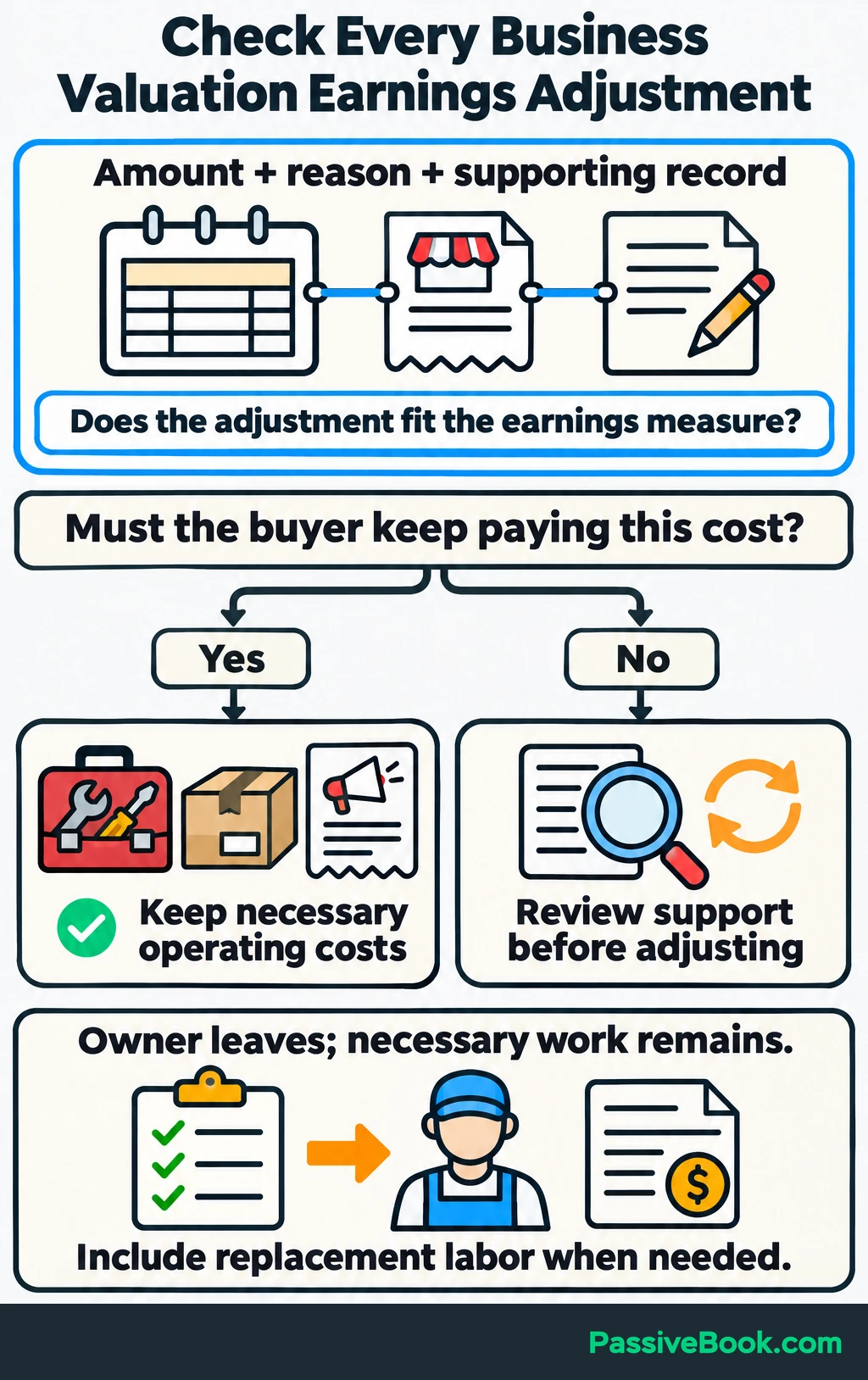
For earnings adjustments, record the amount, reason and supporting document. Keep costs a buyer must continue paying, such as the cost of stock sold, fulfillment and necessary advertising. Include replacement labor costs if the buyer will need to hire someone to do the owner’s work.
Before sharing confidential records, review access permissions, retention, deletion and AI data-use terms. Give the tool the information it needs, and use limited permissions where integrations allow them.
Trace the Calculation and Test a Range
First calculate earnings after supported adjustments. Then apply a multiple that matches those earnings and the reporting period.
For the repair kit store, assume these annual figures:
| Item | Illustrative Amount |
|---|---|
| Pretax profit after owner compensation | $40,000 |
| Compensation for one working owner | $30,000 |
| Interest expense | $5,000 |
| Depreciation expense | $5,000 |
| Other adjustments | $0 |
To estimate SDE for one working owner, add back that owner’s compensation, interest and depreciation to pretax profit:
$40,000 + $30,000 + $5,000 + $5,000 = $80,000 annual SDE.
Now assume an annual SDE multiple of 2–3 solely to illustrate the calculation:
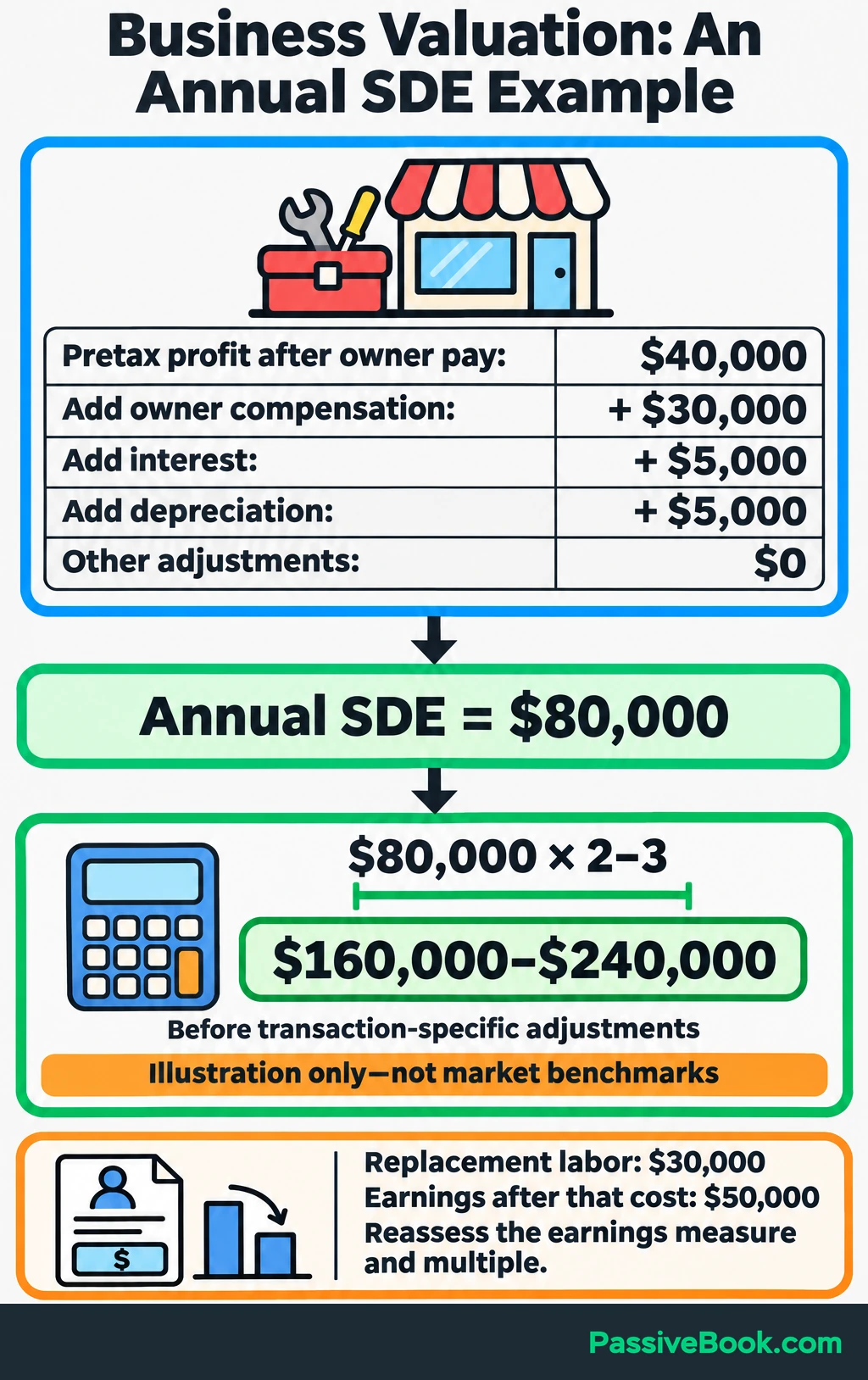
$80,000 × 2–3 = $160,000–$240,000 before transaction-specific adjustments.
That is a model range, not evidence that repair kit stores sell at those multiples.
The owner’s work changes how you use the result. If the buyer needs a paid manager, retain an appropriate replacement cost and use a multiple suited to the resulting earnings measure.
For example, assuming necessary replacement work costs $30,000 annually, the earnings available after that cost would be $50,000. Do not automatically reuse an owner-operated SDE multiple on this different measure.
You can use the calculator below to separate owner add-backs from costs a buyer would still need to pay. It gives you an earnings reconciliation to compare with a software estimate.
Free Business Valuation Calculator




Enter the same period and adjustments into each tool. Check imported or AI-extracted figures against the originals, especially signs, units and reporting periods.
Then test the assumptions that drive the chosen method:
- Market method: Change sustainable earnings and the supported comparable multiple.
- DCF: Change growth, reinvestment, discount rate and terminal value—the value assigned beyond the explicit forecast.
- Asset method: Change recoverable asset values and relevant liabilities.
If two tools disagree, investigate before averaging them. One may use owner-adjusted earnings while another retains management costs. One may value operations while another reports the owners’ equity.
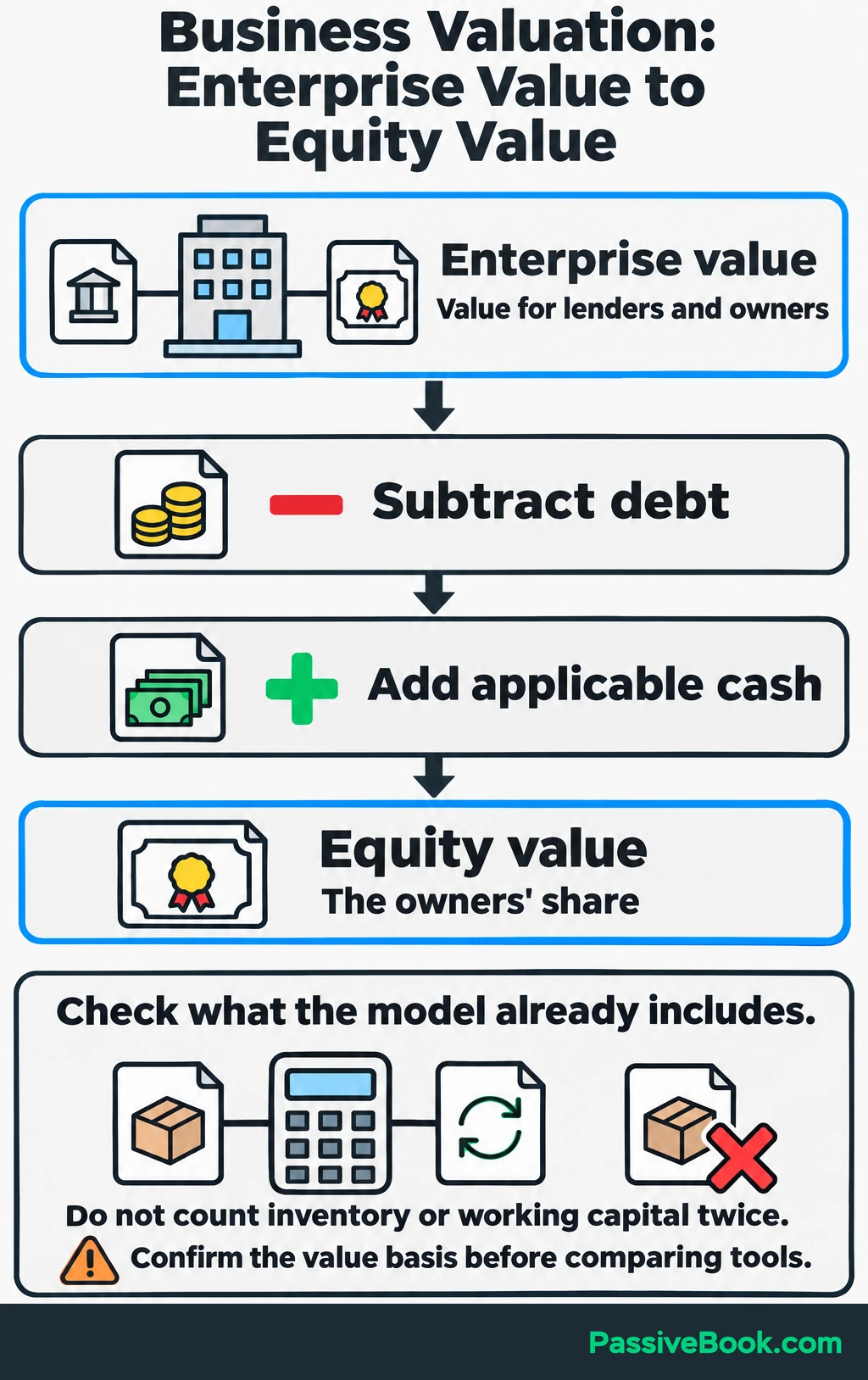
That last distinction affects what a seller receives. Enterprise value includes the interests of both lenders and owners; equity value is the owners’ share. For a straightforward calculation, subtract debt and add applicable cash to enterprise value to reach equity value. BDC explains this relationship as enterprise value equaling equity value plus net debt. BDC’s enterprise-value explanation
Confirm how the model treats normal inventory and working capital before adding either separately. Otherwise, you can count the same value twice.
Inspect the Report Before Committing
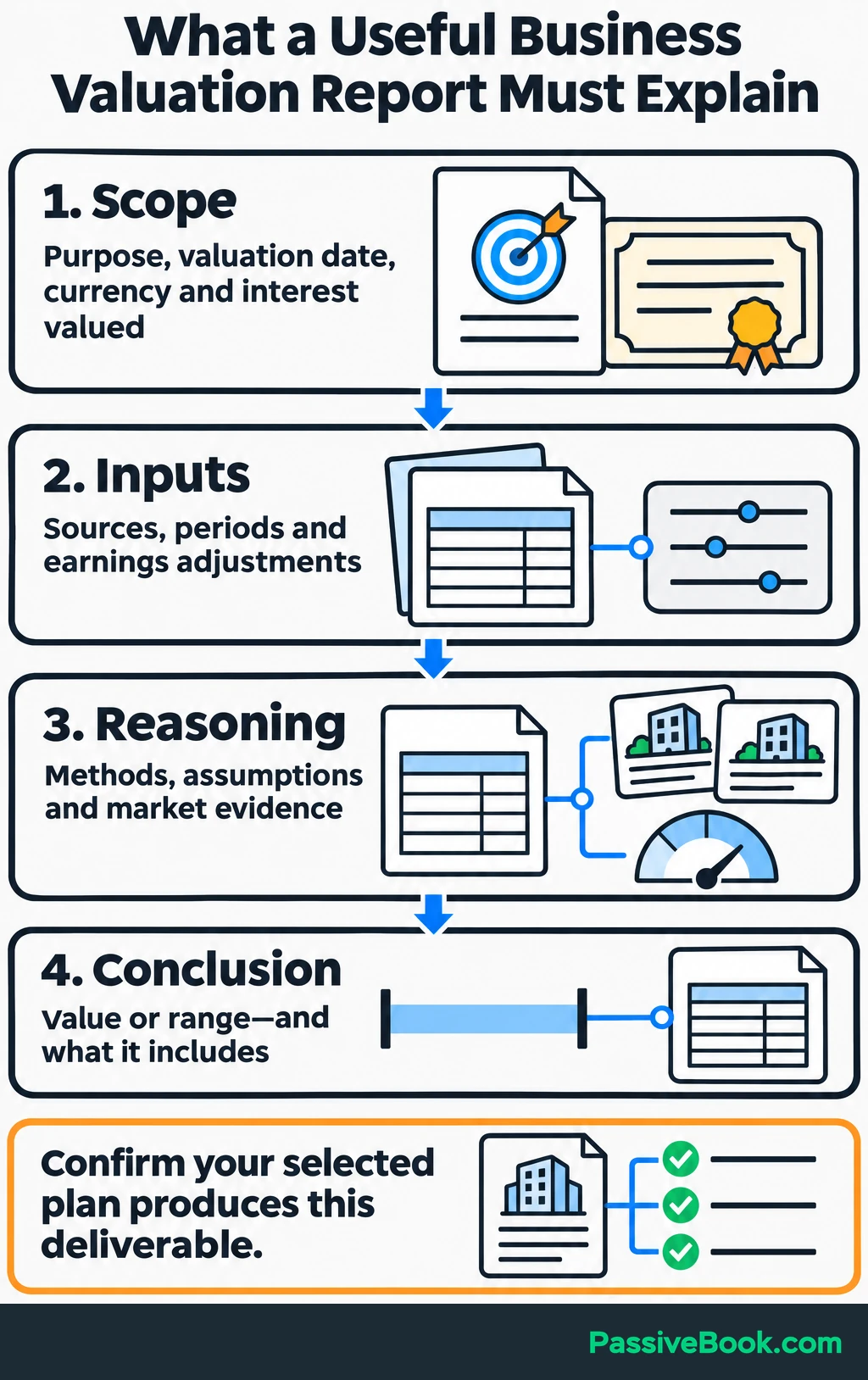
Ask for a sample report before purchasing, then check whether your selected plan produces that report.
I would expect a useful report to identify:
- Scope: Purpose, valuation date, currency, ownership interest or assets valued.
- Inputs: Financial sources, reporting periods and earnings adjustments.
- Reasoning: Methods, key assumptions and supporting market evidence.
- Conclusion: The value or range, with a clear explanation of what it includes.
Next, change one material input and regenerate the report. Check that calculations, charts and narrative agree.
For the repair kit store, reducing sustainable earnings should flow through every relevant section. A report that updates the chart but leaves the old conclusion in the text creates work at exactly the point you wanted help.
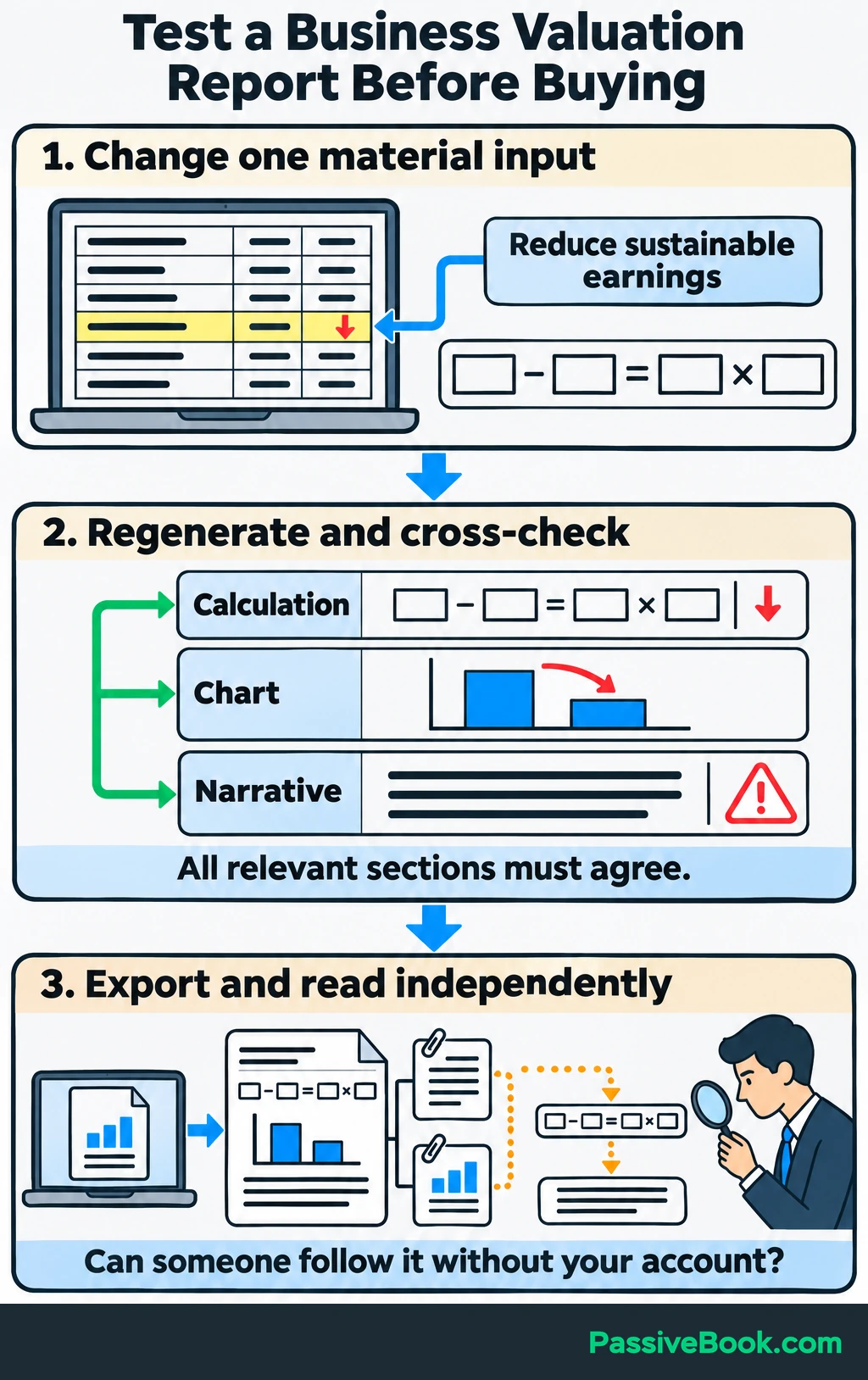
Export the document and read it outside the platform. Check whether a buyer, partner or advisor could follow the reasoning without access to your account.
Finally, compare the full cost of that deliverable: software, report add-ons, data licenses, seats and minimum commitment. I would choose the least expensive option that passes the input, calculation and reporting checks. An unused professional subscription is an expensive way to store one PDF.
When Do You Need a Professional Valuation?
A transparent software estimate can be enough for internal planning and preliminary sale discussions. It can help you understand the assumptions behind a range and prepare better questions.
The agreed transaction price can still differ because of financing, due diligence, strategic fit and transfer terms. A valuation gives the negotiation a basis; it does not settle every part of the deal.
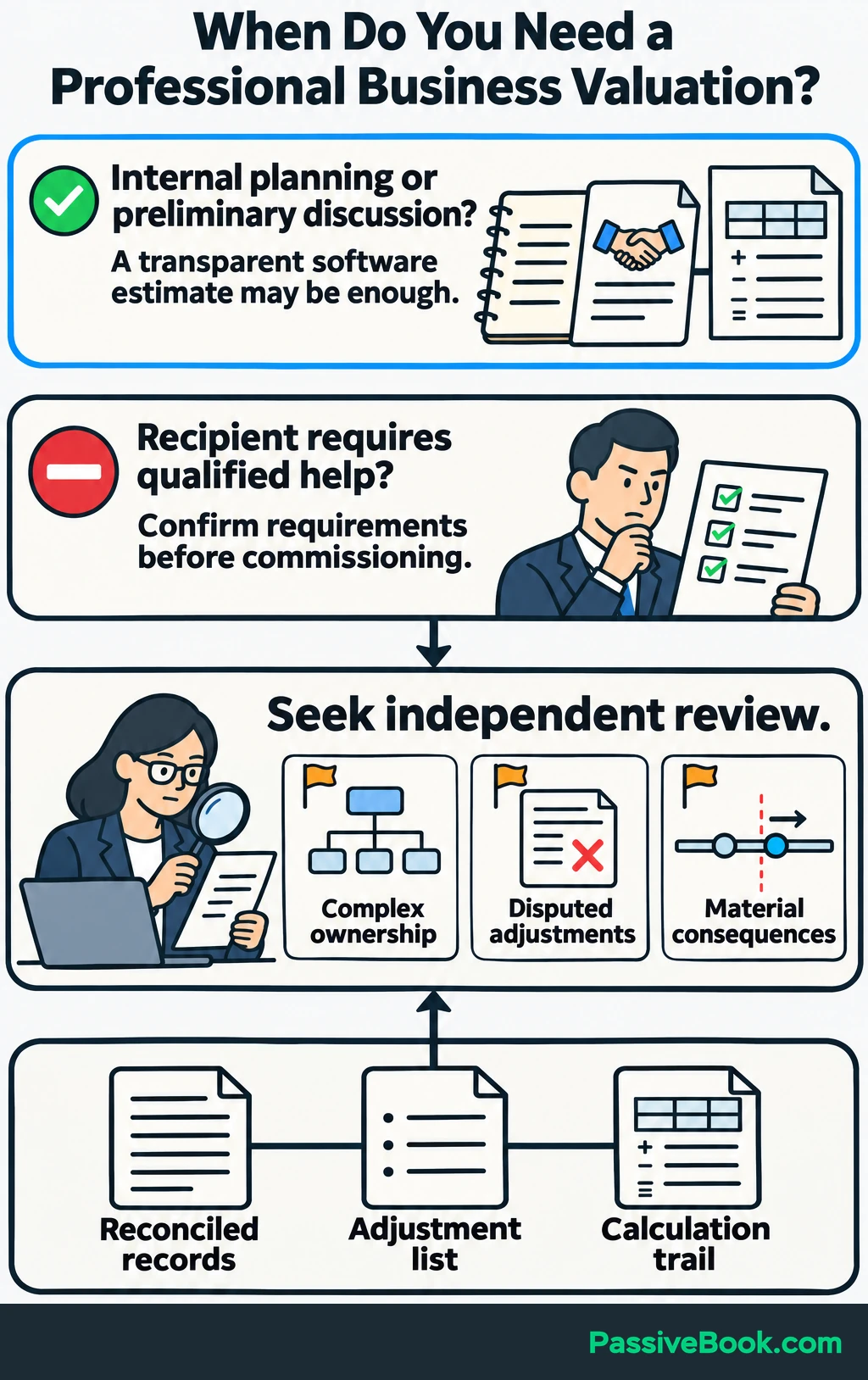
Arrange qualified help when the intended recipient requires it. For a financed acquisition, speak to the lender before commissioning a report. BDC explains that a bank’s valuation helps determine how much financing it will provide, so a gap between that figure and the purchase price can affect the funding needed. BDC’s explanation of the lender’s role
I would also seek independent review when ownership is complex, earnings adjustments are disputed or a modest error could materially change the decision.
Bring reconciled financial records, a documented adjustment list and the software’s calculation trail. Those make the discussion more useful.
What Next?
Pull your latest full-year income statement and list every earnings adjustment you think belongs in a valuation. Add a reason and supporting record beside each one, then choose the tool that fits the report you need.
Use the social buttons to share this comparison when a valuation discussion needs clearer assumptions and fewer competing calculator results.
Which assumption in your business’s value would be hardest to defend—owner workload, sustainable profit or the multiple? Tell me in the comments, and bring any other questions too.
Share this post with your friends & followers:

