Your posts get saved, people ask questions, and you still have no clear answer to “How does this make money?” Another month of content won’t necessarily answer it.
Around 2022, I spent six months chasing followers on Instagram and Twitter/X for another niche. These weren’t Passive Book’s channels, and I had no meaningful income to show for the work.
Without income, it’s hard to decide whether another month of content is worth your time. This roadmap helps you choose how your posts could earn money and test the route to a first paid result before you commit to more publishing.
Choose a Revenue Model You Can Deliver Profitably
Start with a problem people want solved and identify who would pay. Look through comments, messages, product reviews, and customer enquiries for questions about choosing, buying, preparing, or getting help.
“Lovely photo” is pleasant. “Where can I buy that?” gives you something to investigate.
Learning how to monetize social media means choosing which paid action your content will support. You might sell a download, attract a client, earn a qualifying referral commission, or qualify for platform payments.
These methods have different costs and workloads:
| Revenue Model | Who Pays | What You Deliver | Starting Requirements | Direct Costs | Ongoing Workload |
|---|---|---|---|---|---|
| Affiliate recommendations | A merchant | Reviews, comparisons, or demonstrations that lead to qualifying referrals | Program approval and useful buying guidance | Products to evaluate, content production | Check links, terms, products, and commissions |
| Digital products | Customers | A download, course, or reusable resource | A useful finished offer and working checkout | Payment fees, delivery tools, refunds | Updates, support, and promotion |
| Physical products | Customers | Goods | Reliable sourcing, pricing, and fulfillment | Stock, packaging, shipping, returns | Orders, inventory, and customer service |
| Services or brand-commissioned content | Clients or brands | A defined result or creative asset | Relevant skills, samples, and clear scope | Equipment, materials, payment fees | Delivery, revisions, and client communication |
| Sponsorships | Brands | Placement in your content | A relevant audience and evidence of recent performance | Production and any campaign expenses | Finding partners, approvals, and reporting |
| Memberships | Members | A continuing benefit | A reason to stay subscribed | Hosting, payment fees, delivery expenses | Recurring delivery, moderation, and support |
| Platform payouts or fan support | Platforms or viewers | Eligible content or supporter benefits | Access to the chosen earning feature | Production, equipment, platform fees where applicable | Publishing, eligibility checks, and promised benefits |
Brand-commissioned user-generated content, usually called UGC, deserves a distinction. The brand pays you to make an asset it can use. A sponsorship pays for access to your audience through an agreed placement. You can pitch content-production skills before you have a large following.
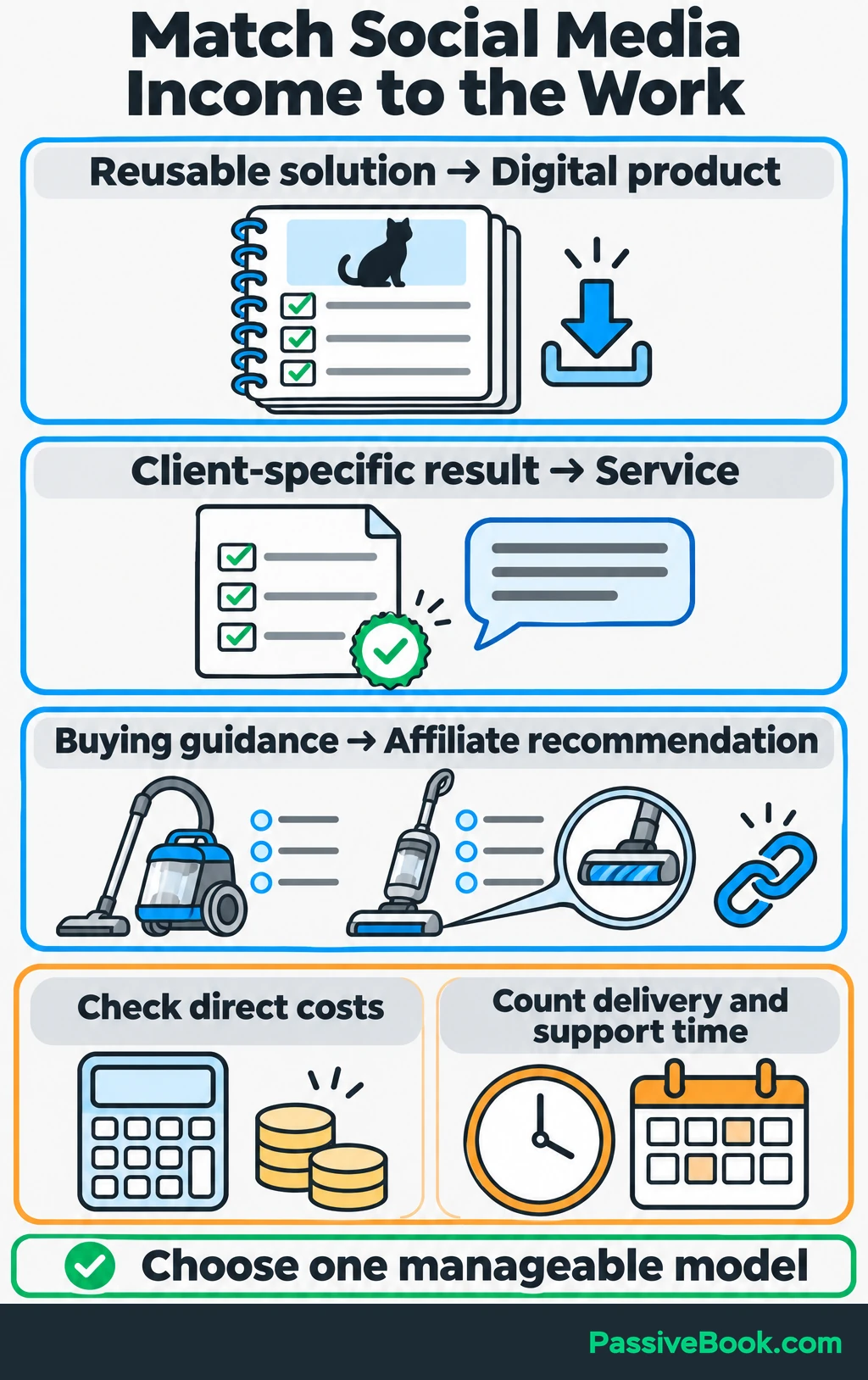
For a manageable starting point, I would choose a small digital product when you can solve a narrow problem yourself. If you have a useful skill but need customer conversations before building something reusable, offer a service with a clearly defined result and price. Affiliate recommendations fit when people already ask you to help them compare products.
For the examples here, imagine you sell a printable cat-sitter handover planner. It helps owners put their own instructions, supply locations, and contact details in one place. The business, copy, prices, and figures are illustrative.
Before choosing a method, estimate what remains after refunds and direct delivery costs. Then consider your time. A download still needs support, and a video contract still needs editing and revisions.
I would be particularly careful with memberships. I spent six months building one alongside corporate work, and the demand for fresh content became unsustainable. A membership with a clear, manageable recurring benefit can work. Mine required more delivery than I could maintain.
Choose one method you can deliver credibly. Keep the other six out of your calendar for now.
Pick One Platform With a Workable Route to Payment
Match the Platform to Your Content and Offer
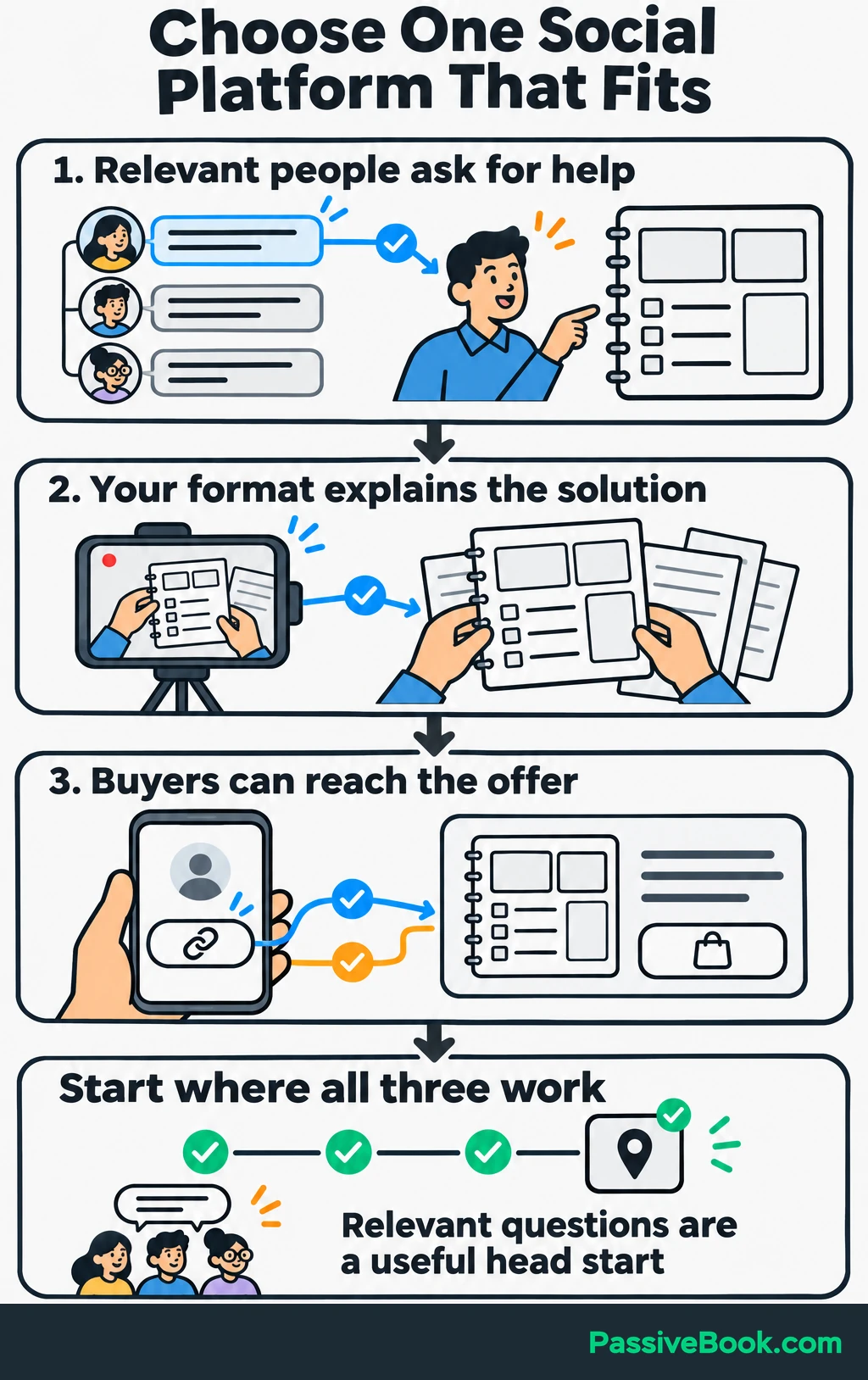
Choose a platform where relevant people seek help, where your preferred format explains the solution, and where interested buyers can reach your offer.
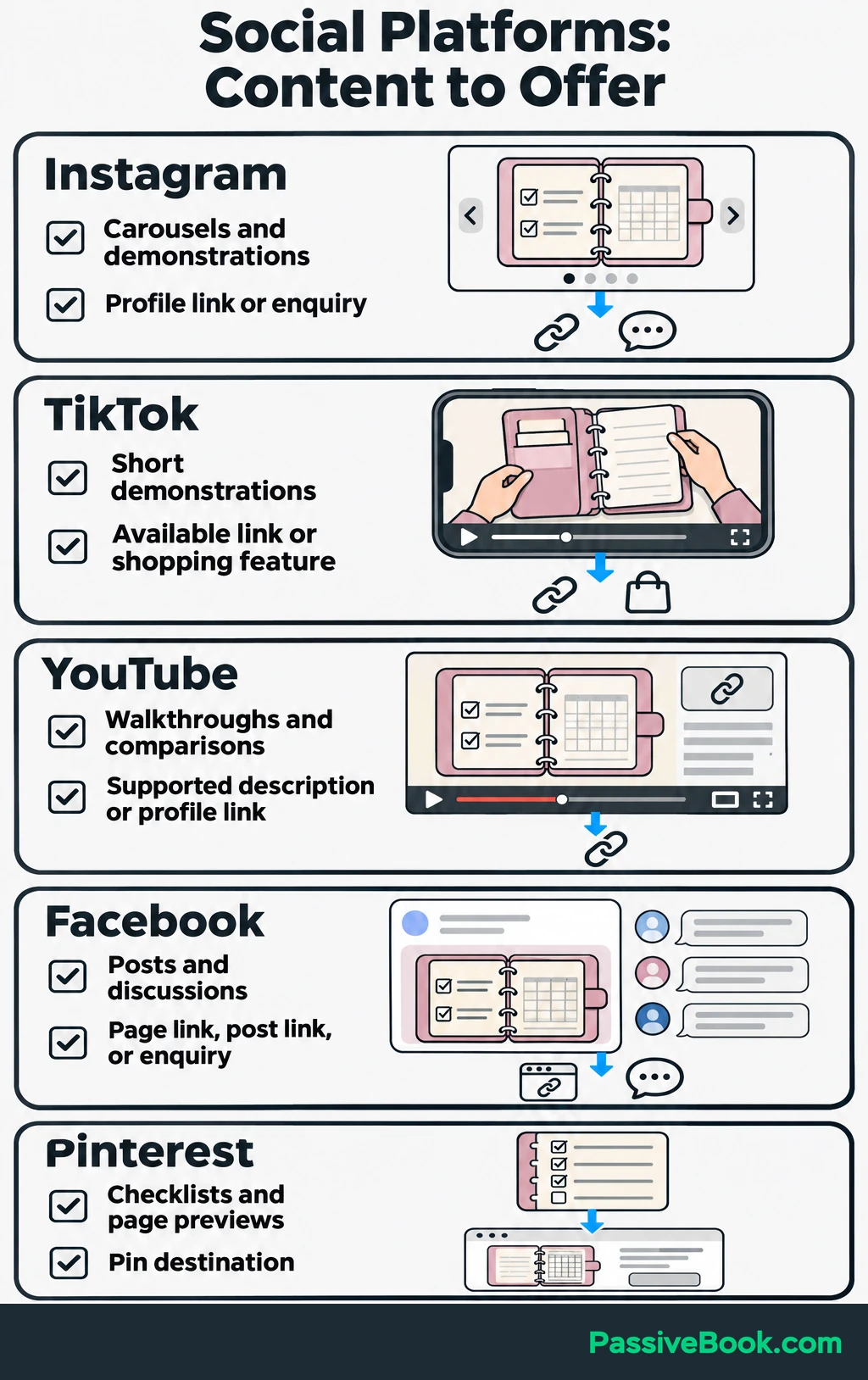
An existing audience asking relevant questions is usually a better starting point than a new account on a fashionable platform.
| Platform | Useful Content Format | Route to the Offer | Production Demands |
|---|---|---|---|
| Carousels, photos, and short demonstrations | Profile link, supported Story links, or an enquiry | Clear visuals and regular interaction | |
| TikTok | Short demonstrations with a visible problem and solution | Available profile-link or shopping features | Recording, editing, and testing openings |
| YouTube | Searchable walkthroughs and comparisons | Supported description links or channel-profile links | More preparation and editing per useful video |
| Practical posts, videos, and community discussions | Page links, supported post links, or enquiries | Useful participation and comment management | |
| Visual checklists, page previews, and organization ideas | Pin destination leading to a useful page or offer | Several clear designs linked to relevant destinations |
For the planner, I would start with Pinterest if you prefer static graphics and already have an offer page. My active Passive Book channels are a blog and Pinterest. If you already receive relevant Instagram questions, test there first.
Pinterest also allows affiliate content that adds original value and makes its commercial nature clear. Pinterest’s affiliate guidelines
You can explain the planner without appearing on camera: show a completed page or film your hands arranging the handover folder.
Check the Requirements for Your Chosen Method
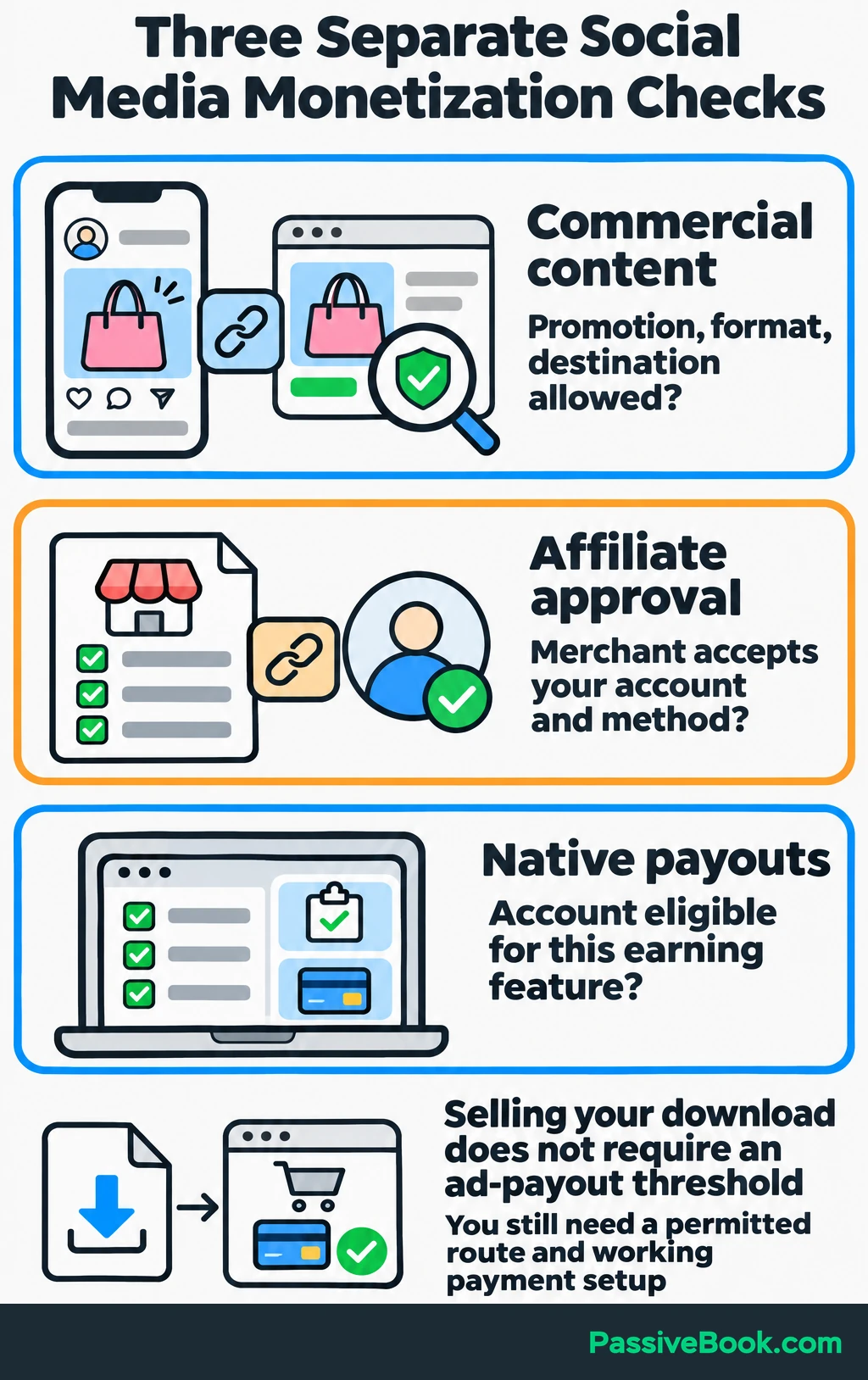
Keep three checks separate:
- Commercial content: Does the platform allow the promotion, format, and destination you plan to use?
- Affiliate approval: Does the merchant accept your account and intended promotional method?
- Native payouts: Does your account qualify for the platform’s earning program?
Selling your own download does not require reaching an advertising payout threshold. You still need access to a suitable checkout, payment method, and permitted promotional route.
For native earnings, the main requirements include:
- YouTube advertising: You need 1,000 subscribers plus either 4,000 qualified public watch hours in the previous 12 months or 10 million qualified public Shorts views in the previous 90 days. Shorts-feed watch time does not count toward the watch-hour route. Country availability, account requirements, policy compliance, and channel review also apply. YouTube Partner Program requirements
- Earlier YouTube access: In eligible countries, 500 subscribers, three valid public uploads in 90 days, and either 3,000 qualified watch hours in 12 months or three million qualified Shorts views in 90 days can provide access to qualifying fan-funding and Shopping features. Advertising requires the higher thresholds above. Expanded YouTube eligibility
- TikTok Creator Rewards: Published requirements include 10,000 followers, 100,000 views in the preceding 30 days, and a personal account in good standing where the program operates. You must meet local age requirements, and qualifying content must be original videos longer than one minute. External product sales and TikTok Shop commissions are separate routes. TikTok’s program requirements
- Facebook Content Monetization: Access is invite-only, and creators can express interest through their professional dashboard. Eligible formats include Reels, Stories, photos, and text posts. Meta’s program explanation
Check the linked requirements and your account’s eligibility screen before committing to a payout strategy. Reaching an application threshold does not guarantee acceptance or income.
For affiliate marketing, check which accounts and link destinations the program allows. Find out which purchases or leads earn a commission, how long after a referral they can qualify, and when earnings are paid. A click is not necessarily a commission, and a reported commission may still be reversed.
Validate a Small Offer Before Building the Full Version
Find out what people struggle to complete before deciding how many pages to make.
Ask potential buyers what they are trying to do, what they already use, and where the process breaks down. Without an audience, speak with people who face the problem and read relevant public discussions. Follow community rules rather than dropping sales links into every conversation.
For the planner, useful questions include:
- “How do you leave instructions for your sitter now?”
- “What do you usually forget to include?”
- “Which details does the sitter ask you to send again?”
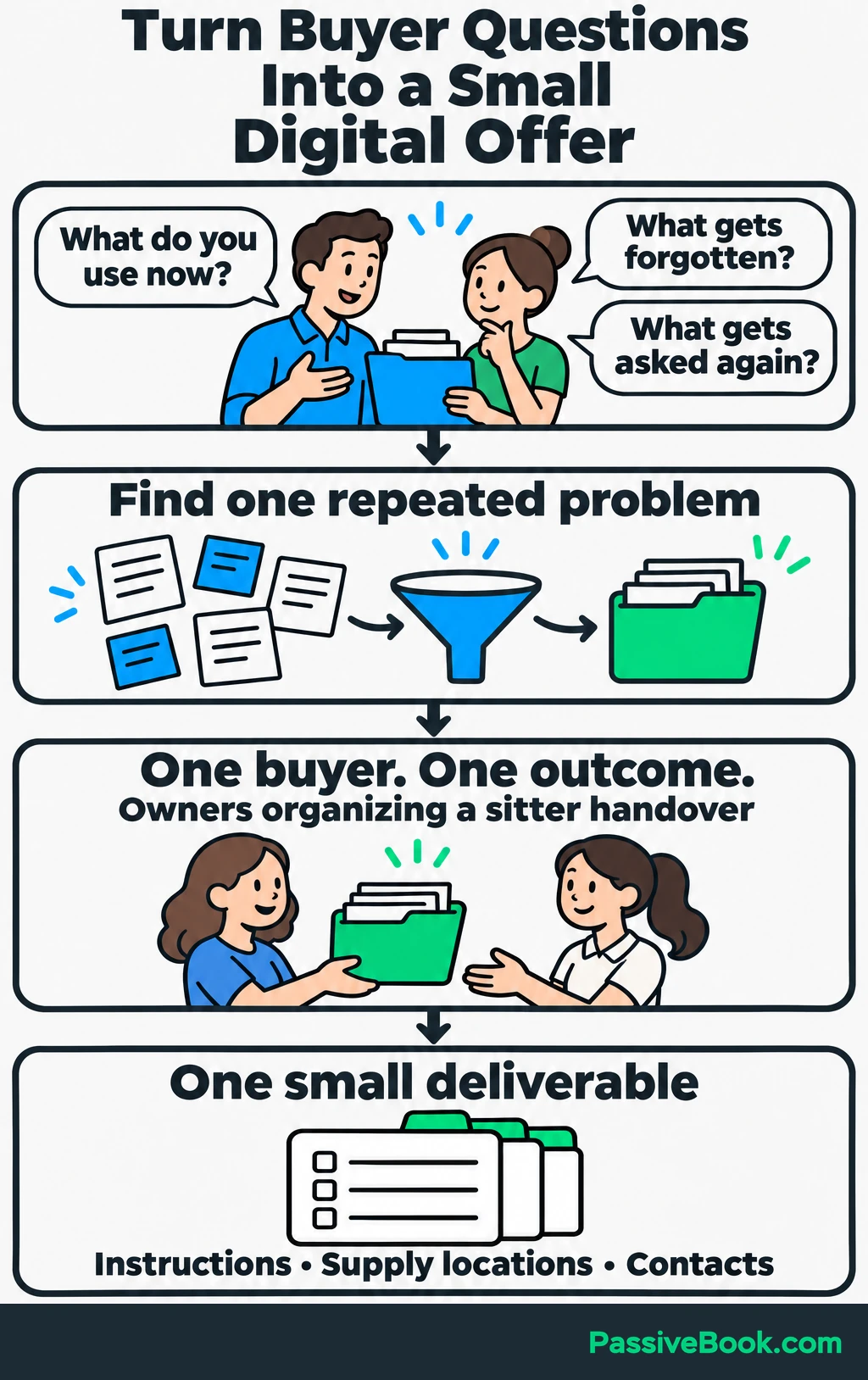
Those answers help you define one buyer, one outcome, and one deliverable.
A small offer might be a $12 printable pack containing an owner-instruction sheet, a supply-location page, and a contact page. Delivery is a PDF download, and support covers file access and printing questions.
Show a sample page before building a larger bundle. A short excerpt could look like this:
Food and supplies are stored here: ______
My written instructions are attached here: ______
Spare key arrangements: ______
This organizes information the owner supplies. It does not need to prescribe animal care.
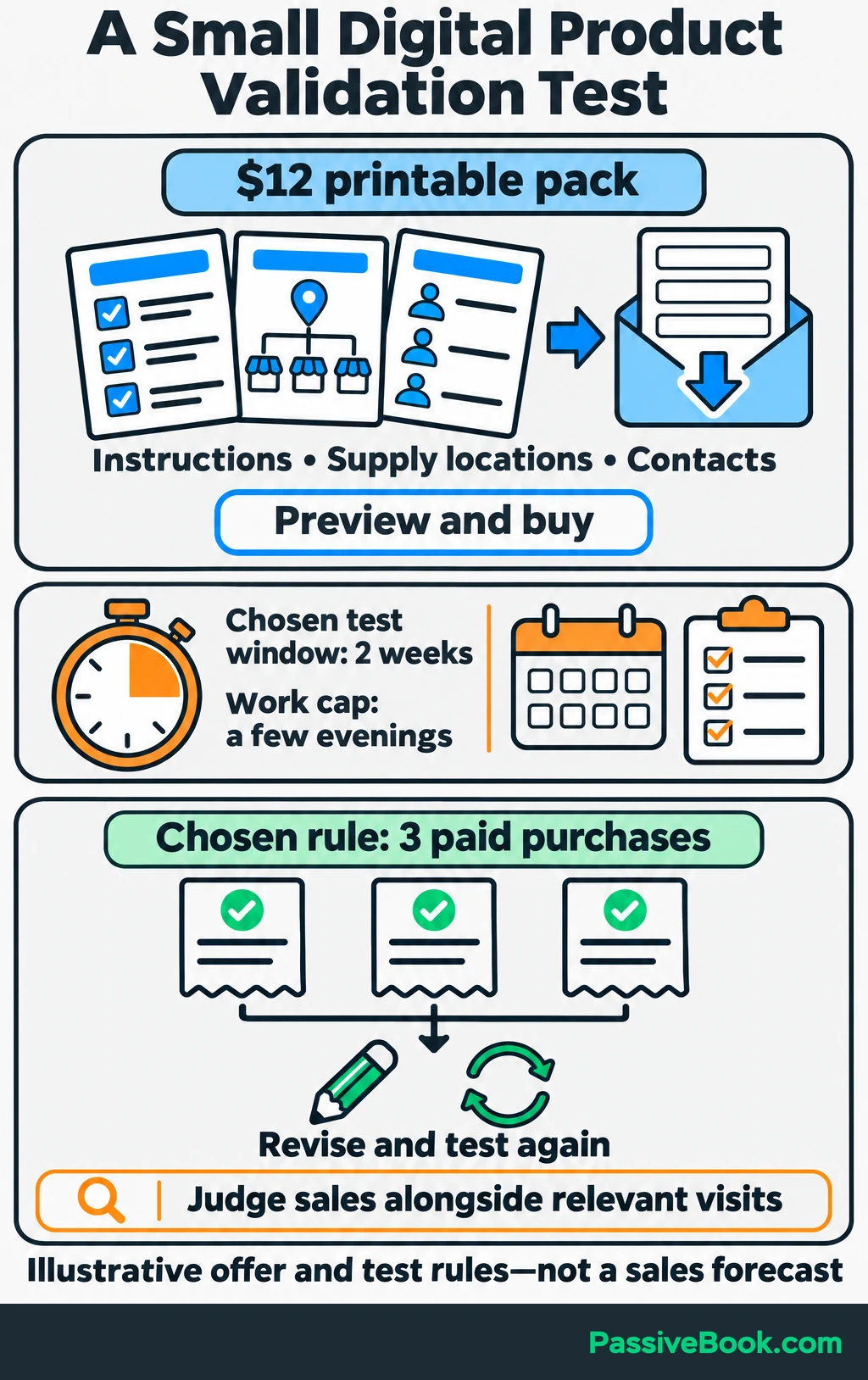
I would sell a small, complete version first. If you choose a preorder, state an achievable delivery date, exactly what is included, and clear refund terms before taking payment.
Give the test a limit. For example, you could allow two weeks, cap the work at a few evenings, and decide that three paid purchases justify a revision and another test. Those are chosen test rules, not expected results.
Purchases provide stronger evidence of willingness to pay than saves or poll votes. But no sales from a handful of irrelevant visits tells you little about the offer.
Adapt the test to your model: sell one scoped service, pitch a paid content project with a relevant sample, or publish one focused affiliate recommendation after evaluating the product and its terms.
Build the Path From Content to Payment
Give Ready Buyers a Direct Purchase Route
Map the shortest useful journey:
Relevant post → matching offer page → checkout → delivery.
For a service, replace checkout with an enquiry or booking process. For affiliate content, the destination may be a comparison page followed by an approved merchant link.
Each promotional post should give people one relevant next action. Your profile should also say what you offer and where to find it.
For the planner:
Put your sitter’s instructions in one place. Preview the printable handover pages through the profile link.
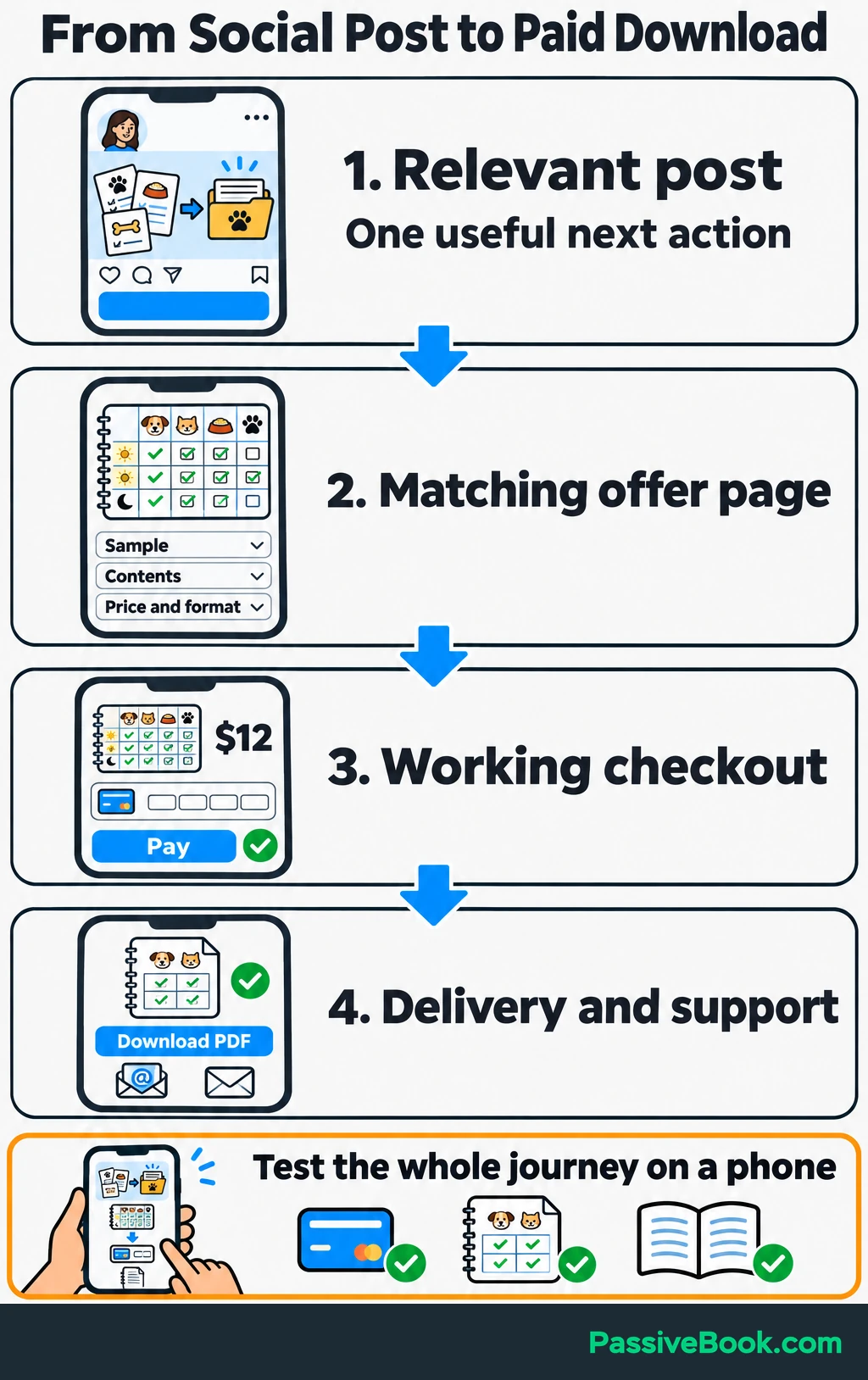
The offer page should answer the questions needed to buy:
- Buyer and outcome: Who the planner helps and what they can organize with it.
- Contents: The exact pages included, with readable samples.
- Price and format: What buyers pay and whether the file is printable, editable, or both.
- Delivery: How they receive the file after payment.
- Support: Where to get help and what support covers.
On one of my digital-product pages, I caught myself explaining the file formats before showing what the buyer could do with them. I moved a completed sample ahead of the technical details. That gave the details a purpose: readers could see the task before choosing how to use the file.
For a first download, I would consider Gumroad for checkout and delivery. If you already sell through WordPress, keep the purchase there when your existing setup does the job. Add software when a missing function blocks a sale or delivery.
Check that your chosen link is actually clickable. URLs in YouTube Shorts descriptions and comments are not. Direct viewers to your channel-profile link, or link the Short to a related video with a clickable offer link in its description. Clickable external links in long-form descriptions require advanced-feature access. YouTube’s link rules
Test the whole journey on a phone. Check payment, confirmation, file access, readability, and the support contact. A successful checkout with a missing download is still a broken buying experience.
Add Email Follow-up When Buyers Need More Help
Keep direct purchase available, but offer a useful free resource to people who need more explanation.
The free resource should lead naturally to the paid offer. A one-page sitter handover checklist fits the planner. A general collection of cute cat photos would attract a different kind of interest.
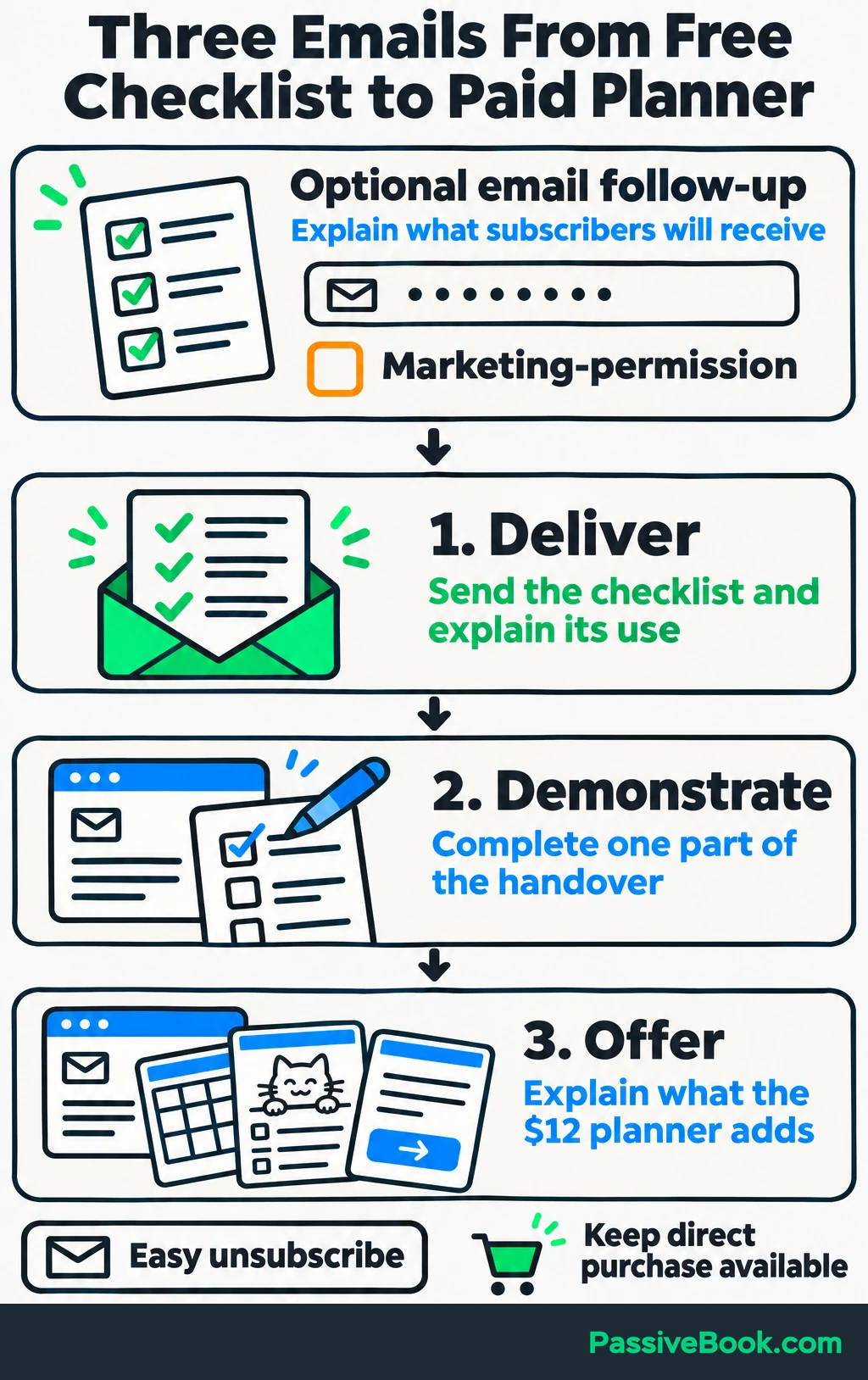
Start with three emails:
- Deliver the checklist and explain how to use it.
- Show how to complete one part of the handover.
- Introduce the paid planner and explain what it adds.
Here is a short sample sales email from the planner seller. Replace the bracketed details before sending:
Subject: Put the sitter’s details in one place
Hi [First name],
Your checklist helps you spot what needs preparing before you leave. The next job is putting those details somewhere your sitter can use.
The $12 Cat-Sitter Handover Planner gives you printable pages for your own instructions, supply locations, and contact details.
Fill in the pages you need, then walk through them with your sitter before the handover.
You can preview the pages and buy the PDF here: [Planner page]
If the checklist already covers what you need, keep using it.
Questions about the file or printing? Reply to this email.
[Shop name]
[Contact and mailing address]
[Unsubscribe link]
For email tools, I use FluentCRM with WordPress. I would consider Kit if you want a hosted option and less setup. You need forms, delivery, a short sequence, and working unsubscribe handling before you need elaborate automation.
The examples show how the planner could sell, but your offer needs its own wording. This AI Skill drafts the connected posts, page, and emails from the details you supply.

Free AI Copywriting Studio




Ask clearly for marketing permission and explain what people will receive. UK rules generally require consent for unsolicited email marketing to individuals unless an applicable exception is met. Provide an easy unsubscribe and follow the rules affecting your business and recipients. ICO email marketing guidance
Publish Content That Helps People Buy
Work backward from the decision to buy. What does someone need to understand before your offer makes sense?
For the planner, show the problem of scattered instructions, demonstrate a simple handover folder, and then preview the pages used to prepare it.
A small plan could look like this:
| Buyer Question | Post Idea | Useful Demonstration | Next Action |
|---|---|---|---|
| “Where should I put the instructions for my sitter?” | A practical handover-folder tutorial | Group owner instructions, supply locations, and contacts | Get the free checklist |
| “What would I receive?” | A planner preview | Fill in one sample page and show the other pages | Preview the paid pack |
| “Why pay when I can write a note?” | A comparison with a blank sheet | Show the planner’s prompts and reusable layout | Compare the sample with your current notes |
| “Can I use it again?” | Preparing for another booking | Show which details need checking or replacing | View the planner |
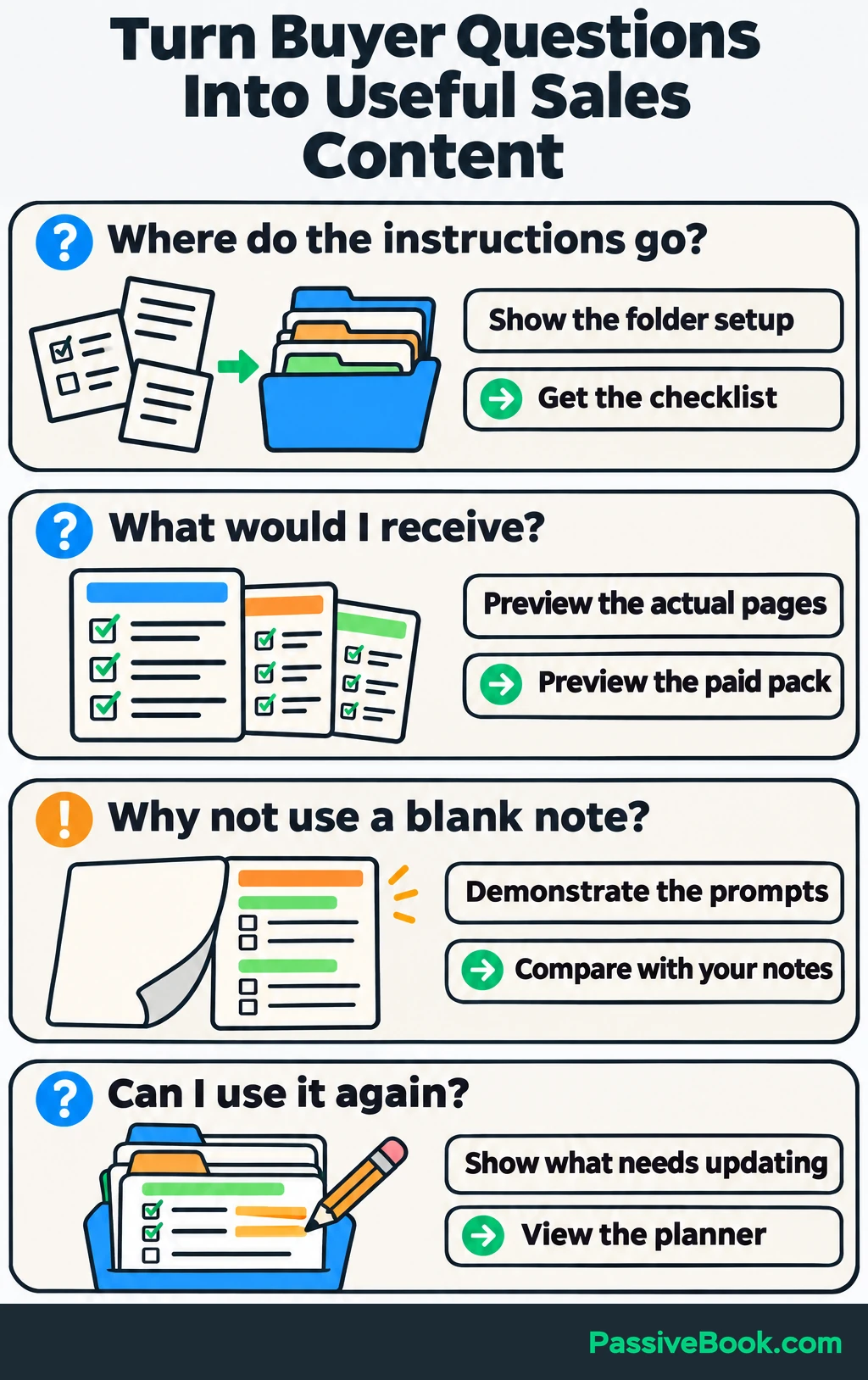
Answer objections honestly. Someone who already has a clear handover system may not need your product. A printable pack does not become essential because you made it.
For affiliate content, start with a buying question and explain your selection criteria. Show the relevant features, describe the tradeoffs, and distinguish what you tested from what you learned through documentation.
Avoid claims about safety, health, or suitability that you cannot support. A commission does not make a product trustworthy.
Turn repeated questions into connected posts, and batch related work. One set of original page photographs can support a tutorial, an offer preview, and an email demonstration.
Use material you have rights to publish. For YouTube payouts, permission alone does not make minimally changed reposts eligible for monetization. YouTube separately assesses reused and mass-produced content. YouTube monetization policies
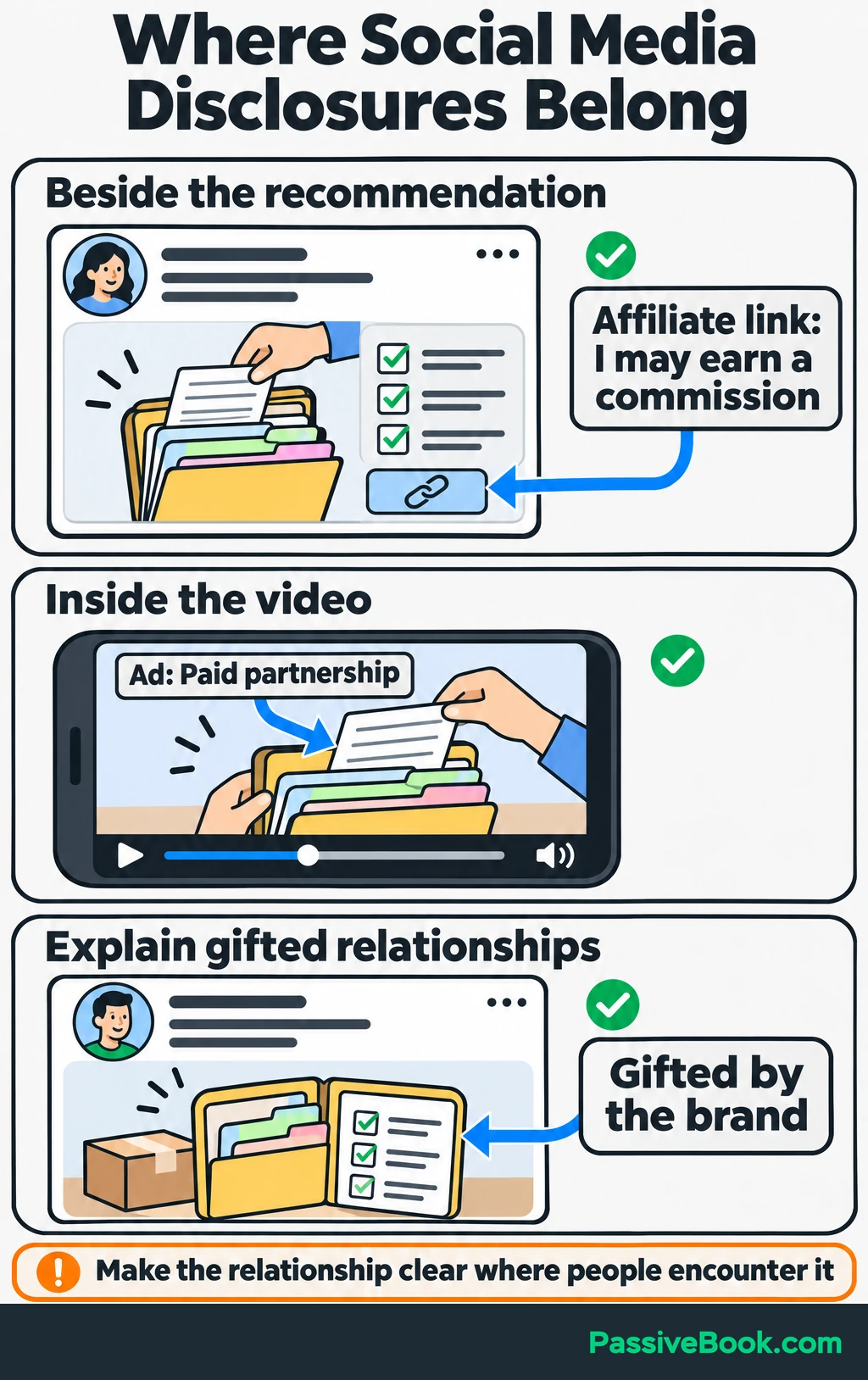
Put paid, affiliate, and gifted disclosures beside the endorsement. For video endorsements, include the disclosure inside the video rather than relying only on the description. US rules can apply to overseas posts that foreseeably affect US consumers. FTC disclosure guidance
Ask for the First Paid Result
Use the route that matches your chosen model. These are alternatives, and you do not need to complete all four.
Sell Your Product or Service
Publish an invitation that states the problem, deliverable, price, and next step.
For the planner:
Leaving instructions in several messages? The $12 Cat-Sitter Handover Planner includes printable pages for your instructions, supply locations, and contacts. Preview the pages and download the PDF here: [Offer link].
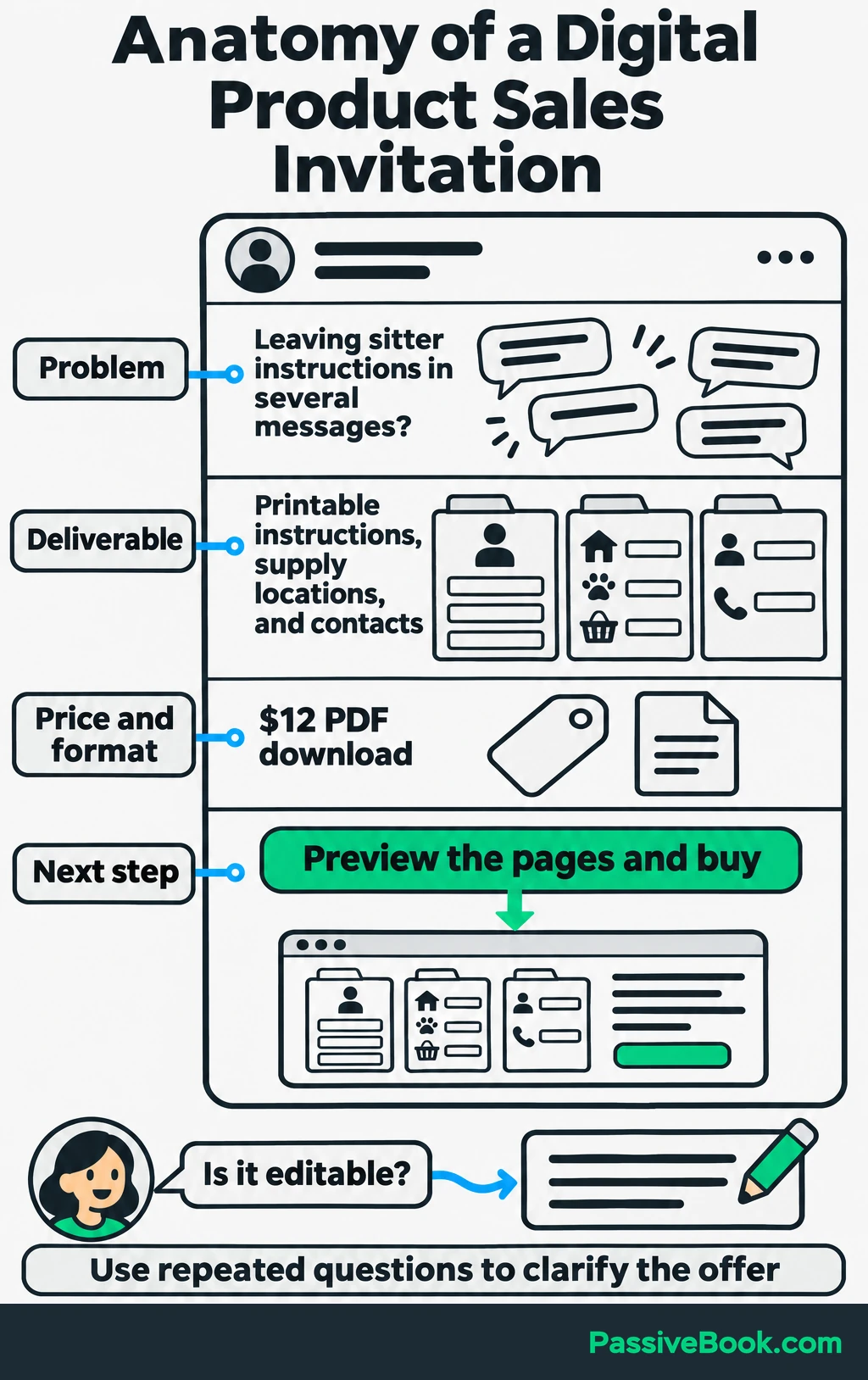
Answer questions from interested people and record the objections. Repeated questions about whether the file is editable suggest missing information. Requests for a completely different product may suggest the wrong audience.
Deliver what you promised and ask what was useful or unclear. Improve the first offer before creating a shelf of related downloads.
Earn an Affiliate Commission
Publish a focused demonstration or comparison that helps someone make a purchase decision.
Explain why you recommend the product, who it suits, and where it falls short. Use the program’s approved link destination and disclose the relationship.
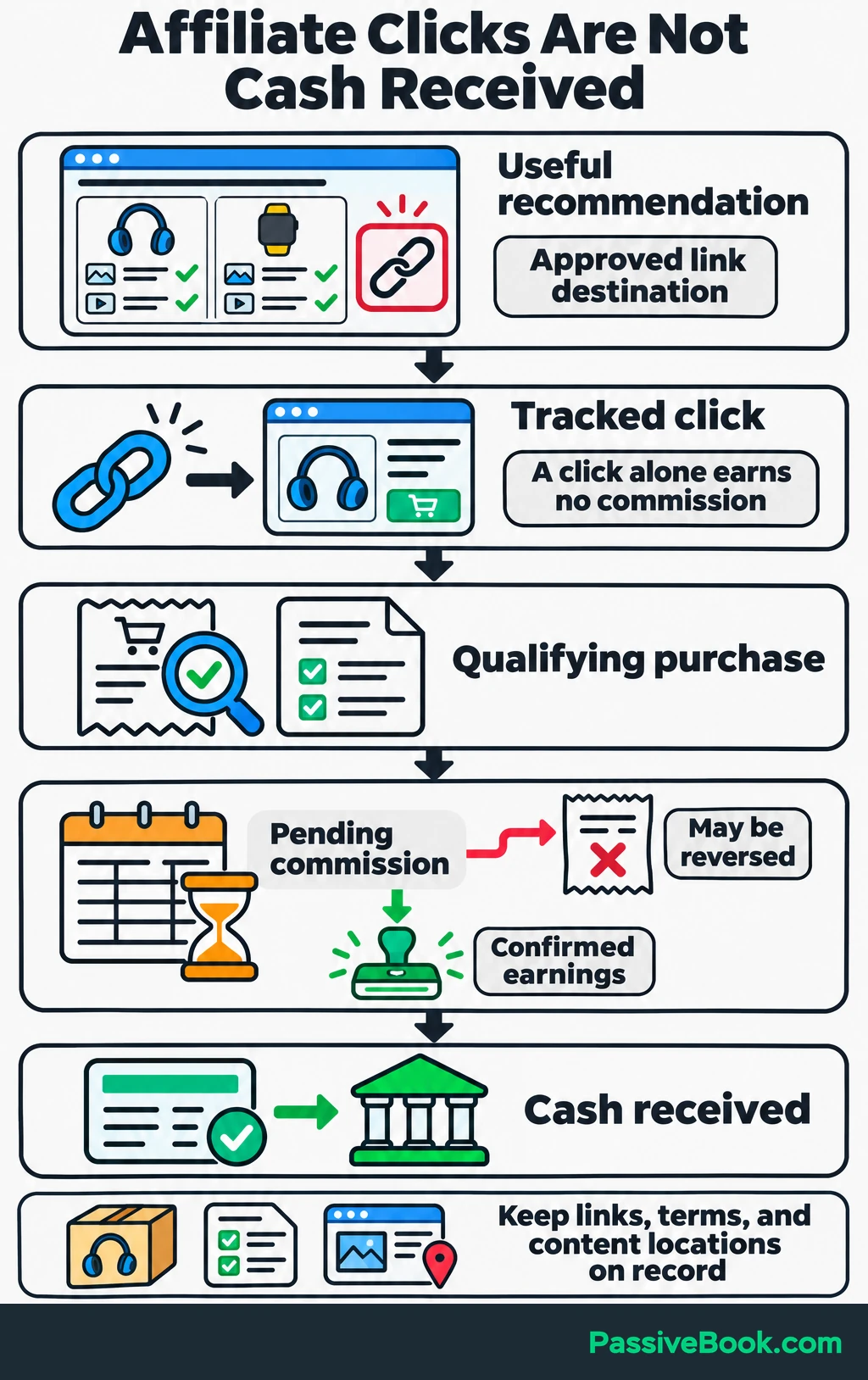
Keep a simple record of each product, its affiliate link, relevant terms, and the content containing it. This makes later updates possible without a scavenger hunt.
Check reporting for tracked clicks and qualifying commissions. Record pending commissions, confirmed earnings, and cash received separately. They answer different questions about performance and payment.
Pitch a Paid Brand Project
Prepare samples that prove the skill you are selling.
For UGC, show that you can plan, film, and edit a useful asset. For sponsorships, show audience relevance and recent content performance.
A sample proposal could offer a hands-only demonstration of a storage product used to organize handover supplies. Label an unpaid portfolio clip as a sample so it does not imply a brand commissioned it.
Before production, agree on:
- Deliverables: Number, format, length, and deadline.
- Revisions: What is included and what costs extra.
- Usage: Where the brand can publish the content and for how long, including advertising rights.
- Exclusivity: Which competing work, if any, you must decline.
- Payment: Price, deposit or milestones, and payment deadline.
Verify unexpected enquiries through the brand’s published contact details. Then price the actual work, including preparation, editing, revisions, and the rights being requested.
Activate Platform Payouts or Invite Fan Support
Once eligible, complete enrollment, payment setup, and any required earning-feature agreements.
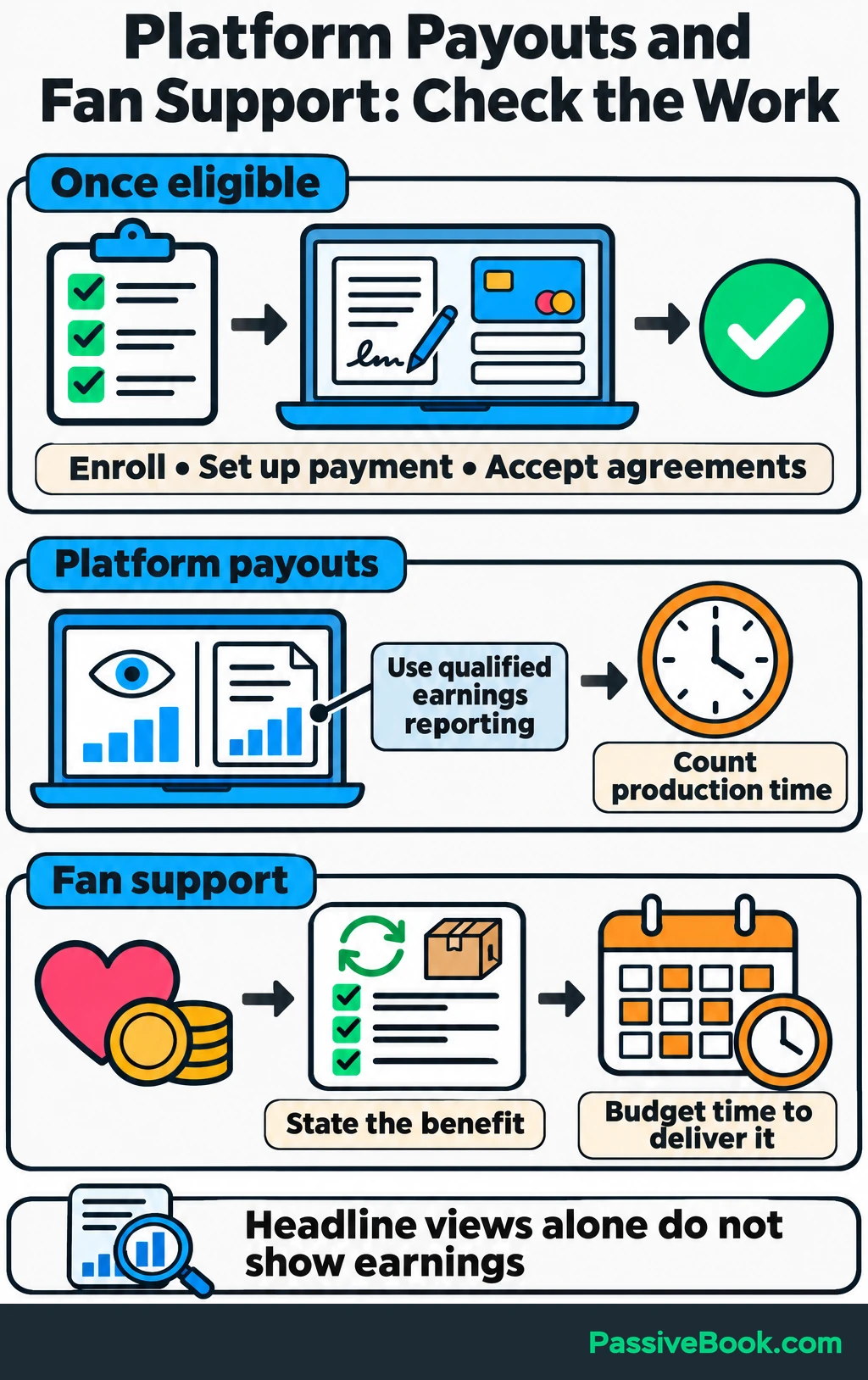
For fan support, explain what supporters receive. If you promise recurring benefits, put their delivery time into your workload estimate before inviting payments.
Assess this route using qualified earnings and production time. Meta distinguishes qualified views from other views, so the headline view count alone cannot tell you what a post earned. Use the program’s earnings reporting to judge the result. Meta’s qualified-view explanation
Improve the Step That Is Losing Sales
Track the path that matters to your model:
Relevant reach → visits or enquiries → paid results → earnings after direct costs.
For a download, a small spreadsheet is enough. Record the content, topic, destination, visits, confirmed purchases, revenue, direct costs, and production hours.
Here is an illustrative row:
| Content | Topic | Destination | Visits or Enquiries | Confirmed Paid Results | Revenue | Direct Costs | Production Hours |
|---|---|---|---|---|---|---|---|
| Handover-folder tutorial | Keeping sitter details together | Planner offer page | 100 page visits | 2 purchases | $24 | $2 transaction fees | 3 hours |
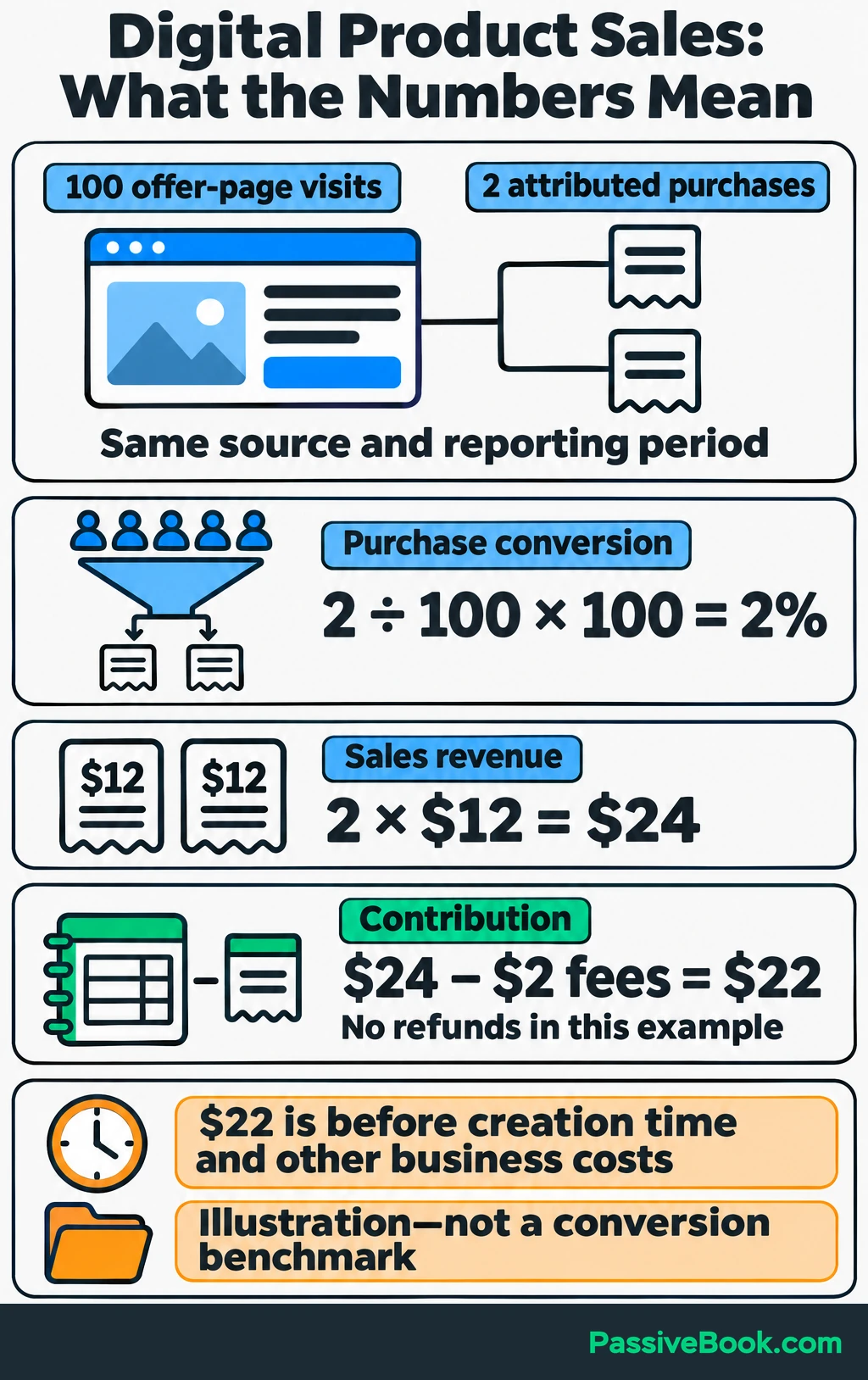
Before calculating a purchase rate, count purchases attributed to the offer-page visits you are measuring. Keep the reporting period and traffic source consistent.
Suppose those 100 visits produce two purchases at $12 each:
- Purchase conversion rate: 2 purchases ÷ 100 visits × 100 = 2%.
- Sales revenue: 2 purchases × $12 = $24.
- Contribution: With no refunds and $2 in total transaction fees, $24 − $2 = $22.
That $22 remains before creation time and other business costs. It is not take-home profit, and the 2% rate is an illustration rather than a benchmark.
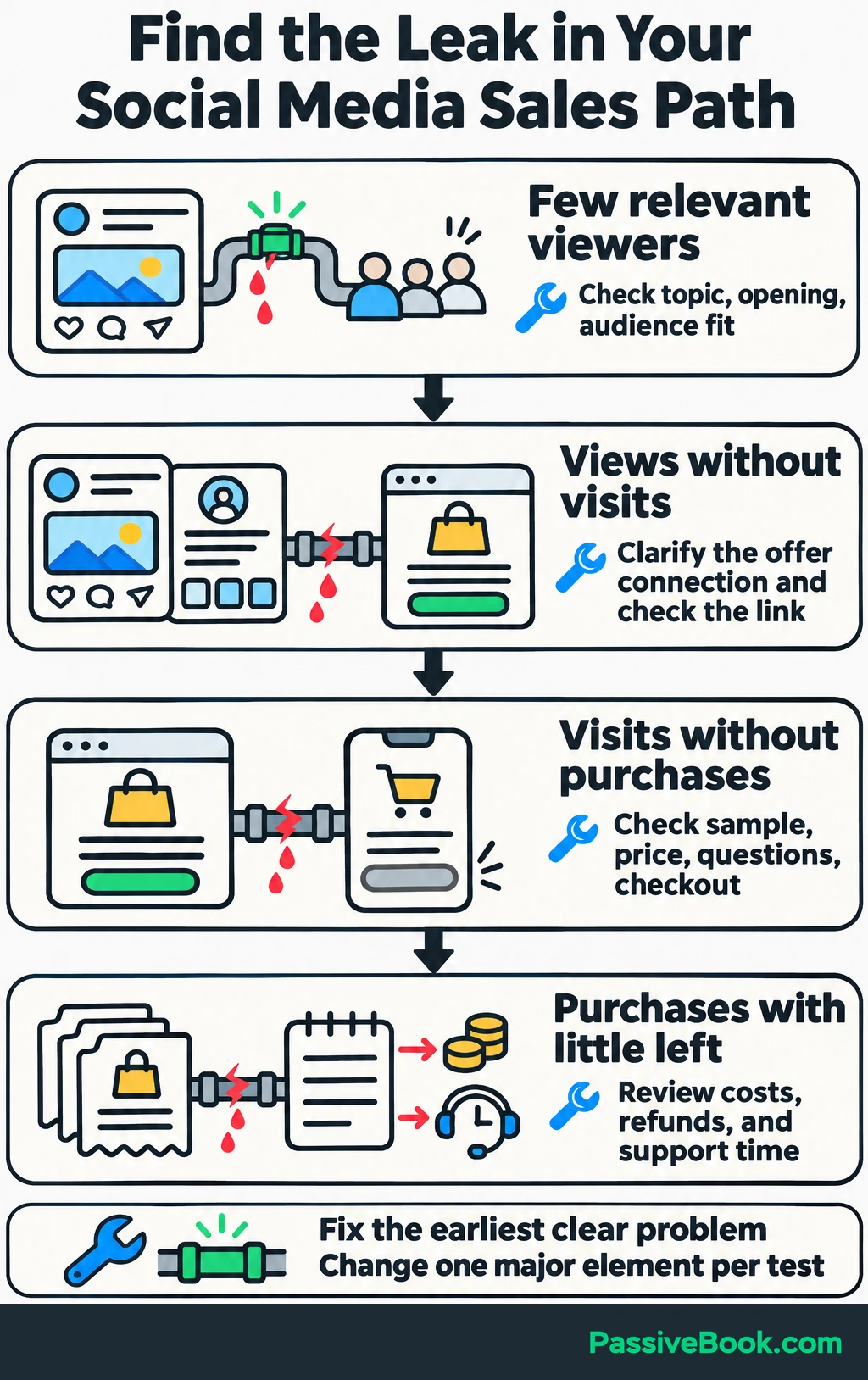
Use the numbers to find the first weak point:
- Few relevant viewers: Test the topic, opening, or audience fit.
- Views without visits: Make the connection between the content and offer clearer, and check the link.
- Visits without purchases: Check the offer, sample, price, unanswered questions, and checkout.
- Purchases with little money left: Review fees, refunds, support time, and delivery costs.
I would fix the earliest clear problem before increasing output. More posts cannot repair a checkout that fails on a phone.
Change one major element per test where practical, and combine the numbers with buyer feedback. A small amount of data can suggest the next question without proving the answer.
Make the Working Process Repeatable
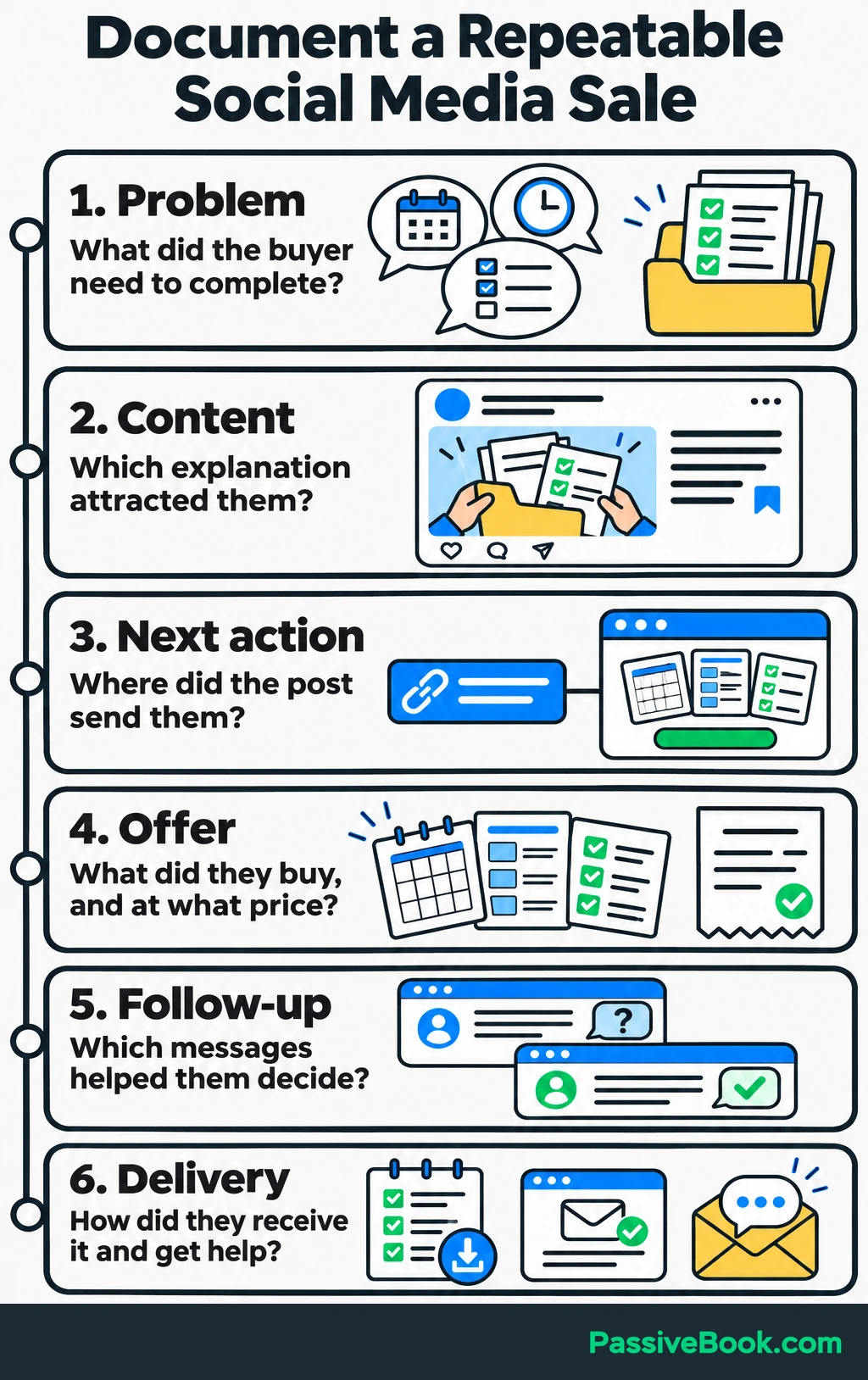
Once a process produces paid results, write down what happened:
- Problem: What the buyer wanted to complete.
- Content: The useful explanation or demonstration that attracted them.
- Next action: Where the post sent them.
- Offer: What they bought and what it cost.
- Follow-up: Which messages helped them decide.
- Delivery: How they received the result and got support.
Automate stable tasks first: download delivery, welcome emails, booking confirmations, scheduling, and routine reporting.
For the planner, the purchase can trigger file delivery and an access email. A later message can explain how to reuse the pages. Neither needs someone hovering over the checkout.
Use reusable content outlines and design templates. AI can help turn repeated questions into draft posts, but review the output for accuracy and usefulness. It should not invent product experience or customer feedback.
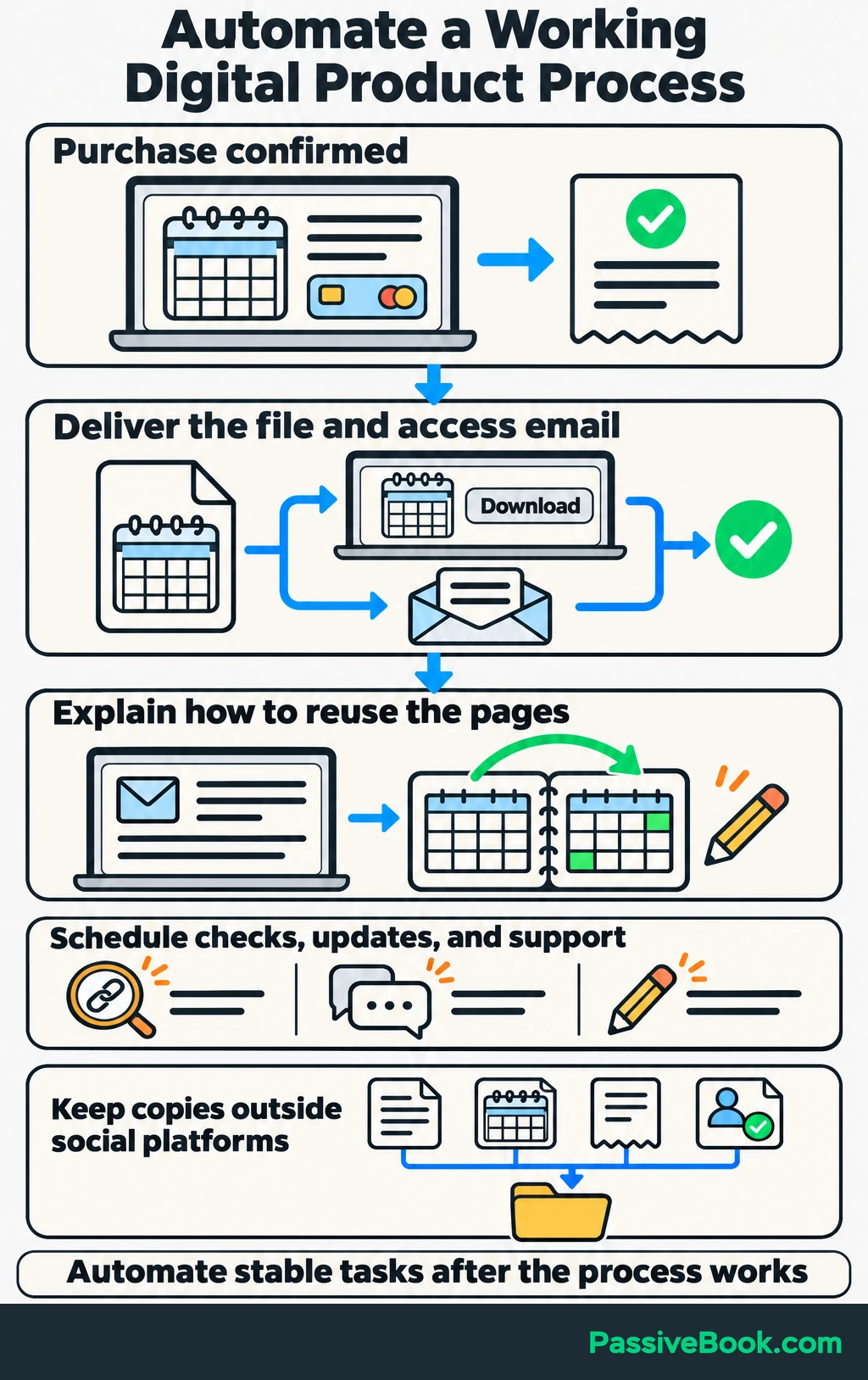
Keep copies of your original content, product files, sales records, and permission-based subscriber records outside social platforms. That gives you a way to maintain customer relationships if an account becomes unavailable.
Add a second revenue stream when the first produces repeatable results within manageable delivery time. The planner business might later add carefully evaluated affiliate recommendations for supplies its buyers already ask about.
Schedule maintenance too. Products change, links break, customers need help, and programs revise their requirements. Automated delivery saves work, but it does not remove responsibility for what you sell.
What Next?
Write one sentence naming what you will sell, who it helps, and how they can pay. Then check whether someone can complete that journey from your profile on a phone.
Use the social buttons to share this roadmap when the conversation about growing an audience needs a clearer plan for earning from it.
Which part of your path to a first paid result is least clear right now? Tell me in the comments, and bring any other questions with you.
Share this post with your friends & followers:

