You give up part of your weekend to make social posts, then spend the week wondering whether they reached anyone who cares. Another batch is due before you know what the last one achieved.
That makes consistency hard. Posting takes time, but a growing follower count still doesn’t tell you whether people will return, ask questions or buy. The routine below gives those hours a clearer purpose: earning repeat attention for useful pet-care content and helping interested followers take a next step toward a conversation, signup or sale.
Give People a Clear Reason to Follow
Start with a recurring problem you can help people solve. “Pet content” leaves too much open. “Simple ways to organize dog-walking gear” gives people a clear reason to come back.
Collect questions from customer emails, product reviews and comments beneath related posts. Keep the wording people use. “Where do you put the spare bags?” is more useful than a planning note that says “accessory storage content.”
Throughout this guide, imagine you run a small online shop selling dog-walking bags. The sample copy, workflows and figures are illustrations.
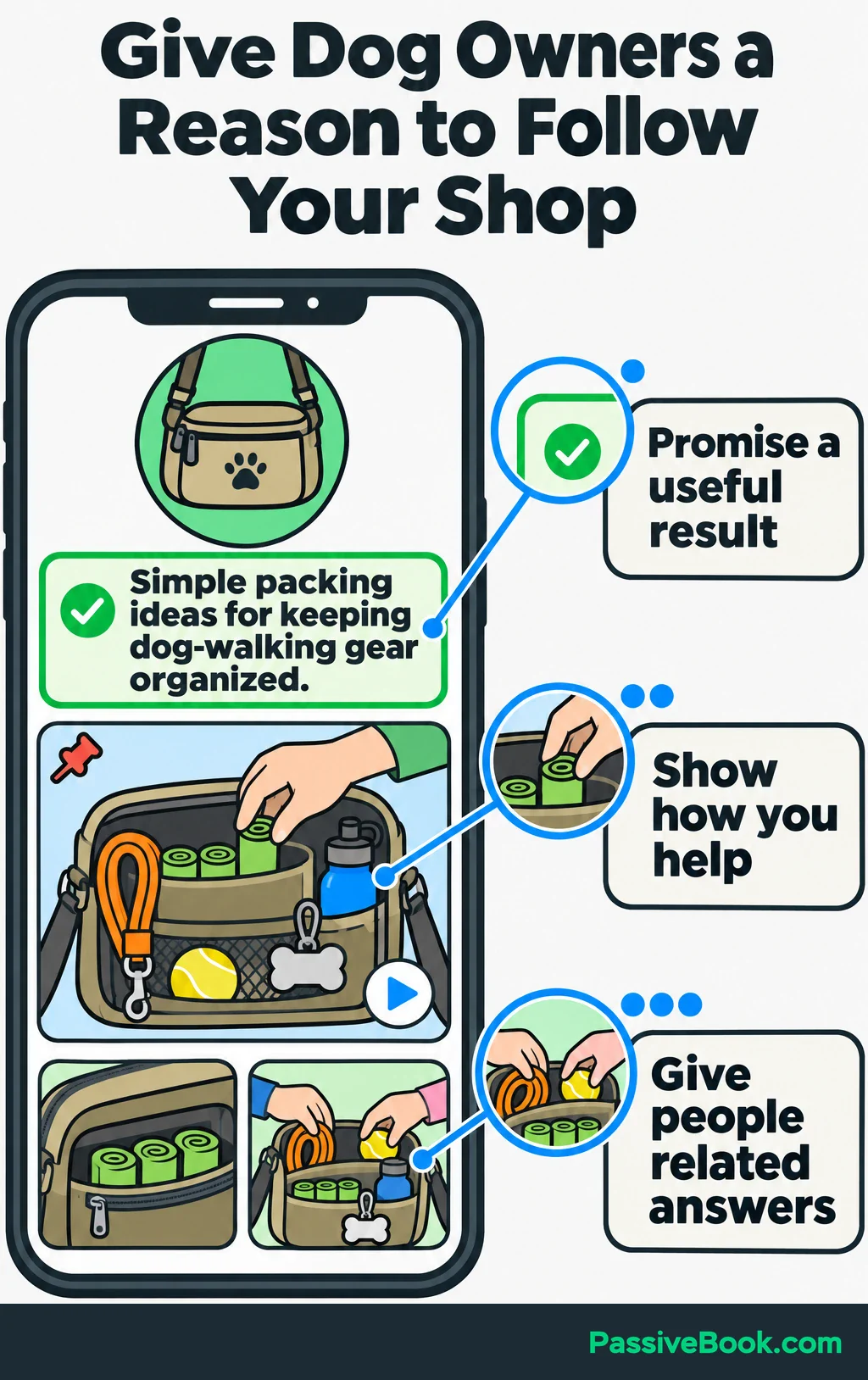
Turn the problem into an account promise:
Simple packing ideas for keeping dog-walking gear organized.
Then make your profile demonstrate it:
- Use a recognizable shop logo or clear profile image.
- Explain what you sell and what your posts help people do.
- Feature an introductory packing walkthrough.
- Make recent posts answer related questions, so visitors can see what following brings.
You don’t need a large audience before discovery can begin. For example, YouTube says its Home recommendations include new videos and videos watched by similar viewers, alongside subscriptions. That creates opportunities to reach people who haven’t subscribed. YouTube’s discovery guidance.
Choose one outcome alongside follower growth. For the shop, I would start with confirmed email signups for a free packing checklist. Useful conversations and product inquiries matter too, but one main outcome makes the first review easier.
Organic growth uses unpaid posts and interaction. Count the hours spent creating, distributing and replying, because your evenings are part of the budget.
Choose One Primary Platform
Choose a platform by checking three things: whether relevant people are active there, whether you can keep making suitable content, and whether there’s a clear route to your chosen outcome.
Search the same few audience questions on two plausible platforms. Read the posts and their comments. Look for people describing their own problems, asking follow-up questions or discussing possible purchases. A popular post alone tells you little about whether your answer belongs there.
Use a comparison like this before committing:
| Platform | Audience activity found | Suitable content formats | Production effort | Intended next action |
|---|---|---|---|---|
| Not yet audited; check comments on walking-bag demonstrations for packing questions and product interest | Hands-only demonstrations, swipeable photo posts (carousels), question posts | Film a bag being packed, edit the useful steps and answer replies | Visit the profile, then open the checklist link | |
| Not yet audited; search for walking-gear checklists and inspect whether results address the same organizing problem | Readable packing graphics and annotated bag photos | Create graphics and a useful destination page | Open the packing guide, then request the checklist |
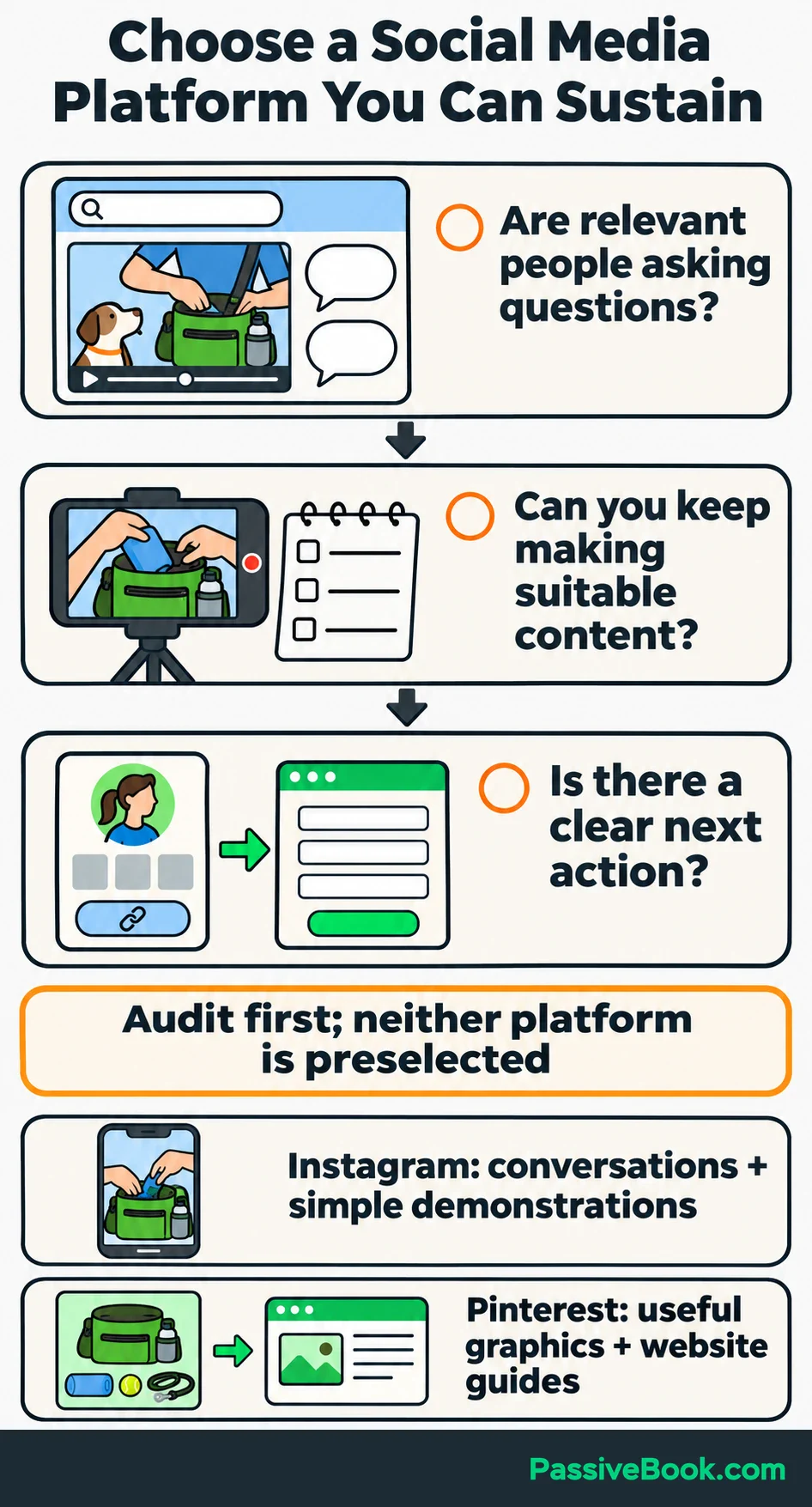
For this shop, I would test Instagram first if the audit finds relevant conversations and you can film simple demonstrations. I would choose Pinterest first if you prefer graphics, already have useful website guides and find related content in search.
Pinterest drives meaningful referral traffic to Passive Book, but that experience doesn’t settle the choice for your account. Your audience and production routine should.
Keep the other platform secondary until you can create and respond on the first without scrambling.
Turn Audience Questions Into Posts Worth Following
Build Repeatable Content Themes
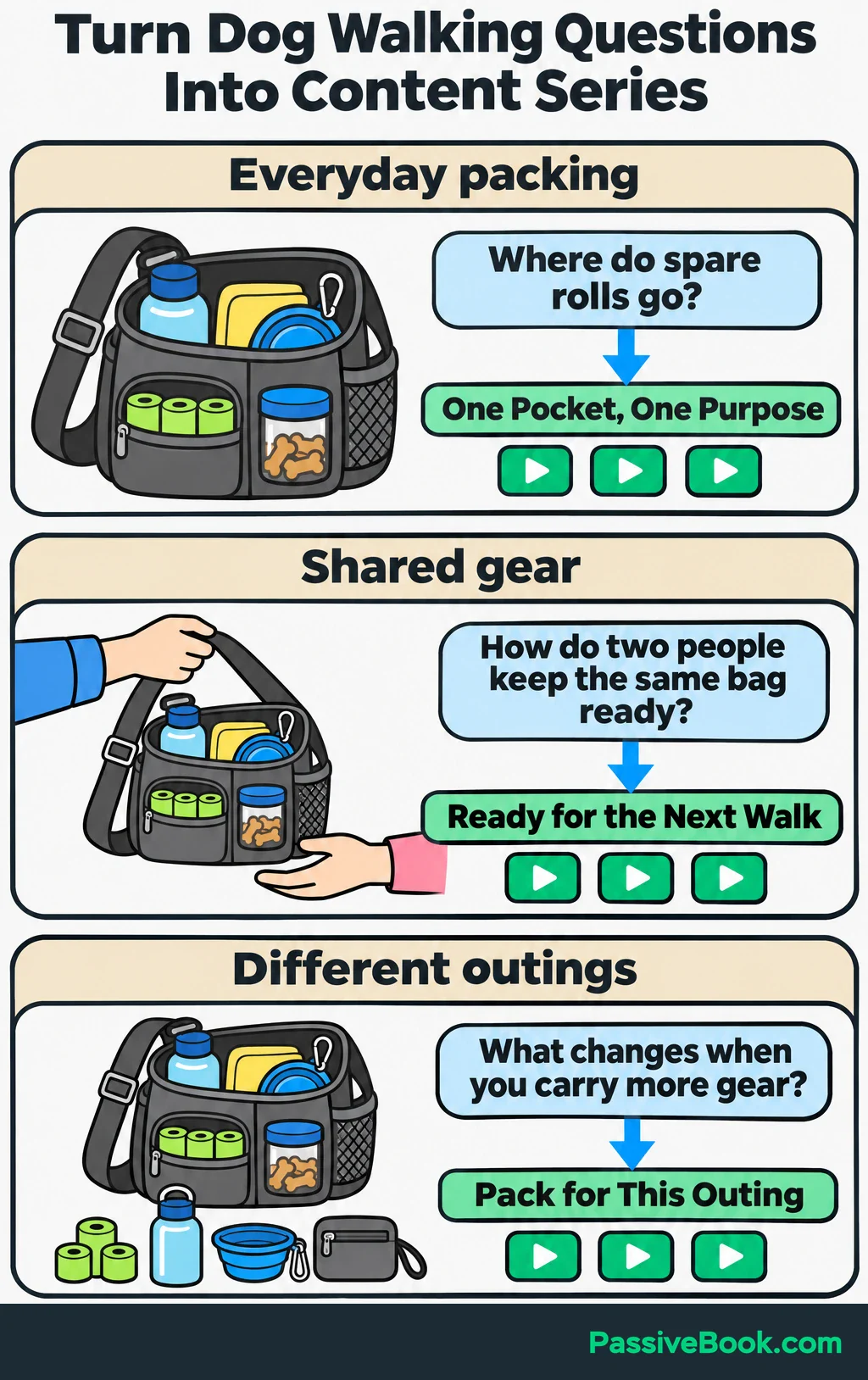
Group your questions into three or four themes. Each theme should support the account promise and contain enough questions for several posts.
For the bag shop, that might look like this:
| Theme | Questions to answer | Recurring series |
|---|---|---|
| Everyday packing | Where do spare rolls go? What needs to stay within reach? | One Pocket, One Purpose |
| Shared gear | How do two people keep the same bag ready? | Ready for the Next Walk |
| Different outings | How does the layout change when you carry more gear? | Pack for This Outing |
Give each post one main job. It might introduce a useful answer, demonstrate an arrangement, invite a discussion or explain an offer.
This stops every post from becoming a small catalogue. A packing checklist can help someone before they’re ready to consider your bag.
Study related accounts for missing explanations, especially unanswered comments. Then build your own answer with your own photos, demonstrations and observations. A comment asking how to find spare supplies gives you a question to investigate; it doesn’t give you someone else’s post to rewrite.
Keep adding new questions to the same themes. You want a useful series people recognize, with room for the conversation to shape what comes next.
Deliver One Clear Answer Per Post
Build each post around one problem, one useful answer and one relevant next action.
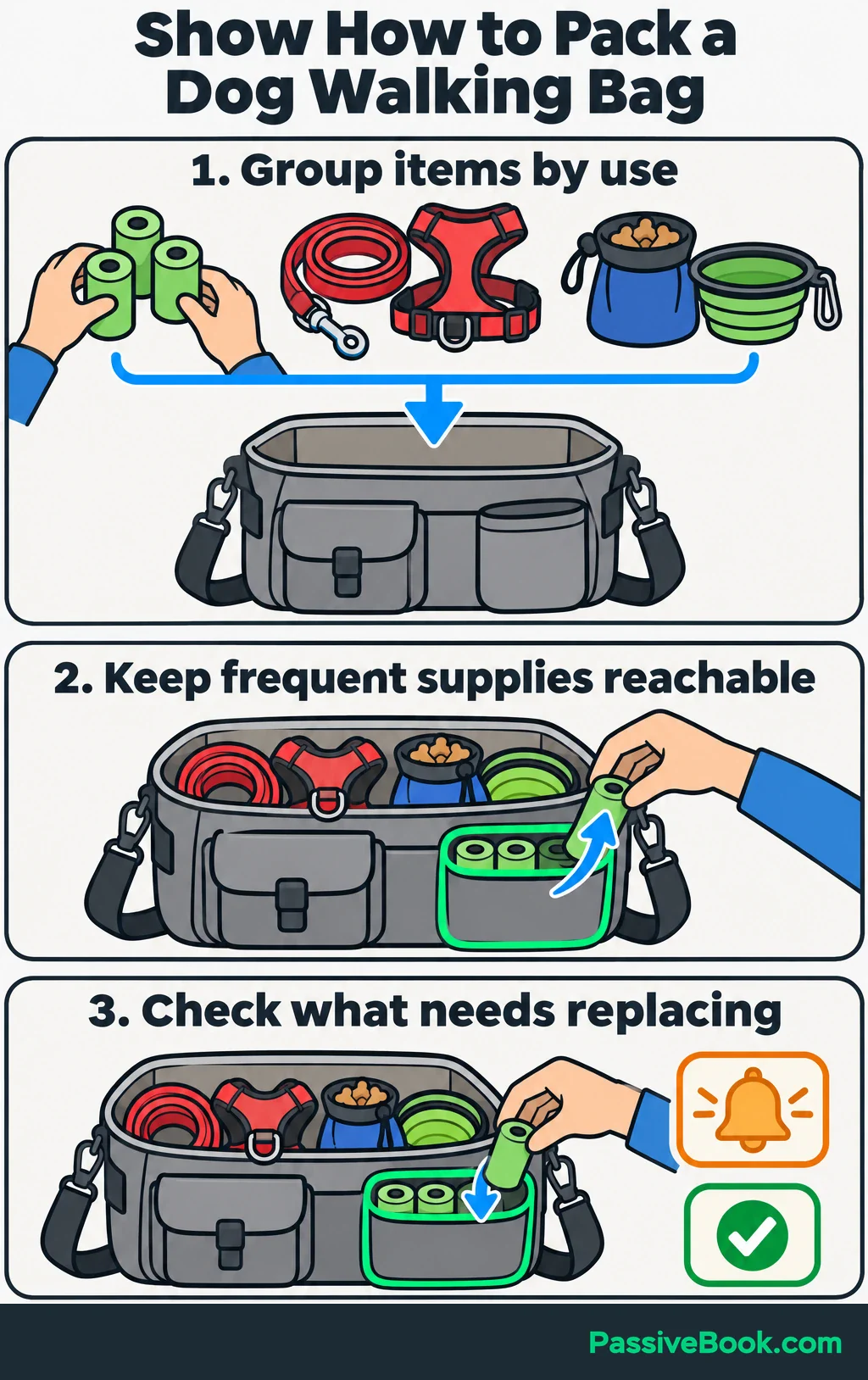
Teach the method before showing the finished arrangement. For an organized bag, explain how to group items by use, put frequently needed supplies within easy reach, and check what needs replacing. Then show where those groups fit.
A short opening could be:
Always emptying your dog-walking bag to find a spare roll? Keep spare rolls in one pocket and check it before your next walk.
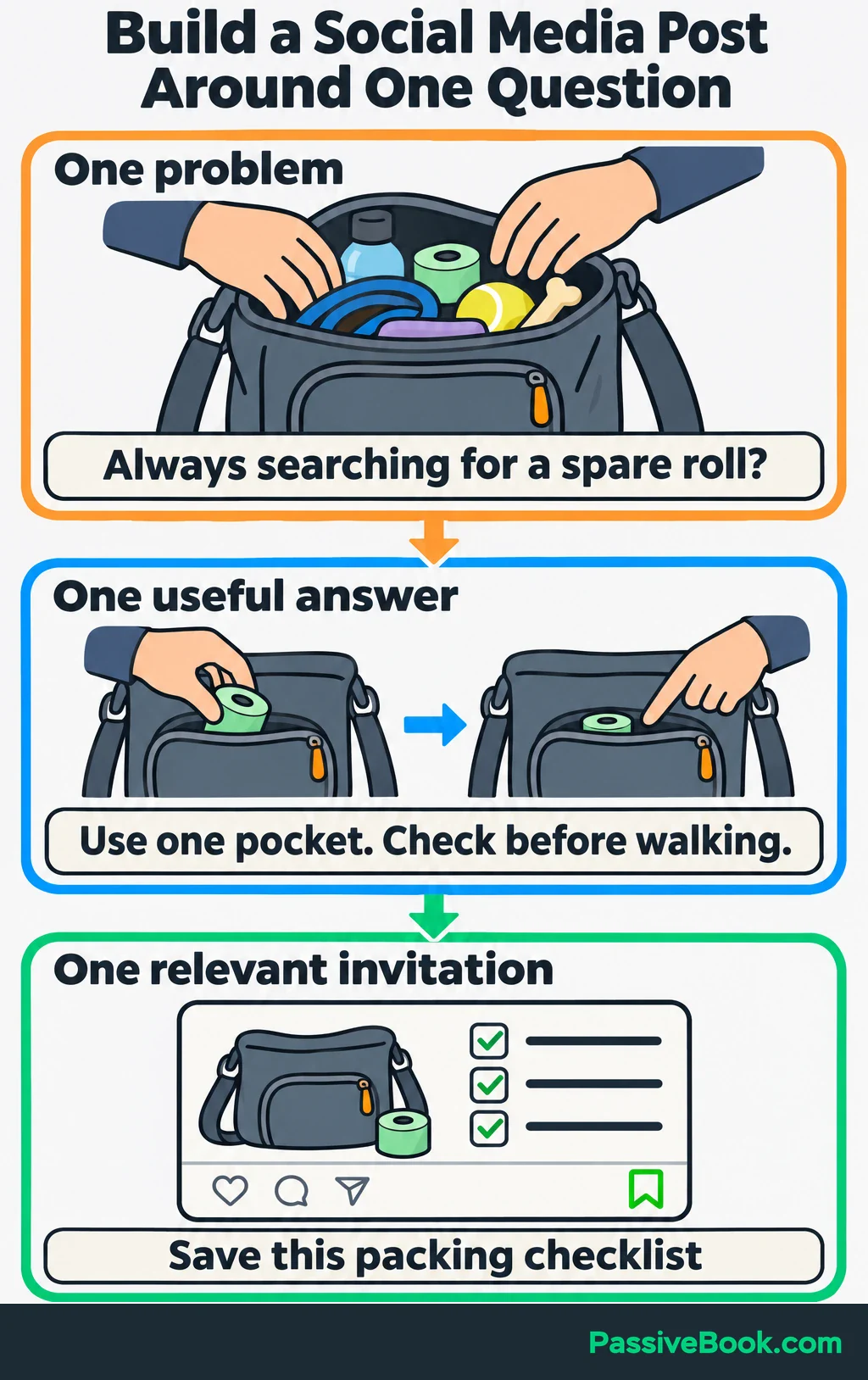
The demonstration should show that pocket, the spare roll and the restocking check. Skip the long introduction about why you love organized walks. The viewer already has a bag open.
Choose the format that makes the answer easiest to understand:
- A carousel can show a checklist one step at a time.
- A hands-only video can demonstrate packing order.
- Annotated photos can explain two pocket arrangements.
Being on camera is optional. The useful part may be your hands, a bag and a clear explanation.
If you know what you help people do but get stuck writing the post, AI Social Copy Studio can turn that knowledge into two connected drafts. You can choose a format that doesn’t put you on camera.

Free AI Social Copy Studio




End with one invitation that fits. Ask viewers to save a checklist, describe the item they struggle to find or view the bag you demonstrated. When inviting a follow, name what’s coming: “Next in this series: keeping a shared bag ready between walks.”
Add text alternatives that explain informative images, and check captions for spoken video. If a silent demonstration depends on where you put an item, explain that action in text or narration too. These practices follow W3C’s accessible writing guidance.
Build a Publishing Routine You Can Maintain
Set your publishing rhythm from the time you can give it. Include replies and review time before deciding how many posts to make.
I would start with two useful posts a week and a few short response sessions. Treat that as a trial workload, not a growth formula.
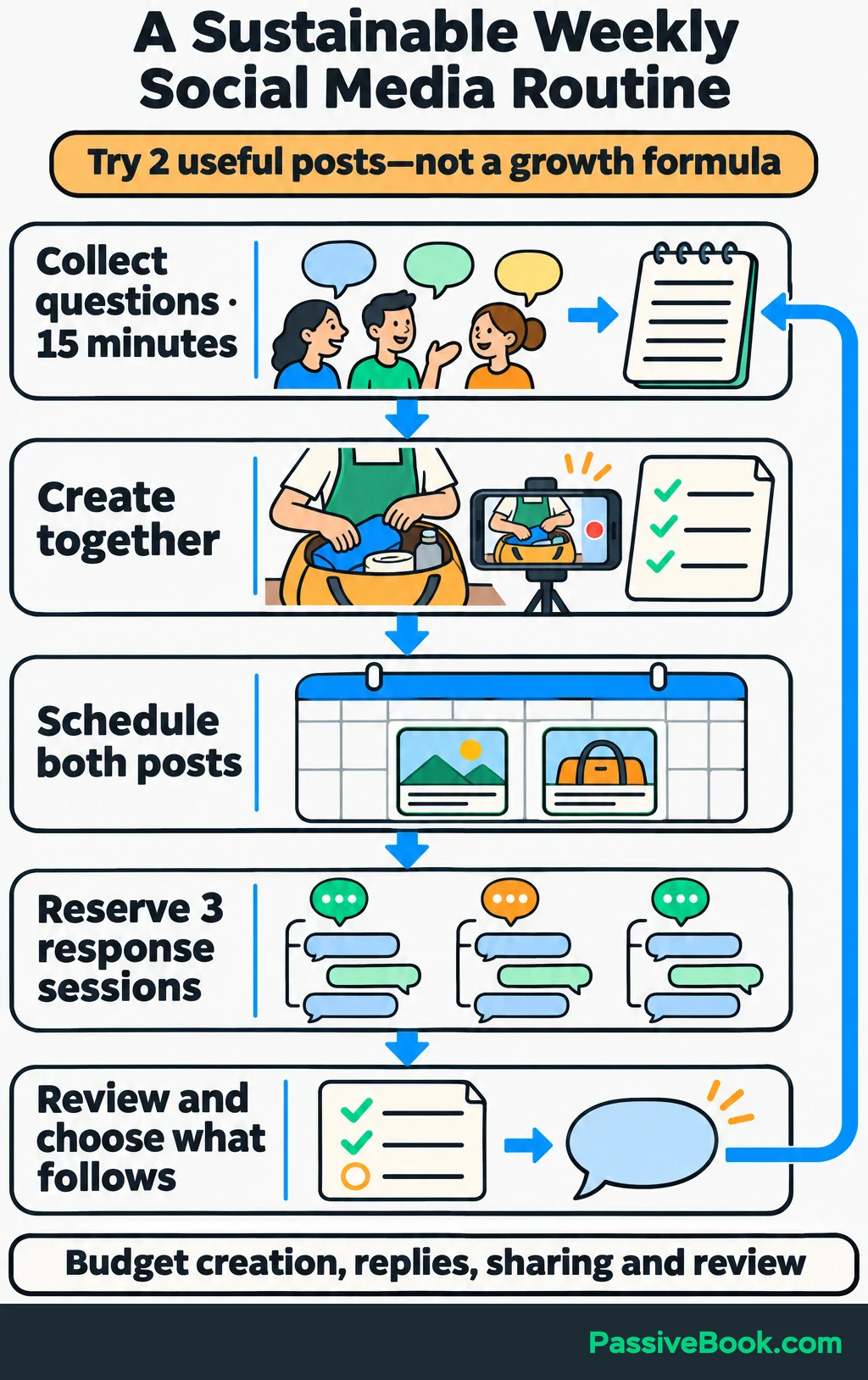
A simple weekly routine could be:
- Collect: Spend 15 minutes adding customer and audience questions to your backlog.
- Create: Use one session to draft a checklist and film a related demonstration.
- Schedule: Prepare the captions, images and next actions together.
- Respond: Reserve three short sessions for comments and relevant conversations.
- Review: Record results and choose the next questions.
Keep a calendar with the audience question, post purpose, format, publication date and next action. A spreadsheet or Notion page is enough.
Use Canva for reusable graphics and start with native scheduling tools. For an Instagram workflow, Meta Business Suite can handle scheduling. I would skip a separate paid scheduler until a specific limitation costs you time.
You also don’t need to invent a new idea for every slot. A packing walkthrough can become a checklist carousel and a discussion about hard-to-find items. Each version should make sense on its own.
Daily publishing isn’t a universal requirement. YouTube reports finding no correlation between growth in views across uploads and the time between uploads. That finding concerns YouTube, but it’s a useful reason to question blanket advice to post every day. YouTube’s publishing guidance.
Use AI to group your notes or suggest alternative openings. Then add the detail you can actually show. An AI draft cannot inspect the pockets in your bag.
Help New People Discover Your Content
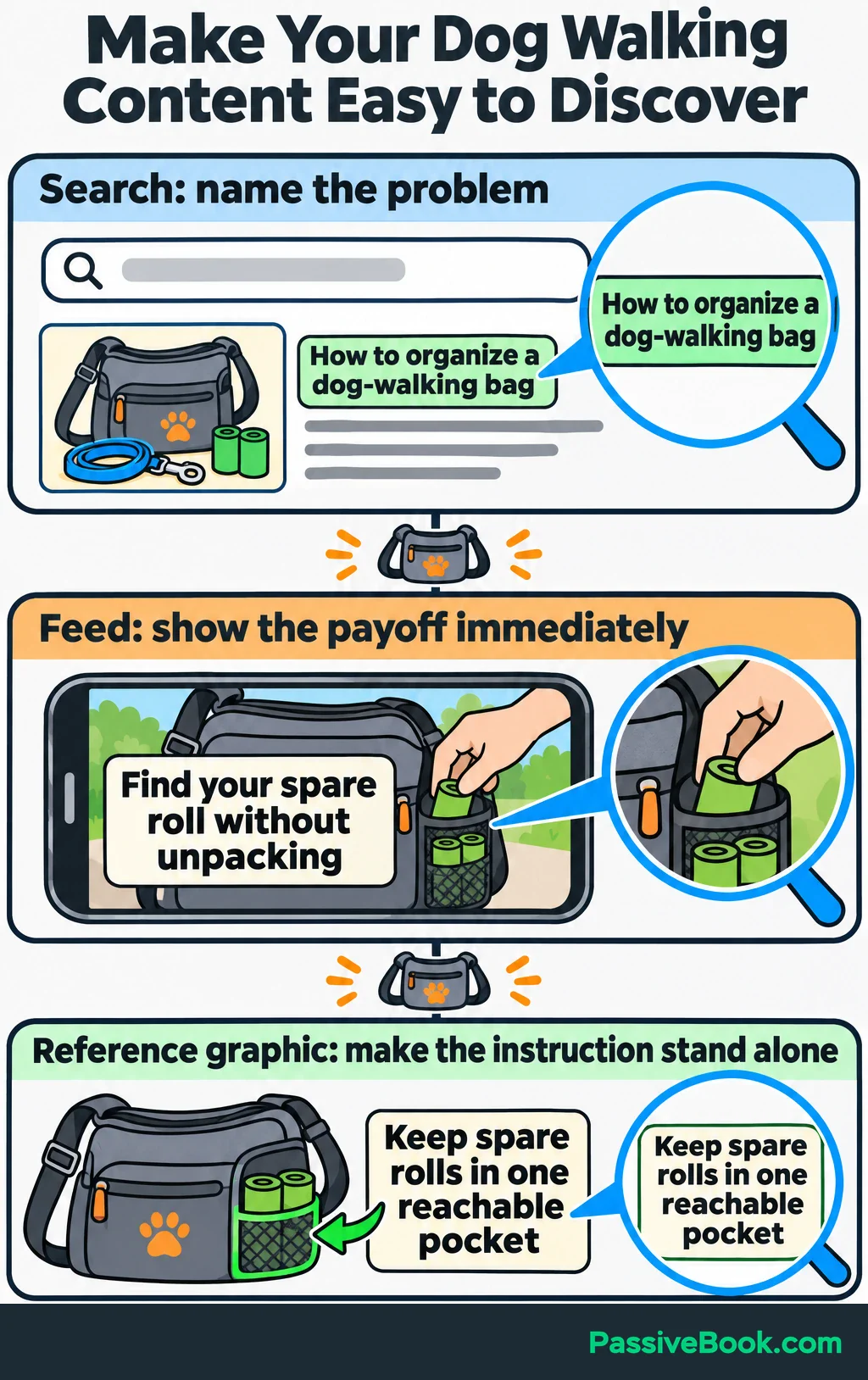
Use the words people use for the problem. “How to organize a dog-walking bag” tells a stranger more than “This changed everything.”
Match the presentation to where someone encounters it:
- In search, use a descriptive title and an image that clearly shows the subject.
- In a scrolling feed, make the first frame explain the problem or payoff.
- In a reference graphic, keep the main instruction readable without opening a long caption.
Keep those words tied to the answer. YouTube, for example, considers how well the title, description and video content match a search, alongside engagement for that search. Adding a phrase to an unrelated post doesn’t make it useful. YouTube’s search guidance.
Give useful posts an introduction beyond your own feed. Link a packing walkthrough from a relevant website guide or include it in a customer email where it answers an actual question.
In communities, answer the question in the conversation. Add a link only when it helps and the rules allow it. A complete answer earns its place even when nobody clicks.
For collaboration, choose someone with a complementary perspective. The bag shop could work with a dog walker on one packing demonstration: you explain the pocket layout, and they show which items they need to find quickly.
Agree on the question, contribution and next action before creating anything. On Instagram, an accepted Collab can appear on participating profile grids and reach their audiences. That provides shared distribution, though the post still needs to serve those viewers. Meta’s explanation of Instagram Collabs.
Turn Interactions Into Ongoing Conversations
Make your questions easy to answer from experience.
“Thoughts?” asks the reader to invent a topic. “Which item do you always struggle to find in your walking bag?” gives them somewhere to start.
When someone leaves a substantive comment, respond to what they said. If they keep losing spare rolls beneath other gear, explain an arrangement they can try and ask whether their bag has an accessible pocket.
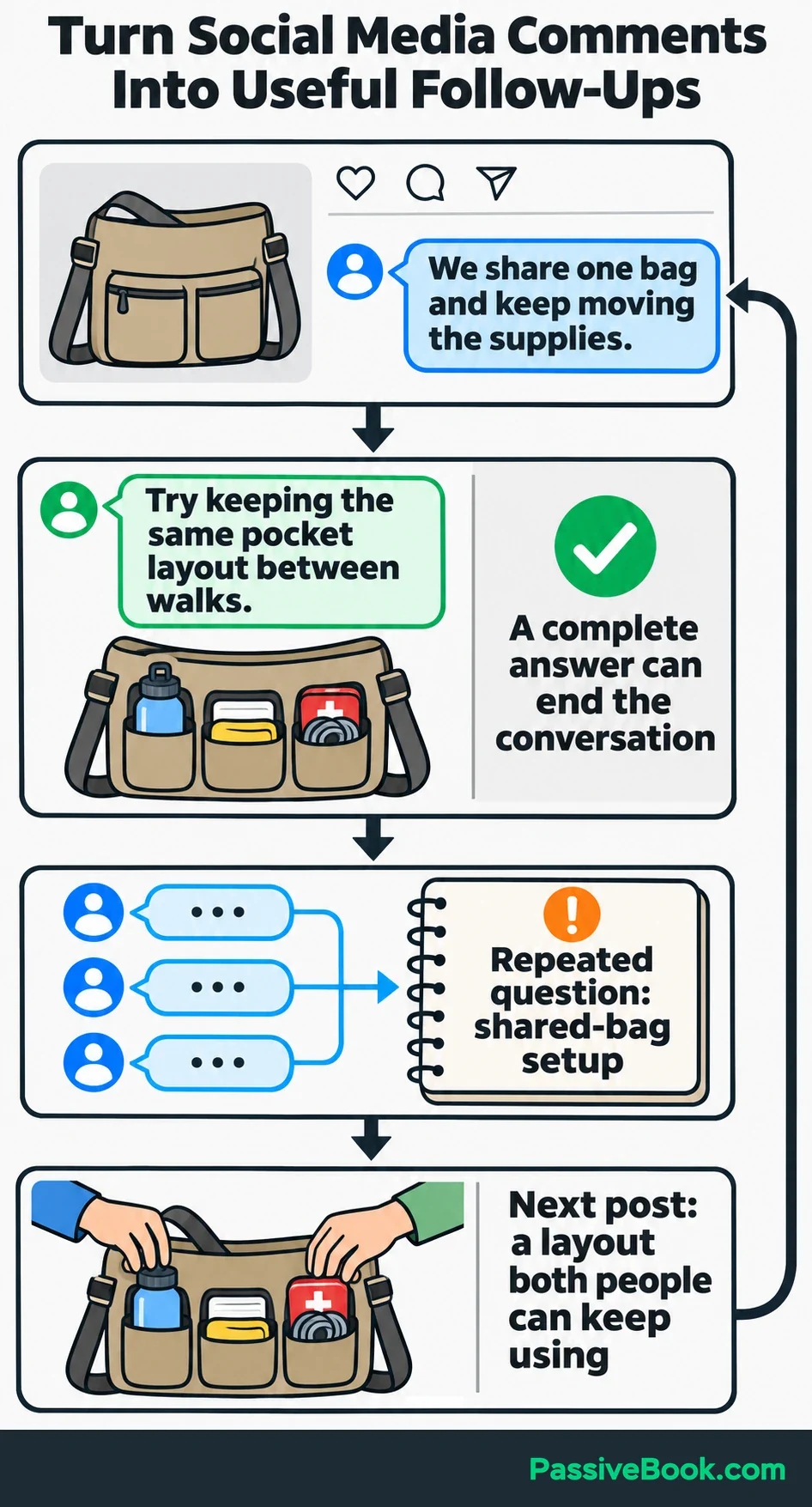
Don’t force another question into every reply. Sometimes a clear answer finishes the job.
Recurring comments belong in your backlog. If several people share one bag with another person, create a follow-up about keeping the pocket layout consistent. Introduce it with a brief connection:
A few of you mentioned sharing a walking bag. Here’s a simple layout both people can keep using.
Contribute beyond your own posts too. Answer relevant questions without treating every conversation as a route to a sale.
I would skip purchased followers, follow-for-follow groups and generic promotional comments. None of them helps you learn which packing questions your intended audience wants answered. They also leave you maintaining activity that has little connection to the business.
Give Interested Followers a Relevant Next Step
Match the next step to the problem you just helped solve.
A packing demonstration can lead to a free checklist. A post showing pocket dimensions can lead to the demonstrated bag. Explain what the person will get before asking them to leave the feed.
Keep that path short:
Packing demonstration → checklist page → confirmed signup and checklist delivery.
The destination should continue the same promise. If the post offers a packing checklist, don’t send visitors to a homepage where they have to hunt for it.
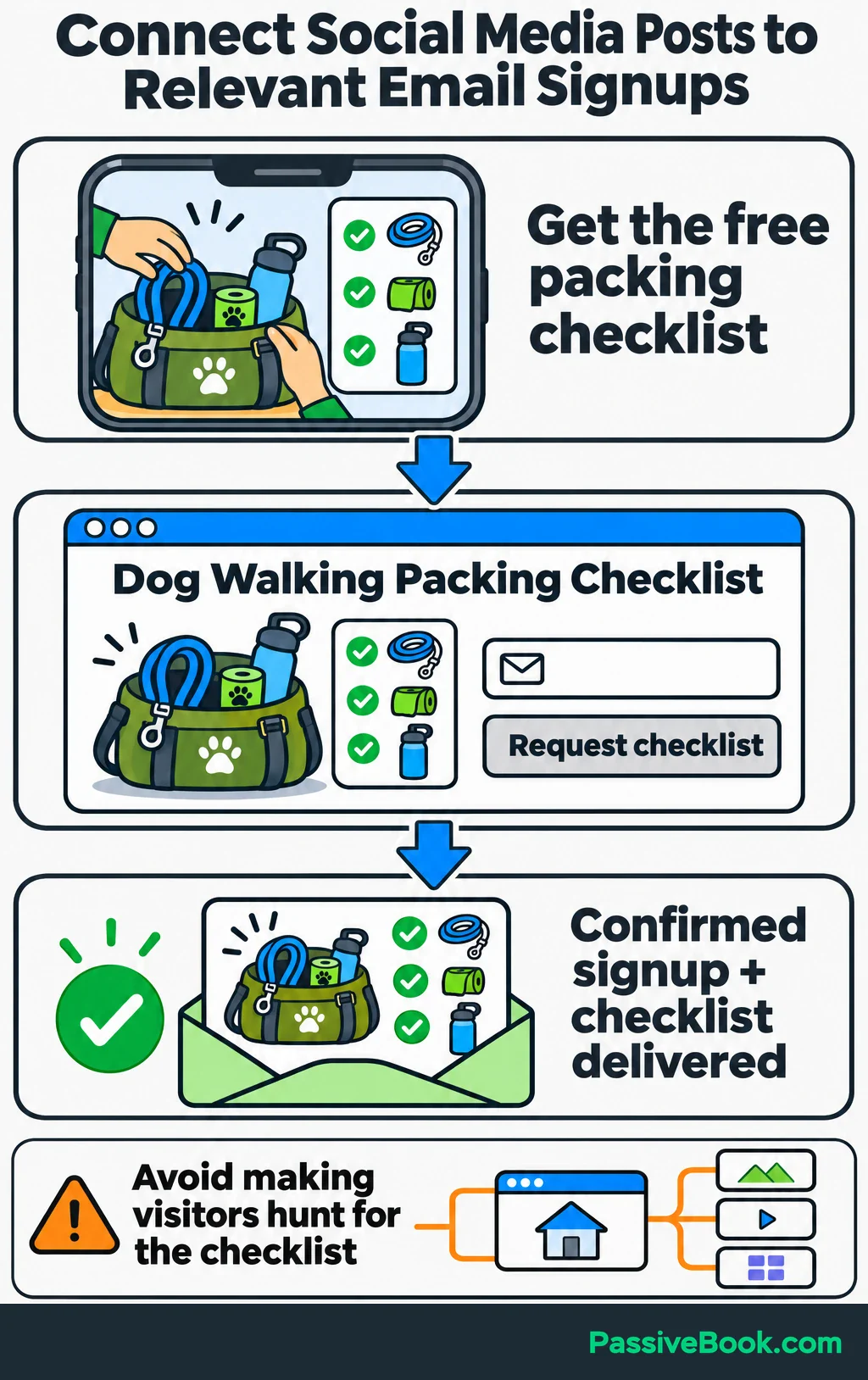
Make the product visible through occasional demonstrations and clear offer posts. Show the pocket layout, dimensions and what fits. Useful content can also explain what you sell.
Around 2022, I spent six months chasing Instagram and Twitter/X followers in another niche. I kept treating the follower total as the finish line, but it wasn’t producing meaningful income. Those accounts weren’t part of Passive Book.
That experience is why I choose a business outcome before filling a content calendar. I want interested followers to have somewhere useful to go next.
Offer email signup as an optional way to keep hearing from you beyond the feed. If your site uses WordPress, FluentCRM is my preference for managing that relationship. Use the email tool you already have before adding another subscription.
Use Results to Improve the Next Content Cycle
Track Relevant Attention and Outcomes
Track follower growth alongside reach, useful conversations, confirmed checklist signups and time spent. Reach counts accounts or people shown a post; views may include repeats.
Here’s an illustrative tracker for posts whose checklist links can be tracked separately. Both posts are reviewed seven days after publication.
| Post topic and format | Publication date | Reach | Saves or shares | Useful conversations | Chosen outcome | Production time |
|---|---|---|---|---|---|---|
| Spare-roll pocket checklist; carousel | May 6 | 310 accounts | 14 saves; 3 shares | 4 packing discussions | 3 confirmed checklist signups | 45 minutes |
| Shared-bag layout; hands-only video | May 9 | 460 accounts | 11 saves; 5 shares | 7 packing discussions | 5 confirmed checklist signups | 65 minutes |
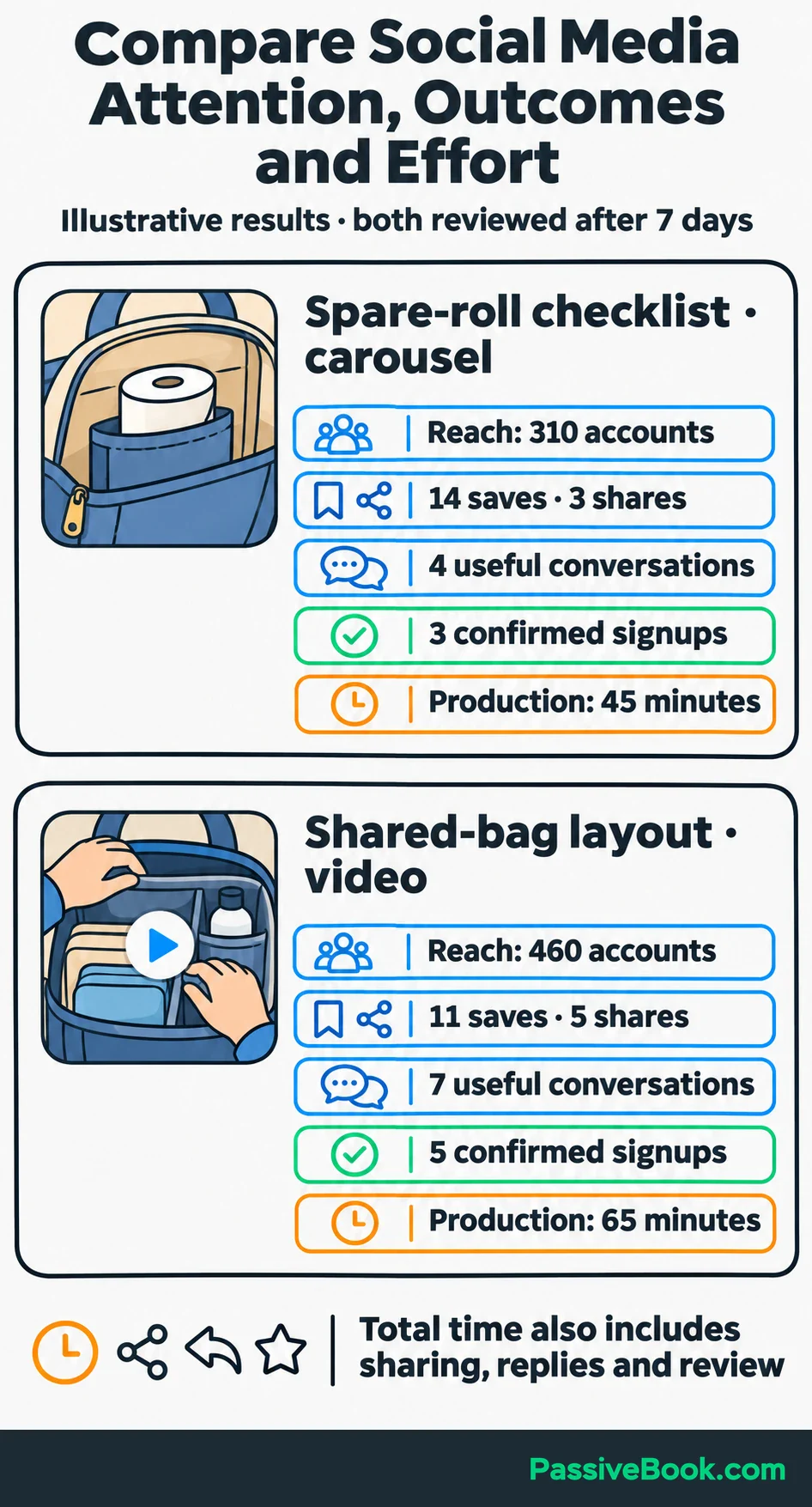
For your weekly time total, include time spent sharing posts, replying and reviewing as well as production.
Use campaign tags to identify website visits from social posts. Track confirmed signups from those visits too. If posts share a profile link, attribute results to the campaign unless you can reliably identify individual posts.
For a signup rate, divide confirmed signups by the tracked visits they came from during the same review period. Eight signups from 40 tracked visits gives:
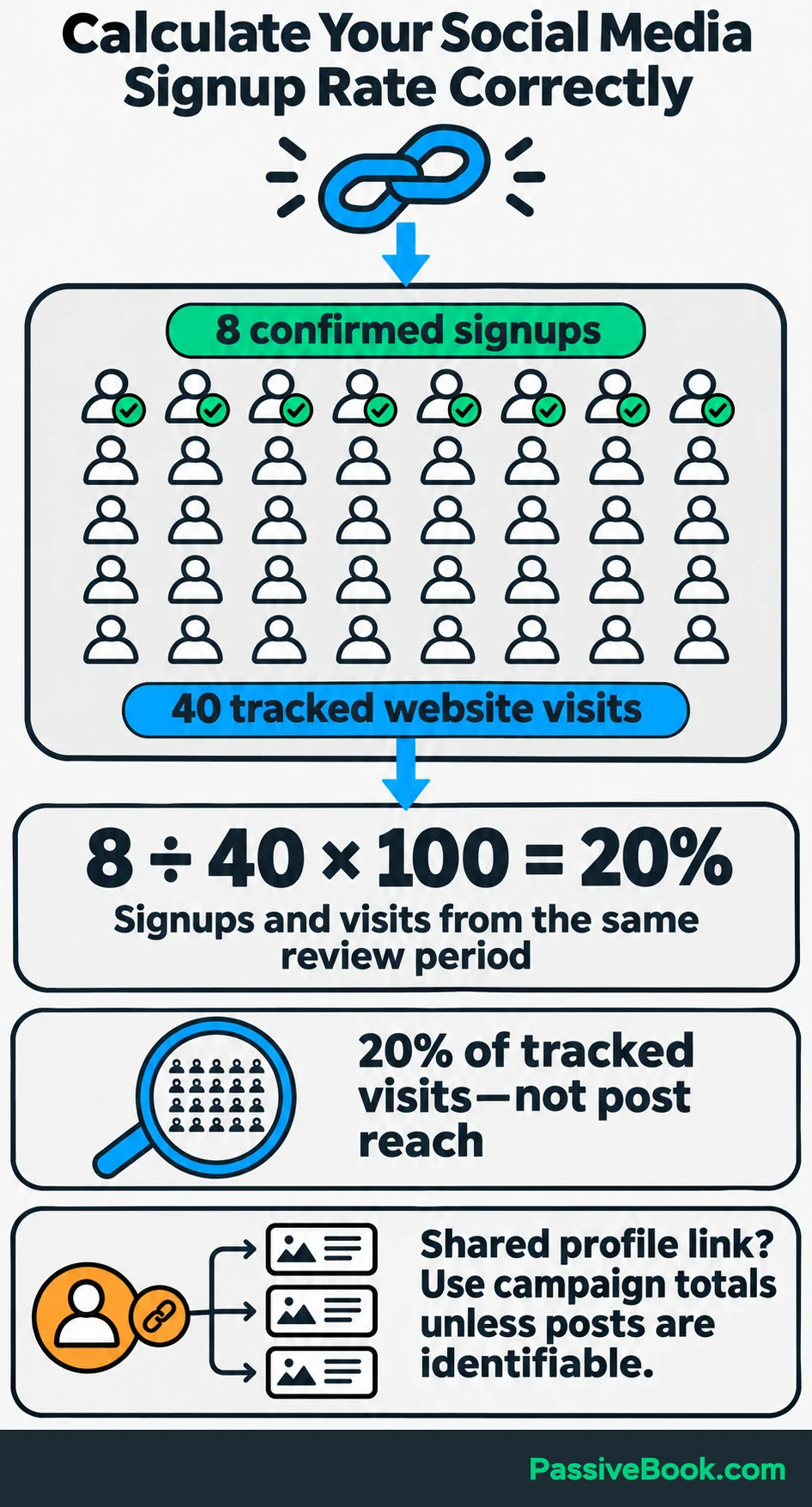
8 ÷ 40 × 100 = 20%.
That rate describes those visits, not everyone who saw the posts.
Compare several similar posts at the same age. I wouldn’t rebuild the routine around one viral post.
Fix the Part That Is Holding Growth Back
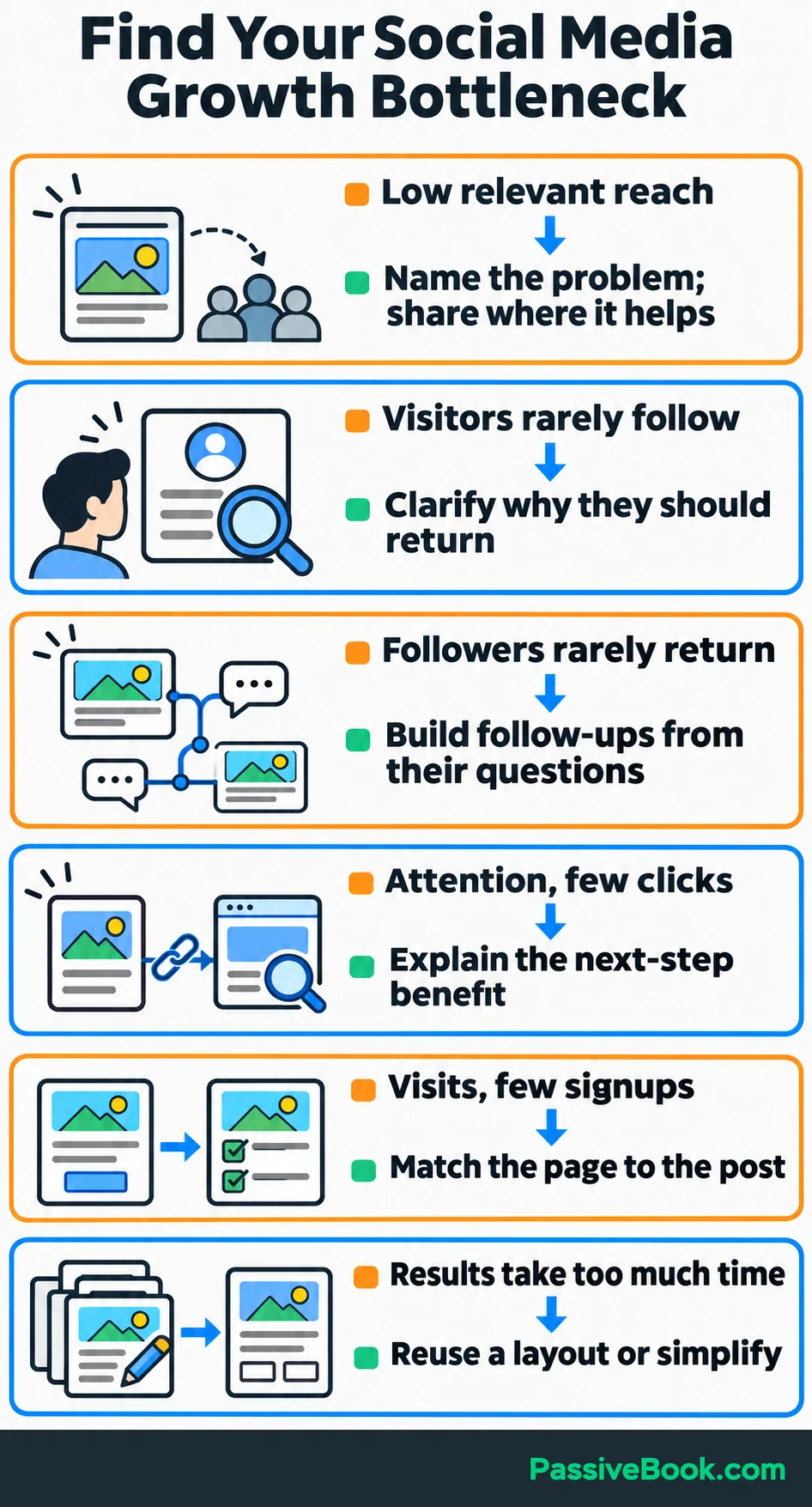
Use the results to locate the next change.
| What you observe | What I would change first |
|---|---|
| Few relevant people see the posts | Name their problem in the opening and share the post in relevant conversations |
| Profile visitors rarely follow | Clarify why they should return and feature related posts |
| Followers rarely respond or return | Turn their questions into connected follow-ups |
| Posts get attention but few clicks | Explain what the next step offers |
| Visitors rarely subscribe or inquire | Match the page to the post and make the action clear |
| Useful results take too much time | Reuse a layout or simplify the format |
If Instagram or Facebook discovery drops unexpectedly, check recommendation eligibility: Meta allows some content that it excludes from recommendations.
Repeat promising topics with a new question or demonstration. A useful post about a spare-roll pocket could lead to a restocking check or a shared-bag layout.
Change one major element at a time. If you alter the topic, format, opening and destination together, the next result gives you little guidance.
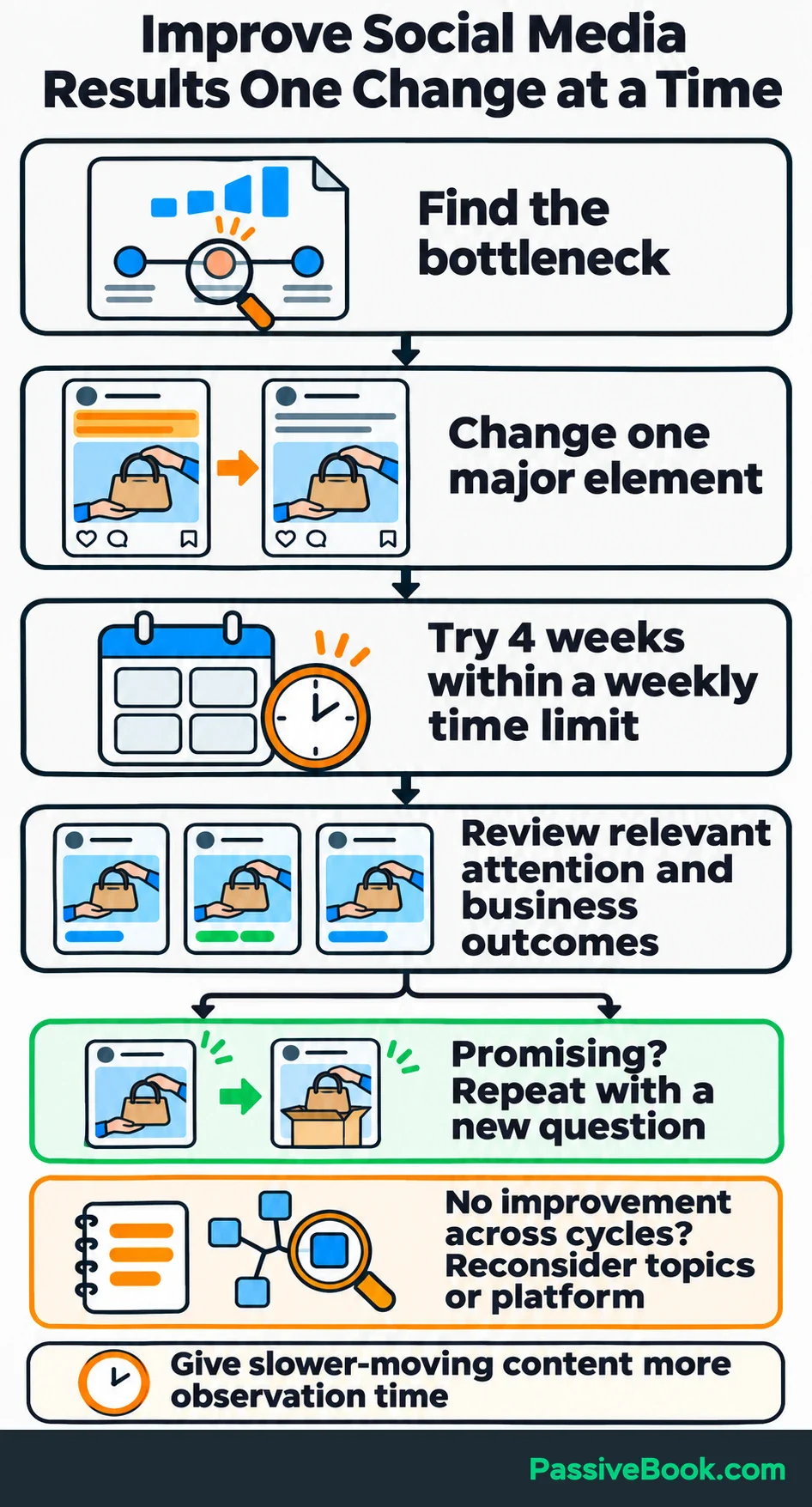
I would set a four-week trial and a weekly time limit to judge the workload and early results. Give slower-moving content more observation time, but don’t use “organic takes time” to excuse endless work without review.
If repeated cycles bring no improvement in relevant attention or business outcomes, reconsider the topics or platform before posting more.
What Next?
Write one sentence explaining why people should follow your account, then collect five questions your next posts could answer. Choose one and make the smallest useful demonstration you can publish this week.
Use the social buttons to share this guide when a posting routine needs a clearer purpose and a way to judge progress.
Which part currently holds you back most: getting discovered, giving people a reason to follow or turning attention into action? Tell me in the comments, and bring any other questions too.
Share this post with your friends & followers:

