People ask you for help, and you can usually point them toward a useful next step. Turning that into a paid offer is harder. What would you promise, what would you charge, and where would the first client come from?
It’s easy to spend your spare evenings building a website while those questions stay unanswered. That leaves you paying for tools with little evidence that anyone wants the service. This guide helps you shape that informal help into a paid coaching offer, with a way to find clients and deliver sessions and feedback alongside your existing work.
Choose a Coaching Niche You Can Serve Credibly
Start with a problem you already understand through experience, training, or work helping others. Clients pay for guidance they can apply to their circumstances, plus feedback when they get stuck.
Knowing a subject is only part of the job. You also need to listen, explain clearly, adapt your advice, and recognize when someone needs help beyond your competence.
List a few problems you could help someone address, then compare them:
| Question | What You Need to Establish |
|---|---|
| Can I help competently? | Describe a problem you have solved or helped someone address, and the experience or training behind your approach. |
| Can I reach potential buyers? | Name a contact who could introduce you or a community where potential clients discuss this problem. |
| Does the problem matter enough? | Ask potential clients about the last time the problem occurred and what they tried. Until then, demand is untested. |
| Can I support the work online? | Identify what you could review remotely, such as a schedule or written plan, and how you would give feedback. |
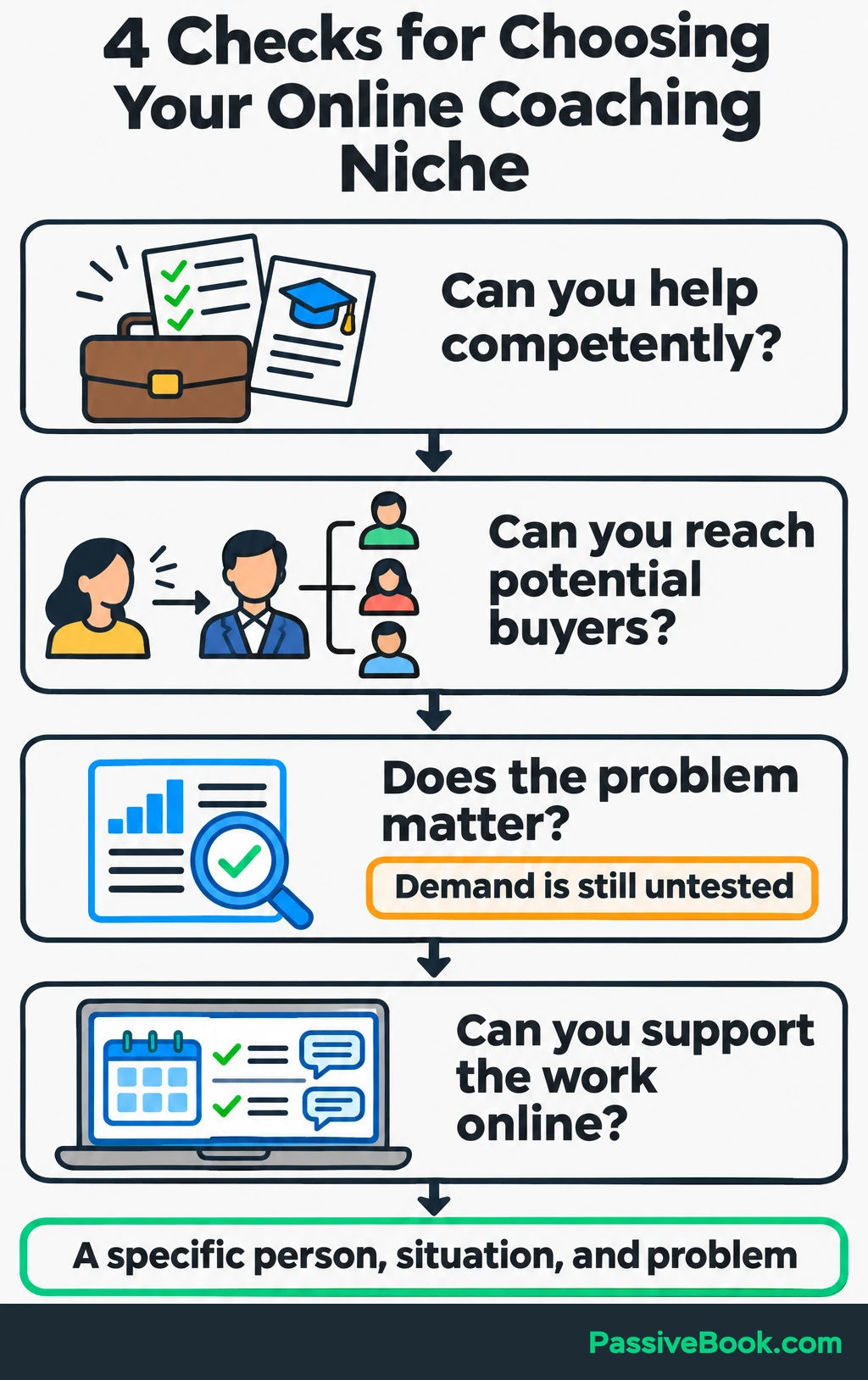
Narrow your choice to a person, a situation, and a problem. “Helping people with their businesses” leaves too much unexplained.
Throughout this guide, imagine you have relevant experience organizing pet-sitting operations. Your offer helps independent pet sitters keep bookings and client handovers organized. The package, prices, and progress below illustrate how the offer could work.
That scope matters. Enjoying pet care does not establish competence in veterinary care, behavior work, or business operations. Choose the part you can support credibly and close important skill gaps before charging.
Check qualification and licensing requirements for the services you will actually provide, including where you and your clients operate. In the U.S., requirements vary by activity and location, as the SBA’s licensing guidance explains. A coaching certificate does not replace any authorization your work requires.
Test Demand Before Building the Offer
Find people who experience the problem and learn what they already do about it. Start with existing contacts, relevant communities, and introductions.
Ask about events rather than opinions:
- “When did this last cause a problem?”
- “What happened, and how did you handle it?”
- “What have you already tried?”
- “Have you paid for help or tools?”
- “What still makes this difficult?”
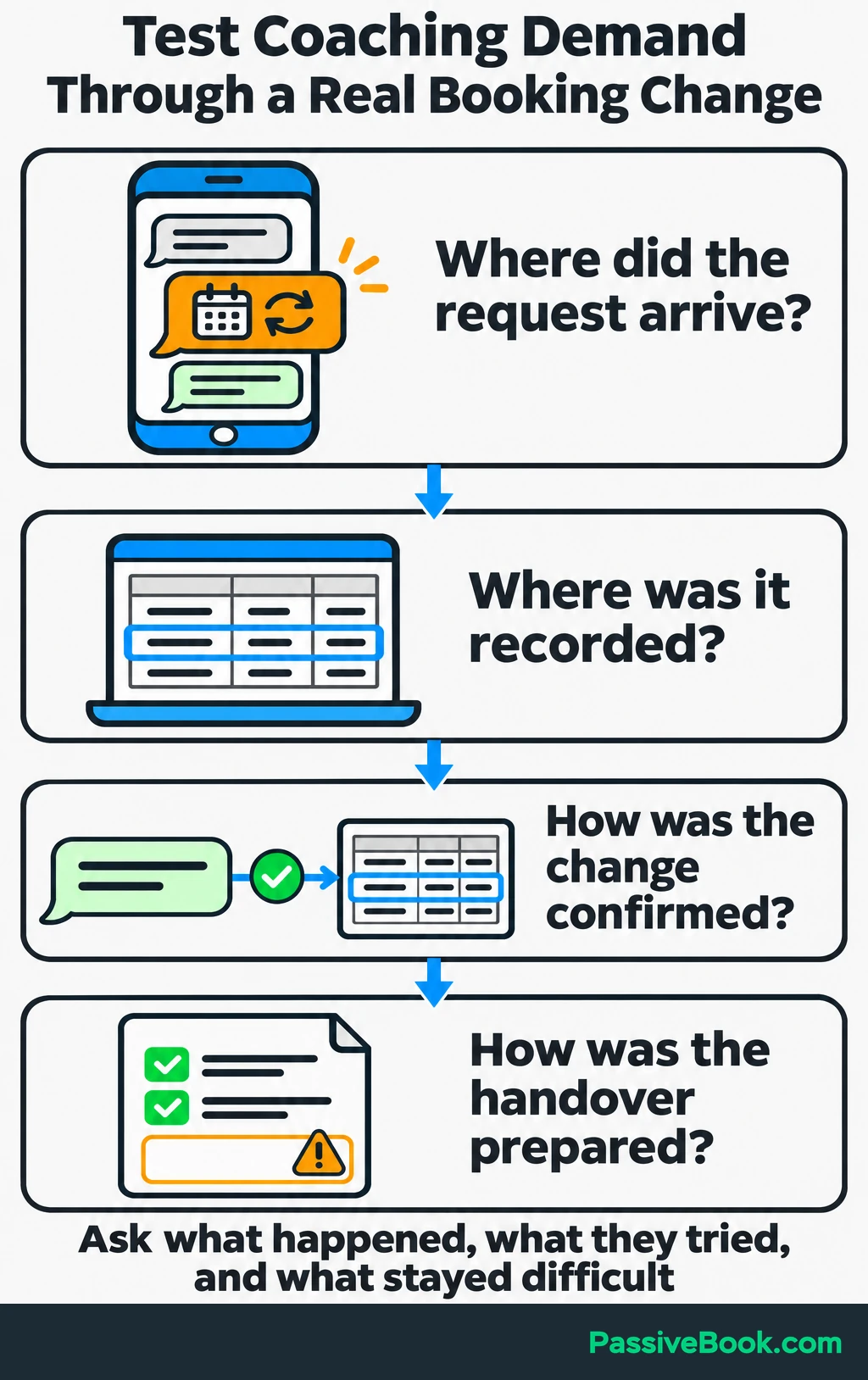
For the pet-sitter example, ask someone to walk through their last booking change. Where did the request arrive? Where was it recorded? How did they confirm the change and prepare the handover?
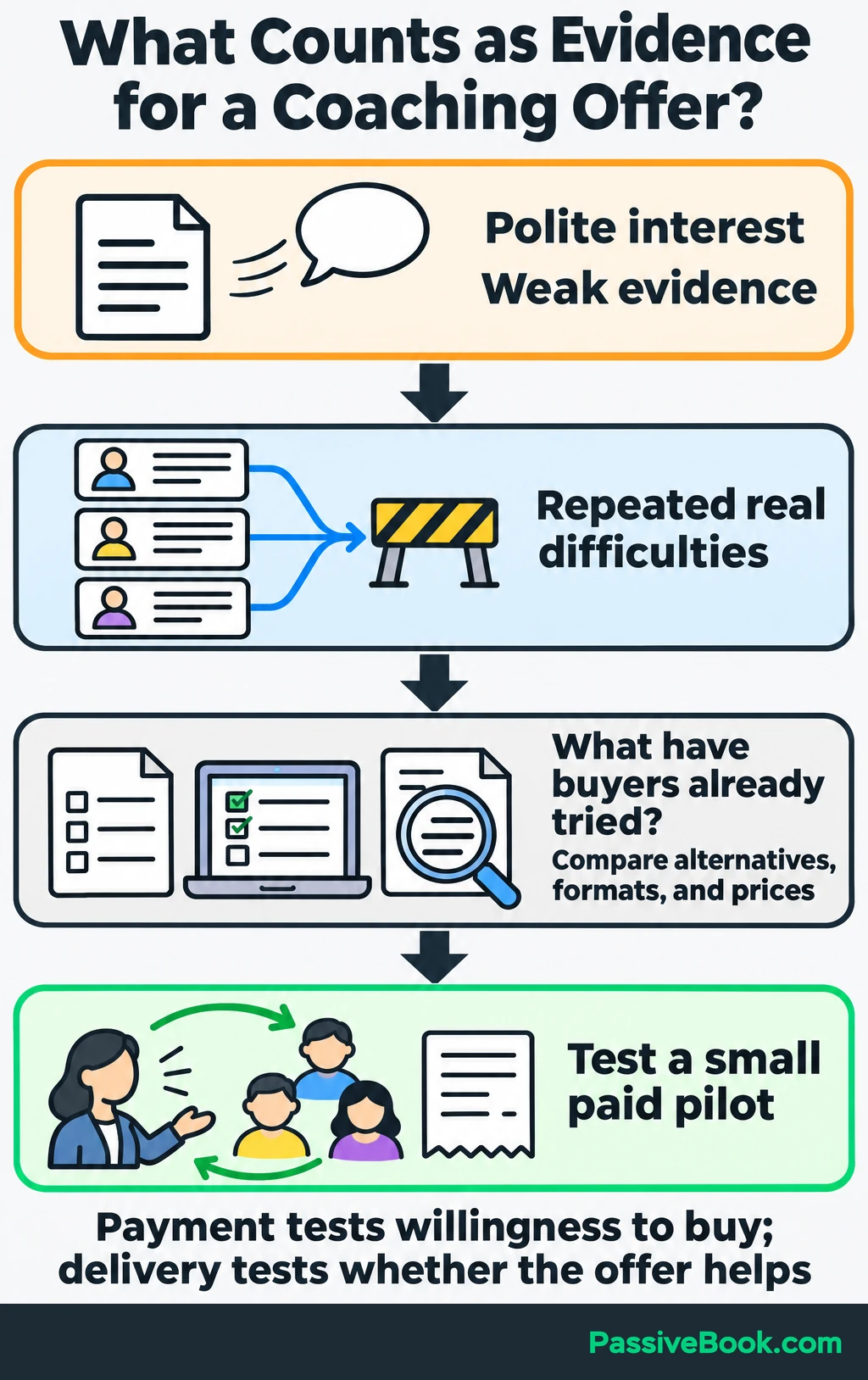
You are looking for repeated difficulties, active attempts to solve them, and a reason personalized support would help. “That sounds interesting” gives you much less to work with.
Also compare existing coaching, software, templates, and free resources. Note whom each serves, what it helps them do, its format, and its price. If a free worksheet solves the whole problem, coaching needs a stronger reason to exist.
I rushed a course in my digital-product business before properly validating it. It attracted few sales and a bad review, and I removed it. I had treated producing the material as progress without establishing whether it was the help buyers wanted.
That experience shapes my recommendation here: investigate the problem before making the resources. Conversations help you design a small offer. Then test it as a paid pilot: a first run with a few paying clients before you commit to a wider launch.
If people describe little urgency or no need for individual help, revise the problem. Another month spent polishing worksheets will not answer that question.
Build One Coaching Package Around a Clear Outcome
Define the Outcome and Scope
Describe progress the client can recognize and influence:
I help [specific people] work toward [observable outcome] through [approach].
For the running example:
I help independent pet sitters build a weekly routine for keeping bookings and client handovers organized.
Then explain what that means in practice. By the end of the package, the client should be working toward:
- One place to record confirmed bookings and changes.
- A handover template containing the details they need.
- A regular review habit they can maintain during a busy week.
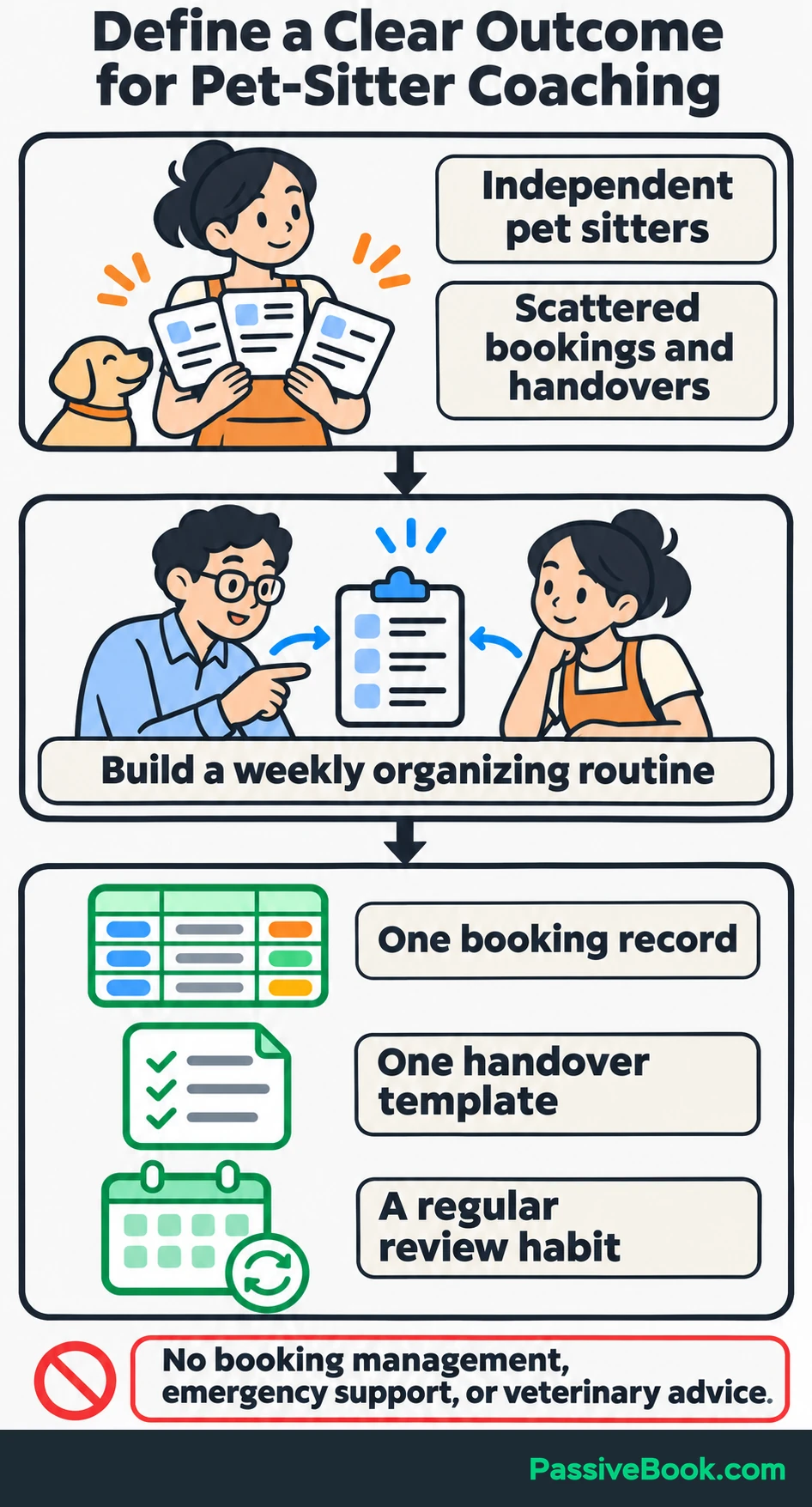
These give you something useful to review together. “Transform your business” mostly gives you room to disagree about what happened.
Define who the package suits and what participation requires. Here, clients need an active pet-sitting service, willingness to bring anonymized examples, and time to try the routine between sessions.
State the exclusions too. This package does not include running their bookings, handling emergencies, giving veterinary advice, or providing legal documents.
Choose the Delivery Format and Support Limits
I would begin with individual coaching when you still need to learn how clients’ circumstances differ. A small group makes more sense when people can follow a shared process and benefit from discussing it together.
Choose the communication format around the work. Written feedback may be enough to review a booking record. A call can help uncover why the client keeps abandoning it.
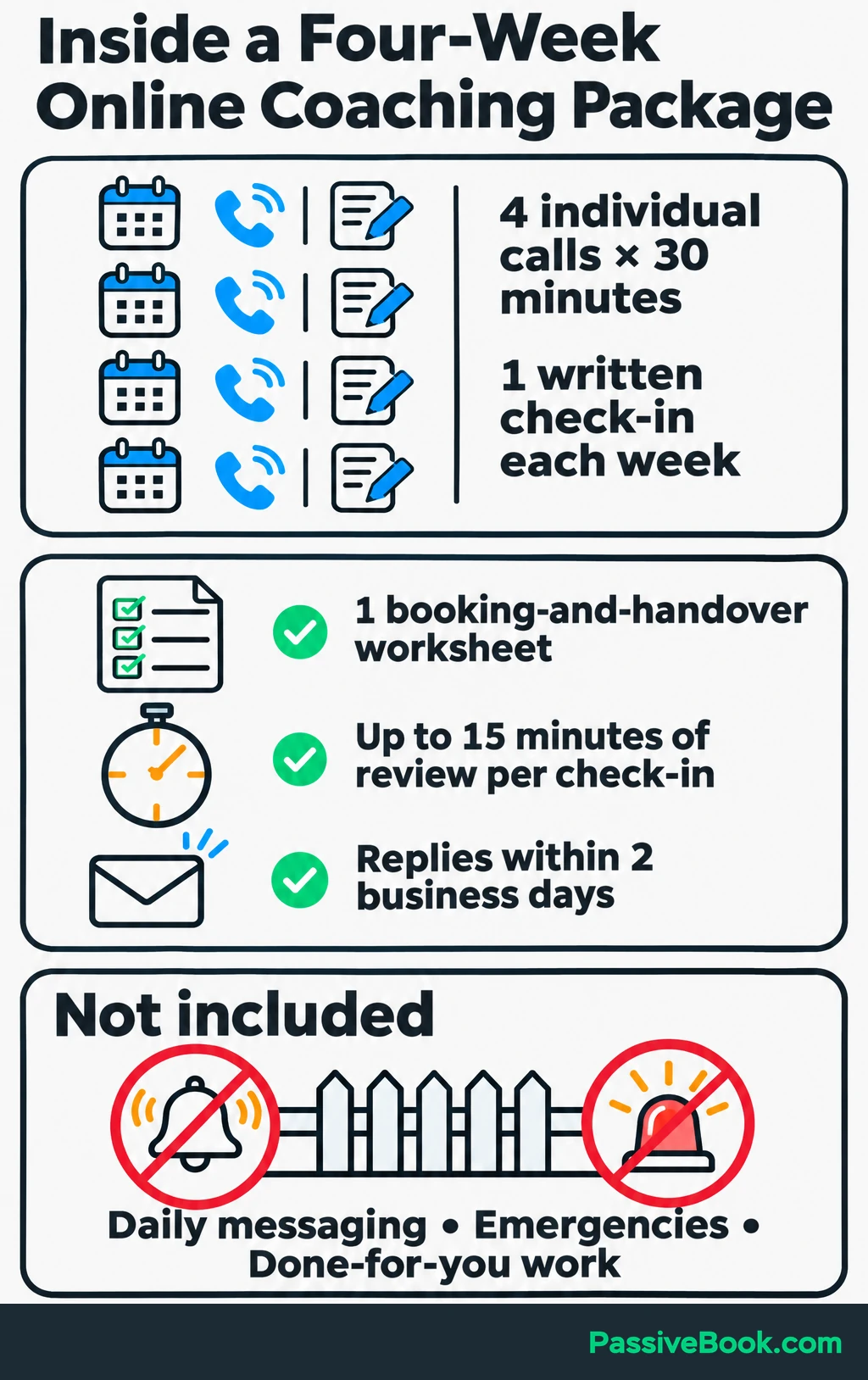
The example package could include:
- Duration: Four weeks.
- Sessions: Four individual calls of 30 minutes each.
- Resources: One booking-and-handover worksheet.
- Check-Ins: One written check-in each week.
- Review Allowance: Up to 15 minutes of coach review per check-in.
- Response Window: Replies within two business days.
- Exclusions: Daily messaging, emergency support, and work completed on the client’s behalf.
Tell clients what to prepare and how to submit their check-ins. Set a rescheduling policy and explain what happens when preparation is missing.
You can use audio calls or written coaching when those formats support the work. Public camera appearances are optional. If your service requires visual observation, arrange a suitable way to see what you need rather than promising that every format will work.
Build only the resources this package needs. A client portal containing twelve empty folders is still twelve empty folders.
Set a Sustainable Price and Client Capacity
Count all the work required to serve a client before choosing a price. Include sessions, preparation, feedback, onboarding, administration, and a realistic share of time spent finding clients.
For the four-week example:
| Work Per Client | Estimated Time |
|---|---|
| Four 30-minute calls | 2 hours |
| Four 15-minute written reviews | 1 hour |
| Preparation, onboarding, administration, and allocated acquisition time | 1.5 hours |
| Total | 4.5 hours |
Next, subtract payment fees and the client’s share of other business costs from the package price. Divide what remains by those working hours.
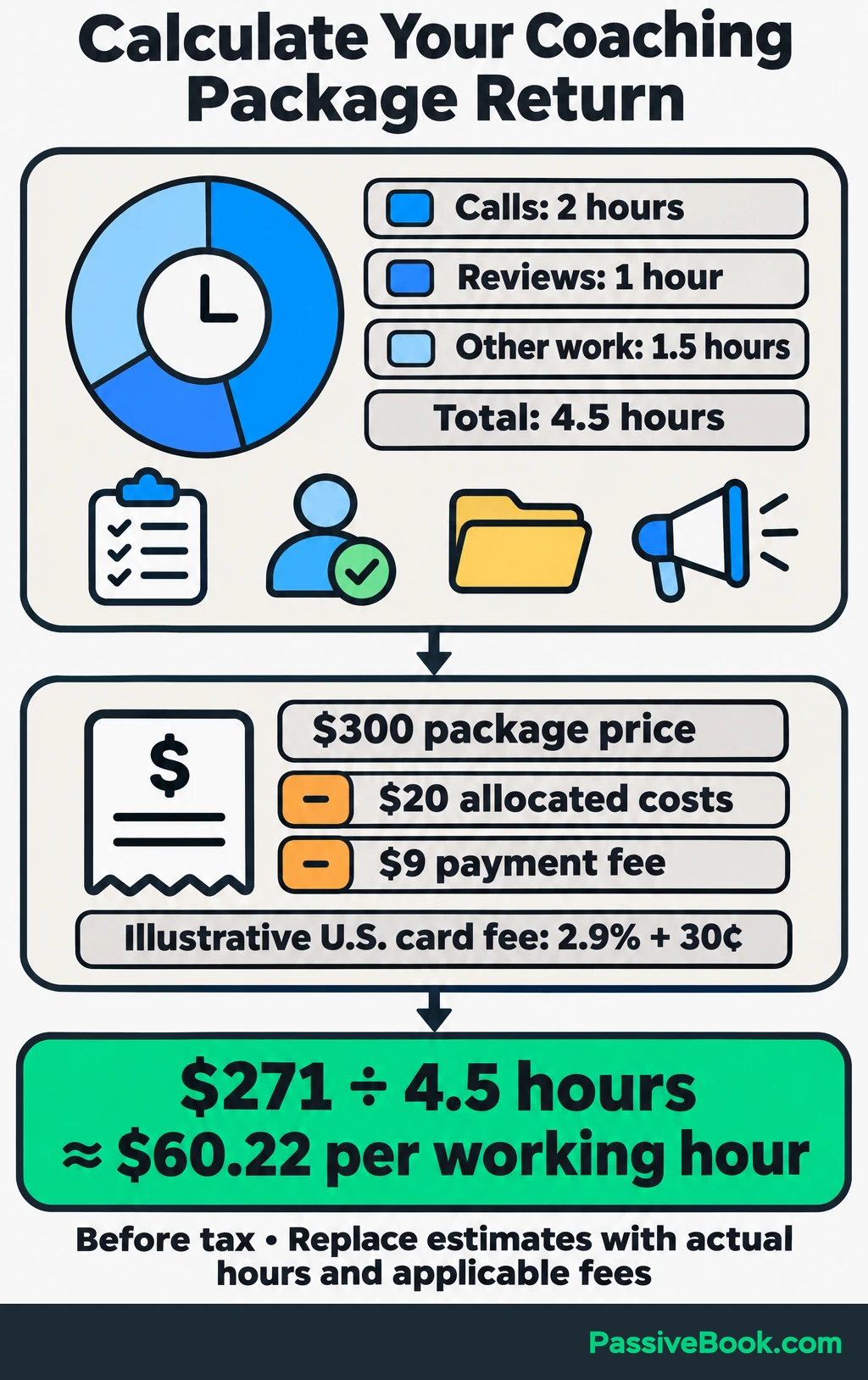
At an illustrative package price of $300, assume $20 in other allocated costs. A single payment processed at Stripe’s published standard U.S. domestic online-card rate of 2.9% plus 30¢ would cost $9.
($300 − $20 − $9) ÷ 4.5 hours = about $60.22 per working hourThat is an estimated return before tax. Use the fees that apply to your location and transaction, and replace the time estimate with actual hours after the pilot. Uncounted sales calls can make an attractive price look much less attractive.
Compare relevant alternatives, but do not copy a competitor’s price without knowing what their package includes. Test a clearly scoped paid pilot and review both buyer response and your delivery costs.
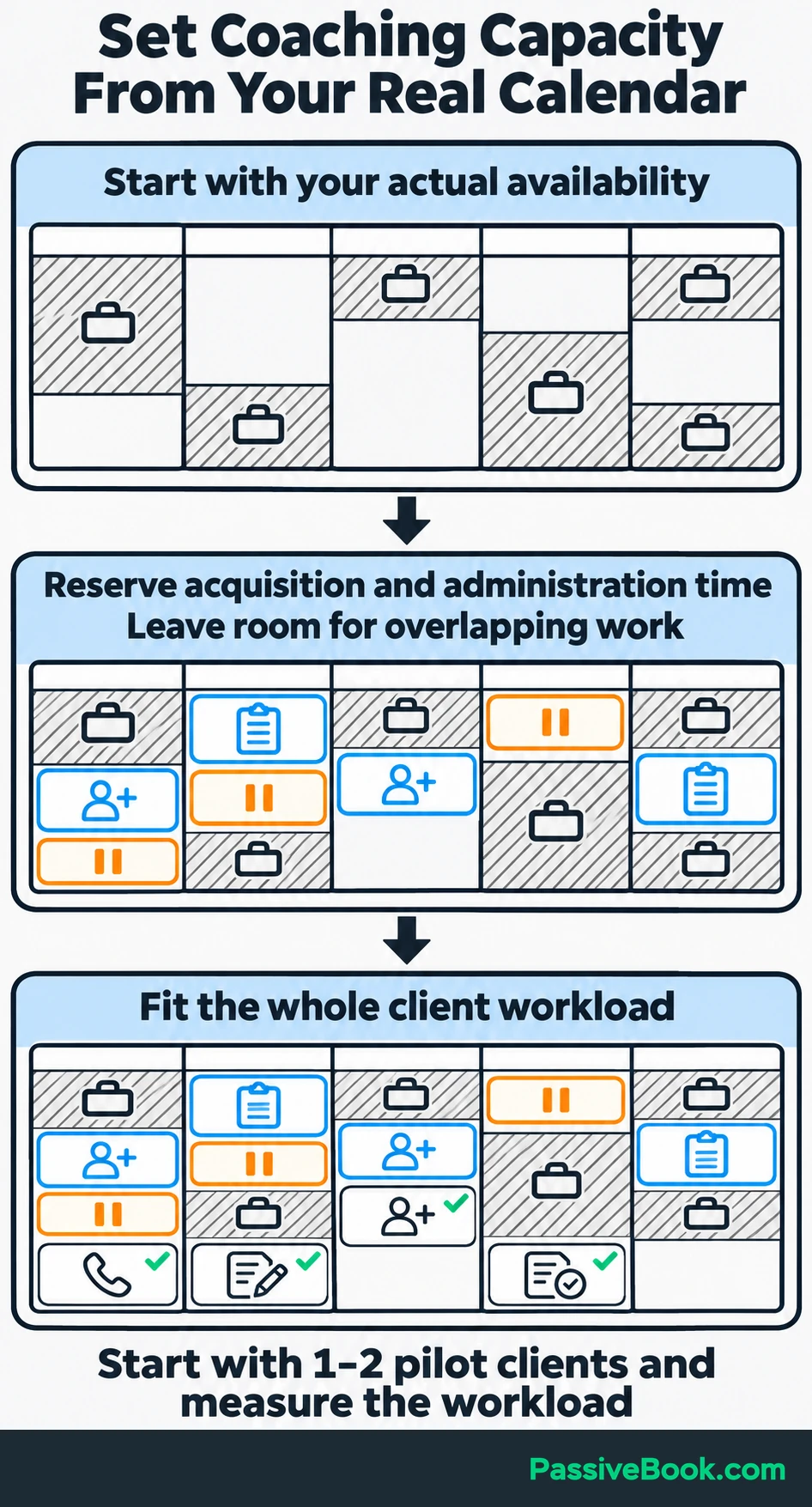
Set capacity from your calendar. Reserve time for finding clients and administration before filling delivery slots, and leave room for weeks when onboarding and calls overlap.
One or two pilot clients may be enough to expose problems in the process. Commit to the support you can reliably provide alongside your existing work.
A package can look profitable per hour and still leave you short of your monthly target. Use your own hours and costs to compare the price and client load before committing.

Free Pricing Profit Calculator




Also set a launch spending ceiling. Keep optional software spending separate from registration, insurance, and professional advice your situation requires.
Set up the Essentials to Accept Clients
You need a clear offer and a working route from inquiry to enrollment. Start with one page or shareable document covering:
- The problem and intended outcome.
- Who the package suits.
- What is included and excluded.
- Duration, price, and participation requirements.
- Your relevant experience.
- How to discuss fit or request enrollment.
Use an existing website when practical. If you already run WordPress, add a page there. For a separate site, Carrd is a simple one-page website builder. Check its paid plans for custom-domain and form support, and budget separately for domain registration.
If the page is still blank, start with the words rather than another website tool. This AI Skill turns your package notes into an offer draft you can review before sharing.

Free AI Copywriting Studio
Keep the rest of the setup small:
| Function | Minimum Setup | Cost | Upgrade Trigger |
|---|---|---|---|
| Offer page | A shareable service document or existing website page | No added software cost using existing tools | You need a public page or integrated inquiry form |
| Scheduling | Offer available times by email and send calendar invitations | No added software cost | Booking exchanges regularly consume useful time |
| Calls | Google Meet for individual sessions | No subscription needed for basic individual calls | You need recording or group features your account lacks |
| Payment | A hosted checkout available in your location | Processing fees apply | You need supported installment options or accounting connections |
| Intake | A short private form or document | No added software cost using existing tools | Manual intake creates errors or repeated copying |
| Client records | Restricted folders and a simple progress spreadsheet | No added software cost using existing tools | Access management or finding records becomes difficult |
Before switching to group sessions, check Google Meet’s participant and time limits for your account.
Before accepting payment, confirm your registration, tax, invoicing, and recordkeeping obligations with the relevant local authorities or a qualified adviser. Ask an insurer whether your services and remote clients are covered. The SBA’s business-launch guidance provides a U.S. starting point.
Prepare an agreement covering scope, responsibilities, confidentiality and its limits, communication, payment, cancellations, refunds, and termination. Make its terms consistent with applicable consumer law. The International Coaching Federation (ICF) Code of Ethics offers a professional benchmark for agreeing on roles, confidentiality, and financial arrangements before coaching begins.
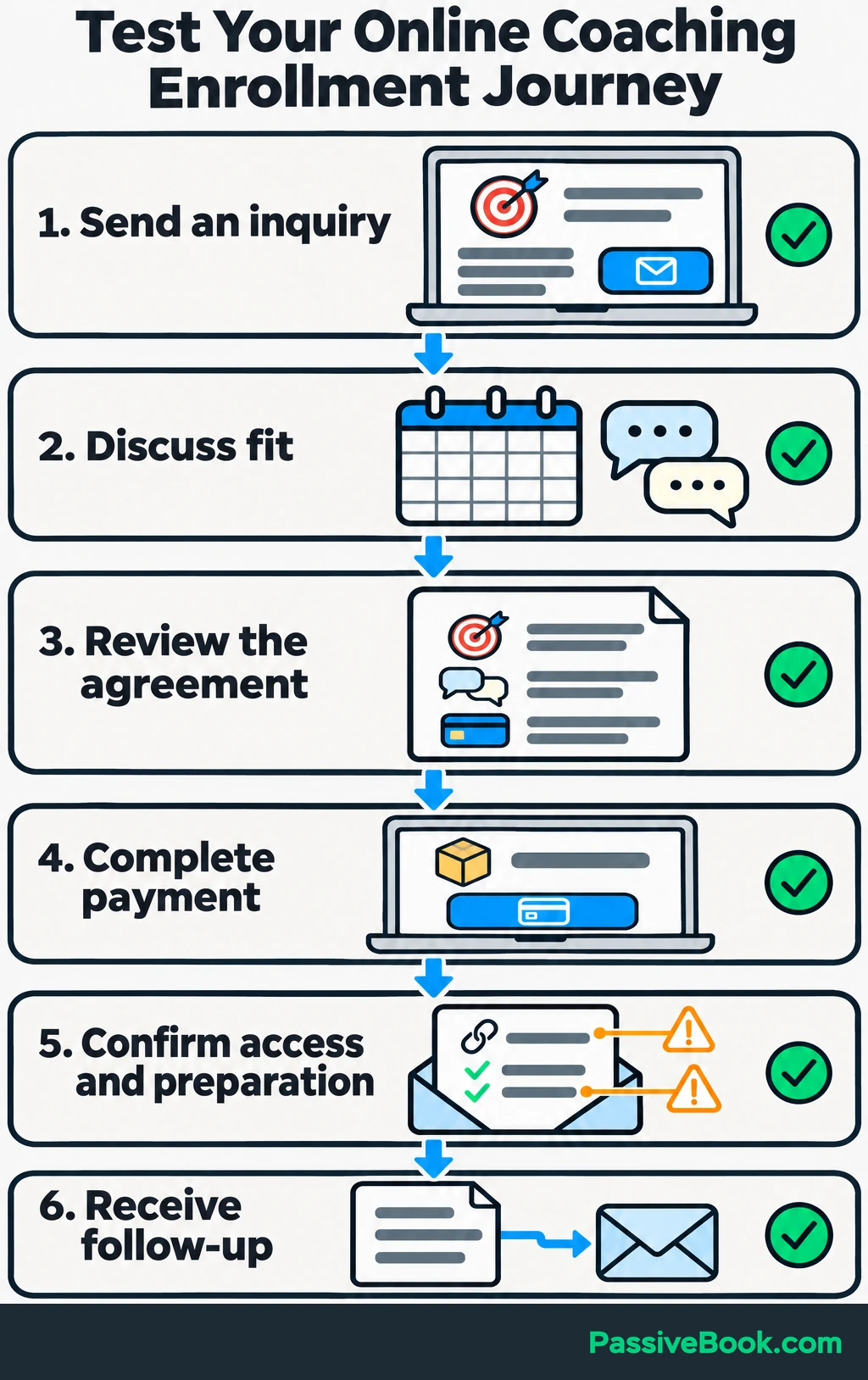
Finally, walk through the entire process as a client would: inquiry, fit conversation, agreement, payment, confirmation, session access, and follow-up. Fix broken links and unclear instructions before inviting paying clients.
Find and Enroll Your First Paying Clients
Start With Relevant Conversations and Introductions
Begin where suitable buyers already gather. That might mean personal introductions, permitted participation in a community, or relationships with complementary businesses.
Explain whom you help and what problem you address. Ask contacts for relevant introductions rather than asking them to promote a vague new venture.
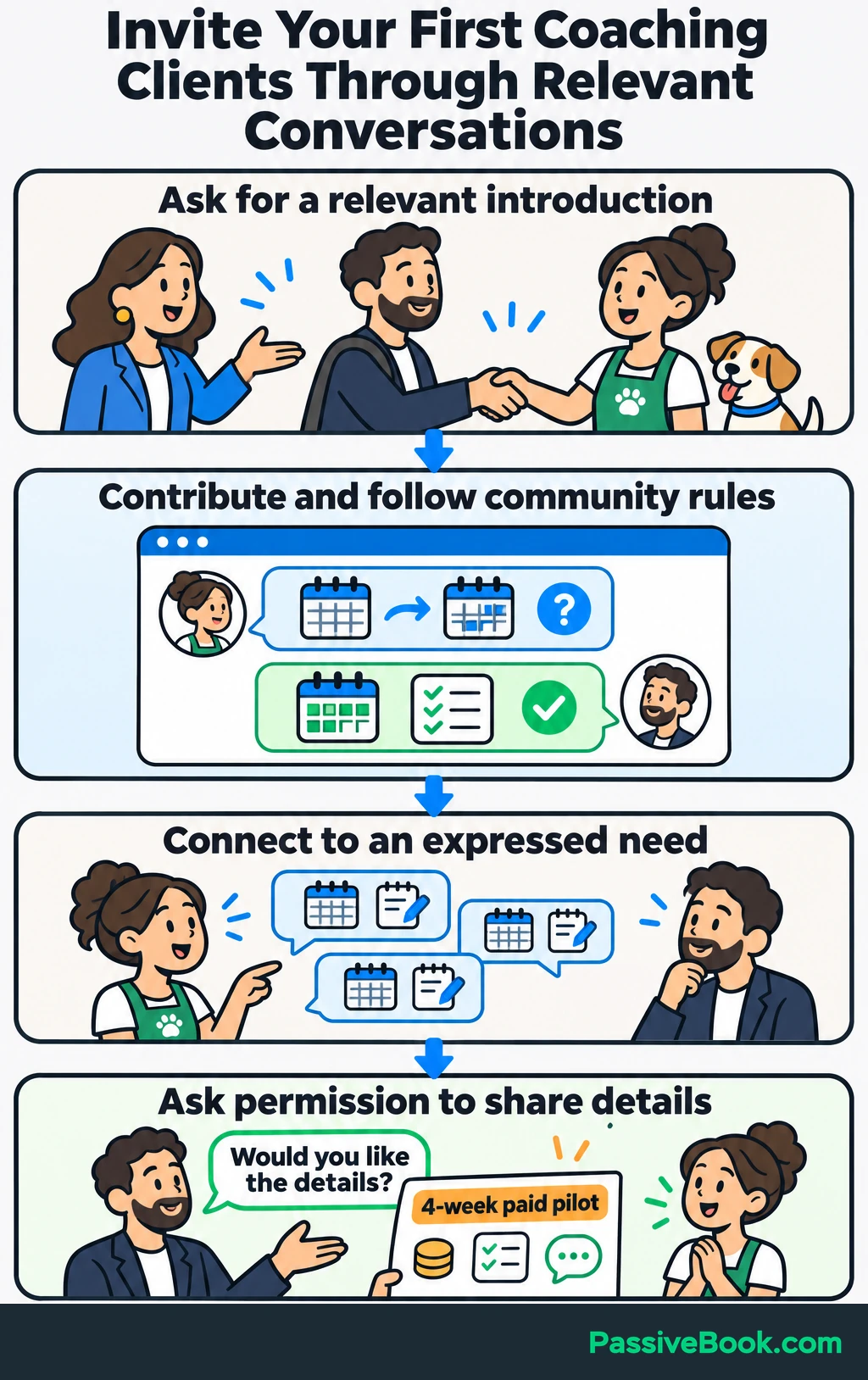
For the running example, you could join discussions in pet-sitter communities and build relationships with businesses serving independent sitters. Follow community rules and contribute useful answers before making invitations.
When someone expresses a relevant need, connect your offer to what they said:
You mentioned that booking changes and handover notes are scattered across messages. I’m offering a four-week coaching package to help pet sitters build a workable routine. Would you like the details?
Use a paid pilot with a stated price, scope, and support boundaries. Explain that this is an early version you will improve through delivery and feedback.
You can build initial trust through relevant experience, a sample worksheet, and a clear explanation of your feedback process.
Hold a Fit Conversation and Make the Offer
Use the conversation to decide whether you can help. Ask about the person’s situation, desired progress, previous attempts, practical limits, and ability to participate.
Useful questions include:
- “What happens to a booking change after you receive it?”
- “What have you tried to keep the information together?”
- “What would make the next month easier?”
- “What time could you set aside to test a different routine?”
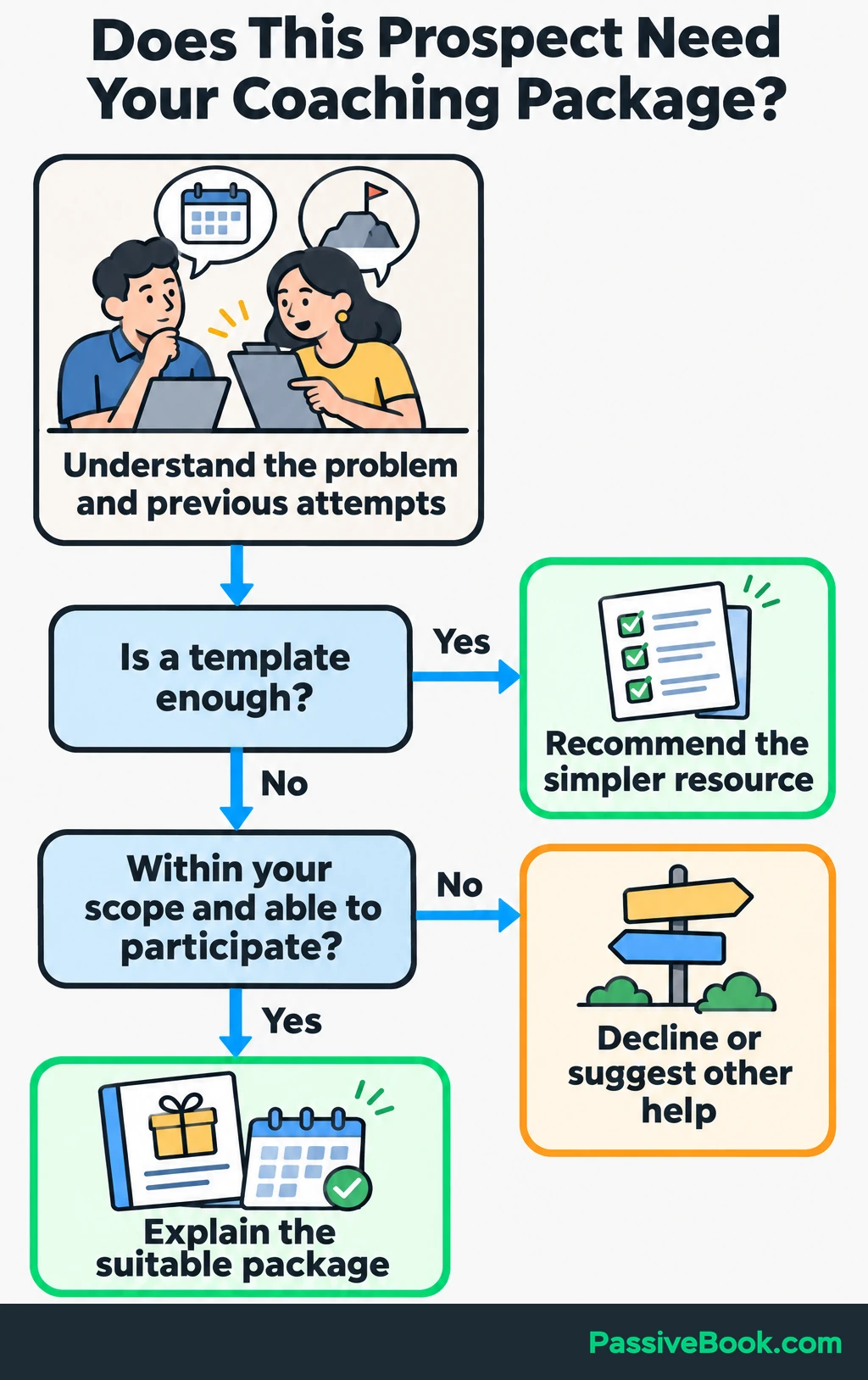
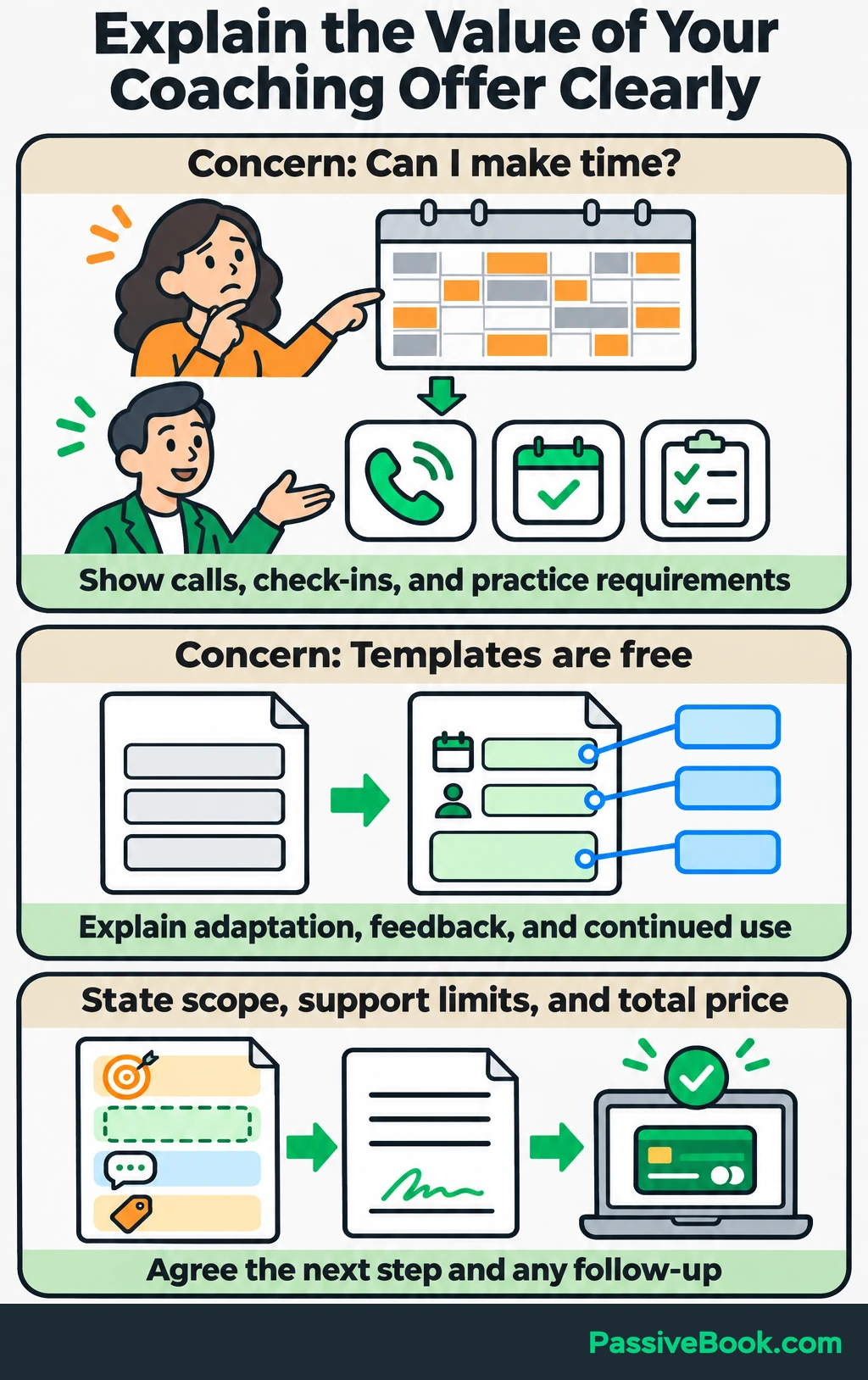
If the need fits, connect the package to that problem. Explain how sessions and check-ins work, what the client must do, the support limits, the total price, and the next step.
Answer practical concerns plainly. If time is the issue, show the expected weekly work. If they ask why they should pay when templates are free, explain how you will help adapt the process and review its use.
If they only need a template, say so. Selling unnecessary coaching creates a delivery problem you could have avoided.
Send suitable prospects the agreement and checkout link, then confirm enrollment and onboarding. Agree on any follow-up during the conversation rather than starting an endless sequence of “just checking in” messages.
Record where the lead came from, whether they enrolled, and their stated reasons for declining. If conversations produce no sales, investigate fit, urgency, clarity, price, and trust before buying more traffic.
Publish Useful Content That Leads to the Offer
Choose one channel you can maintain and where prospects already seek help. Written posts, checklists, and emails can demonstrate your thinking without requiring public video.
Start with questions from your research and sales conversations. For example, publish a short handover checklist showing what a sitter should confirm before a visit:
Record the visit time, agreed instructions, access arrangements, emergency contacts, and any changes the owner has confirmed.
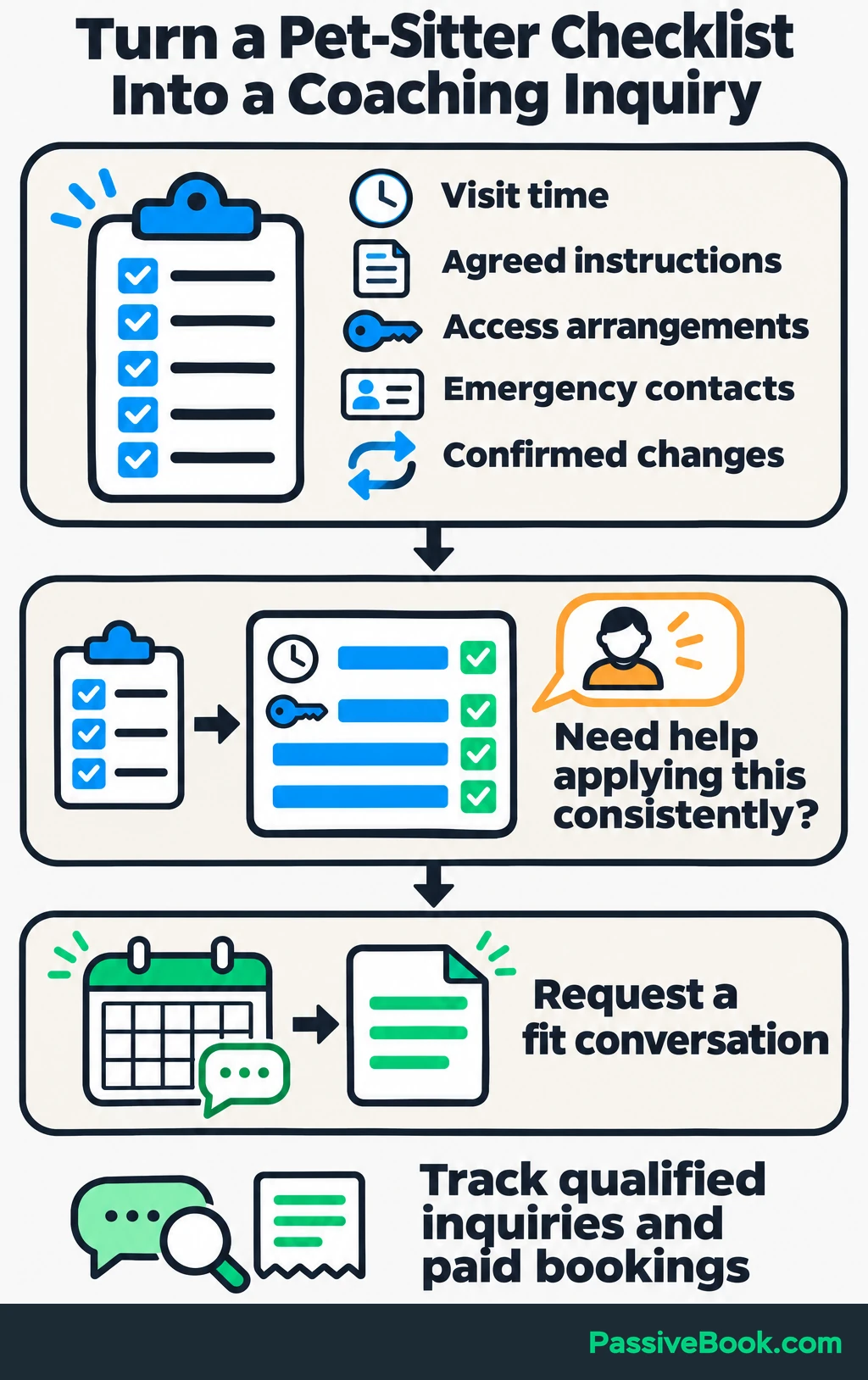
Then give readers a relevant next step:
If your handover details keep ending up in different places, request a fit conversation about building a routine you can maintain.
The checklist helps someone take an initial action, and coaching offers support applying and maintaining it.
Track qualified inquiries and paid bookings. A growing follower count can be encouraging, but it does not tell you whether the offer sells.
Check the marketing-email rules that apply to you and your recipients. For U.S. commercial email, follow the Federal Trade Commission (FTC) guide to CAN-SPAM. Use accurate sender details and subject lines, identify advertising, and include a valid postal address and a way to opt out. Honor opt-out requests within 10 business days.
Deliver a Coaching Process Clients Can Follow
Establish a Baseline and Action Plan
Send a welcome message with the schedule, access details, preparation, communication boundaries, and first action. Ask about any communication accommodations the client needs.
Then record the starting situation together. This gives later progress something concrete to compare against.
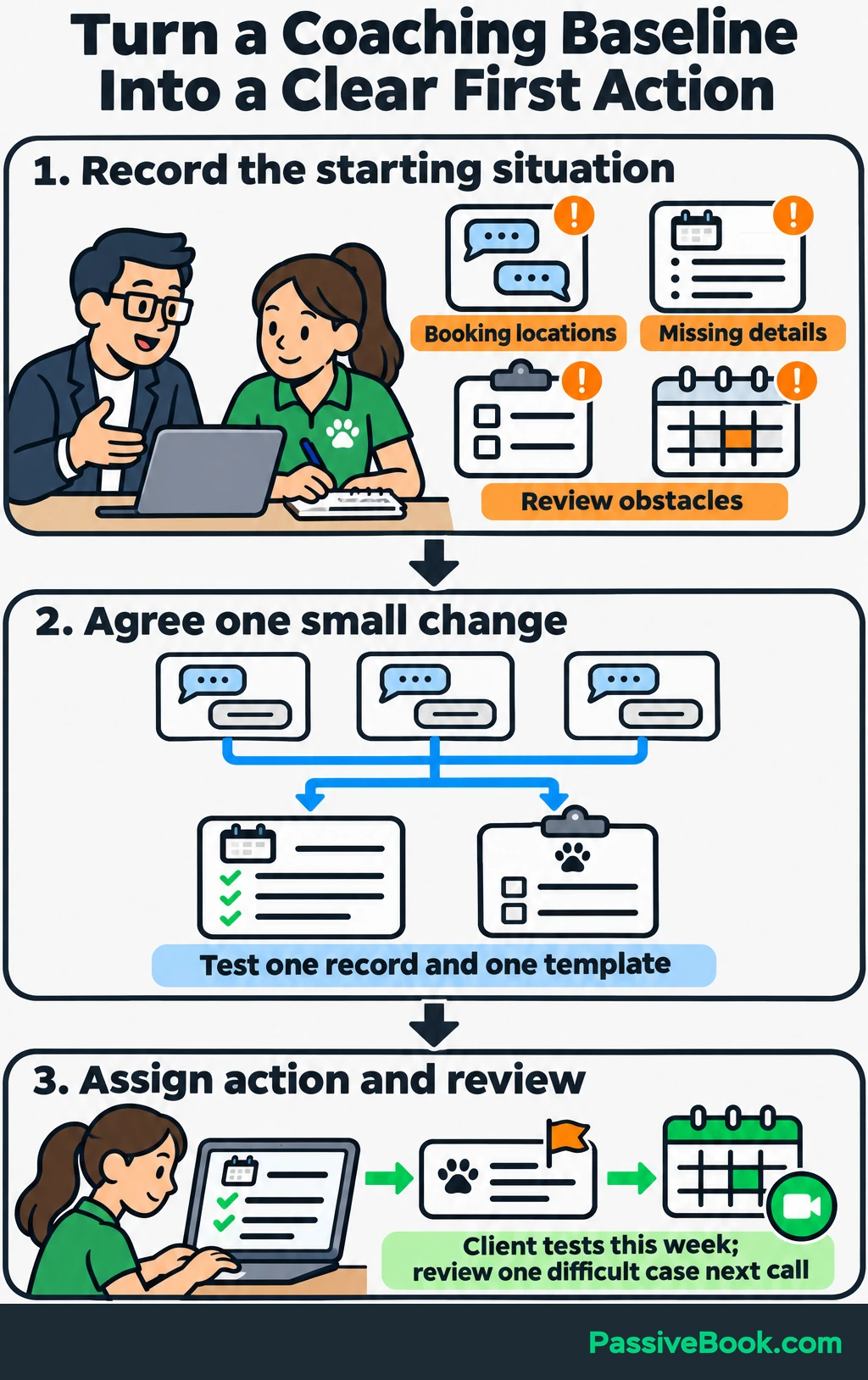
For the pet-sitter package, establish:
- Where confirmed bookings and changes are currently recorded.
- Which handover details are often missing.
- How the client checks the coming week.
- What makes the current process difficult to maintain.
Agree on a small first change. Here, that could mean choosing one booking record and testing a short handover template with upcoming visits.
Assign responsibility and a review point. “Use the record for this week’s confirmed bookings and bring one difficult case to our next call” gives the client a clear task.
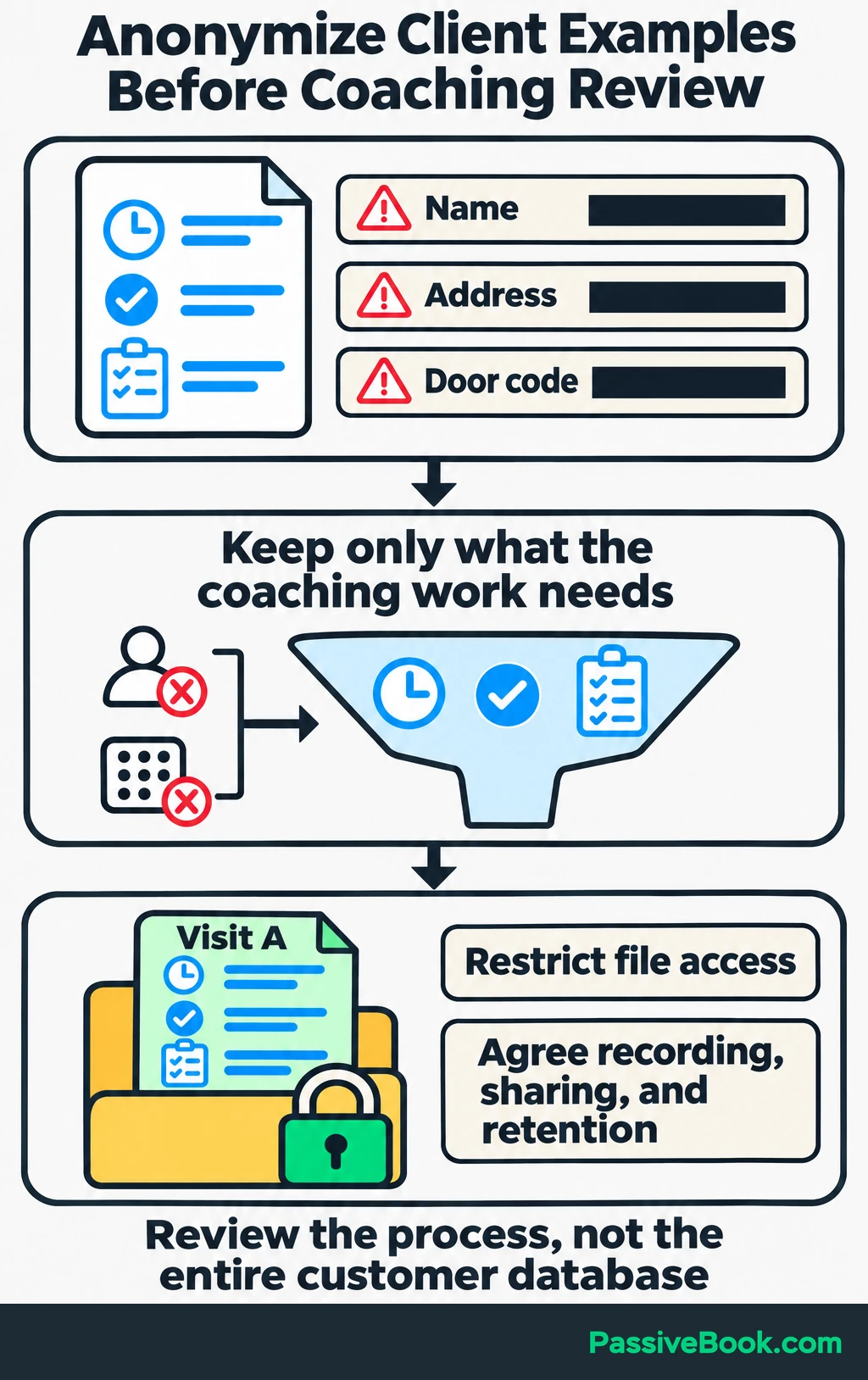
Collect only the information needed for the work. Use anonymized records for exercises and remove names, addresses, door codes, and other identifying details. Restrict access to client files and agree on recording, sharing, and retention practices.
The goal is to understand the process without collecting the sitter’s entire customer database.
Review Progress and Adapt the Plan
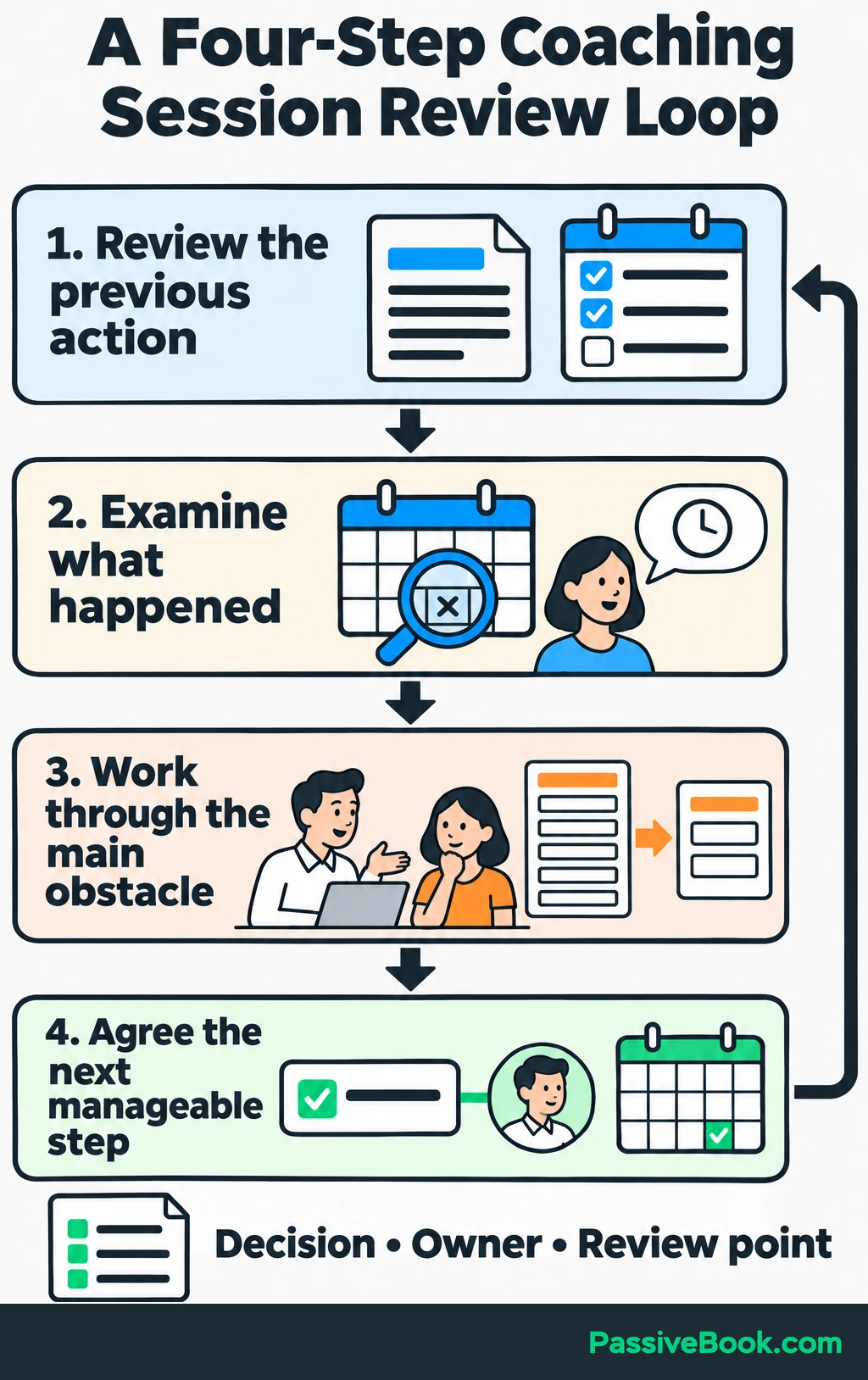
Give each session a simple shape:
- Review the previous action.
- Examine what happened.
- Work through the main obstacle.
- Agree on the next manageable step.
Send a short action summary afterward. Include the decision, who will act, and when you will review it.
If the sitter keeps leaving booking changes in messages, find out why. Perhaps the record has too many fields, or their review happens at a time when they are already rushing.
Adjust the process around what you learn. Adding another worksheet would be a strange response to someone struggling to maintain the first one.
Keep check-ins within the agreed limits and discuss any need for extra support before providing it.
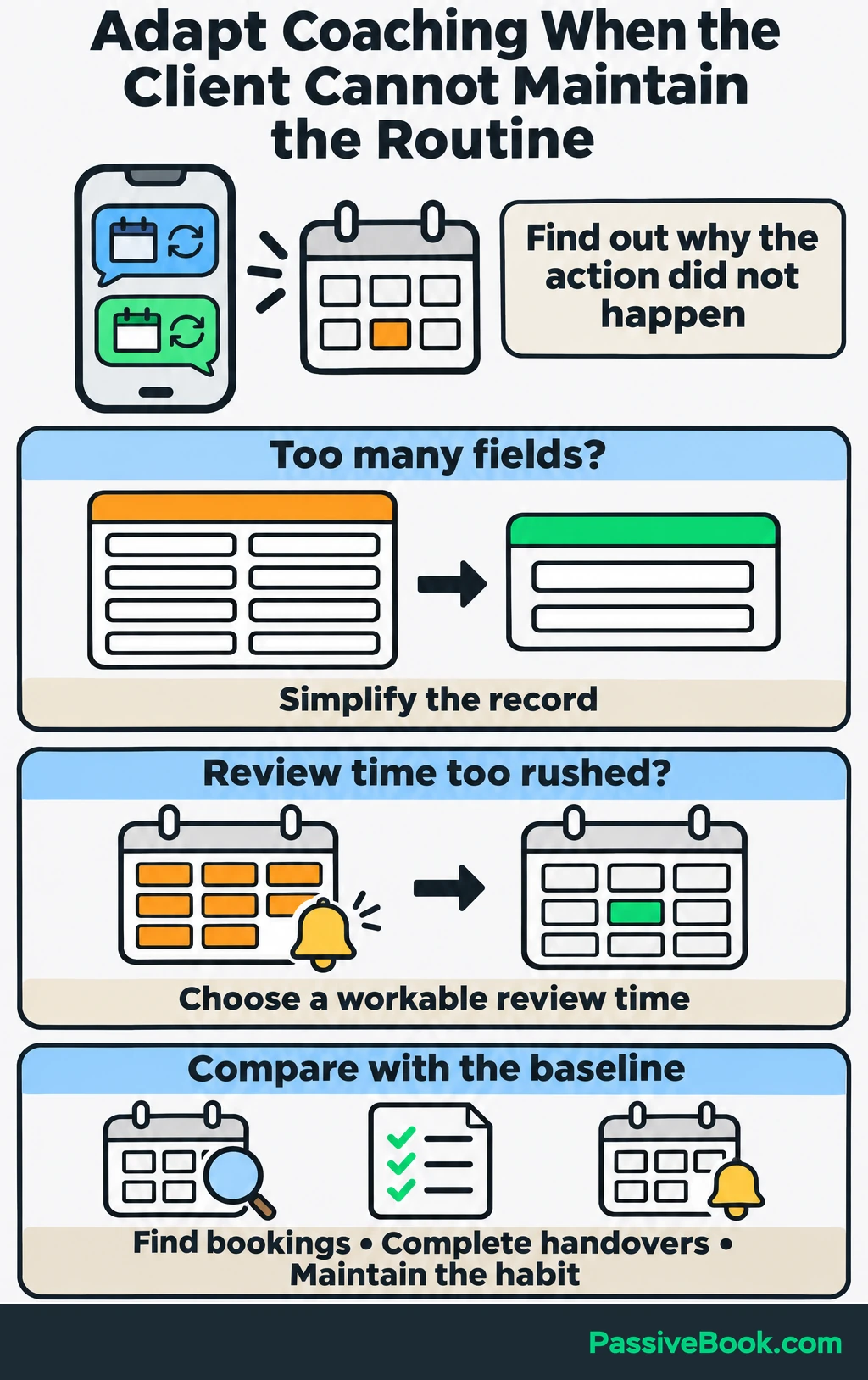
At the end, compare progress with the baseline. Can the client find confirmed bookings? Are the handover details present? Can they maintain the review habit without your prompting?
Collect feedback and recommend independent practice, further coaching, or another service according to their needs.
Ask permission before publishing identifiable client stories, preserve the meaning of testimonials, and disclose relevant incentives. For exceptional results in U.S. marketing, the FTC’s endorsement guidance calls for evidence that clients generally achieve those results or a clear, supported explanation of what they can expect. “Results may vary” alone is not enough.
Make the Business Repeatable Before Expanding
Improve the Constraint Limiting Progress
Keep one simple spreadsheet for the business. Track qualified inquiries, sales conversations, paid enrollments, client progress, revenue, expenses, and hours worked.
Use those records to choose the next change:
| What You Observe | What to Investigate |
|---|---|
| Few suitable inquiries | Check whether people in your chosen channel discuss this problem and can use your package. |
| Relevant conversations but no enrollments | Ask prospects what stopped them from buying, then compare their answers with how you explain the package and price. |
| Clients enroll but struggle to act | Review one unfinished task together to find out whether time, instructions, or the support format got in the way. |
| Clients progress but your return is weak | Compare actual hours and costs with your estimate, then consider changes to scope or price. |
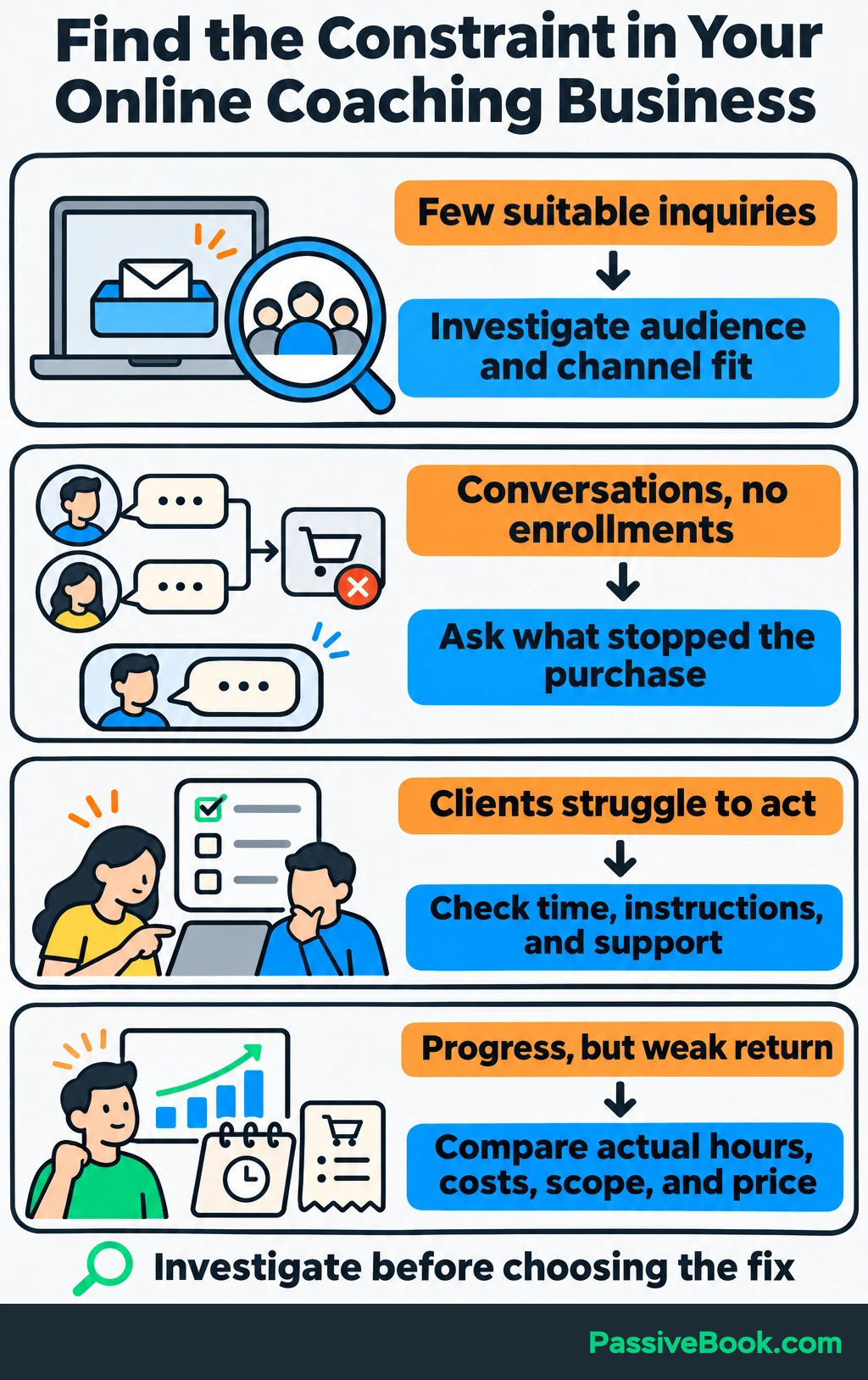
Treat these as starting points for investigation. Ask people what happened before deciding that every declined offer needs a discount.
Protect time for acquisition while serving clients. Keep your inquiry route visible, follow up as agreed, and ask for relevant introductions after useful progress.
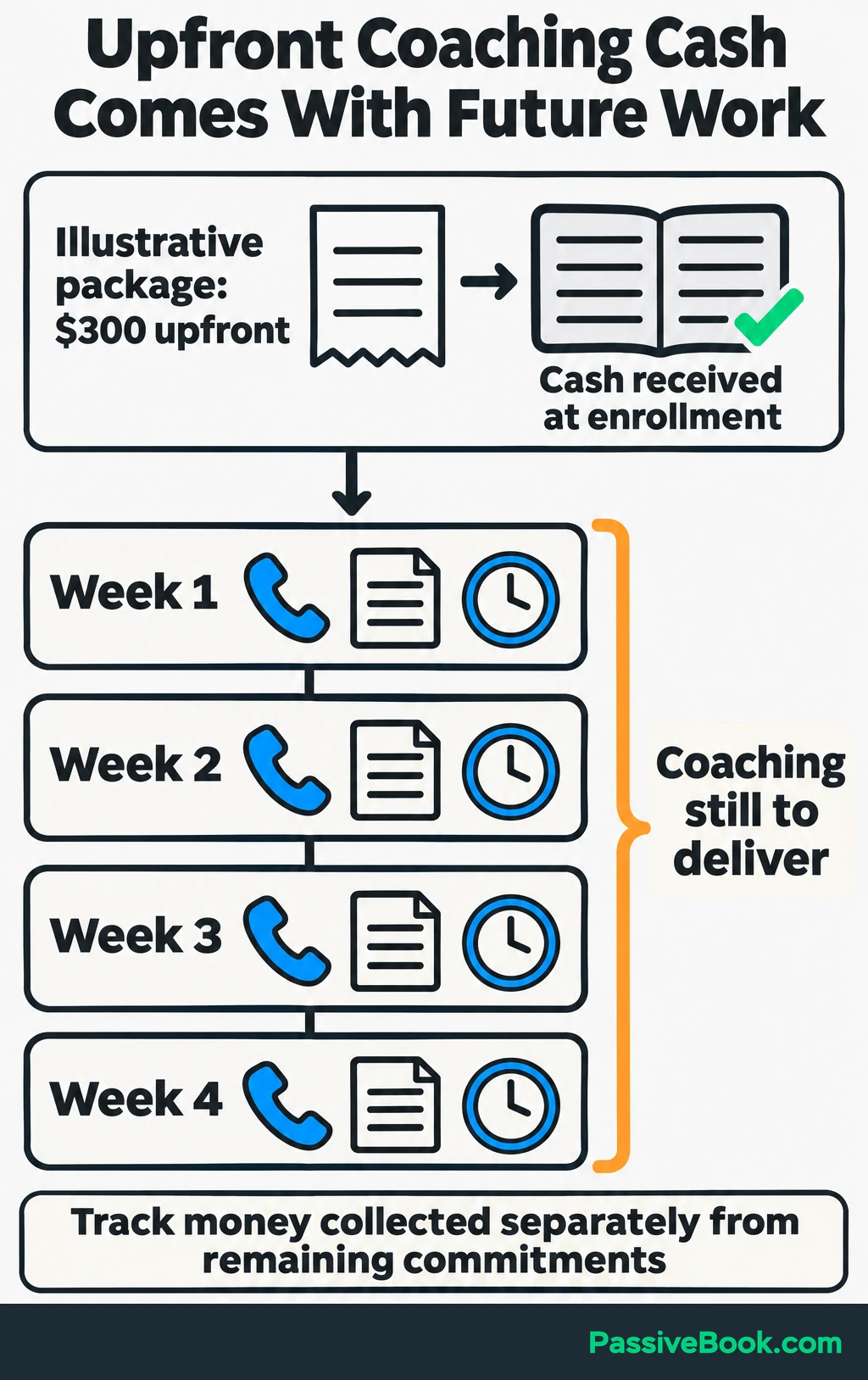
Also separate money collected from coaching still owed. An upfront payment may need to cover several weeks of future work.
I would consider reducing other work only after seeing sustained profit, a repeatable way to attract clients, manageable delivery commitments, and a suitable financial cushion. A full calendar for one month is encouraging evidence, but it is a thin foundation for replacing dependable income.
Automate Reliable Tasks and Expand Selectively
Template the parts you repeat: welcome messages, reminders, agendas, action summaries, and completion reviews.
Once a manual process works, automate stable administrative steps. A confirmed enrollment could trigger a welcome message, create a client folder, and add preparation tasks. Keep a way to spot failures so a missed automation does not leave a client waiting.
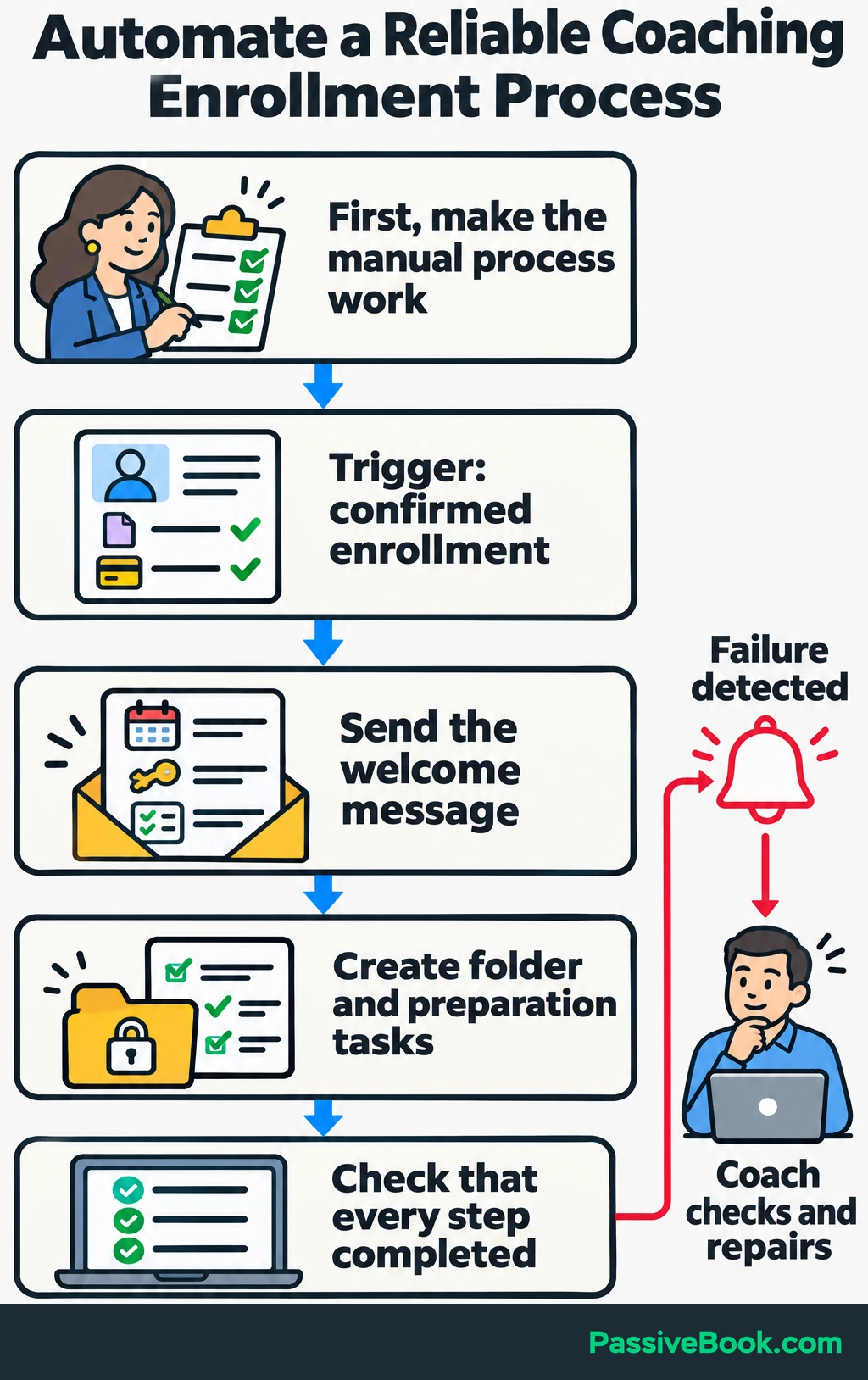
In my content business, I built an AI content pipeline that reduced article production from days to hours. That experience makes me enthusiastic about removing repeated work. It also makes me ask what should remain under human review.
For coaching, I would use AI to draft generic worksheets and administrative templates, then check them before use. Keep judgment about a client’s situation with the person responsible for the service.
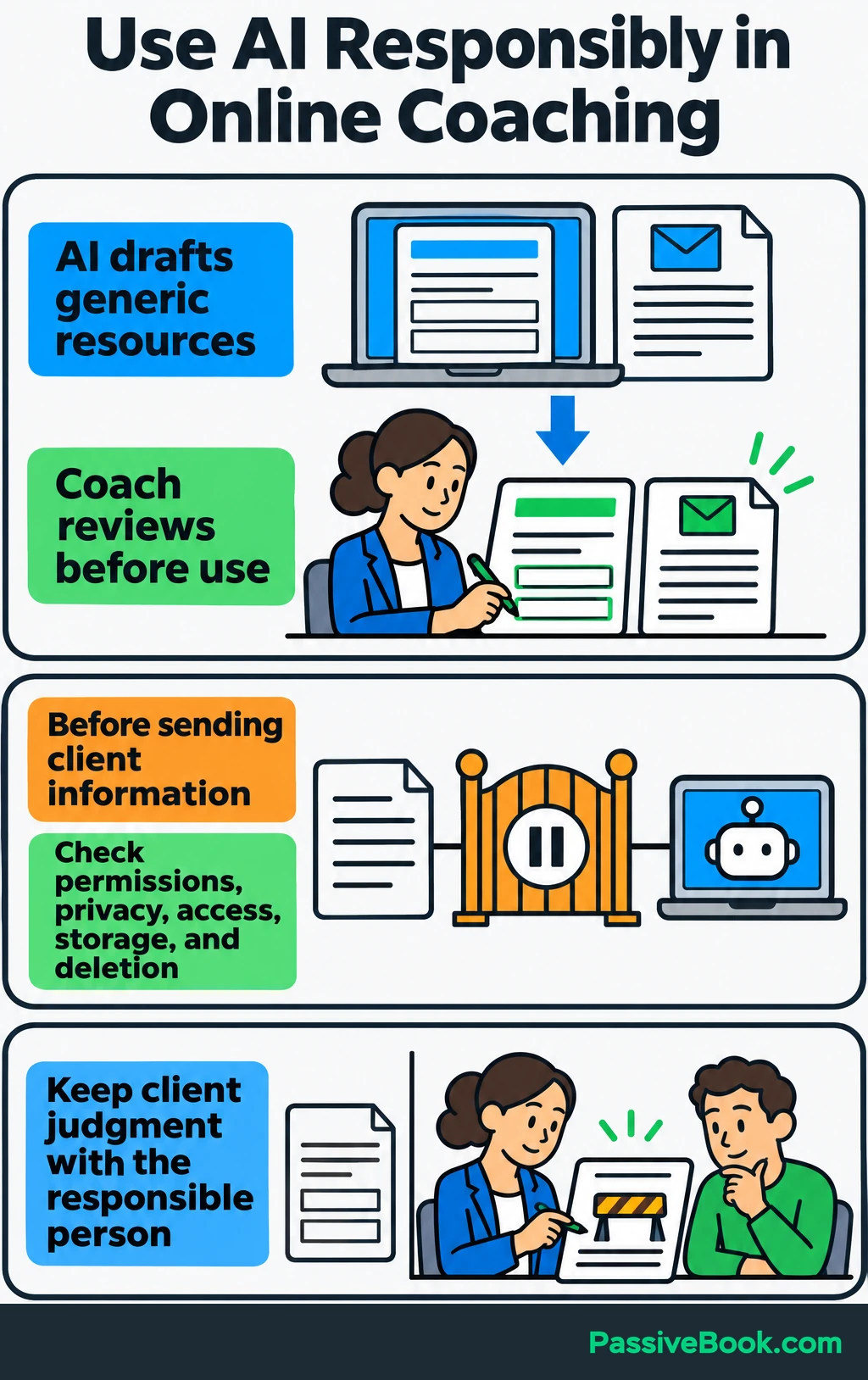
Before sending client information to transcription or AI tools, establish appropriate permissions and check privacy controls, access, storage, and deletion. The ICF’s technology standard extends professional responsibilities to the technology systems used in coaching.
Consider a group when several clients can benefit from the same process. Create reusable resources when repeated explanations show what belongs in them.
Let demand, client progress, workload, and margins justify expansion. Individual coaching requires your delivery time, and systems can reduce administration while leaving room for the feedback clients pay for.
What Next?
Write one sentence naming whom you can help and the problem you can competently address, then invite a relevant contact to discuss their last experience with it.
Use the social buttons to share this guide with someone who wants to test a coaching offer before spending money on the setup.
Which problem could you help someone work through, and what evidence would convince you to offer a paid pilot? Share your answer—and any other questions—in the comments.
Share this post with your friends & followers:

