You finish a client project, send the invoice, and realize there’s nothing booked after it. Now you need to find new work while wrapping up revisions and chasing a payment.
That cycle makes it hard to plan your time or trust next month’s income. And winning more projects won’t solve much if each one leaves you starting from zero again. These 15 strategies follow the client relationship from first inquiry to finished work, with ways to earn renewals for ongoing services and repeat bookings or referrals after a project ends.
1. Define the Client Problem You Solve
Start with the situation that makes someone look for help. “I offer website services” describes your work, but it leaves the buyer to figure out why they need it.
Review past inquiries and projects. If you’re starting out, speak with prospective clients and ask:
- What is difficult to do right now?
- What made fixing it a priority?
- How are you handling it?
- Who decides whether to hire help?
Then write one sentence connecting the buyer, problem, and service.
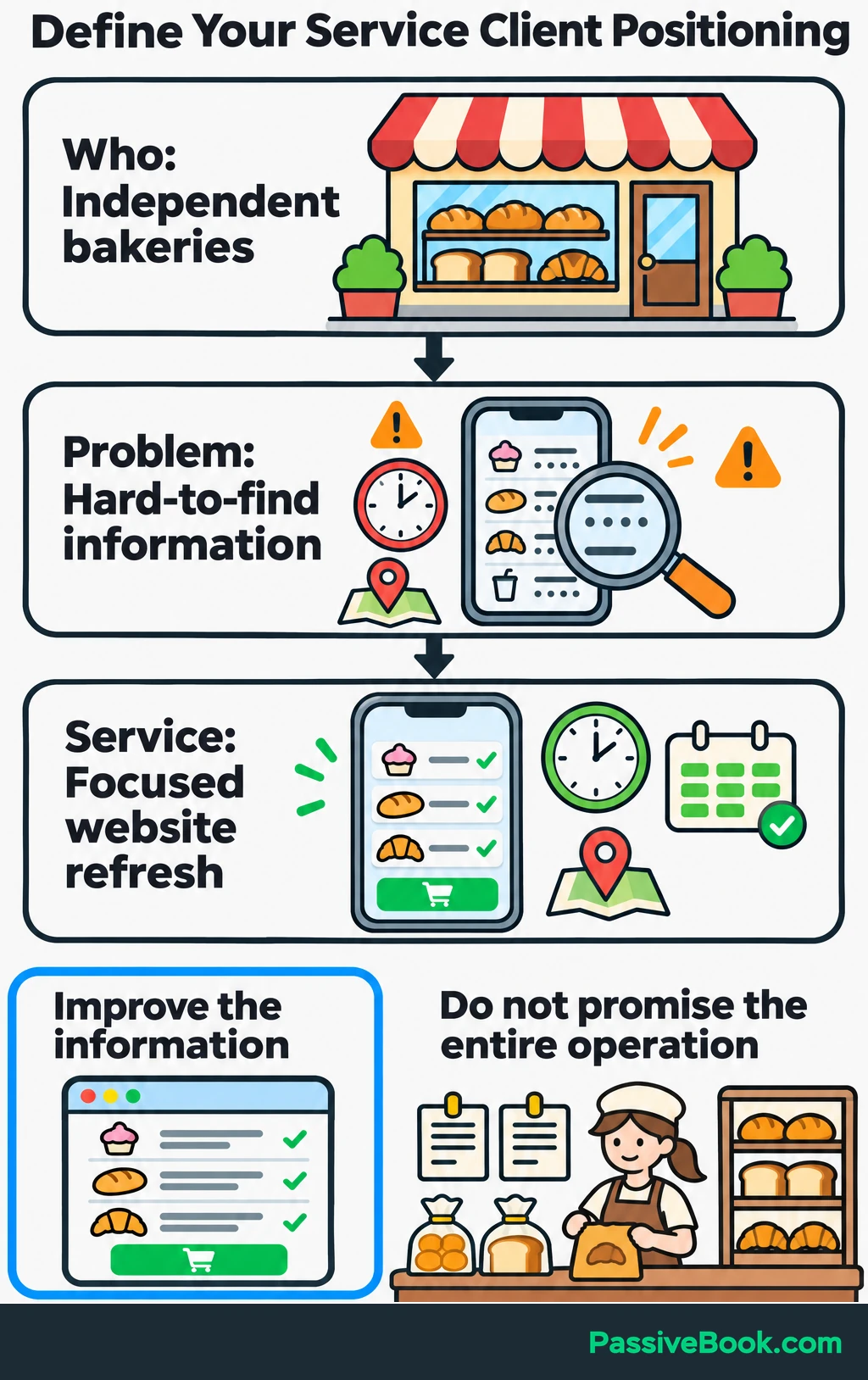
Throughout this article, imagine you offer website refreshes and optional maintenance for independent bakeries.
Your positioning could be:
“I help independent bakeries make their menus, opening hours, and ordering information easy to find through a focused website refresh.”
That gives you a useful boundary. You can improve how ordering information appears without agreeing to manage the bakery’s entire ordering operation.
2. Package Your Service Around a Clear Outcome
Turn that problem into an offer someone can understand before a sales call. Explain what they receive, what they must supply, and where the work ends.
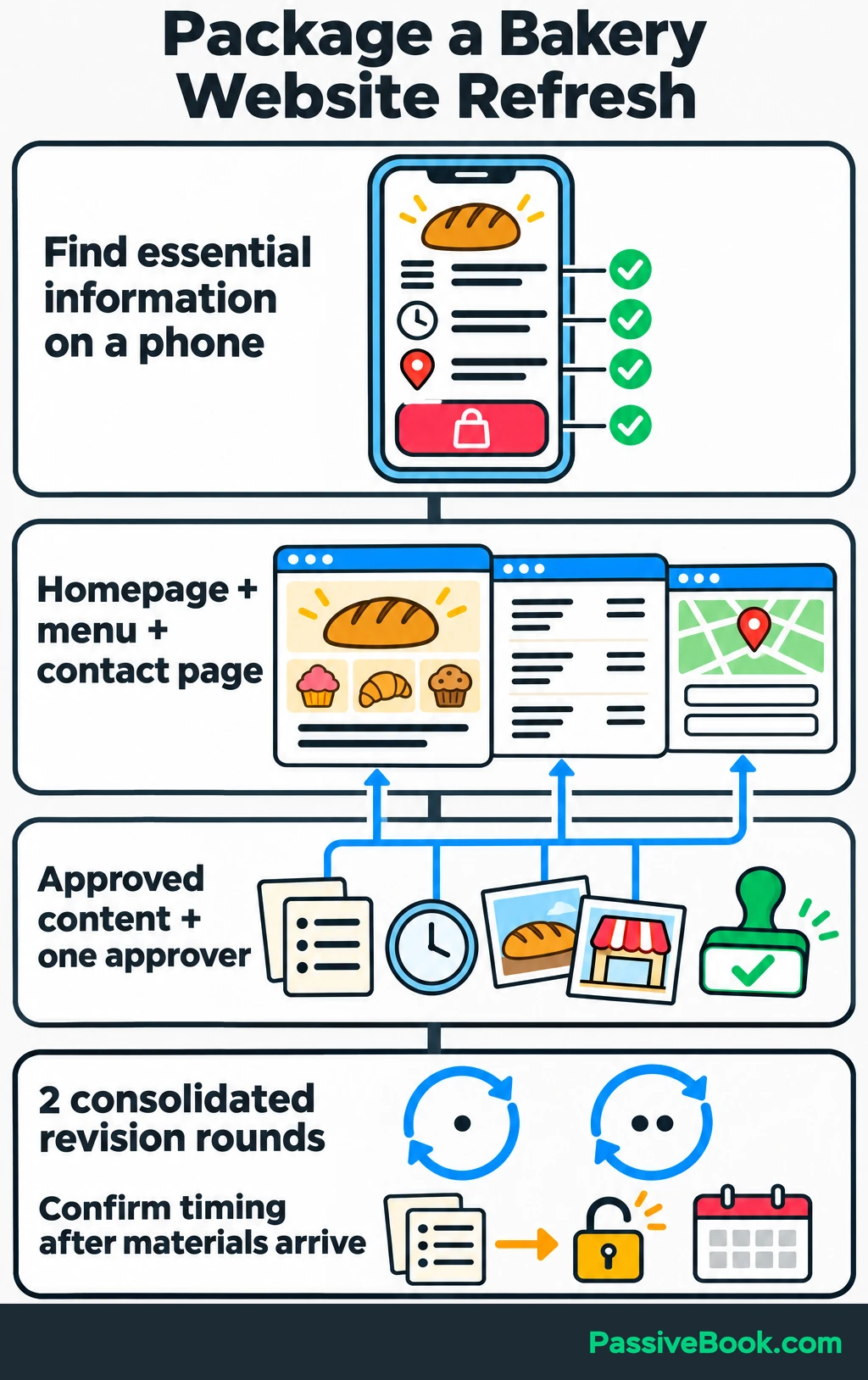
For the bakery website refresh, a simple package might look like this:
| Part of the Offer | What the Client Gets |
|---|---|
| Outcome | Visitors can find the approved menu, hours, location, and ordering instructions on a phone |
| Deliverables | Refreshed homepage, menu page, and contact page |
| Client inputs | Final menu, opening hours, photographs, and one person’s approval |
| Revisions | Two rounds of consolidated feedback on the agreed pages |
| Timing | A delivery schedule confirmed after the required materials arrive |
| Exclusions | Photography, custom ordering software, and ongoing updates |
| Additional work | A separate quote approved before work begins |
Estimate the hours and direct costs before setting your fee. Count calls, testing, revisions, and handover as work. They don’t become free because they happen outside your design tool.
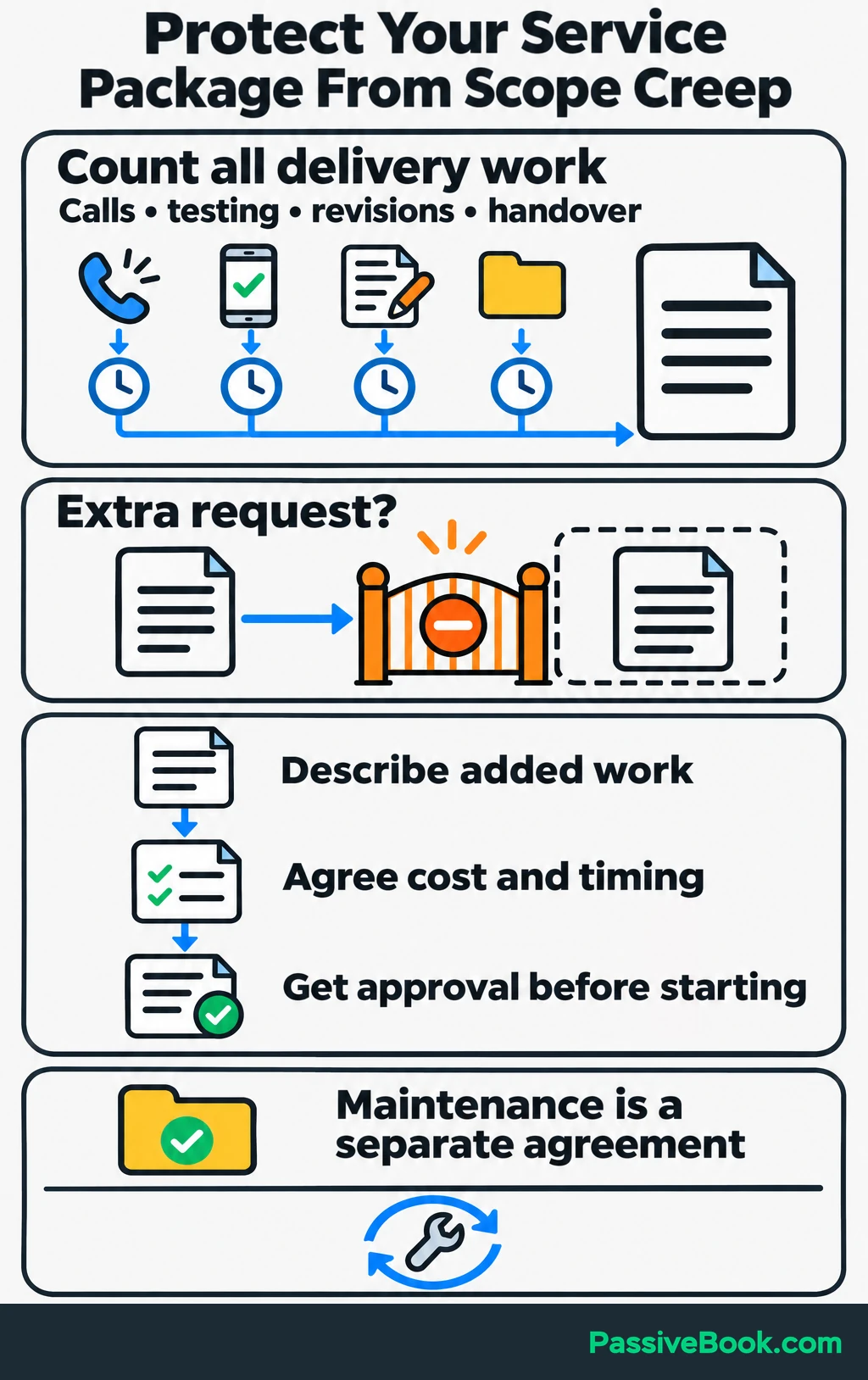
In my freelancing days, I sometimes accepted “quick extras” without revisiting the quote. Then I had to fit them around work I had already promised. I learned to describe the added work and agree on its cost and timing before starting.
Price maintenance separately so the initial project doesn’t quietly become a permanent support agreement.
3. Show Relevant Proof Where Clients Can Act on It
Choose examples that answer the buyer’s main concern. A beautiful screenshot shows appearance, but it doesn’t explain whether you understood the problem.
For each work sample, cover three things:
- What was difficult before.
- What you changed.
- How the finished work addresses that difficulty.
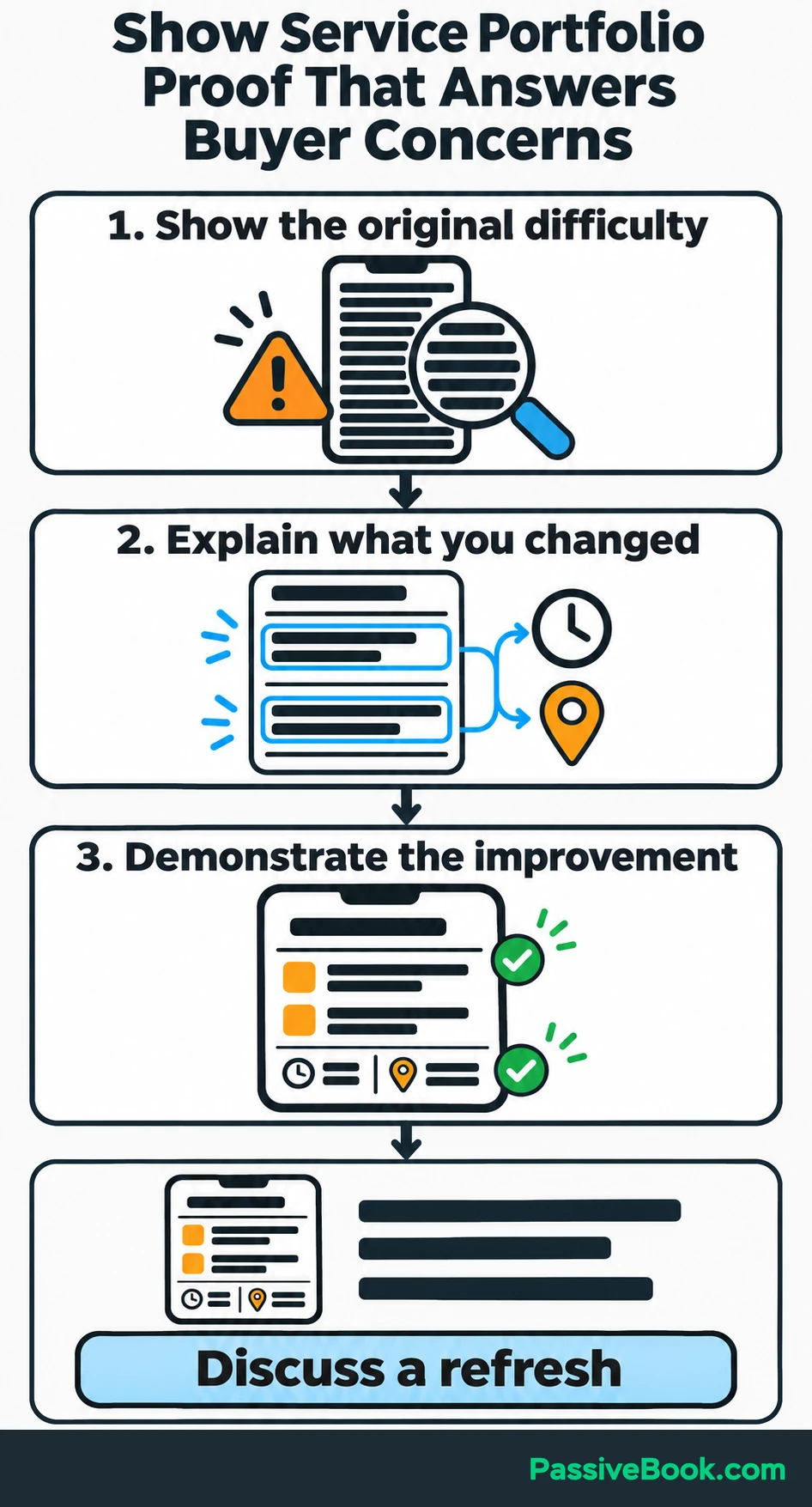
For a bakery website, you might explain why you replaced a hard-to-read menu image with readable page text and put opening hours beside the location.
If you have no client work, build a demonstration and label it clearly. Explain the choices you made without inventing a client, testimonial, or sales result.
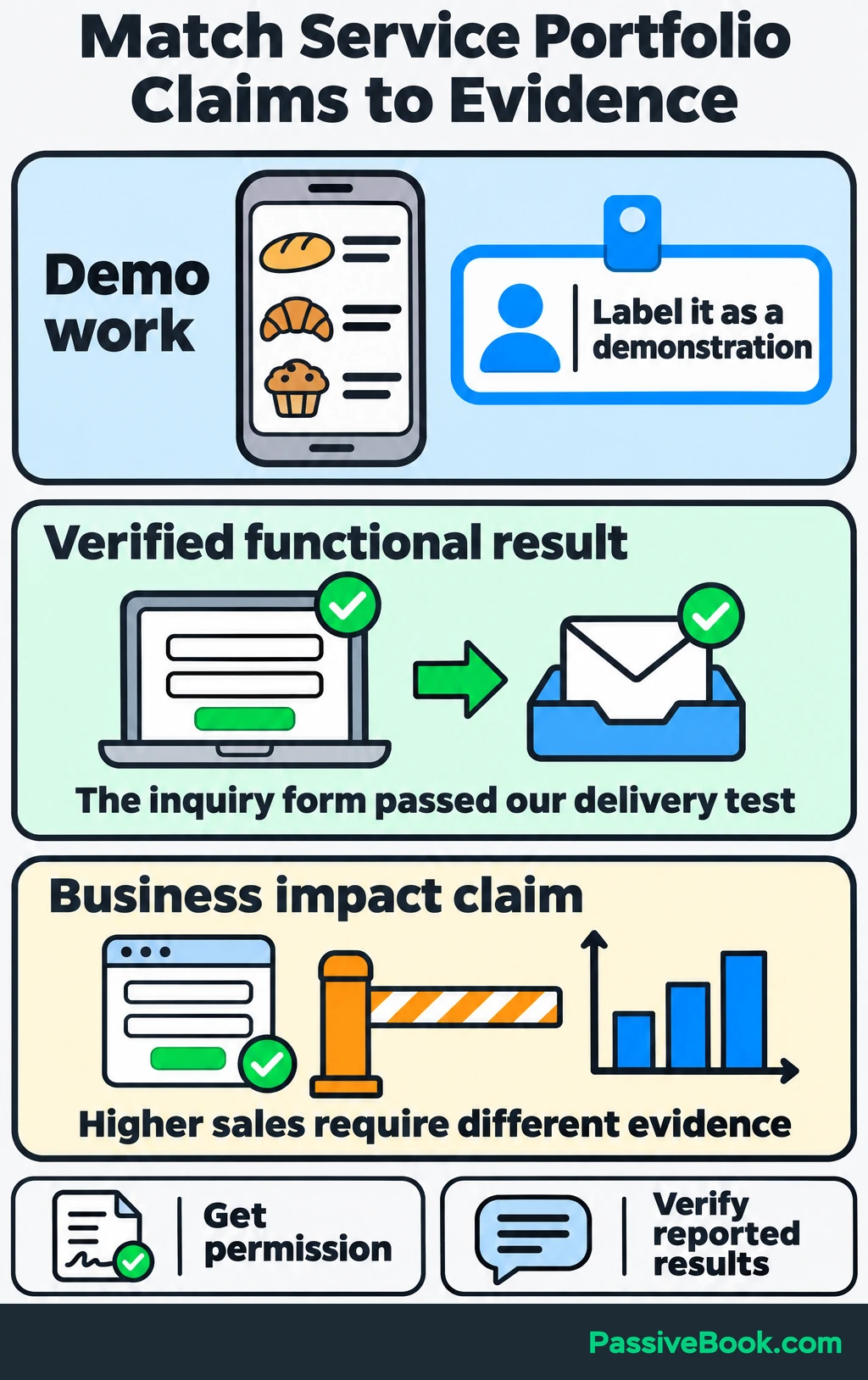
Put this proof beside your offer on a concise service page. Include your process and one clear next action, such as requesting a project discussion.
Use client work and testimonials with permission, and check any result you report. “The inquiry form passed our delivery test” and “the website increased sales” require very different evidence.
4. Become Visible Where Prospective Clients Look
Ask prospective clients where they look for help and whose recommendations they trust. Choose one main channel you can maintain alongside delivery.
For the bakery website service, I would begin with complementary providers if I had no existing search traffic. Photographers and brand designers serving bakeries have a clear reason to understand your offer.
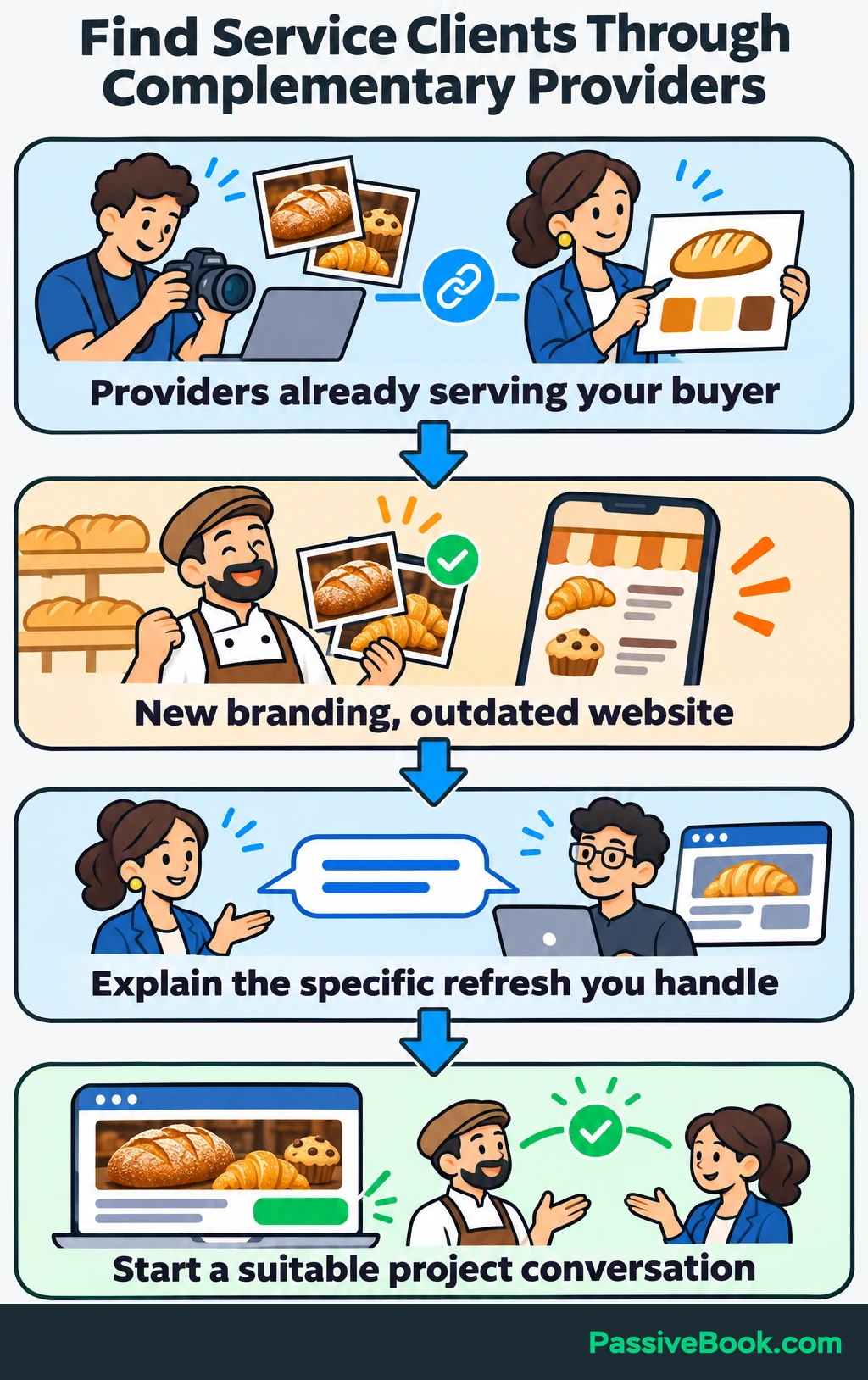
Make the introduction easy:
“If a bakery has new branding and photographs but its website still shows an old menu, that’s the kind of refresh I handle.”
You can also publish useful answers to buying questions. Explain what owners need to prepare before a refresh or how to decide whether they need a new site.
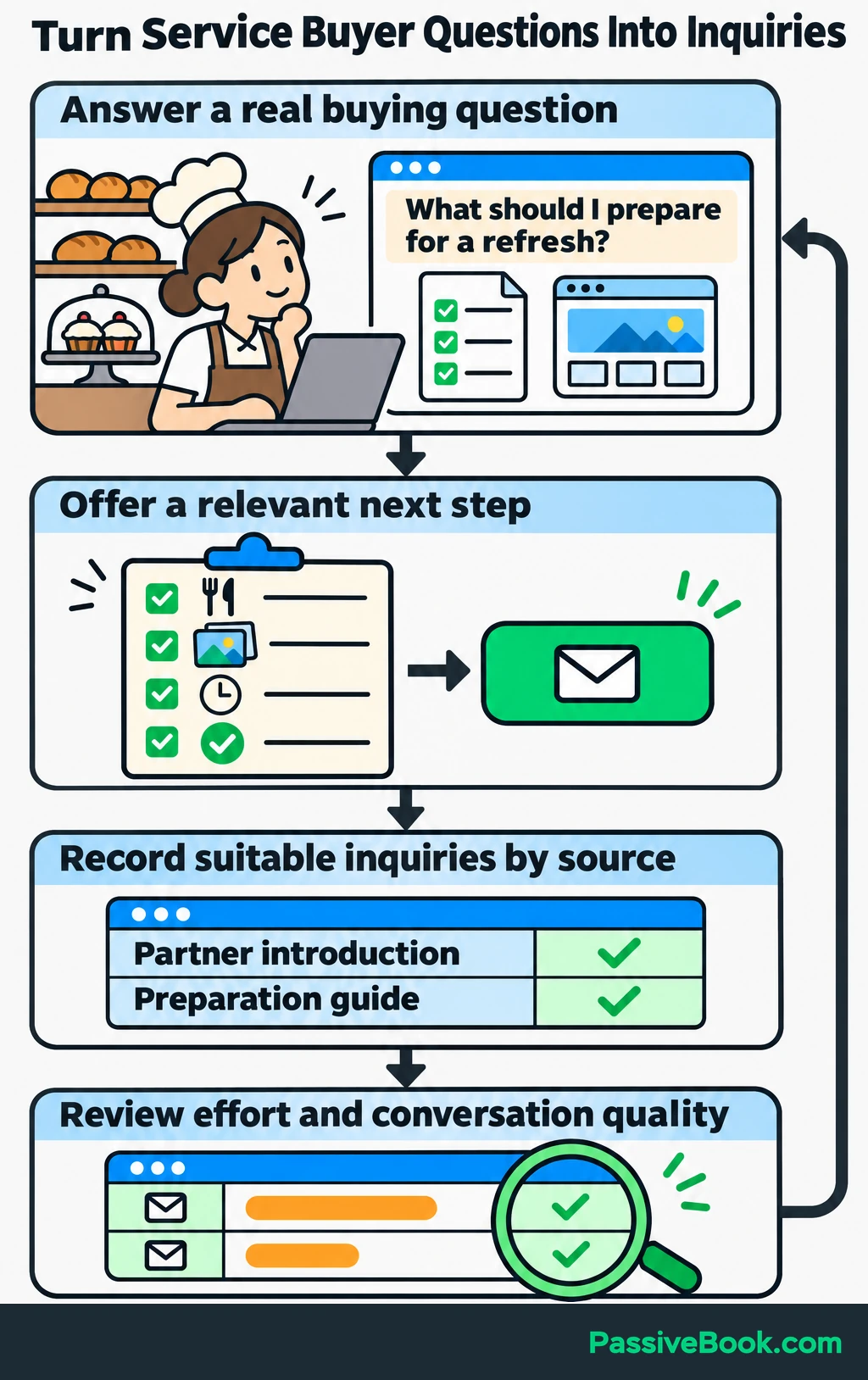
Give each piece a relevant next step. A website preparation checklist can lead naturally to a project inquiry.
Record where suitable inquiries come from and how much effort each channel takes. I would rather maintain one channel that starts useful conversations than five profiles that need feeding.
5. Start Outreach With a Specific Reason to Respond
Good outreach begins with a relevant observation. Look for a problem you can actually verify, then offer a small next step.
For the bakery service, an opening might be:
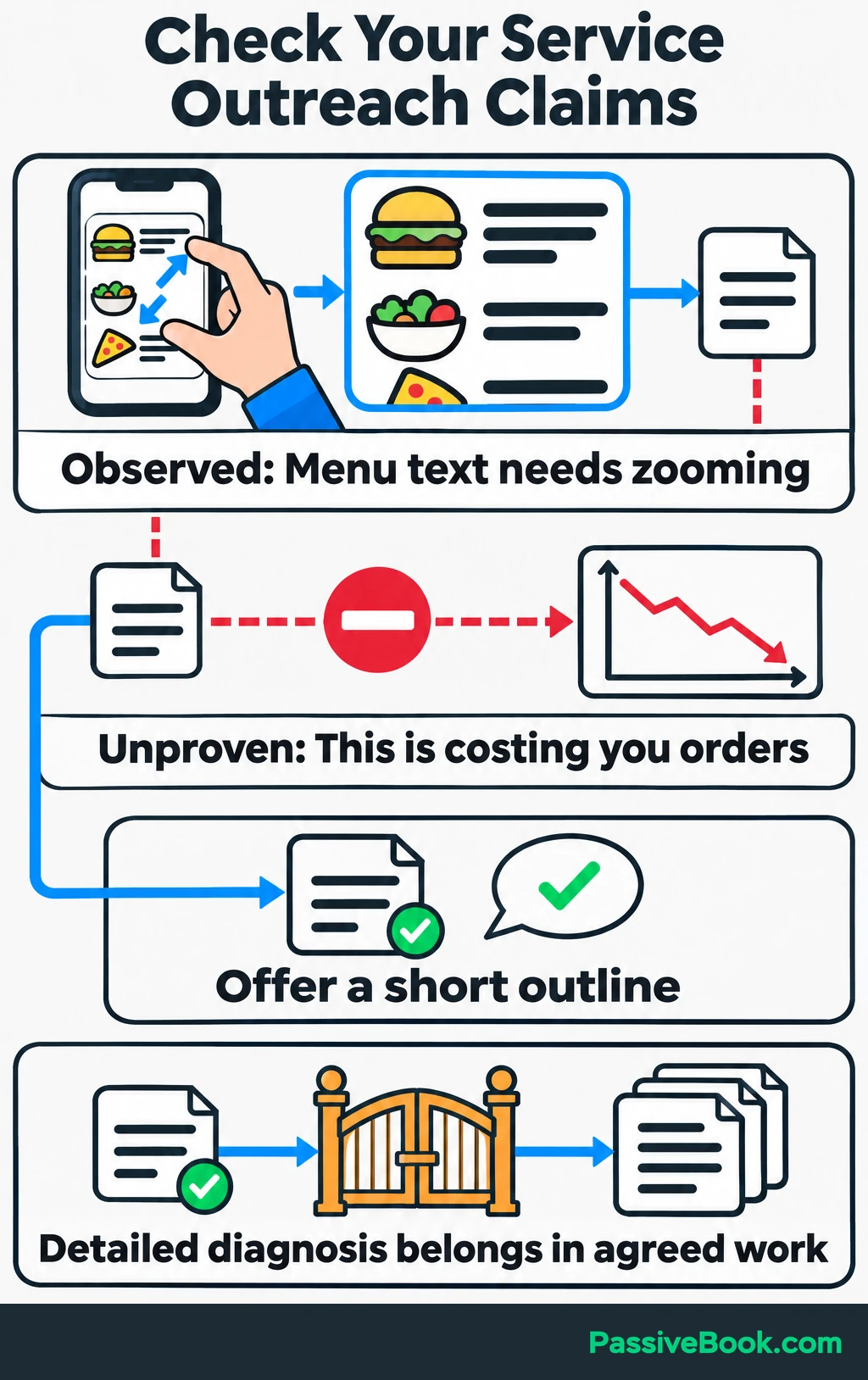
“I opened your menu page on my phone, but the image text was too small to read without zooming. I refresh bakery websites so menus and ordering details are easier to use. Would you like a short outline of what a refresh could include?”
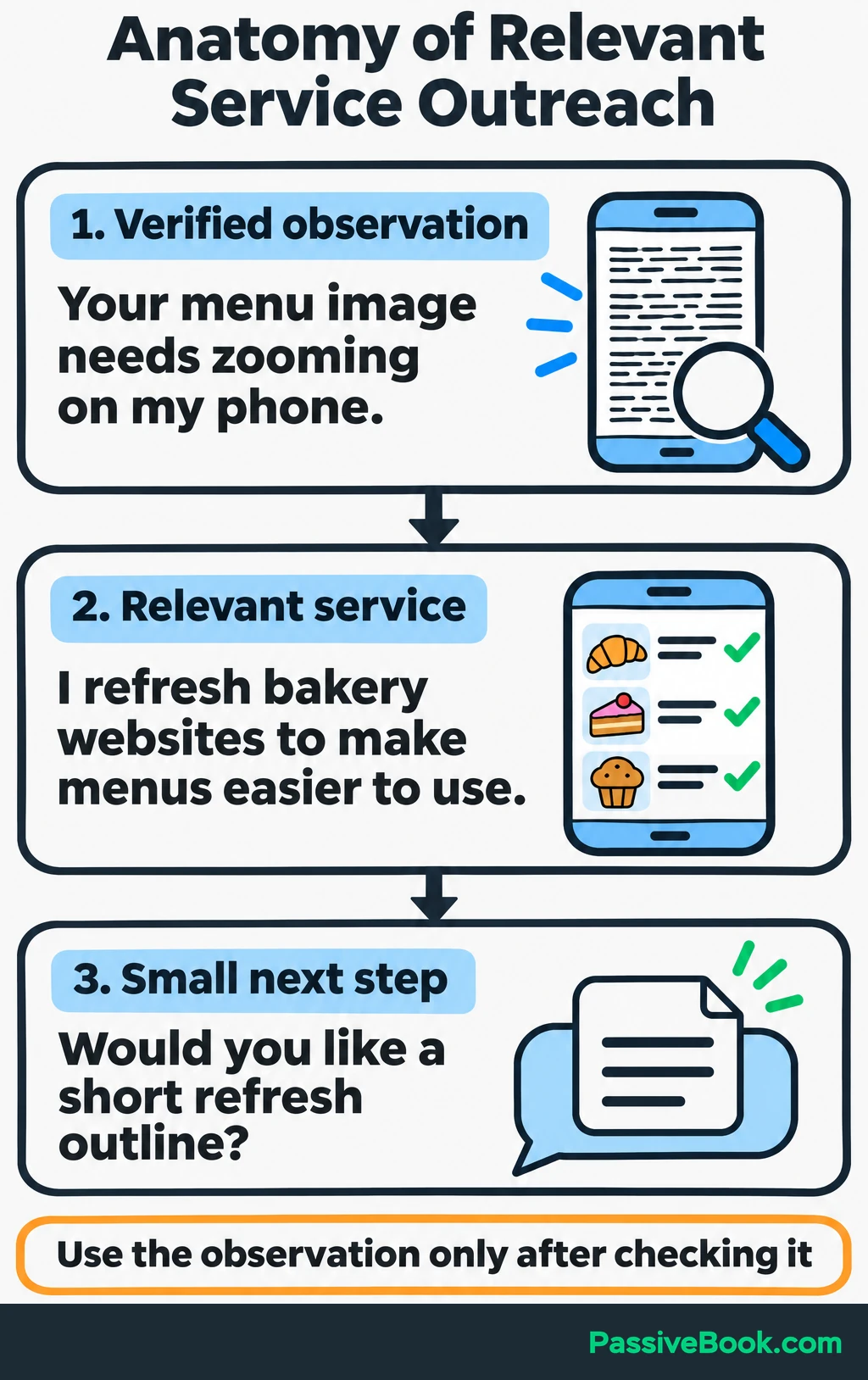
Use that observation only if you checked it. Don’t invent lost orders or pretend you have an existing relationship.
Offer enough insight to show why you contacted them. Save the detailed diagnosis and implementation plan for an agreed engagement.
Check the marketing rules that apply before sending outreach. In the US, commercial email includes business-to-business messages. Requirements include accurate sender details and subject lines, clear advertising identification, a valid postal address, and an easy opt-out honored within 10 business days. The FTC’s CAN-SPAM guide explains these requirements.
I would start with a small, carefully chosen list. A larger list won’t fix an irrelevant offer.
6. Turn Qualified Inquiries Into Clear Proposals
Confirm Fit Before You Quote
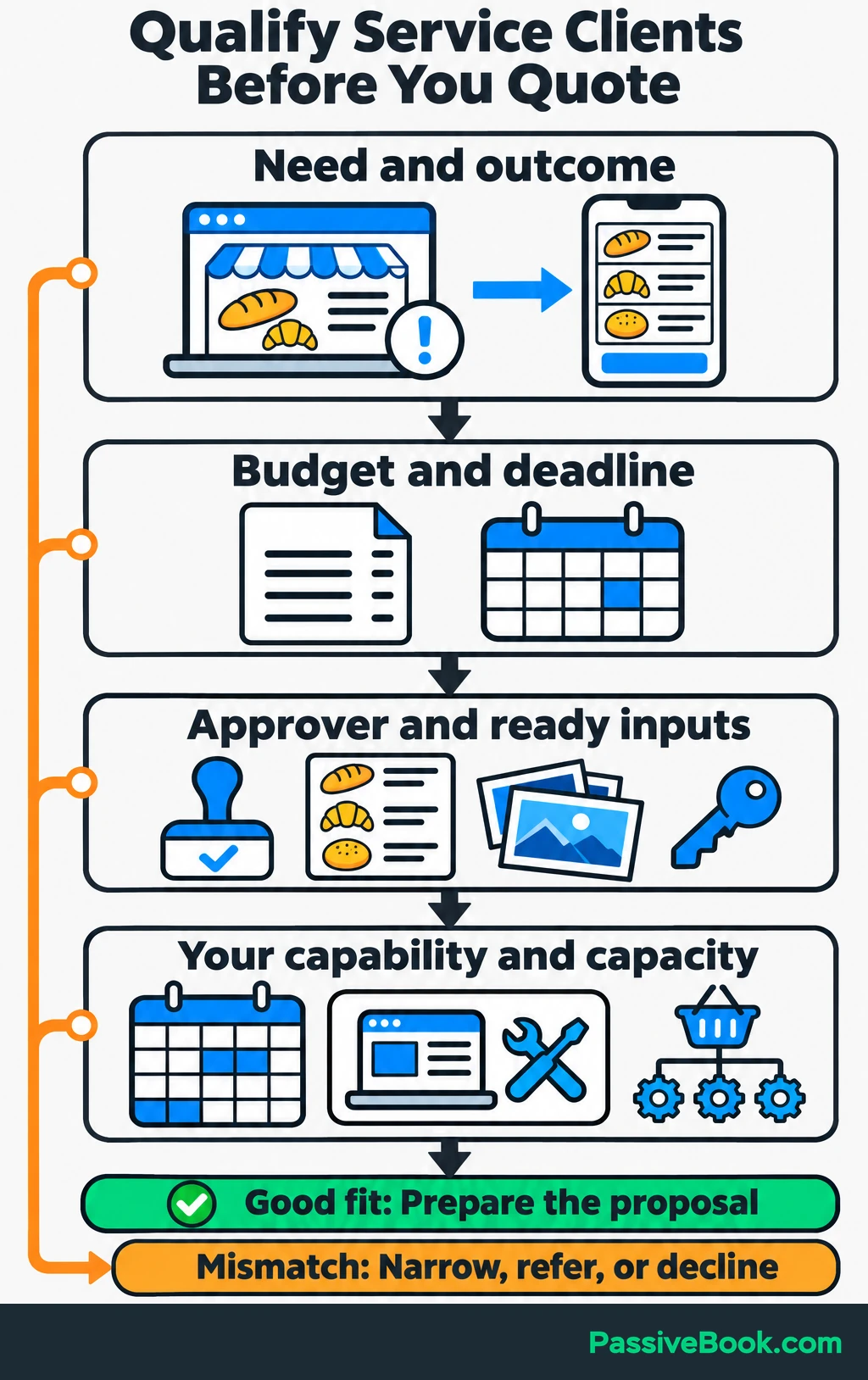
A qualified inquiry is one where the need, budget, timing, and working arrangements could suit your service.
Before quoting, ask:
- What needs to be different when this work is finished?
- What is causing difficulty now?
- What budget range have you set aside?
- Is there a deadline, and what makes it important?
- Who approves the work?
- What materials and access are ready?
Keep the questions in the buyer’s world. For the bakery owner, “Can customers find the correct ordering instructions?” is more useful than a tour of your preferred website tools.
Check your capacity as carefully as their budget. If you can refresh the pages but cannot build the custom ordering system they need, say so. Narrow the project, refer them elsewhere, or decline.
Make the Agreement Easy to Understand
Build the proposal from what you learned. Repeat the agreed problem, then describe the work that addresses it.
Include deliverables, exclusions, milestones, responsibilities, fees, payment dates, and the checks used to accept the finished work. Explain how changes and early termination will be handled.
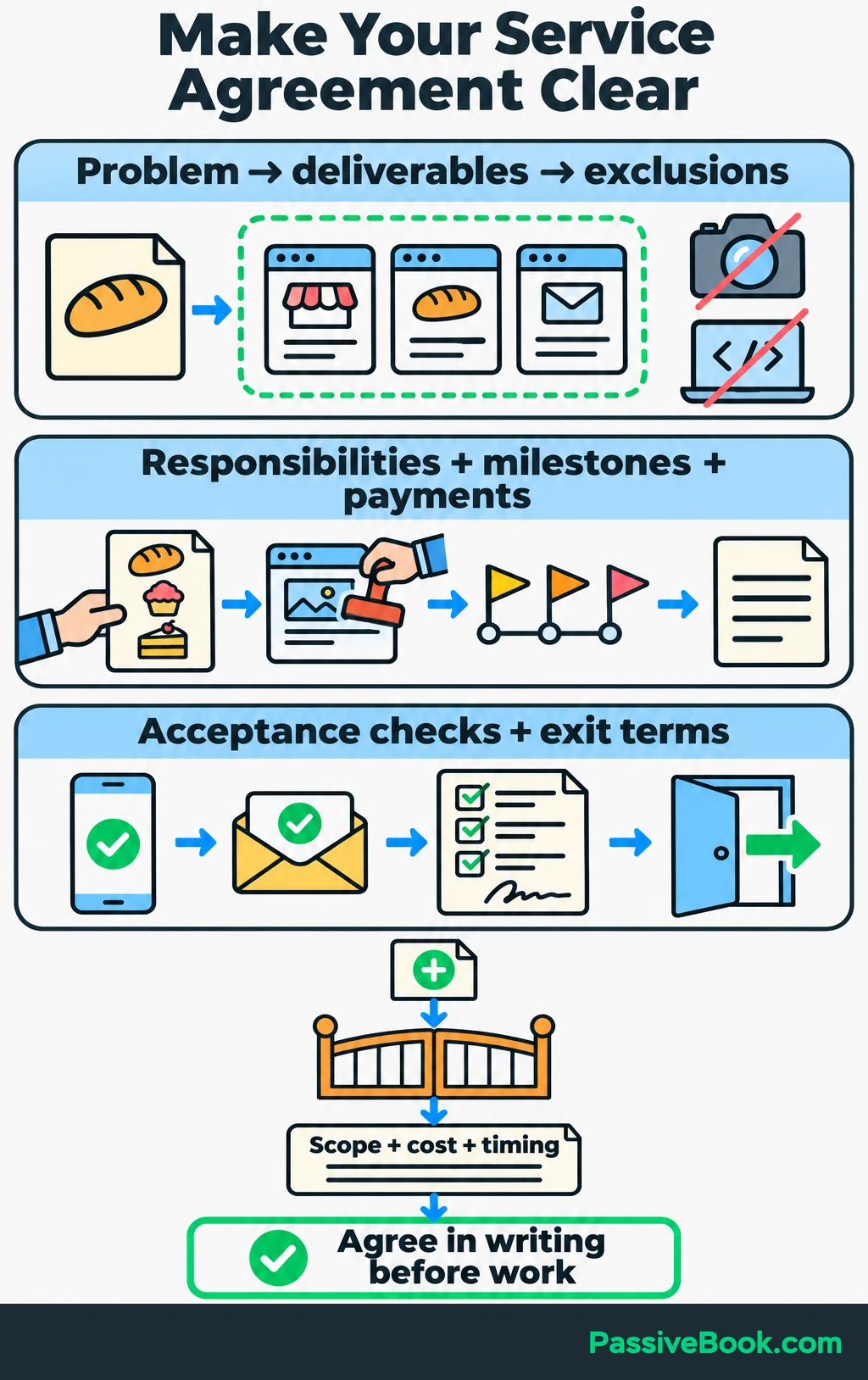
For the bakery refresh, name who supplies the menu, who approves the design, and what must pass testing before launch.
Put agreed changes in writing, including their effect on scope, cost, and timing. Business.gov.au’s contract guidance offers a useful breakdown of change and termination provisions.
The proposal should help both sides see what they are agreeing to without needing a second meeting to translate it.
7. Give Every Sales Conversation a Next Step
Before ending a call or sending a proposal, agree on who will do what and when.
Compare these endings:
“Let me know what you think.”
“You’ll review the scope with your co-owner on Thursday, and I’ll follow up on Friday to answer questions.”
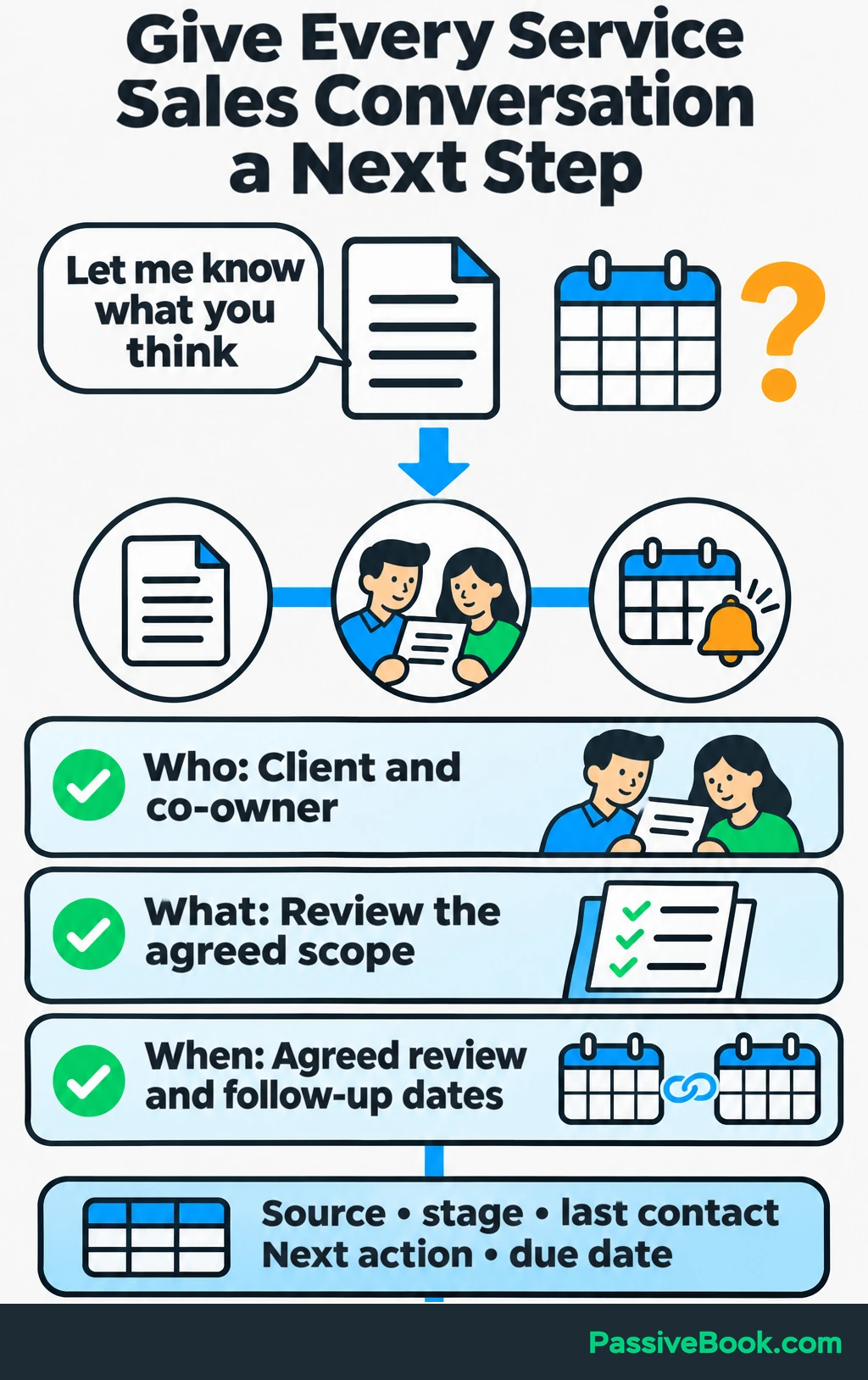
The second gives both people something to act on.
Keep a simple record with the prospect’s source, stage, last contact, next action, and due date. A spreadsheet and calendar reminders are enough to start.
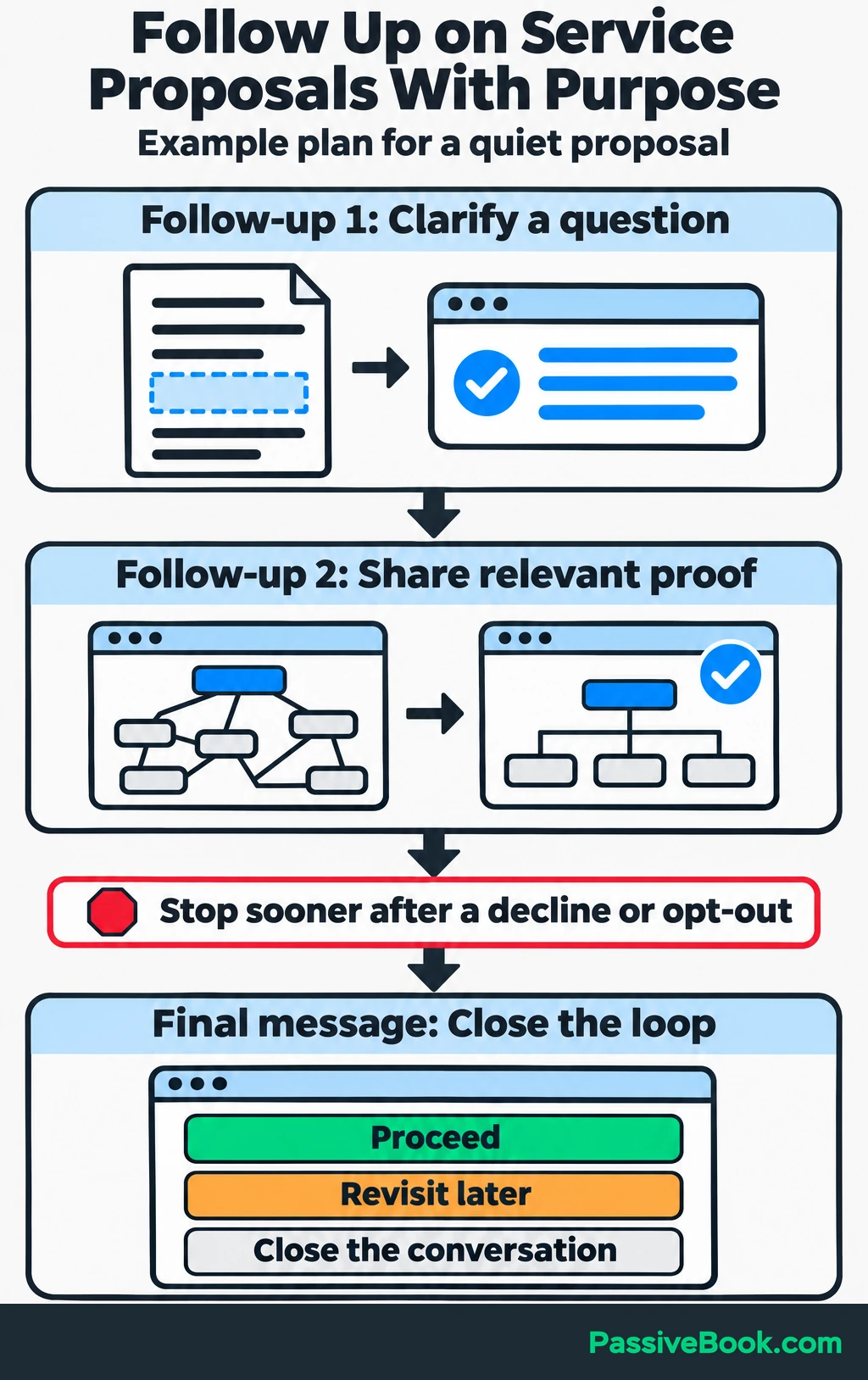
Make follow-ups useful. Clarify a question about the revision allowance or send a relevant work sample. Then ask whether they want to proceed, revisit the project later, or close the conversation.
For a proposal that goes quiet, I would plan two follow-ups and a final close-the-loop message rather than invent reasons to email forever. Stop sooner after a decline or opt-out.
8. Onboard Clients With a Shared Working Plan
Once the agreement is in place, show the client what happens next. Don’t leave them wondering whether paying the deposit started the project or simply generated another receipt.
Send a short working plan covering:
- The objective and agreed scope.
- Payment arrangements and the first milestone.
- The main contact and final approver.
- Materials needed now.
- Approval deadlines and the first update date.
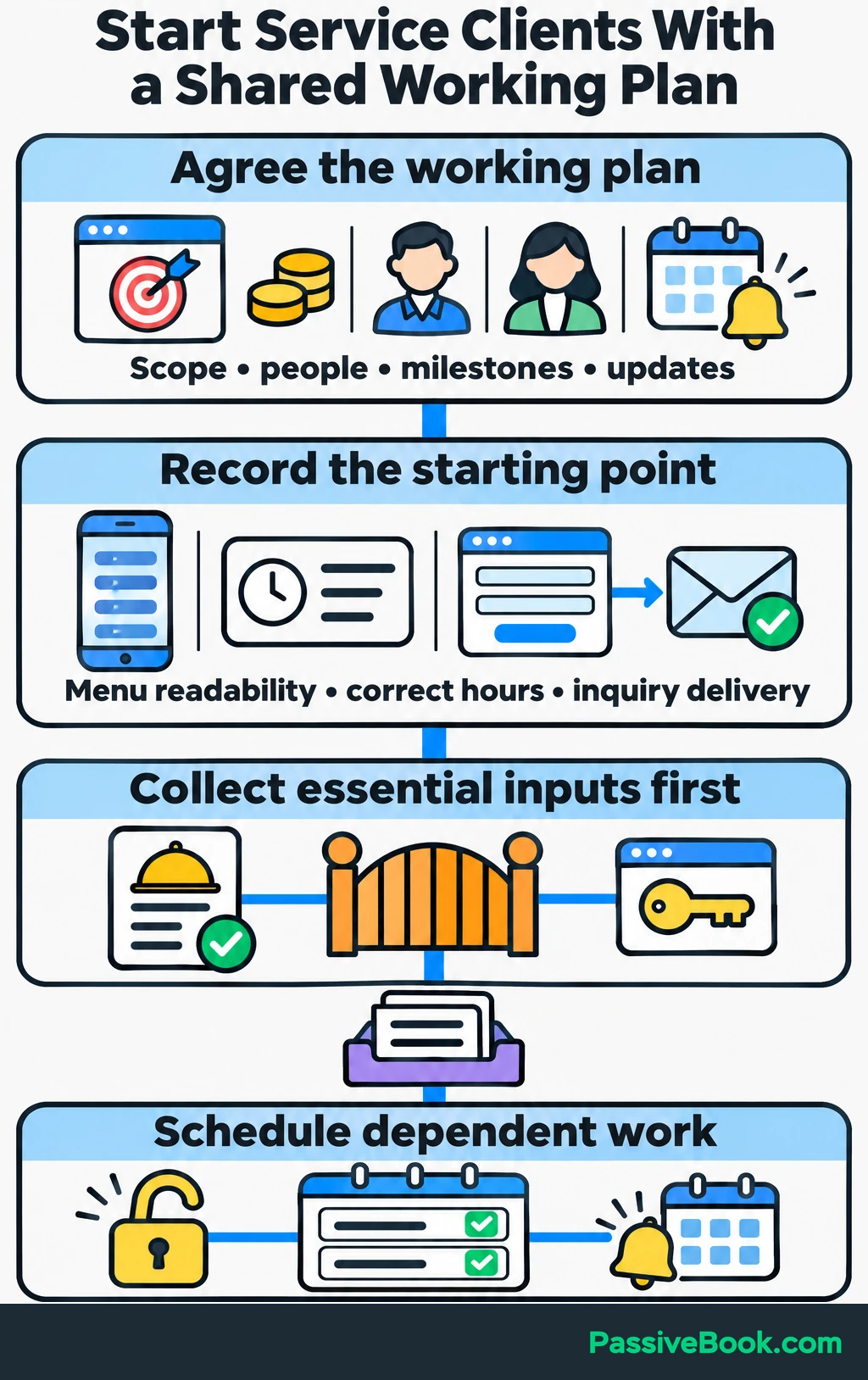
Record the starting situation and agree on practical success measures. For the bakery refresh, these could include readable menu text on a phone, correct opening hours, and test inquiries reaching the right inbox.
Collect materials in manageable stages. Get the owner’s approved menu and essential website access before scheduling work that depends on them. Save later-stage questions for when they matter.
Use a reusable onboarding checklist and reminders for missing inputs. That gives you a consistent start without asking every client to complete a giant form.
9. Make Reliable Delivery Repeatable
Break delivery into milestones and define what “done” means for each one.
For the bakery refresh, the sequence could be:
- Confirm the approved content and page structure.
- Build the layouts and collect consolidated feedback.
- Complete revisions and run the launch checks.
- Publish, verify the live site, and hand it over.
Before requesting approval, check your own work. Test the menu links, phone navigation, inquiry delivery, and opening hours against the approved information.
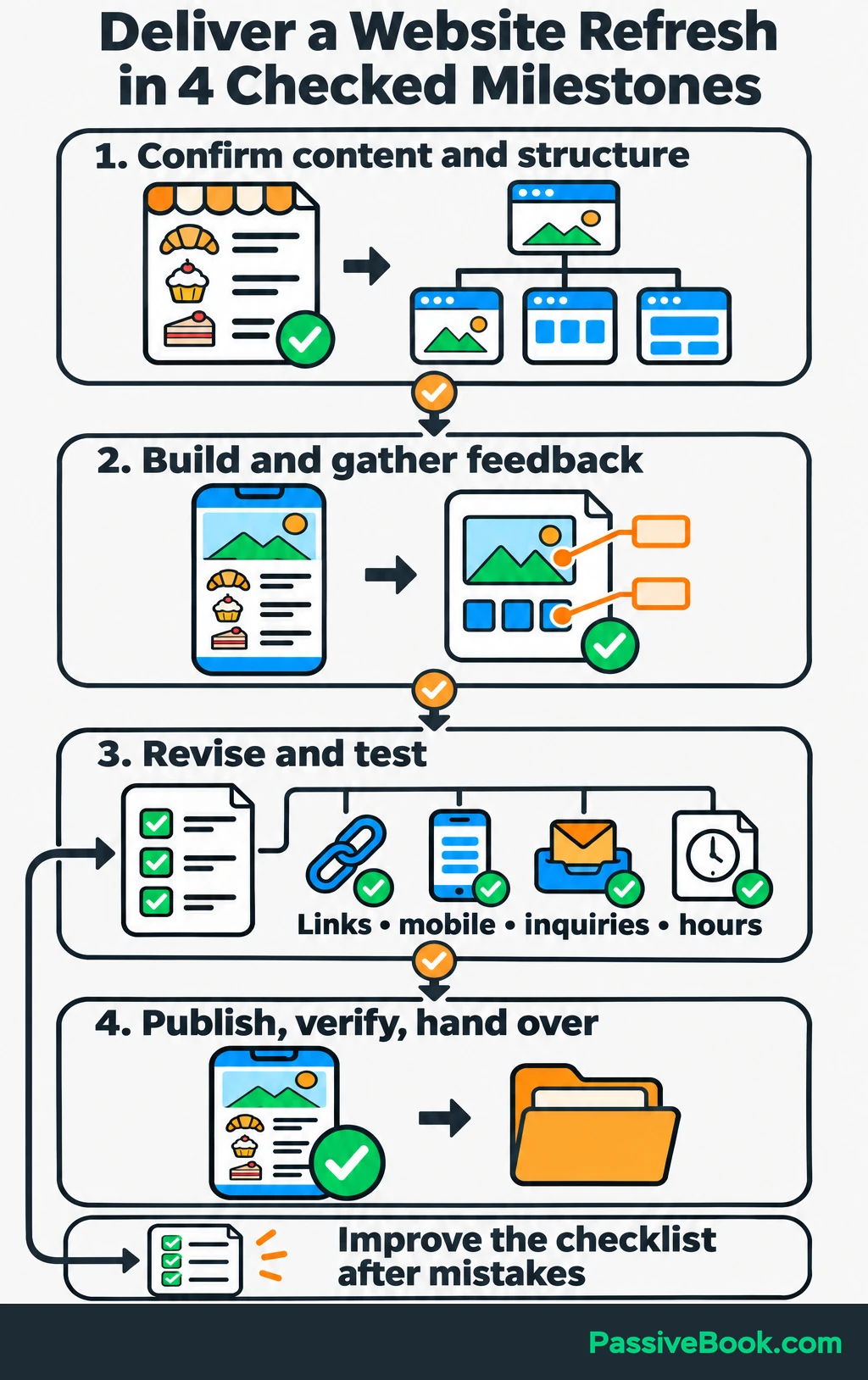
Keep recurring checks in one checklist. When something goes wrong, improve that checklist so the same mistake has a smaller chance of returning.
Check capacity before promising a date, and confirm the effect of additional requests before doing them.
Once the process works consistently, automate routine task creation and reminders. For example, an approved proposal can trigger your onboarding checklist and a reminder to request materials. Keep a person responsible for noticing when the project needs a different approach.
10. Communicate Progress Before Clients Have to Ask
Agree on the update rhythm, contact channel, and response window during onboarding.
A weekly written update is where I would start for a short website project. It keeps decisions moving without turning every progress report into a meeting.
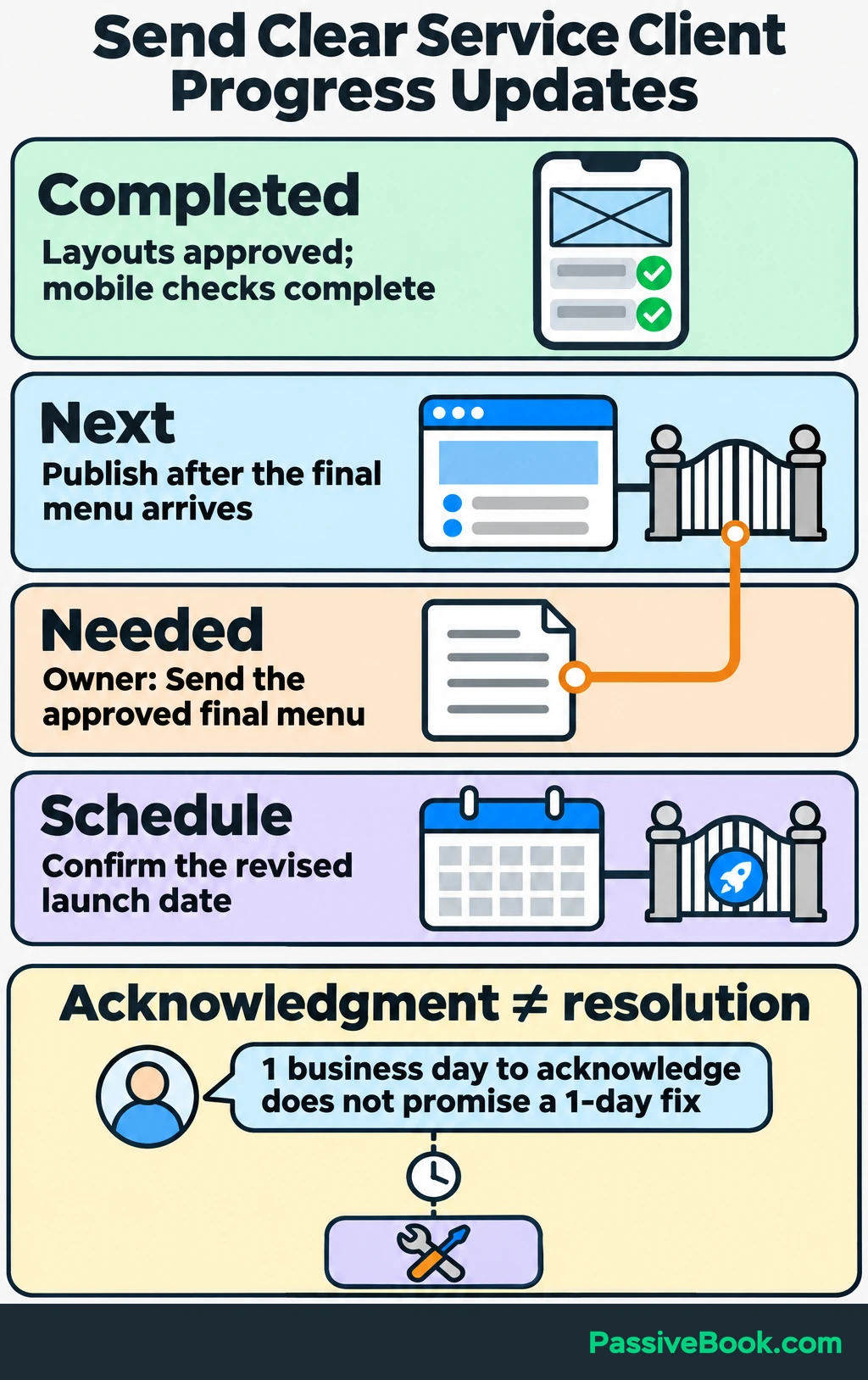
Use the same four points:
- Completed: What has been finished.
- Next: What you will work on next.
- Needed: The decision or material required from the client.
- Schedule: Anything affecting the agreed dates.
For example:
“The page layouts are approved, and the mobile checks are complete. I need your final menu before publication. Please confirm when you can send it, and I’ll confirm the revised launch date.”
Flag delays as soon as you understand their effect. Give the client a proposed next action.
Also separate response time from resolution time. A promise to acknowledge a message within one business day does not mean every problem will be fixed within one day. Define how urgent issues should be raised and what support you can provide outside normal hours.
11. Turn Feedback Into Visible Fixes
Ask for feedback while there is still time to use it.
After an early milestone, ask whether the work matches the agreed direction and what needs changing. Specific questions are easier to answer than “Any thoughts?”
When something goes wrong:
- Confirm what happened and listen to its effect.
- Acknowledge your part.
- Agree on the remedy and deadline.
- Check the result after the fix.
- Tell the client what changed.
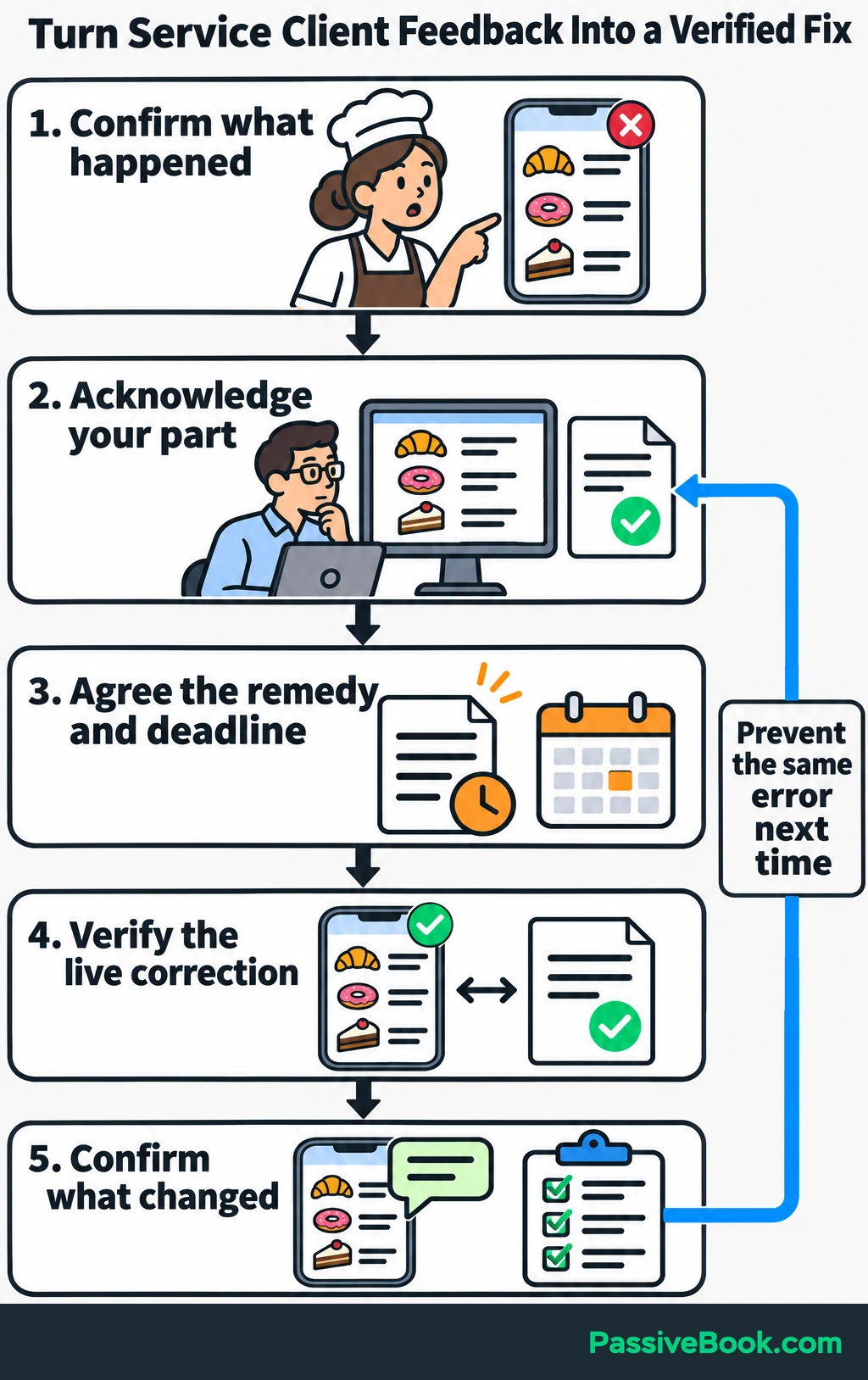
Record the agreed remedy and deadline in writing, as Business.gov.au’s complaint-handling guidance recommends.
If you publish an outdated bakery menu, correct it, check the live page, and confirm the correction with the owner. Then update your process so the approved menu is clearly identified before the next launch.
I would resist sending a long explanation of how the error happened before addressing it. The client needs a working menu more urgently than a guided tour of your mistake.
12. Make the Value of Your Work Visible
Return to the measures agreed during onboarding. Show the client what changed and how to use the result.
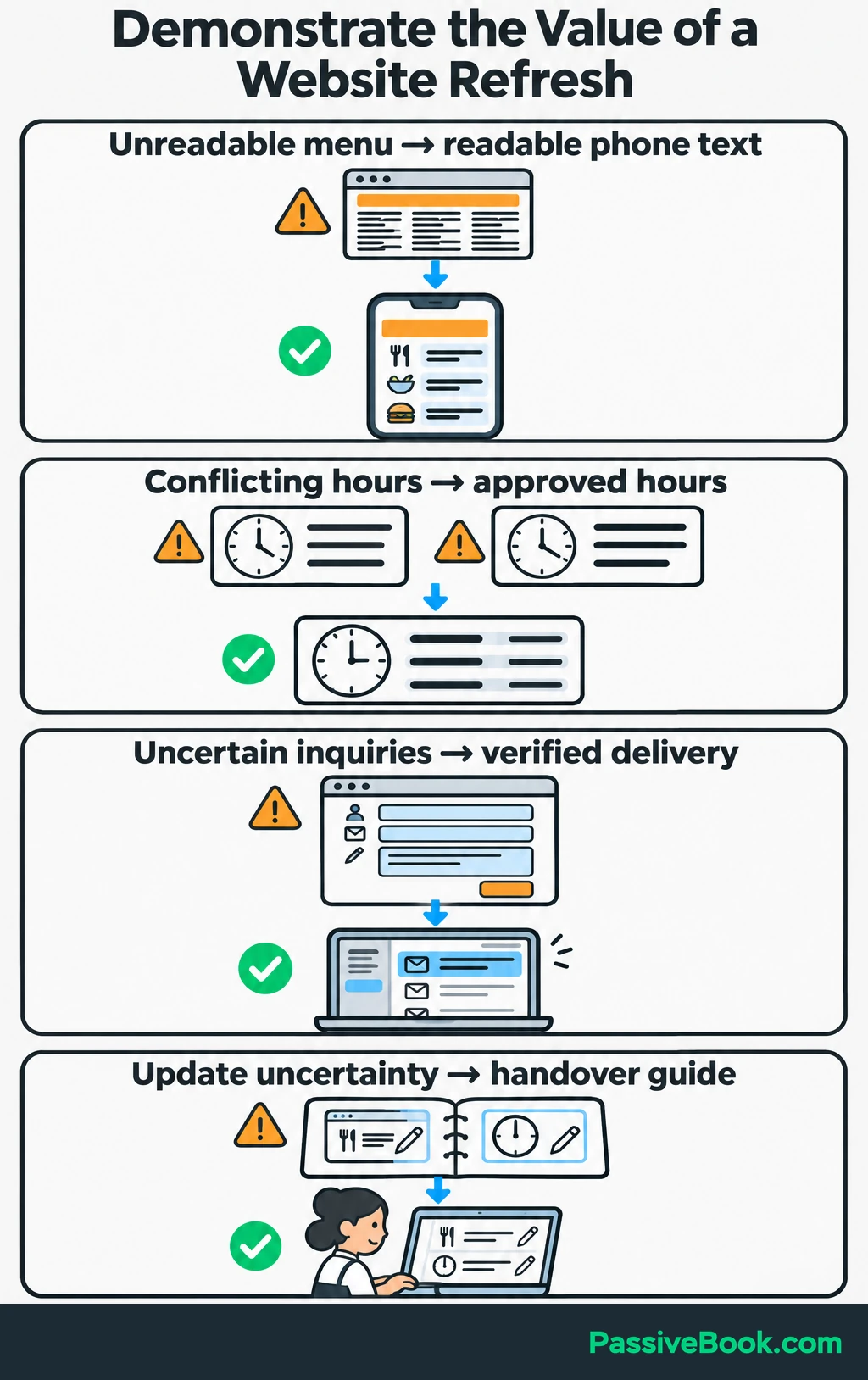
For the bakery website, a handover could include:
| Original Problem | What You Can Demonstrate |
|---|---|
| Menu text was difficult to read on a phone | The approved menu is readable at normal phone size |
| Pages showed conflicting opening hours | The checked pages now show the owner’s approved hours |
| Inquiry delivery was uncertain | A test submission arrived in the intended inbox |
| The owner was unsure how to update information | A short handover guide shows how to change the menu and hours |
Walk through the result in a short recording or written guide. Explain where the client’s files and access details belong and what they now manage.
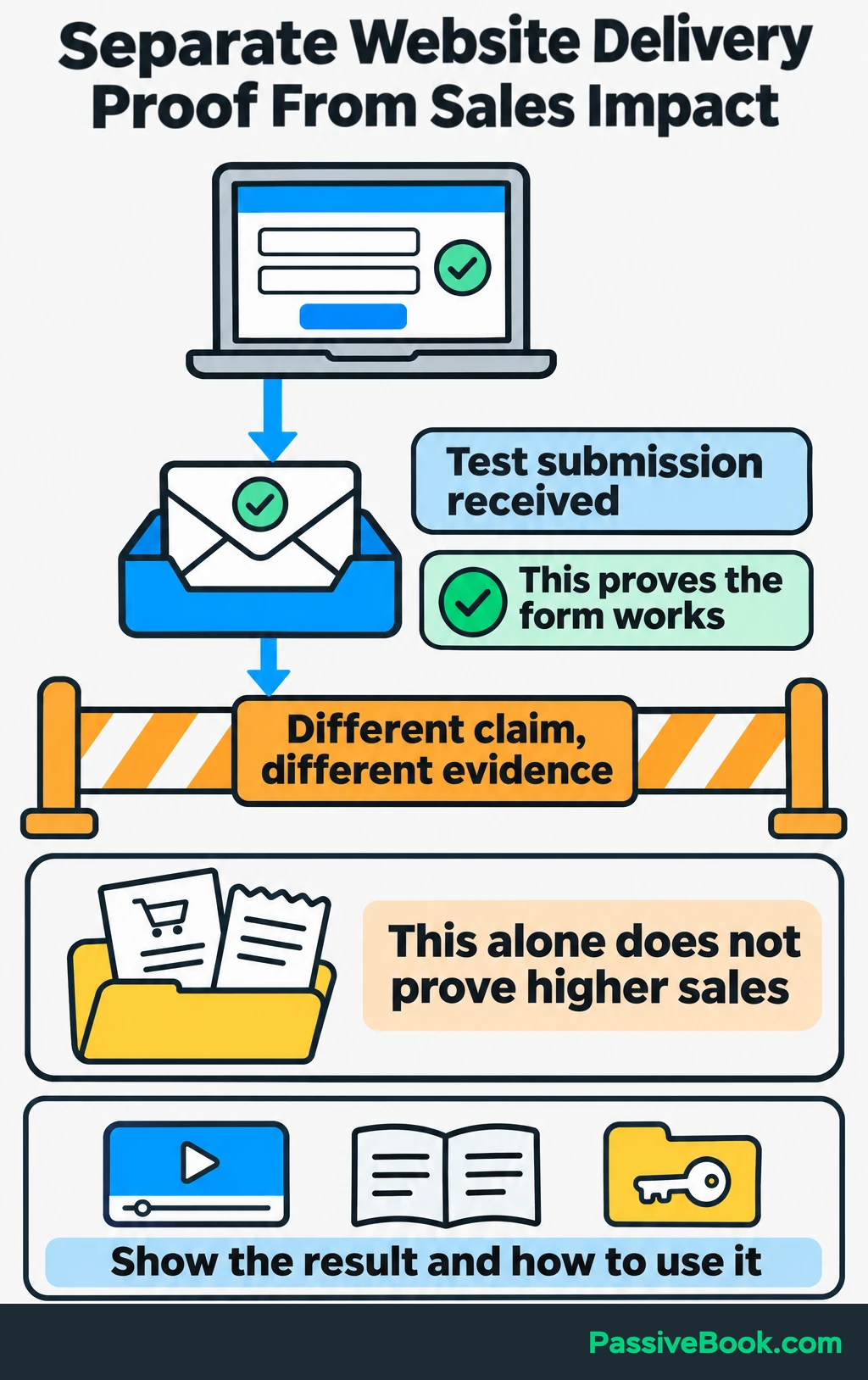
Keep delivered improvements separate from wider business results. You can demonstrate that a form works. That alone does not show your work caused higher sales.
This review also gives the client concrete language for describing what you helped them achieve.
13. Plan the Next Engagement Around a Real Need
Offer Recurring Services for Recurring Work
My freelancing income ranged from roughly $280 in my worst month to $4,100 in my best. That range describes the volatility I experienced, and it made planning difficult.
Recurring work is attractive for that reason, but I would only offer it where a useful task actually repeats.
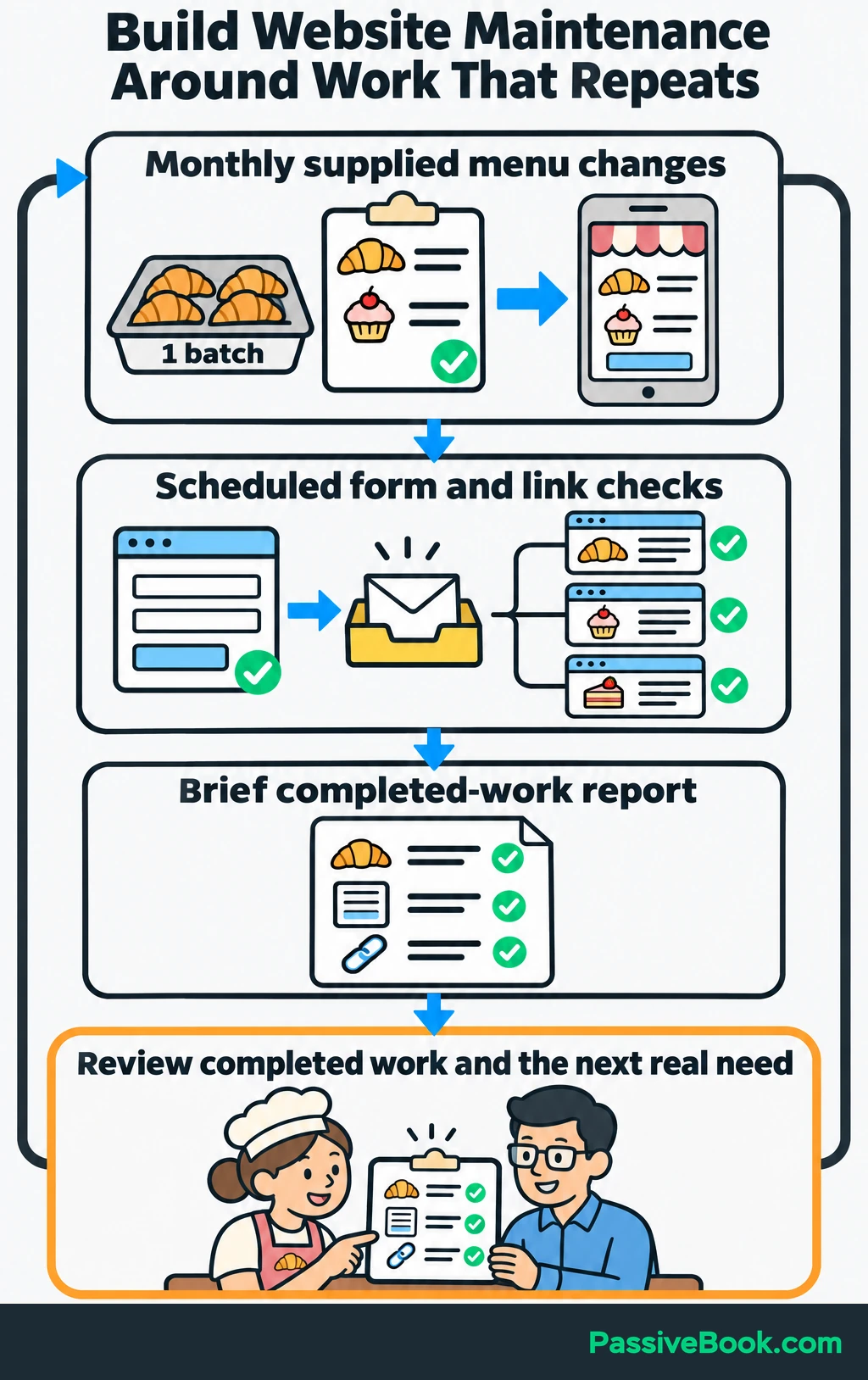
For bakery website maintenance, define the work clearly. That might mean one batch of supplied menu changes each month, scheduled form and link checks, and a brief report of completed work.
State the frequency, turnaround, fee, review points, renewal terms, and cancellation process. Price extra requests separately, and make sure the fee covers delivery time and direct costs.
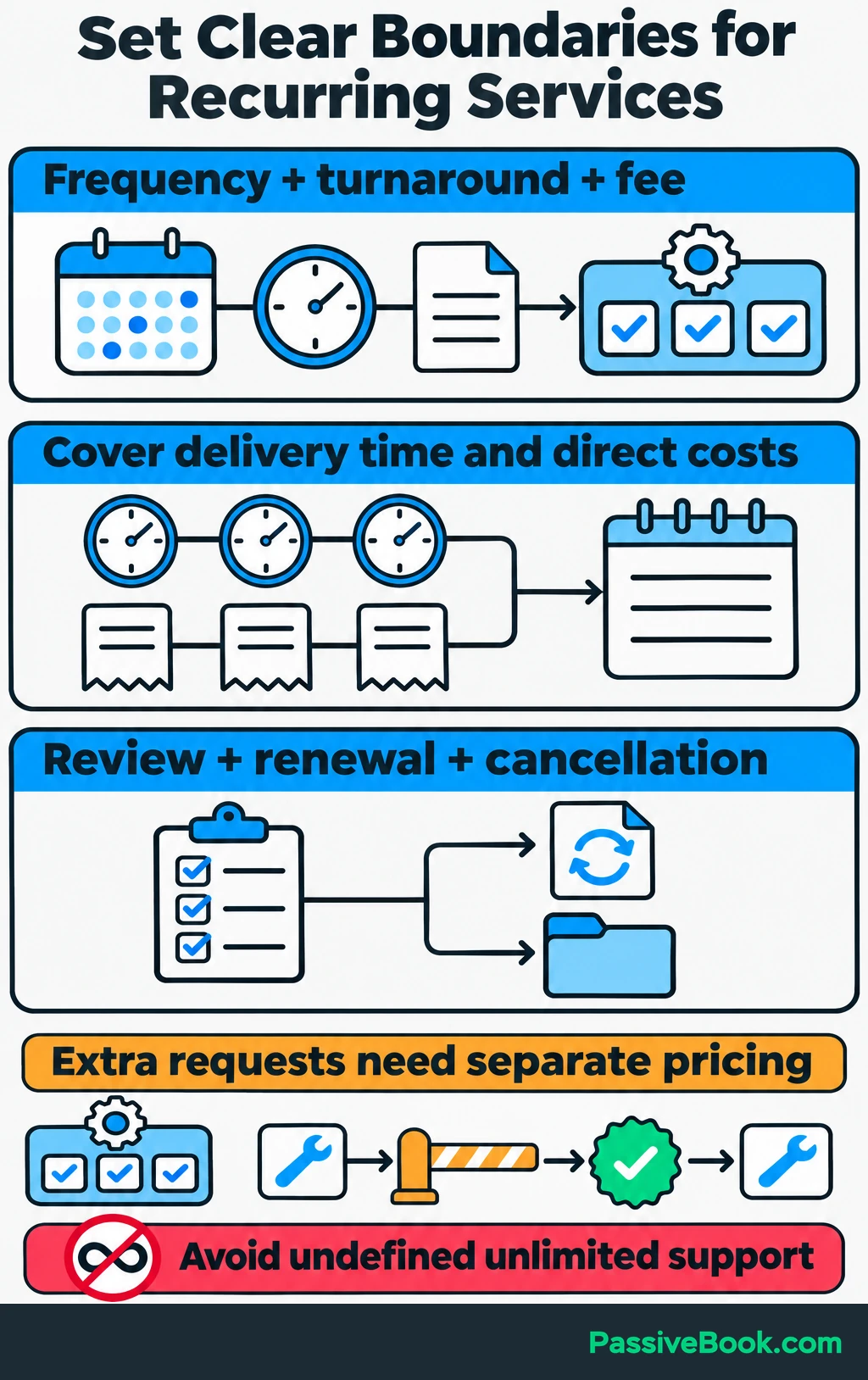
Explain what the owner would handle without the service. Before renewal, review what you completed and what they expect to need next.
I would skip “unlimited website support.” It leaves too much room for two very different interpretations of unlimited.
Reconnect Around the Next Project Need
Some clients need a completed project and a clean handover. That can still become a valuable long-term relationship.
At handover, ask whether there is a future project worth revisiting and agree on a contact date.
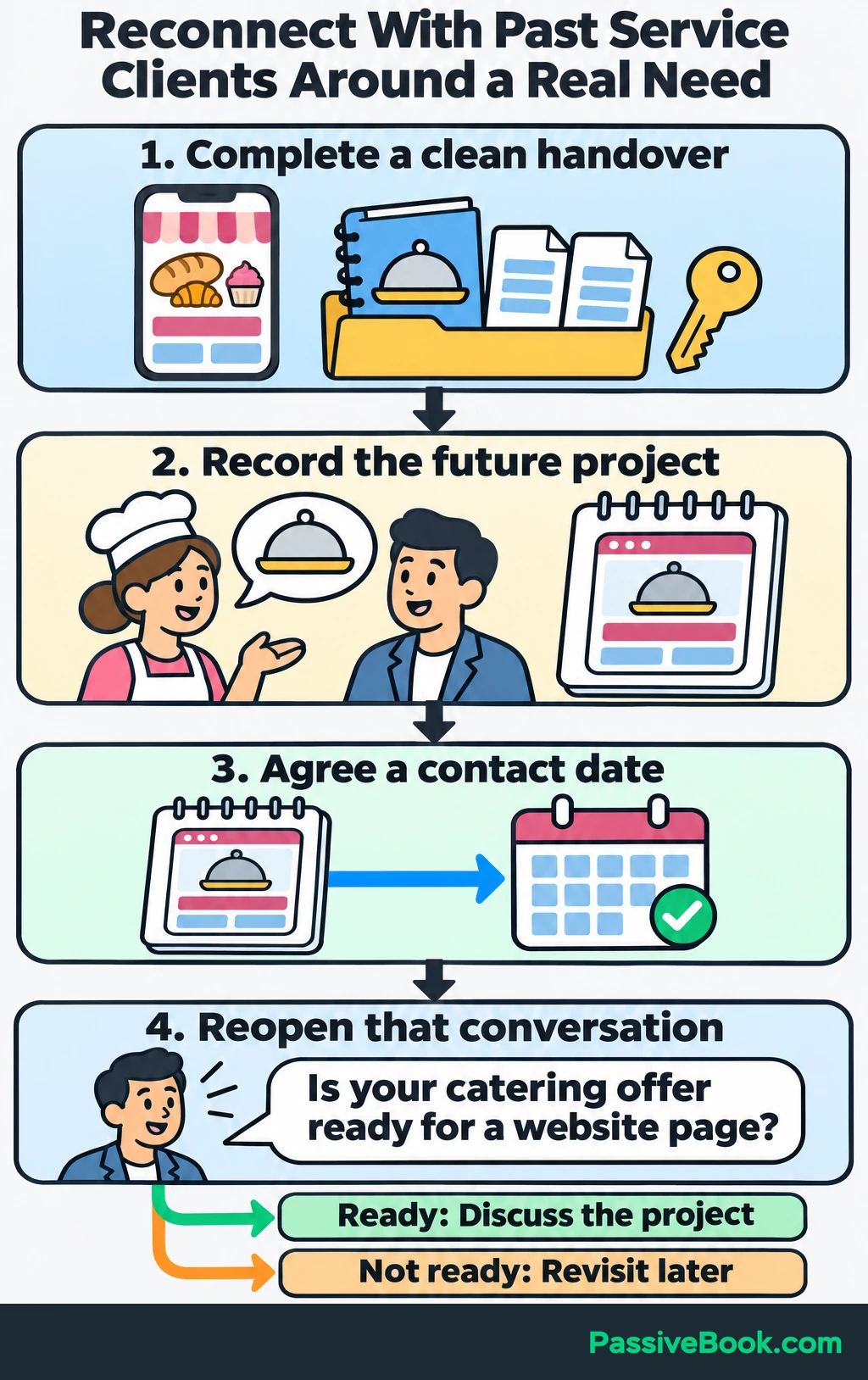
If the bakery plans to launch catering, record that reason rather than setting a vague reminder to “check in.” When the agreed time arrives, reopen the specific conversation:
“You mentioned preparing a catering offer for autumn. Is that ready for a website page, or should we revisit it later?”
When work ends, provide the information, files, and appropriate access the client needs to continue. Make returning an easy choice.
If you know why you want to reconnect but are stuck on the wording, the AI Skill below can draft the message from your client notes. You can also use it for proposal follow-ups, progress updates, and referral requests.

Free AI Copywriting Studio




14. Make Referrals Easy After a Successful Result
Ask for an introduction after the client confirms satisfaction or acknowledges a useful result.
Be specific about who you help and why they might need you:
“Do you know another independent bakery owner whose website needs clearer menus, hours, or ordering information?”
Offer a short message they can forward. For example:
“I worked with [Name] on our bakery website refresh. They help independent bakeries make menus, hours, and ordering details easier to find. You can see their work and contact them at [service page].”
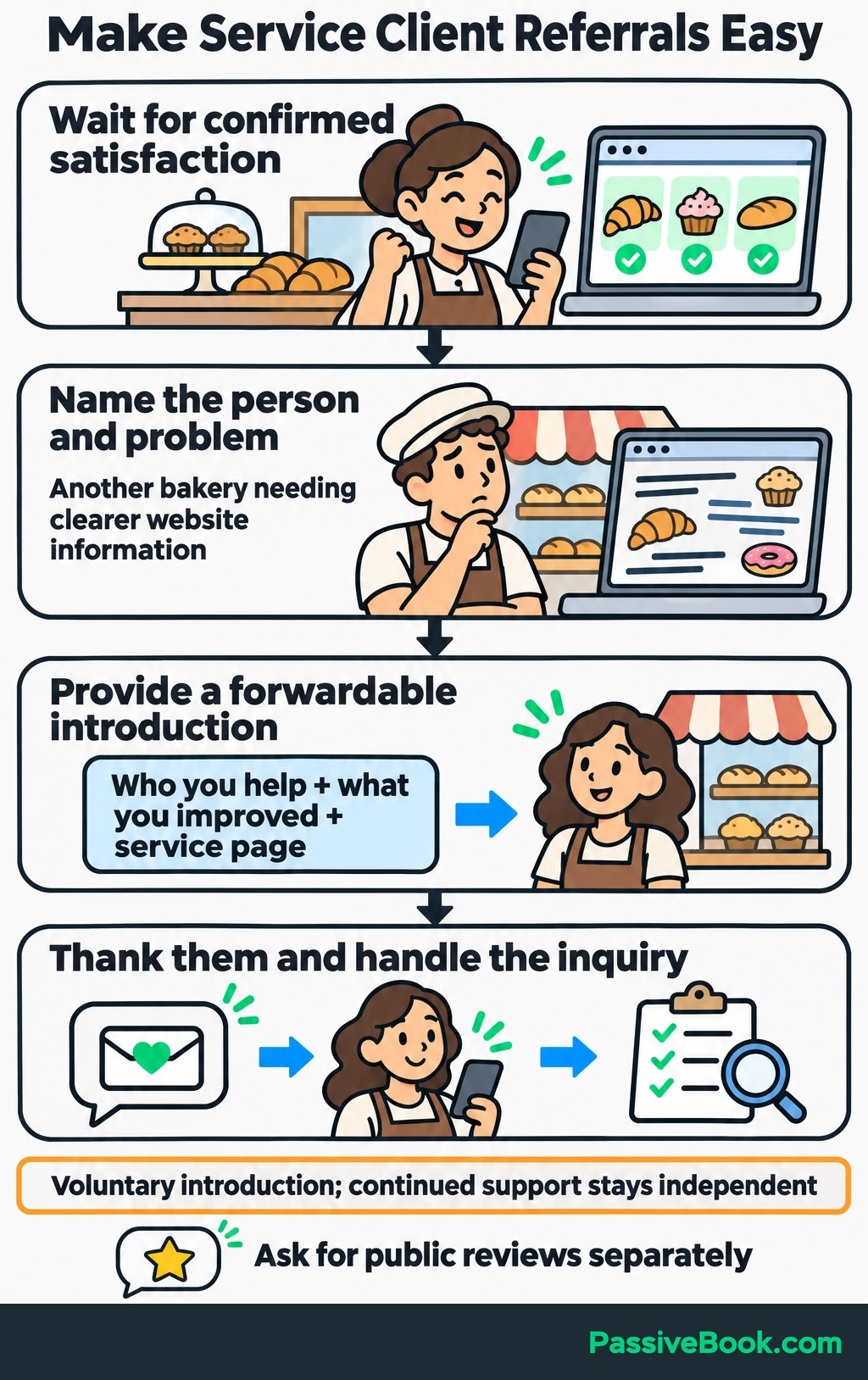
Keep the introduction voluntary. Continued support should never depend on a referral or positive review.
Thank the client for making the introduction, then handle the new inquiry yourself. Record which referrals become suitable inquiries and paid projects.
Ask for public reviews separately. An introduction and a review require different effort, so I wouldn’t bundle both into one request.
15. Improve the Weakest Part of Your Client System
I’d review qualified inquiries by source, accepted proposals, repeat bookings, ongoing clients retained, and delivery time each week. Keep counts beside percentages.
For ongoing services, count how many clients active at the start of a period remain at its end, excluding new arrivals. Stripe’s retention guidance explains this distinction.
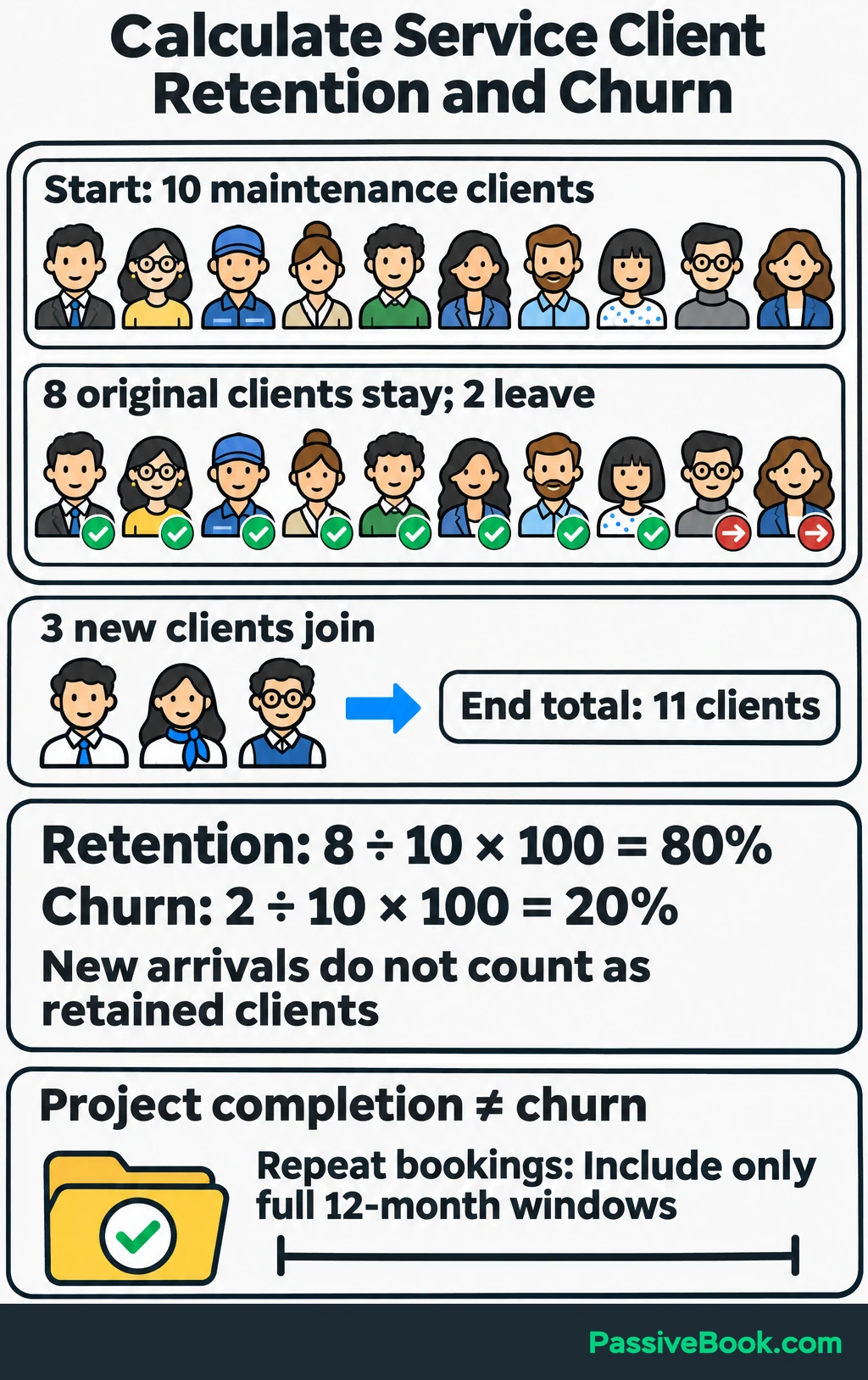
You start a quarter with 10 maintenance clients. Two of those clients leave and three new clients join. You finish with 11 clients, but only eight of the original 10 remain:
- Retention (clients kept): 8 ÷ 10 × 100 = 80%.
- Churn (clients lost): 2 ÷ 10 × 100 = 20%.
Review recurring revenue alongside client counts. Losing one large account deserves attention even when the total number of clients rises.
For project work, a completed refresh isn’t automatically churn. Track whether clients book again within 12 months of project completion, and only include clients whose full 12-month window has passed. Record cancellations and their reasons separately.
Then choose one action based on what you find:
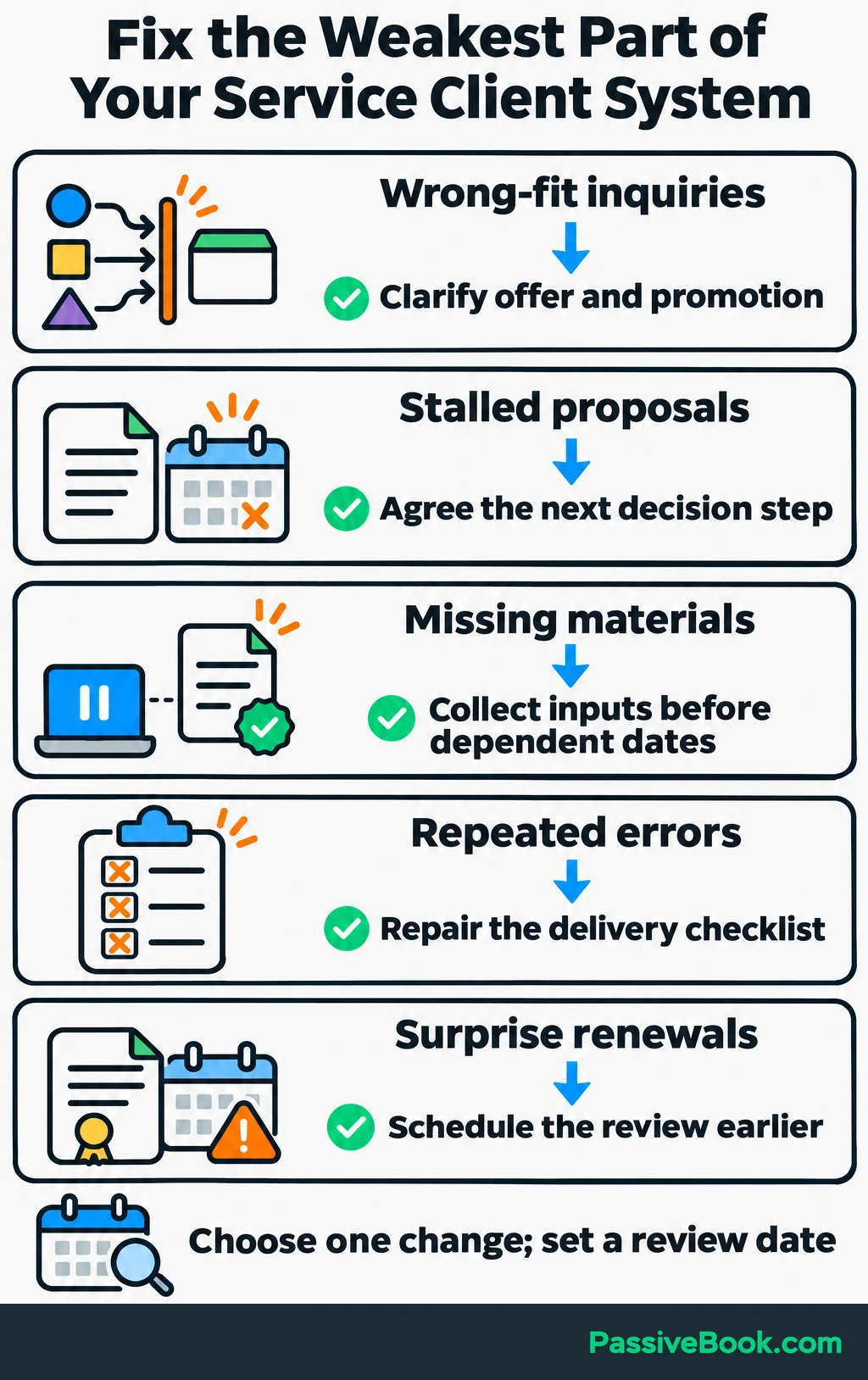
| What You Notice | What to Change First |
|---|---|
| Most inquiries need services you don’t offer | Clarify the offer and where you promote it |
| Proposals stall with no decision date | Agree on a next step before sending them |
| Projects keep waiting for materials | Collect essential inputs before confirming dependent dates |
| Clients leave after repeated errors | Fix the delivery check behind the recurring problem |
| Renewals arrive as a surprise | Schedule the review before the client’s decision is due |
Set a review date for the change and check whether it helped.
What Next?
Open your current client list and give every active relationship one dated next action: a proposal follow-up, progress update, handover, or renewal discussion. That is a useful first step toward making good client work lead somewhere.
Use the social buttons to share this guide when a conversation about finding more work needs to include keeping good clients, too.
Where does your client process most often stall: winning the work, delivering it, or earning the next engagement? Share your experience in the comments, along with any other questions.
Share this post with your friends & followers:

