A prospect asks you to send a proposal, and suddenly “I can help with that” needs a price, a deadline, and a clear description of the work.
Leave those details vague and the client has to guess what they’re buying. You can also end up agreeing to work you never meant to include.
A useful proposal makes those decisions easier for both sides. Here’s how to turn your offer into a document a client can assess, with a complete welcome-email proposal you can adapt without buying special software.
Confirm the Client’s Needs Before You Draft
Start with a conversation, a written brief, or both. Your proposal should answer a problem the client recognizes, so confirm what needs to change before recommending work. BDC’s proposal guidance also emphasizes understanding the client’s priorities and decision-makers.
These questions give you a useful starting point:
- What needs to improve, and why does it matter now?
- What would a useful result look like?
- What have you already tried?
- What budget range and deadline should I work within?
- What information, access, or materials can you supply?
- Who will review the work and approve the purchase?
If the client has supplied a request for proposal, follow its required structure, evaluation criteria, and submission instructions.
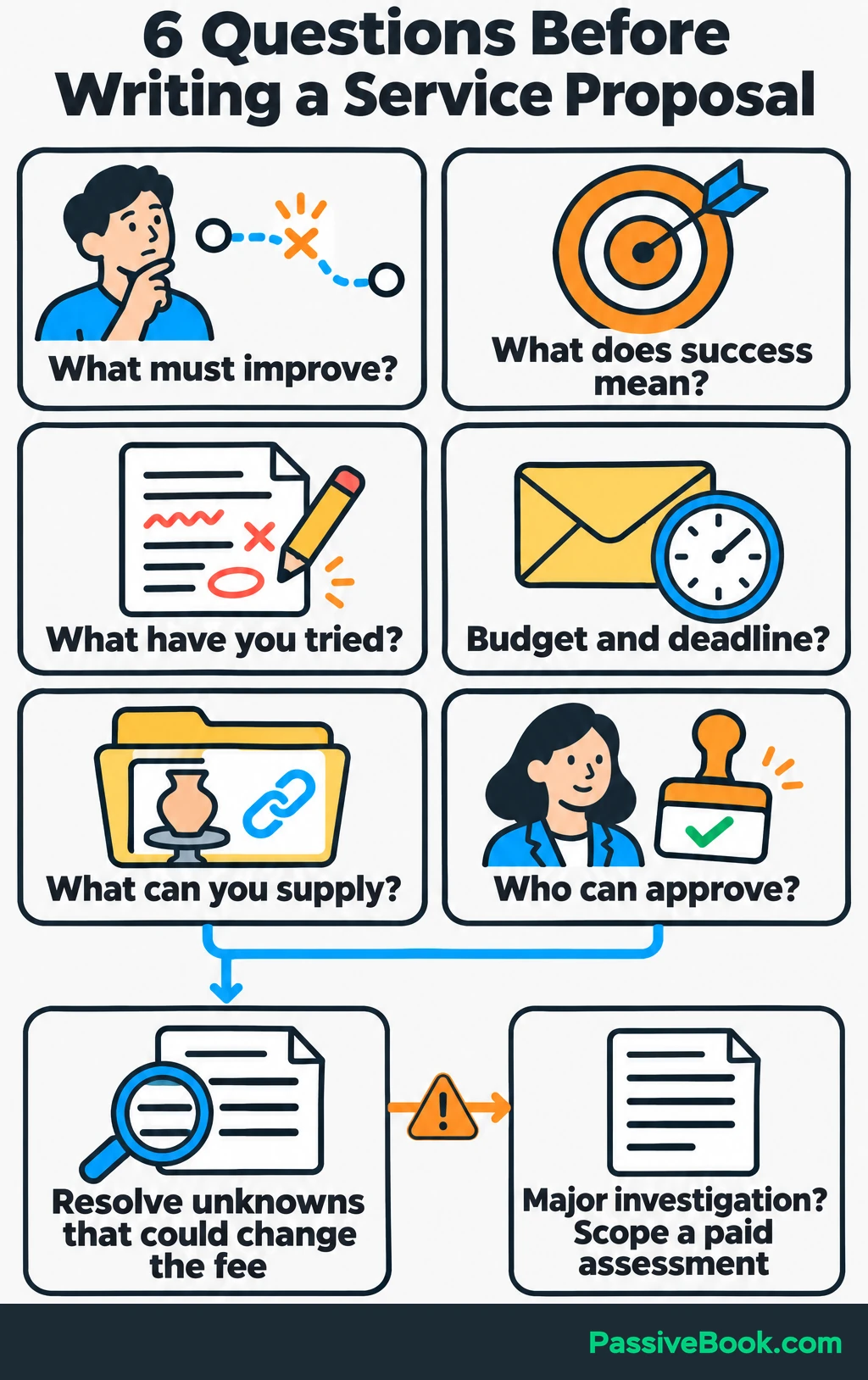
Resolve unknowns that could change your fee. If you need substantial investigation to understand the problem, offer a paid assessment with its own scope and output. A sales conversation can establish whether you can help without becoming a free consulting engagement.
Throughout this article, imagine you offer email copywriting and are preparing a proposal for Kiln Lane Studio, an independent pottery studio. The business, project details, fees, and schedules are illustrative.
Before drafting, you confirm that the studio collects newsletter signups but has no welcome sequence—a series of emails introducing new subscribers to its classes. You also establish which beginner classes to feature, where bookings happen, and who will upload the finished copy. That last detail matters: writing emails and setting up an email system are separate jobs.
Connect the Client’s Problem to Your Recommended Service
Put the project title, client name, provider name, contact details, date, and version at the top.
Then write a short opening summary covering:
- The client’s current situation.
- Your recommended service and its intended benefit.
- The fee and expected timing.
- The action needed to proceed.
Draft this summary early, but finalize it after you settle the scope and price.
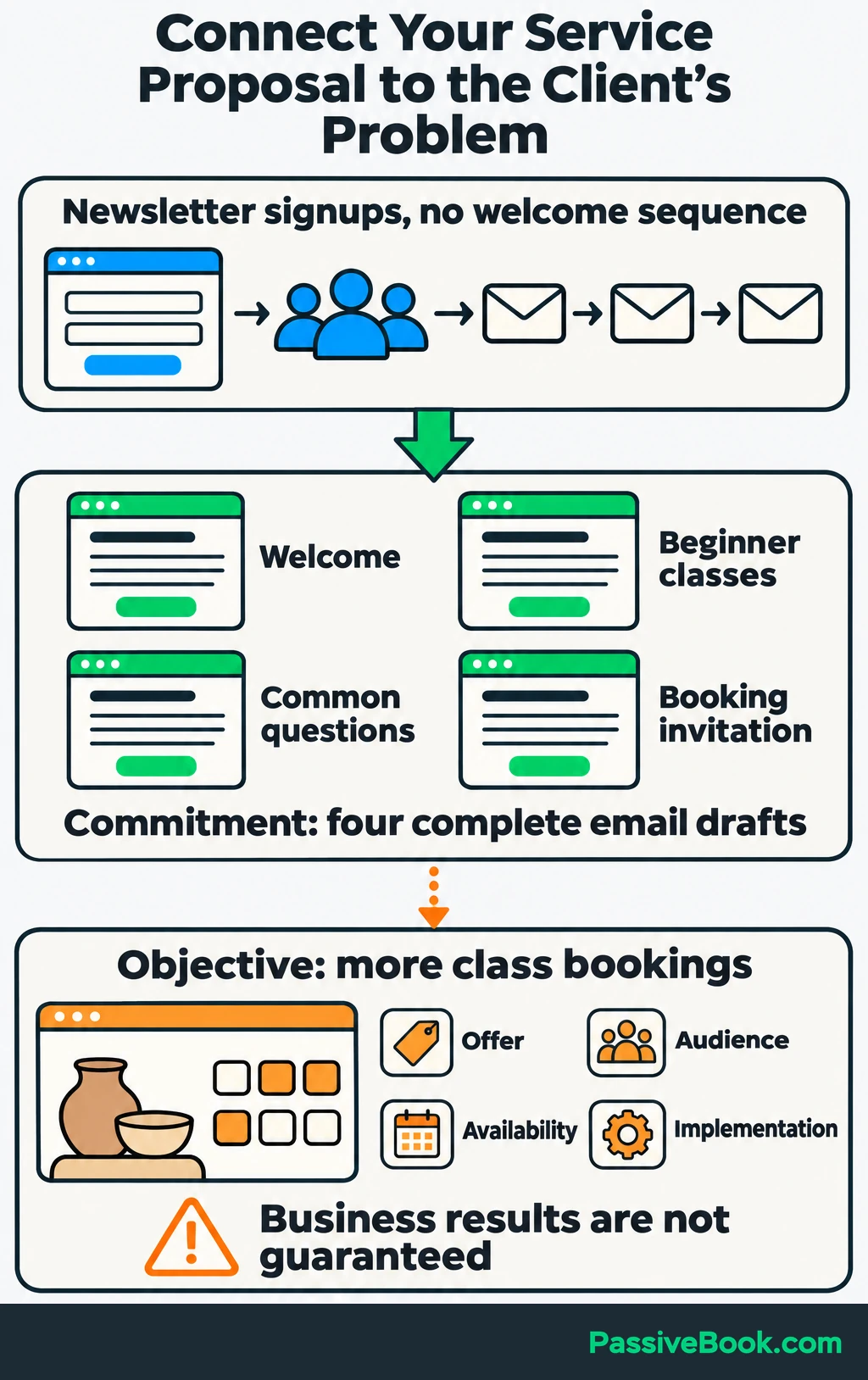
Explain the connection between the problem and your service in concrete terms. For the studio, that might read:
Your newsletter currently has no welcome sequence. I propose four emails that introduce the studio, explain beginner pottery classes, answer common questions, and guide new subscribers to the booking page.
That gives the client something to evaluate. “Take your marketing to the next level” gives them a phrase they have already survived several hundred times.
Keep the deliverable separate from the hoped-for business result. You can commit to producing agreed email copy. More class bookings may be the objective, but bookings also depend on the offer, audience, availability, and implementation.
Use confirmed information. If nobody has established why subscribers aren’t booking, don’t present your guess as the diagnosis.
Define Exactly What the Client Will Receive
Specify Deliverables and Completion Criteria
Describe each deliverable by quantity, format, purpose, and what makes it complete.
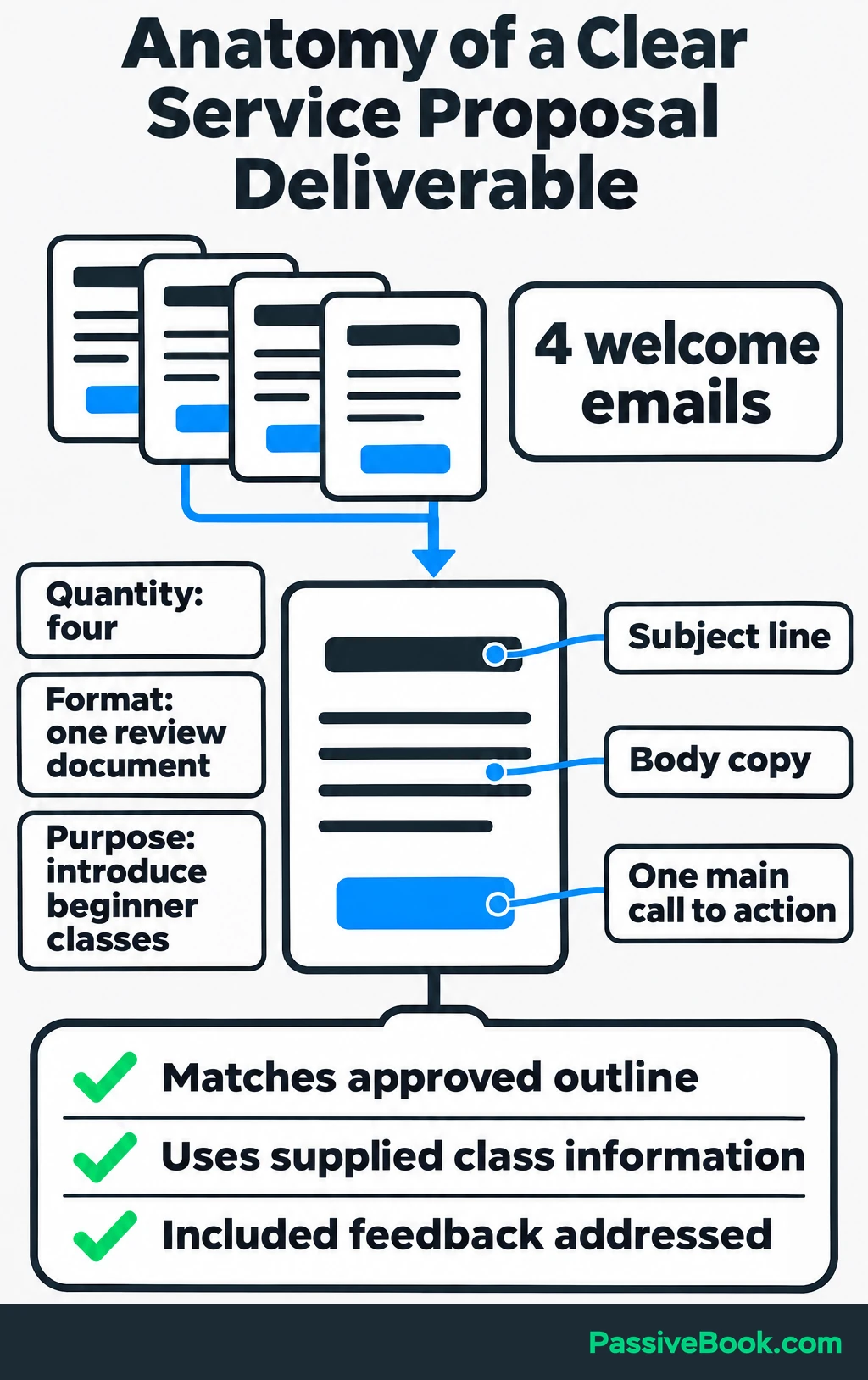
“Email marketing support” leaves too much open. “Four welcome-email drafts, each with a subject line, body copy, and one main call to action” gives both sides a shared picture.
A scope table can make those details easier to compare:
| Deliverable | Quantity or Format | Completion Criteria | Client Input Required |
|---|---|---|---|
| Discovery and email plan | One 45-minute call and a short written outline | Audience, featured classes, voice, and purpose of each email are recorded | Class details, brand examples, booking links |
| Welcome-email drafts | Four emails in one review document | Each includes a subject line, body copy, and main call to action | Approval of the email plan |
| Revisions | One consolidated feedback round | Agreed edits are addressed within the approved brief | One combined response from the designated contact |
| Final copy | One editable document | Four approved emails contain the agreed elements and supplied links | Written approval and final payment |
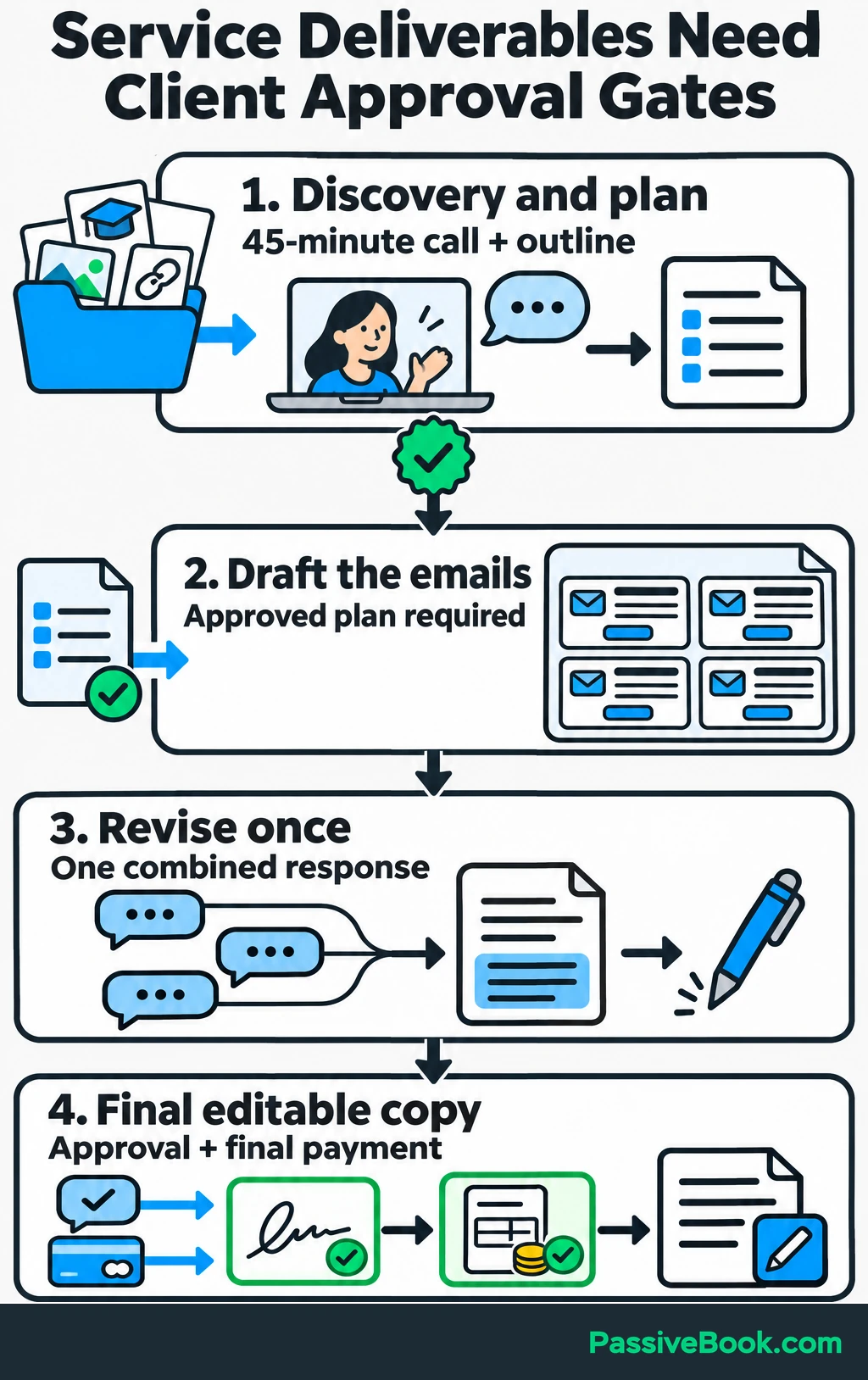
Explain enough of your approach to show how you will do the work. Here, you will confirm the brief, agree on the email plan, write the drafts, and revise them.
You don’t need to include the finished sequence in the proposal. The client is buying that work.
Set Boundaries and a Change Process
State what falls outside the fee, what the client must supply, and how revisions work.
For the studio project, exclusions include email design, platform setup, automation configuration, additional emails, and ongoing campaign management. The studio supplies accurate class details and booking links, and one contact gathers feedback.
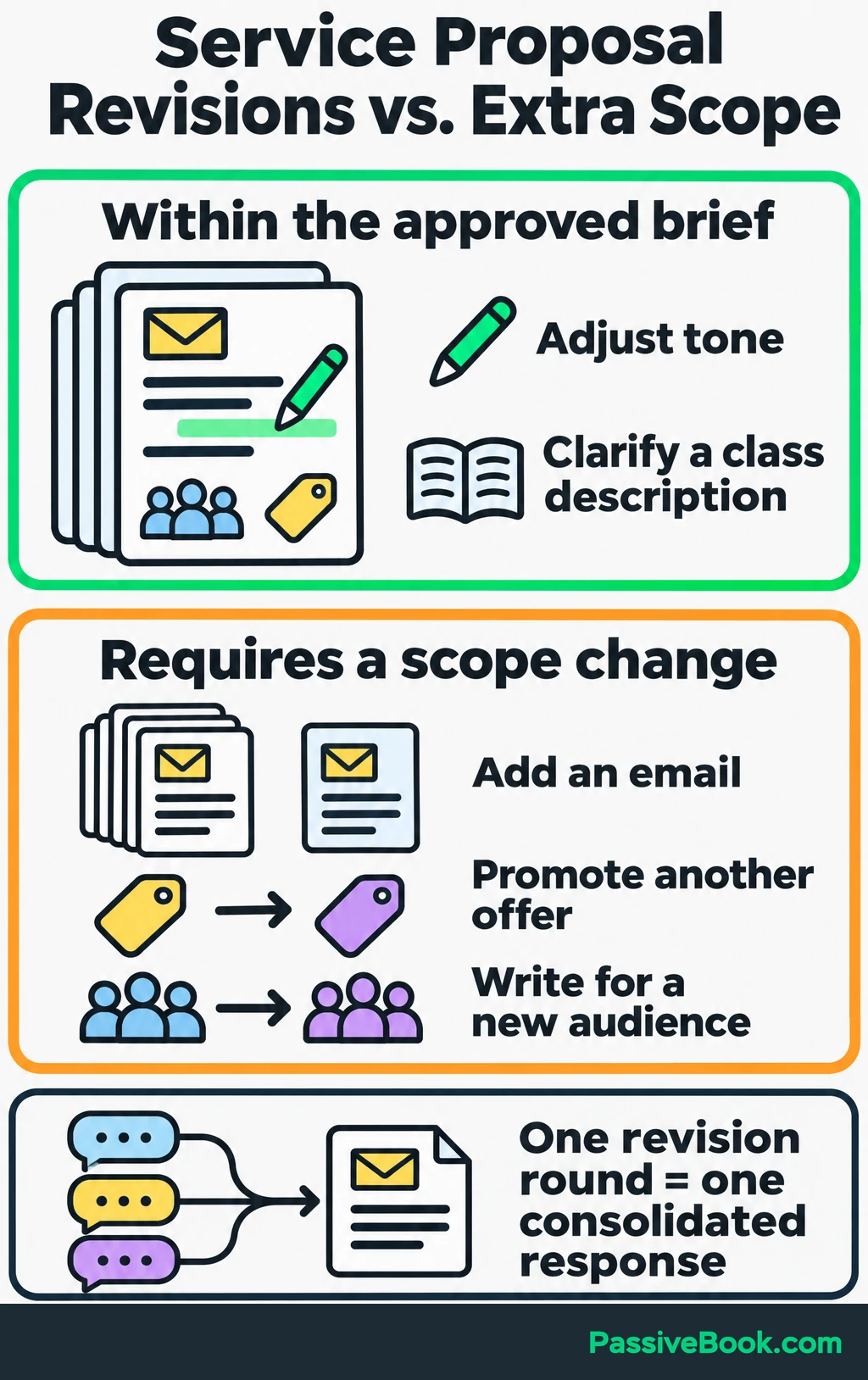
Define a revision round as one consolidated set of comments on the agreed work. Otherwise, “one round” can become a month of separate messages.
I freelanced on Fiverr while I was in college, and I eventually left because my income depended on continuing to sell my time. That experience makes me look closely at service boundaries. A fixed fee still trades time for money, and an undefined scope leaves the amount of time open.
Distinguish a revision from a new request:
- Within Scope: Adjusting the tone or clarifying a class description within the approved brief.
- Additional Scope: Adding another email, promoting a different offer, or rewriting the sequence for a new audience.
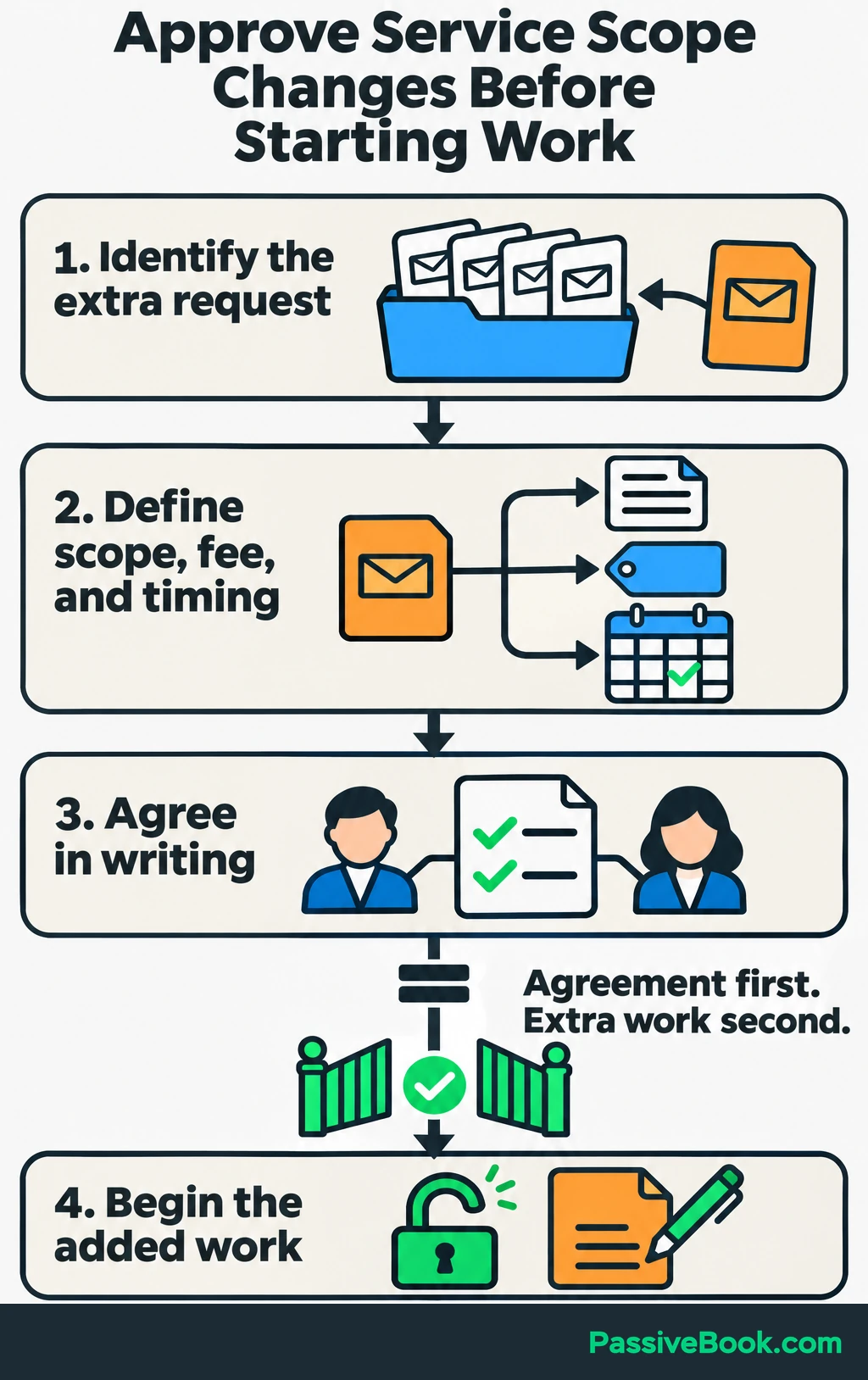
Before starting extra work, agree in writing on the added deliverables, fee, and effect on timing. This follows Business.gov.au’s contract-change guidance, which recommends recording agreed changes and their impact.
Build a Timeline Around Milestones
Define what must happen before the clock starts. For this project, that means a signed agreement, the initial payment, and a completed brief with the required materials.
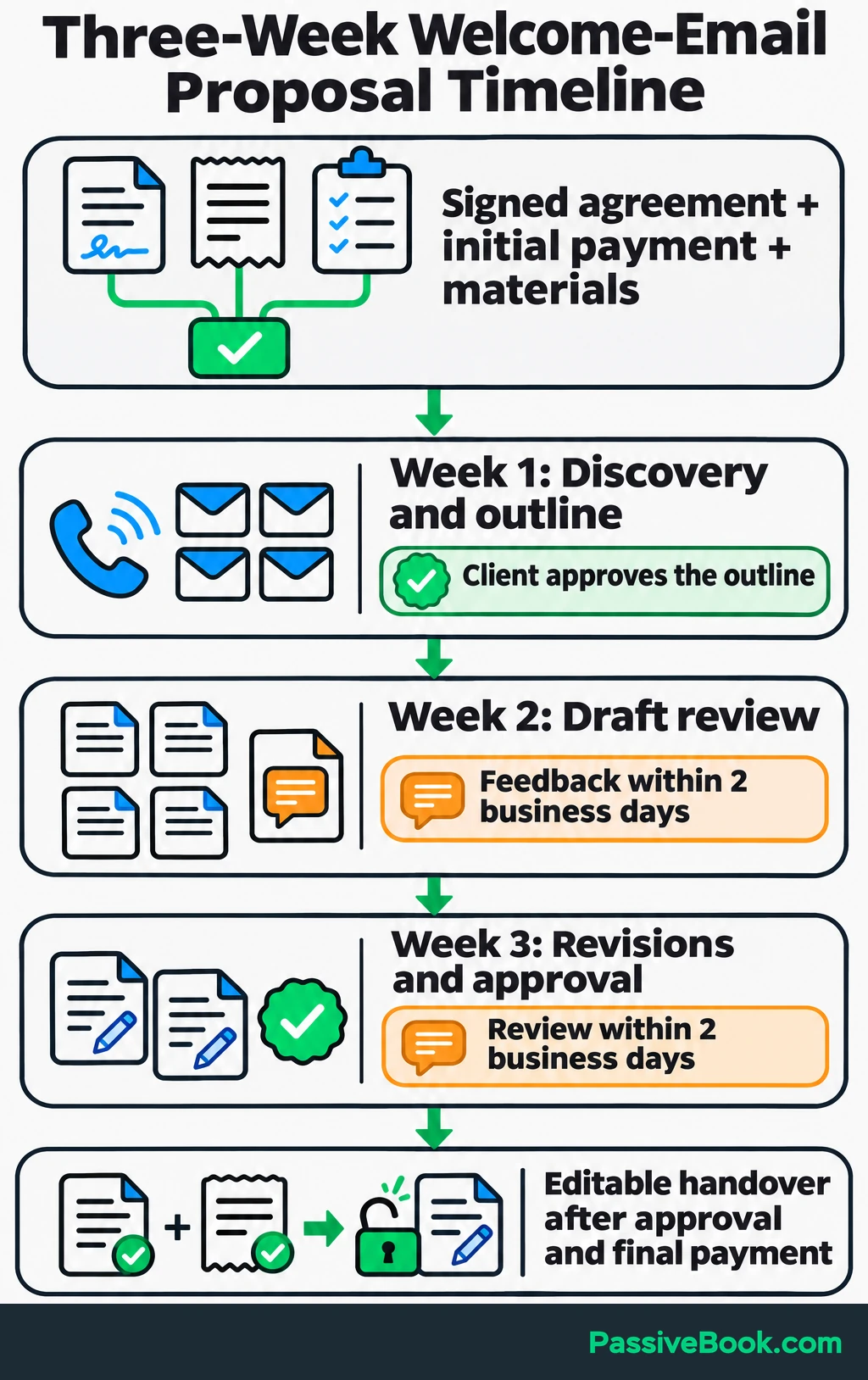
Then build a schedule that includes client decisions as well as your production time.
| Milestone | Target Timing | Provider Output | Client Input | Approval Required |
|---|---|---|---|---|
| Discovery and planning | Week one | Discovery call and four-email outline | Complete materials and confirm priorities | Written approval of the outline |
| Draft review | Week two | Four email drafts | Consolidated feedback within two business days | Confirm requested edits or approve drafts |
| Revisions and final preparation | Week three | Revised review copy | Check revisions within two business days | Written approval of final copy |
| Editable-file handover | After approval and final payment | Final editable document | Pay the final invoice | Final copy already approved |
Make the schedule’s assumptions visible. If materials or feedback arrive late, explain that later milestones will move and confirm revised dates.
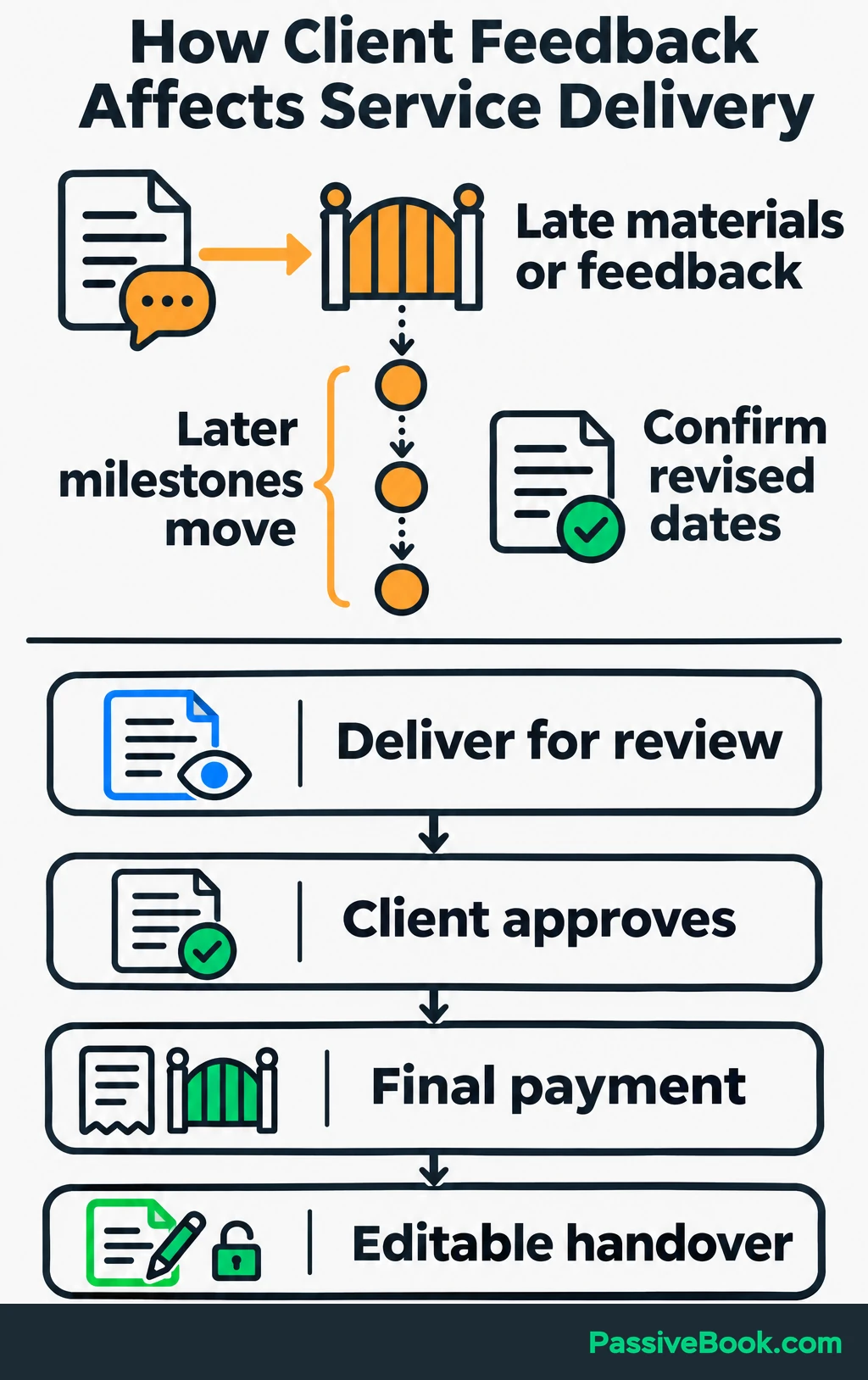
I would avoid promising to absorb every client delay into the original deadline. That quietly turns their late feedback into your evening work.
Also distinguish delivery for review from final handover. The client needs to see and approve the work before paying the final balance, but the editable files can follow payment if that is what your agreement specifies.
Present a Clear, Defensible Price
Choose a Pricing Structure That Fits the Scope
Choose the structure that matches how predictable the work is.
| Pricing Structure | When I Would Use It | What the Proposal Must Explain |
|---|---|---|
| Fixed fee | Deliverables and boundaries are clear | Included work, revisions, exclusions, and change process |
| Hourly | The amount of work remains uncertain | Rate, estimated hours or spending cap, and approval before exceeding it |
| Retainer | The client needs recurring support | Billing period, included work or capacity, availability, and charges for additional work |
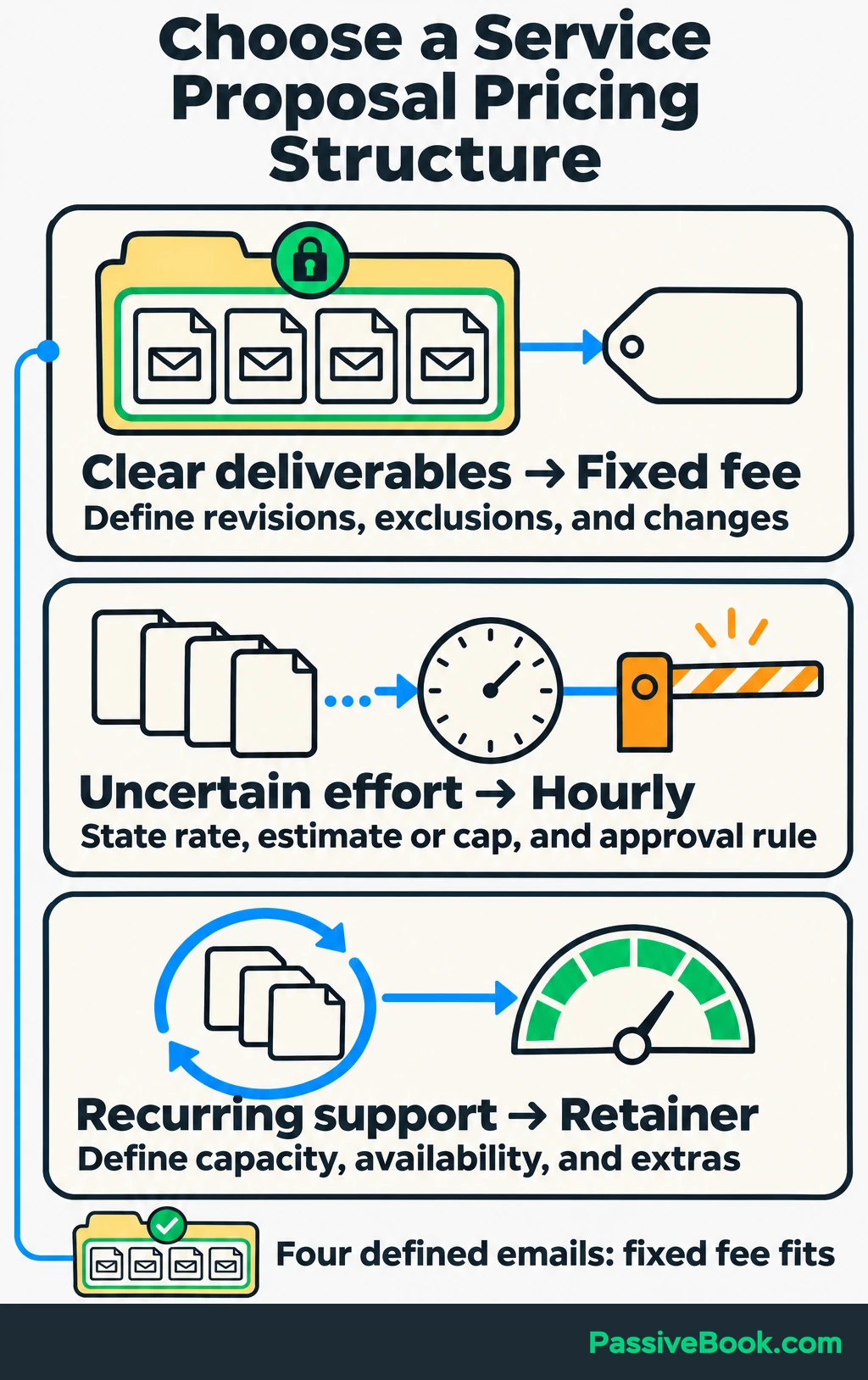
I would use a fixed fee for the studio’s four-email sequence because the output is easy to define.
Before choosing that fee, estimate all the work: preparation, calls, writing, administration, revisions, and handover. Include outside costs and overhead, and leave room for uncertainty and profit.
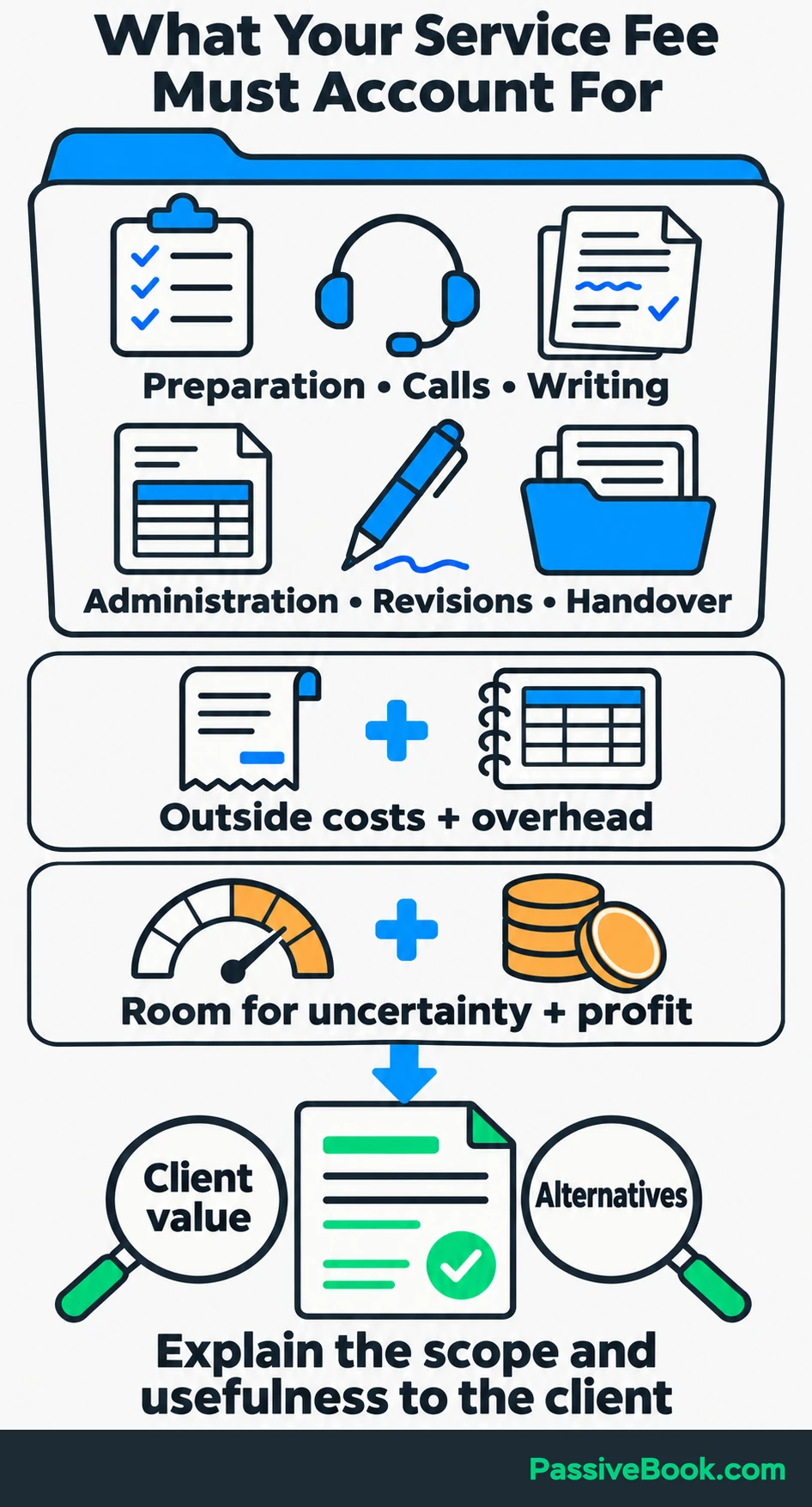
Then consider what the client values and how your offer compares with alternatives. Business.gov.au’s pricing guidance recommends covering costs while considering customer value and competitors.
Keep that internal calculation separate from your explanation of the offer. The client needs to understand the service and its usefulness. They don’t need a defense of every hour in your calendar.
Show the Total and Payment Schedule
Make the amount required to begin easy to find. Your pricing section should state:
- Total: The fee and currency.
- Taxes and Expenses: What is included and what, if anything, is payable separately.
- Payment Schedule: Each amount, what triggers it, and when it is due.
- Additional Work: How requests outside the scope will be priced and approved.
The complete sample below shows these details together.
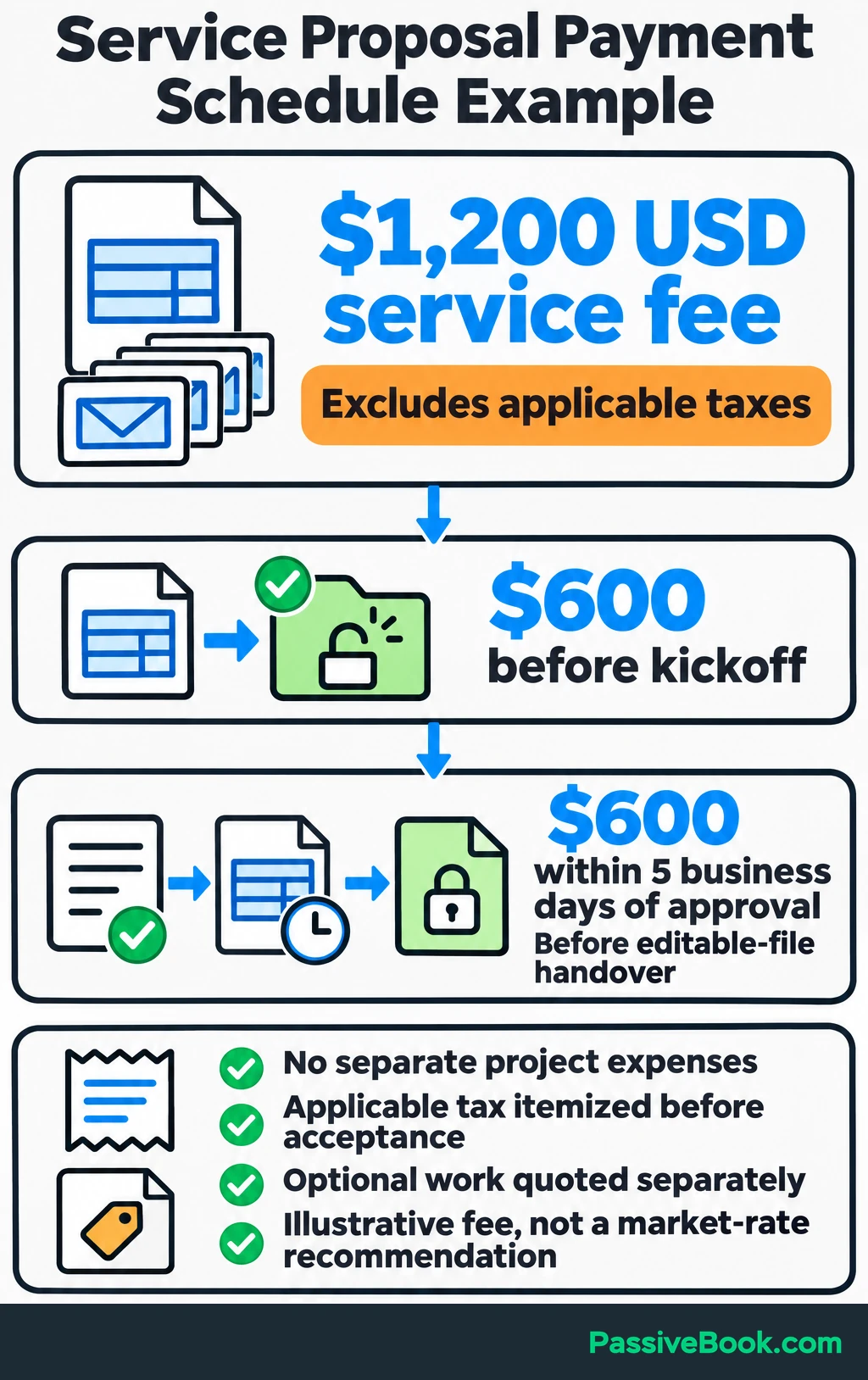
Explain what the fee buys by referring to the actual scope: discovery, four complete emails, an included revision round, and editable final copy.
Keep optional additions outside the recommended total. I would skip three packages unless they offer meaningful differences. Giving the same project three impressive names does not clarify the purchase.
Show Why You Are a Credible Choice
Choose evidence that answers the client’s likely concern: can you do this particular job well?
A relevant work sample is more useful than a long biography. Explain what you contributed and what the sample demonstrates. BDC’s “Why you” guidance similarly recommends showing relevant expertise and past experience.
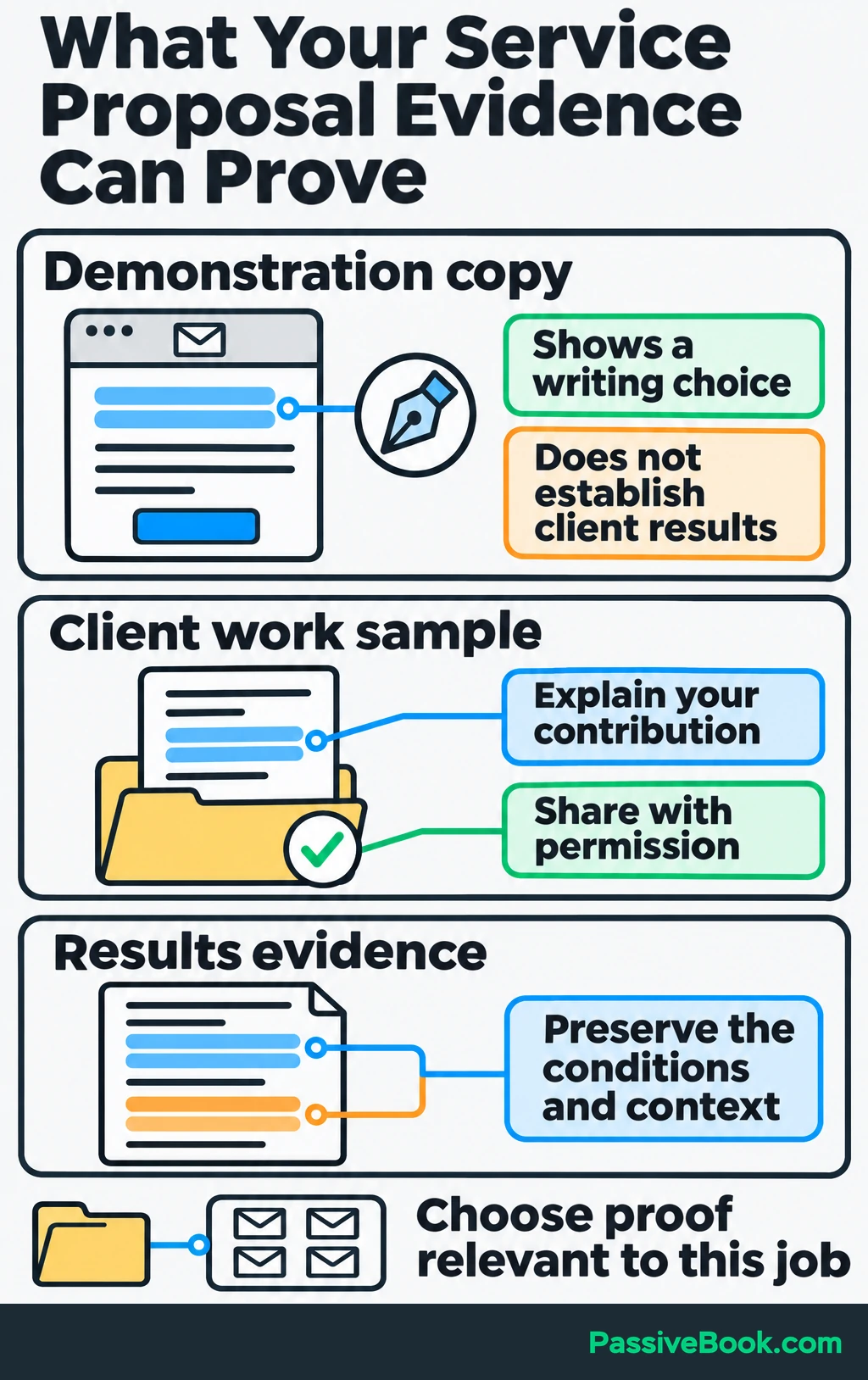
If you don’t have client work to share, use a clearly labeled demonstration. For the studio, a short excerpt could show how you explain a beginner offer:
Never touched clay? Start with our beginner class. See what you’ll make, what’s included, and the available dates on the booking page.
Label this as demonstration copy. It shows a writing choice; it does not establish client experience or booking results.
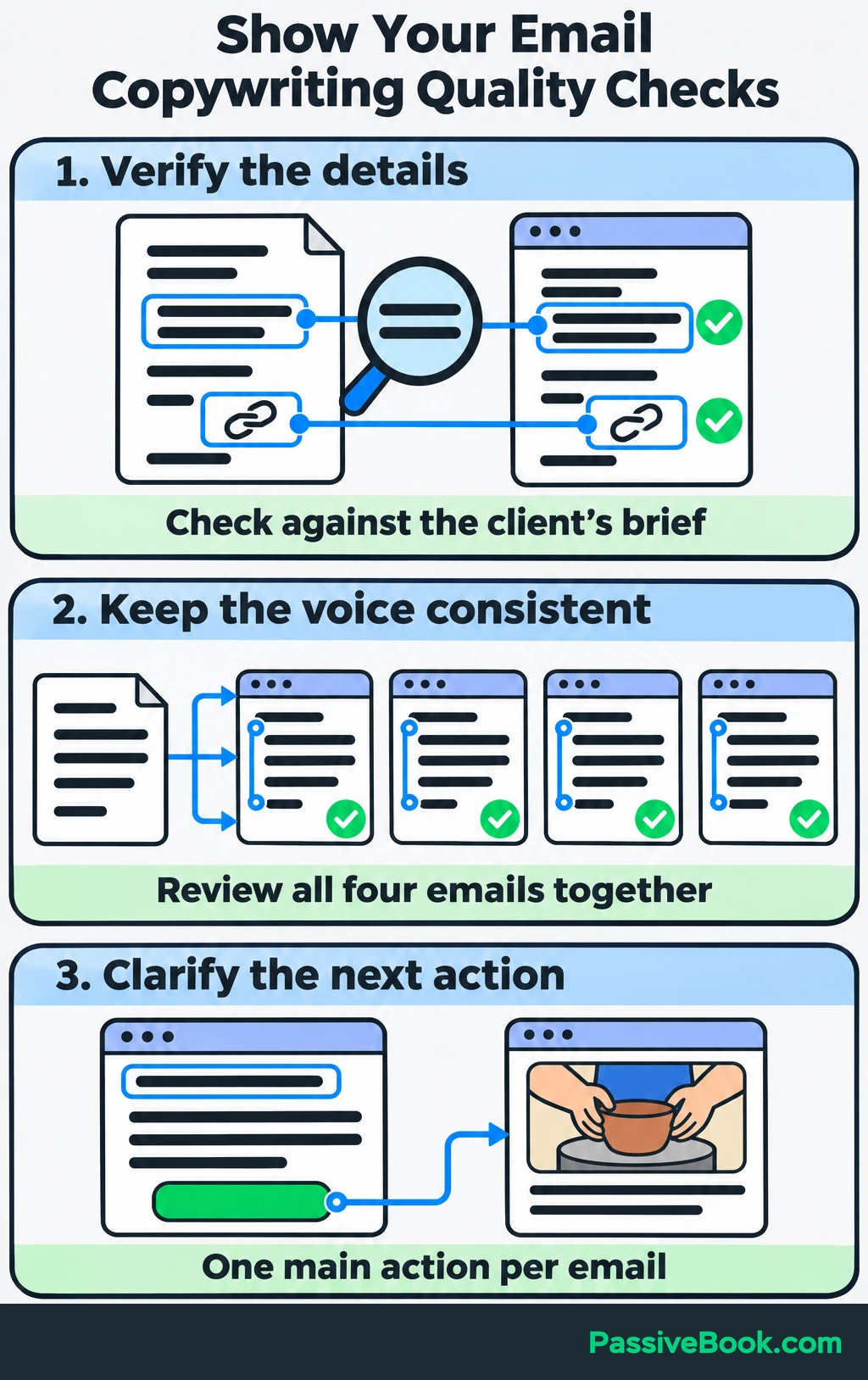
You can also explain your review process: checking class details against the supplied brief, keeping the voice consistent, and giving each email one main next action.
Use client samples and testimonials with permission. When sharing results, preserve the conditions needed to understand them, including what you did and what else changed.
Make Approval Straightforward
End with a specific action. “Let me know your thoughts” leaves the client to figure out the purchasing process.
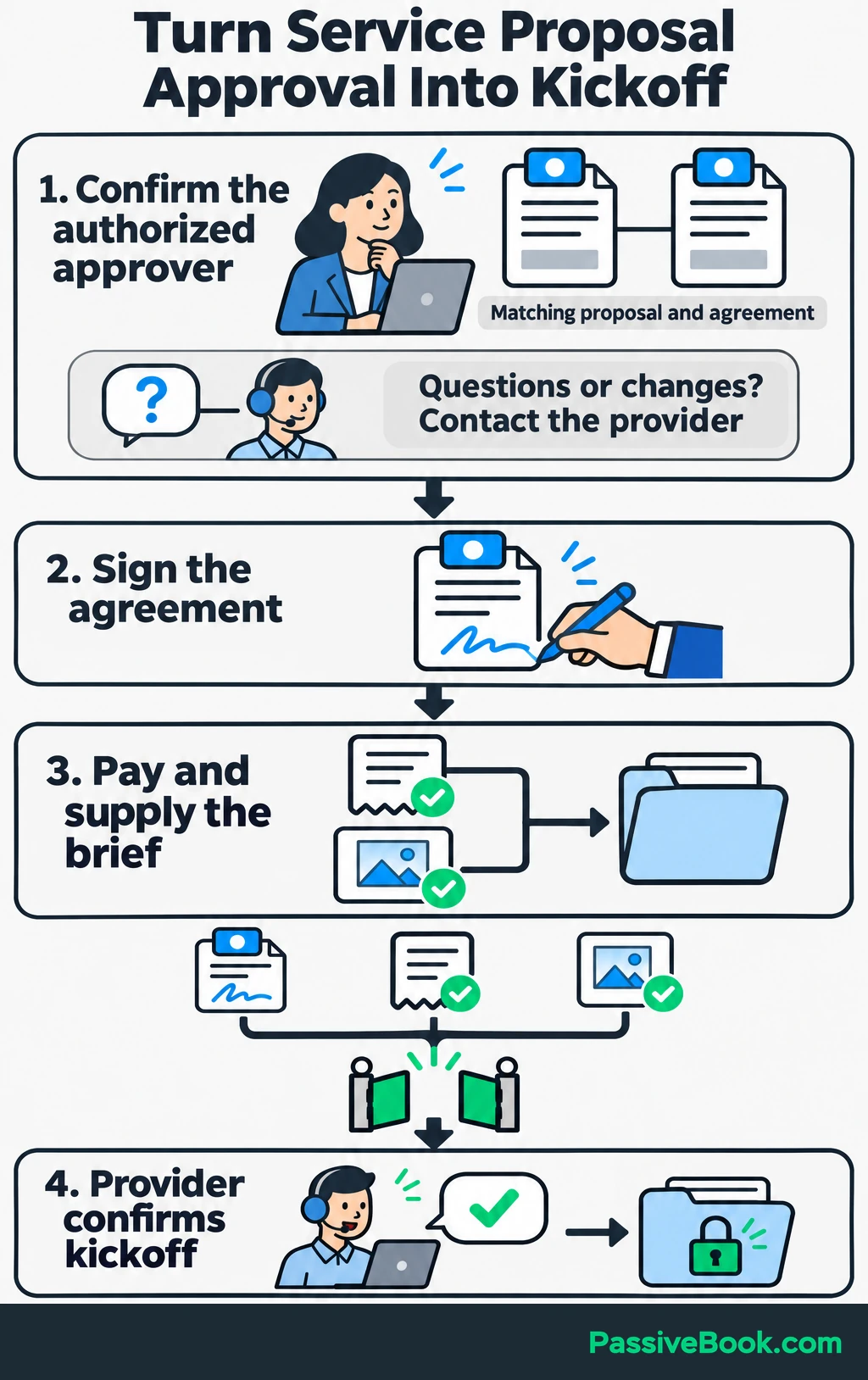
Identify who can approve the project and how acceptance will be recorded. State which agreement, payment, and materials are needed before kickoff.
Summarize the working terms that affect the decision:
- Acceptance: How both parties confirm the engagement.
- Payment and Handover: When invoices are due and files are released.
- Cancellation: How either party ends the work and how payments are settled.
- Ownership or Licensing: What rights the client receives and when.
Use terms suited to your work and jurisdiction. The Australian Government’s contractor checklist is a useful Australian reference for matters a service agreement should address.
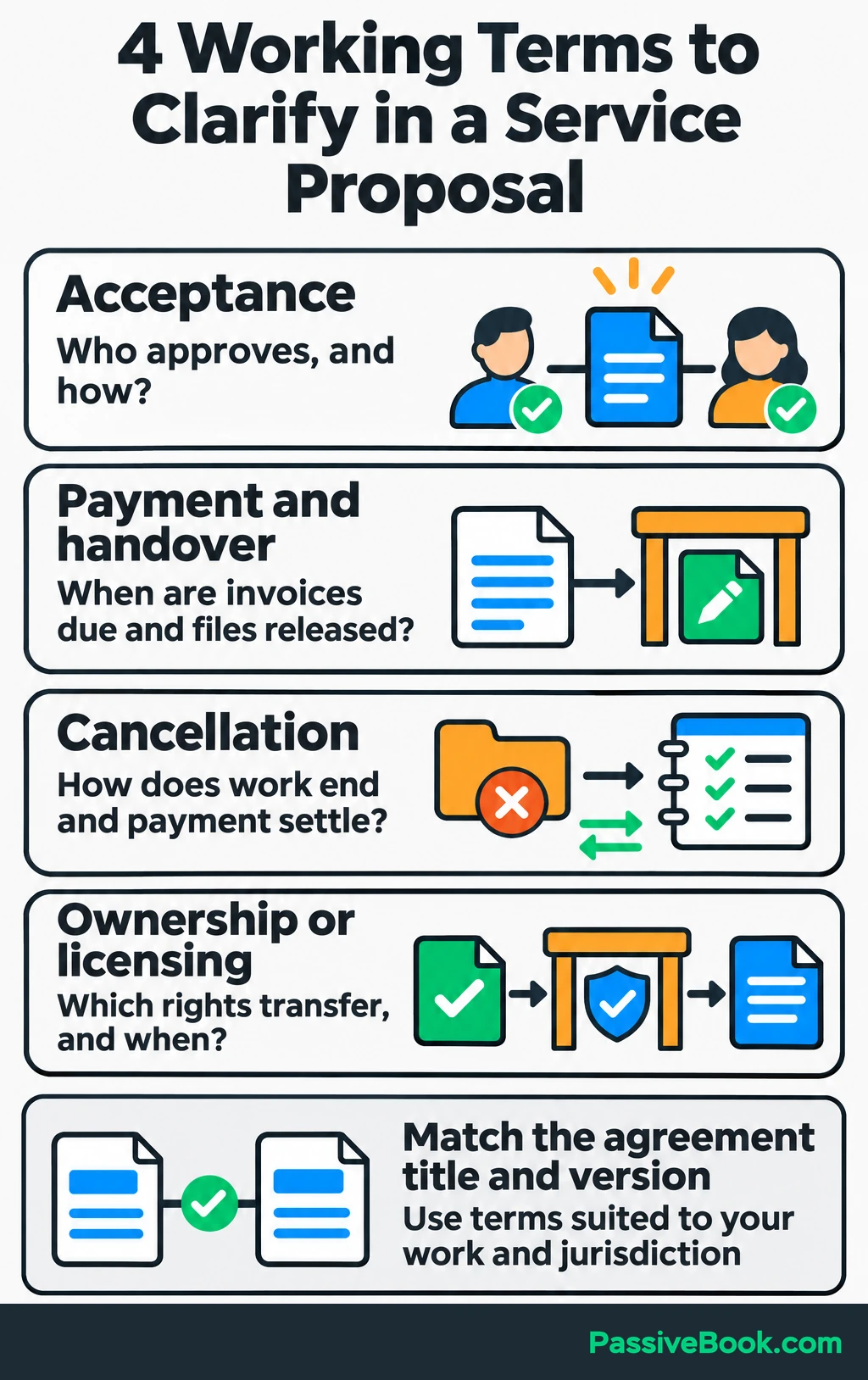
Reference the agreement by title and version, attach it, and check that it matches the proposal. A document’s legal effect depends on its wording and applicable law, so don’t assume the label “proposal” settles that question.
Include contact details for changes or questions. Add an expiry date only when it reflects a real pricing or availability limit.
Copy This Service Proposal Template
Here is a filled example you can adapt. Replace the bracketed details and use working terms that match your own service agreement. The fee illustrates the structure; it is not a suggested market rate.
- Project Details: Four-Email Welcome Sequence. Prepared for Kiln Lane Studio by [provider name]. Client contact and authorized approver: [name and email]. Provider contact: [email]. Issued: [date]. Version: 1.0.
- Opening Summary: Kiln Lane Studio collects newsletter signups but has no welcome sequence to introduce its beginner classes. I propose four welcome emails for a fixed service fee of $1,200 USD, excluding applicable taxes. Writing and review are scheduled over three weeks from kickoff, subject to the review windows below. Editable files follow approval and final payment. To proceed, sign the accompanying agreement and make the initial payment.
- Client Situation and Objective: New subscribers currently receive no planned introduction to the studio’s classes. The objective is to give them a clear introduction, answer common beginner questions, and direct them to the booking page. Project completion will be assessed against the agreed copy requirements, rather than a guaranteed number of bookings.
- Recommended Service: I will confirm the audience, featured classes, and voice in a discovery call, then prepare an outline for approval. The sequence will cover a studio welcome, an introduction to beginner classes, common questions, and a booking invitation. Each email will have one main next action.
- Scope: One 45-minute discovery call; one four-email outline; four email drafts, each containing a subject line, body copy, and main call to action; one consolidated revision round; and one final editable document. Work is complete when all four emails contain these elements, reflect the approved outline and supplied class information, and address the included feedback.
- Boundaries: Email design, platform setup, automation configuration, extra emails, and ongoing management are excluded. The studio supplies accurate class details, booking links, brand examples, and feedback through one designated contact. One revision round means one combined set of comments within the approved brief. Changes to the audience, offer, or deliverables require written agreement on scope, fee, and timing before work begins.
- Timeline: Kickoff follows the signed agreement, initial payment, and completed brief. Week one covers discovery and outline approval. Week two covers four drafts. Week three covers the included revisions and final approval. The studio will respond at each review point within two business days. Late materials or feedback will move subsequent dates, which I will confirm in writing. Editable files follow approval and final payment.
- Fees and Payment: The fixed service fee is $1,200 USD, excluding applicable taxes, with no separate project expenses. The initial $600 installment is due before kickoff. The remaining $600 is due within five business days of written final-copy approval and before editable-file handover. Any applicable tax will be itemized before acceptance. Optional work requires a separate written quote.
- Relevant Proof: Demonstration excerpt: “Never touched clay? Start with our beginner class. See what you’ll make, what’s included, and the available dates on the booking page.” This sample demonstrates a plain-language introduction and a clear next action. It is demonstration copy, not evidence of client results. My review will check accuracy against the supplied materials, consistency of voice, and clarity of each email’s next step.
- Terms and Approval: The accompanying Welcome Sequence Service Agreement, version 1.0, sets out the engagement terms.
Either party may cancel by written notice. If the project is canceled, I will charge $75 USD per hour for work completed, capped at the fixed service fee. I will subtract payments already made from that charge. Any remaining balance is due within five business days of cancellation, and I will refund any overpayment within ten business days of cancellation.
Ownership of the approved final copy transfers to the studio after full payment; my pre-existing methods and templates remain mine.
The studio’s authorized approver can proceed by signing the agreement and paying the initial invoice. I will confirm kickoff once payment and the completed brief are received. Send questions or requested changes to [provider email].
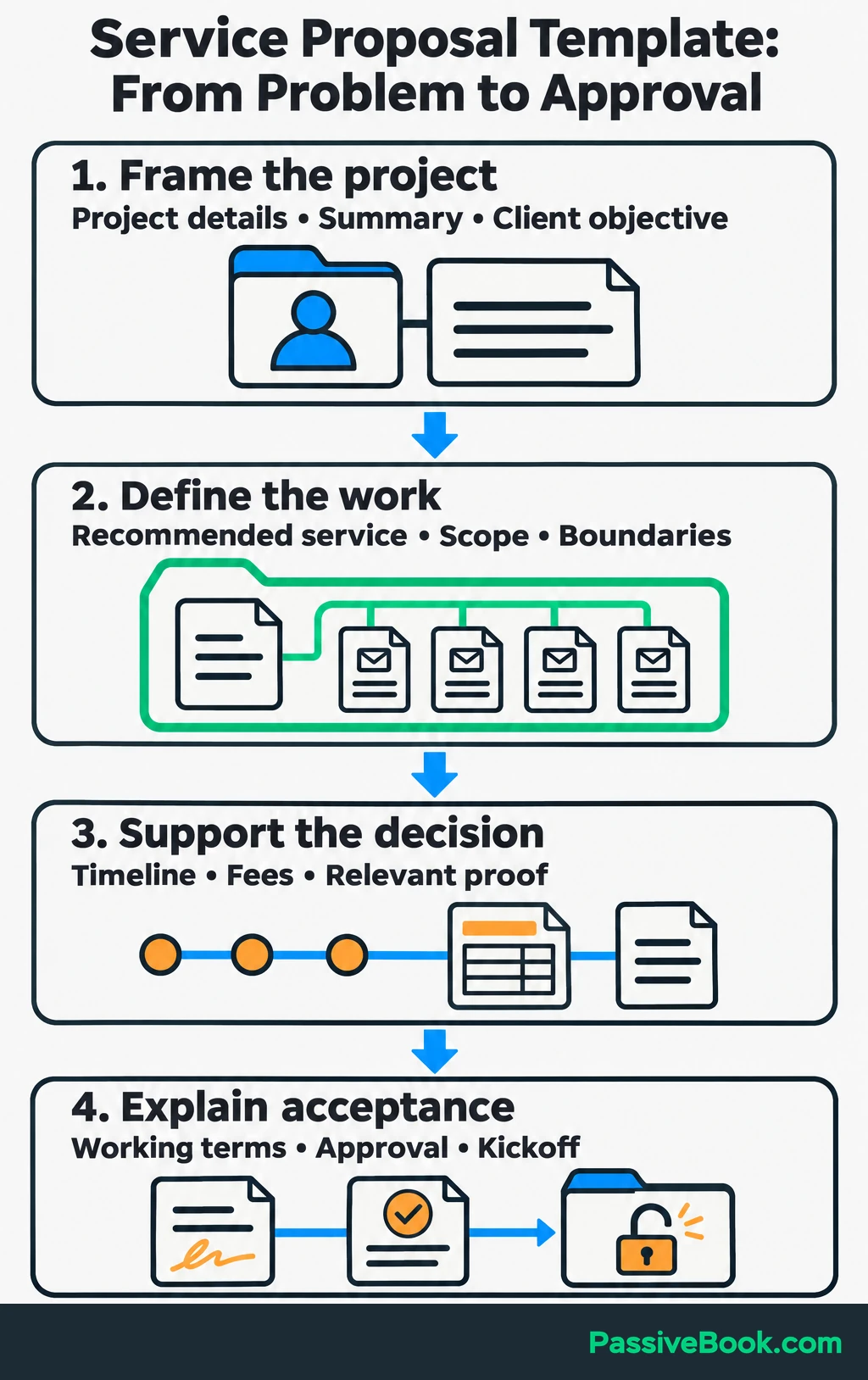
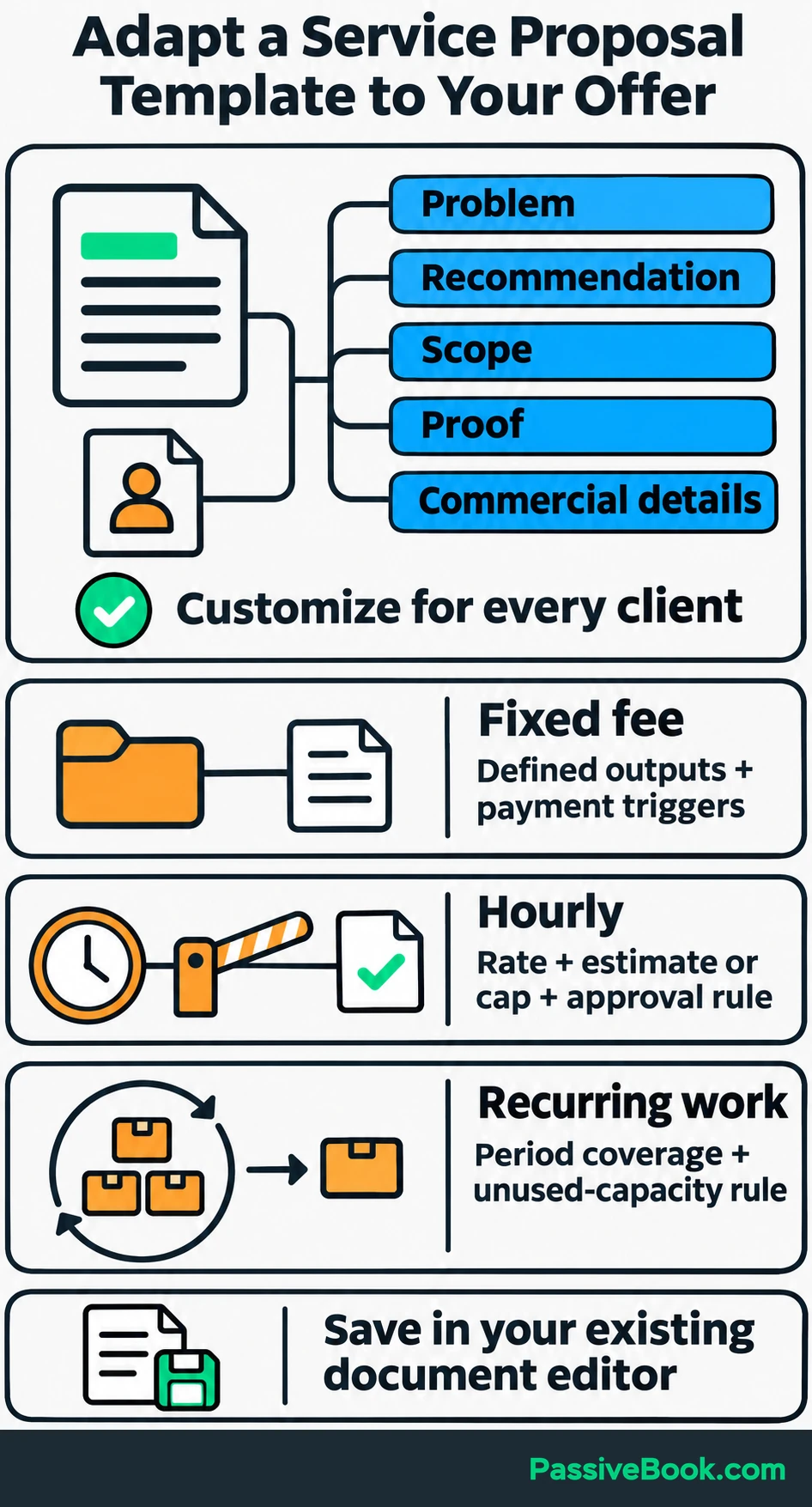
Save the structure in your existing document editor. For future proposals, customize the problem, recommendation, scope, proof, and commercial details.
If translating your notes into proposal language is the sticking point, use our AI Skill to build a draft around your actual project. It also separates unanswered questions from the details you’ve already confirmed.

Free AI Copywriting Studio




For hourly work, replace the fixed-fee paragraph with your rate, estimated effort or cap, and approval process for exceeding it. For recurring work, define what each billing period covers and whether unused capacity carries forward.
Review, Send, and Follow Up
Read the proposal as if you were deciding whether to buy. Can you explain what is included, why it fits, what it costs, and how to proceed?
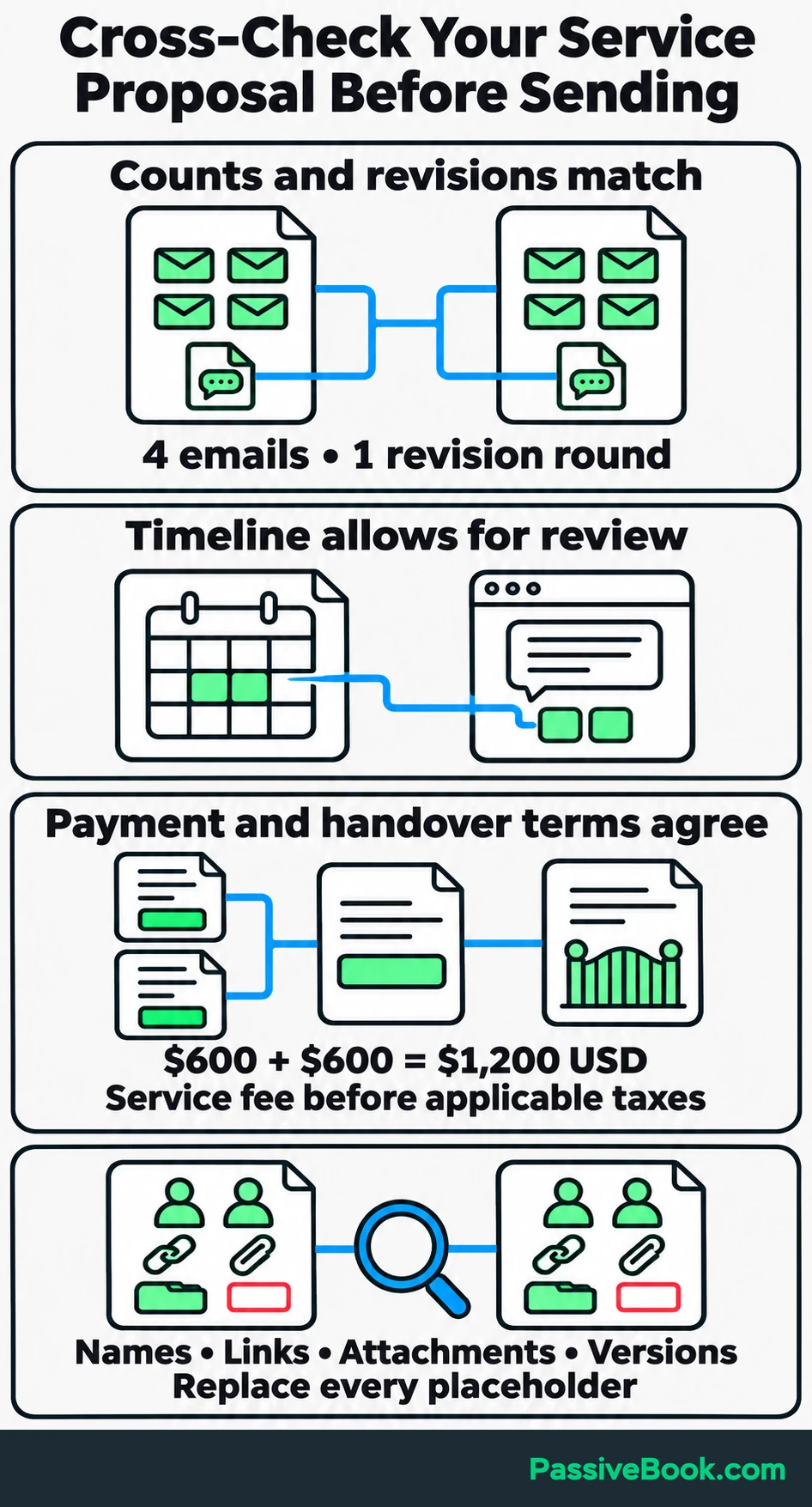
Then check the details that can contradict each other:
- Deliverable counts and revision allowances match throughout.
- Dates allow for the stated review windows.
- Installments add up to the total.
- Payment and handover conditions match the agreement.
- Names, links, attachments, and version numbers are correct.
- Bracketed placeholders have been replaced.
Cut repeated sales language, unrelated biography, and jargon. Use clear headings and enough space to read comfortably. A cover page, contents page, or appendix should earn its place by helping the client navigate the document.
Send it in the requested format. A short accompanying message is enough:
Hi [name],
Attached is the proposal for Kiln Lane Studio’s four-email welcome sequence, along with the service agreement.
It covers the recommended work, review schedule, and payment terms. To proceed, please sign the agreement and pay the initial invoice.
Could we review any questions together on [agreed date]?
Thanks,
[Your name]
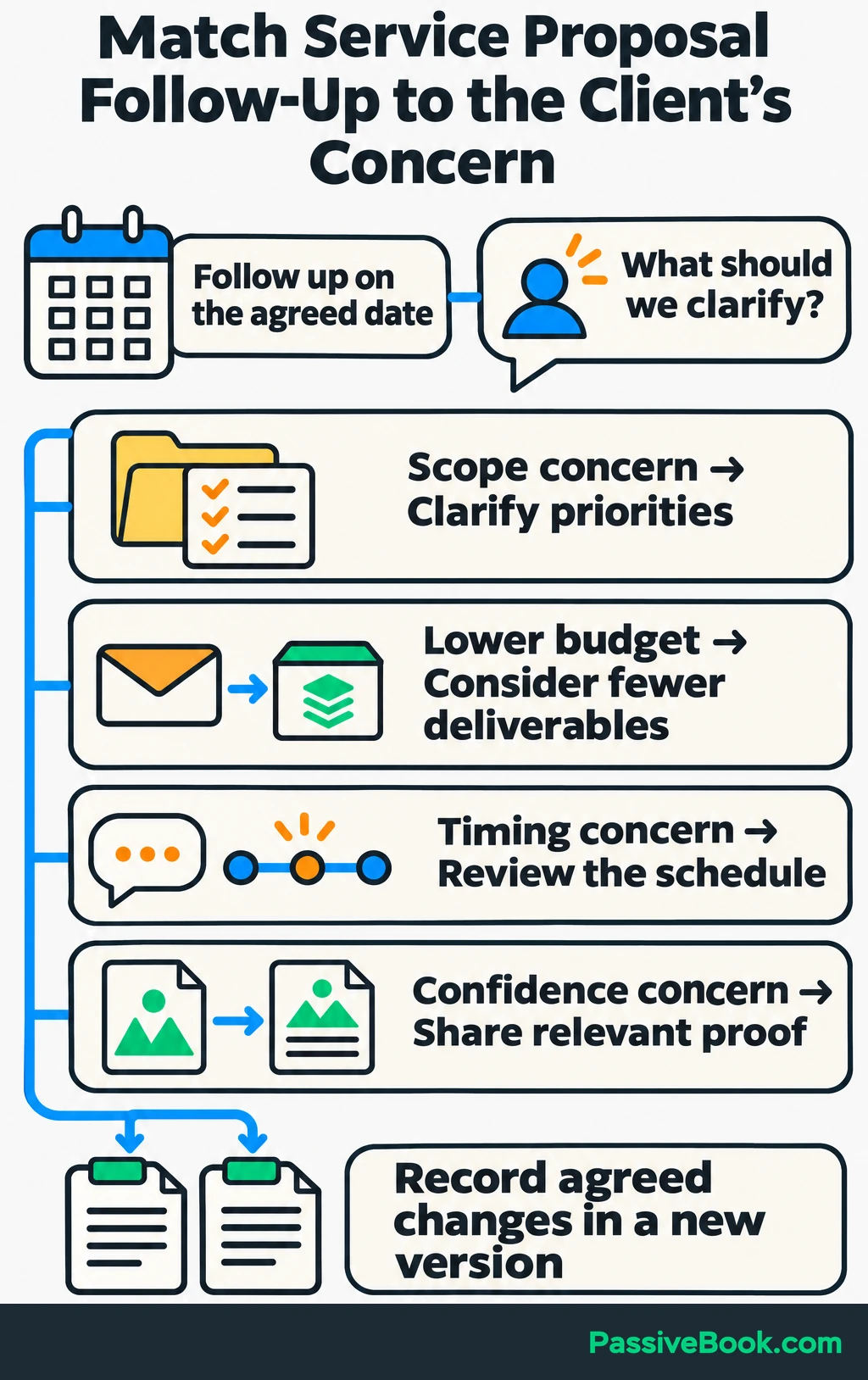
Follow up on the agreed date with a useful question: “Does the proposed scope cover your priorities, or is there anything we should clarify?”
If the client objects, find out whether the concern is scope, price, timing, or confidence before changing the offer. A lower budget may call for fewer deliverables. A confidence concern may call for a relevant sample. Discounting does not answer every question.
Record any agreed change in a clearly identified new version and resend the matching agreement when needed.
What Next?
Open your next proposal draft and replace its broadest service description with a counted deliverable and a clear completion rule.
Use the social buttons to share this guide when a conversation about proposals gets stuck on what to include or how much detail is enough.
Which part of your proposal would a client still need you to explain on a call? Share it in the comments, and bring any other questions too.
Share this post with your friends & followers:

