You’ve published a useful guide, but finding websites willing to recommend it feels harder than writing it. The offers arriving in your inbox promise backlinks by the dozen, and none explains why those links would help your readers.
You could spend your spare evenings sending pitches that go nowhere, or pay for placements you later regret. That uncertainty makes every new opportunity harder to judge. This guide shows how to earn relevant recommendations for your work and decide whether the links and visitors justify another round of outreach.
How Does Off-page SEO Build Authority?
Off-page SEO covers work beyond your website that helps people discover and trust it. Backlinks are links from other websites to yours. Editorial coverage, interviews, and unlinked brand mentions can also introduce people to your work.
Google uses systems such as PageRank to assess links between pages and help identify useful search results. Links work alongside many other signals, so earning them does not guarantee higher rankings. See Google’s ranking systems guide.
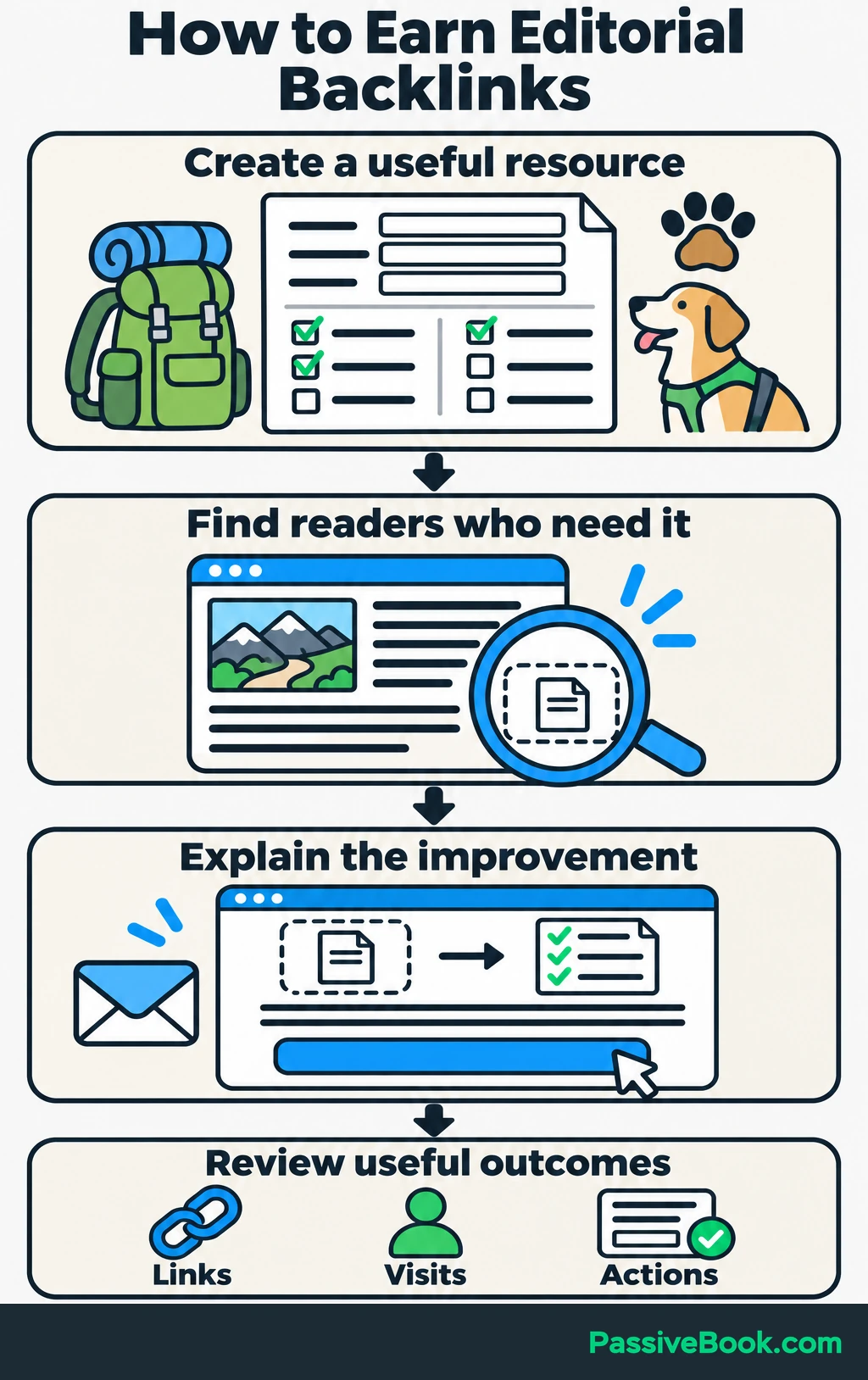
Here, authority means earned credibility: another publisher has a reason to recommend your work. It isn’t a score you buy or a promise that every page will rank.
A practical off-page SEO strategy follows a repeatable process:
- Create something useful enough to reference.
- Find publishers whose readers need it.
- Explain the specific improvement it offers.
- Review the links, visits, and business actions it earns.
Throughout this guide, imagine you run a dog-hiking blog supported by equipment recommendations. You’re promoting a free day-hike packing checklist. The resource, sample copy, and campaign figures are illustrations.
The aim is to make that checklist a helpful addition to someone else’s advice.
What Makes a Backlink Worth Earning?
Start with the page where the link would appear. Read it before checking any score.
Would someone reading that page have a reason to use your resource? A dog-friendly hiking guide has a clear connection to the packing checklist. An unrelated article with a paragraph of random recommendations doesn’t.
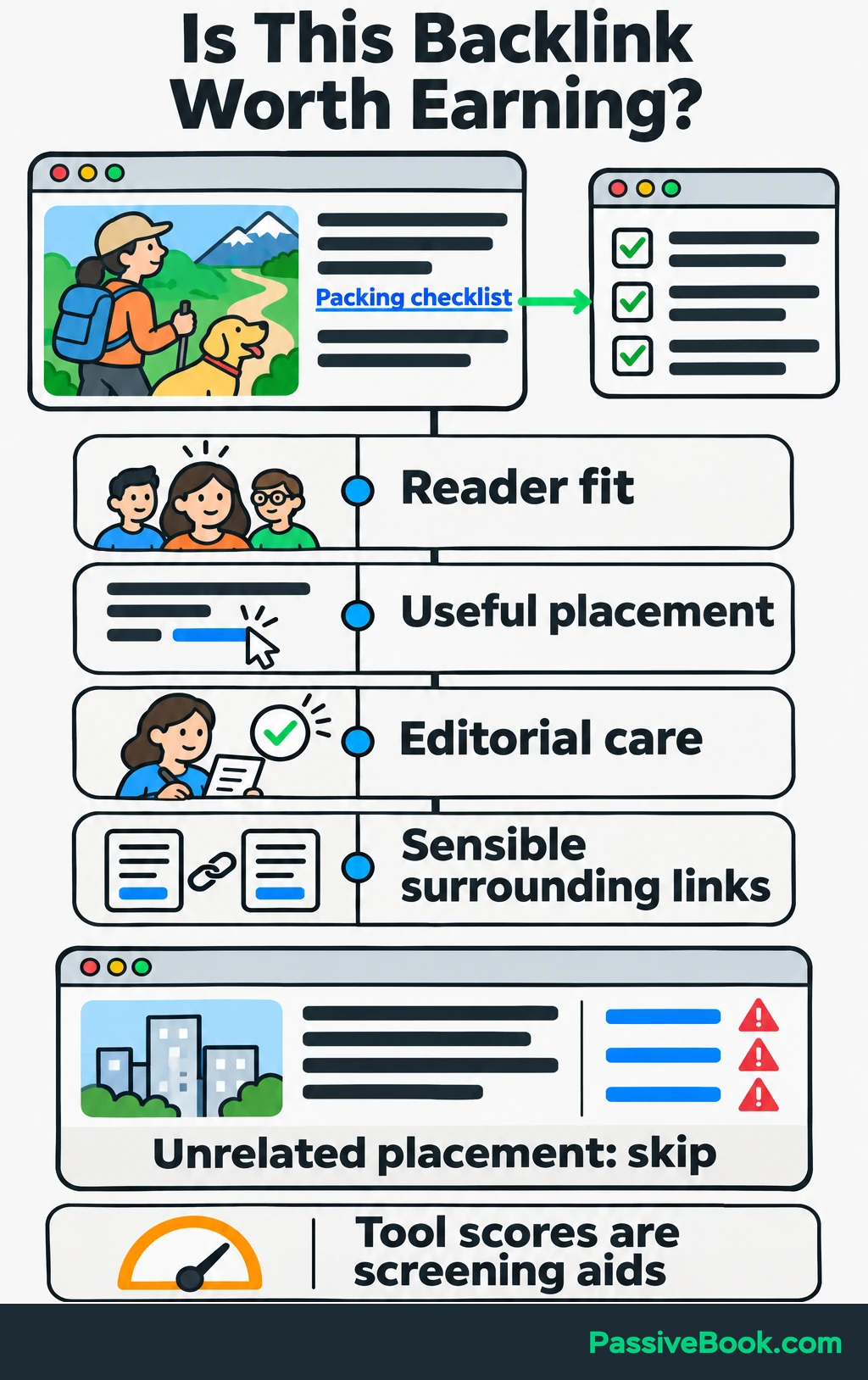
I would assess each opportunity using these questions:
- Reader Fit: Does the page reach people who could use the resource?
- Placement: Would the link support a useful explanation, reference, or next step?
- Editorial Care: Does the publisher check contributions and explain who creates its content?
- Surrounding Links: Are other recommendations relevant and sensible?
Authority scores from SEO tools can help you screen a long list of websites to contact, but they aren’t Google ranking scores. Ahrefs, an SEO analysis tool, explains this in its guide to Domain Rating and similar metrics. I wouldn’t reject a useful niche publisher because it falls below an arbitrary score.
Links also have attributes that describe the publisher’s relationship with the destination:
| Link Type | What It Means |
|---|---|
| Ordinary editorial link | The publisher cites the resource without a special qualifying attribute. |
sponsored | The link is an advertisement or paid placement. |
ugc | The link appears in user contributions, such as comments or forum posts. |
nofollow | The publisher asks Google not to associate its site with the linked page. |
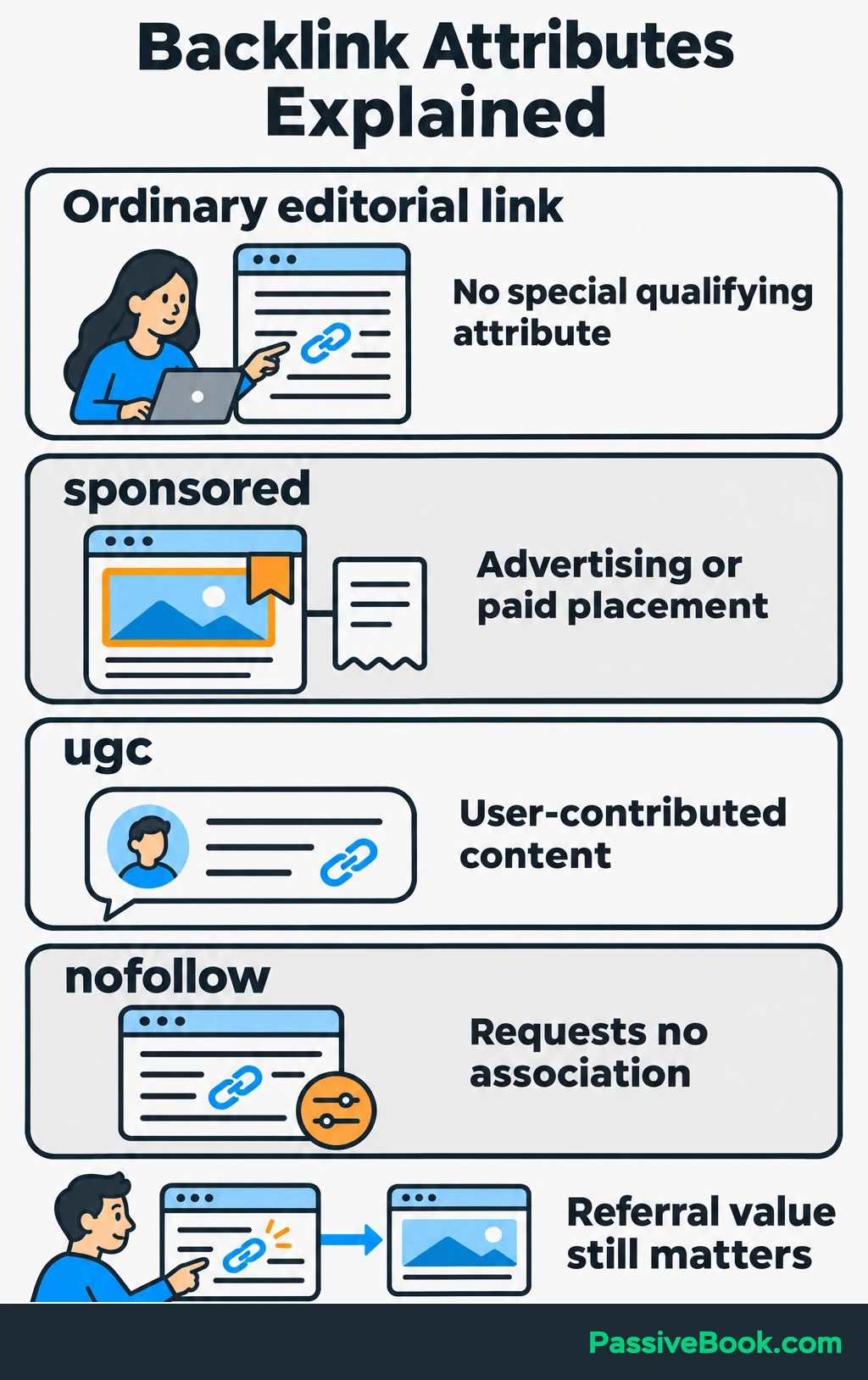
These distinctions follow Google’s link attribute guidance. A relevant placement can still bring interested visitors when it carries nofollow, so consider its referral value too.
Skip purchased ranking links, automated placements, low-quality directory submissions, and exchanges designed to manipulate rankings. Google lists these practices in its link spam policy, and violations can reduce search visibility. Advertising links should use sponsored or nofollow.
Leave anchor text—the clickable wording—to the publisher. Offer a clear resource title rather than demanding a phrase such as “best dog hiking equipment.” An editor shouldn’t need to make a sentence worse to recommend you.
Create a Resource Publishers Have a Reason to Cite
Find a Specific Gap Worth Filling
Choose one reader problem connected to your business, then inspect several pages that already help with it.
Look for something their readers still need to do. Perhaps the advice explains a task well but gives people no convenient way to carry it out.
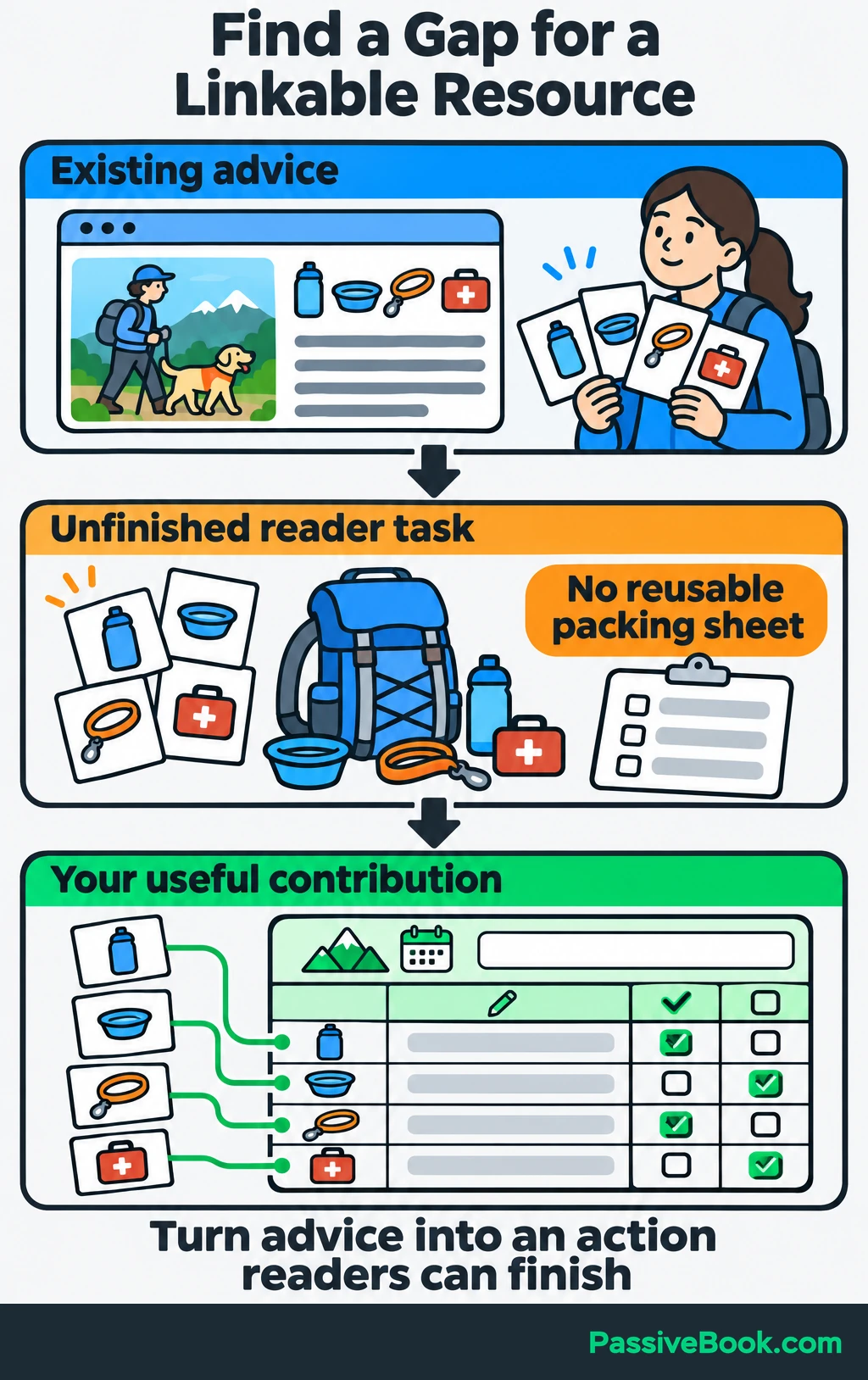
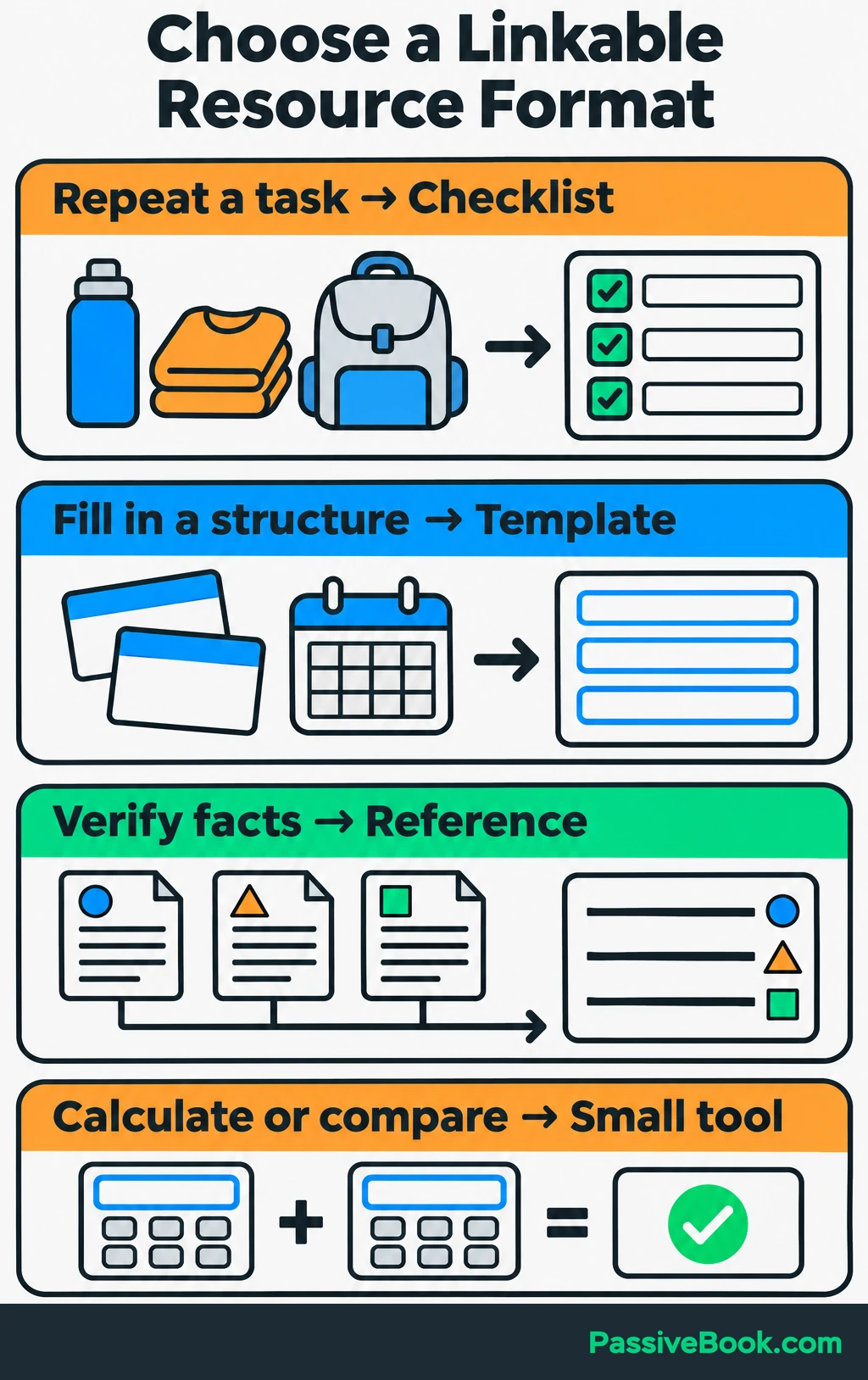
Match the resource to that missing piece:
- Checklist: Helps someone complete a repeatable task.
- Template: Gives someone a structure they can fill in.
- Reference: Brings together facts with clear sources.
- Small Tool: Performs a useful calculation or comparison.
Before building, finish this sentence:
“This helps readers do ___, which the existing guides don’t make easy.”
For the dog-hiking blog, you might find guides with packing advice but no reusable sheet. Your resource could let readers enter trip details, add their own items, and mark what is packed or missing.
That gives you a precise contribution: turning advice into a packing task someone can finish.
If your only distinction is “my article will be longer,” keep looking. More scrolling is a weak sales pitch.
Publish an Easy-to-use Destination
Build the smallest complete resource that solves the problem. You can improve an existing page rather than creating another URL.
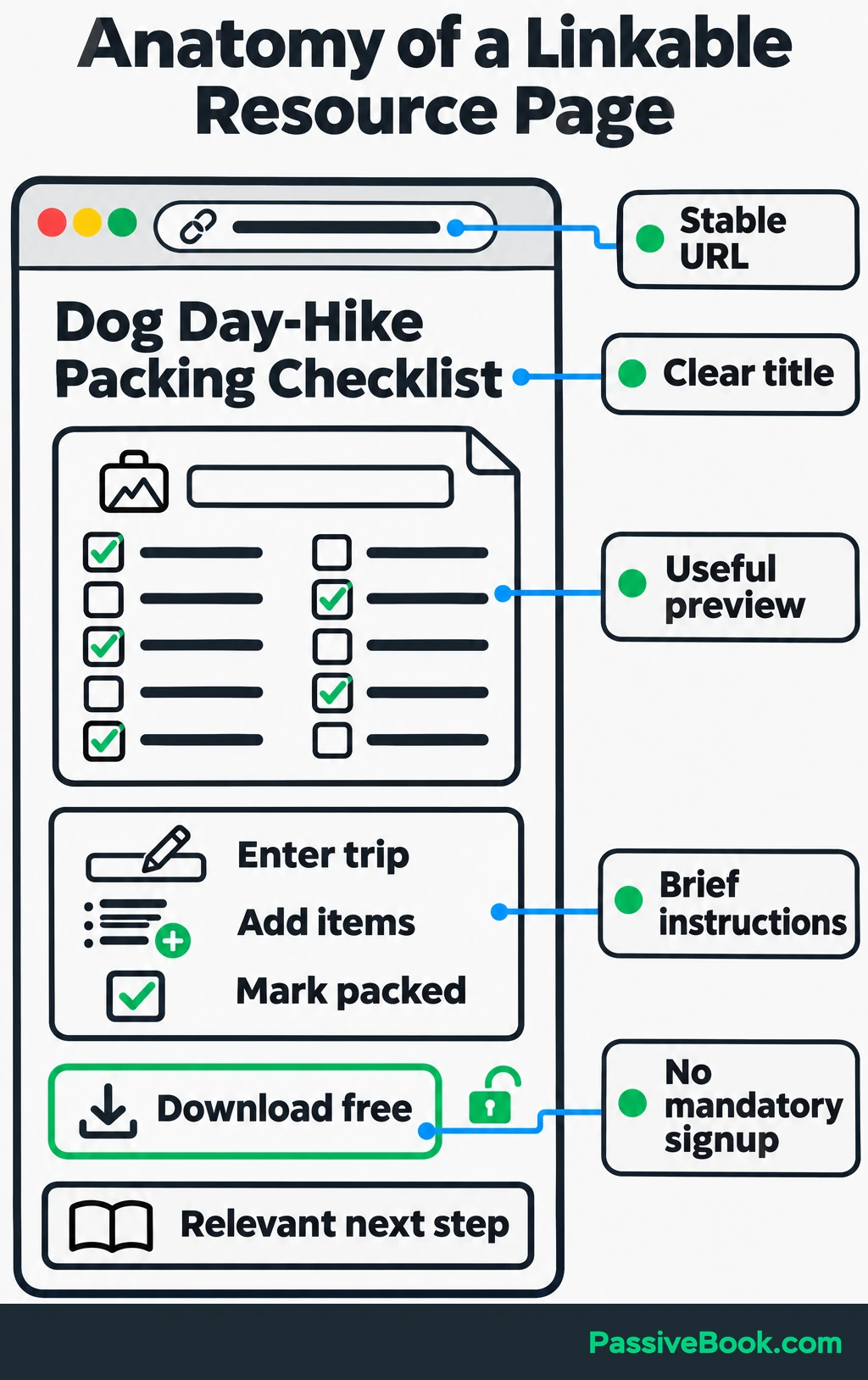
The destination should include:
- Clear Title: Describe the resource, such as “Dog Day-Hike Packing Checklist.”
- Useful Preview: Show what readers can download before they click.
- Brief Instructions: Explain how to fill it in and use it.
- Direct Access: Make the resource available without a purchase or mandatory signup.
- Stable URL: Keep the same address when you update the resource.
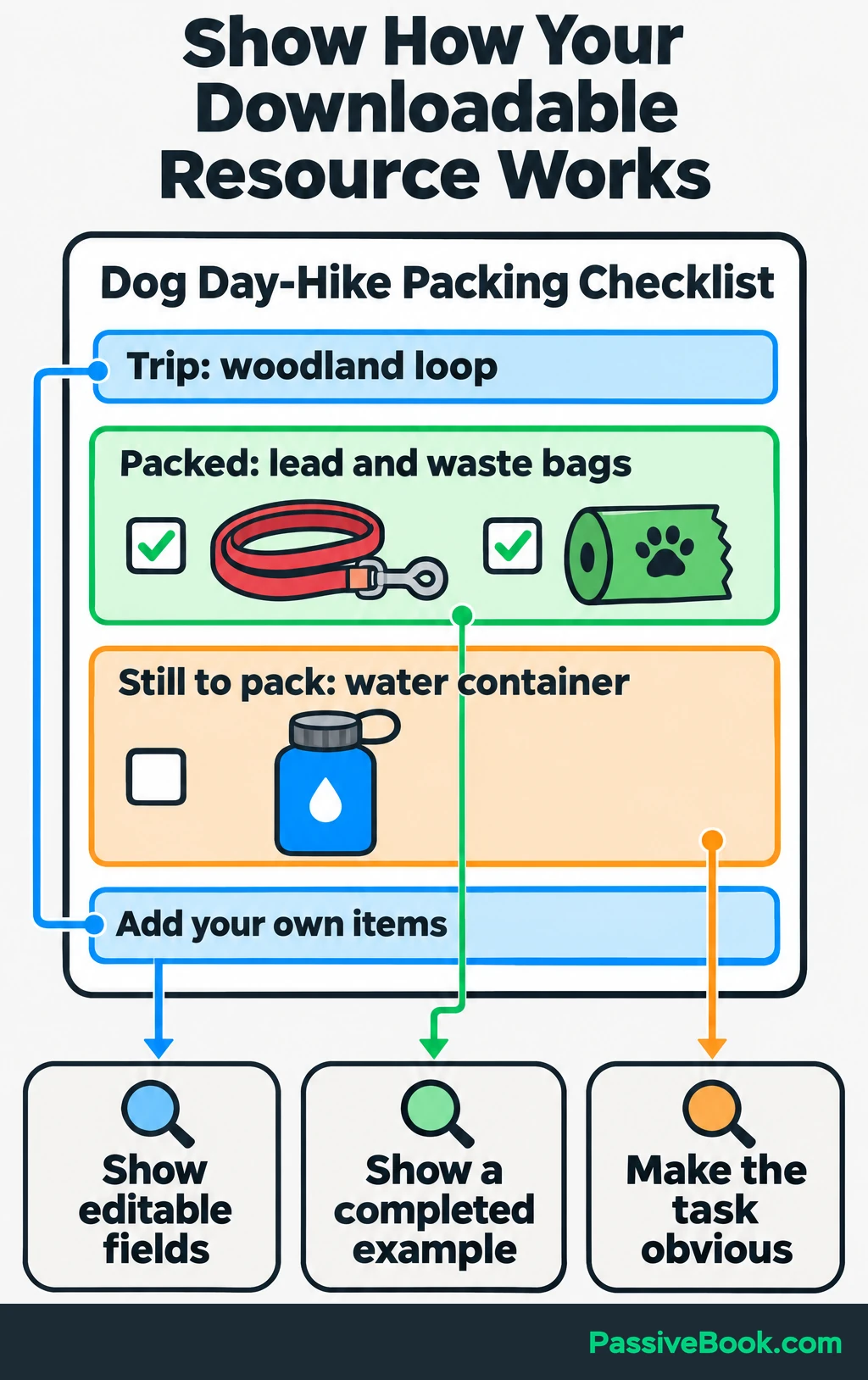
Tell readers how to use the checklist: enter the trip details, review the items, add anything specific to the outing, and mark what remains to pack.
A short completed excerpt might read:
Trip: Saturday woodland loop
Packed: lead and waste bags
Still to pack: water container
Make the page useful on its own, with readable instructions outside the download. Check the page and file on a phone, and try printing the sheet yourself.
Also inspect the page in Google Search Console, Google’s free tool for monitoring search visibility and indexing. Check for access errors or an unintended indexing block. Google’s technical requirements explain the basic conditions for search eligibility.
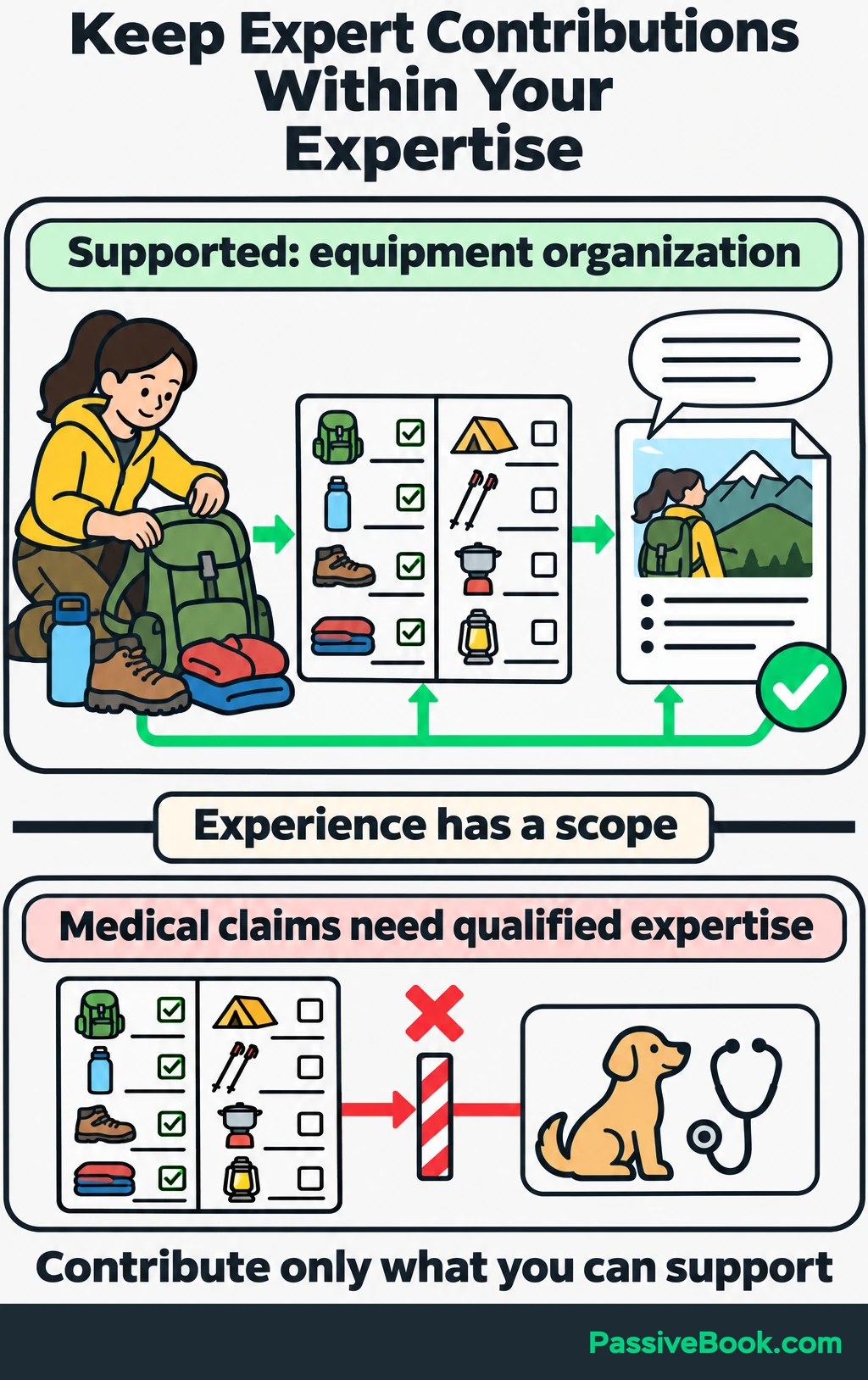
For pet-health or safety advice, use reliable sources and credit actual qualified contributors. Keep a packing aid within its scope rather than presenting it as veterinary guidance.
Then add one natural next step. Someone checking their equipment might appreciate a related buying guide. An optional email signup can sit alongside it, while the free resource stays freely available.
Find Relevant Backlink Opportunities
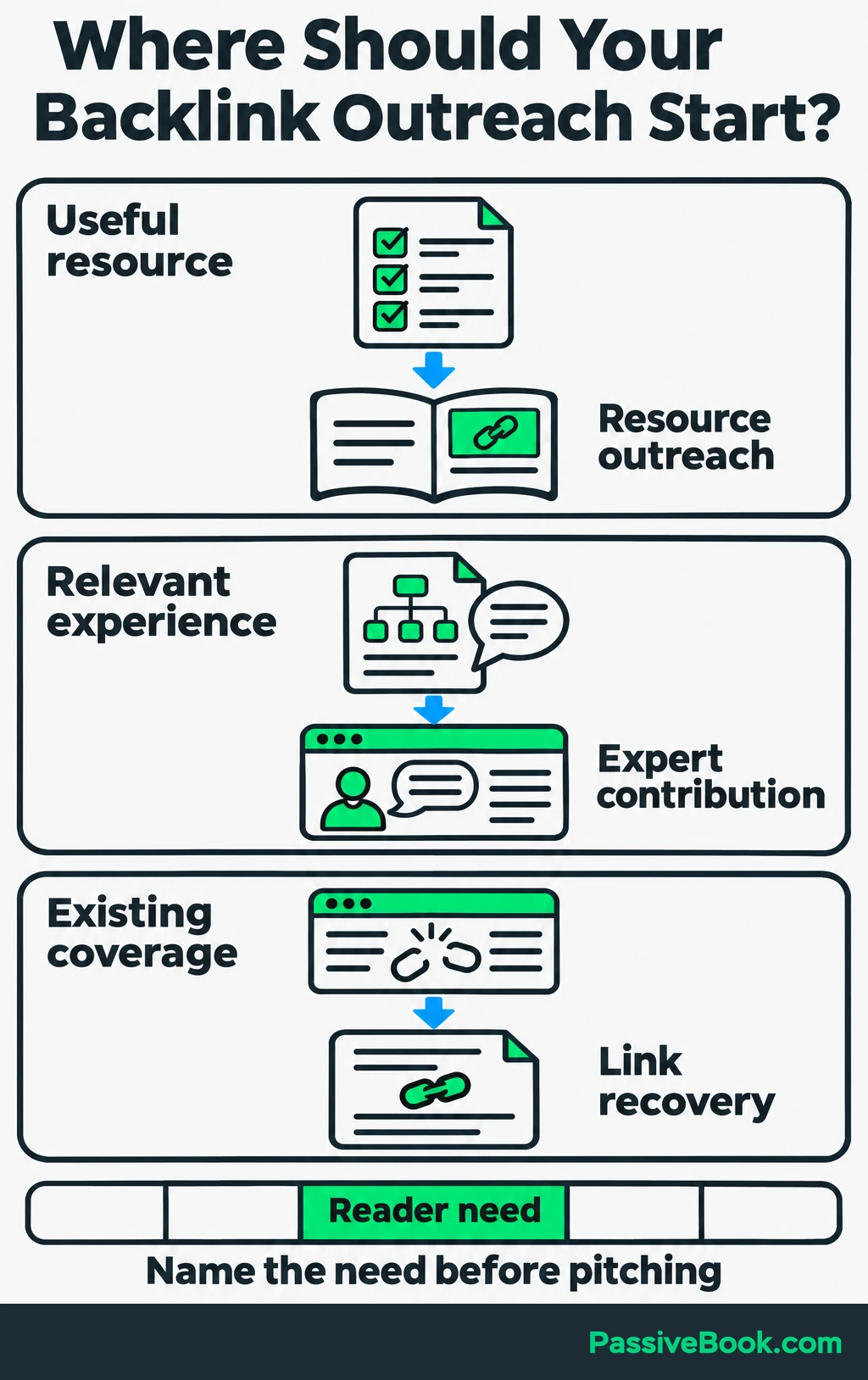
Choose your first tactic based on what you already have.
| What You Have | Where I Would Start |
|---|---|
| A useful checklist, template, or reference | Resource outreach to pages serving the same reader need |
| Experience that answers a publication’s question | Expert contributions, interviews, or focused guest articles |
| Existing coverage or older backlinks | Unlinked mentions and broken links to your own pages |
For the packing checklist, I would start with resource outreach. It offers a clear reason to contact an editor without requiring a new guest article for every pitch.
Keep a prospect sheet. Record the publication, relevant page, contact, reader need, proposed contribution, destination URL, outreach date, response, and placement status.
The most useful column is “reader need.” If you can’t fill it in, you probably aren’t ready to send the pitch.
Find Resource Pages and Competitor Backlink Opportunities
Search for guides and maintained resource lists around the problem your resource solves. For the running example, try searches such as:
"hiking with dogs" "resources"
"dog-friendly hiking" "packing checklist"
Open each result and find the exact section your checklist could support. Check whether the page still appears maintained and whether it already provides an equivalent resource.
You can also inspect backlinks to comparable resources. Ubersuggest’s backlink tool can help identify linking pages and referring websites. I would begin with manual searches and consider a tool when prospect research becomes a recurring task worth paying to speed up.
Treat competitor links as leads to inspect. Ask why each publisher linked: a printable resource, a supporting fact, a photo, or something else. Keep the opportunity only when you can offer something its readers need.
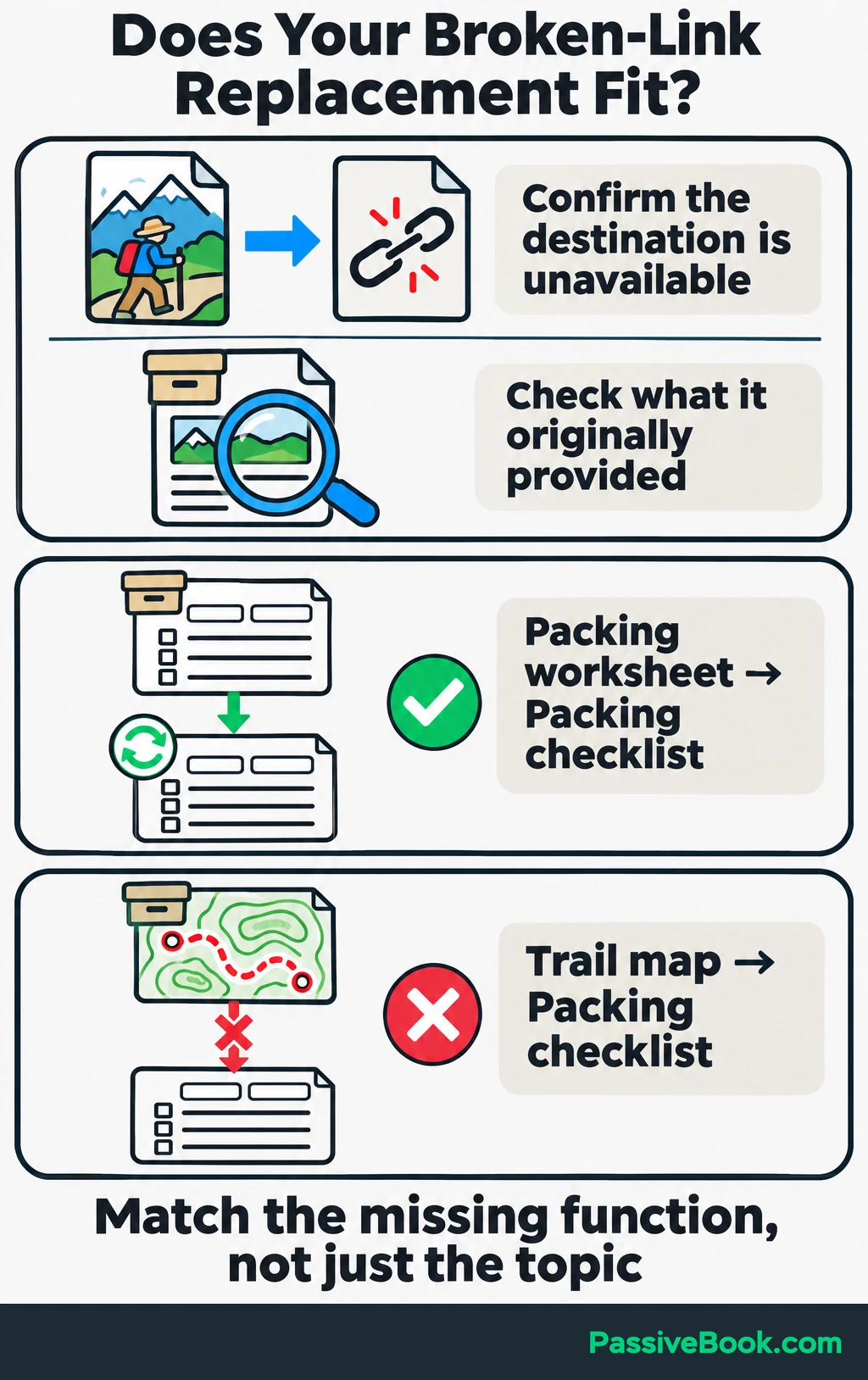
For broken-link outreach, confirm that the destination is unavailable and establish what it originally contained. An archived copy can help.
A missing packing worksheet might suit your checklist. A missing trail map wouldn’t. Sharing a broad topic doesn’t make two resources interchangeable.
Contribute Expertise to Relevant Publications
Publishers also need useful explanations, practical examples, and people who can answer specific questions.
Look for newsletters, podcasts, journalists, and websites covering problems you understand through direct experience or qualified expertise. Read the request or publication before offering a contribution.
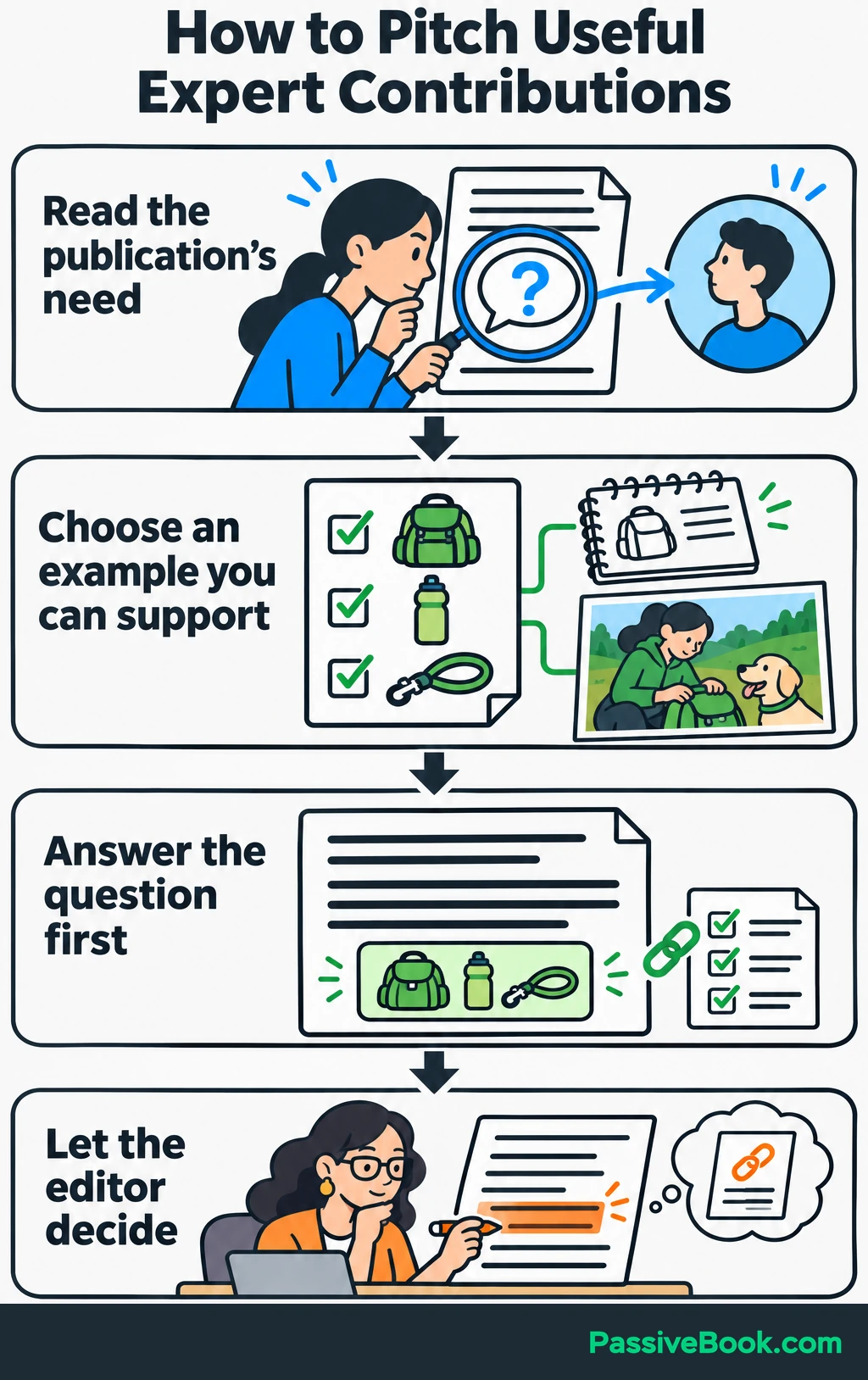
For the dog-hiking example, you could offer a completed packing worksheet for a feature about trip preparation. You could also explain how the sheet separates items already packed from items still missing.
Keep that contribution within what you can support. Experience organizing equipment does not establish expertise in a dog’s medical needs.
Guest articles can fit here too. Pitch a distinct lesson for the publication’s audience, and include your resource where it supports that lesson. Let the editor decide whether to publish it and where a citation belongs.
I would skip publications whose main offer is selling space for keyword-heavy links. A worthwhile contribution should still help readers if the editor removes your link.
Recover Missing Links to Your Work
Before creating more outreach work, check whether people already reference your material.
Search for your brand and resource names in quotation marks, excluding your own domain:
"Your Brand Name" -site:yourdomain.com
"Dog Day-Hike Packing Checklist" -site:yourdomain.com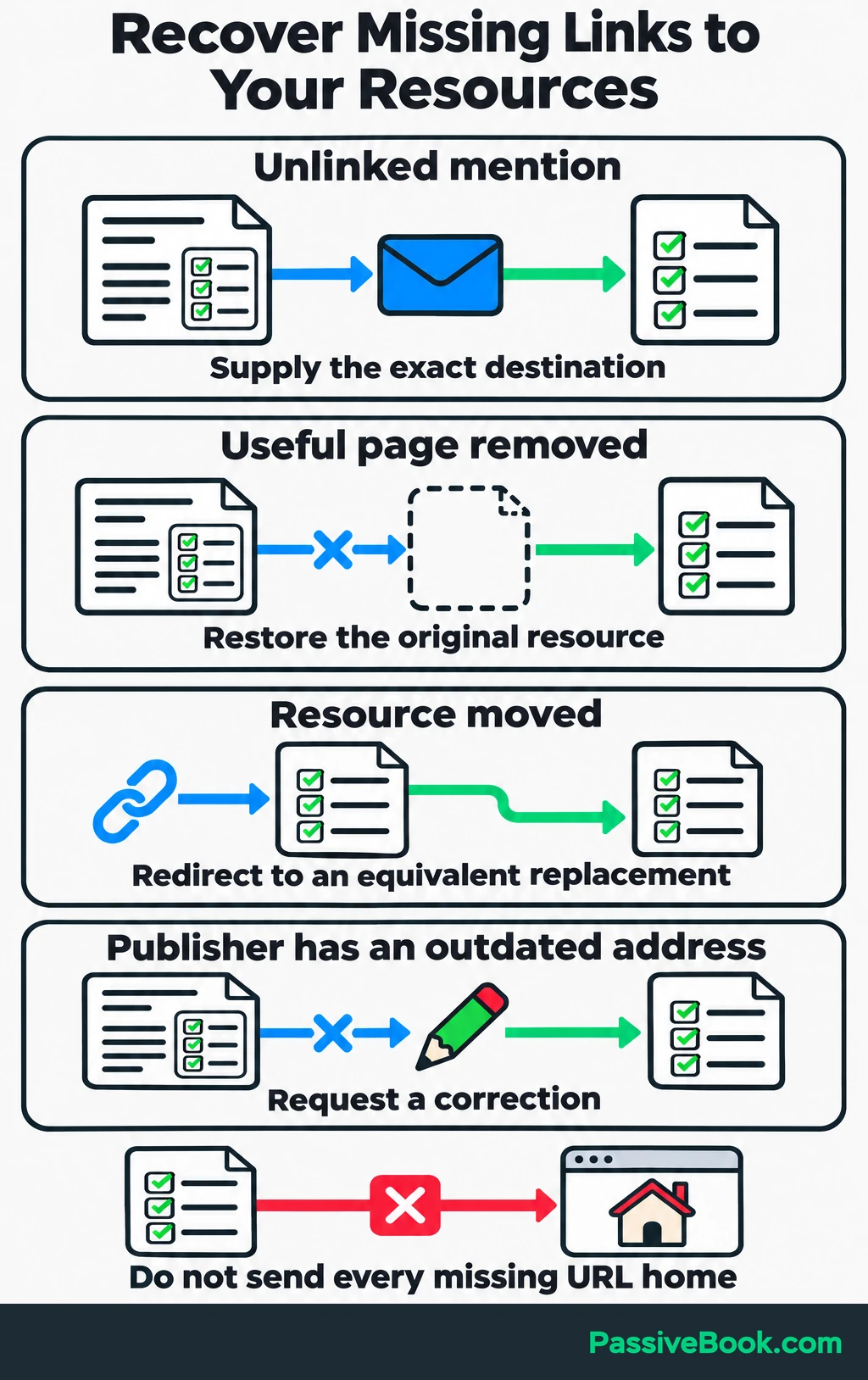
Read each mention. When the publisher discusses the checklist but gives readers no way to find it, request a link to that exact resource.
Also check backlinks pointing to pages you have removed or moved. You can:
- Restore a useful resource at its original address.
- Redirect the old URL to a genuinely equivalent replacement.
- Ask the publisher to correct an outdated address.
Avoid sending every missing URL to your homepage. Someone following a link to a packing checklist should reach the checklist.
Send Outreach That Makes the Editorial Decision Easy
Before the first email, save the promoted page’s current backlinks, search impressions and clicks, referral visits, and relevant actions such as signups. Record the dates so you have a baseline for review.
Then contact the person responsible for the page. Your message should explain what their reader needs, what you offer, where to find it, and what you’re asking.
I once drafted an outreach message that spent most of its space explaining my website. Reading it back, I couldn’t see why the recipient would edit their page. I rewrote it around the missing resource and cut the introduction.
That is the check I use now: can the recipient understand the proposed improvement without investigating my whole business?
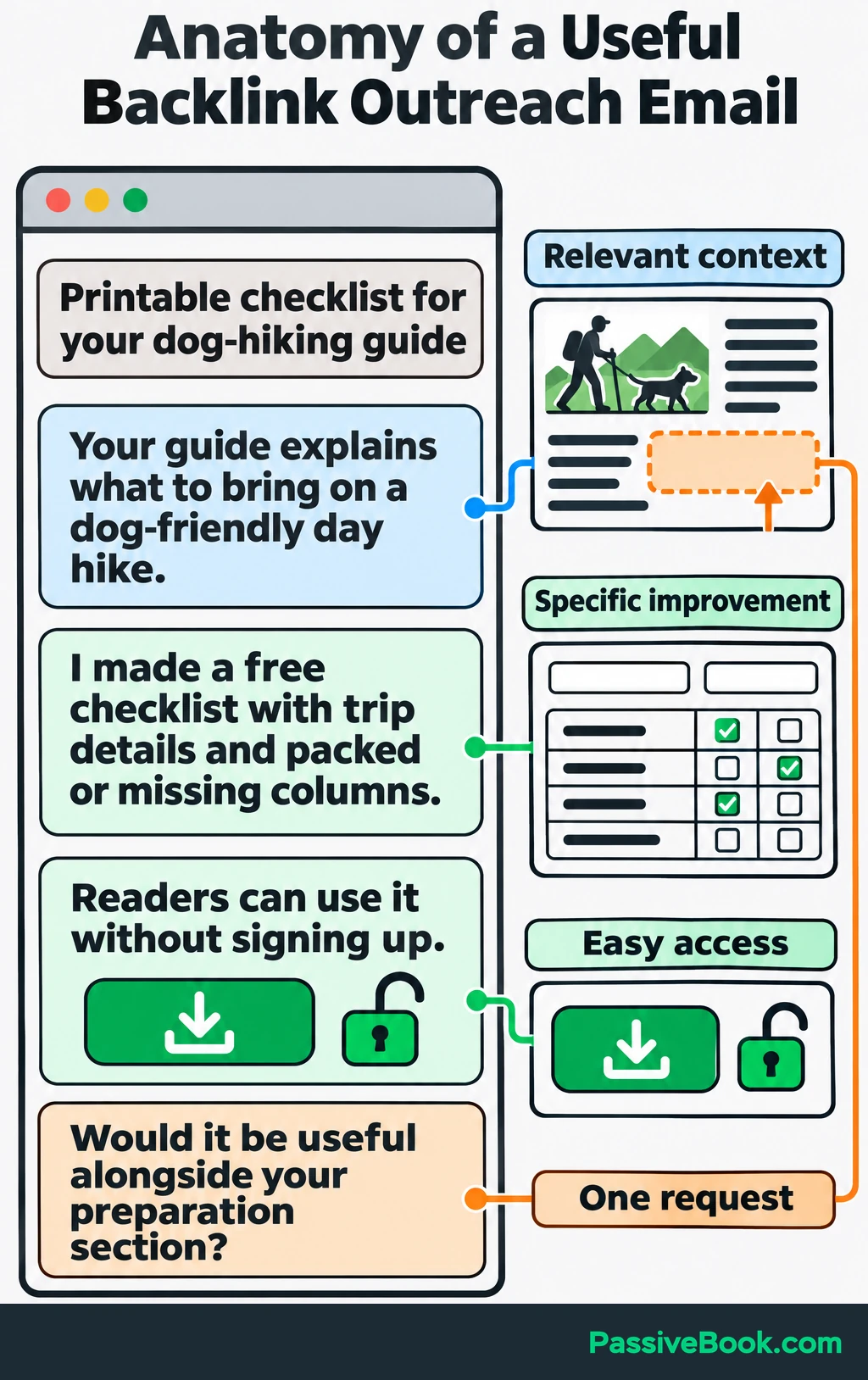
Here’s a complete illustrative email you can adapt after checking the page and publishing the resource:
Subject: Printable checklist for your dog-hiking guide
Hi [Name],
Your guide at [their page URL] explains what readers should bring on a dog-friendly day hike.
I made a free packing checklist with editable trip details and columns for what’s packed and what’s still missing: [resource URL].
Readers can use it without signing up. Would it be useful alongside your preparation section?
Thanks,
[Your name]
[Blog name]
The email makes one request and gives the editor enough information to assess it. Replace the placeholders and remove any sentence that doesn’t accurately describe their page or your resource.
If you’re struggling to explain why your resource belongs on someone else’s page, the AI Editorial Outreach Writer can draft that request from the details you provide. It also helps with missing citations, expert contributions, and replies from editors.
Free AI Editorial Outreach Writer




Adapt that request to the opportunity:
- Broken Reference: Identify the unavailable link and explain which part your resource replaces.
- Unlinked Mention: Point to the mention and supply the exact destination readers need.
- Journalist Request: Answer the question first, then provide supporting material if useful.
Allow time for a response, then send one brief follow-up. I would usually wait about a week. Stop after a refusal.
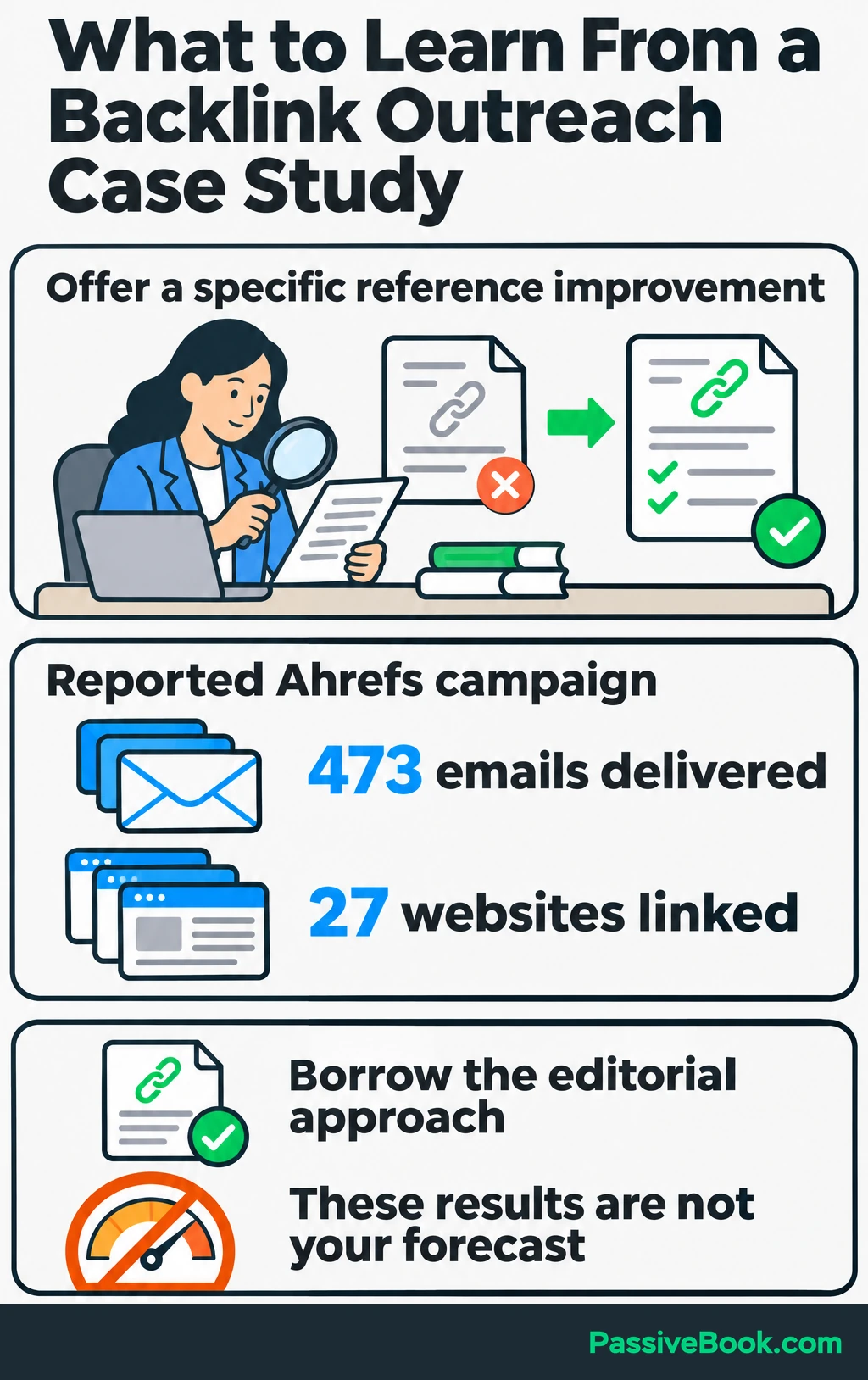
A useful real example comes from Ahrefs’ outreach campaign. The team manually vetted prospects and offered updated references for outdated statistics those pages cited. It reported that 27 contacted websites linked after 473 emails were delivered.
What I’d borrow is the editorial offer: a specific reference the recipient could improve. Those results don’t predict how many links a new website will earn.
Use reusable message structures and automatic reminders to reduce admin. I would keep prospect selection and the final pitch under human review. Automating an irrelevant request just sends it faster.
Help Readers and Publishers Discover the Resource
Outreach is one route to discovery. Your existing readers and relevant communities can provide another.
Share the resource where it answers a real question, follow community rules, and explain its usefulness before offering the link. A group discussing trip preparation may welcome a practical worksheet, but that doesn’t make every discussion a place to promote it.
For the checklist, create a visual preview showing the trip-details area and packing columns. You could use it in a Pinterest Pin, an existing email newsletter, or a relevant discussion.
At Passive Book, I combine SEO-driven blogging with Pinterest, and Pinterest brings meaningful referral traffic. That experience is why I give distribution its own place in the workflow. It doesn’t establish that those visits produced backlinks or ranking gains.
Google also includes community engagement and social promotion in its website promotion guidance. Use those channels to help interested people find the resource.
Keep the outcomes separate. A share is a distribution action. A visit is traffic. An editorial citation is a backlink.
Reader feedback matters too. If people can’t tell how to edit the checklist or keep asking for the same missing field, improve it before sending another batch of pitches.
Measure Results and Improve Your Next Round
Track Links, Search Visibility, and Business Actions
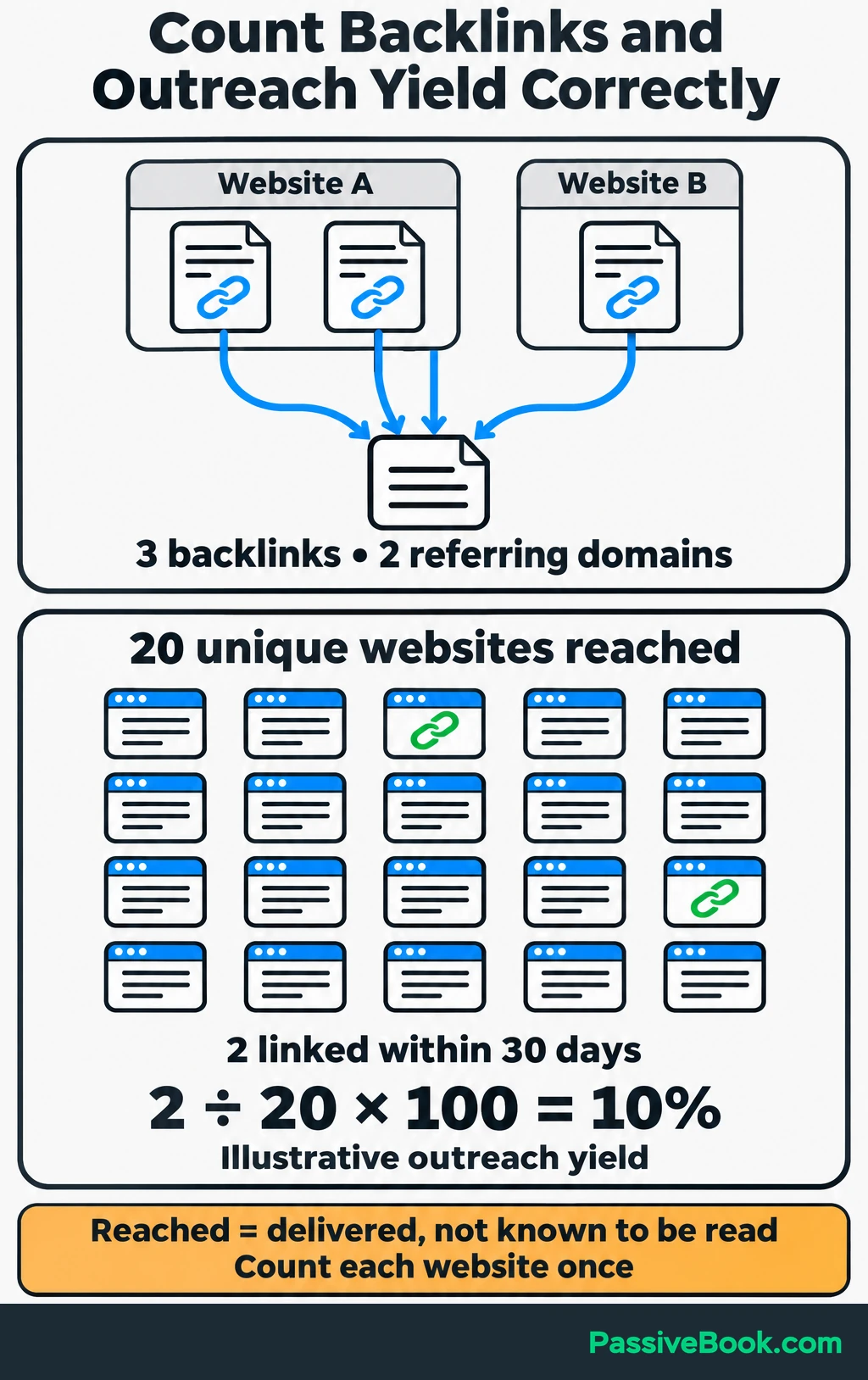
Count backlinks separately from referring domains. Backlinks are individual links; referring domains are the distinct websites providing them.
Three links from two websites give you three backlinks and two referring domains.
Add the live linking page, referring domain, link attributes, discovery date, referral visits, and relevant conversions to your prospect sheet. Keep live links, lost links, and unlinked mentions separate.
Verify placements by opening the page. Search Console’s Links report is useful for discovery, but Google says it provides a sample and can include links that no longer exist. It is not a complete live inventory. Google’s Links report documentation explains those limits.
Review results in three groups:
| What to Review | What It Helps You Decide |
|---|---|
| Relevant live links and referring domains | Whether publishers are finding a reason to recommend the resource |
| Search impressions, clicks, and relevant queries | Whether the promoted page’s search visibility is changing |
| Referral visits, signups, and purchases | Whether arriving visitors take actions that support the business |
In Search Console, filter to the promoted page and compare equivalent periods. Keep search type and other filters consistent, and account for seasonal demand. A hiking page’s spring traffic may be a poor comparison with its winter traffic.
In Google Analytics, inspect referral sources and the signup or purchase events you have configured. Check that those events work before using them to judge a campaign.
To calculate outreach yield, count distinct websites successfully reached and how many of those websites linked by your review date. “Reached” means the email was delivered, not that you know someone read it.
For illustration, suppose your emails reached 20 unique websites and two of those websites linked within your chosen 30-day review window:
Outreach yield = 2 ÷ 20 × 100 = 10%Count each website once, even if it received a follow-up or added several links. Links from websites you never contacted belong in your overall results, but not in this calculation.
Record substantial page edits, technical fixes, and other campaigns beside search trends. A before-and-after increase does not isolate the effect of link building.
Fix the Bottleneck Before Increasing Outreach
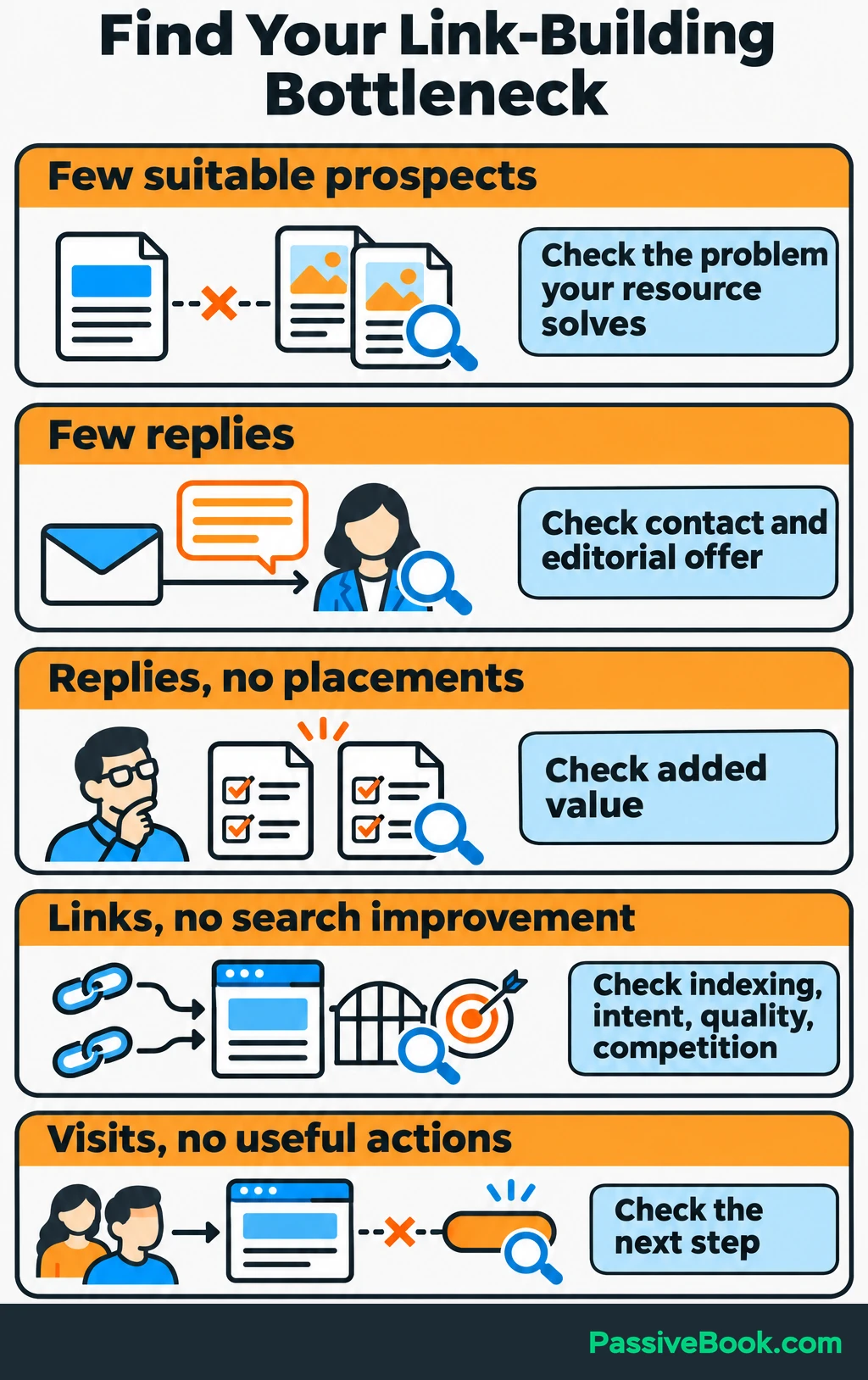
Use the results to decide what deserves the next hour of work.
| What You See | What I Would Check First |
|---|---|
| Few suitable prospects | Whether the resource solves a clear problem that other publishers cover |
| Few replies | Whether you reached the right person and named a specific editorial improvement |
| Replies without placements | Whether the resource adds enough value to the existing page |
| Links without search improvement | Indexing, search intent, content quality, and competition |
| Referral visits without useful actions | Whether the resource leads naturally to a relevant next step |
Read actual replies before rewriting everything. One publisher may already have a checklist. Another may find yours difficult to print. Those are different problems.
I would review outreach weekly and search trends over longer periods, allowing time for changes to appear. Avoid declaring success or failure from a few days of traffic.
Also record the time and money spent. A campaign that earns links but consumes every spare evening needs a harder review than its backlink count suggests.
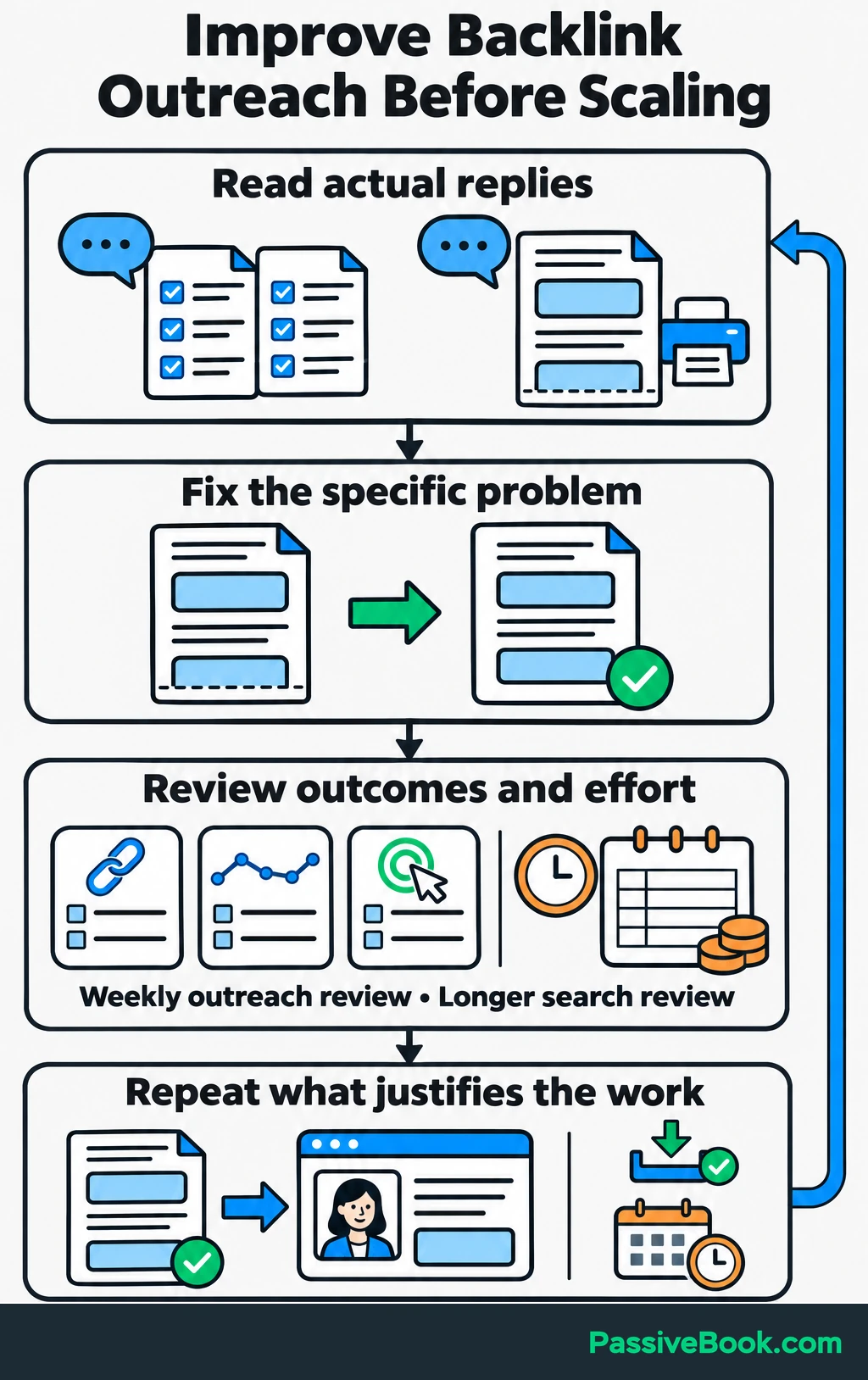
Repeat the approaches that justify the effort. Keep useful resources current, repair broken downloads, and contact past publishers again when a meaningful update gives their readers something new.
The process can become easier to repeat, but it still needs judgment. Build the reminders and tracking once, then spend your attention on the resource and the people it serves.
What Next?
Open one useful page on your site and write a sentence explaining why another publisher’s readers would need it. Then find three relevant pages and check whether that reason holds up.
Use the social buttons to share this guide when you want to bring a clearer, safer process to a link-building discussion.
Which part would most improve your next campaign: the resource, the prospect list, or the pitch? Tell me in the comments, and bring any other questions there too.
Share this post with your friends & followers:

