You have enough podcast ideas to fill a notebook, but would the same person want to hear all of them? An interview, a beginner lesson, and an industry update might share a subject while serving completely different needs.
That leaves you planning episodes without a clear reason for listeners to return. And recording more material won’t settle who the show is for. This guide connects your subject to a specific listener’s needs, with a worked concept and episode plan you can test through a rough recording before committing to a series.
What Makes a Podcast Concept Clear?
A subject tells people what you discuss. A concept tells them why they might listen again.
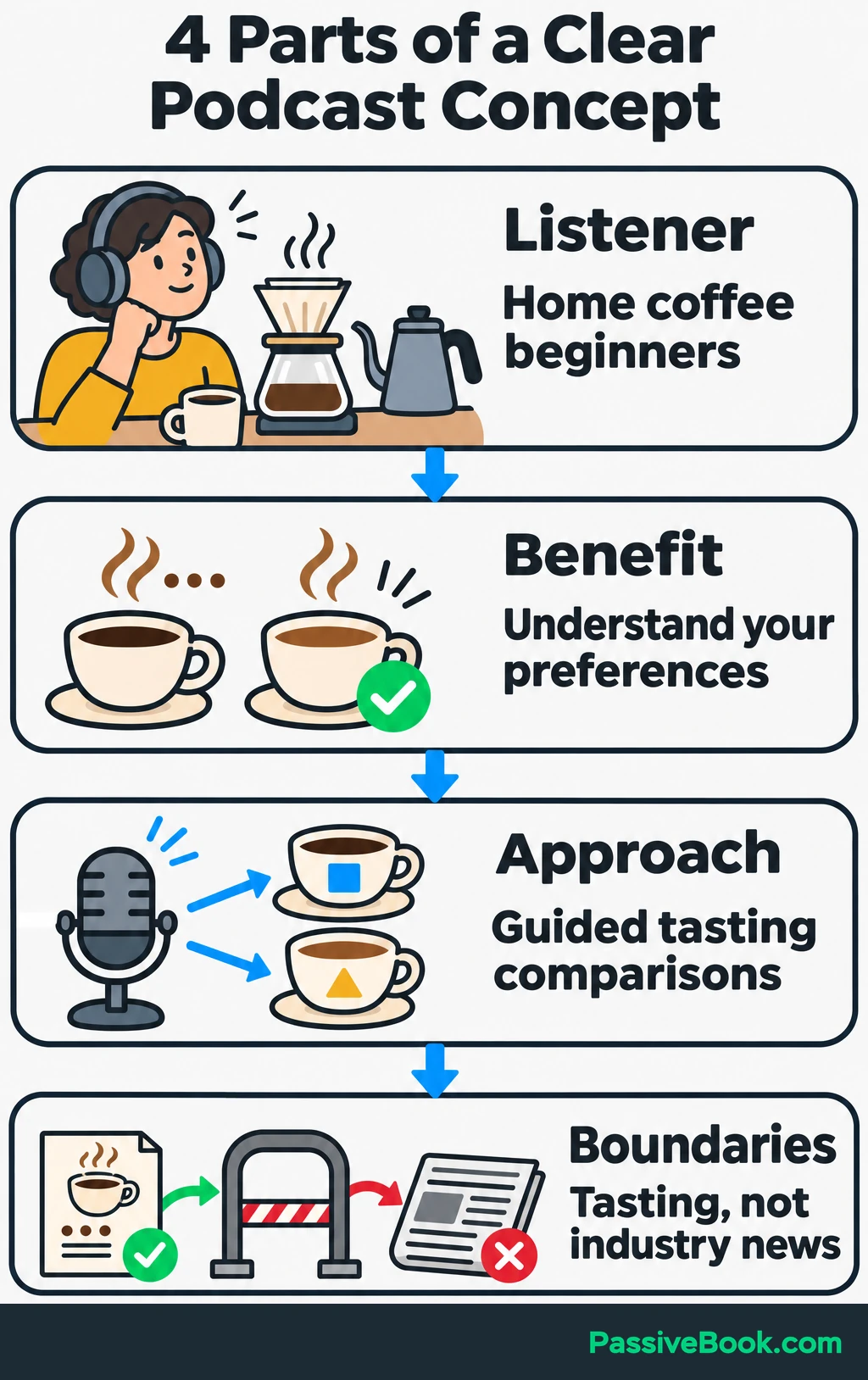
“Coffee” is a subject. A clear concept adds four things:
- Listener: Who the show primarily serves.
- Benefit: What those people gain from listening.
- Approach: How episodes deliver that benefit.
- Boundaries: What belongs in the show and what doesn’t.
Choosing a primary audience helps you make consistent decisions about content, tone, and messaging. That is also how Spotify’s audience guidance frames the value of knowing whom you serve. It gives you an editorial direction, not a guarantee of growth.
Start with this working sentence:
A podcast for [specific listeners] who want [outcome or experience], delivering [recurring content] through [distinctive approach].
You don’t need perfect wording yet. You need something specific enough to investigate.
Throughout this guide, imagine you run a home coffee blog selling a printable tasting journal. You’re considering a podcast for beginners comparing coffees at home. The audience details, research examples, and business possibilities are illustrative.
Choose a Starting Topic and Listener
Shortlist topics you care enough about to keep exploring. Then check whether you have useful knowledge, can research the material responsibly, or can bring in knowledgeable contributors.
For each topic, ask:
- What questions could I answer across several episodes?
- Who encounters those questions, and in what situation?
- What would producing a useful episode require?
Keep your business goal separate from the listener’s reason to return. Selling a journal might justify the work for you, but listeners still need help understanding their coffee.
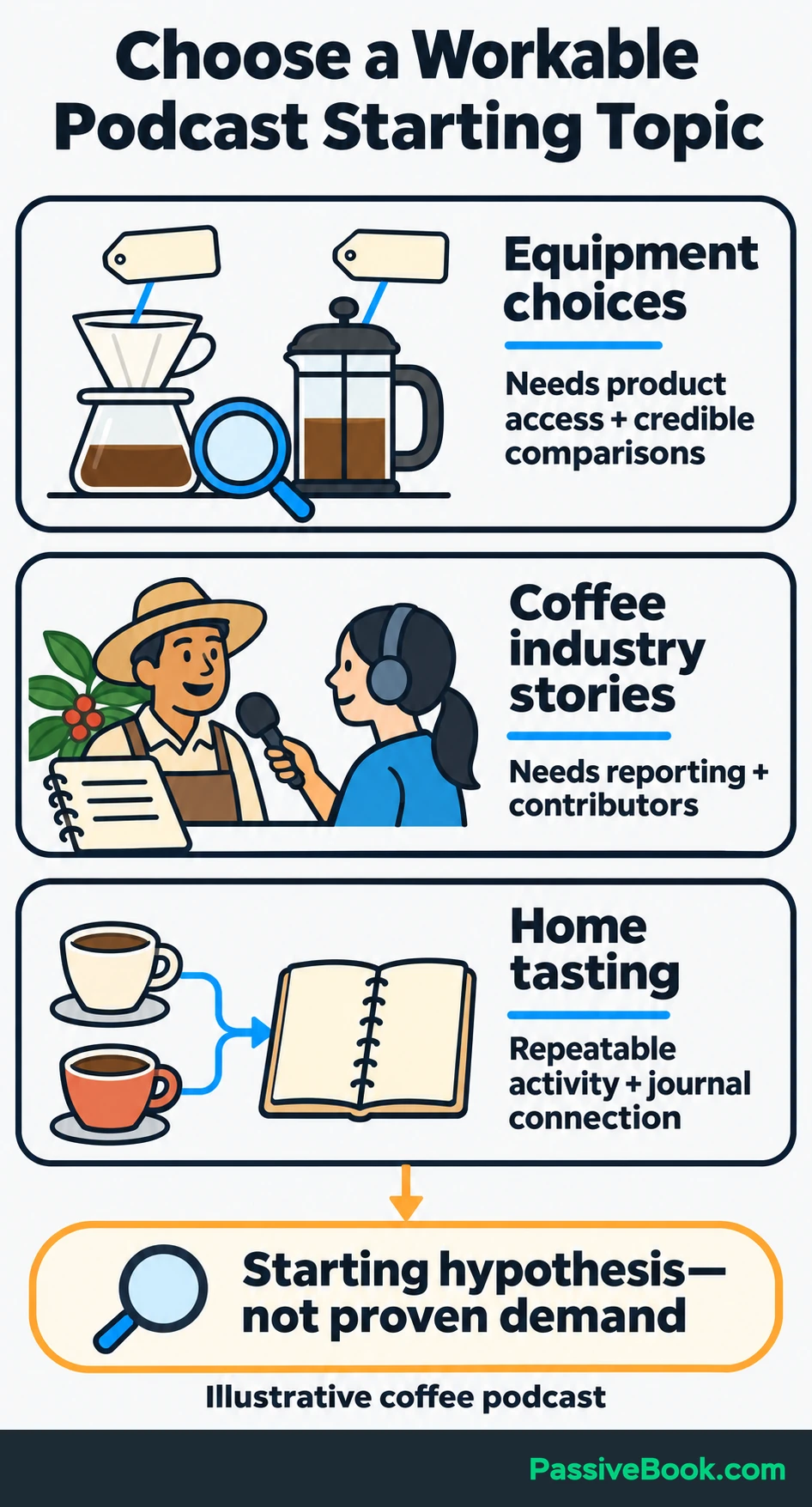
For the example business, three possible directions are:
- Equipment choices: Help beginners compare brewing equipment. This would require access to products and credible comparisons.
- Coffee industry stories: Explain the people and businesses behind coffee. This would depend on reporting and suitable contributors.
- Home tasting: Help beginners compare cups and describe their preferences. This could connect naturally with a tasting journal.
I would investigate home tasting first because it fits the proposed product and offers a repeatable activity. That makes it a sensible starting hypothesis. You still need to find out whether people want that help—and whether they want it in audio.
Research Your Intended Listeners
Find Recurring Questions in Existing Conversations
Look for problems people already describe before asking them to judge your idea.
Start with customer questions, subscriber replies, relevant community discussions, and comments on related content. Read the surrounding conversation so you understand what the person tried and why the answer didn’t help.
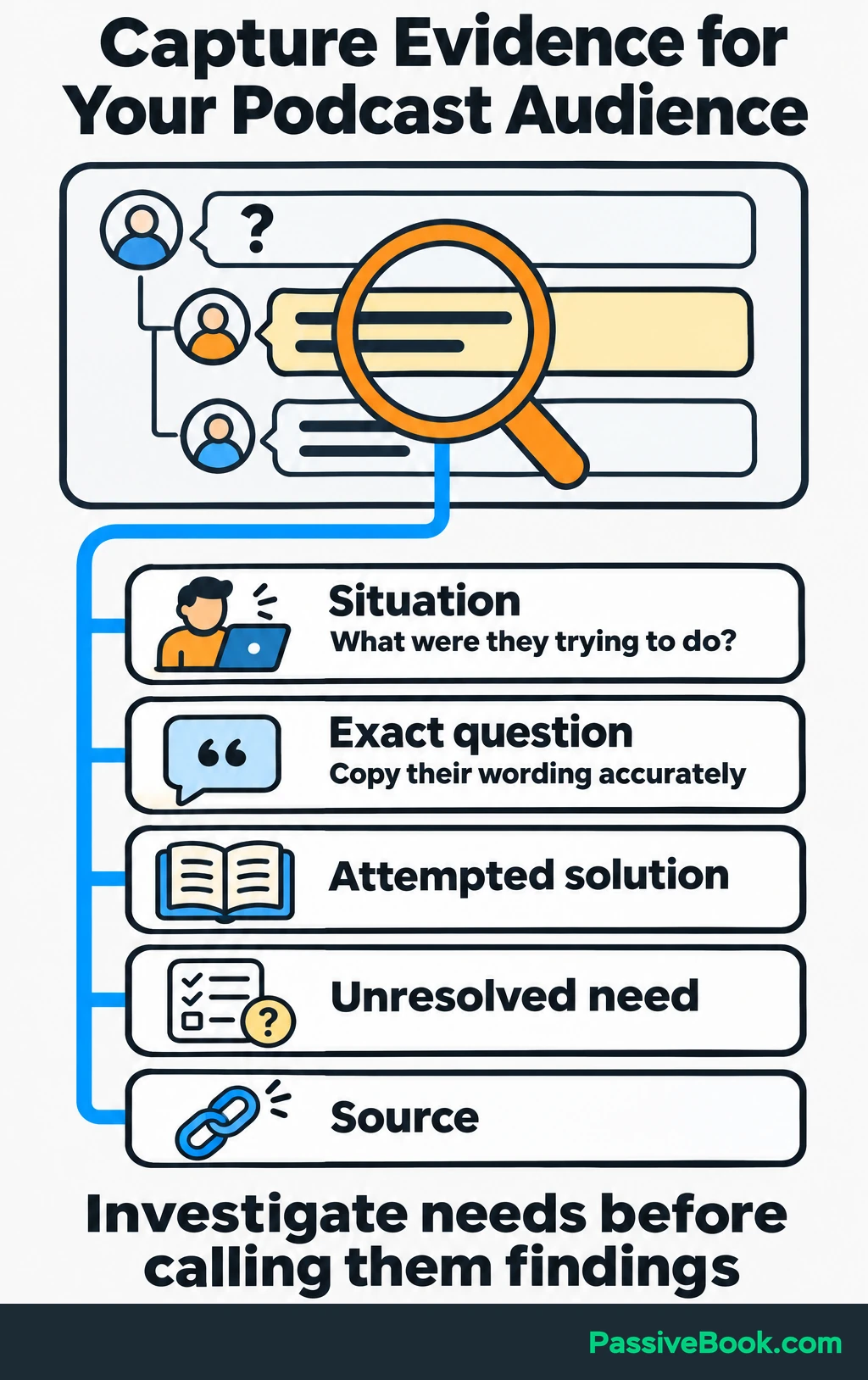
Keep a simple research table with these columns:
- Listener situation: What the person was trying to do.
- Exact question: Their wording, copied accurately.
- Attempted solution: What they had already tried.
- Unresolved need: What remained difficult.
- Source: A link or private note reference you can revisit.
For the coffee business, investigate how beginners describe tastes, keep comparisons organized, and decide what to buy next. Don’t enter those needs as findings until you encounter them.
I skipped market research when I started my online jewellery store. I bought stock, ended up with unsold inventory, and lost most of my investment. I had committed money before checking demand.
A podcast has different costs, but I would apply the same lesson before committing weeks of production time: investigate the need before building around it.
Ask About Real Experiences and Listening Habits
Recruit people who match your proposed audience from your subscribers or relevant communities where research requests are allowed. Include people beyond supportive friends.
Before describing the podcast, ask about their recent experiences. GOV.UK’s interview guidance recommends open, neutral questions focused on real examples.
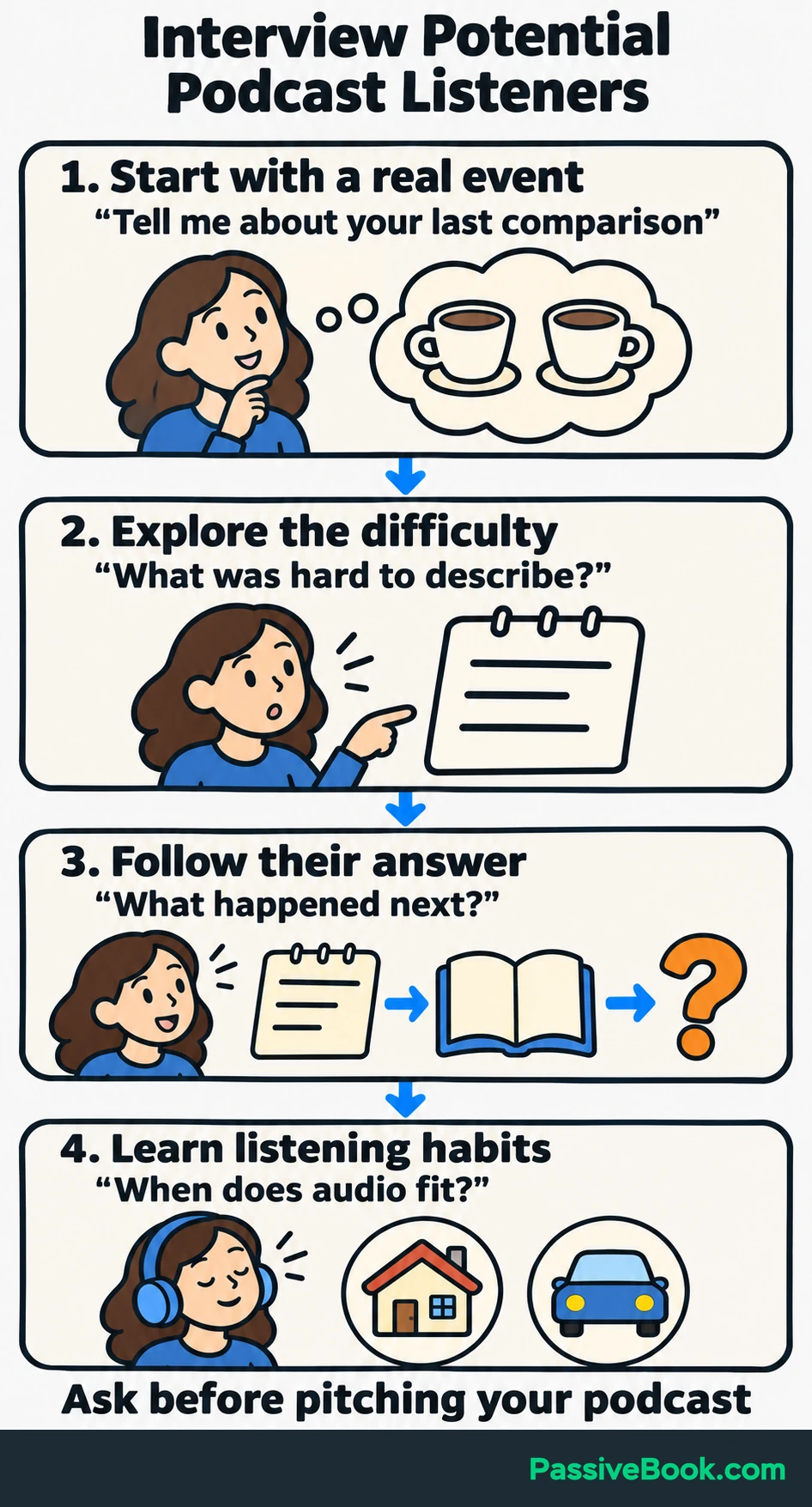
For the coffee concept, you could ask:
- “Tell me about the last time you compared two coffees.”
- “What did you notice, and what was difficult to describe?”
- “What did you do to get help?”
- “What podcasts do you listen to now, and when?”
- “Which parts of learning about coffee do you need to see demonstrated?”
Follow their answers rather than racing through the list. If someone mentions abandoning tasting notes, ask what happened.
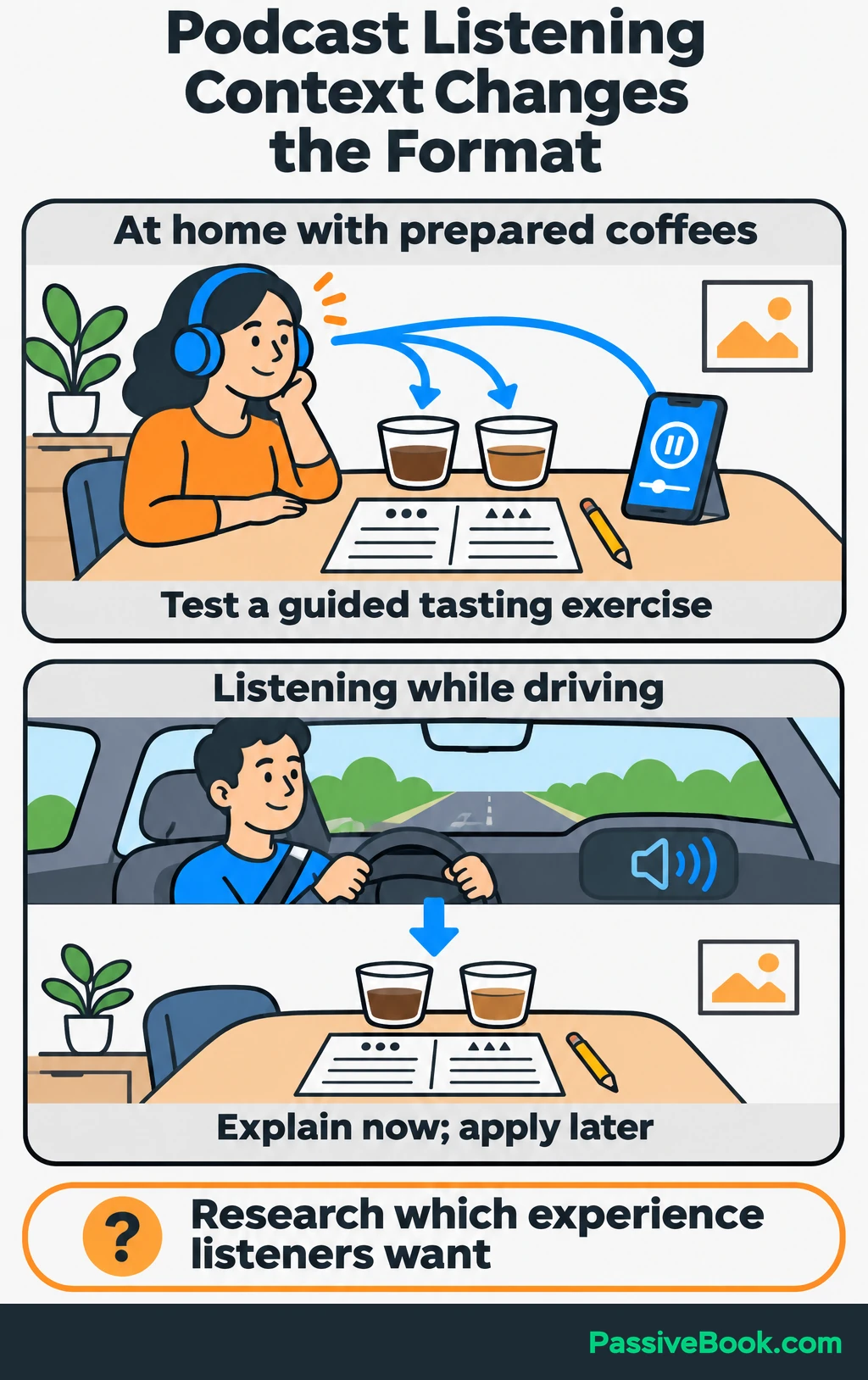
Listening context matters here. A guided tasting exercise needs listeners who can use it at home. Someone who only listens while driving might prefer an explanation they can apply later. That difference could change the format.
Before recording an interview, explain its purpose and get permission. Store contact details, notes, and recordings securely.
Give priority to needs that recur, prompt people to seek help, and fit your ability to produce useful material. If the conversations point elsewhere, revise the audience rather than forcing the answers into your original idea.
Define Your Primary Listener
Turn your notes into a compact profile you can use when choosing topics.
Include the listener’s situation, existing knowledge, recurring difficulty, and desired result. Add where they currently find help, when audio fits their routine, and where you could reach similar people.
Leave out invented details that don’t change the show. Knowing whether someone understands basic brewing terms may affect your explanations. Giving them a favorite film probably won’t.
Use this sentence:
This show is for [people in a particular situation] who want [recurring benefit] so they can [desired outcome].
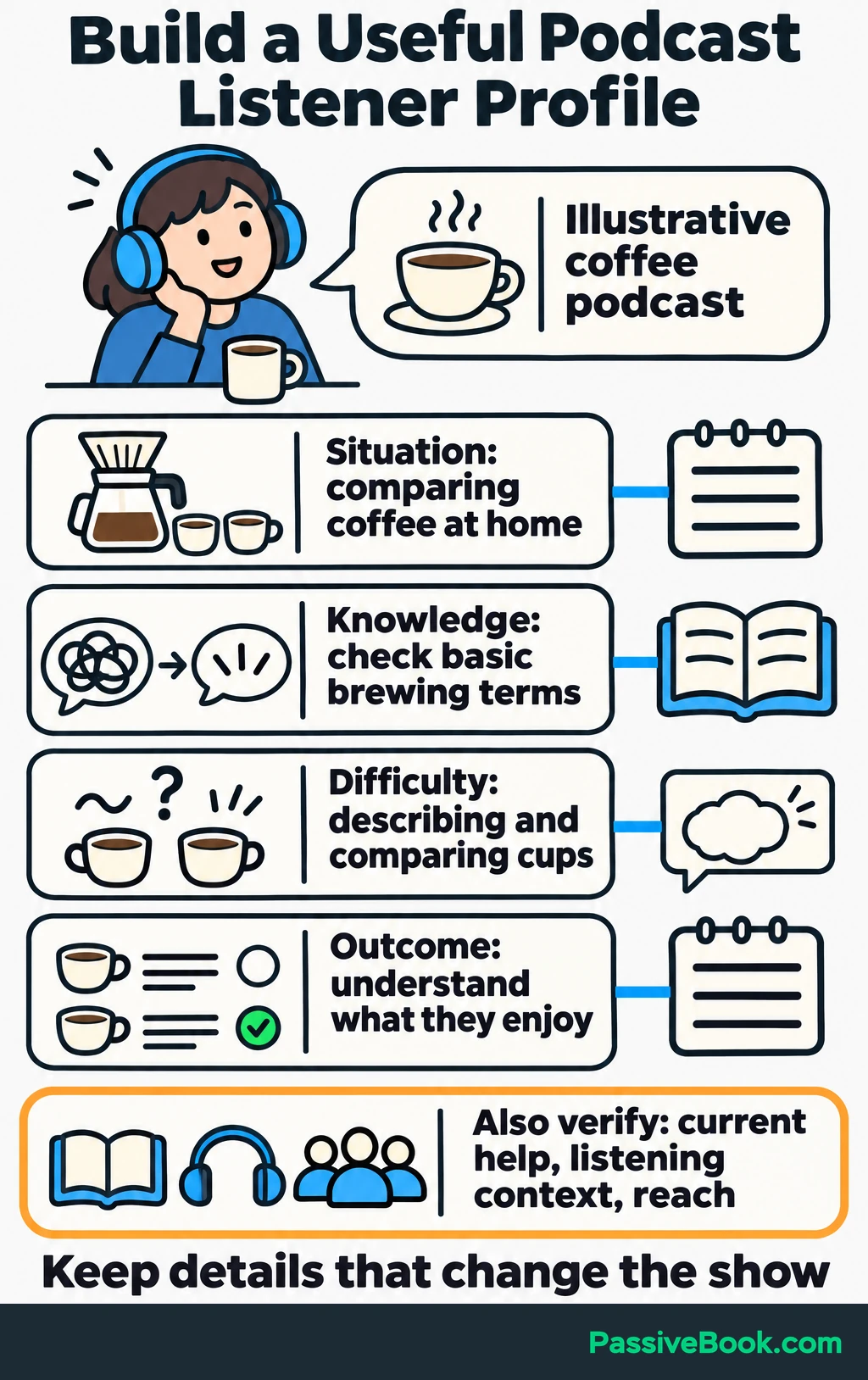
For the running example:
This show is for home coffee beginners who want to compare cups and keep useful tasting notes so they can understand what they enjoy.
Test that definition against real editorial choices. Does it tell you whether to explain a term? Can you choose relevant questions and find people who recognize the need?
Narrow the audience when it combines needs that require different shows. Remove restrictions that don’t help you make decisions.
Other people can still listen. Choosing a primary listener tells you whose needs take priority when an episode can’t serve everyone.
Give Listeners a Reason to Choose Your Show
Compare the Help Listeners Already Use
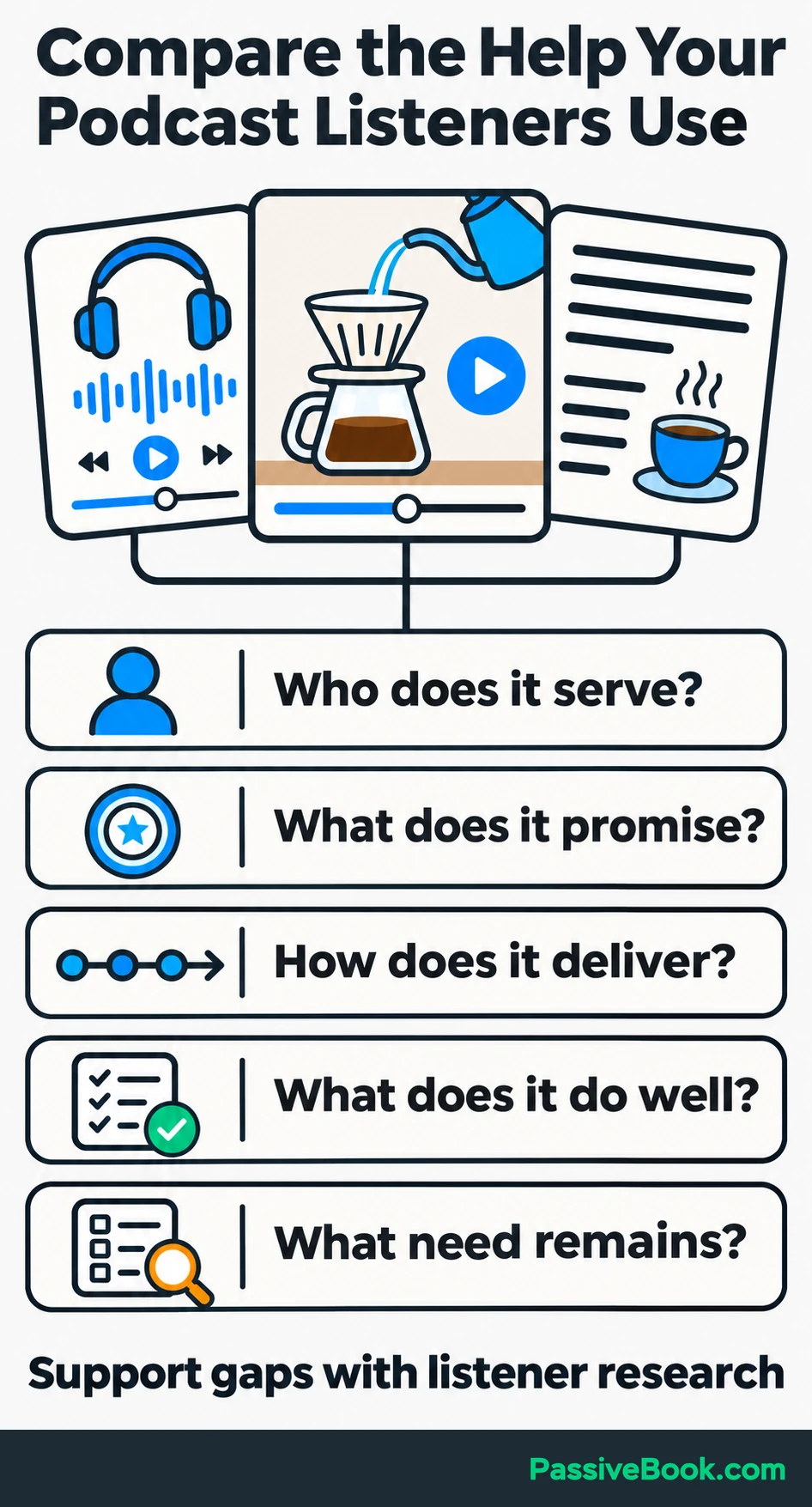
Search for podcasts addressing the same need, then read their descriptions and sample relevant episodes. Include videos, newsletters, blogs, or courses when your research participants use them for that purpose.
For each resource, record:
- Intended listener: Who it appears to serve.
- Promise: What it says people will gain.
- Approach: How it teaches, informs, or entertains.
- Strength: Something it delivers well.
- Unresolved need: A specific difficulty it leaves unanswered, supported by your research.
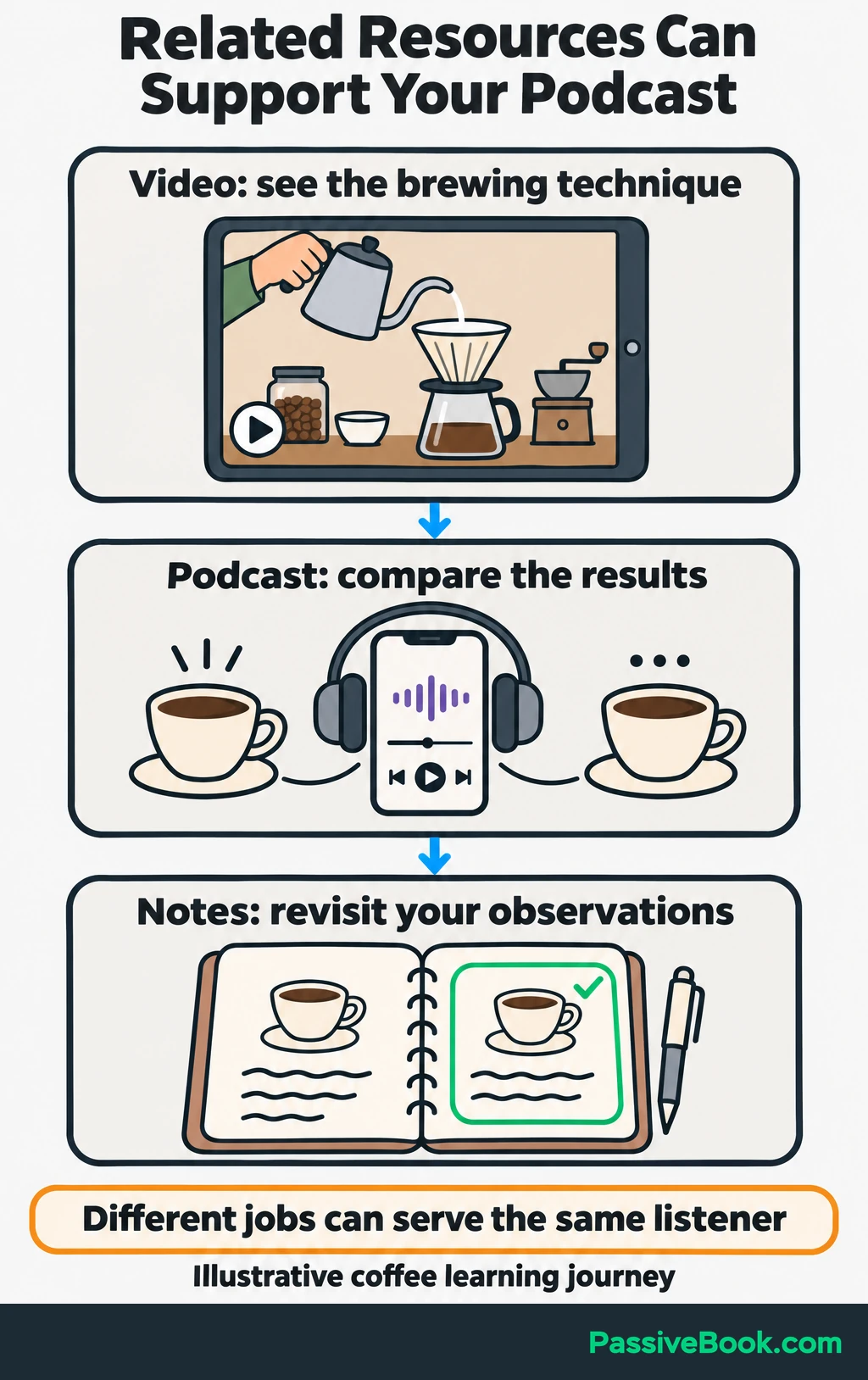
Don’t assume every related resource is a competitor. A video showing a brewing technique could support an audio episode about comparing the results.
For the coffee example, investigate whether existing resources help beginners organize their own observations. A show full of expert tasting descriptions might be excellent, yet serve a different need from guided practice.
I would choose a difference you can repeat: a particular listener situation, a plain explanation style, or a useful episode structure. Being “more authentic” gives you little to plan around.
And an empty search result only tells you that you haven’t found an equivalent show. It doesn’t establish demand.
Write the Promise and Content Boundaries
Your promise should name the recurring benefit and the approach that delivers it.
For the example:
A podcast helping home coffee beginners discover their preferences through one guided tasting comparison per episode.
The mission sits behind that promise: help listeners become more confident describing and choosing coffee.
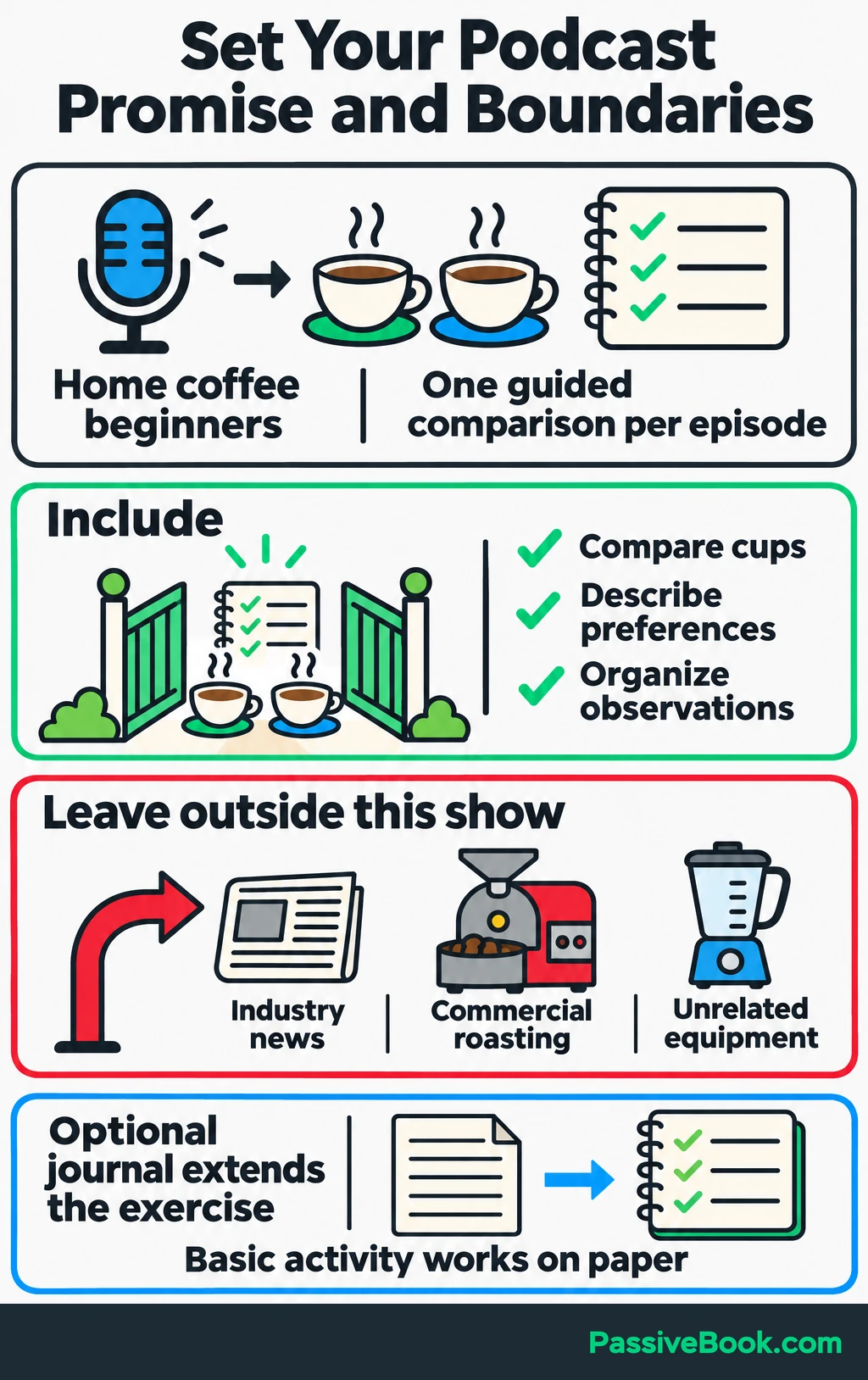
Now draw boundaries:
- Include: Comparing cups, describing preferences, organizing observations, and learning from previous notes.
- Exclude: Café industry news, commercial roasting operations, and equipment discussions unrelated to the comparison.
These boundaries let you reject an interesting idea without treating it as a bad idea. It may simply belong elsewhere.
Choose a business next step that extends the episode’s value. A printable tasting journal could help listeners record and revisit their comparisons. I would mention it after explaining the exercise, while making the basic activity usable with ordinary paper.
That creates a relevant connection to the product. Whether listeners want to buy it remains a separate question.
Choose a Format That Delivers the Promise
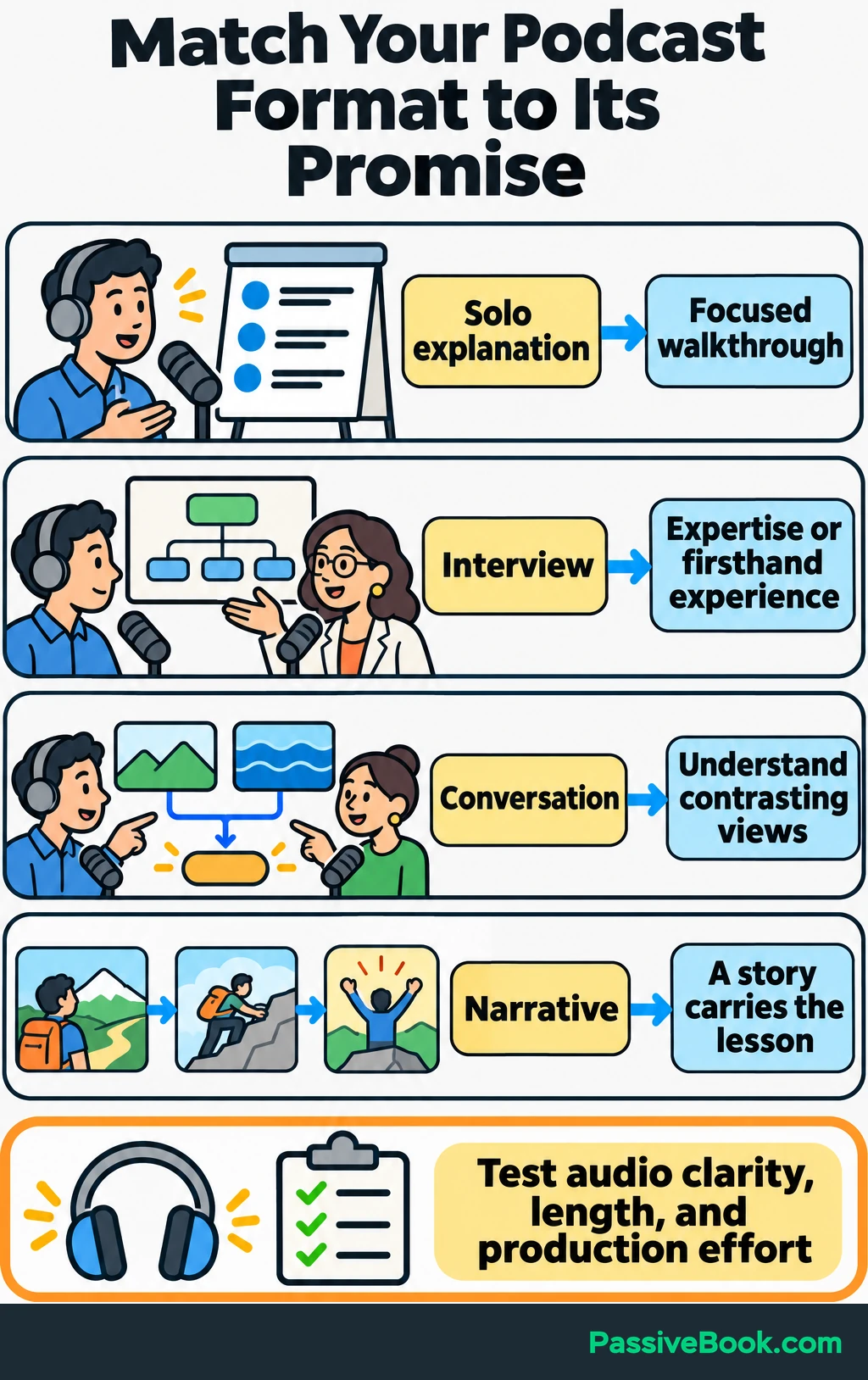
Choose the format around the listener’s experience and the material you can deliver well.
- Solo explanations: Useful for focused walkthroughs and a consistent teaching sequence.
- Interviews: Useful when the episode needs specialist knowledge or firsthand experience.
- Conversations: Useful when contrasting views help listeners understand a question.
- Narrative episodes: Useful when a story carries the lesson or experience.
For the coffee concept, I would test a short solo walkthrough first, provided the material can be researched and checked properly. Interviews add scheduling work, so I would use them where a guest’s knowledge changes what the episode can offer.
A repeatable structure could introduce the comparison, explain what to prepare, guide the observations, and finish with one useful note.
Check that the essential explanation works without a screen. Companion notes can hold a worksheet or visual reference, but they shouldn’t conceal a missing explanation.
Test length rather than choosing it because another show runs for half an hour. Track the work needed for research, outlining, recording, editing, and supporting notes before promising a release schedule. A weekly deadline arrives with impressive consistency.
Turn Listener Needs Into Episode Ideas
Group related questions into a few recurring themes. For the coffee example, those might be describing preferences, organizing comparisons, and learning from tasting notes.
Then turn each question into an episode with one problem and one takeaway. For the coffee show, each episode should include a tasting comparison, even when the lesson focuses on describing a cup or using old notes. Keep the required research beside the idea so you can see what stands between a title and a useful recording.
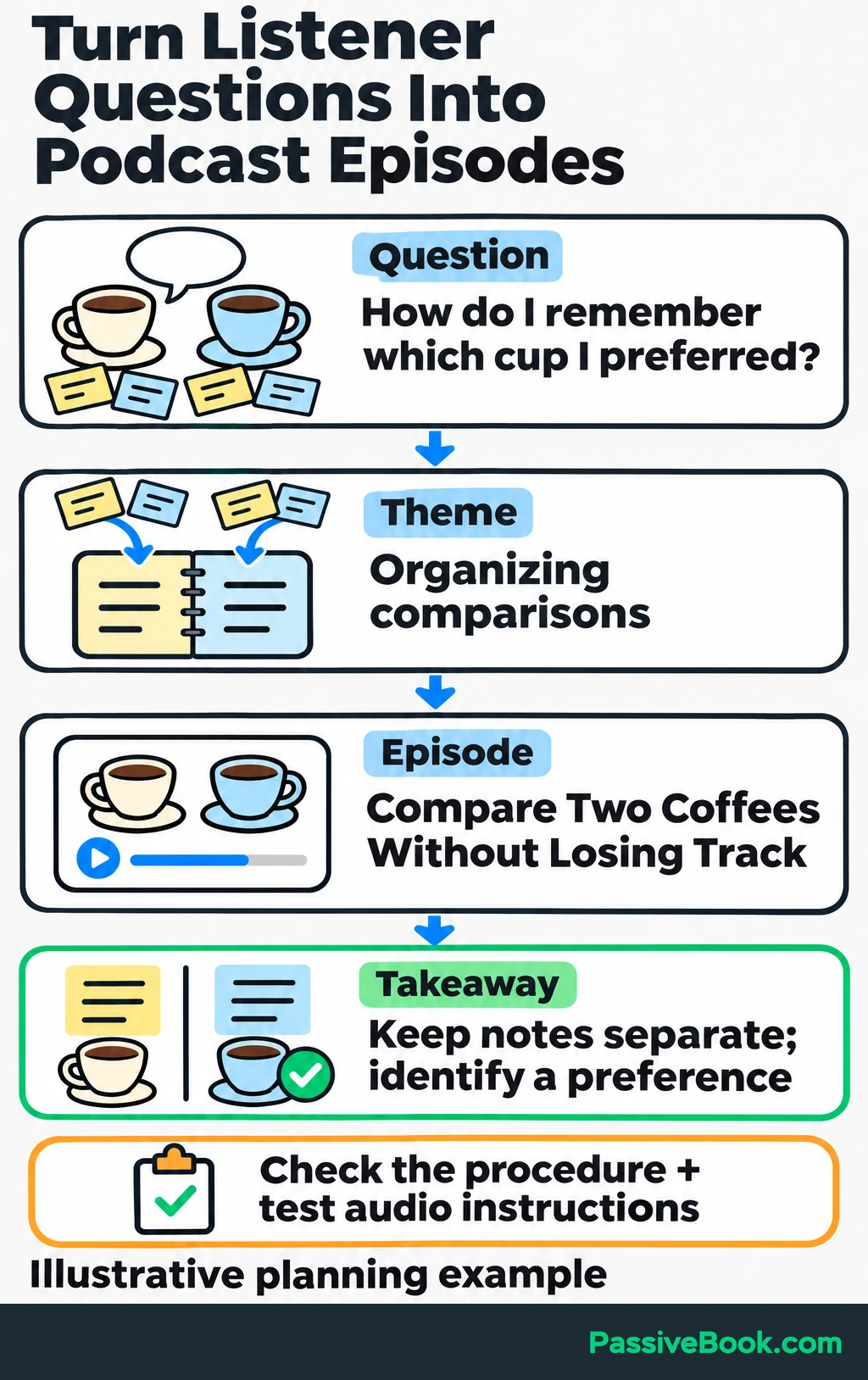
These are illustrative planning entries:
| Listener Question | Content Theme | Episode Title | Intended Takeaway | Required Research or Expertise |
|---|---|---|---|---|
| How do I describe the difference between two cups? | Describing preferences | Compare Two Cups in Your Own Words | Describe each cup plainly and name one difference | Check beginner-friendly tasting terms and test the two-cup instructions |
| How do I remember which cup I preferred? | Organizing comparisons | Compare Two Coffees Without Losing Track | Keep separate observations and identify a preference | Check the comparison procedure and test whether the audio instructions are clear |
| How do these notes help me choose another coffee? | Learning from notes | Use Your Tasting Notes in Your Next Comparison | Use a past preference to choose two coffees, then record what the comparison reveals | Check how to use past notes without assuming they predict a new preference |
Take “Compare Two Coffees Without Losing Track.” Its job is to help listeners organize observations.
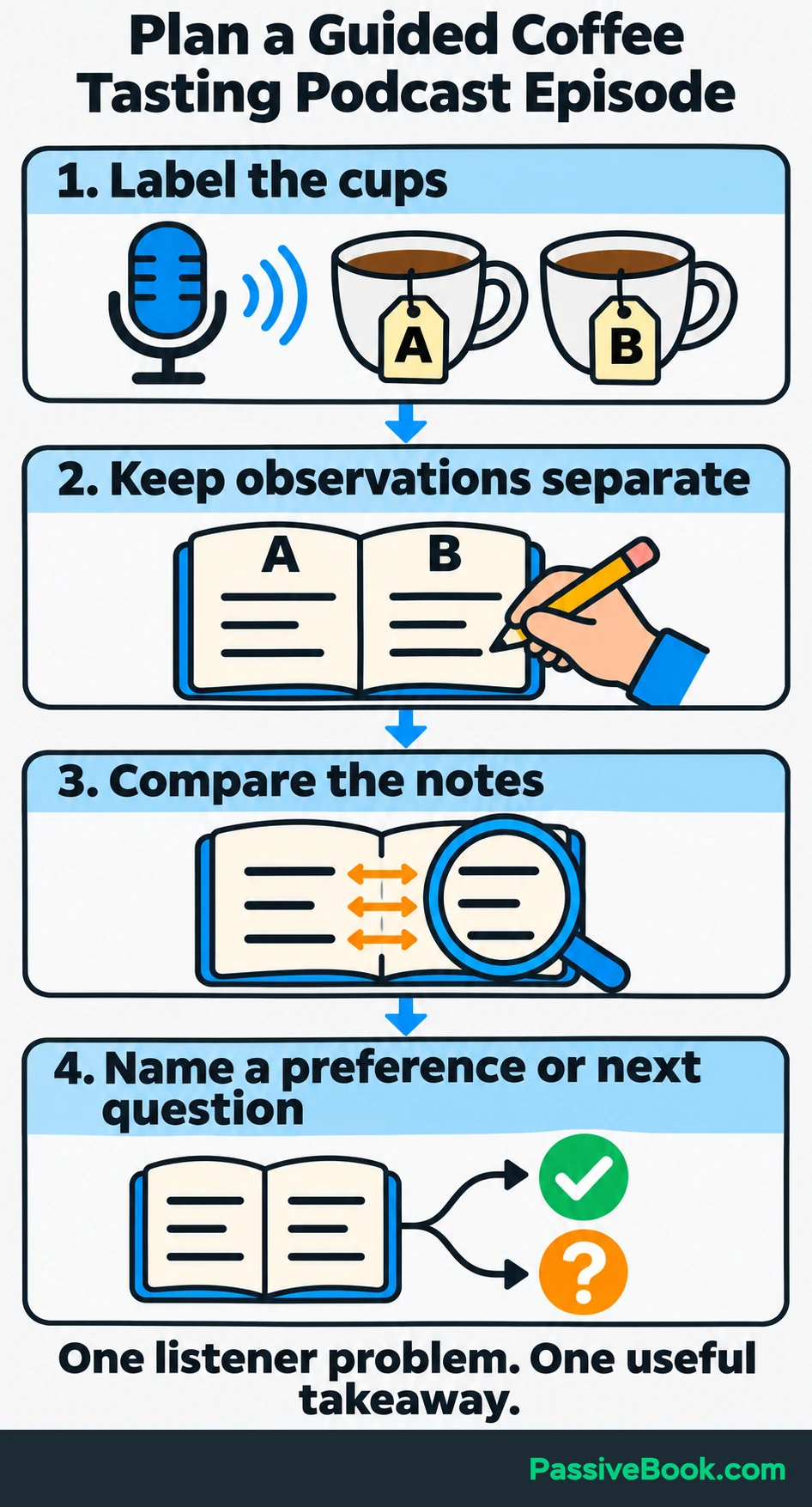
The brief would guide them to label two cups, record impressions separately, compare the notes, and identify either a preference or something to explore next. An instruction might sound like:
“Write A and B at the top of separate columns. Keep each cup’s observations in its own column before you compare them.”
Review the ideas together. They should serve the same listener while offering different value. If several titles lead to the same takeaway, combine them. If the need has a natural endpoint, make a finite series. You don’t owe the internet an endless season.
Test the Concept Before Committing to a Series
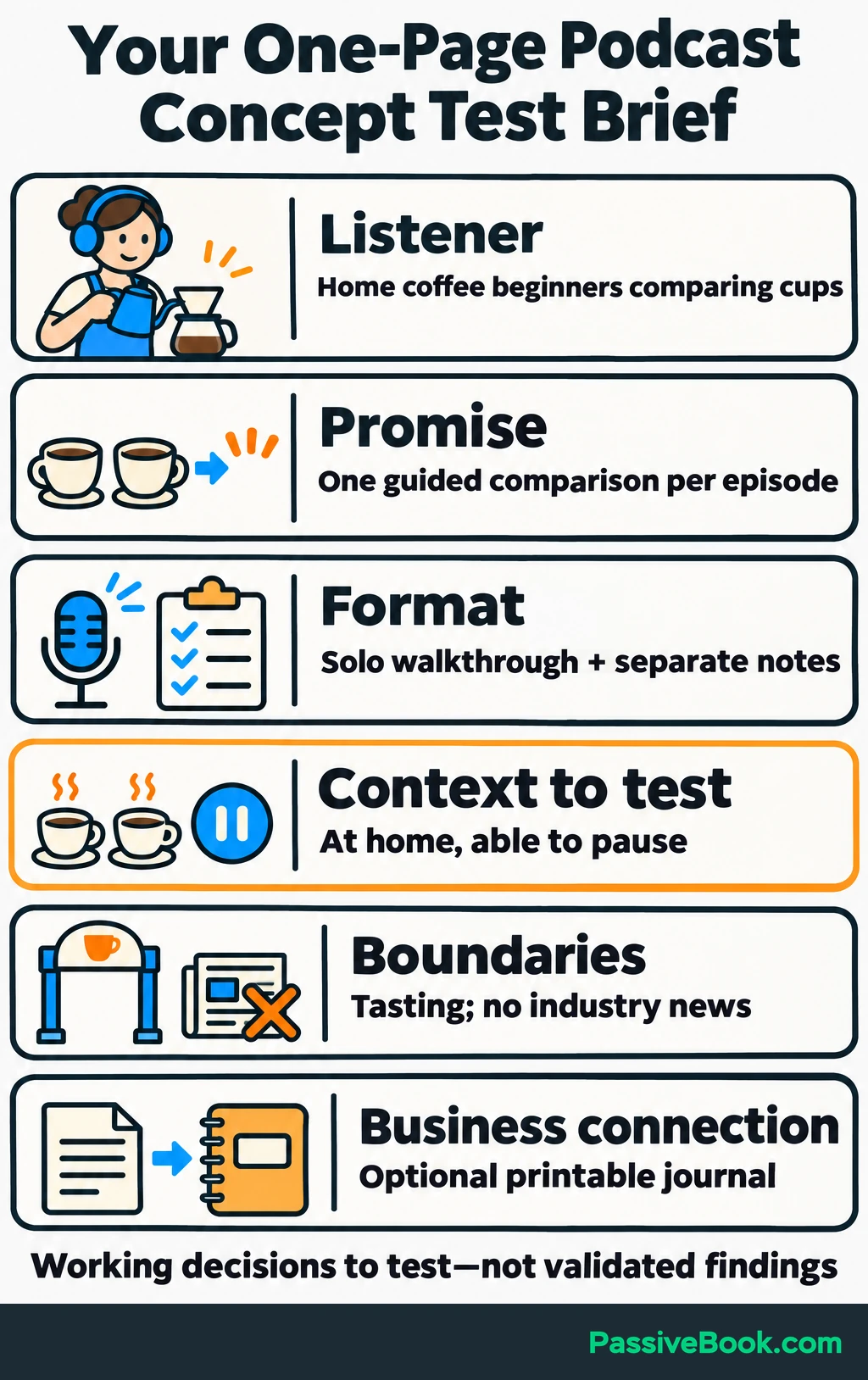
Put your decisions into a one-page brief. Here is the coffee concept assembled for testing.
| Part | Working Decision |
|---|---|
| Primary listener | Home coffee beginners who brew at home but struggle to describe and compare cups |
| Promise | One guided comparison per episode to help listeners understand their preferences |
| Approach and format | Solo walkthrough with plain descriptions, separate notes for each cup, and a comparison at the end |
| Listening context to test | At home with prepared coffees and time to pause |
| Boundaries | Tasting and comparison; no industry news or commercial operations |
| Business connection | Optional printable journal for keeping and revisiting observations |
A document or spreadsheet is enough; I would skip a paid planning tool.
If your own brief still feels vague, AI Podcast Studio can give you a first draft to revise. It keeps the listener, promise, and episode format together so you have something concrete to test.

Free AI Podcast Studio




Check Whether the Pitch Sets Clear Expectations
Show matching potential listeners the concept sentence and sample titles. Let them read without explaining what you meant.
Ask them:
- “Who do you think this show is for?”
- “What would you expect to gain from an episode?”
- “Which title connects with something you want help with now?”
- “What would you expect that episode to cover?”
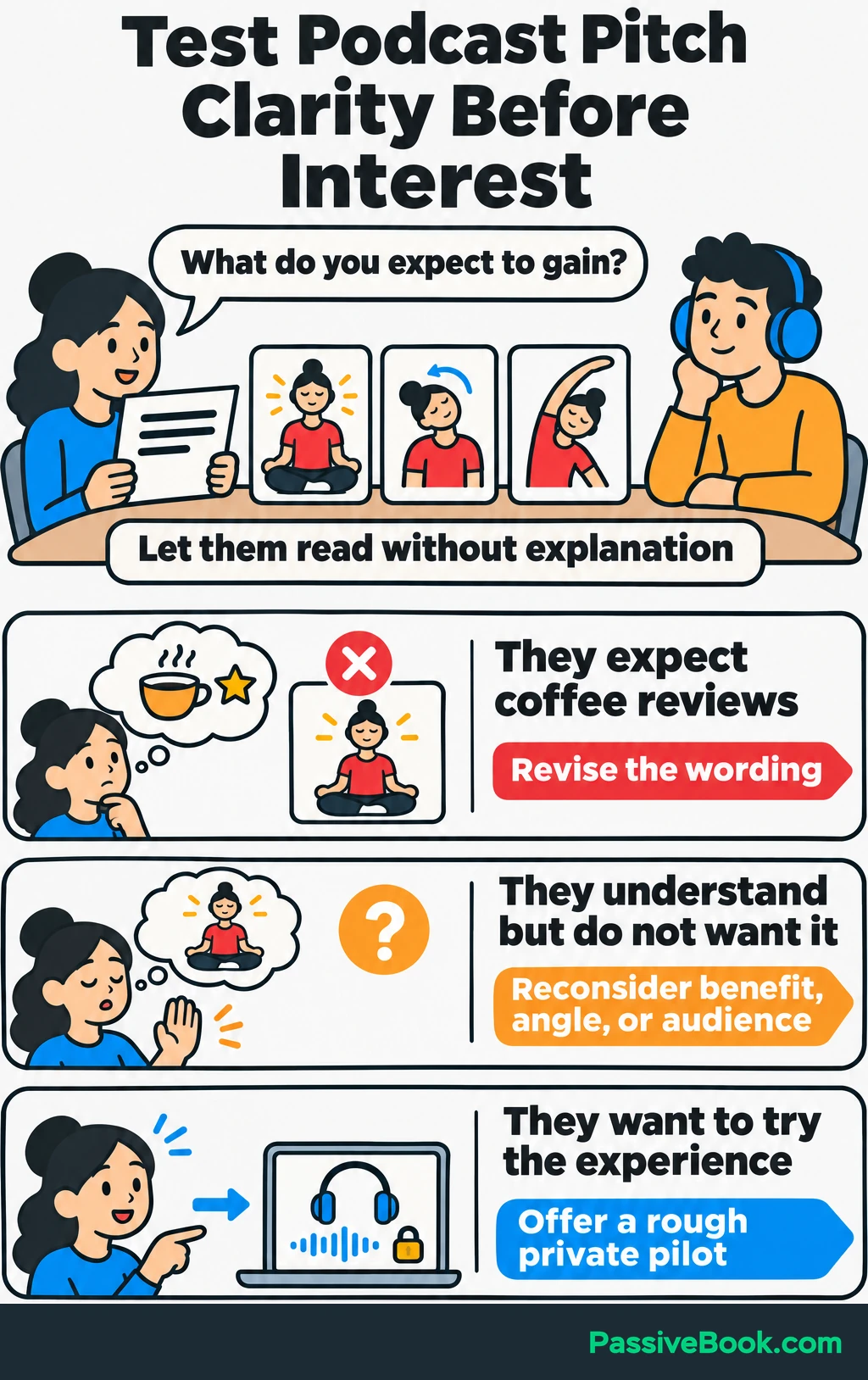
Separate misunderstanding from indifference. If people expect coffee reviews when you mean guided exercises, revise the wording. If they understand the exercises but don’t want them, reconsider the benefit, angle, or audience.
Then offer a rough sample episode—a private pilot—and ask why they do or don’t want to hear it.
Check Whether a Pilot Delivers the Promise
Record a rough private pilot that demonstrates the proposed experience. Keep the speech clear, but leave the elaborate intro music for later.
Substack’s prelaunch guidance recommends audience conversations followed by a short pilot and listener feedback. Use that sequence to test both the idea and its delivery.
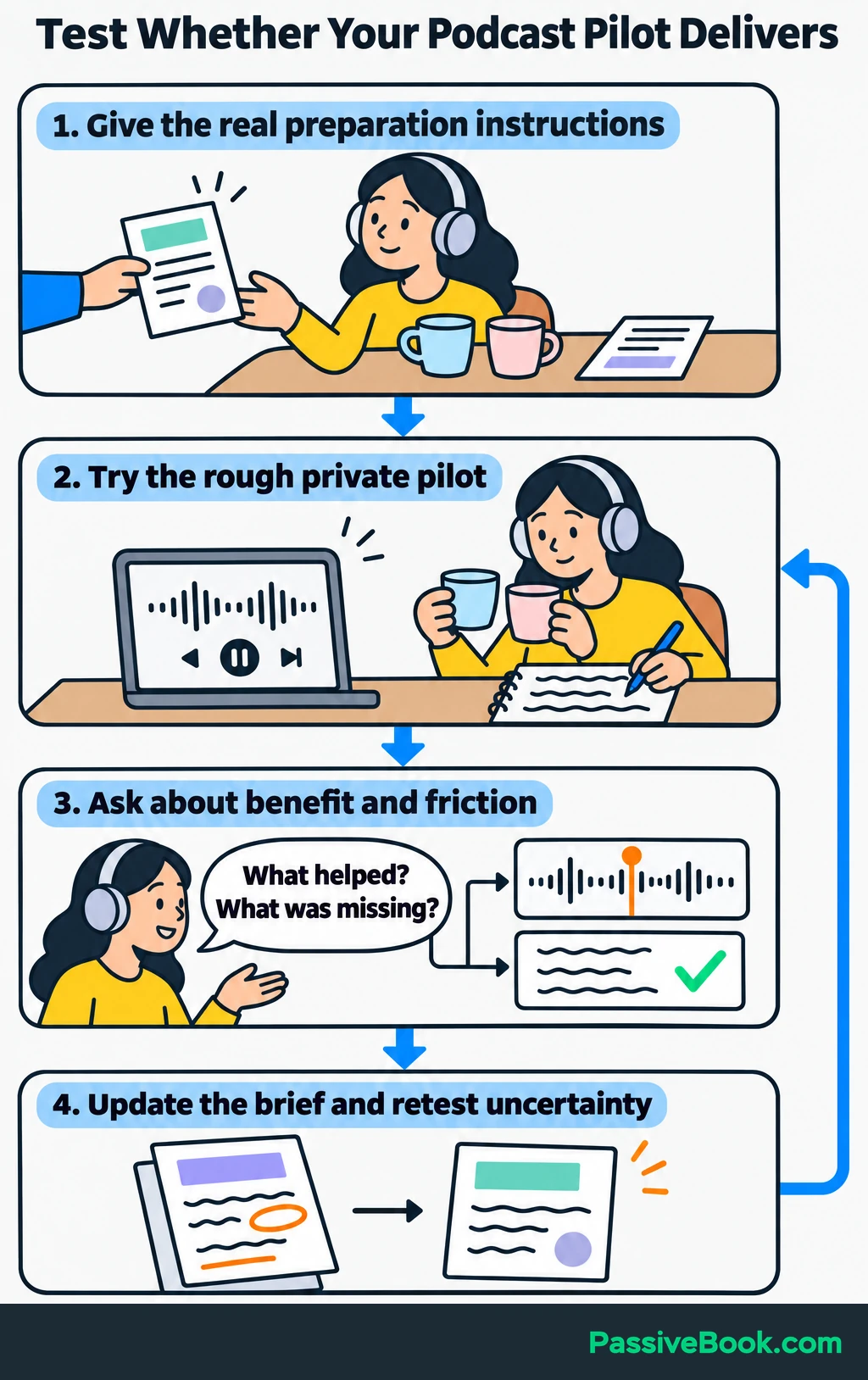
Give listeners the preparation instructions they would receive with a published episode. For the coffee pilot, check whether they can follow the comparison.
Afterward, ask:
- “What did this help you do or understand?”
- “Where did your attention fade, or where did you stop?”
- “What instruction or explanation was missing?”
- “Which proposed episode would you choose next, and why?”
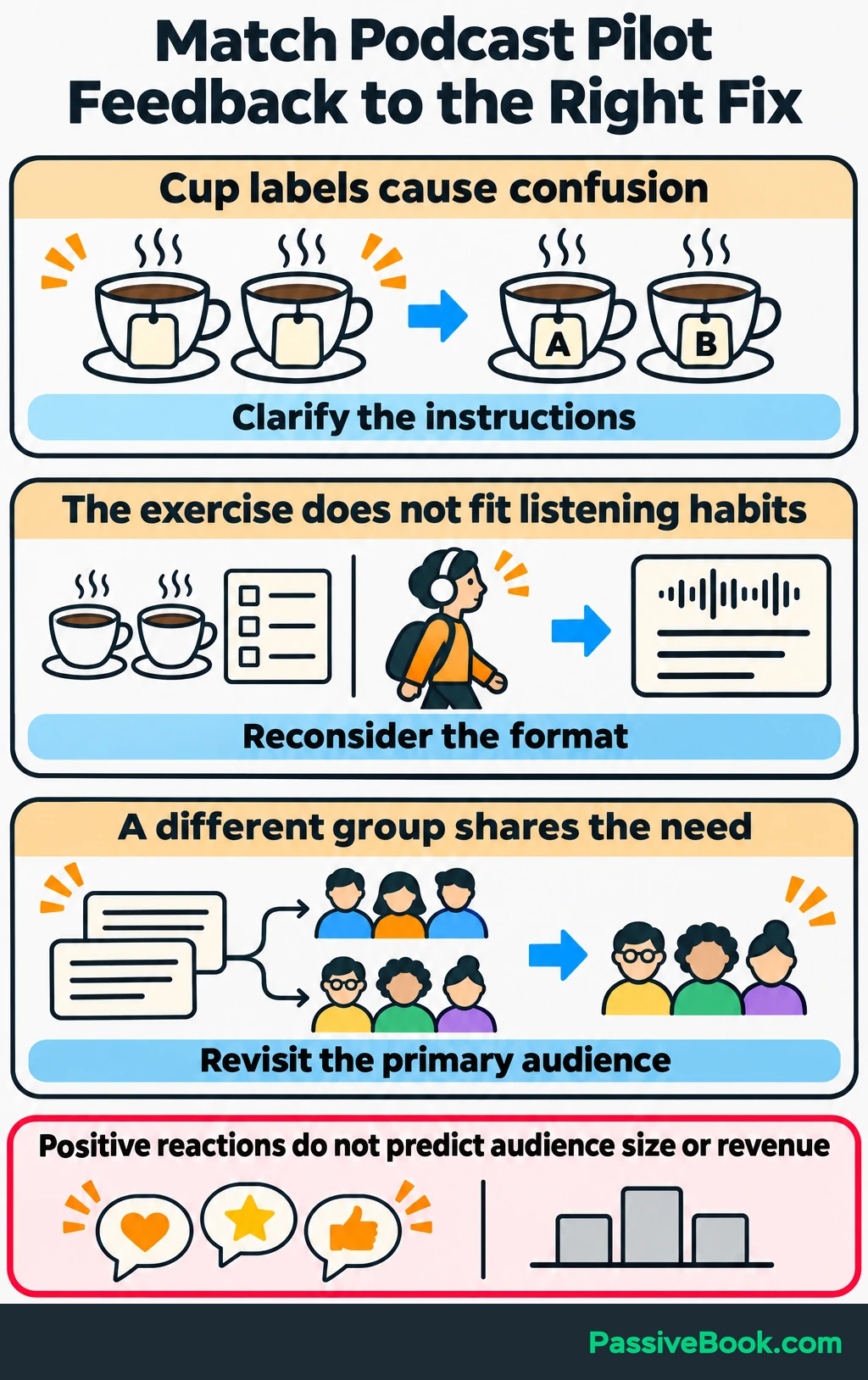
Fix the part responsible for the mismatch. Confusion about cup labels calls for clearer instructions. A useful exercise that nobody wants to do while listening may call for a different format. A need shared by another group may call for a revised audience definition.
A few positive reactions won’t predict audience size or revenue. Update the brief, then begin the series when matching listeners understand the promise and get the pilot’s intended benefit. Otherwise, test what remains unclear before recording more episodes.
What Next?
Write your working concept sentence and three episode titles, then put them in front of one person who matches your proposed listener. Ask what they expect to gain before explaining anything.
Use the social buttons to share this guide when you’re comparing show ideas with collaborators. It gives you a common way to judge which concept deserves production time.
Which part of your concept is hardest to make specific: the listener, the benefit, or the approach? Tell me in the comments, and bring any other questions too.
Share this post with your friends & followers:

