You recommend your new podcast to a friend, but explaining it takes longer than the opening of an episode. The name sounds clever. The cover looks polished. Yet neither makes the show’s value clear.
That uncertainty leaves potential listeners with work to do before they even press play, and it gives you no clear rule for choosing topics or writing descriptions. This guide works through those choices, from explaining the show’s value to creating a name, voice, sound, and cover you can maintain without a design team.
Define the Promise That Makes Your Podcast Different
Start with the situation that brings someone to your show. “People interested in sewing” gives you little direction. Someone choosing a first project has clearer questions, frustrations, and goals.
Look through customer emails, relevant community discussions, and conversations with potential listeners. Collect the words people use when they describe where they get stuck.
For example, imagine you sell beginner sewing patterns and want a companion podcast. Your notes might include questions such as:
- “How do I know whether this pattern is too hard?”
- “Which fabric should I buy?”
- “What should I check before cutting anything?”
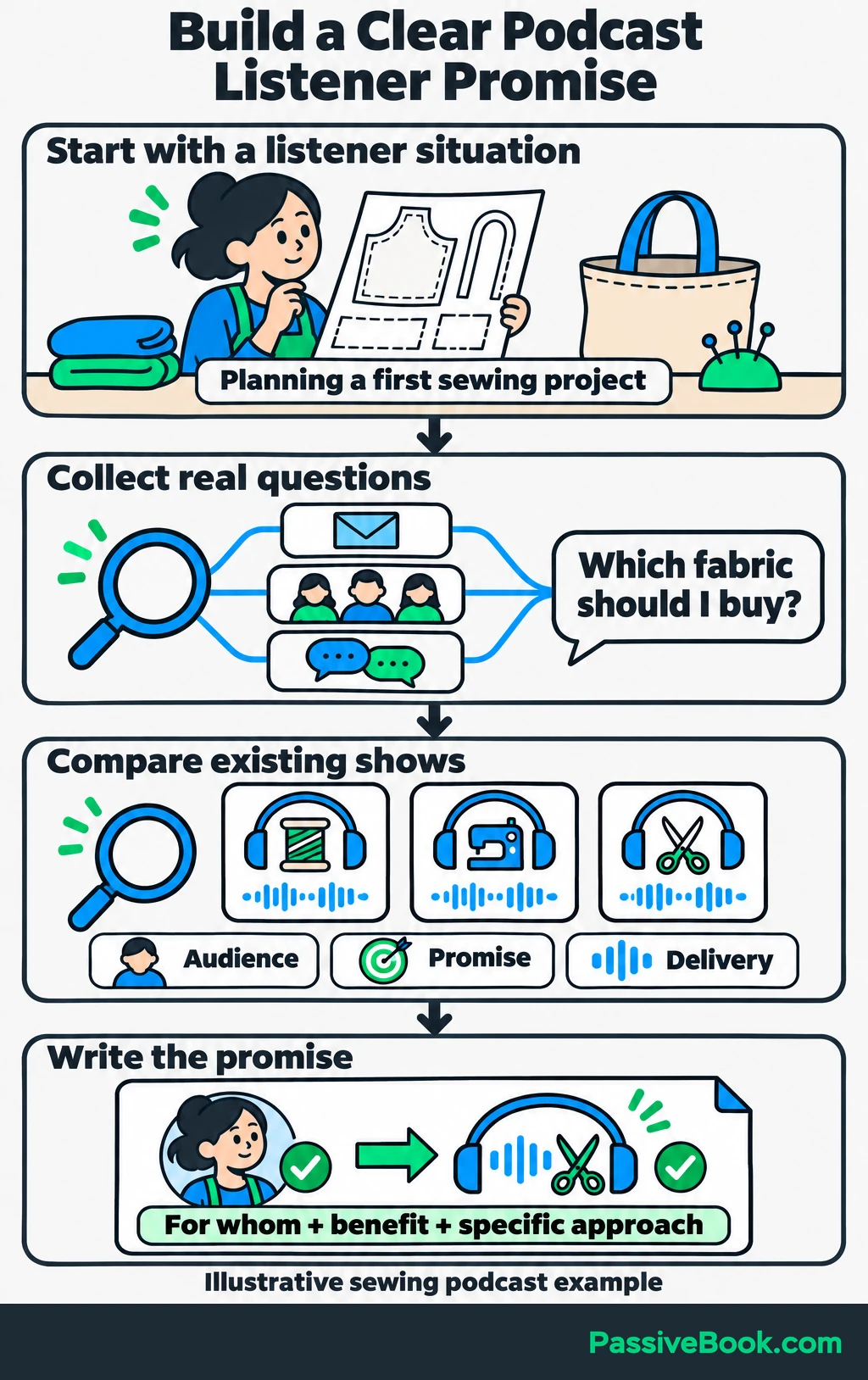
These are illustrative questions, but your own research should produce language this concrete.
Next, review a few comparable shows. Note whom they serve, what they promise, and how they deliver it. Listen to an episode as well as reading the description. You’re looking for a useful approach you can sustain, such as explaining one manageable decision instead of covering a broad topic.
Sum up whom you help, what they gain, and how the show delivers it:
For [listener], this podcast delivers [benefit] through [specific approach].
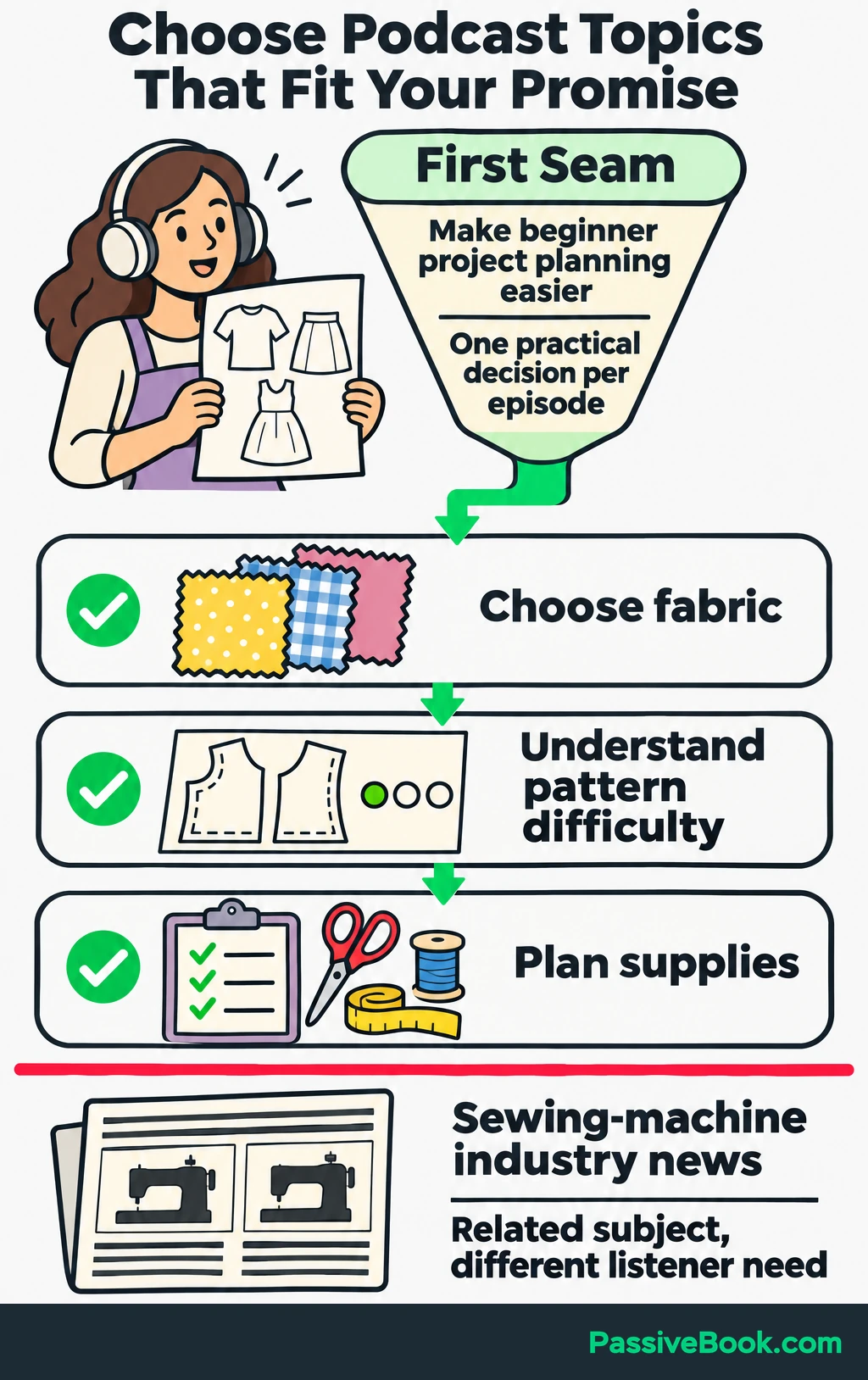
For the sewing business:
For people starting to sew at home, this podcast makes project planning easier by explaining one practical decision per episode.
Test that promise by listing several episode ideas. Choosing fabric, understanding a pattern’s difficulty level, and planning supplies all fit. Sewing-machine industry news probably doesn’t.
Those boundaries save production time. A topic can be interesting and still belong on another show.
Decide how the podcast supports your business, too. Here, the audience for the patterns and the show overlaps, so shared colors and a small shop credit make sense. But each episode should help someone make progress even if they never buy a pattern.
Choose a Memorable Name and Clear Messaging
Choose a Name Listeners Can Say and Find
Build a shortlist from your subject, the listener’s situation, or the result they want. Favor familiar spelling and words you can say comfortably.
Our illustrative show will use First Seam. It suggests a beginning, and the description can explain the focus on planning home-sewing projects.
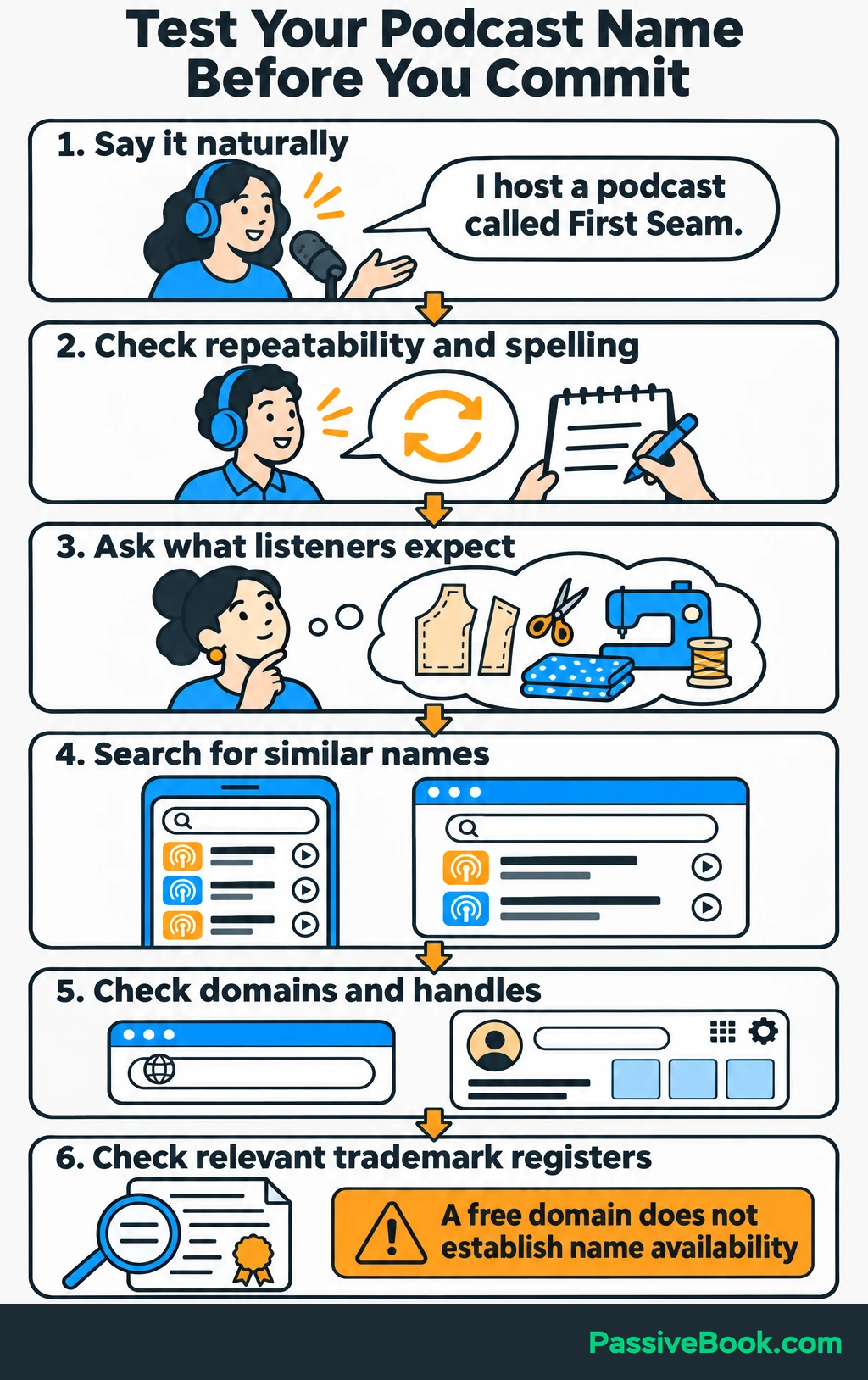
Before choosing your own name:
- Say it in a sentence: “I host a podcast called…”
- Ask someone to repeat it and spell it.
- Ask what kind of show they expect.
- Search podcast apps and the web for similar names.
- Check practical domain and social handle options.
I would drop a name that needs a spelling lesson every time you mention it. You’re trying to recommend a podcast, not dictate a password.
Before committing money to artwork, check relevant trademarks. WIPO’s Global Brand Database is a starting point, but it covers participating collections, so also search the relevant national or regional registers. A free domain alone doesn’t establish that a name is available to use.
Write a Tagline and Show Description
Your tagline should express the listening benefit in one short line. It doesn’t need to explain the whole show.
For First Seam:
Clear choices for your first sewing projects.
The description has more room. Explain whom you help, what you cover, and what an episode gives them. Apple’s show description guidance recommends making the content and benefit clear and including relevant search terms.
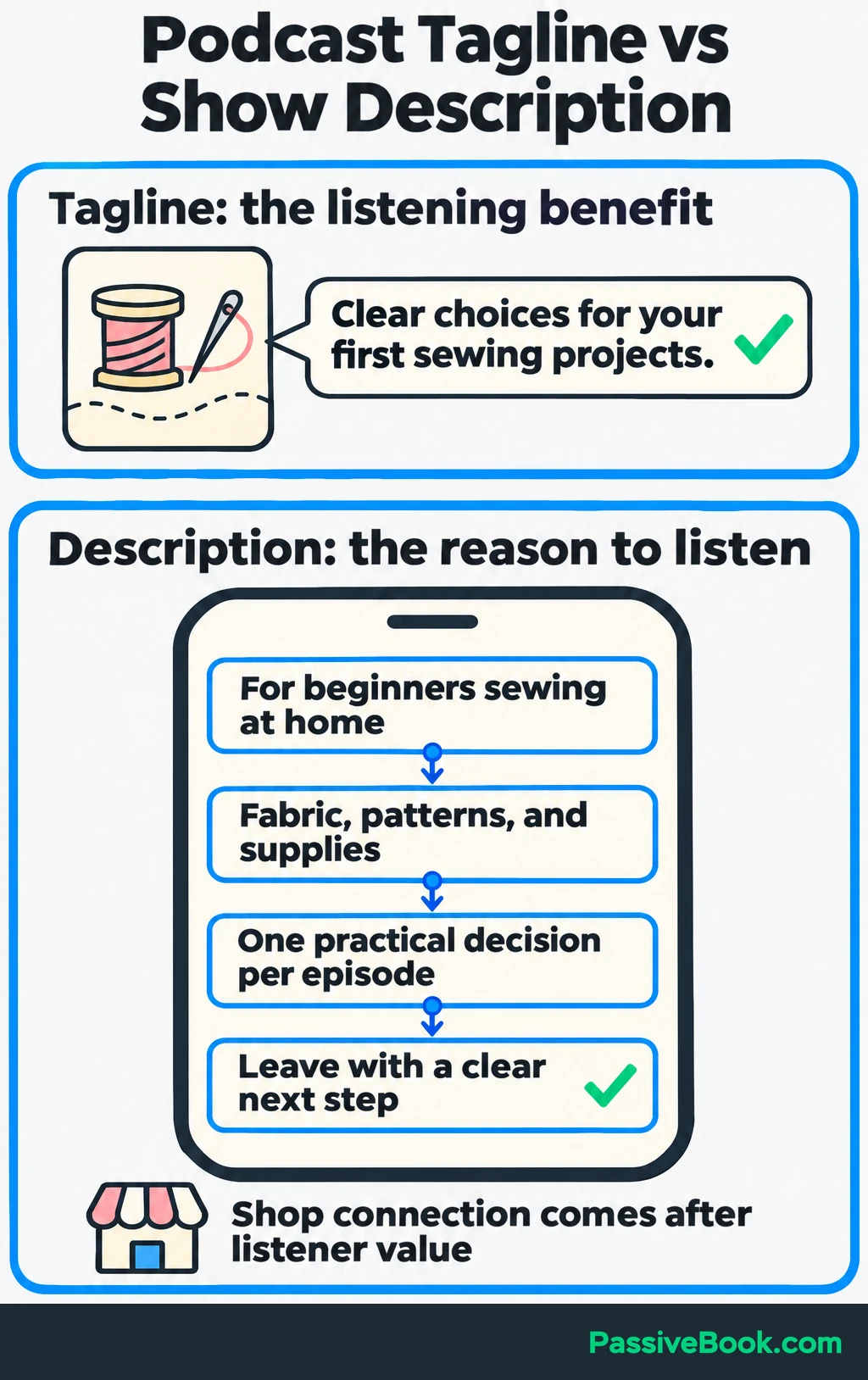
Here is a complete description for the example:
Starting to sew at home? First Seam helps you plan approachable projects without getting lost in unfamiliar terms. Each episode explains one practical decision, from choosing fabric to understanding pattern instructions and preparing your supplies. Leave with a clear next step for your project. The show comes from a shop that sells sewing patterns for beginners, but its advice works with any pattern.
Notice where the shop appears: after the reason to listen.
Read your description aloud. Replace phrases such as “empowering your creative journey” with the thing you actually help someone do. Buying suitable fabric is a clearer promise.
If your own wording still feels vague, AI Podcast Studio can give you a coordinated first draft. It carries the same listener promise from your description into your opening and episode titles.
Free AI Podcast Studio




Make Your Voice and Sound Recognizable
Translate Personality Into Hosting Choices
Choose three voice traits, then turn each into a behavior you can hear or read. Words like “friendly” are too loose unless they change how you deliver an episode.
For First Seam, I would use:
| Voice Trait | What the Host Does |
|---|---|
| Calm | Speaks at an unhurried pace and pauses after explaining a choice. |
| Plainspoken | Explains sewing terms before using them in instructions. |
| Encouraging | Ends with one manageable action and avoids making beginners feel behind. |
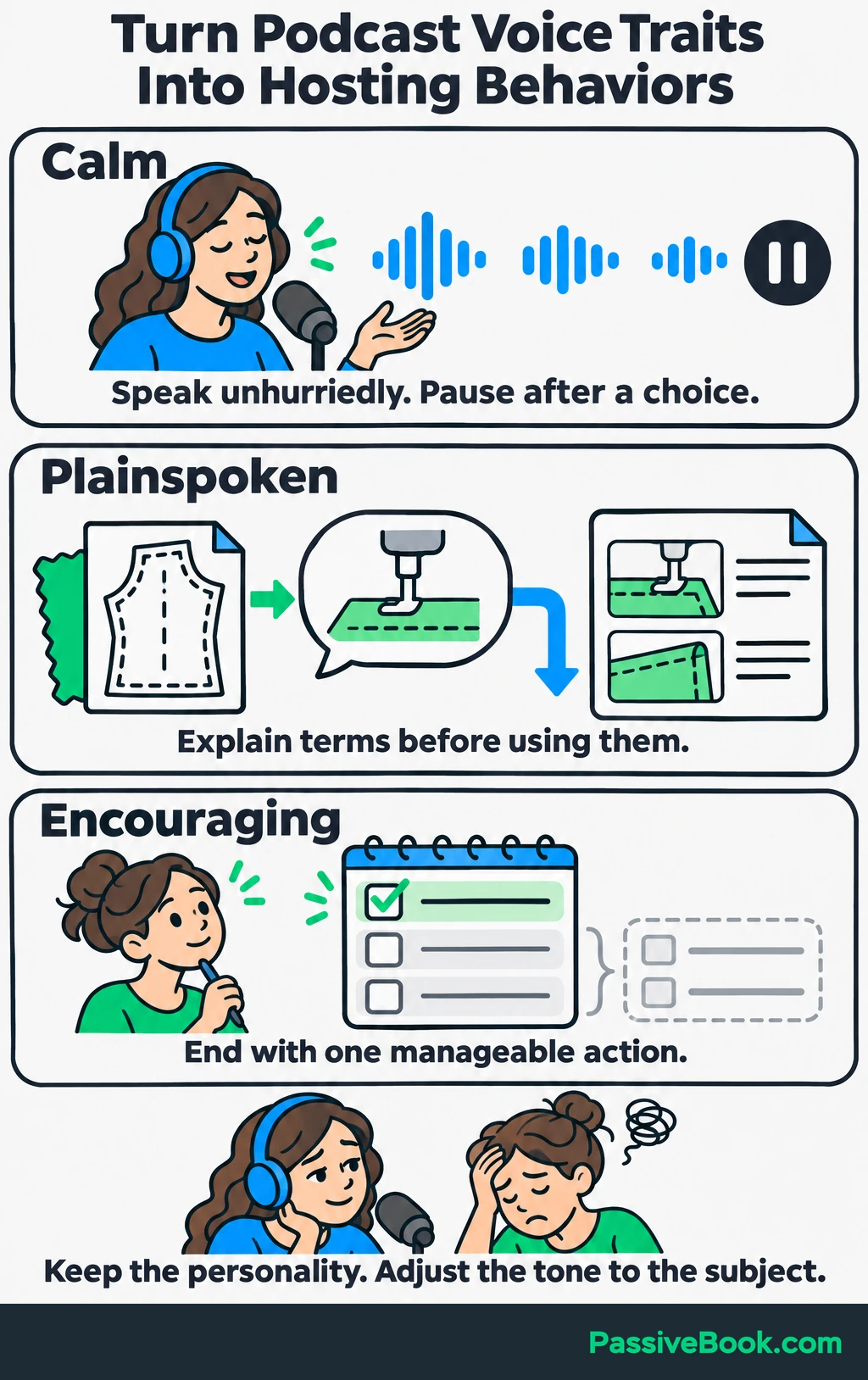
Keep that personality steady while adjusting your tone to the subject. An episode about a disappointing project can acknowledge frustration without forcing cheerful jokes into every gap.
I once gave a digital-product page a formal rewrite because I thought it sounded more professional. Then I read it beside the plain instructions inside the download. They sounded like two different businesses. Reading both aloud helped me spot the phrases I would never say to a customer.
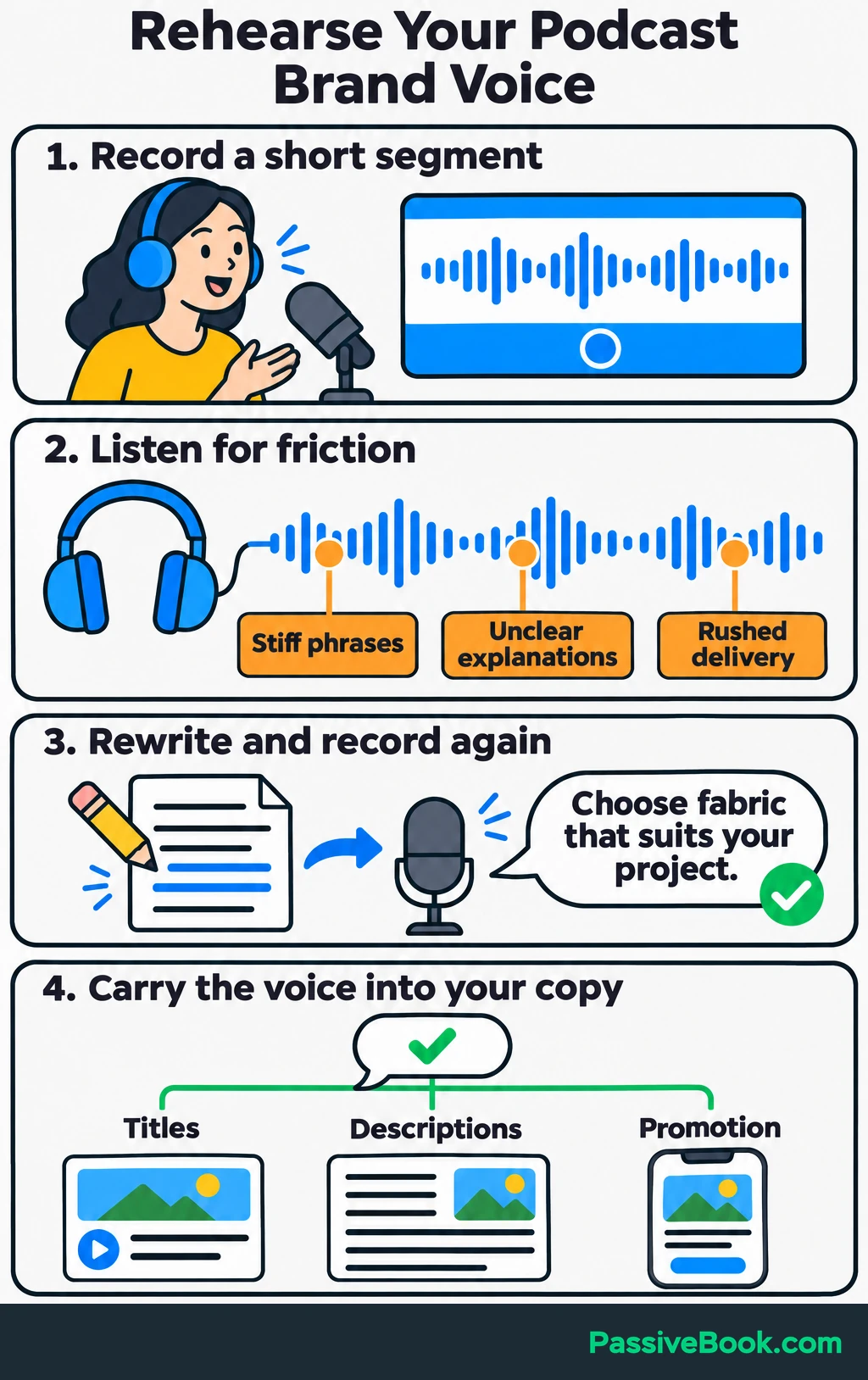
For your podcast, record a short practice segment before writing a full script. Listen for sentences that sound stiff, explanations that need another pass, and places where you rush.
Then carry those same choices into episode titles, descriptions, and promotional copy. A calm teaching show shouldn’t advertise every episode as a life-changing revelation.
Build a Repeatable Listening Experience
Choose a structure that makes your promise easy to deliver. For First Seam, each episode could follow this order:
- Introduce one project-planning question.
- Explain the available choices and what matters.
- Give the listener one decision to make.
The spoken opening can be brief:
“This is First Seam. Today, we’re choosing fabric for your first tote bag.”
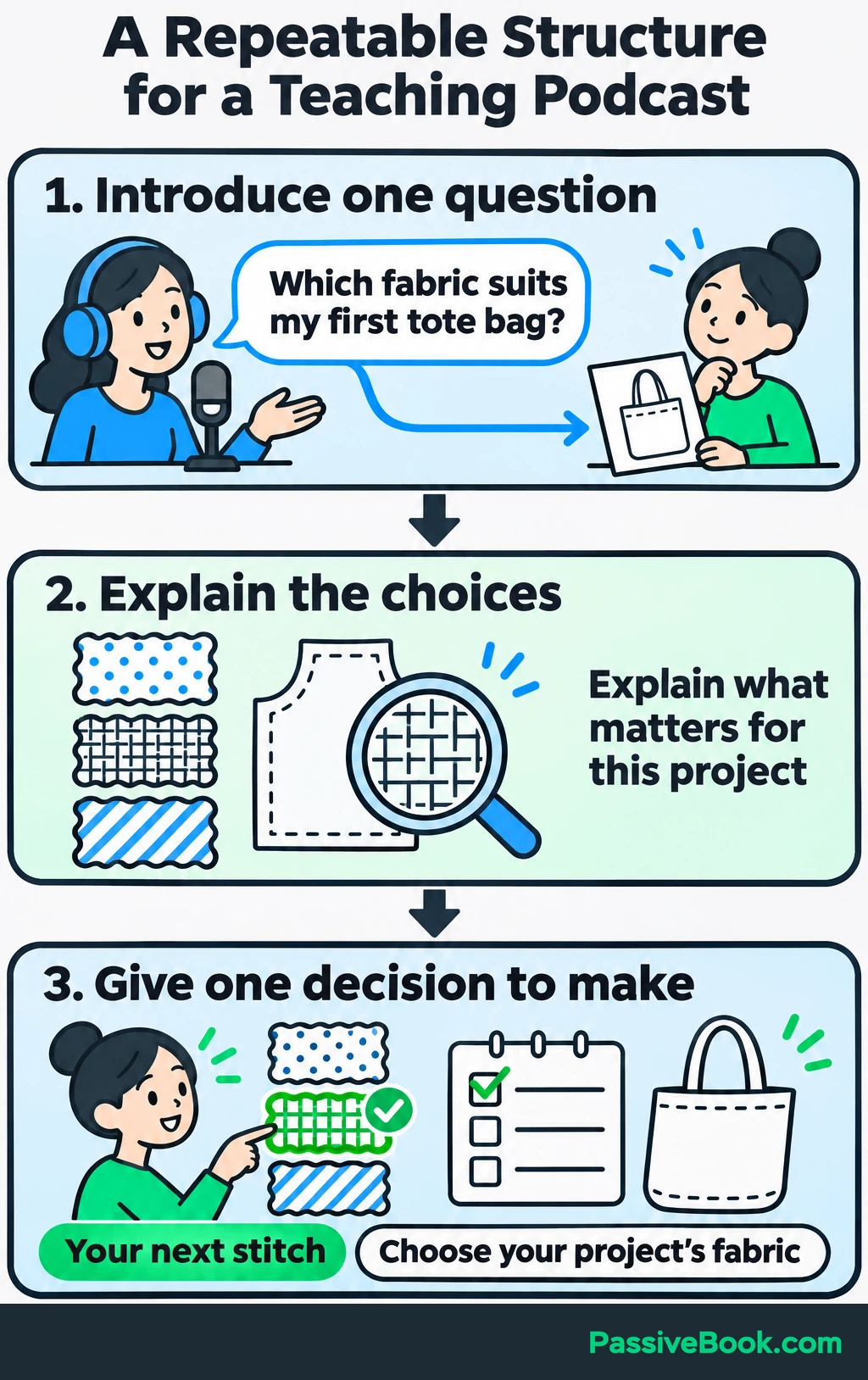
That names the show and gets straight to useful content. A long introduction about the host’s week would delay the exact help the description promised.
You can add a recurring segment or closing phrase. First Seam might finish with “Your next stitch,” followed by the episode’s action. Use it consistently if it feels natural; don’t keep a catchphrase you dread saying.
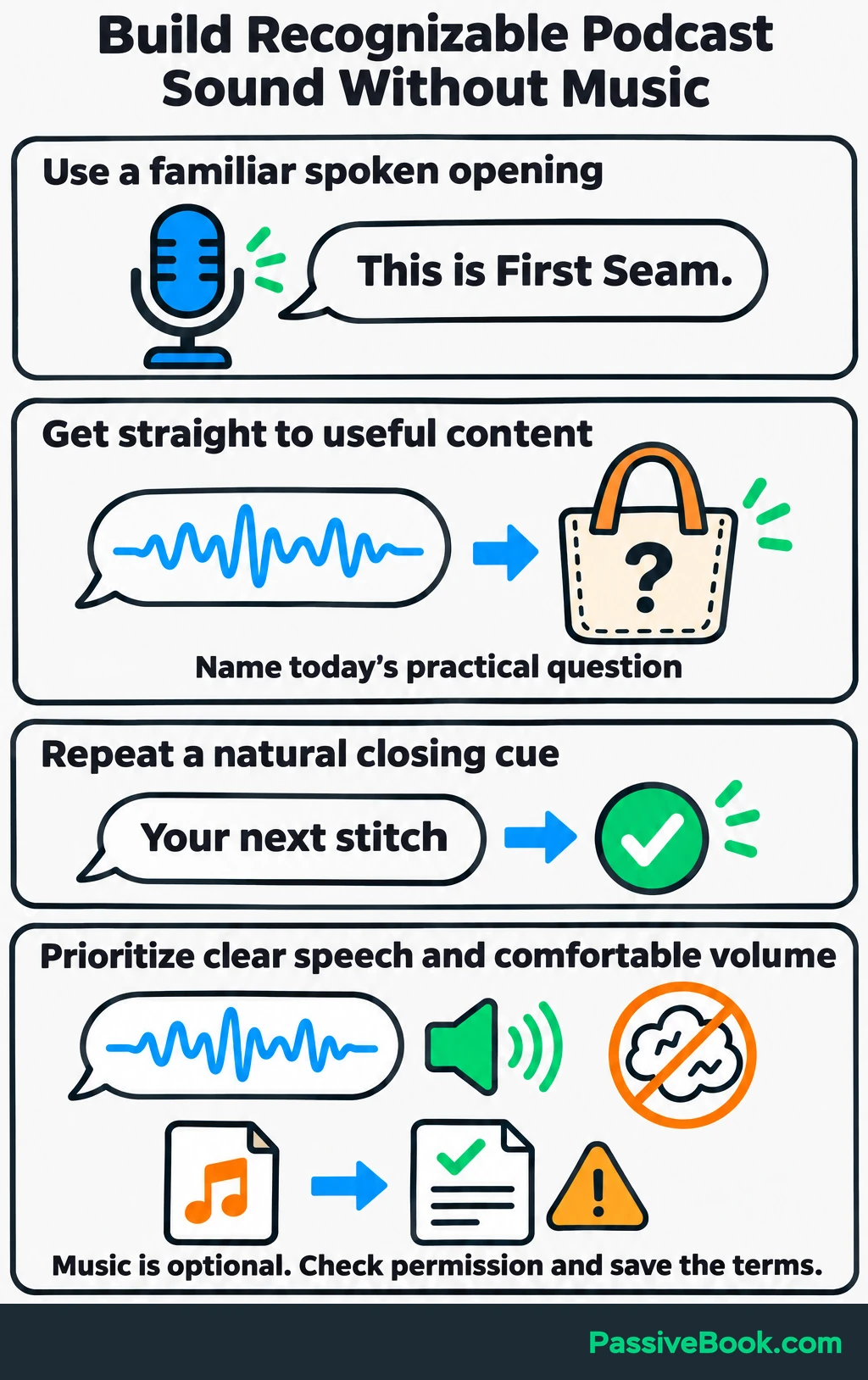
I would start without music. A recognizable spoken opening costs nothing, and it leaves less to edit. Focus first on clear speech, comfortable volume, and removing distracting noise.
If you add music or effects, check that you own the necessary rights or have permission covering your intended podcast use. Save the terms with the audio files. As Spotify’s copyright guidance explains, “royalty-free” doesn’t mean you can use a track without restrictions.
Design Cover Art Listeners Can Recognize
Turn your promise and voice into a few visual choices you can repeat:
- A small color palette.
- One or two readable fonts.
- One main image or graphic idea.
- A layout that gives the show name priority.
For First Seam, I would try large lettering, a simple stitched-line motif, and teal against cream. That gives the show a usable starting point without filling the cover with scissors, fabric, needles, a microphone, and the host’s entire biography.
Shrink the design to roughly the size you see in a podcast app. Can you still read the title? Does the main shape survive? Compare it beside relevant shows and simplify anything that disappears.
The tagline doesn’t have to fit on the cover. It already has a job in your description and promotional copy.
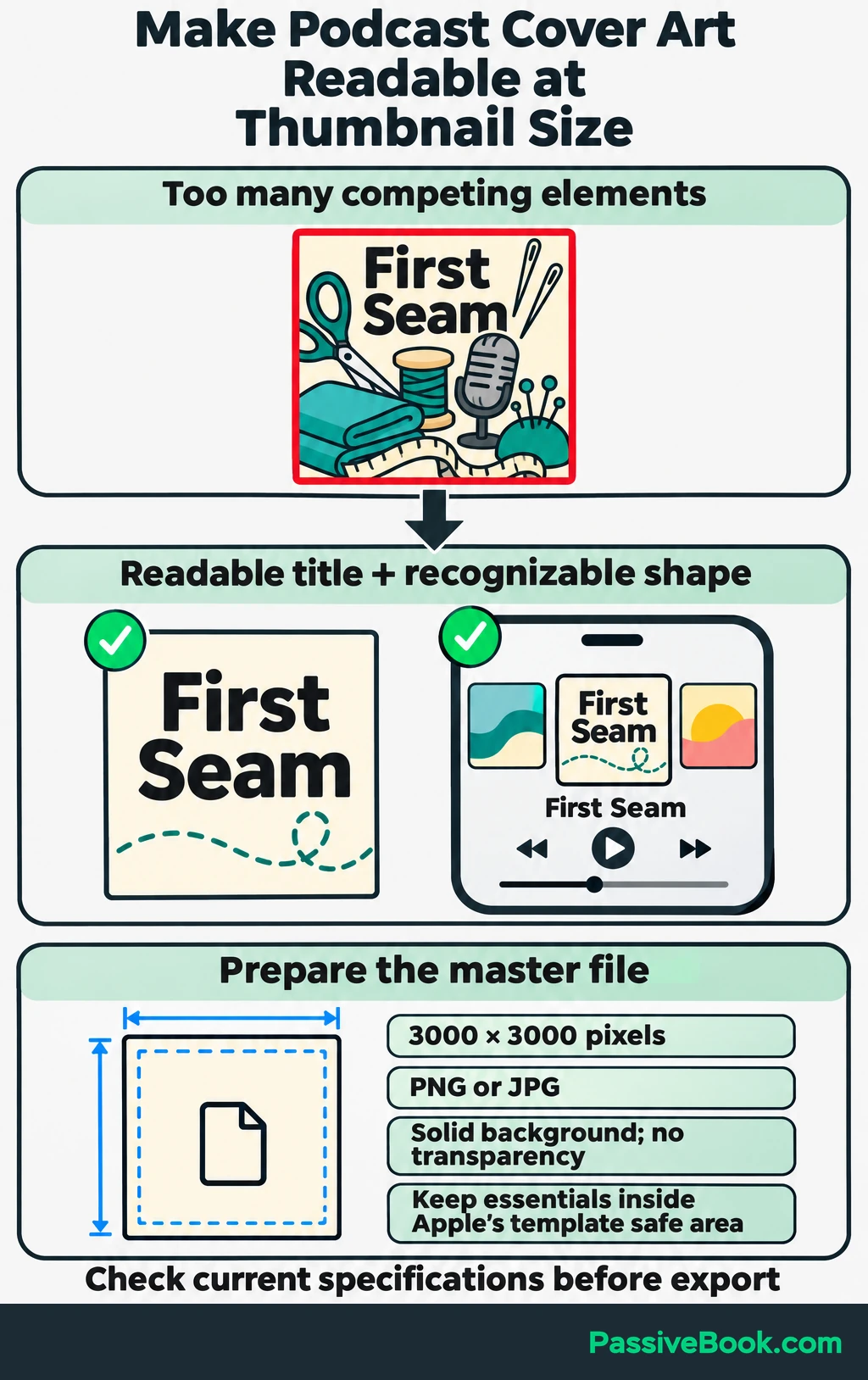
For a practical master file, use these Apple Show Cover specifications:
| Setting | What to Use |
|---|---|
| Canvas | 3000 × 3000 pixels. |
| Export | PNG or JPG. |
| Background | Solid, with no transparency or alpha channel. |
| Placement | Keep essential text and images inside Apple’s template safe area. |
Check the linked specifications before your final export, and preview the artwork in the services where you publish. Interface controls and cropping can cover details near the edges.
I would build the first version in Canva, a graphic design tool with editable podcast-cover templates. Pick a simple layout and adapt it to your show rather than browsing templates until bedtime.
A separate illustrated logo can wait. If you hire a designer, give them a specific problem to solve: “The title becomes hard to read at thumbnail size.” Include the listener promise, voice traits, and places the artwork will appear.
That is a more useful brief than “make it pop.”
Test Whether Listeners Understand and Remember the Show
Before launch, show a few potential listeners the name, small cover image, and description. Let them react before you explain anything.
Ask:
- “What do you think this show covers?”
- “Who would find it useful?”
- “What would you expect an episode to sound like?”
- “What would you hope to learn first?”
Keep the questions open. “Does this look beginner-friendly?” gives away the answer you want.
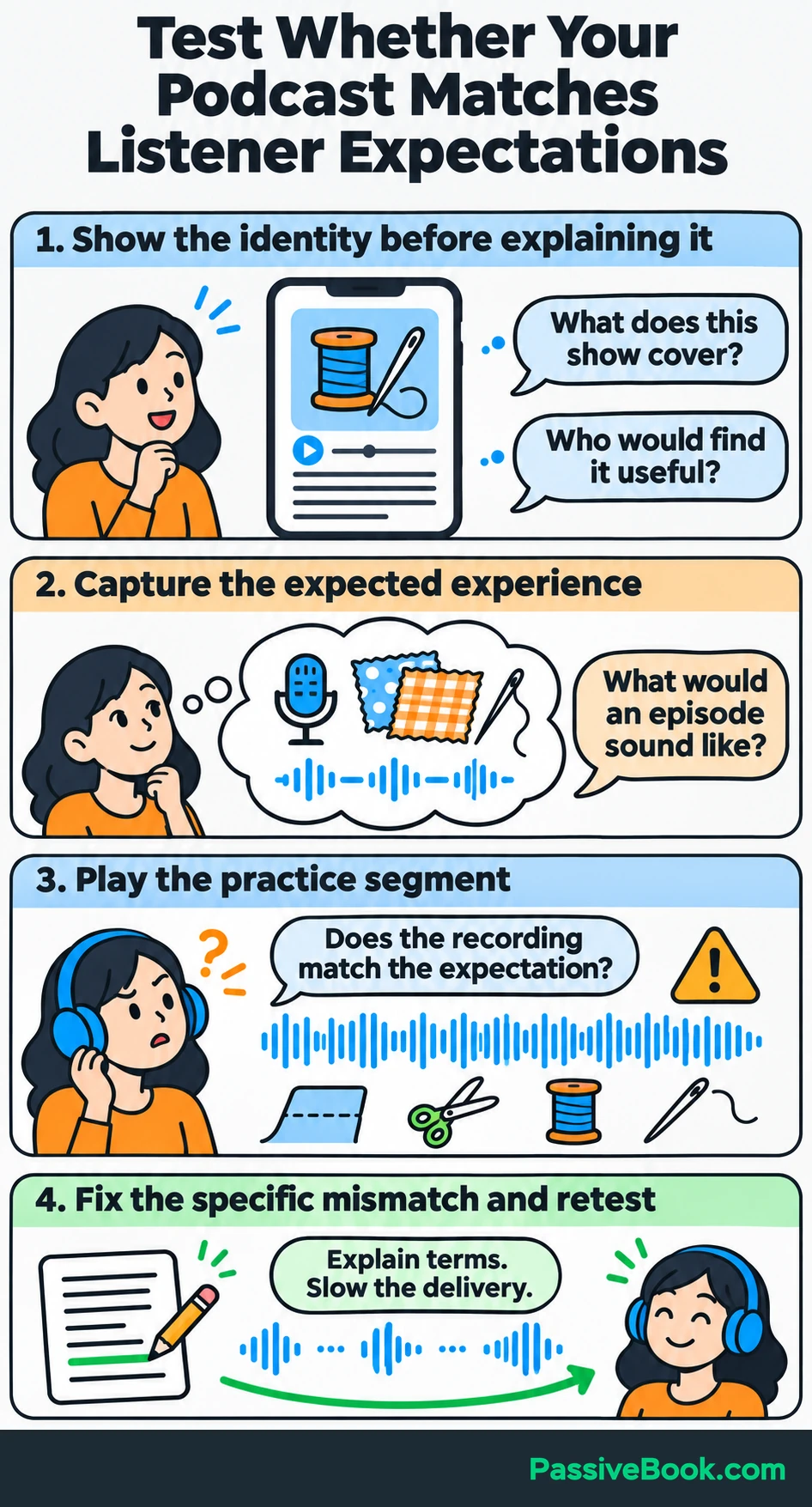
Next, play your practice segment and ask whether it matches what they expected. If the artwork suggests a relaxed explanation but the host races through unexplained terms, you’ve found a specific mismatch.
After a brief unrelated conversation or task, ask what name, image, phrase, or benefit they remember. You’re checking both understanding and recall.
For First Seam, suppose people expect advanced garment construction. Look at what created that expectation. A complex dress illustration may need replacing, or the description may need a clearer reference to first projects.
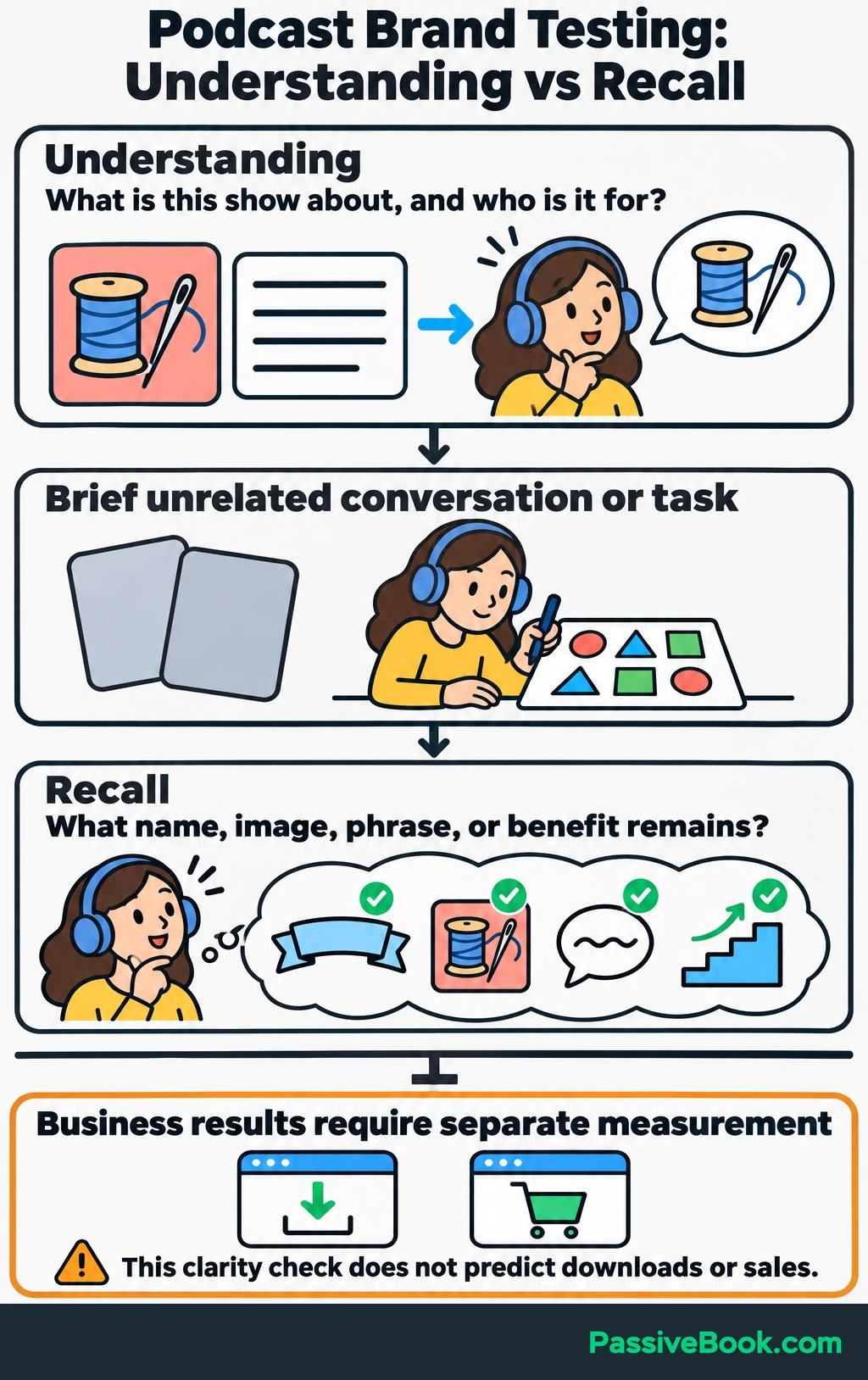
Change the confusing element and repeat the check. Don’t redesign everything because one person prefers orange.
This feedback tells you whether people understand and remember the identity. It doesn’t predict downloads or sales. Keep business results separate from this early clarity check.
If you already publish, preserve the name, colors, or opening that still communicates the right promise. Fix the source of confusion without throwing away useful recognition.
Apply Your Brand Consistently
Save your decisions in a short brand guide. A shared document is enough. Include:
- The listener promise and topic boundaries.
- The approved name, tagline, and description.
- Voice traits with observable behaviors.
- Color codes, font names, and artwork files.
- The opening, episode structure, and closing invitation.
- Any music files and their license terms.
On my sites, I prefer saving an approved example beside each rule. “Use a plainspoken voice” leaves room for interpretation. A sample sentence shows what I mean.
Then make templates for the work you repeat. Start with an episode outline, an episode description, and one promotional graphic for a channel you actually use. You don’t need assets for six platforms because a branding checklist mentioned them.
Keep the identifying elements stable and change the episode details. For First Seam, the teal-and-cream palette and title treatment stay familiar while the topic changes.
Make episode titles clear to people who have never heard the show. “Choosing Fabric for Your First Tote Bag” gives them more to work with than “Episode 7: Material Matters.”
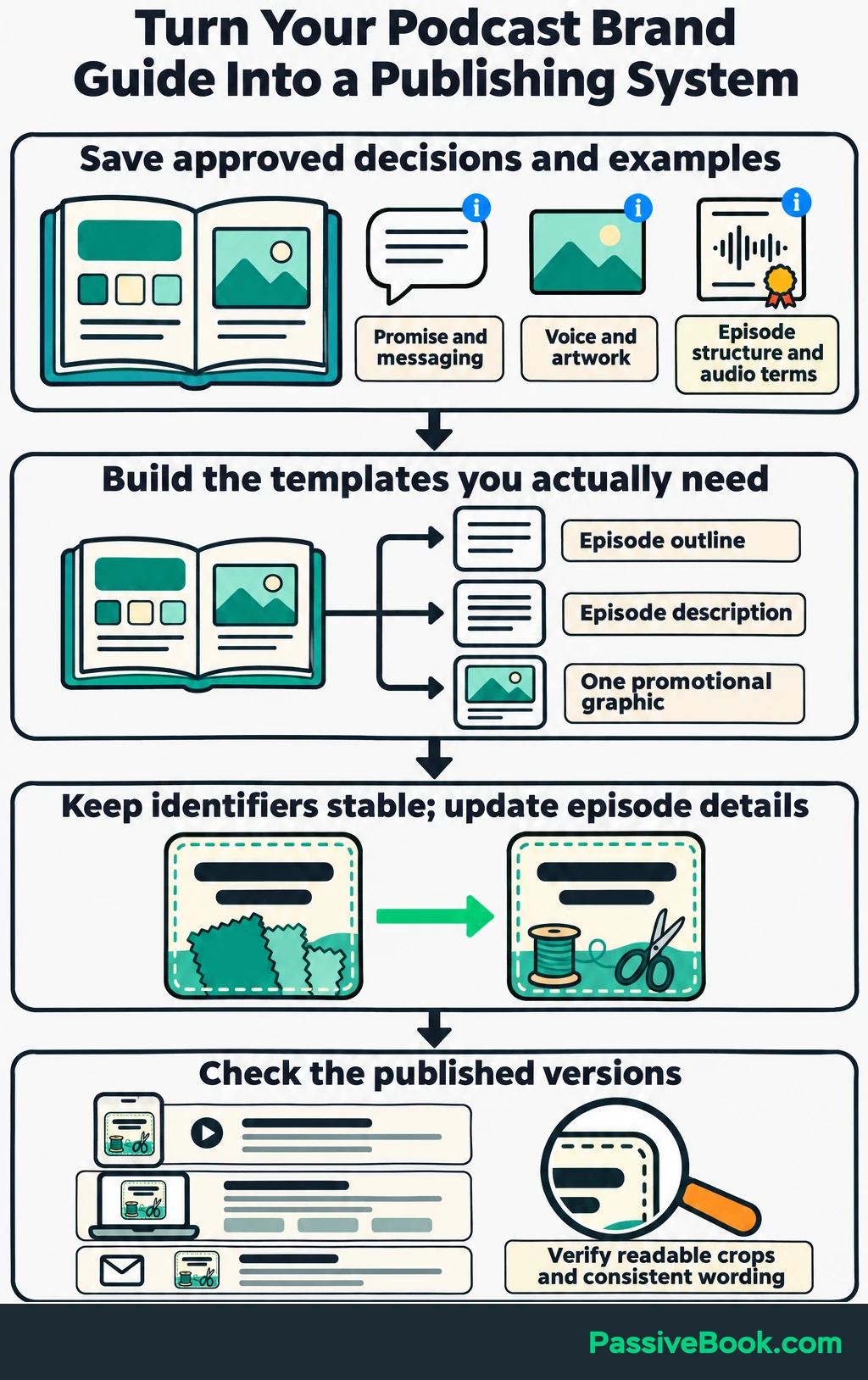
Apply the identity to your podcast listings, website, emails, and active promotional channels. Check the published versions, because a good source file doesn’t guarantee a readable crop.
Record a trailer that lets people hear the promise in action. Introduce the show, include a representative teaching moment, and offer one next step. Apple recommends keeping podcast trailers to two minutes or less.
For First Seam, a short explanation of one fabric choice would demonstrate more than a string of claims about being helpful.
Choose one closing invitation for each episode. Early on, I would usually ask people to follow the show. When an episode naturally supports a companion resource, the host could say:
“Get the free project-planning sheet from the link in this episode’s notes and use it to plan your next sewing project.”
That keeps the next step connected to the lesson. It also gives the business a relevant way to continue the conversation.
As questions arrive, look for repeated misunderstandings. Clarify the wording or delivery that causes them, and keep the recognizable parts that still work. Consistency should make publishing easier, not stop you from correcting a confusing promise.
What Next?
Write your listener promise in one sentence, then list five episodes that would deliver it. If the topics keep pulling in different directions, tighten the promise before spending time on artwork.
Use the social buttons to share this guide when you want a second opinion on your show’s identity; the listener questions above give that conversation a useful starting point.
What should someone remember about your podcast after hearing one episode? Share your answer, along with any other questions, in the comments.
Share this post with your friends & followers:

