I’ve pivoted my online business three times in the past decade. Each time felt like admitting defeat, even when data screamed the change was necessary.
The hardest pivot came after six months building a course teaching productivity systems to freelancers. I’d validated the idea with surveys asking “Would you buy this?” to 200 people. Sixty percent said yes. Turns out “would you buy” is worthless.
When I launched, seven people purchased. Seven. I’d asked the wrong question to people who were being polite, not honest about their wallets.
Here’s what I learned: Survey responses about hypothetical future purchases are fiction. The only validation that matters is someone giving you money right now.
Pivoting after validation feedback isn’t about starting over. It’s about listening to what the market actually tells you, not what you hoped it would say. This guide shows you exactly when to pivot, which type of pivot fits your situation, and how to execute without burning through your time and budget.

- •What Is a Business Pivot After Validation?
- When to Pivot Vs. When to Persevere
- •Critical Pivot Mistakes to Avoid
- The Five Types of Strategic Pivots for Solopreneurs
- Building Your Pivot Decision Framework
- •Testing Your Pivot Before Full Commitment
- Your 4-Week Pivot Action Plan
- •Low-Cost Pivot Strategies for Bootstrap Businesses
- •Managing the Emotional Weight of Pivoting
- •What Next?
What Is a Business Pivot After Validation?
A business pivot is a strategic shift in one core element of your business model based on real market feedback. You’re not abandoning your business or admitting failure. You’re adapting to customer needs versus what you initially thought they wanted.
The mechanics? Simple. You change one component while keeping others constant.
Keep your product, switch your customer segment. Or keep your audience, completely redesign your delivery method.
YouTube provides the classic example. The platform launched as a video dating site in 2005. When users ignored the dating features but uploaded all kinds of random videos, the founders recognized the real opportunity. They pivoted to general video sharing and built a billion-dollar business.
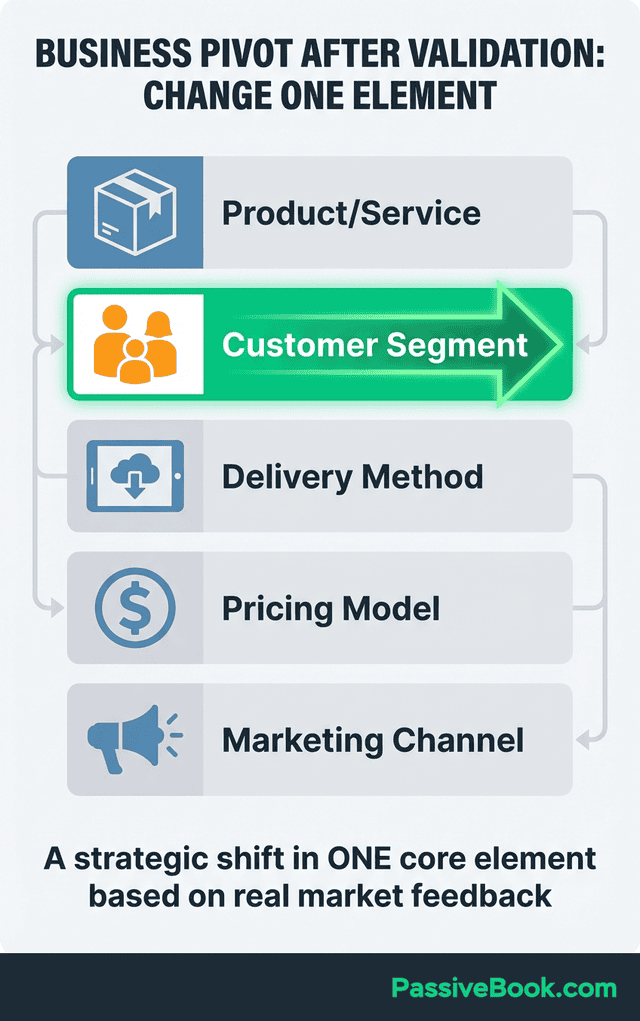
A pivot is not panic-driven changes without supporting data. It’s not a complete restart where you throw away everything you’ve built. Most importantly, it’s not a response to a single negative comment or one bad week of metrics.
The distinction matters because true pivots preserve your accumulated assets. Your audience relationships, your brand recognition, your domain authority all carry forward. You’re redirecting momentum, not rebuilding from zero.
Here’s what nobody tells you: that first pivot will feel like admitting you wasted six months. You didn’t. You bought education most people never get.
When to Pivot Vs. When to Persevere
Research shows 90% of startups fail, but many pivot too early from problems they could have solved with better execution. The challenge for solopreneurs is distinguishing between an idea that needs more time and one that completely misses the market.
Pieter Levels launched 12 startups in 12 months, learning which products needed pivots versus which needed patience. His approach centered on rapid testing with real customers, not extended periods of hopeful building.
The core decision framework is straightforward. Pivoting makes sense when customer feedback reveals your core value proposition doesn’t match customer needs. Persevering makes sense when feedback points to fixable execution problems like unclear messaging or poor onboarding.
True validated learning comes from real customer behavior, not survey responses or friend opinions. You need people willing to pay money or invest significant time. Their actions reveal truth that words often hide.
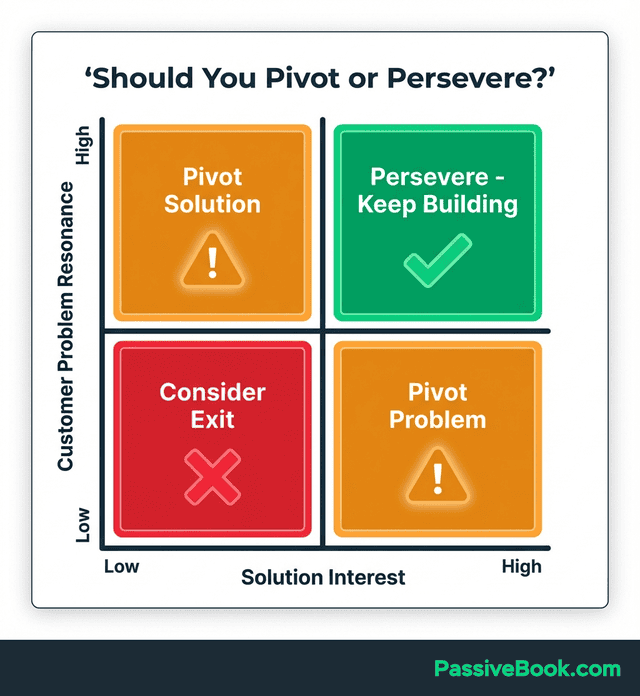
Common Decision Errors and How to Avoid Them
I’ve walked away from two businesses that should have worked on paper. I’ve also stubbornly pushed through three months of zero traction on what became my most profitable pivot.
The difference? Data patterns versus emotional attachment.
Emotional attachment to your original idea creates the biggest decision error. Psychologists call this the IKEA Effect. You overvalue your creation simply because you built it, ignoring clear signals of customer indifference.
Instagram’s founders faced this exact situation. They built Burbn, a check-in app with photo-sharing features. When data showed users ignored check-ins but obsessed over photos, the founders had a choice.
They could defend their original vision or pivot to what customers actually used. They chose the pivot and built a platform Facebook acquired for $1 billion.
Most pivot advice tells you to “follow your passion” or “trust your gut.” That’s garbage. Your gut doesn’t know what customers will pay for. Data does.
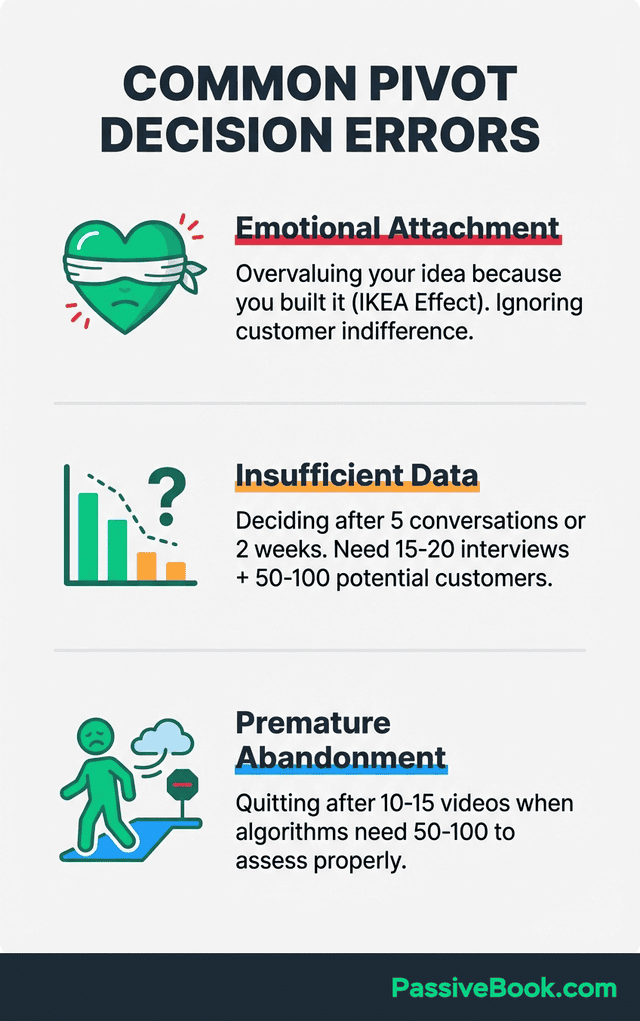
Successful business strategy relies on customer data, not founder instinct. Research published in Harvard Business Review confirms that data driven decision-making consistently outperforms gut feelings in business contexts.
The opposite error is equally destructive. Most online businesses need three to six months of consistent testing before you can draw valid conclusions.
Many solopreneurs abandon YouTube channels after 10 to 15 videos when platform algorithms need 50 to 100 videos to properly assess and promote content. This is why a channel pivot is high-investment for time-constrained solopreneurs. Start with repurposing 10 to 15 pieces before committing to original content production.
Sample size matters enormously. Focus on patterns across 15 or more customer conversations, not individual loud voices.
Track what people actually do, not what they say they’ll do. Stated preferences and actual behavior diverge constantly.
Justin Welsh conducted over 30 customer interviews before pivoting from executive coaching to productized courses. If 30 interviews feels impossible for you, start with 10 to 15. You’ll see patterns by then.
Each conversation revealed a pattern. Executives wanted his frameworks and systems, not ongoing coaching relationships. The data pointed to a specific pivot type that preserved his expertise while changing his business model.
When to Quit Entirely (vs. Pivot)
Quitting is the right choice in specific circumstances that have nothing to do with perseverance or character. Sometimes the market simply doesn’t exist in a form that supports your small business.
The clearest signal is when 30 or more target customers tell you they would not pay for any variation of your solution. Not at a lower price. Not with different features. Not through a different channel.
This represents core market rejection, not a pivot opportunity.
Opportunity cost provides the second clear signal. Your current business prevents you from pursuing higher-potential opportunities that better match your skills and market demand. Staying committed to a failing business means saying no to better options.
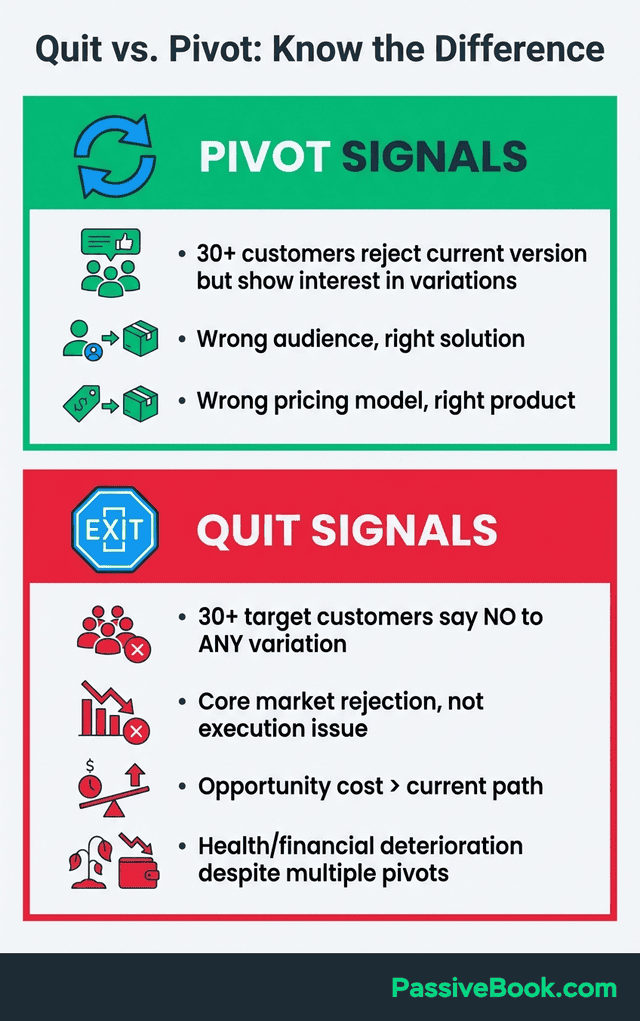
The third signal is health deterioration. If your business destroys your financial stability or emotional wellbeing despite multiple pivot attempts and adjustments, quitting becomes self-preservation.
The framework is straightforward. Pivoting changes what you sell or who you sell to. Quitting acknowledges no viable market exists that you can serve profitably with your constraints.
Both are valid decisions based on different data patterns.
Critical Pivot Mistakes to Avoid
Research in MIT Sloan Management Review shows data driven pivots outperform gut instinct decisions by meaningful margins. Yet solopreneurs consistently make three mistakes that undermine otherwise sound business strategy.
The first mistake is changing too many variables at once. You switch your product, your target audience, and your marketing channel all together.
When results improve or worsen, you can’t identify which change created the outcome. You’re left guessing about what actually worked.
The second mistake is abandoning brand equity and audience relationships you’ve built. You’ve spent months earning trust with a specific audience. They know your name, they open your emails, they engage with your content.
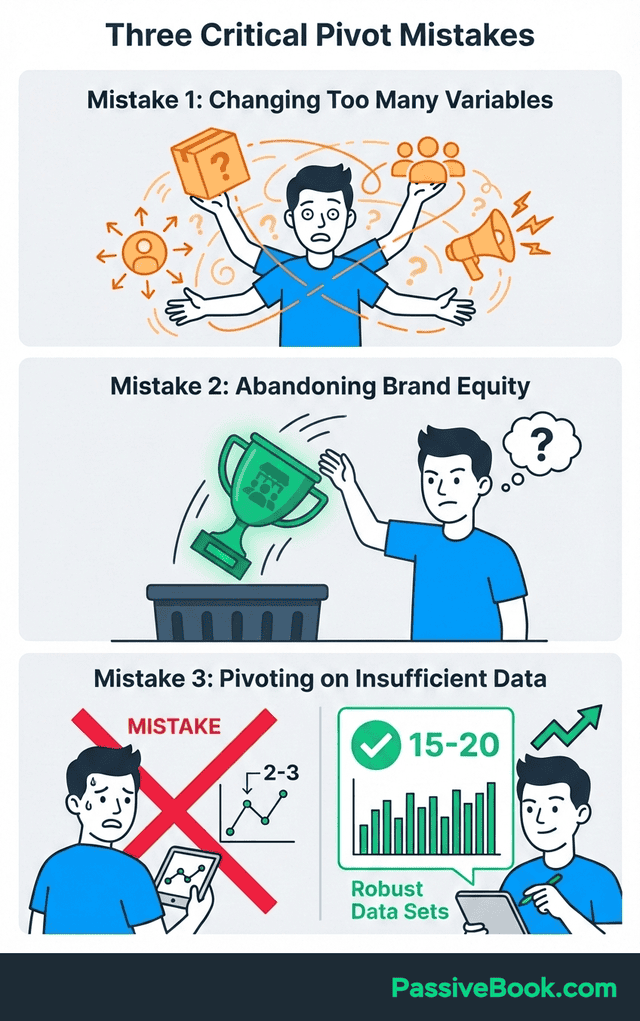
A poorly executed pivot throws away these assets and forces you to rebuild from scratch.
The third mistake is pivoting based on insufficient data. Five customer conversations and two weeks of poor metrics don’t provide enough signal. You’re reacting to noise, not identifying genuine market patterns.
This leads to pivot loops where you change direction every few weeks, never giving any approach time to gain traction.
The solution combines patience with structure. Test one variable at a time over defined timeframes. Preserve your existing audience by bringing them along on the pivot journey.
Make sure your data meets minimum thresholds before making permanent changes to your business model.
The Five Types of Strategic Pivots for Solopreneurs
Eric Ries identifies ten pivot types in The Lean Startup methodology, but solopreneurs working around day jobs need a simplified framework. Five core types of pivots cover the majority of situations you’ll face when customer feedback demands change.
These five types aren’t equally valuable. Platform or channel pivots are my favorite for solopreneurs because you keep your expertise, just change the wrapper. Customer segment pivots are the most profitable when you get them right.
Different pivot types require varying investments of time, money, and effort. The key is matching your pivot choice to what your feedback actually reveals.
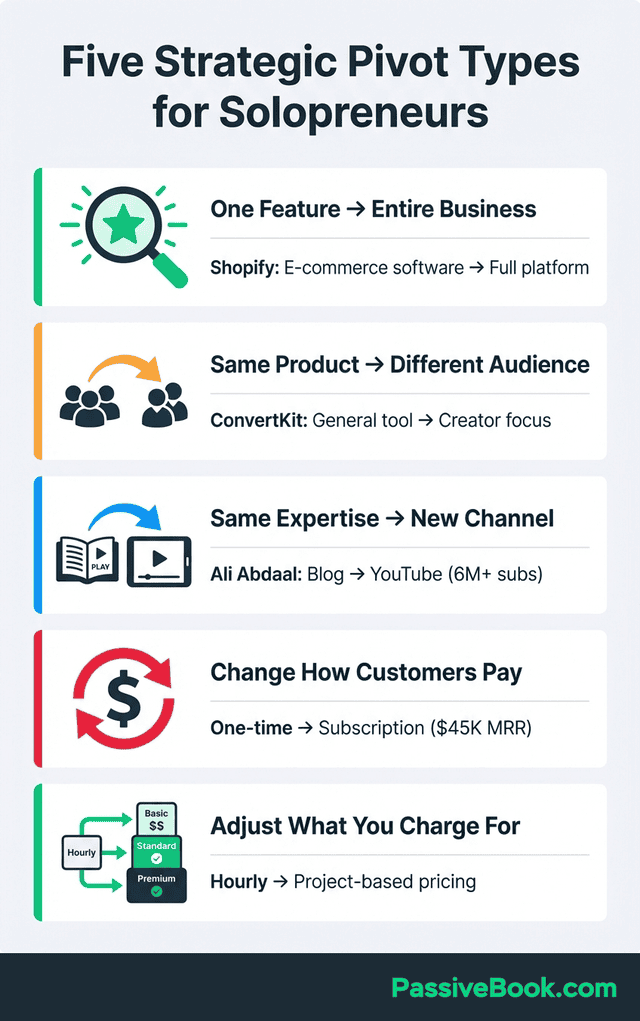
If customers love your product service but you’re targeting the wrong audience, a customer segment pivot makes sense. If they want one specific feature and ignore everything else, a Zoom in pivot fits better.
Each pivot type changes one core business element while preserving others. This approach protects the value you’ve already created while carefully adjusting the component that market feedback identified as problematic.
Zoom-in Pivot: Making One Feature Your Whole Business
A zoom-in pivot means taking one popular feature of your product and making it your entire business. Everything else gets eliminated or trimmed down. You’re focusing limited resources on the single element customers actually value.
Shopify started as an online snowboard store. The founders built custom e-commerce software to run their store.
When other merchants showed more interest in the software than in buying snowboards, they recognized a zoom-in pivot opportunity. They abandoned retail and focused exclusively on the e-commerce platform, building a business now worth billions.
For time-constrained solopreneurs, this pivot type offers a powerful advantage. You simplify operations by focusing on your highest-value offering.
Instead of managing five different products or services, you perfect one thing and build your entire business model around it. This reduces product development complexity and lets you serve one customer need exceptionally well.
The trade-off is audience size. You might serve a smaller customer segment than your original vision, but you serve them exceptionally well. In bootstrap businesses, depth often beats breadth.
Customer Segment Pivot: Same Product, Different Audience
A customer segment pivot keeps your core product service intact but completely changes who you sell to. Your expertise remains relevant, but you reframe it for a different audience with different needs and different willingness to pay.
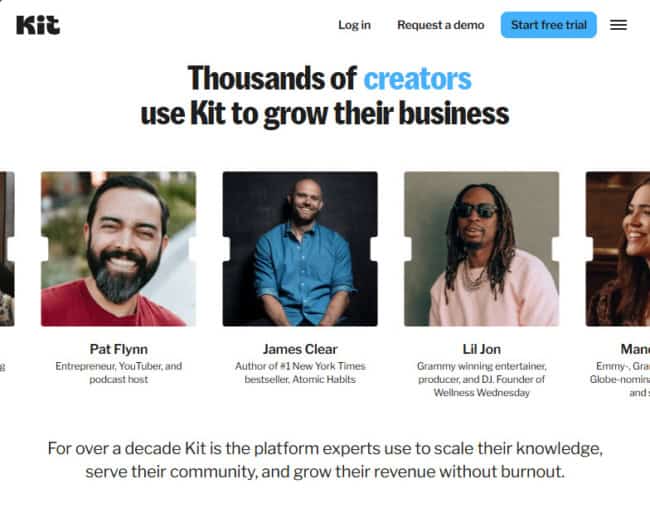
Nathan Barry built Convertkit now known as Kit, as a general email marketing tool. Initial traction was slow competing against established players.
When he noticed creators represented his most engaged users, he pivoted to focus exclusively on this customer segment. The company grew to $36.4 million in annual recurring revenue by serving one specific audience exceptionally well.
This pivot type preserves your core expertise and much of your existing content. A course on productivity works for corporate employees or solopreneurs, but messaging and examples must change completely.
You’re not rebuilding your knowledge base, just repackaging it for different consumer behavior patterns and customer needs.
The investment required is mostly in new marketing messaging and audience research. You need to understand your new customer segments’ language, pain points, and decision-making process. Your actual product service might need only minor adjustments.
Calculate lifetime value by segment before pivoting. Use Google Analytics to track consumer behavior patterns that signal whether your value proposition matches customer needs in each segment.
Platform Pivot: Changing Where You Show Up
A platform or channel pivot means changing where you create and distribute content while keeping your core expertise and topics constant. You’re not changing what you know or who you serve, just how you reach them.
Ali Abdaal started with blog posts about productivity and studying techniques. He transitioned to creating YouTube videos on the same topics, eventually building an audience of over six million subscribers.
His expertise didn’t change, but the platform allowed him to reach a much larger audience.
The consideration for solopreneurs centers on time investment and skill requirements. YouTube videos typically require eight to 20 hours per video including filming, editing, and optimization. Blog posts might take three to six hours.
Your available time dictates which platforms you can realistically maintain.
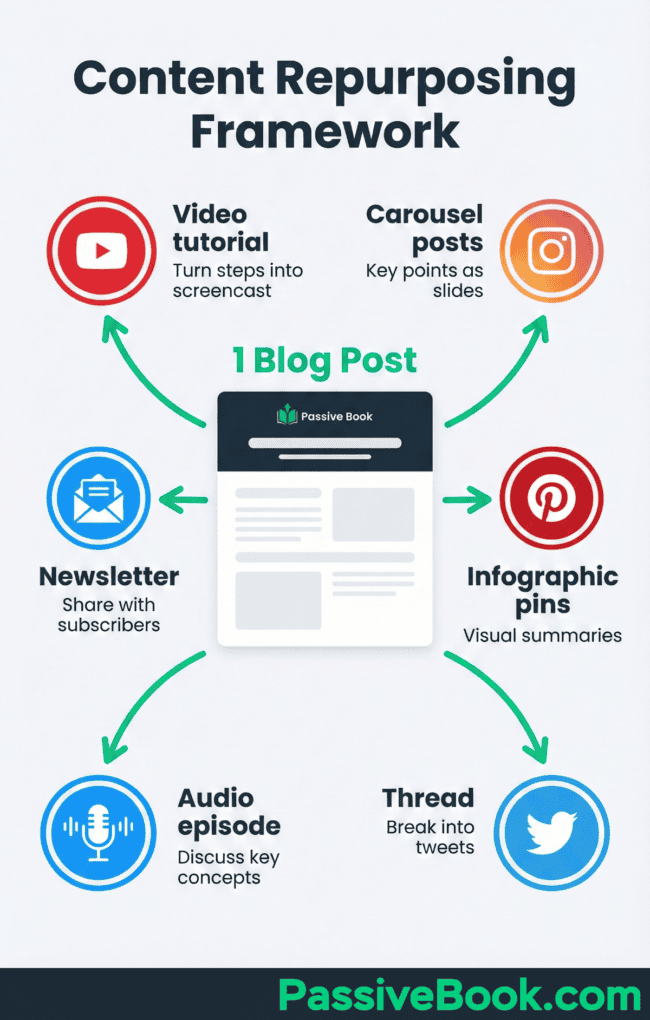
The smart approach for bootstrap founders is testing by repurposing existing content first. Turn your best blog posts into video scripts or podcast episodes. This validates audience interest before you commit to creating original content in the new format.
A channel pivot feels less risky because you maintain your brand and expertise. You’re expanding or shifting channels, not rebuilding your core value proposition or customer relationships.
Business Model Pivot: How You Make Money
A business model pivot changes your revenue structure while keeping your product and audience relatively constant. You might switch from one-time purchases to recurring subscriptions, from per-unit pricing to flat-fee access, or from selling products to earning affiliate commissions.
Tony Dinh transitioned his software products from one-time purchases to recurring subscriptions, growing revenue to $45,000 per month within two years. The software itself didn’t change much, but the pricing model created predictable monthly revenue instead of lumpy one-time sales.
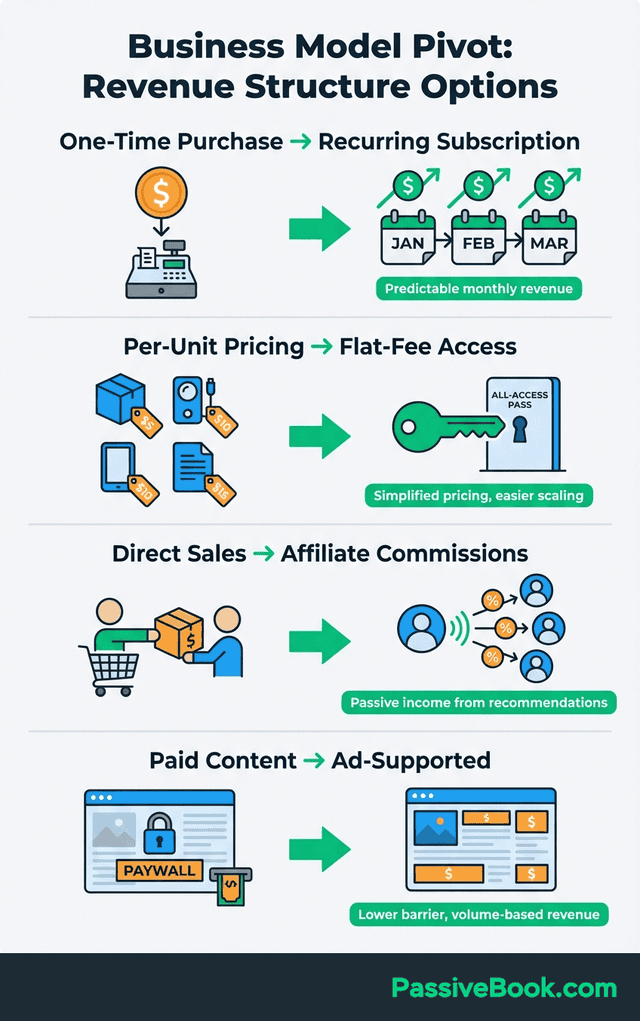
When you’re working nights and weekends around a day job, subscription models provide stable cash flow that makes planning easier. You know roughly what you’ll earn next month based on current subscriber counts.
This predictability is valuable when you’re juggling limited time with existing commitments.
This pivot type changes your revenue structure. You’re answering the question: How do customers pay you?
The options include one-time versus recurring, per-unit versus flat-fee, direct sales versus affiliate commissions, or advertising-supported versus paid content. Sustainable revenue growth often requires matching your pricing model to how customers prefer to pay.
Value Capture Pivot: Adjusting Your Pricing Strategy
A value capture pivot changes what you charge for within the same revenue structure. This differs from a business model pivot because the payment mechanism stays constant. You’re adjusting how you bundle, package, or tier your offerings to capture more value from the same customer base.
Pieter Levels shifted from custom development projects to subscription-based tools. Instead of trading hours for dollars on client work, he built products customers paid to access monthly.
This change allowed him to scale past seven figures in annual revenue as a solo founder.
The key distinction is that value capture pivots decouple your revenue from hours worked. A course creator might add a premium tier with live coaching calls.
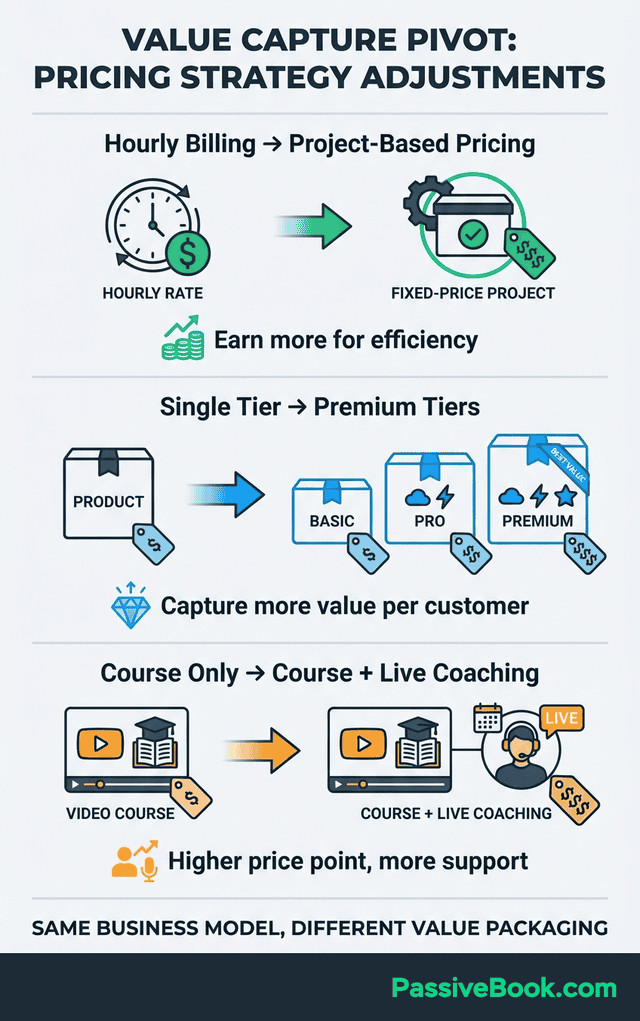
That’s value capture because they’re still selling courses with one-time payments, just at different price points with different included features.
Another example is switching from hourly billing to project-based pricing. The business model stays unchanged, but you’re capturing value differently. Project pricing might let you earn more for the same work if you’re efficient.
Time-constrained solopreneurs benefit when value capture pivots increase revenue per customer without proportionally increasing delivery time. The goal is making more money from your existing business without working more hours.
Building Your Pivot Decision Framework
Justin Welsh built a $10 million solopreneur business by following customer signals systematically rather than making emotional decisions. His approach centered on creating clear frameworks before testing new directions, ensuring data would override feelings when making pivot decisions.
I ignored my own decision criteria once. Had clear data saying nobody wanted my premium tier. Kept it anyway for four months because “maybe they just don’t understand the value yet.” Cost me $2,000 in opportunity cost and a lot of sleep.
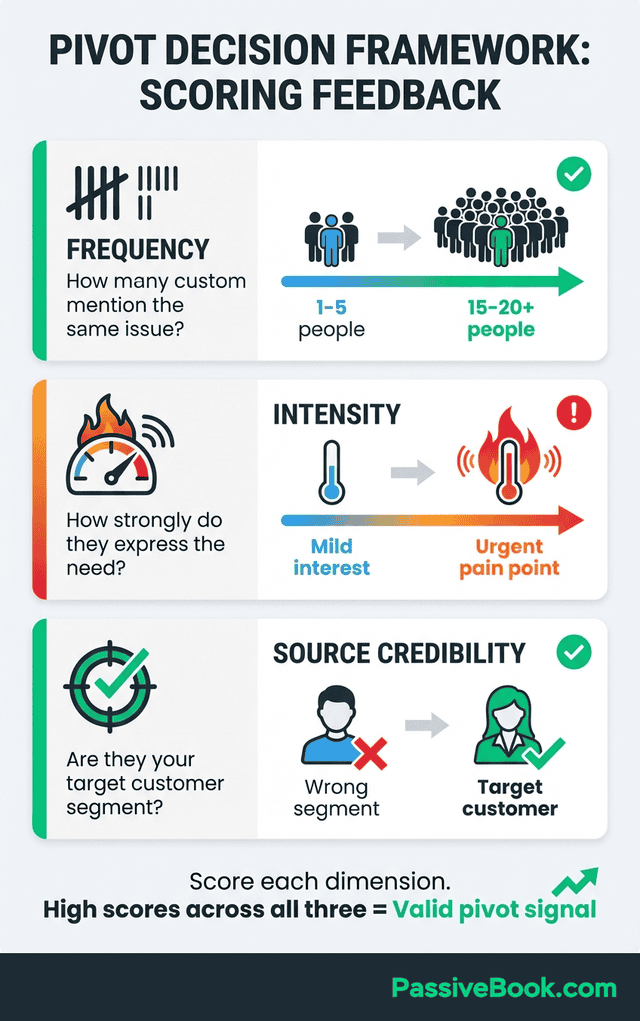
The foundation of any decision framework requires scoring feedback across three dimensions. First is frequency: how many customers mention the same problem or request.
Second is intensity: how strongly they express the need or frustration. Third is source credibility: whether feedback comes from your target customer segment or from people who would never buy regardless.
Creating clear metrics before testing prevents emotions from overriding data later. When you’re discouraged or excited, you’ll interpret ambiguous results to match your feelings. Predefined success criteria remove this bias from the equation.
The 40% Rule for Product-Market Fit
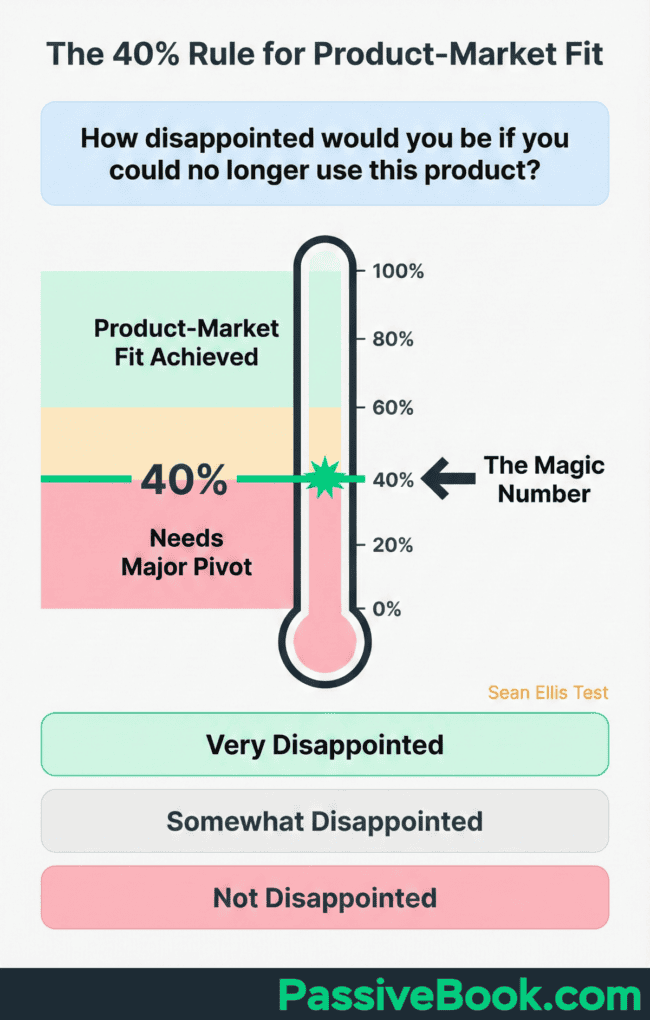
Sean Ellis developed a simple survey question that predicts product-market fit with remarkable accuracy. Ask your customers: “How disappointed would you be if you could no longer use this product service?”
The response options are “very disappointed,” “somewhat disappointed,” or “not disappointed.”
If 40% or more respond “very disappointed,” you have product-market fit. Below this threshold signals the need for a major pivot or potentially abandoning the business entirely.
The 40% rule provides an objective benchmark that removes guesswork from a critical business decision. Customers “very disappointed” typically have three times higher lifetime value than those who respond “somewhat disappointed.”
The measurement requires honest responses from real customers who’ve actually used your product service. Friends, family, and people who’ve never tried your offering don’t count. You need data from your target customer segment after they’ve experienced enough value to form an opinion.
This framework works for all business types, including content businesses. Subscribers who would be “very disappointed” if your newsletter stopped publishing represent true fans.
Below 40% suggests your content hasn’t become genuinely valuable to your audience yet.
Sample Size Requirements for Valid Conclusions
Nielsen Norman Group research shows that 15 users uncover 85% of usability issues in testing scenarios. For customer discovery and feedback validation, similar numbers apply. You need 15 to 20 in-depth customer interviews to identify consistent patterns reliably.
For quantitative data like conversion rates or purchase behavior, you need larger samples. A minimum of 50 to 100 potential customers must see your offer before conversion data becomes meaningful.
Anything less might reflect random variation rather than genuine market response.
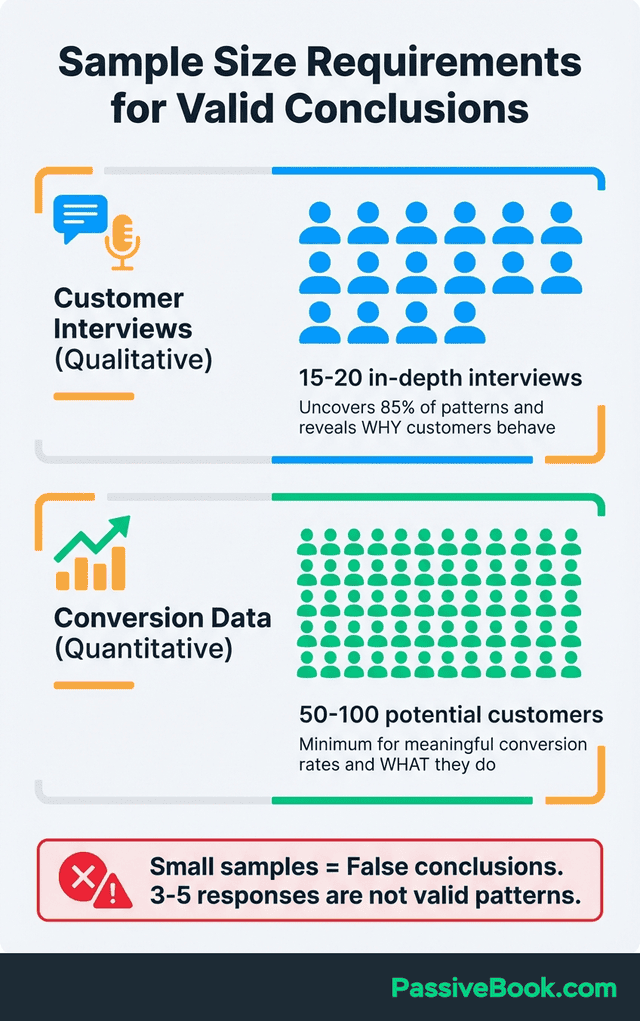
The distinction between qualitative and quantitative data matters. Interviews reveal why people behave in certain ways. Analytics reveal what they actually do. You need both for complete validated learning about customer needs.
Small sample sizes lead to false conclusions. Three people loving your product might reflect your ability to find friendly early adopters, not genuine product-market fit.
Twenty people giving consistent feedback about the same issue represents a real pattern worth addressing. Track customer acquisition patterns across sufficient sample sizes to identify which segments convert best.
Creating Clear Decision Criteria Before Testing
Decision criteria must be specific, measurable, and defined before you run tests. Vague goals like “get more sign-ups” or “improve engagement” leave room for motivated reasoning when you interpret results.
Concrete decision criteria look like this: “If fewer than 5% sign up over 30 days, I’ll pivot the topic entirely. If 5% to 15% sign up, I’ll keep the topic but pivot the format or delivery method. If more than 15% sign up, I’ll proceed as currently planned.”
Time boundaries prevent endless indecision. Decide upfront how long you’ll test before evaluating results.
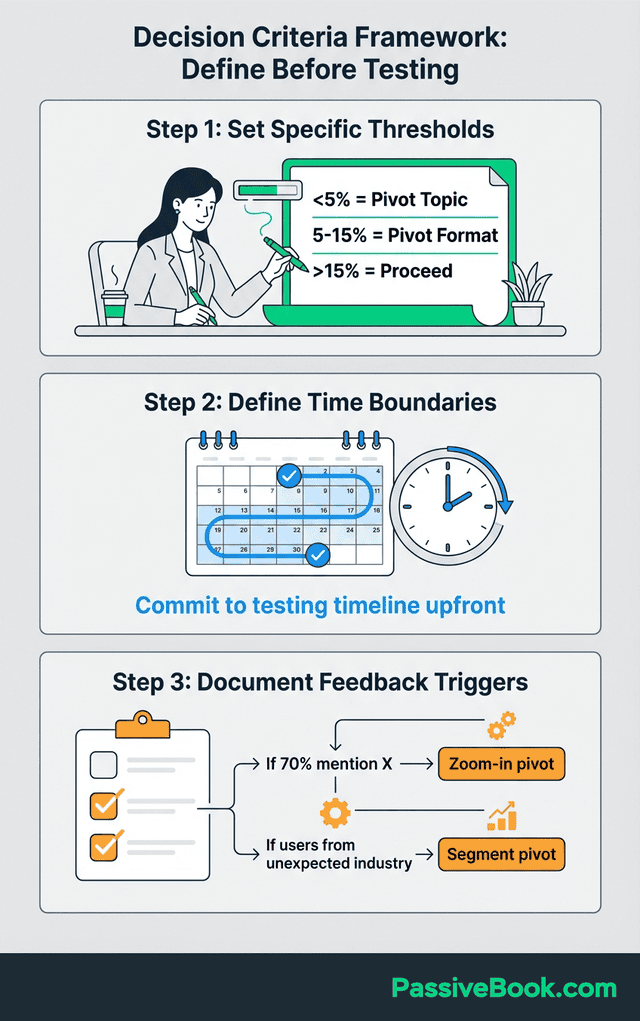
Thirty days works for most content businesses. Sixty days makes sense for products with longer consideration cycles. The specific timeframe matters less than committing to one.
Document what specific feedback patterns would trigger each type of pivot. If 70% of customer interviews mention the same missing feature, that might trigger a Zoom in pivot to build just that feature.
If customers love your solution but come from an unexpected industry, that signals a customer segment pivot.
These criteria feel artificial when you’re setting them, but they become invaluable when you’re emotionally invested in results. The documented framework makes decisions for you based on data, not hope or fear.
Testing Your Pivot Before Full Commitment
Buffer validated their entire business model with a simple landing page before writing a single line of product code. They described the solution, included pricing, and added a sign-up button.
When people clicked to purchase, they saw a message explaining the product didn’t exist yet but would they like updates? This test secured their first paying customers within seven weeks.
The beauty of this approach? You can test on a weekend. I’ve validated three pivot directions with nothing but a Carrd landing page and $50 in Facebook ads.
The minimum viable product approach lets you test pivot ideas without full commitment of time and resources. You’re validating demand before investing months building something nobody wants. For bootstrap solopreneurs, this efficiency keeps you from burning out before you find product-market fit.
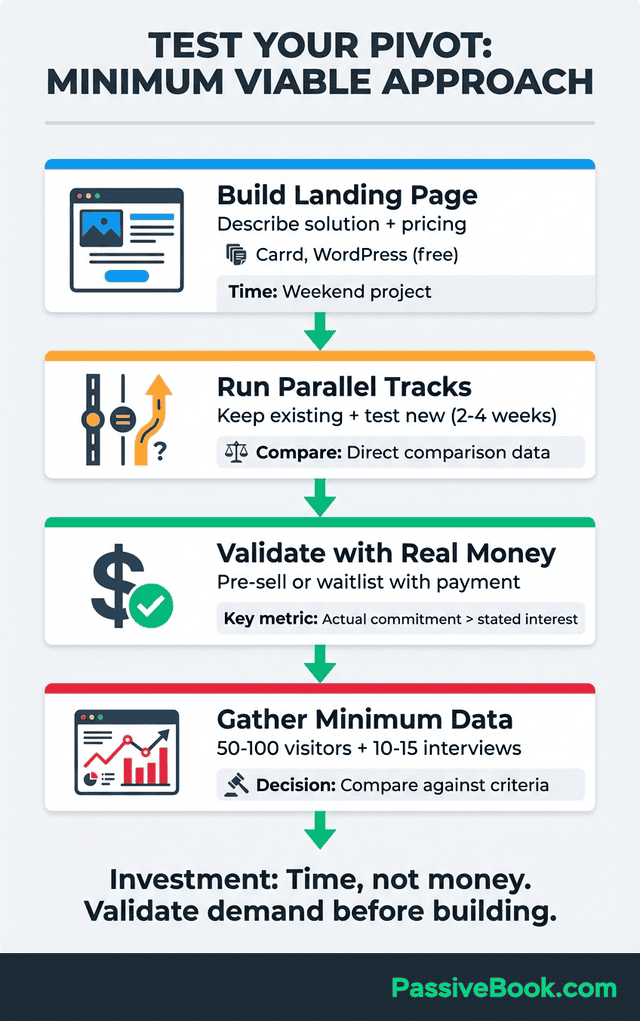
Running parallel tracks for two to four weeks provides direct comparison data. Keep your existing approach running while testing the pivot direction at the same time.
If your new approach outperforms the old one with similar effort invested, you have clear direction. If results are comparable, you might need a different pivot type.
Pre-selling the pivot concept to your existing audience works especially well if you’ve built any following. Create a landing page describing your new direction and ask people to join a waitlist or pre-order.
Real money, concrete commitment, or changes in customer acquisition metrics reveal true interest versus polite encouragement.
Landing pages and waitlists validate demand with minimal resource investment. You can build a professional landing page in an afternoon with free tools like Carrd or WordPress. Add a payment processor if you’re brave enough to presell.
The feedback comes from actual behavior, not stated intentions.
Your 4-Week Pivot Action Plan
This plan assumes you’re working part-time hours around existing commitments. Each week has specific deliverables that move you from analysis to decision without wasting time or money on unnecessary work.
Fair warning: This timeline assumes you’re executing, not overthinking. I’ve seen people spend four weeks on Week 1 alone, paralyzed by analysis. Don’t be that person.
Week 1: Audit Your Feedback and Choose Your Pivot Type
Start by reviewing all customer conversations, support tickets, and analytics from the past three to six months. Don’t rely on memory. Export your data into a spreadsheet where you can spot patterns objectively.
Use a simple Google Sheet with columns for “Customer Quote,” “Request Type,” and “Frequency Count” to track feedback patterns.
Look for consistency across 15 or more data points. What do customers repeatedly request? Where do they consistently drop off in your funnel or process?
Which content gets shared while other pieces get ignored? The patterns reveal what’s working and what isn’t.
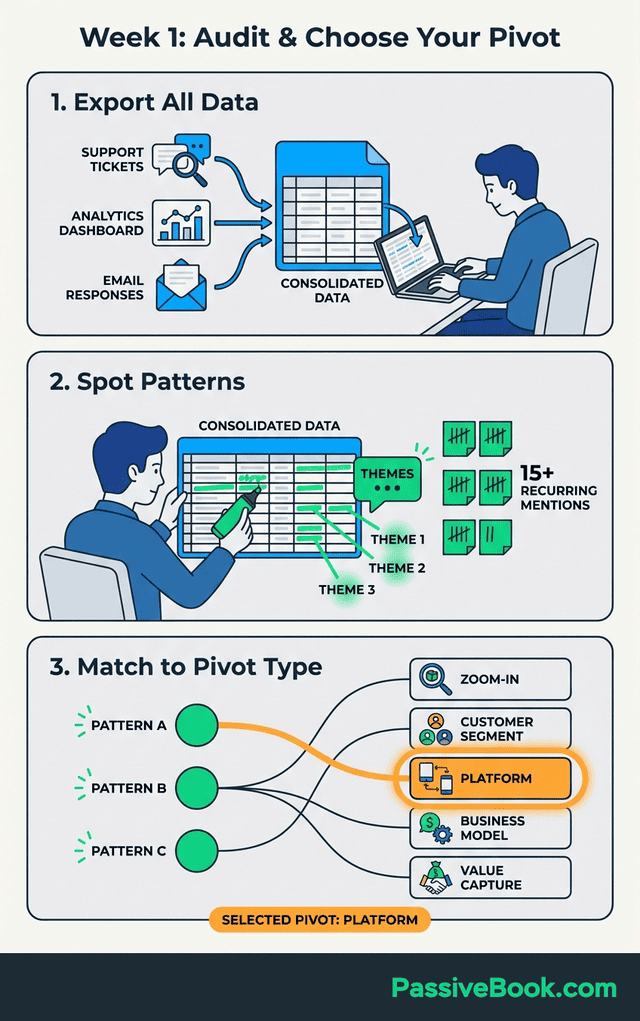
Analyze whether declining revenue growth stems from customer segment misalignment or product service delivery issues. Focus on understanding consumer behavior through real actions, not survey responses.
Match your situation to one of the five types of pivots based on these feedback patterns. If customers love one specific part of your service, that signals a potential Zoom in pivot.
If engaged users come from an unexpected demographic, consider a customer segment pivot. Let the data guide this choice rather than your preferences.
Document your reasoning in writing. This serves two purposes. First, it forces clarity about why you’re choosing this specific pivot type. Second, it creates a reference point for later when you evaluate whether the pivot succeeded.
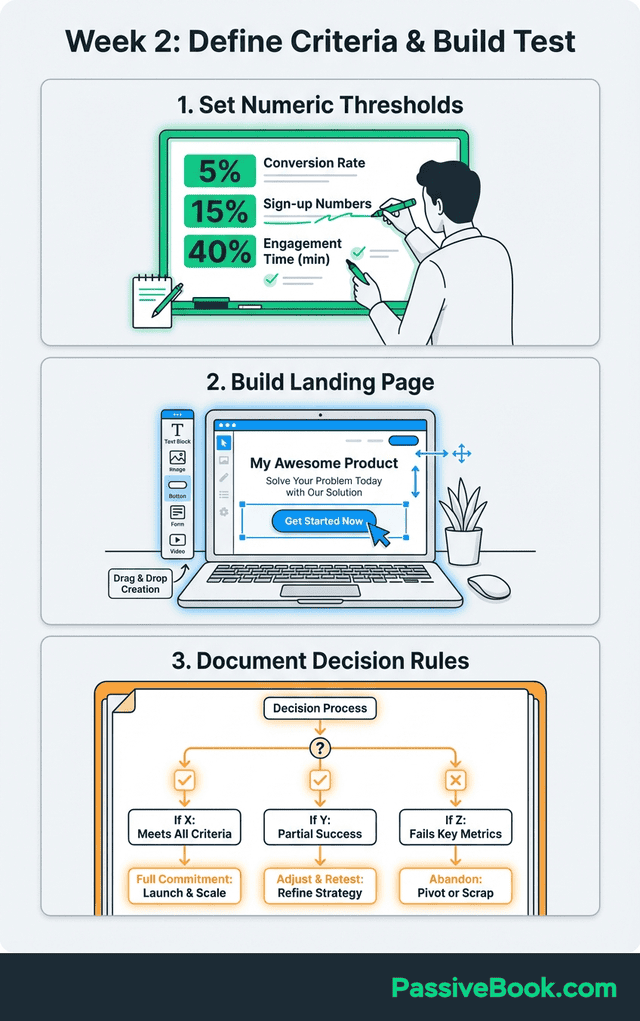
Week 2: Define Success Criteria and Build Your Test
Set specific metrics before testing begins. Your success criteria might include conversion percentage, engagement time, sign-up numbers, or pre-sale revenue. Whatever metrics you choose, define the thresholds that will trigger different decisions.
Build your test landing page with Carrd or another free tool. Add a Gumroad or Lemon Squeezy payment link if you’re brave enough to presell.
Create your minimum viable product version of the pivot. This might be a landing page describing your new direction, a pre-sale offer for a product that doesn’t exist yet, or a simplified prototype you can build in days rather than months.
E commerce platforms like Shopify enable rapid testing of pricing model changes without significant product development investment.
Document your decision triggers explicitly. Write down statements like: “If X happens, I’ll proceed with full commitment. If Y happens, I’ll adjust one variable and retest. If Z happens, I’ll abandon this direction entirely.”
These predetermined criteria prevent emotional decision-making later.
The investment this week should be time, not money. Free or low-cost tools handle most testing needs. WordPress powers landing pages. Google Forms collects feedback. Your existing email list provides initial test traffic.
Week 3: Run Your Validation Test
Launch your test to a minimum of 50 to 100 qualified potential customers. These need to be people who match your target customer segment, not just anyone who’ll look at your page. Quality of audience matters more than quantity.
Use Calendly‘s free tier to schedule customer interviews. Record with Zoom. The free 40-minute limit forces you to stay focused.
Conduct 10 to 15 customer interviews during this week to understand the behavior behind your numbers. Analytics tell you what happened. Conversations tell you why it happened.
You need both for complete validated learning about whether your pivot addresses real customer needs. Track customer acquisition costs for your pivot direction versus your original approach.
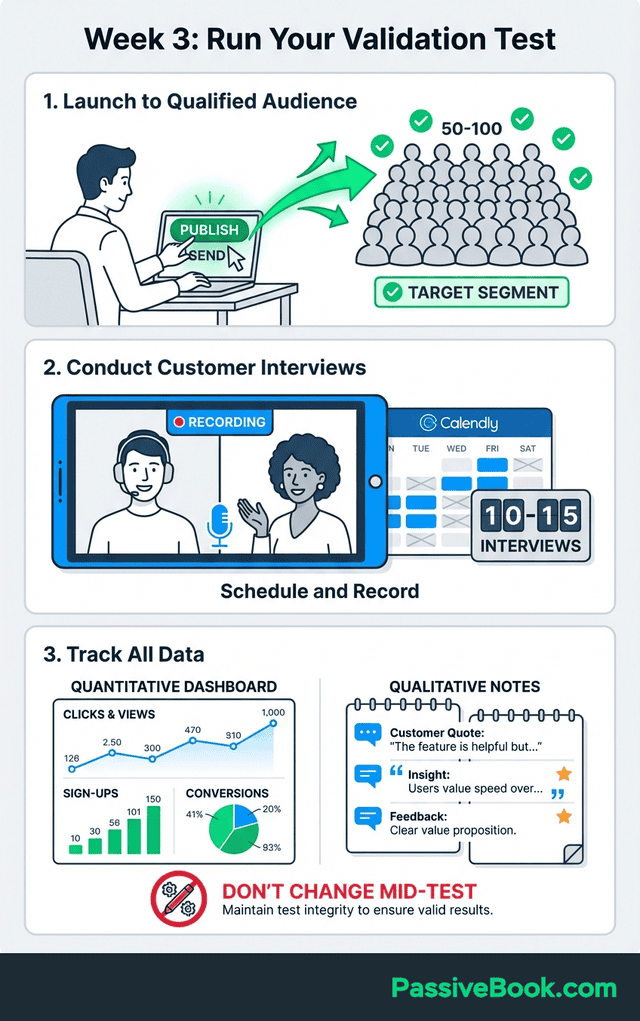
Track quantitative data like clicks, sign-ups, and purchases alongside qualitative feedback. Someone might sign up but express confusion about your offer during an interview. That suggests messaging problems, not core product-market fit issues.
Monitor Google Analytics for drop-off points and consumer behavior patterns that indicate whether customers understand your value proposition.
Resist the urge to change anything mid-test. You defined success criteria and a testing timeline in Week 2. Stick to both. Changing variables during the test invalidates your data and forces you to start over.
Week 4: Analyze Results and Commit or Iterate
Apply the 40% rule to your qualitative feedback. Are 40% or more of respondents “very disappointed” at the thought of not having access to your solution? This threshold indicates whether you’ve achieved product-market fit with this pivot direction.
Document your decision in a simple Google Doc using this template: Data observed plus threshold met or not met equals decision. This creates accountability.
Compare your quantitative results against the decision criteria you established in Week 2. Did you hit your conversion targets? Did engagement metrics meet your thresholds?
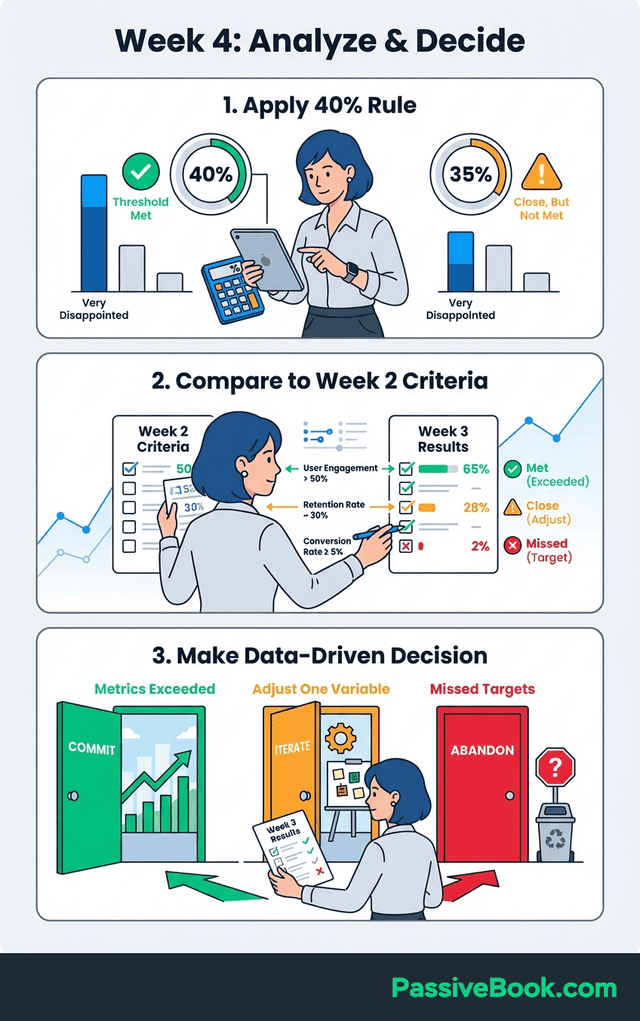
Look at the predetermined criteria objectively, not through the lens of hope or disappointment.
Make your decision based on data, not emotions. You have three options: full commitment to the pivot, adjust one variable and retest for another few weeks, or abandon this direction and either try a different pivot type or quit entirely.
If results clearly exceed your thresholds, commit fully to the pivot. If results fall slightly short but show promise, adjust one element like messaging, pricing, or audience targeting and run another short test.
If results completely miss targets despite proper execution, this pivot direction isn’t viable for your business.
Low-Cost Pivot Strategies for Bootstrap Businesses
Indie Hackers features dozens of founders who bootstrapped software products to $10,000 or more in monthly recurring revenue with minimal initial investment. Their strategies center on testing before building and repurposing existing assets rather than creating everything from scratch.
I’ve tested pivots with zero budget using free WordPress, Convertkit‘s free tier, and organic social media. It’s slower but absolutely possible.
The most time-efficient approach is repurposing existing content for new platforms. Your blog posts become YouTube scripts. Your YouTube videos become podcast episodes. Your email newsletters become Twitter threads.
The core knowledge and examples stay the same, just reformatted for different channels. Use free tools like WordPress and Convertkit to test a channel pivot before investing in premium features.
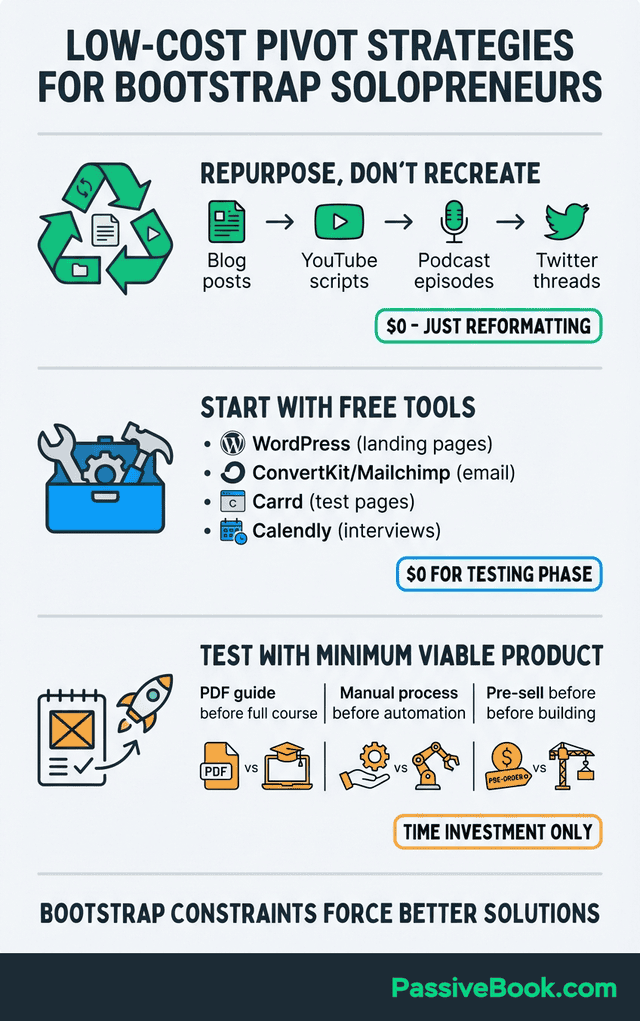
Free tier tools handle most testing needs for solopreneurs. WordPress powers blogs and landing pages at zero cost for basic features. Shopify offers starter plans for testing e commerce ideas.
Email marketing tools like Mailchimp or Convertkit include free tiers sufficient for initial testing with small audiences.
Test with minimum viable product versions before committing to full production infrastructure. Your first online course might be a simple PDF guide and a few recorded videos, not a complete learning management system.
Your first software product might be a manual process you execute for early customers before investing in automation.
Bootstrap constraints force creativity that often improves final products. When you can’t buy solutions to problems, you solve them more elegantly. When you can’t hire help, you focus ruthlessly on highest-value activities and eliminate everything else.
Managing the Emotional Weight of Pivoting
Let’s talk about the part nobody mentions in pivot guides: how much this messes with your head.
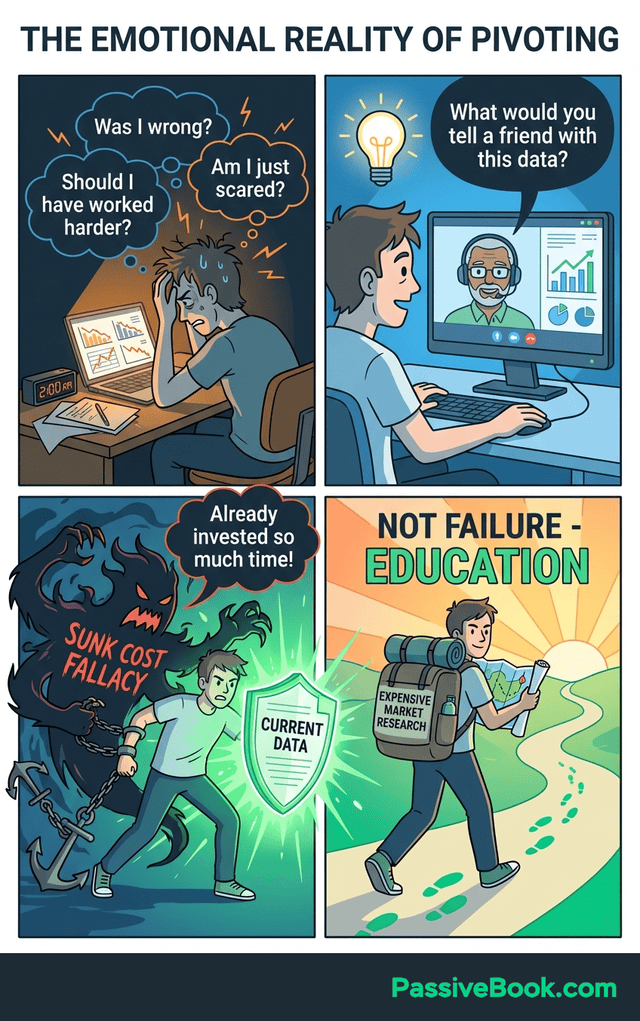
You’ll second-guess everything. Every decision you made that led here will replay at 2 AM. You’ll wonder if you’re pivoting because data says so or because you’re scared of real commitment.
I’ve been there three times. The worst part isn’t admitting you were wrong. It’s the voice saying “maybe if you just worked harder on the original plan…” That voice will sound extremely reasonable.
Here’s what helped me: I treated each pivot decision like I was advising a friend. If someone showed me my exact data and asked what to do, what would I tell them?
Usually, the answer was obvious. The emotional attachment was the only thing making it complicated.
Find one person who’s pivoted successfully. Not for cheerleading but for real talk about what it actually feels like and how they pushed through the decision paralysis. Online communities like Indie Hackers work if you can’t find someone local.
The sunk cost fallacy will try to murder your business. You’ll want to continue the failed direction because you’ve “already invested so much time.”
That investment is gone regardless. The only question that matters: does continuing make sense based on what you know right now?
Your failed direction isn’t wasted time. It’s expensive market research most people never get. Now you know exactly what doesn’t work. That’s valuable.
Pivoting feels like losing. Every single time. Even when you know intellectually it’s the right move, there’s a voice saying “maybe if I just tried harder…”
That voice is lying to you. Trust your data, not your emotional attachment to the original plan.
What Next?
You now have a complete framework for deciding whether to pivot, which type of pivot fits your situation, and how to test before committing fully. This decision point feels overwhelming when you’re living through it, but approaching it systematically removes much of the stress and uncertainty.
Your first action in the next 24 hours: Open a Google Doc and write one sentence completing this phrase: “The validation feedback that’s bothering me most is…” That’s your starting point.
Everything else in this guide builds from that honest assessment. Do it now, before you close this tab and lose the momentum.
Pivoting is challenging for anyone, but especially difficult when you’re bootstrapping around a day job with tight budget constraints. Remember that most successful online businesses pivoted at least once. Your current struggle is normal, not evidence that you’re not cut out for entrepreneurship.
Share this article with fellow solopreneurs who might be facing similar decisions. The business community is stronger when we openly discuss these challenges rather than pretending everything works perfectly from day one.
I’d love to hear about your pivot experience in the comments. What type of pivot did you make or are you considering? What’s the hardest part of the decision for you? Your story might be exactly what another reader needs to hear today.
Share this post with your friends & followers: