I spent my first product launch targeting “everyone interested in productivity.” Three months, zero sales. The turning point came when I stopped broadcasting to thousands and started having real conversations with 12 people who’d been complaining about the problem I solved. Those 12 became my first paying customers and taught me more than any marketing course ever could.
Finding early adopters requires a completely different mindset than traditional marketing. It’s about reaching the right people who are actively frustrated enough to pay for an imperfect solution. This guide shows you where to find them and how to turn conversations into customers without a marketing budget or existing following.
- •What Early Adopters Really Are
- •Why Most Solopreneurs Struggle to Find Early Adopters
- Metrics That Prove Early Adopter Success
- Where to Find Your First 10 Early Adopters
- Personal Outreach Strategies for Time-Strapped Founders
- Low-Budget Platform Launches
- Building in Public to Attract Early Users
- Content Strategies That Work Without a Following
- Platform-Specific Tactics for Different Business Models
- •AI-Assisted Customer Discovery
- •Early Adopter Pricing Strategy
- •How to Know You've Found Real Early Adopters
- •Common Pitfalls That Kill Early Momentum
- •Frequently Asked Questions
- •What Next?
What Early Adopters Really Are
Early adopters are not your friends family who say “great idea” to be supportive. The first step is to identify early adopters in the wild – people complaining about problems in public forums. They’re strangers who pull out their credit cards for unproven products because the pain of their current situation outweighs the risk of trying something new.
They’re the customers who actively seek new products because being first gives them competitive advantage. For a solopreneur launching a Notion template business, an early adopter is someone who tweets “I’m tired of rebuilding my content calendar every month,” buys your $29 template within a week despite zero reviews, and emails you detailed feedback about missing features.
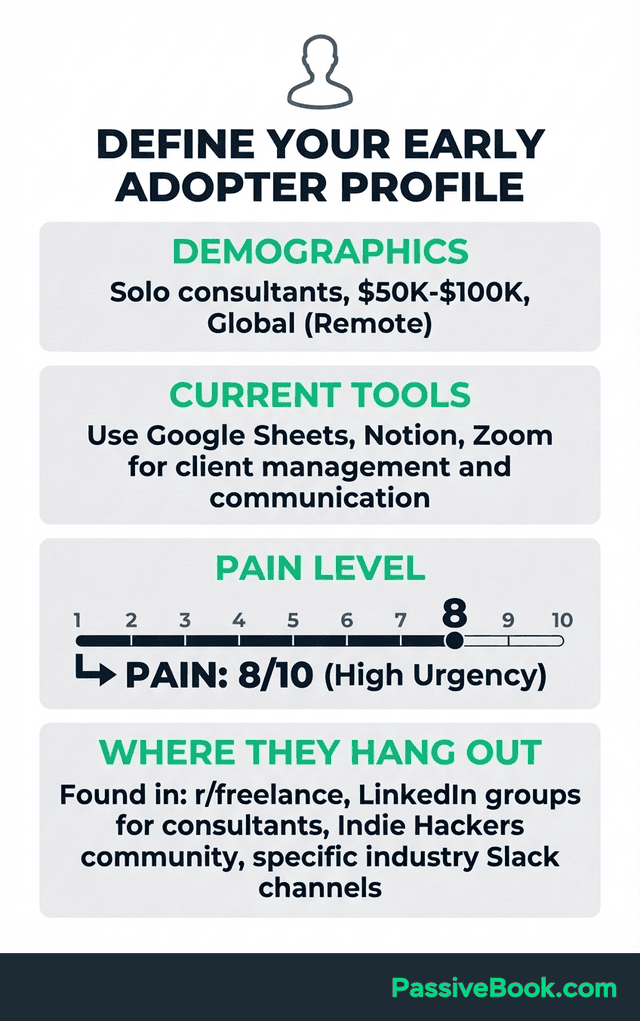
They represent around 13 percent of the technology adoption curve, more risk-tolerant than the mainstream majority. These individuals seek competitive advantage or status from being first.
Success in the early adopter phase means 10-50 people giving detailed feedback, not 10,000 silent users. Your metric is quality of conversation, not quantity of signups. They’ll tolerate bugs your mainstream customers never would.
Why Most Solopreneurs Struggle to Find Early Adopters
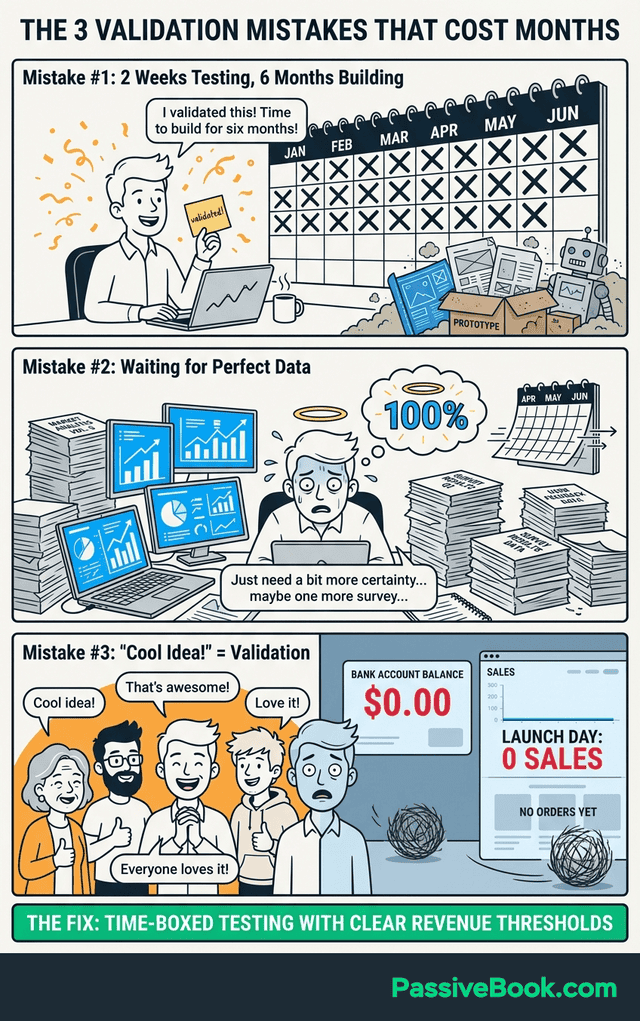
The biggest mistake I made was building for six months without showing anyone. I assumed if I made it perfect, customers would appear. They didn’t.
Research shows 42% of startups fail by solving problems nobody cares about, targeting “everyone” instead of people complaining in public forums. Building in isolation without validating willingness to pay real money leads to launching on all platforms simultaneously with no traction anywhere.
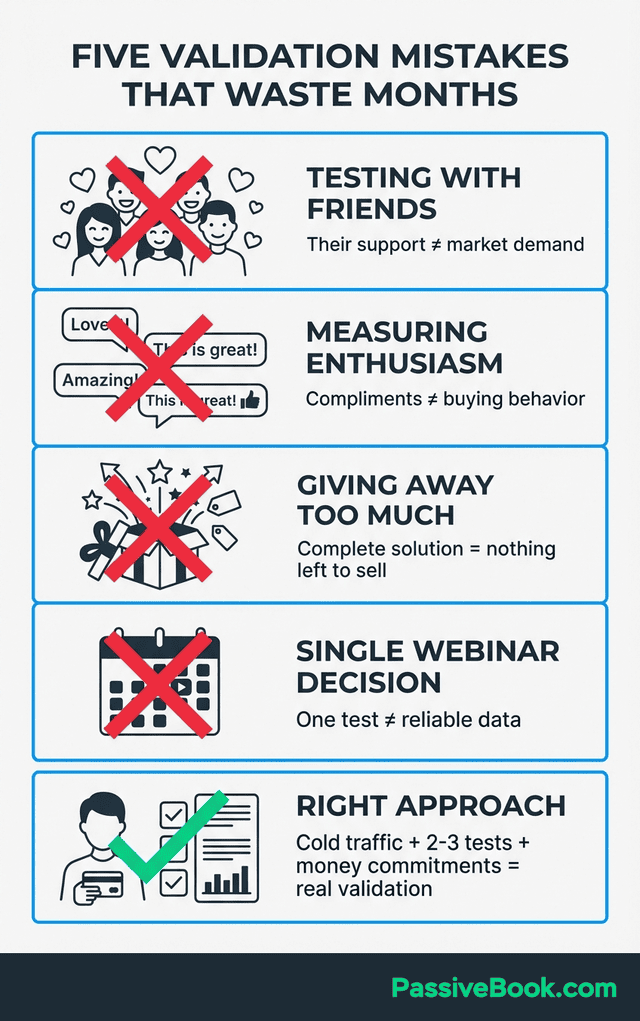
You spread yourself thin instead of dominating one channel where your target audience gathers. The “False Positive” trap catches many founders. Five enthusiastic people in your niche doesn’t equal broader market demand worth pursuing.
I’ve seen solopreneurs chase markets of 50 total buyers because early feedback felt encouraging. Treating every signup as validation when only paying customers prove real demand wastes months of effort.
Metrics That Prove Early Adopter Success
Numbers tell you if you’re making real progress or just staying busy. Lead-to-customer conversion rates between 22 and 35 percent indicate strong product-market fit during the early adopter phase.
If you’re converting below 15%, you haven’t found the right people yet. Referred customers have 37% higher retention rates than customers acquired through other channels.
When early adopters start bringing friends without prompting, you’ve built something that solves a real problem. Track how many customers came from referrals versus your outreach.
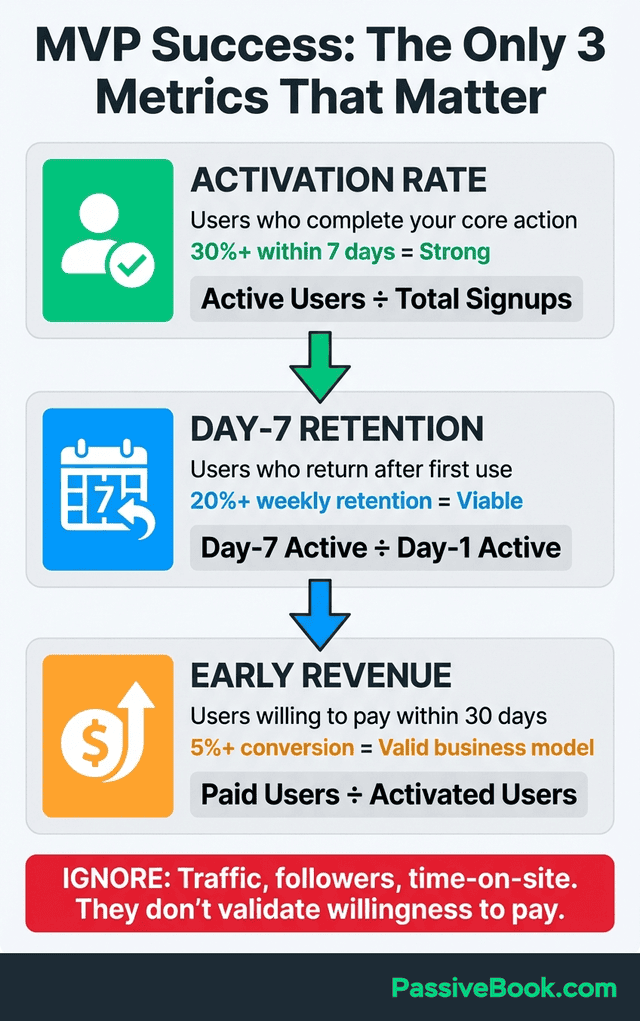
Time-to-first-value matters more than total features. How quickly do new users experience the core benefit you promised them? If someone signs up for your email course and doesn’t open the first lesson within 48 hours, they won’t. The 48-hour window is critical.
These metrics should directly inform your product development roadmap. Build what keeps early adopters engaged, not what sounds impressive.
Channel-Specific Success Benchmarks
Different discovery channels have different success metrics. Here’s what realistic progress looks like:
Reddit/Forum Outreach: 10-20% DM response rate, 3-5% conversion to sales call, 1-2% conversion to paying customer. If you’re sending 5 DMs daily, expect 1 response and 1 sale every 2-3 weeks.
Cold Email: 5-8% open rate, 1-3% response rate, 0.5-1% conversion to customer. Anything above 2% response rate means your targeting is excellent.
LinkedIn Outreach: 30-50% connection acceptance rate, 10-15% response to first DM, 2-4% conversion to call. Lower than 20% acceptance means your profile needs work.
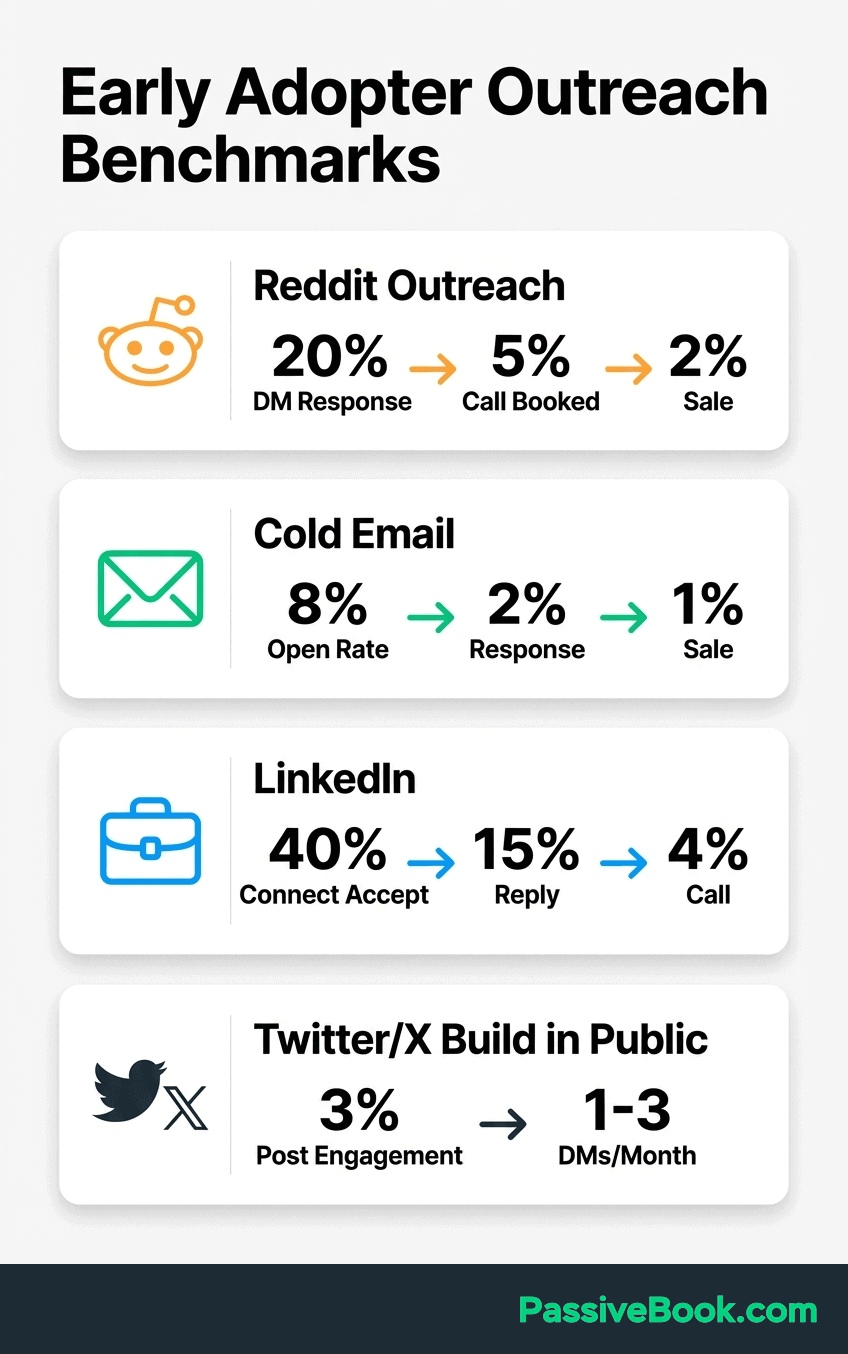
Building in Public on Twitter/X: 50-100 followers in first 3 months, 2-5% engagement rate on posts, 1-3 DMs monthly from interested prospects. Follower count matters less than engagement quality.
Product Hunt Launch: 200-500 upvotes equals successful launch for first-timers, 50-100 email signups, 5-10 early adopter conversations. Top 5 of the day is a win.
Content like Quora/Guest Posts: 100-300 views per answer in first month, 2-5 profile clicks per 100 views, 0.5-1% conversion to email list. Content compounds over 6-12 months.
Where to Find Your First 10 Early Adopters
If you’re looking for your first paying customers, you don’t need a massive audience. You need to be in the exact places where people complain about the problem you solve. Focus on one platform at a time instead of spreading thin across many.
Mine Reddit for Problem-Solution Fit
Search specific subreddits using keywords like “frustrated with” or “wish there was” to identify active pain points. Reddit‘s search operator `”frustrated with” site:Reddit.com/r/YourNiche` in Google surfaces complaints your product can solve.
Focus on recent posts with engagement under 48 hours old where users are actively seeking solutions. Read comment threads, not just post titles. The real pain points emerge three or four comments deep when people explain why existing solutions don’t work.
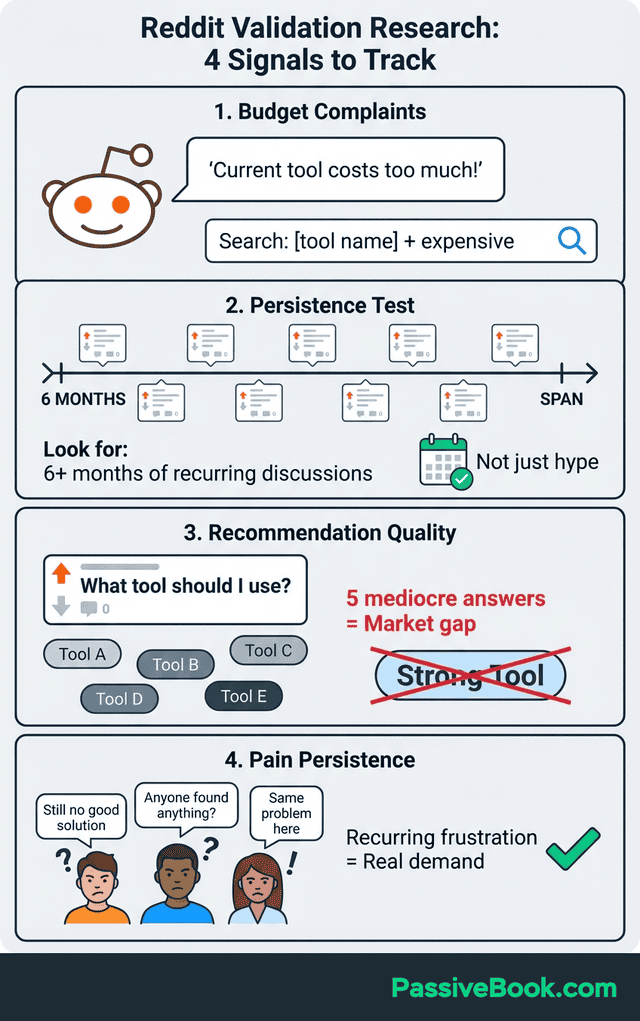
You’ll see results within 48-72 hours when you reach out via DM offering your solution to immediate problems. Don’t pitch immediately. Comment first with genuine help.
After someone thanks you for advice, send a DM: “I’m building something specifically for this problem. Would you be interested in early access?” This approach converts 3-5x better than cold pitching.
Post Value-First in Niche Communities
Rosie Sherry bootstrapped Ministry of Testing starting in 2007 by contributing daily to software testing discussions in forums without pitching. By 2011, she had built enough community trust to formally launch it as a business and eventually sold it.
Her rule: never use growth hacking tactics that feel pushy. Join Facebook groups and Discord servers where your target audience gathers. Contribute solutions for 2-3 weeks before mentioning your product.
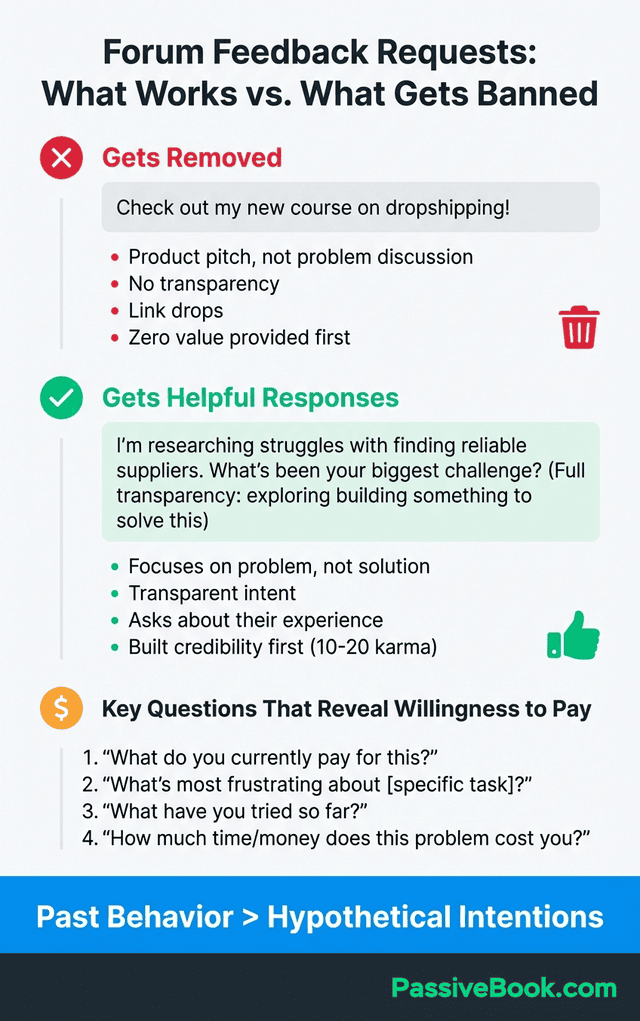
When someone asks “What CRM should I use?”, don’t just say “try HubSpot.” Write a 200-word breakdown comparing 3 options for their specific situation: pricing, learning curve, integrations. That’s what builds credibility. Answer questions better than anyone else in the group. People will ask what you do.
Create polls asking about specific pain points to identify the most urgent problems worth solving. A poll like “What’s your biggest challenge with this topic?” gives you direct market research and positions you as someone who cares about solutions. The winning pain point becomes your marketing message.
Use Indie Hackers and Builder Forums to Find Beta Testers
When Pat Walls launched Starter Story, he posted detailed case studies to Indie Hackers and r/Entrepreneur. He shared revenue numbers transparently, which drove his first traffic and helped him find early sponsors.
Builder communities understand MVP imperfections better than general audiences. Direct message founders solving similar problems for genuine product feedback. Don’t ask for promotion, ask for critique.
Other solopreneurs will respond because they remember needing the same help. Half of my early adopter beta testers came from cold DMs to other builders. Post milestone updates with specific numbers for transparency and credibility.
“Month 3: $340 revenue, 8 customers, 2 churned” resonates more than “growing fast.” These platforms like Indie Hackers reward honesty over hype, and your struggles connect better than your wins.
Personal Outreach Strategies for Time-Strapped Founders
Direct outreach feels uncomfortable, but five quality conversations beat 50 template messages. These strategies work in 20-30 minutes daily, fitting around a day job. The key is consistency over volume.
The 5-Message Daily DM Strategy
Send 5-10 personalized messages daily to people discussing relevant problems in online communities. Focus on 3-line messages reducing friction. Cold DMs still convert when highly personalized to specific pain points mentioned publicly.
Your message structure: Line 1 references their specific comment. Line 2 relates to your experience with the same problem. Line 3 offers exclusive early access, not immediate sales pitches.
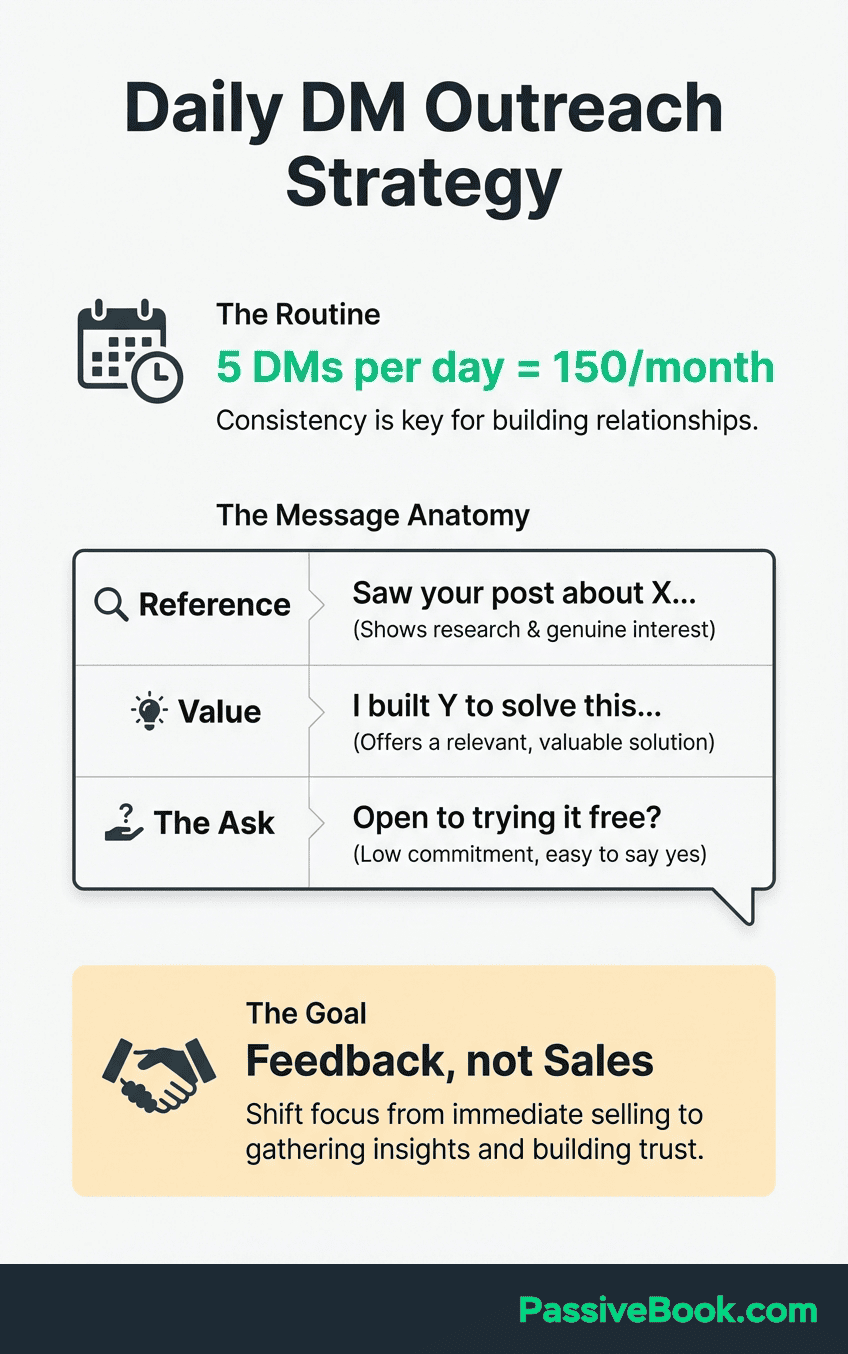
Example: “Saw your comment about spreadsheet chaos for content planning. I dealt with that for 8 months before building a simple tracker. Would early access help?”
Time investment runs 20-30 minutes daily. Screenshot the comments you’re responding to so you remember context. Track responses in a simple spreadsheet – who responded, conversion to call, conversion to customer. You’ll see patterns in which pain points convert.
LinkedIn Warm-Up Sequence
Comment thoughtfully on 3-5 ideal customers’ posts daily for 2 weeks before sending connection requests. Thoughtful means 3-5 sentences adding a contrarian point or personal example – not “Great post!” Write comments you’d want to receive.
When connecting, reference the specific post you commented on: “Really appreciated your thoughts on this topic last week.” This converts 4x better than generic connection requests. Posts with personal stories get 2x more engagement than purely promotional content for building visibility.
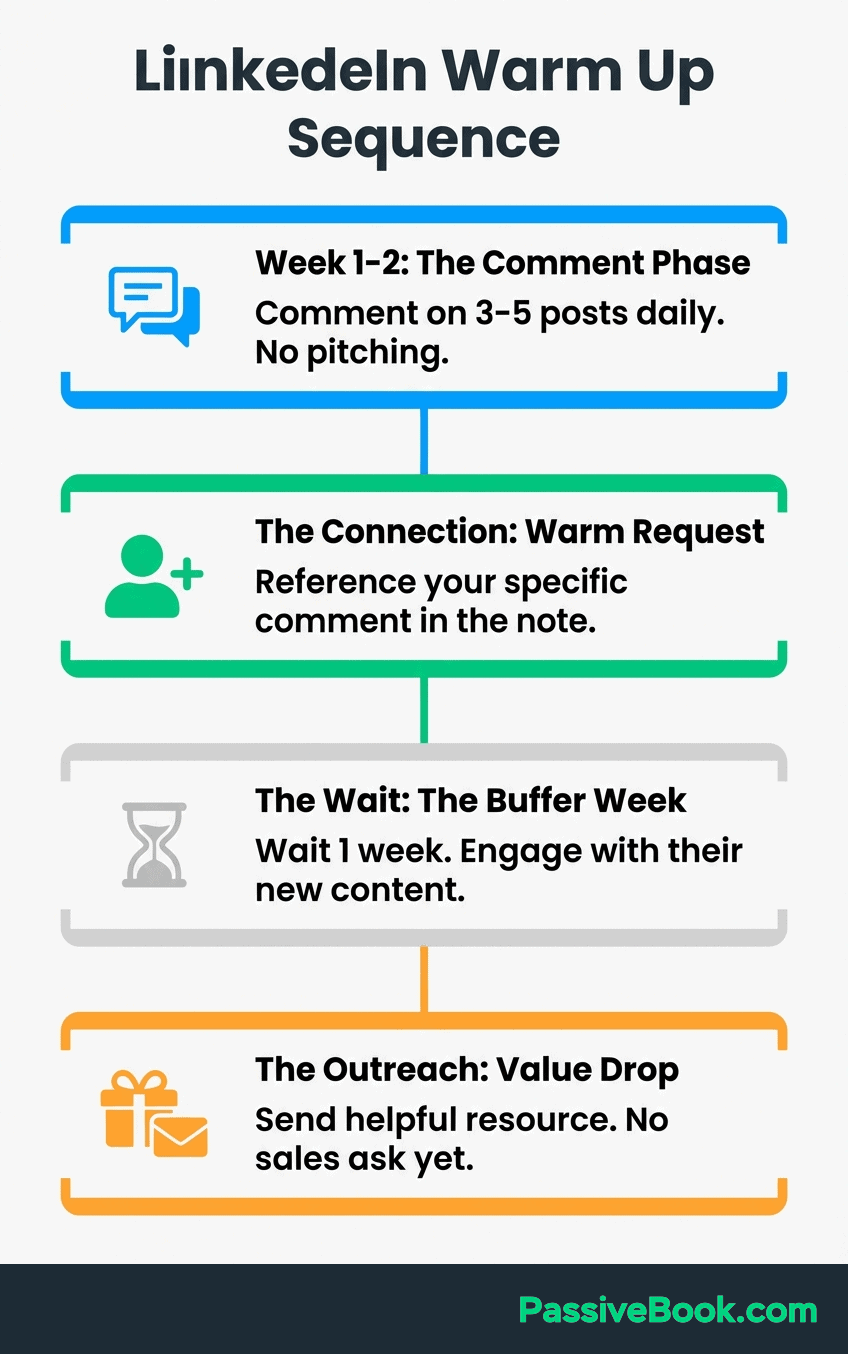
Share your building journey, not just wins. “Spent 6 hours debugging checkout flow today” gets more engagement than “Launched new feature.” After 1 week of connection, send a value-first DM.
Share a relevant article or insight with no pitch. Only after genuine conversation, ask about early access interest. This converts 2-5x better than cold pitches because you’ve built recognition. Most people quit after one message; follow up three times over two weeks.
Cold Email That Converts
Emiliano Guerrero closed his first 10 customers for $8,400 using cold email for his Walmart data tool Rivin.ai. His process: 50 hyper-personalized emails referencing specific company details outperformed 500 generic messages. Each email took 15 minutes to research and write.
Cold email averages 5.1% response rate across industries. Wednesday at 7.2% performs best for B2B outreach. Send between 8-10 AM in the recipient’s timezone when inboxes are fresh. Avoid Monday mornings and Friday afternoons.
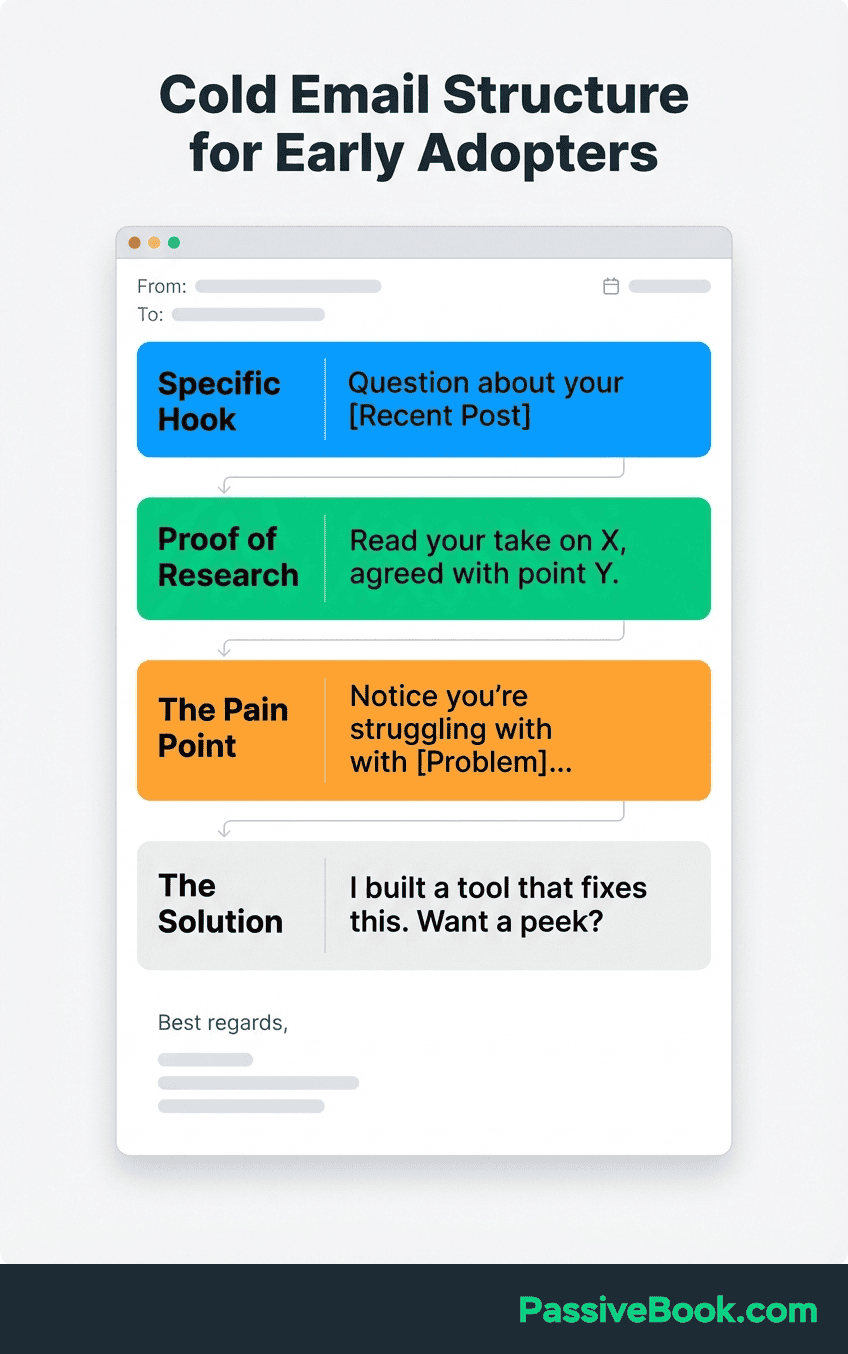
Time investment runs 2-3 hours for initial research, then 30 minutes daily. Follow up 3-5 times over 2 weeks – 80% of conversions happen after the third touchpoint.
Your subject line should reference their work, not your product: “Question about their recent project” beats “Introducing your product.” Track everything in a simple spreadsheet. I use columns for: name, company, first email date, follow-up dates, response status, and conversion. This takes 5 minutes daily and prevents you from double-contacting or losing track.
Low-Budget Platform Launches
Launch platforms give you instant access to product-hungry audiences, but most founders blow their shot by launching unprepared. Timing and preparation determine your results. Focus on one platform at a time instead of spreading thin across many.
Product Hunt vs Smaller Launch Platforms
AJ launched Carrd as a side project in 2016 on Product Hunt. He focused on extreme simplicity and a generous free tier to convert visitors into paying customers without a marketing budget. Now it serves millions as a lean, profitable operation.
BetaList connects to 500,000+ subscribers seeking beta products for sustained signups. Product Hunt delivers short traffic spikes on launch day, while BetaList provides steady trickle over weeks. For solopreneurs, BetaList’s sustained attention often converts better than Product Hunt’s spike. Launch at 12:01 AM Pacific Time on Product Hunt to maximize full-day visibility.
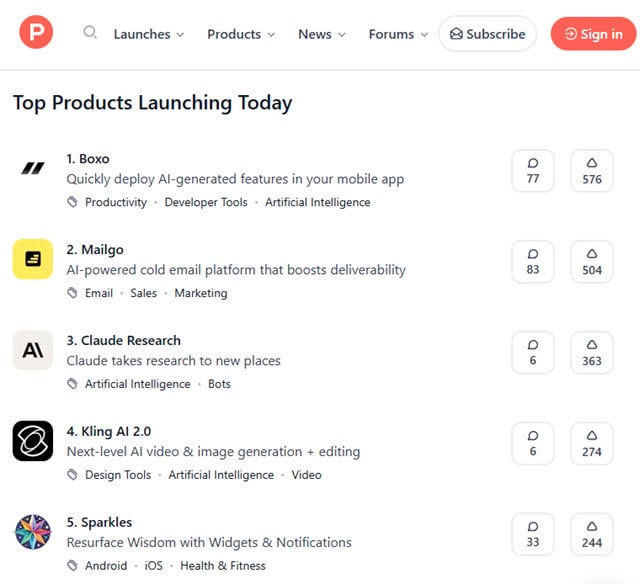
Engage in community discussions 2-3 weeks before launch by commenting on other launches. The community votes for people they recognize. Prepare your first comment explaining the problem you solve before posting.
Build Pre-Launch Waitlists That Convert
Superhuman, the email client, grew their waitlist by requiring a 30-minute onboarding call for access. This made early access feel valuable through qualification rather than open signup. People want what they have to earn. A waitlist with friction converts better than one without.
Waitlists with referral incentives convert 30 to 40 percent of visitors into signups through single-field forms. Offer tiered rewards: refer 3 friends, move up 100 spots. Refer 10 friends, get lifetime discount. People will promote your unbuilt product to skip the line.
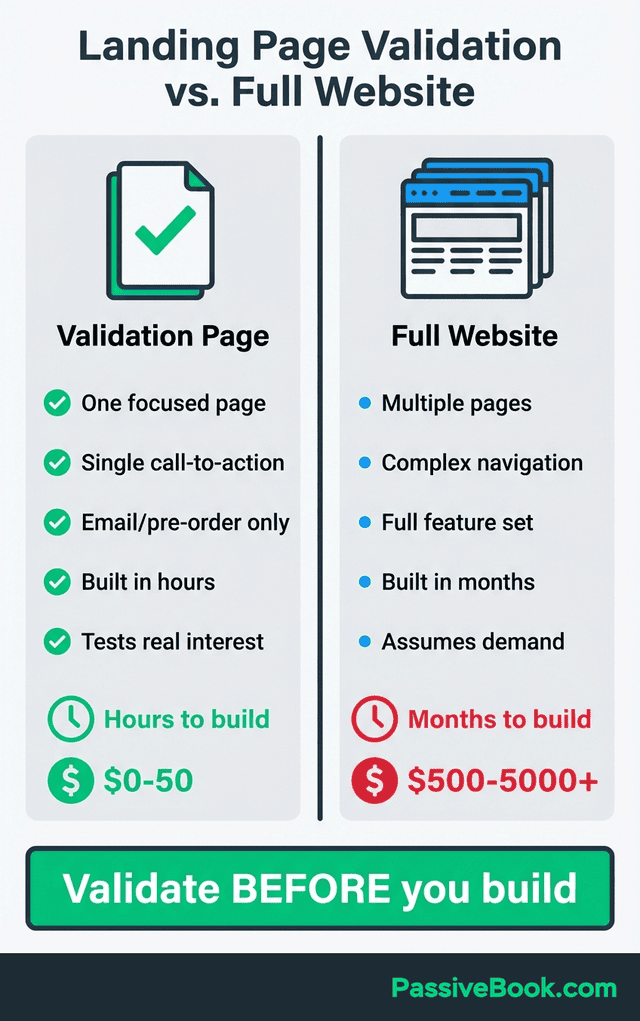
Use platforms like Carrd or Google Forms to collect emails without upfront spending. Your landing page needs one clear value proposition, one pain point you solve, and one call-to-action. Remove navigation, remove footer links, remove everything except the signup form.
You can use Carrd’s Pro plan at $19 per year for custom domains. The landing page formula: headline with benefit, 3 bullet points of what they’ll get, social proof if you have it, single email field, CTA button.
Building in Public to Attract Early Users
Building in public means sharing your progress transparently before you have results worth bragging about. This strategy works because people connect with the journey more than polished announcements. You’re building an audience while building your product.
Twitter/X Daily Progress Updates
Sahil Bloom grew from 0 to 500,000 followers in under 2 years on Twitter/X by posting daily insights on decision-making and productivity while working full-time.
His strategy: write about topics you genuinely care about, reply to every mention in early stages. Consistency matters more than follower count for finding early adopters. Tweet specific wins and failures transparently, not just polished announcements that feel like marketing.
“Rewrote checkout flow 4 times today, still losing 40% at payment” gets more engagement than “Improved conversion rates.” People root for real struggles. Time investment runs 15-20 minutes daily for posting plus 15 minutes for engagement.
Reply to everyone who comments on your posts in the first hour. The algorithm rewards quick engagement. Ask questions to drive comments and shares for algorithmic boost. The algorithm rewards replies more than likes. Spend half your time engaging with others’ content, not just posting your own.
Short-Form Video on TikTok and YouTube Shorts
I haven’t cracked short-form video personally – my audience lives on Pinterest and blogs – but here’s what works for solopreneurs who have:
Mitchell Halliday, who runs the Made by Mitchell brand, became the first creator to make $1 million in a single day on TikTok Shop. He built an engaged beauty community through consistent behind-the-scenes videos showing real product creation, starting with zero followers. The first 200 views determine approximately 80% of distribution trajectory.
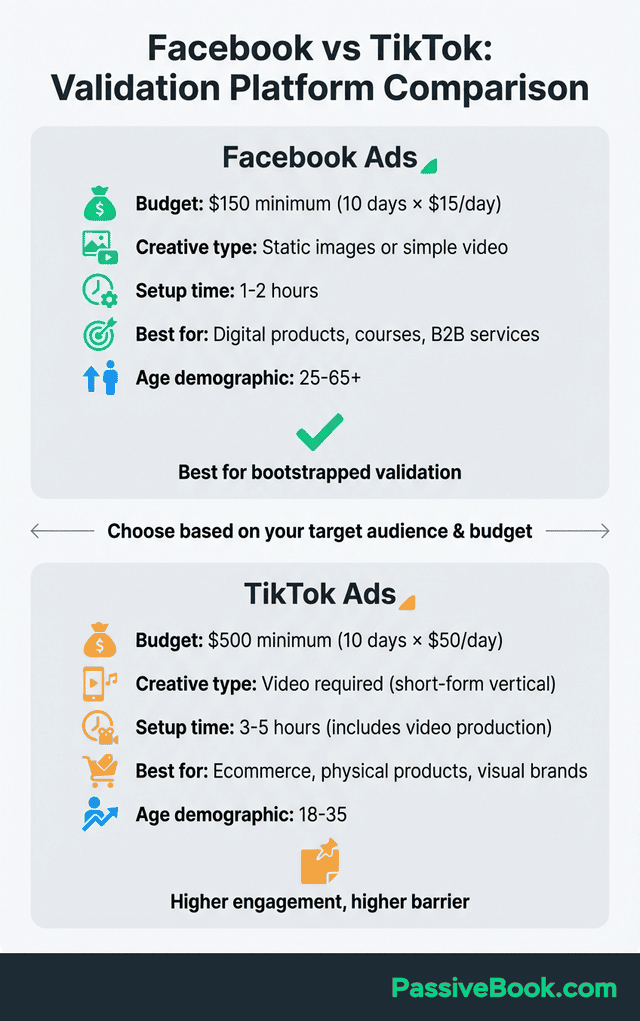
TikTok’s algorithm tests every video with a small audience first. High completion rate and engagement in that initial batch pushes it to larger audiences. Show behind-the-scenes building, not scripted marketing content. Use trending sounds and ask questions to drive comments. Record 5-7 short videos in one sitting, then post one daily. Batch creation saves time while maintaining consistency.
Content Strategies That Work Without a Following
Most founders dismiss Quora because it feels outdated. That’s exactly why it works – less competition means your answers rank faster. Long-form content builds authority even when nobody knows your name yet. These platforms reward depth over personality, making them perfect for solopreneurs without existing audiences.
Answer Questions on Quora and Reddit
Well-structured Quora answers appear on page 1 of Google within days. They also get cited by AI models like ChatGPT in responses, extending your reach beyond the platform.
Answer 2-3 questions per week in your exact niche with detailed responses of 800+ words. Results materialize over 3-6 months as answers rank for years.
Focus on questions with 50-500 views, not viral questions with 50,000 views where your answer drowns. Write for the searcher on Google, not just the Quora user. Include clear subheadings and examples. Customize credentials for each answer to build topical authority.
“I’ve built 3 email courses” lands better than generic credentials. Include your waitlist link in your profile, not aggressively in answers. Let the quality of your response drive profile clicks.
Guest Post on Established Blogs
I’ve written 4 guest posts in my niche over 3 years. The Sol Orwell example below shows what success looks like at scale:
Sol Orwell landed a guest post on Ramit Sethi’s GrowthLab that drove 20,000+ visitors. His strategy: research the blog extensively, pitch a unique angle, make the editor’s life easy with a polished draft, and email 10-15 people featured in research for amplification.
Time investment runs 8-12 hours per guest post between research, writing, and outreach. Target blogs with domain authority between 30-50 for realistic acceptance rates.
Sites with DA above 70 receive hundreds of pitches monthly. Mid-tier sites need quality content and accept more pitches. Include author bio with waitlist or landing page link for direct conversions. The backlink improves your search ranking even if traffic is modest.
Platform-Specific Tactics for Different Business Models
The tactics above work across business models, but different products need different proof points. Match your approach to what buyers need to see before purchasing. E-commerce requires visual proof, digital products need authority, and services need trust signals.
For Digital Products and Courses
Launch first digital products on Gumroad with simple pricing at $19-49, the impulse buy range. Share in communities where you’ve provided value for weeks. Your credibility from helpful comments converts better than any sales copy.
Digital product creators on Gumroad average $1,500 per month after building an audience of 500-1,000 engaged followers. You don’t need 10,000 followers. You need 500 people who open your emails and engage with your content.
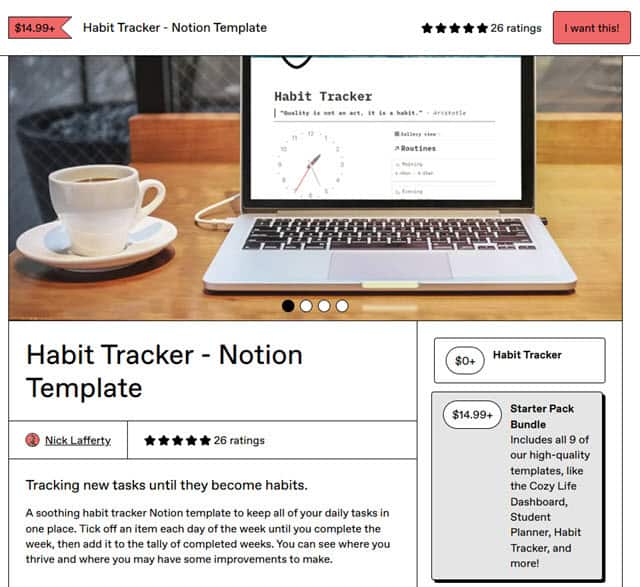
I launched my first course at $79 and got 3 sales in 2 months. I relaunched the exact same content at $27 as an “early access price” and got 23 sales in 2 weeks. The lower price made the decision instant for people who didn’t know me yet. Offer first 10-20 students 50-75% discount for detailed testimonials and feedback.
Tell them explicitly: “This is rough, I need your honest input to improve it.” People who pay even discounted prices give better feedback than free users. The small payment creates commitment.
For E-commerce and Dropshipping
Conventional wisdom says to test products with paid ads. That’s backwards when you’re starting. I found my first 15 customers by searching Facebook for posts where people asked “where can I buy this product type?” I DMed them my shop link. Zero ad spend, 8 sales in a week.
New e-commerce solopreneurs find their first 10-20 orders by joining niche Facebook groups related to their product category. Contribute helpful posts for 3-4 weeks, then post one launch with a “50% off for group members” code. The discount rewards community members and creates urgency.
Start with 15-20 products minimum on platforms like Shopify or WooCommerce to create a browsing experience. Single-product stores feel like dropshipping scams. Multiple products signal you’re building a real business worth trusting.
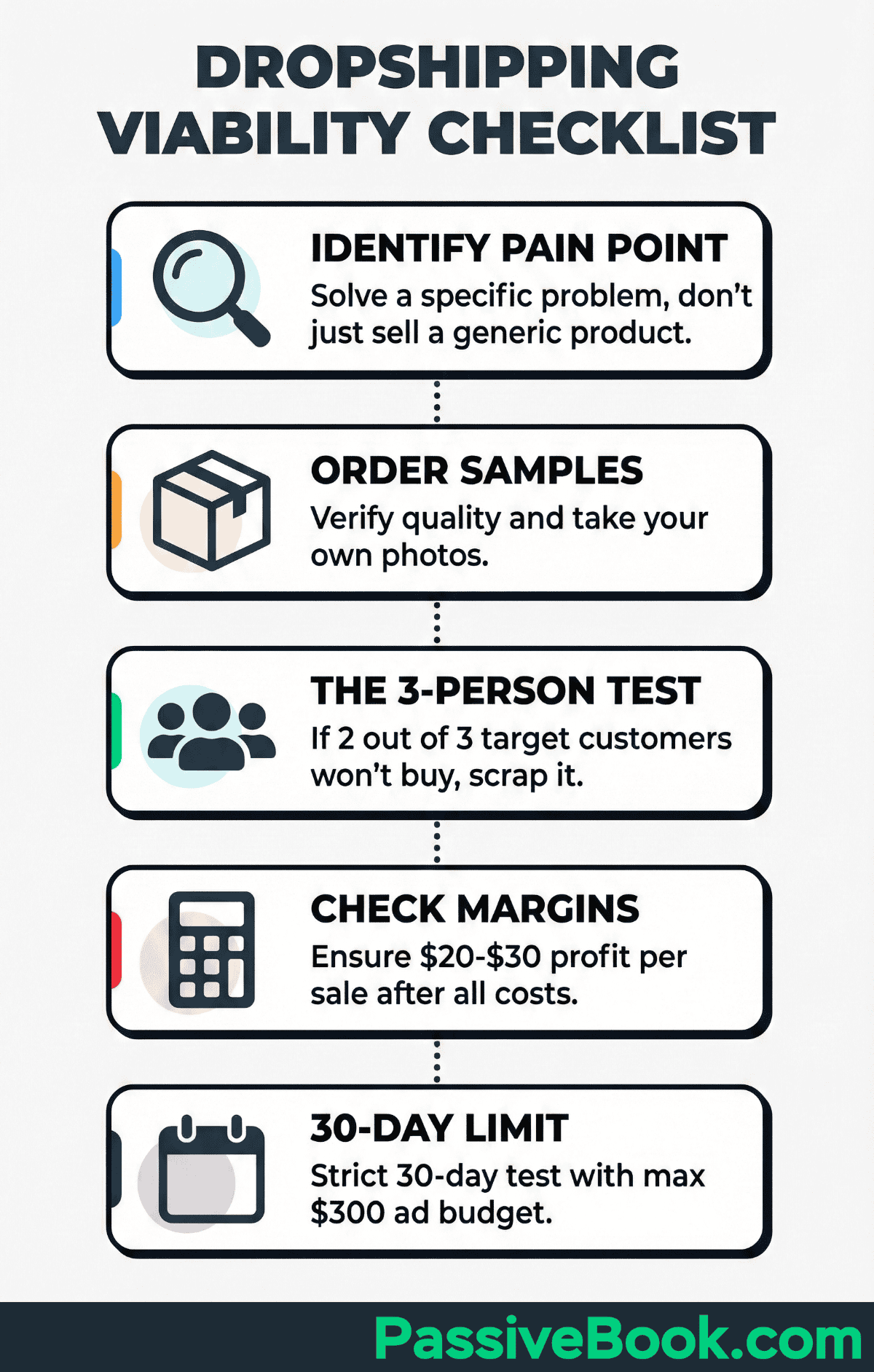
Test checkout flow as a customer yourself to identify friction points killing conversions. Use a different browser or incognito mode to see the actual customer experience. Most cart abandonment happens because checkout requires account creation or has unclear shipping costs.
Invest 3-4 hours in decent product photos. Use natural lighting near a window, plain backgrounds, and show products from 3-4 angles. Your phone camera is fine. Blurry photos kill trust faster than anything else.
AI-Assisted Customer Discovery
AI tools have become standard in small business customer research and lead generation, particularly for time-strapped solopreneurs. You don’t need expensive enterprise software. Free tools handle most solopreneur needs when used strategically.
Your solopreneur AI workflow starts with free ChatGPT analyzing your first 10 customer conversations for common pain points and exact phrases. Feed those phrases into keyword tools to find where your target audience searches.
Use AI to draft 10 outreach templates, then manually personalize each one. Prompt example: “I had 10 sales calls this week. Here are the transcripts. Identify the top 3 pain points mentioned most frequently and list the exact phrases customers used to describe them.”
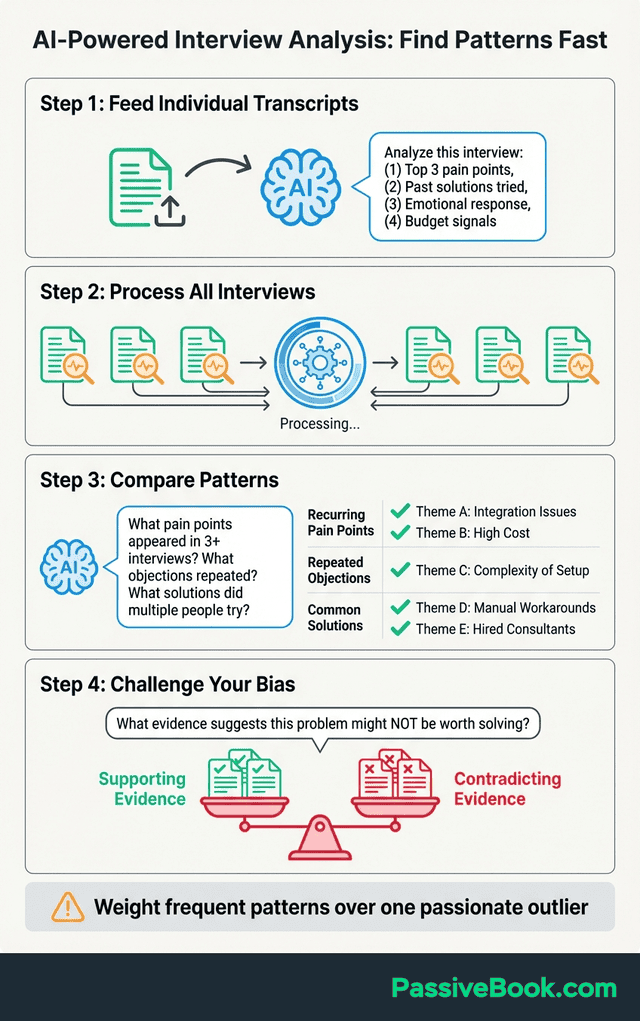
This surfaces language for your marketing that resonates because it’s their words, not yours. Free tiers from platforms like HubSpot test automation without upfront costs. AI handles repetitive drafting while you handle human connection.
The combination works better than either alone. AI gets you 80% done in 20% of the time, you add the final 20% that converts.
Early Adopter Pricing Strategy
Brennan Dunn launched Double Your Freelancing by offering his first email subscribers 50% off. Those early adopters who paid even at discount provided higher-quality feedback and became vocal advocates.
He learned even small payments of $50-100 filter out tire-kickers better than qualification questions. Offer two-tier pricing: 50-75% discount for first 20 users, standard pricing for next cohort. This creates urgency without using fake countdown timers.
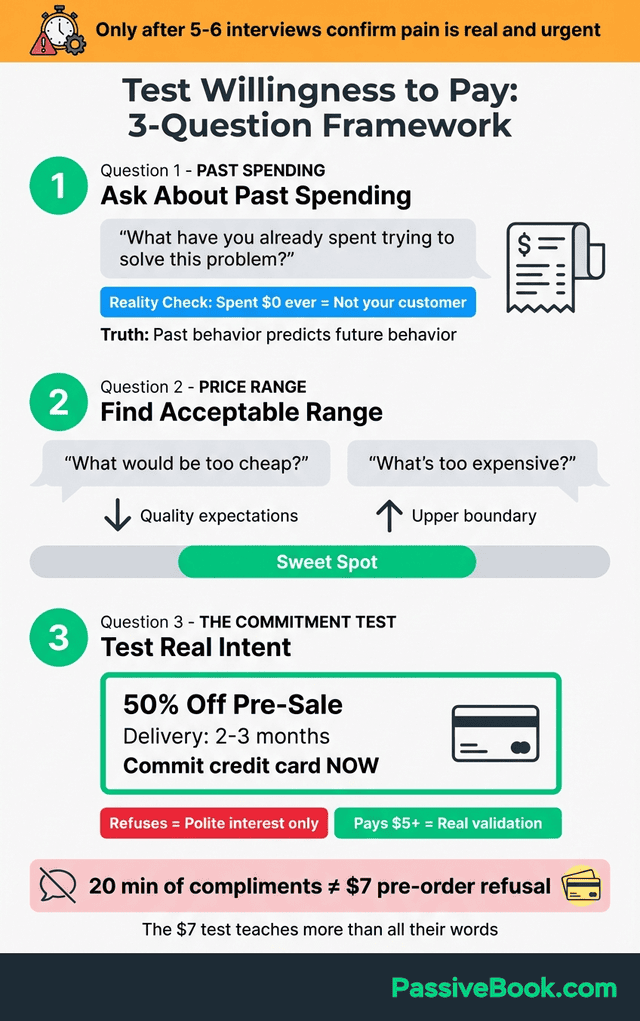
“First 20 get $29, then price moves to $79” converts better than permanent discounts that signal low value. Free users rarely provide quality feedback or become paying customers. Payment creates accountability and serious engagement.
Someone who paid $29 will use your product and tell you what’s broken. Free users Ghost after signup.
How to Know You’ve Found Real Early Adopters
Real early adopters ask detailed implementation questions about specific use cases. They discuss budget openly rather than asking for more features before committing. They express urgency about solving the problem: “I need this by next month” instead of “Interesting, let me think about it.”
Genuine adopters tolerate bugs and incomplete features in exchange for early access advantage. They want to stay competitive or gain status from being first. If someone says “Let me know when it’s perfect,” they’re not an early adopter.
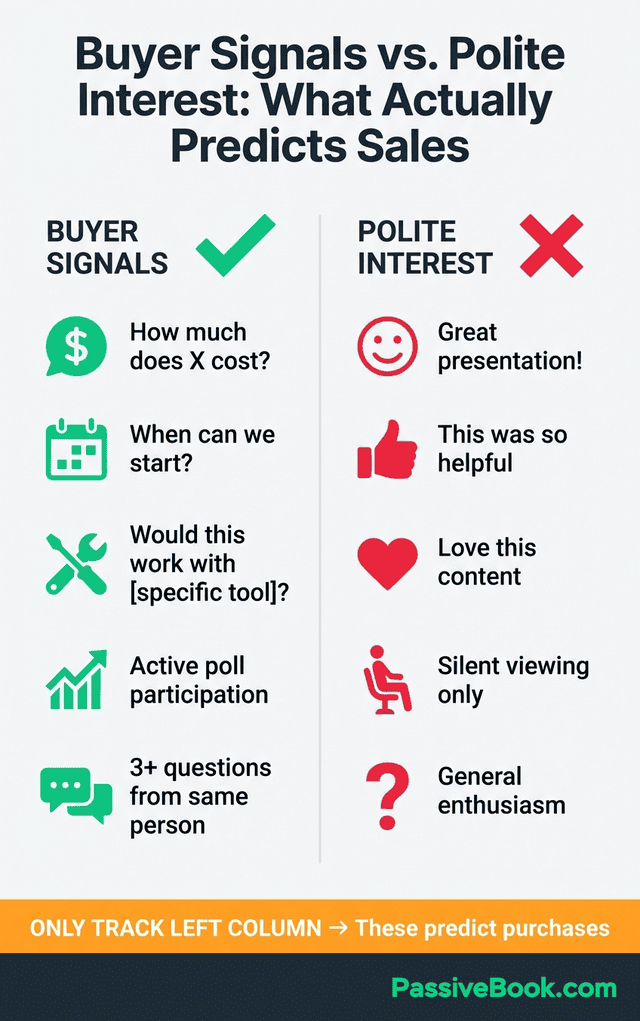
Real early adopters request next features unprompted and refer other users without being asked. They become unpaid evangelists because your solution genuinely helps them. Real early adopters become the foundation of your customer base, referring others without prompting and providing testimonials.
Track unsolicited testimonials and referrals as your strongest validation signal.
Common Pitfalls That Kill Early Momentum
Treating early adopters like mainstream customers with highly polished marketing messaging kills authenticity. They want transparent, founder-led conversations about what works and what doesn’t. Overly polished communication signals you’re not listening to feedback.
Bootstrapped SaaS companies reach profitability in 8-14 months on average, according to research on bootstrapped startups. Quitting before 90 days wastes validation progress and the relationships you’ve started building. Most solopreneurs quit right before traction appears because early growth feels slow.
Asking for sales before building relationships through consistent value delivery in communities gets you banned. The sequence matters: provide value for 2-3 weeks, build recognition, then mention what you’re building. Skip the relationship phase and you’re just another spammer.
Frequently Asked Questions
How Many Early Adopters Do I Need Before Launching Publicly?
I thought I needed 100. I was wrong. You need 10-30 paying early adopters giving consistent feedback before a public launch. This proves people will pay for your solution and validates your core value proposition. More signups without payment don’t prove demand, they prove interest in free things.
Should I Offer My Product for Free to Early Adopters?
I gave my first product away free to 30 people. Only 2 gave feedback. When I charged $19 to the next 10 people, I got detailed feedback from 7. Charge something, even if it’s 50-75% off your planned price. Payment filters serious users from tire-kickers and creates psychological commitment to use your product. Free users rarely provide quality feedback because they have no skin in the game.
How Long Should My Early Adopter Phase Last?
Most advice says 30 days. That’s too short. Plan for 60-90 days minimum to gather meaningful feedback and iterate on core features. Some solopreneurs stay in this phase for 6 months refining product-market fit. Don’t rush to scale before you’ve solved the right problem well.
What If My Early Adopters Don’t Match My Target Audience?
If paying customers consistently come from an unexpected audience, follow the money. Your initial target audience is wrong, or you’ve discovered a better market. Pivot to serve the people paying rather than the people you hoped would pay.
Can I Find Early Adopters Without a Social Media Following?
This question haunted me for 6 months. Yes, you can. Most of my first 20 customers came from Reddit and cold DMs, not from followers. Use direct outreach in communities, cold email, and answering questions on platforms where your target audience gathers. Followers are helpful but not required.
How Do I Know If Someone Is Serious vs Just Browsing?
Serious buyers ask about implementation details, pricing, and timelines. Browsers ask vague questions about features or request demos without discussing their specific problem. Ask “What’s your timeline for solving this?” Their answer reveals urgency level.
What Next?
You now have 15+ proven strategies to find early adopters without a marketing budget or existing following. The key is choosing 2-3 channels that fit your available time and doubling down on them for 90 days. Spreading across all 15 tactics guarantees mediocre results everywhere.
Your 90-Day Success Metrics:
- Week 1-2: 20-30 total conversations started across all channels
- Week 3-4: 5-10 engaged prospects asking detailed questions
- Week 5-8: 2-5 paying early adopters even at discount
- Week 9-12: 10-15 total customers, 2-3 referrals, 30%+ repeat usage
If you’re not hitting these milestones, pivot channels or refine your message – don’t just work harder at what’s not working.
Finding early adopters feels uncomfortable because you’re having real conversations about unfinished products. That discomfort means you’re doing it right. Every successful solopreneur started exactly where you are, reaching out to strangers and asking for feedback.
If this guide helped clarify your early adopter strategy, use the share buttons below to help another solopreneur who’s stuck in the same place you were before reading this. What’s the biggest challenge you’re facing in finding your first 10 customers? Share your specific situation in the comments so we can help you find the right approach.
Share this post with your friends & followers: