I spent my first year blogging writing posts whenever inspiration struck. No plan. No targets. Just vibes and caffeine. By month 12, I had 47 articles, 200 visitors per month, and exactly $23 in affiliate revenue. The problem wasn’t effort – it was direction.
That single change transformed random activity into trackable progress. SMART goals gave me the structure my scattered side-hustle energy desperately needed.

- •What Are Smart Goals?
- •Why Smart Goals Work for Time-Strapped Solopreneurs
- •The One Critical Upgrade That Makes Smart Goals Actually Stick
- •S - Specific: Replace Vague Wishes With Precise Targets
- •M - Measurable: Choose the One Metric That Matters for Your Business
- •A - Achievable: Calibrating Goals to Your Real Available Hours
- •R - Relevant: Filter Every Goal Through Your Business Model's Core Outcome
- •T - Time-Bound: Use 90-Day Sprints, Not Annual Wishes
- •How AI Helps Solopreneurs Draft Better Smart Goals Faster
- •Smart Goal Examples for Popular Online Business Models
- •Free Tools to Track Your Smart Goals Without Overspending
- •How to Review and Adjust Your Smart Goals When Life Gets in the Way
- •Frequently Asked Questions
- •What Next?
What Are Smart Goals?
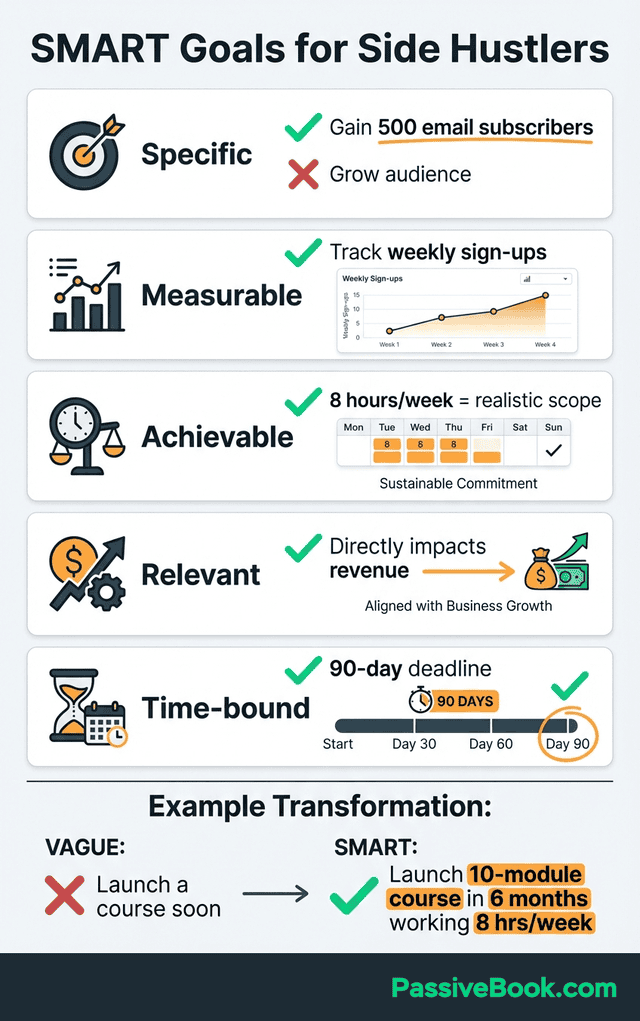
A SMART goal is Specific, Measurable, Achievable, Relevant, and Time-bound – not a vague wish or moving target. The framework forces you to answer the hard questions upfront: what are you building, how will you know it’s working, and when will you evaluate the results?
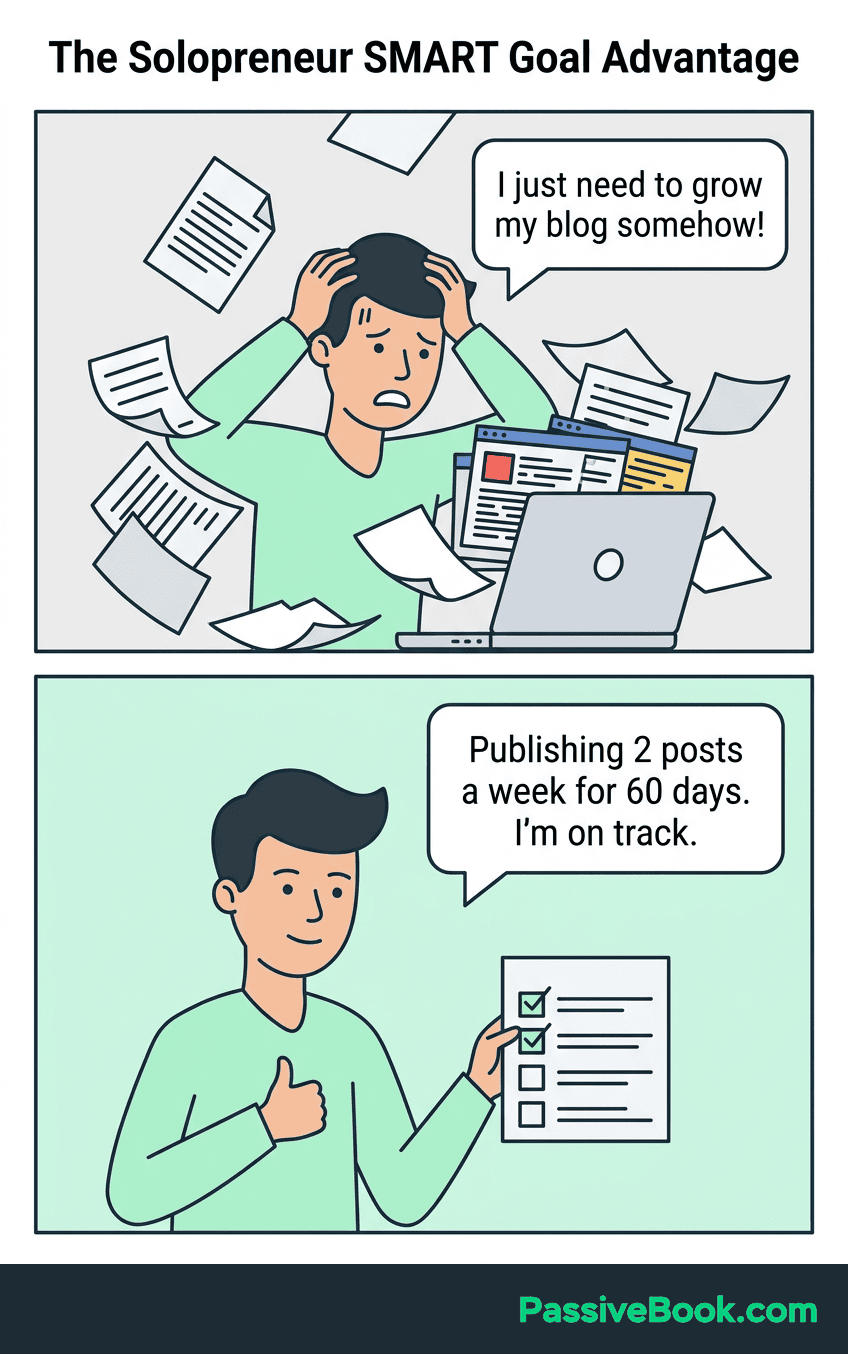
SMART goals replace vague intentions like “grow my blog” with clear commitments like “publish 2 posts per week for 60 days.” Instead of hoping for progress, you’re tracking it. Instead of guessing what’s working, you’re measuring specific outcomes tied to your business model.
Writing the goal down matters more than most people realize. A study by Dr. Gail Matthews at Dominican University of California found people who write their goals down are 42% more likely to achieve them. Making the goal tangible – on paper, in a doc, anywhere permanent – is the first step toward completing it.
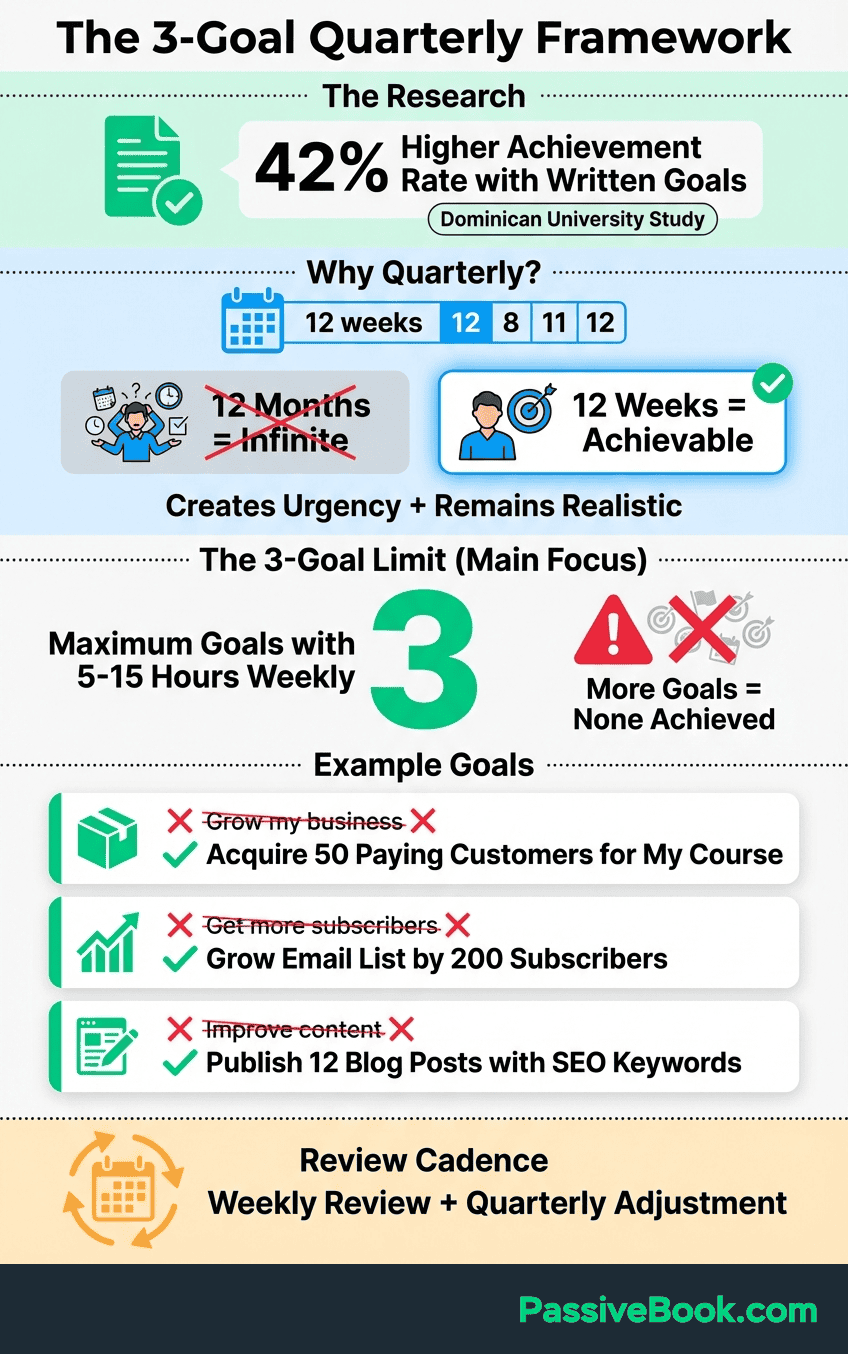
A SMART goal doesn’t have to be impressive to anyone but you. “$500/month from my blog” is a perfectly valid goal – even if the hustle-culture influencers on Twitter are claiming six figures in six months. Small, achievable goals that you actually complete will take you further than grandiose plans that burn you out by week three. Start modest. Scale later.
Why Smart Goals Work for Time-Strapped Solopreneurs
Solo operators have no manager, no team members – SMART goals create that missing accountability structure from within. You’re both the boss and the employee. Without external pressure, the framework becomes your internal compass.
SMART goals scale perfectly downward. They work for one person with 5 spare hours a week, not just corporate teams with dedicated project managers. A goal like “publish one YouTube video every Tuesday for 12 weeks” requires the same structural thinking whether you’re a Fortune 500 marketing team or a parent filming after the kids go to bed.
Michelle Schroeder-Gardner of Making Sense of Cents grew her blog to $100K/month by tracking specific traffic and income milestones – not vague ambitions. In her first year, she set a goal to increase monthly traffic from 5,000 to 50,000 visitors by publishing three posts weekly and focusing on Pinterest. She hit 48,000 by month 11. That specificity – exact traffic targets, content frequency, primary channel – is what turned her blog into a six-figure business.
The One Critical Upgrade That Makes Smart Goals Actually Stick
Rigid SMART goals become demotivating when life – a sick child, an overtime week – disrupts your timeline. The framework was designed in corporate environments where teams have backup and resources. Solopreneurs don’t have that luxury.
Critics at Learning Rebels argue the framework fails when goals lack emotional connection to why they matter. They’re right. A goal like “reach 1,000 email subscribers in 90 days” feels clinical. It doesn’t capture the deeper reason you’re building an email list – maybe it’s to escape your 9-to-5, or to create income that doesn’t vanish when you stop working.
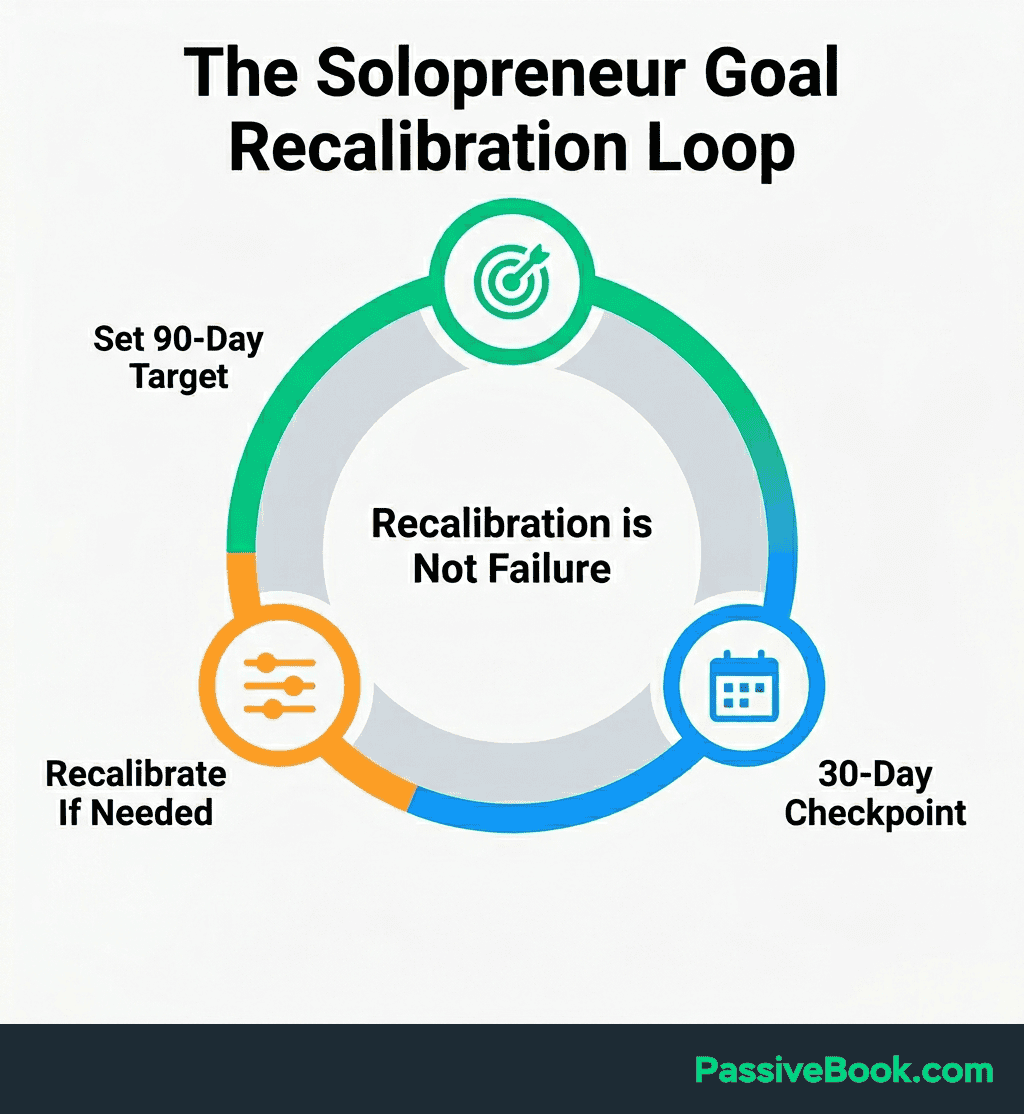
Treat every SMART goal as a living document scheduled for revision, not judged as pass/fail at deadline. Set goal one as a 90-day target, then schedule a 30-day checkpoint to evaluate progress. If life happened and you’re behind, shrink the target or extend the timeline.
Recalibration is not failure. It’s strategic honesty about what’s achievable given your real constraints.
S – Specific: Replace Vague Wishes With Precise Targets
“Grow my YouTube channel” is a wish. “Upload one 8-minute video every Tuesday for 12 weeks” is a specific goal. A clearly defined goal removes guesswork. The first leaves you wondering what “grow” means and when to start. The second tells you what to do tomorrow.
Sharpen any goal by answering the five W’s: what action, who it serves, where it happens, when you’ll do it, and why it matters.
A vague goal like “make money from my blog” becomes “earn $500/month in affiliate revenue by publishing two product review posts per week for 90 days.”
Adam Enfroy grew his blog from $0 to $4.5M in six years by committing to one specific content-output goal at a time – never a vague ambition to “grow his blog.” In year one, his goal wasn’t “make money blogging” – it was “earn $1,000/month in affiliate revenue by month 6 through 10 product review posts targeting buyer-intent keywords.” He hit $1,147 in month 6. Specificity turned effort into measurable outcomes.
M – Measurable: Choose the One Metric That Matters for Your Business
I spent six months tracking Instagram followers, blog pageviews, Pinterest saves, email open rates, and affiliate clicks simultaneously. Five dashboards, zero clarity. When I collapsed it to one metric – monthly affiliate revenue – I finally knew if I was winning or losing.
Pick one measurement per goal. If you’re a blogger monetizing through affiliate links, that’s traffic. If you’re selling digital products, it’s email subscribers who convert to buyers. Don’t confuse activity with outcome.
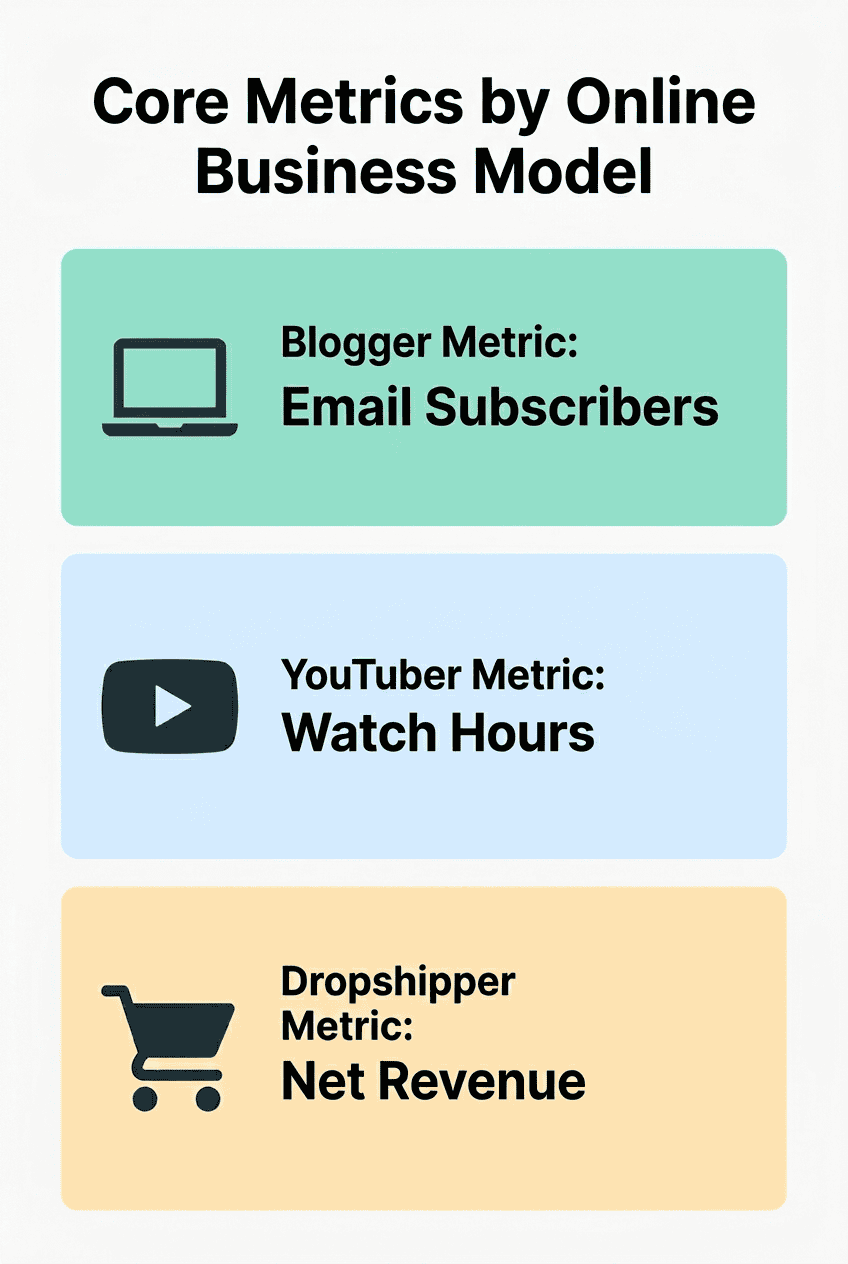
Each business model has a natural primary metric. Email subscribers for bloggers. Watch hours for YouTubers. Units sold for print-on-demand sellers. Revenue for dropshippers. Pick the one number that directly ties to your monetization path.
Shopify’s SMART sales goal framework recommends targets like “reach $500/month net revenue by month 3” – not “make more sales.” Measurable goals force you to confront reality: are you on track, or do you need to adjust your approach?
A – Achievable: Calibrating Goals to Your Real Available Hours
Your goal isn’t achievable if it requires a 60-hour work week and you only have 8 hours free. Factor in your day job, family, and actual energy – not your best-case-scenario week. I learned this the hard way after setting a goal to publish four blog posts per week while working full-time.
Two weeks in, I was burned out and three posts behind schedule.
An achievability check: 8 hours per week realistically supports one YouTube video or two blog posts or five print-on-demand designs – but not all three at once. The math doesn’t lie. A 10-minute YouTube video requires scripting, filming, editing, thumbnail design, and optimization. That’s 4-6 hours minimum for beginners.
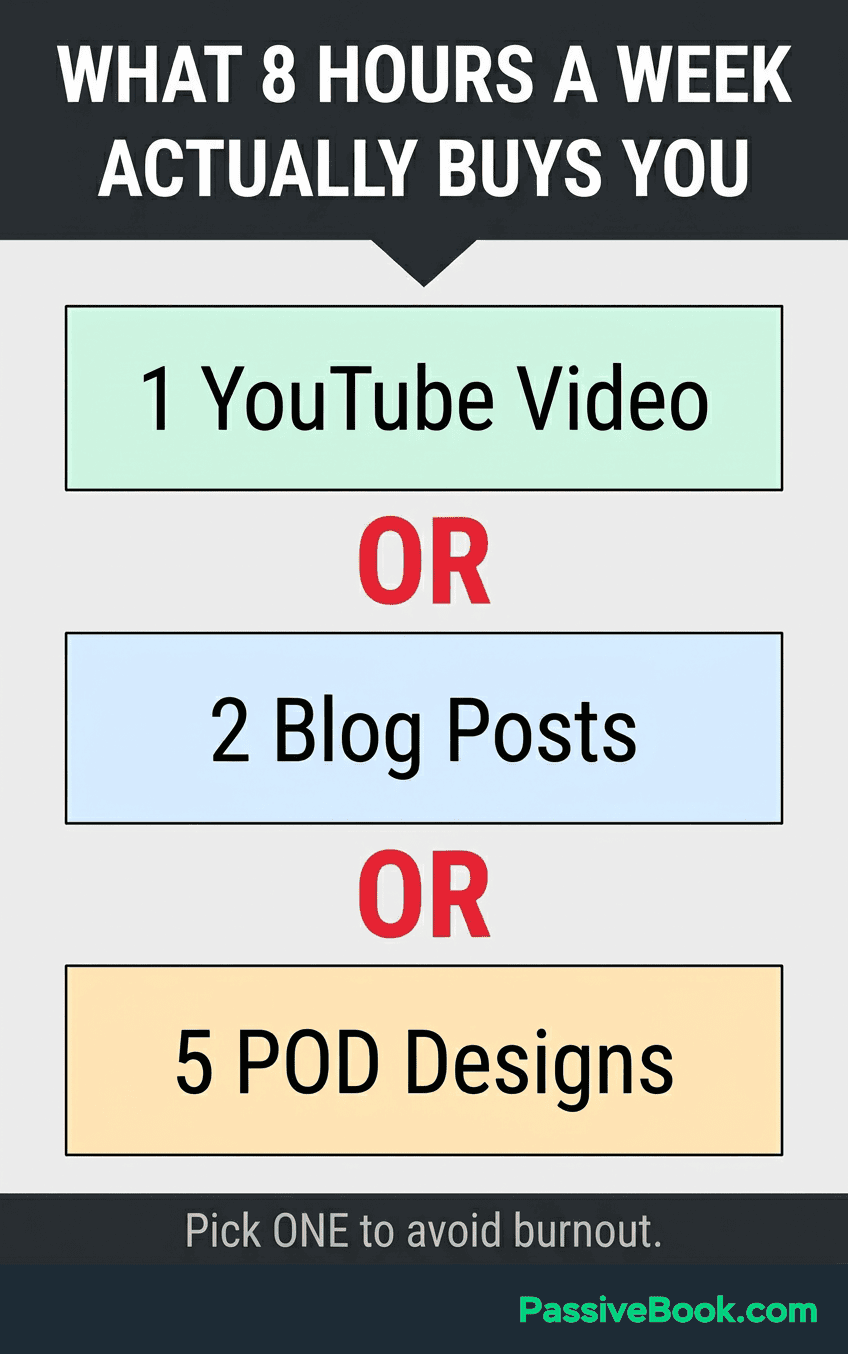
Benchmark every goal against your real weekly hours before committing to a deadline. If you have 10 hours per week and your goal requires 15, you’re setting yourself up for failure. Shrink the scope or extend the timeline. A goal you complete beats an ambitious goal you abandon by week three.
R – Relevant: Filter Every Goal Through Your Business Model’s Core Outcome
Every SMART goal must move you toward what you want achieve: supplemental income, salary replacement, or creative freedom. If a goal doesn’t serve that end state, it’s a distraction dressed up as productivity.
A blogger monetizing via affiliate links needs traffic goals. A podcaster monetizing via sponsorships needs download goals. Relevance is always business-model specific. Setting a goal to “gain 5,000 Instagram followers in 90 days” is irrelevant if your business doesn’t monetize through social media engagement.
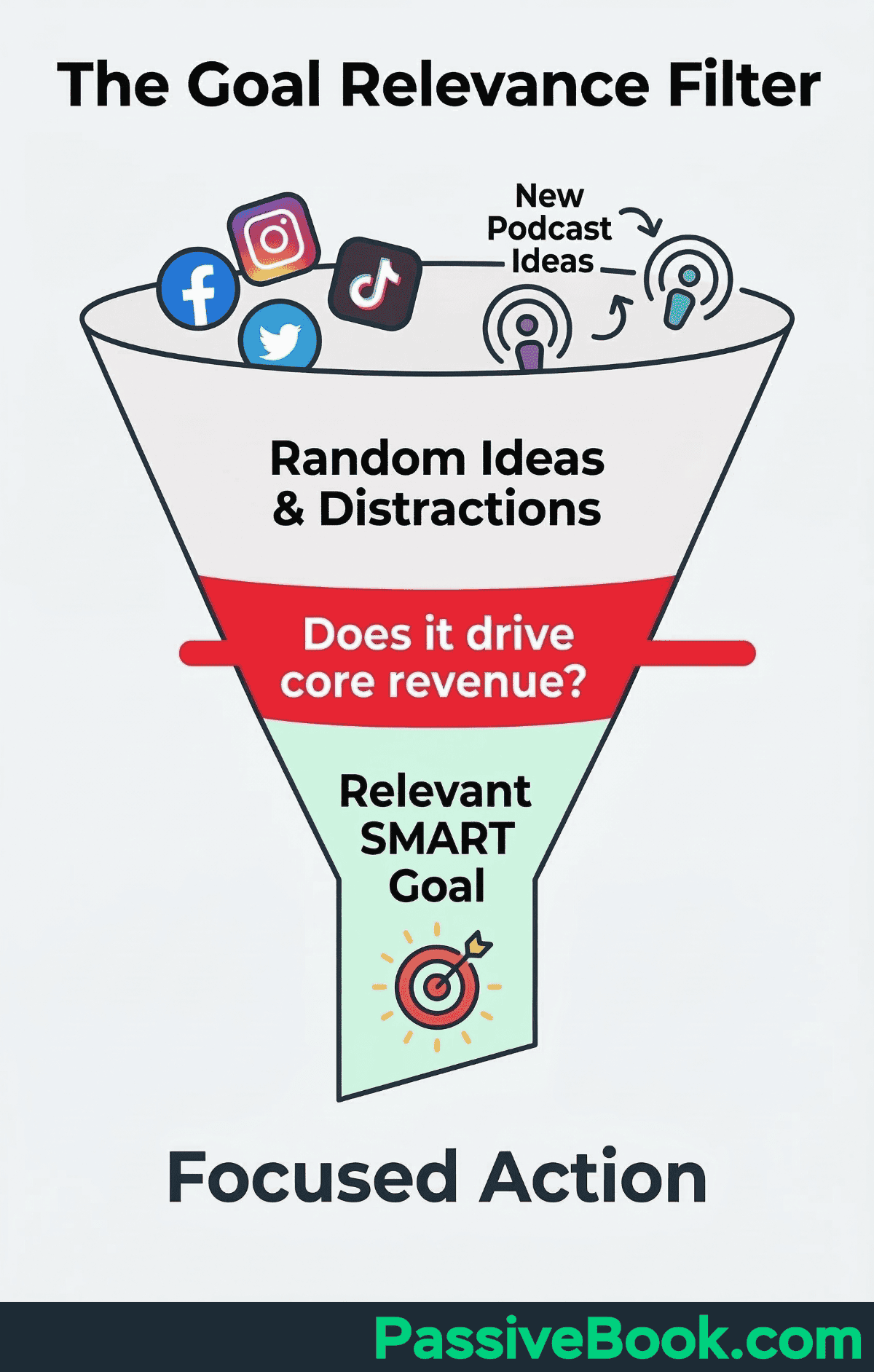
Adam Enfroy – who scaled his blog to $4.5M – filtered every goal through a single lens: affiliate income driven by SEO content. He ignored social media and podcast experiments that didn’t compound his core traffic-to-revenue model. That focus is what turned content into cash flow.
T – Time-Bound: Use 90-Day Sprints, Not Annual Wishes
A time frame converts an intention into a commitment. “Someday” never appears on a calendar. “By March 15” does. Time pressure forces prioritization and prevents the endless research phase that kills momentum before you start.
90-day sprints are optimal for solopreneurs because they balance short term urgency with long term momentum. Fast Company reports that shorter goal cycles produce higher completion rates by maintaining urgency without triggering the procrastination that kills year-long plans. Three months is long enough to see real progress but short enough to stay motivated.
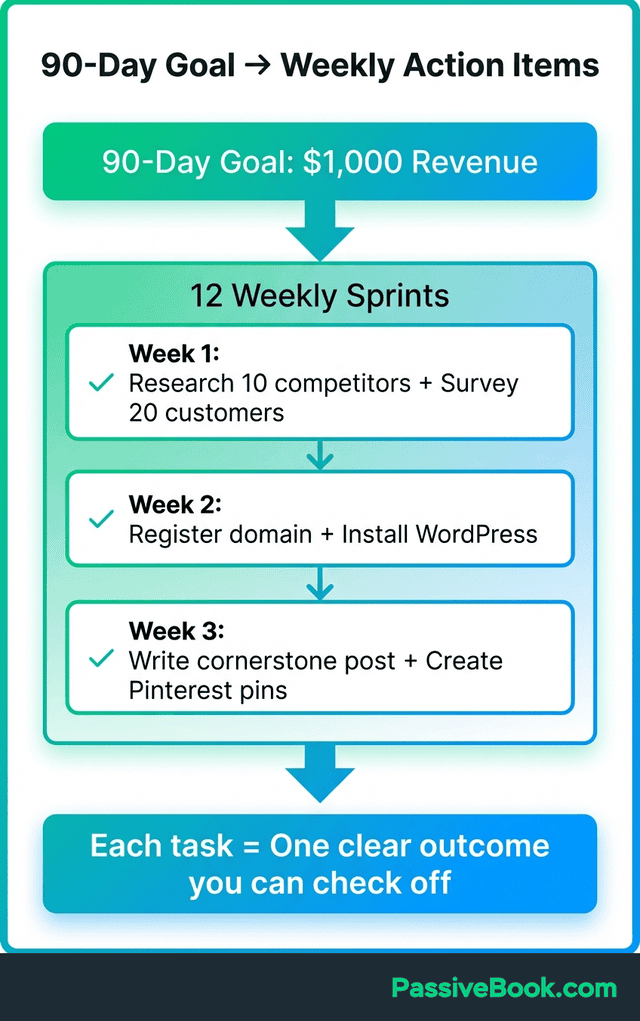
Set your 90-day goal first, then work backward to define a 30-day milestone as an early proof-of-concept checkpoint. A print-on-demand seller’s time-bound goal: “Add 20 new designs to my Printify store and achieve 10 sales within 60 days of launch.” The 30-day checkpoint might be “15 designs uploaded and first Pinterest campaign running.”
How AI Helps Solopreneurs Draft Better Smart Goals Faster
I used to spend 20 minutes staring at a blank doc trying to turn “I want more email subscribers” into a proper goal. Now I paste that sentence into ChatGPT and get a structured SMART goal in 15 seconds. AI doesn’t replace your thinking – it accelerates the translation from vague to concrete.
ChatGPT can transform a vague intention into a fully structured SMART goal in seconds. Use this prompt: “Turn this into a SMART goal for a blogger with 10 hours per week: I want to grow my email list.” The AI will ask clarifying questions and output something like: “Grow email list from 0 to 200 subscribers in 90 days by publishing 2 lead-magnet blog posts per week and promoting them on Pinterest.”
Notion AI can auto-generate a goal-tracking dashboard from a plain-text goal description. Paste your goal, ask it to create a progress tracker with columns for milestone, deadline, and status. No manual formatting required. You’ll have a functional tracking system in under two minutes.
Before committing to a new goal, ask ChatGPT to analyze your past performance. Prompt: “I published 8 blog posts in the last 90 days while working full-time. Is a goal of 12 posts in the next 90 days achievable, or should I adjust?”
Smart Goal Examples for Popular Online Business Models
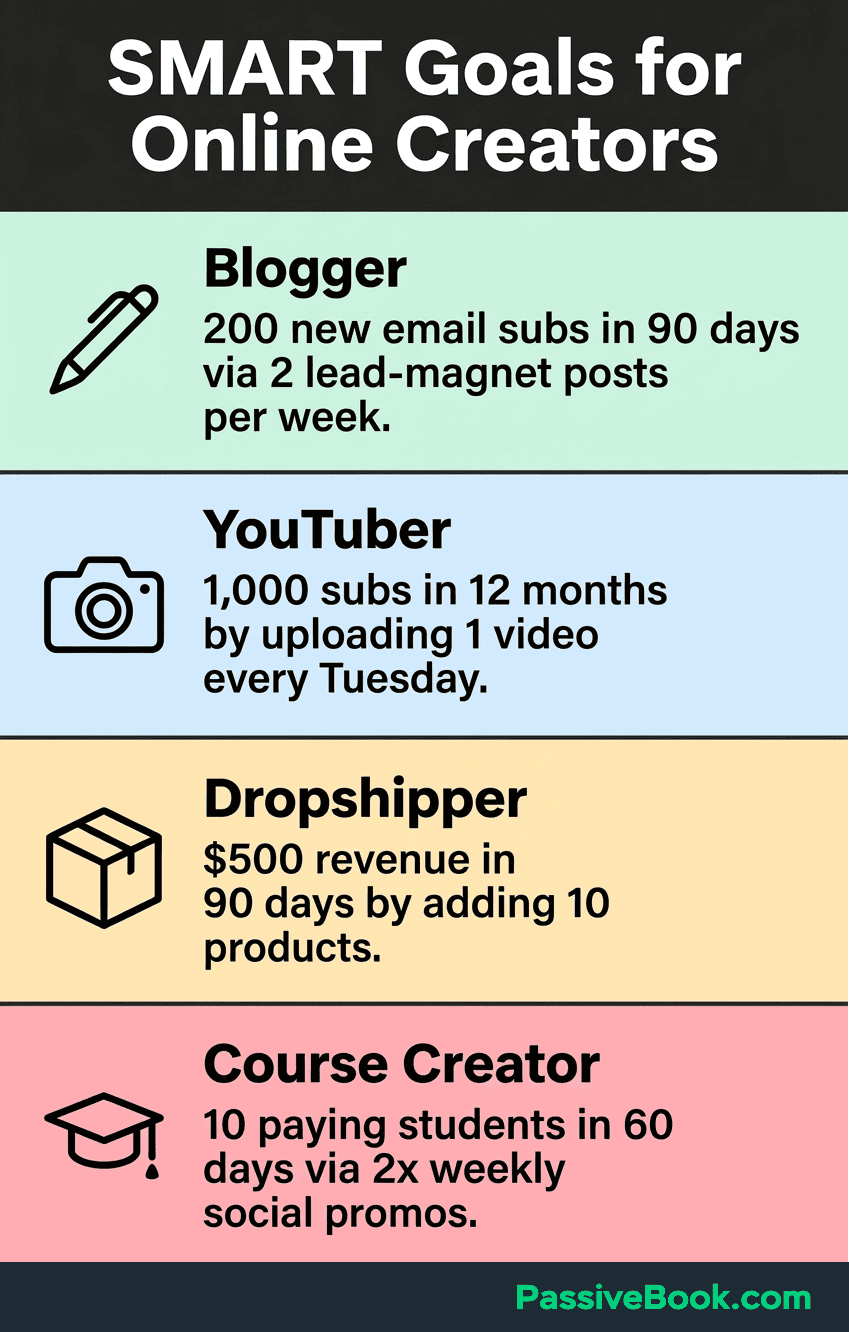
Blogger: “Grow email list from 0 to 200 subscribers in 90 days by publishing 2 lead-magnet posts per week.”
This goal is specific, measurable, achievable for someone with 8-10 hours per week, relevant to long term affiliate or product revenue, and time-bound. The lead-magnet focus ensures each post serves list growth, not just traffic.
YouTube Creator: Most beginners chase views. Wrong metric. YouTube’s Partner Program requires 1,000 subscribers and 4,000 watch hours – so your goal should target subscribers first. “Reach 1,000 subscribers within 12 months by uploading one 8-minute video every Tuesday.”
One video per week is achievable for a side-hustle creator. Consistency matters more than perfection when building an audience from zero.
Dropshipper/POD: I made this mistake – tracking profit instead of revenue in my first 90 days. Revenue is the validation signal you need first. “Generate first $500 in revenue from my Shopify store within 90 days by adding 10 products and running 3 Pinterest pins weekly.”
This breaks down to 7-8 sales at $25 average order value with a 30% profit margin – meaning $150-175 in your pocket after Printify fees and ads. Ten products give enough variety to test what resonates. Pinterest pins drive organic traffic without ad spend – critical for budget-conscious beginners testing their first store.
Online Course Creator: “Enroll 10 paying students in my first mini-course within 60 days by promoting to my social audience twice per week.”
Ten students is a realistic first cohort. Twice-weekly promotion keeps you visible without burning out your audience. A mini-course under 2 hours of content is achievable to create while working full-time, unlike a massive flagship course that takes months to build.
Free Tools to Track Your Smart Goals Without Overspending
ClickUp’s free SMART Goals Template provides a structured, visual tracker with built-in progress bars and automated reminders. The template includes a “Goal Health” indicator that flags when you’re falling behind pace – useful when you’re juggling a day job and side hustle. The free tier supports unlimited goals.
One warning: ClickUp will try to upsell you to paid tiers with pop-ups and feature gates. Ignore them. The free tier is sufficient for tracking 3-5 goals as a solopreneur. Don’t let feature bloat distract you from the one thing that matters – updating your progress weekly.
HubSpot’s free Business Goal-Setting Template works in Google Sheets and Excel. It includes pre-built formulas for tracking percentage progress toward revenue, traffic, or subscriber targets. Download once, use forever. No account creation, no email capture walls.
A private Google Sheet with columns for Goal, Metric, Deadline, and Weekly Status is sufficient to start today. Create one row per goal. Update it every Sunday evening. Add a “Notes” column to capture what’s working and what’s not. Simple beats sophisticated when you’re building the habit of consistent tracking.
How to Review and Adjust Your Smart Goals When Life Gets in the Way
Schedule a 15-minute weekly check-in and a 60-minute monthly review as non-negotiable calendar appointments. I set mine for Sunday evenings at 7 PM. Same time, every week. The consistency removes the decision fatigue of “when should I review my goals?”
Dr. Gail Matthews’ study at Dominican University of California found participants who wrote goals down and sent weekly progress reports to an accountability partner achieved them at 70% versus 35% for those who kept setting goals private. The check-in is as powerful as the goal itself. Even if your accountability partner is just yourself via a weekly email draft, the act of reporting forces honesty.
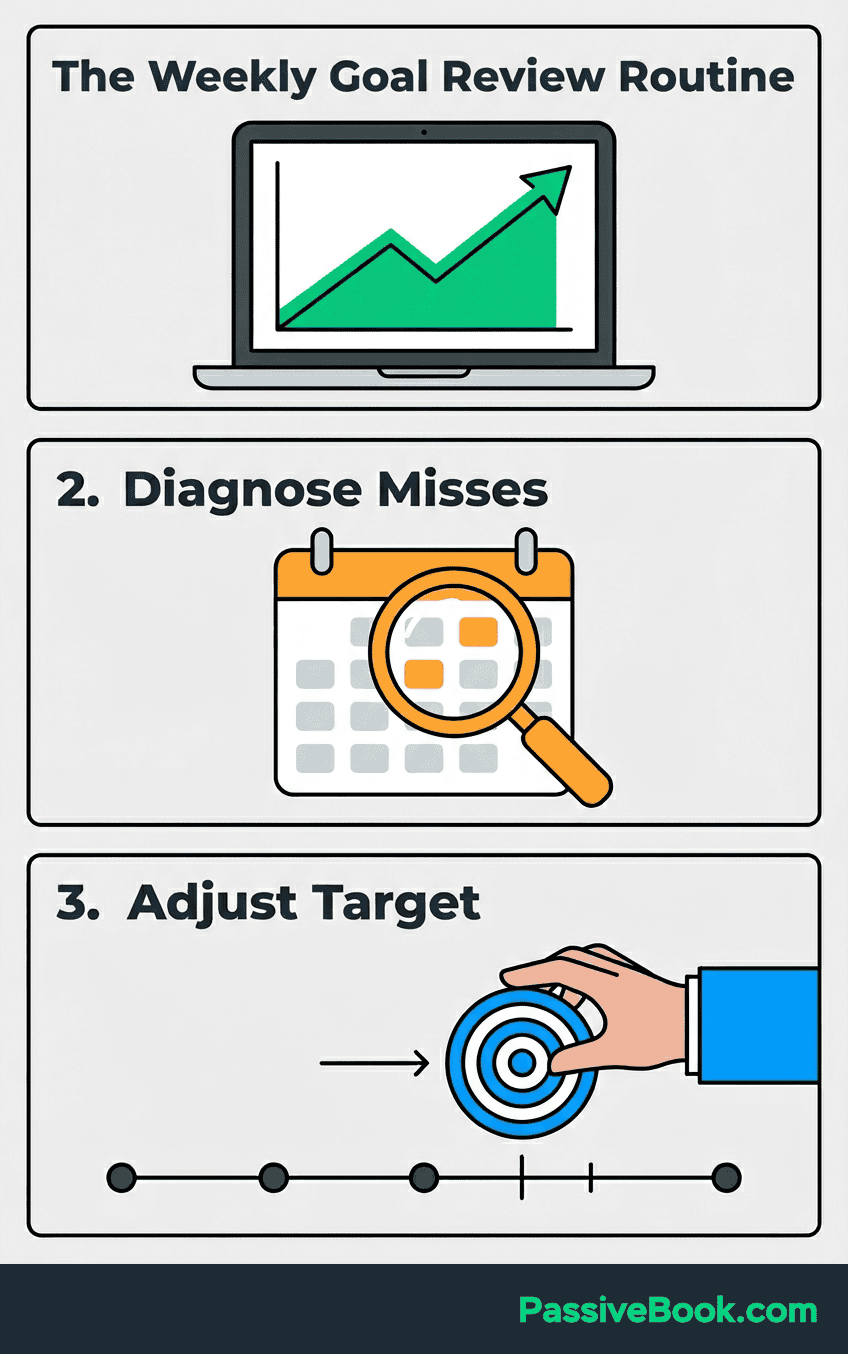
If a goal is repeatedly missed, diagnose why before scrapping it. Wrong metric? You’re tracking traffic but revenue is what matters. Wrong timeline? 90 days wasn’t realistic given your constraints.
Wrong priority? The goal doesn’t serve your core outcome. Fix the diagnosis, not just the symptoms.
Shrinking a goal mid-cycle – “$500 by month 3” becomes “$200 by month 3” – is strategic recalibration, not failure. Life happens. Clients demand overtime. Kids get sick. The goal is progress, not perfection. Adjust the target, extend the timeline, or pause entirely if needed. A flexible framework you stick with beats a rigid plan you abandon.
Frequently Asked Questions
How Many Smart Goals Should a Solopreneur Set at One Time?
One to three active goals maximum. More than that and you’re managing a to-do list, not focused outcomes. Set goal one as your primary revenue driver, then add one supporting goal that compounds the first. A third goal is optional and should only be added if it doesn’t dilute your focus.
Should I Set Revenue Goals or Activity Goals First as a Beginner?
Set activity goals first. Revenue is a lagging indicator you can’t directly control. You can control publishing two blog posts per week or uploading one video weekly. Activity goals build the habits that eventually generate revenue. Once you have baseline data – like “10 blog posts generated $47 in affiliate income” – then you can set informed revenue goals.
How Do I Set a Smart Goal When I Don’t Know What Realistic Numbers Look Like for My Niche?
Research three case studies from creators one step ahead of you – not the outliers earning six figures, but the ones six months into their journey. Use their numbers as benchmarks to see what realistic numbers look like for your niche. If a blogger with similar traffic earned $200/month in their first 90 days, aim for $150-250. You’ll calibrate as you gather your own data.
How Do I Stay Motivated When My Smart Goal Takes Months to Show Results?
Break the 90-day goal into 30-day checkpoints with smaller wins. Celebrate the leading indicators – 5 email subscribers, your first affiliate click, 50 YouTube views – even when revenue is still zero. Track inputs like posts published and videos uploaded as religiously as outputs. Inputs are fully within your control and provide daily proof of progress.
What Next?
You came here looking for a goal-setting framework that works for solopreneurs building in the margins of life. SMART goals aren’t corporate jargon – they’re the accountability structure you need when there’s no boss, no team, and no external pressure to keep you moving forward.
Starting a side hustle while juggling a day job is hard. Setting vague goals like “grow my blog” or “make money online” makes it harder. SMART goals give you clarity: what to do, how to measure progress, and when to evaluate whether it’s working. That clarity is what turns scattered effort into compounding results.
If you found this guide helpful, hit the share buttons below. Someone in your network is stuck in the vague-goal trap right now and needs this framework. What’s the first SMART goal you’re setting for your online business? Drop it in the comments – I read every one and will tell you if it passes the SMART test.
Share this post with your friends & followers: