I used to stare at my laptop at 11pm, exhausted from my day job, wondering if I’d ever have enough energy to build something of my own. The truth is, I didn’t find more time. I found better time. Over the past decade of building online businesses while working full time, I learned that finding time for your side hustle isn’t about waking up at 4am or sacrificing sleep. It’s about reclaiming the hours you’re already wasting and using them strategically.
This guide shows you how to make time for your side hustle with 14 practical strategies that work around your full time job and family obligations. You’ll learn how to audit where your time actually goes, identify your peak performance windows, and build sustainable systems that deliver results.

Why Most Side Hustles Fail Before They Start
Most side hustles don’t fail because the idea was bad. They fail because the time model was unsustainable from day one.
40% of Americans with side hustles report burnout within the first year. The culprit isn’t lack of passion. It’s unrealistic time commitments that crash into the reality of a demanding day job , family dinners, and the basic human need for rest.
Experts warn that most side hustles fail due to unsustainable time models, not bad ideas. The “passion-fueled hustle” narrative we see on social media ignores a critical truth: persistence beats motivation when you’re juggling full time work. Motivation fades after the third consecutive 5am wake-up call when you’re running on five hours of sleep.
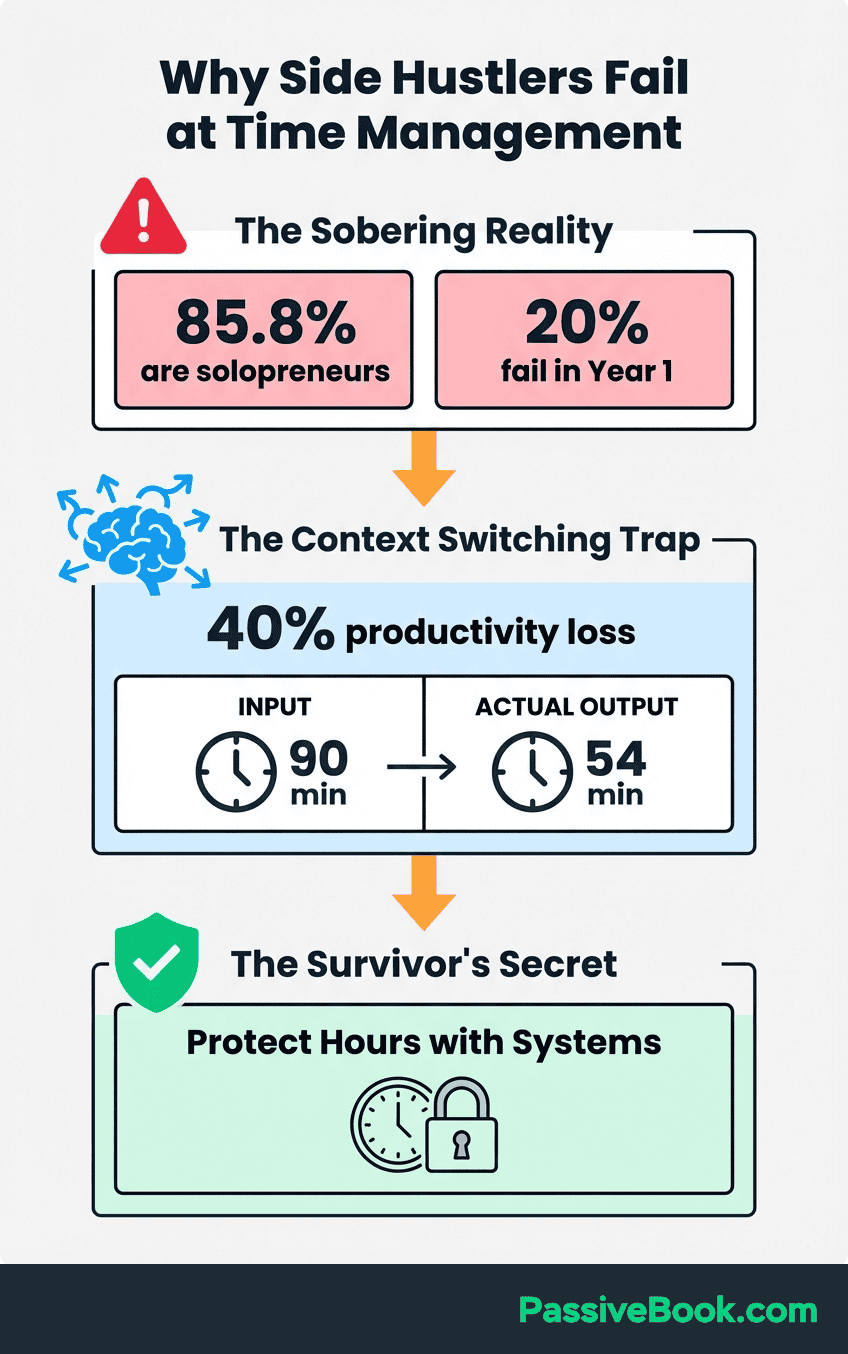
I almost became one of those statistics. Three months into my first side hustle, I was sleeping four hours a night and snapping at my family. My day job performance tanked. I thought quitting was the only option. Then I realized the problem wasn’t my idea or my work ethic. It was my insane belief that I needed to work 25 hours per week on top of my full-time job.
The real problem is that most solopreneurs quit before building systems that reduce their daily time requirements. They grind for three months, see minimal results, and assume they need to work even harder. What they really need is a smarter framework for finding time and protecting it.
How Much Time Your Side Hustle Actually Needs
Let’s get specific about the hours work required to make real progress.
Successful side hustlers typically invest 11-16 hours per week. That’s not “hustle culture” extremism. It’s a realistic commitment that fits around a full time job without destroying your health or relationships.
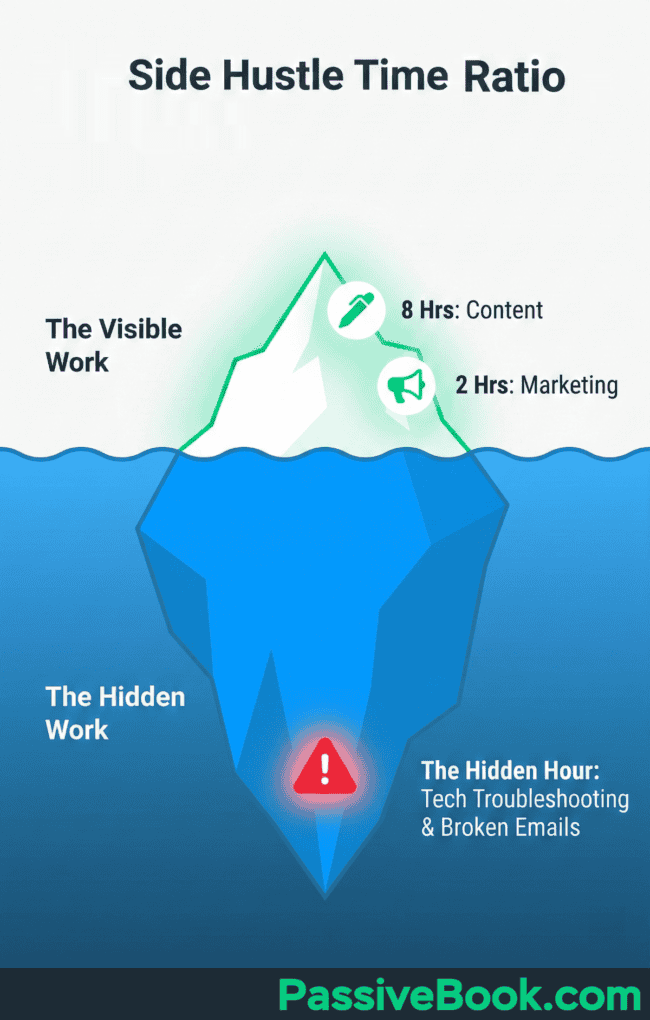
The average side hustler works 11 hours weekly, earning roughly $25 per hour. But here’s what that looked like for me: I spent 8 hours creating content, 2 hours marketing it, and 1 hour handling customer emails. What I didn’t anticipate? The hidden hour spent troubleshooting tech issues, updating plugins, and figuring out why my email sequence broke.
I recommend starting with a 5-10 hour weekly commitment rather than an unsustainable 20+ hour goal. A sustainable pace you can maintain for months beats an aggressive sprint that burns you out in three weeks. Your work gig is a marathon disguised as a series of small, consistent sprints.
What Results to Expect at Different Time Investments
Understanding realistic timelines prevents the disappointment that kills most side hustles.
If you’re putting in 5 hours week work , focus on building your foundation. Set up your platforms, create your first products, test initial content. Don’t expect revenue yet. You’re learning the systems and proving you can maintain consistency.
At 10 hours per week while working full time , expect your first revenue within 3-6 months for product-based businesses like print-on-demand or digital downloads. Content and audience-building models take longer. Plan for 6-12 months before meaningful income appears.
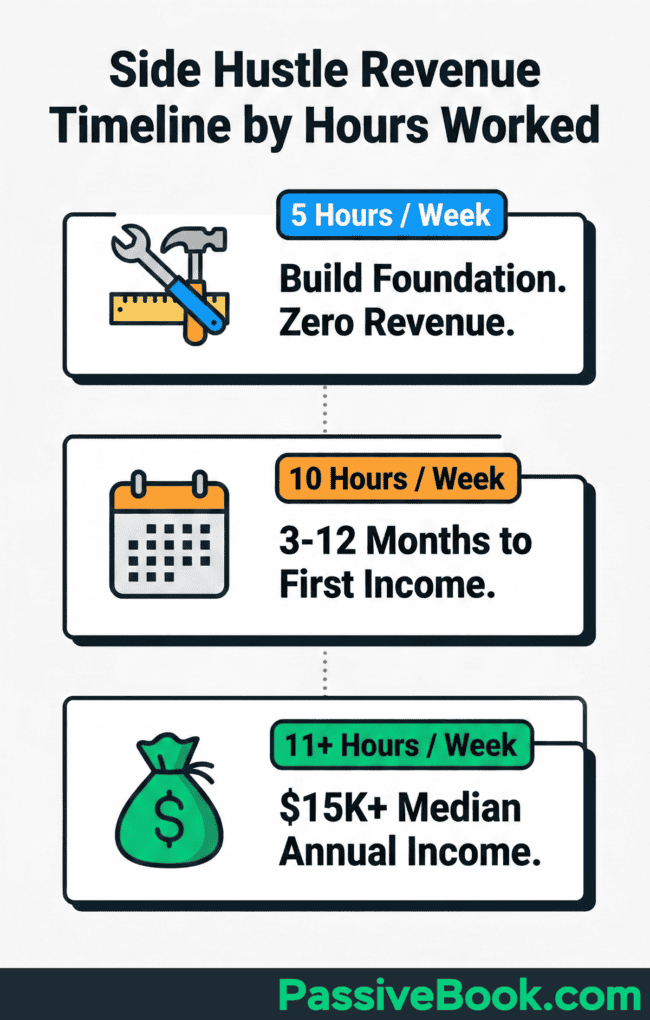
Side hustlers averaging 11 hours weekly earn a median $15,000 annually, with the top 25% exceeding $30,000. Those numbers don’t materialize in month one. Track leading indicators like content published, products launched, and outreach messages sent rather than obsessing over revenue in your first six months.
Use Time Tracking Apps to Audit Your Week
You can’t optimize time you haven’t measured. Start by auditing where your hours actually go.
Use free tools like RescueTime to automatically track computer and phone usage. Whether you don’t want to invest in premium software yet or you’re just testing the waters, these free tools provide everything you need to start. The app runs in the background, categorizing every minute you spend on different websites and applications without requiring manual logging.
Record everything with equal honesty: social media scrolling, Netflix binges, unnecessary meetings, and productive work sessions. The goal isn’t judgment. It’s data. Most people dramatically overestimate their productive hours and underestimate time lost to digital distractions.
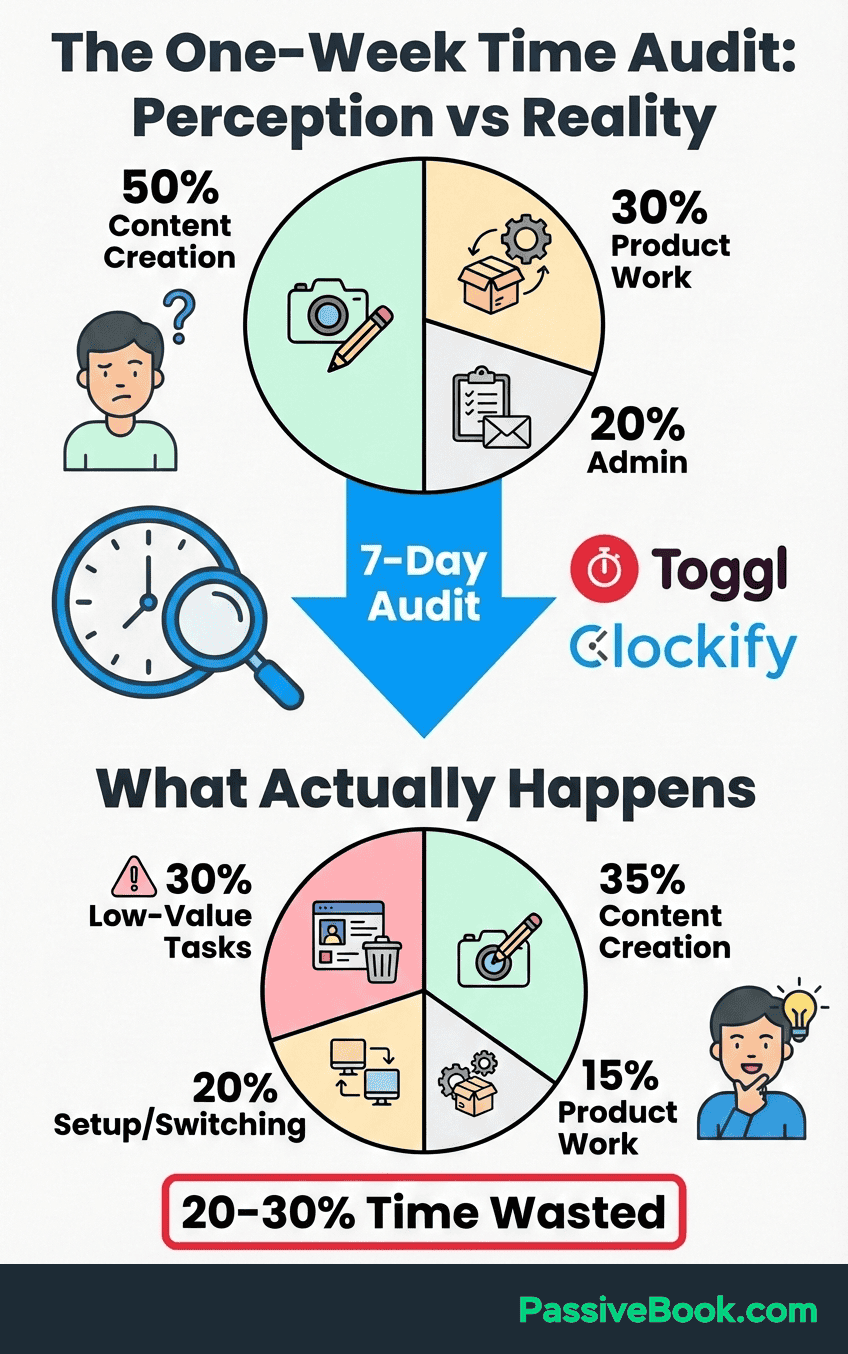
My first time audit humiliated me. I was convinced I worked productively 6-7 hours daily at my day job. RescueTime revealed the brutal truth: 3.2 hours. The rest? Email, Slack, ‘quick’ news checks, and walking to the kitchen for my fourth coffee.
Look for patterns, not just totals. When do you waste time versus create real value? You might discover you’re checking email 61 times daily but only responding to three urgent messages. Or that you scroll Instagram most heavily between 8-9pm, a window you could reclaim for side hustle work.
Calculate Your “Time Leakage”
The audit reveals where your time goes. Now quantify how much you’re losing.
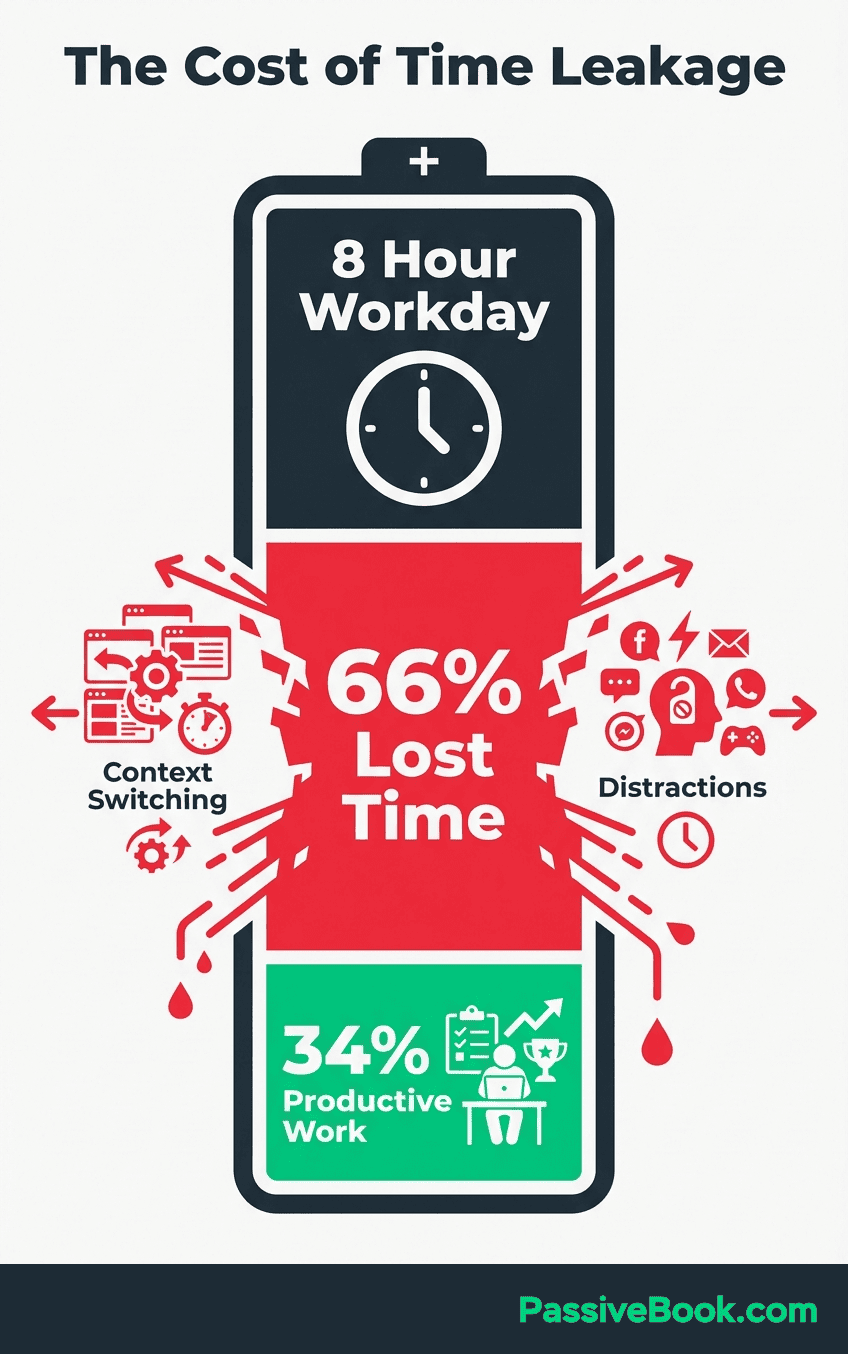
The data is brutal: professionals lose 66% of their workday to distractions and context switching. Two-thirds. That statistic shocked me when I first tracked my own time. I thought I was productive, but the data showed I was spending more time switching between tasks than actually completing them.
Social media, excessive meetings, and multitasking consume hours daily without conscious awareness. You check Slack “real quick” and emerge 23 minutes later having accomplished nothing meaningful.
You attend a meeting that could have been an email. You start writing a blog post , pause to answer a text, check the news, and lose your creative flow.
Target reclaiming 3-5 hours weekly before adding new side hustle tasks to your schedule. You don’t need to create more time. You need to stop bleeding the time you already have. Think of time leakage like a slow tire leak. Small losses compound into significant waste over weeks and months.
Understand Your Chronotype for Peak Performance
I’m not a morning person. Admitting that simple truth changed everything for my side hustle.
Research on chronotypes reveals biological patterns determine our optimal work times. Some people genuinely peak at 6am. Others hit their cognitive stride at 10pm. Fighting your natural rhythm doesn’t build discipline. It destroys efficiency.
I spent six months waking at 5am because every productivity guru insisted that’s when “successful people” work.
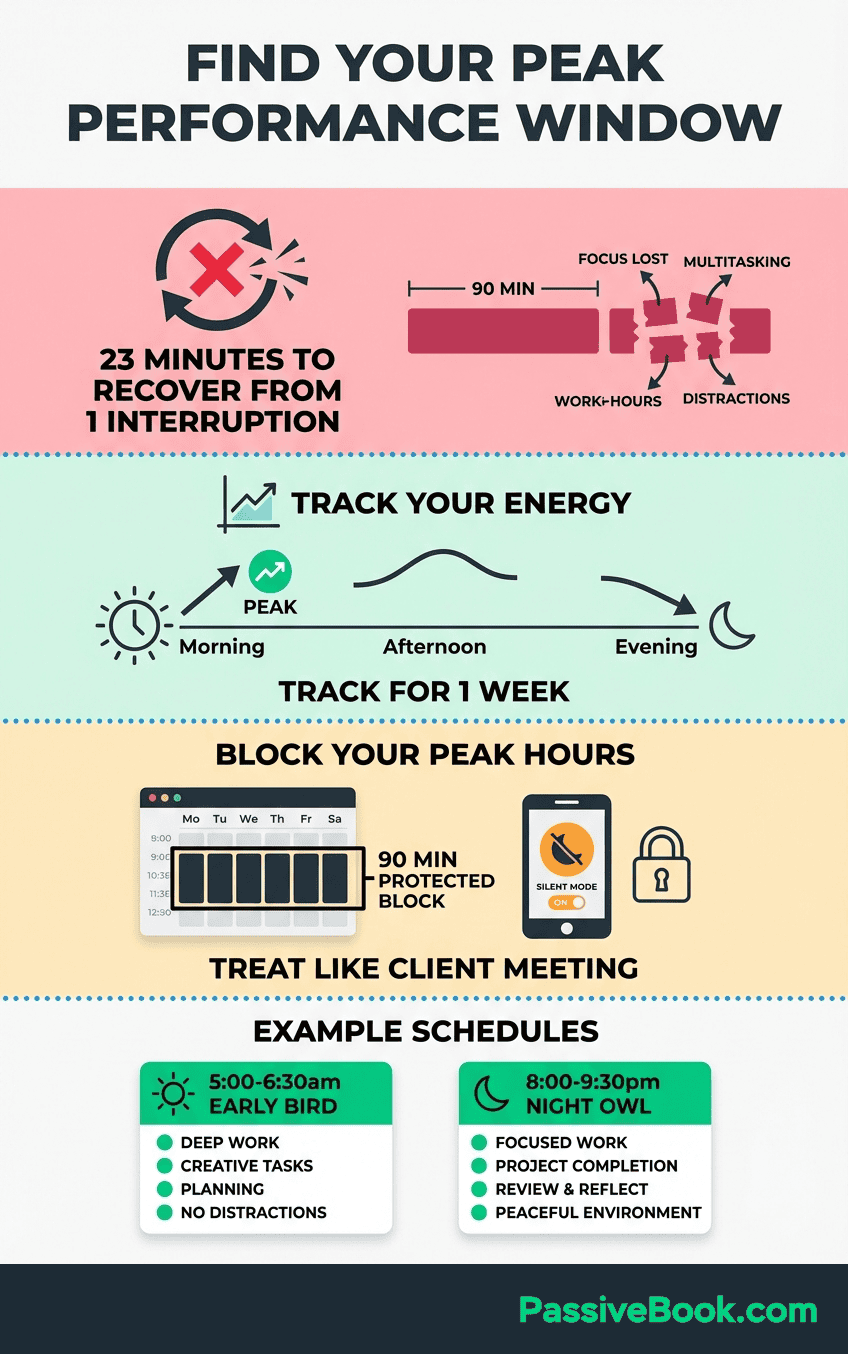
My content was mediocre. My energy was shot by noon. When I finally admitted I’m a night owl and shifted my side hustle work to 9pm-11pm, my output quality doubled and the work felt easier.
Night owls forcing early morning sessions experience 30-40% reduced cognitive capacity compared to working during their natural peak hours. Schedule your revenue-generating tasks – content creation, product development, strategic planning – during your peak energy windows. Save admin tasks like email responses and scheduling for your natural energy dips.
Ali Abdaal, a doctor-turned-YouTuber, built a 5 million+ subscriber channel by filming at 6am before hospital shifts. That was his peak creative window. Your peak might be at 10pm after your kids are asleep. Both are valid. Stop fighting your biology and start leveraging it.
Time Blocking: Protect Your Side Hustle Hours
Once you know your peak hours, block them off as non-negotiable appointments with your business.
Pat Flynn built his online business using disciplined time blocks while working full time as an architect. He treated those blocks with the same respect he gave client meetings. No one could “borrow” that time for a quick favor or impromptu chat.
Non-negotiable calendar blocks prevent meetings and distractions from eroding your side hustle time. Put them on your calendar with specific names: “Product Development,” “Content Creation,” “Customer Outreach.” Generic blocks labeled “Personal Time” get overridden. Specific blocks get respected.
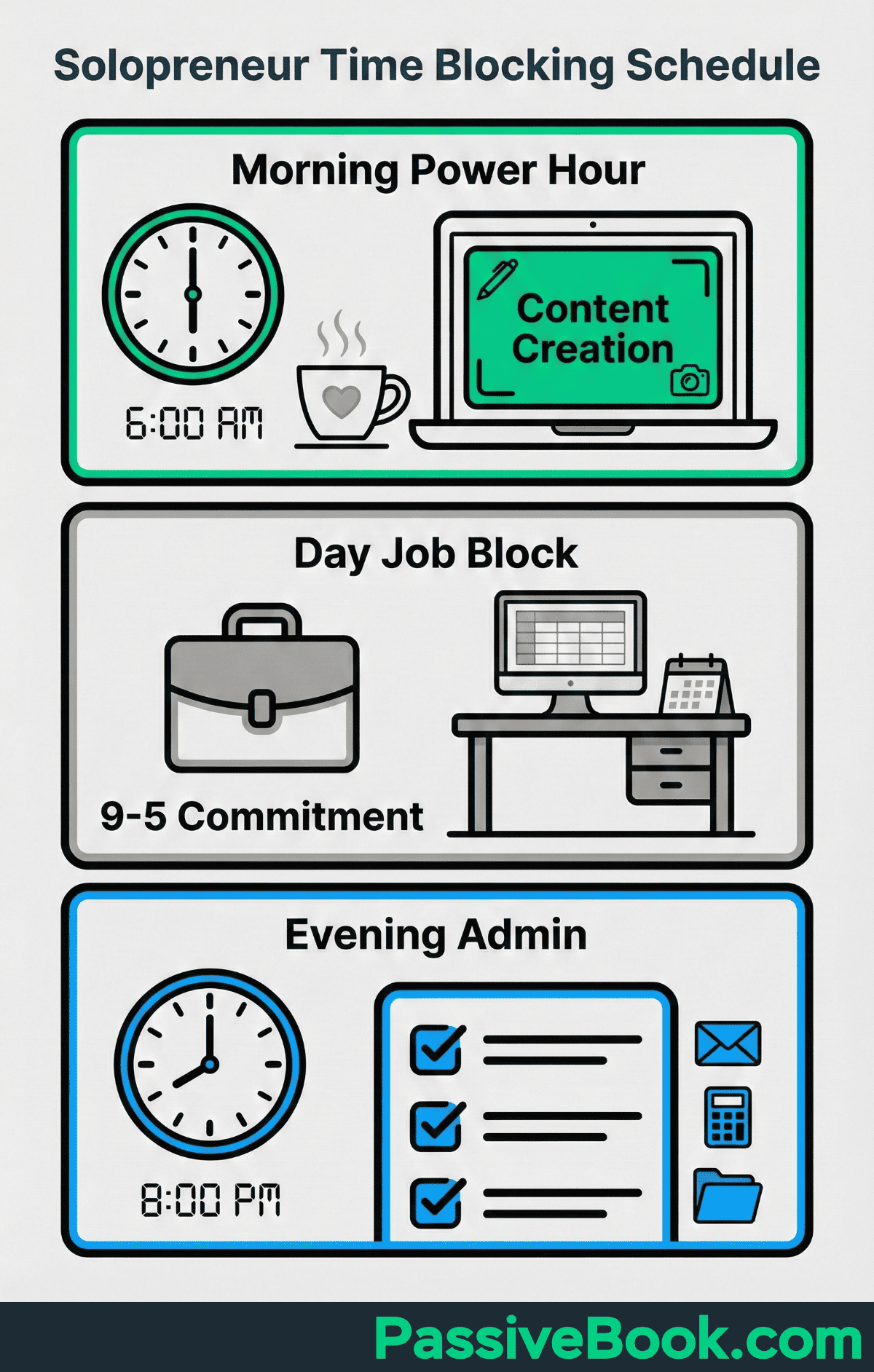
Here’s what most time blocking guides don’t want to tell you: the first three weeks, you’ll violate your own blocks constantly. You’ll feel guilty. That’s normal. I broke my Wednesday 9pm block four times in the first month. Once for a friend’s ’emergency’ (not an emergency), twice because I was too tired (valid reason), once because I forgot to block it on my calendar (rookie mistake). By week four, the block became sacred because I’d trained everyone around me, and myself, to respect it.
Treat blocked time as unmovable appointments with your business, not suggestions. When someone asks if you’re free Tuesday at 7pm, you’re not. You have a meeting. The fact that the meeting is with yourself and your side hustle doesn’t make it less important than a coffee catch-up or volunteer committee.
Monday, Wednesday, and Friday nights from 9-11pm are blocked off. Non-negotiable. My family knows those hours are dedicated time work. My phone goes on Do Not Disturb. Email notifications turn off. That consistency has generated more progress than any motivational speech or productivity hack.
Apply the 80/20 Rule to Your Tasks
Not all side hustle tasks generate equal results. Focus ruthlessly on the 20% that matter.
The Pareto Principle shows that 20% of your efforts generate 80% of your results. For most online businesses, that means creating and marketing your core offer. Everything else is supporting infrastructure or busywork disguised as progress.
I ignored this principle for my entire first year. I spent hours perfecting my website footer, researching the perfect WordPress theme, and creating elaborate content calendars. Know what I should have done instead? Written 50 blog posts. That would have generated traffic. My beautiful footer generated zero.
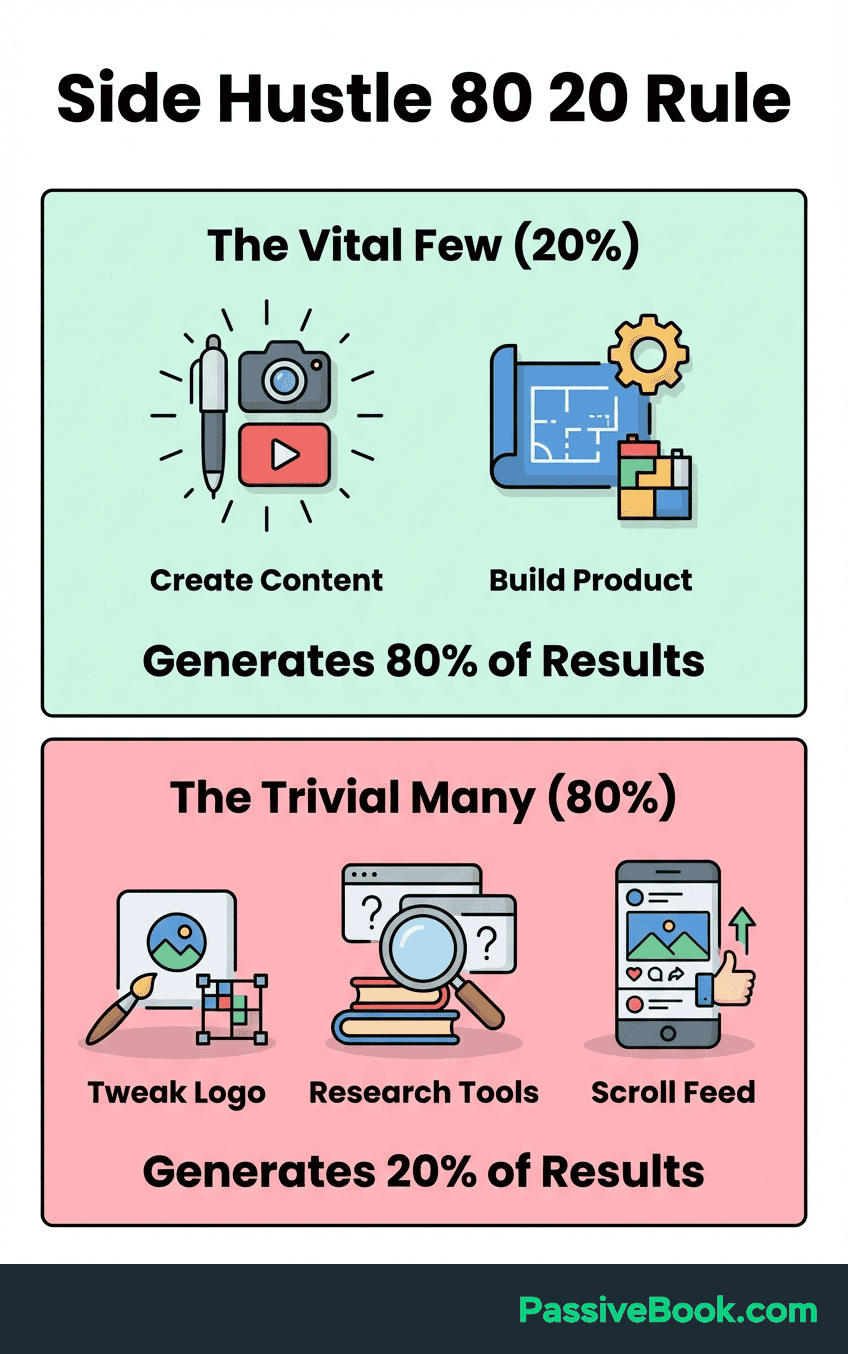
When I finally audited my first year, I discovered I spent 40 hours designing logos and 12 hours creating content. Guess which activity generated revenue? The content attracted 2,000 subscribers. The logo? Three compliments.
Justin Welsh grew his business to multi-million dollar revenue by focusing only on content creation and distribution. He didn’t build a fancy website for two years. He didn’t create elaborate sales funnels. He wrote, shared, and engaged. Those three activities drove everything.
Eliminate perfectionist busywork that wastes your work hustle hours: excessive logo tweaking, endless course polish, researching “just one more” tool. These tasks feel productive but delay revenue. Your first logo doesn’t need to be perfect. It needs to exist. Your first blog post doesn’t need to be a masterpiece. It needs to be published.
Ask yourself every day: “If I could only complete one task today, which would move my business forward most?” Do that task first during your peak energy hours. Everything else is optional.
Batch Similar Tasks to Reduce Mental Switching
Context switching destroys productivity. Batching similar tasks saves hours by keeping your brain in one mode.
Content batching strategies save hours weekly by reducing mental friction. Instead of writing one social media post daily, write seven posts every Monday morning. Your brain stays in “content creation mode” and the work flows faster than scattered daily efforts.
Here’s a realistic batching schedule when you’re working full time : Monday 6-7am, write three blog posts. Wednesday 9-10pm, create the week’s social content. Sunday afternoon, film four YouTube videos. This approach concentrates your creative energy instead of dispersing it across the week.
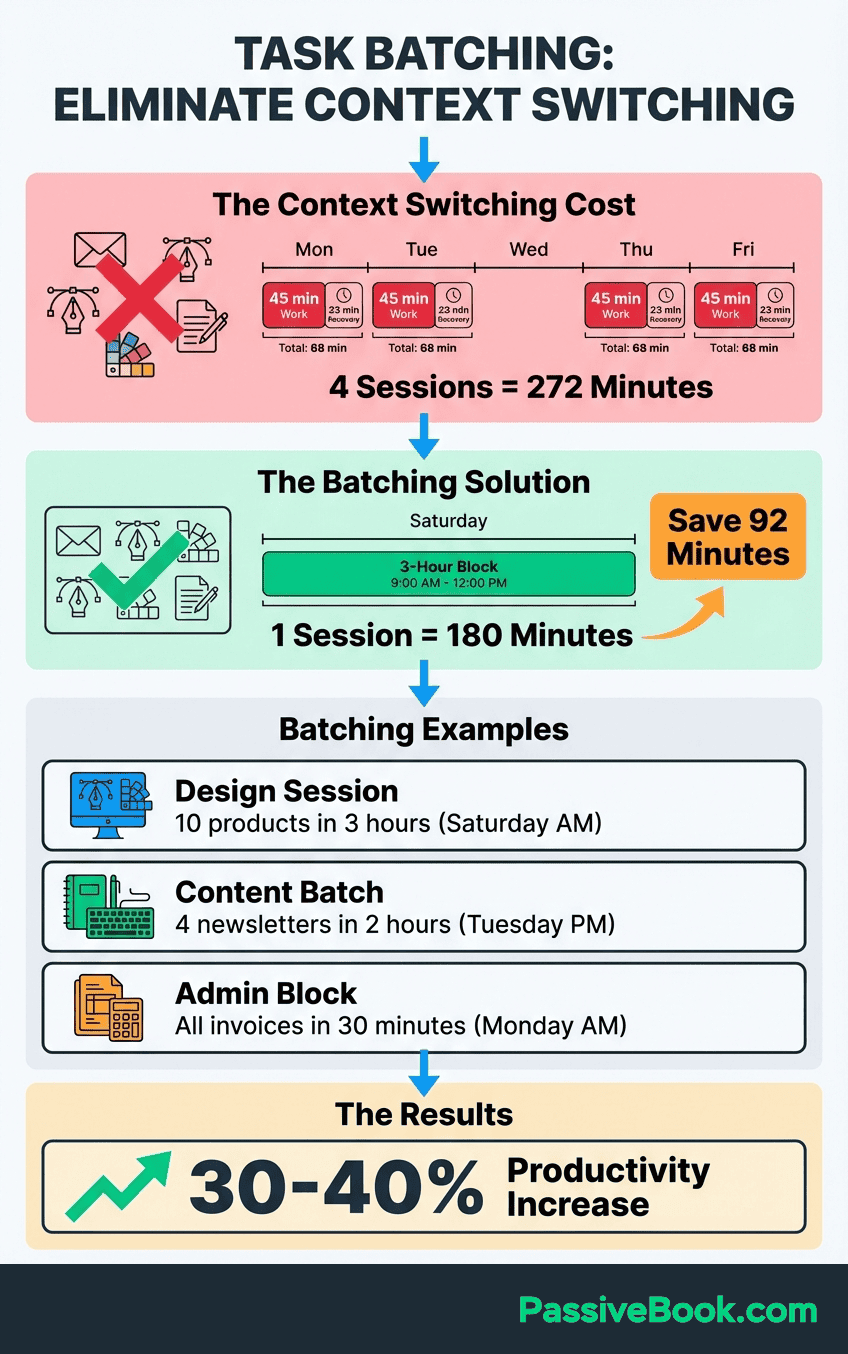
A print-on-demand seller designs 20 products in one 4-hour Sunday session monthly, saving over 8 hours compared to designing 1-2 products scattered throughout the week. The setup time alone – opening design software, finding inspiration, reviewing trends – is the same whether you create one design or twenty.
Saturday mornings are content creation days. Everything gets batched. I schedule social media posts for the entire week in one 90-minute session. I record podcast episodes in blocks of three. This system transformed my workflow from chaotic daily scrambling to calm, predictable production.
Leverage AI and Automation for Repetitive Work
Time-strapped solopreneurs can’t afford to do everything manually. AI tools have revolutionized time management by automating content creation and design work affordably.
AI tools like ChatGPT and Canva automate content creation and design work affordably. I use ChatGPT to generate first drafts of social media posts, outline blog content, and brainstorm product ideas. What used to take an hour now takes 15 minutes. I just edit and refine the AI output.
Data reveals that 94% of gig workers now use AI tools to support their work. This isn’t about replacing human creativity. It’s about eliminating the blank page problem and accelerating repetitive tasks.
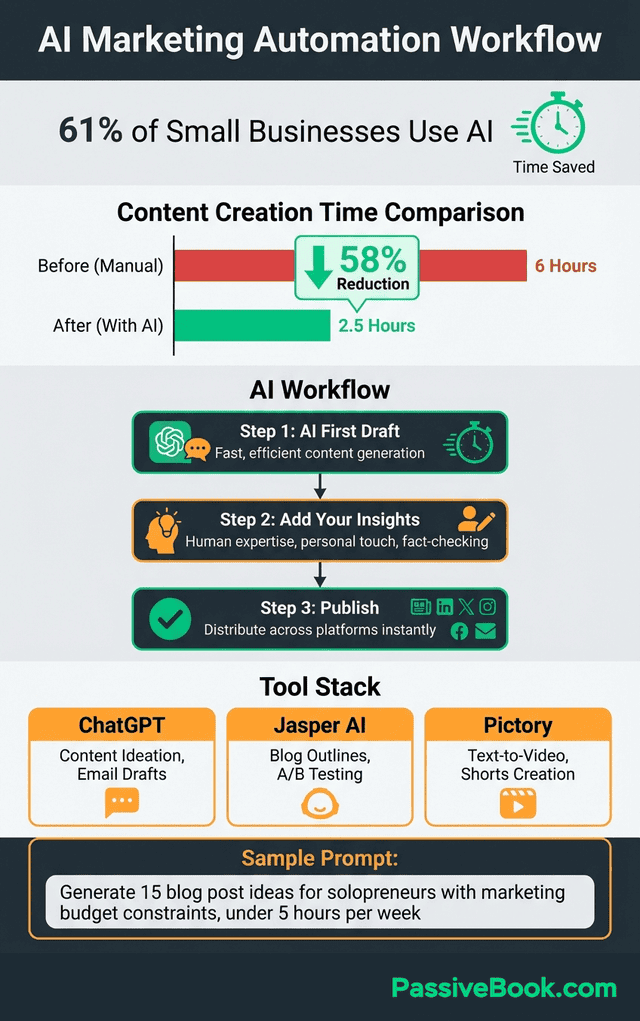
Automation of email sequences, social posting, and data entry reclaims 5-10 hours weekly. Tools like Buffer or Later schedule your social media posts in advance. Email platforms like Convertkit automate welcome sequences and product delivery. Payment processors like Gumroad handle transactions and customer access automatically.
To get started, ask ChatGPT: “Act as a content strategist. Generate 10 email subject lines for a new product launch targeting busy solopreneurs.” Or use Canva‘s AI template generator to create social media graphics in minutes instead of hours. The tools are free or cheap, but most solopreneurs just don’t know how to deploy them strategically.
Maximize Commute and Waiting Time
Your commute is wasted potential. Capture these hidden pockets throughout your day.
Time management research shows professionals have 31 hours monthly in under-utilized time. That’s commutes, waiting rooms, lunch breaks, and the 15 minutes before meetings start. Most people scroll social media. You can use that time to build your business.
Voice memos while driving have become my secret weapon. Entire blog posts get outlined before I reach the office. By the time I sit down to write, the structure is done. I’m just filling in the details. That saves 30-45 minutes per post.
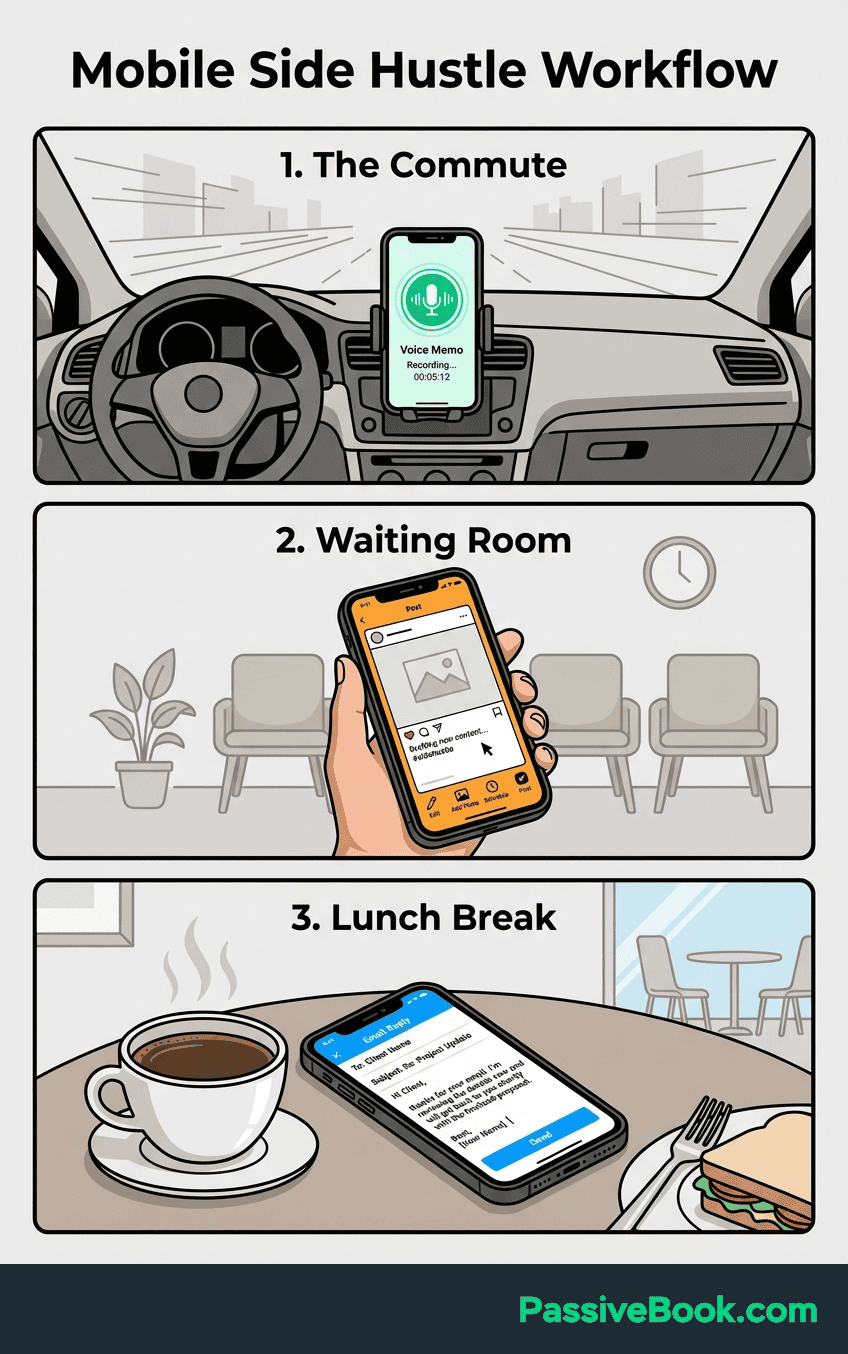
Solopreneurs report using phone-optimized workflows for time-poor schedules. Edit social media posts in the dentist’s waiting room. Respond to customer questions during your lunch break. Review analytics while waiting for coffee. These micro-sessions add up to 4-6 hours monthly.
The key is having your work accessible on your phone. Use cloud-based tools like Google Docs, Notion, or Trello. Queue up specific tasks that work in 10-15 minute chunks: brainstorming, outlining, responding to comments, reviewing performance data.
Set Non-Negotiable Boundaries (Including Recovery Time)
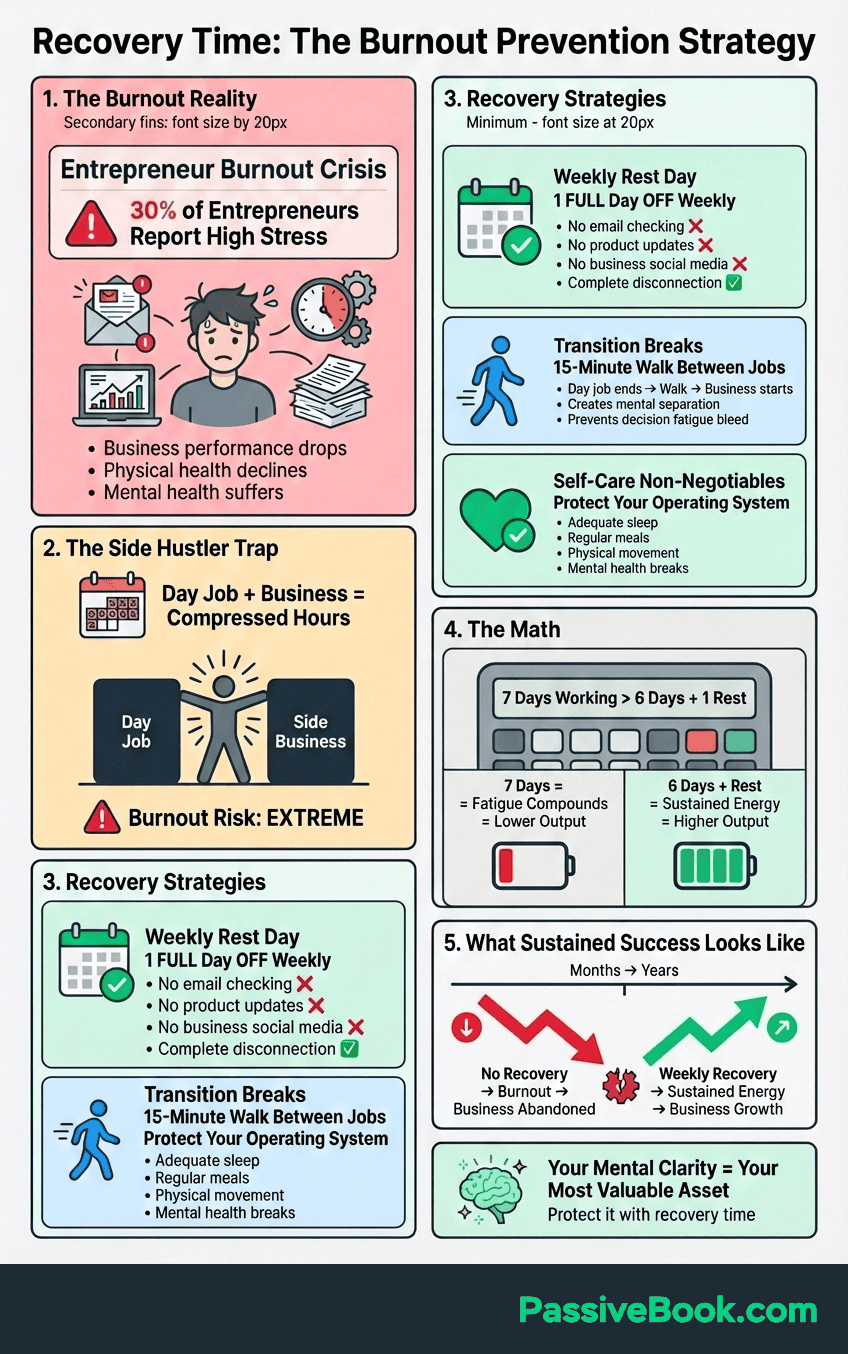
Boundaries protect both your side hustle and your sanity. Without them, you’ll burn out before you succeed.
Research on work-life boundaries shows clear limits increase long-term productivity. It’s important to recognize that saying no to extra projects at your day job preserves energy for your business. Saying no to social obligations you don’t want reclaims hours for revenue work.
Pat Flynn’s wife helped him block sacred morning hours by managing the kids’ breakfast routine. He couldn’t build his business without her support in protecting those boundaries.
Your family needs to understand which hours are work time and which are family time. I learned this the hard way when I took a ‘quick call’ during blocked time. That 10-minute interruption killed my writing flow, and I never recovered that evening’s productivity.
Schedule deliberate rest days with zero side hustle work. I don’t touch my business on Sundays. That boundary keeps me sustainable for the long term. Consistency requires sustainability. You can’t sprint indefinitely.
Watch for warning signs: declining sleep quality, relationship tension, constant irritability. These signal that your schedule needs immediate reduction. Making $500 from your side hustle isn’t worth destroying your marriage or your health. Scale back before you crash.
Start With Minimum Viable Time Blocks
Don’t wait for the perfect schedule. Start with the smallest viable commitment.
Tim Ferriss recommends minimum 2-hour weekly blocks in his “minimum effective dose” framework. That’s not much, but it’s enough to build momentum. Two focused hours weekly equals 104 hours annually. Enough to launch a product, build an audience foundation, or test a business model.
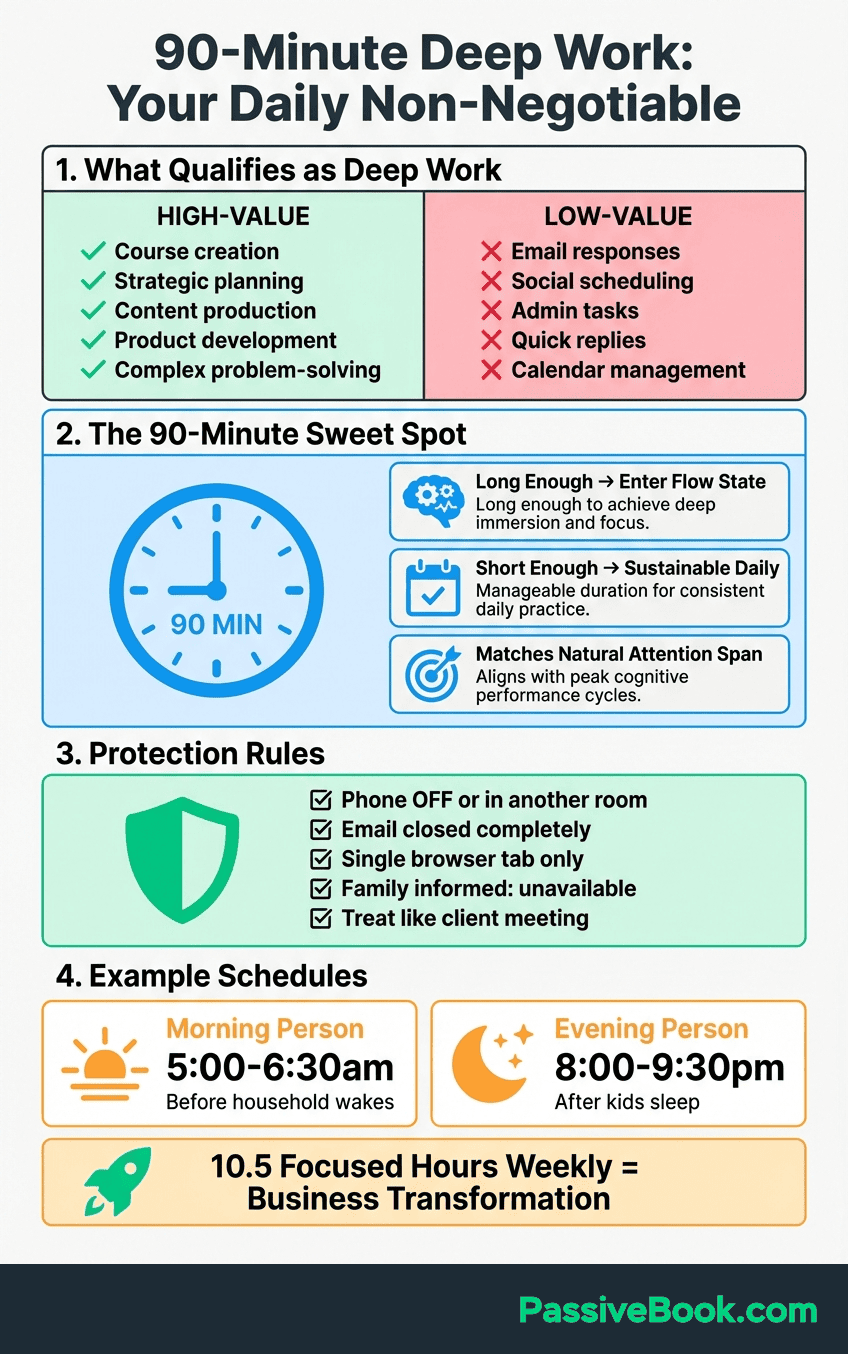
Deep work research shows 45-50 minute focused blocks create momentum for meaningful progress. You don’t need four-hour marathons. You need consistent, distraction-free sessions where you complete specific tasks. One focused hour beats three scattered hours with constant interruptions.
Quality of focused time matters more than total hours logged. A 45-minute block where you write 1,000 words produces more value than three hours of “working on my business” while checking email and browsing competitor websites. Protect the quality first, then expand the quantity as your systems improve.
Start with what feels sustainable, even if it’s just three hours weekly. Prove to yourself you can maintain consistency. Then gradually add another hour. Building your business is a long game measured in years, not weeks.
Track Results That Generate Revenue
Tracking activity without tracking results keeps you busy but not profitable.
Weekly review frameworks distinguish motion from meaningful progress. Motion is checking your website stats 47 times. Progress is publishing content that attracts subscribers. Motion feels productive but generates no revenue.
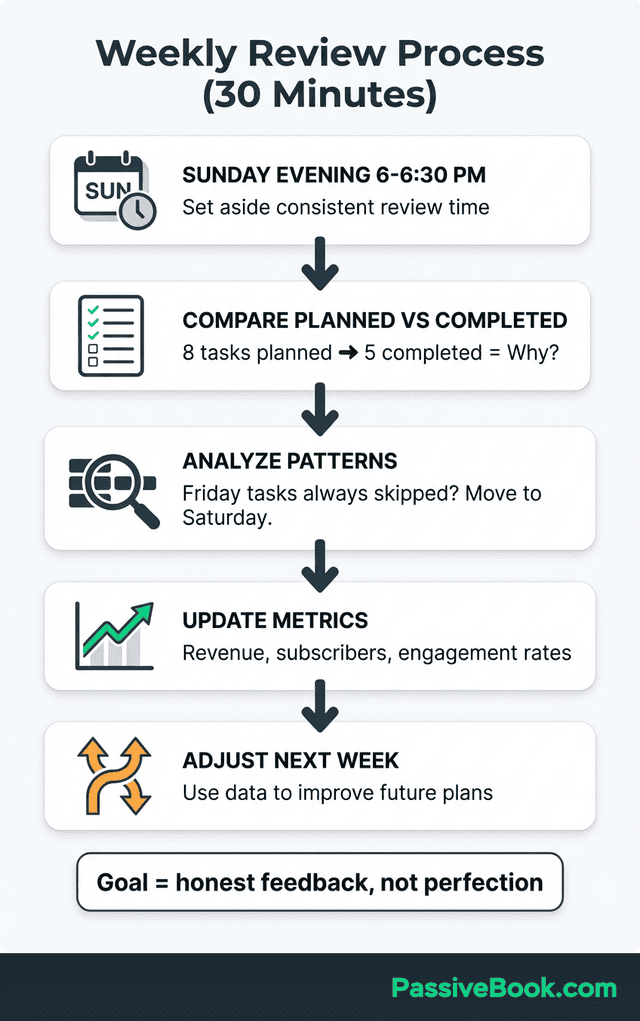
Chenell Basilio tracks only three metrics weekly: pieces published, email subscribers added, and revenue generated. That’s it. Everything else is noise that distracts from the inputs that drive business growth. She uses a simple Google Sheet with three columns updated every Friday afternoon. If the numbers moved up, she repeats the strategy. If they stalled, she identifies the bottleneck.
Use free tools like Trello to organize tasks by impact. Create three columns: High Impact (directly generates revenue), Medium Impact (builds foundation), Low Impact (nice to have). Work exclusively from the High Impact column until it’s empty each week.
Every Sunday: three numbers. Content published, subscribers added, revenue. That’s it. If those numbers grew, I keep doing what I’m doing. If they stalled, I analyze why and adjust. This simple framework prevents me from wasting time on tasks that feel important but don’t move the needle.
Choose Done Over Perfect
I wasted six months perfecting my first digital product. When I finally launched it, customers didn’t care about the polish I obsessed over. They wanted the solution.
Studies confirm that 90% of side hustlers fail due to perfectionism preventing launches and iteration. They delay shipping until everything is flawless.
Meanwhile, their competitors ship imperfect products, get customer feedback, and iterate toward excellence.
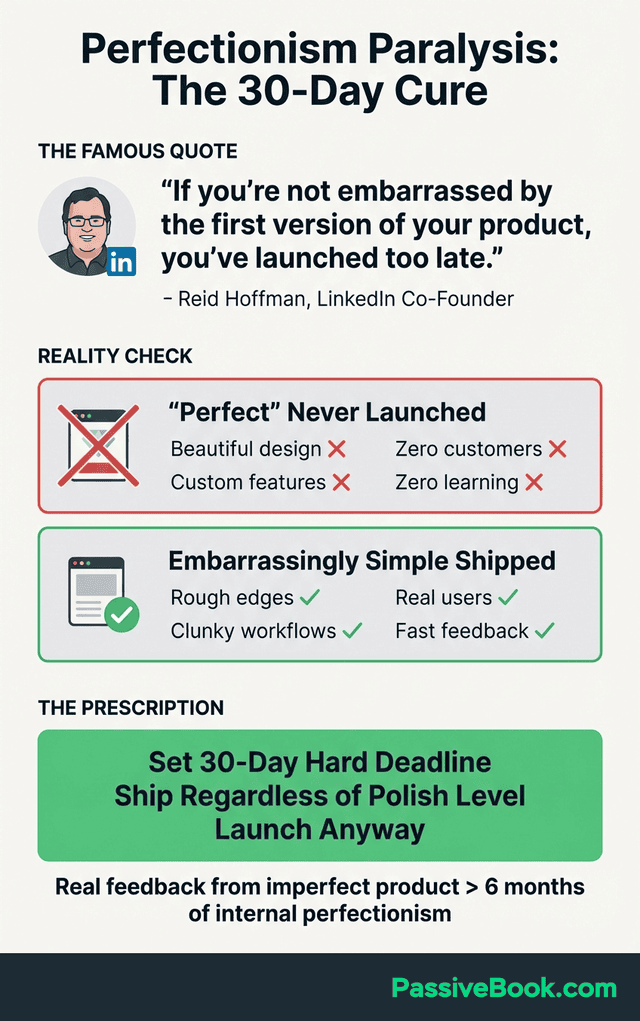
Ship minimum viable products quickly rather than delaying for polish customers may not value. Don’t skip content publishing because it’s not perfect. Your audience needs consistency, not polish. Your first blog post will be rough. Your first product will have flaws. Your first outreach email will feel awkward. Ship them anyway.
“Done is better than perfect” allows learning from real customer feedback. You can’t improve a product no one sees. You can’t refine messaging until you test it. You can’t build a business that exists only in your planning documents. Launch, learn, iterate. That cycle generates revenue. Perfectionism generates procrastination disguised as quality control.
Frequently Asked Questions
How Much Time Should You Dedicate to Side Hustle?
Plan for 11-16 hours weekly if you want meaningful revenue within your first year. Research shows this is the range where successful side hustlers operate, balancing consistency with sustainability. Start with 5-10 hours if you’re building habits, then scale up once you’ve proven you can maintain that commitment for 4-6 weeks.I’ll be honest: those first 5 hours will feel like wasted time. You’re learning systems, not earning money. But that foundation is non-negotiable. I tried skipping it and jumping straight to ‘revenue work.’ Ended up rebuilding everything six months later.
How Do You Make Time to Work Hustle Alongside Your Full Time Job?
Audit your current time usage with tracking apps to identify 3-5 hours of weekly leakage from social media and context switching. Reclaim those hours by batching similar tasks, working during your biological peak energy windows, and using time blocking to protect non-negotiable work sessions. Start by capturing just one 90-minute block weekly and expand from there.Mine was Wednesday at 9pm. I protected it like my life depended on it because, financially, it did. That single block became my testing ground for every time-saving system in this article.
Should I Wake up Early or Stay up Late for My Side Hustle?
Work during your natural chronotype peak, not when productivity gurus tell you to work. Night owls experience 30-40% reduced cognitive capacity when forcing early morning sessions, while morning people struggle with evening creativity. Test both schedules for two weeks each and measure your output quality, not just hours logged, to find your optimal window.I’m living proof. My 5am writing was garbage: scattered thoughts, weak ideas, painful editing required. My 10pm writing flows. Same person, different time, 3x better output. Stop fighting your biology.
What Next?
You now have 14 strategies to reclaim time for your side hustle without quitting your day job or sacrificing sleep. Building a side hustle while working full time requires smart time management , not just motivation. The real challenge isn’t knowledge. It’s implementation. Start this week by auditing just one day with a time tracking app. That single data point will reveal more about your available time than any article can.
Building a side hustle while working full time is genuinely hard. I won’t pretend otherwise. But it’s also the path that thousands of solopreneurs have walked successfully by focusing on sustainable systems instead of unsustainable hustle. You don’t need more hours in the day. You need better systems for the hours you already have.
Hit those social share buttons below if this guide gave you clarity on finding time for your side hustle. Sharing helps other time-strapped solopreneurs discover these strategies. Drop a comment with your biggest time challenge. What’s the one obstacle preventing you from consistent side hustle work? I read every comment and often your questions spark future articles.
Share this post with your friends & followers: