I spent three years running between failed businesses. Ecommerce stores, dropshipping, print-on-demand, and the constant was me doing everything myself. Customer emails at midnight. Product descriptions at 6 AM. I convinced myself no one else could handle it. That belief nearly burned me out before I learned how to delegate tasks and reclaim my time.
If you’re reading this, you’re probably stuck in the same trap. You know you should delegate tasks, but you don’t know where to start. The good news is that delegation doesn’t require a big budget or a full team. It requires a system and a mindset shift.

- •What Is Delegating Tasks as an Online Entrepreneur?
- •Why Solopreneurs Get Stuck Doing Everything Themselves
- •Automate First or Delegate First? The Decision That Changes Everything
- How to Identify Which Tasks to Delegate (Before You Hire Anyone)
- •The Contrarian Truth: Why "Just Hire a VA" Often Makes Things Worse
- •What to Never Delegate as a Solopreneur
- •How to Build an SOP So Your Tasks Run Without You
- Where to Find Affordable, Reliable Help on a Bootstrap Budget
- •How to Onboard a VA Without Losing Weeks to Training
- •Frequently Asked Questions
- •What Next?
What Is Delegating Tasks as an Online Entrepreneur?
Delegation means handing a specific, defined task to someone else so you can focus on what only you can do. It’s not about dumping work on someone. It’s about strategic time allocation. You keep the high-value activities that move your business forward. Everything else becomes someone else’s responsibility.
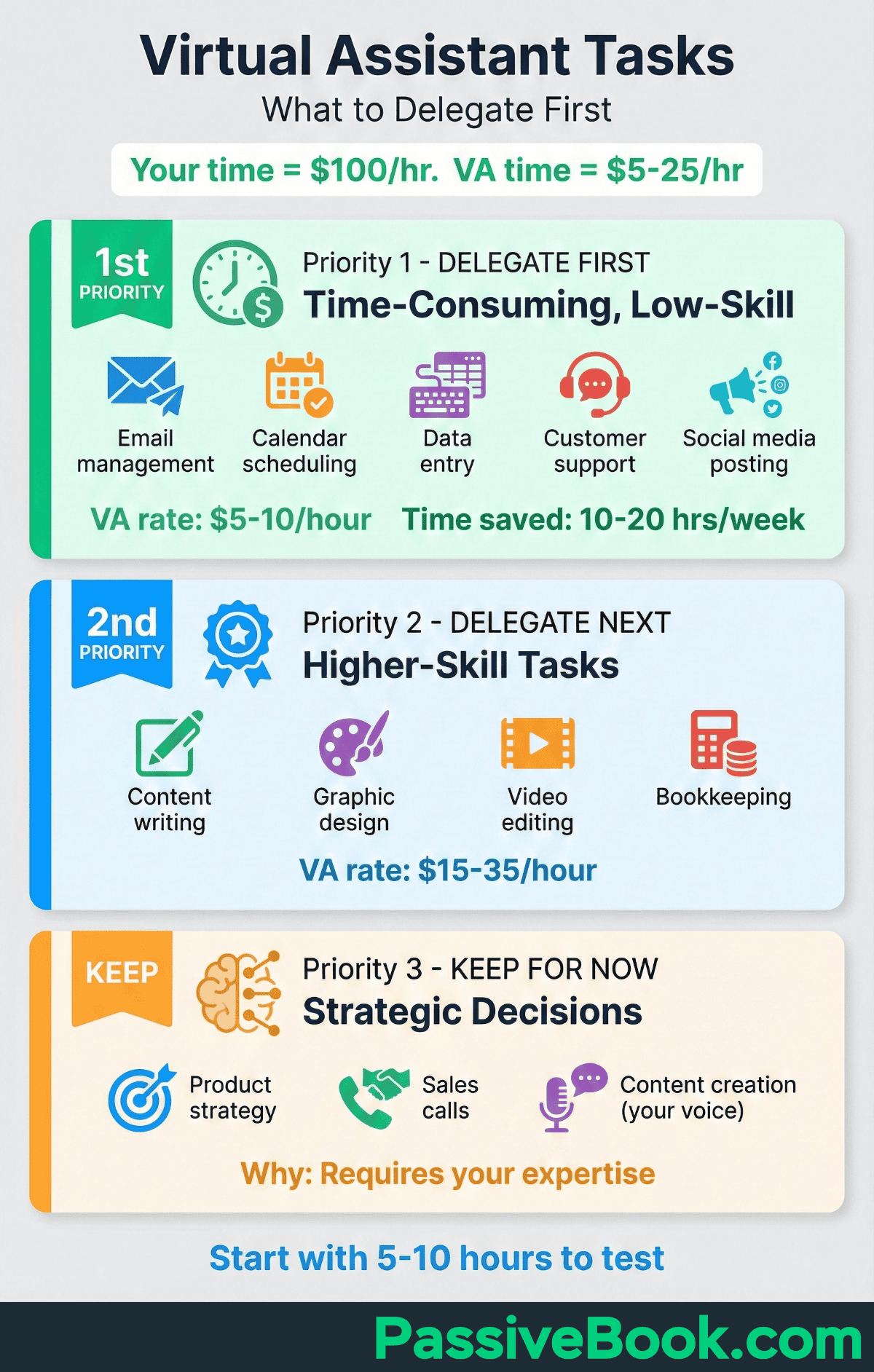
Three elements make delegation work. First, you need to know what to hand off. Second, you must document how the task gets done. Third, you trust someone else to execute it without constant supervision. Miss any one of these and delegation fails.
A bootstrapped Shopify store owner might start delegating inbox replies and image resizing. That alone can reclaim five to eight hours every week. Those hours go back into product research, marketing strategy, or finally launching that email sequence you’ve been planning for months.
The mistake most solopreneurs make is thinking delegation requires perfection. It doesn’t. It requires clarity about what the task is and what success looks like. These activities require your unique skill set and strategic judgment, but formatting, scheduling, and admin work do not.
I used to think delegation meant hiring a full-time employee. That misconception kept me stuck for two years. Turns out, you can delegate a single two-hour task to a freelancer and never touch it again.
Why Solopreneurs Get Stuck Doing Everything Themselves
You’re not lazy. You’re not disorganized. You’re just trying to do everything yourself, and research shows 87.7% of entrepreneurs struggle with at least one mental health issue because of it. Burnout doesn’t come from the workload itself. It comes from wearing too many hats and never being able to take any of them off.
I’ve been there. Running my dropshipping store in 2017, I handled product sourcing, customer emails, ad creative, website updates, and order tracking. Every single day to day operation fell on me. The business made money, but I was miserable.
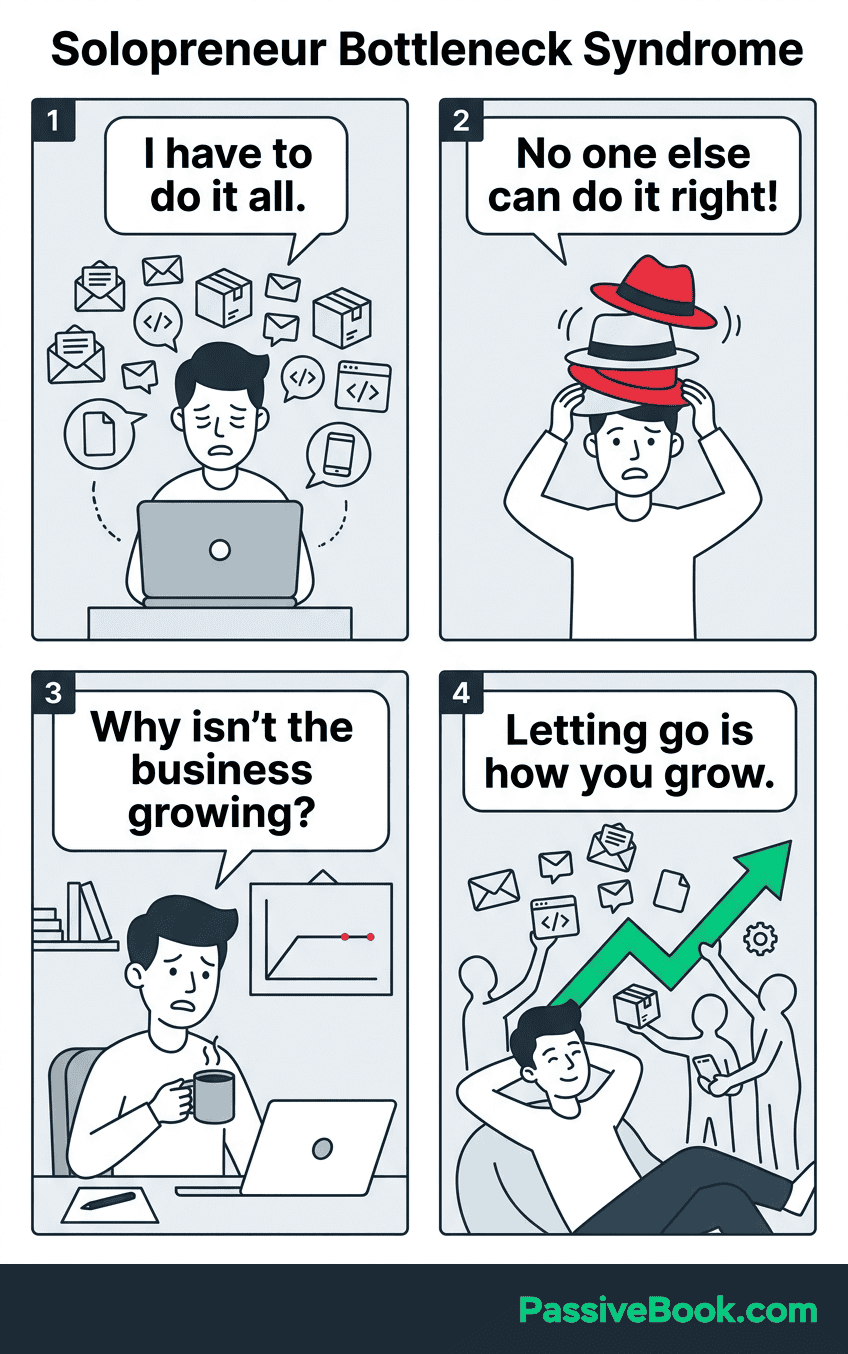
Every hour felt like it belonged to someone else. The bottleneck is rarely a workload problem. It’s an identity problem. You believe only you can do it right. That belief keeps you trapped in day to day operations while your business stalls.
The reality is most tasks don’t require your unique skills. They just require someone who follows a process. Every hour spent on formatting or admin work is lost strategic time. You’re not building the business. You’re maintaining it.
That’s not a skill gap. It’s a psychological fear of losing control disguised as commitment to quality. The entrepreneurs who scale are the ones who accept that good enough from someone else beats perfect from you when perfect means you have no time left to grow.
Automate First or Delegate First? The Decision That Changes Everything
AI tools can now automate 10 to 40 percent of a solopreneur’s daily workload. That includes email drafts, social scheduling, and content repurposing, according to multiple 2026–2026 productivity analyses. This changes the delegation playbook.
The current best practice is to automate repetitive, rule-based tasks first. Delegate judgment-based tasks to humans second. This order matters because automation is instant and costs almost nothing. Delegation requires hiring, training, and management overhead.
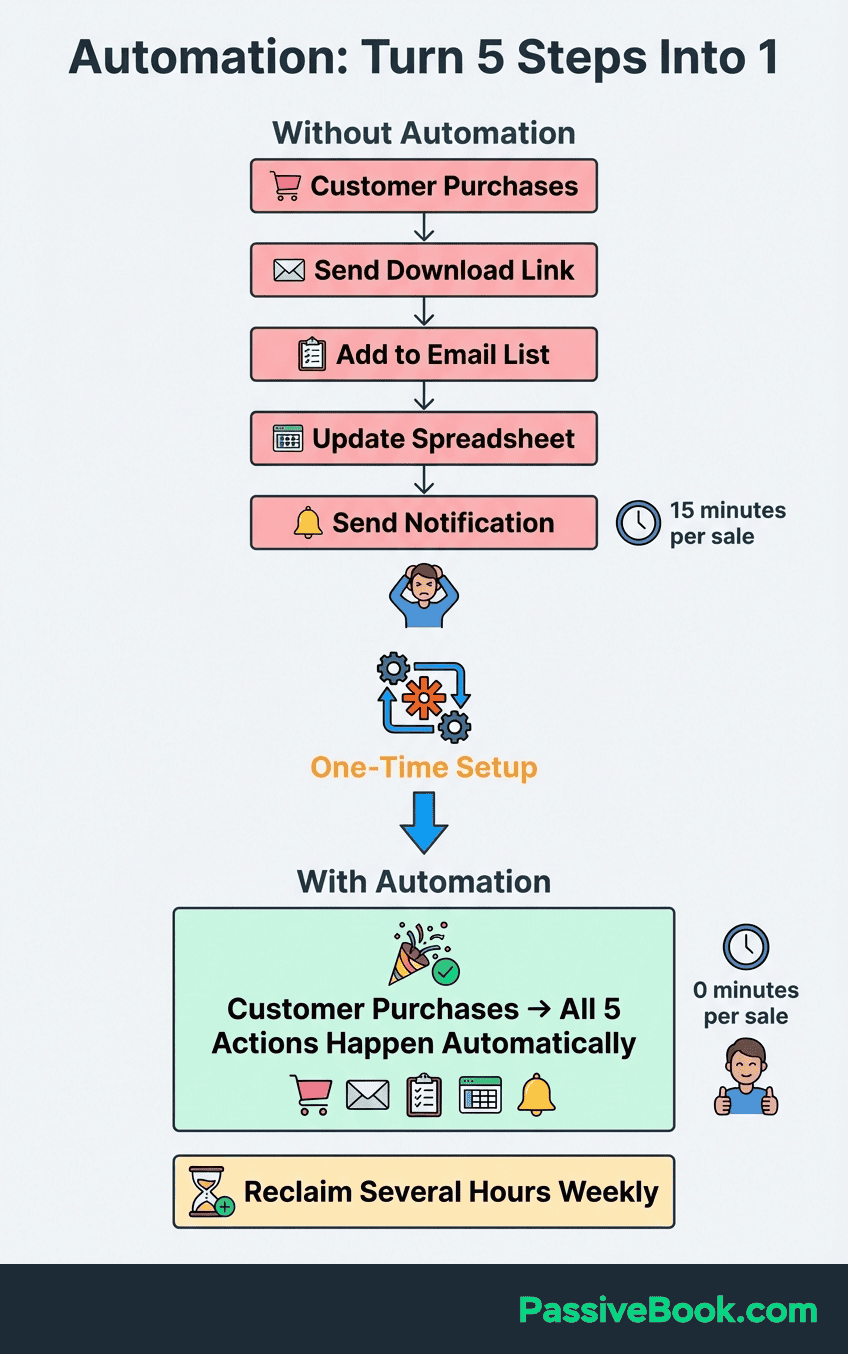
Start with free tools before paying for any human help. ChatGPT can draft email responses and blog outlines. Canva handles social media graphics and Pinterest pins. Notion AI summarizes meeting notes and generates content briefs. These tools eliminate hours of grunt work without a single payroll expense.
AI handles volume and repeat tasks. A human VA handles nuance, client tone, and edge cases. The hybrid model outperforms either alone. Use AI to draft your customer support replies, then have a VA review and personalize them before sending.
That’s faster than either doing it yourself or training a VA from scratch. I automate my Pinterest scheduling with a custom workflow in n8n. It pulls blog posts, generates pin graphics through Canva‘s API, and schedules them across boards. That saved me six hours per week.
When I needed someone to handle customer questions about my digital products, I hired a VA. She uses my AI-generated FAQ database as a starting point and adds the human touch for complex inquiries.
How to Identify Which Tasks to Delegate (Before You Hire Anyone)
Most solopreneurs delegate the wrong tasks because they guess instead of measure. A proper audit reveals where your time actually goes versus where you think it goes. Justin Welsh documents how he runs a business generating over $10+ million by outsourcing every non-strategic task.
He personally creates only his LinkedIn content, newsletter, and core offers. Everything else is delegated. The result is 15-plus hours reclaimed every week. His system starts with knowing exactly which certain tasks consume your time before making any hiring decisions.
Step 1: Run a One-Week Time Audit
Track every task in 30-minute blocks for one full week. Use Clockify’s free plan or even a simple spreadsheet. The goal is brutal honesty about how you spend your time. Don’t skip tasks that feel too small to matter. Those five-minute interruptions add up to hours.
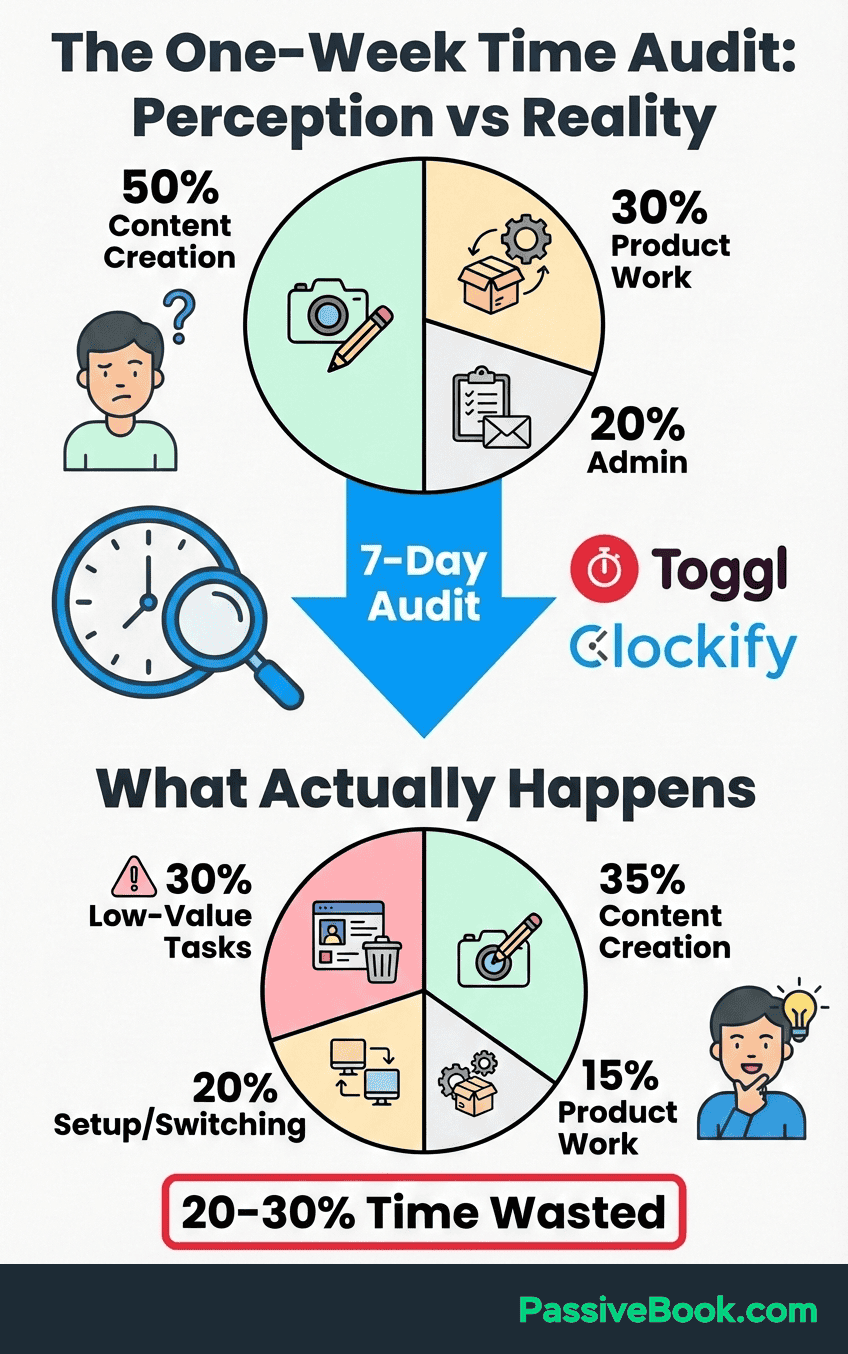
Label each task using two categories. “Only Me” covers creative decisions, client strategy, and offer development. “Anyone With Training” includes formatting, scheduling, admin work, and customer support. Your “Anyone With Training” list becomes your first delegation queue.
Start there, not with gut feelings about what you should keep. The audit will surprise you. I discovered I was spending nine hours weekly on inbox management and WordPress formatting.
Neither required my unique skills. Both were bottlenecking my content output and product development.
Step 2: Calculate Your Buyback Rate
Dan Martell created the Buyback Rate formula to answer one question: when does outsourcing become profitable? The math is simple. Divide your annual income by 2,000 hours, then divide that result by 4. The final number is your profitable outsourcing threshold.
If you earn $40,000 per year from your side business, divide that by 2,000 to get $20 per hour. Divide $20 by 4 to get $5 per hour. That’s your Buyback Rate.
Any task you can outsource for less than $5 per hour becomes cost-positive the moment you hand off the first task. A Filipino VA at $4 to $7 per hour makes delegation profitable. You’re not spending money. You’re buying back your time at a discount.
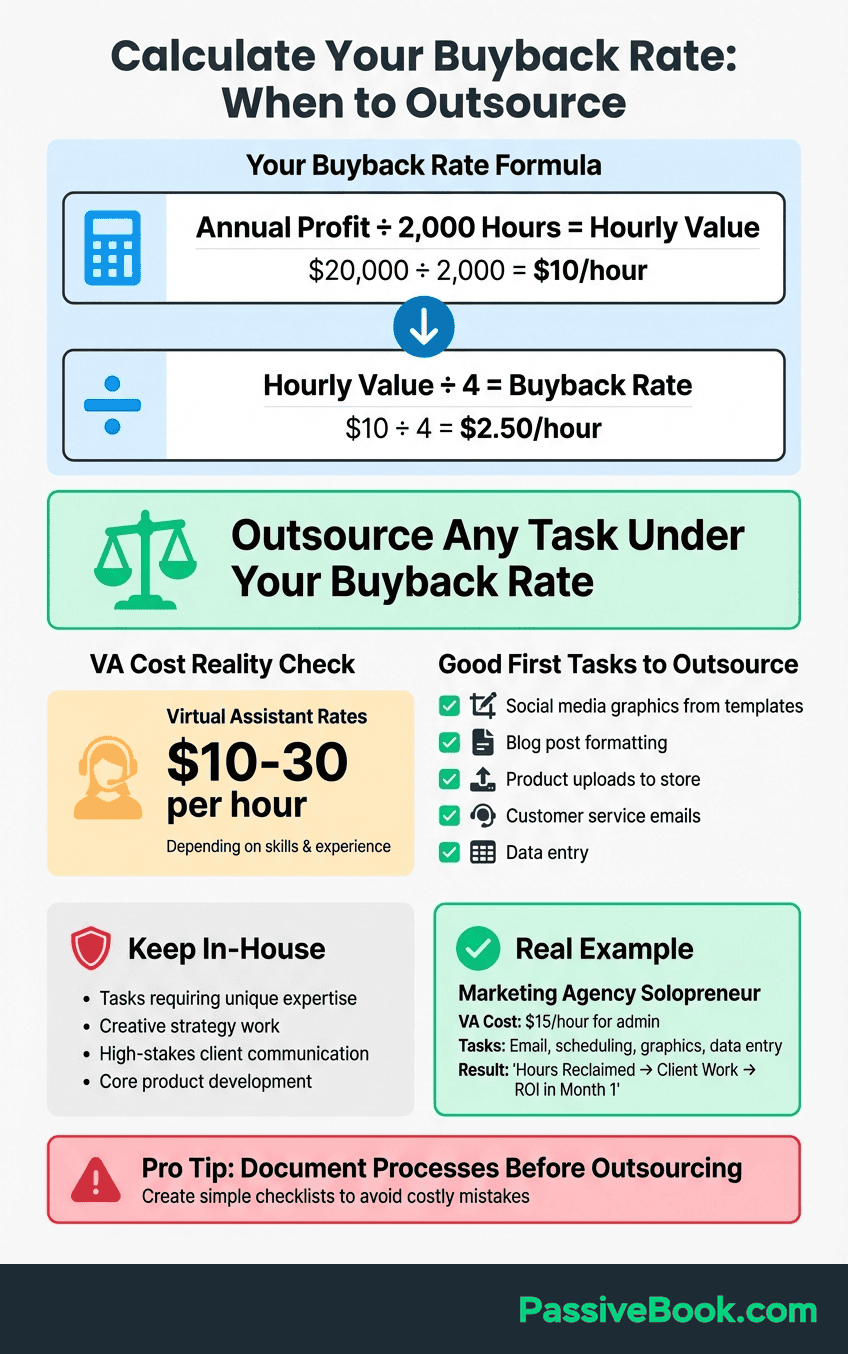
That reclaimed time goes into activities that generate more than $5 per hour of value, like creating a new digital product or building a partnership. The formula works at any income level. At $80,000 per year, your Buyback Rate is $10 per hour. At $120,000, it’s $15 per hour. As your income grows, so does your threshold for what’s worth delegating.
Step 3: Apply the Four-Category Delegation Framework
Break your “Anyone With Training” list into four categories. This gives you a clear priority order for identifying the right tasks to delegate first.
Admin tasks are the biggest time drains with zero creative upside. Inbox management, calendar scheduling, invoicing, and data entry belong here. These certain tasks are easy to document and low-risk to hand off. A VA can handle them with minimal training.
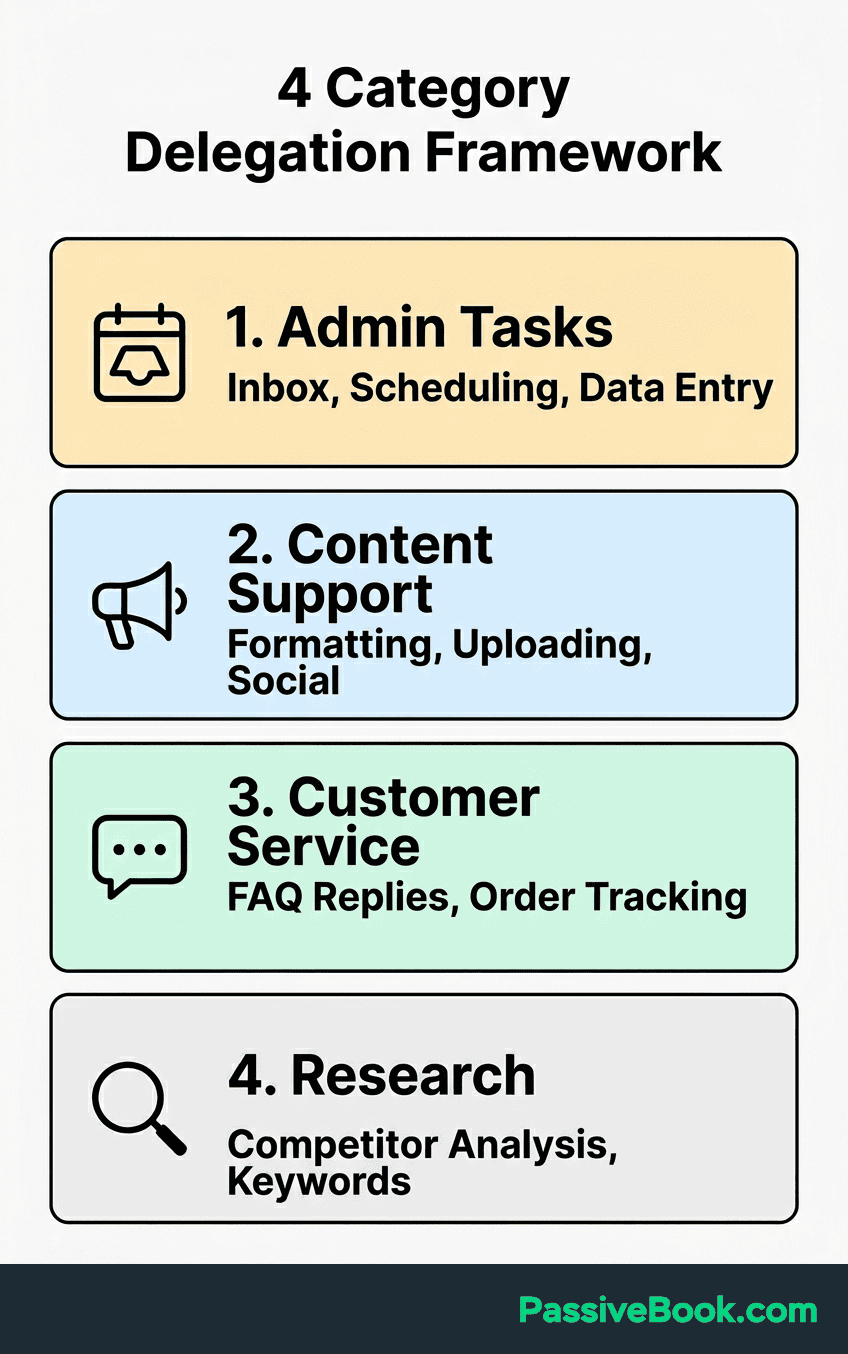
Content support covers formatting and uploading posts, repurposing video clips into social media snippets, and scheduling content to platforms. This includes creating social media graphics, writing captions, and distributing posts across channels. If you run a Ghost blog or YouTube channel, this category alone can save you 10 hours per week. You create the content. Someone else handles the distribution.
Customer service includes FAQ replies, order tracking, and support tickets. Critical for Gumroad sellers or print-on-demand store owners who deal with customer questions daily. A VA can follow your tone guide and escalate complex issues to you.
Research tasks involve keyword summaries, competitor analysis, and supplier sourcing. These provide high-value input for your decisions but require low-skill execution. Research tasks don’t require you to learn new skills, just compile existing information. A VA can gather the data. You make the strategic call.
Start with admin tasks. They’re the easiest to delegate and produce time savings right away. Once that’s running smoothly, move to content support, then customer service, then research.
The Contrarian Truth: Why “Just Hire a VA” Often Makes Things Worse
A Gallup study of 143 Inc. 500 CEOs found something surprising. Seventy-five percent of entrepreneur-CEOs have low Delegator talent. Yet those who delegate effectively generate 33 percent more revenue than those who don’t. The issue isn’t delegation itself. It’s how most people approach it.
Hiring a VA without systems doesn’t eliminate work. It converts one problem into another. You trade doing the task for managing an untrained person.
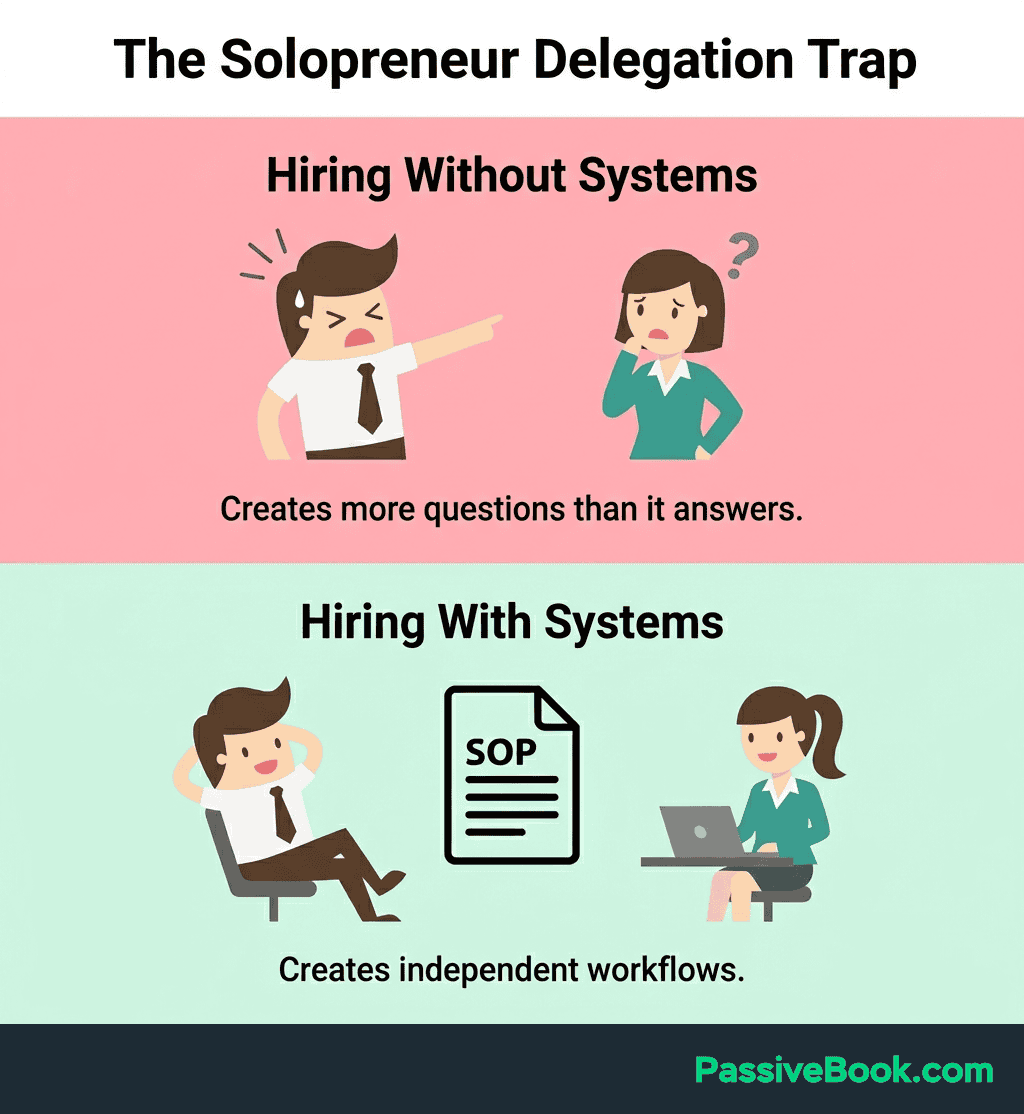
That’s often harder and more time-consuming than just doing it yourself. I learned this the painful way. In 2021, I hired a VA to manage customer support for my digital products. I sent her access to my email and said “handle the questions.” No documentation. No examples. No process.
Within a week, I was spending three hours daily answering her questions about how to answer customer questions. The delegation failed because I never built the system first.
The most common trap is delegating without communicated standards. The founder still carries the full mental load of every task because the VA doesn’t know what success looks like. Every decision becomes a question. Every question becomes an interruption. You’ve hired help but created more work.
The solution: build your system first for at least two weeks, then hire someone to operate it. Never the reverse. Document the process while you do it. Record the decisions you make. Write down the standards you expect. Only then do you bring in another person.
What to Never Delegate as a Solopreneur
Justin Welsh runs a business generating over $10+ million in annual revenue. He still writes every LinkedIn post, newsletter, and offer himself. His reasoning is clear: your brand voice is the irreplaceable moat that must stay with you. No one else can replicate the way you think, the stories you tell, or the connections you make with your audience.
Never hand off strategic decisions or revenue-generating conversations. Client pitches, offer creation, and pricing belong to you. These activities require judgment, context, and deep understanding of your market. A VA can schedule the sales call. You need to run it.
Never delegate relationship-building. Replies to your most engaged followers, key partnership discussions, and interactions with loyal customers should come directly from you. These moments build trust and loyalty. Outsourcing them feels inauthentic and damages the connection you’ve worked to create.
Delegate execution. Keep strategy and relationships. Your VA can format the blog post and schedule it to WordPress. You write the content. Your VA can track affiliate links and compile performance data. You decide which partnerships to pursue.
The line isn’t always obvious. When in doubt, ask: does this task require my unique perspective, voice, or decision-making ability? If yes, keep it. If no, document it and hand it off.
How to Build an SOP So Your Tasks Run Without You
An SOP (Standard Operating Procedure) is a step-by-step document your VA can follow independently. It eliminates constant questions and rework. Without an SOP, you’re not delegating. You’re creating a dependency where the VA can’t move forward without checking with you first.
Justin Welsh describes his SOP system this way: “For each task you outsource, create a detailed SOP document with a Loom video that walks the person through the work by showing and telling.” This approach combines visual demonstration with written steps, covering different learning styles and reducing confusion.
Record a screen walkthrough using Loom‘s free plan, which allows up to 25 videos. Store the written steps in Notion using their free SOP templates. The combination gives your VA both a reference document and a visual guide they can replay as needed.
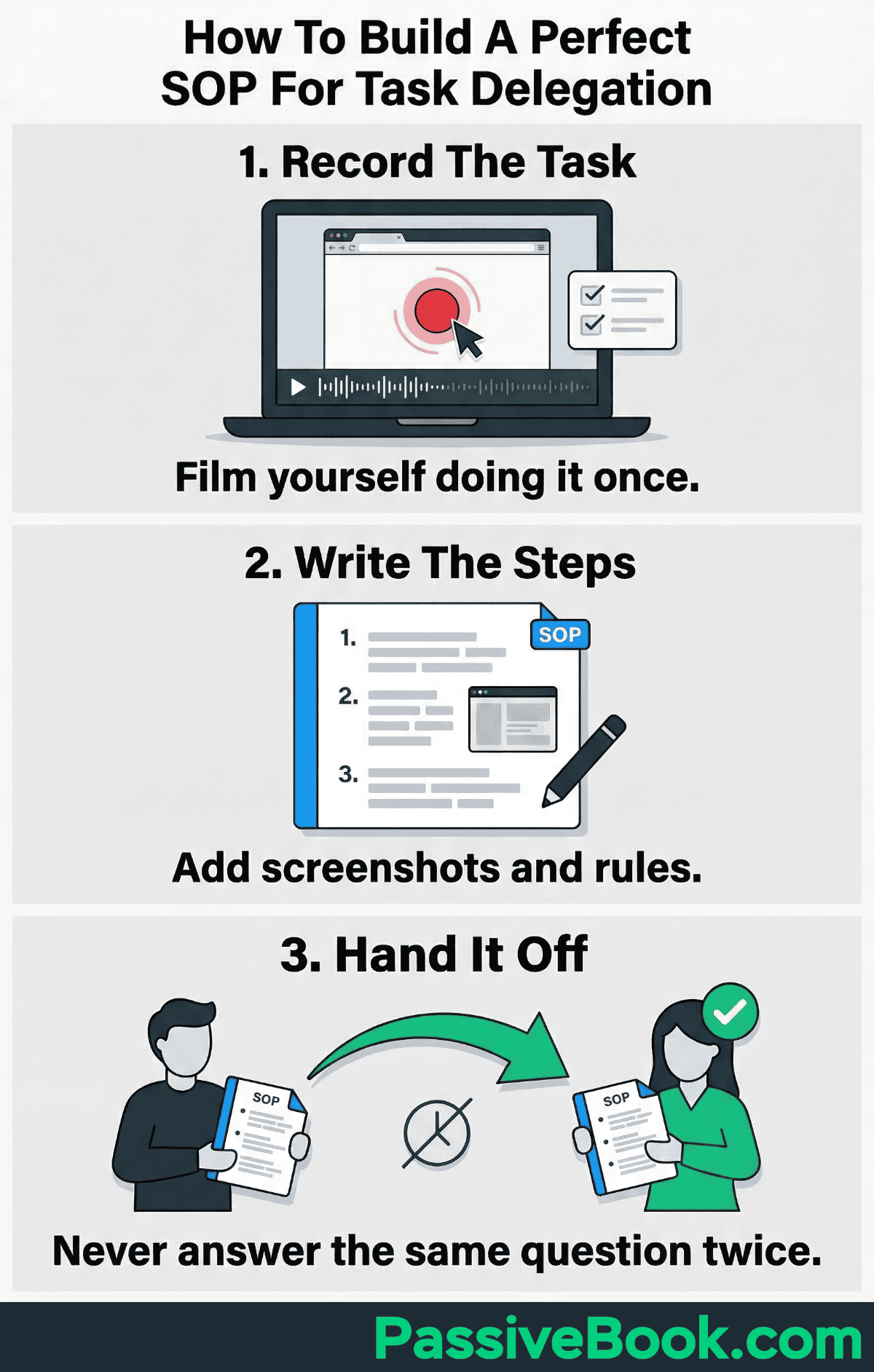
Write SOPs while doing each task once. Don’t try to document everything. Focus on your top three to five recurring tasks first. Coverage beats completeness. A single well-documented process you can hand off today is worth more than 20 half-finished SOPs sitting in a draft folder.
Start with the task name and goal. List the tools needed and where to access them. Break the process into numbered steps.
Include screenshots for anything visual. End with quality standards and what to do if something goes wrong.
I resisted creating SOPs for months because it felt like busywork. Then I spent three hours answering the same VA question six different times. That’s when I finally recorded the Loom video. I created an SOP for uploading blog posts to WordPress. It covers formatting the content, adding images, setting SEO fields through Rank Math, and scheduling the publish time.
The document took 30 minutes to create. It saved me two hours per week and let my VA handle all uploads without a single follow-up question.
Where to Find Affordable, Reliable Help on a Bootstrap Budget
Hubstaff Talent is a free job board for hiring vetted Filipino and global remote workers. Zero fees or markups for employers. You post the job, review applications, and hire directly. This eliminates the platform cut that drives up costs on other hiring sites.
Always begin with a paid test task worth $10 to $30 that mirrors a real deliverable. Never commit to a retainer without proof of output quality. A test task reveals more than any interview. You see how they communicate, how they interpret instructions, and whether their work meets your standards.
For example: “Upload these two blog posts to WordPress following this SOP. Format with Rank Math, schedule for Monday and Wednesday, confirm in the tracker. Due in 48 hours. Pay: $25.” This reveals whether they read instructions, meet deadlines, and deliver quality work.
How to Compare Hiring Platforms: Fiverr, Upwork, and VirtualStaff.ph
Filipino VAs via platforms like VirtualStaff.ph average $3 to $7 per hour compared to $18 to $40-plus per hour for US-based assistants. That’s a major saving for budget-conscious owners. The quality is often comparable or better because you’re hiring experienced professionals in a lower cost-of-living region.
| Platform | Hourly Rate Range | Best For |
|---|---|---|
| VirtualStaff.ph | $3–7/hr | Ongoing VA relationships, admin tasks |
| Upwork | $5–15/hr (vetted) | Recurring work with time tracking |
| Fiverr | $10–30/project | One-off tasks, quick deliverables |
| US-based VA | $18–40+/hr | Complex, high-stakes work requiring cultural fluency |
Fiverr suits one-off deliverables. A single video thumbnail, one blog edit, or a quick graphic design task. The platform works best when you need something specific and completed once. Pricing is per project, not per hour, which makes budgeting simple.
Upwork suits ongoing hourly relationships with vetted professionals. You hire someone for recurring work like weekly content uploads or daily inbox management. The platform provides time tracking, invoicing, and work history that builds trust over time.
Validate freelancers on Upwork using their Job Success Score and review history before committing to recurring work. Look for 90-plus percent success scores and at least 10 completed jobs. Read the actual reviews, not just the star ratings. You want feedback about communication, reliability, and quality.
I found my VA through Upwork. She had a 98 percent Job Success Score, strong English skills, and experience with WordPress and Pinterest. The first test task was uploading three blog posts. She completed it in two hours with zero errors. We’ve worked together for over a year now.
How to Onboard a VA Without Losing Weeks to Training
Use a phased approach to onboarding. Week one is tool access and orientation. Share your SOP library, provide logins to necessary platforms, and send your brand voice guide. Week two is shadowed execution where the VA completes tasks while you review the output. Week three is independent work with scheduled check-ins. This structure builds confidence without micromanagement.
Audit recurring distractions, record a Loom walkthrough, store it in Notion, hand it to a contractor, reroute support emails to them. The result was 15-plus hours reclaimed per week without a single live training session. Everything was asynchronous.
Use Notion to assign tasks, set deadlines, and track status without live meetings. Create a simple board with columns for “To Do,” “In Progress,” and “Completed.” Each task gets a card with the SOP link, deadline, and any special notes. The VA updates the status as they work. You review the board once daily.
Set a weekly 15-minute async check-in via voice memo or Loom. Record a quick video covering what went well, what needs adjustment, and priorities for the coming week. The VA responds with questions or updates. This protects your time while maintaining accountability and alignment.
The biggest mistake is over-explaining during onboarding. Your VA doesn’t need to understand why you do something a certain way. They need to know what to do and how to do it. Save the context and strategy discussions for later once they’ve proven they can execute the basics without errors.
I onboarded my VA in under three hours of total time investment. Week one: sent SOPs and tool access. Week two: she completed five test uploads while I spot-checked. Week three: she was fully independent. No live calls. No screen shares. Just clear documentation and trust in the process. Bringing in a new team member this way keeps training minimal and results fast.
Frequently Asked Questions
What Is the Very First Task I Should Delegate as a Solopreneur?
Delegate inbox management first. It’s repetitive, time-consuming, and easy to document in an SOP. Your VA can filter, categorize, and draft replies for your approval. This alone saves three to five hours weekly and trains both of you in the delegation process.
How Much Should I Budget for My First VA on a Side-Hustle Income?
Start with $100 to $200 monthly for five to ten hours of work. That’s enough to offload inbox management and basic content formatting. As you reclaim time and increase revenue, scale the hours up. Filipino VAs at $5 to $7 per hour make this budget realistic even for side hustles.Real example: Sarah runs a print-on-demand Etsy shop earning $1,200 per month. She hired a VA for 5 hours monthly at $6 per hour, which costs $30 total. The VA handles customer messages and order tracking. That freed up 8 hours monthly she redirected into designing new products. Her revenue jumped to $1,850 per month within two months because she finally had time to focus on what sells.
How Do I Know When My Business Is Making Enough to Justify Hiring a VA?
Use your Buyback Rate as the decision threshold. If you’re earning enough that your hourly value divided by four exceeds VA rates, delegation is profitable right away. Even at $30,000 per year, your Buyback Rate is around $3.75 per hour, making a $5 per hour VA cost-effective.
What Is the Difference Between a VA and a Freelancer for a Small Online Business?
A VA handles recurring administrative and operational tasks on an ongoing basis. A freelancer completes specific project-based deliverables like designing a logo or writing a sales page. Use VAs for consistency and freelancers for specialized one-time needs.
How Do I Maintain Brand Quality When Someone Else Is Creating or Scheduling My Content?
Never delegate the core content creation itself. You write the post, newsletter, or video script. The VA handles formatting, uploading, and distribution. Provide a brand voice guide with examples of approved tone, word choices, and formatting standards for all published work. I learned this after a VA scheduled a blog post with the title ‘Top 10 Hacks to Crush It Online.’ That’s when I realized I needed a voice guide with a ‘Banned Words’ list.
Can I Delegate Creative Work Like Writing or Social Media Posts?
You can delegate repurposing and formatting, but not original creation. A VA can turn your long-form blog post into five social media snippets using your voice guide. They can schedule posts and add hashtags. But the original ideas, stories, and strategic messaging must come from you to maintain authenticity.
What Next?
You now have a complete framework for how to delegate tasks effectively without burning through your budget or losing control of quality. Start with your time audit this week. Track where your hours actually go, calculate your Buyback Rate, and identify the first three tasks to hand off. That’s your action plan.
Delegation feels risky when you’re running a bootstrapped business. Every dollar matters. Every hour counts. But staying stuck doing everything yourself is the bigger risk. You can’t scale what you can’t let go of. Even reclaiming five hours weekly gives you space to focus on the work that actually grows your income.
Here’s my question for you: if you could delegate just one task this week and never touch it again, what would it be? Drop your answer in the comments below. I read every response and I’m curious what’s eating up your time right now.
Share this post with your friends & followers: