I spent two years trying to build my online business the “right” way. Wake at 4:30 AM, meditate, journal, work on your side hustle for three hours, then crush your day job. I burned out in six weeks.
Most successful side hustlers don’t follow those Instagram-perfect routines. They build businesses in the messy gaps between work meetings and bedtime stories, using whatever hours they can protect.
If you’re doing everything the gurus recommend but still burning out, the problem isn’t you. It’s the system. You don’t need to quit your job, wake at 4 AM, or work 80-hour weeks to build a real online business.
I’ve seen dozens of side hustlers reach $1,000-$3,000 monthly revenue working 8-12 focused hours weekly. The constraint forces you to focus on what actually matters, which often creates more strategic businesses than founders with unlimited time who waste months perfecting logos.
Creating a daily routine for productivity for online entrepreneurs isn’t about perfection. It’s about designing a system that survives your worst week. The framework I’ll share helped me build consistent revenue streams while working full-time, and it’s based on what works for people with real constraints.
What a Daily Routine Really Means for Time-starved Entrepreneurs
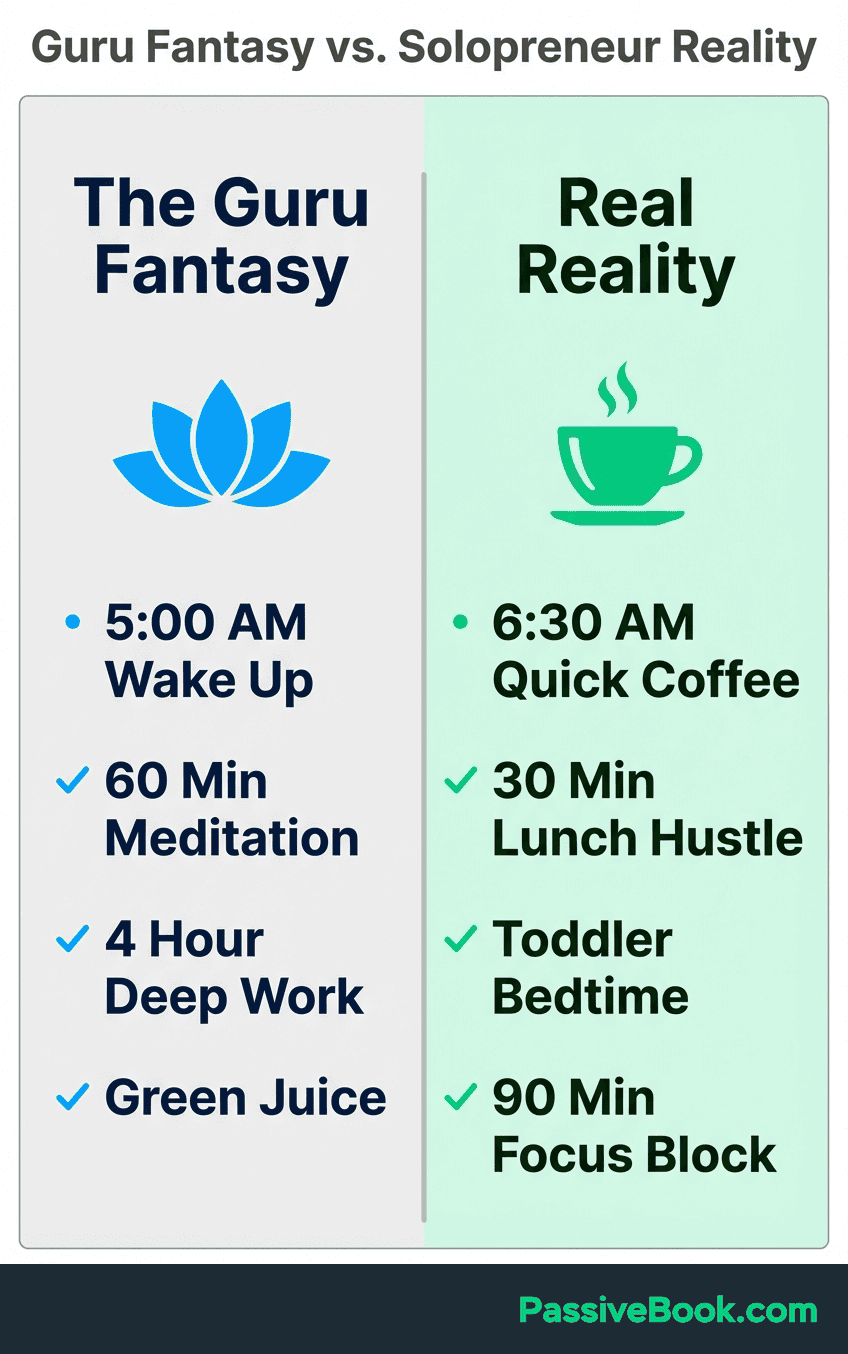
A daily routine for side hustlers isn’t what productivity gurus sell you. It’s not waking at 5 AM, meditating for an hour, and working uninterrupted until lunch. That’s fantasy for people with day jobs and family obligations.
Real routines are structured flexibility. You’re matching time blocks to your available 1-3 hours, not forcing rigid schedules onto chaotic days.
The structure tells you exactly what to do when you sit down. The flexibility means you’re not starting over every time life disrupts your perfect plan.
Solopreneurs face high burnout rates working long hours with minimal support systems. The data shows most solo founders try to do everything, refuse to delegate, and eventually crash. Sound familiar?
Successful side hustlers documented in real income reports work 10-15 focused hours weekly using structured routines. They’re not working more hours. They’re protecting specific hours for specific tasks, then stopping.
You don’t need superhuman discipline. Successful side hustlers design systems that work despite imperfect consistency. Your routine should assume you’ll skip days, get interrupted, and feel exhausted. If it only works when everything goes perfectly, it doesn’t work.
Will This Actually Work With My Time Constraints?
If you’re terrified you’ll waste your limited hours and get nowhere, I get it. Here’s what the data shows: small consistent actions compound into real results.
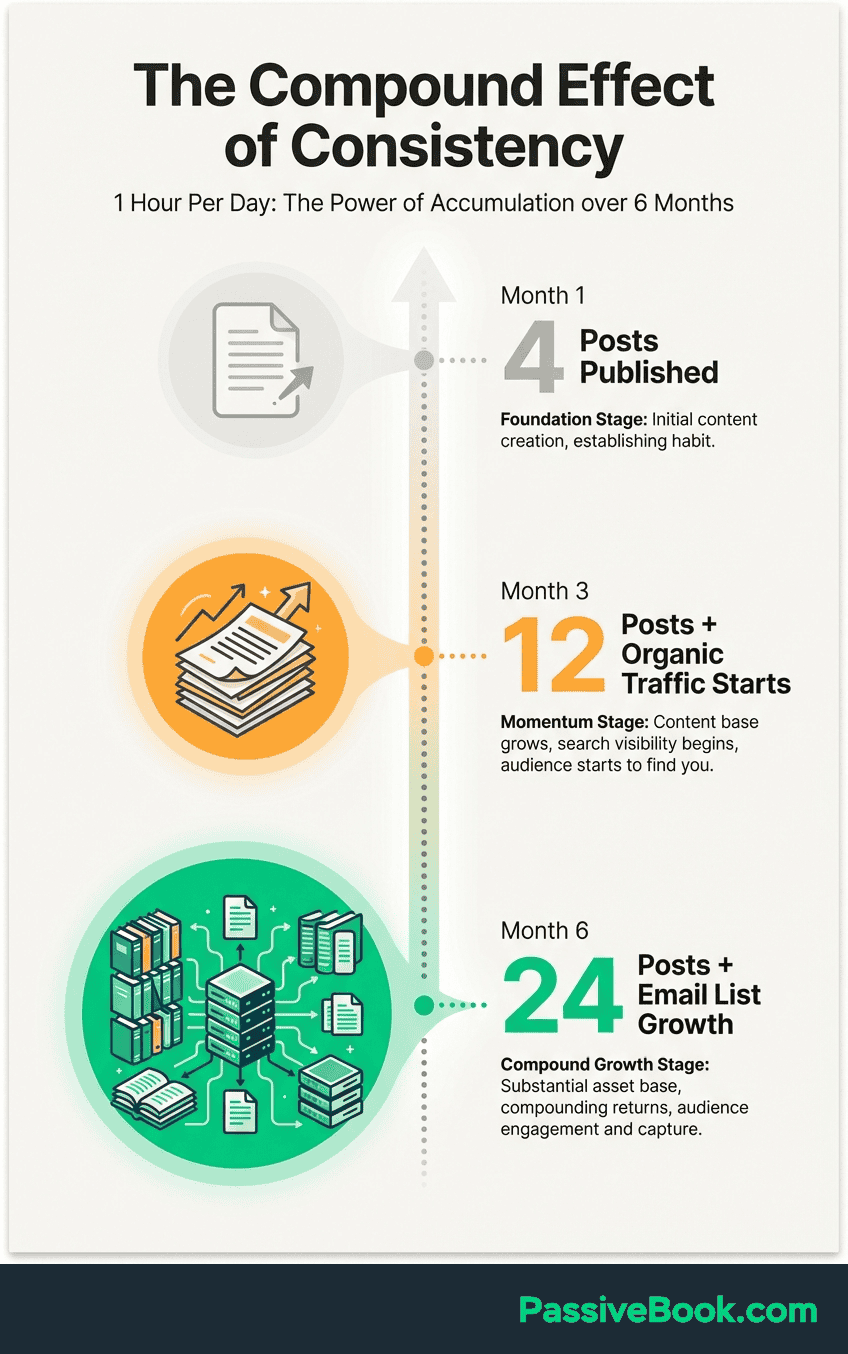
One blog post weekly for six months is 24 published articles. That’s enough to start ranking in search and building an email list. Two hours every Saturday for a year is 104 hours of focused work. That’s enough to launch a digital product or build a YouTube channel to 1,000 subscribers.
Pat Flynn started his first niche site working nights after his architecture job. He spent 1-2 hours daily researching, writing, and building. Eight months later, that site was earning $3,000 monthly from affiliate marketing and display ads. Your time constraints won’t doom you.
They’ll force you to focus on revenue work instead of busywork that feels productive but generates zero income.
Why Most Productivity Advice Fails Side Hustlers
Here’s what productivity gurus won’t tell you: their advice assumes you have 8-hour uninterrupted workdays. You don’t. You have a 30-minute lunch break, maybe an hour after the kids sleep, and weekend mornings if you’re lucky.
The advice built for full-time founders doesn’t translate.
Hustle culture pushes unsustainable 80-hour weeks leading to burnout, not breakthroughs. I tried this. I worked my day job, then came home and worked until midnight on my business.
Within two months I was sleeping through alarms, making mistakes at work, and my business content was garbage because I was writing half-asleep.
Generic morning routines ignore unique constraints. Got a 90-minute commute? Night shift schedule? Kids who wake at 5:30 AM? If you’re doing the “miracle morning” but producing garbage content, you’re working against your natural rhythm.
The “4-hour block” myth prevents action. Productivity experts tell you that you need long, uninterrupted deep work sessions to make progress. So you wait for a mythical Saturday when you’ll have four free hours.
That Saturday never comes, and you make zero progress for months.
Most successful side hustlers progress with fragmented 30-60 minute sessions. They write one blog post section during lunch. They record one video after dinner. They schedule social media posts before bed. Small sessions compound into finished products.
The Harsh Truth About Time Investment Vs. Results
Let’s talk numbers. Six to twelve months minimum. That’s how long most online business models require before you see consistent income you can actually count on.
Small consistent actions compound over time into business results you can measure. One blog post weekly for six months is 24 published articles. That’s enough content to start ranking in search engines and building an email list.
Two hours every Saturday for a year is 104 hours of focused work. That’s enough to launch a digital product or build a YouTube channel to 1,000 subscribers.
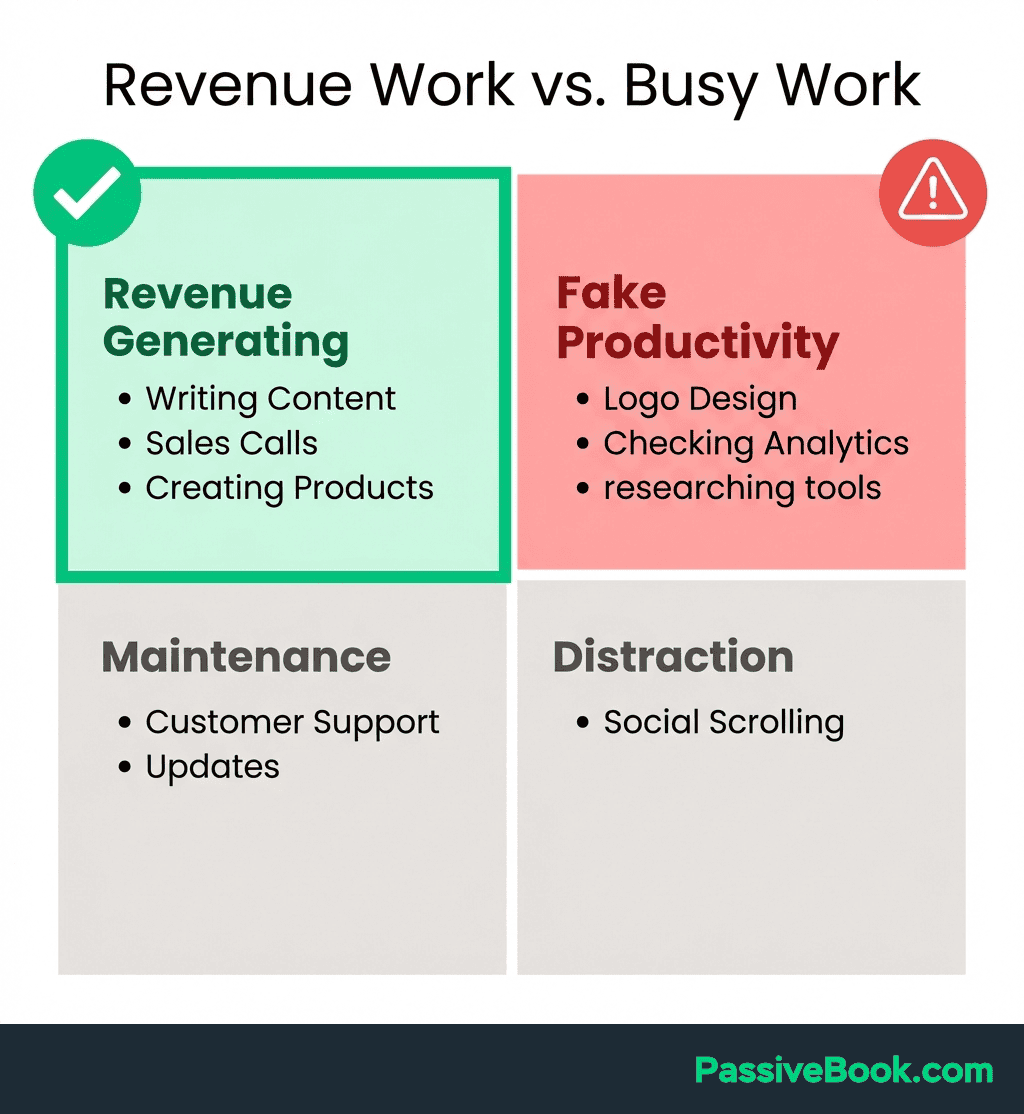
Your time constraints force focus on what matters. When you only have 90 minutes per day, you can’t waste 45 minutes redesigning your logo for the third time. You do revenue work or you do nothing.
This constraint often creates more strategic businesses than founders with unlimited time who spend months perfecting things that don’t matter.
Building Content Businesses (YouTube, Blogging, Podcasting)
Content businesses have the longest runway to revenue, but they scale without you eventually. You create once, it works forever.
One Reddit YouTuber reported taking 9 months of weekly posting before breakthrough, with small brand deals starting at 6 months. That’s 36-40 videos before meaningful income. Most quit at video 12.
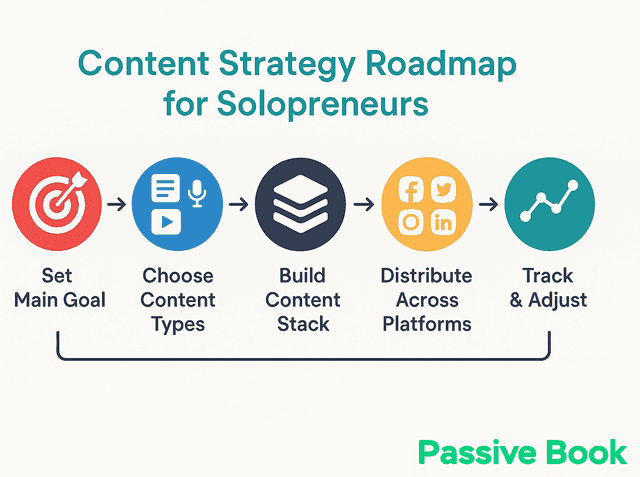
Michelle Schroeder-Gardner built Making Sense of Cents into a $100,000+ monthly blog while working full-time as a financial analyst. She published 2-3 blog posts weekly using lunch breaks and weekend mornings. After 18 months and roughly 150 published posts, she hit $1,000 monthly from affiliate marketing and display ads.
Real blog income reports from 2026 show lifestyle bloggers reaching $1,000-$2,000 monthly after 40-80 published blog posts. That’s 6-10 months if you’re publishing weekly, longer if you’re doing this part-time.
The income comes from display ads, affiliate marketing, and eventually digital products.
Consistency beats intensity. Publishing one quality blog post weekly for a year outperforms publishing daily for two months, then quitting. Your limited time helps here if you build a sustainable rhythm.
Ecommerce and Product-based Models
Print-on-demand first sales can take 6 months for beginners focusing on niche markets. You’re designing products, testing marketing, learning platforms. Once you find a winning product, revenue can scale faster than content.
Dropshipping stores can run under 10 hours weekly with automation after initial setup. The first 2-3 months are intensive: finding suppliers, testing products, setting up ads. After that, most time goes to customer service and optimization.

Digital product creators often see faster returns, launching within 3-4 months of focused work. Create a course, template pack, or guide once. Sell it forever.
The timeline is shorter because you’re not waiting for organic traffic or building an audience from zero. You can launch to a small email list or niche community immediately.
Structuring Your Day Around Personal Energy Peaks
I wasted three months forcing myself to work at night because that’s when I had “free time.” My best ideas came at 6 AM with coffee. My writing at 10 PM was garbage.
Once I switched to morning sessions, my output quality doubled even though I was working fewer total hours.
Strategic breaks boost cognitive performance better than working through exhaustion. Research shows that taking intentional breaks restores focus and creativity. Working tired doesn’t just slow you down, it produces worse results that you’ll need to fix later.
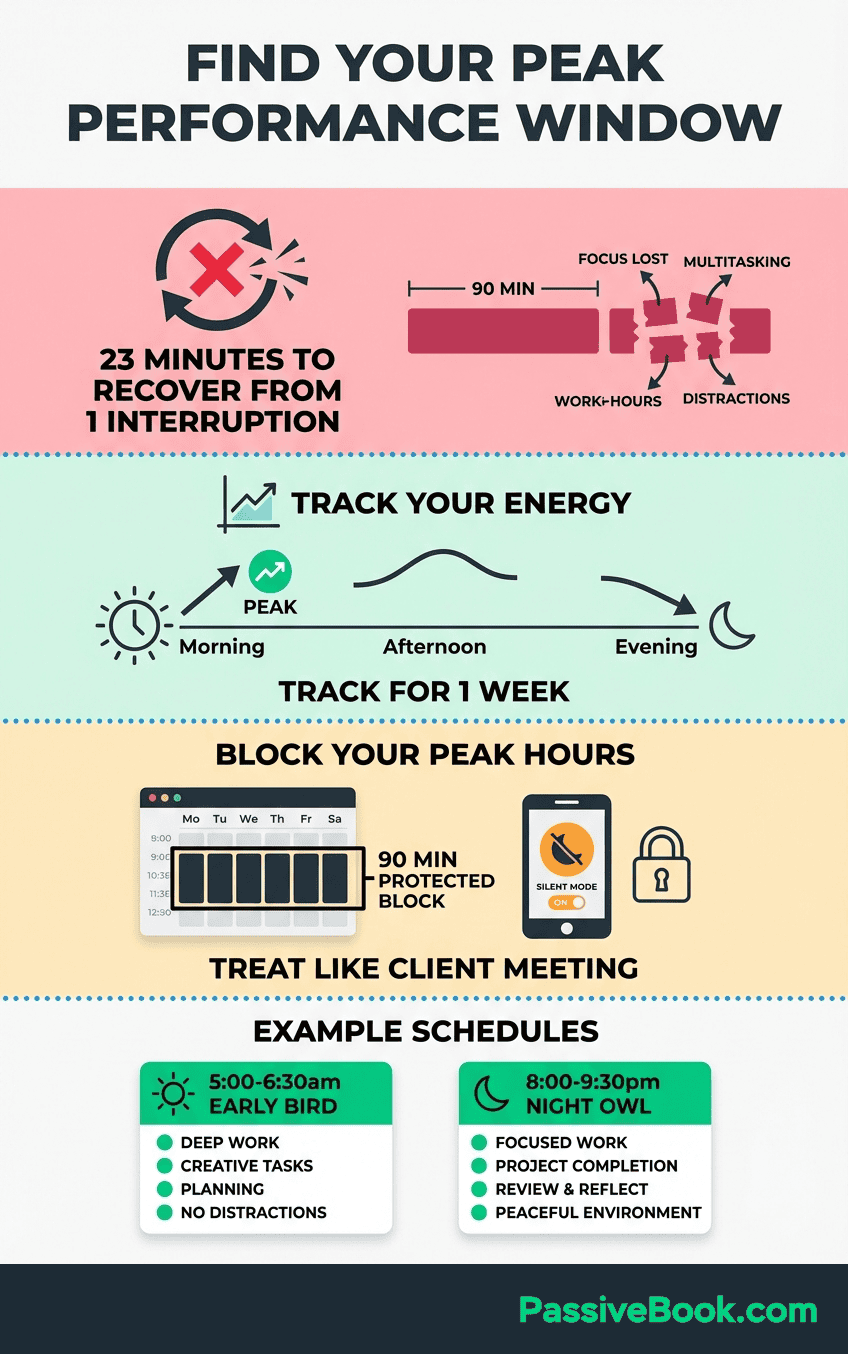
Track energy and focus levels for one week to identify natural productivity windows. Note when you feel most creative, most focused, most energized. Don’t guess – actually log it.
You’ll find patterns. Some people peak at 6 AM. Others hit flow state at 9 PM. There’s no universal “best time.”
Side hustlers building businesses with full-time jobs succeed by using lunch breaks and early morning hours for their highest-value work. They’re not finding more time. They’re matching their most important work to their highest-energy hours.
The viral success stories lie. Real side hustlers earn $500-$2,000 monthly within 6-12 months documented in the 15 Best Side Hustles guide. They’re not working 40-hour weeks. They’re protecting 8-12 hours weekly and using them for strategic tasks only.
Sample Daily Routines: Three Proven Schedules
These aren’t aspirational templates. These are schedules real side hustlers use to build businesses while working full-time. Pick the one that matches your natural energy rhythm, not the one that sounds most impressive.
The Early Bird Schedule (5:30 AM – 7:00 AM Business Block)
Wake at 5:30 AM. Make coffee. Review your top 3 goals for the business session. This isn’t meditation or journaling. This is 5 minutes of focus before you start working.
From 6:00-7:00 AM, you do deep work on ONE revenue task. Content creation for your blog post. Product development for your digital course. Outreach emails to potential affiliate partners. One task, one hour, done before your day job starts.
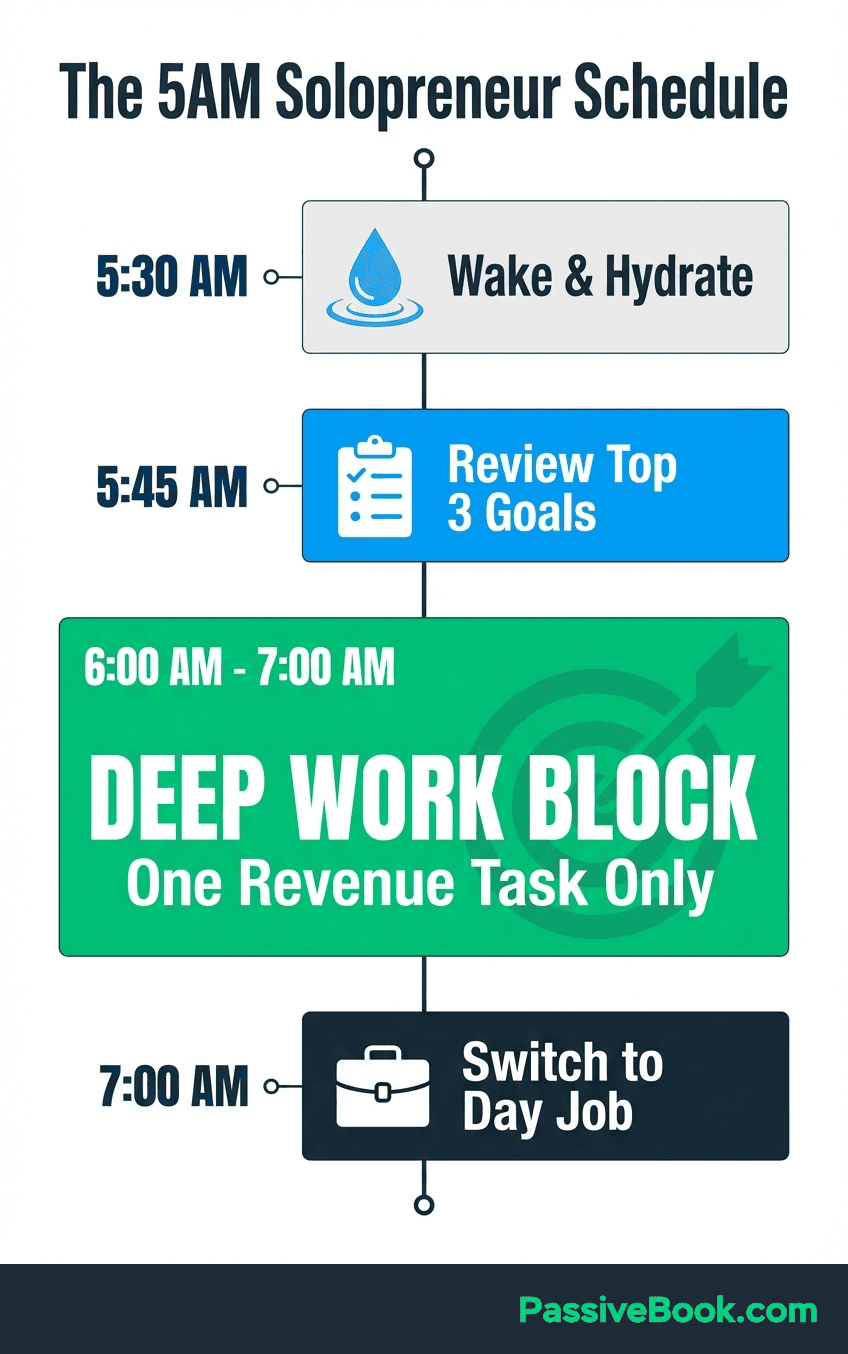
Morning routines increase productivity by completing important tasks before daily distractions begin competing. You’re not fighting for willpower at 9 PM after a draining day. You’re using your freshest mental energy on your most important work.
This schedule works best if you naturally wake early or can shift your sleep schedule. If you’re a night owl forcing yourself awake at 5:30 AM, you’ll produce garbage and quit within weeks.
The Lunch Break Hustler (12:00 PM – 1:00 PM + 8:00 PM – 9:00 PM)
From 12:00-12:45 PM, you’re doing focused work during lunch. Batch creating social media content. Editing one video. Writing three email sequences. This is creation time, not admin time.
The last 15 minutes (12:45-1:00 PM) are for quick admin tasks. Schedule posts. Respond to customer messages. Process orders. Everything that takes less than 5 minutes per task.
Successful side hustlers use micro-sessions to maintain business momentum without overwhelming their primary job. They’re not trying to build an empire during lunch. They’re making incremental progress that compounds over months.
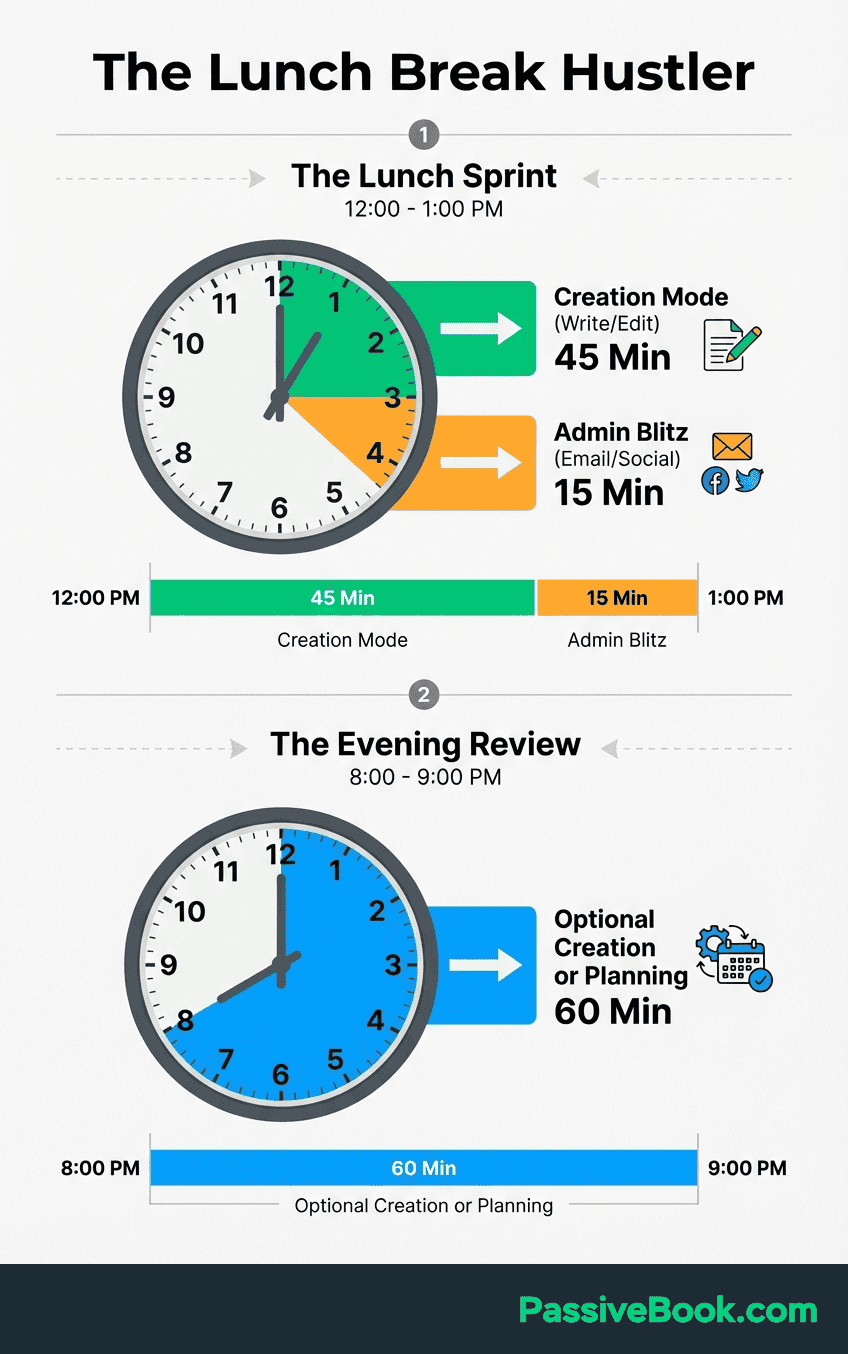
Add an evening session from 8:00-9:00 PM if you need more creation time. But the lunch block is non-negotiable. It’s the one hour you control every weekday, regardless of family obligations or energy levels.
This works if you have a consistent lunch break and can access your business tools. If your job requires client lunches or you’re in healthcare without reliable breaks, try the night owl schedule instead.
The Night Owl Schedule (9:00 PM – 11:00 PM Business Block)
From 6:00-9:00 PM, you’re present for family. Dinner, kids’ bedtime, personal decompression. Your business doesn’t exist. This boundary prevents resentment from family and protects your relationships.
At 9:00 PM, you start your focused business work. This runs until 10:30-11:00 PM depending on your morning obligations. For natural night owls, this is peak creative energy. You’re not fighting exhaustion, you’re in flow state.
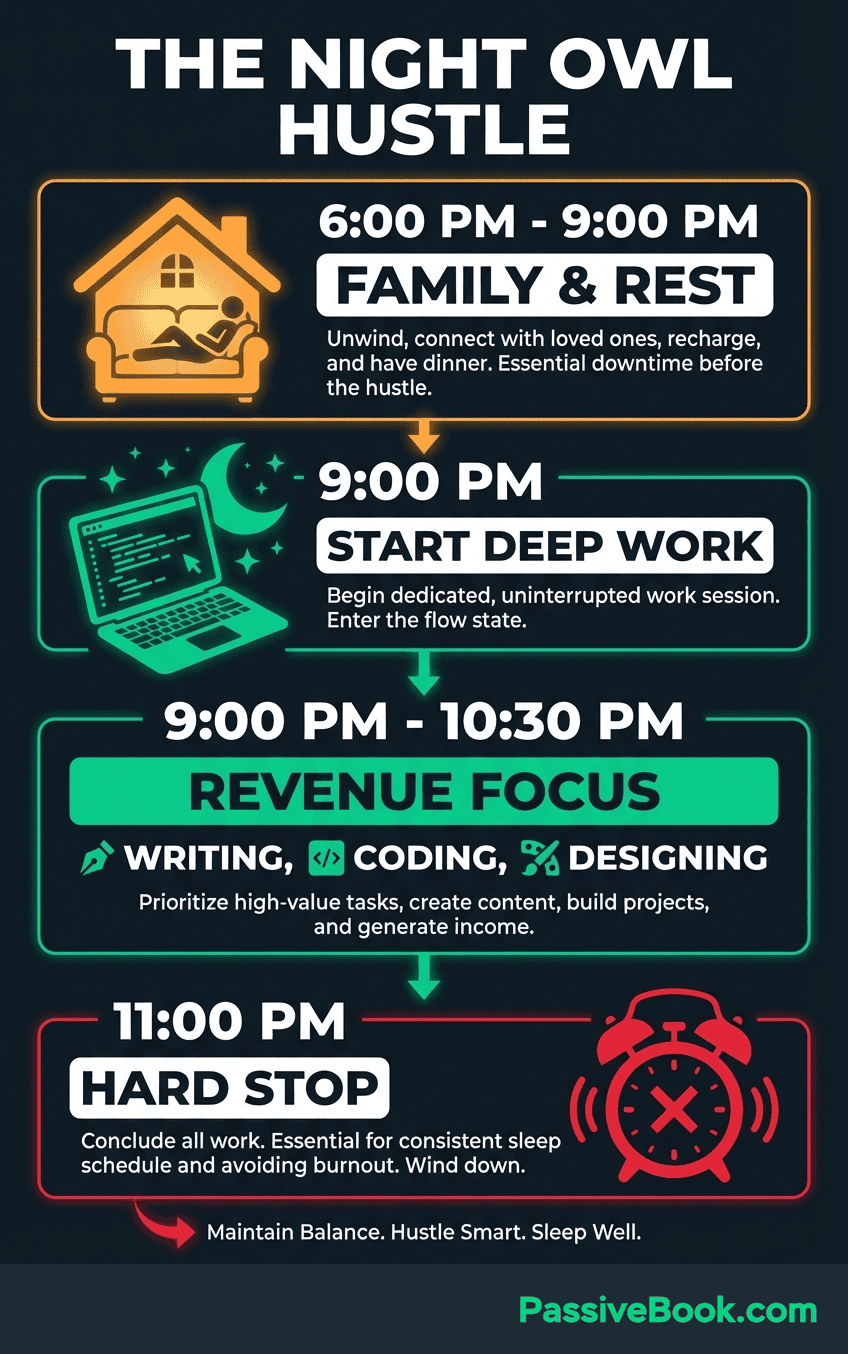
Night owls perform better working later due to natural circadian rhythms and creative energy peaks. Research shows that forcing yourself to work against your natural rhythm reduces both output quality and quantity.
This schedule requires strict boundaries. Set a non-negotiable stop time. When the alarm goes off, you close the laptop. No “just 10 more minutes.” You’re building a sustainable business, not sprinting to burnout.
Protecting Your Limited Hours: Deep Work Vs. Shallow Work
Cal Newport’s deep work principles help entrepreneurs maximize limited available time through intense focus. Deep work is cognitively demanding tasks that create value and are hard to replicate. Shallow work is administrative, logistical tasks that don’t require intense focus.
Shallow tasks can be batched, delegated, or automated. Email responses, social media scheduling, invoice processing – none of these require your peak mental energy. Do them during your low-energy windows or automate them entirely.
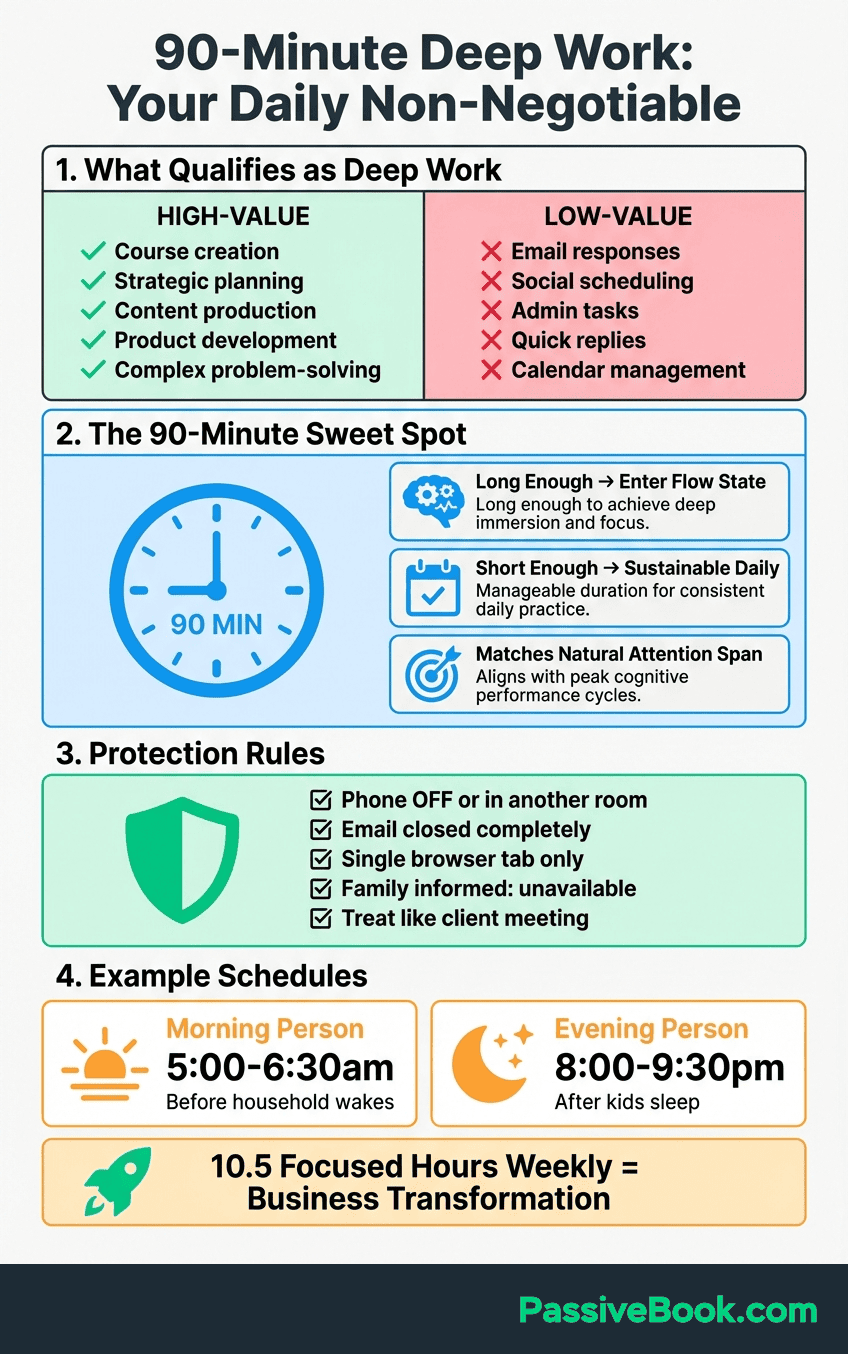
Protect 2-4 hours weekly minimum for uninterrupted strategic business growth work. This is where you create content, develop products, build systems, or do outreach. If you can only carve out 3 hours per week, those 3 hours should be deep work only.
The Pomodoro Technique increases focus using timed 25-minute intervals to maintain momentum without requiring long blocks. Set a timer for 25 minutes. Work on one task. Take a 5-minute break. Repeat.
Four intervals equal a deep work session, even if you only have 2 hours total.
The Pre-work Power Hour
Pre-work hours offer uninterrupted focus before day job demands and family obligations compete. Nobody’s emailing you at 6 AM. Your phone isn’t buzzing. Your kids are asleep. This is pure focus time.
Wake 60-90 minutes before your normal schedule for a distraction-free deep work session. This sounds brutal, but adjusting your bedtime by one hour gives you 5-7 extra business hours weekly. That’s 260-365 hours annually.
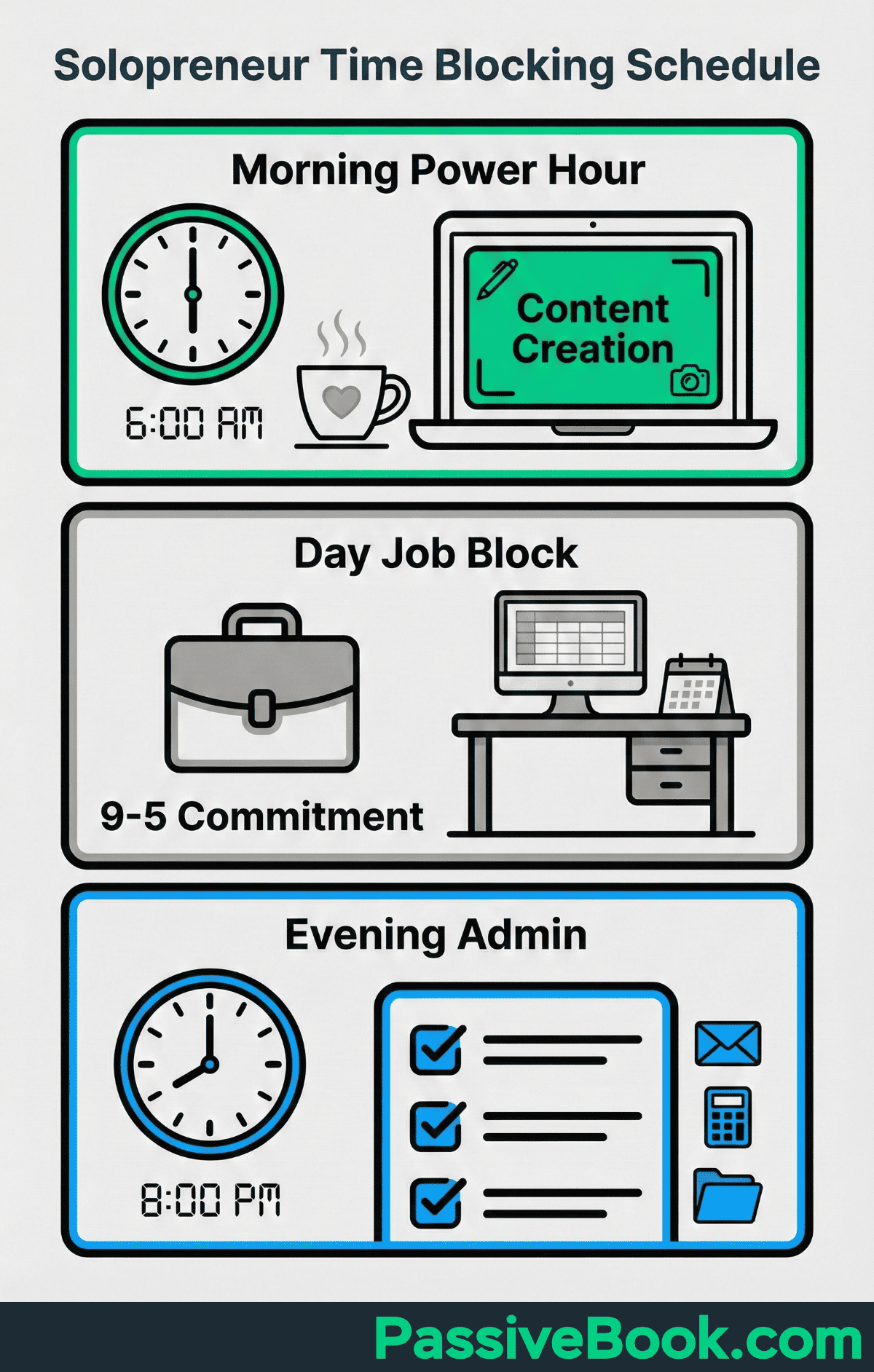
Enough to launch a digital product or build a content library.
Use this time for content creation, product development, or strategic planning requiring mental clarity. Don’t use it to answer emails or schedule social posts. That’s shallow work disguised as productivity.
You might draft two blog posts in outline form, ready to flesh out later. If you’re sacrificing sleep, make it count.
Lunch Break Revenue Tasks
Use lunch breaks for quick-win transactional tasks requiring 15-30 minutes. Respond to three customer inquiries. Schedule a week of social media content. Process five orders. These are revenue-adjacent tasks that keep your business moving.
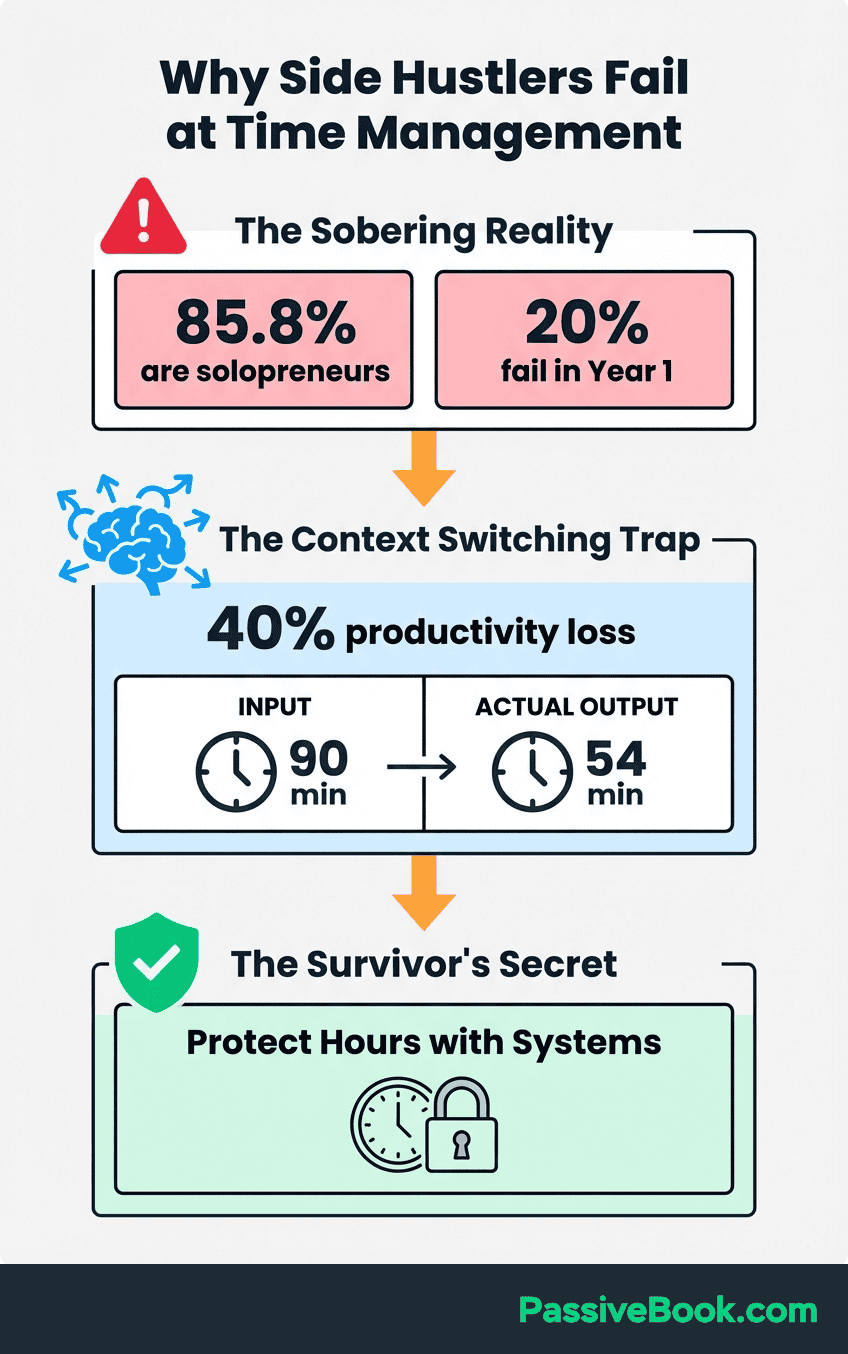
Batch similar activities together. Don’t switch between responding to emails, then scheduling content, then processing orders. Do all customer responses at once. Then all scheduling. Then all order processing. Context-switching kills efficiency.
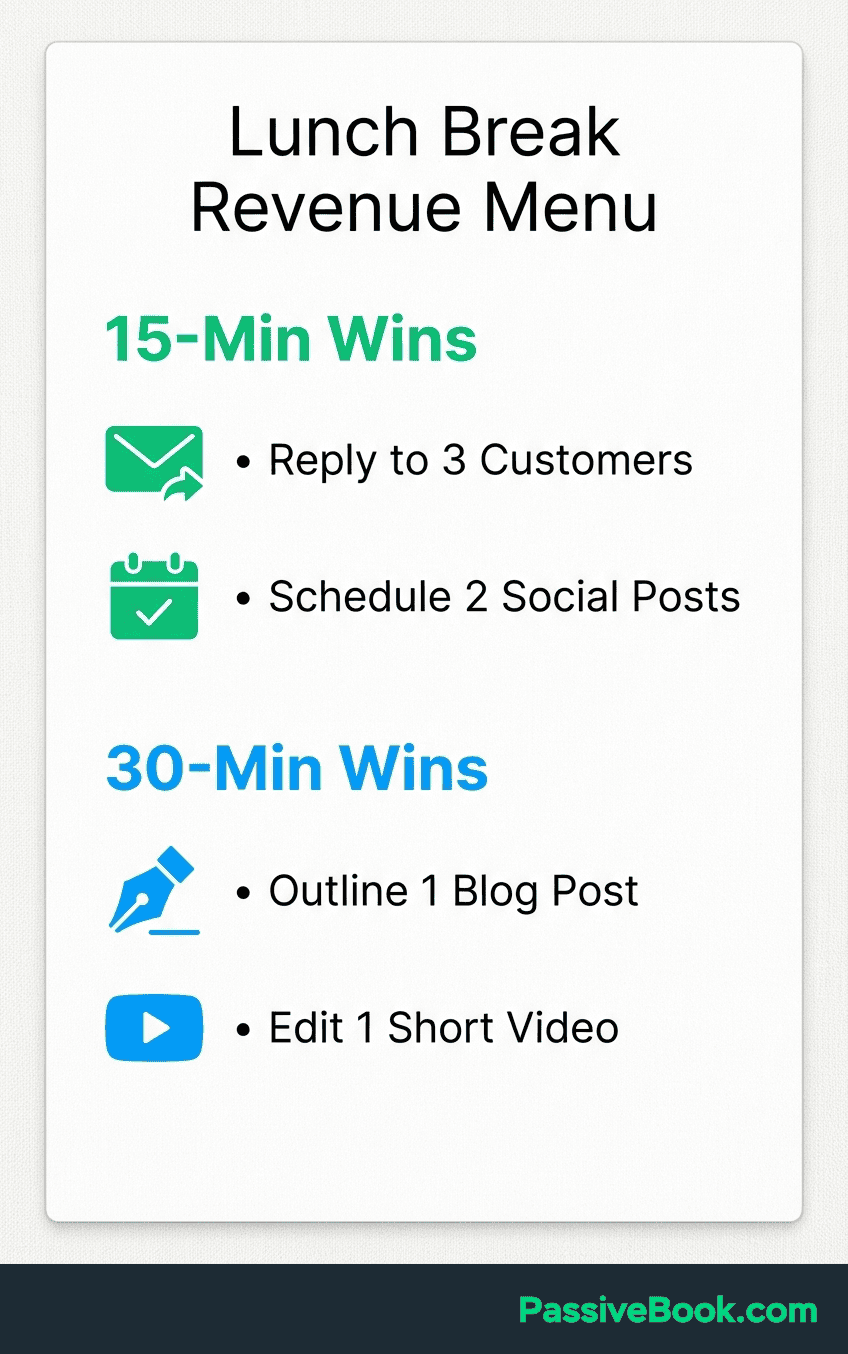
Never schedule business work during hours that reduce day job performance. Your primary income funds your side hustle. If your lunch-break business work makes you rushed or distracted in afternoon meetings, you’re creating risk. Protect the income that’s currently feeding you.
Evening Batch Creation Sessions
Dedicate one 90-minute evening session weekly to create multiple content pieces at once. Record four YouTube videos in one sitting. Write three blog posts. Design a month of social graphics. Batch creation is brutally efficient.
Batching similar tasks reduces context switching and improves efficiency and creative output. When you’re in “writing mode,” you write everything. When you’re in “video mode,” you record everything. You’re not starting from scratch each time.
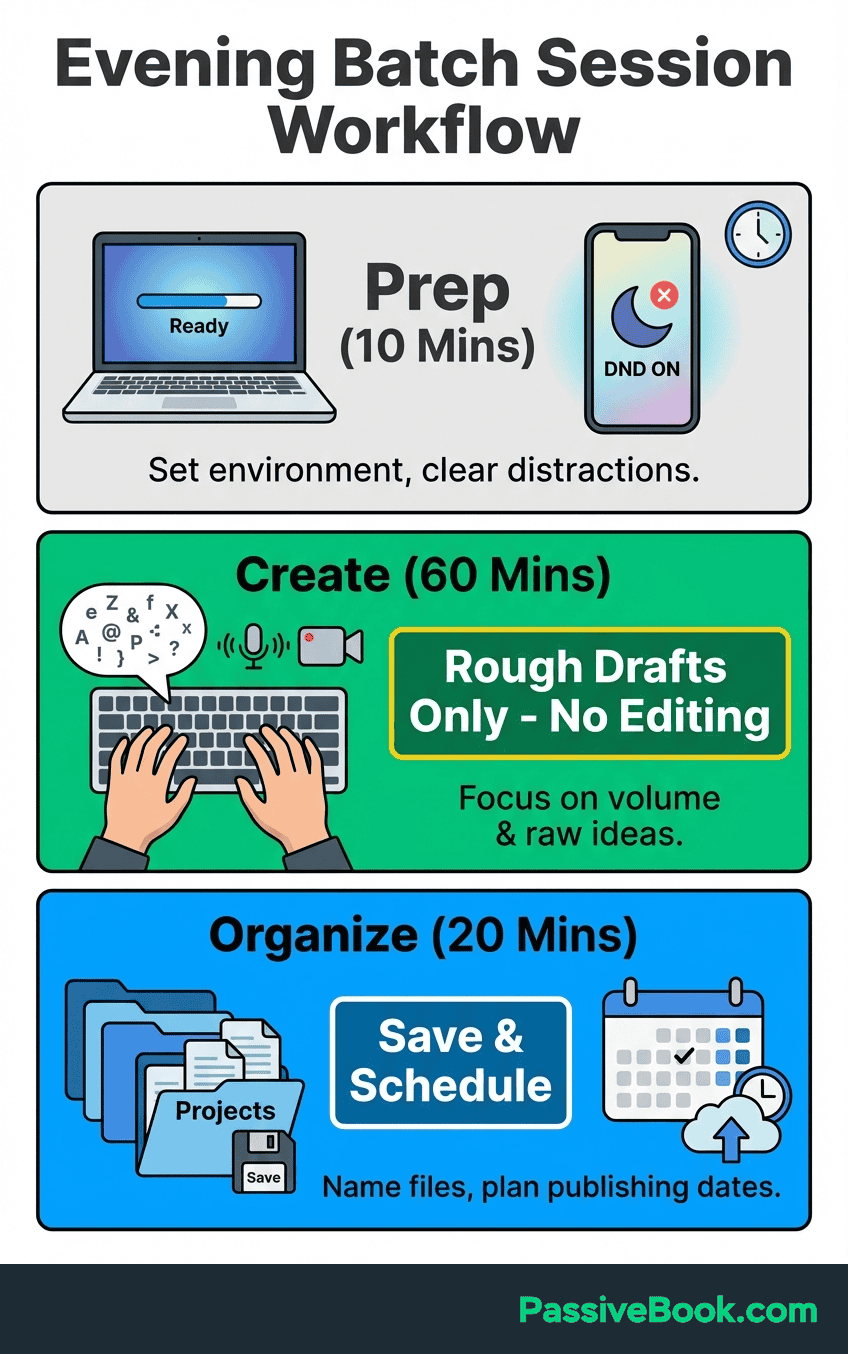
Separate creation from editing and publishing to reduce context-switching fatigue. Tuesday evening: write five blog posts in rough draft form. Saturday morning: edit and publish them.
Your brain works differently in creation mode versus editing mode. Trying to do both at once slows both processes.
The Priority Matrix for Online Entrepreneurs
Important and Urgent quadrant for online businesses includes: your payment processor is down, a customer is demanding a refund publicly, or your email list hasn’t received this week’s promised newsletter. Handle these immediately. They’re fires that spread if ignored.
Important but Not Urgent is where your business grows. Publishing your weekly blog post, recording your next YouTube video, building your email welcome sequence. These never scream for attention, so they get ignored.
Schedule protected time blocks for this quadrant, or you’ll spend all your time fighting fires.
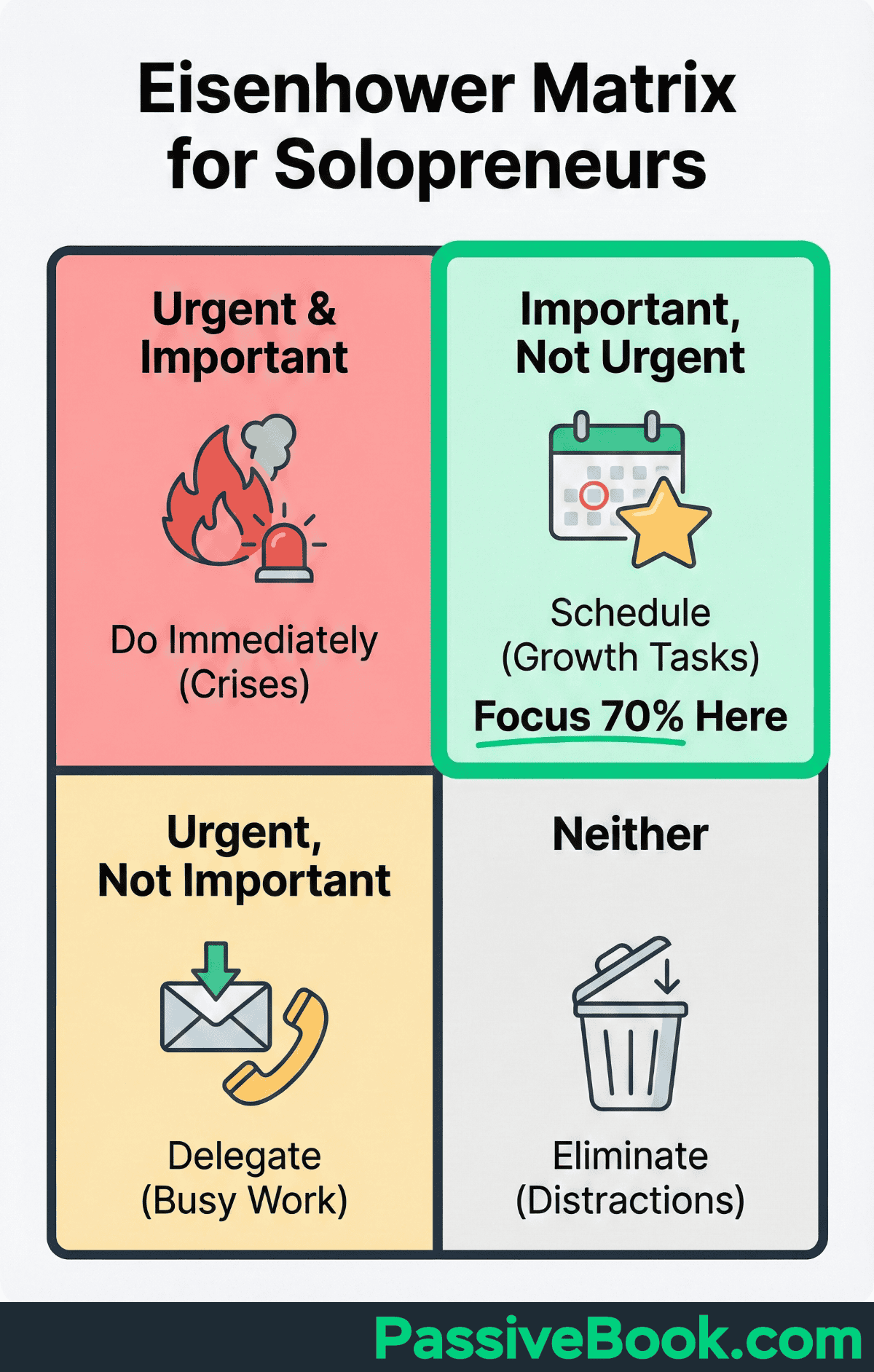
Not Important but Urgent is most interruptions. Someone wants to “pick your brain.” A Facebook notification. An email about a feature you’ll never use. Batch these or ignore them entirely. They feel urgent but contribute nothing to revenue.
For solopreneurs specifically, Sunday evening content batching falls into Important but Not Urgent. It doesn’t need to happen today, but it compounds into consistent business growth. Redesigning your logo for the third time is Not Important and Not Urgent. Stop doing it.
Automation & AI Tools That Reclaim Your Hours
Create templates for recurring tasks to eliminate daily micro-decisions. Email responses to common customer questions. Social media post formats. Product descriptions. Every template saves 10-15 minutes and reduces decision fatigue.
Business automation tools save time by handling repetitive tasks, freeing energy for strategic decisions. Zapier connects your apps so when someone joins your email list, they automatically get tagged in your CRM and added to your welcome sequence. No manual work.
A complete AI stack costs $72-120 monthly as of early 2026, replacing a Virtual Assistant (VA) at a fraction of the cost. ChatGPT Plus or Claude Pro ($20-25/month) handles writing and brainstorming. Canva Pro ($13/month) for visual content.
Buffer or Later ($15-25/month) for social media scheduling. Maybe Descript ($24/month) if you’re doing video. That’s a full content production system for what you’d pay a VA for 2 hours of work.
If $72/month feels steep when revenue is zero, start with 100% free tools. Buffer’s free tier handles 3 social accounts, Canva free works for basic graphics, and Claude’s free plan gives you limited messages daily. Upgrade only when you’re earning $500+/month.
Instead of spending an hour brainstorming blog post topics, I ask ChatGPT: “Generate 15 blog post ideas for time-starved solopreneurs struggling with daily routines. Focus on specific frameworks and tactical implementation.” I get a list in 30 seconds, refine the best three, and I’m writing within 5 minutes.
When you’re stuck on social media captions, paste your blog post into Claude and prompt: “Extract the 5 most valuable insights from this article and write them as standalone social media posts under 200 characters each. Use conversational tone, no hashtags.” You just created a week of social media content in 2 minutes.
When you’re stuck on product positioning, try: “I’m selling a digital course on X to Y audience. They struggle with Z. Write 3 different value propositions focusing on: 1) time saved, 2) mistake prevention, 3) faster results.” Now you have positioning angles to test instead of guessing.
Batch Content Creation Strategy
Content batching saves time by grouping similar creative tasks into focused production sessions. Instead of creating one social media post daily, you create 30 in one sitting. Your brain stays in creative mode instead of restarting the creative engine daily.
Dedicate one weekly 2-hour block to create an entire month’s social media content in advance. First 30 minutes: brainstorm 30 content ideas. Next 60 minutes: write all captions. Final 30 minutes: create or source all visuals.
Done. You just freed up 30 days of daily posting stress.
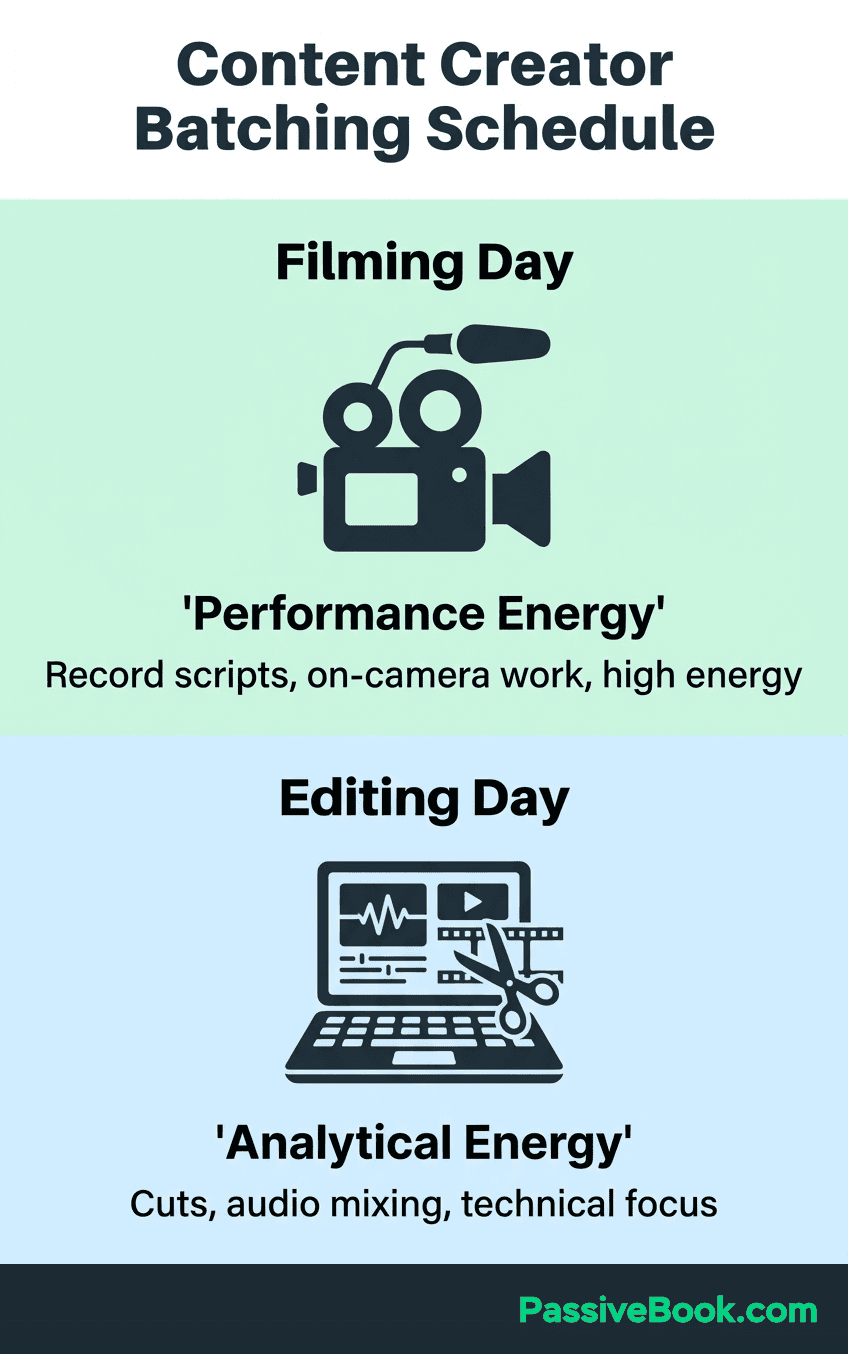
Use free tools like Notion for planning and Buffer for automated scheduling. Notion holds your content calendar, ideas, and drafts. Buffer publishes everything automatically on the schedule you set. You’re not logging into five platforms daily to manually post.
This works for blog posts too. One Saturday morning: outline four blog posts. Next Saturday: write all four drafts in 2-hour sessions. Third Saturday: edit and publish all four.
You’re not context-switching between planning, writing, and editing every single blog post. Each mode gets dedicated focus time.
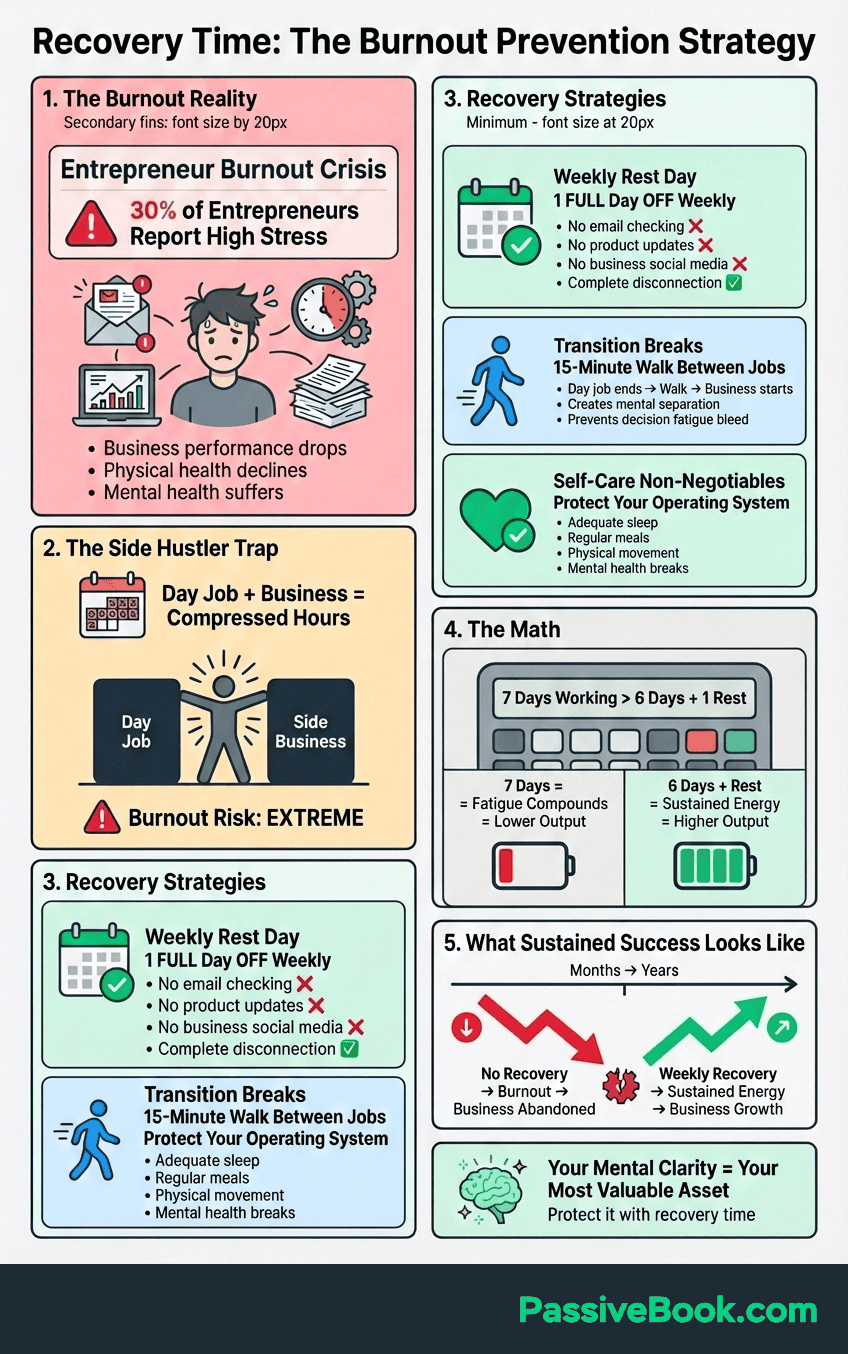
Why Most Founders Burn Out (And How to Avoid It)
Founder burnout affects the majority of entrepreneurs due to sustained high stress and overwork without adequate rest. Research shows more than half report burnout, with side hustlers facing even higher risk because they’re working two full-time jobs at once.
Protect your day job first. If your side hustle damages your primary income performance, you’ve created financial risk, not freedom. Missing deadlines at work because you stayed up until 2 AM working on your business is backward. Your day job funds your side hustle runway.
Set a non-negotiable stop time alarm. Mine goes off at 11:00 PM every night. When it rings, I close the laptop and create a “Tomorrow Start” document.
Three bullets: what I was working on, what the next step is, where to find the files. This takes 2 minutes and prevents the “just 10 more minutes” trap that turns into an hour.
Practice the “3-task rule” for measuring success. Before each work session, identify your top 3 revenue tasks. If you completed those three, stopping at your scheduled time is success, not failure. You’re not measured by hours worked, you’re measured by strategic progress made.
Tracking Progress Without Metric Obsession
Monitor 2-3 key metrics weekly, not daily. Revenue, audience growth rate, content published. Track them Sunday evening or Monday morning. Looking at analytics every day creates anxiety without actionable insight. Weekly tracking shows actual trends.
Track inputs you control rather than outcomes you can’t. You control hours worked, content created, outreach emails sent. You don’t control algorithm changes, viral posts, or overnight success. Focus on the activities that compound into results over months.
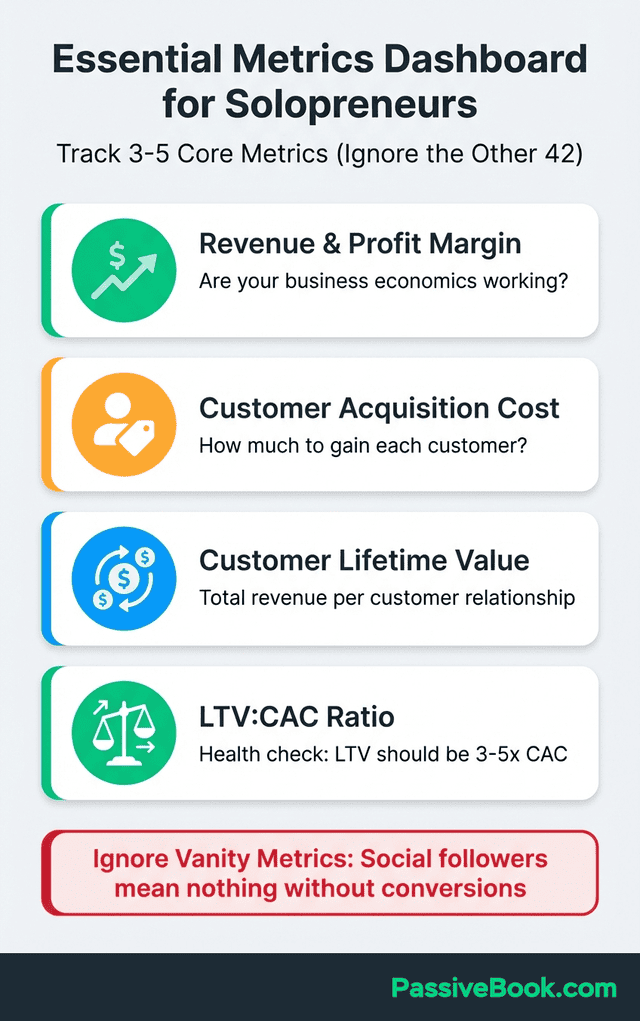
Keep a weekly “done list” that shows accumulated progress invisible during the daily grind. Every Sunday, list what you completed that week. After a month, you realize you published 4 blog posts, gained 50 email subscribers, and finished your first digital product outline.
That’s real progress that feels like nothing when you’re in it.
You’re doing the right things, but progress feels invisible when you compare Day 47 to someone else’s Year 3. The done list proves you’re moving forward even when revenue is still zero.
Weekly Planning: Your 30-minute Strategy Session
Sunday or Monday session identifies three highest-impact tasks for the upcoming week. Not ten tasks. Not everything on your someday list. Three tasks that move revenue or audience forward.
For a beginner blogger, your three highest-impact tasks might be: 1) Publish one SEO-optimized blog post, 2) Promote that post in 2 Facebook groups, 3) Add 3 internal links to older posts. If you complete nothing else, these three must get done.
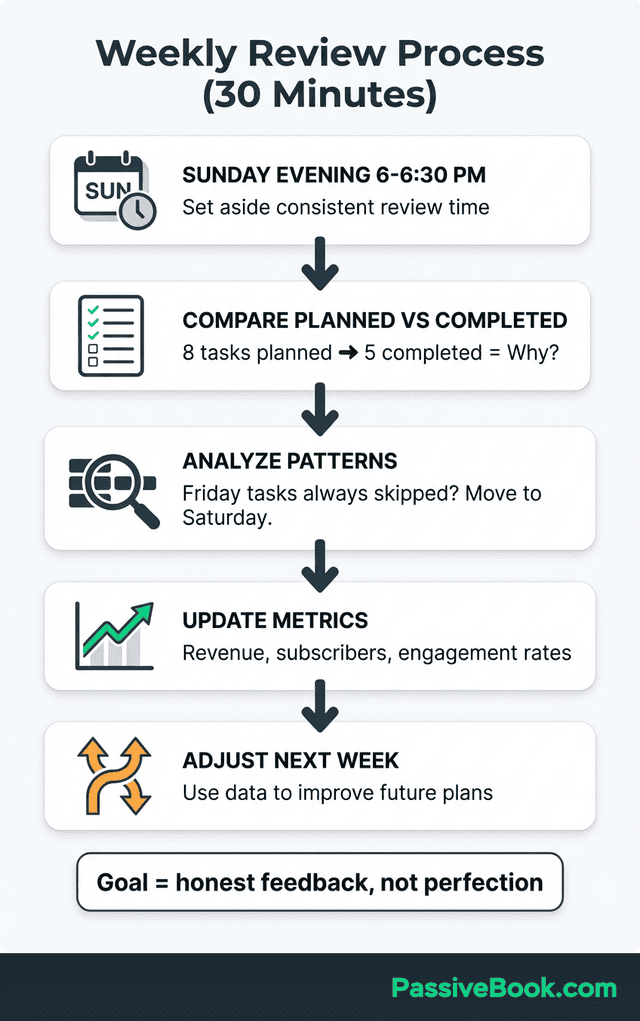
Review the previous week’s wins and obstacles to refine your approach. What worked? What flopped? What took longer than expected? Use this intel to make next week’s plan more realistic. You’re not repeating the same optimistic planning mistakes weekly.
Time-block revenue work first on your calendar, fitting shallow tasks around protected sessions. Your Tuesday 6 AM slot is for writing, not email. Your Thursday lunch break is for content batching, not admin. Revenue work gets calendar priority. Everything else fills gaps.
This 30-minute planning session prevents the “what should I work on today?” paralysis that wastes your first 20 minutes of every work session. You already know what to do. You just execute.
Frequently Asked Questions
What Is the 3-3-3 Rule for Productivity?
The 3 3 3 rule means completing 3 hours of deep work, 3 shorter tasks, and 3 maintenance items daily. For side hustlers with limited time, modify this to 1 hour of deep work, 2 quick tasks, and 1 admin item. This prevents overwhelm while maintaining momentum across different work types.
What Are the 5 C’s of Entrepreneurship?
The 5 C’s are Creativity, Commitment, Capital, Customers, and Consistency. For time-starved solopreneurs, Consistency matters most because irregular effort kills momentum. You’ll beat competitors with more resources by showing up reliably with less, rather than sporadically with everything you have.
What Is the Daily Routine of an Entrepreneur?
A realistic daily routine for working entrepreneurs includes 1-2 focused work blocks matched to personal energy peaks, clear boundaries protecting primary income, and batch processing of admin tasks. Successful founders prioritize deep work on revenue tasks during their best hours, automate repetitive processes, and track inputs rather than obsessing over daily metrics.
What Is the 8-8-8 Rule of Productivity?
The 8-8-8 rule divides your day into 8 hours of work, 8 hours of rest, and 8 hours of sleep. Side hustlers modify this because their “work” includes both day job and business. Protect 7-8 hours for sleep, maintain day job performance, then carve 1-2 hours from leisure time for focused business work without sacrificing health.
How Can I Build an Online Business With Only 1-2 Hours Per Day?
Focus on one revenue model requiring minimal ongoing maintenance like content creation or digital products. Batch create content in 2-hour weekend blocks, schedule it for the week, then use daily 1-hour sessions for income activities only. Real creators reach $1,000-$2,000 monthly within 6-12 months working 10-15 focused hours weekly by protecting time for strategic work.
Should I Wake up at 5 AM to Be Successful?
Only wake at 5 AM if you’re naturally a morning routine person and can shift your bedtime accordingly. Night owls forcing early schedules produce lower-quality work and burn out faster. Match your business hours to your natural energy peaks, whether that’s 6 AM or 10 PM, for better results than fighting your circadian rhythm.
What Next?
You now have the framework for building an online business without sacrificing your sanity or primary income. The routines, tools, and strategies work because they’re designed for real constraints, not Instagram highlight reels. Most people fail not because they lack talent, but because they follow advice built for circumstances they don’t have.
Building a business with 1-3 hours daily is slower than going all-in. It just is. But slow progress beats no progress, and sustainable beats burnout every time. You’re not competing with people who quit their jobs to work 80-hour weeks. You’re building something that fits your actual life.
If you found this helpful, hit the share buttons below. Send it to another time-starved entrepreneur who needs permission to start small. Drop a comment telling me which schedule you’re testing first – Early Bird, Lunch Hustler, or Night Owl? I read every one and I’m curious what resonates with people doing this.
Share this post with your friends & followers: