You hired help, but you still assign every priority, chase every deadline and answer every “what happens next?” message. Your task list got shorter, yet the business still waits for you.
Another hire feels risky when you’re already paying for help. It could buy time back or leave you with less cash and the same workload. Here’s how to judge whether an online business manager fits the work you need to hand over, what the commitment would cost and when simpler support makes more sense.
What Does an Online Business Manager Do?
An online business manager, or OBM, turns your priorities into coordinated work. The International Association of Online Business Managers (IAOBM) describes four main responsibilities: managing projects, operations, metrics and people.
In practice, you agree on an outcome and the OBM organizes the work needed to reach it. They track progress, resolve routine problems and bring you decisions that fall outside their authority.
For the examples below, imagine you sell beginner watercolor painting courses and work with a freelance designer and a customer-support virtual assistant, or VA. The business, finances and outcomes are illustrative.
Your OBM could coordinate course updates, keep both contributors working to the same schedule and check that students receive the correct materials.
That doesn’t mean they also redesign every worksheet, edit videos and fix your website. Agree on which tasks they perform themselves and which need another contributor. I would keep business direction, teaching decisions and major spending with you, while giving the OBM clear authority over routine operations.
How Is an OBM Different From a VA?
Compare responsibility rather than titles. A VA may bring specialist skills and work with considerable independence. The useful question is whether you need someone to complete work or manage how several pieces come together.
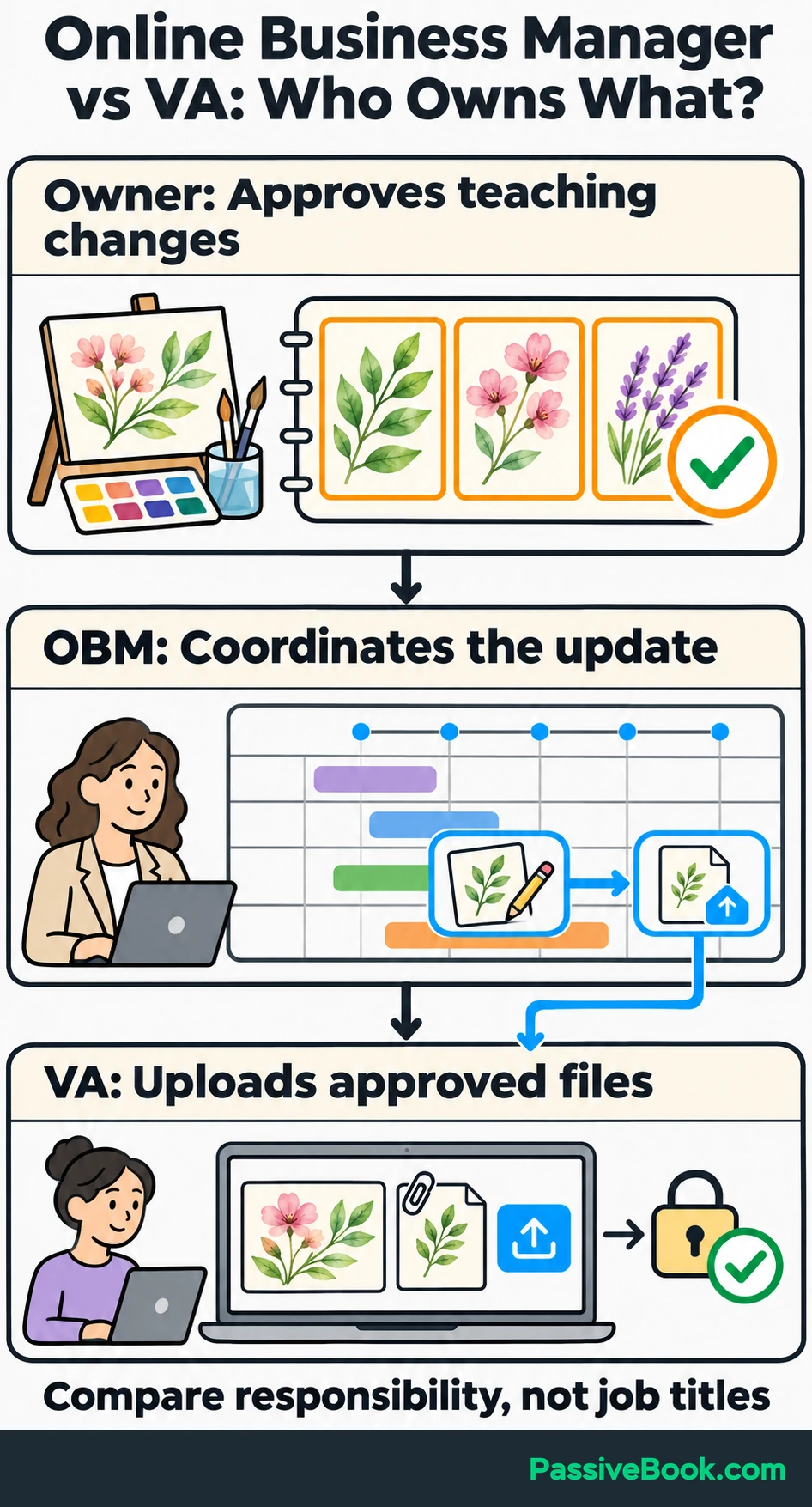
Here’s how I would divide responsibility for the watercolor course:
| Business Need | VA Responsibility | OBM Responsibility | Owner Responsibility |
|---|---|---|---|
| Publish revised lessons | Upload approved files and check access | Coordinate revisions, design and upload deadlines | Approve teaching changes |
| Handle student questions | Answer using agreed guidance | Resolve recurring gaps in the support process | Decide exceptions outside policy |
| Monitor course updates | Report completed uploads | Track delays and outstanding handoffs | Set priorities and approve extra spending |
These roles can work together. If your VA can complete the work once you give clear instructions, you may need more execution capacity. If you keep managing everyone’s priorities and dependencies, an OBM deserves a closer look.
Signs You’re Ready to Hire an Online Business Manager
Start with work that already exists: paying customers, recurring delivery obligations or established projects. An OBM can manage delivery, but hiring one does not prove that people want your offer.
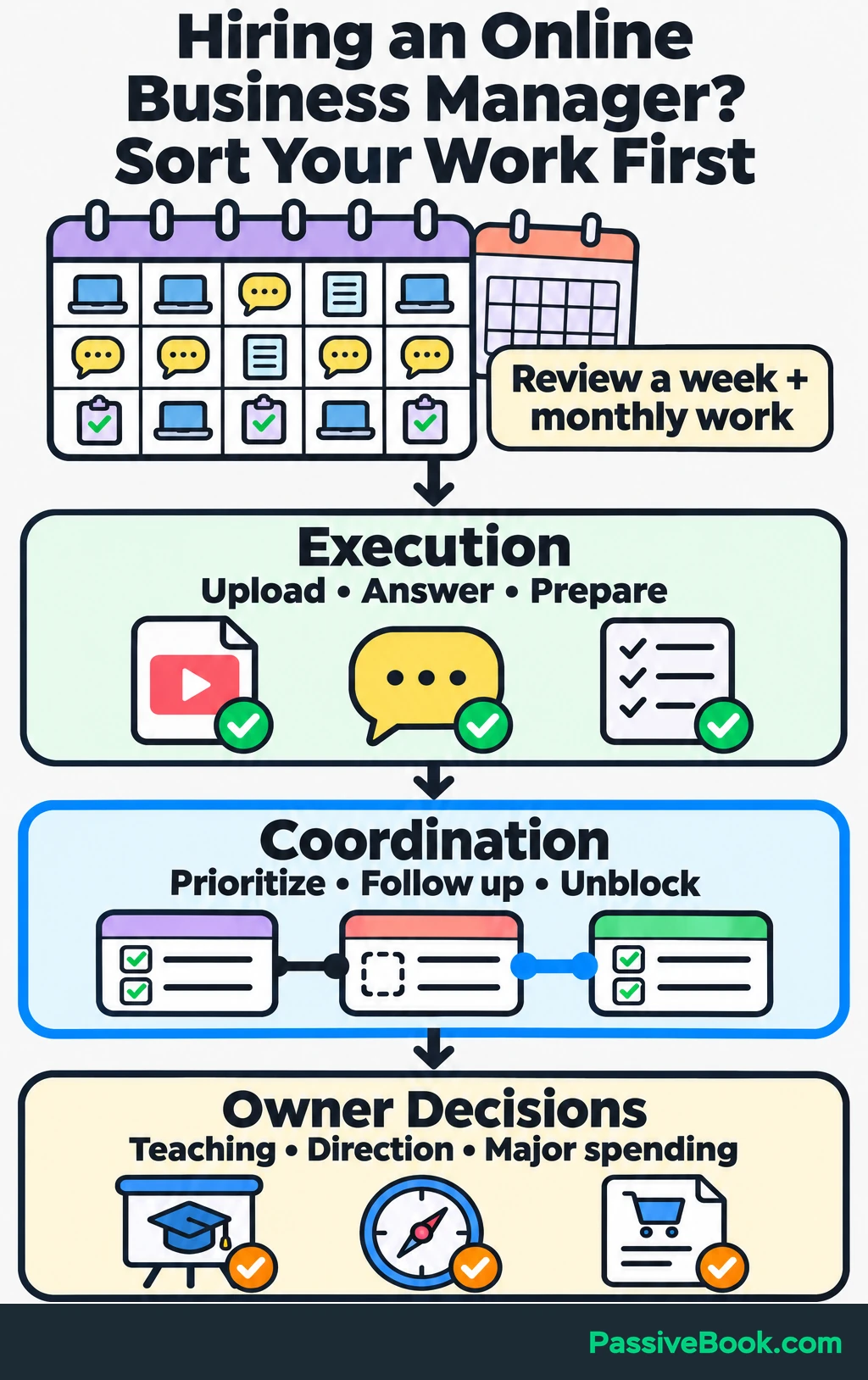
Review a representative week, then add monthly responsibilities and occasional projects it missed. Sort your time into three groups:
- Execution: Uploading lessons, answering support requests and preparing files.
- Coordination: Assigning priorities, checking progress and resolving handoffs.
- Owner Decisions: Choosing what to teach, setting business direction and approving major commitments.
This separates “I need help” from “I need someone to manage this work.”
You Repeatedly Coordinate Work Across People or Workflows
Look for coordination that returns every week. Perhaps you keep checking whether the revised lesson is ready, telling the designer which worksheet to update and reminding your VA when it can be uploaded.
Those messages may take only minutes each, but they belong to one ongoing responsibility: keeping course updates moving.
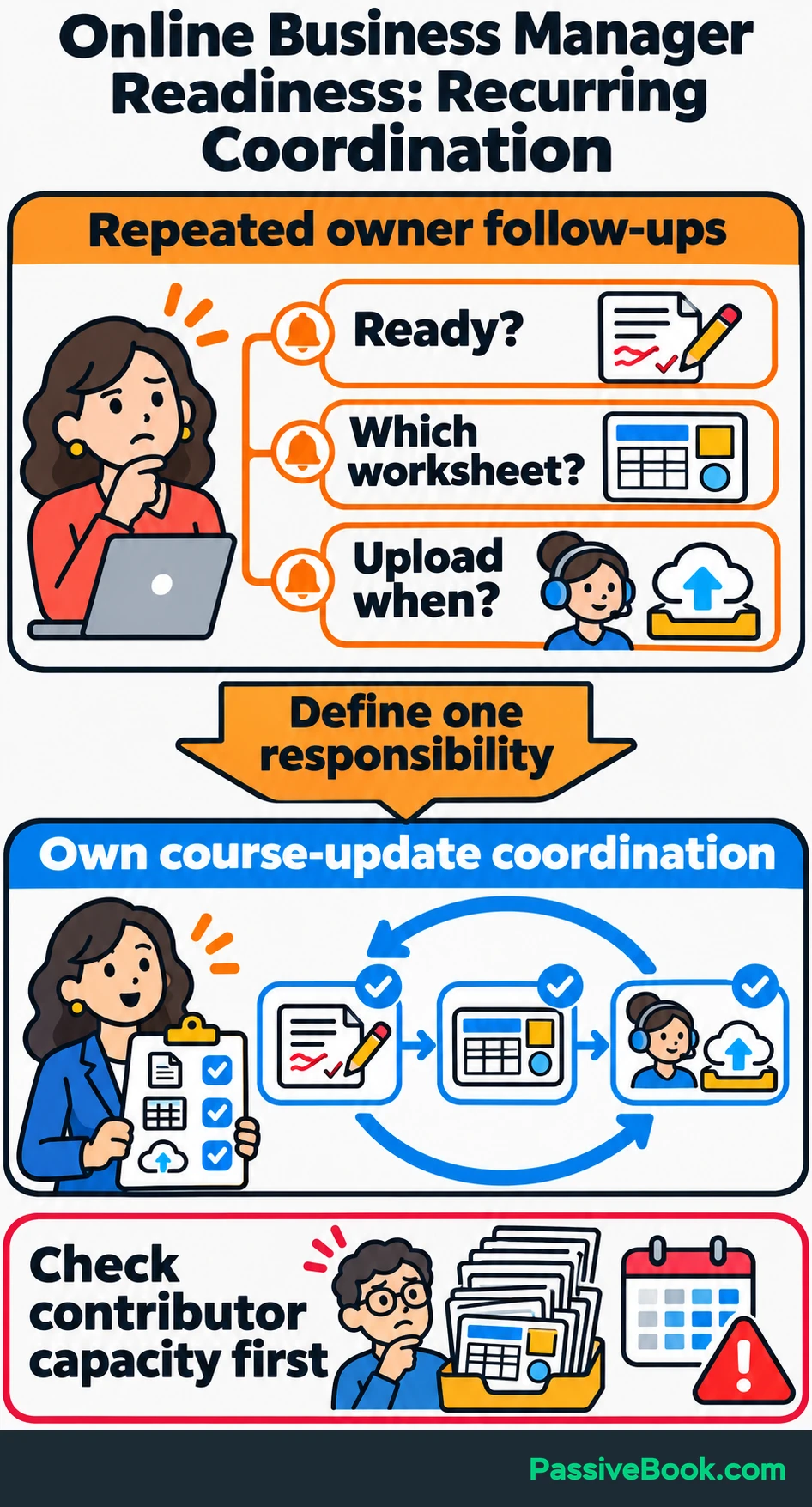
That is a useful assignment to transfer. “Help with whatever comes up” is much harder to hire for or evaluate.
Check execution capacity, too. If your designer has no room for the work, a manager cannot schedule that shortage away. You may need more design support before adding management.
Work Stalls or Handoffs Break Without Your Intervention
Trace one recurring piece of work from start to finish. At each handoff, ask who confirms that the next person has what they need.
For a revised watercolor lesson, the chain might be:
- You approve the teaching changes.
- The designer updates the worksheet.
- The VA uploads the approved lesson and worksheet.
- The support guidance changes to match the new material.
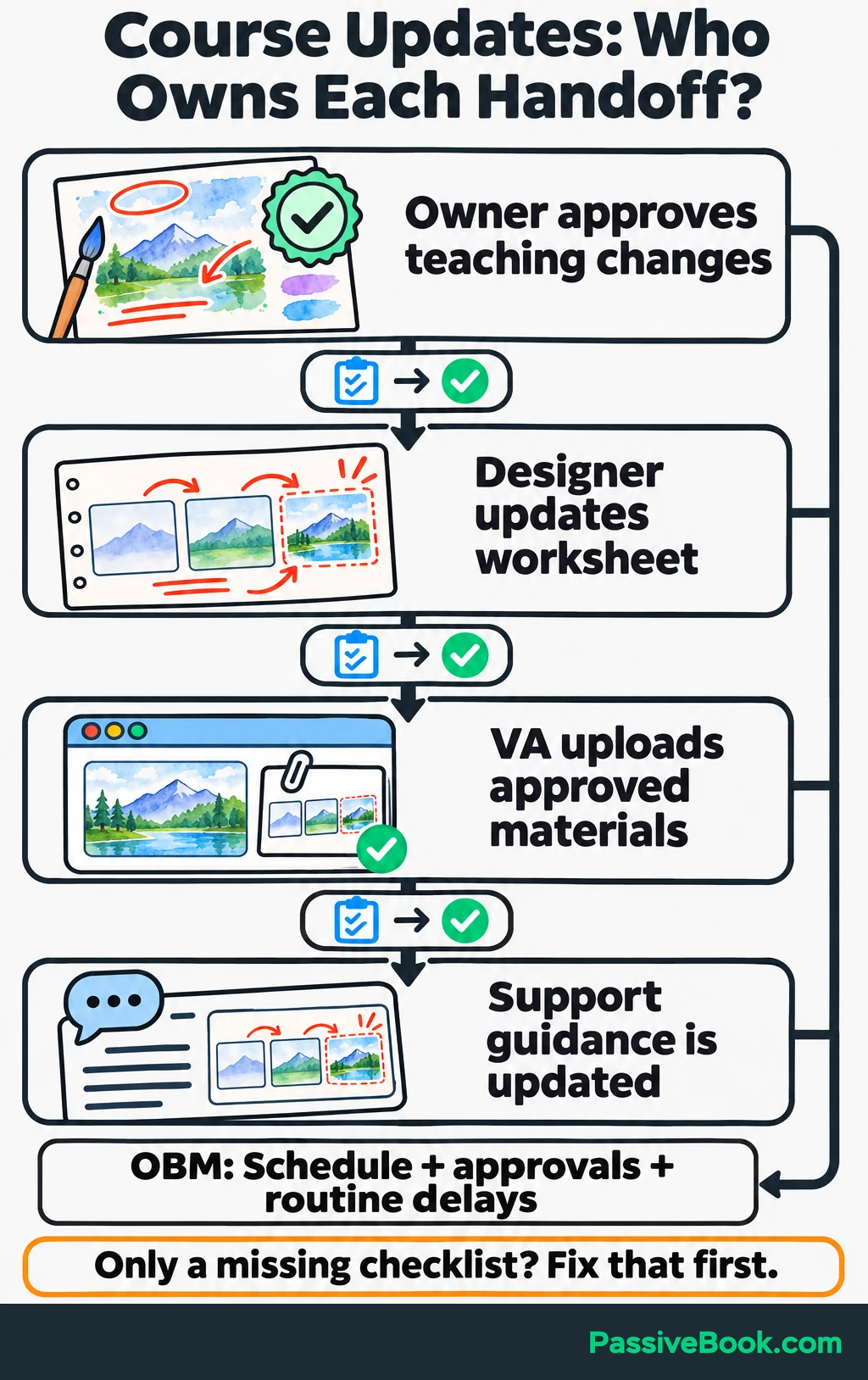
If nobody owns that whole chain, each person can finish their task while the update remains incomplete.
An OBM could own the schedule, confirm approvals and resolve routine delays. But if the only problem is a missing upload checklist, I would fix that first. One broken process does not automatically justify an ongoing management fee.
Operational Management Crowds out Your Priorities
Name what coordination keeps pushing aside. “I’m overwhelmed” describes the feeling, but it doesn’t identify the assignment.
A more useful observation is:
“I keep postponing the next painting demonstration because I’m checking files, following up on deadlines and answering routine scheduling questions.”
Now you can connect the lost time to work someone else could own.
Decide what you want that time back for. Better lessons, customer conversations and partnerships are reasonable choices. So are free evenings and an actual day off. You don’t have to turn every recovered hour into another working hour to justify wanting it.
You Can Delegate Decisions and Make Time for the Handover
An OBM needs room to act. If every schedule change requires your approval, you still own the coordination.
Write down what they can decide independently and what must come back to you. For example:
- Independent Decisions: Reorder approved updates and adjust contractor schedules within the agreed budget.
- Escalation Required: Change teaching content, increase spending or move a deadline already promised to students.
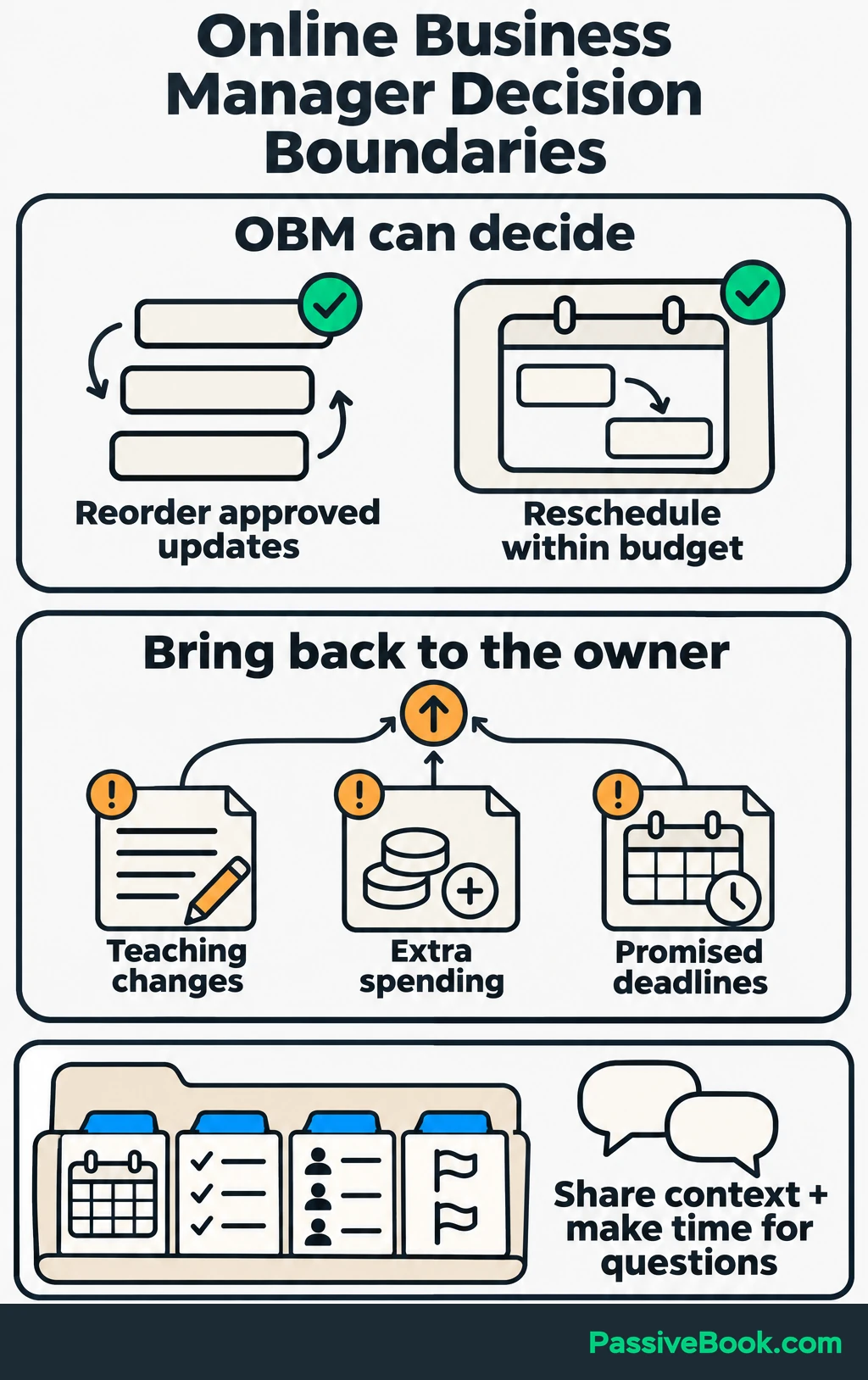
You also need time to explain priorities, answer questions and review progress during the handover.
Perfect documentation can wait. Essential context cannot. Share the current schedule, outstanding promises, contributor responsibilities and known problems so the OBM can make sensible decisions.
Can Your Business Afford an OBM?
Revenue alone doesn’t answer this. The relevant question is whether you can pay for the agreed scope and commitment while meeting your other obligations.
Understand the Fee and the Commitment
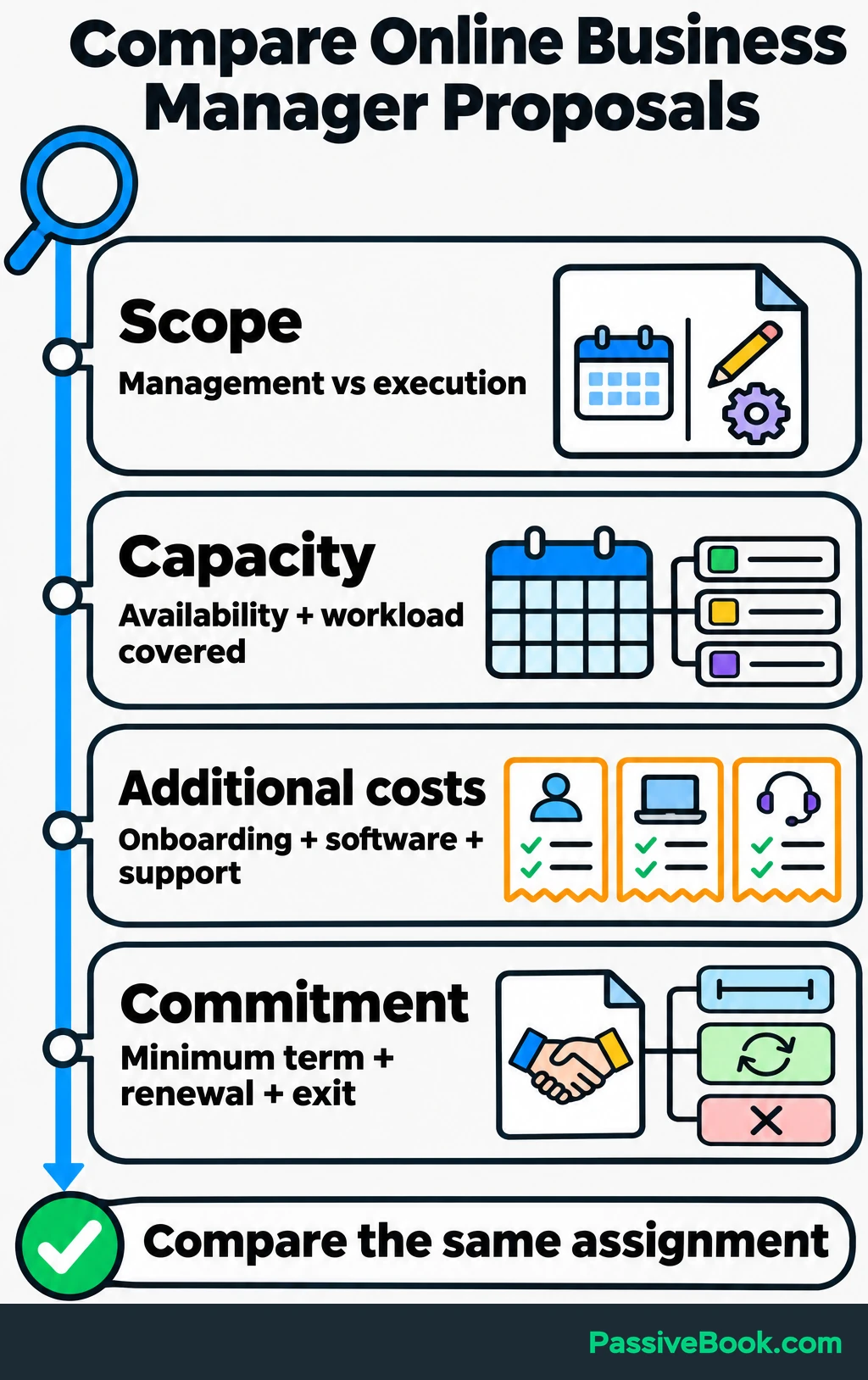
Request quotes against the same defined assignment. One proposal may cover managing the work while another also includes doing some of it, so check what each fee buys.
Ask each candidate to explain:
- Scope: Which work they will manage and which tasks they will do themselves.
- Capacity: What availability and workload the fee covers.
- Additional Costs: Onboarding charges, software and extra execution support.
- Commitment: Minimum term, renewal conditions, notice period and exit terms.
For a published reference point, the IAOBM says Certified OBM rates start at US$65 per hour. That is its stated starting rate for certified providers, rather than a market average or a quote for your business.
I would compare the full cost of managing the work. A lower hourly rate is little comfort if important work remains outside the agreement.
Check Cash Flow Rather Than a Revenue Milestone
Build a forecast covering the proposed commitment. Start with cash in the bank, add expected receipts and subtract payments when they are due. Include existing expenses, taxes, required owner pay, debt payments and the new hiring costs.
Payment timing matters, especially when annual bills or seasonal sales affect your balance. Business Victoria’s cash-flow guidance explains this opening-balance approach and recommends accounting for seasonal changes and annual expenses.
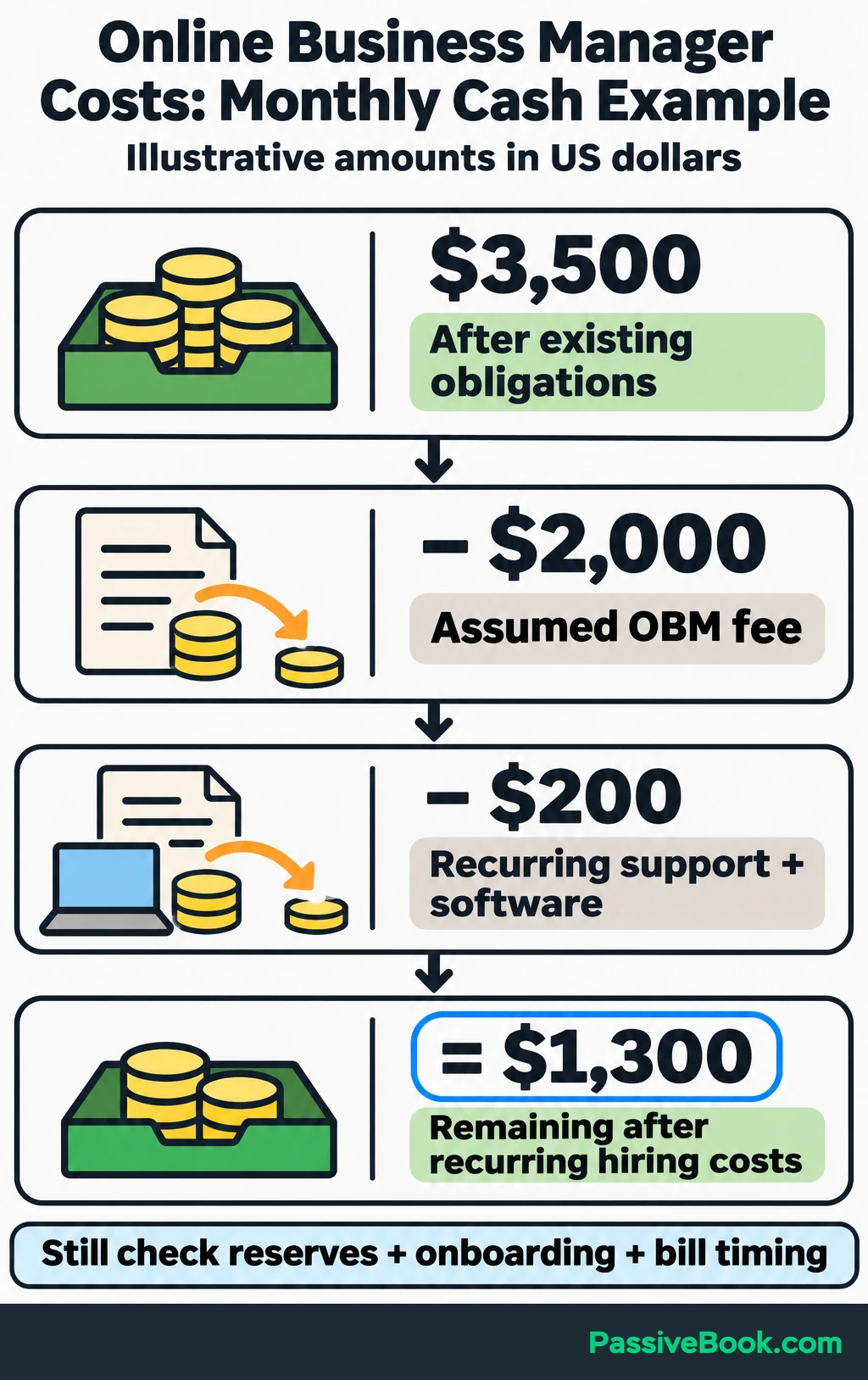
For the watercolor business, suppose US$3,500 remains each month after existing obligations. Here is what an assumed management arrangement would leave:
| Monthly Cash Item | Illustrative Amount |
|---|---|
| Available after existing obligations | US$3,500 |
| Assumed OBM fee | −US$2,000 |
| Additional recurring support and software | −US$200 |
| Remaining after recurring hiring costs | US$1,300 |
Check that your forecasted bank balance stays above the minimum cash reserve you want to keep. Add one-time onboarding costs separately, then test weaker sales and months with large bills.
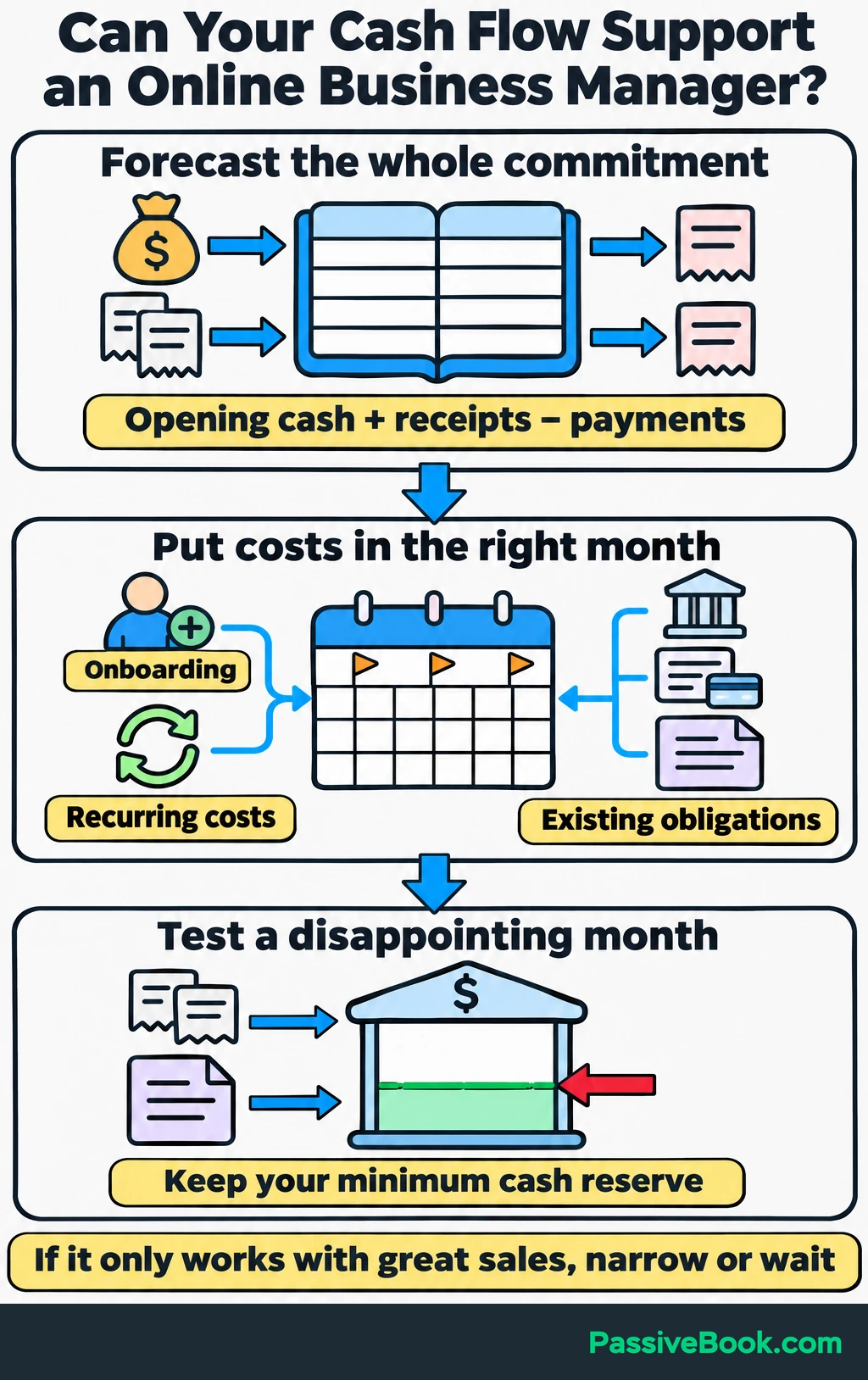
I would wait or narrow the scope if the commitment only works when the next launch performs brilliantly. A forecast should help you survive an ordinary disappointing month.
If you want a spending limit before requesting quotes, use the calculator below. It works backward from your cash reserve and shows which month puts the most pressure on your budget.
Free Hiring Affordability Calculator




Define What Would Make the Cost Worthwhile
Choose a few measures before hiring so you can compare the result with your starting position.
For course-update coordination, I would track:
- Owner Time: Hours spent coordinating updates each month.
- Delivery Reliability: Updates completed by their agreed deadlines.
- Handoff Problems: Work left waiting because responsibility or required inputs were unclear.
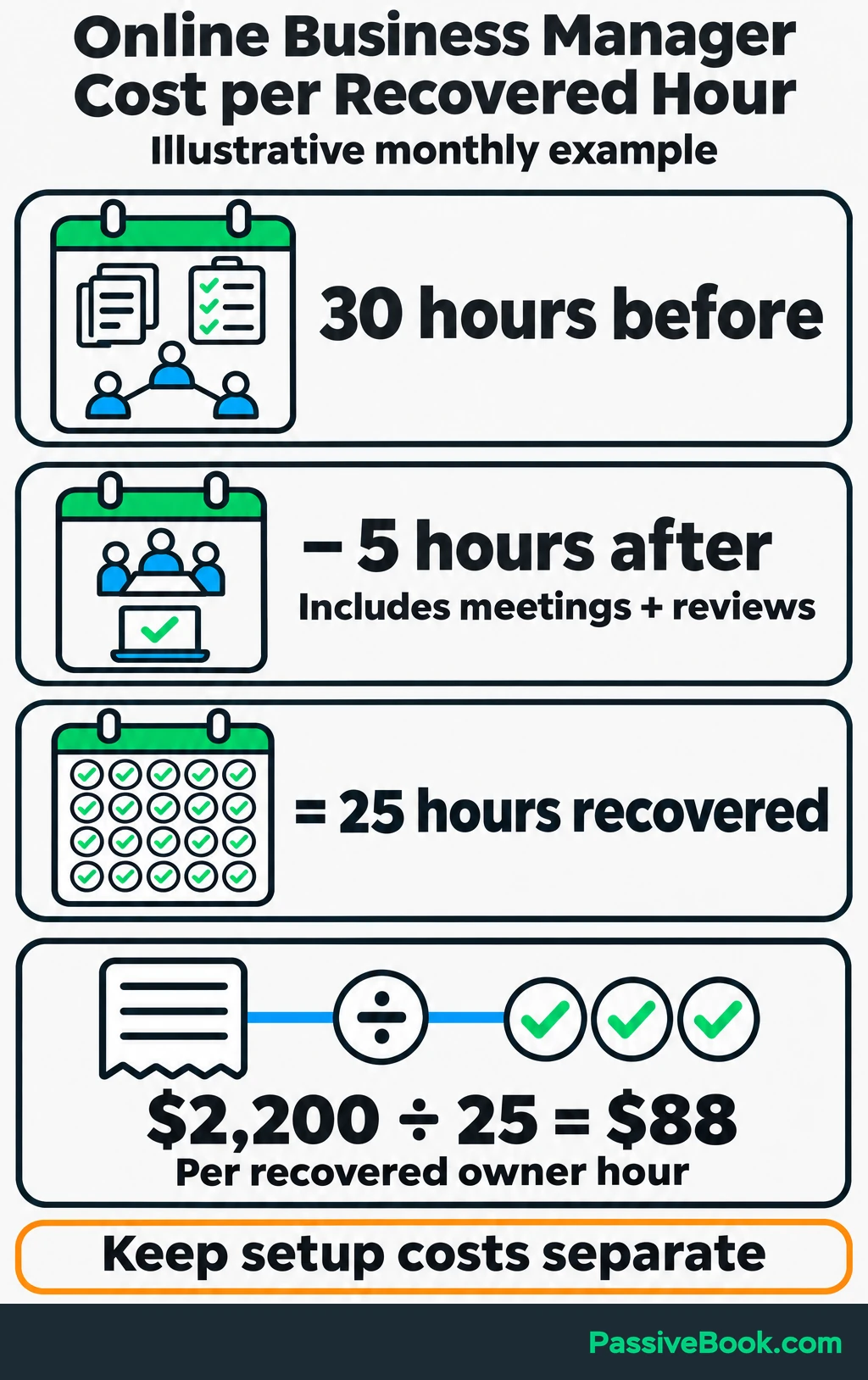
To assess the cost of recovered time, count the full recurring hiring cost and the owner hours saved after ongoing meetings and supervision.
Suppose coordination currently takes 30 hours a month and later falls to five, including your reviews and meetings. That would recover 25 hours. Using the illustrative monthly cost above:
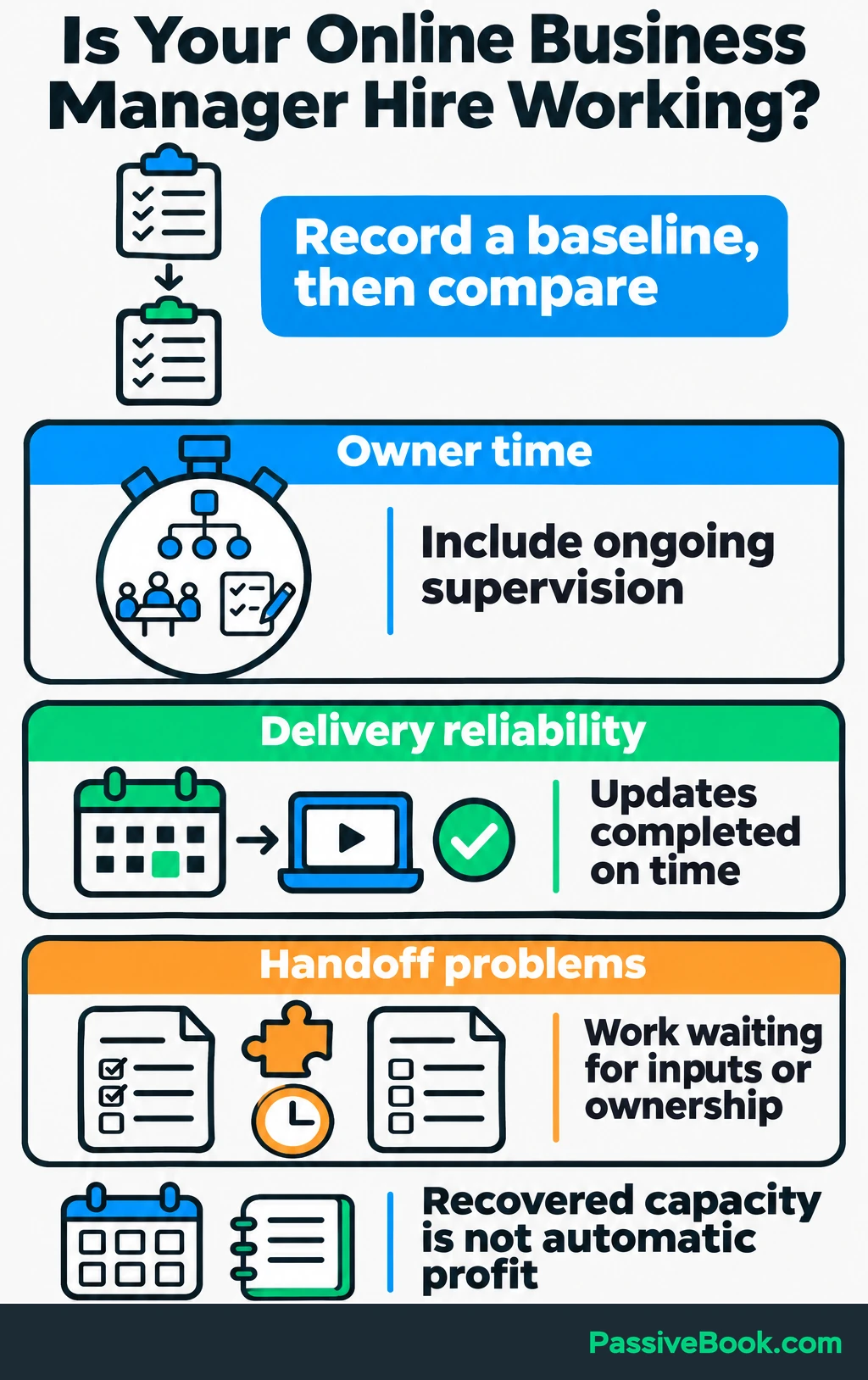
US$2,200 ÷ 25 recovered hours = US$88 per recovered hour.
Compare that cost with how you value the time, the improvement in delivery and what suitable alternatives could achieve. Keep setup costs separate so they remain visible in the full decision.
Recovered time creates capacity. It does not automatically create revenue. Count extra profit when it arrives, rather than assuming every free hour will earn money.
When Should You Wait or Choose Different Support?
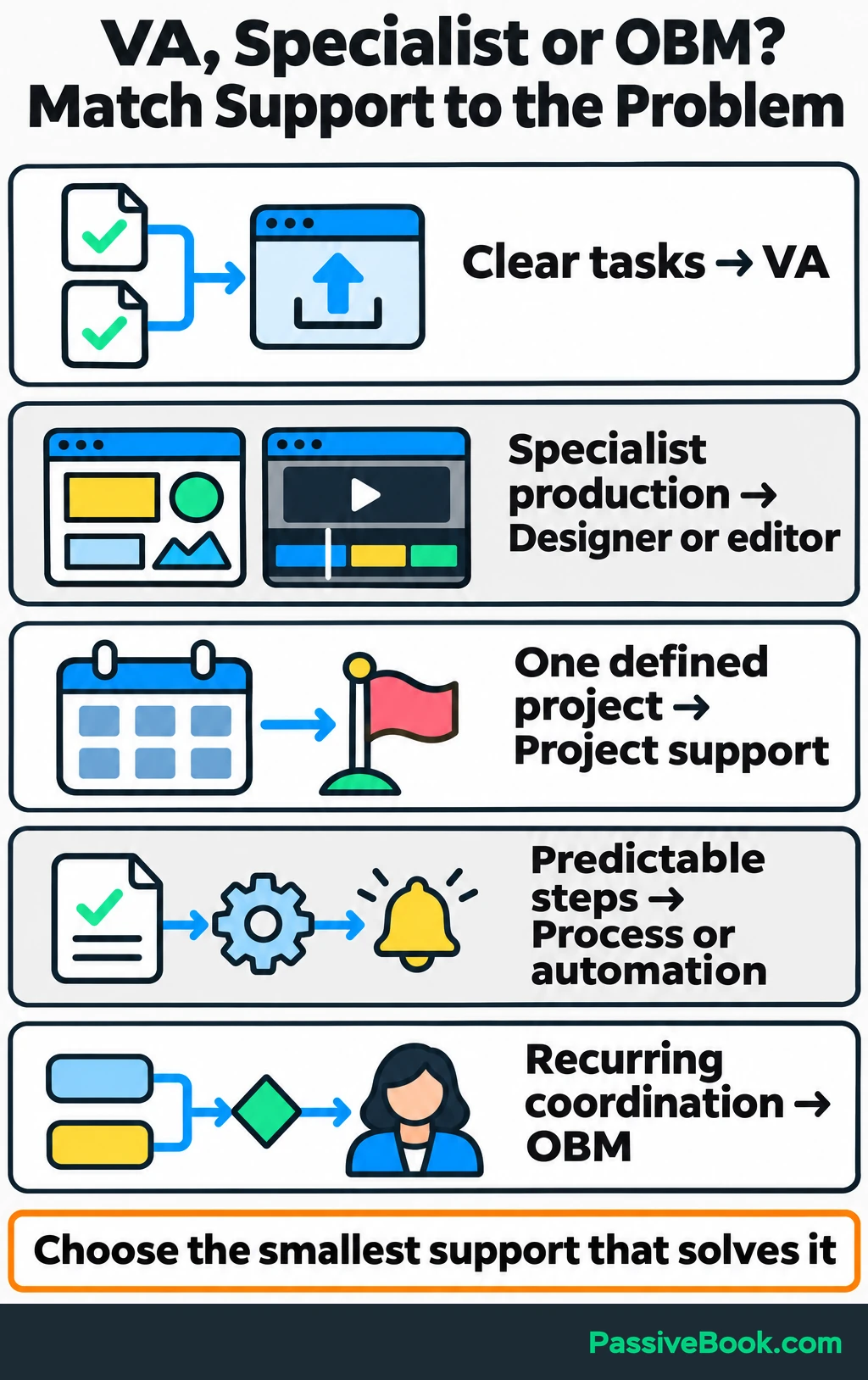
I would choose the smallest form of support that solves the actual problem.
| Your Main Problem | What I Would Choose |
|---|---|
| Approved lessons need uploading and support requests need answering | A VA with clear responsibilities |
| Worksheets or course videos need specialist work | A designer or editor |
| One course update needs coordinating | Paid project support with a defined endpoint |
| Predictable steps keep consuming time | A simpler process or automation |
| Recurring handoffs need decisions and follow-through | An OBM with authority over that workflow |
My preference for automating repeat work comes from building software to handle parts of my content production. I had to decide which steps could run automatically and which still needed my judgment. Article production went from days to hours.
Before paying someone to repeat a process, I want to know whether the process needs repeating manually at all.
In the watercolor business, that could mean automatically notifying the VA when approved files are ready. Use your existing tools first; Make or n8n are options when you need to connect separate systems.
Then reassess what remains. Someone still needs to handle a missing file, conflicting deadline or unclear approval. Automation can support that person, but a notification alone doesn’t settle the decision.
Wait or reduce the assignment if demand is unproven, the fee depends on hoped-for sales, or you cannot explain what the OBM would own. You can also delay because you aren’t ready to transfer decisions. Hiring first won’t resolve that reluctance.
Define the First Assignment Before You Hire
Write a short role brief before looking at candidates. Include the outcome, responsibilities, available contributors, decision limits, communication expectations, budget and review date.
For the watercolor business, I would start with ownership of course-update coordination. A useful excerpt might read:
“Own the course-update schedule from teaching approval through publication and support readiness. Coordinate the designer and support VA, resolve routine delays within the approved budget, and send me one weekly progress report.”
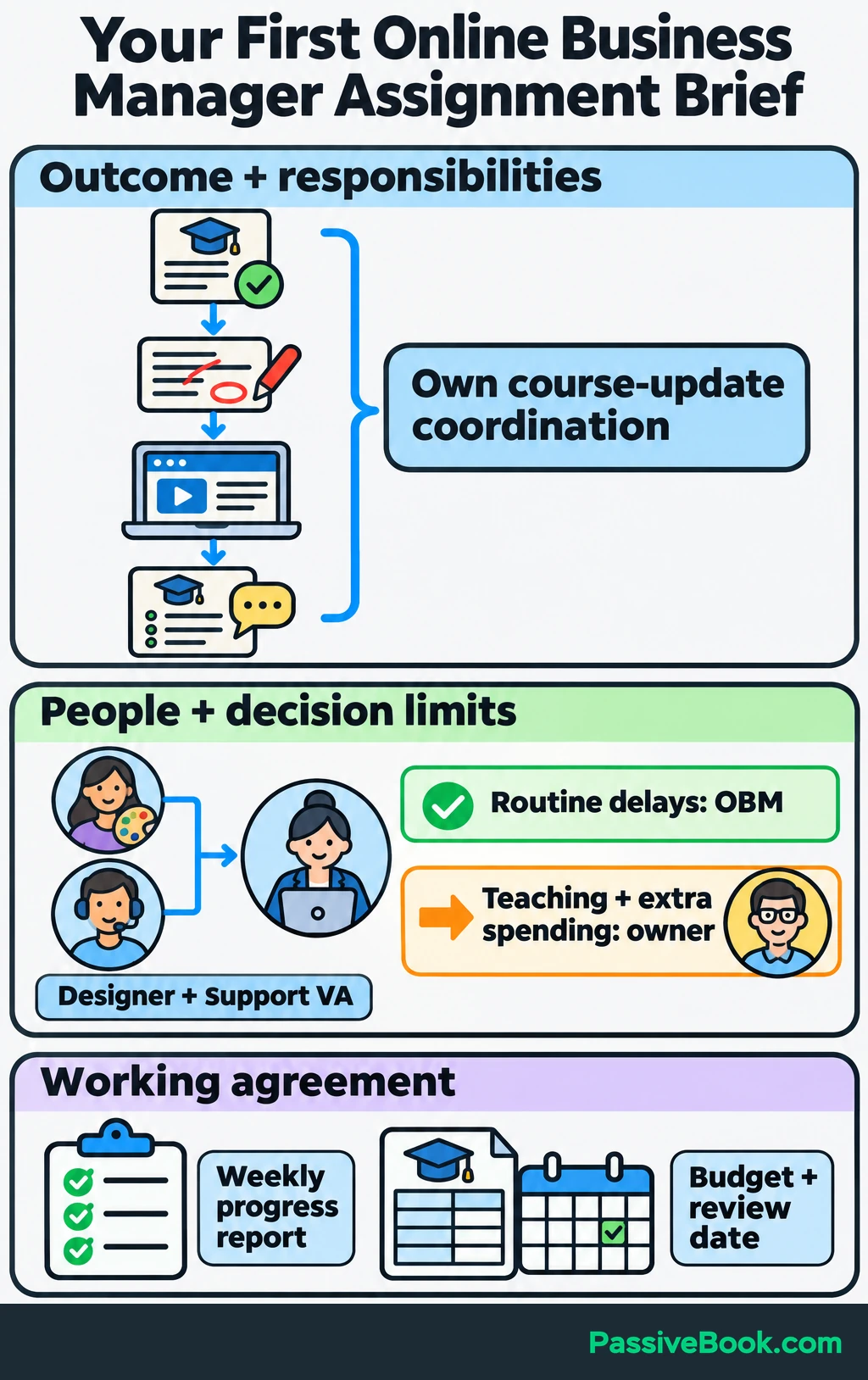
Then specify which decisions still need you. This gives candidates something concrete to assess and makes their proposals easier to compare.
You don’t need to start with a blank job description. This AI Skill turns your workflow notes into a draft that spells out what the person would own and which decisions stay with you.

Free AI Hiring Assistant
Find candidates through trusted referrals or the IAOBM hiring directory, and evaluate them against that assignment. I would ask:
- “A lesson revision arrives late and the designer’s next available slot conflicts with the upload deadline. What would you do first?”
- “Which decisions could you handle yourself, and what would you bring to me?”
- “Can you show me comparable work and explain what you personally owned?”
- “Can I speak with a client whose assignment involved similar coordination?”
Look for clear priorities, sensible questions and evidence of follow-through. A confident answer matters less than an explanation you can follow.
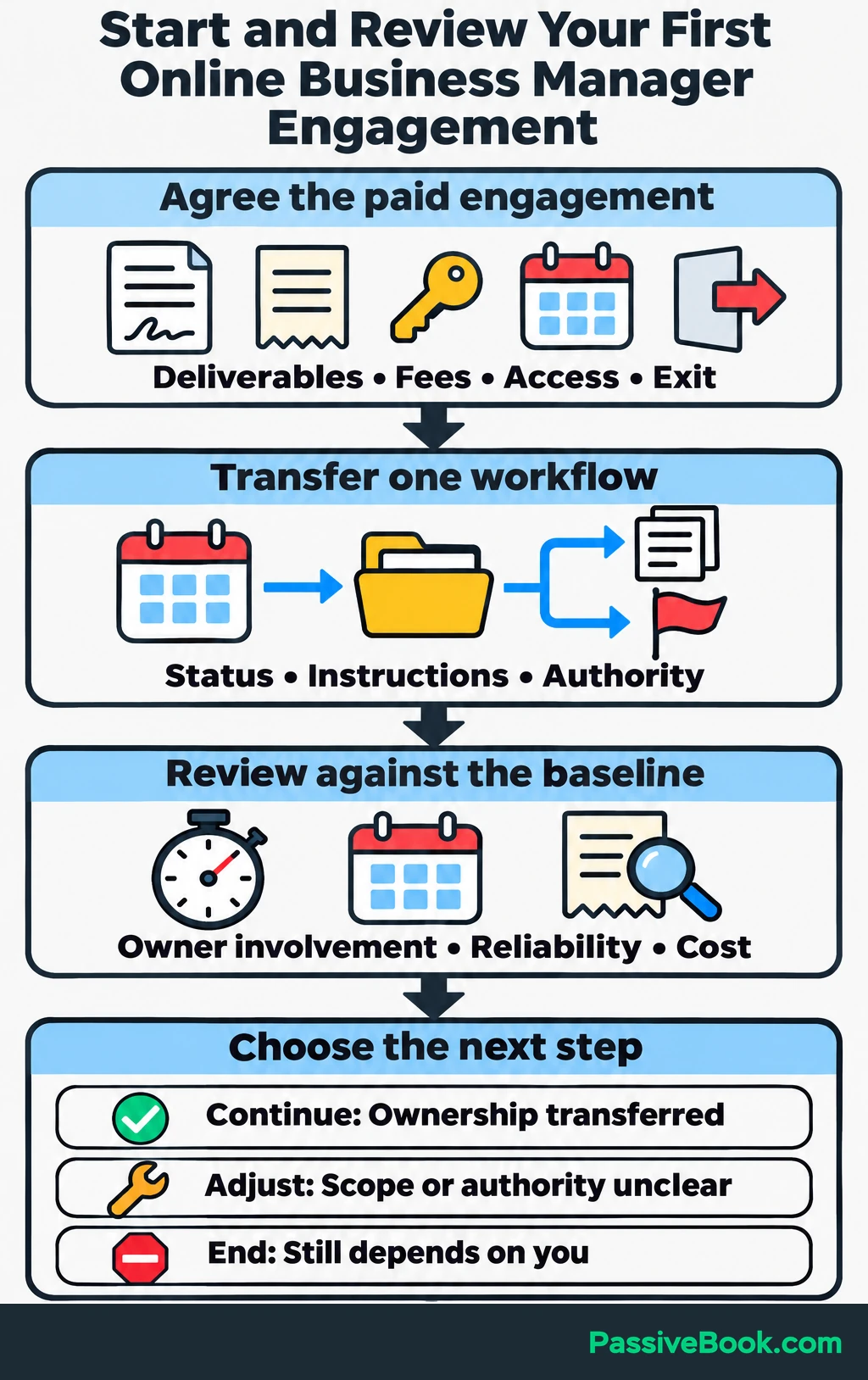
Start with a paid engagement that has a clear end date. Agree on deliverables, fees, access arrangements and exit terms. Transfer one coherent workflow along with its current status, essential instructions and escalation rules.
At the review date, compare owner involvement, delivery reliability and actual cost with the starting position. Continue if ownership has transferred and the arrangement earns its cost. Adjust if the scope or authority is unclear, and end it if the work still depends on you at every turn.
What Next?
Review last week’s calendar and write down one recurring coordination responsibility you would like to stop owning. Check whether it needs management, whether you can delegate the decisions and whether the full cost fits your cash flow.
Use the social buttons to share this guide and make the hiring conversation about work, authority and cash rather than another revenue milestone.
What would an OBM need to take off your plate for the hire to feel worthwhile? Leave your answer in the comments, along with any other questions.
Share this post with your friends & followers:

