You set aside a morning to build your next product, but spend it answering order questions and fixing downloads. Hiring starts to look appealing. So does avoiding another monthly bill.
The worry is reasonable. Paying someone won’t help much if you still have to chase deadlines, explain every task twice, and redo the work.
That trade-off is harder when your business has little cash to spare. Here’s how to hire dependable help within that limit and reclaim time for product development without filling it with another job: managing the person you hired.
Choose the First Responsibility to Delegate
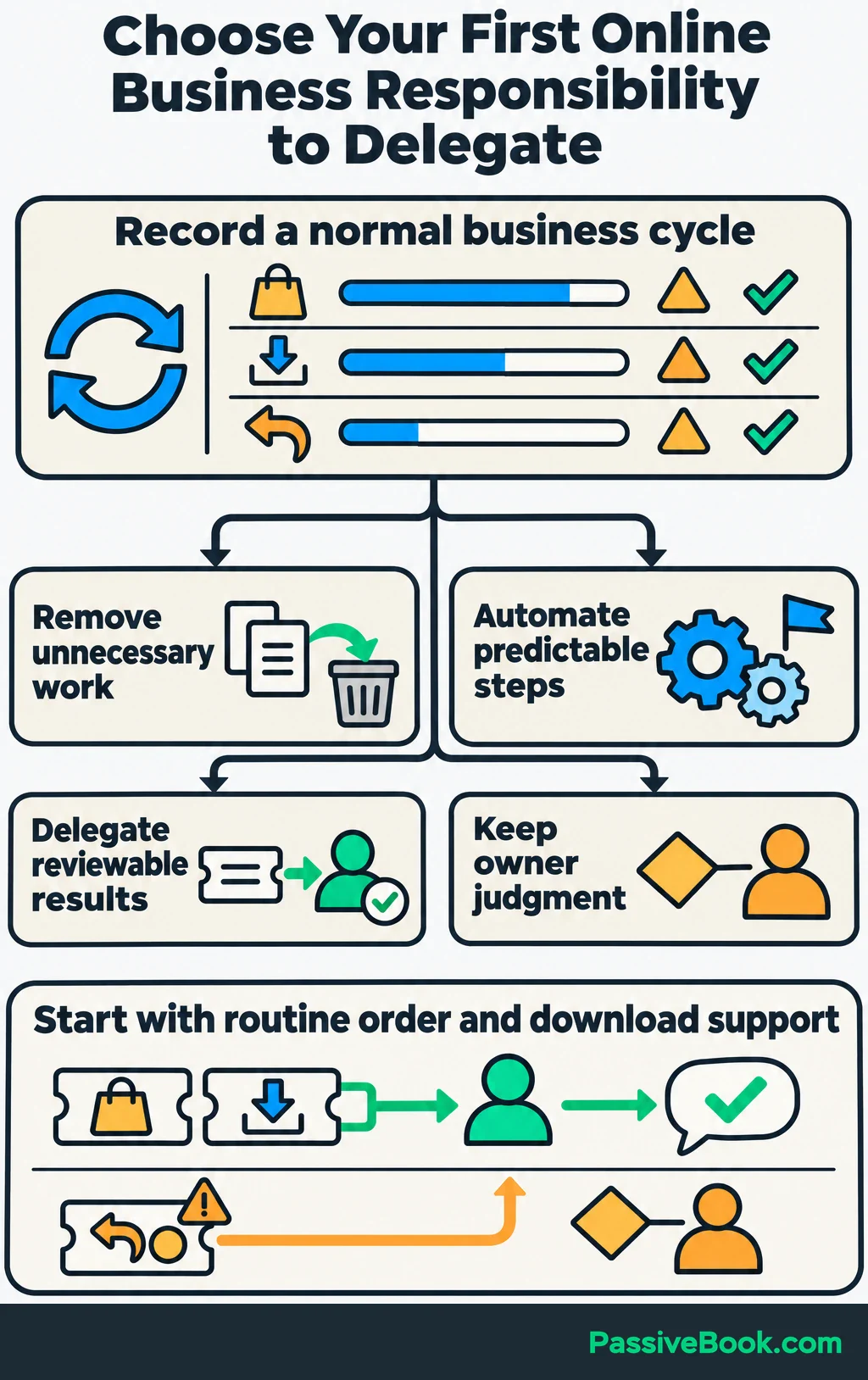
Start by recording the work you do across a normal business cycle. Include busy periods, such as launches or month-end tasks, rather than judging everything from one quiet afternoon.
For each task, note:
- How often it happens and how long it takes.
- What happens if it goes wrong.
- Whether it needs your judgment.
- What an acceptable finished result looks like.
Then remove work that serves no useful purpose and automate predictable steps. AI can help draft replies or sort requests, but assign a person responsibility for checking answers and handling exceptions.
Choose a responsibility with a clear output you can review. That might be recurring administration, customer support that interrupts product development, or a technical project you lack the skills to finish.
Match the role to that responsibility. An assistant can handle repeatable administration. A support specialist can resolve customer problems. A developer or designer can deliver a defined project. “Help me with everything” gives candidates very little to work with.
Throughout this guide, imagine you run an online shop selling downloadable tote-bag sewing patterns. Order questions and download problems keep interrupting work on new patterns. The shop and its figures are illustrative.
I would begin by handing over routine order and download support. Keep product decisions and unusual customer requests with you until the handoff works.
Reserve time to explain the work and review early results. If you cannot provide that support, reduce the first assignment.
Decide Between an Employee and a Contractor
Choose the working relationship that fits how the role will operate. An employee may suit work where you need to direct both the tasks and how they happen. A contractor may suit an independently delivered service or project.
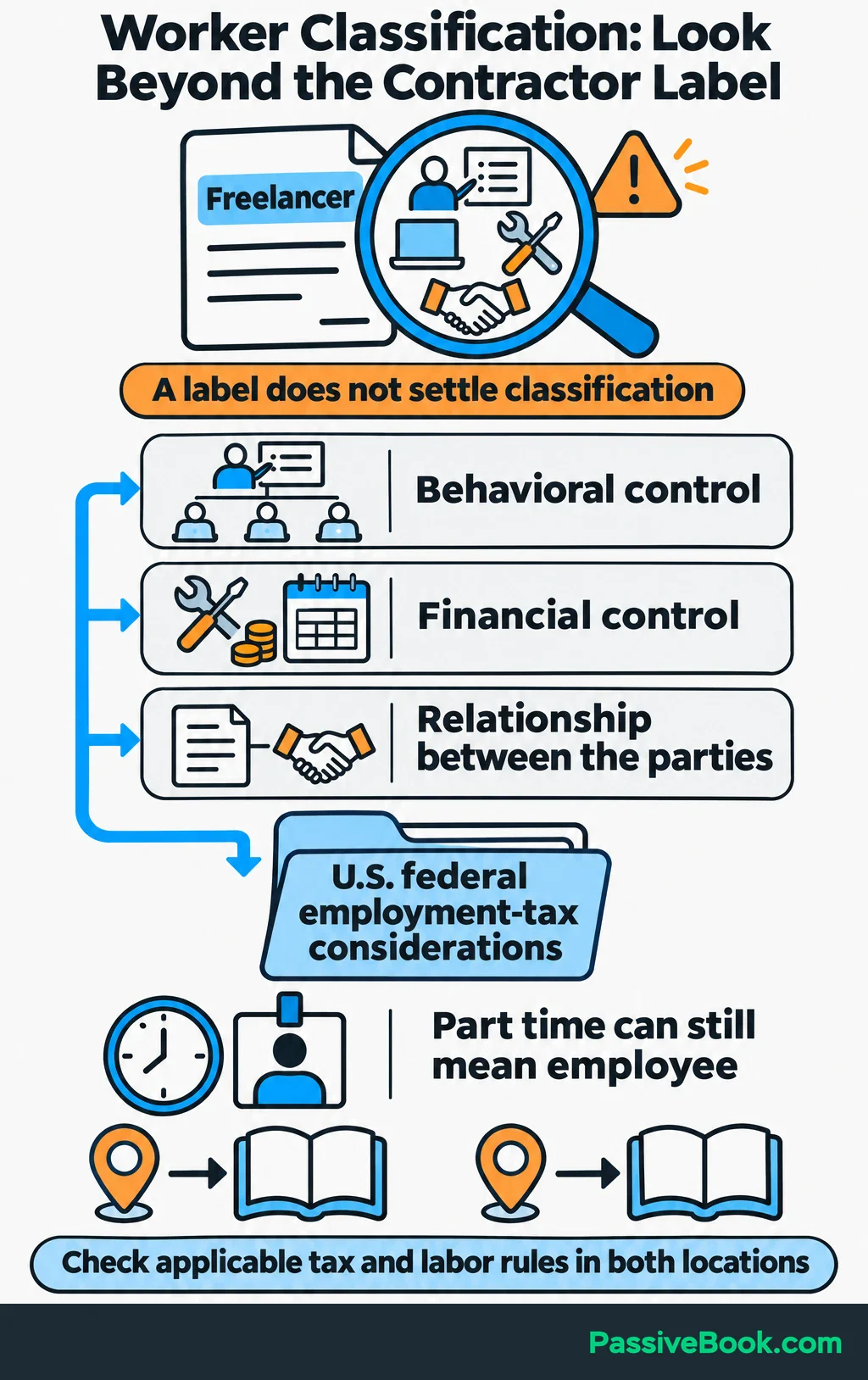
Employees can work part time. A small workload does not automatically make someone a contractor; the IRS’s employee guidance makes clear that the right to control the work matters.
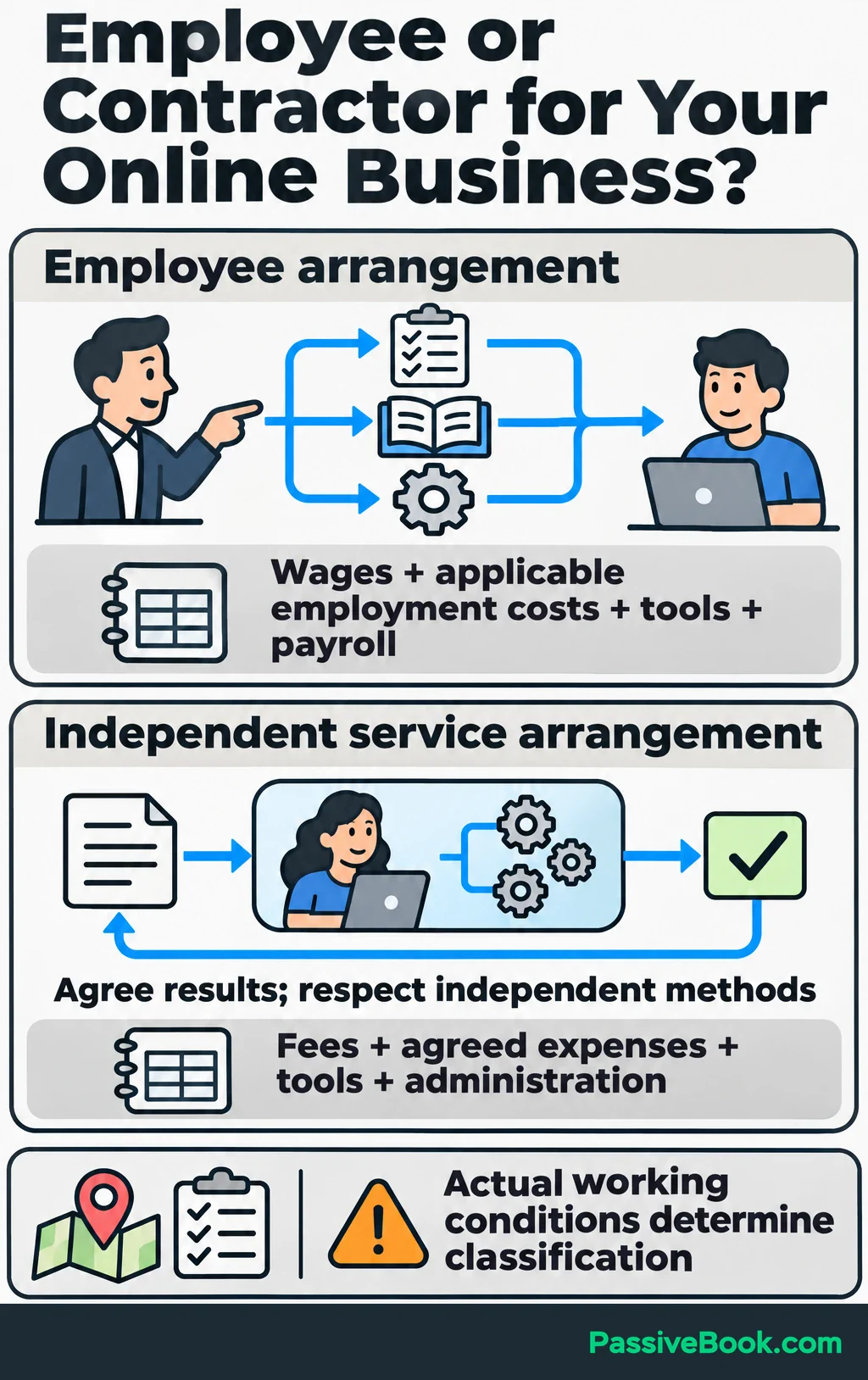
Use this comparison to plan the arrangement and its costs:
| Arrangement | How You Manage the Work | Costs to Budget For |
|---|---|---|
| Employee | Assign tasks, provide training, and direct how work is done within applicable rules | Wages, applicable employer taxes and benefits, equipment, tools, and payroll administration |
| Contractor | Agree on results, review deliverables, and approve scope changes while respecting the provider’s independent methods | Service fees, agreed expenses, tools, payment or platform fees, and contract administration |
For U.S. federal employment taxes, the IRS considers behavioral control, financial control, and the relationship between the parties. A contract calling someone a freelancer does not settle the question. Confirm classification under the tax and labor rules applying to both locations; different rules may use different tests. See the IRS worker-classification guidance.
AI proficiency belongs inside either arrangement. An AI-supported support specialist could be an employee or contractor. Specify which answers they must check and which decisions they own.
For the pattern shop, decide whether you need someone working under your daily direction or an independent support service. Make that decision before advertising the role.
Set a Budget You Can Sustain
Work out the full cost before comparing candidates.
Your recurring budget should include compensation, tools, payment fees, and applicable employment costs. Separately allow for recruiting, paid assessments, equipment, and onboarding. Your training and review time also needs space in your calendar.
Suppose the pattern shop has confirmed that its proposed support arrangement qualifies for contractor treatment. To estimate funding, count the monthly service hours, add operating costs and a buffer, then add candidate assessments separately.
| Item | Illustrative Calculation | Amount |
|---|---|---|
| Monthly support | 20 hours × $25 | $500 |
| Tools and fees | Assumed monthly allowance | $40 |
| Contingency | Reserved for approved extra costs | $60 |
| Monthly funding | $500 + $40 + $60 | $600 |
| Two paid assessments | Two candidates × two hours × $25 | $100 |
| Initial funding | Monthly funding plus assessments | $700 |
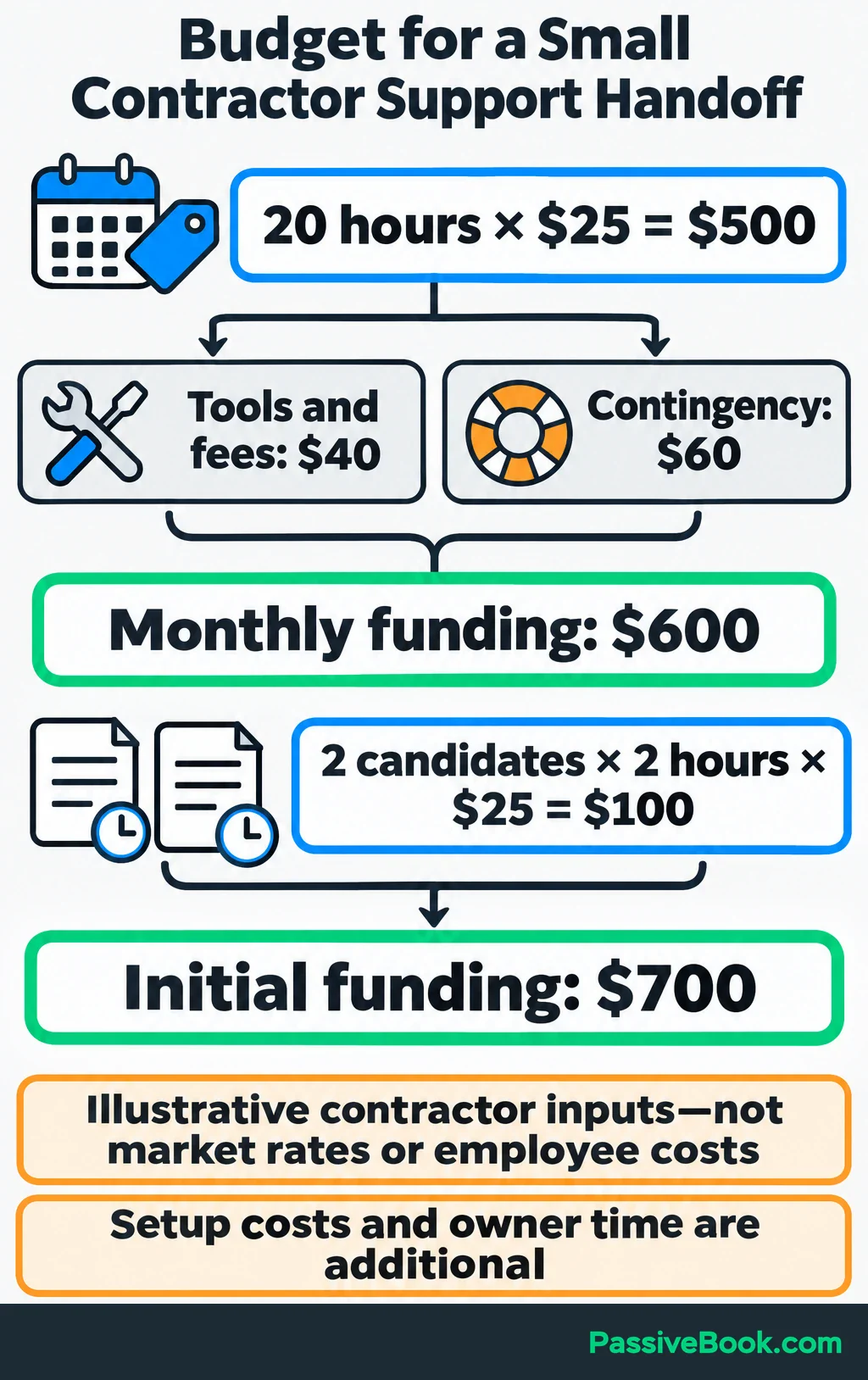
This excludes additional setup costs and your own time. The assumed rate is not a market benchmark, and this is not an employee-cost estimate. Replace the inputs with comparable quotes and applicable charges.
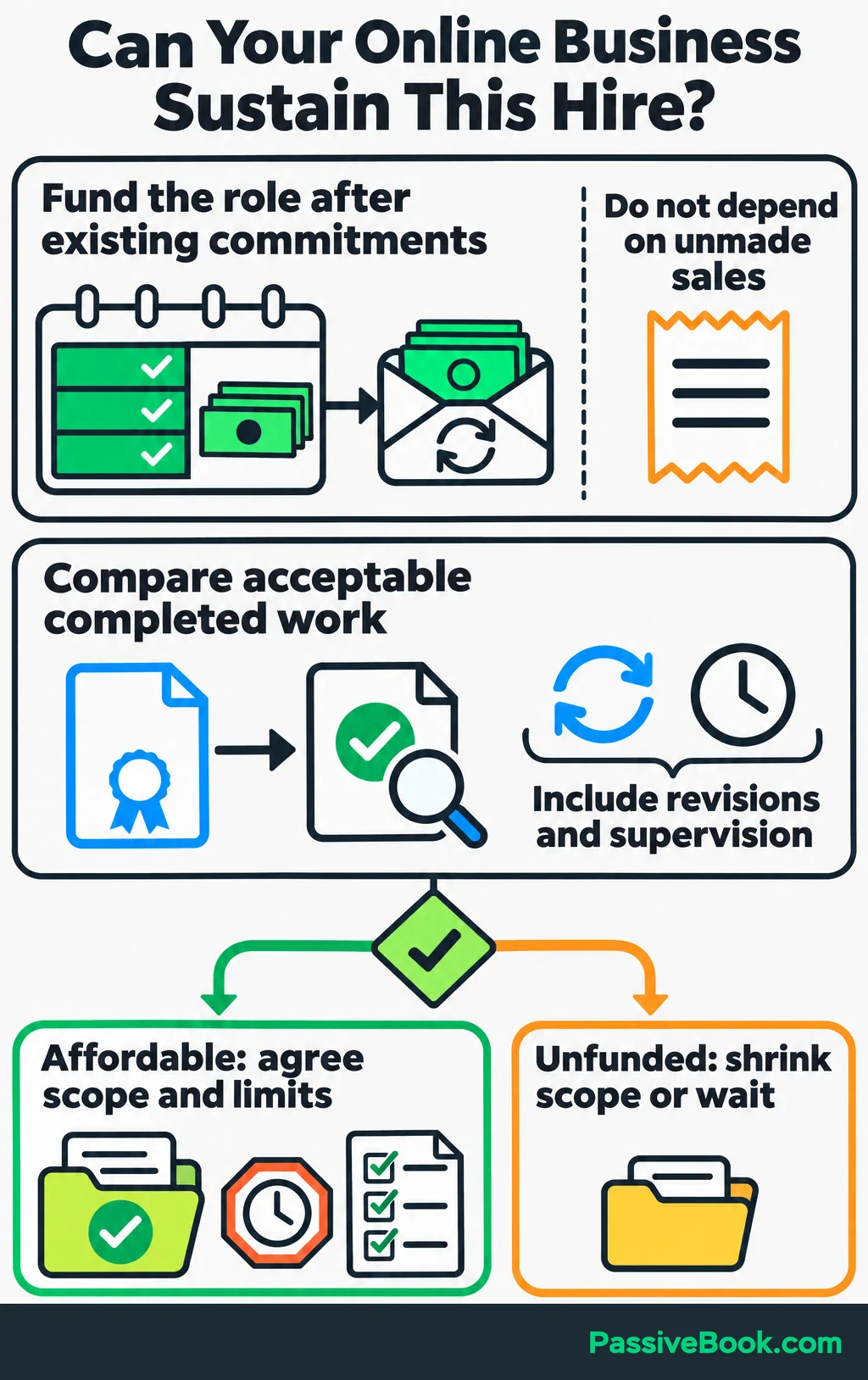
Ask candidates to quote for the same workload. Compare the cost of acceptable completed work, including revisions and supervision. A lower hourly rate loses its appeal when you spend the evening correcting the result.
The hourly rate is only part of the decision. Use the calculator to check your cash limits alongside the time you expect to spend training, reviewing, and correcting the work.
Free Hiring Affordability Calculator




My print-on-demand business brought in about $1,200 in revenue and roughly $300 in profit over six months. Designer costs ate into the margin. I kept looking for another design to sell, but each paid design was another cost the existing sales had to carry. That experience made me much less impressed by revenue without money left over.
Fund the role from available cash after existing commitments, using a conservative cash-flow forecast. If paying the person requires sales that have not happened, shrink the scope or wait.
For hourly work, agree on a cap and require approval before exceeding it. For fixed-price work, define deliverables, included revisions, and payment milestones.
Write a Role Brief Candidates Can Act on
A useful brief tells candidates what they would own and gives you a standard for choosing between them.
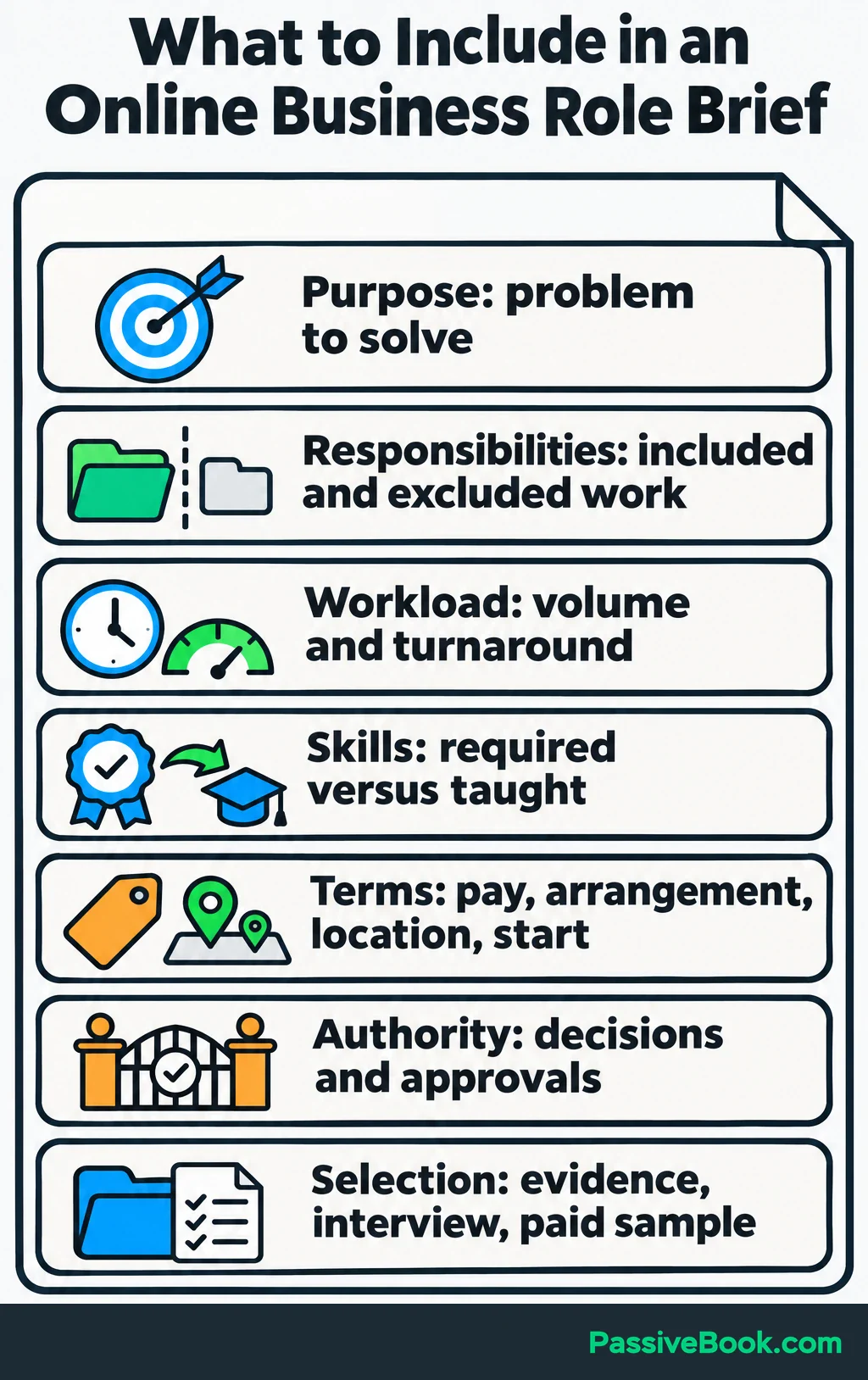
Keep it concise, but cover:
- Purpose: The business problem the role should solve.
- Responsibilities: The recurring work or project deliverables, plus what sits outside the role.
- Workload: Expected volume, necessary availability, and turnaround.
- Skills: What candidates must already know and what you will teach.
- Terms: Compensation range, working arrangement, eligible locations, and intended start.
- Authority: Inputs you provide, approvals you retain, and decisions the person can make.
- Selection: Application requirements, interview, and paid assessment.
For the pattern shop, the central responsibility could read:
Resolve order and download questions using approved guidance. Confirm the relevant order before taking action, explain the next step clearly, and escalate refund exceptions or unfamiliar requests to the owner.
Add an observable service standard, such as responding within one business day during agreed coverage days. Define what counts as resolved: the answer is accurate, addresses the actual question, and stays within policy.
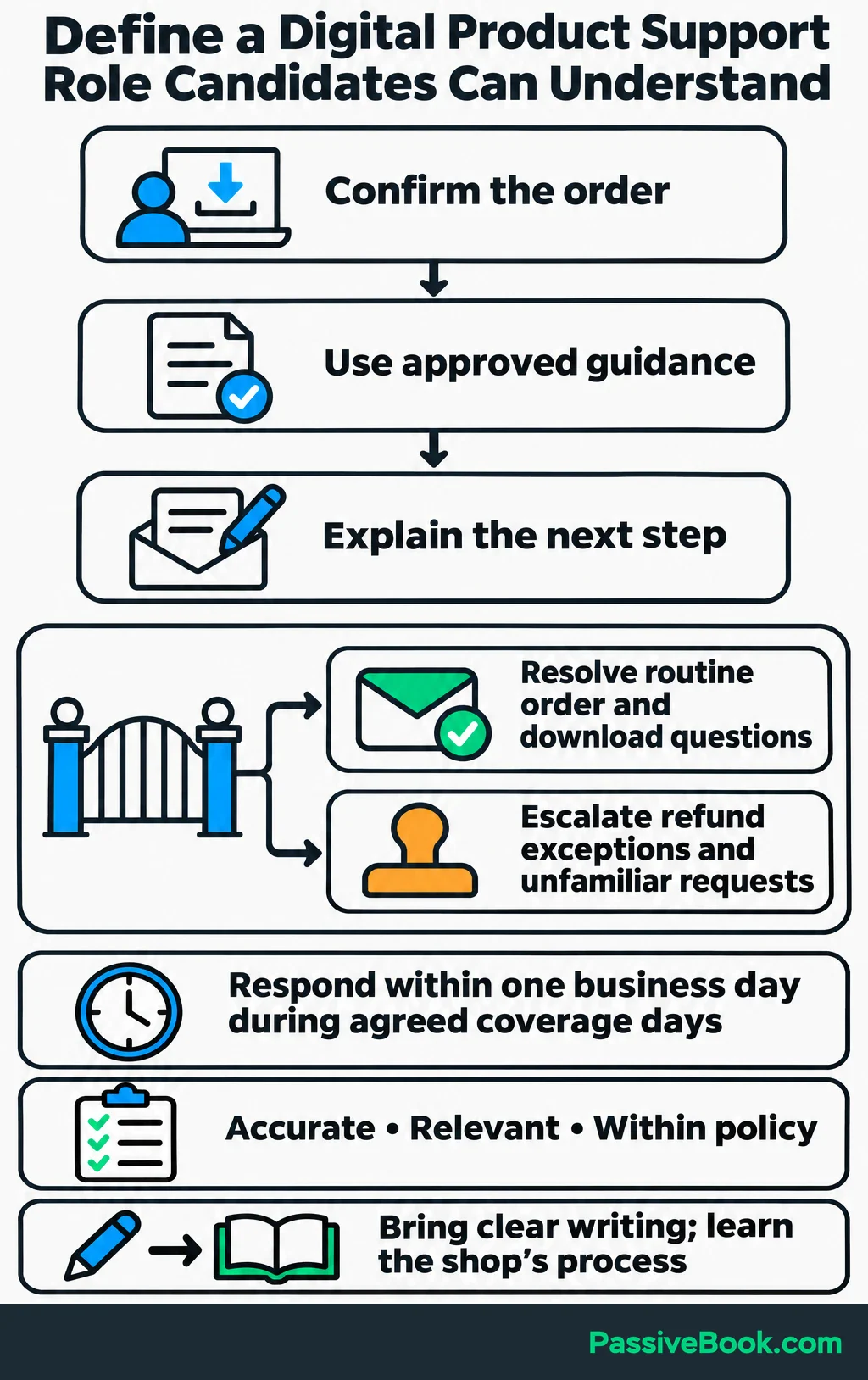
I would require clear written communication and experience working through customer problems. I would teach the shop’s file names, order process, and escalation rules.
Ask applicants for one comparable work sample, their personal contribution to it, availability, and compensation expectations. Allow redacted samples so they can protect previous clients’ information.
Find Candidates Where the Relevant Skills Are Visible
Start with a small number of suitable channels. I would try a specific referral request and one place where people already demonstrate the required skill.
Useful options include:
- Referrals from owners who have hired for similar work.
- Professional communities where relevant work is discussed.
- Freelance marketplaces for independently delivered services.
- Job boards suited to employee roles.
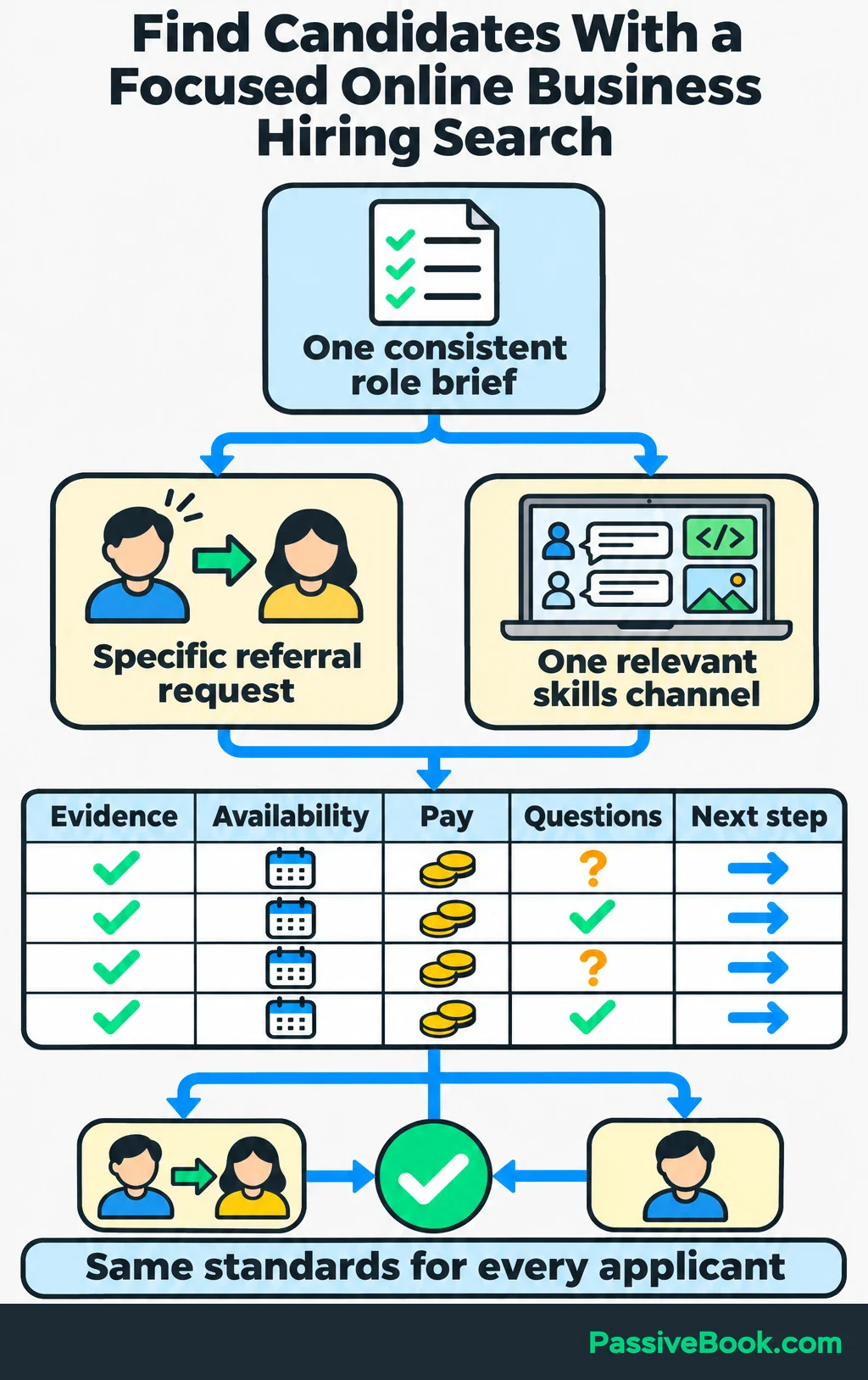
Make referral requests specific. “Who knows a good assistant?” invites a very broad answer. Explain the responsibility, budget, availability needed, and evidence you want to see.
For the shop, ask for someone who has handled digital-product order and download questions. Sewing knowledge may help, but customer support competence is the essential skill for this first handoff.
You can also approach people whose work looks relevant. Explain the assignment and name the experience that caught your attention.
Use the same role brief across channels and keep applicants in one spreadsheet. Record relevant evidence, availability, expected compensation, unresolved questions, and the next step. Referrals should meet the same standards as unfamiliar applicants.
If the search produces no suitable choices, widen the search before dropping an essential requirement.
Evaluate Candidates Through Evidence of Their Work
Set your essential standards before reading applications. Otherwise, a polished introduction can quietly become your hiring method.
For the pattern shop, I would require accurate written answers, sensible questions when information is missing, and clear recognition of decisions needing approval.
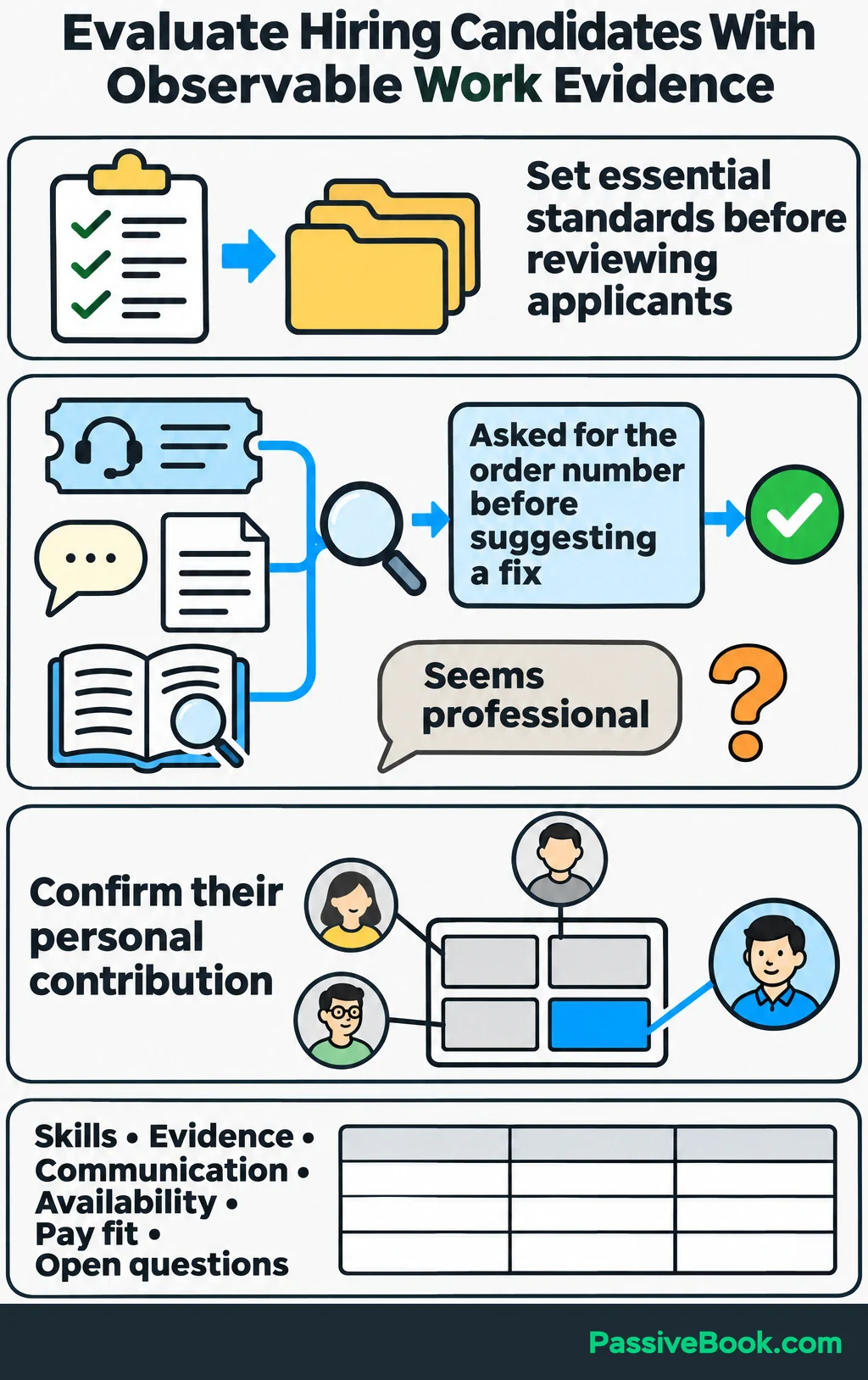
Build a comparison sheet covering each candidate’s skills, supporting evidence, communication, availability, compensation fit, and unresolved questions. Write down concrete observations: “Asked for the order number before suggesting a fix” tells you more than “Seems professional.”
Confirm what candidates personally contributed to submitted work. A finished project may include several people’s work, and you need to understand which part demonstrates this person’s ability.
Interview for Judgment and Reliability
Ask shortlisted candidates the same core job-related questions and judge answers against the same standards. This follows the approach described in the U.S. Office of Personnel Management’s structured-interview guidance.
Keep the conversation focused on situations the person may actually face:
- “Tell me about a deadline you were going to miss. When did you tell the client, and what happened?”
- “A customer asks for a refund, but their message does not explain the problem. How would you handle it?”
- “A download problem falls outside the guidance you have. What would you do next?”
- “What information or access would you need before taking responsibility for this work?”
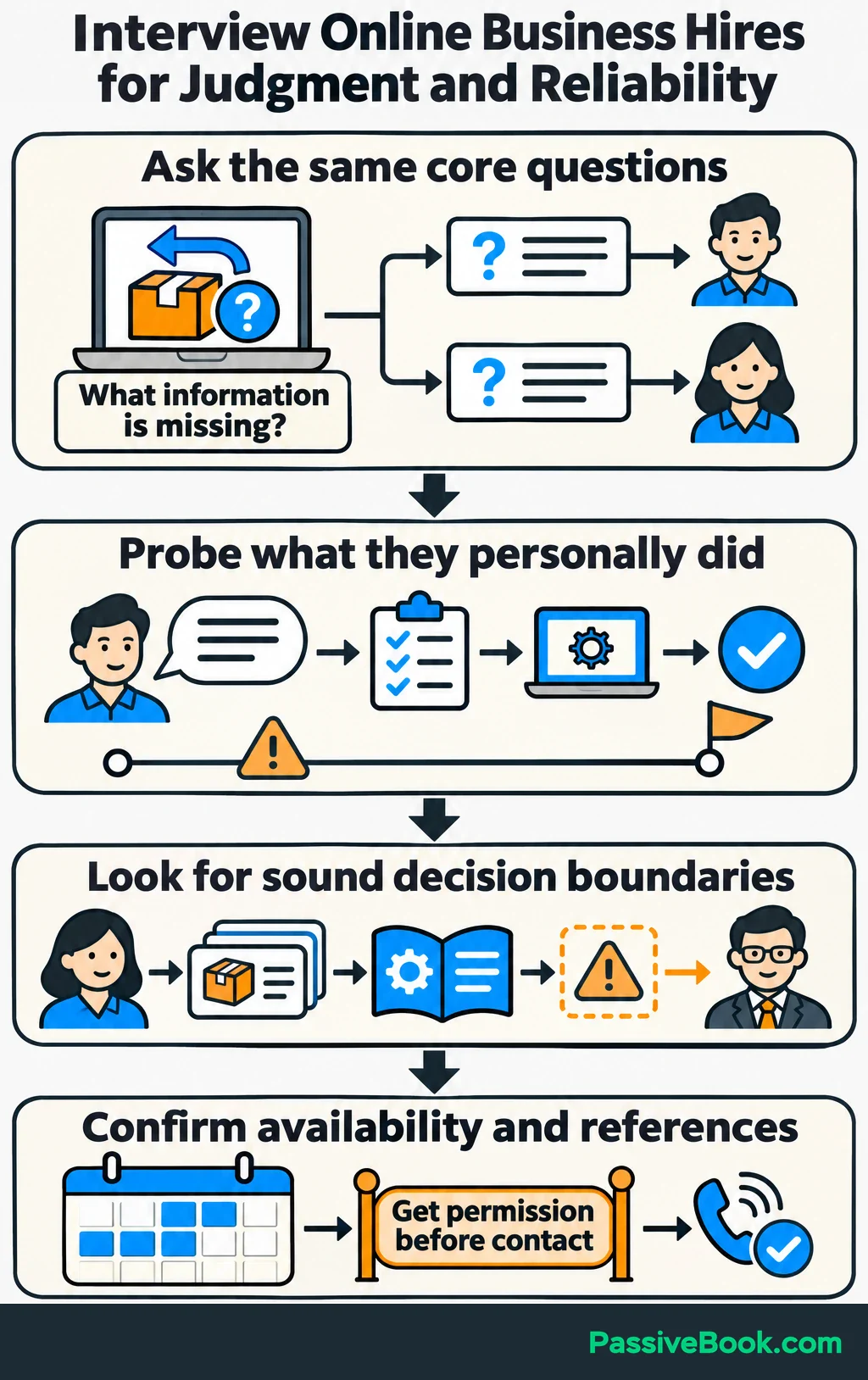
Follow up on what they personally did and how the situation ended. For the shop, useful answers should include gathering missing information, checking the relevant guidance, and escalating decisions outside their authority.
Confirm capacity and necessary availability. Agree on how they would report a delay, and invite questions about the workload and resources. Their questions may expose a mismatch before either of you commits.
With permission, contact a relevant former client or manager. Ask about comparable work, deadlines, independence, and whether they would hire the person again. Resolve material inconsistencies before making an offer.
Run a Small Paid Work Sample
Give finalists the same bounded assignment, information, deadline, payment terms, and scoring criteria.
Test skills they need when joining. Don’t reject someone for failing to guess a business-specific process you intended to teach. That distinction also appears in OPM’s work-sample guidance.
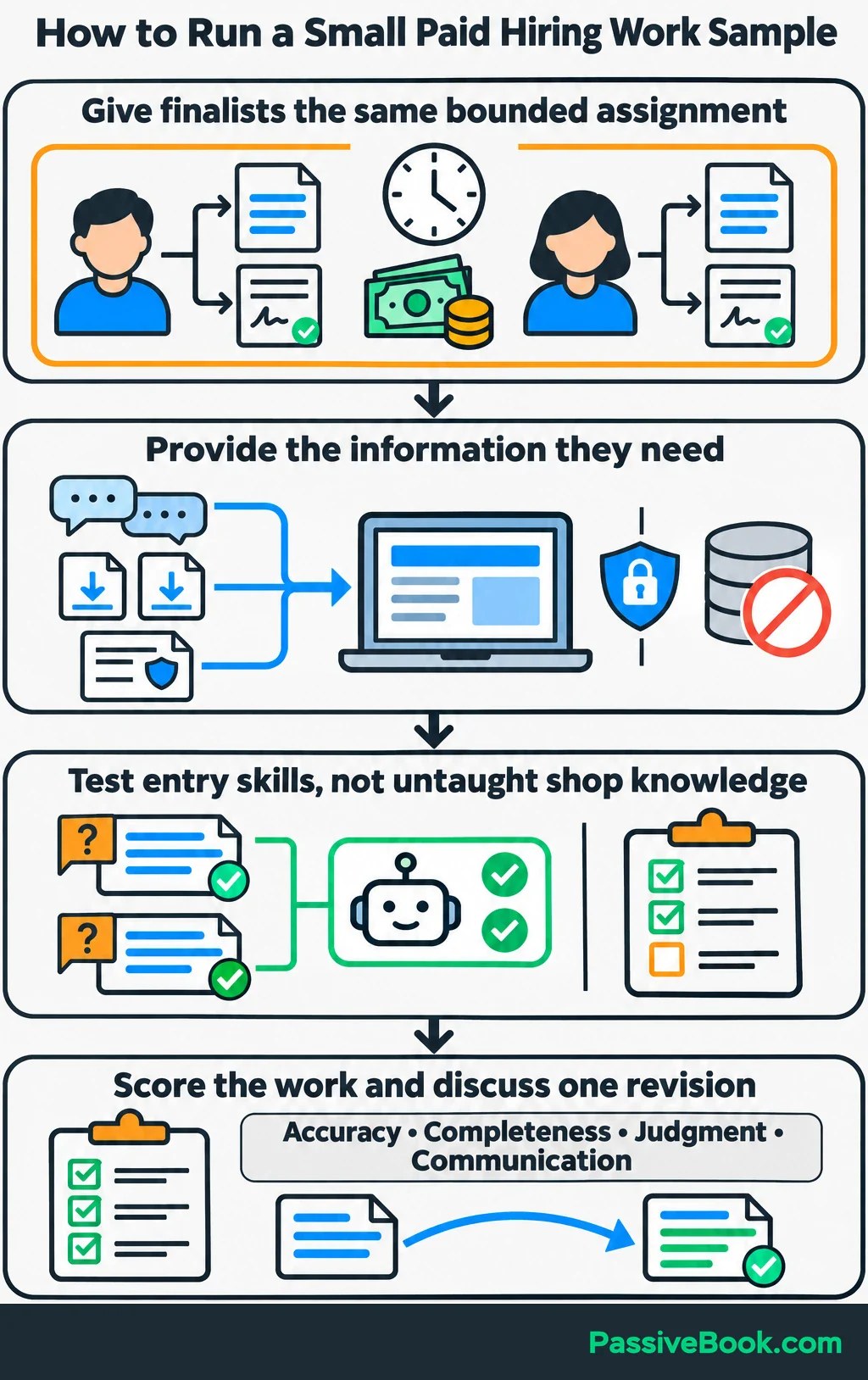
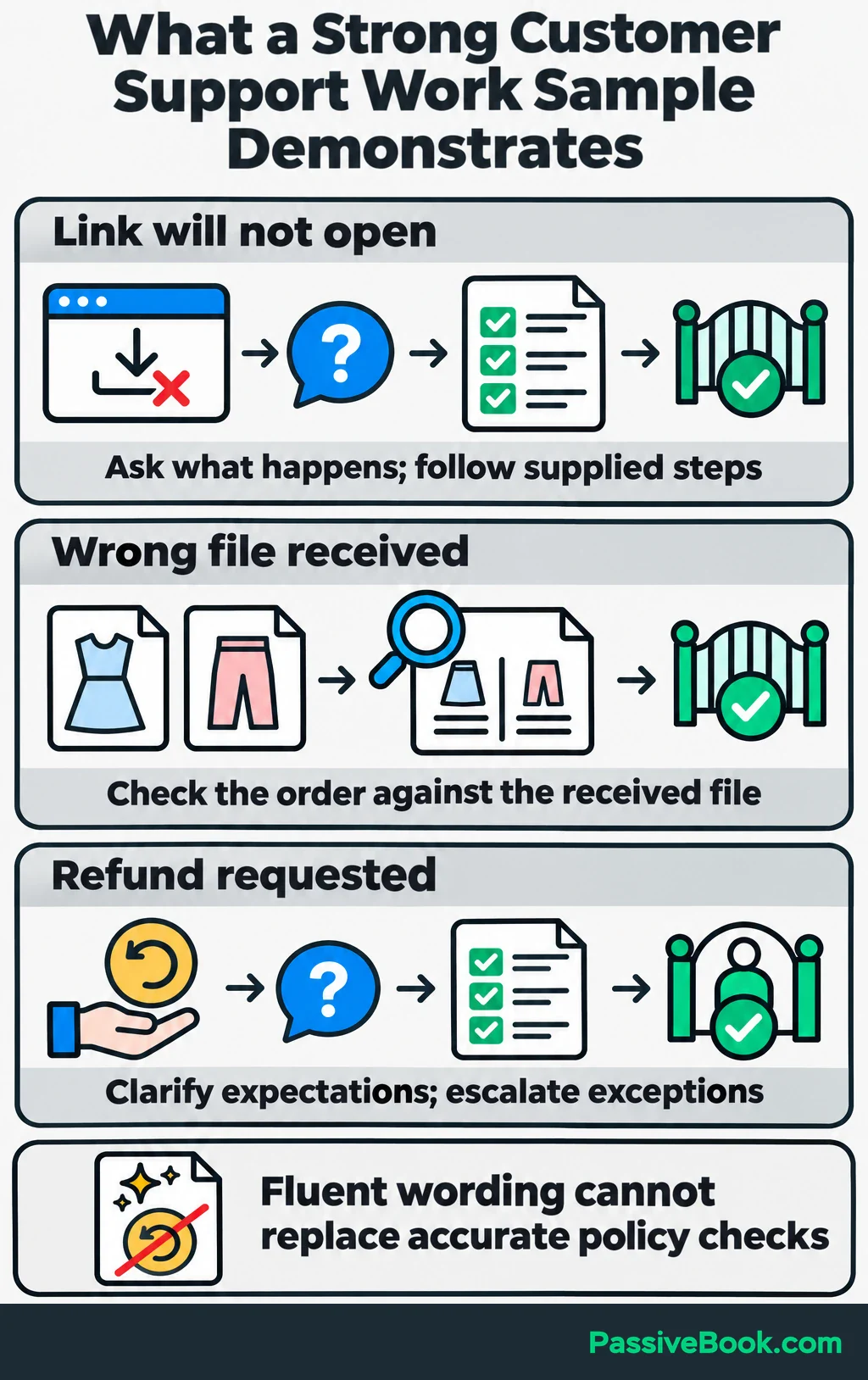
For the pattern shop, provide sample customer messages, download files, and a short support policy. Keep real customer information out of the exercise. Ask for draft replies, questions needed to resolve each case, and any decision requiring approval.
| Sample Customer Message | What a Strong Reply Does |
|---|---|
| “My download link won’t open.” | Asks what happens when the customer opens the link, then follows the supplied troubleshooting steps |
| “This file is different from the one I ordered.” | Checks the pattern name on the order against the file the customer received before offering a fix |
| “I want a refund. This isn’t what I expected.” | Asks what differed from the customer’s expectations and refers any refund exception to the owner for approval |
Agree whether AI assistance is allowed. If it is, ask candidates to explain what they checked before submitting the answer. A fluent reply that invents a refund promise should fail the accuracy standard.
A useful test needs more than a task description. The AI Hiring Assistant can draft the exercise and scoring key around the work you actually need done, without using real customer information.

Free AI Hiring Assistant
Score accuracy, completeness, judgment, and communication. Discuss one revision within the agreed assessment scope to see how the person responds to feedback.
Choose someone who meets the essentials across the sample, interview, and supporting evidence. If nobody does, reopen the search. Hiring the least unsuitable finalist still leaves you with an unsuitable hire.
Put the Working Agreement in Writing
Before live work begins, record the terms both sides will rely on.
Include scope, compensation, payment timing, start date, hours or deliverables, necessary availability, decision authority, review points, and approval for scope changes.
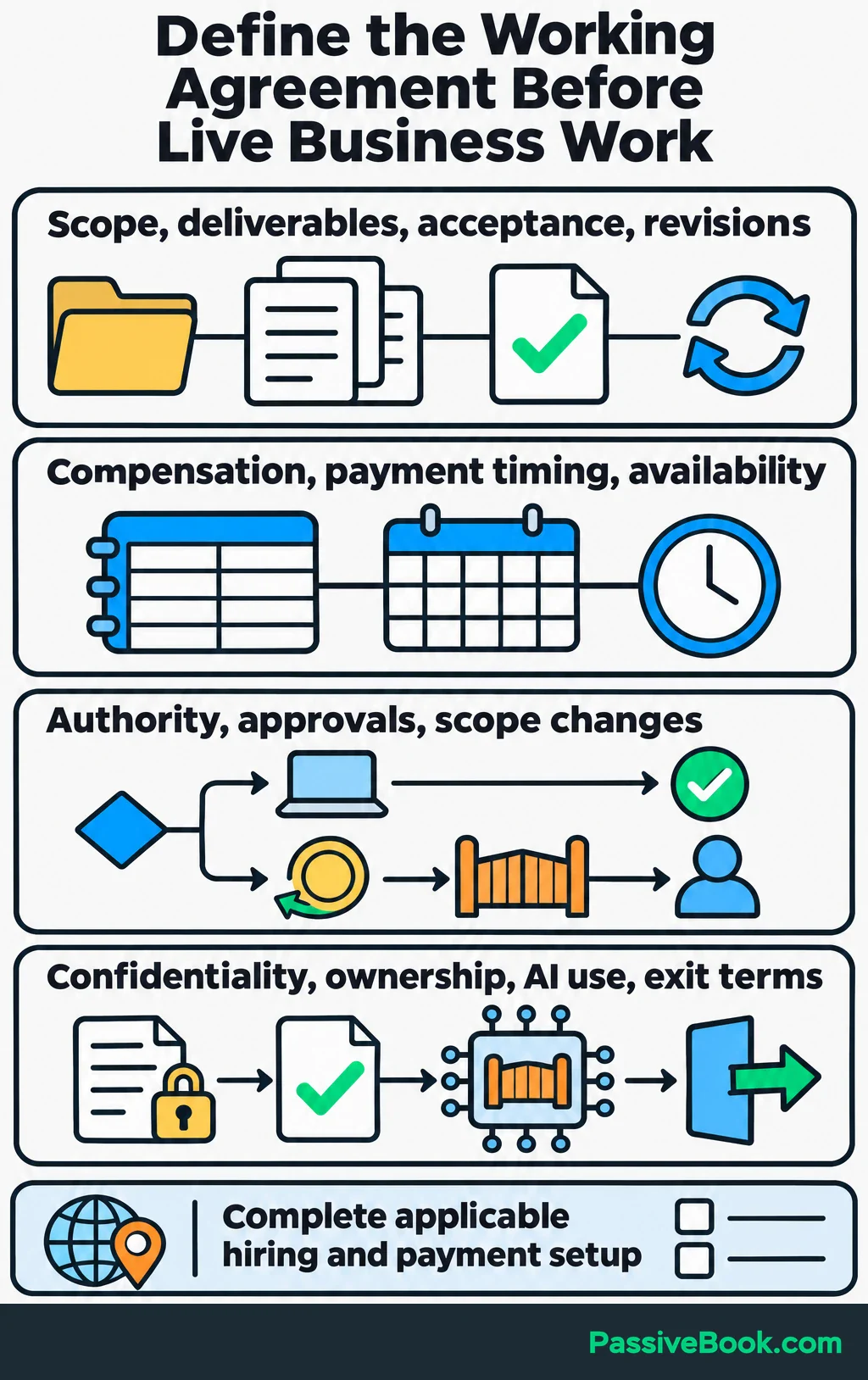
For project work, add acceptance criteria, revision limits, milestones, and the files required at handover. Also address confidentiality, ownership of the work, permitted use of business information in AI tools, and how the engagement can end.
For the pattern shop, make refund authority explicit. The person should know which routine actions they can take and which requests must come back to you.
Complete the required hiring and payment setup on schedule. U.S. employers have employment-tax responsibilities, and hiring employees for work in the United States also involves identity and work-authorization verification and withholding records. The IRS hiring checklist outlines those requirements. Follow the applicable process elsewhere.
Onboard the Hire Into One Complete Workflow
Prepare one workflow before assigning live work. Give the person enough context to understand the purpose, then show what a finished result looks like.
A useful starting pack contains:
- The inputs and access needed.
- One normal case demonstrated from start to finish.
- A short checklist.
- An acceptable finished example.
- The escalation contact and decision limits.
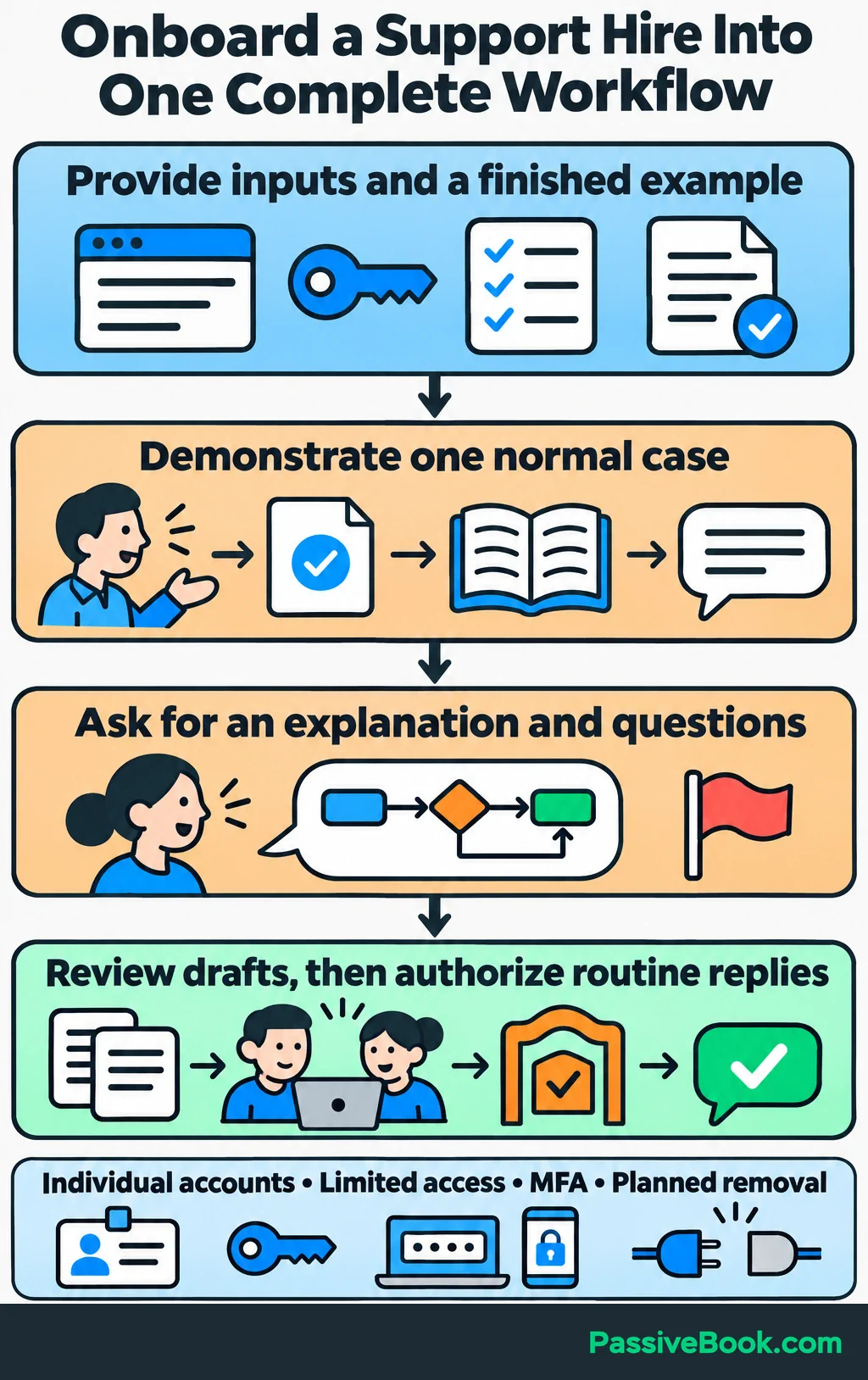
Ask the person to explain the assignment back and identify missing information. For an independent service, clarify results and business constraints while respecting the contractor’s methods.
In the pattern shop, begin with draft support replies. Review them together, discuss errors, and then authorize routine replies within the written policy. Add instructions when real exceptions reveal a gap.
Give each person an individual account with only the permissions they need, and plan how access will be removed when they leave. Use multifactor authentication—for example, a password plus a code from an authenticator app. These practices align with the FTC’s business security guidance. Someone answering download questions has no reason to hold the keys to every business account.
Delegate With Clear Ownership
Each deliverable needs one responsible person, an outcome, a deadline, a quality standard, the necessary inputs, and clear decision limits.
“Handle support” leaves too much unsaid. For the shop, define the covered questions, response window, record of actions taken, and when the owner must be contacted.
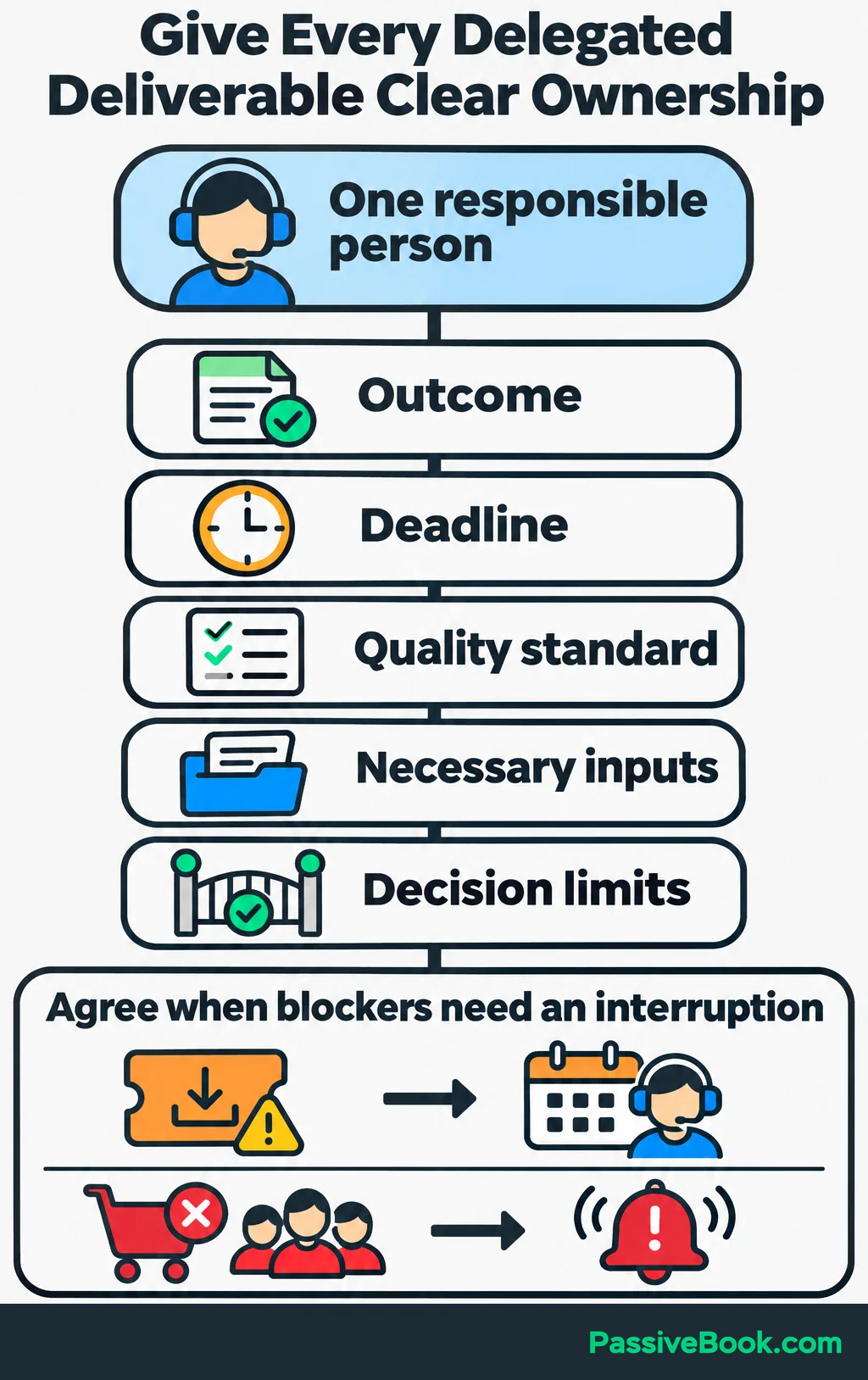
Keep assignments and progress in one shared place. Agree on routine check-ins, when blockers must be raised, and which problems justify an urgent interruption. A customer unable to download a file and a broken checkout affecting every buyer need different responses.
Review early work closely, then reduce routine approvals as delivery becomes dependable.
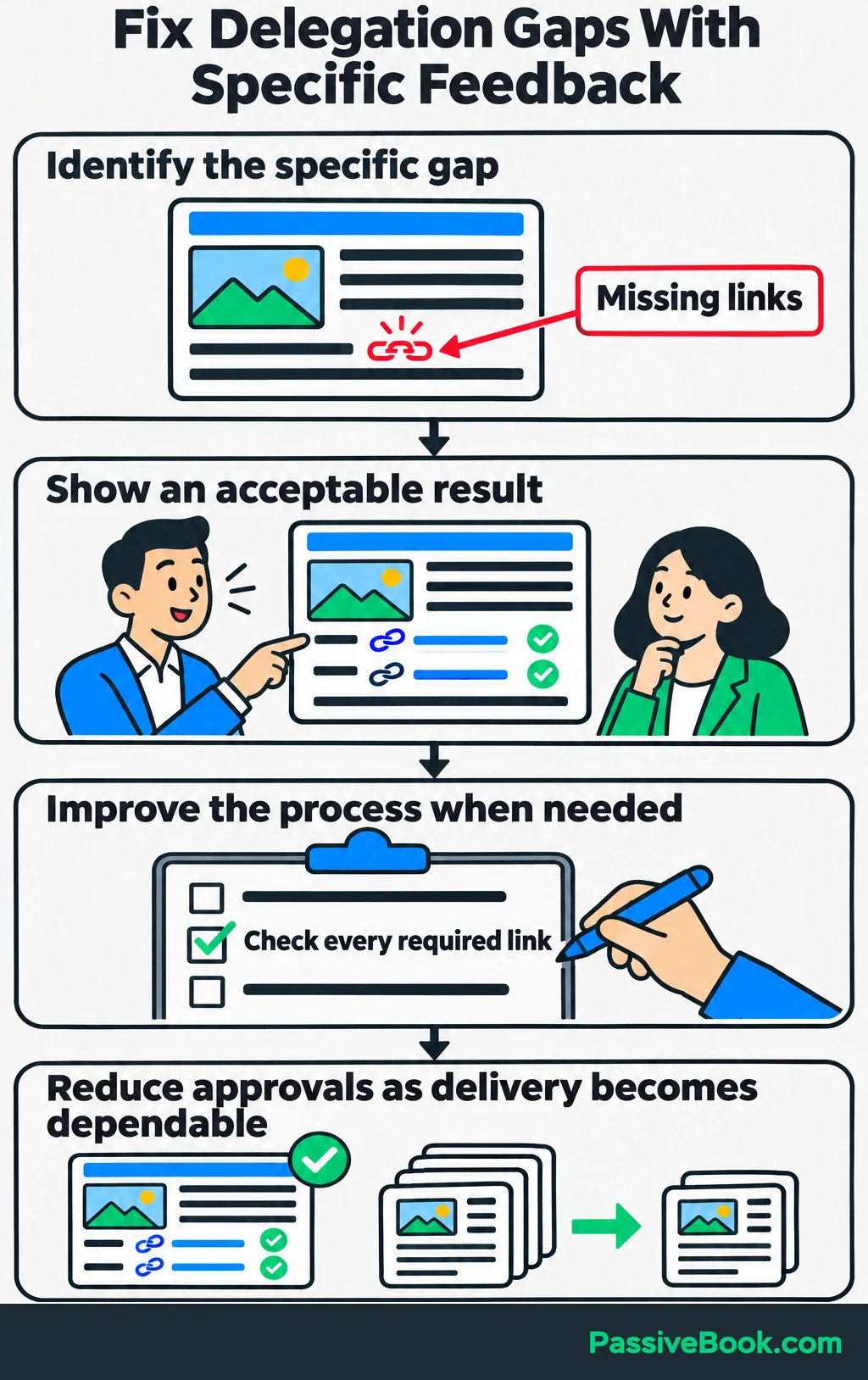
On one of my content sites, I handed over article formatting but kept finding missing links. I had demonstrated the layout and assumed the checking was obvious. I added a link check to the handover checklist and walked through a finished article. My instruction had described how the page should look, but left part of “finished” unstated.
When giving feedback, name the gap and show an acceptable result. If the process caused the mistake, improve the process too.
Finally, give the recovered time a job. In the pattern shop, reserve a block for developing the next product bundle. Otherwise, the space you bought can disappear into less useful work.
Review Results Before Expanding the Team
At the agreed review point, compare completed work, accuracy, deadlines, and spending with the role brief. Include your time spent training, coordinating, checking, and redoing tasks.
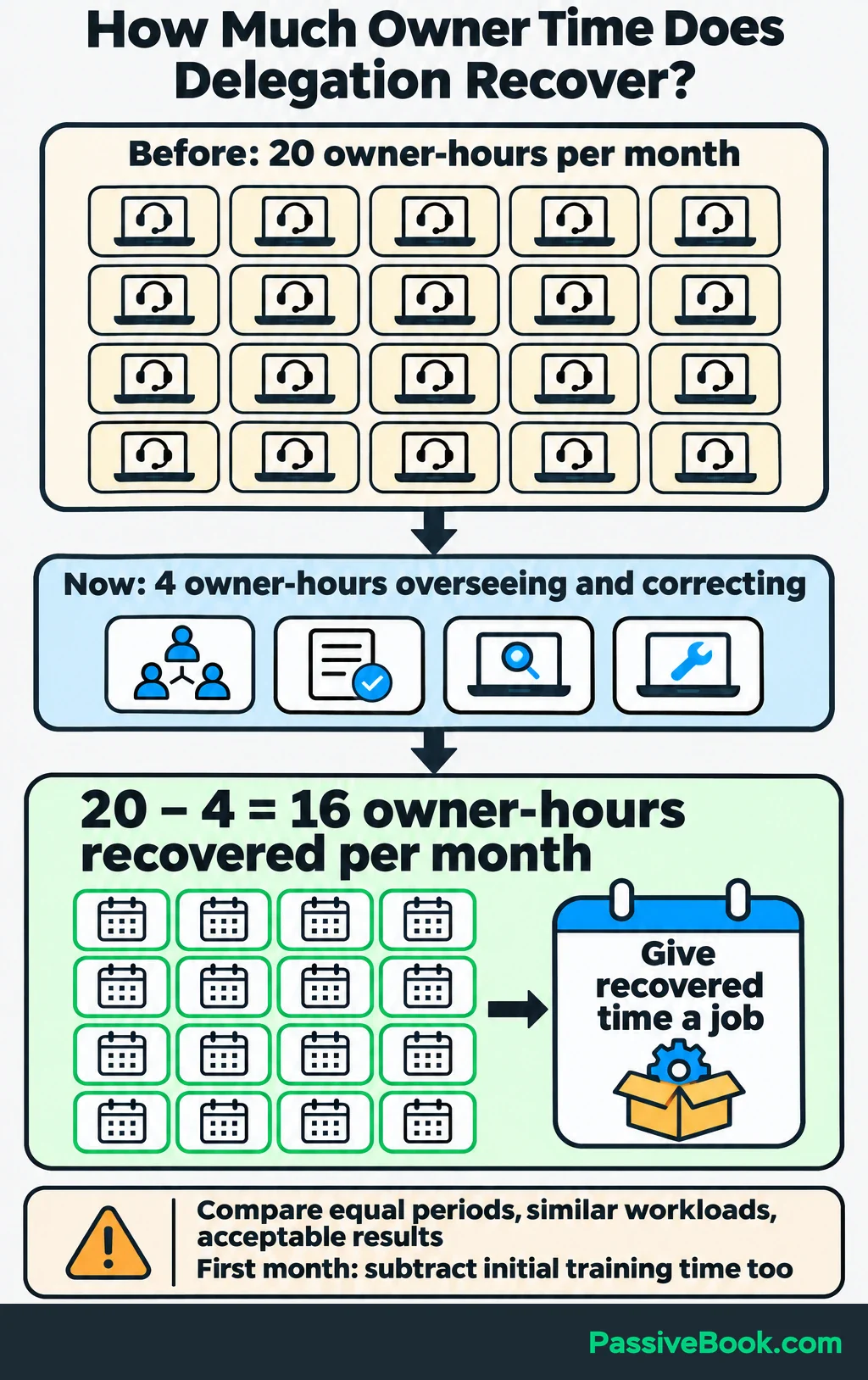
To measure time recovered, subtract the hours you now spend overseeing and correcting the delegated work from the hours you previously spent doing it. Compare periods of the same length with similar workloads and acceptable results.
Suppose support previously took 20 owner-hours per month. Once the handoff settles, coordination, review, and rework take four hours:
20 previous hours − 4 current hours = 16 owner-hours recovered per month.
In the first month, also subtract initial training time.
If expectations are missed, check the cause before deciding what to do:
- Were the instructions clear?
- Did the person have the required access and information?
- Was the workload realistic?
- Is training missing, or is an essential skill missing?
Agree on a specific correction and a review point. “Communicate better” is vague. “Flag any unresolved download issue by the end of the agreed coverage period” gives both sides something to check.
End an unsuitable arrangement according to the agreement and applicable obligations. Recover business files, complete the handover, and remove access.
Keep dependable people through prompt payment, clear priorities, useful feedback, and compensation reviews when responsibilities change.
Add the next role when this handoff works, another bottleneck is clear, and the business can fund the full cost. Define how the roles connect and keep one accountable owner for each outcome.
What Next?
List the tasks that interrupted your most recent working week and choose one responsibility with a result you can clearly check. Estimate its full cost before writing the role brief.
Use the social buttons to share this guide when a conversation about hiring needs a practical starting point.
Which responsibility would you hand over first, and what would make you comfortable letting it go? Tell me in the comments, and bring any other hiring questions too.
Share this post with your friends & followers:

