You’ve been offered a table at a weekend event. The fee looks manageable, but add travel, samples and a Saturday away from everything else, and it stops looking cheap.
The hard part is knowing whether anyone there is likely to buy. Friendly conversations feel encouraging, but they won’t tell you whether the day paid for itself.
Offline promotion deserves the same budget discipline as an online campaign. This guide covers six ways to reach suitable customers in person, send them to an online offer and decide whether the result earns another test.
Choose Your First Offline Marketing Strategy
Start with the buying situation. What has happened that makes someone want your product, and where might you reach them while that need is fresh?
Ask existing customers which shops, classes and gatherings they trust. If you don’t have customers yet, speak with likely buyers before paying to reach them.
I skipped that work with my online jewellery store. I invested roughly $1,200, chose stock without proper market research and ended up with unsold inventory. I lost most of the investment. Choosing products had felt like progress because I could see something getting done. Finding out whether people wanted them was the work I had avoided.
That experience is why I would test access to buyers before ordering a stack of promotional materials.
Consider an online shop selling beginner visible-mending kits: patches, thread and instructions for turning clothing repairs into decorative details. We’ll use this shop throughout; its copy, budgets and results are examples.
Its best prospect isn’t simply “someone who likes crafts.” A more useful starting point is someone attending a beginner sewing class who wants to repair a favourite pair of jeans.
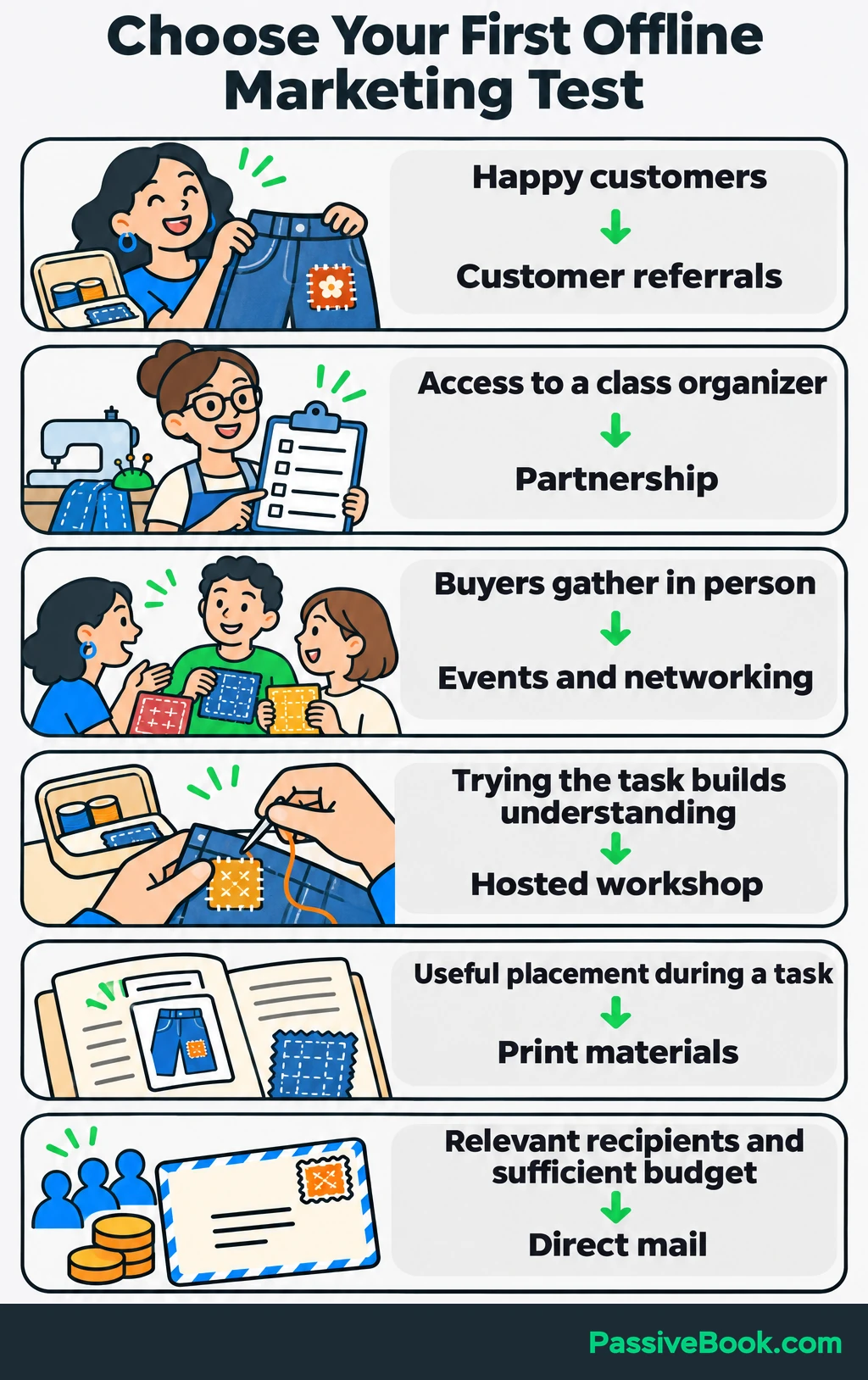
The six offline marketing strategies for online businesses below offer different ways to reach that person.
| Strategy | Best-Fit Situation | Smallest Useful Test | Cash Expenses | Owner Time | Tracking Method |
|---|---|---|---|---|---|
| Partnerships | Another business serves customers near the moment of need | One sewing-class organizer offers the kit to one class | Printing, travel and any commission | Recruiting, briefing and checking in | Partner link, code and completed orders |
| Customer referrals | Customers have used the product and are happy with it | Ask a small group of satisfied buyers to recommend it | Referral cards and any rewards | Preparing cards, asking and checking purchases | Referrer code and new-customer orders |
| Events and networking | Relevant buyers or referral partners gather in person | Attend one approved gathering with samples | Admission, travel, display and samples | Preparation, travel, attendance and follow-up | Event link, requested follow-ups and orders |
| Hosted workshops | Teaching a small task helps people understand the offer | One short session through an existing host | Consumables, travel and any host fee | Planning, preparation and teaching | Session link, attendance and orders |
| Useful print materials | A specific placement reaches people working on a related task | One small batch in an agreed class information pack | Design, printing, delivery and placement fees | Design, delivery and restocking | Placement link and distributed quantity |
| Direct mail | You can identify relevant recipients and afford to reach them individually | A small mailing to prospects who requested postal information | Printing, postage, address preparation and any data costs | Preparing, packing and recording responses | Mailing code, tracked link and orders |
I would choose the access you already have. Happy customers make referrals a sensible first test. A relationship with a class organizer makes a partnership easier to try. Without either, a relevant gathering can help you learn what buyers need before you spend.
These methods can overlap. A partner might host a workshop and include your card in the materials. Give that combined test one clear budget so the costs don’t disappear into separate categories.
Before setting the budget, work out how much an order leaves you. Start with revenue after discounts and refunds, then subtract product costs, packaging, fulfilment, payment fees and any shipping you cover.
The amount left is your contribution per order. It still needs to cover marketing, overhead and profit. Set a maximum marketing cost per new customer below that amount rather than assuming future purchases will rescue an expensive first sale.
Write down:
- Audience: Who you want to reach and why they might buy now.
- Offer: The product, sample or consultation you’ll promote.
- Limits: The maximum cash and owner hours you’ll spend.
- Review Date: Enough time for distribution, follow-up and the normal buying decision.
Count preparation, travel and maintenance in those hours. A “free” event can consume your entire weekend with impressive efficiency.
Give Customers a Trackable Route to Your Online Offer
Choose one next action before creating anything physical.
Someone ready to buy should reach the relevant product page. Someone considering a service might need a consultation booking page. Someone still learning could benefit from a useful sample.
You don’t need a storefront. The destination can sell a physical product, deliver a download or book a service.
Match that destination to the offline message. For the mending kit, show a finished repair, explain what’s included, state the price and shipping details, and provide a clear purchase button. Don’t make people search your homepage for the thing they just saw.
Give each partner, placement or event its own short address on a domain you control. Print both that readable address and a QR code. The short address should redirect to the relevant page, so you can change the destination without reprinting.
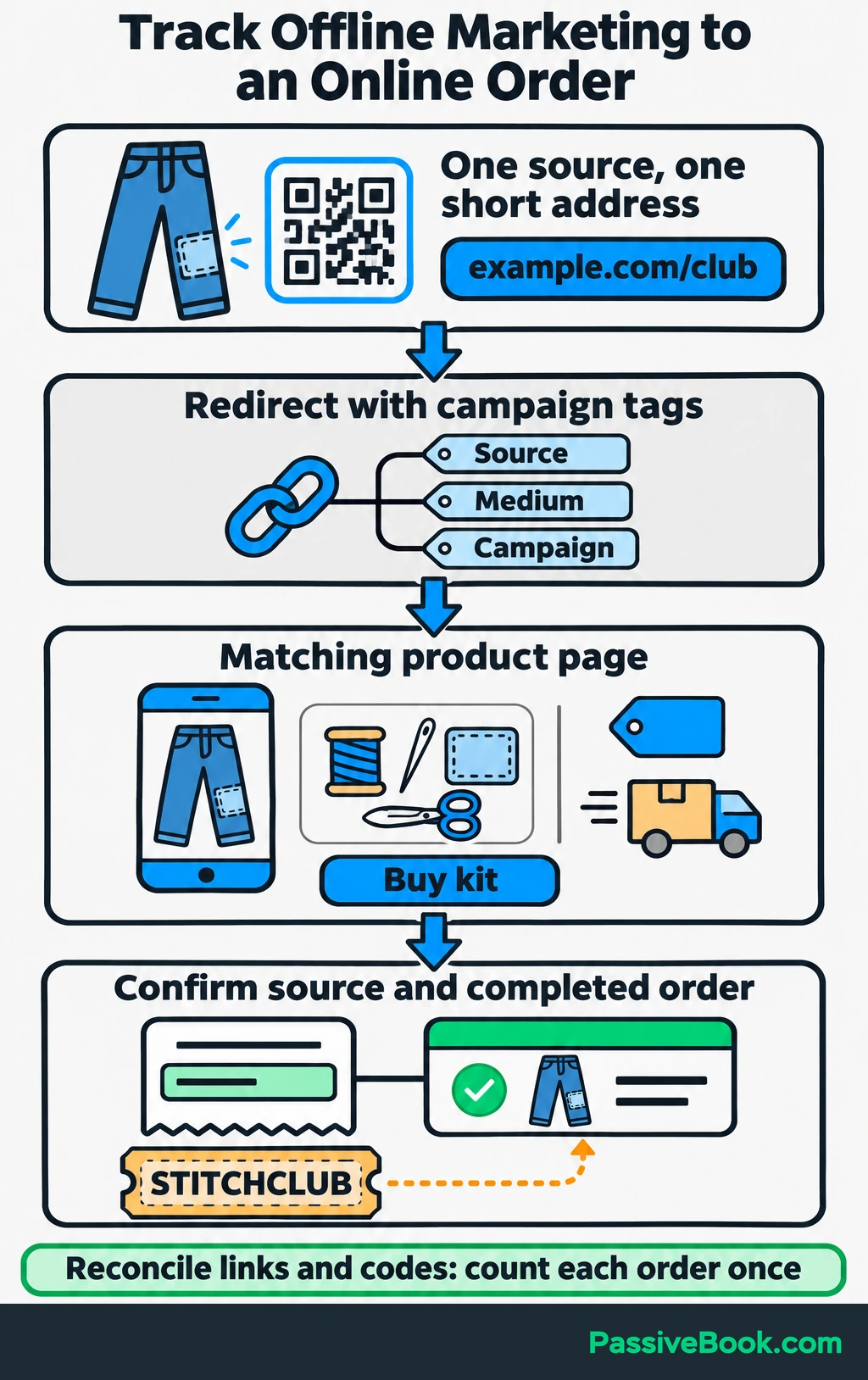
Add campaign tags to the destination address. These are small labels that tell your analytics tool where the visit came from. For one sewing club, the full destination address could look like this:
https://example.com/mending-kit/?utm_source=sewing_club&utm_medium=offline&utm_campaign=mending_kitGoogle Analytics uses these parameters to identify traffic from campaigns. Keep the spelling consistent so one placement doesn’t appear under several names. Google’s campaign URL guidance explains how the labels work.
Add a memorable campaign code, such as STITCHCLUB, for people who buy later or switch devices. A code can identify a source without giving a discount. If your checkout can’t accept a tracking-only code, provide an optional source field instead.
Before distribution, test the whole route:
- Scan the QR code from a printed proof.
- Type the short address.
- Check the page and checkout on a phone.
- Complete a test purchase.
- Confirm that the source and order appear in your records.
Record sources with leads and orders. An optional “How did you hear about us?” question can fill gaps, but reconcile it with links and codes so each order is counted once.
For ongoing email follow-up, offer a separate, optional marketing signup with privacy information and an unsubscribe route. A conversation or business card exchange shouldn’t quietly become a newsletter subscription. In the UK, unsolicited marketing emails to individuals generally require consent unless a qualifying exception applies. See the ICO’s email marketing rules.
Six Offline Marketing Strategies to Test
Build Partnerships With Complementary Businesses
Look for a business that serves the same people at a useful point in their buying decision.
Then propose a specific benefit for its customers and a small amount of work for the owner. “Let’s collaborate” leaves the other person to invent the arrangement.
For the mending-kit shop, a sewing-class organizer could help students find supplies for their first repair. A simple proposal might be:
“Could we supply a repair-planning card for your next beginner class, with a link to the kit for students who need materials?”
Start with one class or location. Agree on what the partner will say, where materials will appear, who replenishes them and when you’ll review the result. Put any commission or other compensation in writing.
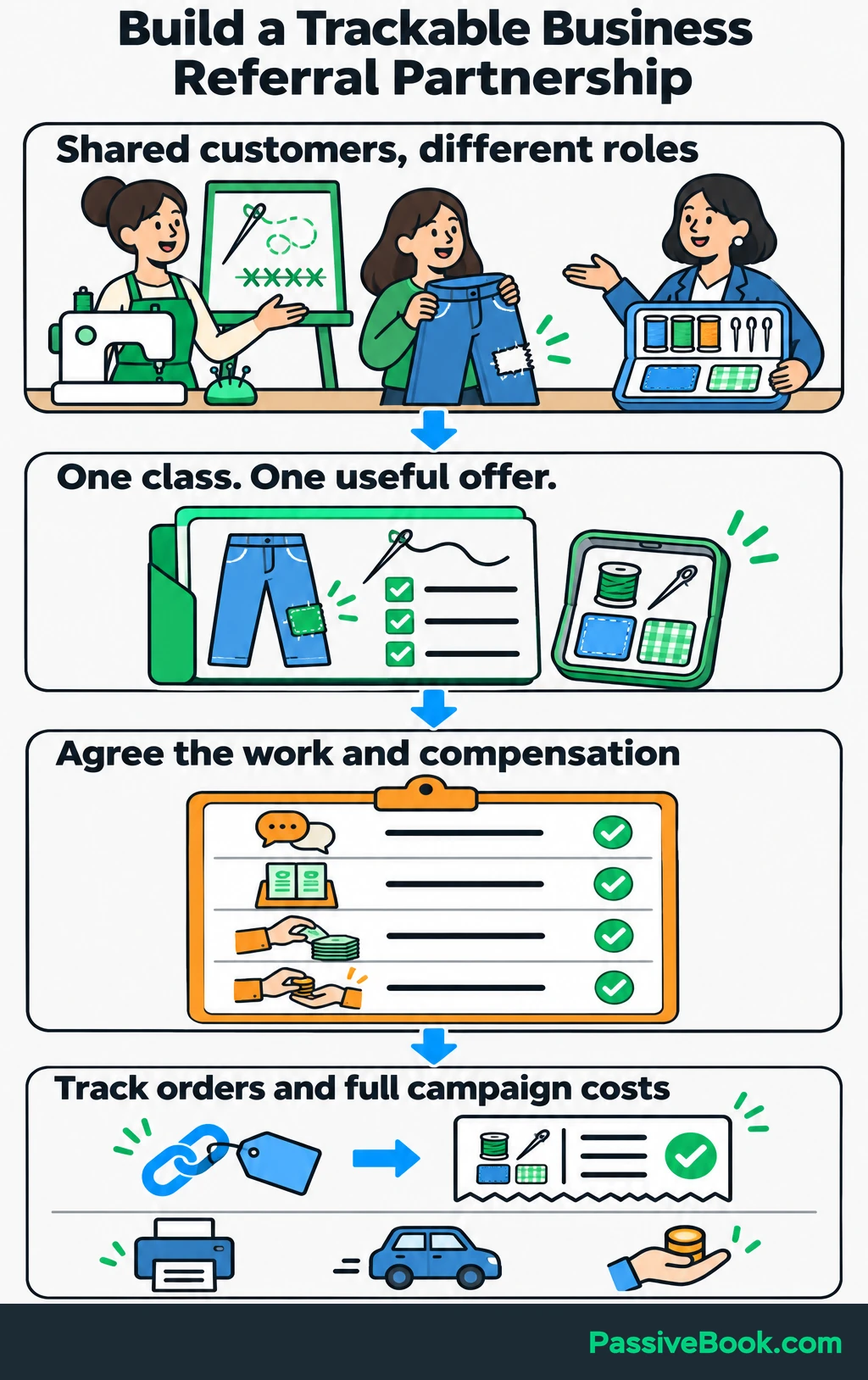
Supply a short explanation and a partner-specific link. You should be able to explain the arrangement without scheduling a meeting to discuss the meeting.
For a digital download, a bookkeeping teacher could share a card linking to a sample budget spreadsheet and its paid version. For web design, offer a short website clinic through a business group and give attendees a consultation booking link. For that service test, count bookings as leads and completed paid projects as sales.
In the US, a paid recommendation may need a clear disclosure when the connection would be unexpected and could affect how customers judge it. This also matters for rewarded customer referrals. The FTC’s endorsement guidance explains the principle.
Judge the partnership by completed referred orders and what remains after printing, travel, commissions and support work. A friendly partner is valuable, but friendliness doesn’t settle the campaign accounts.
Help Satisfied Customers Recommend You in Person
Ask after customers have received and used the product. Give them a clear idea of who would benefit and an easy way to pass it on.
For the mending-kit shop, a small referral card could travel with a repaired jacket. When someone admires the stitching, the customer has something useful to hand over.
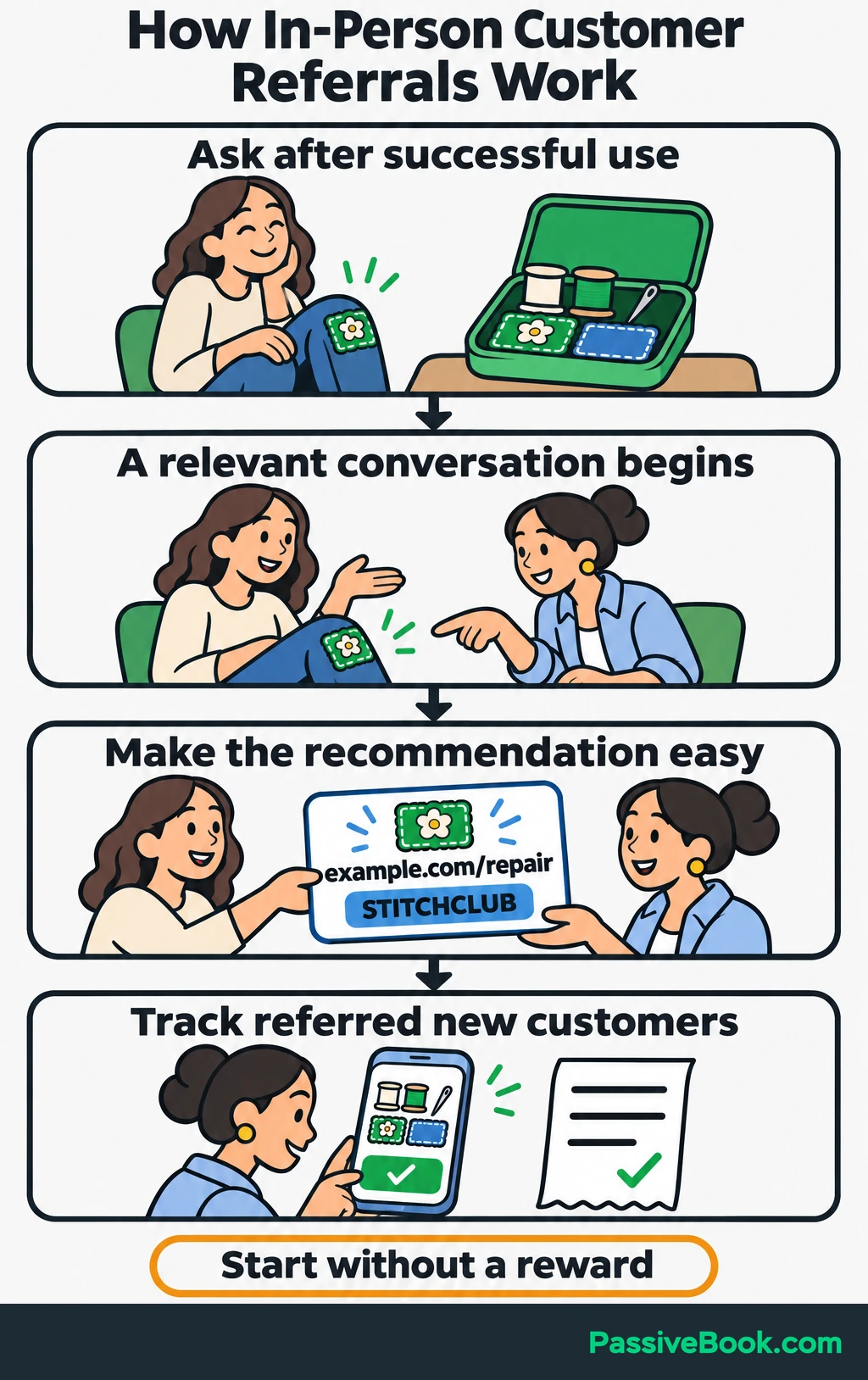
The request could be as simple as:
“If someone asks how you made your repair, this card takes them to the beginner kit you used.”
Include a readable URL and referral code. Start without a reward so you can see whether customers want to recommend the product.
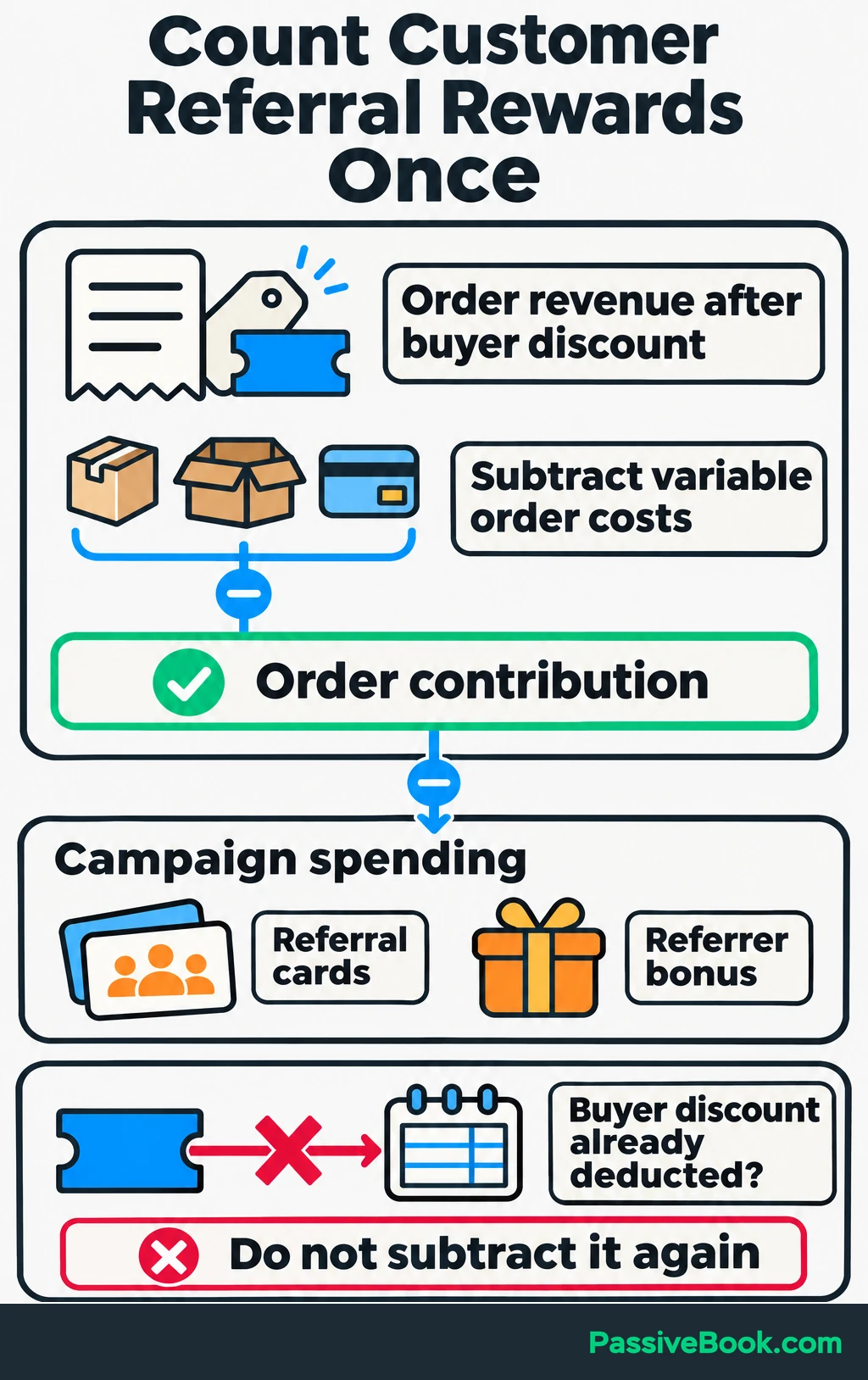
If you add an incentive, calculate the full cost first. The new buyer’s discount and the referrer’s bonus both reduce what you keep from the order.
Define which purchases qualify, when rewards are issued and what happens after a refund. Track referred new customers separately from existing customers who buy again.
Count each reward once. If a buyer’s discount already reduced order revenue, don’t subtract it again as campaign spending.
Meet Qualified Customers at Events and Networking Groups
Choose events by who attends and what they’re there to do.
Ask the organizer about the audience, selling rules and complete participation cost. A general networking group may be useful for meeting referral partners, while a specialist gathering may put you closer to buyers.
I would attend as a visitor first or share an organizer-approved display with a partner. Paying for a dedicated booth before checking the audience adds pressure to an untested idea.
At a sewing gathering, the mending-kit owner could bring repaired fabric samples and one complete kit. Ask what people want to repair, then show the materials that fit that task.
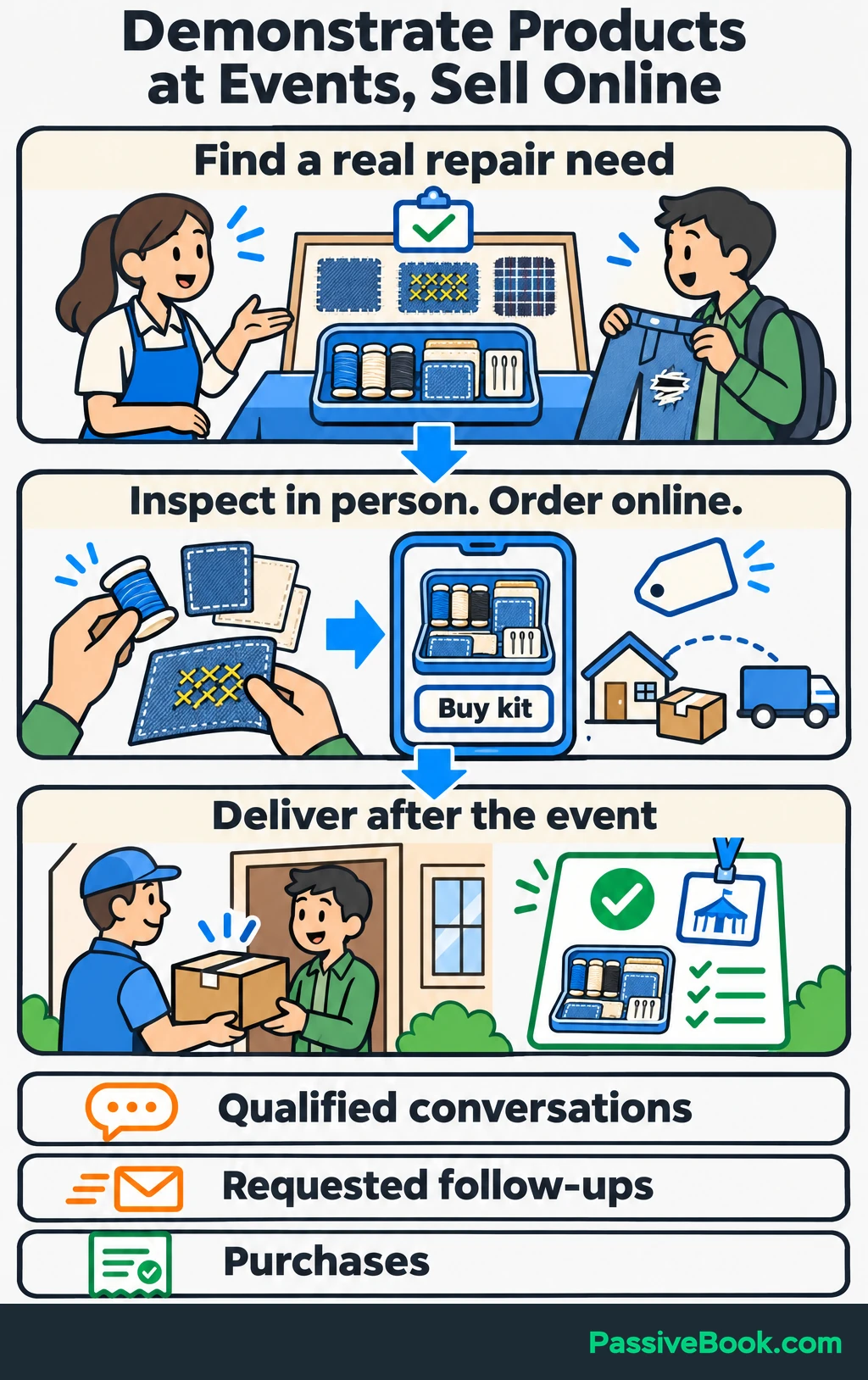
Offer one route to online checkout and explain delivery. You can let people inspect a product without carrying enough stock to fulfil every order there.
That approach has a real-world precedent. Shopify’s BÉIS case study describes luggage pop-ups where customers inspected products, checked out in person and received purchases at home. I would borrow the demonstration-and-delivery idea for a small display. Read the BÉIS case study.
Record qualified conversations, requested follow-ups and purchases separately. For this kit, a qualified conversation might involve someone with a repair project who wants beginner supplies. A compliment about the display is pleasant, but it tells you less.
Include admission, travel, samples, display materials and follow-up time in the result.
Teach a Useful Workshop Through an Established Host
Use a workshop when doing part of the task helps people understand the paid offer.
Choose a narrow problem you can teach well. Then find a host that already reaches suitable attendees. Agree on invitations, space, equipment, costs and permission to present your offer before preparing the session.
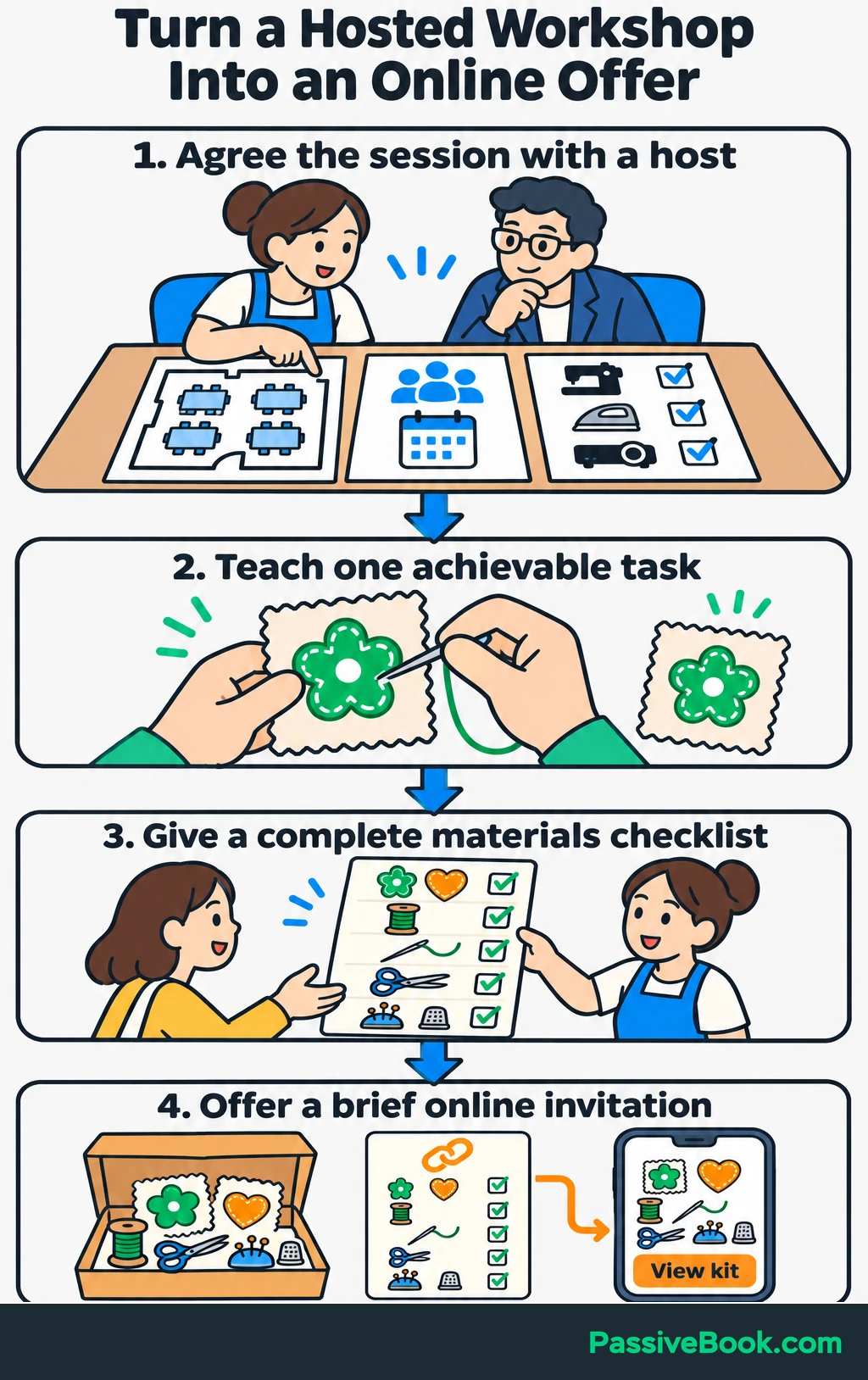
The mending-kit shop could teach participants to attach a decorative patch to a practice swatch. That gives attendees a small finished result and shows what using the kit feels like.
Provide a complete materials checklist. People should leave knowing what they need, even if they don’t buy from you.
At the end, show the kit and invite them to view it online. Keep the invitation brief:
“The kit contains the materials we used for this repair. You can see the contents and order through the link on your checklist.”
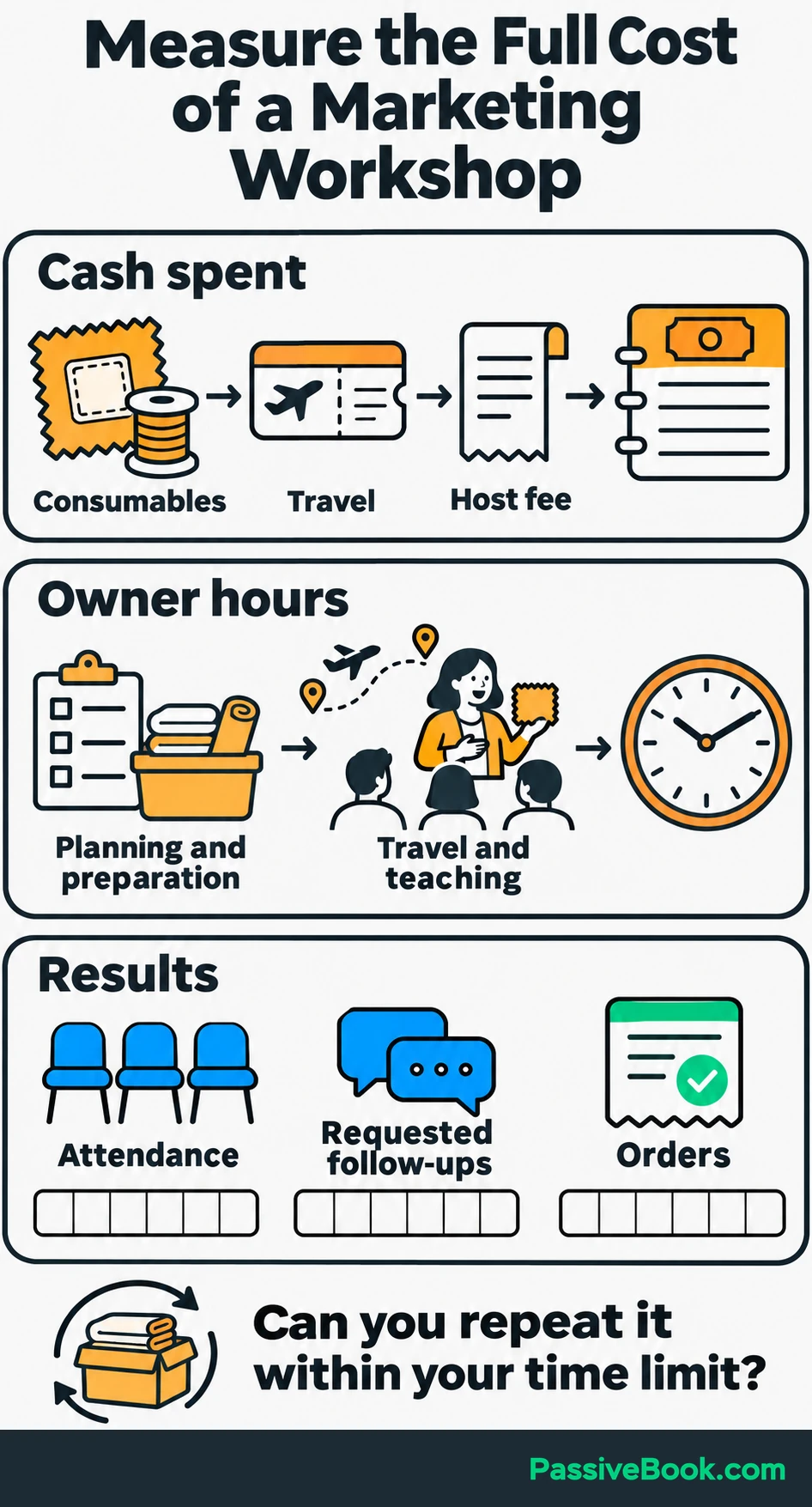
Test one session with a host-provided space and materials you already have where possible. Count consumable supplies and any host fee alongside preparation, travel and teaching hours.
Measure attendance, requested follow-ups and orders. A workshop that requires days of fresh preparation every time may be hard to repeat around a day job, even if attendees enjoy it.
Place Useful Print Materials at Relevant Touchpoints
Print works best as part of a task the reader already cares about.
Choose the placement first, then design the piece. A card in a sewing-class information pack can answer a current question. The same card on an unrelated counter has much more work to do.
Get permission and agree on the exact placement. For the mending-kit shop, print the kit’s short address and QR code on a repair-planning card, with space to note:
- The garment and damaged area.
- The patch size needed.
- The preferred thread colour.
Keep one message and one next action. Canva is enough for a simple card; I wouldn’t buy specialist design software for this test.
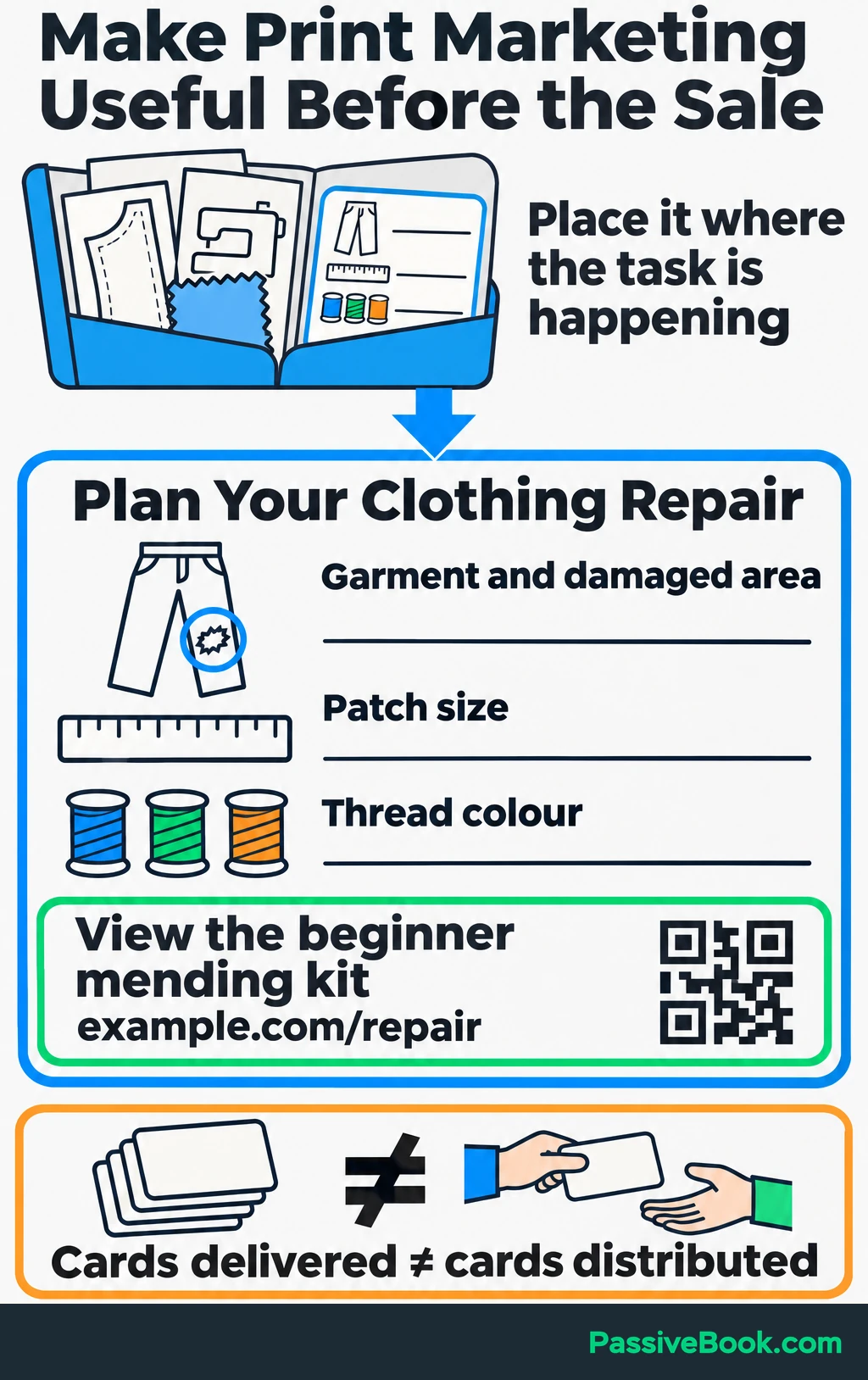
Print a small batch and inspect a physical proof. Check the image, text size, short address and QR code before ordering more.
Give each location its own tracking identifier. Also record how many pieces were actually distributed. Delivering 50 cards doesn’t mean 50 people saw them.
Track a card left in a pack separately from one a teacher recommends, so you know which arrangement people responded to.
Count design, printing, delivery, placement charges and restocking time. Review the placement before automatically replenishing it.
Send Direct Mail to a Carefully Selected Audience
I would test direct mail after you can identify relevant recipients and your order contribution can support the cost.
For the mending-kit shop, a manageable starting audience would be prospects who requested postal information. Keep mail to previous buyers separate because that measures retention rather than new-customer acquisition.
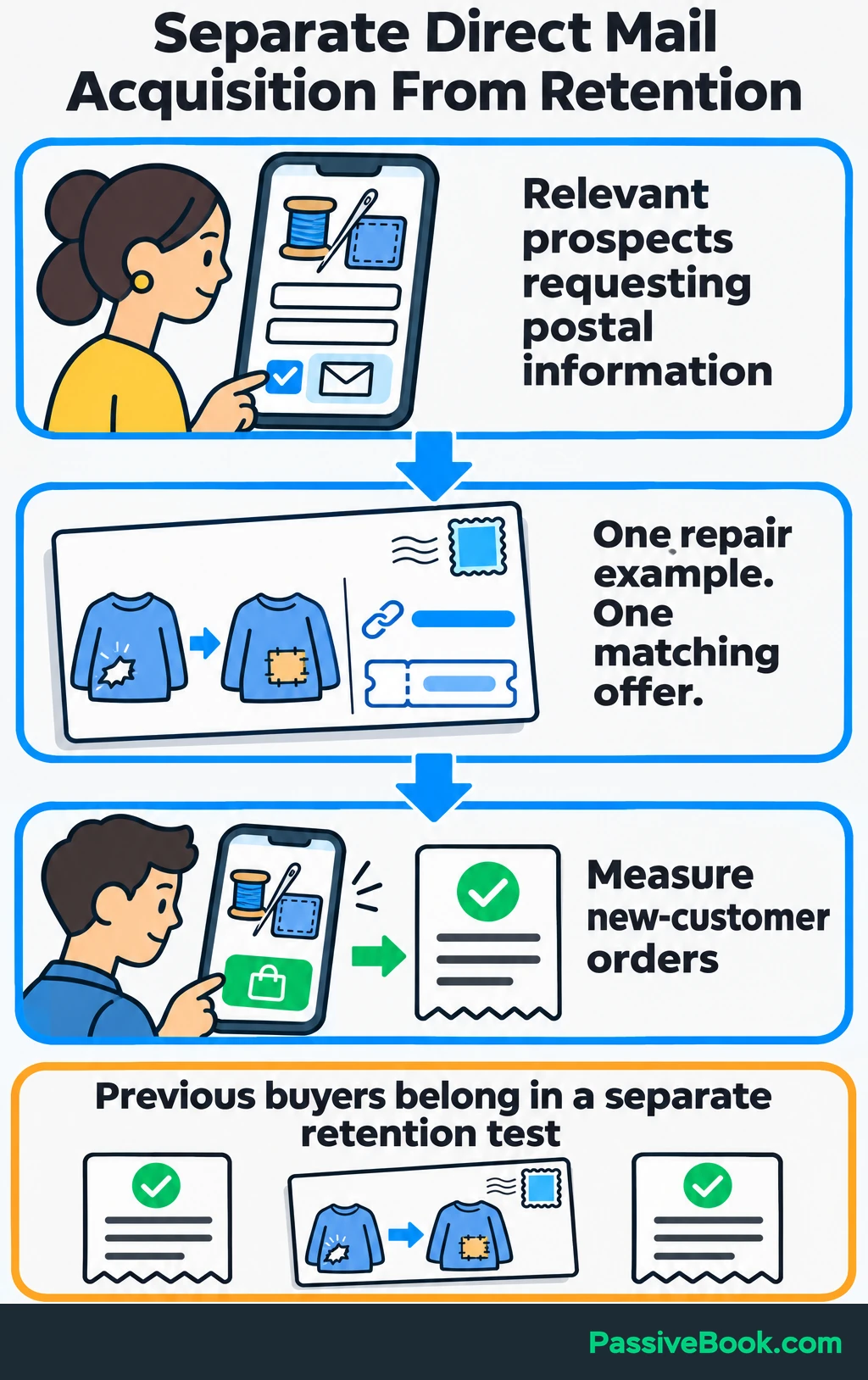
Show one clear repair example and direct readers to the matching kit. Include a tracked address and campaign code.
Price the actual format before printing. Postage depends on the destination, dimensions and mail service, so a cheap print quote doesn’t tell you the total campaign cost.
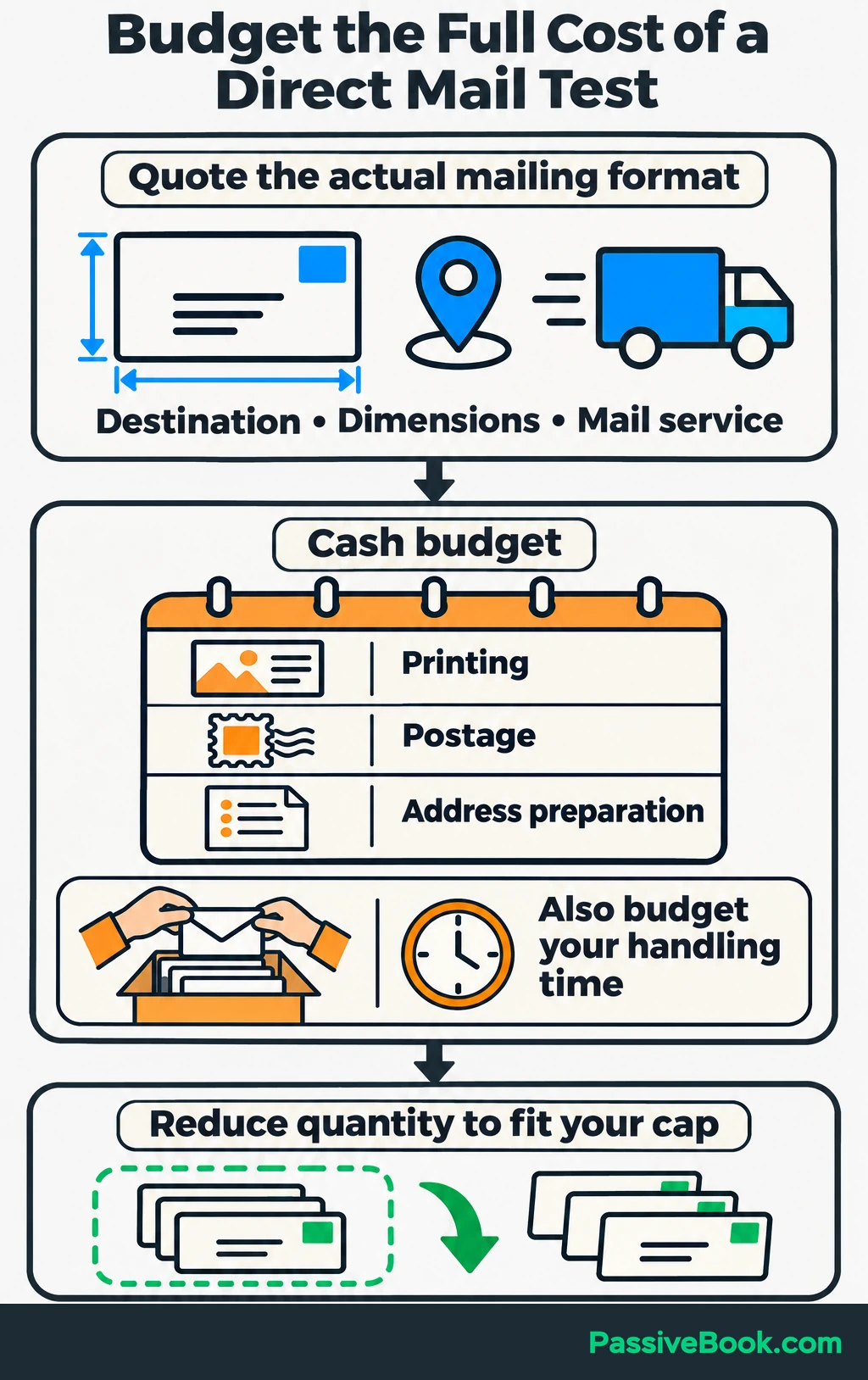
For a small test, budget for printing, postage, address preparation and your own handling time. Reduce the quantity if the full quote exceeds your cap.
Direct mail can also follow online interest. PostPilot describes Awe Inspired sending postcards to non-buying email subscribers after its welcome sequence. That supplier case study shows how postal follow-up can fit into an online sales process; it doesn’t establish what a small mailing will earn. See the Awe Inspired example.
Follow the rules that apply where you send mail. In the UK, using personal information for postal marketing needs a valid legal reason (a “lawful basis”). Consent isn’t always required, but you must explain how you’ll use the information and stop sending marketing mail to anyone who objects. See the ICO’s postal-marketing guidance.
Decide Whether to Stop, Improve or Repeat
Keep one results sheet with a row for each campaign or placement. Record distribution quantity, cash spent, owner hours, visits, qualified leads, new customers, repeat orders and contribution after campaign costs.
Use completed orders and account for refunds before judging the result. Separate new customers from repeat buyers because they answer different questions.
To calculate cash acquisition cost, count new customers attributed to the campaign by your review date. Divide the campaign’s acquisition spending by that count. If there are no new customers, record the spending and zero acquisitions. Don’t turn that into a cost of zero.
For contribution after marketing, add the contribution from campaign orders and subtract campaign spending. Keep costs already deducted from order contribution out of campaign spending.
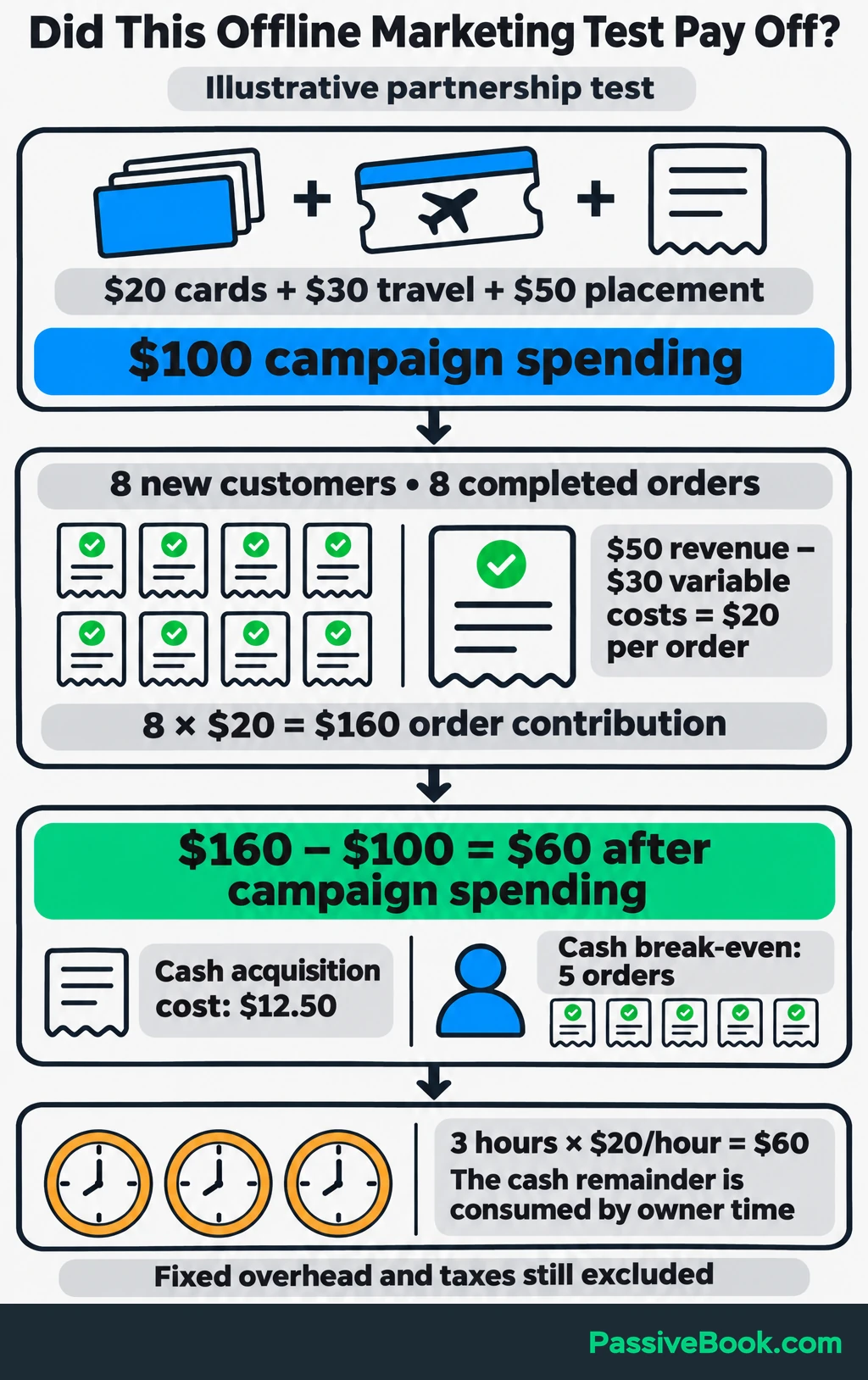
Here’s a worked example. Suppose one mending-kit partnership test costs $100: $20 for cards, $30 for travel and a $50 placement fee. It takes three owner hours. By the review date, eight new customers have each placed one completed $50 order using the partner’s link or code. Each order has $30 in variable costs.
| Measure | Calculation | Result |
|---|---|---|
| Contribution per order | $50 revenue minus $30 variable costs | $20 |
| Total order contribution | Eight orders × $20 | $160 |
| Contribution after campaign spending | $160 minus $100 | $60 |
| Cash acquisition cost | $100 divided by eight new customers | $12.50 |
| Cash break-even orders | $100 divided by $20 per order | Five orders |
The $60 excludes owner time, fixed overhead and taxes. If you value your time at $20 an hour, the three hours consume that remaining $60.
You can run these numbers before booking anything. The calculator below adds your time cost and acquisition-cost ceiling, so you can check a quote without waiting for campaign results.
Free Marketing Profit Calculator




When contribution per order is positive, you can calculate cash break-even orders by dividing campaign spending by contribution per order and rounding up. This tells you what must happen to recover the campaign’s cash cost.
Tracking still doesn’t prove that every recorded buyer purchased because of the campaign. Links, codes and customer answers identify responses, but some people might have bought anyway. Treat a small test as evidence for the next decision.
Diagnose where the route weakened:
- Few Visits: Check whether materials reached people, whether the placement was visible and whether the message gave them a reason to act.
- Visits Without Purchases: Check audience fit, product information, price, delivery details and checkout.
- Orders With Poor Returns: Check acquisition costs, discounts, commissions and fulfilment costs.
- Positive Cash Results With Heavy Time Costs: Simplify preparation, follow-up or maintenance before expanding.
Change one meaningful element for the next bounded test. Otherwise, you won’t know which change helped.
Stop when another test can’t be justified within your cash and time limits. Repeat a promising result before adding locations or increasing distribution.
Once a tactic earns its place, reuse the materials, partner instructions and replenishment routine. Automate order-source reporting and requested follow-up where practical. On WordPress, I would consider FluentCRM for permission-based email follow-up and n8n for connecting order records to a results sheet.
Keep relationship work in the time budget. A channel that needs weekly chasing has a weekly workload, however automated the spreadsheet looks.
What Next?
Write a one-page test brief for the audience you can reach most precisely: one offer, one tactic, one cash cap and one time cap. Then test the route from the physical material to your online checkout.
Use the social buttons to share this guide when you’re comparing ways to reach customers without committing to another advertising bill.
Which offline touchpoint puts you closest to people who already need your offer? Share your answer—and any other questions—in the comments.
Share this post with your friends & followers:

