You have a list of businesses to call, but the first number is still untouched. What do you say when someone answers, and how do you ask for a meeting without launching into a sales speech?
A weak call wastes time on both ends. You talk through your services, the prospect says “send something,” and neither of you knows what should happen next. The scripts and complete sample call below show how to find out whether a meeting would help and ask for one with a purpose both sides understand.
1. Choose Prospects With a Clear Reason to Talk
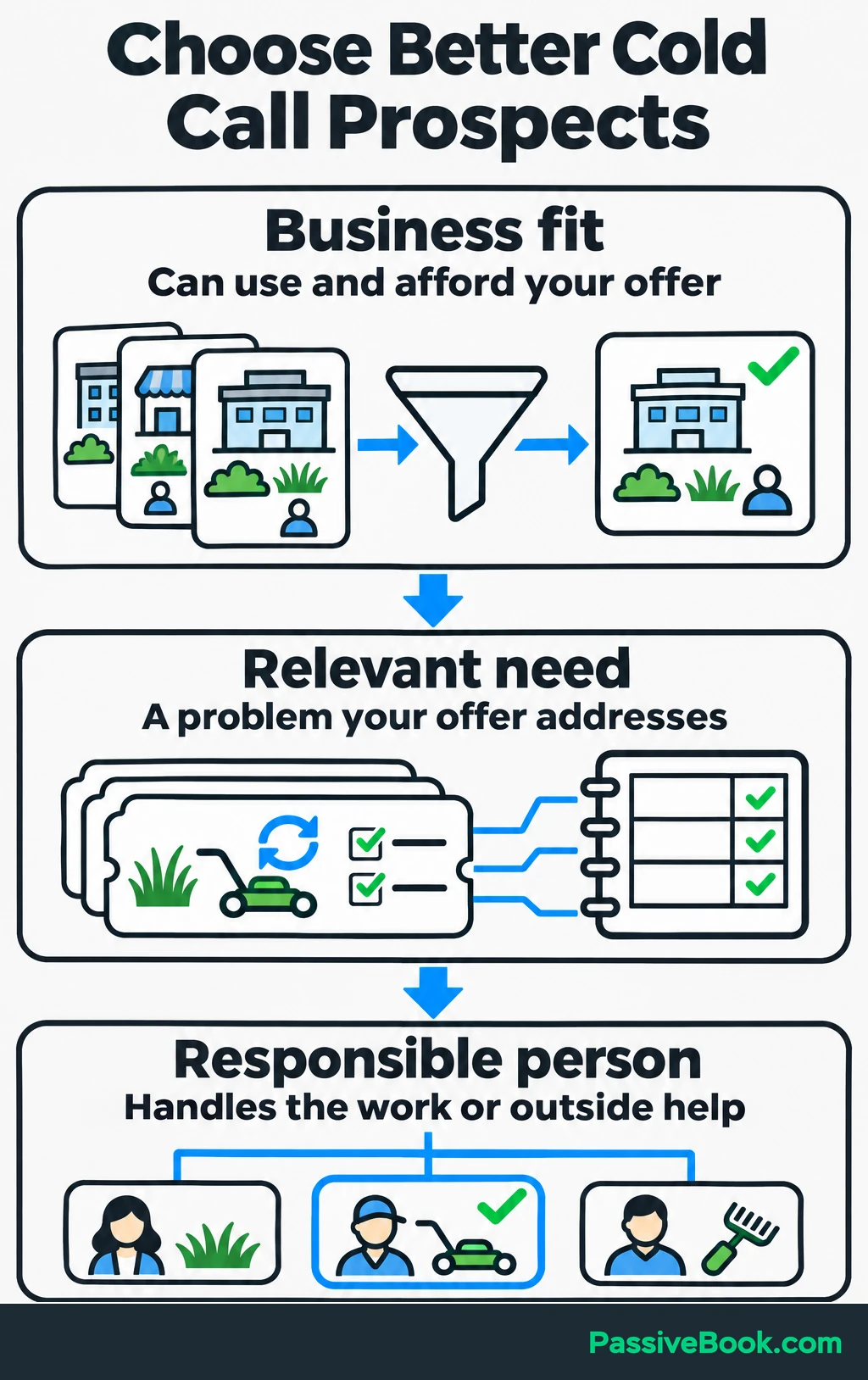
Start with the businesses your offer can help and the person responsible for the work you address. “Small businesses” is too broad to guide a useful call.
Write down three things:
- Business Fit: What kind of company can use and afford your offer?
- Relevant Need: What problem or goal does your offer address?
- Responsible Person: Who handles that work or chooses outside help?
Throughout this guide, we’ll use Oak Ledger, a monthly bookkeeping service calling independent landscaping companies. Its scripts and figures are illustrations.
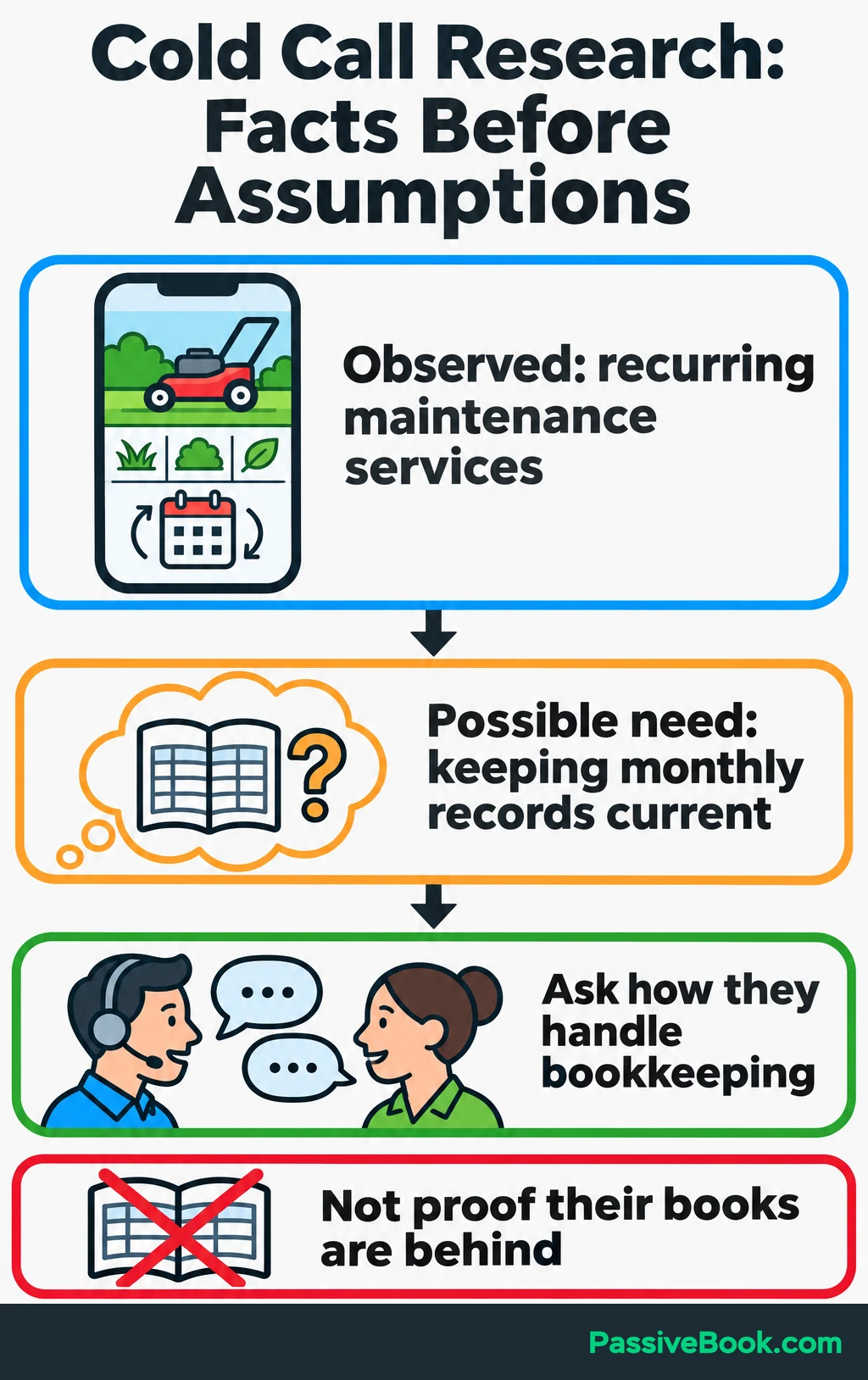
Oak Ledger could focus on companies that advertise recurring maintenance work. That gives the caller a relevant question about keeping monthly records current. It does not prove their books are behind.
Find suitable businesses through their websites, relevant directories, and professional associations. Check the contact’s current role and business phone number, and note whether you have a direct number or a switchboard. Don’t assume the owner handles everything.
There is evidence that calls can lead to meetings. In Gong’s analysis of more than 300 million cold calls, average representatives booked meetings from 4.6% of connected conversations. That means conversations, not all dialing attempts, and it is not a forecast for your list.
Before dialing, check the rules that apply to the recipient’s location, number type, and your calling method. Cover calling hours, consent, caller identification, and do-not-call requirements.
For U.S. outreach, the FTC’s telemarketing guidance is a starting point, but FCC and state rules can also apply. For UK calls, the ICO explains screening against telephone preference registers and previous objections. A publicly listed business number is not blanket permission to call.
2. Prepare a Short Call Guide
Research enough to explain why this business belongs on your list. Stop when you have what changes the conversation.
You need the right contact, one useful observation, a possible need, and a reason for a further discussion. You do not need their entire internet history.
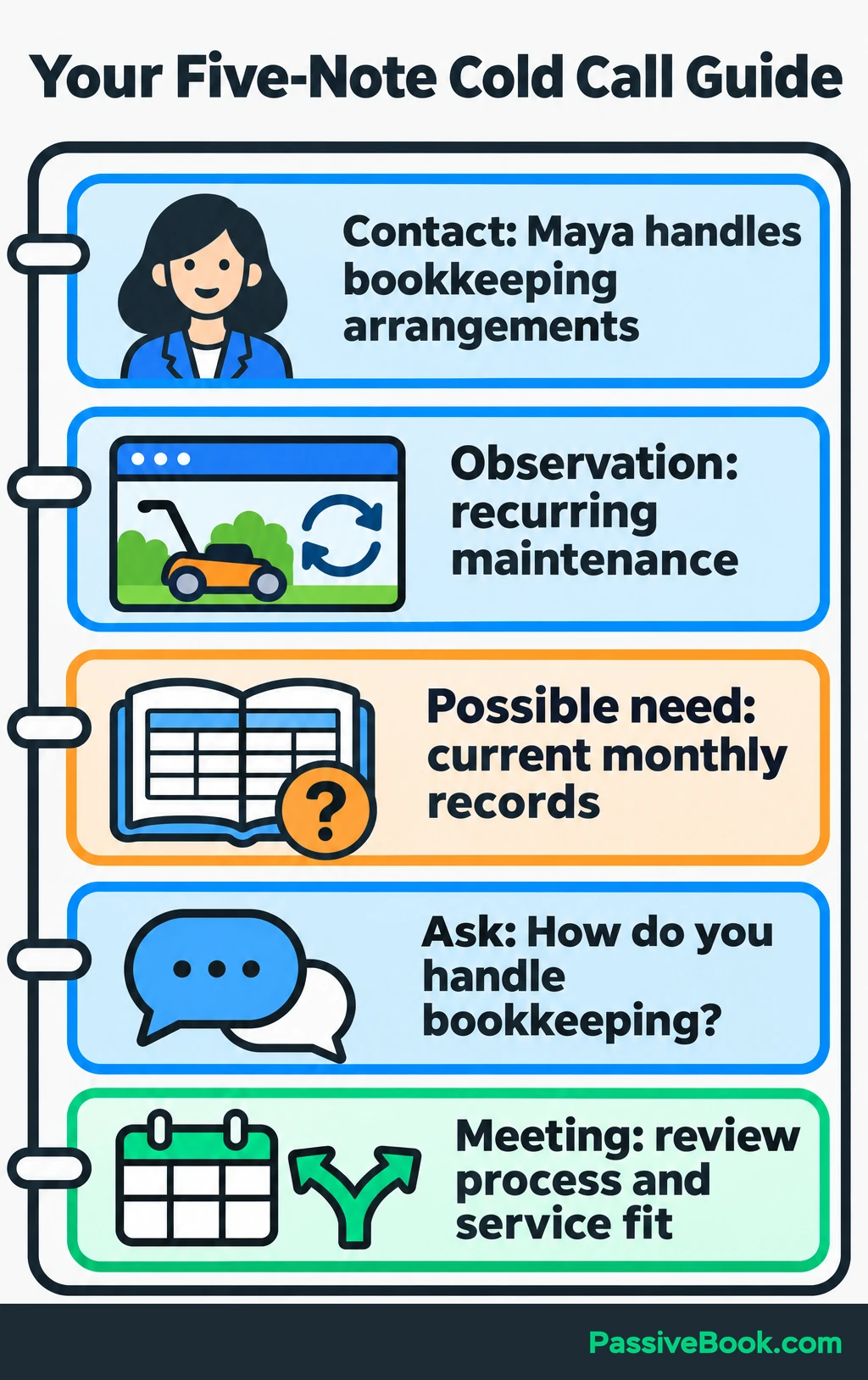
A spreadsheet or your existing customer relationship management system, usually called a CRM, is enough. For Oak Ledger, the preparation could look like this:
| Call Note | What to Capture |
|---|---|
| Contact | Maya; handles bookkeeping arrangements, confirmed by the office |
| Business observation | The company website advertises recurring landscape maintenance |
| Possible need | Keeping monthly records current across ongoing jobs; not yet confirmed |
| Opening question | “How do you handle the bookkeeping at the moment?” |
| Meeting purpose | Review the current process and decide whether monthly support fits |
Keep the service description accurate. Don’t add a customer result, referral, or shared connection because it makes the opener sound warmer.
During my freelancing years, I once prepared a page covering almost every service I could offer. A question about one task sent me searching through my own notes. I had prepared plenty to say, but very little to ask.
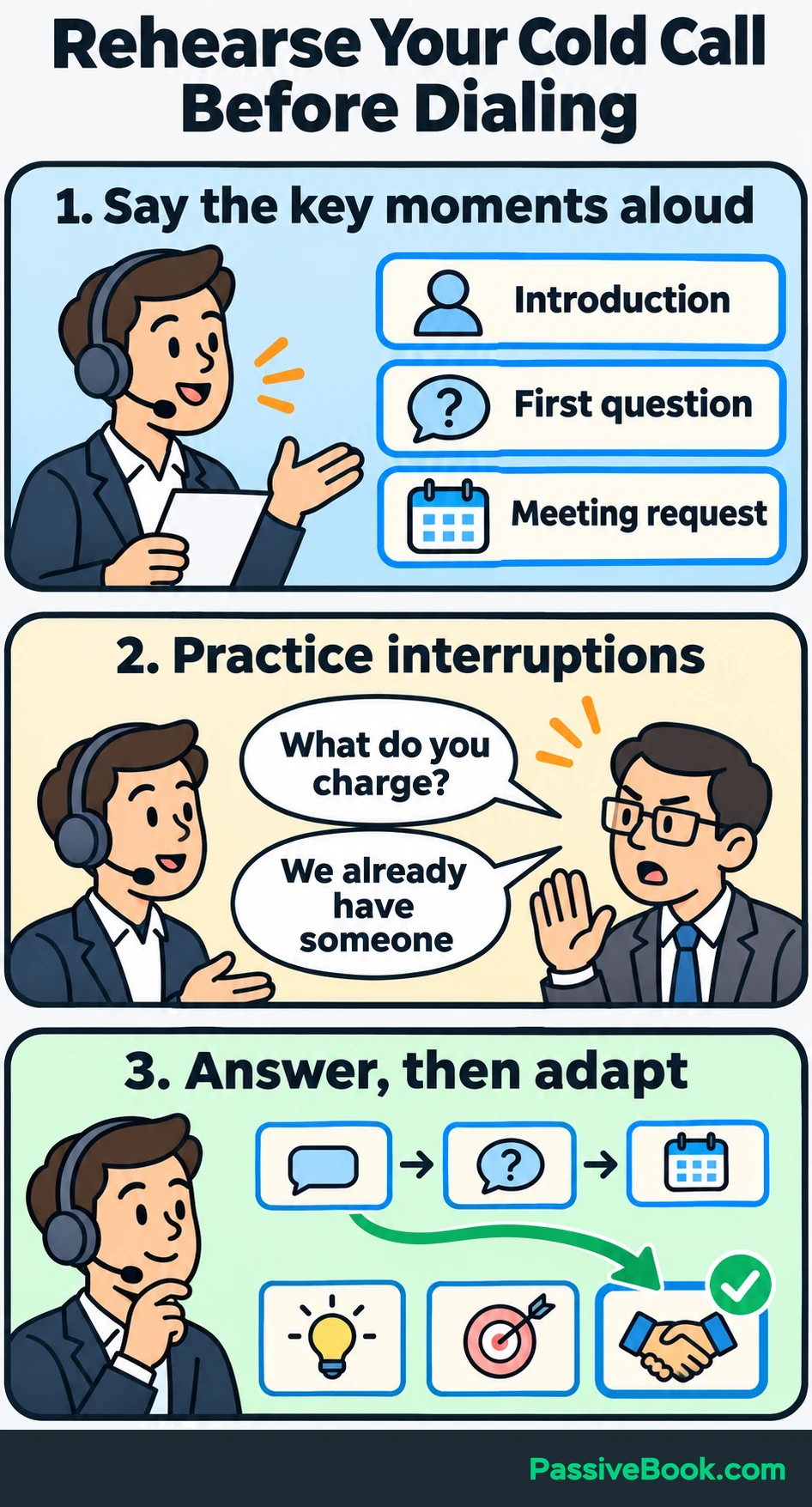
Now I would rehearse the introduction, the first question, and the meeting request aloud. I would also practice interruptions such as “What do you charge?” or “We already have someone.” That reveals awkward wording faster than another silent read.
If you’re struggling to turn your offer into something you can say aloud, AI Sales Conversation Coach can draft your call guide. You can also practice an interruption before trying it with a prospect.

Free AI Sales Conversation Coach




Prepare your list before a focused calling session. Otherwise, each unanswered call becomes an invitation to spend ten minutes researching the next business.
3. Open With Who You Are and Why You Called
When You Reach the Intended Prospect
Give your name, company, and a relevant reason for calling. Then leave room for an answer.
For Oak Ledger:
“Hi Maya, Alex from Oak Ledger. We provide monthly bookkeeping for landscaping companies, and I noticed you offer recurring maintenance. This is a sales call—have you got 30 seconds for why I called?”
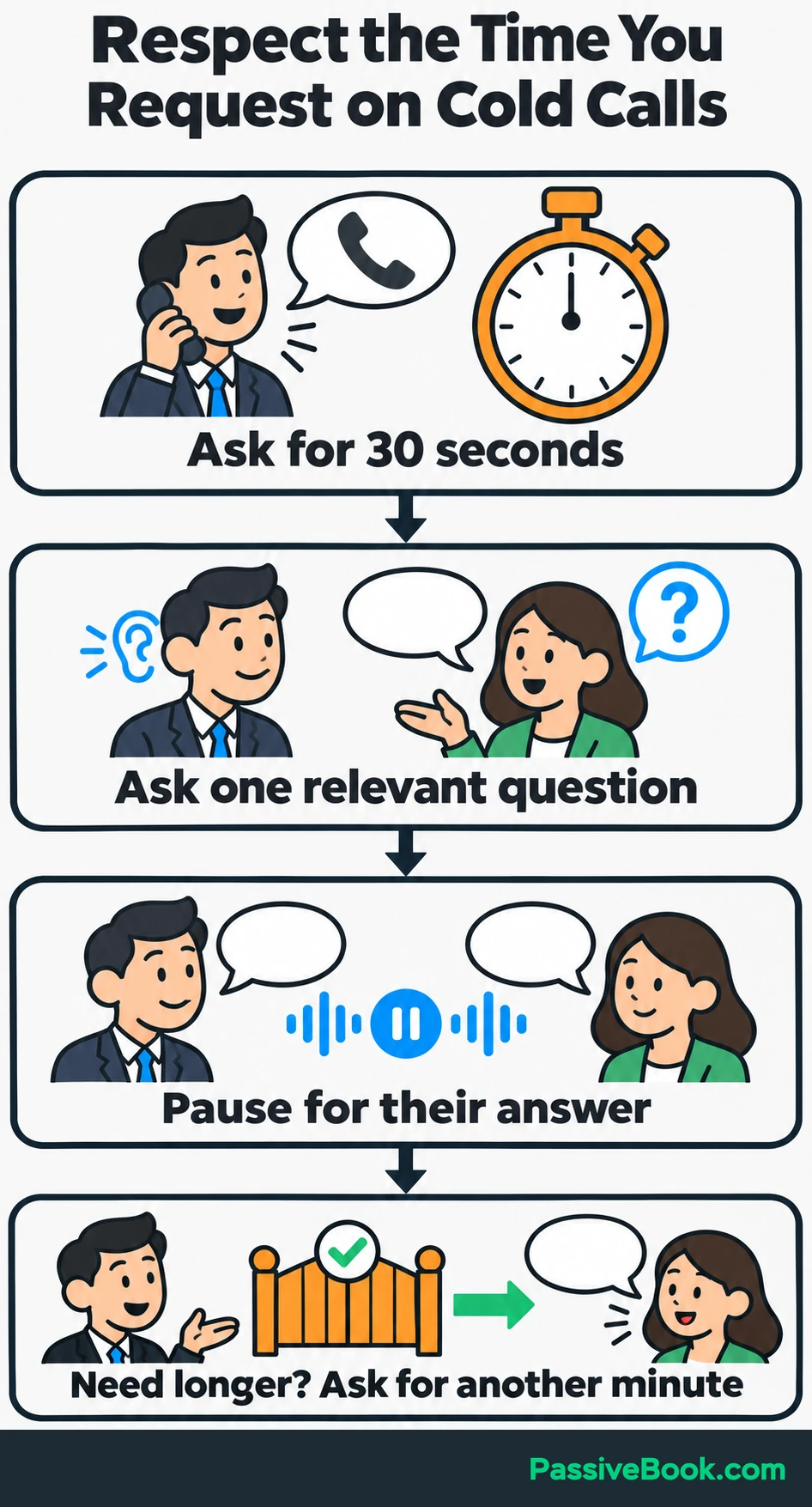
I would use a direct opener like this because it gives the prospect enough information to choose whether to continue. Pretending you’re calling for a friendly catch-up creates a problem before you reach your offer.
After permission, connect the observation to a question:
“How do you handle the bookkeeping for those ongoing maintenance jobs?”
Speak at your normal pace and pause after the question. Silence is where the other person gets to participate.
If they interrupt, answer what they asked. Don’t return to the top of your script like a faulty voicemail system.
Also respect the time you requested. If the first answer opens a useful discussion, ask whether they have another minute before continuing.
When a Receptionist or Colleague Answers
Ask for the person responsible for the work rather than guessing a title.
“Hi, Alex from Oak Ledger. We provide monthly bookkeeping. Who handles your bookkeeping arrangements?”
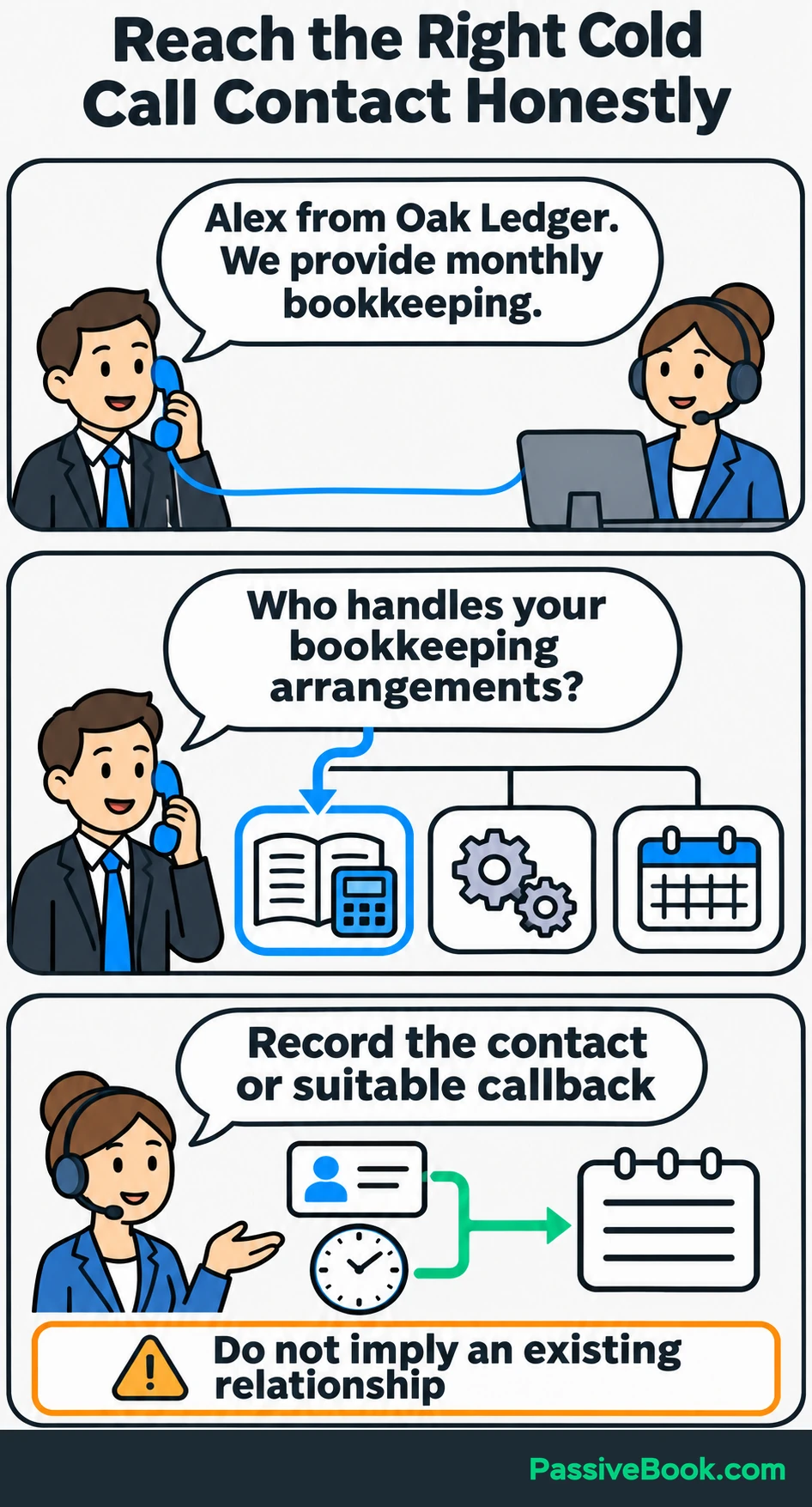
Explain the service plainly if asked. Request the appropriate business contact or a suitable callback time, and record the answer.
Don’t imply that you know the prospect or that they’re expecting your call. The person answering may be able to help you, but they need an honest reason to do so.
4. Find out Whether a Meeting Would Help
Once you reach the right person, learn enough to decide whether a longer conversation has a purpose.
Start with the current process:
“Who handles the books now?”
Then follow their answer:
“How is that arrangement working?”
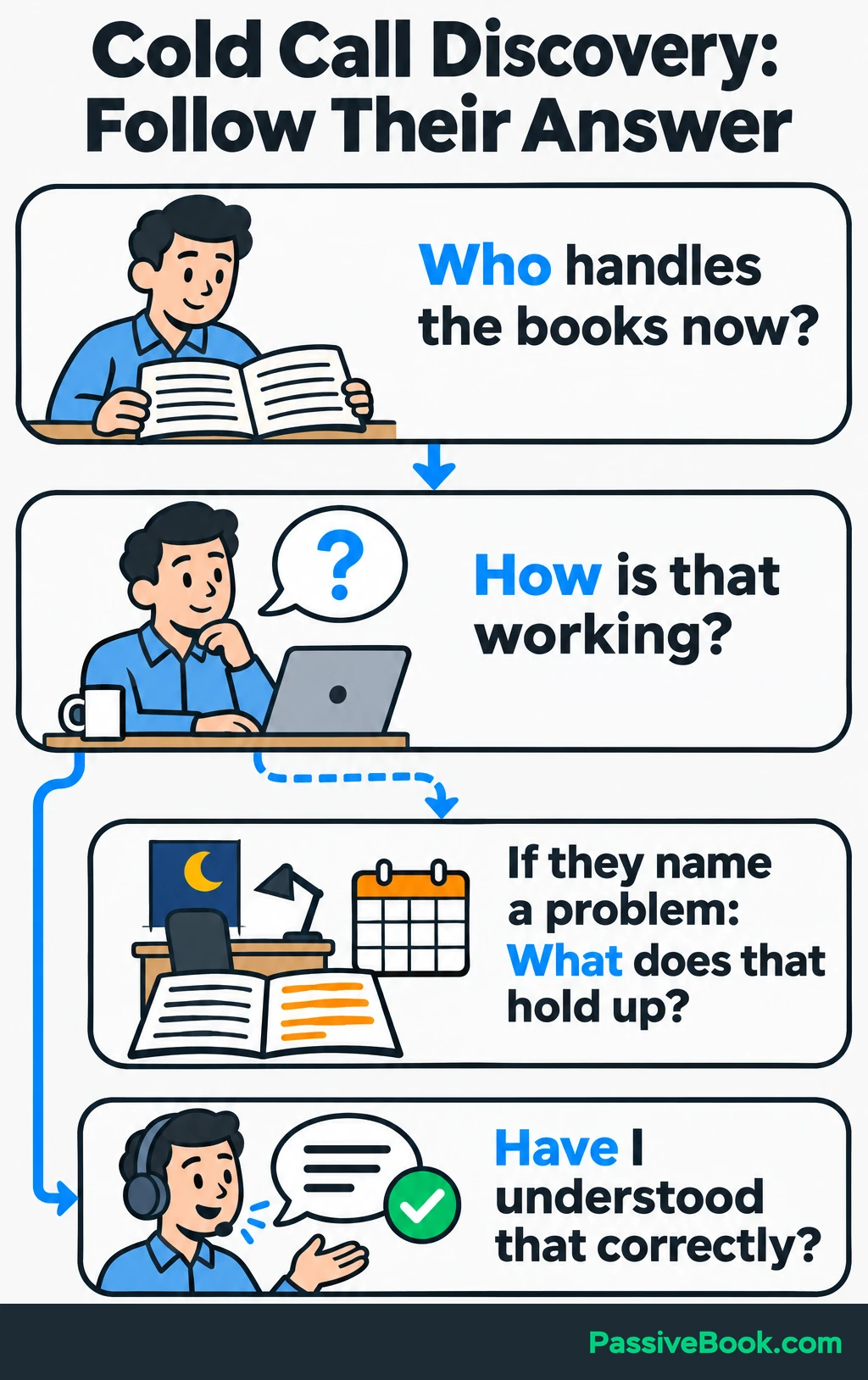
Listen for a problem or goal they identify. If they say the books keep falling behind, ask:
“What does that hold up?”
Their answer might involve delayed reports, evening admin, or nothing they consider urgent. Don’t supply a dramatic consequence for them.
You’re checking three things:
- Service Fit: Can your offer address what they described?
- Priority: Do they want to improve it?
- People Involved: Who would need to join a useful next discussion?
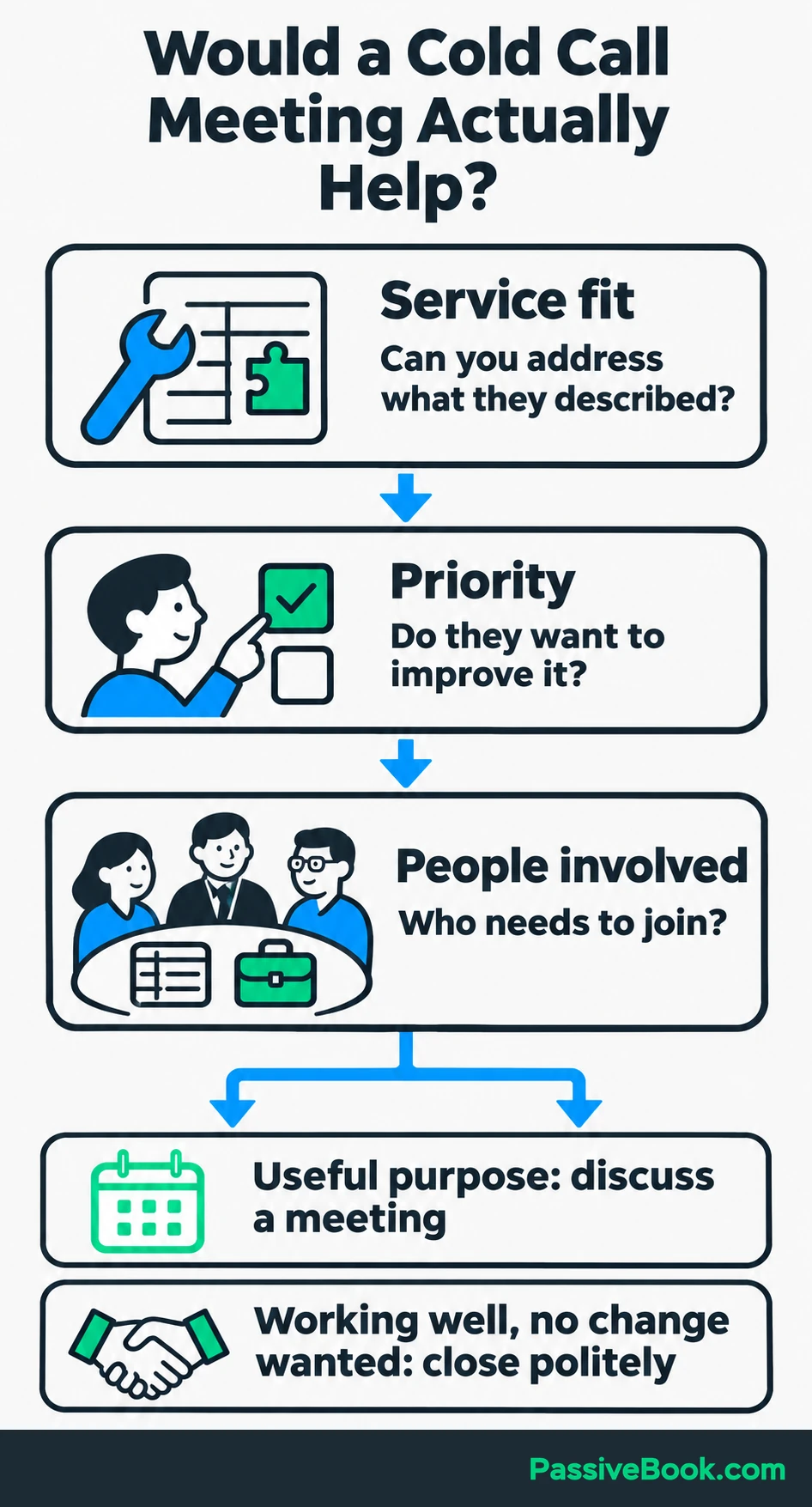
This is still an unexpected call, so keep the questions proportionate. Detailed requirements belong in the meeting.
Before explaining your service, reflect what you heard:
“So finishing the books each month is taking time away from managing jobs. Have I understood that correctly?”
If they confirm, explain the relevant part of your offer. Oak Ledger could say that its monthly service covers the ongoing bookkeeping work they currently handle themselves, then discuss whether reviewing that arrangement would help.
If the process works well and they want nothing changed, close politely. I would rather finish with a clear “no fit” than book a meeting whose only purpose is improving my calendar’s appearance.
5. Handle Objections Without Arguing
A useful response acknowledges what the person said and asks one clarifying question if they remain willing to talk. From there, agree on a suitable next step or end the call.
You do not need a clever comeback for every refusal.
“I’m Busy” or “Call Me Later”
Keep it short:
“Understood. When would a brief call about your bookkeeping arrangements suit?”
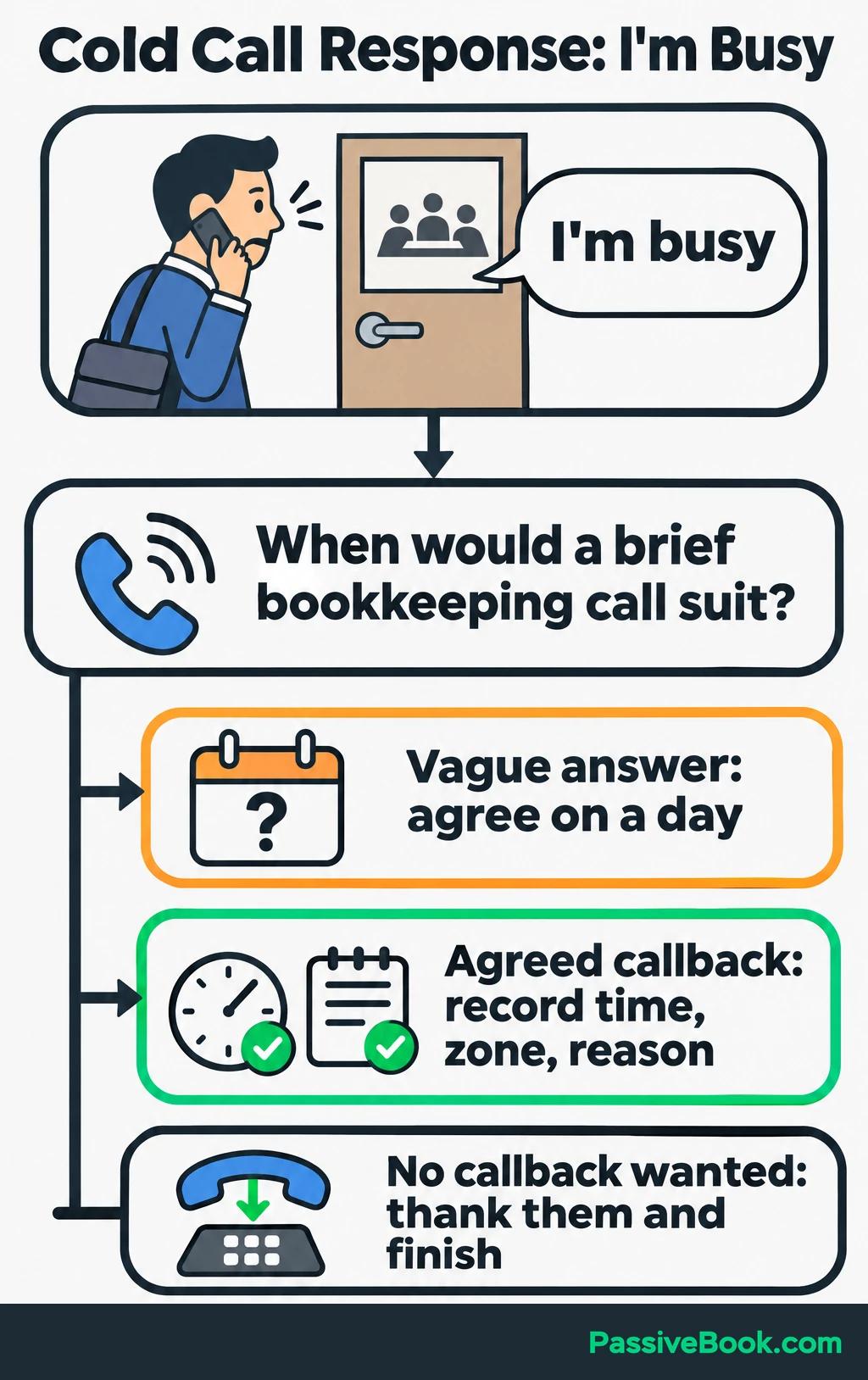
If they give a vague answer such as “next week,” ask whether a particular day works. Record the agreed time, time zone, and reason for calling back.
If they decline a callback, thank them and finish. “Busy” is not permission to keep talking until they prove it.
“Send Me Some Information”
Find out what information would be useful:
“Certainly. Would an overview of the monthly service or details about working with your existing records be more useful?”
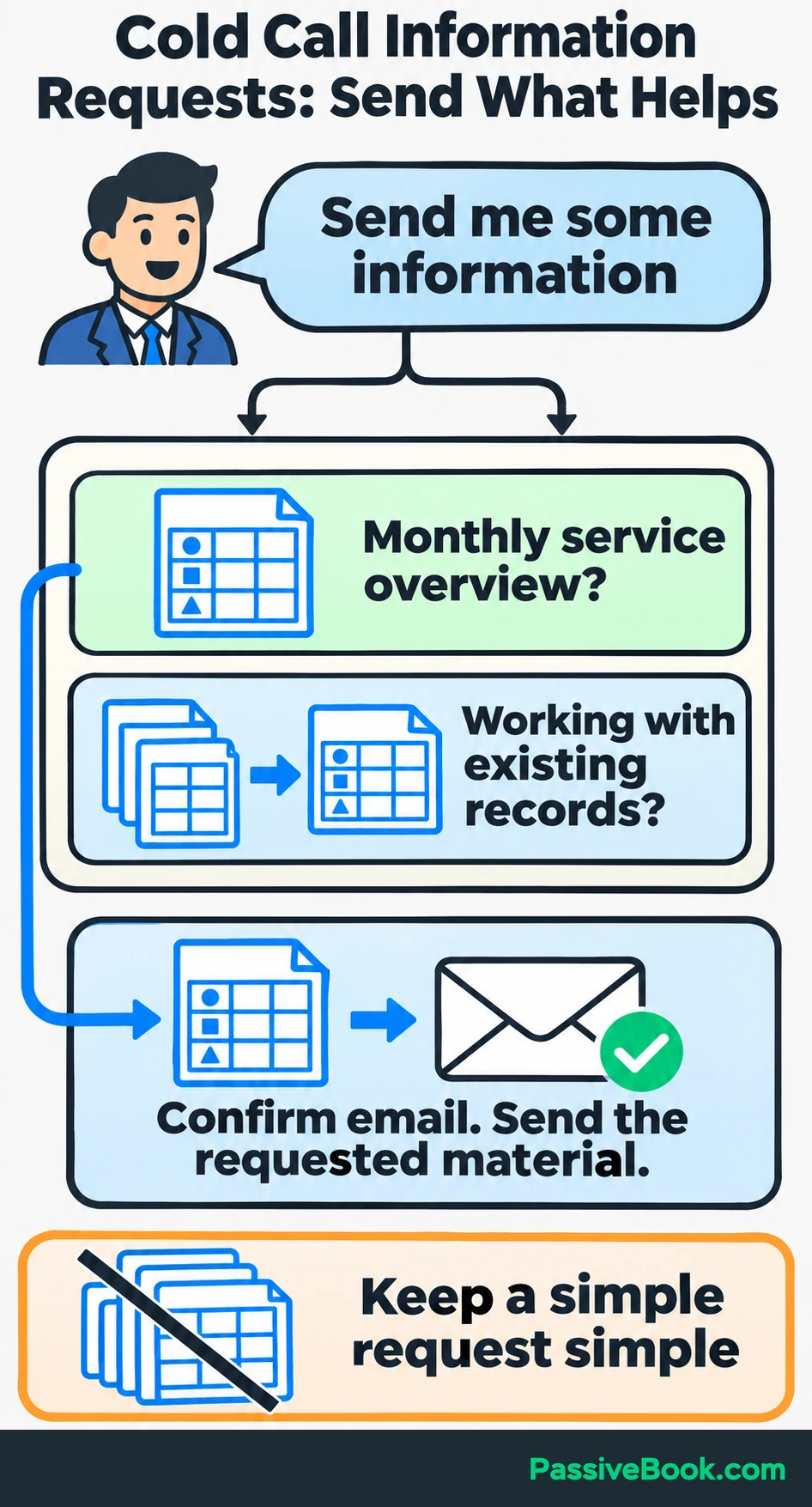
Confirm their email address and whether they want a follow-up.
“Would you like me to follow up after you’ve read it, or would you prefer to get in touch?”
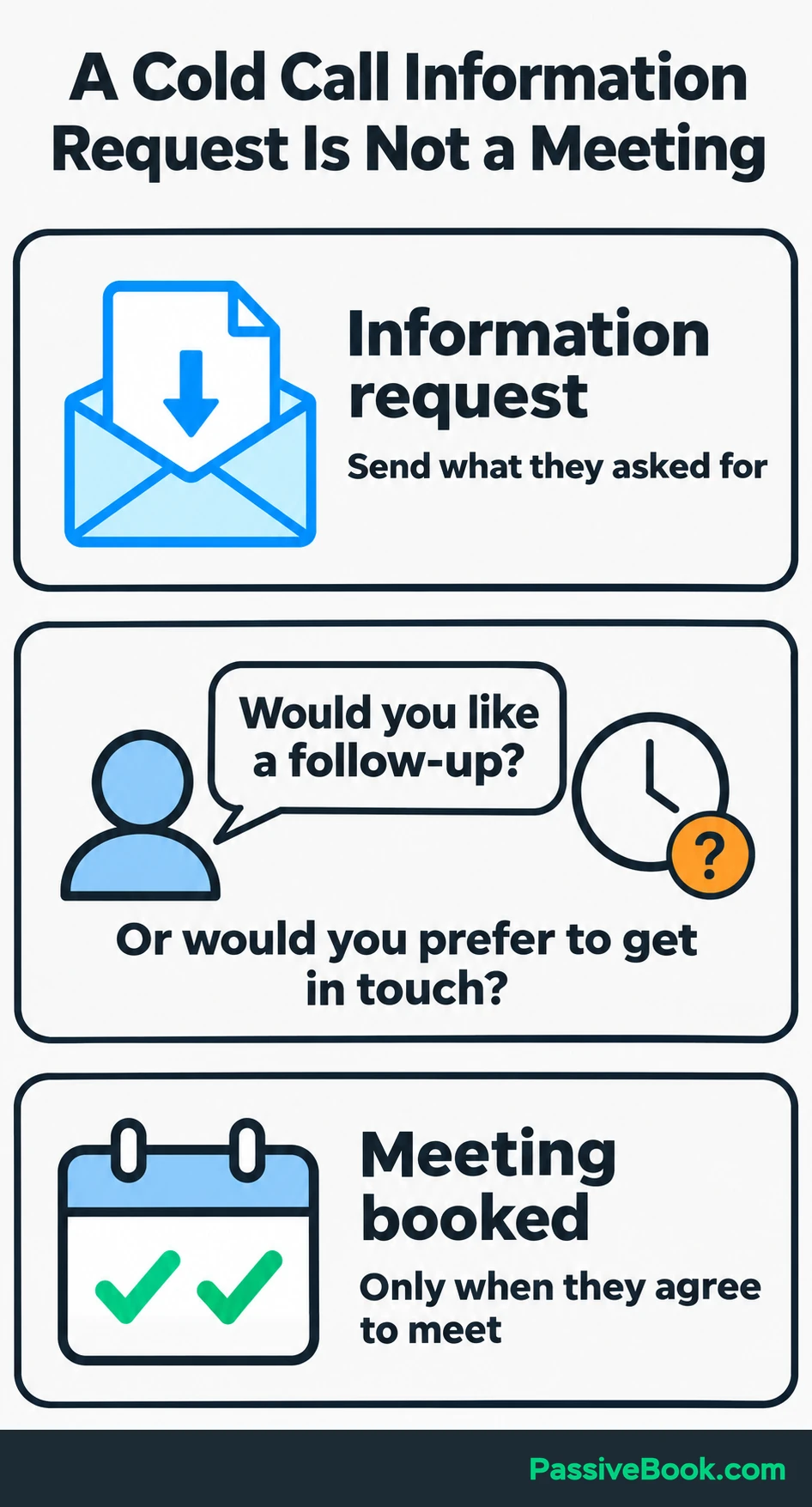
Record this as an information request. It becomes a meeting only when they agree to one.
I would send the requested material with a short note. A brochure, three case studies, and a calendar link can turn a simple request into homework.
“We Already Have Someone” or “There’s No Budget”
An existing provider may mean the need is already covered.
“Understood. Is that working well, or is there anything you want to improve?”
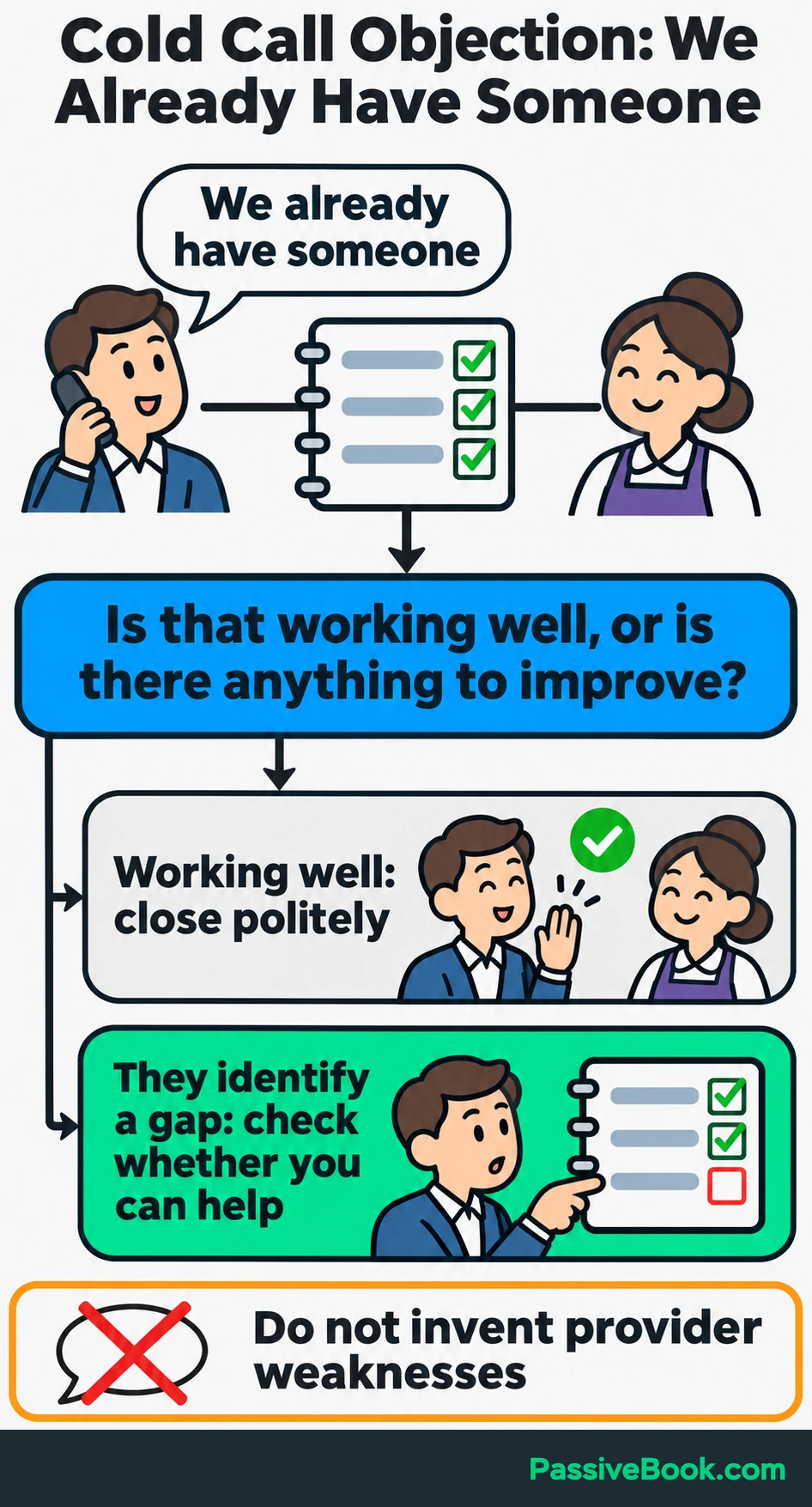
Continue only if they identify a gap your service could address. Don’t invent weaknesses in the other provider’s work.
For budget, ask whether the expense is something they expect to revisit or whether it falls outside their priorities:
“Is this something you expect to review later, or is outside support off the list for now?”
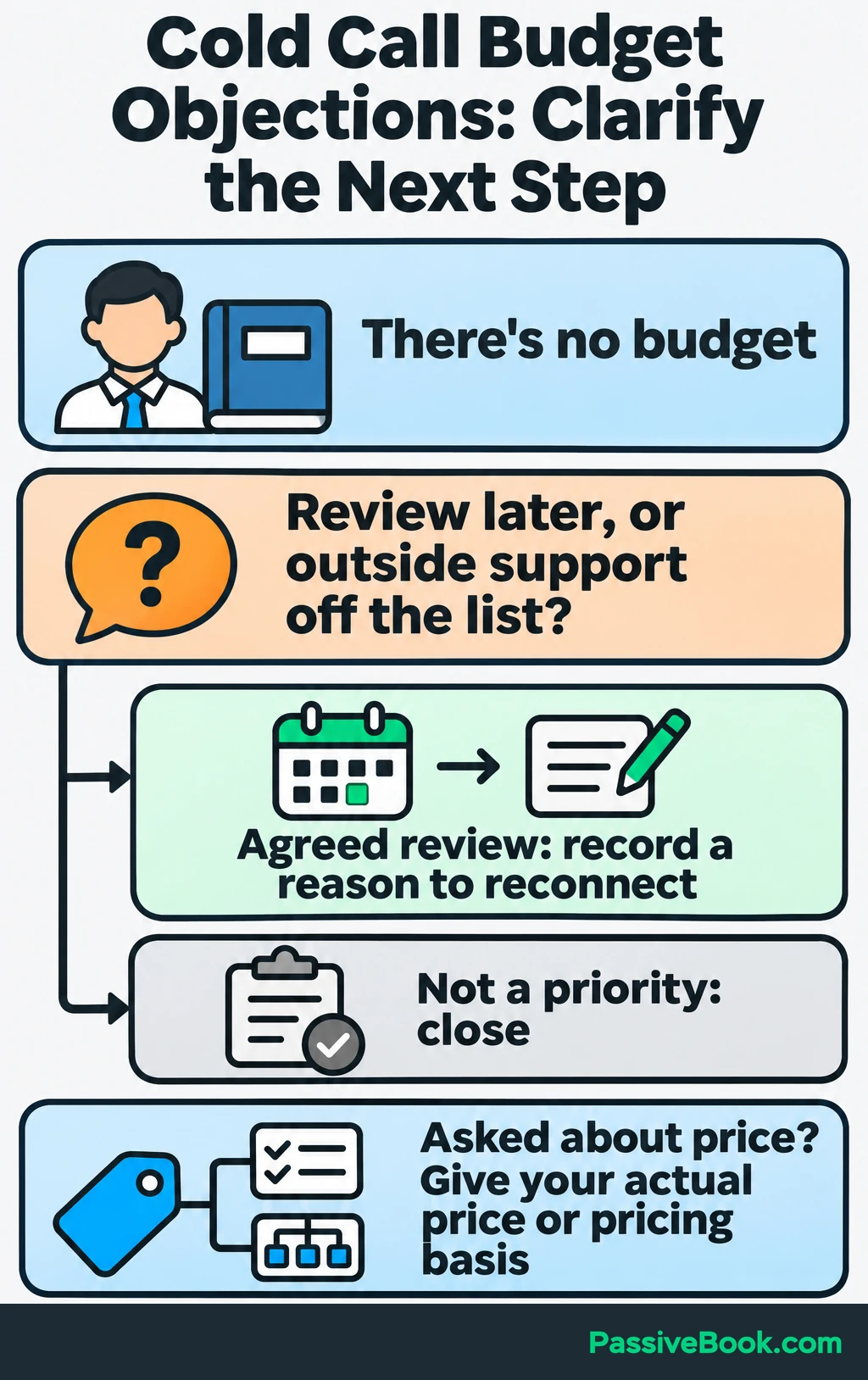
A later contact needs a reason, such as an agreed review period. “Maybe someday” does not need a permanent reminder.
If they ask about price, answer with your actual price or pricing basis. Explain what you need to know to quote accurately. Hiding the cost behind a compulsory meeting makes the meeting harder to trust.
“Not Interested” or “Don’t Call Again”
Accept a clear refusal:
“Understood. Thanks for your time.”
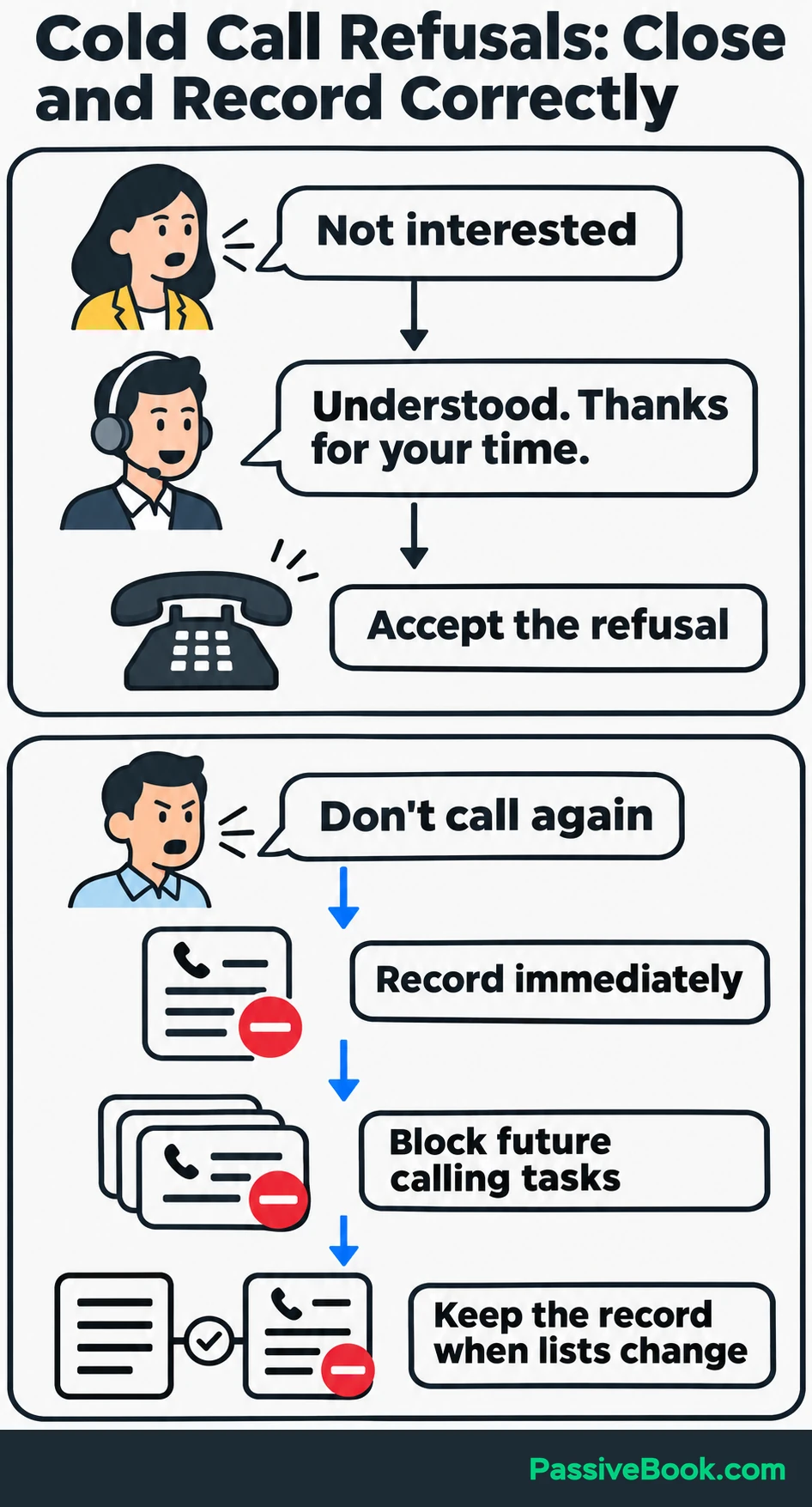
Record a no-further-calls request immediately and block the number from future calling tasks. Keep the record so the number cannot slip back in through another list.
Don’t ask them to defend their decision.
6. Ask for a Meeting With a Specific Purpose
Ask after the prospect identifies a relevant need or goal. Connect that need to a decision the next conversation will help them make.
For Oak Ledger:
“You mentioned that finishing the books takes time away from managing jobs. Would a 15-minute conversation to review your process and see whether our monthly service fits be useful?”
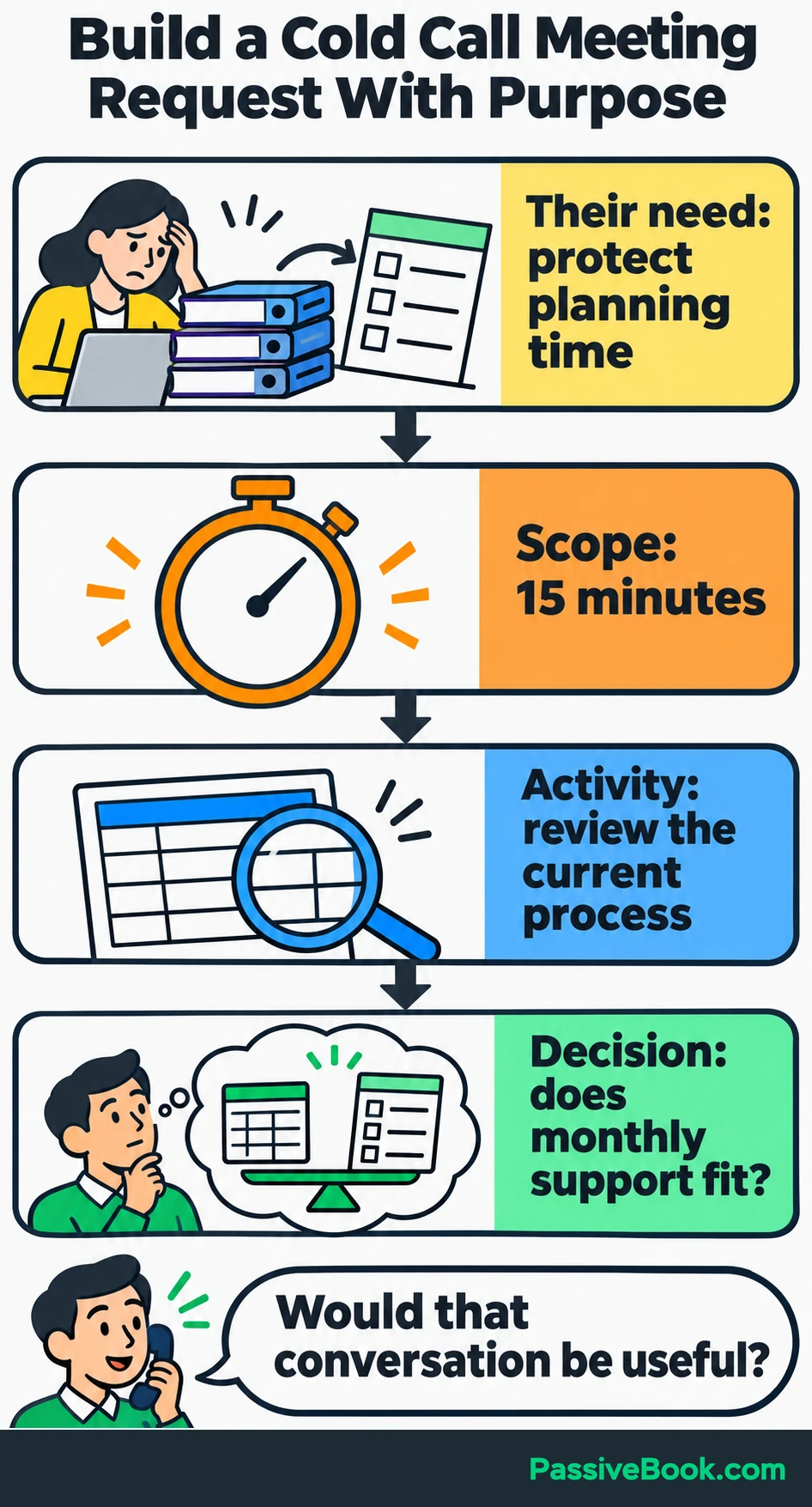
That gives them a reason to meet and a clear scope.
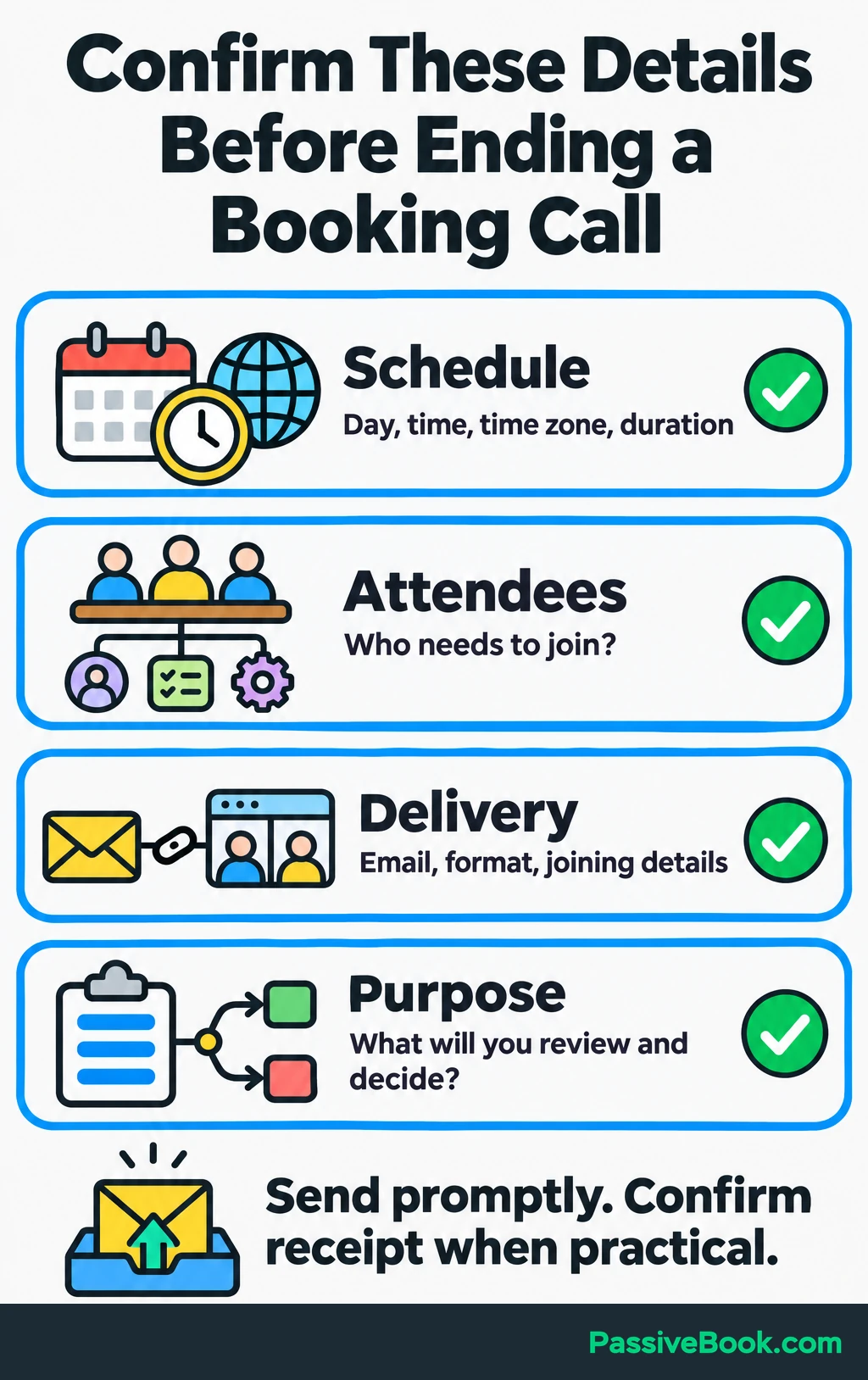
After agreement, offer two available times or ask what suits them. Confirm:
- Schedule: Date, time, time zone, and duration.
- Attendees: The prospect and anyone else needed for the discussion.
- Delivery: Email address, meeting format, and joining details.
- Purpose: What you will review and what both sides should be able to decide.
Here is a complete sample call showing how those pieces can fit together. The prospect’s answers are illustrative; follow the answers you actually receive.
Alex: “Hi Maya, Alex from Oak Ledger. We provide monthly bookkeeping for landscaping companies, and I noticed you offer recurring maintenance. This is a sales call—have you got 30 seconds for why I called?”
Maya: “Okay.”
Alex: “How do you handle the bookkeeping for those ongoing maintenance jobs?”
Maya: “I do it myself, usually after work.”
Alex: “How is that working for you?”
Maya: “I keep putting it off, then spend an evening catching up.”
Alex: “Have you got another minute to talk about that?”
Maya: “Yes.”
Alex: “What does catching up get in the way of?”
Maya: “Planning the next week’s jobs.”
Alex: “So you want the books kept current without losing that planning time. Have I got that right?”
Maya: “Yes.”
Alex: “Our monthly service covers that ongoing bookkeeping work. Would a 15-minute call to review your process and see whether it fits be useful?”
Maya: “Yes, I’d like to understand what’s included.”
Alex: “Would [option one] or [option two] suit you?”
Maya: “[Chooses a time.]”
Alex: “Great. That’s [date and time], in [time zone], for 15 minutes by video. Should anyone else join?”
Maya: “Just me.”
Alex: “What email address should I send the invitation to?”
Maya: “[Provides address.]”
Alex: “Thanks. I’ll send the joining link and an agenda covering your current process, the catch-up work, and what our service includes.”
Send the invitation promptly. Confirm receipt during the call when practical.
If they hesitate, ask what they need before committing. A service overview may be the right next step. Don’t book a meeting and hope its purpose appears later.
7. Follow up According to the Call Outcome
When Nobody Answers
An unanswered call tells you little about interest.
Leave a concise voicemail when appropriate:
“Hi Maya, Alex from Oak Ledger. I’m calling about monthly bookkeeping for your landscaping business. You can reach me on [number]. Again, that’s [number].”
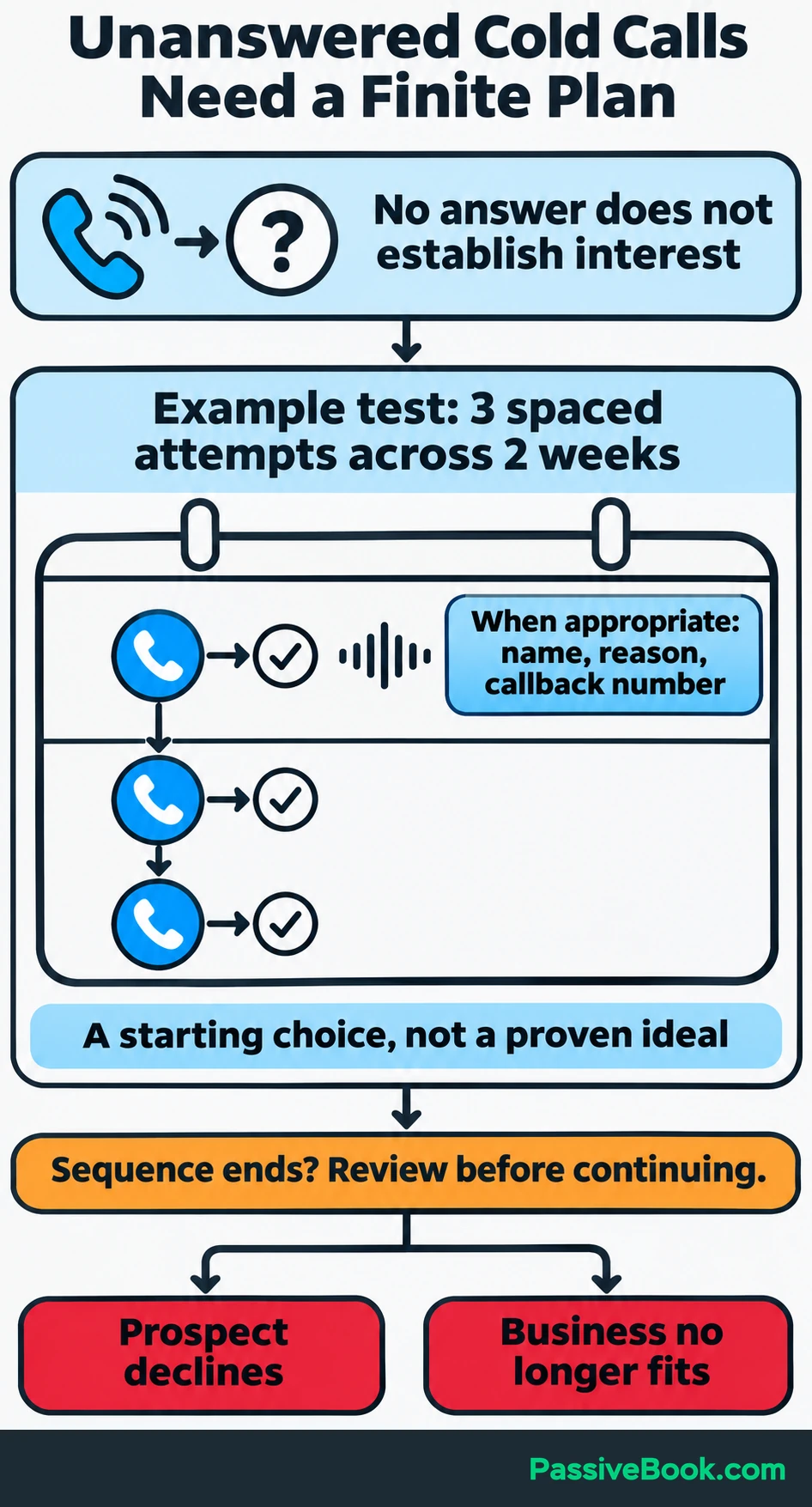
Set a finite sequence of spaced attempts. For an initial test, I would use three attempts across two weeks, within permitted local calling times, then review whether further effort is justified. That is a starting choice, not a proven ideal schedule.
Record each attempt. Stop when the sequence ends, the business no longer fits, or the prospect declines.
When Information or a Callback Is Requested
Send what they asked for and repeat only the next action they agreed to.
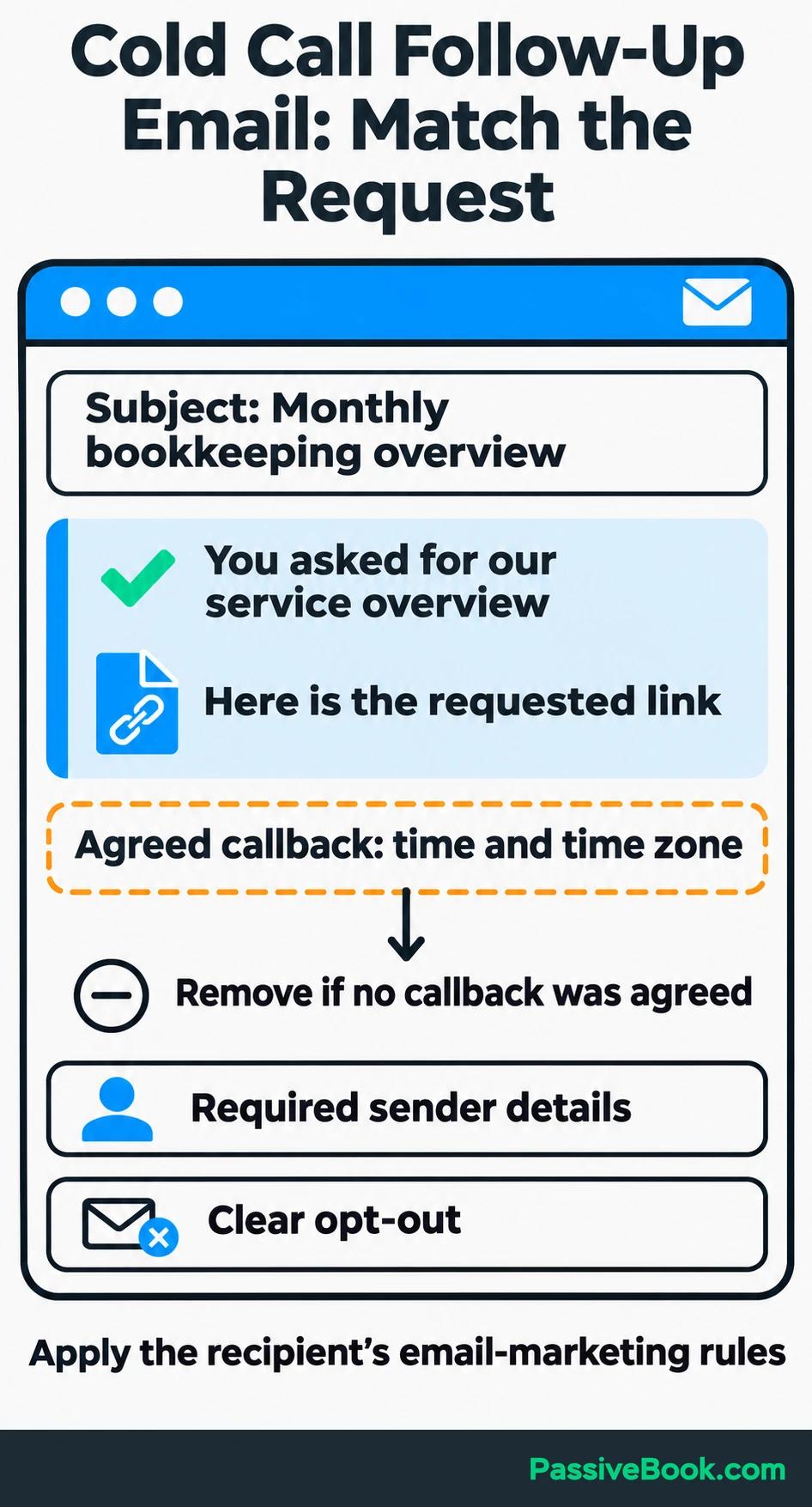
For example:
Subject: Oak Ledger monthly bookkeeping overview
Hi Maya,
You asked for an overview of our monthly bookkeeping service. Here it is: [link].
It explains the work included and how we use your existing records.
As agreed, I’ll call on [date] at [time and time zone] to answer your questions.
Thanks,
Alex
Oak Ledger
[Contact details and required sender information]
To stop marketing emails from us, reply “unsubscribe.”
Remove the callback sentence when no callback was agreed. Replace the placeholders before sending.
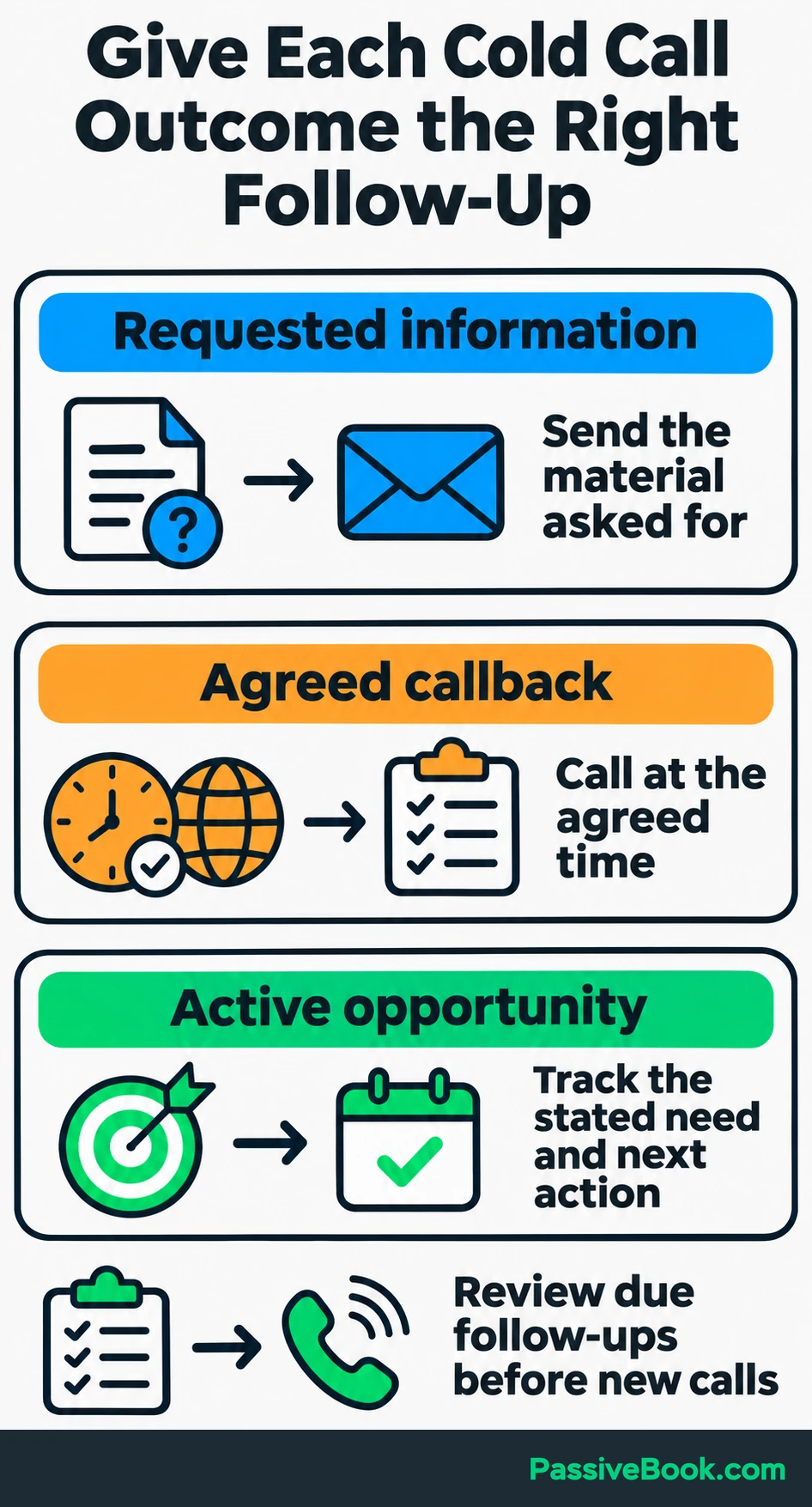
Apply the recipient’s email-marketing rules. In the U.S., commercial B2B email is covered by CAN-SPAM requirements, including accurate sender details, a valid postal address, and a clear opt-out. In the UK, rules differ for corporate recipients and sole traders. A request for one document does not justify an unrelated email sequence.
Review due follow-ups before starting another calling session. Keep requested information, agreed callbacks, and active opportunities as separate outcomes so each gets the right action.
When a Meeting Is Booked
Send a short reminder with the issue discussed, the purpose, and the joining details:
“We’re meeting at [time and time zone] to review your monthly bookkeeping process and discuss whether Oak Ledger fits. Here’s the joining link: [link].”
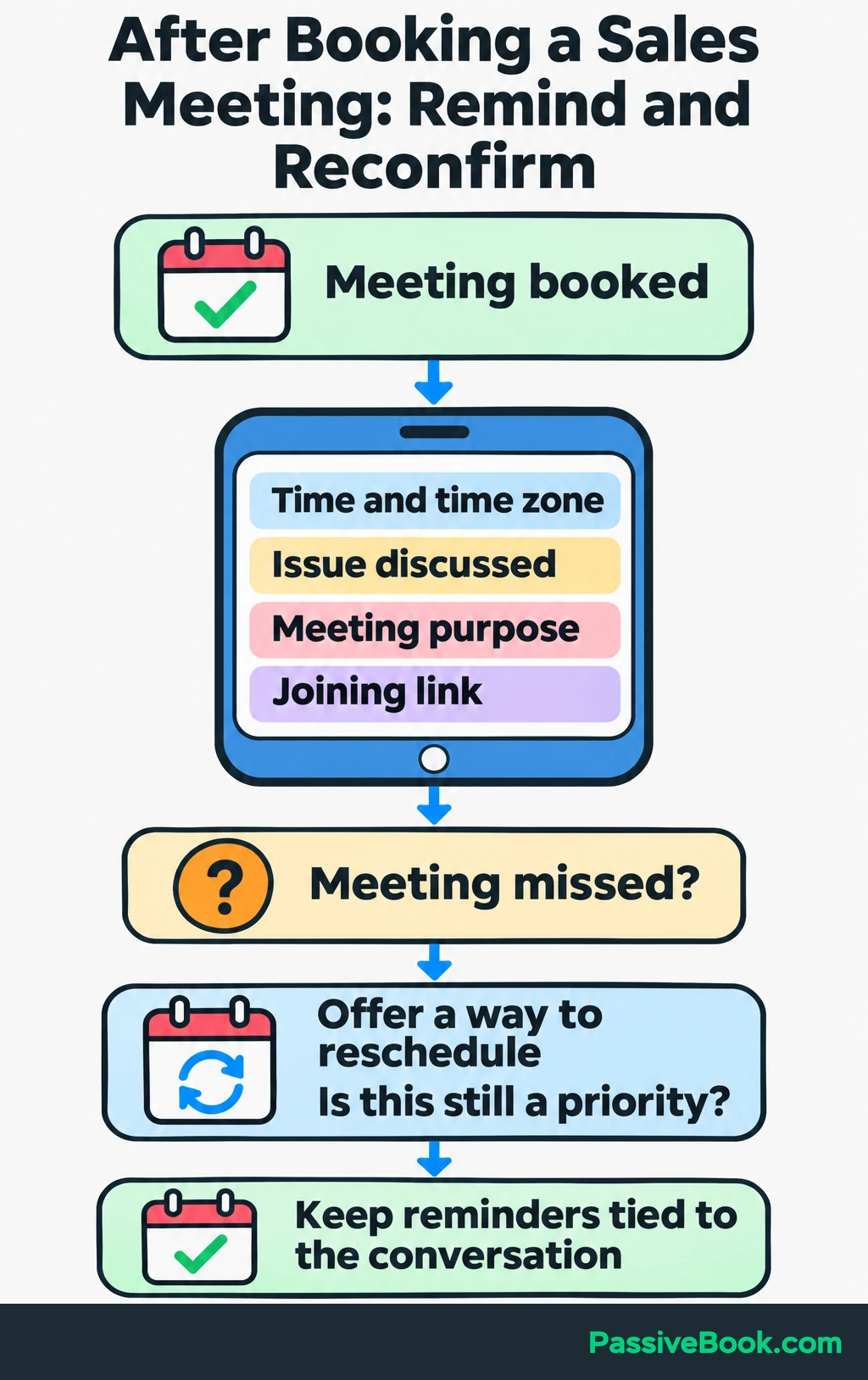
If they miss the meeting, offer a simple way to reschedule and ask whether the topic remains a priority. Skip the guilt.
Use your calendar or existing CRM for reminders and tasks. I would automate that admin once the process works, while keeping each message tied to what the prospect actually said.
8. Improve the Stage That Loses Meetings
Track the path from dialing to a meeting that actually happens. A high call count alone cannot tell you whether the work is useful.
Keep one row per call, with these columns:
| Tracking Field | What to Record |
|---|---|
| Company and contact | Business name, person, role, and number dialed |
| Call date and local time | When the recipient received the attempt |
| Outcome | No answer, wrong number, receptionist, intended-prospect conversation, or refusal |
| Stated need or objection | Their actual issue or response, in plain words |
| Meeting status | None, booked, held, canceled, or missed |
| Next action and due date | Requested document, agreed callback, meeting reminder, or no further contact |
Count conversations with intended prospects separately from receptionist conversations. Count a booking as qualified only when the business fits your offer, the prospect has a relevant need or goal, and both of you understand why you’re meeting. Count each booking once, even if it appears in several call records.
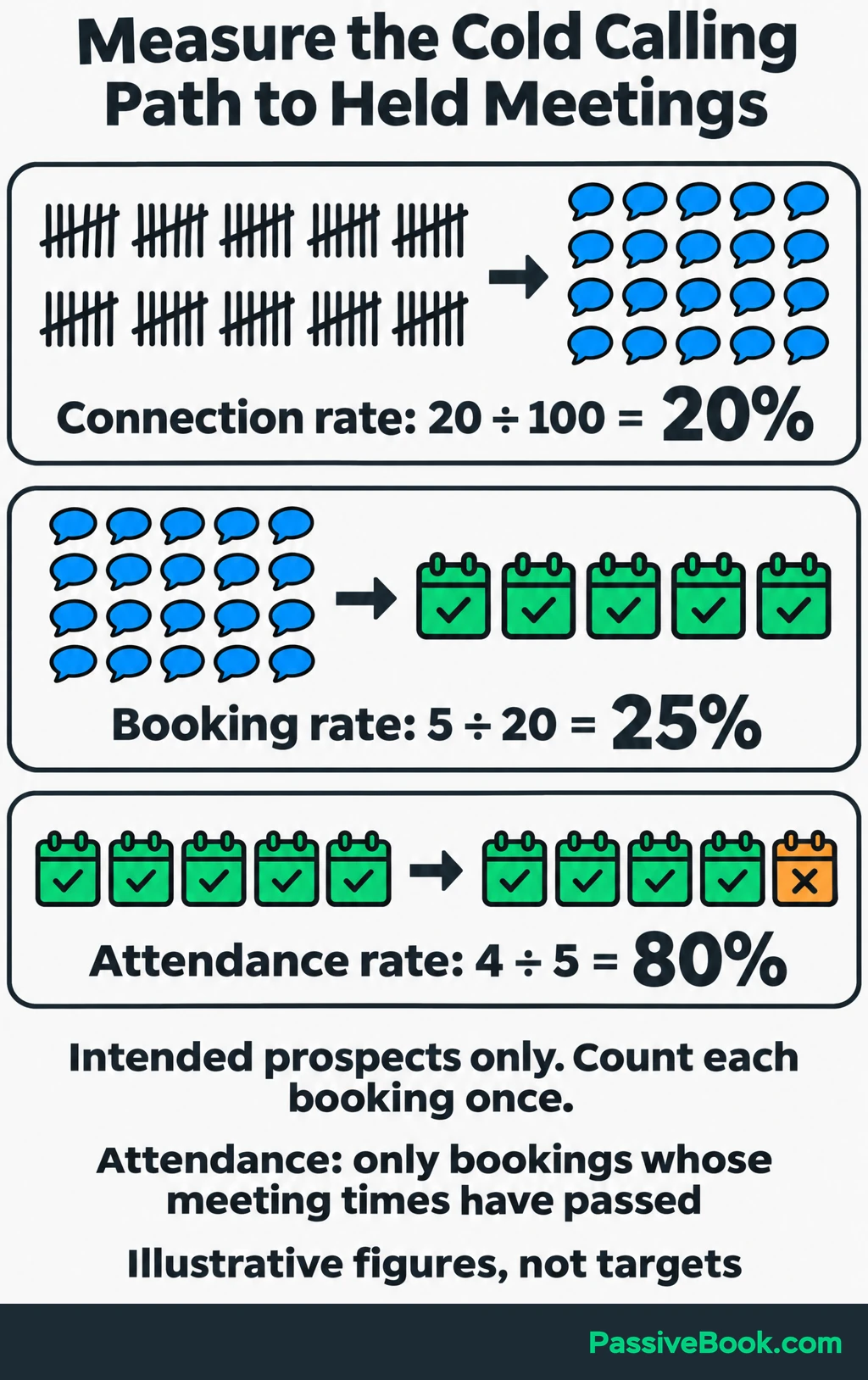
Three rates help locate the weak point:
- Connection Rate: Intended-prospect conversations divided by all call attempts.
- Booking Rate: Qualified meetings booked divided by those intended-prospect conversations.
- Attendance Rate: For qualified bookings whose scheduled dates have passed, divide those that resulted in a held meeting by all bookings in that group.
For illustration, suppose one Oak Ledger batch produces 100 attempts, 20 intended-prospect conversations, and five qualified bookings. After all five scheduled meeting dates have passed, four meetings have happened.
| Measure | Calculation | Result |
|---|---|---|
| Connection rate | 20 conversations ÷ 100 attempts | 20% |
| Booking rate | 5 qualified bookings ÷ 20 conversations | 25% |
| Attendance rate | 4 meetings held ÷ 5 due bookings | 80% |
These are sample figures, not targets.
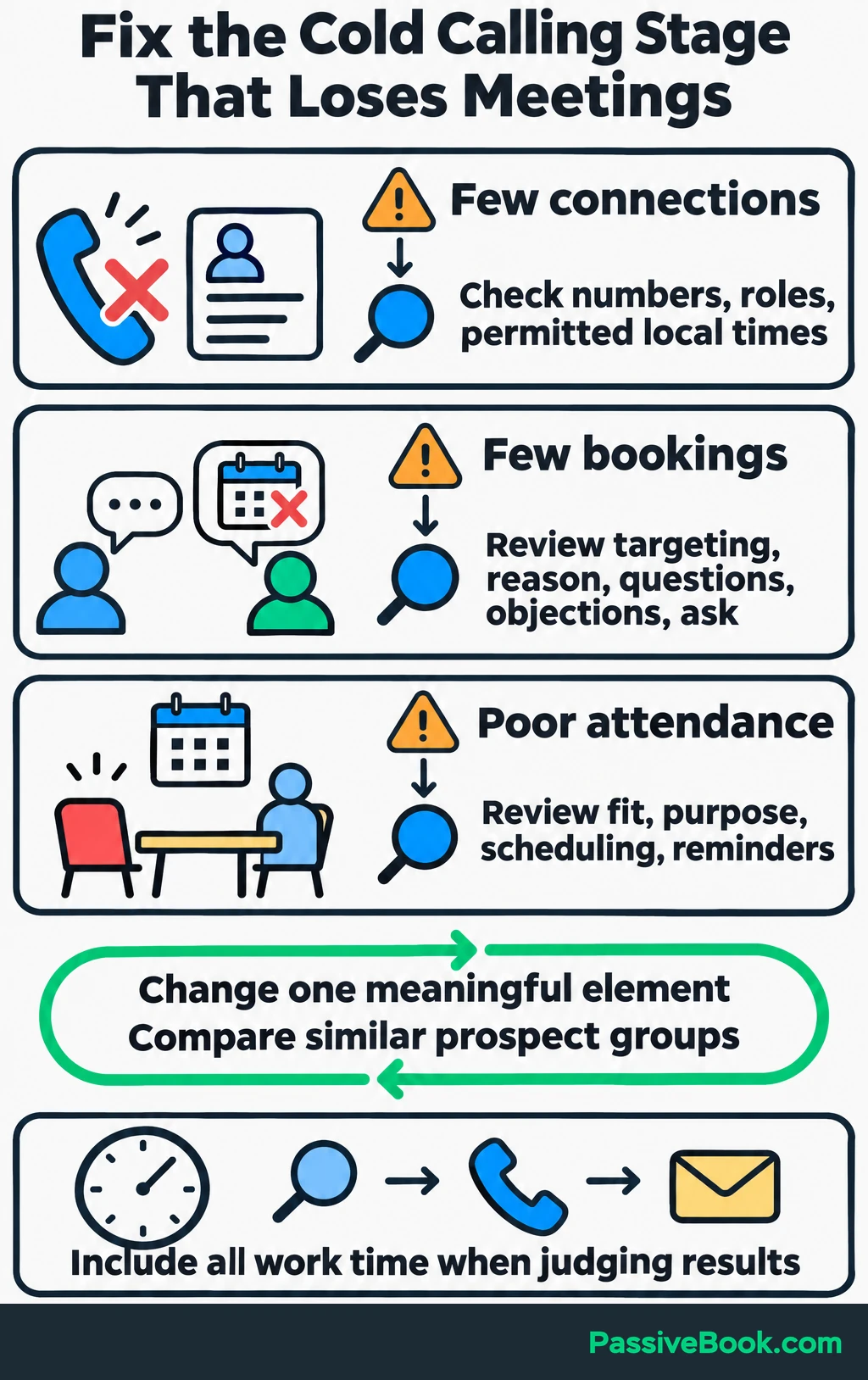
Match your next change to the weak stage:
- Few Connections: Check number accuracy, contact roles, and permitted local calling times.
- Few Bookings: Review targeting, your reason for calling, the questions you ask, recurring objections, and the meeting request.
- Poor Attendance: Review qualification, the agreed purpose, scheduling accuracy, and reminders.
Practice the moment that keeps breaking down and change one meaningful element at a time across similar prospect groups.
Finally, count research and follow-up time alongside calling time. I would judge the channel by qualified meetings held, opportunities created, and the work required to produce them. Five bookings that go nowhere are five bookings that go nowhere, however attractive the report looks.
What Next?
Choose ten suitable businesses and prepare one accurate reason to call each. Write your opener, first question, and meeting purpose, then rehearse them aloud before dialing.
Use the social buttons to share this guide with someone who’s putting a calling routine together.
Which part of the call feels hardest to handle naturally? Leave your answer in the comments, along with any other questions.
Share this post with your friends & followers:

