You have a product ready to sell and an hour to work on promotion. AI gives you ten headlines, five emails, and a month of posts. Now you have more material to sort through, but no clear campaign.
That can eat the evening you meant to spend reaching customers. And if the posts promise something your product page never explains, more content only spreads the confusion. The workflow below turns those disconnected drafts into a campaign you can launch, with a tested buying path and results that show what deserves another hour.
1. Define the Offer and Campaign Goal
Start by deciding what you want someone to do. Choose one primary action: buy a product, book a service, request a quote, or join your email list.
Then describe what they receive. “Get more engagement” leaves too much room for a campaign that looks busy and sells nothing.
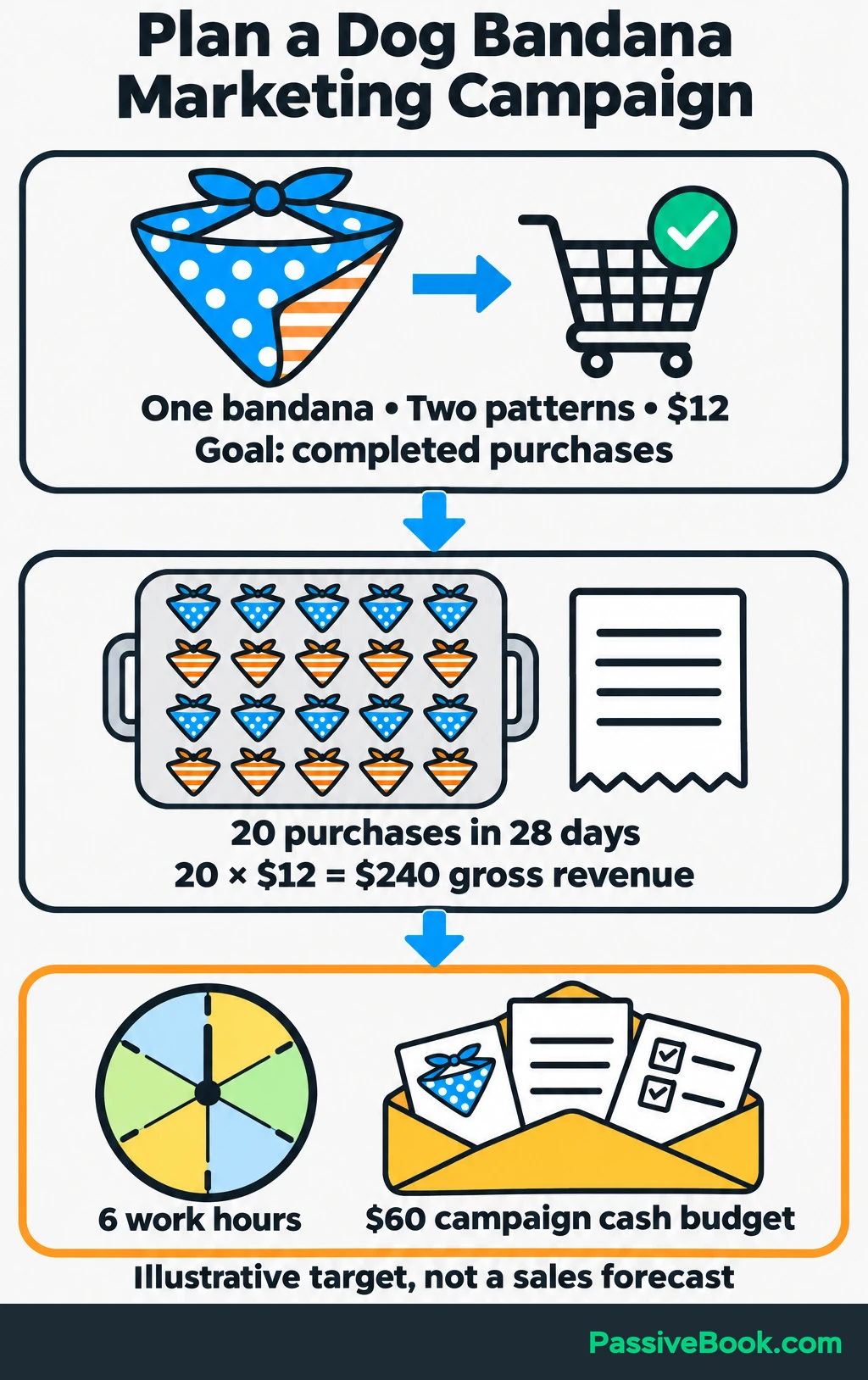
Throughout this guide, imagine you run a dog-accessories shop promoting a $12 reversible dog bandana. You have product photos, a Pinterest account, and an existing permission-based email list. The product details, targets, costs, copy, and results below are illustrations.
Your starting plan could be:
- Offer: One reversible dog bandana with two patterns.
- Primary Action: Complete a purchase.
- Target: Sell 20 bandanas in 28 days.
- Revenue Target: Twenty purchases of one $12 bandana produce $240 in gross product revenue, before costs, fees, and refunds.
- Resource Limit: Six hours of work and a $60 campaign cash budget.
- Review Points: Check delivery and checkout after launch, review email response after sending, and assess campaign progress on day 28.
Use comparable past results to set your target. Without that history, treat the target as a starting assumption and limit what you commit. It is a test budget, not a sales forecast.
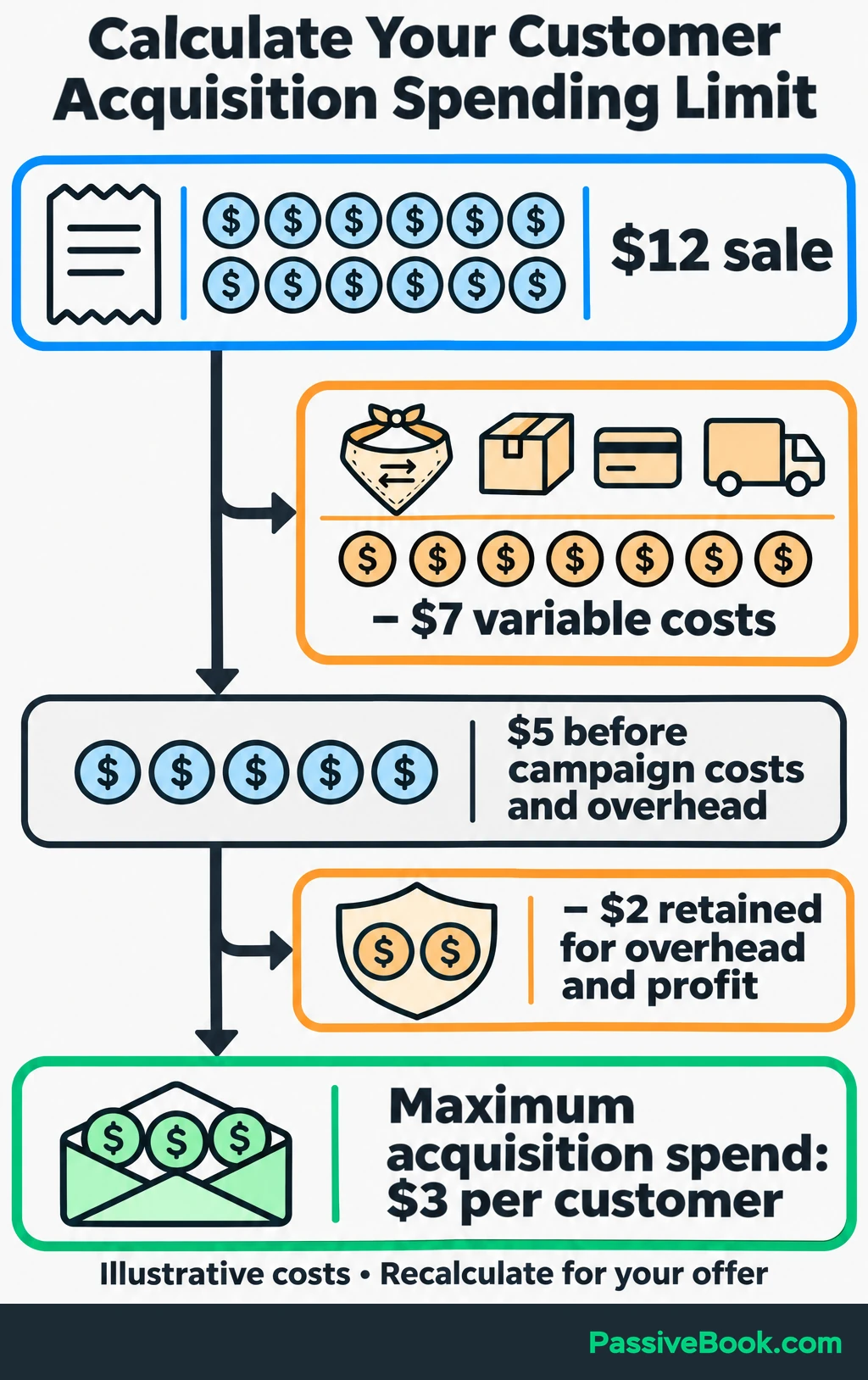
Before buying traffic, work out what you can afford to spend on a customer. Subtract the costs that come with each sale, including the product, packaging, payment fees, and shipping you cover.
For example, if those costs total $7, a $12 sale leaves $5 before campaign costs and overhead. If you want to retain $2 toward overhead and profit, your acquisition spending cannot exceed $3 per customer.
I would skip paid promotion until that calculation makes sense. A cheap click can still produce an expensive sale.
2. Find the Customer Problem Worth Building Around
AI needs real customer material before it can help you choose a useful message.
Collect questions from product enquiries, reviews, support messages, surveys, and conversations. Remove names, contact details, and unnecessary private information, then number the notes so you can check the AI’s interpretation.
Use this prompt:
Using only these customer notes, group recurring buying situations, desired outcomes, objections, and useful customer language. Cite the note supporting each theme. Separate direct statements from inferences and list unanswered questions. Do not invent quotations or estimate how common a concern is beyond these notes: [notes].
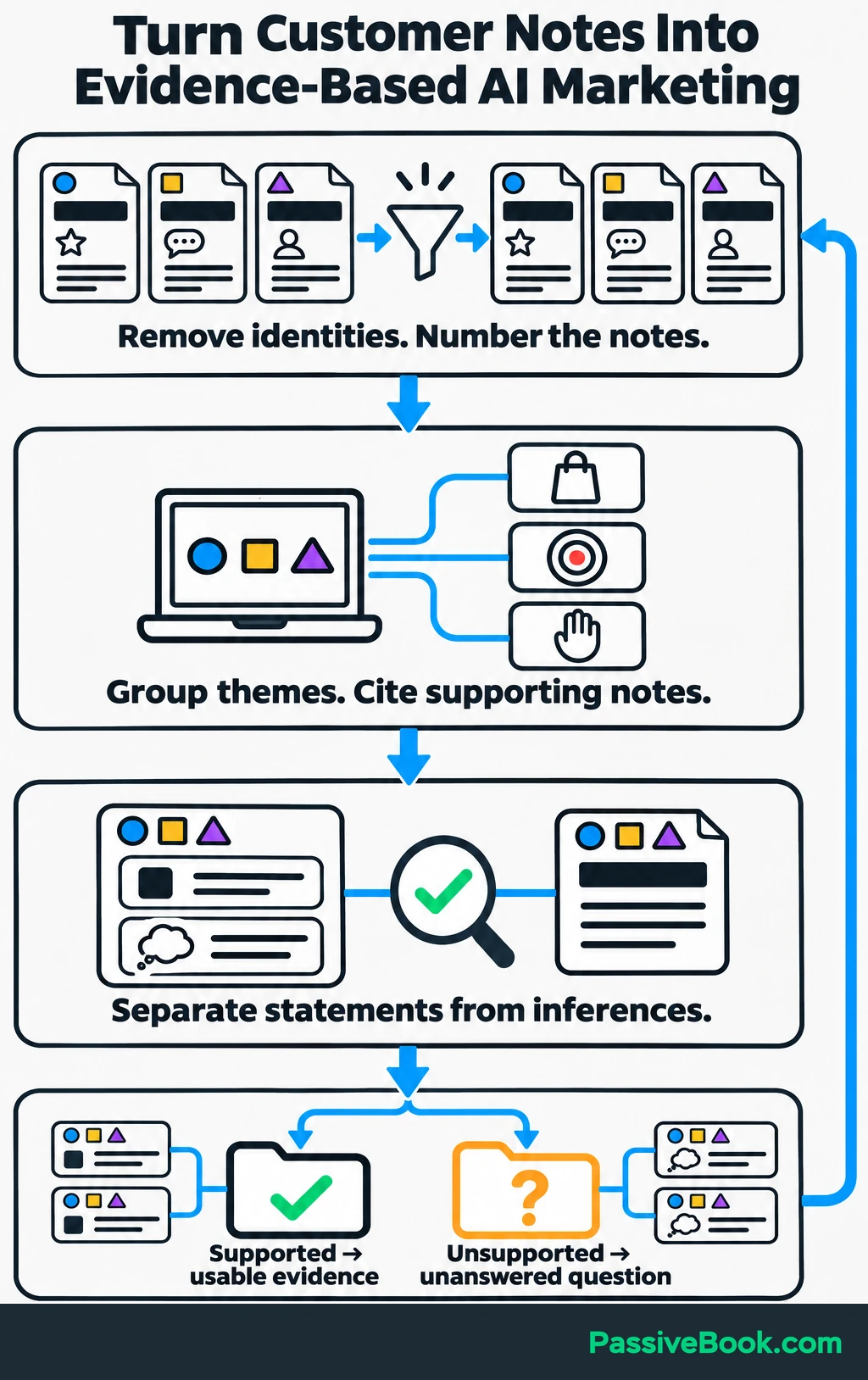
Read the original notes beside the summary. If AI calls something a major objection and you cannot find the evidence, put it back in the unanswered pile.
For the bandana, you might investigate whether buyers need to see both patterns, understand the fit, or know the delivery cost before ordering. Those are research questions until customers answer them.
Ask neutral questions such as:
- “What would you need to know before ordering this?”
- “What is unclear in these product photos?”
- “What made you choose your last dog accessory?”
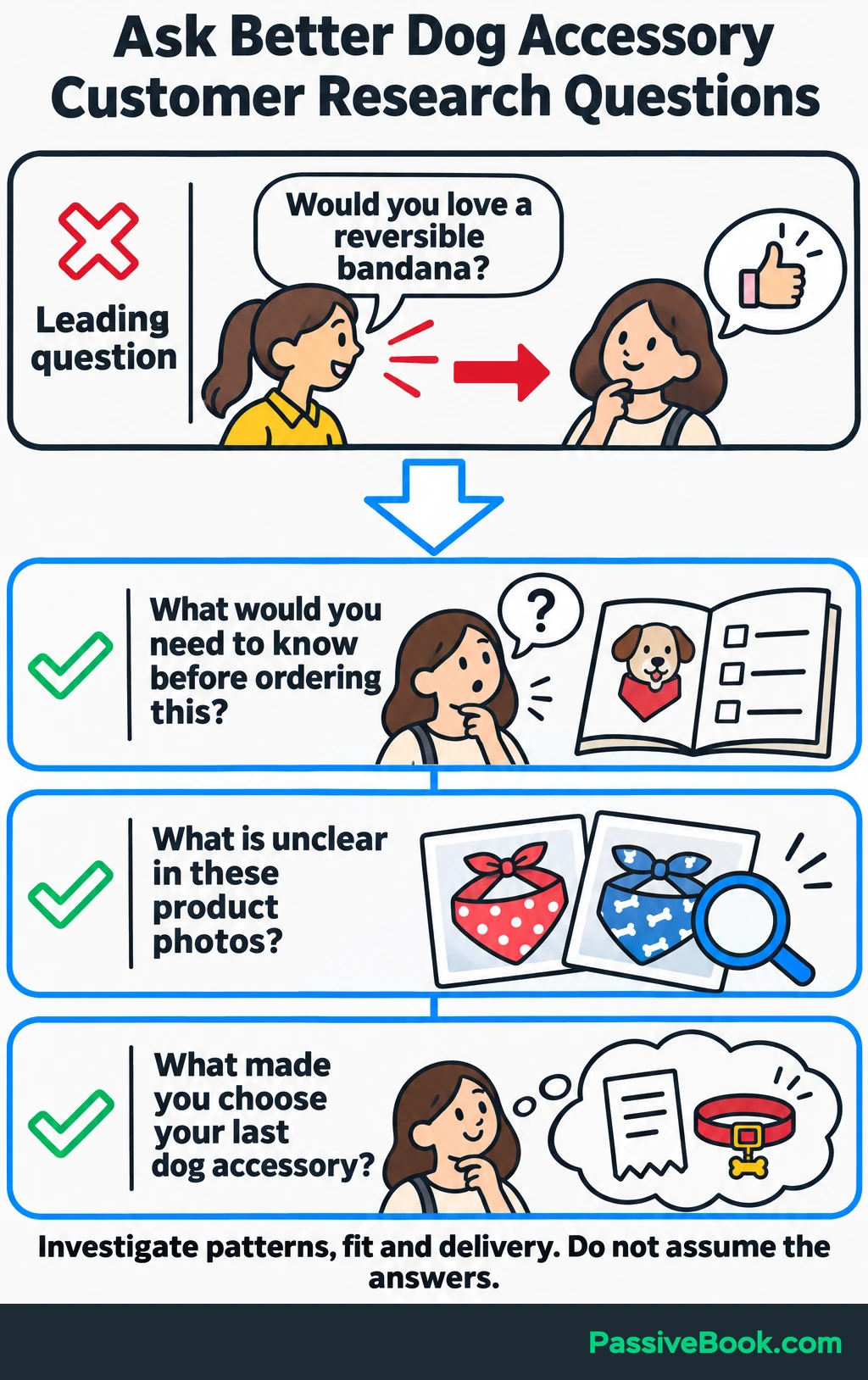
Avoid “Would you love a reversible bandana?” It practically answers itself.
I skipped market research when I ran my online jewellery store, and I ended up with unsold inventory. I attribute part of that failure to buying stock before understanding what customers wanted. I would rather discover an unanswered buying question in a conversation than after paying for another box of products.
Also compare a few competing offers. Look at their promise, contents, evidence, and unanswered questions. Choose a difference your product actually delivers, rather than asking AI to declare it “premium.”
3. Choose Channels That Can Reach the Buyer
Choose channels based on access and effort. Where can you reach relevant people, what will you need to make, and how long can you wait for a useful response?
| Channel | Audience Access | Campaign Role | Required Assets | Cost Considerations | Response Timing |
|---|---|---|---|---|---|
| Existing subscribers who agreed to receive marketing | Present the offer and answer buying questions | Email copy, product photos, product-page link | Platform, sending, and production costs | Reaches the existing list directly after sending | |
| Search content | People searching for a relevant answer | Help buyers discover and assess the offer | Useful article or guide and a clear route to the product | Research, writing, and website work | New content needs time to gain visibility |
| Social or visual discovery | People reached through platform feeds, searches, or recommendations | Introduce the product through useful or visual content | Pins, images, captions, or short demonstrations | Creative work and ongoing distribution effort | Some response may come early; discovery can build over time |
| Paid promotion | An audience reached through purchased placement | Buy distribution for a tested offer | Ads, destination page, and conversion tracking | Media spend plus creative and setup work | Delivery can begin quickly; useful sales evidence needs enough response |
For the bandana campaign, keep the route simple:
- Pinterest Pin → bandana product page → checkout.
- Subscriber email → the same product page → checkout.
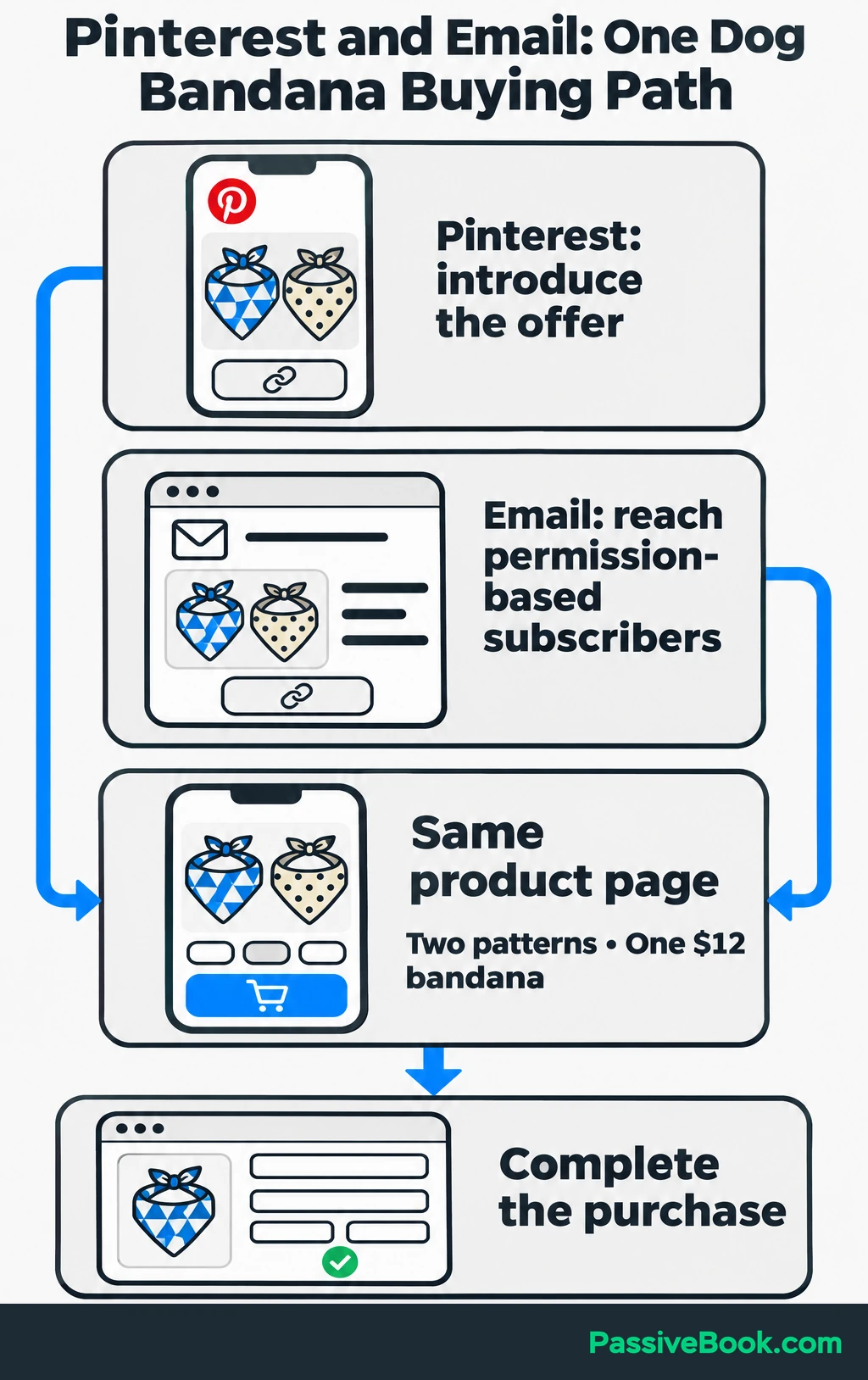
Pinterest introduces the offer to people who may not know the shop. Email reaches people who already gave you permission to contact them. Both routes should explain the same product and lead to the same next action.
Without an email list, choose a discovery route you can support. Include the work needed to earn attention: useful content, clear visuals, relevant publishing, and time to learn what gets a response.
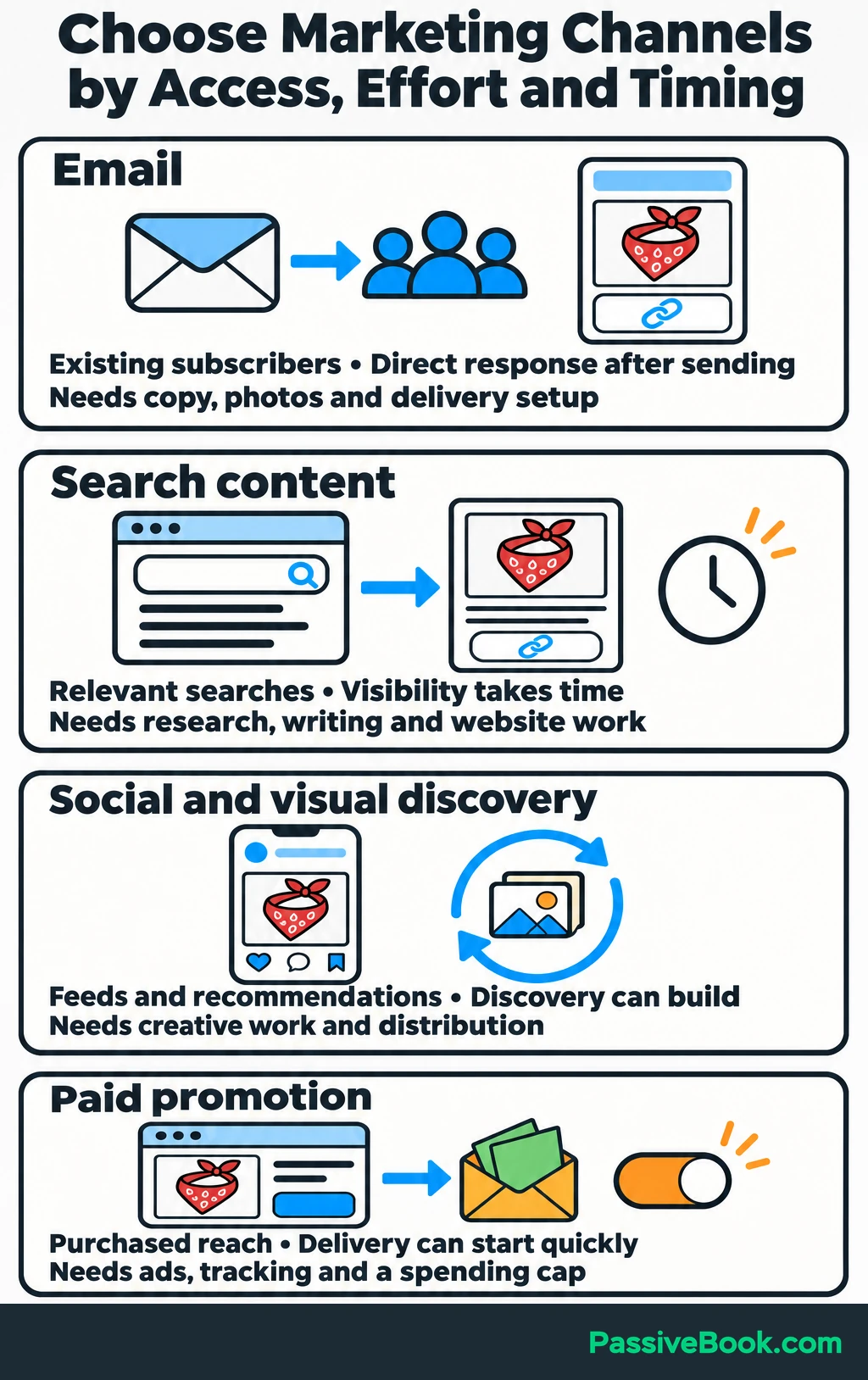
I would not add five channels because AI can write for all five. You still have to publish, answer questions, and check what happened.
Match your review to the channel. An email response can be reviewed soon after sending. A new search article needs a longer runway, and an early Pinterest checkpoint should not become a verdict on its full potential.
If you use ads, set a spending cap and a pause rule before launch. For example, pause when the test budget is spent, or immediately if checkout or tracking breaks.
4. Build the Campaign Brief With AI
Create one document that holds the decisions you have made. This becomes the source for every asset.
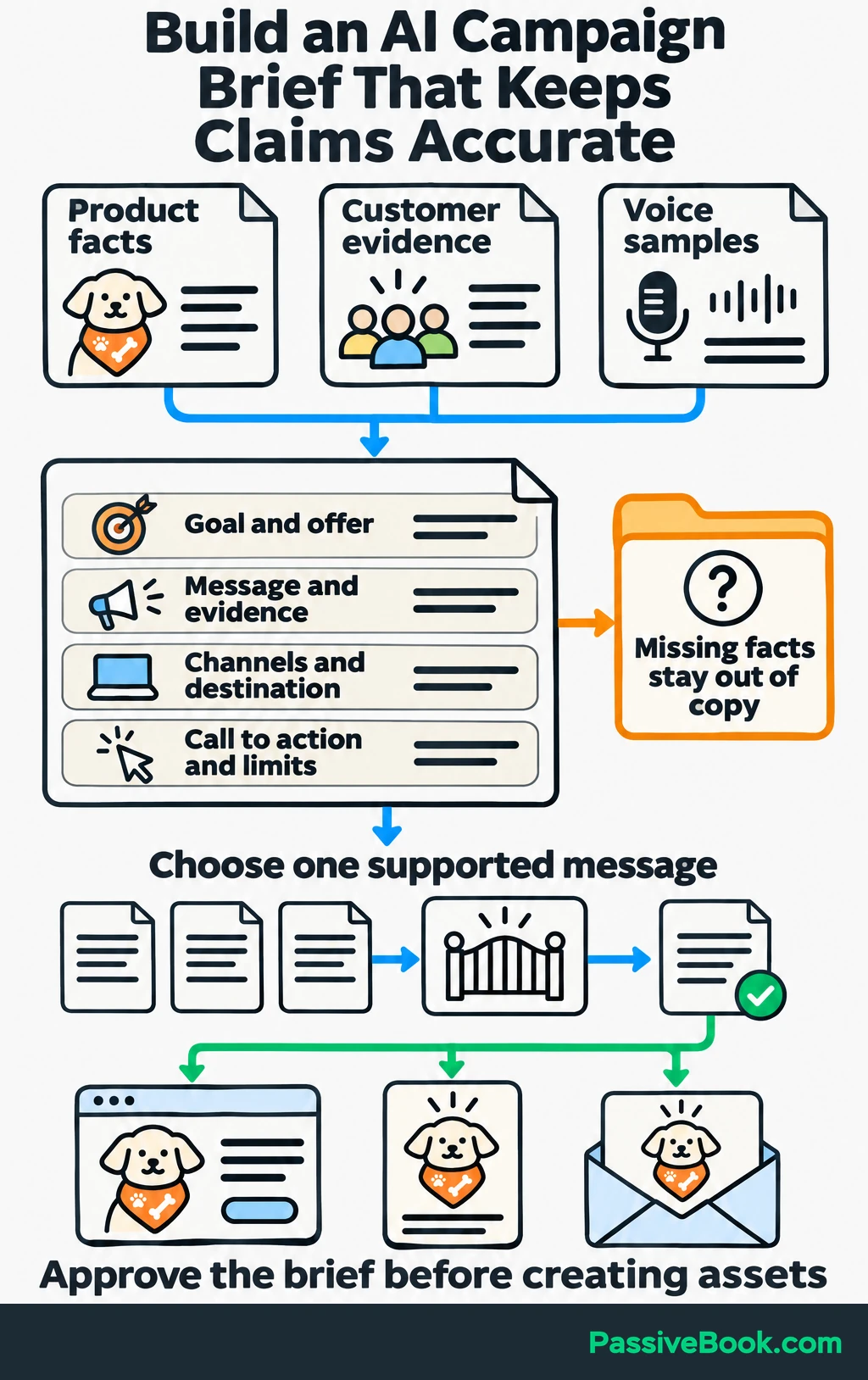
Include the goal, customer evidence, product facts, price, supported benefits, objections, channels, destination, call to action, budget, production time, and dates. Keep missing information in a separate list so it cannot quietly become copy.
For the example, the central message could be:
Two patterns. One $12 dog bandana.
The supporting evidence is straightforward: genuine photographs showing both sides. Fit, delivery, and return details must come from the shop’s actual information.
I would use Claude for planning and drafting, Canva for graphics, and the website and email platform already in place for delivery. On WordPress, FluentCRM would be my first email option to assess. There is no need to rebuild the shop to run this campaign.
Give the writing assistant two or three representative samples and concrete instructions:
Use plain words and specific product details. Sound friendly without baby talk. Prefer “two patterns” to “versatile style.” Avoid “must-have,” “ultimate,” and unsupported claims about comfort or durability.
Then ask:
Using
, [customer evidence], [writing samples], and [channel plan], create a one-page campaign brief. Propose three distinct message angles. For each, show the customer problem, supported benefit, product evidence, main objection, and call to action. Recommend one angle and list missing facts separately.
Choose one message before generating assets.
In my digital-product work, I have removed polished sentences because they promised more than the download contained. The writing sounded good; the product had not acquired those extra features. That is why I keep product facts beside the draft.
Do not approve invented testimonials, health benefits, deadlines, discounts, endorsements, or performance promises. You control the offer and customer promise, even when AI writes the sentence.
5. Create the Campaign Assets From the Approved Brief
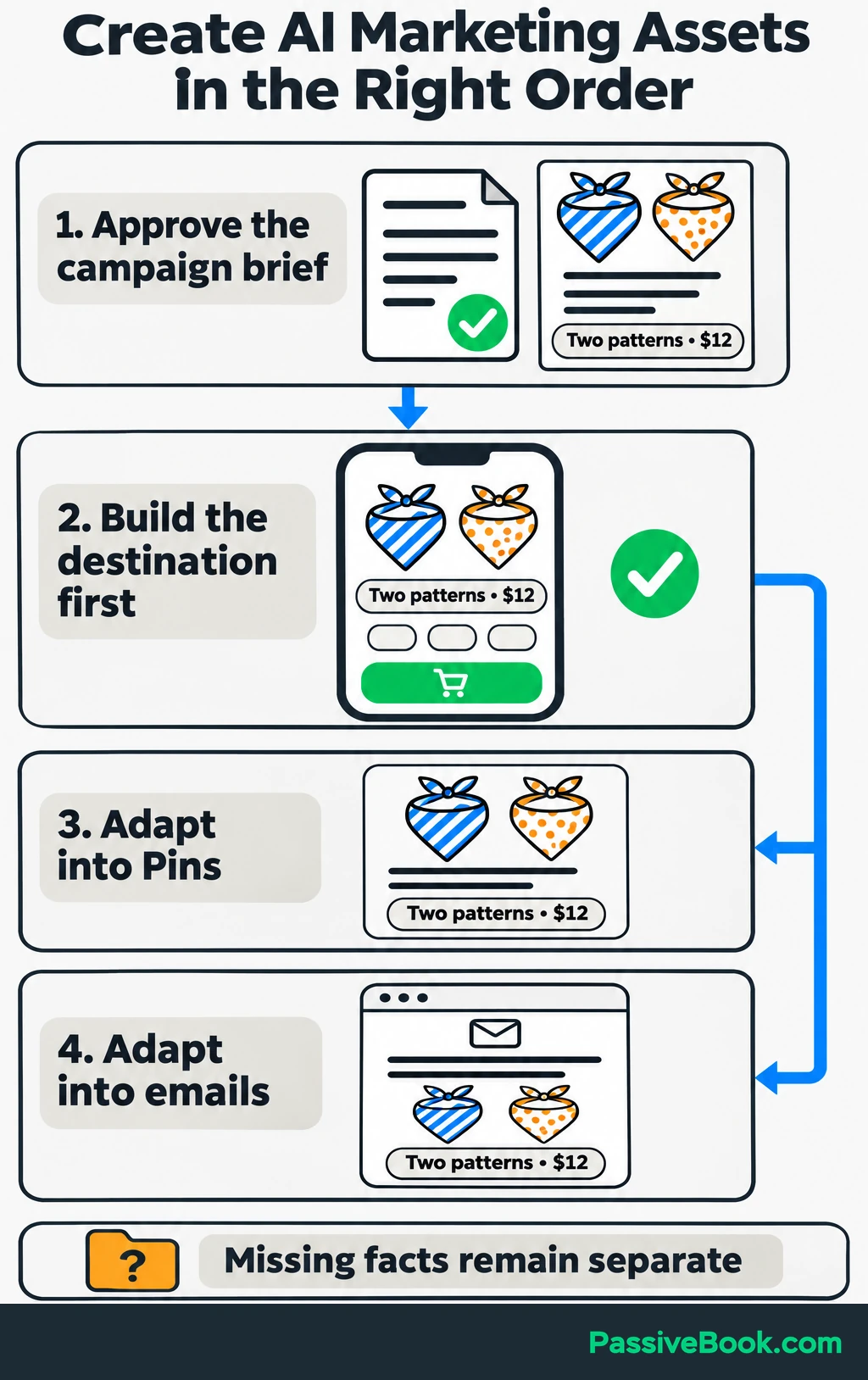
Build only what your channel plan needs. For this campaign, that means one product page, a small set of Pins, and a short email sequence.
Start with the destination. It is easier to adapt an accurate page into promotional copy than to make a page catch up with promises scattered across several drafts.
If you’d rather not assemble the prompts yourself, AI Copywriting Studio can draft your destination page and a matching promotional message. Keep your product facts beside the drafts when you review them.

Free AI Copywriting Studio




Use this reusable prompt:
Using the approved brief, draft [asset] for [channel and format]. Lead with [customer problem or desired outcome], explain [supported benefit], address [objection], and end with [call to action]. Match these writing samples: [samples]. Use only supplied facts and list missing information separately.
Build the Conversion Page
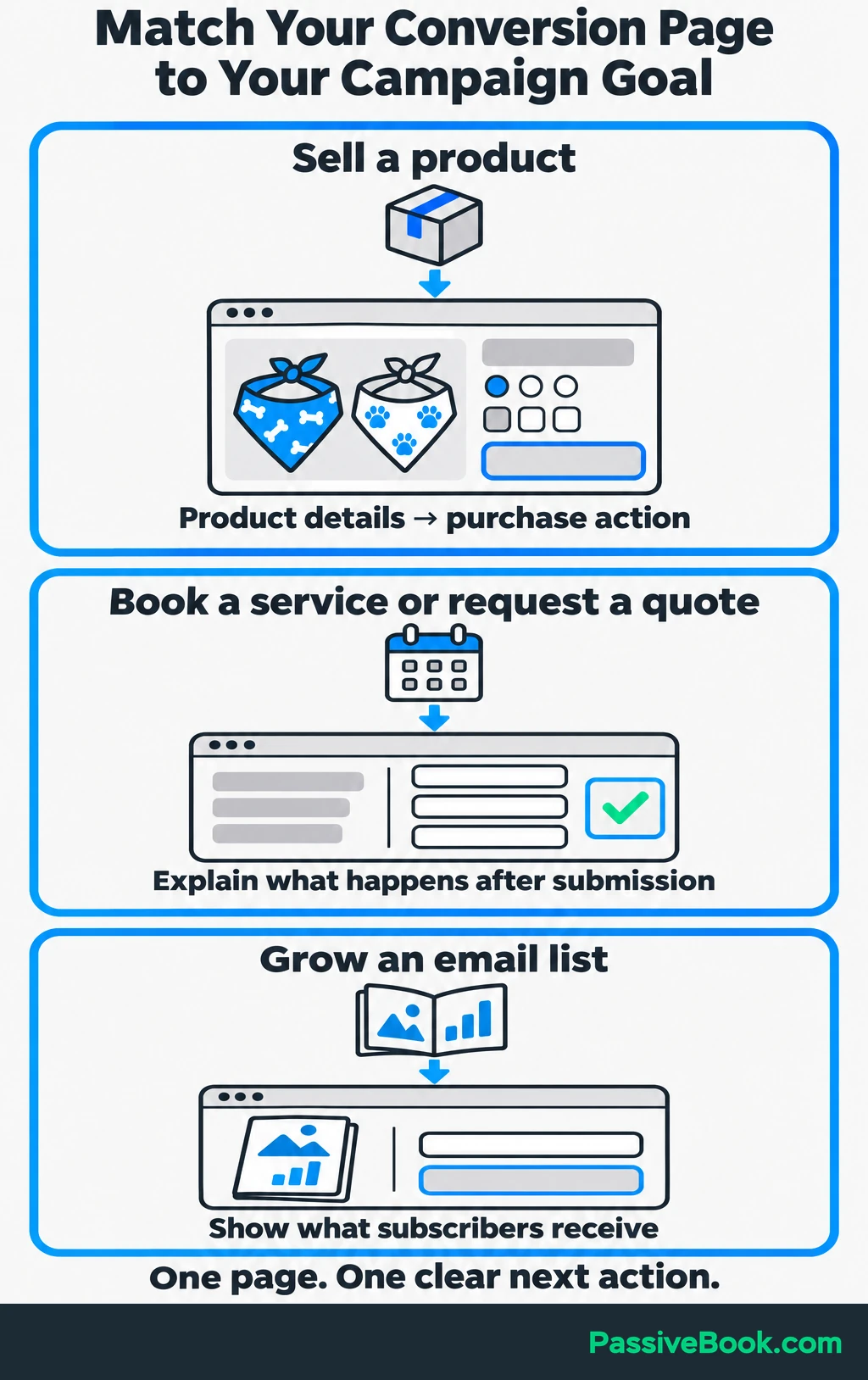
Your conversion page is where the visitor takes the action you want. For a purchase campaign, that can be the existing product page.
For a service, use a booking or quote form and explain what happens after submission. For an email signup campaign, show what subscribers receive and provide a signup form.
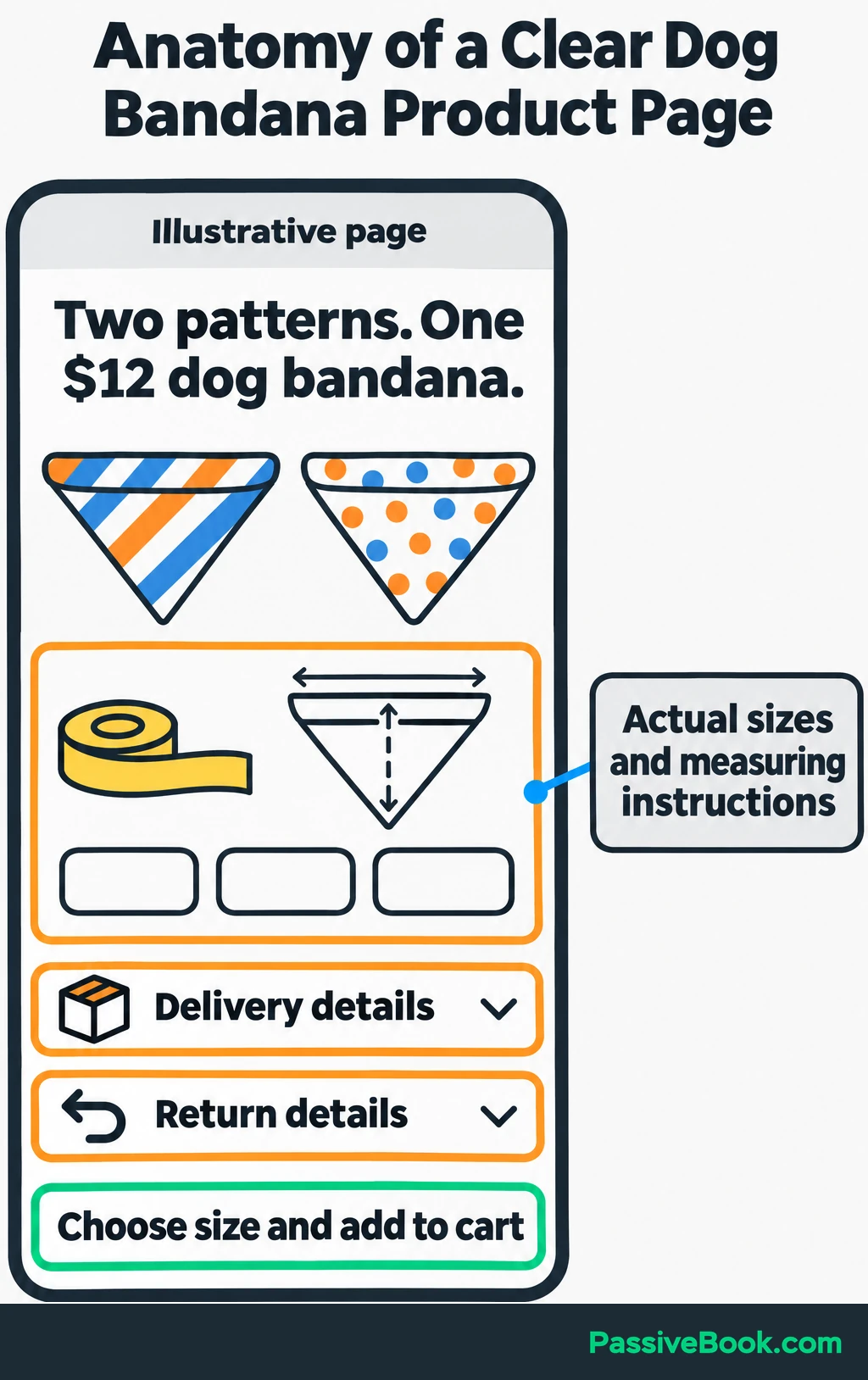
Give buyers enough information to decide:
- A headline that plainly describes the offer.
- Photos or a demonstration showing what they receive.
- Practical benefits supported by product facts.
- Contents, price, available options, and fit information.
- Delivery and return details.
- One clear purchase action.
The bandana page should show both patterns, the actual sizes, and instructions for measuring before ordering. Do not ask AI to fill gaps in the size chart.
A compact copy example:
Two looks, one reversible dog bandana
See both patterns and use the size guide to choose your fit. One bandana costs $12. Check delivery and return details before ordering.
Choose your size and add to cart.
Replace generic claims with observable details. A photo of the reverse pattern does more work than “the ultimate accessory for every adventure.” The dog has not requested a brand manifesto.
Build or update the page in your existing store, then check every sentence against the product facts.
Adapt the Message for Each Promotional Channel
Give AI the approved page, the channel, the format, and the destination. Ask it to change the opening and presentation while preserving the offer.
For Pinterest, request three concepts:
- A side-by-side view showing both patterns.
- A product photo showing one side worn, with the reverse pattern beside it.
- A fit-focused graphic pointing to the size guide.
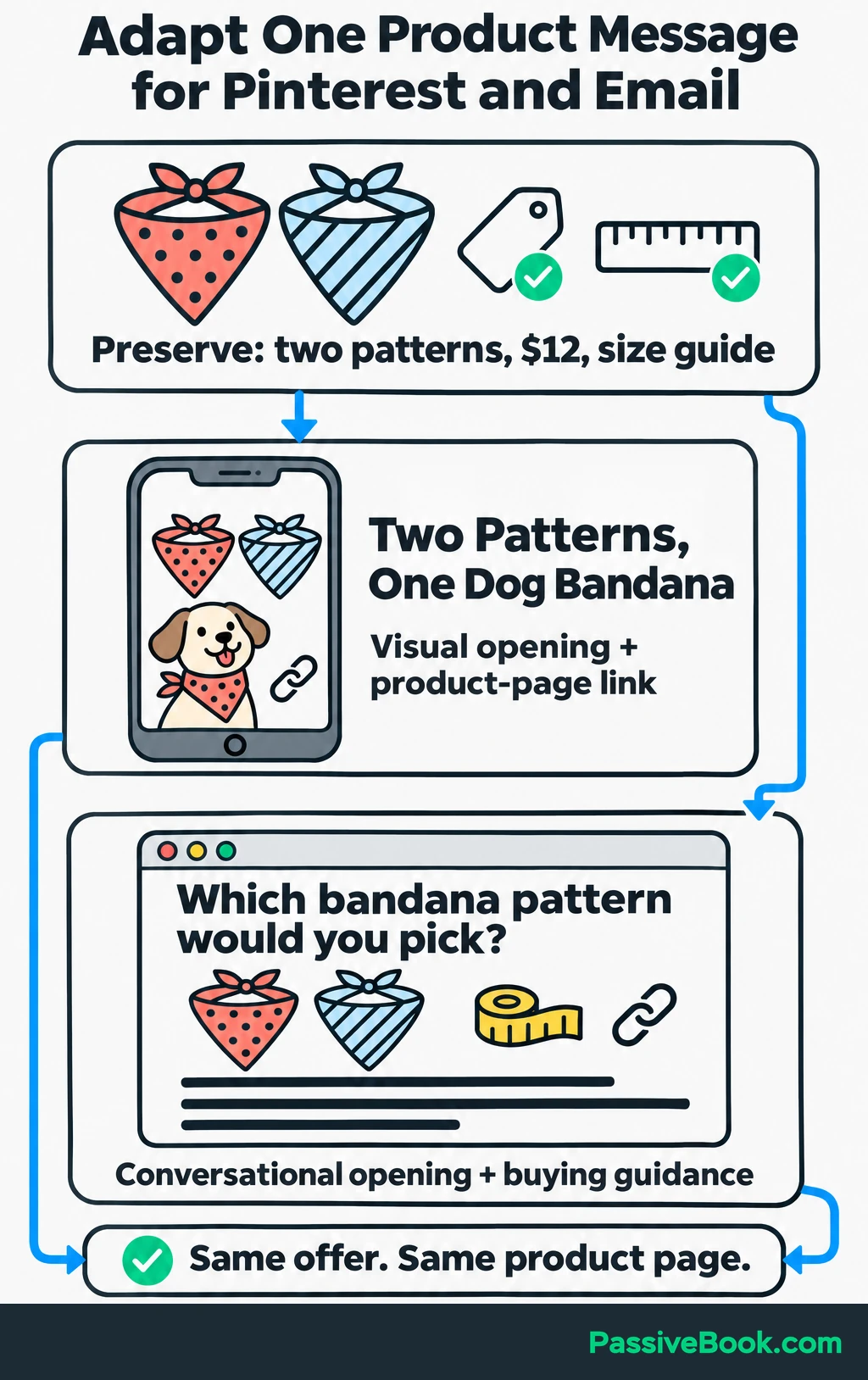
Each concept needs a headline, description, and graphic direction. One coordinated example is:
Pin headline: Two Patterns, One Dog Bandana
Description: See both sides of our $12 reversible bandana and check the size guide before choosing yours.
Graphic direction: Show the two sides together, with a small photo of the bandana being worn.
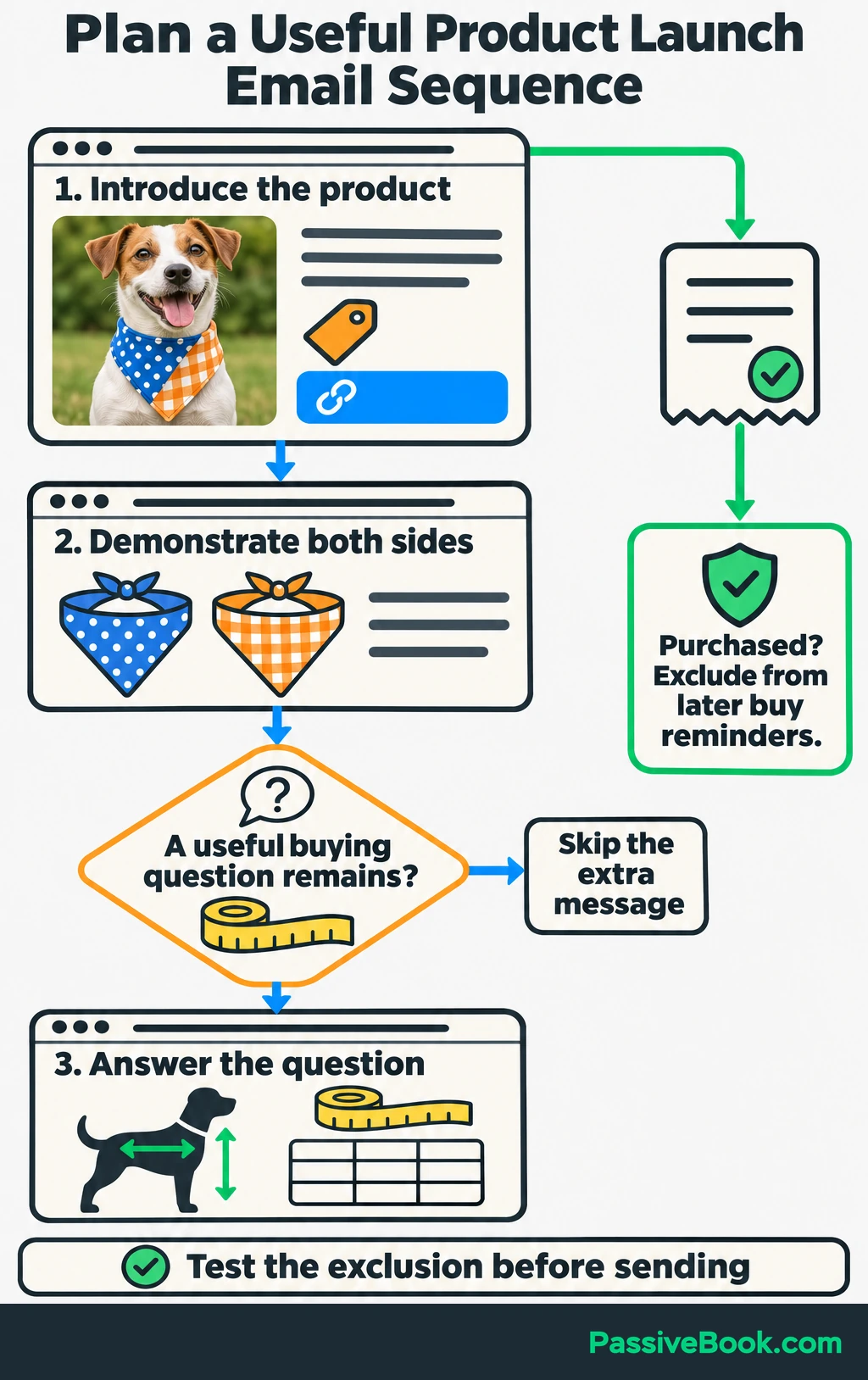
For email, plan a short sequence that introduces the product, demonstrates both sides, and answers the main buying question. Add the third message only if it has something useful to say. A real fit question earns another email; an empty calendar slot does not.
Here is a complete email to adapt after the product page is ready. Replace the bracketed fields and connect the product and unsubscribe links before sending.
Subject: Which bandana pattern would you pick?
Hi [first name],
You don’t have to choose just one. Our $12 reversible dog bandana has a different pattern on each side.
We’ve shown both patterns on the product page, so you can see what you’re getting. You’ll also find the size guide, delivery details, and return information there.
Check your dog’s measurements against the guide before choosing a size.
Shop the bandana:
Have a question the page doesn’t answer? Reply and we’ll help.
[Shop name]
Promotional email from [Shop name]
[Valid postal address]
Unsubscribe: [unsubscribe link]
Exclude purchasers from later reminders to buy the same offer. Test that exclusion before relying on it.
For U.S. commercial email, use accurate sender information and subject lines, identify advertising as required, include a valid postal address and an easy opt-out, and honor opt-outs within 10 business days. Other countries have their own rules. The FTC’s CAN-SPAM guidance explains the U.S. requirements.
Create Visuals That Show the Offer Clearly
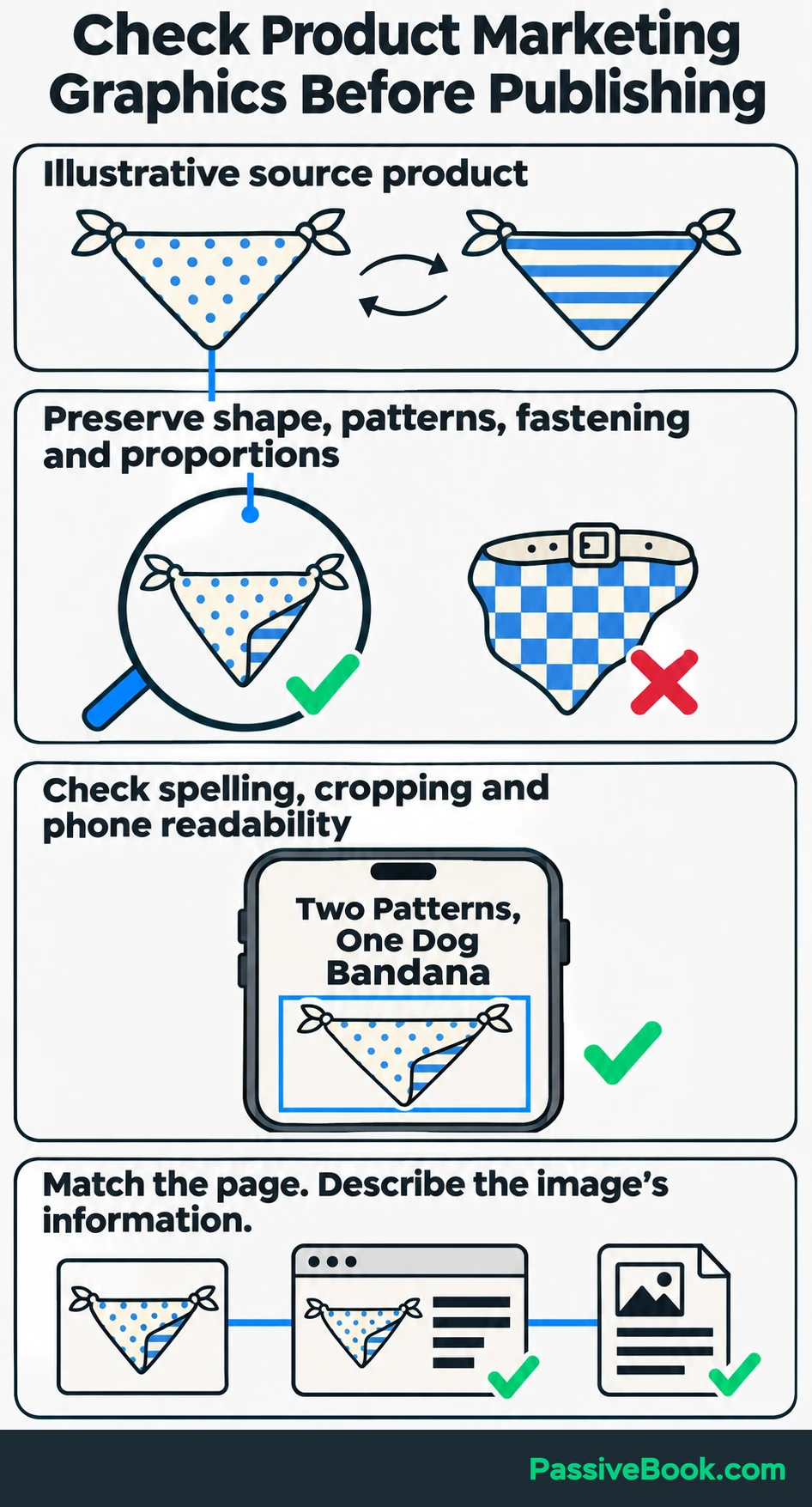
Start with real product photos, your logo, colors, and fonts. Ask AI for layout ideas, then assemble and edit the graphics in a design tool such as Canva.
Try:
Using these product photos and brand references, propose three layouts for a Pinterest graphic. Show both patterns clearly, include the approved headline “Two Patterns, One Dog Bandana,” and keep the product as supplied. Do not alter its shape, patterns, fastening, or proportions.
Approve one direction before making variations. Otherwise, you can spend an evening reviewing twelve versions of the same weak idea.
Inspect the actual product appearance, spelling, cropping, logo, and consistency with the page. Check the graphic on your phone because a headline that looks readable on a large monitor may disappear on a smaller screen.
Add alternative text that communicates what an informative image shows, such as the two bandana patterns. W3C’s guidance on informative images explains how to describe the information an image contributes. Keep text easy to distinguish from its background, too.
6. Test and Launch the Customer Journey
Connect Campaign Links to Results
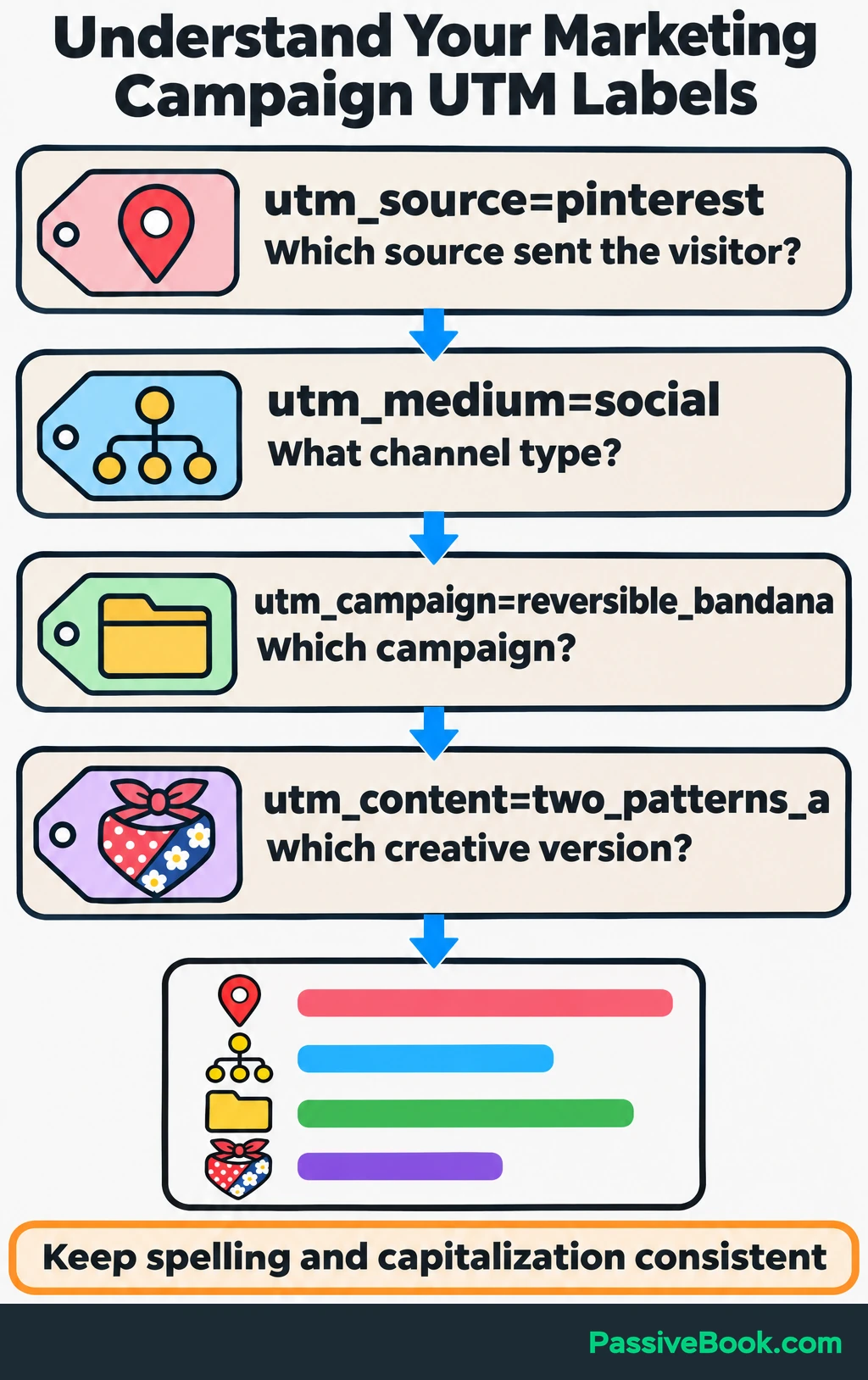
Google Analytics measures activity on your website. Add these tracking labels to links in emails, Pins, or other promotions so its reports can distinguish channels and creative versions:
utm_sourcefor the source, such aspinterest.utm_mediumfor the channel type, such associaloremail.utm_campaignfor the campaign name.utm_contentfor the creative version.
A Pinterest link could end with:
?utm_source=pinterest&utm_medium=social&utm_campaign=reversible_bandana&utm_content=two_patterns_aKeep spelling and capitalization consistent so variations of the same label do not split your results.
Next, verify that your primary action is recorded. Installing Google Analytics does not automatically send ecommerce purchase events; your store integration must supply them. Check the purchase, transaction ID, currency, and value against a test order. See Google’s ecommerce setup guidance.
Before collecting tracking data, set up the consent and opt-out controls required for your visitors. For UK visitors, obtain consent unless your use meets an exception’s conditions. Check the ICO’s tracking guidance for permitted uses and the controls each exception requires.
Keep a launch sheet with the asset, destination URL, publication date, campaign label, approval status, and test result. “Draft exists” and “ready to publish” deserve separate boxes.
Test the Complete Path Before Publishing
Follow a promotional link on mobile and desktop, then complete a test purchase or your equivalent primary action.
Check that:
- The link reaches the correct offer.
- Options and prices match the promotion.
- Checkout and payment work.
- The confirmation arrives and fulfillment starts correctly.
- The test action appears once in reporting with the expected value.
- Email links, replies, opt-outs, and purchaser exclusions work.
- Scheduled content looks right in its final format.
Keep test orders out of your campaign results.
Publish the destination before releasing the promotional assets. Schedule the approved content, then set a post-launch check for broken links, delivery failures, customer questions, and spending.
Automate repeated handoffs once they work manually. For example, a purchase can remove someone from purchase reminders. Review AI drafts before publication, and approve any automated change to campaign spending. Automating a broken checkout gives you a broken checkout with excellent attendance.
7. Measure Results and Improve the Weakest Step
Start with the primary outcome. Did the campaign produce the purchases, bookings, or signups you wanted?
Then work backward through relevant exposure, clicks, landing-page sessions, completed actions, revenue, and spending. Use the same reporting period.
Here is an illustrative 28-day report. Each purchase happened in a separate session included in the landing-page totals. All 20 buyers are new customers, and each bought one bandana. Purchases are counted once, under the channel that brought the purchase session.
| Channel | Creative | Landing-Page Sessions | Completed Actions | Conversion Rate | Revenue | Campaign Spending |
|---|---|---|---|---|---|---|
| Both-patterns graphic | 300 | 6 | 2% | $72 | $40 | |
| Both-patterns introduction | 200 | 14 | 7% | $168 | $20 | |
| Total | Combined campaign | 500 | 20 | 4% | $240 | $60 |
The spending figures represent allocated cash costs for software and creative work; this example uses no paid ads. Record production time separately.
To calculate the session purchase conversion rate, count campaign landing-page sessions that contained a purchase and divide by all campaign landing-page sessions in that period.
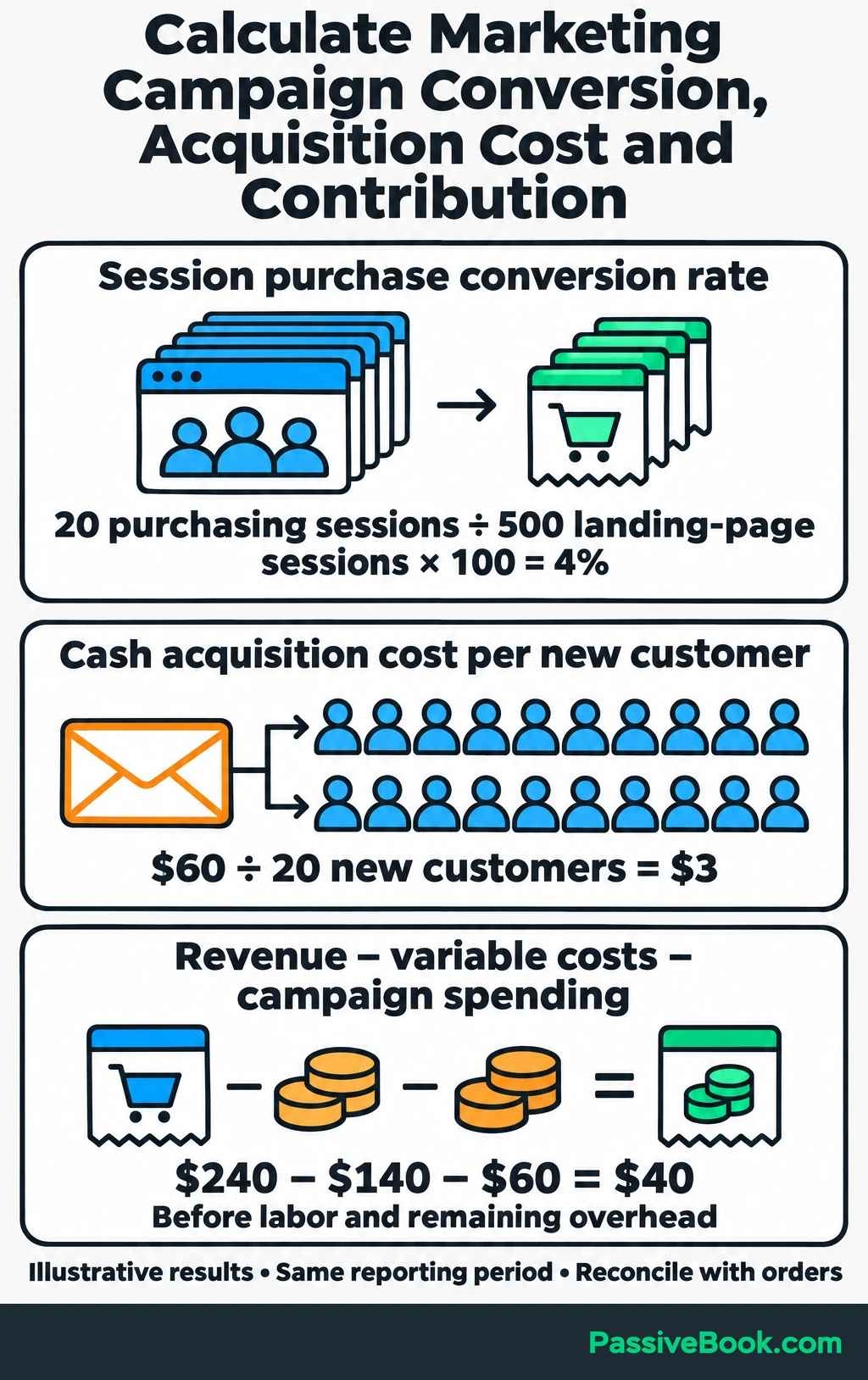
Here, 20 purchasing sessions out of 500 campaign landing-page sessions gives:
20 ÷ 500 × 100 = 4%To calculate cash acquisition cost, divide acquisition cash spending by the number of new customers acquired:
$60 ÷ 20 new customers = $3 per new customerReturning customers can count toward sales, but they do not belong in that new-customer denominator.
Now check profitability. Using the earlier illustrative $7 variable cost per sale, 20 sales incur $140 in variable costs. Subtract that and the $60 campaign spending from $240 in product revenue, leaving $40 before labor and remaining overhead. Account for any refunds and other relevant expenses as well.
That is why I would not celebrate the revenue figure on its own.
Reconcile reporting with store orders before trusting the calculations. Also remember that attribution connects purchases to campaign touchpoints; it does not establish how many sales the campaign caused.
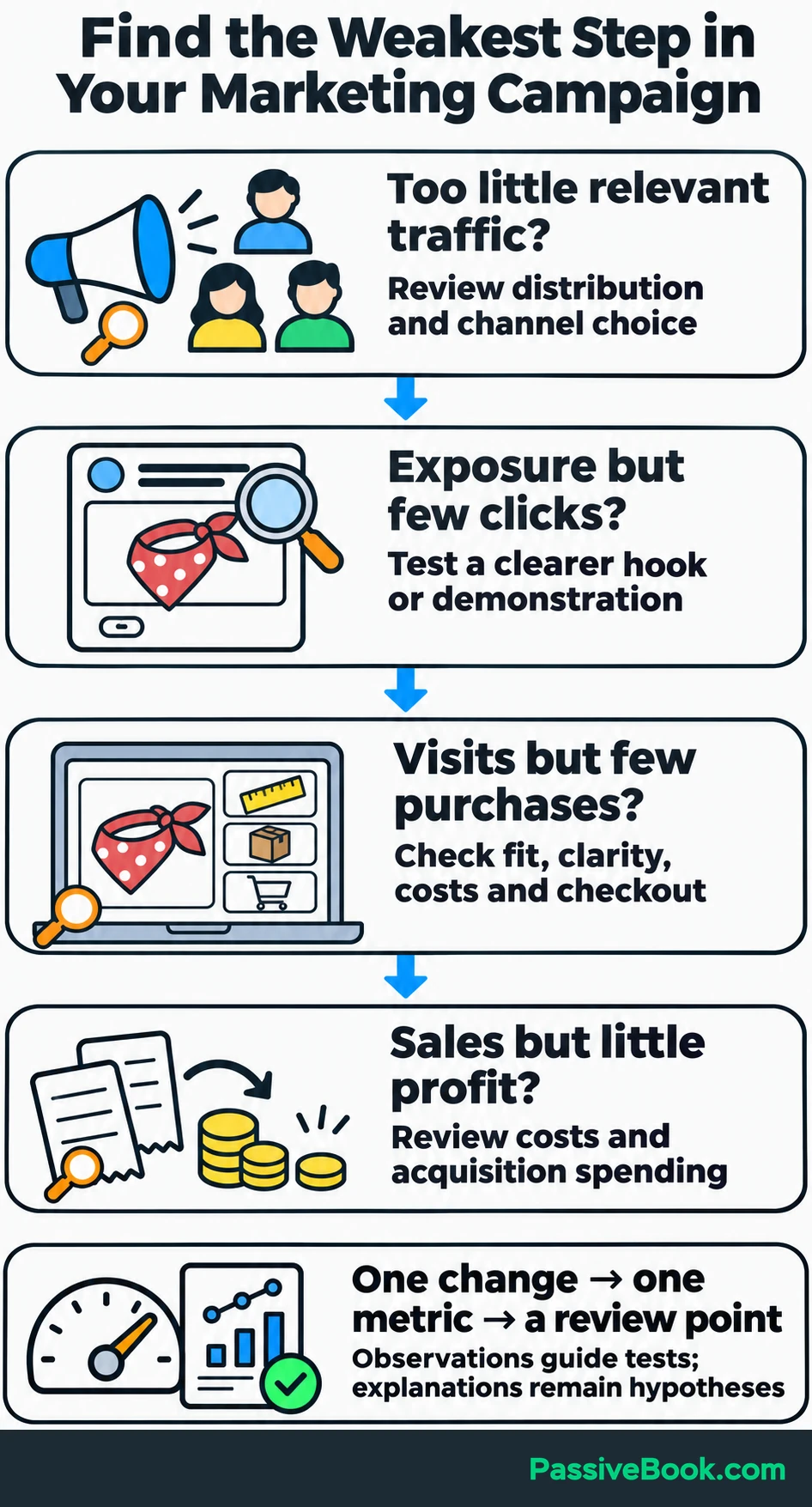
Use the weakest observable step to choose your next action:
- Too Little Relevant Traffic: Improve distribution or revisit channel choice.
- Exposure but Few Clicks: Test a clearer hook or product demonstration.
- Visits but Few Purchases: Check audience fit, offer clarity, delivery costs, fit information, and checkout.
- Sales but Little Profit: Review costs and acquisition spending before increasing volume.
Give AI aggregate results rather than customer records:
Using this campaign goal and aggregate results, show the calculations and identify the weakest observable stage. Separate observations from possible explanations. Propose one change, the metric it should affect, and a review point. Do not claim statistical certainty from a small sample: [data].
If visitors keep asking how the bandana fits, improve the size explanation before generating another batch of Pins. Keep other major factors steady so the next review can tell you something useful.
Save the brief, customer evidence, prompts, approved assets, launch checks, and results as your campaign template. Update product facts and customer evidence before reusing it. A repeatable system should save decisions you have already made, not preserve mistakes indefinitely.
What Next?
Write a five-line brief for one offer: what you sell, who needs it, the action you want, your resource limit, and your review date. Use it to draft the destination page before asking AI for promotional content.
Use the social buttons to share this guide when your next campaign needs fewer disconnected drafts and a clearer path to a sale.
Which part of that path needs the most work in your business? Tell me in the comments, and bring any other questions there too.
Share this post with your friends & followers:

