A prospect asks about your service, and you send a helpful reply. Then comes a week of messages about price, availability and what the work includes. You still don’t know whether they’re ready to buy.
That back-and-forth eats into the hours you need for delivery, and some conversations end without a clear decision. This guide shows how to move suitable prospects from an offer page to an application, a sales call and payment, using tools you can manage around your existing work.
The Simplest High-Ticket Sales Funnel
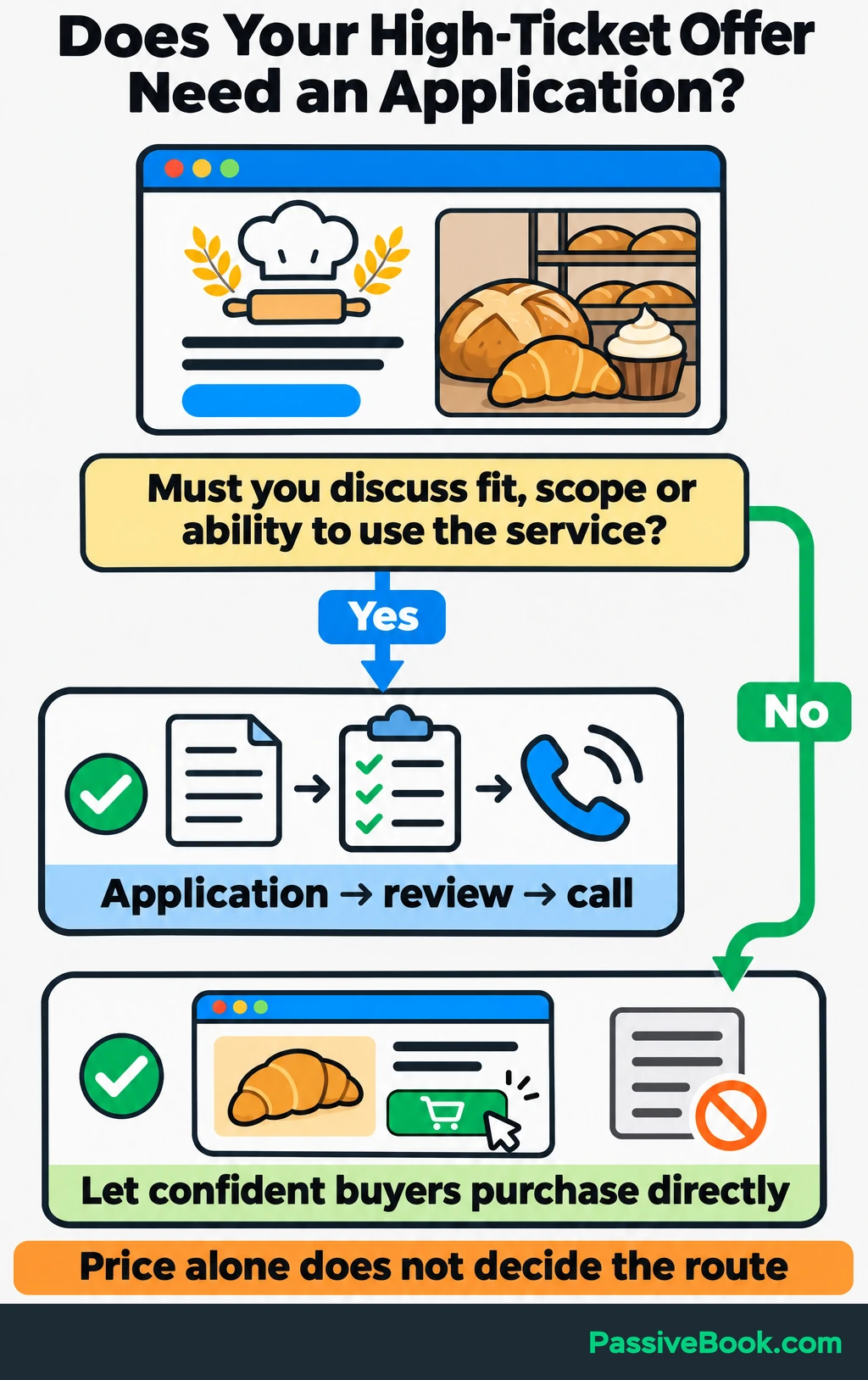
“High-ticket” describes a purchase that deserves careful thought. There’s no universal price that turns an ordinary service into a premium one.
Use an application and call when you need to discuss fit, scope or the buyer’s ability to use what you deliver. If someone can confidently buy a standard product without that discussion, an application may just add friction.
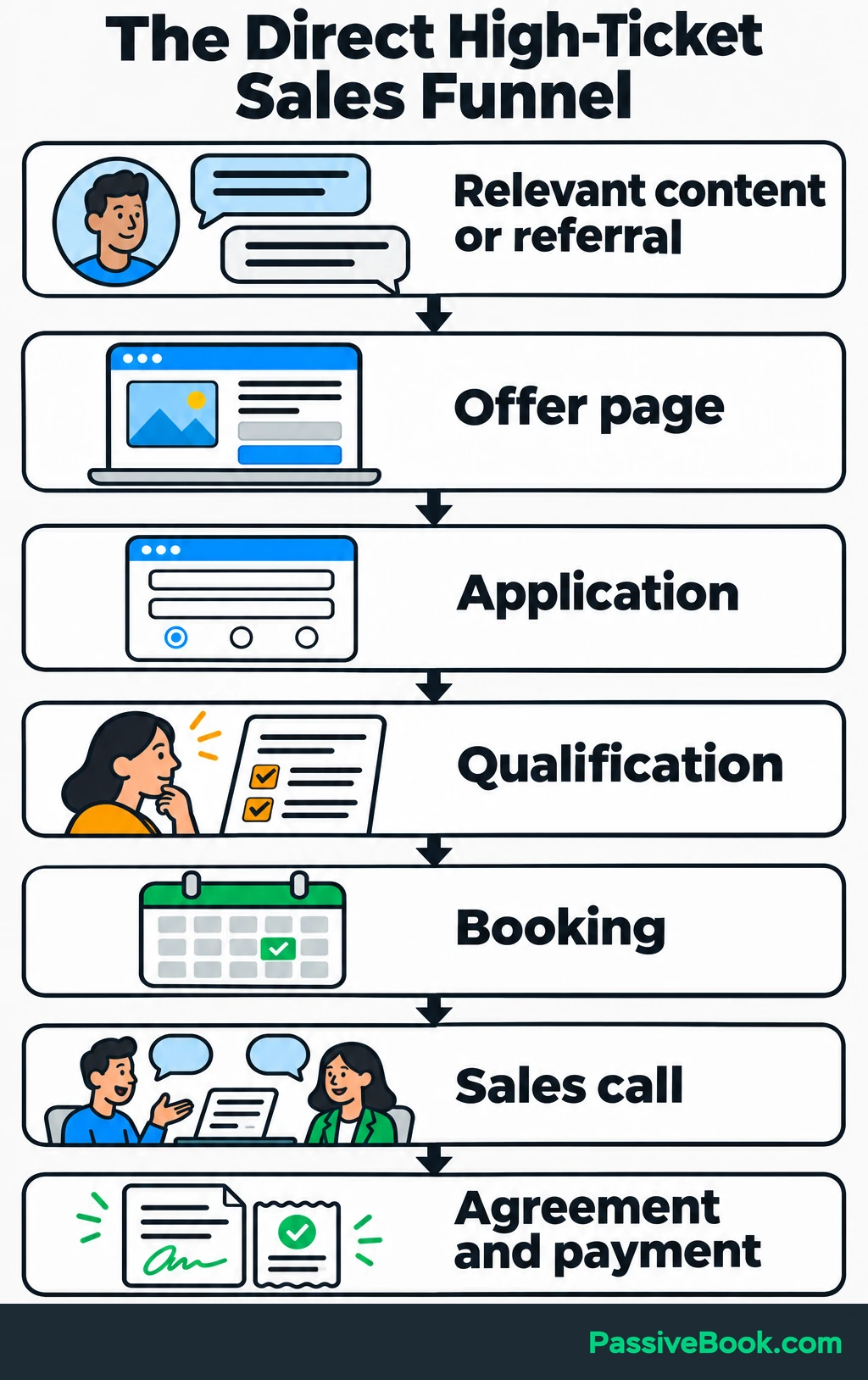
Start with this path:
Relevant content or referral → offer page → application → qualification → booking → sales call → agreement and payment.
Each stage has one job:
| Stage | What it needs to accomplish |
|---|---|
| Offer page | Help someone understand the work, price and suitability |
| Application | Collect information that changes the fit decision |
| Qualification | Decide whether a conversation makes sense |
| Booking | Arrange the call with clear expectations |
| Sales call | Resolve questions and reach a decision |
| Agreement and payment | Confirm the terms and begin the engagement |
You can manage this with a page, form, scheduler, inbox, spreadsheet and payment method. I would skip the webinar, elaborate video presentation and introductory product until there’s a clear reason to add them. A funnel doesn’t become useful because it has more furniture.
Throughout this guide, imagine you sell a $3,000, six-week inventory-planning consulting package for independent bakeries. The package, copy and figures are illustrative.
We’ll build the direct route first. A small number of relevant introductions can enter that route, so paid ads and a large audience aren’t prerequisites for launching it.
1. Define an Offer Worth Applying For
Before building anything, write down:
- Who the work helps and which problem it addresses.
- What the client receives.
- What improvement the work is intended to support.
- How long delivery takes.
- What it costs.
- What the client must contribute.
Keep deliverables separate from hoped-for results. You control whether you deliver a useful worksheet and training. You don’t control whether a client follows the process every week.
For the bakery package, the offer could read:
Over six weeks, I help independent bakeries create a practical inventory-ordering process. The $3,000 package includes a review of recent purchasing and stock records, a tailored ordering worksheet, a reorder process and a staff handover session. You provide the records, nominate one person to manage the process and test it between sessions.
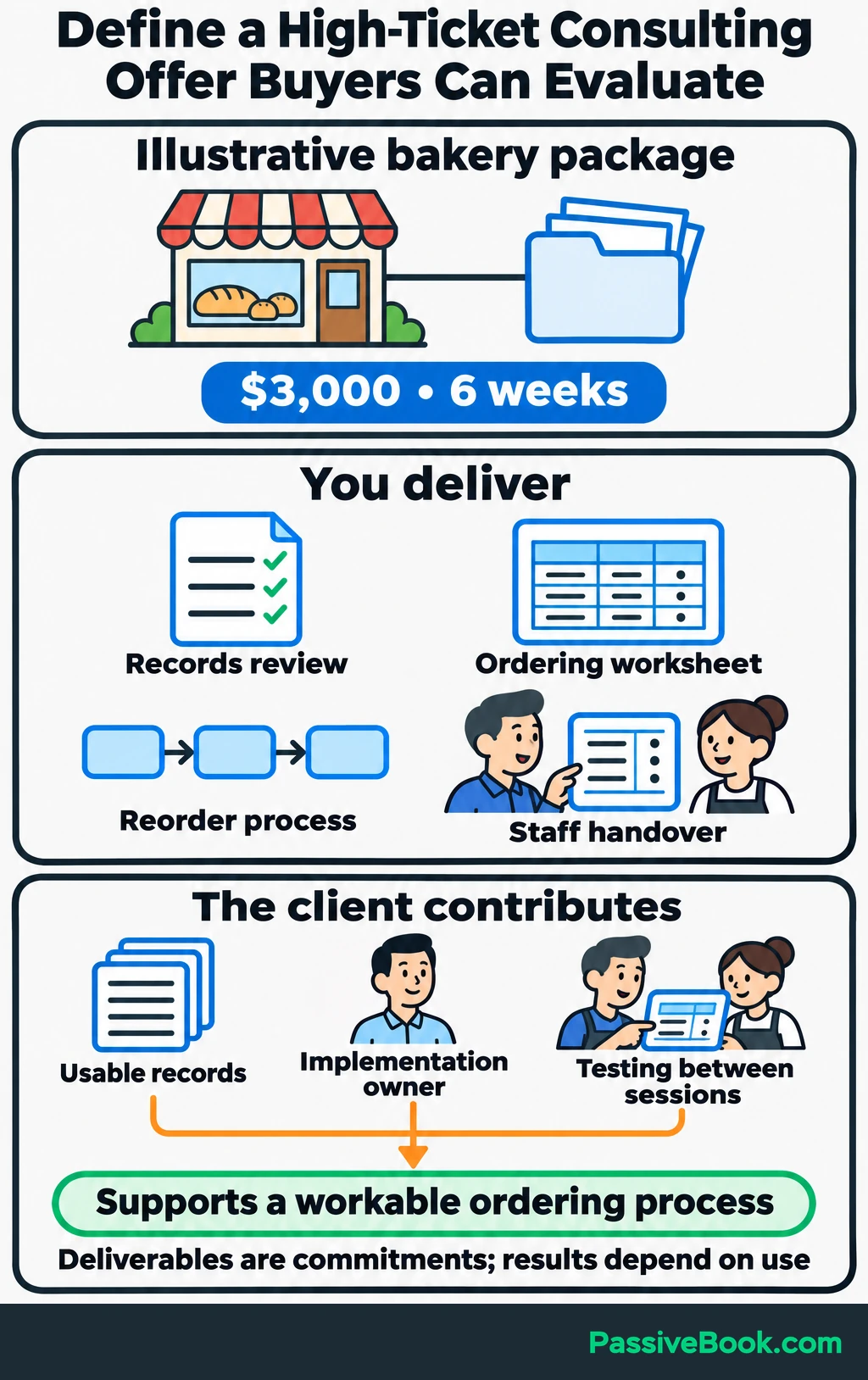
That describes work someone can evaluate. “Transform your bakery’s profitability” leaves rather more to the imagination.
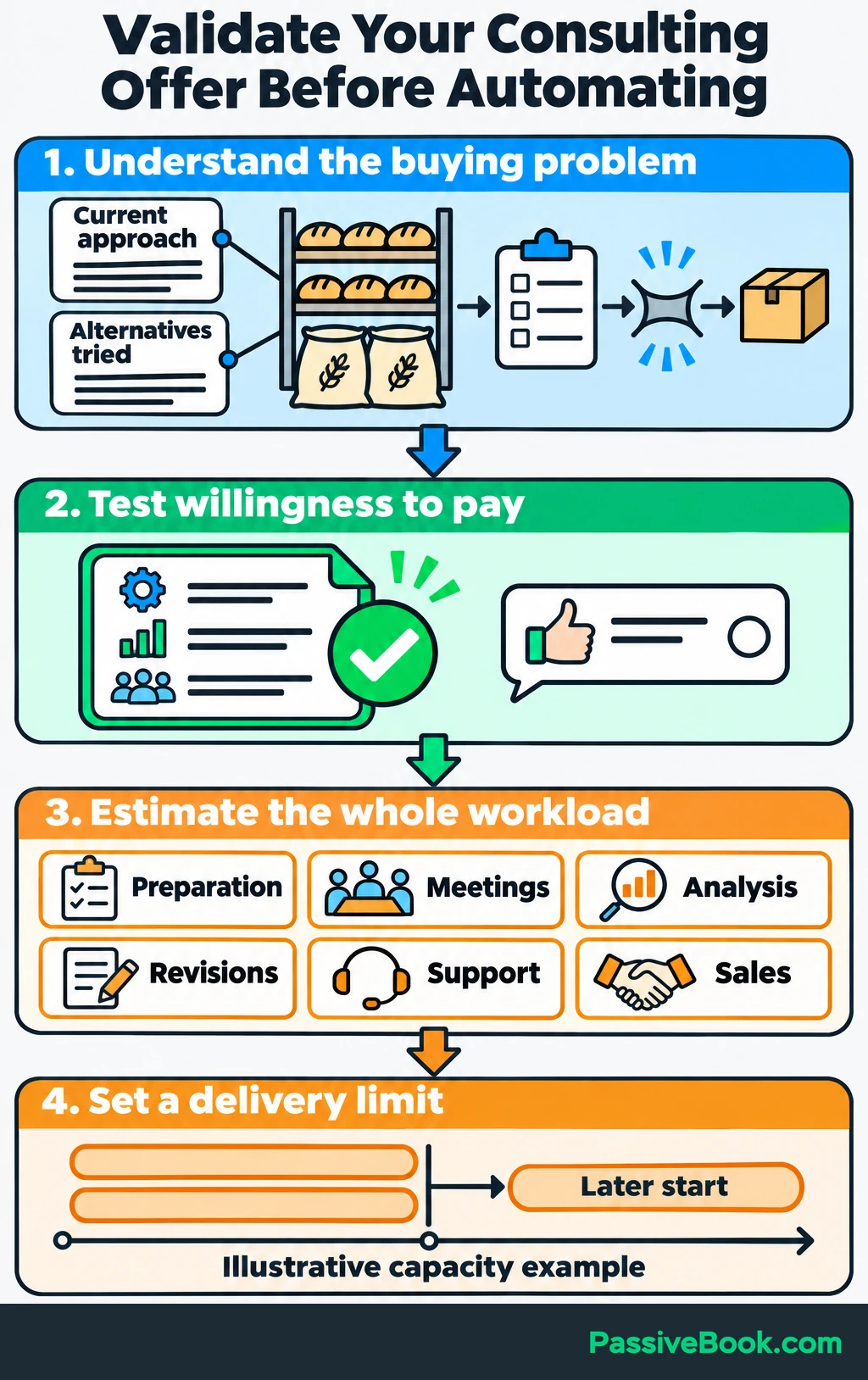
Talk to prospective buyers before polishing the wording. Ask how they handle the problem now, what they’ve tried and why it needs attention. Find out what they already spend on alternatives, including staff time.
Then invite suitable prospects to buy an initial engagement with a clear scope. Praise for an idea is useful feedback, but an agreement to pay tests a different decision.
I learned that distinction with a rushed digital course. It received few sales and a bad review, and I withdrew it. Looking back, I had spent more effort deciding what to include than checking whether the finished product answered a problem buyers wanted solved. That’s why I would validate the offer before building its automation.
You also need room to deliver. Estimate preparation, meetings, analysis, revisions, support and sales time alongside direct costs. Use those estimates to set a client limit.
Freelancing taught me what happens when income depends on filling every available hour. A premium price doesn’t remove that limit. If two overlapping engagements use your available delivery time, the third needs a later start date.
Finally, define essential fit criteria. For this package, I would require a relevant ordering problem, usable records, someone able to implement changes, access to the purchasing decision-maker and a suitable budget.
2. Build an Offer Page That Leads to an Application
Build the page around the questions a buyer needs answered:
- Is this meant for my situation?
- What work will happen?
- What will I receive?
- Why should I trust the approach?
- What does it cost?
- What happens if I apply?
Open with a specific headline:
Create a workable inventory-ordering process for your independent bakery.
Then explain the problem in terms the buyer recognizes: orders placed without reliable stock counts, unclear responsibility or records that don’t match how ingredients are used.
Describe the six-week process and its deliverables. State what’s excluded, such as ongoing purchasing management or a replacement accounting system.
Put the price where readers can find it before applying. For a variable service, show a meaningful starting price and explain what changes it. Hiding every price question until the call gives you another conversation to have, but it doesn’t establish buying interest.
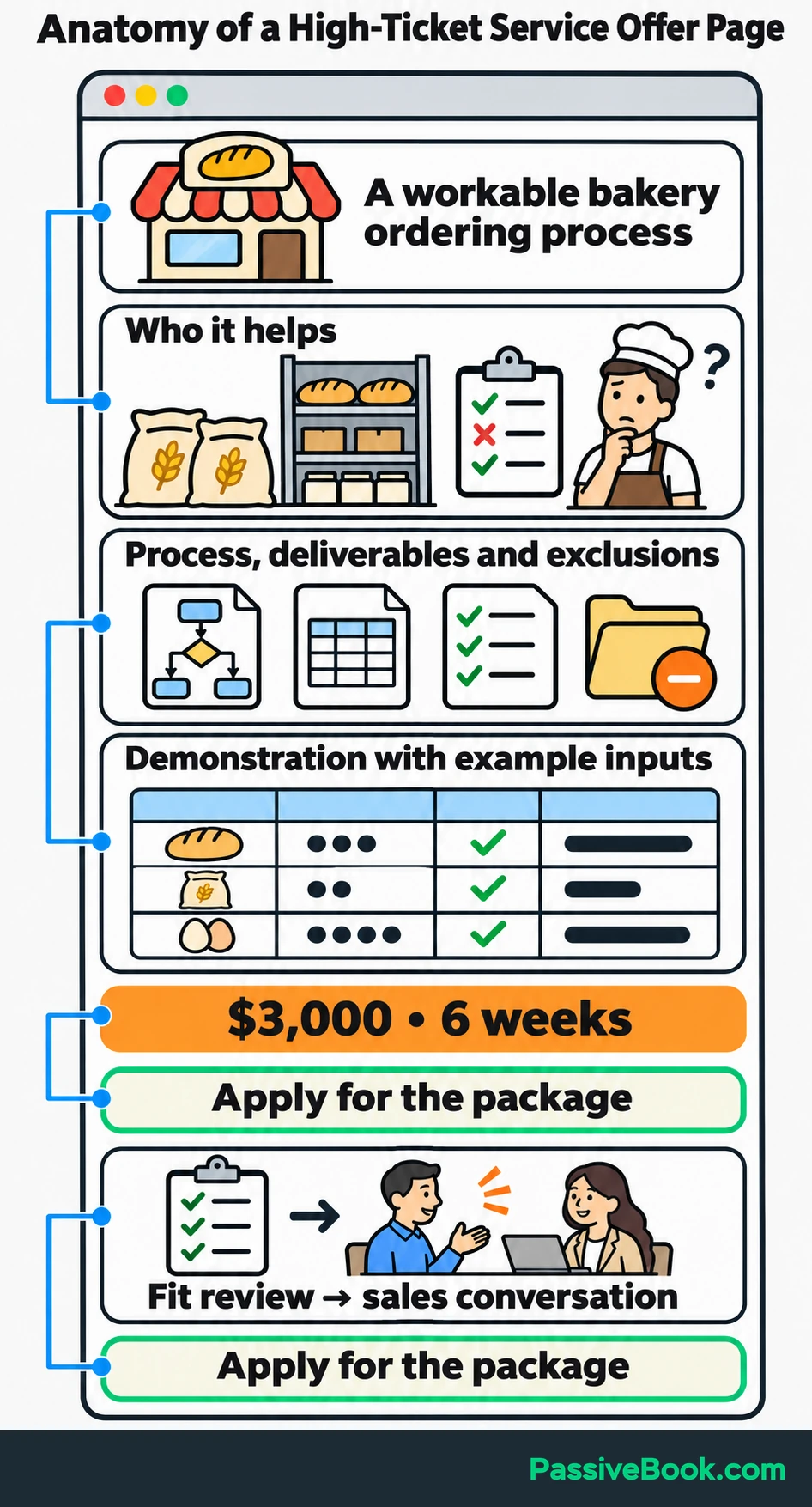
Use one primary action:
Apply for the inventory-planning package.
Explain that applications receive a fit review and suitable applicants are invited to a sales conversation about the paid service. Repeat the button after the main explanation and near the end.
Place proof beside the work it supports. For this package, show a sample ordering worksheet with notes explaining how someone enters current stock, planned usage and outstanding orders. Label it as a demonstration with example inputs. It shows your method without pretending to be a client result.
Use genuine testimonials with permission, and describe documented results accurately. If you have no client evidence yet, show the work and explain your relevant experience.
I would use an existing website first. On WordPress, start with the built-in page editor. GenerateBlocks adds layout blocks if you need more control. For a standalone page, Carrd’s Pro Standard plan supports custom domains and embedded content, so you can connect a separate application form without buying a complete funnel platform.
3. Create an Application That Screens for Fit
Ask Questions That Change the Decision
Every question should help you decide whether to offer a call or prepare for it. Remove questions you won’t use.
Use selectable answers for clear requirements and leave room for the prospect to describe the problem in their own words.
Here’s a complete application you can adapt:
Inventory-Planning Package Application
This six-week package costs $3,000. Applying lets me review whether the work fits your situation. If it does, I’ll invite you to a 30-minute conversation before you decide whether to buy.
1. What is your name and email address?
2. What is your bakery’s name, website if available, and number of locations?
3. Where does ordering or stock tracking break down? Please describe one recent example.
4. What would you like to work differently by the end of the engagement?
5. What have you already tried?
6. Can you provide recent purchasing and stock records?
Yes / Some records are available / No
7. Who would test the new process and attend the staff handover?
8. When would you like to begin?
Within a month / Within three months / Exploring for later
9. Who approves this purchase?
I do / I decide with someone else / Another person decides
10. The package costs $3,000. Is that within the budget you’re considering?
Yes / I need approval / No
11. Is there anything else I should know before reviewing your application?
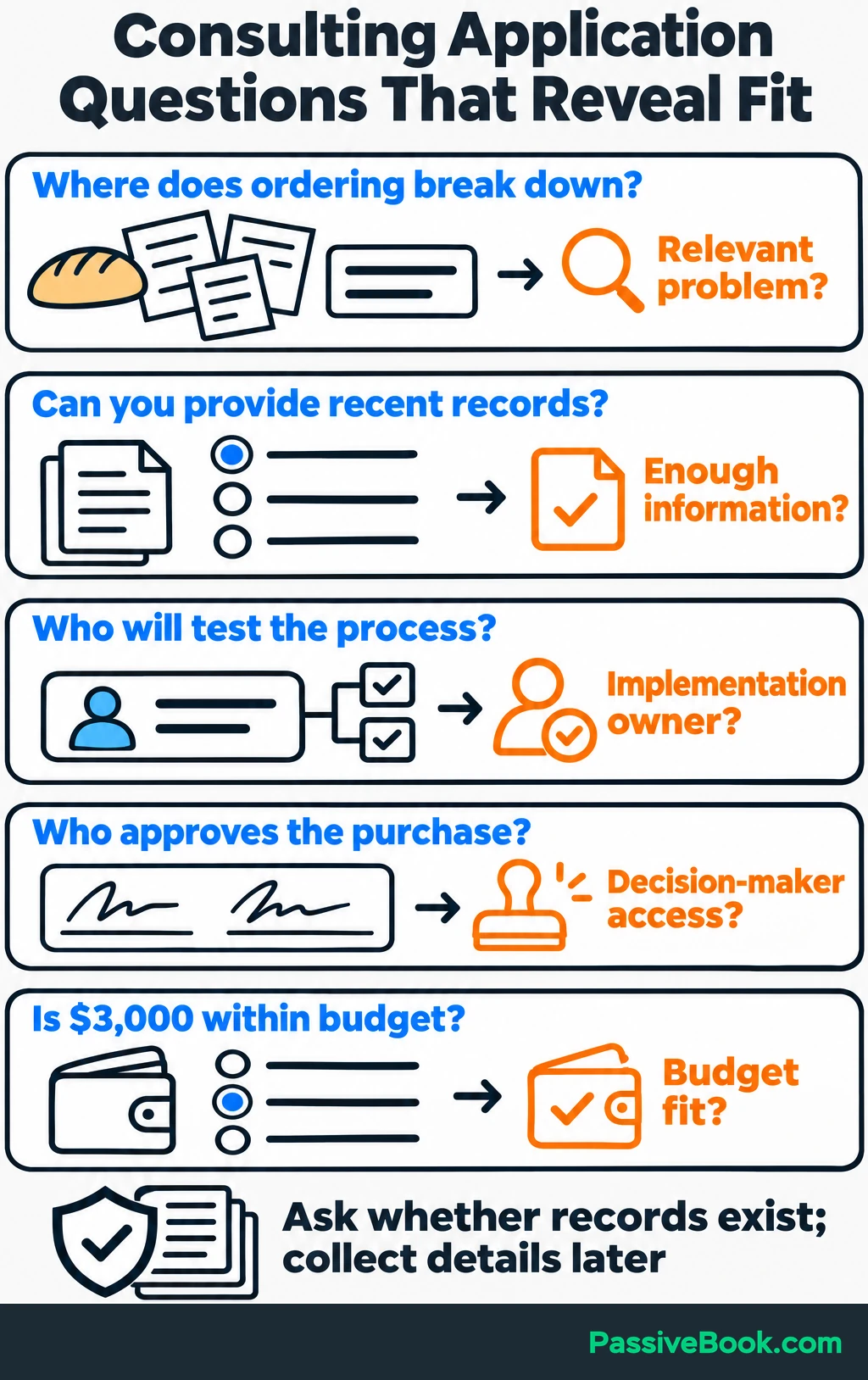
Keep detailed business records out of the initial form. At this stage, you need to know whether records exist, not collect the bakery’s purchasing history.
On WordPress, Fluent Forms’ free version includes form fields, email notifications and entry exports. That’s enough for a manually reviewed application. A hosted form is also fine if it captures the same information reliably.
The bakery example gives you a structure, but your service may need different questions. AI Copywriting Studio turns your offer and fit criteria into application copy and the replies you’ll send afterward.

Free AI Copywriting Studio




Give Each Applicant a Clear Next Step
Review applications against the criteria you set before launch. Give each one an outcome:
- Approve when the essential requirements are met.
- Request clarification when an answer is missing or unclear.
- Decline when the service cannot address the situation.
A prospect with an ordering problem but no usable records may need clarification about what information they can gather. Someone seeking daily purchasing management needs a different service.
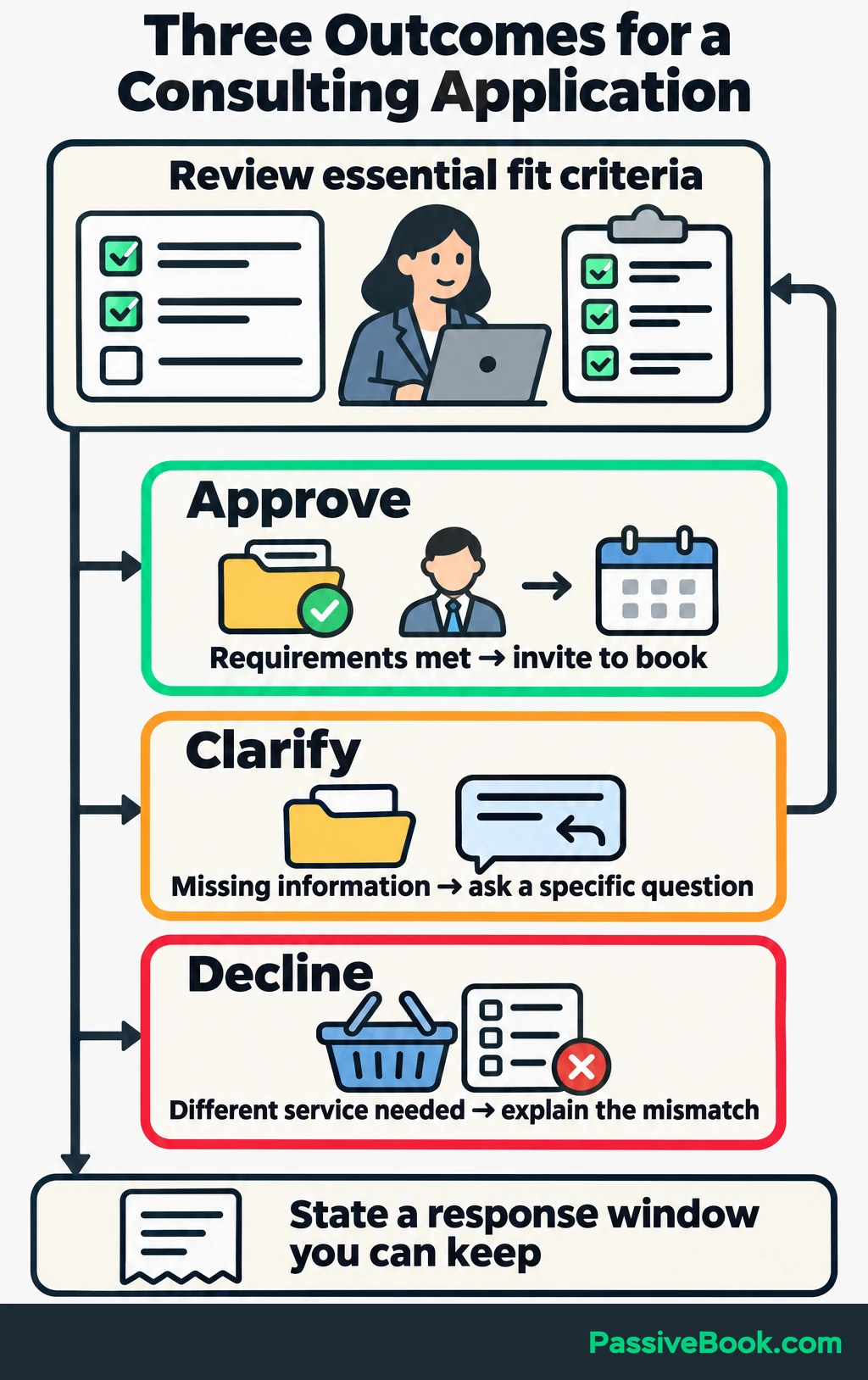
Don’t send everyone straight to the calendar. The review exists to protect both people’s time.
Set a response window you can keep. If you review applications on weekday evenings, a receipt might say:
Thanks for applying. I’ll review your answers and reply within two business days. If the package looks suitable, I’ll send you a link to choose a consultation time.
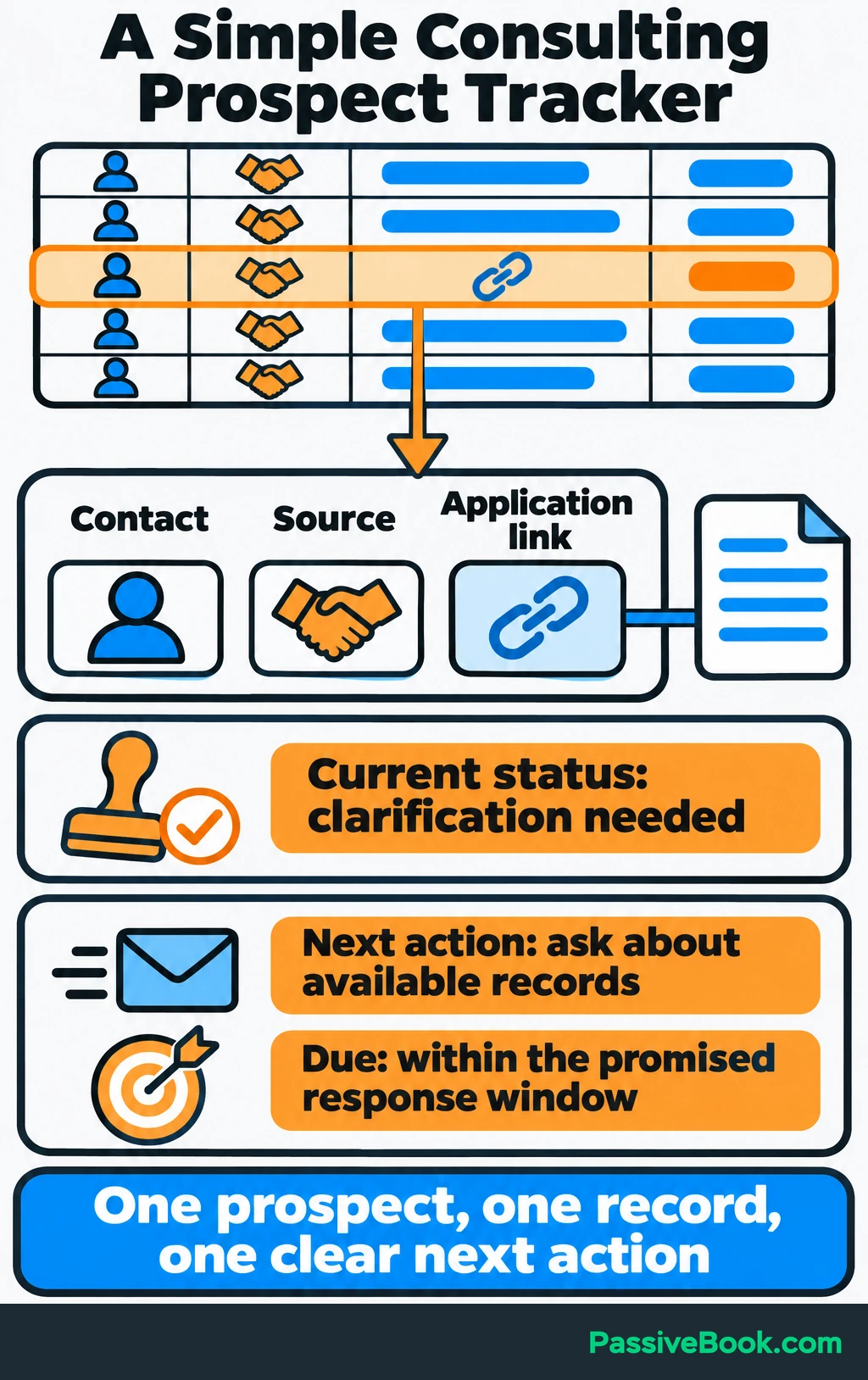
Keep one spreadsheet row per prospect with their contact details, source, application link, current status, next action and due date. Link to the full answers rather than copying them into several places.
I would keep qualification manual until the decisions become consistent. Automating an unclear rule simply applies the confusion faster.
4. Connect Approved Applications to Booked Calls
Make Booking and Attendance Straightforward
Your booking flow should be:
Approval email → booking page → confirmation → reminder → call.
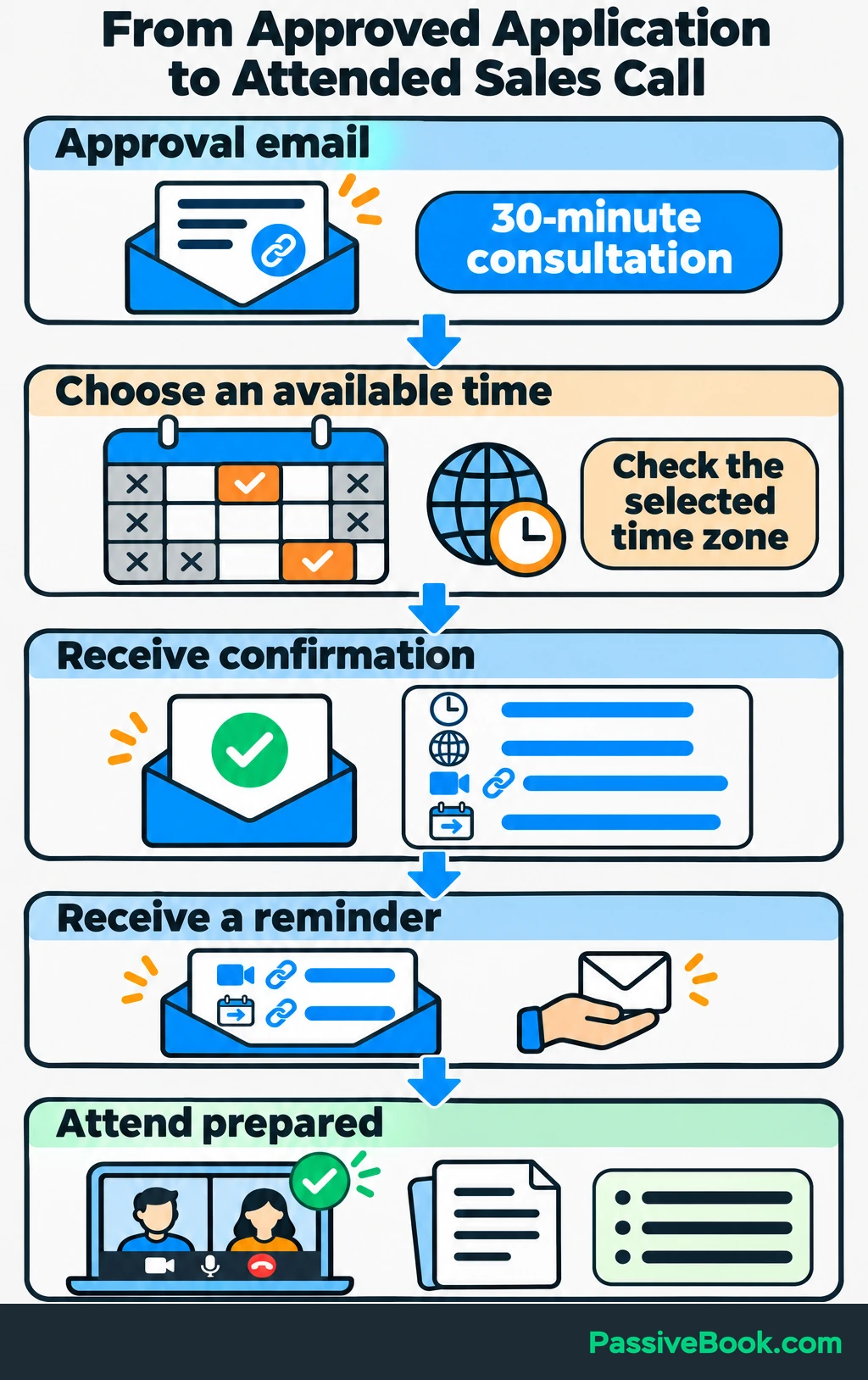
Offer one consultation type with a clear purpose and duration. Set availability, gaps between appointments and daily booking limits around your delivery commitments.
Use Calendly to let approved applicants choose an available call time. Its free plan includes one appointment type and one connected calendar; Standard adds automated reminders. Start with basic scheduling and send reminders yourself if call volume is low. If you use several calendars, make sure all unavailable time is blocked before relying on a single connected calendar.
Here’s a complete approval email:
Subject: Your inventory-planning application: choose a call time
Hi [First name],
Thanks for explaining how ordering works at [Bakery name]. Your application looks relevant to the six-week inventory-planning package.
Choose a 30-minute call here: [Booking link]
We’ll discuss your current process, check whether the package fits and cover any questions about the $3,000 engagement. There’s no obligation to buy.
Please come ready to describe how you decide what to order and who handles it. You don’t need to prepare a presentation.
The booking page shows times in your selected time zone, and your confirmation will include the meeting and rescheduling links.
If none of the available times work, reply and let me know.
[Your name]
The confirmation should repeat the appointment time, time zone, joining link, purpose and preparation. Keep the application answers with the appointment record so you can build on them during the call.
Follow Up When Prospects Stop Between Steps
An approved application without a booking needs a different follow-up from an upcoming appointment.
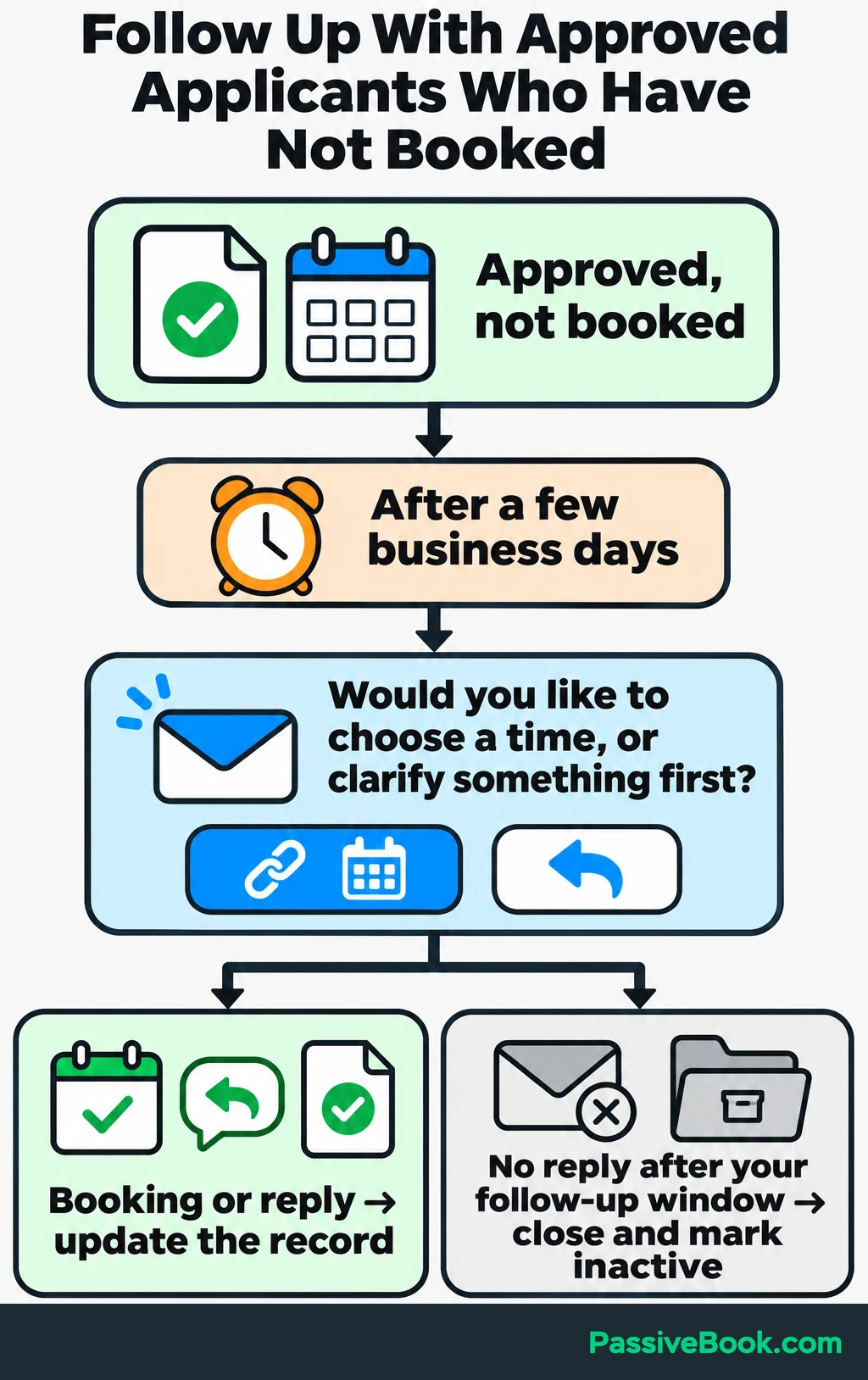
I would start with one booking nudge after a few business days:
Your inventory project looks relevant to the package. Would you like to choose a consultation time here: [link], or is there something you need clarified first?
If there’s still no reply, send a brief closing message after your chosen follow-up window and mark the enquiry inactive.
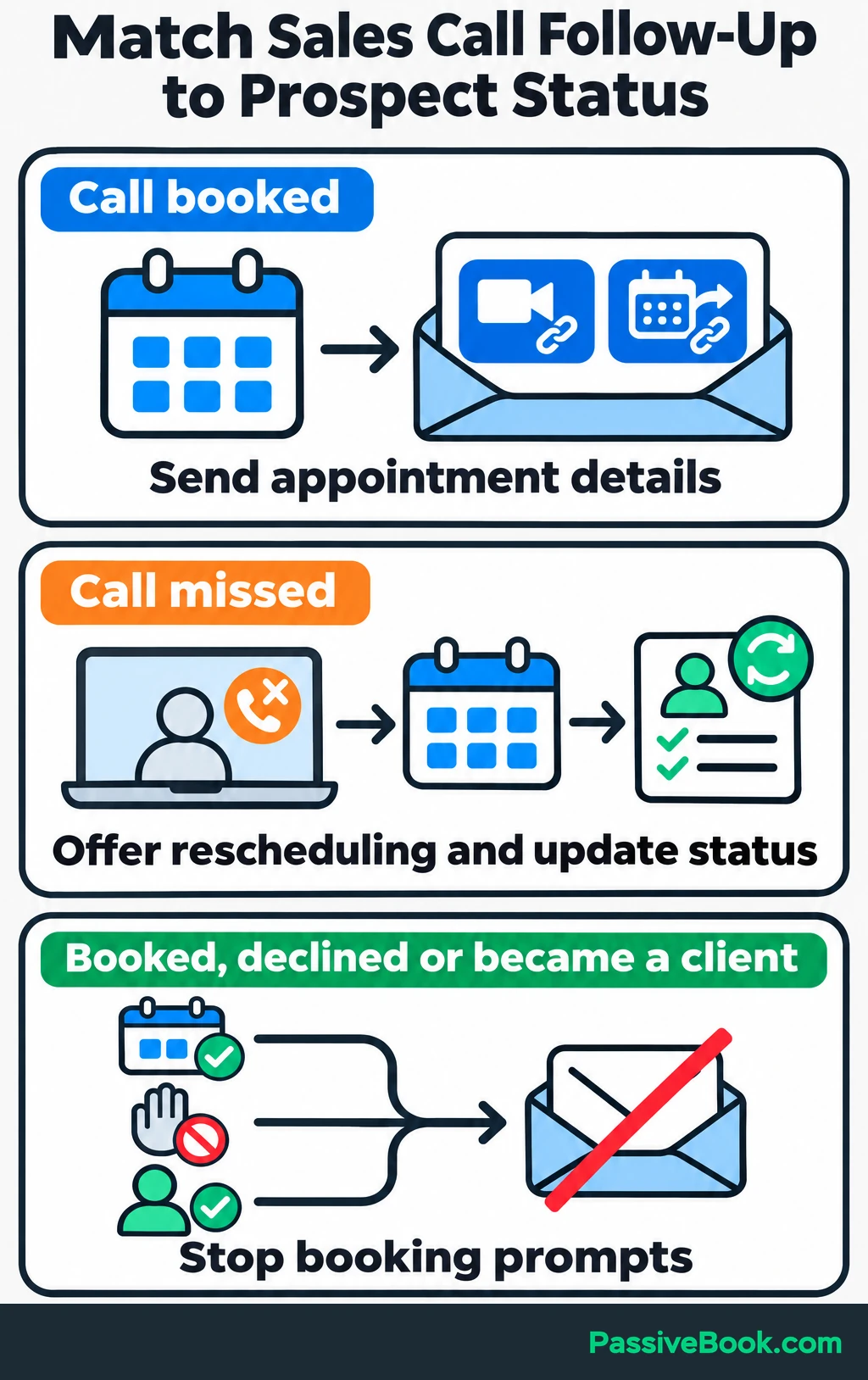
For booked prospects, send a reminder with the joining and rescheduling links. After a missed appointment, offer a way to reschedule and update the record.
Stop booking prompts as soon as someone books, declines or becomes a client.
5. Run a Sales Call That Produces a Clear Decision
Diagnose the Problem Before Recommending the Package
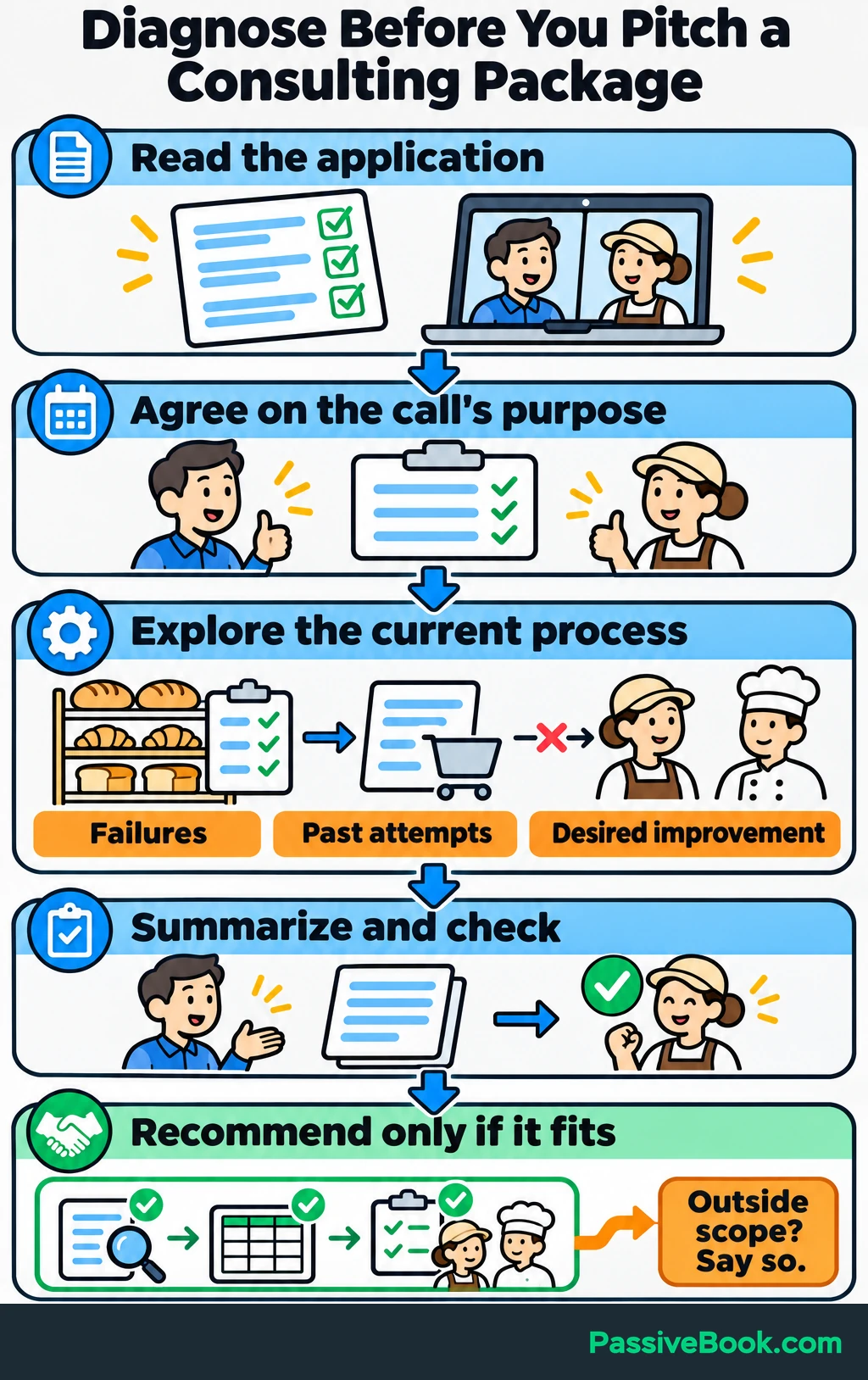
Read the application before joining. Open by agreeing on the purpose:
I’d like to understand how ordering works now, check whether this package would help and, if it fits, explain the work and price. Then we can decide the next step. Does that work for you?
Ask about the current process before presenting your solution:
- What happens from checking stock to placing an order?
- Where does that process fail?
- What have you tried, and what happened?
- What would a useful improvement look like?
- Who would carry out the changes?
Keep the conversation on their situation. A long explanation of your framework won’t tell you whether staff can use it.
Summarize what you heard and check your understanding. For example:
You have purchasing records, but stock counts happen irregularly and two people place orders without a shared worksheet. Have I understood that correctly?
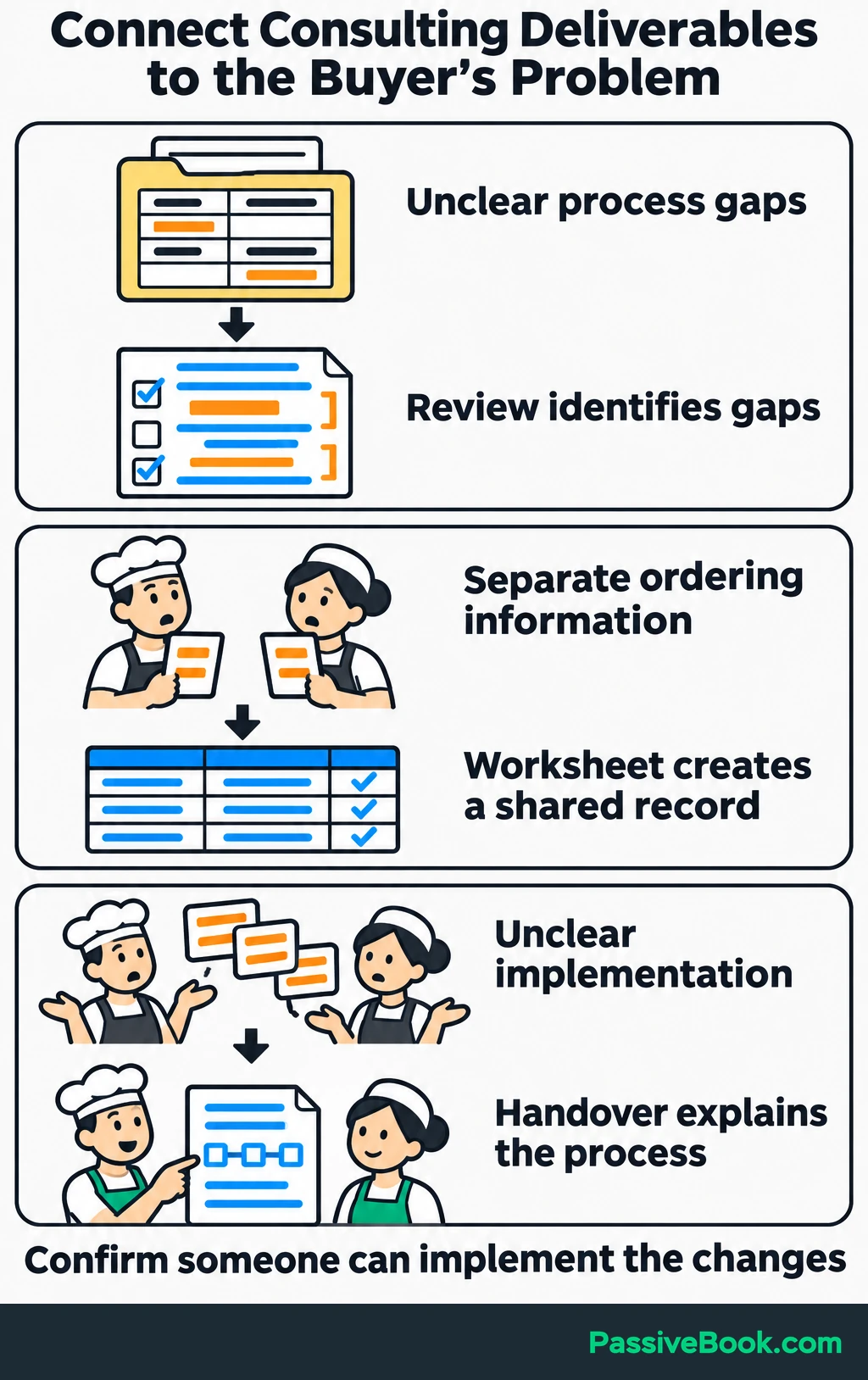
Only then connect the relevant deliverables to the need. The review identifies gaps, the worksheet creates a shared record, and the handover gives staff a process to follow.
If the buyer needs work outside your scope or has nobody available to implement it, say so. I would rather close an unsuitable enquiry than spend six weeks defending a package the buyer couldn’t use.
Agree on the Purchase or the Next Action
Explain the scope, exclusions, responsibilities, schedule, price and payment terms. Then ask plainly:
Does this address what you need, and would you like to move forward?
When someone hesitates, find the specific issue. They may need another person’s approval, a different start date or clarification about what’s included. Answer that concern instead of treating every hesitation as a request for persuasion.
End with one defined outcome:
- Proceed to the agreement and payment.
- Exchange specific missing information.
- Follow up on an agreed date.
- Close the enquiry.
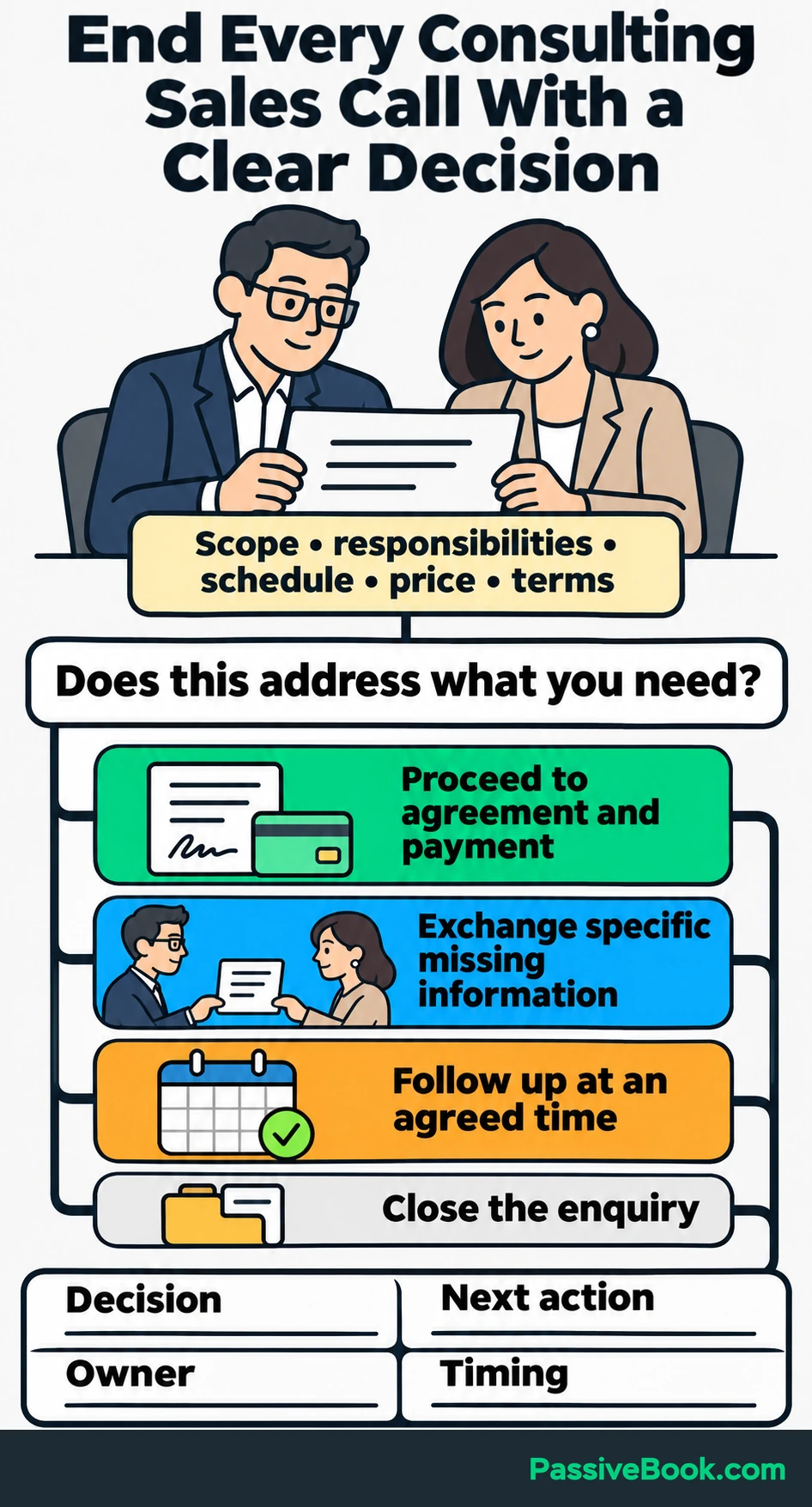
Send a short written recap with the decision, next action, owner and timing. “I’ll send the agreement tomorrow, and you’ll review it with your co-owner by Friday” gives both people something concrete to do.
For payment, Stripe offers no-code Payment Links for a standard package and invoices for a specific customer. I would usually choose a customer-specific invoice for a consulting engagement because it ties the request to the agreed work.
Put installment amounts, due dates and delivery terms in writing if you offer a payment plan. After acceptance and the required payment, send onboarding instructions with the start date, records needed and first meeting.
6. Test the Funnel Before Promoting It
Walk through the whole route as a prospect. Test suitable, unsuitable and incomplete applications, and check the experience on mobile and desktop.
Use this checklist:
- Does the form store answers and notify you?
- Does the applicant receive the promised receipt?
- Can you approve, clarify or decline without losing the record?
- Does booking respect unavailable time and show the correct time zone?
- Do confirmation, joining and rescheduling links work?
- Can you see the application before the call?
- Do the agreement and payment request match the offer?
- Does a test payment lead to the intended onboarding step?
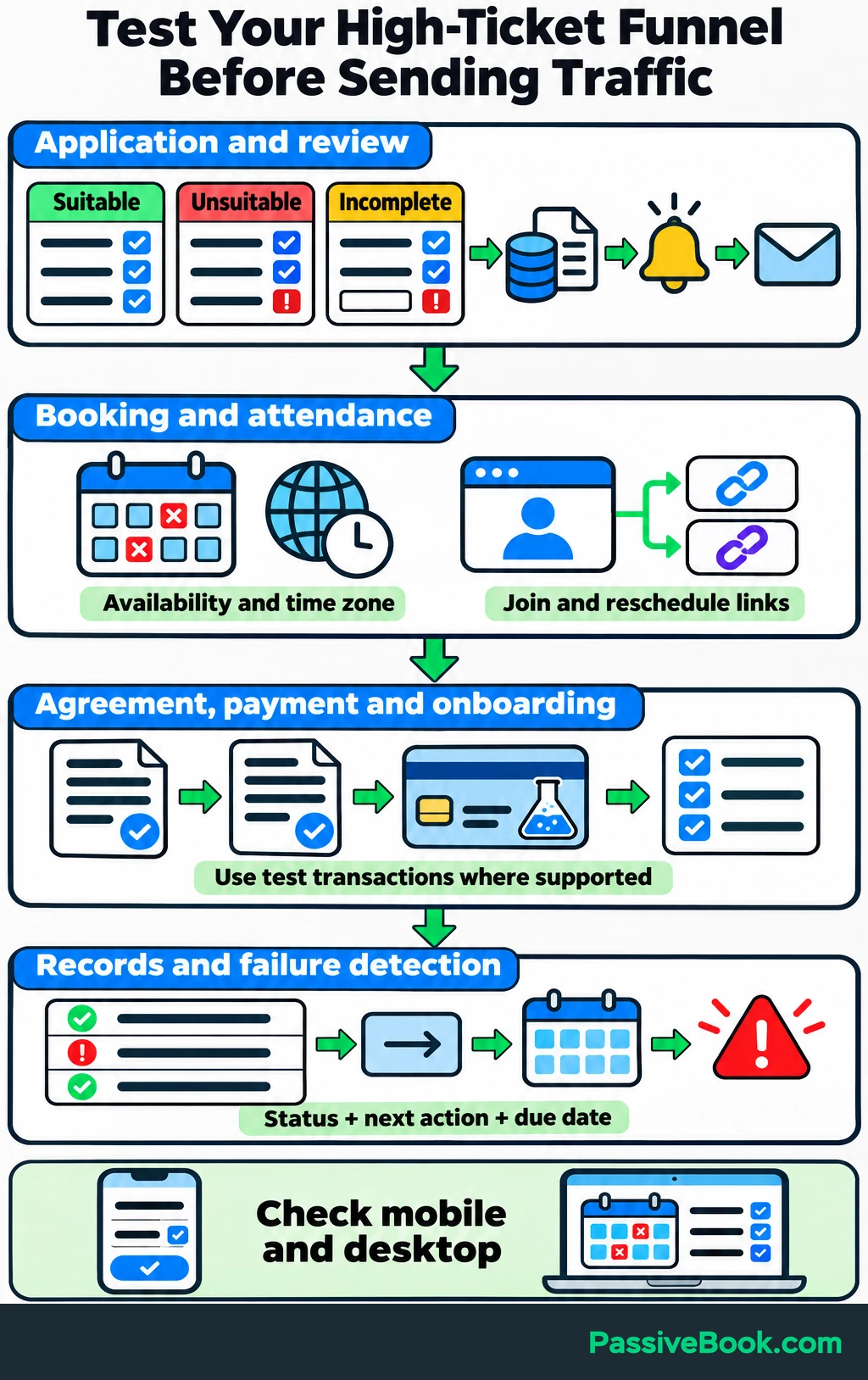
Use test transactions where your payment service supports them.
Then inspect the spreadsheet. Every active prospect should have one current status and a next action with a due date. “Waiting” is incomplete unless you know who you’re waiting for and when you’ll check again.
Automate repeated handoffs after they work. Keep a way to notice failures, such as an error notification and a weekly review of records with no next action. A quiet automation failure can look remarkably like a quiet business.
7. Bring Suitable Prospects Into the Funnel
Start With One Relevant Acquisition Route
Choose one route where suitable buyers are reachable. Previous clients, professional relationships and referral partners are sensible starting points. If those aren’t available, publish useful content around the problem your offer addresses.
Make referral requests specific:
Do you know an independent bakery struggling with recurring ordering or stock-record problems? I offer a six-week package to put a practical ordering process in place. It’s designed for bakeries with recent records and someone available to test the changes.
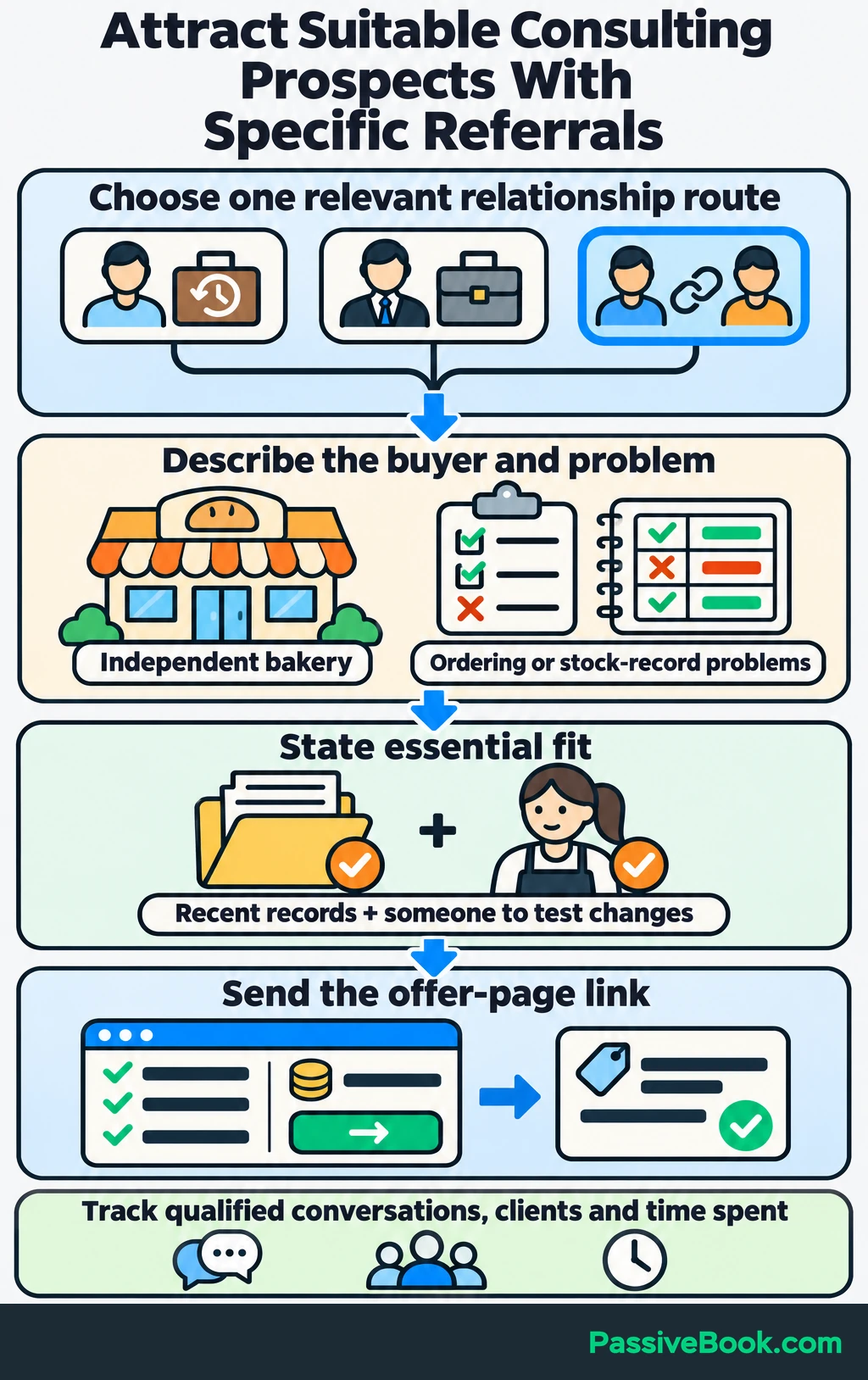
Give interested people the offer-page link so they can assess the work and price before applying.
For content, answer a question that helps buyers recognize the need. An article about spotting recurring gaps in ordering records connects naturally to the package. General business motivation would give readers much less reason to investigate it.
Record where each application came from. Judge the route by qualified conversations and clients alongside the time it takes. A referral source producing two suitable applications deserves more attention than a post producing a crowd of curious visitors.
I would consider paid ads only after suitable prospects are moving through the funnel and you know how much money remains after delivering the service.
Add Email Nurture When Buyers Need More Context
Some buyers need help understanding the problem before they’re ready to apply. Add a related resource when you see that need.
For the bakery package, an inventory-review checklist could help someone examine their records. A short email sequence could then:
- Deliver the checklist and explain how to use it.
- Explain one recurring ordering problem.
- Show part of the sample worksheet.
- Invite an application for help implementing the process.
Use a subscribed email list for this sequence and keep individual application follow-up in your inbox while volume is manageable. Remove applicants from generic “apply now” prompts once they apply.
My WordPress preference is FluentCRM, which manages contacts, campaigns and email automation inside WordPress. If you already have an email provider that does the job, I wouldn’t migrate just to launch this funnel.
Keep marketing signup separate from submitting an application, and follow the email rules that apply to your business and recipients. For U.S. commercial email, the FTC’s CAN-SPAM guidance requires accurate sender details and subjects, advertising identification, a valid postal address, a clear opt-out method and honoring opt-outs within 10 business days.
8. Improve the Funnel Using Qualified Calls and Revenue
Track the path to a purchase, including what happens after someone applies.
You need counts for offer-page visitors, applications, qualified applications, bookings, attended calls and signed clients. Record contract value and cash collected separately.
Follow the same group through later stages. Don’t divide this week’s sales from older enquiries by this week’s new calls. Leave unresolved prospects marked as open rather than treating them as losses.
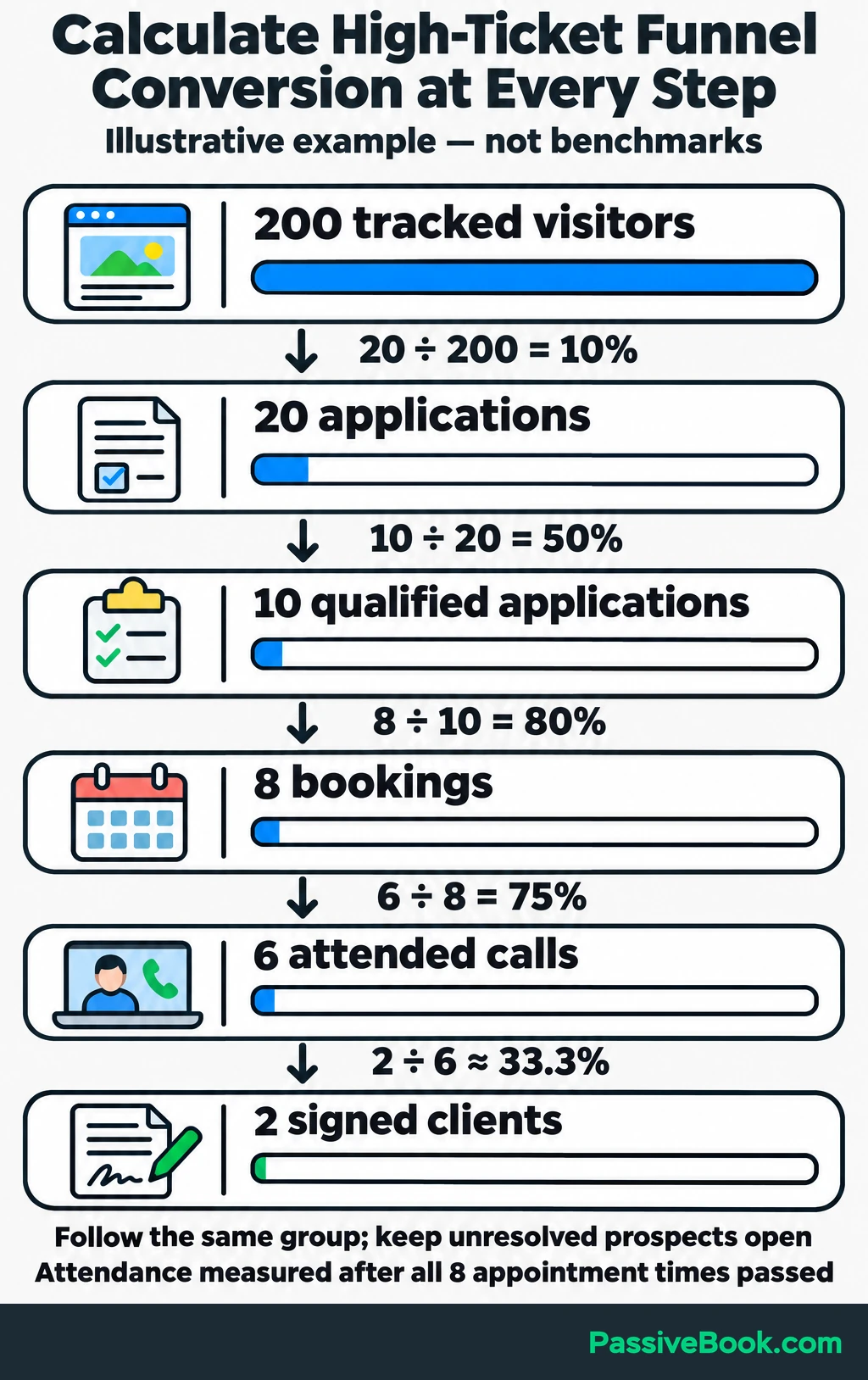
For each stage, count how many people from the previous stage reached the next one. Divide that number by the previous stage’s count and multiply by 100.
Suppose 200 tracked visitors arrive through referrals, 20 apply and 10 meet your qualification criteria. Eight of those qualified applicants book. After all eight appointment times have passed, six have attended and two of those six have signed. These figures demonstrate the calculation; they are not observed results or performance benchmarks.
| Funnel stage | Count | Conversion from the previous stage |
|---|---|---|
| Applications | 20 | 20 ÷ 200 = 10% |
| Qualified applications | 10 | 10 ÷ 20 = 50% |
| Bookings | 8 | 8 ÷ 10 = 80% |
| Attended calls | 6 | 6 ÷ 8 = 75% |
| Signed clients | 2 | 2 ÷ 6 ≈ 33.3% |
At the assumed $3,000 package price, two signed clients represent $6,000 in contract value. If each has paid only a $1,500 first installment, cash collected is $3,000. Your bank balance cares about that distinction.
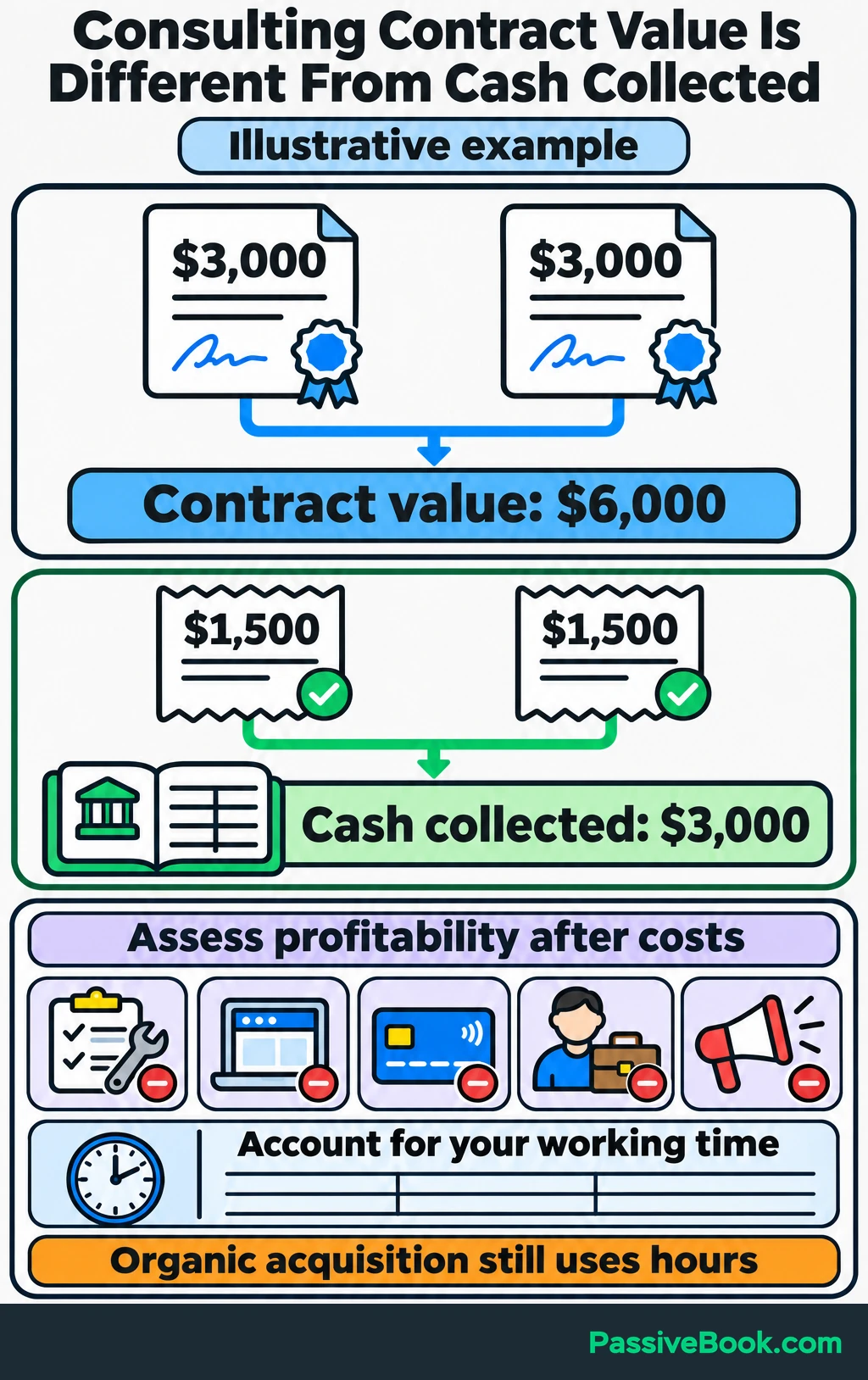
Then assess profitability. Subtract delivery costs, software, payment fees, contractors and acquisition spending, and account for your own working time. Organic acquisition still uses hours.
There’s no useful universal conversion target to promise here. Six attended calls are a small group, so read the notes behind the numbers before changing the offer.
Fix the obstacle you can identify. Poor-fit applications call for clearer targeting or eligibility. Unbooked approvals need a booking review. Suitable calls without purchases need a closer look at the offer and the concerns buyers raised.
Increase traffic when qualified prospects are progressing and you have capacity to serve more clients. Otherwise, more enquiries can simply give the same broken handoff a larger audience.
What Next?
Write your offer statement and five essential fit criteria, then build the application around them. That gives you something concrete to test before buying more software.
Use the social buttons to share this guide when a conversation about premium services starts turning into a shopping list of funnel tools.
Which handoff needs the most attention in your business: getting suitable applications, booking calls or reaching a buying decision? Tell me in the comments, and bring any other questions too.
Share this post with your friends & followers:

