You find a product that businesses buy regularly, and the numbers look promising. Then come the questions: Will anyone switch suppliers? How much stock should you buy? Does the store need quotes, company accounts or ordinary checkout?
Those decisions can tie up your budget before the first order arrives. Even a first sale leaves questions about repeat demand. This guide follows a gift-box supplier through those uncertainties, showing how buyer feedback and order costs shape a store built for repeat purchases.
Choose a Business Buyer and a Purchasing Problem
Start with a buyer you can reach and a purchase you can understand. “Selling supplies to businesses” is too broad to guide your product choices, pricing or marketing.
Write down:
- Which companies you want to serve.
- What they already buy.
- What causes them to place another order.
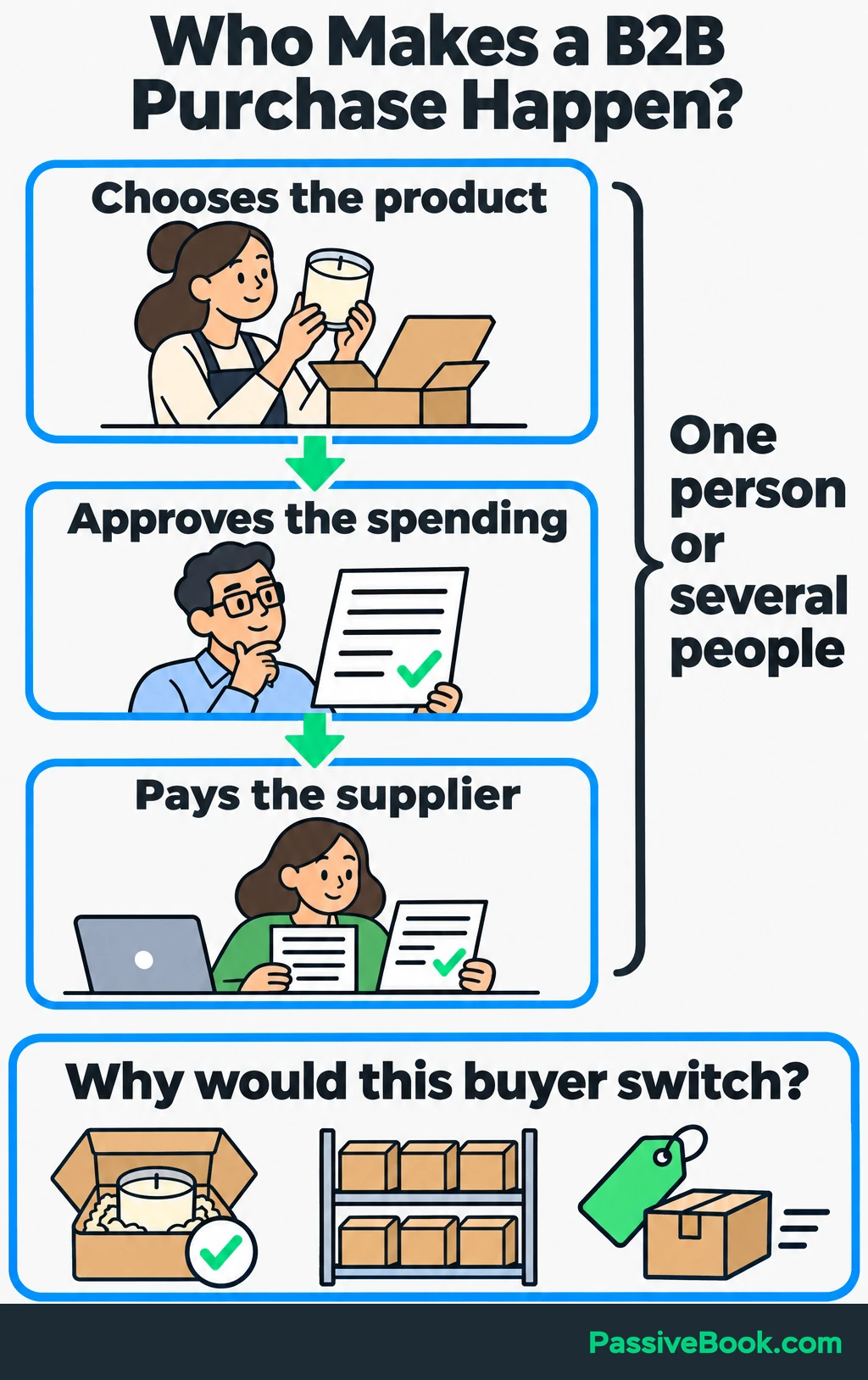
- Who chooses the product, approves spending and pays.
- What would make changing suppliers worthwhile.
Those jobs may belong to one person in a small company. In a larger business, the person who likes your sample may still need approval before ordering.
Throughout this guide, imagine you supply plain folding gift boxes to independent candle brands. The business, offer and figures are illustrative.
Your proposed advantage might be smaller replenishment quantities in useful sizes. But that is a question to test. Buyers may care more about reliable availability or the total delivered price.
Compare possible offers before choosing one:
| Question | What to Look For |
|---|---|
| Can you reach buyers? | Named businesses and a practical way to contact the person who orders |
| Will they buy again? | A clear replenishment trigger, such as using up packaging |
| Can you secure supply? | A supplier willing to confirm specifications, quantities and lead times |
| Can you deliver it? | Packaging, storage and shipping you can manage within your budget |
| Is each order worthwhile? | Enough money left after delivery, handling and other order costs |
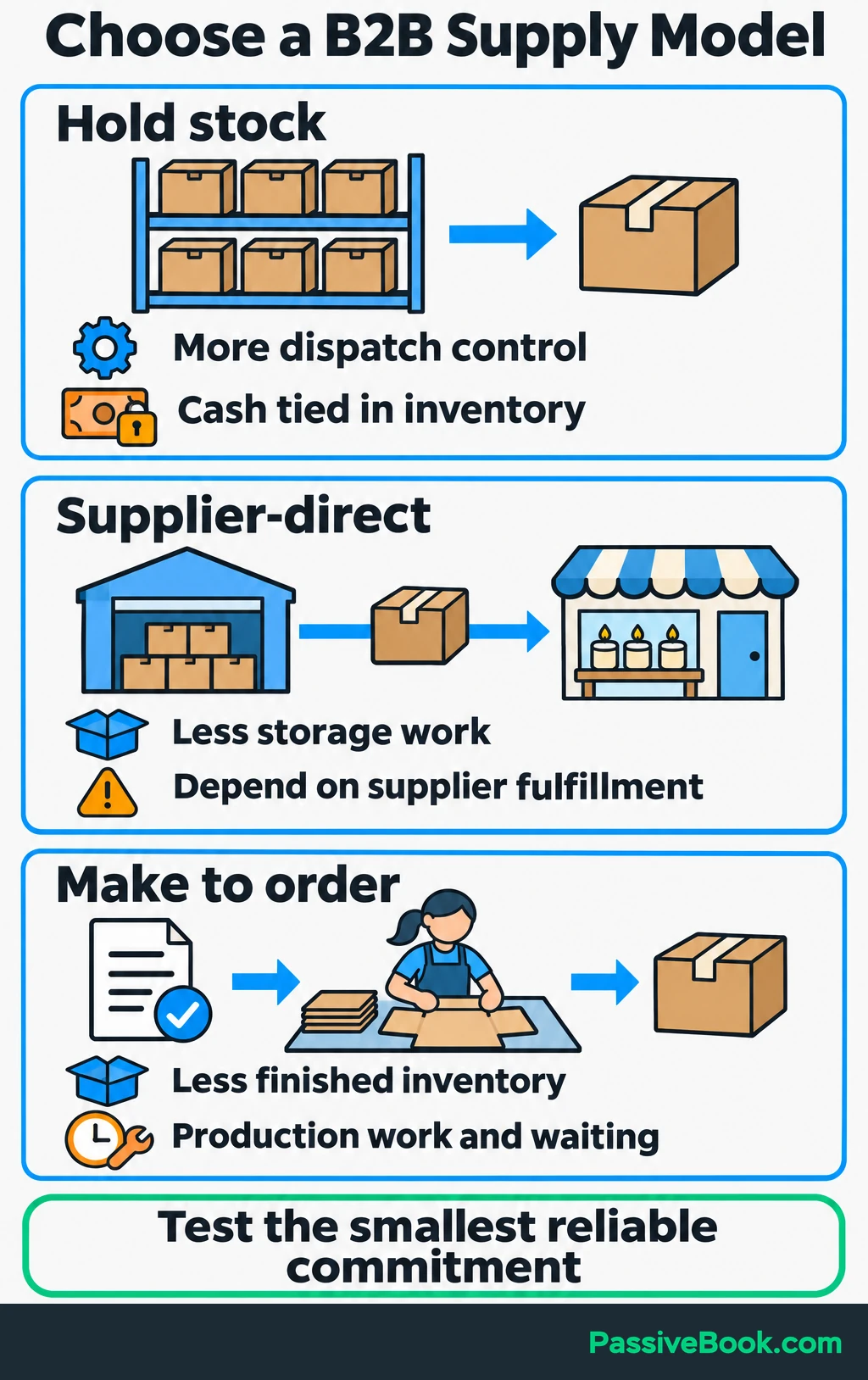
Then choose how you will supply the product. Holding stock gives you more control over dispatch, but it ties up cash. Supplier-direct fulfillment reduces your storage work, but you depend on someone else’s stock and packing. Making products to order avoids some finished inventory, but adds production work and waiting time.
I would choose the model that lets you test a useful offer with the smallest commitment you can reliably fulfill.
For the gift-box business, the initial offer statement could be:
Plain folding gift boxes for independent candle brands, sold in cartons of 100 for smaller replenishment orders.
That statement gives your research a target. It does not yet prove anyone wants it.
Validate Demand Before Building the Store
Learn How Buyers Purchase Today
Ask about the buyer’s latest purchase before pitching your idea. A real order reveals more than a friendly answer to “Would you buy this?”
Keep the questions concrete:
- What size, material and quantity did you order?
- What did you pay, including delivery?
- How long did the order take to arrive?
- What went wrong or took extra work?
- What would a new supplier need to provide before you could order?
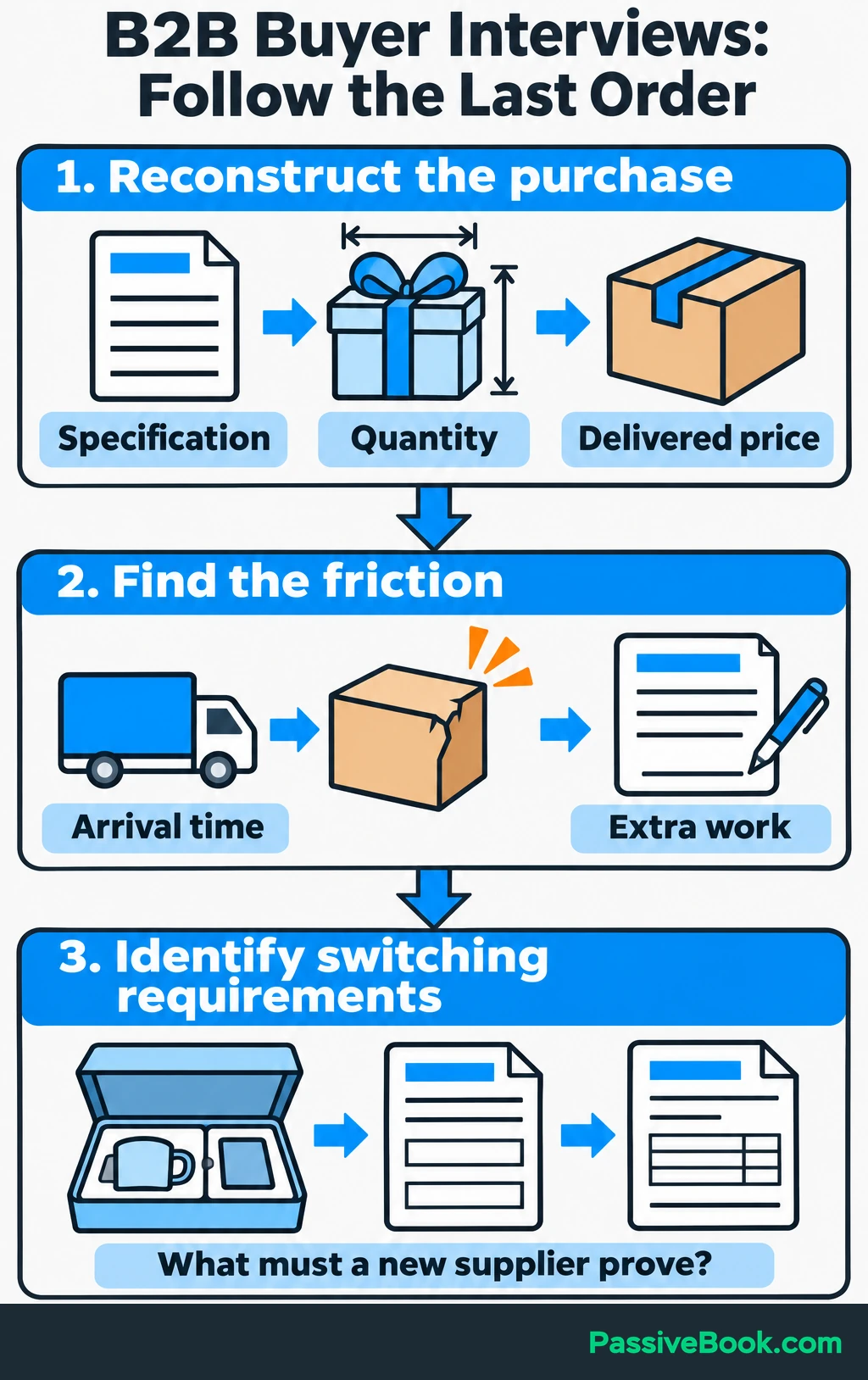
For the gift boxes, find out whether buyers need samples, protective inserts or particular internal dimensions. Ask whether they can pay online or need a supplier approval form and an invoice.
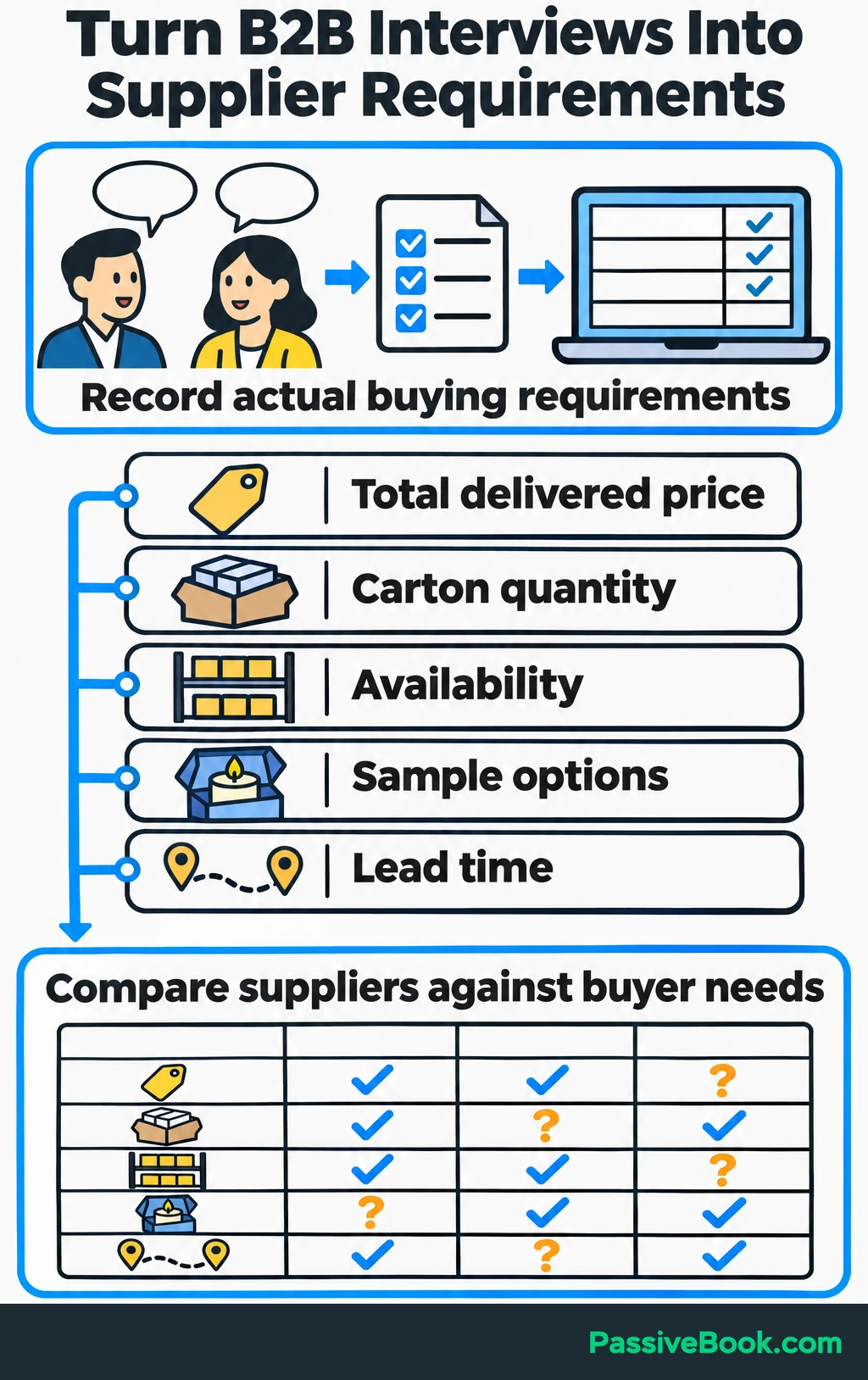
Record the answers in a spreadsheet alongside competing suppliers. Compare the requirements buyers mention: delivered price, carton size, availability, sample options and lead time.
My online jewellery store taught me this lesson expensively. I started with about $1,200, skipped market research and ended up with unsold inventory. I lost most of the investment. I had made the buying decision before learning whether customers would make theirs.
That experience is why I would investigate the purchasing problem before ordering a batch. “Nice product” is pleasant feedback. It does not clear a shelf.
If you are unsure how to start those conversations, AI Copywriting Studio can draft your opening message and questions. Use it to ask about real purchases before pitching an offer.

Free AI Copywriting Studio




Test an Offer Buyers Can Actually Purchase
Get preliminary supplier quotes and samples so your test reflects something you can deliver. Check minimum purchases, inbound freight, sample quality and likely shipping costs before presenting a price.
A simple offer page or proposal is enough at this stage. Show:
- The product and its specifications.
- What one order quantity includes.
- The minimum purchase.
- The price and delivery assumptions.
- The expected dispatch time.
- One next step, such as requesting a sample or placing a pilot order.
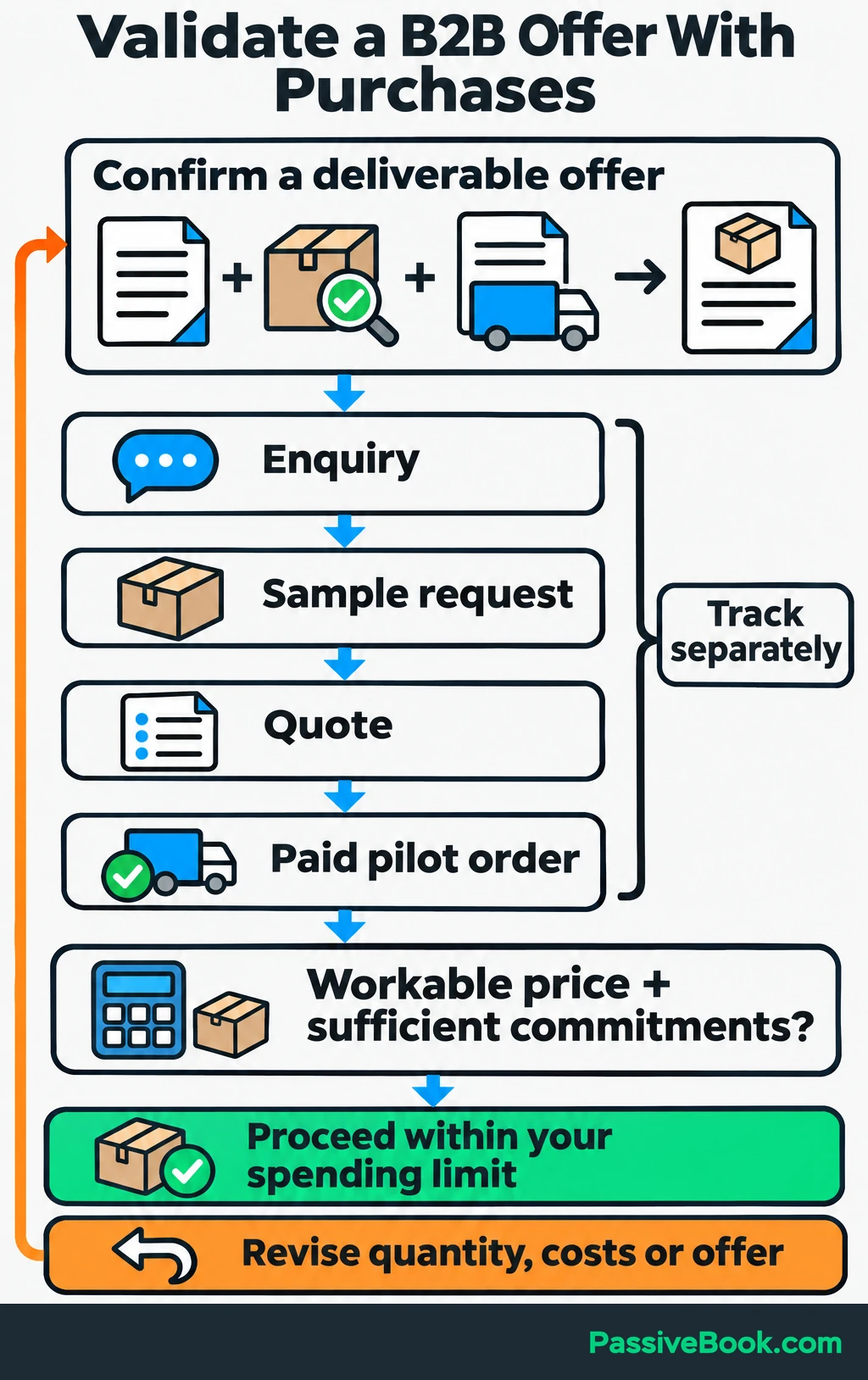
For the gift boxes, you might show one size, one carton quantity and a sample option. A WordPress page is sufficient if you already have a site. I would skip the full catalog until buyers give you a reason to build it.
Before accepting payment, complete the registrations, permits and tax setup required for your business and selling locations. For US operations, the SBA’s launch guidance covers the main areas to check.
Once fulfillment is feasible, seek a paid sample or small pilot purchase. Track enquiries, sample requests, quotes and paid orders separately. Record why buyers decline.
Set your spending limit and decision criteria before the test. Proceed when buyers accept prices that work and their commitments justify the smallest practical supply purchase.
If buyers want the boxes but reject the carton quantity, revise that requirement and recalculate costs. If nobody has a reason to switch suppliers, reconsider the offer before investing further.
Secure Supply You Can Depend On
Turn what buyers need into a written specification. Otherwise, you and your supplier may agree on a product name while imagining different products.
Include dimensions, materials, color, pack contents and quality requirements. Describe unacceptable defects and how they will be handled.
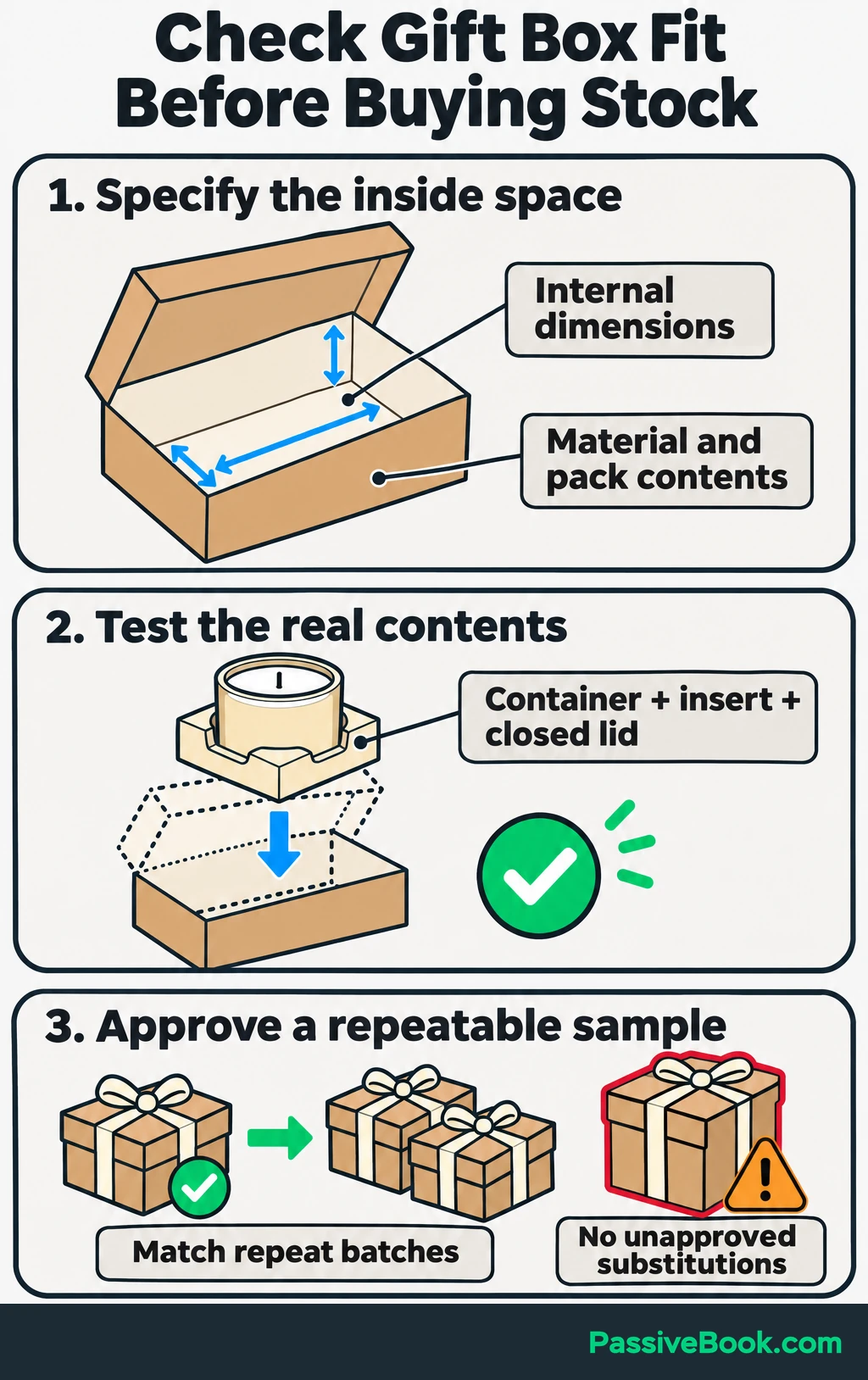
For the gift-box business, internal dimensions matter because the candle container and its insert must fit inside. Test the assembled box with the intended contents. A photograph beside a ruler cannot do that job.
Compare suppliers on more than the price per box:
- Minimum purchase and quantity increments.
- Deposit and final-payment timing.
- Production and replenishment lead times.
- Inbound freight and any import costs.
- Responsibility for shortages, damage and defects.
- Whether repeat batches will match the approved sample.
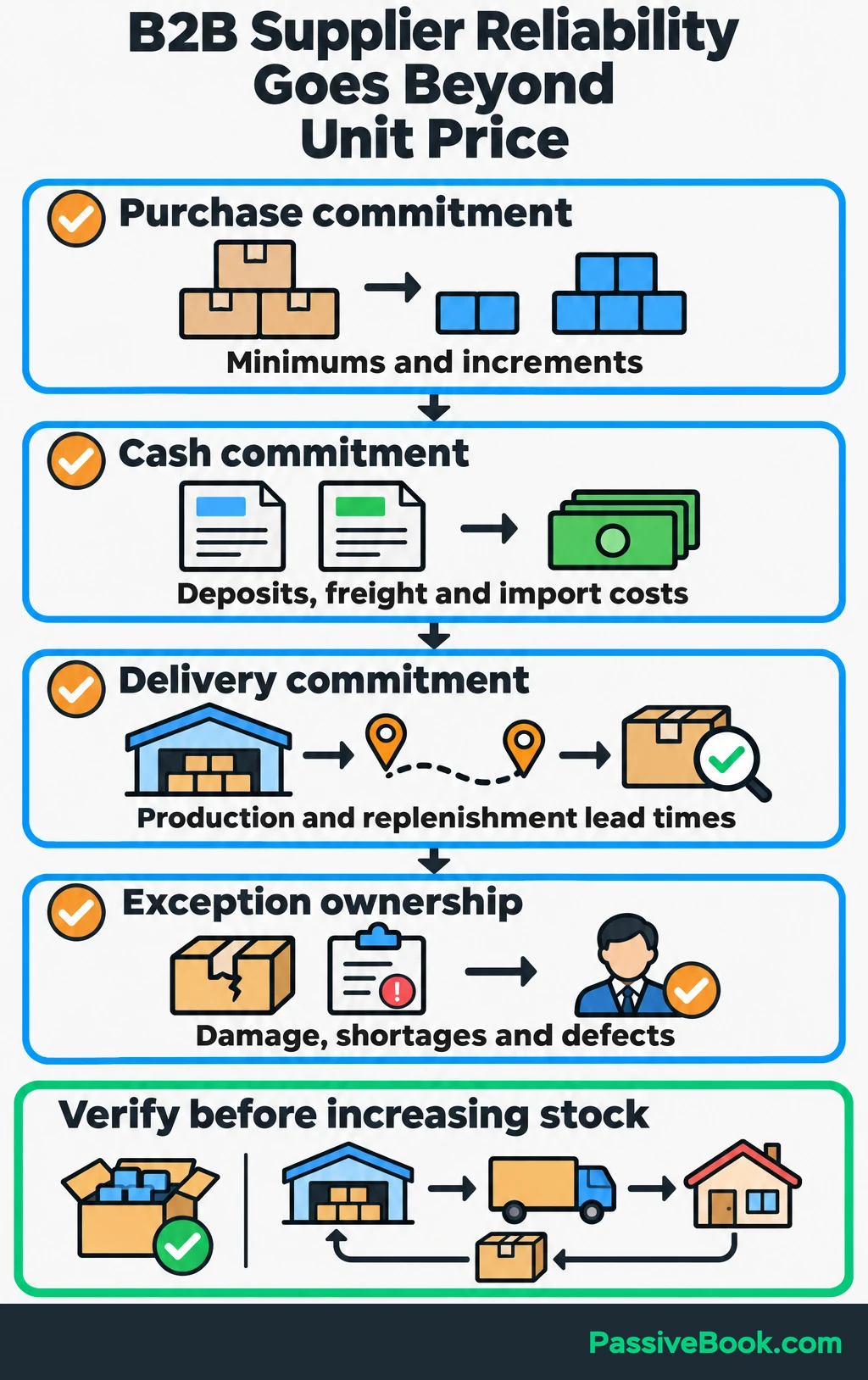
Inspect a small initial batch before increasing stock. If the supplier ships directly to customers, place a test shipment and check the packaging, dispatch time, tracking and returns handoff.
Agree on what happens when stock is unavailable. I would prohibit substitutions without approval, especially when fit matters. A slightly different box can become a completely different problem.
Base customer delivery estimates on confirmed supply and dispatch capabilities, and tell buyers promptly when those estimates change.
Set Prices That Support a Viable Business
Calculate Contribution per Order
Contribution is the money an order leaves to pay for acquiring customers, running the business and paying you.
Start with revenue after discounts, excluding taxes collected for authorities. Subtract the costs caused by fulfilling that order: goods, inbound freight, packing, handling, delivery, payment fees and an allowance for damage or returns.
Here is an illustrative order for one carton containing 100 gift boxes. The selling price includes delivery.
| Item | Amount |
|---|---|
| Order revenue, excluding tax | $100 |
| Goods | −$40 |
| Allocated inbound freight | −$5 |
| Packing and handling | −$5 |
| Delivery to the buyer | −$10 |
| Payment fees | −$3 |
| Damage allowance | −$2 |
| Contribution before acquisition and fixed overhead | $35 |
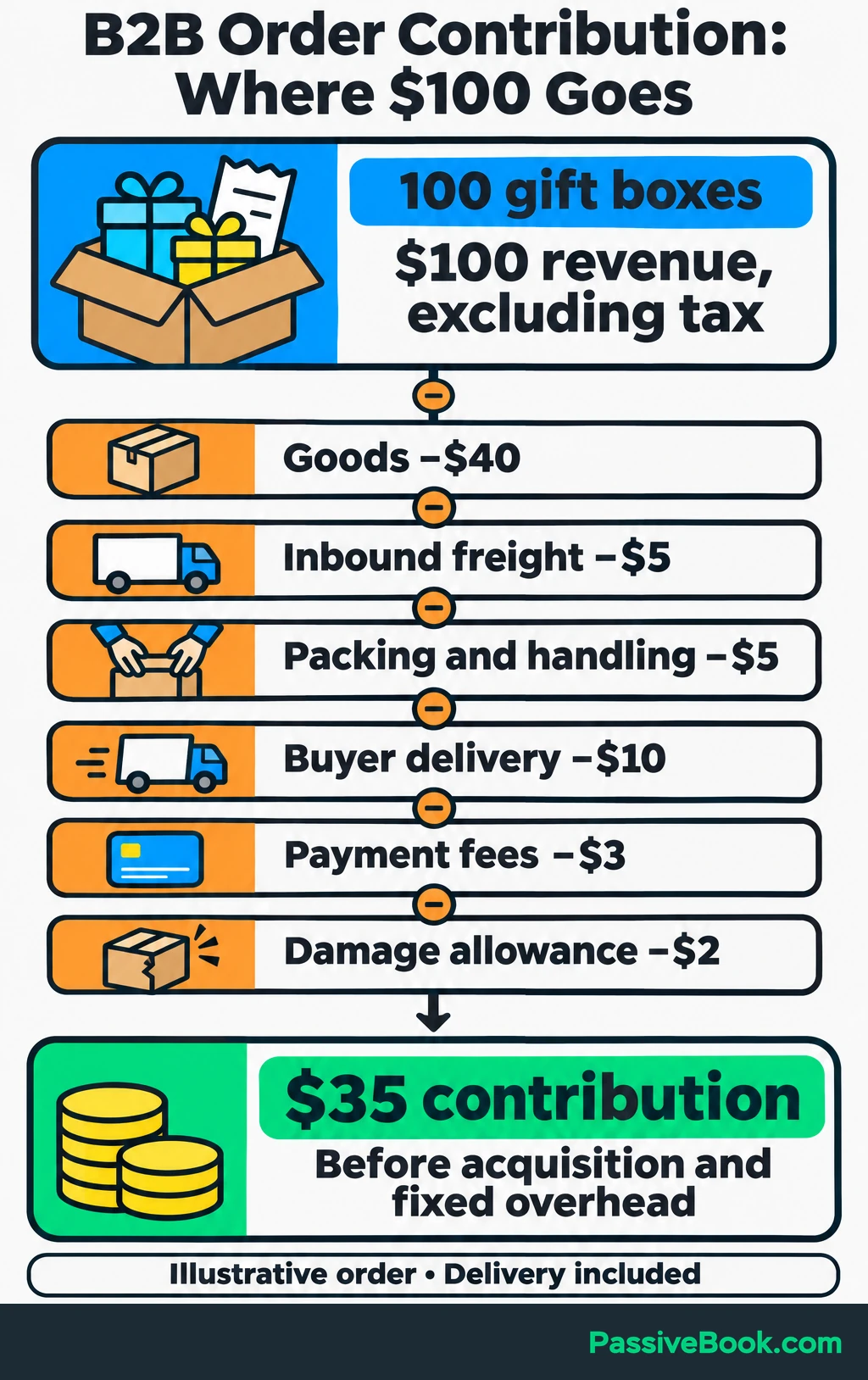
The difference between a $40 product cost and a $100 selling price is not $60 of profit. The other costs have opinions too.
Now assume each comparable order also carries $15 in acquisition costs. That leaves $20 per order toward monthly overhead.
To estimate break-even, count how many of those orders would cover $350 of monthly fixed costs:
$350 ÷ $20 = 17.5, so you need 18 comparable orders.
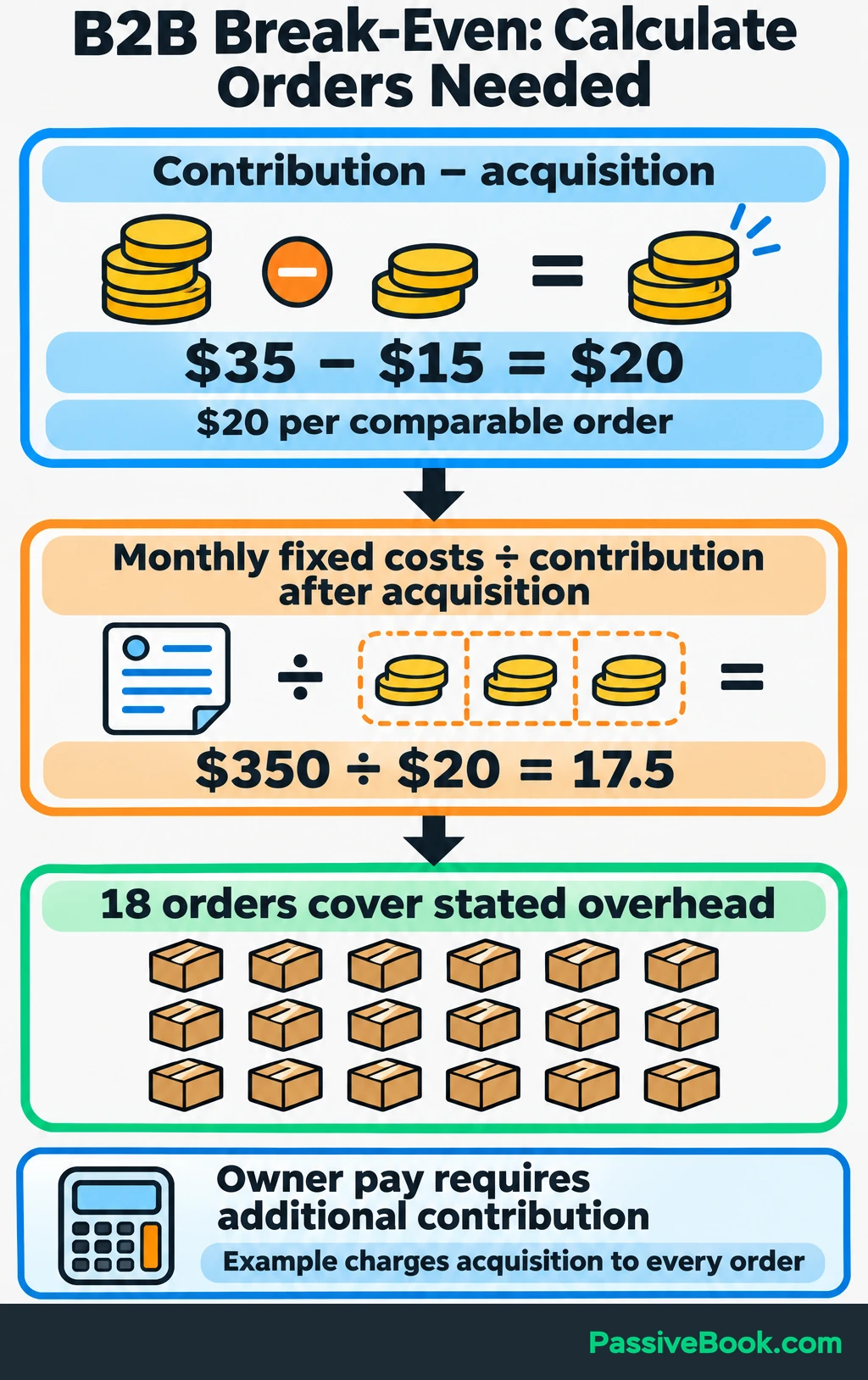
This applies the SBA’s break-even formula, using an order as the selling unit. The example charges acquisition to every order; your actual mix of new and repeat orders may differ.
Those 18 orders cover the stated overhead. Add your desired owner pay to the amount the business must cover when assessing whether the income is worthwhile.
Build a worksheet with order quantity, net revenue, variable costs, contribution, acquisition cost and contribution after acquisition. Recalculate each quantity tier. A larger order deserves a discount only when the remaining contribution supports it.
You can work backward from the contribution margin you want instead of guessing at a bulk discount. The calculator below gives you a price floor for each order size and shows how higher costs would change it.
Free Pricing Profit Calculator
Protect Working Capital
A profitable order can still leave you short of cash before the buyer pays.
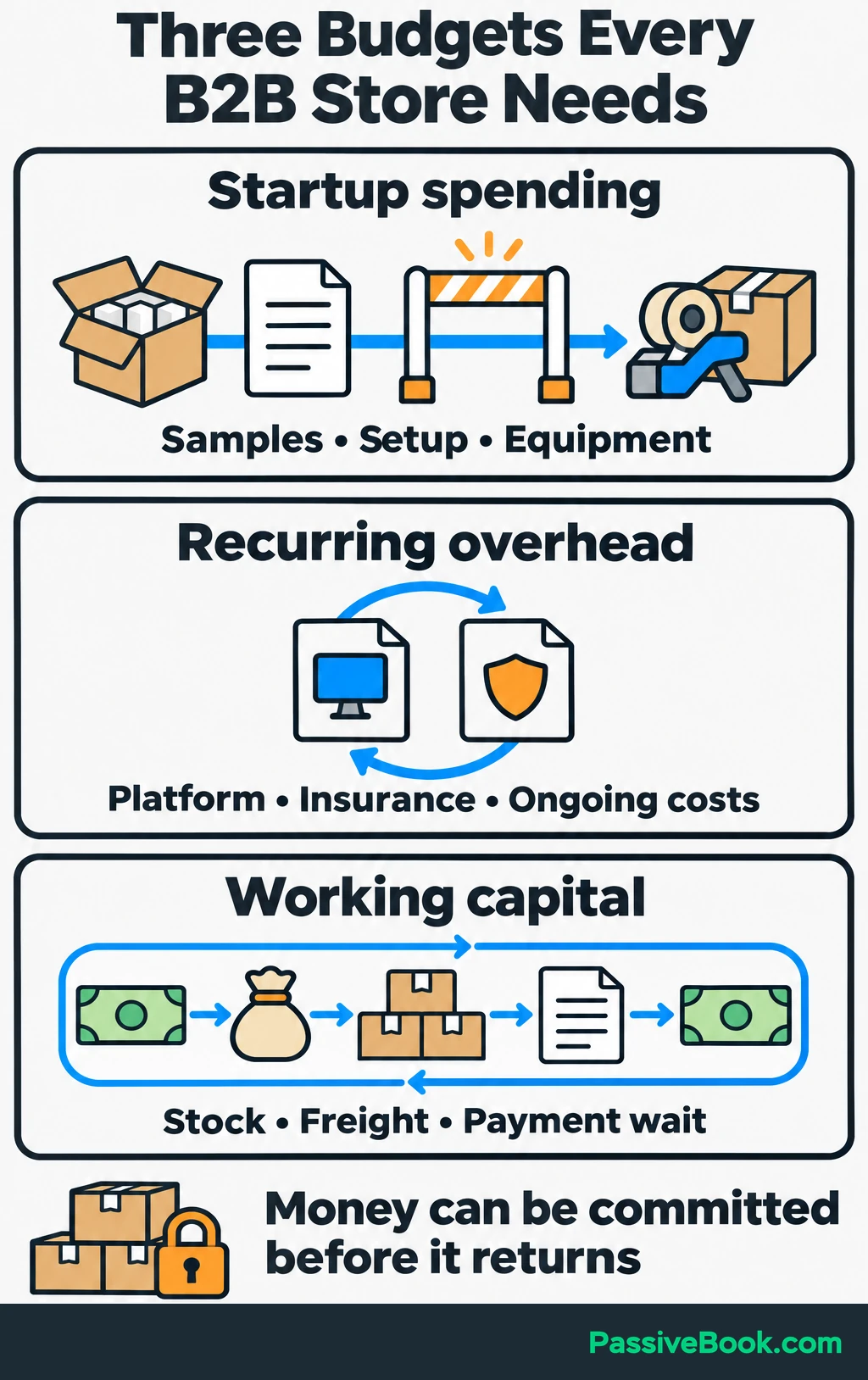
Separate your budget into three parts:
- Startup Spending: Samples, initial setup, registrations and equipment.
- Recurring Overhead: Hosting or platform subscriptions, insurance and other ongoing costs.
- Working Capital: Money needed for stock, supplier deposits, freight and the wait for customer payments.
Put expected payments and receipts on a calendar. Include supplier deposits, final balances, delivery charges, customer collections and payment-provider payout timing.
Find the largest cash shortfall before committing to supply. Also check whether you can fund the next batch while the current one is still selling.
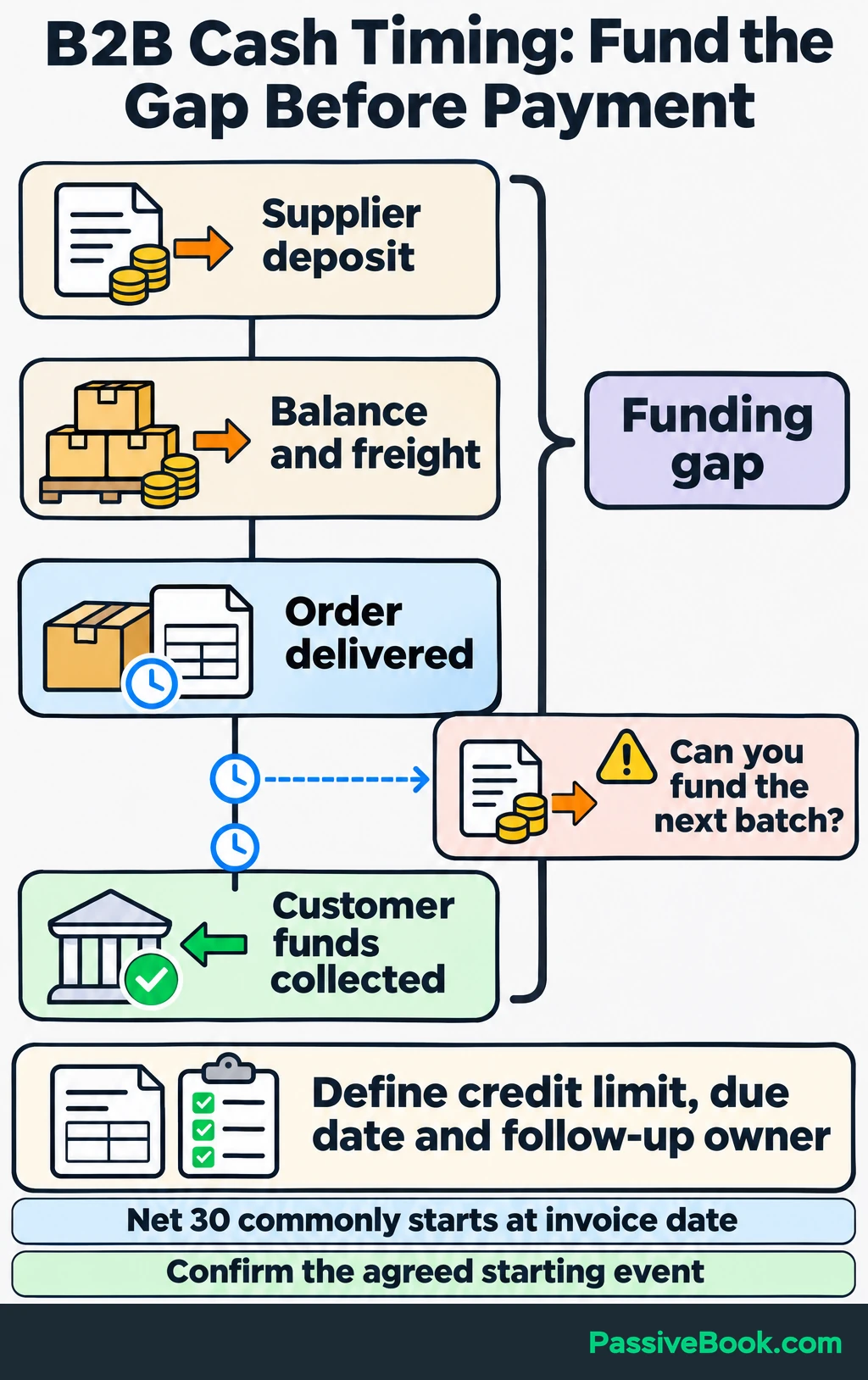
I would start with prepaid orders when buyers accept them. If your chosen buyers require credit, treat funding and collection as part of the business model.
Before offering credit, define approval rules, a credit limit, due dates and who follows up. Net 30 commonly means payment within 30 days of the invoice date, but agreements can use another starting event. Put the agreed event and actual due date in writing.
Choose a Platform Around the Buying Process
Define the Ordering Workflow First
Map one order from product selection through approval, payment, delivery and reorder. Mark the requirements your first buyers actually need.
For standard products with predictable delivery charges, direct checkout is a sensible starting point. Custom specifications, unusual quantities or freight may need a quote first. Both routes can exist in the same store.
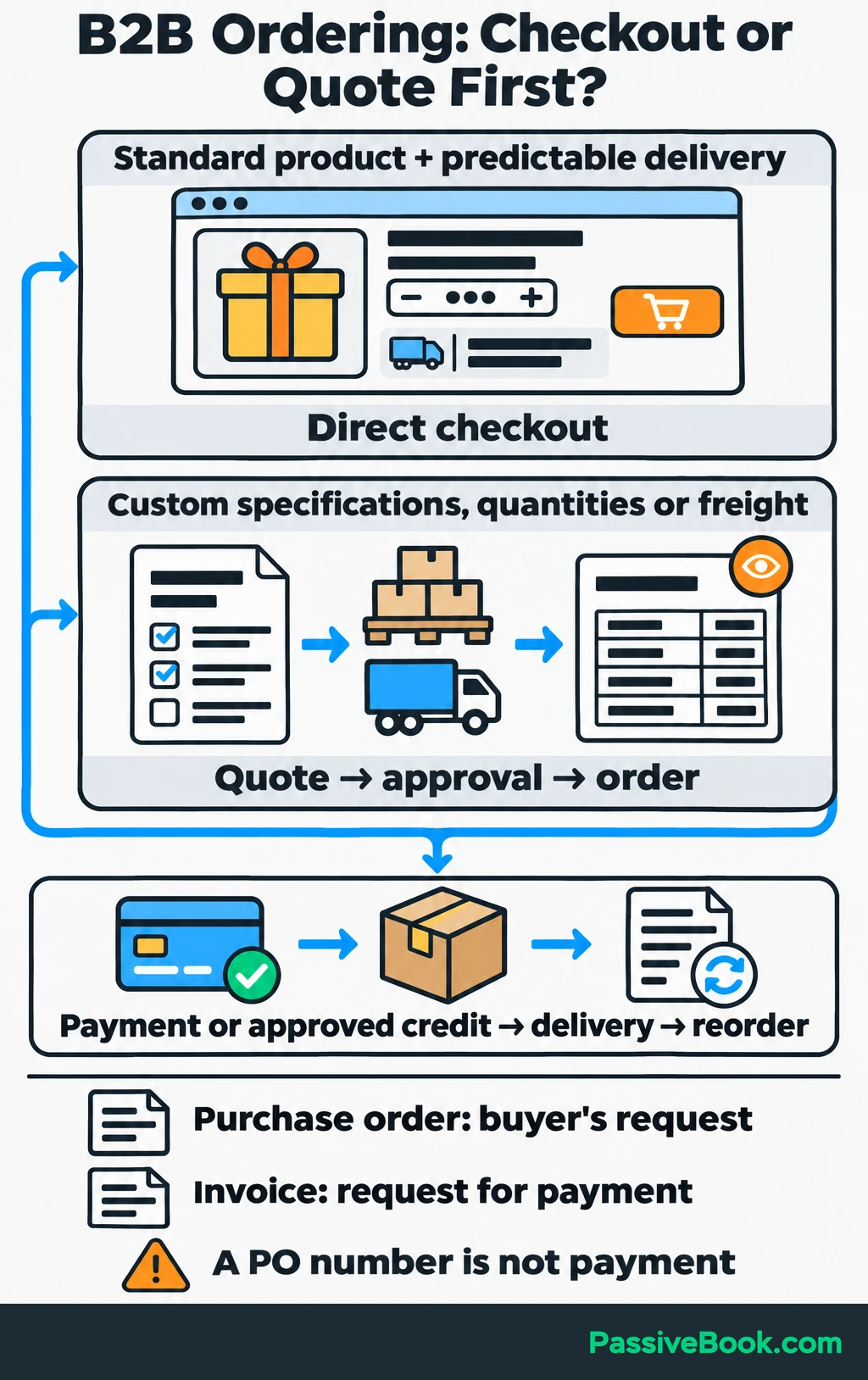
For the gift-box business, I would begin with published carton pricing and prepaid checkout if the validation buyers accept that process. Add a quote form for larger or unusual requirements.
Company accounts, restricted prices and purchasing approvals should solve an observed problem. Buying every B2B feature at launch gives you more software to maintain before you have more customers.
A purchase order records what the buyer wants to buy; your invoice requests payment. A purchase-order number does not mean the money has arrived.
Compare Capabilities and Total Cost
I use WooCommerce for selling digital products through WordPress because I value control. But for a new physical-product store, I would choose Shopify if managing the website would consume the time needed to find buyers.
Shopify provides hosted commerce infrastructure. Its Basic, Grow and Advanced plans support company accounts, net terms and self-service ordering. Direct company-specific catalog assignments and native deposit requirements require Plus, according to Shopify’s B2B feature comparison.
WooCommerce gives you a WordPress store with free core software, but hosting, extensions, payment processing and maintenance still contribute to its cost. If you need customer pricing, quantity tiers, quote requests or order restrictions, an extension such as Addify’s B2B for WooCommerce provides those features.
Compare complete setups rather than headline subscription prices:
| Setup | First-Year Costs and Upkeep |
|---|---|
| Shopify | Plan, domain, required apps, setup and processing; Shopify manages hosting. |
| WooCommerce core | Hosting, domain, setup, processing and maintenance; you manage WordPress or pay someone to. |
| WooCommerce with a B2B extension | Core store costs plus extension fees, configuration and compatibility checks. |
Get current quotes for your required features and include your maintenance time.
Test the same representative order on each shortlisted setup: choose a carton, enter company details, calculate delivery, pay, receive an invoice and reorder. Choose the least complex affordable setup that completes the job.
Build a Storefront Business Buyers Can Use
Publish Product Information That Supports a Decision
A buyer should be able to check suitability without emailing you for basic facts.
Each product page should show:
- Product code and clear photographs.
- Dimensions, materials and relevant specifications.
- Contents of each purchasing unit.
- Minimum quantities and price tiers.
- Availability and dispatch estimates.
- Sample options.
- Delivery charges or how they are calculated.
Make the purchasing unit unmistakable. For the gift boxes, use wording such as:
Quantity 1 buys one carton containing 100 flat-packed boxes.
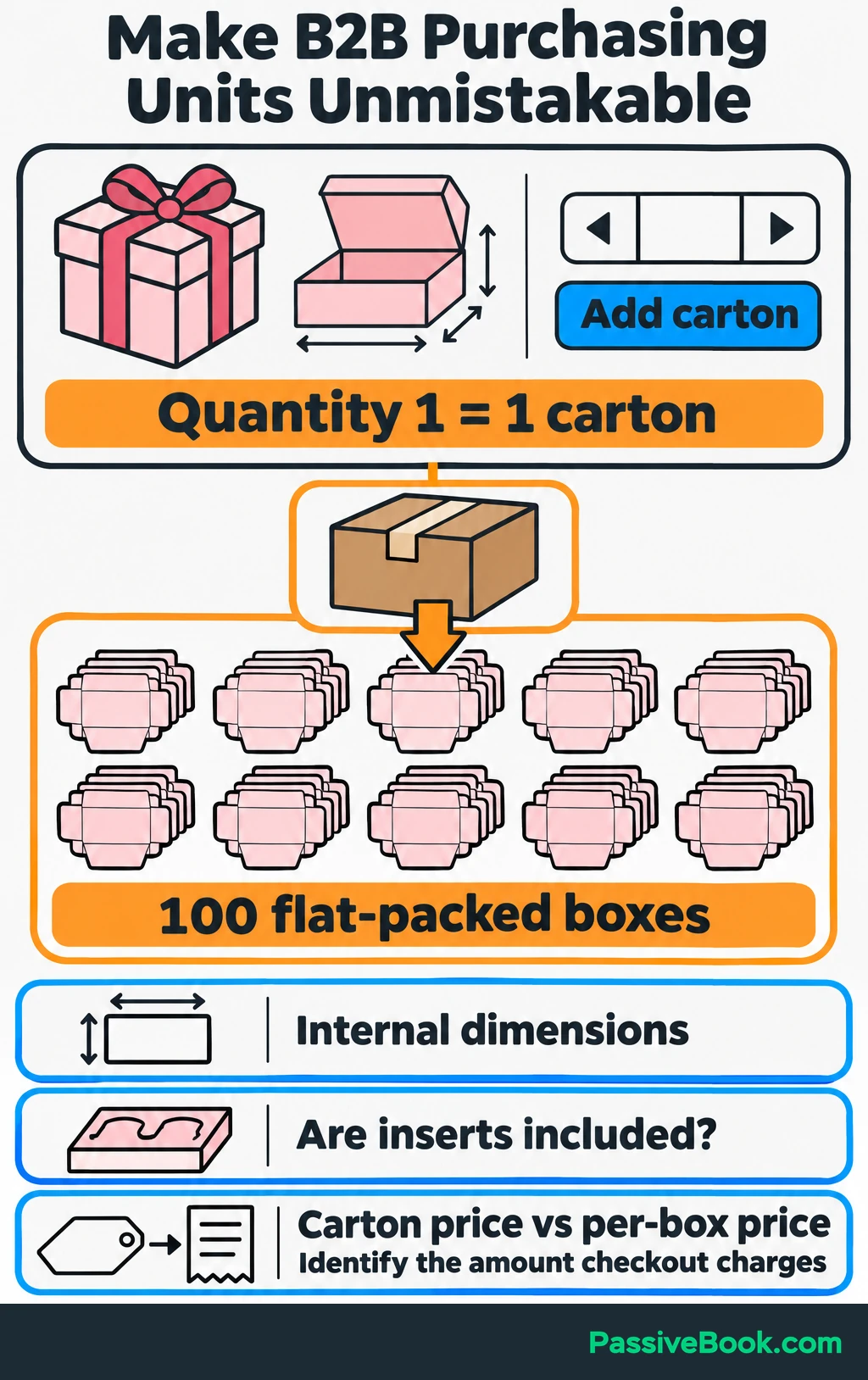
Show both carton and per-box pricing where useful, and clearly identify which amount checkout charges.
Include internal dimensions and explain whether inserts are included. A downloadable specification sheet gives the buyer something to pass to the person approving the purchase.
Organize categories using the terms buyers used in interviews. Publish business contact details, delivery information and clear procedures for returns and defects.
I would spend more time removing uncertainty from these pages than polishing a homepage slogan. Buyers need to know whether the product fits.
Configure Checkout and Invoicing
Collect the information needed to fulfill and reconcile an order: company name, ordering contact, billing details, delivery address and a purchase-order reference when required.
Show the full payable total before payment, including shipping and applicable taxes.
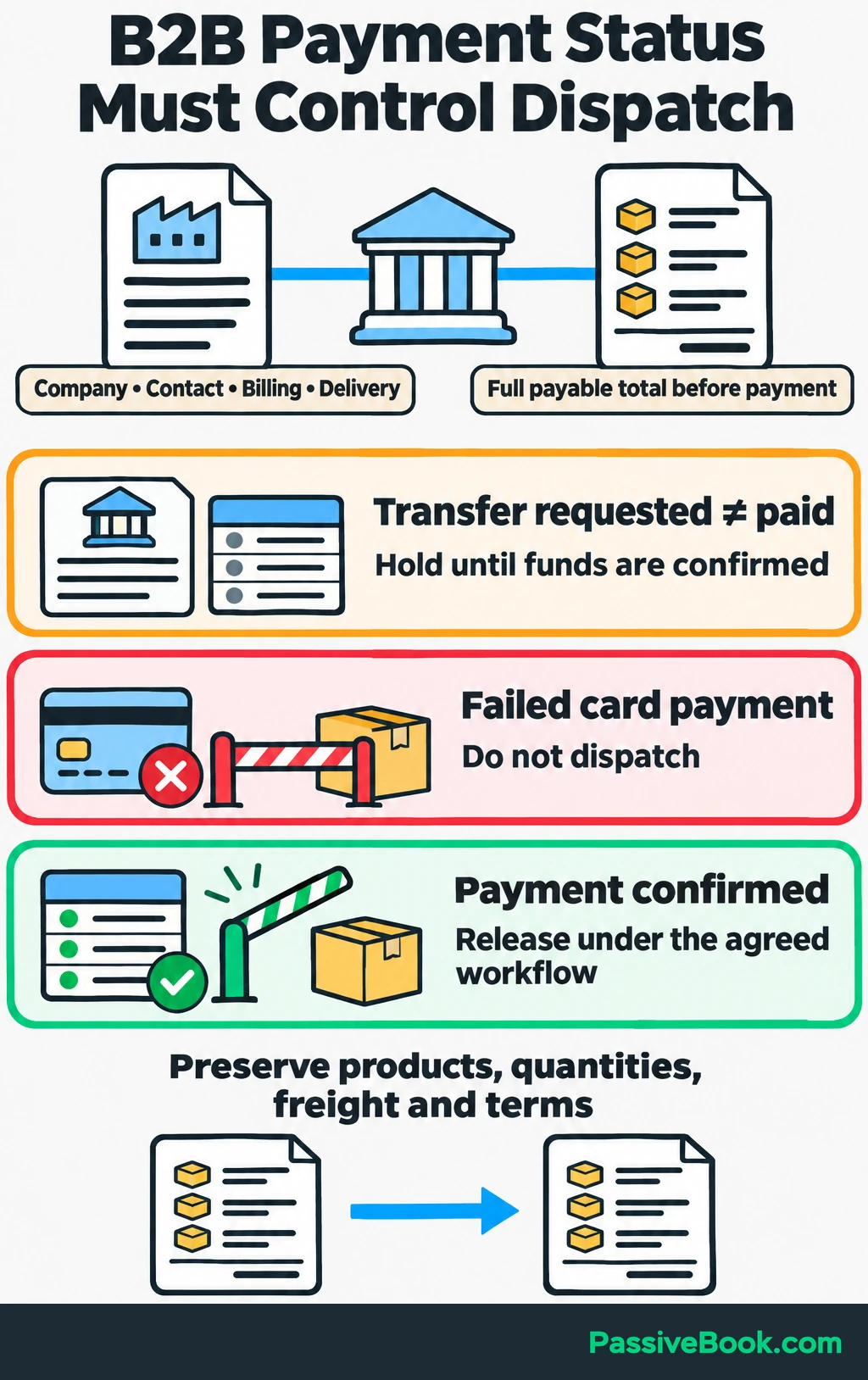
Choose payment methods around buyer requirements, fees, payout timing and bookkeeping work. Stripe is my starting point where available, and I would add PayPal or bank transfers when buyers have a reason to use them.
Define what each payment status means. A bank-transfer order should remain unpaid until funds are confirmed, and a failed card payment should not release goods for dispatch.
For quotes, save the exact products, quantities, freight, payment terms and expiry date. An accepted quote should become an accurate order without someone rebuilding it from memory.
Do not automatically remove tax because the buyer is a business. Verify eligibility and retain the required documents. For example, California’s resale guidance distinguishes qualifying resale purchases from goods a company uses itself.
Use your payment provider’s hosted checkout or supported payment components. You still have responsibilities under PCI DSS, the card-payment security standard, even when a provider collects card details. Confirm those requirements with the bank that handles your card payments or the card network, as the PCI Security Standards Council explains.
Prove the Order Process With Pilot Buyers
Prepare Fulfillment and Support
Write a short procedure for moving an order from payment to delivery. Even when you handle everything yourself, the sequence prevents missed steps.
Cover payment or credit approval, stock allocation, picking, packing, dispatch, tracking and invoicing. Assign a person to each handoff and to any exceptions.
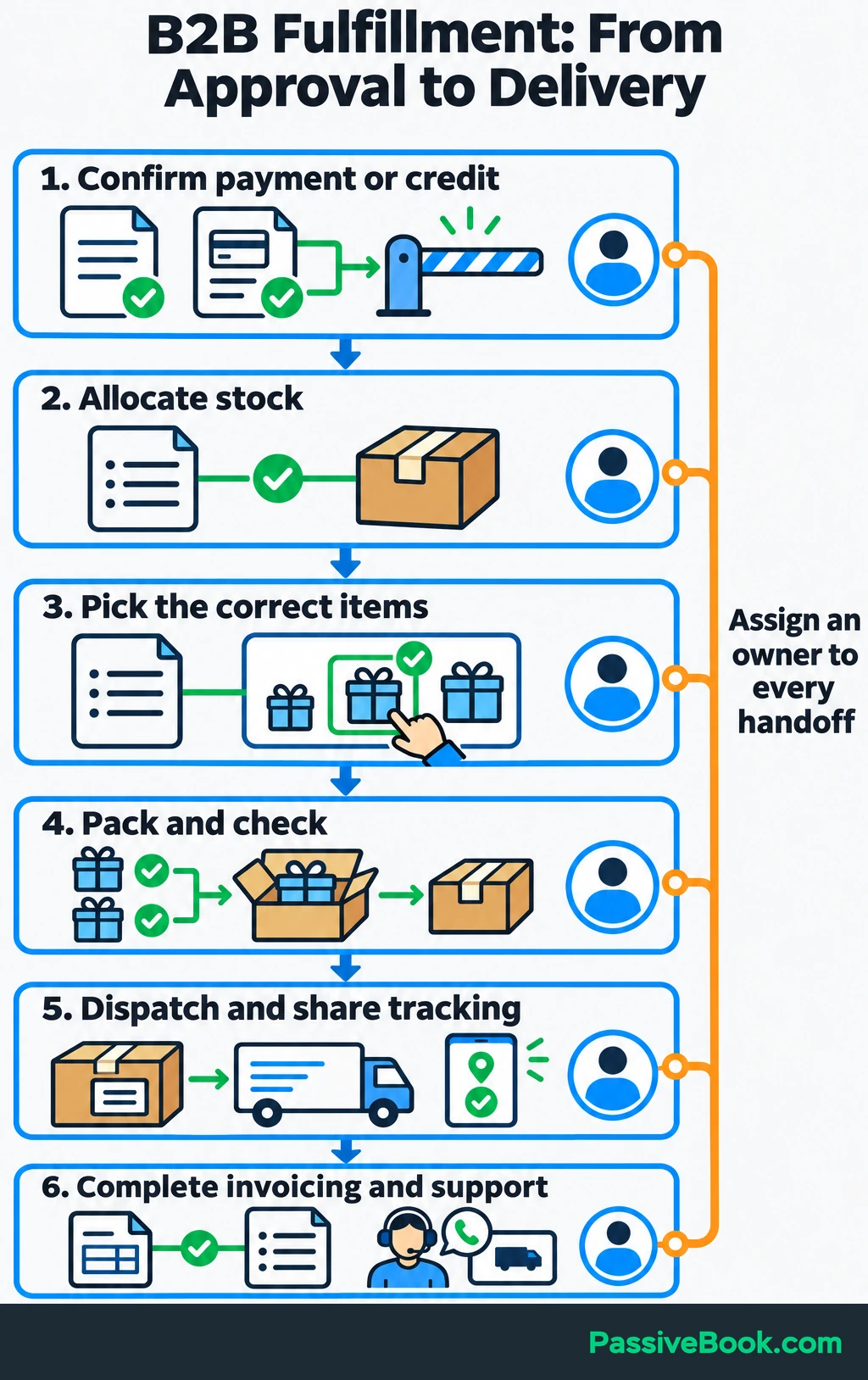
Calculate delivery charges using the actual packed dimensions and weight. For the gift boxes, that means measuring the shipping carton containing the flat-packed boxes. Use carrier quotes rather than estimating from the product’s weight alone.
Decide how you will handle:
- Stock shortages and backorders.
- Partial shipments.
- Cancellations before dispatch.
- Damaged or incorrect goods.
- Replacements and refunds.
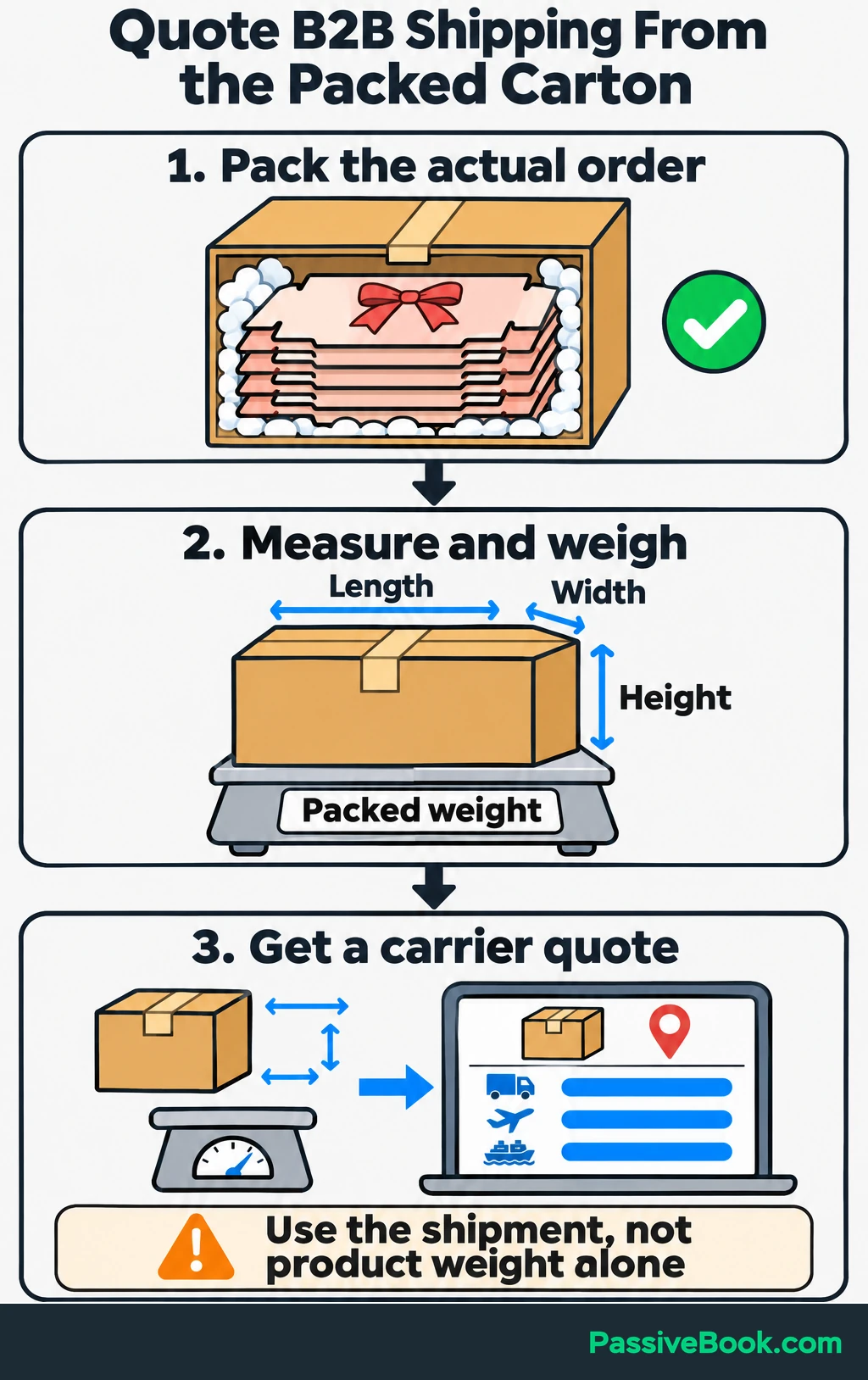
Give buyers a clear contact for fit questions and order problems. A one-person operation still needs a dependable support process.
For digital products, replace the shipping steps with access delivery, business usage rights and license assignment. The buyer still needs to receive the right thing and know where to get help.
Test Before Expanding Promotion
Run test orders through the routes buyers will use. Check successful and failed payments, delivery and tax calculations, stock changes, invoices, cancellations, refunds and reorders.
Then invite validation buyers to make real pilot purchases. Include their internal approval process. A checkout that works for you may still fail when a buyer needs a document for their manager.
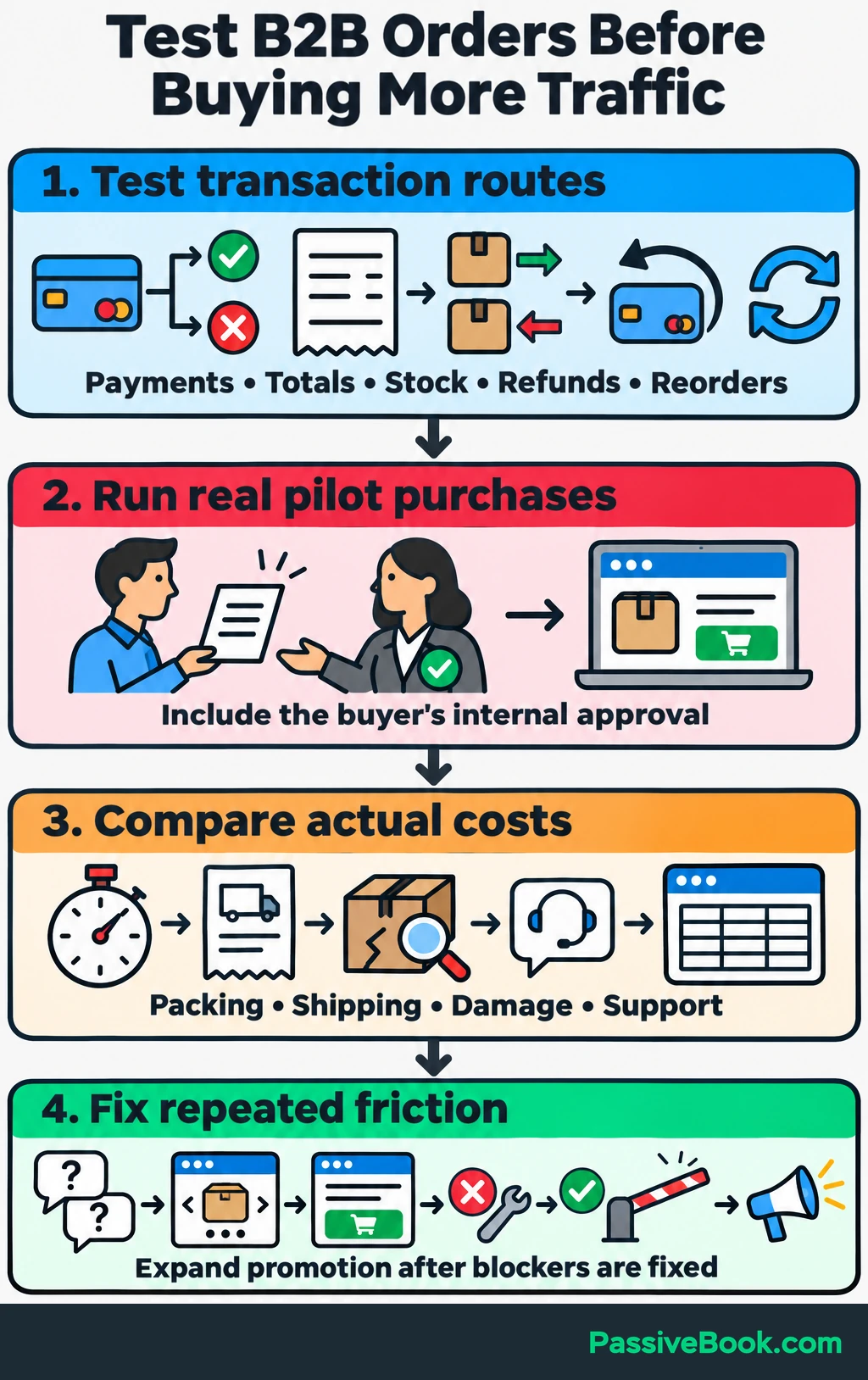
Record actual packing time, shipping cost, damage and support work. Compare those costs with your pricing worksheet.
For the gift-box business, check whether the sample approval and the delivered batch match. Ask whether the buyer could identify the right product and purchasing quantity without help.
Fix blocking problems before expanding promotion. When the same question appears repeatedly, improve the product page or ordering process. Answering it manually forever is an expensive form of proofreading.
Attract Qualified Business Buyers
Turn Relevant Conversations Into Orders
Start with a focused list of businesses whose purchasing needs match your offer. Use validation conversations, relevant directories, trade groups, existing relationships and complementary suppliers.
Contact the person responsible for the problem and offer one useful next step. That might be a sample, a delivered quote or a small trial order.
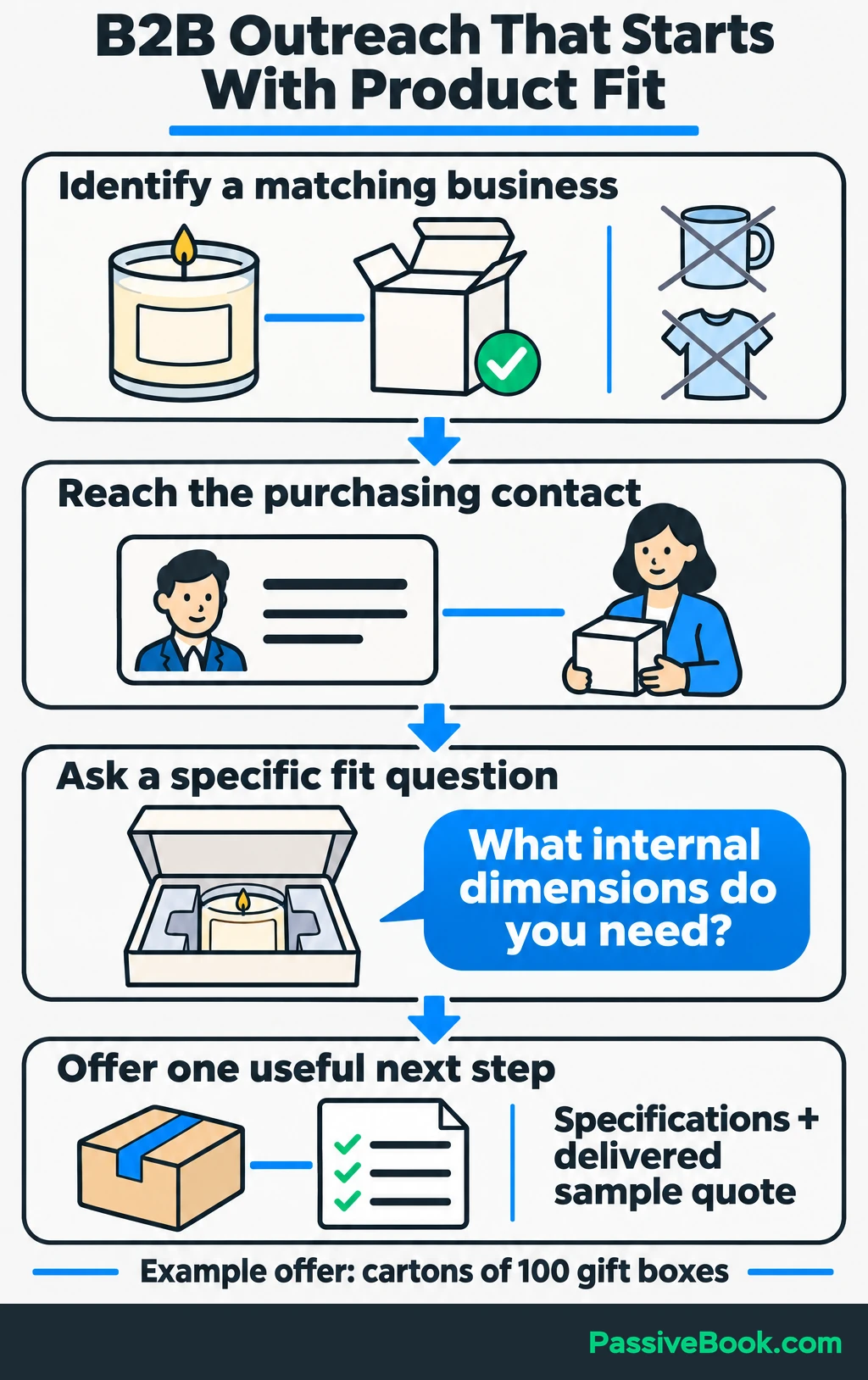
For the gift-box business, a short opening could be:
We supply plain folding gift boxes in cartons of 100. What internal dimensions does your candle packaging require? I can send specifications and a delivered sample quote.
The message starts a product-fit conversation. It does not ask the buyer to sit through your company history.
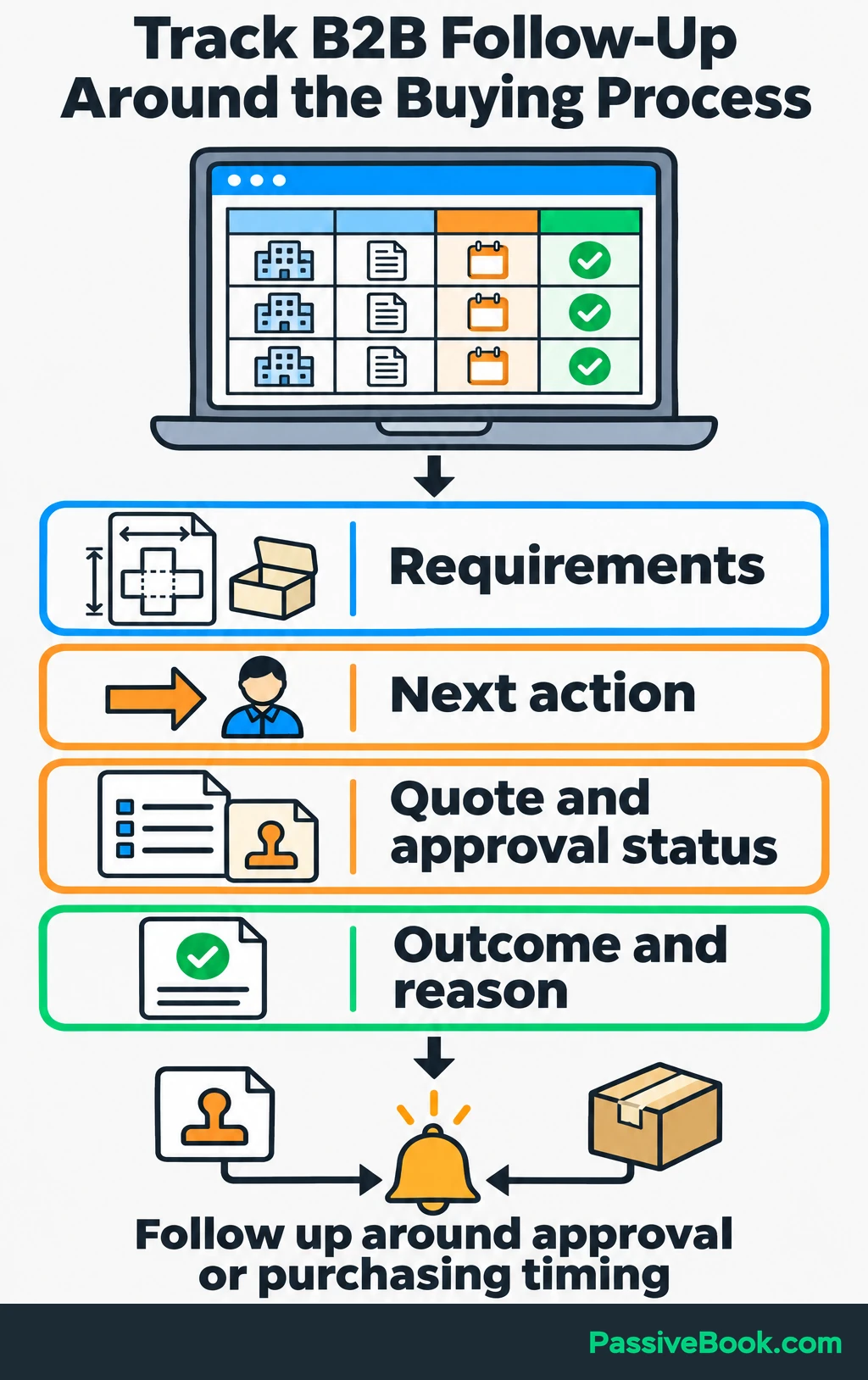
Track each account’s requirements, next action, quote and outcome in a spreadsheet or simple customer-management tool. Follow up around the buyer’s approval process or expected purchasing date.
Check the outreach rules that apply to your markets. In the US, CAN-SPAM covers B2B commercial email too. Requirements include accurate sender details and subject lines, clear advertising disclosure, a valid postal address and an opt-out honored within 10 business days. The FTC’s guidance explains the requirements.
Build Discovery Around Purchasing Intent
Use your product and category pages to answer the searches a buyer makes while choosing supplies. Focus on specifications, sizes, quantities and intended uses.
For the gift-box business, useful material could explain how to measure a candle container and allow room for its protective insert. Connect that guidance to suitable product pages and sample options.
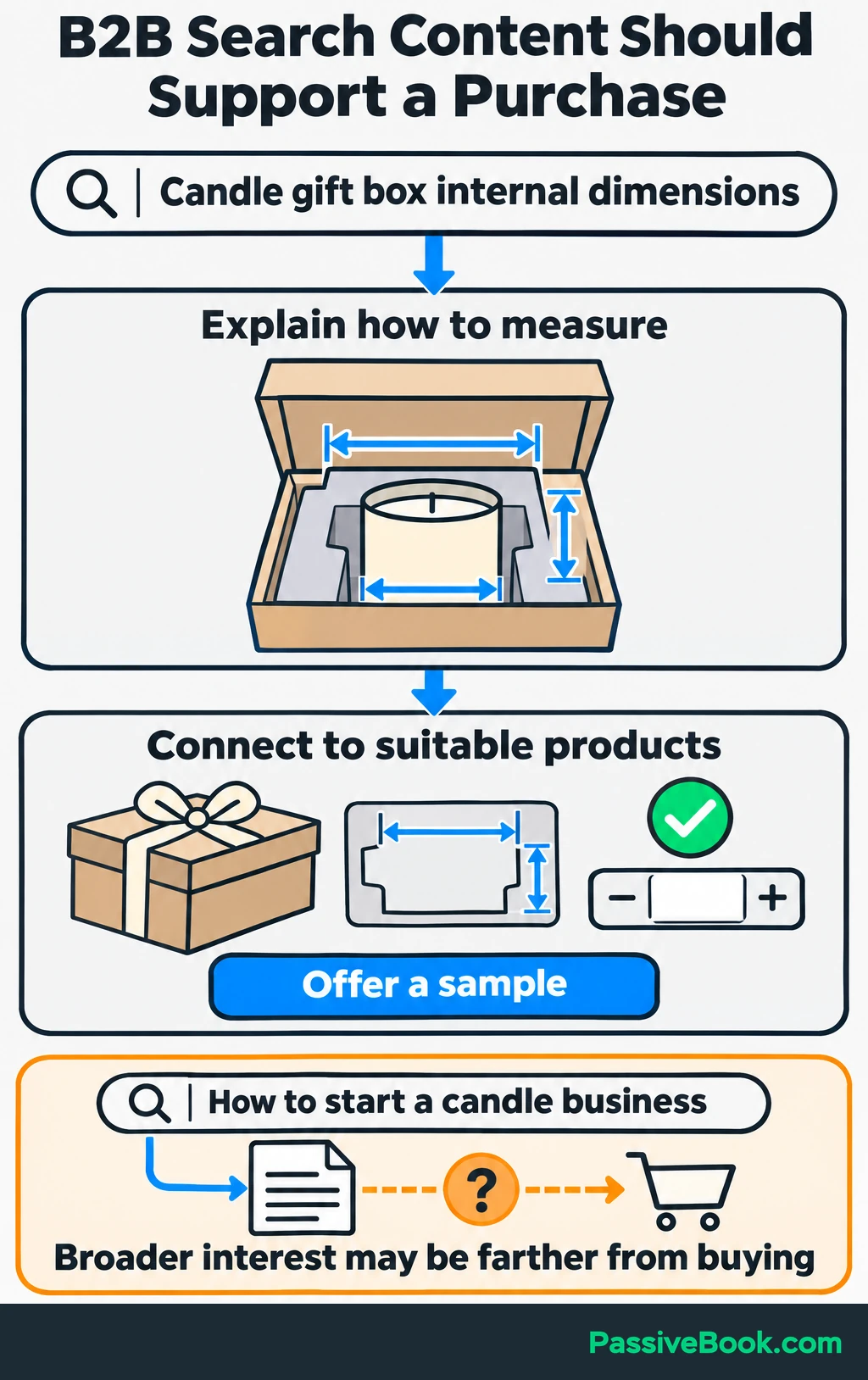
I would prioritize those pages over broad articles about starting a candle business. The broader topic may attract readers who are nowhere near buying packaging.
Test relevant marketplaces or referral partnerships if buyers already use them to find suppliers. Include marketplace fees, commissions and fulfillment requirements in your order calculations.
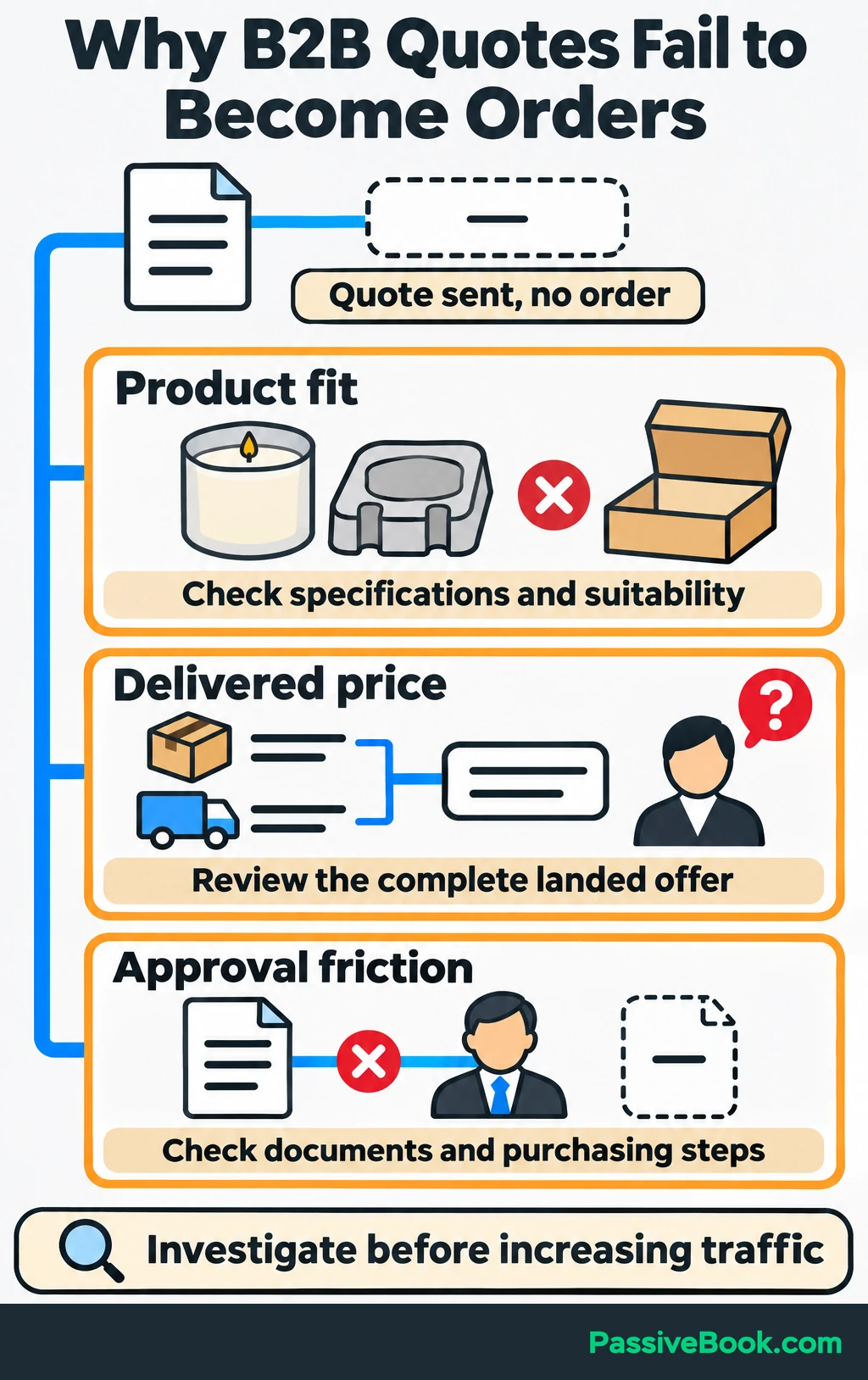
Paid acquisition can wait until fulfillment works and you can track purchases or qualified quote requests. Set a spending limit based on contribution and observed results.
If quotes fail to become orders, investigate why. Poor fit, high delivered prices and difficult approval steps need different fixes. More traffic will not tell you which one is wrong.
Make Repeat Ordering Easy
A returning buyer should not have to solve the original purchase again.
Preserve product codes, specifications, purchasing units, order history and invoices. Give customers a reorder route that lets them review current prices, stock, quantities and delivery details before confirming.
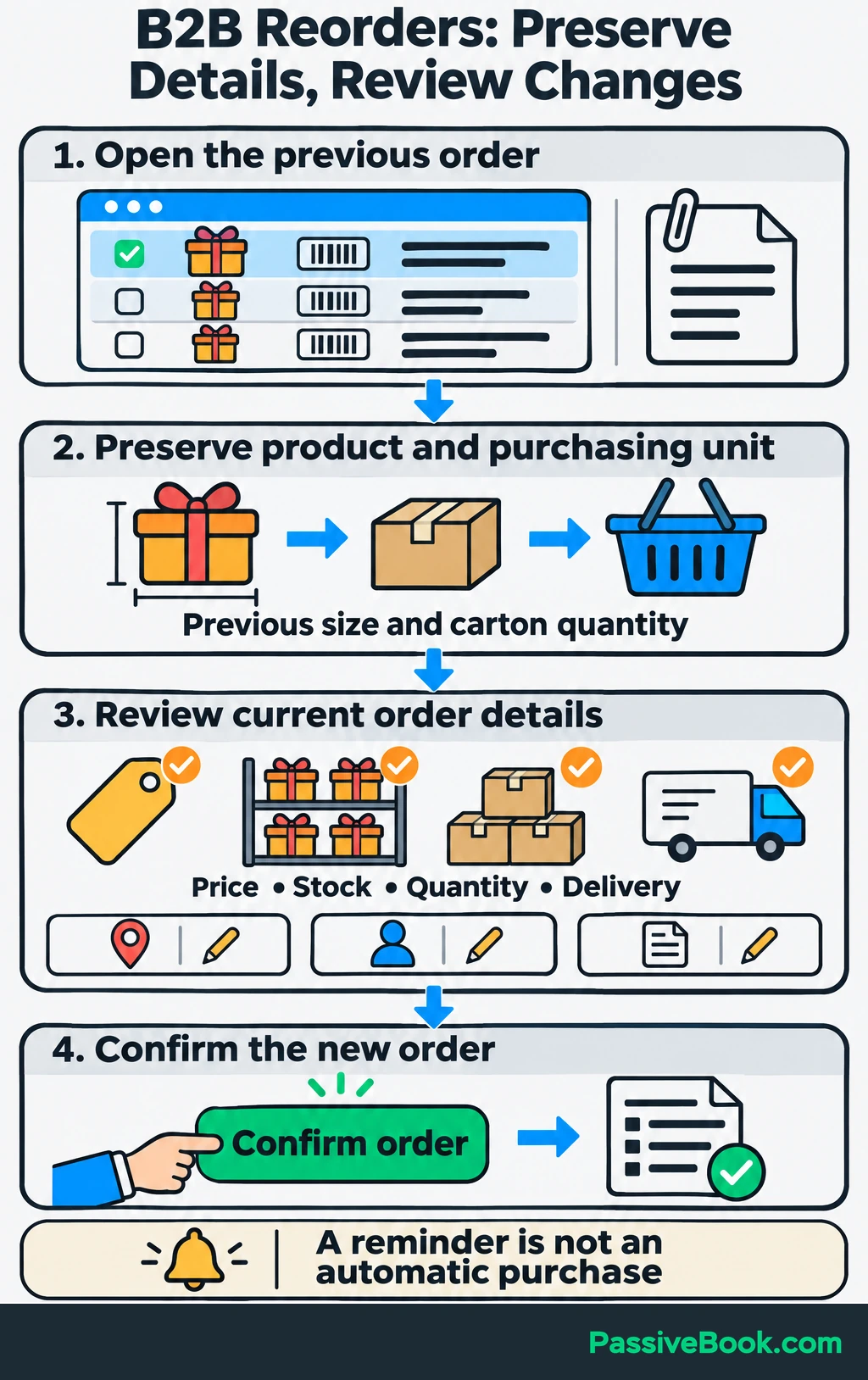
For the gift boxes, a reorder should identify the previous size and carton quantity. It should also let the buyer update an address, purchasing contact or purchase-order reference without rebuilding the basket.
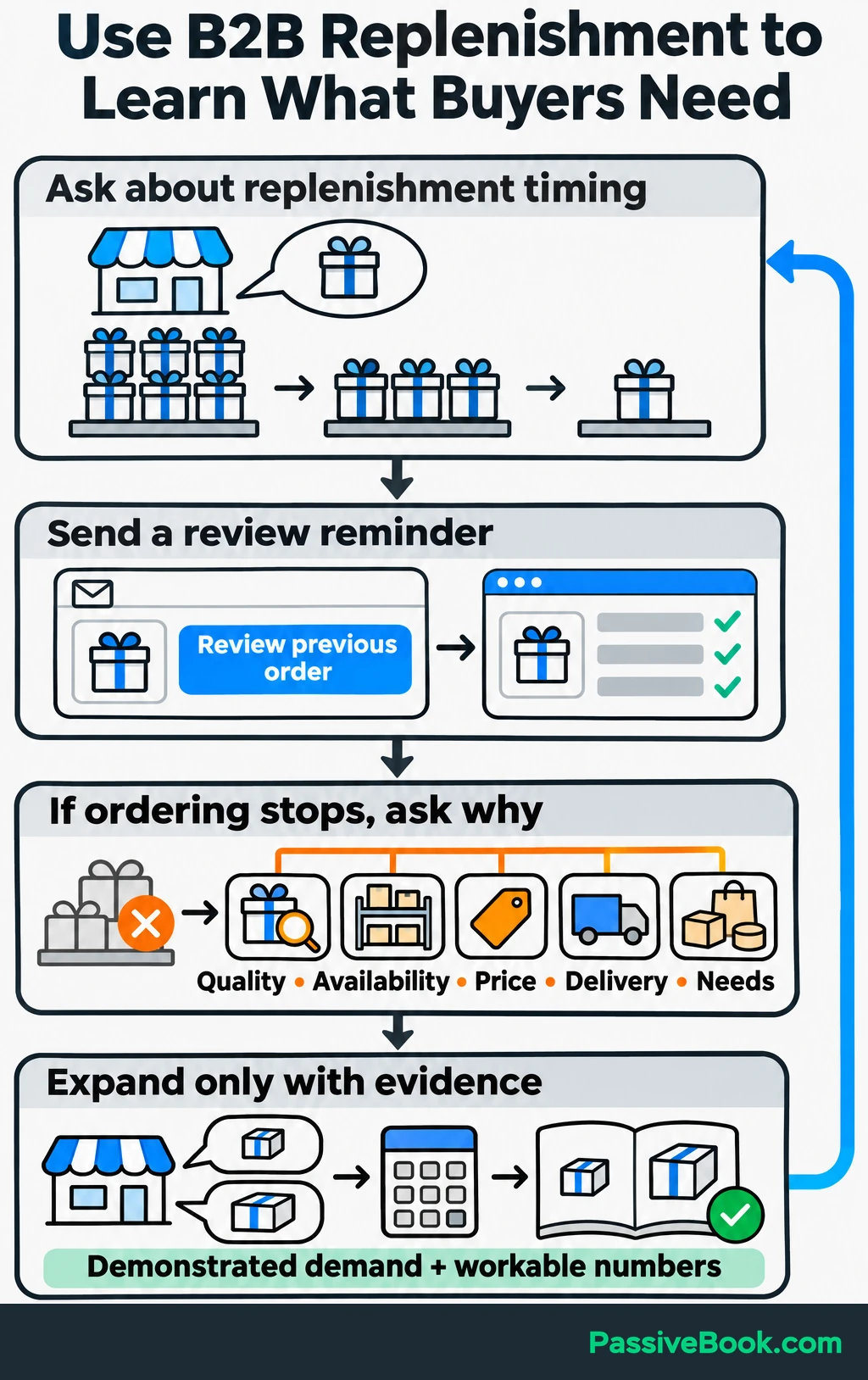
Ask when customers expect to replenish, then use that answer to time reminders. A useful reminder might say:
Ready to replenish your previous box size? Review your last carton quantity and current availability here.
That is a prompt to review an order, rather than an automatic purchase.
Keep human help available for unusual quantities, fit questions and changes in requirements.
When an account stops ordering, ask what changed. The cause may be quality, availability, price, delivery or simply a different packaging need.
Let those conversations guide catalog expansion. I would add a second box size when existing buyers demonstrate demand and the numbers work. A supplier’s enormous catalog is not a shopping list.
Automate Routine Work and Scale Profitably
Automate Processes That Already Work
Start with routine tasks whose rules are clear: order confirmations, shipment updates, invoice reminders, low-stock alerts and replenishment follow-up.
For each workflow, define its trigger, required data, action, failure alert and responsible person.
The gift-box order process might look like this:
| Part | Example |
|---|---|
| Trigger | Payment is confirmed for an order |
| Required data | Order number, product code, carton quantity and delivery details |
| Action | Confirm stock allocation, create a packing task and send confirmation |
| Failure alert | Notify the responsible person if the packing task cannot be created |
| Human review | Resolve shortages, unusual terms or mismatched payment details |
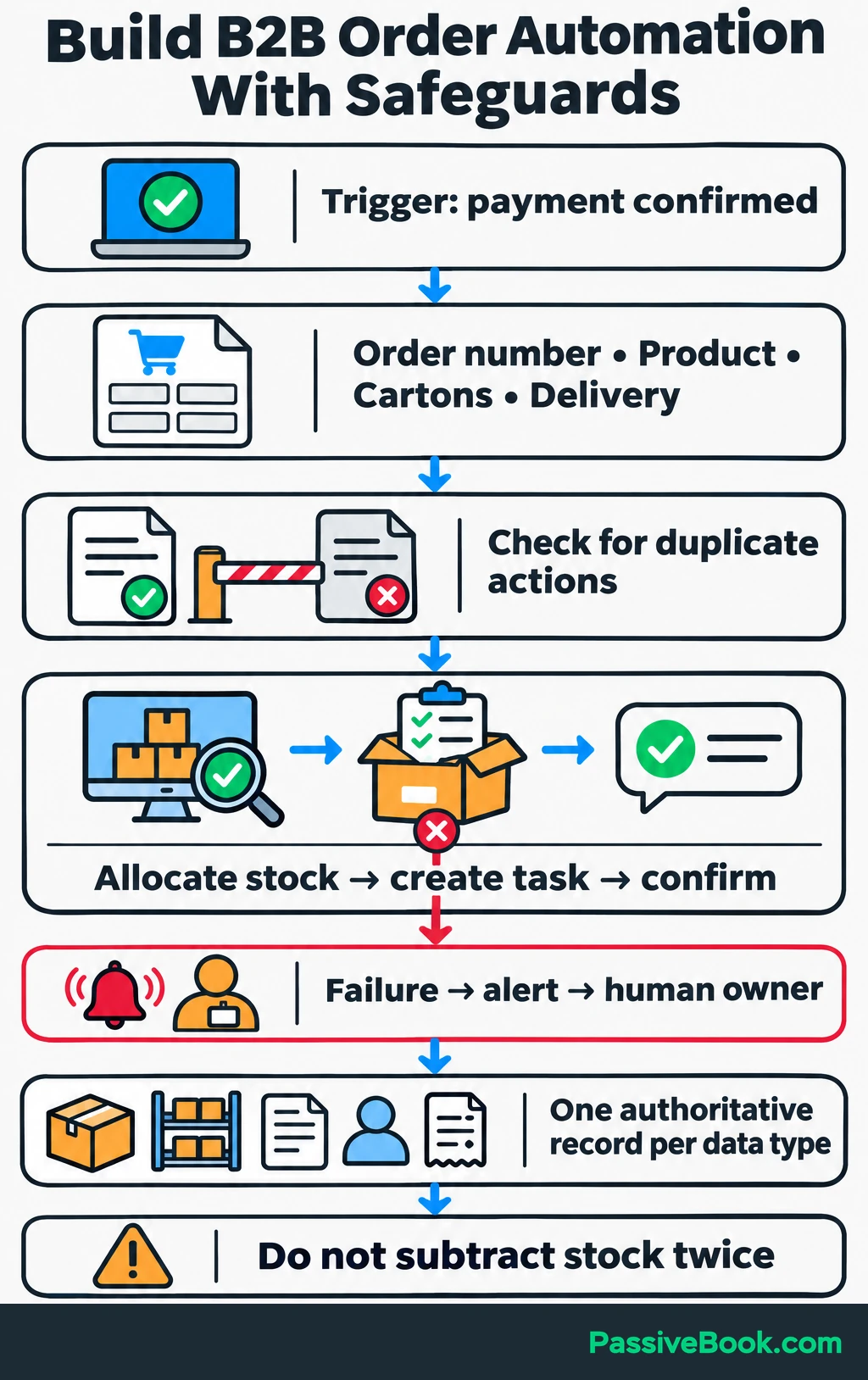
Use native platform functions first. Check how the store already reserves and reduces stock so another integration does not subtract it twice.
I use n8n to connect tools when a recurring handoff justifies it. It can also run an error workflow when an automation fails. Build that alert alongside the main workflow, because an unattended failure can leave an order sitting nowhere useful.
Choose one authoritative record for each type of information: products, stock, orders, customers and invoices. Use order numbers to detect duplicate actions, and check for missing records.
AI can help draft replies or summarize purchasing questions. I would keep unusual pricing, credit approval and product substitutions under human review.
Invest According to the Current Constraint
Review a small set of numbers regularly:
- Qualified enquiries and quote outcomes.
- Contribution after acquisition.
- New and repeat buying accounts.
- Payment collection time.
- Delivery performance.
- Available cash and upcoming commitments.
To measure acquisition cost per new buying account, group spending and buyers by campaign or outreach batch. Divide that spending by the number of accounts it brings to a first paid order within a chosen follow-up window after first contact. Compare batches after each has had the same follow-up time. Include sales effort, but count each expense only once in your worksheet.
Then follow those accounts’ actual contribution over time. Repeat revenue is useful evidence only when repeat orders leave money behind.
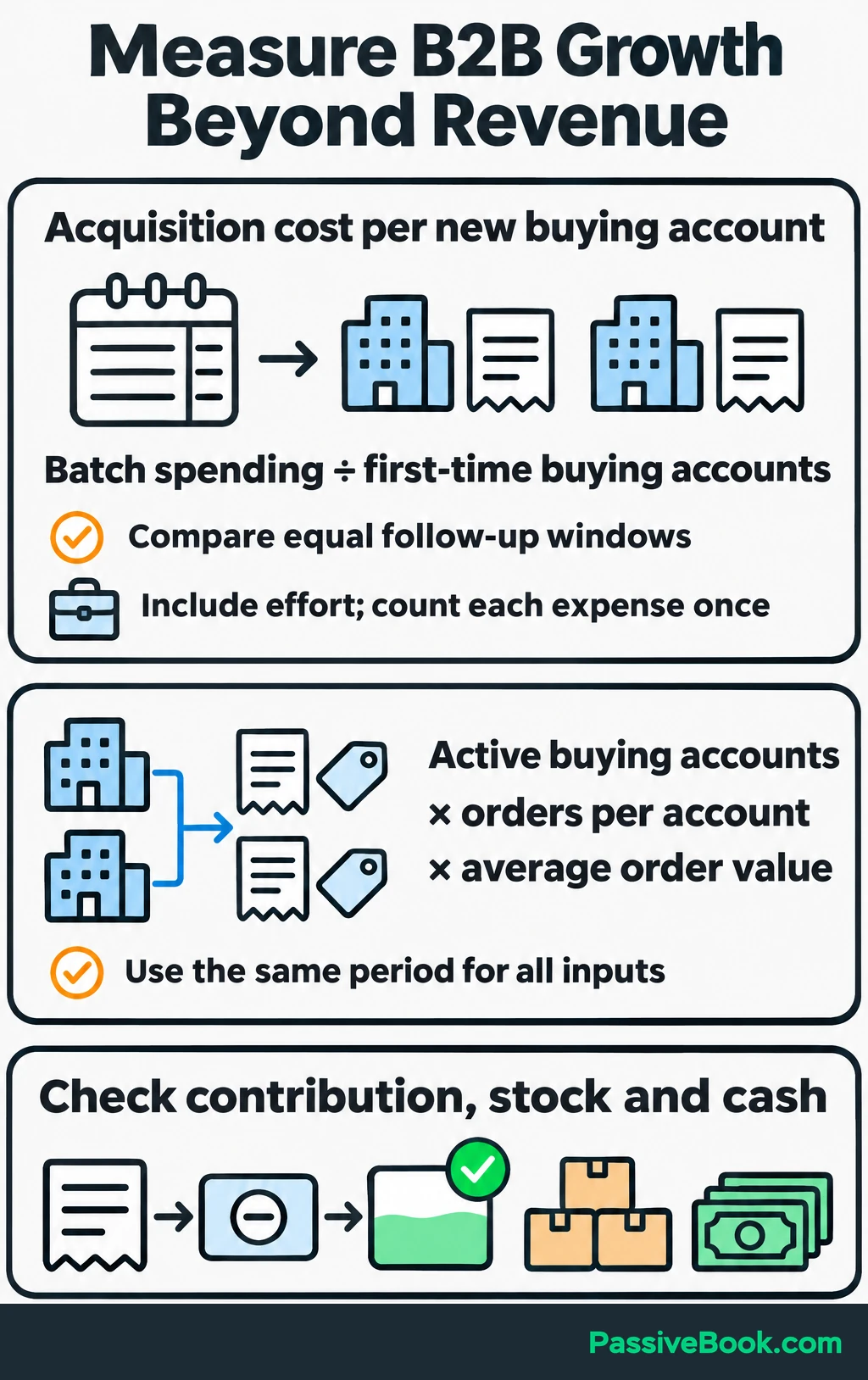
To estimate revenue for a period, count the accounts that buy, how often they order and their average order value:
Active buying accounts × orders per account × average order value.
Keep all three figures within the same period. After estimating revenue, check the contribution, stock and cash needed to support it.
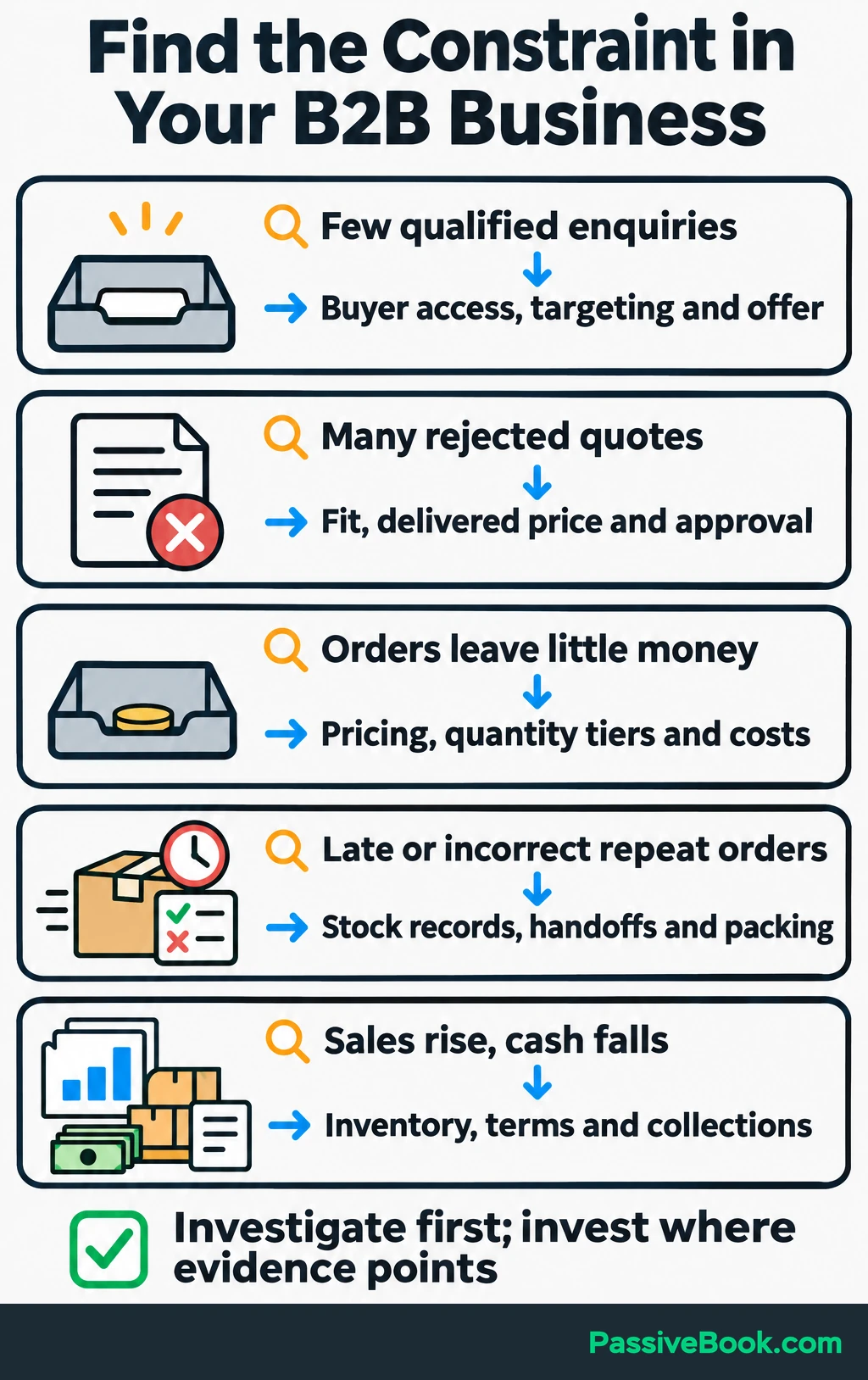
Let the current problem determine the investment:
| What You Observe | What to Investigate First |
|---|---|
| Few qualified enquiries | Buyer access, targeting and the offer |
| Many rejected quotes | Product fit, delivered price and approval requirements |
| Orders leave little money | Pricing, quantity tiers and fulfillment costs |
| Repeat orders arrive late or incorrectly | Stock records, handoffs and packing procedures |
| Sales grow but cash falls | Inventory commitments, payment terms and collections |
Increase inventory, marketing, software or staffing when fulfilled orders and repeat demand support the commitment.
A small team can operate a focused catalog with a simple buying process. Scaling means replacing launch assumptions with order records and fixing the constraint those records reveal.
What Next?
Write one offer statement and arrange conversations with five businesses that already buy the product. Ask about their latest order before showing them your idea.
Use the social buttons to share this guide when comparing launch plans or deciding whether an offer deserves an inventory budget.
Which purchasing problem could you solve well enough for a business to try a new supplier? Share your answer in the comments, and bring any other questions about getting the first orders working.
Share this post with your friends & followers:

