You have useful articles and readers asking which products to buy, but turning that attention into a paid partnership feels awkward. Which brands should you approach, and what can you offer before you have a sponsorship history?
A vague pitch gives the brand little to evaluate. An offer that leaves out revisions, photography, or usage rights can leave you doing far more work than the fee covers. Here’s how to find suitable brands for your blog, pitch a useful article, price the whole campaign, and give a sponsor a reason to book another.
Can a Small Blog Get Paid Sponsorships?
Yes. You don’t need celebrity traffic to start approaching suitable brands, although some campaigns have audience requirements.
For example, Vigor & Sage’s creator program accepts blogs and states that it has no minimum follower count. It considers both gifted and paid collaborations based on fit. That opens a door, but it doesn’t guarantee acceptance or paid work.
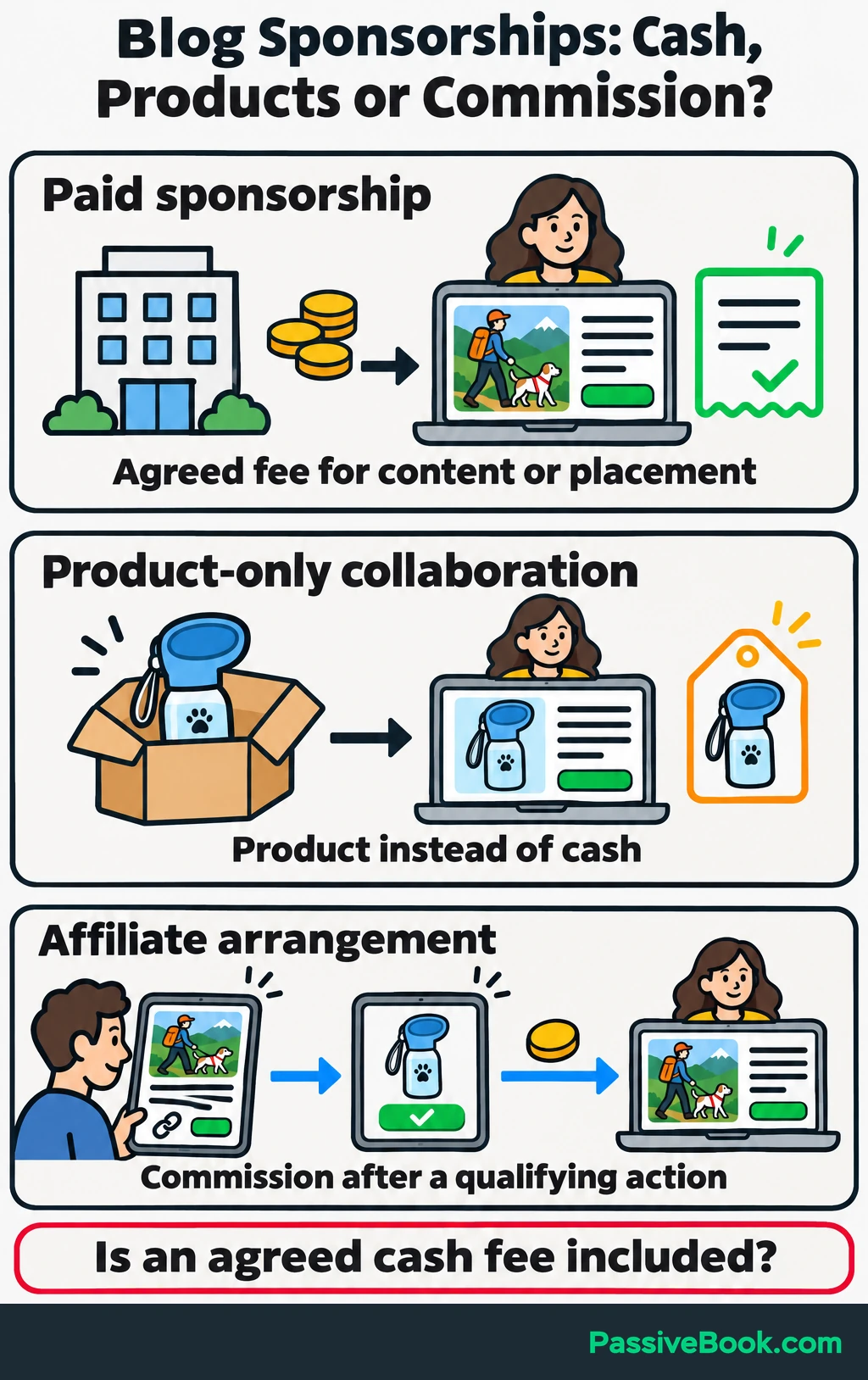
Before applying, understand what the brand is offering:
- A paid sponsorship includes an agreed fee for content or placement.
- A product-only collaboration compensates you with a product rather than cash.
- An affiliate arrangement pays when readers complete a qualifying action, such as buying through your link.
A free product and an affiliate code do not automatically make an offer a paid sponsorship. Ask directly.
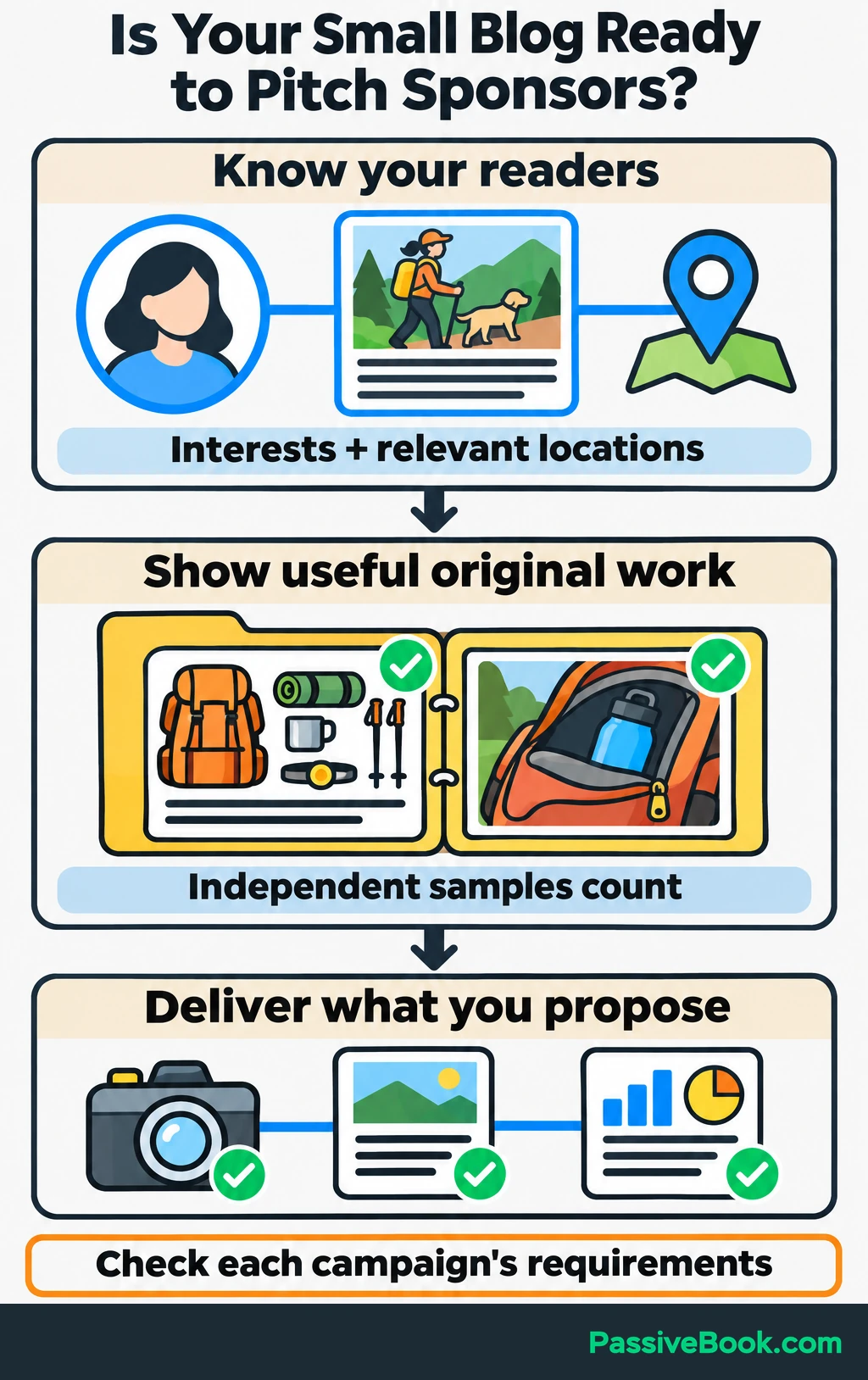
I would start pitching when you can explain who reads your blog, show useful original work, and deliver the proposed campaign. Independent articles and photographs can demonstrate your ability before you have sponsor results.
Throughout this guide, imagine you run a blog about hiking with dogs and want to pitch a portable dog water-bottle brand. The campaign details and figures are illustrations.
Sponsorships can become repeat income, but they still involve sales, production, and client work. Treat them as a service you can systemize, not money that arrives because your blog exists.
Find Brands That Fit Your Readers
Start with direct outreach, then use a suitable marketplace as another source of opportunities. I would avoid joining several platforms before checking whether they offer work for blogs.
| Route | Finding Opportunities | Proposal and Pricing Control | Eligibility | Payment Arrangements | Administrative Work |
|---|---|---|---|---|---|
| Direct outreach | Research brands and contact their partnership teams | Propose your own idea, scope, and fee | Each brand decides whether you fit | Agree on invoices, deposits, and due dates directly | You manage contacts, agreements, and follow-ups |
| Networks or marketplaces | Browse briefs or publish an offer brands can find | Some allow negotiation; others set budgets and terms | Platform and campaign requirements apply | Check fees, payment triggers, and any payment protection | Tools may handle parts of the process, but applications and reporting remain |
Build a Shortlist for Direct Outreach
Look for products that belong in articles you already publish or plan to write. Then check whether the company can serve your readers.
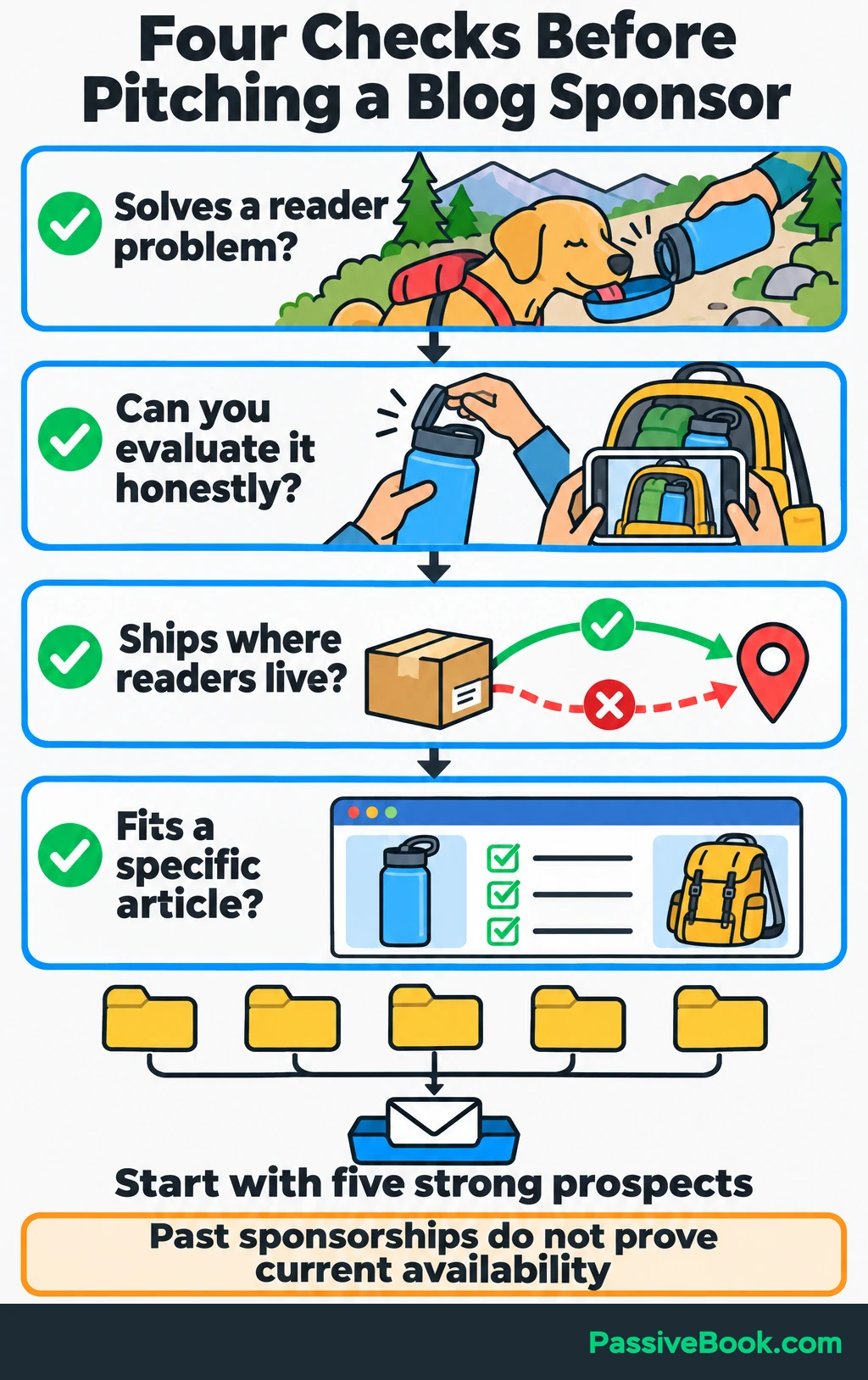
Use four questions to qualify each prospect:
- What reader problem does this product address?
- Can I evaluate it well enough to include it honestly?
- Does the company sell and ship where my readers live?
- What specific article would make the partnership useful?
For the hiking blog, a portable water bottle could fit a day-hike packing guide. A brand that only ships outside your readers’ main country is a weaker prospect, however good the product looks.
You can also search for existing sponsorships with phrases such as "hiking with dogs" "sponsored by". These articles identify brands to investigate; they don’t prove a campaign is available. An affiliate program alone doesn’t establish a paid sponsorship budget either.
Find the company’s official partnership form, marketing contact, or appointed PR agency. For instance, Petmate accepts applications for future collaborations or sponsorships. Ask whether the opportunity includes paid blog content rather than assuming it does.
Keep a simple spreadsheet with the brand, audience fit, article idea, official contact route, compensation type, outreach date, response, and next action.
I would begin with five strong prospects. A short list with a useful idea beside every name gives you something to pitch.
For incoming offers, verify the sender through company contact details you find independently before sharing sensitive information or starting work.
Use Sponsorship Networks and Marketplaces Selectively
Choose platforms that support the content you already make. A feed full of video briefs is little help if your offer is a written article.
IZEA’s blog marketplace includes sponsored-post listings. Those listings show what creators offer, rather than proving that a brand is currently buying or that a listed price has been paid.
Before joining any platform, check:
- Whether your country and blog are eligible.
- Whether opportunities offer cash compensation.
- What charges come out of your payment.
- When payment becomes due and how disputes are handled.
- What rights the brand receives.
Judge each opportunity by the same reader-fit questions you use for direct outreach. Easier access doesn’t make a poor match worth publishing.
Build an Offer a Sponsor Can Evaluate
Connect one reader problem with one sponsor objective.
The reader might need help packing for a day hike with a dog. The sponsor might want relevant visitors to discover its portable water bottle. Your offer should explain how the article connects those two needs.
Choose a format that serves the topic: a new sponsored article, a clearly disclosed placement in an existing guide, or a defined series. I would start with one article because it keeps the first commitment manageable.
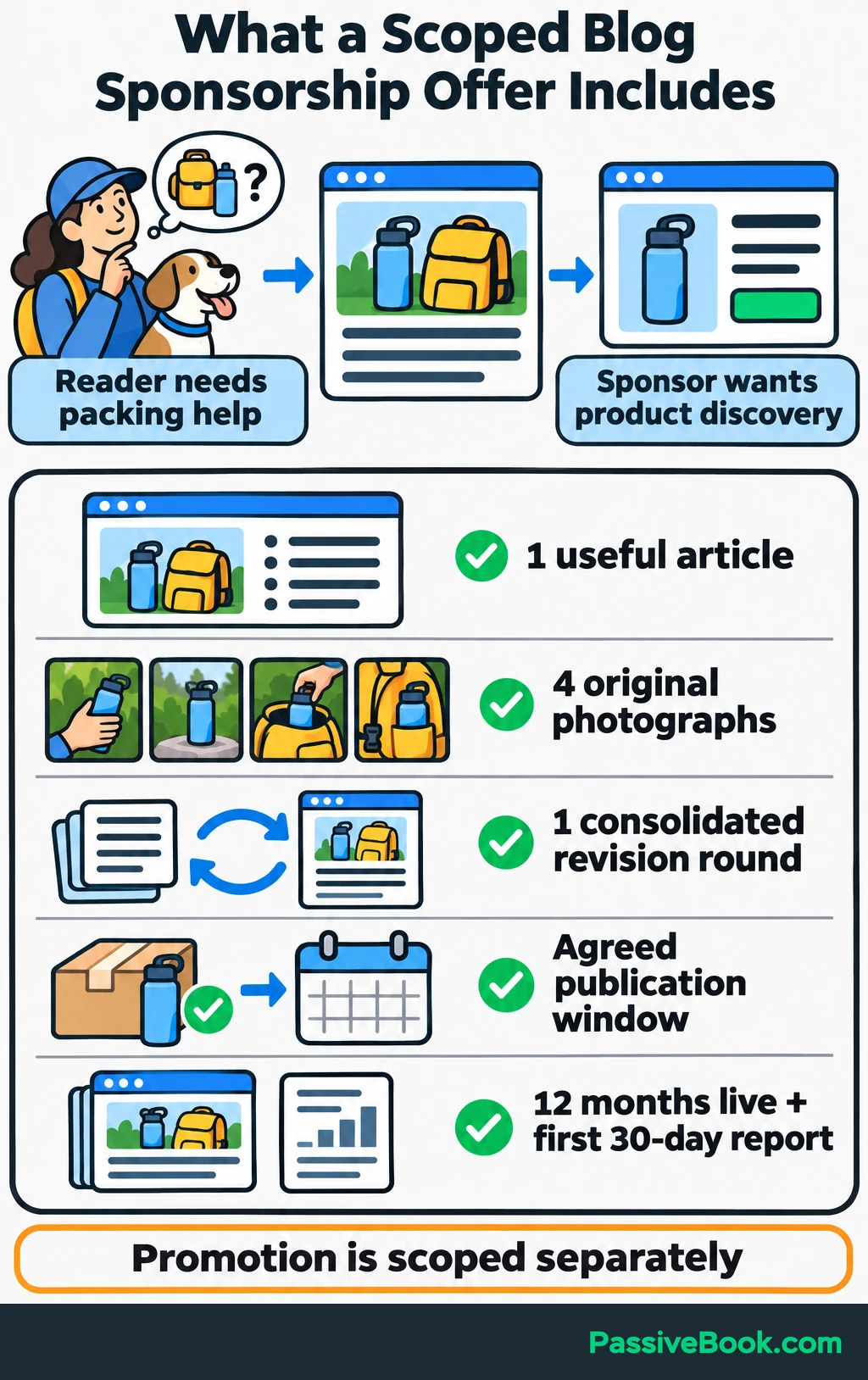
For the running example, an initial offer could include:
- One day-hike packing guide featuring the bottle after evaluation.
- Four original photographs showing its use and packing size.
- One round of consolidated revisions.
- Publication within an agreed window after product delivery and approval.
- A 12-month publication commitment and a report covering the first 30 days.
Specify promotion separately. Add Pinterest Pins or a newsletter mention only if you already maintain that channel, and count the extra work.
At Passive Book, my active channels are blogging and Pinterest. I would build an offer around those channels rather than promise distribution somewhere I barely publish.
Commit to the work and distribution you control. Don’t guarantee sales or agree to a positive review before trying the product.
Create a Concise Media Kit
A media kit gives the brand a quick way to assess your audience and work. One or two clear pages are enough to start; Canva is fine for making the PDF.
Include your blog’s focus, reader interests, relevant audience locations, traffic figures, sample articles, partnership formats, and contact details.
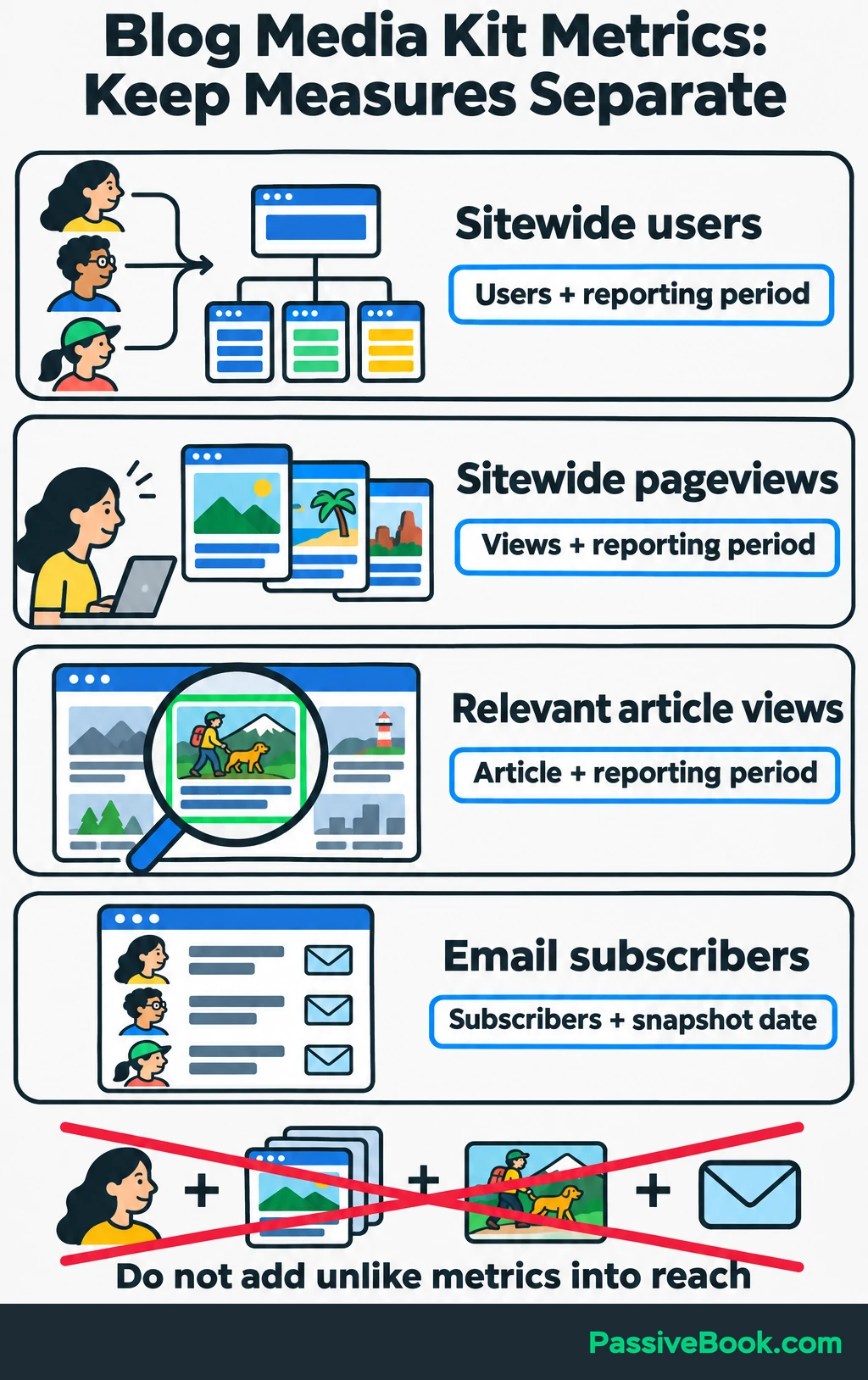
Label every number with its measure and reporting period. Sitewide users, pageviews, views of one article, and email subscribers describe different things. Don’t combine them into one impressive-looking “reach” figure.
For the hiking blog, views of existing dog-hiking guides help explain the opportunity more clearly than unrelated traffic elsewhere on the site.
Before your first campaign, show independent work that demonstrates writing, photographs, and subject knowledge. Add sponsorship results once you have them.
Put a visible “Work With Me” page on your blog with samples, available formats, an email address, and a link to the kit. Update the figures before outreach. The design can stay simple; the evidence needs to be clear.
Set a Sponsorship Rate That Covers the Whole Campaign
A fee has to cover more than writing. Product evaluation, photographs, emails, revisions, publishing, and reporting all use your time.
Your minimum acceptable fee helps you decide which offers are worth discussing. Your final quote can also reflect the audience access and rights the sponsor wants.
Calculate Your Minimum Acceptable Fee
Estimate the hours needed for the complete job, then add direct expenses and a share of business overhead.
For illustration, suppose the campaign takes eight hours, you require $40 per hour, and expenses plus allocated overhead total $30:
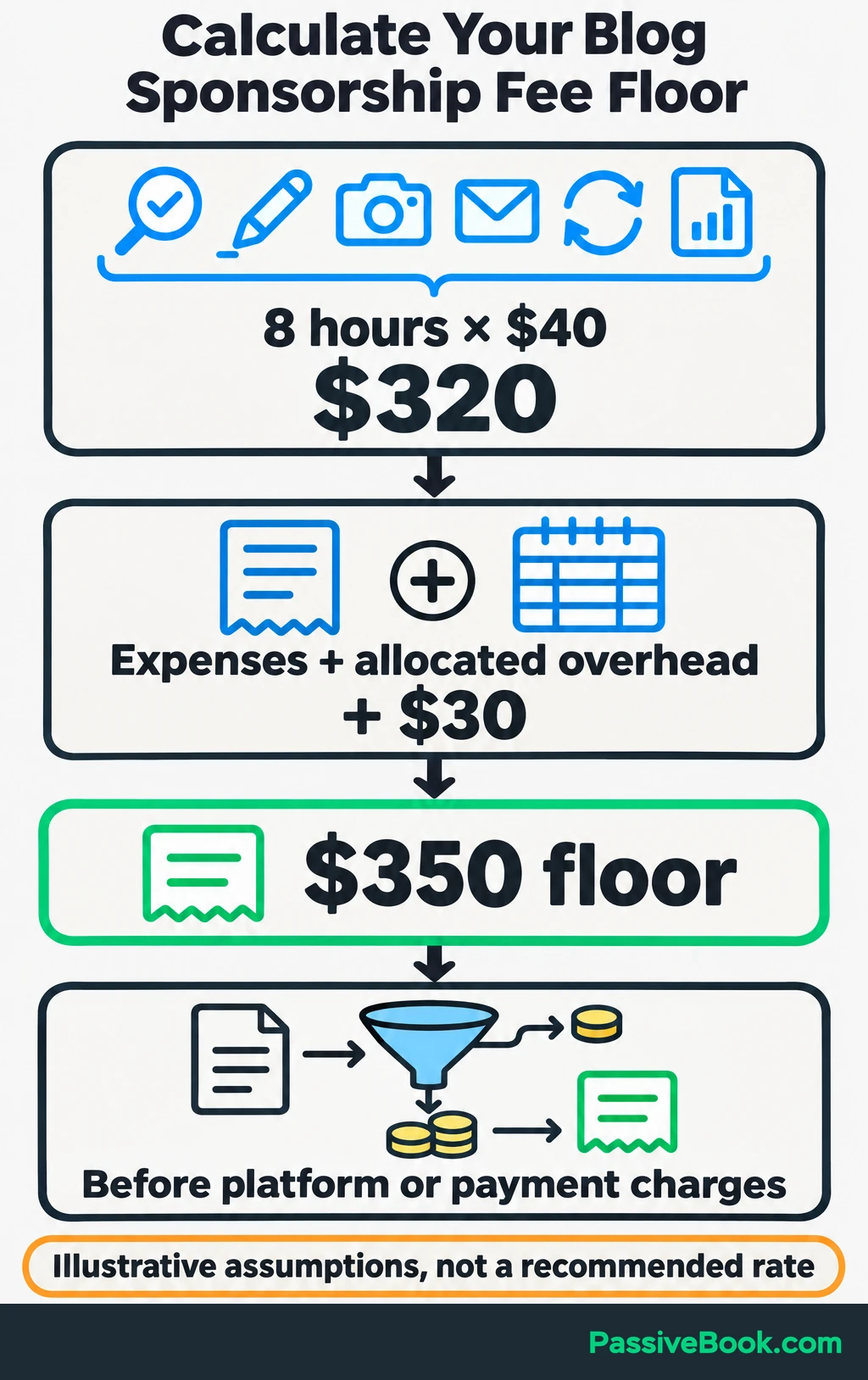
8 hours × $40 + $30 = $350
That gives you a $350 floor before platform or payment charges. These are calculation assumptions, not a recommended beginner rate or reported earnings. If charges apply, the quoted amount must leave enough after deductions to cover your floor.
In my freelance work, I used to count the time needed to make the thing and squeeze the surrounding work into whatever remained. Then a “small revision” arrived, followed by another explanation and another export. That taught me to price the whole job before agreeing to it.
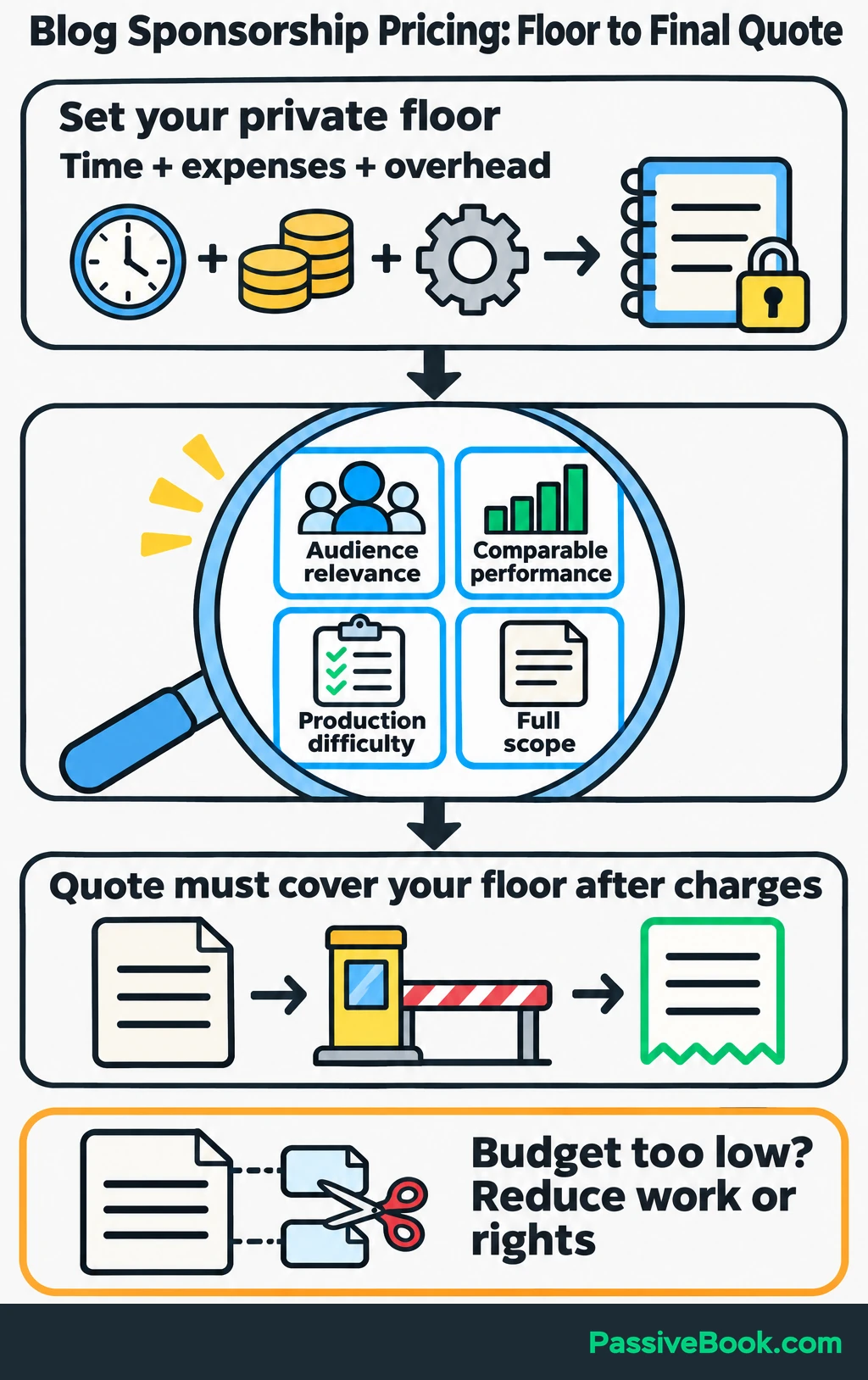
Use your floor privately to screen offers. Then consider audience relevance, comparable article performance, production difficulty, and the full scope when deciding what to quote. I wouldn’t let a generic price per thousand views make that decision for me.
Price Additional Work and Rights Separately
Publication on your blog is one service. Permission to use your photographs in the brand’s advertising is another.
Clarify and price additions such as:
- Extra photographs, articles, or revision rounds.
- Newsletter or Pinterest promotion.
- Reuse of your text or images on brand channels.
- Paid advertising that uses your content.
- Category exclusivity that prevents competing partnerships.
For the water-bottle campaign, permission to repost two photos on the brand’s social accounts for three months is a narrower request than unlimited advertising use.
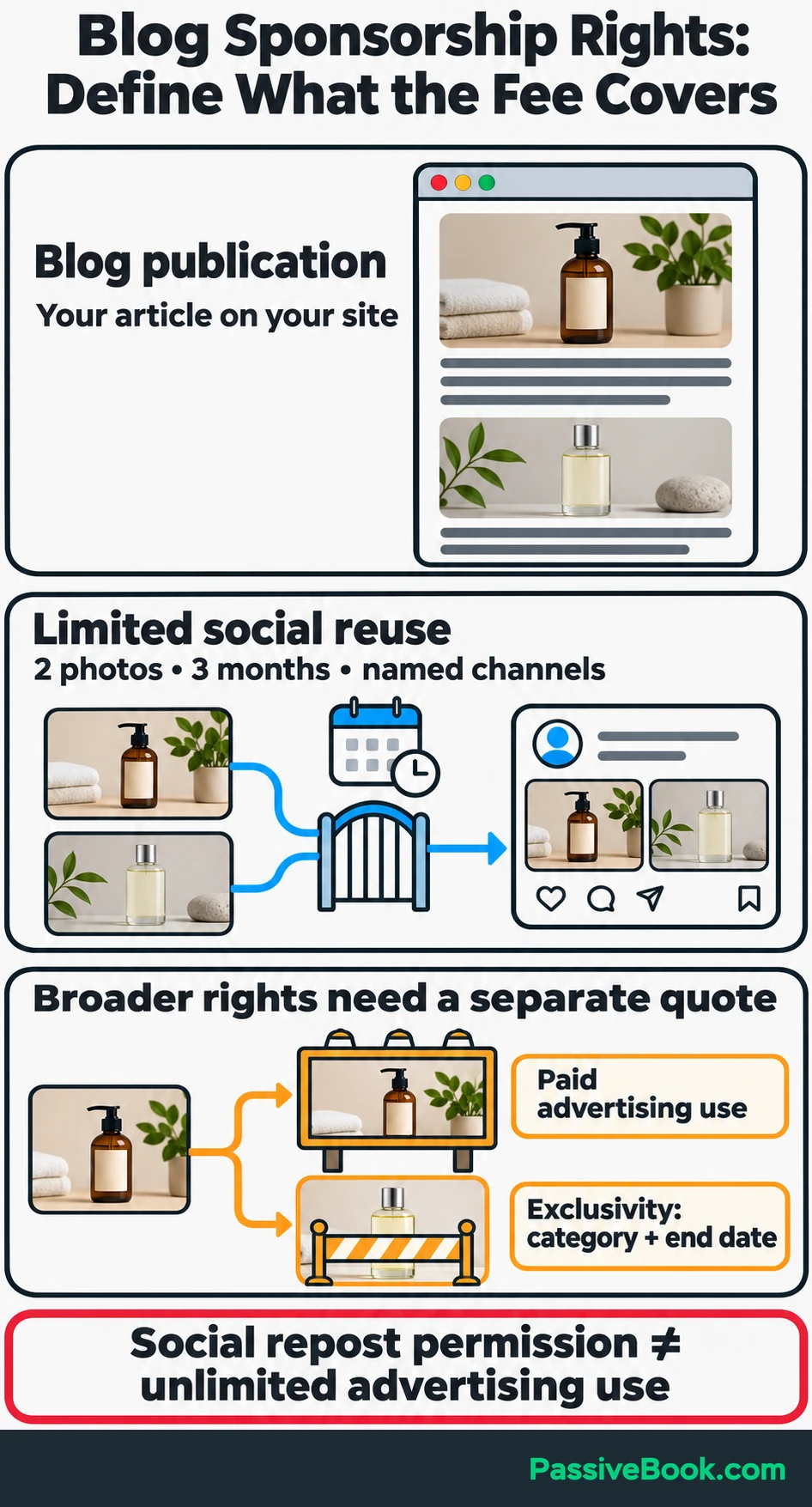
Exclusivity also needs a category and end date. A restriction covering competing dog water bottles is very different from one covering every pet product.
Present the fee alongside the deliverables, schedule, reporting, and optional additions. If the budget falls below your floor, reduce the work or rights. A smaller paid placement may be workable; the same campaign at half the fee may not be.
Before you accept a lower budget, check what it actually leaves for your time. The Client Quote Calculator lets you compare the original campaign with a smaller scope, including payment deductions and any rights charges you choose.
Free Client Quote Calculator




Send a Pitch Built Around One Useful Idea
The pitch should help the recipient understand the fit quickly. Explain who you reach, what you want to create, and what decision you need from them.
A brief email is enough to open that conversation.
Use a Short, Specific Pitch
Here is a complete email you can adapt. Replace the placeholders and keep only statements you can support.
Subject: Paid partnership idea: dog-hiking guide for [Brand]
Hi [Name],
I publish [Blog], which helps readers plan hikes with their dogs.
I’m planning a day-hike packing guide, and your [water bottle] looks relevant to its section on carrying water. I’d like to propose a paid article featuring the bottle after firsthand evaluation, with original photographs and reporting on article views and clicks to your product page.
Here’s a related article: [Article URL]. My media kit includes audience details and work samples: [Media Kit URL].
Do you handle paid blog partnerships, or could you point me to the right person?
Thanks,
[Your Name]
[Blog URL]
If a relevant audience figure strengthens the offer, add one with its reporting period. Leave it out if it adds little.
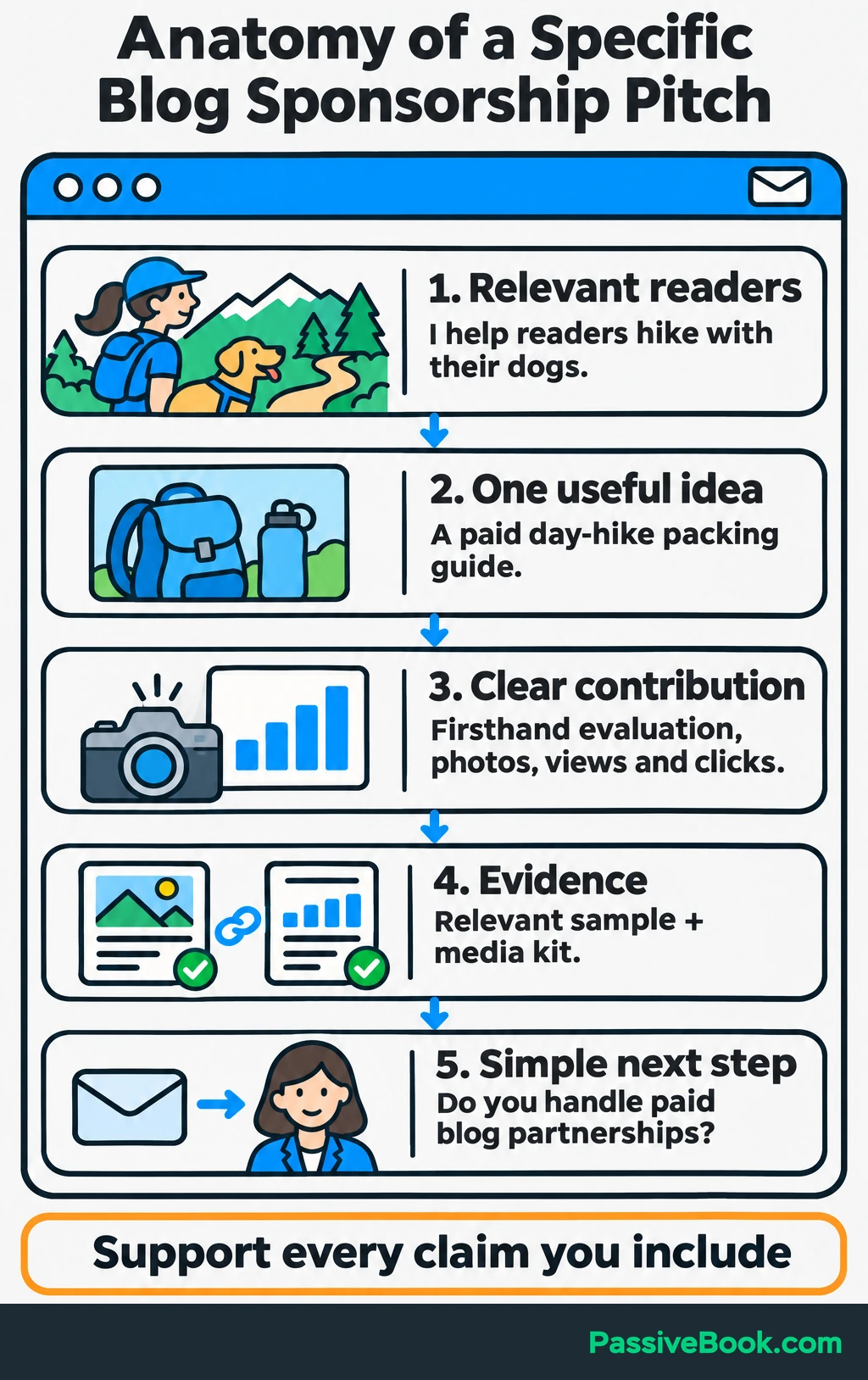
Include a scoped price when you already know the deliverables and rights. Otherwise, ask for the campaign brief, intended content use, and budget before quoting.
If you’re struggling to turn your idea into an email, the AI Partnership Writer can draft it from your blog details. You can also use it to respond when a brand asks about budget, deliverables, or extra work.

Free AI Partnership Writer
Don’t claim to love a product you haven’t used. “Looks relevant” opens a conversation without inventing familiarity.
Follow up and Turn Interest Into a Proposal
I would schedule one brief follow-up about a week later. Restate the idea and add a useful detail:
“Following up on the paid day-hike guide idea. The photographs could show how the bottle fits into a packed day bag. Are you considering paid blog partnerships?”
If there’s no response, move the prospect out of active outreach. Reconnect when you have a concrete reason, such as a relevant product launch or a stronger work sample. Respect an explicit refusal.
When someone expresses interest, clarify the objective, target market, budget, deliverables, timing, approval process, and content rights before preparing the proposal.
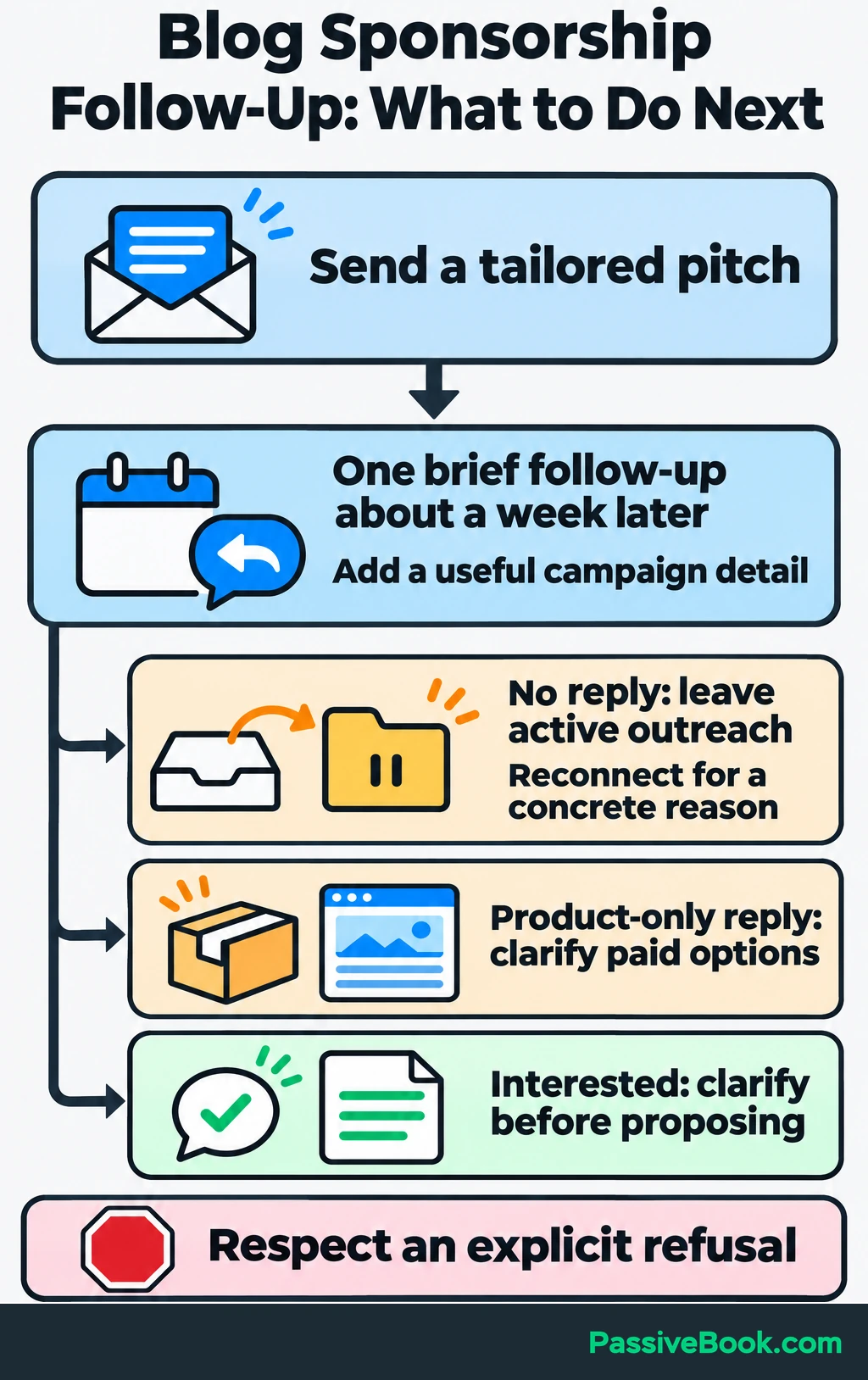
For a product-only reply, you could say:
“Thanks for clarifying. I’m seeking paid partnerships for this campaign. Would you consider a smaller paid placement in an existing guide?”
Accept gifted work only when it serves your own plans. A free bottle can still come with several hours of unpaid obligations.
Track recurring objections. Wrong-country audiences suggest a targeting problem. Repeated requests for work samples suggest an evidence gap. Those patterns give you something more useful to change than your confidence.
Agree on Scope and Payment Before Starting
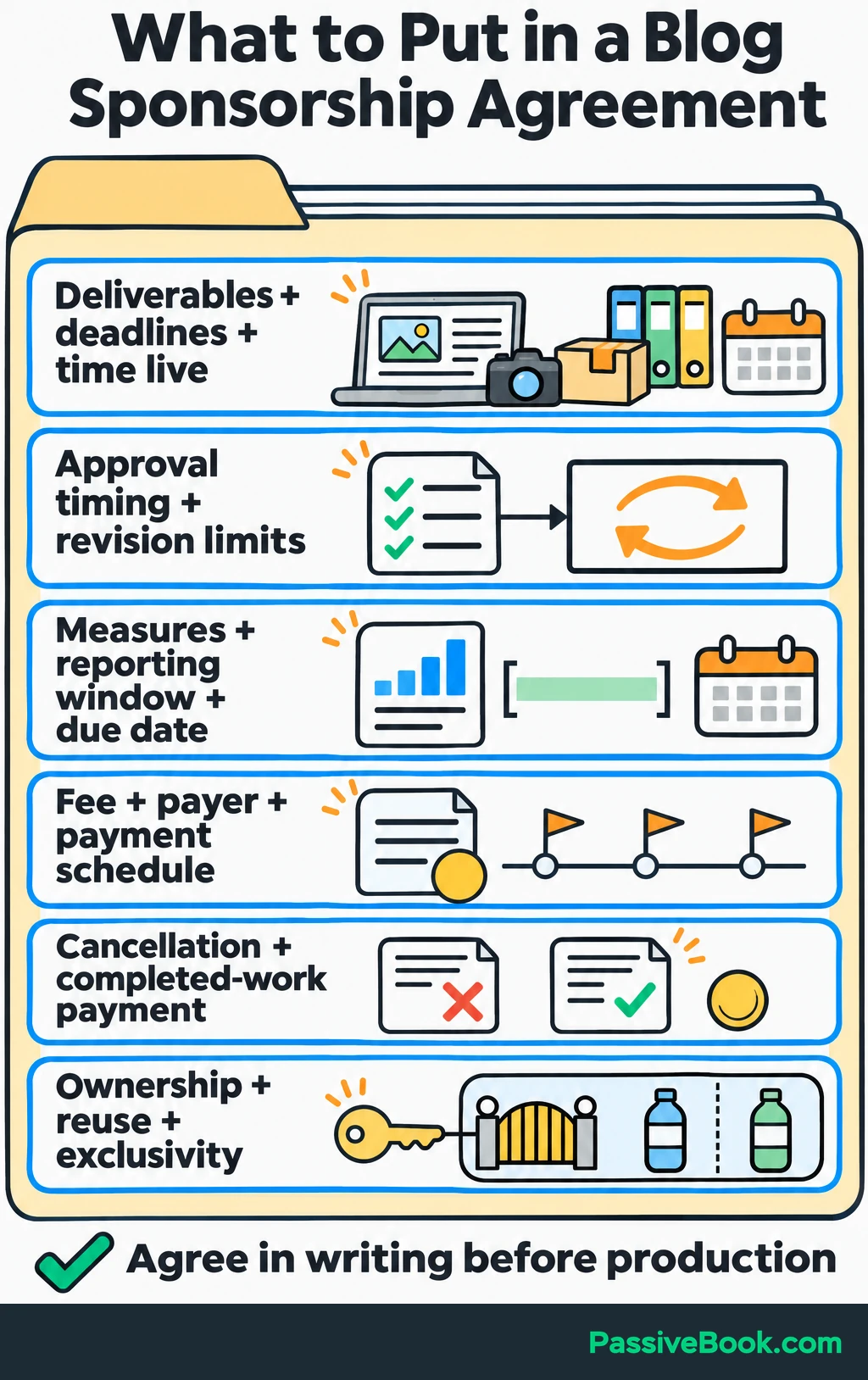
Put the agreement in writing before beginning production. It should be clear enough that neither side has to remember what “a few photos” meant.
Cover these points:
- Deliverables, product delivery, deadlines, and publication duration.
- Approval turnaround, included revisions, and charges for additional work.
- Reporting measures, reporting window, and report delivery date.
- Fee, currency, payer, invoice requirements, payment milestones, and due dates.
- Cancellation terms and payment for work already completed.
- Content ownership, permitted reuse, and any exclusivity.
For a new direct client, I would request a deposit before production. On a platform, review its payment protections and release conditions before committing time.
Settle how late product delivery or delayed approval affects publication. The agreement should also preserve your ability to describe your actual experience and include required disclosures.
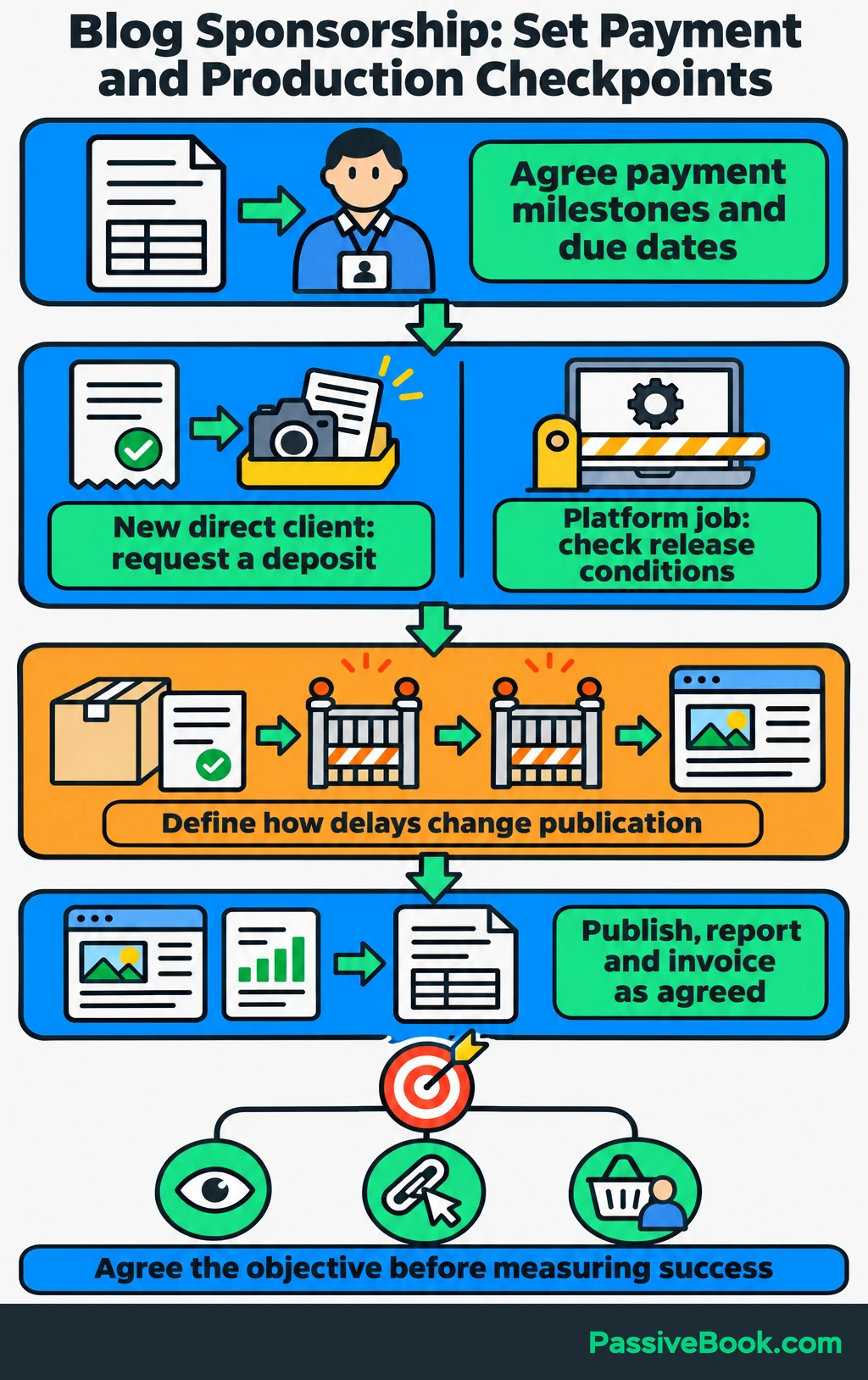
For the water-bottle campaign, decide whether the brand can reuse the photographs, where it can publish them, for how long, and whether competing bottle partnerships are restricted.
Choose the campaign measures now: article views for exposure, outbound clicks for traffic, or sponsor-supplied leads and purchases for conversion goals. Agreeing on this early prevents a campaign sold for product discovery from being judged afterward against an unstated sales target.
Publish the Sponsored Article Professionally
Evaluate the product and write an article that answers the reader’s question. The day-hike guide should still help someone pack even if they decide against that particular bottle.
Show what you actually observed, such as how it fits in a bag or how easy it is to clean. Don’t turn a brief product trial into a broad health or safety claim.
Submit the draft against the agreed brief and ask for consolidated feedback within the included revision round.
Before publishing, check measurement from both sides:
- Ask the sponsor for product links with campaign tags—extra details in the URL that let its analytics identify visits from your article.
- Test your own tracking of clicks to other websites. If you use Google Analytics 4 (GA4) to track blog activity, enable outbound-click measurement and check that a sponsor-link click is recorded. Filter your report to the sponsor’s links in the campaign article.

Place a clear disclosure near the beginning, before the endorsement. For example: “This article is sponsored by [Brand], which also provided the bottle for evaluation.” For product-only work, say that the brand supplied the product.
Endorsements must reflect your actual experience and supported claims. Follow the US Federal Trade Commission’s endorsement guidance when your content can foreseeably reach and affect US consumers, and check other applicable local rules. Brand approval doesn’t replace those obligations.
Mark paid links with rel="sponsored". Google also accepts nofollow, but prefers sponsored for paid placements. I would decline a sponsor’s request to leave paid links unmarked so they can influence search rankings. Google’s paid-link guidance explains the distinction.
Finally, check the live article on mobile, test its links, confirm the disclosure, and complete the agreed promotion. Send the live URLs and invoice according to your payment schedule.
Use Campaign Results to Earn Repeat Sponsorships
Send the report on the date you promised. Keep it focused on what you delivered, what was measured, and what the results suggest doing next.
Include each deliverable and live URL, the reporting period, agreed measures, recorded results, and a recommendation.
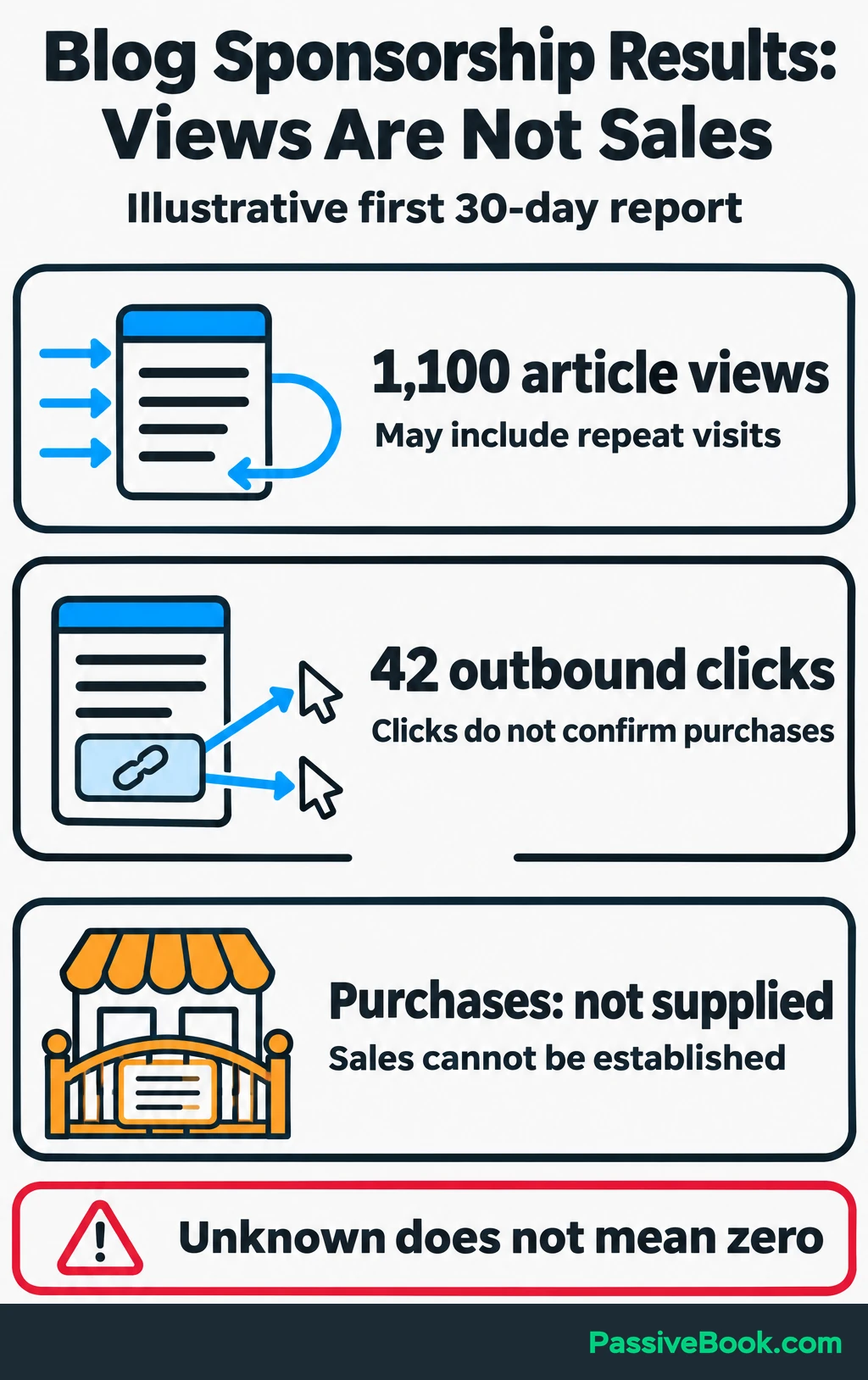
For example, a report covering the first 30 days of the hiking guide might contain these illustrative results:
| Measure | Recorded Result | What It Establishes |
|---|---|---|
| Campaign article views | 1,100 recorded views | Views may include repeat visits by the same reader |
| Clicks from the article to the sponsor | 42 recorded outbound clicks | Clicks may repeat; they do not confirm purchases |
| Purchases on the sponsor’s site | Not supplied by the sponsor | Sales cannot be established from your blog analytics |
Keep unknown results unknown. Don’t turn outbound clicks into implied sales.
If the campaign met its agreed objective and the product proved suitable, propose a specific follow-up. A longer-outing packing guide could answer another reader question while giving the sponsor a new context.
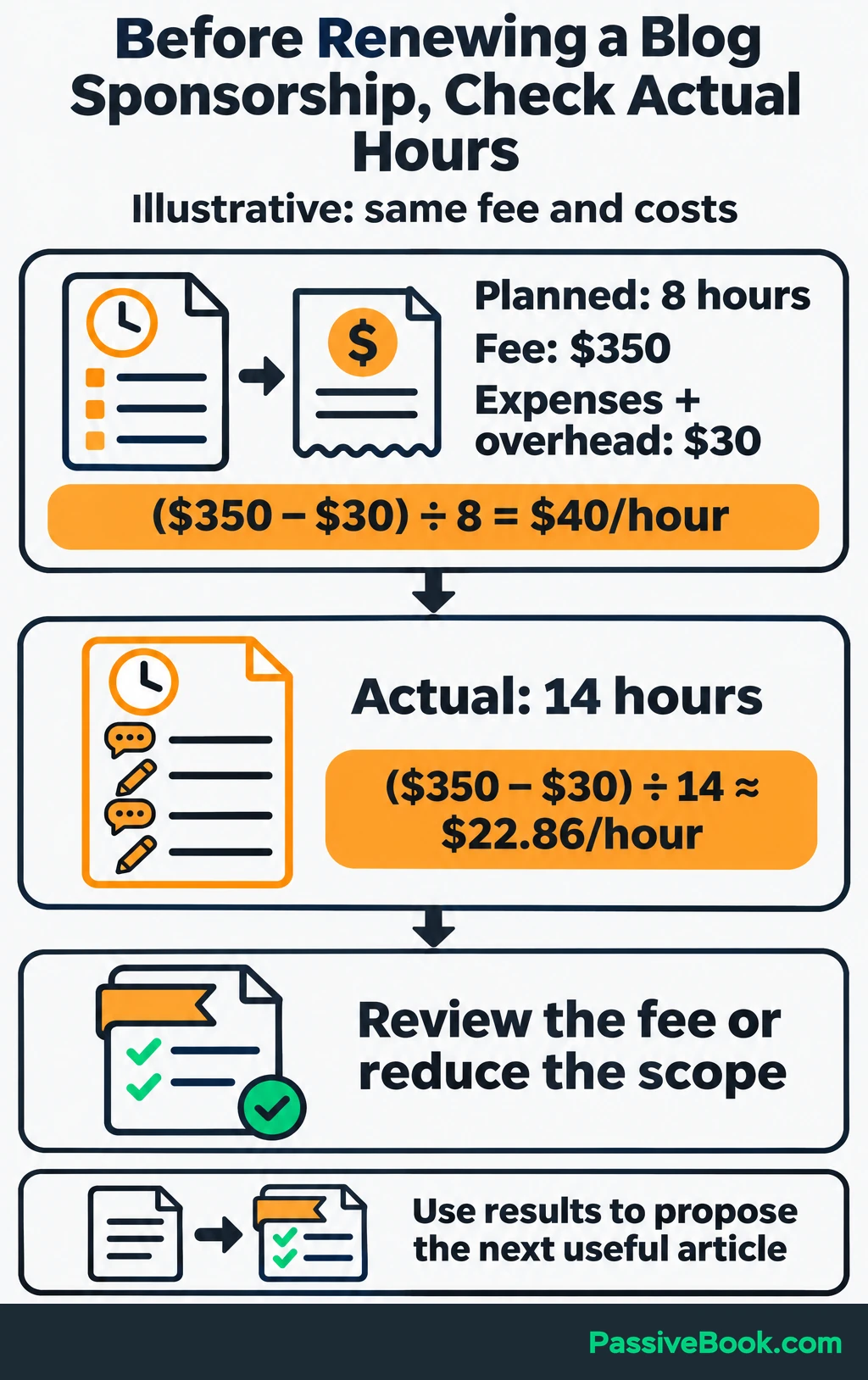
Before renewing, compare the fee with your actual hours and costs. A campaign that looked profitable at eight hours may need a different scope if it took fourteen.
For repeat work, define the articles, promotion, reports, payment dates, and renewal terms. Reuse your proposal, onboarding checklist, and report format to reduce administration. A spreadsheet reminder is enough to start; you don’t need another subscription to remember a follow-up.
Keep prospecting alongside existing partnerships so one renewal decision doesn’t control your whole sponsorship income.
What Next?
Choose one useful article idea and shortlist five brands whose products belong in it. Write a specific reason for each match, then send the strongest prospect a tailored pitch.
Use the social buttons to share this guide when the conversation turns to finding sponsors or pricing a first campaign.
Which part of landing your first paid partnership feels least clear: finding brands, pitching, or setting your fee? Leave your answer—and any other questions—in the comments.
Share this post with your friends & followers:

