I burned six months and 340 hours tracking Instagram followers while my bank account stayed at $47. The followers hit 4,000. Monthly revenue hit $0.
I’d refresh analytics obsessively, celebrating vanity metrics that didn’t pay my bills. The turning point came when I stopped watching follower counts and started tracking three simple numbers that actually predicted revenue. Within eight weeks, my side hustle finally broke $1,000 monthly.
If you’re juggling a day job with an online business, you’re probably drowning in data but starving for clarity. This guide shows you exactly which metrics matter, how to track them in 15 minutes weekly, and when your numbers are screaming “pivot now” before you waste another six months.

- •What Are KPIs for Your Online Business
- •Why Most Solopreneurs Track the Wrong Metrics and How to Spot Vanity Metrics
- How to Choose the Right KPIs for Your Specific Business
- •The North Star Metric: Your Single Most Important Number
- Core Revenue KPIs Every Part-Time Business Owner Must Track
- Profitability KPIs That Reveal If You're Building a Real Business
- Business-Model-Specific KPIs You Can't Ignore
- •Red Flags: KPIs That Signal Your Business Is Failing
- •Free Tools to Track Your KPIs Without Breaking the Bank
- •How to Set Up Your First KPI Dashboard in Under 30 Minutes
- •How Often Should You Review Your KPIs
- •Frequently Asked Questions
- •What Next?
What Are KPIs for Your Online Business
Key Performance Indicators are quantifiable metrics tracking progress toward specific business goals. Unlike generic statistics that simply record what happened, KPIs measure long-term performance against targets you’ve set.
This difference matters critically for solopreneurs with limited time. A KPI answers “Are we moving closer to our goal?” while a basic metric just says “What happened?”
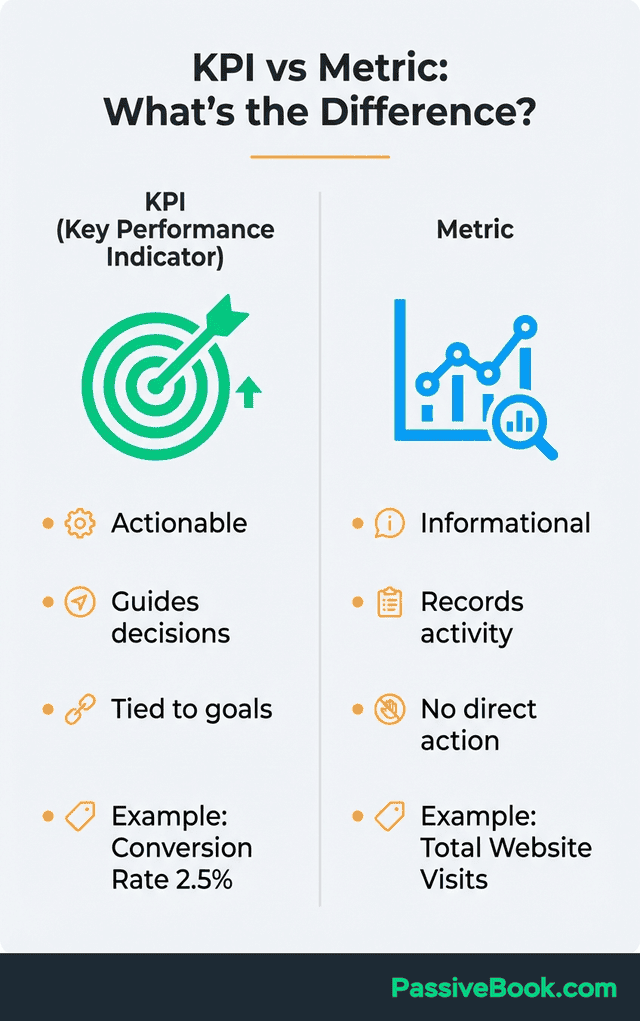
Total website traffic is a metric. Conversion rate from visitor to email subscriber is a KPI because it directly indicates whether your content attracts the right audience. KPIs are actionable measurements that guide business decision making, not vanity statistics that look good in screenshots.
For part-time business owners, this distinction helps businesses save hours of analysis paralysis. You need numbers that trigger specific actions, not endless data points to monitor.
Why Most Solopreneurs Track the Wrong Metrics and How to Spot Vanity Metrics
The statistics are brutal. According to the Small Business Administration, about 20% of small businesses fail within their first year, with poor financial management cited as the leading cause.
Even more telling, research shows 82% of small business failures stem from cash flow problems they failed to monitor.
I learned this lesson the expensive way. For six months, I celebrated growing my Twitter following while ignoring that my customer acquisition cost was rising faster than my revenue. The vanity metric felt good, but the real numbers were screaming warnings I wasn’t listening to.
Vanity metrics look impressive but don’t guide business decisions. Having 10,000 Instagram followers means nothing if only 0.5% click your product links. That’s 50 potential customers from an audience that took months to build.
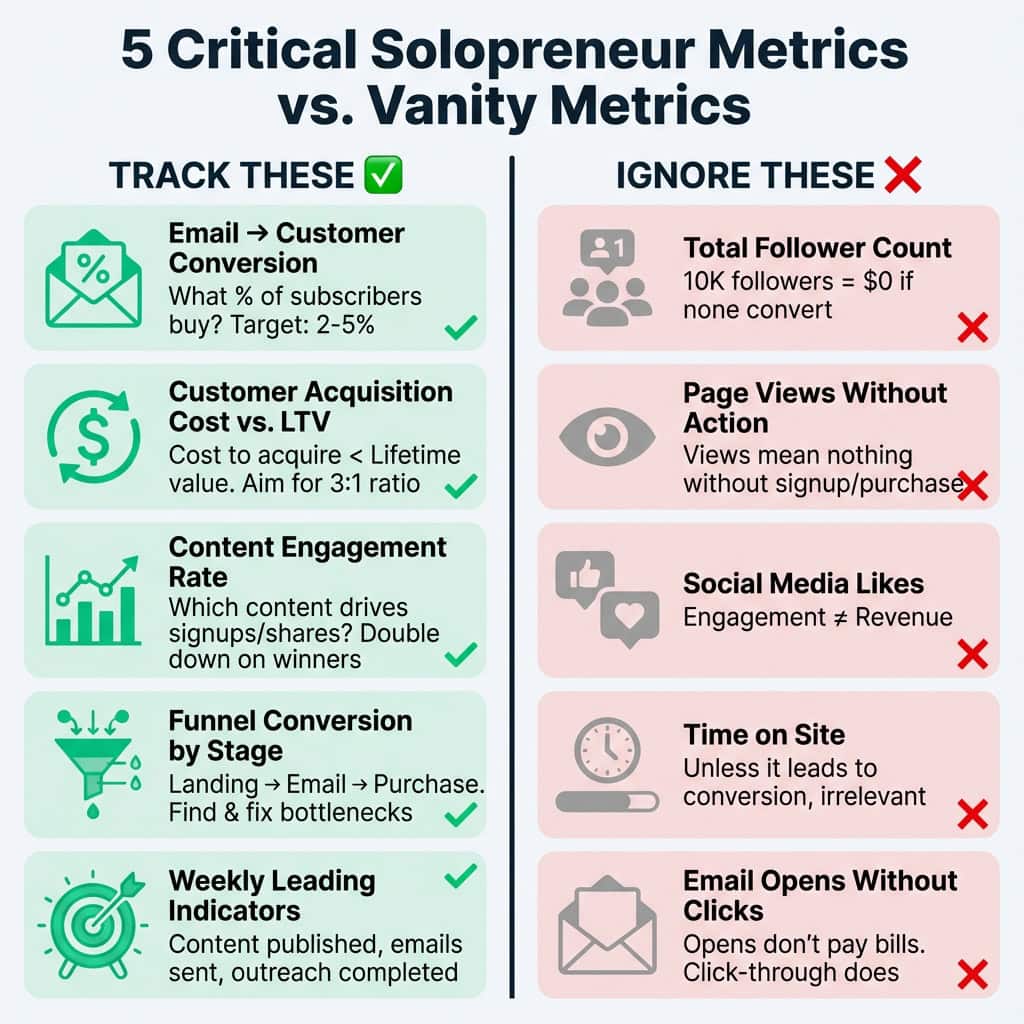
A food blogger grew Instagram to 25,000 followers with less than 2% engagement, spending 15 hours weekly on content that generated zero sales.
She shifted focus to an email list of just 800 subscribers with a 35% open rate. Within eight weeks, that tiny list generated her first $2,000 monthly revenue.
Here’s the test I use for every metric. Ask yourself: “Can I make a business decision based on this number?”
If the answer is no, you’re tracking a vanity metric. If a number drops by 20% tomorrow and you can’t identify a specific action to take, stop tracking it.
How to Choose the Right KPIs for Your Specific Business
Start with your primary business goal. Choose one clear objective: reach your first $1,000 monthly, validate market demand, or achieve profitability.
Trying to track progress toward multiple goals at once creates confusion, not clarity.
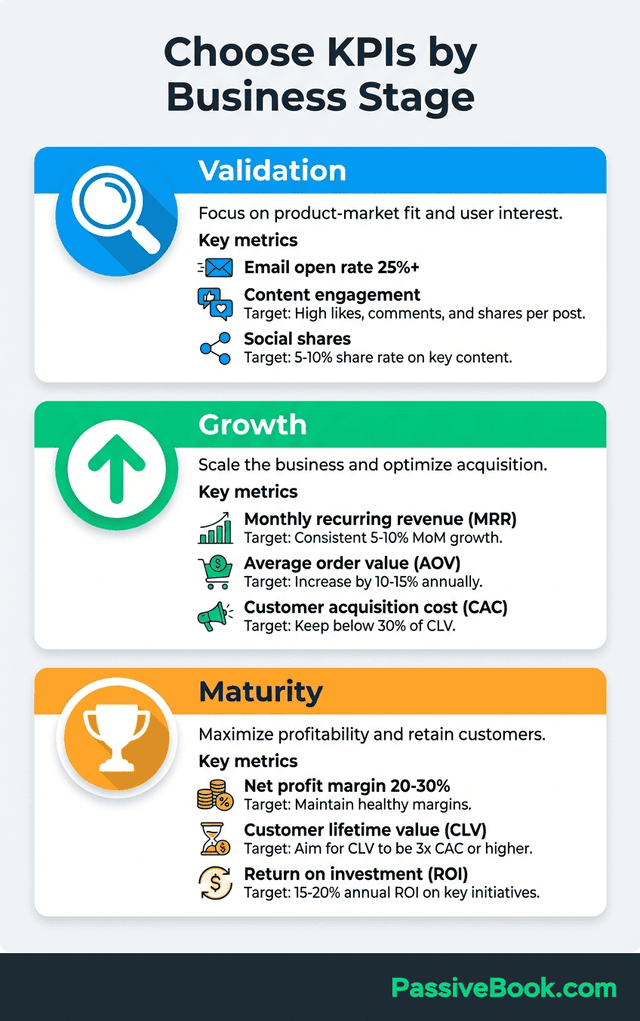
Your KPIs must match your business stage. During validation, track engagement metrics like email open rates or content shares. These indicate whether people care about your offer.
In the growth stage, focus shifts to revenue metrics like monthly recurring revenue or average order value. At maturity, profitability becomes the priority through net profit margin and customer lifetime value.
Run this simple test on every metric you consider tracking. Ask: “If this number changes by 20%, what action would I take?” If you can’t answer right away, it’s not a KPI worth your limited time.
I learned this after tracking 14 different metrics for two months and making exactly zero decisions from them.
Limit yourself to 5-7 core metrics that directly impact business goals. More than that creates analysis paralysis for part-time entrepreneurs already stretched thin. You need focus, not comprehensiveness.
Setting Your KPI Targets
After selecting your KPIs, define specific goals based on industry benchmarks and your business stage. Early-stage validation needs modest targets like 5% monthly revenue growth or 25% email open rates.
Growth stage should use benchmark data as targets, like 2-3% conversion rates for ecommerce or 3:1 customer lifetime value to customer acquisition cost ratios.
Track for one month to establish your baseline. Then set targets 15-20% above current performance for next quarter. Adjust targets quarterly based on actual results.
Audit your KPIs quarterly. As your business evolves from side hustle to primary income, your metrics must shift. Validation metrics like social media engagement become less relevant when profitability metrics like net profit margin determine whether you can quit your day job.
The North Star Metric: Your Single Most Important Number
Jessica at Starfish USA, an Etsy print-on-demand shop run by one person, uses “monthly unique designs that generate repeat customers” as her North Star. This single metric predicted her growth from side hustle to $250,000 annually.
Your North Star connects customer value creation directly to revenue generation. It’s the one number that, if improved, pulls everything else upward.
For content creators, this might be “engaged subscribers” who consume your content regularly. For ecommerce, “repeat purchase rate” indicates you’re solving a real problem people pay for repeatedly.
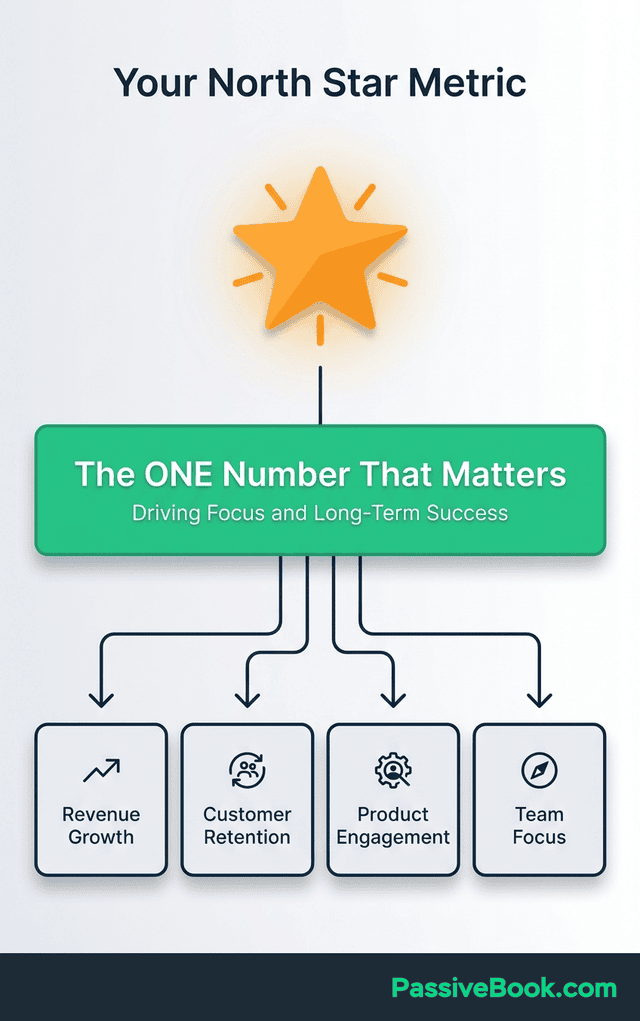
A North Star metric simplifies everything. Part-time entrepreneurs don’t have bandwidth to monitor 20 dashboards. One metric focuses your limited hours on activities that compound over time.
Choose your North Star by asking: “What customer behavior predicts long-term revenue?” Not what looks impressive, but what truly signals business health. A newsletter with 500 subscribers opening 40% of emails beats 5,000 subscribers at 8% open rates every time.
Core Revenue KPIs Every Part-Time Business Owner Must Track
Revenue metrics separate real businesses from expensive hobbies. These three financial KPIs reveal whether your side hustle can scale or if you’re subsidizing customers with your time.
Monthly Revenue Growth Rate
Calculate this by taking current month revenue minus previous month, divided by previous month, multiplied by 100. A simple formula with powerful implications for decision making.
Bootstrapped part-timers should target 5-10% monthly growth as a realistic benchmark. This pace is achievable without paid advertising while working nights and weekends.
Faster growth often requires capital investment most solopreneurs can’t spare.
Three consecutive flat or declining months signal the need for a business model pivot. Not a minor tweak, but a fundamental rethinking of your offer or audience. Waiting longer just burns more time you don’t have.
Creator Ali Abdaal tracked his YouTube channel’s steady revenue growth monthly while working as a doctor. He used double-digit monthly growth over 18 months as validation to transition his side hustle into primary income. The metric gave him confidence to make the leap.
Customer Acquisition Cost (CAC)
Average CAC varies by industry, ranging from $50-$200 for most ecommerce businesses. Knowing this helps you benchmark whether your acquisition efforts are competitive or wasteful.
Divide your total marketing spend by the number of new customers acquired in that period. Include everything: ad spend, tool subscriptions, even the hours you spent creating content valued at your day job hourly rate.
Aim for a customer lifetime value to CAC ratio of at least 3:1 for long-term viability. Early-stage side hustles can operate at 2:1 while validating product-market fit, but you must improve to 3:1 or better within 12-18 months.
Operating below this threshold means you’re losing money on every customer, a path to inevitable failure.
This metric forces brutal honesty about whether your marketing efforts generate sustainable returns or just feel productive.
Customer Lifetime Value (CLV)
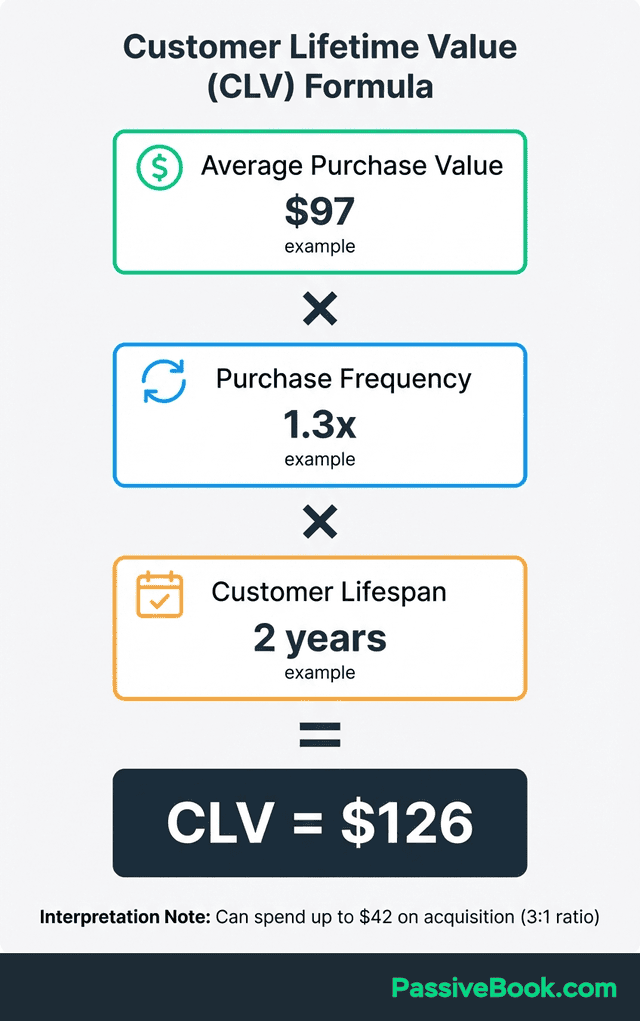
The formula is straightforward: Average Purchase Value × Purchase Frequency × Customer Lifespan. This calculation predicts total revenue expected from one customer throughout your entire relationship with them.
An online course creator might have a $97 average order with 1.3 purchases per customer over 2 years. That calculates to a CLV of $126.
This number justified spending up to $42 per customer on ads to profitably scale from side hustle to full-time income.
Compare CLV against your customer acquisition cost and the real power emerges. If you’re spending $50 to acquire a customer worth $45 over their lifetime, you’re funding a slowly dying business.
Many solopreneurs discover their business isn’t profitable until they calculate CLV properly. They’ve been celebrating revenue while bleeding cash on acquisition efforts that never pay back.
Profitability KPIs That Reveal If You’re Building a Real Business
Revenue feels exciting until you realize profit determines survival. These metrics separate sustainable businesses from cash-burning experiments.
I celebrated $3,000 revenue until I calculated I was earning $11 per hour.
Net Profit Margin vs. Gross Margin
Gross margin measures revenue minus direct costs like product manufacturing or service delivery. Net profit accounts for all expenses including overhead, tools, advertising, and your time.
For bootstrappers, this distinction matters enormously. You might see a healthy 60% gross margin and assume profitability, then discover that after accounting for every expense, your net profit margin sits at 4%.
Aim for 20-30% net profit margin for a sustainable bootstrapped business. Below 15% leaves no Buffer for unexpected expenses or slow months. Above 40% suggests you might be underinvesting in growth opportunities.
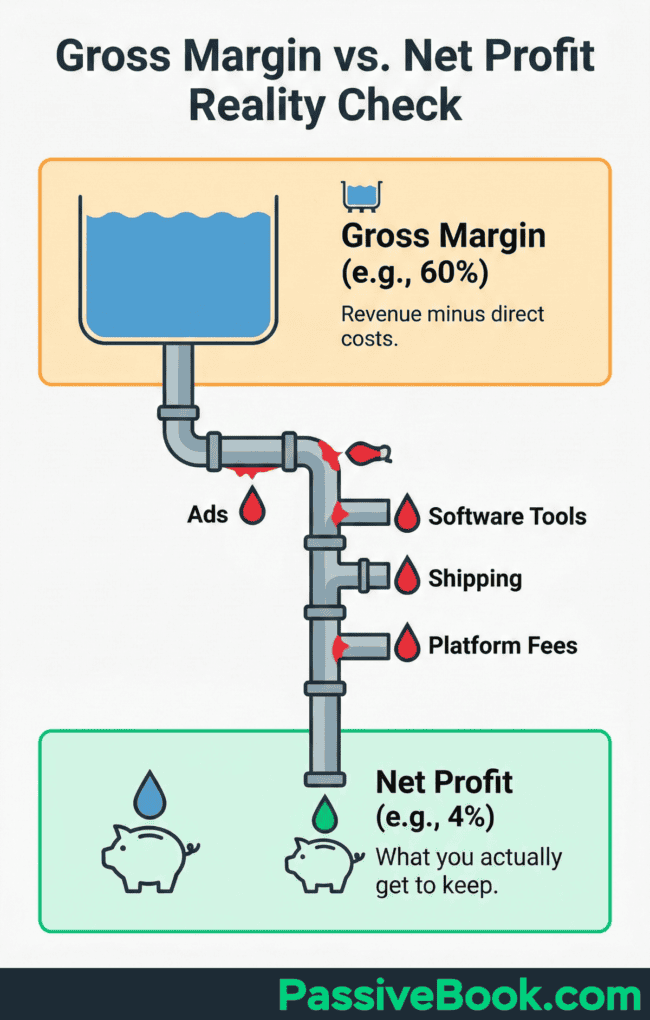
An Etsy seller generates $5,000 monthly revenue with $2,000 in cost of goods sold. That’s an impressive 60% gross margin.
But after deducting $1,500 for ads, $400 in platform fees, $600 for shipping, and $300 in tool subscriptions, the net profit is just $200 monthly, or a 4% net profit margin. Tracking only gross margin would have hidden an unsustainable pricing structure that requires immediate adjustment.
Revenue Per Hour Worked
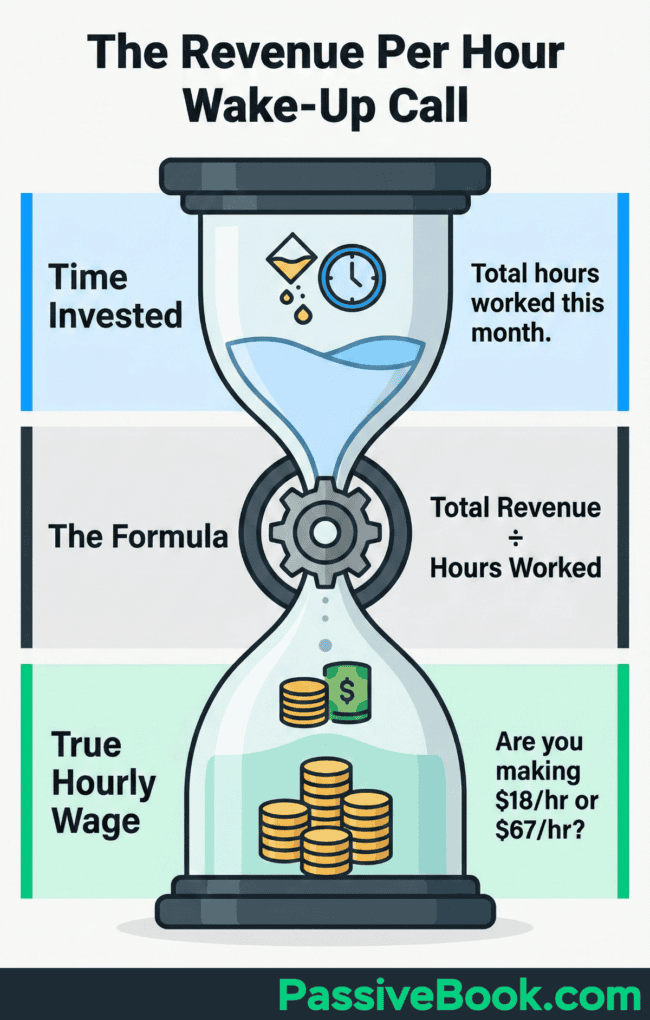
This underutilized metric reveals the brutal truth about whether your side hustle makes financial sense. Calculate by dividing total revenue by hours invested in business activities monthly.
Part-timers earning under $25-30 per hour should seriously reassess their business model viability. If your day job pays $35 hourly and your side hustle generates $18 per hour after six months, you’re working a second job at half pay.
Tracking this metric reveals which activities generate returns versus expensive time sinks. You might discover that creating content produces $12 per hour while direct sales conversations yield $67 per hour.
That insight transforms how you allocate your limited time.
The goal isn’t to optimize every hour right away. Early validation stages naturally show lower returns. But if revenue per hour doesn’t improve meaningfully after 12 months, you’re building a hobby, not a business.
Business-Model-Specific KPIs You Can’t Ignore
Generic KPIs miss the nuances that determine success in different types kpis specific business models. Audience-based businesses and product-based businesses require different measurement approaches.
Audience-Based Business Models: Content and Courses
YouTube requires 1,000 subscribers and 4,000 watch hours for monetization eligibility. These platform thresholds become your first KPIs if you’re building on YouTube, representing the minimum viable audience for revenue generation.
A side hustle YouTuber discovered that tracking average view duration as a leading indicator changed everything. Videos over 8 minutes with 60% or higher retention predicted successful monetization every time.
This single KPI guided content strategy during nights and weekends, helping reach the monetization threshold in 11 months instead of the typical 18-24.
Course completion rates averaging 15-30% typically indicate strong engagement and satisfaction levels. Below 15% often suggests your course structure or content quality needs work. Above 30% likely confirms you’re delivering real value that justifies asking for testimonials and referrals.
Email list growth rate and conversion rate from subscribers to buyers matter more than social followers for owned audience businesses. A 500-person email list converting at 8% generates more revenue than 10,000 social followers converting at 0.3%. You control email, platforms control social reach.
Product-Based Business Models: Ecommerce and Print-on-Demand
Average ecommerce conversion rates range 2-3% across most online stores. If you’re below 1.5%, your pricing, product photos, or descriptions need immediate attention before spending more on traffic.
Jessica at Starfish USA tracks “design uniqueness conversion rate,” measuring which original designs convert three times better than generic alternatives.
This KPI guided her shift to custom seasonal designs that drove 35% of her annual $250,000 revenue. She doesn’t track total designs, just the conversion rate of unique versus templated options.
Print-on-demand profit margins range 20-40% depending on product selection and pricing strategy. Operating below 20% makes scaling nearly impossible without external funding. Above 40% suggests room to test price reductions for volume growth.
Average order value, cart abandonment rate, and customer retention rate directly impact profitability in product businesses. Increasing average order value from $35 to $42 means fewer transactions needed to hit revenue targets.
Reducing cart abandonment from 70% to 65% recovers revenue without additional traffic costs. Improving retention rate from one-time buyers to 30% repeat customers transforms business economics.
Red Flags: KPIs That Signal Your Business Is Failing
Numbers don’t lie, but we’re experts at ignoring warnings. These red flag KPIs demand immediate action, not hopeful waiting.
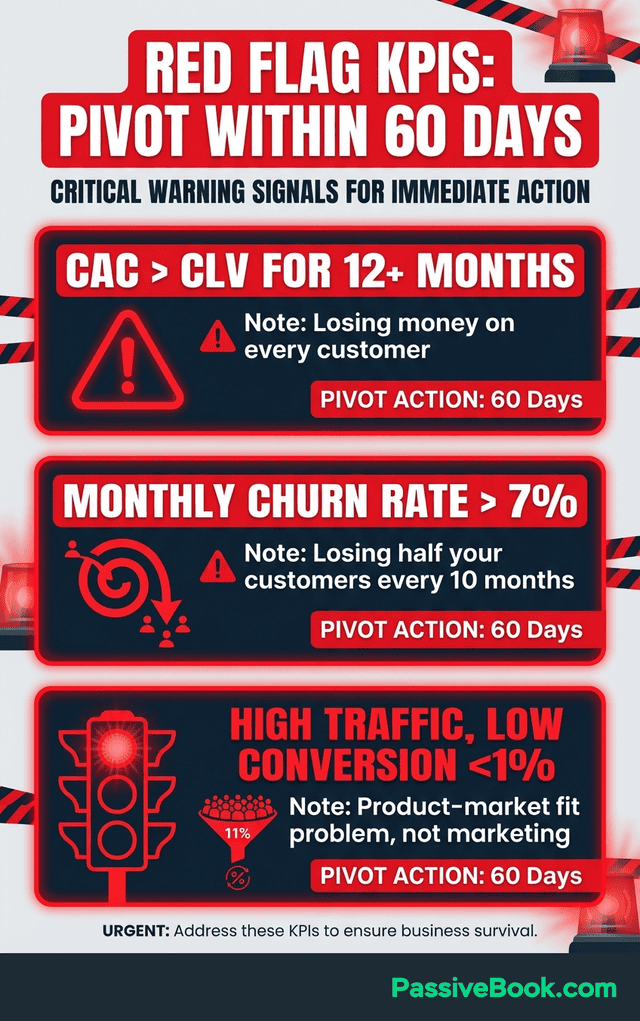
Customer acquisition cost exceeding customer lifetime value for 12 or more months means you must pivot your business model within 60 days. You’re paying more to acquire customers than they’ll ever pay you back. Every sale accelerates your path to bankruptcy, not success.
Don’t wait 18 months like I did.
Customer churn rates exceeding 5-7% monthly for subscriptions signal serious retention problems. At 7% monthly churn, you lose half your customer base every 10 months. No amount of acquisition can outpace that leakage.
High traffic with low conversion reveals product-market fit issues, not marketing problems. Getting 10,000 monthly visitors with a 0.3% conversion rate means your offer doesn’t resonate. More traffic just exposes the core problem to more people.
A dropshipping side hustler ignored rising customer acquisition cost numbers for six months. His cost to acquire each customer climbed from $28 to $45 while customer lifetime value remained stuck at $38.
He lost $2,400 before recognizing the red flag. Tracking the CAC-to-CLV ratio weekly would have triggered an earlier pivot to higher-margin products or a different business model.
These aren’t temporary dips requiring patience. They’re alarm bells demanding decisive action within 30-60 days maximum.
Free Tools to Track Your KPIs Without Breaking the Bank
Expensive analytics platforms are unnecessary until you’re generating revenue. Bootstrap your tracking with these free options that provide everything a part-time business needs.
Google Analytics 4 tracks user behavior, traffic sources, and conversion events free. Set up custom events to monitor newsletter signups, product views, or checkout starts. The learning curve is steep but worth investing one weekend to master the basics.
Shopify’s native analytics tracks sales, customers, and products free on all plans. You get revenue reports, top products, customer behavior, and returning customer rates without paying for third-party tools.
The basic plan’s analytics handle most solopreneur needs through the first $5,000 monthly revenue.
Google Sheets dashboard templates allow custom KPI tracking with pre-built formulas and charts. Copy a template, plug in your numbers weekly, and watch trends emerge. You control exactly which metrics matter to your business without platform limitations.
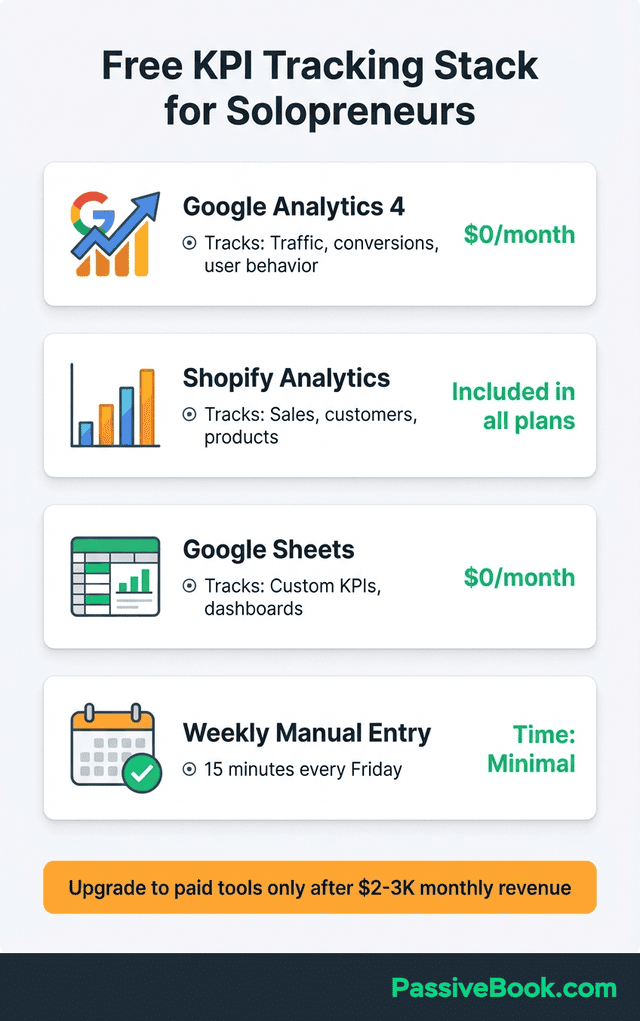
Weekly manual entry takes 15 minutes but keeps costs at zero. Update on the same day and time each week for accurate pattern recognition. Friday afternoon after closing out the week works well for most bootstrappers juggling day jobs.
Upgrade to paid tools only when tracking becomes an actual bottleneck and revenue exceeds $2,000-3,000 monthly. Before that threshold, you’re paying for features you don’t need with profits you can’t spare.
How to Set Up Your First KPI Dashboard in Under 30 Minutes
I procrastinated on this for three months. I kept waiting for the perfect system until I realized the perfect system was the one I’d actually use.
Start by selecting 3-5 metrics that directly indicate your business health and profitability. For my content business, I chose: monthly revenue, email list growth rate, content engagement rate, affiliate conversion rate, and revenue per piece of content.
Five numbers that told me whether I was building a business or just staying busy.
Document your data sources before building anything. I pull revenue from Stripe, email metrics from Convertkit, traffic from Google Analytics, and affiliate data from partner dashboards. Writing this down prevents the “where did I get this number?” confusion that kills tracking.
Create a Google Sheets dashboard with separate tabs for revenue, traffic, and conversion data. Use one tab per category to avoid overwhelming spreadsheets. Organize your kpi data with basic formulas for calculations like growth rates and conversion percentages.
You don’t need advanced Excel skills, just SUM and simple division.
Schedule a recurring 15-minute weekly review on your calendar for consistency. Mine happens every Friday at 4 PM before closing out the work week. The consistency matters more than perfection.
Start tracking right away rather than waiting for a system that never materializes.
After two months of tracking regularly, patterns emerge that gut feelings miss. I discovered my Tuesday content outperformed Friday posts by 40% in engagement, a pattern invisible without systematic tracking.
How Often Should You Review Your KPIs
Review frequency determines whether you react to problems or drown in data anxiety. Different metrics demand different cadences based on your ability to act on changes.
Critical financial KPIs benefit from weekly monitoring to enable quick adjustments. Revenue, customer acquisition cost, and conversion rates can shift rapidly. Weekly tracking lets you track progress and spot downward trends within 2-3 weeks instead of discovering problems after two months of declining performance.
Monthly deep dives reveal trends invisible in weekly snapshots for strategic decisions. Customer lifetime value, retention rate, and profit margins need longer time periods to show meaningful patterns. Checking these weekly just creates noise that distracts from real signals.
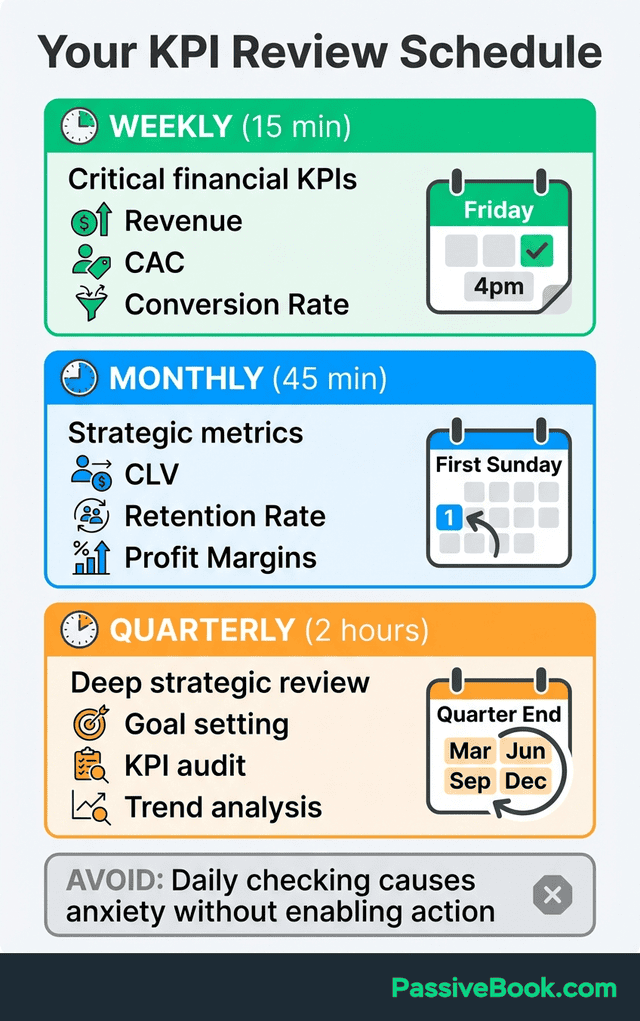
Avoid daily checking if you’re a part-timer. It creates anxiety without enabling faster action. When you can only work on your business 10-15 hours weekly, daily metrics just remind you of problems you can’t address until the weekend anyway.
Set quarterly goals based on monthly KPI patterns. If your monthly revenue growth averaged 7% for three months, aim for 8-10% next quarter.
If customer acquisition cost held steady at $42, target reducing it to $35-38. Quarterly goals based on actual performance beat arbitrary annual targets every time.
My rhythm: Friday weekly reviews take 15 minutes, first-Sunday-of-month deep dives take 45 minutes, quarterly strategic planning sessions take 2 hours. This cadence keeps me informed without becoming obsessed with numbers I can’t immediately influence.
Frequently Asked Questions
How Long Before My KPIs Show If My Business Will Actually Succeed?
Financial KPIs need 6-12 months of data to reveal trends beyond seasonal fluctuations and random variation. Leading indicators like traffic growth and engagement rates show traction within 2-3 months of effort. Use early indicators to validate direction while waiting for revenue metrics to mature into reliable patterns.
Can I Change My KPIs as My Business Evolves?
Yes, your metrics must evolve with your business stage. Early-stage focuses on validation metrics like engagement and traffic to confirm market interest. Growth stage shifts to revenue metrics and customer acquisition efficiency. Review KPI relevance quarterly and replace metrics no longer guiding your actual decisions with ones that address current challenges.
What’s the Difference Between a Metric and a KPI?
A metric is any measurement like total page views or follower count. A KPI is a metric tied to a business goal that guides decisions when it changes. If the number dropping 20% wouldn’t trigger action, it’s a metric, not a key performance indicator worth your limited tracking time.
How Many KPIs Should I Track as a Solopreneur?
Limit yourself to 5-7 core KPIs maximum to avoid analysis paralysis with limited time. Focus on one North Star metric, 2-3 revenue-related KPIs, and 2-3 leading indicators for your business model. More than seven metrics dilutes focus and makes it unclear which number actually demands your attention this week.
Should I Track the Same KPIs My Competitors Track?
Only if you share identical business models and goals. Your competitor running paid ads extensively should track different metrics than you building organic traffic. Their venture-funded growth trajectory requires different KPIs than your bootstrapped profitability focus. Learn from their approach but customize metrics to fit your constraints and objectives.
What If My KPIs Look Bad Every Week?
Poor KPIs for 8-12 weeks signal fundamental business model problems requiring major pivots, not minor tweaks. Don’t ignore red flags hoping they’ll improve through persistence. Use bad numbers as validation to test different offers, audiences, or channels before investing another six months in a failing approach.
What Next?
You now have a framework for tracking the metrics that actually predict online business success. We’ve covered how to distinguish actionable KPIs from vanity metrics, choose the right measurements for your business model, and set up simple tracking systems that work with your limited time.
Building a side hustle while working full-time is challenging enough without the added confusion of unclear progress signals. The solopreneurs who succeed know their numbers cold and make data driven decisions every week, not entrepreneurs with the most followers or the fanciest analytics setup.
Stop wasting another weekend drowning in analytics dashboards. Pick your three KPIs tonight and start tracking them this Friday. Share this guide with one solopreneur friend who’s still celebrating follower counts while their revenue stays flat.
Have you discovered a KPI that transformed how you run your business? Drop it in the comments below so others can learn from your experience.
Share this post with your friends & followers: