You have a few hours after work, but every income idea seems to need those same hours again tomorrow. Client work needs another client. A shop needs orders handled. A content channel needs feeding.
The appeal of passive income is getting some of that time back. The risk is spending months building something that nobody buys, then paying for tools to keep it running.
I once finished a course that barely sold. To make that investment of time easier to judge, this guide compares four online income models, then follows one digital product through the work, costs, and sales it would need.
How Does Online Passive Income Work?
You create something once and let more than one customer pay for the value it provides. That could be a downloadable workbook, a useful article that earns referral commissions, or an original illustration licensed to different buyers.
The work falls into two parts:
- Upfront work: Find a problem, check demand, create the asset, and reach potential buyers.
- Ongoing work: Promote it, answer questions, fix problems, and keep it useful.
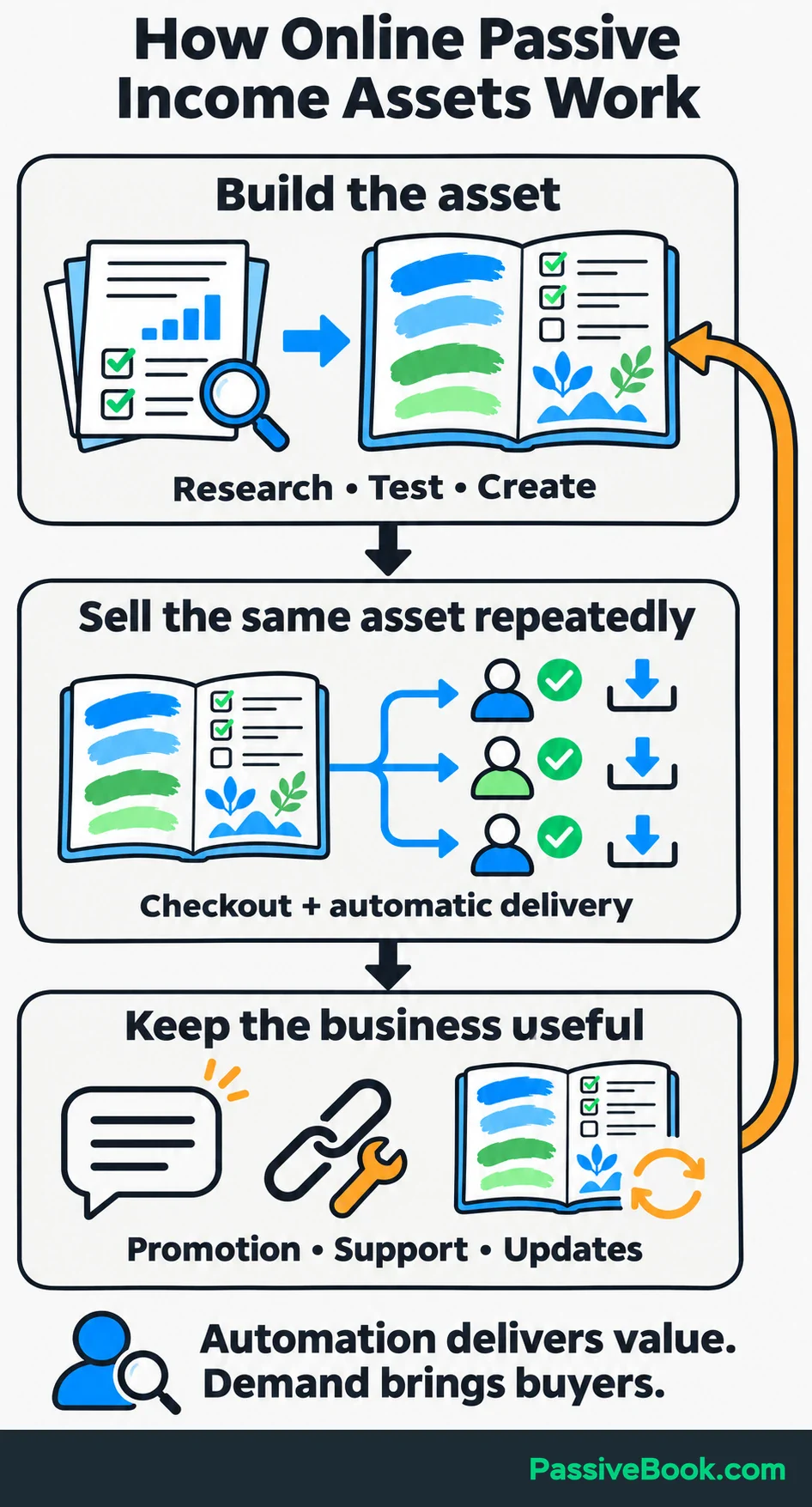
Automatic checkout removes the need to collect each payment yourself. Automatic delivery removes the need to email every file. Neither gives people a reason to buy.
There is also a difference between repeated sales and recurring billing. A workbook might sell every month, but each month still needs buyers. A membership bills subscribers regularly, but you owe them continuing value.
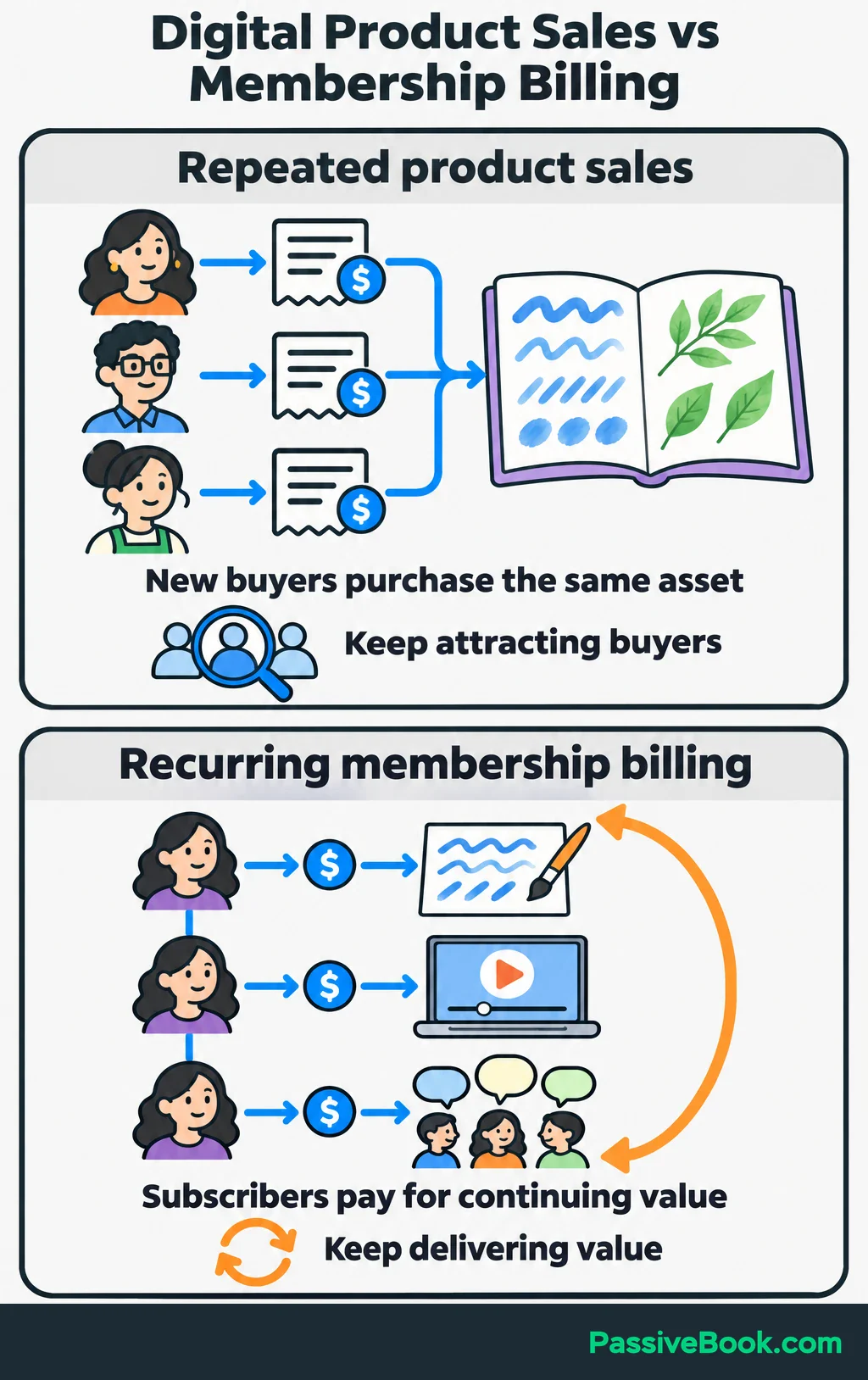
I spent six months building a membership while working a corporate job. The promise of regular payments came with a regular content obligation, and I couldn’t maintain it. I would skip that commitment for a first project unless the ongoing delivery fits your available time.
The worked example follows a watercolor business selling a downloadable practice workbook for beginners. Its offer and numbers are illustrations; shorter examples show how the other models differ.
You can build something like this around a job. Keep your regular income while you test, and choose a project that fits the hours you can actually reserve.
Choose a Model You Can Maintain
Start with your advantages and limits. What can you make well? Where can you reach people who might pay for it? How much cash and time can you risk?
If you already run a business, look at what customers repeatedly request. A useful worksheet or a tutorial that answers buying questions may give you a better starting point than entering a new niche.
| Model | How It Earns | Essential Skills | Startup Expenses | Setup Tasks | Ongoing Work | Platform Dependence |
|---|---|---|---|---|---|---|
| Downloads and courses | Customers buy access or files | Subject knowledge, clear teaching, basic design | Creation tools, testing, selling fees | Build and test the product and checkout | Support, updates, promotion | Hosted stores control account access; your own site still relies on hosting and payments |
| Affiliate content and ads | Qualifying referrals and eligible ad activity | Research, writing or video, product judgment | Website or production tools, products to evaluate | Publish useful resources and apply to programs | Update content, attract visitors, check links | Search platforms, affiliate terms, and ad networks affect earnings |
| Photo and illustration licensing | Buyers license original work | Photography or illustration, editing, descriptions | Equipment and software you don’t already own | Prepare and submit a focused collection | Add work, manage submissions and descriptions | Marketplaces control acceptance, discovery, and royalties |
| Print on demand | Customers buy products carrying your designs | Design, merchandising, customer service | Samples, storefront fees, fulfillment cash | Test samples and publish listings | Promotion, order issues, refunds | Storefront and fulfillment provider both affect delivery and margins |
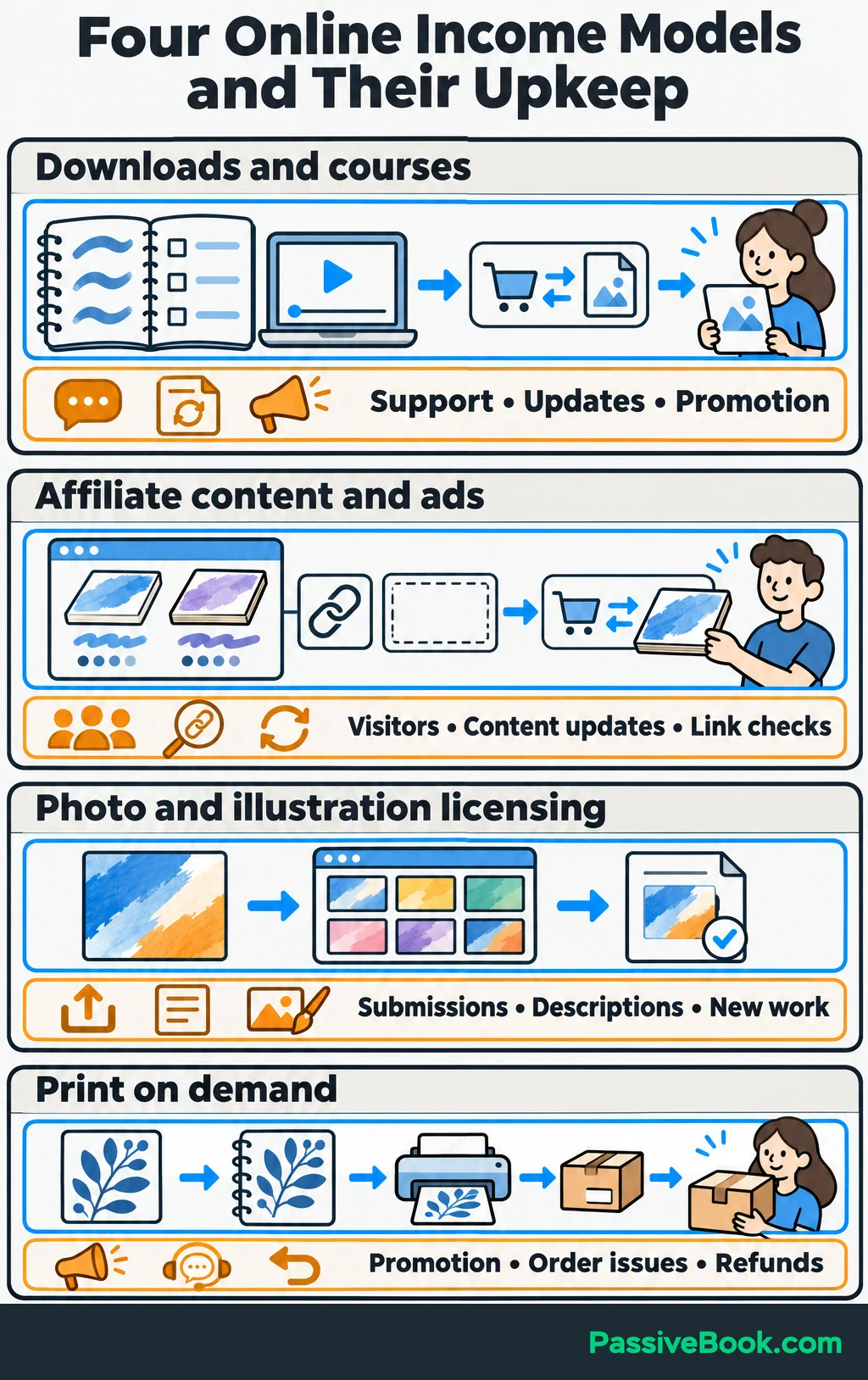
For a beginner with useful knowledge and access to potential buyers, I would usually choose a small download. It gives you a clear result to test without committing to a large catalog.
Work out the workload from tasks rather than the word “passive.” Include research, production, finding customers, support, and anything you must learn.
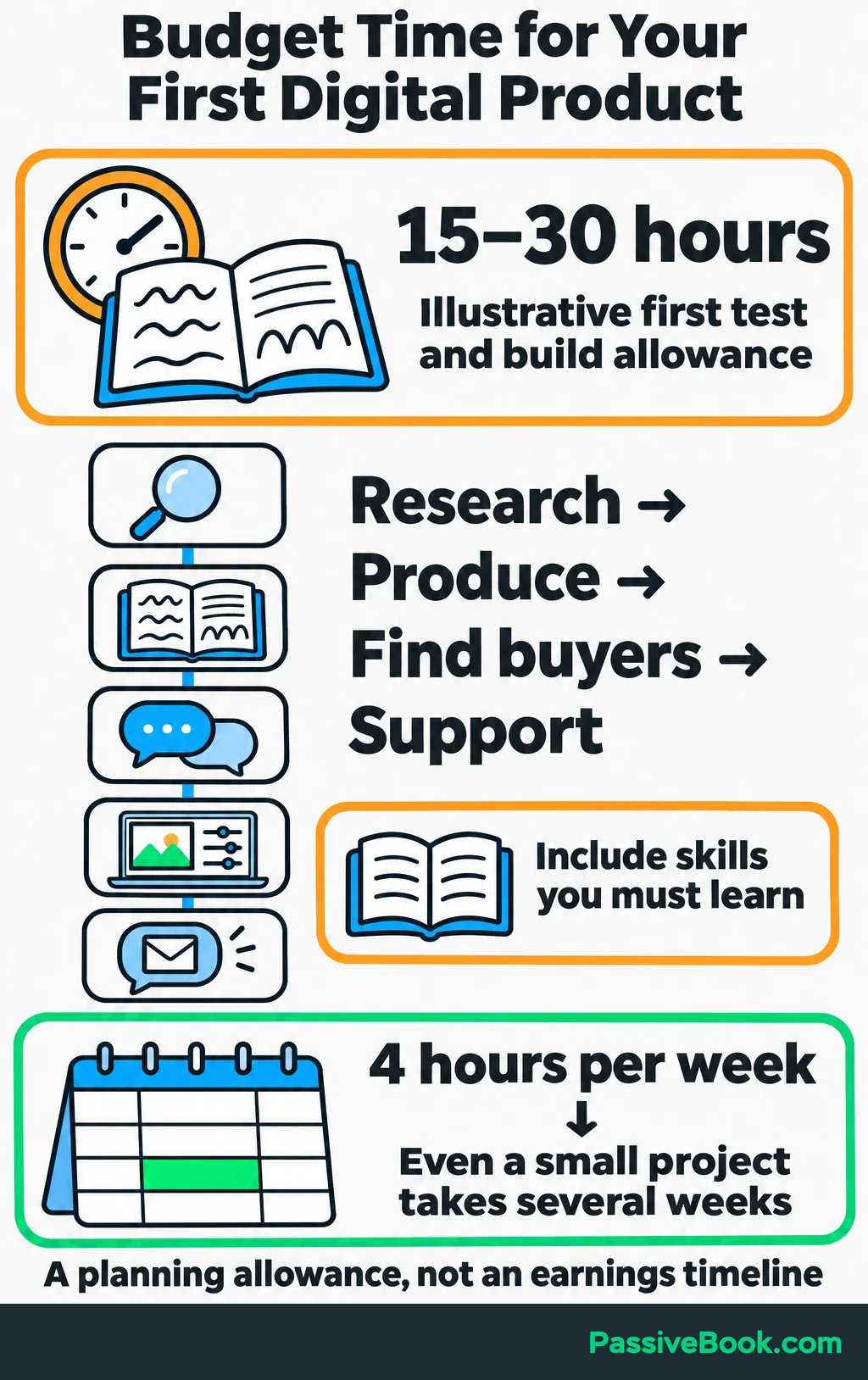
For a short workbook in a subject you already know, you might reserve 15–30 hours for a first test and build. That is a planning allowance, not an industry benchmark or earnings timeline. At four hours a week, even that modest project takes several weeks.
Reject offers that promise guaranteed earnings or push expensive upgrades before explaining who pays you and why. The FTC identifies income guarantees, pressure, and escalating coaching fees as warning signs.
Digital Downloads and Self-paced Courses
Sell a solution to a bounded problem. A template helps someone produce a document. A workbook guides practice. A course can show a process that is hard to explain on a page.
Choose the smallest format that delivers the result. A course does not need a talking head, but recording and maintaining lessons still adds work.
For the watercolor business, I would start with a workbook for practicing basic washes and brush control. “Learn watercolor” is too broad a promise for that first product.
You need creation tools, a way to test the files, checkout, delivery, and support. A hosted storefront can keep fixed costs down: Gumroad charges transaction fees without a monthly subscription. Compare the current fees before setting your price.
Useful Content With Affiliate Links and Advertising
Publish material that helps someone make a decision. An affiliate program pays you for a qualifying referral, while advertising pays according to the network’s rules and eligible audience activity.
The asset is the useful article or video library. Affiliate links, ads, and your own products can all earn from that same library.
My first three months of affiliate marketing brought in about $23 because I chased poorly matched products. After switching to honest reviews of tools I used, I reached roughly $340 a month consistently. Those are my results, not a forecast for your site.
For the watercolor business, a tested comparison of beginner papers could help readers choose supplies and introduce the workbook. Budget for evaluating those supplies and updating the comparison.
Check approval requirements, qualifying transactions, payout rules, and ad eligibility before counting on either income source. I would skip display ads as the main plan for a brand-new site with no established audience.
Licensing Original Photos and Illustrations
License original visual work that buyers can use in their own projects. This route makes more sense when you already have the skill, equipment, or a usable portfolio.
Your work includes editing, preparing files, writing descriptions, and submitting them. A marketplace listing gives buyers a place to find your work, but it does not guarantee a sale.
Estimate your share from the contributor terms. You receive a share of the buyer’s payment; Adobe Stock’s royalty schedule explains how contributor payments are calculated.
For our watercolor business, a small collection of original painted textures could be a separate licensing test. I would test that collection before producing hundreds more.
Print-on-demand Products
A provider makes and ships each product after an order. You supply the original design and still handle the offer, promotion, and customer relationship.
My six-month print-on-demand experiment produced about $1,200 in revenue and $300 in profit. Mediocre designs and the cost of hiring designers limited the return, so I stopped.
That difference between revenue and profit matters. Printful offers a free plan, but orders still incur product, fulfillment, and shipping costs. Add storefront and payment fees, samples, and a refund allowance.
For the watercolor business, an original painted design on a notebook could fit. I would order a sample before selling it and choose this route only if physical products serve the customers better than a download.
Check the Costs and Income Potential
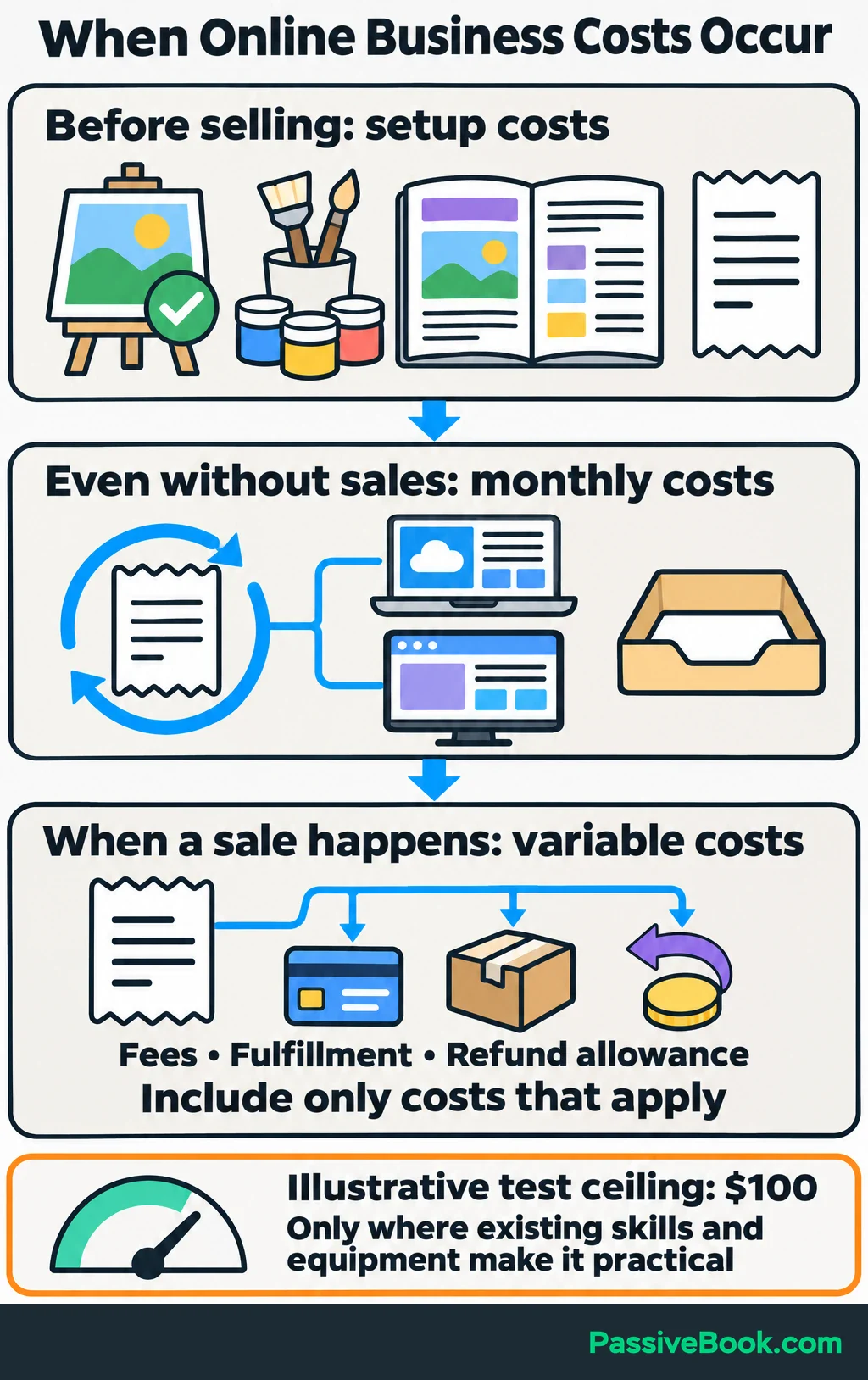
List expenses in three groups:
- Setup costs: Samples, materials, initial design work, and anything needed before selling.
- Monthly costs: Hosting, software, and other bills due even when nothing sells.
- Costs per sale: Transaction fees, fulfillment, shipping you absorb, and an allowance for refunds.
Use tools you already have, and set a test budget you can afford to lose. I would begin with a cash ceiling of $100 where existing equipment and skills make that practical. You do not need to spend the full amount.
Before choosing a platform, check whether it can pay sellers in your country. Gumroad’s payout guidance covers verification, minimum balances, and timing. A sale does not always mean cash is ready to withdraw.
Subtract the costs triggered by each sale from its price. The remainder is called contribution: money to cover monthly bills and then produce a profit.
Here are the workbook assumptions:
| Item | Illustrative Amount |
|---|---|
| Selling price | $19 |
| Variable cost per sale | $2 |
| Contribution per sale | $17 |
| Monthly fixed costs | $34 |
| Refunds | None assumed |
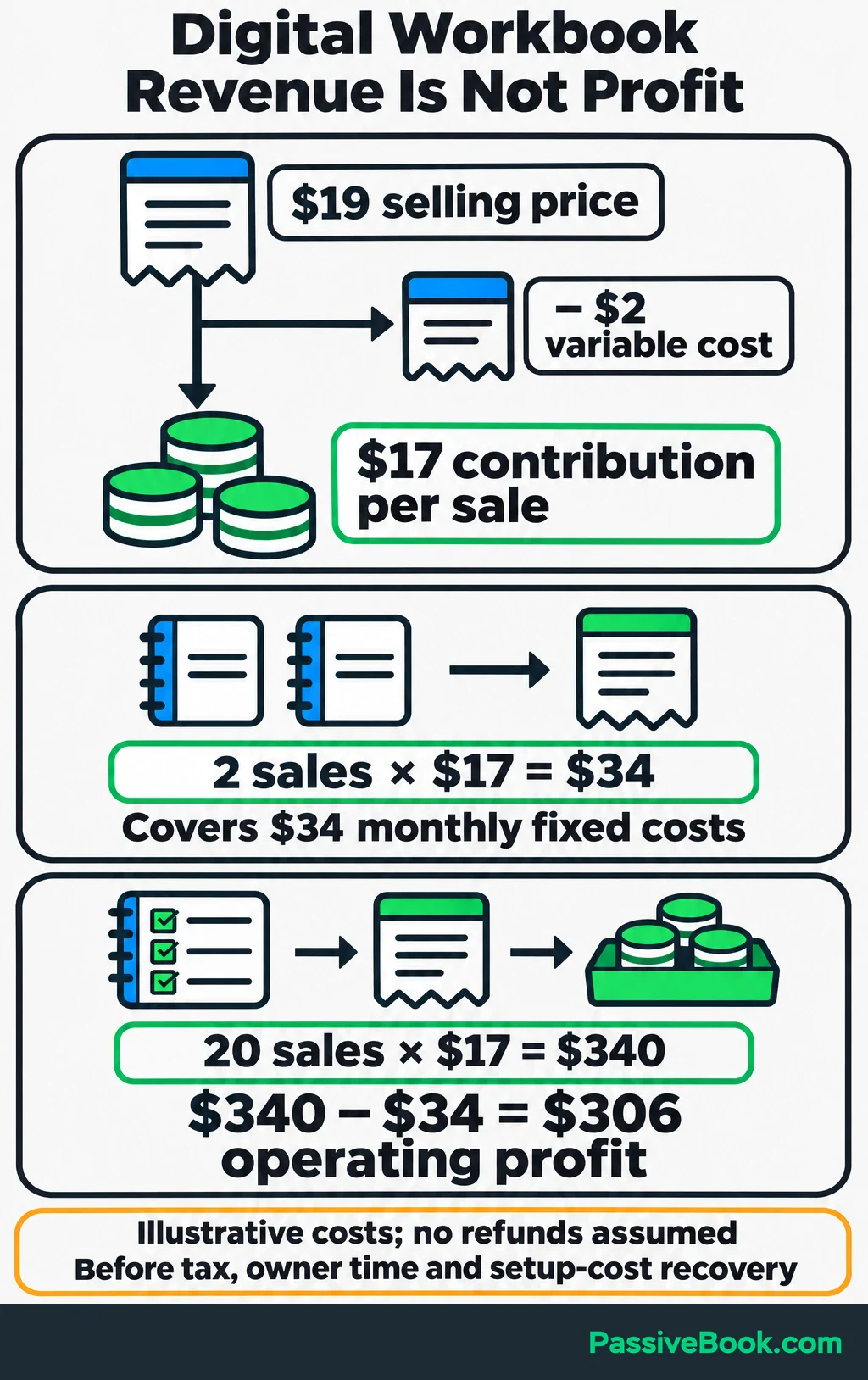
Under these assumptions:
- Two sales leave $34 in contribution and cover the monthly fixed costs.
- Twenty sales leave $340 in contribution, minus $34 in fixed costs, for $306 in operating profit.
That operating profit is before income tax, payment for your own time, and recovery of setup costs. The figures are not Gumroad’s fee schedule. Replace them with your actual fees, costs, and refund allowance.
Keep income and expense records from the start and check the rules where you live. For U.S. readers, the IRS says side income must be reported even when no information form is issued.
What Would $1,000 a Month Require?
To find the monthly sales needed, add fixed costs to your target operating profit. Divide by contribution per sale and round up. Using the workbook assumptions:
($1,000 target + $34 fixed costs) ÷ $17 contribution
= 60.82, rounded up to 61 sales
Those 61 sales would produce $1,003 in monthly operating profit.
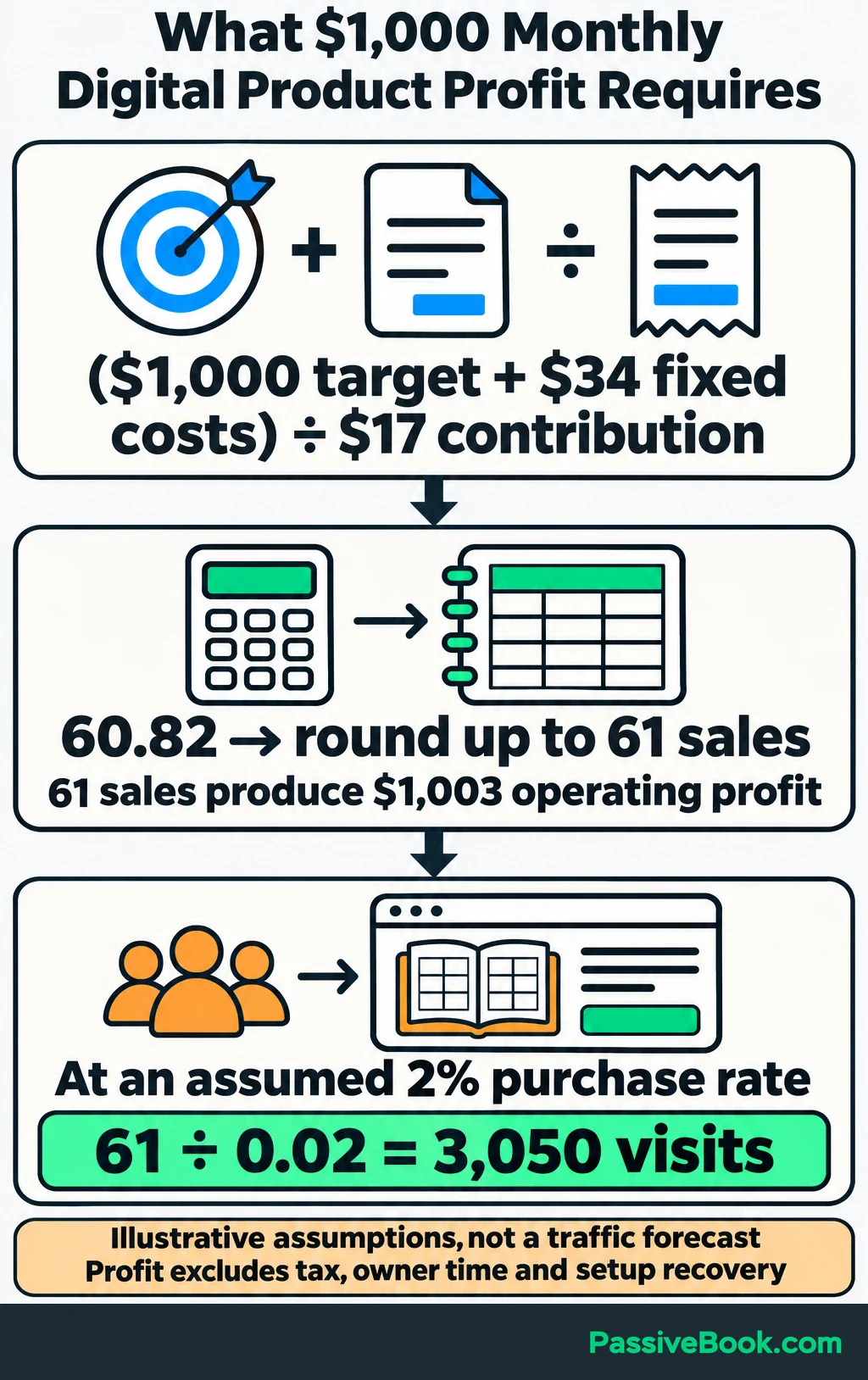
Suppose, for planning, that 2% of product-page visits lead to a purchase during the month. At that rate, 61 purchases would require 3,050 visits.
The 2% is an assumption, not a typical result or a traffic forecast. Once you have data, divide purchases made through that page by visits to it over the same period.
The sales target is only half the question; those buyers also need to fit your available hours. Use the calculator to check both, with editable examples if you do not have your own figures yet.
Free Pricing Profit Calculator




Test Demand Before Building the Full Asset
Choose one problem and one useful outcome before creating the product.
For the watercolor workbook, investigate whether beginners struggle to turn scattered tutorials into a clear practice sequence. Do not assume they do because the idea sounds sensible.
Look at paid alternatives, product previews, reviews, and questions. Record what buyers receive, what they pay, and what they still struggle to do. Then speak to a few potential buyers about their most recent attempt:
- What were you trying to learn?
- What did you use?
- Where did you get stuck?
- What did you pay for, if anything?
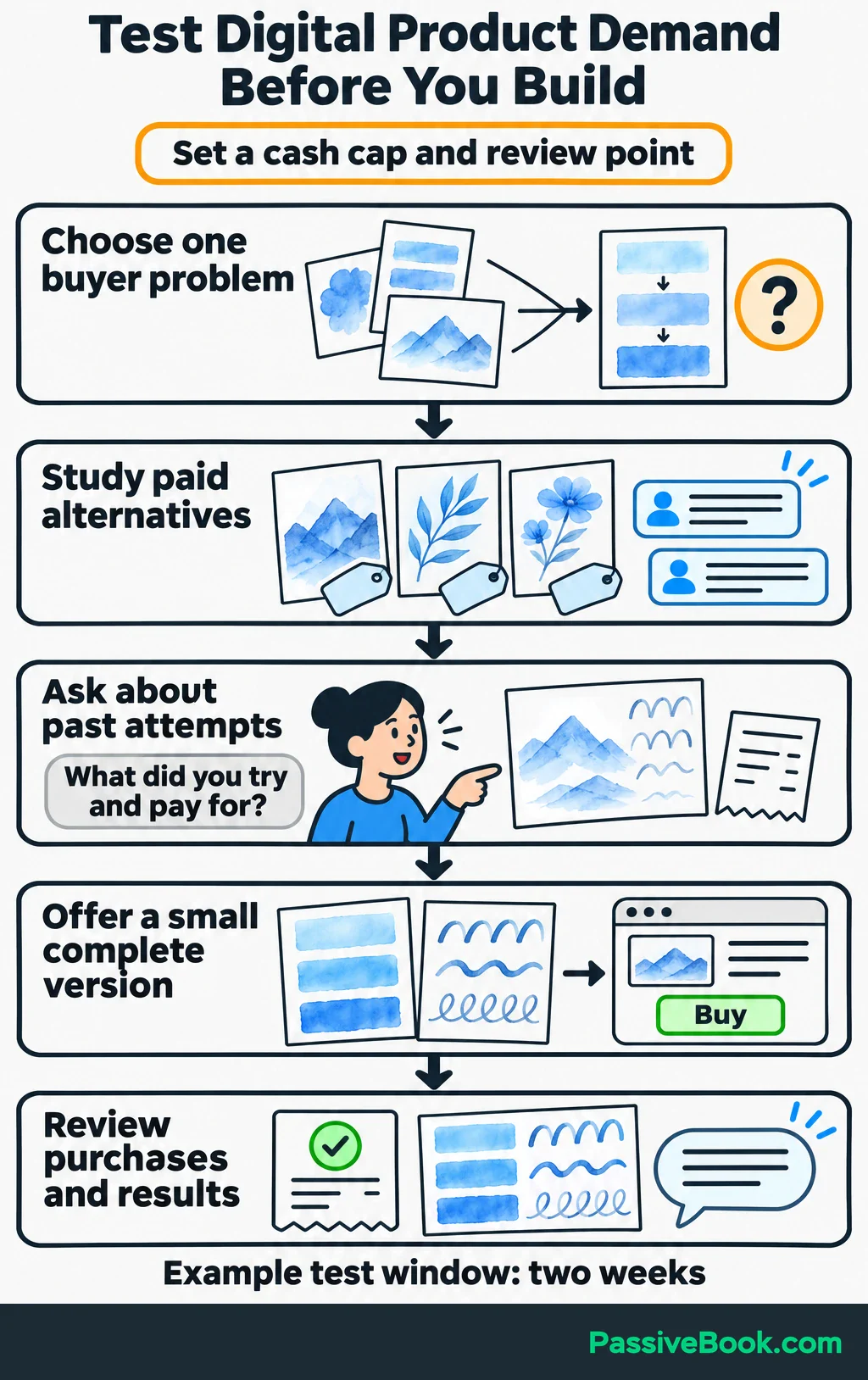
Past behavior gives you more to work with than “Would you buy my workbook?”
I once rushed a course into production without validating the offer. It got few sales and a bad review, and I withdrew it. Finishing the course had felt like progress, but I had skipped the decision that mattered: whether it deserved to be built.
Show a sample and a clear offer, then sell a small complete version. For the workbook, the promise might be:
A printable practice sequence for basic watercolor washes and brush control, with original examples and space to record what changed.
Keep the test narrow enough to deliver that promise. You can send the file manually at first.
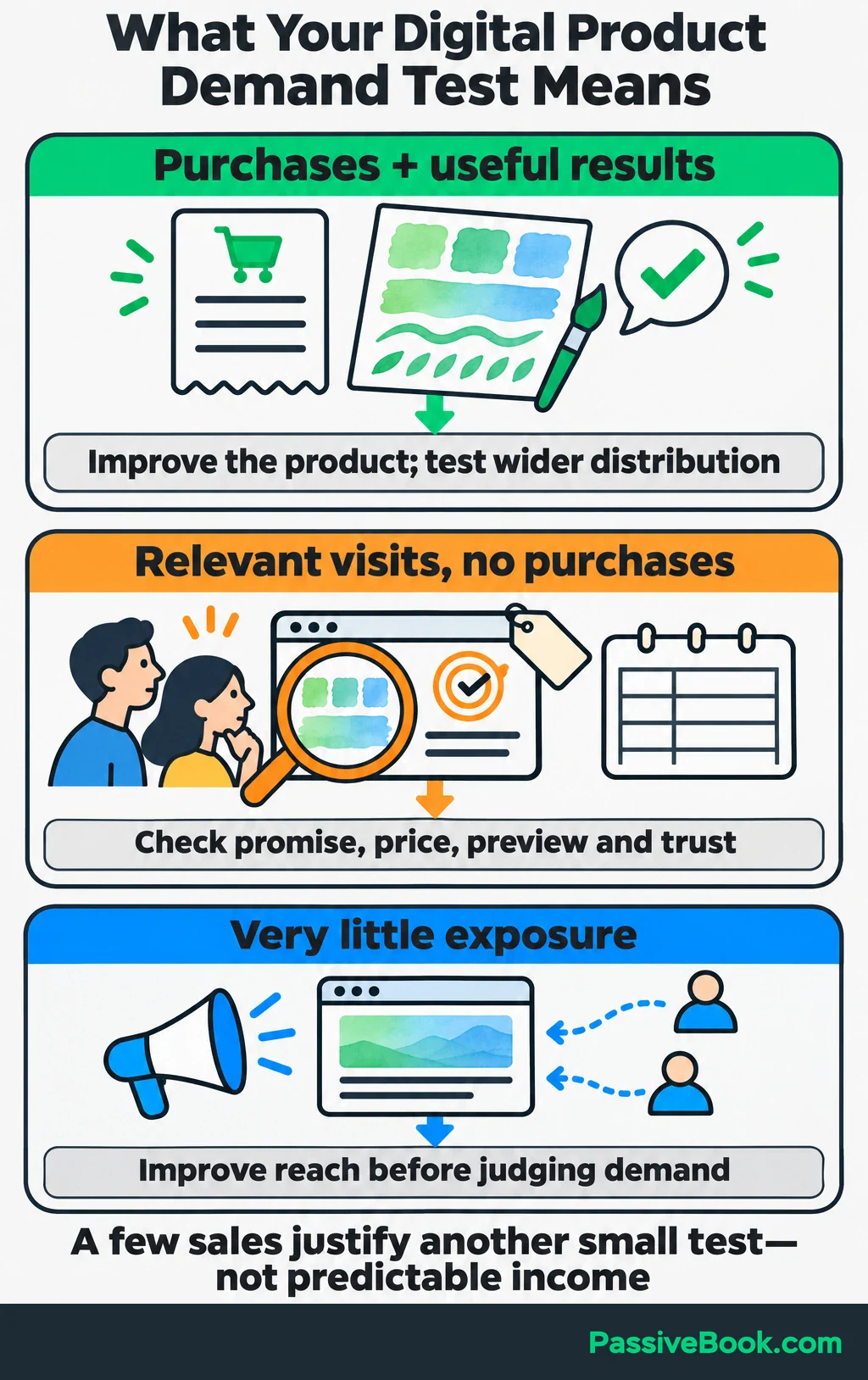
Set a spending cap and a review point before starting. For example, reserve two weeks to put the sample in front of relevant people through an allowed community post, an existing audience, or direct conversations.
Record the offer, price, people reached, visits, purchases, and feedback after use. At the review point:
- Purchases and useful results: Improve the product and test wider distribution.
- Relevant visits without purchases: Investigate the promise, price, preview, or trust gap.
- Very little exposure: Improve distribution before judging demand.
A handful of sales supports the next small investment. It does not establish predictable monthly income.
For affiliate content, test a focused buying guide. For licensing, submit a small collection. For print on demand, test one sampled design. The purpose stays the same: learn before committing to a large library.
Build the Smallest Asset That Delivers the Result
Write down what customers should be able to do after using the product. Then include everything needed for that result and leave unrelated material for later.
The watercolor workbook could contain:
- A materials list with suitable alternatives.
- Instructions for setting up each exercise.
- A sequence of wash and brush-control exercises.
- Original examples showing what to look for.
- Space to note results and choose the next attempt.
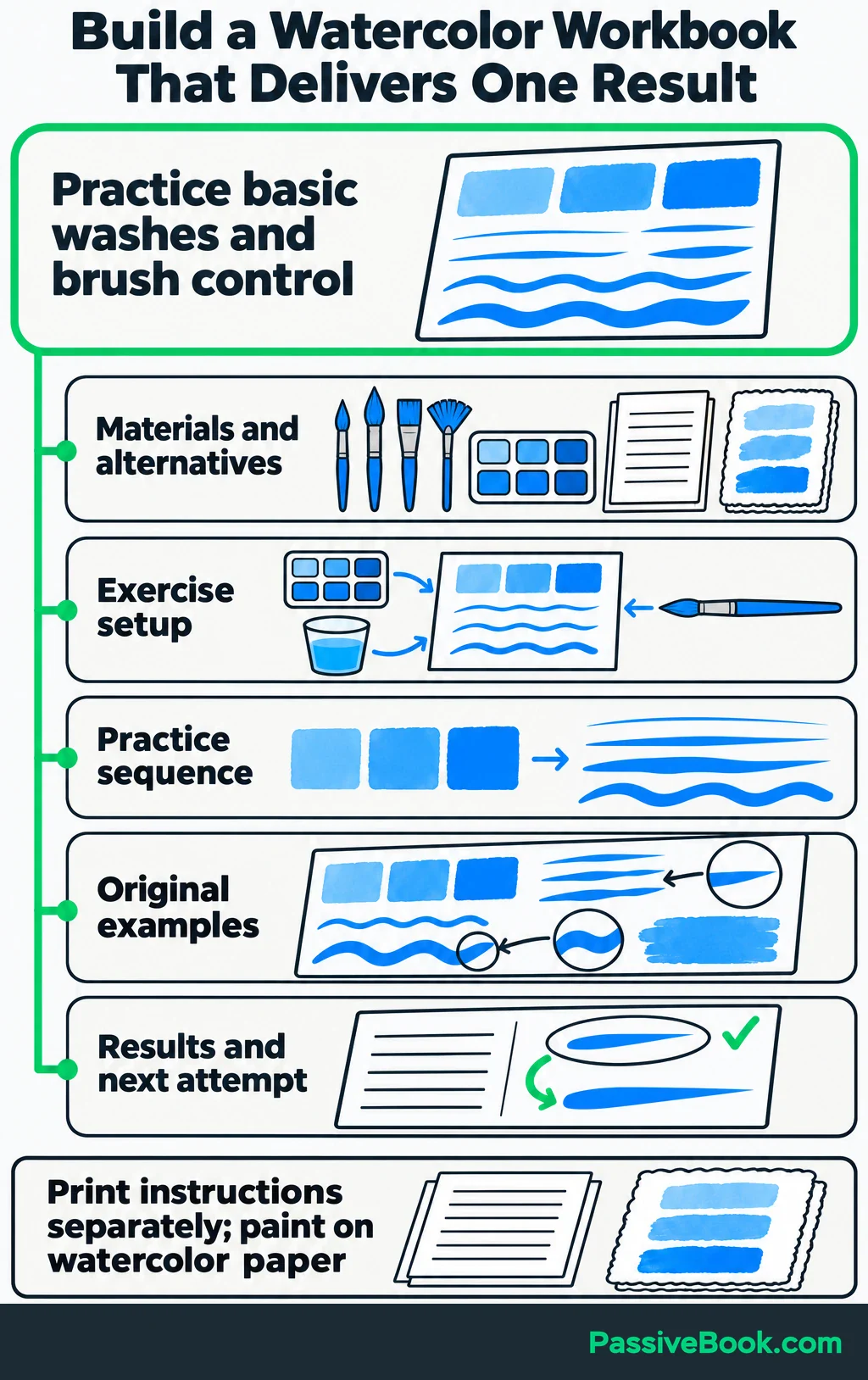
Tell buyers where to practice. They might print the instructions and record sheets on ordinary paper while painting on separate watercolor paper.
Each exercise needs a task and a way to assess the attempt. “Practice brush control” is vague. “Paint a row of strokes, changing pressure, then compare their widths” gives someone an action.
Troubleshooting earns its place when it helps the learner continue. Explain what to change when an exercise produces an unwanted result, and test those instructions yourself.
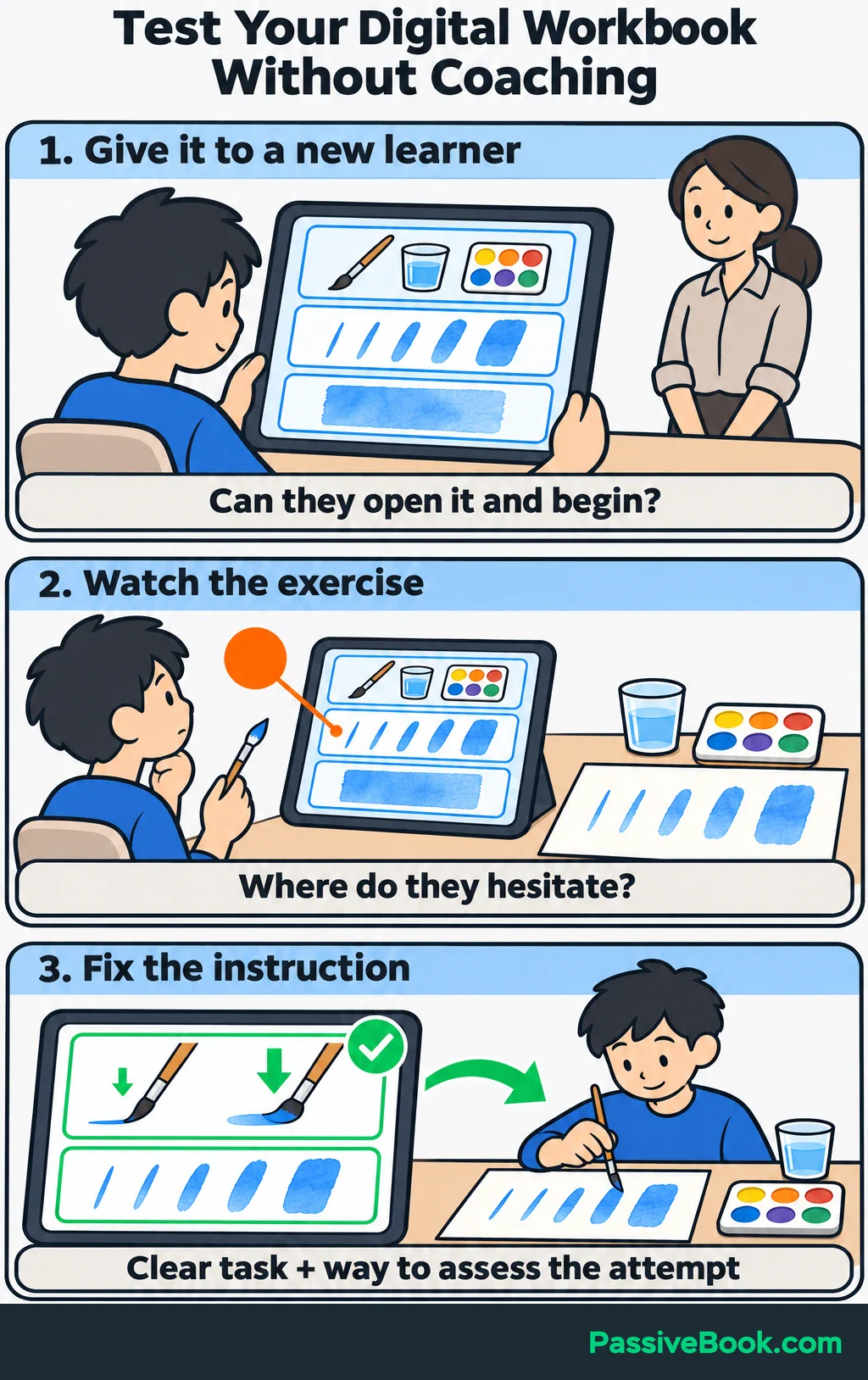
Ask someone unfamiliar with the workbook to open it and complete an exercise without coaching. Watch where they hesitate. Fix that before adding another chapter.
You can use AI to organize notes, suggest a sequence, or draft clearer instructions. I would keep a human check on every teaching claim and original demonstration. A tidy explanation still needs to work.
Use your own material or obtain rights that cover the intended commercial use. Finding an image online does not give you permission to put it in a paid product. The U.S. Copyright Office explains how to seek permission from a copyright owner.
Set up Automatic Payment and Delivery
Once the small product works, remove the repetitive work from each purchase.
You need an offer page, checkout, receipt, file delivery or access, and a support contact. I would use a hosted storefront for a first test. If you already have a WordPress site, WooCommerce is an add-on that can handle checkout and digital-file delivery.
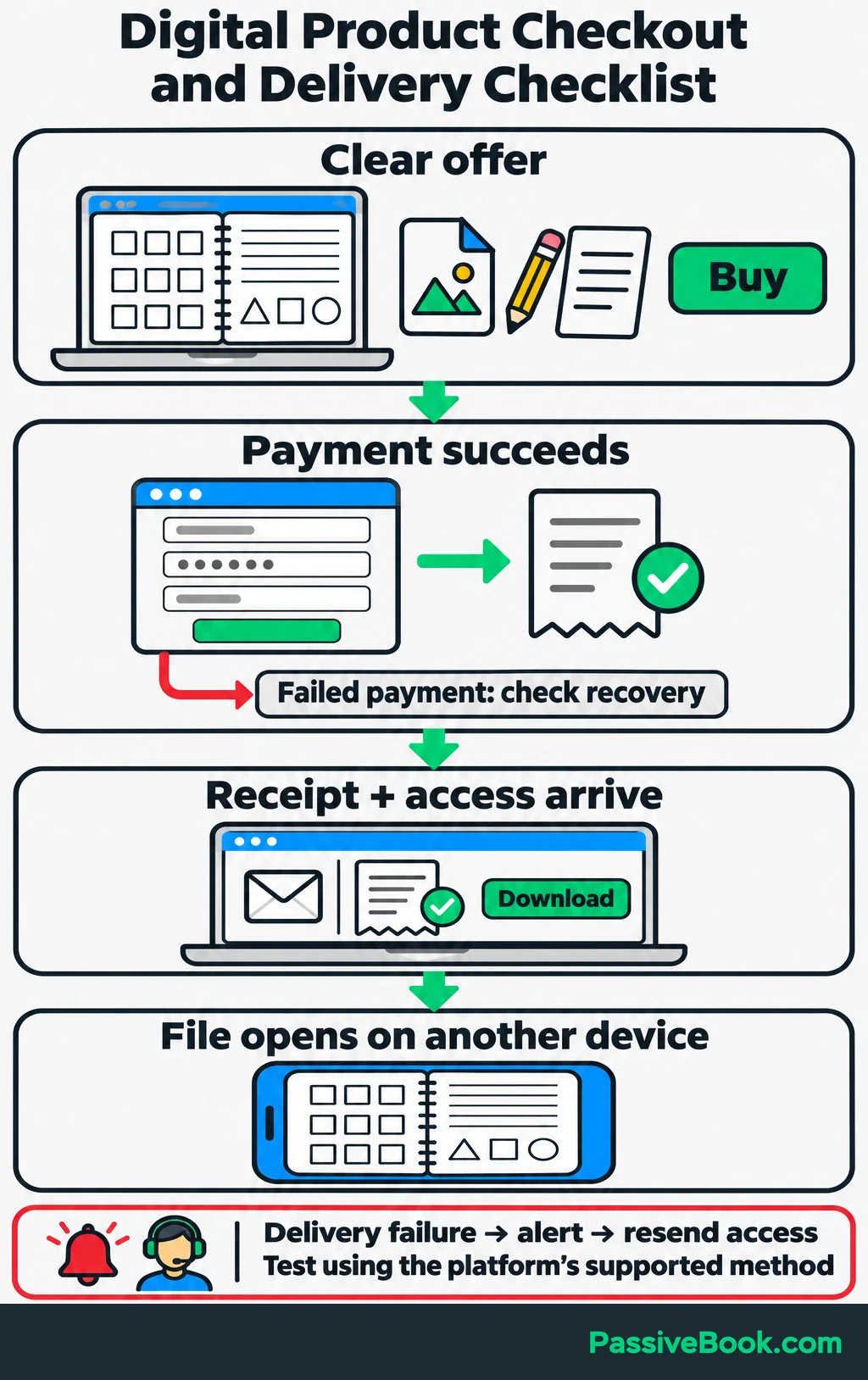
Make the purchase clear before automating it. For the workbook, show:
- Contents: The techniques covered and what each section helps the buyer practice.
- Preview: Actual exercise pages and original examples.
- Format: File type, page size, and printing requirements.
- Requirements: Materials the buyer needs separately.
- Support: Help with access and file problems, with any coaching boundaries explained.
Test the full purchase using the platform’s supported test method. Check the receipt, delivery message, download, and file opening on another device. Check what happens when payment fails and how you would resend access.
Set the storefront to send the file or access link when payment succeeds. Keep an alert for failed delivery and a manual recovery option.
I would review refunds and unusual access problems myself at first. Once a repeated answer works, add it to the instructions or support process.
Skip extra automation until it saves enough time or prevents enough errors to justify its cost. A diagram full of connected apps is not evidence of a working business.
Bring Buyers Through One Repeatable Channel
Choose one place where people already seek help with your problem. That might be search, Pinterest, instructional videos, marketplace search, or an audience you already serve.
For the watercolor workbook, I would begin with useful articles supported by Pinterest if you can create clear visual demonstrations. That suits the subject and lets you work without appearing on camera.
Create material close to the purchase. A focused lesson on practicing a wash connects to the workbook more clearly than a general article about the benefits of creativity.
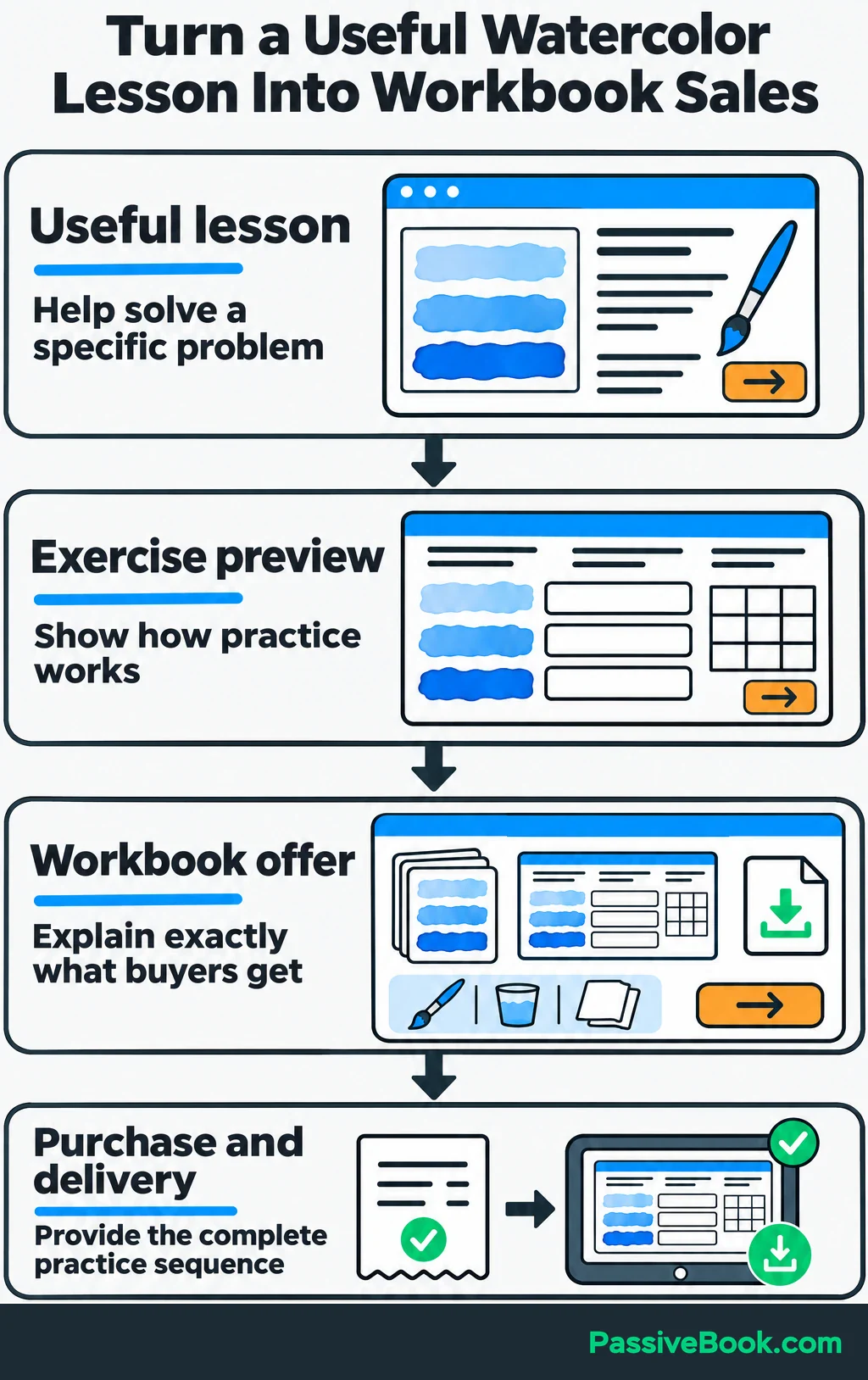
The path should make sense:
Useful lesson → Exercise preview → Workbook offer → Purchase and deliveryThe lesson should help on its own. The preview then shows how the full practice sequence works, and the offer explains what the buyer gets.
If you already have an audience, start there before building another channel. Answer the questions that audience asks and connect the relevant answers to the product.
For affiliate content, recommend products where they help the reader make the decision. Explain who each product suits and why you chose it.
Make commission relationships clear near the recommendation. A simple disclosure might say, “I earn a commission on qualifying purchases made through these links.” The FTC’s guidance explains why disclosures should be clear and close to the endorsement.
Repeat topics and formats that bring relevant visits and purchases before adding channels. Count writing, design, and distribution time as part of the workload.
Keep independent copies of your original files, website content, and business records. Your only copy should not live inside an account another company can close.
Improve Profit While Keeping Maintenance Manageable
Review the business weekly at first. Track relevant visits, purchases, refunds, operating expenses, and hours spent maintaining it. For affiliate income, distinguish approved commissions from pending ones.
Look at money and time together. A profitable workbook that needs individual coaching for every buyer may not fit the business you wanted.
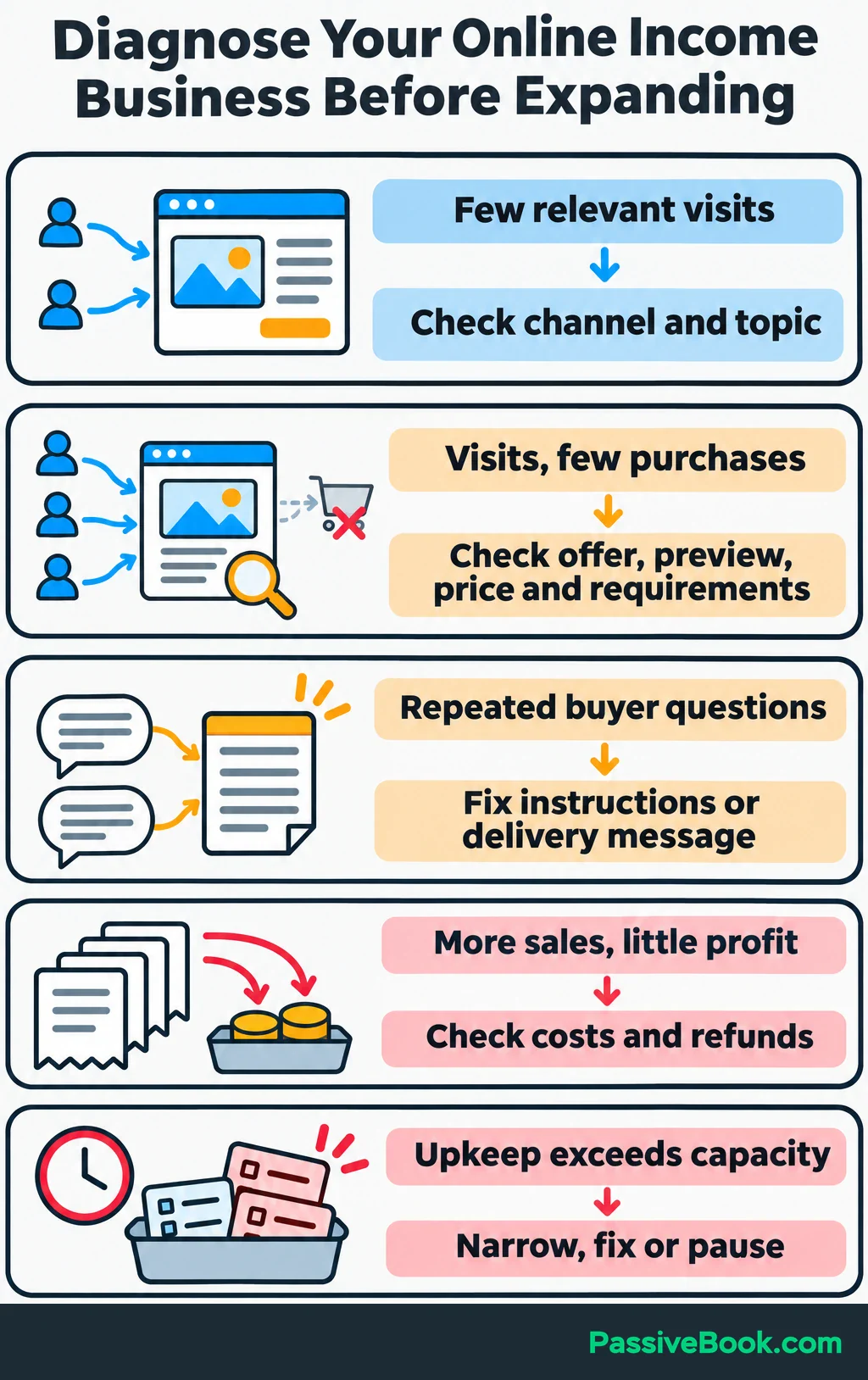
Use the evidence to choose the next task:
| What You Observe | What I Would Check First |
|---|---|
| Few relevant visits | Whether the channel and topic reach people with this problem |
| Relevant visits but few purchases | Whether the offer, preview, price, and requirements are clear |
| Buyers repeatedly ask the same question | Whether the instructions or delivery message need fixing |
| Sales rise but little money remains | Fees, discounts, refunds, fulfillment, and software costs |
| Upkeep exceeds your available hours | Whether to narrow the offer, fix recurring problems, or pause it |
A first sale shows that someone will pay. Look for repeat sales, positive operating results, and manageable upkeep before treating the income as dependable.
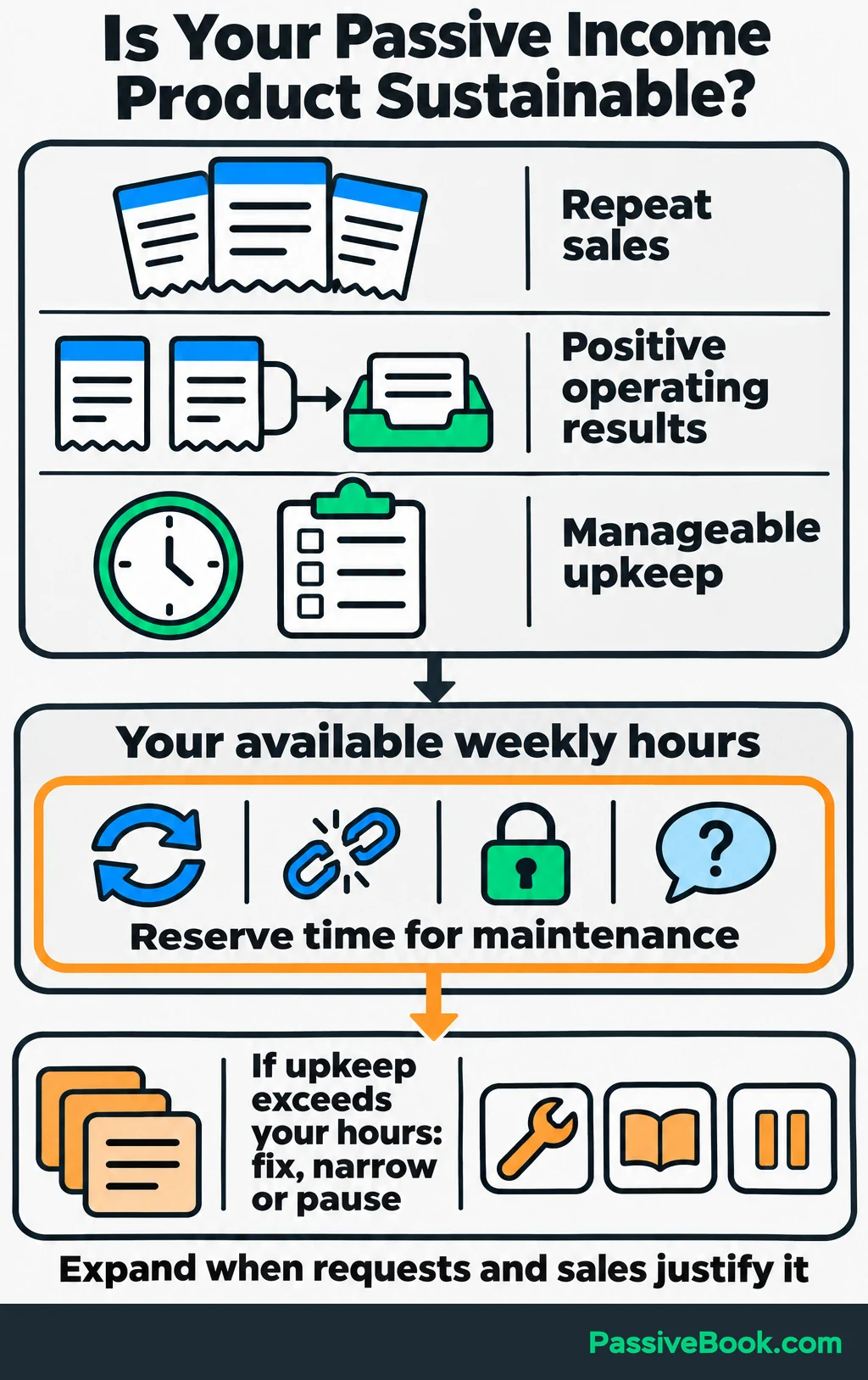
Reserve time for updates, broken links, access checks, and customer questions. Keep that allowance inside your weekly budget rather than pretending maintenance will happen for free.
Expand only when requests and sales give you a reason. The watercolor workbook might lead to a related practice resource or useful supply recommendations. It does not automatically need a membership.
I would rather maintain one useful asset that keeps selling than collect five unfinished income streams and a subscription bill for each.
What Next?
Write down one buyer problem you can help solve, then reserve a short work session to prepare a sample and a clear offer. Put your time limit and cash ceiling beside it before buying another tool.
Use the social buttons to share this guide when a practical way to test an income idea would help the conversation.
Which model fits your available hours, and what would you need to learn before testing it? Leave your thoughts or any other questions in the comments.
Share this post with your friends & followers:

