You can spend months building a website and still have no clear answer to a basic question: what can someone buy from you?
Another article or a larger following might help, but neither tells you whether visitors will pay for what you have in mind. Meanwhile, hosting bills arrive with impressive consistency.
The expensive part is committing more evenings before you know whether the business can earn its keep. This guide helps you compare ways to earn, put a first offer on sale within your time and budget, and read the sales numbers before investing more.
Find a Problem Customers Will Pay to Solve
Start with a task someone wants to finish. Find out what makes it difficult, what they do now, and whether solving it matters enough to spend money.
Your best clues may already be in customer emails, search queries, past purchases, or questions under your content. With no audience, read relevant community discussions and speak with prospective buyers.
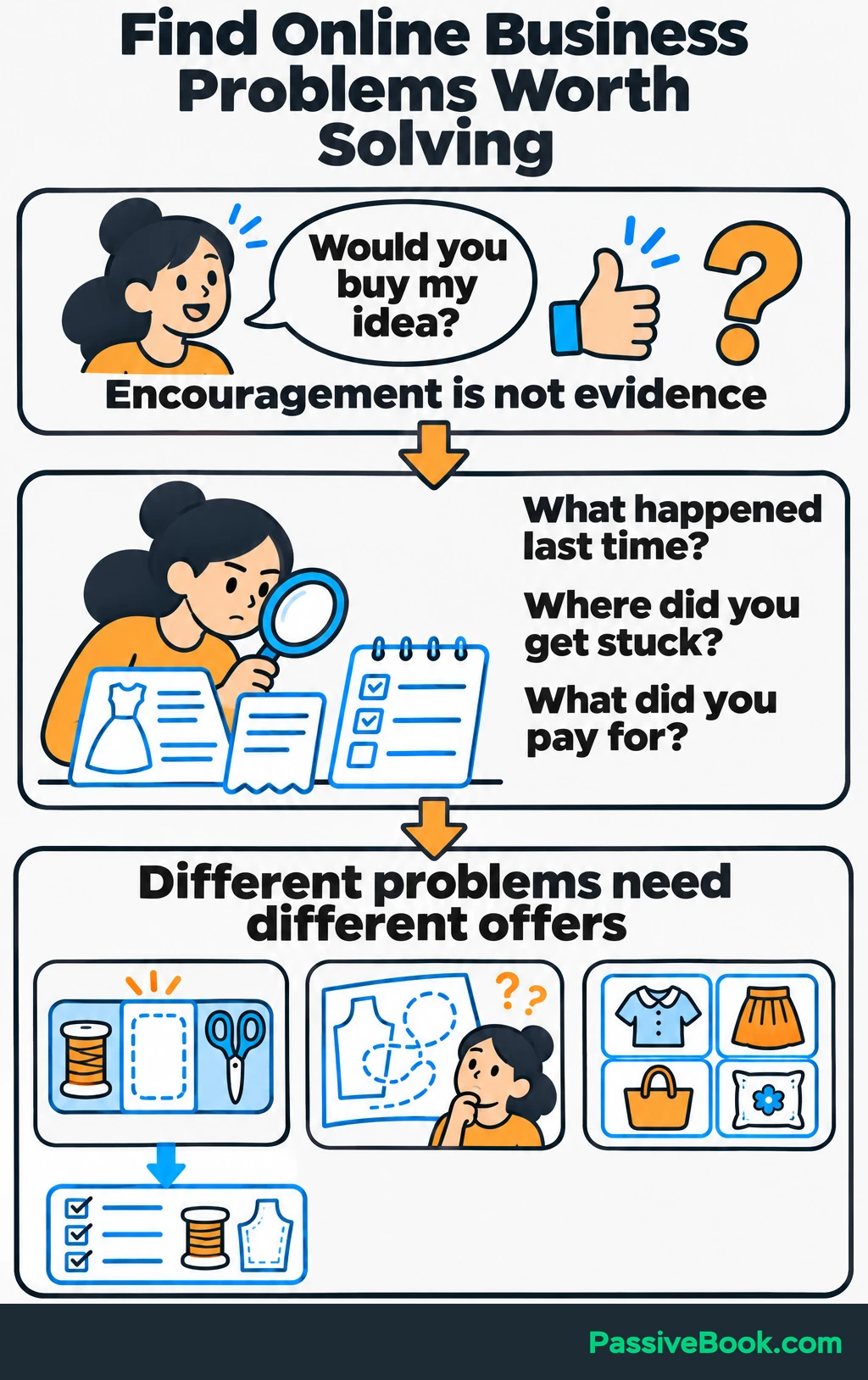
Ask about what actually happened:
- “What were you trying to get done?”
- “Where did you get stuck?”
- “What did you use instead?”
- “What have you already paid for?”
“Would you buy my idea?” invites encouragement. A description of someone’s last attempt gives you something you can work with.
Then compare offers solving the same problem. Look at their scope, price, convenience, and support. The SBA’s market research guidance includes demand, competing options, and what customers pay for alternatives.
For the running example, imagine you operate a website helping beginners plan sewing projects. You are considering an editable project-planning kit that brings their pattern details, supply list, and preparation tasks together. The business and all example figures below are illustrative.
Before building it, investigate how readers currently prepare for a project. Are they forgetting supplies, struggling to interpret instructions, or simply looking for sewing inspiration? Those are different problems.
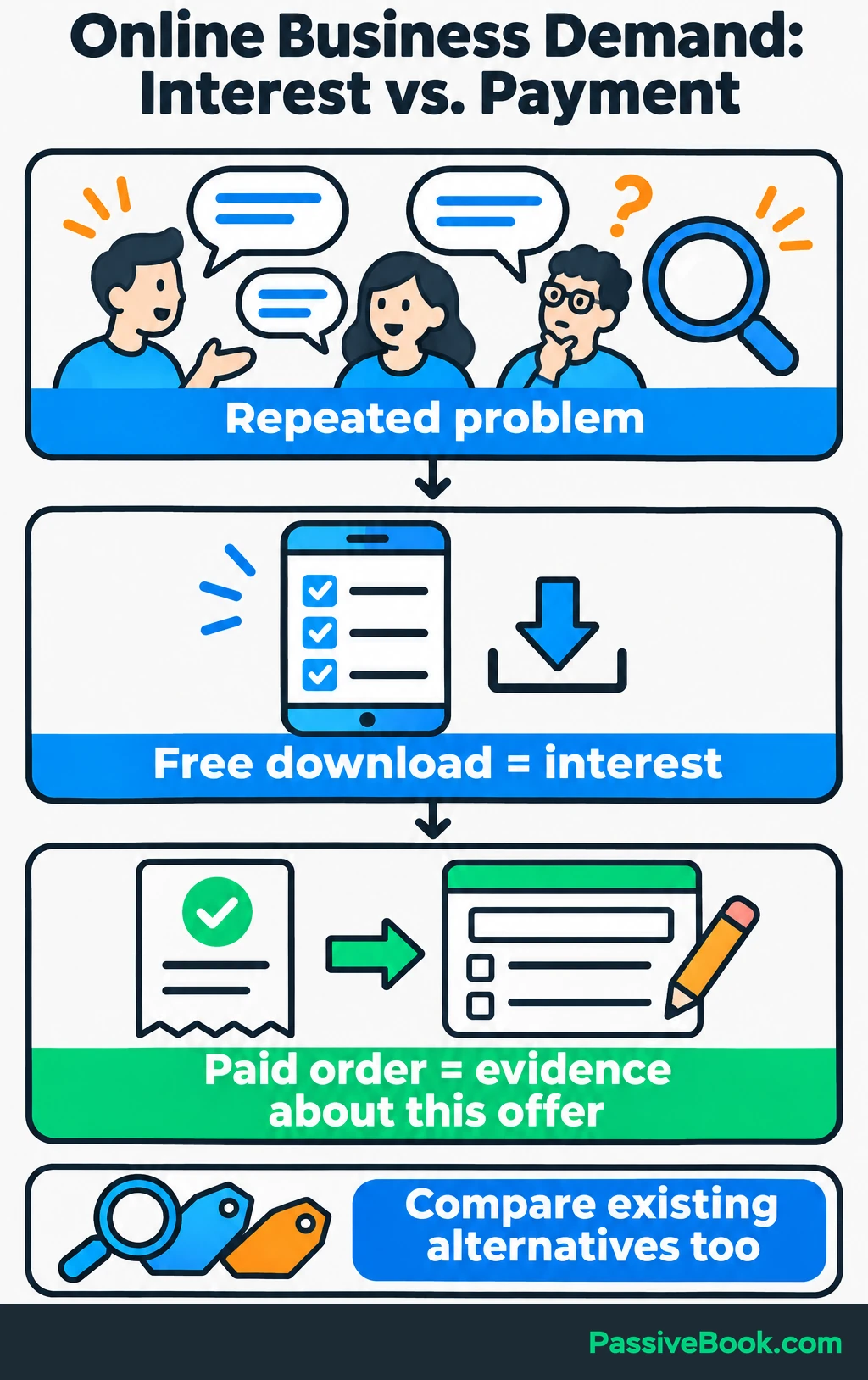
Someone downloading a free checklist shows interest. Someone paying for a planning kit gives you evidence about that offer.
Choose Your First Monetization Model
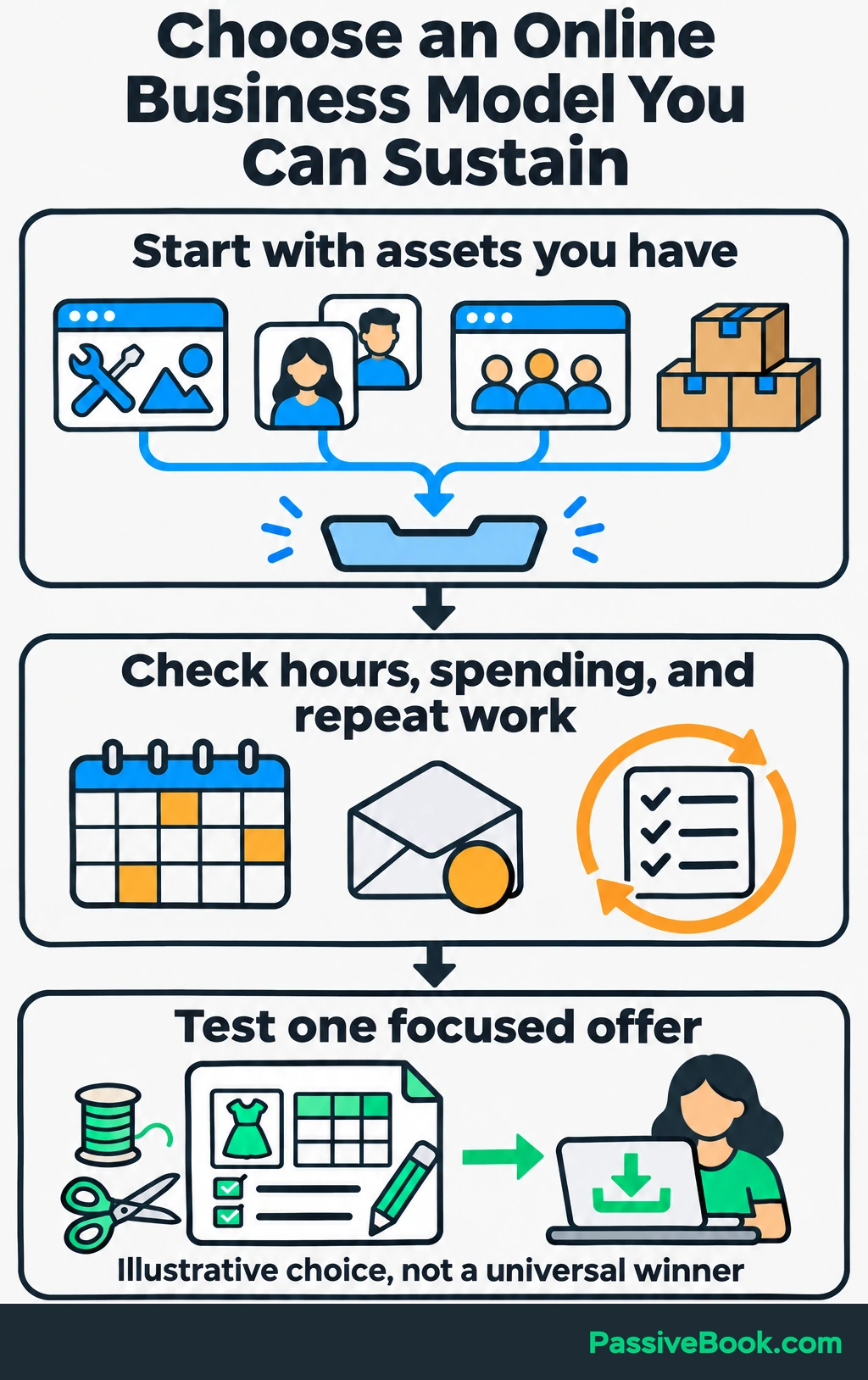
Write down what you already have: useful skills, customer relationships, relevant visitors, products, or supplier contacts. Then add your weekly working hours and spending limit.
Choose a model those resources can support.
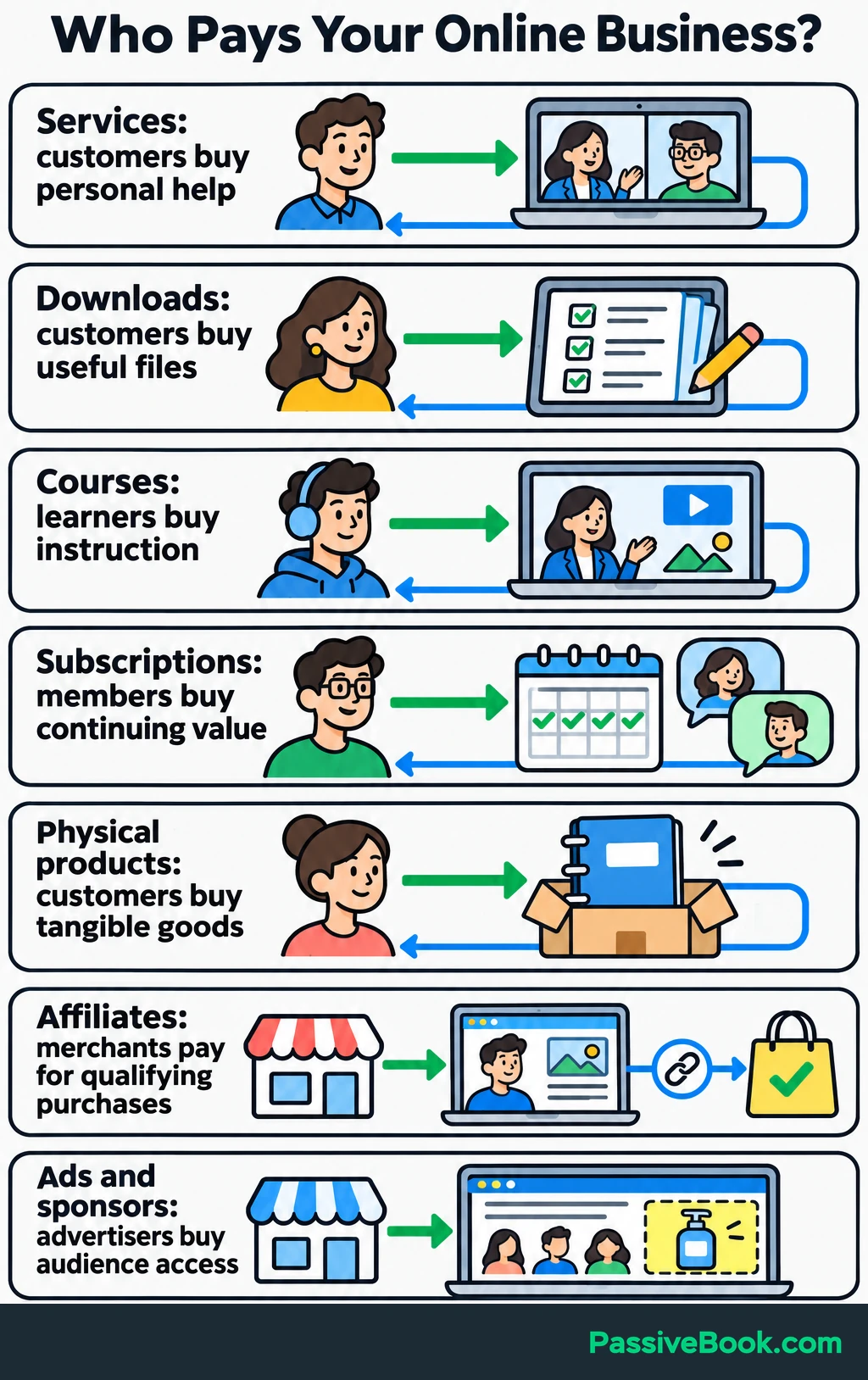
| Model | Who Pays and Why | Assets Needed to Start | Upfront Spending | Ongoing Workload | Example Application |
|---|---|---|---|---|---|
| Services and consulting | A customer pays for personal help completing a task | Relevant skills, a clear scope, and access to prospects | Booking and payment tools; little equipment if you already own it | Preparation, sessions, revisions, and administration | Help a beginner organize their first project plan |
| Digital downloads | A customer pays for a resource they can use independently | A useful file, instructions, and a way to reach buyers | Creation tools, checkout, and sample testing | Support, corrections, and updates | Sell an editable sewing project-planning kit |
| Courses and workshops | A learner pays for instruction, practice, or feedback | Teaching ability, lesson material, and prospective learners | More production time; a workshop can test demand first | Teaching, questions, and lesson maintenance | Run a workshop on preparing a project before cutting fabric |
| Memberships and subscriptions | A member pays repeatedly for continuing value | A recurring need and a sustainable delivery plan | Member access, billing, and initial resources | Continuing help, maintenance, and cancellation handling | Offer regular project-planning clinics |
| Physical products | A customer pays for a tangible item | A tested design, production route, and fulfillment plan | Samples, stock or production deposits, and packaging | Quality checks, shipping, returns, and support | Sell a printed project-planning binder |
| Affiliate marketing | A merchant pays for qualifying referred purchases | Relevant content, buyer trust, and program acceptance | Content creation and any products needed for evaluation | Maintaining recommendations, links, and program compliance | Recommend suitable sewing organizers |
| Advertising and sponsorships | An advertiser pays to reach a relevant audience | Audience reach and evidence of its relevance | Content and site setup; placement or campaign preparation | Publishing, reporting, and sponsor commitments | Sell a clearly labeled placement to a sewing supplier |
For a first test, I would usually choose a small product or a tightly scoped service when you can reach prospective buyers directly. A service can teach you what customers need, but cap the hours so it does not swallow every evening.
For the sewing website, I would test the download first. It matches the task, needs no inventory, and does not require teaching a live session after every sale.
Memberships deserve more scrutiny. I spent six months building a membership site while working in corporate, then abandoned it because the continuing content workload was unsustainable. Monthly billing looked attractive. The calendar looked less attractive.
Affiliate income, ads, and sponsorships can complement your own offers when you have relevant reach. Before forecasting affiliate income, check qualifying purchases, commission terms, attribution rules, reversals, and payout timing.
Disclose paid relationships clearly beside the relevant recommendation. For U.S. marketing, use the FTC’s endorsement guidance. A plain statement such as “I earn a commission if you buy through this link” explains the relationship.
Blogging, newsletters, and video help distribute offers. AI can help produce or deliver them. You still need to decide who pays and what they receive.
Package and Price One Clear Offer
Define the Smallest Useful Result
Write one sentence:
Help [customer] complete [task] using [deliverable].
Then specify what arrives, how the customer uses it, and what help you provide.
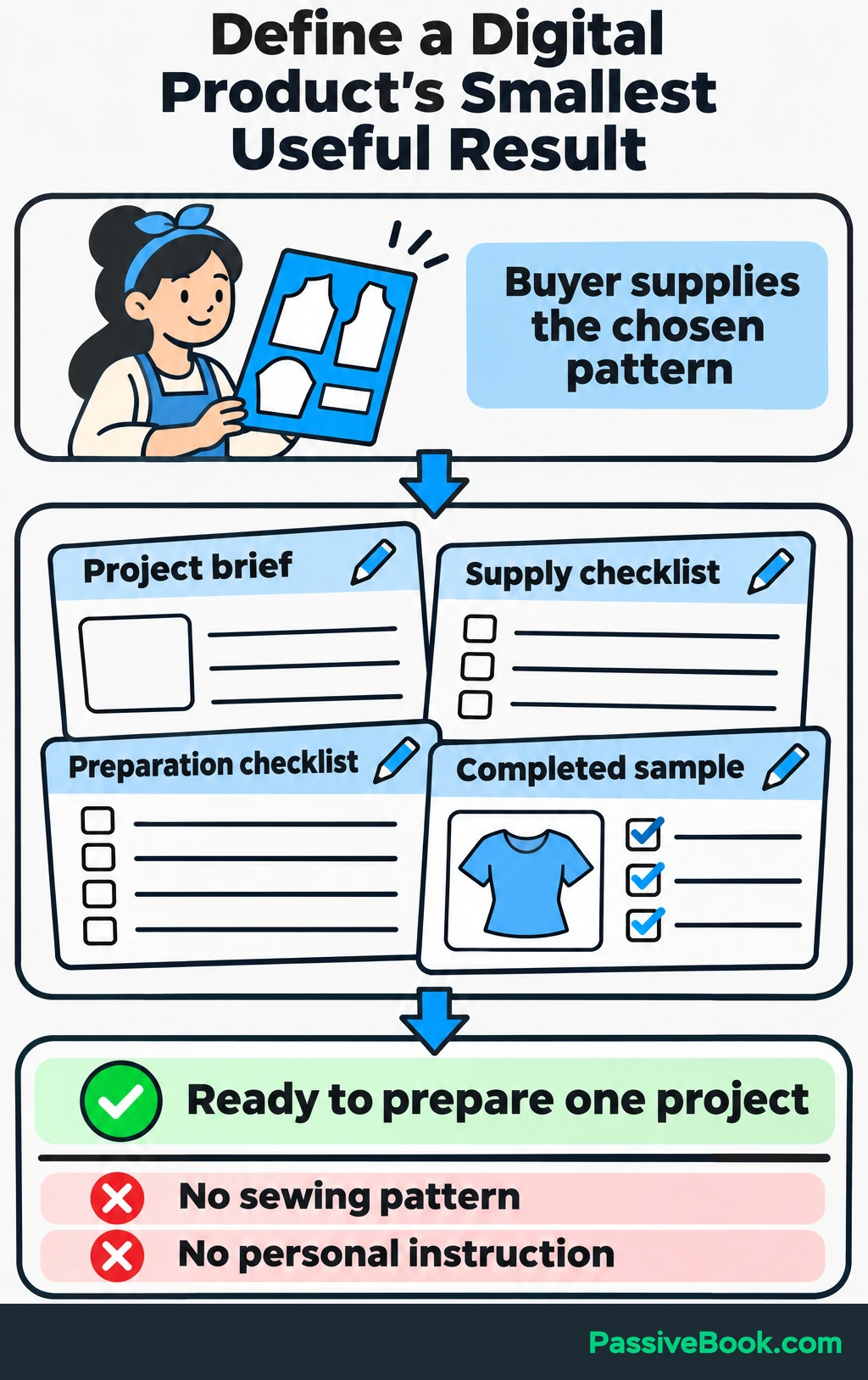
For the sewing website:
Help beginner sewists prepare for one project using an editable planning kit with a project brief, supply checklist, preparation checklist, and completed sample.
Keep the boundary clear. The buyer supplies their chosen pattern and its requirements. The kit organizes that information; it does not include a sewing pattern or personal instruction.
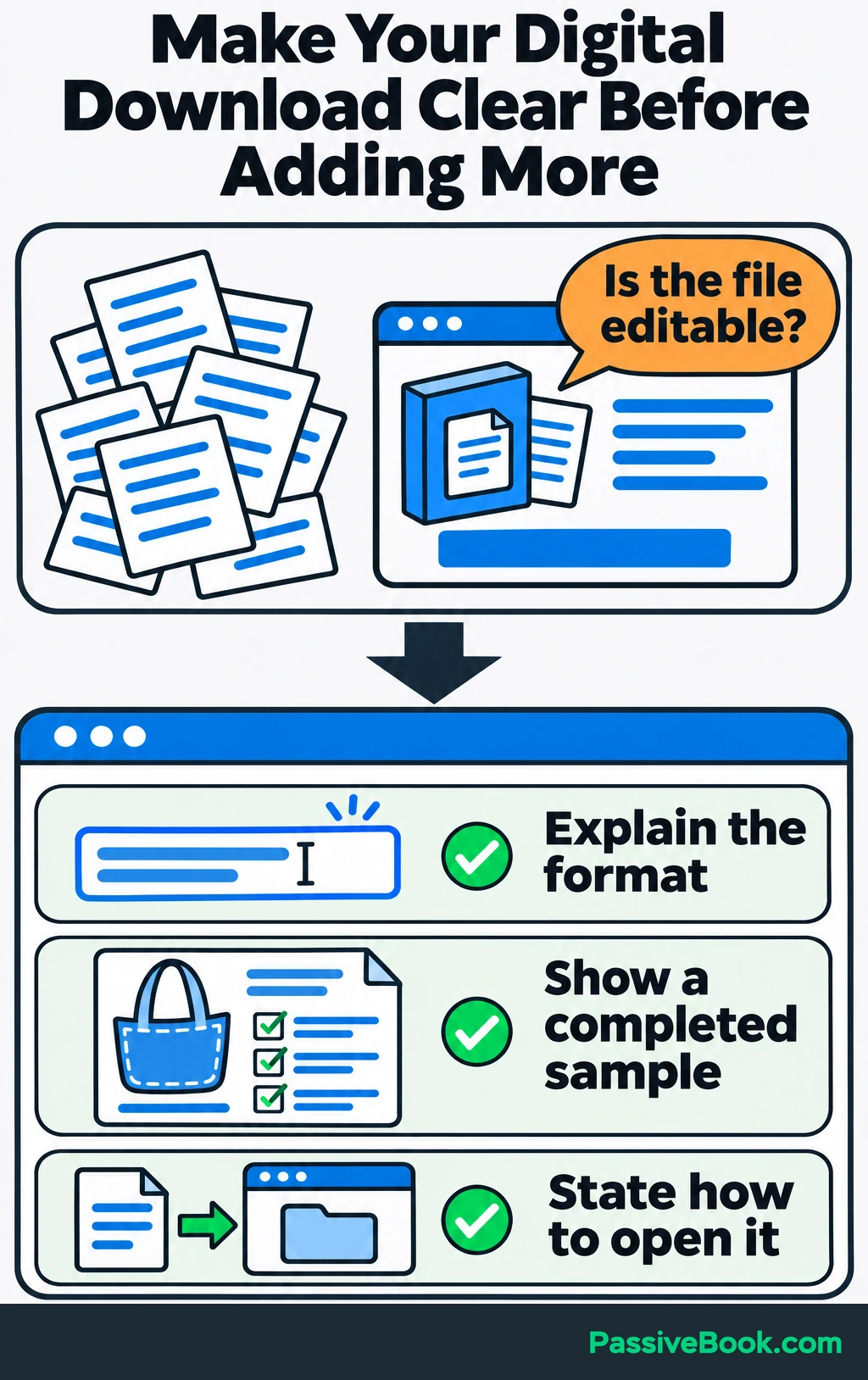
On one of my template sites, I kept adding pages while buyers kept asking whether the file was editable. I was improving the download, but their uncertainty was on the sales page. Making the format and completed sample clearer addressed the question I was actually receiving.
Before building, set a time limit and spending ceiling. For this example, you might allow one working week of spare-time sessions for a usable version and skip paid design tools you do not need.
Compare prices with offers that solve the same task. A blank checklist, an editable workbook, and a workbook with personal feedback are different purchases.
Set an initial price that leaves money after delivery and support costs, then see whether customers buy. I would rather sell a focused, useful kit than inflate the page count to justify a price.
Calculate What Each Sale Leaves You
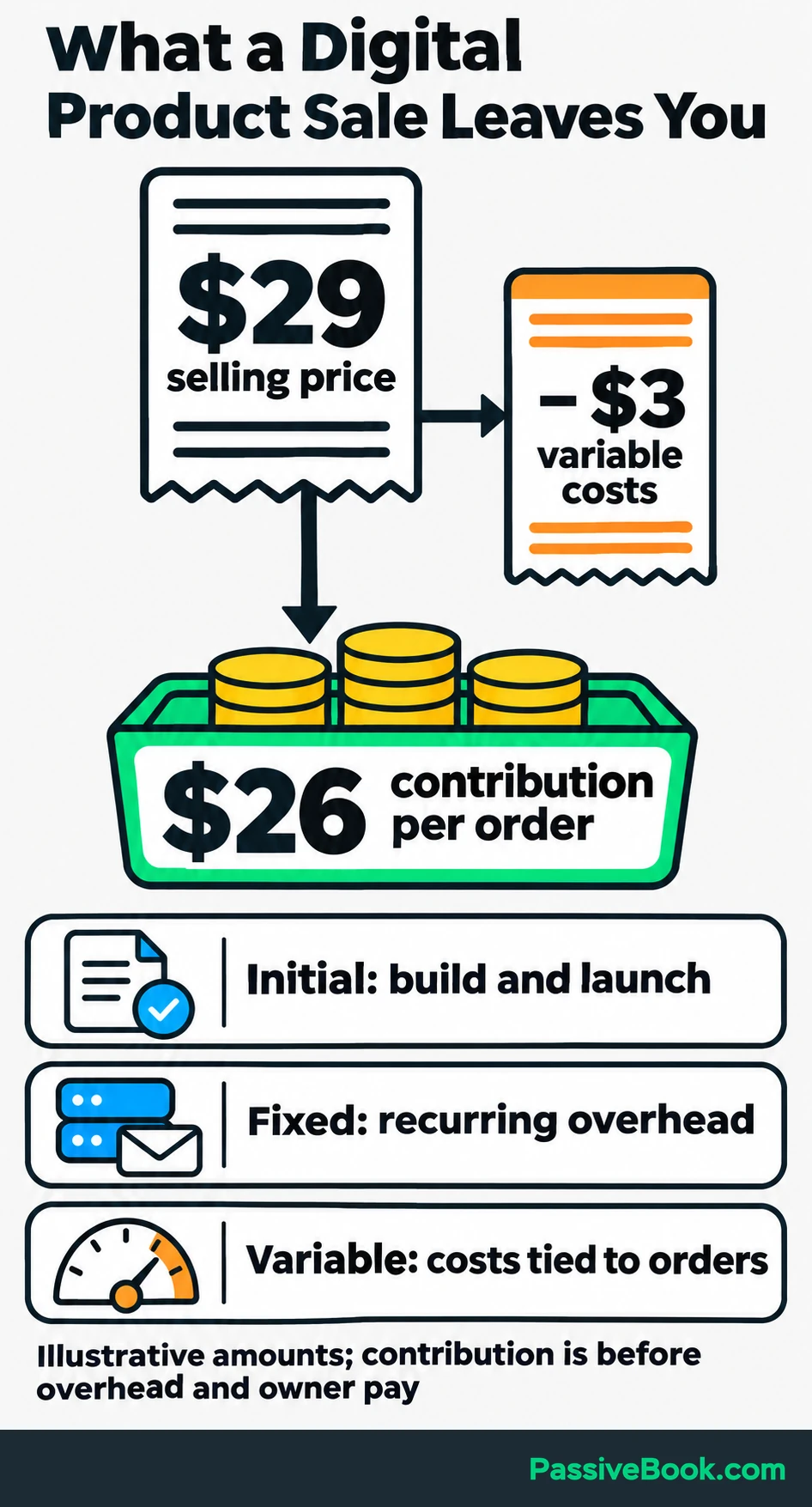
Separate your costs into three groups:
- Initial Costs: Creating the files, testing them, and preparing the launch.
- Fixed Costs: Hosting, email tools, and other recurring expenses that do not increase with each order.
- Variable Costs: Payment and platform fees, fulfillment, usage-based AI charges, and other costs tied to orders.
The amount left after variable costs is the sale’s contribution toward overhead and earnings.
For the illustrative kit:
| Item | Amount |
|---|---|
| Selling price | $29 |
| Variable costs per order | $3 |
| Contribution per order | $26 |
| Monthly fixed costs | $60 |
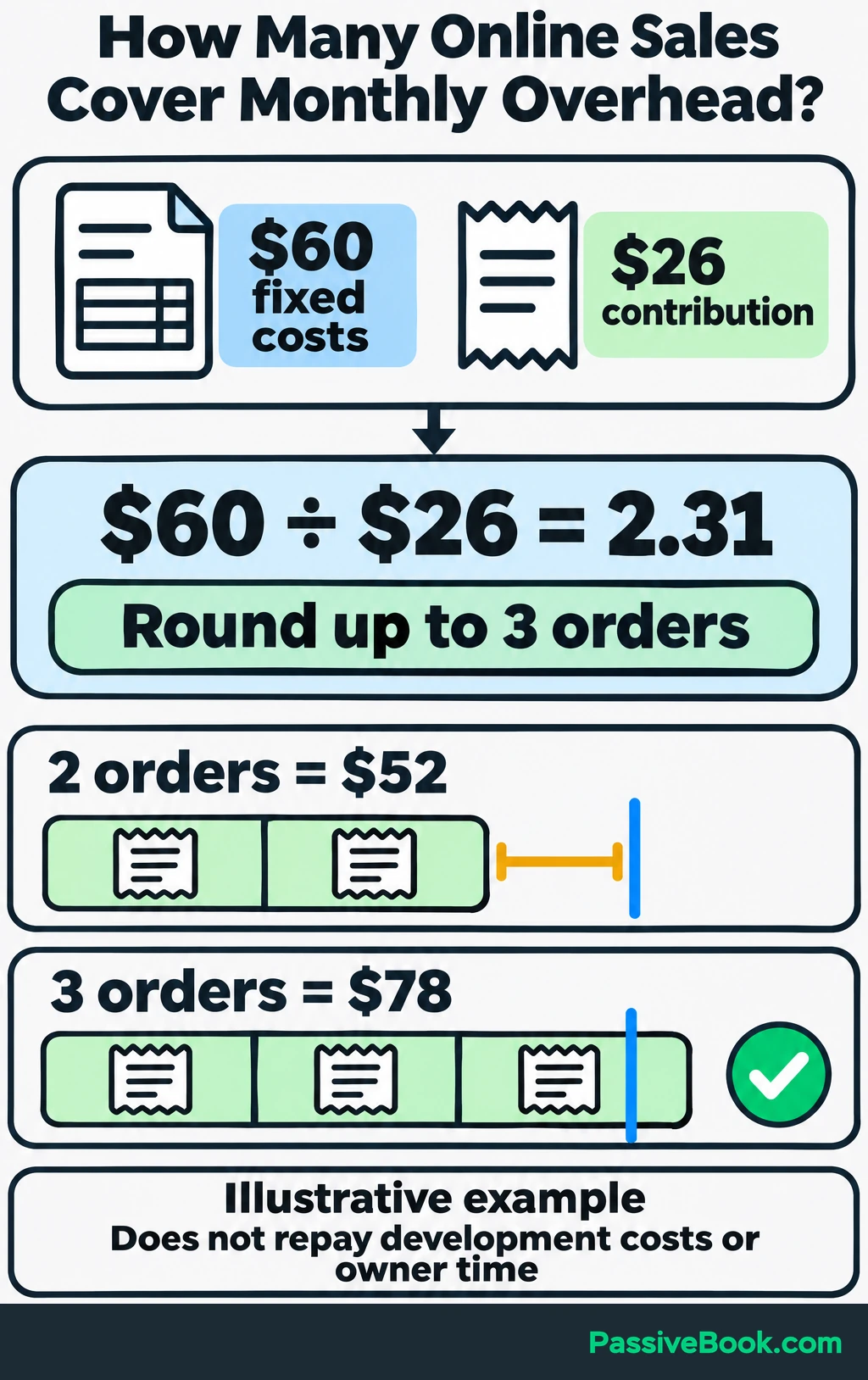
To find how many orders cover monthly overhead, divide that overhead by the contribution from each order and round up:
$60 ÷ $26 = 2.31, rounded up to 3 orders
That follows the SBA’s break-even formula. Three orders cover this example’s monthly overhead. They do not recover initial development spending or pay for your time.
Use your actual fees rather than copying the illustrative $3 allowance. Keep sales tax or VAT collected for remittance outside sales revenue. Record gross sales before refunds, then subtract refunds once.
Your time also matters. For a service, divide revenue after expenses by all working hours, including preparation, messages, revisions, and administration. For a download, track support and maintenance alongside the original build time.
Covering the software bill is only the first hurdle. Use the Pricing Profit Calculator to check whether your offer could also pay you within the hours you actually have.
Free Pricing Profit Calculator




If each sale leaves nothing after variable costs, increasing sales increases the problem. Change the price, costs, or delivery scope first.
Launch a Small Offer Customers Can Buy
Connect the Sales Page, Payment, and Delivery
Create one sales page that answers the questions a buyer needs resolved:
- What task does this help me complete?
- What exactly do I receive?
- Can I see a sample?
- What does it cost, and is payment one-time or recurring?
- How and when do I receive access?
- What support and purchase terms apply?
For the kit, show a completed project brief and explain the editable file format. A buyer should not need to email you to discover which software opens it.
If the offer is clear in your head but not on the page, AI Copywriting Studio can turn your notes into a sales-page draft and a matching invitation. It works with the scope and price you have now, so you can prepare a small test before building more.

Free AI Copywriting Studio
Reuse your existing website where practical. I would choose Gumroad for a simple hosted download checkout when it supports your location and requirements. If you already maintain a WordPress store, WooCommerce is another route.
Compare seller eligibility, total fees, payout timing, delivery features, and maintenance before choosing. Buying a second platform because its dashboard looks exciting is an expensive hobby.
Check the registration, licensing, and tax obligations that apply to your location and activity before taking payments. U.S. businesses can start with the SBA’s launch guidance.
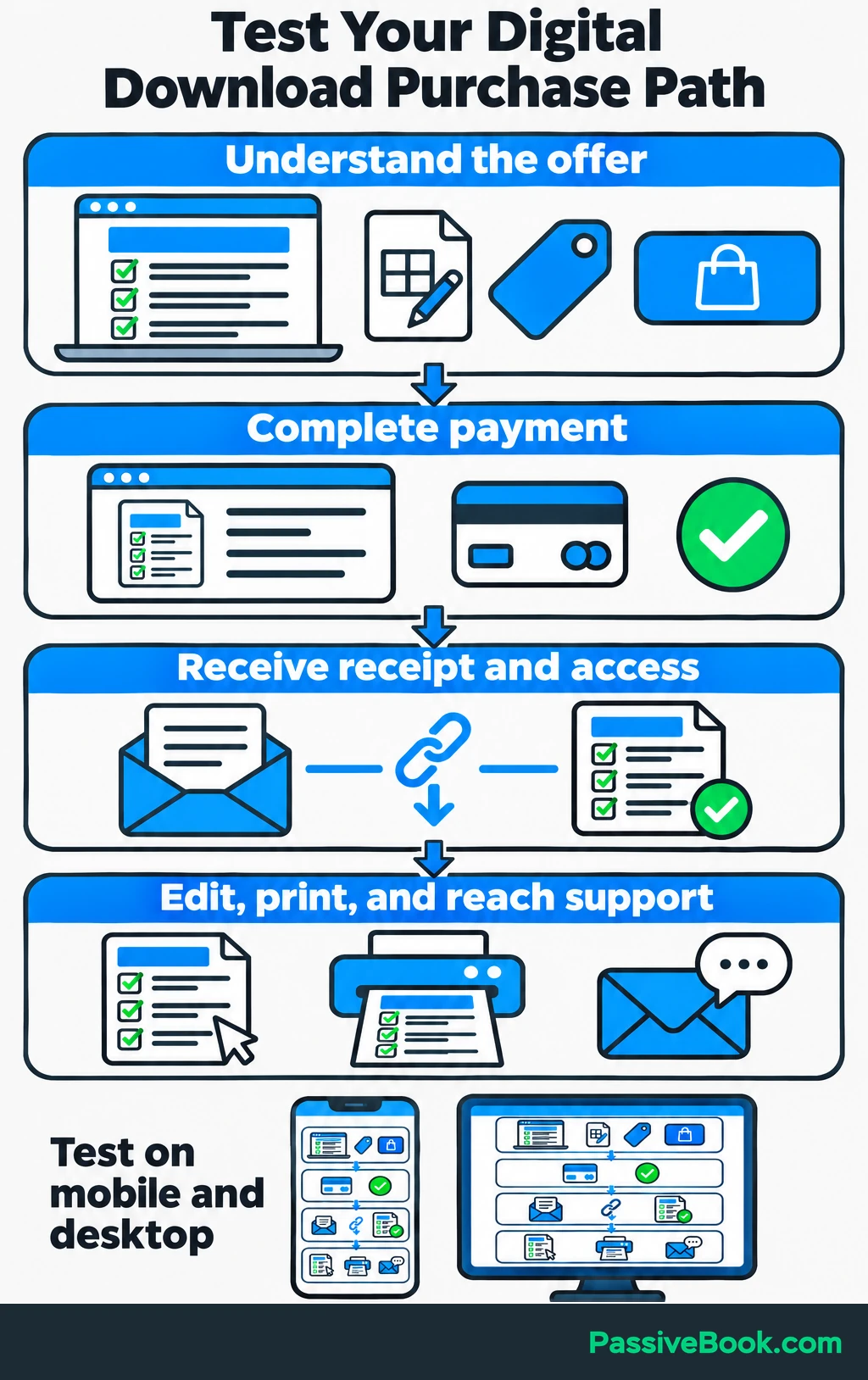
Then test the complete purchase on mobile and desktop. Confirm that payment succeeds, the receipt arrives, the correct download opens, and the support address works. For an editable kit, test editing and printing too.
Sell a Paid Pilot Before Expanding
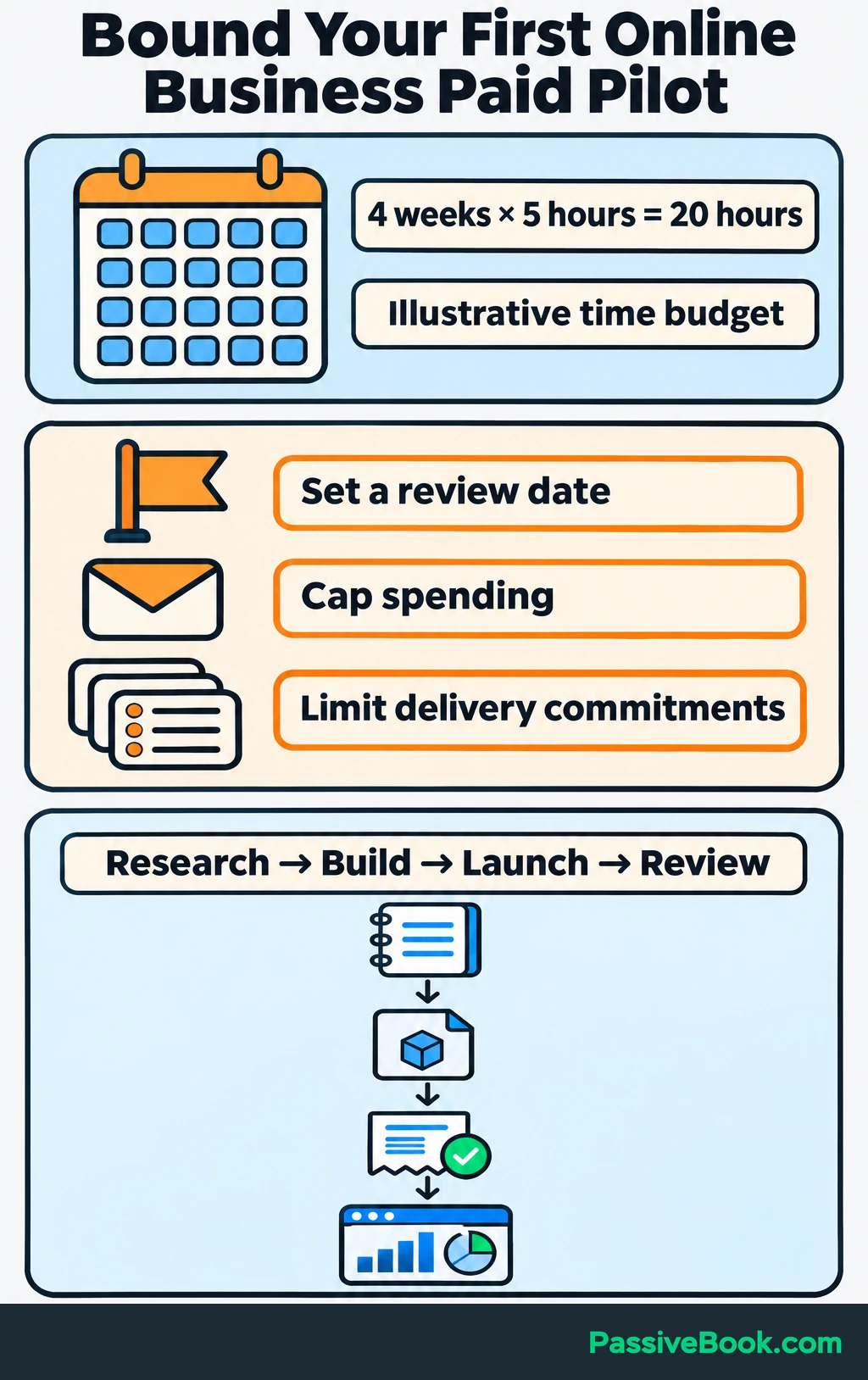
Give the test a review date, a spending limit, and a delivery limit.
For example, reserve four weeks and five hours a week to research, build, launch, and review the first offer. Keep discretionary spending within an amount you can afford to lose, and include any required setup costs before committing.
Invite previous customers, relevant subscribers, or people who have already asked about the task. With no audience, approach a relevant partner or participate in communities that permit offers. You do not need a large following to make a direct offer.
Record what happens:
- Buying Questions: What did people need clarified before paying?
- Declining Reasons: Was the task unimportant, the format wrong, or the price unsuitable?
- Delivery Problems: Could buyers access and use what they purchased?
- Economics: Did orders leave a positive contribution within your available hours?
My rushed course taught me why this comes before expansion. I launched without validating demand, attracted few sales and a bad review, and took it down. More lessons would have made the mistake larger.
If you take preorders, describe what remains unfinished and state the delivery and cancellation terms clearly.
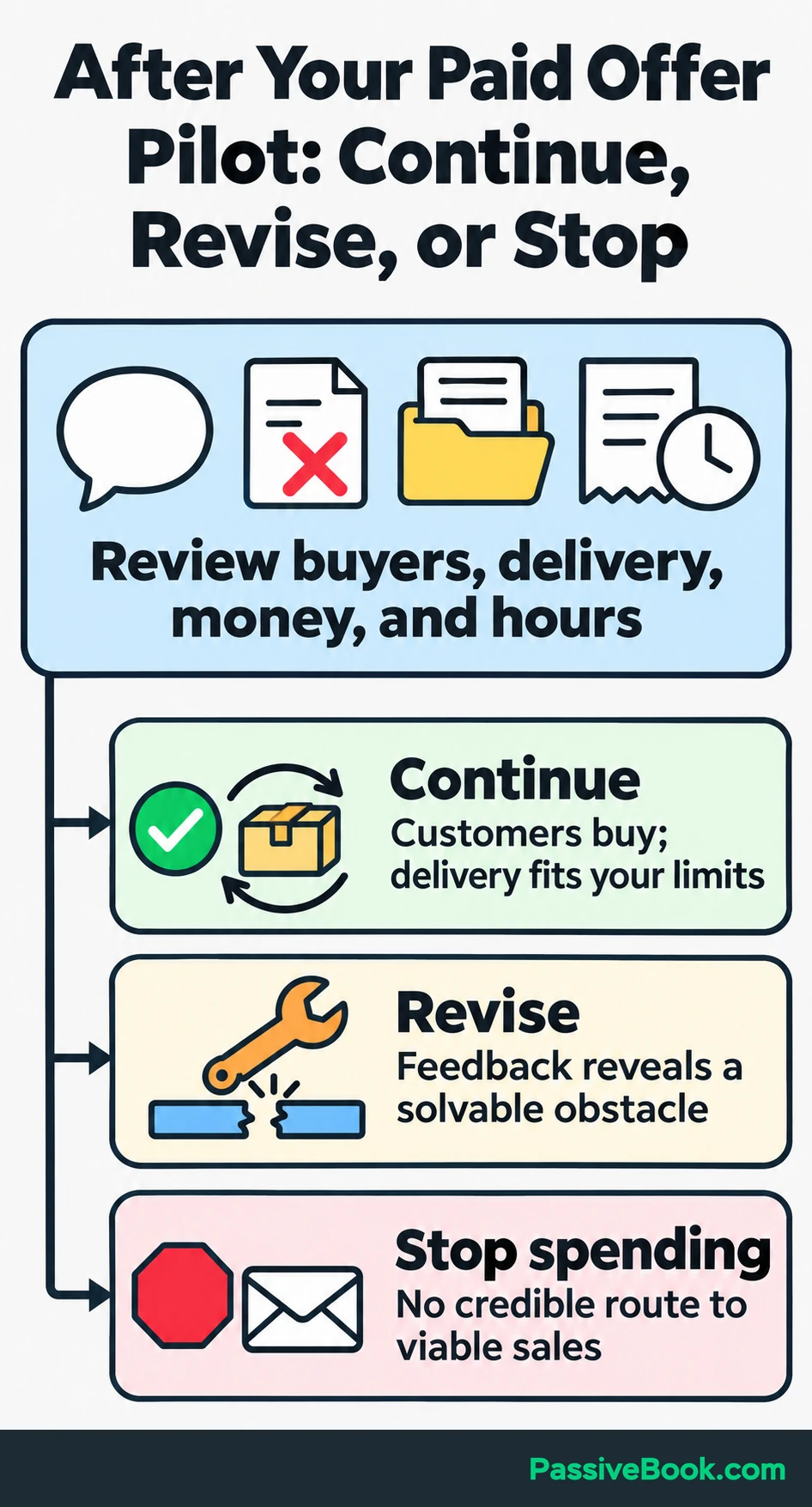
Continue when intended customers buy and delivery works within your limits. Revise when feedback identifies a specific, solvable obstacle. If you cannot find a credible route to viable sales, stop spending and revisit the offer.
Bring Qualified Buyers to Your Offer
Build One Repeatable Route to Customers
Start where people already show interest in the task: relevant website pages, customer inquiries, previous purchases, and referral partners.
Then choose one way to reach new buyers that you can maintain. That might be search content, Pinterest, partnerships, a relevant community, or direct outreach.
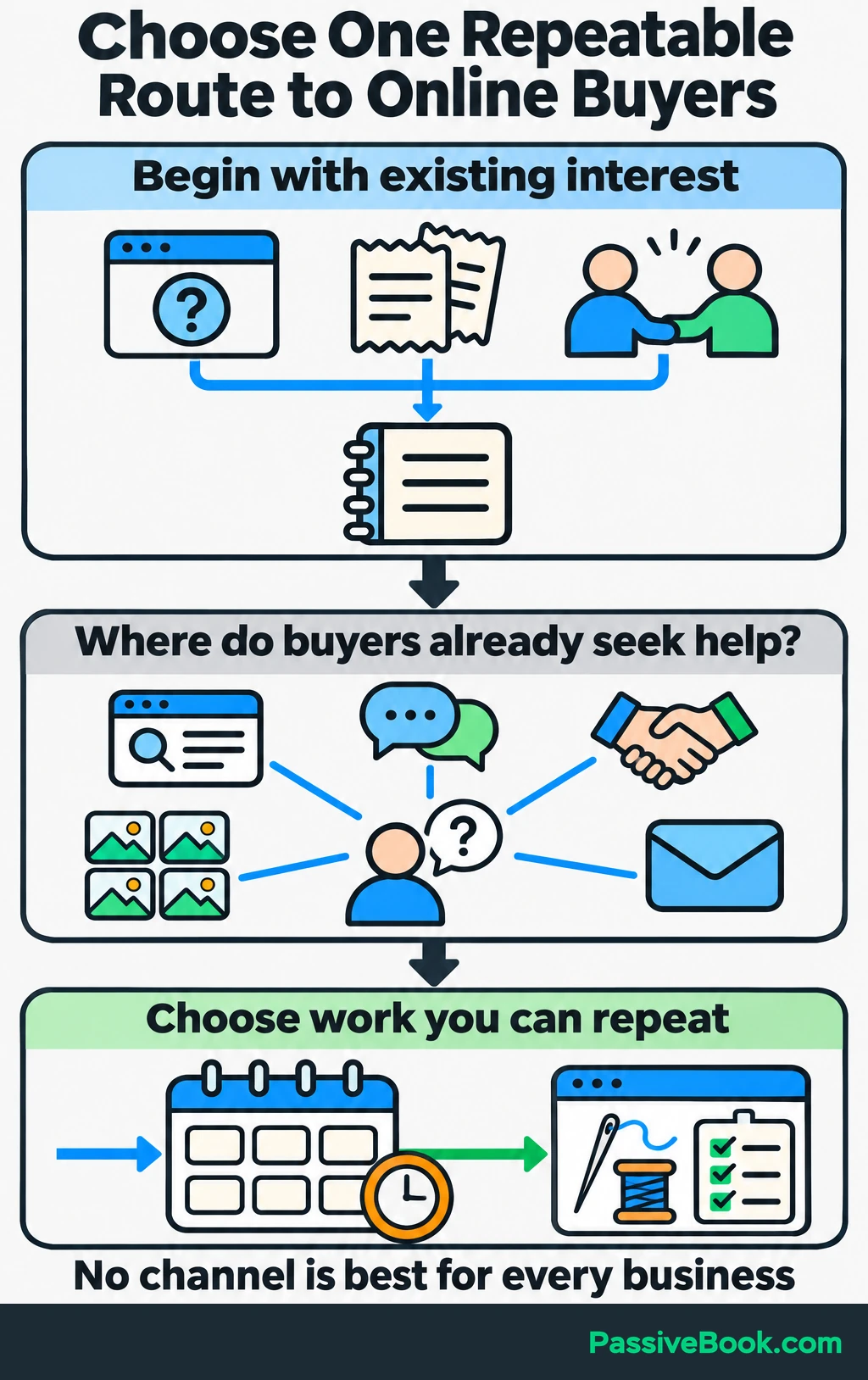
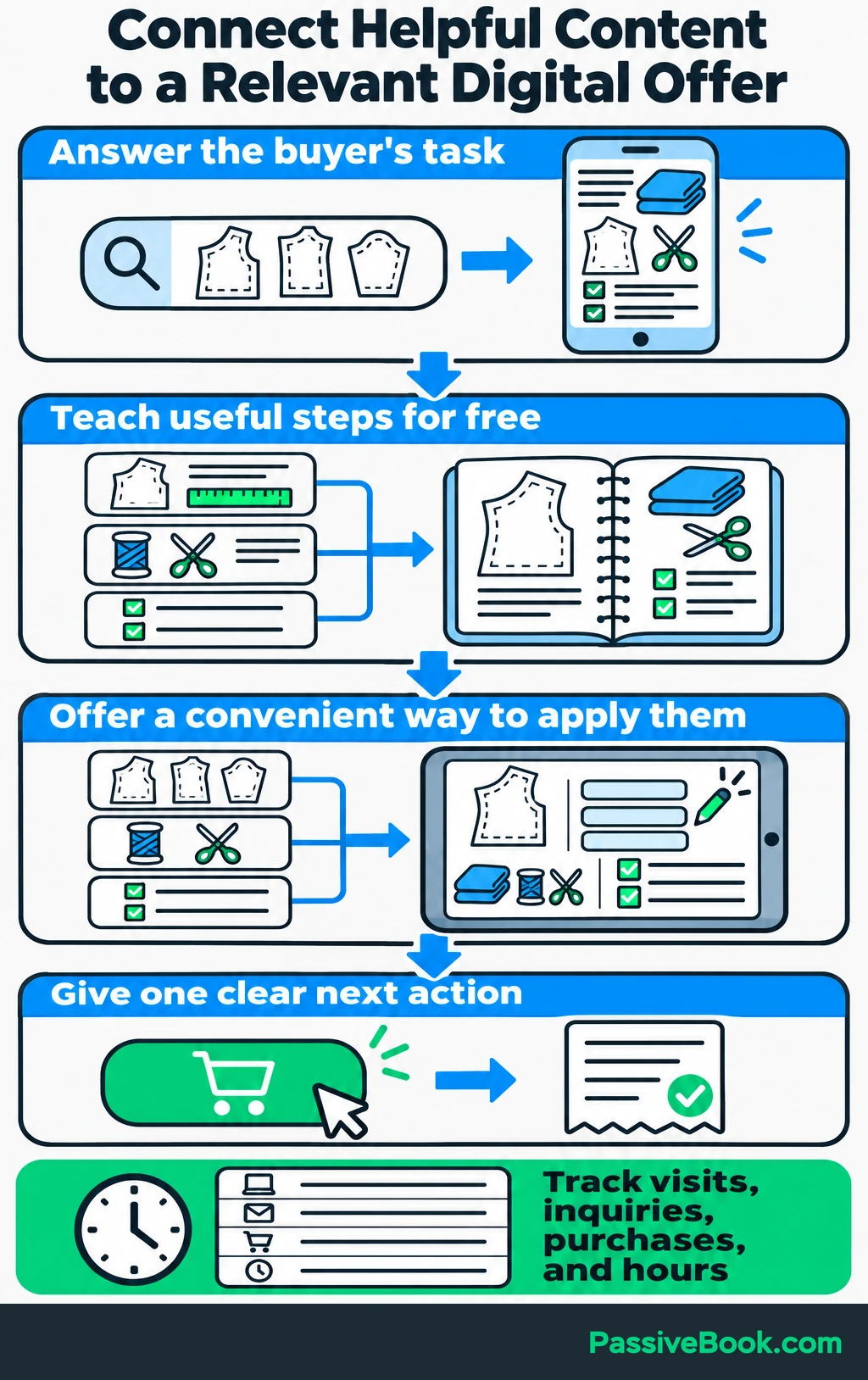
For the sewing website, publish a useful guide to preparing for a first project. Explain how to gather the pattern requirements, check existing supplies, and arrange the preparation tasks. Then introduce the kit where an editable place to collect that information would help.
The article should help even if the visitor does not buy. The paid resource makes completing the task more convenient.
Give each piece one clear next action. Written instructions, annotated pictures, and screen demonstrations can explain the offer without putting you on camera.
Blogging and Pinterest are my active channels at Passive Book. That combination suits how I publish, but I would not prescribe it to every business. A useful referral partnership could be a better first test for an offer with little search traffic.
Choose the route based on customer behavior and your ability to sustain the work.
Also count the time you spend attracting buyers. An unpaid channel still uses hours. Track relevant visits, inquiries, and purchases so you can decide whether another afternoon of content is worthwhile.
Follow up With Interested Visitors
Some visitors need more help before buying. Offer a free resource that starts the same task, while keeping a direct purchase route available.
For the sewing website, a one-page project preparation checklist could lead naturally to the editable kit.
A short email sequence could:
- Deliver the checklist and explain where to begin.
- Help the subscriber gather information from their chosen pattern.
- Answer a recurring buying question and show the completed sample.
- Introduce the paid kit and explain who will find it useful.
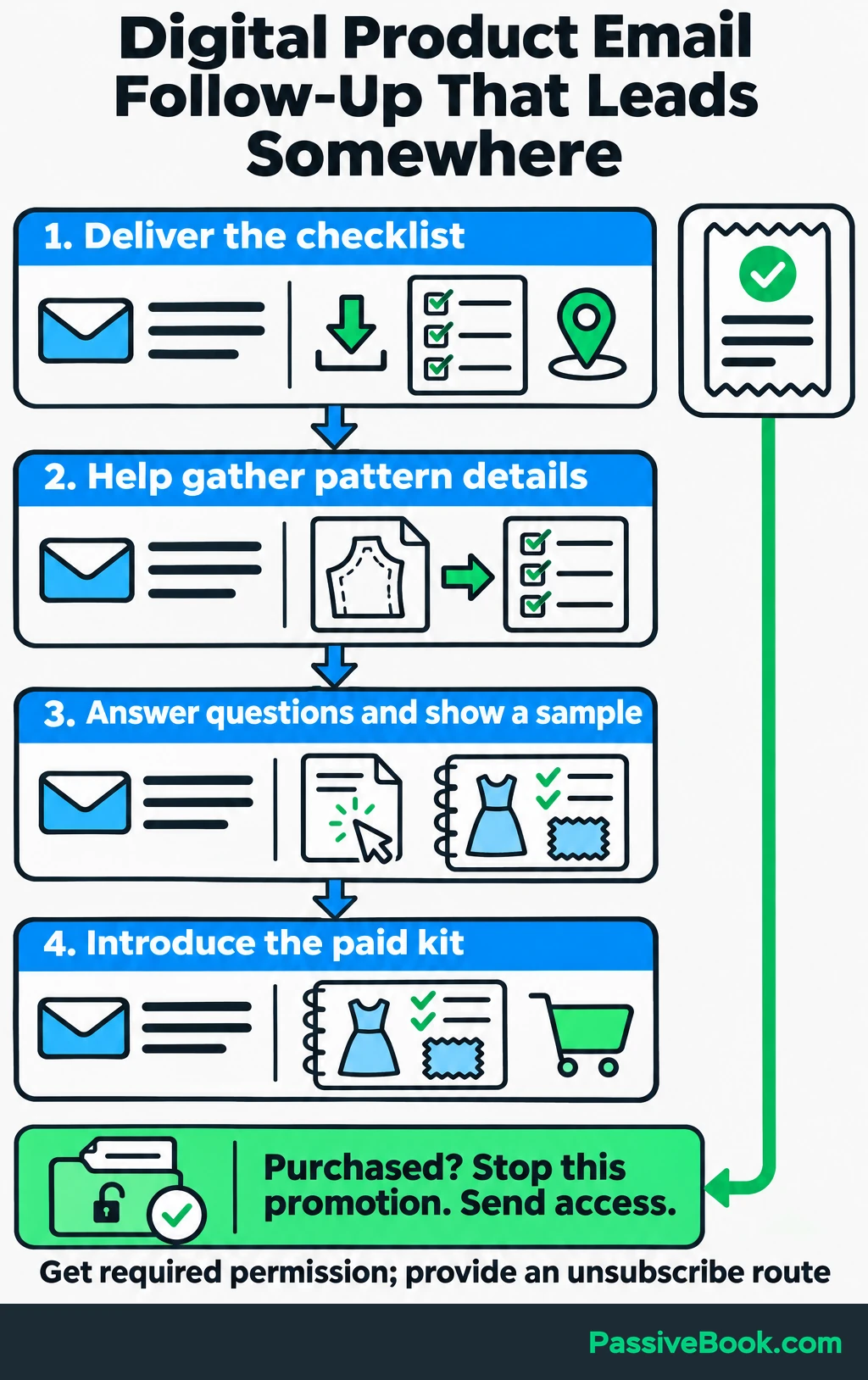
Once someone buys, remove them from promotions for that same purchase and send access and onboarding messages instead.
For WordPress, my preference is FluentCRM, an email marketing tool that runs inside the site. Its workflow and contact features support organizing subscribers and sending messages based on their actions. Use an existing suitable email tool before adding another subscription.
Collect marketing permission where required. U.S. commercial email must follow rules covering accurate sender details and subject lines, advertising identification, a valid postal address, and an unsubscribe route. Opt-out requests must be honored within 10 business days under the FTC’s CAN-SPAM guidance. Check the rules that apply to your recipients too.
Measure Sales and Fix the Weakest Step
Track the route from source to offer visit, purchase, delivery, and refund. Tagged links and a spreadsheet are enough to begin, and payment records should confirm the orders.
Keep a table with these columns:
| Period | Source | Offer Visits | Orders | Gross Sales | Refunds | Variable Costs | Fixed Costs | Owner Hours |
|---|---|---|---|---|---|---|---|---|
| Example month | All tracked sources | 1,000 | 20 | $580 | $0 | $60 | $60 | 12 |
Use source-level rows to compare traffic routes, but count shared overhead once in the total.
For purchase conversion, count orders attributed to a group of offer-page visits and divide by those visits. Keep the attribution rule and measurement window consistent.
In this example, 20 orders from 1,000 offer visits produce a 2% purchase conversion rate.
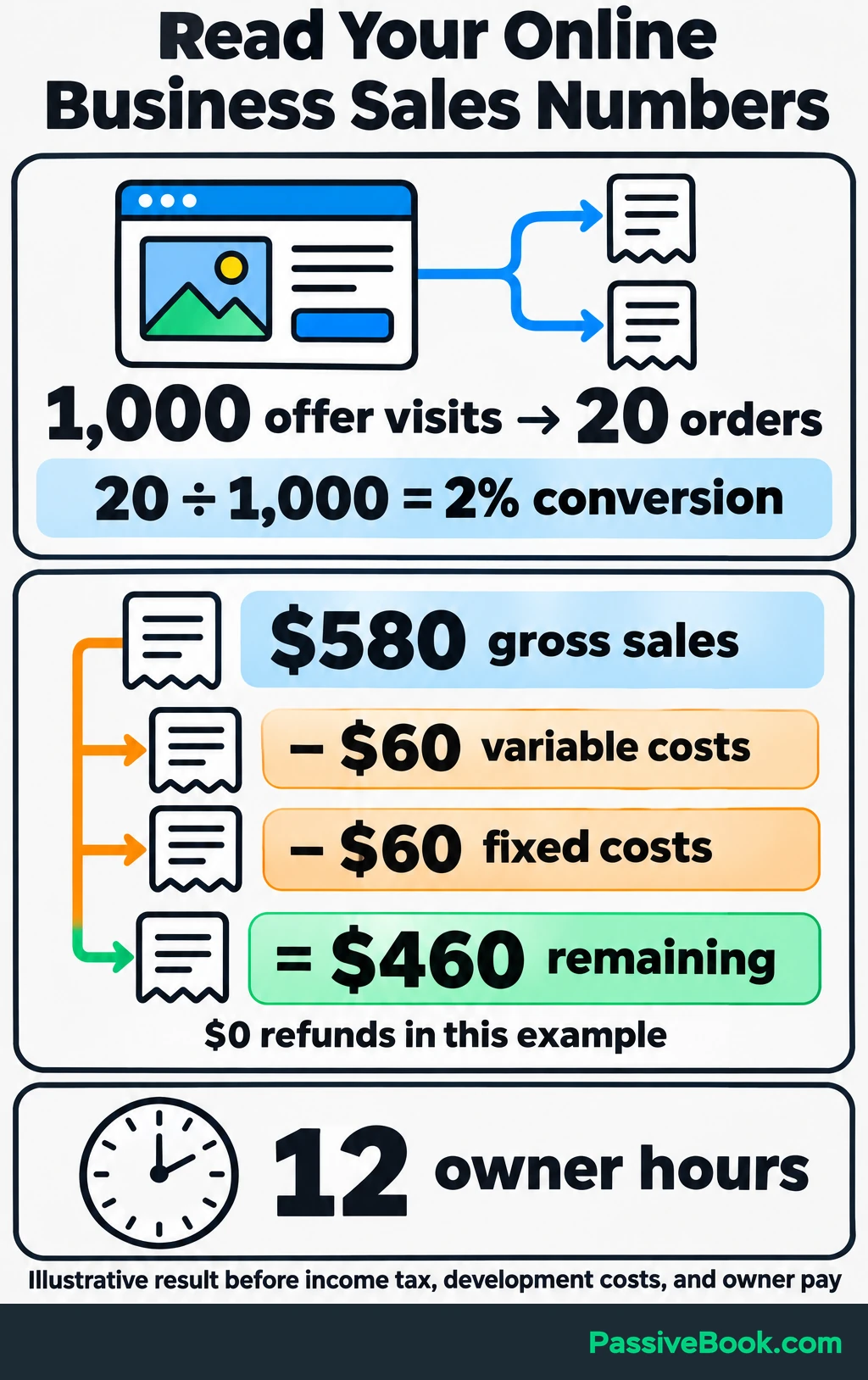
Now count what remains from those sales. With no discounts or refunds:
$580 sales − $60 variable costs − $60 fixed costs = $460
The $460 is before income tax, initial development costs, and pay for your 12 hours of work. Use those hours to judge whether the result is worth continuing.
You can also work backward from a target. First find the orders needed to reach your gross sales goal, then estimate the offer visits needed at your observed conversion rate.
At a $29 average order value:
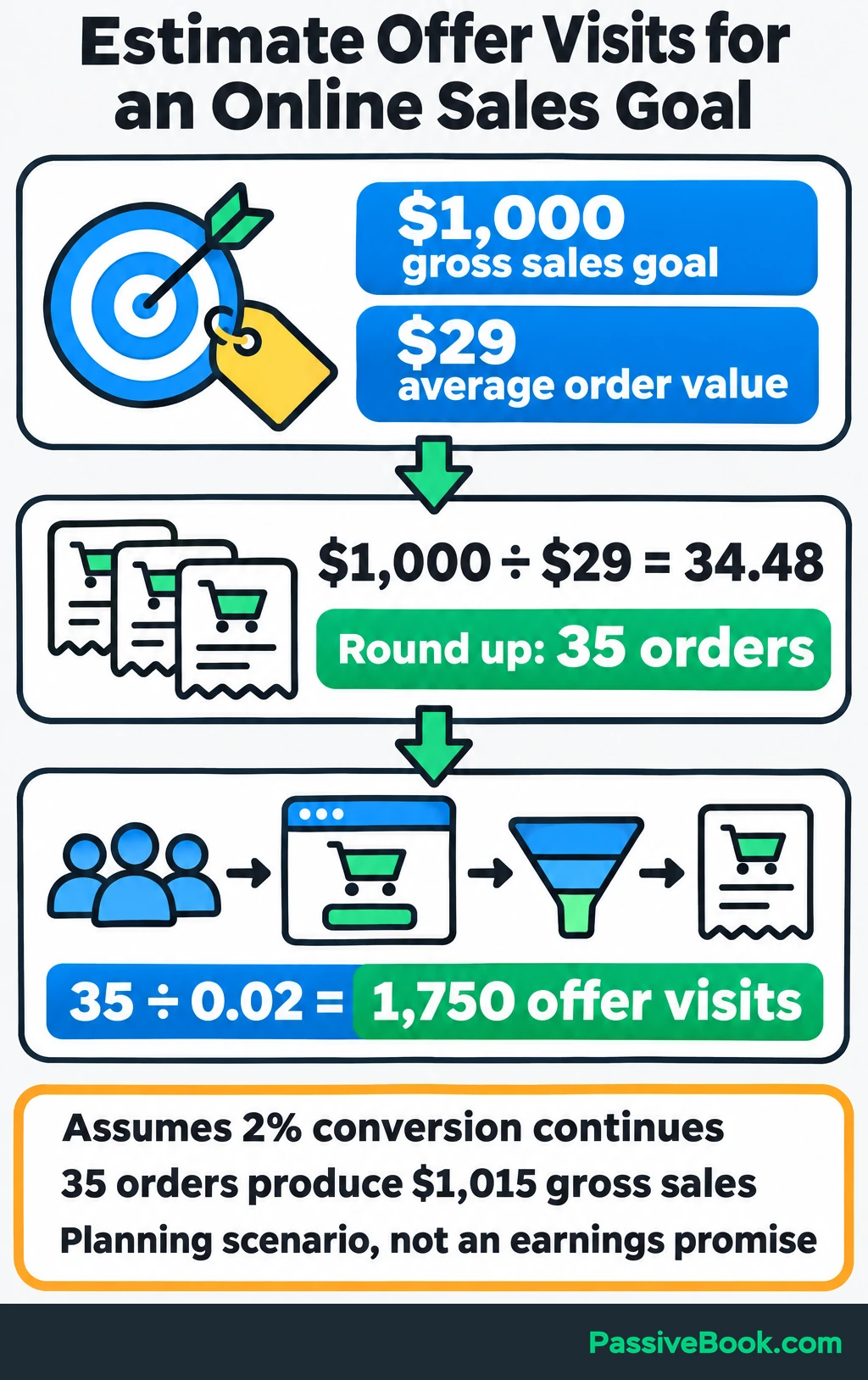
$1,000 ÷ $29 = 34.48, rounded up to 35 orders
At an assumed 2% conversion rate:
35 ÷ 0.02 = 1,750 offer visits
Those orders would generate $1,015 in gross sales. The traffic estimate assumes the conversion rate holds as traffic grows; it is a planning scenario, not an earnings benchmark.
Use the numbers to choose your next action:
- Too Few Relevant Visits: Improve distribution or find a better route to buyers.
- Visits Without Purchases: Check audience fit, the offer, its explanation, and checkout.
- Sales With Little Money Left: Revisit price, fees, support demands, and delivery scope.
- Frequent Refunds: Compare the sales promise with what customers receive and can use.
Change one consequential variable at a time. Compare consistent reporting periods, and check whether purchases continue after the launch promotion ends.
Build Repeat Revenue Around Continuing Needs
Help buyers use their first purchase before designing the next one. Clear onboarding and timely support also reveal what remains difficult.
Ask what they completed, where they became stuck, and what they need next.
For the sewing kit, some buyers might want a session to help organize their project information. Test that request before creating a larger course or membership.
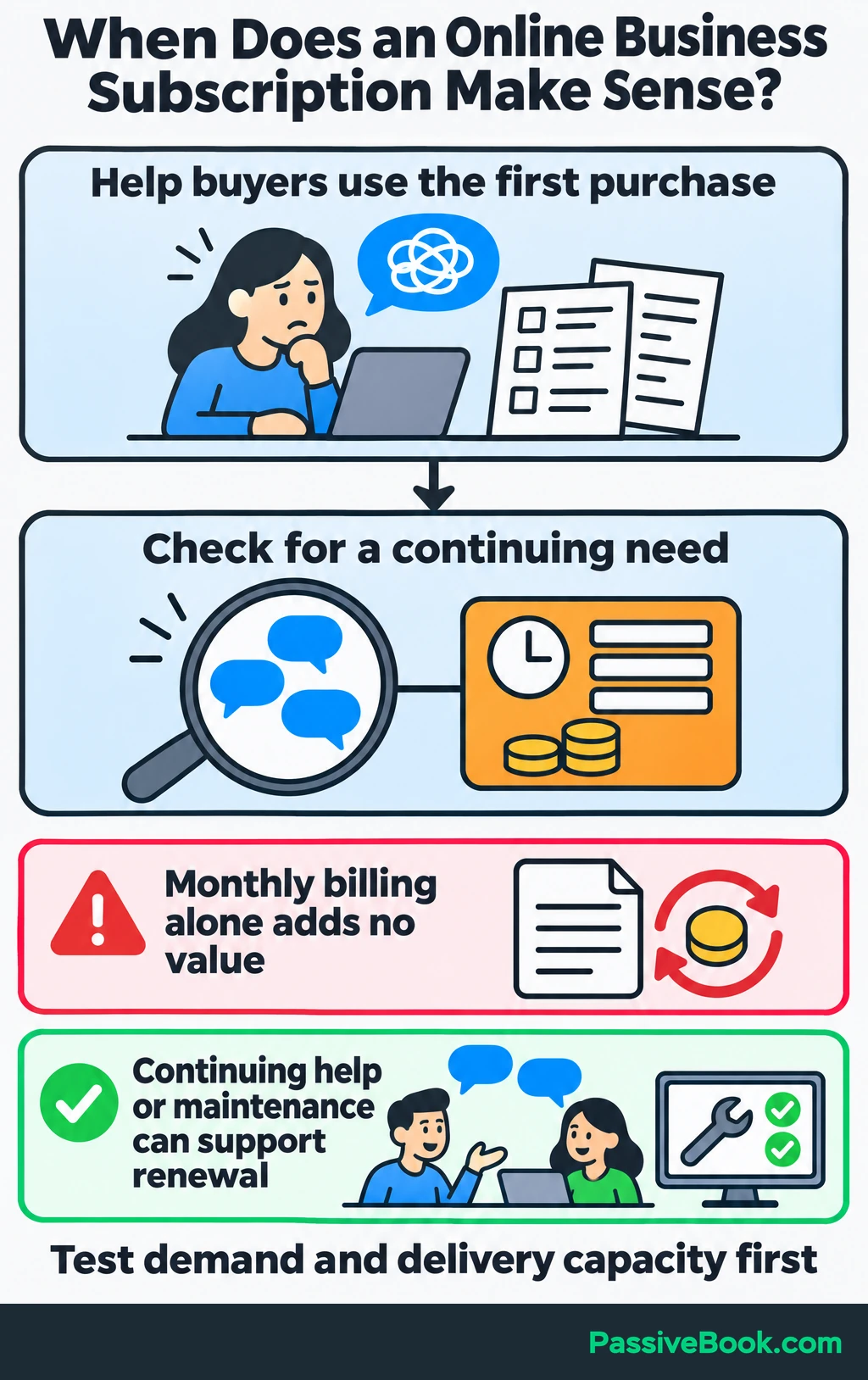
A one-time kit does not become a useful subscription because you put a monthly payment button beside it. Recurring revenue needs continuing value, such as ongoing assistance or maintained software.
If you introduce a subscription, track monthly recurring revenue separately from one-time sales. Add active recurring monthly charges, and divide recurring annual charges by 12 to express them as a monthly amount.
For illustration, 20 active customers paying $15 monthly represent $300 in monthly recurring revenue before costs. Annual payments spread across months help with reporting, but the cash arrives on a different schedule.
Track customer churn too. This measures how many customers from the group active at the start of a month leave during that month.
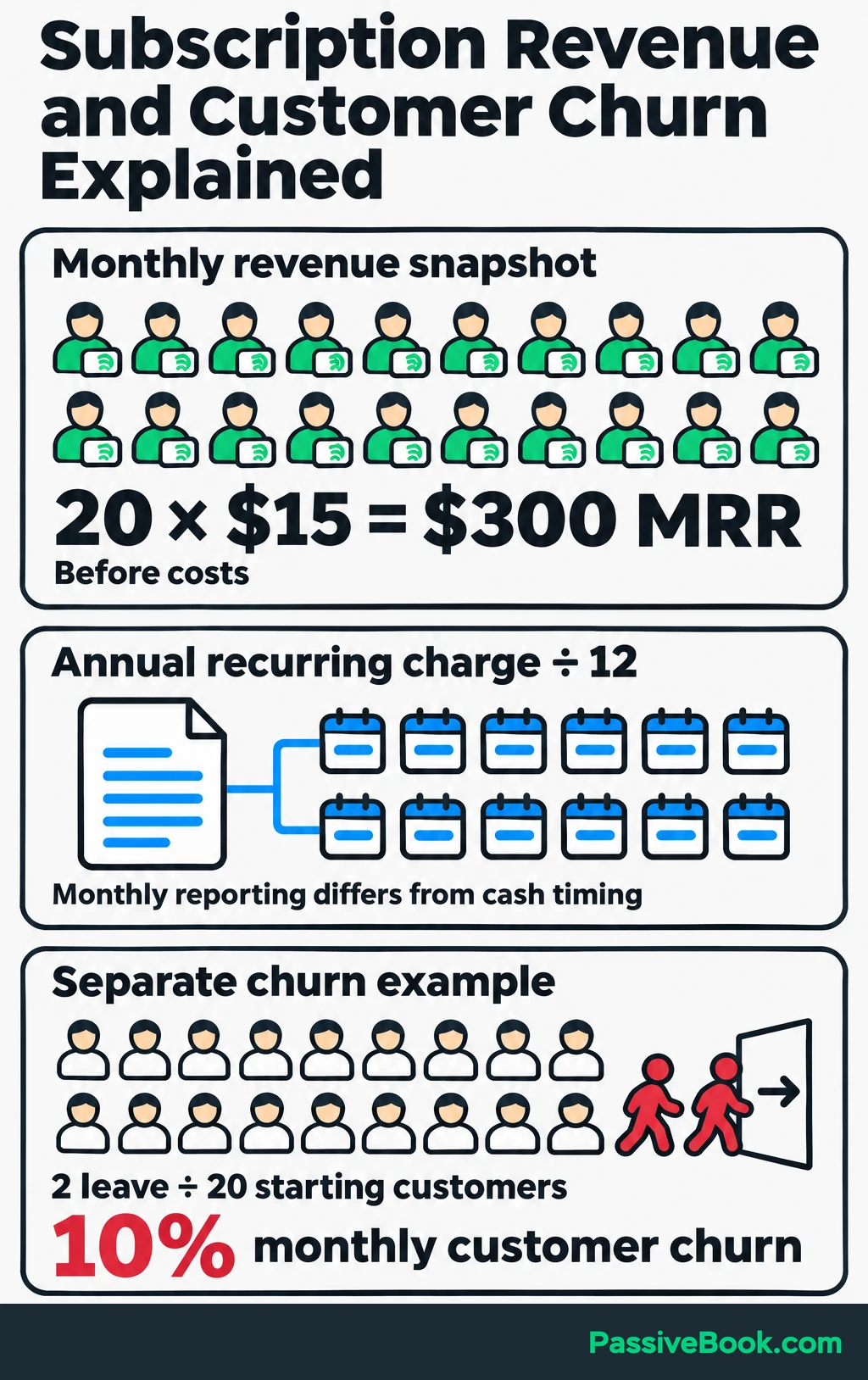
If two of 20 starting customers leave, customer churn is:
2 ÷ 20 × 100 = 10%
Investigate why people leave and what continued delivery costs before spending more to replace them.
I would add another revenue stream once the first has repeat demand, workable margins, and a workload I can sustain. Seven unfinished revenue streams still need seven kinds of attention.
Automate Proven Work With AI
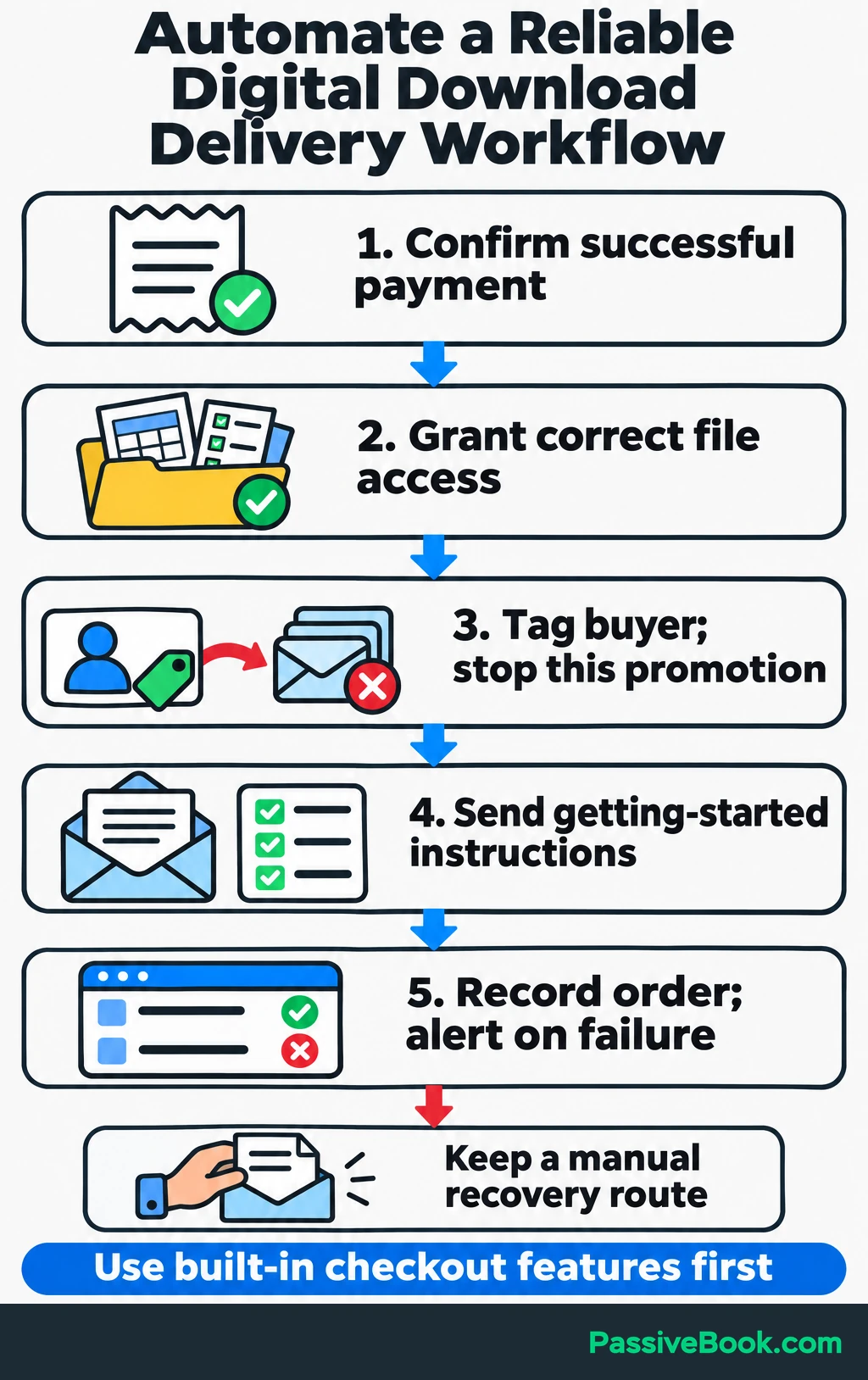
Document a process that works before connecting tools to it. Begin with repetitive transactions: payment confirmation, file delivery, buyer tagging, onboarding, and sales reporting.
For the planning kit, the workflow could be:
- Confirm successful payment.
- Grant access to the correct files.
- Mark the customer as a buyer and stop the relevant sales sequence.
- Send a short getting-started message.
- Record the order and alert you if delivery fails.
Use the checkout’s built-in features first. When separate tools need to exchange information, n8n can connect them through automated workflows. It is a tool I use, but self-hosting also creates maintenance work.
AI is useful for work that involves sorting or drafting. You could use it to group feedback, draft instructions from approved material, or prepare support replies for review.
For an AI-assisted version of the planning service, you could organize a buyer’s supplied pattern details into a project brief, then check it against the original before delivery. Count AI usage and review time when deciding what to charge.
My custom AI content pipeline reduced article production from days to hours. That changed production capacity. Whether an offer sells still needs its own measurement.
Compare time saved with setup, subscriptions, maintenance, and correction work. Keep a manual way to resend files and resolve customer problems, and send uncertain support questions to a person.
The goal is fewer routine tasks with reliable delivery. More automation is useful only when it improves that result.
What Next?
Write one offer sentence and calculate what a sale would leave after variable costs. Then choose a review date and put a small paid test in front of people who have the problem.
Use the social buttons to share this guide if the model comparison and revenue math could make a monetization decision easier.
Which offer could you test within your current hours and budget? Tell me in the comments, and bring any other questions about choosing or launching it.
Share this post with your friends & followers:

