You have a business decision you keep putting off, and another evening of searching has produced twelve opinions. Now you’re considering a mentor or coach, but their sales pages leave you with a different problem: who deserves your trust?
The wrong choice can use up money you needed for the business and leave you with advice you cannot apply. This guide compares places to find free and paid support and the evidence to look for before trusting someone with that decision and your budget.
Decide What Help You Need
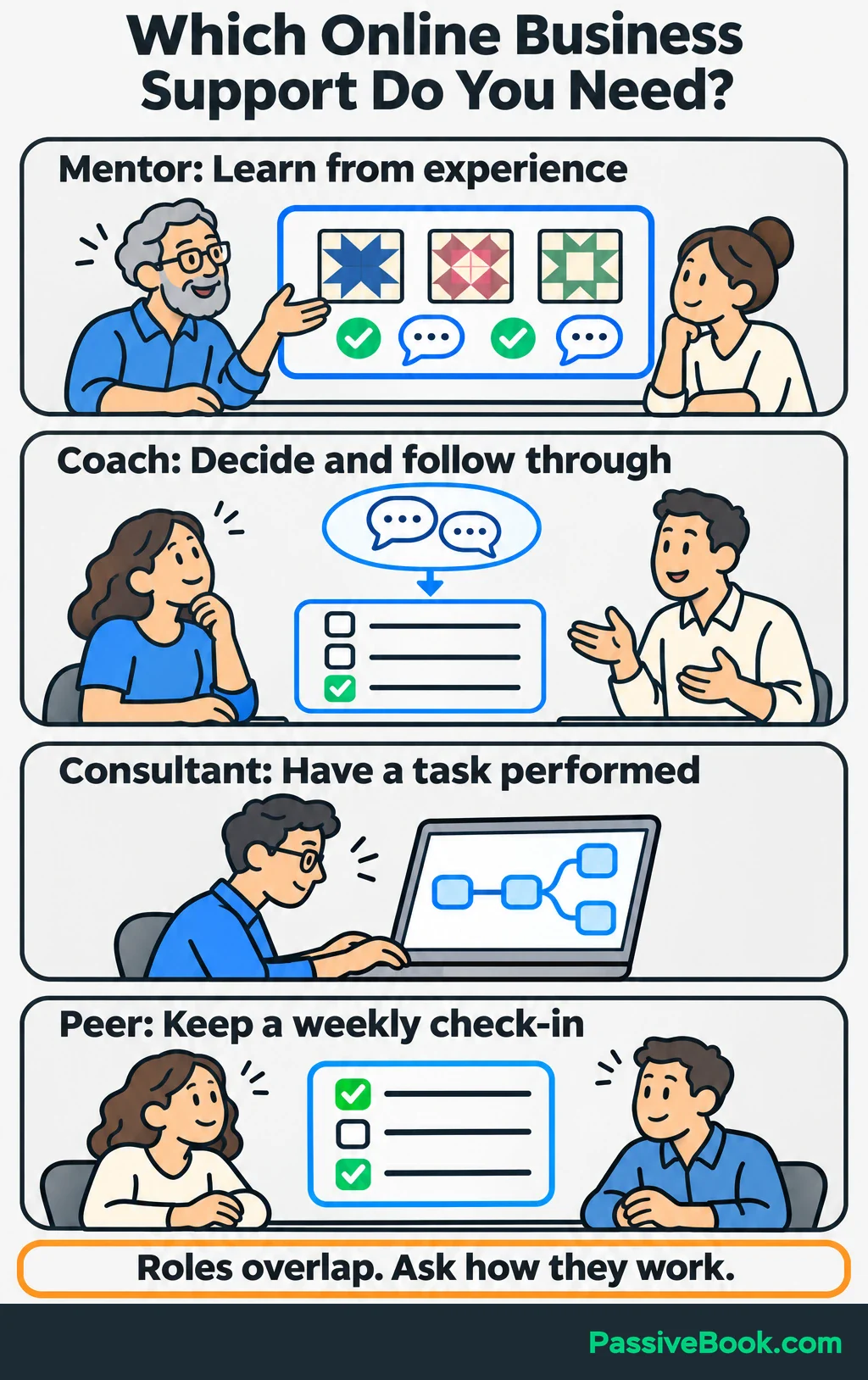
Choose a mentor when you want guidance from someone with relevant experience. Choose a coach when you need help thinking through decisions, setting priorities, and following through.
Those roles overlap, so ask how the person actually works. Some coaches offer business advice. Others help you reach your own answers through questions and discussion. If you need someone to explain how they tested a product, say that before booking.
Payment tells you little about the role. Mentors can be free or paid, and an expensive coach may offer less direct advice than a volunteer mentor.
I would also consider two simpler options:
- A consultant or service provider when you need someone to perform a task, such as reviewing your checkout or building an automation.
- A reliable peer when you know what to do but need a weekly check-in to keep doing it.
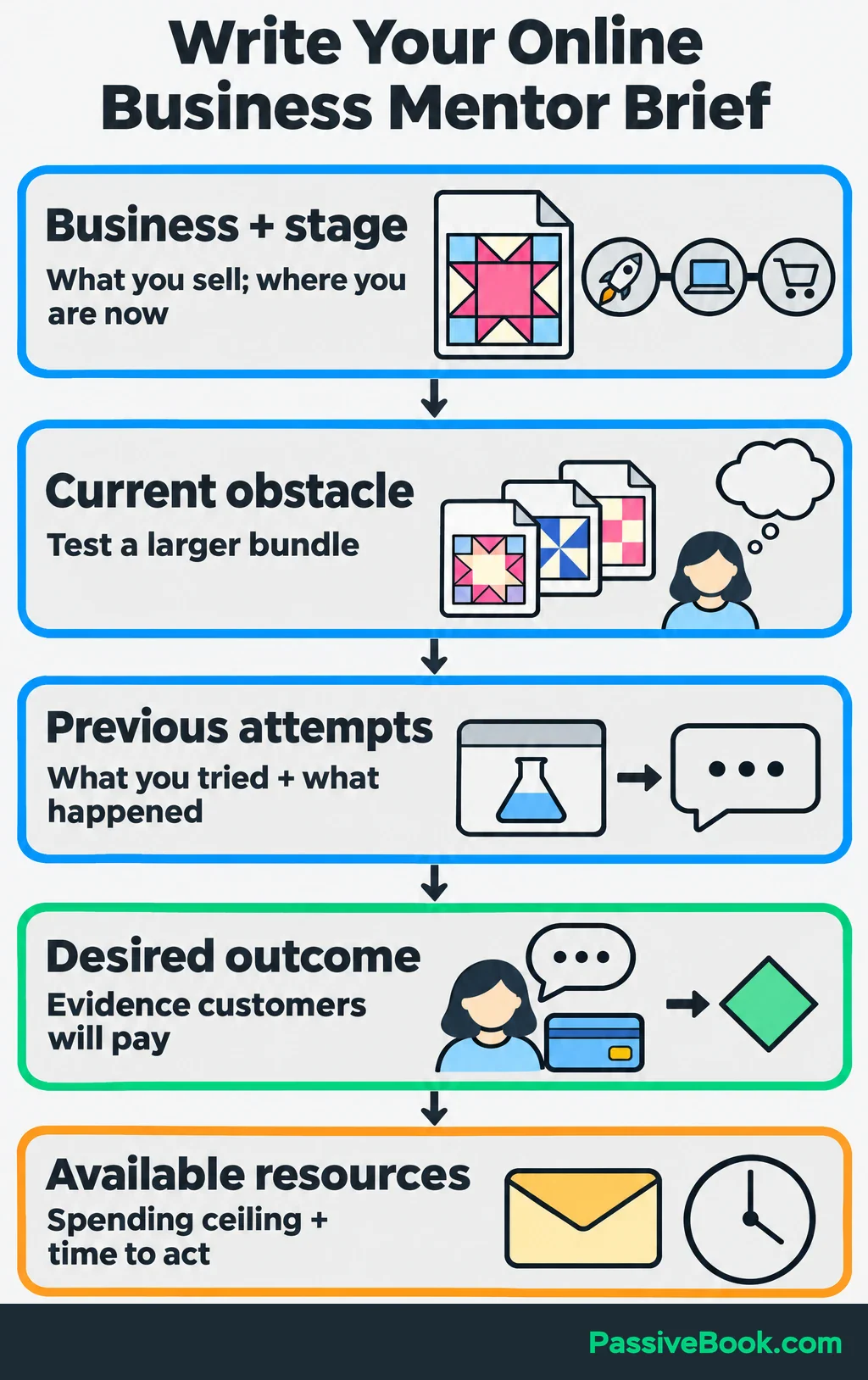
Before searching, write a short brief:
- Business and Stage: What you sell, who buys it, and whether you have launched or made sales.
- Current Obstacle: The one decision or problem holding you back.
- Previous Attempts: What you tried and what happened.
- Desired Outcome: What useful progress would look like.
- Available Resources: Your spending ceiling and the time you can spend applying advice.
For a running example, imagine you sell downloadable beginner quilt patterns. You want to test demand for a larger bundle before creating all the patterns.
Your central request could be:
“I need help testing whether customers will pay for a larger quilt-pattern bundle before I spend time creating it.”
Look for someone who has tested whether customers will pay for a product before building it. Someone who mainly helps large stores increase advertising budgets would be a weaker match.
I rushed a course once, and it made few sales, received a bad review, and came down. I had treated producing the course as progress without giving the buying decision enough attention. When I seek outside feedback now, I want a clear question on the table before discussing a bigger plan.
Where to Find Online Business Mentors and Coaches
Finding online business mentors and coaches gets easier when you search by problem. “Help testing a digital product” gives you something to assess. “Help becoming successful” gives almost anyone room to sell you something.
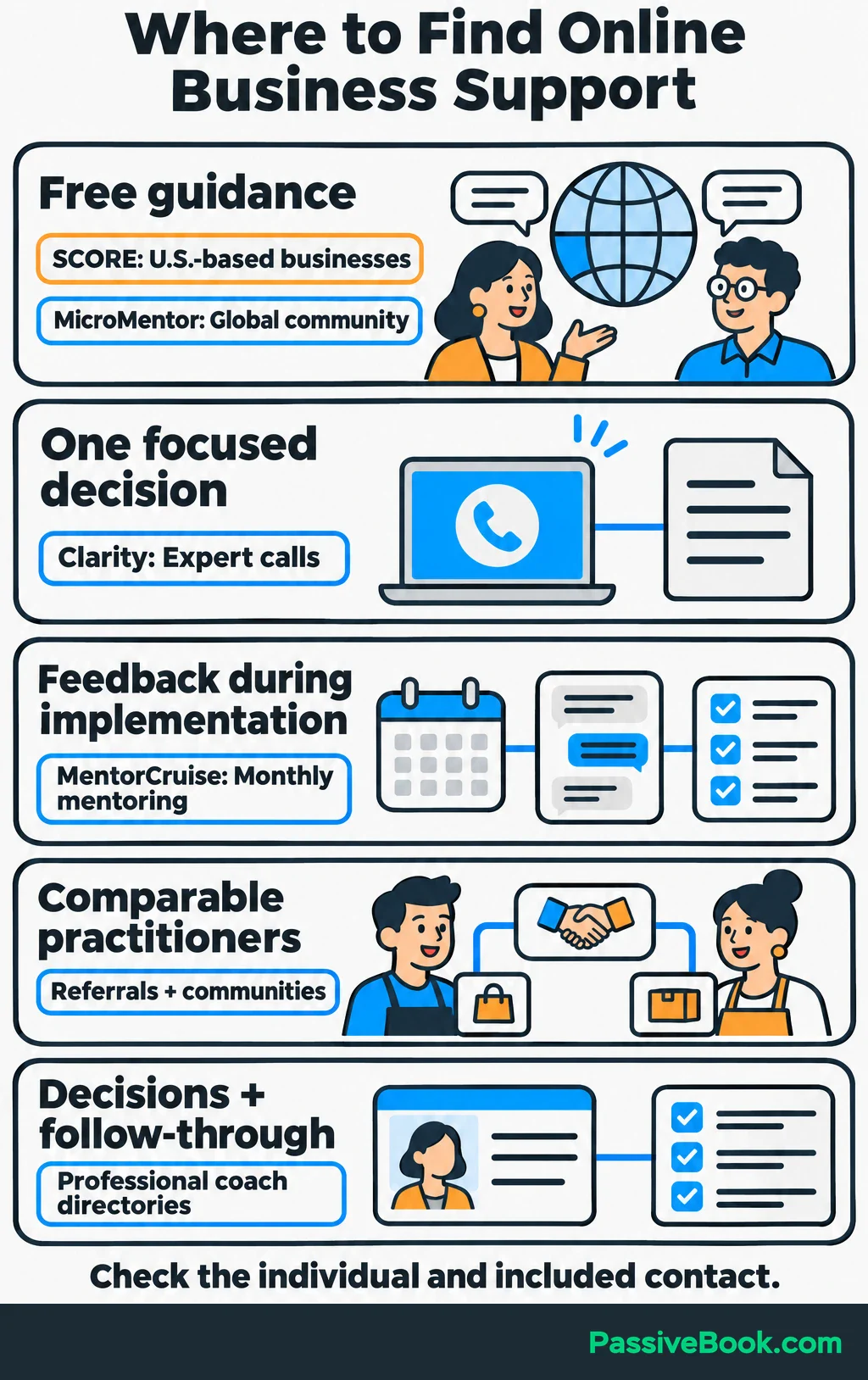
Use the routes below to build a shortlist. The individual’s experience matters more than the platform’s reputation.
| Route | Support Available | Who Can Use It | Cost and Contact |
|---|---|---|---|
| SCORE | Volunteer guidance on starting and running a business | Aspiring and established owners of U.S.-based businesses | Free, including repeat meetings; video, phone, or email depends on mentor availability |
| MicroMentor | Volunteer mentoring from a global community | Entrepreneurs worldwide | Free; meeting frequency and availability agreed with the mentor |
| MentorCruise | Ongoing feedback through calls and messaging | Applicants accepted by their chosen mentor | Mentor-set monthly subscription; call allowances and messaging access vary by plan |
| Clarity | An expert’s advice on a specific decision | People whose call requests are accepted | Expert-set per-minute rate; direct contact during the booked call |
| Referrals and communities | Introductions to people running comparable businesses | Depends on community membership and the person’s availability | Informal help or paid work; no standard fee or contact allowance |
| Professional coach directories | Coaches who help with decisions, priorities, and follow-through | Depends on each coach’s intake requirements | Coach-set session or package fees; contact allowances and minimum terms vary |
These routes can work together. You might use free mentoring to clarify your problem, then pay for a specialist call once you know what to ask.
A course or community subscription needs a different check: who will review your business, and how much personal contact is included? Access to a video library does not tell you whether anyone will examine your offer.
Free Business Mentoring Programs
I would start here when you are early in the business and paying for support would leave little money to act on it.
SCORE offers free mentoring to aspiring and established owners of U.S.-based businesses. You can request a match or browse profiles, and repeat meetings remain free. Virtual meetings also let you look beyond your local area for relevant experience. SCORE explains its eligibility and mentoring options here.
Ask specifically for experience with digital products, online selling, or consumer demand testing. General business experience can help, but explain the kind of decision you face.
MicroMentor offers a global, free community of volunteer mentors. Describe your goal in your profile, browse potential matches, and send a focused request. For the quilt-pattern shop, I would look for someone who has tested consumer offers or sold digital downloads.
Local enterprise agencies and university entrepreneurship programs are also worth checking. Confirm whether support depends on your location, enrollment, or business stage.
Once a volunteer agrees to help, discuss meeting frequency and availability. A useful monthly conversation can be enough, but you need to know whether that is what both of you expect.
Paid Mentorship and Expert-call Platforms
Paid support makes sense when you can name the gap and use the help now.
MentorCruise offers ongoing support through mentor-specific monthly subscriptions. Compare the mentor’s background, included calls, messaging access, and response expectations. I would choose this format when feedback during implementation matters as much as the first conversation.
Clarity suits a specific decision you can discuss in one call. Experts set their own rates, which appear per minute on their profiles. That makes it useful for a focused consultation, provided you prepare and keep the call on topic. Clarity explains how expert rates work here.
For the quilt-pattern bundle, one consultation might help you choose a demand test and decide what evidence to collect. Ongoing support could be useful if you also want someone to review the offer, discuss the response, and help decide what to change.
I would skip a monthly arrangement if one well-prepared conversation could get the work moving.
Referrals and Practitioner Communities
Ask people running comparable businesses who helped them with your specific problem.
A useful referral question is:
“Who helped you test demand for a digital product before building it?”
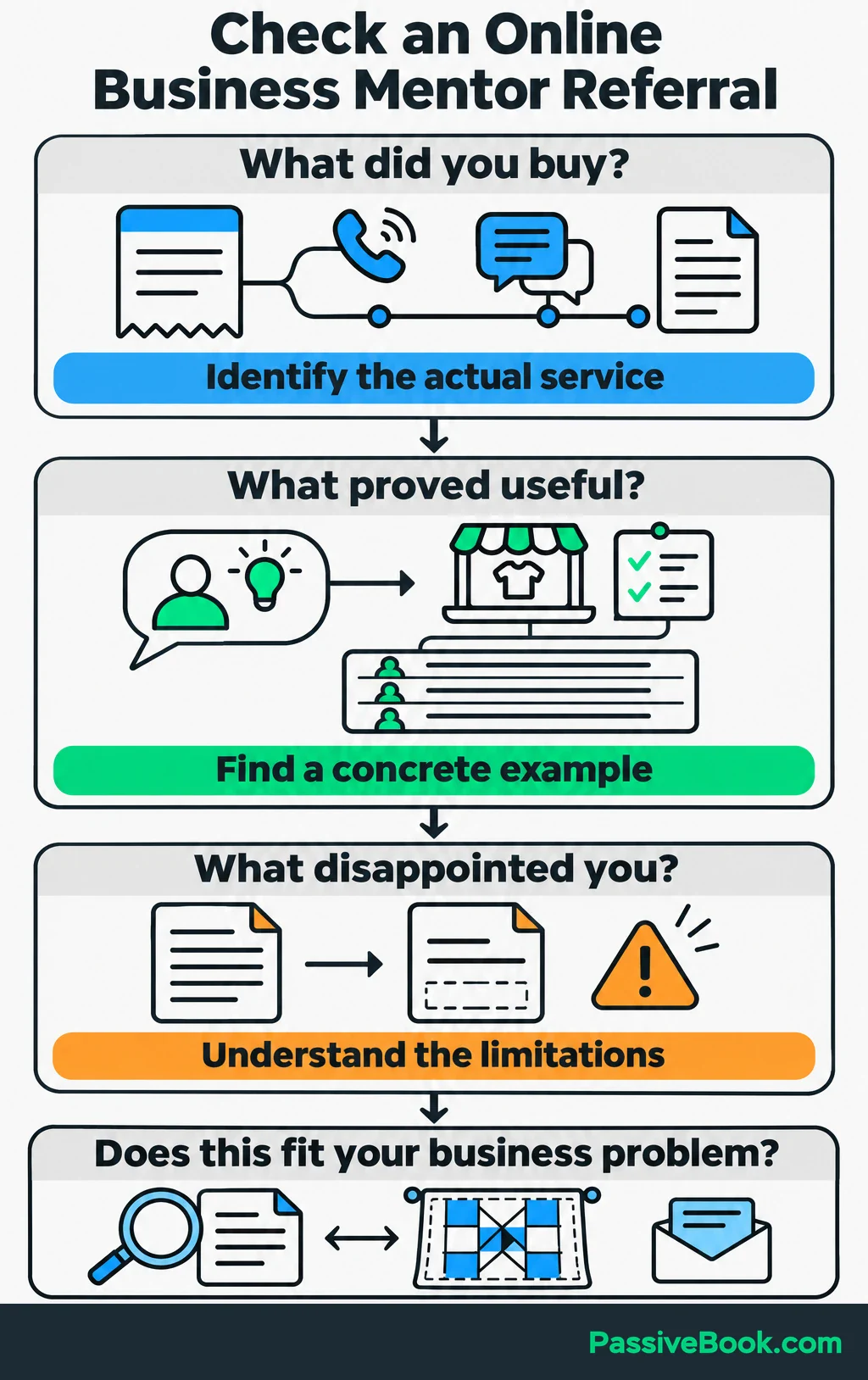
Then ask what they bought, what proved useful, and what disappointed them. “They were great” is a friendly answer, but it does not explain whether the help fits your situation.
Search LinkedIn, niche business communities, and practitioners’ websites using your business model and obstacle. Try phrases such as “digital product mentor customer validation.”
Read their answers before contacting them. Do they explain why they recommend something? Can you identify a business or product they worked on? Do they understand customers like yours?
I would pay more attention to a clear answer about testing a small offer than a long post about having an entrepreneurial mindset. You already have enough thoughts. You need help making a decision.
Professional Coach Directories
The International Coaching Federation (ICF), a professional coaching organization, offers the ICF Credentialed Coach Finder. Use it to search for coaches by coaching needs, methods, language, location, and rates.
This route is useful when your main need is clearer decisions or follow-through. Ask shortlisted coaches whether their service includes business advice, coaching conversations, or both.
For example, knowing how to test the quilt bundle but repeatedly avoiding customer conversations is a different problem from not knowing how to design the test. Choose support for the problem you actually have.
How Much Does Online Mentoring or Coaching Cost?
There is no single useful price for “business help.” Compare the full service and commitment:
- Volunteer mentoring can be free.
- Expert consultations charge by session or time.
- Ongoing mentoring and coaching may use monthly subscriptions or fixed packages.
As a concrete subscription example, Ziga Berce’s MentorCruise profile lists a $140 USD monthly plan with one 50-minute call, unlimited Q&A messaging, and replies within two days. That shows what one offer includes; it is neither a market average nor a recommendation for your business. Check the linked profile for current details.
Before comparing quotes, ask about preparation, session length, between-session access, required purchases, and minimum terms. A lower fee can cover much less contact.
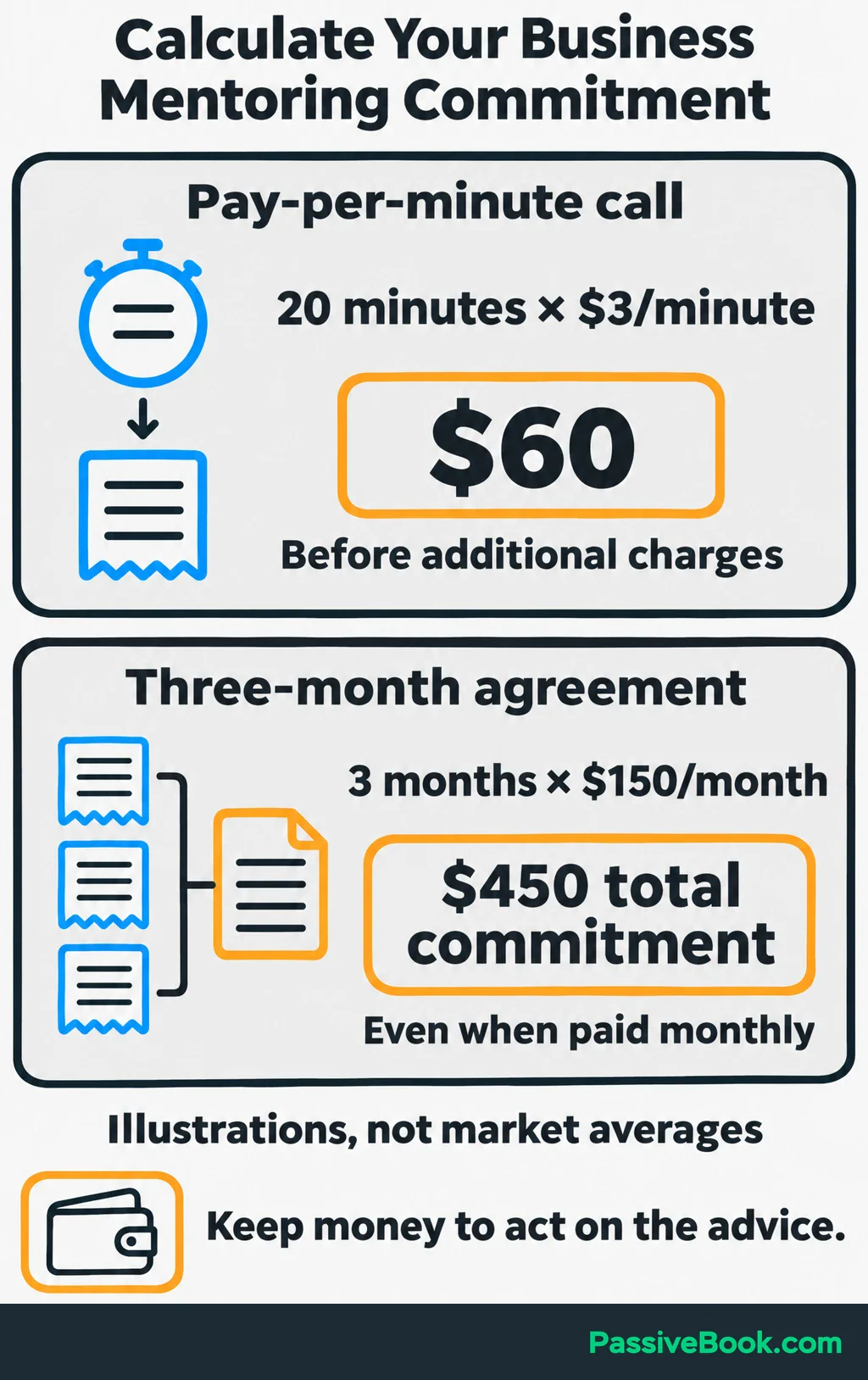
Count everything you are agreeing to buy. For illustration:
- A 20-minute call at $3 per minute costs $60 before any additional charges.
- A three-month agreement at $150 per month commits you to $450, even if payments are collected monthly.
Also check when billing starts and renews. MentorCruise’s billing terms state that subscriptions continue until canceled, including months when you do not schedule calls. Confirm your selected offer’s payment date and cancellation deadline.
My rule is simple: keep enough money and time to carry out useful advice. If the fee would consume the money needed to run your test, use free support first. Paying for a plan you cannot implement is an expensive way to acquire homework.
Verify Candidates Before Booking
A platform profile or warm introduction gives you a candidate to investigate. It does not finish the investigation.
Check relevant experience, the quality of their support, and the terms separately. Being good at running a business does not automatically make someone good at helping you run yours.
Check Relevant Business Experience
Match the person to your business model, stage, immediate problem, and constraints.
For the quilt-pattern shop, I would prioritize experience testing affordable digital products with limited resources. Managing a large advertising team may be impressive, but it answers a different need.
Cross-check claimed businesses, products, and professional roles. Visit the business website, inspect the product, and compare the public work with the candidate’s account of their involvement.
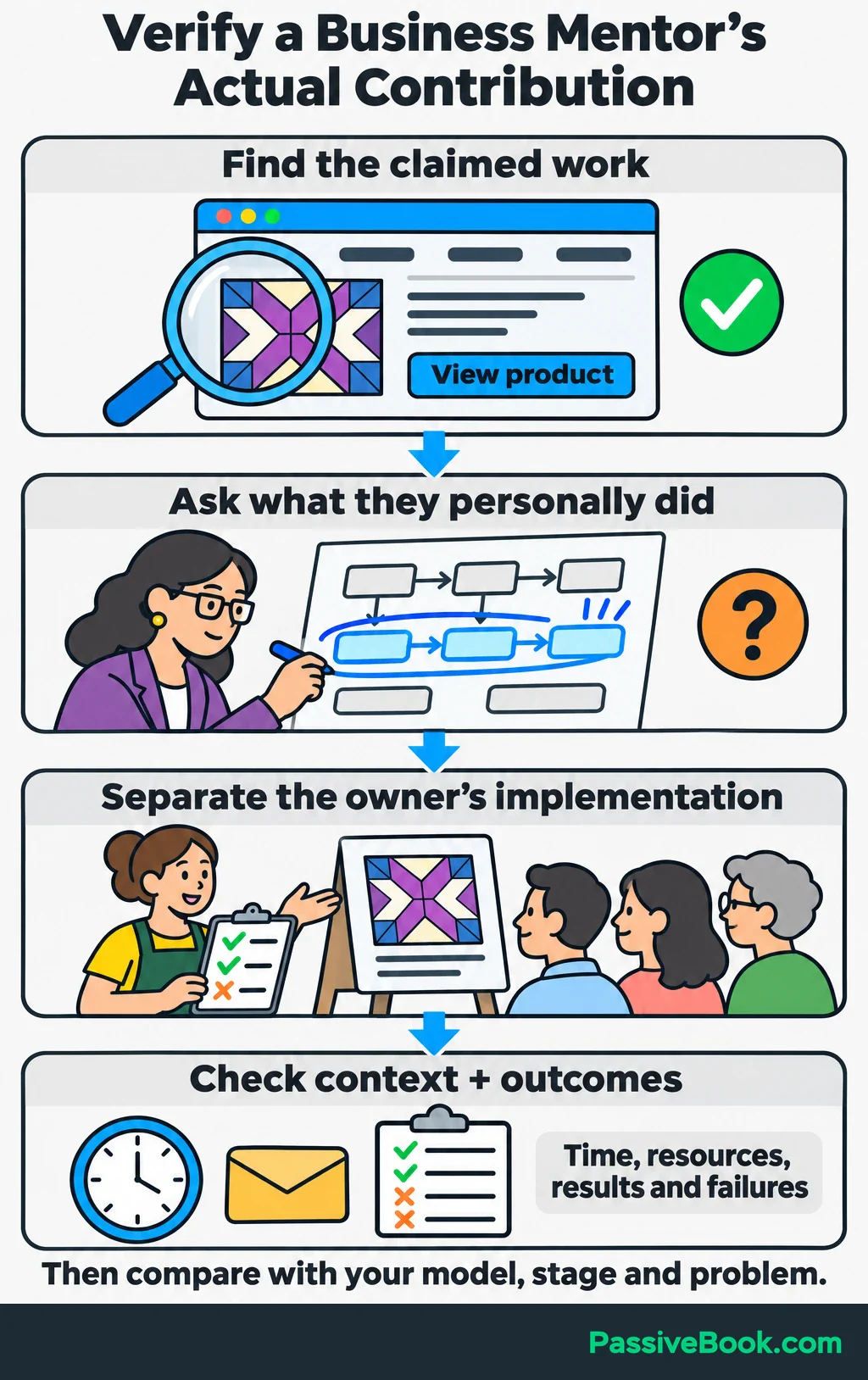
Ask what they personally did. “Worked with a successful brand” could mean anything from building its sales process to attending one meeting.
Request a comparable example and ask:
- What problem did the business start with?
- What did you recommend, and why?
- What did the owner implement?
- How long did it take, and what resources did it require?
- What happened, including anything that failed?
These questions help you separate the person’s contribution from the client’s work and circumstances.
Read or watch a small sample of their teaching too. Look for explanations you can follow and reasoning you can question. Someone with little public content may still be a good candidate, so use direct questions and references when needed.
Verify Credentials and Client Feedback
Check claimed qualifications with the organization that issued them.
For an ICF claim, use its membership and credential verification directory. Check credential status separately from membership.
A coaching qualification and relevant business experience answer different questions. I would verify both when hiring someone who promises coaching and practical business advice.
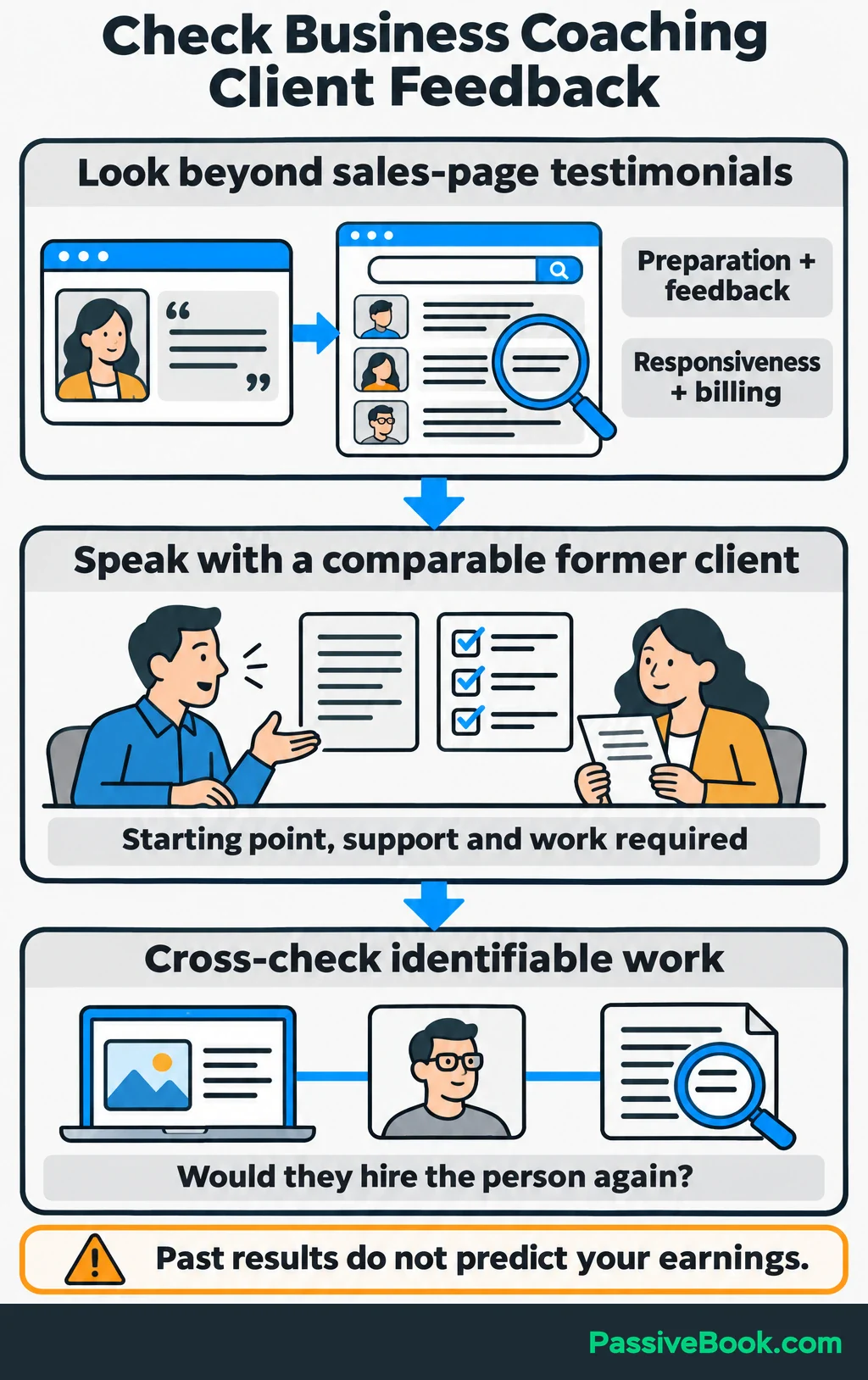
Read beyond the testimonials selected for the sales page. Look for specific comments about preparation, useful feedback, responsiveness, and billing. Search the person’s name and business name alongside “review” and “complaint.”
If possible, speak with a former client whose starting point resembles yours. Ask what support they received, what they had to implement, and whether they would hire the person again.
A success story cannot tell you what you will earn. Use it to identify claims worth checking, then look for identifiable work and references that support them.
Recognize Reasons to Walk Away
The FTC’s guidance on business coaching scams warns about guaranteed income, pressure to act quickly, misleading testimonials, and costly upsells.
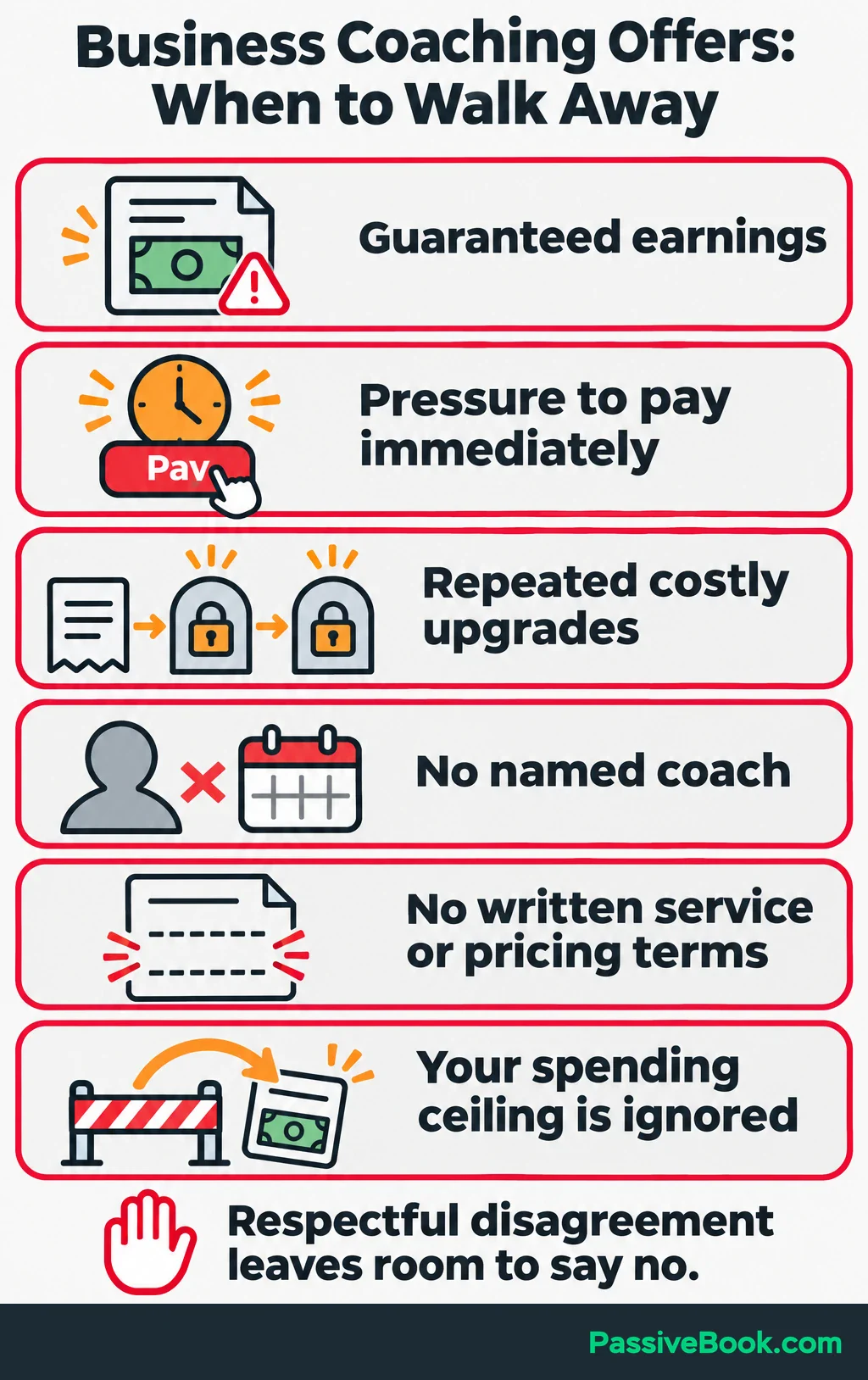
I would end the conversation when a provider:
- Guarantees earnings or promises easy money.
- Pressures you to pay before you can review the offer.
- Presents repeated upgrades as necessary for success.
- Refuses to identify who will coach you.
- Will not explain the service or provide written pricing and terms.
- Keeps recommending spending you have already said you cannot afford.
A candidate can disagree with your budget or approach. They should still explain their reasoning and respect your decision. Treating every concern as a bad mindset is a convenient sales technique.
Contact Candidates and Assess Fit
Send a short message that introduces the business, explains why their experience seems relevant, and names one challenge. Ask for a manageable next step.
Here is a message you can adapt:
Hi [Name],
I sell downloadable beginner quilt patterns, and I’m considering a larger bundle. I want to test whether customers will pay for it before creating all the patterns.
Your work on digital-product validation looks relevant to that decision. I’m working around a day job, so I need a test I can run with limited time and spending.
Would you be open to a brief conversation about fit, or is there a paid session you recommend for this question?
Thanks,
[Your Name]
For informal mentoring, begin with a focused request. Asking someone to “be my mentor” gives them a large, undefined commitment to consider. One relevant question is easier to answer.
Follow up once politely if needed, then approach another candidate.
The sample above works for an introduction, but a particular offer may need more specific questions. This AI Skill drafts a message around your business and the claims or terms you want clarified.
Free AI Provider Buying Assistant




Send your brief before the conversation and use the same core questions with each person:
- What experience do you have with this problem?
- What would you need to understand before recommending an approach?
- How would our work together proceed?
- Who would conduct the sessions, and what should I prepare?
- How would we review progress, and what support is available between meetings?
- Which parts of this problem fall outside your expertise?
- Do you receive commissions from products or services you recommend?
Discuss one real decision without expecting a complete unpaid strategy. For the quilt bundle, you could ask what they would need to know before choosing a demand test.
Notice how they respond. Do they ask about your existing customers and available time? Can they explain their thinking? Is there room to disagree?
I would favor the person who asks careful questions over the one who prescribes a complete growth plan before understanding the business.
Choose a Manageable First Commitment
Compare your shortlist against the brief you wrote at the start. Record each candidate’s relevant experience, supporting evidence, proposed approach, communication fit, availability, total cost, and commitment terms.
Be specific in your notes. “Good experience” tells you little later. “Explained how they tested a downloadable product before building the full version” gives you something useful to compare. Mark missing evidence as missing.
Eliminate anyone who fails an essential requirement, such as your budget ceiling or available meeting times. A strong reputation cannot make an unaffordable agreement affordable.
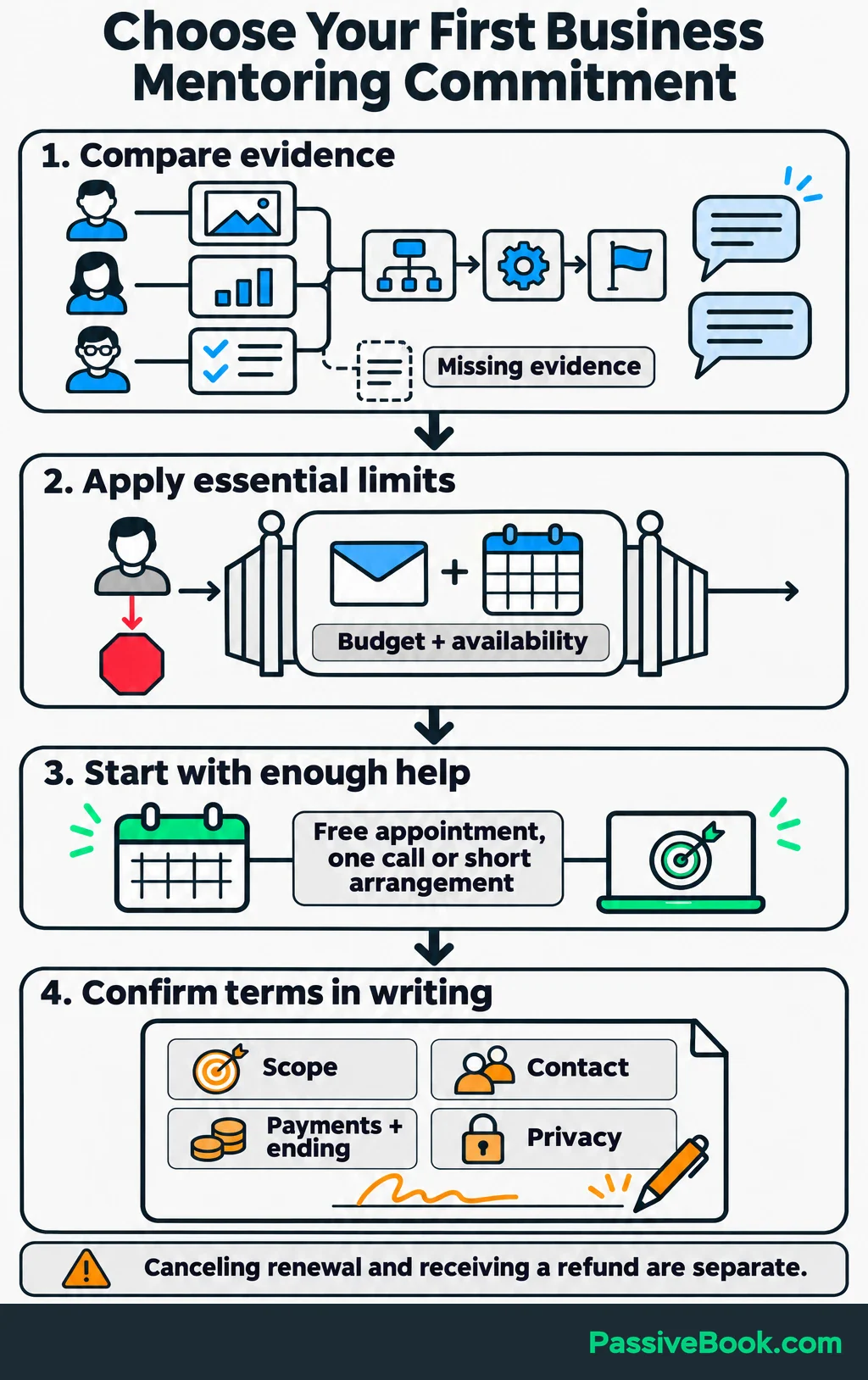
Then choose the smallest engagement that can meaningfully address your goal: a free mentoring appointment, one expert consultation, or a short paid arrangement.
Before committing, confirm these points in writing:
- Provider and Scope: Who will help you, what the work covers, and what falls outside it.
- Contact and Work: Session allowances, preparation, agreed outputs, and between-session access.
- Payments and Ending: Total commitment, payment schedule, cancellation deadline, renewal, and refund terms.
- Privacy: How business information will be handled and whether sessions will be recorded.
Canceling future billing and receiving a refund are separate matters. Make sure you understand both.
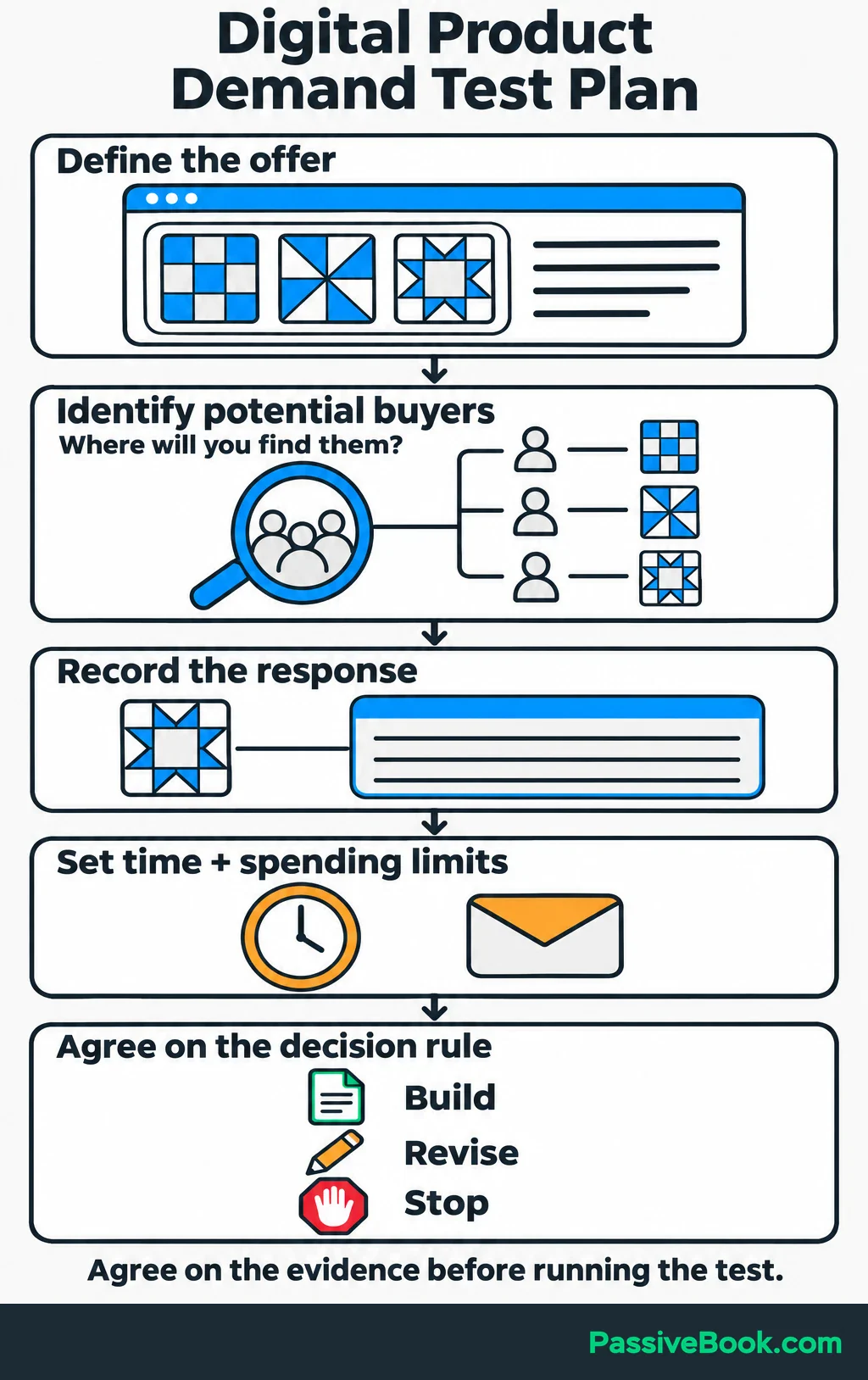
Agree on a first outcome and a review point. For the quilt-pattern shop, a useful first outcome would be a practical demand-test plan covering:
- The bundle offer you will put in front of potential buyers.
- Where you will find those buyers.
- What response you will record.
- The time and spending limit.
- The evidence you will use to decide whether to build, revise, or stop.
Agree on that decision rule before running the test. Otherwise, it is tempting to reinterpret any encouraging comment as permission to create the whole bundle.
Bring an agenda, apply the agreed actions, and report what happened. Continue when the support improves your decisions and delivers the promised service within budget.
If it falls short, raise a specific concern: “We agreed to review the test results, but the last two sessions covered general motivation.” Their response will help you decide whether to continue or stop renewal.
What Next?
Write a five-line brief for the one business decision you need help making, then use it to shortlist three candidates. Start with a free option if paying would leave you unable to act on the advice.
Use the social buttons to share this guide when your business group is comparing coaching offers. A common set of questions can make those conversations much more useful.
Which decision would you want a mentor or coach to help you make first? Leave it in the comments, and bring any other questions about choosing support too.
Share this post with your friends & followers:

