You have a few evenings free and a little money to spare, but every business idea seems to come with another tool subscription. Choosing badly could mean spending both before you find out whether anyone wants what you sell.
I’ve tried freelancing, ecommerce, print on demand, and businesses built around content. Some earned money, some swallowed it, and several demanded more work than I could sustain alongside a job. To help you weigh those demands before committing, these 23 ideas compare what you would sell, what a small test could cost, and what would justify spending more.
Which Online Business Should You Try First?
I would start with a small service you can already deliver if you can reach people who might buy it. You can test willingness to pay without first building a product catalog or an audience.
A reusable digital product makes more sense when you understand a recurring problem and can reach people who have it. Publishing suits you if you can keep producing useful material before it pays. Retail adds sourcing, delivery, and cash-flow work, so I would choose it only if those tasks appeal to you.
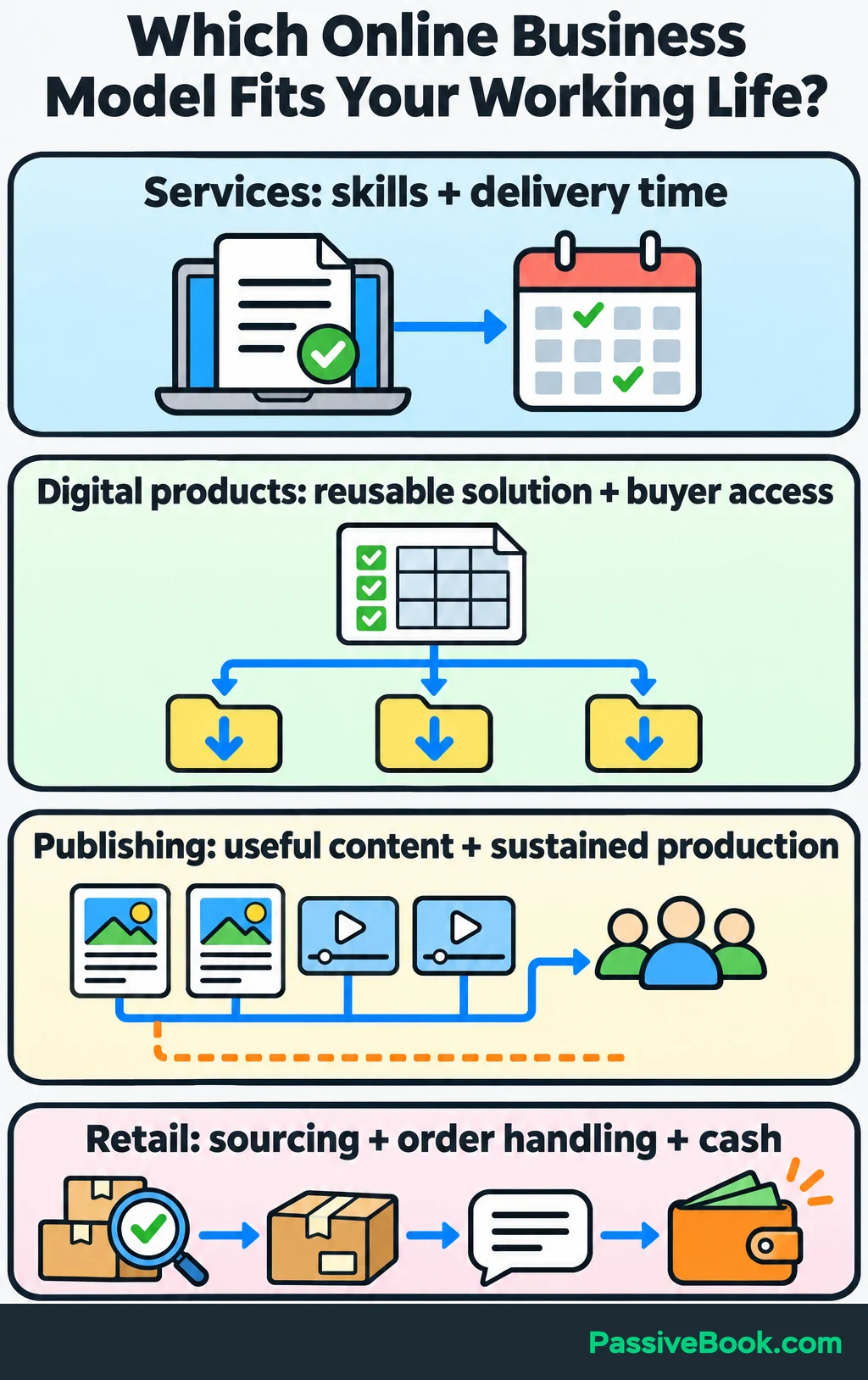
Use this comparison to narrow the list.
| Model | Choose It When | Work Must Fit Around | What Limits Earnings |
|---|---|---|---|
| Services | You can demonstrate a useful skill and approach buyers | Deadlines, communication, and delivery | Available hours, project prices, and repeat business |
| Digital products | You know a specific problem and can make something reusable | Creation time, promotion, and support | Purchases, selling costs, and support per buyer |
| Publishing | You can explain a subject well and keep showing up | Research, production, and distribution | Relevant audience growth and actions that generate income |
| Retail | You can assess products and handle order problems | Sourcing, fulfillment, and customer service | Money left per order, available cash, and handling capacity |
Before choosing, write down:
- A skill you can prove with a sample.
- The amount you can afford to lose.
- Your actual work windows, including uninterrupted time.
- Where you can reach potential buyers.
- Whether you want appointments, public content, or mostly private work.
Several online business ideas for beginners work without paid ads or appearing on camera. They still need a way to attract customers. “Faceless” does not mean “customer acquisition included.”
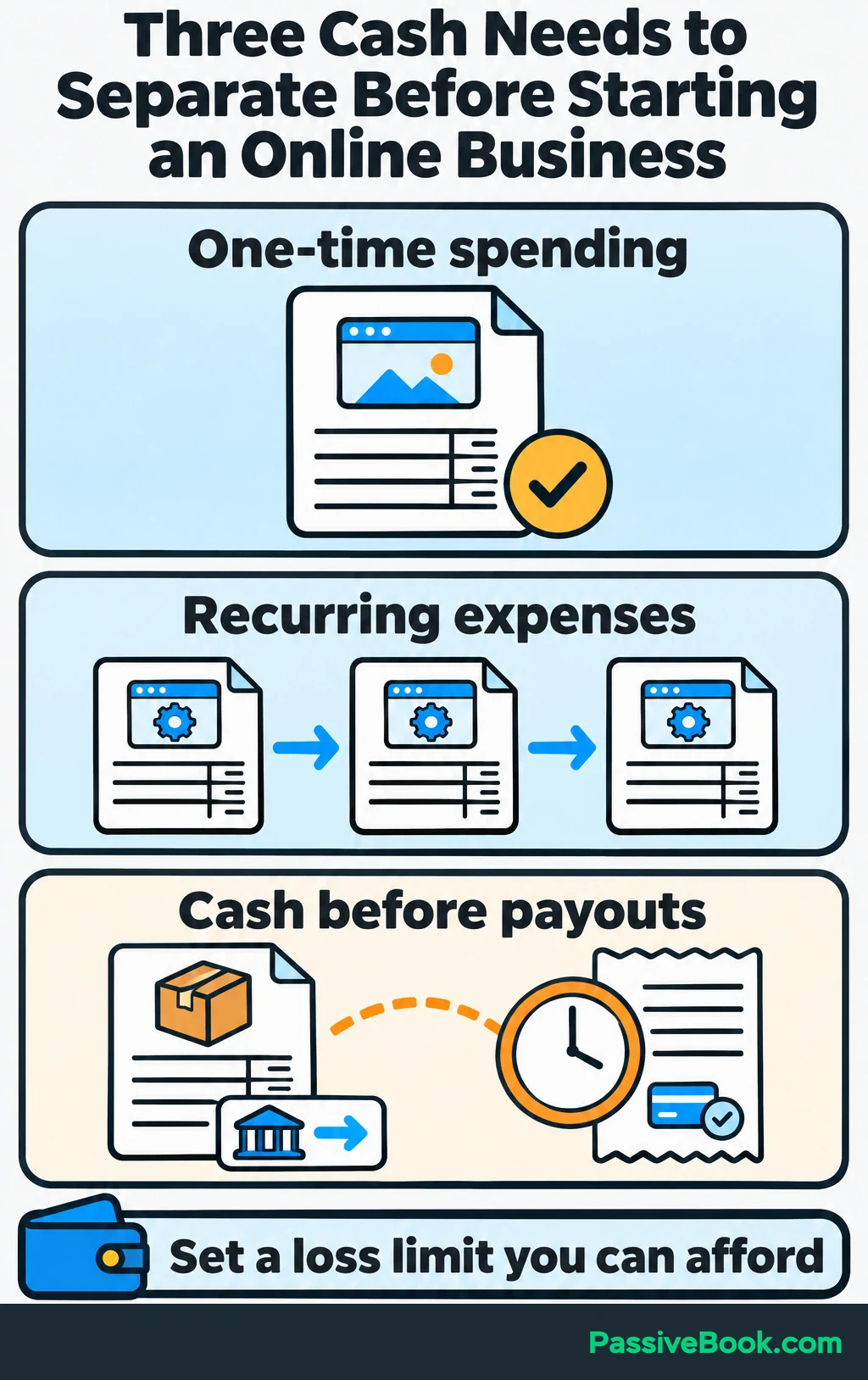
The budgets below are illustrative USD allowances for a small test, not market averages or complete startup budgets. They assume you have suitable equipment and internet access. Add missing equipment, local requirements, recurring expenses, and charges on each sale. Sales can be zero.
Keep one-time spending, monthly expenses, and cash needed before customer payouts arrive on separate lines. The SBA’s startup-cost guidance offers a useful way to organize those expenses.
Shortlist two ideas, then test one. You can combine models later, but launching three unfinished businesses is an expensive way to avoid choosing.
Online Service Businesses
Sell a defined result with a clear boundary. “I organize your customer files” is easier to quote and assess than “I help with anything.”
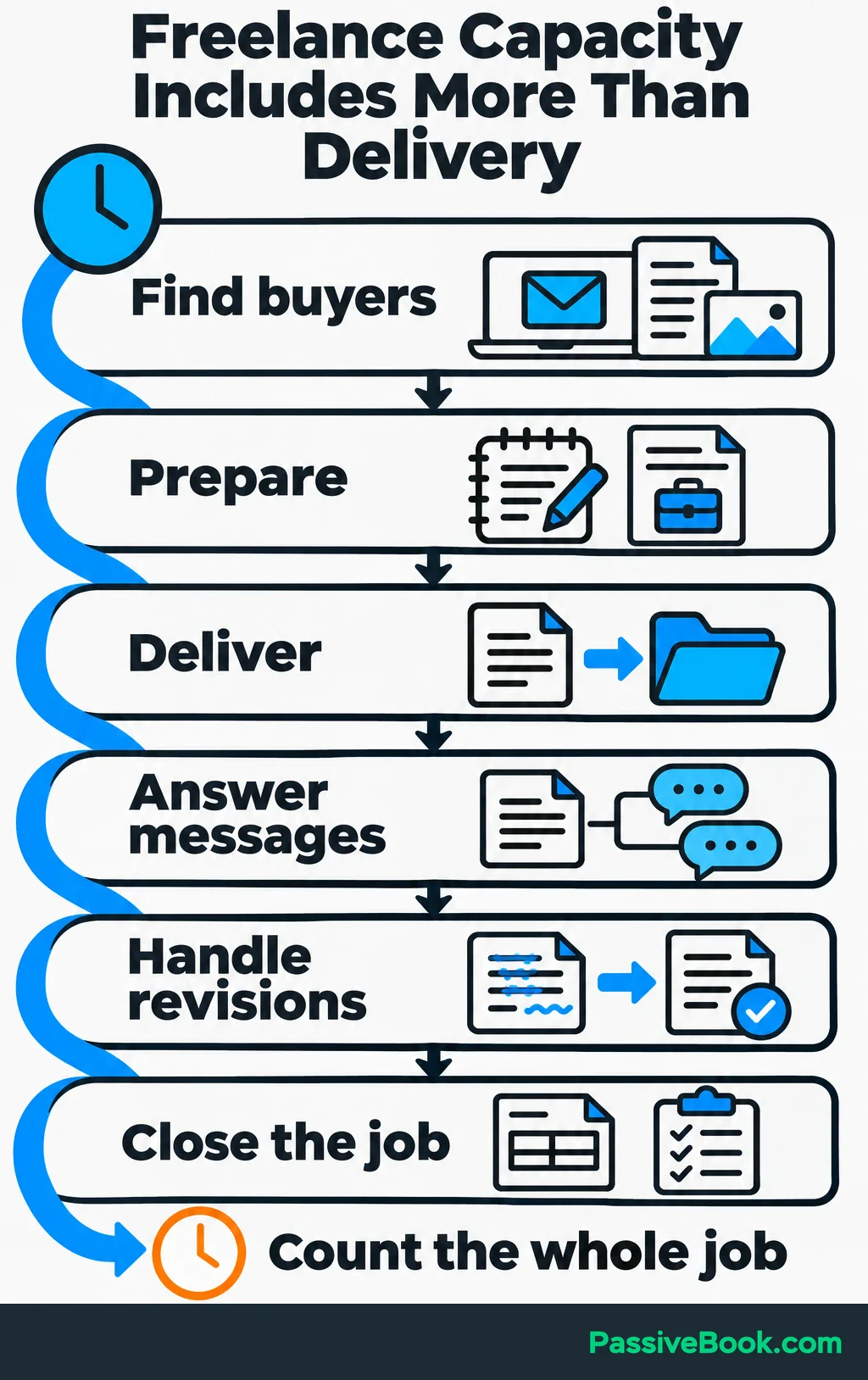
Your capacity includes prospecting, preparation, messages, revisions, and administration. I once treated sending a finished writing job as the end of the work, then spent another evening handling follow-up requests. Since then, I count the time until the job is actually closed.
Across my broader freelancing experience, my worst month was about $280 and my best was about $4,100. Those were my results, not beginner earnings benchmarks. They taught me how variable service income can be.
1. Virtual Assistance
Virtual assistance suits you if you are organized, dependable, and comfortable following someone else’s process. Start with one task, such as arranging appointments or organizing shared documents.
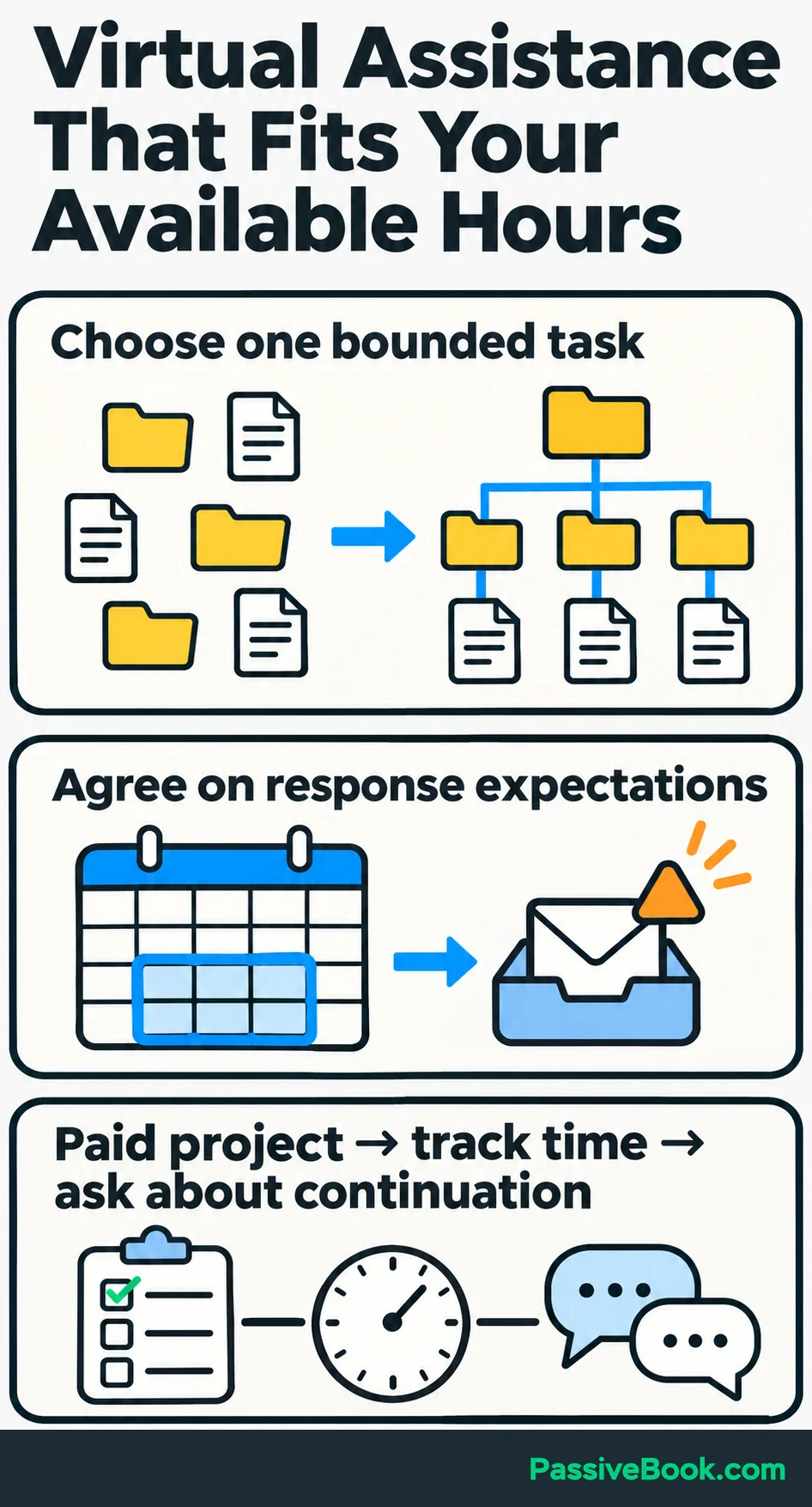
An evening work schedule can suit document cleanup, but it may clash with a client who expects immediate daytime replies.
- Test Budget: $0–$50 using existing office software. Confirm which accounts the client provides.
- Income Model: Charge for a fixed task package or a set number of hours each month. Earnings depend on your price and delivery capacity.
- First Test: Offer one bounded paid project to an existing contact. Record all working time and ask whether they want continued help.
2. Freelance Writing and Copywriting
Writing services work best when you name the asset you produce: an article, product page, or welcome-email sequence. Research and editing belong in the quote alongside drafting.
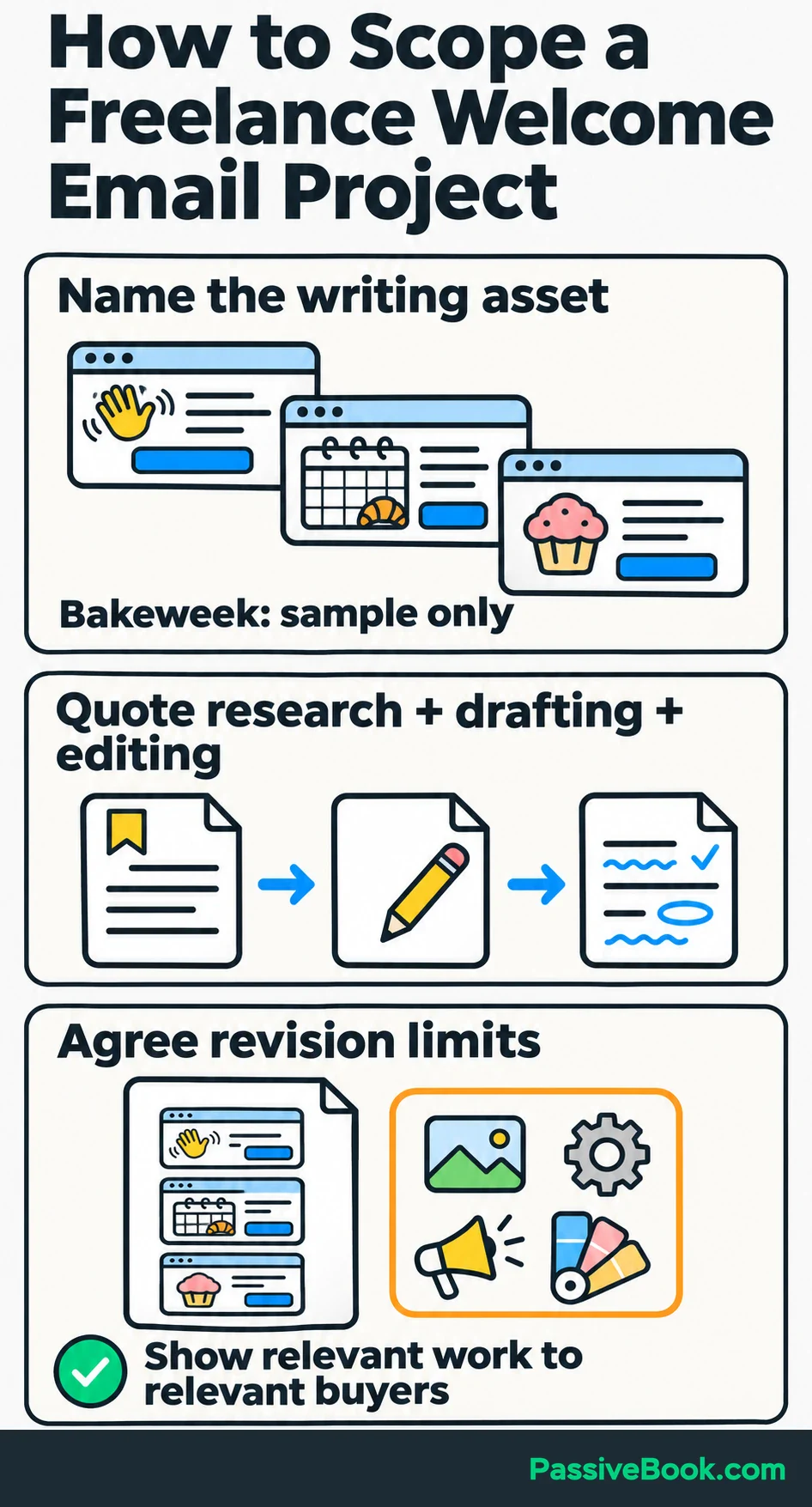
For the running example, Bakeweek is a shop selling printable order planners for home bakers. Its products, prices, and figures throughout this article are illustrations.
- Test Budget: $0–$50 for samples and essential reference material.
- Income Model: Charge per project or package, with research and revision limits agreed in advance.
- First Test: Create a clearly labeled sample welcome sequence for Bakeweek. Use it to approach businesses buying comparable writing, then seek one paid assignment.
I would rather see one strong, relevant sample than a portfolio full of unrelated pieces.
3. Proofreading and Copyediting
Proofreading checks surface errors, such as spelling and punctuation. Copyediting goes further into clarity, consistency, and sentence structure. Agree on which service the buyer needs before quoting.
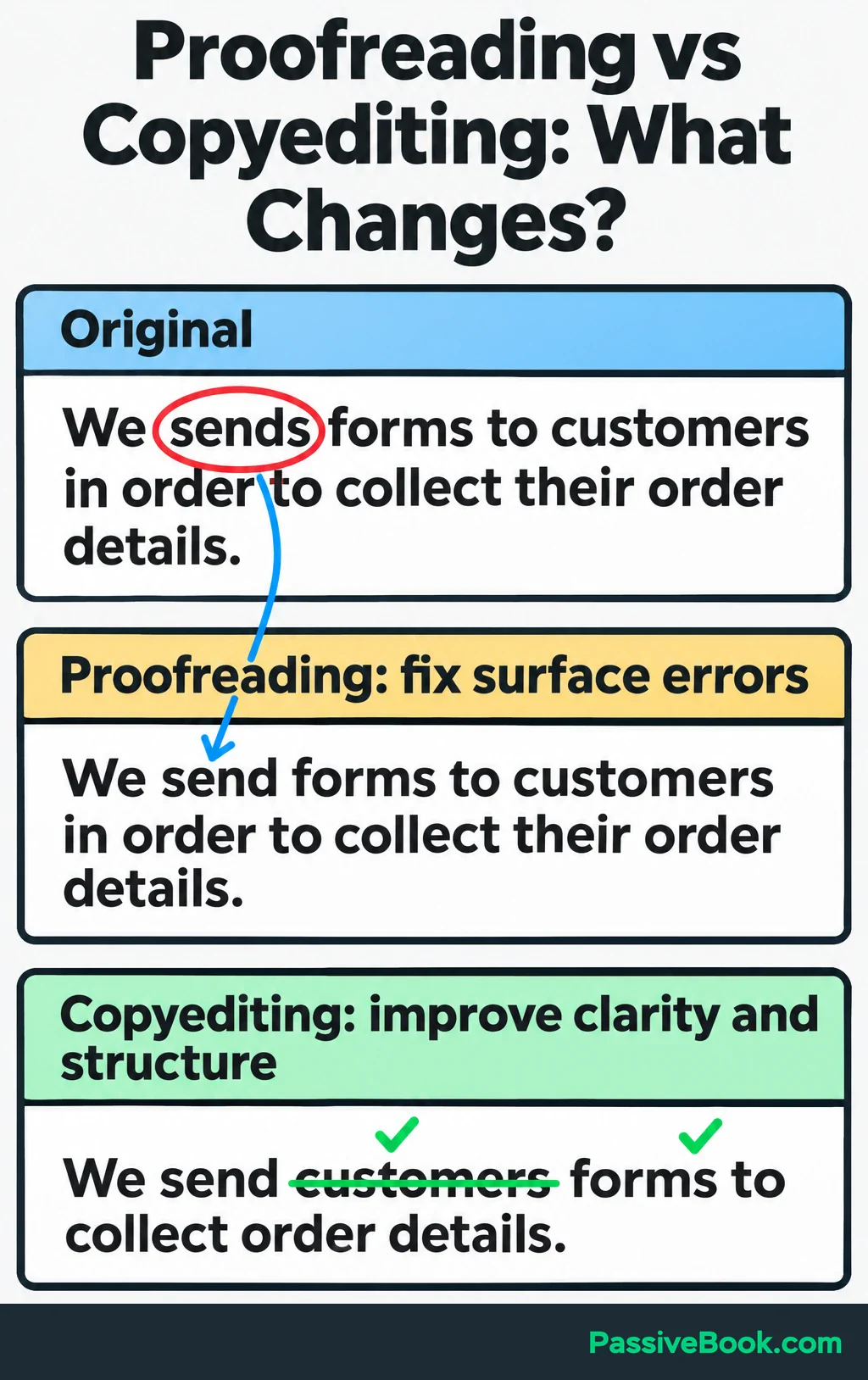
This suits careful readers, but being good at spotting typos does not automatically prepare you to restructure a technical document.
- Test Budget: $0–$50 for document tools and reference resources.
- Income Model: A project fee based on document length, condition, and editing depth.
- First Test: Show a before-and-after sample and sell one short document review through a referral or suitable marketplace. Compare your estimated hours with the time it actually takes.
4. Graphic Design Services
Start with a narrow type of work, such as product-listing images or presentation layouts. You need sound layout, typography, and file-preparation skills before accepting payment.
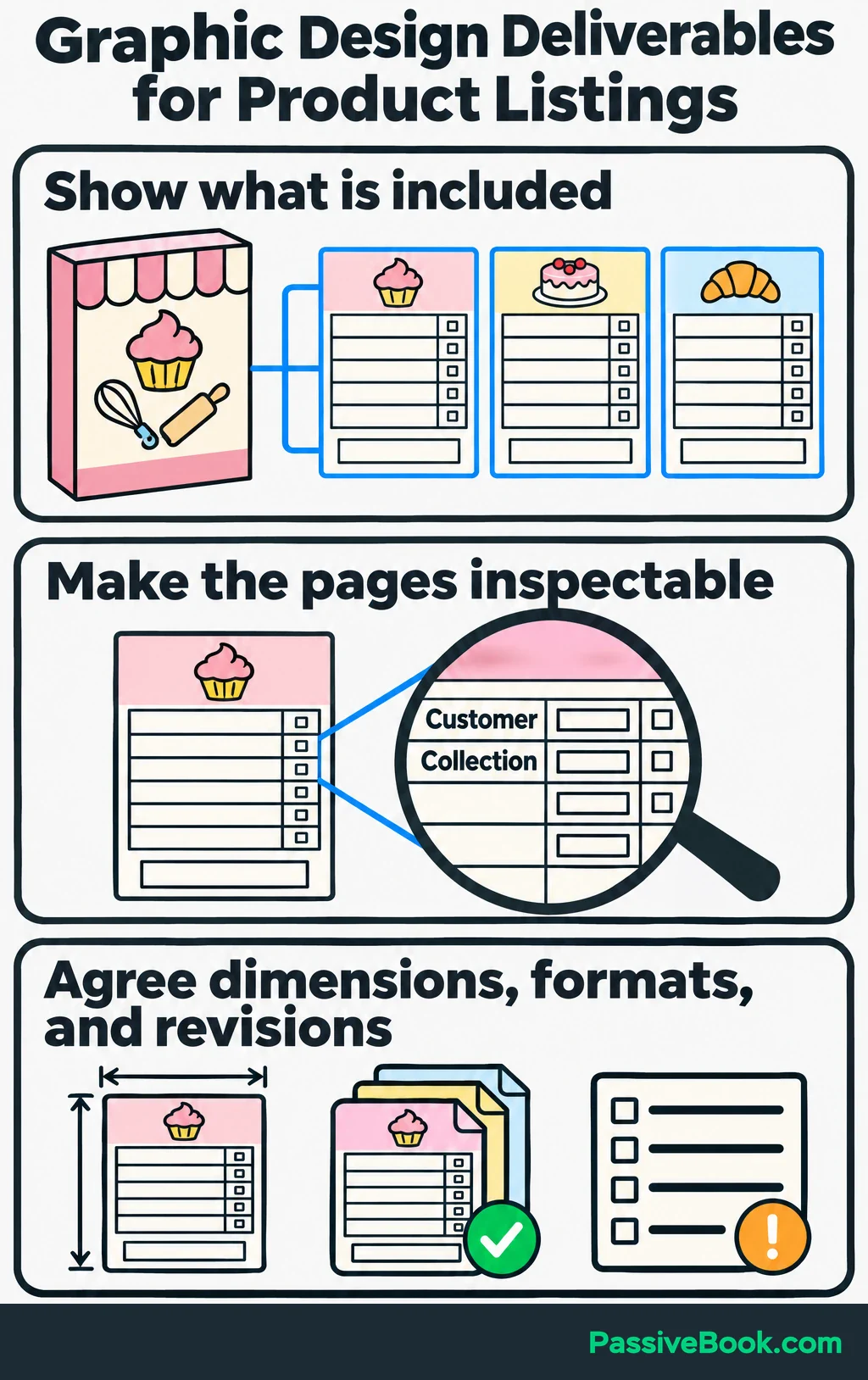
Bakeweek could need listing images that show what comes in its planner pack and make the printed pages easy to inspect.
- Test Budget: $0–$100 for software and any necessary licensed assets.
- Income Model: Fixed packages with agreed dimensions, file formats, and revision rounds.
- First Test: Build a sample package and offer comparable paid work. Check whether the buyer can use the finished files without needing you to rebuild them.
5. Video Editing and Content Repurposing
You can edit videos without appearing in them. Clients supply recordings, and you turn those files into finished clips.
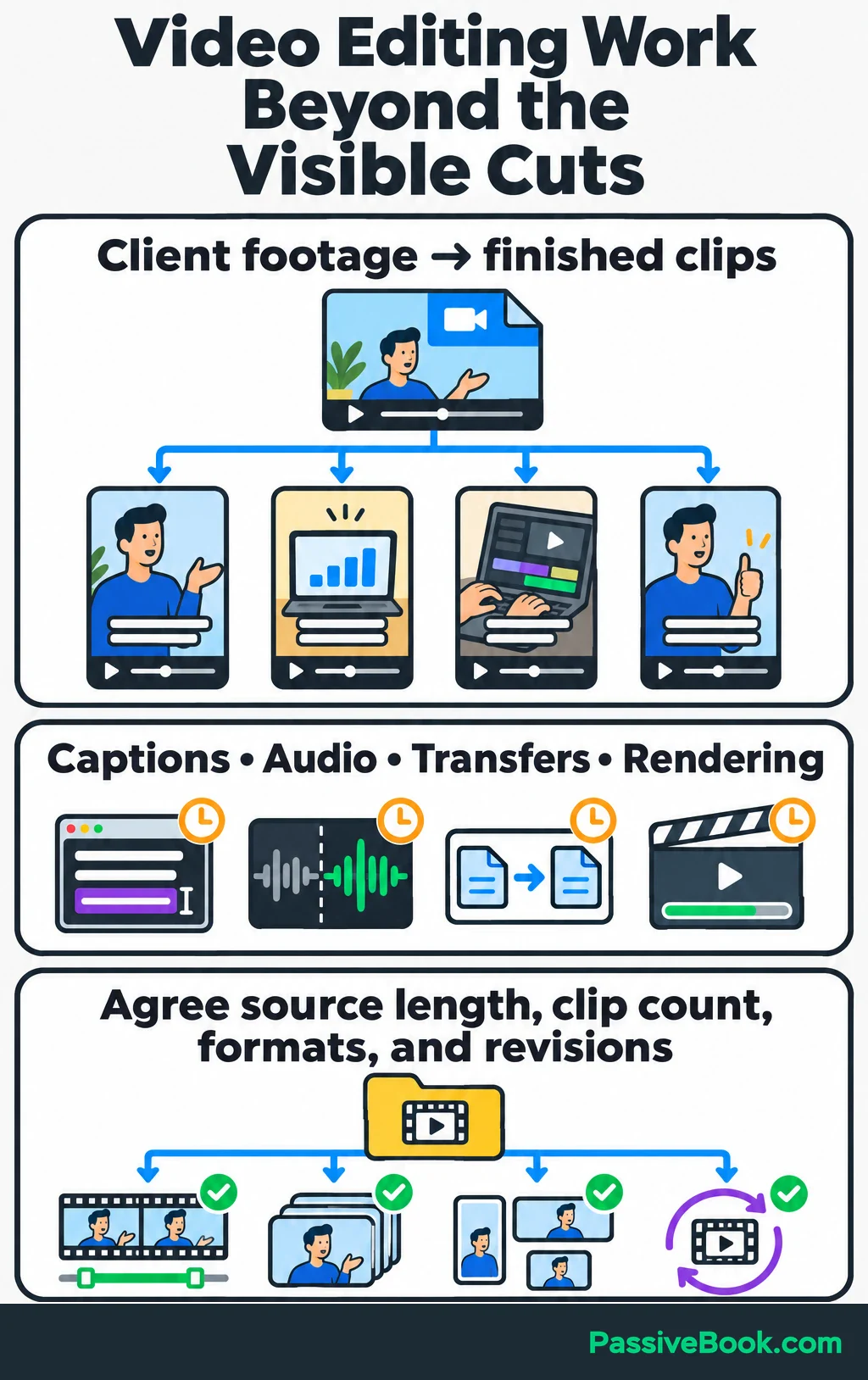
Watch the hidden workload. Captions, audio cleanup, file transfers, and rendering can take longer than the visible cuts.
- Test Budget: $0–$100 with an existing computer capable of handling the footage.
- Income Model: Charge per clip or batch. Specify source-footage length, output count, formats, and revisions.
- First Test: Edit footage supplied with permission, then approach someone already publishing recordings. A paid batch and interest in another order are better signals than compliments on your editing style.
6. Social Media Management
A scheduled publishing service can fit around a job. Daily moderation and customer messages require regular availability, so price those responsibilities separately.
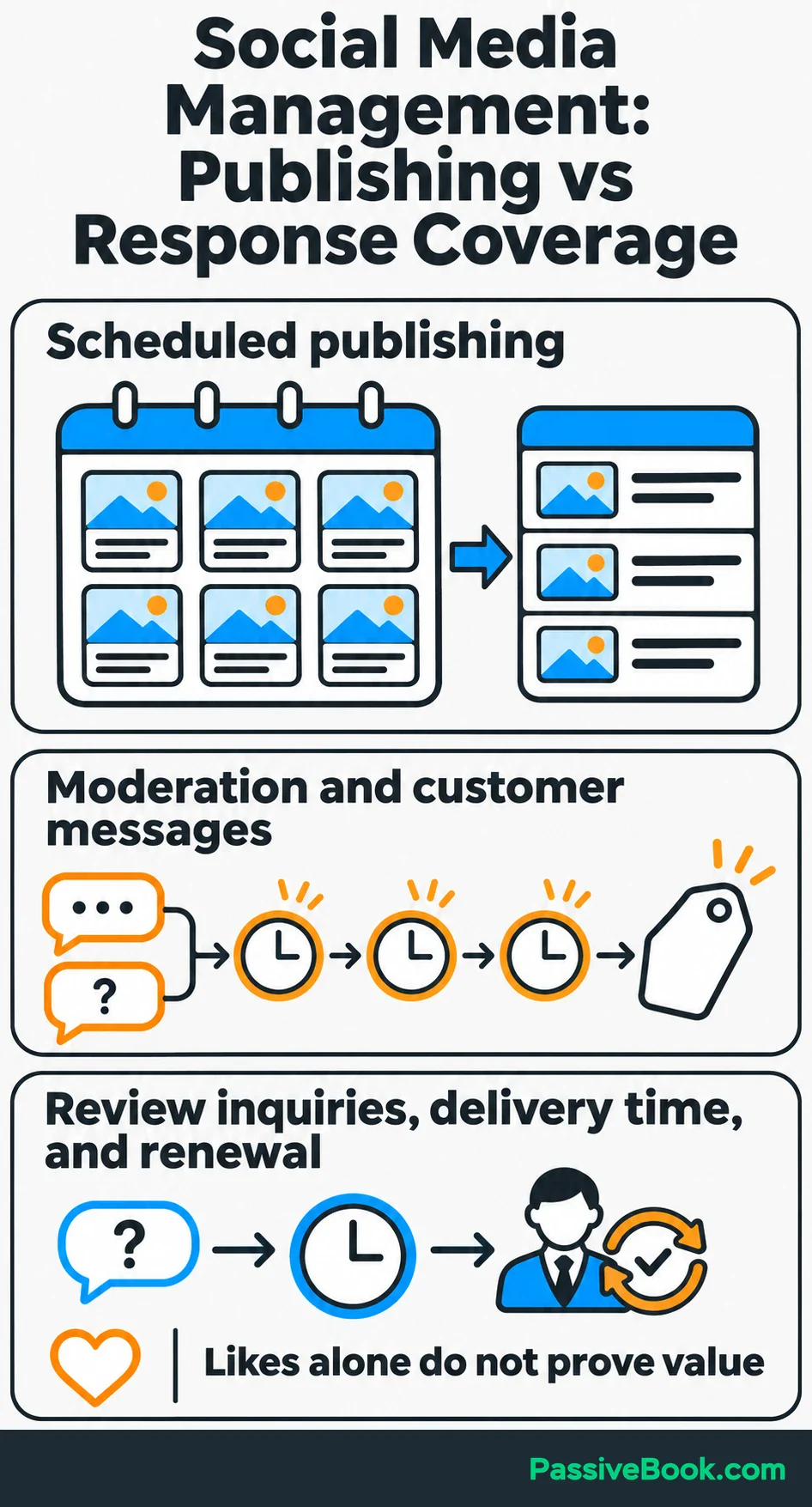
I would start with one platform and a defined publishing schedule. Promising to “grow everything” makes your workload vague before you have even begun.
- Test Budget: $0–$50 for a limited pilot.
- Income Model: A recurring fee for specific content and management duties.
- First Test: Offer a paid pilot to a business already using the platform. Review relevant inquiries, your delivery time, and whether the client wants to renew.
Likes may help diagnose content performance, but they do not prove the service is worth renewing.
7. Website Setup and Maintenance
Simple website work can become a useful service, but learn to test forms, backups, updates, and mobile layouts first. A good-looking page with a broken inquiry form is unfinished work.
I prefer self-hosted WordPress for ownership and flexibility. Its publishing features and plugin system let you extend a basic site as requirements grow.
- Test Budget: $0–$150 for a demonstration site.
- Income Model: A defined build fee, with optional ongoing maintenance. Client hosting, domains, and paid extensions belong in the client’s budget.
- First Test: Seek a small referral project. Agree on page count, content responsibilities, support hours, and what must work before acceptance.
8. Online Tutoring
Teach a subject you already understand accurately. A narrow learning objective is easier to deliver than a promise to help with everything.
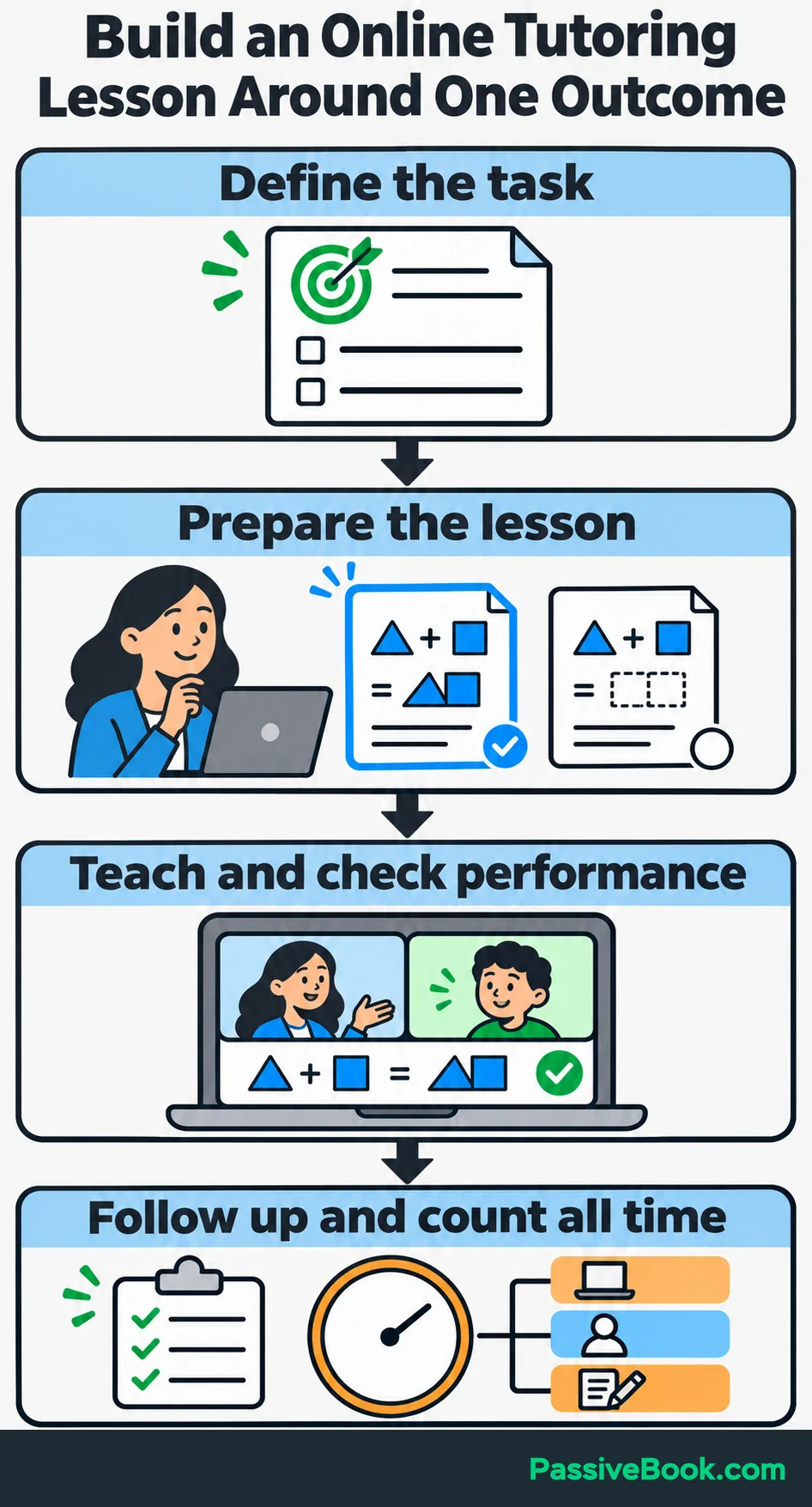
Tutoring needs scheduled appointments, so check whether your available hours match the learners you want to reach.
- Test Budget: $0–$100 for basic audio and teaching materials.
- Income Model: Paid sessions or lesson packages. Group sessions can serve more people when their needs match.
- First Test: Sell an introductory lesson with a concrete objective, then assess whether the learner can complete the intended task and wants further help.
Include preparation and follow-up when deciding whether the session price works.
9. Spreadsheet Cleanup and Reporting
This suits you if you can organize data, check formulas, and understand what someone needs to decide.
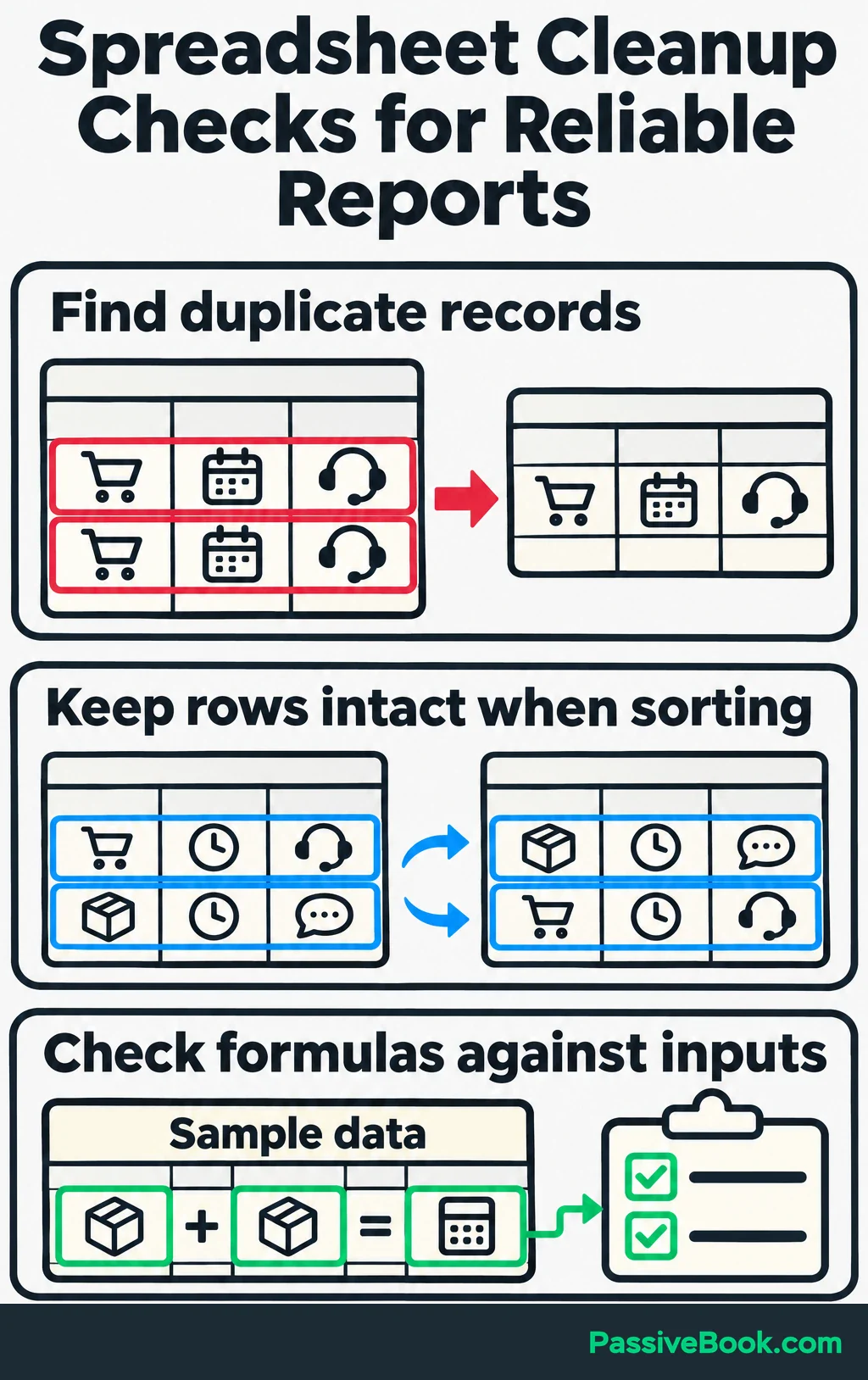
You might remove duplicate entries, repair a workbook, or build a repeatable weekly report. Accuracy matters more than adding another colorful chart.
- Test Budget: $0–$50 using existing spreadsheet software.
- Income Model: A bounded cleanup project or recurring reporting fee. Messy inputs can sharply increase delivery time.
- First Test: Build a sample with invented data, then approach a contact with one reporting problem. Agree on checks that prove the workbook works.
For Bakeweek, a sample could track planner sales and support requests without losing entries when someone sorts the sheet.
10. Simple Workflow Automation
Connect one small administrative process after you have learned to build and troubleshoot it yourself. Start with something like transferring form responses into a tracking sheet.
Make connects apps through a visual workflow builder, and I would choose it for an initial project where straightforward setup matters.
- Test Budget: $0–$100 for practice accounts and usage charges.
- Income Model: Charge separately for implementation and ongoing monitoring. Client subscriptions belong in the client’s budget.
- First Test: Demonstrate the process with mock data, then sell one limited implementation. Include checks for missing data, failure alerts, and a manual fallback.
A workflow that works once is a demonstration. A service needs to handle what happens when it fails.
Digital Products You Can Sell Repeatedly
A reusable product lets you serve another buyer without repeating the entire production process. Promotion, support, and updates still take work.
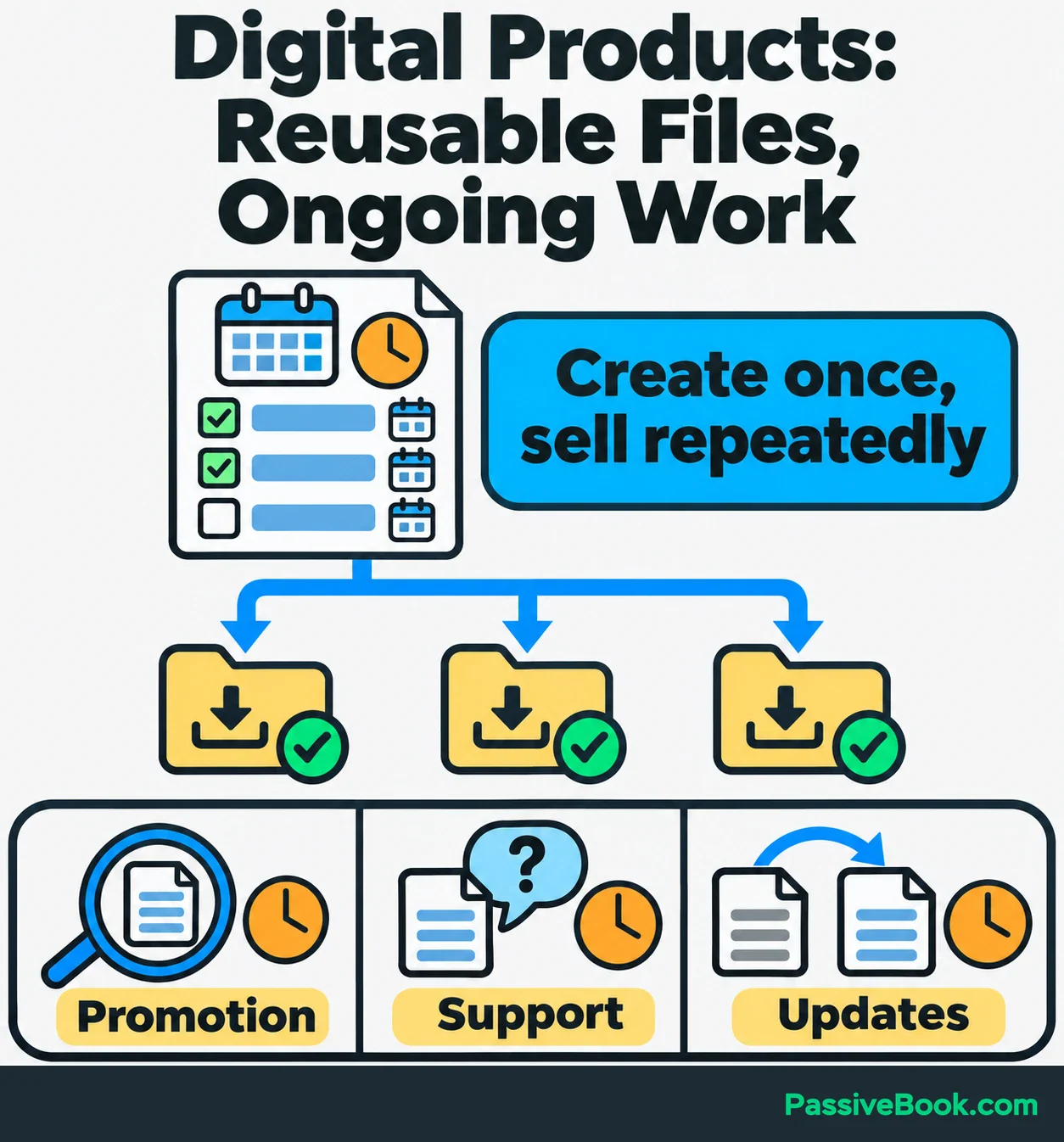
Start with one useful product. A large catalog multiplies the work before you know which problem people will pay to solve.
Revenue comes from purchases multiplied by price. Profit requires subtracting selling costs and operating expenses. The worked example near the end shows how to make that distinction.
11. Printable Planners and Checklists
A printable should make one task easier. Bakeweek’s weekly order planner could help buyers record customer requests, preparation deadlines, and collection times.
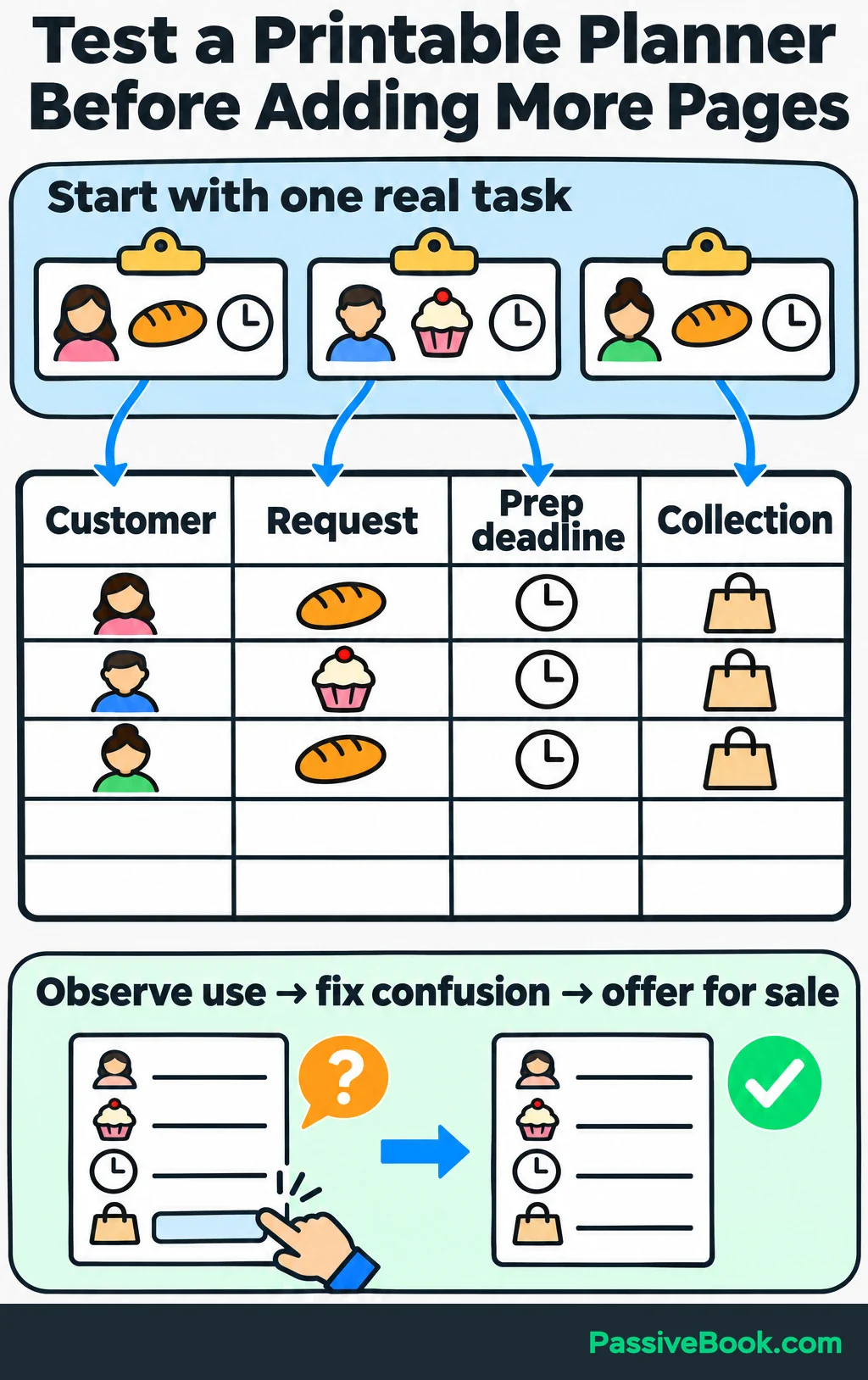
I would test whether the page works in use before worrying about decorative extras.
- Test Budget: $0–$50 for layout, test printing, and initial selling costs.
- Income Model: Individual downloads or bundles, with earnings dependent on sales volume and costs.
- First Test: Observe someone using one finished planner, then offer that version for sale. Look for purchases and repeated points of confusion before adding pages.
Marketplace charges affect the margin. Etsy can charge listing, transaction, payment-processing, and other applicable fees, so calculate using its official fee policy.
12. Editable Templates and Spreadsheet Tools
Editable products give buyers a structure they can adapt. Unlike a printable, they must keep working when someone changes information.
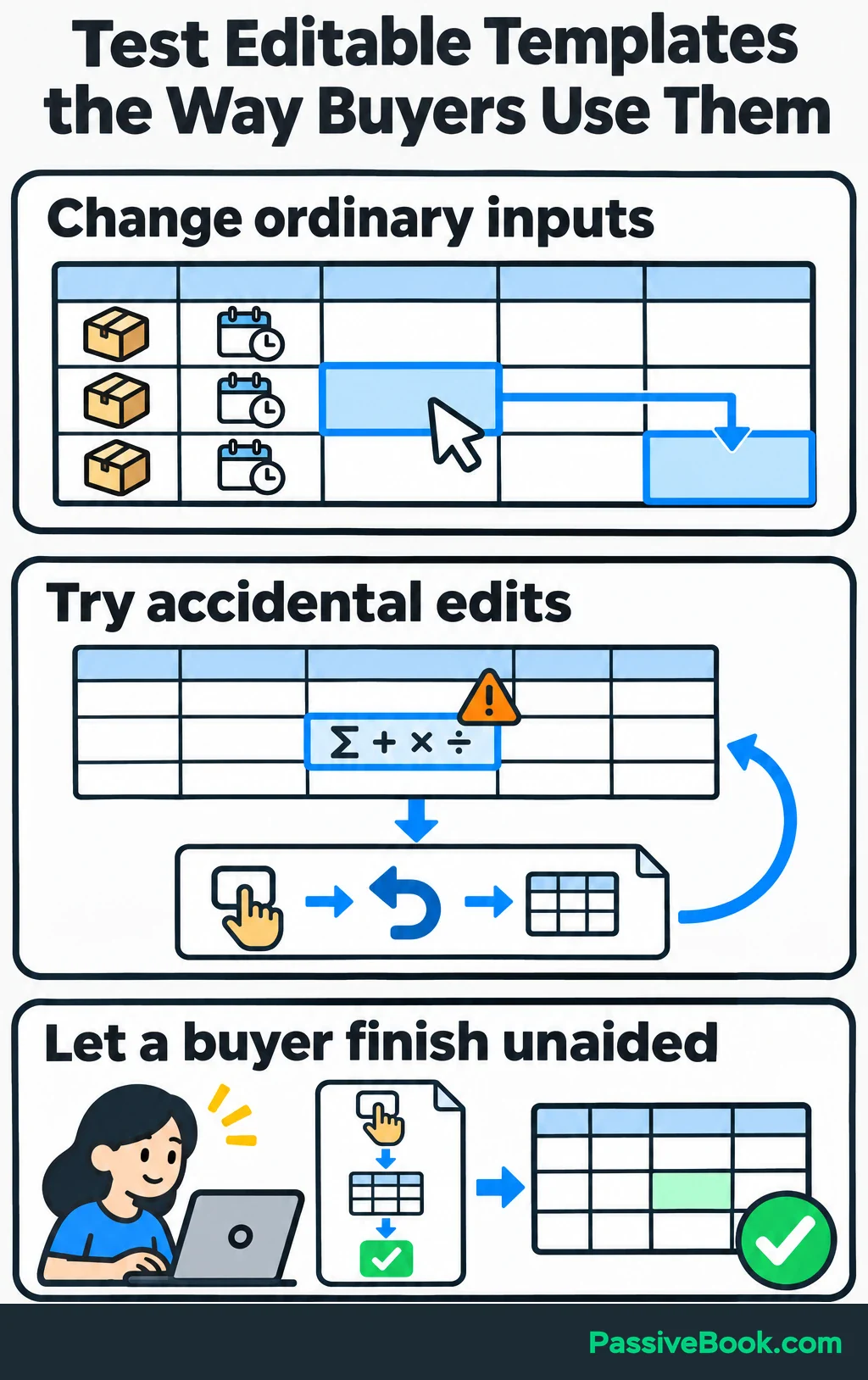
Bakeweek could offer an order-tracking workbook with fields for requests and deadlines. That needs instructions and testing with ordinary buyer behavior, including accidental edits.
- Test Budget: $0–$100 for building, testing, instructions, and selling arrangements.
- Income Model: Per-template or bundle sales. Compatibility questions and customization requests affect support time.
- First Test: Ask a prospective buyer to complete the intended task without your help. Fix recurring confusion and seek paid purchases of the working version.
13. Ebooks and Practical Guides
A useful guide takes someone through a defined task from start to finish. Length is secondary.
For Bakeweek, that might mean setting up a weekly order-planning routine. It would need clear examples of organizing requests and deadlines, rather than pages of general encouragement.
- Test Budget: $0–$200 for a short, self-produced guide. Get separate quotes for professional editing or illustration.
- Income Model: Direct sales or publishing royalties.
- First Test: Share an outline and useful sample with prospective buyers. Use their questions to shape a short, complete guide, then offer it for sale before expanding it.
For direct selling, I would consider Gumroad’s storefront and digital-product options before commissioning a custom shop.
14. Prerecorded Mini-courses
Teach one outcome you can demonstrate accurately. Screen recordings, audio, and written lessons can work without showing your face.
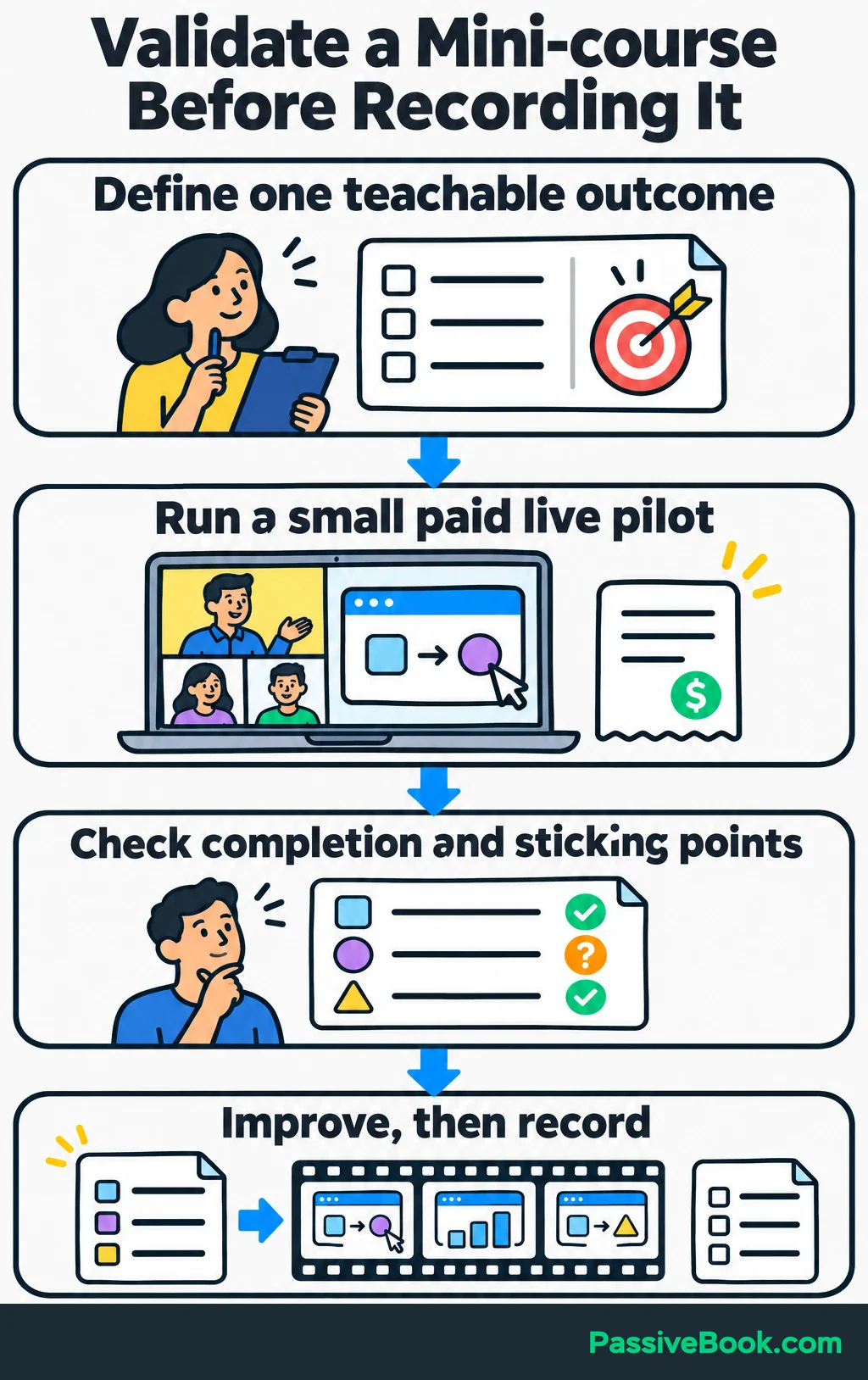
I once rushed a course without validating it. It attracted few sales and a bad review, and I removed it. Recording the lessons had felt like progress, but I had skipped the work that would tell me whether the course deserved to exist.
- Test Budget: $0–$150 for basic recording and delivery.
- Income Model: Per enrollment, with ongoing promotion, support, and updates.
- First Test: Deliver a small paid live pilot before recording the course. Check whether learners complete the intended task and where they get stuck.
15. Licensed Photos, Illustrations, and Digital Assets
Here, buyers license reusable creative material instead of commissioning custom work. You need original assets suited to a clear commercial use.
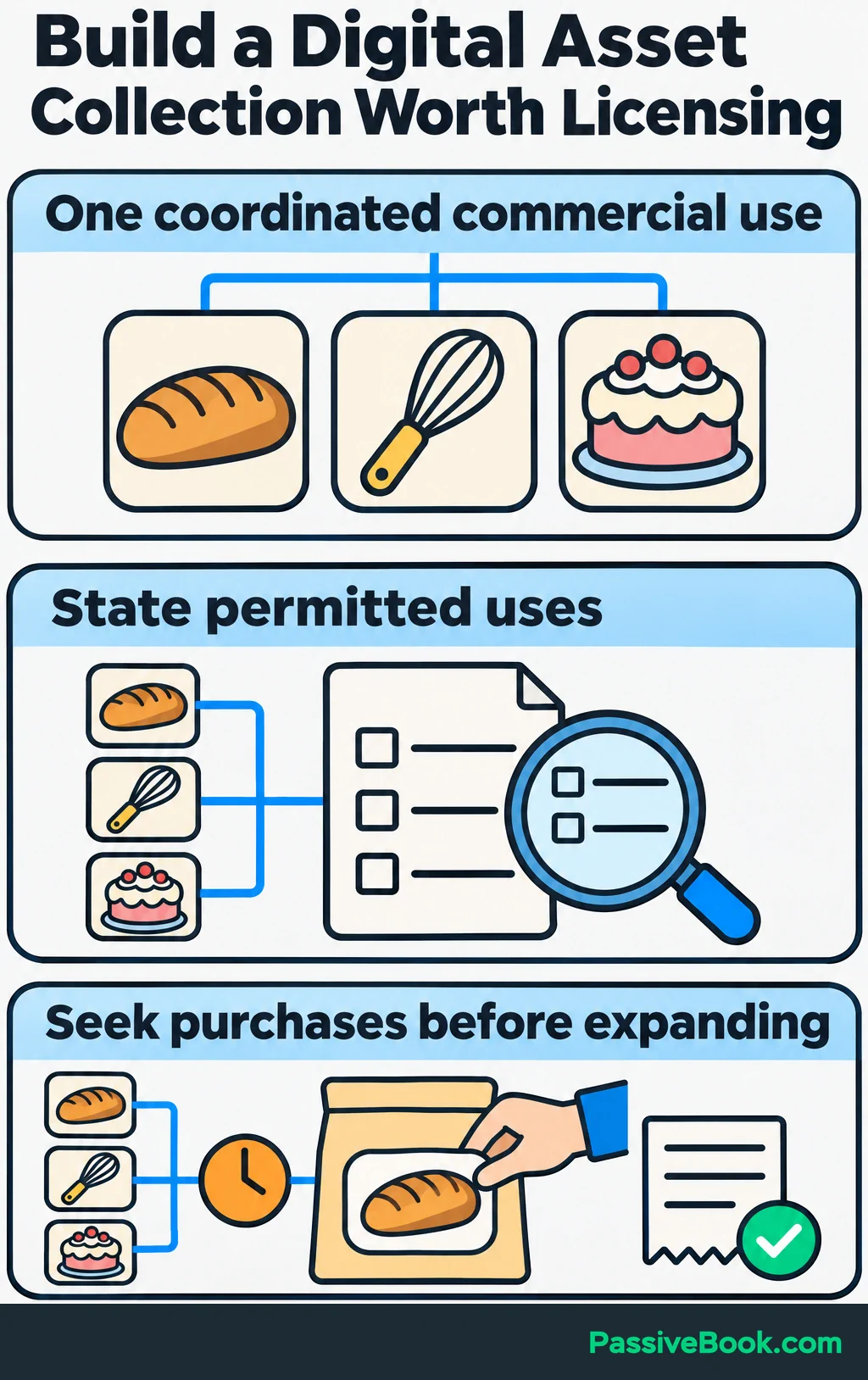
A coordinated collection is easier to explain than a folder of unrelated files.
- Test Budget: $0–$150 with suitable existing equipment.
- Income Model: Direct pack sales or marketplace licensing payments. Discoverability and production time limit growth.
- First Test: Create one focused collection and put it where relevant buyers already purchase assets. State permitted uses and seek purchases before expanding.
Choose this if you enjoy making the assets themselves. Uploading files is the easy part; making a collection worth licensing is the business.
Audience-based Online Businesses
Publishing gives you something to build on over time, but it requires useful material and distribution before it produces dependable income.
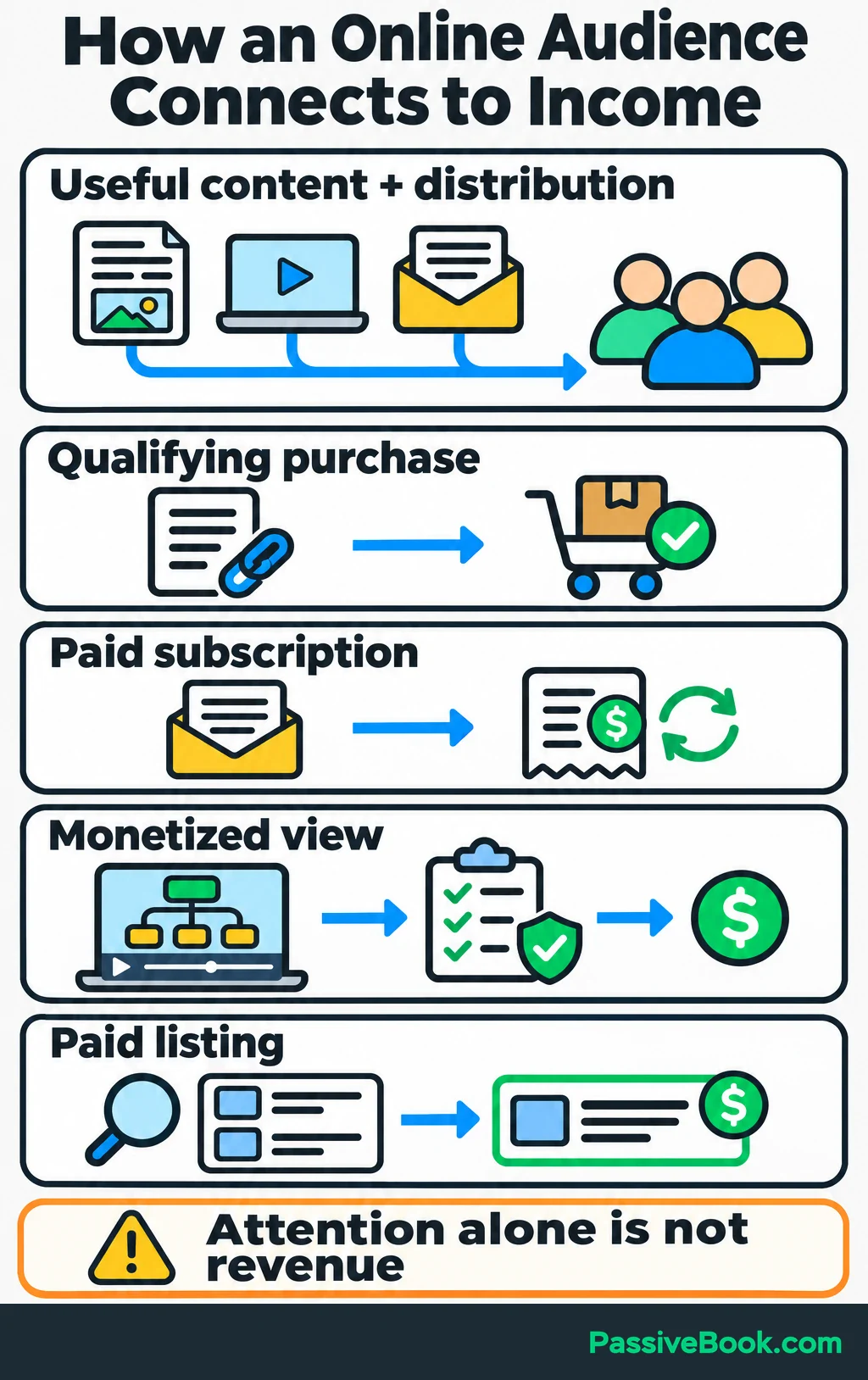
Choose the action that pays before choosing your production schedule. That might be a qualifying purchase, paid subscription, monetized view, or paid listing.
I spent months chasing social followers in another niche while the bank account barely moved. That experience changed what I measure: an audience needs a connection to an offer.
16. A Niche Affiliate Blog
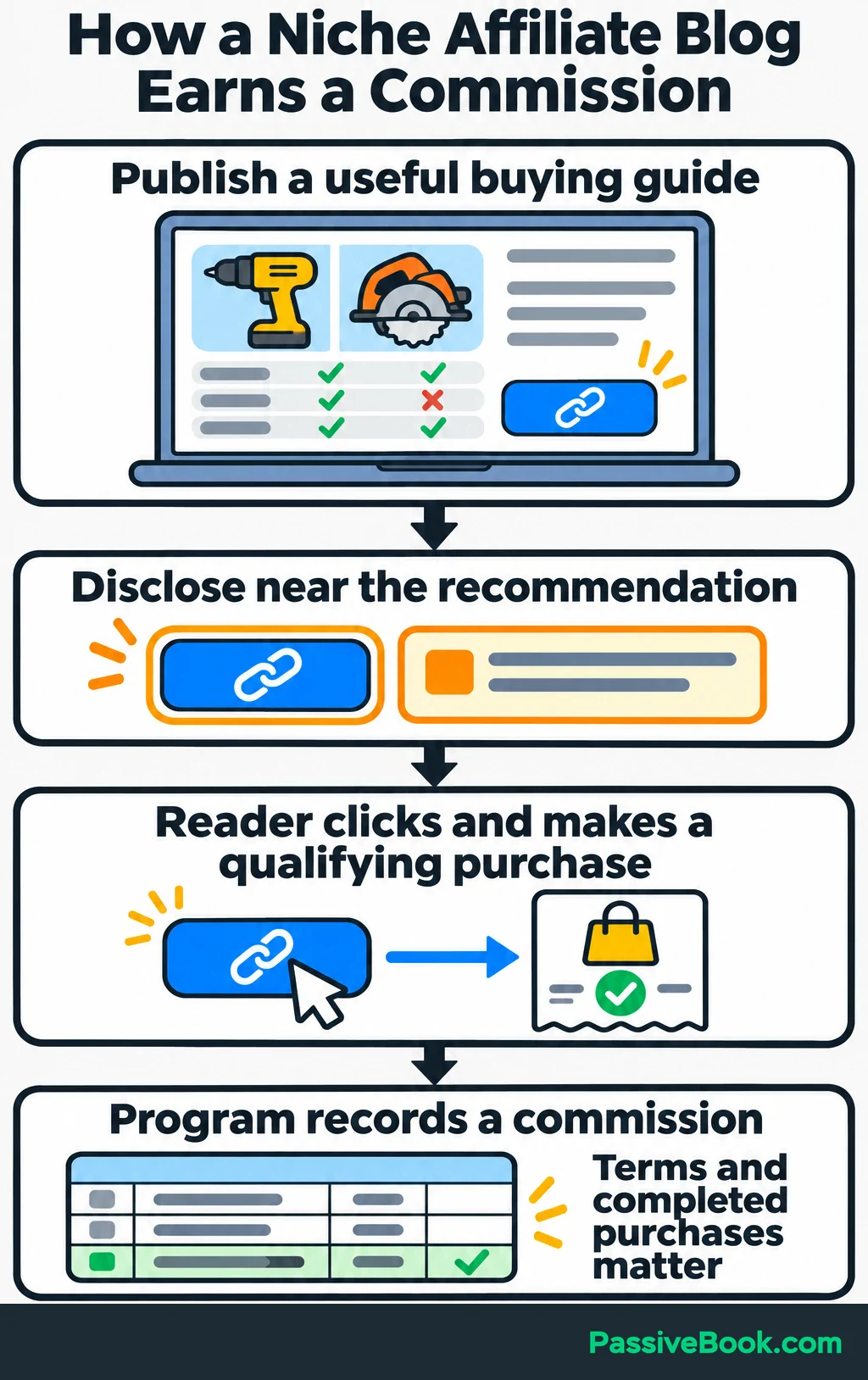
An affiliate blog helps people make buying decisions and earns commissions on qualifying referrals. Choose a subject where you can offer useful knowledge and firsthand observations.
My first three months brought in about $23 while I chased the wrong products. After moving toward honest reviews of tools I used, I reached roughly $340 a month consistently. Those are personal results, not projected reader earnings.
- Test Budget: $50–$150 for a lean initial site setup, with renewal costs checked separately.
- Income Model: Commissions determined by program terms, relevant traffic, and completed purchases.
- First Test: Publish a small set of focused buying guides and use one search or referral channel. Track relevant visits, recommendation clicks, and commissions.
For recommendations subject to US requirements, disclose commissions clearly near the recommendation, following the FTC’s affiliate-disclosure guidance.
17. A Paid Newsletter
A paid newsletter needs a reason for readers to keep paying. That could be useful reporting, analysis, or curation they would struggle to assemble themselves.
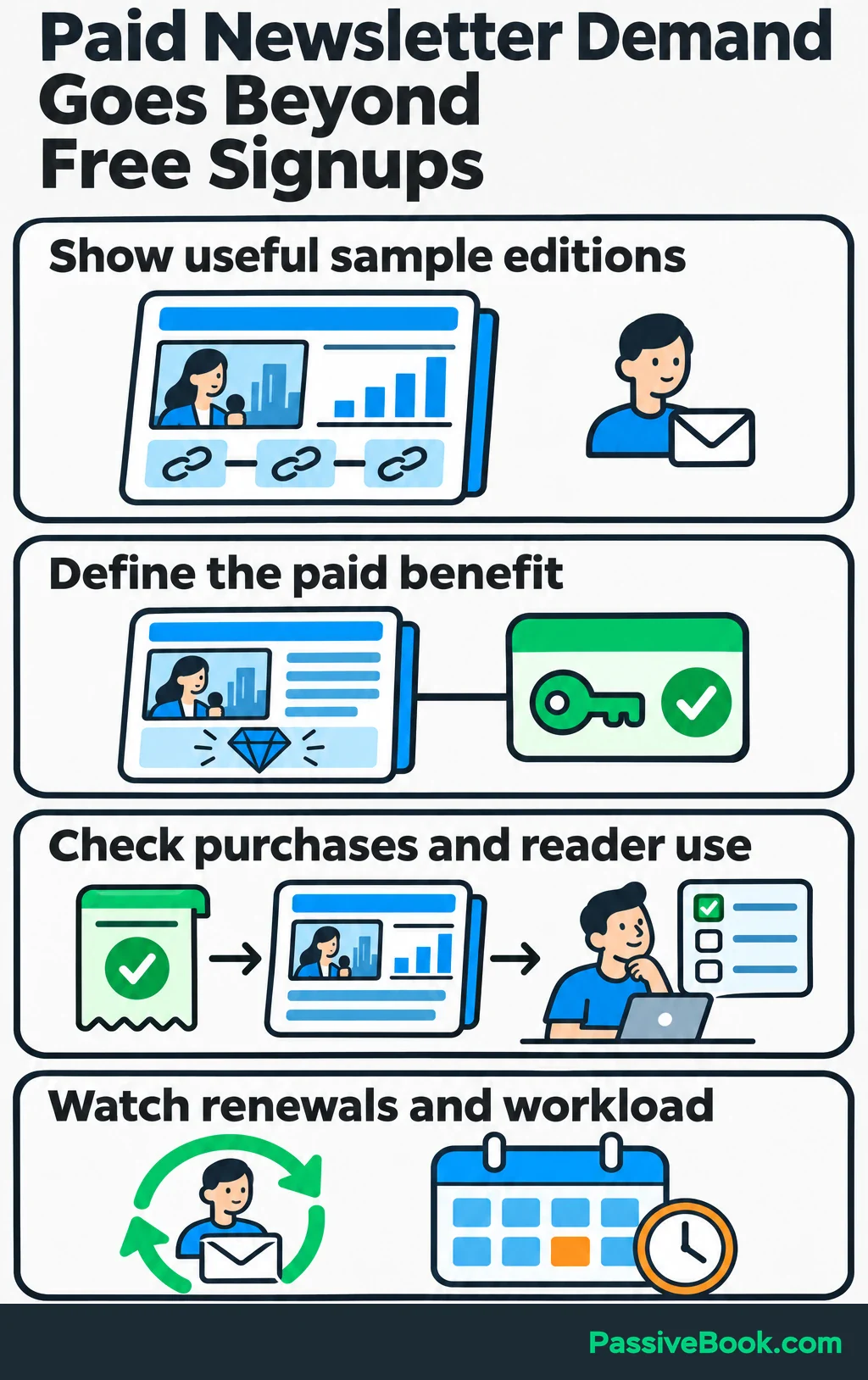
I would avoid promising daily editions while working around a job. Choose a schedule you can maintain during an ordinary busy week.
- Test Budget: $0–$100 for a small pilot.
- Income Model: Recurring subscriptions, less publishing and payment costs. Reader retention matters alongside new sales.
- First Test: Publish sample editions and offer a clearly defined paid benefit. Evaluate purchases, reader use, and renewals.
My newsletter experience comes from other niches, not Passive Book. It has made me cautious about confusing free signups with demand for a paid publication.
18. An Original YouTube Channel
You can publish demonstrations, narrated explanations, or screen recordings without appearing on camera. You still need to script, record, edit, and package something worth watching.
- Test Budget: $0–$150 using existing equipment.
- Income Model: Relevant products or referrals can generate sales. Advertising revenue requires YouTube Partner Program eligibility and approval.
- First Test: Publish a small series answering related questions. Review viewing behavior and actions toward a relevant offer before buying equipment.
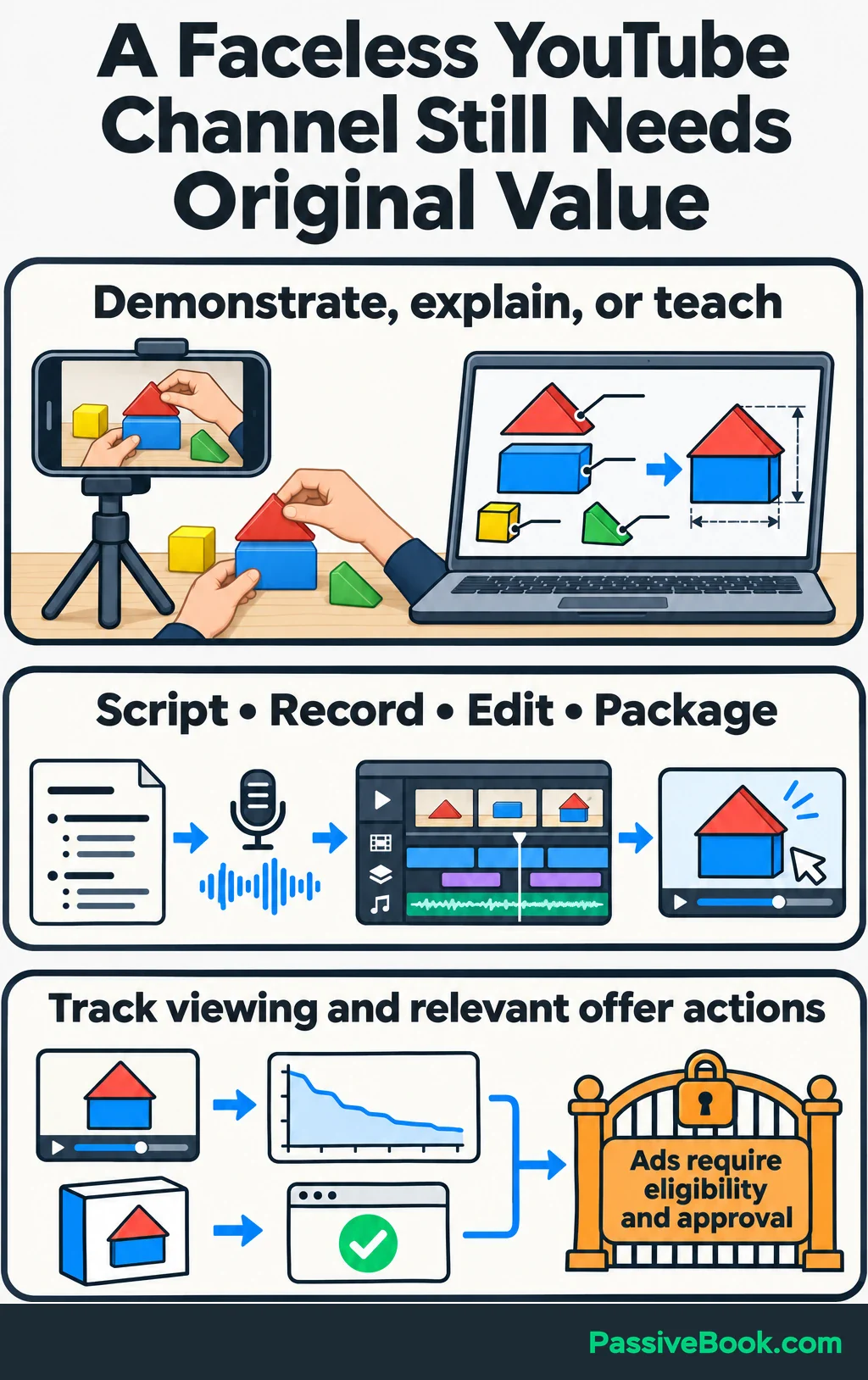
Build around substantive original value. YouTube’s monetization policies exclude repetitive or mass-produced inauthentic content and restrict reused content without enough added value. Faceless production still needs a point of view and useful substance.
19. A Niche Online Directory
A directory helps people complete a specific search task. Begin with a manually maintained collection so you can learn what users need before paying for custom software.
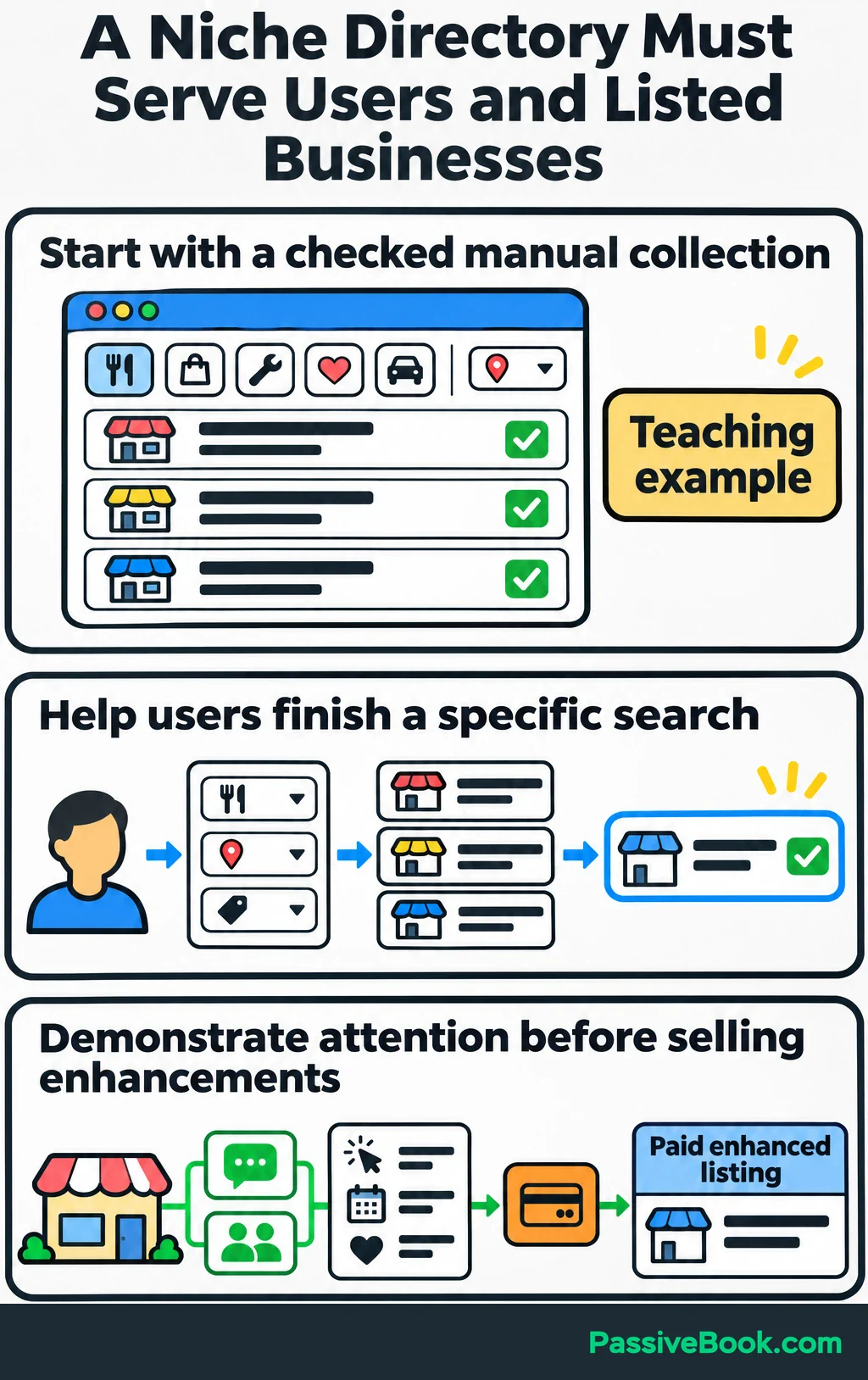
You have two groups to satisfy: people using the directory and businesses considering paid listings.
- Test Budget: $0–$150 for simple publishing and verification.
- Income Model: Clearly identified paid enhanced listings, once you can demonstrate relevant user attention.
- First Test: Confirm that people use the directory, then seek one paid listing from a business benefiting from that audience.
I would skip building hundreds of listings upfront. First find out whether your organization, filtering, or checking makes the search easier.
Online Retail Businesses
Retail changes who owns the stock, makes the product, and sends the order. It also ties up money in ways a service or download may not.
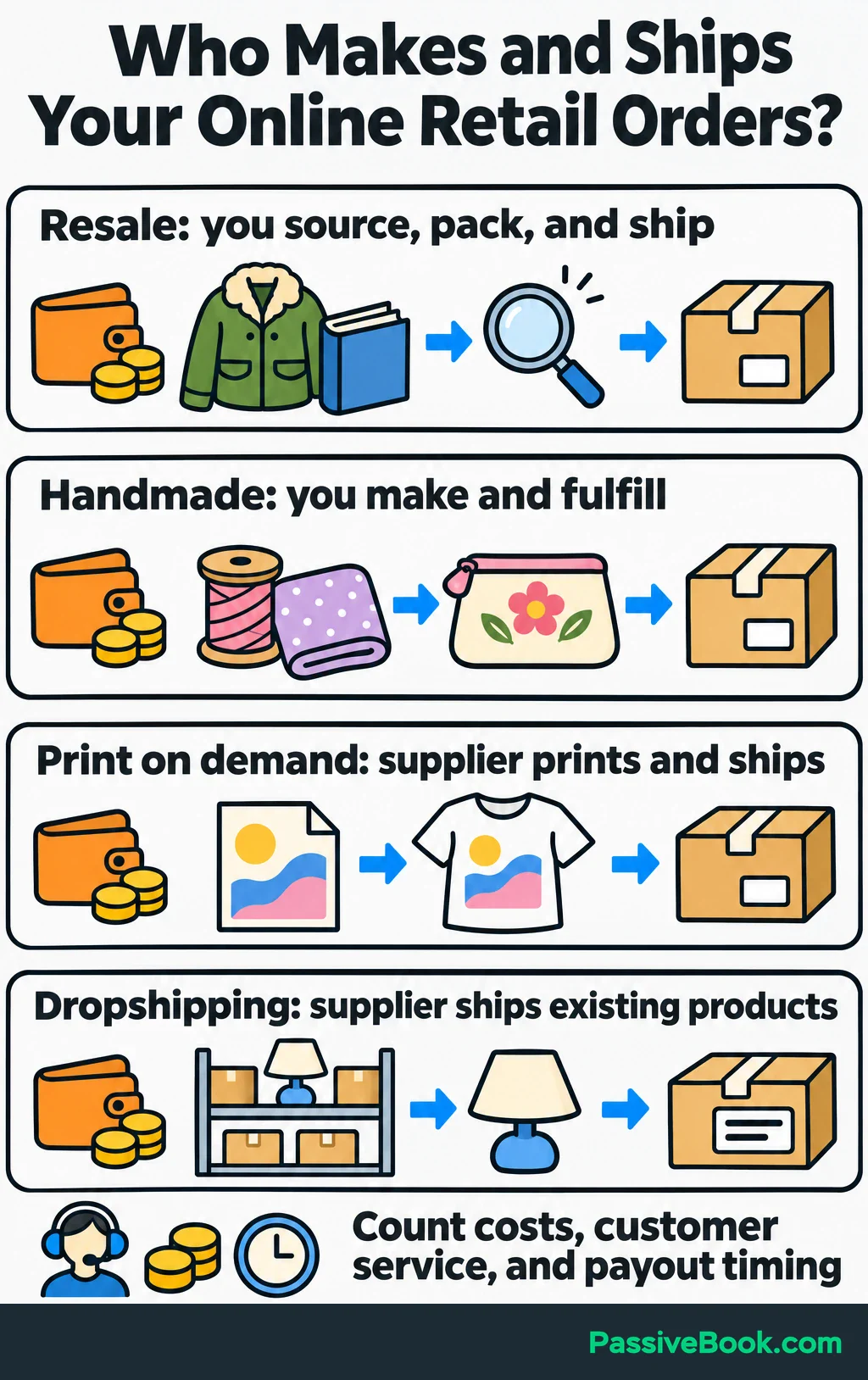
Work out what remains from each order after sourcing or production, packaging, shipping, selling fees, and expected return costs. Then subtract fixed operating expenses and consider your labor.
More orders can mean more cash needed before payouts arrive, as well as more packing and customer messages.
20. Secondhand Resale
Start with suitable items you already own and know how to assess. Each listing needs a condition check, photographs, pricing, packing, and fulfillment.
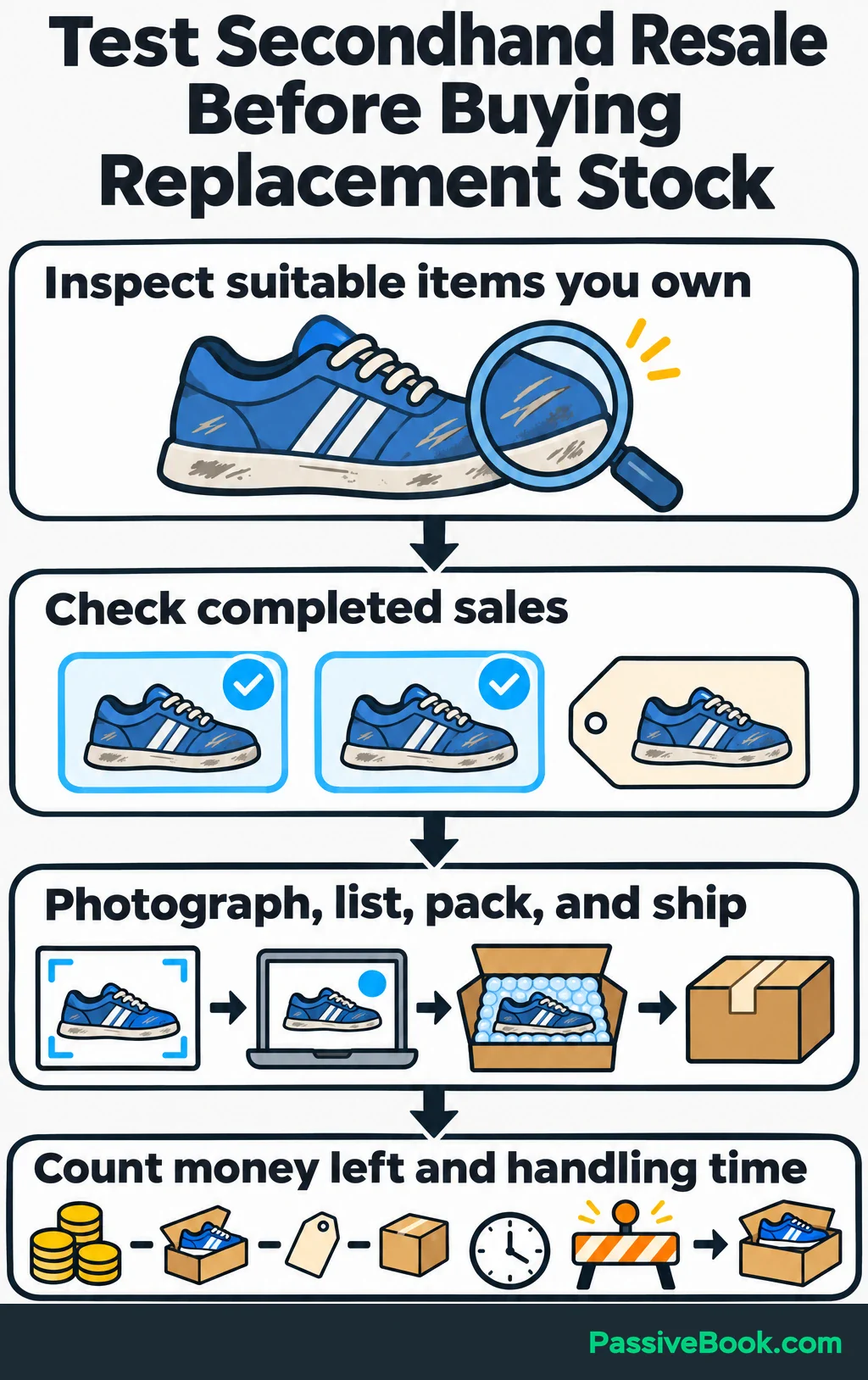
Completed sales are more useful for pricing than ambitious asking prices.
- Test Budget: $0–$150 when starting with existing possessions.
- Income Model: Sale proceeds after acquisition, selling, and fulfillment costs.
- First Test: List a few items and record the money left and handling time. Buy replacement stock only when those numbers work.
Selling your own unused items tests the process. A continuing business also needs a reliable way to source replacements at workable prices.
21. Made-to-order Handmade Goods
Choose this if you already make something consistently and enjoy producing it. Customization adds messages, revisions, and deadlines, so set limits before taking orders.
- Test Budget: $50–$250 for materials and packaging, with missing tools added separately.
- Income Model: Product sales priced to cover materials, unsuccessful attempts, labor, fulfillment, and fees.
- First Test: Make a sample, measure production time, and offer a limited number of paid orders.
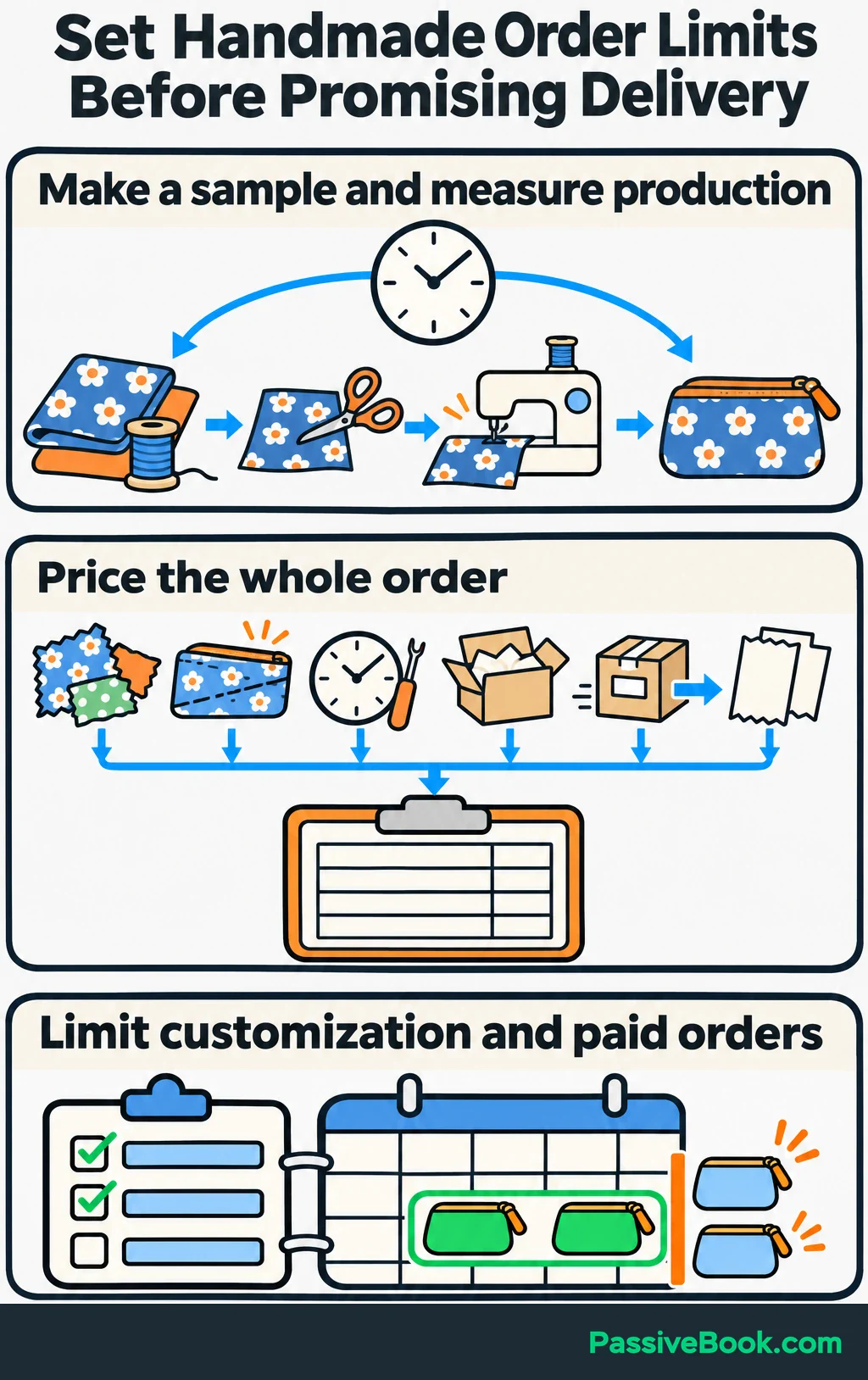
I would accept fewer orders than I think I could manage during the first test. A full order book is less appealing when every delivery promise falls on the same weekend.
22. Print-on-demand Merchandise
Print on demand lets you sell designs on goods produced after purchase. You handle the designs, listings, marketing, and customer service.
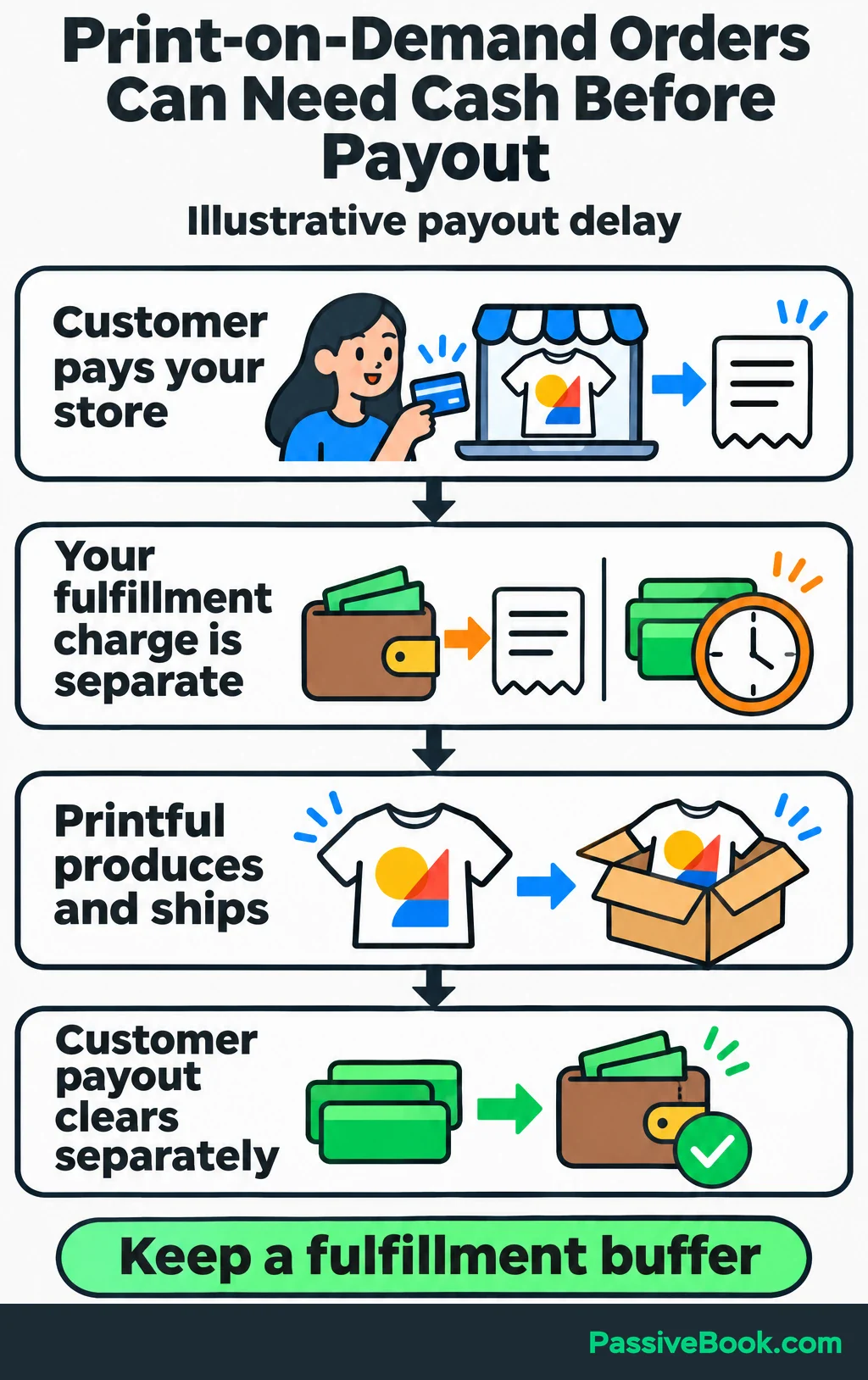
My six-month experiment generated about $1,200 in revenue and $300 in profit. Mediocre designs and outsourced design costs limited what remained. Those are my results, not an earnings forecast.
- Test Budget: $50–$200 for samples, listings, and a small fulfillment buffer.
- Income Model: The amount left after production, shipping, selling fees, and customer-service costs.
- First Test: Inspect a sample and offer a small collection before commissioning extensive design work.
Keep cash available for fulfillment. With a connected Printful store, customer payments and fulfillment charges are separate transactions, so you may need to pay before your customer payout clears.
23. A Curated Dropshipping Store
A supplier ships directly to your customer, but you remain responsible for supplier selection, marketing, order problems, and refunds.
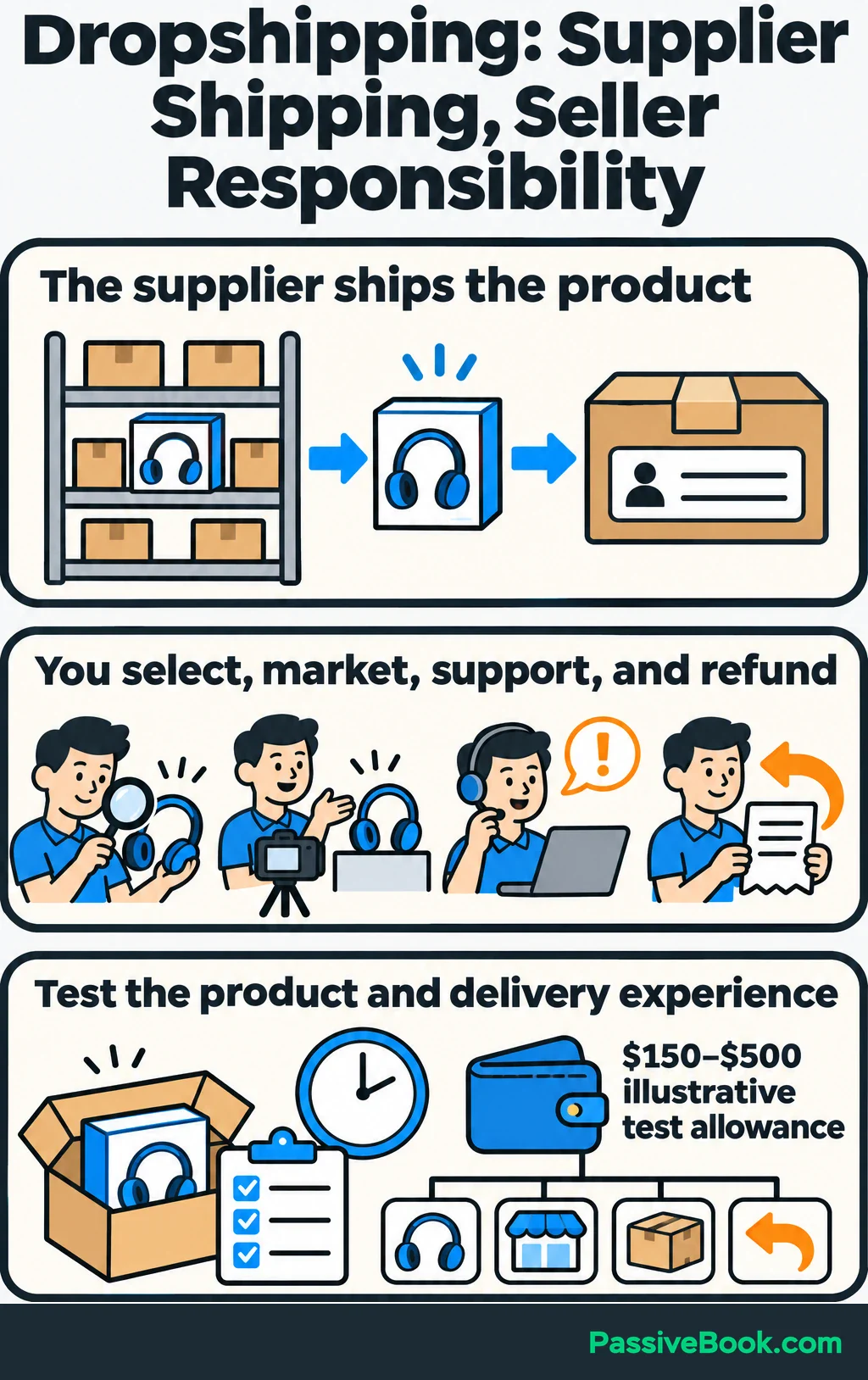
I would put this near the bottom of the list for someone with little spare cash. Skipping inventory ownership does not remove the need for samples, refund money, or customer support.
- Test Budget: $150–$500 for samples, a lean storefront, and an initial fulfillment or refund buffer.
- Income Model: What remains after supplier charges, shipping, fees, returns, and operating expenses.
- First Test: Sample the product and delivery experience, then test one narrow offer through a relevant partnership or useful demonstration.
A supplier’s attractive product photos cannot tell you whether the delivery experience is acceptable.
Test One Idea Before Spending More
The list gives you options. A focused test gives you evidence about which one deserves another month of your time.
Keep the first test narrow enough that you can finish it alongside your existing commitments.
Define the Smallest Useful Offer
Write one sentence naming the buyer, problem, deliverable, and price. If the sentence needs several paragraphs of explanation, narrow the offer.
For a blog or channel funded by commissions or ads, name the audience, topic, and action that would generate income instead.
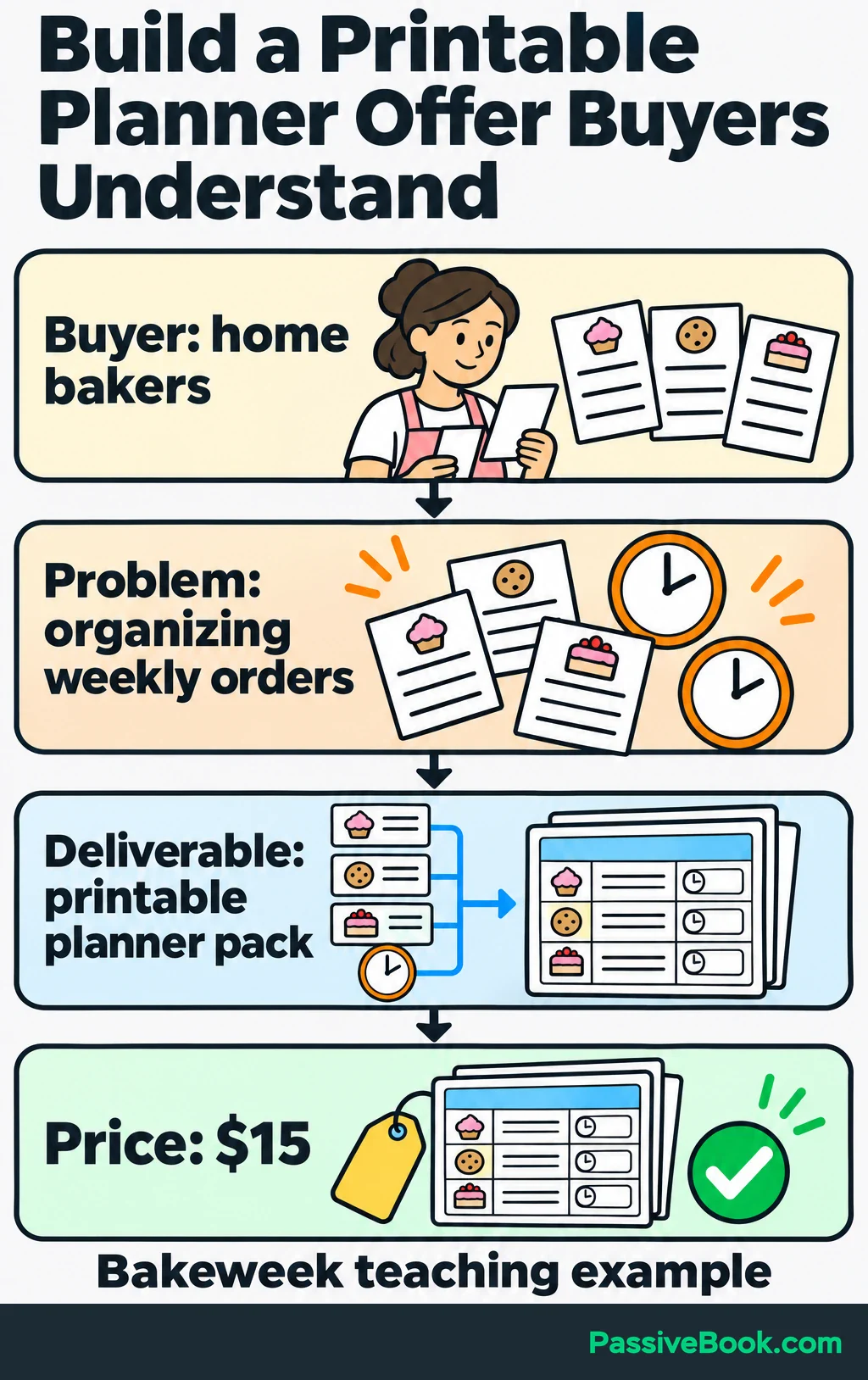
For Bakeweek:
A $15 printable pack that helps home bakers organize weekly orders, customer requests, and collection deadlines.
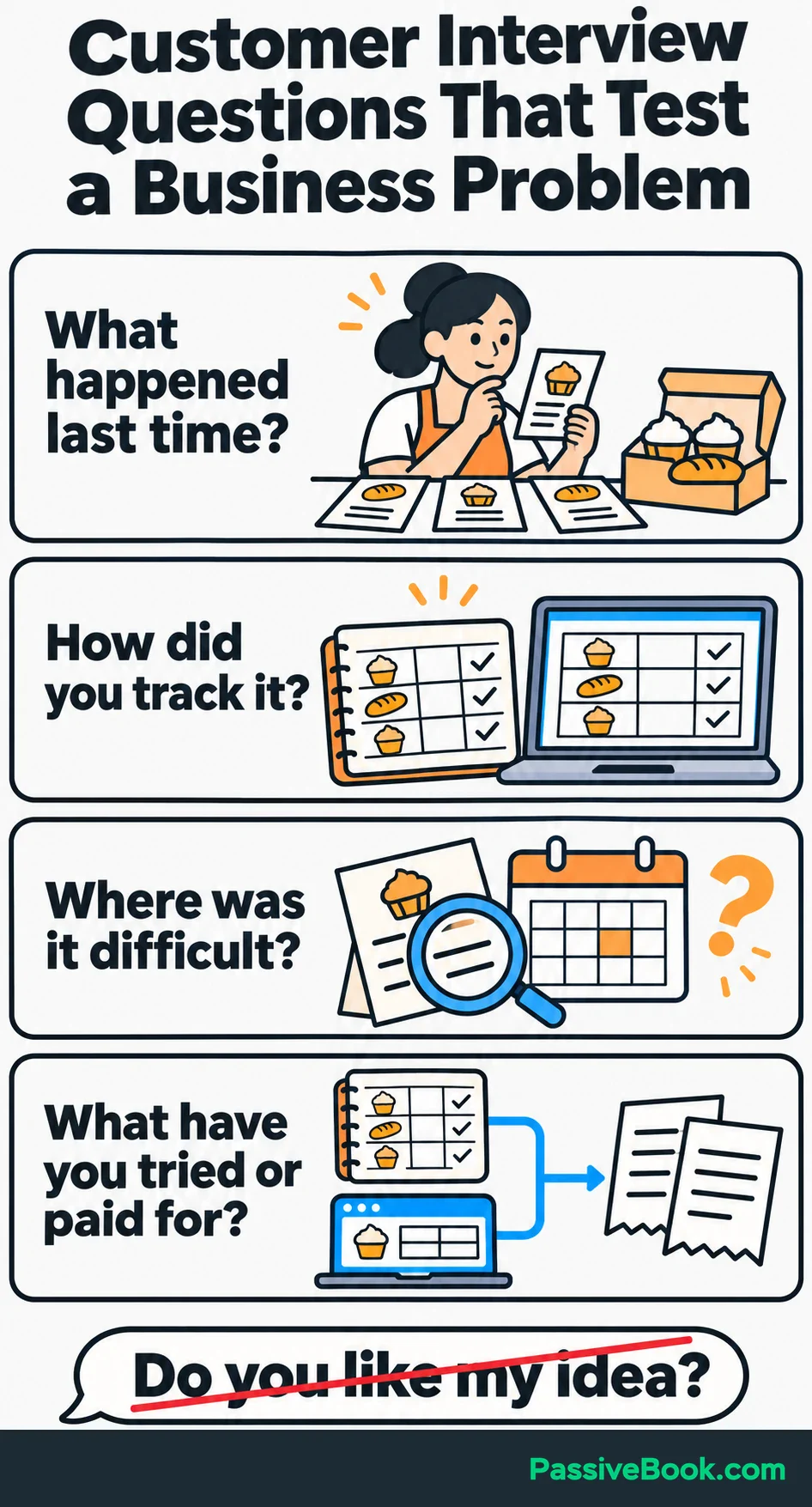
Then ask potential buyers about what they already do:
- What happened the last time you had to organize several orders?
- What did you use to track requests and deadlines?
- Where did that process become difficult?
- What have you paid for or tried to improve it?
These questions keep the conversation about their experience. Asking whether they “like your idea” mostly tests their willingness to be polite.
Compare competing offers, prices, and reviews for a specific need you could meet. The SBA’s market-research guidance covers demand, alternatives, pricing, and reachable customers.
I skipped enough of this work with my online jewellery store to leave myself with unsold inventory. I invested about $1,200 and lost most of it. The stock was real, but my understanding of the buyer was thin.
If you know roughly what you could sell but keep getting stuck on the wording, this AI Skill drafts your offer and first buyer message. It works around what you can actually deliver, rather than making the business sound bigger than it is.

Free AI Copywriting Studio




Put a Small Paid Version in Front of Buyers
Choose one route to customers:
- Referrals or tailored outreach for a service.
- Marketplace search for a suitable product.
- Partnerships or useful content for an audience-led offer.
Before taking payment, check the registration, tax, licensing, and customer-rights requirements that apply to your activity and location. The SBA’s launch guidance is a US starting point; use the relevant authorities elsewhere.
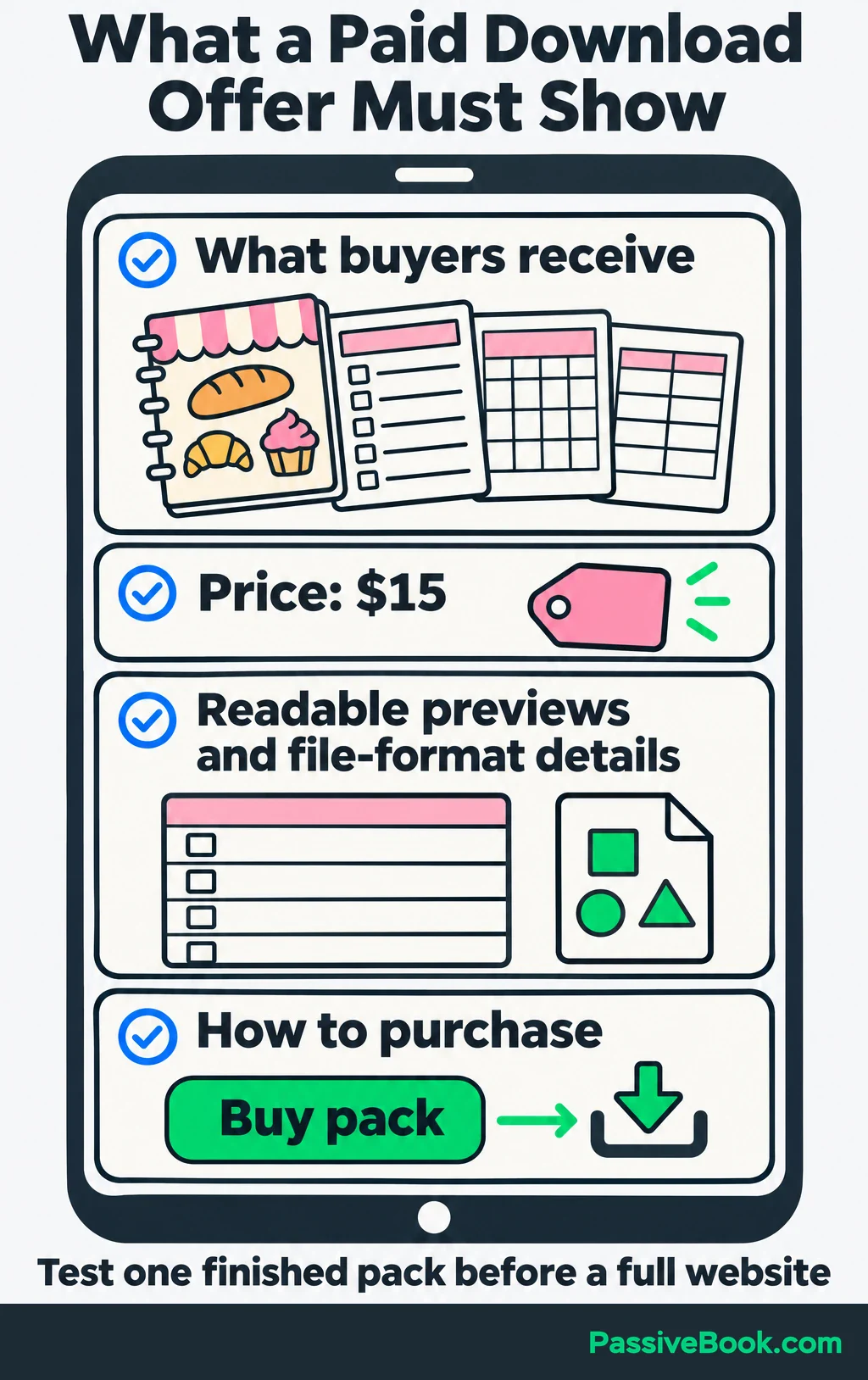
Show what the buyer receives, the price, the scope, and how to purchase. A service needs clear deliverables and deadlines. A download needs readable previews and format details. A physical product needs a credible delivery promise.
For Bakeweek, I would put one finished pack in front of buyers before building a full website. Let them inspect sample pages and buy the version that is ready.
For an affiliate blog or YouTube channel, publish a small batch on one topic and test one way to reach readers or viewers. Clicks and viewing time show interest; commissions or ad revenue show whether that interest pays. Early attention can justify another limited test, but it does not prove the model will earn money.
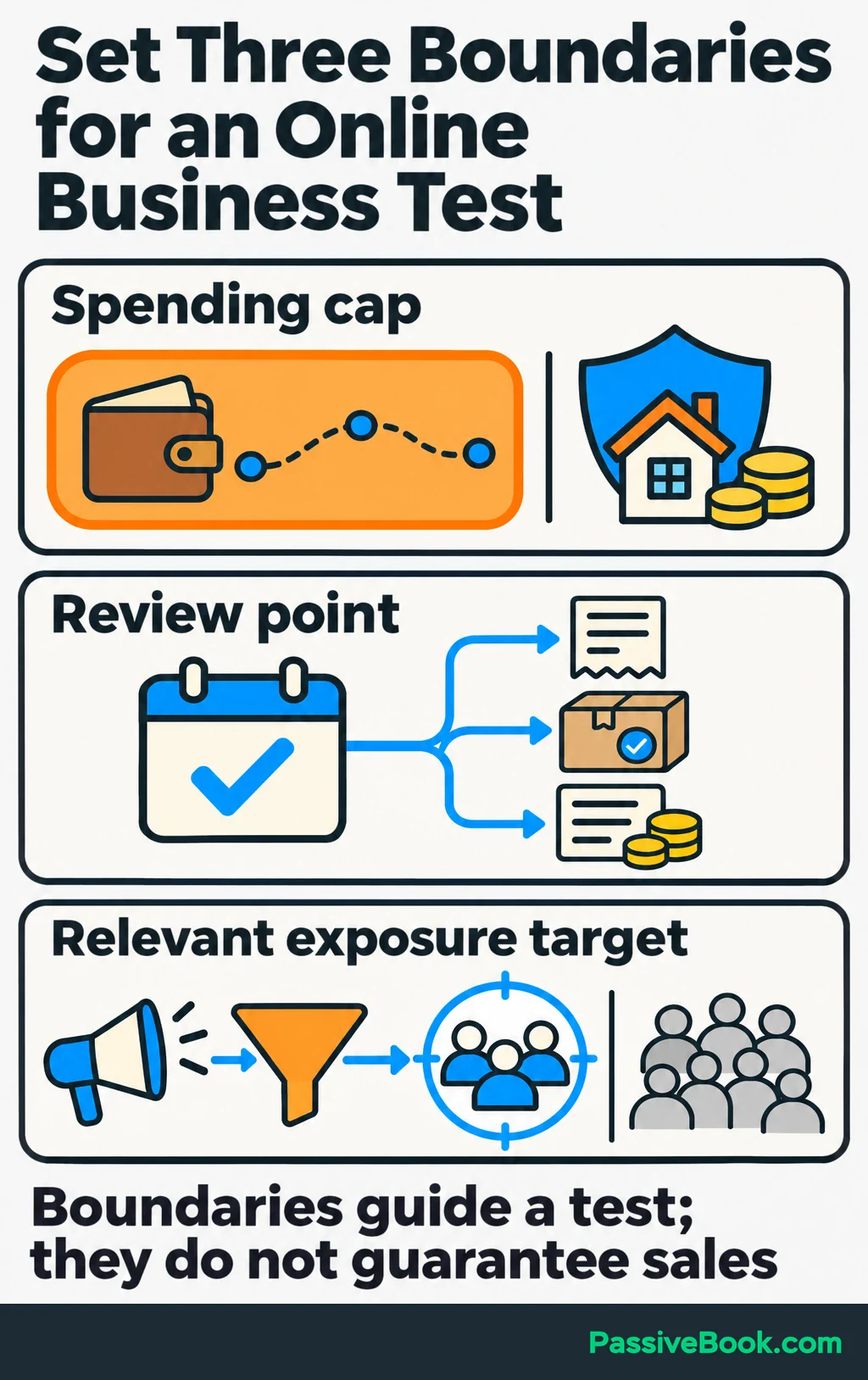
Set three limits before launching:
- Spending Cap: The amount you can lose without affecting essential expenses.
- Review Date: A point when you will assess purchases, delivery, and costs.
- Exposure Target: A planned number of relevant prospects or visitors to reach through your chosen channel.
These are test boundaries, not promises of success. A page nobody relevant sees tells you little about willingness to pay, and a busy page with no purchases calls for a closer look at the offer.
Check Whether the Economics Justify Another Test
First count what remains from each sale after costs that arise because of that sale. This is the contribution available to cover fixed spending and, eventually, leave a profit.
Here is Bakeweek’s illustrative calculation. These are teaching assumptions, not actual platform fees, observed results, or an earnings forecast.
| Item | Amount |
|---|---|
| Price paid for one pack | $15 |
| Selling and payment fees per sale | $2 |
| Payment to a partner who refers the buyer | $1 |
| Contribution from one sale | $12 |
| Fixed spending on design tools for the test period, including recurring charges | $36 |
Each sale contributes $12 toward the $36 fixed spending, so three sales recover that spending.
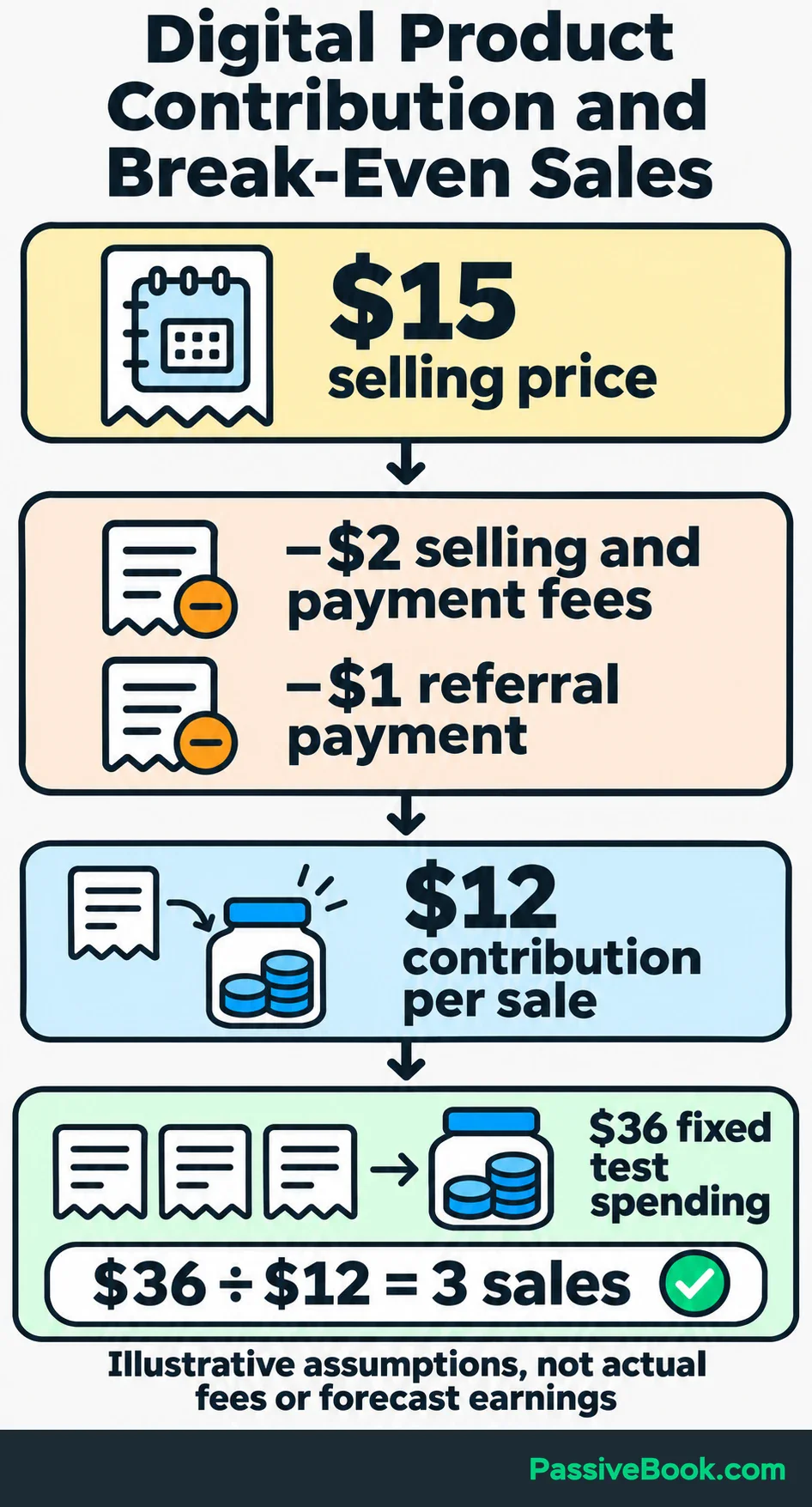
For a different offer, divide fixed test spending by a positive contribution per sale and round up. If contribution is zero or negative, change the price or costs before seeking more orders.
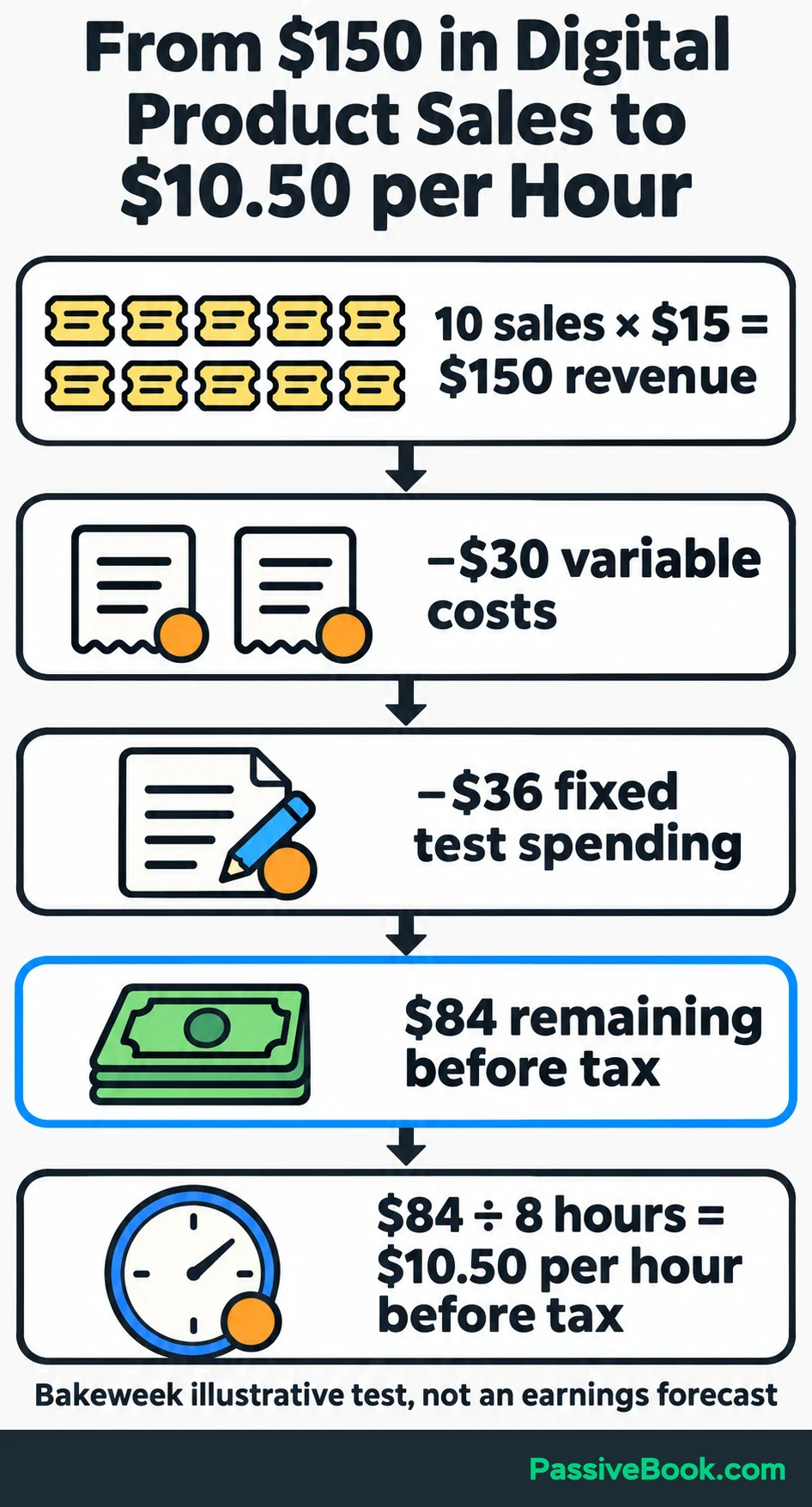
Now count the full test at 10 sales:
- Revenue is $150.
- Variable costs total $30.
- Fixed test spending is $36.
- The amount remaining is $84 before tax.
If creation, marketing, and support took eight hours, that leaves $10.50 per hour before tax. It is not yet a dependable income stream, but you have a basis for deciding what to improve.
Continue when buyers pay, delivery fits your schedule, and the economics meet your criteria. Diagnose the weak point before repeating the test.
Breaking even is only part of the decision when your evenings are limited. Use your own estimates to see whether the sales needed for your income goal would fit the time you have.
Free Pricing Profit Calculator
| What You Observe | What to Check Next |
|---|---|
| Few relevant people saw the offer | Whether your chosen channel can reach the intended buyers |
| Relevant people look but do not buy | Whether the problem, deliverable, price, or purchase process is unclear |
| Buyers pay but need repeated help | Whether instructions, scope, or usability need improvement |
| Sales leave too little money | Whether you can raise the price or reduce costs without damaging the offer |
| Orders exceed your available time | Whether you need firmer limits, a standard process, or a reusable product |
Once the process works manually, automate repeated tasks such as intake, payment confirmations, file delivery, and reminders.
I use n8n to connect tools, but I would choose the simplest setup that removes a proven chore. AI can help organize feedback or draft supporting material, and you should review its output before customers receive it. Neither automation nor AI can make an unwanted offer worth buying.
What Next?
Write one offer sentence and name the first place you will put it in front of buyers. Keep the test small enough to finish without changing your work schedule or stretching your budget.
Use the social buttons to share this guide when the conversation turns to choosing a business idea. Comparing a paid test is more useful than comparing another list of income promises.
Which idea fits your available time and skills, and what would you need to see before investing more? Share your answer in the comments, along with any other questions.
Share this post with your friends & followers:

