More orders should be good news. But if each sale adds another support thread, your revenue can rise while your free time disappears. And when sales slow down, publishing more content may only add work.
The hard part is knowing what deserves attention: the offer, the buying process, customer results or the way you deliver. This guide connects those decisions to ways of attracting buyers, earning repeat sales and serving customers with less manual work—without making paid ads, daily posting or another hire the automatic next step.
Find the Bottleneck Holding Back Growth
Start by tracing how a person becomes a customer and gets value from what they bought:
Discovery → offer page or inquiry → purchase → successful use → next purchase or referral.
An email signup can sit between discovery and purchase, but it should help people move forward. A growing list with no connection to an offer creates another thing to maintain.
For a concrete example, imagine you sell a beginner watercolor course. The offers, customer behavior, copy and figures throughout this article are illustrations.
Create a small scorecard for one consistent reporting period. A spreadsheet is enough.
| Stage | What to Record | What It Helps You Investigate |
|---|---|---|
| Discovery | Relevant website visits or suitable inquiries, grouped by source | Whether enough potential buyers reach you |
| Purchase | Offer-page visits and resulting orders | Whether interested visitors go on to buy |
| Successful use | First-exercise completions, support requests and refunds | Whether buyers can use the course |
| Further value | Repeat purchases and referrals from earlier customers | Whether satisfied buyers generate more business |
Alongside those measures, record revenue, variable costs, acquisition spending, fixed expenses and your working hours. Start with sales records and customer messages. You can improve the tracking as the business gives you better questions to answer.
For purchase conversion, count orders resulting from the offer-page visits you are measuring, then divide those orders by those visits. Use a consistent purchase window so you do not compare unrelated traffic and sales.
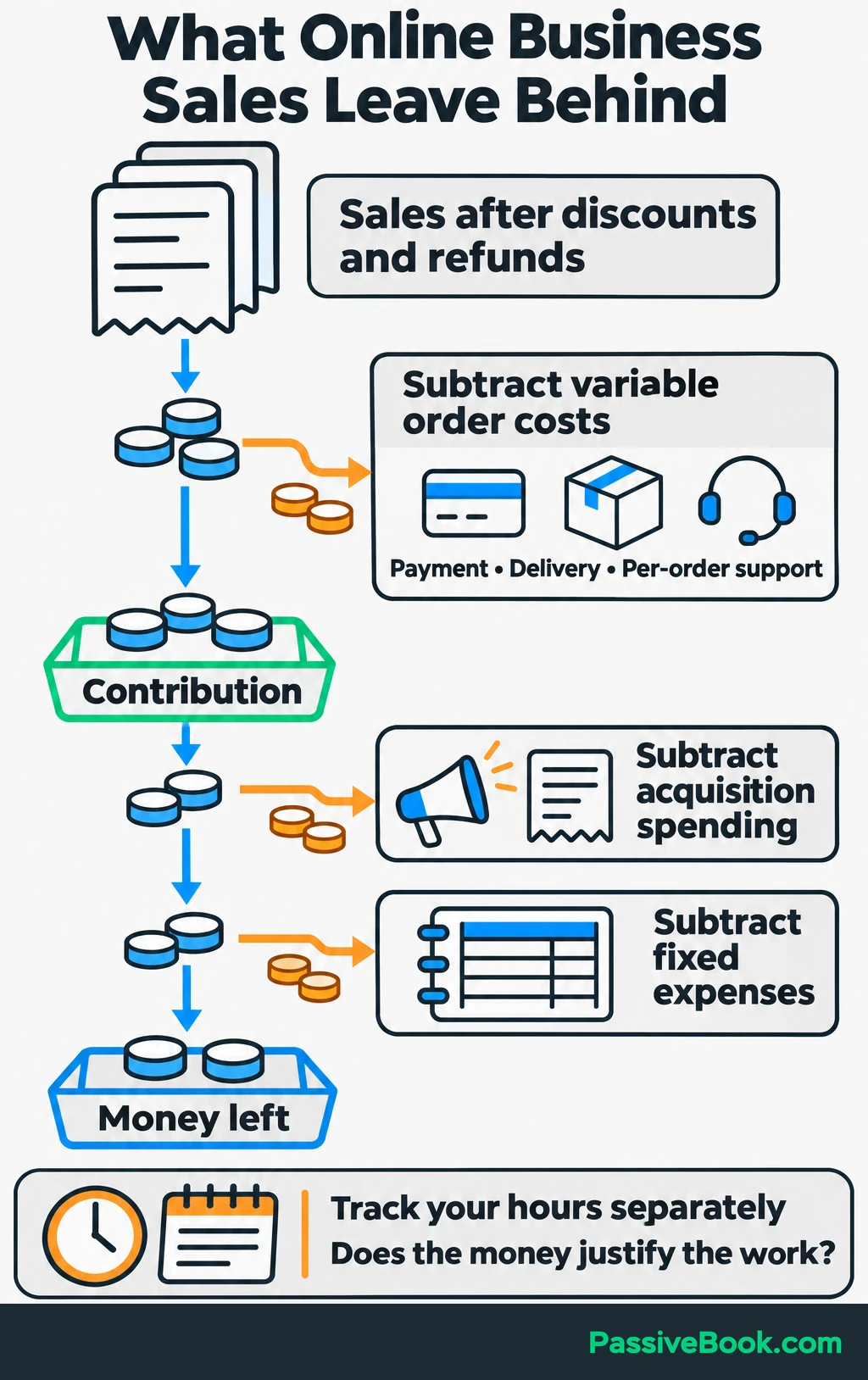
Contribution is the money sales leave to cover acquisition spending, fixed expenses and profit. Start with sales revenue after discounts and refunds, then subtract costs that change with orders: payment fees, delivery costs and per-order support costs.
Subtract acquisition spending from total contribution, then account for fixed expenses. Track your own hours separately so you can judge whether the money left justifies the work.
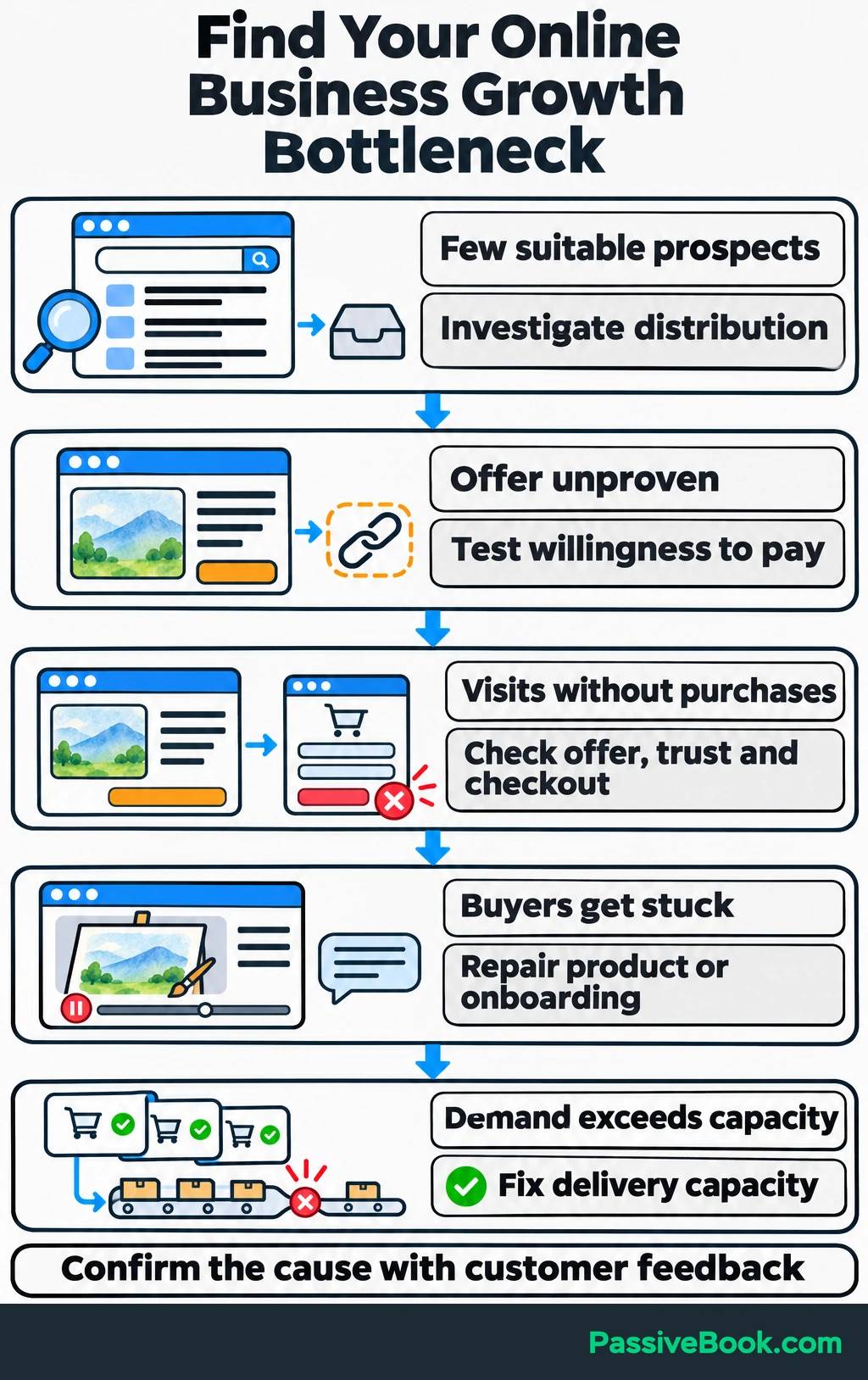
Choose your next priority from the evidence:
- Unproven offer: Test whether suitable customers will pay.
- Few suitable prospects: Improve distribution.
- Visits without purchases: Investigate the offer, trust and buying process.
- Customers getting stuck: Improve the product or onboarding—the help buyers need to get started.
- More demand than you can handle: Fix delivery capacity.
Ask customers what happened before prescribing a solution. An abandoned checkout might reflect a payment error, an unclear offer or a visitor who never intended to buy. Each calls for different work.
Make Your Offer Worth Buying
Understand the Problem Customers Will Pay to Solve
Talk to people who have recently tried to solve the problem you address. Ask about what they did, bought and abandoned.
Useful questions include:
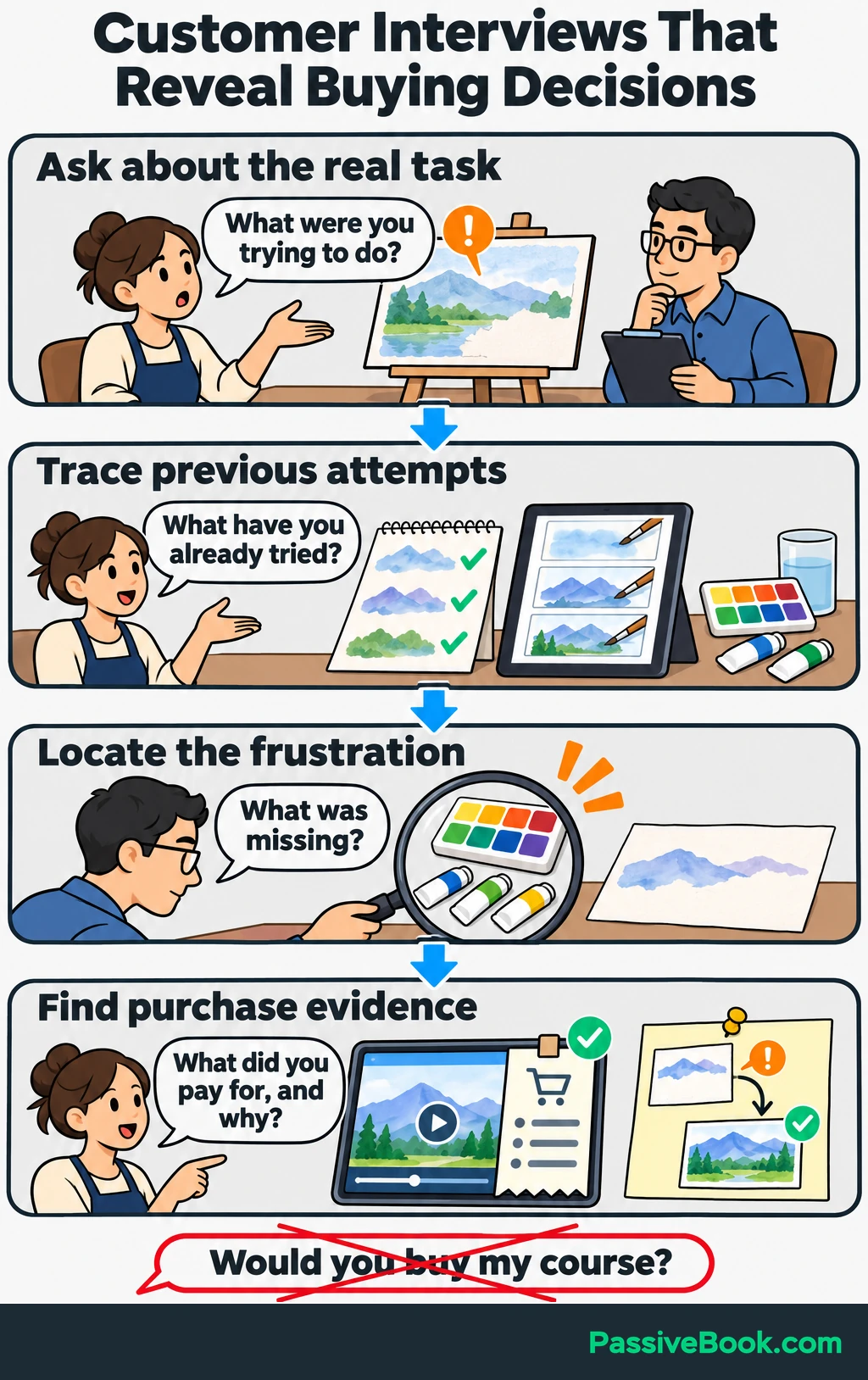
- “What were you trying to do when you started looking for help?”
- “What have you already tried?”
- “What was missing or frustrating?”
- “What did you pay for, and why did you choose it?”
These questions keep the conversation tied to actual decisions. “Would you buy my course?” makes it too easy to be polite.
Compare those answers with competing offers, their prices and recurring customer complaints. The US Small Business Administration’s market research guidance provides useful questions about demand, alternatives and what customers pay.
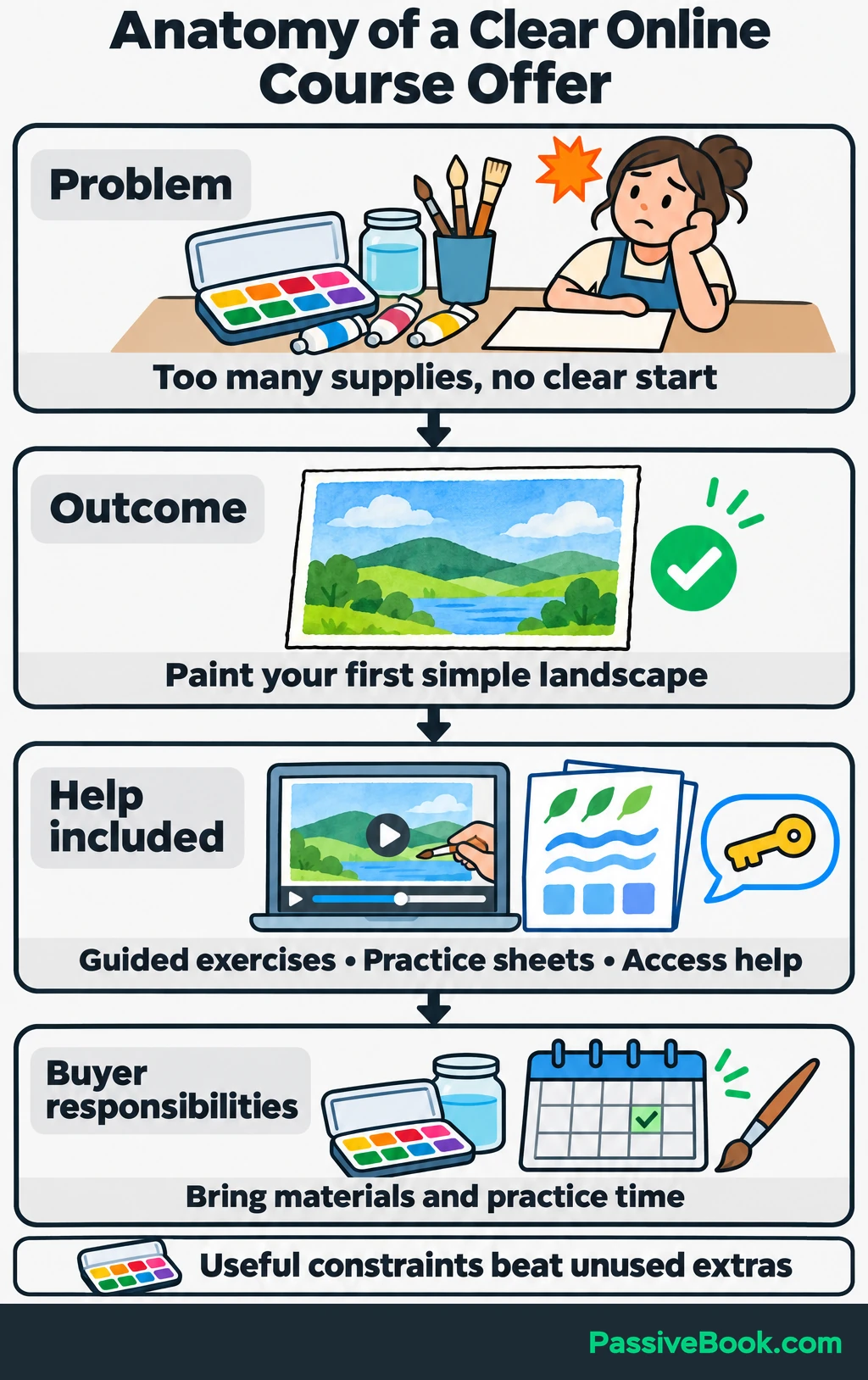
Then describe four things plainly: the problem, the outcome, the help included and what the buyer must do.
For the watercolor course, that might become:
Learn to paint your first simple landscape with a small supply kit. Follow guided exercises, use the printable practice sheets and get help with course-access problems. You provide the materials and time to practice.
That is easier to assess than “unlock your creativity.”
The distinction should come from a real frustration. If beginners keep buying supplies they never use, a short materials list and exercises built around it may matter more than another twenty lessons.
I would choose a useful constraint over a swollen feature list. Every added feature becomes something you must create, explain and maintain.
Validate Demand and Improve the Price
For a new offer, sell a small paid pilot before building the full version. Explain what is ready, what participants will receive and when you will deliver it. For a service, this could be one paid project with clear limits on the work included. For physical products, test a small batch before committing to a large stock order.
Choose the minimum sales and contribution that would make delivery worthwhile. That target should reflect your costs and available hours, rather than a number borrowed from another business.
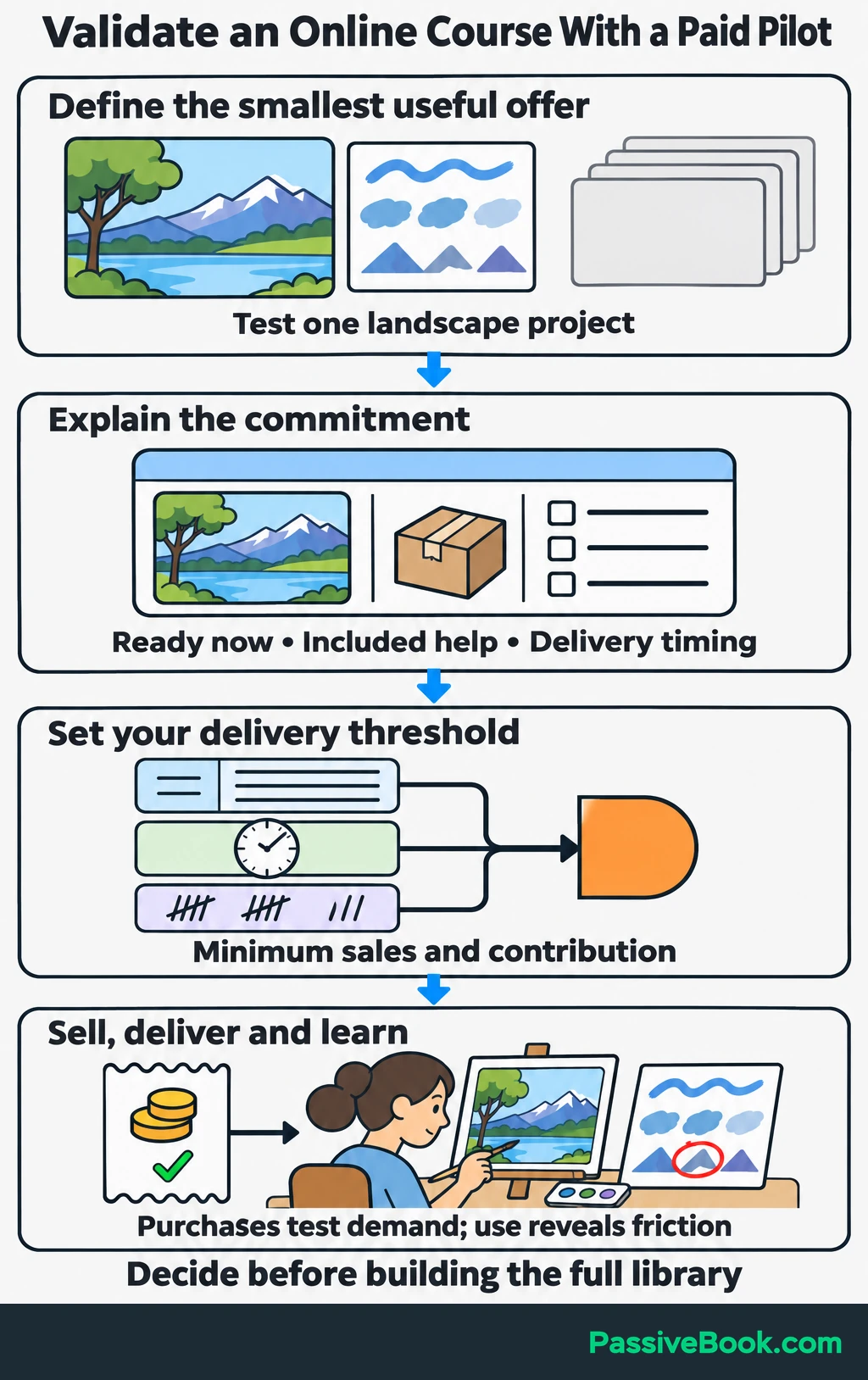
For the watercolor course, you could test the first landscape project with a small group before producing a large lesson library. Purchases test willingness to pay, while the pilot reveals where learners need help.
I rushed one of my courses without validating demand. It attracted few sales and a bad review, and I took it down. Having a finished course had felt like progress, but I had skipped the decision that mattered: whether people wanted that particular help enough to buy it.
If you already have sales, start with purchase patterns and repeated objections. You may need to explain the offer more clearly, change what is included or improve support before creating another product.
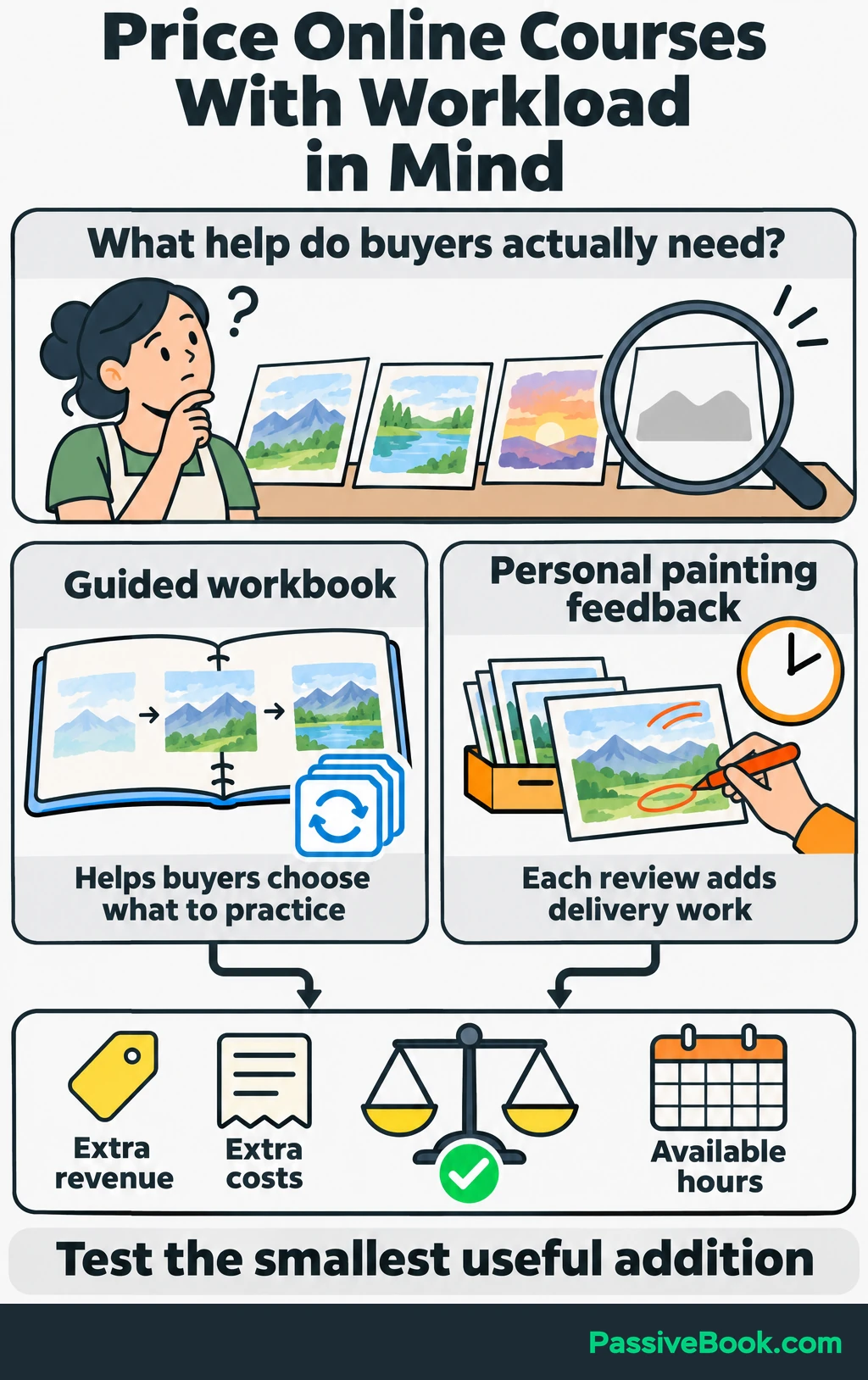
Evaluate price alongside contribution and workload. A version with personal feedback can command a higher price, but every review adds work. If buyers mainly need help choosing what to practice, a workbook may meet that need without individual reviews.
I would test the smallest useful addition first. A bigger bundle earns its place when customers use it and the extra revenue covers its costs.
Make Buying Straightforward
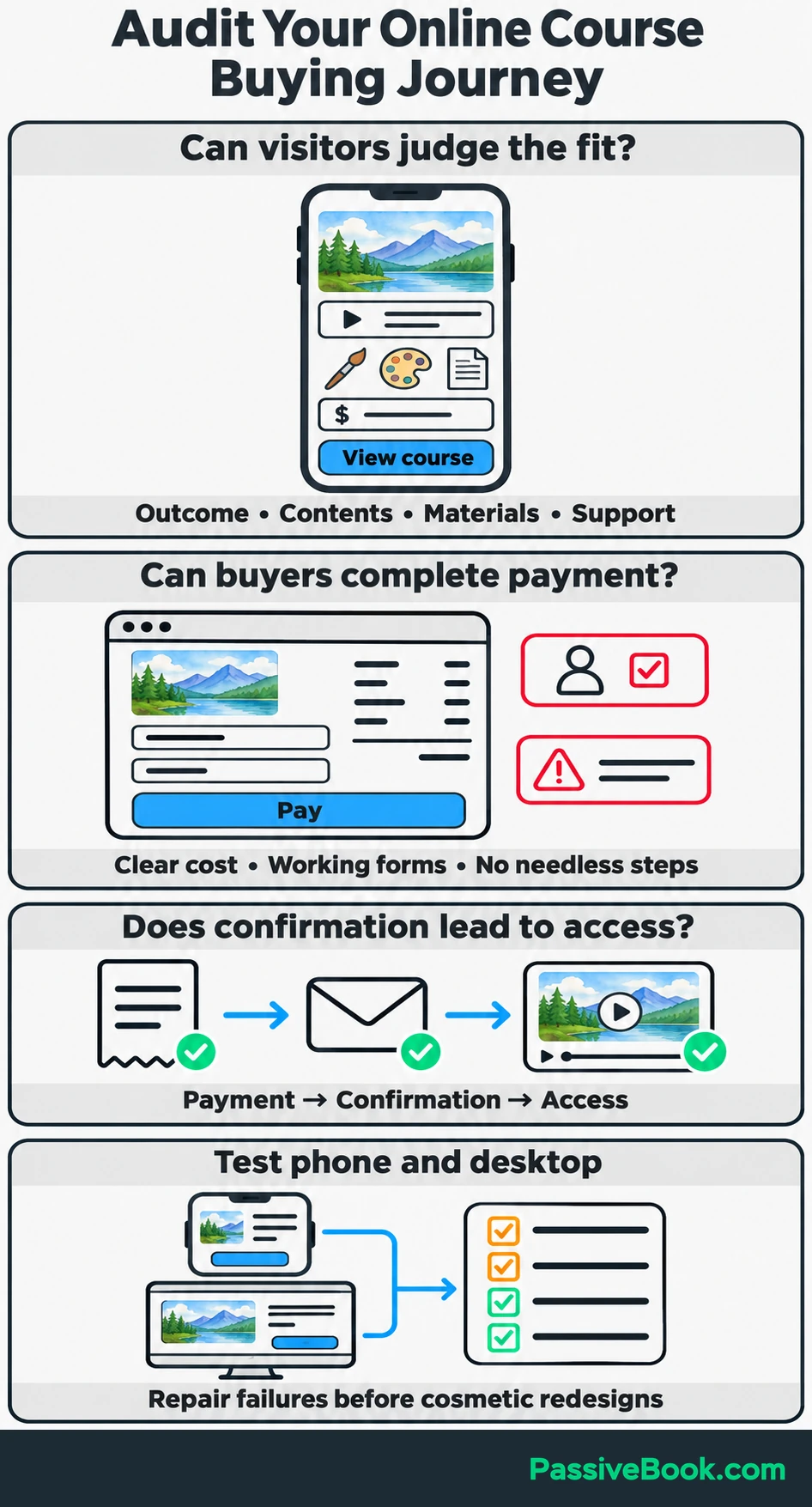
A sales page should help visitors decide whether the offer fits their needs and make the next action obvious.
Match its opening to the reason people arrived. Then explain the outcome, contents, required materials, price, delivery, support and relevant purchase conditions.
For the watercolor course, show the first landscape exercise and part of the lesson that teaches it. Explain how buyers receive access and what support includes. Use genuine customer examples with permission, and keep their claims within what they actually experienced.
A preview answers a practical question: “Can I follow this?”
Next, complete a purchase on both a phone and a desktop. Check the whole route, including payment, confirmation and access. Repair unreadable text, broken forms, missing instructions and payment failures before redesigning the logo again.
Show the full cost before the final payment step and remove requirements you do not need. Baymard’s checkout research identifies unexpected costs, forced account creation and complicated checkout as reasons shoppers abandon purchases.
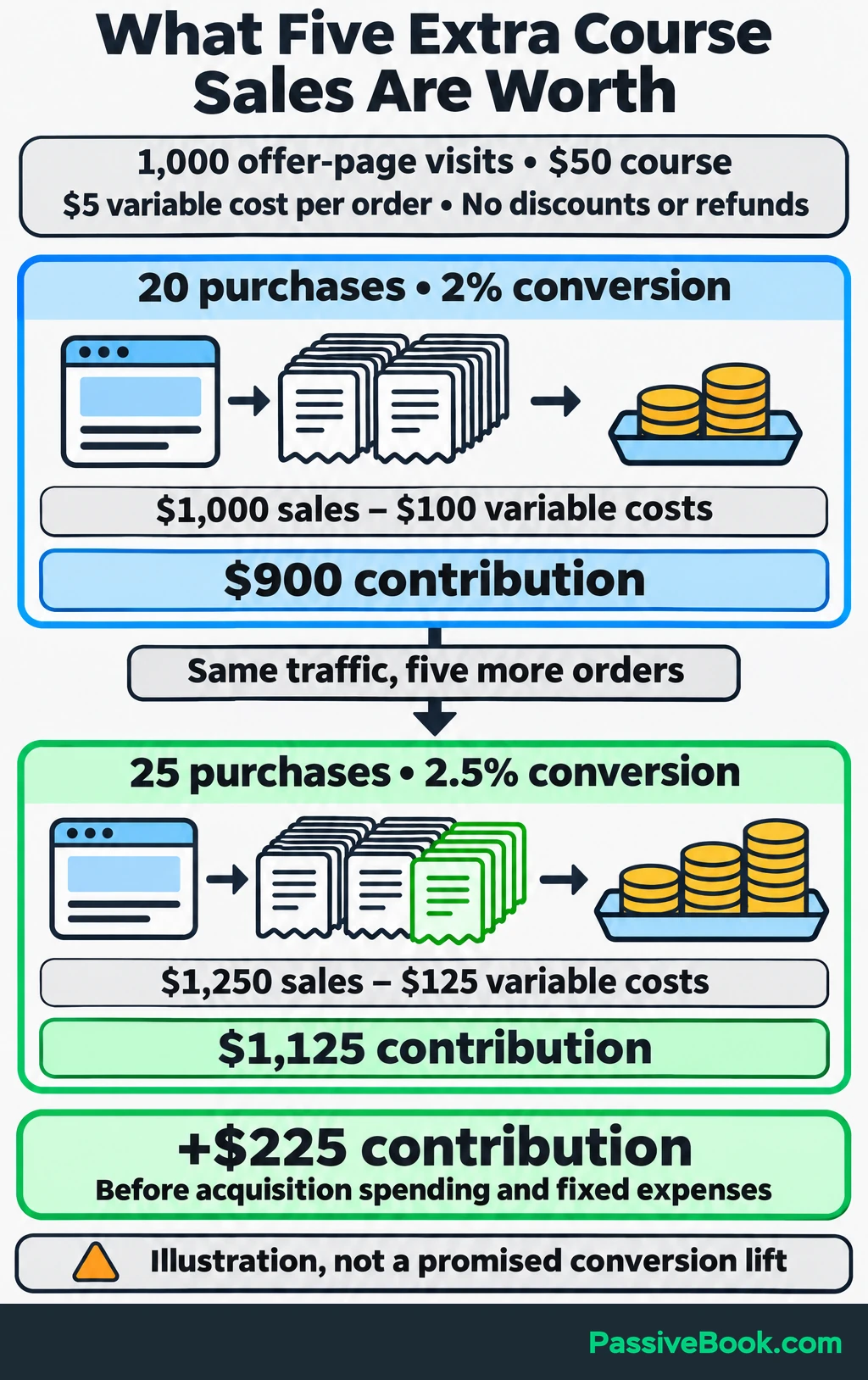
Small conversion changes can be worth investigating. Here is the arithmetic using the same 1,000 offer-page visits and a $50 course. Assume no discounts or refunds and $5 in variable costs per order.
| Measure | 20 Purchases | 25 Purchases |
|---|---|---|
| Purchase conversion | 2% | 2.5% |
| Sales revenue | $1,000 | $1,250 |
| Variable costs | $100 | $125 |
| Contribution before acquisition spending | $900 | $1,125 |
The additional five orders produce $225 more contribution before acquisition spending and fixed expenses.
That calculation shows what a difference would be worth. It does not establish that changing a headline or removing a field will produce those orders.
Build a Repeatable Source of Qualified Traffic
Choose a Channel That Matches Customer Behavior
Ask customers where they looked for help before buying and how they found you. Choose one main channel using those answers, your skills, available time and budget.
The best starting channel is one you can serve consistently and connect to purchases.
| Channel | Customer Behavior | Suitable Activity | Ongoing Workload and Spending | Business Outcome |
|---|---|---|---|---|
| Search content | Beginners search for supplies or painting instructions | Publish useful guides with original project photos | Writing, photography and updates; site costs | Relevant visits that lead to the checklist or course |
| Communities or direct outreach | Beginners ask questions in art groups | Answer relevant questions and share resources where permitted | Regular participation and individual conversations | Suitable inquiries and attributable purchases |
| Partnerships | Buyers trust a retailer, teacher or complementary publisher | Create a useful tutorial or referral arrangement | Relationship work, shared assets and possible referral fees | Customers acquired through a trusted introduction |
| Paid promotion | Potential buyers search for or respond to an offer | Run a limited campaign to a working sales page | Advertising spend, creative work and monitoring | New customers acquired at an affordable cost |
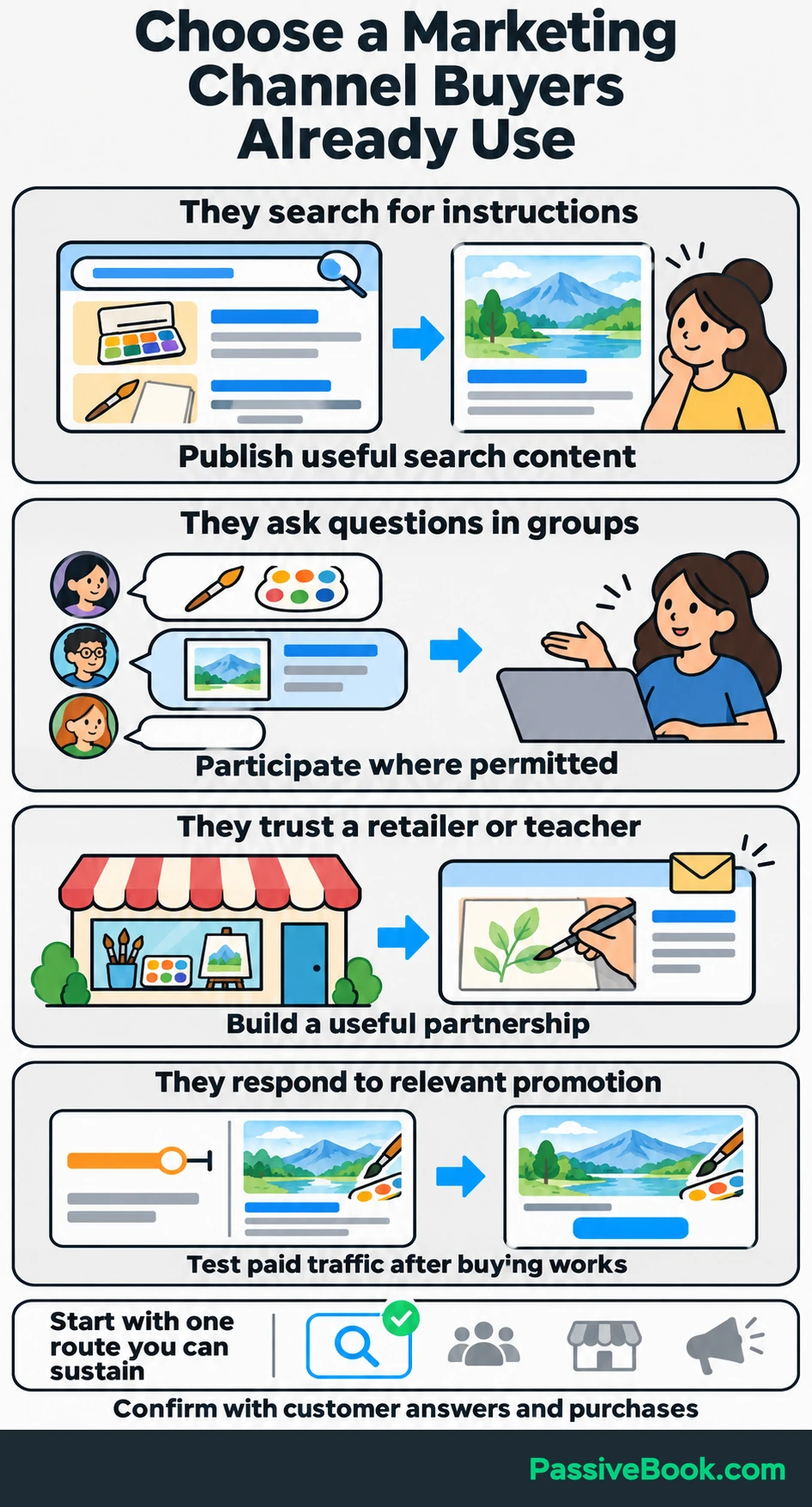
Develop one route before adding another. Otherwise, you can end up maintaining four channels without learning why any of them works.
For the watercolor course, I would start with searchable written guides and project photographs if customers already research beginner supplies that way. You can teach through text, diagrams and close-up images. Appearing on camera is optional.
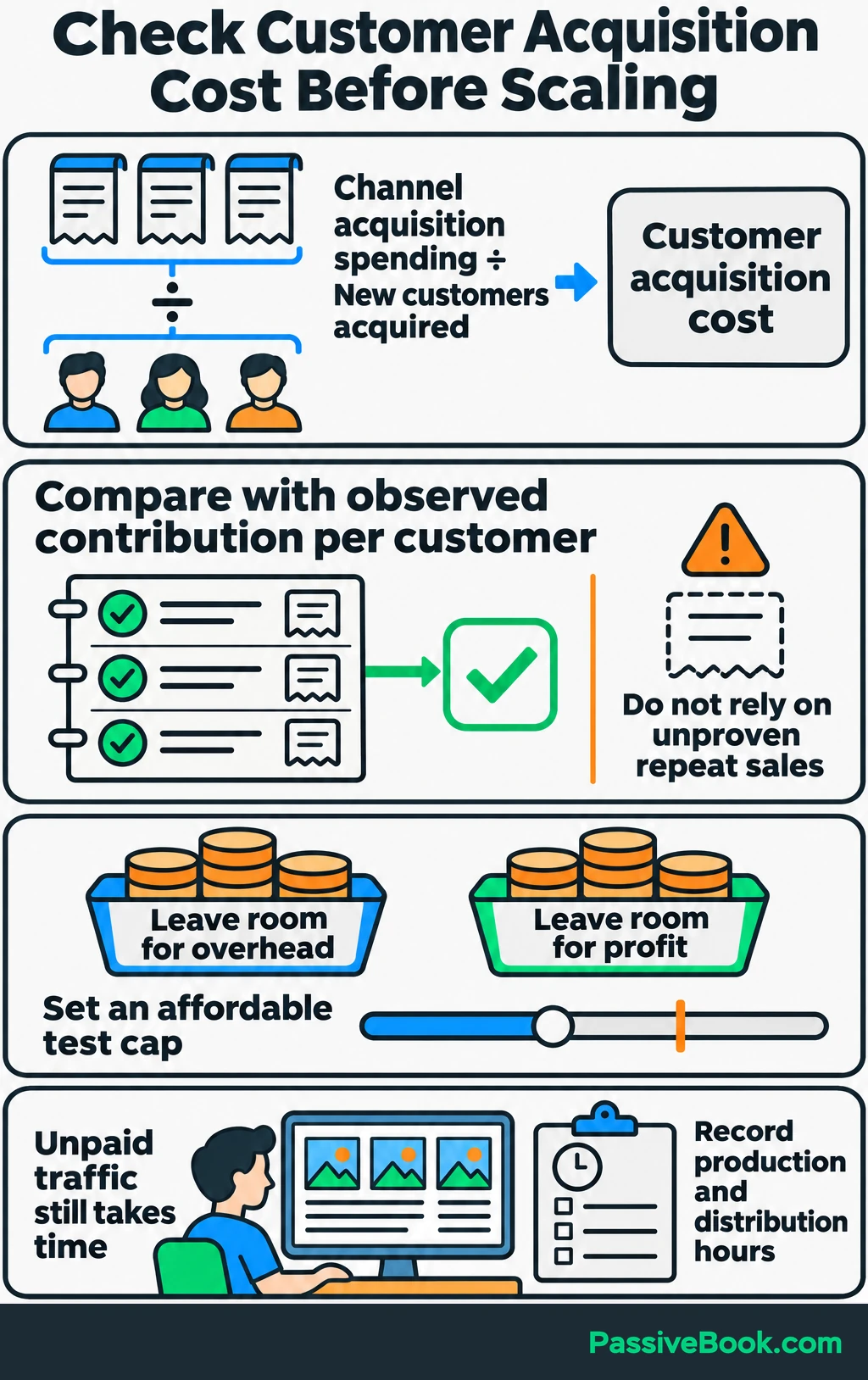
Unpaid traffic still costs time. Record the hours spent producing and distributing content so you can compare it fairly with other routes.
I would test paid promotion only after suitable visitors buy and delivery works. Count acquisition spending for the channel and divide it by the new customers acquired through that spending.
Compare the result with observed customer contribution, leaving room for overhead and profit. Set a test cap you can afford to lose. Future repeat purchases should not rescue a campaign unless you have evidence that those purchases happen.
Connect Useful Content to Your Offer
Start with a question people ask before buying. Answer it completely, then offer the next relevant step.
A useful watercolor guide could explain how to choose a small beginner supply kit. Show what each item does, what readers can skip and a finished painting made with that kit.
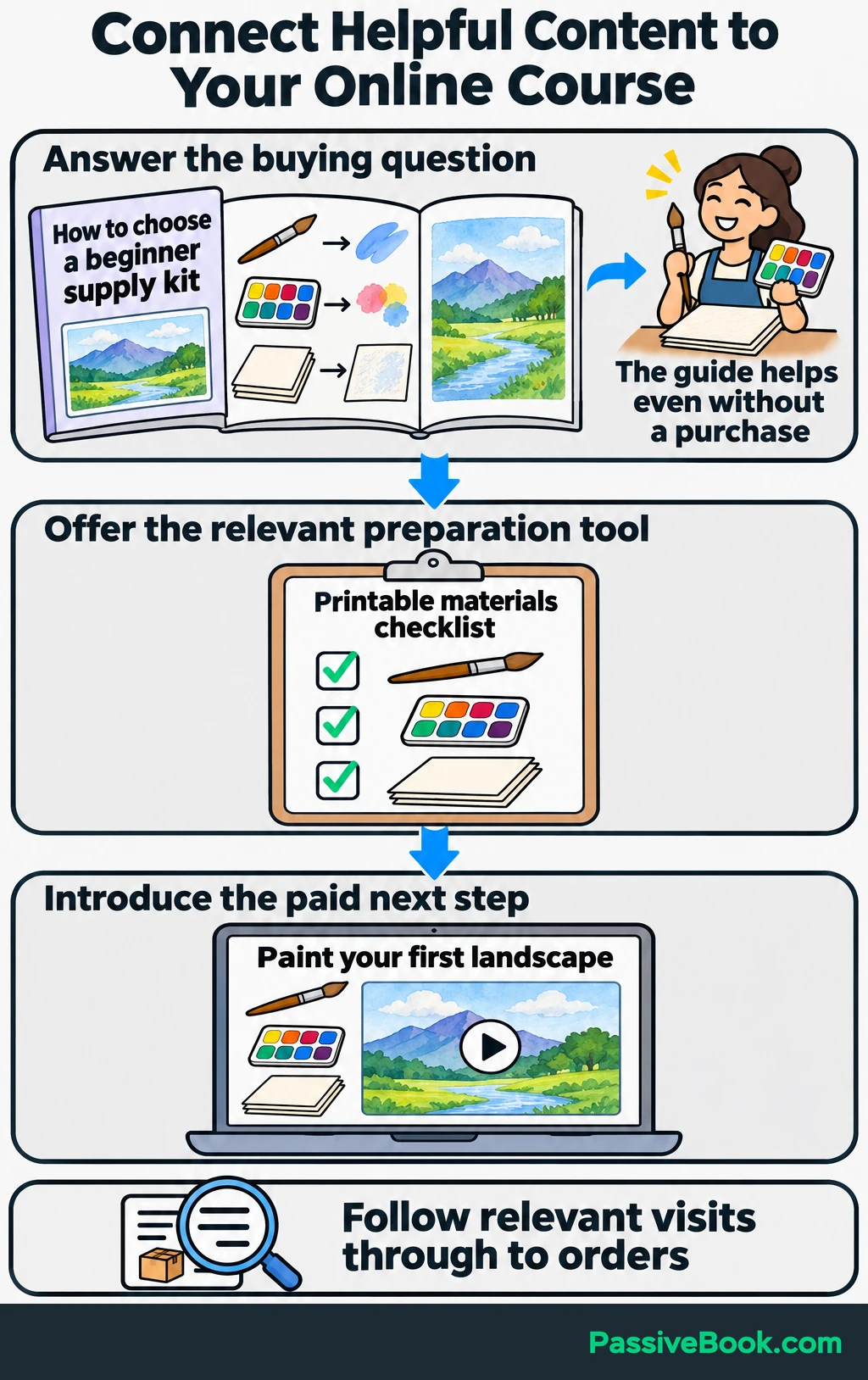
From there, offer a printable materials checklist and introduce the course that uses those supplies.
The guide should still help people who never buy. Google’s people-first content guidance asks creators to assess whether their work adds original value and helps readers achieve their goal. I would apply that by adding your own photographs, demonstrations and explanations of common mistakes.
Once a format brings suitable visitors, reuse its structure. You might follow the supply guide with a lesson on painting an even background, again showing the materials and a finished example.
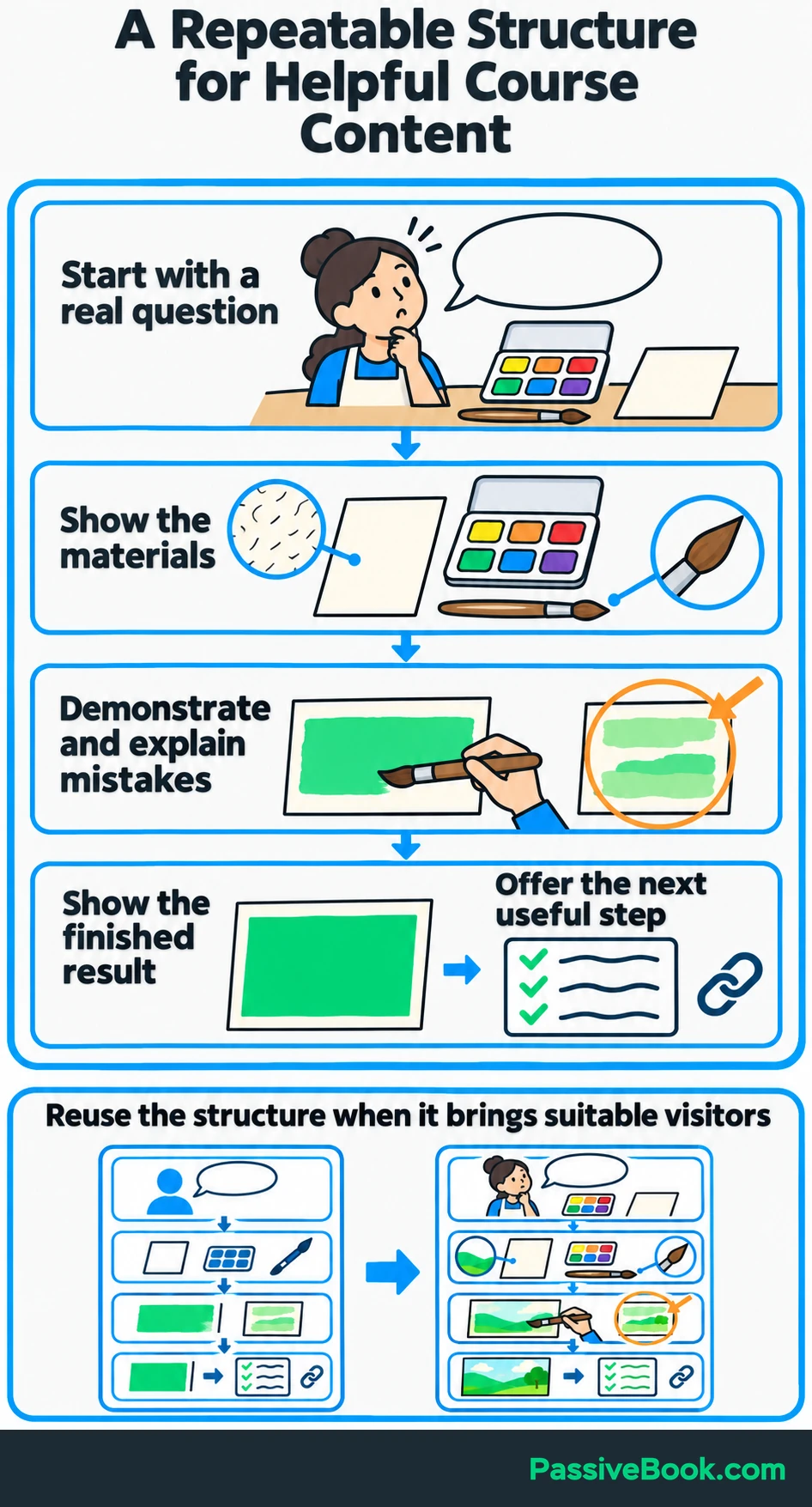
Distribute each piece through your chosen channel. Adapt it elsewhere when there is a clear reason to expect useful customers, rather than because another platform has an empty publishing calendar.
Partnerships can extend the same work. An art-supply retailer could share the beginner tutorial with shoppers who need help choosing materials. Agree on the useful contribution, any payment or referral fee and how you will track customers.
Review relevant visits, inquiries, orders, contribution and production hours. Reach and follower counts can help explain where attention drops off, but they do not tell you whether the work pays.
Turn Interested Visitors Into Customers With Email
Offer a resource that helps people prepare for the paid solution.
For the watercolor course, a materials checklist makes sense because buyers need supplies before they can start. A broad collection of unrelated art downloads gives you less reason to introduce this particular course.
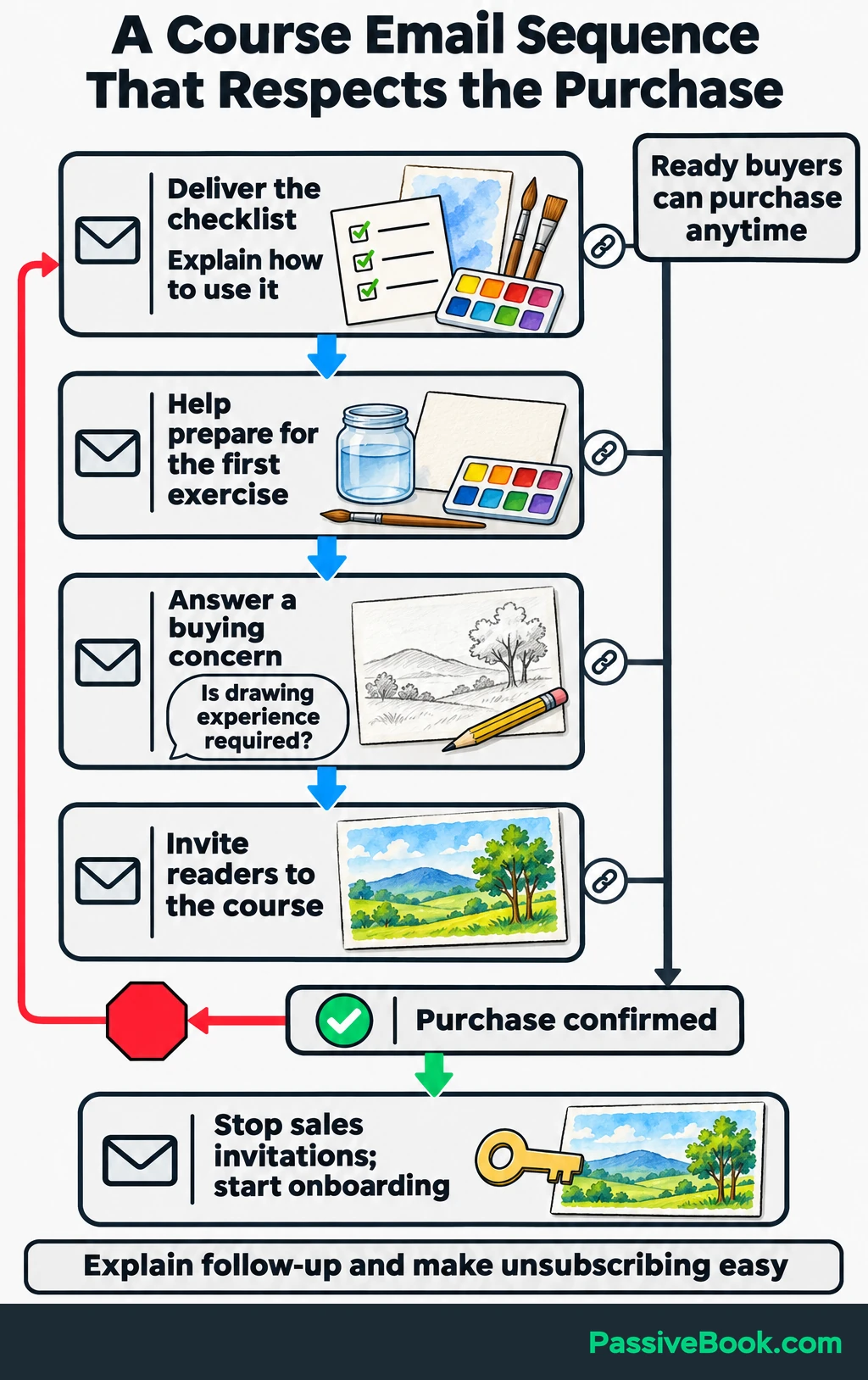
Explain what subscribers will receive, including the follow-up messages. Then build a short sequence around their next decisions:
- Delivery: Send the checklist and explain how to use it.
- Practical help: Show how to prepare the supplies for the first exercise.
- Buying question: Answer a concern that repeatedly comes up, such as whether drawing experience is required.
- Course invitation: Explain how the course helps readers complete their first landscape and link to the offer.
Keep a direct route to the course available throughout. Someone who is ready to buy should not have to wait for the automation to reach its grand finale.
If the follow-up emails are still unwritten, AI Copywriting Studio can turn your offer details into a first draft. Start with one sequence rather than building an elaborate automation.

Free AI Copywriting Studio




Separate prospects from customers. Once someone buys, stop invitations to purchase that same course and begin onboarding. Use stated interests and purchase history to keep later messages relevant.
For an existing WordPress business, I would consider FluentCRM for managing contacts and email automation. Its purchase integrations can support messages based on order events and purchase history. Check compatibility with your checkout before choosing it.
Start with a cadence you can maintain and improve the sequence using clicks, replies, purchases and unsubscribes.
Before sending marketing messages, check the rules that apply. In the UK, unsolicited email marketing to individuals generally requires consent or a qualifying exception, as explained in the ICO’s email-marketing guidance. For US commercial email, the FTC’s CAN-SPAM guide covers sender identification, postal addresses and opt-out requirements. Provide an easy unsubscribe option and honor it.
Grow Customer Value After the First Sale
Help Customers Reach Their First Useful Result
Buying should lead quickly to a clear first task.
Deliver access promptly, explain where to start and make support easy to find. Organize onboarding around a useful result rather than a tour of everything included.
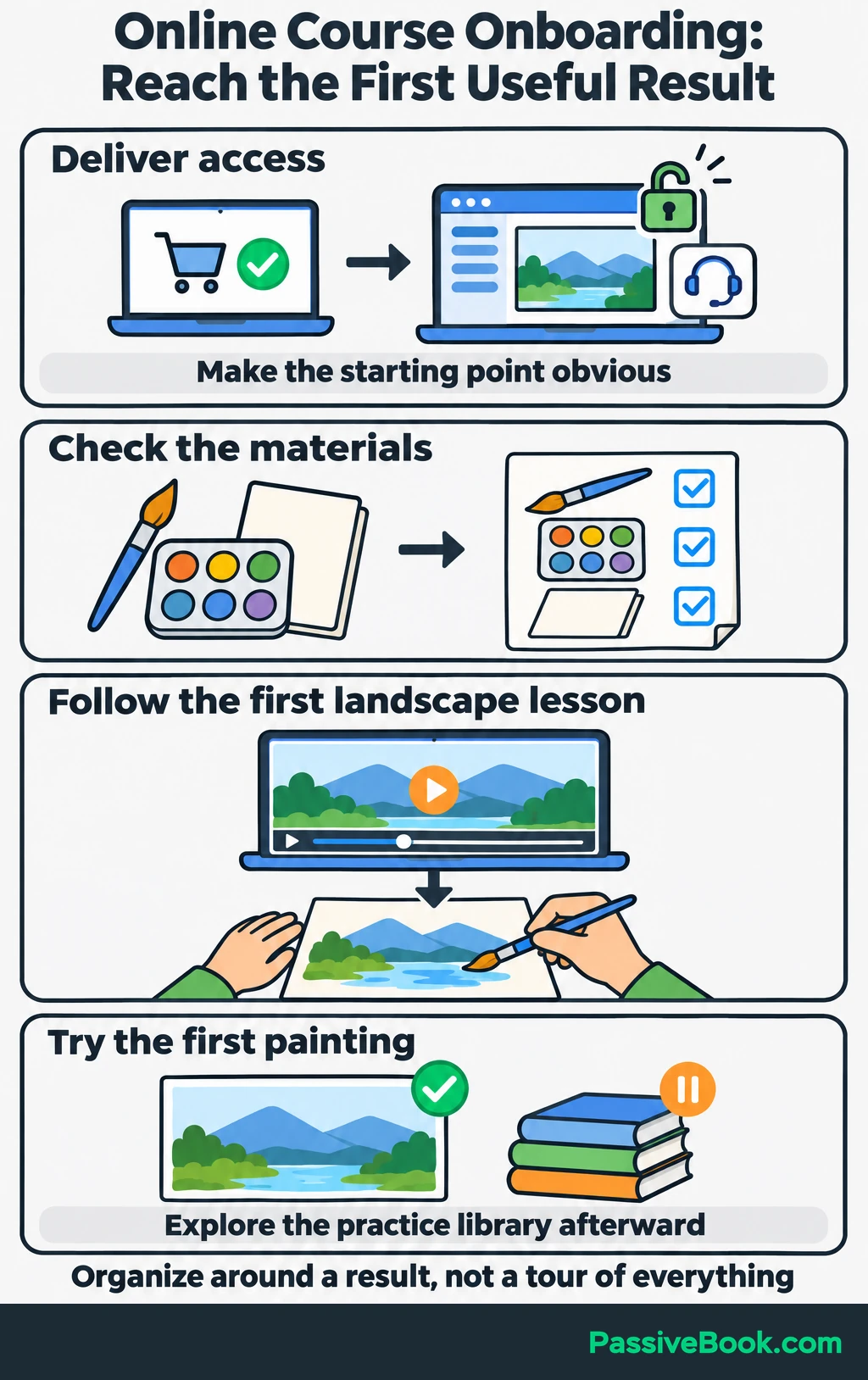
For the watercolor course, guide buyers to the first simple landscape. The opening message could say:
Start with the materials check, then follow the first landscape lesson. Leave the practice library until you have tried that project.
That reduces the number of decisions between payment and practice.
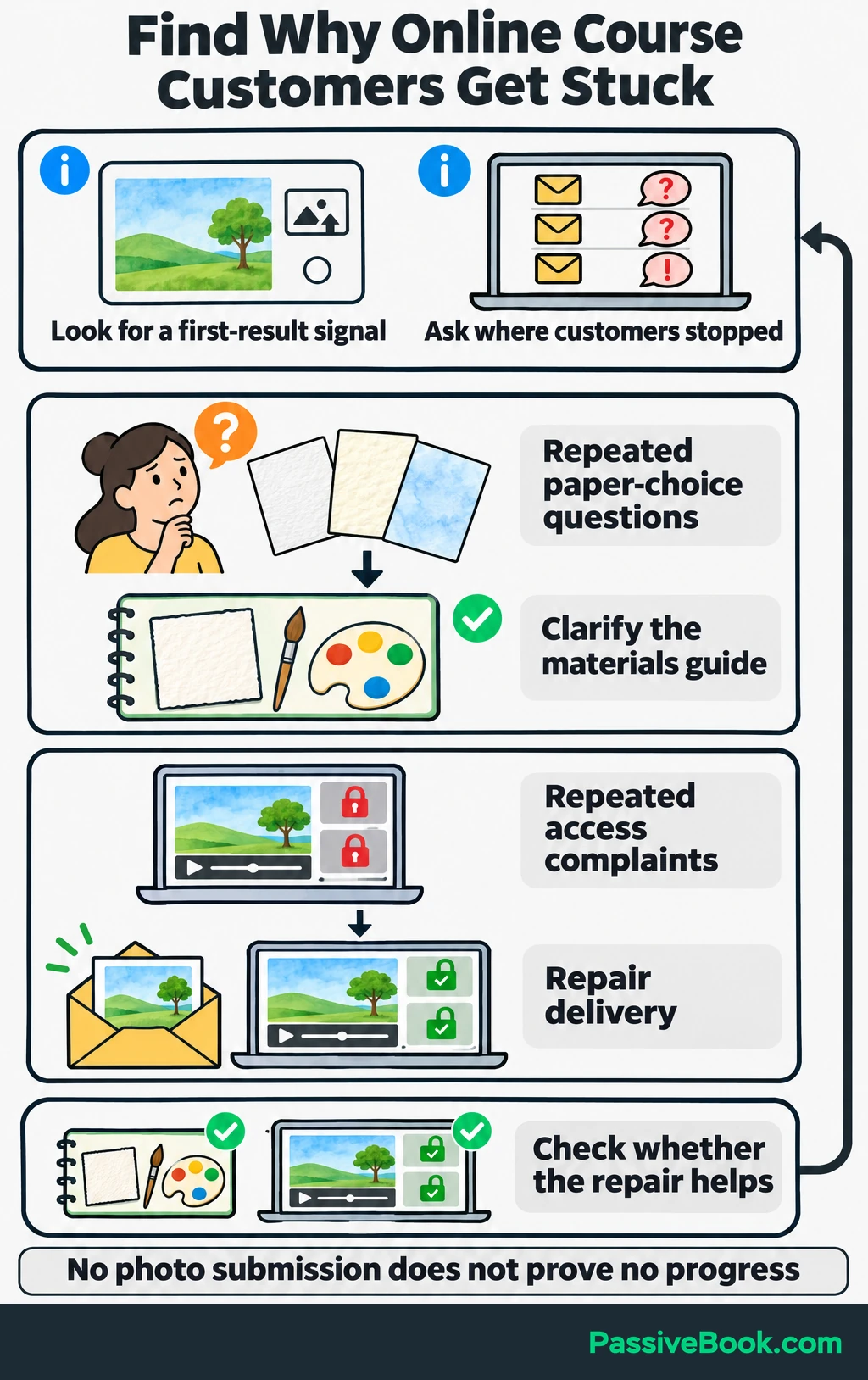
Choose a signal that tells you whether people reach that result. You might invite buyers to submit a photo of their first painting, while recognizing that not everyone will respond.
When customers stall, ask where they stopped and what got in the way. Repeated questions about paper choice may call for a clearer materials guide. Access complaints call for a delivery fix.
I would resolve recurring support problems before increasing demand. Otherwise, the next traffic push also increases the pile of unanswered questions.
Offer the Next Useful Purchase
Ask customers who used the product what they need next. Their answers should shape the next offer.
After the first watercolor landscape, some buyers may want structured practice. Test a guided practice pack before producing another full course.
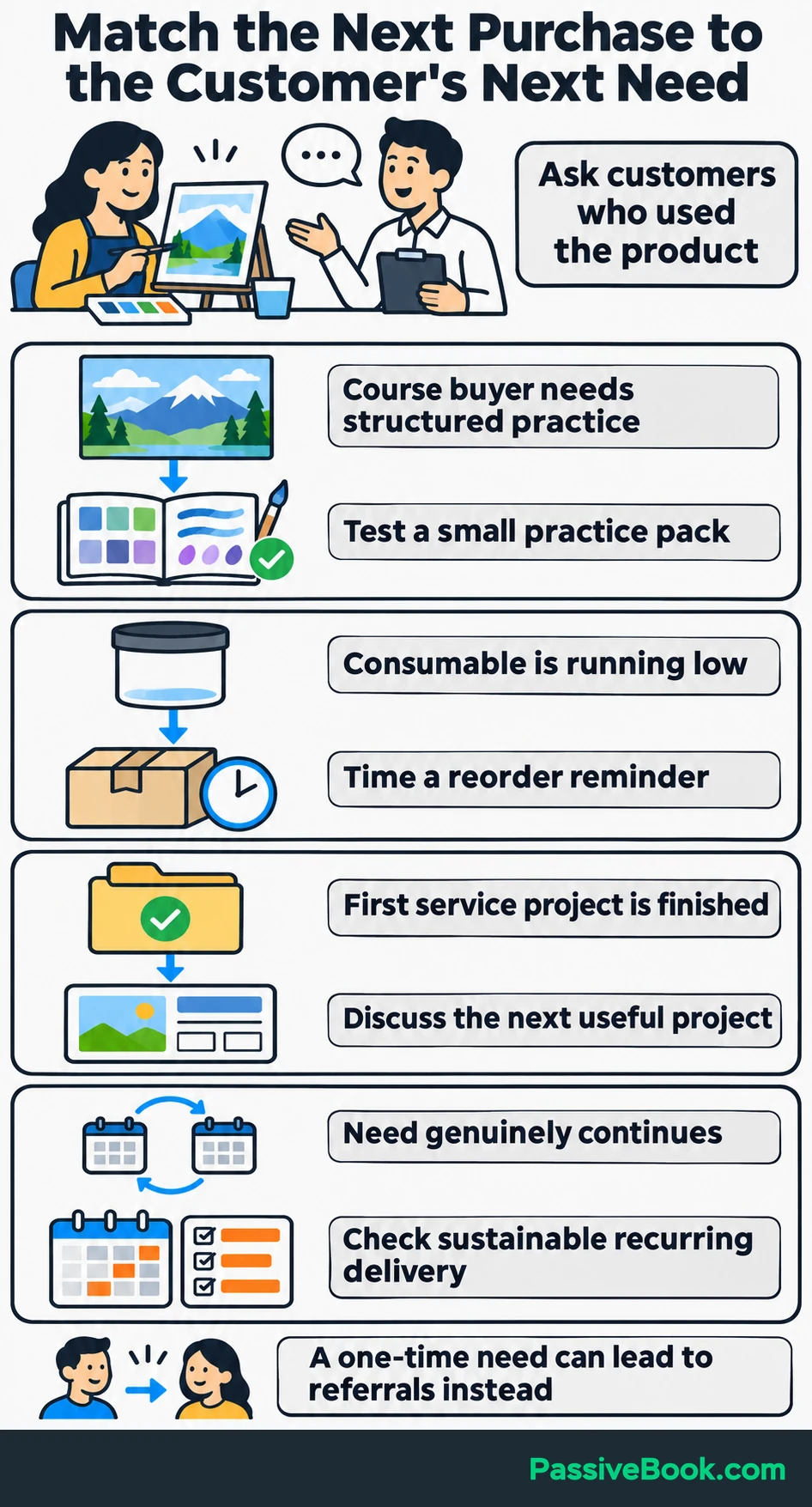
Keep the buying cycle in mind. A course buyer may need time to finish before another offer becomes useful. A store selling consumables can time reorder reminders to when customers usually run out. A service business can discuss the next project after completing the first. A subscription only makes sense when customers have a continuing need and you can serve it sustainably.
I learned the workload side of that with a membership site. I spent six months building it while working a corporate job, but the continuing content demands were unsustainable. Recurring billing did not remove the recurring work.
Measure repeat purchases among customers acquired in the same period, and give each group the same amount of follow-up time. Comparing buyers who have had six months to return with buyers who joined last week tells you little.
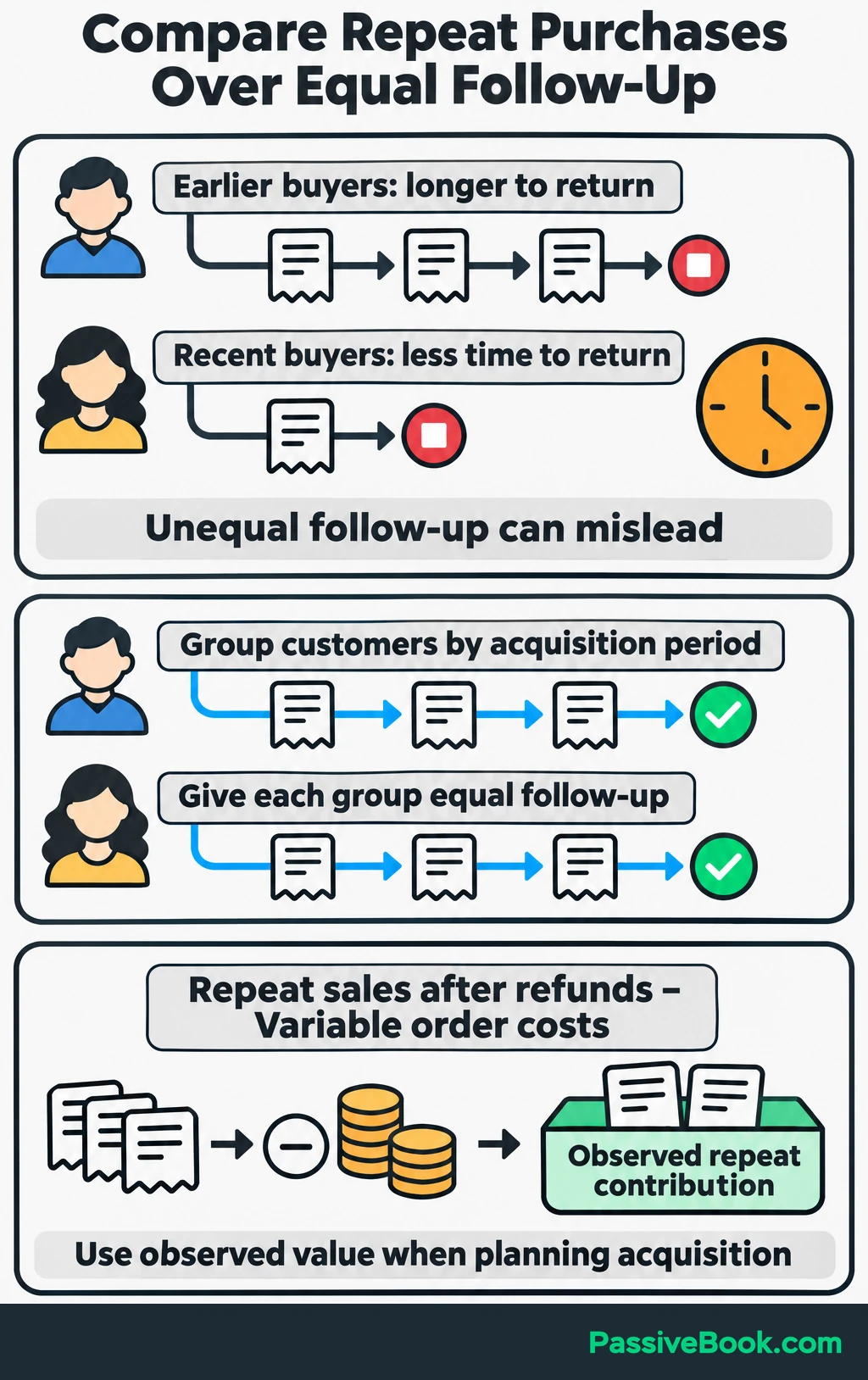
Count the contribution from those repeat orders after their variable costs. Use that observed value when deciding how much to reinvest in acquisition.
Satisfied customers can also introduce new buyers. Make referrals easy, and include any rewards in acquisition costs.
If the purchase naturally solves a one-time need, focus on results and relevant referrals. You do not need to invent a subscription to prove you understand business.
Increase Capacity Without Proportionally Increasing Work
Simplify and Document Recurring Processes
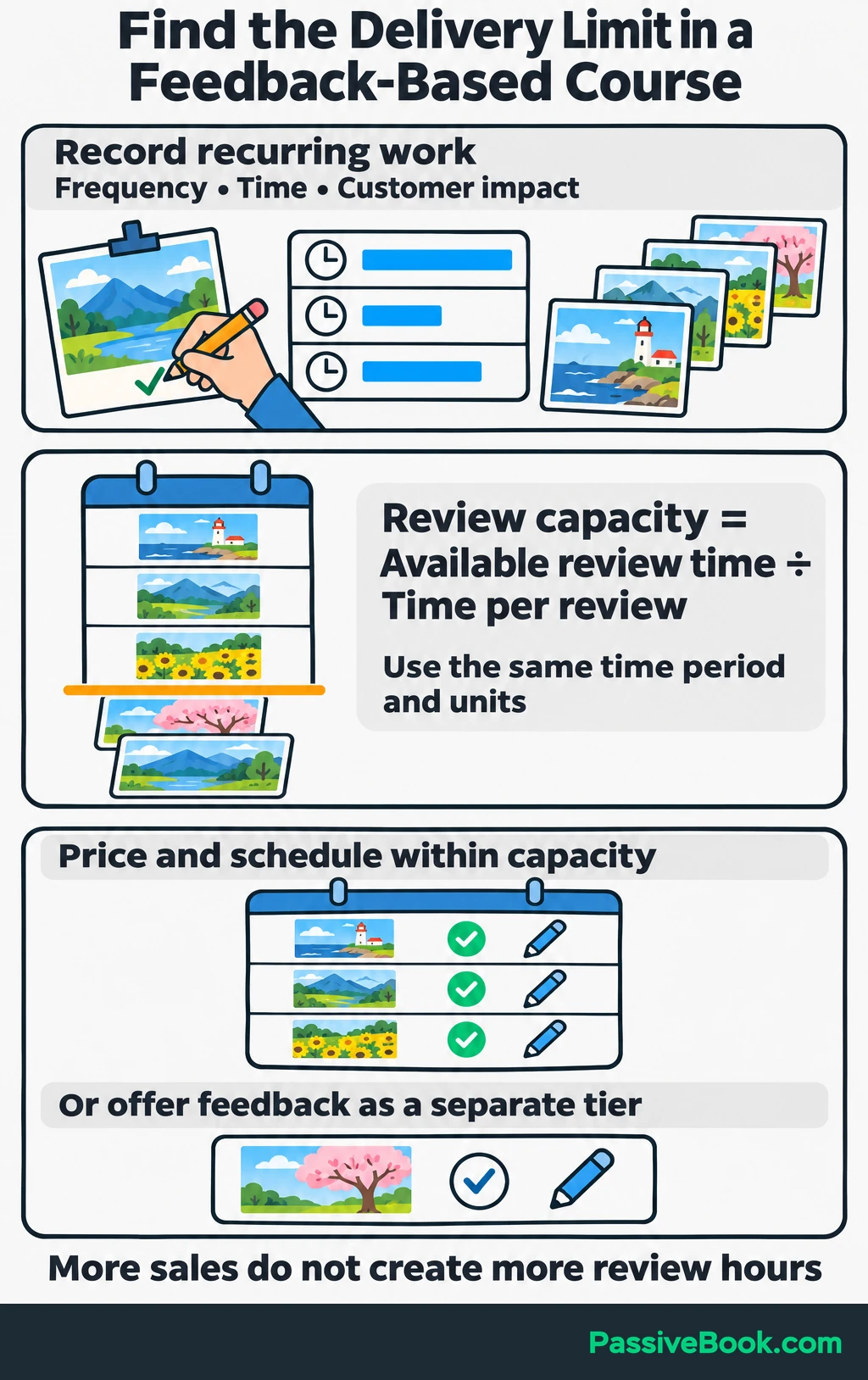
List the work that repeats across marketing, sales, delivery, support and reporting. Record how often it happens, how long it takes and what happens when it goes wrong.
Start with tasks that consume time or affect customers directly.
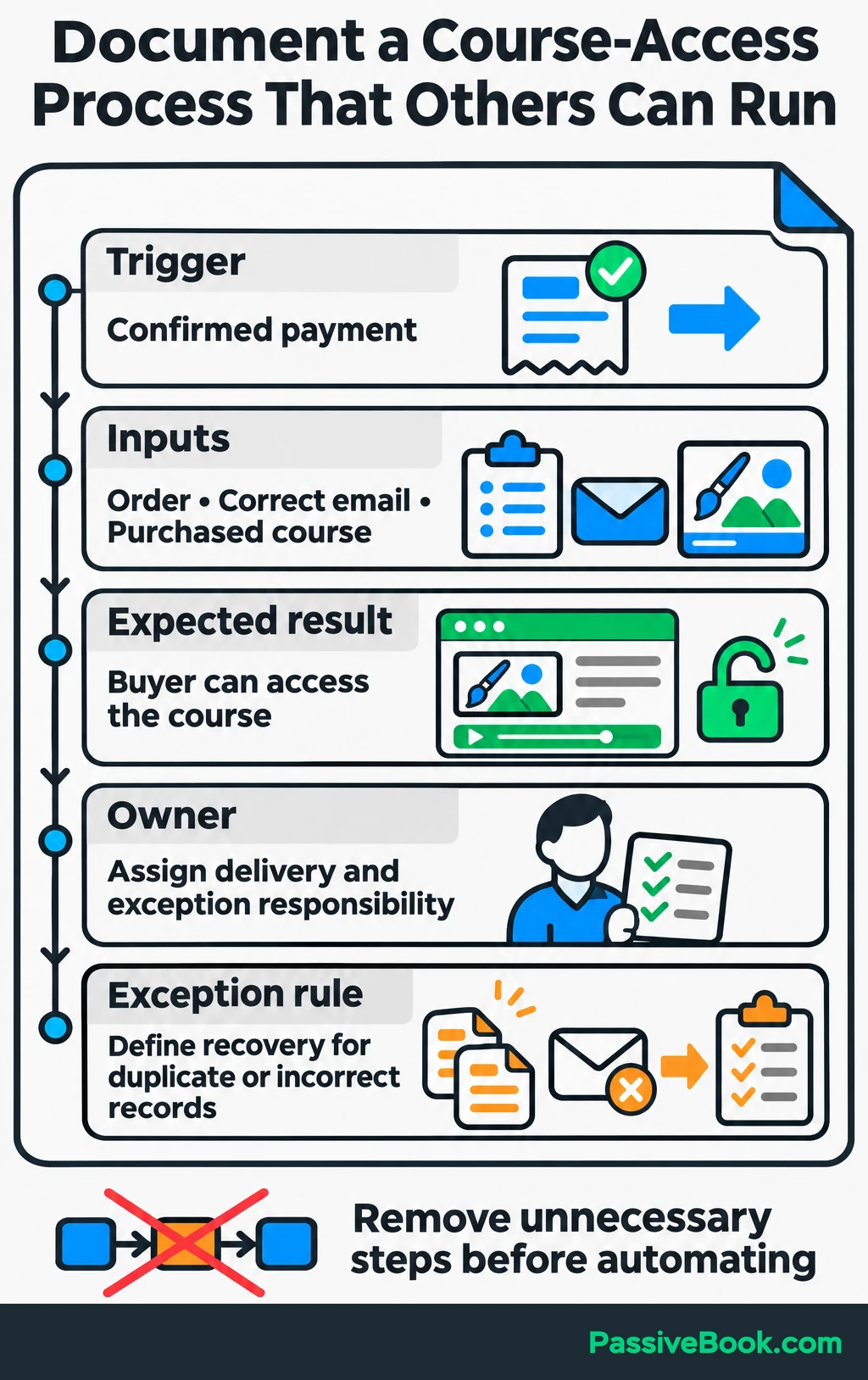
For the watercolor course, purchase confirmation, access delivery and common support questions are sensible candidates. Before automating them, remove unnecessary steps and create reusable instructions.
Document each stable process with:
- Trigger: The event that starts the work.
- Inputs: The information needed to do it.
- Expected result: What should be true when it finishes.
- Owner: Who handles the work and checks exceptions.
- Exception rule: What to do when the normal process fails.
For example, “send course access” needs a confirmed payment, an order record and the correct email address. It finishes when the buyer can access the purchased course.
A duplicate order notice or mistyped email needs an explicit recovery step. “Ask me what to do” is workable during discovery, but it should not remain the entire operating manual.
Use the time records to estimate capacity. If each sale includes personal painting feedback, that work limits how many buyers you can serve. Either price and schedule it accordingly or offer it as a separate tier.
Before adding more buyers, check whether the sales you need would fit the time you have. This calculator works backward from your income target and shows the delivery or revenue gap.
Free Pricing Profit Calculator
Automate Stable Work and Delegate Judgment
Start with one defined workflow:
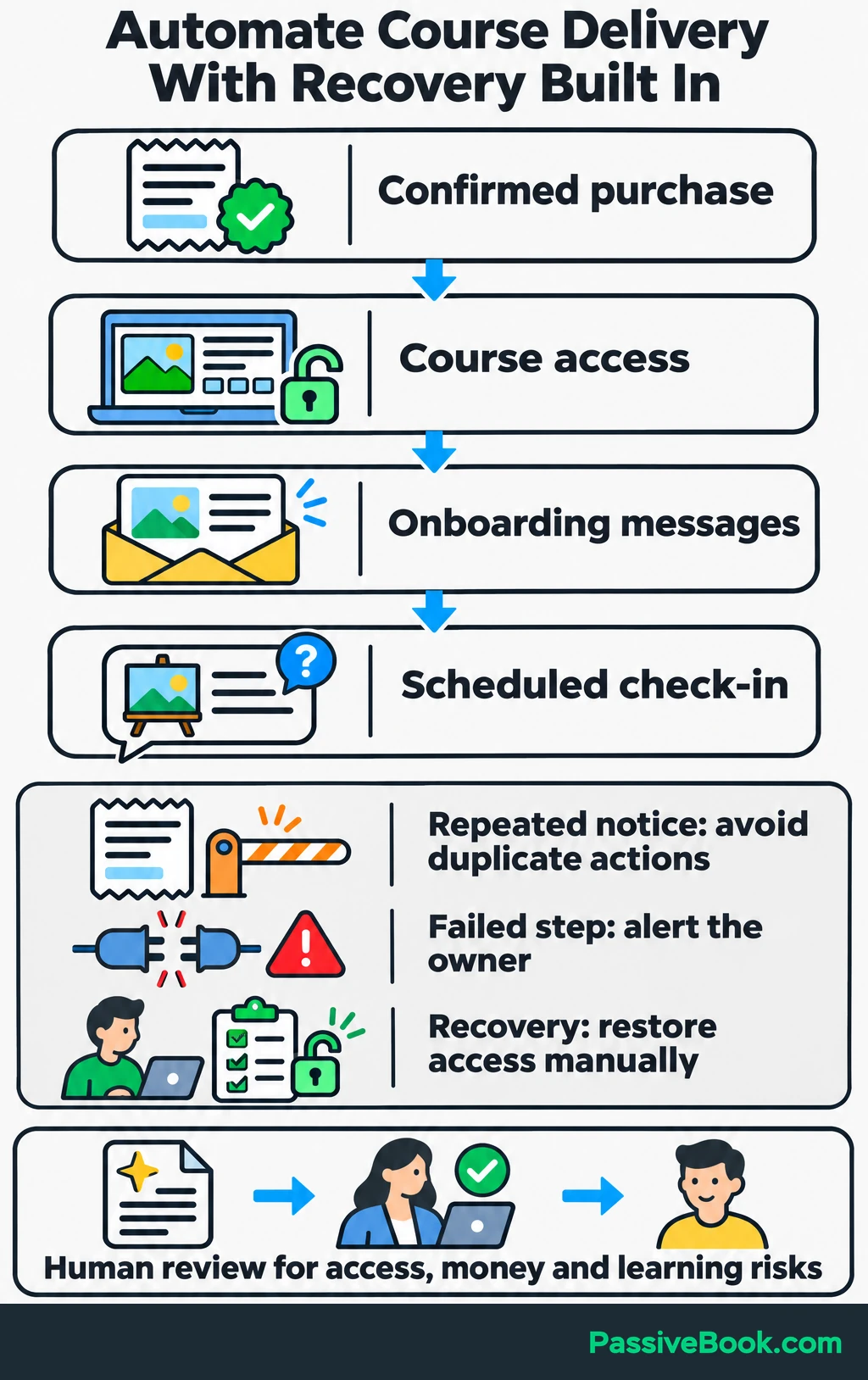
Confirmed purchase → course access → onboarding messages → scheduled progress check-in.
Test it with a purchase, a failed step and a repeated order notification. The workflow should alert you when something breaks, and you should know how to restore access manually without duplicating everything.
Use the tools you already have where possible. For connecting separate apps, I would choose Make when a visual workflow builder meets the need. I use n8n for more involved automation, and its self-hosting option suits owners willing to manage the infrastructure.
Choose based on the work you can maintain. Saving on software while creating a weekend server-maintenance job is questionable accounting.
AI fits best inside a defined task. It could group watercolor feedback by recurring problem, draft a support reply from approved instructions or prepare a lesson summary for review.
Keep human review where an error would affect a customer’s access, money or learning. Give AI clear source material and an expected output before expanding its responsibility.
My custom AI content pipeline reduced article production from days to hours. That was my result from a system built around my own production process. It is a reason to test automation, not a productivity promise for every business.
Compare time saved with setup, review, corrections, maintenance and software costs. Extend the automation when the overall result is worthwhile.
Delegate the work that still needs human skill through a bounded assignment. For the course, that could be a batch of painting reviews using a feedback guide, a response deadline and examples of acceptable work.
A clear batch is easier to assess than hiring someone to “help with everything.”
Review Results and Expand What Works
Test one change tied to your current bottleneck. Fix an obvious payment error before trying a speculative traffic channel.
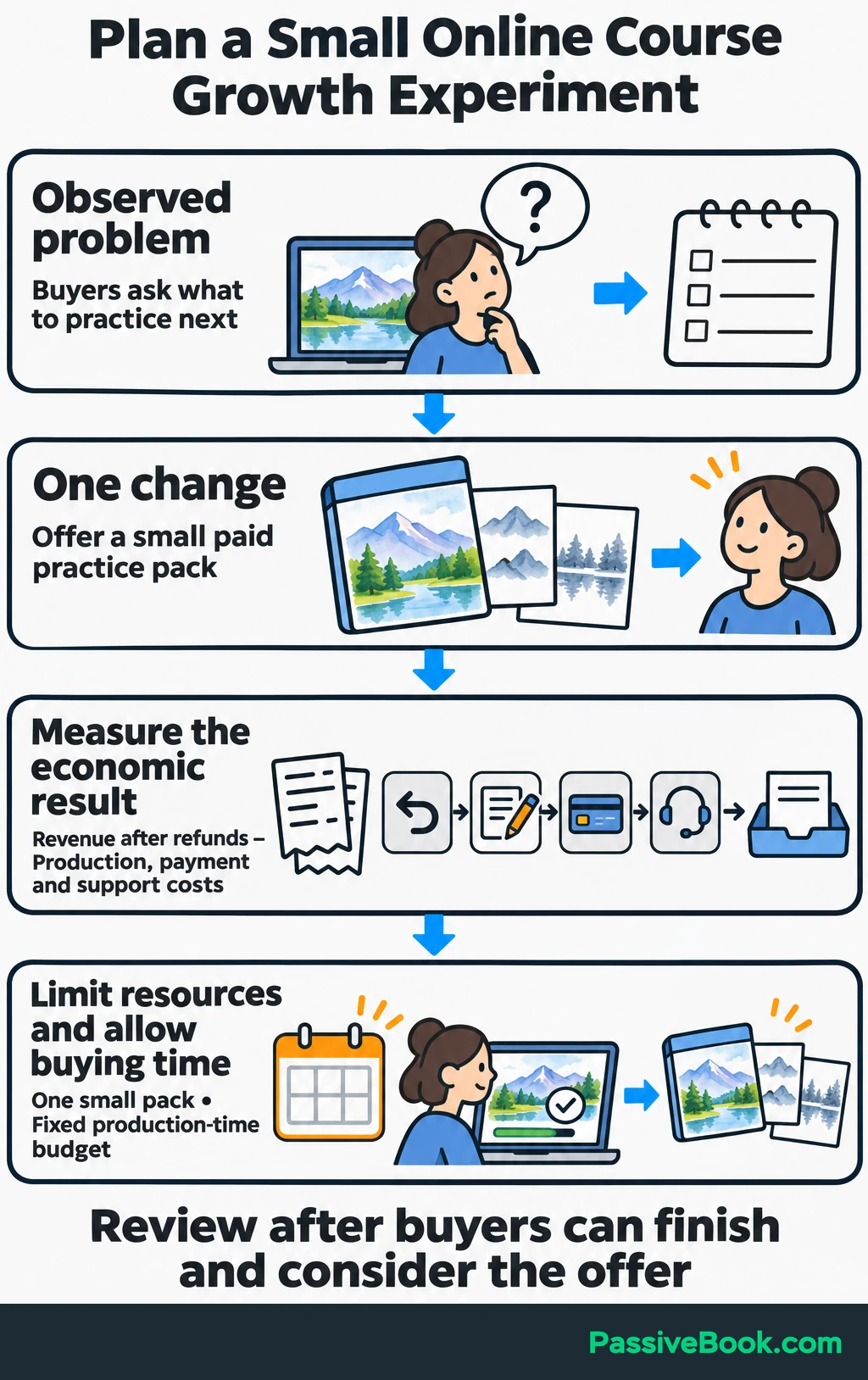
For the watercolor business, a test might look like this:
- Problem: Buyers repeatedly ask what to practice after their first landscape.
- Change: Offer a small paid practice pack to those buyers.
- Expected effect: Additional contribution from a demonstrated next need.
- Primary outcome: Revenue from the pack after refunds, minus production, payment and support costs.
- Resource limit: One small pack and a fixed production-time budget.
- Review point: After the invited buyers have had time to finish the course and consider the offer.
That is enough structure to make a decision without turning a small experiment into a research department.
Match the review period to how people buy and how the channel works. Search content needs a different window from an offer sent to existing customers.
Keep other major changes limited while you assess the result. If you change the price, sales page and traffic source together, you may struggle to explain what happened.
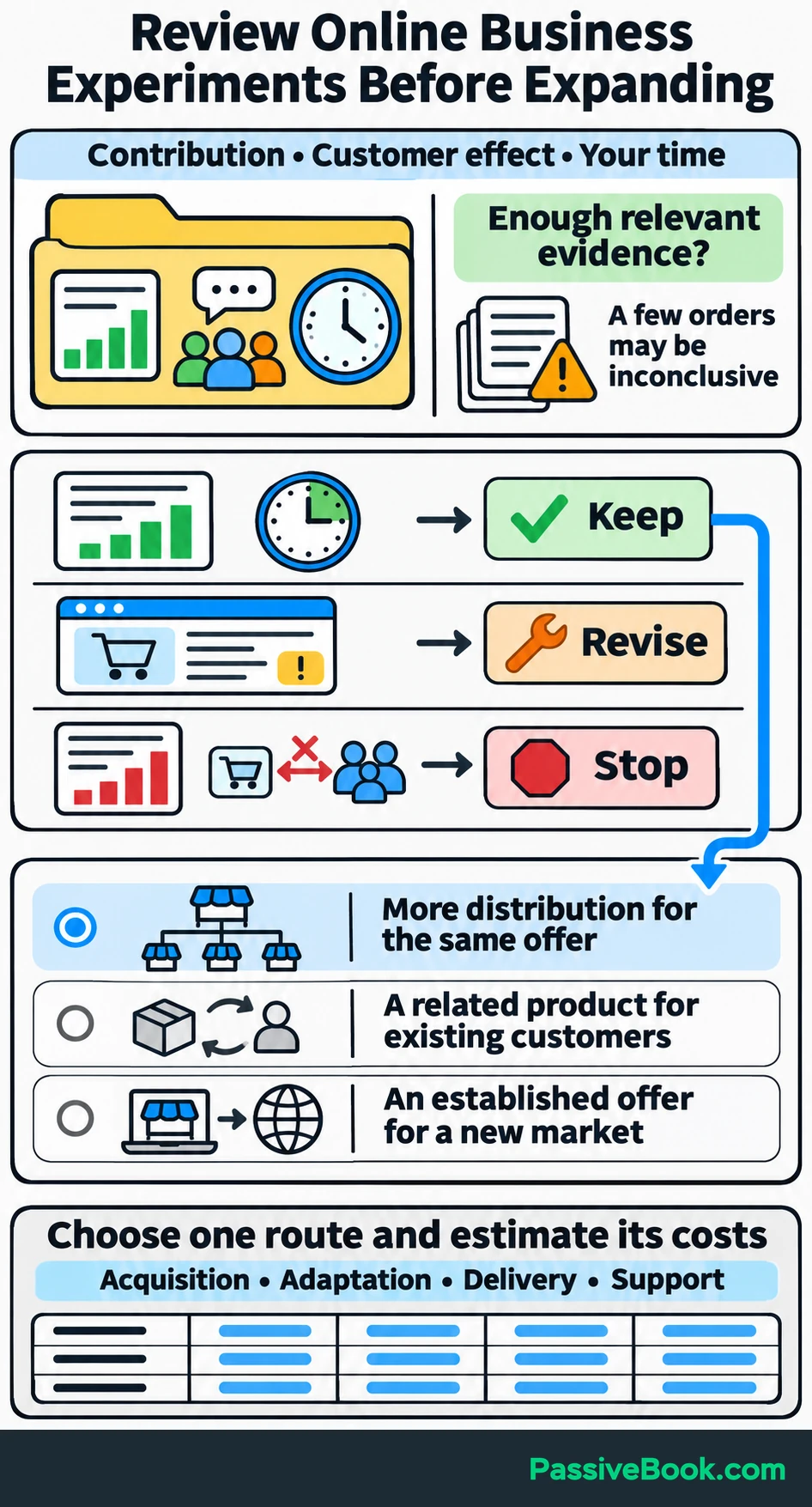
With little activity, a small rise in sales may be inconclusive. Fix obvious problems, gather customer feedback and keep recording results rather than declaring victory over three orders.
At the review point, keep, revise or stop the activity. Record its contribution, effect on customers and demand on your time.
Expand gradually when it works. You can increase distribution for the same offer, sell a related product to existing customers or adapt an established offer for a new market. Choose one route and estimate its acquisition, adaptation, delivery and support costs before committing.
What Next?
Sketch your customer journey and add the numbers you already have beside each stage. Choose one weak point to investigate before adding another task to your week.
Use the social buttons to share this guide when your next growth discussion needs a way to choose priorities.
Which part of your business currently limits growth most, and what evidence points to it? Share your answer—or any other questions—in the comments.
Share this post with your friends & followers:

