You have three free evenings this week and enough ideas to fill the next six months. Should you launch a product, improve the one you already sell, or finally sort out the admin?
Each could help, but they compete for the same hours and money. “Grow the business” gives you no useful way to choose.
The problem gets harder when you have no clear finish line for any of those ideas. This guide uses a sewing-planner shop to show how a broad ambition becomes a measurable business goal and a work plan that fits the hours and money you have.
1. Establish Your Starting Point
Start with one sentence about the business you want to build. Include the customer problem you solve, the financial result you want, and how the work should fit your life.
For example:
“Build a profitable shop that helps people organize their sewing projects and fits around my day job.”
This is your direction. You’ll add measurable targets after checking where you stand.
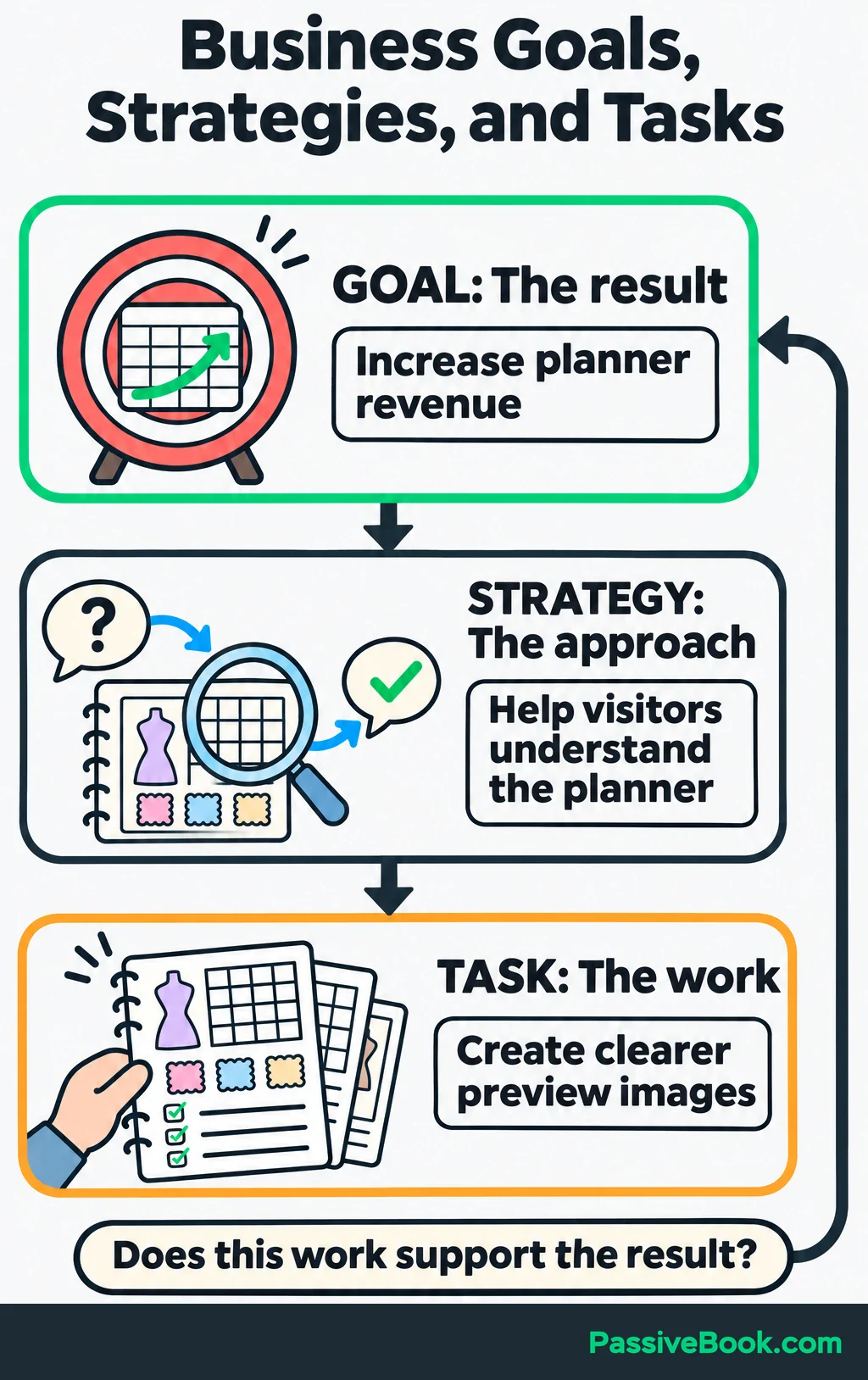
Keep three things separate as you plan:
- Goal: The result you want, such as higher revenue from an existing planner.
- Strategy: How you expect to get there, such as helping interested visitors understand the product.
- Tasks: The work involved, such as creating clearer preview images.
Now collect the records that matter to your direction. These might include paid orders, revenue, expenses, customer complaints, and hours worked. Use comparable periods. A busy holiday month and a quiet month may tell you more about the season than your progress.
For financial goals, distinguish sales, profit, and cash. Sales show what you earned from customers, and profit subtracts expenses. Cash-flow records show money actually received and paid. A profitable business can still have bills due before enough cash arrives. Business Victoria explains these financial records.
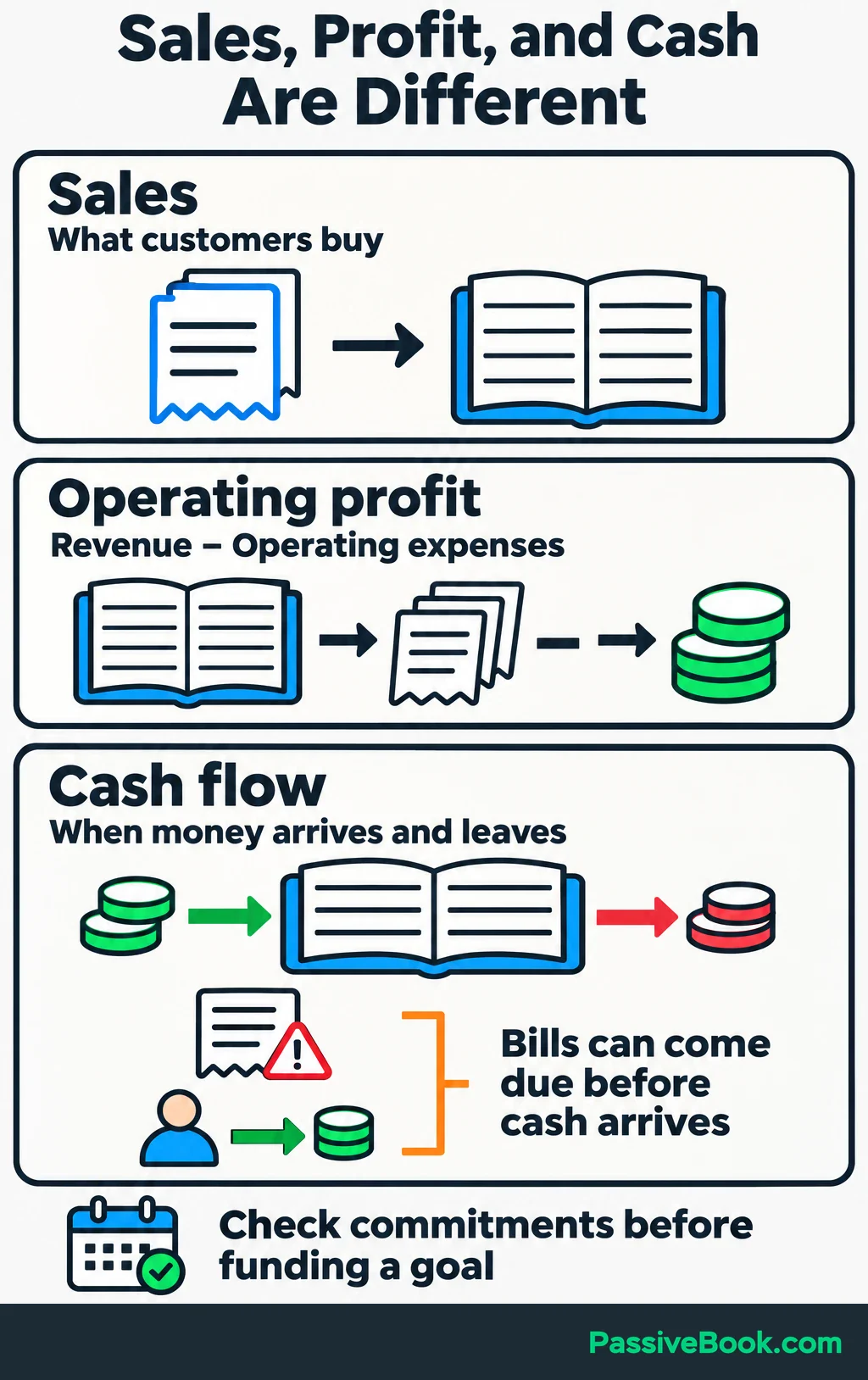
Before promising a project any money, check upcoming obligations. Then write down:
- Time: Hours you can reliably use each week.
- Money: Cash available after covering commitments.
- Skills: Work you can do yourself and help you need.
- Capacity: Orders or customer requests you can handle.
If records are missing, make gathering them your first milestone. A week spent logging admin time is more useful than confidently setting a target against a guessed baseline.
Throughout this article, imagine you sell printable sewing-project planners online. The shop and its figures illustrate the process; they are not typical results or recommended targets.
2. Choose Your Highest-priority Outcome
Look for the gap that most limits the business you want.
You might need more demand, better profit, cash to cover upcoming bills, fewer customer problems, or more time to deliver existing orders. These problems need different goals.
I would compare possible goals using five questions:
- Benefit: What would improve if I reached this goal?
- Urgency: What happens if I leave it alone?
- Evidence: What records or customer feedback suggest this matters?
- Resources: Can I fund and schedule the work?
- Dependencies: Does something else need fixing first?
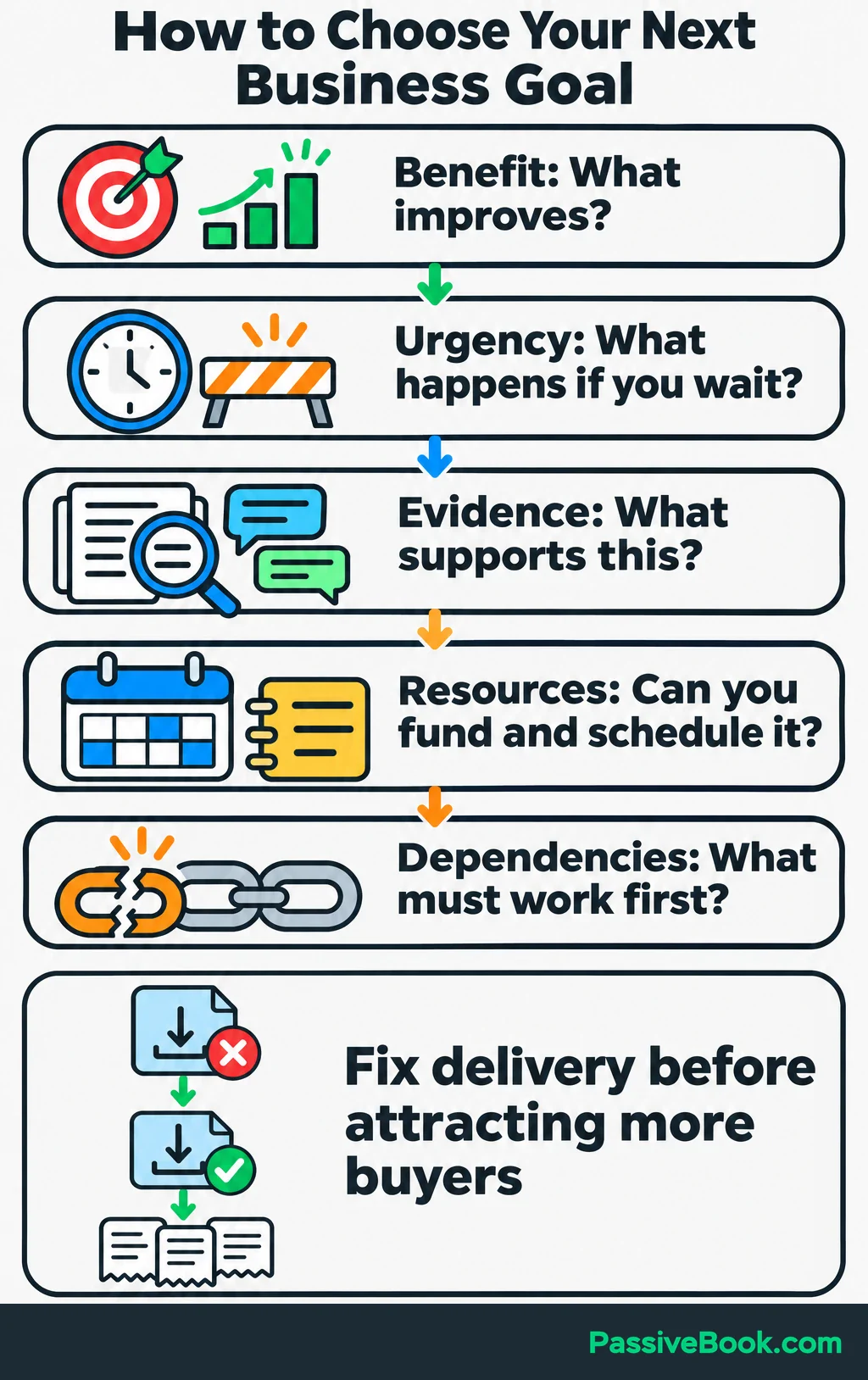
If customers cannot reliably download their purchases, fix delivery before trying to attract more buyers. Otherwise, more sales may create more support work.
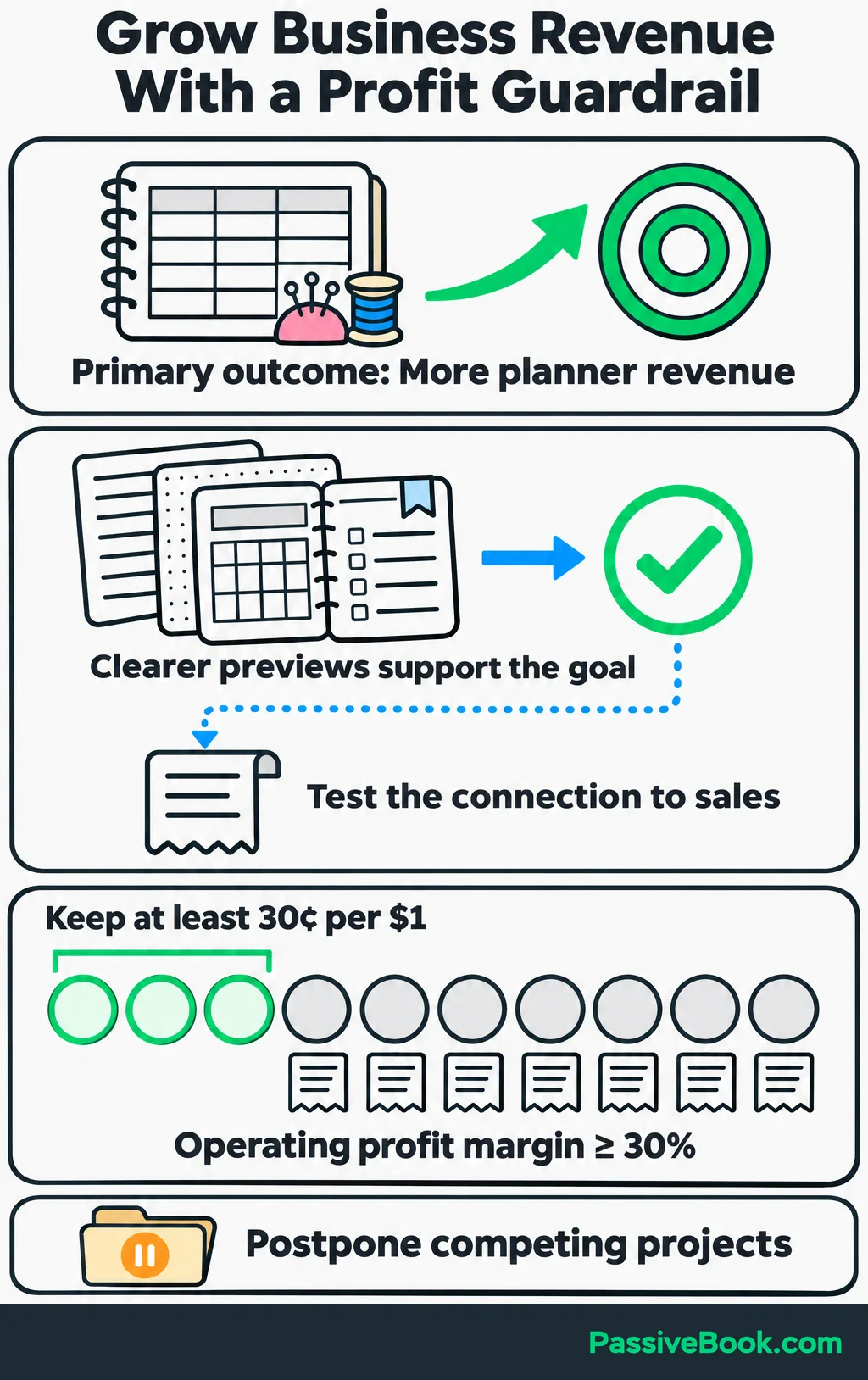
For the planner shop, suppose the existing product sells, delivery works, and there is room to handle more orders. Increasing sales could be a sensible next priority. Launching another planner would split the available time before you have improved the offer already earning money.
That is a choice, so write down what you are postponing: perhaps the new product, a website redesign, and another social account.
I learned this distinction after spending six months chasing Instagram and Twitter/X followers in another niche. My bank balance stayed around $47. I kept checking audience numbers, but I couldn’t explain how that week’s posting would lead to a sale.
Audience growth can support a business. In that case, I had given it the role of a business outcome without building the connection.
Choose one primary outcome, then add supporting goals only when they help achieve it. Protect an essential condition with a guardrail—a limit the work must respect. For the planner shop, that could mean growing revenue while keeping at least 30 cents of each revenue dollar after operating expenses. That is an operating profit margin of at least 30%.
A goal that eats all your profit or every spare evening deserves a second look.
3. Write a SMART Business Goal
SMART gives you five checks: Specific, Measurable, Achievable, Relevant, and Time-bound. The Australian Government’s business guidance uses these checks to connect goals with resources and deadlines.
Use them to sharpen your chosen outcome.
- Specific: Name the result and the part of the business affected. “Increase revenue from sewing-project planners” gives you a clearer focus than “grow the business.”
- Measurable: Record the starting figure, target, measurement period, and source of the numbers. Your main success measure is often called a key performance indicator, or KPI.
- Achievable: Work backward from the target. Check the demand, orders, costs, skills, and time required. A round number is not evidence that you can reach it.
- Relevant: Finish this sentence: “This matters now because…” Explain how the result supports your longer-term direction or removes the current obstacle.
- Time-bound: Set a deadline and define the period you will judge. Revenue during the final 30 days of a project is different from revenue across the whole project.
For an unfamiliar task, you may need a learning milestone before committing to a larger result. Locke and Latham’s review of goal-setting research explains how learning goals can help when complex work requires discovering an effective approach.

Applied to the shop, that might be:
“By day 14, interview five prospective customers and document their purchase objections to guide the product-page revision.”
This gives the research a purpose and an endpoint. It does not assume five conversations will produce a particular number of sales.
Once you have enough evidence to choose an outcome target, use this template:
“By [deadline], move [metric] from [baseline] to [target], measured over [reporting period] using [record], while maintaining [guardrail].”
Replace “day 90” with an actual calendar date when you put the goal into your plan.
SMART Business Goal Examples
Before choosing a target, work out how much the shop earns, what it spends, and how much remains as operating profit.
In the shop’s baseline 30-day period, assume each paid order contains one $20 planner, with no discounts or refunds. Revenue excludes sales tax.
| Measure | Baseline Result |
|---|---|
| Paid orders | 50 |
| Revenue | 50 orders × $20 = $1,000 |
| Operating expenses | $700 |
| Operating profit | $1,000 − $700 = $300 |
| Operating profit margin | $300 ÷ $1,000 × 100 = 30% |
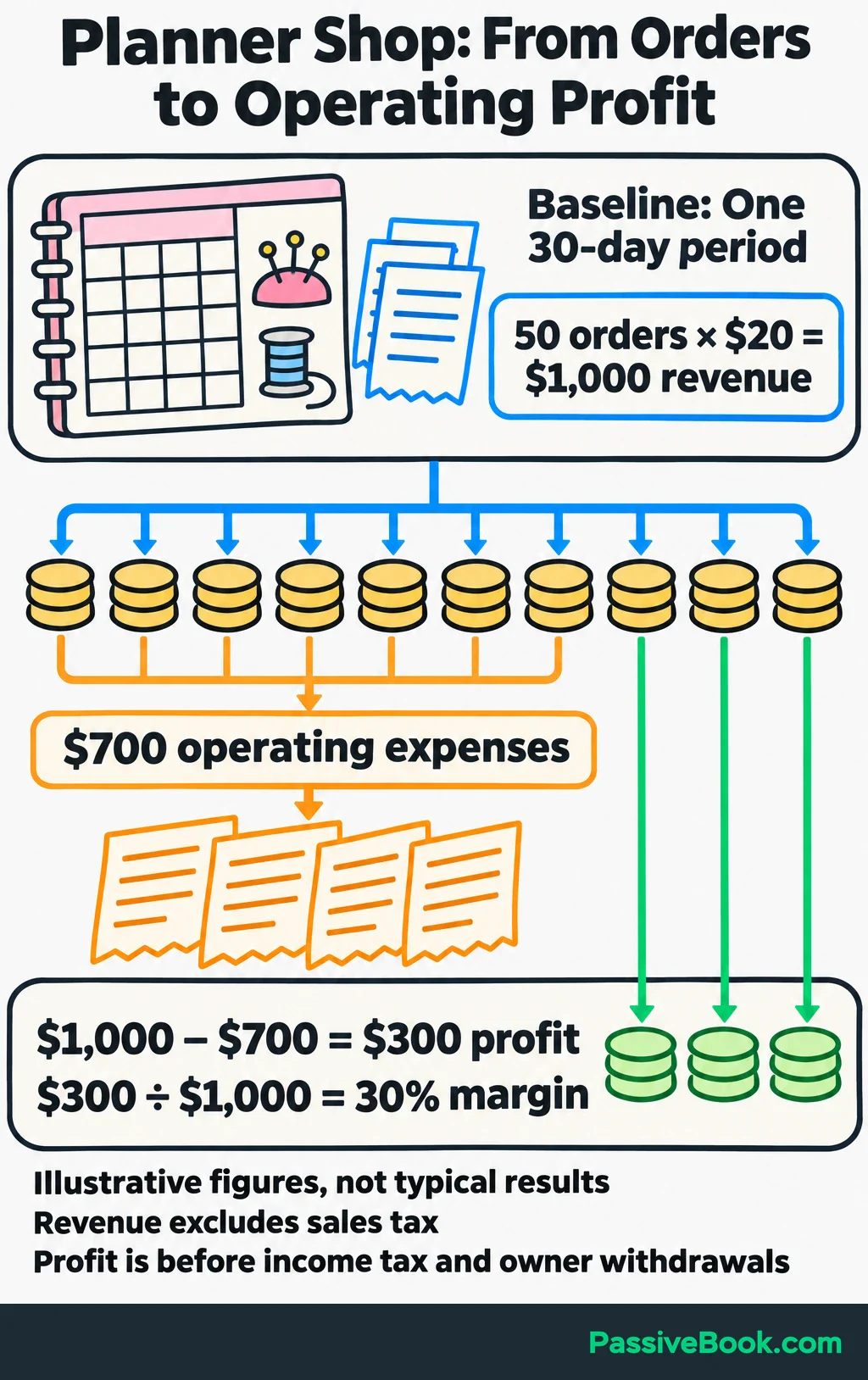
Operating expenses include costs such as payment-processing fees and software subscriptions. Operating profit here is before income tax and owner withdrawals, and unpaid owner time is tracked separately.
The examples below address different priorities. I would choose the one that solves the current problem rather than adopt all three at once.
Revenue Growth Goal
Replace “make more sales” with:
“By day 90, increase planner revenue from $1,000 in the baseline 30-day period to $1,200 during the final 30 days, measured through sales records, while maintaining an operating profit margin of at least 30%.”
At the unchanged price of $20 per order, divide target revenue by revenue per order:
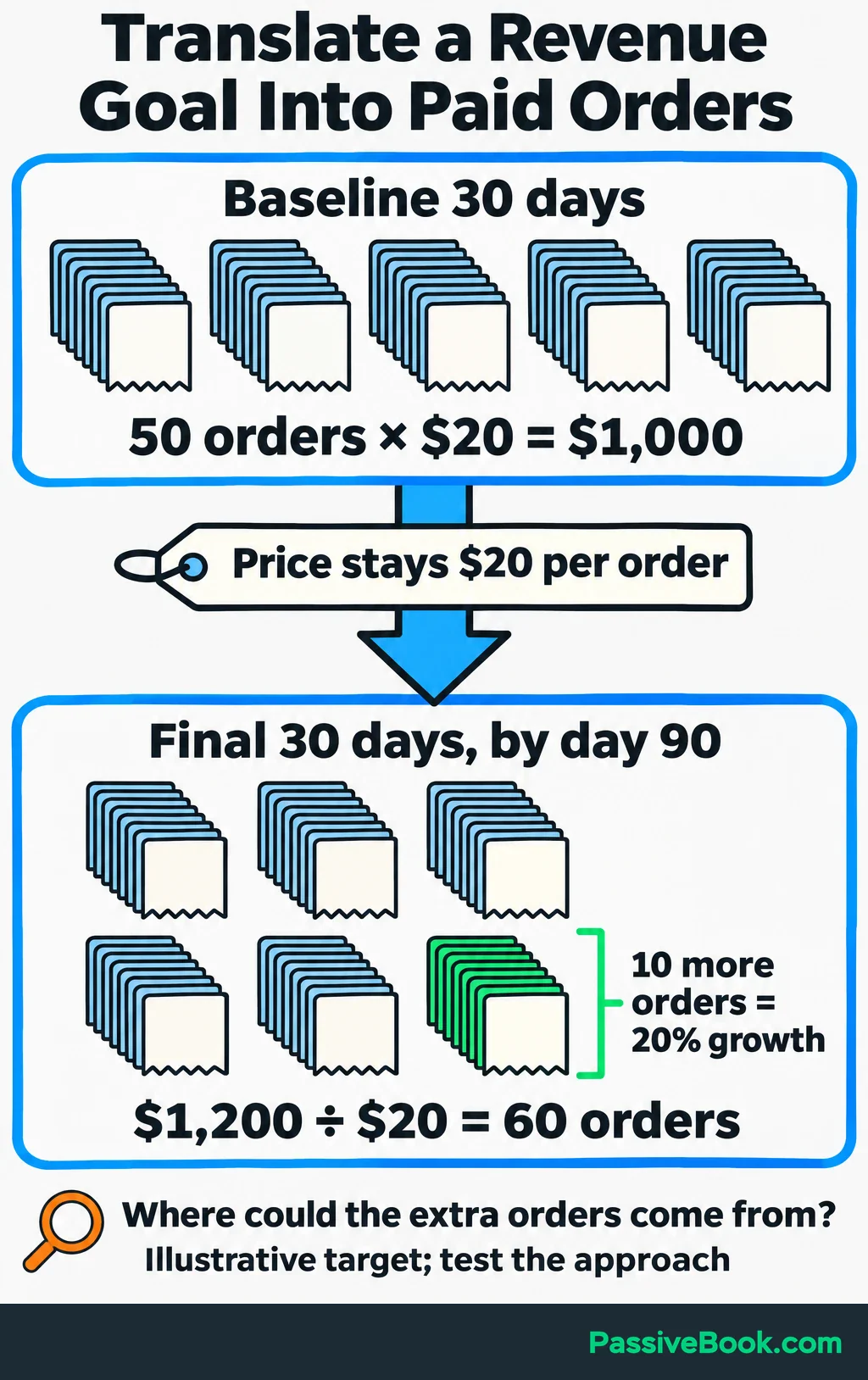
$1,200 ÷ $20 = 60 paid orders.
That means finding 10 additional orders compared with the baseline, a 20% increase. Before accepting the target, explain where those orders could come from. Clearer previews or a promotion to an existing audience are possible approaches, but they still need testing.
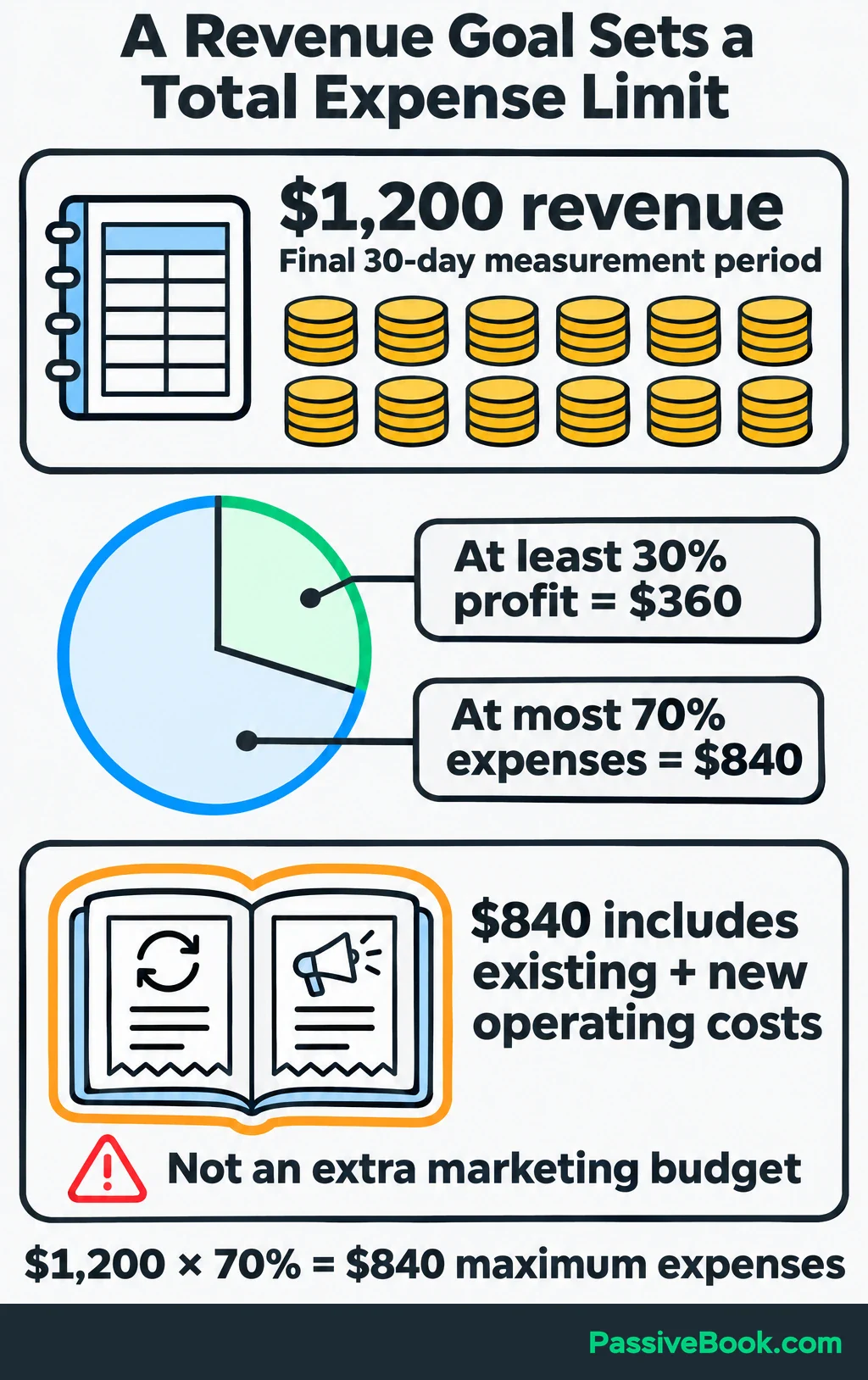
Next, check the spending limit. Keeping 30% of $1,200 as operating profit leaves 70% for operating expenses:
$1,200 × 70% = $840 maximum operating expenses.
That limit includes the shop’s existing costs and any new operating costs during the measurement period. It is not an extra marketing budget.
Profitability Goal
If sales are adequate but too little remains after expenses, change the outcome:
“By day 90, reduce operating expenses from $700 to no more than $600 during the final 30 days, measured through expense records, while maintaining at least $1,000 revenue and the existing product offering.”
At $1,000 revenue and $600 expenses, operating profit becomes $400. Dividing that profit by the same period’s revenue gives a 40% operating profit margin.
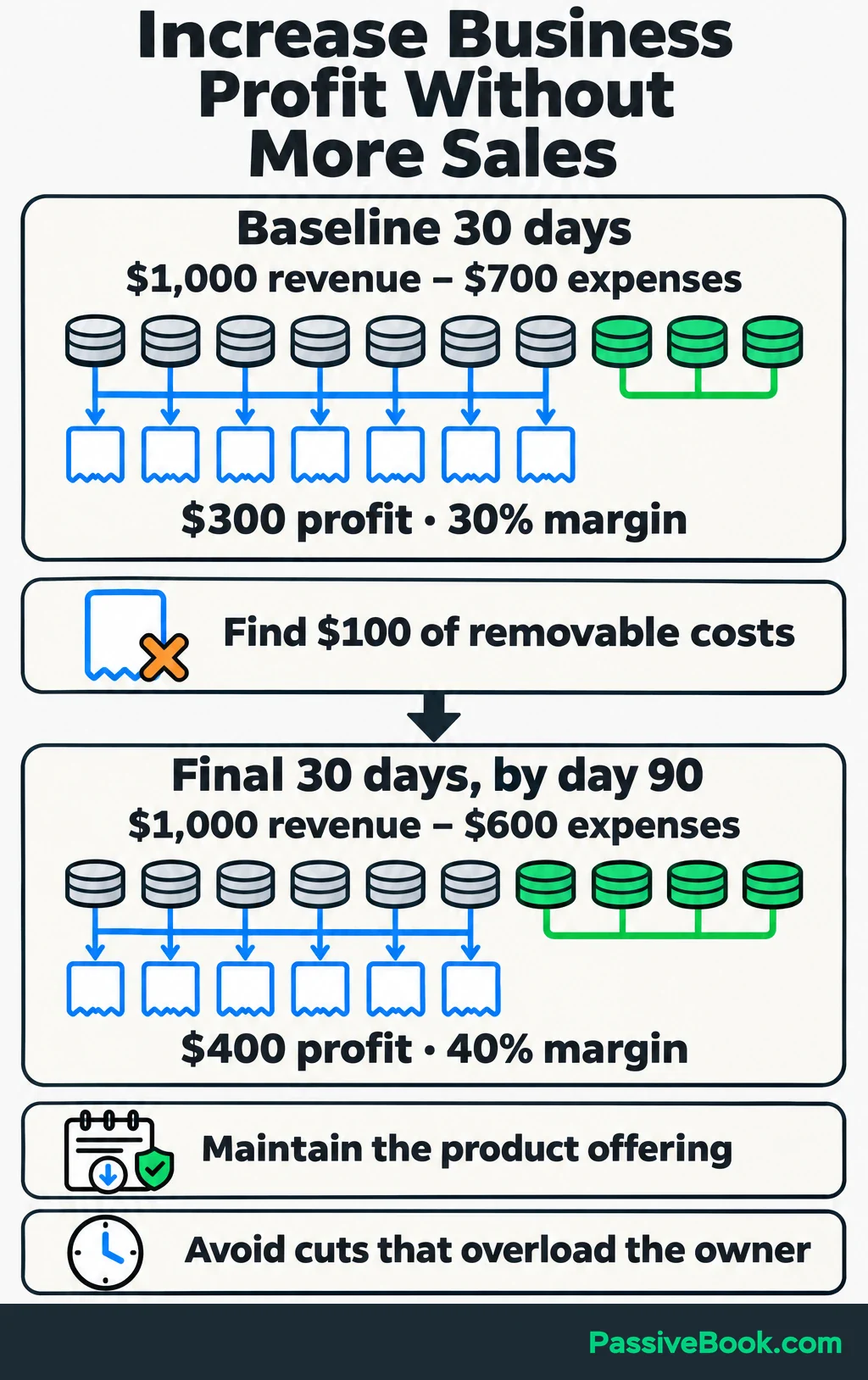
Find the removable $100 before adopting this target. An unused subscription is a better candidate than a service customers need to receive their purchases.
I would skip cuts that simply move paid work onto an already overloaded owner. The expense report might improve while the working week gets worse.
Operating-time Goal
If administration is the main constraint, use a time goal:
“By day 90, reduce average administration time per paid planner order from 10 minutes to six minutes during the final 30 days, measured through a time log, without increasing the order-error rate above its baseline.”
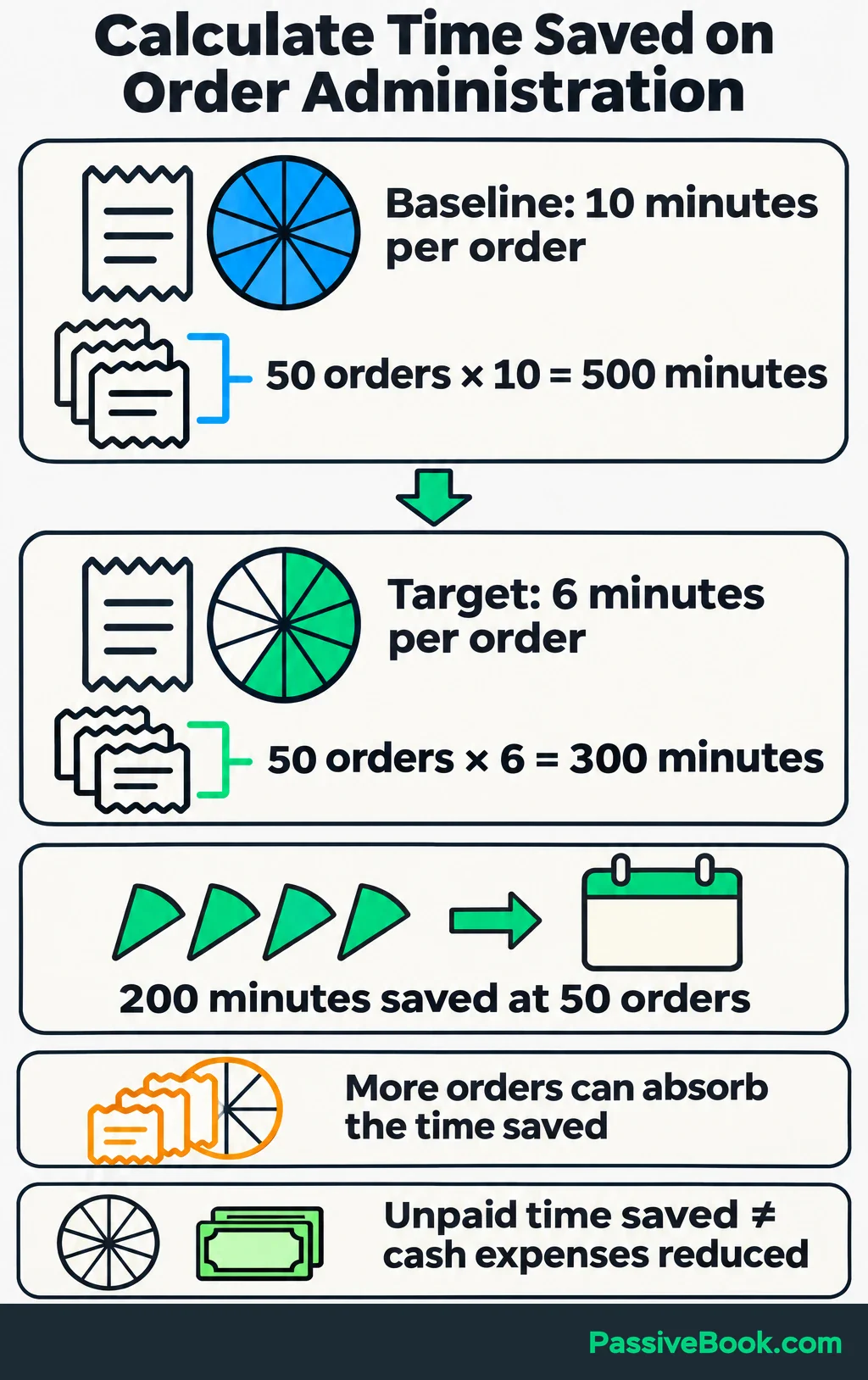
Define the work being timed. For example, include checking payment, sending missing download links, and handling routine order questions.
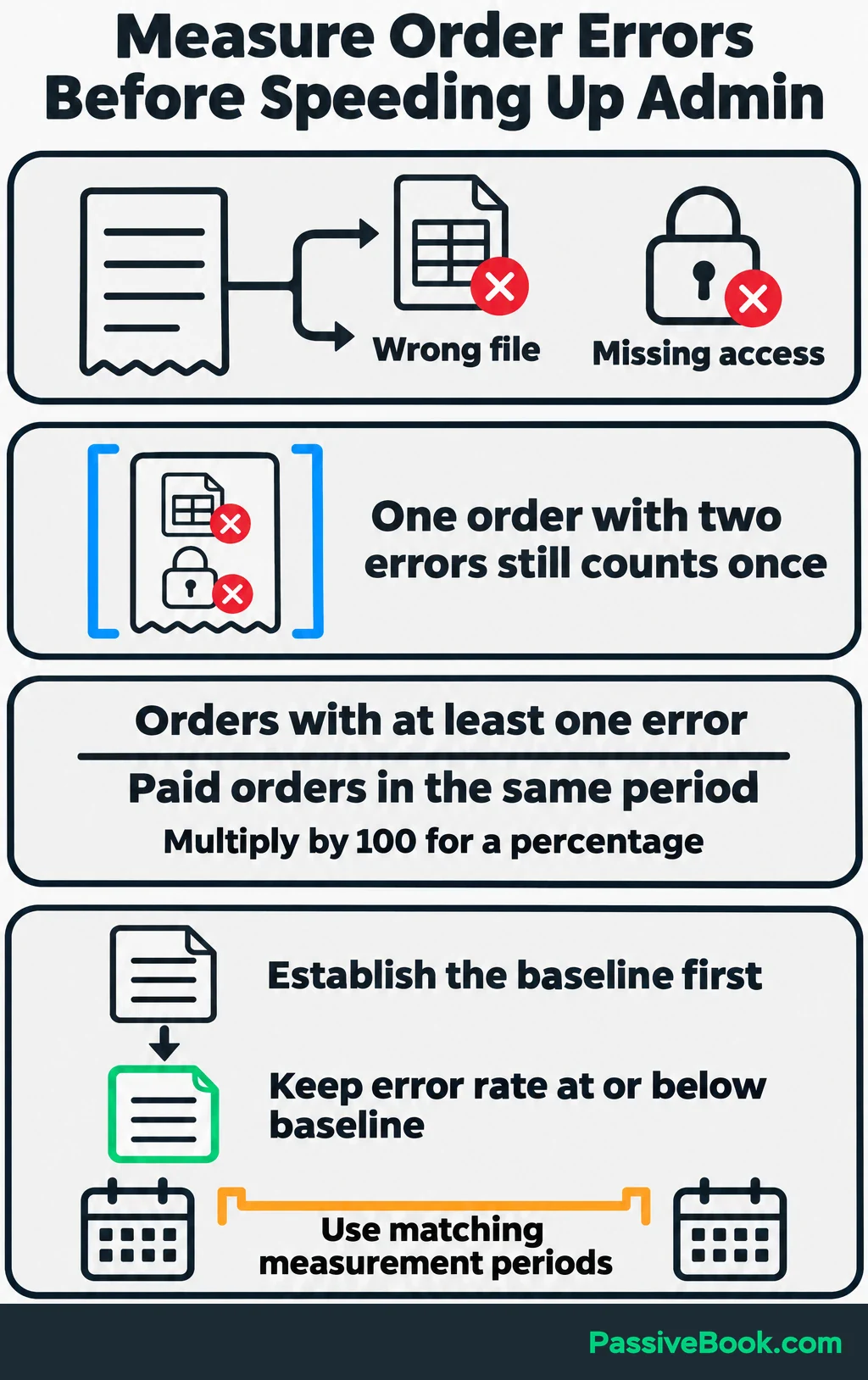
Also define an error, such as sending the wrong file or failing to provide access. Calculate the error rate using orders with at least one recorded error divided by paid orders from the same measurement period. Establish that baseline before changing the process.
At a fixed 50 orders, administration would fall from 500 minutes to 300 minutes, saving 200 minutes. Track total hours too, because more orders can absorb the time saved per order.
Saving unpaid owner time gives you time back. It does not automatically reduce cash expenses.
4. Turn Your Goal Into Scheduled Actions
Work backward from the result and choose actions with a plausible connection to it.
For the revenue goal, the assumption might be:
“Clearer product previews should help interested visitors understand what they are buying.”
That assumption explains why you would spend time on previews. It also gives you something to question if the work produces no improvement.
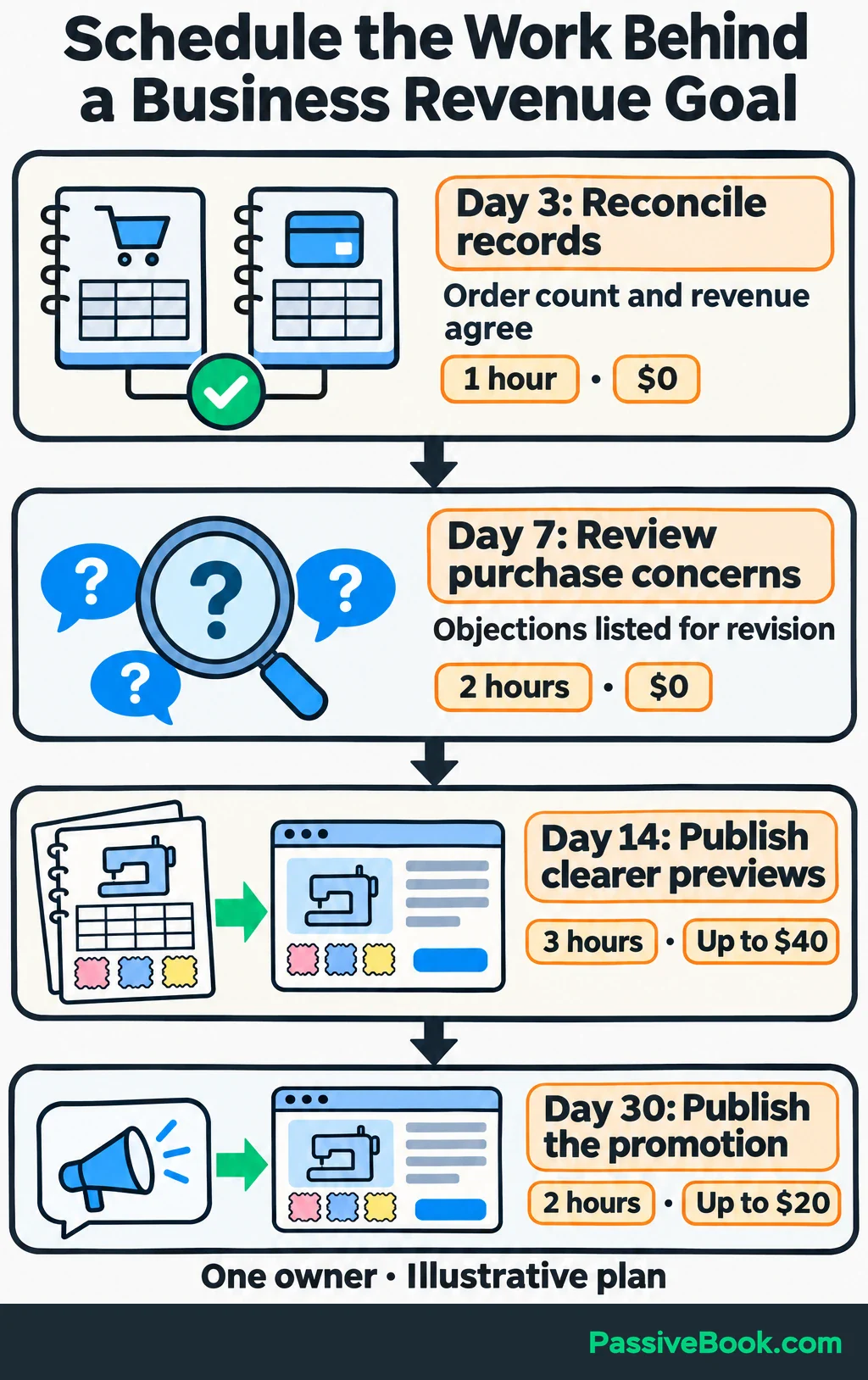
Here is a starting action plan for the revenue goal. The shop owner handles all four actions.
| Action | Completion Check | Due Date | Time Allocation | Budget |
|---|---|---|---|---|
| Match the order log to payment records | Order count and revenue agree across both records | Day 3 | 1 hour | $0 |
| Review customer questions for recurring objections | Purchase concerns listed for the page revision | Day 7 | 2 hours | $0 |
| Create previews showing how planner pages work | Previews added to the product page | Day 14 | 3 hours | Up to $40 |
| Run a promotion through an existing channel | Promotion published with a link to the revised page | Day 30 | 2 hours | Up to $20 |
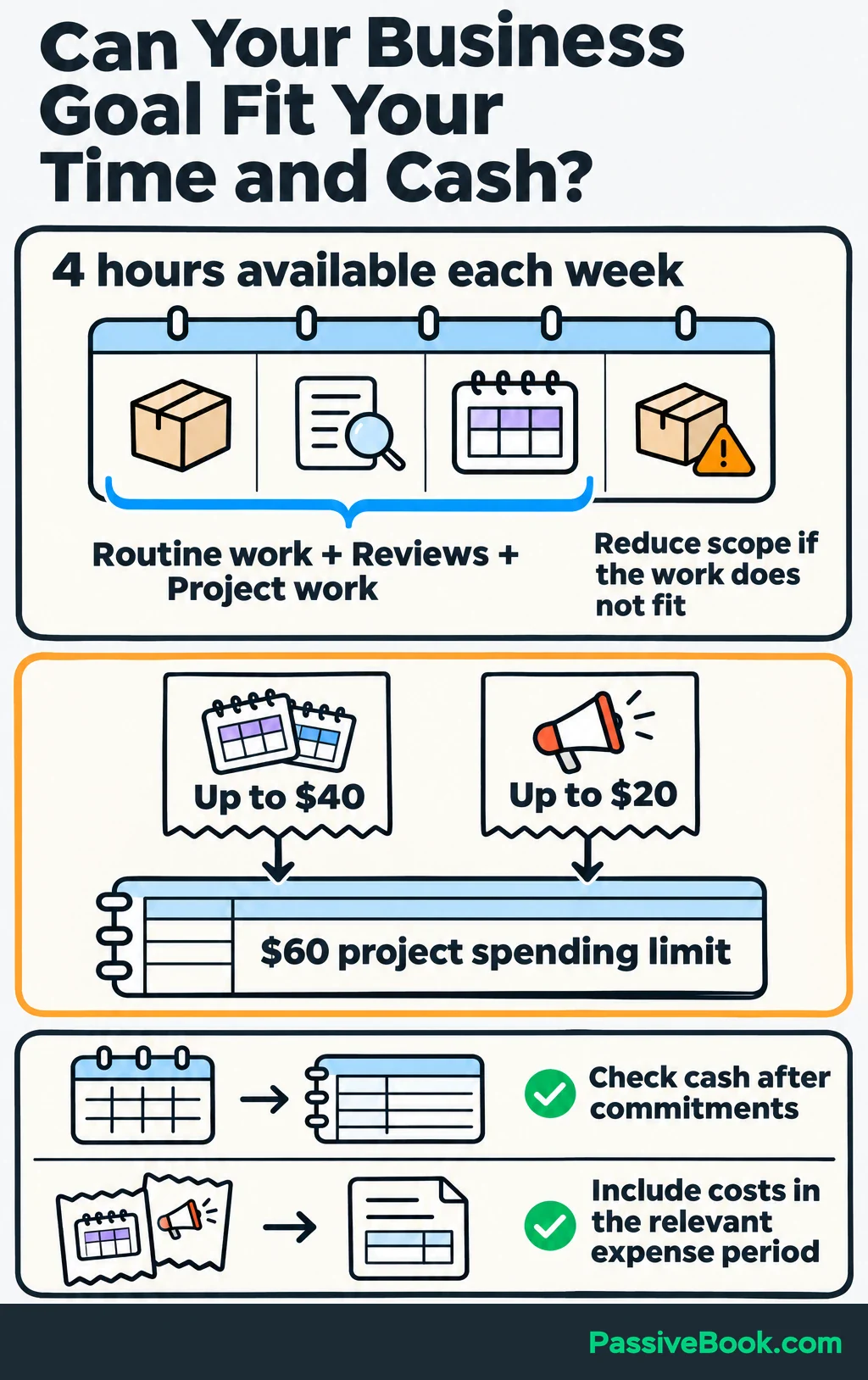
The $60 project spending limit is illustrative. Check when those costs will be paid, whether cash is available, and how they affect the period’s expenses.
Put the work into your calendar. If you have four hours a week, those hours must also cover routine business work and reviews. Reduce the scope or postpone another project if the schedule does not fit.
If turning your goal into specific work is where you get stuck, this AI Skill can draft the goal and first action briefs around your business. You can check the assumptions and effort estimates before putting anything on your calendar.

Free AI Action Planner




Check records before judging a promotion, and finish the previews before sending visitors to them. If another person is involved, confirm their responsibility, time, and budget.
After the first month, schedule follow-up work based on what happened. Keep reviews at days 30, 60, and 90 so early activity connects to the final measurement period.
Keep this plan beside your business plan’s strategy and financial assumptions. The SBA describes both traditional and lean business plans, so use a format suited to your needs. For a small operation, I would start with a concise working plan that makes the goal, approach, and spending agree.
5. Review Progress and Adjust the Plan
Use a small scorecard in a spreadsheet or your existing planning tool. I would skip buying software just to track one goal.
For the revenue example, it could look like this at the final review:
| Measure | Baseline 30 Days | Final 30-day Target | Latest 30 Days |
|---|---|---|---|
| Revenue | $1,000 | At least $1,200 | $1,100 |
| Paid orders at $20 each | 50 | At least 60 | 55 |
| Operating profit margin | 30% | At least 30% | Awaiting expense total |
Add the exact measurement dates, deadline, and next review date. A missing expense total means you cannot yet judge whether the profit guardrail held.
Check actions weekly so you can remove obstacles. Review financial outcomes over comparable 30-day periods, allowing time for completed work to affect sales.
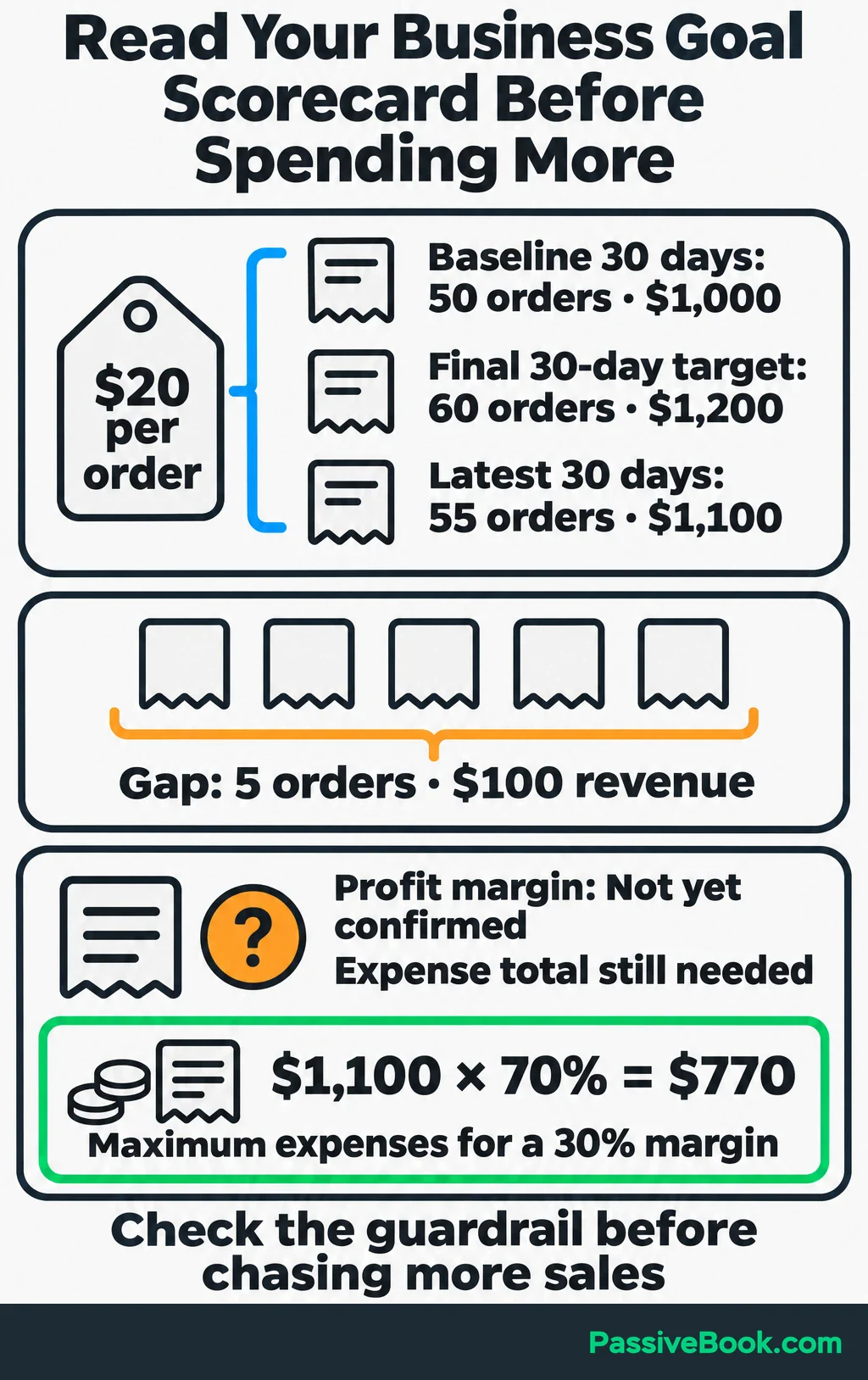
For the shop, 55 orders at $20 produce $1,100 revenue, leaving a $100 gap against the target. Diagnose that gap before adding work:
- Actions unfinished: Find what blocked them and change the schedule or scope.
- Actions completed, results weak: Revisit the assumption behind the approach. Clearer previews may not address the real purchase concern.
- Guardrail breached: Reduce or stop the activity causing the breach before expanding it.
At $1,100 revenue, a 30% operating profit margin allows no more than $770 in operating expenses. Check that limit before spending more to chase the remaining sales.
Revise a target when changed conditions or new evidence justify it. Keep the original target and record why it changed. Otherwise, moving the number can hide a plan that did not work.
At the deadline, record the result, money spent, hours used, and lesson learned. Then ask whether reaching the metric improved the business you wanted to build. That answer should shape your next priority.
What Next?
Write down one business outcome you want to improve, then find its current number. Use the SMART template to add a target, deadline, measurement period, and guardrail, and schedule the first action.
Use the social buttons to share this guide when a planning conversation needs to turn broad ambitions into work that fits the calendar.
Which outcome deserves your limited time over the next 90 days, and what will you postpone to make room? Leave your answer or any questions in the comments.
Share this post with your friends & followers:

