You have a product to launch, but the spending starts before the sales do. There’s a website to pay for, work to finish, and a growing list of tools that all claim to be essential.
The hard part is deciding how much cash to put at risk before customers give you a reason to spend more. A loan can cover the bills, but it also adds another bill.
This guide shows you how to price a small launch, compare funding options, and check whether growth can pay its own way.
Fund the Next Milestone First
Start with one outcome you can measure and price. “Grow the business” is too vague to fund sensibly. Delivering your first paid product or fulfilling confirmed orders gives the money a clear job.
I would use this order:
- Make a capped personal contribution you can afford to lose.
- Test an offer small enough to deliver without extensive automation or paid advertising.
- Reinvest available business cash when customers start buying.
- Consider outside funding when a specific cash gap justifies its cost and obligations.
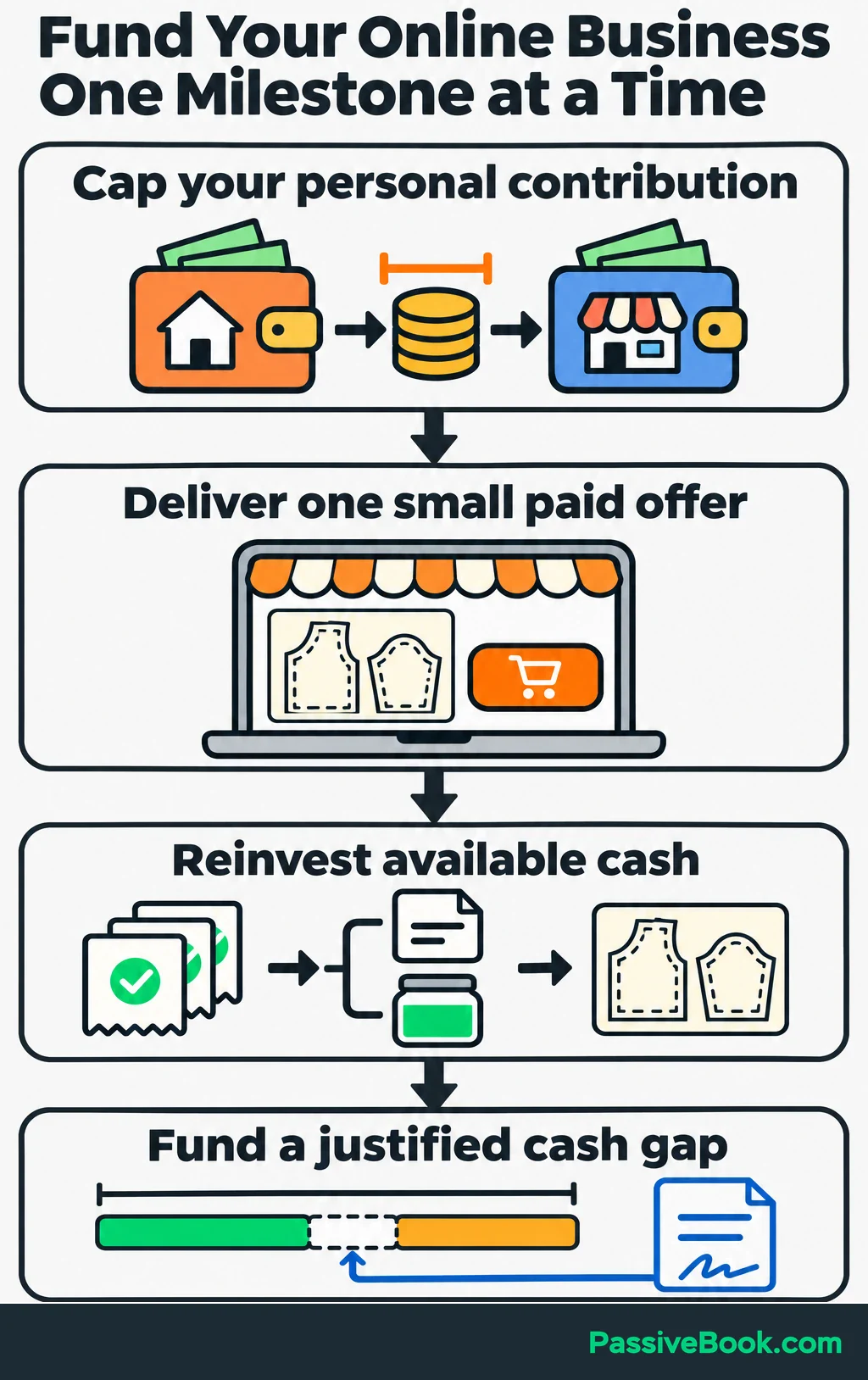
Throughout this guide, imagine you sell downloadable beginner sewing patterns. Your first milestone is to sell and deliver a basic pattern pack. A larger bundle can wait.
The example figures are assumptions, not typical results or available funding offers. U.S. programs and rules are identified where they appear.
Calculate How Much Funding You Need
Set a Safe Personal Contribution
Decide what you can afford before deciding what the business could use.
Protect household bills, emergency savings, and existing obligations. Then set a maximum personal loss you could absorb without borrowing for ordinary living costs. That ceiling is permission to spend up to an amount, not an instruction to empty it.
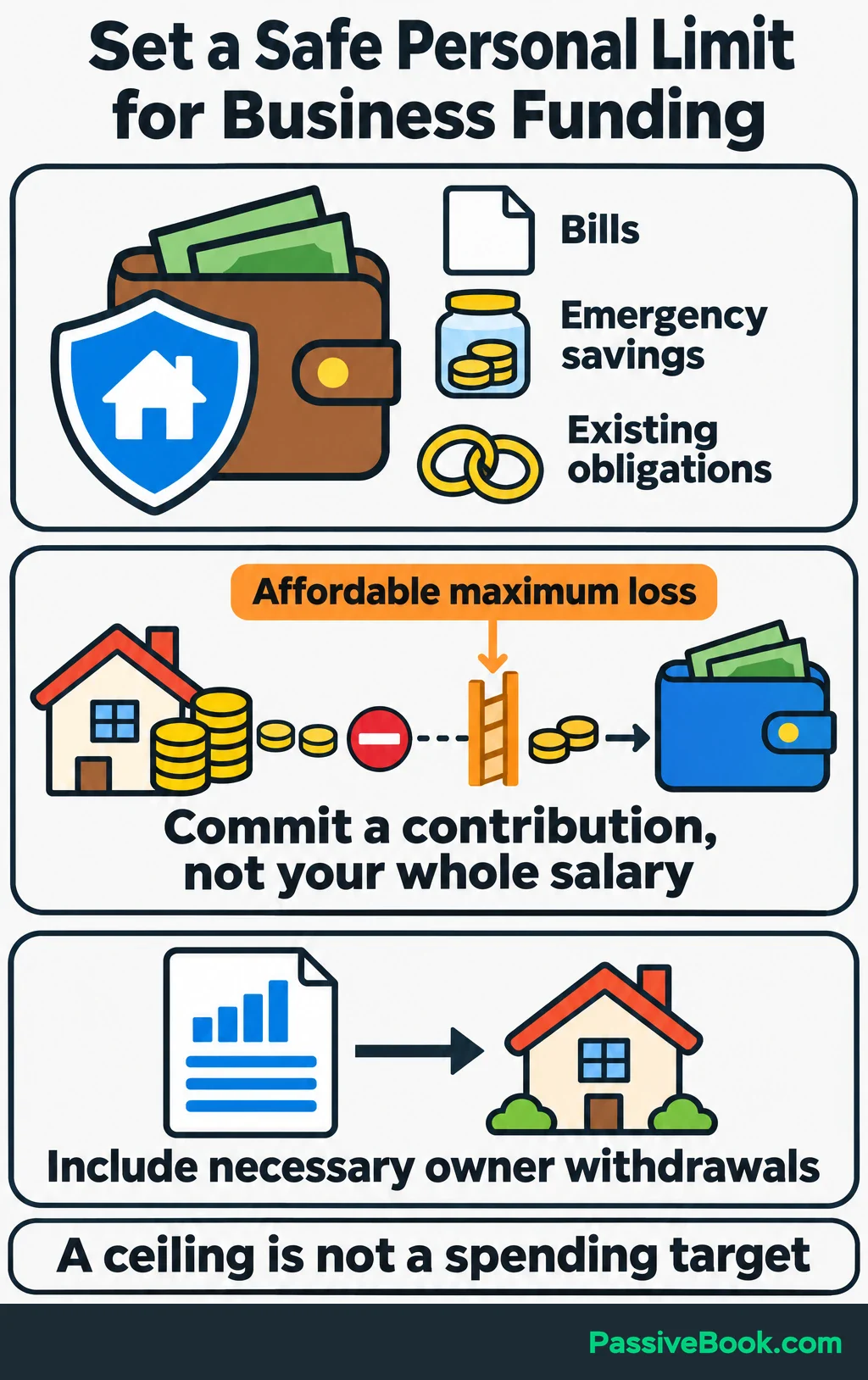
If you’re keeping your job, count only the specific contribution you have committed to the business. Your whole salary does not belong in its forecast.
Also include any money you need to take out of the business for living costs. A plan that works only because you quietly stop paying yourself has a missing expense.
When I reviewed the budget for a digital-product launch, I found overlapping subscriptions for work I hadn’t started yet. I moved those charges into a “later” column. That made the next decision clearer: what did I need to deliver the offer already in front of me?
Forecast the Cash Gap
Build a cash forecast through the milestone and the period when customer money should become available.
Include:
- One-time payments, such as product testing, setup, and contractor work.
- Recurring bills, such as hosting and necessary software.
- Costs tied to sales, including payment fees, delivery, and refunds.
- Taxes, necessary owner withdrawals, and existing debt payments.
- AI usage, setup, maintenance, and human review where they support this milestone.
Record customer receipts when you can spend the money. A sale awaiting a payment-platform payout cannot cover a contractor’s invoice today. Use weekly periods when monthly totals hide that timing problem.
Here is a simplified forecast for the pattern pack. It assumes $600 in setup costs, three months of $200 operating payments, no customer receipts, and a $500 owner contribution at the start. Taxes, withdrawals, and existing debt payments are zero in this illustration.
| Period | Opening Cash | Customer Receipts | Owner Contribution | Operating Payments | Closing Cash |
|---|---|---|---|---|---|
| Setup | $0 | $0 | $500 | $600 | −$100 |
| Month 1 | −$100 | $0 | $0 | $200 | −$300 |
| Month 2 | −$300 | $0 | $0 | $200 | −$500 |
| Month 3 | −$500 | $0 | $0 | $200 | −$700 |
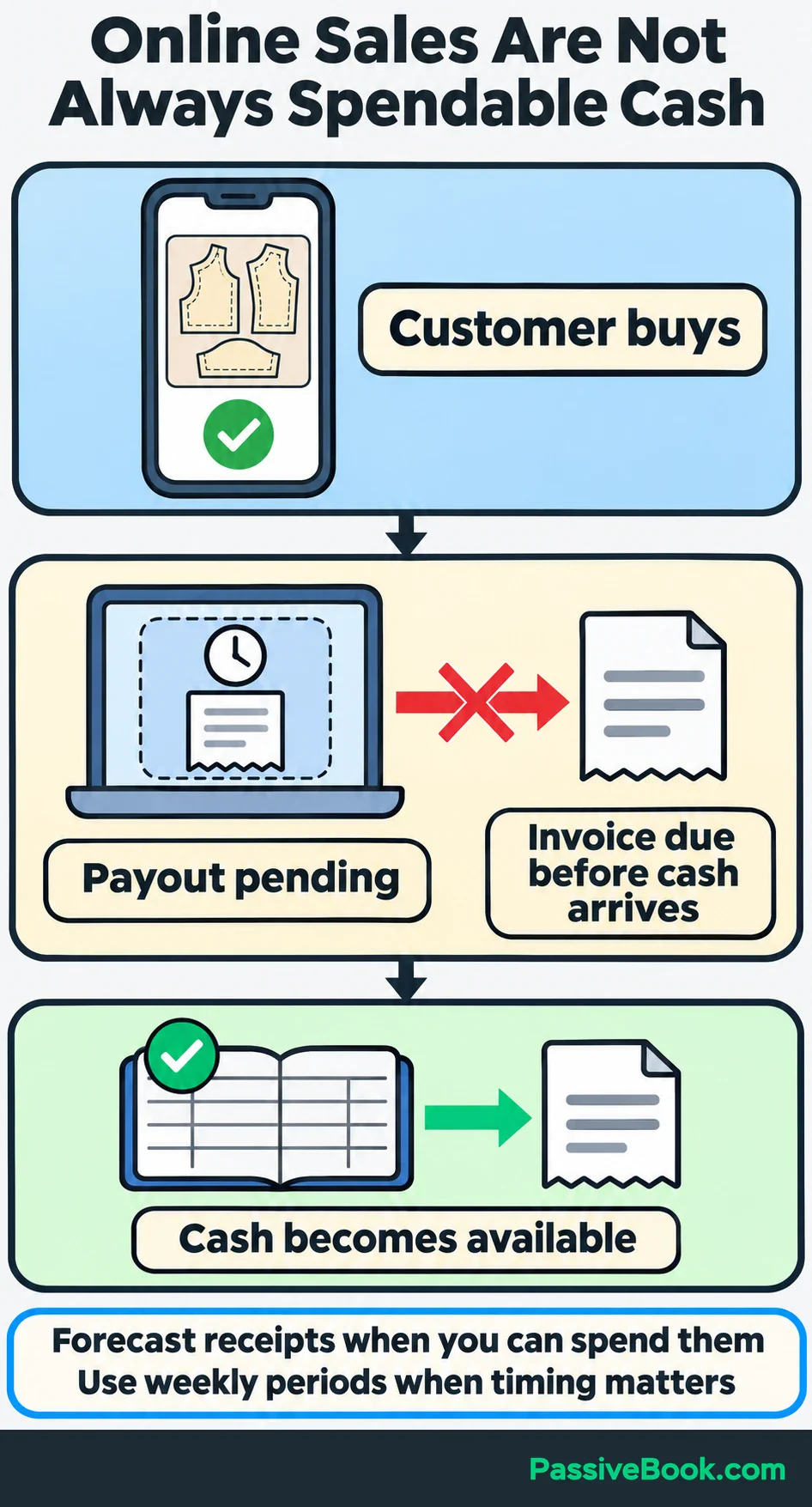
The negative balances show spending the current plan cannot fund.
Before adding proposed financing, find the lowest projected balance and compare it with the cash reserve you want to preserve:
New funding needed = chosen cash reserve − lowest projected cash balance
Use zero if the result is negative. Include existing usable business cash and committed contributions once.
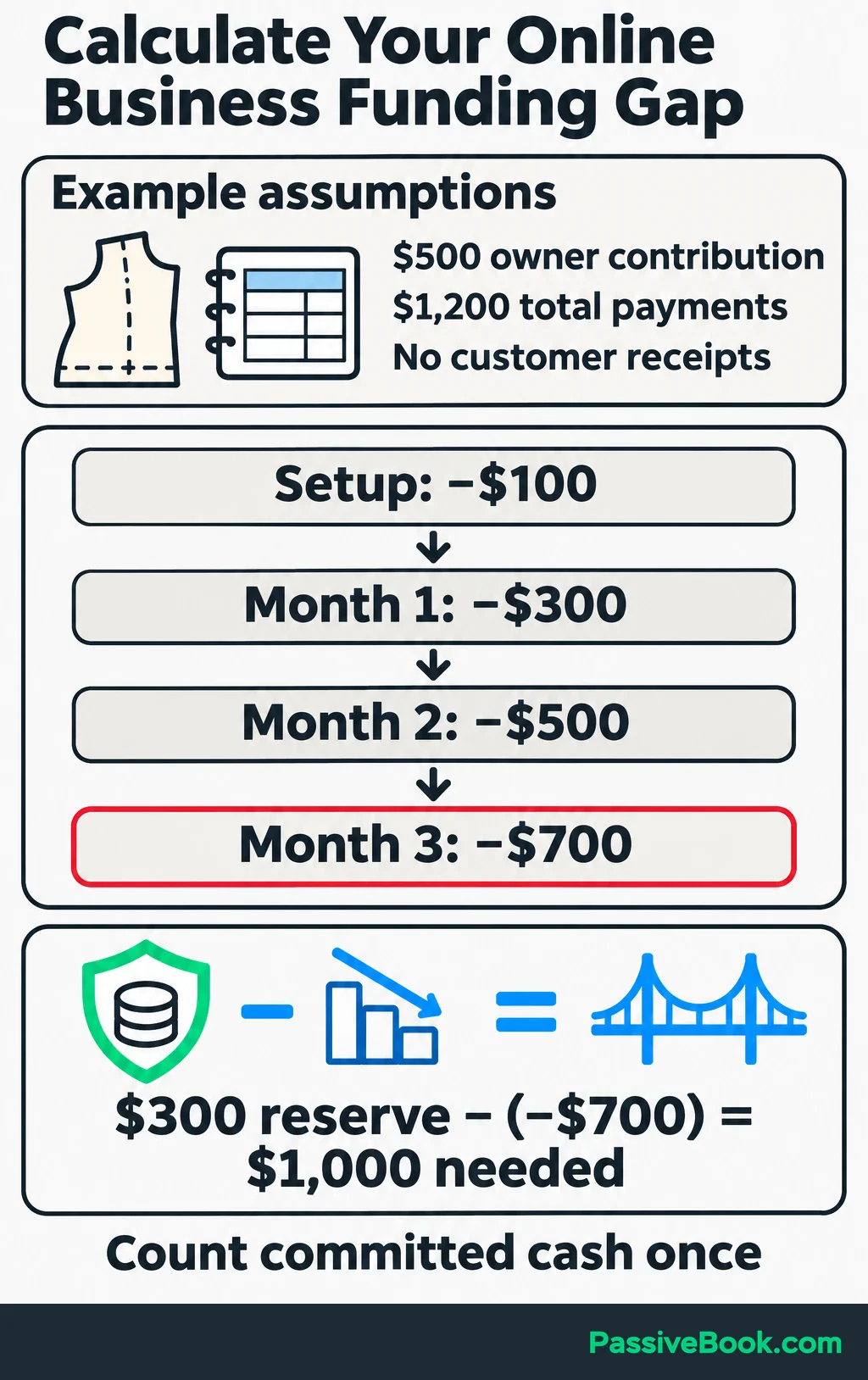
With a $300 reserve, the remaining gap is:
$300 − (−$700) = $1,000
That covers $1,200 in payments and leaves $300, after allowing for your $500 contribution.
Now test lower sales, later payouts, and higher costs. If the gap exceeds what you can safely fund, reduce or stage the milestone. A spreadsheet can calculate a funding need; it cannot make that need affordable.
You can use our Business Cash Planner to put dates against these numbers. It shows when bills fall due and how much funding a delay requires, so you can see what changes the cash gap.
Free Business Cash Planner




Prove Demand Before Financing Expansion
Create the smallest paid offer you can deliver well. Then put it in front of likely buyers through direct outreach, relevant communities that permit promotion, or an audience you already have.
For the sewing business, start with a basic pattern pack rather than a large library. Record purchases, prices, refunds, delivery costs, and customer questions.
Next, work out how much each sale contributes toward the bills that exist whether you make a sale or not.
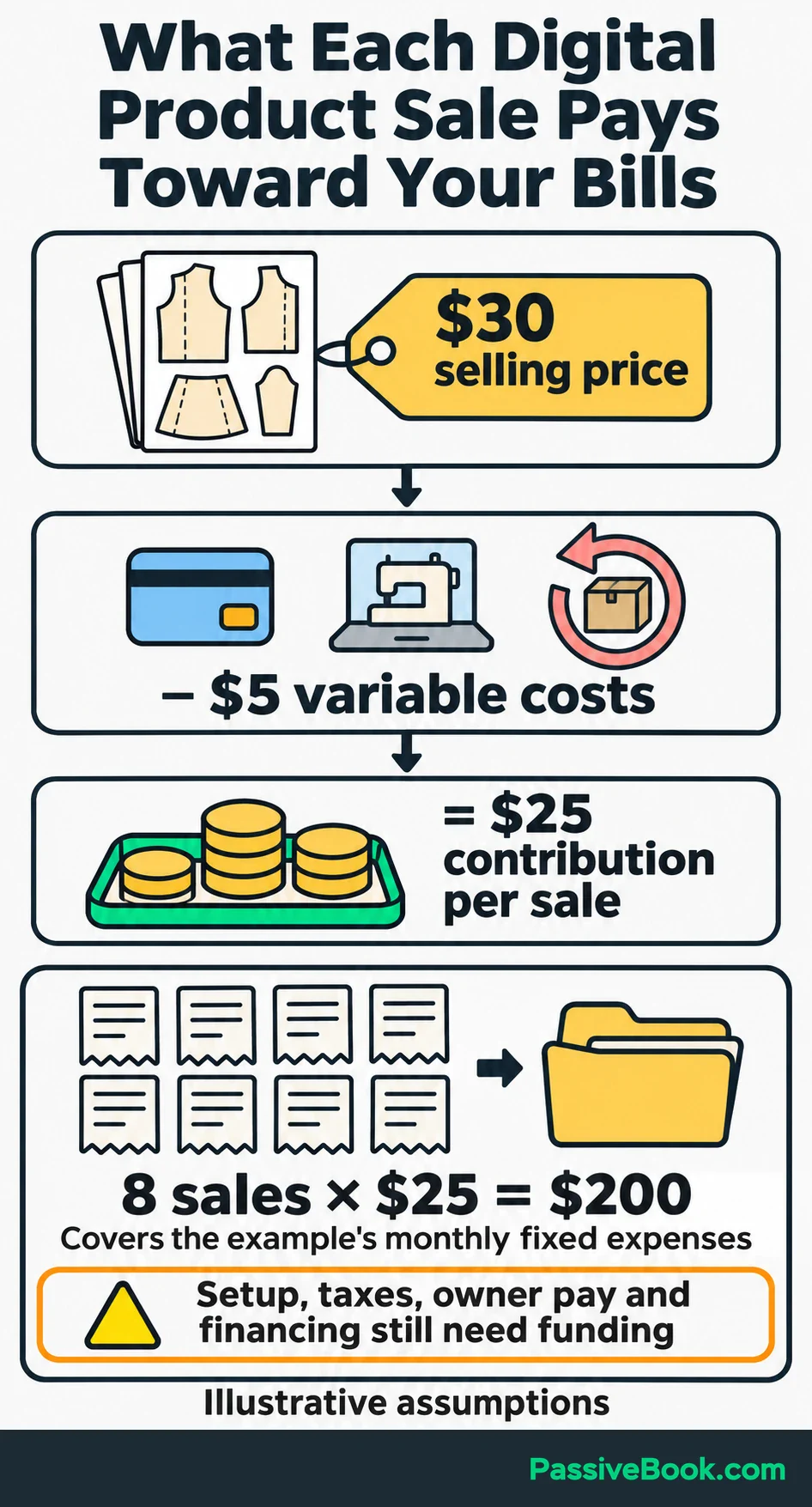
Contribution per sale = selling price − costs caused by that sale
Suppose the pack sells for $30 and has $5 in variable costs, including payment fees, per-order work, and a refund allowance. Each sale contributes $25.
Eight sales contribute $200, enough to cover the example’s monthly fixed expenses. That does not recover setup costs or cover taxes, owner pay, or financing payments.
I learned the cost of skipping demand checks with my online jewelry store. I invested about $1,200 without market research, ended up with unsold inventory, and lost most of the investment. I had paid to answer a question I should have asked before stocking the store: would people buy this?
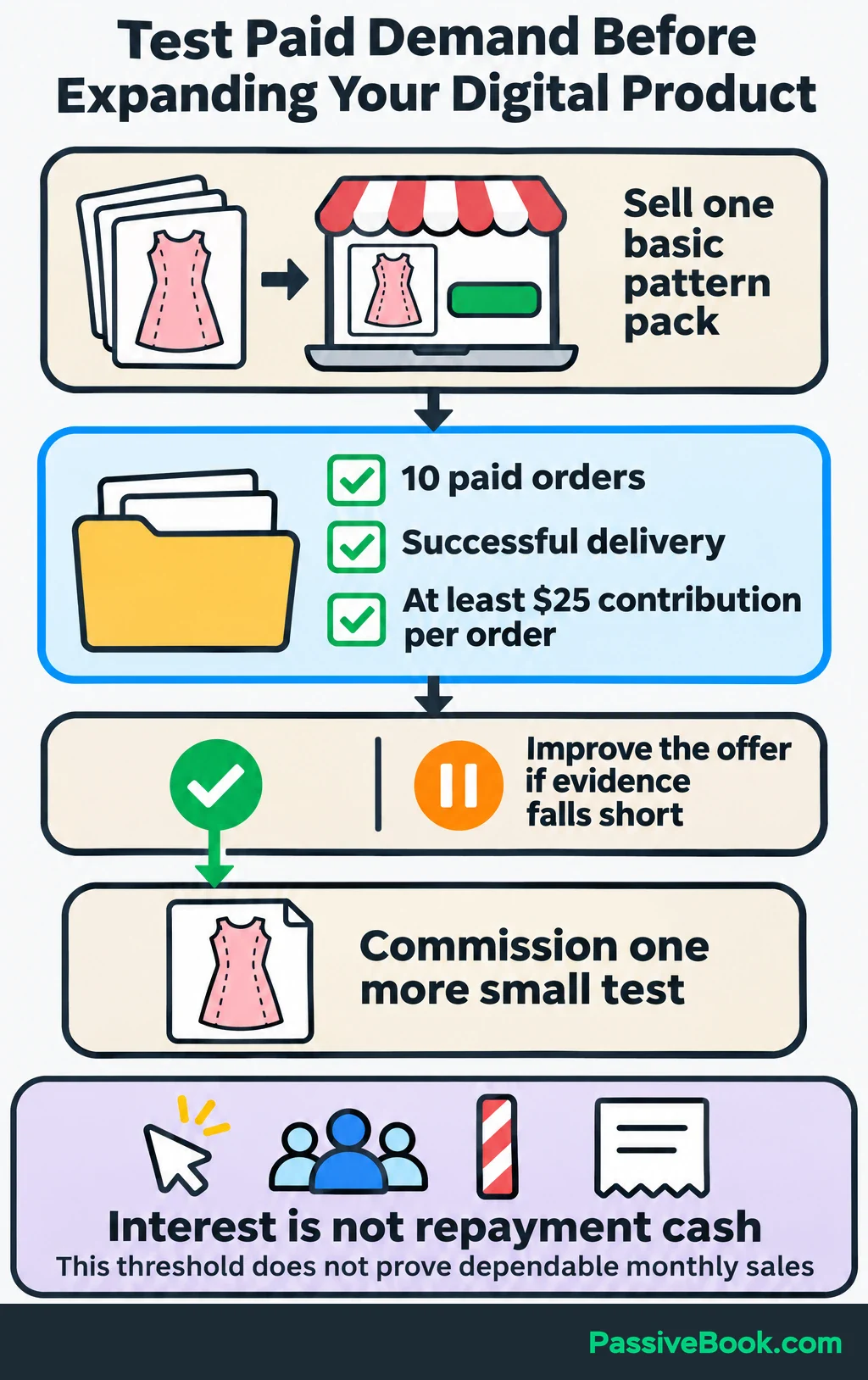
For the pattern pack, set a small expansion threshold. You might require ten paid orders, successful delivery, and contribution of at least $25 per order before commissioning another pattern.
That is evidence for another small test. It is not yet evidence of dependable monthly sales. Clicks and waitlist signups can help you improve the offer, but they cannot make a loan payment.
For services, test one paid project and check whether a deposit covers delivery costs. For physical goods, test a small batch and include stock, shipping, and returns in the budget. For a blog, cap spending until actual ad or affiliate payouts justify more; traffic alone cannot fund expansion.
Choose a Funding Source That Fits the Milestone
Compare sources before approaching providers. The best choice depends on what the money must do and what you must give in return.
| Source | Suitable Use | Access and Cash Timing | Financial Cost and Obligations | Ownership and Personal Exposure |
|---|---|---|---|---|
| Savings or income from other work | A small initial test | Available when you make an affordable transfer | No borrowing cost; your contribution can be lost | You retain ownership and bear the loss |
| Reinvested business cash | Gradual expansion of an offer that sells | Available after receipts clear and obligations are covered | Growth waits for spare cash | No new ownership dilution or financing obligation |
| Preorders or reward crowdfunding | A defined product you can budget and deliver | Requires buyers; platform payout rules may delay access | Fees, delivery commitments, refunds, and taxes reduce usable cash | You retain ownership but owe customers the promised delivery |
| Grants or competitions | Spending that matches a specific program | Eligibility, award decisions, and payment conditions control timing | Application work, reporting, and sometimes matching funds | No ownership sale; check conditions requiring repayment |
| Loans, credit, or revenue-based financing | An investment or temporary gap supported by repayments | Approval depends on provider requirements; fees may reduce proceeds | Repayments, interest or other charges, and possible security requirements | Ownership usually stays intact; guarantees or collateral can expose personal assets |
| Investors or equity crowdfunding | Expansion worth sharing future value and decision rights | Requires investor interest, checks, and legal completion | Legal costs, reporting, investor rights, and shared returns | Your ownership percentage falls; terms shape control and obligations |
You can combine sources in sequence. A personal contribution might fund the basic pack, and customer receipts might fund the next pattern. There is no requirement to choose one source forever.
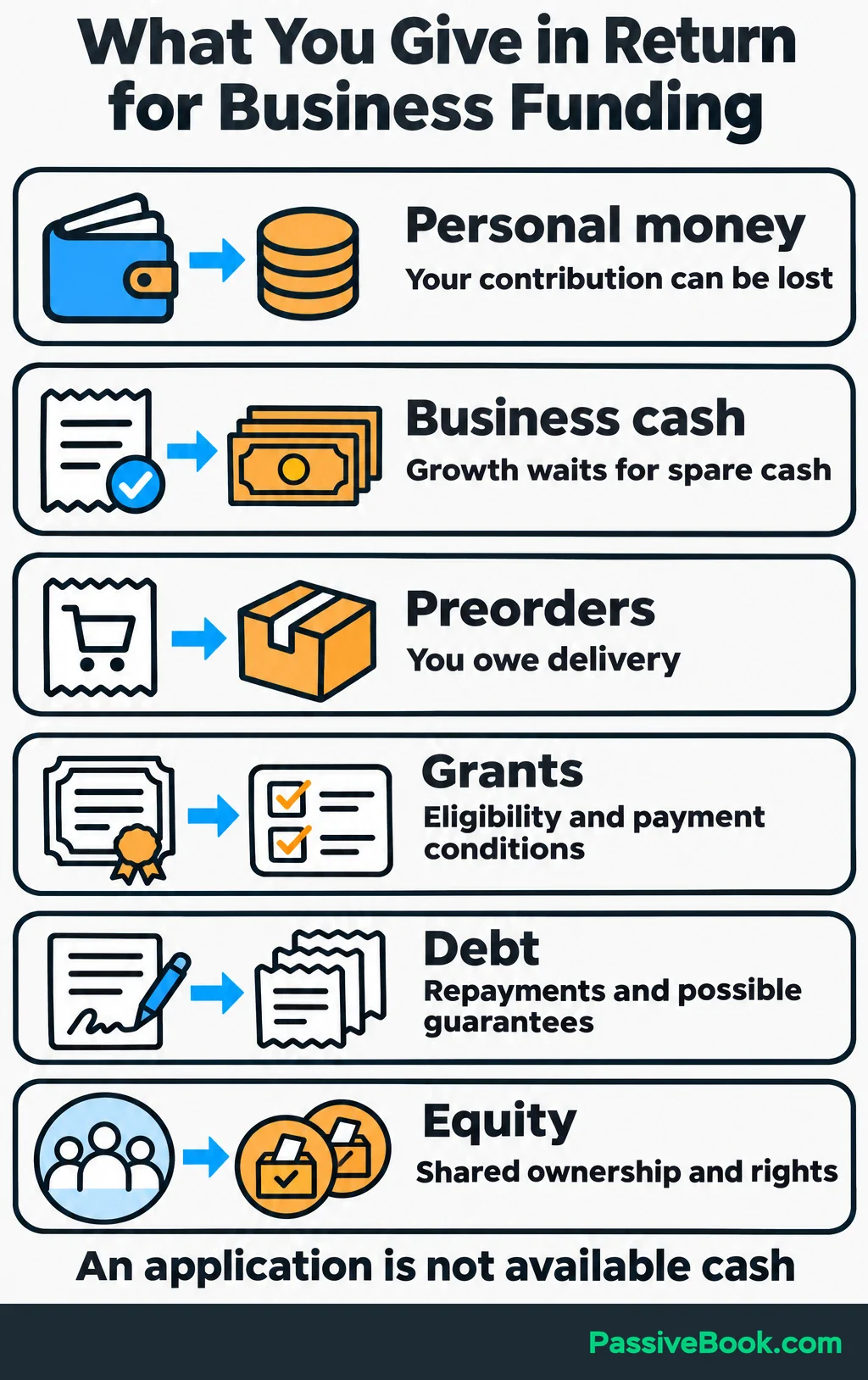
Count only confirmed, available funding toward spending commitments. An application is not money.
If friends or family contribute, agree in writing whether the money is a gift, loan, or ownership investment. Run loans through the same repayment checks and investments through the same ownership checks you would use with anyone else.
Personal Savings and Income From Other Work
For an unproven offer, this is where I would start.
Use existing equipment and skills, keep the contribution capped, and buy only what delivery requires. Keeping your job can give you room to test without demanding that the business immediately pay your household bills.
Extra paid work can also fund the test, but leave enough time to deliver what you sell. A launch budget is not much use if earning it consumes every available evening.
Record each contribution and transfer so you can distinguish household money from business cash.
Reinvested Business Cash
Reinvest what remains after delivery costs, operating bills, taxes, refunds, debt payments, necessary withdrawals, and your reserve.
Revenue, profit, and available cash answer different questions:
- Revenue records what you sold.
- Accounting profit deducts expenses under the accounting method you use.
- Available cash is money you can spend after allowing for commitments.
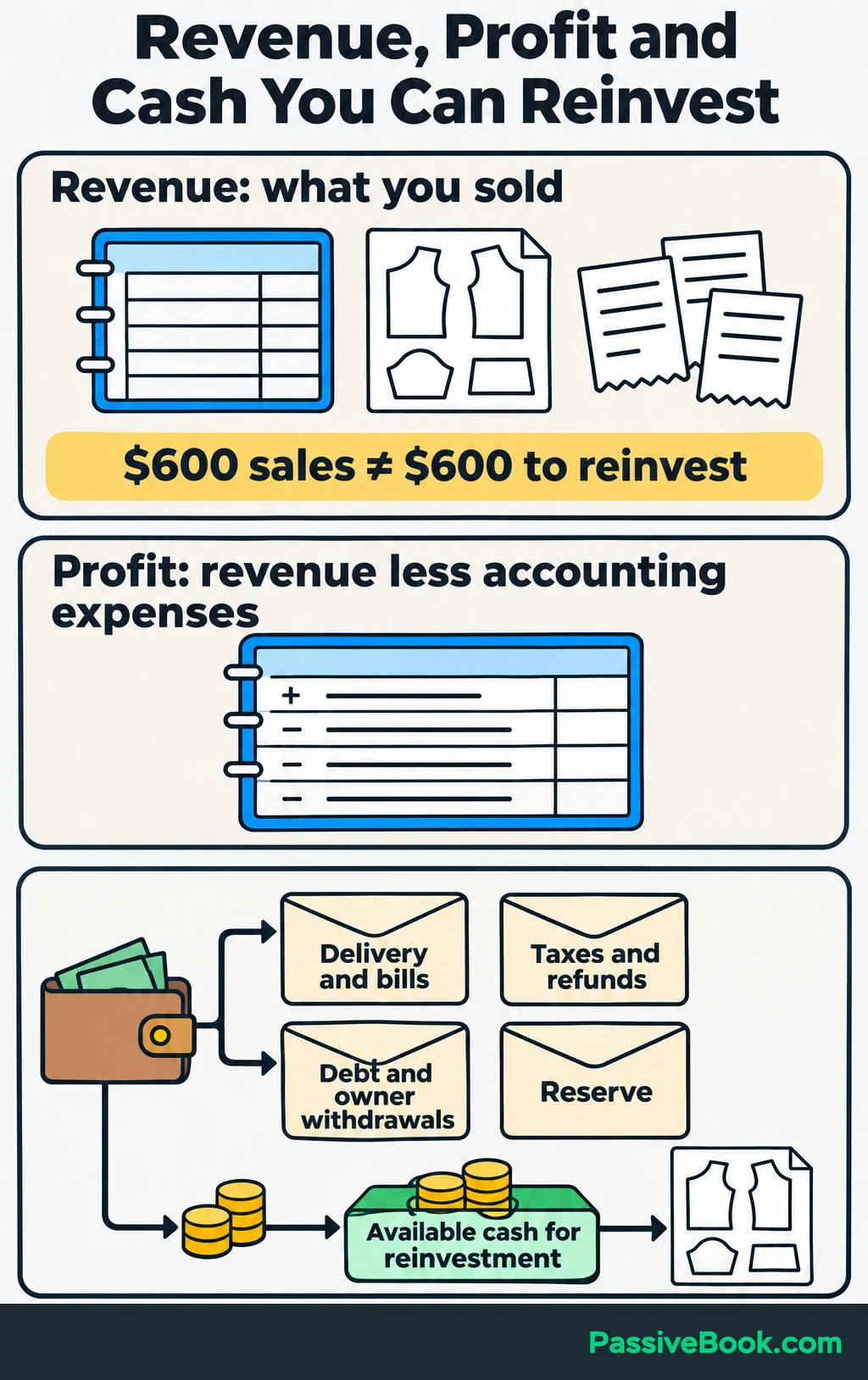
A $600 sales month does not give you $600 to commission more patterns.
For the sewing business, I would expand the bundle one pattern at a time using cash left after those obligations. Slower growth has a cost, but so do interest payments and shared ownership. Compare those costs before assuming speed deserves funding.
Customer Preorders and Reward Crowdfunding
Customer funding can pay for a defined product before it is finished. Start with a delivery budget and a promise you can keep.
For direct preorders, explain what buyers will receive, when you expect delivery, and how cancellations or delays will be handled. Reserve the money needed to fulfill those orders before spending on anything else.
Reward crowdfunding can suit a project with a clear campaign and appealing rewards. It also requires preparation and promotion. Kickstarter uses an all-or-nothing model: backers are charged only if the funding goal is reached. Backers do not receive ownership, but creators still have commitments to deliver rewards and communicate progress. Kickstarter explains its funding model here.
Set the target after allowing for campaign preparation, platform and payment fees, fulfillment, refunds, taxes, and payout timing.
For a small pattern pack with reachable buyers, I would try direct preorders first. A campaign adds work, so give it a job that a simple sales page cannot do.
Grants and Business Competitions
Search official economic-development agencies and awarding organizations for programs that match your location, business activity, stage, and intended spending.
Before applying, check:
- Whether your business and proposed purchases qualify.
- Whether you must contribute matching funds.
- When payment arrives.
- What reporting is required.
- Whether the application effort fits the likely benefit.
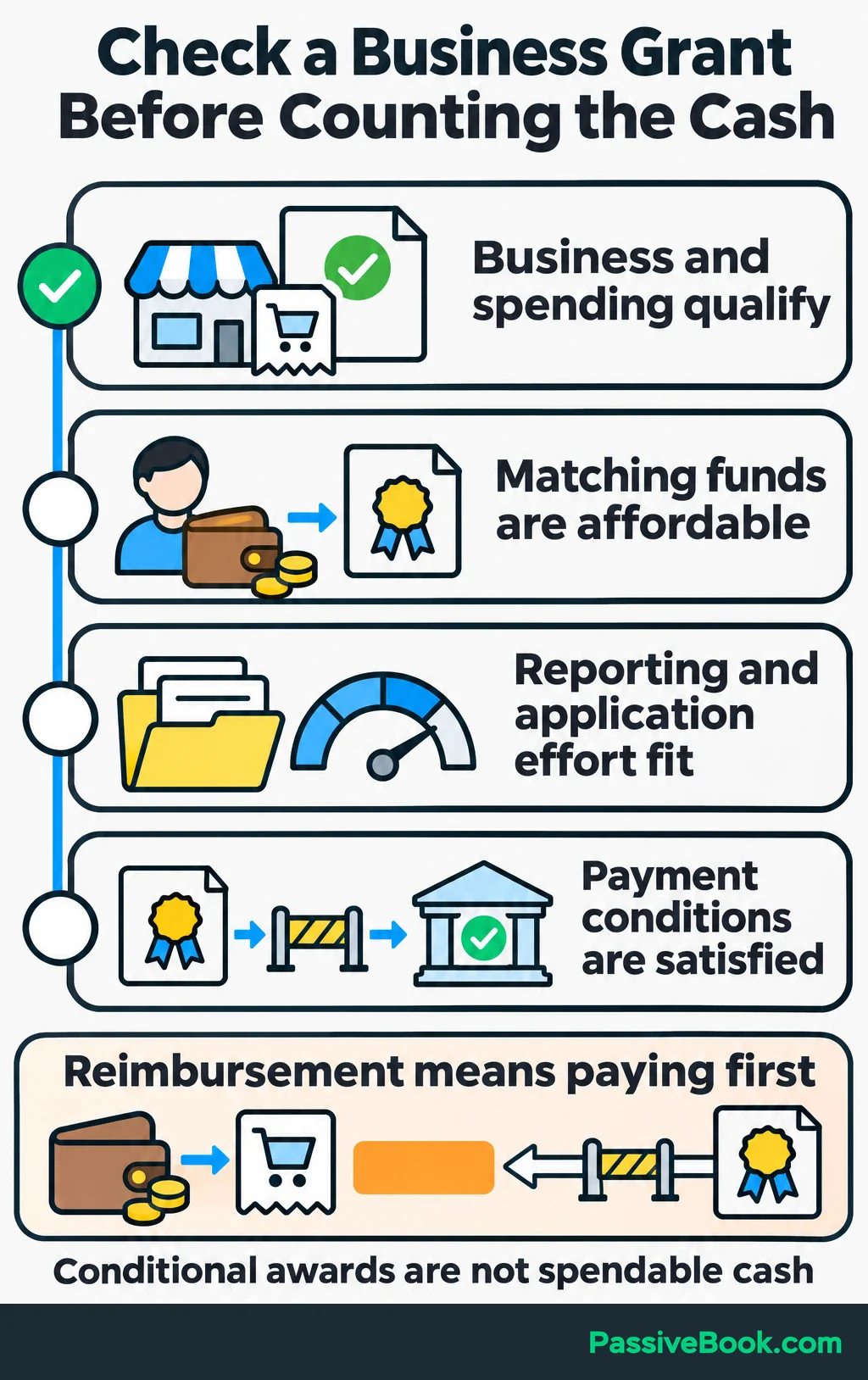
A reimbursement grant still requires you to cover the initial expense.
In the U.S., the Small Business Administration does not provide general grants to start or expand an ordinary business. Its grant opportunities serve specific purposes, so don’t build a launch budget around an assumed SBA award. See the SBA’s grant guidance.
Treat grants and prizes as conditional until awarded and their payment conditions are satisfied.
Loans, Credit, and Revenue-based Financing
Match the borrowing arrangement to the cash need.
A term loan can fund a defined investment. A credit line can bridge a temporary gap between paying expenses and collecting receipts. A card balance needs a payoff schedule your forecast supports.
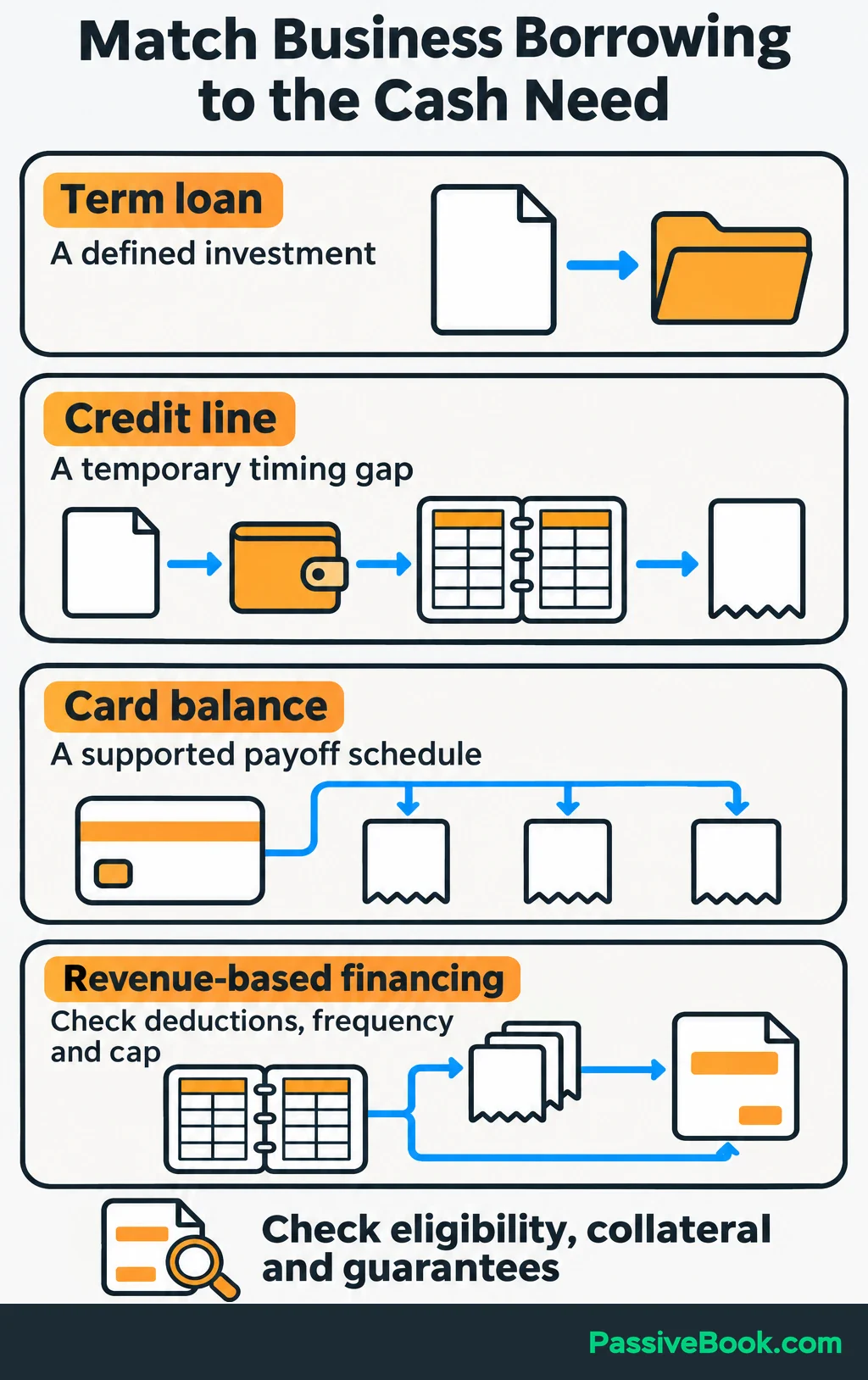
Check providers’ requirements for location, operating history, revenue, credit, collateral, and guarantees before applying. If considering a personal loan, confirm that its terms permit business use.
One U.S. option is the SBA microloan program, which provides up to $50,000 through approved nonprofit intermediaries. Eligible businesses must meet SBA requirements, including operating for profit in the U.S., and intermediaries decide credit and terms. Funds cannot repay existing debt or purchase real estate. Check the SBA’s microloan requirements.
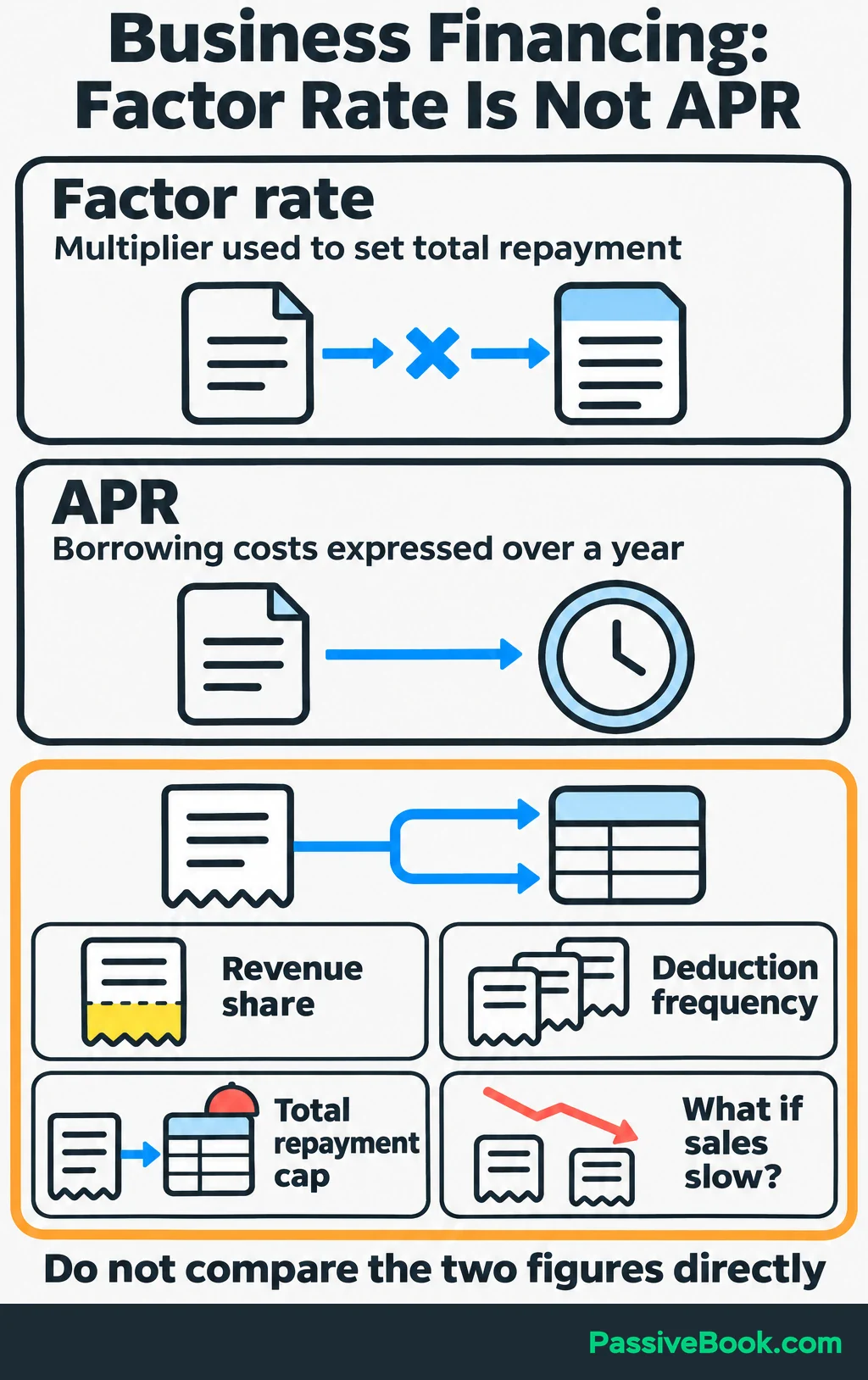
For revenue-based financing, ask what share of revenue is deducted and how often. Check the total repayment cap and what happens when sales slow. A factor rate is a multiplier used to set total repayment. An annual percentage rate (APR) expresses borrowing costs over a year. The Federal Reserve warns that the two figures cannot be compared directly. Read its financing-term guidance.
I would skip any offer whose provider cannot clearly explain the deductions and total cost.
Investors and Equity Crowdfunding
Selling ownership makes sense only when what the investment enables is worth the share you give up.
For a small pattern shop, I would usually prefer retained ownership and staged growth. Equity becomes more interesting when a larger opportunity needs capital the business cannot reasonably generate or repay.
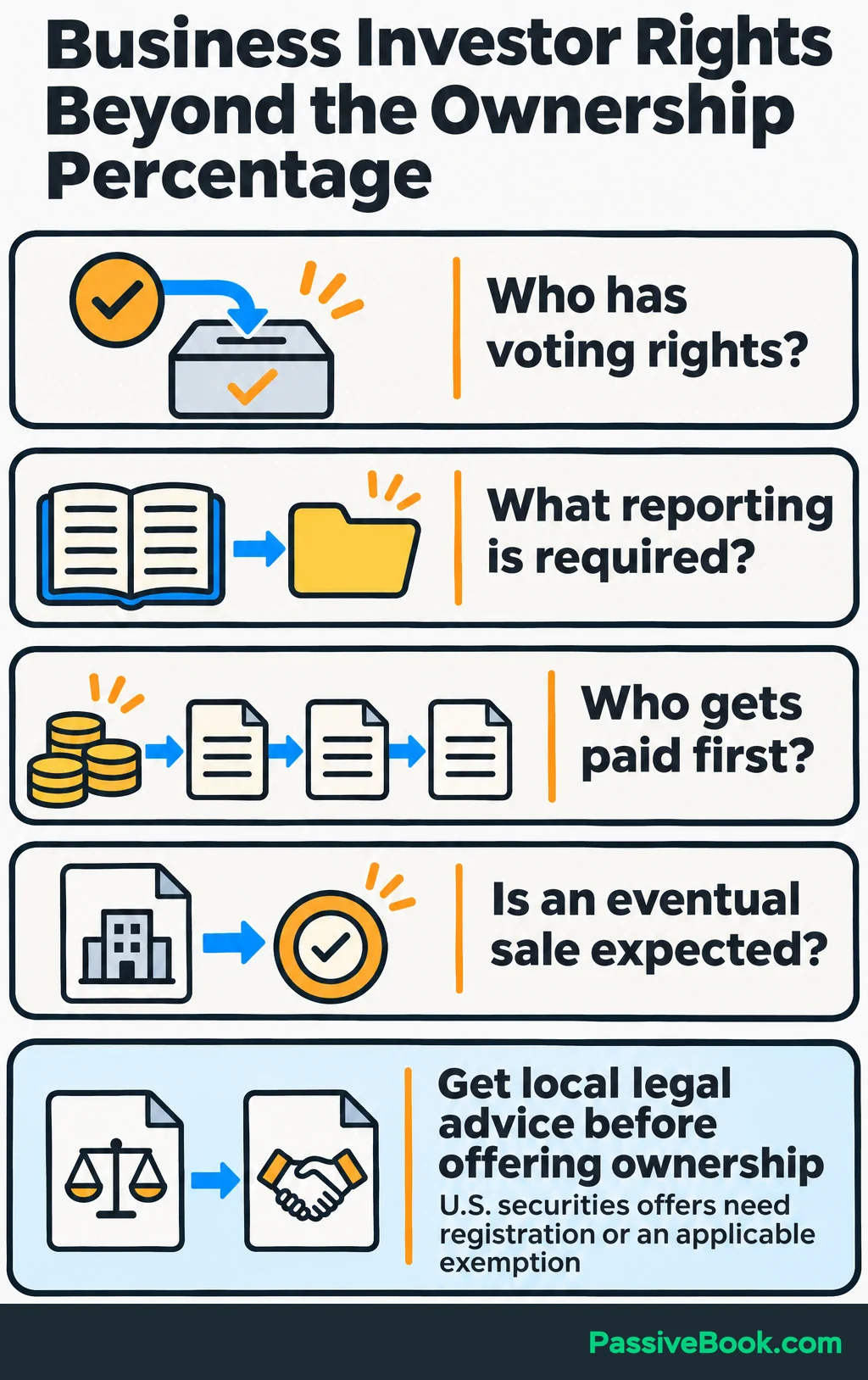
Before agreeing, examine voting rights, reporting duties, who gets paid first on a sale or closure, and whether investors expect an eventual sale of the company.
To understand dilution, compare the investment with the business’s value after that money enters.
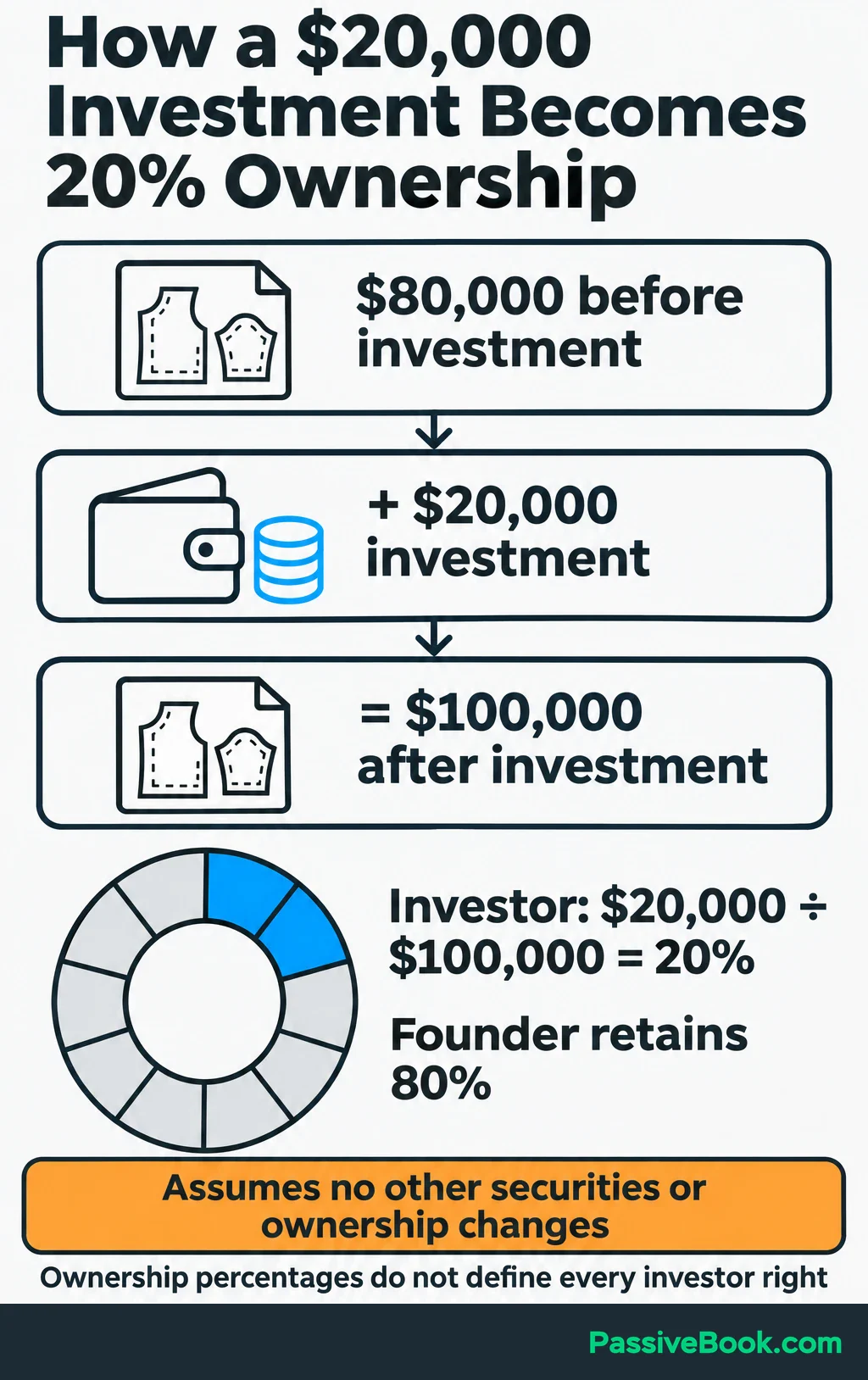
Suppose an investor contributes $20,000 at an agreed $80,000 value before investment. The value immediately after investment is $100,000, so the investor receives:
$20,000 ÷ $100,000 = 20% ownership
That assumes no other securities or ownership changes. You would retain 80%, subject to the agreed rights.
Get local legal advice before offering ownership. In the U.S., offers and sales of shares or other securities require registration with the Securities and Exchange Commission (SEC) or an applicable exemption, even when buyers are friends and family. The SEC explains these requirements. U.S. Regulation Crowdfunding offerings must use an SEC-registered intermediary. See the SEC’s crowdfunding rules.
Check Whether Borrowing Fits Your Cash Flow
Compare the Full Financing Cost
Ask for written figures showing:
- Usable cash after withheld fees.
- Every mandatory fee and the total repayment.
- Payment amounts, frequency, and dates.
- Rate changes and early-payoff treatment.
- Collateral and personal guarantees.
To calculate the cash cost, count what you repay and any mandatory fees paid separately, then subtract the money you actually receive:
Cash financing cost = total repayments + separately paid mandatory fees − usable proceeds
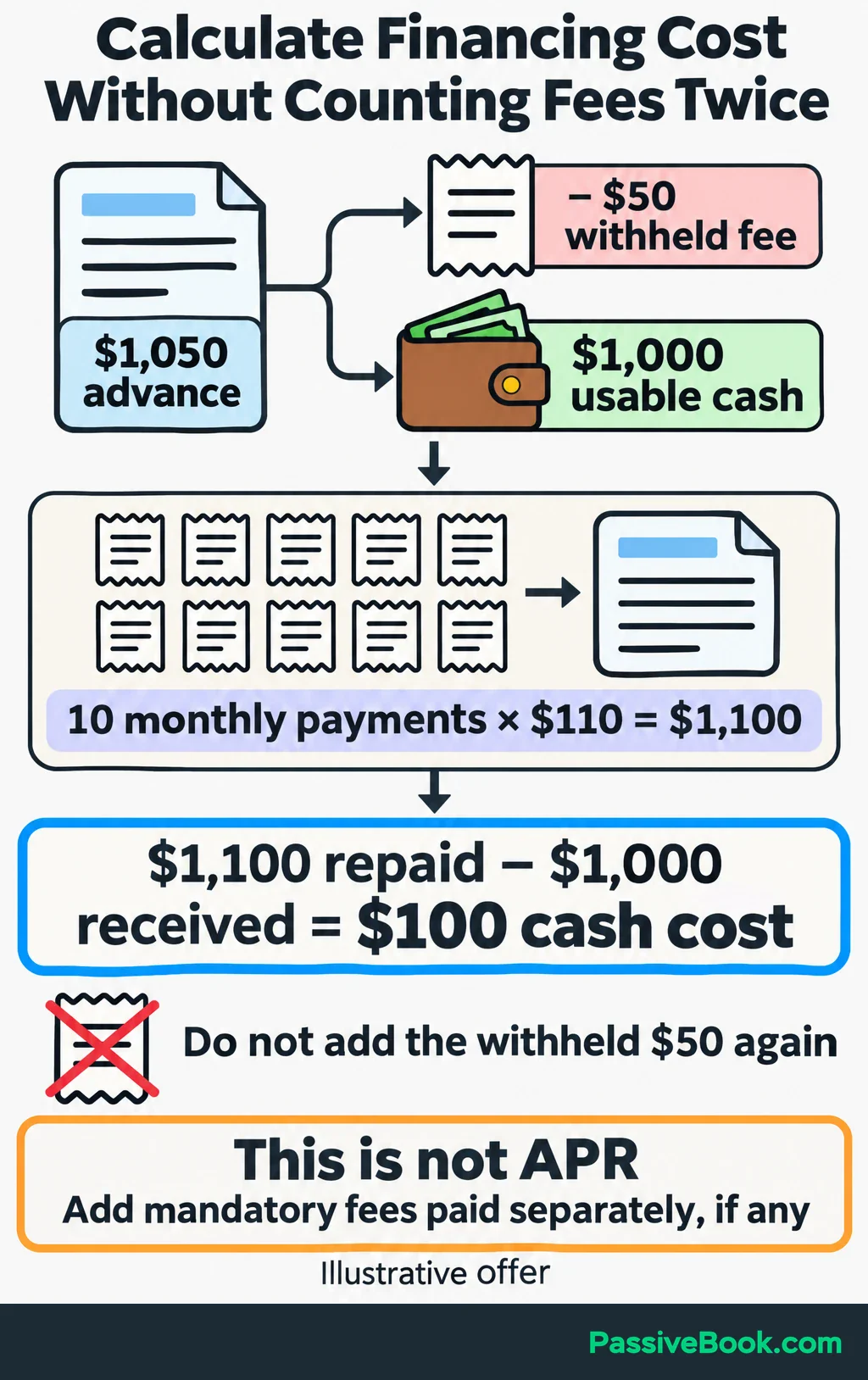
Suppose a provider advances $1,050 and withholds a $50 fee. You receive $1,000. Ten monthly payments of $110 total $1,100.
The cash financing cost is $100: $1,100 repaid minus $1,000 received. Do not add the withheld $50 again because it already reduced the usable proceeds.
This is not an APR. When offers have different durations or payment schedules, compare annualized costs as well as total cash cost and affordability.
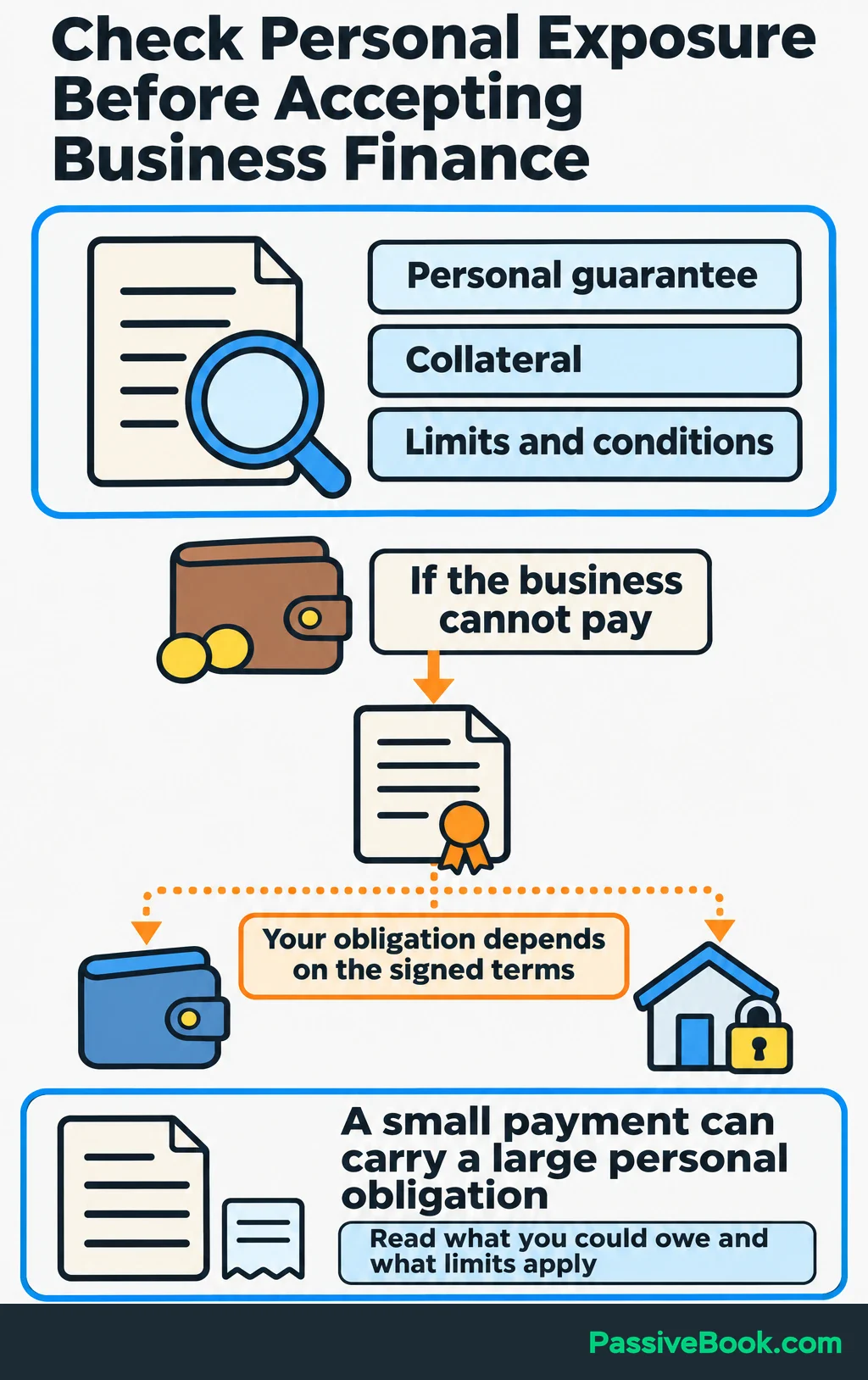
Read any personal guarantee to see what you could owe if the business cannot pay and what limits apply. The SBA’s guidance on full and limited guarantees illustrates how that obligation can vary.
A small monthly payment can still come with a large personal obligation.
Test the Actual Payment Schedule
Add the proposed funding and every repayment to your forecast. Use daily or weekly periods if that is how deductions occur.
For the pattern pack, compare two monthly sales levels using the same $30 price, $5 variable cost, and $200 fixed expenses.
| Monthly Cash Item | 20 Sales | 8 Sales |
|---|---|---|
| Customer receipts | $600 | $240 |
| Variable costs | −$100 | −$40 |
| Fixed operating expenses | −$200 | −$200 |
| Cash before financing | $300 | $0 |
| Proposed repayment | −$110 | −$110 |
| Cash after repayment, before taxes and owner withdrawals | $190 | −$110 |
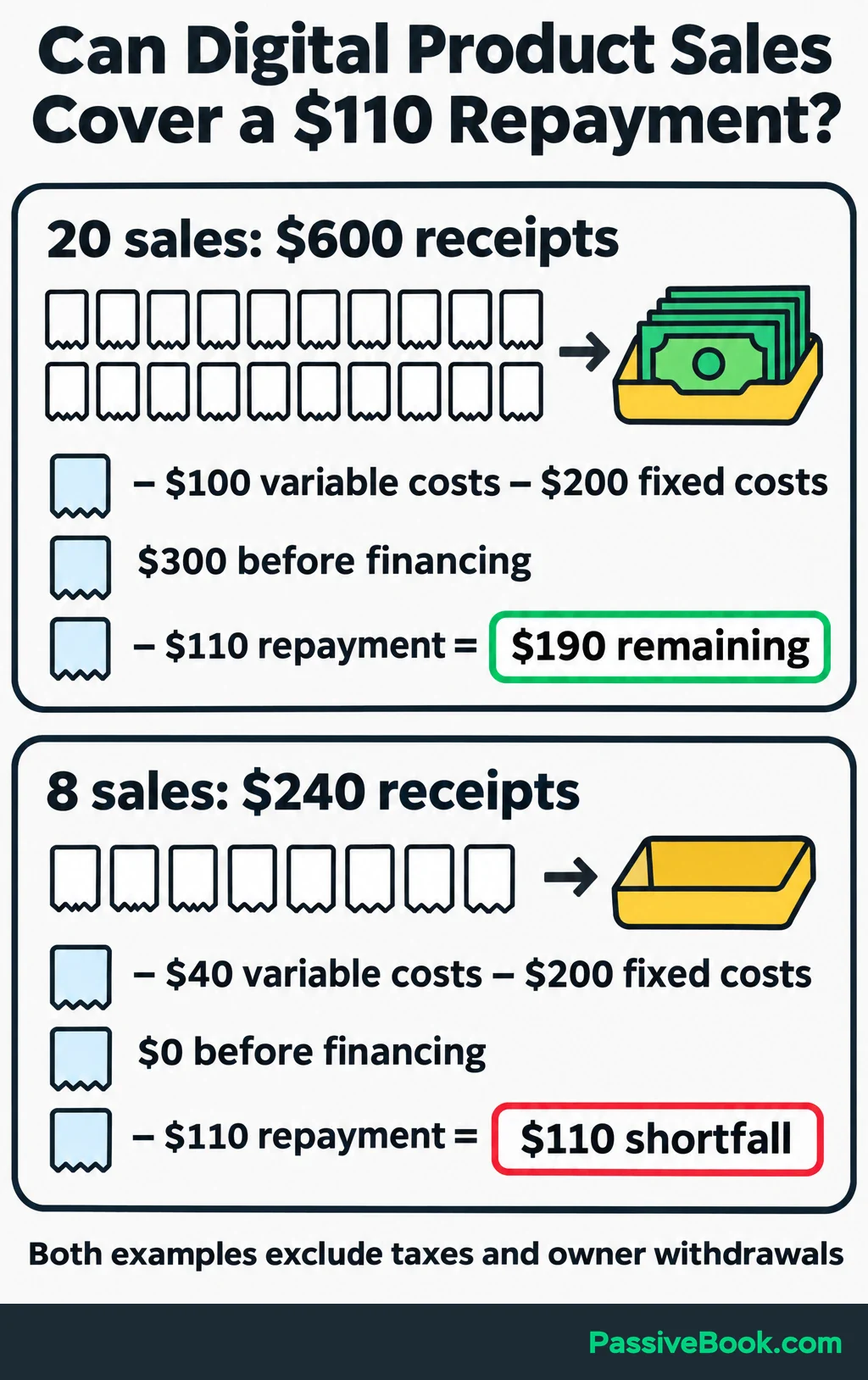
Twenty sales leave some room before taxes and withdrawals. Eight sales create a $110 shortfall before either of those needs is covered.
Check whether cash stays above your reserve after all commitments, including taxes and owner withdrawals. Identify which receipts will cover repayments before the investment starts producing returns.
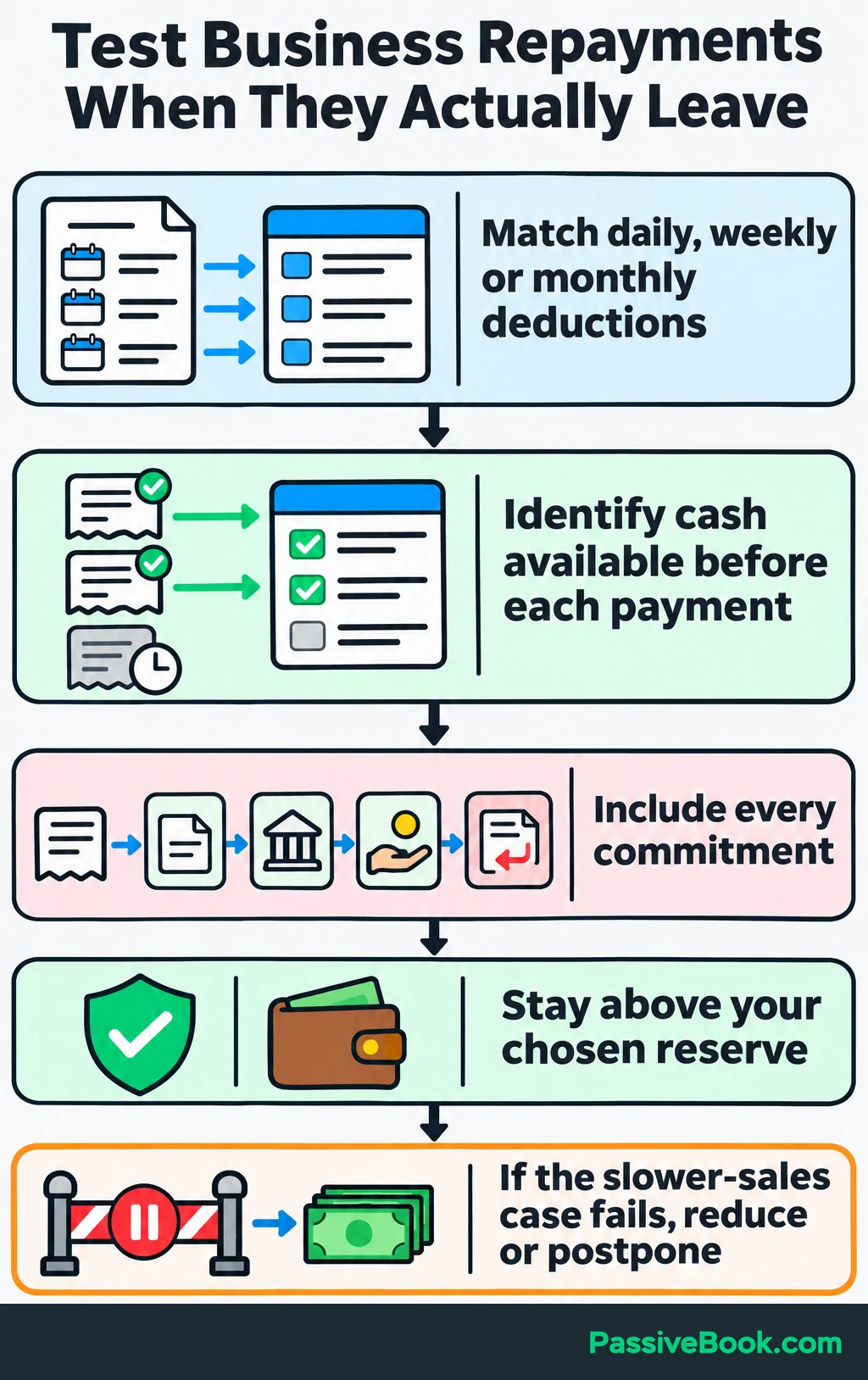
I would require the slower-sales forecast to support the payment schedule. For the original budget with no customer receipts, borrowing is not supported by operating cash flow.
If payments fail that check, reduce the request, save longer, seek workable customer preorders, or postpone expansion. Another loan adds another repayment.
Prepare and Secure the Funding
Write a short request that connects the cash to a specific result:
“I need [amount] in usable cash by [date] to pay for [purchases]. This will let me deliver [milestone]. My evidence of demand is [paid orders and delivery results].”
Then add the case that matters to the source. Lenders need repayment capacity, preorder customers need a credible delivery plan, grant providers need program fit, and investors need a growth opportunity.
Gather the provider’s required records. These may include ownership details, bank statements, available tax returns, financial statements, existing obligations, and projections with clear assumptions.
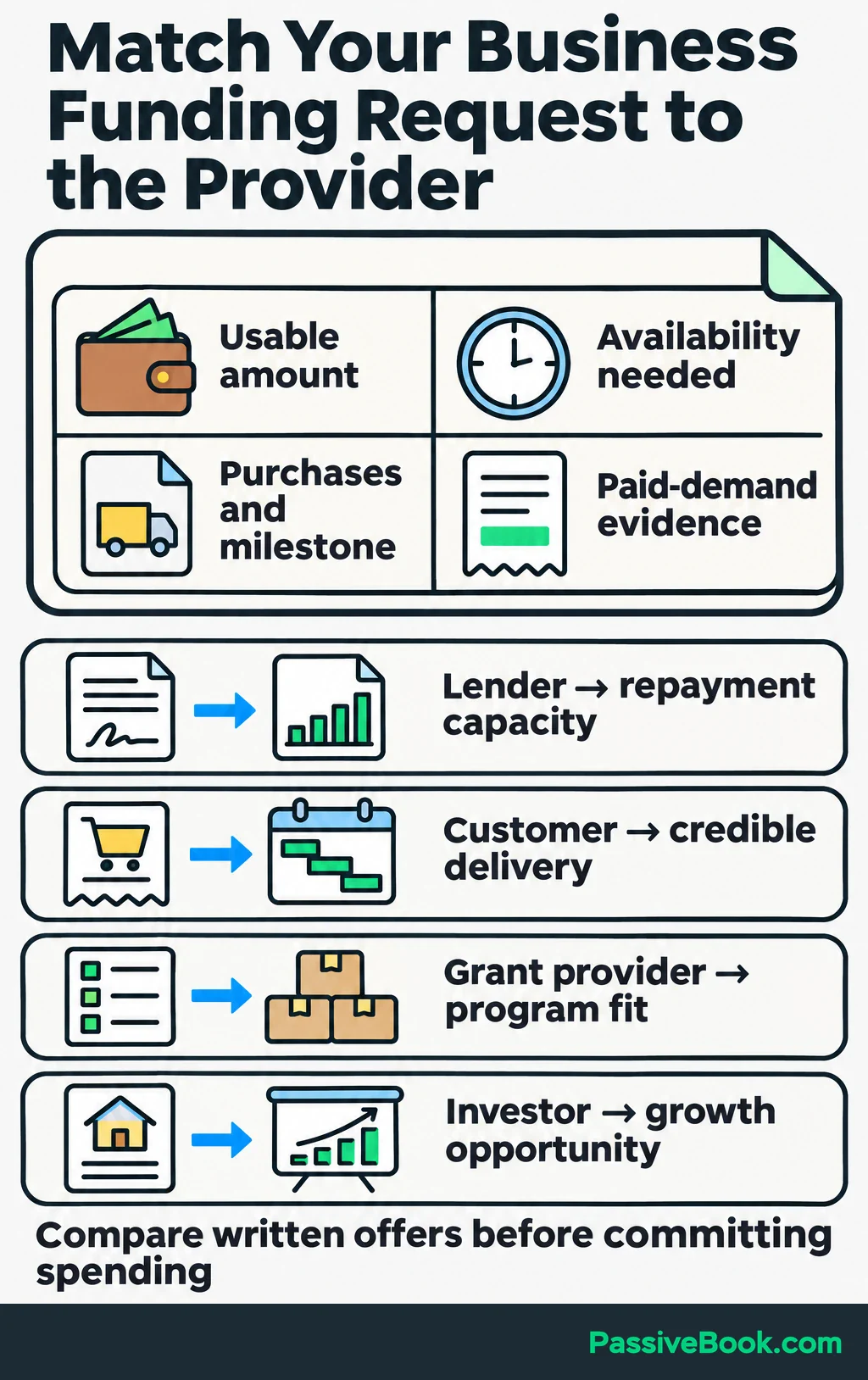
Approach providers whose requirements fit your business. For U.S. applicants, SBA Lender Match can connect businesses with interested lenders, but it is not a loan application and does not guarantee approval. The SBA explains how Lender Match works.
Compare complete written offers against your forecast before accepting. Confirm the amount you will actually receive and its availability date before committing dependent spending.
If declined, ask which requirement blocked approval. Fix that issue or reduce the funding need before applying elsewhere. Repeating the same unsupported request is an expensive way to collect rejection emails.
Release Funds as Results Justify Further Spending
Assign the money to approved expenses and keep business transactions separate from household spending.
For the sewing business, release enough to finish and deliver the basic pack. Review customer feedback and contribution before commissioning the larger bundle.
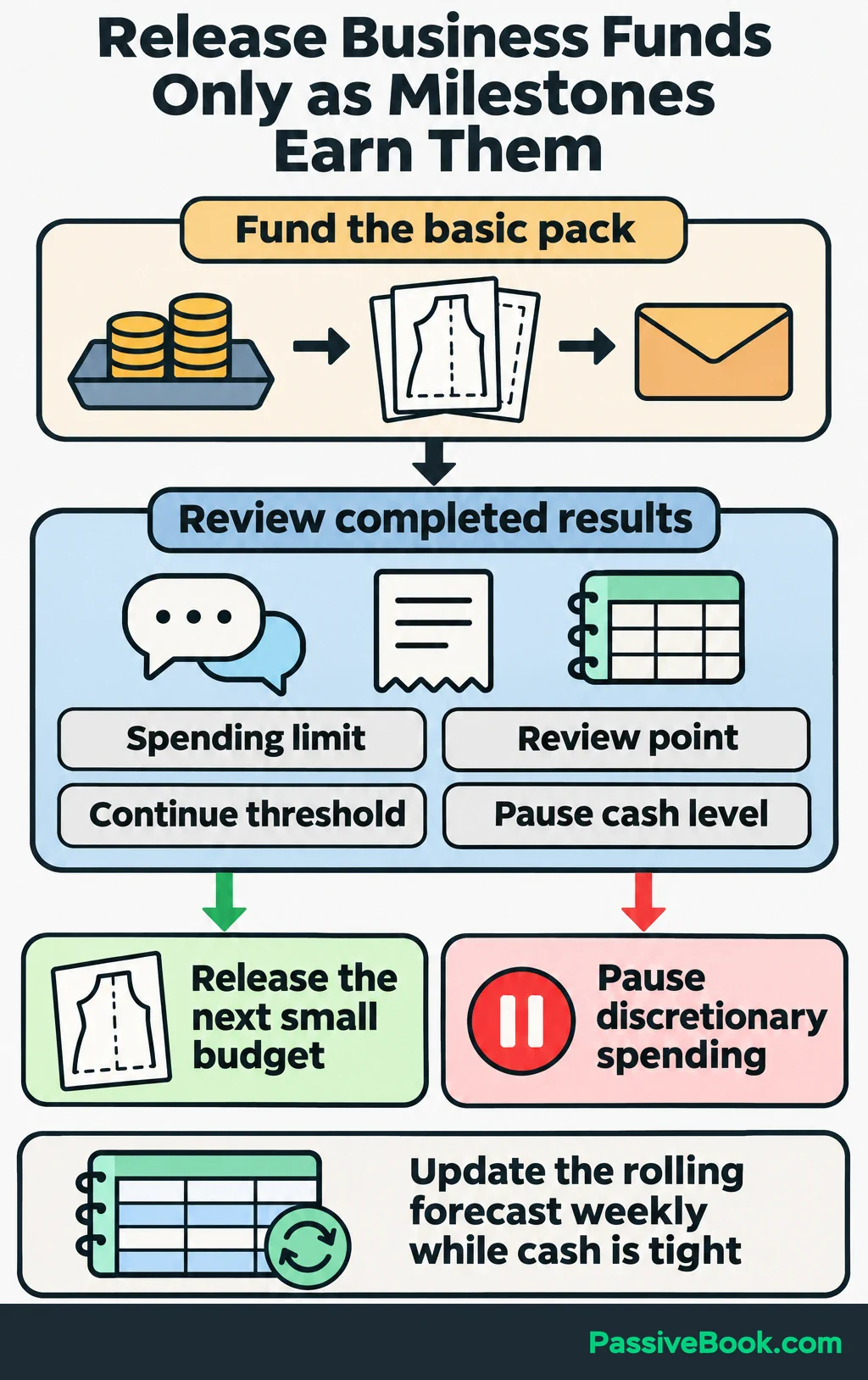
Give each milestone:
- A spending limit.
- A review date.
- A result that justifies continuing.
- A cash level that triggers a pause.
Review the rolling forecast weekly while cash is tight. Replace estimates with actual receipts and costs, then check upcoming obligations.
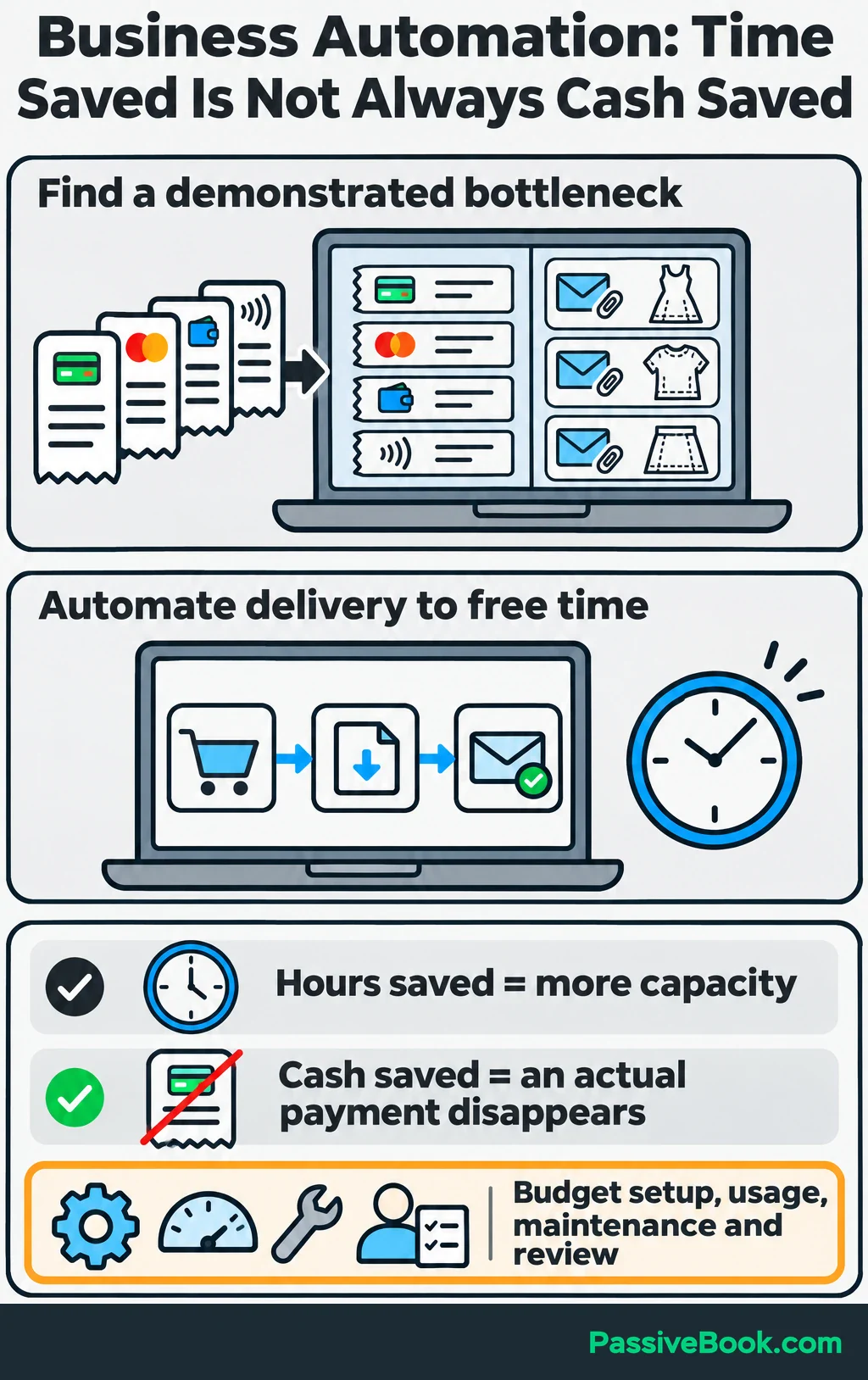
Add automation when it removes a demonstrated bottleneck. If manually sending downloads causes delays, automating delivery has a clear purpose. Buying several AI tools before the first order gives you subscriptions to manage.
Include setup, usage, maintenance, and human review in that decision. Hours saved create capacity, but count cash savings only when an actual payment disappears.
When results fall short or cash approaches the reserve, pause discretionary spending. Calculate the next gap from current cash and completed results before seeking more money.
What Next?
Write down one milestone and list every payment needed to reach it. Include usable business cash and your safe personal contribution in the forecast, then decide how to cover any remaining gap.
Use the social buttons to share this guide when a funding discussion needs numbers behind it.
Which milestone would you fund first, and what result would justify spending more? Share your answer in the comments, along with any other questions.
Share this post with your friends & followers:

